Nativity Paintings from Around the World

Christ is Born! Indeed He is Born!

 Χριστός Ετέχθη! Αληθώς Ετέχθη!

nativity1

Christ is Born! Glorify Him!

“Behold, I bring you good tidings of great joy, which shall be to all people. For unto you is born this day in the city of David a Saviour, which is Christ the Lord.” (Luke 2:10-11)

Jesus Christ was born for all people of all times. To illustrate this truth, Christians around the world often depict him as coming into their own culture, in the present time. The Italians, whose visual language was predominant during the Middle Ages and Renaissance, did it. In fact, when you think “Nativity,” you probably think of the church art from that age and country—not because it offers the most legitimate representations (they are no more “accurate” than the ones below), but because the Church held particular sway at that time, in that place.

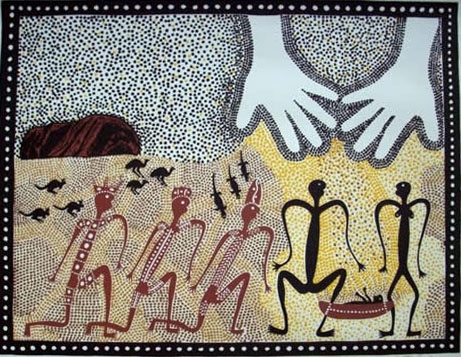
Well, the center of Christianity has shifted; it is no longer in the West. And thus if we were to survey the Christian art being produced today, we would see that Jesus, Mary, and Joseph, and the settings they inhabit, have a much different look. We’d see Mary dressed in a sari or a hanbok; we’d see Jesus wrapped in buffalo skin, or silk. We’d see lizards and kangaroos instead of oxes and asses.

Historical accuracy is not the point; the point is to see Jesus as the Savior of your own people, as incarnated very close to you, and relevant to life today.

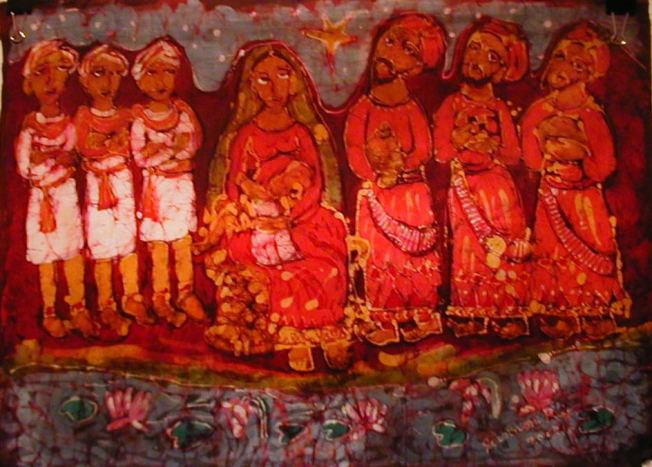
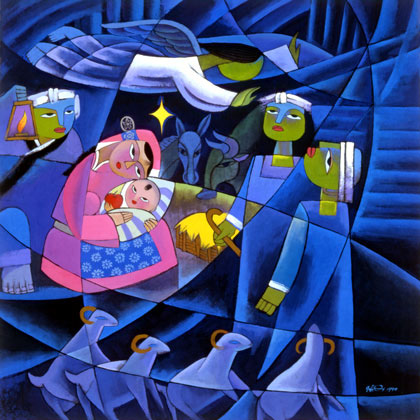
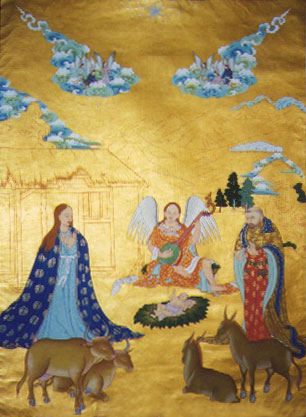
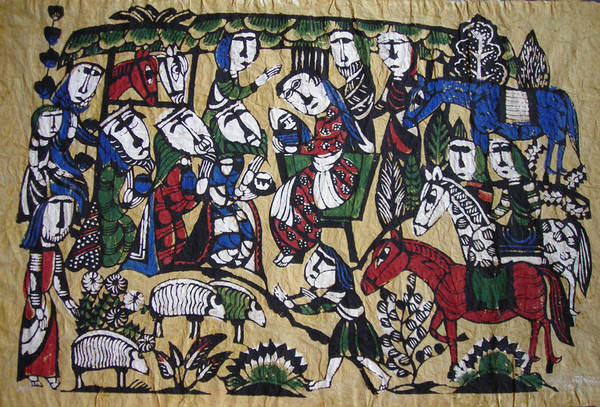
Here are 19 contextualizations of the Nativity painted within the last century. Each work brings Jesus into a different place, in order to emphasize the universality of his birth.

USA:

nativity1

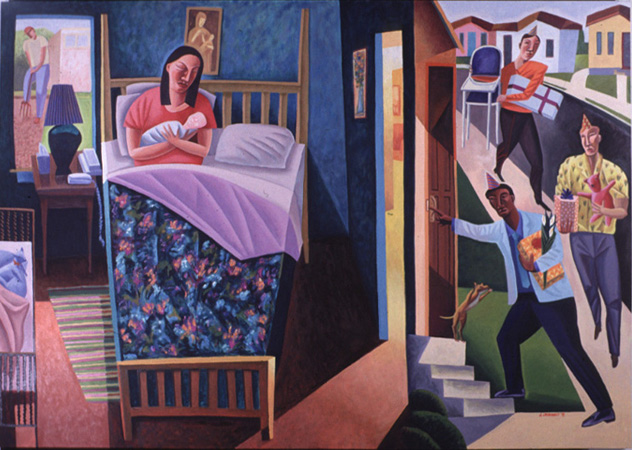
“Nativity” by James B. Janknegt
James B. Janknegt, Nativity, 1995. Oil on canvas, 57 x 82 cm.

Crow Nation (Montana-based tribe):

nativity2

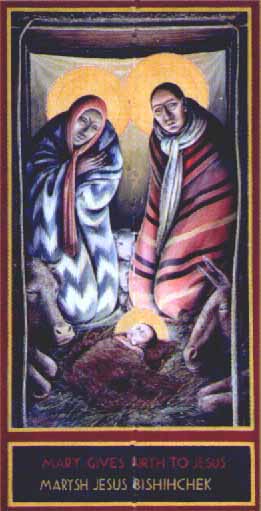
Native American Nativity
John Guiliani, Mary Gives Birth to Jesus, 1999. From The Crow Series.

Guatemala:

nativity3

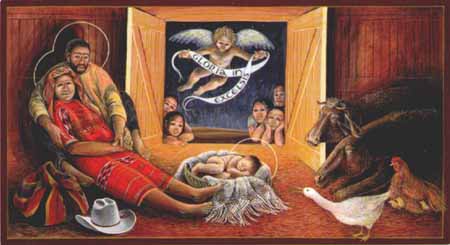
Guatemalan Nativity
John Giuliani, Guatemalan Nativity, 1990s.

Nicaragua:

nativity4

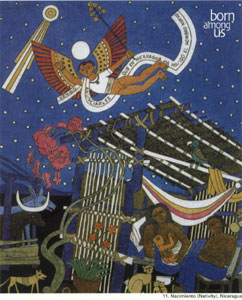
Nicaraguan Nativity
Leoncio Saenz, Nacimiento (Nativity), 1983. The banner reads: “I come to tell them that in Nicaragua the new man has been born.”

England:

nativity5

Nativity by Dinah Roe Kendall
Dinah Roe Kendall, The Shepherds Went to See the Baby, 1998.

India:

OLYMPUS DIGITAL CAMERA

China:

nativity7

Chinese nativity
He Qi, Nativity, 1998. Ink and gouache on rice paper.

Tibet:

nativity8

Tibetan nativity
A thangka (sacred wall hanging) given by H.H. the Dalai Lama to Fr. Laurence Freeman and the World Community for Christian Meditation in 1998.

Korea:

nativity9

Korean nativity
Woonbo Kim Ki-chang, The Birth of Jesus Christ, 1952-53. Ink and color on silk, 76 x 63 cm.

Japan:

nativity10

Japanese nativity
Sadao Watanabe, Nativity, 1960s? Stencil print on momigami paper, 58 x 78 cm.

Thailand:

nativity11

Thai nativity
Sawai Chinnawong, Nativity, 2004. Acrylic on canvas, 32 x 37 in.

Malaysia:

nativity12

Malaysian nativity
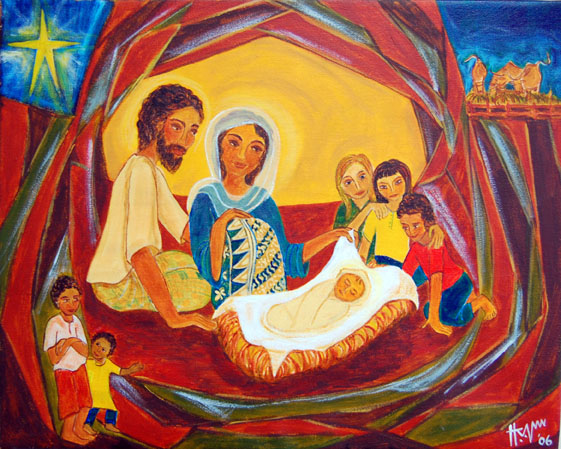
Hanna Varghese, God Is With Us, 2006. Acrylic on canvas, 16 x 20 in.

Indonesia:

nativity44

Indonesian nativity
Erland Sibuea, Nativity, 2008. Acrylic on canvas, 31 x 23.6 cm.

Philippines:

nativity33.jpg

Filippino nativity:
Kristoffer Ardena, The Meaning of Christmas, 1995. Oil on canvas, 62 x 46 cm.

Uganda:

nativity15

African nativity
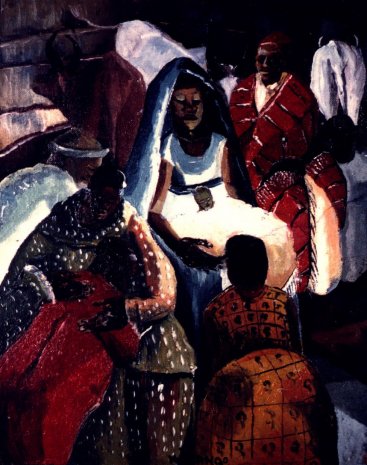
Francis Musango, Christ in the Manger, n.d. Oil painting.

Cameroon:

nativity16

African nativity
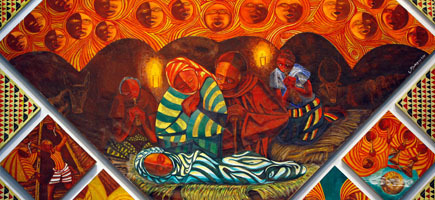
Fr. Engelbert Mveng, Nativity, early 1990s. Central scene from church mural. Holy Angels Church, Aurora, Illinois.

Democratic Republic of the Congo:

nativity17

African nativity
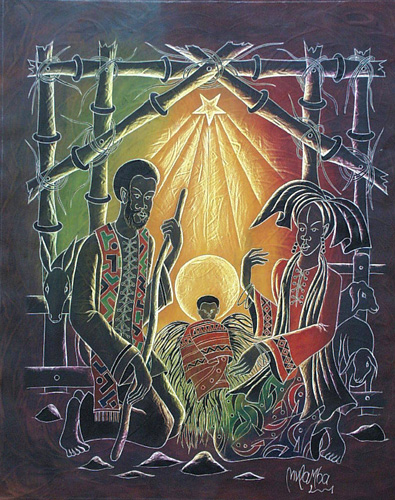
Joseph Mulamba-Mandangi, Nativity, 2001. Peinture grattée, 70 x 50 cm.

Australia (Aboriginal):

nativity18

Australian nativity
Greg Weatherby, Dreamtime Birth, 1990s? 51 x 64 cm.

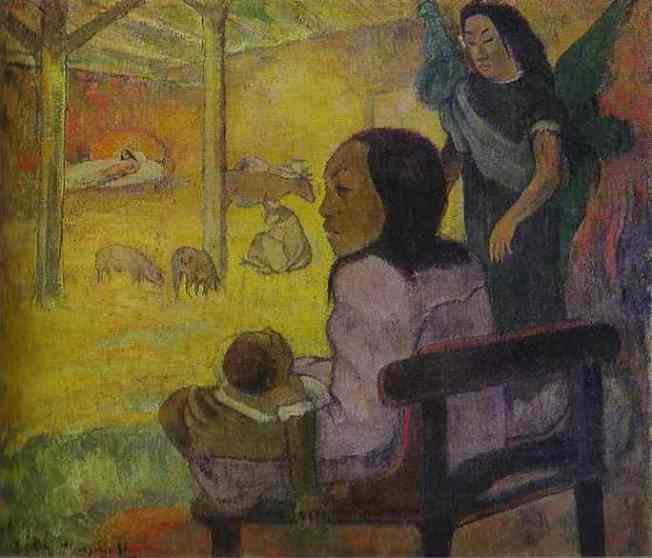
Tahiti:

nativity19

Nativity by Paul Gauguin
Paul Gauguin, Baby (The Nativity), 1896. Oil on canvas. The Hermitage, St. Petersburg, Russia.

Posted on December 25, 2011 by Victoria Emily Jones

Victoria Emily Jones's avatarThe Jesus Question

Four years ago on Christmas Day I posted a selection of nativity paintings originating mainly in non-Western cultures. Each year since then that post has ranked as one of the five most-read posts on this site, with over twelve thousand views to date. So I’ve decided to do a part 2.

My friend Scott Rayl shared a quote with me this week by S. D. Gordon: “Jesus was God spelling Himself out in language humanity could understand.” What a succinct summary of the Incarnation!

Today we celebrate the transcendent God made immanent, accessible. We celebrate his new name: Emmanuel, God-with-us. The artists here can aid us in that celebration.


Australia (Aboriginal):

First Nations of Canada:

Guatemala:

Nicaragua: 

India:

Thailand: 

China:

Japan:

Korea:

Vietnam: 

Philippines: 

Indonesia:

Nigeria:

Ethiopia:

Kenya:

Tanzania:

South Africa:

(Many of the Asian artworks in this post were found through the Asian Christian Art Association website. It’s a really rich resource…

View original post 3 more words

We Are All One

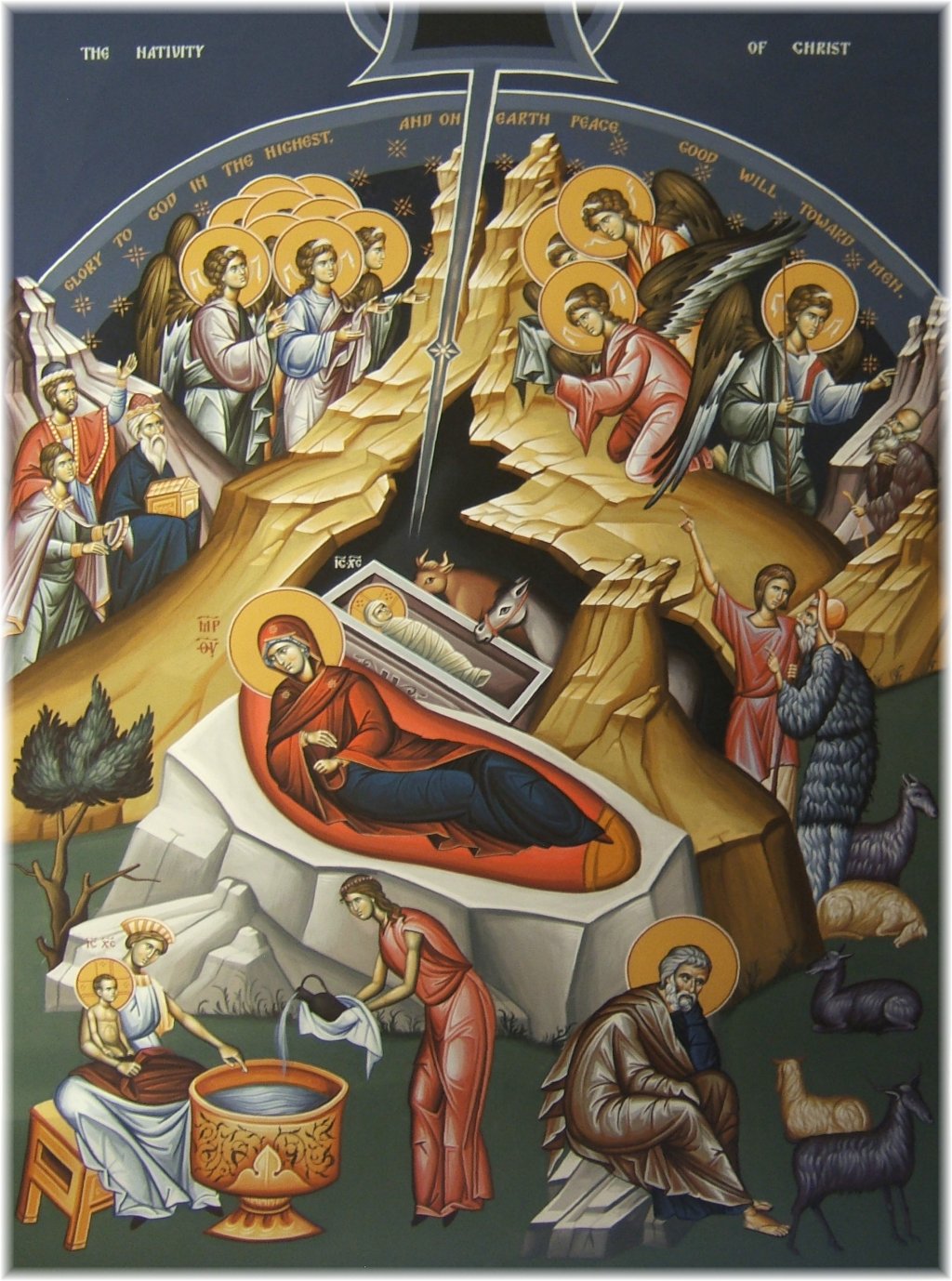
nativity icon.jpg

In a few hours, I’m flying to Thessaloniki, from where I’ll get the bus to Ouranopolis, the port to Mount Athos. I’ll be away until January 4th, so have a blessed Feast of the Nativity and a happy New Year.

This has been a tough year, in ways that I cannot even begin to express, and I’m only now starting to feel the effects. Tiredness, hopelessness and fear, sadness to the point of despair – all of these have haunted me relentlessly during the last twelve months. To say that 2016 has not been my favourite year would be too kind, even for my standards. To say that 2016 has been even remotely a good year would be beyond insincerity and would approach hypocrisy.

We have achieved many things for the Monastery, and for that I must thank you. I have tried to let you know, to the best of my ability, how much I appreciate your support. All my hard work, all my best intentions, all my sacrifice would amount to nothing without you and your hard work, your best intentions, your sacrifice. Together, we have done incredible things this year, and I trust that, by the grace of God, we shall do even more in 2017. For all of this, I thank you. You are in my prayer always, where ever life takes me.

That being said, the Monastery exists in this world and cannot ignore the world. Monasteries are doors between this fallen world and the Kingdom, calling our fallen nature to its true prototype, encouraging us on the way, guiding us step by step, as we fight to let go of our fallenness and we learn to see ourselves through the eyes of God. This is why monasteries exist, this is their purpose.

And this is where I’ve fallen mostly in 2016. Although I’ve kept far from the political fights that consumed the world, I have allowed their noise to disturb me, I have allowed them to distract me from the things that truly matter. I have kept silence over the outpouring of hatred that drowned the world over the Council, Brexit or the US elections, but I have not succeeded to hold on to the silence in my heart.

As a monastic, I have no responsibility to get involved in these fights. Monastics are dead to the world, and to get involved is a failure towards one’s calling. When people accused the Abbas of the Desert for refusing to get involved and judge various people or causes, they sent their accusers to the cemetery and told them to ask the dead buried there to judge them. As a monastic, my responsibility is to stand among you, silent and dressed in my black vestment, as a reminder that our true Calling, our true Identity and our true Home are somewhere else.

As the world rages consumed with passion for one cause or the other, a monk’s calling is to silently remind those who have the eyes to see that we are all mortal and that the real fight, the real cause, the real passion should be for something entirely different: the salvation of our souls. All else is dust.

It is my responsibility, therefore, to tell you all that no one won in 2016. There are no winners. We have all lost. We have all allowed hatred and doubt and fear to enter our hearts. We have all judged, we have all looked at Christ’s image, our brother, and saw in him the enemy. We have all built walls: some have built walls against those who are different from them, others have built walls against those who build walls. There is no difference between walls: regardless of what motivates them, they are all expressions of a void in our hearts. That empty void where Love should have been.

I’m going to Mount Athos for two weeks with this in mind. I’m not looking for rest, physical or emotional. I’m going to regain my perspective of the world and myself. I need to taste silence to be reminded of the things that matter. I need to touch holiness so I may redirect my steps toward it. I need to see sparkles of the Kingdom, so I may turn my back to this empty noise and start walking towards Life again.

I leave behind 2016 with a void in my heart. I pray, I pray with all my strength that Love Incarnate will return once more and fill it. I pray for me, I pray for you – the same prayer, for we are all One. We are ALL One.

Source: Mull Monastery blog

* Kindly excuse any technical issues; we are migrating the blog back to WordPress

See also The Womb and The Tomb in The Nativity Icon

Nativity Paintings from Around the World

Carpe Diem and Christmas

The Ass and the Ox in the Nativity Icon 

Christ’s Nativity: Living a Kairos Life in a Chronos World

Arabic Christmas Carol

Sing Ye Carols!


A Conversation About God

With Actor Jonathan Jackson & Dr. Norris Chumley

While Jonathan’s views about Art in his book The Mystery of Art: Becoming an Artist in the Image of God are quite controversial, as two opposing book reviews below indicate(*), the narrative of his conversion and finding the true Church in “A Conversation About God” is captivating.

Watch a fascinating conversation about God, Conversion and Art, with Actor Jonathan Jackson and Dr. Norris Chumley:

Orthodox Christian Network


(*) Moses Benjamin Cabe (Ben Cabe) is praising Jackson’s views here, while  Richard Barrett (Orthodox Arts Journal) urges caution in

The problem of art in Anglophone Orthodoxy: a review essay” .

As for me, I am undecided yet and still studying the matter. Jackson invokes Dostoyevski‘s  quotation “Beauty will save the world.” and quotes Elder Porphyrios’ words in Wounded by Love“Whoever wants to become a Christian must first become a poet.”, both  central in my life and this blog.

Indeed, you do not have to be a Christian to create true art.  In fact, it may be that you have to become an artist before you are able to truly become a Christian. Jackson adds  that, when someone is drawn to the beauty of a certain piece of music or painting, he is really being drawn to Christ.  Far removed from Christ is anyone who does not, and cannot, appreciate beauty.  “It is an incredible thing to discover that Christianity is an experience of saying yes to what is truly beautiful. …  From the beginning, the pure and ancient faith of Christ, which is still alive today, proclaims that God is beautiful!”

While Jackson is surely right in all this, there are other claims he makes in this book which may be problematic and will hopefully be addressed in future blog posts, when this whole matter is clearer in my mind…

St. Porphyrios’ Farewell

st-porphyrios

Such profound humbleness!


While at the Holy Skete of Kavsokalyvia on Mt. Athos, the Elder Porphyrios had given orders for his grave to be dug.
Through a spiritual child of his, he dictated a farewell letter of advice and forgiveness to all his spiritual children.

Here is the letter as it was sent to us from the Holy Convent of the Transfiguration of the Savior.
It is dated June 17, 1991. It was found amongst the monk’s garments that were laid out for his burial on the day of his departure.
It indicates his profound humbleness.

My dear spiritual Children,

Now that I am still in charge of my faculties, I want to give you some advice.

Ever since I was a child, I was always in sin. When my mother sent me to watch the animals on the mountain, (my father

had gone to America to work on the Panama Canal for us his children, because we were poor), there, where I shepherded

the animals, I slowly read, word by word, the life of St. John the Hut-dweller and I loved St. John very much. 

I said a lot of prayers, like the young child that I was, twelve or fifteen years old, I don’t remember too well. I wanted 

to follow his example. So, with a lot of difficulty, I secretly left my parents and came to Kavsokalyvia on the Holy Mountain. 

I became obedient to two elders, the true brothers, Panteleimon and loannikios.

They happened to be very devout and full of virtue, I loved them very much and because of that, with their blessing,

I gave them absolute obedience. That helped me a lot. I also felt great love for God and got along very well. 

However, because of my sins, God allowed me to become ill, and my elders told me to go to my parents in my village 

of St. John, Evia. Although I had sinned a lot from when I was a small child, when I returned to the world I continued

to commit sins which, today are very many. The world, however, thought highly of me, and everyone shouts that I’m a saint.

I however, feel that I am the most sinful person in the world. Of course, whatever I remembered I confessed, and I know God

has forgiven me. But now I have the feeling that my spiritual sins are very many and I ask all those who have known me 

to pray for me, because, for as long as I lived, I humbly prayed for you, too. Now that I’m leaving for heaven, I have the 

feeling that God will say to me, “What are you doing here?” I have only one thing to say to him, “I am not worthy of here, Lord, 

but whatever your love wills, it’ll do for me.” From then on, I don’t know what will happen. I however, wish for God’s love to act

I always pray that my spiritual children will love God, Who is everything, so that He will make us worthy to enter His earthly

uncreated Church. We must begin from here. I always made the effort to pray, to read the hymns of the Church, the Holy Scriptures 

and the Lives of the Saints. May you do the same. I tried, by the grace of God, to approach God and may you also do the same.

I beg all of you to forgive me for whatever I did to upset you.

Hieromonk Porphyrios
Kavsokalyvia, June 4/17 1991


And


That phone ring 🙂 At 14:35′ onwards 🙂 This Elder was sought after by the whole of Greece and all mankind. His whole life was dedicated in service to the faithful. I imagine that phone never stopped ringing, just as pilgrims never stopped coming. A saint receives everyone, that is his vocation. May we have his blessing! +2 Dec.


What is an Icon?

What is an icon?

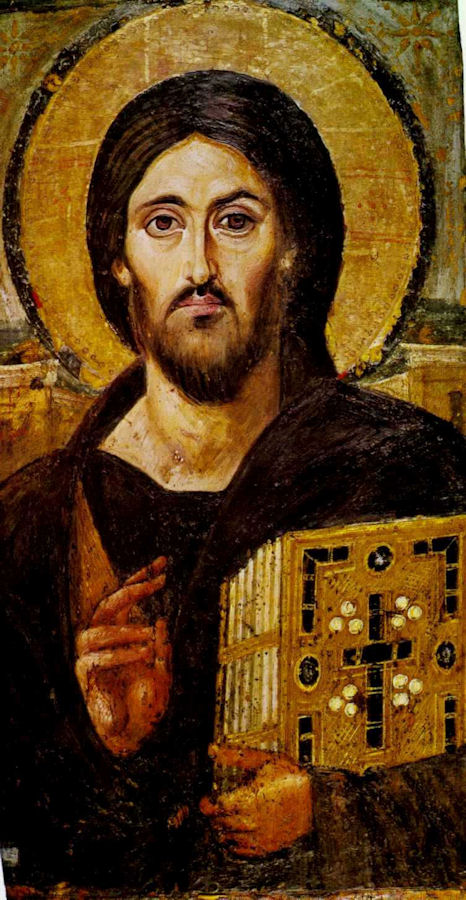
Pantocrator, St. Catherine’s – Mt. Sinai, 6th century. The two different facial expressions on either side emphasize Christ’s two natures as fully God and fully human.

What is an icon? There are approximately five million Eastern Orthodox Christians in America (Nabil, 2000). A minority in a nation dominated by Protestants and Roman Catholics, the Eastern Orthodox culture has maintained strong familial and cultural identities. Understanding something about them, being able to lay aside preconceptions and ethnocentricity to view life from the Orthodox Christian’s perspective will allow the onlooker an opportunity to increase in understanding not only of the Eastern Orthodox Christian but of human nature. It is this author’s intent to introduce the reader to an insider’s perspective of iconography in the life of an Orthodox Christian, in the hope that understanding will increase.

What Is An Icon?

A legend passed down for nearly 2000 years describes the first icon. At the time when Christ was traveling to Jerusalem where He would experience the trial and crucifixion, King Abgar of Edessa sent for Jesus. Christ could not go to the King, so instead He sent a linen cloth on which He had dried His face. The story continues that the cloth carried to the King had an impression of Christ’s face on it. The King’s illness was healed when the cloth was taken to him. This first icon, “not made by human hands”, began a tradition of portraying Christ and the saints in pictorial fashion. (Benz, 1963). The entire town of Edessa treasured this first icon, that is the linen cloth with Christ’s face imprinted on it. It was widely acknowledged throughout out the East and still written about in the eighth century (Ouspensky, 1978).

So what is an icon? Webster defines an icon as an image (Webster, 1966). In the Orthodox Church an icon is a sacred image, a window into heaven. An image of another reality, of a person, time and place that is more real than here and now. More than art, icons have an important spiritual role. Michel Quenot says it well in his book, The Icon: Window on the Kingdom, an icon is “theology in imagery, the icon expresses through color what the Gospel proclaims in words”.

For this reason the rules regarding the creation of an icon are rigorous. The iconographer must prepare himself for the task of painting an icon by following a strict discipline of fasting and prayer. He must quiet his spirit and submit himself to God. The icon he creates will not be signed. He will not expect accolades or applause when the icon is completed. The icon will be created to inspire and lead others into worship. Painting the icon is not a use of imagination. Instead, the icon will be painted using the prescribed regimen and style that has been passed down through the centuries. Everything from the facial expressions to the colors used is predetermined. The following is a prayer recited by an iconographer prior to starting to work:

“O Divine Master of all that exists, enlighten and direct the soul, the heart and the mind of your servant: guide my hands so that I might portray worthily and perfectly Your Image, that of Your Holy Mother and of all the Saints, for the glory, the joy, and the beautification of Your Holy Church.” ( Quenot, p.13)

The primary purpose of the icon is to aid in worship. Its design follows that purpose. Through lines and color the iconographer conveys the awesomeness of the invisible, divine reality (Evdokimov, 1990). The creation of an icon is defined by tradition. That is a 21 st century iconographer would not decide to change the shape of Christ’s face. It is understood that a person who saw them in the flesh painted the first icon of an individual. St. Luke is accredited with painting the first icons of Christ and Mary the Blessed Virgin. Each subsequent iconographer will use the original icon as a guide. There is room for a small amount of stylistic change but tradition limits the options for that change ( Forest, 1997).

Icons are not created to force an emotional response. When portraying historical scenes the faces don’t show emotions but instead portray virtues such as purity, patience in suffering, forgiveness, compassion and love. An example of this would be the portrayal of Christ on the cross. Neither is the icon a sentimental picture. Christ is always shown as God. Even the icons of Christ seated on His mother’s lap show Him with an adult face, revealing that even though Christ lived as a child among us He was also God ( Forest,1997).

*


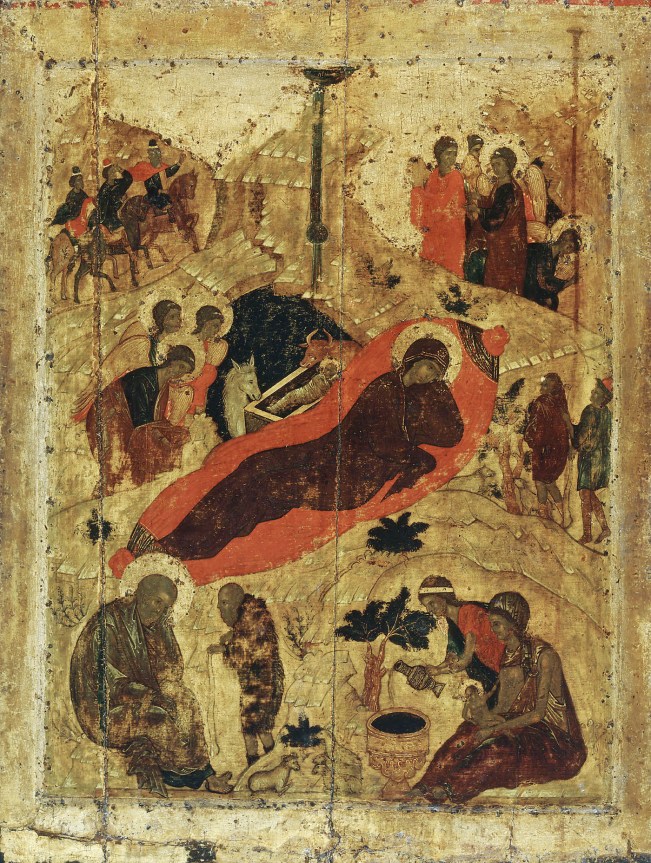
Icons depict silence. There are no actions displayed, no open mouths. The icon invites the Christian to enter into contemplation,prayer, and silence (Ware,1979). Space is not defined as three-dimensional and time is insignificant. The story told by the icon precludes time and space. An example would be the icon of the Nativity, which shows the cave where Christ was born in the background with those who came to adore in small vignettes. Lighting proceeds from the character portrayed in the icon. There are never shadows in icons. This shows us that the saint portrayed is “glorified” having completed the race and entered into heaven (Quenot,1991).

Symbolism is used in icons and details are used minimally. For example, when showing John the Baptist baptizing in the river the grown man he baptizes is shown as an infant because the baptism is a rebirth. Colors are also symbolic. Blue reveals heaven and mystery. Green is youth, fertility and the earth’s vegetation. Red, the color of blood, suggests life, vitality and beauty. White is purity, the divine world and innocence. Gold indicates sanctity, splendor, and the glory of God and life in the heavenly kingdom. Purple reveals wealth, power and authority.


*

First and foremost, icons are a constant reminder of the incarnation of Christ, that is to say, they remind us that God “sent His only begotten Son”(Bible, John 3:16) to rescue us from our sin and death. We cannot see God the Father or God the Holy Spirit, but, because Christ chose to take on human flesh, we can see Him. His face can be portrayed on wood with paint. We can also paint His Mother and other saints who have finished the race and gone on to heaven. The Orthodox believe that surrounding themselves with icons help them to acknowledge the constant presence of Christ and the saints in their lives.

According to Father Nabil, priest of St. George Orthodox Church in Indianapolis, IN, the icon is a representation of the person portrayed upon it. The term used to describe this link is typology. Typology means that an event or item is somehow related to another event or person. An example of this would be the icon buttons on the computer tool bar. When a person uses the tool bar and clicks on the “print” button the user knows that the print button represents something else. That is, the print button will not cause itself to be duplicated on paper with ink but instead the user knows that the print button at that moment is a typology for the item on the screen. By interacting with the “print” icon the user expects the item the button represents to be printed. When an Orthodox Christian gives honor to an icon by kneeling or bowing before it or by kissing the icon the Christian is not paying respect to wood and paint. Instead he acknowledges that the icon represents much more and that the link between the icon and the person in the heaven is real. He believes that in some mystical fashion the veneration given to the icon will be received by the person it portrays.

As a recent convert to the Orthodox Christian faith this author has some experience on which to base an analysis of the use of icons. As a convert, ten years ago icons were one of the additions to worship unfamiliar to me. I came from a protestant background and the worship I had been involved in up until this point involved sitting in a pew and repeating prayers, creeds and hymns when appropriate. It didn’t take long for me to realize that the Orthodox utilize all of their senses and beings in their worship.


Incense floats through the air representing the prayers ascending into heaven. A bell is rung during the call to worship and at other key times in the worship. Altar boys, deacons and the priest serve in the altar area, chanting prayers and hymns, bowing, performing prostration, acknowledging the heavenly hosts of saints and angels whose worship we are entering into. Parishioners do not sit primly in the pews but may walk throughout the church lighting candles, venerating icons. The hands of parishioners are not quiet and closed but may be raised heavenward to show the lifting of the worshiper’s heart toward God or they may be making the sign of the cross, reminding the one who makes it that Christ loved us enough to die for us. Later communion will be available so that one can even utilize the sense of taste during worship. In those first weeks the activity of worship seemed almost distracting to me but as I have entered into the worship it has became natural.


The Orthodox believes worship is ongoing in the heavenly kingdom. They believe heaven is a place where worship doesn’t cease, that those who have gone before and have been faithful are worshiping the Holy Trinity continuously. When earthly Christians join together to worship we join the heavenly throng and begin participating in that worship. For that reason the walls and ceilings of the church are decorated with icons of Christ, Mary the Blessed Virgin, saints and angels.


When parishioners stand in the pew during worship they only need to look around to see the saints surrounding them. In this way the icon is a reminder of a larger reality. It reminds us that we have stepped out of one world and into another. It reminds us that though we struggle on a daily basis to remain faithful to our beliefs and our God there are many who have finished this life successfully and now dwell in a place were there is no more sorrow. We are encouraged to persevere, to set our eyes on the finish line, to continue to live a life that is pleasing to God.

*

Living as we do in a society that demands that our lives be lived at a fast pace and with very little quiet time the icon beckons to us to slow down. The stillness of the icon draws us into the quiet so that we can lay aside the cares of this world and meditate on the splendor of the next. The benefit of the icons is not so much in analyzing the style of painting, the iconographers name or even in knowing the individual representations in the icon. The benefit is in meditation, in quietness and in guiding the heart to prayer.

There are other components of the Eastern Orthodox culture that contribute to the use of the icon. It has been this author’s personal observation that the Orthodox culture values family. Aunts, uncles, brothers, sisters, grandparents, cousins and so on worship together, live together and often even work together. A large number of Orthodox are immigrants who have been able to assimilate into the American culture due to a strong work ethic and a respect for the freedoms afforded a democratic society. Many have lived under Communist governments, some have suffered under the authority of anarchists. Strong family ties, even family businesses have helped to sustain these immigrants. This respect for unity and extended family goes beyond the earthly family and makes the recognition of the saints more acceptable. For example, if Aunt Sally prayed for us while she was on earth and we know that she has eternal life now, why would we expect her to stop praying for us now?

Also, I have found that the Orthodox are a very expressive people. If I meet an Orthodox friend at the grocery store or at church I have learned to expect that friend to drop whatever he is doing and come toward me with both arms reaching out. First he will embrace me, then give me a kiss on each check. This is called the kiss of peace. Often a greeting such as “Christ is Risen!” or “Thanks be to God” will accompany the kiss. It should be noted that this kiss of peace is shared among men and women equally. The greeting can be between two men, two women or a man and a women. I have often wanted to follow a single person throughout a Sunday worship to tally the number of such greetings a person offers on such a day. If such a greeting is given to people who are simply acquaintances then the kissing of the icon is in keeping with the cultural practices.

In conclusion, viewing the use of icons from within the Orthodox culture has given the author the opportunity to develop an appreciation for icons. I have found that hanging an icon in my home reminds me that God is present in my home. When I pass the icon I remember that I am to be praying continuously. When life is just speeding by too quickly I know where to go to find some quiet and to pray for the peace that surpasses understanding. It is no longer surprising to me that the God who created humans would realize that sometimes in our crowded lives it is beneficial to have a “window on the kingdom” (Quenot, 1991).

*

Eastern Orthodox Christians and Iconography

By Cindy Egly


Why Discipline Our Eyes?

Byzantine Iconography vs. Western-Eastern Religious Art

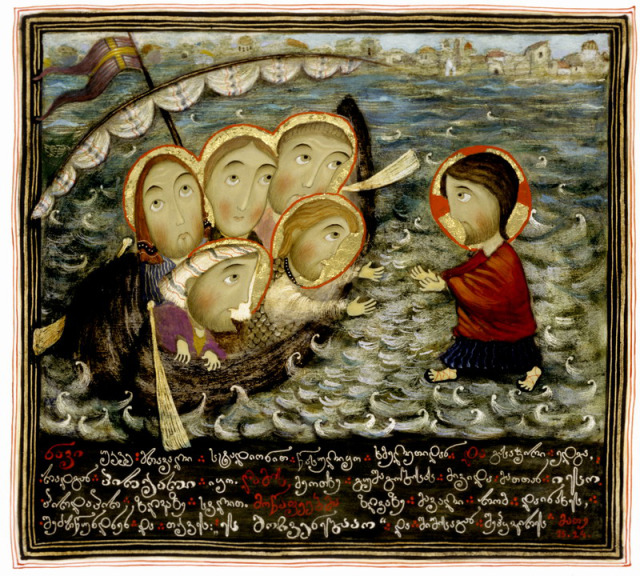
Walking on Water by David Popiashvili

Byzantine Iconography vs. Western Religious Art


Byzantine Iconography vs. Western-Eastern Religious Art

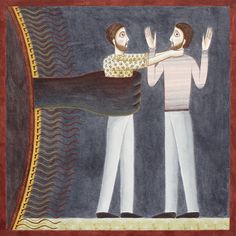
Nikola Sarić , Parables of Christ, The Parable of the Unforgiving Servant

Byzantine Iconography vs. Western-Eastern Religious Art

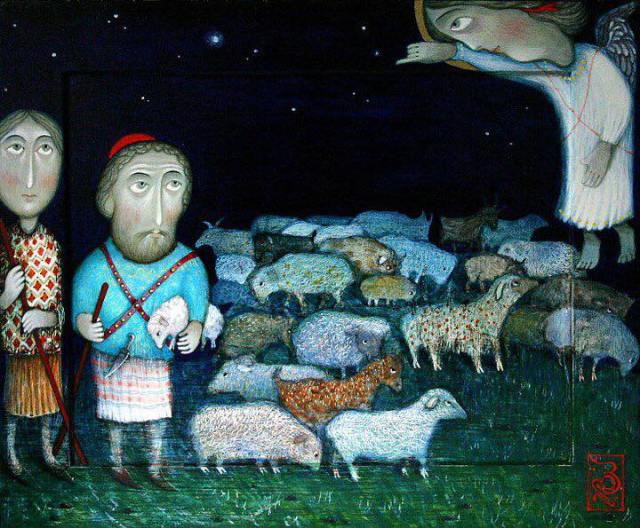
Popiashvili, Angel and Shepherds on Christmas Day

An Orthodox Aesthetic Counterpoint to a Protestant blog post on Holy Images 


This blog post will attempt to highlight the differences between Byzantine Iconography vs. Western Religious Art. It is only fair to point out from the very start that Victoria’s selection of works of Art in the 2nd part of her article,  “Disciplining our eyes with holy images“, is truly inspired.

Enjoy!

“I desire peace—and not just any old peace, but the peace that Christ gives, and not just for myself, but for the world.

Byzantine Iconography vs. Western-Eastern Religious Art

I desire to be an agent of healing,

Byzantine Iconography vs. Western-Eastern Religious Art

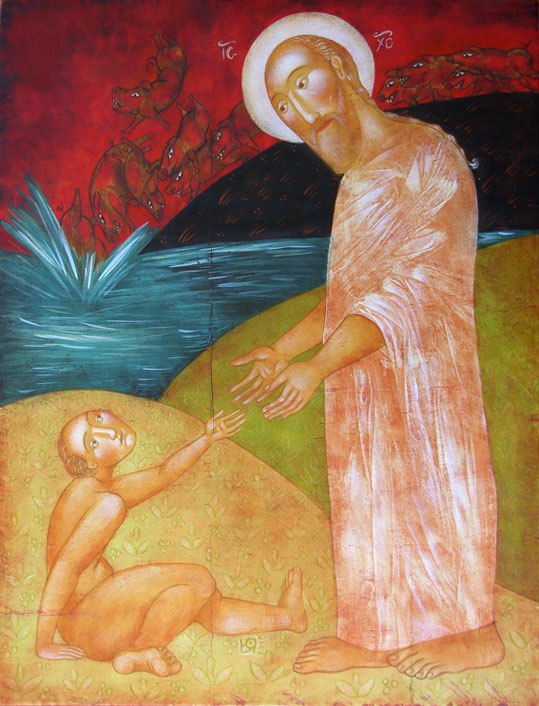
Julia Stankova, “The Healing of the Demon-Possessed Man” (Mark 5:2-19), 2010. Tempera, gouache, watercolors, and lacquer technique on wood, 40 x 31 cm.

and reconciliation.

Byzantine Iconography vs. Western-Eastern Religious Art

Wisnu Sasongko (Indonesian, 1975–), Zacchaeus, 2005. Acrylic on canvas, 28 × 52 in.

I desire to touch Christ’s wounds.

Byzantine Iconography vs. Western-Eastern Religious Art

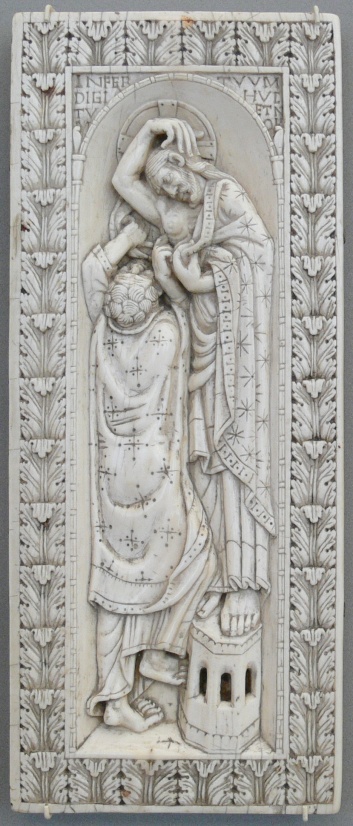
Right panel of an ivory diptych depicting the Incredulity of St. Thomas, made in Trier at the end of 10th century. Bode Museum, Berlin.

I desire to serve.

Byzantine Iconography vs. Western-Eastern Religious Art

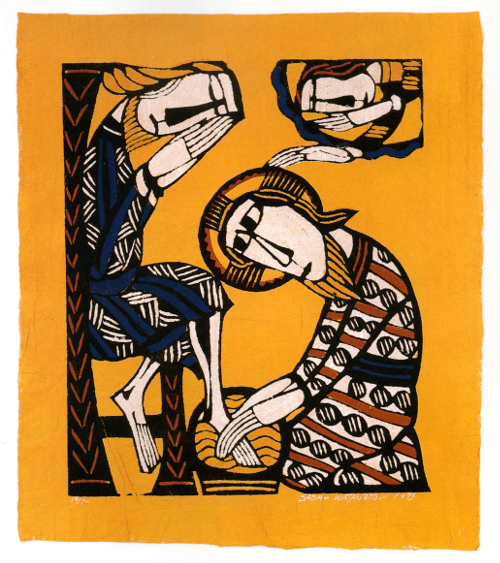
Sadao Watanabe (Japanese, 1913–1996), Jesus Washes Peter’s Feet, 1973. Stencil print, 26 × 22.75 in.


I desire to feed people,


Byzantine Iconography vs. Western-Eastern Religious Art
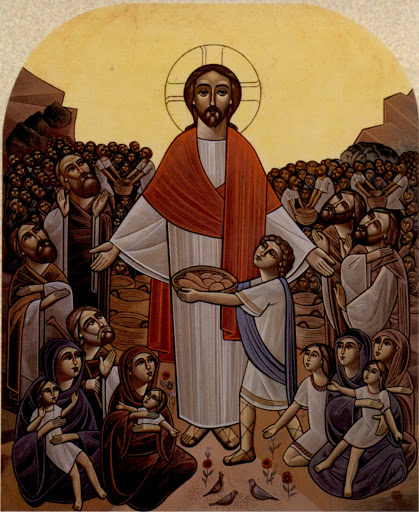
Isaac Fanous (Egyptian, 1919–2007), Jesus Feeding the Multitude.And to help people see.

Byzantine Iconography vs. Western-Eastern Religious Art

Anthony Falbo (American, 1953–), The Healing of the Blind Man.

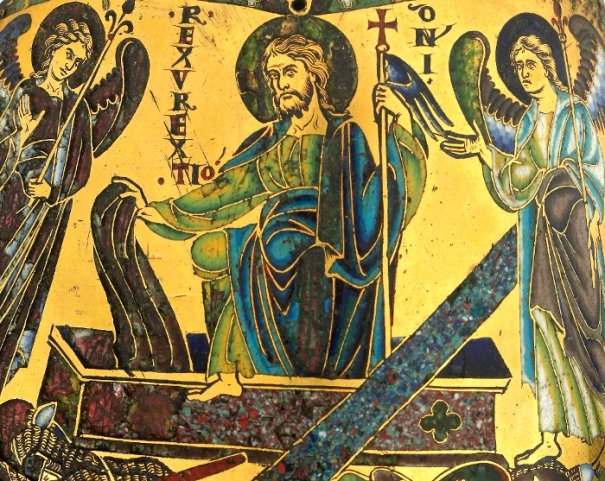
I desire to practice resurrection.

Byzantine Iconography vs. Western-Eastern Religious Art

The Resurrection (detail), ca. 1170–80, Rhine-Meuse region. Champlevé enamel on gilded copper. Musée du Louvre, Paris.

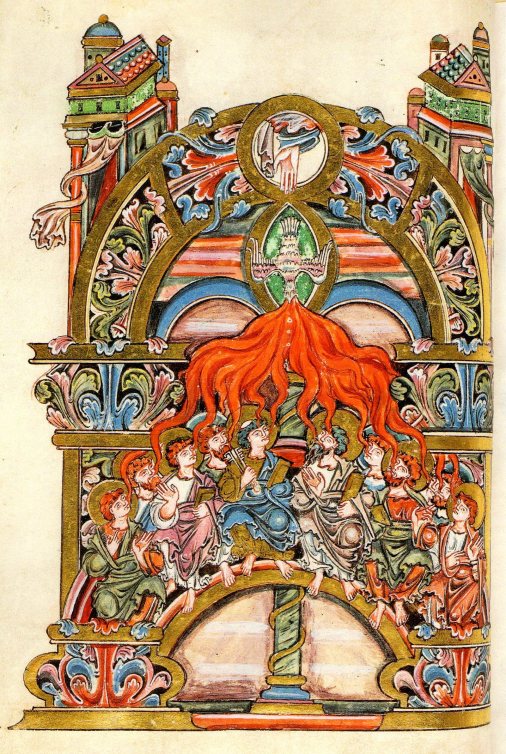
I desire Holy Spirit fire.

Byzantine Iconography vs. Western-Eastern Religious Art

Pentecost, from the Benedictional of Archbishop Robert, New Minster, Winchester, ca. 980. Bibliothèque Municipale de Rouen, MS Y.7(369), fol. 29v.

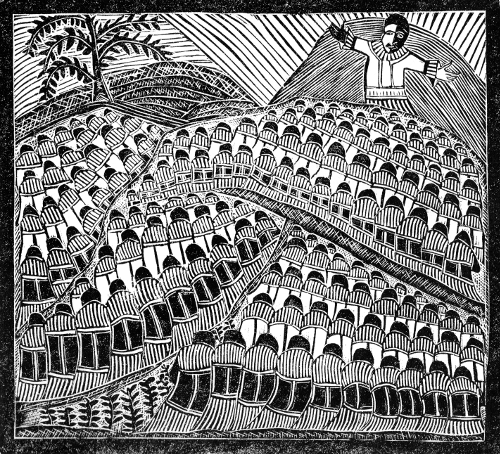
I desire to preach truth.

Byzantine Iconography vs. Western-Eastern Religious Art

Azaria Mbatha (South African, 1941–), Sermon on the Mount. Linocut.

I desire to bless.

Byzantine Iconography vs. Western-Eastern Religious Art

Alphonso Arul Doss (Indian, 1939–), The Blessing Christ. Oil on canvas, 34 × 24 in.

I desire to suffer with dignity.

Byzantine Iconography vs. Western-Eastern Religious Art

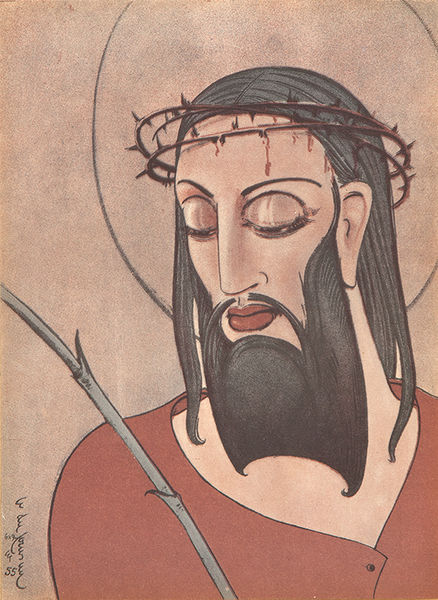
Angelo da Fonseca (Indian, 1902–1967), Ecce Homo, 1955. Watercolor, 9 x 6 in.

I desire to stand up for justice.

Byzantine Iconography vs. Western-Eastern Religious Art

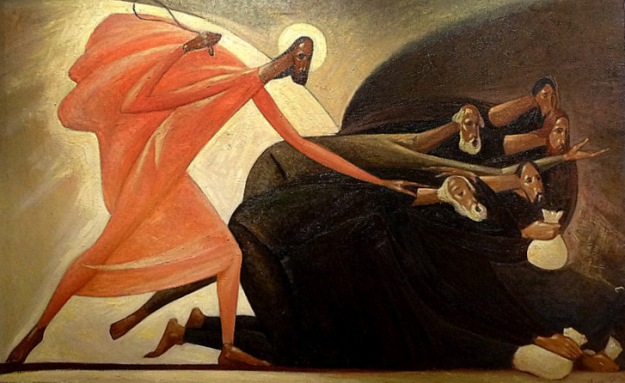
Alexander Smirnov (Russian, 1947–), The Cleansing of the Temple. Oil on canvas.

I desire to protect.

Byzantine Iconography vs. Western-Eastern Religious Art

Kim Young Gil (Korean, 1940–2008), The Woman Caught in Adultery.

I desire to forgive.

Byzantine Iconography vs. Western-Eastern Religious Art

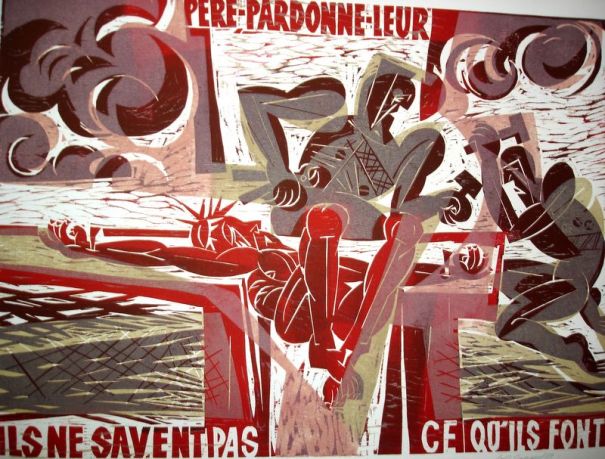
Jacques Richard Sassandra (French, 1932–), Father, Forgive Them. Color woodcut.

I desire to weep with those who weep.

Byzantine Iconography vs. Western-Eastern Religious Art

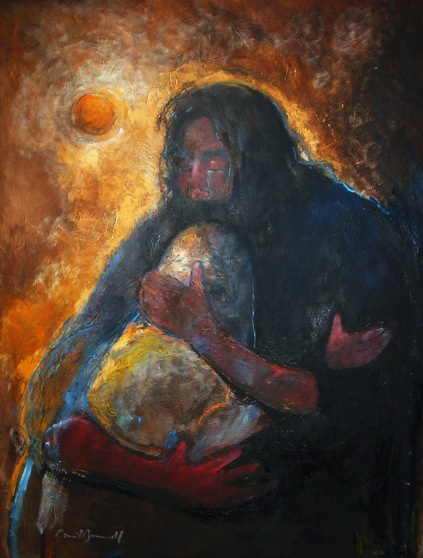
Daniel Bonnell, “Jesus Wept.” Oil on canvas, 34 x 46 in. Tags: Lazarus

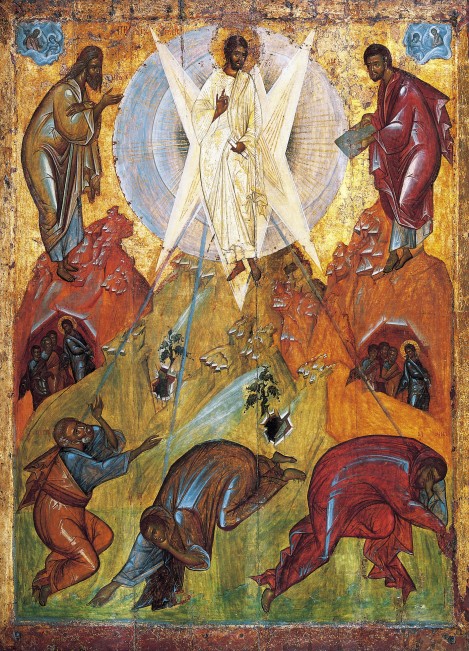
I desire transfiguration.

Byzantine Iconography vs. Western-Eastern Religious Art

Attributed to Theophanes the Greek, The Transfiguration, 1408. Tempera on panel. State Tretyakov Gallery, Moscow, Russia.


Let me repeat again here, at the end of this selection of works of Art, that Victoria Jones’ choices have warmed my heart and have been a delight to the eyes!


BUT


Victoria’s rationale for just  “gazing” at “holy (*)  images” in the first part of her essay feels too cerebral to me, limiting and stifling, so ‘Puritan’, so Protestant, if I may add.  Even if she did not mention this so explicitly–which she does–ie. that her attitude to “holy [sic] images” is derived from her “own Protestant theology [sic] of images”, still her Protestant  limitations, again if I may say so, are obvious to anyone with an Orthodox Christian sensibility.

Even the very title of her analysis is revealing: “Disciplining [sic] our eyes“. In my opinion, what we should all be targeting instead, is not to just the disciplining, but the healing, the sanctification of our eyes and all our senses. Indeed, Victoria herself feels the needs for “having right sight and desire restored” but her ‘solution to this problem’ is too cerebral and rationalistic in my opinion, not really a solution in the end, as it fails to embrace the whole of man, body and soul, heart and nous, and perpetuates the torment of a divided, conflicting, fragmented humanity.


Consider the following by Victoria:

“I use them [ie. holy images] as an aid to prayer, but I do not reverence them with actions like kissing or lifting—not necessarily because I’m opposed to such displays but more likely because I’m naturally reserved, and also I’m usually interacting with the images digitally. … Part of my private spiritual practice is to spend a little time each day gazing on a holy image. I’m particularly fond of ones of Christ. For me this gazing serves a centering function; it reorders my desires. Sitting still with an image of Christ reminds me of Whose image I bear, and I take that with me as I encounter other images throughout the day that try to tell me otherwise.” (Ibid)


No! This is so limiting! It is by far too cerebral, too rationalistic, too ‘mind-centred’, too ‘Western’ … Rather that entering into a Communion with Christ our Saviour Himself, we are limiting ourselves to ideas and concepts about Christ. Hugging and embracing and touching icons may indeed feel strange to those of a Protestant background, more so if “naturally reserved”, but matter is not evil! It was ancient Greek philosophy which believed that the body imprisons the soul, and thus it detested matter. But Christians respect the body and all its senses, since Christ made the flesh a source of sanctification, and matter (water, oil, etc.) a channel of divine grace.


In his writings, St. Gregory Palamas affirmed that man, united in body and soul, is sanctified by Jesus Christ, who took a human body at the Incarnation. “Thus the Word of God took up His dwelling in the Theotokos in an inexpressible manner and proceeded from her, bearing flesh. He appeared upon the earth and lived among men, deifying our nature.” … And he significantly adds, “When God is said to have made man according to His image, the word man means neither the soul by itself nor the body by itself, but the two together.” ((A Homily on the Dormition of the Theotokos and Ever-Virgin Mary)

Byzantine Iconography vs. Western-Eastern Religious Art

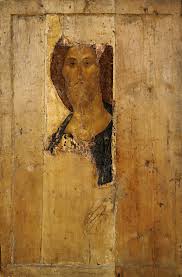
Rublev, Saviour

Conversely, see how Victoria continues:

“Orthodox believers developed the practice of icon writing and veneration to address this question—creating physical images of Christ to mediate his presence and to serve as an anchor in daily life. The Incarnation, they say, renders icons absolutely essential to the task of knowing God.

My own Protestant theology of images owes much to the Orthodox view but deviates from it as well. Although I acknowledge the revelatory potential of images, I do not regard them, as the Orthodox do, as on a par with scripture. Another key distinction is that I admit into my devotional life a range of sacred images, not just those that fall within the rigorously guarded canon of Orthodox iconography.”

I define “holy image” as any image that draws the viewer closer to Christ. The religious background of the artist is, to me, irrelevant, and what functions as a holy image to one person might not for another. You sanctify the image by letting it lead you into communion with God. ” (Ibid)

But specifically, how does all this mental activity lead you into communion with God? Let us study a concrete example, the Resurrected Christ’s appearance to Mary Magdalene as described in the Gospel of John “Touch Me Not, by  another Protestant scholar/ artist. See how rationalistically he too approaches the whole matter:

“I believe all of these works taken on the whole can help you begin to ask yourself the question, like an artist…”I wonder what it was like to see Jesus in in his newly resurrected form?” “I wonder how Mary felt as she approached the grave?” I wonder what the meaning of this strange encounter?” When you begin to picture the scene in your mind and make it your own, this is when the resurrection becomes real to you. In this way, all of these representations can help you as long as you keep going into your own thoughts.


Byzantine Iconography vs. Western-Eastern Religious Art


See? Mind and thought, logical thinking, conceptualisation and deduction, the Western curse on Christianity. But Incarnation ‘allows’  an entirely different approach to “images” and “icons” to that of Victoria Jones’ and other Protestant scholars’ ‘guided meditations’.

What we want to avoid is an overemphasis of mind and its rational faculties at the expense of nous and man’s heart. The West, with its rationalistic tendencies, has associated the image of God with man’s intellect. Barlaam’s mind was full of rational arguments, but his heart was cold.

Certainly, life with God is not just information, but also experience. Our living God cannot be conceived and described only by study, but must be spoken about from experience. “Did not our heart burn within us while He talked with us on the road, and while He opened the Scriptures to us?” (Luke 24:32).


Orthodox Theology is not cerebral, but empirical, and it cannot be acquired through study alone. Books and meditation, reflection may certainly help, but the true knowledge of God is existential. God reveals Himself as Light to the purified, and “through the Holy Spirit they know God and are able to speak of Him”. Philosophers speak reflectively through reason and imagination, which is why it is not possible for them to be higher than the prophets, who see God and speak of Him through the Holy Spirit.


See how ‘wholistic’ the Orthodox approach is:

“The Church, through the temple and Divine service, acts upon the entire man, educates him wholly; acts upon his sight, hearing, smelling, feeling, taste, imagination, mind, and will, by the splendour of the icons and of the whole temple, by the ringing of bells, by the singing of the choir, by the fragrance of the incense, the kissing of the Gospel, of the cross and the holy icons, by the prosphoras, the singing, and sweet sound of the readings of the Scriptures.”

+ St. John of Kronstadt, My Life in Christ 


Nikola Sarić, PARABLE OF THE PRODIGAL SON (LK 15:11–32)


Byzantine Iconography vs. Western-Eastern Religious Art


(*) By the way, Victoria’s definition of what is a holy image is not correct in my opinion: “I define “holy image” as any image that draws the viewer closer to Christ. The religious background of the artist is, to me, irrelevant, and what functions as a holy image to one person might not for another. You sanctify the image by letting it lead you into communion with God.” [Bold type mine for emphasis] In my opinion, Victoria’s talking here about religious art in general, not sacred, and certainly not holy, at least for an Orthodox Christian’ understanding of these terms. Of course, anything can be perceived as holy and sacred in God’s Creation, but I do not think that this is how Victoria uses this word in her analysis above.


Byzantine Iconography vs. Western-Eastern Religious Art

Popiashvili, Zaccheus


For Victoria Jones’ full argument, go here

For an Orthodox Christian understanding as to what makes an image holy (even to, or better, especially to, a ‘convert’, a protestant brought to the Orthodox Church, as opposed to a ‘cradle Orthodox, born and immersed into Orthodoxy), go here

Nikola Sarić studied at the Faculty of Applied Arts of the University of Belgrade and at the Academy of Serbian Orthodox Church for Arts and Conservation in the department of church art, where he graduated in 2014. Nurtured in the practice of church art, his artistic expression is deriving from sacred Greco-Roman art and generally speaking the art of the classical antiquity and the medieval period. In his works, through the immediacy and simplicity of visual elements, he is conveying the intuition of a “transfigured world”. Using different techniques and materials, Nikola is trying to describe this unimaginable world. His interpretations reflect the personal spiritual experience as well as the tradition that breathes and evolves within the concepts of contemporaries.

For a representative sample of Nikola Sarić‘s artworks, go to Parables of Christ, to his website http://www.nikolasaric.de and his latest interview to the Orthodox Arts Journal

*

David Popiashvili studied at the Tbilisi Art School and at the Tbilisi State Academy of Arts At faculty of the fine arts.

For a representative sample of David Popiashvili‘s religious paintings, go to London Art  AND  Stories about Jesus Christ, illustrated by David Popiashvili

What is a Reader?

What is a Reader?

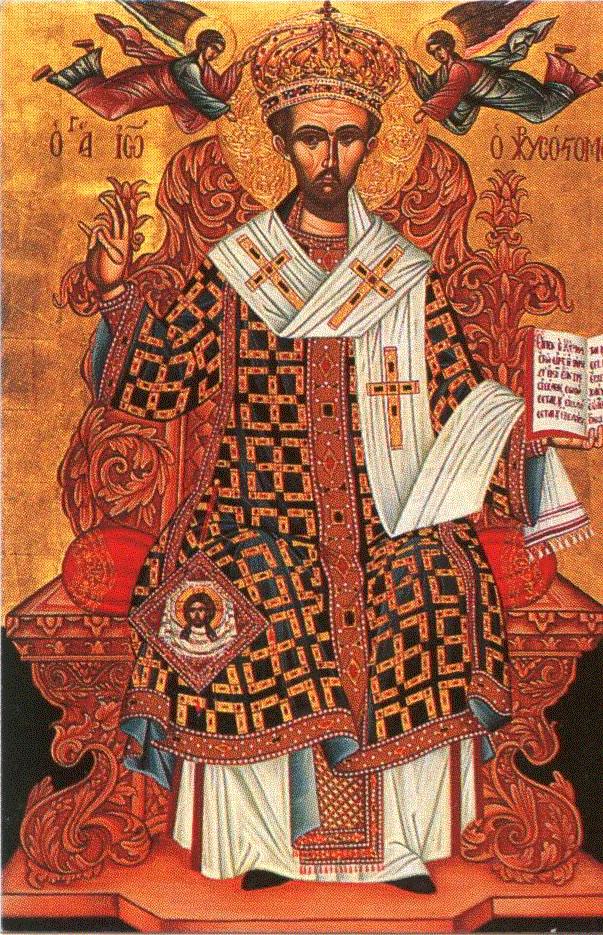
The most famous Reader of all, St. John Chrysostomos the Golden-Mouthed, Archbishop of Constantinople, enthroned. He was tonsured a Reader in 370.

Impressions from a mid-October gathering “What is a Reader?”

An Anglican Reader: “Your Vespers took really long [60 min +] but we forgot time or the pain in our feet [bravely standing up throughout] , immersed as we were in the beauty of pure worship”

Abouna Philip: “I think it is almost impossible to go to an Orthodox Church without being fed a lot. “

Another Anglican Reader: “If this is how you fast [the event took place on a Friday], then how do you feast?!”

What is a Reader?

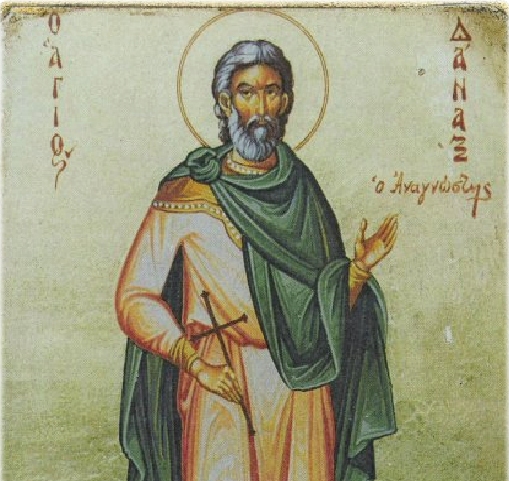
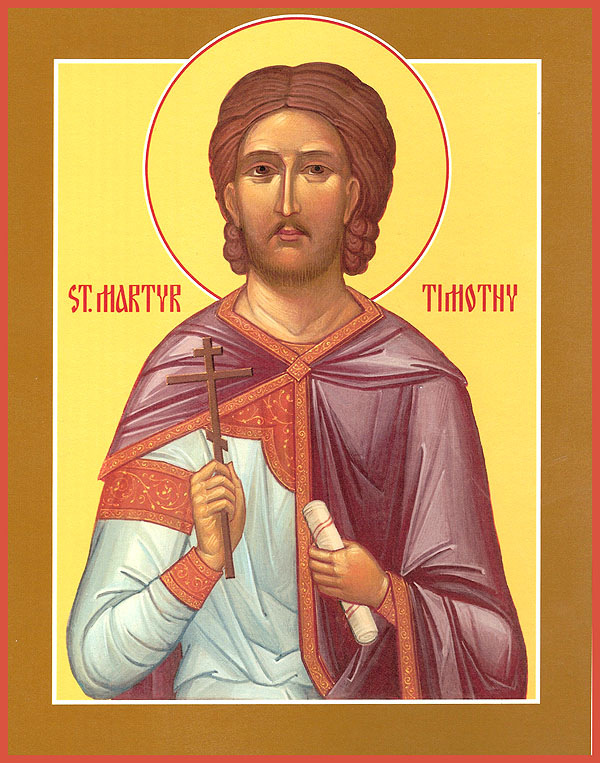
Holy Martyr Danax the Reader, Patron Saint of Readers

What is a Reader? In-mid October a gathering of 20 Readers from the Anglican church from all Lancashire area took place at the parish of Holy and Living Cross at Lancaster, UK. The goal was  to introduce them to the office of the Reader in the Orthodox Church. The evening began with Vespers, was followed by a presentation and a question and answer session, and was concluded with a rich tea buffet.


What is a Reader?

The Reader Timotheos from the Thebaid of Egypt, who underwent martyrdom by Diocletian, together with his wife, Mavra.


The Office of Reader is of course a very ancient one. Lectors used to read the epistle at the Eucharist in the early church, but Reader ministry in the Church of England today has developed in a radically different manner than that of the Lector.

What is a Reader?

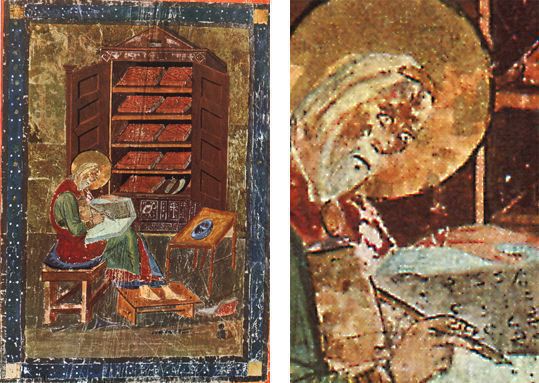
Ezra, the first Reader. “For Ezra had devoted himself to the study and observance of the Law of the LORD, and to teaching its decrees and laws in Israel.” Ezra 7:10


What is a Reader?

We learn a great deal about what it means to be a Reader from the admonition that the bishop gives to a Reader after he is tonsured (i.e. made a Reader):


“My son, the first degree in the Priesthood is that of Reader. It behooveth thee therefore to peruse the divine Scriptures daily, to the end that the hearers, regarding thee may receive edification; that thou in nowise shaming thine election, mayest prepare thyself for a higher degree. For by a chaste, holy and upright life thou shalt gain the favor of the God of loving-kindness, and shalt render thyself worthy of a greater ministry, through Jesus Christ our Lord: to whom be glory unto the ages of ages. Amen.”


This tells us that the office of the Reader is the first rank of the priesthood, and so can only be a man, with the exception of women’s monasteries. Readers are tonsured, which means that rather than being ordained in the Altar, they are set apart by having some of their hair cut in the form of the Cross (as also happens at baptism, and when someone is made a monastic) and ordained in the Nave of the Church, as are Subdeacons, who are also minor clergy. Their office thus is sacramentally instituted and defined.

What is a Reader?

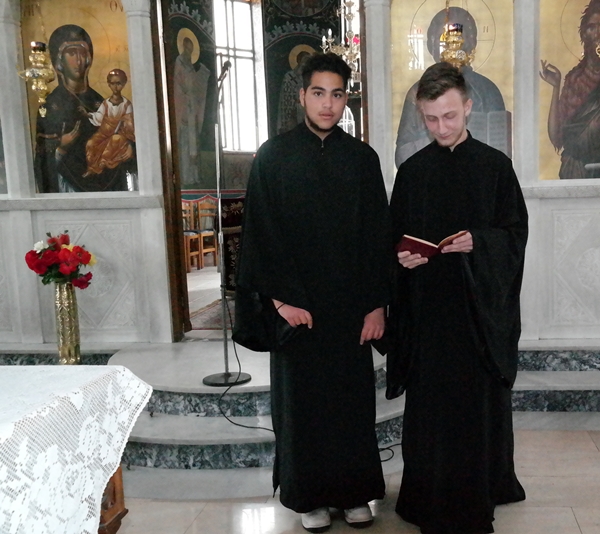
Newly tonsured Orthodox Readers

Readers in the Anglican church, on the other hand, are lay people, male as well as female, trained and licensed by the Church to preach, teach, lead worship and assist in pastoral, evangelistic and liturgical work.

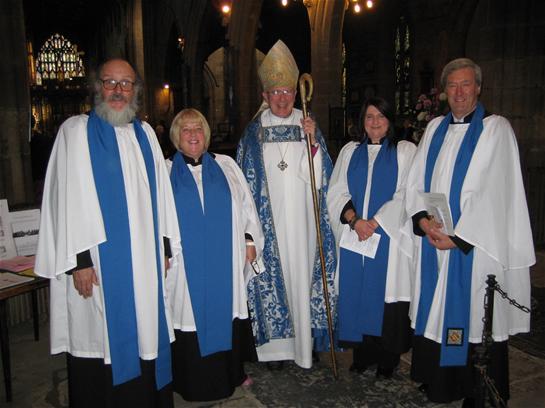
In church, Anglican Readers can be distinguished from their ordained colleagues by the distinctive blue Readers’ scarf, whereas an Orthodox Reader would ideally wear clerical attire at all times, and it is at minimum necessary that he should wear a cassock on Church grounds, and at any Church functions off Church grounds.

What is a Reader?

This picture shows the four new Readers licensed [sic] at the service at the Diocese of Newcastle

Specifically. The duties of a Reader in the Orthodox Church are primarily focused on the prayerful, liturgical ‘dialogue’ with the priest throughout all church services, representing the dialogue between heaven and earth. The Reader is also often the chanter, especially in the absence of a choir. He is not only essential to the Liturgical life, but in terms of the amount of the liturgy, he chants more than the priest! This became most apparent to the Anglican Readers who attended Vespers, because they themselves noticed how prominent the role of the Reader was throughout, since he was practically reading, intoning and chanting more than the 7/10, even 8/10 of the service.


Conversely, the duties of the Readers in the Anglican Church are varied, broad and diverse, differing from parish to parish, depending on the local priest, and encompass even


  • authorisation to preach;
  • presiding at Services of the Word;
  • taking the traditional role of deacon at the Eucharist;
  • distributing the sacrament of Holy Communion in church and/or to the sick at home or in hospital;
  • reading Banns of Marriage.
 

Anglican Readers ‘work’ even in schools, prisons, hospitals, hospices, factories and shops, among seafarers and in the Armed Forces, with children and young people, the elderly, housebound and bereaved, and with those preparing for baptism, confirmation and marriage. Such ‘duties’ would be unthinkable to an Orthodox Reader, and the delineation of their duties applies throughout all orthodox churches.


holy readers.jpg

 Finally, as the first rank of the clergy in the Orthodox church, a Reader should conduct himself with the humility, sobriety, and care appropriate to his order, in order to prepare himself “for a higher degree.” In other words, a Reader should be preparing himself for the possibility of serving in a higher rank of the clergy.

Also. cf. “The Reader in the Orthodox Church”

Five Reasons to Visit a Monastery

Striving to Live a Christ-centered Life
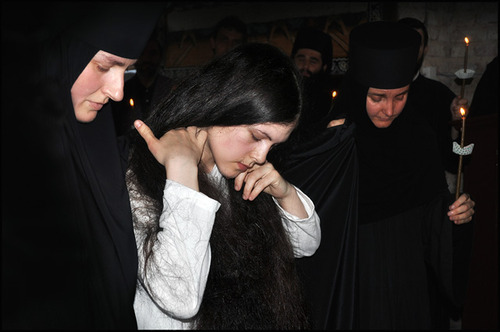
 

Five Reasons to Visit a Monastery

Striving to Live a Christ-centered Life: Five Reasons to Visit a Monastery By Matushka Constantina Palmer

Introduction: Journeying by boat to visit their beloved spiritual father, , Constantine Palamas – the father of St. Gregory – suddenly realized he and his family had forgotten to bring food with them for the monastery. While his wife and five children looked on, he raised his voice in prayer and put his hand into the sea; immediately he caught a massive fish. Taking it out of the water, he glorified God for the miracle. Out of his great admiration and respect for the monastic life, Constantine Palamas worked a miracle so that his family would not arrive at the monastery empty-handed. In this way, and in countless others, he instilled in the hearts of his children a firm love for and reverence of monasticism.

This practice of going out into the wilderness to seek a word from a holy monastic is a tradition well established in the Church as early as Christ’s own times. St. John the Forerunner was the first monk, and people sought him out, as St. Andrew of Crete testifies: “The Forerunner of grace dwelt in the desert and all Judea and Samaria ran to hear him.”[1] He, like many of our prophets before him, preached amendment of life. The central difference between him and the prophets, however, was that St. John would become the first and greatest “Father of Monasticism.” Generations of monastics would take his way of life, his asceticism, his bold dedication to discipleship to Christ as the epitome of the monastic life, and they would follow him. “Verily I say unto you, Among them that are born of women there hath not risen a greater than John the Baptist” (Matt 11:11).

The radical lifestyle of St. John changed the world, especially the Christian world, because many who came after him decided to imitate him and live outside the cities solely for Christ’s sake. Thus, slowly the monastic life was established, and those in the world began to look to it as a shining example of the Christian lifestyle. It is an indisputably great and ancient practice of those living in the world to make pilgrimages to monasteries. Below are five of the many reasons one should.

1. Spiritual Direction

Five Reasons to Visit a MonasteryFinding a spiritual guide who has the will and means to guide and direct a believer in his endeavour to live the Gospel precepts in his daily life is not an easy task. It requires prayer and discernment on the part of the seeker, a humble disposition, and an openness to the will of God. This is because once the believer asks a priest or monk to be his spiritual father, he enters into a relationship with that person that cannot easily be dissolved, and which will have everlasting effects on his spiritual life: “A spiritual father… becomes the means of leading the life of men out of hell (by the negative effect of their passions), and into pure Christian life and spiritual freedom.”[2]

Thus, the goal should be to find a spiritual guide who not only preaches Christ, but lives like Christ. As Monk Isaiah wrote to Nun Theodora: “The Holy Spirit is for everyone; but in those who are pure of the passions, who are chaste and live in stillness and silence, He reveals special powers.”[3] This is the primary reason why a person living in the world seeks spiritual direction from those living in monasteries. Not because the Holy Spirit only dwells in those who wear the monastic habit, but because their way of life is far more conducive to acquiring the Holy Spirit. The greatest spiritual guides are those whose manner of life teaches as much or more than their words and advice. If a spiritual guide does not live the commandments of Christ, if he has not experienced temptation, if he does not actively struggle to overcome his passions, then how will he teach others to do likewise? On this point Archmandrite Zacharias of Essex says: “if the word that the spiritual father says is not seasoned with grace, nor proceeds from a heart that is warmed by the love of Christ, it becomes like the work of psychologists or counsellors – a ‘half-blind’ worldly activity. The word of the spiritual father must bear the seal of grace, the seasoning of grace.”[4]

The life of the monk is a macrocosm of the Christian life in the world. And so, it follows that if there are good spiritual fathers in the world, there are great spiritual fathers in the monastery. The reason for this is very simple, as St. Nikodemus states: “monastics, through ascetic struggles and through the monastic way of life, first purified themselves (from the passions and from faults) and then set out to purify others: they were first enlightened and afterwards enlightened others: they were first perfected, and then perfected others, they were, to express it concisely, first made holy and afterwards made others holy…”[5]

For those who have spiritual fathers in the world, they need not forsake them for a priest-monk. They can, however, with the blessing of their spiritual father, seek the counsel of a monastic in certain circumstances that require the guidance of an experienced and specialized “doctor” since, as St. Zosimas says to St. Mary of Egypt: “Grace is recognized not by one’s orders, but by gifts of the Spirit.”

And in fulfilling the instructions of one’s spiritual guide, the layman becomes a candidate for the grace which is for the saints (2 Cor. 8:4). By this, one becomes like a certain youth who, living in the world, “began immediately, with great eagerness, to fulfill the command which the elder had given him… With this work that he did, he was made worthy to lift his mind up to Heaven, where he cried out to the Mother of Christ for compassion; and through her intercessions, he was atoned before God and there came down upon him the Grace of the Holy Spirit….”[6] Ultimately, this is the goal of seeking spiritual direction: to not only be “atoned before God” through a life of repentance, but through the counsels and prayers of one’s spiritual guide – who himself has attained grace – to have the Holy Spirit “come down upon us.”

2. Spiritual Conversation and Action

Five Reasons to Visit a MonasteryOne of the greatest benefits of visiting a monastery is the spiritual conversation and activity pilgrims are able to take part in. At a monastery, spiritual stories and uplifting anecdotes abound. Although many monastics shy away from conversation with pilgrims for a variety of reasons, given the appropriate circumstance a conversation with a monastic can rear a multitude of benefits – not to mention conversations with fellow pilgrims.

Whether they share a story they have heard, wisdom from the Mothers and Fathers of the Church, or even a tale from that monastery, their words inform and enlighten the pilgrim and help refocus his busy mind. Even time relaxing in the world does not refresh the soul the way a spiritual conversation does. This type of conversation, though found more rarely in the world, is often a common occurrence at a monastery.

Furthermore, many monastics, despite not living in the world any longer or dealing with its struggles and temptations, have great wisdom to share. Not only did they also once live in darkness (Matt. 4:16), but they have a wealth of experience from speaking with pilgrims who confide in them. Through prayer and reading, the monastic manages to help the pilgrim approach his problems with a bit more clarity and even a new perspective.

Coupled with this beneficial spiritual conversation is the spiritual activity that takes place in a monastery. Work and prayer are two primary tenets of the monastic life. Work, however, is done in a slightly different spirit than work done in the world. An Abbess at a monastery not far from Thessaloniki has often said work in a monastery is a great deed because it is done solely for the love of God, and the love of His saint, the monastery’s patron. She teaches that to even pick up a piece of garbage in a monastery yields a great heavenly reward because it is done in honour of the saint, to keep his house clean. After helping with work in the monastery, she would tell the pilgrims: “The patron saint wrote down the work you have done, and you will find it presented on the Day of Judgement.”

When a monastic bakes bread, he bakes for the glory of God. When he chants in church, he chants for the glory of God. When he sweeps, he does so for the glory of God. And when a pilgrim partakes of such God-honouring work, he begins to look at his own work in a different light, just as the monastic offers all his work for the glory of God, so too can the pilgrim – both while at the monastery, and when he returns to his work in the world. The Christian home is a microcosm of the coenobitic monastery; when the mother, father, or children clean the house, they too can do so for the glory of God.

Both the monastic and the pilgrim can approach work the way Abba Apollo did: “If someone came to find him about doing a piece of work, he would set out joyfully, saying, ‘I am going to work with Christ today, for the salvation of my soul, for that is the reward he gives.’”[7] The only difference between the monastic’s work in the monastery and the layman’s work in the world is that the monastic knows that he left behind his own success to seek the Kingdom of God; the layman merely needs a reminder now and again. He needs to ask himself which of the following he is and who he desires to glorify: “The man who loves himself seeks his own glory, whereas the man who loves God loves the glory of his Creator.”[8]

3. Humility

 Five Reasons to Visit a MonasteryThe fallen human soul is predisposed toward pride. This is something that occurs with the monastic as much as with the layman. When the Christian keeps his prayer rule faithfully, observes the fasts of the Church, or attends church services regularly, the soul is inclined to become puffed up. The antidote is finding better examples than oneself of Christian dedication to remind the proud soul that she is lacking in virtue.

The layman has the ability to make pilgrimages to monasteries and so finds a helpful means to stay grounded in his spiritual life. Encountering monastics reminds the pilgrim that there are better Christians than himself (not that he cannot also learn this in the parish, he most certainly can, but it is an indisputable fact that one is faced with at a monastery). Hence the famous statement: “Angels are a light for monastics, and monastics are a light for the world.”[9] The monastic is simultaneously humbled and enlightened by reading the lives of the saints, just as the layman is when he compares his life with that of a monastic.

Humility is a virtue that the monastic and layman ought to strive for above all else, for as St. John Cassian says, “Humility of soul helps more than everything else; without it no one can overcome lewdness or any other sin.” And so, the layman makes pilgrimages to monasteries in order to draw the soul away from the distracting world and into an environment of stillness and prayer, where the atmosphere is conducive to taking stock of one’s life alongside that of a dedicated monastic, and to allow the grace of the monastery to help him see his own sinfulness.

The following story, taken from The Wisdom of the Desert Fathers, illustrates this point: There were three friends, all of whom chose different means of work. The first decided to become a peace-maker among men. The second decided to tend to the sick. While the third decided to live in prayer and stillness in the desert. The first two friends found that they were unable to complete the work they set out to do and became disheartened. So they decided to visit their third friend who was living in the stillness of prayer. They confessed their difficulties and asked for guidance. This was the third friend’s response: “After a short silence, he poured some water into a bowl and said to them, ‘Look at the water,’ and it was disturbed. After a little while he said to them again, ‘Look how still the water is now,’ and as they looked into the water, they saw their own faces reflected in it as in a mirror. Then he said to them, ‘It is the same for those who live among men; disturbances prevent them from seeing their faults. But when a man is still, especially in the desert, then he sees his failings.’”

And so it is with the pilgrim from the world. In the stillness of the monastery, he is able to reflect on his failings. Whether it be in comparing his spiritual life with the monastic who left all things behind to live “alone with God alone,” as Elder Porphyrios was wont to say, or simply due to slowing down and reflecting on his faults, the pilgrim returns to the world with greater humility of soul. [15] St. Theodora, Matericon, 85.

4. Imitation

Five Reasons to Visit a MonasteryThe command to imitate Christ is found throughout the Gospels. He is the image of perfect obedience, extreme humility, utter chastity, and a life of poverty. To be sure, if a believer only ever read the Gospels, he would be informed on how to live a proper Christian life. However, because man is weak and in need of examples, the monastic life illustrates the Gospel commandments lived out to their perfection. Thus the layman has before him a pragmatic example of how the teachings of the Lord are upheld and practiced. In turn, he emulates those things in an appropriate and prudent way, just as St. Paul encourages: “what ye learned and received and heard and saw in me, these things be practising; and the God of peace shall be with you” (Phill. 4:9).

There is much to be learned and gained from spiritual books, practical guides, and the wisdom of the desert Fathers and Mothers. However, nothing compares to the spiritual benefit brought about by actually being around someone who shares in the grace of God in a deep and intimate way. For whether or not he has “the words of life,” his prayer, his patience, and his virtue are enough to form and inform the humble-hearted that seek his unique, if silent, wisdom. Abba Dorotheos writes: “It is said that a certain brother asked an elder, ‘What shall I do, father, in order to fear God?’ The elder answered, ‘Go and cling to a man who fears God and from the fact that he fears Him, he will teach you to do likewise.’”[10]

Laymen are called to keep the commandments of the Gospel with as much precision as monastics. The monk is not called to one type of life, and the layman to another. No, they are both called to “be perfect even as my Father in heaven who is perfect” (Matt. 5:48), just as St. John Chrysostom taught: “You greatly delude yourself and err, if you think that one thing is demanded from the layman and another from the monk; since the difference between them is in that whether one is married or not, while in everything else they have the same responsibilities… Because all must rise to the same height; and what has turned the world upside down is that we think only the monk must live rigorously, while the rest are allowed to live a life of indolence.”[11]

The only difference between a Christian living in the world and a monastic living in a monastery is that monasticism “rejects any kind of compromise and seeks the absolute”[12], whereas the layman struggles as best he can in the midst of the distracting world. Both are acceptable and blessed in the eyes of God. Both ways are only successful by the grace of God. The layman should not be disheartened by his struggles in “the darkness of the world” (Eph. 6:12). Rather, he should take courage that he is upheld by the prayers of countless monastics, as Bishop Nikolai of Lavreot has stated: “The life of the faithful is supported by the prayers of the monks. This is elucidated by the very fact that the faithful take refuge in such prayers. Just as Moses stretched out his hands and the Israelites conquered the Amalekites, so the monastics lift up their hands to God and we, the faithful who are struggling in the wilderness of this world, conquer the noetic Amalek.” And more significantly, the layman should take courage that “where sin abounded, grace did much more abound” (Rom. 5:20).
5. Encountering Sacred Place 

Five Reasons to Visit a MonasteryEven if there were no other reason for visiting a monastery, there would remain this one: it is an agios topos, a holy place. “And Moses said, I will go near and see this great sight, why the bush is not consumed. And when the Lord saw that he drew nigh to see, the Lord called him out of the bush, saying, Moses, Moses… loose thy sandals from off thy feet for the place whereon thou standest is holy ground” (Exodus 3: 3-5).

Coupled with the prayers of the monastics, the saints that dwell within the monastery, and the angels that protect it, there are also at least one or more chapels. The presence of a temple of God alone is enough to sanctify a place. And it is in this sanctified place that even without hearing God-inspired words or witnessing miraculous events, the pilgrim is refreshed. His weary and tired body and soul are nourished with more than monastic fare – they are nourished with monastic stillness.

A pilgrim once asked a priest-monk why it was that out of all the monasteries the pilgrim had visited, this one particular well-known monastery was the one in which grace and divine fragrance was the most perceivable. The priest-monk answered that although all monasteries are holy, that that monastery held the typikon to celebrate Divine Liturgy every single day, and confessed people for hours on end, and so as a result it attracted the grace of the Holy Spirit and He dwelt there. As Dr. Constantine Carvanos surmises, “[t]hrough confession at these centers of spirituality, through participation in the moving services of the monks or nuns, and speaking with them, a Christian living in the world is aided by calm refuge from his worldly cares, by being purified, by rediscovering himself, and by tasting of the gifts of the Holy Spirit.”[13]

St. Nikolai Velimirovich records: “When [St. David of Garesja] arrived at a hill from which Jerusalem was visible, [he] began to weep and said, ‘How can I be so bold to walk in the footsteps of the God-man with my sinful feet?’ David then told his disciples that they, being more worthy, should go to worship at the holy places, and he took three stones and began to return.”[14] The saint’s humility was so great that he considered the sight of the Holy Land and even its pebbles to be overflowing with grace. How much more does the grace of a sacred place exceed sight and stones? In this sense the words of St. Theodora hold an even greater significance: “Love stillness. One who is not attached to the vanities of this world is strengthened in soul by stillness, abstinence and silence.”[15] This strength, harnessed by the grace of a sacred place, can then be brought back into the world if treasured and safeguarded through prayer and watchfulness.

Conclusion:

In conclusion, “if you want to know if someone loves Christ, find out if he loves monasticism,” as the saying goes. Visit monasteries, acquire humble-mindedness, and abstain from judging others – both the believer who is too lax and he who is too strict. “Wherefore seeing we also are compassed about with so great a cloud of witnesses, let us lay aside every weight, and the sin which doth so easily beset us, and let us run with patience the race that is set before us, looking unto Jesus the author and finisher of our faith” (Heb. 12:1-2).

All photos that appear in this article belong to Nektarios and are used with permission.


[1] The Great Canon of Repentance, Song 9, [11].

[2] Archimandrite Zacharias, The Enlargement of the Heart, 174.

[3] Monk Isaiah to Honourable Nun Theodora, Matericon, 160.

[4] Archimandrite Zacharias, The Enlargement of the Heart, 174.

[5] St. Nikodemos, Handbooks of Counsel [Greek], 15-16.

[6] St. Symeon the New Theologian, from Dr. Constantine Carvanos’ article A Discourse for those living in the world, Orthodox Info:http://orthodoxinfo.com/praxis/discourselivingworld.aspx.

[7] Abba Apollo, Sayings of the Desert Fathers, 36.

[8] Philokalia, St. Diadochos of Photiki: “On Spiritual Knowledge and Discrimination: One Hundred Texts”, vol. 1, [12], 255.

[9] St. John Climacus, The Ladder of Divine Ascent, op. cit., 128.

[10] Abba Dorotheos, Practical teaching on the Christian life, “On the Fear of God,” [52], 113.

[11] St. John Chrysostom, Pros piston patera (To the faithful father) 3, 14, PG47, 372- 74.

[12] Professor Georgios Mantzarides, Images of Athos by monk Chariton,http://www.stanthonysmonastery.org/monasticism.php

[13] Constantine Carvanos, Discourse on those living in the world, Orthodox Info:http://orthodoxinfo.com/praxis/discourselivingworld.aspx.

[14] St. Nikolai Velimirovitch, Prologue, May 27.

[15] St. Theodora, Matericon, 85.

By Matushka Constantina Palmer

Source: Lessons from a Monastery (wordpress.com)
 

Do Not try. Give up. Be wrong.

elder sophrony.jpg

This is something of a follow up on a recent post. Here I will be simply listing quotes of Archimandrite Sophrony taken from the book, “I Know a Man in Christ”, by Metrtopolitan of Nafpaktos, Hierotheos, published by, Birth of the Theotokos Monastery, 2015. Therefore at the end of each quote only a page number will be designated. In addition I will tack on an ending which I choose to refer to as “epilogue”:

People’s growing love of psychology is a terrible thing. Psychology helps those in the West, but it is dreadful when the Orthodox learn psychology and substitute it for the neptic tradition of the Church. We must undermine Orthodox Christians’ love of psychology, because psychological methodology is outside the Orthodox tradition and, at the same time, it is characterized by the Western mentality. (p.269)
The whole of the West was influenced by St. Augustine. Augustinian theory is rather psychological; it deals with God psychologically. In Greece today there is a noticeable trend towards psychology, which is why St. Augustine is studied so much. St. Augustine may be a saint, but his work is subject to much exploitation.(p.345)

There is a great difference between the Orthodox and Western traditions. Psychology is adjusted to the Western tradition, so it differs enormously from the Orthodox tradition. (p. 358)

I am sorry about those spiritual fathers who assert that the spiritual life is not enough and psychology is also necessary. (p.368)

Human psychology uses different anthropology. It is more or less heretical. It is dangerous. It is bad that it is used by spiritual fathers. To a certain extent it helps those who have no experience to understand other people, but it does harm. Spiritual things also have psychological repercussions, as can be seen when one looks at the Orthodox and the Latins. But psychological things are not spiritual as well. (p.364)

Psychology and the spiritual life have different starting points; their anthropology is different. However, we cannot overlook psychology, which mainly helps people who are atheists and do not want to use the hesychastic tradition of the Church. It is a remedy for people who are far from the living God and are in terrible torment. It should be used discreetly and wisely. Medication may help the body that has suffered serious harm from various problems, but the cure will come through man’s regeneration by the grace of God. The soul’s wounds are cured by means of prayer.(p. 227)

The view that everything psychological is also spiritual, and everything spiritual is also psychological is a deadly danger. It is very dangerous for us to regard people’s psychological problems as spiritual states. Such a view is a blasphemy against God. The exact opposite ought to happen, that is to say, we ought to make a distinction between spiritual life and psychological life. (p. 358)

In all our years in the Monastery here is England, I have never met anyone who was cured through psychoanalysis, although it is highly developed in Western societies, However, to be fair, neurologist and doctors who give drugs to patients are more humble than psychoanalysts, and they help people to become socially balanced. They also help those within the Church, when they have problems of a neurological nature for various reasons. (p. 358)

The observations of psychology with regard to human beings are significant, because they explain that beyond the rational faculty there is something more profound. Psychological analysis, however, is infantile compared with the teaching of the Fathers of the Church. Although the observations of psychology are significant, the therapeutic method that it offers is awful. Psychoanalysis does not cure man; rather it confuses him even more. (p. 358)

One ought not to ‘spy’ on oneself, but to have profound repentance. (p. 286)

There is a difference between psychology and life in Christ. Psychology attempts to deliver man from guilt complexes, whereas in life in Christ we experience grief, pain, on account of being far from God, and we do not stop repenting until this grief is transformed. (pp. 343-4)

Epilogue:
A priest who studied psychology in the 1980’s both read the former post and worked together with me on this in that he found the quotes listed above. As we discussed the subject at hand he made some interesting observations: “Psychology today, no longer has a guiding star; it has nothing outside itself to look to as a model. It is self-absorbed. Whatever pleases a person, he can do. It has acquired the ethic of the culture it exists in.”

Holy Mountain’s Secret Cry


Jesus Prayer].jpg

Metropolitan of Nafpaktos and Agios Vlasios, Hierotheos, speaks on Mount Athos’ secret cry:  the Prayer of the Heart


As biological life is transmitted, so spiritual tradition is a whole life.

*

A guide speaks theoretically, but the Fathers beget spiritually.

*

The Holy Mountain is a living organism.

*

May the Lord find us worthy to hear its secret cry!

*

Already in his youth, Metropolitan Hierotheos was particularly interested in the Fathers of the Church, working for a time in the monastery libraries of Mount Athos, on the recording of the codices. He was especially interested in the teaching of St. Gregory Palamas.

The influence of Fr. John Romanidis, the study of the patristic texts and particularly those of the hesychast Fathers of the Philokalia, many years of studying St. Gregory Palamas, association with the monks of the Holy Mountain (Mount Athos), and many years of pastoral experience, all brought him to the realisation that Orthodox theology is a science of the healing of man and that the neptic fathers can help the modern restless man who is disturbed by many internal and existential problems.

Within this framework he has written a multitude of books, the fruit of his pastoral work, among which is Orthodox Psychotherapy. Some of these books have been translated into various languages, such as English, French, Spanish, Russian, and Arabic. With these books he conveys the Orthodox spirit of the Philokalia to the restless and disturbed man of our time.

Books