What is a Reader?

What is a Reader?

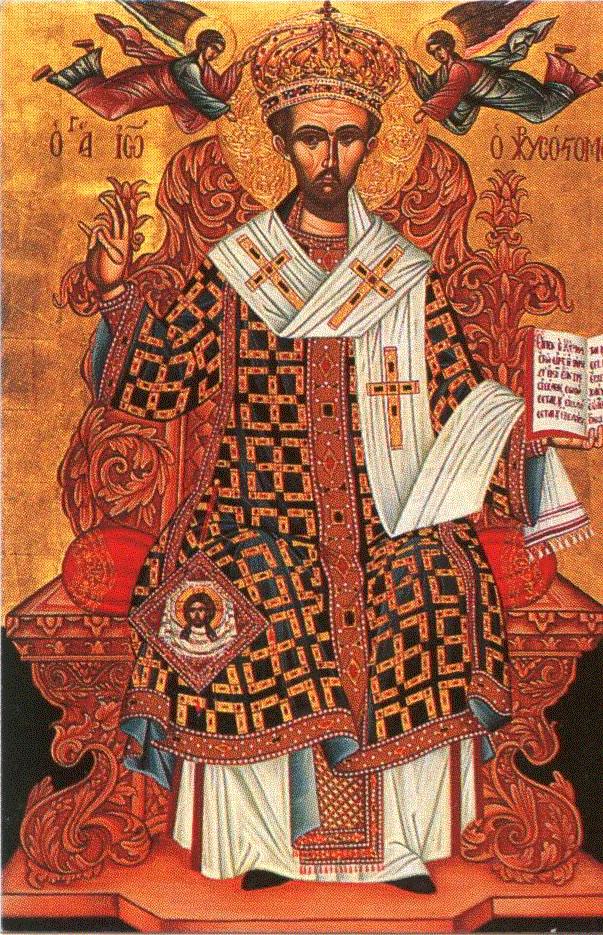
The most famous Reader of all, St. John Chrysostomos the Golden-Mouthed, Archbishop of Constantinople, enthroned. He was tonsured a Reader in 370.

Impressions from a mid-October gathering “What is a Reader?”

An Anglican Reader: “Your Vespers took really long [60 min +] but we forgot time or the pain in our feet [bravely standing up throughout] , immersed as we were in the beauty of pure worship”

Abouna Philip: “I think it is almost impossible to go to an Orthodox Church without being fed a lot. “

Another Anglican Reader: “If this is how you fast [the event took place on a Friday], then how do you feast?!”

What is a Reader?

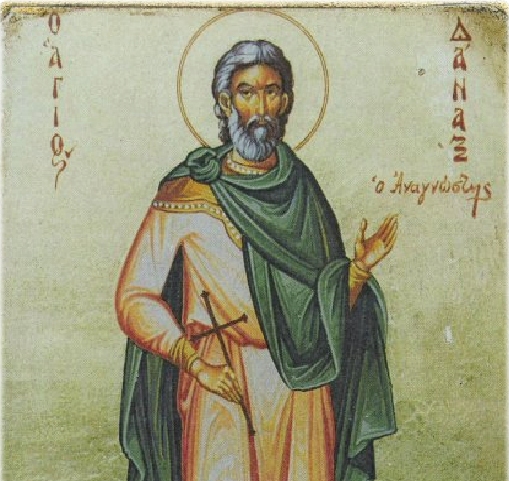
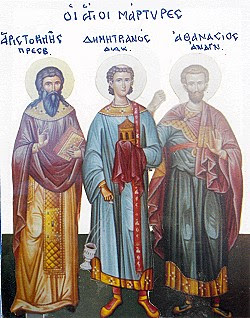
Holy Martyr Danax the Reader, Patron Saint of Readers

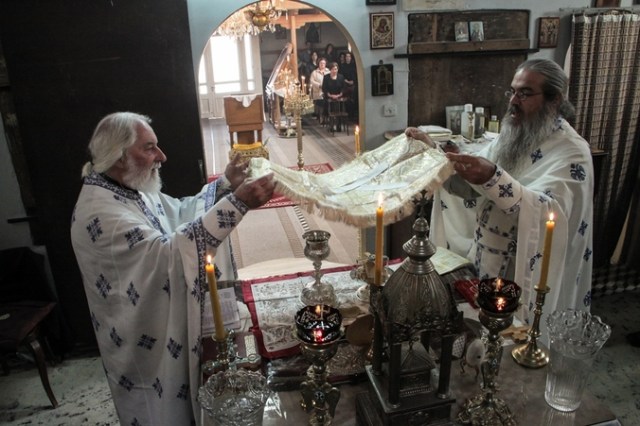
What is a Reader? In-mid October a gathering of 20 Readers from the Anglican church from all Lancashire area took place at the parish of Holy and Living Cross at Lancaster, UK. The goal was  to introduce them to the office of the Reader in the Orthodox Church. The evening began with Vespers, was followed by a presentation and a question and answer session, and was concluded with a rich tea buffet.


What is a Reader?

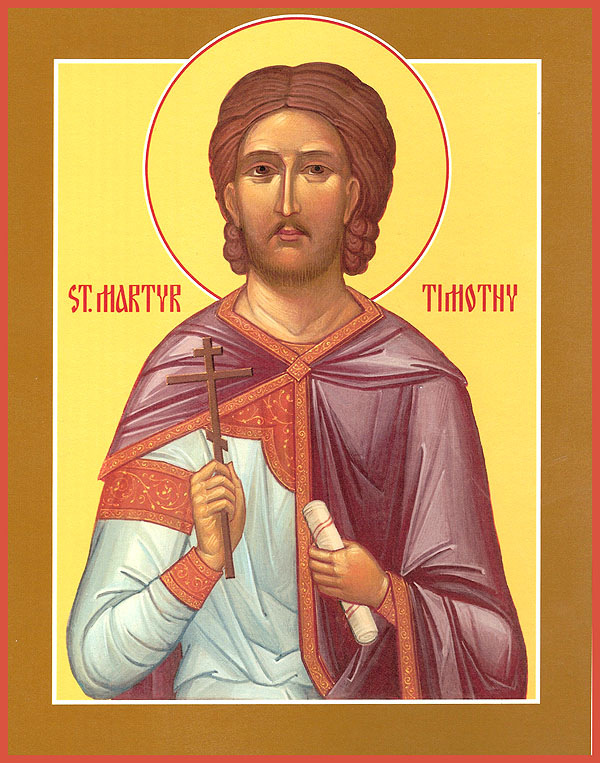
The Reader Timotheos from the Thebaid of Egypt, who underwent martyrdom by Diocletian, together with his wife, Mavra.


The Office of Reader is of course a very ancient one. Lectors used to read the epistle at the Eucharist in the early church, but Reader ministry in the Church of England today has developed in a radically different manner than that of the Lector.

What is a Reader?

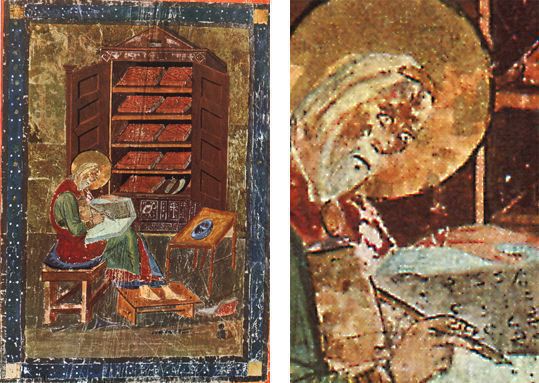
Ezra, the first Reader. “For Ezra had devoted himself to the study and observance of the Law of the LORD, and to teaching its decrees and laws in Israel.” Ezra 7:10


What is a Reader?

We learn a great deal about what it means to be a Reader from the admonition that the bishop gives to a Reader after he is tonsured (i.e. made a Reader):


“My son, the first degree in the Priesthood is that of Reader. It behooveth thee therefore to peruse the divine Scriptures daily, to the end that the hearers, regarding thee may receive edification; that thou in nowise shaming thine election, mayest prepare thyself for a higher degree. For by a chaste, holy and upright life thou shalt gain the favor of the God of loving-kindness, and shalt render thyself worthy of a greater ministry, through Jesus Christ our Lord: to whom be glory unto the ages of ages. Amen.”


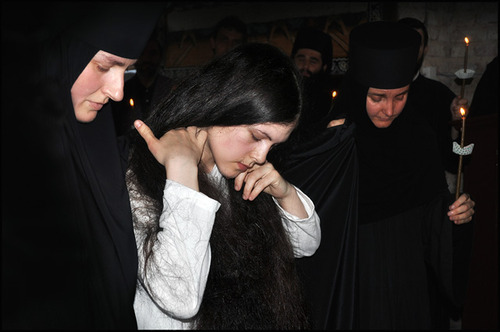
This tells us that the office of the Reader is the first rank of the priesthood, and so can only be a man, with the exception of women’s monasteries. Readers are tonsured, which means that rather than being ordained in the Altar, they are set apart by having some of their hair cut in the form of the Cross (as also happens at baptism, and when someone is made a monastic) and ordained in the Nave of the Church, as are Subdeacons, who are also minor clergy. Their office thus is sacramentally instituted and defined.

What is a Reader?

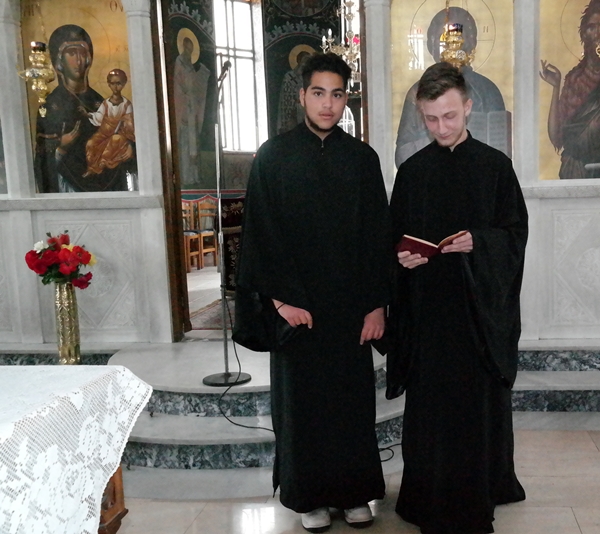
Newly tonsured Orthodox Readers

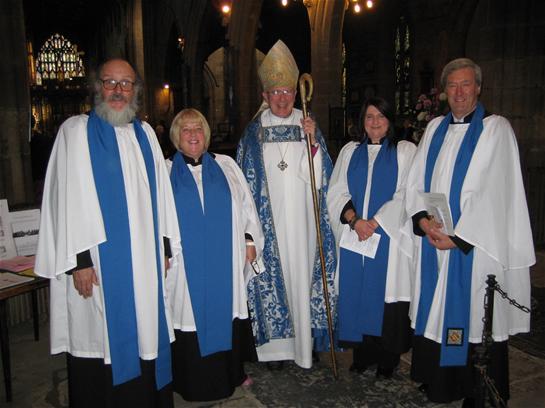
Readers in the Anglican church, on the other hand, are lay people, male as well as female, trained and licensed by the Church to preach, teach, lead worship and assist in pastoral, evangelistic and liturgical work.

In church, Anglican Readers can be distinguished from their ordained colleagues by the distinctive blue Readers’ scarf, whereas an Orthodox Reader would ideally wear clerical attire at all times, and it is at minimum necessary that he should wear a cassock on Church grounds, and at any Church functions off Church grounds.

What is a Reader?

This picture shows the four new Readers licensed [sic] at the service at the Diocese of Newcastle

Specifically. The duties of a Reader in the Orthodox Church are primarily focused on the prayerful, liturgical ‘dialogue’ with the priest throughout all church services, representing the dialogue between heaven and earth. The Reader is also often the chanter, especially in the absence of a choir. He is not only essential to the Liturgical life, but in terms of the amount of the liturgy, he chants more than the priest! This became most apparent to the Anglican Readers who attended Vespers, because they themselves noticed how prominent the role of the Reader was throughout, since he was practically reading, intoning and chanting more than the 7/10, even 8/10 of the service.


Conversely, the duties of the Readers in the Anglican Church are varied, broad and diverse, differing from parish to parish, depending on the local priest, and encompass even


  • authorisation to preach;
  • presiding at Services of the Word;
  • taking the traditional role of deacon at the Eucharist;
  • distributing the sacrament of Holy Communion in church and/or to the sick at home or in hospital;
  • reading Banns of Marriage.
 

Anglican Readers ‘work’ even in schools, prisons, hospitals, hospices, factories and shops, among seafarers and in the Armed Forces, with children and young people, the elderly, housebound and bereaved, and with those preparing for baptism, confirmation and marriage. Such ‘duties’ would be unthinkable to an Orthodox Reader, and the delineation of their duties applies throughout all orthodox churches.


holy readers.jpg

 Finally, as the first rank of the clergy in the Orthodox church, a Reader should conduct himself with the humility, sobriety, and care appropriate to his order, in order to prepare himself “for a higher degree.” In other words, a Reader should be preparing himself for the possibility of serving in a higher rank of the clergy.

Also. cf. “The Reader in the Orthodox Church”

Five Reasons to Visit a Monastery

Striving to Live a Christ-centered Life
 

Five Reasons to Visit a Monastery

Striving to Live a Christ-centered Life: Five Reasons to Visit a Monastery By Matushka Constantina Palmer

Introduction: Journeying by boat to visit their beloved spiritual father, , Constantine Palamas – the father of St. Gregory – suddenly realized he and his family had forgotten to bring food with them for the monastery. While his wife and five children looked on, he raised his voice in prayer and put his hand into the sea; immediately he caught a massive fish. Taking it out of the water, he glorified God for the miracle. Out of his great admiration and respect for the monastic life, Constantine Palamas worked a miracle so that his family would not arrive at the monastery empty-handed. In this way, and in countless others, he instilled in the hearts of his children a firm love for and reverence of monasticism.

This practice of going out into the wilderness to seek a word from a holy monastic is a tradition well established in the Church as early as Christ’s own times. St. John the Forerunner was the first monk, and people sought him out, as St. Andrew of Crete testifies: “The Forerunner of grace dwelt in the desert and all Judea and Samaria ran to hear him.”[1] He, like many of our prophets before him, preached amendment of life. The central difference between him and the prophets, however, was that St. John would become the first and greatest “Father of Monasticism.” Generations of monastics would take his way of life, his asceticism, his bold dedication to discipleship to Christ as the epitome of the monastic life, and they would follow him. “Verily I say unto you, Among them that are born of women there hath not risen a greater than John the Baptist” (Matt 11:11).

The radical lifestyle of St. John changed the world, especially the Christian world, because many who came after him decided to imitate him and live outside the cities solely for Christ’s sake. Thus, slowly the monastic life was established, and those in the world began to look to it as a shining example of the Christian lifestyle. It is an indisputably great and ancient practice of those living in the world to make pilgrimages to monasteries. Below are five of the many reasons one should.

1. Spiritual Direction

Five Reasons to Visit a MonasteryFinding a spiritual guide who has the will and means to guide and direct a believer in his endeavour to live the Gospel precepts in his daily life is not an easy task. It requires prayer and discernment on the part of the seeker, a humble disposition, and an openness to the will of God. This is because once the believer asks a priest or monk to be his spiritual father, he enters into a relationship with that person that cannot easily be dissolved, and which will have everlasting effects on his spiritual life: “A spiritual father… becomes the means of leading the life of men out of hell (by the negative effect of their passions), and into pure Christian life and spiritual freedom.”[2]

Thus, the goal should be to find a spiritual guide who not only preaches Christ, but lives like Christ. As Monk Isaiah wrote to Nun Theodora: “The Holy Spirit is for everyone; but in those who are pure of the passions, who are chaste and live in stillness and silence, He reveals special powers.”[3] This is the primary reason why a person living in the world seeks spiritual direction from those living in monasteries. Not because the Holy Spirit only dwells in those who wear the monastic habit, but because their way of life is far more conducive to acquiring the Holy Spirit. The greatest spiritual guides are those whose manner of life teaches as much or more than their words and advice. If a spiritual guide does not live the commandments of Christ, if he has not experienced temptation, if he does not actively struggle to overcome his passions, then how will he teach others to do likewise? On this point Archmandrite Zacharias of Essex says: “if the word that the spiritual father says is not seasoned with grace, nor proceeds from a heart that is warmed by the love of Christ, it becomes like the work of psychologists or counsellors – a ‘half-blind’ worldly activity. The word of the spiritual father must bear the seal of grace, the seasoning of grace.”[4]

The life of the monk is a macrocosm of the Christian life in the world. And so, it follows that if there are good spiritual fathers in the world, there are great spiritual fathers in the monastery. The reason for this is very simple, as St. Nikodemus states: “monastics, through ascetic struggles and through the monastic way of life, first purified themselves (from the passions and from faults) and then set out to purify others: they were first enlightened and afterwards enlightened others: they were first perfected, and then perfected others, they were, to express it concisely, first made holy and afterwards made others holy…”[5]

For those who have spiritual fathers in the world, they need not forsake them for a priest-monk. They can, however, with the blessing of their spiritual father, seek the counsel of a monastic in certain circumstances that require the guidance of an experienced and specialized “doctor” since, as St. Zosimas says to St. Mary of Egypt: “Grace is recognized not by one’s orders, but by gifts of the Spirit.”

And in fulfilling the instructions of one’s spiritual guide, the layman becomes a candidate for the grace which is for the saints (2 Cor. 8:4). By this, one becomes like a certain youth who, living in the world, “began immediately, with great eagerness, to fulfill the command which the elder had given him… With this work that he did, he was made worthy to lift his mind up to Heaven, where he cried out to the Mother of Christ for compassion; and through her intercessions, he was atoned before God and there came down upon him the Grace of the Holy Spirit….”[6] Ultimately, this is the goal of seeking spiritual direction: to not only be “atoned before God” through a life of repentance, but through the counsels and prayers of one’s spiritual guide – who himself has attained grace – to have the Holy Spirit “come down upon us.”

2. Spiritual Conversation and Action

Five Reasons to Visit a MonasteryOne of the greatest benefits of visiting a monastery is the spiritual conversation and activity pilgrims are able to take part in. At a monastery, spiritual stories and uplifting anecdotes abound. Although many monastics shy away from conversation with pilgrims for a variety of reasons, given the appropriate circumstance a conversation with a monastic can rear a multitude of benefits – not to mention conversations with fellow pilgrims.

Whether they share a story they have heard, wisdom from the Mothers and Fathers of the Church, or even a tale from that monastery, their words inform and enlighten the pilgrim and help refocus his busy mind. Even time relaxing in the world does not refresh the soul the way a spiritual conversation does. This type of conversation, though found more rarely in the world, is often a common occurrence at a monastery.

Furthermore, many monastics, despite not living in the world any longer or dealing with its struggles and temptations, have great wisdom to share. Not only did they also once live in darkness (Matt. 4:16), but they have a wealth of experience from speaking with pilgrims who confide in them. Through prayer and reading, the monastic manages to help the pilgrim approach his problems with a bit more clarity and even a new perspective.

Coupled with this beneficial spiritual conversation is the spiritual activity that takes place in a monastery. Work and prayer are two primary tenets of the monastic life. Work, however, is done in a slightly different spirit than work done in the world. An Abbess at a monastery not far from Thessaloniki has often said work in a monastery is a great deed because it is done solely for the love of God, and the love of His saint, the monastery’s patron. She teaches that to even pick up a piece of garbage in a monastery yields a great heavenly reward because it is done in honour of the saint, to keep his house clean. After helping with work in the monastery, she would tell the pilgrims: “The patron saint wrote down the work you have done, and you will find it presented on the Day of Judgement.”

When a monastic bakes bread, he bakes for the glory of God. When he chants in church, he chants for the glory of God. When he sweeps, he does so for the glory of God. And when a pilgrim partakes of such God-honouring work, he begins to look at his own work in a different light, just as the monastic offers all his work for the glory of God, so too can the pilgrim – both while at the monastery, and when he returns to his work in the world. The Christian home is a microcosm of the coenobitic monastery; when the mother, father, or children clean the house, they too can do so for the glory of God.

Both the monastic and the pilgrim can approach work the way Abba Apollo did: “If someone came to find him about doing a piece of work, he would set out joyfully, saying, ‘I am going to work with Christ today, for the salvation of my soul, for that is the reward he gives.’”[7] The only difference between the monastic’s work in the monastery and the layman’s work in the world is that the monastic knows that he left behind his own success to seek the Kingdom of God; the layman merely needs a reminder now and again. He needs to ask himself which of the following he is and who he desires to glorify: “The man who loves himself seeks his own glory, whereas the man who loves God loves the glory of his Creator.”[8]

3. Humility

 Five Reasons to Visit a MonasteryThe fallen human soul is predisposed toward pride. This is something that occurs with the monastic as much as with the layman. When the Christian keeps his prayer rule faithfully, observes the fasts of the Church, or attends church services regularly, the soul is inclined to become puffed up. The antidote is finding better examples than oneself of Christian dedication to remind the proud soul that she is lacking in virtue.

The layman has the ability to make pilgrimages to monasteries and so finds a helpful means to stay grounded in his spiritual life. Encountering monastics reminds the pilgrim that there are better Christians than himself (not that he cannot also learn this in the parish, he most certainly can, but it is an indisputable fact that one is faced with at a monastery). Hence the famous statement: “Angels are a light for monastics, and monastics are a light for the world.”[9] The monastic is simultaneously humbled and enlightened by reading the lives of the saints, just as the layman is when he compares his life with that of a monastic.

Humility is a virtue that the monastic and layman ought to strive for above all else, for as St. John Cassian says, “Humility of soul helps more than everything else; without it no one can overcome lewdness or any other sin.” And so, the layman makes pilgrimages to monasteries in order to draw the soul away from the distracting world and into an environment of stillness and prayer, where the atmosphere is conducive to taking stock of one’s life alongside that of a dedicated monastic, and to allow the grace of the monastery to help him see his own sinfulness.

The following story, taken from The Wisdom of the Desert Fathers, illustrates this point: There were three friends, all of whom chose different means of work. The first decided to become a peace-maker among men. The second decided to tend to the sick. While the third decided to live in prayer and stillness in the desert. The first two friends found that they were unable to complete the work they set out to do and became disheartened. So they decided to visit their third friend who was living in the stillness of prayer. They confessed their difficulties and asked for guidance. This was the third friend’s response: “After a short silence, he poured some water into a bowl and said to them, ‘Look at the water,’ and it was disturbed. After a little while he said to them again, ‘Look how still the water is now,’ and as they looked into the water, they saw their own faces reflected in it as in a mirror. Then he said to them, ‘It is the same for those who live among men; disturbances prevent them from seeing their faults. But when a man is still, especially in the desert, then he sees his failings.’”

And so it is with the pilgrim from the world. In the stillness of the monastery, he is able to reflect on his failings. Whether it be in comparing his spiritual life with the monastic who left all things behind to live “alone with God alone,” as Elder Porphyrios was wont to say, or simply due to slowing down and reflecting on his faults, the pilgrim returns to the world with greater humility of soul. [15] St. Theodora, Matericon, 85.

4. Imitation

Five Reasons to Visit a MonasteryThe command to imitate Christ is found throughout the Gospels. He is the image of perfect obedience, extreme humility, utter chastity, and a life of poverty. To be sure, if a believer only ever read the Gospels, he would be informed on how to live a proper Christian life. However, because man is weak and in need of examples, the monastic life illustrates the Gospel commandments lived out to their perfection. Thus the layman has before him a pragmatic example of how the teachings of the Lord are upheld and practiced. In turn, he emulates those things in an appropriate and prudent way, just as St. Paul encourages: “what ye learned and received and heard and saw in me, these things be practising; and the God of peace shall be with you” (Phill. 4:9).

There is much to be learned and gained from spiritual books, practical guides, and the wisdom of the desert Fathers and Mothers. However, nothing compares to the spiritual benefit brought about by actually being around someone who shares in the grace of God in a deep and intimate way. For whether or not he has “the words of life,” his prayer, his patience, and his virtue are enough to form and inform the humble-hearted that seek his unique, if silent, wisdom. Abba Dorotheos writes: “It is said that a certain brother asked an elder, ‘What shall I do, father, in order to fear God?’ The elder answered, ‘Go and cling to a man who fears God and from the fact that he fears Him, he will teach you to do likewise.’”[10]

Laymen are called to keep the commandments of the Gospel with as much precision as monastics. The monk is not called to one type of life, and the layman to another. No, they are both called to “be perfect even as my Father in heaven who is perfect” (Matt. 5:48), just as St. John Chrysostom taught: “You greatly delude yourself and err, if you think that one thing is demanded from the layman and another from the monk; since the difference between them is in that whether one is married or not, while in everything else they have the same responsibilities… Because all must rise to the same height; and what has turned the world upside down is that we think only the monk must live rigorously, while the rest are allowed to live a life of indolence.”[11]

The only difference between a Christian living in the world and a monastic living in a monastery is that monasticism “rejects any kind of compromise and seeks the absolute”[12], whereas the layman struggles as best he can in the midst of the distracting world. Both are acceptable and blessed in the eyes of God. Both ways are only successful by the grace of God. The layman should not be disheartened by his struggles in “the darkness of the world” (Eph. 6:12). Rather, he should take courage that he is upheld by the prayers of countless monastics, as Bishop Nikolai of Lavreot has stated: “The life of the faithful is supported by the prayers of the monks. This is elucidated by the very fact that the faithful take refuge in such prayers. Just as Moses stretched out his hands and the Israelites conquered the Amalekites, so the monastics lift up their hands to God and we, the faithful who are struggling in the wilderness of this world, conquer the noetic Amalek.” And more significantly, the layman should take courage that “where sin abounded, grace did much more abound” (Rom. 5:20).
5. Encountering Sacred Place 

Five Reasons to Visit a MonasteryEven if there were no other reason for visiting a monastery, there would remain this one: it is an agios topos, a holy place. “And Moses said, I will go near and see this great sight, why the bush is not consumed. And when the Lord saw that he drew nigh to see, the Lord called him out of the bush, saying, Moses, Moses… loose thy sandals from off thy feet for the place whereon thou standest is holy ground” (Exodus 3: 3-5).

Coupled with the prayers of the monastics, the saints that dwell within the monastery, and the angels that protect it, there are also at least one or more chapels. The presence of a temple of God alone is enough to sanctify a place. And it is in this sanctified place that even without hearing God-inspired words or witnessing miraculous events, the pilgrim is refreshed. His weary and tired body and soul are nourished with more than monastic fare – they are nourished with monastic stillness.

A pilgrim once asked a priest-monk why it was that out of all the monasteries the pilgrim had visited, this one particular well-known monastery was the one in which grace and divine fragrance was the most perceivable. The priest-monk answered that although all monasteries are holy, that that monastery held the typikon to celebrate Divine Liturgy every single day, and confessed people for hours on end, and so as a result it attracted the grace of the Holy Spirit and He dwelt there. As Dr. Constantine Carvanos surmises, “[t]hrough confession at these centers of spirituality, through participation in the moving services of the monks or nuns, and speaking with them, a Christian living in the world is aided by calm refuge from his worldly cares, by being purified, by rediscovering himself, and by tasting of the gifts of the Holy Spirit.”[13]

St. Nikolai Velimirovich records: “When [St. David of Garesja] arrived at a hill from which Jerusalem was visible, [he] began to weep and said, ‘How can I be so bold to walk in the footsteps of the God-man with my sinful feet?’ David then told his disciples that they, being more worthy, should go to worship at the holy places, and he took three stones and began to return.”[14] The saint’s humility was so great that he considered the sight of the Holy Land and even its pebbles to be overflowing with grace. How much more does the grace of a sacred place exceed sight and stones? In this sense the words of St. Theodora hold an even greater significance: “Love stillness. One who is not attached to the vanities of this world is strengthened in soul by stillness, abstinence and silence.”[15] This strength, harnessed by the grace of a sacred place, can then be brought back into the world if treasured and safeguarded through prayer and watchfulness.

Conclusion:

In conclusion, “if you want to know if someone loves Christ, find out if he loves monasticism,” as the saying goes. Visit monasteries, acquire humble-mindedness, and abstain from judging others – both the believer who is too lax and he who is too strict. “Wherefore seeing we also are compassed about with so great a cloud of witnesses, let us lay aside every weight, and the sin which doth so easily beset us, and let us run with patience the race that is set before us, looking unto Jesus the author and finisher of our faith” (Heb. 12:1-2).

All photos that appear in this article belong to Nektarios and are used with permission.


[1] The Great Canon of Repentance, Song 9, [11].

[2] Archimandrite Zacharias, The Enlargement of the Heart, 174.

[3] Monk Isaiah to Honourable Nun Theodora, Matericon, 160.

[4] Archimandrite Zacharias, The Enlargement of the Heart, 174.

[5] St. Nikodemos, Handbooks of Counsel [Greek], 15-16.

[6] St. Symeon the New Theologian, from Dr. Constantine Carvanos’ article A Discourse for those living in the world, Orthodox Info:http://orthodoxinfo.com/praxis/discourselivingworld.aspx.

[7] Abba Apollo, Sayings of the Desert Fathers, 36.

[8] Philokalia, St. Diadochos of Photiki: “On Spiritual Knowledge and Discrimination: One Hundred Texts”, vol. 1, [12], 255.

[9] St. John Climacus, The Ladder of Divine Ascent, op. cit., 128.

[10] Abba Dorotheos, Practical teaching on the Christian life, “On the Fear of God,” [52], 113.

[11] St. John Chrysostom, Pros piston patera (To the faithful father) 3, 14, PG47, 372- 74.

[12] Professor Georgios Mantzarides, Images of Athos by monk Chariton,http://www.stanthonysmonastery.org/monasticism.php

[13] Constantine Carvanos, Discourse on those living in the world, Orthodox Info:http://orthodoxinfo.com/praxis/discourselivingworld.aspx.

[14] St. Nikolai Velimirovitch, Prologue, May 27.

[15] St. Theodora, Matericon, 85.

By Matushka Constantina Palmer

Source: Lessons from a Monastery (wordpress.com)
 

Do Not try. Give up. Be wrong.

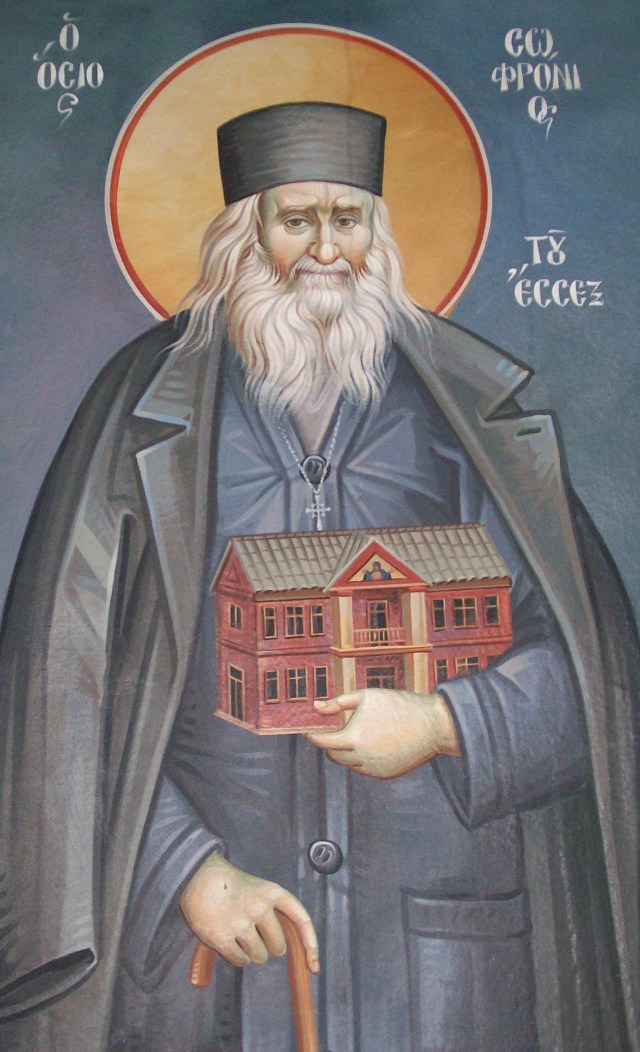
elder sophrony.jpg

This is something of a follow up on a recent post. Here I will be simply listing quotes of Archimandrite Sophrony taken from the book, “I Know a Man in Christ”, by Metrtopolitan of Nafpaktos, Hierotheos, published by, Birth of the Theotokos Monastery, 2015. Therefore at the end of each quote only a page number will be designated. In addition I will tack on an ending which I choose to refer to as “epilogue”:

People’s growing love of psychology is a terrible thing. Psychology helps those in the West, but it is dreadful when the Orthodox learn psychology and substitute it for the neptic tradition of the Church. We must undermine Orthodox Christians’ love of psychology, because psychological methodology is outside the Orthodox tradition and, at the same time, it is characterized by the Western mentality. (p.269)

The whole of the West was influenced by St. Augustine. Augustinian theory is rather psychological; it deals with God psychologically. In Greece today there is a noticeable trend towards psychology, which is why St. Augustine is studied so much. St. Augustine may be a saint, but his work is subject to much exploitation.(p.345)

There is a great difference between the Orthodox and Western traditions. Psychology is adjusted to the Western tradition, so it differs enormously from the Orthodox tradition. (p. 358)

I am sorry about those spiritual fathers who assert that the spiritual life is not enough and psychology is also necessary. (p.368)

Human psychology uses different anthropology. It is more or less heretical. It is dangerous. It is bad that it is used by spiritual fathers. To a certain extent it helps those who have no experience to understand other people, but it does harm. Spiritual things also have psychological repercussions, as can be seen when one looks at the Orthodox and the Latins. But psychological things are not spiritual as well. (p.364)

Psychology and the spiritual life have different starting points; their anthropology is different. However, we cannot overlook psychology, which mainly helps people who are atheists and do not want to use the hesychastic tradition of the Church. It is a remedy for people who are far from the living God and are in terrible torment. It should be used discreetly and wisely. Medication may help the body that has suffered serious harm from various problems, but the cure will come through man’s regeneration by the grace of God. The soul’s wounds are cured by means of prayer.(p. 227)

The view that everything psychological is also spiritual, and everything spiritual is also psychological is a deadly danger. It is very dangerous for us to regard people’s psychological problems as spiritual states. Such a view is a blasphemy against God. The exact opposite ought to happen, that is to say, we ought to make a distinction between spiritual life and psychological life. (p. 358)

In all our years in the Monastery here is England, I have never met anyone who was cured through psychoanalysis, although it is highly developed in Western societies, However, to be fair, neurologist and doctors who give drugs to patients are more humble than psychoanalysts, and they help people to become socially balanced. They also help those within the Church, when they have problems of a neurological nature for various reasons. (p. 358)

The observations of psychology with regard to human beings are significant, because they explain that beyond the rational faculty there is something more profound. Psychological analysis, however, is infantile compared with the teaching of the Fathers of the Church. Although the observations of psychology are significant, the therapeutic method that it offers is awful. Psychoanalysis does not cure man; rather it confuses him even more. (p. 358)

One ought not to ‘spy’ on oneself, but to have profound repentance. (p. 286)

There is a difference between psychology and life in Christ. Psychology attempts to deliver man from guilt complexes, whereas in life in Christ we experience grief, pain, on account of being far from God, and we do not stop repenting until this grief is transformed. (pp. 343-4)

Epilogue:
A priest who studied psychology in the 1980’s both read the former post and worked together with me on this in that he found the quotes listed above. As we discussed the subject at hand he made some interesting observations: “Psychology today, no longer has a guiding star; it has nothing outside itself to look to as a model. It is self-absorbed. Whatever pleases a person, he can do. It has acquired the ethic of the culture it exists in.”

Holy Mountain’s Secret Cry


Jesus Prayer].jpg

Metropolitan of Nafpaktos and Agios Vlasios, Hierotheos, speaks on Mount Athos’ secret cry:  the Prayer of the Heart


As biological life is transmitted, so spiritual tradition is a whole life.

*

A guide speaks theoretically, but the Fathers beget spiritually.

*

The Holy Mountain is a living organism.

*

May the Lord find us worthy to hear its secret cry!

*

Already in his youth, Metropolitan Hierotheos was particularly interested in the Fathers of the Church, working for a time in the monastery libraries of Mount Athos, on the recording of the codices. He was especially interested in the teaching of St. Gregory Palamas.

The influence of Fr. John Romanidis, the study of the patristic texts and particularly those of the hesychast Fathers of the Philokalia, many years of studying St. Gregory Palamas, association with the monks of the Holy Mountain (Mount Athos), and many years of pastoral experience, all brought him to the realisation that Orthodox theology is a science of the healing of man and that the neptic fathers can help the modern restless man who is disturbed by many internal and existential problems.

Within this framework he has written a multitude of books, the fruit of his pastoral work, among which is Orthodox Psychotherapy. Some of these books have been translated into various languages, such as English, French, Spanish, Russian, and Arabic. With these books he conveys the Orthodox spirit of the Philokalia to the restless and disturbed man of our time.

Books


How Modern Psychology Gives Tools to the Demons

Spiritual Fatherhood and Modern Psychology 

Spiritual Fatherhood and Modern Psychology

How a priest left the priesthood and his wife, and remarried, and other stories

In writing about this subject I have both fear and compassion: fear because of my lack of qualification to make a sophisticated analysis. Yet being aware of growing trust in the field within the Church, I am stirred with compassion in concern for the Orthodox faithful. So this is not a sophisticated analysis, but I will share some thoughts for consideration on this subject, most of which are quotations from others. It must be noted, however, that the final conclusion is meant to be a general statement and is not meant to be an absolute for each person.

Archimandrite Sophrony teaches that just as in the Liturgy during the Cherubic Hymn the priest prays, “No one is worthy” [that is, to perform the Divine Liturgy], so also no one is capable of being a spiritual father. He further explains that this is so because a spiritual father is a co-worker with God in the creation of immortal gods. Here, of course, his is implying our call to deification. He, and others that I have conversed with on this subject, have stressed the fact that a spiritual father must be a man of prayer. Although it is necessary to be familiar with the ascetic tradition of the Church, and things that one has read may come to mind, above all a spiritual father must be seeking God’s help through prayer. So now, let me go on to share a few thoughts for consideration:

I posed the following question to a Father from Athos who wished to remain unidentified (He was a doctor before becoming a monastic): “I have run across priests in the Church who rely much on modern psychology in their counseling. Is it possible for us to turn to psychology?” He answered:

“We trace the teachings of our holy fathers back to the fourth century but psychology has its roots only back to the 16th or 17th century in the non-Orthodox West. In psychology they do discover some things that are useful but our fathers already knew these things for over a millennium. In the West there is a problem: it is believed that the thoughts and mind are one. However, according to the teaching of the Orthodox Church the mind and thoughts are not one, but two; and the mind must be cleansed of wrong thoughts that pass through it.”

The development of psychology can be traced to problems in Western Christianity in reference to salvation. In Catholicism salvation is a black and white systematic observance of rules and the performance of good works. This is said to give each person their own merit towards the salvation of one’s soul. In Protestantism salvation is thought to be only a matter of a confession of faith. And it is believed therefore that your name is written in the Book of Life. But in Orthodoxy salvation is a process of working to cleanse the inner man. In this process there are three stages of grace, the first is that of cleansing, the second enlightenment, and the third perfection which is rare. We must repent and become cleansed of our wrong thoughts and sins, and then the mind can become enlightened by receiving thoughts of God.

Psychology evolved in the West because Christians in the West do not understand the need of cleansing the thoughts. The thoughts that go through one’s mind can drive one to a state of mental illness, and so psychology tries to keep the mind occupied with other things in order to avoid this. Psychologists can therefore sometimes be helpful in keeping someone from going further into mental illness, but psychology cannot actually heal the soul.

In reference to this something was said by a novice at my former monastery. He quoted a relative of his who works as a psychologist and has written books in this field. His relative commented: “We psychologists are like a sponge. We soak up people’s problems but we cannot heal them.”

When I was a deacon, a young man who visited our monastery had just received a bachelor’s degree in psychology. I asked him: “Is it a good idea for me as a spiritual father to study some psychology for this ministry?” He answered: “No, you will learn nothing new for your spiritual ministry, and it will not help you to correct their errors.”

One priest told me of a friend of his who suggested he read a book on psychology. This man told him that although everything in the book was not proper teaching, there were some good points. This priest said this man was indeed very perceptive in what he saw. However he noticed a change in this man’s way of thinking from having read the book. He became very skeptical, and through deductive reasoning, sought proofs and systematic explanations for matters of faith. He sought to analyze and give rational explanations for mysteries of faith which cannot be subject to this. As a result of this, his simple faith was harmed.

I know a former priest who at one time was very enthusiastic about a parishioner who was a psychologist and whose forte was group therapy. He introduced this practice at his parish and began reading books on psychology. He had personal struggles in his marriage and as a result of his reading in psychology, he concluded that what he needed was a real relationship with a “good” woman. He wound up leaving the priesthood and his wife, and remarried.

In a conversation with Bishop Basil Rodzianko (a large section in the popular book Everyday Saints is dedicated to him) he commented: “Both the Church and psychology agree that guilt will drive a man crazy. In the Church we deal with this through repentance but in psychology they try to use other methods”

Someone I am acquainted with and who spent some time at Holy Transfiguration Monastery at Elwood City, Pennsylvania, told me the following: “I was having some difficulty with anger, and our chaplain, Fr. Roman, was away. I told a visiting priest of my struggle. He said I needed to go through the past and heal the inner child. This priest thought therapy would be helpful. When Fr. Roman returned I asked him if I should do this and he replied, “No, you will only give tools to the demons.”

I believe Fr. Roman was concerned about reintroducing old temptations and breaking open old wounds. I learned from a psychologist that their aim in this is to remove stumbling blocks from the past which can cause abnormal behavior. This brings up a question: Which approach is the best? I will offer some reflections and let the readers decide for themselves.

Speaking of recalling the past brings to mind a letter of the 20th century elder, Fr. John of Valaamo. Concerning memory he writes:

“Imagination and memory are one inner sense. Sometimes the memory of former events hits us on the head like a hammer. At such time concentrated prayer is needed, and patience too. Our memory must be filled by reading the Holy Gospel and the writings of the Holy Fathers; in other words, the mind should not be idle. Former events must be replaced by other thoughts, and gradually the former recollections will be crowded out and the melancholy will pass. In one heart two masters cannot live together. (Christ is in our Midst, Letters from a Russian Monk, p. 30)”

Something else says with some relation to this:

“When I visited St. John the Baptist Monastery in England I had the blessing of speaking with Fr. Sophrony. I had questions written down which the Abbot, Fr. Kyril, read to him ahead of time. When we sat down to talk Fr. Sophrony first asked me: “Where did you study psychology?” I was amazed to hear him say that, and it is true that I did have one semester of psychology in college, for which I had an avid interest. He felt I was over-examining and over-analyzing myself. He stated: There are some who have done this and have become saints (I think he had St. John Climacus in mind who in his Ladder of Divine Ascent examined the passions and spoke of the action of virtue in detail) and Father continued: “This was not the way for St. Silouan and this is not the way for us. The way for me is straight ahead.”

Let me comment on the words: “The way for me is straight ahead.” St. Seraphim has said that the aim of Christian life is to acquire the grace of the Holy Spirit. We do need to be aware of our faults and confess them. But rather than trying to examine and fix everything that appears to be wrong with us, we should go straight ahead and seek to acquire the grace of the Holy Spirit. As we grow in the grace of God the hold that the passions have on us will lessen. All our weaknesses and sicknesses of soul will also become easier to bear. The above mentioned words of the Elder John of Valaamo are quite applicable if we replace the word “memory” with “soul” and “melancholy” with “passions, etc.”:

“Our memory [or soul] must be filled by reading the Holy Gospel and the writings of the Holy Fathers; in other words, the mind should not be idle. Former events must be replaced by other thoughts, and gradually the former recollections will be crowded out and the melancholy [or passions etc.] will pass. In one heart two masters cannot live together.”

Psychology has a different approach. One hieromonk who studied at St. Tikhon’s commented: “Psychology is a secular form of Eastern religion. Psychologists try to put all the parts in the right place.” They can even appear to perfect that which according to the image of God is in one’s self. But, Fr. Sophrony comments, concerning those who experience some state of perfection in Eastern religion: “The God of all is not in this.”

In conclusion I leave you with a comment by Archimandrite Sophrony: “Psychology is not profitable for those in the Church. A spiritual father helps those who come to him because he has gone through similar struggles and has learned from what he has suffered.”

My Conversion To Orthodoxy

fr-jonathan

Fr. Jonathan Hemmings (Orthodox Christian Parish of the Holy and Life-Giving Cross at Lancaster) talks about his conversion to Orthodoxy, his meeting Metropolitan Anthony of Sourouzh, the Most Reverend Metropolitan Kallistos Ware, and other Living Signposts God of the Faith, and his last book, Fountains in the Desert.


For a more detailed testimony of Fr. Jonathan’s Conversion go to Finding the Faith of Joseph of Arimathea

Source

A Novice of her own Son

On Gerontissa Theophano, the mother of Archimandrite Ephraim of Philotheou

A Novice of her own Son


“The climate on the island of Thassos suited her better than in Portaria, so I moved her there. She gradually drew near to the end of her life. Two years before her death, at the age of 92, she was paralyzed. From that time she didn’t completely raise herself from her bed. But, glory to God, as the Gospel says: And every one that hath forsaken houses, or brethren, or sisters, or father, or mother, or wife, or children, or lands, for my name’s sake, shall receive an hundredfold, and shall inherit everlasting life (Mt. 19:29).

This is what happened with my mother: during her illness she was surrounded by caring daughters—the sisters of the monastery who took care of her with great zeal. And where in the world will you find such love now?! Her nurse, one of the sisters of the monastery, so loved my mother that there are no words! She was so nice, so kind, and even slept together with her, head to head…

When a crisis came during my mama’ illness, something happened which happens very rarely, but when it happens it’s only with spiritual people for the sake of testing them and for gaining experience. It happened one night. Mama was as if dead already several days—she didn’t eat, didn’t drink, and didn’t open her eyes. She didn’t drink a single drop of water. She was dehydrated, with closed eyes—how dying people usually look…

When she was in such a state I was there with her, together with the nun-nurses and Gerontissa. It was dark, lampadas were burning. The night before, at about the same time, her eyes opened at some point. She opened her eyes and looked around, as if she was expecting something to happen or that already happened, with some kind of uneasiness, as if listening to something, or seeing something or someone. This was the first time after being unconscious for so many days that she showed some attention to the world around her. Lying, because she was unable to move, with open eyes, she looked all around, to the right, left, up, and down. And as the moments flowed by, her face more strongly revealed a state of terrible agony and terrible fear—a whole river of fear. I saw such fear reflected on her face as when some killer is drawing near with a knife, ready to cut you.

I began to cover her with the sign of the Cross, repeating aloud the Jesus Prayer to calm her. I understood that what was happening was a demonic temptation. After a while the danger passed, and the invisible powers departed. Mama calmed down, and she was still conscious. Then I asked her: ‘Mama, what happened? What’s with you’—‘Oh… so many, they are so many!’ And from that moment mama began to pray: ‘O Mother of God, save me! O Mother of God, save me!’ Day and night! From that point her mouth never stopped. Day and night she besought salvation from the Mother of God.

It is striking that she had no thoughts, only prayer—sick people usually easily succumb to thoughts. By her way of life—constant podvigs and labors—mama acquired exceptional patience, and this patience helped her maintain prayer this whole time. I asked her: ‘What happened?’—‘The Mother of God helps me!’ And again the prayer continued: ‘O Mother of God, save me! O Mother of God, save me!’

After some time, when the torment was over, she completely calmed down and shut her eyes. The next day at the exact same time her eyes again opened. The same fear and agony was again displayed on her face. The exact same scenario happened again. It was all quite excruciating.

Then I wondered: why does the devil have authority over this holy soul? I, of course, understood that this temptation was allowed so she could obtain a crown, that through this ordeal she could acquire boldness before God. And at some point, when she was in such a state, I said to myself: ‘It’s not fitting that this should continue. It’s time to end this.’ I went to my cell, got on my knees and began to pray: ‘O Lord, I beg Thee, do one of two things. Either take her right now, that she could have peace already, because she is worthy of peace, or banish the devil away from this holy soul. She has already labored for Thee so much, and now her time for rest has arrived.’ This is how I prayed.

When her eyes opened again the next day at the same time, she was calm. ‘Mama, how are you?’—‘They left…’ The trial was over. From that very moment began the blessed final period of her blessed life. Days passed in this blessed state. Her appearance gradually changed, she became more and more beautiful. Of course, this beauty was not physical, but spiritual. I wanted to photograph her. The grace in her was clearly apparent. Thus she gradually drew nearer to death.”

“I saw how her soul ascended unhindered to Heaven”

“The following year, after Nativity, in Christmastide, I went to the monastery to see her again,” continues Elder Ephraim’s narration. “She spoke and understood what was happening, and unceasingly repeated the prayer. In the final moments of her life her face was transfigured, blessedness shining upon it. She turned to the right, revealing her widely shining eyes and glanced off to the side as if she saw something there. In that moment I felt such Paschal joy in my soul, such resurrection, as if I had suddenly gathered the grace of ten Paschal nights.

It was the first time I felt this in my life. Of course, when my elder Joseph departed to the Lord there was something special then too, but here it happened with my own relative. I felt such happiness at that moment, and also felt and saw … I don’t know, in what manner it happened, but I saw how her soul ascended unhindered to Heaven.

When the doctor arrived he couldn’t believe that she had already died—she looked so alive. Her body was warm and soft, like the body of someone living. ‘Lord, have mercy! I can’t believe it!’ the doctor exclaimed. It was incorruption. I told the doctor that Christ said: death is but a dream, and every person will awaken on the day of the Second Coming at the sound of the archangel’s trump.

When the doctor left, we sewed her up in a monastic habit, with three crosses sewed on top. Meanwhile I continued to feel such strong Paschal joy, that I wanted to go out on the street and sing ‘Christ is Risen!’ She was so beautiful after death. She was 95, but she looked like she was 15. It was the result of her whole life, all her labors; it was a reward for all her labors.”

Her relics were found to be “very beautiful”

The sisters of the monastery told me that when Gerontissa Theophano’s coffin was carried to the monastery cemetery, sheep came and doves flew over. The sheep managed to get themselves out of their pen, ran to the grave, all bleating at the same time, and turned around and ran back to their pen. Then from somewhere above their appeared a flock of doves which flew over the grave and disappeared into the heights.

Her relics were found to be “very beautiful.” In Greece the tradition still exists of taking bones around the third year after death and placing them in an ossuary—not only on Athos but in other monasteries and even among the laity in regular cemeteries. By the color and smell of the relics you can hypothesize about the postmortem state of the soul of the departed. For example, there are cases when the body does not dissolve, or the relics emit a foul odor—then it is considered that things are bad for the soul of the departed and it stands in need of prayerful help. Family members begin to order forty-day prayers for the dead and distribute alms for the repose of the soul. There are particular signs by which you can know that the soul of the departed found grace from the Lord: an amber color to the relics and a sweet fragrance emanating from them. It even happens that the relics of some Orthodox acquire incorruptibility.

So, when they opened Gerontissa Theophano’s grave, her relics were fragrant and had the most amber color, by which it could be determined that her soul found salvation. A reliquary was made for her head which is now kept in the Monastery of the Archangel Michael on the island of Thassos.

Through the prayer of holy fathers, O Lord Jesus Christ, our God, have mercy on us!


[1] Gerondissa, the feminine form of geronda, is the Greek word used to denote respect for an abbess or female spiritual instructor.

[2] A piece of wood which monastics rhythmically beat to call the others to the services.

Source: Pravoslavie.ru

Noli Me Tangere

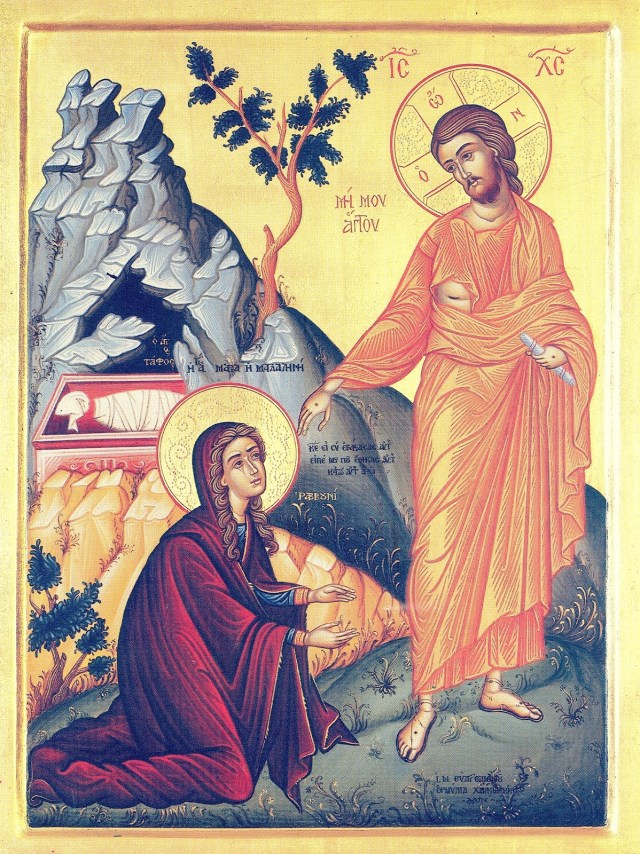
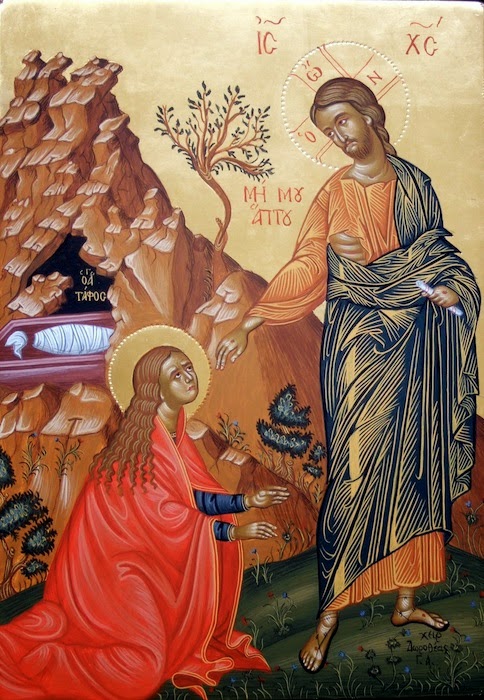
Magdalene and the Resurrected Lord, Byzantine icons and Western Art


Touch Me Not


Magdalene and the Resurrected Lord, Byzantine icons and Western Art

‘Touch Me Not’ theme in Byzantine Iconography and Western Art


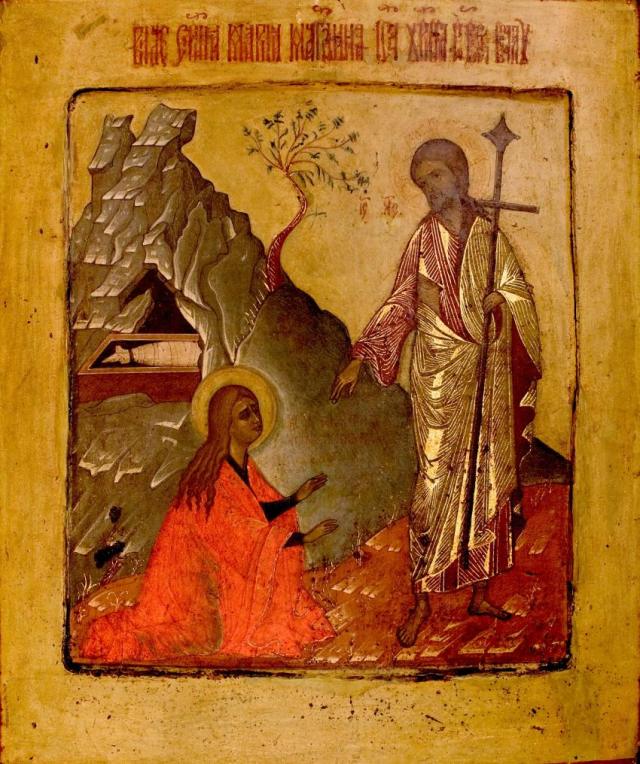
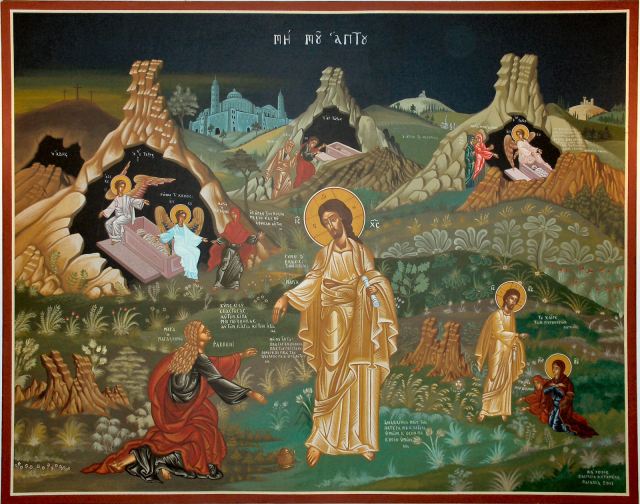
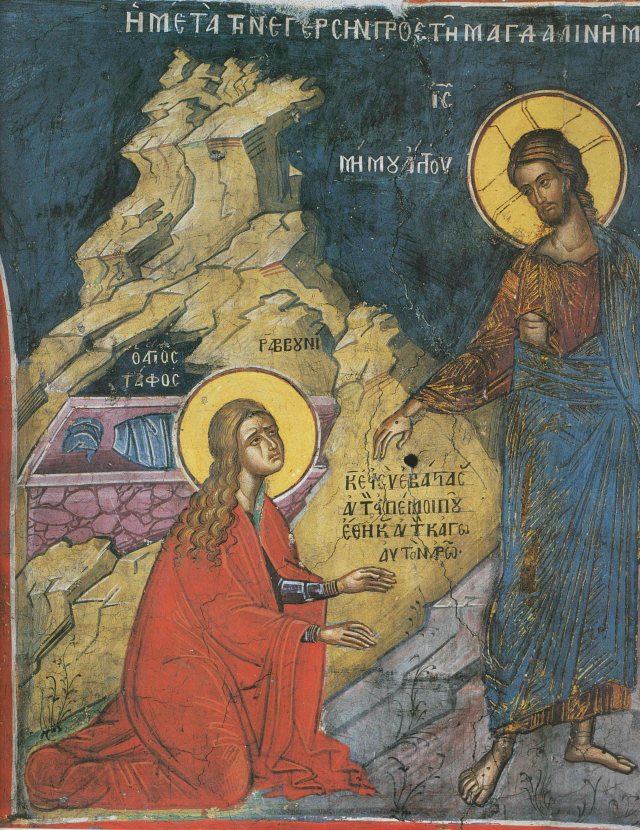
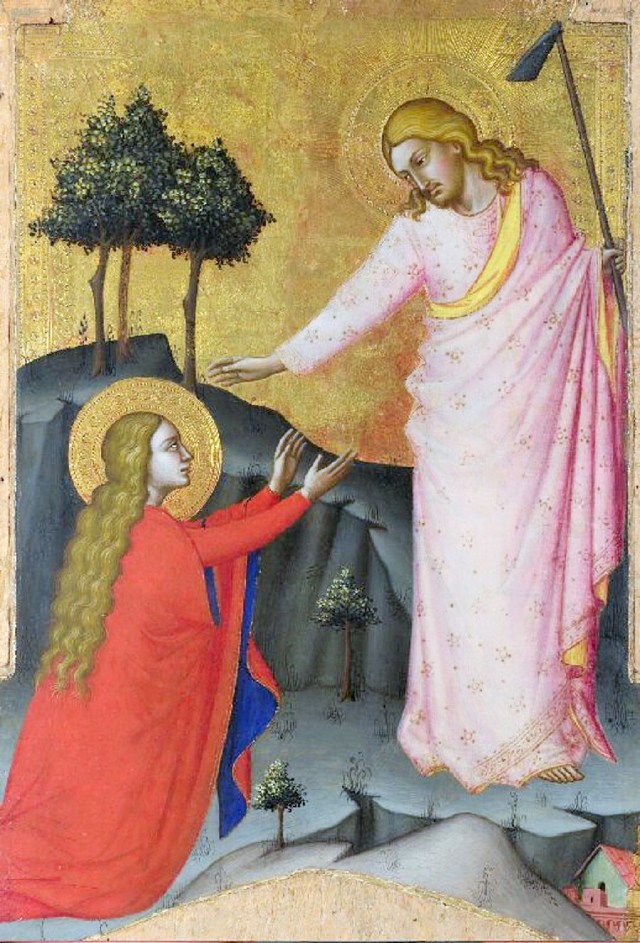
I must say right away that although I am an Art lover, I do not consider any of the paintings presented in the analysis below as either ‘beautiful’ or ‘Art’, let alone spiritual, in any sense. (Ok. probably the first three, the early Middle Ages, pass the mark) Their ‘fleshliness’ and ‘wordliness’ deeply offend and appall me. Just look at the corresponding Byzantine icons “Touch Me Not” (in Greek: Μη μου άπτου, Mi mou áptou), which show the appearance of the Resurrected Christ to Mary Magdalene as described in the Gospel of John :

Magdalene and the Resurrected Lord, Byzantine icons and Western Art

Magdalene and the Resurrected Lord, Byzantine icons and Western Art

Magdalene and the Resurrected Lord, Byzantine icons and Western ArtMagdalene and the Resurrected Lord, Byzantine icons and Western Art

Magdalene and the Resurrected Lord, Byzantine icons and Western Art

If the long flowing hair of a female Saint is considered (and rightly so) not common in Orthodox iconography, inappropriate for a number of reasons, and a borrowing from Western art of the time, how are we to feel with the Resurrected Jesus wearing a floppy sun hat ?!

*

Oh, the spirituality and ineffable, ethereal Beauty of Byzantine Art, especially its iconography! How movingly does Andrei Tarkovsky capture it in the concluding scene of Andrei Rublev!

*

*

Let us now turn to the original article and more about ‘my’ views on the matter in the coming week’s blog posts. Hopefully I should be able to explain better my mind as to why i do not consider such paintings ‘Art’, let alone ‘Sacred’.

*

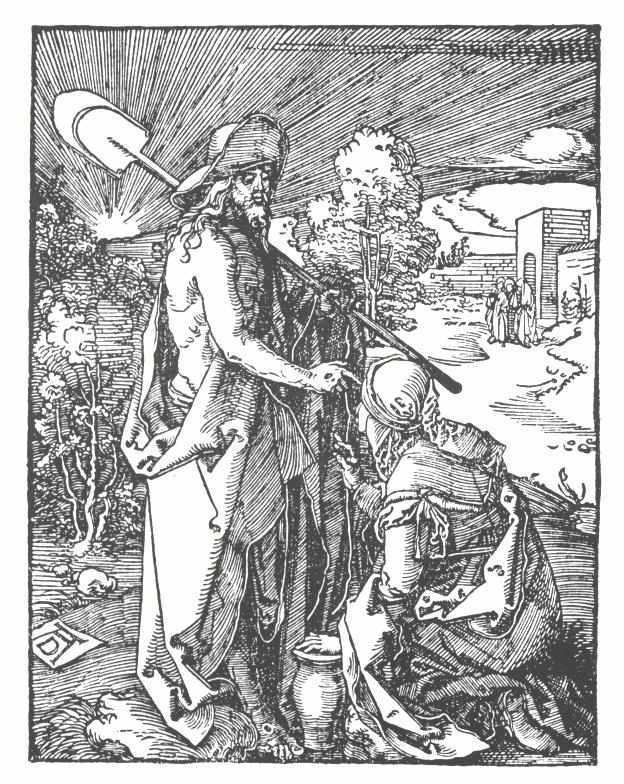
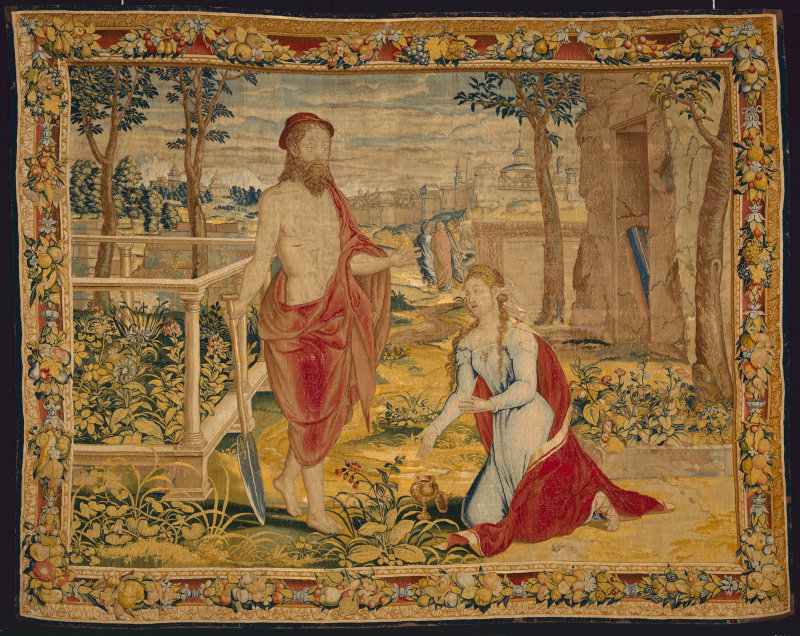
“In his Gospel John records that on the Sunday morning following Jesus’s crucifixion, Mary Magdalene went to the tomb and, finding it empty, started to weep, for she thought someone had taken the body. In her worry and frustration, she “turned around and saw Jesus standing, but she did not know that it was Jesus . . . supposing him to be the gardener” (John 20:14–15). It isn’t until he says her name that she recognizes him.

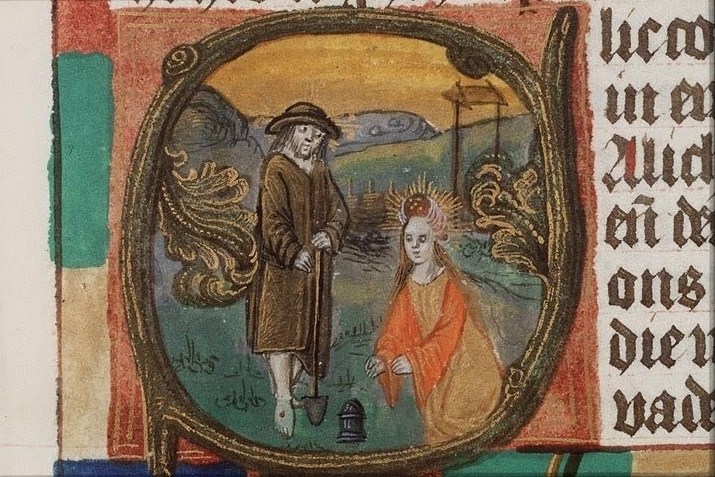
Artists—mainly from the fifteenth and sixteenth centuries—have latched onto this detail of mistaken identity, representing Jesus carrying gardening tools, like a shovel or a hoe, and sometimes sporting a floppy gardener’s hat. A few artists, such as Lavinia Fontana, Rembrandt, and the illuminators of the book of hours and passional shown below, have even shown Jesus in full-out gardener’s getup. (In her commentary on John, Dr. Jo-Ann A. Brant mentions that the fact that Jesus left his burial clothes in the tomb, coupled with Mary’s confusion, might provoke the “fanciful speculation” that Jesus actually borrowed the gardener’s clothes. Nevertheless, a different understanding is more likely behind the artistic representations; read on.)


Magdalene and the Resurrected Lord, Byzantine icons and Western Art
Attributed to Jacopo di Cione (Italian, 1365–1398/1400), Noli me tangere, ca. 1368–70. Pinnacle panel from a Florentine altarpiece, now in the collection of the National Gallery, London.
Magdalene and the Resurrected Lord, Byzantine icons and Western Art
Jesus Appears to Mary Magdalene, from a Biblia Pauperum (typological picture book), ca. 1405, Netherlands. British Library, London.
Magdalene and the Resurrected Lord, Byzantine icons and Western Art
Fra Angelico (Italian, ca. 1395–1455), Noli me tangere, 1440–42. Fresco from the convent of San Marco, Florence, Italy.
Magdalene and the Resurrected Lord, Byzantine icons and Western Art
Israhel van Meckenem (German, ca. 1445–1503), Noli me tangere, 1460–1500. Engraving. British Museum, London.
Magdalene and the Resurrected Lord, Byzantine icons and Western Art
Sandro Botticelli (Italian, 1445–1510), Noli me tangere, ca. 1484–91. Predella panel from an altarpiece from the convent of Sant’Elisabetta delle Convertite, Florence, Italy, in the collection of the Philadelphia Museum of Art.
Magdalene and the Resurrected Lord, Byzantine icons and Western Art
Master of the Dark Eyes, “Christ Appears to St. Mary Magdalene as a Gardener,” from The Hours of the Eternal Wisdom: Lauds (KB, 76 G 9), fol. 88r, ca. 1490. Koninklijke Bibliotheek (National Library of the Netherlands), The Hague.
Magdalene and the Resurrected Lord, Byzantine icons and Western Art
“Christ Appears to Mary Magdalene as a Gardener” (detail), ca. 1503–1504, England. Fol. 134v, Vaux Passional(Peniarth 482D), National Library of Wales.
Magdalene and the Resurrected Lord, Byzantine icons and Western Art
Noli me tangere, 16th century, Limoges, France. Enamel plaque, 27 × 19 cm.
Magdalene and the Resurrected Lord, Byzantine icons and Western Art
Albrecht Dürer (German, 1471–1528), Noli me tangere, 1511. Woodcut. British Museum, London.
Titian (Italian, ca. 1488–1576), Noli me tangere, ca. 1514. Oil on canvas, 110.5 × 91.9 cm. X-ray photographs show that Christ was originally painted wearing a gardener’s hat.
Magdalene and the Resurrected Lord, Byzantine icons and Western Art
Hans Baldung (German, ca. 1484–1545), Christ as a Gardener, 1539. Oil on canvas, 110.1 × 84.1 cm. Hessen State Museum, Darmstadt, Germany.
Magdalene and the Resurrected Lord, Byzantine icons and Western Art
Christ Appearing to Mary Magdalene, 1540/45. Tapestry, 210.3 × 268 cm. Design attributed to Michiel Coxcie (Flemish, 1499–1592) or Giovanni Battista Lodi da Cremona (Italian, active 1540–1552). Woven in the workshop of Willem de Pannemaker (active 1515–ca. 1581). Collection of the Art Institute of Chicago.
Magdalene and the Resurrected Lord, Byzantine icons and Western Art
Noli me tangere, ca. 1560–70, Germany. Ink and wash on paper.
Magdalene and the Resurrected Lord, Byzantine icons and Western Art
Agnolo Bronzino (Italian, 1503–1572), Noli me tangere, 1561. Oil on canvas, 291 × 195 cm. Musée du Louvre, Paris.
Magdalene and the Resurrected Lord, Byzantine icons and Western Art
Lavinia Fontana (Italian, 1552–1614), Noli me tangere, 1581. Oil on canvas, 80 × 65.6 cm. Uffizi Gallery, Florence, Italy.
Magdalene and the Resurrected Lord, Byzantine icons and Western Art
Rembrandt van Rijn (Dutch, 1606–1669), Noli me tangere, 1638. Oil on panel, 61 × 49 cm. Royal Collection Trust, London.
Magdalene and the Resurrected Lord, Byzantine icons and Western Art
Noli me tangere by Edward Burne-Jones (design) and William Morris (execution), 1874. Bottom right stained-glass panel of the Vanderpoel Window, Trinity Church, Saugerties, New York.

The portrayal of Jesus as a gardener isn’t meant to suggest that Jesus was literally gardening that day—though he might have been, and that’s amusing to think of. Rather, it alludes to his role as one who “plants” us and grows us. He gets his hands dirty in the soil of our hearts, bringing us to life and cultivating us with care so that we flourish.

According to Franco Mormando, whose research involves the religious sources of Renaissance and Baroque Catholic art, Jesus the gardener was a traditional theme of orthodox scriptural exegesis and popular preaching that traces its origins to patristic times. In a 2009 article for America magazine, he writes,

Mary’s misidentification was meant to remind us, so the pre-modern exegetes taught, of a spiritual reality: Jesus is the gardener of the human soul, eradicating evil, noxious vegetation and planting, as St. Gregory the Great says, “the flourishing seeds of virtue.” Although today out of circulation, this teaching was disseminated in [the fourteenth through eighteenth centuries] in such popular, authoritative texts as Ludolph of Saxony’s Life of Christ (a book that played a crucial role in St. Ignatius Loyola’s conversion) and [starting in the seventeenth century] Jesuit Cornelius a Lapide’s Great Commentary on Scripture.

The Bible makes explicit the connection between God the Father and gardening. Genesis 2:8 tells us he was the world’s first gardener: “And the Lord God planted a garden in Eden, in the east, and there he put the man whom he had formed.” The prophets sometimes wrote of God’s gardening in a metaphoric sense—for example, in Isaiah 61:11: “For as the earth brings forth its sprouts, / and as a garden causes what is sown in it to sprout up, / so the Lord God will cause righteousness and praise / to sprout up before all the nations.” Or Jeremiah 24:6, in which God says of the exiles from Judah, “I will build them up, and not tear them down; I will plant them, and not pluck them up.” Furthermore, Jesus’s parable from John 15 casts God as a vinedresser.

John’s Gospel, though, goes even further to ascribe this role to Jesus, and to present his resurrection as the genesis of something new. For example, the prologue to his Gospel starts, “In the beginning . . . ,” an obvious echo of the prologue to Genesis. In 19:41 he mentions that Jesus was buried in a garden, and in chapter 20, that he was found walking around in it. He mentions twice that Jesus rose on “the first day” of the week, as if this were the first day of a new creation (cf. Genesis 1:35). And then he has Mary mistake Jesus for the gardener. When taken in concert with Paul’s conception of Jesus as the Second Adam (Romans 5:12–211 Corinthians 15:21–22, 45), these allusions suggest that Jesus is the gardener of the new Eden, doing what Adam could not do. His resurrection broke ground in this garden, marking the beginning of a massive restoration project.

That’s why Jesus is so often found toting a shovel in the resurrection art of Renaissance and Baroque Europe. He is the caretaker of humanity, bending down to bring us up, to make us full and healthy and beautiful. Charles Spurgeon preached a sermon on the topic back in 1882, in which he declares,

Behold, the church is Christ’s Eden, watered by the river of life, and so fertilized that all manner of fruits are brought forth unto God; and he, our second Adam, walks in this spiritual Eden to dress it and to keep it; and so by a type we see that we are right in “supposing him to be the gardener.”

More recently, Andrew Hudgins—inspired by the imagination of visual artists—wrote a poem called “Christ as a Gardener.” You can read it in full here.

I’m curious to know whether any modern artists have exegeted John’s text in the same way—that is, portraying Jesus as a gardener in his appearance to Mary Magdalene. Besides a pen, brush, and chalk work by Anton Kern, done in a Baroque style, I am aware of only a few, the first of which is Graham Sutherland’s 1961 altarpiece in the St. Mary Magdalene Chapel of Chichester Cathedral. Commissioned by Walter Hussey, one of the twentieth century’s most important patrons of sacred art, Graham Sutherland painted two versions of Noli me tangere. Hussey chose the one that shows a door opening out into a garden and Christ wearing a sun hat made of straw, pictured below. (Click here to see a longer shot of the painting in its chapel context.) The alternate version is in the Pallant House Gallery, also in Chichester.

Magdalene and the Resurrected Lord, Byzantine icons and Western Art
Graham Sutherland (British, 1903–1980), Noli me tangere, 1961. Oil on canvas. St. Mary Magdalene Chapel, Chichester Cathedral, England.

Back in 2010 Jyoti Sahi posted an oil painting on his blog along with three others under the heading “The Resurrection.” I think the signature says 1987, but it’s hard to tell, as it’s cut off in the photo. In it Jesus carries an oversize scythe while Mary anoints his feet, just as she had done a week earlier, when she had shed tears in anticipation of his death (John 12:1–8). The outline around her is reminiscent of a kernel of wheat.

Magdalene and the Resurrected Lord, Byzantine icons and Western Art
Jyoti Sahi (Indian, 1944–), The Resurrection. Oil on canvas.

Most people associate scythe-wielding figures in art with the Grim Reaper—that is, Death—due to an iconography that stretches all the way back to the fourteenth century. But the Bible associates scythes with Jesus, the lord of the harvest (Matthew 3:12Matthew 13:2430Revelation 14:14–20), the harvest being the end of the world. Only those who have rejected Jesus need fear his Second Coming, for those who have grown in his word will be gathered up into heaven. This painting in particular reminds me of Psalm 126:5: “They that sow in tears shall reap in joy”—a beautiful song of ascents that has been set to music by, among others, Bifrost Arts. Mary had wept penitently over her sin, and then later over the impending execution of her Lord, and still again at his grave, but now, because of his Resurrection, she enters into his presence with shouts of joy, and even more cause for worship.

Lastly, He Qi’s Do Not Hold On to Me from 2013 also references the Jesus as gardener metaphor, but because the head of the shovel isn’t visible, it’s not as obvious.

Magdalene and the Resurrected Lord, Byzantine icons and Western Art
He Qi (Chinese, 1950–), Do Not Hold On to Me, 2013. Oil on canvas.

Do you know of any artworks from recent times that take on this theme?

*

Our Lady of Kipina


kipina39kipina38kipina36kipina35kipina34kipina33

kipina23kipina32kipina31

kipina37kipina28

kipina19


kipina26


kipina11

kipina13

kipina8

kipina6

kipina4

kipina2kipina1kipina16

kipina21

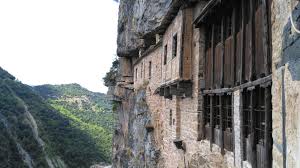
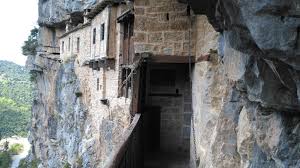
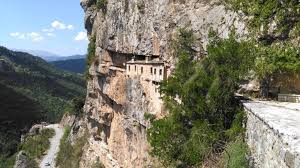
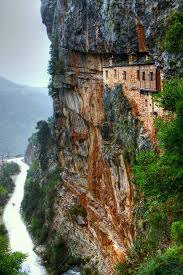
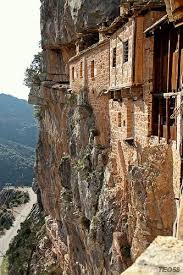
If you go towards the old-world village of Kalarrytes in the Tsoumerka Mountains in Epirus, you come across an impressive fortified monastery built into a rock face: the Holy Monastery of Our Lady of Kipina.


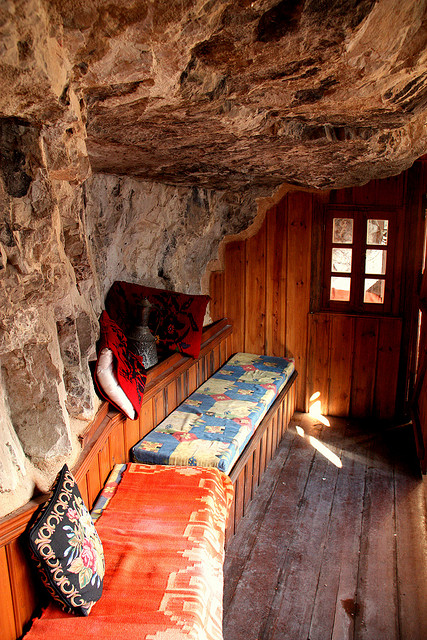
The Holy Monastery of Kipina is built into a large cave in a sheer rock.


According to the founder’s inscription, building began in 1349. But according to Metropolitan Serafeim (Vyzantio) of Arta, a historian, the foundation dates back further in time. Other historical sources date it to 1212.


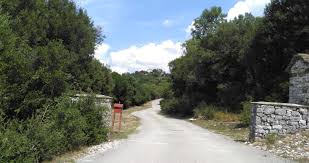
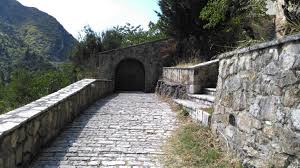
Access to the Monastery is by a stone path hewn into the rock. In former times, contact could be broken by means of a wooden drawbridge.

The outer gate of the monastery.


Without doubt, the time when the Monastery of Kipina was at its peak was the 18th century. Indeed, it’s recorded that, in 1760, the exceptionally active Abbot Kallinikos funded the construction of a bridge over the nearby River Kalarrytikos, a tempestuous tributary of the Arakhthos.


The Monastery also ran a school and a water-mill. All of this shows both the financial power of the foundation and also the close links with its social setting.


The imposing rock casts its shadow over the steps of visitors, next to the path to the entry.


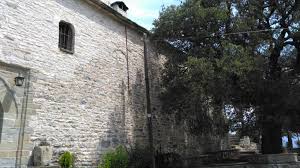
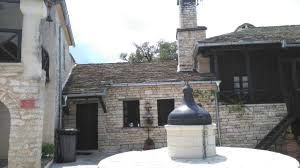
Still surviving from the old Monastery complex are the church, four cells and a small building which used to serve as a stable.


In the olden days, the drawbridge would be raised at night or at times of danger. Access to the Monastery was thus completed severed, which is why it is one of the few that escaped pillage. The crank handle of the drawbridge has been preserved.


The Monastery is dedicated to the Dormition of the Mother of God. According to tradition, however, it celebrates on the feast of the Life-Receiving Spring (Friday in the week after Easter).


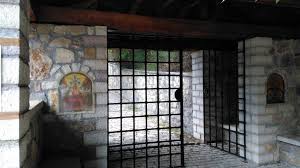
The church is a small, single space, built within the cave.


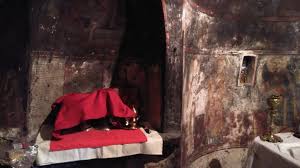
The rich iconographical decoration of the church was carried out in the 18th century.


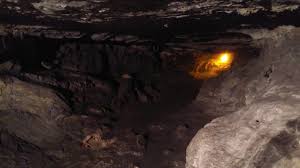
At the northern end of the narthex is the opening to the cave, which extends to a depth of 240 metres into the rock.

Today’s Abbesses of Abbesses

Gerondissa Akylina, Porphyria, Sipsa Monastery and St. Georgios Karslidis

Gerondissa Akylina, Gerondissa Porphyria (Sipsa) and Gerondissa Makrina (Portaria)

Friday, November 4, feast day of the Blessed Elder Georgios Karslidis of Pontos, warmed my heart with fond memories of nearly 3 decades of pilgrimages to beautiful, gem monasteries in Northern Greece!

 *

“God cares for everyone. Despair is in effect a lack of faith.”


Gerondissa Akylina, Porphyria, Sipsa Monastery and St. Georgios Karslidis


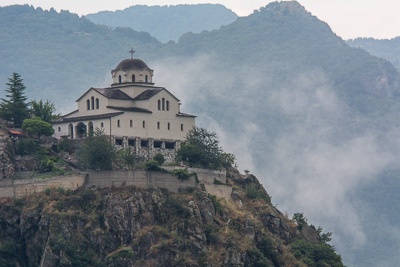
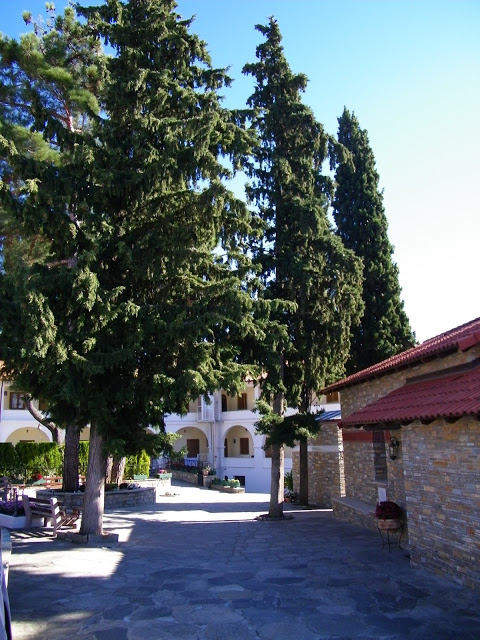
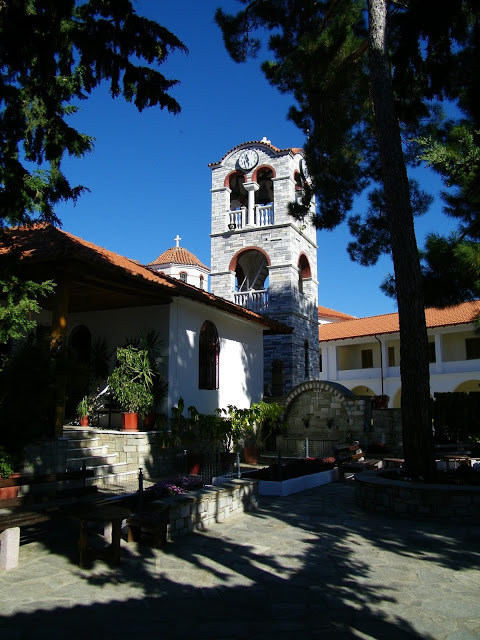
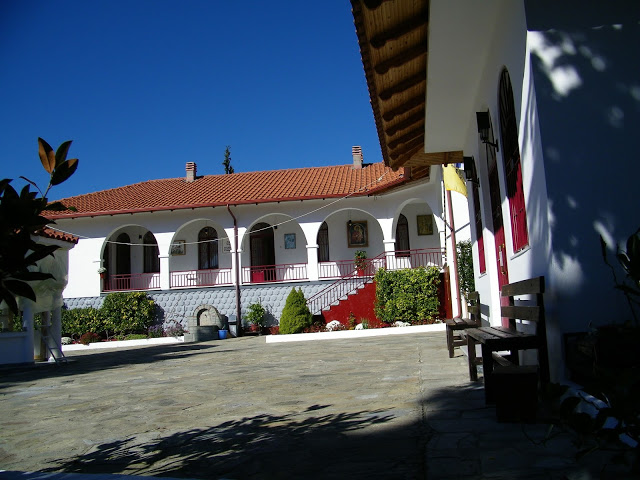
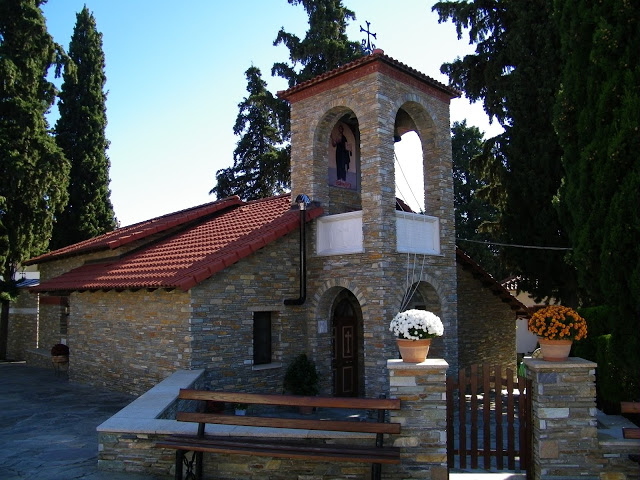
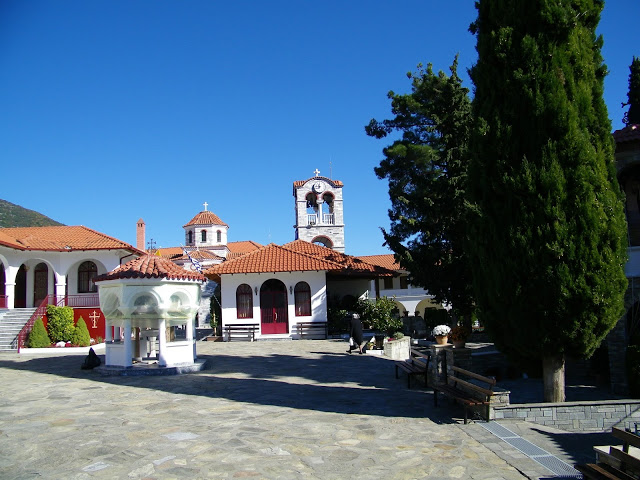
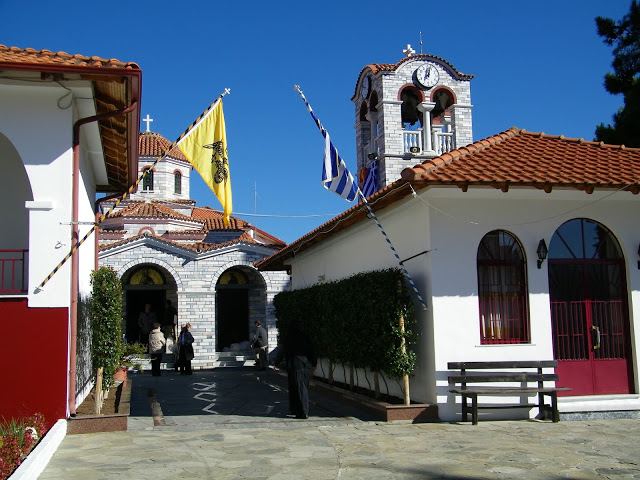
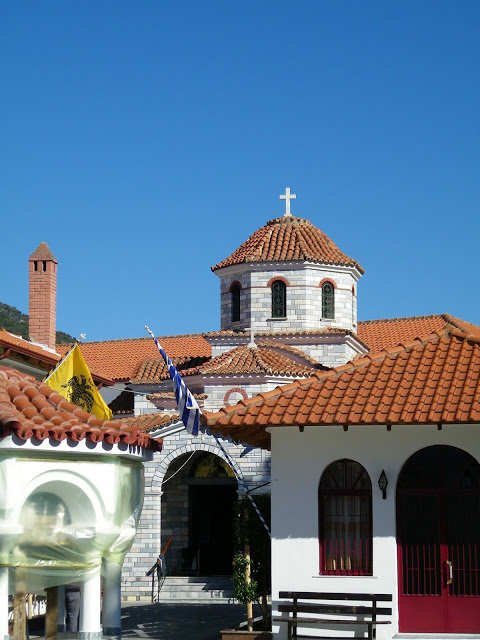
Taxiarches and the Analipseos Monastery (Sipsa) in Greece is one of the Monasteries in Greece that holds a dear place in my heart. Together with that of St. Paisios in Souroti, they were the first monasteries I started visiting as a University student, before my graduate studies and work at the US. At that time Gerondissa Porphyria, a Living Signpost in my journey on The Way,  had not even become a monastic, and now she is a renowned Abbess, one of the few of her ‘calibre’ in contemporary women’s monasteries.


Gerondissa Akylina, Porphyria, Sipsa Monastery and St. Georgios Karslidis


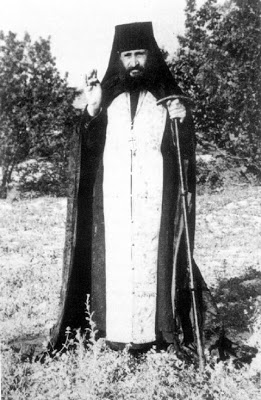
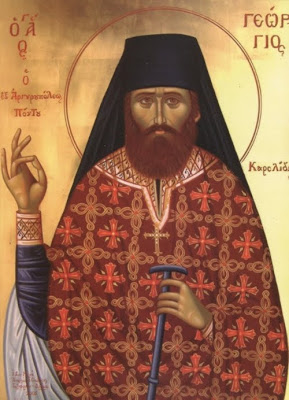
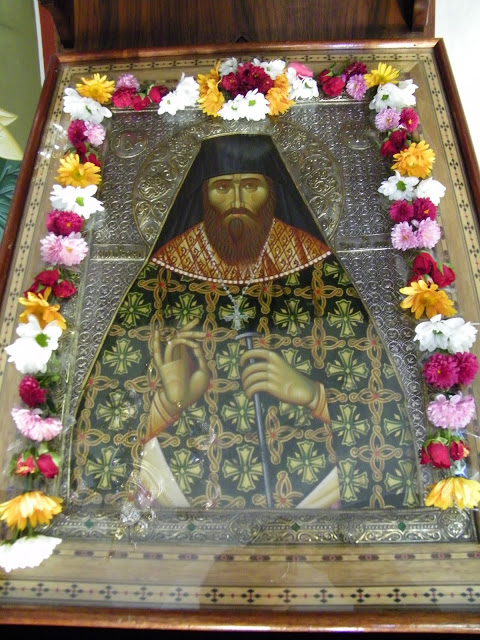
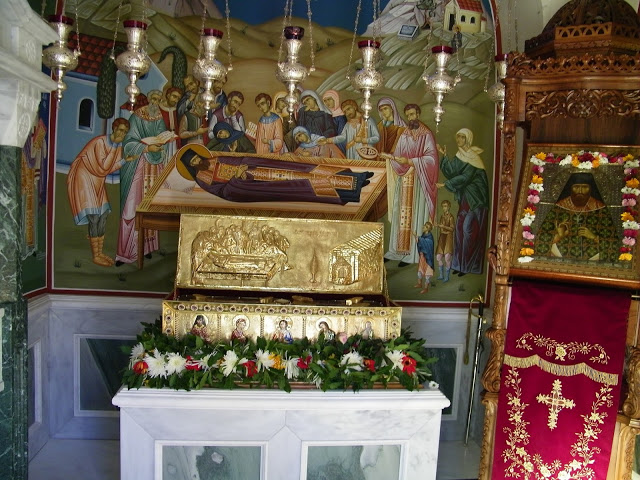
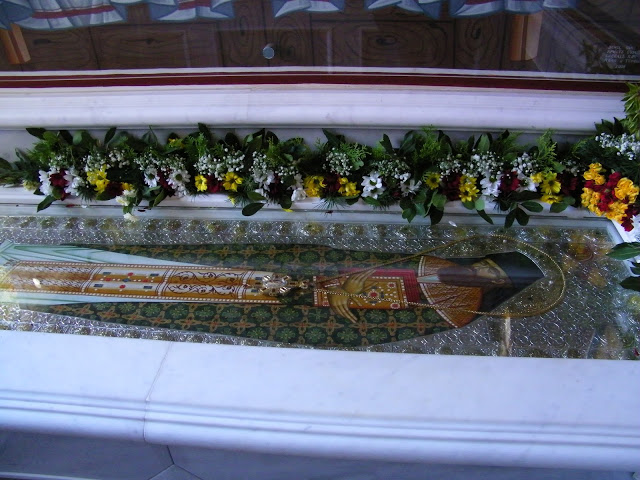
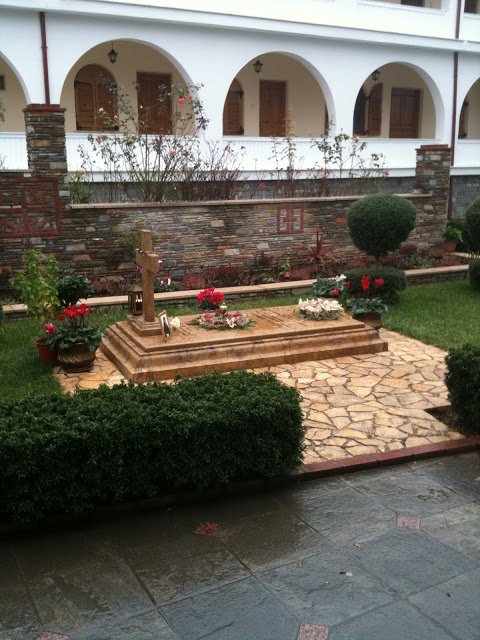
The Blessed Elder Georgios Karslidis of Pontos (1901-1959), latter day saint of the Saintly Orthodox Church in Greece,  glorified by the Patriarchate of Constantinople in 2008, was the first “resident” and founder of the monastery in the year 1930. He is one of few saints known to bear an imprint of the sign of the cross on his skull. There is a flourishing multitudinous sisterhood of nuns here today, who occupy themselves with the Iconography of handheld pictures, gold embroidery,knitting and waxwork.


Gerondissa Akylina, Porphyria, Sipsa Monastery and St. Georgios Karslidis


Gerondissa Akylina, Porphyria, Sipsa Monastery and St. Georgios Karslidis


Gerondissa Akylina, Porphyria, Sipsa Monastery and St. Georgios Karslidis


Gerondissa Akylina, Porphyria, Sipsa Monastery and St. Georgios Karslidis


Gerondissa Akylina, Porphyria, Sipsa Monastery and St. Georgios Karslidis


Gerondissa Akylina, Porphyria, Sipsa Monastery and St. Georgios Karslidis


Gerondissa Akylina, Porphyria, Sipsa Monastery and St. Georgios Karslidis


Gerondissa Akylina, Porphyria, Sipsa Monastery and St. Georgios Karslidis


Gerondissa Akylina, Porphyria, Sipsa Monastery and St. Georgios Karslidis


Gerondissa Akylina, Porphyria, Sipsa Monastery and St. Georgios Karslidis


Gerondissa Akylina, Porphyria, Sipsa Monastery and St. Georgios Karslidis


Gerondissa Akylina, Porphyria, Sipsa Monastery and St. Georgios Karslidis


Gerondissa Akylina, Porphyria, Sipsa Monastery and St. Georgios Karslidis


Gerondissa Akylina, Porphyria, Sipsa Monastery and St. Georgios Karslidis


Gerondissa Akylina, Porphyria, Sipsa Monastery and St. Georgios Karslidis


Gerondissa Akylina, Porphyria, Sipsa Monastery and St. Georgios Karslidis


Gerondissa Akylina, Porphyria, Sipsa Monastery and St. Georgios Karslidis


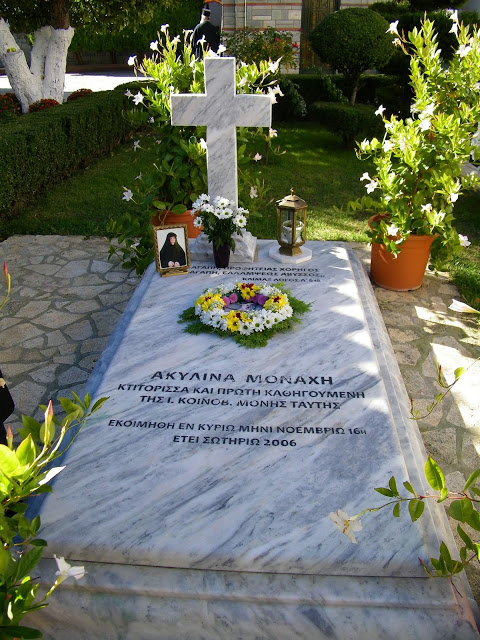
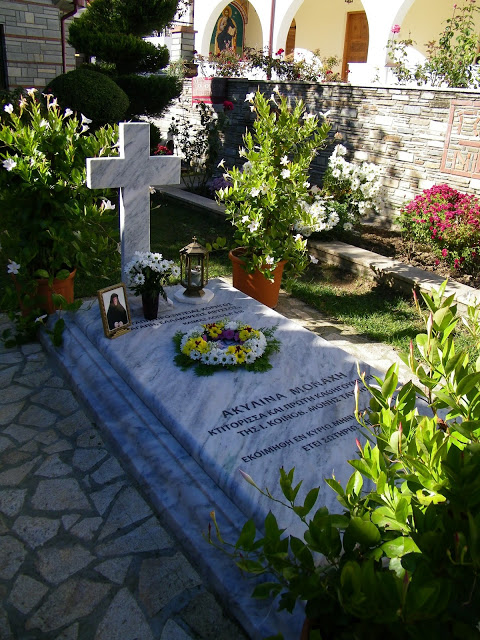
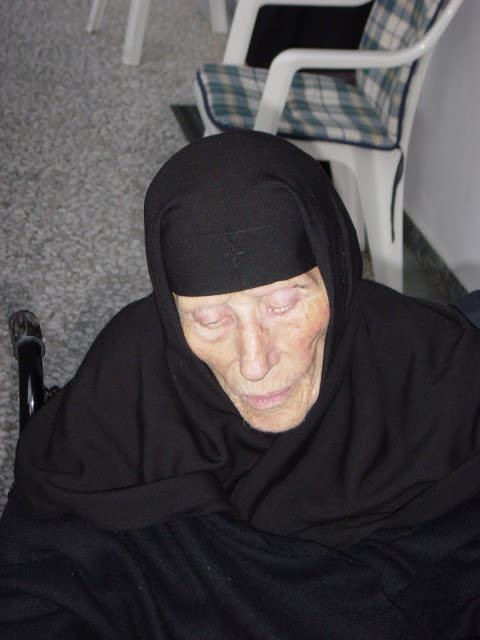
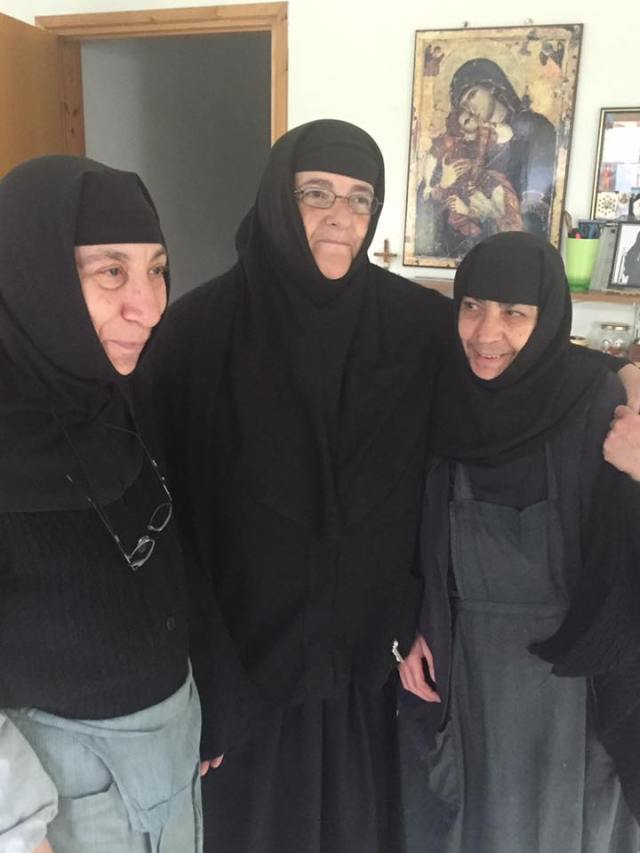
Gerondissa Akylina was the first Abbess. I had the rare blessing to meet her a number of times during the last years of her life. In the words of our late Elder Iosif Vatopaidinos, Gerondissa Akylina, together with Gerondissa Makrina in Portaria, were ‘Abbesses of Abbesses’:  examples of the monastic life and their monasteries models of coenobia, workshops of virtue and antechambers of Paradise.


Gerondissa Akylina, Porphyria, Sipsa Monastery and St. Georgios Karslidis


Gerondissa Akylina, Porphyria, Sipsa Monastery and St. Georgios Karslidis

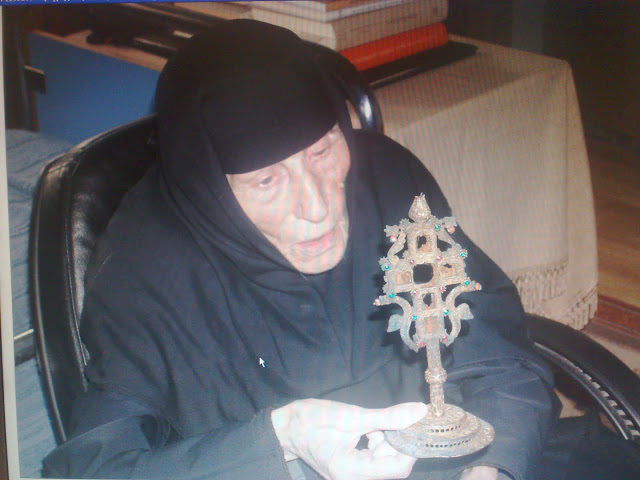
Gerondissa Akylina holding the Cross of St. Georgios Karslidis which was found intact after the translation of his relics. He is one of few saints known to bear an imprint of the sign of the cross on his skull.


Gerondissa Akylina, Porphyria, Sipsa Monastery and St. Georgios Karslidis


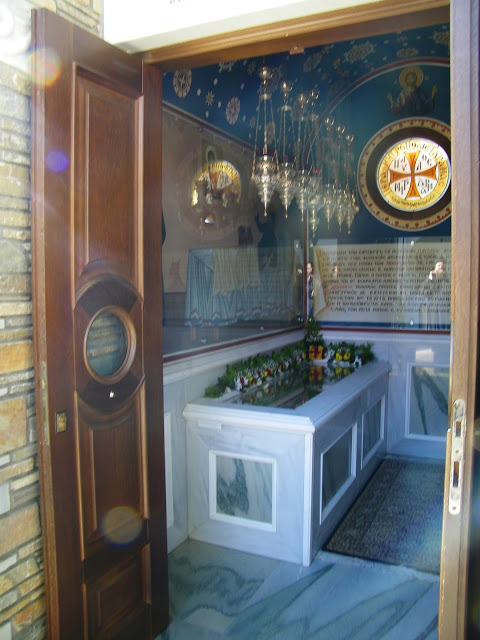
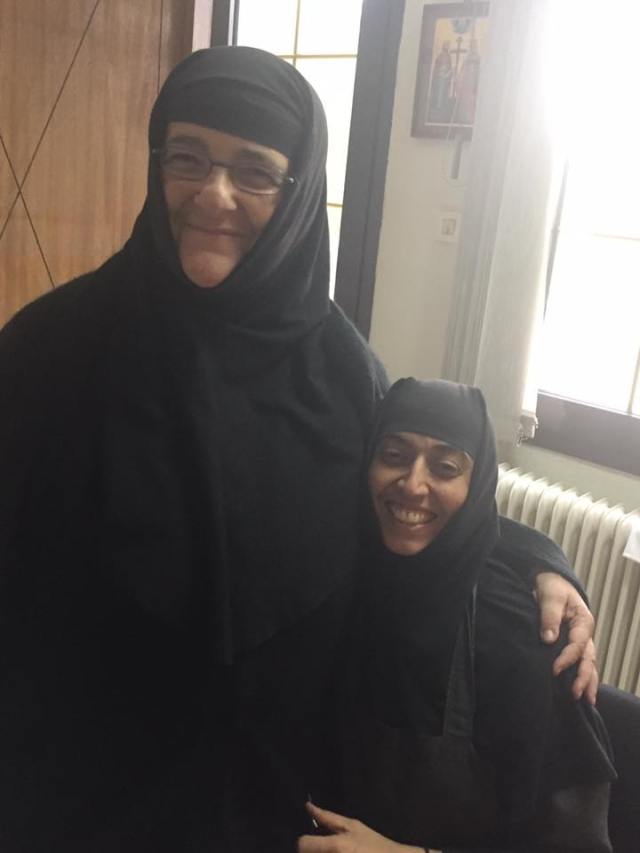
Gerondissa Porphyria has always been so full of love and humility, always ready to sacrifice her ease,  her rest and sleep, everything for her ‘neighbour! How many times has she consoled me in the trials and tribulations of my life! Always by my side, always! How many times has she offered a shoulder to cry on and precious, practical counsel! Her prayerful presence is intensely, intimately felt even thousands of miles away, here at the UK, and her smile warms my heart. Oh, just look at her smile in the photographs below with a pilgrim at the monastery and imagine the rays of the sun warming your shoulders after a rainy, cold day! How blessed am I to have such a spiritual mother by my side! Over the years I got better acquainted with the friendly and hospitable nuns there and the pilgrims and the faithful who regularly visit this monastery. St. Georgios’ holy presence is immediately felt upon entering the monastery gate, and there is always a queue at his tomb where his spiritual children kneel before their spiritual father, now in Heaven, to ask for his spiritual guidance and to seek comfort in life’s trials and tribulations.


For a closer insight at Elder Georgios Karslidis and his miracles, watch the following interview by Gerontissa Porphyria: