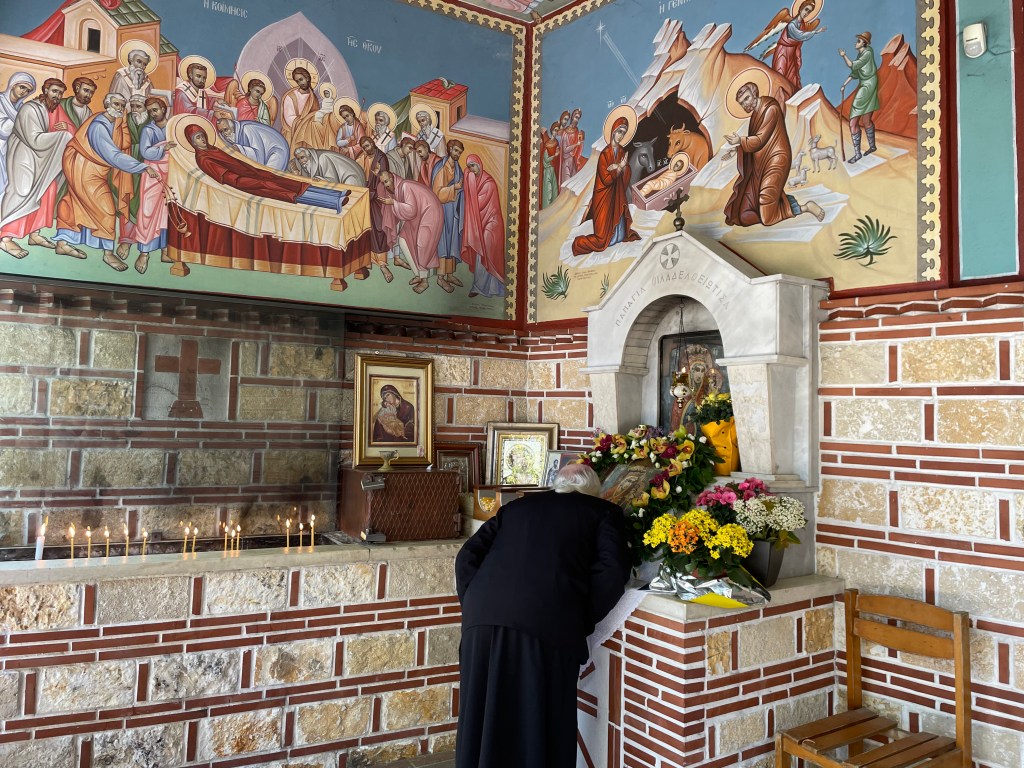
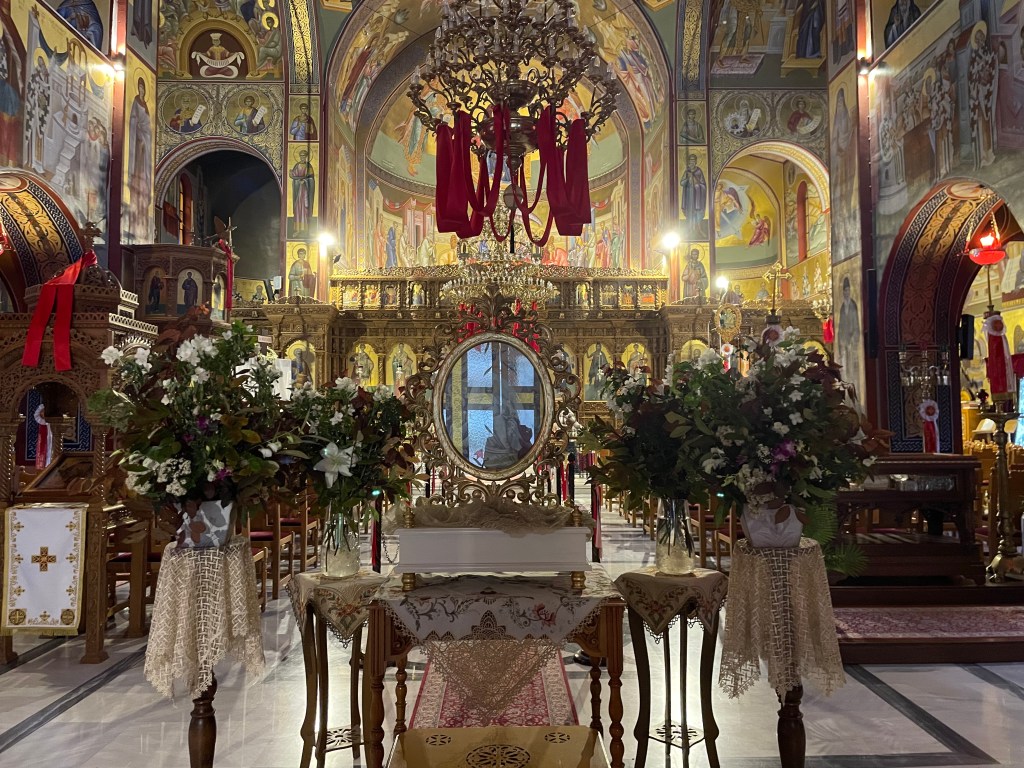
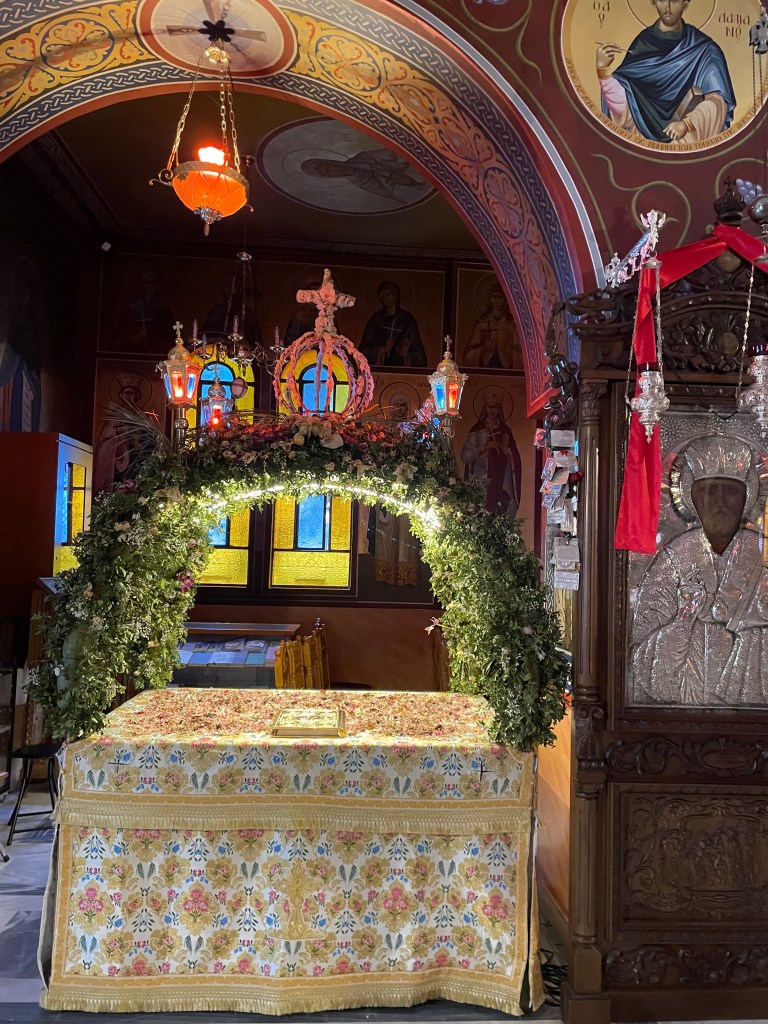
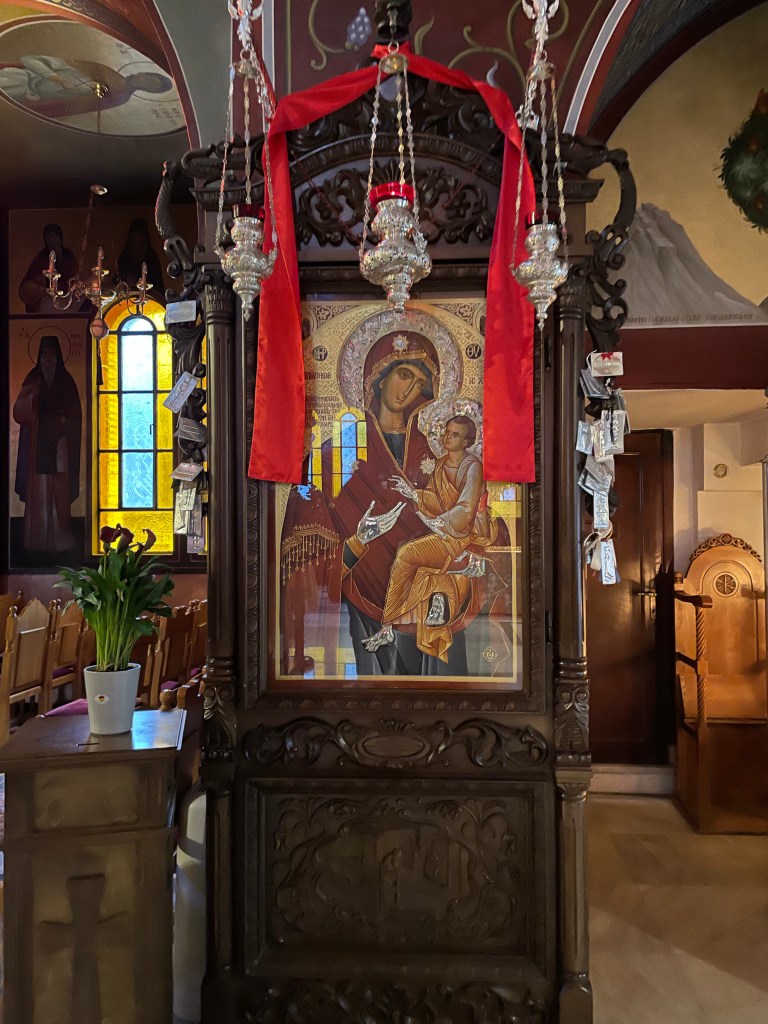
Thursday the 11th of June, the Feast of St. Luke Symferoupol and the revelation of Axion Estin by the angel Gabriel.
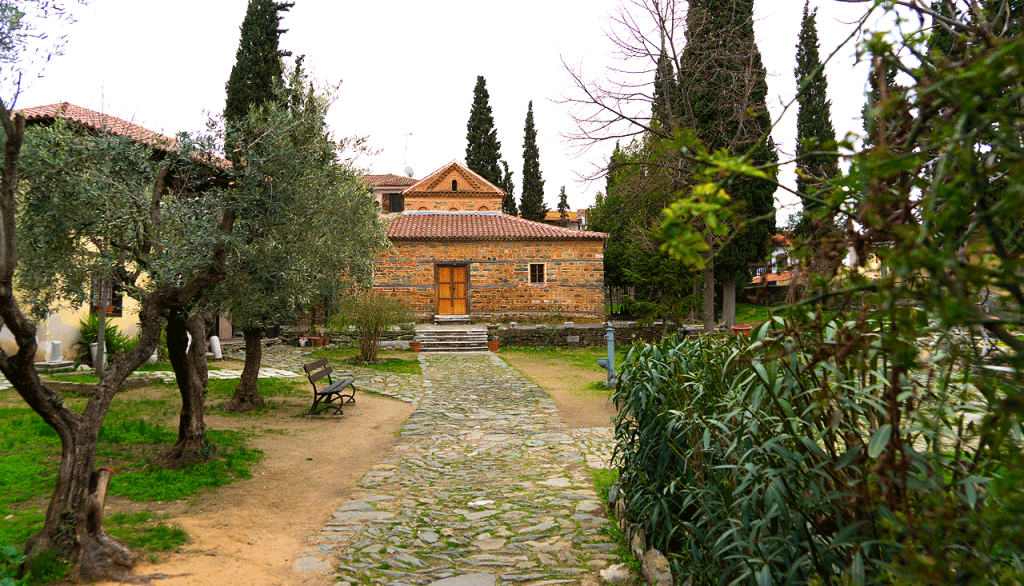
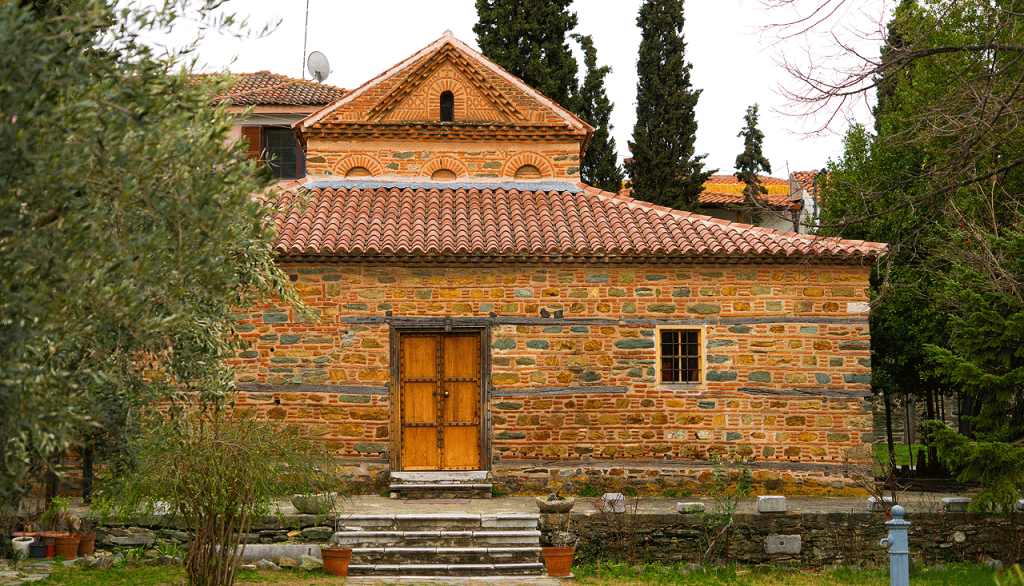
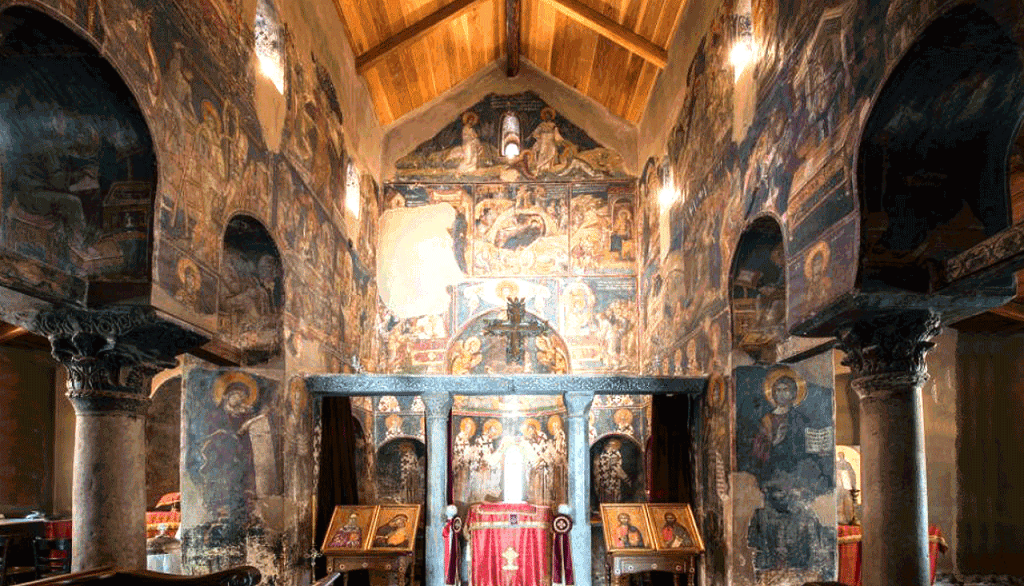
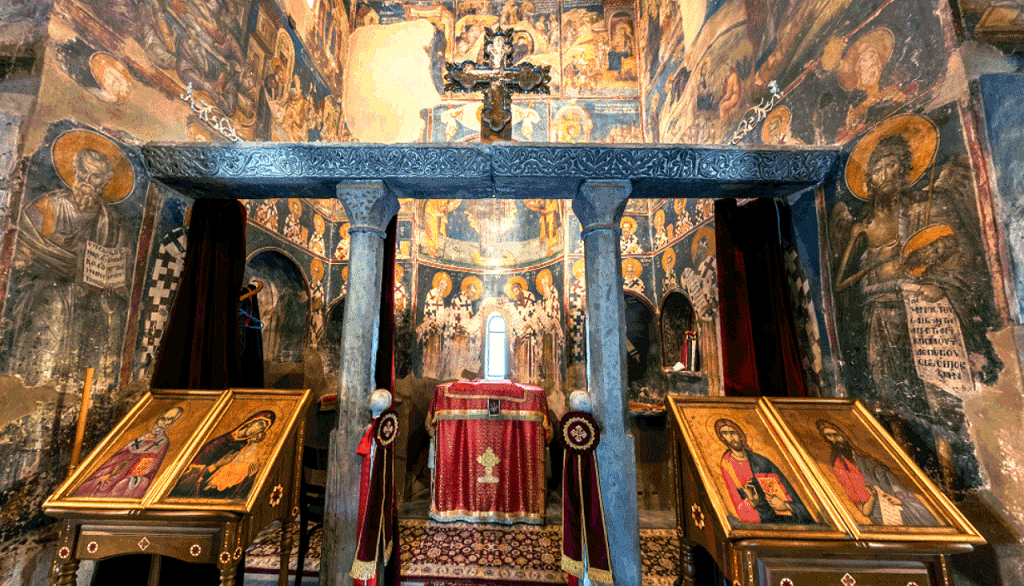
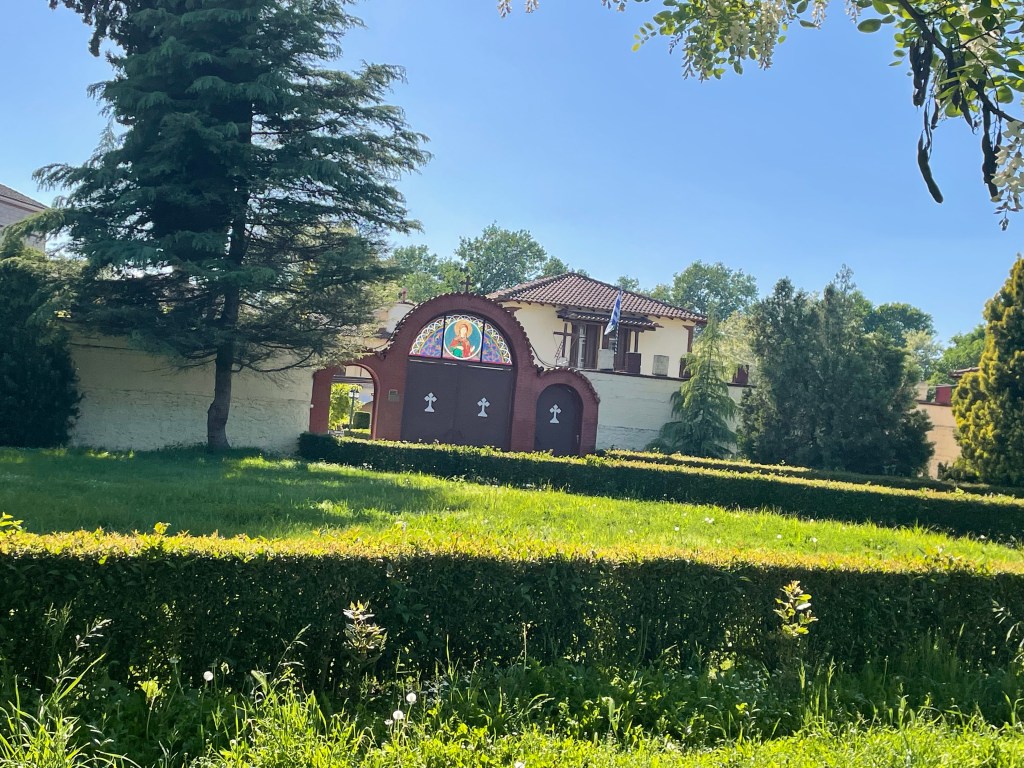
The journey to St. Kyriaki monastery was quite eventful. St. Kyriaki monastery is where a number of our Antiochian nuns found themselves.
At one point in the journey, engrossed as we were, in deep conversation and with the Paraklesis of St. Luke Symferoupol providing the background ison to our talk, we took a wrong road. My fault, I’m afraid, as I was the co-pilot, supposed to be directing the way.
The sign Local Road did not really do justice to the rather barely marked track that we found ourselves on in this huge field. However, Sat Nav came to the rescue and revealed to us the way that we should go. We needed a U-turn.
U-turns can be life-saving in a religious and a spiritual point of view, from sin and death and the roads which lead to destruction, to the way that leads to Paradise.
A reliable source told me how beautiful this place was, and indeed there was no hyperbole from that source.
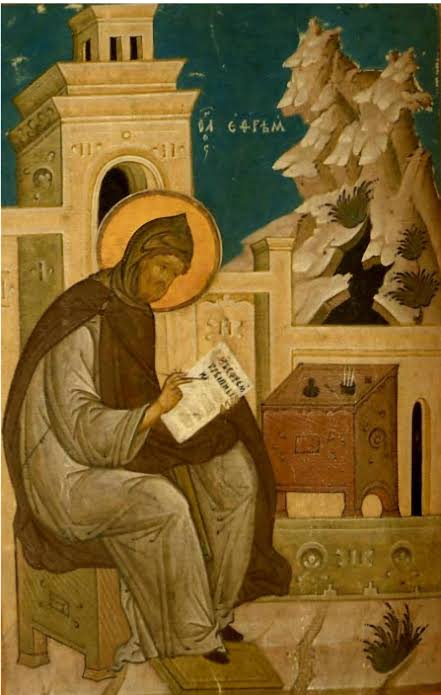
This beautiful monastery, which is really a hidden gem amidst the beautiful countryside, reminded me of the Hymns of Resurrection from St. Ephraim, also a Syrian.
In his Hymn to the Resurrection, chapter 15, verse 10, he writes this:
“Let us summon and invite the saints,
the martyrs, apostles and prophets,
whose own blossoms and flowers
shine out like themselves –
such a wealth of roses they have,
so fragrant are their lilies:
from the Garden of Delights do they pluck them,
and they bring back fair bunches
to crown our beautiful feast.
O praise to You from the saints who are blessed.”
Sister T told us how the nuns came to be there, and it reminded me of another verse from St. Ephraim the Syrian, verse 12, in the same poem:
“Receive our offering, O our King,
and in return grant us salvation;
give peace to the land that has been devastated,
rebuild the churches that were burned,
so that when deep peace has returned,
we may plait you a great wreath,
with flowers and people to plait it,
coming in from all sides
so that the Lord of Peace may be crowned.
Blessed is He who has acted and is able to act.”
*
For those of you who missed it, the story of the Sisters of War and St. Kyriaki monastery in Veria can be read here
Friday the 12th of June, a morning of quiet and hesychia, praying for people and reflecting on the grace of God in St. Porphyrius’ flat. Prayer and quiet provide the nourishment for our souls. We need courage to do the will of God, not just to say “Thy will be done” and leave it there.
The dynamic of the Holy Spirit is real, and if there is no movement, then there must be a threshold of tolerance, of patience, if you like, within that stagnant state. Courage is not simply one of the virtues, but the form of every virtue at the testing point, the point of the highest reality. Pilate was merciful until it became risky, as C.S. Lewis points out in the Screwtape Letters.
Quiet, hesychia, is the groundwork which prepares us for the spiritual battle in the day, each day, every day. We live in a world of computers, artificial intelligence, and not real wisdom. We live in a world of war and conflict, of ideological differences, of confusion, even about identity and gender.
We, Christians need to step aside, because the word holy in Hebrew means to be separated, “kadosh”, to be set apart. We are set apart not because we are holy, but because we are called to be holy, called to steep ourselves in that atmosphere of peace, of serenity, of confidence in Christ, the one who calls us to follow Him, who is indeed the Prince of Peace, and He calls us in order for us to become, in turn, fishers of men.
Hieromonk Seraphim Rose writes, modern men have faith in machines, in material well-being, in the substantiality of all that seems obvious to common sense. This is a petty faith, the faith of petty men. The Christian has faith in God and in the world to come. Indeed, in the insubstantiality of all that is obvious, in the passing of this world and the coming of the new transfigured world, if there is a faith worthy of men, it is surely this.
I would not wish to add to the words of Hieromonk Seraphim Rose, but just to reflect that even common sense seems to be missing in this present age. May the Lord grant us quiet, may He grant us His peace, in order to do His will. Amen.
*
Hesychia: The Sacred Stillness. In sacred silence, the faithful becomes flame, still yet alive, consumed by divine presence.
*
Abba Lot went to see Abba Joseph and laid out his daily spiritual routine. He asked, “Abba, as far as I can, I say my little office, I fast a little, I pray and meditate, I live in peace, and as far as I can, I purify my thoughts. What else can I do?”
In response, Abba Joseph stood up and stretched his hands toward heaven. His fingers became like ten lamps of fire, and he replied, “If you will, you can become all flame” (The sayings of the Desert Fathers)
“Dedication to Christ is the joy of life,” Mother Maria will answer me, instantly solving the questions about the smiling faces of the women in their cassocks. The thriving convent she now runs once languished with only two very old nuns.
The Sisters found refuge from the war in Syria. An old bond brought them here
I had heard a lot, but I couldn’t separate the legend from the truth. I had to wander the plain of Veria. To forget myself for a while in the blooming peach trees – the ones that filled Instagram at the end of March – to pass, full of curiosity, the heavy iron door of the Monastery of Agia Kyriaki. And to face the truth in the bright faces of women of all ages.
In the monastery’s mansion, Arabic coffee awaited me with treats from Aleppo. Yes, from Syria. The nuns pronounce Greek with small – I would say charming – grammatical errors that testify that their mother tongue is different.
Gerasimi is a graduate of Fine Arts. She elaborately decorates the candles for the Resurrection – their sale is a significant source of income for the small monastery.
“God’s Will”
The war in Syria brought here, to Loutro Imathias, an entire sisterhood of nuns from Aleppo. Aleppo, which was also called Veria during the Byzantine Empire. Luck, fate or divine providence?
For my interlocutors, everything is “God’s will”. And one name is constantly on their lips: Paul! The missing Metropolitan of Aleppo.
On Holy Monday 2013, Paul of Aleppo, returning to Syria from Alexandretta in Turkey, decided to go to a village to try to free locals for whom the rebels were demanding ransom. He was accompanied by the Jacobite bishop Yuhanna.
On the way, the two hierarchs were ambushed. Their driver was murdered and they were kidnapped. Everyone then thought that the kidnapping was the work of ISIS jihadists. The State Department rewarded the kidnappers with 5 million dollars. After all, Paul was the fleshly brother of the Patriarch of Antioch and All the East John.Thirteen years since then, the fate of the two archpriests continues to be unknown. But back to the Monastery of Agia Kyriaki, Pavlos is so “present” in all the stories!
“Missing Father” – “He encouraged me to go to the School of Fine Arts.” “He wanted us to study first and then become a nun.” “He showed me the way to iconography.” “He insisted that we learn Greek, the language of the Fathers.” This is what the sisters say of Metropolitan Pavlos of Aleppo, whose fate has been unknown since 2013, when he was kidnapped.
Emiliani and Iliani were taught the art of needlework in Ormylia, the women’s monastery of Simonopetra. Monks from Simonopetra on Mount Athos are still their spiritual leaders today.
Ten were the first nuns – from the Monastery of the Annunciation of the Theotokos in Aleppo – who found refuge here. “Like Noah who landed his sea-swept ark on Ararat,” I will hear one evening.
All from families of old Romans, that is, citizens of the Byzantine Empire who gradually became Arabic-speaking.
Most from the Valley of the Christians, a natural valley, as large as Kos, near the border with Lebanon.
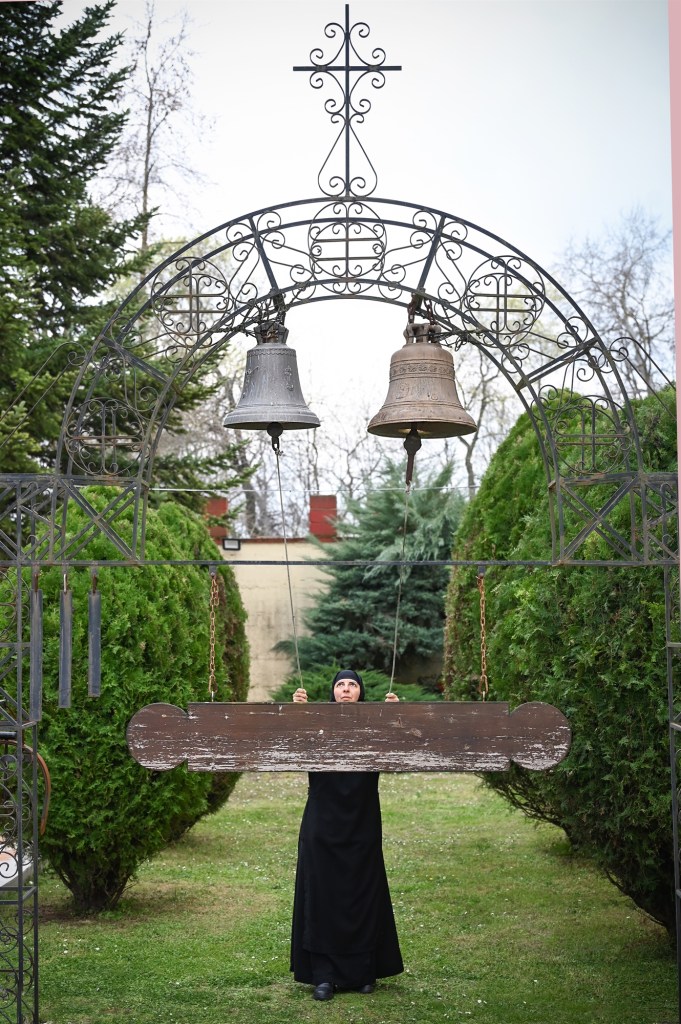
Philothei rings the monastery bells. For centuries, events in monasteries have been announced by rhythmic metal or wooden sounds that lead the brotherhoods to the Katholicon, a chapel, or the refectory.
Every time they went to distribute medicine and food, the locals would exclaim: “For the sake of Deir el Bisara” – “the nuns of the Annunciation are coming!”
A liturgy in two languages – The Arabic psalms, in the monastery church, are “married” with invocations in Greek: “Lord of Hosts, have mercy on us”. With pilgrims from Alexandria and Veria recognising the same prayer in different words and rejoicing.
But how did the nuns of war find their way to the humble and then unknown Agia Kyriaki?
The current Metropolitan of Veria Panteleimon, in the early 1990s, served as a hieromonk in Thessaloniki. And he had the Syrian Pavlos as his deacon. A graduate of the famous Theological Seminary of Balamand and the Polytechnic University of Latakia – who was then completing his doctorate in theology, while also studying Byzantine music. Paul then became a monk on Mount Athos, where he studied iconography under the most famous iconographers of Athos.
Sister Nikodimi studied Dentistry in Syria. In Greece, she obtained a master’s degree in psychological support for children with cancer and chronic diseases.
Over the years, the hieromonk became the metropolitan of Veria and the deacon the metropolitan of Aleppo. And during the war, he asked his counterpart in Veria for shelter for his spiritual daughters.
One of the photographs of the Metropolitan of Aleppo before his kidnapping in Syria
The Sisterhood
Thirteen years since then, the sisterhood has thrived and now numbers twenty nuns and four novices.
Hieronymi shows the fruits from the sisterhood orchard to Stavros Theodorakis. The monastery’s “development” plan is to create new cells for the nuns and an orchard with fruit trees and gardens with medicinal herbs. Apple, apricot, and cherry trees have already been planted, and once the cold weather passes, sage, verbena, rosemary, and oregano will follow, on terraces.
And at my Lenten table they serve makhlouta* with red lentils, cumin, and vegetables from the sisterhood’s vegetable garden.
Next to me, the reader, standing, commemorates Pavlos in the present tense.
As if he is absent for a while and they are waiting for him to return.
* Makhlouta means “mix” in Arabic, and that’s exactly what this soup is: a mix of beans and grains, simmered slowly.
Even though it is is 31C, it is raining. One of our friends said, “you have brought the rain with you from Manchester.” Indeed, but I drank from the fountain of Christ’s Mercy.
St Efraim the Syrian writes:
“Thanksgiving be to Him who caused a stream to flow forth
in the mouths that had been closed,
so that they might give praise without end, through the Son,
to the worshipful Father.”
Nisiben hymns 69
The evening was spent in conversation with Sister A and S at C’s house. The conversation was pastoral in nature, and the conversation revolved around the vicissitudes of life that we all suffer. Set within that larger framework of God’s divine plan.
It is a blessing to share one another’s burdens and to focus on our faith, our common heritage, within a world which often has taken the wrong direction and that is searching for answers. St Paul, in his letter to the Galatians in chapter 6 v. 2, writes, “Bear one another’s burdens, and so fulfil the law of Christ.” So, in acceptance of these words, we were indeed bearing one another’s burdens, and in so doing, fulfilling that law of Christ, to love God and to love one’s neighbour.
St Porphyrios says, “Christ is everything.” So, we should not add or subtract anything to our Christian faith, since, by adding, we compromise, and by subtracting, we fall short of that perfection which God calls us to. C.S. Lewis calls this “Mere Christianity.”To Wormwood, his nephew, in the Screwtape Letters, he says, what we must do is to keep them in the state of mind I call ‘Christianity and …’, you know, ‘Christianity and Crisis’, ‘Christianity and the New Psychology’, ‘Christianity and the New Order.’” To add to that, perhaps ‘Christianity and Politics.’
The horror of the same old thing is one of the most valuable passions we have produced in the human heart. It creates an endless source of heresies. Pure Christianity, with nothing added and nothing taken away, we find in the monasteries.
C.S. Lewis writes again: “just as we pick out and exaggerate the pleasure of eating to produce gluttony, so we pick out the natural pleasantness of change and twist it into a demand for absolute novelty.”
Original, authentic and unadulterated Christianity does not need nor seek approval of the world, or indeed embrace its passing fads and fashions and fantasies. It remains steadfast to apostolic order, to true doctrine and to the living tradition.
Any movement that is required is impelled by the action of the All-Holy Spirit. Amen.
“Now the enemy’s philosophy is nothing more nor less than one confirmed attempt to evade this very obvious truth. He aims at a contradiction.
The good of one’s self is to be the good of another. This impossibility he calls love. He is not content even himself to be a sheer arithmetical unity.
He claims to be three as well as one, in order that this nonsense about love may find a foothold in his own nature.” C. S. Lewis, The Screwtape Letters.
Loving others is that impossible contradiction that we live as Christians.It requires on our part effort, time, perseverance and patience. These four virtues, cultivated by a little hope, will bring forth fruit.
Today the tenth is the feast of St. John Maximovich, who planted the seed of love in the New World, and indeed also in the eastern world, of which his fruit can be seen today in the USA and in the UK, and in many parts where he was present.
The growth of Orthodoxy is witnessed amongst our young people. It was on this day in 1993 that we, Pilgrims to Orthodoxy, met Patriarch Ignatius IV of thrice-blessed memory. We met him in Paris with these virtues and with equal hope, and he greeted us with “Welcome home.”
Home is more than a place. It is a people. It is being among others in that “arithmetical nonsense” where three are one, and one is three.
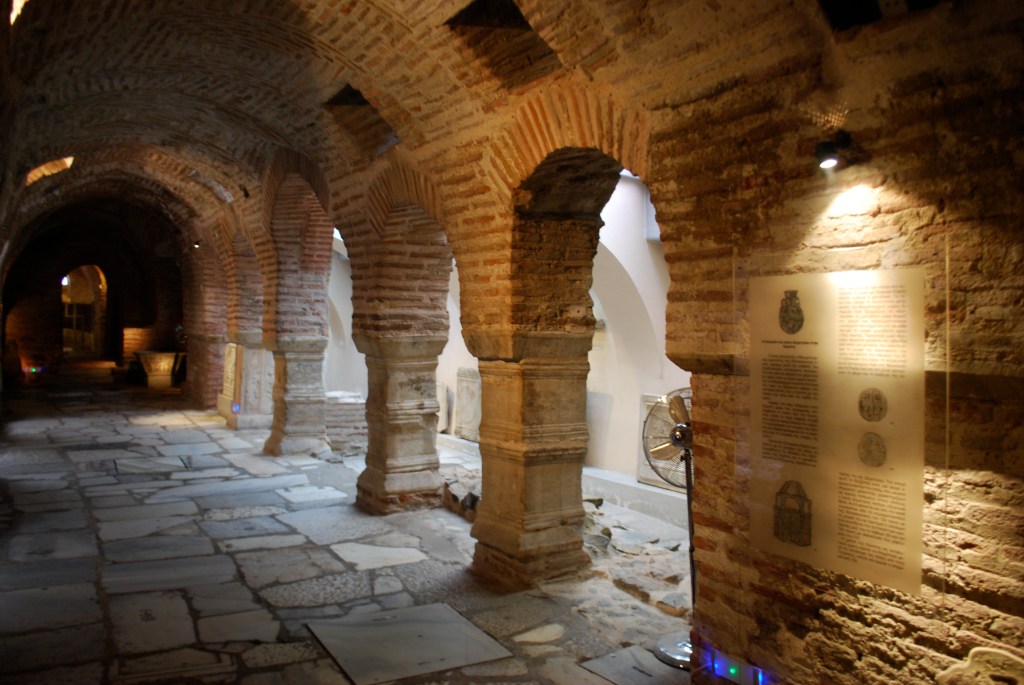
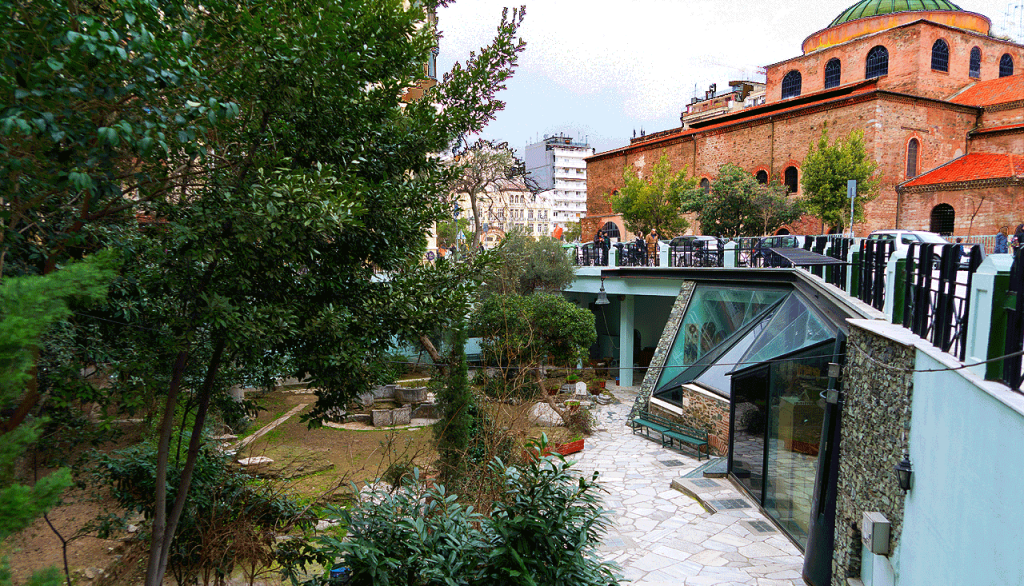
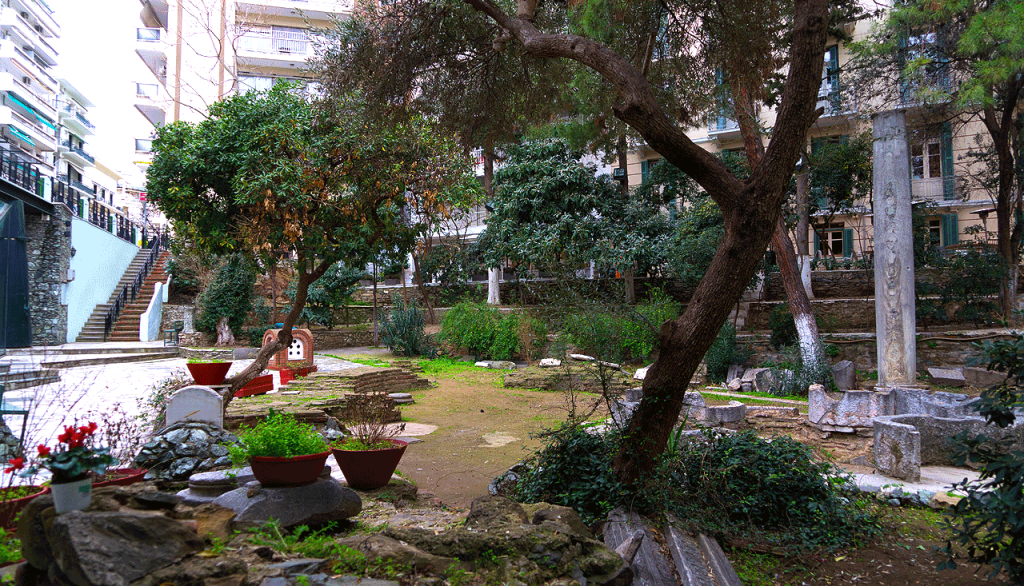
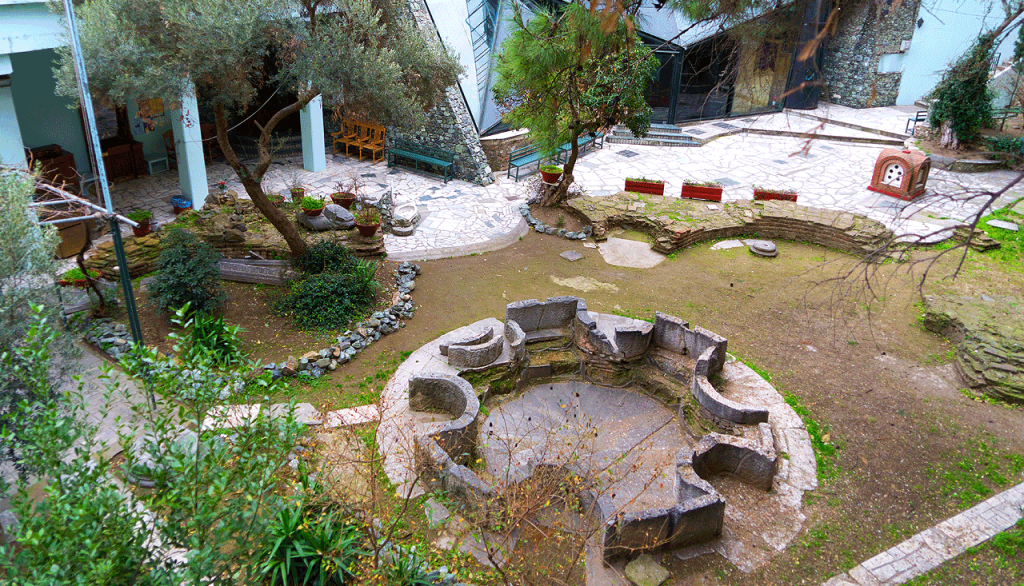
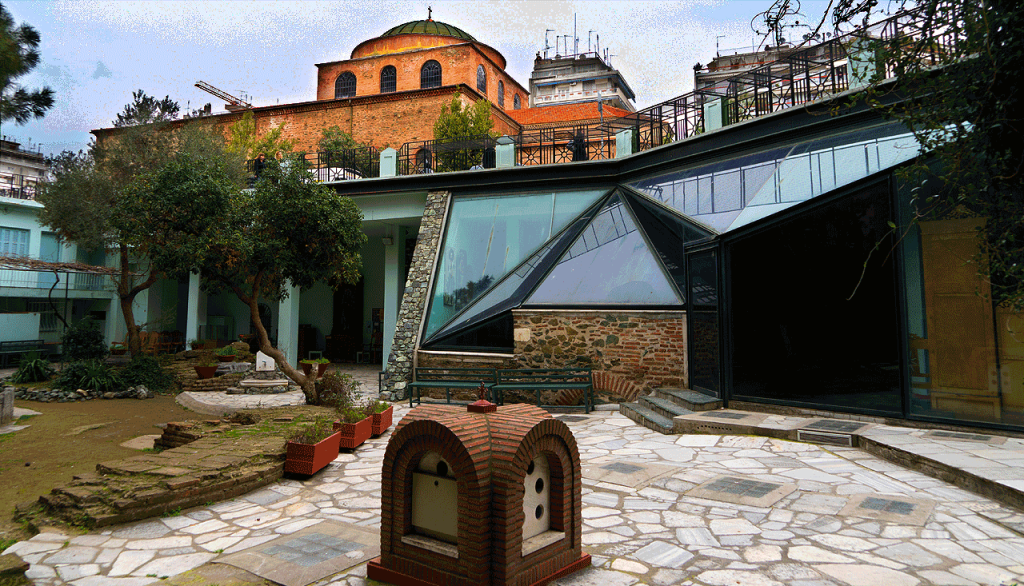
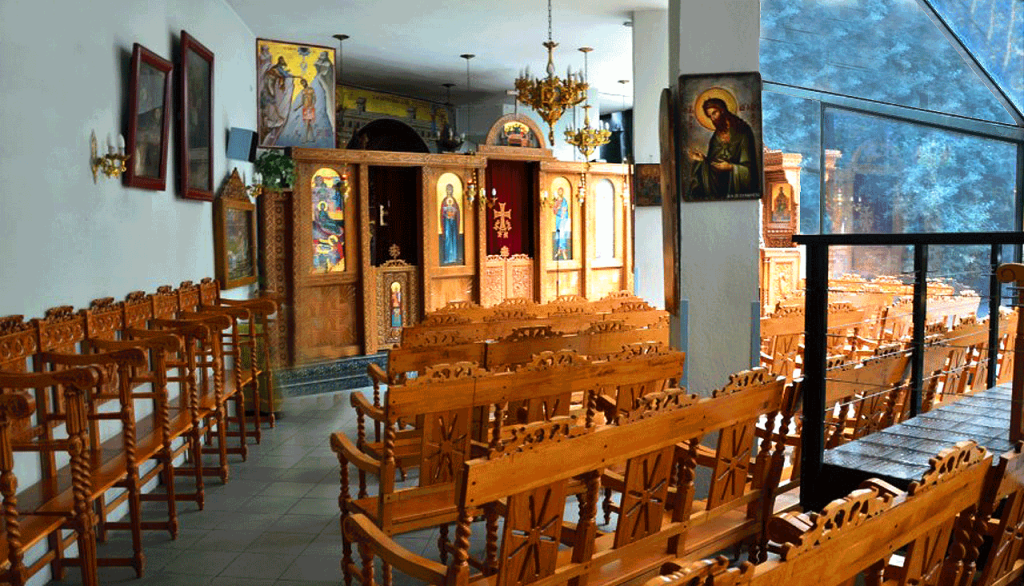
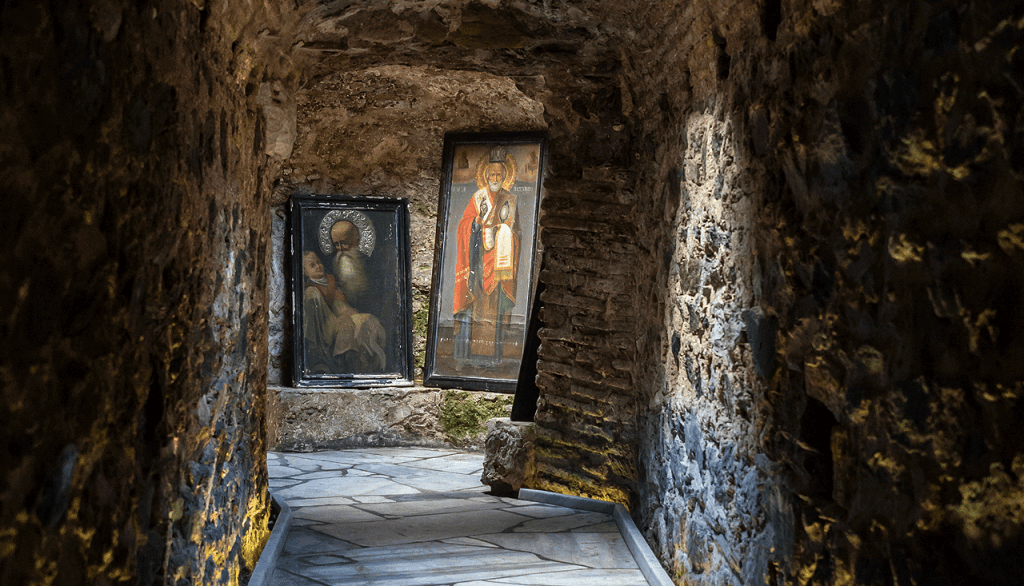
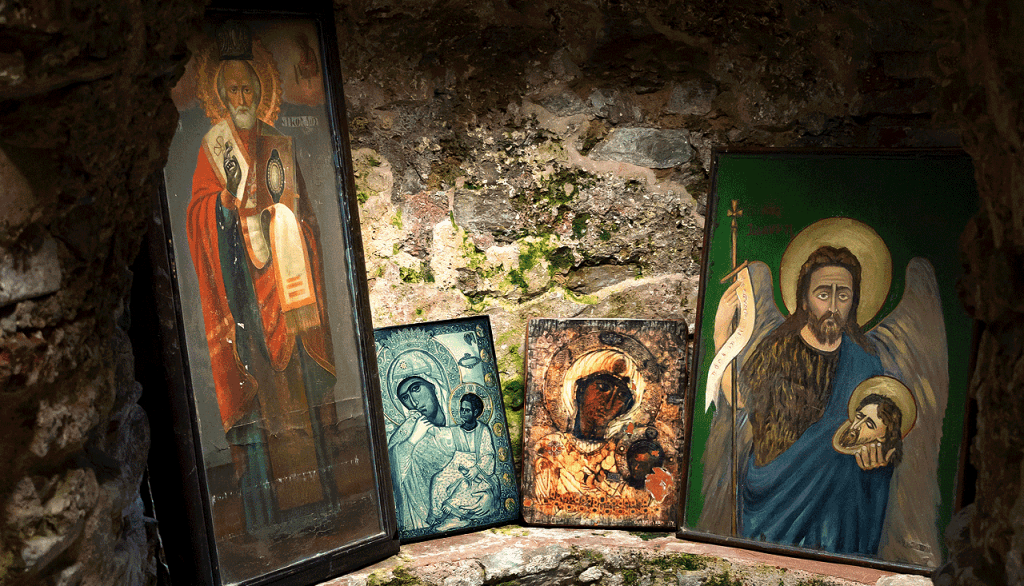
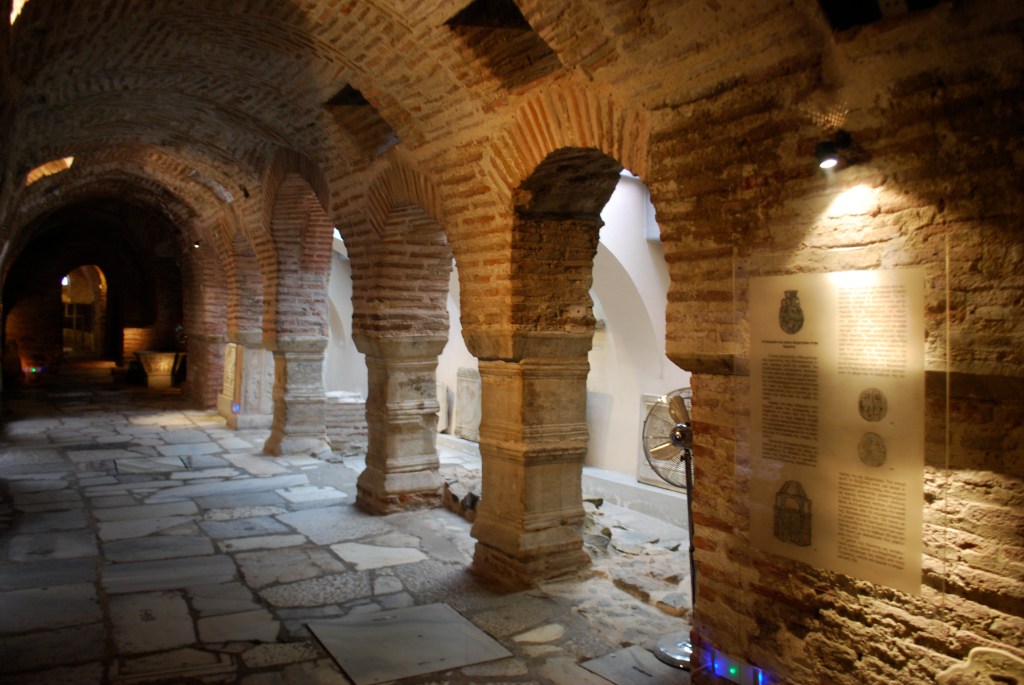
The resolute and formidable cost of being a Christian, in the early days of the Byzantine Empire, was evidenced today in the Catacombs (1) and the Baptistry of St. John the Baptist, which we visited today, next to Hagia Sophia Church. Burials, liturgies and prayers were carried on side by side in these underground chambers. These Catacombs were connected to one another, to other catacombs of St Demetrius and Hagia Sophia. There was no separation, not even in death.
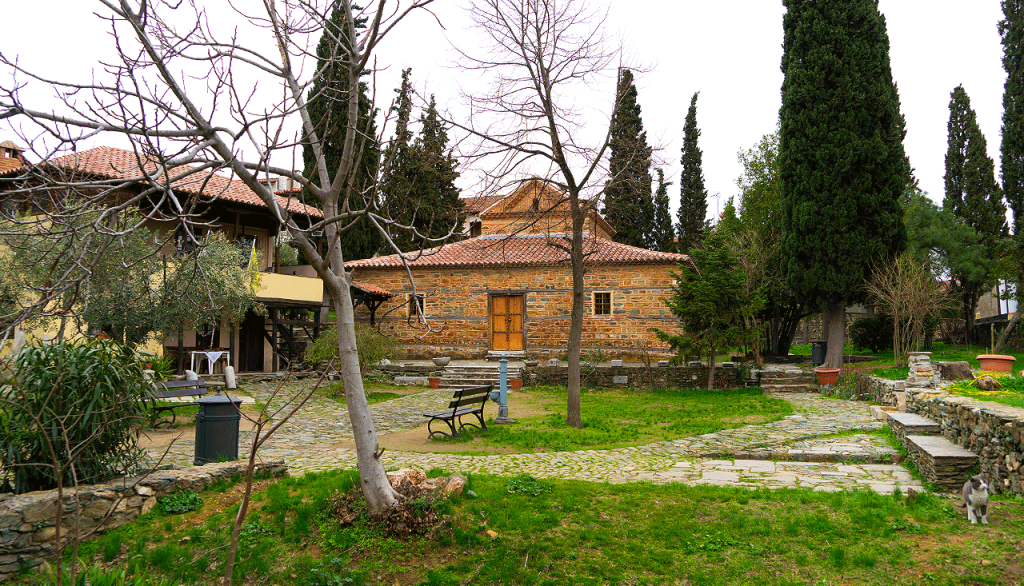
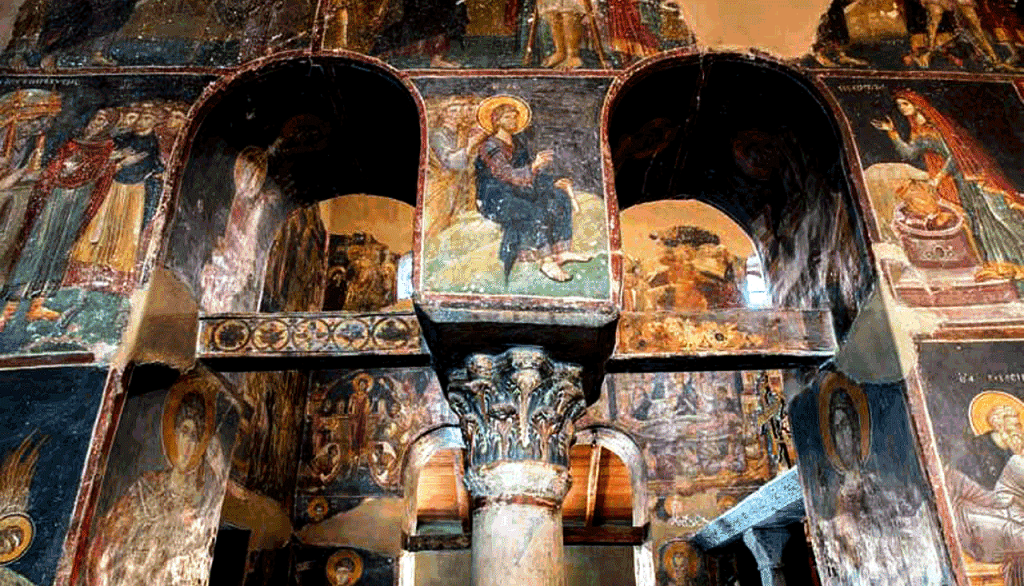
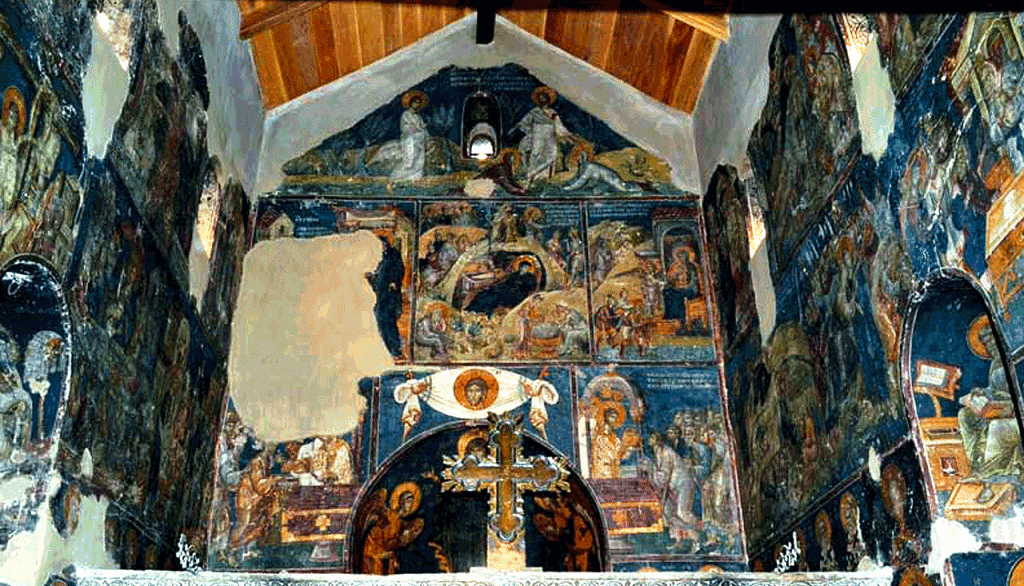
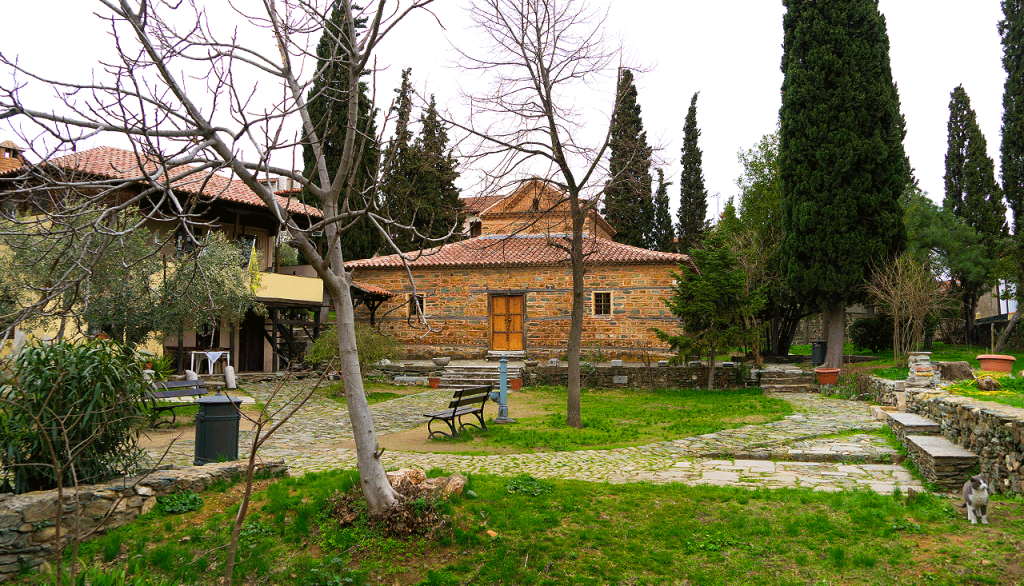
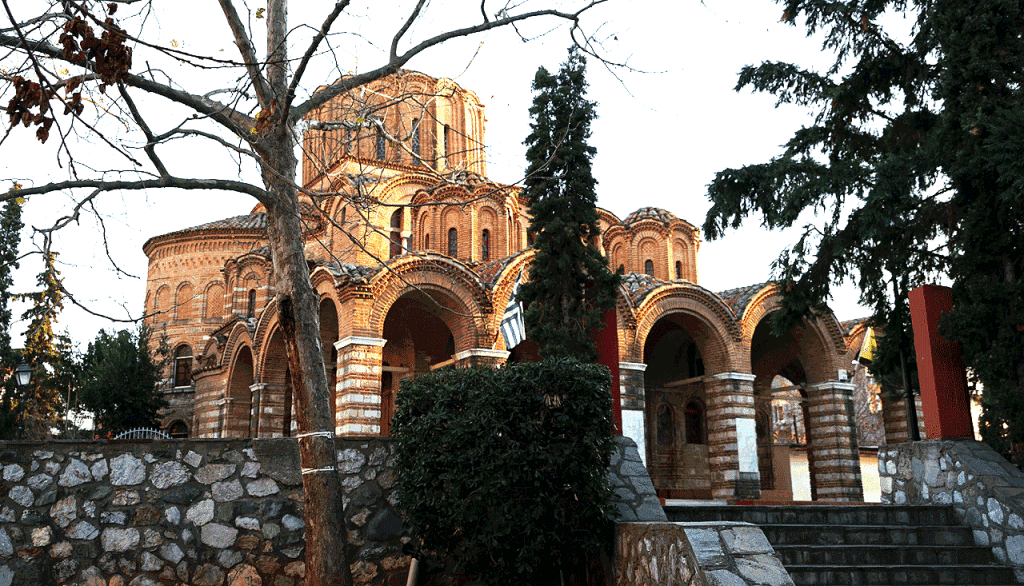
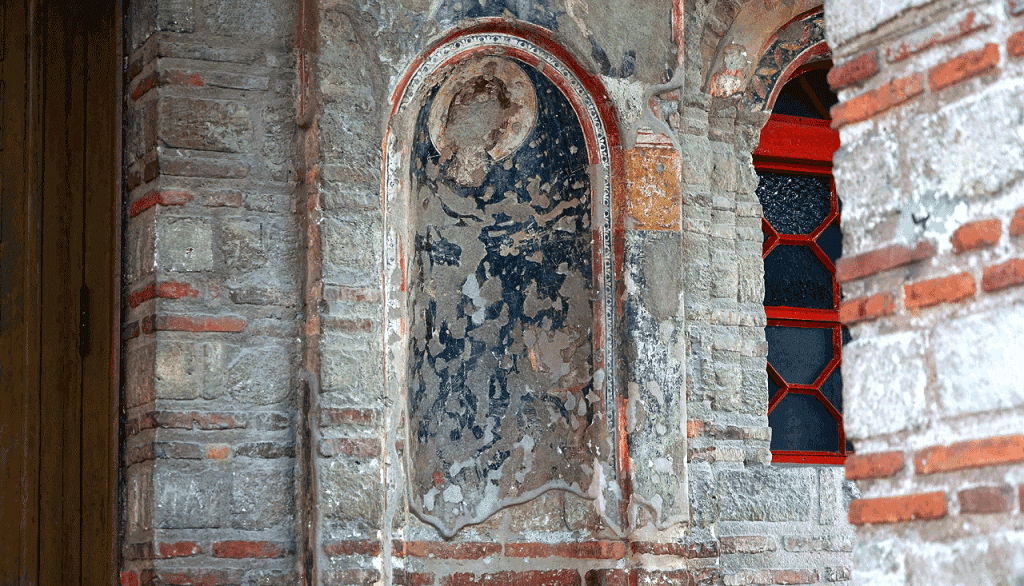
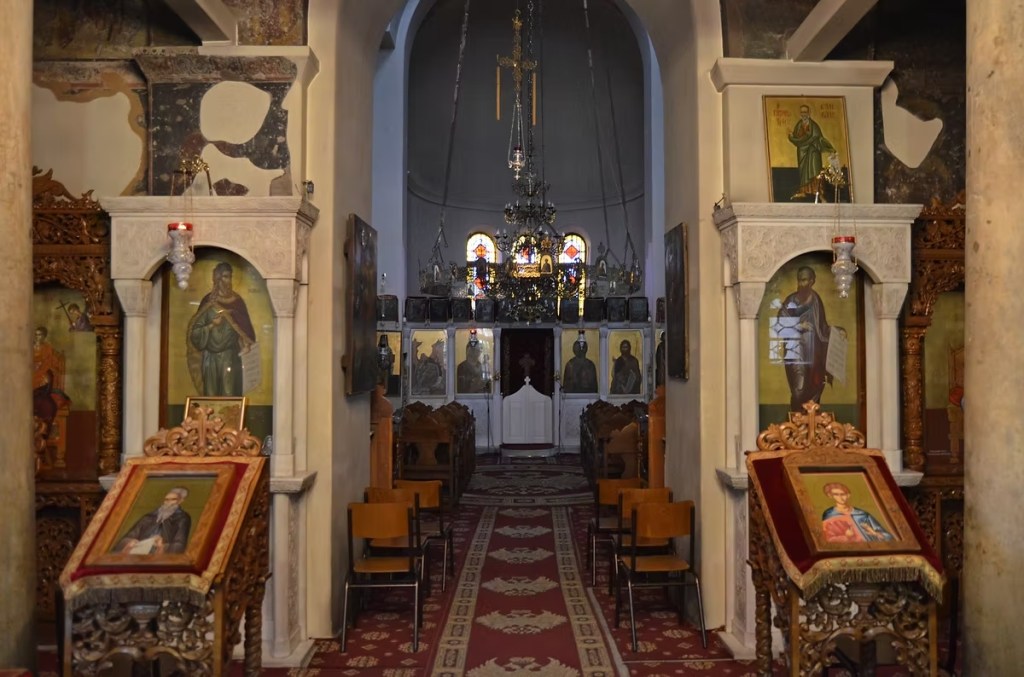
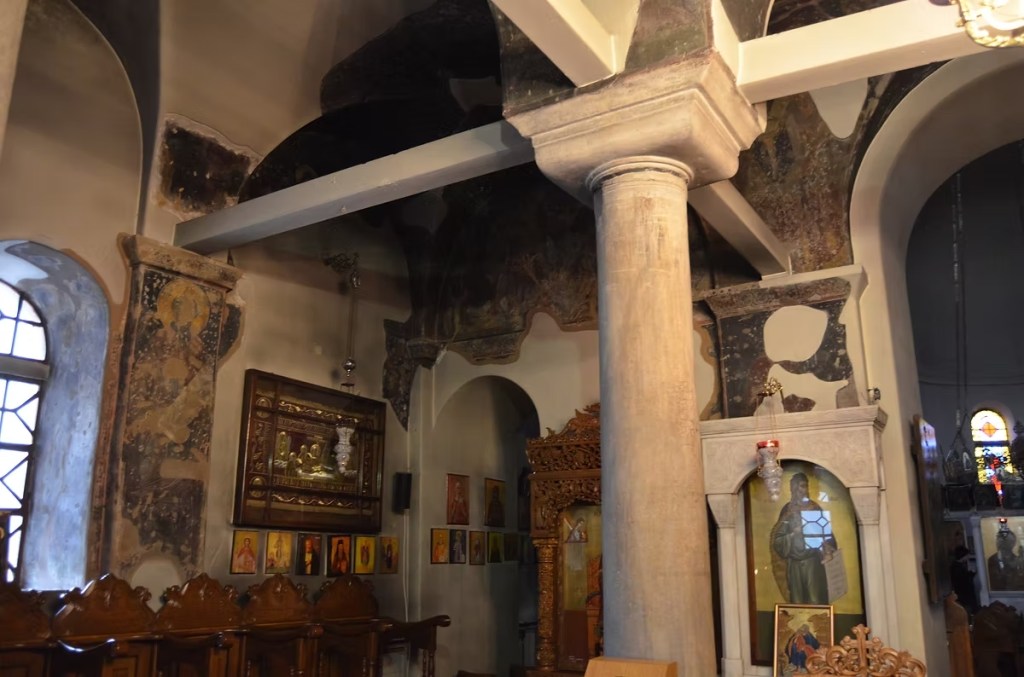
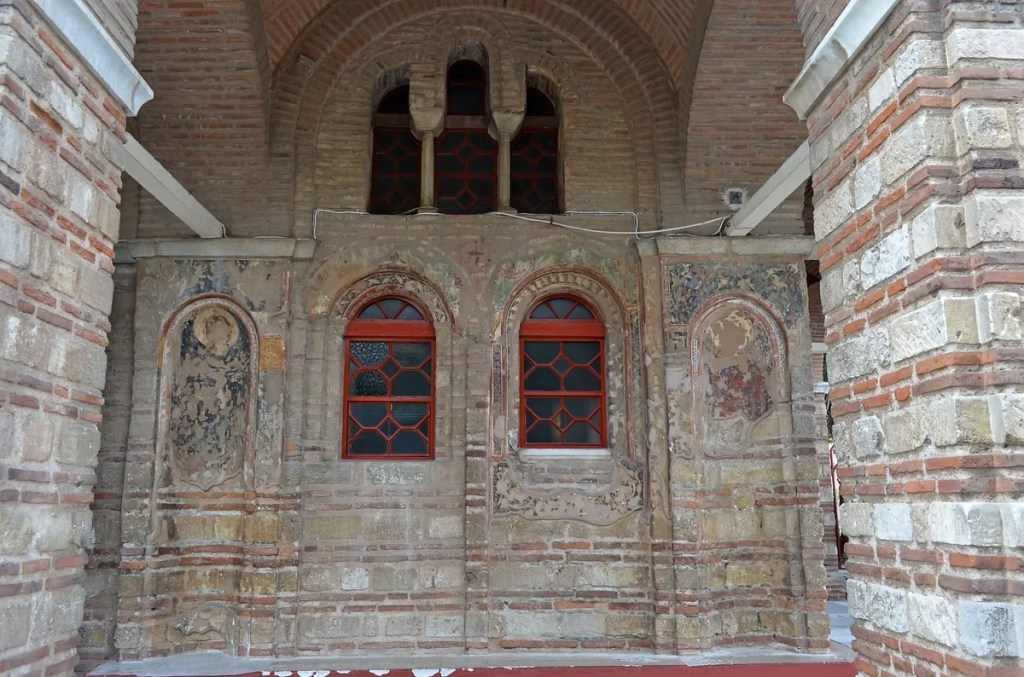
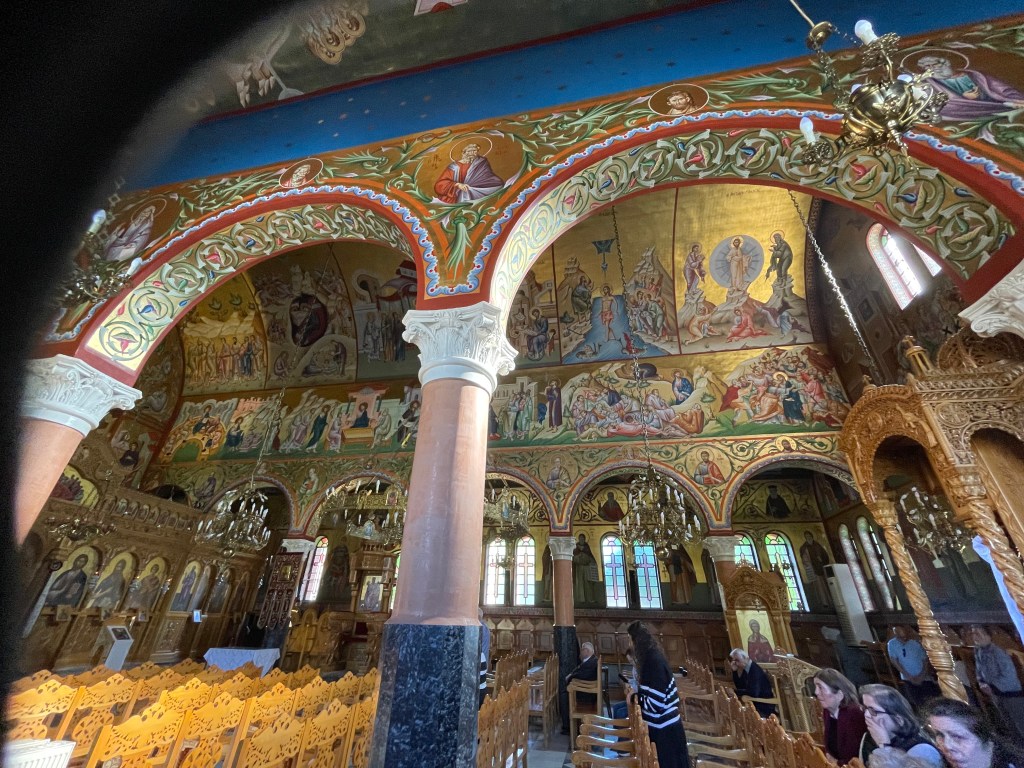
Earlier on in the day, we visited the churches of St. Nicholas Orphanos (2) and St. Elias, both early 14th-century Byzantine churches with the most beautiful ancient frescoes. At St. Nicholas’s church, there was a constant stream of visitors. Listening to the accents, we heard English, Romanian and German, and like us, they were leaving names of their loved ones to be remembered at the Holy Liturgy.
We also met F., an elderly lady who looked after the St. Nikolaos Orphanos gardens. She asked for a blessing and also that we may remember her son, N.
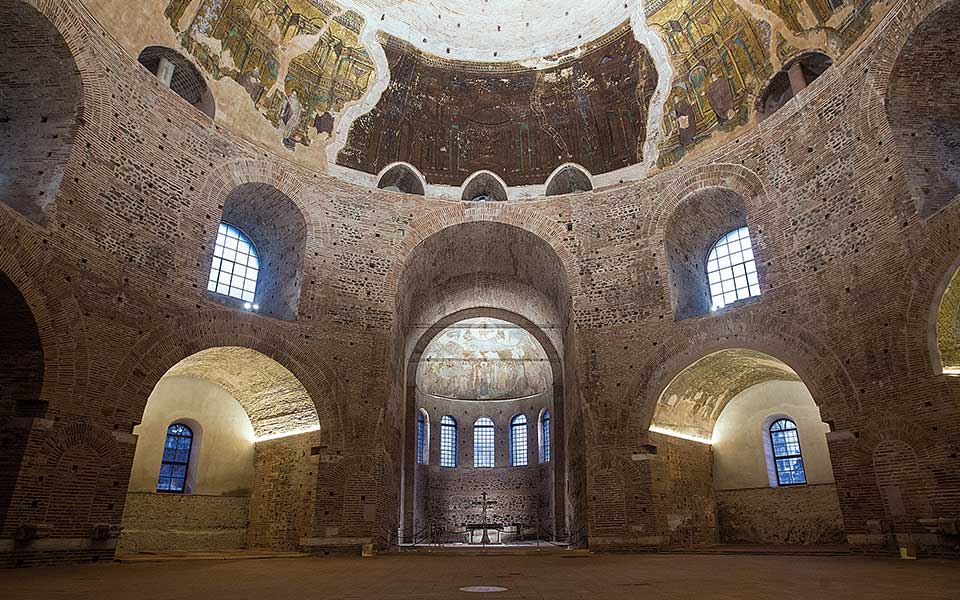
At St. Elias’s church (3), the parish priest gave us gifts. May he be blessed.
Our Lord is recorded as saying to the Pharisees that if his followers are silenced, even the stones will cry out, and indeed, they do.
Walking in the midday heat, in a rason*, carrying a bag, takes its toll on the body, especially when you have age on your side. But it was a price well worth the experience of visiting prayer-soaked places of worship.
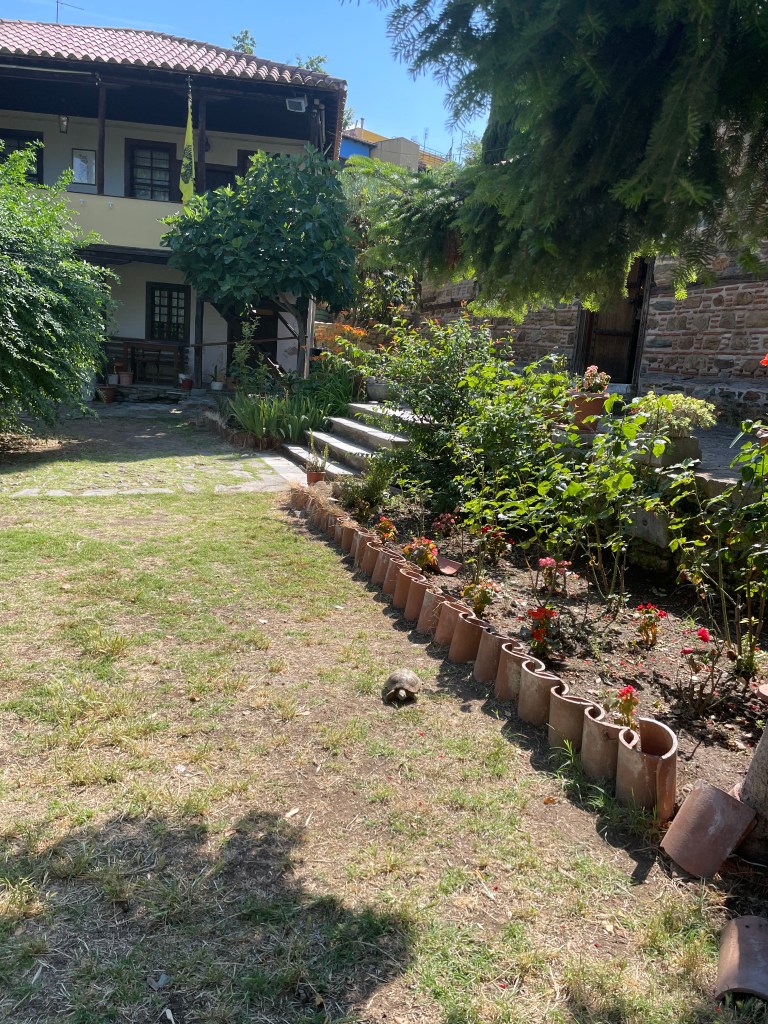
A living metaphor for my morning travels was the lovely tortoise we saw in the grounds of St. Nicholas’s church. Slow and resolute in her circumambulation of the church, carrying her home wherever she went. We saw her and followed her until it was time to make our own way back home.
*
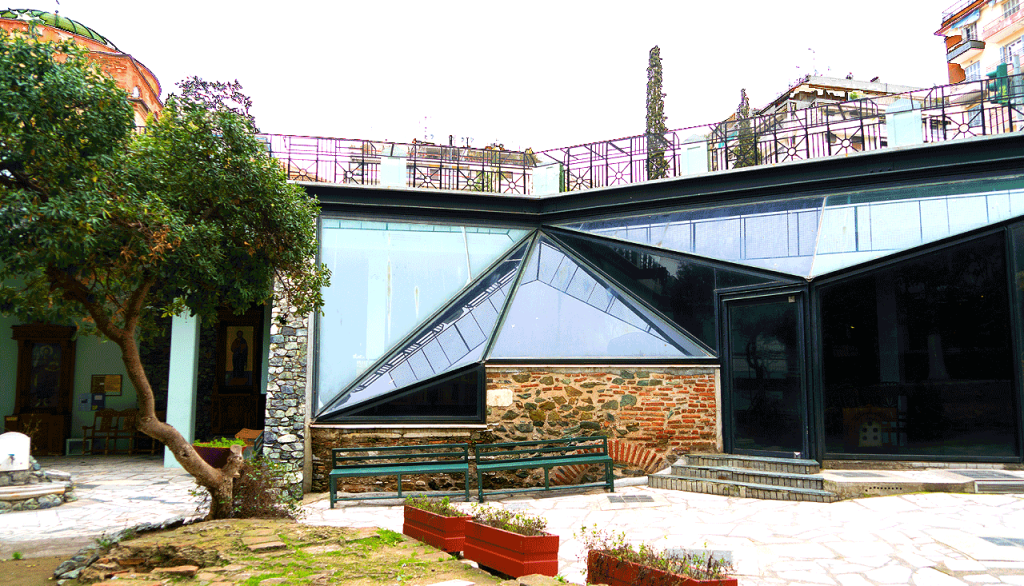
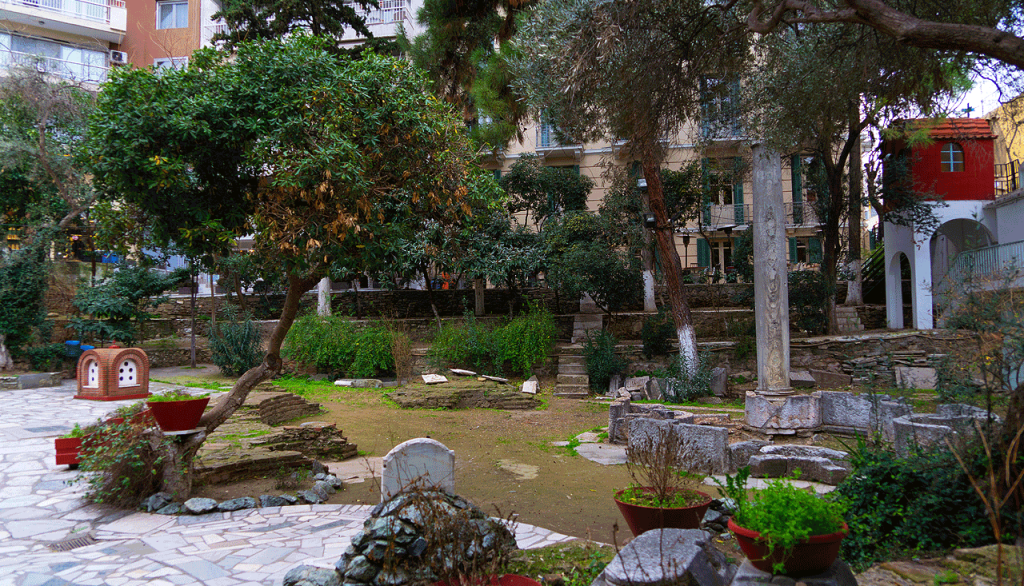
(1) Catacombs of St. John the Baptist
The Catacombs of St. John the Baptist are located south of the Church of Hagia Sophia, underneath the street. Entering the gardens of the catacombs, one can see the ruins of the nymphaeum, a spring dedicated to the nymphs, as well as the thermal baths dating from Roman times. The nymphaeum was converted into a holy water spring during the Christian times, and an underground worship place was built there, in honour of St. John the Baptist.
This Catacomb belongs to the greater secret communication system of Thessaloniki, which has not been fully explored yet! Actually, it consists of numerous catacombs and tunnels, used by the first Christians to practice their worship. One can reach them through the Temple of Saint John the Baptist, hence the name. There are also remnants of the early Christian church.
(2) Church of Agios Nikolaos Orfanos
The church of Agios Nikolaos Orphanos is located at the district of Ano Poli Thessaloniki, near the eastern walls, between the streets Apostolou Pavlou and Irodotou. It used to be the catholicon of a Monastery, from which a small part of the entrance of the propylon.
We encounter the name Agios Nikolaos Orphanos in two patriarchal documents, in 1635 and 1638, of the Monastery Vlatadon, which was its metochi already from the period of the Turkish Occupation, and to historical sources of 1745.
The origin of the name has intrigued a lot of researchers. For some the name Agios Nikolaos Orphanos is related to the name of the founder of the church which belonged to the family of Orphanos. But it is also related to Saint Nicholas, who showed great care for widows and orphans (Orfanos meaning orphan).
The present day view accepts as the founder of the church the Serbian king Milutin, who had developed intense building activity in Thessaloniki. To this view lead us wall paintings in the church with Agios Georgios Gorgos and Clement of Ochrid, saints that were specially honored in Serbia. The close relations of Milutin with Thessaloniki is due to the fact that he was married to the Byzantine princess Simonis, daughter of empress Irene Palaiologina, who lived in the city.
Nowadays, the church has the form of an oblong, wooden-roofed hall, which is surrounded on three sides with a portico. The portico on the east ends in two chapels.
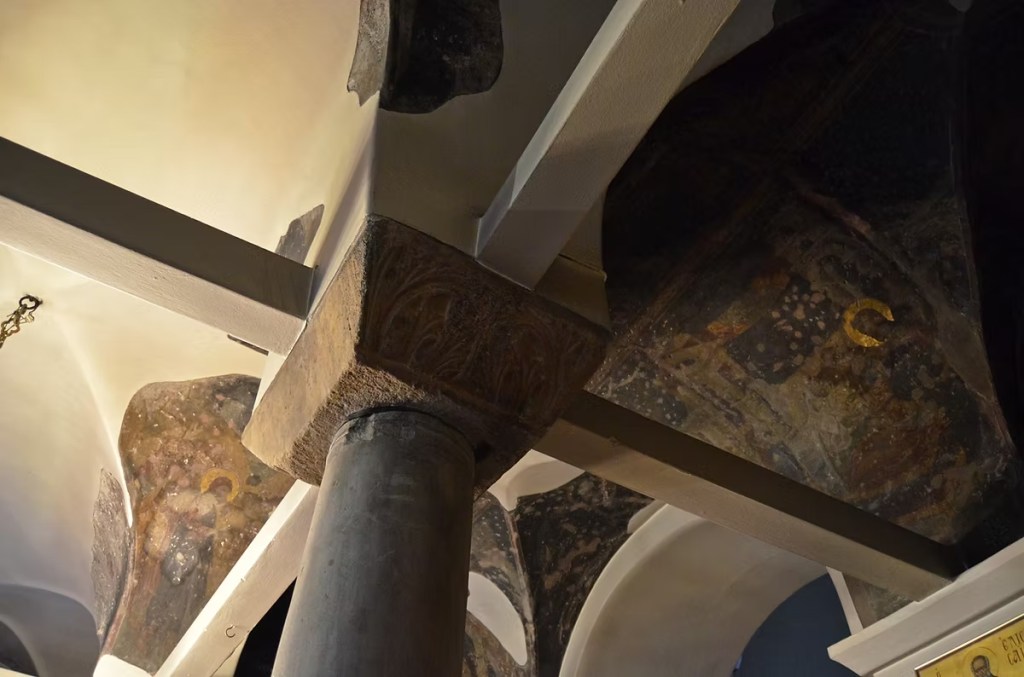
At the interior of the church the marble screen dates from the period the church was founded, while the capitals date from the Early Christian period.
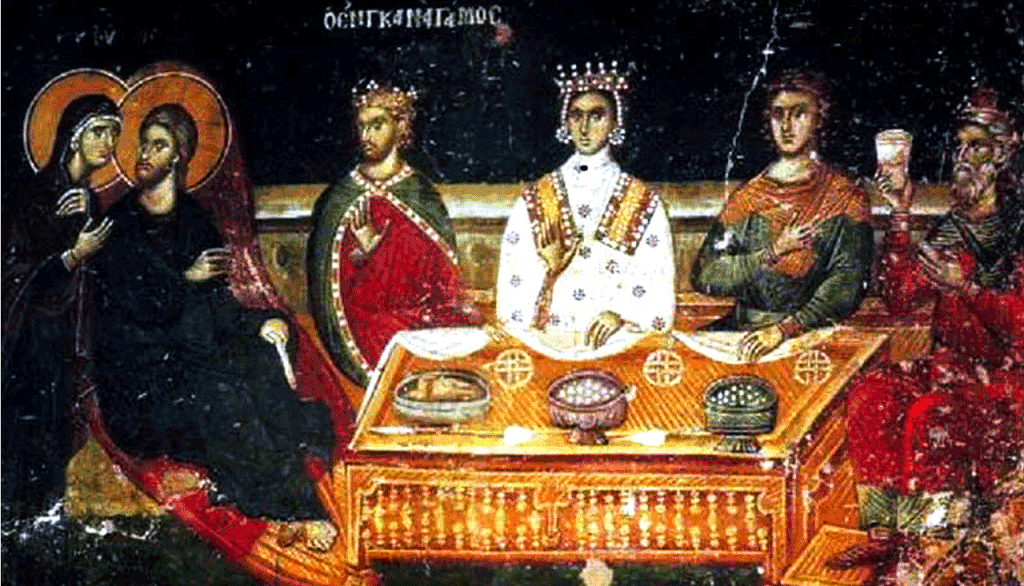
The church’s excellent wall paintings, frescoes, are true masterpieces and are the best preserved compared with the ones in other churches of Thessaloniki. They date from 1310-1320. Among them, apart the ones dealing with the life of Christ, of particular interest are the themes of Akathist Hymn and the lives of Agios Nikolaos and Agios Gerasimos Ioardanitis.
(3) Church of Prophet Elijah (Profitis Elias)
The church of Prophet Elijah, at some point the catholicon of a monastery, is at a close distance from the basilica of Agios Dimitrios and is one of the most important examples of church architecture from the Palaeologan period (1261-1453) in Thessaloniki.
Its dedication to Prophet Elijah is a more recent one and is because of a corruption of the Turkish name of the mosque Serayli Camii or because the church is built on a hill, where they usually build churches dedicated to the Prophet. According to the most prevalent view the church was initially dedicated to Christ, as it is evident by the numerous Christological scenes that are depicted at the narthex. It is possible that it is identified with the well-known in the sources Monastery of Akapniou.
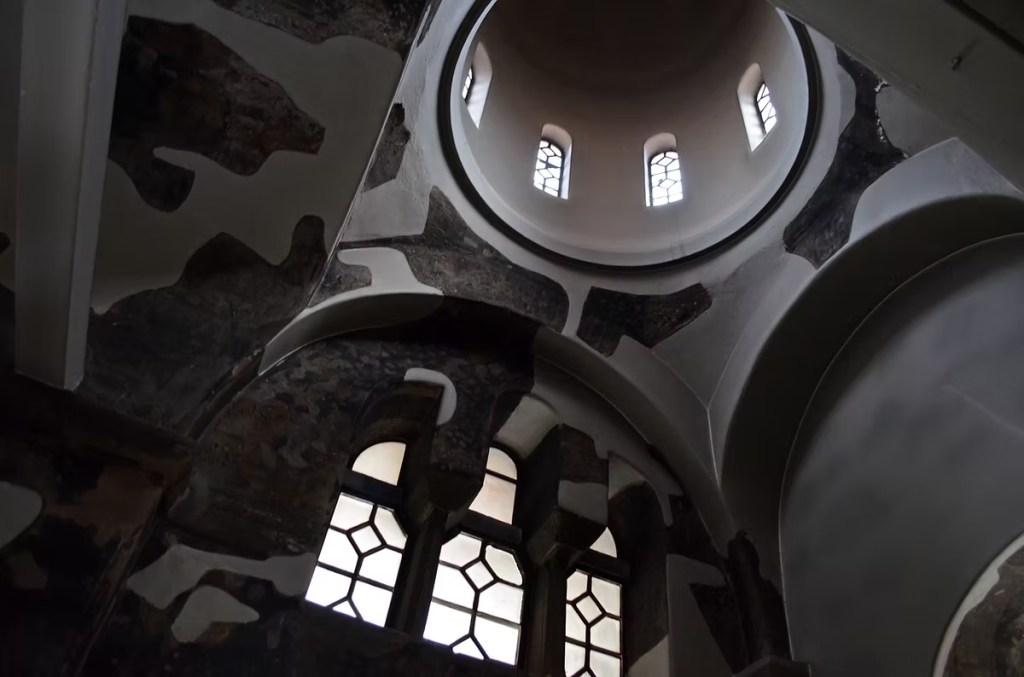
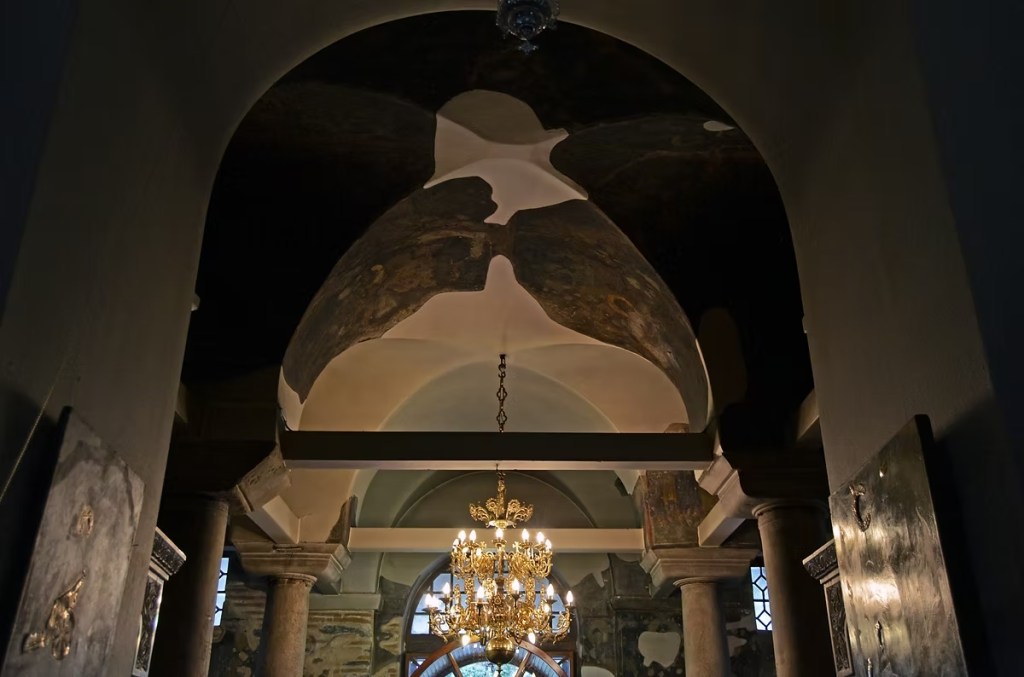
Its architectural type, four-columned, cross-in-square church with semi-circular conches on the northern and southern side (side choirs), is unique in Thessaloniki. This type is called Athonite triconch. Easy and west of the choirs, four compartments are added. The two eastern ones are the sacristies, and the two western chapels. These are roofed by domes of smaller dimensions than the huge central one. On the west there is the so-called “liti”, that is spacious narthex, necessary for the funational needs of the catholicons of the monasteries. In the years 1956-1961 there were restoration works at the dome, the portico, the chapels and some Turkish additions were removed.
At the interior some wall paintings of the 14th century (1360-1370) still survive, where scenes from the Life of Christ dominate, as well as isolated saints.
* The rasson (also spelled rason, exorasson, or ryassa) is the voluminous, wide-sleeved outer cassock worn by priests, deacons, and monks in the Eastern Orthodox and Eastern Catholic churches.
Tuesday the 9th, the 2:15 alarm heralds a new day. Well, not quite because it was still dark outside, but my chauffeur arrived on time for the drive to Manchester Airport. Terminal 2.
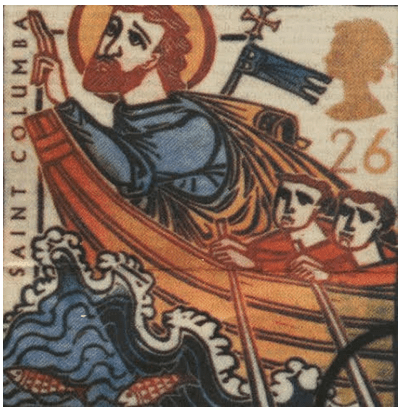
Terminal is such a sad word for the launchpad to new adventures. The 9th is St. Columba’s Day, and indeed, he launched many saints into the British Isles and the island from his “runway” on Little Iona. Such a little place, and beauty is often the doorway, the gateway to Truth. St. Columba wrote, “Alone with none but Thee, my God, I journey on my way”.
As always, I say the Jesus Prayer for all those who are on board the plane. Mums, dads, babes in arms, the elderly, the flight attendants, and of course the pilot. The heavenly flight attendants were also there, the angels attending us and helping us on our way. In our spiritual need, they also care for our safety. Each of us has a guardian angel. We shouldn’t forget it.
And as we land, the temperature is reversed. The 13 degrees of Manchester becomes the 31 degrees of Thessaloniki. There to meet me at the airport is another chauffeur. How can it be that we are in the same world and yet the temperature is so different?
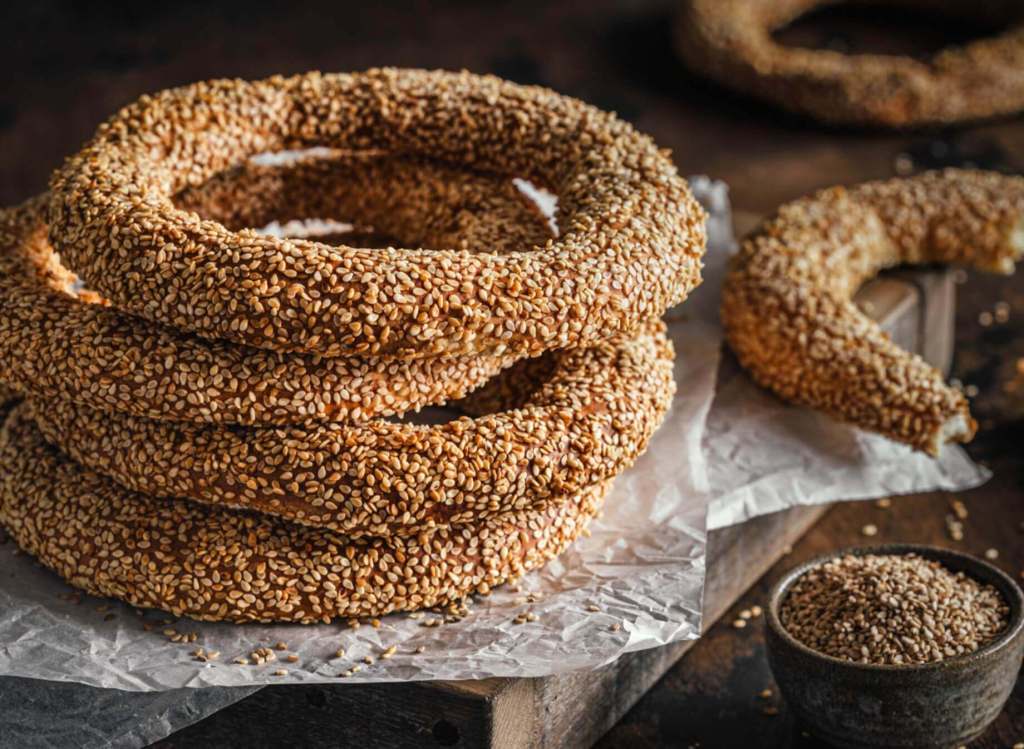
Watermelon, strawberries, and koulouri* form the basis of the light meal. It is a refreshing repast in the heat of a Greek summer. Simple food, not unlike St. Columba, who recommended bannocks, barley cakes, vegetables, fish, and water for his monks on the Holy Island.
A siesta was called for and indeed received. Possibly not what the monks did in their own typikon on Iona. Father B, who was also tired and weary from his travels, also gave in to that captive host, Ypnos**.
… Unexpectancy …
In fact, Father B was suffering from high temperatures. So the first aid team brought medication from the pharmacy. He and Presbytera will return tomorrow and not remain here. So as the Scottish poet wrote, the best-laid plans of mice and men often go awry. However, the short time of renewal, of seeing one another again, was enough to cement those little stones which we compose within the church and then to the restaurant for a meal.
Such love and friendship is the conduit for the Holy Spirit. And it is the condiment also, as Jesus says, the salt of the earth. Even in unforeseen circumstances, as St. Paul writes to Timothy in chapter 4, verse 2, be ready in and out of season, whether the time is favourable or not. Each of us, who are called to Christ, drinks of that rich fountain of his mercy. St. Ephraim the Syrian writes, “Thanksgiving be to Him, who caused a stream to flow forth in the mouths that had been closed so that they might give praise without end through the Son to the worshipful Father.”
My love and prayers to all, especially for travellers. Amen.
*A koulouri (pronounced koo-LOO-ree) is a traditional Greek street food consisting of a circular bread ring encrusted with toasted sesame seeds. Crunchy on the outside and soft on the inside, it is often referred to in English as a Greek sesame bagel.
** In Greek, hypnos,“ύπνος” (pronounced ýpnos) translates to sleep. It can be used literally to describe the resting state or figuratively, such as referring to the eternal sleep of death.
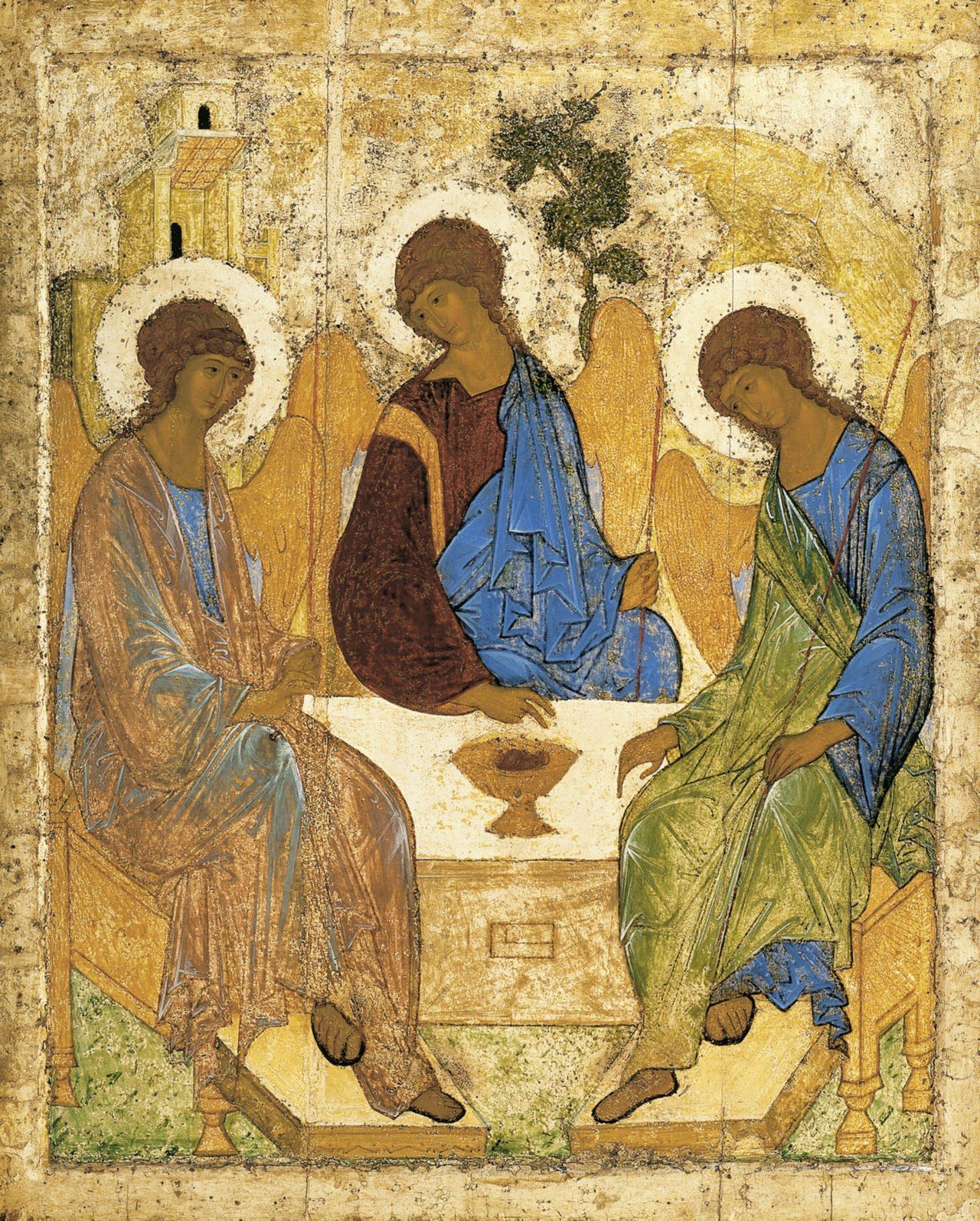
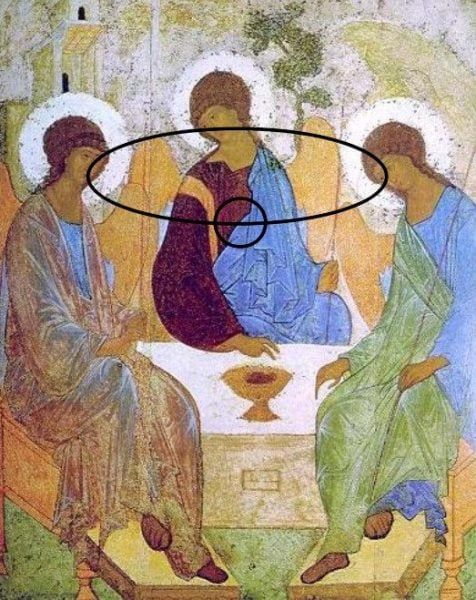
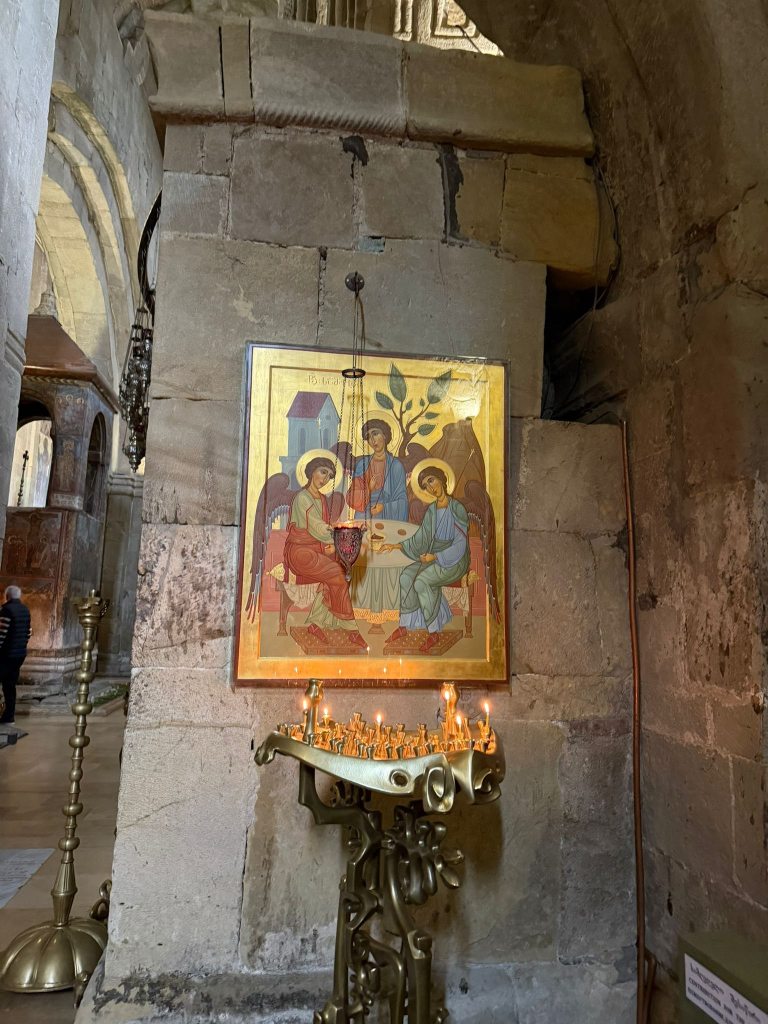
Dear brothers and sisters, I am sure all/ most of you are familiar with Andrei Rublev’s Troitsa (Russian for Triune or Trinity). I have studied this icon in the past, this Trinitarian interpretation of Gen. 18:1-16, the episode in which “three men” visit Abraham and Sarah and promise them a son. Last week, however, I listened to a homily on Pentecost and the Holy Trinity in connection with this icon, and I discovered new insights which I was not familiar with.
This icon hails from the summit of a more-than-thousand-year-old iconographic tradition, yet what I found most moving and inspiring is its message, specifically the impact of the importance of the Holy Trinity on our daily lives, not as an object of abstract theological debate, but rather a referral to our living relationship with God the Father, God the Son, and God the Holy Spirit.
Let me explain, and let us open ourselves up and experience the reality that the Father, the Son, and the Holy Spirit are indeed real and insistently call us to participate in their loving communion.
1. The Trinity Is One
The Catechism 253 is clear in saying: The Trinity is One. We do not confess three Gods, but one God in three persons, the “consubstantial Trinity”. The divine persons do not share the one divinity among themselves but each of them is God whole and entire. In the words of the Fourth Lateran Council (1215), “Each of the persons is that supreme reality, viz., the divine substance, essence or nature.
Symbolizing the fact that the three divine persons are of equal essence, we see:
– All three angels are the same in form and size
– All three carry the same staves in their hands
– All three sit on the same type of throne
– Each figure is clothed in the same types of garments – chiton and himation – which are individually distinct.
– The characteristic tone of the garments works with a limited palette of colours: purple, pale green, and the one colour that is common to all three – an intense blue.
2. The divine persons are really distinct from one another
The Catechism continues in number 254 to explain: “The divine persons are really distinct from one another. God is one but not solitary.” “Father”, “Son”, “Holy Spirit” are not simply names designating modalities of the divine being, for they are really distinct from one another. They are distinct from one another in their relations of origin: “It is the Father who generates, the Son who is begotten, and the Holy Spirit who proceeds.” The divine Unity is Triune.
3. The Monarchy of the Father
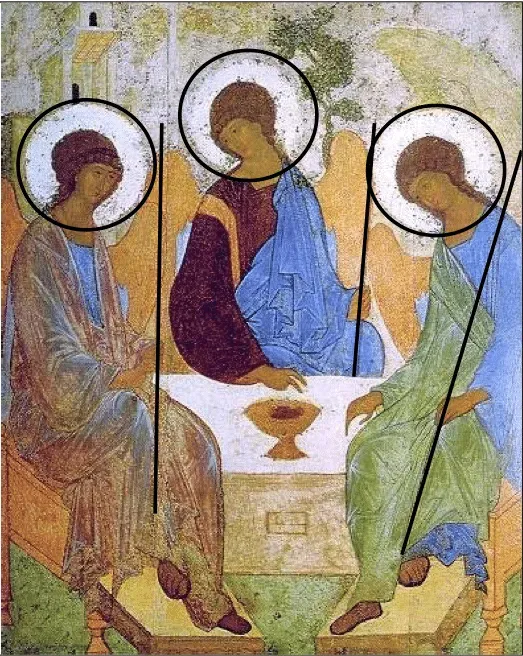
While the traditional icons of this episode usually accentuated the central angel (the Son) through its frontal attitude and often its size, here Rublev does something different:
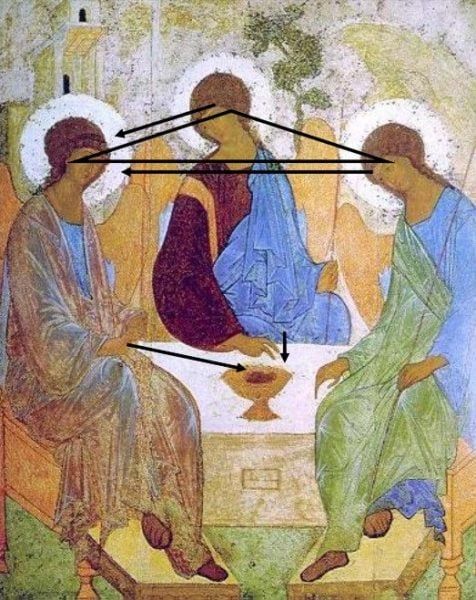
The central angel and the one on the right incline towards the one on the left and look towards it, while the one on the left looks towards the one on the right, giving the indication of the relationship between the three persons.
As such, it is the angel on the left that becomes the centre of the relationships. This follows the Oriental tradition, which considered the source of the unity and of the Godhead to be, not an essence lying behind the persons, but the person of the Father.
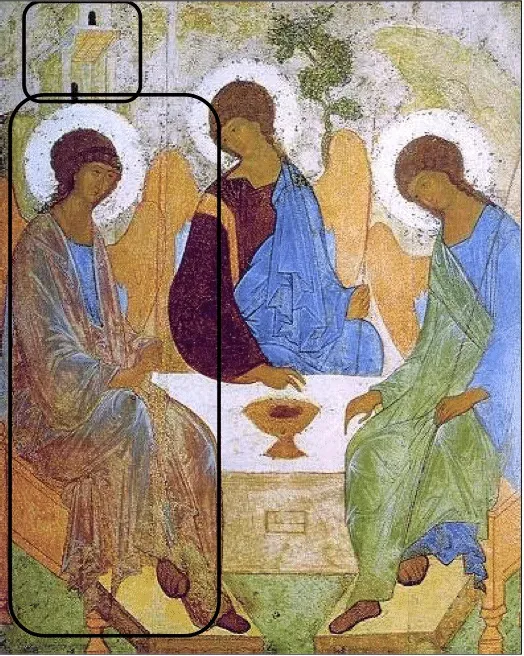
4. The Angel on the Left – The Father
When speaking of icons, in reality, one doesn’t say that he or she has “painted” an icon. They are “written” and “read”, going from left to right. Let’s now take a look at each individual angel, beginning on the left, and try to recognise the particular aspects. We can distinguish the angel on the left from the others, seeing that:
– He alone sits upright while the other two incline towards him.
– Seeing that the Father is still invisible for us, His form is almost completely veiled, allowing us to catch only a glimpse of the radiant blue (symbol of divinity) of His chiton. We can only hope to see him from “behind” through the beauty and wisdom of His creation, which is here represented by the mantle. The mantle bears royal colours: gold and red with a greenish reflection, symbol of life.
– Both hands bear a firm grip on his stave, which is pointed towards the earth. All authority of the heavens and the earth belongs to Him.
– The house, rising immediately behind him, points to the Father, for “in my Father’s house are many rooms” (Jn 14:2). It is also a symbol of hospitality, seeing that Abraham and Sarah were recompensed for the hospitality that they offered.
5. The Angel in the Middle – The Son
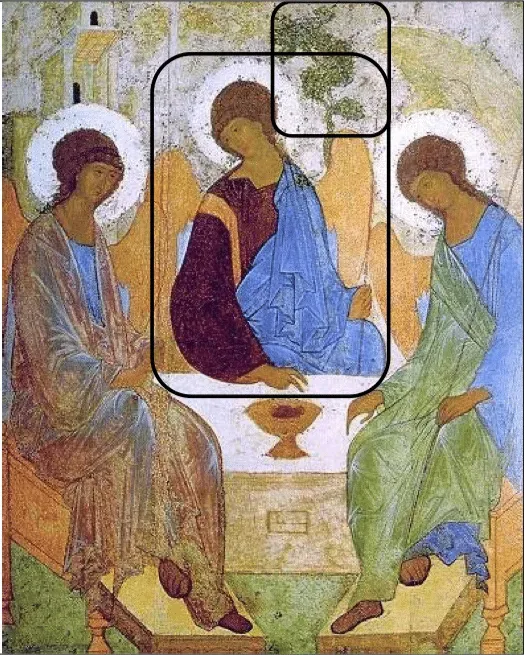
In the Icon, we can discover the following distinguishing characteristics of the son:
– He wears a dark purple chiton decorated with two stripes, one of which is visible – stripes worked with gold. The costly purple and gold represent his being the “anointed of God,” king and prophet in one. The reddish brown colour represents the earth and therefore his humanity and his martyrdom for all mankind. Christ is fully God and fully man.
– While the azure blue chiton of the Father is scarcely visible, that of the angel representing the Son is the prevailing colour. This is because it is Jesus the Son who has revealed his “glory” which he has as the “only-begotten of the Father”. The disciples have seen and touched this (Jn 1.14), and the mission of every disciple is to bear testimony of this fact.
– The tree that rises behind the Son is a symbol of both the Tree of Life (from Genesis) and the Wood of the Cross. On the Cross the Son transforms this tree of death into a tree of life whose fruits are passed on to us through our baptism in the Holy Spirit.
Let us always remember that we, too, are called to follow Christ along the paradoxical path of the cross that carries the sufferings of this world and allows this, through the Holy Spirit, to be transformed into new life.
6. The Angel on the Right – The Holy Spirit
The Holy Spirit’s personal being has been revealed; his countenance has not. The only thing we know about him is through his relationship to the Father and the Son.
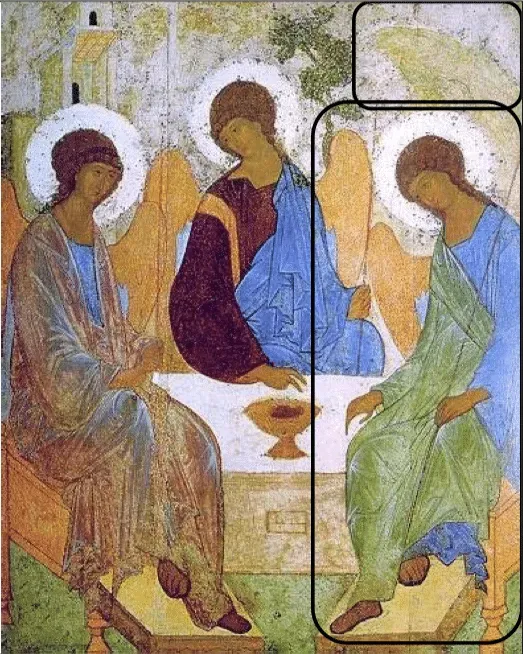
– Like the Son, the Holy Spirit is inclined towards the Father, from whom he proceeds according to the teaching of the Bible (Jn 15:26).
– Like the Son, the chlamys is worn in such a way that leaves an arm free. Here, instead of the right arm, it is the left. Those follow the line of thinking proposed by St. Irenaeus who said that the Son and the Spirit are equally the two “hands” of the Father, through which he works everything.
– Like the Son, the heavenly azure blue is clearly seen.
– We also discover in his chlamys a pale green which, in Russia at least, is the liturgical colour of Pentecost. Here, the idea is that green represents new life in the Spirit, who is the “Giver of Life” and who transmits and transforms our lives through our baptism. We see this same pale green on the ground on which all three figures find themselves.
– Finally, behind the angel, we see a rock protruding. Like the Son and the Holy Spirit, the rock seems to be bowing down towards the authority and glory of the Father. We are invited to do the same.
– The rock can be understood as a symbol of earth, whose “face is renewed by the Spirit”. Earlier copies of the icon show that the rock was originally cracked, which would lead us to recall the rock that was split by Moses’ staff, causing living water to flow out (Ex 17.6).
– The rock/mountain is also a privileged place to encounter God. There, heaven and earth embrace one another as they did when Moses encountered God on the mountain. It is a place that is often difficult to reach, requiring a certain silence, asceticism, and renunciation of the daily comforts the world and its routines offer us. We all need to keep an eye out for these “mountains” in our lives.
7. Postures and Gestures
8. The Original Painting
Copyists and retouchers have made significant changes over the years. Originally, the Son’s hand was pointing towards the Holy Spirit, instead of the blessing gesture that we now see. …The Son’s right hand seemed to point at the chalice; yet, at the same time, it points beyond towards the Spirit.
The artist’s attention was thus more directed at the Spirit. This is confirmed by the Father’s posture and gesture as he is looking at the Spirit, to whom his right hand, raised in blessing, is directed. The Spirit also seems to corroborate this in the fact that he humbly bows his head before the Father. His right hand also seems to want to underline this movement.
Please note that the Holy Spirit also touches the table because he also comes to the world.
9. The Decisive Moment for our Salvation
This scene has often been interpreted to be the moment when the Father decided to send the Son, through the Holy Spirit, to save humanity (us).
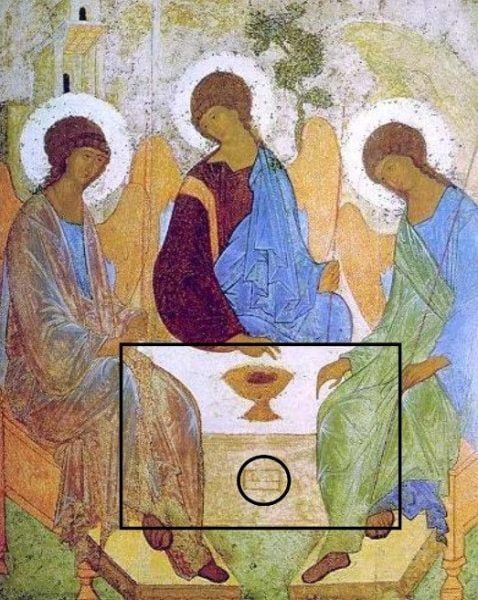
As we seein the image below, it is the Father, who is at the origin of it all, who calls the Son and indicates the cup of sacrifice in the centre of the table. The Son comprehends the Father’s will (to become man’s bread of life) and accepts, bowing his head and blessing the cup.
The Holy Spirit, also known as the Comforter, the Paraklete, also accepts the will of the Father. He rests his hand on the table as he looks towards the Father, indicating his obedience to the Son (no one can call upon “Jesus Christ” without the Holy Spirit) and His trustful abandonment to the Father.
10. The Symbol of Sacrifice
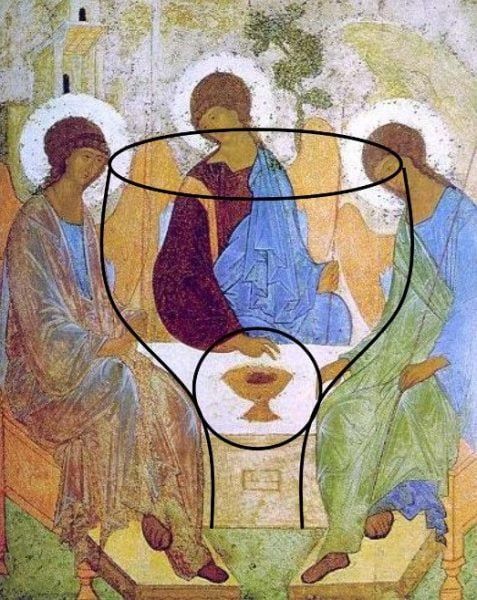
With careful observation, one can note how the middle angel seems to be contained within the shape of a cup whose contours are formed by the other two angels. Similar to the reflection just mentioned, here we see how the act of salvation is one of the Holy Trinity. As the Filarete, metropolitan of Moscow, once commented in 1816:
“The cup, a point of convergence between the three, contains the mystery of love of the Father who crucifies, the love of the Son who is crucified, and the love of the Holy Spirit who triumphs with the force of the cross.”
While the three figures form a circle, it is not closed in on itself. It is a circle of communion which opens and offers space for another. While their gaze is aimed towards one another, the reversed perspective means the faces are, in a sense, facing the observer as well. As such, the spectator (that’s you and me) is invited and welcomed to participate as the fourth link in this mystical chain.
11. The Altar and the Eucharist
As we have just seen, in this Trinitarian circle of love, there is always space for another, and open space in which we are invited not only to observe but to participate.
At the centre of the encounter, there is a table/altar where we also see a small box/window. This space is where relics of the martyrs are deposited.
When asking ourselves how we are called to participate, here and now, the icon invites us to participate in the celebration of the Eucharist (the altar) and to live our lives as martyrs, as witnesses of the resurrection who, following the school of Jesus, are willing to give our lives for others and for the faith.
It is probably this last “detail” of the small box/ window where the martyrs’ relics are deposited that I find so amazing! What an invitation our Lord extends to each one of us! We are all invited to live our lives as martyrs! Glory to God for all things!
*
Cf. Gabriel Bunge, The Rublev Trinity; Garrett Johnson, St. Thomas Aquinas Parish, Manchester, for the imagesand the insights
Holy Monastery of the Dormition of the Theotokos, Mikrokastro: a beacon of faith and tradition, offering spiritual guidance, hospitality, and hope to the faithful from all over the world. It remains a living centre of Orthodox Christianity, linking past and present through devotion and heritage.
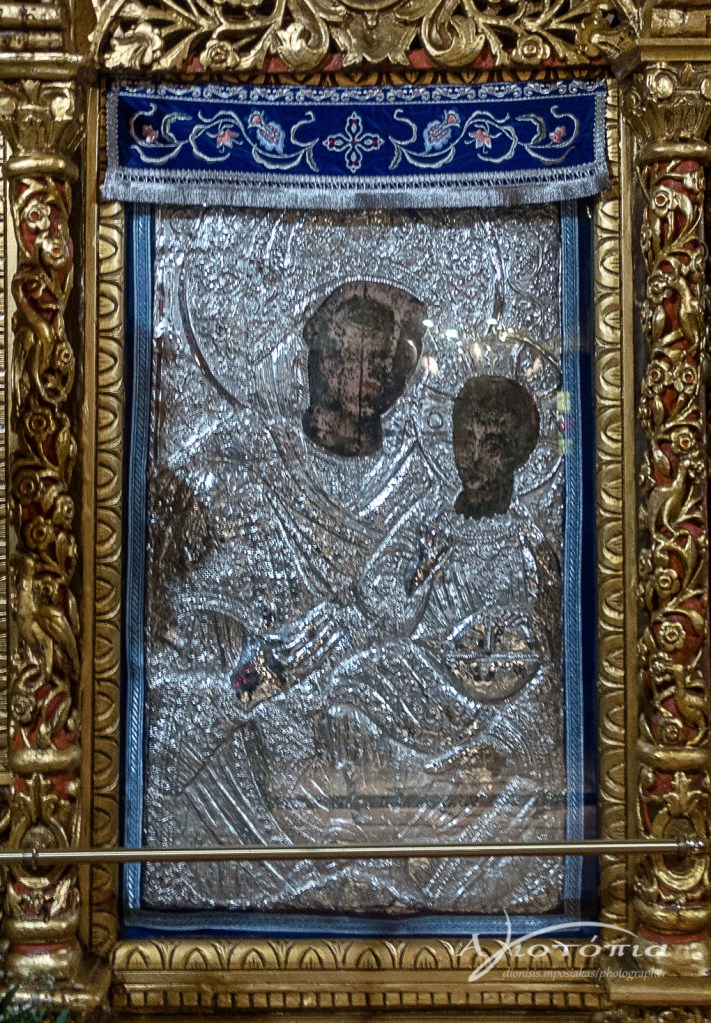
In the past, I have written several blog posts about this monastery and its blessed synodeia. This time I would like to focus on the miraculous icon of the Theotokos Panagia Eleousa, the Merciful Virgin, which possibly dates back to as early as 1200 (!), and is located in the iconostasis of the Katholikon. I would like to share with you three recent miracles of the Theotokos, shared with me during my recent monastery pilgrimage.
During a very serious operation, a man died and began to watch outside his body, the agonising efforts of the doctors in the operating room, but also the ascent of his soul, accompanied by angels. He climbed the stairs with difficulty, but the angels always helped him on each step, until he reached the last one, and there, no matter how hard he tried, he could not climb it. He saw a brightly lit space in front of him, but he could not climb it. He begged the angels, but they told him that even they could not help him and that he should ask for the intercession of his patron saint. Indeed, he prayed to Saint Nektarios, who, however, also told him that he could not help him and that he had to implore the Virgin Mary. She then appeared and told him that he could not actually climb this last step, because he lacked the virtue of charity. However, through her intercession, she would give him a second chance to prepare himself properly. And the Virgin Mary performed her miracle, and he returned to life in front of the astonished eyes of his doctors. His wife had made a vow to the Virgin Mary with many tears to give her husband a second chance, so that he would not leave unprepared for the terrible test.
Τhe miracle that follows is very similar to the previous one. It was again a case of a patient’s death during a very serious operation, and it was again a wife praying on her knees to the Virgin Mary, who heard her tama, her spiritual vow. However, it also has some differences. This husband arrived in front of a brightly lit plain, but he could not enter; a “wall” separated him. Also, he was not alone, but “outside” this plain, there were a multitude of people who were moaning, lamenting … This torment lasted for this particular man “many hours” and in the end he too was exhausted from waiting, fatigue, thirst! And he, too, began to cry. No matter how many prayers he said, they were not heard. At some point, the Virgin Mary appeared before him. He begged her to help him enter the bright plain, to give him a glass of water. And the Virgin Mary replied that he is not worthy not to enter this place of rest, but he is not worthy even for a glass of water! But because your wife begs me, I will give you a second chance to correct your life so that you can escape this place of torment. And indeed, the husband came back to life, shocked! The sister who told me about this miracle described to me that he himself came to the monastery with his wife to fulfil the vow to the Virgin Mary, and he still seemed shocked. The sister added to me that perhaps the most terrible thing in this story, but also in the previous one, was that these two men had spiritual fathers; they lived with the mysteries of the Church, yet they were not yet ready! Lord, have mercy!
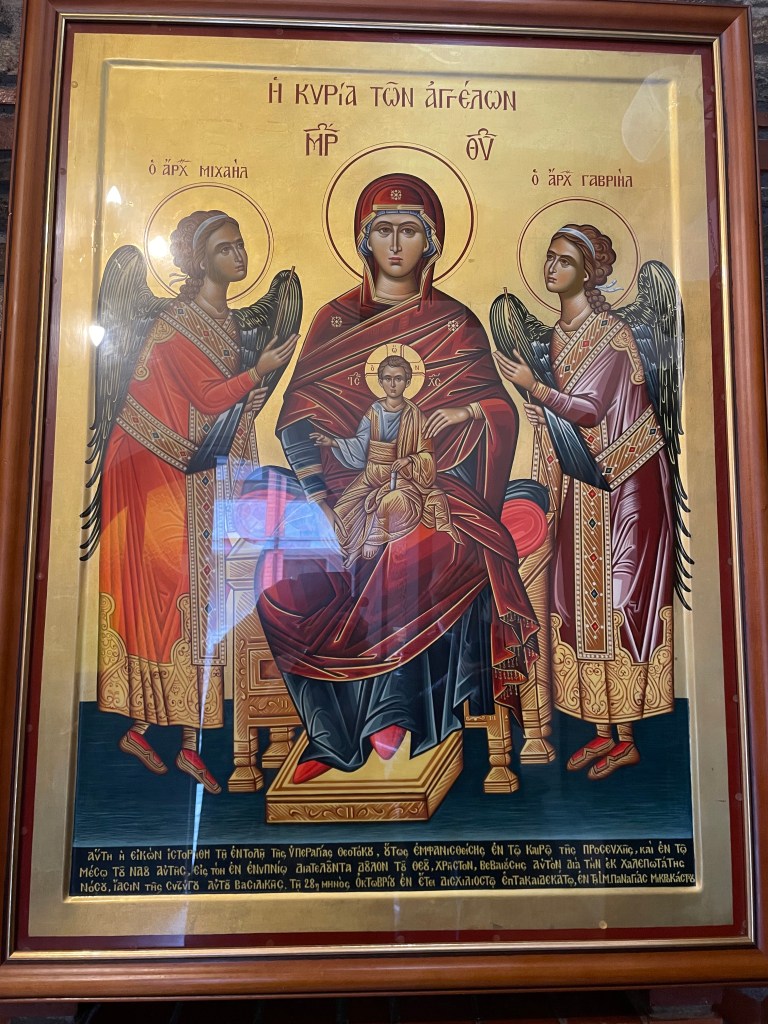
The third miracle is a little different. Here we have a husband praying, making a tama, and his wife being saved from death. She had been hospitalised for months without any hope, and while the doctors had given up, her husband begged the Virgin Mary to perform a miracle. One evening, exhausted from the hospital, he drove late at night all the way from Thessaloniki to Mikrokastro, over two hours, and found the door of the monastery open, because a vigil was being held. He entered the church and began to pray with tears to the miraculous icon of the Virgin Mary, and at some point, from exhaustion, he fell asleep inside the church. Then he saw what a dream he had. In the centre of the church, he saw the Virgin Mary sitting on a radiant throne with Her Son enthroned in Her arms and standing reverently on one side was the Archangel Gabriel and the Archangel Michael on the other side. The Virgin Mary then spoke to him, addressing him by his baptismal name, and told him not to worry about his wife; she would be fine. But the Theotokos asked him to fulfil his spiritual vow in the following way: to offer an icon of her to the monastery exactly as she had appeared to him. Then he woke up, and after thanking the Virgin Mary, he hurried back to the hospital to share the wonderful news with his wife. He found her indeed healed, healthy, and the morning medical tests also clinically proved to the astonished doctors that her health was now excellent! A miracle had occurred, and she had been healed! Then, they rushed to the monastery to tell the story of the miracle and to describe to a sister who paints icons the specific representation of the Virgin Mary. Since then, this icon has adorned the narthex of the Katholicon. The miracle and the Theotokos’ request are signed at the bottom of the icon, together with the names and the date of the miracle, October 28, 2017.
We visited a monastery, where a young British man who wanted to become a catechumen “accidentally” met a British Orthodox priest who was visiting the same morning and “happened” to be a parish priest very near this young man’s hometown. Last but not least, they had booked the same return flight to the UK that Saturday! So, this young man had his first 3 catechesis lessons that morning!
The nuns of war.
From Aleppo to …
Years ago, it was a deserted monastery with only two nuns. But in 2013, the war in Syria brought here a sisterhood from Aleppo. These nuns have experienced the war, and each has a moving story to share. This monastery is now vibrantly alive, full of radiant Joy and warm Love.
All of the sisters have studied at Syrian universities – from Fine Arts to Economics – all come from old Christian families, and most of them have postgraduate degrees in Theology, which they have studied in Greek Universities. Pavlos, the Metropolitan of Aleppo, their spiritual Father, asked them to come here.
This is a monastery where Arabic hymns and psalms mingle along with Greek prayers. But what is most amazing and I have never encountered before in any other monastery I have visited, is their joy and love. This radiant Joy and love are a fruit of their obedience to their spiritual father in everything, and especially to his word. This is what a sister told us: “The most important thing is that Joy in a person, being joyful, is a decision. When we are not joyful in this life, it is a sin against God and His love.
When I was in Thessaloniki, I can’t remember because it’s just one, visiting from one monastery to another, and the spiritual fragrance of those places is filled with the living Christ. I met a Gerontas. I won’t tell you his name because I know some know him, but some believe he is a saint already. And when you are next to a saint, you know it. Remember, Orthodoxy is very physical. I wanted to be near him, because you could feel holiness. He told us a story about a woman from Canada. She was Chinese. And she had a dream of this face, of this Geronda. She had this dream every night for four years in Canada. Four years. Every night, this Geronda would come in her dream and say, “Come see me. I don’t have so much time.” She didn’t know who he was. She didn’t know where he lived. So she went and had a car, and she went on a tour of monasteries in northern Greece. Until she arrived at this particular monastery, where Gerontas lived, “Ah, here you are”. (And then, this Gerontas made particular arrangements for her to be properly catechised and baptised back in Canada with a priest next door to her own house!) You see, there are some hidden Christians.
This Gerontas goes and secretly baptises people in Turkey. There are secret Christians. There are people who want to become Christians. Many Muslims, rather than going to Greece, go to Romania, perhaps.
Other little miracles happened during my stay in Thessaloniki. I asked Gerontas for a word. It’s a tradition in Greece to say, “Give me a word.” Do you have this tradition? He didn’t say anything. He took a sweet out of his pocket and gave it to me. And I knew what he meant. He said, Give, feed people with the sweetness of Christ. You see, he doesn’t speak English. And I don’t speak very much Greek, so he just gave me a sweet. Simplicity is the beauty of Orthodoxy.
This same Gerontas shared with us another monastery miracle. Many years ago, on Mount Athos, a small boat with monks and doctors met another small boat with some Italian students. One of them was so impressed with the holiness of the Fathers that he swapped boats and followed them to their monastery pilgrimage. Years passed by, communication continued between this Gerontas and this Italian student, miracles happened to his family with Gerontas’ prayers, including saving his father’s life from cancer, and now this Gerontas visited him in Italy and made arrangements for his catechism and baptism, again next door, by an Orthodox Italian hieromonk, a former Uniate priest and now a member of Gerontas’ synodeia.
With God’s help, our group continues the pilgrimage to Georgia.
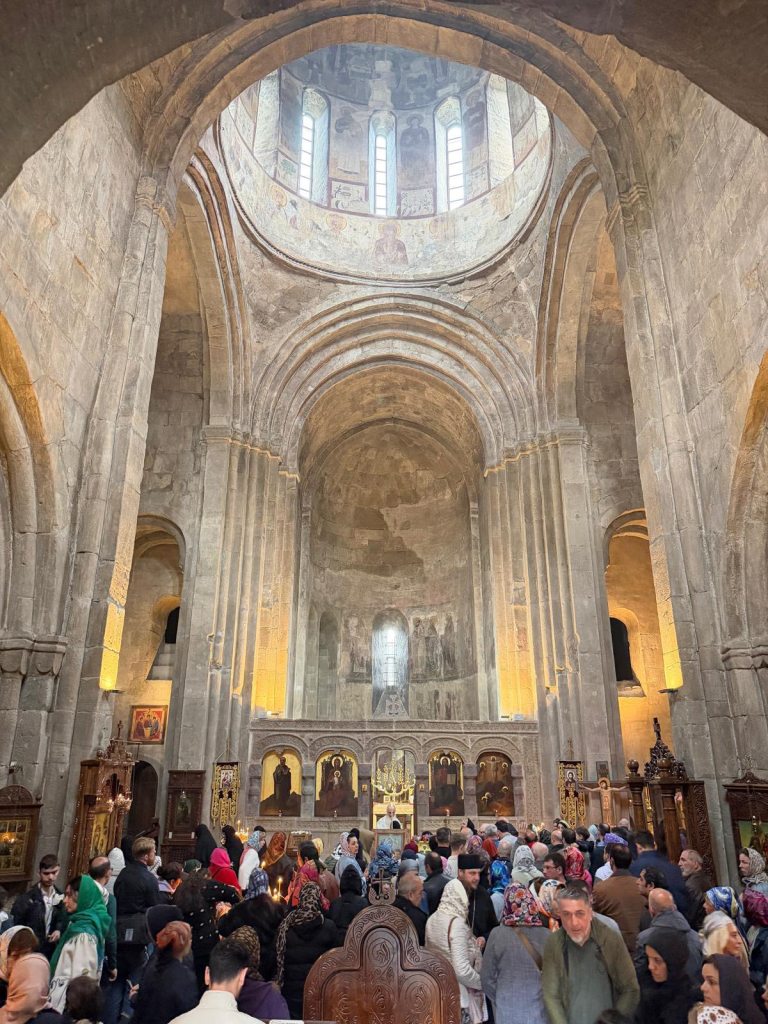
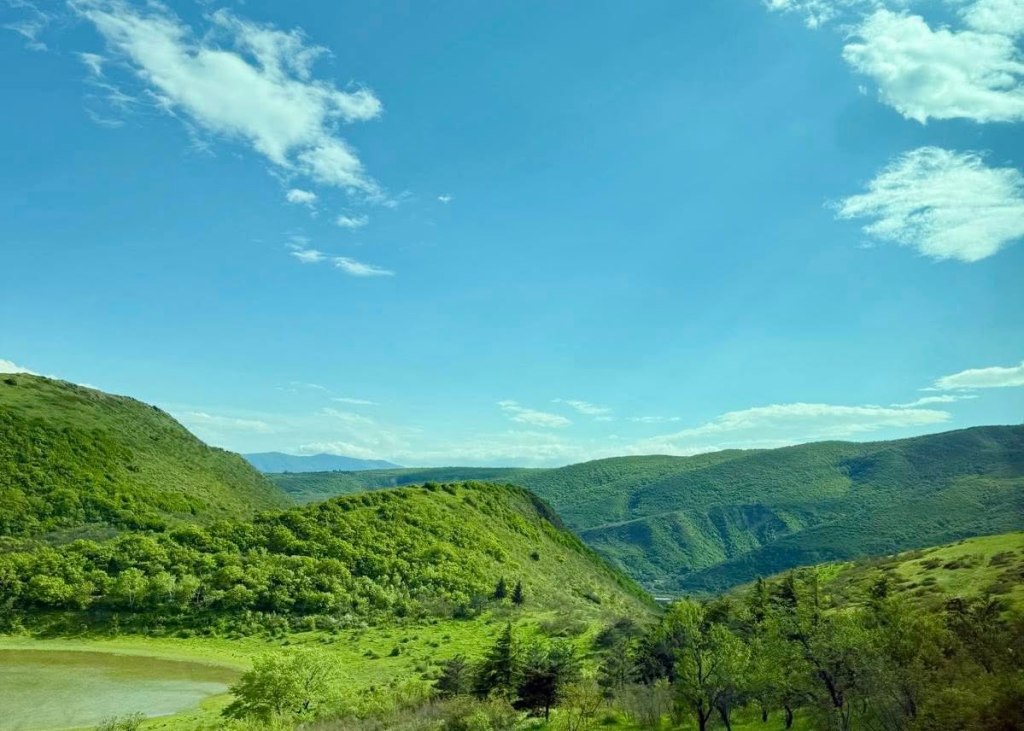
The day began with a journey to the ancient capital of Mtskheta, a place sanctified by centuries of Christian witness and home to several of the most revered holy sites in the country.
1. Svetitskhoveli Cathedral – The Life-Giving Pillar
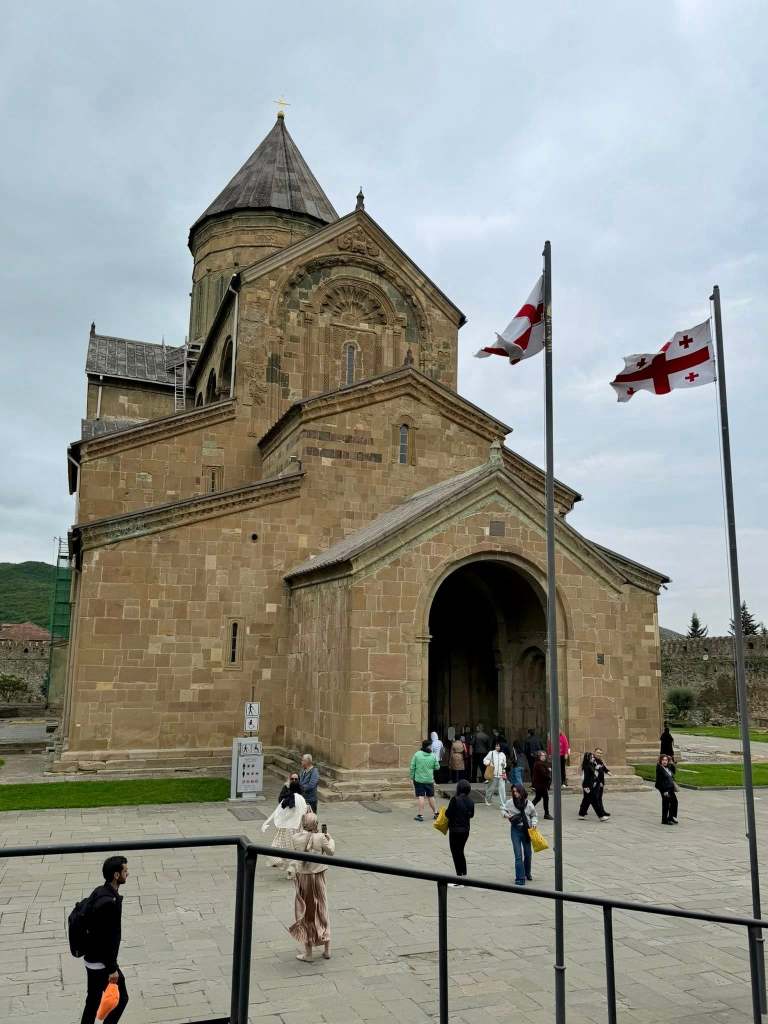
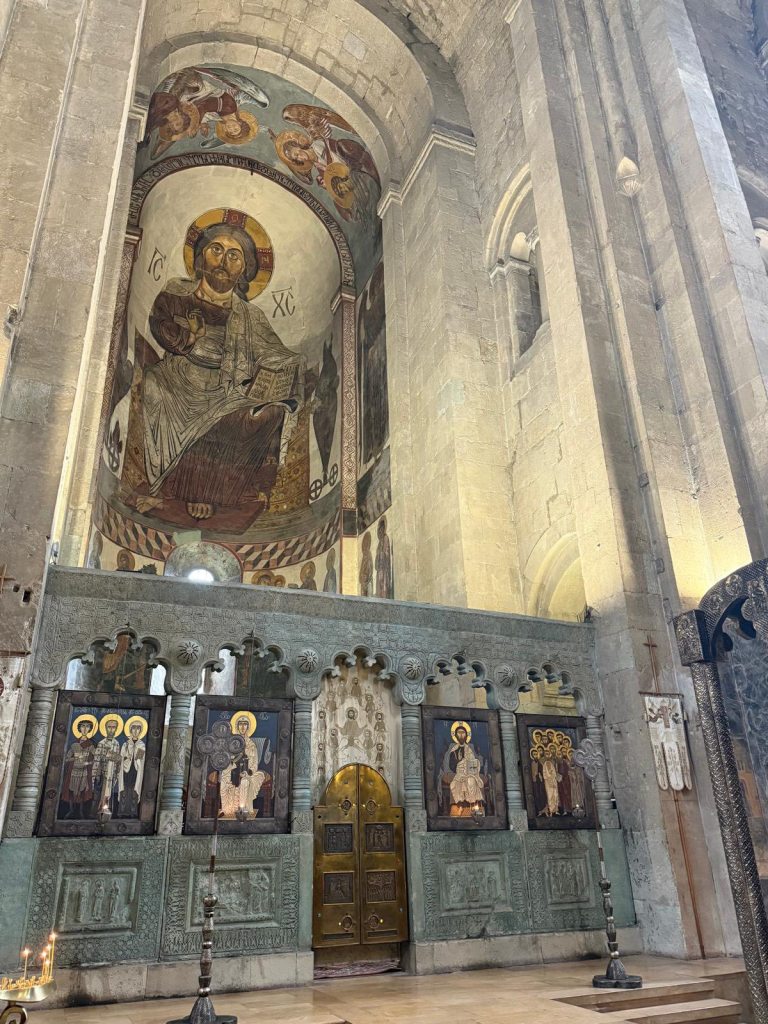
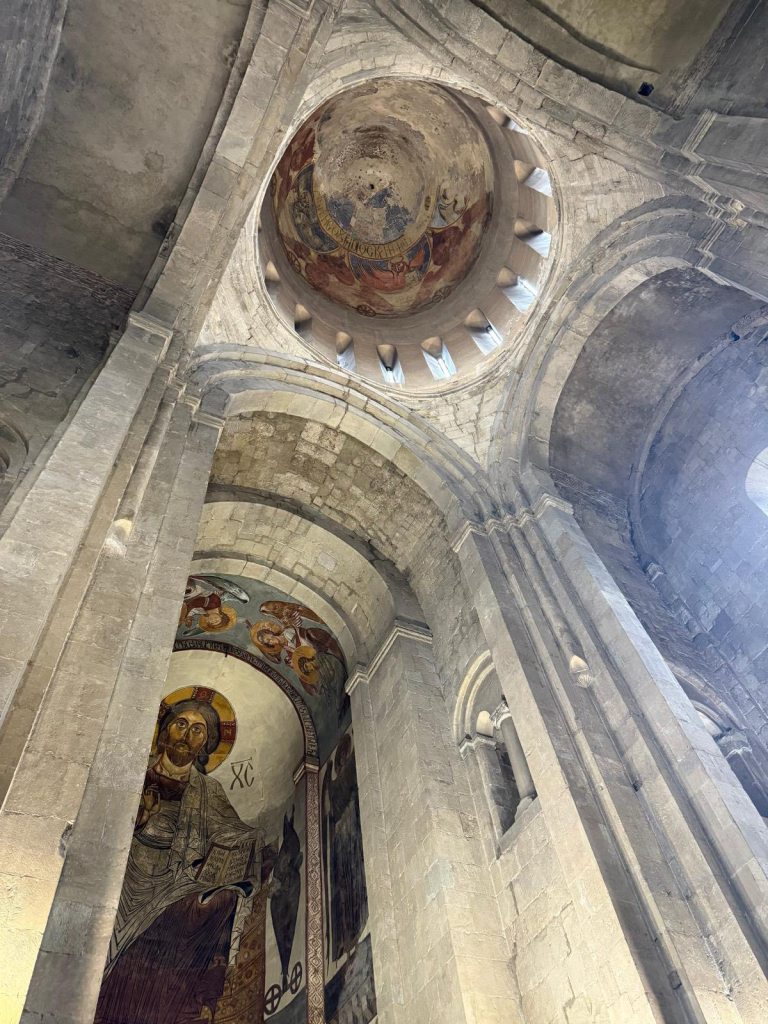
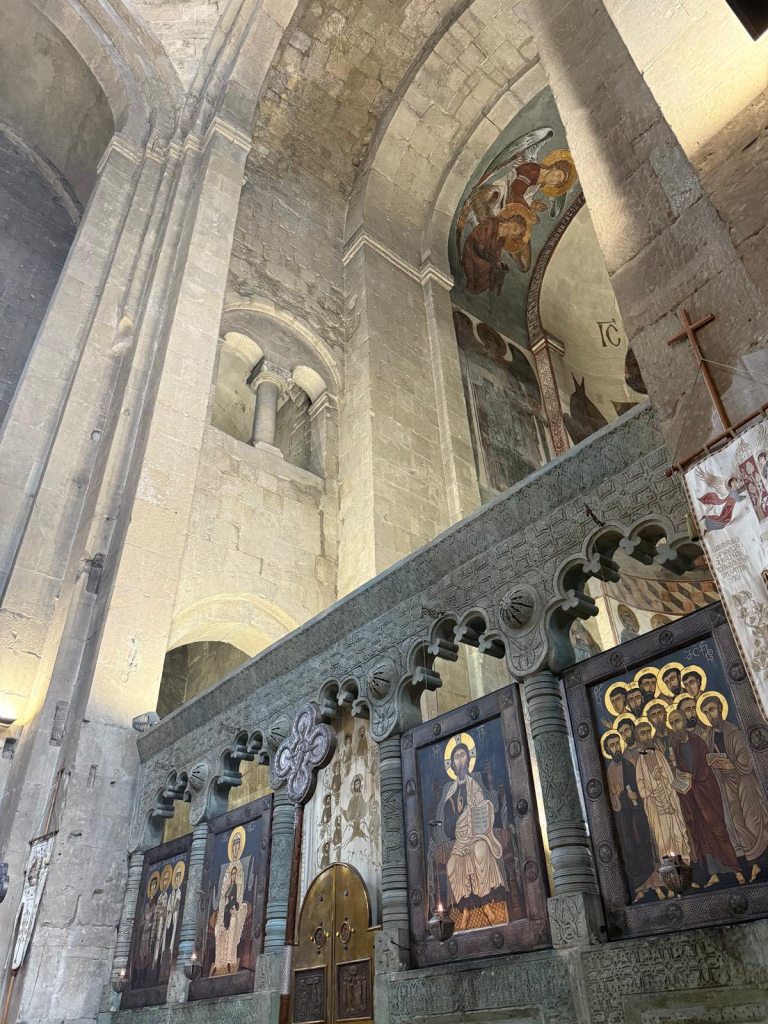
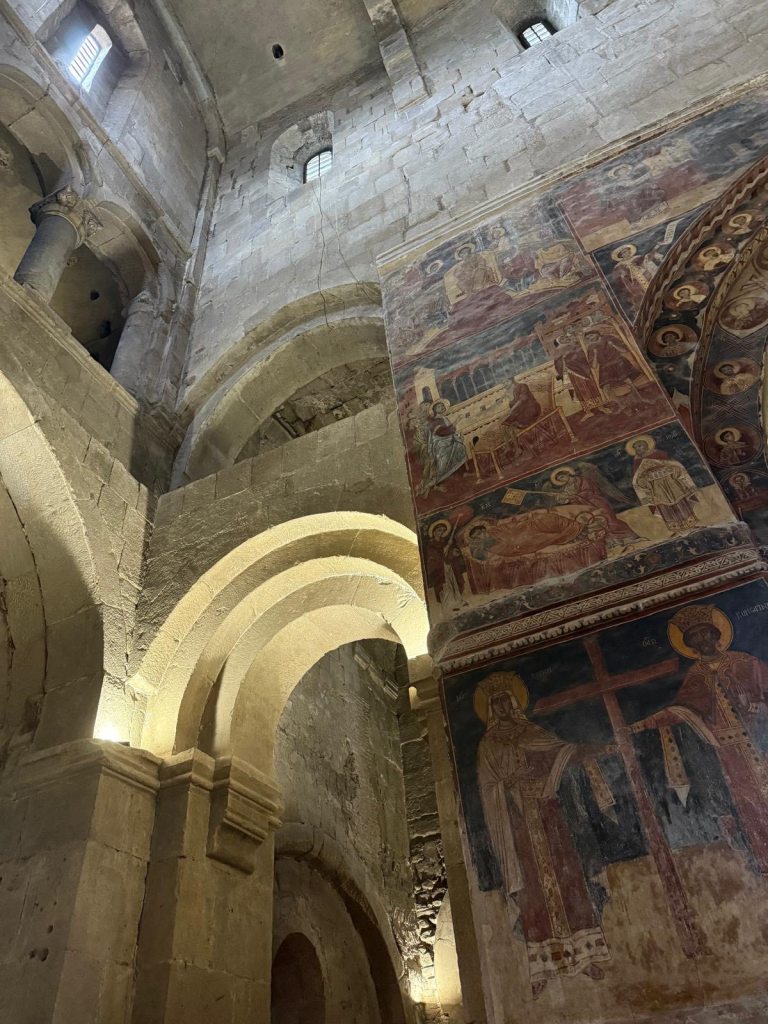
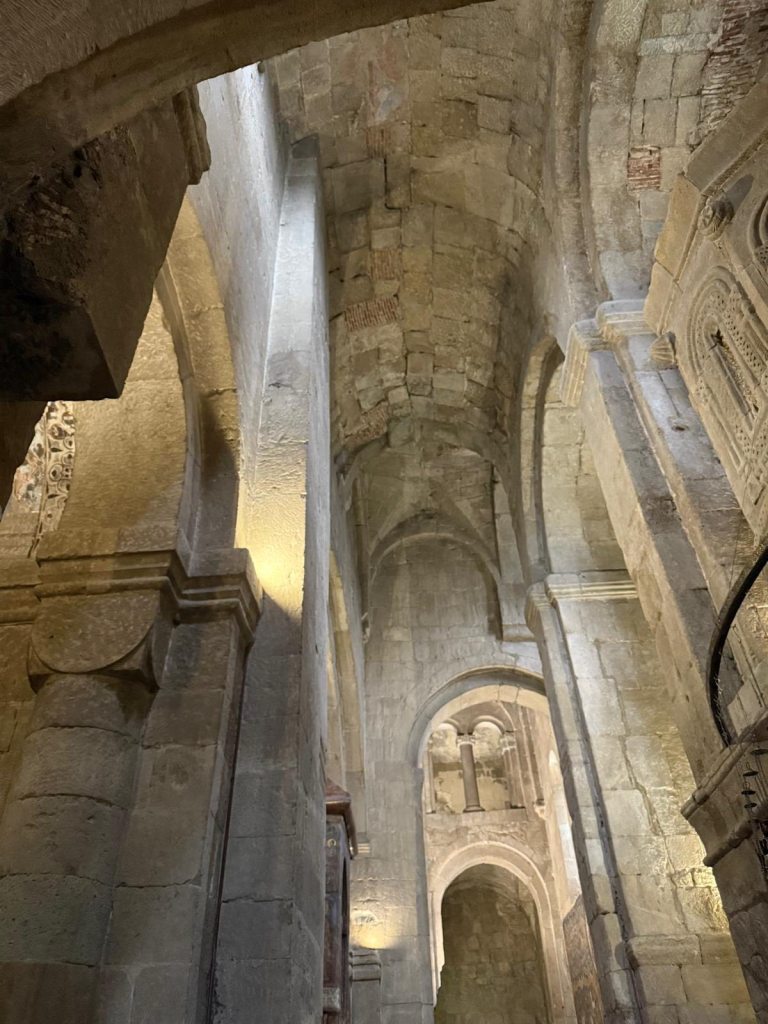
The group first visited Svetitskhoveli Cathedral, dedicated to the Twelve Apostles. The original church dates back to the 4th century and was commissioned by the first Christian rulers of Georgia: King Mirian and Queen Nana. The current building is from 11th century.
TheCathedral’s name means “the Life-Giving Pillar,” reflecting one of the most treasured holy traditions of the Georgian Church. According to ancient tradition, during the Crucifixion of our Lord Jesus Christ, a Georgian Jew named Elias was present in Jerusalem. He obtained the seamless robe of Christ from a Roman soldier and brought it back to Mtskheta. His sister, Sidonia, upon touching the garment, was overcome with divine grace and reposed immediately, clutching it to her breast. She was buried with the robe, which could not be separated from her.
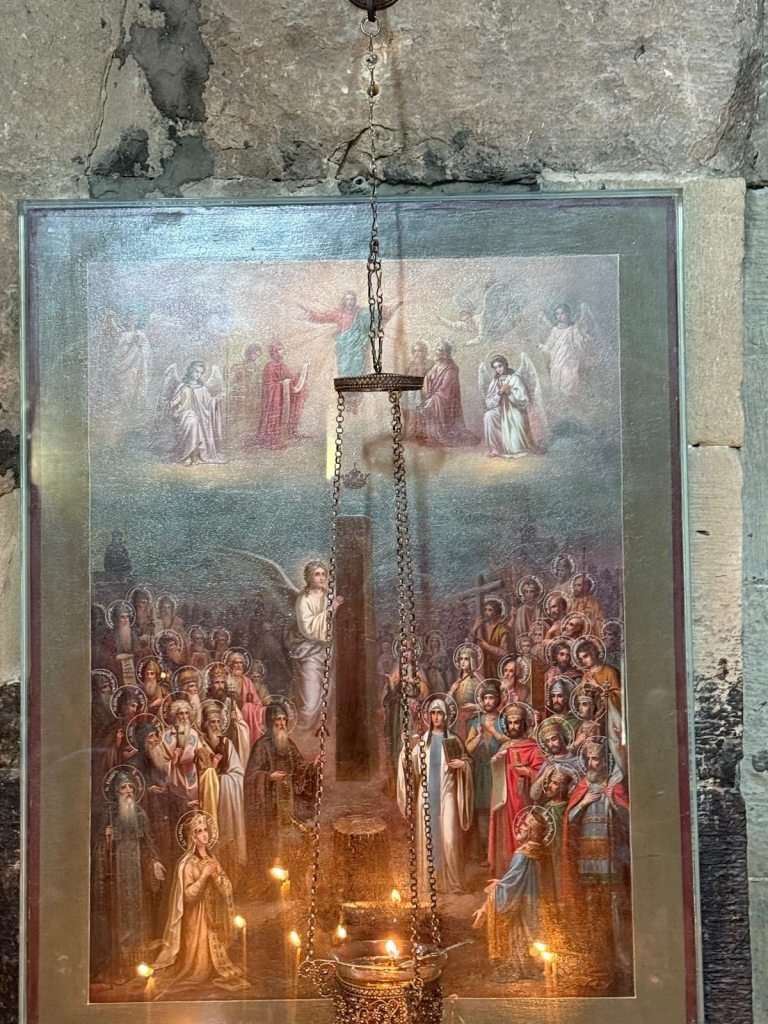
Years later, when Saint Nino came to Georgia preaching Christ, she prayed over this burial site. A great cedar tree had grown there, and from it pillars were fashioned for the first church. One of the pillars, however, rose miraculously into the air and could not be set in place until Saint Nino spent the night in prayer. By God’s power, the pillar descended and began to stream myrrh, bringing healing to the faithful. Hence the name: the Life-Giving Pillar.
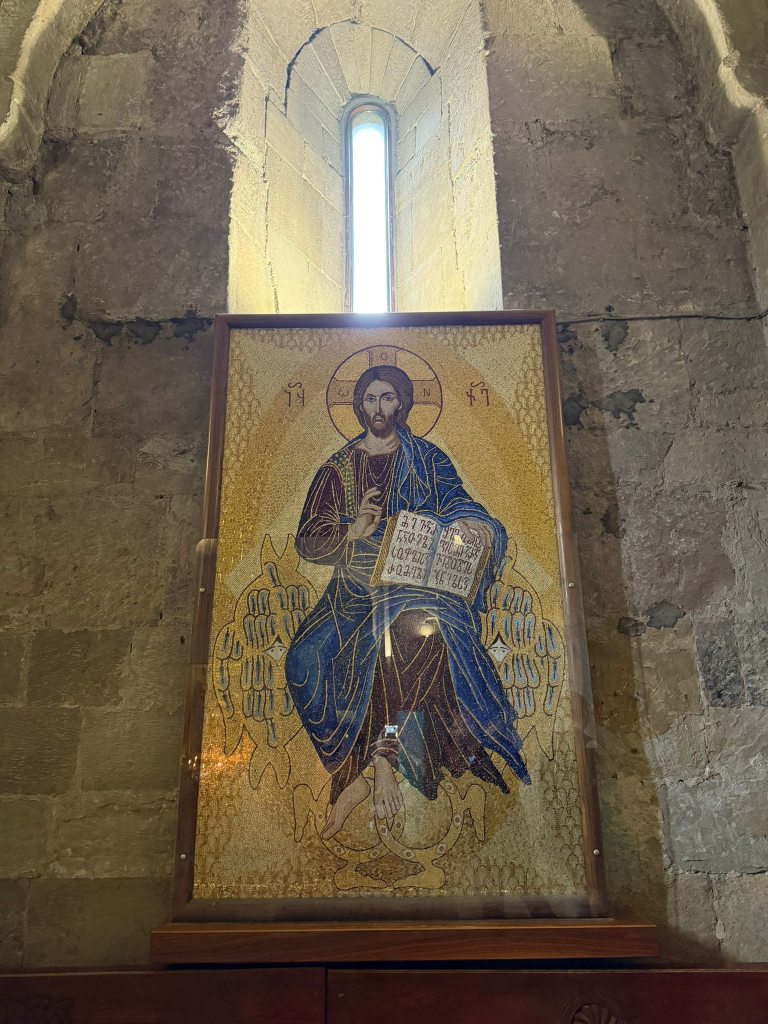
Icon depicting the miracle with the Life-giving Pillar
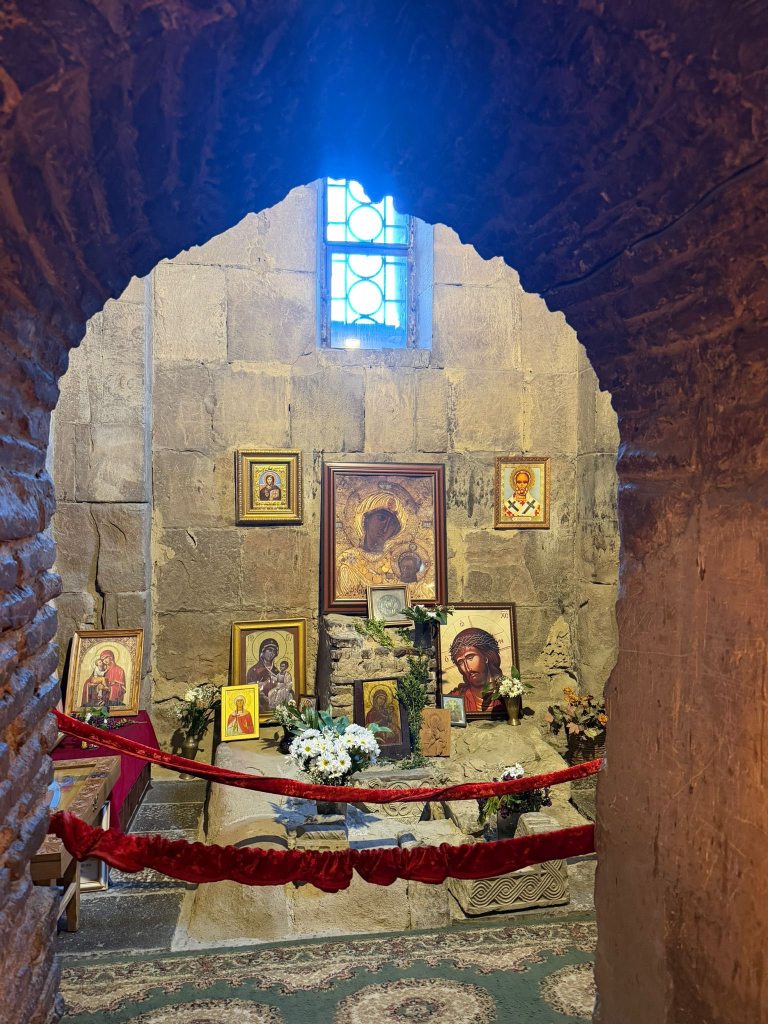
Burial place of the Robe of Christ and Sidonia
2. Samtavro Monastery – St Nino and St Gabriel
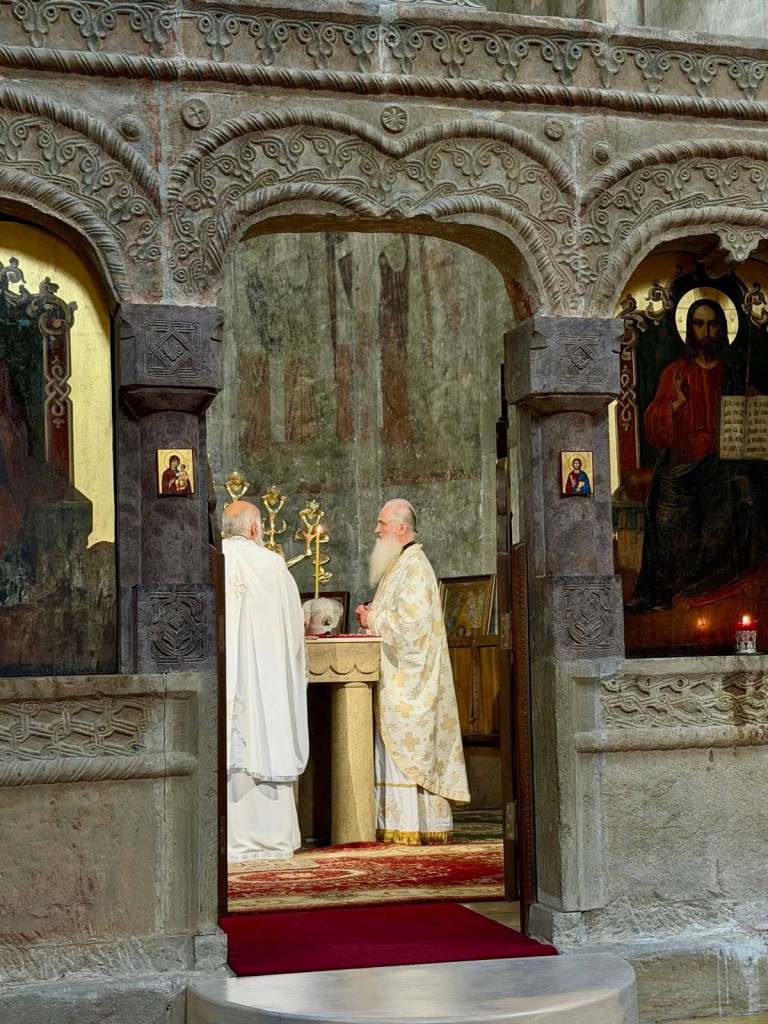
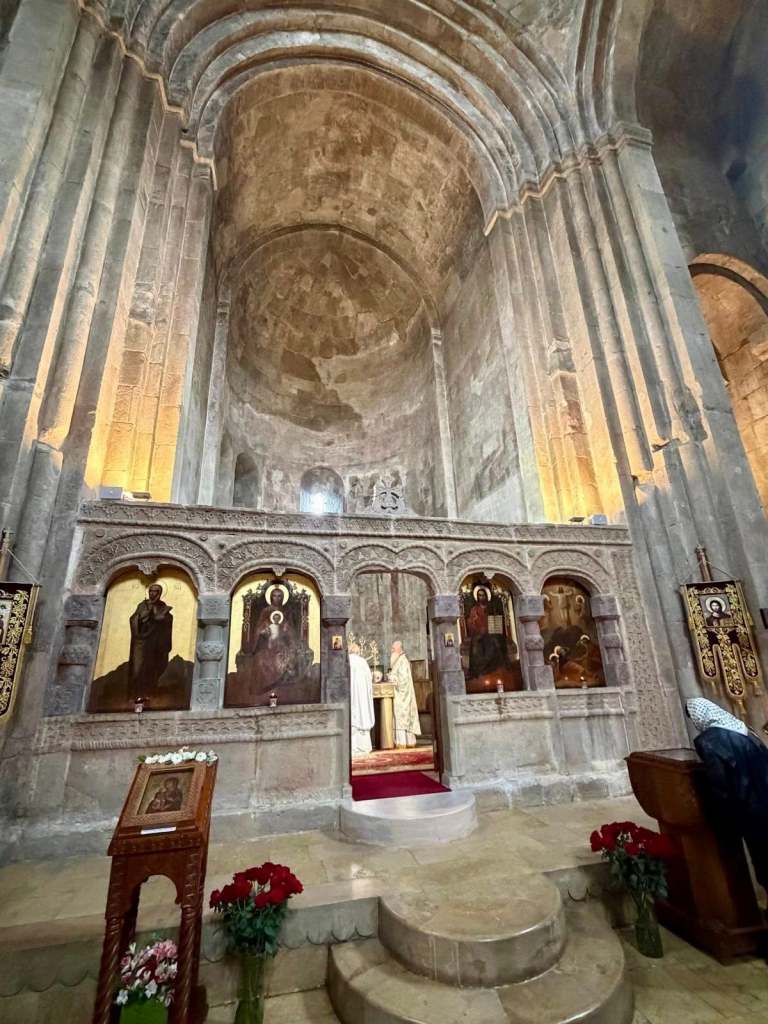
The group then moved to the ancient Samtavro Monastery, dedicated to the Transfiguration of our Lord.
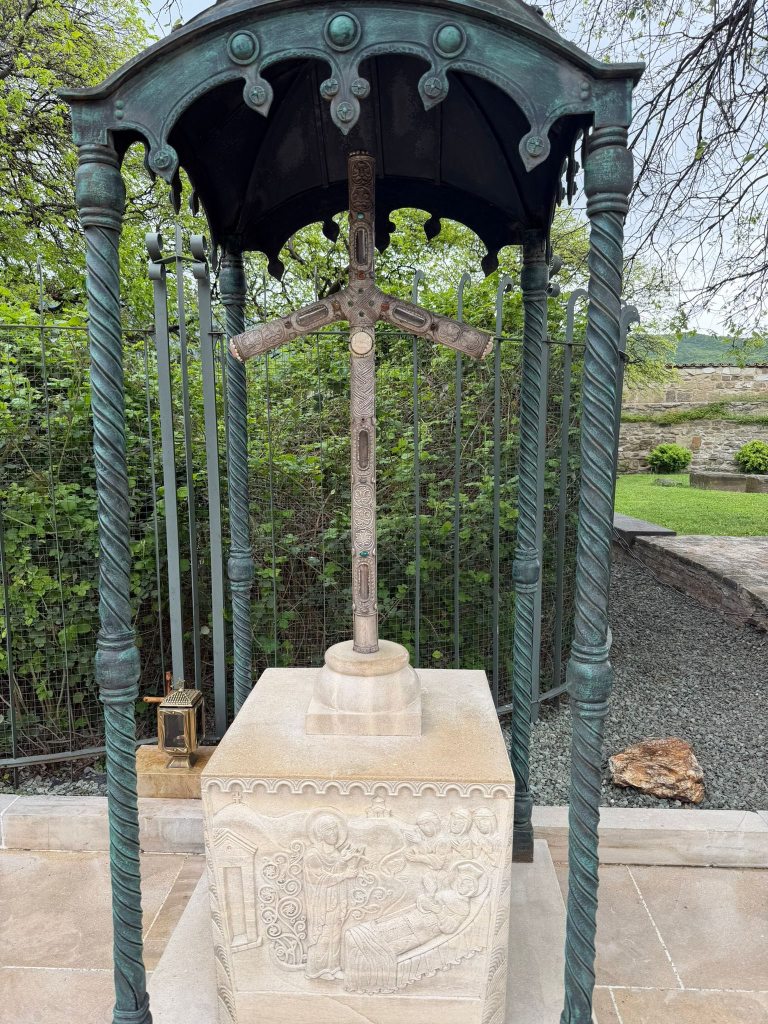
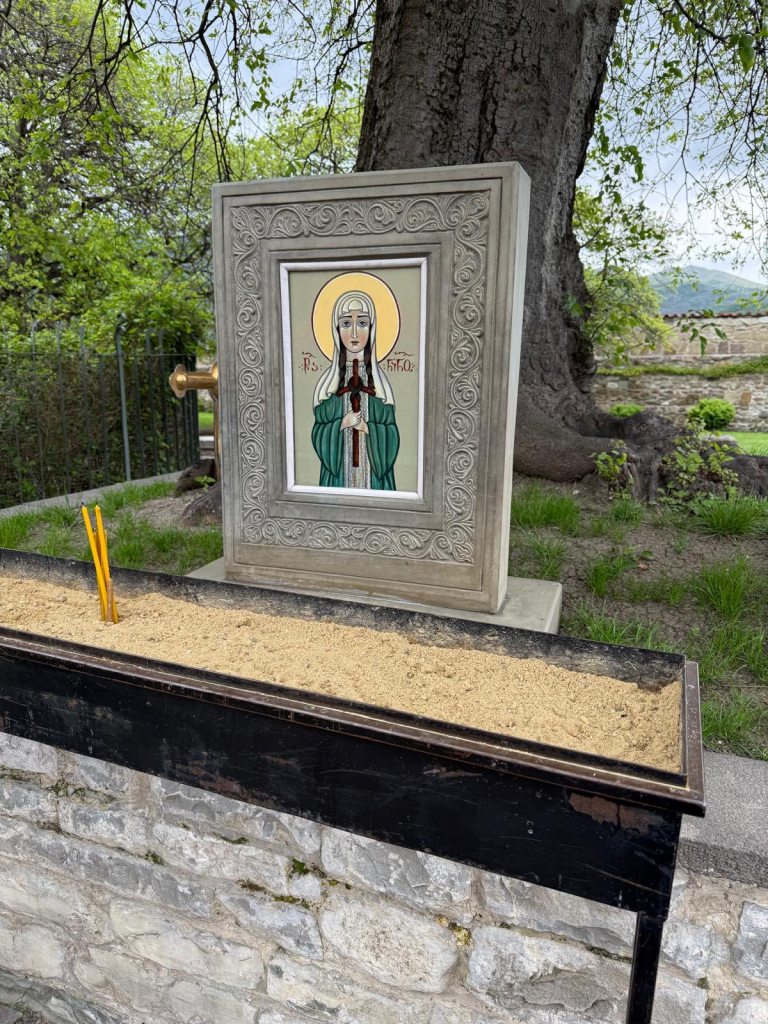
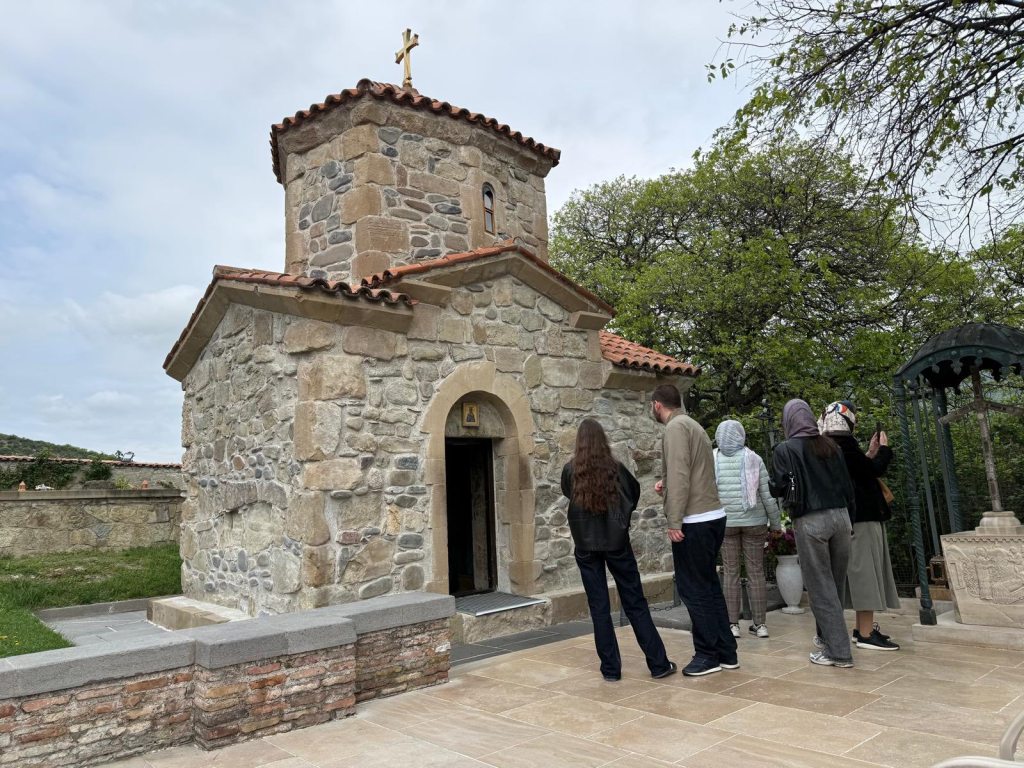
This holy place is closely connected with Saint Nino. It was here, according to tradition, that she lived and prayed under a humble blackberry bush, establishing her ascetic dwelling while preaching Christ to the Georgian people. Even today, a chapel marks this place, preserving the memory of her quiet but powerful witness.
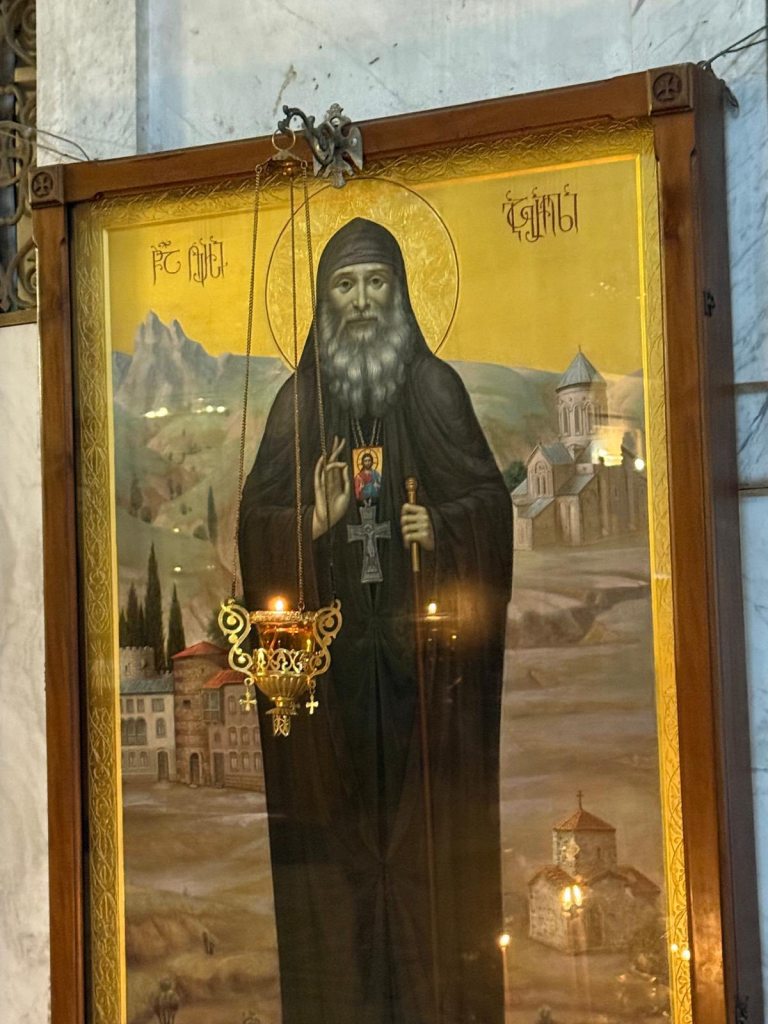
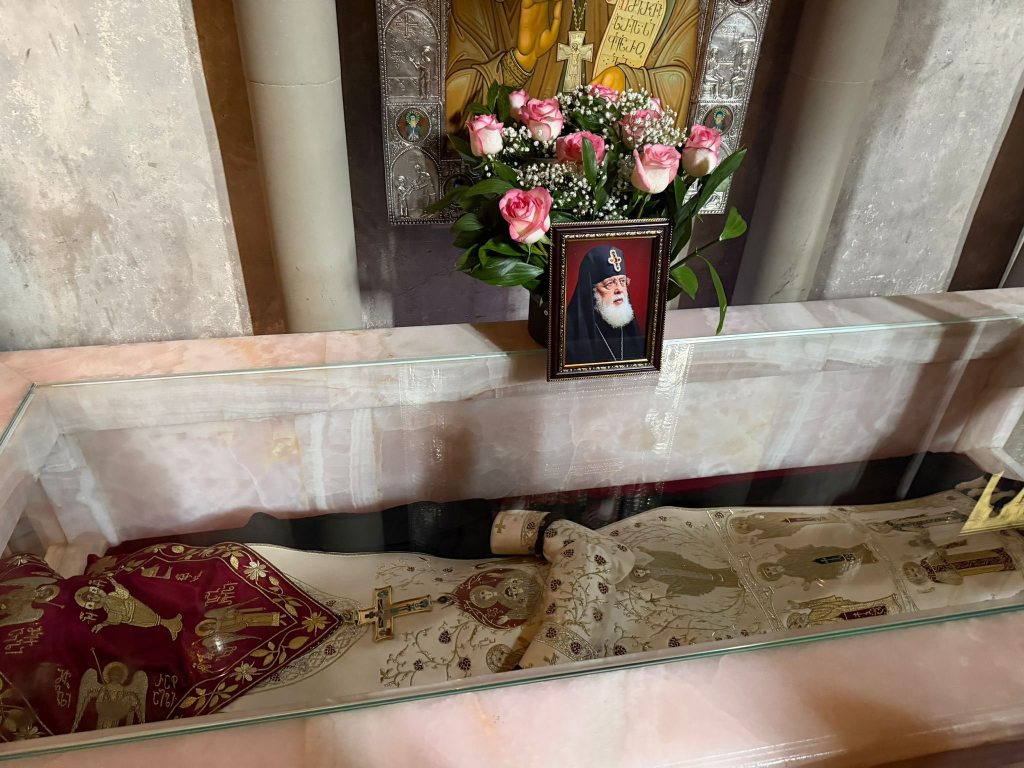
The monastery holds the relics of the great modern saint of Georgia, Saint Gabriel Ugrebadze who spent the final years of his life there. Known for his boldness, humility, and deep love for Christ, Saint Gabriel lived as a “fool for Christ,” enduring persecution during the Soviet era. His life was marked by repentance, simplicity, and unwavering faith, and many pilgrims come seeking his intercessions.
Chapel of St Nino at Samtavro Monastery
3. A Hidden Treasure – Antioch in Mtskheta
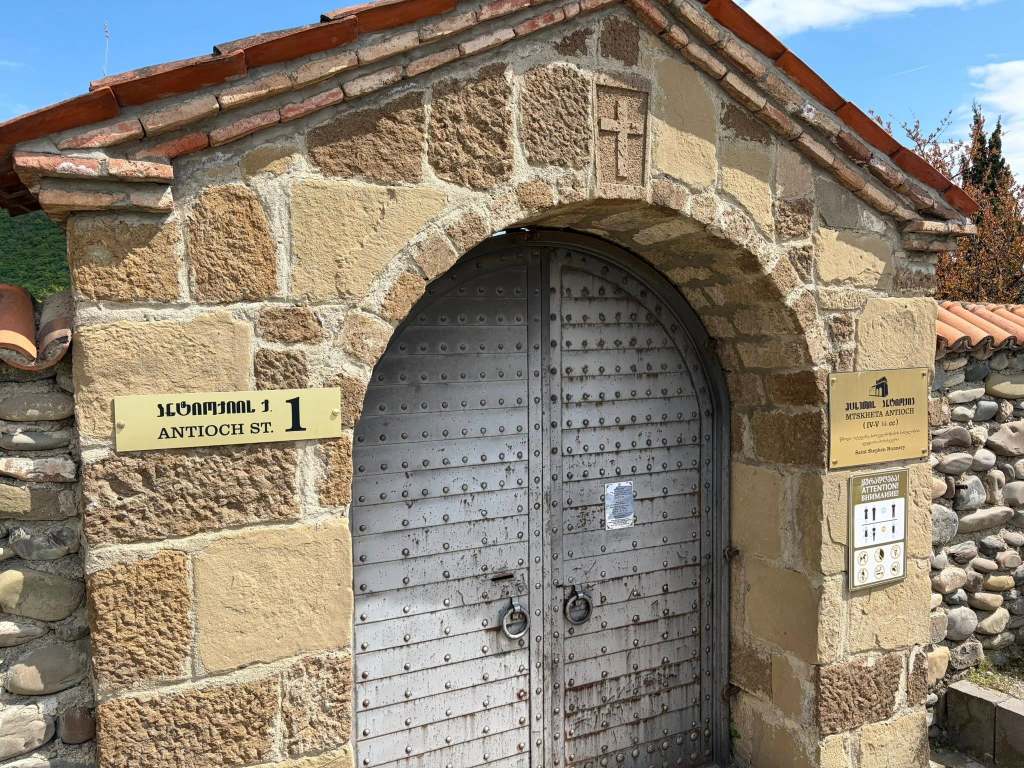
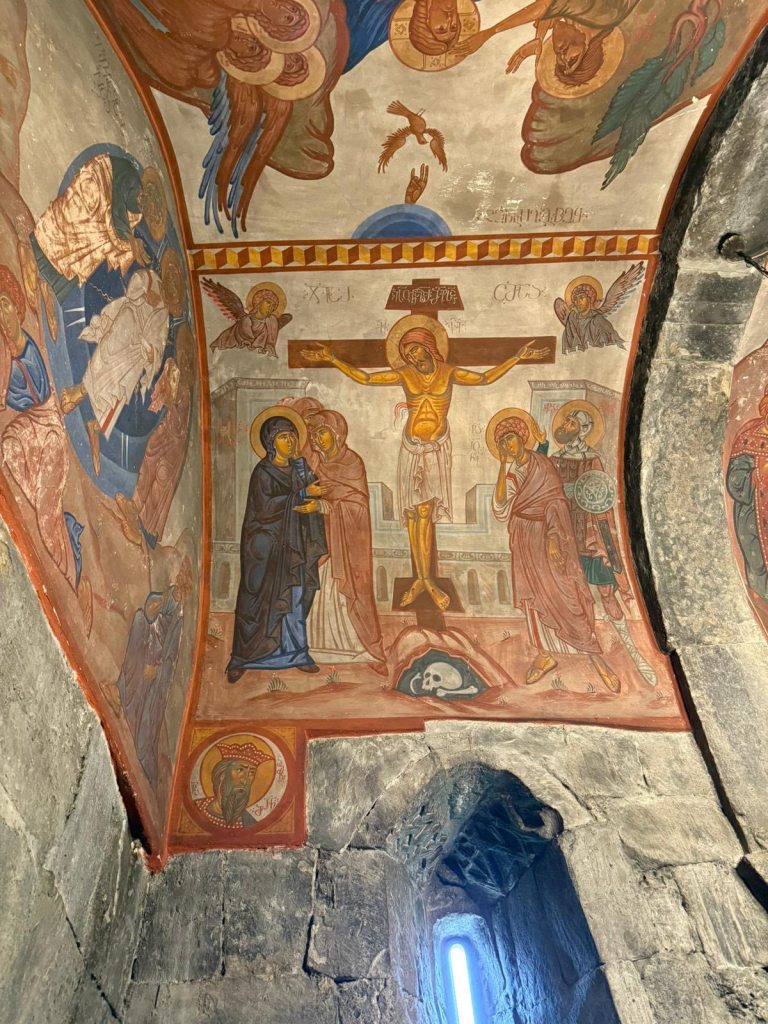
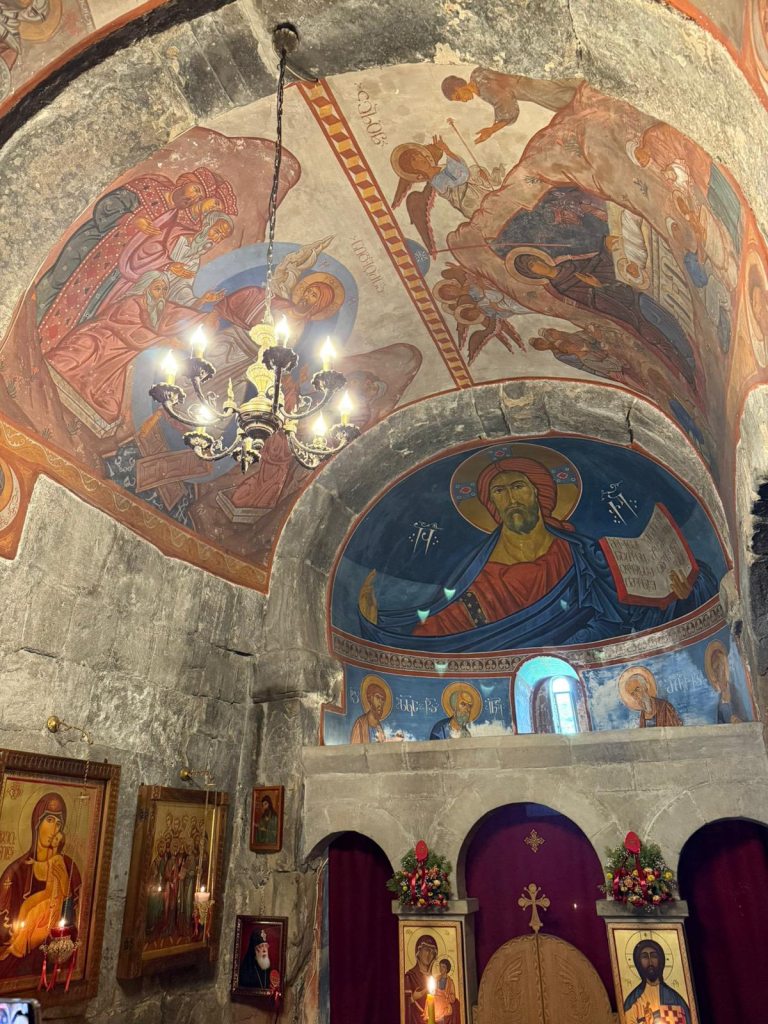
During the free time, part of the group, advised by a local priest who learned that we belong to the Antiochian Church, was led to a hidden treasure away from the main tourist routes: the small monastery, dedicated to Saint Stephen, also known locally as Antioch. Dating back to the 4th century (though rebuilt several times), it bears witness to the early ecclesiastical ties between Georgia and the Church of Antioch.
Before becoming autocephalous, the Georgian Church was under the jurisdiction of Antioch. This monastery is believed to have functioned as a metochion (kind of ecclesiastical representation or “embassy”) of the Antiochian bishops in the region.
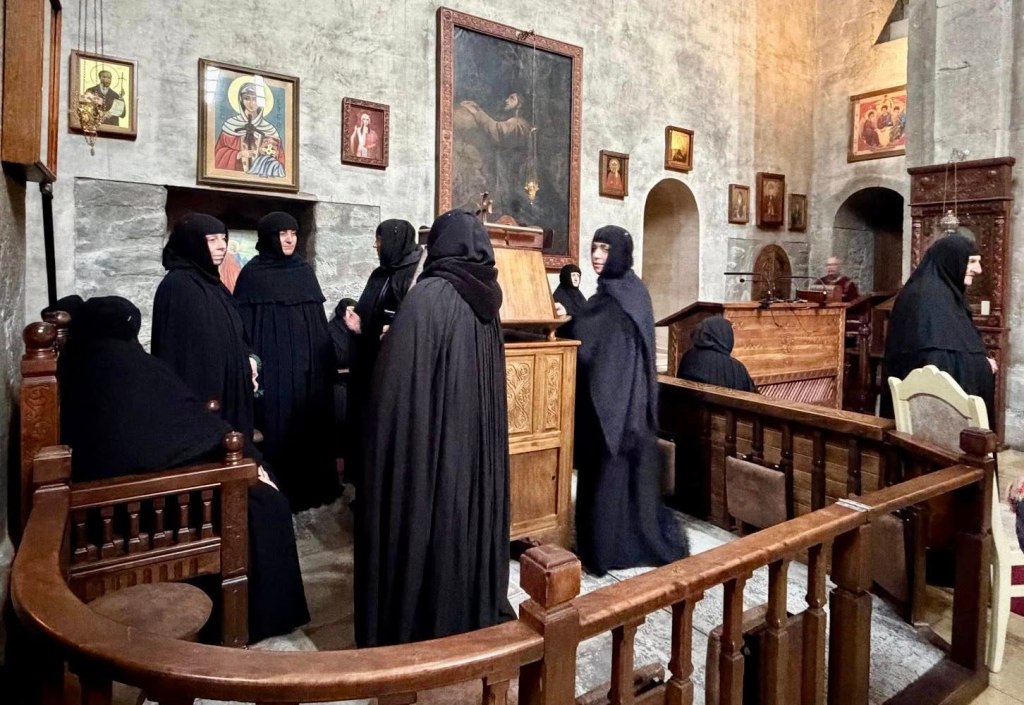
The group was welcomed at the monastery by mother Sophia, one of the nuns, who kindly showed the faithful around and told the story of the monastery. For our group, this visit was a particularly meaningful reminder of the historical and spiritual connection between our Churches.
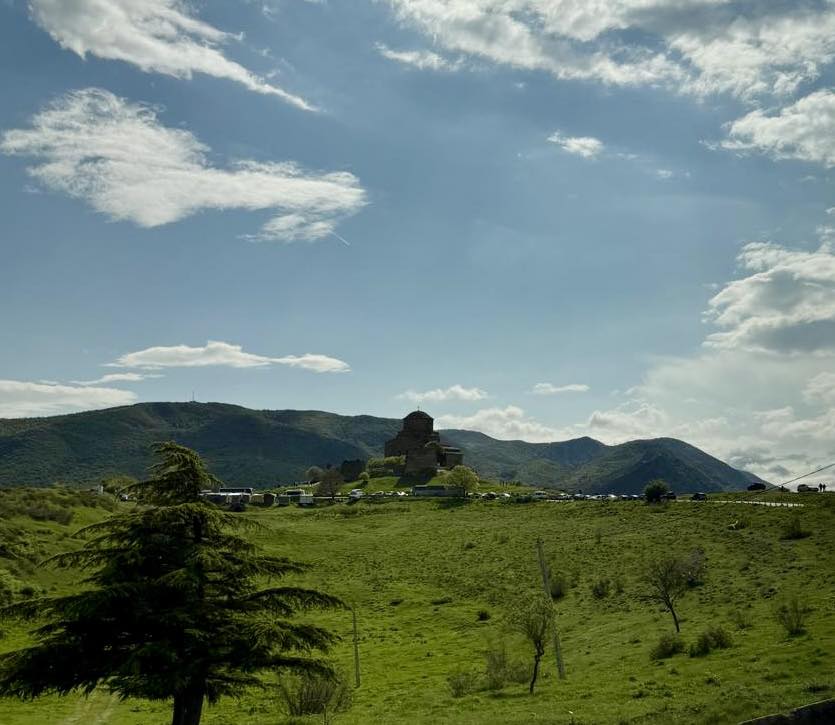
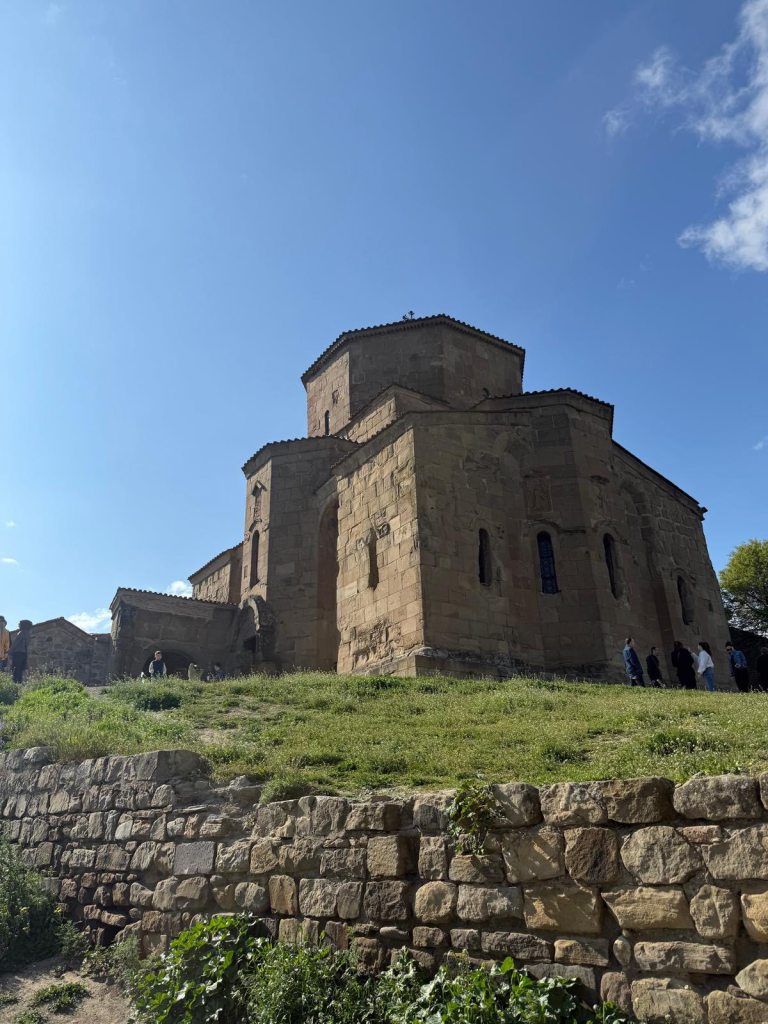
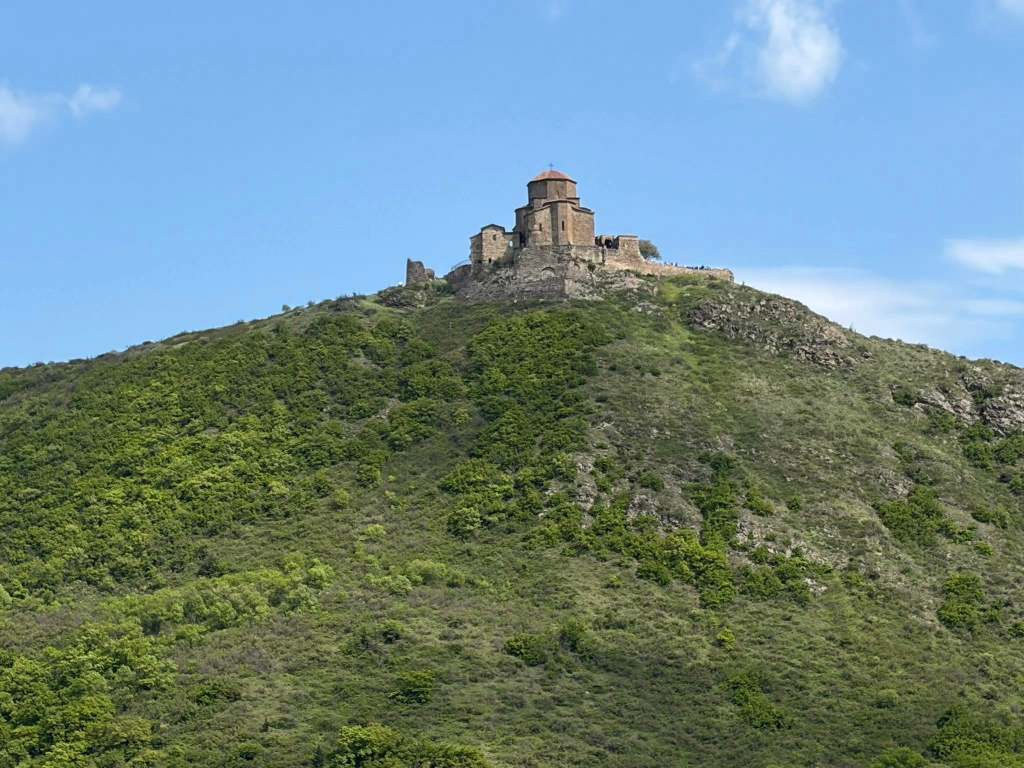
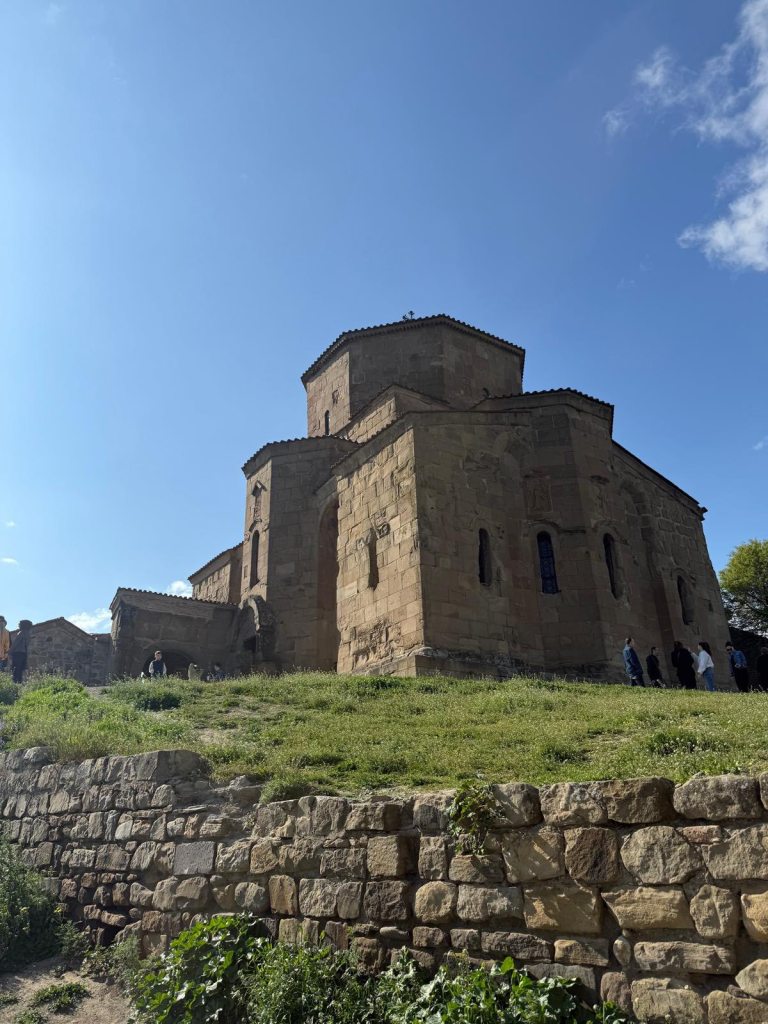
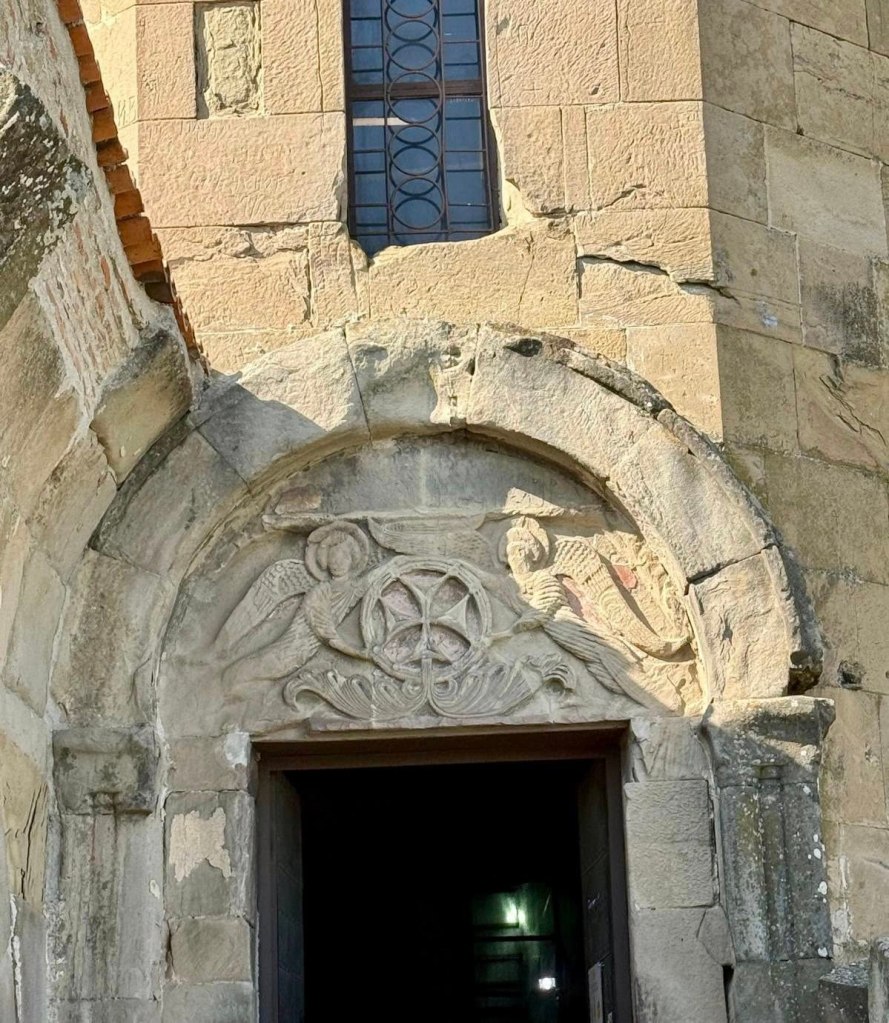
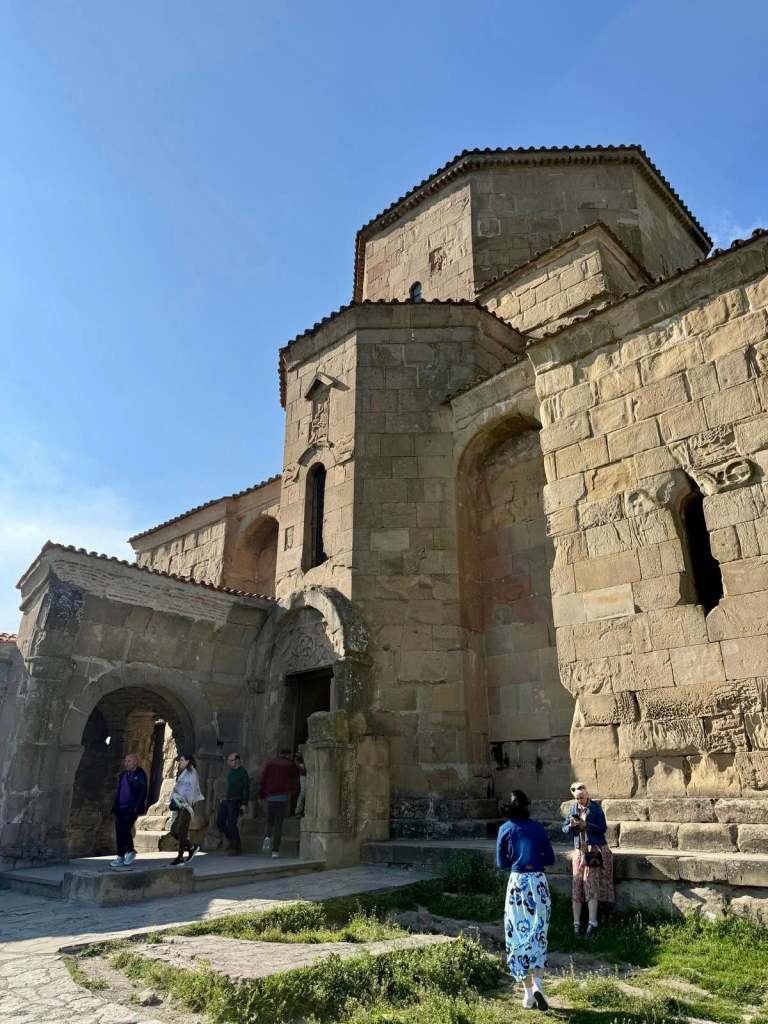
4. Jvari Monastery – The Holy Cross
The day concluded with a visit to Jvari Monastery, dedicated to the Holy Cross (“Jvari” in Georgian means Cross).
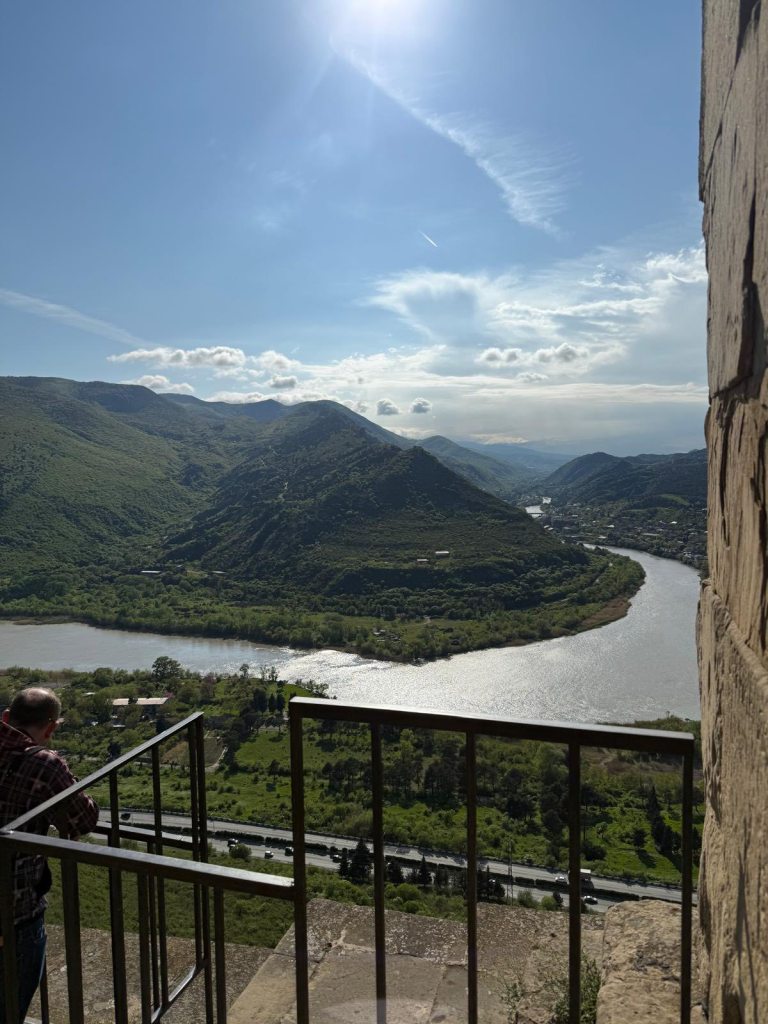
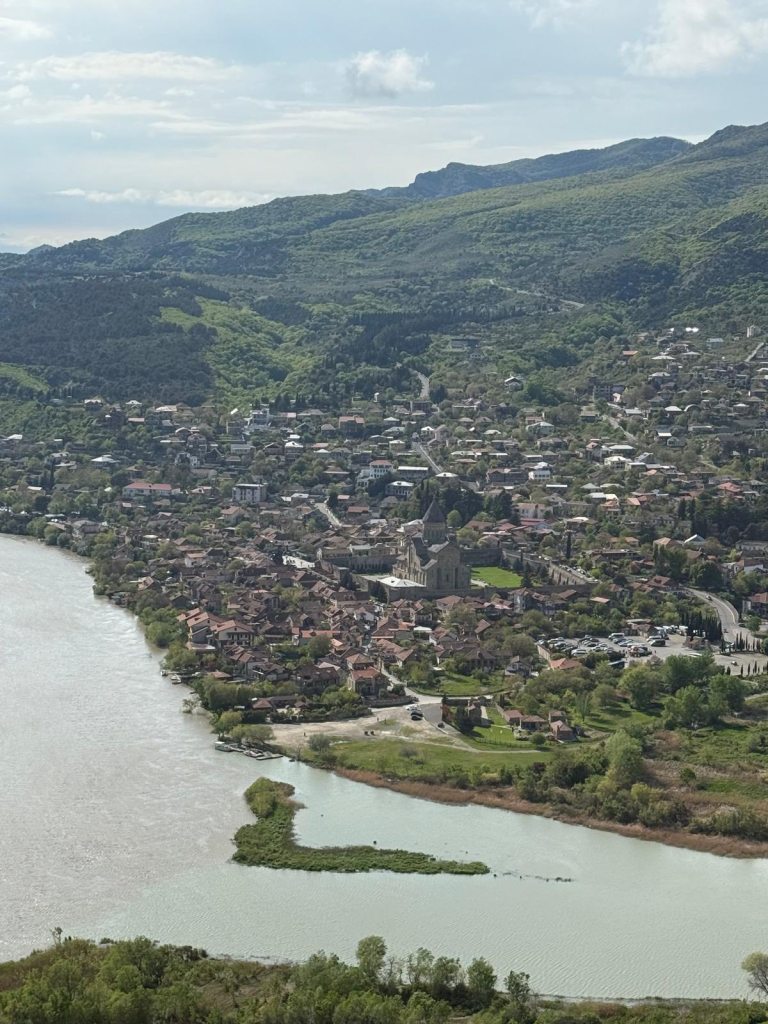
According to tradition, it was on this very hill that Saint Nino erected a wooden cross after the conversion of Georgia to Christianity in the 4th century. This cross became a sign of victory and protection for the newly illumined land. The present monastery, built in the 6th century, stands as a witness to that event, overlooking the confluence of the rivers and the ancient city of Mtshketa below.
Confluence of rivers: Mtkvari (Kura) and Aragvi rivers
Standingthere, our group chanted “Christ is Risen!” and the Apolytikion of the Holy Cross, giving thanks to God for granting us to venerate these holy places.
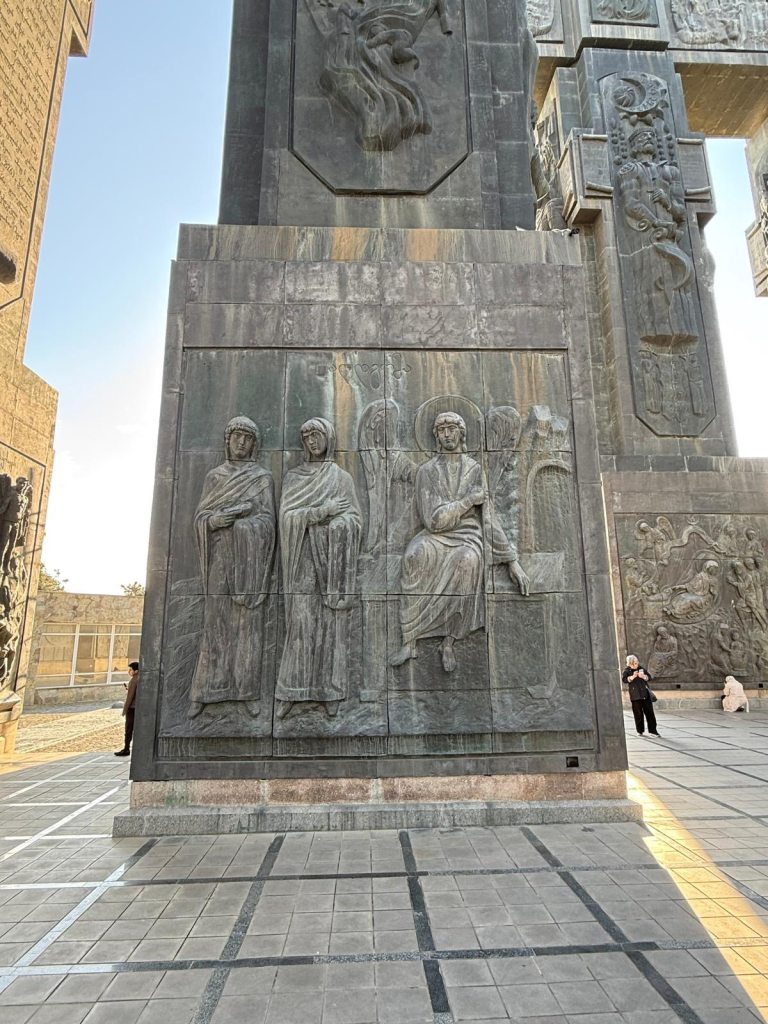
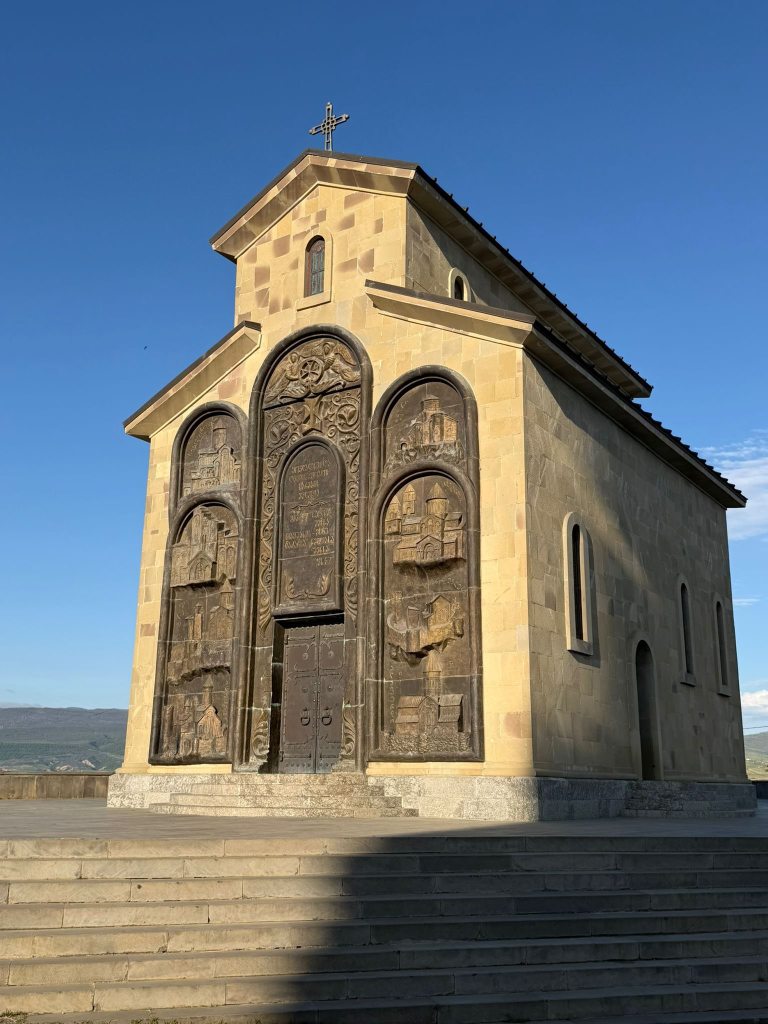
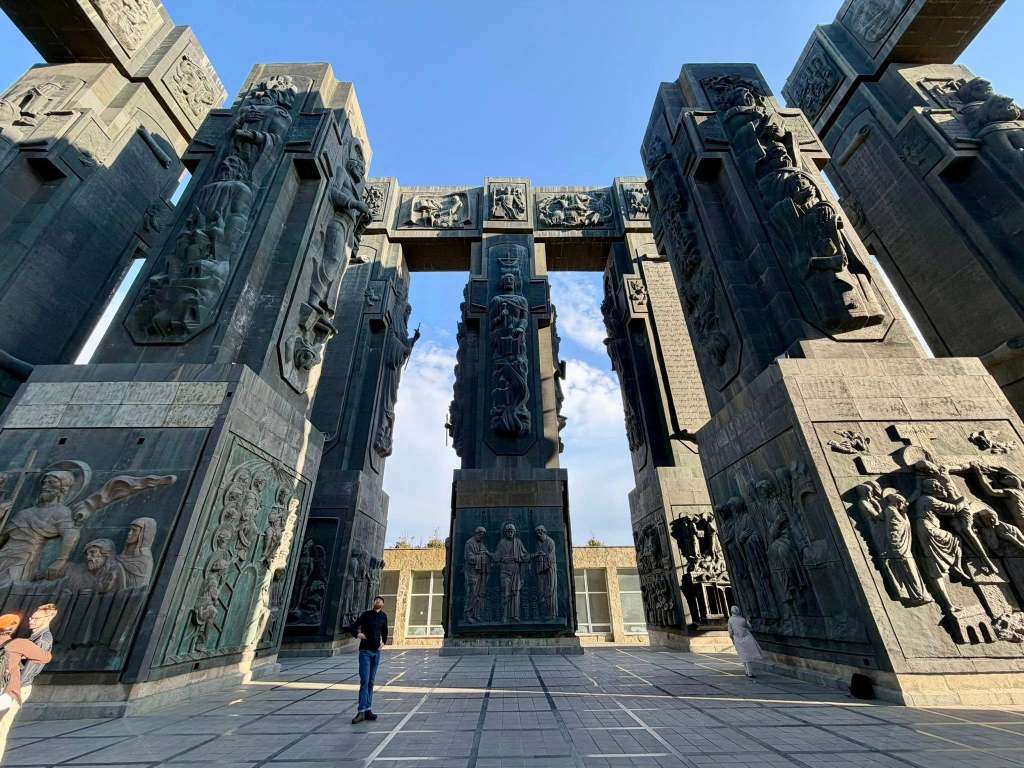
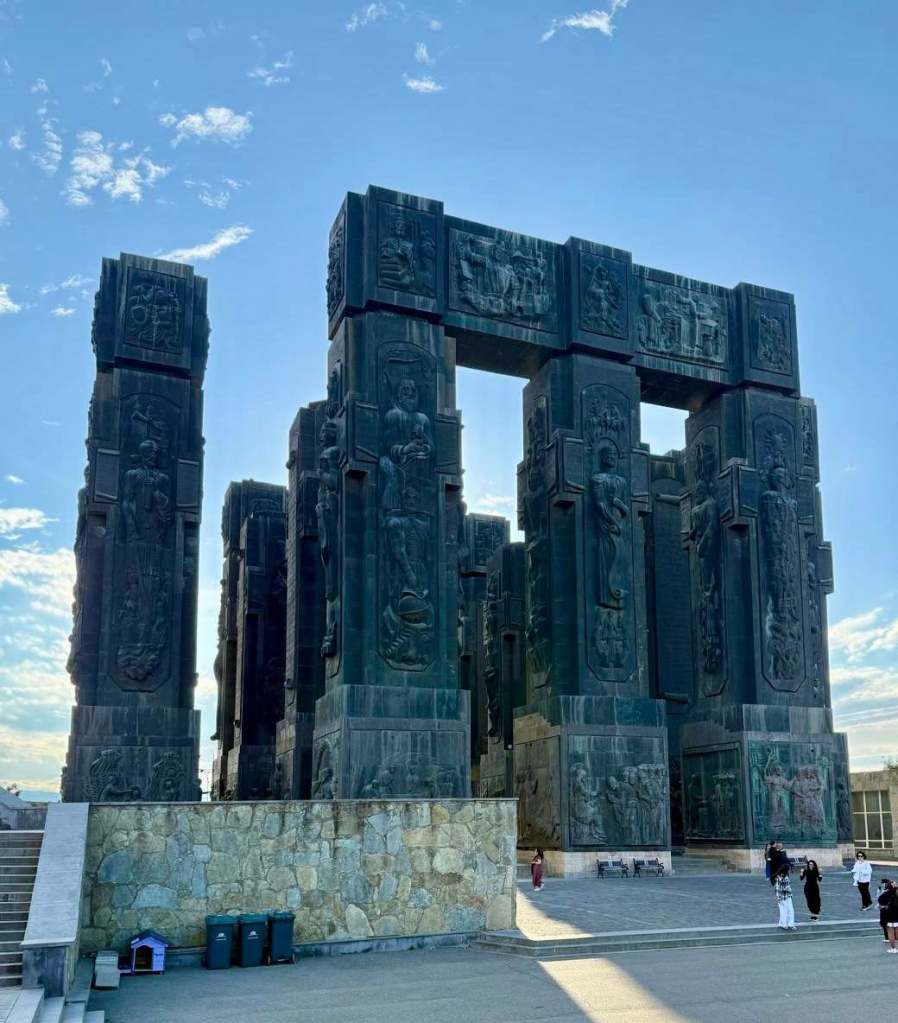
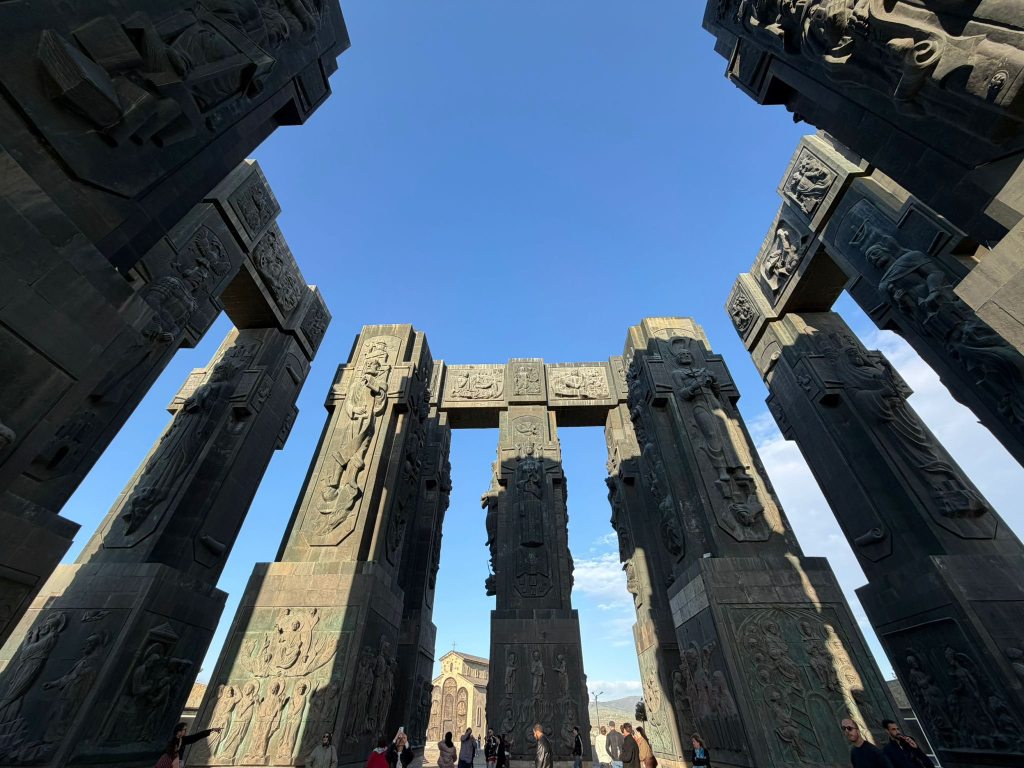
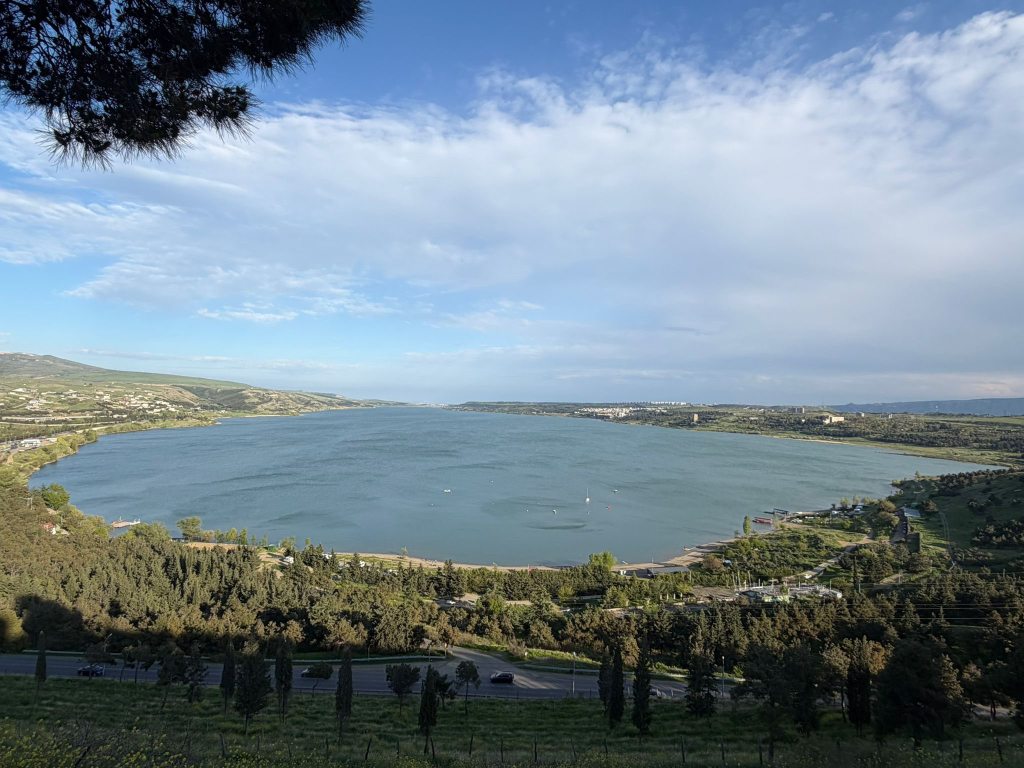
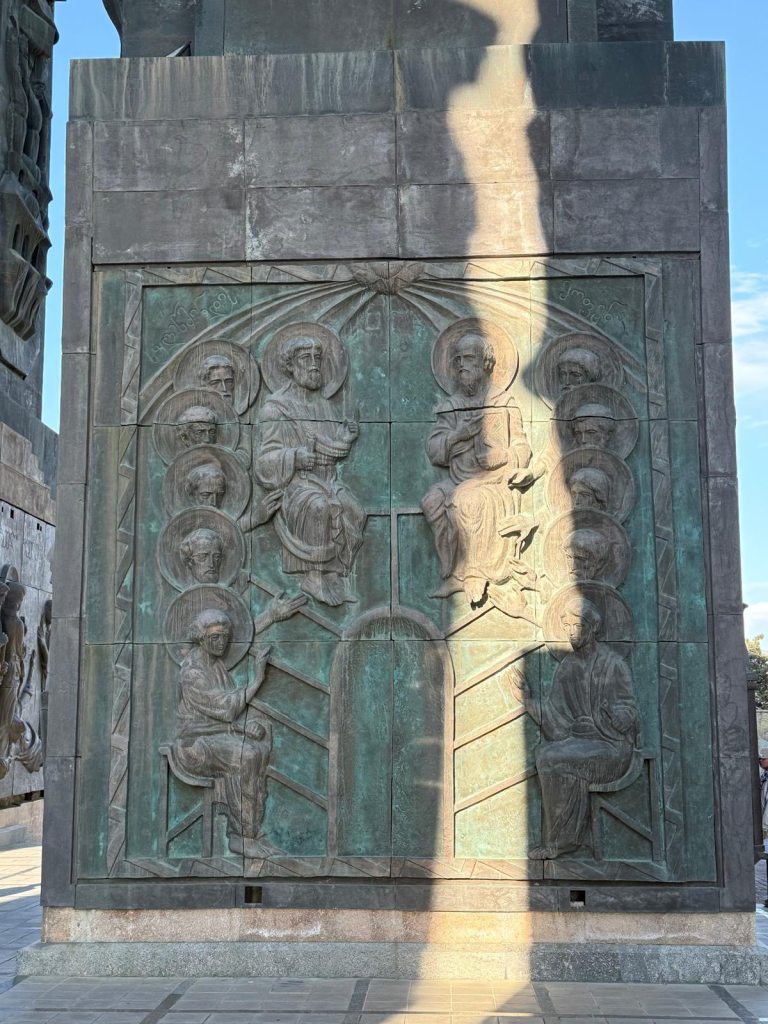
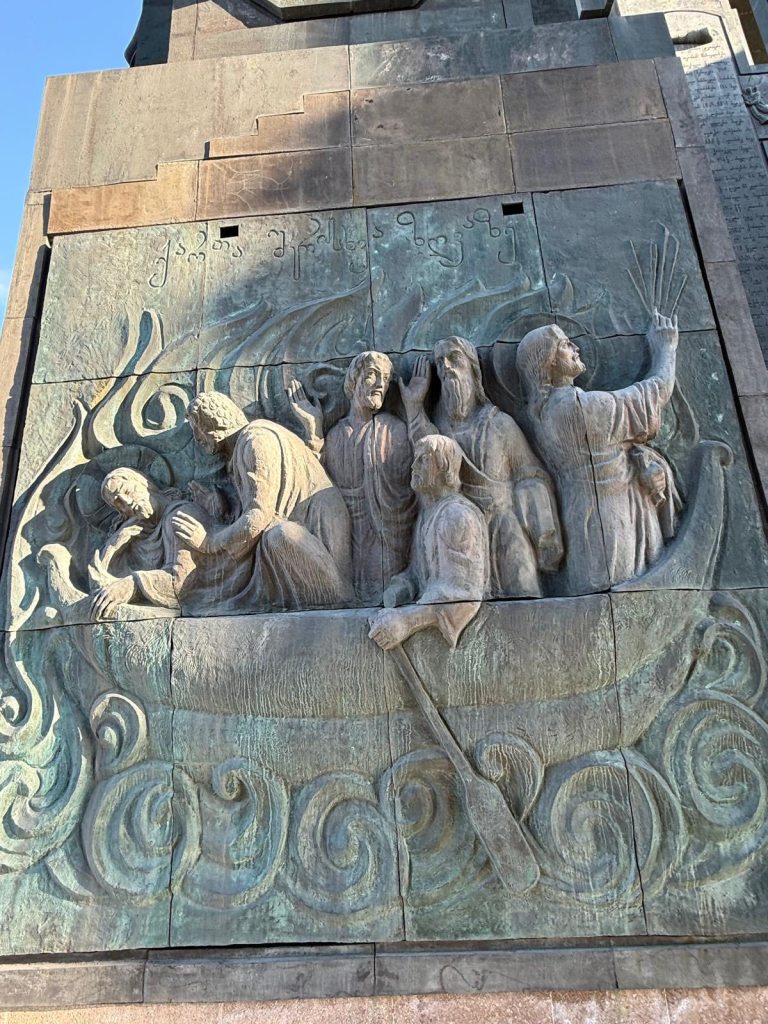
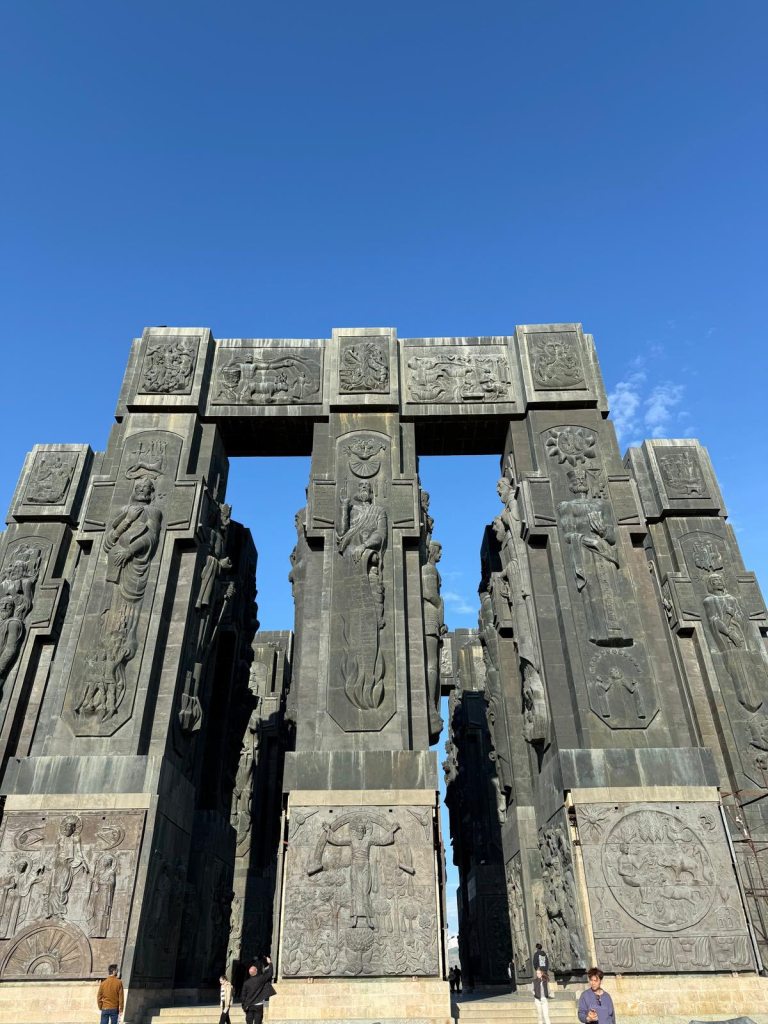
On the way back to Tbilisi the group briefly visited the Chronicles of Georgia, created by the sculptor Zurab Tsereteli. This impressive monument stands on a hill overlooking Tbilisi. It is formed of large stone pillars richly carved with scenes: at the lower levels, biblical episodes from the life of Christ, and above them, figures from Georgian history, such as kings, saints, and other notable people, standing as witnesses to the faith and history of the nation.