Today’s Abbesses of Abbesses

Gerondissa Akylina, Porphyria, Sipsa Monastery and St. Georgios Karslidis

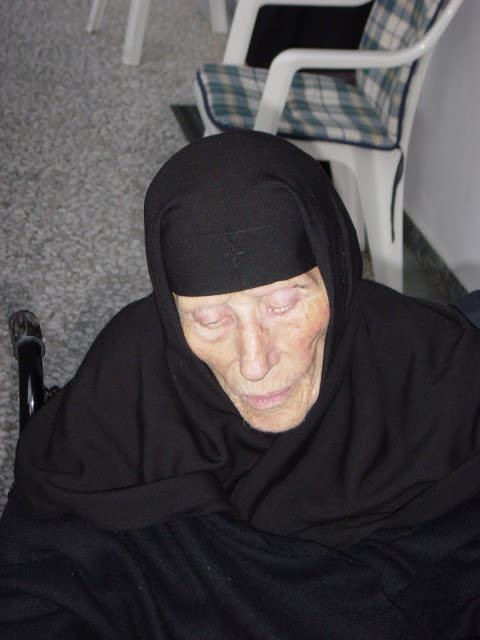
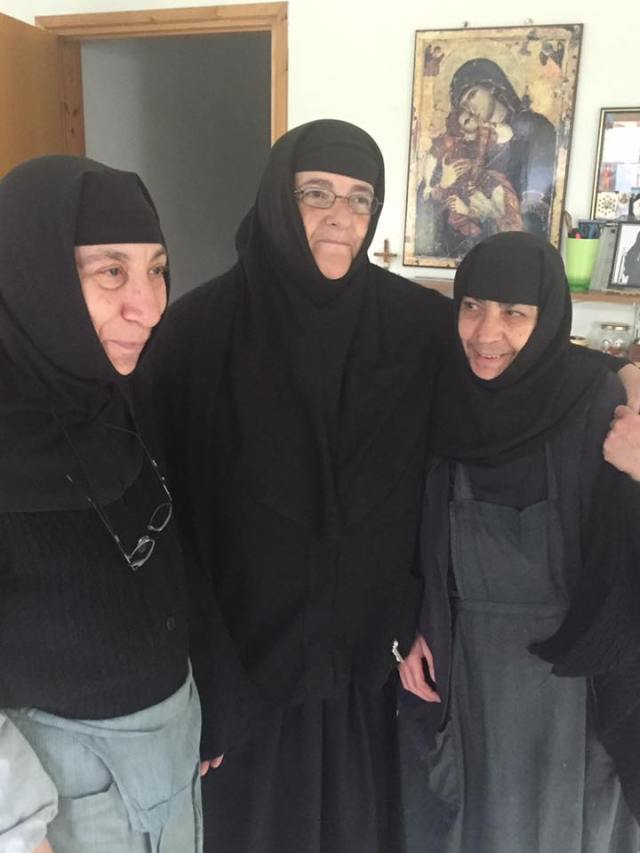
Gerondissa Akylina, Gerondissa Porphyria (Sipsa) and Gerondissa Makrina (Portaria)

Friday, November 4, feast day of the Blessed Elder Georgios Karslidis of Pontos, warmed my heart with fond memories of nearly 3 decades of pilgrimages to beautiful, gem monasteries in Northern Greece!

 *

“God cares for everyone. Despair is in effect a lack of faith.”


Gerondissa Akylina, Porphyria, Sipsa Monastery and St. Georgios Karslidis


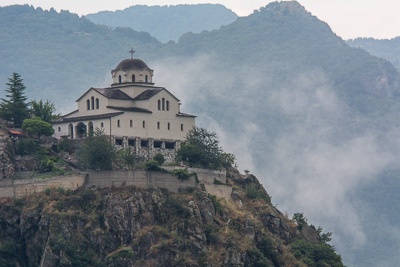
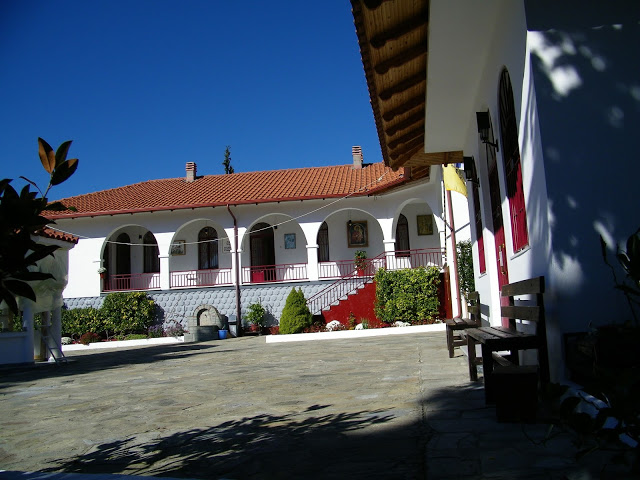
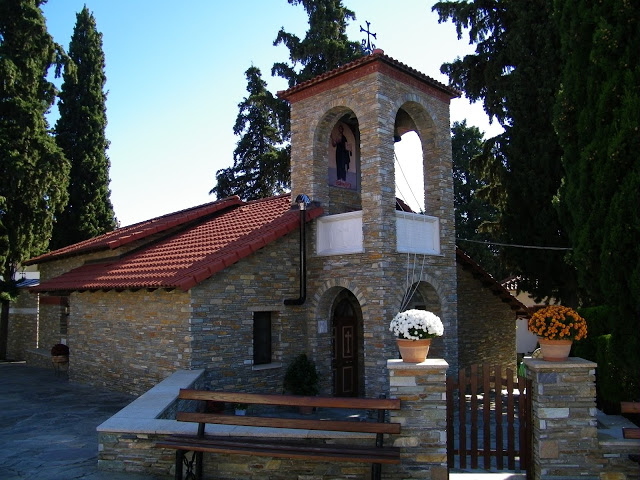
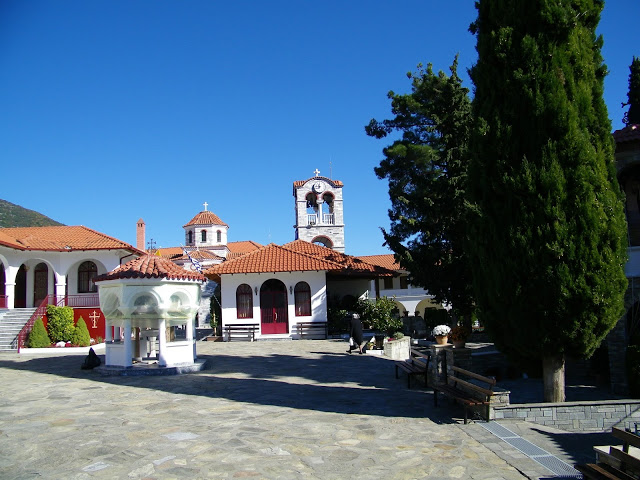
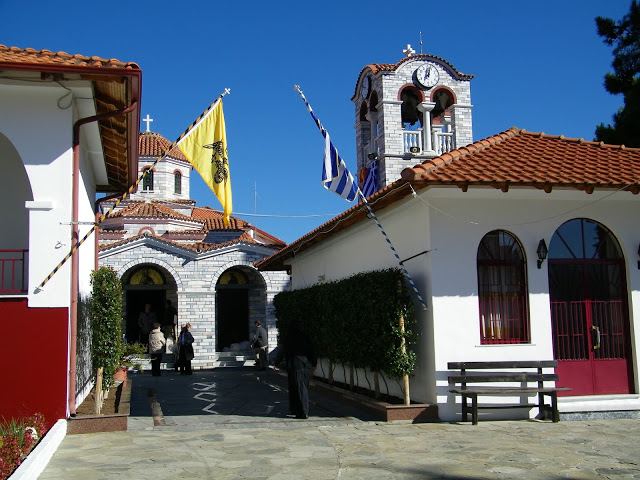
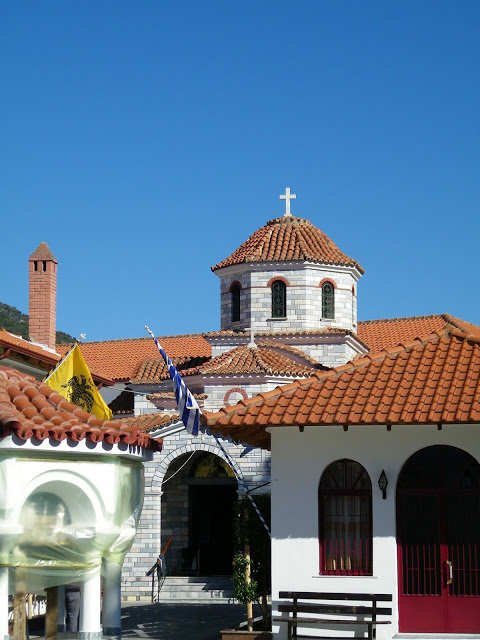
Taxiarches and the Analipseos Monastery (Sipsa) in Greece is one of the Monasteries in Greece that holds a dear place in my heart. Together with that of St. Paisios in Souroti, they were the first monasteries I started visiting as a University student, before my graduate studies and work at the US. At that time Gerondissa Porphyria, a Living Signpost in my journey on The Way,  had not even become a monastic, and now she is a renowned Abbess, one of the few of her ‘calibre’ in contemporary women’s monasteries.


Gerondissa Akylina, Porphyria, Sipsa Monastery and St. Georgios Karslidis


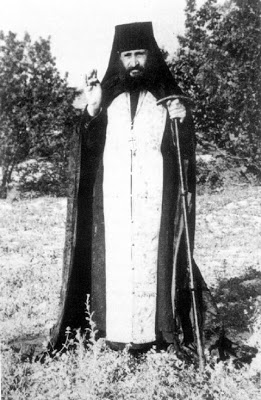
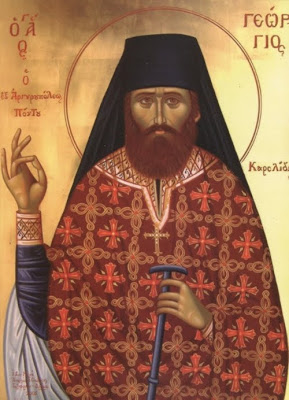
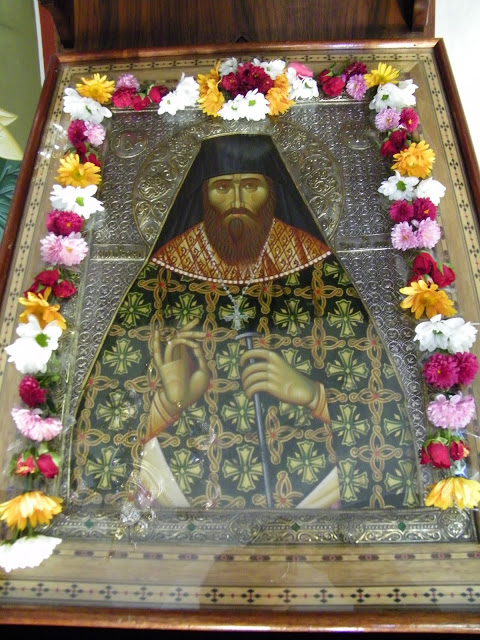
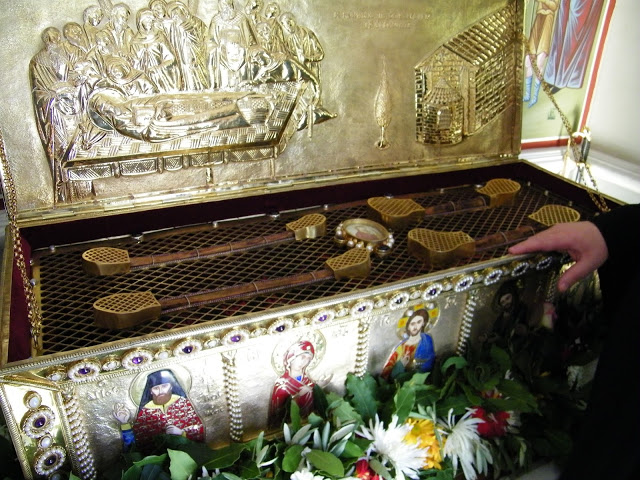
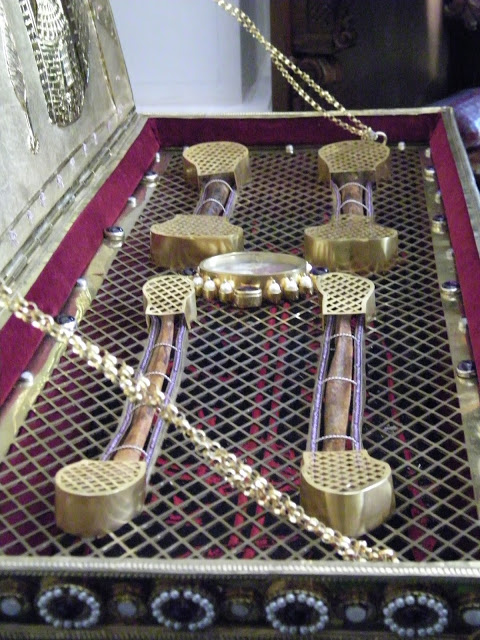
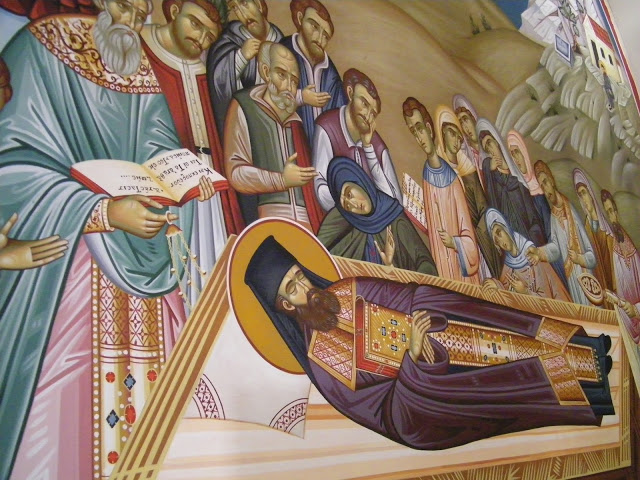
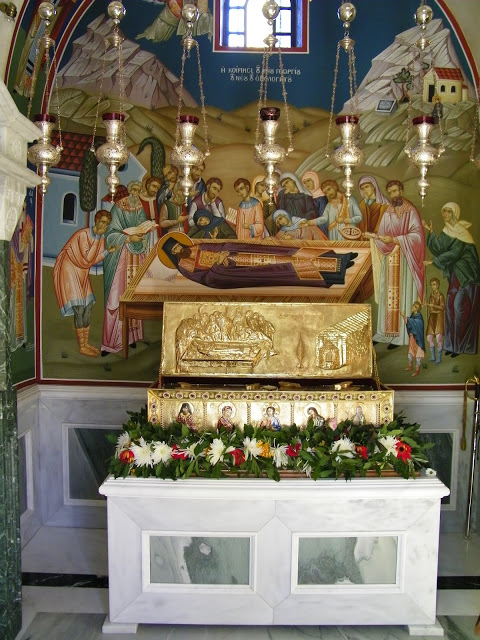
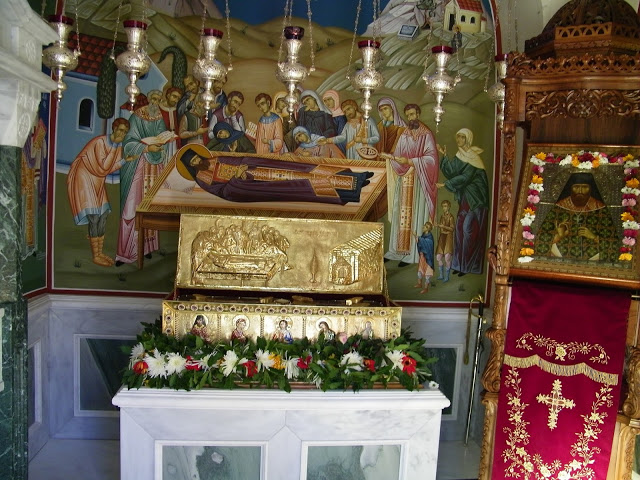
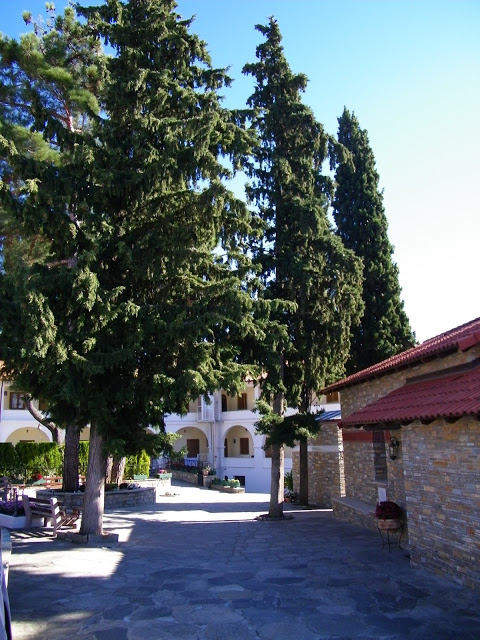
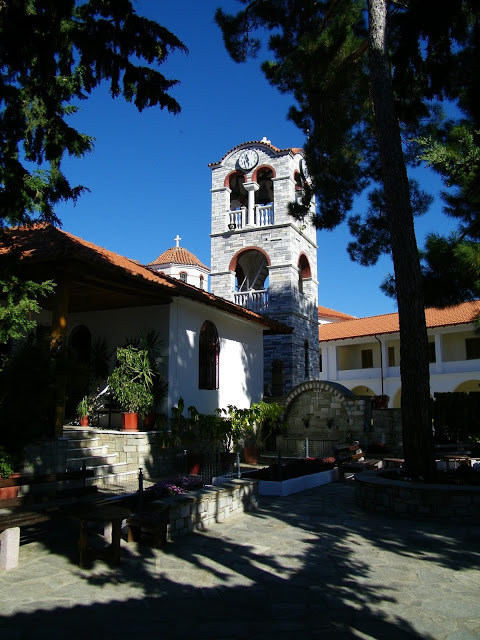
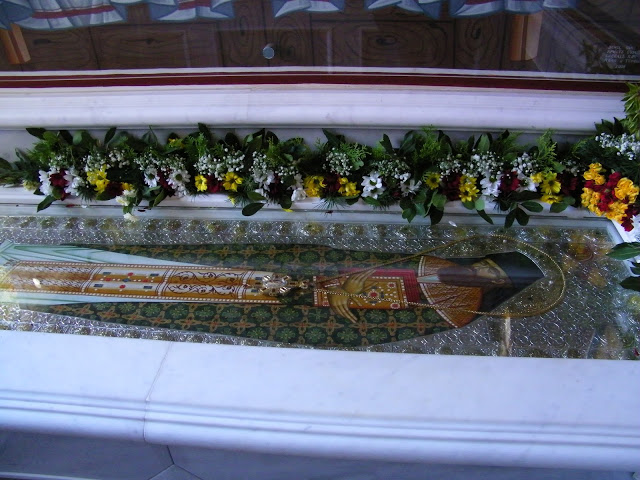
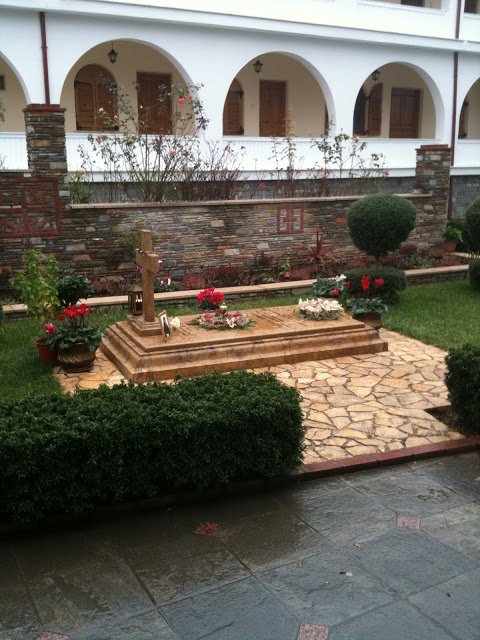
The Blessed Elder Georgios Karslidis of Pontos (1901-1959), latter day saint of the Saintly Orthodox Church in Greece,  glorified by the Patriarchate of Constantinople in 2008, was the first “resident” and founder of the monastery in the year 1930. He is one of few saints known to bear an imprint of the sign of the cross on his skull. There is a flourishing multitudinous sisterhood of nuns here today, who occupy themselves with the Iconography of handheld pictures, gold embroidery,knitting and waxwork.


Gerondissa Akylina, Porphyria, Sipsa Monastery and St. Georgios Karslidis


Gerondissa Akylina, Porphyria, Sipsa Monastery and St. Georgios Karslidis


Gerondissa Akylina, Porphyria, Sipsa Monastery and St. Georgios Karslidis


Gerondissa Akylina, Porphyria, Sipsa Monastery and St. Georgios Karslidis


Gerondissa Akylina, Porphyria, Sipsa Monastery and St. Georgios Karslidis


Gerondissa Akylina, Porphyria, Sipsa Monastery and St. Georgios Karslidis


Gerondissa Akylina, Porphyria, Sipsa Monastery and St. Georgios Karslidis


Gerondissa Akylina, Porphyria, Sipsa Monastery and St. Georgios Karslidis


Gerondissa Akylina, Porphyria, Sipsa Monastery and St. Georgios Karslidis


Gerondissa Akylina, Porphyria, Sipsa Monastery and St. Georgios Karslidis


Gerondissa Akylina, Porphyria, Sipsa Monastery and St. Georgios Karslidis


Gerondissa Akylina, Porphyria, Sipsa Monastery and St. Georgios Karslidis


Gerondissa Akylina, Porphyria, Sipsa Monastery and St. Georgios Karslidis


Gerondissa Akylina, Porphyria, Sipsa Monastery and St. Georgios Karslidis


Gerondissa Akylina, Porphyria, Sipsa Monastery and St. Georgios Karslidis


Gerondissa Akylina, Porphyria, Sipsa Monastery and St. Georgios Karslidis


Gerondissa Akylina, Porphyria, Sipsa Monastery and St. Georgios Karslidis


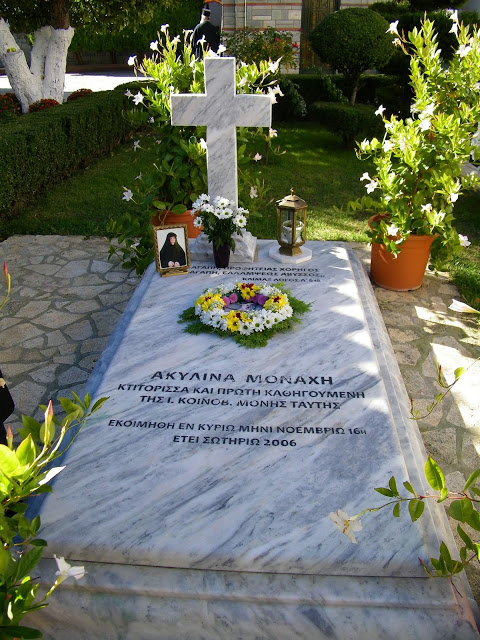
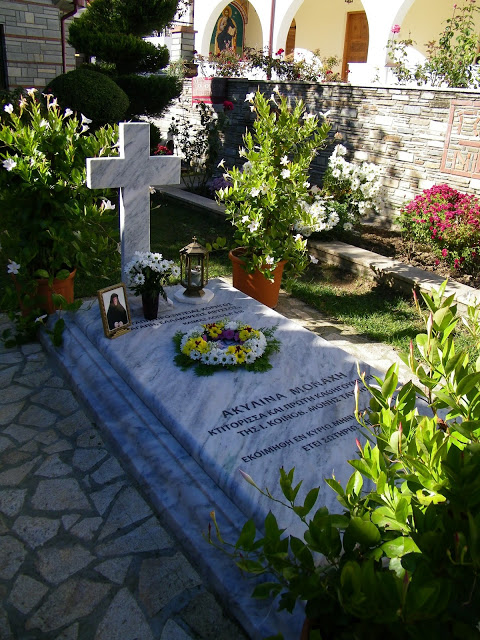
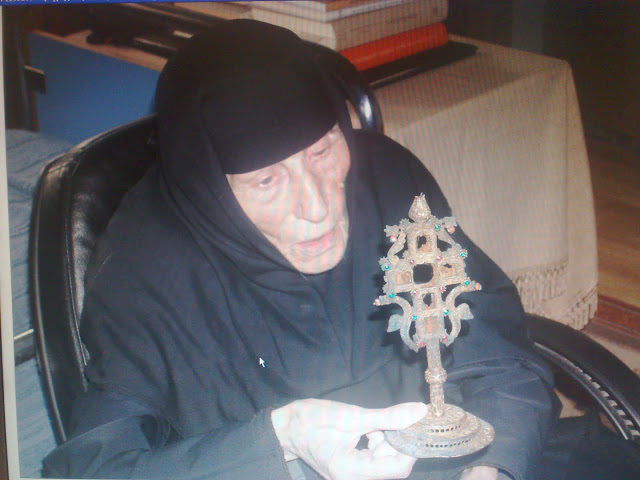
Gerondissa Akylina was the first Abbess. I had the rare blessing to meet her a number of times during the last years of her life. In the words of our late Elder Iosif Vatopaidinos, Gerondissa Akylina, together with Gerondissa Makrina in Portaria, were ‘Abbesses of Abbesses’:  examples of the monastic life and their monasteries models of coenobia, workshops of virtue and antechambers of Paradise.


Gerondissa Akylina, Porphyria, Sipsa Monastery and St. Georgios Karslidis


Gerondissa Akylina, Porphyria, Sipsa Monastery and St. Georgios Karslidis

Gerondissa Akylina holding the Cross of St. Georgios Karslidis which was found intact after the translation of his relics. He is one of few saints known to bear an imprint of the sign of the cross on his skull.


Gerondissa Akylina, Porphyria, Sipsa Monastery and St. Georgios Karslidis


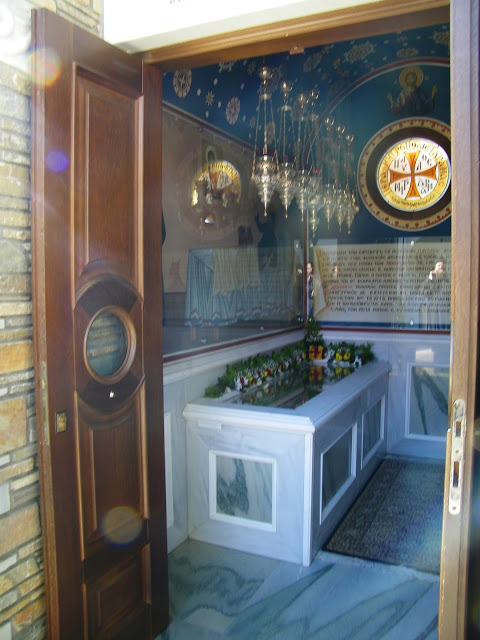
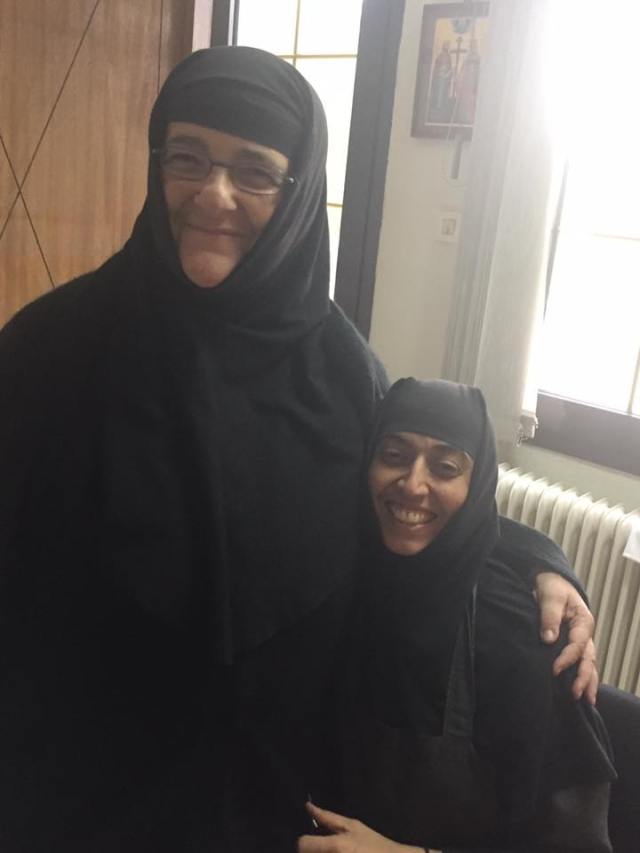
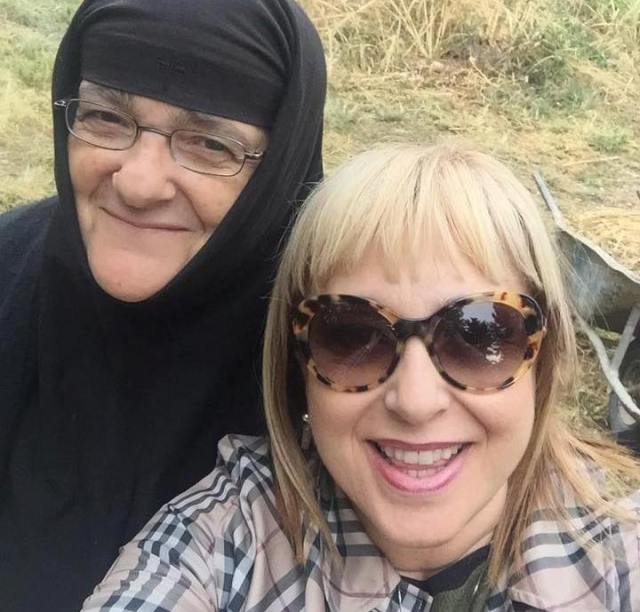
Gerondissa Porphyria has always been so full of love and humility, always ready to sacrifice her ease,  her rest and sleep, everything for her ‘neighbour! How many times has she consoled me in the trials and tribulations of my life! Always by my side, always! How many times has she offered a shoulder to cry on and precious, practical counsel! Her prayerful presence is intensely, intimately felt even thousands of miles away, here at the UK, and her smile warms my heart. Oh, just look at her smile in the photographs below with a pilgrim at the monastery and imagine the rays of the sun warming your shoulders after a rainy, cold day! How blessed am I to have such a spiritual mother by my side! Over the years I got better acquainted with the friendly and hospitable nuns there and the pilgrims and the faithful who regularly visit this monastery. St. Georgios’ holy presence is immediately felt upon entering the monastery gate, and there is always a queue at his tomb where his spiritual children kneel before their spiritual father, now in Heaven, to ask for his spiritual guidance and to seek comfort in life’s trials and tribulations.


For a closer insight at Elder Georgios Karslidis and his miracles, watch the following interview by Gerontissa Porphyria:


Ravages of Time

Destruction Of Monuments Of Eastern Christianity: A Photo Contest

The Interparliamentary Assembly on Orthodoxy announced the results of their second annual photo contest dedicated to the “Destruction of Monuments of Eastern Christianity.”

The contest, dedicated to the enduring spiritual and cultural monuments of the Eastern Christian Tradition, was organized at the proposal of the IAO’s Committee of Culture and in collaboration with the website OrthoPhoto.net, sharing beautiful photos from around the Orthodox world for twelve years.

Ravages of Time, Nature and Man

The international jury voted on photos divided into three categories:

  1. Abandoned monuments left to the ravages of time due to compulsive or voluntary discontinued usage
  2. Monuments that are accessible and in use, although damaged by weather or other sorts of pollutants and other natural elements
  3. Monuments that have suffered man-made damage and destruction.

Photos were judged on artistic value, as well as information about the monument, including its importance, location, and accessibility. Three prizes were awarded in each of the three categories. The winning photographs are:

Abandoned monuments left to the ravages of time due to compulsive or voluntary discontinued usage

First prize: The Church of the Nativity of the Theotokos in the village of Stepantsikovo in the Yaroslavl region of Russia, by Nikolay Spiridonov

Winning photograph:

Supplementary photographs:

The church made of bricks, with two altars, with a St. Nicholas’ chapel. The cost for its erection was covered by the parishioners on the spot of the old wooden church (seventeenth century). It is square-shaped, with five cupolas, two series of windows, an altar and a multi-level bell-tower. During the Soviet era, it was closed down and used as a storehouse. Currently, it is abandoned and destroyed. Up until 1764, the village was an estate owned by the monastery of Saints Boris and Gleb of Rostov.

Second prize: The Churches of St. Demetrios and St. George of the Castle on Aegina, Greece, by Nikolaos Mourtzis

Winning photograph:

Supplementary photographs:

At the top of Paleochora hill on Aegina, the so-called ‘small Mystras’, is a castle built by the Venetians in 1654 and two large interconnected churches, the Twin Basilicas with two altars-entrances, of Saint Demetrios and Saint Georgios of the Castle, one for the Latin Catholics and one for the Greek Catholics. For pedestrians visiting the place, the view is fantastic; the area of Souvala and Aegina (the town) can be seen from there. The signs of abandonment are visible, although occasional efforts have been made to save them.

Third prize: The Church of St. Mary of Sinti in Paphos, Cyprus, by Tomasz Mościcki

Winning photography:

The Panayia tou Sindi Monastery was built in the sixteenth century. Only the main church has remained. The rest of the monastery is almost completely dilapidated.

* * *

Monuments that are accessible and in use, although damaged by weather or other sorts of pollutants and other natural elements

First prize: The Ampouchala cloister in the Karelia region, on the northern slope of the Trialeti Range in Georgia, by Vakhtang Beridze

Winning photograph:

Supplementary photographs:

Abukhalo Skete is mentioned in the “History of the Kingdom of Georgia” by Vakhushti Bagration. The monastic compound is located in the Kareli district, on the northern side of Trialeti Mountain, and dates back to the seventeenth-eighteenth centuries.

The skete consists of several caves of different sizes carved into the rock and is inhabited by monks, as it used to be in the past.

Second prize: The Church of St. John the Baptist in Goles, Bulgaria, by Vyacheslav Popov

Winning photograph:

Goles is a village in western Bulgaria, in the Godech municipality of Sofia. Goles village is located in a mountainous area to the south of Vidlic Mountain. The church of St. John the Baptist that is currently operational was built in 1896-1900 and needs repair. There are a few votive offering-crosses in the village, dedicated to Saint Nicholas, Saint Elias, Saints Peter and Paul, and Saint George. Above the village of Goles, the monastery of Saint Nicholas is being renovated. We do not know the exact date of its erection.

Third prize: The Armenian Monastery of Agios Stefanos, 15 km northwest of the city of Tzolga, Iran, by Mohammad Nourmohammadian

Winning photograph:

Supplementary photographs:

The St. Stefanos Monastery is an Armenian monastery about 15 km northwest of Tzolga city in the East Azarbaijan Province of northwest Iran. The first monastery was built in the seventh century and completed in the tenth century. However, St. Bartholomew first founded a church on the site around 62 AD. It was partly destroyed during the wars between the Seljuks and the Byzantine Empire in the eleventh and twelfth centuries.

* * *

Monuments that have suffered man-made damage and destruction.

First prize: The Church of the Holy Protection in Bouzi village in Chelyabinsk, Russia, by Anzhela Usmanova

Winning photograph:

Supplementary photograph:

The church of the Holy Protection of the Mother of God in Bouzi village, to the north of the Chelyabinsk region, was built in the eighteenth-nineteenth centuries. It has three altars. Close to the church lies the abandoned building of the former school, a ground-floor building made of red bricks. It now houses the monks’ cells and a church. Currently, the population of the village is not more than one thousand. The church is on a hill and is visible from far away. The Sinara River flows under the mountain. The Resurrection was celebrated there in April 2014, after a break of 80 years.

Second prize: Church of the Archangel Michael in Ammochostos, Cyprus, by Constantinos Charalambous

Winning photograph:

Supplementary photographs:

The church of the upper parish of Lefkoniko was dedicated to the Archangel Michael. It was built in the early nineteenth century and had an imposing appearance, with an excellent wood-carved iconostasis and numerous Byzantine icons. The grandiose wall painting of the Archangel Michael was dominant in the interior of the church. All the official ceremonies and rituals of the community would take place here.

After the Turkish invasion in Cyprus, the church of the Archangel Michael in Lefkoniko village of the Famagusta province had the same fortune as several hundreds of other sacred monuments and sites of Christian pilgrimage in the occupied part of Cyprus: desecration and abandonment for forty-two years.

Third prize (tie): The Church of St. Petka in Kik, in Gospić Croatia, by Mirko Celic

Winning photograph:

Supplementary photographs:

Kik village is located halfway between Gospić and Gračac, Lika, Croatia. It is a part of the village Ploče. There is very little information about Saint Petka church in Kik, but it is known that it was moved in 1809 from the neighbouring village of Raduč since the latter got a bigger church dedicated to Saint Elijah the Prophet. The Kik church used to be the filial church of the cathedral church, dedicated to the Descent of the Holy Spirit, in the village of Ploče. During WW II Croat Nazis destroyed the church documents about the parish so the most important information about its history is lost. After the end of the war, the communists – the former parishioners, blew up the Ploča church, and used its stones to build community stables. They also burned down the Kik church, which remains devastated until today. In 1995, during the war operation “Storm”, the Croats banished all the remaining Orthodox Serbs from the area, and there is nobody to reconstruct these two monuments. Time and the weather continue to damage the remains of the Kik church.

Third prize (tie): Vrontama Monastery in Laconia Peloponnese, Greece, by Ioannis Gekas

Winning photograph:

Supplementary photographs:

At Vrontamas in the Evrotas Municipality of Laconia, around seven kilometers from the “Kleisoura” settlement, at an inaccessible site of the gorge in the middle of which Evrotas flows, there is a cave that some monks had chosen in the Byzantine years to dedicate themselves to God. They established a monastery with a narthex, a main church, a small chapel, cells, rainwater tanks, ovens, and the essentials for an austere life. The church is dedicated to the Virgin Mary and the great martyr Nikita, while the interior is dedicated to St. Nicholas. The wall paintings date back to the twelfth or fourteenth century (the bust-length Christ extending His hands in blessing), and those in the chapel are from the post-Byzantine era. Due to the unreachable location of the monastery, the sacredness of the place and the need for protection from the Supreme Power, the inhabitants of Vrontamas, in September 1825, sought refuge there to escape the fury of the enemy and defend themselves with safety. Ibrahim’s troops were tightly besieging the Christians, but the narrow space and the fortification of the castle brought only casualties to the besiegers. The furious raiders opened up holes at a weak point of the rock, placed explosives and blew up the monastery. The death was torturous, as the infidels brought in huge quantities of dry grasses and branches from the valley and placed them in the opening of the roof. Using torches, they started a fire at the top of the mountain, causing a strong explosion that was lethal for those entrapped.

St. John of Kronstadt: The Circle of Grace (2)

St. John of Kronstadt: The Circle of Grace

How fascinating to see a Saint through the eyes of another!

Who would have thought that St. John of Krostandt had helped finance, all the way from Russia and in very difficult times, the construction of St. Nicholas Cathedral in New York! A Saint worthy to meet St. Seraphim Sarov in a vision in January of 1901, in order to warn him of the impending Russian ‘Golgotha’. A spiritual father to Abbess Thaisia and founder of numerous women monasteries under her godly administration. St. Theophan the Recluse, himself a remarkable ascetic of the faith, spoke of him with wonder: “Father John of Kronstadt is a man of God. His prayer has reached God by virtue of his great faith. May the Lord keep him in humility and devotion to His holy will, and in self-sacrifice.”

The Athonite starets St. Silouan asked for St. John‘s  prayers to become a monk. Having finished his military service, before departing for home, Symeon (his name before tonsure) and the company clerk went to visit Father Ioann of Kronstadt to ask for his prayers and blessing. However, Father Ioann was absent from Kronstadt, so they decided to leave him letters instead. The clerk began to write a long letter in his best handwriting, but Semyon wrote only a few words: “Father, I wish to become a monk. Pray that the world does not detain me.” They returned to their barracks in St. Petersburg and, in the words of the Elder, the very next day he felt that all round him “the flames of hell were burning.” St Silouan recalled later in his life: “I still marvel at the power of his prayer. Almost 40 years have passed, yet I have not seen anyone serve the way he did.”

New martyr Alexander Hotovitzky, a Russian Saint living and serving in the United States from 1895 to 1914, also had the blessing to meet St. John of Krostandt and work together! Specifically, St. Alexander traveled to Russia in 1903, and while there, he paid a visit to Fr. John Sergiev — known even then as the wonderworker John of Kronstadt. After his return to America, St. Alexander spoke with a reporter from the Wilkes-Barre Times.  did the research and reprinted the resulting, fascinating article, one of the best things I have ever read in a newspaper, at Orthodox History. (The original date, incidentally, is April 7, 1904.)


*The Circle of Grace

Spared Death Penalty … Twice!

St. Demetrios of Thessaloniki and Elder Philotheos Zervakos

st demetrios and elder philotheos zervakos:  two miracles 


Two Miracles

May St. Demetrios intercede for Us! Today is a very special day for my hometown Thessaloniki. +St. Demetrios of Thessaloniki, 26 October. Thessalonians and all the world are glorifying “the myrrh-gushing saint and courageous martyr, Demetrius, the commander”.  Indeed, St Velimirovich is so right! “St. Paul bedewed Thessalonica with tears, Demetrius watered it with his blood.” Below follow two miracles of St. Demetrios to Elder Philotheos Zervakos, a most venerable contemporary elder, of special significance to me, since he was a spiritual father of my spiritual mother, Sister Aggeliki the Unmercenary :


st demetrios and elder philotheos zervakos:  two miracles 

st demetrios and elder philotheos zervakos:  two miracles 

As a young man, Fr. Philotheos Zervakos (+1980), the well-known abbot of Paros and spiritual son of St. Nektarios of Aegina, was imprisoned twice by the Turks during the final years of the Ottoman occupation of Thessaloniki. In his time of trial St. Demetrios, his patron, was a ready helper, as we read below in his own words:


st demetrios and elder philotheos zervakos:  two miracles 


St. Demetrios Protects Elder Philotheos From Harm The First Time


When I fulfilled my military service and was released, I decided to become a soldier for our Heavenly King in accordance with the counsel that Father Eusebios had given me. I disclosed all my intentions to the holy Nektarios, the Bishop of Pentapolis, who then was also the director of the Rizareion Seminary in Athens (now in blessed repose), and he told me, “Your goal is good, but I advise you to go to no other monastery than the one at Paros (Lagouvardos), where the brethren are virtuous and plentiful.” However, I insisted, telling him that my desire was to go to the Holy Mountain. He then said, “If you stay in Greece, go to the Lagouvardos Monastery, but if you insist on going to the Holy Mountain, then go with my blessing….”

After attending a vigil on May 8, 1907…my friend Nickolas Mitropoulos and I boarded the steamship “Pinios”, and we departed for the Holy Mountain from Piraeus….

Two days later, we arrived in Thessaloniki, which was then occupied by the Turks (I had great reverence for St. Demetrios, the patron saint of Thessaloniki since I was a child). I invited my friend Nickolas to join me to go venerate the tomb of the Great Martyr, St. Demetrios the Myrrh-gusher. We then got off the ship and went to venerate his tomb with compunction. On our way back to the ship, we checked in at the Greek hotel and rested all day and night. The next day, we prepared to depart for the Holy Mountain and went to the Customs Office; however, they did not permit us to depart: “You will not leave”, they told us, “because you are spies!” We, of course, denied this and pointed out that since our passports had been cleared by the Turkish Consulate and the Embassy, they should allow us to leave. However, they would not pay any attention to our words.

They did not put us in jail but under close surveillance and soldiers stood guard outside our hotel, and they followed us whenever we went out. This went on for quite a few days and we began to worry because our money was running low. One day, I told Nickolas, “I am going to the ‘konaki’ (governor’s house), to appear before the ‘pasha’ (governor): he will probably allow us to leave.” I arose very early the next morning and went to venerate the tomb of St. Demetrios again before going to the konaki. With tears and compunction, I asked the Saint to intercede to the Lord that we be permitted to freely go to the Holy Mountain. After praying for quite a while and sitting down to rest, the martyrdom of St. Demetrios came to my mind: I thought about how he was pierced with a lance and died for the love of Christ and for our holy faith, and how he was glorified by God both on earth and in heaven, and will be glorified unto all ages.

As I considered all this, a longing came to me to give my life for the love of Christ and the Orthodox faith too, supposing there was a way. I then asked St. Demetrios to intercede to the Lord again, however, not for my freedom, but that I be rendered worthy to die a martyr’s death. I then thought of a way to accomplish this goal. I told myself, “I will go to the konaki and courageously appear before the Turks. I will give them a reason to question me about my faith and then I will bear witness to their heresy. They will probably tell me to deny my faith, but I will stand firm and prefer death. Thus I will have a Martyr’s end.”

I went to the konaki immediately and entered inside. While I was going up a hallway, a Turkish officer noticed me and asked me what I wanted:

“I want to see the pasha.””And why do you want to see him?”

“I have something to tell him.”

“I am the pasha’s representative. Tell me what you want openly.”

“Since you are the pasha’s representative, then tell me, why will you not allow us to go to the Holy Mountain?”

“I will not give you a reason.”

“You are not good people”, I told him courageously, “you are unjust. Why are you detaining and distressing us like this? We are not at fault, we are not bad people and our papers are in order. I do not understand. Now we have run out money. How shall we live in this foreign and unknown place? How would you like it if you went to Greece and we did to you what you are doing to us?”

These words irritated him and moved him to anger. He began ringing a bell loudly and 30-35 soldiers and officers gathered around us immediately. They grabbed me and dragged me off to the White Tower, for what purpose I did not know; I thought perhaps to imprison me … As we walked to the White Tower, I asked St. Demetrios to intercede to the Lord to grant me a martyr’s death, provided it is His will; and if it was not, to be delivered from the hands of these atheistic, bloodthirsty, wild and barbaric Saracens.

After we had gone a little ways, their superior appeared and spoke to them in Turkish. I did not understand what he had told them but I did perceive that he was angry. He then lifted up his rod and struck the officer responsible for my arrest on the shoulder and sent them all away. When they left, he approached me with a cheerful grin on his face, and kindly patted me on the shoulder. He then handed me over to the prudent soldier from Ioannina and ordered him to take me to the Greek steamship “Mikali”, which was in the port of Thessaloniki, so that I could return to Greece.

I asked the soldier who the man was that had given the orders, not having the faintest idea. He told me that he was the pasha. I then asked him why the pasha had struck his own personal secretary, and what he had said to him. The soldier explained, “The pasha scolded his secretary because he had condemned you to death without asking permission.” I then asked him where they had been taking me. “They were taking you to the White Tower to execute you there”, he said, “all those who are condemned to death are taken there – as for the others, they put them in chains and abandon them to die from hunger, from thirst and from the stench.” I then rejoiced that I had been delivered from the hands of those wild Saracens – for I was not sure whether it would have been for the question of my faith that they had killed me. However, I was sad because I missed the opportunity to give my life for the faith. Martyrdom, however, must take place according to the rules as the divine preacher, the Apostle Paul, tells us, “An athlete is not crowned unless he competes according to the rules” (2 Tim. 2:5)….

The soldier and I then stopped by the hotel, where I bid my beloved friend Nickolas farewell….

Apparently, it was not the will of God for me to go to the Holy Mountain, and this is the reason I encountered all these obstacles. I feel a great debt of gratitude to my protector, the Great Martyr, St. Demetrios, through whose intercessions and prayers, I was delivered from death.

I had no idea why the pasha had shown so much interest in me, so I sought to find out. It was not until about two years later, when I went on a pilgrimage to the Holy Mountain, that I finally learned why from my friend Nickolas, who had gone and had remained on the Holy Mountain. He told me why the pasha had set me free and sent me back to Greece:

“Two or three days after you departed Thessalonika for Greece, the adjutant officer of the pasha came up and greeted me…He was an acquaintance of mine…He took me to his home where he offered me hospitality, and the following day we went to go see the pasha together…The Pasha said to him:

‘Your friend there, he was accompanied by another young man. One morning, as I was sleeping peacefully, St. Demetrios entered my room wearing a generals uniform and bearing weapons. With an austere look he commanded me: “Immediately, stand up, get dressed, put your shoes on, and go to such and such a road in the city to free a young man who has been unjustly condemned to death by your own private secretary. After freeing him, send him to the steamship ‘Mikali’, which is in the port of Thessaloniki and preparing to sail off for Greece.”

I hastened at once to save the young man from danger, and sent him off to Greece.'”

It was then that I realized that my helper and my deliverer from death had been the Great Martyr, St. Demetrios the Myrrh-gusher.

The prophecy of St. Nektarios had been fulfilled; no matter where I would go, I would end up at Logouvardos. I had learned a valuable lesson from this: I ought to always be completely obedient to my spiritual father, without being defiant, and I ought to not seek my will, but the will of my spiritual father – in imitation of our Lord Jesus Christ, “Who came into the world not to do His own will but the will of His Father, Who sent Him.”

st demetrios and elder philotheos zervakos:  two miracles 

st demetrios and elder philotheos zervakos:  two miracles 

St. Demetrios Protects Elder Philotheos From Harm The Second Time

Two years later, the Balkan war took place and on the Feast of St. Demetrios (October 26, 1912), Thessaloniki was liberated through the mediation and aid of her Patron Saint.

When we sailed into the port of Thessaloniki, I decided that it would be a good idea to disembark and go venerate the tomb of St. Demetrios, my guardian, and my protector and savior after God. I do not know why, but when I disembarked, the Turks once again took me to be a spy, and put me under surveillance for quite a few days. When I decided to leave Thessaloniki, and began passing through customs, they arrested me, and took me through three rows of barbed wire and locked me in. I found a youth locked in there also, and asked him why they had locked us up. He answered, “In order to murder us.” “But what evil have we done?” I asked. “Forget it,” he answered “do not bother to ask why.”


A moment later, a steamship from Romania sailed into the port of Thessaloniki carrying many passengers and a cargo of fuel oil. For some unknown reason, an oil container caught fire as the ship pulled in, and the flames spread rapidly through the entire ship. Loud blasts were heard a few minutes later, and flames were thrown sky high. Thessaloniki was all astir. Thousands of people came down to the shoreline – some to watch and others to rescue the endangered passengers with their boats. All the guards then left their posts to go see all the commotion. Seizing the opportunity, the young man pulled a small pair of clips from his pocket and cut through the barbed wire. Then he took me by the hand and lead me out. And paying a boatman, he told him to take us out to a Greek steamship which was anchored just outside the port. As we were climbing in the boat, the soldier who arrested me and locked me up came running over to seize me. However, the young man slapped him right across the face when he got to us, and he pulled back and walked away!

The boatman took us out to the Greek ship and we went aboard. I then went to put my things in order, and once I organized them, I went back to find the youth, my rescuer, to thank him and ask who he was and where he was from. However, I could not find him anywhere. I asked almost all the ship’s passengers and crew but soon realized that nobody had seen him either boarding or disembarking the ship. Who was he and what happened to him God only knows. (The only thing that I know is that many years later – after Thessaloniki had been liberated – I was celebrating the Divine Liturgy and preaching the word of God at the Church of St. Demetrios when I saw the icon of the Saint. I noticed that the young man who had freed me and lead me to the steamship bore a striking resemblance to St. Demetrios.)

st demetrios and elder philotheos zervakos:  two miracles 

st demetrios and elder philotheos zervakos:  two miracles 


In Love, For Love, and By Love: Missionary Series IV

Families on Mission Vs. Single Missionaries


Families on Mission Vs. Single Missionaries

RTE: How has it been having your family in the mission field?

FR. LUKE: When my wife and I first went to Albania, many people thought that it was going to be very dangerous and that our children would suffer: “You are going to deprive your children of all the benefits of life in America.” Contrary to that expectation, we feel that our three children who were raised in the mission field were immensely blessed by the experience of learning another culture and language. They always appreciated what they had in America when they went back, but they also appreciated their mission home in Albania, which they thought of as their “real” home.

*

They’ve grown up with a very different world-view. They appreciate things that they would never think twice about if they had grown up in America. During our first years in Albania, we didn’t have running water every day. So, the kids learned to appreciate it. When we had water, we’d say, “Thank God for water. It’s great to have it.” During different periods, for months at a time, the electricity is off about five hours a day; in winter, maybe seven or eight hours. So they got excited when the electricity came on. Or, if we did have electricity, the tension was often so low that we couldn’t do something as simple as watch a video. I remember on one of our visits to the U.S., they wanted to watch a video, and came to my wife saying, “Mommy, if there’s enough tension can we watch television?” They still flip the switch to see if the electricity is working.

Families on Mission Vs. Single Missionaries

Next to our house in Albania we had a very tiny shop, nine by fifteen feet, with all different types of food – this was where we did most of our shopping. Once, when we were about to go back to America, my son Paul asked his mother, “In America, will they have shops as big as Uncle Soorie’s?” We laughed. It was beautiful to see how they were exposed to a different way of life. We lived in Tirana, the capital of Albania, and we were constantly exposed to beggars, poor people who came to our house every day asking for help. It was wonderful for our children to see this, day in and day out. They got used to getting things for the beggars, answering the door and coming and saying, “Oh, so-and-so is here.” We got to know these people by name, we visited their homes. When you live in suburban America you aren’t even exposed to them unless you go downtown. Many of these beggars truly became friends, and our kids loved them. They loved playing with them and saw them as human beings, not as beggars.

Families on Mission Vs. Single Missionaries

Another blessing of raising children in the mission field is community, both the indigenous Albanian community, the wonderful local people that were part of our life, and our co-missionaries who themselves had numerous children. At one time we had fifteen missionary children in the field, and they created such bonds of love and friendship. They weren’t exposed to the busyness, to the constant activities that American children are involved in. Their lives were very simple, and very fulfilled.

*

Neither my wife nor I have any sense of their being deprived, and one of our greatest regrets in leaving Albania after ten and a half years is that we have left at a time when our children are still young, and we are not sure how much they will remember. We often talk about going back into missions when they are a little older so that they not only remember, but can participate more fully. Even though they were young, we tried to get the idea across that they themselves were missionaries, that they needed to be witnesses. To whatever degree they could participate in our different activities, they did.

Families on Mission Vs. Single Missionaries

RTE: Growing up with cultural diversity must not only teach what is universal in human nature, but how to deal with differences early on.

FR. LUKE: Right. We Americans, unfortunately, are quite isolated from the rest of the world. The universal business language is English, so we think we can get anywhere speaking English. Having only Canada to the north and Mexico in the south, we aren’t exposed to many different cultures and languages and this is a great loss for us. It’s so enriching to be around the diversity found in a mission field, and to learn to see beauty in such diversity. One thing I tried to get across to the Kenyans, and later to the Albanians, was, “Sure, in America we have things that are nicer than in Kenya or Albania, but you have many aspects of your culture and life that we Americans can envy. Family connectedness, the support you have for one another, hospitality – how beautiful these things are! Don’t ever lose these aspects of your culture and think, ‘We want to become western, or American, because America is better in everything.’ There are certain things you can adopt from America that are beautiful, but don’t lose the beauty and richness that you have in your own tradition.”

*

Hospitality was something that always left the greatest imprint on me. I could travel to the poorest village in Africa and they would put on a feast. It was their responsibility to show love and hospitality to guests. It is the same in Albania. I don’t know who is more hospitable, the Albanians or the Kenyans, but they would put anyone in the West to total shame. Having almost nothing, they share whatever they have with whoever comes.

Families on Mission Vs. Single Missionaries

RTE: An American seminarian at Holy Cross Seminary told me about a depressed acquaintance who called one night, feeling suicidal. The seminarian invited him to come to the seminary for a few days for a change of scene and to be in a calm atmosphere. He agreed and the seminarian made the arrangements and cleaned an empty dorm room so that he could have his own space. The day his friend moved in, one of the Greek-born seminarians found out what was happening and insisted that the man take his own room, which contained his books and belongings, icons that were prayed in front of, and was a real home. The Greek seminarian slept in the hall on a couch outside the door so he could check on him through the night. The American seminarian said, “You know, I was so pleased that I’d found him his own space where he could have some privacy, where he could put his own things up – but actually what he needed was to be taken into someone else’s home and taken care of. I didn’t get it until I saw it.”

FR. LUKE: Yes, this virtue of hospitality is something missing in our American way of life. As missionaries, my wife and I saw hospitality as one of the greatest ways to express God’s love to the people. We wanted our home to always be open to people. We married right at the beginning of our time in Albania and it is interesting to think that my wife and I slept in our house alone perhaps three months out of the first five years of our marriage. We always had people coming, numerous people staying for months at a time. Our open home was a hallmark of our ministry. Even after the children started coming and we didn’t have as many overnight guests, we always had an open-door policy. There were people at our house every day. One of the difficult counter-cultural adjustments in coming back to America on sabbatical was that although we lived on campus at a seminary, no one came to visit. We lived there for four months and maybe a handful of people came to our house. And even when people came, they’d say, “I’m just here for a minute, I’ve got to run…” They’d stay briefly and then go on with their day.

Single Missionaries

Families on Mission Vs. Single Missionaries

RTE: We’ve been speaking here of missionary families. What opportunities are there for unmarried men and women? And in view of cultural differences, are single women limited as missionaries? What part do they play on a mission team?

FR. LUKE: The mission in Albania offers a good response to this question.

Families on Mission Vs. Single Missionaries

During the years I served there, of the 20-25 missionaries we had at any one time, we had a nice mix – usually about eight monastics, eight married missionaries, and six or seven single missionaries. Of the two dozen missionaries, about half were men and half were women. Also, about eight were clergy, and the rest laity. The unmarried missionaries played an important role in the overall outreach of the Church. In Albania, we had single missionaries who headed up our medical clinic, our elementary school, our post-secondary professional institute, as well as our development and emergency relief office. We also had single missionaries who taught at our seminary, who taught English in a variety of contexts, taught catechism, worked in administration, and who participated in our university ministry, among other things.

Families on Mission Vs. Single Missionaries

The Body of Christ has a need for everyone – men or women, married or unmarried. It is the same for the mission field. In fact, when a missionary team has a variety of members, it makes the overall witness that much more effective. Some people will relate well to a monastic. Others feel more comfortable with a married priest. Some prefer to approach a mother, or a married woman. Still others will listen to a single man or woman. All are part of one body, offering a unified witness. So there are surely opportunities for the monastics, the married, and the unmarried! In some countries, it isn’t appropriate for men to approach women and talk with them in public. Such societies need women missionaries, and this means both married and single women.

*

In the Protestant world of missions, single women really weren’t encouraged, or even allowed, in the mission field until the 1800’s. By the 1900’s, women outnumbered men as missionaries. Today, women far outnumber men, and this includes many single women. Women had to overcome many obstacles and prejudices before being allowed to serve in a variety of capacities, and this may be the same for the modern Orthodox missionary movement.

*

RTE: Do you have any specific counsel for unmarried missionaries?

FR. LUKE: My advice for single men or women is that they must be ready for some additional challenges. The loneliness of a new culture, the challenges of entering a new country, the frustrations of learning a language, and the normal difficulties and disappointments of the mission field can be overwhelming. As a married missionary, you have your spouse to support and comfort you; the monastics may be living in community and have another type of support; but the single missionary can feel the loneliness and frustration in a magnified manner. A single person has to be ready for these added challenges. He or she needs to be a strong person, and also be able to find support in time of need. Their co-missionaries need to be sensitive to this extra burden, and try to reach out to them.

Families on Mission Vs. Single Missionaries

One way to help overcome these additional struggles would be for single missionaries to live in community, either with other missionaries of the same sex, one of the missionary families, or even with an indigenous family. Living with a family of the country can be one of the fastest ways to learn the language, culture, and ways of the host country. Of course, other challenges may arise as cultures clash and one’s privacy may be lost.


How Often Should We Receive Holy Communion?

holy-communion-1


How Often Should We Receive Holy Communion? A Story

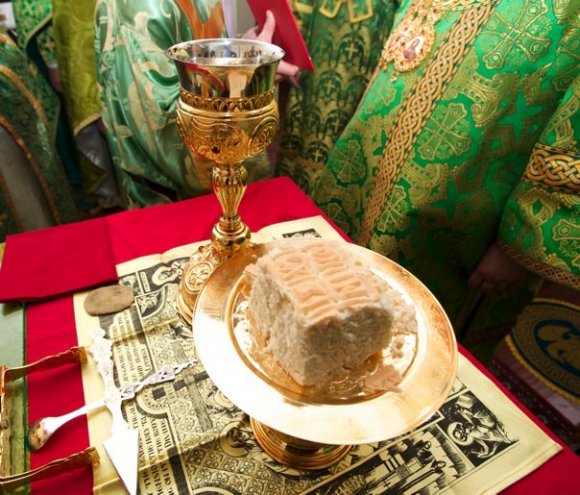
Probably the one thing that I found most puzzling during my Romanian monasteries pilgrimage is their attitude towards Holy Communion. All the days of the Suzana monastery retreat, during the Holy Liturgy nobody in the church received Holy Communion, other than the priest, not even any of the nuns, nobody! This is probably the only thing I did not like about ‘Romanian’ Orthodoxy , and I am not really sure if this attitude of theirs is an appropriate interpretation of the Fathers’ teachings.


In Greece, at the US, at the UK, everywhere I have been and I can remember having participated in Holy Liturgy, when the priest takes up the holy Cup, he proceeds to the Royal Doors, raises the holy Cup, and ‘issues an ‘order’: “Approach with the fear of God, faith, and love.” It feels so strange to listen to this in a Romanian church and immediately proceed to “Save, O God, Your people and bless Your inheritance”, with the priest lifting the holy Cup and saying: (Blessed is our God.) “Always, now and forever and to the ages of ages. Alleluia”, while NOBODY in church has received Holy Communion! I repeat NOBODY! Who is the priest blessing then?


What is the point of all Pre-Communion and communion hymns, recited and chanted, nonetheless? So, during an ordinary day, this part of the Holy Liturgy, “The servant of God (Name) receives the Body and Blood of Christ for forgiveness of sins and eternal life” is blatantly omitted! Are they then re-writing the text of St Chrysostom’s Holy Liturgy? And what about: “We have seen the true light; we have received the heavenly Spirit; we have found the true faith, worshiping the undivided Trinity, for the Trinity has saved us.” Why bother chant this, when NO ONE, I repeat NO ONE receives Holy Communion!


What is then the point of chanting “Let our mouths be filled with Your praise, Lord, that we may sing of Your glory. You have made us worthy to partake of Your holy mysteries. Keep us in Your holiness, that all the day long we may meditate upon Your righteousness. Alleluia. Alleluia. “, if NO ONE partakes of the Sacrament? And is this canonical for the meaning and existence of the Church as Christ’s mystical Body that only the priest partakes of the Sacraments? I am certainly open to suggestions and other pinions, but isn’t this ‘exclusive’ treatment of the priest distinctively non-Orthodox, possibly reminiscent of a Roman Catholic influence?


I found even more puzzling the fact that instead of the Body and Blood of Christ, the faithful are ceremoniously offered at the end of the Eucharist Holy Water and Antidoron instead ! [ie. antidoron (Greek: Ἀντίδωρον, Antídōron) is ordinary leavened bread which is blessed but not consecrated and distributed in Eastern Orthodox Churches]. In all Greek monasteries I have been, Holy Water and Antidoron are offered daily at the end of Matins [ie. Morning Prayers Service] to everybody, certainly not at the end of Holy Liturgy. Lest I be misunderstood let me add here that this custom is strictly observed on days when no Eucharist follows. For surely why on earth would there be Antidoron and Holy Water at the end of Orthros if one is going to partake of the Holy Communion, or even if they wouldn’t? Antidoron (instead of the gifts) is given out after communion, and after the liturgy is completed as a blessing from the celebrant priest. To offer it after Matins would break the fast for the Liturgy. But when no Holy Liturgy follows, then they offer it as a gift and a blessing for the day. But what a confusion with what is going on in a Romanian Holy Liturgy! It really feels as if the Romanians have kept the text of the Holy Liturgy, but re-invented some of its ‘events’, the ‘happenings’, its ‘conclusion’ indeed!


Sadly (as far as I am concerned) such an attitude is observed everywhere, not just in a ‘strict’ monastery environment, but in all Romanian parishes. This would never happen in Greece, indeed COULD NOT, and maybe in all other orthodox countries I have visited. I am told by the abbess that even nuns, whose lives are dedicated to prayer, normally receive Holy Communion only once a month (!) and only during major feasts (!), unless they ask for a ‘special’ blessing to receive Holy Communion as an exception (!), because they feel a very deep urge and need. Lay people need to make their confession immediately preceding each Holy Communion, 1 or 2 days before at the latest, to the extent that a priest will not offer Holy Communion  to them at all, even if they want to; he may even refuse them Holy Communion, because he suspects the faithful has not offered properly his Confession before. Interestingly enough, no priests were available, even though we were in the church, to listen to anybody’s confession, should someone decided to ‘go by the rules’, and confess in order to receive Holy Communion.


I remember having a particular conversation with a Romanian priest, very close to me, like a spiritual father or godfather, asking him if I am allowed to receive Holy Communion here at the monastery, reassuring him that I had confessed to my spiritual father 9-10 days before the trip. I received the following very sobering answer: “Mmm, I am not sure. So many days have lapsed. I will have to ask him to see what he thinks right.” (Sigh) Oh dear, but surely we are NEVER worthy of Holy Communion, even if just an hour has lapsed from our last Confession!


In the end, I did receive Holy Communion, right before I left Romania, holding a lit candle, following the Romanian style. Again I was the only one to receive Holy Communion in a packed church, full of faithful reverently praying, bowing, making prostrations, kneeling. The ‘exception’ was made for me because the priest who knew me explained my ‘situation’ to the Romanian priest and allowed me to receive Holy Communion because I was traveling that day, as a special blessing and protection.


In Love, For Love, By Love: Missionary Series III

How can I become a long-term missionary?

Archbishop Anastasios of Albania Orthodoxy missionary work

Long and Short-Term Missions

RTE: Can you tell us what it takes to be a long-term missionary? You’ve spoken of the beginning stages, how about later?

FR. LUKE: Archbishop Anastasios has good advice for people thinking of going into the mission field: “It’s always better to say you are going for one year and stay for ten, than to say, ‘I am going for ten years,’ and after the initial enthusiasm fades away, you realize you can’t handle it.” There is wisdom in this: go step-by-stepand God will give you grace and strength.

Archbishop Anastasios of Albania Orthodoxy missionary work

The goal of missions is to establish an authentic Eucharistic worshipping community in the people’s own language and culture

In my early 20’s, when I attended Pennsylvania State University, I contemplated entering the Peace Corps. When I learned more about it though, I was afraid, because I wasn’t sure I could handle the two-year commitment to leave my country and live in an impoverished third-world village. I turned down the opportunity, but God in His own way took me step-by step. He didn’t reveal to me, “In the future you will spend ten years in Albania.” No. First, I went on a short-term mission team for one month to Kenya. The following year I returned for a six-month commitment, and these six months turned into a year of service. After returning to Africa three times over the next four years, I began looking at Albania as a place where I could serve as a long-term missionary. I suggested to my wife, “Let’s make a three year commitment, and then see.” God took us through those three years and gave us the strength we needed. Those three years turned into five years, seven years, a decade. We might have been frightened, had we known at the beginning that we would serve in Albania for ten years, but God took us by the hand and led us.

Archbishop Anastasios of Albania Orthodoxy missionary work

Don’t frighten yourself by thinking, “How can I become a missionary and live in another culture for so many years?” Just go, make the sign of the cross, and start working. Be open and willing to stay for longer, but tell yourself, “I am going for one year or for two years, and see how it works.” But keep praying, “Lord, if You give me the grace, I will stay as long as You want me here.”

Archbishop Anastasios of Albania Orthodoxy missionary work

RTE: You mentioned the short-term mission teams of two or three weeks. I imagine that it’s helpful for people in a foreign country to feel that others appreciate them enough to come, but what are the real benefits of this short-term experience?

FR. LUKE: One has to be very clear about the purpose of missions. The goal of missions is to establish an authentic Eucharistic worshipping community in the people’s own language and culture. If one is going to serve in a place that isn’t yet Christian, this will take many years and involve great effort, sacrifice, and struggle. To achieve anything, the missionary must commit himself to living among the people long-term and learning the language and culture.

With the ease of travel and technology, a new phenomenon has arisen in the past thirty years in the mission field – “short-term mission teams” – which send people for a week or two, or a month, to a certain area. They often have a specific project: to build a church, run a catechetical program, etc.

Orhtodoxy missionary work

There is value in these short-term projects, and the first and greatest value is for those who are going. It exposes them to a different culture, a different people. For westerners it is often the first time they’ve seen a third-world country up close, with of all its poverty and hardship. It’s an eye-opening experience. For many, this initial experience is an exciting adventure, and although these short-termers go with the intention of offering something, they receive much more than they can offer, and usually return to their home country full of enthusiasm. They often become ambassadors for the missionary movement; they speak in churches and their enthusiasm is contagious. It’s great for them and for the church that sent them.

But what did they really offer for the week, or month, or two months they were in the mission field? They offered something. Perhaps they built a building – but I’m sure the indigenous people could have built the building themselves if they’d had the money. Perhaps they created some nice friendships, and that’s important to encourage people, but they have to realize that what they offered was very limited.

It is not going to transform, convert, and change people’s lives. At best it is going to complement the work that’s already being done by the long-term missionaries and the local Christians who live there. Some churches are now sending many short-term teams; you can get the people, they’re enthusiastic, it motivates people back home. But people are still afraid to go into long-term mission and this “short-term” trend can create a great danger for the future.

Short-term teams are not the goal of missions, but they can support the overall effort, and short-termers need to be challenged as to where they are going to take this experience when they return home. In any group of twenty short-term missionaries who go somewhere for a month, my goal would be that at least one or two of them seriously consider long-term mission work.

Orthodoxy missionary work

For others, hopefully, this incredible experience will help to transform them into more serious Christians. Lord willing, they will use this experience as a stepping stone in their own spiritual journey. Perhaps they won’t become long-term missionaries, but they will be more dedicated Christians in whatever they do. Hopefully, the majority of people who go will at least understand missions in a new way, and even if they never become long-term missionaries, they will become supporters and partners of those in long-term missions.

There are two results we don’t want from short-term missions. First, we don’t want these participants to think that they are missionaries who have fulfilled their responsibility in missions. They are not missionaries, but members of a missions team. They now have a responsibility to use the experience they’ve received for the glory of God and to spread the spirit of missions in the Church.

The second danger is that we don’t want short-term participants to return home and, after an initial month of excitement, put the experience away as a great adventure and go on with their life as they lived it before. We would consider both of these results as a failure in our short-term strategy.

Orthodoxy missionary work

I have participated on five short-term mission teams, four times as a leader. I have also received five short-term teams while being a long-term missionary. So I’ve been exposed to this concept of missions from a variety of angles. These short-term experiences radically changed the direction of my life, so I’m very grateful for the experience. They exposed me to the reality of missions work and led me to longer stays in Africa. Such trips filled me with enthusiasm and zeal for missions, and led me to eventually study theology at Holy Cross Greek Orthodox School of Theology, as well as to study missiology at Fuller Seminary’s School of World Missions.

orthodoxy missionary work

When I was a long-term missionary receiving missions teams, I did all the prep work for the teams, and it took a month out of my schedule each time to accommodate them. In certain cases it was worth it. Some teams did great and really complemented the ministries we were already doing. But to be honest, other teams were very demanding and in the end, the benefit that they offered was minimal. In those instances, it became a very time-consuming project that didn’t have a lot of value for our overall mission. Short-termers need to be aware of this, and when they go, to be humble about it.

RTE: I imagine they are more like pilgrims than missionaries, guests of Orthodox missions who may be able to help out in a small way.

FR. LUKE: Yes, I always tell the short-termers that they shouldn’t call themselves missionaries. They aren’t missionaries. They should think of themselves as visitors to a mission field. Some don’t like to hear this. They would like to think, “I’m following the path of the great missionaries; I’m a missionary now.” That’s quite naive.

Orthodoxy missionary work

To Be Continued …

Go here for Part I

Go here for Part II

Missionary Musings

missionstatement-gifts

All my previous days have been spent in quietness, stillness and intense studying. I have been reflecting on my Romanian monasteries’ pilgrimage and preparing for the next one to Cephalonia and Ithaca for the Dormition Feast. I have also been corresponding with my English brothers and sisters in Christ, preparing for my return to the UK by the end of the summer.

Central in all my thoughts, studies, activities and endeavours was the Holy SpiritOrthodoxy and Missionary work.

I started studying Archbishop Anastasios’ of Tirana, Durrës and All Albania life and works, and was inspired by his questioning of the establishment’s accepted apathy toward missions. Then, I turned to the Acts of the Apostles and marvelled at the workings of the Holy Spirit and the Apostles’ zeal and love for God and His Church! Next, I  examined various missionaries’ blogs and websites, and I also watched a number of very inspiring videos: Michael Harper‘s talk on the Holy Spirit, part of THE WAY, the outreach programme of the Institute for Orthodox Christian Studies.

Then

and

http://www.youtube.com/watch?v=RTtiZgvmwdA

and

a two-part documentary, where renowned British actor David Suchet undertakes an epic journey spanning the Mediterranean. His inspiration is a charismatic individual whose own travels through this region, two thousand years ago, changed the world forever – Paul the Apostle:

http://www.youtube.com/watch?v=EgHOriTk2OQ

Do you remember how all this got started? By a disturbing comment by a ‘cradle’ Orthodox that all ‘others’ are ‘foreigners’ and ‘strangers’. Now after a week I know that such an attitude cannot be farthest from the Truth. I understand I have so much more to learn yet but I am already convinced that

The love of God is manifested in mission“,

Indifference to mission is a denial of Orthodoxy“; 

“Inertia in the field of mission means, in the last analysis, a negation of Orthodoxy, a backslide into the practical heresy of localism”;

“Mission was not the duty of only the first generation of Christians. It is the duty of Christians of all ages … It is an essential expression of the Orthodox ethos.”;

“Church without mission is a contradiction in terms…. If the Church is indifferent to the apostolic work with which she has been entrusted, she denies herself, contradicts herself and her essence, and is a traitor in the warfare in which she is engaged.”

May the Holy Spirit empower us to be faithful in fulfilling the commandment of Christ to “Go into all the world and make disciples of all Nations, baptizing them in the name of the Father, and of the Son and of the Holy Spirit, teaching them to observe all [things that He has] commanded”,  so that all people may be saved and come to the knowledge of the truth.   “Thy Kingdom come on earth as it is in Heaven”!

*

May we witness to the truth, and by God’s grace and in the power of the Holy Spirit, to reveal Christ’s way of sanctification and eternal salvation to all.

How Romanians React to Foreigners

from-romania-with-love-1-728

Suzana Monastery Retreat  II, or An Anthropological ‘Field Trip’ Insights,  and Communism Jokes 😃

Doamne Ajuta! I am obviously not the only pilgrim at Suzana Monastery, but I am the only pilgrim who is NOT Romanian. I am immediately spotted and ‘targeted’ , especially by a group of Romanian students who belong to an Orthodox youth organization and do volunteer work at the monastery in the summer. They are here to help with the housekeeping, farming and agriculture. And with chanting.

How to ‘annoy’ a Romanian (1)

Mistake Bucharest for Budapest.

Never ask a Romanian if he lives in Budapest. That’s the capital sin, the perfect way to end a potentially interesting conversation. Yes, Budapest is a capital city, and there’s a big chance you’ll nail it with this guess — but only if you’re speaking to a Hungarian! We’re so tired of hearing, “Good evening, Budapest!” every time an international act has a concert in Bucharest. Metallica did it, Lenny Kravitz did it. And many others. But they had bodyguards. You, on the other hand, will be alone in front of an outburst of anger.

*

The Romanian hospitality, warmth, enthusiasm and curiosity about anything Greek, or foreign for that matter, AND Orthodox CANNOT be exaggerated! This group of students at Suzana Monastery instantly become my ready interpreters and eager translators, my willing tutors for Romanian chanting and they are so full of questions about my job, my studies, my travels, my pilgrimages, my adopted country UK, my home country Greece and its Saints, especially St. Paisios, about everything, to the point of collapse!

*

I may be on a pilgrimage in Romanian monasteries, but St Paisios’ the Athonite, my patron Saint‘s, presence is strongly felt all over Romania. Plenty of icons of his and books with his services and spiritual counsels in all monasteries and churches I have been so far! Esp. on the 12th of July the faithful all over in Romania were holding Vigils and praying Akathists and Supplication canons, asking for his prayers. Wherever I go, the moment Romanians realise that I am Greek and my home town is near Souroti, they start asking for my telephone number and email, so that I can make arrangements and help them go and venerate his tomb. 

How to ‘annoy’ a Romanian (2)

Ask us about vampires.

In 1897, the Irish writer Bram Stoker published a Gothic novel entitled Dracula. His story made Transylvania more famous than any tourism promotion campaign ever could. By using some historical facts, he linked Vlad Tepes, the Voivode of Wallachia, to his main character, Count Dracula, the vampire. Unfortunately, that means foolish tourists now come to Transylvania expecting to see garlic hanging by doors or people walking around with wooden stakes in their pockets. Transylvania is a peaceful, hilly area with many traditional houses and fortified churches. The real threat back then wasn’t exsanguination, but impalement — the Voivode Vlad’s favorite method of execution. And that isn’t fiction.

Their energy is indomitable, even when our conversation lasts for hours while standing after very long services outside the church at dusk until midnight and …! Their effusion is so contagious and there is no end to the exchange of telephone numbers, emails and addresses for the planning of future pilgrimages in Romania and Greece and exchange of Saints! These ‘buzzing bees’ with bright eyes and brighter smiles are to follow me everywhere from now on (when they are not busy with their obediences) yet their ‘buzzying’ mysteriously does not interfere with the silence that invades me. It surely has to do with their kindness, love and purity in Christ.


If you have never experienced the intensity of Romanians’ love and hospitality, you may think I exaggerate. To give you just another example, while waiting for the bus to Bucharest from Thessaloniki, I sat at a nearby café and took out my Byzantine chanting textbook to practice! Yes, one has to be very careful with these diatonic genus and Greek:  A    Β     Γ   Δ     Ε Ζ     Η, Greek:       Πα Βου Γα Δι Κε Ζω Νη, English:     Pa Vou Ga Di Ke Zo Ni, [Re Mi   Fa Sol La Si   Do], [D   E     F   G   A   B   C ]

Can you imagine a Romanian in love with you, if that is their normal ??!!

Suddenly a Romanian interrupts me and ‘blurts’ out how excited she is for meeting me, and that she is returning back to Bucharest together with 4 Romanian musicologists, who were on a Byzantine chanting conference in Thasos, and pretty soon I am surrounded by 4 (even) more effusive, enthusiastic Romanians, reciting to me Homer in ancient Greek, hugging me and chanting Ti Ipermaho / Τῆ Ὺπερμάχῳ/ To Thee the Champion Leader, in Greek again with stunning voices right in the middle of the street (!) with tears in their eyes. What a people! Can you imagine a Romanian in love with you, if that is their normal ??!!

How to ‘annoy’ a Romanian (3)

Leave food on your plate.

Mark my words: If invited to a Romanian’s home for lunch or dinner, fast for a day or two before the visit. We are known for being a welcoming nation, and one of our favorite ways of showing it is through food. Here are a few appetizers so you don’t starve before the first course is ready. Some eggplant salad, salted roe, homemade smoked bacon with onions, and stuffed boiled eggs with mayo. Come on, try them all! Do you like the smell of our meatball soup? Here comes the clay pot full of sarmale, next to a steaming polenta and a jar of cream. You have to taste this! It’s our traditional course. You’ve finished everything? Don’t worry, there’s plenty more! The pork roast seasoned with garlic is almost ready.

*

Doamne Ajuta! Nothing best encapsulates the warmth of the Romanian heart, the warmth of their love, politeness, gentleness and hospitality, other than this greeting of theirs, ready to be offered at any time of the day, and on any occasion. So, rather than wishing someone ‘Good Morning’, or a ‘Safe Journey’, lay people and priests bless each other continuously, “Doamne Ajuta”, for surely where He is present, the journey or the job is bound to be blessed too. Such fresh and pure, innocent, child-like faith, feels refreshingly ‘simple’ compared to the Russian anguish, sinfulness and repentance.

*

Such warmth and hospitality, even when very poor, even when they want to share with you, their ‘raw’ cottage cheese, natural sour cream and bizarre non-homogenized boiled water-milk concoction straight from the monastery’s cows (!), their mamaliga, their beans puree and their boiled cabbage. (Can you imagine, again the Romanians’ soaring child-like enthusiasm when steaks or ice-cream show up in a surprise at our monastic (!) dinner?) Here, at a monastery, we have to boil water at the wood stove so that we can have hot water to wash the dishes. No hot bath to be sure. We have to sleep under kilimia, rough peasants’ rugs, becoming prey to very hungry fleas. And still, the poorer you are, the eager to share, and especially the more hospitable especially when it comes to basic human needs, such as sleep, company, food.

How to ‘annoy’ a Romanian (4)

Confuse Romanians with Gypsies.

The official name of the Gypsy ethnic group is Romani, and even though Wikipedia states they are “not to be confused with Romanians, an unrelated ethnic group and nation,” misplaced associations are still often made. There are Gypsies all over the world — one million in the United States, 800,000 in Brazil, and many others in Europe, including Romania. They originated in India and left sometime between the sixth and eleventh centuries. Confusing Romanians with Romanis only makes you sound ignorant.


All Romanians I have encountered so far, be it at the UK, be it in Romania or in Greece, anywhere, are true cosmopolitans, intelligentsia and artists, men and women of culture and refinement, often very poor but with a wealth of education, so eager to contribute to the whole world community of Arts and Sciences, so enthusiastic to learn and to connect, curious yet so courteous, well-mannered and pious (in the good sense of the world).

*

Sometimes this poverty of theirs may surface in a certain ‘ugliness’, dirtiness, slovenliness, chaos, and carelessness in their kitchens, bedrooms, living rooms and common areas. We have to surround ourselves with beauty—that is a Christian virtue., but not one that I have encountered in Romania, with the exception of their churches and monasteries. Yet one feels so privileged, honoured and blessed to just be with them! Romanian homes are often less than orderly and clean according to a western European standard, their appearance follows a pretty weird and slovenly fashion (if one may call such an ‘invention’ fashion), completely lacking any finesse and style, but just a look at their bright smiles and sparkling eyes and a companionship with their fascinating personalities ‘compensates’ immensely. Who cares about clothes and looks, when in company of such kind and refined people, refined in all tastes that truly matter, refined in spirit and soul and heart, in the company ultimately of true aristocrats? Besides, none of us would have been any the better, after such an aggressive Communist regime and persecution, followed by a ruthless dictatorship, just in recent times.

How to ‘annoy’ a Romanian (5)

Tell us a breeze can’t make you sick.

We Romanians are so convinced that a cool breeze or draft of air can make you sick that we even have an expression for it: Te trage curentul. (“You’ll be pulled by the draft.”) Take the bus on a hot summer day, and you’ll probably see the windows open on only one side of the vehicle, or not at all. Craving a breath of fresh air, you move your hand in the direction of the window. But even before you touch the handle, you’ll hear a panicked voice say, “Are you trying to get us all sick?” To anyone else, this doesn’t make sense, but the logic behind this Romanian belief goes like this: The current of cool air will make your ears hurt and your nose run. Don’t even try to argue about this. You’ll only make yourself hotter.

*

Romanians laugh a lot , especially at the face of danger, and can always appreciate a good joke. Like when I peppered sugar on my steak! Yet, I am not the only one in trouble with a foreign language. The residing priest told us that while at the States, he was invited at Arizona monasteries, and he made a homily there how Jesus was carried by a monkey (!), not donkey 😃

“Humor was a way of rebellion and survival at the same time; an escape of the mind and soul, a way of coping with all those absurd and restrictions imposed by a communist regime who did not care about its own people. Humor was a way of standing up or fighting back, a form of active resistance against a criminal regime; at that time the political jokes served as a catalyst of the constant state of discontent Romanians felt towards the things they did not agree or even hated… towards what was happening with our country. ”

Like:

Have you noticed that at every petrol station there is now a doctor and a policeman on duty? The doctor gives the first aid to those who faint when they see the price, and the policeman interrogates the ones who fill up about where they got the money from. 

A patient is hospitalized at the Insane Asylum. ‘Why are you here?’, another patient asks. ‘I wanted to cross the Romanian boarder’, says the first. ‘But for something like this they do not send you to an asylum!’, replies the other. ‘Yes, but I wanted to escape to Soviet Union!’
A citizen said the chief of the Communist Party is an idiot. For saying this, the citizen was sentenced to spend 25 years and 3 months in prison. Everybody was wondering why 25 years and 3 months. In the end, they old find out the answer: 3 months for insulting a citizen of the Socialist Republic of Romania; 25 years for revealing a state secret.  


For those who lived in Romanian during communism time, this system is very different from anything you could read in the some idealistic books. Some of the quotes show extremely well how people really felt about such an oppressing system:

Is communism a science? No, if it were a science, they would have   tested it on animals first.

An old gypsy man on his dying bad. Instead of sending after the priest, he asks for the local chief of communist party. ‘I would like to join the Party’, says the dying man. ‘Why would you do this?’, asks the communist. ‘You lived your whole life free as the wind and now you want to join the Party?’. ‘Well, you see, if somebody has to die, I would be much happier if that guy were a communist’, answers back the dying man. 

*

Last but not least, Romanians are not just ‘special’, but unique! (in their own opinion of course) Stereotypes, ethnophyleticism, ethnic superiority/ inferiority complexes and xenophobia deeply vex my spirit.Sadly, even here, in a monastery, I have to ‘defend’ English people and ‘their’ Orthodoxy from some Romanians. I do not know how good an ‘ambassador’ I am, but I am trying my best. And all of Romanians I have encountered think that St Philothei, the Righteous Martyr of Athens (sic!) is Romanian! Not that Greeks are any better. We consider St Efraim the Syrian (sic!) to be Greek! Of course!

How to ‘annoy’ a Romanian (6)

Refuse homemade beverages.

Romania has one of the oldest winemaking traditions in the world. The country once had so many vineyards it’s believed Dionysus, the god of wine, was born in southeast Romania in a region then called Thracia. As proud successors of the Thracians, Romanians practice winemaking as a popular hobby, so you’ll probably be offered some garage-made wine. Or tuica, a strong fruity beverage. Even if you have reason for concern, do not ask about hygienic conditions or quality control. We take great pride in everything made with our own hands, so turning it down would be a serious insult. Take a sip, two, three, and worry not. We all drink homemade alcohol, and no one has died of it. So far.

Go here for Part I

Go here for Part III

To Be Continued …

Sources for the jokes: How to piss off a Romanian   and Romanian Communist jokes