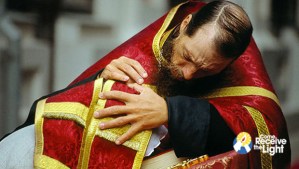
99 Year-Old ‘Beggar’ Fool-For-Christ

This 99-Year-Old Man Begs Every Day And Gives It All Away To Churches And Orphanages

To the unfamiliar passerby, Dobri Dobrev, 99, may come off as a haggard beggar who depends on the kindness of strangers to get by in life.

dobri dobrev

But, for the residents of Sofia, Bulgaria, Dobrev is nothing of the sort. Rather, the area’s fixture has been called a “saint” and a “divine stranger,” according to a website dedicated to Dobrev.

imgur, meet Dobri Dobrev

Dobrev lost most of his hearing during World War II, according to Yahoo News Canada. He lives more than 15 miles outside of Sofia, a distance he used to trek by foot, but he now relies on the bus, according to SaintDobry.com. He spends his days asking people for money, but he doesn’t keep a cent.

The generous guy lives off of his monthly pension of 80 euros (about $100) and gives all his donations to institutions that are most dear to him: churches and orphanages.

dobri
Photo credit: Laura / Panoramio 

Last year, Reddit user Nullvoid123 wrote on the site that he has met Dobrev a number of times and that the beneficent man said he once “did a bad thing,” and is now trying to make up for his past transgressions by helping others.

Dobrev has made a number of generous donations throughout the years to churches, but one of his largest gifts was when he gave 35,700 lev (more than $24,000) to the St. Alexander Nevsky Cathedral, according to a video released by the church. He has also been known to give money to orphanages to help them pay their utility bills. “The good will is just and true. Everything in it is good,” Dobrev said in the film “Mite,” which was produced in 2000. “We must not lie, nor steal, nor commit adultery. We must love each other as God loves us.”

Source: Huffington Post

http://www.huffingtonpost.com/2014/02/27/dobri-dobrev_n_4867974.html

Die Before you Die

crucifixion-scene-christ-on-the-cross-with-mary-and-john-1516

“If you die before you die, you will not die when you die” (Greek Orthodox monastery)

*

“… This week, I noticed a pattern in popular music of our time that I had not noticed before. It was something I heard in song lyrics. I’ll quote some for you from a few different songs:

So cut me from the line / Dizzy, spinning endlessly / Somebody make me feel alive /
And shatter me. (Lindsey Stirling / Lzzy Hale, “Shatter Me”)

Don’t let me die here / There must be something more / Bring me to life (Evanescence, “Bring Me to Life”)

How can the only thing that’s killing me make me feel so alive? (Parachute, “She (For Liz)”)

I could lie, couldn’t I, couldn’t I? / Every thing that kills me makes me feel alive. (OneRepublic, “Counting Stars”)

Do whatever I’m yours / Do whatever I’m sure / Anything, anything, anything, anything to feel alive (Jhené Aiko, “Drinking and Driving”)

When everything feels like the movies /Yeah, you bleed just to know you’re alive (Goo Goo Dolls, “Iris”)

Those are from six different songs. I could quote lots more like this, but this sample should suffice. These are all popular songs from the radio.

So what is the pattern? There are two things here. First, there is a cry out to be made to “feel alive” or to “come alive.” I did a Google search on a large popular song lyrics website, and there were nearly 1,100 songs that mentioned wanting to “feel alive.” Almost 1,300 used the phrase “come alive.” 100 used the phrase “bring me to life.”

I started clicking around when I saw this pattern and looked at the full lyrics to a few dozen songs. And the second pattern I noticed was that this language of wanting to feel alive was often paired with language about death and/or violence. For many of these lyricists, the key to feeling “alive” was first to die, to feel the pain of violence or to commit violence.

… So what is the point of this little tour through pop music? This is just one way of taking the temperature of our culture, of getting a sense of where we are as a people. There is a sort of anesthetization of life these days. We’re always trying to feel better, to feel entertained, to feel alive. And our pop songs sing about violence—even self-violence. And the movies and TV get more graphically violent. And the consumption of pornography is nearly off the charts. And we watch wars in other countries on TV as a perverse form of entertainment. …

Compare all this violence with Apostle Paul’s words: “I bear in my body the brand-marks of the Lord Jesus.” …  Into our culture of virtual violence and screaming out for the feeling of life come these words of the Apostle Paul: “But God forbid that I should boast, except in the Cross of our Lord Jesus Christ, through Whom the world is crucified to me, and I to the world.”

It’s not clear exactly what Paul means when he says that he bears in his body “the brand-marks of the Lord Jesus.” But he is probably speaking of his own suffering, that he has been physically wounded for his confession of faith. Paul is no stranger to violence. He feels pain. He is beaten. He is thrown into prison. He will be beheaded. Paul knows about violence. He knows about death.

… Paul embraces the death of the world! And he embraces his own death. But not because he just wants to feel alive. He embraces death because he knows that in the crucifixion of Jesus Christ is life. He embraces death because he knows that he himself must be crucified with Christ so that his death can be joined with Christ’s death.

This is the paradox of our great hope as Christians—that we seek life, just like the pop songs! And we seek death and even violence, just like the pop songs! But it is not just any death or any violence that brings us life. It is the suffering and death of Jesus, to which we join our own suffering and death by repentance, by confession, by the sacraments, by love.

… The pop songs get it right, but not quite right. There is more to life than merely “feeling alive.” Life is not found in mere violence and death. Life is found in sacrifice and resurrection. Life is found in Jesus Christ, and in His Cross we therefore glory. Like Paul, we boast. Like Paul, we are crucified to the world, and the world is crucified to us. And death is slain. And we are made truly alive. And with Christ we will rise from the dead.”

Source: Road from Emmaus blog

By Fr. Andrew Stephen Damick

http://blogs.ancientfaith.com/roadsfromemmaus/2015/09/13/you-bleed-just-to-know-youre-alive/

Solitary and Naked Before God

... If we decide responsibly and seriously to make the Gospel truth the standard for our human souls, we will have no doubts about how to act in any particular case of our lives: we should renounce everything we have, take up our cross, and follow Him. The only thing Christ leaves us is the path that leads after Him, and the cross which we bear on our shoulders, imitating His bearing of the cross to Golgotha.

[And that is all]

It can be generally affirmed that Christ calls us to imitate Him. That is the exhaustive meaning of all Christian morality. And however differently various peoples in various ages understand the meaning of this imitation, all ascetic teachings in Christianity finally boil down to it. Desert dwellers imitate Christ’s forty-day sojourn in the desert. Fasters fast because He fasted. Following His example, the prayerful pray, virgins observe purity, and so on. It is not by chance that Thomas Kempis entitled his book The Imitation of Christ; it is a universal precept of Christian morality, the common title, as it were, of all Christian asceticism.

001 603

El Greco – Christ Embraced the Cross (detail) (1587-96)

I will not try to characterize here the different directions this imitation has taken, and its occasional deviations, perhaps, from what determines the path of the Son of Man in the Gospel. There are as many different interpretations as there are people, and deviations are inevitable, because the human soul is sick with sin and deathly weakness.

What matters is something else. What matters is that in all these various paths Christ Himself made legitimate this solitary standing of the human soul before God, this rejection of all the rest – that is, of the whole world: father and mother, as the Gospel precisely puts it, and not only the living who are close to us, but also the recently dead – everything, in short. Naked, solitary, freed of everything, the soul sees only His image before it, takes the cross on its shoulders, following His example, and goes after him to accept its own dawnless night of Gethsemane, its own terrible Golgotha, and through it to bear its faith in the Resurrection into the undeclining joy of Easter.

[And that is all]
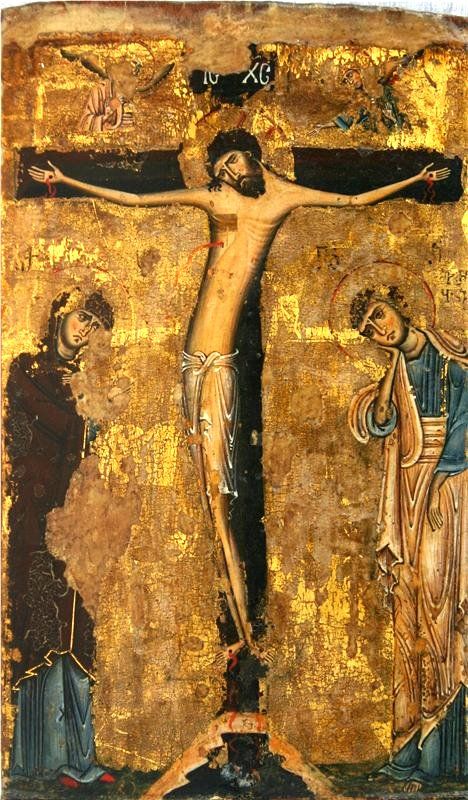
cross8

Here it indeed seems that everything is exhausted by the words “God and my soul.” All the rest is what He called me to renounce, and so there is nothing else: God – and my soul – and nothing.

No, not quite nothing. The human soul does not stand empty-handed before God. The fullness is this: God – and my soul – and the cross that it takes up. There is also the cross.

[And that is all]

el greco

El Greco — Christ Carrying the Cross (1587-96)

The meaning and significance of the cross are inexhaustible. The cross of Christ is the eternal tree of life, the invincible force, the union of heaven and earth, the instrument of a shameful death. But what is the cross in our path of the imitation of Christ? How should our crosses resemble the one cross of the Son of Man? For even on Golgotha there stood not one but three crosses: the cross of the God-man and the crosses of the two thieves. Are these two crosses not symbols, as it were, of all human crosses, and does it not depend on us which one we choose? For us the way of the cross is unavoidable in any case, we can only choose to freely follow either the way of the blaspheming thief and perish, or the way of the one who called upon Christ and be with Him today in paradise. For a certain length of time, the thief who chose perdition shared the destiny of the Son of Man. He was condemned and nailed to a cross in the same way; he suffered torment in the same way. But that does not mean that his cross was the imitation of Christ’s cross, that his path led him in the footsteps of Christ.
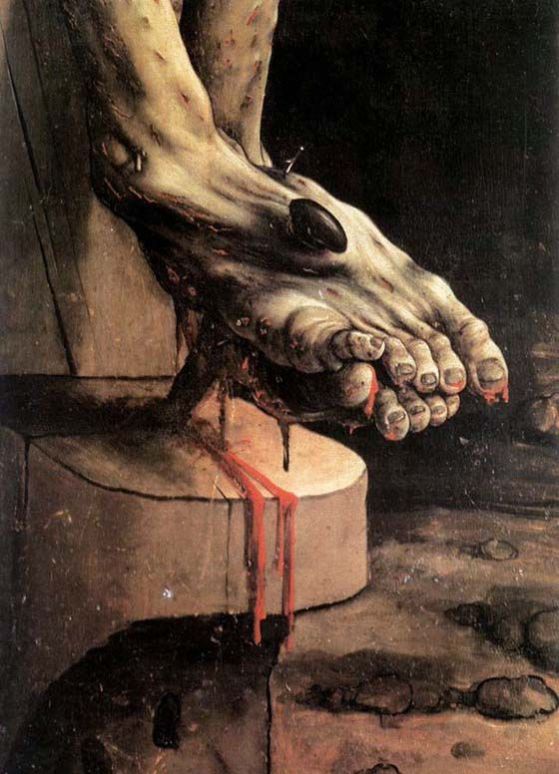
cross6

Detail from the Crucifixion from the Isenheim Altarpiece, circa 1512-16

… What is most essential, most determining in the image of the cross is the necessity of freely and voluntarily accepting it and taking it up. Christ freely, voluntarily took upon Himself the sins of the world, and raised them up on the cross, and thereby redeemed them and defeated hell and death. To accept the endeavor and the responsibility voluntarily, to freely crucify your sins – that is the meaning of the cross, when we speak of bearing it on our human paths.  … The free path to Golgotha – that is the true imitation of Christ.

[And that is all]
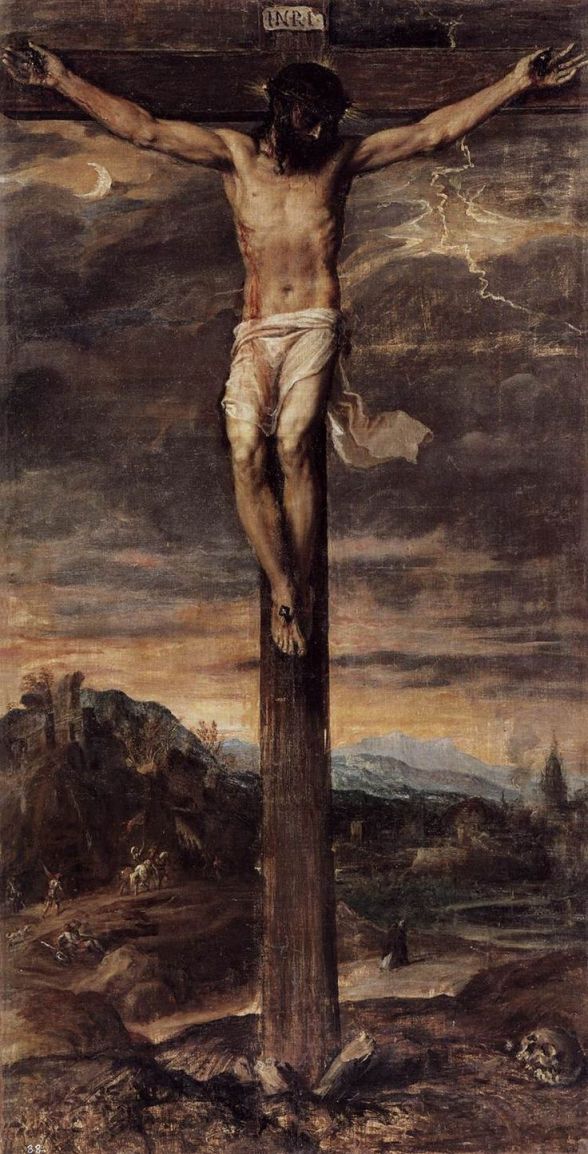
cross5

Crucifixion, by Titian, circa 1555

This would seem to exhaust all the possibilities of the Christian soul, and thus the formula “God and my soul” indeed embraces the whole world. All the rest that was renounced on the way appears only as a sort of obstacle adding weight to my cross. And heavy as it may be, whatever human sufferings it may place on my shoulders, it is all the same my cross, which determines my personal way to God, my personal following in the footsteps of Christ. My illness, my grief, my loss of dear ones, my relations to people, to my vocation, to my work – these are details of my path, not ends in themselves, but a sort of grindstone on which my soul is sharpened, certain – perhaps sometimes burdensome – exercises for my soul, the particularities of my personal path.

[And that is all]
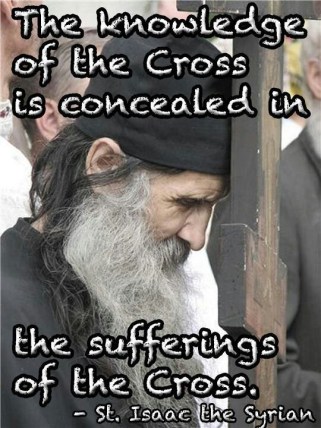
cross1

If that is so, it certainly settles the question. It can only be endlessly varied, depending on the individual particularities of epochs, cultures, and separate persons. But essentially everything is clear. God and my soul, bearing its cross. In this an enormous spiritual freedom, activity, and responsibility are confirmed. And that is all.
cross2

… There are simply millions of people born into the world, some of whom hear Christ’s call to renounce everything, take up their cross, and follow Him, and, as far as their strength, their faith, their personal endeavor allow, they answer that call. They are saved by it, they meet Christ, as if merging their life with His. …

The cross of Golgotha is the cross of the Son of Man, the crosses of the thieves and our personal crosses are precisely personal, and as an immense forest of these personal crosses we are moving along the paths to the Kingdom of Heaven. And that is all.

*

Taking Up The Cross

By St. Maria Skobtsova  

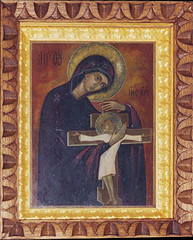
  • The first icon on the left is Cross-bearing Theotokos painted by St. Maria Skobtsova of Paris
cross10

Mother Maria Skobtsova died on Good Friday, 1945, in Ravensbr ck concentration camp near Berlin. Maria’s real life is more incredible than any fiction! The “crime” of this influential painter, poet, social activist, Orthodox nun and Russian refugee was her effort to rescue Jews and others being pursued by the Nazis in her adopted city, Paris, where in 1932 she had founded a house of hospitality. … The essay reprinted here is part of a longer text included in Mother Maria Skobtsova: Essential Writings, translated by Richard Pevear and Larissa Volokhonsky and published by Orbis Books.

Source: https://incommunion.org/2007/10/27/taking-up-the-cross/

For her life, look at: https://orthodoxcityhermit.com/2015/09/23/mother-maria-of-paris-saint-of-the-open-door/

Cosmic Dawn

 cosmic_dawn_by_harrietta

Cosmic Dawn: The Real Moment of Creation

Horizon reveals the real moment of creation – the Cosmic Dawn, the moment of first light. This is the scientific version of the story of Genesis.

Re-Creation

Beyond all things was God the Word

From the void of eternity

Time and space in creation heard

The Voice speaking infinitely.

cosmic dawn

Spirit of God on the waters

Divine Word of life in the night

“Creatio ex nihilo”

Father said “Let there be light!”

cosmic2

You divided light from darkness

You split the first atom to say

How we should separate evil

And distinguish the night from day.

CosmicTrinityDivineStarCosmicDawnWEB

Lord, you brought chaos to order

Your great Wisdom cushioned the deep

Recording a holy cosmos

Awakening formless sleep.

cosmic3

You placed the orbits and quasars

Winding the clock into time

The coherence behind the laser

The reason within the rhyme.

From ground-based telescopes, this cosmic object - the glowing remains of a dying, sun-like star - resembles the head and thorax of a garden-variety ant. This NASA/ESA Hubble Space Telescope image, released on February 1, 2001, of the so-called

You bring pure joy out of sadness

You still bring life out of breath

Sanity in human madness

Gladdening sorrowing death.

cosmic4

The real hub in revolution

The one who planted the Tree

Adam and Eve-lution

The One who caused things to be.

sunrise cosmic 1920x1080 wallpaper_www.knowledgehi.com_61

The Great Mover pushed the button

Silence before seraphim sang

Infinite God formed the finite

The Big One made the Big Bang.

*

By Father Jonathan Hemmings

Healing the Wounded Soul

confession1

The Difference between a Spiritual Father and a Psychologist

By Metropolitan of Nafpaktos Hierotheos*

The spiritual Father, ought to perform his task on the basis of the Orthodox Tradition, it is clearly different from the psychologist, who works on the basis of an anthropocentric view of man and his life The psychologist wants to make people psychologically balanced. The spiritual father aims at man’s deification. The psychologist uses the views of whichever school of psychology he represents. The spiritual father uses the eternal word of God, which was revealed to the prophets, Apostles and saints.

The psychologist believes that illness is due primarily to traumatic experiences in the past, or so-called repressed experiences. The spiritual father is well aware that it is not simply a matter of memories of the past or repressed experiences stored up in the subconscious. A specific faculty of the soul is ill, the nous, which is the eye of the soul. The psychologist employs the method of questioning and listening. He tries to assist the person to become aware of his problem and helps him to mature psychologically. The spiritual father, illumined by the grace of God, locates the problem, which is the darkness of the nous or fantasies, and tries to lead the person to theoria of God by means of the Orthodox method of purification and illumination. The psychologist acts on the human level using thoughts and ideas. The spiritual father acts in a theanthropic way, on both the divine and human level. He uses the therapeutic method, but also sends Gods grace into the sick person’s heart through the Sacraments.

The psychologist thinks that everything happens on a human level, He does not acknowledge the existence of the devil and the energy of the uncreated grace of God. The spiritual father knows the difference between the grace of God, the energy of the devil, and spiritual and physical illness. The psychologist confines himself to making the ill person aware of his problem and enabling him to cope with it. The spiritual father guides the person to repentance, which means his complete transformation. He does not simply lead him to a point of rejecting certain states, but guides him towards the transformation of his passions. It is possible to find other significant differences between, a psychologist and a spiritual father, and the difference between anthropocentric and theocentric psychotherapy.

We accept the views of contemporary psychology and psychotherapy in two cases, as a concession. Firstly, in cases of people whose nervous system has been harmed for various reasons, such as physical or psychological problems. Secondly, in the cases of people who, by choice, have nothing to do with the Church and its Sacraments. I think they can be helped by modern psychology and psychotherapy, so as not to deteriorate further. Psychology can act as a pain-killer to comfort them in the dreadful despair in which they are imprisoned.

But, I repeat, man is created in the image of God and he must reach His likeness. This is, I could say, the final aim and secret entelechy of man. As long as this yearning is not satisfied and a person remains far from God, his suffering increases. Inasmuch as his basic destiny on earth, communion with God, is not fulfilled, no matter how much medicine he takes or how much psychoanalysis he undergoes, he will always be homeless and engaged in a tragic search. We want more than psychological balance; we are looking for fullness of life. We do not simply wish to develop religious feelings, but want our lives to be filled.

  • Yesterday a meeting with a young student of mine I really care about left me sleepless. Such anguish and suffering! Such a dead end! Still imprisoned in her psychiatric disorders, still refusing medication, still held captive by her vicious circle psychotherapy sessions, still trusting her therapist as God, still away from the great hospital for sick souls : the Church, still rejecting Christianity.

Art of Being — Being of Art

rumi2

My Symphony

To live content with small means.
To seek elegance rather than luxury,
and refinement rather than fashion.
To be worthy not respectable,
and wealthy not rich.
To study hard, think quietly, talk gently,
act frankly, to listen to stars, birds, babes,
and sages with open heart, to bear all cheerfully,
do all bravely, await occasions, hurry never.
In a word, to let the spiritual,
unbidden and unconscious,
grow up through the common.
This is to be my symphony.
By William Ellery Channing

I’m Sad, not Bad

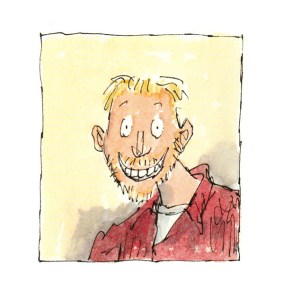
sad1

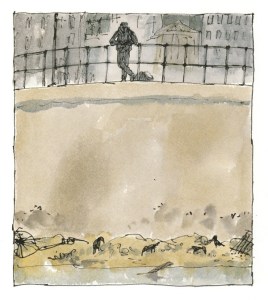
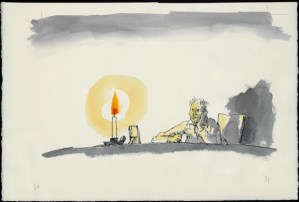
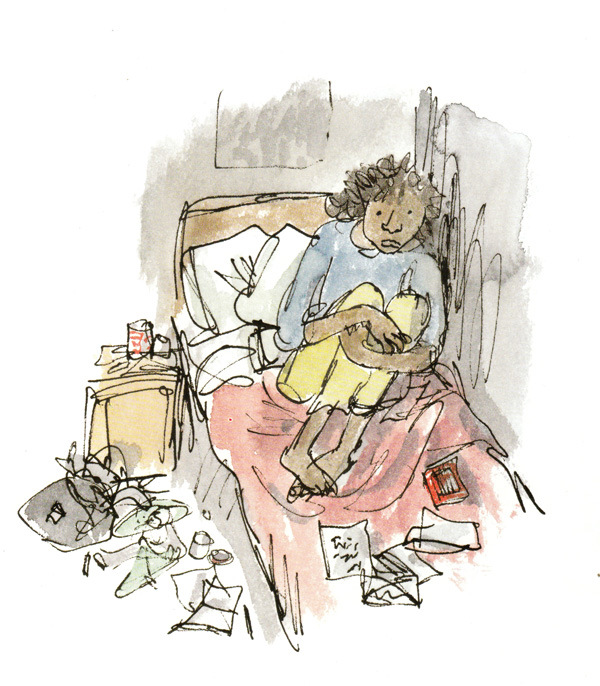
This is me being sad.

Maybe you think I’m happy in this picture.

Really I’m sad but pretending I’m happy.

I’m doing this because I think people won’t like me if I look sad.

Sad Book by Michael Rosen: darkness in literature

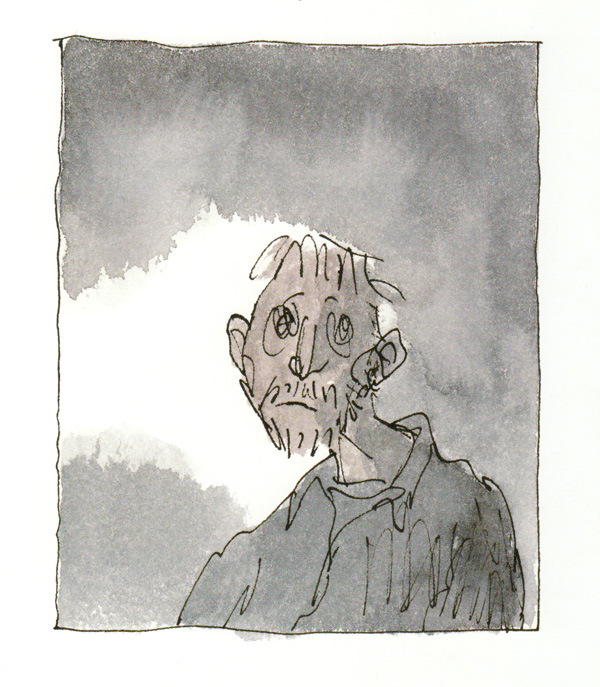
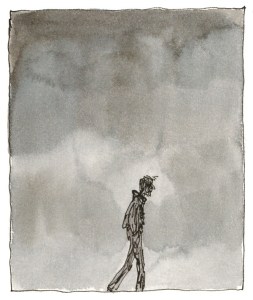
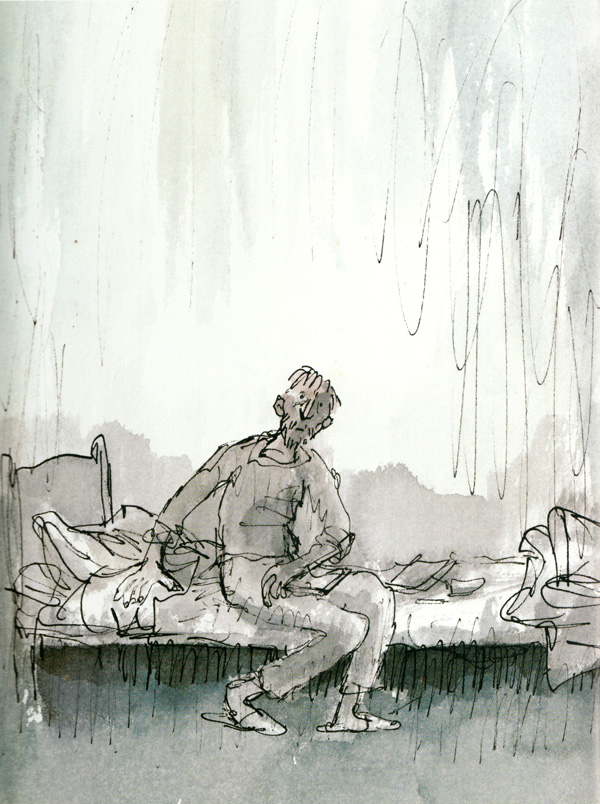
Sometimes sad is very big.

It’s everywhere. All over me.

sad3

Then I look like this.

And there’s nothing I can do about it.

What makes me most sad is when I think about my son Eddie. I loved him very, very much but he died anyway.

sad12

Michael Rosen’s Sad Book: A Beautiful Anatomy of Loss, Illustrated by Quentin Blake

“Grief, when it comes, is nothing like we expect it to be,” Joan Didion wrote after losing the love of her life. “The people we most love do become a physical part of us,” Meghan O’Rourke observed in her magnificent memoir of loss, “ingrained in our synapses, in the pathways where memories are created.” Those wildly unexpected dimensions of grief and the synaptic traces of love are what celebrated British children’s book writer and poet Michael Rosen confronted when his eighteen-year-old son Eddie died suddenly of meningitis. Never-ending though the process of mourning may be, Rosen set out to exorcise its hardest edges and subtlest shapes five years later in Michael Rosen’s Sad Book (public library) — an immensely moving addition to the finest children’s books about loss, illustrated by none other than the great Quentin Blake.

sad2

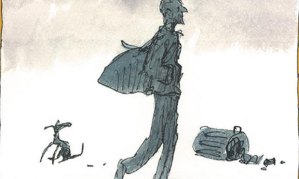
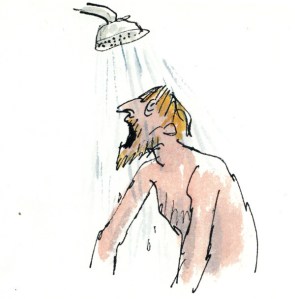
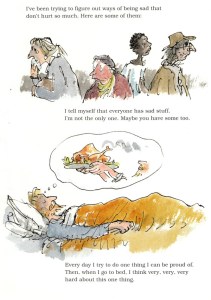
With extraordinary emotional elegance, Rosen welcomes the layers of grief, each unmasking a different shade of sadness — sadness that sneaks up on you mid-stride in the street; sadness that lurks as a backdrop to the happiest of moments; sadness that wraps around you like a shawl you don’t take off even in the shower.

sad16

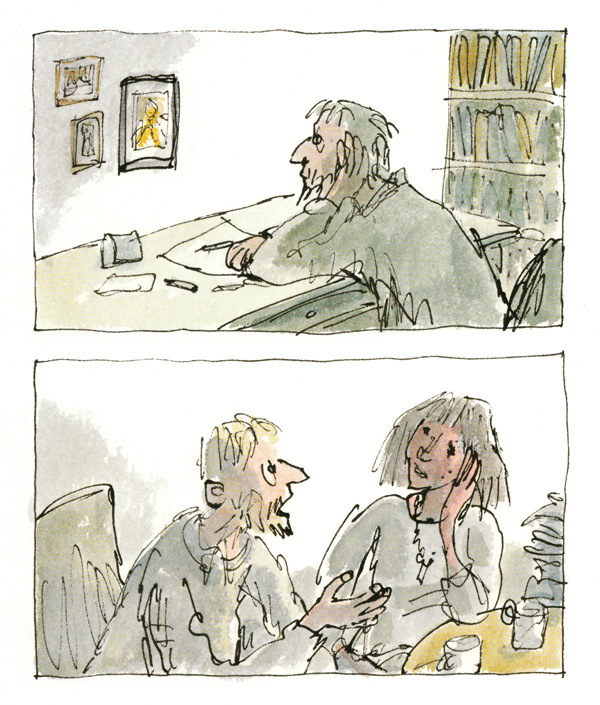
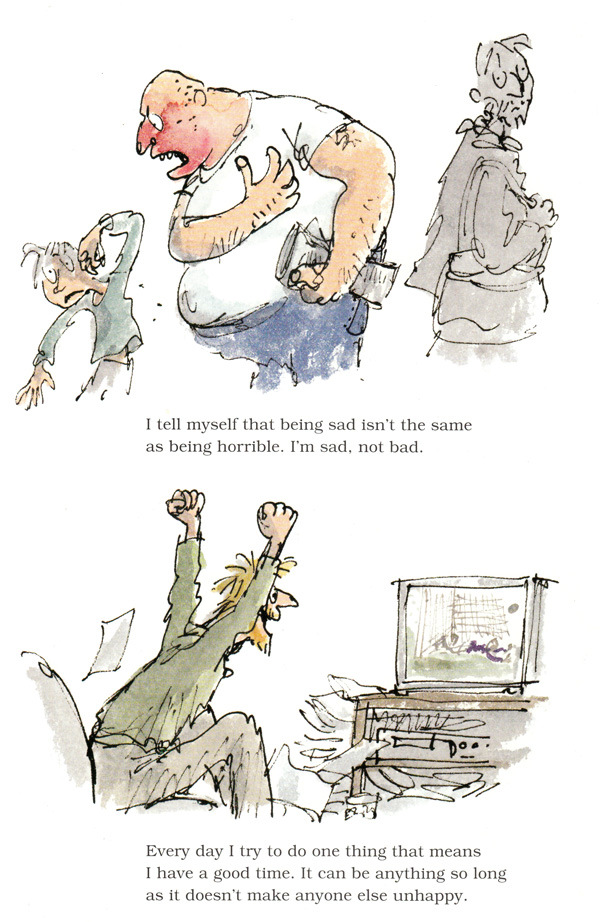
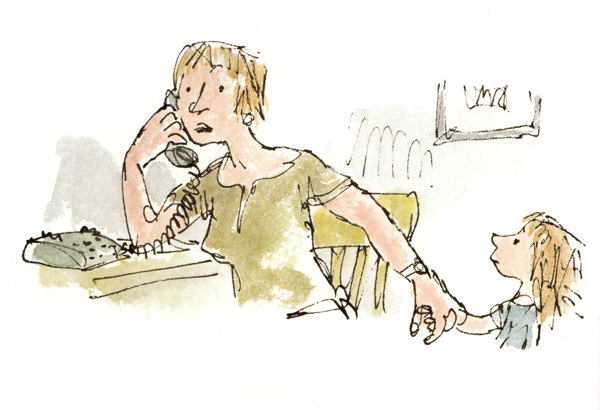
Blake, who has previously illustrated Sylvia Plath’s little-known children’s book and many of Roald Dahl’s stories, brings his unmistakably expressive sensibility to the book, here and there concretizing Rosen’s abstract words into visual vignettes that make you wonder what losses of his own he is holding in the mind’s eye as he draws.

sad11

What emerges is a breathtaking bow before the central paradox of the human experience — the awareness that the heart’s enormous capacity for love is matched with an equal capacity for pain, and yet we love anyway and somehow find fragments of that love even amid the ruins of loss.

sad10

With exquisite nuance, Rosen captures the contradictory feelings undergirding mourning — affection and anger, self-conscious introspection and longing for communion — and the way loss lodges itself in the psyche so that the vestiges of a particular loss always awaken the sadness of the all loss, that perennial heartbreak of beholding the absurdity of our longing for permanence in a universe of constant change.

sad19                sad22

But what makes the story most singular and rewarding is that it refuses to indulge the cultural cliché of cushioning tragedy with the promise of a silver lining. It is redemptive not in manufacturing redemption but in being true to the human experience — intensely, beautifully, tragically true.”

Where is sad?

Sad is everywhere.

It comes along and finds you.

sad23

When is sad?

Sad is anytime.

It comes along and finds you.

sad24

Who is sad?

Sad is anyone.

It comes along and finds you.


sad25

By Maria Popova

Source: http://www.brainpickings.org/2015/08/25/michael-rosens-sad-book-quentin-blake/

http://www.michaelrosen.co.uk

*

Be sure not to miss Michael Rosen’s absolutely breath-stopping telling of his story and reading of his book at:

https://www.youtube.com/watch?v=V-SQE_bDWFY

*

 sad13

Still, I would really like to disagree very strongly with both Maria Popova’s and Michael Rosen’s conclusions as a Christian. Yes, it is all this, but there is so much more to it. What do you think? I have never experienced such profound loss myself, so maybe I don’t know what I am really talking about, but there must be more to it than all this pain and mourning.  But more about this on my next post …

Drunken to the Ray of Light

 quote2

Poem of the Atoms

By Rumi

*

O’ day, arise!

shine your light , the atoms are dancing

Thanks to Him the universe is dancing,

overcome with ecstasy , free from body and mind

I’ll whisper in your ear where their dance is leading them.

All the atoms in the air and in the desert are dancing ,

puzzled and drunken to the ray of light,

they seem insane.

All these atoms are not so different than we are,

happy or miserable,

perplexed and bewildered

We are all beings in the ray of LIGHT from The Beloved,

nothing can be said.

Do not miss the exquisite singing adaptation of the poem by Salar Aghili (motion picture . Bab’Aziz – The Prince Who Contemplated His Soul -Armand Armand) at:
https://www.youtube.com/watch?v=GaNGDrKKasA

st sophrony

“The soul of the Christian needs to be refined and sensitive, to have sensibility and wings, to be constantly in fight and to live in dreams, to fly through infinity, among the stars, amidst the greatness of God, amid silence. Whoever wants to become a Christian must first become a poet” (St Porpyrios, Wounded by Love, 107)

*

We are more truly in heaven than on earth.
— Julian of Norwich

*

God hugs you.
You are encircled by the arms
of the mystery of God.
— Hildegarde of Bingen

quote4

Faces of Freedom, Lives of Courage

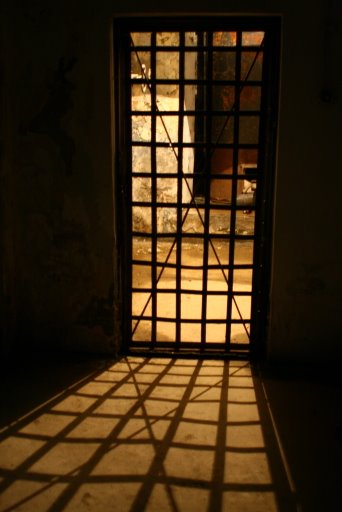
pitesti5

pitesti3

Faces of Freedom, Lives of Courage

By Thomas Sears & Radu Cristea

Faces of Freedom, Lives of Courage is a fragment of communist Romania’s history seen through the unique and shocking experiences of nine individuals. Leontina, a nineteen-year-old student who hides a letter addressed to Radio Free Europe that was thrust into her hands by an acquaintance who was being pursued by the Securitate. This naiveté leads to interrogation, beatings, torture and imprisonment in one of many of Romania’s extermination camps. Razvan, a German professor who, at a great danger to himself, took pictures of the army firing on unarmed, peaceful demonstrators in Cluj Napoca on December 21, 1989. Grigore, a law student after WWII, who was imprisoned by the Securitate in an effort to eliminate “resistance groups,” and beaten and tortured for a year before his official trial, which sentenced him to many years of hard labor. This book provides interviews of those above as well as 6 other individuals whose lives were drastically changed while living under communism and later under the vicious regime of Nicolae and Elena Ceausescu.

http://www.amazon.com/Faces-Freedom-Lives-Courage-Thomas/dp/1625103859

pitesti6

For more information please watch:

(a) the trailer of the book at :https://www.youtube.com/watch?v=gqX9lSy7Kpg

(b) excerpts of the nine individuals’/prisoners’ interviews—unique and shocking experience at: https://www.youtube.com/watch?v=3tTJ88hpG48&index=2&list=PL1H1BhlE_PRnyYShr0KUILeITD474uQHd

(c) Jon R. Kennedy, author, speaker, missionary at large, interview of the authors in Romania at: https://www.youtube.com/watch?v=MLRP_dYDb74

pitesti4

Genocide of the Souls

pitesti9

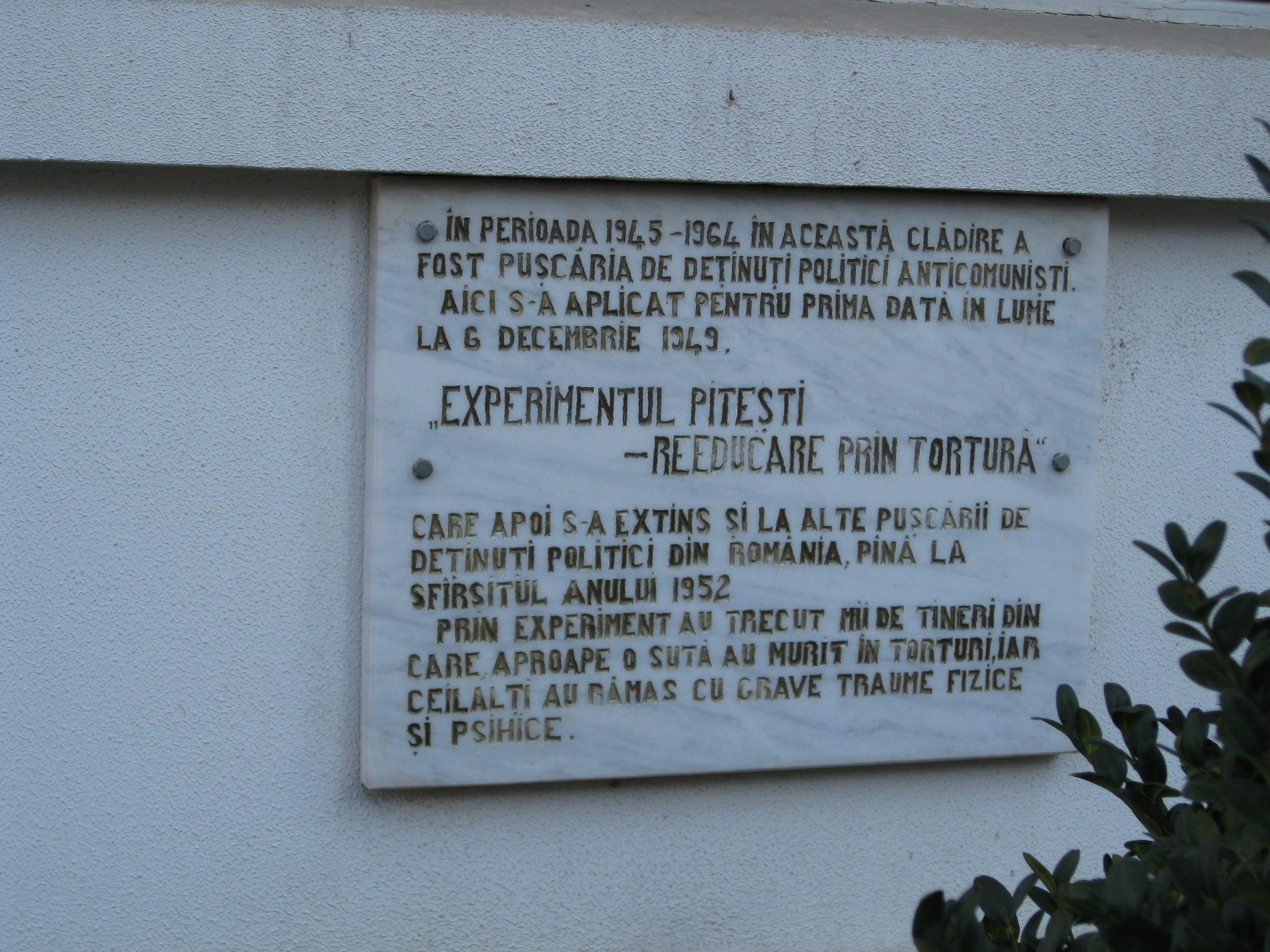
The Genocide of the Souls  — The Pitesti Phenomenon (1949-1951)

“However, what has not yet become universal knowledge is the fact that in the Romanian Gulag Archipelago there was an island of absolute horror, such as existed nowhere else in the entire geography of the communist penitentiary system: Pitesti Prison.” – Virgil Ierunca, Pitesti Phenomenon.

Aleksandr Solzhenitsyn, the 1970 Nobel Prize laureate for literature, refers to the Pitesti experiment as the “most terrible act of barbarism in the contemporary world”.

Historian François Furet, member of the French Academy, regards the Pitesti phenomenon as “one of the most terrible experiments in dehumanisation that our epoch has known”.

pitesti5

pitesti4

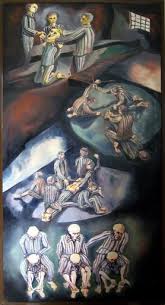
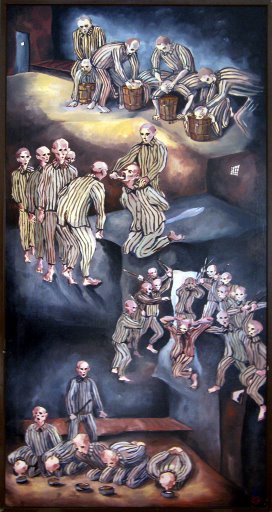
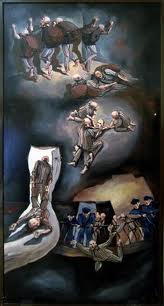
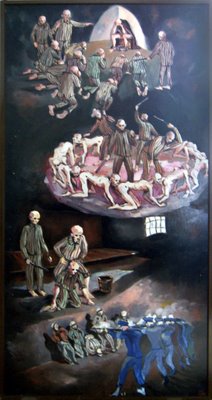
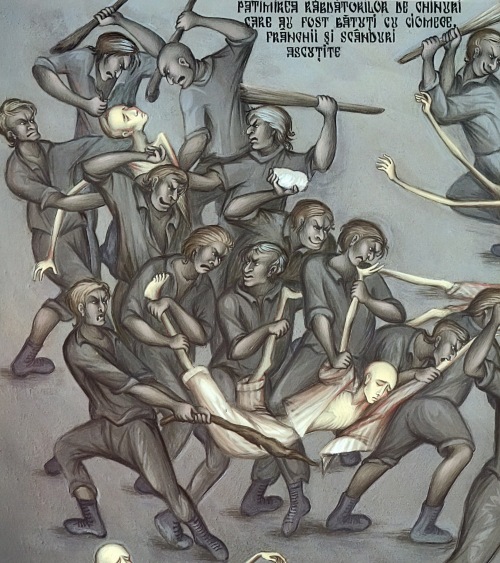
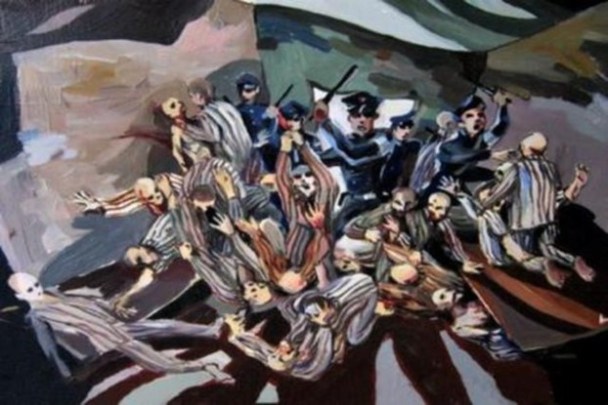
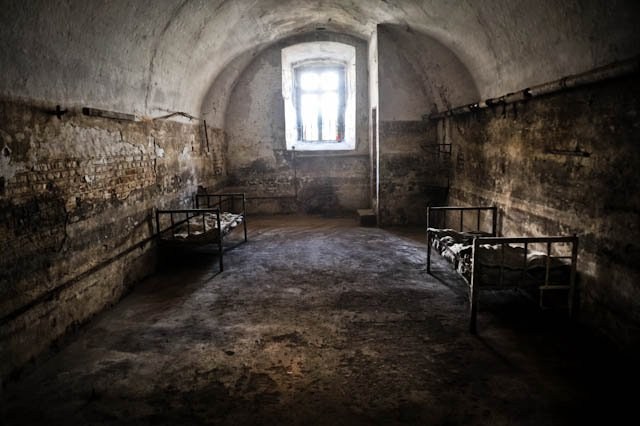
Between 1949 and 1951, the destruction of society”s elite was almost complete: intellectuals, diplomats, priests, officers, magistrates, policemen, and politicians of the “bourgeois-landowner regime” were in prison; the most industrious peasants had been deported to forced labour camps. Collectively and individually, they were all labelled “enemies of the people”. It now remained to annihilate the unpredictable social force of youth. For the latter, the Pitesti experiment was invented (termed “re-education” by the Securitate). The most barbarous methods of psychological torture were applied to “recalcitrant” young prisoners, with the object of making them reciprocally humiliate each other, physically abuse each other and mentally torture each other. Victims were transformed into executioners; prisoners were tortured by their own friends, by their fellows in suffering. The purpose: “re-education” through physical and psychical destruction, the transformation of young people into atheists, into informers on their friends.

For more information, watch an excellent documentary: BEYOND TORTURE — The gulag of Pitesti ROMANIA at https://www.youtube.com/watch?v=9QGUTBXgz3g

pitesti8

“When you said, ‘I still believe in God,’ in five minutes you were full of blood”. – Roman Braga

“Many of us died, many of us became mad, but in some of us the good triumphed”. – George Calciu

These chilling words from two survivors of a brainwashing prison in Pitesti, Romania are sad reminders of the legacy of Stalinist communism. Beyond Torture: The Gulag of Pitesti, Romania documents the persecution of Romanians under the communist regime. Electrical shock, hallucinogenic drugs, near starvation and fatal beatings were daily rituals in the prison of Pitesti, Romania. But this sadistic story goes beyond torture: this was an attempt to totally destroy a people’s culture and faith.

pitesti3

pitesti6

In 1949, Stalinist Soviets began a systematic sweep of Romanian college campuses. Their purpose was to imprison and transform young Romanians into a communistic way of thinking. One prisoner describes this re-education as the most vile tortures imaginable. Orthodox priest Father George Calcui says, “They tried to destroy our souls.”  But he and others survived this gulag, lived to tell their stories and even forgave their captors.

pitesti prison 1

pitesti_prison 2

In this documentary, you’ll meet three survivors from the prison of Pitesti and see shocking paintings that capture the essence of the extreme torture. This documentary also includes an in-depth one-hour interview with Father Roman Braga: prison survivor and spiritual leader. Don’t expect a typical tale of woe. What comes through from the priests being interviewed — most especially Fr. Roman Braga, now in America — is a surprising theme: forgiveness…and even joy.

Outside of Romania, this DVD is the first major historical documentation of the Pitesti experience.

Pitesti_prison_plaque

Pitesti_prison_yard

Also, go to http://www.thegenocideofthesouls.org/public/english/the-pitesti-experiment/

To http://www.mtholyoke.edu/~cama20z/classweb/worldpolitics/thepitestiphenomenon/experience.html

And to http://www.johnsanidopoulos.com/2012/06/documentary-on-romanian-gulag-of.html