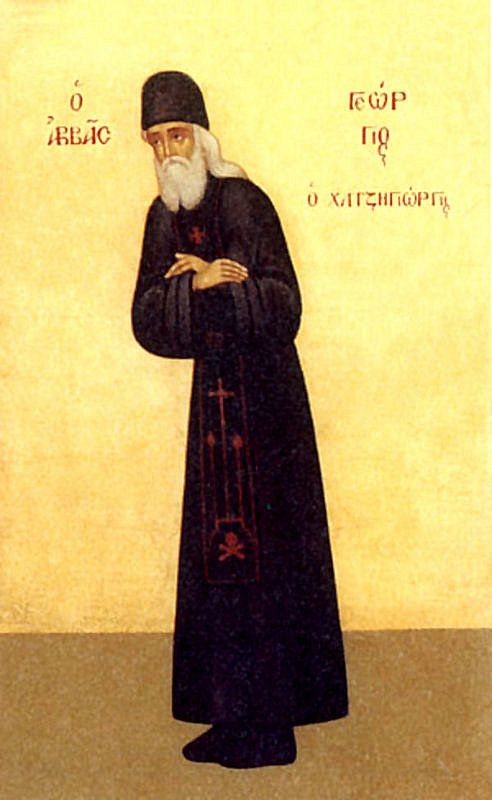
From the Life of Elder Hadji-Georgis the Athonite (1808-1886) by Saint Paisios
From the Life of Elder Hadji-Georgis the Athonite (1808-1886) by Saint Paisios

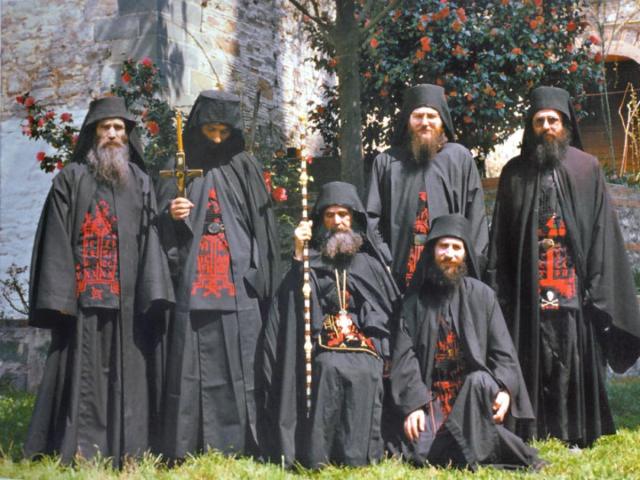

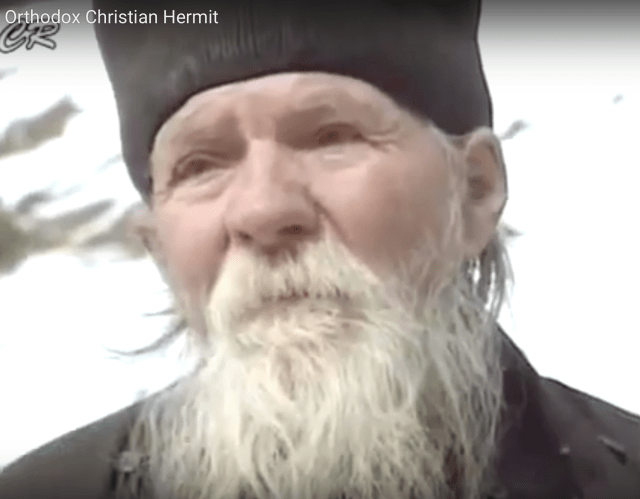
In Romania

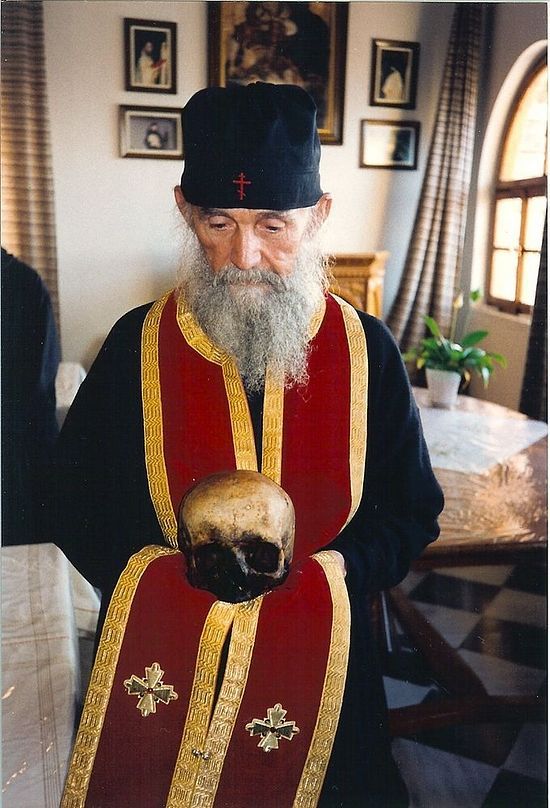
February 17, 1980
I experienced amazement and divine wonder tonight in my poor prayer. My nous tasted God. “Eye has not seen, nor ear heard, nor have entered into the heart of man the things which God has prepared for those who love Him” (1 Cor. 2:9)
All this is a fruit of the labor of my Holy Elder, who truly toiled inside the caves of Athos with fasts, vigils, weeping, and tears. I, on the other hand, am a miserable, hideous monstrosity; an unmonastic monk; a sluggard eating the labor of my father, Saint Joseph. If God did not have mercy on me through his intercessions, I would be spiritually lost.
The festival in heaven entices me—there in the eternal and immutable blessings, where only silence reigns, since it is the only thing one is able to do. But when shall I behold the face of my lovely Father!!! When shall I be satisfied with His glory? Oh, what beauty! But I am a filthy stench and the demons’ joy.
My God, forgive me, the nothing of nothingness. Only Your mercy saves me from my evil self…
February 18, 1980
The communication of my sinful soul with the supremely radiant God was very wonderful tonight. The heavenly world is a different realm; a different mode of life; a different atmosphere.
My God, what can I, the miserable pauper, say about what You are! You are a stupendous and immense delight. You are impalpable, and yet how are You touched? For when this contact happens, the soul is electrified with divine electricity, and sweet and beautiful tears run and run from my eyes. But in the heart, what happens!
My incomprehensible, inexpressible, and lovely God, what can I, the miserable one say about You! There are no words, there is no man capable or competent to do so. One can only feel reverence, worship, sacredness, and divine love in silent amazement.
Oh, how much I would like to be no longer on earth with the uncertainty of my salvation! Oh, if only I were already in the world of my God, my Father, my worship. There is eternity, certainty, and security.
I weep because I am the greatest sinner in the whole world. I mourn the uncertainty of my salvation. I do not know if I shall be saved. Here is the crux of the matter. Alas! I wonder, shall I reach the calm haven of eternal bliss? I wonder, shall I see the glory of my God?
Have pity on me, O only-begotten Logos of God,
My Jesus Christ

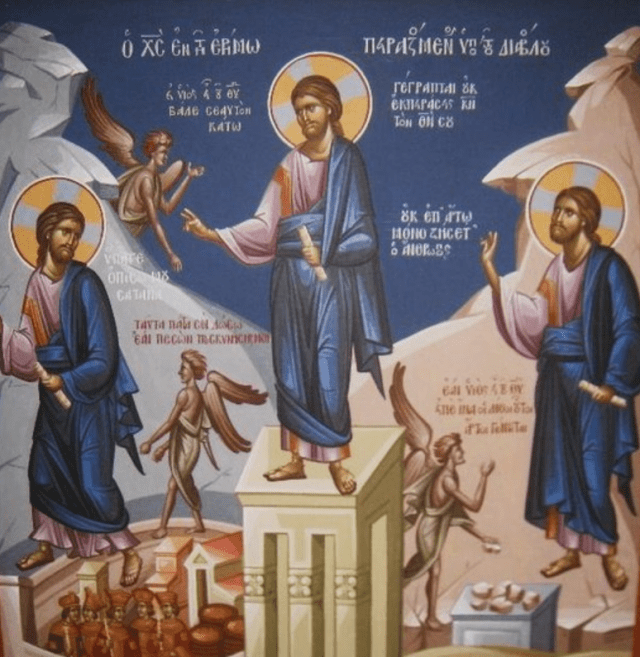
“A demon-possessed person was taken to a monastery, and the abbot there instructed the fathers to go to the chapel and pray for him with their prayer ropes. In that monastery, they also had as a holy relic the head of Saint Parthenios, Bishop of Lampsakos; this had the demon “cornered” quite a bit. At the same time, the abbot assigned the reading of exorcisms to a certain hieromonk. This monk was pious outwardly, but inside he was secretly arrogant. He was a fighter and a stickler in everything he did. He used to counsel the others, because he was also scholarly. He himself however would not receive help from anyone, because out of respect, they would hesitate to tell him whenever they saw him doing something incorrectly. He had created illusions inside himself that he was the most virtuous one in the monastery, so the evil one grabbed the opportunity that day to harm him. The demon implemented its wickedness and made him think that he was driving it out of the demon-possessed person.
So, as soon as he began to read the exorcisms, the demon began to cry out, “You’re burning me! Why are you sending me away, you cruel one?” – which made him believe that the demon was being burnt by his exorcisms – when it was the praying by the other brethren that was pressuring the demon. So, he replied to the demon, “Come to me.” These words had been uttered by Saint Parthenios to a demon, but he was a saint: Once, when a demon was crying out “I’m burning, I’m burning, where should I go?” the Saint replied “Come to me.” But during that incident, the demon replied to the Saint: “Your name alone burns me, Parthenios!” and immediately departed from the possessed person. Well, that monk attempted to act like Saint Parthenios, but became possessed himself. From that moment on, the demon controlled him for years on end, and he couldn’t find rest anywhere. He was constantly on the move – sometimes outside, in the world, and other times on the Holy Mountain. How that poor soul was tormented! That terrible state had caused weariness to his soul, as well as physical fatigue accompanied by tremors. And you know, even though he used to be a good priest, he could no longer minister. See what the devil can do?'”
A story told by St. Paisios
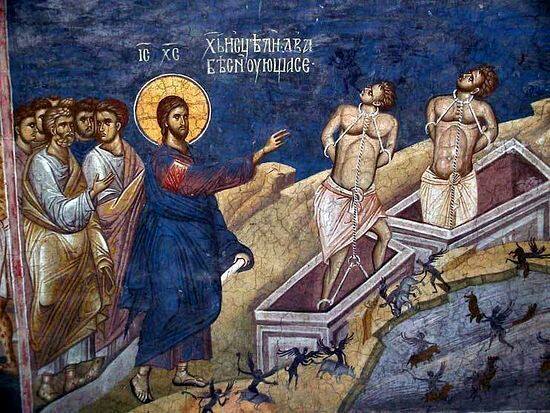

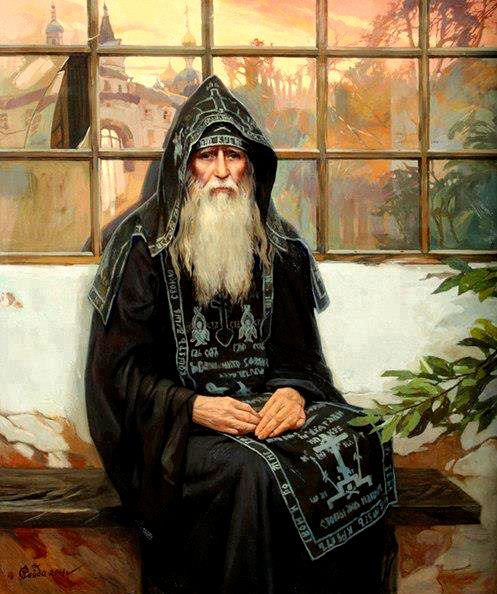
“A monk in a Romanian village got rid of his monastic ‘habit’ (ie. Orthodox monastic clothing), left his monastery and got married. He became a father, many years passed by, and eventually the time of his repose came. His family and relatives washed his body, clothed him, said prayers, made all necessary arrangements at the graveyard and the church, and made an appointment with the local priest to come at their home and read the service of the funeral. When the priest arrived at the appointed time, he found the house empty. Nobody was there. He went upstairs and found the dead person all alone. The priest was wondering what had happened. Suddenly he heard heavy footsteps at the stairway. He turned and saw a huge bear. The bear spoke to him and said: “Why did you come here? So that you will say prayers about him? This man was a monk who renounced his monastic schema. No matter how many prayers you will say about him, this one is mine.” At these words, the bear took the body of the dead man and disappeared! Then the priest’s eyes were opened and he saw all the people in the room, around the dead man, crying over him. The priest was in shock. When he recovered after some time, he asked the people around him to take him back home, and he did not stay to read the funeral service. Back at his home, he told everything to his matushka and asked her permission to go to Mount Athos and become a monk. He lived the rest of his life there with asceticism and profound repentance.”
*
* A true story told by another Romanian Hieromonk, + Papa Methodios Karyotis (Koutloumousianon Kellion Agion Theodoron, Mount Athos) (1905-1979). Papa Methodios met in person the Romanian priest who was called to do the funeral service for “the monk who got married” but could not after the vision he saw at his corpse, and became himself a hieromonk at Mount Athos; he heard the story from his lips.
Source: From the Ascetic and Hesychastic Tradition of Mount Athos,
A collection of stories by the Monastery of St John the Forerunner, pp134-136.
The author(s) of this book chose out of humility to remain anonymous, but ‘rumour’ has it that this collection of brief true stories is a joint authorship by St. Paisios of Mount Athos, Elder Euphemios, Karoulia, and Elder Gregorios, the spiritual father of the Monastery of St John the Forerunner, and St. Paisios’ spiritual child and tonsure.

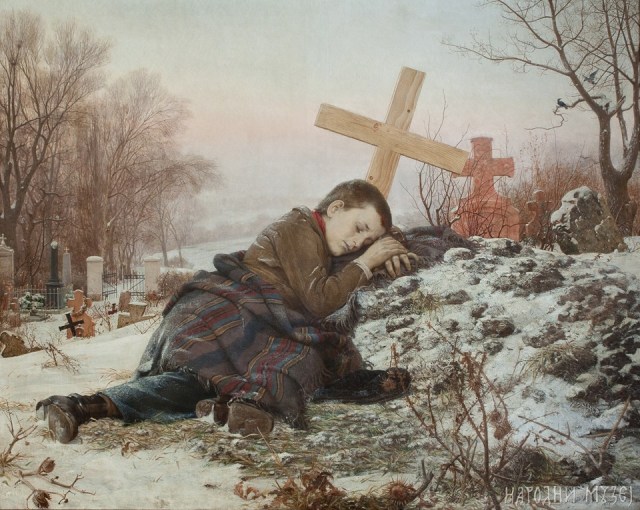
The Little Orphan
an autobiographical poem
by St. John Jacob (the Romanian)
Blessed John (Jacob) of Neamts, the New Chozebite
“the child of zero” who “followed the One”*
Resurrection Day!
The bells are ringing!
Old men sit at their verandas,
Others are at their doorsteps.
The young and the children
Go out in their best clothes
To meet their friends at the church
Of the cemetery.
This mystical fragrance
Of the Holy Feast!
They take it in … like incense,
From herbs and flowers.
The Fields are robed
In a beautiful dress
And everything looks now
Renewed on the earth.
Near the Holy Altar
Of the wooden church
A little child offers
Candles and oil.
He kisses the Holy Cross
In front of the fresh tomb
And kneels crying
With sighs.
When the bells are ringing
In a jubilant tone
Near the Cross the little orphan
Sheds tears with pain.
Suddenly, while absorbed in his tears
And his deep sighs,
At the ringing of the bells
A sweet voice he hears :
“Cry Not, my child, today
Feel not sad, because, look!
By your side am I
Christ is Risen!”
Was this his mother’s voice
Coming from the tomb
His sadness to dispel
From his broken bosom?
Immediately the orphan
Rises and ecstatically looks up,
Searching to find
Who was speaking to him.
Then, from the Altar most Holy
By the smoked wall
He sees the Risen Christ
Sweetly smiling to him.
His little heart is lit
His face calms
His pain leaves him
And such is his mind:
“If I see here
The Risen Lord
Then my mother too
Is risen with Him.”
Speaking thus to his mind
Humbly he bows
And kissing the tomb
Returns to his ‘home’!
Alone, lonely, he lives
At his earthly lodgings,
His poor father
Died at the war.
Often at nights he sleeps
By the tomb with them.
Crying in the morning he returns
Back to the deserted house.
But the bells ring!
Again at the cemetery
His mother’s voice
Is heard to say:
“Cry not, my child, today
Do not be sad,
Because, lo, I am with you
Christ is Risen!”
Since then our little orphan
Stopped sighing.
And whenever the bells ring
His heart is consoled!


When you first catch a glimpse of the magical St. George’s Monastery (Choziba) in the Judean desert, the Desert Fathers’ Wisdom is brought to life in its uncompromising, breathtaking asceticism. This amazing cliff-hanging monastery, one of the world’s oldest and definitely one of the most inspiring churches in the Holy Land, is a must-see for the desert / archeological fans / devout Pilgrims.
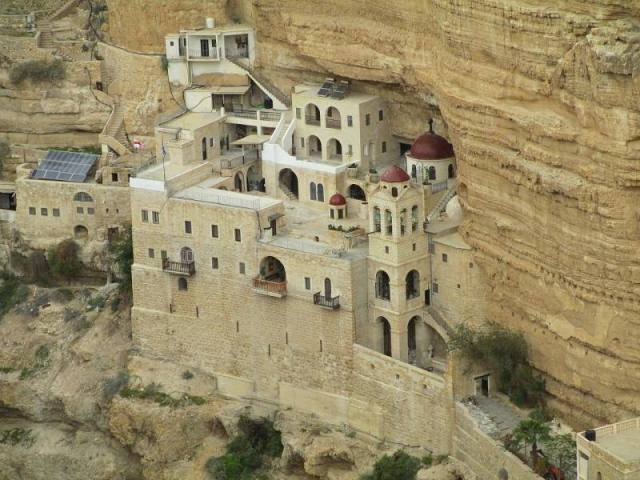
St. George Orthodox Monastery, or Monastery of St. George of Choziba is a monastery located in Wadi Qelt, in the eastern West Bank, in the occupied territories. The sixth-century cliff-hanging complex, with its ancient chapel and gardens, is active and inhabited by Eastern Orthodox monks. It is reached by a pedestrian bridge across Wadi Qelt, which many believe to be Psalm 23’s Valley of the Shadow. The valley parallels the old Roman road to Jericho, the backdrop for the parable of the Good Samaritan (Luke 10:29-37).
Here’s some beautiful aerial video footage to give you a taste of the area around St. George’s Monastery…
St George’s Monastery can be reached via the main Jerusalem – Dead Sea highway (Road 1). Take a left at Mitzpeh Jericho (or a right if you’re coming from Jericho) and follow the brown signs for Wadi Kelt. You can hike the Wadi all the way to the monastery but it will take lots of hours of arduous trekking in the desert under the blazing sun! Up and down, for hours, a windy path! Not so easy for seniors or people with disabilities, but there are usually plenty of locals offering their donkeys for the ride (at a cost of course).

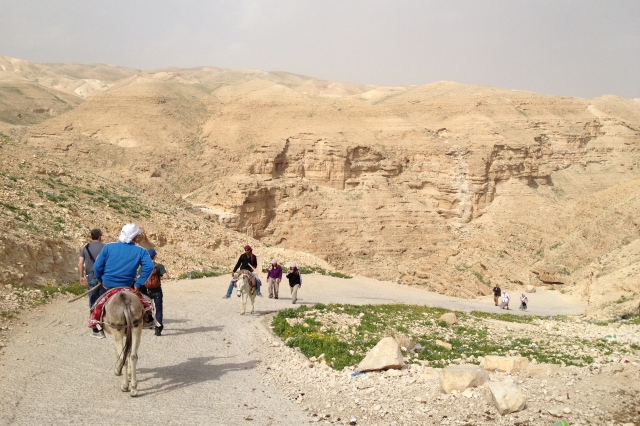
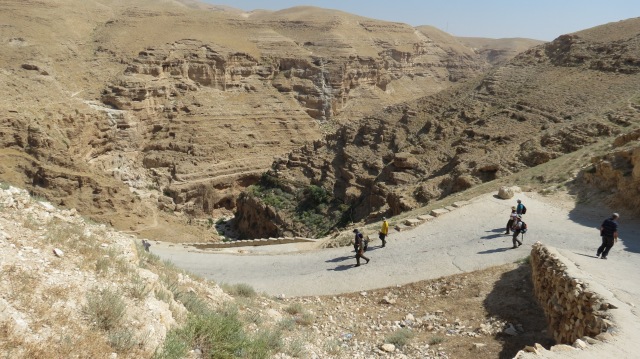
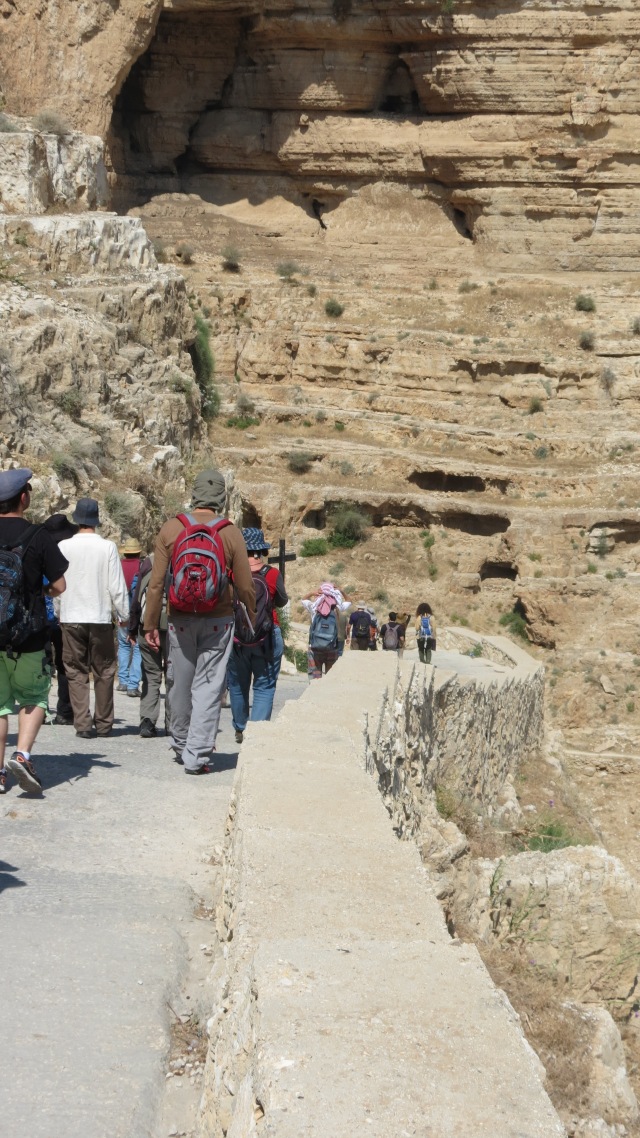
Check out the clip below for a real taste of the walk to St George’s Monastery … When I look at these photographs or watch the videos, I cannot believe I did all this walking!
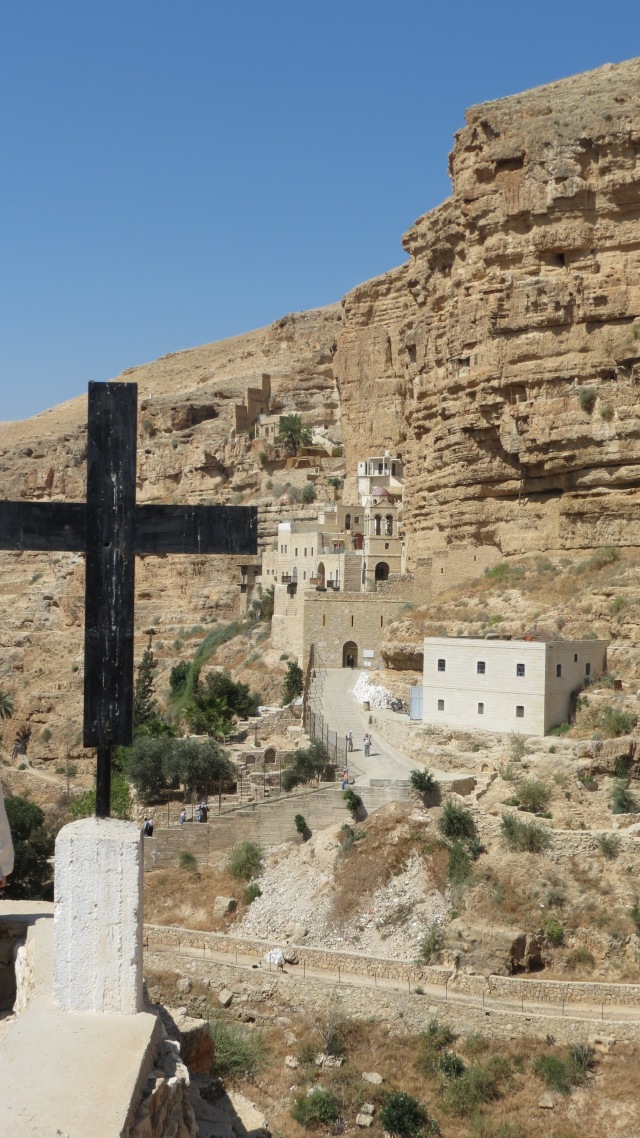
St. George’s Monastery was originally started in the fourth century by a few monks who were looking to immerse themselves in the lifestyles and desert stories of John the Baptist and Jesus. The monks, and perhaps most notably the hermit John of Thebes, eventually settled on the spot around a cave where it is believed the prophet Elijah was fed by ravens (1 Kings 17:5-6). The traditions attached to the monastery include a visit by Elijah en route to the Sinai Peninsula, and St. Joachim, whose wife Anne was infertile, weeping here when an angel announced to him the news of Mary’s conception.
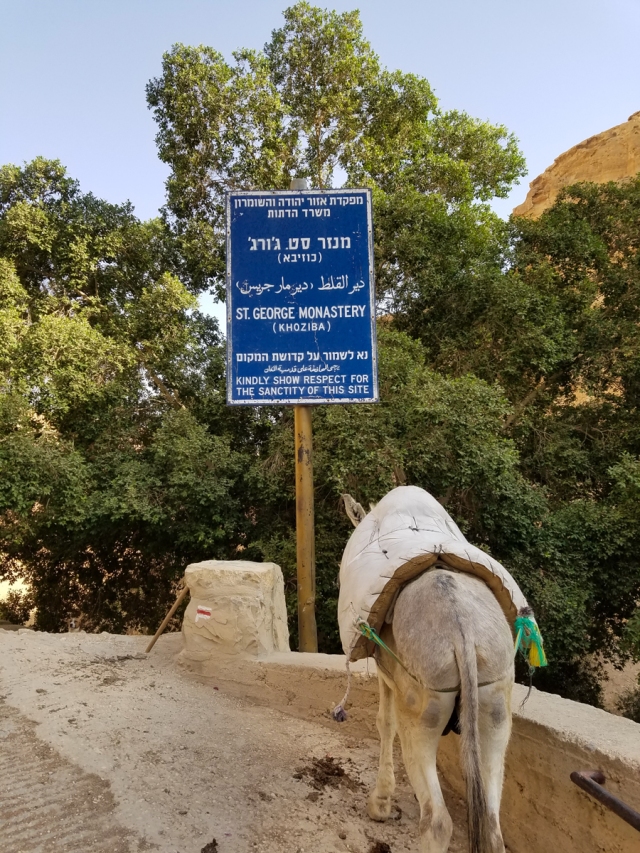

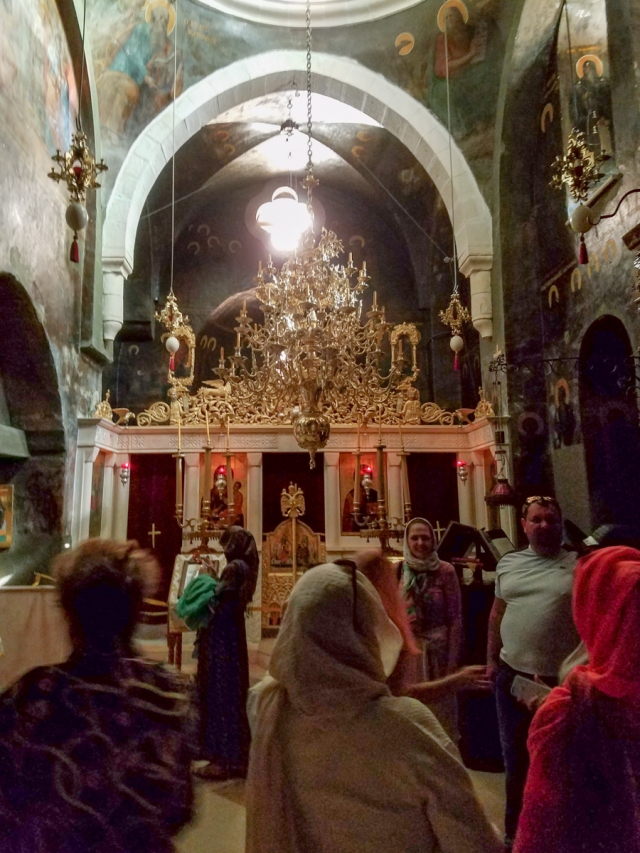
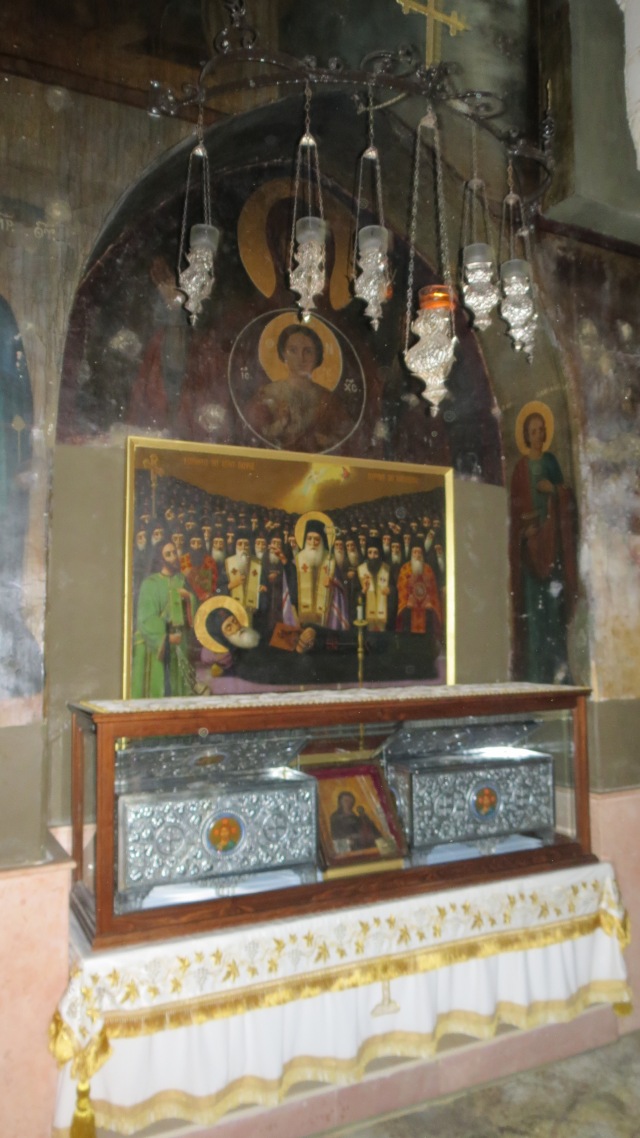
The monastery became an important spiritual centre in the sixth century under Saint George of Choziba. Hermits living in caves in nearby cliffs would meet in the monastery for a weekly mass and communal meal.John of Thebes became a hermit and moved from Egypt to Syria Palaestina. The monastery was named St. George after the most famous monk who lived at the site. Destroyed in 614 A.D. by the Persians, the monastery was more or less abandoned after the Persians swept through the valley and massacred the fourteen monks who dwelt there. The bones and skulls of the martyred monks killed by the Persians in 614 A.D. can still be seen today in the monastery chapel. These 3000 and more martyrs’ relics are so alive that during their Supplication canon every week an exquisite fragrance and raw smell of fresh slaughtered blood are alternately exuded from them!


The Crusaders made some attempts at restoration in 1179. However, it fell into disuse after their expulsion. In 1878, a Greek monk, Kallinikos, settled here and restored the monastery, finishing it in 1901. Father Germanos, born Georgios Tsibouktzakis, who came from Thessaloniki, Greece, to St George’s in 1993 and lived there until he was murdered by Palestinian terrorists in 2001, was for many years the sole occupant of the monastery, he was named Abbot in 2000. Emulating the Wadi Qelt monks of late antiquity, Father Germanos offered hospitality to visitors, improved the stone path used by pilgrims to climb up to the monastery, repaired the aqueducts, and improved the gardens of shade and olive trees.
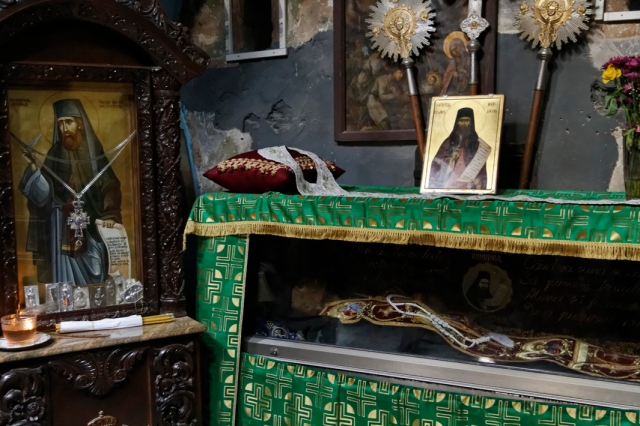
This is probably the most stunning discovery in the monastery: St. John Jacob (the Romanian) – a Hermit from the Holy Land with complete Incorruptible Relics! He was a great ascetic and a poet. He called himself “the child of zero” who “followed the One”. After his all night- vigils, he would briefly rest in the verandah of the monastery and write his so moving poetry, sadly not translated yet in English. In the next days I plan to translate and post here some of his most moving autobiographical poems. This Saint is famous for his miracles, from the discovery of his relics to nowadays.
This discovery was even more stunning for me personally because my spiritual father had introduced him to me the last day before flying from Lancaster to Greece and then to Tel Aviv. He also gave me a tiny piece of a secondary relic of him. What a ‘coincidence’! I knew nothing about him, other than his name, and then a brief google search, and here I found him most alive and incorruptible!

Let me close with Archimandrite Konstandinos, a holy Elder, very special in his hospitality and famous for his clairvoyance gifts.


For more photographs, go here


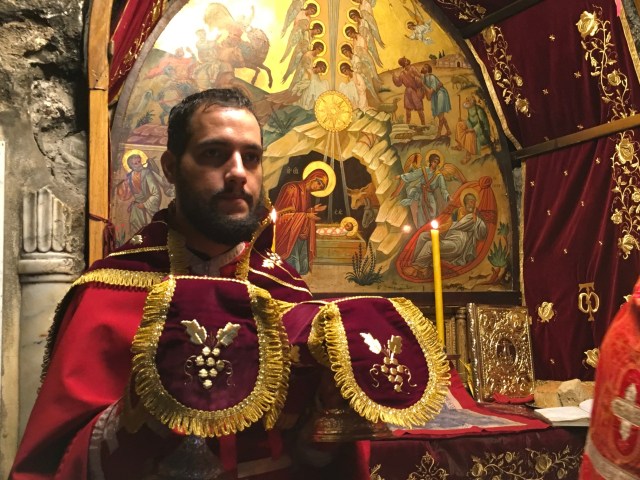
Bethlehem! The birthplace of our Lord and Savior and the cradle of biblical history. Bethlehem (Hebrew: בֵּית לֶחֶם Bet Lehem, [bet ˈleχem], “House of Bread”) is located five and half miles from Jerusalem. No town in the world has such a glorious history as Bethlehem. Our Elders together with a number of Holy Land Hieromonks offer a Holy Liturgy at the Church of the Nativity.
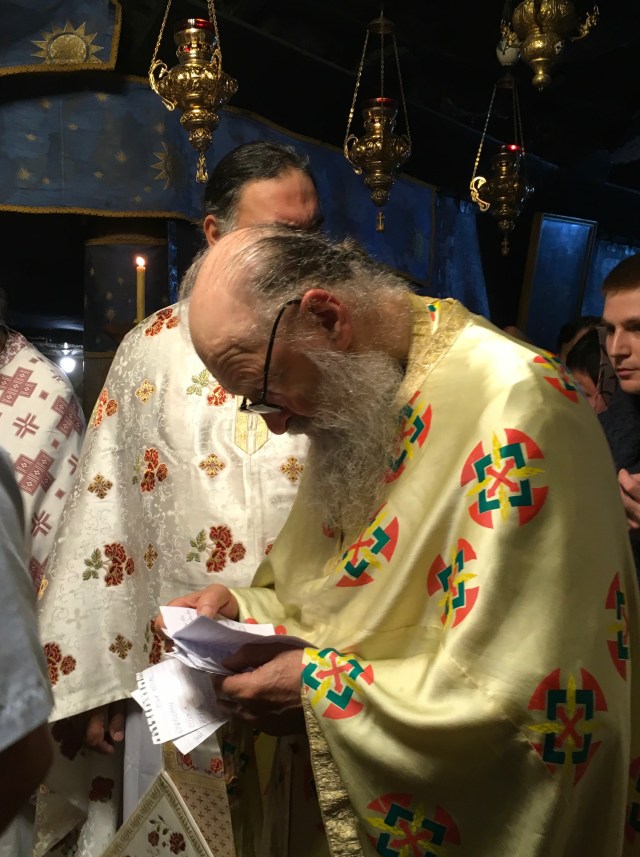

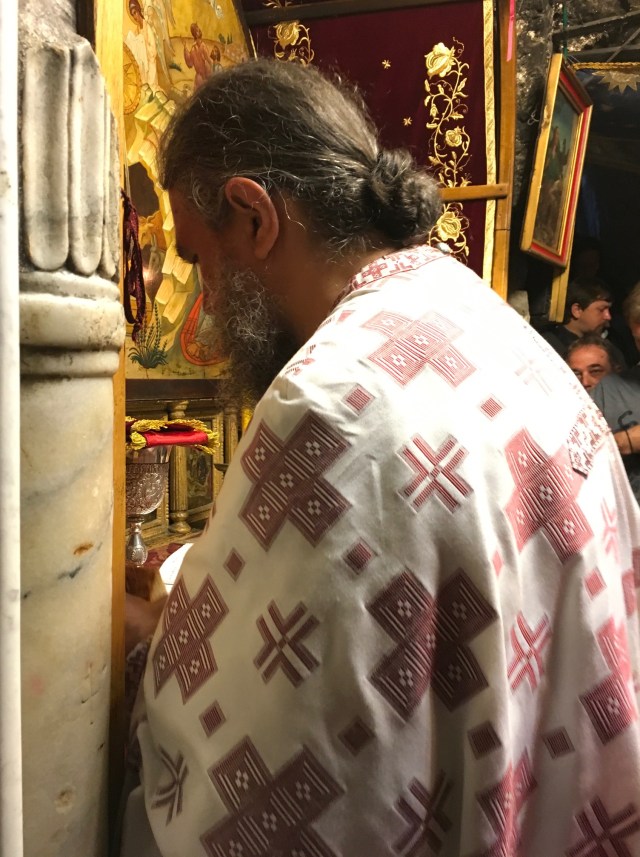
A Greek Orthodox Church, which has been built over the birthplace of Our Lord by the Emperor Justinian and is over 1,500 years old. It is the second oldest Orthodox Church in existence. It was not destroyed by the Persians, as they saw a mosaic of the Magi dressed in Persian wear over the front door. Words cannot communicate what we experienced in venerating and touching the actual ground where Jesus was born. A few feet away is the Holy Manger.
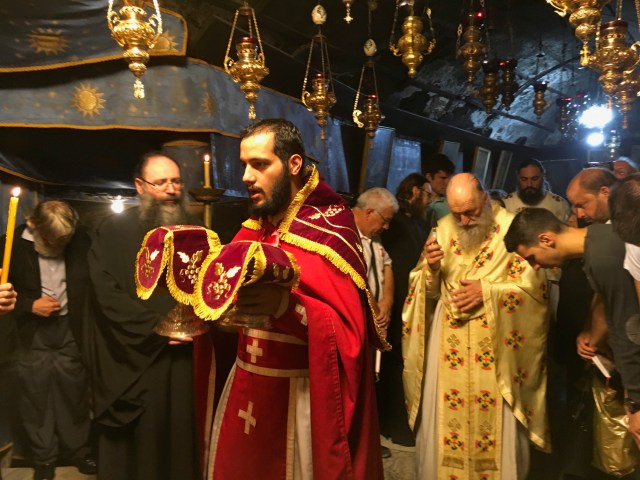
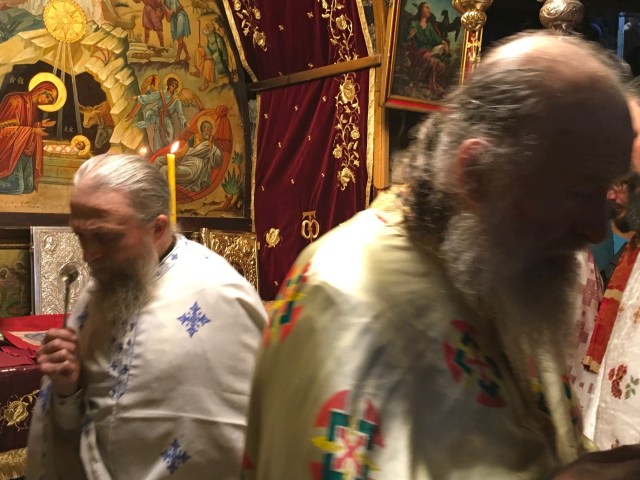


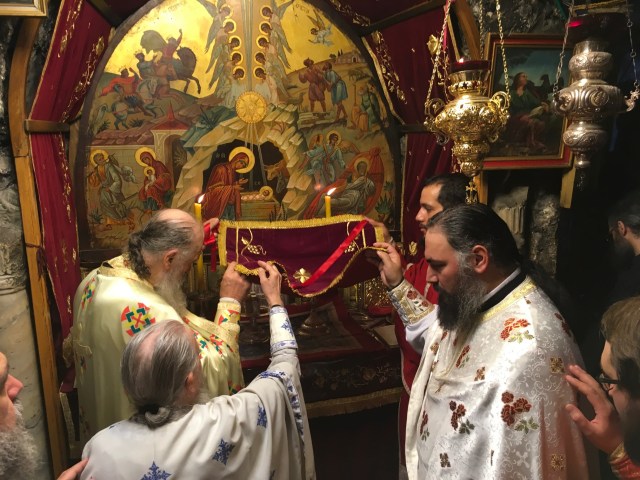


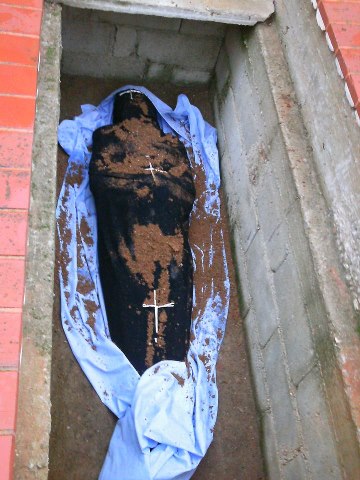
At St. John the Forerunner Women’s Monastery at Metamorfosi, Chalkidiki — at a nun’s funeral
“Και στα δικά μας” [“kai sta dika mas”] (*)
(*) (cf. Gerondas Gregorios’ word in the end)
Sister Episteme, +22 Friday September 2017, the day of our visit, reposed in the Lord on the eve of the Conception of St. John the Baptist, the patron Saint of her monastery, and her spiritual father, Gerondas Gregorios prayed together with her as she was leaving her last breath. Sister Episteme, 60 years old, 34 years a nun, felt her end approaching in the morning and asked her relatives who were visiting the monastery to take her on a last walk on her wheel chair giving them detailed instructions and blessing every corner of the monastery yard, churches and buildings. + Memory Eternal
*
Gerondissa Emmeleia, Sister Episteme’s mother in flesh, became also a nun in the same monastery immediately after she became a widow, after her husband’s 40 day Memorial Service. She had 5 children, 2 of which became nuns, Sister Episteme and Sister Christonymfi, and one a married priest, Father Nikolaos. The last decade of her life she led a most holy, hidden ascetic life in silence and obedience and reposed in the Lord last Easter Sunday. + Memory Eternal
Eleni, Sister Episteme’s lay sister, a kind, meek mother and grandmother, always caring first for others and never for herself, smiling radiantly, with courage, even when her sister was laid in the tomb: ” I feel such bright sorrow in my heart today!”
Tatiani: a pilgrim who tried for some time to become a nun in the monastery but gave up in the end.
– “What was the most difficult thing in monastic life? What made you ‘give up’?”
– “The fact that I could not surrender entirely to God’s Will and to do obedience in everything. I wanted to control my life, to have my opinions, to be in charge. A visa problem emerged, future was uncertain. If I “gambled” all my life and stayed in the monastery as a novice, I might jeopardised both citizenships, Greek and …, and ended up a refugee at God’s Mercy, God knows where. I did not have such ‘craziness’. The fasts, the long prayers, the vigils were difficult of course. One would get bored, tired, hungry, sleepy, but gradually, if one persists, one gets used to them, and grows spiritually. That was not really difficult. But cutting your will and having the guts to give up everything for Christ, and surrendering unconditionally, this has made all the difference. I could not do this.”
*
Presbytera (ie. a priest’s wife) Theodora with 9 children, suffering from lupus:
“Unless one surrenders unconditionally, reaches even the point of becoming a fool for Christ, one way or another, living only for Him, and loving Him more than his family and himself, God’s Grace is never revealed in all His Power in his life. Most people around him of course will not understand him, and think that he is really crazy, but they do not care about what the world thinks of them. They only want to follow Him. Sister Episteme surrendered unconditionally to Him all her life, and especially in her illness. And in just 9 months God granted her his Kingdom.
*
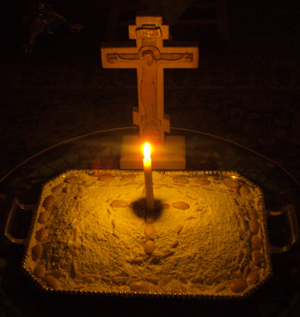
(*) Gerondas Gregorios wishing to me after the funeral: “May the Lord help you. “Και στα δικά μας” [“kai sta dika mas”] (Approximate translation of this wish is “the same to us” In Greece this is a reply to a well wisher in a very specific context, a traditional return gesture of good wishes, but more than that it is specific to the occasion. It most likely refers to an engagement or a wedding. The reply means: may good wishes accompany you when you also find yourself engaged or married or something similar ‘τα δικά σου’ – your (day of celebration). Actually it is an encouragement to follow the same route, wished to an unmarried guest in a joyous occassion, namely a wedding or engagement. There is a lugubrious exception, when this wish is said after the death of a monk in Mountain Athos or monasteries in general in Greece.
+ Memory Eternal!

 ORTHODOX CHRISTIAN FAITH AND LIFE