Mount Athos and Russia 1016 – 2016 

🚂 Traveling to Madingley, Cambridge

madingley

St Mary Magdalene Church, at Madingley

madingley4madingley3

Absolutely Stunning!

madingley2madingley5madingley7madingley6

For the  Eighth Madingley Conference

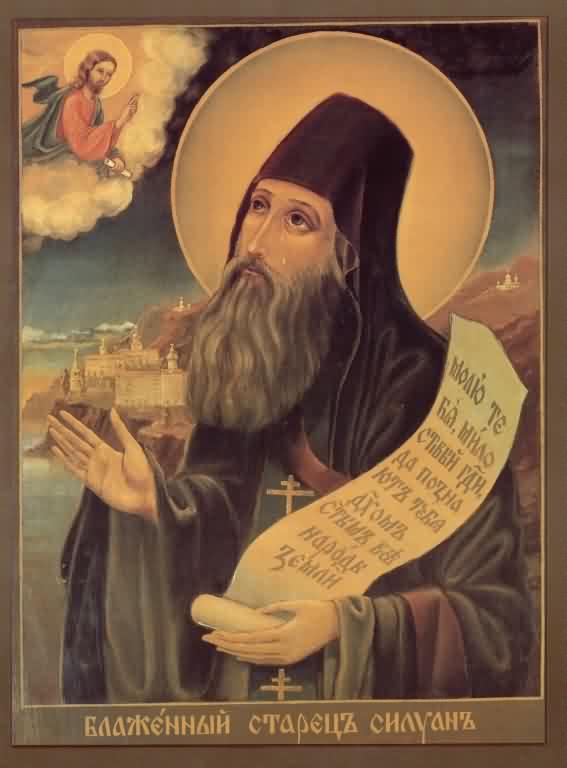
st-silouan

A Symposium Celebrating 1000 Years  of  Russian Monastic Presence on Mount Athos 

mount1mad1.png

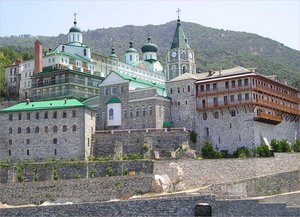
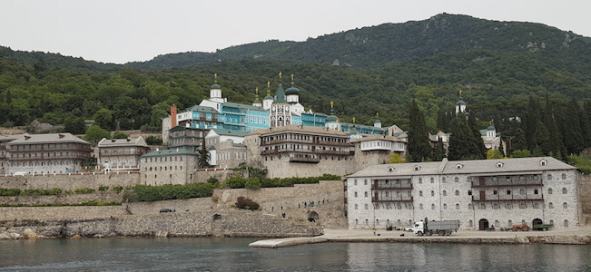
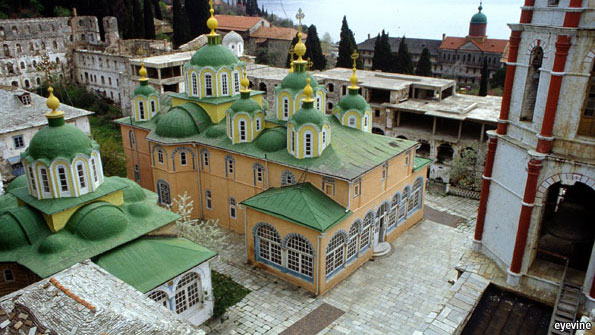
St. Panteleimon Monastery in Holy Mount Athos

3 – 5 February, 2017

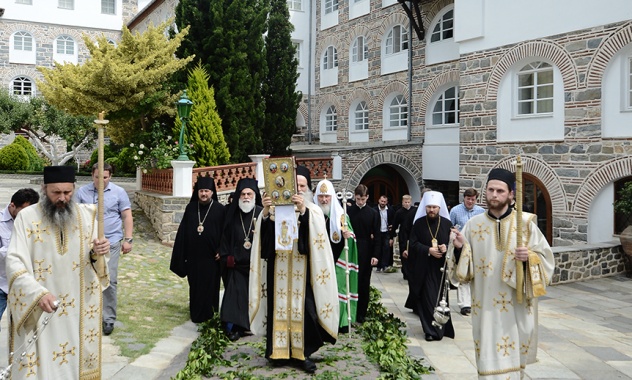
The theme of  the 2017 residential conference will be Mount Athos and Russia, complementing the celebrations of 1000 years of Russian monastic presence on the Holy Mountain that have been taking place during the course of this summer. The first mention of a Russian monastery on the Holy Mountain was in 1016, and a series of events have occurred already this year to mark this millennium.

mount2

As the Chairman, Dr Graham Speake, has written: “Some of the most celebrated names in the history of Russian spirituality have been Athonites. Russians have contributed generously to the spiritual and cultural traditions of the Holy Mountain, just as Greek Athonites continue to have a significant impact on the spiritual life of the Russian Orthodox Church”.

The conference will bring together a distinguished group of speakers from Russia, the Ukraine, Finland and the United Kingdom, to explore various aspects of the Russian associations with Mount Athos.

A historical perspective will be provided by Sergey Viktorovich Shumilo, from the Ukraine. He will talk about the early Russian presence on the Holy Mountain, and the life of St Anthony, founder (with Saint Theodosius ) of the Caves of Kiev.

Hieromonk Irinei (Pikovskiy) , from the Sretensky Monastery in Moscow will examine how recent Athonite elders have influenced contemporary spiritual life in Russia, and inspired a renewal of Russian pilgrimage to the Holy Mountain.

Professor Rene Gothoni, from the University of Helsinki, will look at the history of Russian pilgrimage to Athos since the 12th century, and Archpriest Professor Andrew Louth will talk about the way in which the short 19th century Russian story, “The Way of a Pilgrim” was influential in promoting the use of the Jesus prayer, and the reading of the Philokalia.

The President, Metropolitan Kallistos Ware, will open the Conference by looking at the life of Saint Nil Sorsky, who spent time on Athos in the 15th century before returning to Russia to revive monastic life in the Athonite tradition. Hieromonk Nikolai (Sakharov) will concentrate on the 20th century Russian Saint Silouan, and his disciple and biographer, Father Sophrony. Dr Nicholas Fennell will consider the influence of Archimandrite Misail (Abbot of the Holy Monastery of Saint Panteleimon from 1905 to 1940) and the Monastery’s subsequent development.

mount3


Five Reasons to Visit a Monastery

Striving to Live a Christ-centered Life
 

Five Reasons to Visit a Monastery

Striving to Live a Christ-centered Life: Five Reasons to Visit a Monastery By Matushka Constantina Palmer

Introduction: Journeying by boat to visit their beloved spiritual father, , Constantine Palamas – the father of St. Gregory – suddenly realized he and his family had forgotten to bring food with them for the monastery. While his wife and five children looked on, he raised his voice in prayer and put his hand into the sea; immediately he caught a massive fish. Taking it out of the water, he glorified God for the miracle. Out of his great admiration and respect for the monastic life, Constantine Palamas worked a miracle so that his family would not arrive at the monastery empty-handed. In this way, and in countless others, he instilled in the hearts of his children a firm love for and reverence of monasticism.

This practice of going out into the wilderness to seek a word from a holy monastic is a tradition well established in the Church as early as Christ’s own times. St. John the Forerunner was the first monk, and people sought him out, as St. Andrew of Crete testifies: “The Forerunner of grace dwelt in the desert and all Judea and Samaria ran to hear him.”[1] He, like many of our prophets before him, preached amendment of life. The central difference between him and the prophets, however, was that St. John would become the first and greatest “Father of Monasticism.” Generations of monastics would take his way of life, his asceticism, his bold dedication to discipleship to Christ as the epitome of the monastic life, and they would follow him. “Verily I say unto you, Among them that are born of women there hath not risen a greater than John the Baptist” (Matt 11:11).

The radical lifestyle of St. John changed the world, especially the Christian world, because many who came after him decided to imitate him and live outside the cities solely for Christ’s sake. Thus, slowly the monastic life was established, and those in the world began to look to it as a shining example of the Christian lifestyle. It is an indisputably great and ancient practice of those living in the world to make pilgrimages to monasteries. Below are five of the many reasons one should.

1. Spiritual Direction

Five Reasons to Visit a MonasteryFinding a spiritual guide who has the will and means to guide and direct a believer in his endeavour to live the Gospel precepts in his daily life is not an easy task. It requires prayer and discernment on the part of the seeker, a humble disposition, and an openness to the will of God. This is because once the believer asks a priest or monk to be his spiritual father, he enters into a relationship with that person that cannot easily be dissolved, and which will have everlasting effects on his spiritual life: “A spiritual father… becomes the means of leading the life of men out of hell (by the negative effect of their passions), and into pure Christian life and spiritual freedom.”[2]

Thus, the goal should be to find a spiritual guide who not only preaches Christ, but lives like Christ. As Monk Isaiah wrote to Nun Theodora: “The Holy Spirit is for everyone; but in those who are pure of the passions, who are chaste and live in stillness and silence, He reveals special powers.”[3] This is the primary reason why a person living in the world seeks spiritual direction from those living in monasteries. Not because the Holy Spirit only dwells in those who wear the monastic habit, but because their way of life is far more conducive to acquiring the Holy Spirit. The greatest spiritual guides are those whose manner of life teaches as much or more than their words and advice. If a spiritual guide does not live the commandments of Christ, if he has not experienced temptation, if he does not actively struggle to overcome his passions, then how will he teach others to do likewise? On this point Archmandrite Zacharias of Essex says: “if the word that the spiritual father says is not seasoned with grace, nor proceeds from a heart that is warmed by the love of Christ, it becomes like the work of psychologists or counsellors – a ‘half-blind’ worldly activity. The word of the spiritual father must bear the seal of grace, the seasoning of grace.”[4]

The life of the monk is a macrocosm of the Christian life in the world. And so, it follows that if there are good spiritual fathers in the world, there are great spiritual fathers in the monastery. The reason for this is very simple, as St. Nikodemus states: “monastics, through ascetic struggles and through the monastic way of life, first purified themselves (from the passions and from faults) and then set out to purify others: they were first enlightened and afterwards enlightened others: they were first perfected, and then perfected others, they were, to express it concisely, first made holy and afterwards made others holy…”[5]

For those who have spiritual fathers in the world, they need not forsake them for a priest-monk. They can, however, with the blessing of their spiritual father, seek the counsel of a monastic in certain circumstances that require the guidance of an experienced and specialized “doctor” since, as St. Zosimas says to St. Mary of Egypt: “Grace is recognized not by one’s orders, but by gifts of the Spirit.”

And in fulfilling the instructions of one’s spiritual guide, the layman becomes a candidate for the grace which is for the saints (2 Cor. 8:4). By this, one becomes like a certain youth who, living in the world, “began immediately, with great eagerness, to fulfill the command which the elder had given him… With this work that he did, he was made worthy to lift his mind up to Heaven, where he cried out to the Mother of Christ for compassion; and through her intercessions, he was atoned before God and there came down upon him the Grace of the Holy Spirit….”[6] Ultimately, this is the goal of seeking spiritual direction: to not only be “atoned before God” through a life of repentance, but through the counsels and prayers of one’s spiritual guide – who himself has attained grace – to have the Holy Spirit “come down upon us.”

2. Spiritual Conversation and Action

Five Reasons to Visit a MonasteryOne of the greatest benefits of visiting a monastery is the spiritual conversation and activity pilgrims are able to take part in. At a monastery, spiritual stories and uplifting anecdotes abound. Although many monastics shy away from conversation with pilgrims for a variety of reasons, given the appropriate circumstance a conversation with a monastic can rear a multitude of benefits – not to mention conversations with fellow pilgrims.

Whether they share a story they have heard, wisdom from the Mothers and Fathers of the Church, or even a tale from that monastery, their words inform and enlighten the pilgrim and help refocus his busy mind. Even time relaxing in the world does not refresh the soul the way a spiritual conversation does. This type of conversation, though found more rarely in the world, is often a common occurrence at a monastery.

Furthermore, many monastics, despite not living in the world any longer or dealing with its struggles and temptations, have great wisdom to share. Not only did they also once live in darkness (Matt. 4:16), but they have a wealth of experience from speaking with pilgrims who confide in them. Through prayer and reading, the monastic manages to help the pilgrim approach his problems with a bit more clarity and even a new perspective.

Coupled with this beneficial spiritual conversation is the spiritual activity that takes place in a monastery. Work and prayer are two primary tenets of the monastic life. Work, however, is done in a slightly different spirit than work done in the world. An Abbess at a monastery not far from Thessaloniki has often said work in a monastery is a great deed because it is done solely for the love of God, and the love of His saint, the monastery’s patron. She teaches that to even pick up a piece of garbage in a monastery yields a great heavenly reward because it is done in honour of the saint, to keep his house clean. After helping with work in the monastery, she would tell the pilgrims: “The patron saint wrote down the work you have done, and you will find it presented on the Day of Judgement.”

When a monastic bakes bread, he bakes for the glory of God. When he chants in church, he chants for the glory of God. When he sweeps, he does so for the glory of God. And when a pilgrim partakes of such God-honouring work, he begins to look at his own work in a different light, just as the monastic offers all his work for the glory of God, so too can the pilgrim – both while at the monastery, and when he returns to his work in the world. The Christian home is a microcosm of the coenobitic monastery; when the mother, father, or children clean the house, they too can do so for the glory of God.

Both the monastic and the pilgrim can approach work the way Abba Apollo did: “If someone came to find him about doing a piece of work, he would set out joyfully, saying, ‘I am going to work with Christ today, for the salvation of my soul, for that is the reward he gives.’”[7] The only difference between the monastic’s work in the monastery and the layman’s work in the world is that the monastic knows that he left behind his own success to seek the Kingdom of God; the layman merely needs a reminder now and again. He needs to ask himself which of the following he is and who he desires to glorify: “The man who loves himself seeks his own glory, whereas the man who loves God loves the glory of his Creator.”[8]

3. Humility

 Five Reasons to Visit a MonasteryThe fallen human soul is predisposed toward pride. This is something that occurs with the monastic as much as with the layman. When the Christian keeps his prayer rule faithfully, observes the fasts of the Church, or attends church services regularly, the soul is inclined to become puffed up. The antidote is finding better examples than oneself of Christian dedication to remind the proud soul that she is lacking in virtue.

The layman has the ability to make pilgrimages to monasteries and so finds a helpful means to stay grounded in his spiritual life. Encountering monastics reminds the pilgrim that there are better Christians than himself (not that he cannot also learn this in the parish, he most certainly can, but it is an indisputable fact that one is faced with at a monastery). Hence the famous statement: “Angels are a light for monastics, and monastics are a light for the world.”[9] The monastic is simultaneously humbled and enlightened by reading the lives of the saints, just as the layman is when he compares his life with that of a monastic.

Humility is a virtue that the monastic and layman ought to strive for above all else, for as St. John Cassian says, “Humility of soul helps more than everything else; without it no one can overcome lewdness or any other sin.” And so, the layman makes pilgrimages to monasteries in order to draw the soul away from the distracting world and into an environment of stillness and prayer, where the atmosphere is conducive to taking stock of one’s life alongside that of a dedicated monastic, and to allow the grace of the monastery to help him see his own sinfulness.

The following story, taken from The Wisdom of the Desert Fathers, illustrates this point: There were three friends, all of whom chose different means of work. The first decided to become a peace-maker among men. The second decided to tend to the sick. While the third decided to live in prayer and stillness in the desert. The first two friends found that they were unable to complete the work they set out to do and became disheartened. So they decided to visit their third friend who was living in the stillness of prayer. They confessed their difficulties and asked for guidance. This was the third friend’s response: “After a short silence, he poured some water into a bowl and said to them, ‘Look at the water,’ and it was disturbed. After a little while he said to them again, ‘Look how still the water is now,’ and as they looked into the water, they saw their own faces reflected in it as in a mirror. Then he said to them, ‘It is the same for those who live among men; disturbances prevent them from seeing their faults. But when a man is still, especially in the desert, then he sees his failings.’”

And so it is with the pilgrim from the world. In the stillness of the monastery, he is able to reflect on his failings. Whether it be in comparing his spiritual life with the monastic who left all things behind to live “alone with God alone,” as Elder Porphyrios was wont to say, or simply due to slowing down and reflecting on his faults, the pilgrim returns to the world with greater humility of soul. [15] St. Theodora, Matericon, 85.

4. Imitation

Five Reasons to Visit a MonasteryThe command to imitate Christ is found throughout the Gospels. He is the image of perfect obedience, extreme humility, utter chastity, and a life of poverty. To be sure, if a believer only ever read the Gospels, he would be informed on how to live a proper Christian life. However, because man is weak and in need of examples, the monastic life illustrates the Gospel commandments lived out to their perfection. Thus the layman has before him a pragmatic example of how the teachings of the Lord are upheld and practiced. In turn, he emulates those things in an appropriate and prudent way, just as St. Paul encourages: “what ye learned and received and heard and saw in me, these things be practising; and the God of peace shall be with you” (Phill. 4:9).

There is much to be learned and gained from spiritual books, practical guides, and the wisdom of the desert Fathers and Mothers. However, nothing compares to the spiritual benefit brought about by actually being around someone who shares in the grace of God in a deep and intimate way. For whether or not he has “the words of life,” his prayer, his patience, and his virtue are enough to form and inform the humble-hearted that seek his unique, if silent, wisdom. Abba Dorotheos writes: “It is said that a certain brother asked an elder, ‘What shall I do, father, in order to fear God?’ The elder answered, ‘Go and cling to a man who fears God and from the fact that he fears Him, he will teach you to do likewise.’”[10]

Laymen are called to keep the commandments of the Gospel with as much precision as monastics. The monk is not called to one type of life, and the layman to another. No, they are both called to “be perfect even as my Father in heaven who is perfect” (Matt. 5:48), just as St. John Chrysostom taught: “You greatly delude yourself and err, if you think that one thing is demanded from the layman and another from the monk; since the difference between them is in that whether one is married or not, while in everything else they have the same responsibilities… Because all must rise to the same height; and what has turned the world upside down is that we think only the monk must live rigorously, while the rest are allowed to live a life of indolence.”[11]

The only difference between a Christian living in the world and a monastic living in a monastery is that monasticism “rejects any kind of compromise and seeks the absolute”[12], whereas the layman struggles as best he can in the midst of the distracting world. Both are acceptable and blessed in the eyes of God. Both ways are only successful by the grace of God. The layman should not be disheartened by his struggles in “the darkness of the world” (Eph. 6:12). Rather, he should take courage that he is upheld by the prayers of countless monastics, as Bishop Nikolai of Lavreot has stated: “The life of the faithful is supported by the prayers of the monks. This is elucidated by the very fact that the faithful take refuge in such prayers. Just as Moses stretched out his hands and the Israelites conquered the Amalekites, so the monastics lift up their hands to God and we, the faithful who are struggling in the wilderness of this world, conquer the noetic Amalek.” And more significantly, the layman should take courage that “where sin abounded, grace did much more abound” (Rom. 5:20).
5. Encountering Sacred Place 

Five Reasons to Visit a MonasteryEven if there were no other reason for visiting a monastery, there would remain this one: it is an agios topos, a holy place. “And Moses said, I will go near and see this great sight, why the bush is not consumed. And when the Lord saw that he drew nigh to see, the Lord called him out of the bush, saying, Moses, Moses… loose thy sandals from off thy feet for the place whereon thou standest is holy ground” (Exodus 3: 3-5).

Coupled with the prayers of the monastics, the saints that dwell within the monastery, and the angels that protect it, there are also at least one or more chapels. The presence of a temple of God alone is enough to sanctify a place. And it is in this sanctified place that even without hearing God-inspired words or witnessing miraculous events, the pilgrim is refreshed. His weary and tired body and soul are nourished with more than monastic fare – they are nourished with monastic stillness.

A pilgrim once asked a priest-monk why it was that out of all the monasteries the pilgrim had visited, this one particular well-known monastery was the one in which grace and divine fragrance was the most perceivable. The priest-monk answered that although all monasteries are holy, that that monastery held the typikon to celebrate Divine Liturgy every single day, and confessed people for hours on end, and so as a result it attracted the grace of the Holy Spirit and He dwelt there. As Dr. Constantine Carvanos surmises, “[t]hrough confession at these centers of spirituality, through participation in the moving services of the monks or nuns, and speaking with them, a Christian living in the world is aided by calm refuge from his worldly cares, by being purified, by rediscovering himself, and by tasting of the gifts of the Holy Spirit.”[13]

St. Nikolai Velimirovich records: “When [St. David of Garesja] arrived at a hill from which Jerusalem was visible, [he] began to weep and said, ‘How can I be so bold to walk in the footsteps of the God-man with my sinful feet?’ David then told his disciples that they, being more worthy, should go to worship at the holy places, and he took three stones and began to return.”[14] The saint’s humility was so great that he considered the sight of the Holy Land and even its pebbles to be overflowing with grace. How much more does the grace of a sacred place exceed sight and stones? In this sense the words of St. Theodora hold an even greater significance: “Love stillness. One who is not attached to the vanities of this world is strengthened in soul by stillness, abstinence and silence.”[15] This strength, harnessed by the grace of a sacred place, can then be brought back into the world if treasured and safeguarded through prayer and watchfulness.

Conclusion:

In conclusion, “if you want to know if someone loves Christ, find out if he loves monasticism,” as the saying goes. Visit monasteries, acquire humble-mindedness, and abstain from judging others – both the believer who is too lax and he who is too strict. “Wherefore seeing we also are compassed about with so great a cloud of witnesses, let us lay aside every weight, and the sin which doth so easily beset us, and let us run with patience the race that is set before us, looking unto Jesus the author and finisher of our faith” (Heb. 12:1-2).

All photos that appear in this article belong to Nektarios and are used with permission.


[1] The Great Canon of Repentance, Song 9, [11].

[2] Archimandrite Zacharias, The Enlargement of the Heart, 174.

[3] Monk Isaiah to Honourable Nun Theodora, Matericon, 160.

[4] Archimandrite Zacharias, The Enlargement of the Heart, 174.

[5] St. Nikodemos, Handbooks of Counsel [Greek], 15-16.

[6] St. Symeon the New Theologian, from Dr. Constantine Carvanos’ article A Discourse for those living in the world, Orthodox Info:http://orthodoxinfo.com/praxis/discourselivingworld.aspx.

[7] Abba Apollo, Sayings of the Desert Fathers, 36.

[8] Philokalia, St. Diadochos of Photiki: “On Spiritual Knowledge and Discrimination: One Hundred Texts”, vol. 1, [12], 255.

[9] St. John Climacus, The Ladder of Divine Ascent, op. cit., 128.

[10] Abba Dorotheos, Practical teaching on the Christian life, “On the Fear of God,” [52], 113.

[11] St. John Chrysostom, Pros piston patera (To the faithful father) 3, 14, PG47, 372- 74.

[12] Professor Georgios Mantzarides, Images of Athos by monk Chariton,http://www.stanthonysmonastery.org/monasticism.php

[13] Constantine Carvanos, Discourse on those living in the world, Orthodox Info:http://orthodoxinfo.com/praxis/discourselivingworld.aspx.

[14] St. Nikolai Velimirovitch, Prologue, May 27.

[15] St. Theodora, Matericon, 85.

By Matushka Constantina Palmer

Source: Lessons from a Monastery (wordpress.com)
 

Holy Mountain’s Secret Cry


Jesus Prayer].jpg

Metropolitan of Nafpaktos and Agios Vlasios, Hierotheos, speaks on Mount Athos’ secret cry:  the Prayer of the Heart


As biological life is transmitted, so spiritual tradition is a whole life.

*

A guide speaks theoretically, but the Fathers beget spiritually.

*

The Holy Mountain is a living organism.

*

May the Lord find us worthy to hear its secret cry!

*

Already in his youth, Metropolitan Hierotheos was particularly interested in the Fathers of the Church, working for a time in the monastery libraries of Mount Athos, on the recording of the codices. He was especially interested in the teaching of St. Gregory Palamas.

The influence of Fr. John Romanidis, the study of the patristic texts and particularly those of the hesychast Fathers of the Philokalia, many years of studying St. Gregory Palamas, association with the monks of the Holy Mountain (Mount Athos), and many years of pastoral experience, all brought him to the realisation that Orthodox theology is a science of the healing of man and that the neptic fathers can help the modern restless man who is disturbed by many internal and existential problems.

Within this framework he has written a multitude of books, the fruit of his pastoral work, among which is Orthodox Psychotherapy. Some of these books have been translated into various languages, such as English, French, Spanish, Russian, and Arabic. With these books he conveys the Orthodox spirit of the Philokalia to the restless and disturbed man of our time.

Books


A Novice of her own Son

On Gerontissa Theophano, the mother of Archimandrite Ephraim of Philotheou

A Novice of her own Son


“The climate on the island of Thassos suited her better than in Portaria, so I moved her there. She gradually drew near to the end of her life. Two years before her death, at the age of 92, she was paralyzed. From that time she didn’t completely raise herself from her bed. But, glory to God, as the Gospel says: And every one that hath forsaken houses, or brethren, or sisters, or father, or mother, or wife, or children, or lands, for my name’s sake, shall receive an hundredfold, and shall inherit everlasting life (Mt. 19:29).

This is what happened with my mother: during her illness she was surrounded by caring daughters—the sisters of the monastery who took care of her with great zeal. And where in the world will you find such love now?! Her nurse, one of the sisters of the monastery, so loved my mother that there are no words! She was so nice, so kind, and even slept together with her, head to head…

When a crisis came during my mama’ illness, something happened which happens very rarely, but when it happens it’s only with spiritual people for the sake of testing them and for gaining experience. It happened one night. Mama was as if dead already several days—she didn’t eat, didn’t drink, and didn’t open her eyes. She didn’t drink a single drop of water. She was dehydrated, with closed eyes—how dying people usually look…

When she was in such a state I was there with her, together with the nun-nurses and Gerontissa. It was dark, lampadas were burning. The night before, at about the same time, her eyes opened at some point. She opened her eyes and looked around, as if she was expecting something to happen or that already happened, with some kind of uneasiness, as if listening to something, or seeing something or someone. This was the first time after being unconscious for so many days that she showed some attention to the world around her. Lying, because she was unable to move, with open eyes, she looked all around, to the right, left, up, and down. And as the moments flowed by, her face more strongly revealed a state of terrible agony and terrible fear—a whole river of fear. I saw such fear reflected on her face as when some killer is drawing near with a knife, ready to cut you.

I began to cover her with the sign of the Cross, repeating aloud the Jesus Prayer to calm her. I understood that what was happening was a demonic temptation. After a while the danger passed, and the invisible powers departed. Mama calmed down, and she was still conscious. Then I asked her: ‘Mama, what happened? What’s with you’—‘Oh… so many, they are so many!’ And from that moment mama began to pray: ‘O Mother of God, save me! O Mother of God, save me!’ Day and night! From that point her mouth never stopped. Day and night she besought salvation from the Mother of God.

It is striking that she had no thoughts, only prayer—sick people usually easily succumb to thoughts. By her way of life—constant podvigs and labors—mama acquired exceptional patience, and this patience helped her maintain prayer this whole time. I asked her: ‘What happened?’—‘The Mother of God helps me!’ And again the prayer continued: ‘O Mother of God, save me! O Mother of God, save me!’

After some time, when the torment was over, she completely calmed down and shut her eyes. The next day at the exact same time her eyes again opened. The same fear and agony was again displayed on her face. The exact same scenario happened again. It was all quite excruciating.

Then I wondered: why does the devil have authority over this holy soul? I, of course, understood that this temptation was allowed so she could obtain a crown, that through this ordeal she could acquire boldness before God. And at some point, when she was in such a state, I said to myself: ‘It’s not fitting that this should continue. It’s time to end this.’ I went to my cell, got on my knees and began to pray: ‘O Lord, I beg Thee, do one of two things. Either take her right now, that she could have peace already, because she is worthy of peace, or banish the devil away from this holy soul. She has already labored for Thee so much, and now her time for rest has arrived.’ This is how I prayed.

When her eyes opened again the next day at the same time, she was calm. ‘Mama, how are you?’—‘They left…’ The trial was over. From that very moment began the blessed final period of her blessed life. Days passed in this blessed state. Her appearance gradually changed, she became more and more beautiful. Of course, this beauty was not physical, but spiritual. I wanted to photograph her. The grace in her was clearly apparent. Thus she gradually drew nearer to death.”

“I saw how her soul ascended unhindered to Heaven”

“The following year, after Nativity, in Christmastide, I went to the monastery to see her again,” continues Elder Ephraim’s narration. “She spoke and understood what was happening, and unceasingly repeated the prayer. In the final moments of her life her face was transfigured, blessedness shining upon it. She turned to the right, revealing her widely shining eyes and glanced off to the side as if she saw something there. In that moment I felt such Paschal joy in my soul, such resurrection, as if I had suddenly gathered the grace of ten Paschal nights.

It was the first time I felt this in my life. Of course, when my elder Joseph departed to the Lord there was something special then too, but here it happened with my own relative. I felt such happiness at that moment, and also felt and saw … I don’t know, in what manner it happened, but I saw how her soul ascended unhindered to Heaven.

When the doctor arrived he couldn’t believe that she had already died—she looked so alive. Her body was warm and soft, like the body of someone living. ‘Lord, have mercy! I can’t believe it!’ the doctor exclaimed. It was incorruption. I told the doctor that Christ said: death is but a dream, and every person will awaken on the day of the Second Coming at the sound of the archangel’s trump.

When the doctor left, we sewed her up in a monastic habit, with three crosses sewed on top. Meanwhile I continued to feel such strong Paschal joy, that I wanted to go out on the street and sing ‘Christ is Risen!’ She was so beautiful after death. She was 95, but she looked like she was 15. It was the result of her whole life, all her labors; it was a reward for all her labors.”

Her relics were found to be “very beautiful”

The sisters of the monastery told me that when Gerontissa Theophano’s coffin was carried to the monastery cemetery, sheep came and doves flew over. The sheep managed to get themselves out of their pen, ran to the grave, all bleating at the same time, and turned around and ran back to their pen. Then from somewhere above their appeared a flock of doves which flew over the grave and disappeared into the heights.

Her relics were found to be “very beautiful.” In Greece the tradition still exists of taking bones around the third year after death and placing them in an ossuary—not only on Athos but in other monasteries and even among the laity in regular cemeteries. By the color and smell of the relics you can hypothesize about the postmortem state of the soul of the departed. For example, there are cases when the body does not dissolve, or the relics emit a foul odor—then it is considered that things are bad for the soul of the departed and it stands in need of prayerful help. Family members begin to order forty-day prayers for the dead and distribute alms for the repose of the soul. There are particular signs by which you can know that the soul of the departed found grace from the Lord: an amber color to the relics and a sweet fragrance emanating from them. It even happens that the relics of some Orthodox acquire incorruptibility.

So, when they opened Gerontissa Theophano’s grave, her relics were fragrant and had the most amber color, by which it could be determined that her soul found salvation. A reliquary was made for her head which is now kept in the Monastery of the Archangel Michael on the island of Thassos.

Through the prayer of holy fathers, O Lord Jesus Christ, our God, have mercy on us!


[1] Gerondissa, the feminine form of geronda, is the Greek word used to denote respect for an abbess or female spiritual instructor.

[2] A piece of wood which monastics rhythmically beat to call the others to the services.

Source: Pravoslavie.ru

Our Lady of Kipina


kipina39kipina38kipina36kipina35kipina34kipina33

kipina23kipina32kipina31

kipina37kipina28

kipina19


kipina26


kipina11

kipina13

kipina8

kipina6

kipina4

kipina2kipina1kipina16

kipina21

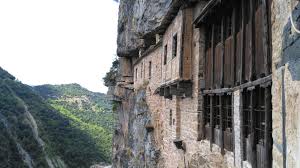
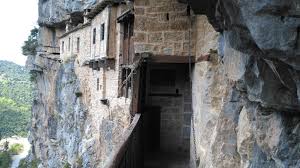
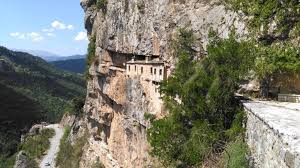
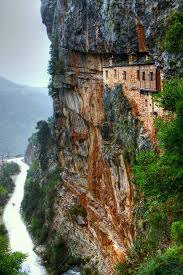
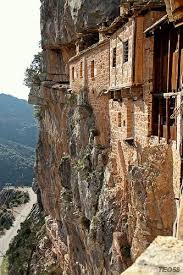
If you go towards the old-world village of Kalarrytes in the Tsoumerka Mountains in Epirus, you come across an impressive fortified monastery built into a rock face: the Holy Monastery of Our Lady of Kipina.


The Holy Monastery of Kipina is built into a large cave in a sheer rock.


According to the founder’s inscription, building began in 1349. But according to Metropolitan Serafeim (Vyzantio) of Arta, a historian, the foundation dates back further in time. Other historical sources date it to 1212.
 

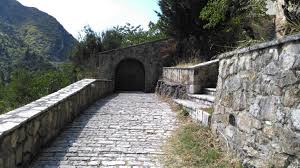
Access to the Monastery is by a stone path hewn into the rock. In former times, contact could be broken by means of a wooden drawbridge.

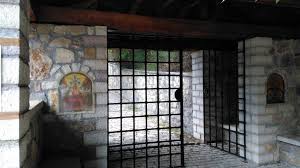
The outer gate of the monastery.


Without doubt, the time when the Monastery of Kipina was at its peak was the 18th century. Indeed, it’s recorded that, in 1760, the exceptionally active Abbot Kallinikos funded the construction of a bridge over the nearby River Kalarrytikos, a tempestuous tributary of the Arakhthos.


The Monastery also ran a school and a water-mill. All of this shows both the financial power of the foundation and also the close links with its social setting.


The imposing rock casts its shadow over the steps of visitors, next to the path to the entry.


Still surviving from the old Monastery complex are the church, four cells and a small building which used to serve as a stable.


In the olden days, the drawbridge would be raised at night or at times of danger. Access to the Monastery was thus completed severed, which is why it is one of the few that escaped pillage. The crank handle of the drawbridge has been preserved.


The Monastery is dedicated to the Dormition of the Mother of God. According to tradition, however, it celebrates on the feast of the Life-Receiving Spring (Friday in the week after Easter).


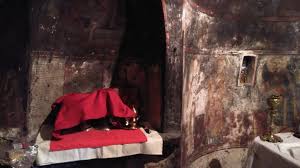
The church is a small, single space, built within the cave.


The rich iconographical decoration of the church was carried out in the 18th century.


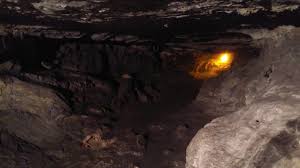
At the northern end of the narthex is the opening to the cave, which extends to a depth of 240 metres into the rock.

Today’s Abbesses of Abbesses

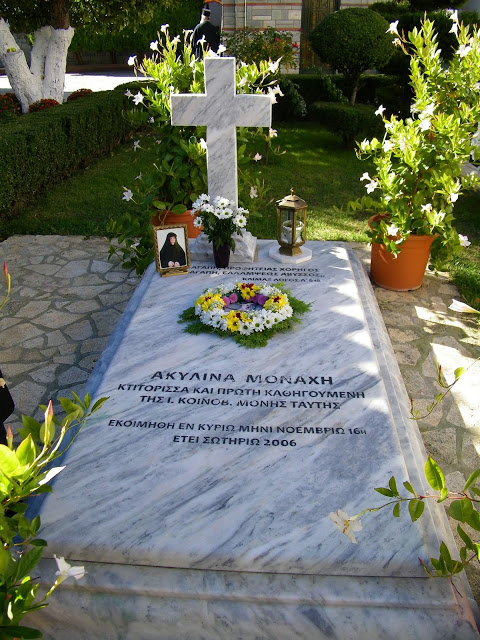
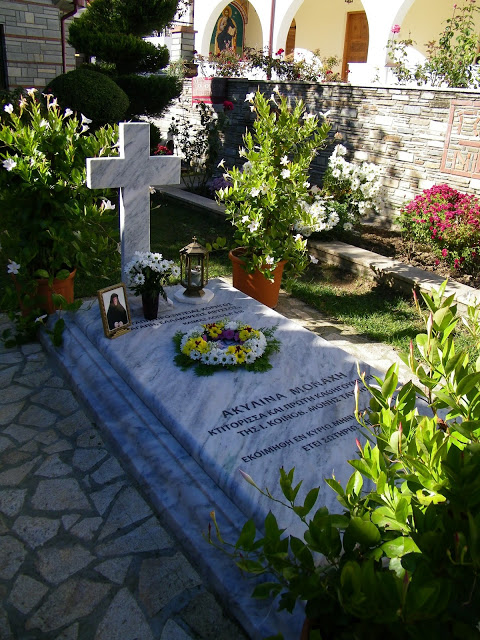
Gerondissa Akylina, Porphyria, Sipsa Monastery and St. Georgios Karslidis

Gerondissa Akylina, Gerondissa Porphyria (Sipsa) and Gerondissa Makrina (Portaria)

Friday, November 4, feast day of the Blessed Elder Georgios Karslidis of Pontos, warmed my heart with fond memories of nearly 3 decades of pilgrimages to beautiful, gem monasteries in Northern Greece!

 *

“God cares for everyone. Despair is in effect a lack of faith.”


Gerondissa Akylina, Porphyria, Sipsa Monastery and St. Georgios Karslidis


Taxiarches and the Analipseos Monastery (Sipsa) in Greece is one of the Monasteries in Greece that holds a dear place in my heart. Together with that of St. Paisios in Souroti, they were the first monasteries I started visiting as a University student, before my graduate studies and work at the US. At that time Gerondissa Porphyria, a Living Signpost in my journey on The Way,  had not even become a monastic, and now she is a renowned Abbess, one of the few of her ‘calibre’ in contemporary women’s monasteries.


Gerondissa Akylina, Porphyria, Sipsa Monastery and St. Georgios Karslidis


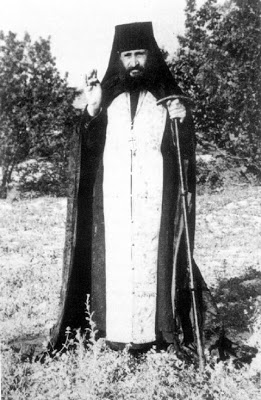
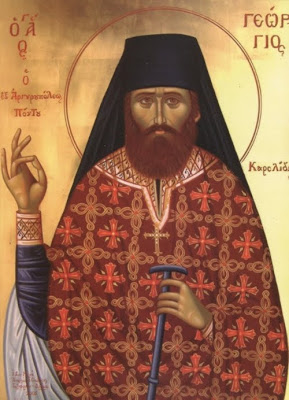
The Blessed Elder Georgios Karslidis of Pontos (1901-1959), latter day saint of the Saintly Orthodox Church in Greece,  glorified by the Patriarchate of Constantinople in 2008, was the first “resident” and founder of the monastery in the year 1930. He is one of few saints known to bear an imprint of the sign of the cross on his skull. There is a flourishing multitudinous sisterhood of nuns here today, who occupy themselves with the Iconography of handheld pictures, gold embroidery,knitting and waxwork.


Gerondissa Akylina, Porphyria, Sipsa Monastery and St. Georgios Karslidis


Gerondissa Akylina, Porphyria, Sipsa Monastery and St. Georgios Karslidis


Gerondissa Akylina, Porphyria, Sipsa Monastery and St. Georgios Karslidis


Gerondissa Akylina, Porphyria, Sipsa Monastery and St. Georgios Karslidis


Gerondissa Akylina, Porphyria, Sipsa Monastery and St. Georgios Karslidis


Gerondissa Akylina, Porphyria, Sipsa Monastery and St. Georgios Karslidis


Gerondissa Akylina, Porphyria, Sipsa Monastery and St. Georgios Karslidis


Gerondissa Akylina, Porphyria, Sipsa Monastery and St. Georgios Karslidis


Gerondissa Akylina, Porphyria, Sipsa Monastery and St. Georgios Karslidis


Gerondissa Akylina, Porphyria, Sipsa Monastery and St. Georgios Karslidis


Gerondissa Akylina, Porphyria, Sipsa Monastery and St. Georgios Karslidis


Gerondissa Akylina, Porphyria, Sipsa Monastery and St. Georgios Karslidis


Gerondissa Akylina, Porphyria, Sipsa Monastery and St. Georgios Karslidis


Gerondissa Akylina, Porphyria, Sipsa Monastery and St. Georgios Karslidis


Gerondissa Akylina, Porphyria, Sipsa Monastery and St. Georgios Karslidis


Gerondissa Akylina, Porphyria, Sipsa Monastery and St. Georgios Karslidis


Gerondissa Akylina, Porphyria, Sipsa Monastery and St. Georgios Karslidis


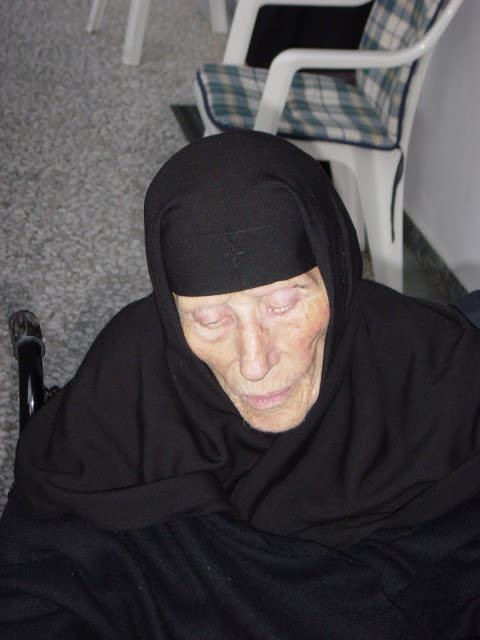
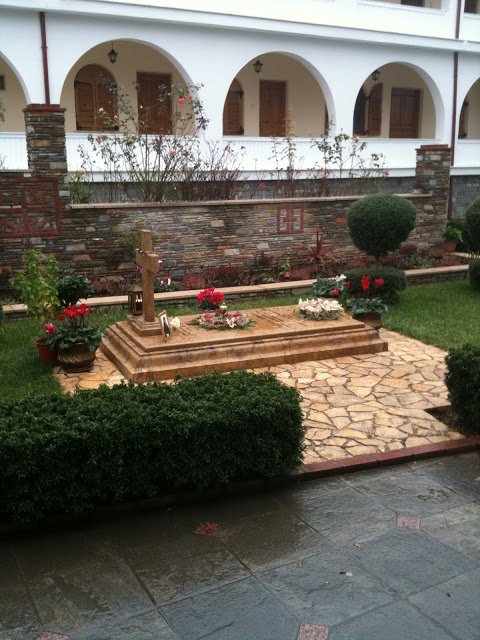
Gerondissa Akylina was the first Abbess. I had the rare blessing to meet her a number of times during the last years of her life. In the words of our late Elder Iosif Vatopaidinos, Gerondissa Akylina, together with Gerondissa Makrina in Portaria, were ‘Abbesses of Abbesses’:  examples of the monastic life and their monasteries models of coenobia, workshops of virtue and antechambers of Paradise.


Gerondissa Akylina, Porphyria, Sipsa Monastery and St. Georgios Karslidis


Gerondissa Akylina, Porphyria, Sipsa Monastery and St. Georgios Karslidis

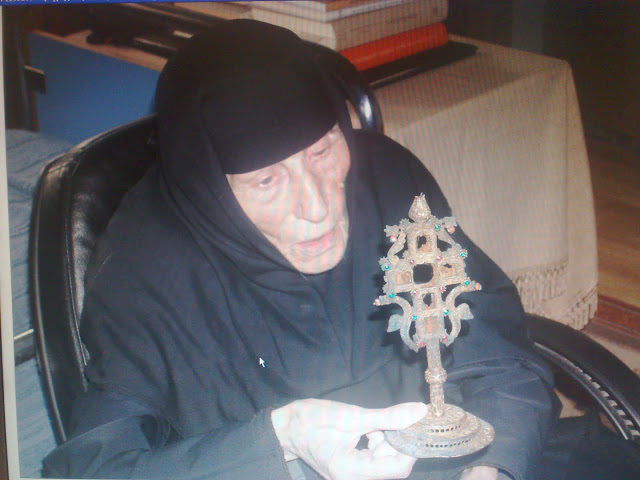
Gerondissa Akylina holding the Cross of St. Georgios Karslidis which was found intact after the translation of his relics. He is one of few saints known to bear an imprint of the sign of the cross on his skull.


Gerondissa Akylina, Porphyria, Sipsa Monastery and St. Georgios Karslidis


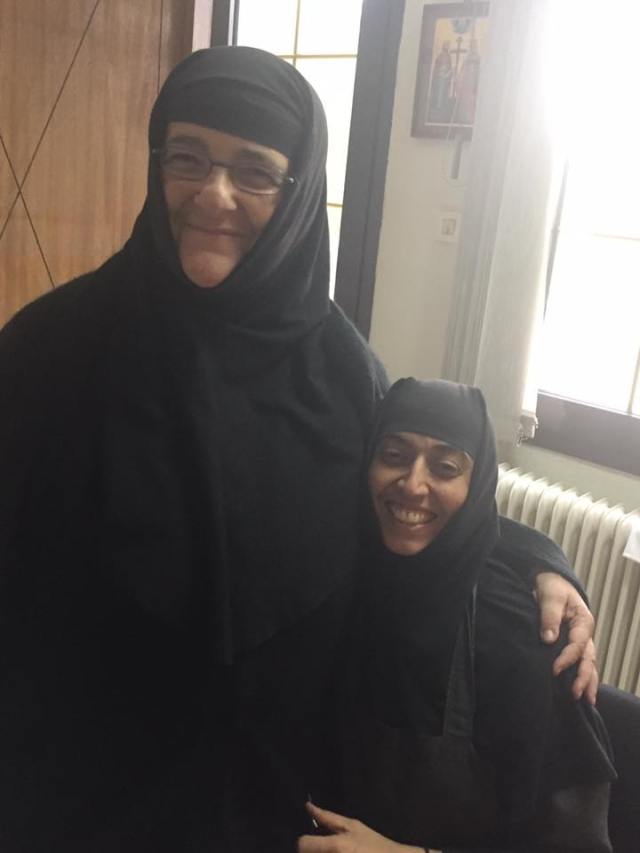
Gerondissa Porphyria has always been so full of love and humility, always ready to sacrifice her ease,  her rest and sleep, everything for her ‘neighbour! How many times has she consoled me in the trials and tribulations of my life! Always by my side, always! How many times has she offered a shoulder to cry on and precious, practical counsel! Her prayerful presence is intensely, intimately felt even thousands of miles away, here at the UK, and her smile warms my heart. Oh, just look at her smile in the photographs below with a pilgrim at the monastery and imagine the rays of the sun warming your shoulders after a rainy, cold day! How blessed am I to have such a spiritual mother by my side! Over the years I got better acquainted with the friendly and hospitable nuns there and the pilgrims and the faithful who regularly visit this monastery. St. Georgios’ holy presence is immediately felt upon entering the monastery gate, and there is always a queue at his tomb where his spiritual children kneel before their spiritual father, now in Heaven, to ask for his spiritual guidance and to seek comfort in life’s trials and tribulations.


For a closer insight at Elder Georgios Karslidis and his miracles, watch the following interview by Gerontissa Porphyria:


Marriage or Monasticism?

Possible Alternatives

In Pursuit of Wholeness and Holiness

Musings On Marriage and Monasticism

A Conversation at a Parish

*

St. Athanasius: “There are two forms of life and states of life. One is the usual life for mankind, married life; the other is the angelic and Apostolic life of which there is no higher, virginity or the monastic state.” (The Law of God)

Aidan: Other than Marriage and Monasticism, both Sacraments blessed with special church Services, is “Mere” Chastity/ Celibacy in the World truly ‘blessed’ by the Orthodox Church?


Alexandra: In a very literal sense, the Church indeed blesses ONLY marriage and monasticism through specific ceremonies. Some Fathers even count monastic tonsure as a sacrament! Of the 8th Day. Obviously, there is something special about being married or being a monastic, a sacramental bond which is not present in single people living in the world.


Peter: Christ and St Paul commended the single life. Is there any Church canon against being single?


Stephen: I have personally known widowed and single priests who have chosen not to become monastics, but live in a chaste life in the world, serving a parish and working in the chaplaincy with the most vulnerable members of society. I have also known of young people who are not called to marriage and live a celibate life in the world much as many early Christians did before there were any monasteries. And I have also met with people who would have liked to become nuns or monks but their lives’ circumstances (eg. care of children after a divorce they did not seek, ailing parents etc.) are not favorable and have had to do the best they can into the world.


Alexandra: But what gives structure and hierarchy in their lives? Who are they obeying to? Who are they cutting their own will from day to day? Isn’t it that for their spiritual health, people need to be channeled into an accountable way of life?


Peter: I think the important thing is not whether you are tonsured as a monk or not. Many people who are tonsured and are formally monks and nuns, in reality are no better than old bachelors and spinsters, for they do not live, feel and think like monks. On the contrary, a person living chastely in the world and serving God under the guidance of a good spiritual father may be a monk or a nun at heart. God judges not the formal status of a person, but his or her inner life.


Parish Priest:  People do not easily fit into a specific mold, and making a Patristic dictum into an ideology would be inadvisable, especially for pastoral reasons. It would be highly irresponsible for a priest to pressure all the single people in his parish to either get married or enter a monastery.


Aidan: But isn’t this celibate life self-centred, obeying their own will and whims? Can these people ever be in good standing with the Church? Monastics are accountable to their Abbot/Abbess. Monastics have obediences and responsibilities to their monastery and their abbot/abbess. Similarly, the cross of the married life is a pretty burdensome one. Husbands and wives have obediences and responsibilities in their families and their parishes.  Where is the cross of obedience for such individuals? Singles has no identifiable obediences or responsibilities beyond themselves. It would seem that such a state would almost certainly result in self-will as a guiding principle.

*

St Theophan the Recluse: “So you made up your mind once and for all to dedicate your life to serving the Lord and not to have anything to do with worldly life. May God graciously accept this sacrifice and bless your good decision! . . . Adapt to that kind of life within yourself, not by a change of outward ways, but of the inward order. Now you may completely refuse all amusements and stay more at home in solitude, engaged in some occupation . . . Implant a little more deeply the conviction that the way of life you have chosen is blessed by God. It was sanctioned by the Savior in the saying about eunuchs for the Kingdom of Heaven’s sake. He gave it preference when he said of Mary . . . that she had chosen the better part . . . You see clear examples of it in the person of many Prophets and Apostles . . . Female and male virgins were a fixture in Christ’s Church even in apostolic times; they have been in the Church ever since and will continue to be in it . . . For this kind of life is not alien to our nature [as Fr David has said], and is favoured by the spirit of belief in Christ.” (From The Spiritual Life)

*

Peter: Speaking from experience unmarried do have responsibilities  and obediences, even as adults we are bound to honour our parents and some have chosen the single life to care for sick parents or grandparents, along with providing all the necessities of life.  If active in faith there will be church responsibilities sometimes much more than the married take on due to the time being available to do things, and obedience to a spiritual father or confessor. So, it seems we have all the ‘benefits’ of living in the world but also many drawbacks for there is no helpmate (which is after all one of the key reasons for marriage: to do ‘it’ together).  The single individual has many responsibilities but they tend to be more nebulous and less organised than those who are married or monastics; this does not mean that they are less, they are just different.  There are those who have reached theosis in the unmarried state, such as St Xenia of Petersburg who lived as a devout widow without ever entering a monastery.


Stephen: The Church has certainly had saints who were unmarried and not monastics and who lived in the world chaste lives, dedicated to God, without entering a monastery. They led lives of service, “giving themselves to the service of their brothers and sisters in hospitals, poor-houses, and hospices.” and making their room as one of a monastic cell. If the Church has declared such people to be saints, surely their glorification is the highest blessing the Church can bestow.


Peter: And other than just labeling them ‘single’ or ‘married’ or ‘monastics’, we should rather ask “why?” Why is he/she married? Why is she/he single? Ask yourself are you fasting for a healthy diet or to control your passions?


Parish Priest: I spoke to a hieromonk about this topic, and he said that while marriage and monasticism were the two common paths to salvation, single people in the world could also live God-pleasing lives. He clarified that the decision to remain unmarried was a matter of individual circumstances and with the blessing of a spiritual father.


Stephen: There is no rule that the single life is not blessed. The person living the single life may not be able to give a vow of not owning property, but could, with the blessing of his or her spiritual father, give a vow of celibacy and of obedience (to the spiritual father).


Aidan: So, it seems that the Church has established two avenues opened by the Spirit of God – namely the marriage and the monasticism. There are also some solitarily trails also engraved by the spirit of God.

*

St Silouan the Athonite: In the last days there will be many with the monastic spirit living in the world as a witness to the Faith, neither married, nor having taken the monastic vows, but single, yet monastics at heart.

*

See also Sanctifying the Single Life and Belonging to Neither and Both


Sanctifying the Single Life


st-john-maximovichNowadays so many people, so many friends and acquaintances of mine, especially middle-aged, are disappointed, drained, left alone with children, empty and lonely (both in and out of relationships), feeling robbed. What are we to do with our lives in order to avoid self-centered ends and the spiritual abyss?  Marriage and monasticism most certainly lead to the most intimate communion with the Creator and fellow creature and fulfill their promises: the soul can still be purified through either of them. They restore the soul’s appetitive drive to its divine orientation. The roads are narrow, their gates straight, but they lead to the deification of the soul. But maybe this path is not open to us — yet? — for a variety of reasons and circumstances. So WHAT  is to be done?


Apparently, there is also a third way.  Jesus Christ teaches that certain people are called by God to the single life.


And I say to you: whoever divorces his wife, except for sexual immorality, and marries another, commits adultery. The disciples said to Him: “If such is the case of a man with his wife, it is expedient not to marry.” But He said to them: “Not all people can receive this saying, but only to those to whom it is given. For there are eunuchs who have been so from birth, and there are eunuchs who have been made so by men, and there are eunuchs who have made themselves eunuchs for the sake of the kingdom of heaven. He who is able to receive this, let him receive it.”  (Mt 19:9-12)


The apostle Paul elaborates on Jesus’ teaching.


It is well for a man not to touch a woman. But because of the temptation to immorality each man should have his own wife and each woman her own husband… I say this by way of concession, not of command. I wish that all were as I myself am. But each has his own special gift from God, one of one kind and one of another.


To the unmarried and the widows I say that it is well for them to remain single as I do. But if they cannot exercise self-control, they should marry. For it is better to marry than to be aflame with passion… And unto the married I command, yet not I, but the Lord, Let not the wife depart from her husband: But and if she depart, let her remain unmarried or be reconciled to her husband: and let not the husband put away his wife. … Only let every one lead the life which the Lord has assigned to him, and in which God has called him. (See 1 Cor. 7)


The single calling

The single life is a calling. It is a way of life which is given by God.  A person, certainly a Christian person, does not choose to be single or to be married. He or she rather discovers the way of life which the Lord provides within the conditions of his or her existence. People really only chose to receive, or to reject, what has been given them. They do not determine it.


There are any number of reasons why a person may be single. They range from the sense of having a positive calling to the celibate life for religious purposes, to the plain fact of being unmarried without one’s own conscious choice, and perhaps even against it, just because this is the way that things have happened to work out. Whatever the reason for one’s being single and however mysterious or ambiguous, willed or unwilled the causes for one’s being in this state, at some point in our adult life each of us must accept the form of life which is ours and consciously offer it to the Lord, freely and voluntarily, for the sake of the love of God and neighbor.


Sanctifying the single life

The single life is sanctified the way every life is sanctified: by perfecting it according to God’s will. The first task of the single person according to God’s teaching as revealed by Jesus Christ and the apostles, martyrs and saints of the Christian Church, is that of maintaining and developing one’s sexual chastity.


The single person who says “yes” to God and to his or her calling to the single life automatically says “no” to all forms of physical, sexual activity with the opposite sex, with one’s own sex and with oneself. This is so because sexual actions other than the conjugal act of married love destroy the wholeness and integrity of one’s being through the dissipation of one’s spiritual and physical energies. No matter how loving, fulfilling and pleasurable they may at first appear to be, sexual commitments without the totally faithful commitment of unending love in marriage – with all of the responsibilities and obligations for inter-personal communion and the pro-creation and protection of human life which this involves – cannot but result in dissatisfaction, disappointment, despondency and despair. this is so because human persons are made in the image and likeness of God who is Love, and as such can find fulfillment and happiness only in ways of living and acting which express and image His own.


A hard saying

The teaching about sexual purity in the single life is a difficult one. When many people hear it they are moved to say what Christ’s disciples said when they heard other of His teachings: Lord, this is a hard word. Who can hear it? Who then can be saved? And the Lord’s answer is always the same. He said that His teaching has to be hard because “the gate is narrow and the way is hard that leads to life, and those who find it are few”, adding as well the fundamental point  that as far as His teaching is concerned, “with human being it is impossible, but with God all things are possible”, particularly to those who believe. (See Jn 6:60; Mt 7:13-14; 17-21; Lk 18:27; 35)


Like all forms of Godly life and behavior, the single life of celibate chastity is a way of the Cross. It is a way of sacrifice and suffering which alone brings joy and happiness to a human being.


Conditions for perfection

For the single life to be perfected according to God’s will, with the preservation of sexual purity as its heart and foundation certain conditions must be fulfilled. First of all there must be firm spiritual discipline for the sake of a lively interior life. The single person must have a rule of prayer which is diligently kept, with the reading and pondering of wholesome and edifying words and images. Great attention must be given to keep oneself free of all thoughts and images which lead to spiritual and physical defilement and disintegration. The “spouse” and “life partner” for the single person in the most direct and specific way must be the Lord himself.


The single person must also have a firm rule of external life and behavior. Capricious and willful actions, things done without order or form, but just as they happen to come up, must be avoided at all costs. Forms of responsibility and accountability to others must be found and fulfilled with conscious obedience. This is especially true for those who do not have such natural obligations as, or example, the care of elderly or infirm parents or relatives, or duties within a religious community.


The single person must also be committed in a formal way, in obedience, to a spiritual father, which can be a priest or a hieromonastic. Some might say that such conditions are necessary for all who are living a human life according to God’s will, whether or not they happen to be single. This is true. But these conditions are particularly necessary for the single person precisely because of their single state in a world which renders them particularly vulnerable to self –centeredness and loneliness on the one hand, and lack of commitment and accountability on the other, with the additional cross of often being misunderstood and taken advantage of by those around them because of their single status.


Christ and the Saints

It is common in the modern world to think that one cannot be fulfilled as a human being in the single state, especially if living a sexually continent and chaste life. The claim is that without sexual activity and intimacy, a human person is diminished and even distorted in his basic humanity. If this is true, then the Christian faith as understood and practiced by the Orthodox, and by millions of other Christians, is wholly false.


The Lord Jesus Christ was single and celibate, yet He was the most perfect human being who ever lived, the Son of God and God Himself in human form. Jesus’ mother Mary, though legally married, remained a virgin her entire life. John the Baptist, whom Jesus called the greatest man ever born of woman, was clearly a chaste celibate according to the Gospels. So was the apostle and evangelist John. So was the apostle Paul who, as we have seen by his own report was single at the time of his conversion and ministry. Indeed, the calendar of Orthodox Church saints is filled with single people who are praised and honored for their chastity and devotion to God and their neighbors. In this perspective it is clearly the Christian conviction that being single is conducive to the highest and most perfect for of fulfillment possible to human beings: the life of sanctity . (Source: St. Luke’s Orthodox Mission)


See also: Marriage of Monasticism? and Belonging to Neither and Both

Belonging to Neither and Both

Belonging to Neither and Both In the Middle Between the World and Monasticism From the Letters of St. Ambrose of Optina

An Elder’s Correspondence to his Spiritual Daughter Caught Between the World and the Monastery (*)

January 3, 1879

In our last letter of December 14, you wrote that you cannot find any books applicable to your situation. You say that all books discuss monasticism, and that you are not a nun but are simply living near a monastery. In response I would say this to you: the Gospel teaching is given to everyone in common, and everyone is obliged to fulfill it. Monasticism stemmed from the desire to live exactly according to the Gospel teaching. This is terribly difficult amidst the noise of the city and the cares of life in the world, which hinder such a precise fulfillment of the Gospel teaching, even though everyone is called to this. Monastics are distinguished from laymen in that the latter are permitted to live in a state of matrimony, while the former choose to remain unmarried. Read more often the Gospel of Matthew, from the beginning of the fifth chapter to the end of the tenth, and try to live according to what is written there. Then your life will be marked by harmony, and you will find peace of soul.

January 11, 1879

Peace to you and God’s blessing, and a strengthening towards good. On January 3 I briefly wrote to you that monastic life by no means differs from the Gospel teaching, and that those living in the world differ from monastics only as concerns their married state. About married people, however, St. John of the Ladder writes that they are like those whose hands and feet are bound with fetters. Although even these can walk the path of righteousness, it is only with difficulty; they often stumble and fall and become sorely wounded as a result. The unmarried–and particularly monastic–state offers greater facility in the fulfillment of the Gospel teaching. It is for this reason that monasticism was established by the Holy Fathers.

You are now in the middle, between the world and monasticism (*). The middle path is everywhere approved, and for you–both on account of your upbringing and your weak constitution–it is in many ways appropriate. Only try to live according to the Gospel commandments. Above all, judge no one about anything, so that you yourself will not be judged …..

In my letters I’ve always had one aim –to dispel your misconceptions about monasticism and spiritual life in general, which you formed while still living in the world. You have perhaps heard it said that even apparently correct theory does not always coincide with practice. One’s own experience, when it follows the experience of spiritual people in the past, is a good instructor, provided we check our life against the Biblical and patristic teaching.

You laid for yourself and your life a rather strange foundation: I wanted so, I thought so, I intended so… You are not the only one; many desire a good spiritual life in the simplest form. Few, however, (they are rare, in fact) fulfill their good desires in actuality; they are those who hold tightly the words of Holy Scripture: “We must through much tribulation enter into the kingdom of God” (Acts 14:22), and who, entreating the help of God, try to bear the griefs and illnesses and various discomforts visited upon them without murmuring, always keeping in remembrance the words of the Lord Himself: If thou wilt enter into life, keep the commandments. (Matt. 19:17)

And the most important of these commandments are: “Judge not and ye shall not be judged; condemn not, and ye shall not be condemned: forgive, and ye shall be forgiven” (Luke 6:17). Besides this, those who want to be saved must bear in mind the words of St. Peter Damascene, that salvation is accomplished between fear and hope…

To live in a simple hut without humbling oneself will not lead to any good. It is better for someone who is weak in soul and body to live in a comfortable cell and to humble himself, blaming and reproaching himself for such comfortable and spacious quarters. Only few, and those possessing a strong constitution, can without harm lead an austere life, and endure cold and hunger and dampness and sleeping on the ground. According to the words of St. John Damascene, those who are weak in body derive more profit from humility and thanksgiving than from physical labors and podvigs to which they are unequal.

You are adversely affected by the harsh words of such people who, in your opinion, should speak differently. St. John Climacus writes that God providentially leaves some flaws even in spiritual people so as to bring them to humility.

If you wish to set yourself on a firm path toward salvation, try above all to pay heed to yourself alone, and leave everyone else to God’s Providence and their own will, and don’t concern yourself with instructing anyone. Not in vain is it said: Each man begetteth himself shame or glory according to his deeds. This will be most beneficial, meat conducive to salvation, and, what’s more, more peaceful.

From the Letters of St. Ambrose of Optina

(*)  *Sigh* It is so me …

See also Marriage or Monasticism? and Sanctifying the Single Life

Near-Death and Afterlife Stories in a True Crown Jewel


dryvouno29dryvouno28dryvouno27dryvouno26dryvouno25dryvouno24dryvouno23dryvouno22dryvouno21dryvouno20dryvouno19dryvouno18dryvouno17dryvouno16

Dryovouno Monastery, Near-Death and Afterlife Stories

dryvouno15dryovouno14dryovouno13dryovouno12dryovouno11dryovouno10dryovouno9dryovouno7dryovouno6dryovouno5dryovouno4dryovouno3dryovouno2dryovouno1


Father Stephanos of the Monastery of Transfiguration (Metamorfosi tou Sotiros) in Dryovouno speaks very little, mainly with his eyes.

*

Mother Theologia: “How little do we think of death, although he is so near to us!” commenting on a yet another sudden, unexpected death.

*

Laokratia told us about a dream: “My friend’s late young son, who had suffered a sudden and violent death through a road crush, appeared in his father’s dream in tears, standing before a closed gate, telling him that ‘they’ do not allow him in. His father, a very faithful man, promptly met Elder Iakovos Tsalikis and told him his dream. By the grace of God, the elder, having a pure nous, was deemed worthy to see the souls of people at the time they were leaving the earth and ascending towards heaven. Elder Iakovos asked him if his son was blaspheming God, and the father sadly admitted so. Then, Elder Iakovos promised to pray for his son, and he also advised him to do alms in his son’s name, fast and pray to the Lord so He will grant him rest”. The poor father made a prostration and obeyed the elder, and after 40 days, he saw again his son in his dream, this time radiant with joy, in front of an open gate, thanking him and telling him that ‘they’ had allowed him in!”

*

Sister Gregoria: “I just received a message from a friend who had to undergo a difficult operation and she told me that it all went well but that it was St. Luke Bishop of Simferopol and Crimea, the Blessed Surgeon who operated her! In the operating room she felt that she was dying. She started ascending and watched the surgeon and the nurses trying to revive her unconscious body. Then she met ‘somewhere in the air’ St Luke. To be sure she could not really interpret what was happening to her as it was taking place. Still she understood that he reassured her that he would take over as the surgeon was clearly in an impasse. Then she started moving in the reverse direction, got into her body again and found herself in the hospital, having had the surgery performed, with doctors standing around her, looking at her puzzled. But who was this St Luke she had met? It took her a few hours to find out that her mother, a very devout woman, had placed a little icon of his underneath her pillow, just before the operation started!”

*

Sister Ioanna:”Yesterday at midnight, while I can finishing the writing of an icon and adding the dedication, I realised that although I could write the mother’s name easily, there was no way I could add her late son’s name. I started praying and in the Spirit I ‘saw’ that the mother was in a very good spiritual state, but her son was not at all well and needed our prayers. She felt that God had granted rest to the mother’s soul, but they should do alms in the son’s name and pray to the Lord so He will grant him rest”.

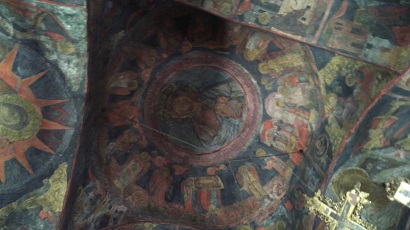
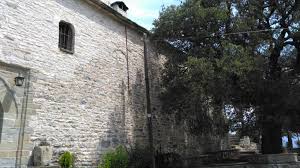
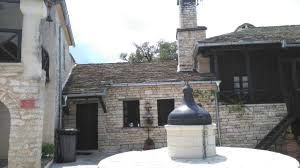
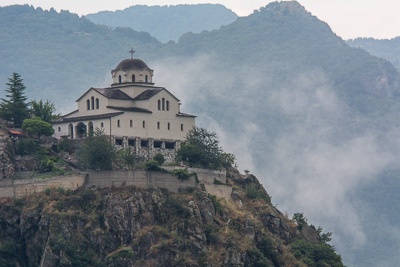
We arrived at the Monastery of the Transfiguration (Metamorfosi tou Sotiros) in Dryovouno on its Feast  day. We were a group of faithful, Mother Theologia and some nuns from the nearby Monastery of the Assumption, Dormition (Koimiseos tis Theotokou) of Mikrokastro. What stunning Beauty confronted us!


This male monastery is located a few kilometers above Dryovouno, at a secluded area. Its foundation goes back to 1592, while the murals were completed in 1652, by painter Nikolaos from Linotopi while the narthex in particular is the work of Argyris Kriminiotis.


Kosmas Aitolos arrived here and, after preaching, treated the monks who had been taken ill due to an epidemic. He fetched water from a nearby spring, blessed it, and gave it to the monks to drink, who were then cured. This water has been considered holy ever since and a chapel devoted to saint Kosmas has been constructed at the spring. St. Kosmas received from God the gift of prophecy.


At wartime, the monastery offered valuable services to the local population. It served as storage for ammunition and as base for various chieftains. This is where Dimitrios Feraios, Kapetan Vardas and Pavlos Melas resorted to.


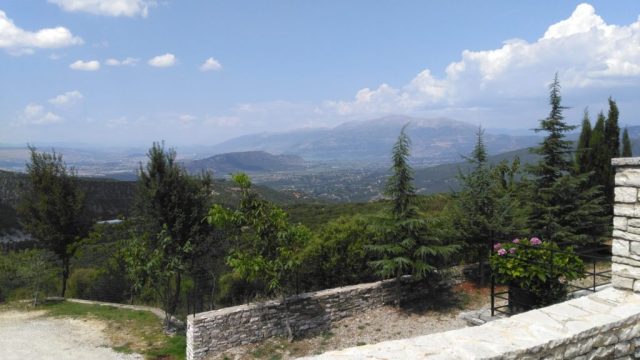
In 1943 it was set on fire by Italians along with its historic records. Its renovation began in 1996, the prime mover being Archbishop Stefanos Rinos with the personal efforts of monks and believers. The parvis offers a sense of tranquility and a spectacular view to Voio and Kastoria.