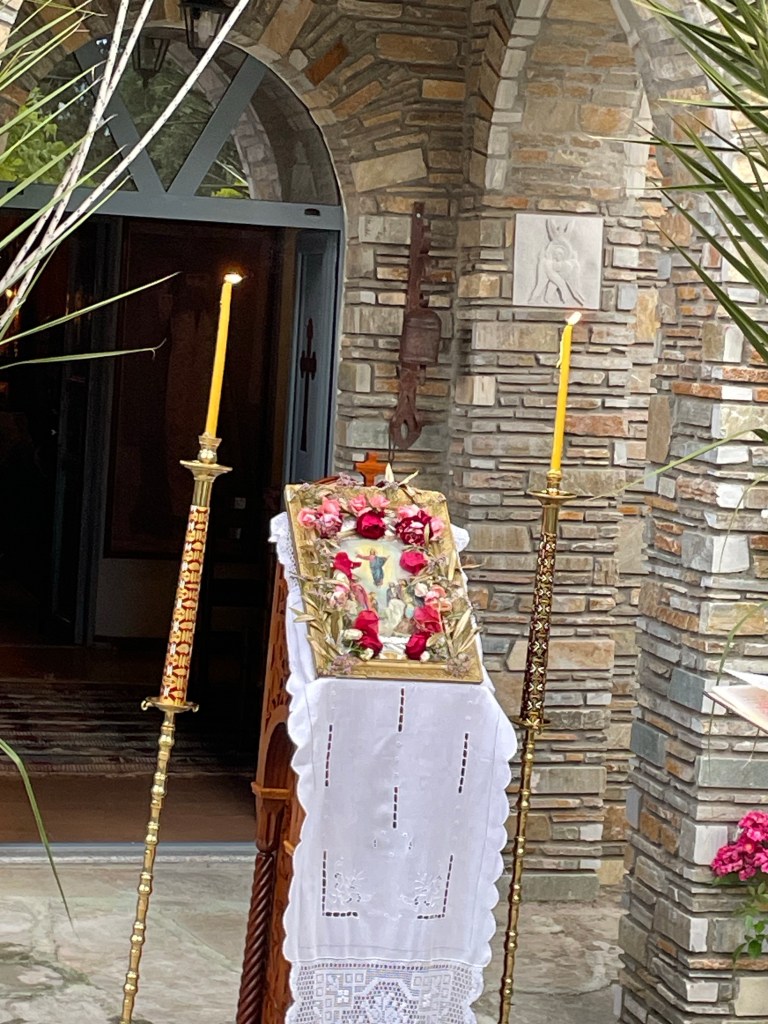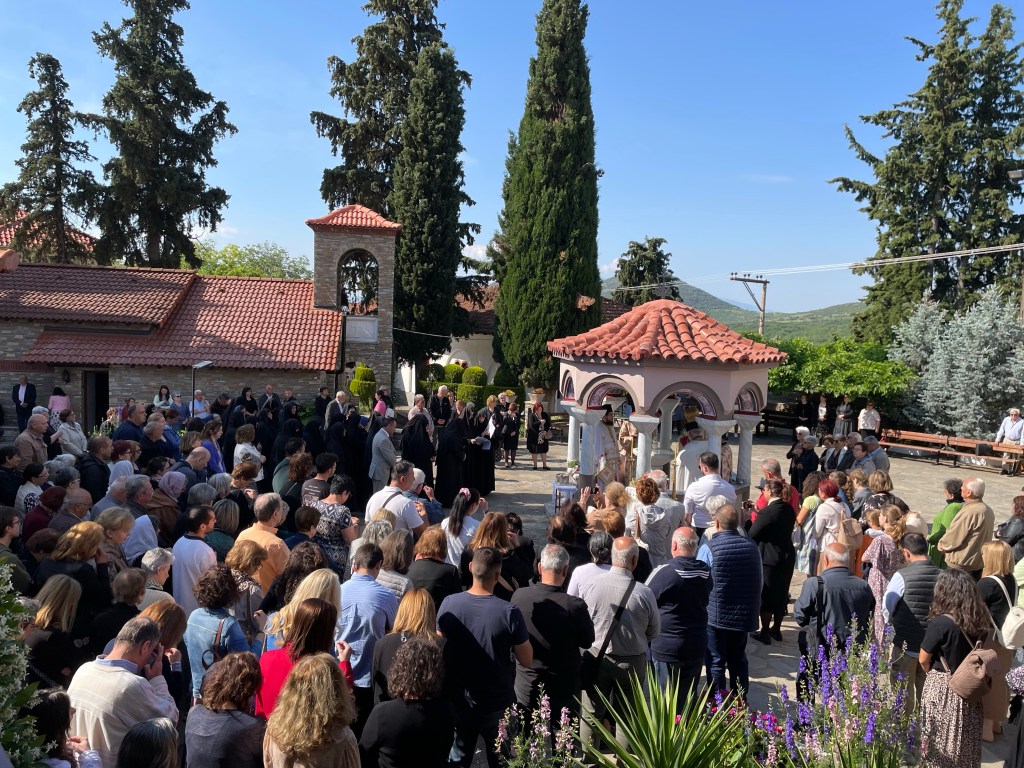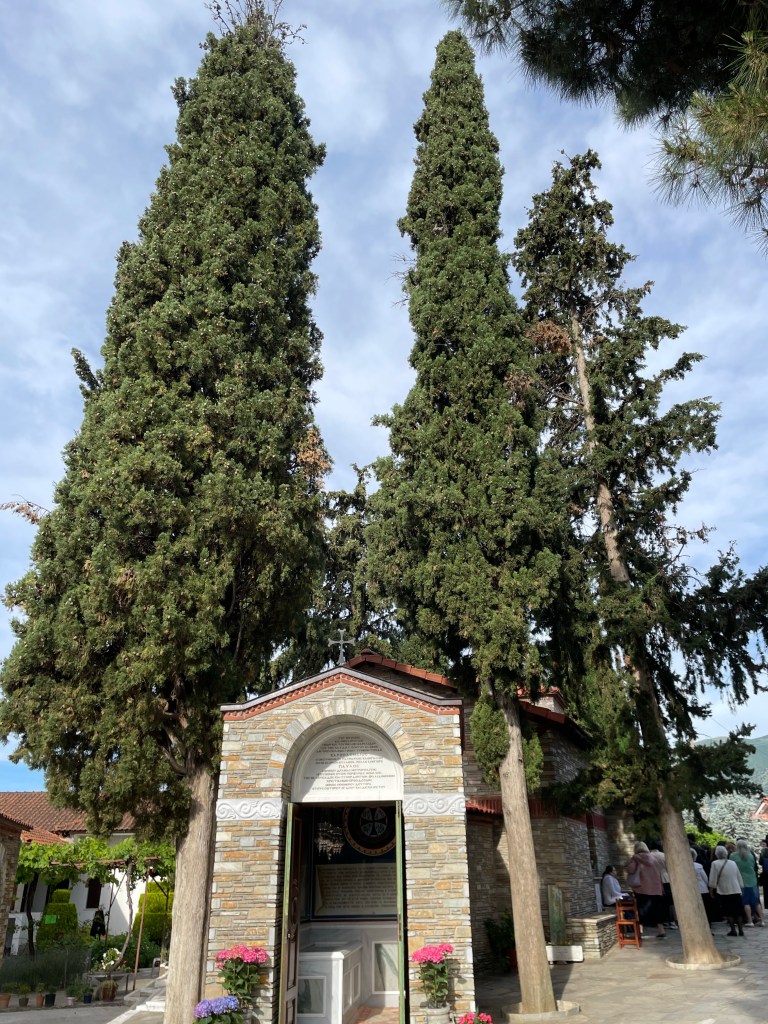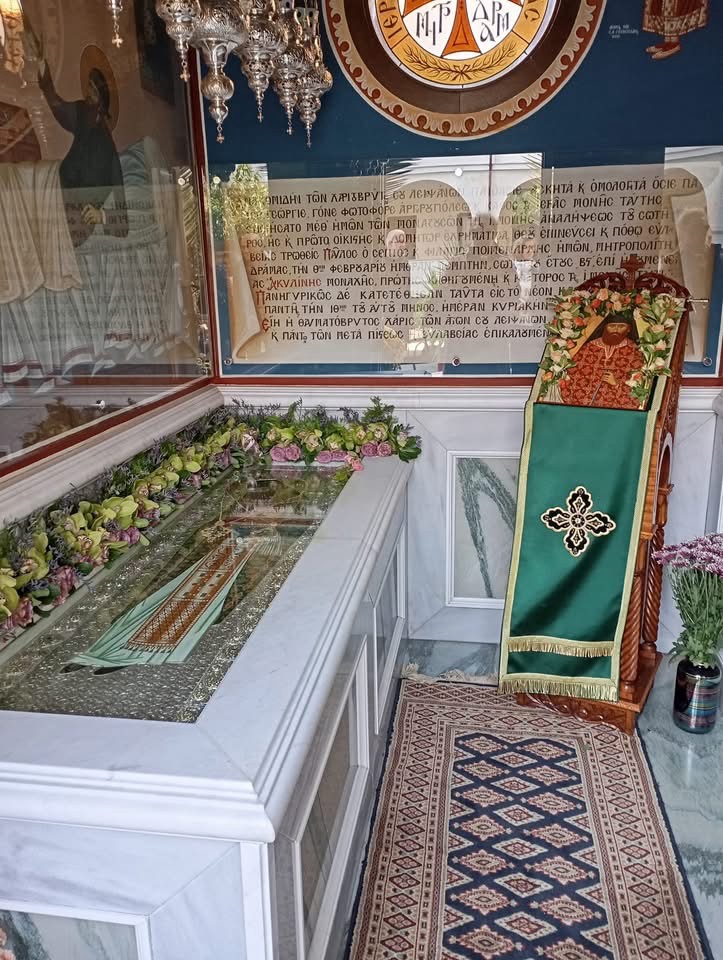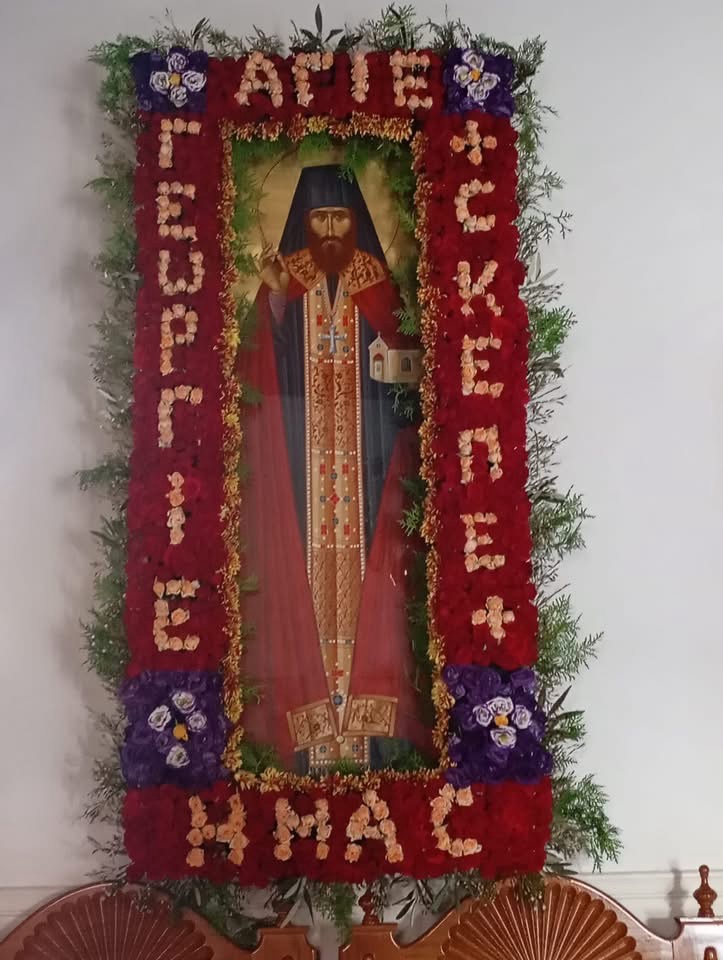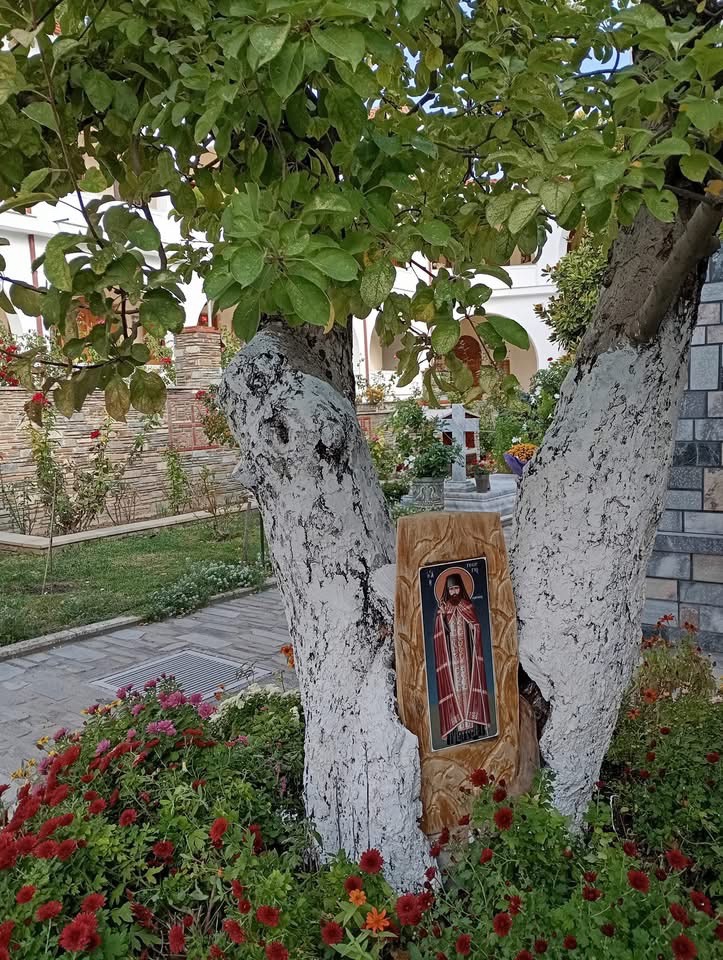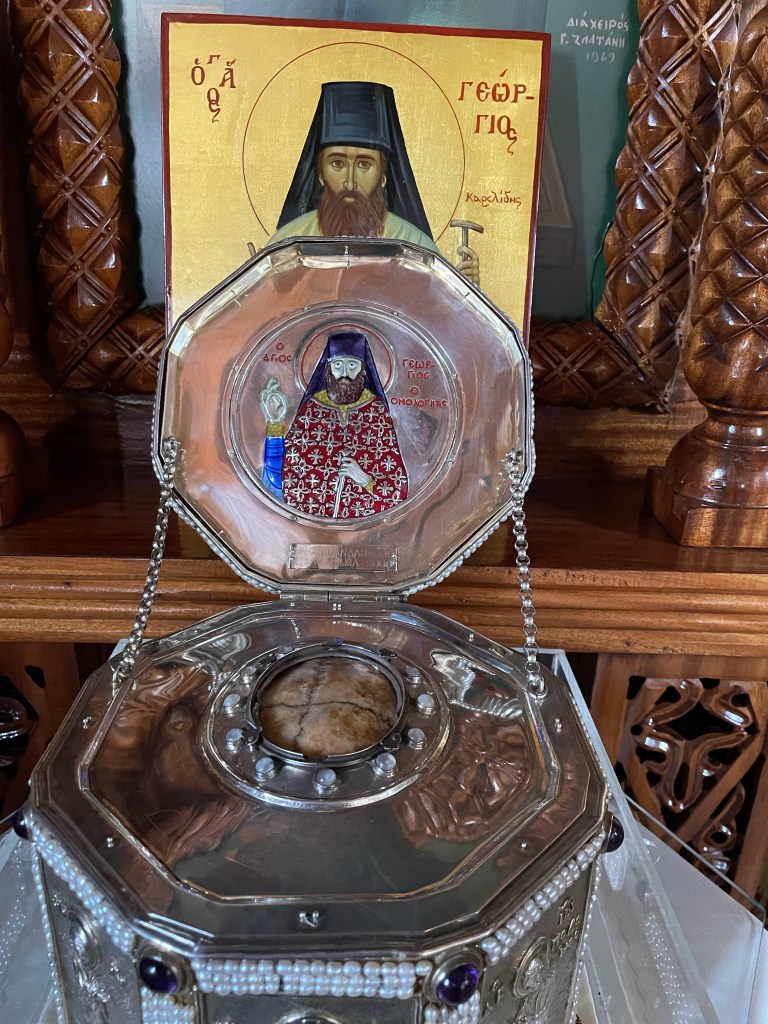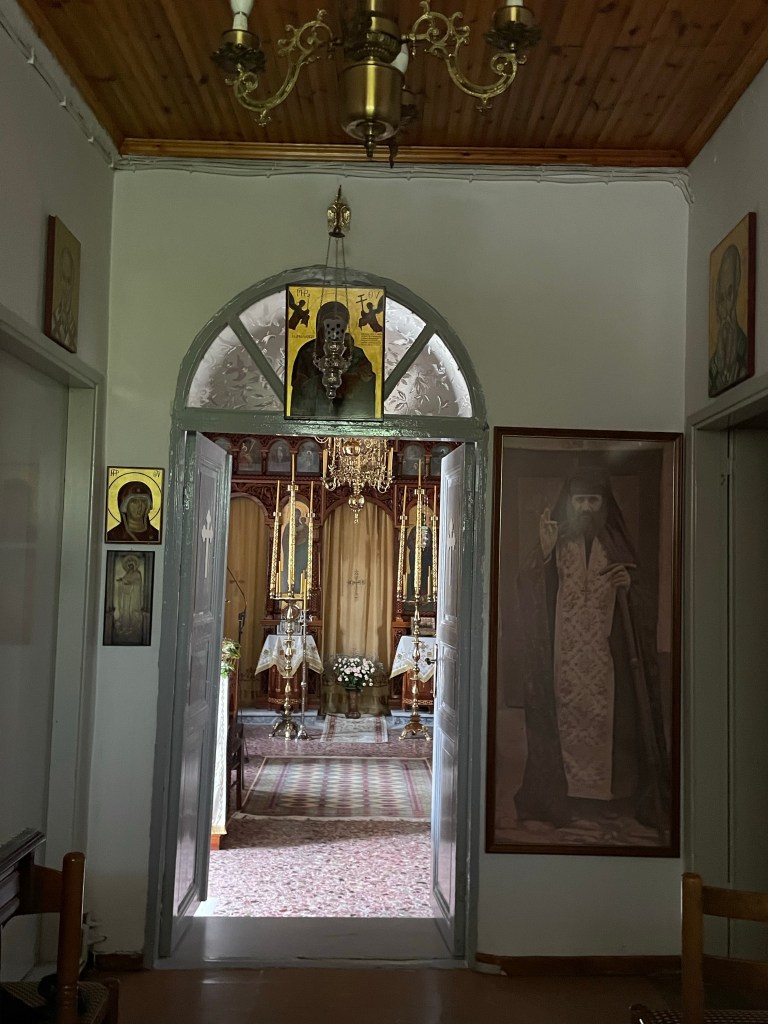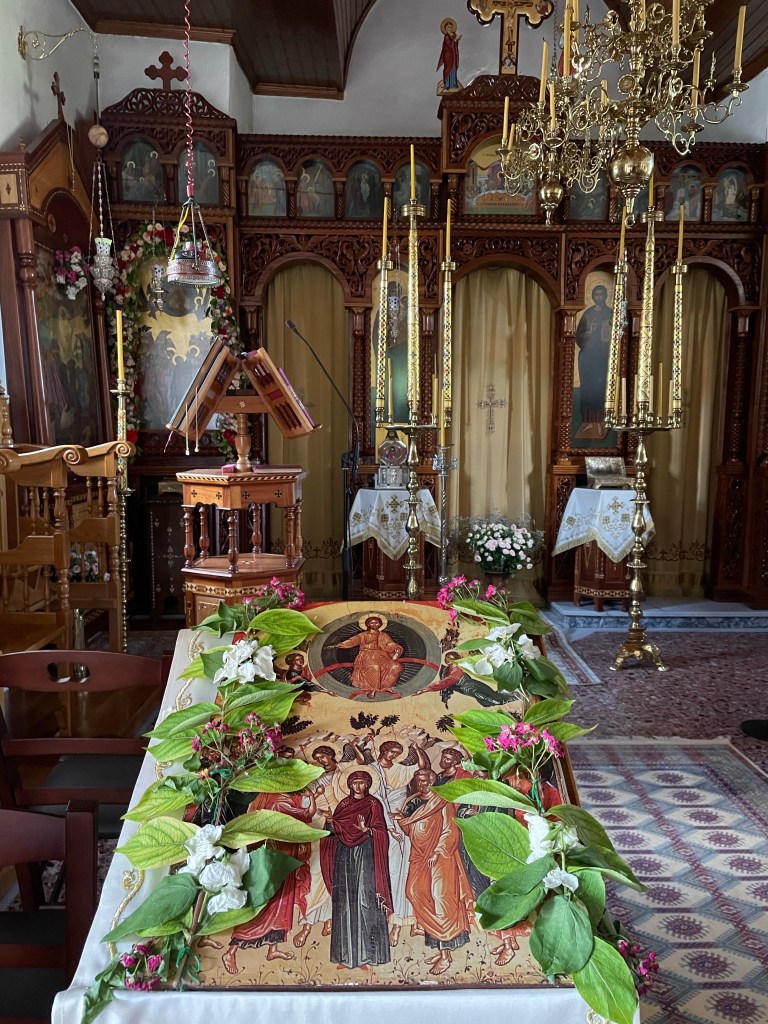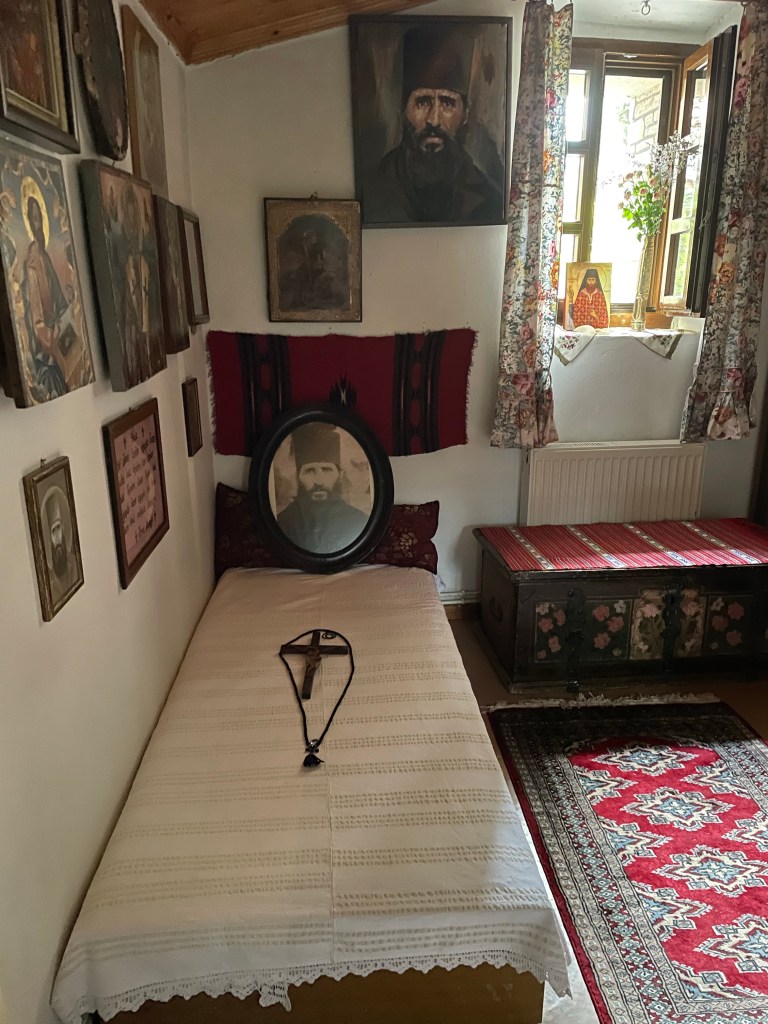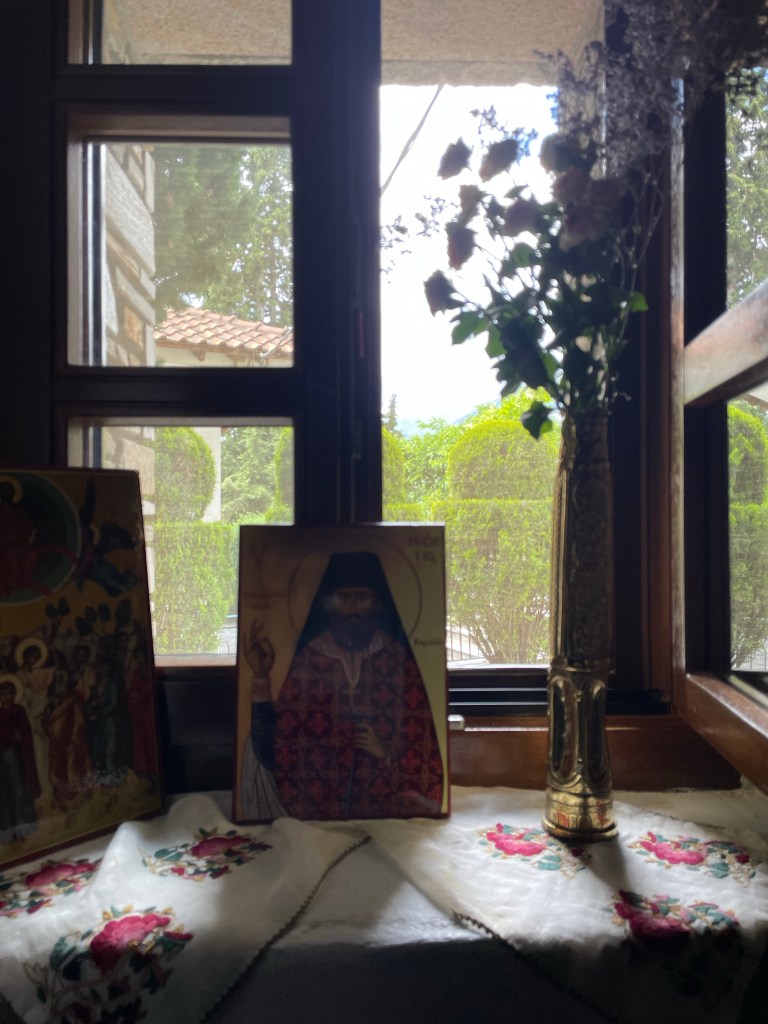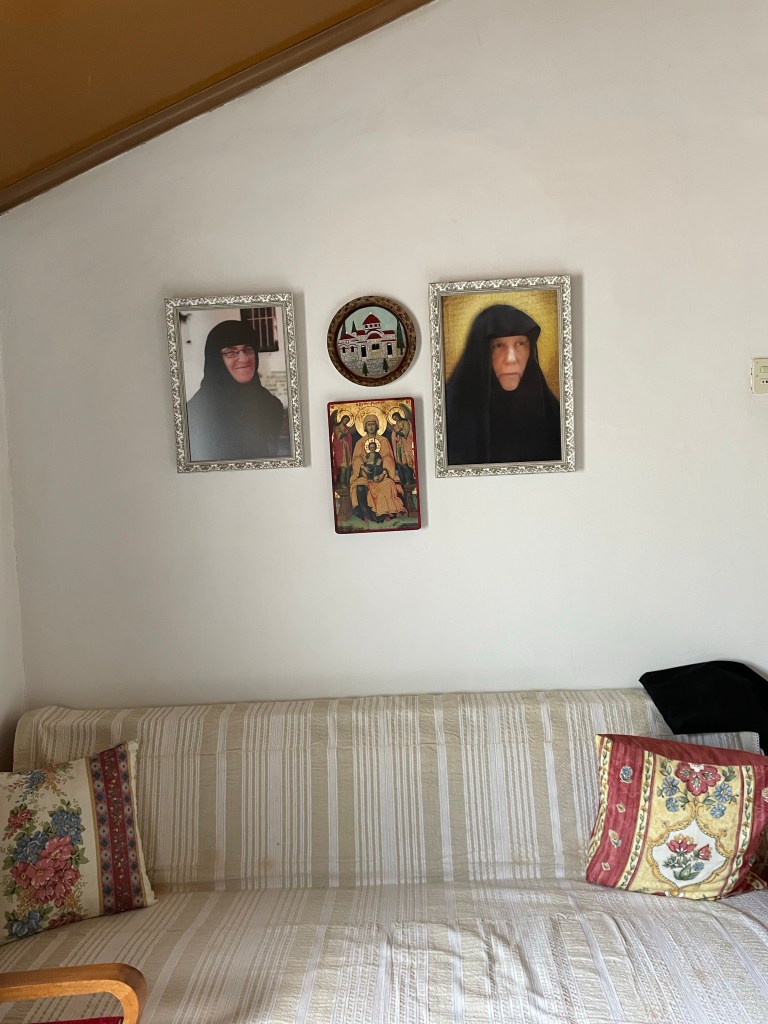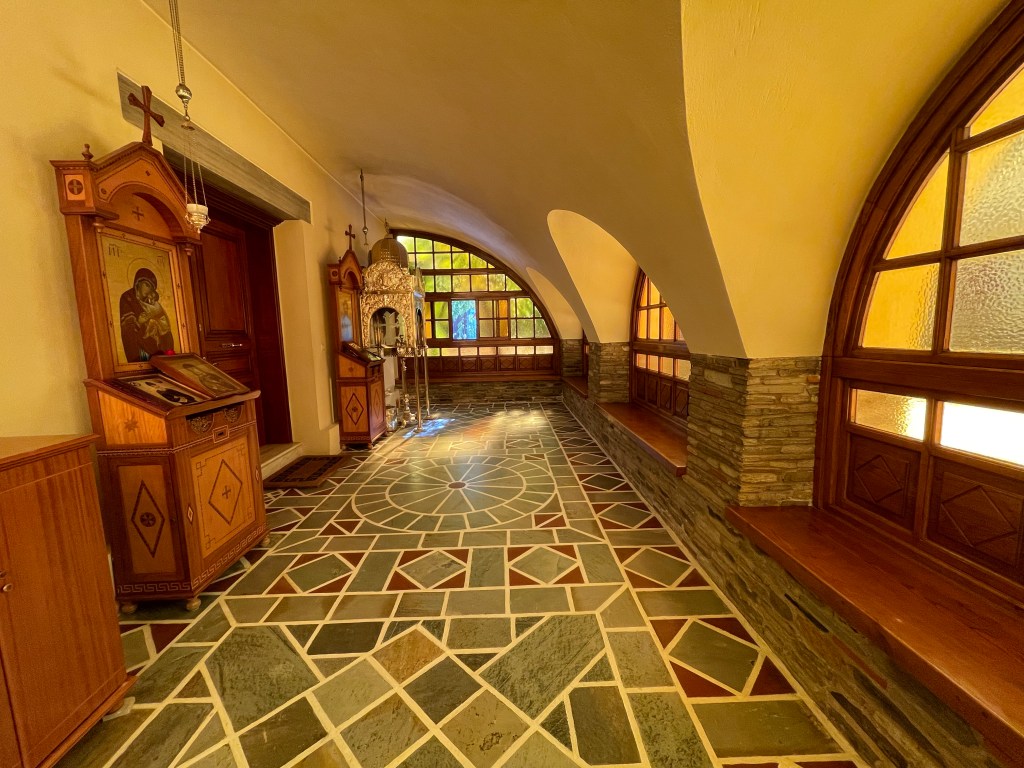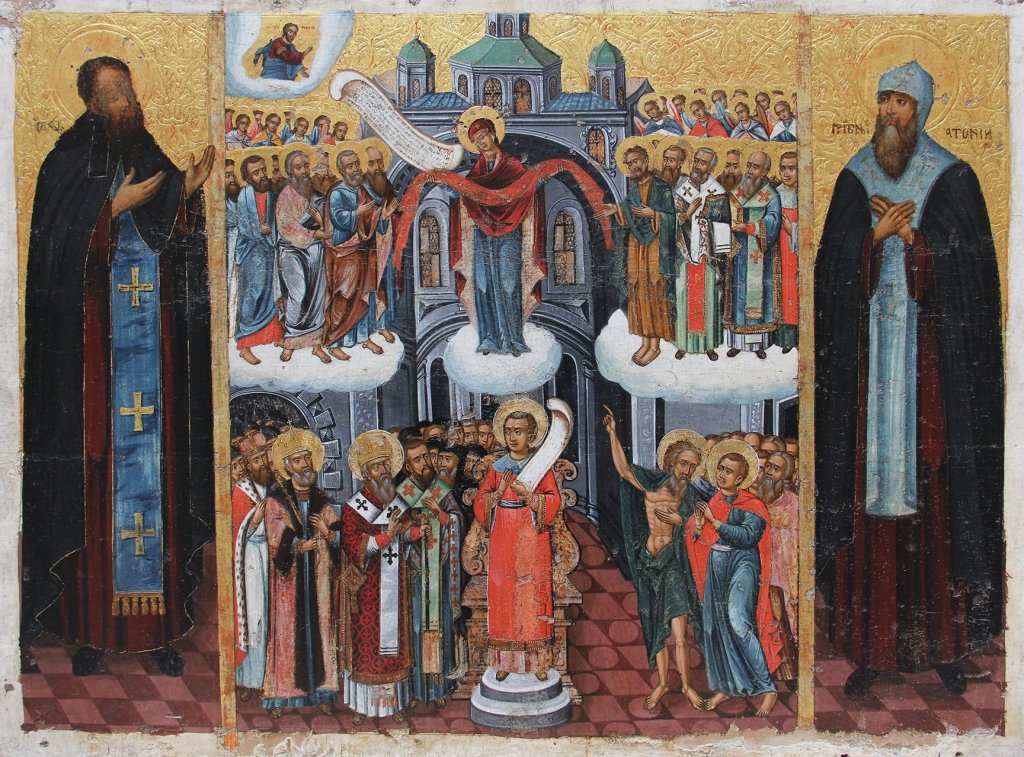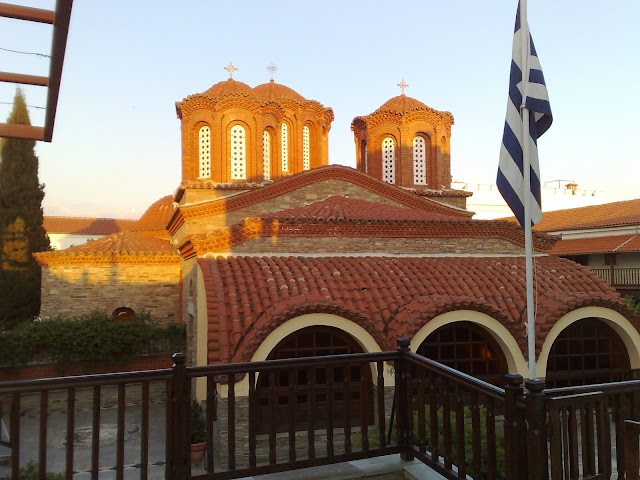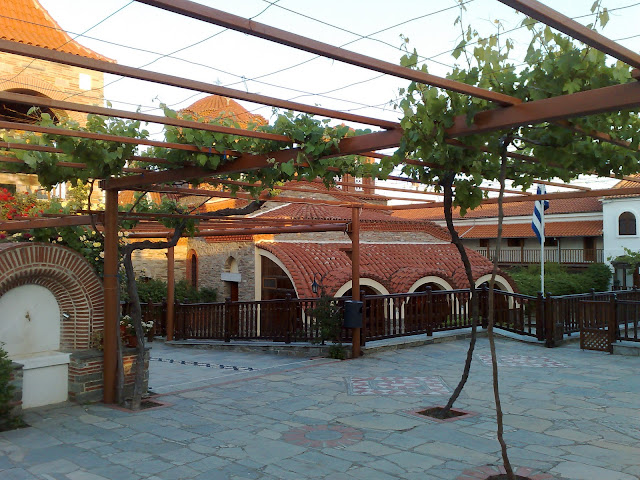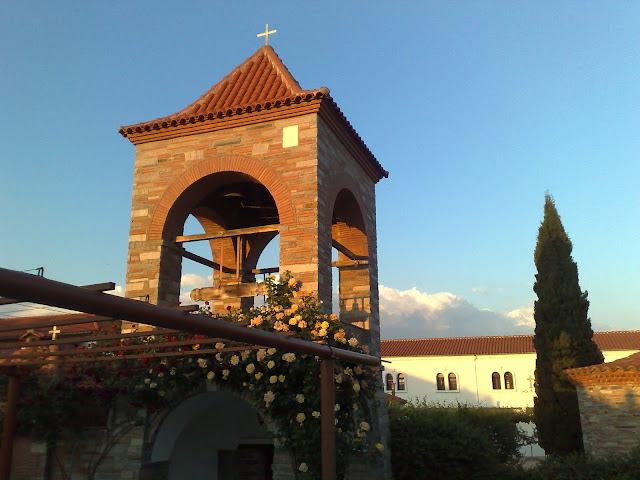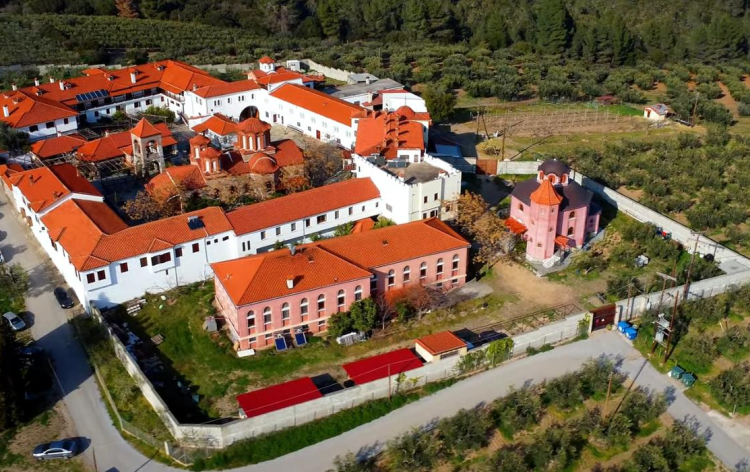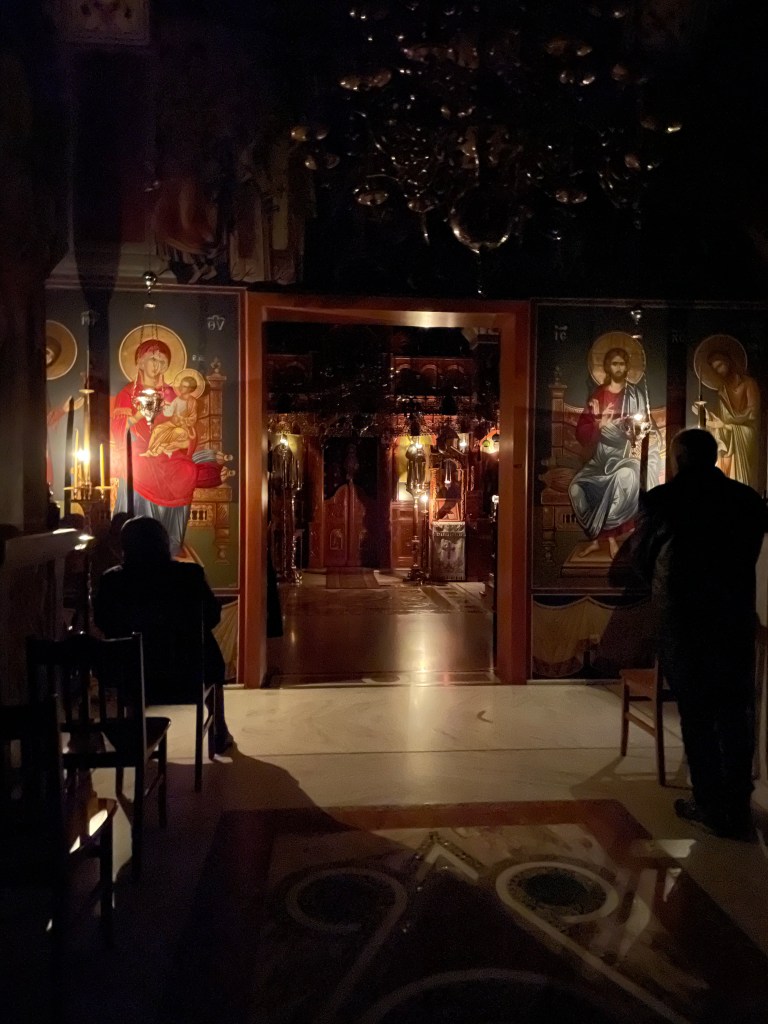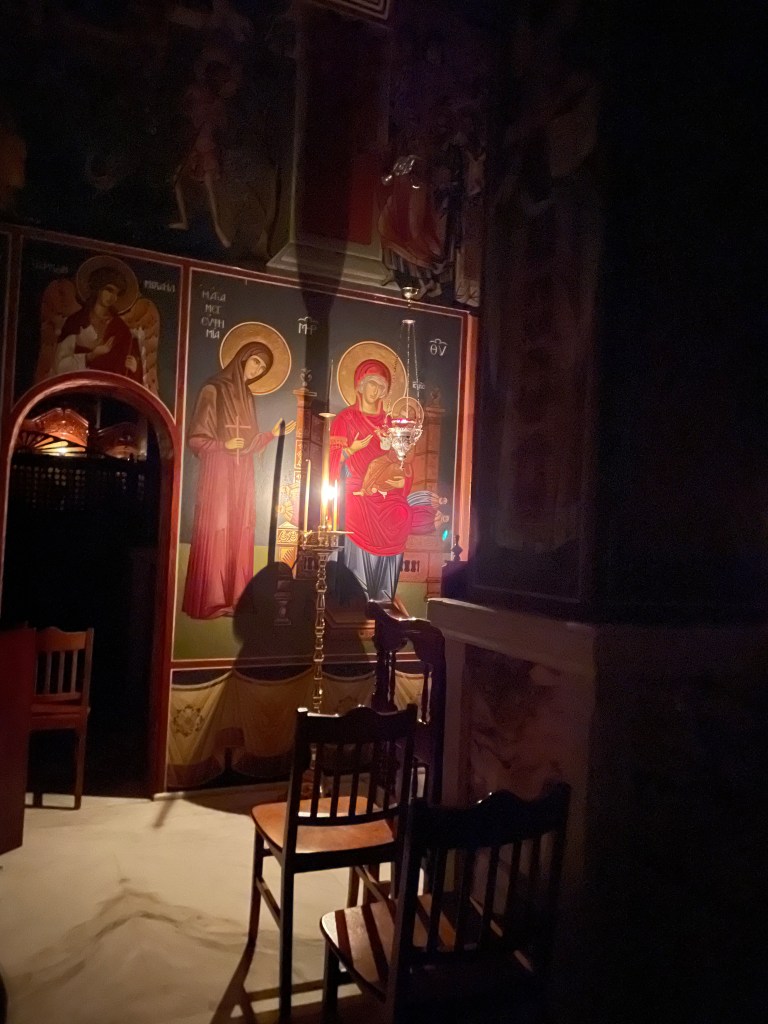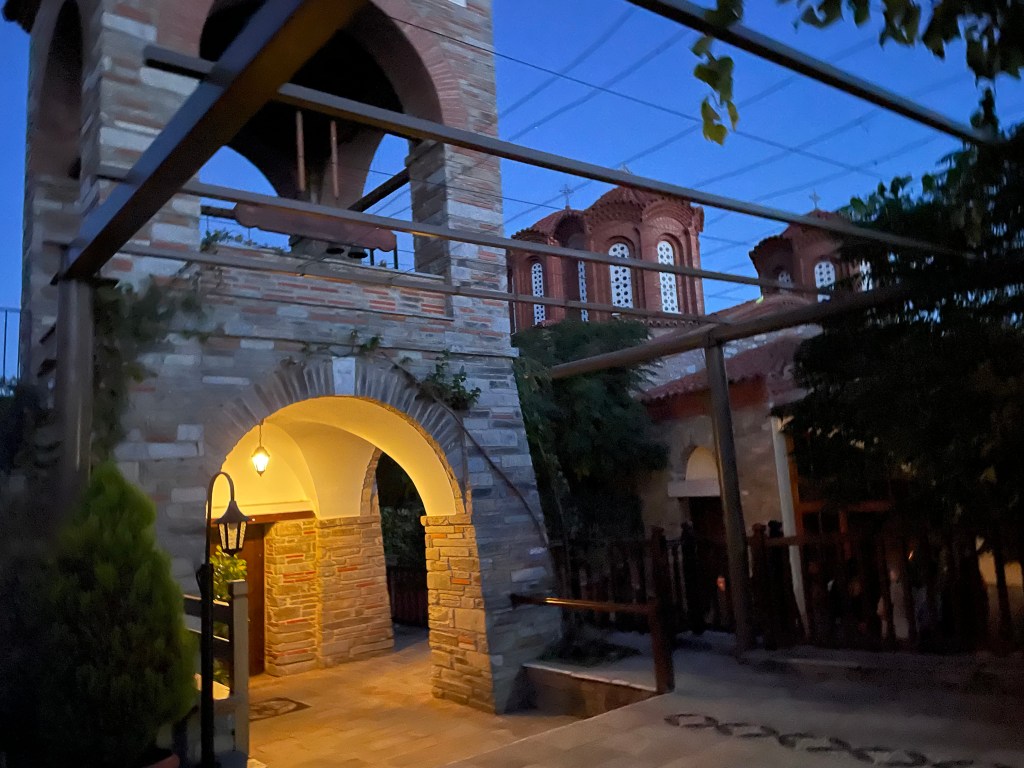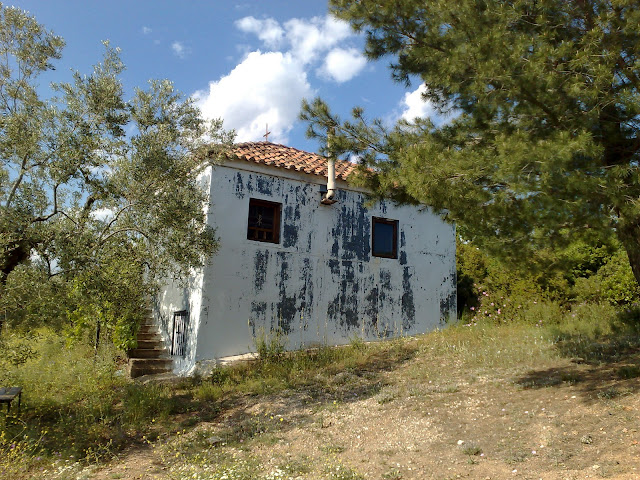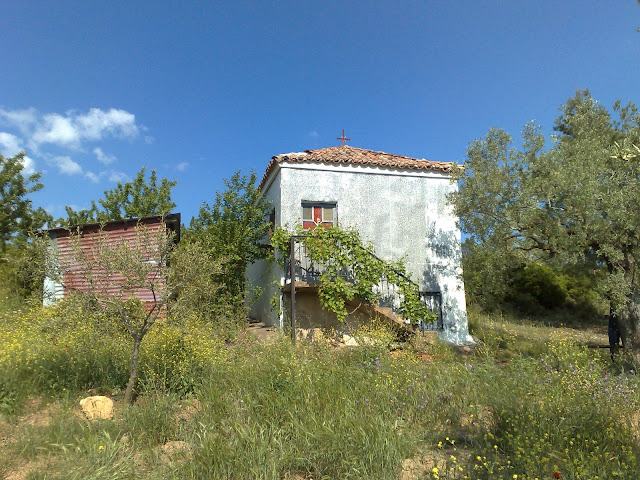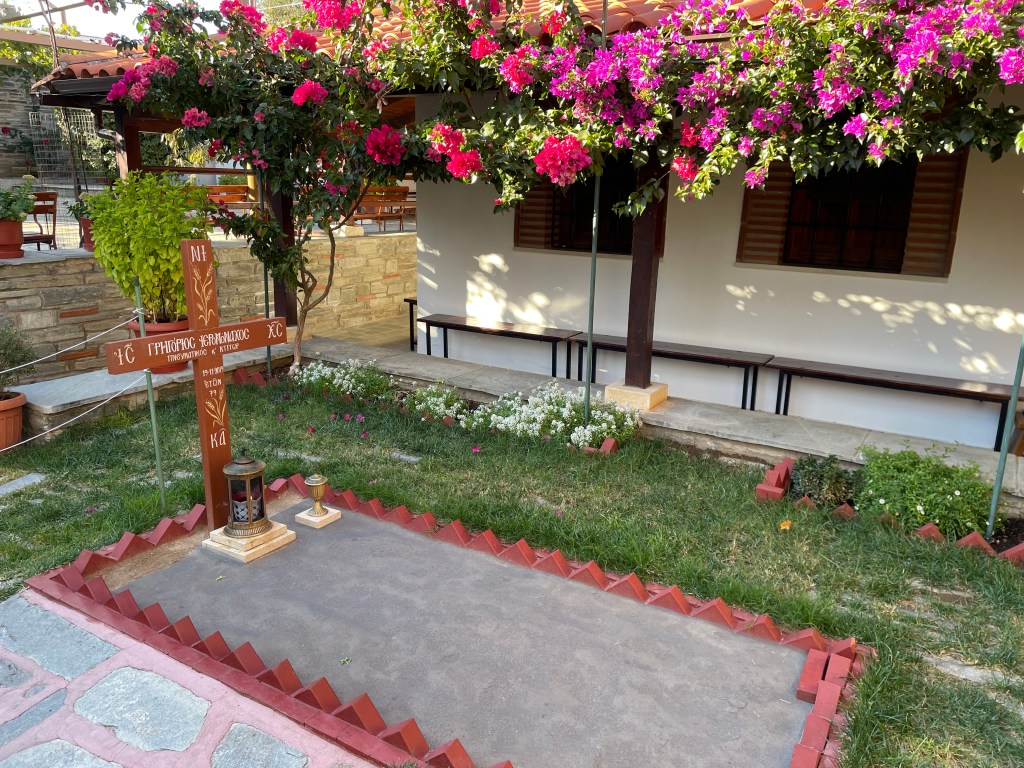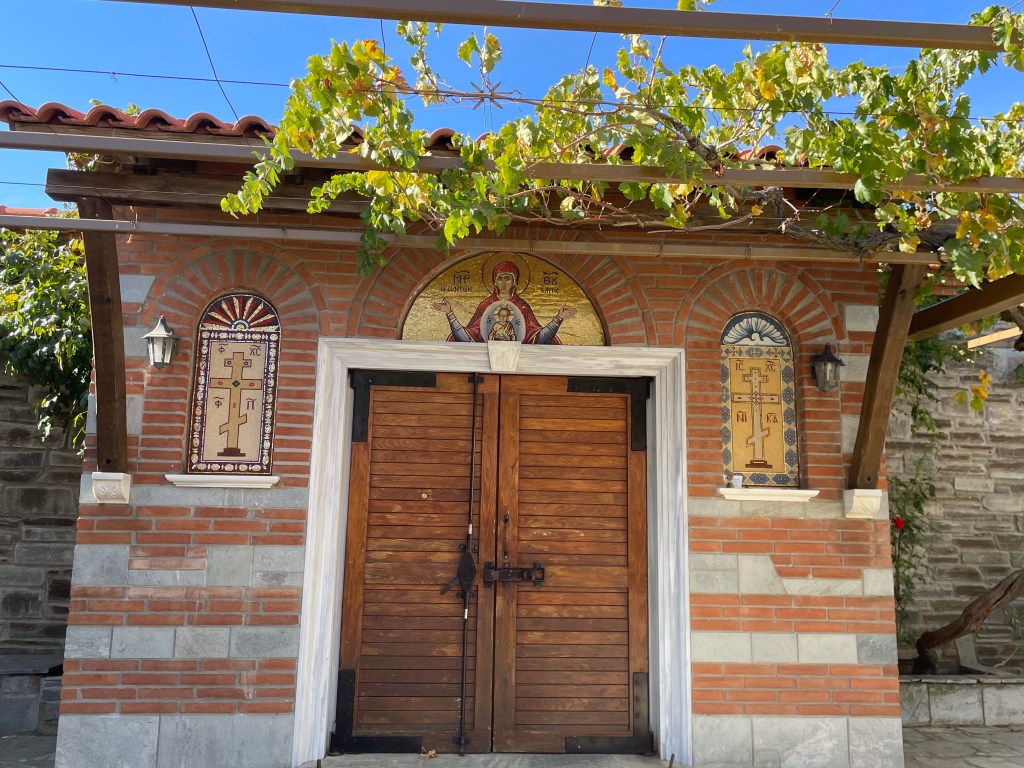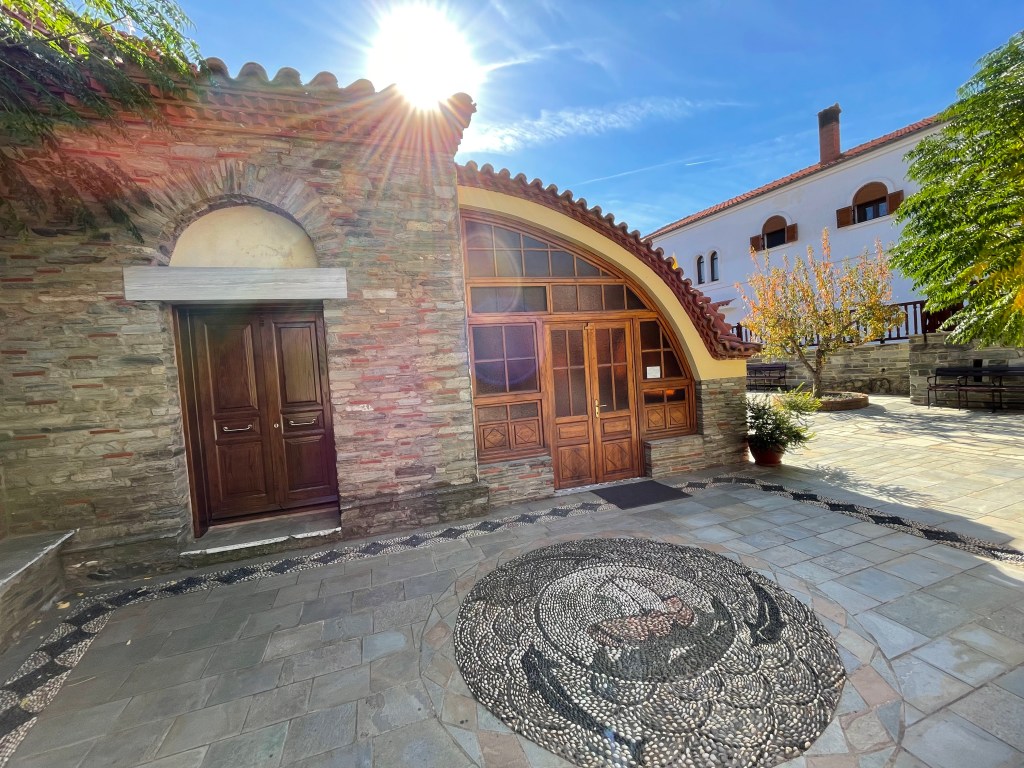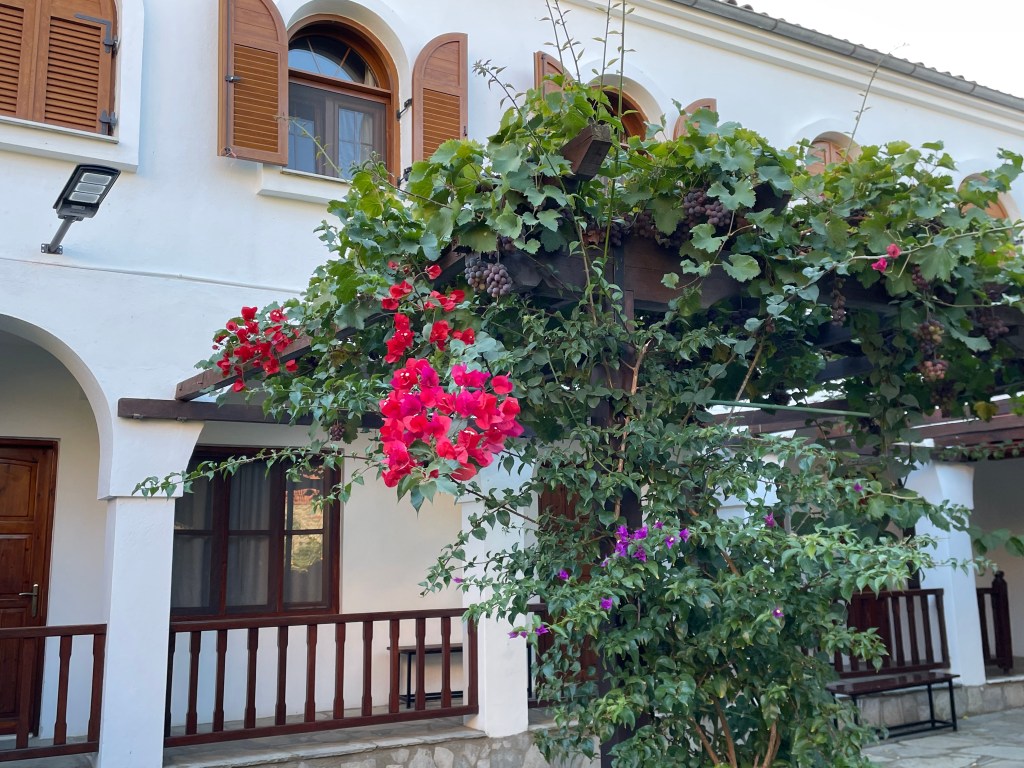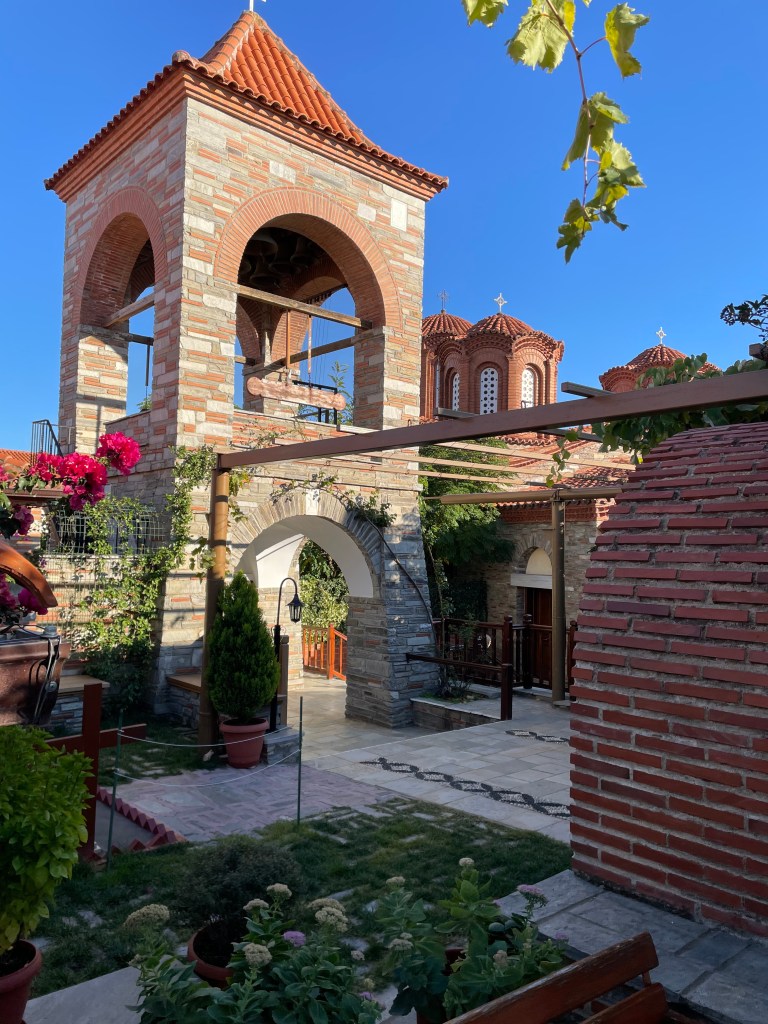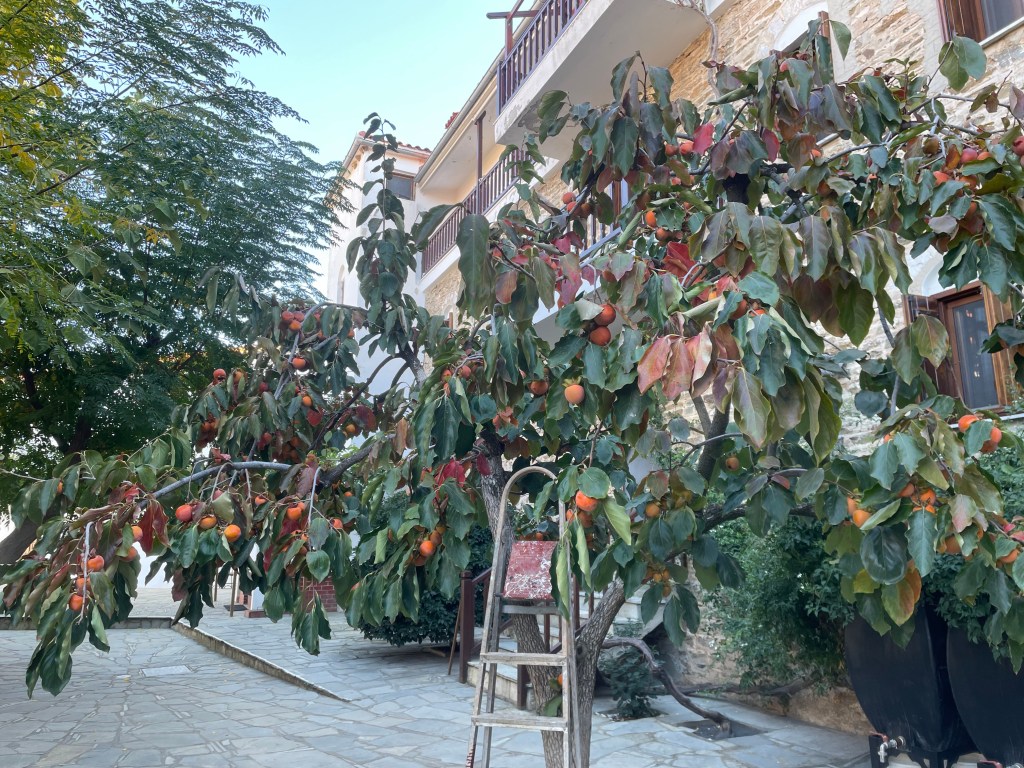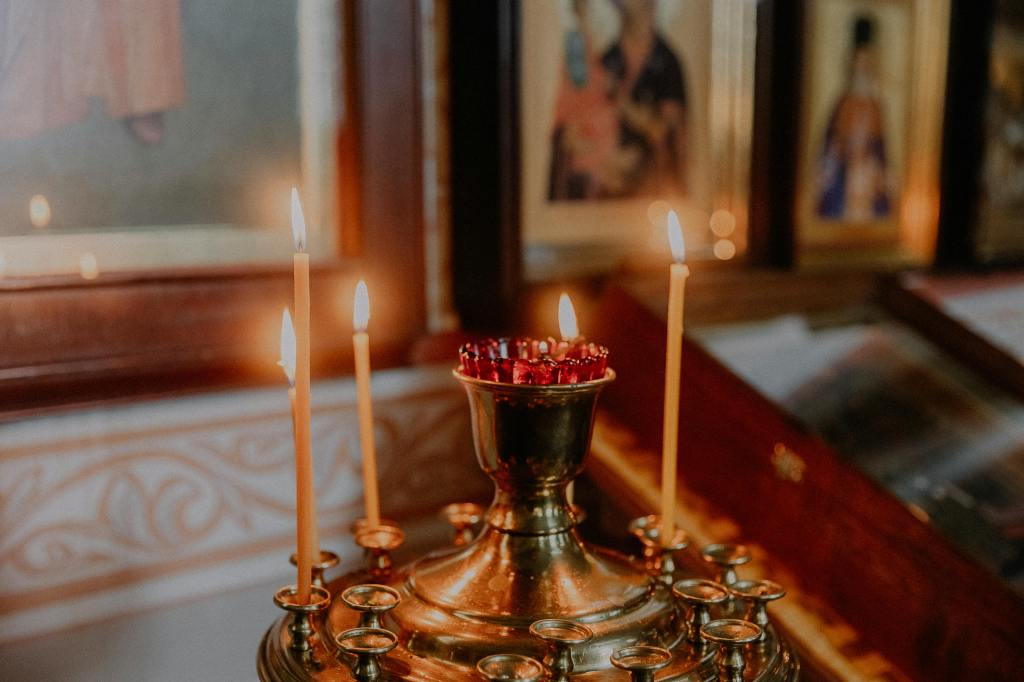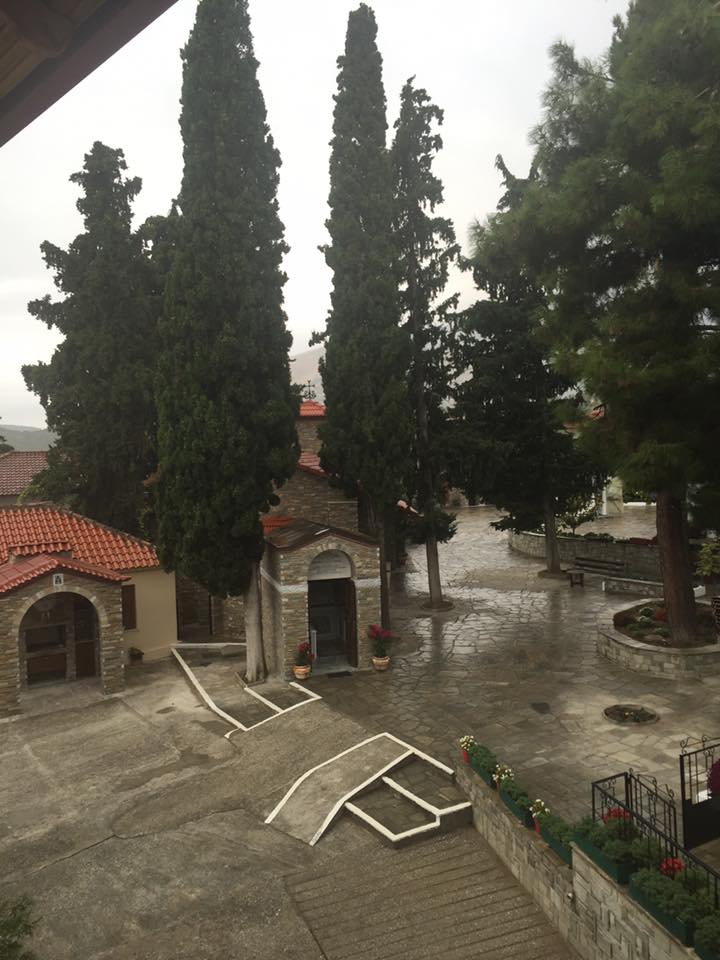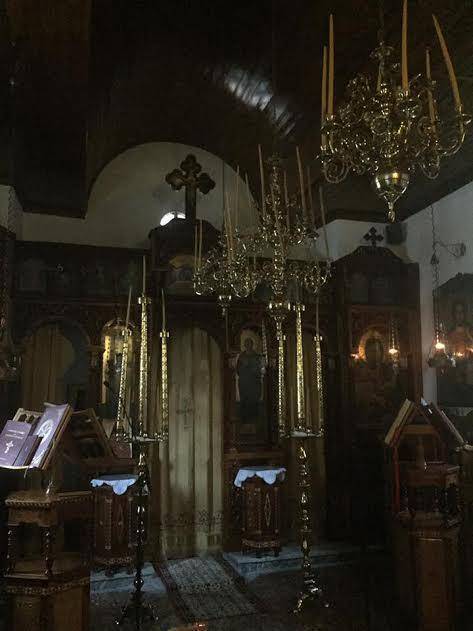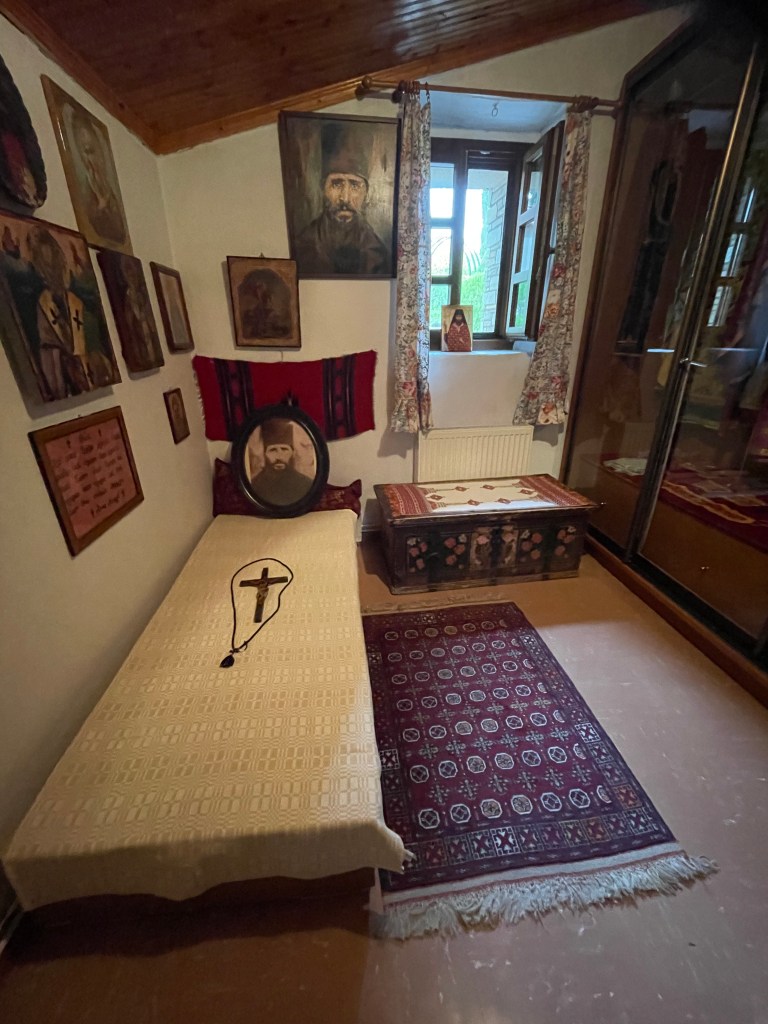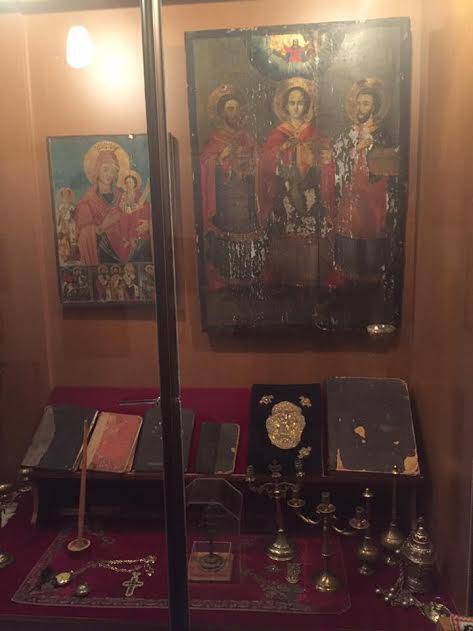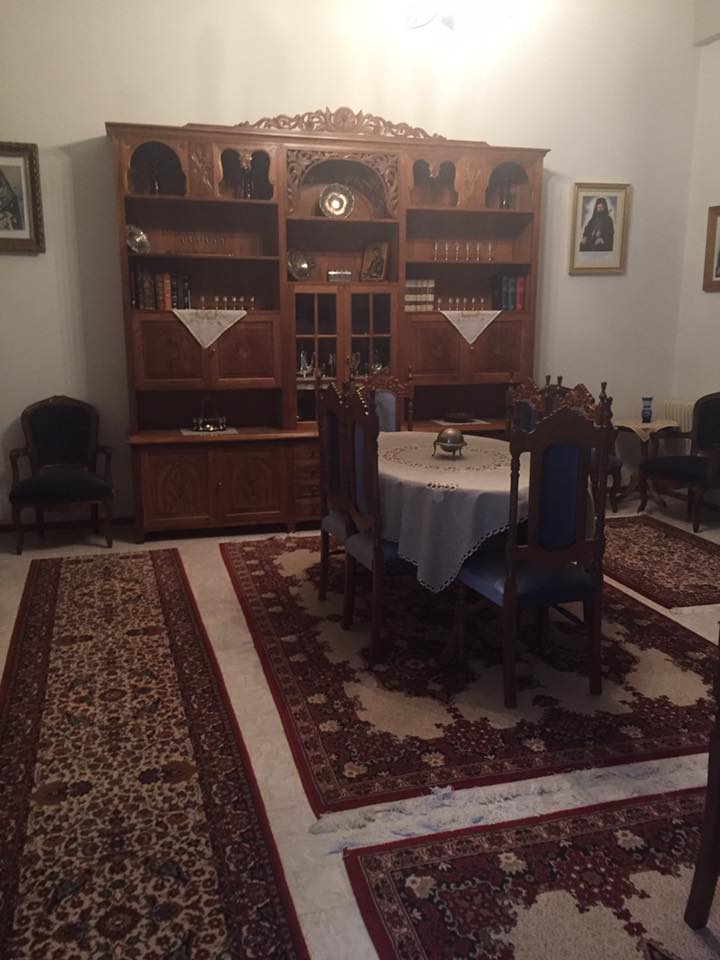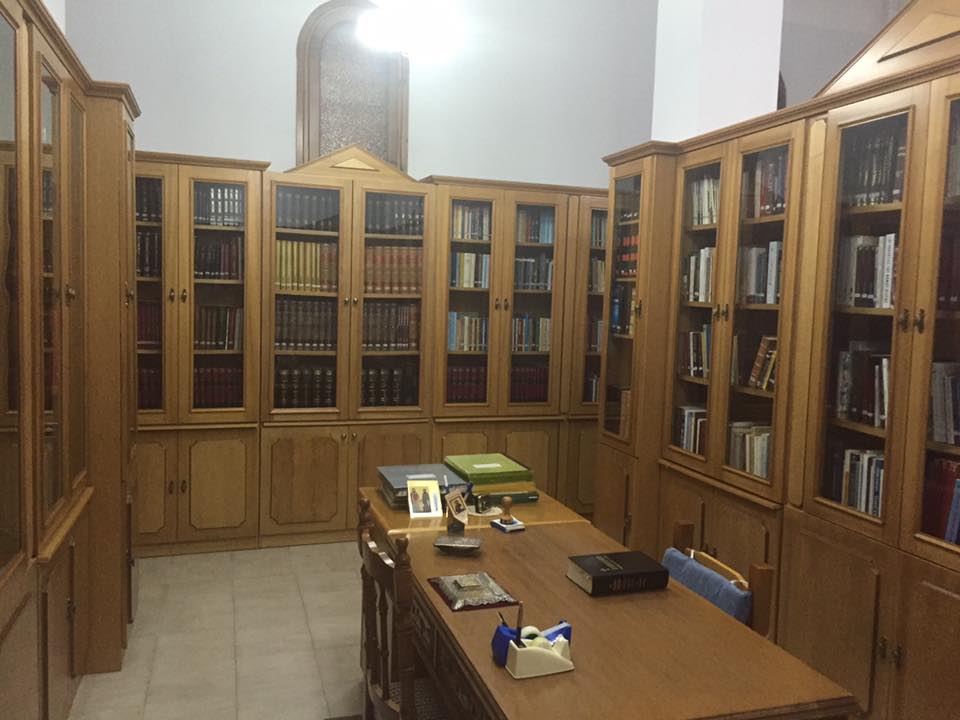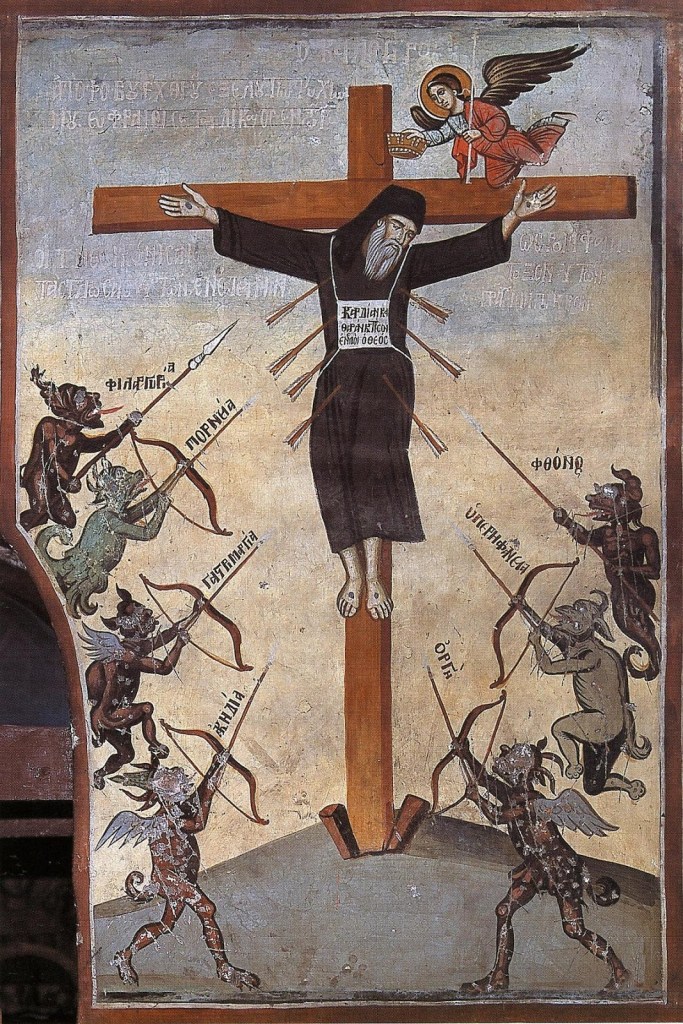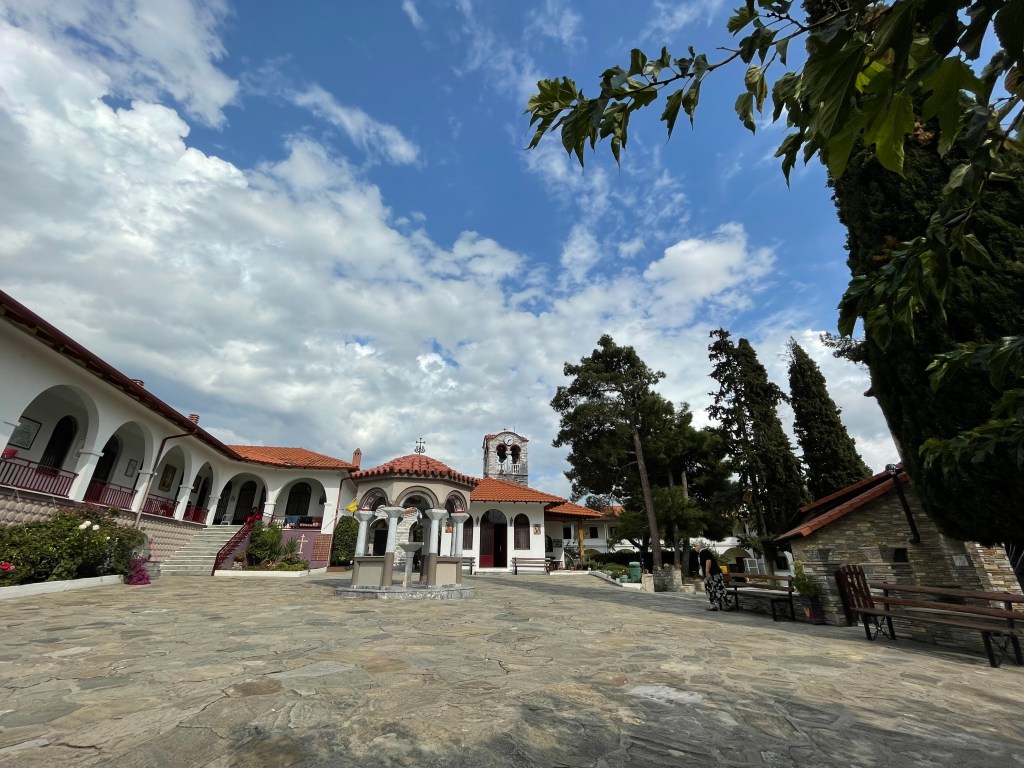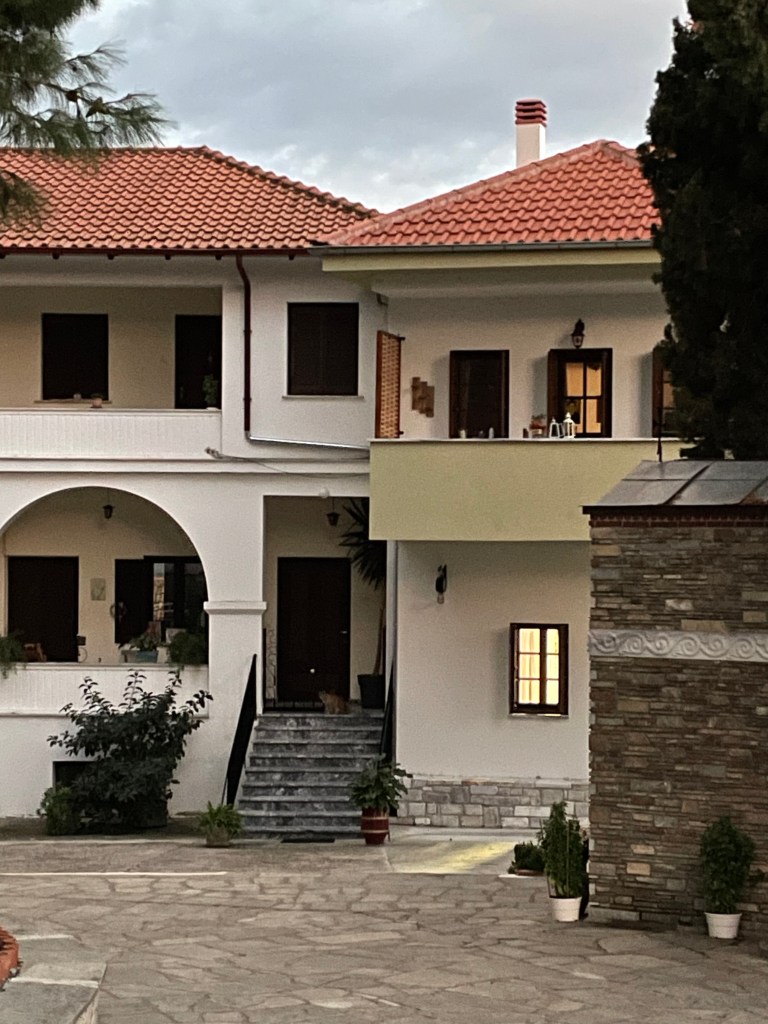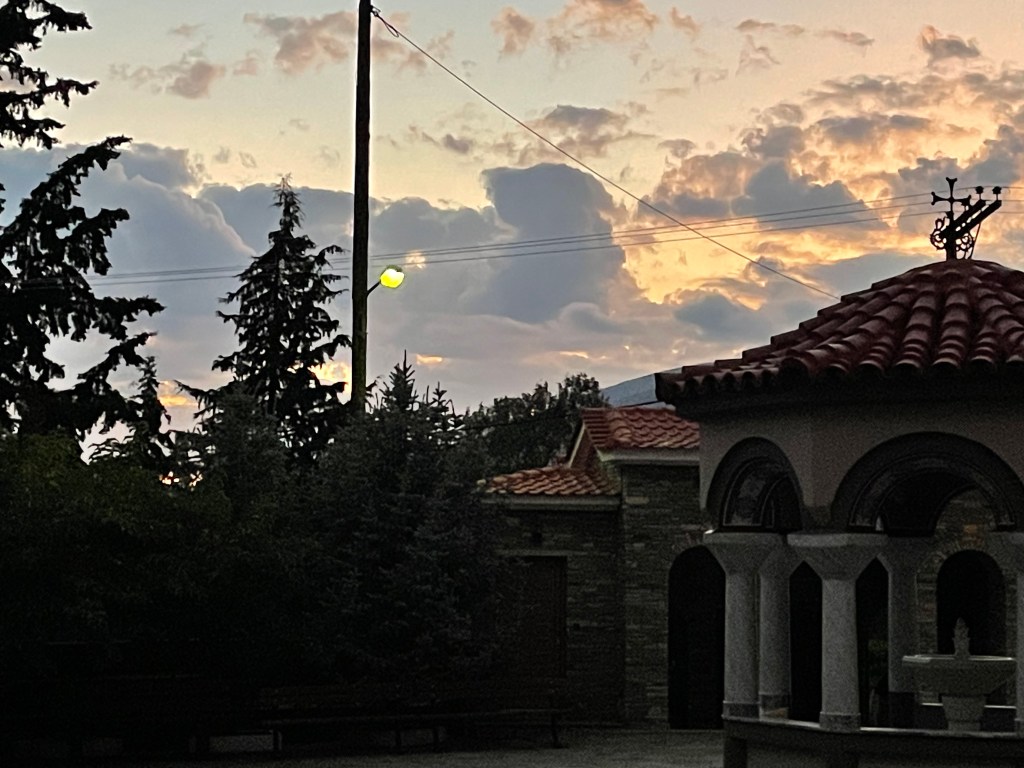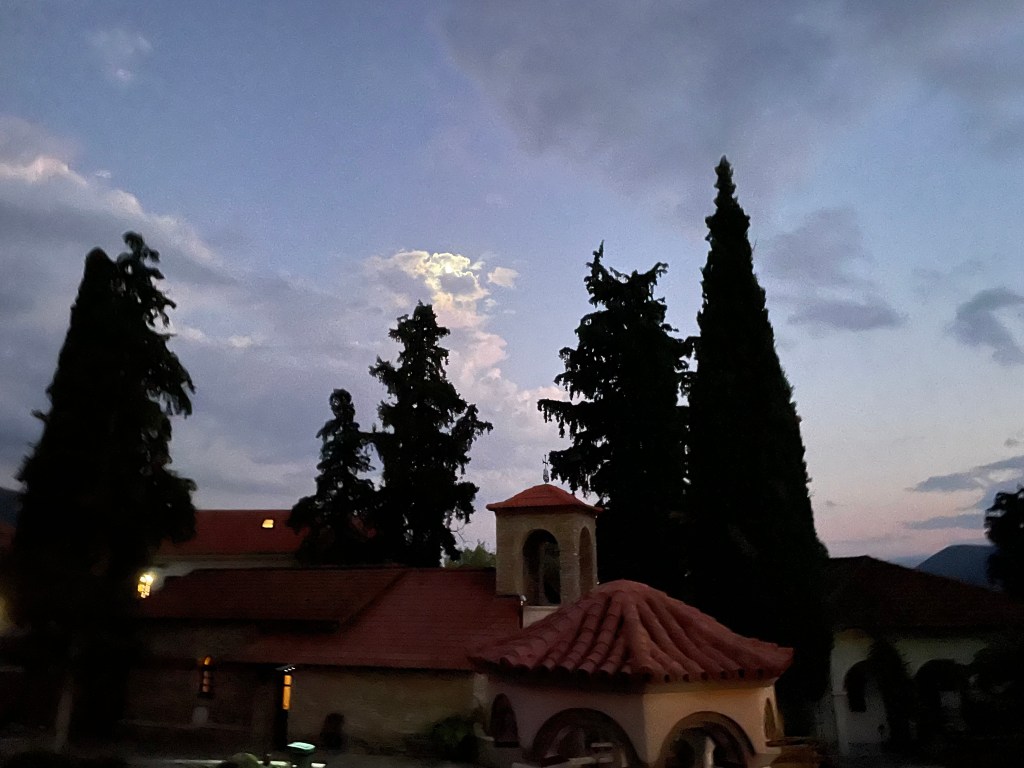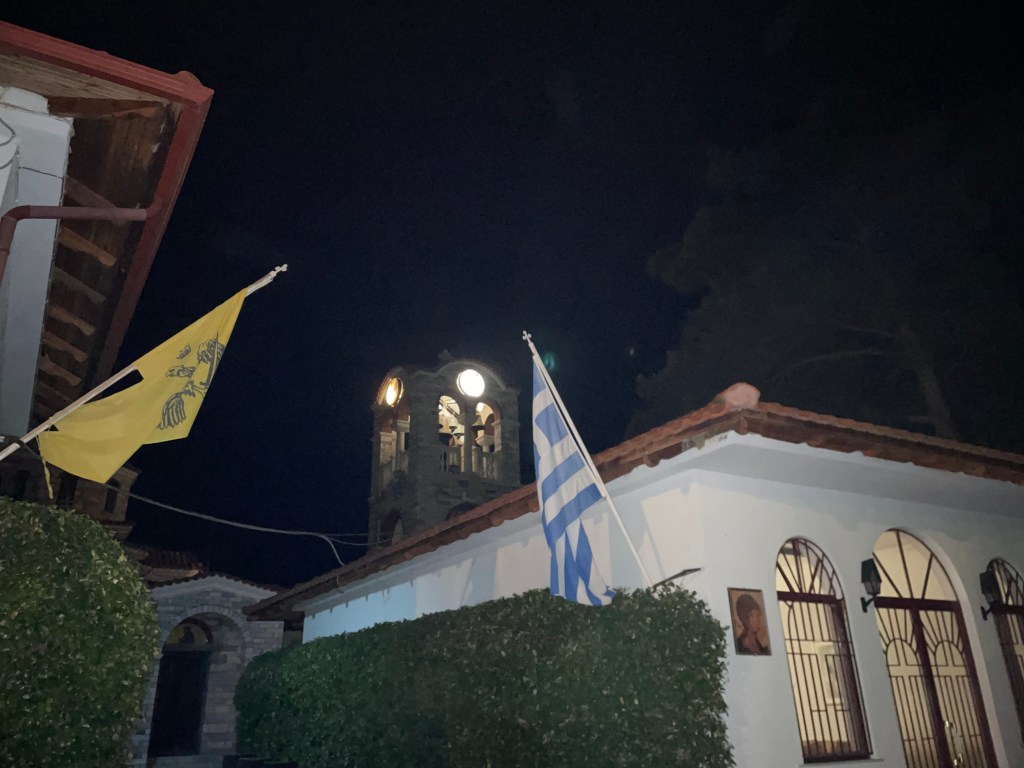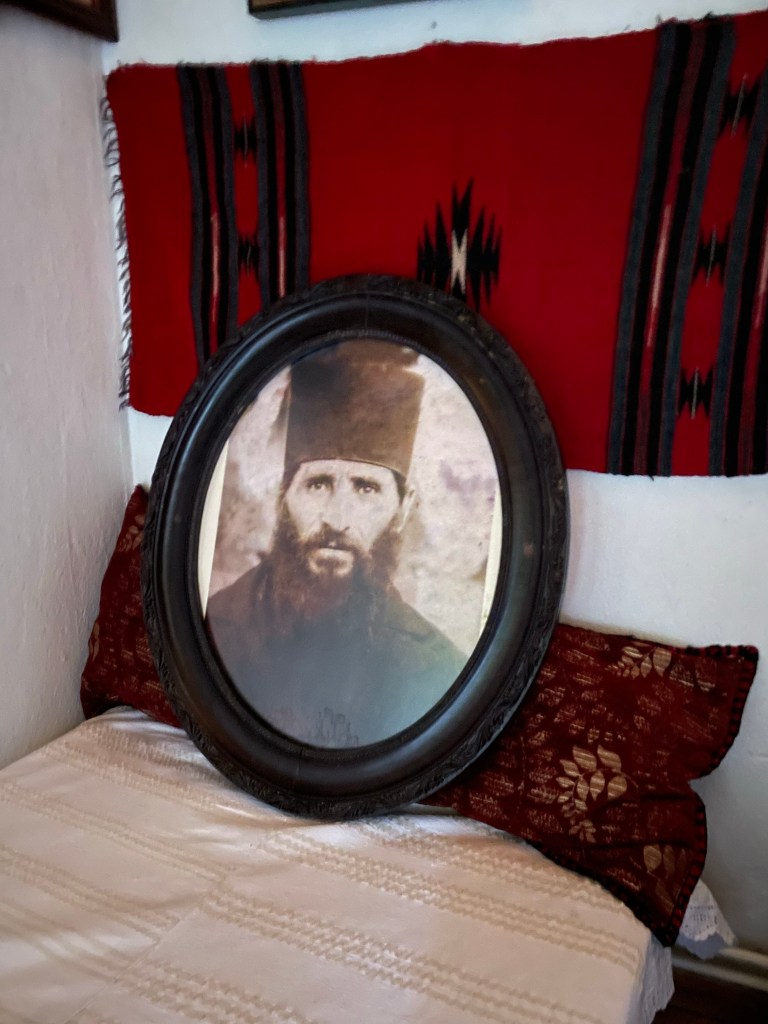
The Holy Monastery of Ascension of the Savior located in the village of Taxiarches (Sipsa)
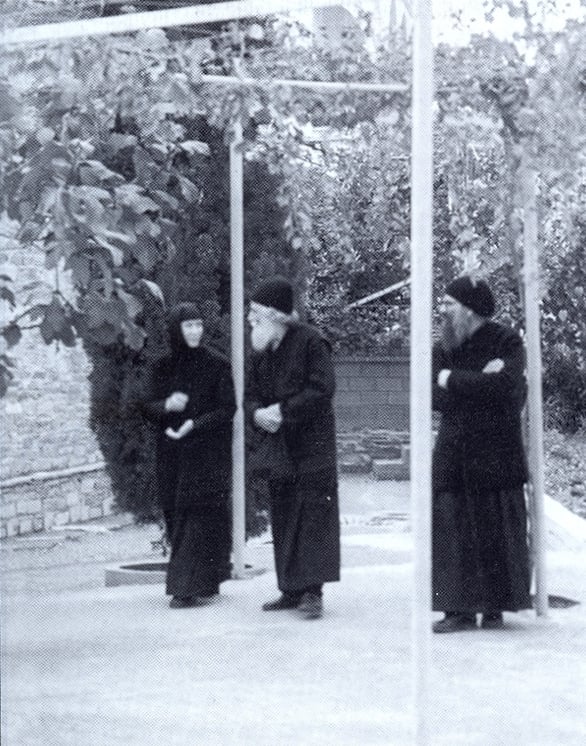
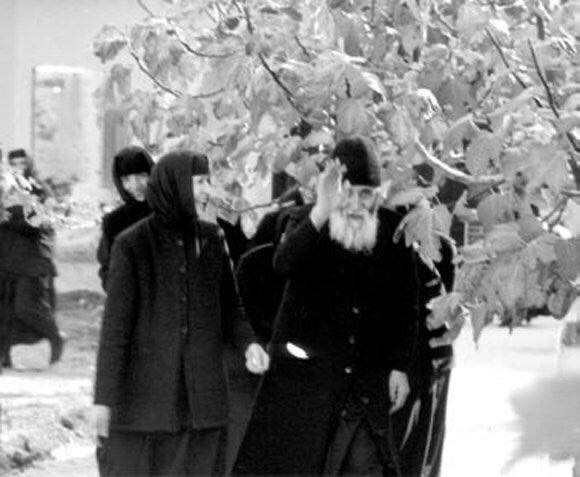
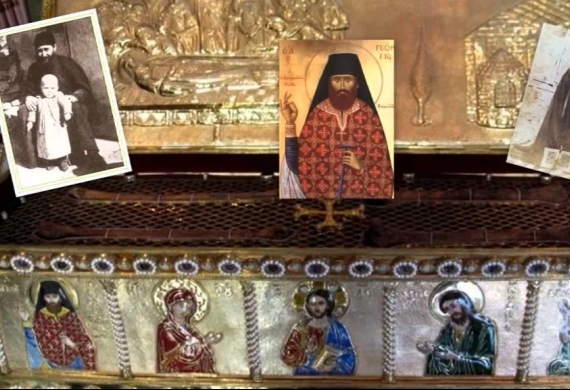
St. George Karslides, the Founder of Sipsa monastery
Amazing! After 8 years (originally posted 9 Nov. 2016)! What memories and tears now that I am planning a return of the prodigal…
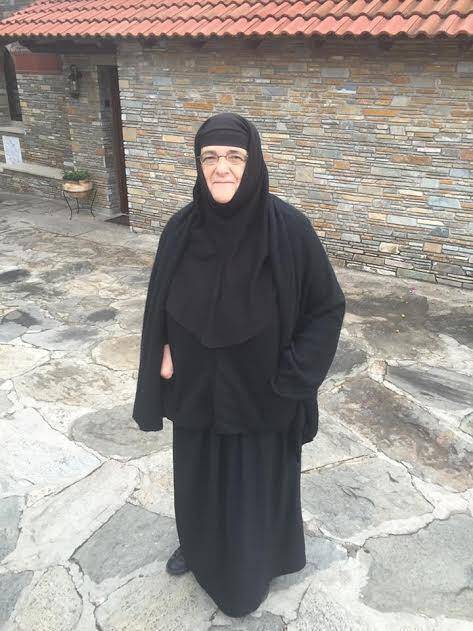
“… Gerondissa Porphyria has always been so full of love and humility, always ready to sacrifice her ease, her rest and sleep, everything for her ‘neighbour! How many times has she consoled me in the trials and tribulations of my life! Always by my side, always! How many times has she offered a shoulder to cry on and precious, practical counsel! Her prayerful presence is intensely, intimately felt even thousands of miles away, here at the UK, and her smile warms my heart. Oh, just look at her smile in the photographs below with a pilgrim at the monastery and imagine the rays of the sun warming your shoulders after a rainy, cold day! How blessed am I to have such a spiritual mother by my side! Over the years I got better acquainted with the friendly and hospitable nuns there and the pilgrims and the faithful who regularly visit this monastery. St. Georgios’ holy presence is immediately felt upon entering the monastery gate, and there is always a queue at his tomb where his spiritual children kneel before their spiritual father, now in Heaven, to ask for his spiritual guidance and to seek comfort in life’s trials and tribulations. …”(9 Nov, 2016)
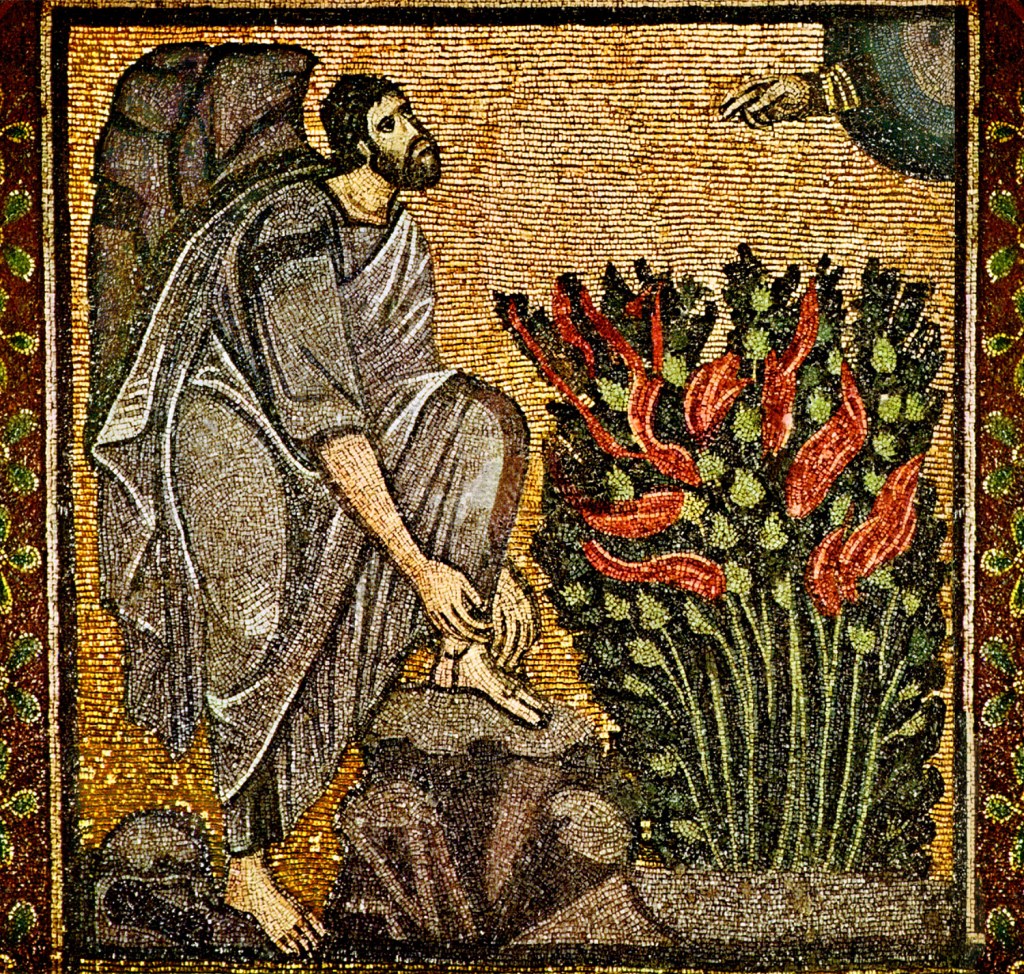
All this and so much more! Nothing has changed! Only deeper and deeper in the Burning Bush.
Nothing had prepared me for what happened today at the monastery! Literally the last minute before I departed! I am still in tears of gratitude and trying to digest the Burning Bush Our Lord and Panagia have granted me to experience.
The day started as usual with very early Midnight Office, Matins and Holy Liturgy. The chanting of the sisters was most beautiful and the faithful in the church were praying with tears and prostrations to the Theotokos. Soon the church was full with lots of people with health conditions or impairments, all pouring out their hearts in prayer for a miracle. “For an angel went down at a certain season into the pool, and troubled the water: whosoever then first after the troubling of the water stepped in was made whole of whatsoever disease he had.” (John 5:4)
Why was my heart so lukewarm? What common did I have with all these fervent disciples? My pilgrimage was soon coming to an end, after the formal Sunday meal at the monastery trapeza (ie. refectory), at the end of the Holy Liturgy, and coffee offered to the monastery guests, in other words in about 3 hours. My days here have indeed been a time of healing, but how did this compare to the thousands of miles and long hours, nearly a day, some of my brethren and sisters had travelled to make it here?
I tried to make the best of my few remaining hours and spend quite a lot of time with the Pennsylvania brother sharing amazing experiences of his with Geronda Efraim of Arizona of blessed memory. We decided to stay in touch since by God’s Providence we both arrived and were leaving the monastery the same days and hours. I prayed and watched other pilgrims who had sat down in corners with the sisters and were talking privately. I had not made such a “connection” with any of the sisters for all their warm hospitality. This felt a bit sad and disappointing but may it be blessed.
The meal at the Trapeza was very formal and characterized by prayer, reverence and serenity, as the process of the meal is a ritual. The readings were on the Gospel reading for today, esp. the line “The Lord said, “As you wish that men would do to you, do so to them. … Be merciful, even as your Father is merciful”, and they were from St Gregory Palamas and St Paisios the Athonite. At the end, Gerondissa Melani spoke for a few minutes, highlighting a few points, and then we were ceremoniously escorted outside by the sisters, to the monastery gardens.
I was about to thank the “arhondarissa”, the sister in charge of the guests, for their hospitality during my stay, and proceed to the parking lot, outside of the monastery gates, when I heard a sister calling out my name! I turned around and lo, a sister approached me, wishing to introduce herself! It was Sister I.
Yesterday evening, I had indeed made a request to the arhondarissa to meet Sister I, if that was possible, at the persistent recommendation of a friend, who knows this sister for decades, but nothing had happened, so I assumed that the sister was just too busy to meet me.
Sister I. was indeed a revelation. In just a few minutes, she conducted a thorough spiritual surgical procedure on me and started gently to guide me!I have no words for what happened during these few minutes together. Our 10’ discussion started in light rain and ended in bright sunshine! But it was her eyes that were most radiant and her smile most bright than the sun! Her eyes and smile reminded me of an elder who has charisma from God: Gerondas Efthymios, St Paisios successor, a Geronda that I briefly met at Gerondas Gregorios funeral. Radiant eyes, bright smile, the burning bush!
Back to Sister I., we first got introduced to each other and soon started discussing missionary work at the UK, as Sister I. has been visiting the country, engaging in like activity, and Essex monastery in particular. She is the spiritual daughter of St. Sophronios the Athonite, the founder of Essex monastery, if I got that right. She certainly cited lots of his sayings and spiritual pedagogy. Sister I. has been involved in helping British people discover and reclaim their lost Orthodox heritage, their Saints, and return to the Orthodox Church.
I spoke to her about my recent visit to a parish at the UK, small but compact, with lots of catechumens and inquirers, and told her that the love and holiness I experienced at their church services and gatherings made me feel like I was in the Acts of the Apostles, in those early church communities. She agreed, having experienced similar cases, and we were both reminded of Saint Arsenios of Paros †1877 prophecy that “the Church in The British Isles will only begin to grow when she begins to again venerate her own Saints”
Soon though, our discussion moved to another level and felt more like prayer than a mere exchange of opinions. How piercing were her spiritual X- Rays! “He told me everything I ever did.” (John 4:39) I have never experienced something of the like with a “mere stranger”! Sister I. felt like a Gerondissa who has charisma from God! (*) She revealed to me how I should walk together with the Lord. A real Mother! Among other things very personal she insisted on the Jesus Prayer and Divine Liturgy, which is Everything! I need to pray and reflect on all she revealed to me, and certainly discuss it with my spiritual father to see if he blesses her words.
Sister I. promised to spend more time with me next time we meet in God’s Providence. She told me we could do an obedience together, pray and be open to what God wants us to do together then. I certainly want to meet this Sister again. I have no words to express my gratitude and thanksgiving to our Lord. What an experience! What a great event of my life, the meeting with this Sister! “It was given to me,the least of men, to live approximately the same experience”. Indeed, He has kept the good wine until now.”
“The greatest event of the life of our holy elder, as he himself related and wrote, was his meeting with his holy Father, Silouan. The historical fact of this spiritual bond had definitive importance for the later spiritual development and theology of Saint Sophrony, who write: ‘By the prayers of Saint Silouan, I, too, was placed in the same spiritual perspective … It was given to me,the least of men, to live approximately the same experience.’” Archimandrite Zachariah, The Seven Basic Points of the Theology of Saint Sophrony
(*) My spiritual father told me that he prefers the term “she [Sister I.] / he [Gerondas Efthymios] has charisma from God. In order not to confuse her/him with those Protestant evangelicals who claim to be charismatic and who roll around on the floor” (his words).
“My spirit seeks You early in the morning, O God, for Your commandments are a light upon the earth”.
At 5 am, Matins begins, and everybody literally rushes to the church under the stars. “To the Theotokos let us run now most fervently”.
This monastery has 3 dedications to the Theotokos: the first is on The Mother of God of the Life-giving Spring or Life-giving Font (Greek: Ζωοδόχος Πηγή), on bright Friday; the second dedication is on the Dormition of the Theotokos, on August 15th; and its third dedication is on Panagia Eleftherotria, ie. Theotokos the Liberator, on the Feast of the Holy Protection, October 28th. This third dedication is the most important for the monastery and apparently for all the Greek nation. It is true that the piety of the faithful all over the world have adorned the Virgin Mary with thousands of names, but this particular one I have personally not encountered in any other nation.
Most Holy Theotokos was declared a Great General, Τη Υπερμάχω Στρατηγώ, by the Greeks of Byzantium in 626 AD, to protect Constantinople from the combined siege by the Sassanid Persians, Avars and allied Slavs. After numerous sieges and attacks in the centuries to follow, culminating in the fall of Constantinople from the Ottomans, Panagia then became the “Eleftherotria”, the hope of thousands of Greek faithful and especially of Greek neomartyrs, suffering martyrdom under the Muslim yoke for more than 400 years.
Tradition holds that it was this Great General who freed the Greek Nation from the Turkish yoke in 1821 and protected the Greeks from the attack of the Italians in 1940 AD. This is why the Feast of “Αγία Σκέπη”, the Holy Protection of the Theotokos, was moved from Oct 1st to Oct 28, theOhi Day, also referred to as the “Day of No”, the day when the Greek prime minister rejected an ultimatum given by the Italian dictator Benito Mussolini during World War II.
Panagia is, of course, the Protector of all Orthodox Church and nations, and a Mother to us all, liberating us not so much from our visible enemies, but from the invisible ones, ie. our passions, our sins, ultimately from the evil one. Pilgrims from all over the world tearfully share miracles and pray to Her here, in Her monastery, for liberty from their concerns, worries, thoughts, illnesses, for Liberty of their souls first, ultimately from sin.
Beneath thy compassion, We take refuge, O Mother of God: do not despise our petitions in time of trouble, but rescue us from dangers, only pure one, only blessed one. (1)
Holy Liturgy finishes at 8:30 and a light meal is awaiting us, before we all head to our obediences. Today, to our surprise, ironing, and not ivy pruning, is our obedience: ironing piles upon piles of the sisters’ and pilgrims‘ bedsheets. May it be blessed. Again, long hours of manual prayer await us, accompanied by the Jesus prayer. Glory to God for all things.
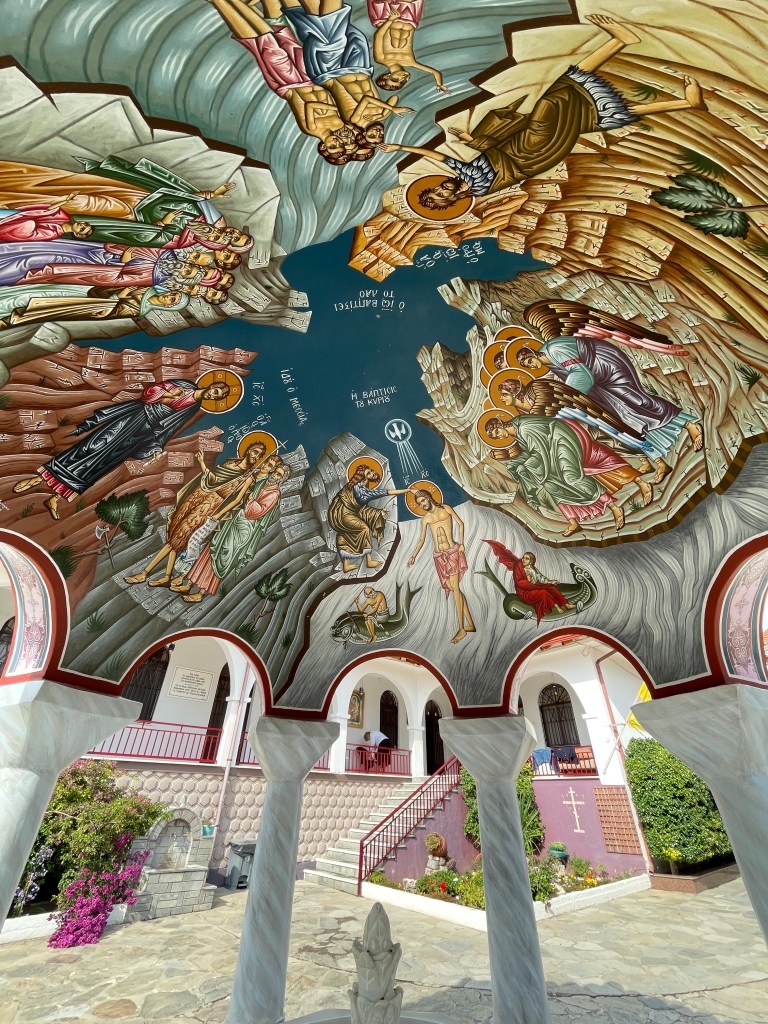
At long last, break time and a walk in the monastery gardens and lush forests! Once outside of the cells and the various workshops of iconography and embroidery, one marvels at the beauty of trees especially and flowers everywhere. Nature is enveloped in the Holy Spirit.
Most Holy Theotokos’ presence and protection is felt most powerfully in Her monastery gardens and forests, and there are votive offerings, “tamata” for Her everywhere.
Enwrapped in such beauty and holiness, immersed in the Theotokos, one forgets tiredness, drowsiness, even hunger, but the semantron summons us again, this time for our midday meal of Greek Briam, a traditional Mediterranean recipe that uses all homegrown summer vegetables —potatoes, zucchini, aubergines, red onions, and tomatoes—and bakes them together in olive oil.
Siesta, quiet time follows, then Great Vespers, Compline, and another, very light, fasting meal, since most of the pilgrims are preparing for Holy Communion. Cars and pilgrims keep arriving in large numbers, especially now that weekend has started. At the sunset, pilgrims and monastics, all together, in small groups, share precious fellowship time in the monastery gardens. Even at the close of the day, Sisters continue to be amazing busy-bees with their obediences, errands, charity and gracious hospitality.
In anticipation of tomorrow’s guests 😀 At weekends, the numbers of the faithful at the monastery services increases exponentially!
The blessing of Gerondissa Melani seals our day and we retreat to hesychia in our cells. How richly, orderly, deeply and blessedly time flows in a monastery! So different to the hasty, stressful, exhausting, chaotic perception of time in our lives.
To the Theotokos, let us run now most fervently
Saint Porphyrios of Kavsokalyva on the Panagia:
“Our Church highly honours our Panagia. I very much love our Panagia. When I was young on the Holy Mountain I very much adored her. I had a small icon of the Panagia under my pillow. Morning and night I embraced her. I lived with her night and day. Whatever happened to me, I resorted to her. What can I tell you? She is better than a mother. There was nothing else I wanted more. She had everything”.
(1) The oldest prayer we know of dedicated to the Virgin Mary. The earliest text of this hymn was found in a Coptic Christmas liturgy of the third century. It is written in Greek and dates to approximately 250 A.D. It is used in the Coptic liturgy to this day, as well as in the Orthodox, Ambrosian, and Latin liturgies. Orthodox Christianity Then and Now.
The time has come! The day has finally arrived! After a long, tiring month full of all kinds of jobs and obediences —other than a blessed Synaxis at Holy Cross, UK —and an especially hard time last week, I have finally arrived at the first monastery in my pilgrimage “list”: the Dormition of the Theotokos monastery at the Panorama suburbs of Thessaloniki.
This most beautiful monastery is dedicated to Panagia Elefterotria, the Liberator. It was founded in 1957, has 60 nuns and Melania is their Mother Superior.
Last August, we visited this monastery together with Father J. but our visit was very brief …
I remember so little from our visit last year. I cannot find my way anywhere around. I have arrived so upset, sad and stressed out. Yet here at the monastery, there is an hesychia and a fullness of the Holy Spirit that is most healing.
The hospitality and kindness of the sisters is felt in their warm smiles and their radiant, kind, prayerful eyes. They offer me breakfast, ask me to wash the guests’ dishes, then take me to my room and I start meeting pilgrims from all over the world!
Talking about hospitality, please have a close look at this notice in my cell:
I translate the last two paragraphs: “To our dear guests: A humble request: … You can leave a pair of your own bedsheets if you are a frequent guest. Please do not keep the monastery bedsheets, if you are not considering returning to our monastery within a fortnight”. “Returning to our monastery within a fortnight”!
Everything is happening very fast and with as few words as possible. The sisters work hard and very fast, they multitask, they are such bright busy-bees, yet more importantly they constantly pray. They had to accommodate nearly 300 (!) pilgrims during Dormition Fast in August.
My first obedience, upon arrival, is ivy pruning. I sense that this will be my obedience all these days, until I leave, as the monastery fence is a very long, miles long fence. The other pilgrims from other countries cannot suffer the heat and the sun. As for me, after all this prolonged, all summer training of 40-45 Celsius here, this 30+ C heat and sun feels a bit autumn-like breeze!
So, I prune and pray and hope my sadness will fade away since this is what my spiritual father reassured me and is praying about. I always love to work in nature, yet even here my thoughts, my logismoi still bother me and interfere. But I have faith in my Gerondas’ words. I am under obedience, he will stand by my side on Judgment Day before our Lord, surely he knows better.
Hours pass under the sun with pruning and the Jesus prayer. A little tortoise seems confused with our pruning and we have gently to carry her across the road to greener paths. Glory to God! Little by little, my sorrow begins to evaporate with this heat, sun and prayers. So Gerondas was right, again! “A disciplined schedule, manual labour, study and prayer” (Abba Isaiah of Scetis Ascetic Discourses), and this blessed monastic community did work miracles for my pusillanimity and faintheartedness.
No time for logismoi, thoughts, moaning, worries, fear, sorrow and self-pity. This is the time, καιρός, for metanoia, obedience, faith, and joyful, godly, bright sorrow, “Charmolipi” (an old Greek work made up of ‘chara’ (joy) and ‘lipi’ (sadness). There is no equivalent word in English; it means a feeling of happiness and sadness at the same time.
10 Godly sorrow brings repentance that leads to salvation and leaves no regret, but worldly sorrow brings death. (2 Corinthians 7:10)
One has literally moved next to the monastery to be there all the time, and the other one does not mind driving 6 hours to be at the church services and the fathers of the monastery! This pilgrim was baptised in a Roman Catholic Church due to his Orthodox parents “carelessness and ignorance” — the pilgrim’s own words— but our Lord found him, guided him to His Church, and he is now on pilgrimage together with his mother! Glory to God for all things! All these Elder Efraim’s monasteries, 20 in total, I believe, in USA and Canada, are all following the Cenobitic way of monastic life (“Cenobitic” is derived from the Greek word “Keenovio” which means “common way of life”) therefore consisting of common work, common meals, and common rest periods.
After Little Compline, a small fasting dinner and then hesychia. My sorrow has been healed and joy fills my heart. What a transformation in just a few hours! My spiritual father was right: “The time there will be a time of healing”. All this prayer and few idle words, manual labour and study, have wrought a miracle.
Abba Isaiah of Scetis
“Observe these three things: your manual labour, your study, and your prayer. Think to yourself daily, “I only have this day to do something in this world” and you won’t sin before God.“
Gerondas Gregorios Papasotiriou, Spiritual Father and Founder of the Saint John the Forerunner Monastery at Metamorfosi, Chalkidiki–This list was compiled by some of his spiritual children in his memory on the day of the memorial.
Orthodoxy equals Orthopraxy— we should always seek virtue by engaging in a spiritual battle against our passions.
Paradise is not earned “from the armchair” [Greek idiom, meaning without any effort], but requires hard work. “The Kingdom of Heaven suffereth violence, and the violent take it by force.” (Matthew 11:12)
We should endure with patience sorrows, trials, injustices, and insults.
We should study the Gospel and the lives of the Saints so that we can see our spiritual poverty and wretchedness.
We should also pray alone “ Lord Jesus Christ have mercy on us”, “ Most Holy Theotokos save us”, “ Holy Saints of God pray/ intercede for us”.
We should chant to dissipate our melancholy and spiritual idleness/acedia.
Whatever we do, we should do it with all our heart. Life without a heart is not really life. We become robots if we have a mind, a sharp brain, and are very clever, yet do not have a heart; then we have nothing.
We should attend Church as often as we can and we should receive Holy Communion after Confession, and if that is not possible, when we have peace in our heart.
We should prepare before Confession so that when we go to the Sacrament, we should confess our own sins, and not those of others, without idle words, with self-knowledge, and real repentance.
We should tolerate and forgive others so that God also forgives us.
Panorama Monastery Dormition of the TheotokosOn our way back from St. Arsenios Monastery
Some years ago I learned that numbers are not important. The number of people attending Church is not an accurate indicator of either faith or success; however one measures success? Geronda Theoklitos of St Arsenios monastery confirmed this independently of my thoughts when he said ” look after your small flock.” ” God looks at the heart not on the outward appearence” as the prophet Samuel said to Jesse, the father of David. I have passed through security and passport control. The flight is delayed. Time to pray. We pray that God will keep us all in his love. “Wherefore, O you who fear the Lord, praise Him in the places where ye now are. Change of place does not effect any drawing nearer unto God, but wherever you may be, God will come to you, if the chambers of your soul be found of such a sort that He can dwell in you and walk in you.” St Gregory of Nyssa 8
Greece and its next plague of Egypt … This and the following images show the devastating effect of the storm Daniel on its eastern coast.
*
“Then He said, ‘Go out, and stand on the mountain before the Lord.’ And behold, the Lord passed by, and a great and strong wind tore into the mountains and broke the rocks in pieces before the Lord, but the Lord was not in the wind; and after the wind an earthquake, but the Lord was not in the earthquake; and after the earthquake a fire, but the Lord was not in the fire; and after the fire a still small voice. So it was, when Elijah heard it…” 1 Kings 19:11-13
*
The travelling guide’s diary—2
Some Abouna quotes and vignettes that struck my attention during his little pilgrimage … all in a ‘still small voice’ which ended up in silence …
The LORD will fight for you, and you have only to be silent! (Ex. 14:13-14).
*About Joy in Christ and Suffering: “Christ has offered us so much joy in meeting twice at such a short time [I am bound to travel to the UK end of September] barely a month apart, because we are going to suffer when all this ends.”
*About House Blessings: why did Abouna say such fervent prayers at the blessing of a particular house — his eyes were ablaze!— and he completely ‘ignored’ another house we visited? He barely stayed there 5 min and even suggested we all have coffee outside (!) at the neighbouring cafe. Such hurry, such ‘rudeness’! He barely even looked at their icon corner!
*About Monastic Calling and Monasteries: So many lengthy discussions and inquiries all these days, on foot, or inside the car during the long car drives, about which monastery to choose and become a monastic, even at the monasteries we visited, inquiring/ discussing with the monastics themselves about their monastery typikon … yet no conclusive answer … only silence! Just hints about city hermits …
*Gerondas Theoklitos of St. Arsenios of Vatopedi holding Abouna tightly and hugging him so tightly! A scene I will never forget! What a surprise! I always thought Gerondas Theoklitos was very strict and never expressed his emotions!…
overlooking the sea from the Monastery of St Arsenios in the mountains
Monasteries are places of healing and light. The Monastery of St Arsenios is one such place.
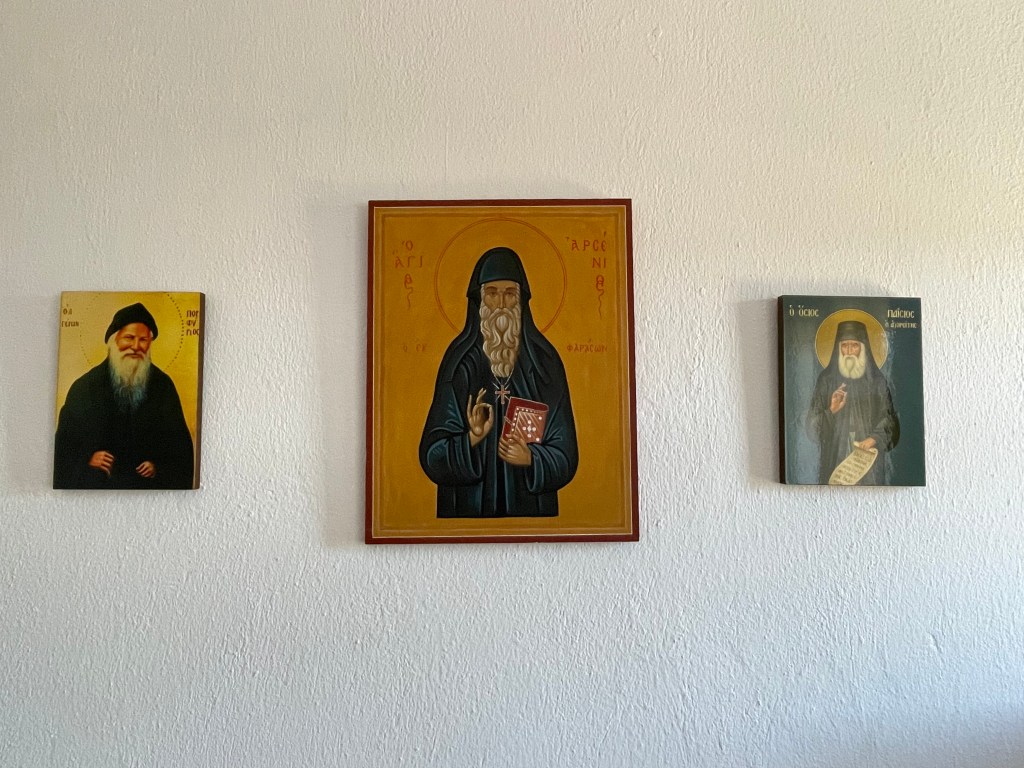
N.b.This is as close as I came to Agion Oros in the distance!
Another little miracle enabled us to meet Theologos and Vaiga with children again . We were joined by a priest from Germany Fr Victor with his Presbytera and children. The usual courtesies were extended to us, loukoumi, coffee and biscuits along with the necessary water!
Geronda Theoklitos joined us and he afforded us a great deal of his precious time even though he had many confessions to hear.. It was a true blessing to meet him.God it seems bends time in order for those who seek Him to receive His grace . Time is not really measured in monasteries. Of course there are set times for worship and work but one does not sense time passing.
I told Geronda of the mutual ministry we have at our parish and he quoted a greek proverb “Το ‘να χέρι νίβει τ’ άλλο και τα δυο το πρόσωπο” which when translated goes something like : ” The one hand washes the other hand and both wash the face “. I suppose we have similar saying” many hands make light work.”Washing the feet is an act of service and humility, but washing the face brings cleansing and refreshment.He gave another word:St Anthimos of Chios: “ εκείνο το ´γιατί κι εκείνο το ´εγώ´ που έχομεν, αυτά μας απομακρύνουν απο τον Θεό και μας χωρίζουν απο αυτόν» — «this “why” and this “I” which we have, these distance us from God and separate us from Him.”
The proximity of hospitality and holiness is palpable in Orthodox monasteries. Faith ,food and fellowship are inseparable. For some visitors monasteries are places not only of refreshment but of healing where quiet can replenish the soul and regenerate the spirit. It is most important for Orthodox Christians to renew their spiritual batteries. Such peace was abundant at Panorama monastery. Sister S shared the typicon and structures of monasticism and we glimpsed the evening service before heading back to Thessaloniki. I think words alone cannot convey the experience of visiting monasteries. For those who truly seek God then they are places where His energies are to be found…in abundance!
– “The orthodox monastics are like the lighthouse. The lighthouse has to be always on the rocks by the sea. Do you want them to go and live into the city and be added to the other street lights? They can not become a lantern and be placed into the city’s roadside. The orthodox monastic is like a remote lighthouse, that stands high on the rocks, directing the ships of this world with their flashes, and upon the open seas the ships are orientated in order to reach their destination, which is God.” Saint Paisios of Mount Athos from the book: Spiritual Awakening
Monastery of St John the Forerunner at Metamorfosi
The drive from Thessaloniki to Halkidiki was furnished by olive trees but to remind us of the fragile nature of our planet there was the faint smell of smoke in the air. (*) As St Paul says in Romans 8″ creation is groaning “. Our first visit on the itinerary was the Monastery of St John the Forerunner at Metamorfosi. Although it has a strict typikon we were allowed to sing a glorious trilogy of apolytikia and Kyries. We were joined by Baia and Theologos.
… and four of their ten children.. Konstantinos overheard my English tones and introduced me to his wife Marina and mother Gabriela who lives in London. A most interesting exchange of spiritual experiences ensued. Gabriela studied at Lancaster university at the same time as I was studying by Post Graduate certificate of education at St Martin’s college now University of Cumbria ( Lancaster campus)and having been brought up in the middle east she is looking forward to Dmitry’s ordination to the diaconate in September in Arabic. Two priests joined us with their families for monastic hospitality “metrio cafes parakalo ” the most delicious cake, loukoumi and much needed water. It was after all 37c.
On to Ormilia monastery where Marta and Alexandra have stayed. We venerated the tomb of the founder Geronda Emilianos. K. said she wanted me to meet a nun who spoke better English than me ” if that’s possible” K. added with playful wit, ” This is Mother P. I was not at all offended or diminished by K. words, especially when I learned that mother P was born and brought up five miles from where I was born.
Ormylia monastery, Holy Convent of the Annunciation
We were in the company of people from Cyprus who had connections with our parish, a Belgian priest and a Serbian priest whose Metropolitan and Professor respectively sit on the same International Commission as me.Lunch time beckoned it was 4.00 after all. A wonderful local cafe near K’s beach house where we were joined by Nikos. We made the short journey to K’s beach house where we met the Romanian family who were staying there. You can’t get much closer to the sea! If you rolled over in bed you would be splashing in the gentle waves!
On to St Paisios Monastery where we met friends of Sayedna. We joined the queue to venerate the tomb of St Paisios. A little boy repeatedly took the blessing from priests in the queue. The light of joy shone in the eyes of the faithful, reflecting the Light of Christ. Everyone we met today, those wearing the angelic habit and those who were faithful Pilgrims were happy. God is glorified in his saints.
St. Paisios’ tombSt. Paisios poem above his tomb
Above his tomb, inside the monastery yard, on a marble plaque is found a humble poem written by himself:
“Here life has come to an end
Here my breath has stopped. Here the body will be buried, And my soul will rejoice. My Saint dwells here, [St. Arsenios of Cappadochia] And that is my honour. I believe he will pity
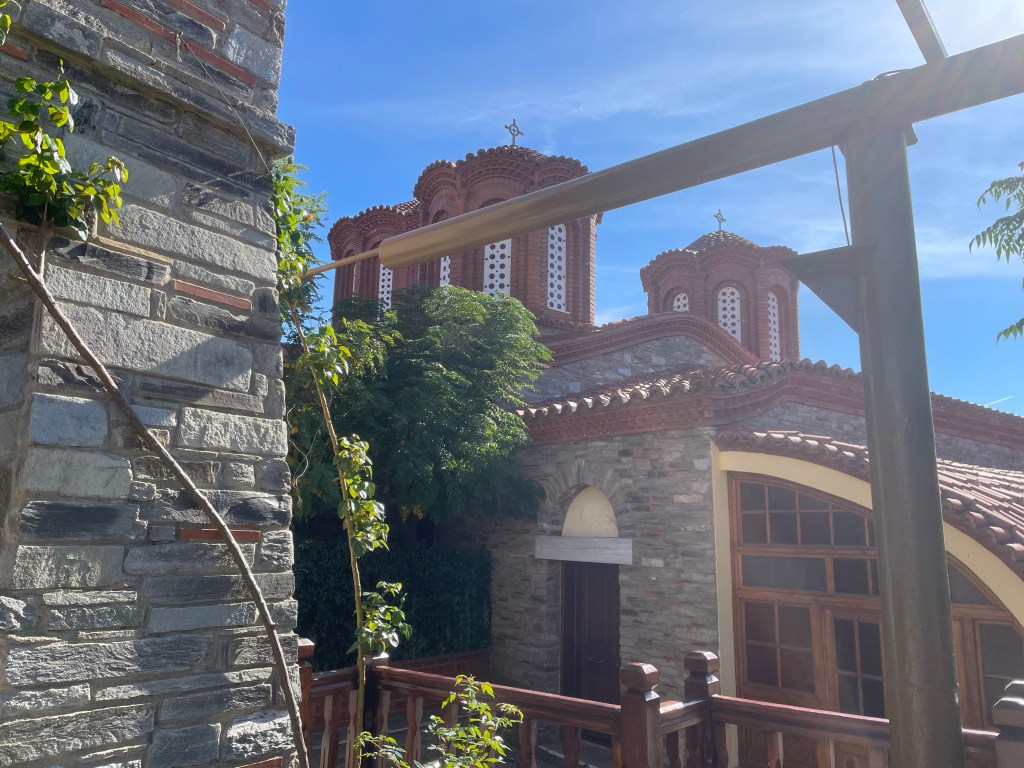
My miserable soul
He will pray to the Saviour
To have the Virgin Mary with me.”
“God wants us, above all, to be happy and to enjoy inner peace. God is not a tyrant who pesters and intimidates us, but instead he wants us to be free.”St. Paisios
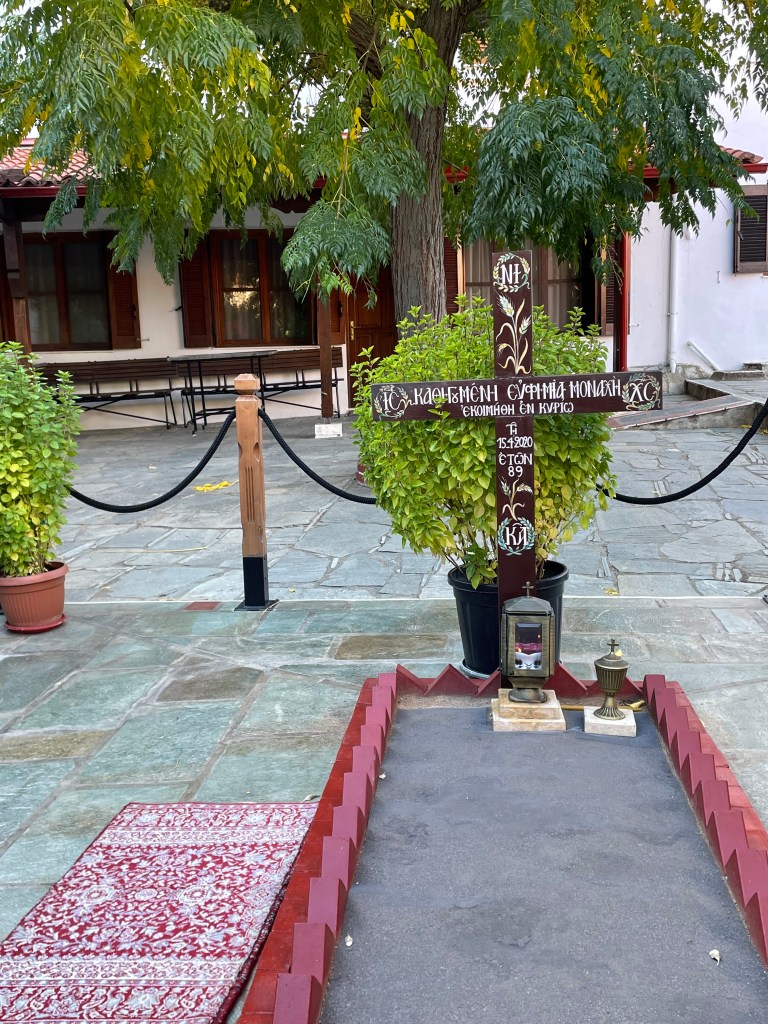
(*) Due to fires raging all over Greece at the time of this pilgrimage
Still in a discernment process. Again in lock down. Only now inside a monastery. Glory to God for all things. Counting the cost… whether I have enough to finish it … (Luke 14:28) It is this all that makes all the difference. “Whoever of you does not forsake all that he has cannot be My disciple” (Luke 14:33)
Your prayers
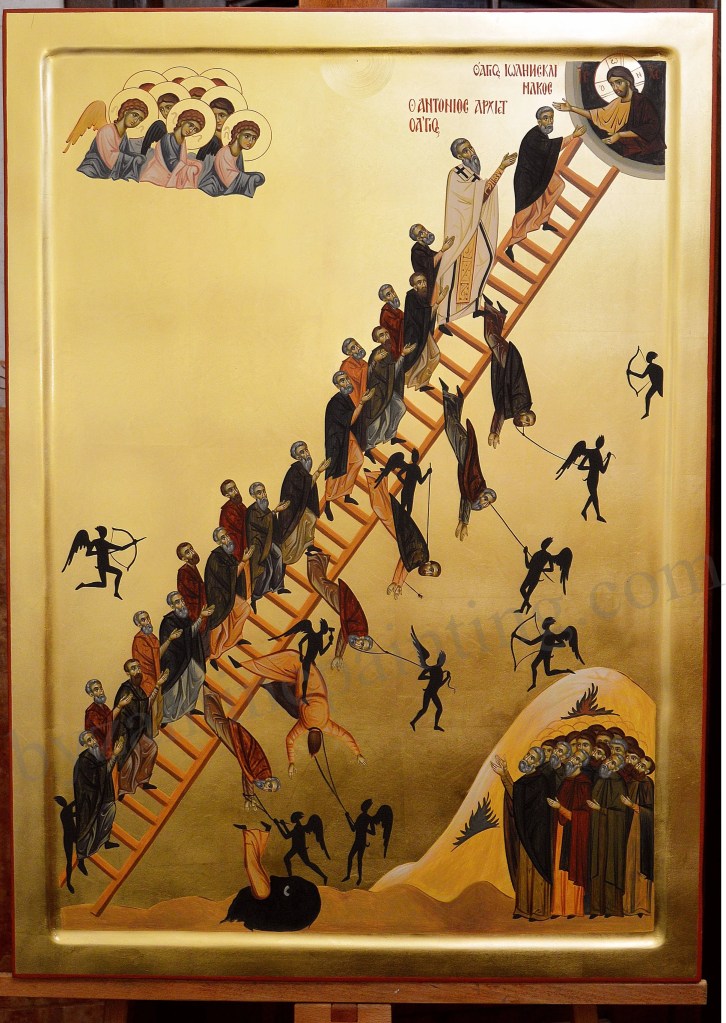
PS1. Today, one of my obediences was gardening, and guess what it was: climbers!