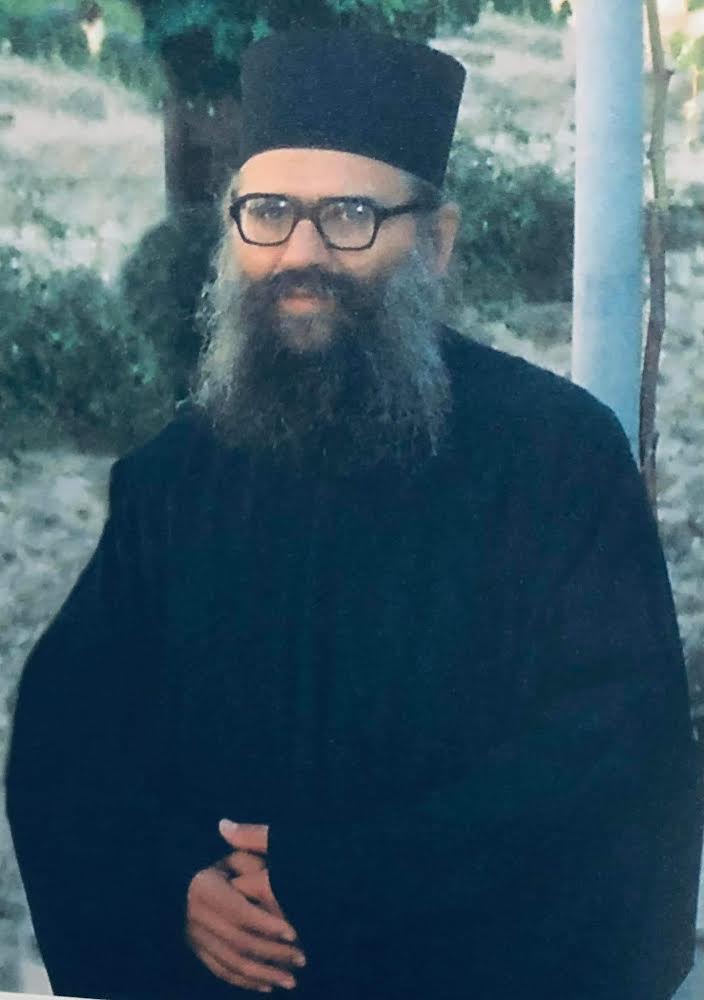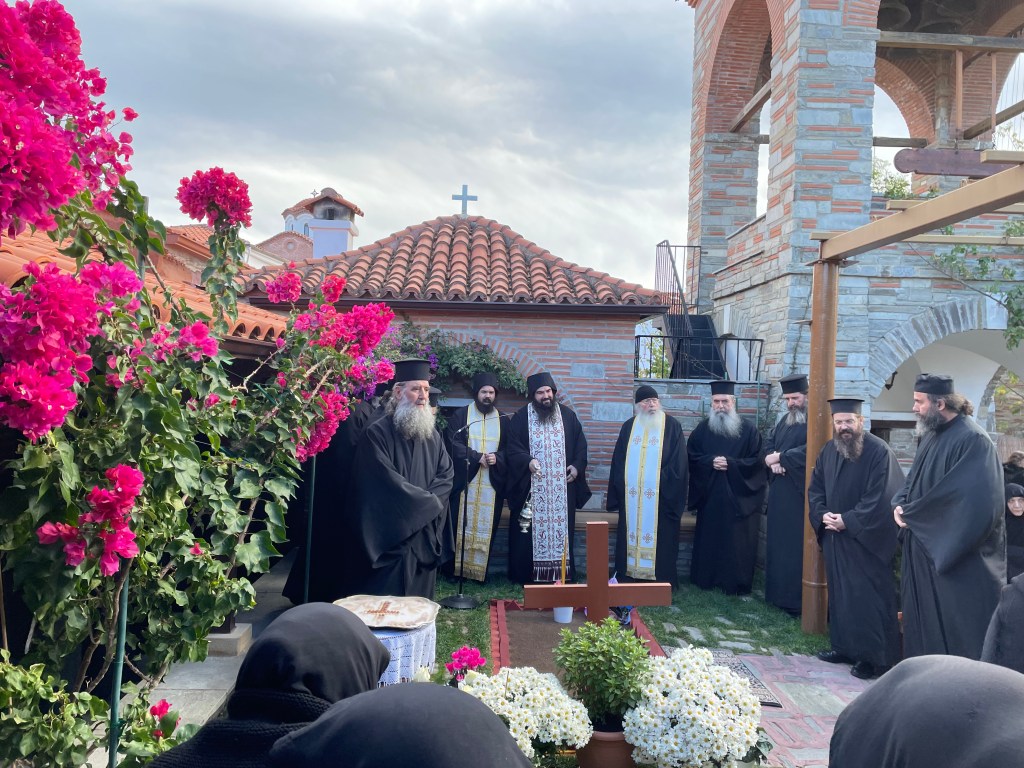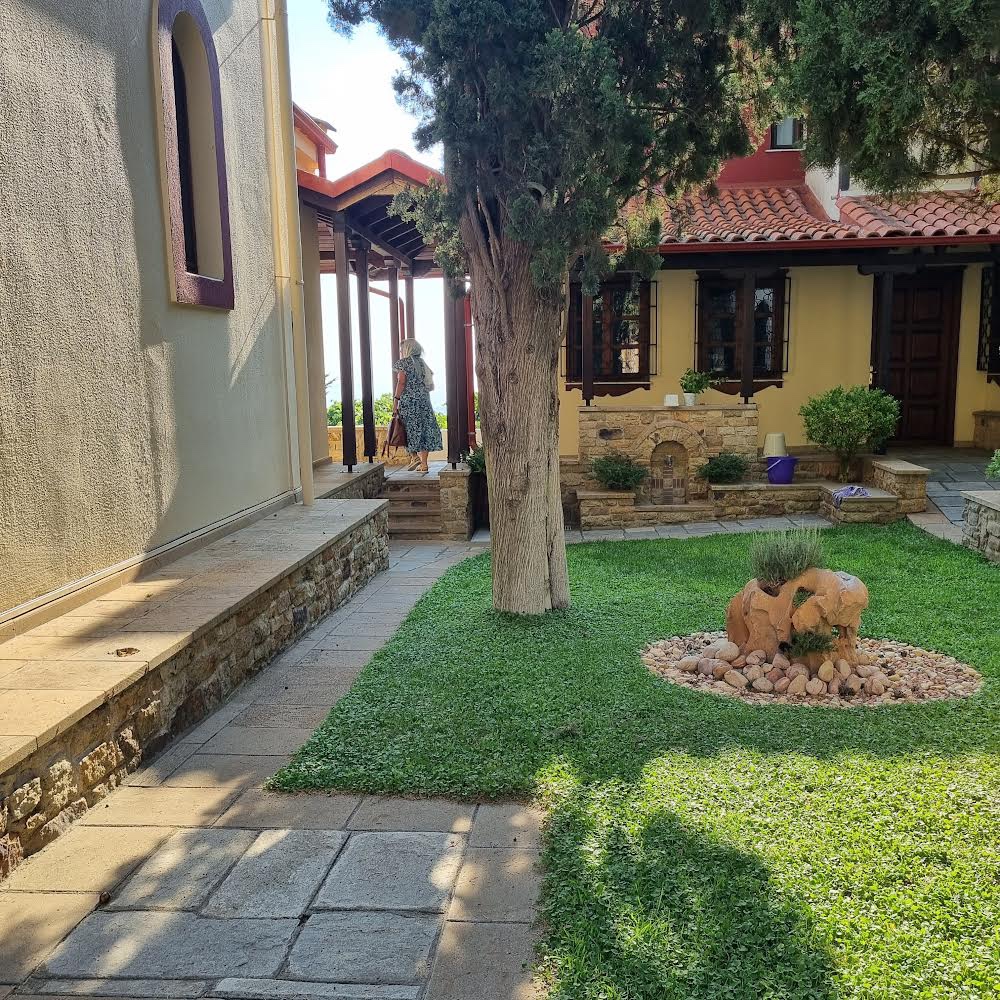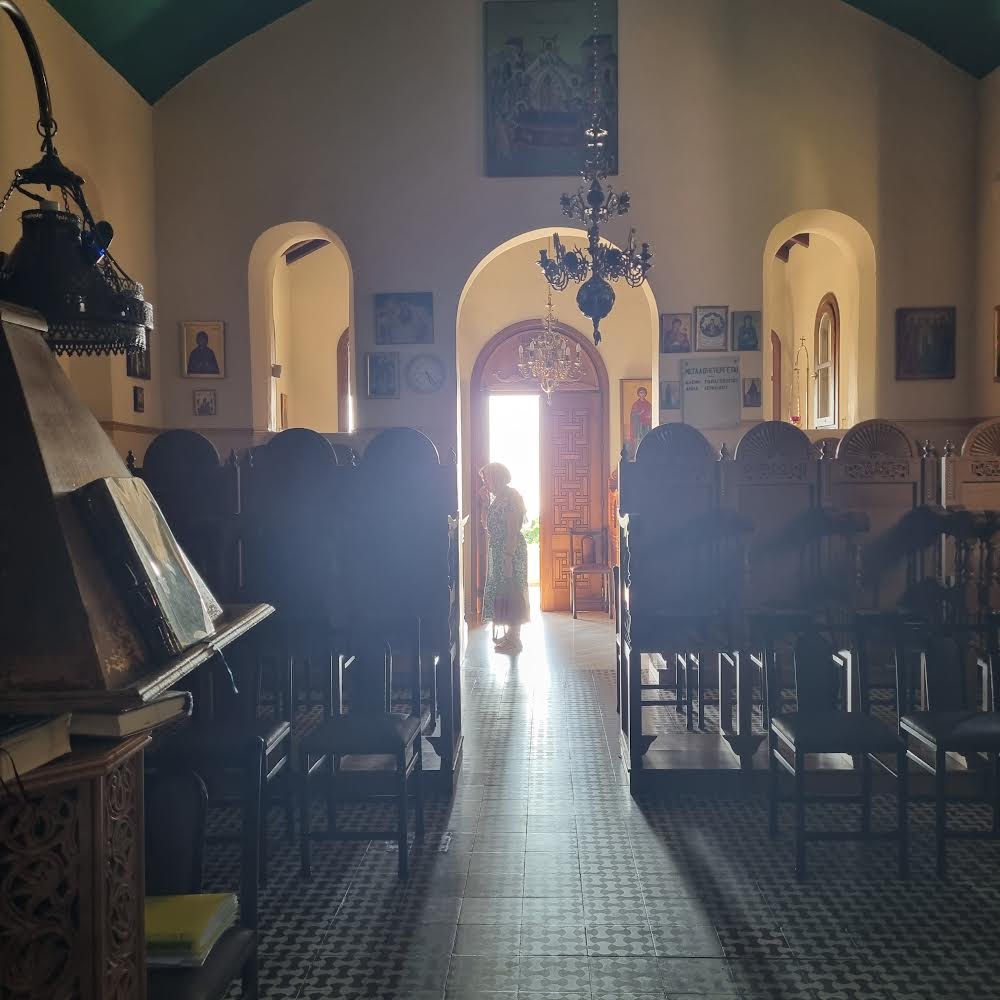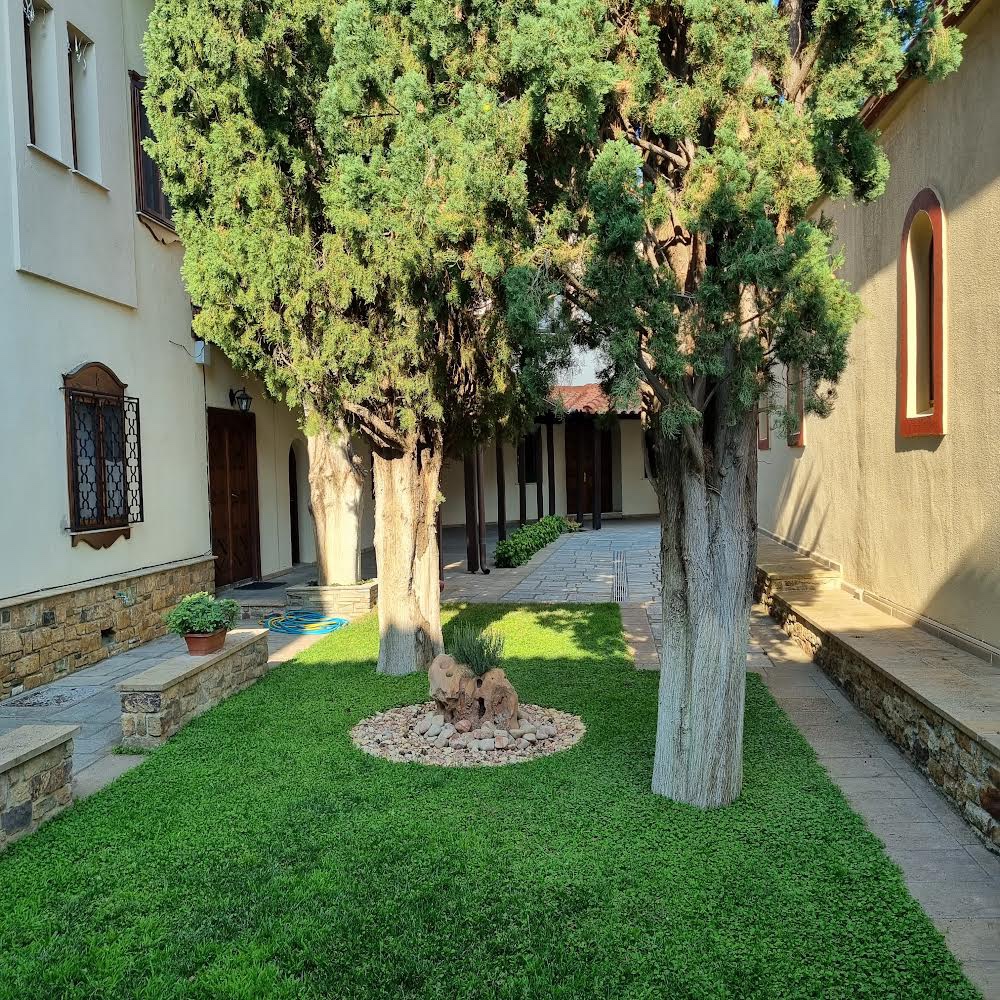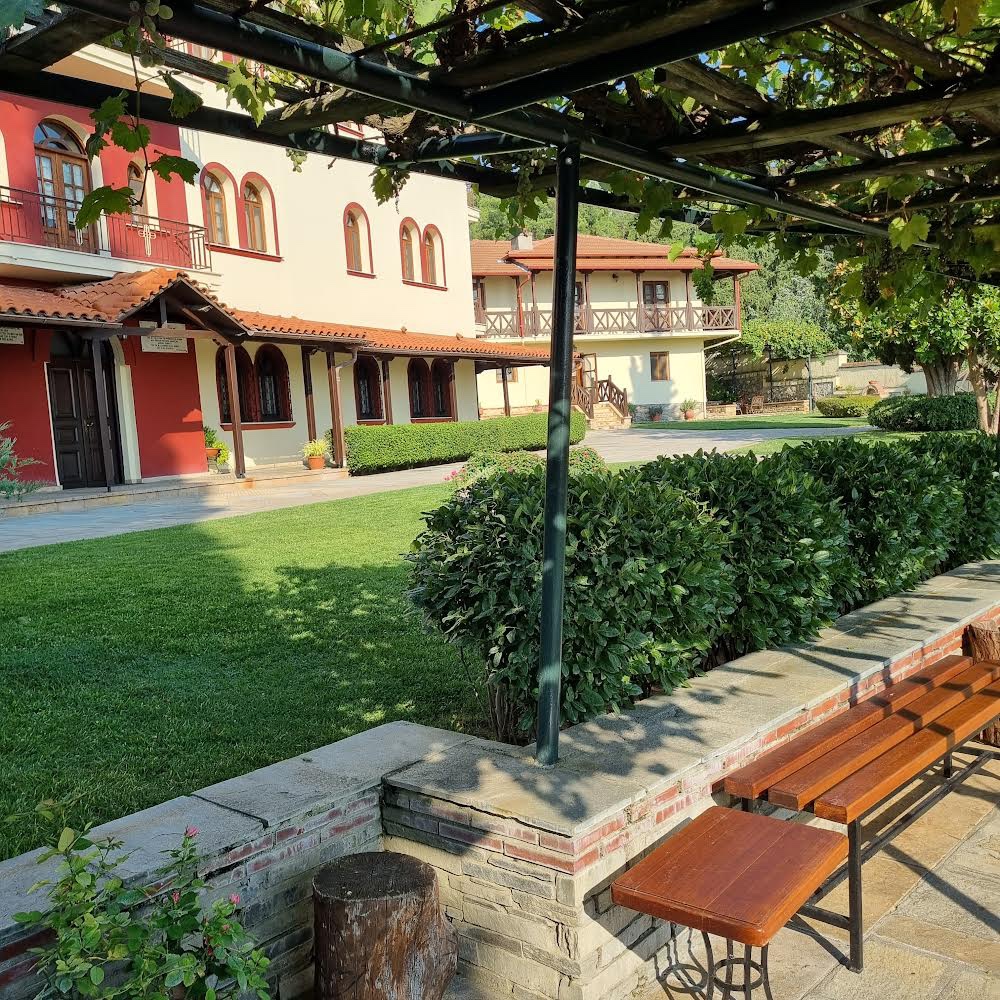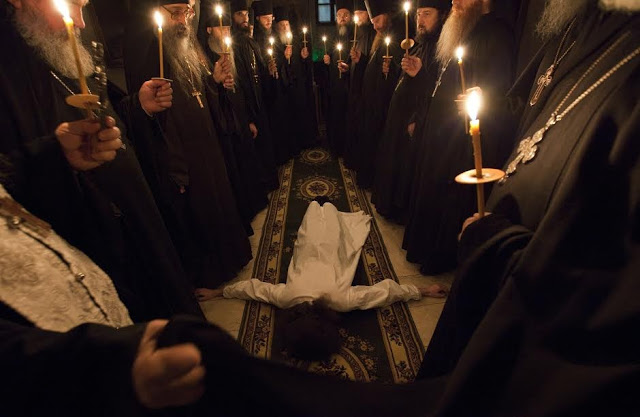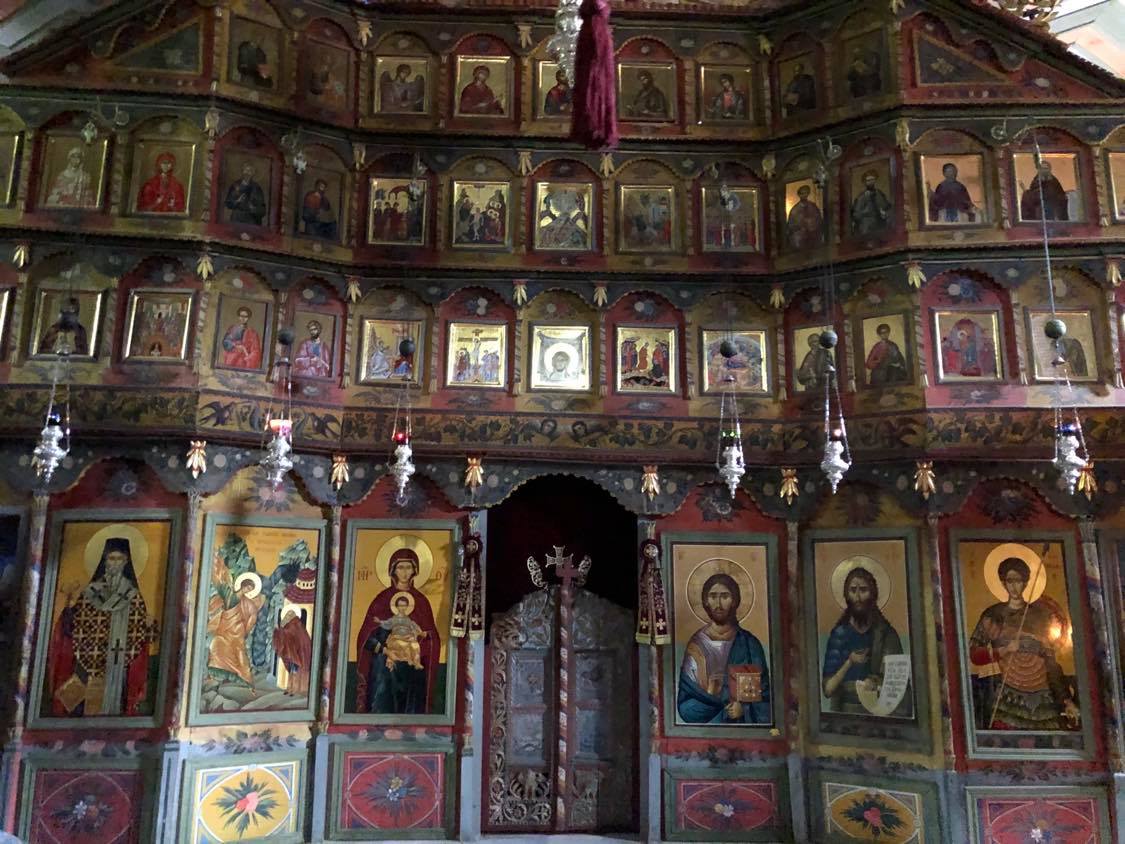
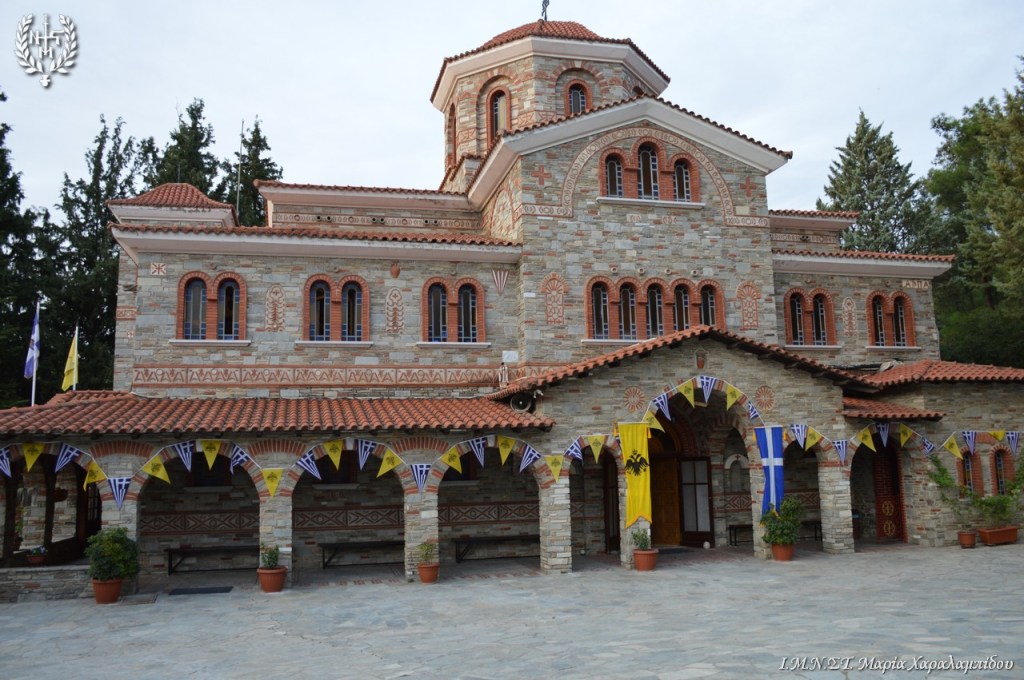
Gerondas Gregorios Papasotiriou, Spiritual Father and Founder of the Saint John the Forerunner Monastery at Metamorfosi, Chalkidiki–This list was compiled by some of his spiritual children in his memory on the day of the memorial.
Orthodoxy equals Orthopraxy— we should always seek virtue by engaging in a spiritual battle against our passions.
Paradise is not earned “from the armchair” [Greek idiom, meaning without any effort], but requires hard work. “The Kingdom of Heaven suffereth violence, and the violent take it by force.” (Matthew 11:12)
We should endure with patience sorrows, trials, injustices, and insults.
We should study the Gospel and the lives of the Saints so that we can see our spiritual poverty and wretchedness.
We should also pray alone “ Lord Jesus Christ have mercy on us”, “ Most Holy Theotokos save us”, “ Holy Saints of God pray/ intercede for us”.
We should chant to dissipate our melancholy and spiritual idleness/acedia.
Whatever we do, we should do it with all our heart. Life without a heart is not really life. We become robots if we have a mind, a sharp brain, and are very clever, yet do not have a heart; then we have nothing.
We should attend Church as often as we can and we should receive Holy Communion after Confession, and if that is not possible, when we have peace in our heart.
We should prepare before Confession so that when we go to the Sacrament, we should confess our own sins, and not those of others, without idle words, with self-knowledge, and real repentance.
We should tolerate and forgive others so that God also forgives us.
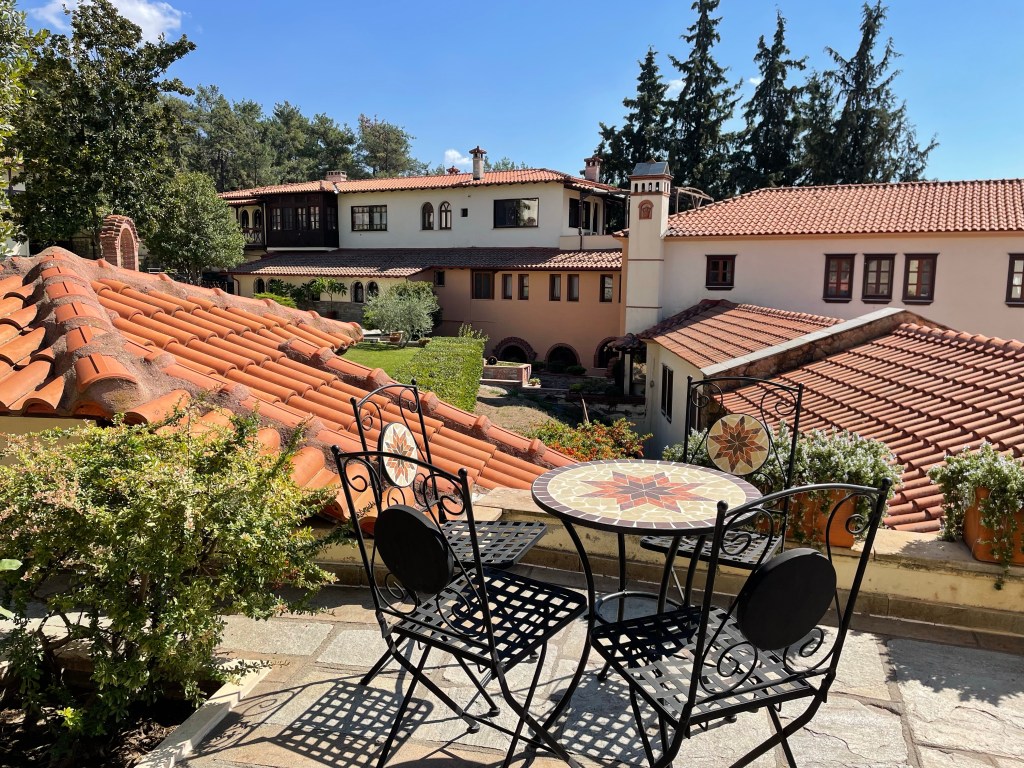
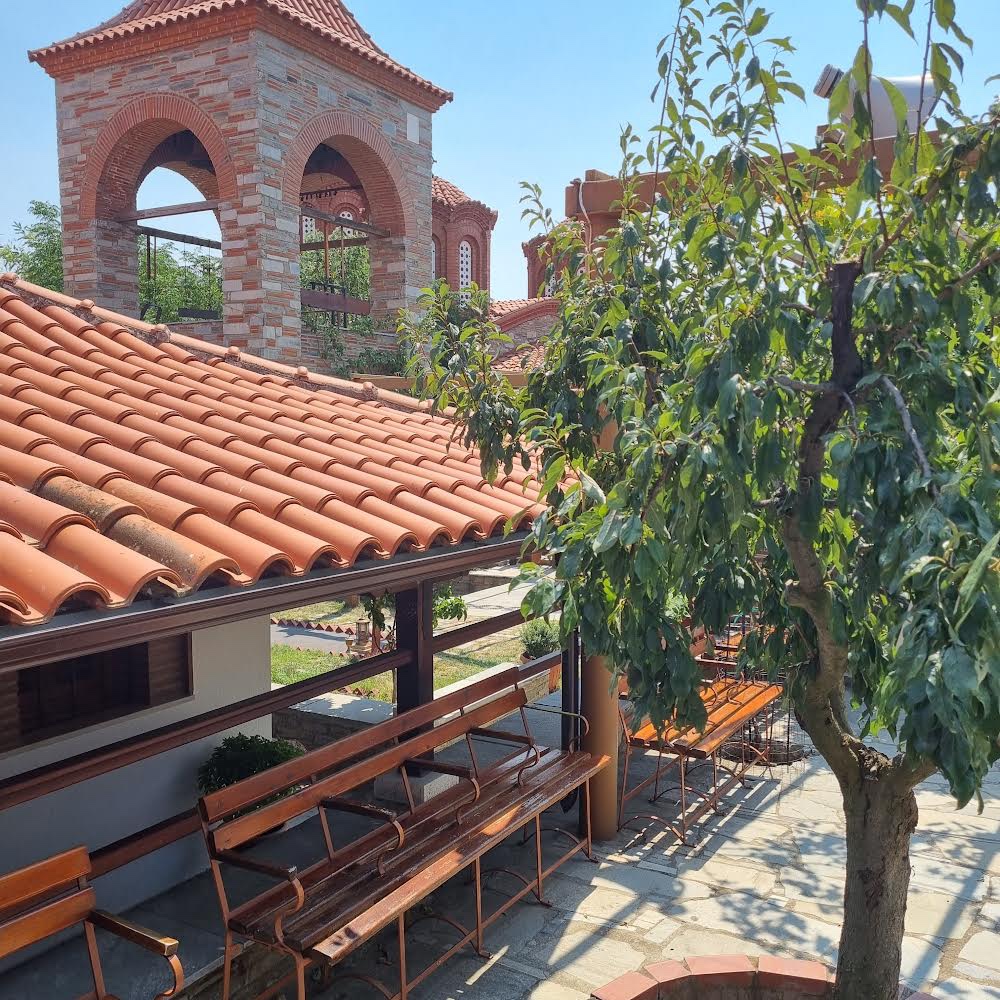
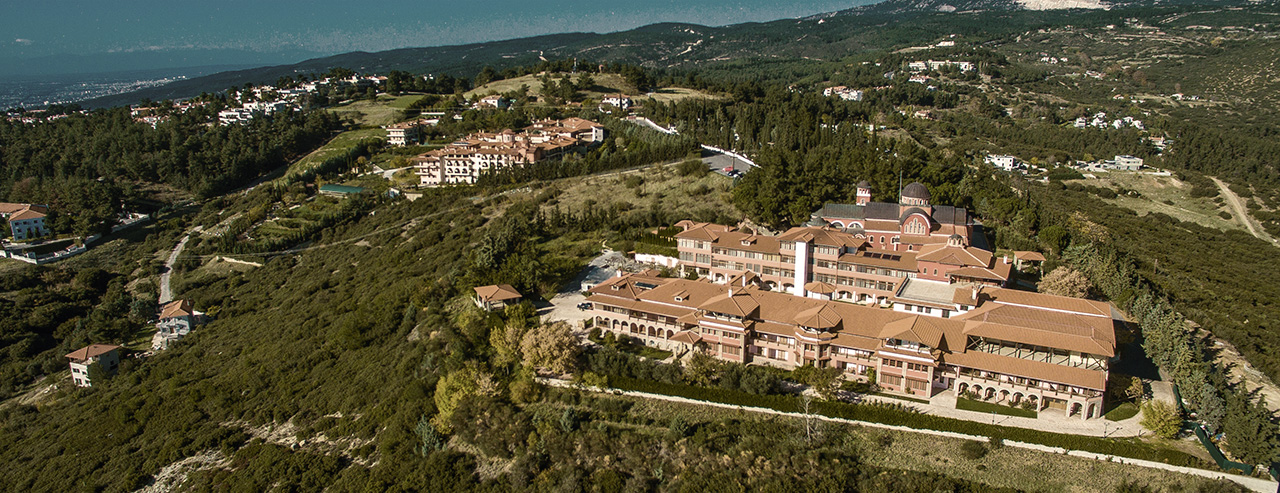
Panorama Monastery Dormition of the TheotokosOn our way back from St. Arsenios Monastery
Some years ago I learned that numbers are not important. The number of people attending Church is not an accurate indicator of either faith or success; however one measures success? Geronda Theoklitos of St Arsenios monastery confirmed this independently of my thoughts when he said ” look after your small flock.” ” God looks at the heart not on the outward appearence” as the prophet Samuel said to Jesse, the father of David. I have passed through security and passport control. The flight is delayed. Time to pray. We pray that God will keep us all in his love. “Wherefore, O you who fear the Lord, praise Him in the places where ye now are. Change of place does not effect any drawing nearer unto God, but wherever you may be, God will come to you, if the chambers of your soul be found of such a sort that He can dwell in you and walk in you.” St Gregory of Nyssa 8
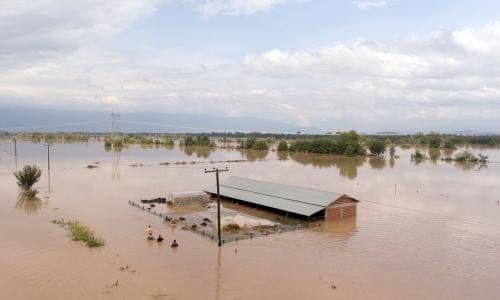
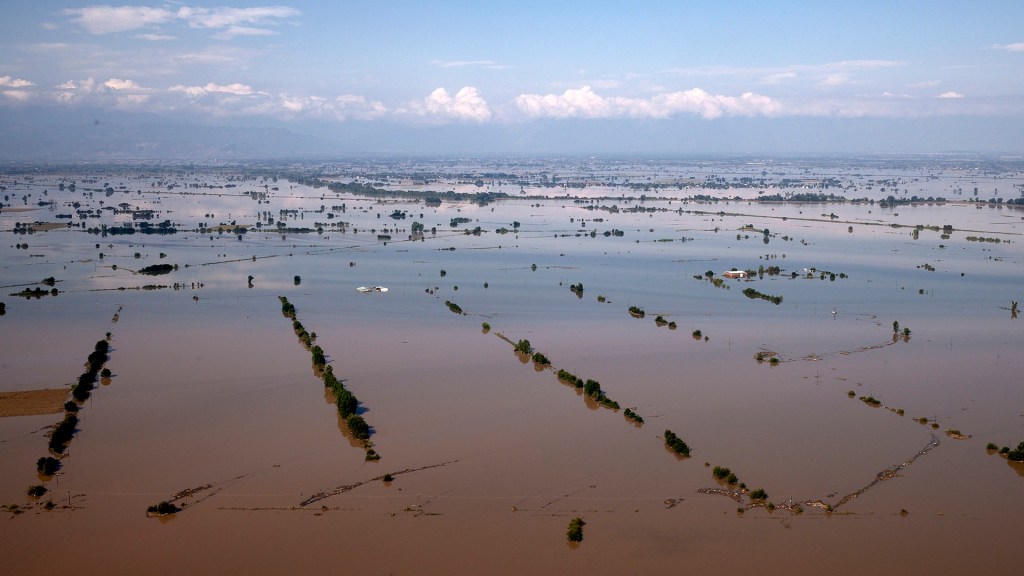
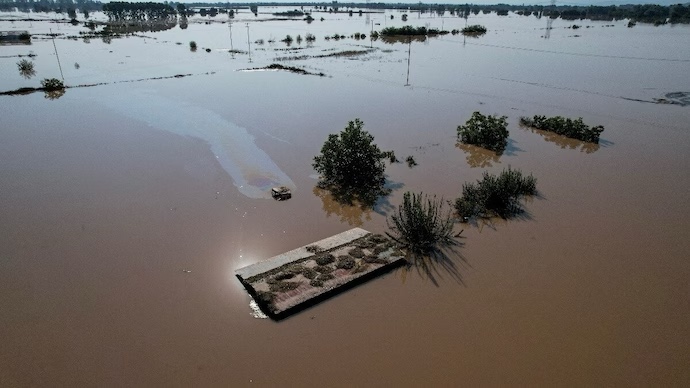
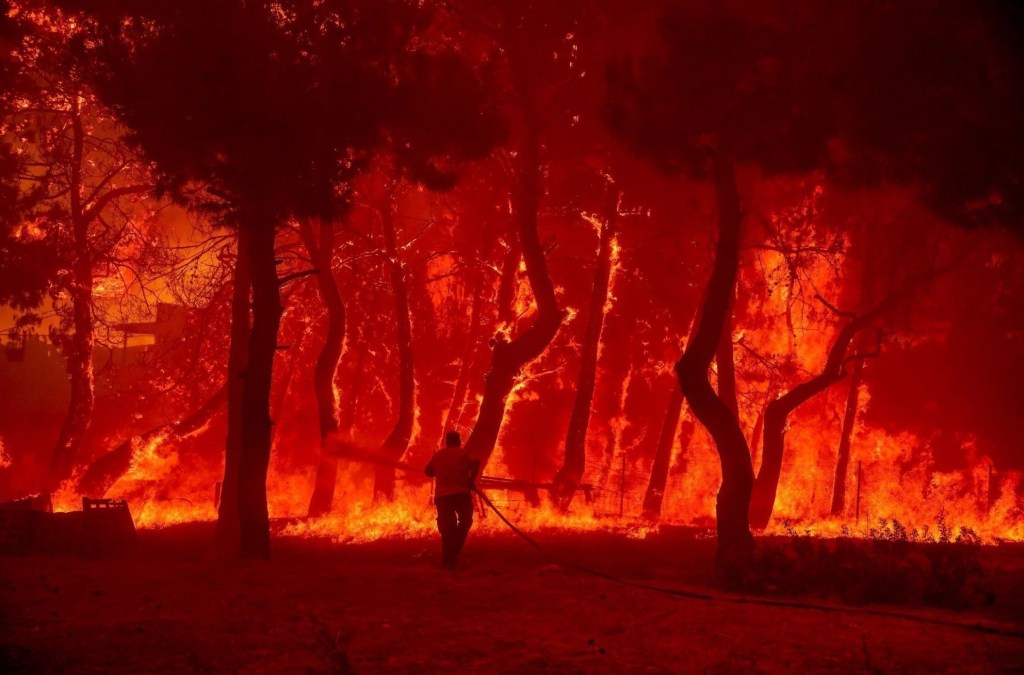
Greece and its next plague of Egypt … This and the following images show the devastating effect of the storm Daniel on its eastern coast.
*
“Then He said, ‘Go out, and stand on the mountain before the Lord.’ And behold, the Lord passed by, and a great and strong wind tore into the mountains and broke the rocks in pieces before the Lord, but the Lord was not in the wind; and after the wind an earthquake, but the Lord was not in the earthquake; and after the earthquake a fire, but the Lord was not in the fire; and after the fire a still small voice. So it was, when Elijah heard it…” 1 Kings 19:11-13
*
The travelling guide’s diary—2
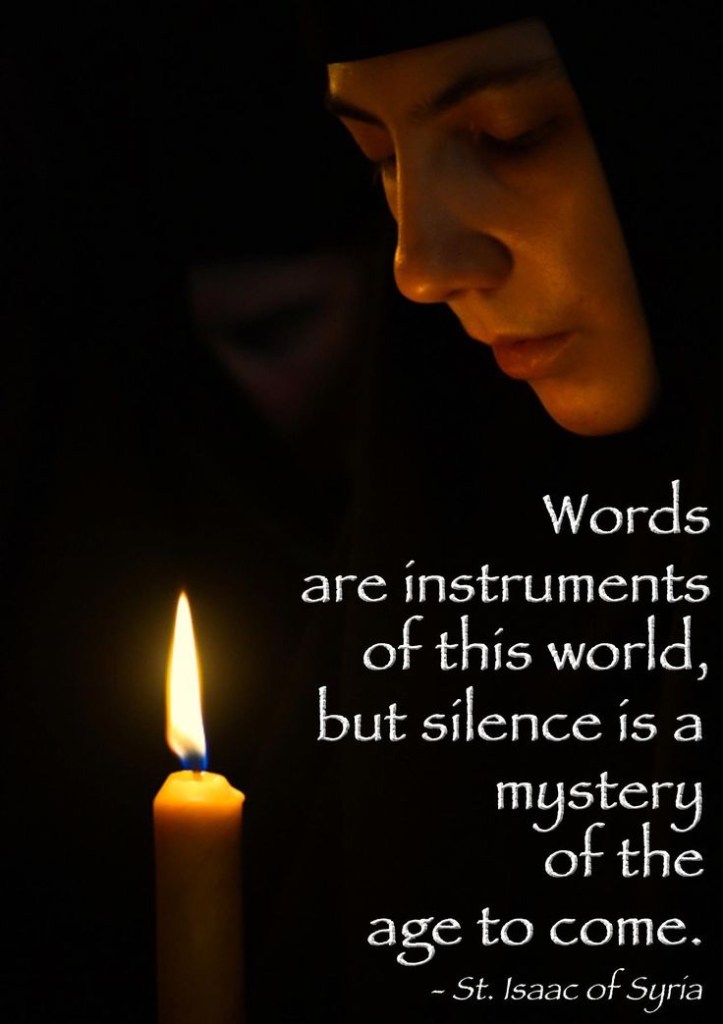
Some Abouna quotes and vignettes that struck my attention during his little pilgrimage … all in a ‘still small voice’ which ended up in silence …
The LORD will fight for you, and you have only to be silent! (Ex. 14:13-14).
*About Joy in Christ and Suffering: “Christ has offered us so much joy in meeting twice at such a short time [I am bound to travel to the UK end of September] barely a month apart, because we are going to suffer when all this ends.”
*About House Blessings: why did Abouna say such fervent prayers at the blessing of a particular house — his eyes were ablaze!— and he completely ‘ignored’ another house we visited? He barely stayed there 5 min and even suggested we all have coffee outside (!) at the neighbouring cafe. Such hurry, such ‘rudeness’! He barely even looked at their icon corner!
*About Monastic Calling and Monasteries: So many lengthy discussions and inquiries all these days, on foot, or inside the car during the long car drives, about which monastery to choose and become a monastic, even at the monasteries we visited, inquiring/ discussing with the monastics themselves about their monastery typikon … yet no conclusive answer … only silence! Just hints about city hermits …
*Gerondas Theoklitos of St. Arsenios of Vatopedi holding Abouna tightly and hugging him so tightly! A scene I will never forget! What a surprise! I always thought Gerondas Theoklitos was very strict and never expressed his emotions!…
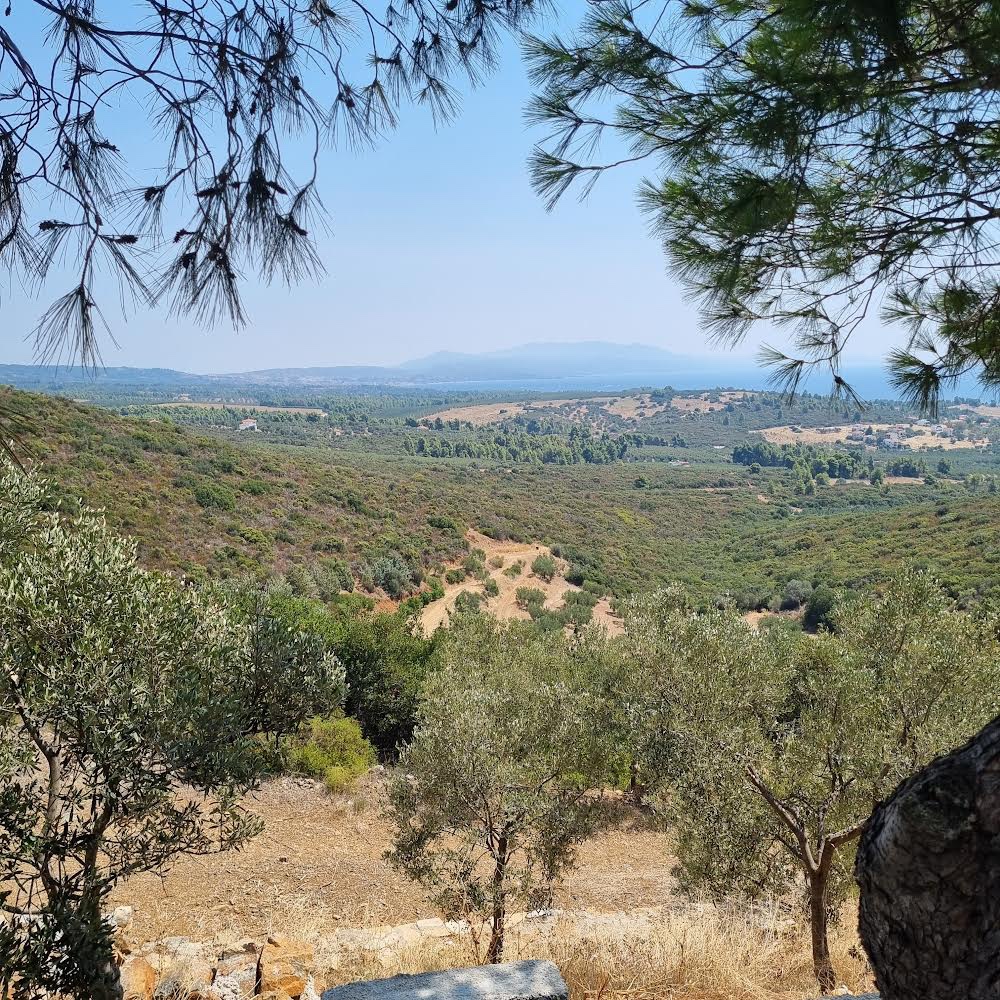
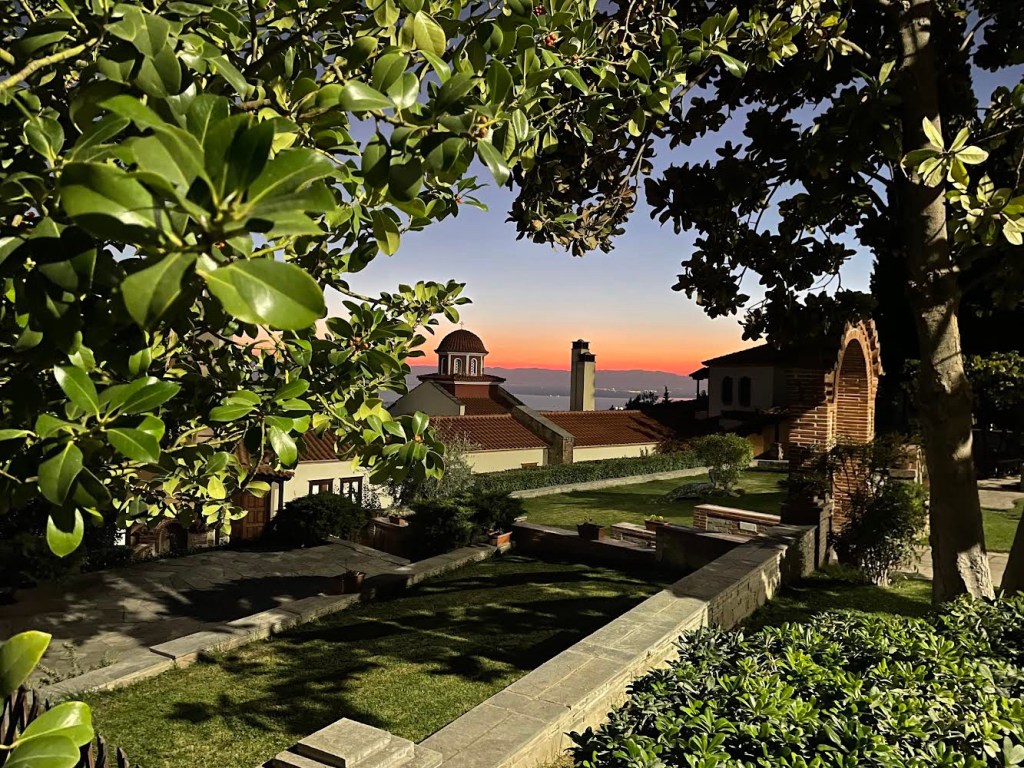
overlooking the sea from the Monastery of St Arsenios in the mountains
Monasteries are places of healing and light. The Monastery of St Arsenios is one such place.
N.b.This is as close as I came to Agion Oros in the distance!
Another little miracle enabled us to meet Theologos and Vaiga with children again . We were joined by a priest from Germany Fr Victor with his Presbytera and children. The usual courtesies were extended to us, loukoumi, coffee and biscuits along with the necessary water!
Geronda Theoklitos joined us and he afforded us a great deal of his precious time even though he had many confessions to hear.. It was a true blessing to meet him.God it seems bends time in order for those who seek Him to receive His grace . Time is not really measured in monasteries. Of course there are set times for worship and work but one does not sense time passing.
I told Geronda of the mutual ministry we have at our parish and he quoted a greek proverb “Το ‘να χέρι νίβει τ’ άλλο και τα δυο το πρόσωπο” which when translated goes something like : ” The one hand washes the other hand and both wash the face “. I suppose we have similar saying” many hands make light work.”Washing the feet is an act of service and humility, but washing the face brings cleansing and refreshment.He gave another word:St Anthimos of Chios: “ εκείνο το ´γιατί κι εκείνο το ´εγώ´ που έχομεν, αυτά μας απομακρύνουν απο τον Θεό και μας χωρίζουν απο αυτόν» — «this “why” and this “I” which we have, these distance us from God and separate us from Him.”
The proximity of hospitality and holiness is palpable in Orthodox monasteries. Faith ,food and fellowship are inseparable. For some visitors monasteries are places not only of refreshment but of healing where quiet can replenish the soul and regenerate the spirit. It is most important for Orthodox Christians to renew their spiritual batteries. Such peace was abundant at Panorama monastery. Sister S shared the typicon and structures of monasticism and we glimpsed the evening service before heading back to Thessaloniki. I think words alone cannot convey the experience of visiting monasteries. For those who truly seek God then they are places where His energies are to be found…in abundance!
– “The orthodox monastics are like the lighthouse. The lighthouse has to be always on the rocks by the sea. Do you want them to go and live into the city and be added to the other street lights? They can not become a lantern and be placed into the city’s roadside. The orthodox monastic is like a remote lighthouse, that stands high on the rocks, directing the ships of this world with their flashes, and upon the open seas the ships are orientated in order to reach their destination, which is God.” Saint Paisios of Mount Athos from the book: Spiritual Awakening
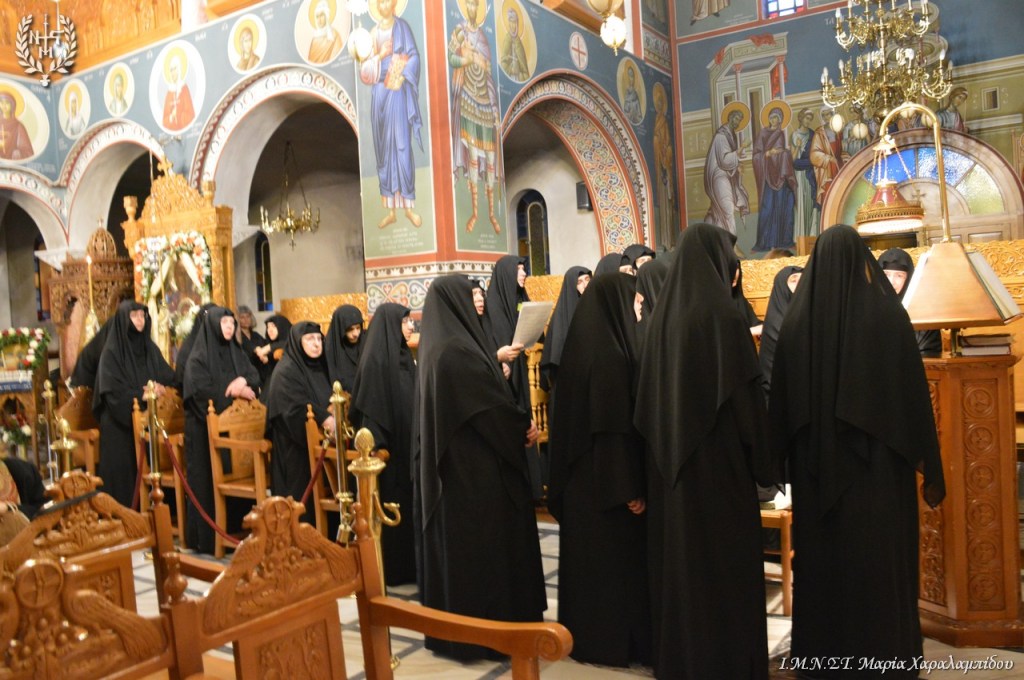
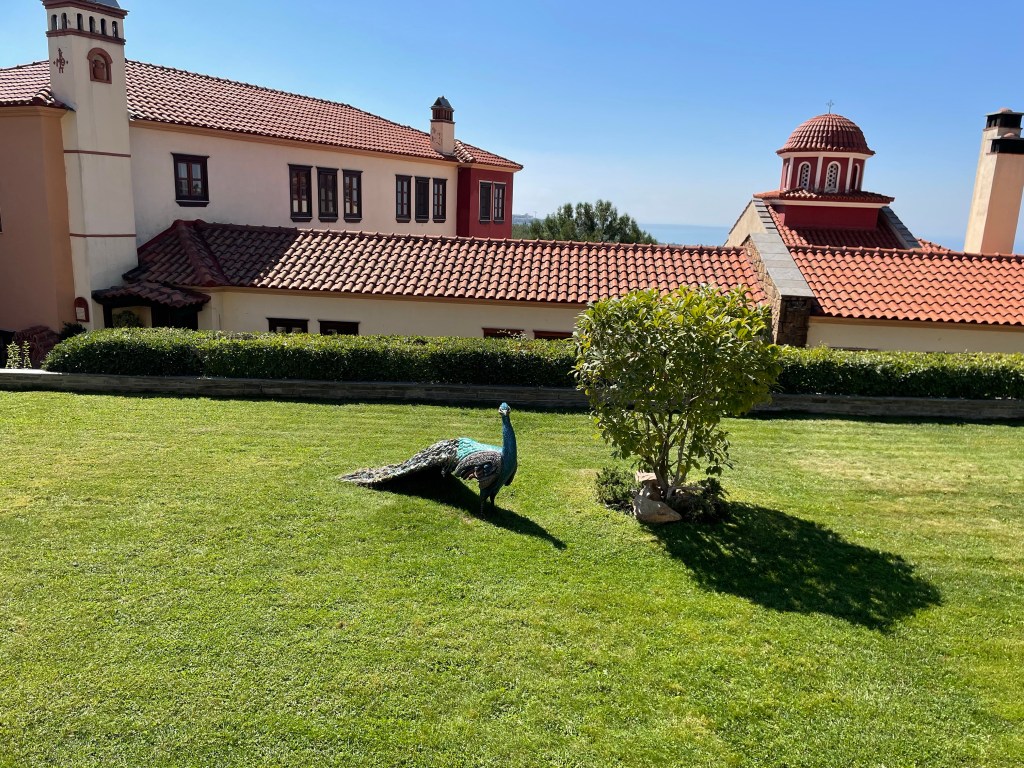
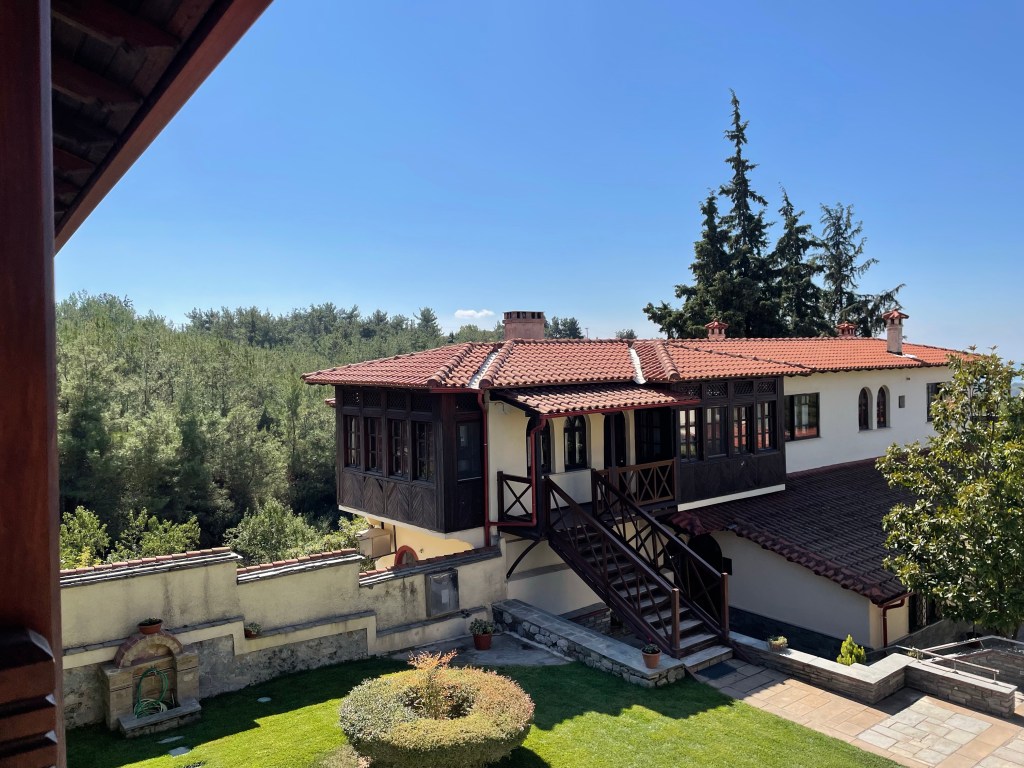
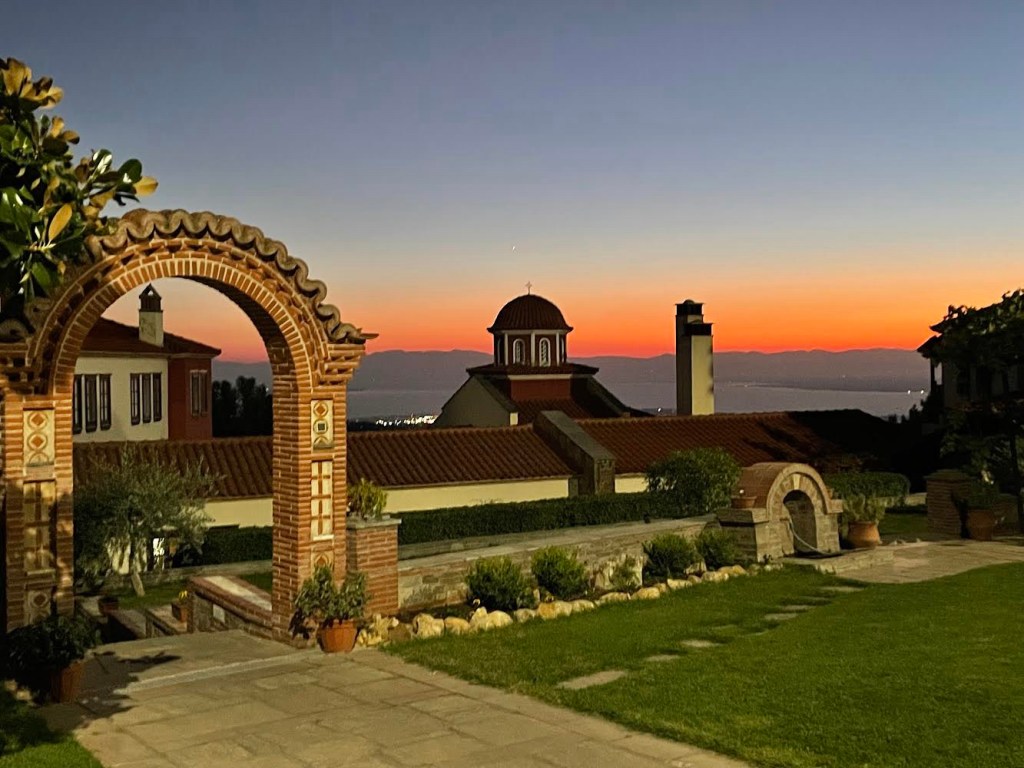
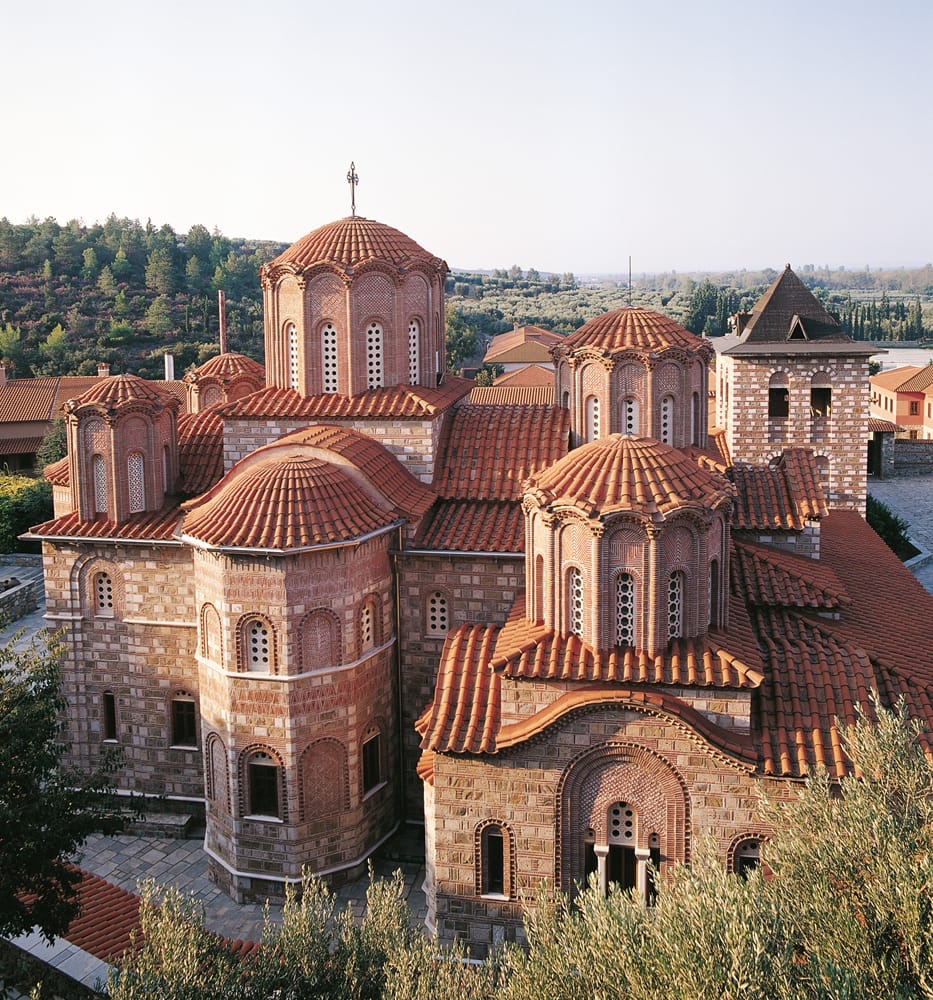
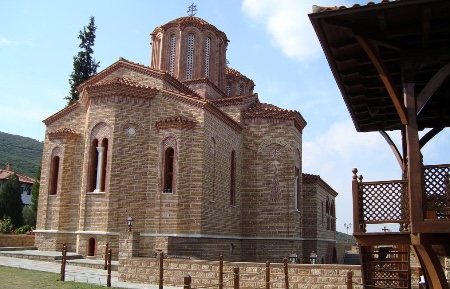
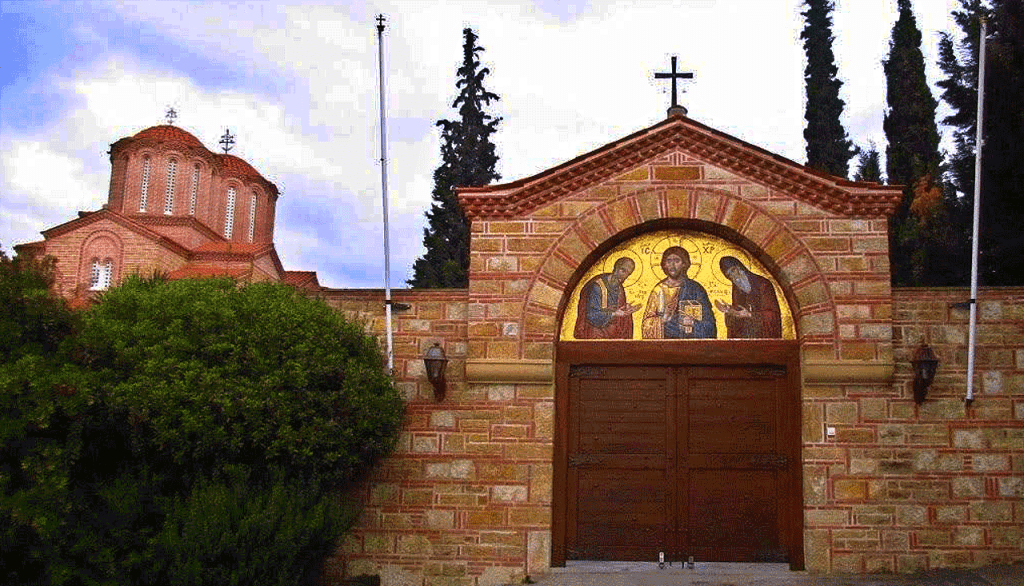
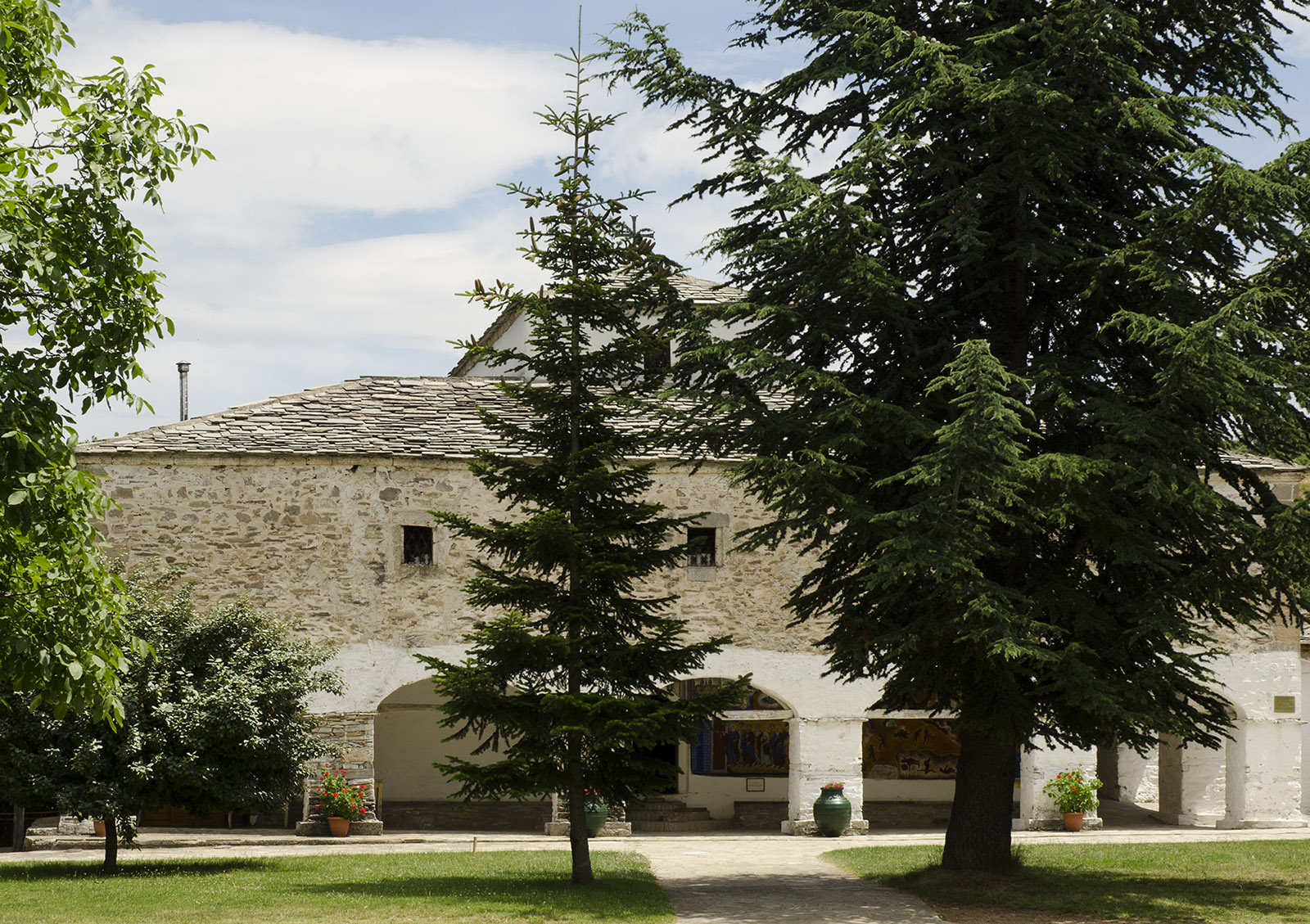
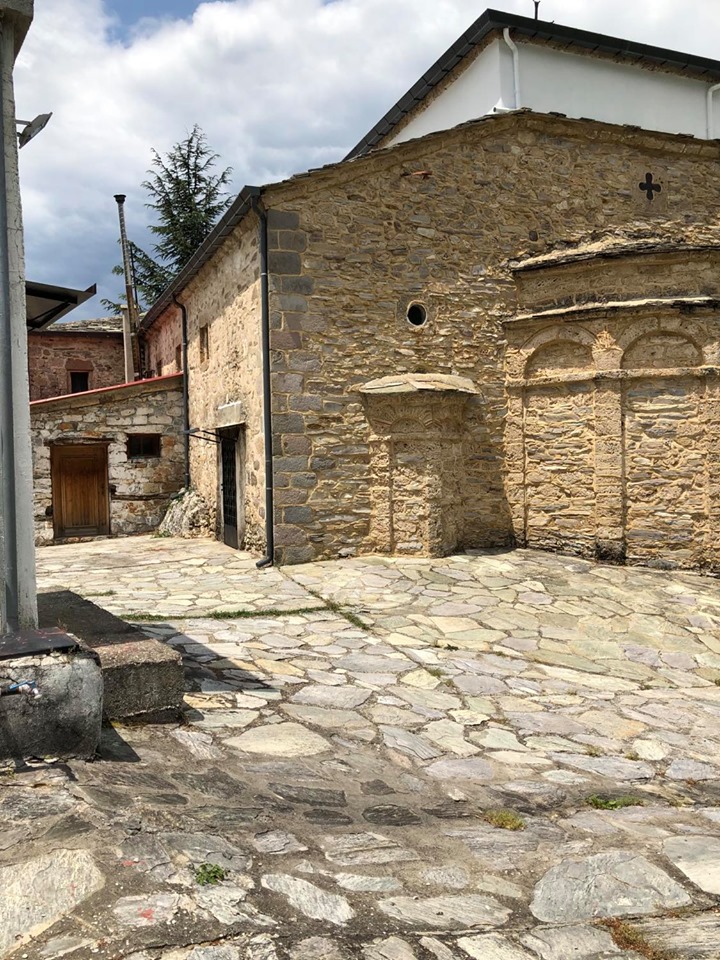
Monastery of St John the Forerunner at Metamorfosi
The drive from Thessaloniki to Halkidiki was furnished by olive trees but to remind us of the fragile nature of our planet there was the faint smell of smoke in the air. (*) As St Paul says in Romans 8″ creation is groaning “. Our first visit on the itinerary was the Monastery of St John the Forerunner at Metamorfosi. Although it has a strict typikon we were allowed to sing a glorious trilogy of apolytikia and Kyries. We were joined by Baia and Theologos.
… and four of their ten children.. Konstantinos overheard my English tones and introduced me to his wife Marina and mother Gabriela who lives in London. A most interesting exchange of spiritual experiences ensued. Gabriela studied at Lancaster university at the same time as I was studying by Post Graduate certificate of education at St Martin’s college now University of Cumbria ( Lancaster campus)and having been brought up in the middle east she is looking forward to Dmitry’s ordination to the diaconate in September in Arabic. Two priests joined us with their families for monastic hospitality “metrio cafes parakalo ” the most delicious cake, loukoumi and much needed water. It was after all 37c.
On to Ormilia monastery where Marta and Alexandra have stayed. We venerated the tomb of the founder Geronda Emilianos. K. said she wanted me to meet a nun who spoke better English than me ” if that’s possible” K. added with playful wit, ” This is Mother P. I was not at all offended or diminished by K. words, especially when I learned that mother P was born and brought up five miles from where I was born.
Ormylia monastery, Holy Convent of the Annunciation
We were in the company of people from Cyprus who had connections with our parish, a Belgian priest and a Serbian priest whose Metropolitan and Professor respectively sit on the same International Commission as me.Lunch time beckoned it was 4.00 after all. A wonderful local cafe near K’s beach house where we were joined by Nikos. We made the short journey to K’s beach house where we met the Romanian family who were staying there. You can’t get much closer to the sea! If you rolled over in bed you would be splashing in the gentle waves!
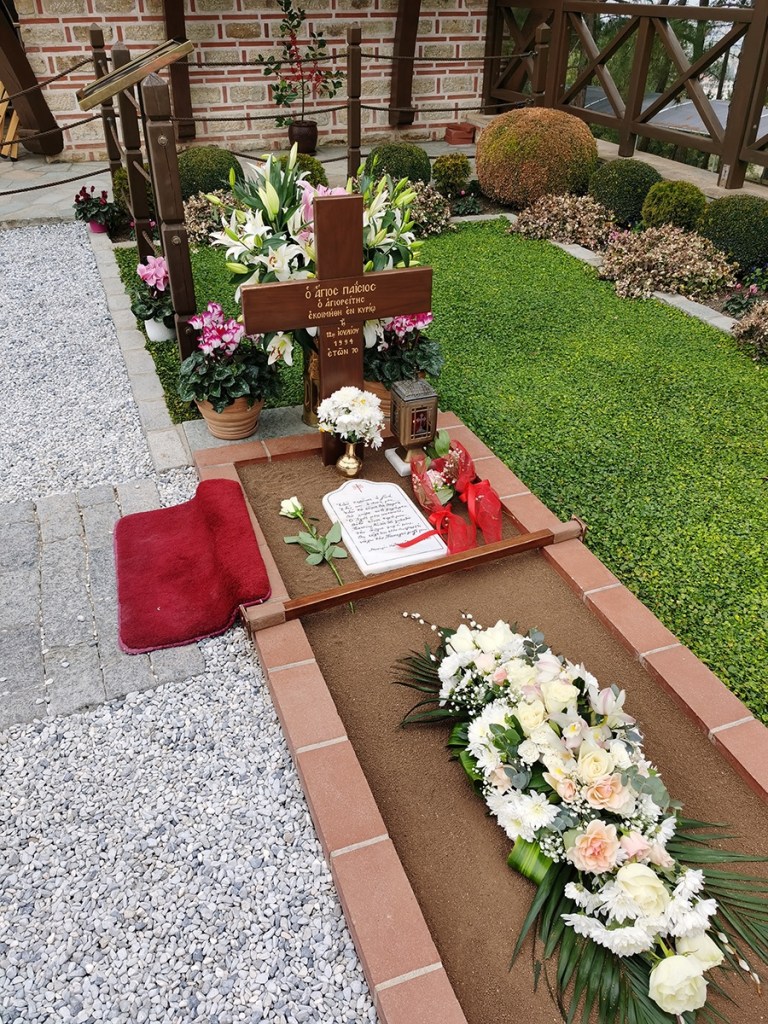
On to St Paisios Monastery where we met friends of Sayedna. We joined the queue to venerate the tomb of St Paisios. A little boy repeatedly took the blessing from priests in the queue. The light of joy shone in the eyes of the faithful, reflecting the Light of Christ. Everyone we met today, those wearing the angelic habit and those who were faithful Pilgrims were happy. God is glorified in his saints.
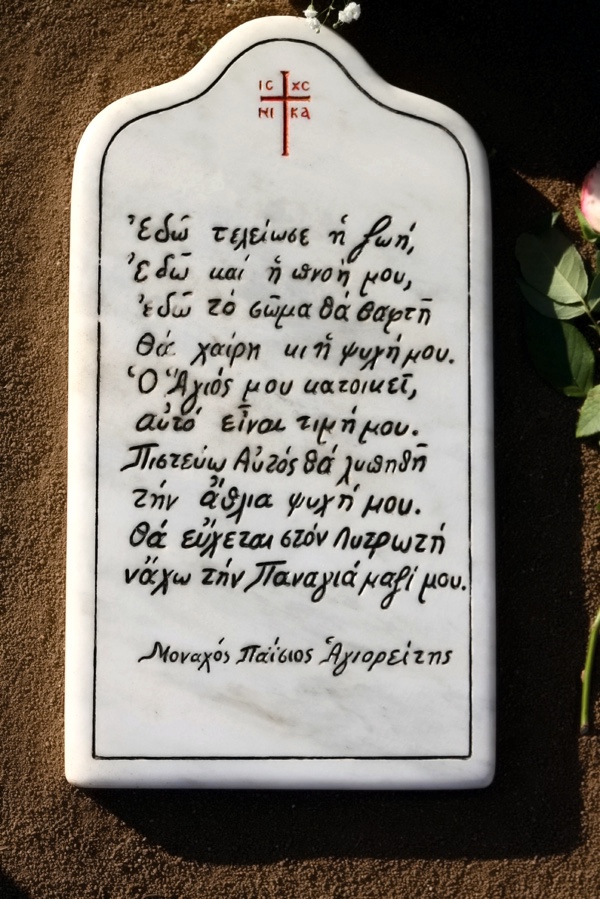
St. Paisios’ tombSt. Paisios poem above his tomb
Above his tomb, inside the monastery yard, on a marble plaque is found a humble poem written by himself:
“Here life has come to an end
Here my breath has stopped. Here the body will be buried, And my soul will rejoice. My Saint dwells here, [St. Arsenios of Cappadochia] And that is my honour. I believe he will pity
My miserable soul
He will pray to the Saviour
To have the Virgin Mary with me.”
“God wants us, above all, to be happy and to enjoy inner peace. God is not a tyrant who pesters and intimidates us, but instead he wants us to be free.”St. Paisios
(*) Due to fires raging all over Greece at the time of this pilgrimage
Still in a discernment process. Again in lock down. Only now inside a monastery. Glory to God for all things. Counting the cost… whether I have enough to finish it … (Luke 14:28) It is this all that makes all the difference. “Whoever of you does not forsake all that he has cannot be My disciple” (Luke 14:33)
Your prayers
PS1. Today, one of my obediences was gardening, and guess what it was: climbers!
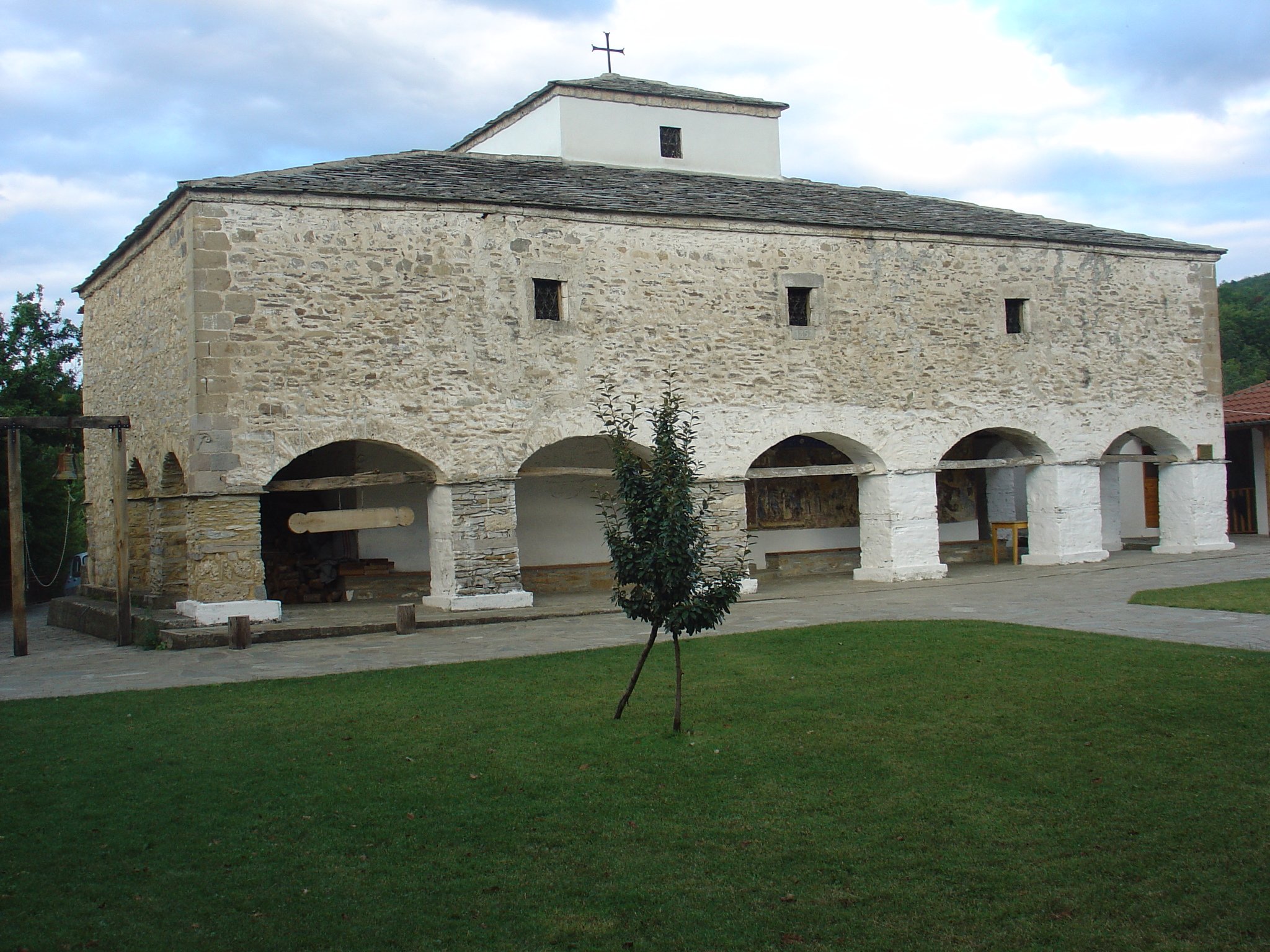
The monastery of Archangel Michael is a precious and invaluable adornment of the whole region.
Its rich and long history, its national and religious offer, its imposing bearing and the frescoes of the interior of the temple, distinguished by the unique sweetness in the faces, as well as realism in its movement, its revival and its upward course tends to highlight it in one of the largest pilgrimages of Northern Greece, as its surrounded by rich flora and fauna.
Tradition wants the Monastery to be built on an ancient sanctuary dedicated to the Artemis hunting goddess due to the rich flora and fauna of the area.
Today it is proved, by documents that are saved in the Holy Monastery of the Greatest Lavra of Mount Athos, and by elements of the previous century, that it was dedicated to Saint John the Baptist. From various documents, such as the “Chrysoboulos Logos” of Alexios Komnenos, published in 1082, it seems to have existed since the 11th century as a glebe land of the Greatest Lavra of Athos.
Regardless of the above, it remains a fact, that one and a half centuries after the restoration of the Monastery, it is dedicated and has its protector and guide Archangel Michael. In fact, in 1858, the monastery was rebuilt with a charter of the Sultan, and was renamed this way, because the monastery was burned on September 6th, the day of theMiracle of Archangel Michael at Chonae, and as a sign of gratitude by many residents of the area, who survived harmless on the day of destruction by certain death. In 3/1182, the monastery of Greatest Lavra, founded a glebe in the form of a regular monastery in the village of Hostiani (today’s Archangelo).
The monastery of Ossiani until the 18th century has a lively presence in the area, to the point where it founded a subsidiary monastery at the foothills of Voras outside the village of Promachi. The monastery is Saint’s Hilarion, Bishop of Moglenoi. The monastery was besieged by the Turks in the 18th century. The Turks decimated the monks and burnt the monastery, while a one of them escaped alone, and gory beetled along to the Great Monastery.
The danger to the monastery was great. At the same time, the inhabitants of the current village of Notia adopted the religion of Muslim. At that time, took also place the tragic incident of the burning of the Monastery, by the neophyte Muslims, who also destroyed the surrounding building facilities. The homesteads, the fields and the forests, were destroyed and the pastures were granted to new owners, and the neighbors and the animals of the Monastery were dispersed.
Desolation lasts more than half a century, but already in 1858, with the permission of the sultan, the burnt monastery is reconstructed, and Valis of the Vitolioi returned the land that had been appropriated. From now on, an economic robustness began and the monastery provided dynamic assistance to the region’s poor. The monks undertook initiatives in the fields of education, moral support and national orientation of Karatzova.
The 19th century is one of the cruel times of Turkish slavery. Nevertheless, the Monastery of Archangel Michael is a robust presence in the northern Almopia. Inside this hive of the monks and ordinary people, the cells were transformed into hidden school rooms. The children were taught the ancestral wisdom and the ancient Greek letters. So, returning to their place, they became priests or teachers.
In the high mountains of Jena and Koziaka, a generation of young patriots was manned. The same period of time, was surrounded by violence and terror, and the propaganda of Bulgarians and Romanians contributed to this. In the Macedonian struggle the Holy Monastery was the center of Hellenism and the stronghold of the Ecumenical Patriarchate.
As for its national offer, many brave chieftains were dressed as monks, led by Archangel Michael, to encourage and guide the Macedonian men and the frightened inhabitants of the region. A typical example, is the brave chieftain Captain Matapas who, with the nickname Papa Christos and based in the Monastery of the Archangel, organized rebelliously the region of Aridaia and Goumenissa of Kilkis.
Other brave chieftains used the Monastery as a base and hideout, such as George Kakoulidis, Nicholas Vlachos and Emmanuel Skountris, who won victories against the Bulgarians at Promachoi.
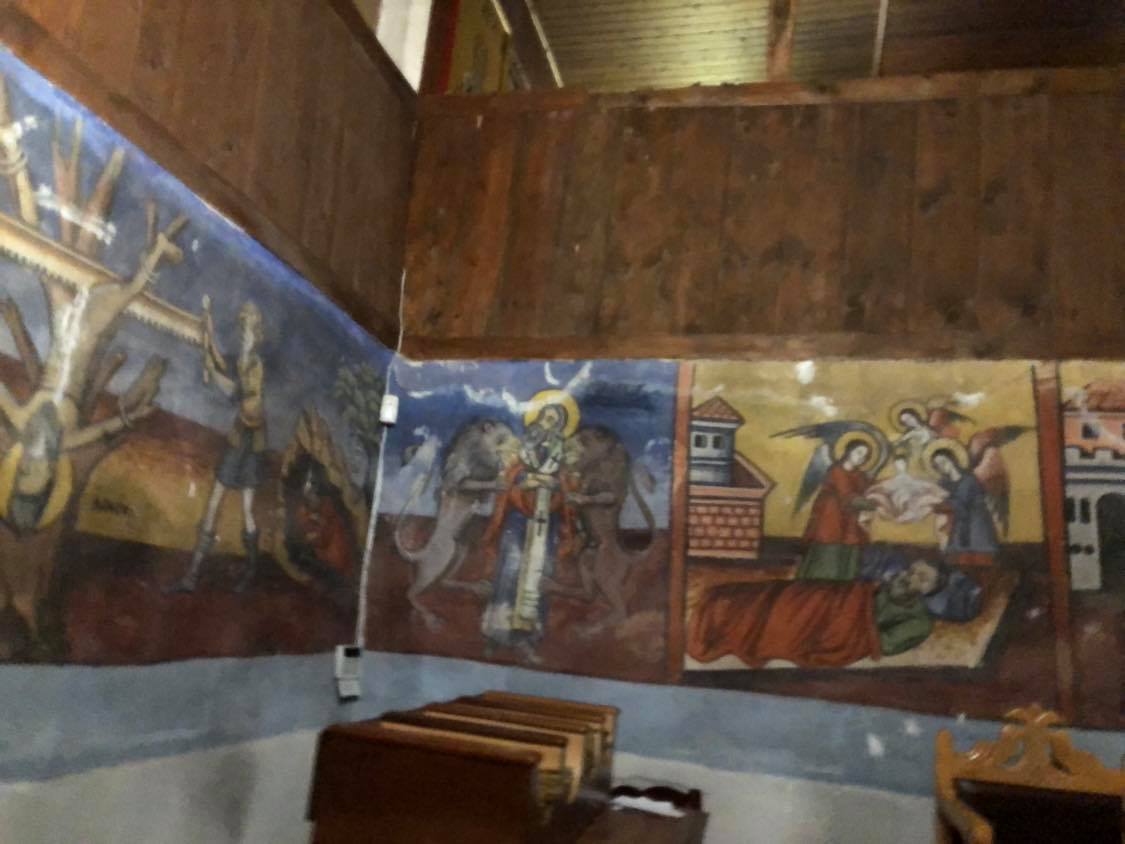
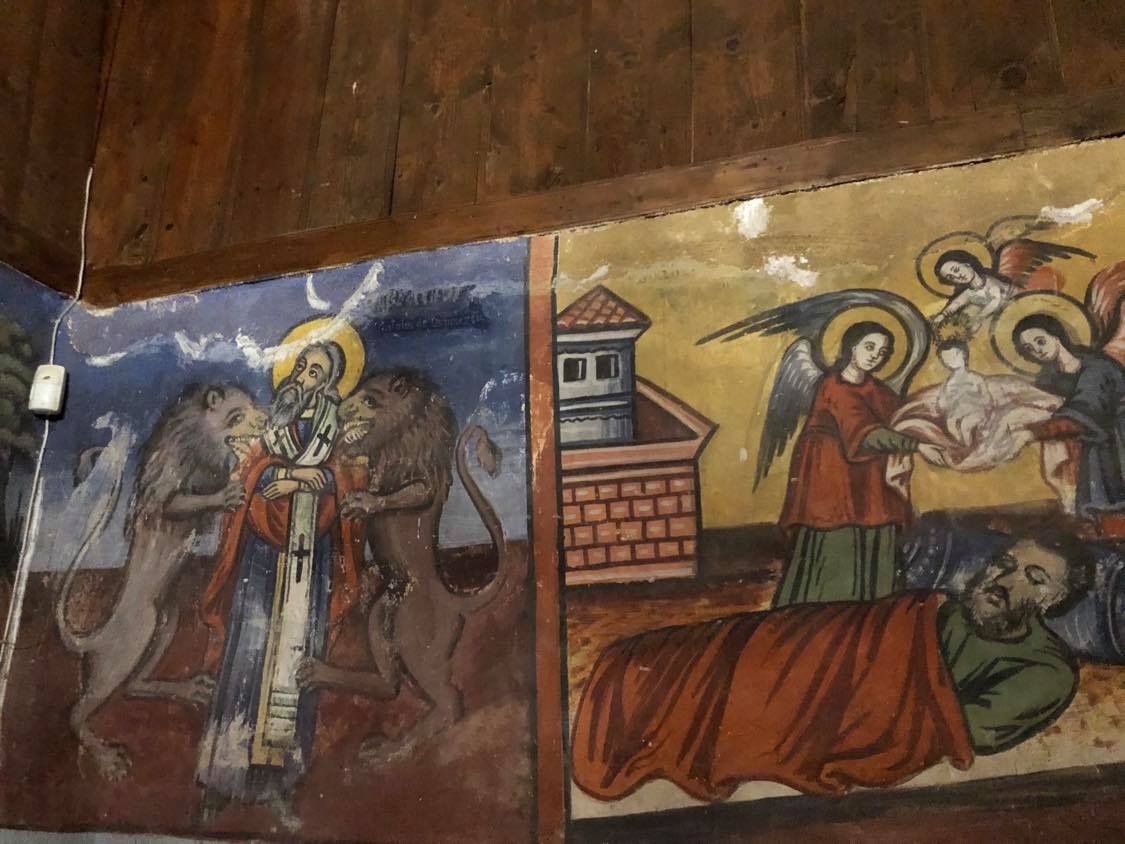
For some decades the monastery was a chapel of the parish of the village of Archangelos. Today the Monastery operates with a cenobitic rite. The rhythm of the temple is a three-aisled basilica and its walls are one meter thick. The katholikon of the temple is painted by frescoes of folk painters from Krousouvo.
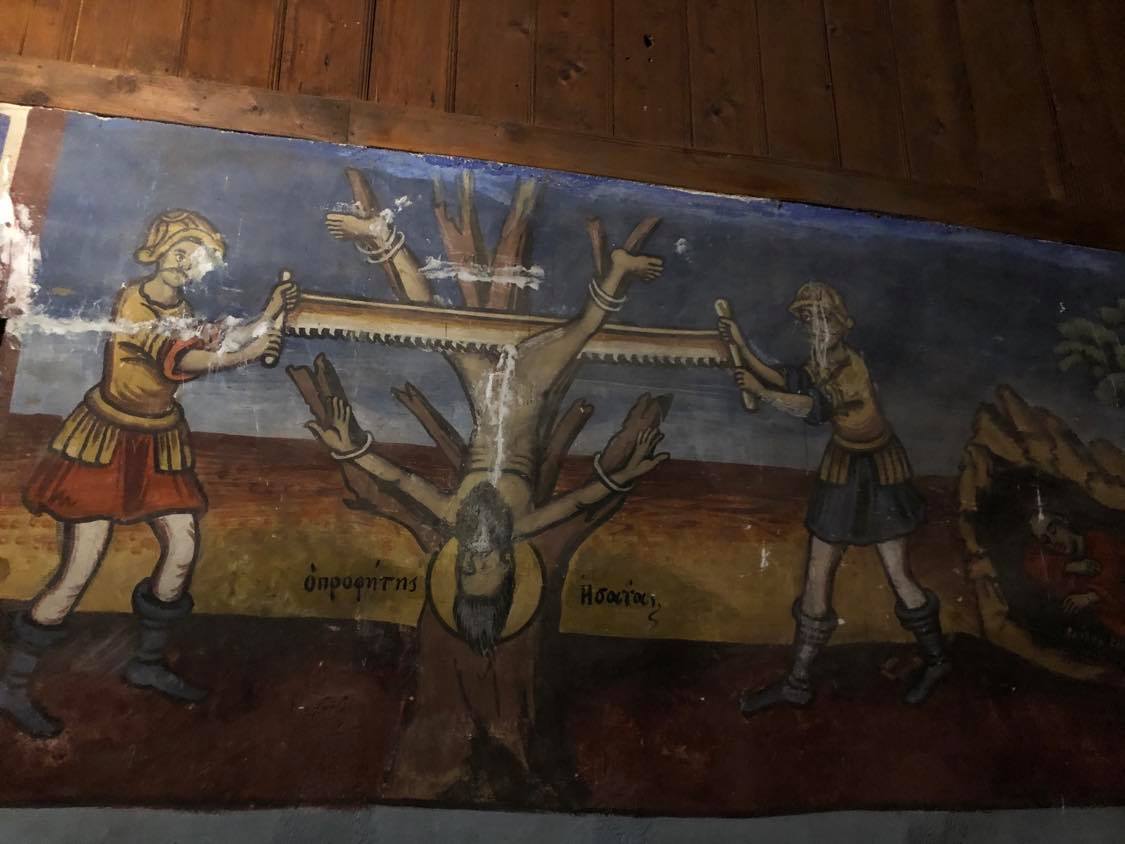
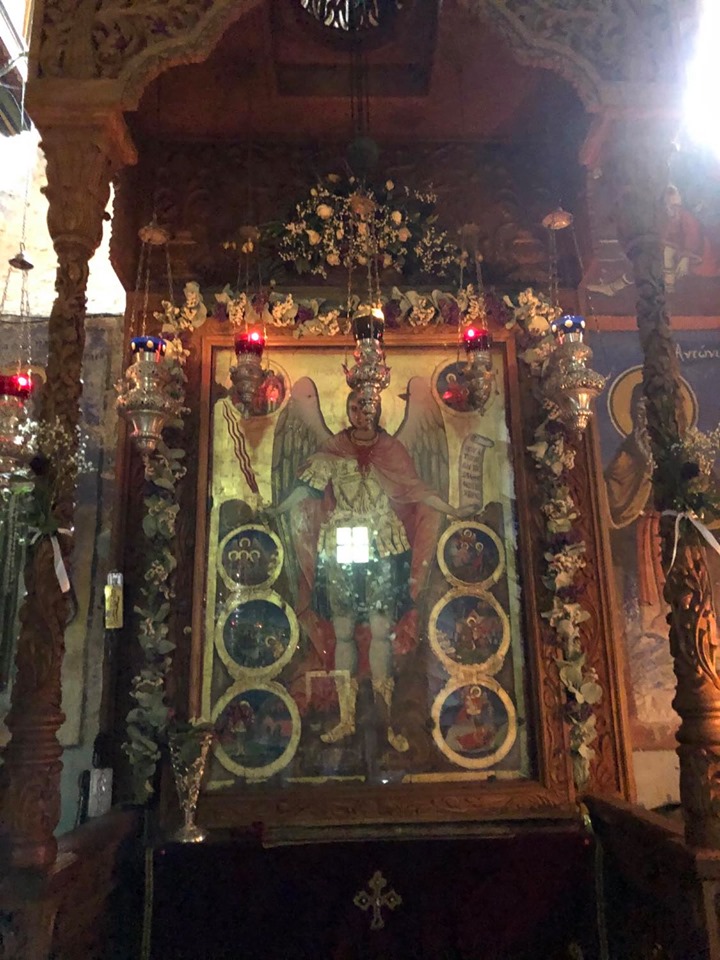
Indeed, the most famous frescoes are scenes from the martyrdom of Saint Chrisi and the hagiography of Saint Hilarion, Bishop of Moglenoi, which is unique throughout Greece. Finally, the miraculous icon of Archangel Michael is preserved.
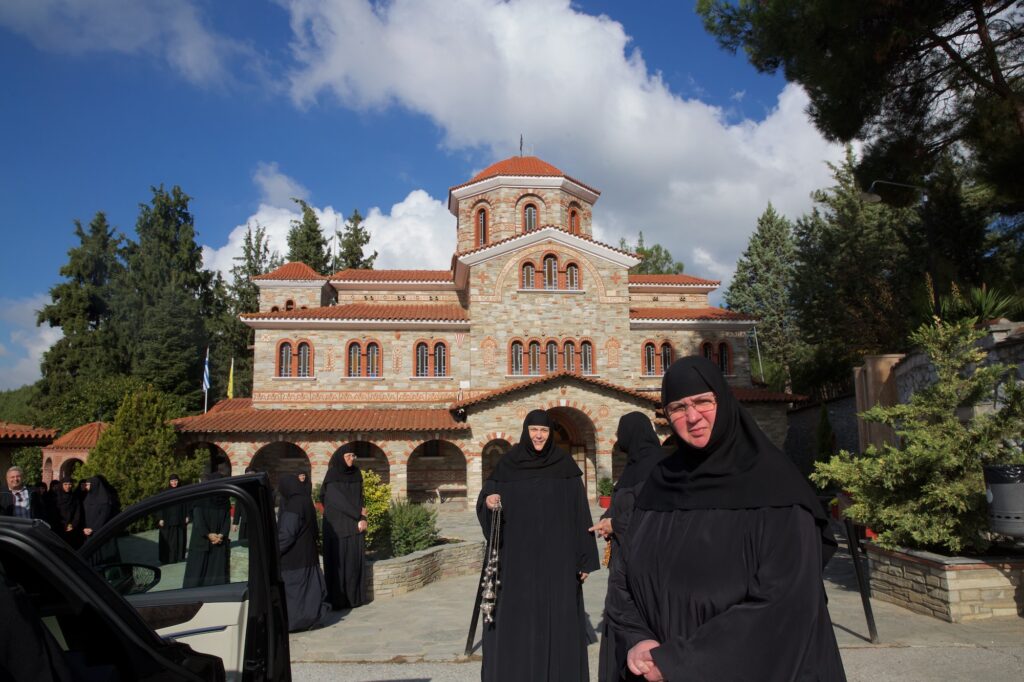
“God will centrifuge each one of us” (!) Those words by Gerondissa Philothei were repeated rather ‘ominously’ 3 to 4 times at the first (*) homily I attended at the Nativity of the Theotokos Monastery in Panorama. Doesn’t the centrifugal force cause an object to move out and away from the centre of its path? Is God through various afflictions centrifuging me away from the centre of my old self?
“How good it would have been if we did not let the pain go to waste! One way or another we will suffer. But our whole torture and struggle will go down the drain unless we make good use of pain unless we exploit it. …When we suffer, when a pain insists, let us think like that: “God wants something good to come out of this in me, and I act as if I do not get it. And all I do is moan and groan.” ….
“Know this: When pain will have completed the work it is supposed to do, God takes away. It is not difficult at all for God to remove whichever pain. … A Christian is capable of making such good use of every pain so that he can constantly be in paradise. …. Let there be no complaint, no rebellion, no kicking about.
If possible, whichever pain you have, deal with it by saying these words: “Let it be blessed, my God. Whatever You Want.” This way our pain won’t get wasted but will be exploited to the full. We will take advantage of it, and the great good which saves will come to our hearts. When God visits you with sorrows, say: “Thank you, my God. As I had absolutely no intention to embrace a few ugly things, a few pains, and truly follow your path, you caught up with me and gave me a few. How can I thank you enough?” (!) [+S.K]
*
(*) The first homily, that is after 35 or so years to be precise. Because Elder Symeon Kragiopoulos monastery was my starting point to the Church. The moment I stepped my foot into the narthex, it all came back to me. Literally that “taste” and “fragrance” of life and teachings which I understood so little back then, yet never forgot since. What an encouragement for my ‘new’ obediences! The second ‘word’ which I received soon after was a mission to make pilgrimages and establish contacts with all nearby Thessaloniki monasteries. All nearby monasteries?! Quite bold a list of obediences for such a timid little city hermit. But may it be blessed. Your prayers
“Love in Christ is a sacrificial Love, a self-sacrificing, self-denying Love, Agape. You sacrifice everything for the person you love, “your neighbour”. By “our neighbour”, we mean every person as God’s Image, even our enemy. By “love” we do not mean that we should do whatever the other person wants us to do, but to love him with Christ’s burning and flaming Heart, for his salvation” (+ Elder Gregorios Papasotiriou)
*
This is how we have always felt and feel his love. Blessed Paradise, Elder. At long last, you will be reunited with your beloved spiritual father, Saint Paisios. “Kai sta dika mas.” “And to our own!” May we be reunited with you in Heaven in God’s Kairos!
All the faithful present experienced an urge to pray to Elder, and not for him.