For Whom the Bell Tolls: Europe Migrant Crisis

an-inspector-calls

Why now is the perfect time for An Inspector Calls

* “The following review does NOT contain spoilers!”

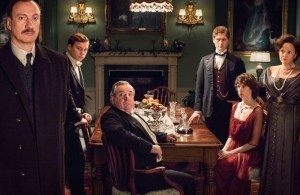
BBC One’s adaptation of JB Priestley’s An Inspector Calls couldn’t have aired at a more apt political moment…

… The BBC’s An Inspector Calls is airing in a week where front pages are dominated by people fleeing war in desperate need of help, and the political conversation is about who should be responsible for these strangers.

J.B. Priestley’s 1945 story about the corrosive nature of class privilege was always a fierce call for compassion. Arriving on BBC One after recent headlines, its message feels white-hot. … Set in 1912, the story tells of the collective role members of a wealthy family played in the suicide of a young working class woman. With its dead body, manor house, dinner party, visiting inspector and would-be aristocratic suspects, it first assumes the shape of a detective drama but quickly reveals itself to be an entirely different beast”

an inspector calls5

An Inspector Calls is available now on BBC iPlayer and previous BBC versions and older films in YouTube.

http://www.bbc.co.uk/iplayer/episode/p02z80kq/an-inspector-calls

Reviews:

http://www.denofgeek.com/tv/an-inspector-calls/36928/why-now-is-the-perfect-time-for-an-inspector-calls

http://www.telegraph.co.uk/culture/tvandradio/tv-and-radio-reviews/11858583/An-Inspector-Calls-BBC-One-review-subtle-as-a-sledgehammer.html

Watch now: Exclusive interviews with the cast of the BBC’s An Inspector Calls

https://www.thestage.co.uk/news/2015/watch-now-exclusive-interviews-cast-bbcs-inspector-calls/
WARNING: Embargoed for publication until 08/09/2015 - Programme Name: An Inspector Calls - TX: 13/09/2015 - Episode: An Inspector Calls (No. n/a) - Picture Shows: Eva (SOPHIE RUNDLE) - (C) BBC/Drama Republic - Photographer: Laurence Cendrowicz

I recommend it wholeheartedly, and I do find its Christian subtext intriguing, my only objection being, in total agreement with Anita Singh, that this part drawing room whodunit, part classic thriller, part socialist manifesto, part twentieth-century morality play, has the subtlety of a sledgehammer!
it_tolls_full_600

no-island

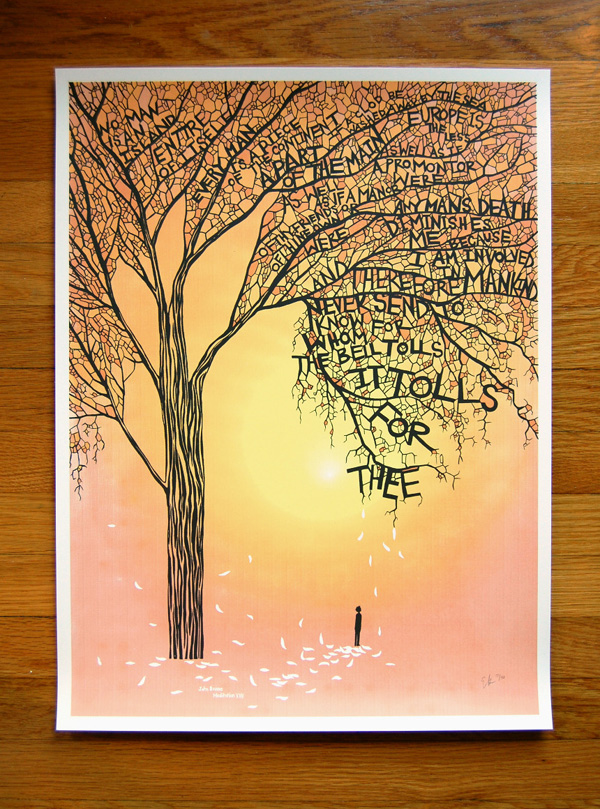
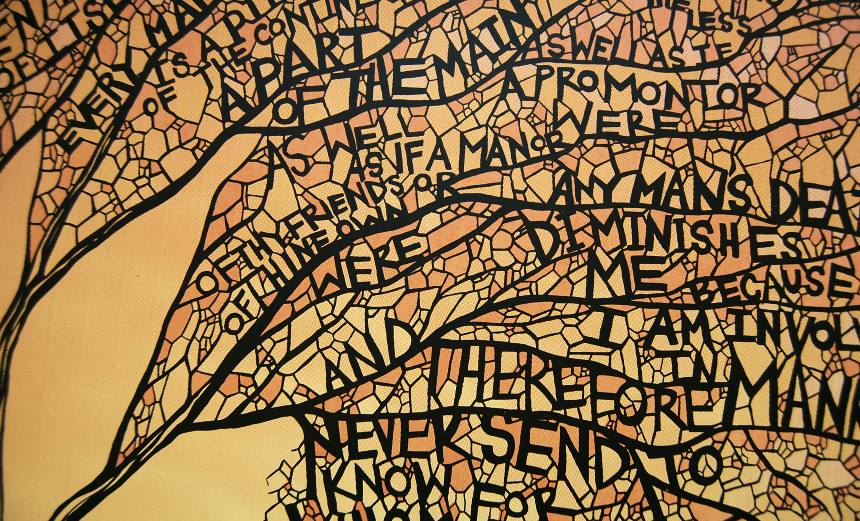
John Donne

No man is an island,
Entire of itself.
Each is a piece of the continent,
A part of the main.
If a clod be washed away by the sea,
Europe is the less.
As well as if a promontory were.
As well as if a manor of thine own
Or of thine friend’s were.
Each man’s death diminishes me,
For I am involved in mankind.
Therefore, send not to know
For whom the bell tolls,
It tolls for thee.

From Meditation 17

A Spectral Array of Blues

blue4

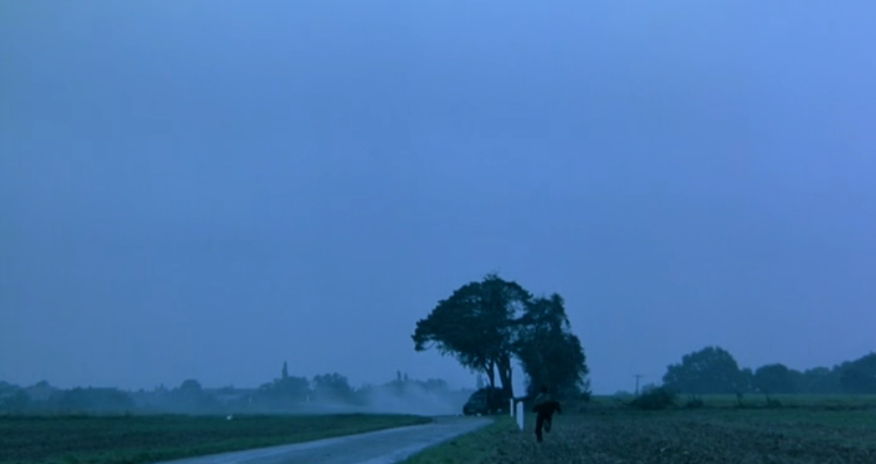
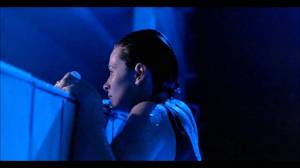
TROIS COULEURS: BLEU (1993) is a stunning film from one of the world’s preeminent directors, a rich, dark film with all the Kieslowski marks: death, silence, depression, and inner torment of the protagonist. Bleu is an impressive, inspired and inspiring anatomy of Loss, Death & Mourning with certain Christian overtones.

Desson Howe notes that “in Krzysztof Kieslowski’s “Blue,” the rehabilitation of a human spirit after painful tragedy is given stunning, aesthetic dimension. A story about a woman (Juliette Binoche) who loses her family (her composer-husband and 5-year-old daughter) in a car crash, this Polish-French production is also a spectral array of blues — cold, heart-chilling and beautiful.

blue5

For the trauma of loss and persistence of memory, watch https://www.youtube.com/watch?v=osu3j7N1fGU

Emotionally, “Blue” is a grim ordeal, as Binoche (still in the hospital recovering from the accident) attempts suicide, then retreats into deep-freeze mourning. But Kieslowski, cinematographer Slawomir Idziak, set designer Claude Lenoir and composer Zbigniew Preisner infuse the harrowing atmosphere with stylistic rhapsody.” (Washington Post, March 04, 1994 )
blue5

More importantly, unlike Michael Rosen’s Sad Book, certain Christian themes throughout the movie offer the hope of redemption. Throughout Kieslowski implies a form of divine intervention or destiny at work, forcing Julie to come to terms with her past, others, and herself and serving as an agent of epiphanic inspiration.

There is also specifically love and forgiveness: Julie for example discovers that her late husband was having an affair. She tracks down Sandrine, Patrice’s mistress, and finds out that she is carrying his child; Julie arranges for her to have her husband’s house and recognition of his paternity for the child. What a ray of hope and redemption for such a “bleak” film, focusing on death and mourning, to end with the ultrasound of a baby, waiting to be born! Life conquers Death because Love is Life, and nothing, nobody can defeat Love, not even Death, the ultimate enemy.

blue3

Then, there is humility, self-effacement and sacrifice. After the crash, in an attempt to blot out the trauma of loss, Julie destroys the score for her late husband’s last commissioned, though unfinished, work—a piece celebrating European unity, following the end of the Cold War. It is strongly suggested that she wrote, or at least co-wrote, her husband’s last work. Throughout there is an implication that she has hidden her own work behind the public face of her husband. In the final sequence she rewrites and completes the score and the Unity of Europe piece is played, while images are seen of all the people Julie has profoundly affected by her actions.

Significantly, this climactic piece which features chorus and a solo soprano is Saint Paul‘s 1 Corinthians 13 epistle in Greek, the hymn of love.

For a profound rendition of the Christian Hymn of Love (1 Cor, 13) , watch Trois Couleurs: ‘Bleu’ finale: https://www.youtube.com/watch?v=jmQ88PWzvR0

bleu1

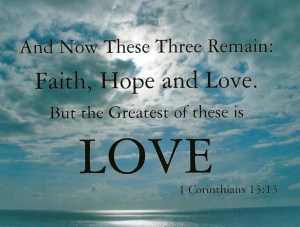
13 Though I speak with the tongues of men and of angels, and have not charity, I am become as sounding brass, or a tinkling cymbal.

2 And though I have the gift of prophecy, and understand all mysteries, and all knowledge; and though I have all faith, so that I could remove mountains, and have not charity, I am nothing. 

6 Rejoiceth not in iniquity, but rejoiceth in the truth;

7 Beareth all things, believeth all things, hopeth all things, endureth all things.

8 Charity never faileth: but whether there be prophecies, they shall fail; whether there be tongues, they shall cease; whether there be knowledge, it shall vanish away. 

13 And now abideth faith, hope, love, these three; but the greatest of these is love.
love1

So, although there are some scenes, themes and plot developments in Bleu which conflict in my opinion with a Christian outlook, such as the typical French twist with Julie and her husband’s friend becoming lovers, still I find this film so much more comforting, uplifting and inspiring than The Sad Book* and its like, so plenty in modern art!

*See https://orthodoxcityhermit.com/2015/09/17/heartbreaking-anatomies-of-loss-death-mourning-iexemption/
love2

Ashes and Snow — Qadeeshat Lamayouta

ashes5

Qadeeshat Hyeltana

Qadeeshat Lamayouta

Itrahem Alain

ashes1

Holy God

Holy Mighty One

Holy Immortal One

Have Mercy on us

For the stunning, heavenly singing of the Aramaic hymn, listen:

https://www.youtube.com/watch?v=U6tV679wXIU

https://www.youtube.com/watch?v=TwNkBaWxz_Y

ashes4

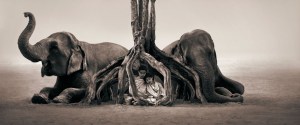
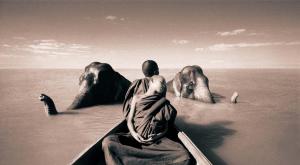
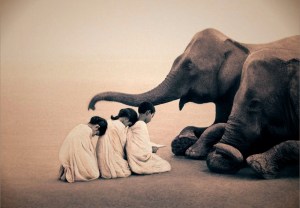
Worshipping God in Aramaic the language of Jesus the Semitic language of Israel, Levant, and Mesopotamia, by Father Seraphim and his choir from Georgia, brought me to mind Gregory Colbert’s Ashes and Snow images, visceral yet dreamlike, returning us to a place we long for but cannot name, reawakening an ancient memory in us of a time when we lived in balance and harmony with Nature and God.

ashes2

Gregory Colbert’s Ashes and Snow is an ongoing project comprised of photographic artworks, a one-hour film and two short film “haikus,” and a novel in letters all presented in a purpose-built temporary structure called the Nomadic Museum.

“Feather to Fire
Fire to Blood
Blood to Bone
Bone to Marrow
Marrow to Ashes
Ashes to Snow.”

ashes3

For the full text, go to: http://www.mycity.rs/Knjizevnost/Ashes-and-Snow-by-Gregory-Colbert.html

For the mesmerising videos watch:

https://www.youtube.com/watch?v=gSX444hQ5Vo&list=PLF8BA0D1D7E544A00&index=1

https://gregorycolbert.com

Sculpting in Time

Andrej_Rublëv_001


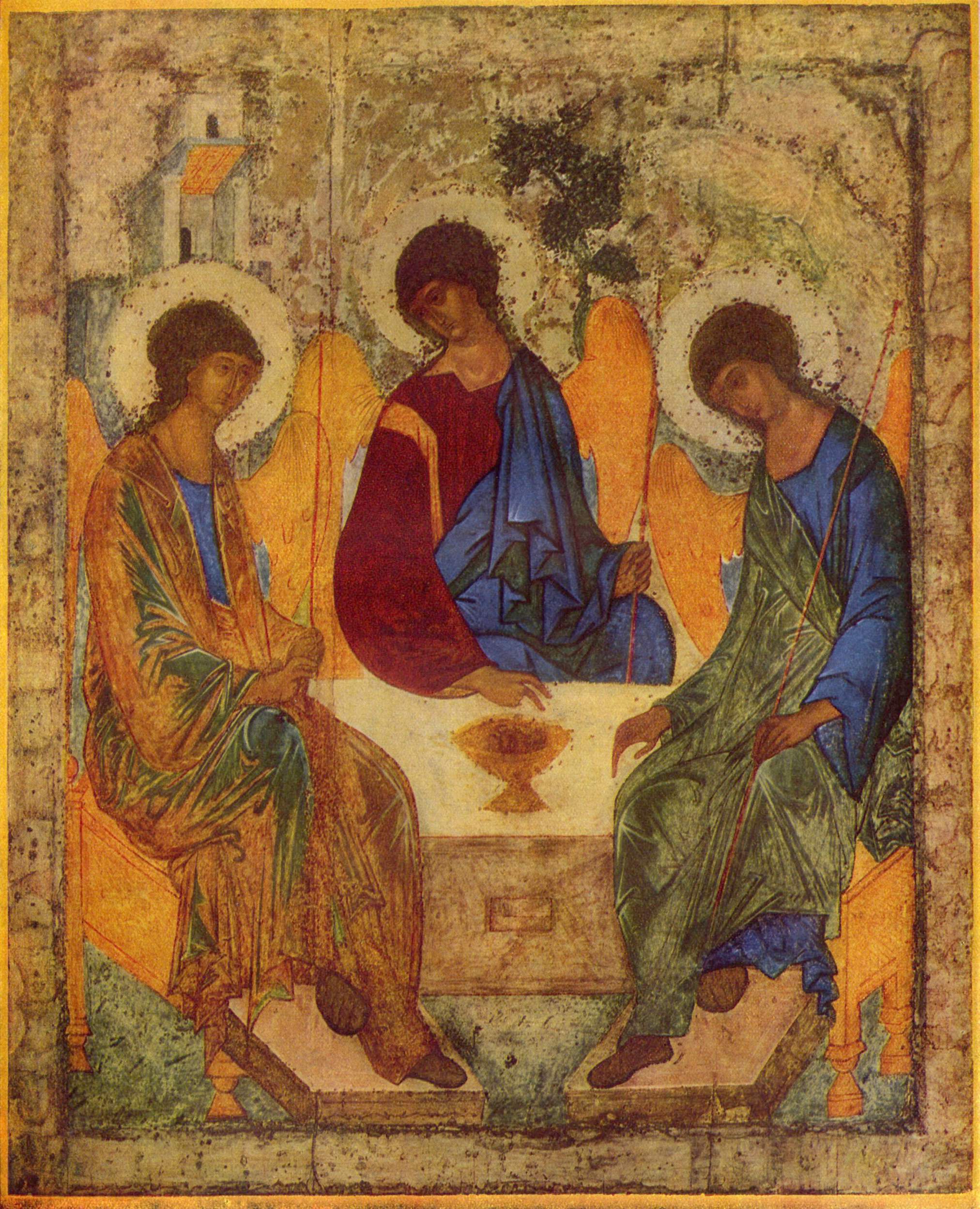
This is Iconographer Andrei Rublev’s ( Андре́й Рублёв) famous work on the Trinity – Angels at Mamre ( Holy Trinity). For those of you familiar with his art, the colour explication that follows is superfluous. What I would really like to share with you is my (re)discovery of these colours yesterday through Tarkovsky‘s lens. These colours become so alive at the ending of his movie Andrei Rublev (1966) after three hours of black and white! Pay particular attention to https://www.youtube.com/watch?v=FsEbrhv2jGY, esp. 4:50′ to  8:00′.

For those of you who are not familiar with this icon, Rublev gives each person of the Trinity different clothing. On the right, the Holy Spirit has a garment of the clear blue of the sky, wrapped over with a robe of a fragile green. So the Spirit of creation moves in sky and water, breathes in heaven and earth. All living things owe their freshness to his touch. The green mantle of the Spirit, scintillating with light, is clearly a Rublev achievement. Green belongs to the Spirit because the Spirit is the source of life.

The Son has the deepest colors; a thick heavy garment of the reddish-brown of earth and a cloak of the blue of heaven. In his person he unites heaven and earth, the two natures are present in him, i.e., human and divine, (and this is why on the table are placed two of his fingers) and over his right shoulder (the Government shall be upon his shoulder) there is a band of gold shot through the earthly garment, as his divinity suffuses and transfigures his earthly being. The red signifies his earthly passion, and the gold band, his royal status as Christ the King.

The Father seems to wear all the colors in a kind of fabric that changes with the light, that seems transparent, that cannot be described or confined in words. The Father’s ghostly outer garment hints at his inconceivable divine nature. And this is how it should be. No one has seen the Father, but the vision of him fills the universe. His robe is iridescent, shifting from glowing golden-red to azure blue, a triumph of the painter’s art. “You robe yourself in light as in a garment” (Ps 104:2).

The wings of the angels or persons are gold. Their seats are gold. The chalice in the center is gold, and the roof of the house. Whether they sit, whether they fly, all is perfect, precious, and worthy. In stasis, when there is no activity apparent on the part of God, his way is golden. When he flies, blazes with power and unstoppable strength, his way is golden. And in the Sacrifice at the center of all things, his way is golden.

The light that shines around their heads is white, pure light. Gold is not enough to express the glory of God. Only light will do, and that same white becomes the holy table, the place of offering. God is revealed and disclosed here, at the heart, in the whiteness of untouchable light, the Uncreated Light.

For more information, go to:

https://www.youtube.com/watch?v=6g-DkKDQ_5g

https://www.youtube.com/watch?v=vOYFHbmmWZ0

Datta. Dayadhvam. Damyata.

Lords_Prayer_Religious

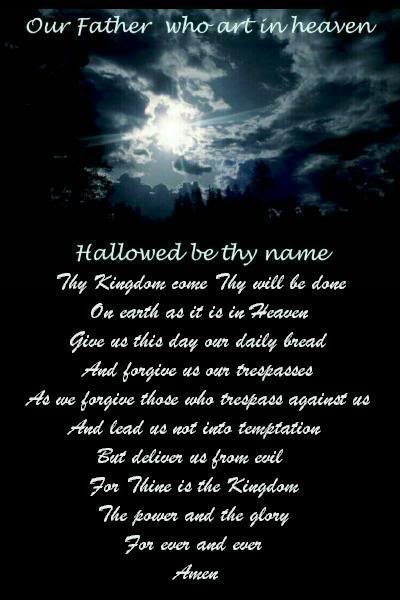
A favourite scene by an all-time favourite film-maker of spiritual quest: The Sacrifice (Offret) by A.Tarkovsky 1986 – PRAYER: The Lord’s Prayer. The scene poignantly illustrates the power of faith and self-sacrifice.

https://www.youtube.com/watch?v=f4z8Y-NpW1c

The Sacrifice, Tarkovsky’s swan song, tells in esoteric terms of Christian iconography, masterly mise-en-scène, and astounding use of sound composition, of a literary critic, once an actor (Josephson), who promises to give up everything ‘that connects him with the world’ in a bid to save it from the impending nuclear holocaust he hears announced on television.

Numb, Joyless, Desolate


theotokos2


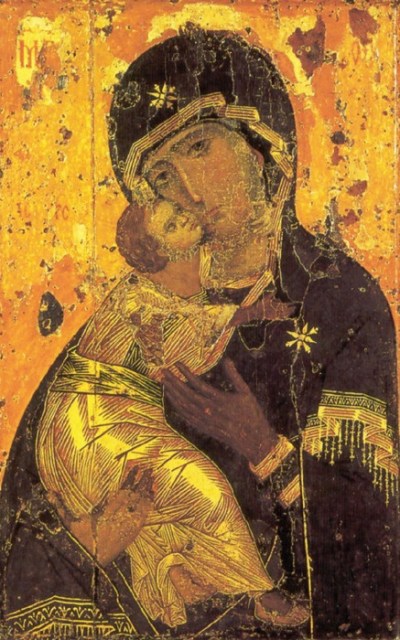
Mother of God,

Here I stand now praying

Before this ikon of your radiant brightness,

Not praying to be saved from a battlefield;

Not giving thanks nor seeking forgiveness for the sins of my soul,

Nor for all the souls.

Numb, joyless and desolate on earth;

But for her alone, whom I wholly give you.

*

Hymn on the morning of our Lady’s Nativity

https://www.youtube.com/watch?v=EqsMBX9Kxm4

A Thorn on the Road

tree of life

Prayers by the Lake (I) 

By St. Nikolai Velimirovic

Who is that staring at me through all the stars in heaven and all the creatures on earth?

Cover your eyes, stars and creatures; do not look upon my nakedness. Shame torments me enough through my own eyes.

What is there for you to see? A tree of life that has been reduced to a thorn on the road, that pricks both itself and others.

….

heaven

https://www.youtube.com/watch?v=FSH7UolJsuU