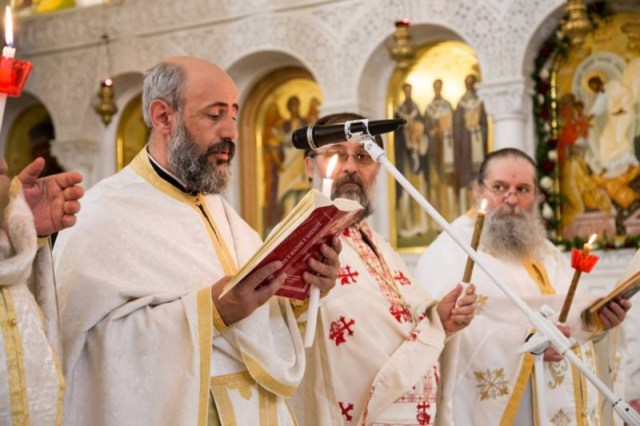
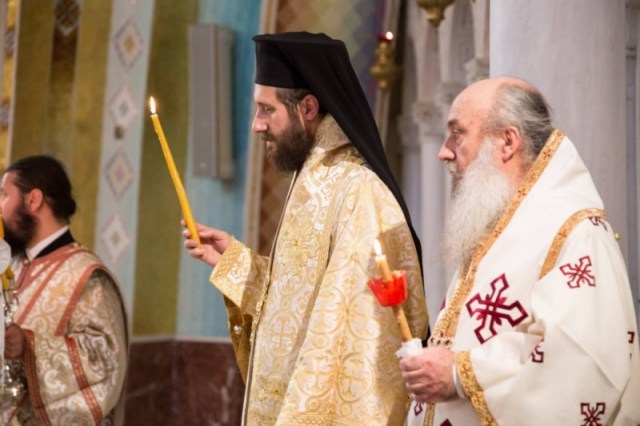
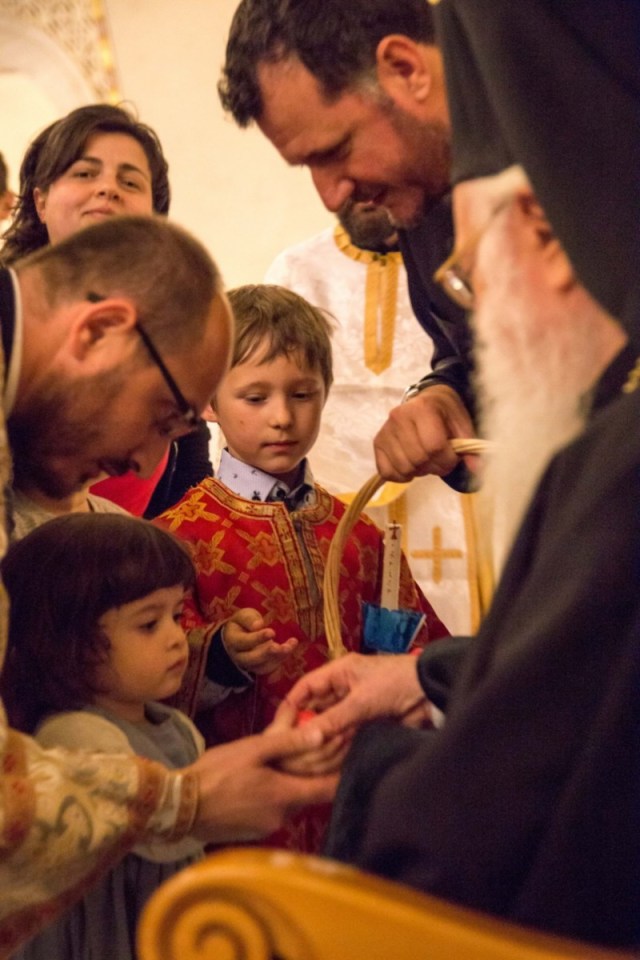
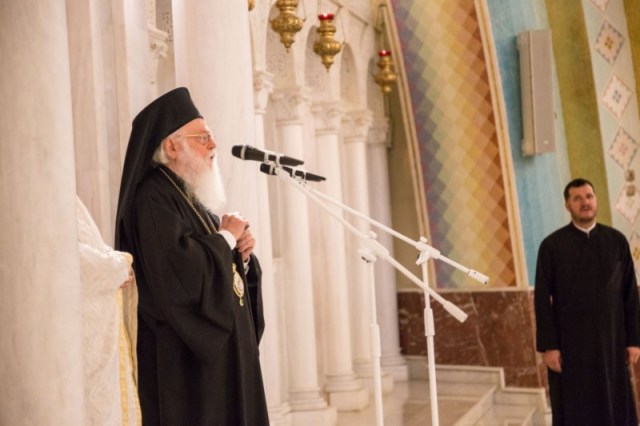
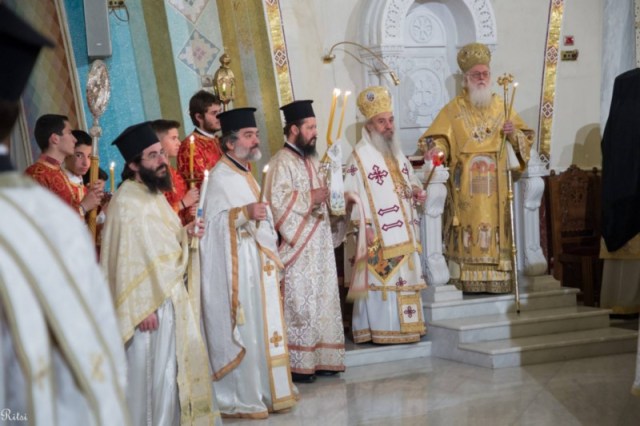
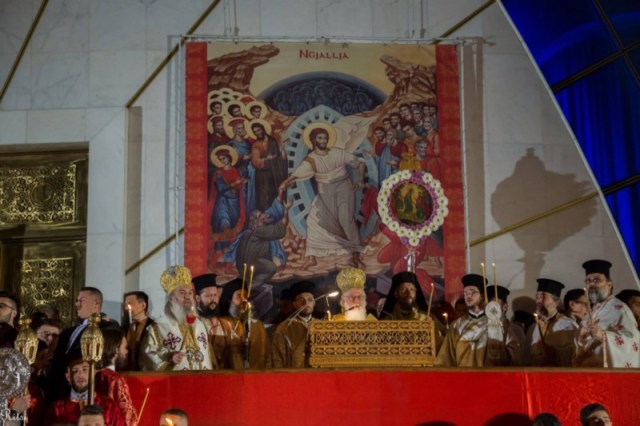
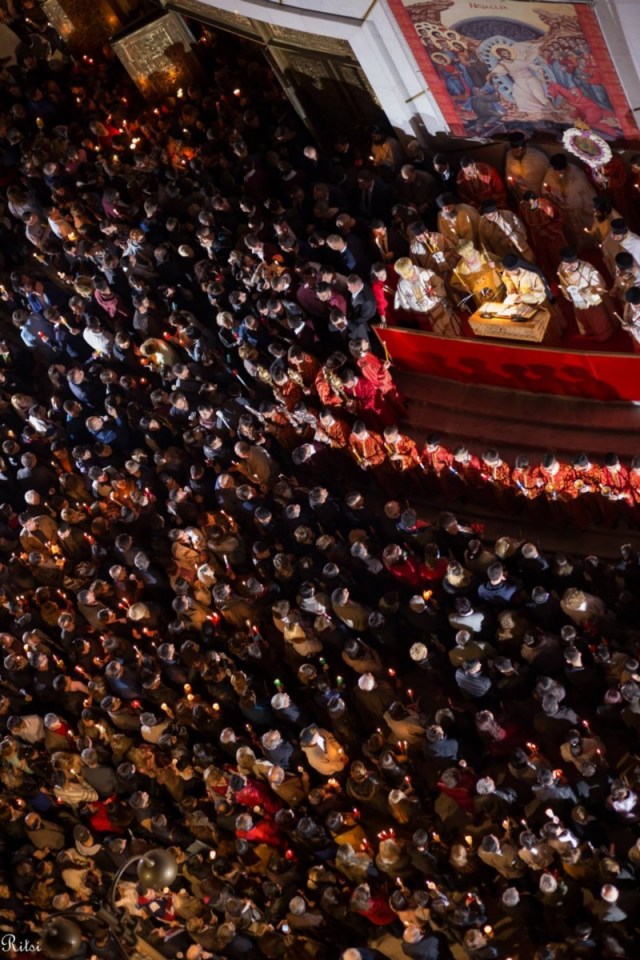
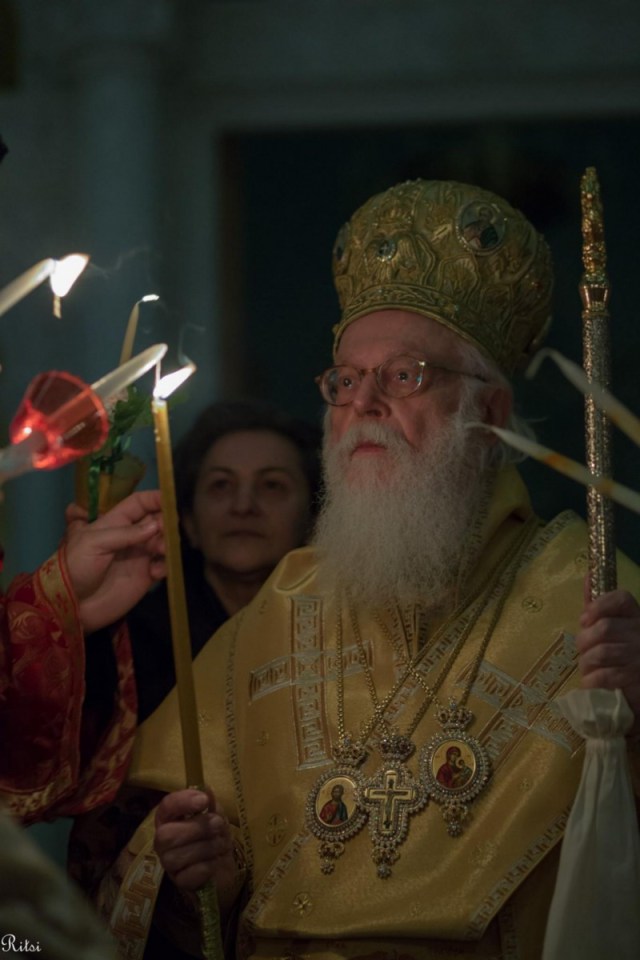
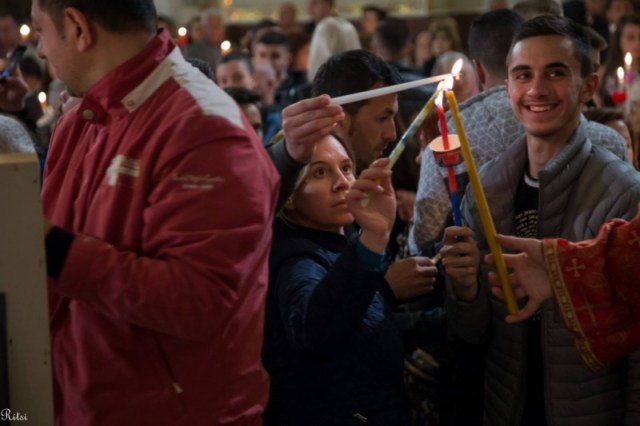
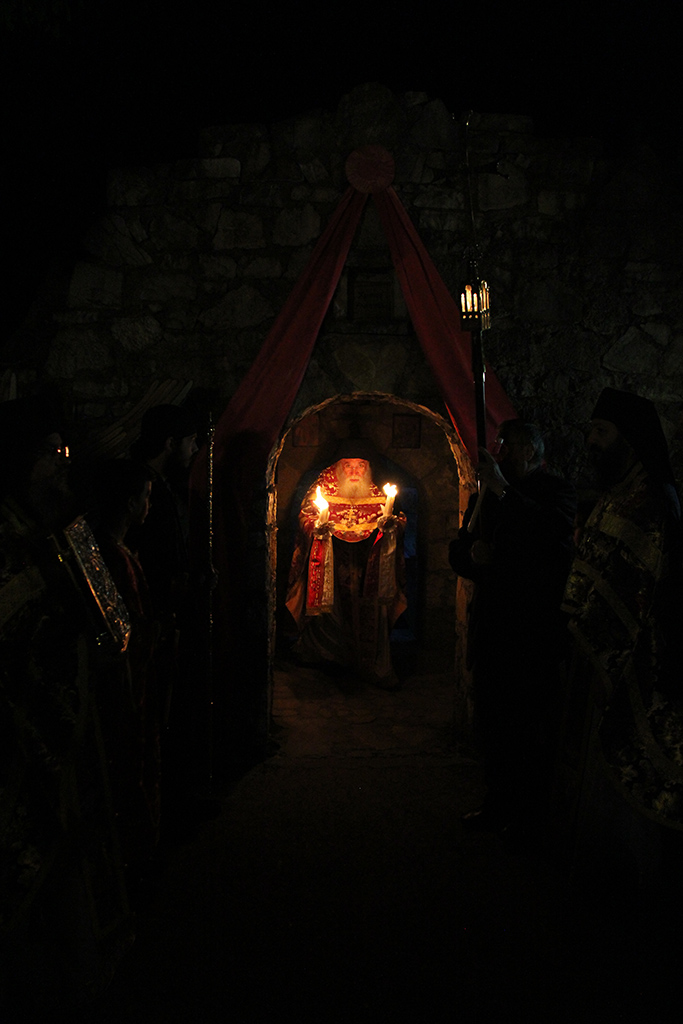
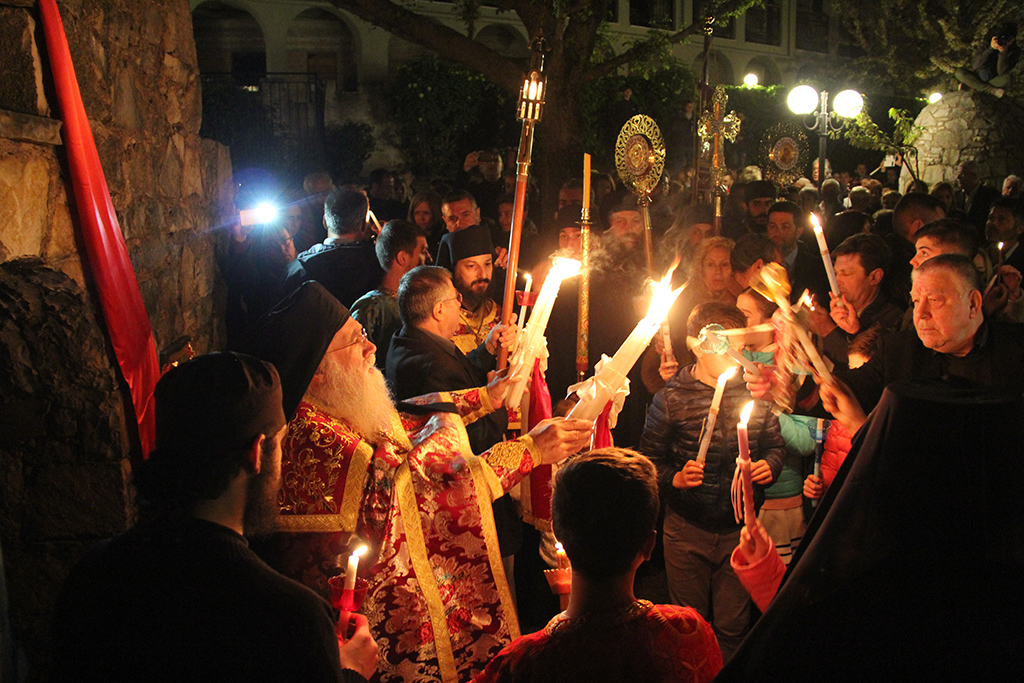
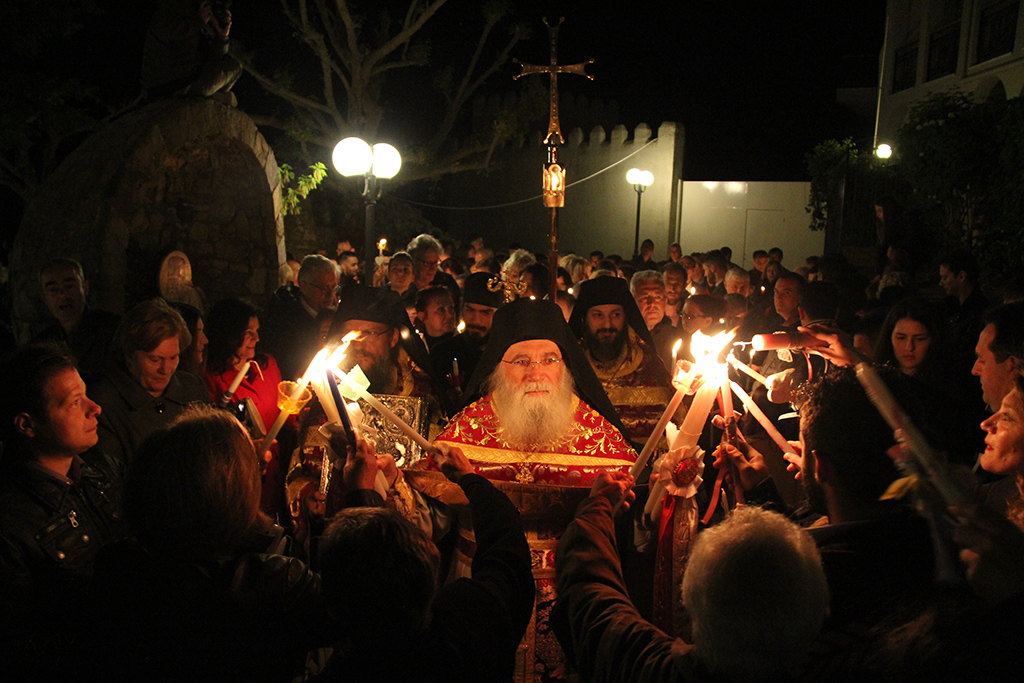
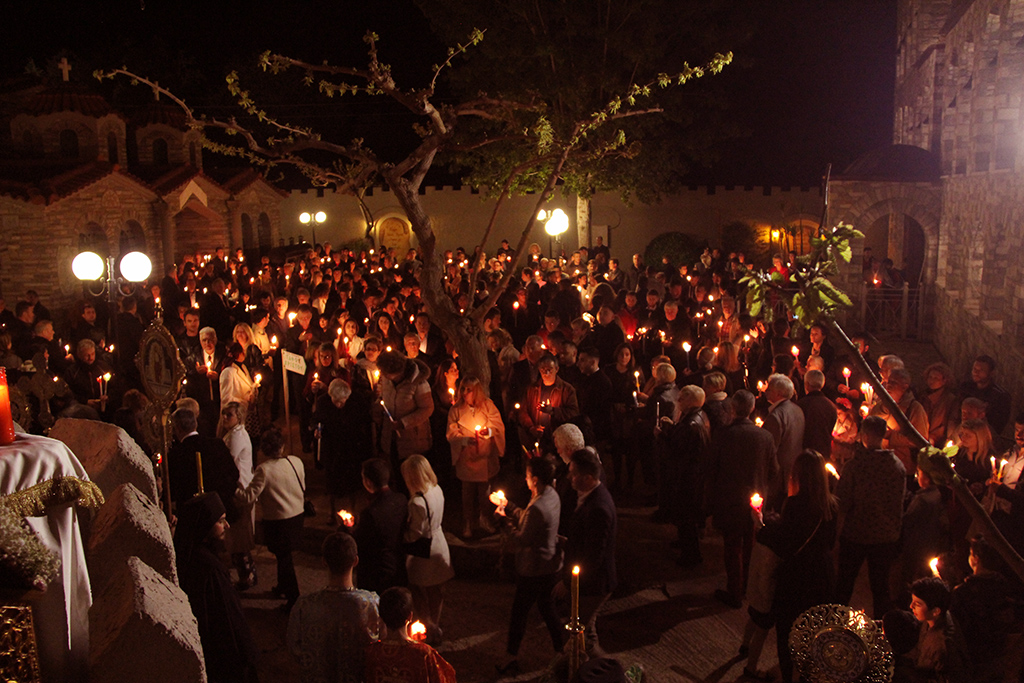
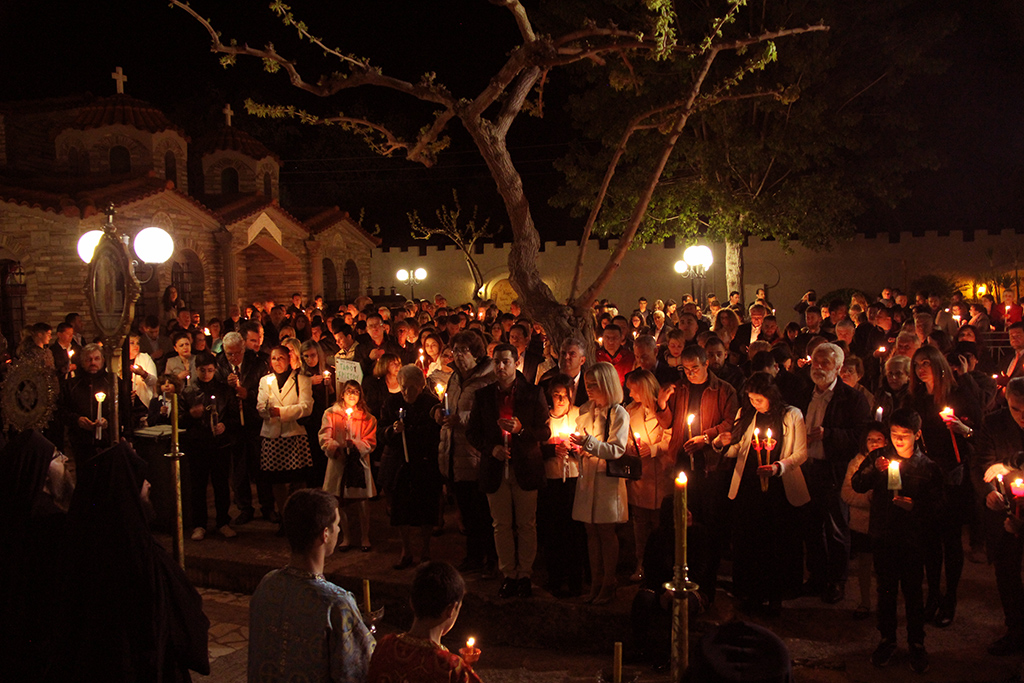
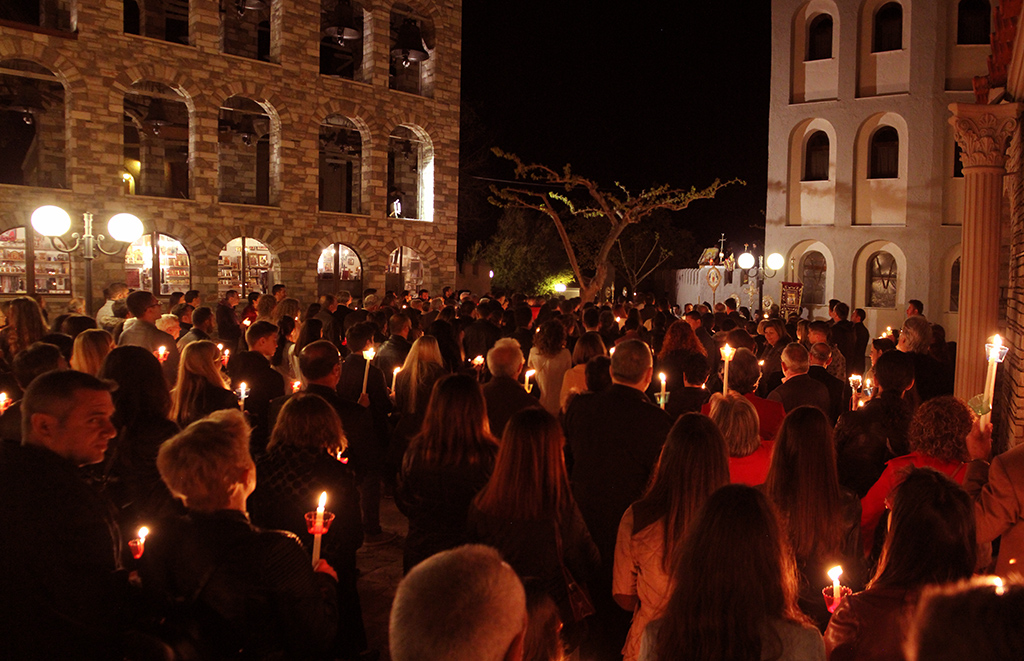
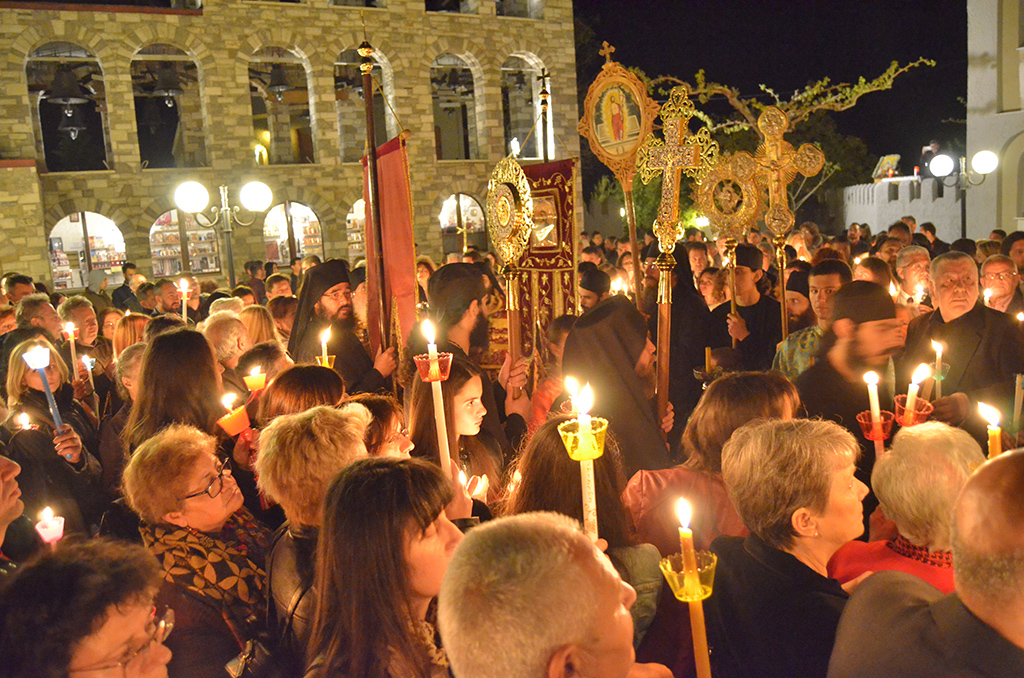
“Our Easter joy is offered in order to be shared with others. … A pious custom among Orthodox Christians is to share with others the light of Christ the moment their candle is lit. This sharing of Christ’s Light highlights the duty of the faithful to evangelise, to spread the Evangelion (Ευ-Αγγέλιον), the Good News of our Lord’s Resurrection, like the Apostles. Our resurrected Lord said: “All authority in heaven and on earth has been given to me.” And He added: “Therefore go and make disciples of all nations” (Matthew 28:18-19). Πορευθέντες οὖν.
So, there is one consequence, one “therefore”, one “οὖν”: Don’t limit yourselves to your own personal salvation and joy; you have a holy responsibility to spread this Evangelion to all those who ignore this Truth. This Hope must not be kept hidden, must not be confined to only one community. This Hope is for all peoples, for the renewal of all mankind.” (Archbishop Anastasios of Albania, Easter Message 2017)
“As a young person I had been moved by stories of Father Damian, a Catholic priest who served lepers in Hawaii, and also Albert Schweitzer. I asked myself whatever happened to our missionary tradition in the Orthodox Church? Where were the Orthodox missionaries? What are we doing to share our faith with others? What are we doing to reach all those people who have never heard the Gospel? I realized that indifference to missions is a denial of Orthodoxy and a denial of Christ. How had it happened that a Church called to baptize the nations was so indifferent to the nations? Saint Paul brought the Gospel to Greeks. Who were we bringing it to?”
It was a pivotal question that would shape the rest of his life.
Indifference to missions is a denial of Orthodoxy and a denial of Christ.
‘Krishti u ngjall, Zoti eshte me ne, lavdi Zotit!’ — ‘Christ is risen, God is with us, Glory to God!’
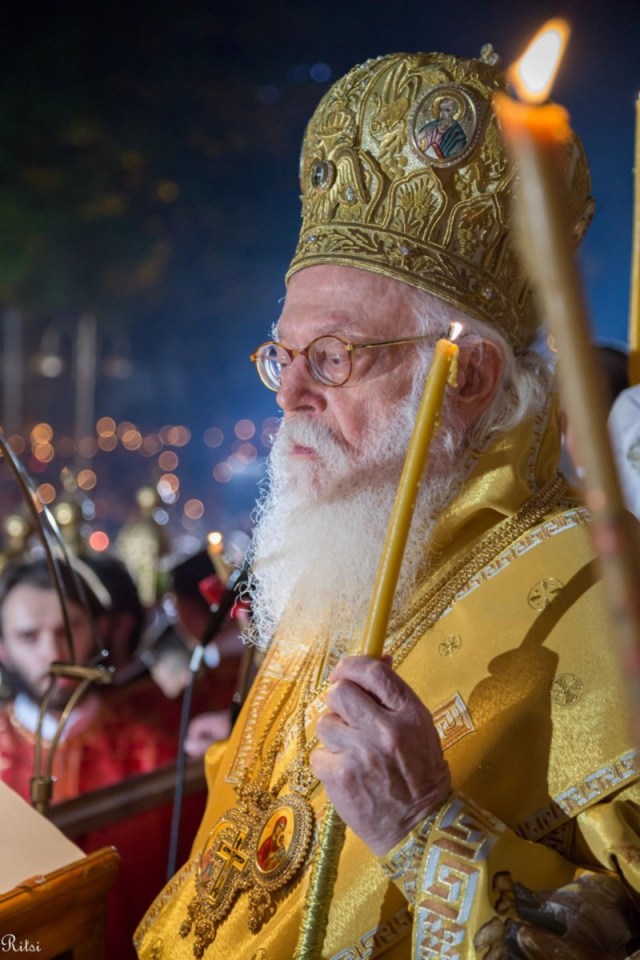
While his official title is Archbishop of Tirana and All Albania, Anastasios has occasionally been called the Archbishop of Tirana and All Atheists. It isn’t a title he objects to. “I am everyone’s archbishop. For us each person is a brother or sister. The Church is not just for itself. It is for all the people. As we say at the altar during each Liturgy, it is done ‘on behalf of all and for all. Also we pray ‘for those who hate us and for those who love us.’ Thus we cannot have enemies. How could we? If others want to see us as enemies, it is their choice, but we do not consider others as enemies. We refuse to punish those who punished us. Always remember that at the Last Judgment we are judged for loving Him, or failing to love Him, in the least person. The message is clear. Our salvation depends upon respect for the other, respect for otherness. This is the deep meaning of the Parable of the Good Samaritan — we see not how someone is my neighbor but how someone becomes a neighbor. It is a process. We also see in the parable how we are rescued by the other. What is the theological understanding of the other? It is trying to see how the radiation of the Son of God occurs in this or that place, in this or that culture. This is much more than mere diplomacy. We must keep our authenticity as Christians while seeing how the rays of the Son of Righteousness pass through another person, another culture. Only then can we bring something special.”
People look at the difficulties of life here and say to me, ‘How can you stand it? It is so ugly!’ But for me it is so beautiful! It is God’s blessing to be here — not the blessing I imagined but the one I received. …
“People sometimes ask me about my expectations, but I don’t know about the future! You can only do your job with love and humility. I am not the savior of Albania, only a candle in front of the icon of the Saviour.”
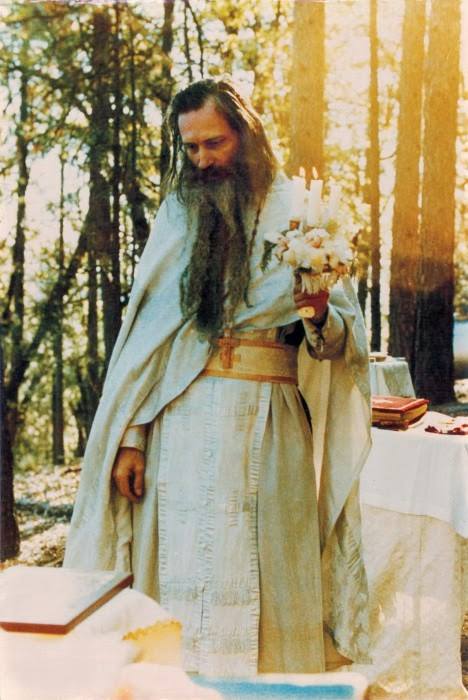
One young convert, radiant after experiencing his first Pascha in the wilderness, was asked by Fr. Seraphim: “Well, how did you like the Feast?”
“It was wonderful!” replied the elated pilgrim.
“Don’t waste what you’ve been given,” Fr. Seraphim said, echoing the words of Bishop Nektary. “Don’t spill the grace. Keep it there!” As he said this, Fr. Seraphim tapped the young man’s chest, right on his heart.
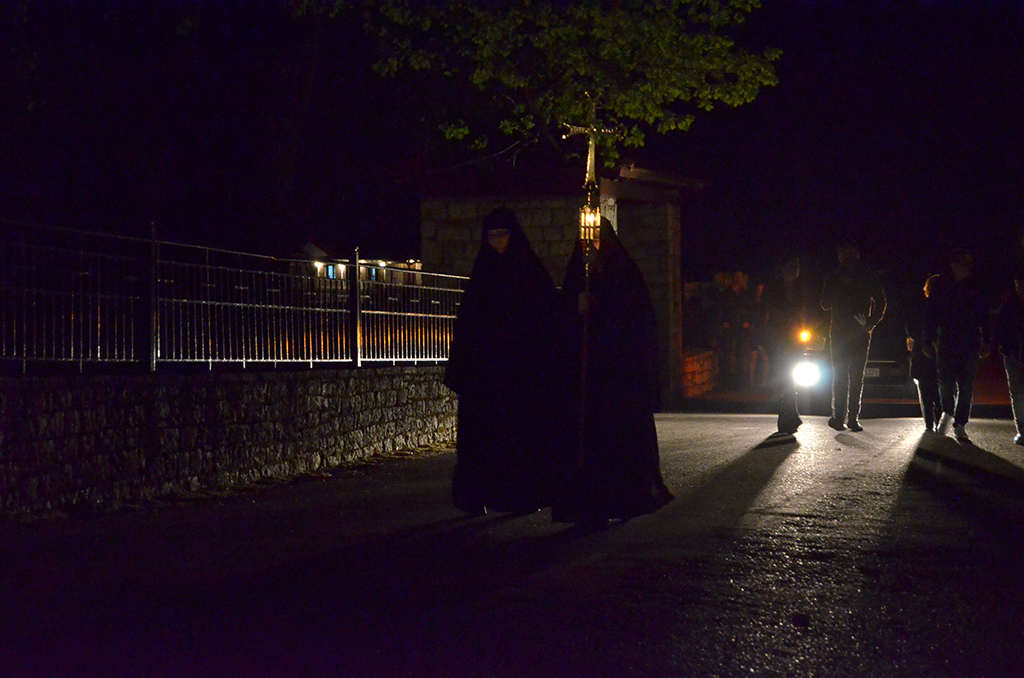
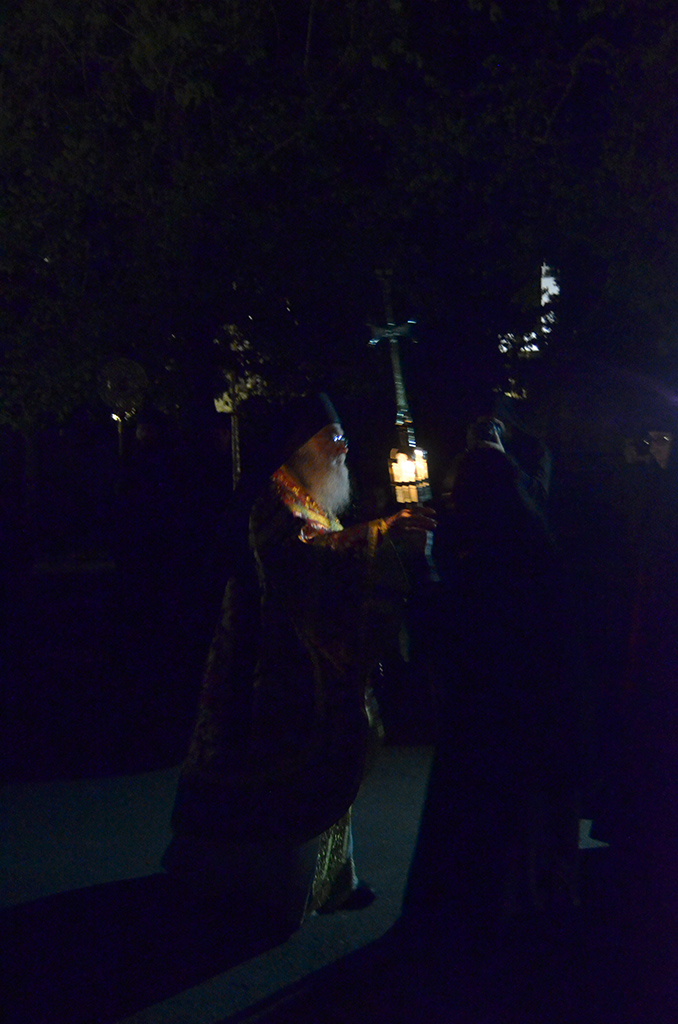
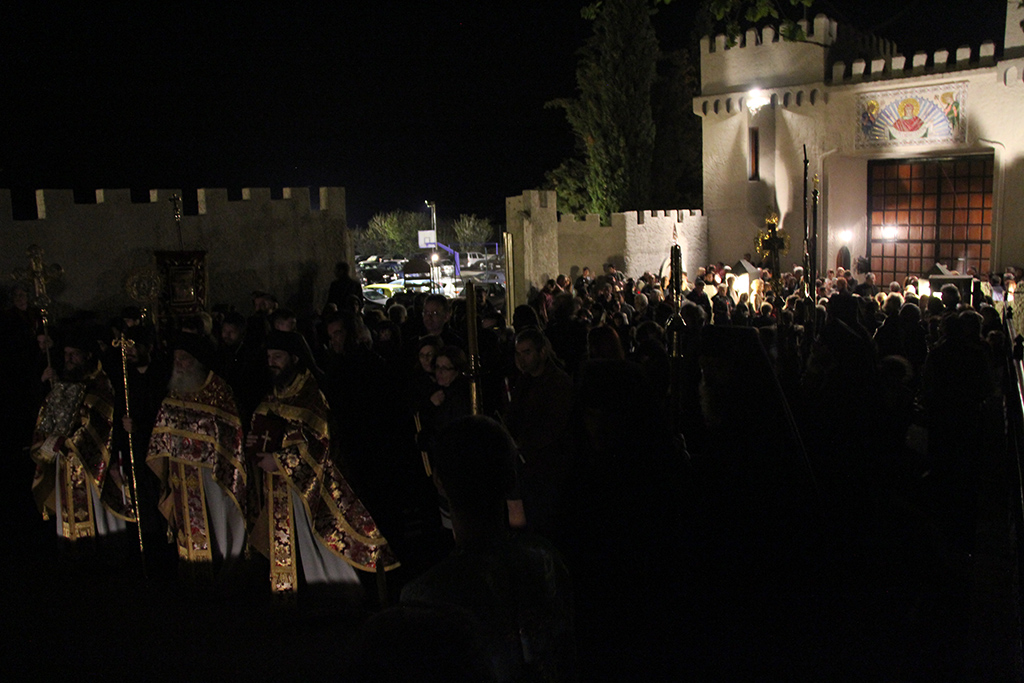
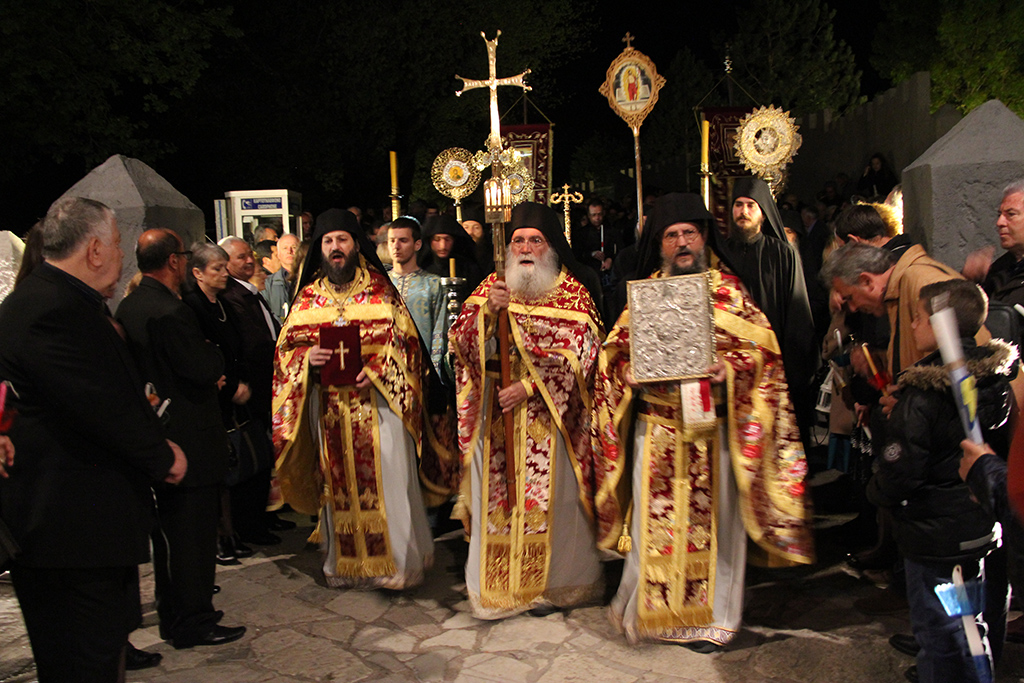
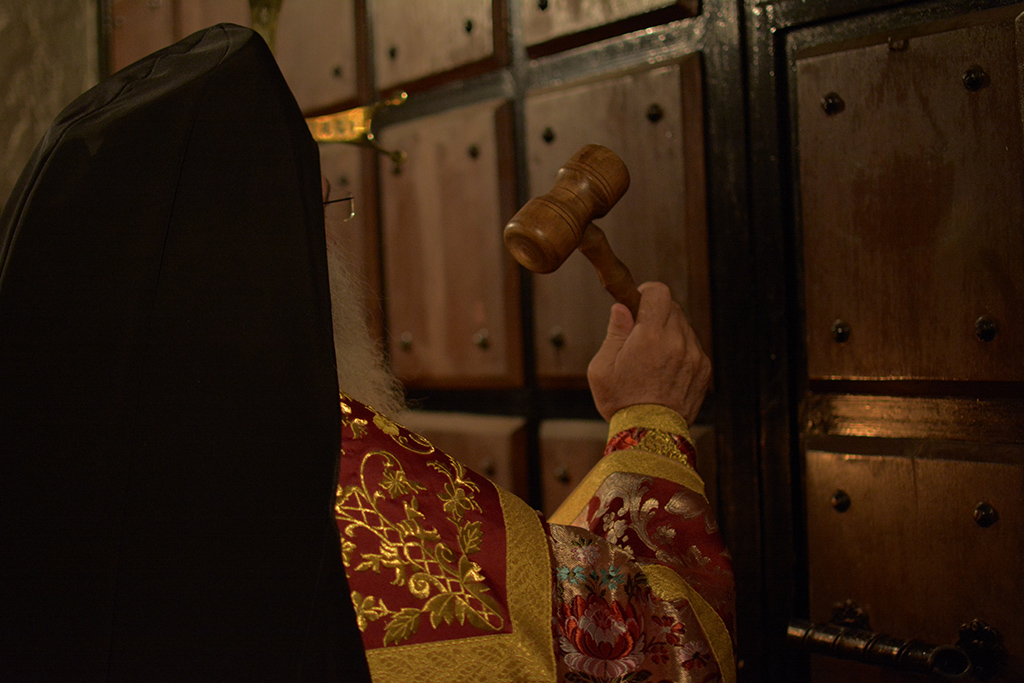
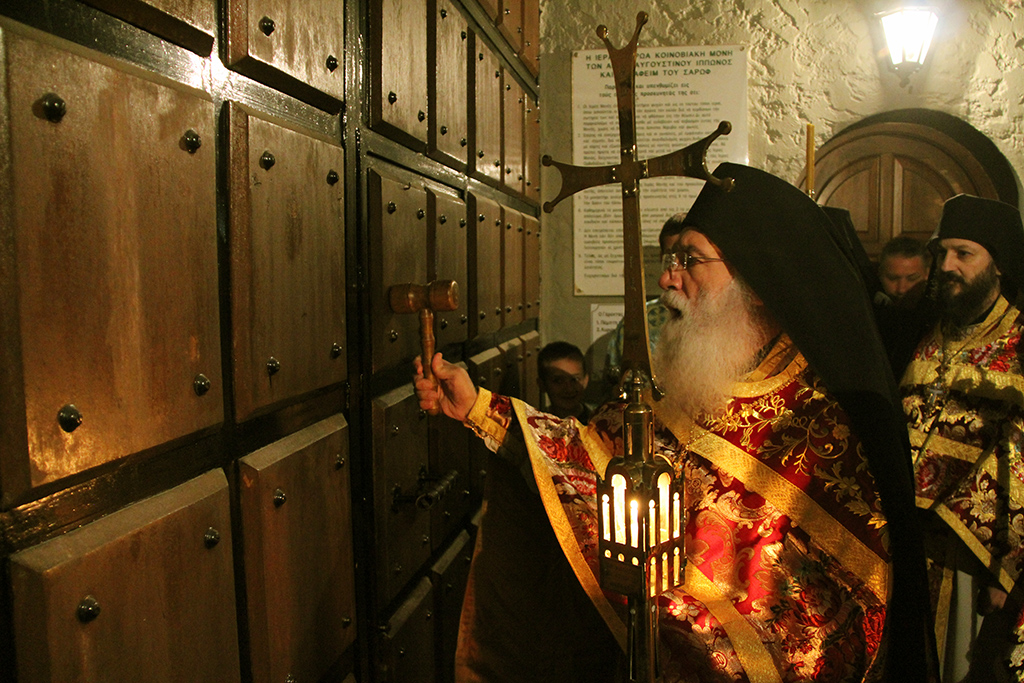
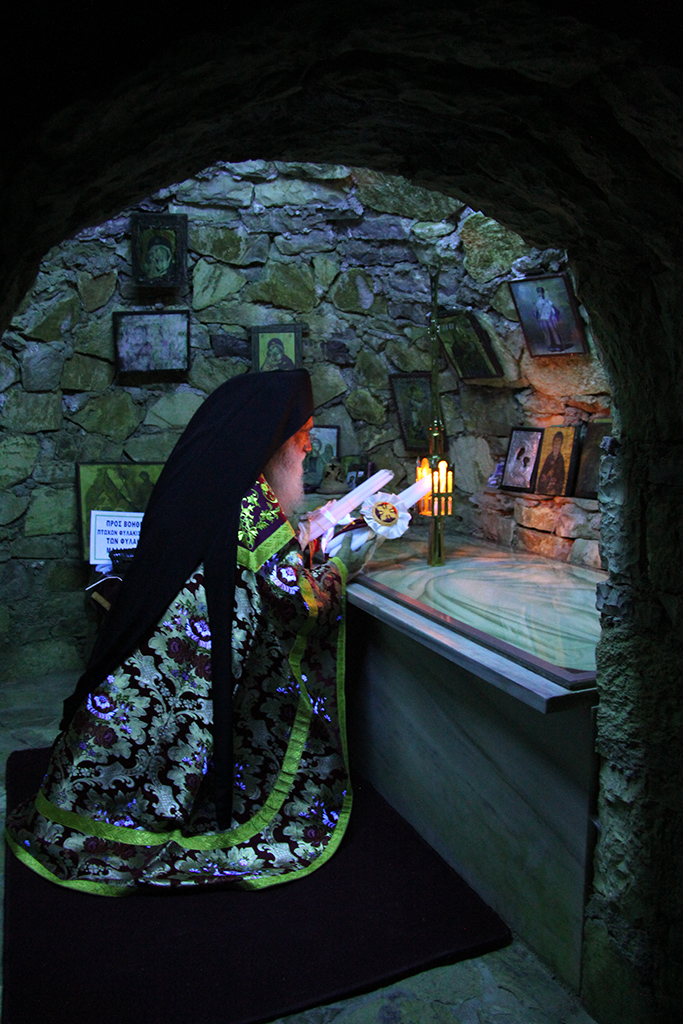
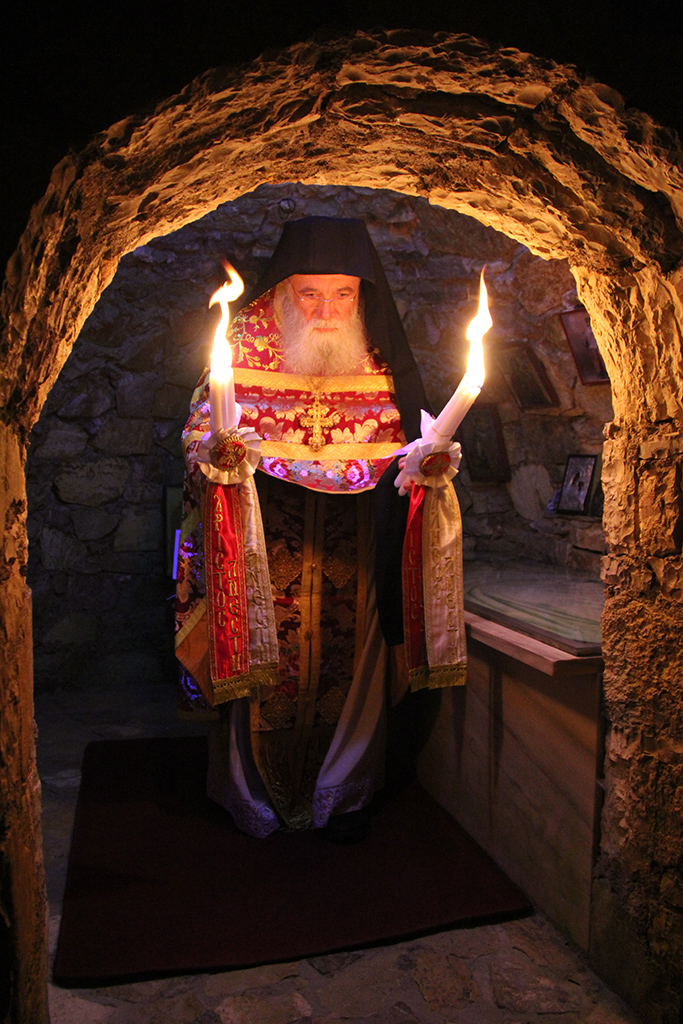
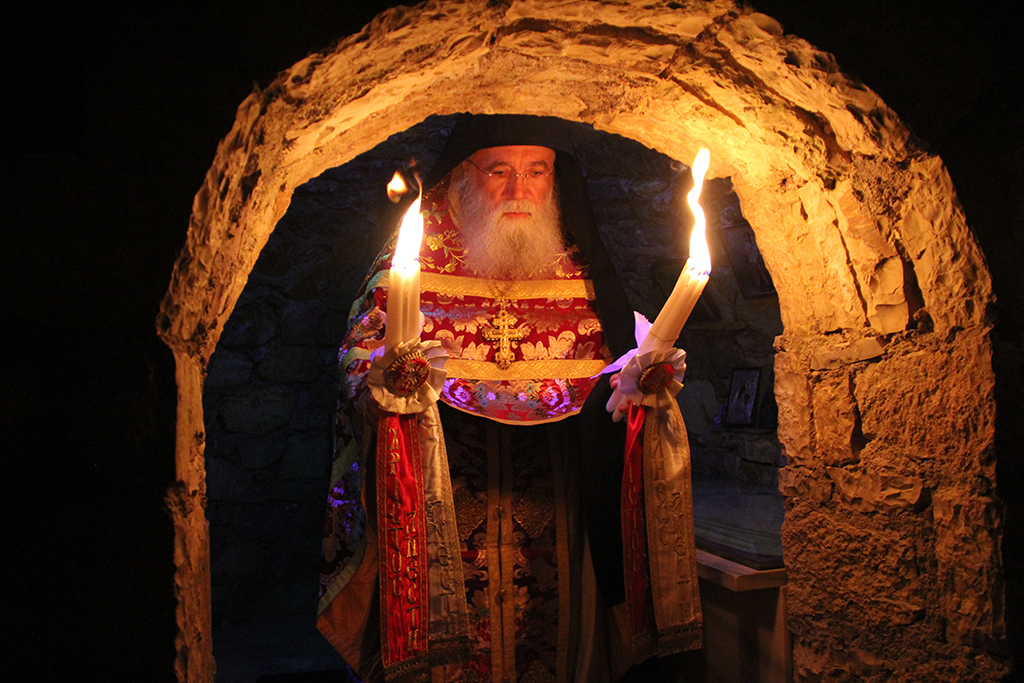
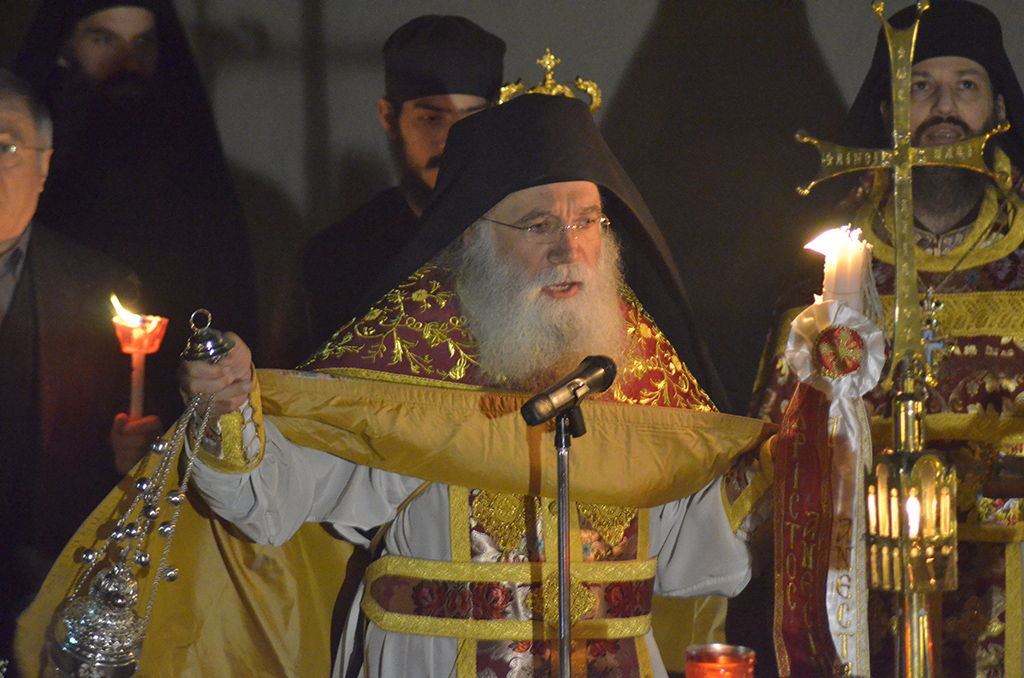
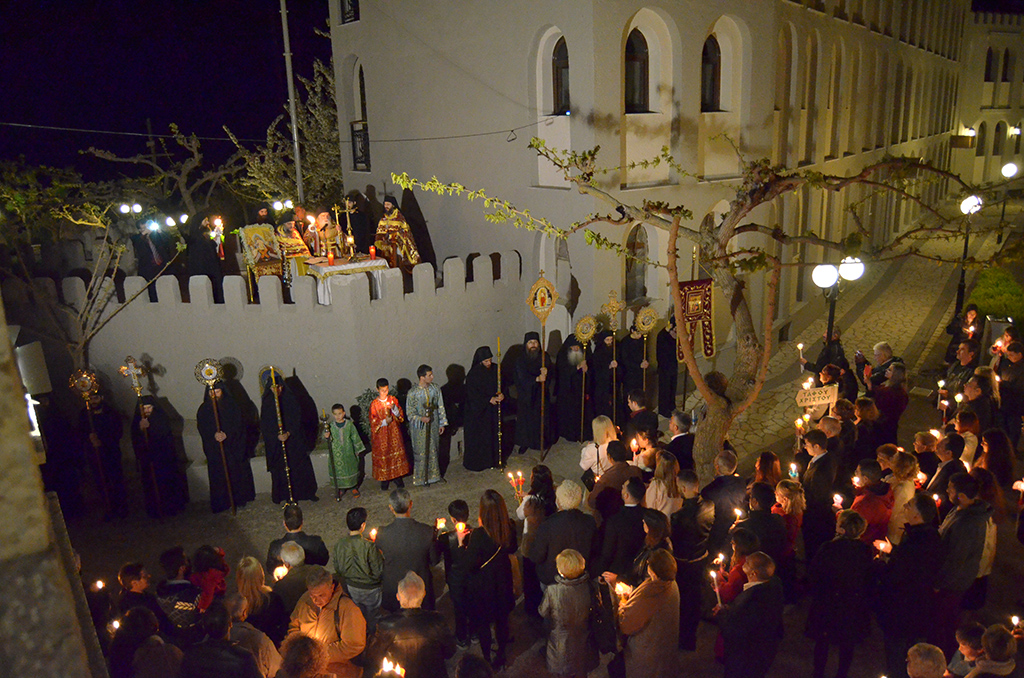
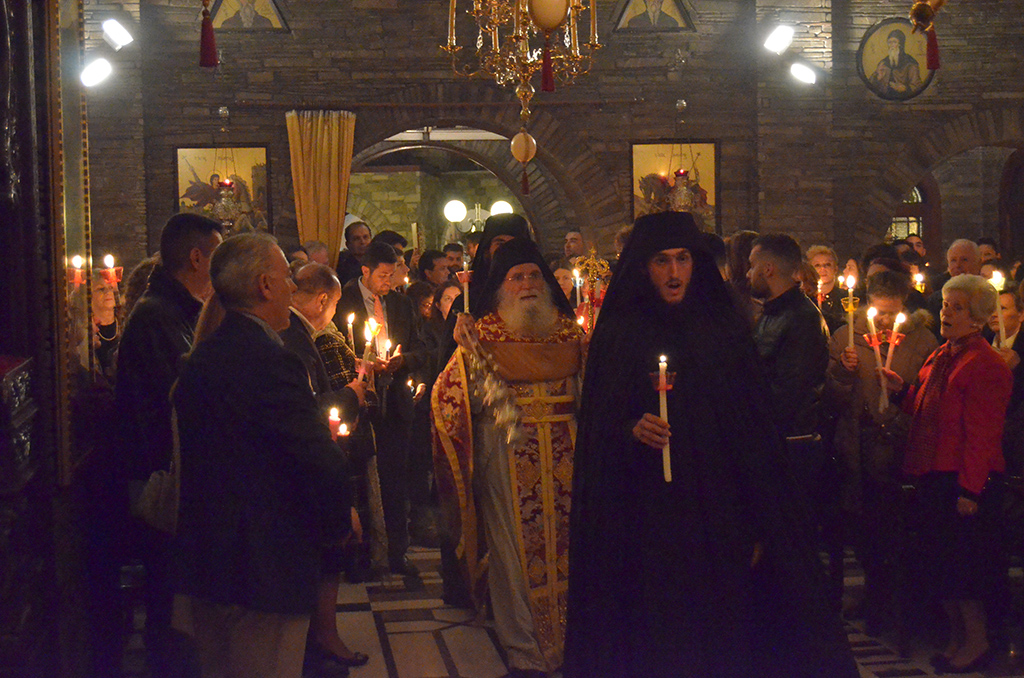
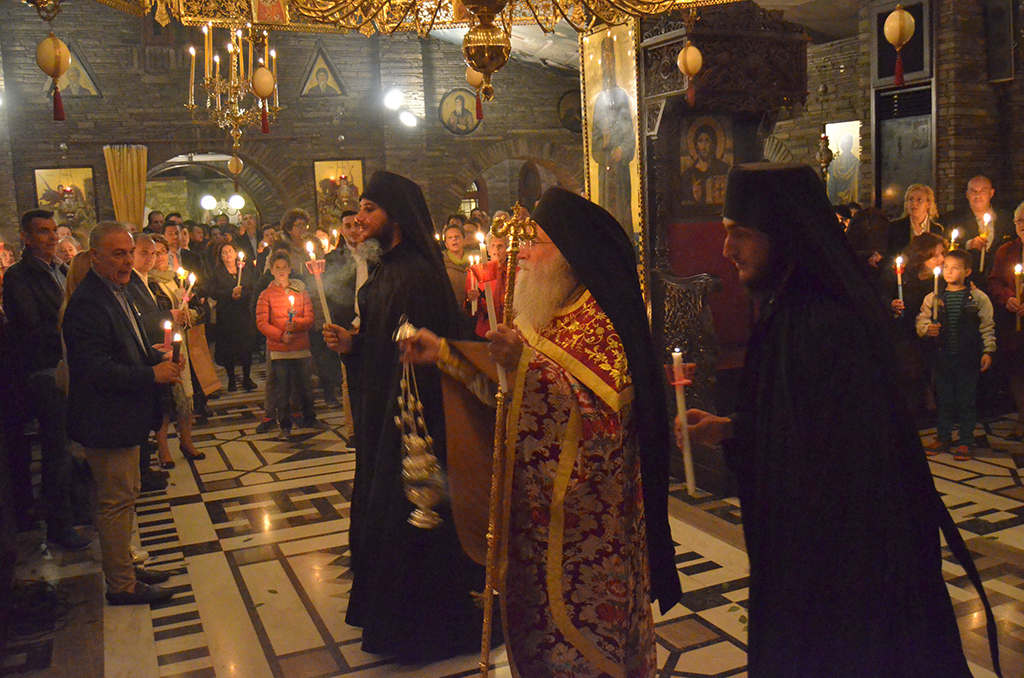
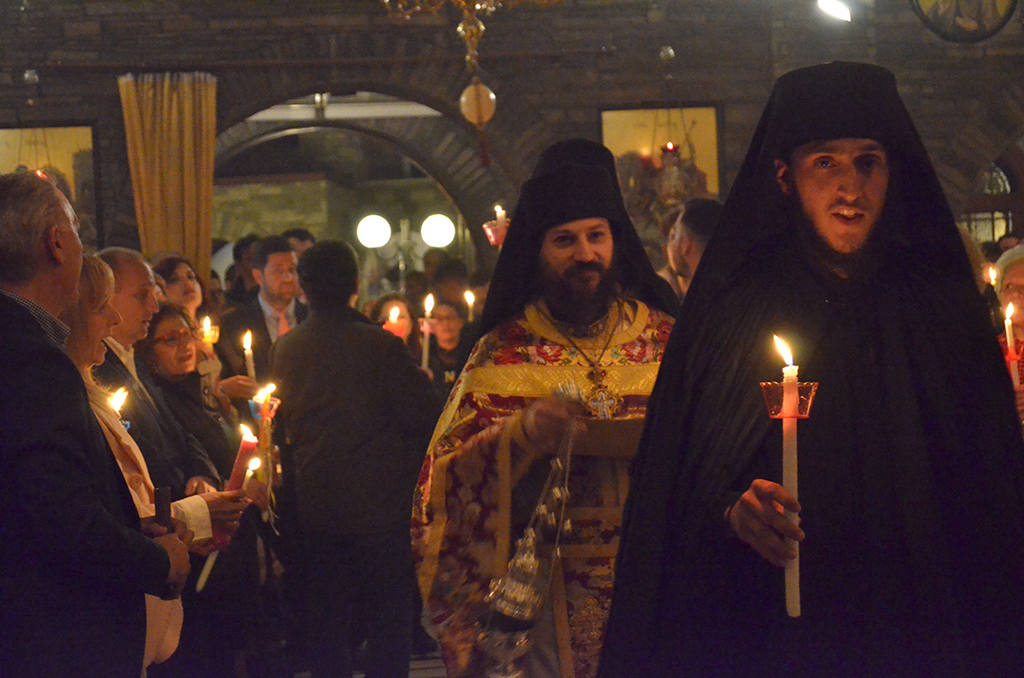
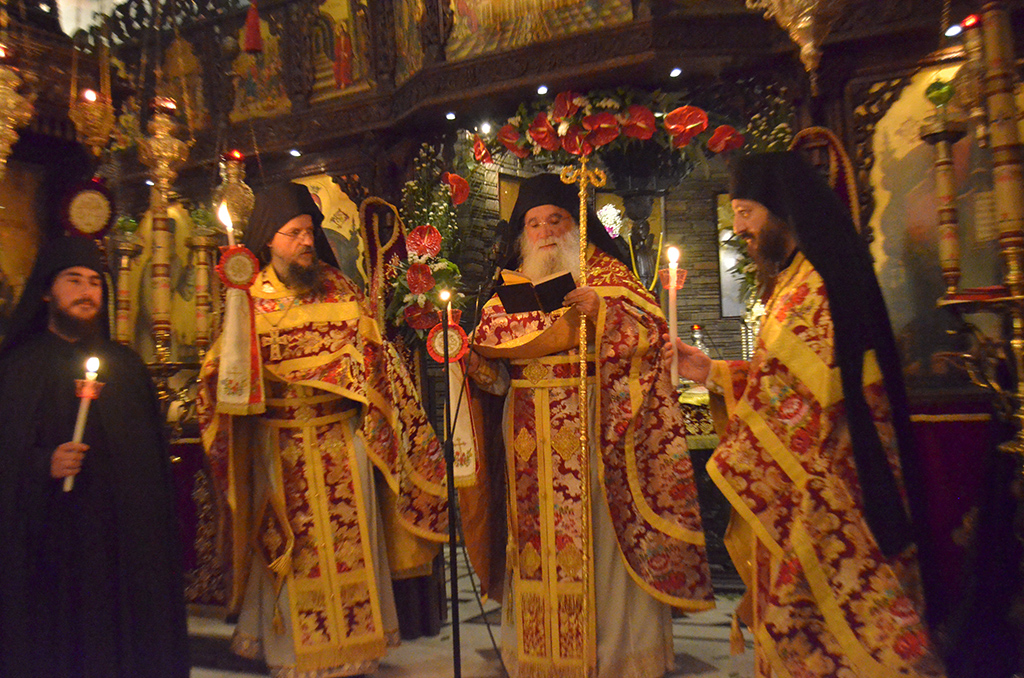
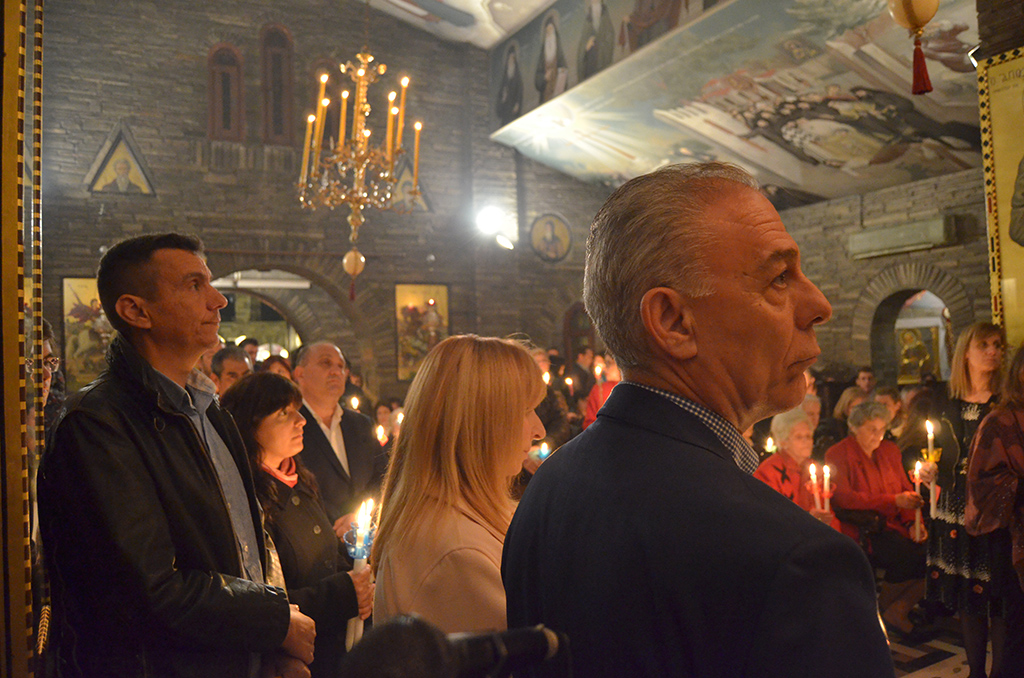
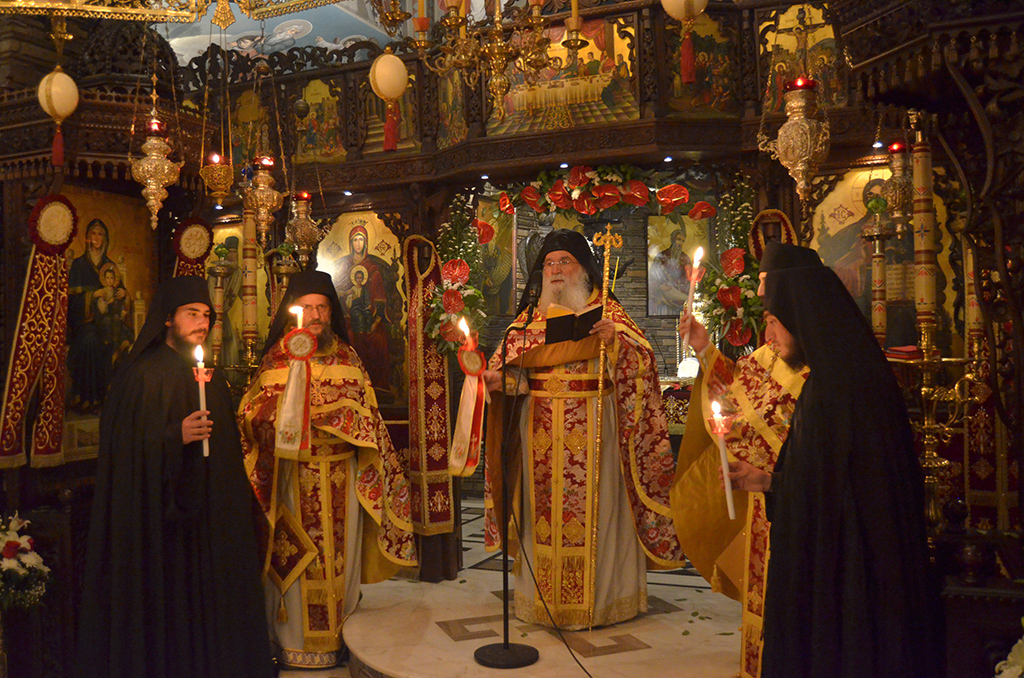
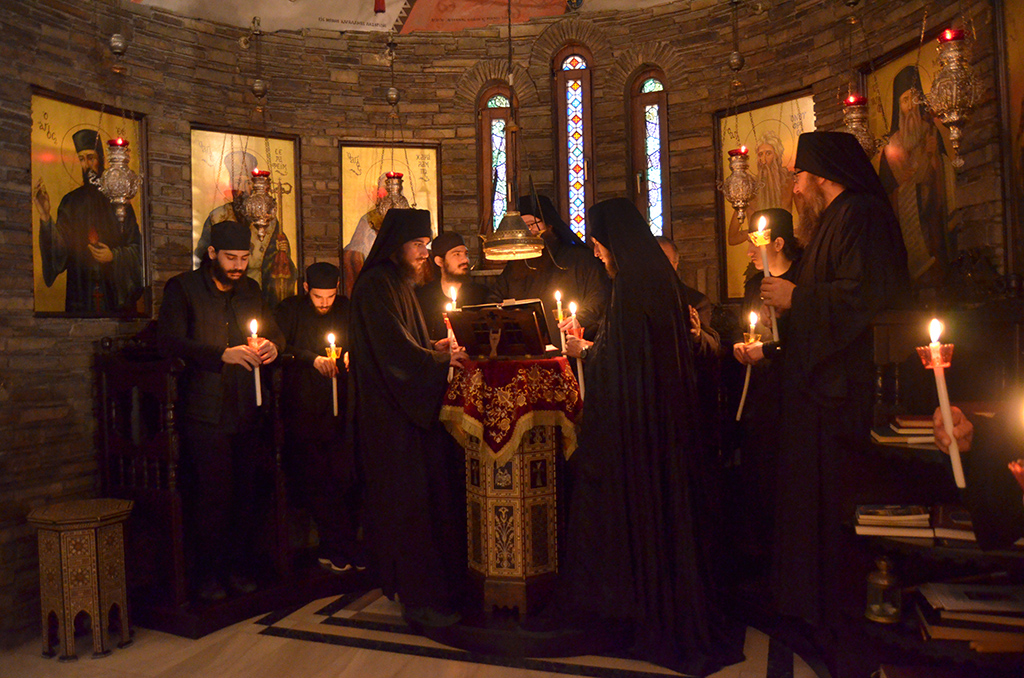
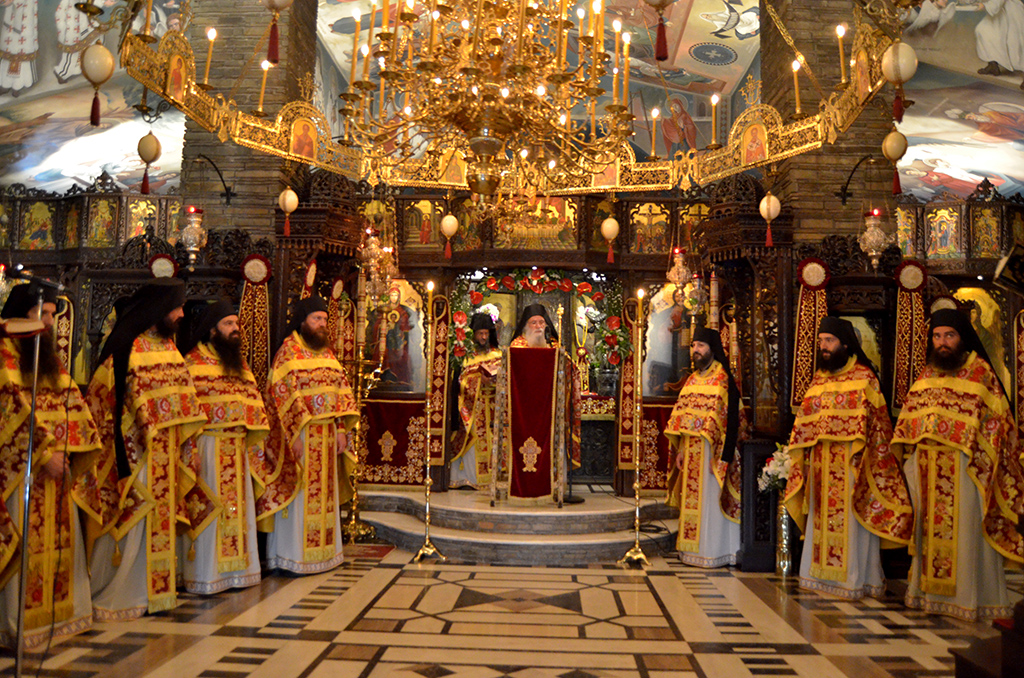
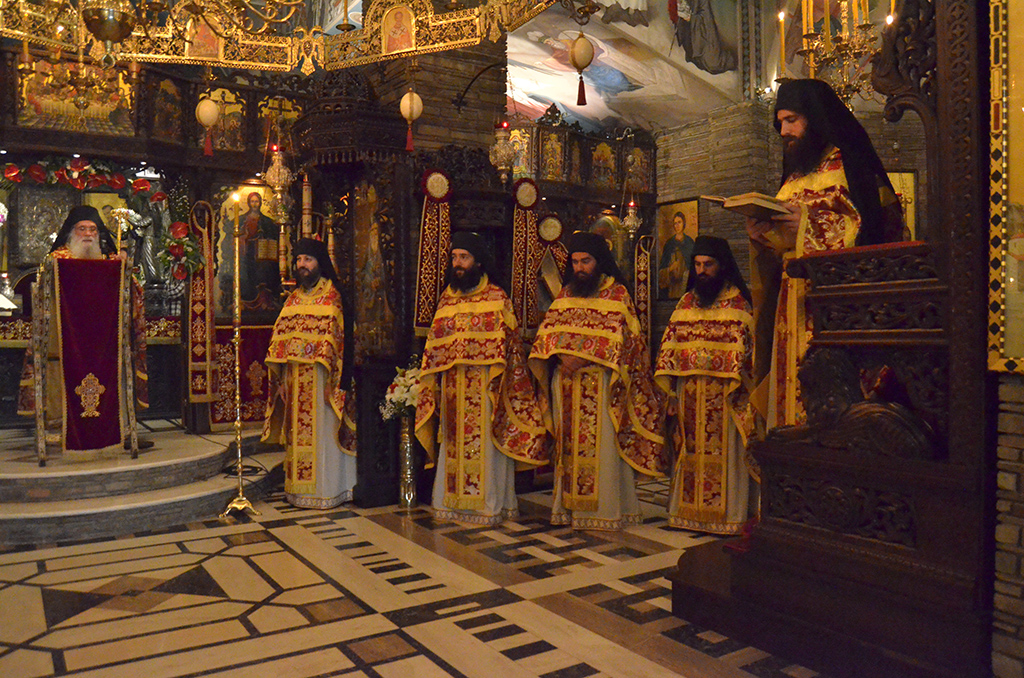
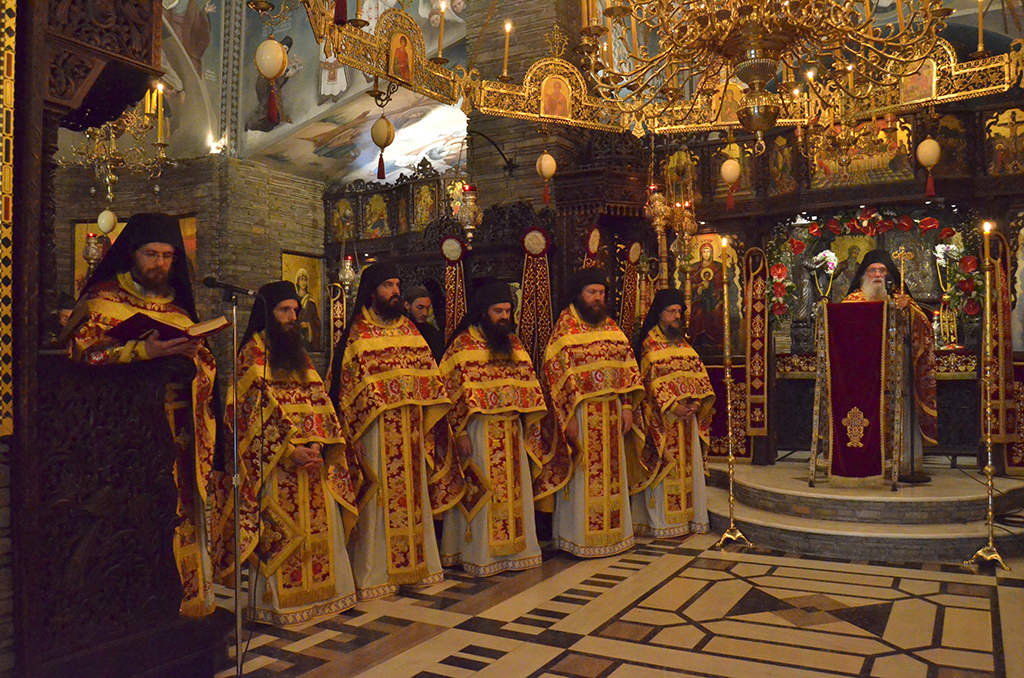
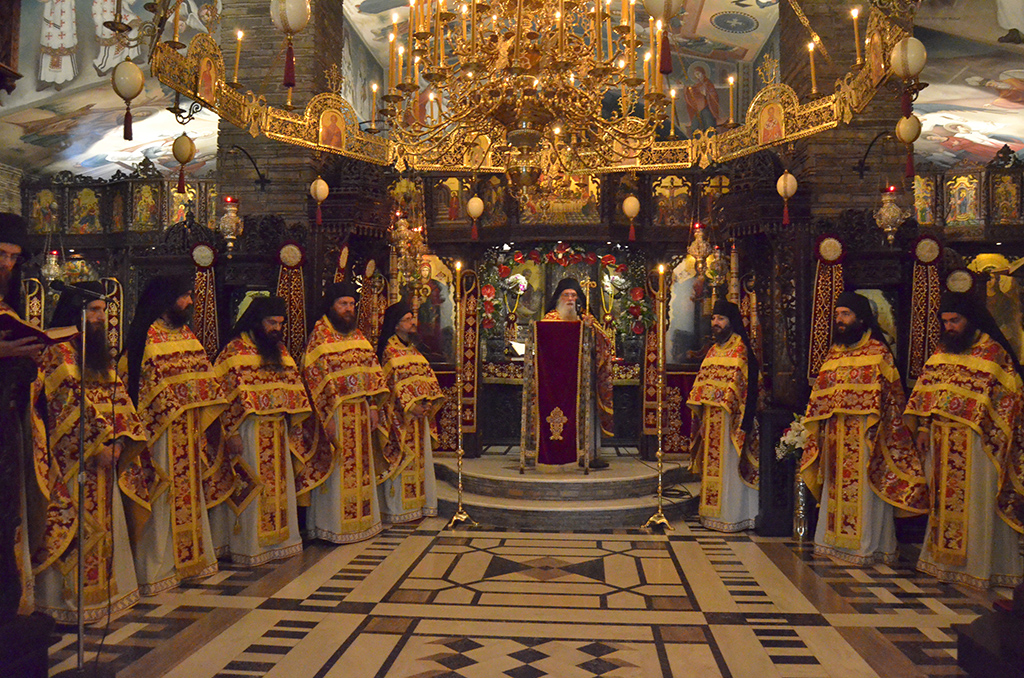
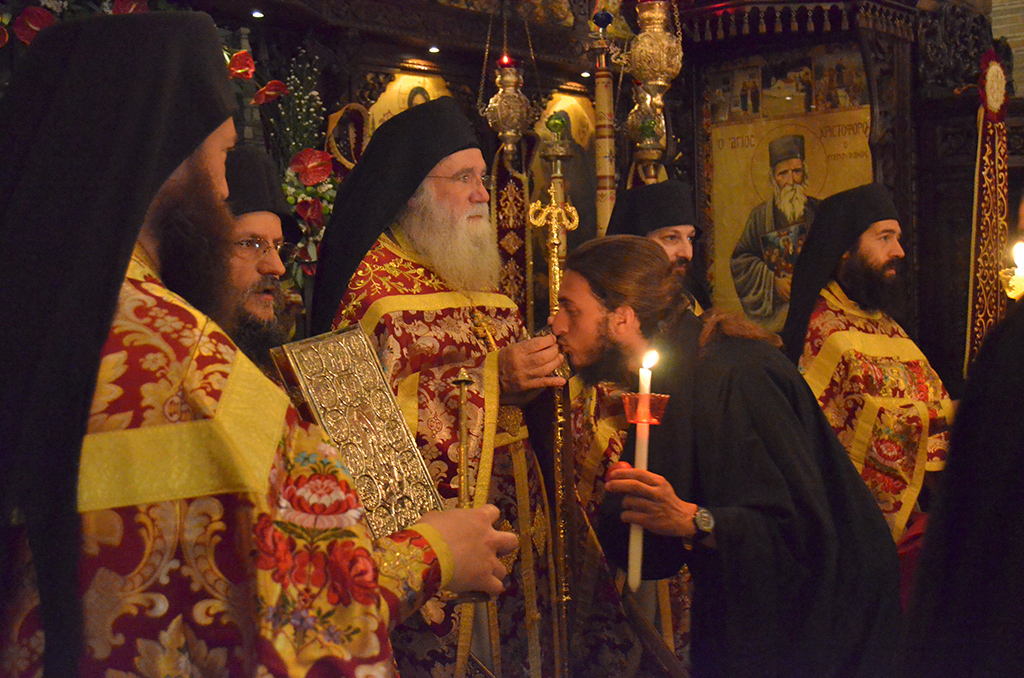
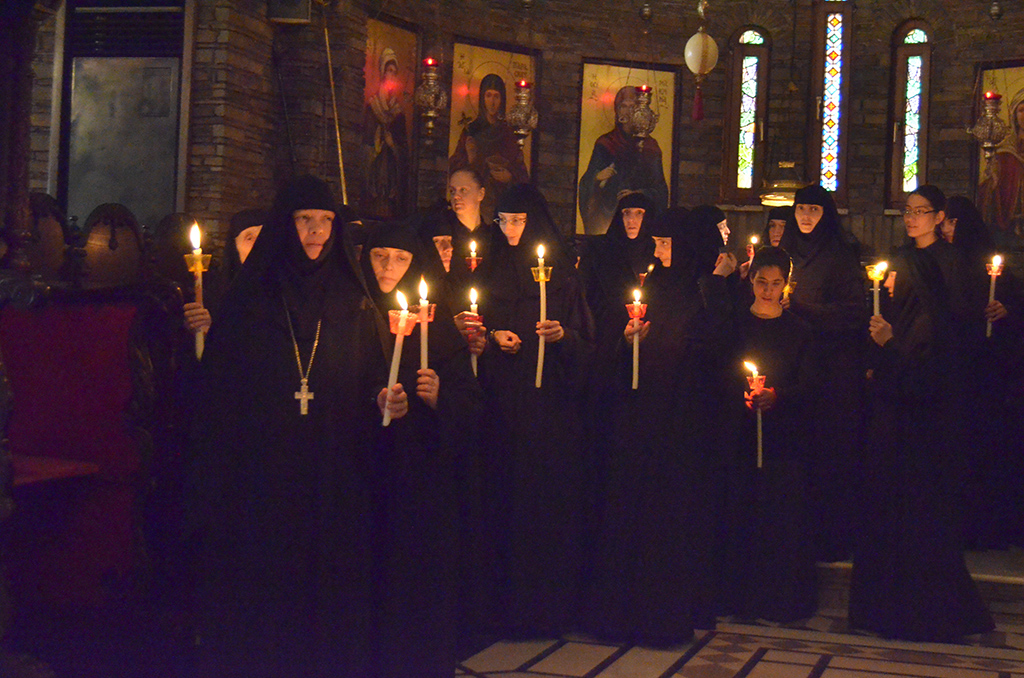
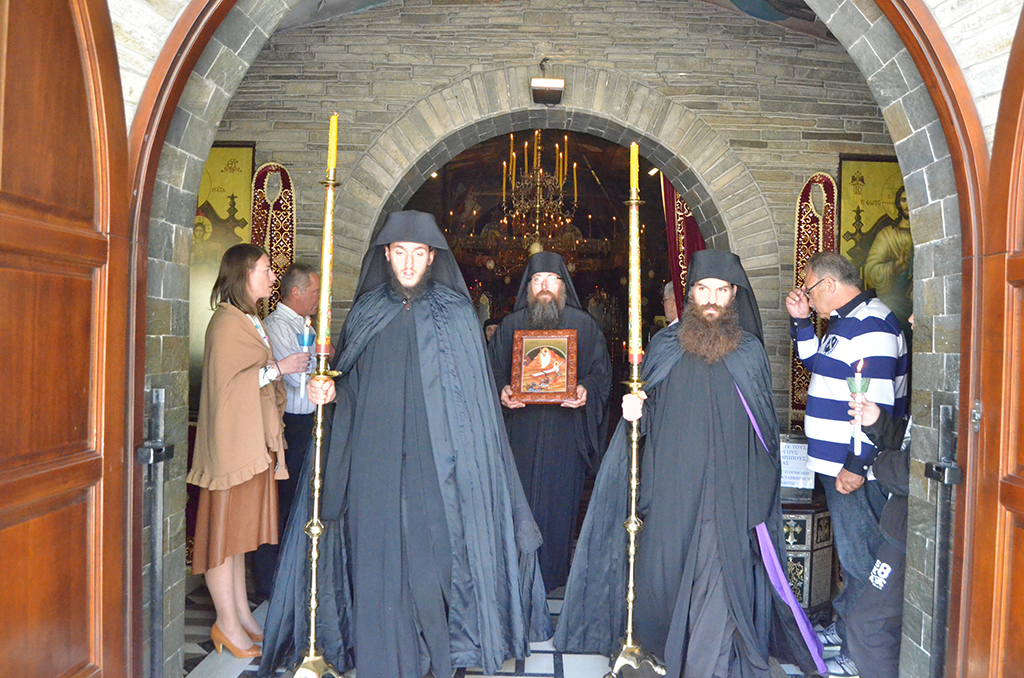
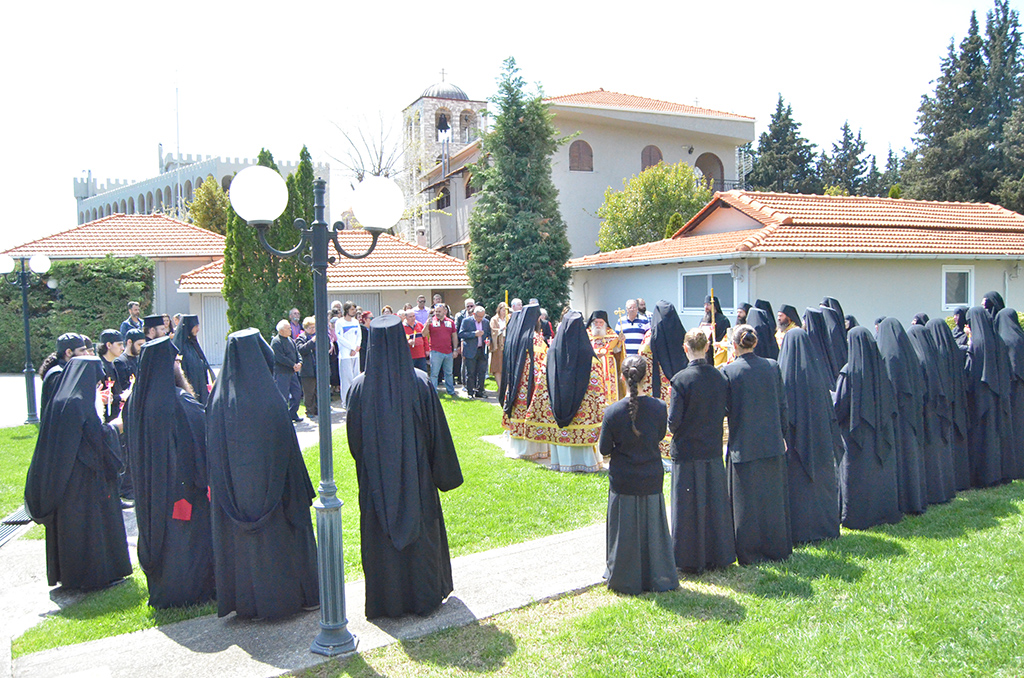
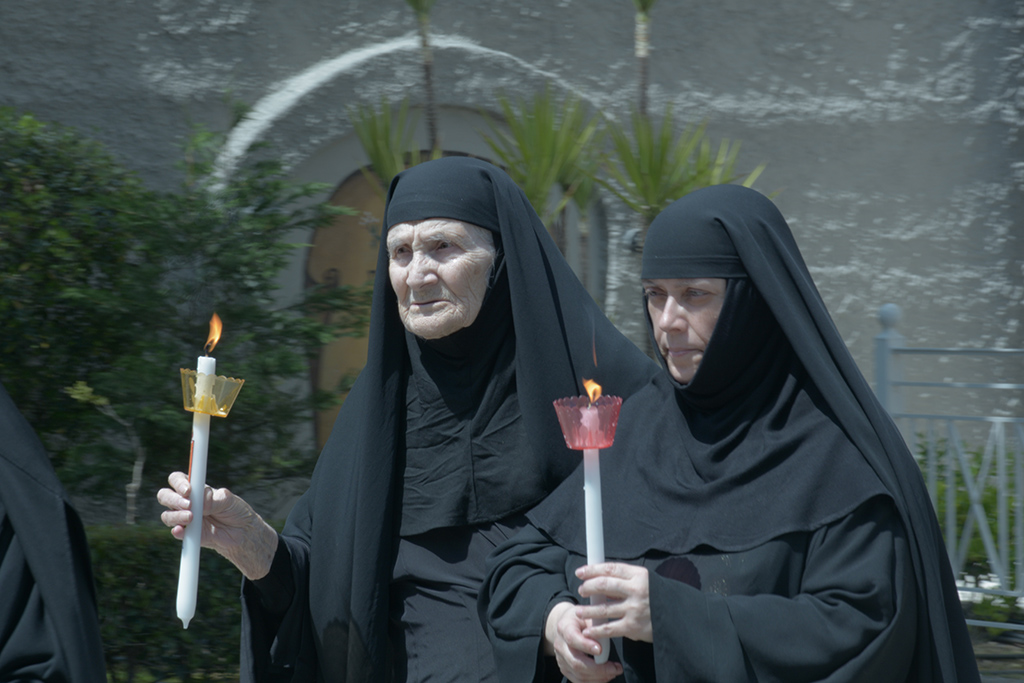
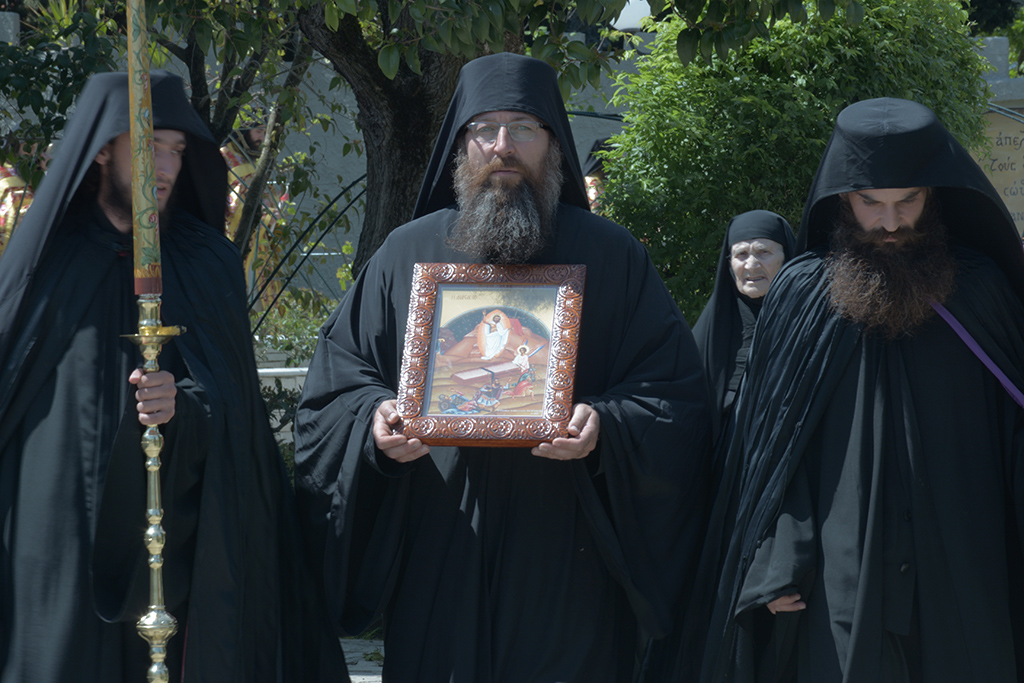
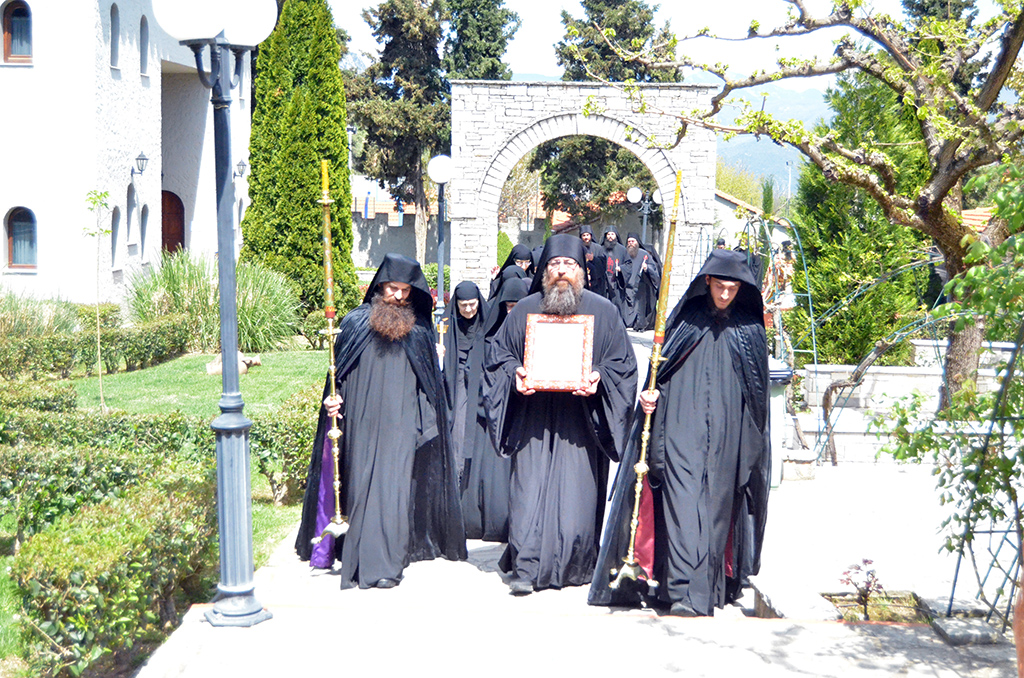
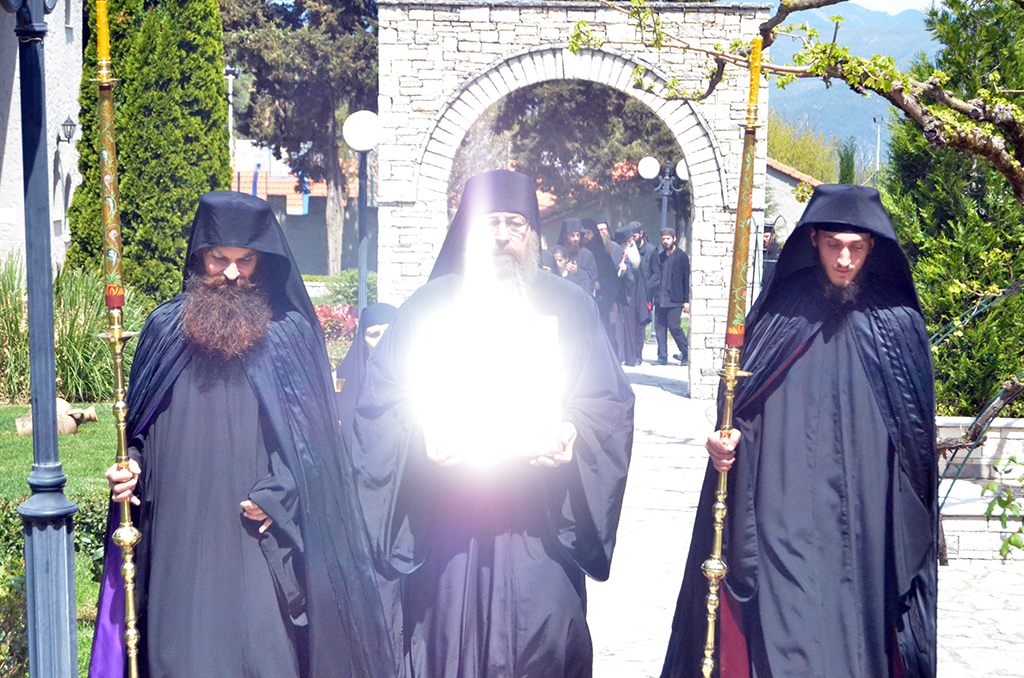
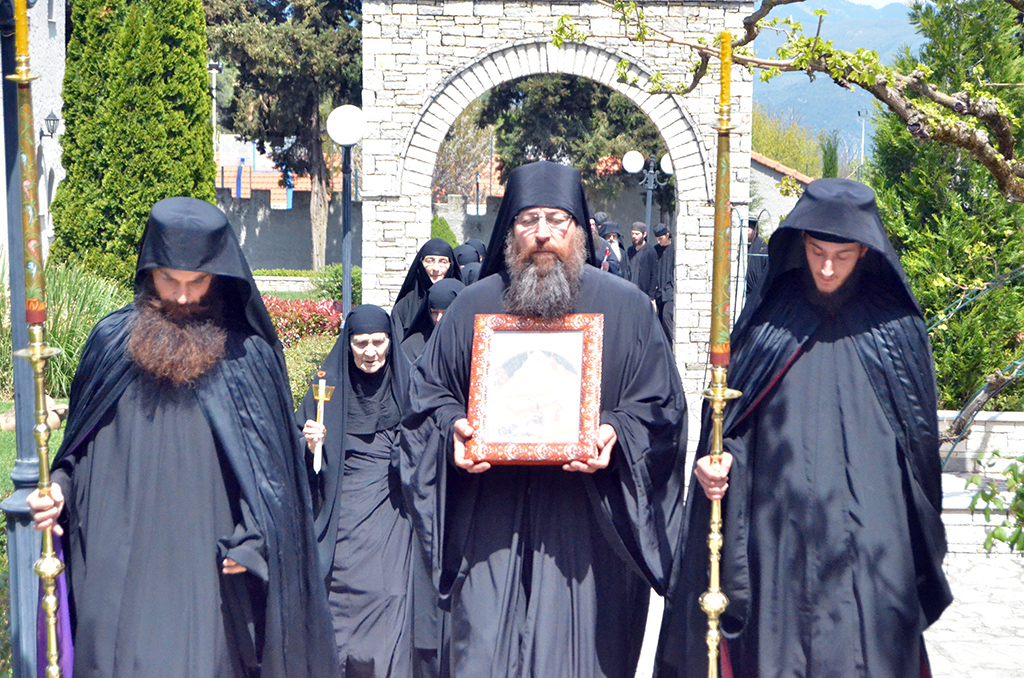
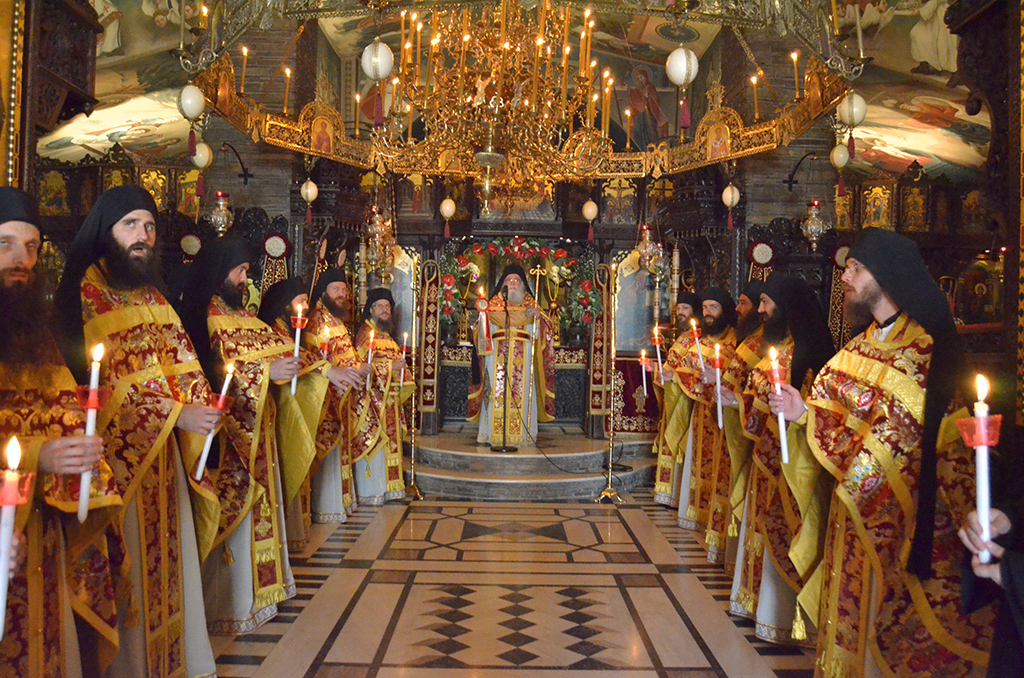
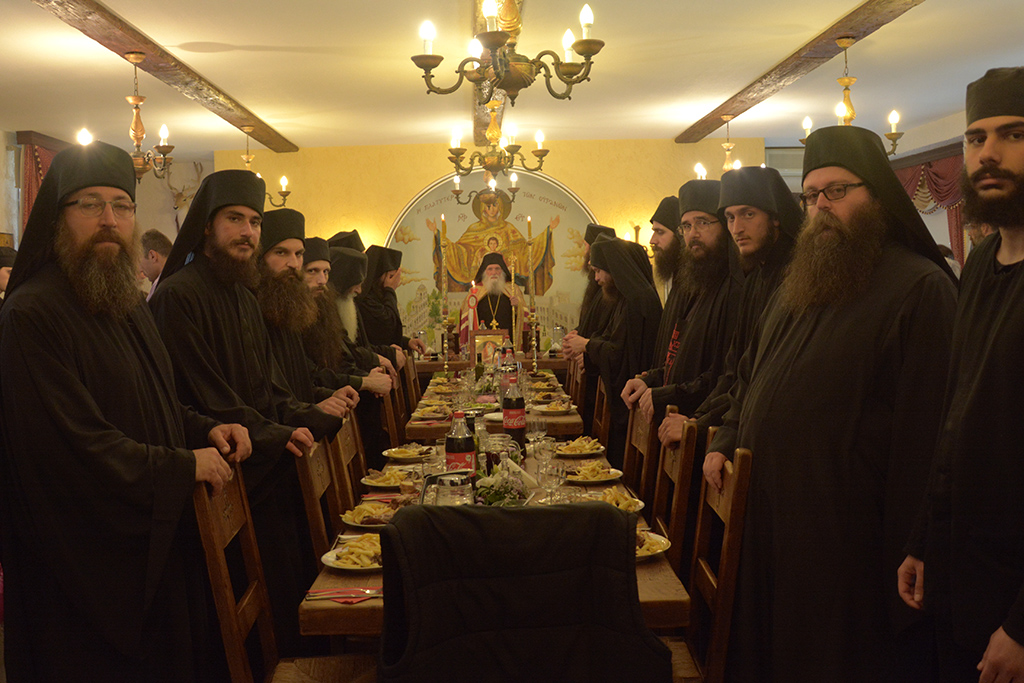
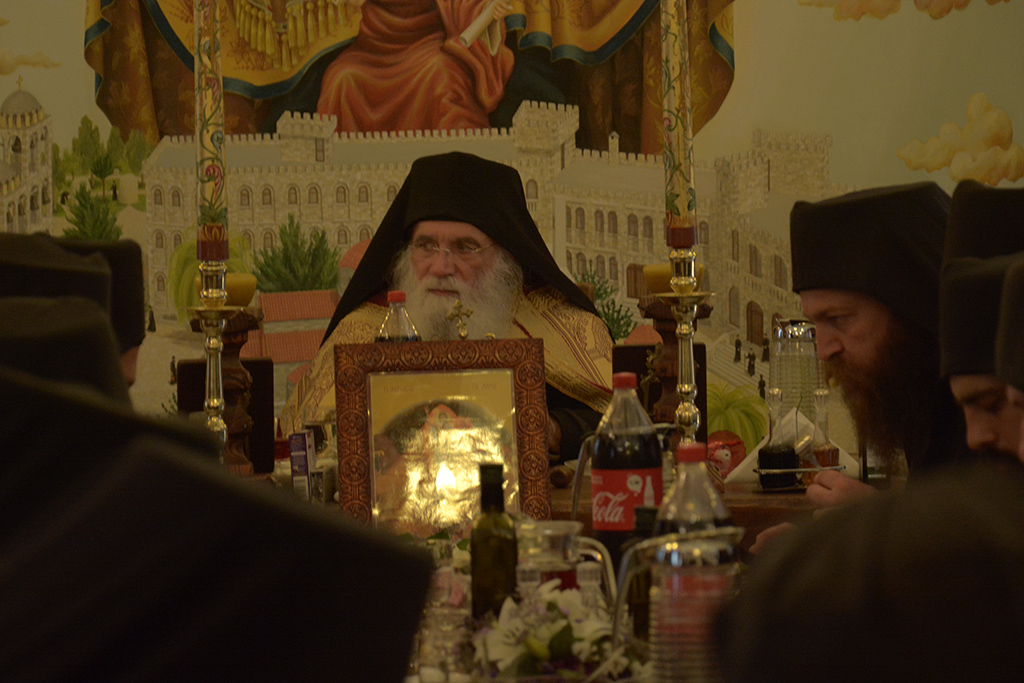
Holy Saturday and Sunday of the Resurrection, Liturgy of the Resurrection (Anastasis), Midnight Paschal meal, and Processions at Sts Augustine and Seraphim Sarov Monastery at Trikorfo, Greece
FORGIVENESS —The Holy Fathers are the children of the grace of the Holy Spirit. The result of this action of grace is when the heart excuses. It loves, it can speak well of someone and pray for him. It does not remember offense or evil.
Therefore it is impossible to forgive and not excuse. This is a psychological fact. The heart is made this way. It was not the brain, not the nervous system—as science attempts to teach, and the psychiatrists especially—but it was the heart that was made this way by God. It is called a Christian heart. It excuses, it does everything possible in order to justify and excuse. Isn’t that so?! That is a Christian quality!
The pagan or the Moslem do not know about this… the action of the grace of the Holy Spirit Try telling a Moslem to justify and excuse, to love his enemy. He will kill you.
You will come to her with anger, scornful words, remembrance of wrongs, and especially with some sort of old accounts which were buried and decomposing and which will be resurrected!
Once I wanted to ask you why you never think to ask me, “What is it that angers you? What makes you so sad? What is it that upsets you so?”
It is always the same thing: an unchristian heart. A wicked heart that is unwilling to forgive. A heart that is at enmity with God because it does not want to forgive, does not intend to forgive, yet bethinks itself to say the Lord’s Prayer … “and forgive us our debts as we forgive our debtors …” while at the same time the heart and mind are at enmity with a man.
I get so upset at this … because external form is not useful to anyone, much less to God.
I think … I’ve always concluded: this means that they still have not gotten the point, that the whole secret, that all the salt of Christianity lies in this: to forgive, to excuse, to justify, not to know, not to remember evil. Not sin, but evil.
If you are quiet and peaceful within yourself, this means that you are absolutely at peace with heaven, and you are ready to endure any nastiness from that person. That person could overtake you, publicly remonstrate you, play dirty tricks on you, slander you, and you will smile. Not laugh, but smile! Because you will be so illuminated by blessed mercy
The drunkard, the fornicator, the proud—he will receive God’s mercy. But he who does not want to forgive, to excuse, to justify consciously, intentionally … that person closes himself to eternal life before God, and even more so in the present life. He is turned away and not heard [by God].
…Firstly, it is asked, what is a Christian heart? An unchristian heart is that which will not and cannot forgive and pardon. Cannot and will not! That is why such a heart is at enmity with God, cannot say the Lord’s Prayer, has no right to say the prayer “It is truly meet” and has no hope of eternal salvation, if it does not justify, pardon and somehow pray for a person, for people that it cannot stand, cannot forgive. We confess that the thief and the fornicator, the publican are saved, right? But the Pharisee was deprived of salvation, who only kept an external form of faith. He praised himself and could not forgive.
Father, can’t you tell us how we can make our hearts forgive?
The matter is that our reproaches, the most direct and perhaps coarse warnings do not work on the heart of such a person. The proud man is unable to forgive. A proud man does not want to forgive and asks, “Why can others not forgive and still pray and receive the Holy Mysteries—why do you insist that / forgive, and only then may I confess and receive Communion?” This is proud self-love and not Christian, when one does not want to and does not intend to forgive or love. How can the Lord God hear such a soul and forgive him anything, if his heart has no intention of forgiving?!
Father, well, people receive Communion anyway. Could it be that they make progress in some other virtues [despite their inability to forgive]?
No, no virtue can atone for the lack of forgiveness, the lack of love that these people have. No podvig [ascetic undertaking], no almsgiving can atone for refusal to forgive. Almsgiving by the fornicator is an abomination before God, for it is given by unclean hands. He gives alms, but at the same time intends to wallow in his beastly sin. His almsgiving cannot justify him if he does not repent and ask for help, that he might renounce his sin and his passion. And the unmerciful man is deprived of even the right to be heard and obtain the right to give alms. That is terrible! “And forgive us our debts, as we forgive our debtors.” That is the only condition for being heard, for salvation. You cannot buy off God with any formalities. The law of God is an absolute law! That is why it is so painful and difficult for us when we meet souls which are not Christian, that is, souls which have no intention, or even the desire, not only ability, to forgive. “And why,” you ask, “can’t you forgive?” “Because I am not loved,” the person says, “therefore I will not love!”
Father, do you allow them to approach the Chalice?
No.
The same thing happened with me and one sister. My heart has not forgiven her.
That is a function of the laws of female jealousy.
No, it’s not.
If that is so, then you need to work on yourself, so that you can excuse that person, and judge yourself before God. It is all so stupid and impudent. The thing is that this is Christianity.
Father, you told me before that you don’t advise me to meet with her.
Right. I don’t advise you to irritate the person or yourself. If you are quiet and peaceful within yourself, this means that you are absolutely at peace with heaven, and you are ready to endure any nastiness from that person. That person could overtake you, publicly remonstrate you, play dirty tricks on you, slander you, and you will smile. Not laugh, but smile! Because you will be so illuminated by blessed mercy, and by such righteousness before God and the Mother of God, that all of these evil scourges will be a pleasure to you.
Well, Father, one needs to be blessed in such cases.
Do you know what?! Orthodox Christianity possesses within itself the Grace of the Holy Spirit. And the meaning of Orthodoxy is in the association with the Holy Spirit, and to carry it within yourself. It can do anything!!! This is precisely the sign of being Orthodox.
But he who flees silence, who does not love silence, will have great difficulty passing through the toll-houses. The demons could seize him for that alone, that he did not love silence and solitude.
We did have some eruptions, but I’ll go to her straightaway.
Yes.
But you said that you don’t advise it.
I don’t advise it because I know her weaknesses and your weaknesses. You will come to her with anger, scornful words, remembrance of wrongs, and especially with some sort of old accounts which were buried and decomposing and which will be resurrected!
And I will be without peace after seeing her?
Accuse yourself, only do not accuse her, and not because she was wrong to you. This is a weak human being, so you take yourself in hand and be demanding only with yourself. This is what Christianity is all about.
In all circumstances being demanding only with yourself ?
Only with yourself. Even executioners can be excused and justified. He was fulfilling his duties—as he was ordered, so he does. I was never offended by them! [Elder Sampson was earlier shot by an executioner but survived.]
This is the lot of the Lord Himself. They crucified the Lord, but he said, “Lord, forgive them!”
Because they don’t know what they are doing. They haven’t the courage to say, “No! I won’t!” That is their only guilt. But the Lord will erase that guilt, because no one ever taught them.
Father, if I go to her, I will also need courage in order to smile at her.
If you come to her in the Lord, with the Jesus prayer in your pocket and the “All-Merciful,” you will sincerely smile. Your little knots* (*Little knots: that is, a prayer rope. Father blessed all of his spiritual children to pray with one, but in their pockets, secretly.) will be in your pocket. Very sincerely. You will say, “How do you feel? How happy I am that you look so well!” It is this Christian love that will be sincere, and not a Jesuitical kind!!
I think about her all the time. I should go to her, but I am afraid.
It is the sin of smallness of soul and the sin of lack of love, sisterly love. Yes, it is lack of love. I bear a terrible anxiety and sorrow, that none of us want to go after all to Κ . Everyone finds some excuse of their own. “It will be unprofitable, inconvenient—to what purpose would I be sacrificing myself!” But… that poor girl, alone between four walls.
Get strongly angry at yourself, take yourself in hand, have pity on yourself. (St. Theophany the Recluse)
But we are also alone!
You are healthy people, you should be glad that you are alone and no one comes to disturb your prayer, and you are allowed to be silent. What great wealth that is—to love and to be silent. More precious than gold! And you run away from this silence! That silence is torture to you. But he who flees silence, who does not love silence, will have great difficulty passing through the toll-houses. The demons could seize him for that alone, that he did not love silence and solitude. Because the soul is helpless when it has left the body…. Imagine for just a moment, that you have left your body, your “box,” right? You are alone. It is well if your Guardian Angel is present. But what if he isn’t? And the demons are tormenting you all around? And that will happen!!!
Father, don’t say such frightful things.
It is because we have not learned Christianity while here on the earth, but have substituted it with ceremony and formalities. To speak truthfully, we do not know how to pity ourselves. If we truly felt sorry for ourselves, we would think about our inevitable death, about the moment, the day of our separation from the body. We do not know how to pity ourselves, because we do not know how to get angry with ourselves and punish ourselves. St. Theophan the Recluse often advised in his letters: “Get strongly angry at yourself, take yourself in hand, have pity on yourself.”
The worst thing is not forgiving and not loving, and to have enmity in your heart. These are the three main reasons. The Lord will forgive the adulterer, the bandit, the thief, the Pharisee. But He will not forgive such a soul.
Well, I am not so cruel as to not forgive.
Take care for yourself. All of our Psalter readings, our Akathists and Canons, the Gospels—it is all empty if it does not make us soft, tender, loving, weeping. All of that reading will only be to our condemnation.
A spirit that is broken and humbled does not know how to have enmity. It forgives to the last, pardons to the last, and judges only itself, always searching endlessly for the guilt within itself. It will forgive and pardon every man, even though he were an executioner or a torturer. I have had many horrible ordeals in my life, but somehow it was all easily forgiven!
Father, did you really forgive it all in a moment?
One need only pray to the Mother of God and the offense is taken away. It is taken away if you only ask the Mother of God. It is enough for your heart to have some kind of direct contact with the Mother of God, and that horror, offense and injury, sorrow and slander will be taken away.
Father, perhaps it is only forgotten, but when you remember it resurfaces?
No! It cannot. If the heart has forgiven and excused, then it will not be remembered. It is remembered only in the attic, the memory, without the heart’s participation. That is why one must discriminate between these two things: the heart and the reason. A memory may be of the heart, or of the brain. If the heart has forgiven, then it will never remember, for it has no memory. The brain, the nervous system may not forget and may remember, but the heart will protest and force the brain to be silent.
Father, I had such an experience. In my heart I was at peace, but my reason remembered nevertheless.
Just as we are here, our hearts did not turn to the Mother of God. When you say the “All Merciful”: “Do not abhor me, do not turn away from me, do not abandon me, do not leave,” a coolness comes, quietude, and every situation in which you ask for help is forgiven. The same dark, rotten, wicked, dirty person who comes into association with Her momentarily has a change of heart, and the heart becomes soft and compunctionate. The broken and humbled spirit comes, which is the only sign of Christianity—there must be a broken and humbled spirit. Other than this there is no indication. Not the keeping of fasts, not going to church, not reading Akathists and Canons—no! But a spirit that is broken and humbled cannot not forgive—it cannot! This is a state of the heart, a Godly heart…
Father, the folk saying goes that time heals.
No! That is human wisdom, absolutely. The sharpness of the pain of heart or the impression on the nervous system may smooth out. But in this regard we are speaking in terms of the external circumstances, and not the spiritual or moral state.
The inner state?
Yes, the moral, the spiritual. That is, if the heart cannot forgive or excuse and after three year’s time remembers it just as distinctly.
No, Father, I can’t express my situation that way. This is how it was for me: when I remembered it, I frit bad. I could not even think of her, I felt sick. But now I don’t have the same reaction.
That is, your heart during that time strove to excuse and forgive her. Do you understand? It all depends on the heart. Otherwise it is not possible. After all, it is not the brain that receives the Grace of the Holy Spirit, but the heart. Saint Seraphim of Sarov always talked much about this to everyone.
What can an angry person do?
He must pray and pray for healing. For the sake of his faith, for the sake of his insistence the Lord will change his heart. Secondly, any manifestation of evil must always be redeemed through almsgiving. The alms must be something of your own, something you need, and not something that is lying around unused.
St. Silouan’s the Athonite poetry-prayer, Byzantine iconography, and Arvo Pärt’s lyrical musical/ choral setting of the text faithful to its every nuance.(*)
Lenten Reflections (III)
Adam, father of all mankind, in paradise knew the sweetness of the love of God; and so when for his sin he was driven forth from the garden of Eden, and was widowed of the love of God, he suffered grievously and lamented with a great moan. And the whole desert rang with his lamentations, for his soul was racked as he thought, ‘I have distressed my beloved God’. He sorrowed less after paradise and the beauty thereof; for he sorrowed that he was bereft of the love of God, which insatiably, at every instant, draws the soul to Him.
In the same way the soul which has known God through the Holy Spirit, but has afterwards lost grace experiences the torment that Adam suffered. There is an aching and a deep regret in the soul that has grieved the beloved Lord.
Adam pined on earth, and wept bitterly, and the earth was not pleasing to him. He was heartsick for God, and this was his cry:
My soul wearies for the Lord, and I seek Him in tears.
How should I not seek Him?
When I was with Him my soul was glad and at rest, and the enemy could not come nigh me;
But now the spirit of evil has gained power over me, harassing and oppressing my soul,
So that I weary for the Lord even unto death, And my spirit strains to God,
and there is naught on earth can make me glad, Nor can my soul take comfort in any thing,
but longs once more to see the Lord, that her hunger may be appeased.
I cannot forget Him for a single moment, and my soul languishes after Him,
and from the multitude of my afflictions I lift up my voice and cry: ‘Have mercy upon me, O God. Have mercy on Thy fallen creature.’
Thus did Adam lament, and the tears steamed down his face on to his beard, on to the ground beneath his feet, and the whole desert heard the sound of his moaning. The beasts and the birds were hushed in grief; while Adam wept because peace and love were lost to all men on account of his sin.
Adam knew great grief when he was banished from paradise, but when he saw his son Abel slain by Cain his brother, Adam’s grief was even heavier. His soul was heavy, and he lamented and thought:
Peoples and nations will descend from me, and multiply, and suffering will be their lot, and they will live in enmity and seek to slay one another.
And his sorrow stretched wide as the sea, and only the soul that has come to know the Lord and the magnitude of His love for us can understand.
I, too, have lost grace and call with Adam:
Be merciful unto me, O Lord! Bestow on me the spirit of humility and love.
O love of the Lord! He who has known Thee seeks Thee, tireless, day and night, crying with a loud voice: “I pine for Thee, O Lord, and seek Thee in tears.
How should I not seek Thee?
Thou didst give me to know Thee by the Holy Spirit,
And in her knowing of God my soul is drawn to seek Thee in tears.” Adam wept:
The desert cannot pleasure me; nor the high mountains, nor meadow nor forest, nor the singing of birds. I have no pleasure in any thing.
My soul sorrows with a great sorrow: I have grieved God.
And were the Lord to set me down in paradise again,
There, too, would I sorrow and weep – ‘O why did I grieve my beloved God?’
The soul of Adam fell sick when he was exiled from paradise, and many were the tears he shed in his distress. Likewise every soul that has known the Lord yearns for Him, and cries:
Where art Thou, O Lord? Where art Thou, my Light? Why hast Thou hidden Thy face from me?
Long is it since my soul beheld Thee,
And she wearies after Thee and seeks Thee in tears. Where is my Lord?
Why is it that my soul sees Him not? What hinders Him from dwelling in me?
This hinders Him: Christ-like humility and love for my enemies art not in me. God is love insaturable, love impossible to describe.
Adam walked the earth, weeping from his heart’s manifold ills, while the thoughts of his mind were on God; and when his body grew faint, and he could no longer shed tears, still his spirit burned with longing for God, for he could not forget paradise and the beauty thereof; but even more was it the power of His love which caused the soul of Adam to reach out towards God.
I write of thee, O Adam: But thou art witness,
my feeble understanding cannot fathom thy longing after God,
Nor how thou didst carry the burden of repentance.
O Adam, thou dost see how I, thy child, suffer here on earth. Small is the fire within me, and the flame of my love flickers low. O Adam, sing unto us the song of the Lord,
That my soul may rejoice in the Lord And be moved to praise and glorify Him
as the Cherubim and Seraphim praise Him in the heavens And all the hosts of heavenly angels
sing to Him the thrice-holy hymn.
O Adam, our father, sing unto us the Lord’s song, That the whole earth may hear
And all thy sons may lift their minds to God
and delight in the strains of the heavenly anthem, And forget their sorrows on earth.
The Holy Spirit is love and sweetness for the soul, mind and body. And those who have come to know God by the Holy Spirit stretch upward day and night, insatiable, to the living God, for the love of God is very sweet. But when the soul loses grace her tears flow as she seeks the Holy Spirit anew.
But the man who has not known God through the Holy Spirit cannot seek Him with tears, and his soul is ever harrowed by the passions; his mind is on earthly things. Contemplation is not for him, and he cannot come to know Jesus Christ. Jesus Christ is made known through the Holy Spirit.
Adam knew God in paradise, and after his fall sought Him in tears.
O Adam, our father, tell us, thy sons, of the Lord. Thy soul didst know God on earth,
Knew paradise too, and the sweetness and gladness thereof,
And now thou livest in heaven and dost behold the glory of the Lord. Tell of how our Lord is glorified for His sufferings.
Speak to us of the songs that are sung in heaven, how sweet they are, For they are sung in the Holy Spirit.
Tell us of the glory of the Lord,
of His great mercy and how He loveth His creature. Tell us of the Most Holy Mother of God,
how she is magnified in the heavens, And the hymns that call her blessed.
Tell us how the Saints rejoice there, radiant with grace. Tell us how they love the Lord,
and in what humility they stand before God.
O Adam, comfort and cheer our troubled souls. Speak to us of the things thou dost behold in heaven. Why art thou silent?
Lo, the whole earth is in travail.
Art thou so filled with the love of God that thou canst not think of us? Or thou beholdest the Mother of God in glory,
and canst not tear thyself from the sight,
And wouldst not bestow a word of tenderness on us who sorrow, That we might forget the affliction there on earth?
O Adam, our father,
thou dost see the wretchedness of thy sons on earth.
Why then art thou silent?
And Adam speaks:
My children, leave me in peace.
I cannot wrench myself from the love of God to speak with you.
My soul is wounded with love of the Lord and rejoices in His beauty. How should I remember the earth?
Those who live before the Face of the Most High cannot think on earthly things.
O Adam, our father, thou hast forsaken us, thine orphans, though misery is our portion here on earth.
Tell us what we may do to be pleasing to God?
Look upon thy children scattered over the face of the earth, our minds scattered too.
Many have forgotten God.
They live in darkness and journey to the abysses of hell.
Trouble me not. I see the Mother of God in glory – How can I tear myself away to speak with you?
I see the holy Prophets and Apostles,
and all they are in the likeness of our Lord Jesus Christ, Son of God. I walk in the gardens of paradise,
and everywhere behold the glory of the Lord.
For the Lord is in me and hath made me like unto Himself.
O Adam, yet we are they children!
Tell us in our tribulation how we may inherit paradise, That we too, like thee, may behold the glory of the Lord. Our souls long for the Lord,
while thou dost live in heaven and rejoice in the glory of the Lord. We beseech thee – comfort us.
‘Adam’s Lament’ (2009) by Arvo Pärt
Why cry ye out to me, my children?
The Lord loveth you and hath given you commandments.
Be faithful to them, love one another, and ye shall find rest in God. Let not an hour pass without ye repent of your transgressions, That ye may be ready to meet the Lord.
The Lord said: ‘I love them that love me, and glorify them that glorify me.’
O Adam, pray for us, thy children.
Our souls are sad from many sorrows.
O Adam, our father, thou dwellest in heaven and dost behold the Lord seated in glory On the right hand of God the Father.
Thou dost see the Cherubim and Seraphim and all the Saints And thou dost hear celestial songs
whose sweetness maketh thy soul forgetful of the earth.
But we here on earth are sad, and e weary greatly after God. There is little fire within us with which to love the Lord ardently. Inspire us, what must we do to gain paradise?
Adam makes answer:
Leave me in peace, my children, for from sweetness of the love of God I cannot think about the earth.
O Adam, our souls are weary, and we are heavy-laden with sorrow. Speak a word of comfort to us.
Sing to us from the songs thou hearest in heaven,
That the whole earth may hear and men forget their afflictions. O Adam, we are very sad.
Leave me in peace.
The time of my tribulation is past.
From the beauty of paradise and the sweetness of the Holy Spirit I can no longer be mindful of the earth.
But this I tell you:
The Lord loveth you, and do you live in love and be obedient to those in authority over you.
Humble your hearts, and the Spirit of God will live in you. He cometh softly into the soul and giveth her peace,
And bearth wordless witness to salvation. Sing to God in love and lowliness of Spirit, for the Lord rejoiceth therein.
O Adam, our father, what are we to do? We sing but love and humility are not in us.
Repent before the Lord, and entreat of Him. He loveth man and will give all things.
I too repented deeply and sorrowed much that I had grieved God,
And that peace and love were lost on earth because of my sin. My tears ran down my face.
My breast was wet with my tears, and the earth under my feet; And the desert heard the sound of my moaning.
You cannot apprehend my sorrow,
nor how I lamented for God and for paradise. In paradise was I joyful and glad:
the Spirit of God rejoiced me, and suffering was a strange to me.
But when I was driven forth from paradise cold and hunger began to torment me;
The beasts and the birds that were gentle and had loved me turned into wild things
And were afraid and ran from me. Evil thoughts goaded me.
The sun and the wind scorched me. The rain fell on me.
I was plagued by sickness and all the afflictions of the earth. But I endured all things, trusting steadfastly in God.
Do ye, then, bear the travail of repentance.
Greet tribulation. Wear down your bodies. Humble yourselves And love your enemies,
That the Holy Spirit may take up His abode in you,
And then shall ye know and attain the kingdom of heaven. But come not night me:
Now from love of God
have I forgotten the earth and all that therein is. Forgotten even is the paradise I lost,
for I behold the glory of the Lord And the glory of the Saints
whom the light of God’s countenance maketh radiant as the Lord Himself.
O Adam, sing unto us a heavenly song,
That the whole earth may hearken
and delight in the peace of love towards God. We would hear those songs:
Sweet are they for they are sung in the Holy Spirit.
Adam lost the earthly paradise and sought it weeping. But the Lord through His love on the Cross gave Adam another paradise, fairer than the old – a paradise in heave where shines the Light of the Holy Trinity.
What shall we render unto the Lord for His love to us?
Source: St. Silouan the Athonite, by Archimandrite Sophrony.
(*) In an interview in Toronto in the 1980’s, Pärt shared his personal definition of minimalism as the process by which his music is reduced to the number One. In his view, that One is the Divine Creator. In Adam’s Lament (2009) he sees the Biblical Adam as a unifying symbol. Pärt said, “Our ancestor Adam foresaw the human tragedy that was to come and experienced it as his own guilty responsibility, the result of his sinful act. He suffered all the cataclysms of humanity into the depths of depression, inconsolable in his agony.” Adam’s Lament is based on a Russian text by the ascetic monk and poet, St. Silouan of Athos (1866–1938). Pärt’s fascination with Silouan is such that his setting of this text is faithful to its every nuance. The music reflects a range of devotional writing that’s by turns dramatic, passionate, humble and submissive.
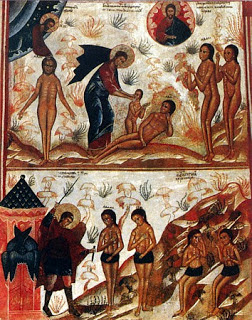
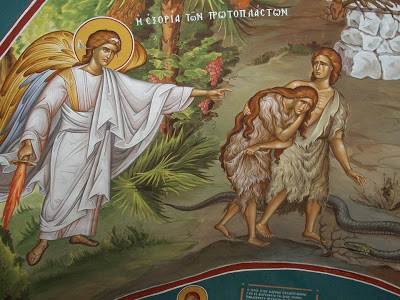
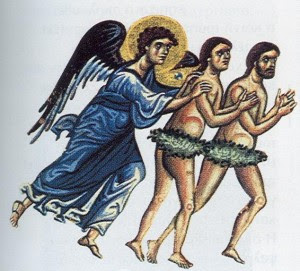
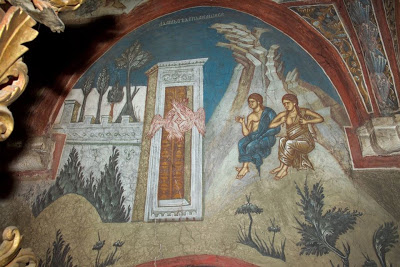
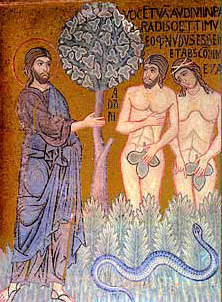
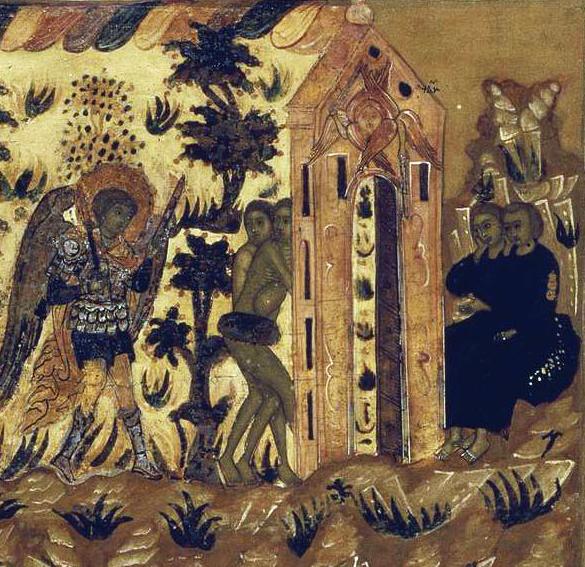
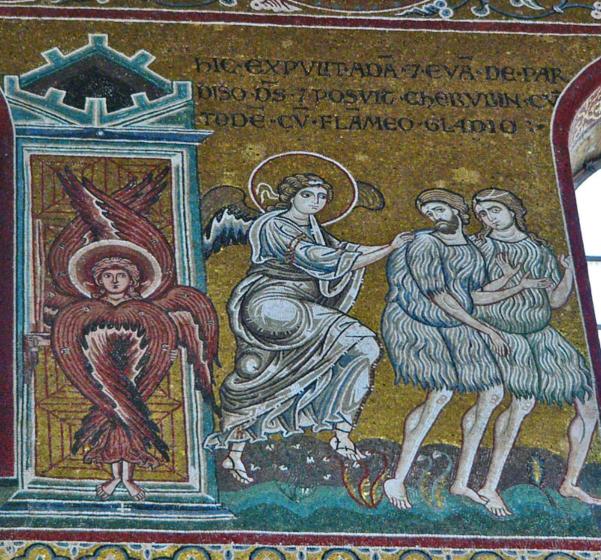
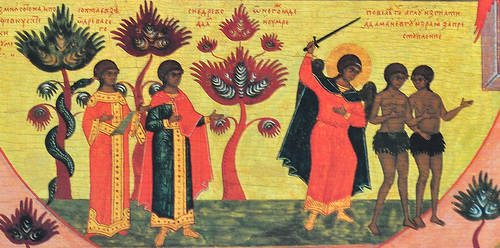
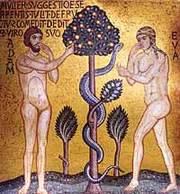
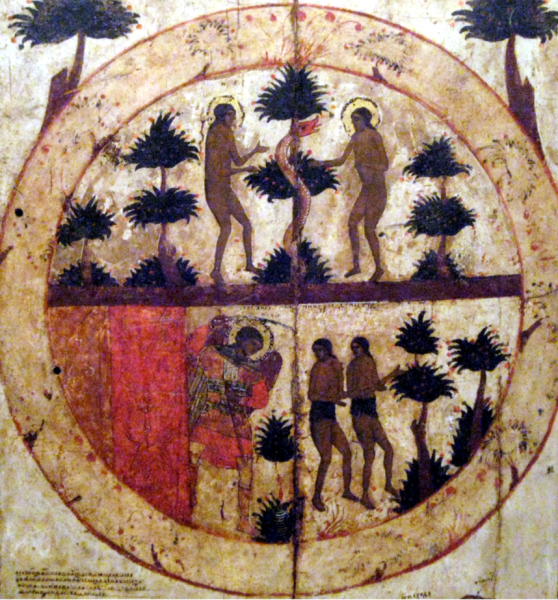
A composition of Icons and portions of Saturday vespers and the Sunday hymns on the theme of Forgiveness Sunday: The Expulsion of Adam and Eve from Paradise
From Saturday Vespers:
The Lord, my Creator, took me as dust from the earth, and with the breath of life He gave me a soul and made me a living creature.
He honoured me as ruler on earth over all things visible and as a companion of the Angels.
But Satan the deceiver, using the serpent as his instrument, enticed me by food, separated me from the glory of God and gave me over to the earth and to the lowest depths of death. But as Master and compassionate, call me back again.
+++
Wretch that I am, I have cast off the robe woven by God, disobeying Your divine command, Lord, at the counsel of the enemy, and I am clothed now in fig leaves and in garments of skin.
I am condemned to eat the bread of toil in the sweat of my brow, and the earth has been cursed so that it bears thorns and thistles for me.
But, Lord, who in the last times were made flesh of a Virgin, call me back and bring me into Paradise again.
+++
From Sunday of Forgiveness service:
Adam sat opposite Paradise and, lamenting his nakedness, he wept: ‘Woe is me ! By evil deceit was I persuaded and robbed, and exiled far from glory. Woe is me ! Once naked in my simplicity, now I am in want. But, Paradise, no longer shall I enjoy your delight; no more shall I look upon the Lord my God and Maker, for I shall return to the earth whence I was taken.Merciful and compassionate Lord, I cry to you, ‘Have mercy on me who am fallen’.
+++
Through eating Adam was cast out of Paradise. And so, as he sat in front of it, he wept, lamenting with a pitiful voice and saying, ‘Woe is me, what have I suffered, wretch that I am! I transgressed one commandment of the Master, and now I am deprived of every good thing. Most holy Paradise, planted because of me and shut because of Eve, pray to him who made you and fashioned me, that once more I be filled with your flowers.’
Then the Saviour said to him, ‘I do not want the creature which I fashioned to perish, but to be saved and come to knowledge of the truth, because the one who comes to me I will in no way cast out.’
+++
ʺWoe is me!ʺ cried Adam in lament, “that a serpent and a woman have deprived me of intimate communion with God; and eating from the tree has estranged me from the Paradise of delight. Woe is me, for I cannot bear the disgrace! Once the king of all God’s creatures on the earth, I am now viewed as a hostage because of one piece of illicit advice; and though once vested with the glory of immortality, I, as mortal, carry about the skin of deadness lamentably. Woe is me! Which lamentation shall I enlist to collaborate with me? But You, Friend of man, who fashioned me from the earth, and who donned compassion; recall me from servitude to the enemy and save me.”
The stadium of virtue is now open; those who wish to compete, enter therein, girded for the good contest of Lent, for those who compete according to the rules shall receive their laurels rightfully. Taking up the full armor of the Cross, let us do battle against the Enemy. As an impregnable wall, we have the Faith, prayer as our breastplate, and acts of mercy as our helmet. Instead of sword, there is fasting, which cuts every evil from the heart. He who does this shall attain a true crown from Christ, the King of all, on Judgment Day.
(Idiomela of the Praises)
+++
O precious Paradise, unsurpassed beauty, tabernacle built by God, unending gladness and delight, glory of the just, joy of prophets, and dwelling place of saints, with the sound of your leaves implore to the Maker of all to open for me the gates which I closed by my transgression, and may count me worthy to partake of the Tree of Life, and of the joy in which I delighted when I dwelt in you before Adam was banished from Paradise through disobedience and cast out from delight, beguiled by the words of a woman.
Since we are approaching Forgiveness Sunday, I’ve chosen, with the blessing of His Grace Bishop Longin, to speak on the subject of Anger, Judgment, and Resentment, and on their cure: Forgiveness and Reconciliation. First I will speak about the problem and then I’ll discuss the solution.
Anger, judgment, remembrance of wrongs, grudges, resentment: these are passions with which all of us struggle in one way or another. Why are we prone to them? According to the Holy Fathers of the Church, the power that causes anger was part of man’s original nature, which was created “good” by God (cf. Genesis 1:31). The Fathers say that man’s soul was originally created with three powers: the intellective or “knowing” power, the appetitive or “desiring” power, and the incensive or “fervent” power. Man was supposed to use his intellective power to know God, his appetitive power to yearn for God, and his incensive power to courageously repel temptation—beginning with the temptation of the serpent in the Garden.
Instead of using their incensive power to repel temptation, however, Adam and Eve succumbed to their first temptation: they ate of the forbidden fruit. According to the Holy Fathers, the essence of the serpent’s temptation lies in these words: “Eat of this fruit and you shall be as gods” (cf. Genesis 3:5). St. John Chrysostom says that Adam “expected to become himself a god, and conceived thoughts above his proper dignity.” This is a key point which we’ll keep coming back to.
“No podvig [ascetic undertaking], no almsgiving can atone for the refusal to forgive.”
When the primordial Fall occurred, man’s original nature, created in the image of God, became corrupted. He acquired what the Holy Fathers call a fallen nature. He still had the image of God in him, but the image was tarnished: “buried,” as it were, under the corruption of his nature. Now he had an inclination toward sin, born of his desire to be God without God’s blessing. All of us share that fallen nature; there is a part of each one of us that wants to be God. In popular modern terms, that part of us is called the “ego.”
When man fell, the three powers of his soul became subject to corruption, along with his body, which became subject to death and decay. Now man used his intellective power to puff up with knowledge and be superior to others; now he used his appetitive power to lust after other people, after the things of this world, after sinful pleasures, wealth, and power; and he used his incensive power, not against temptation, but against other people, against things, and sometimes against life and God Himself. The incensive power expressed itself as sinful anger and wrath. The first man born of woman, Cain, got so angry and jealous that he murdered his own brother, Abel.
So, here we are, all members of the family of Adam and Eve, possessing a fallen nature that wants to be God, and a corrupted incensive power that gets angry at the wrong things.
Very clear teachings on anger and the incensive power can be found in the first volume of The Philokalia, in the teachings of St. John Cassian, a Holy Father of the fifth century. According to St. John Cassian, all anger directed at other people—all such wrong use of our incensive power—blinds the soul. He writes: “We must, with God’s help, eradicate the deadly poison of anger from the depths of our souls. So long as the demon of anger dwells in our hearts … we can neither discriminate what is good, nor achieve spiritual knowledge, nor fulfill our good intentions, nor participate in true life…. Nor will we share in divine wisdom even though we are deemed wise by all men, for it is written: Anger lodges in the bosom of fools (Eccles. 7:9). Nor can we discriminate in decisions affecting our salvation even though we are thought by our fellow men to have good sense, for it is written: Anger destroys even men of good sense (Proverbs 15:1). Nor will we be able to keep our lives in righteousness with a watchful heart, for it is written: Man’s anger does not bring about the righteousness of God (James 1:20)….
“If, therefore, you desire to attain perfection and rightly pursue the spiritual way, you should make yourself a stranger to all sinful anger and wrath. Listen to what St. Paul enjoins: Rid yourselves of all bitterness, wrath, anger, clamor, evil speaking, and all malice (Eph. 4:31). By saying ‘all’ he leaves no excuse for regarding any anger as necessary or reasonable. If you want to correct your brother when he is doing wrong or punish him, you must try to keep yourself calm; otherwise you yourself may catch the sickness you are seeking to cure and you may find that the words of the Gospel now apply to you: Physician, heal yourself (Luke 4:23), or Why do you look at the speck of dust in your brother’s eye, and not notice the beam in your own eye?(Matt. 7:3).
“No matter what provokes it, anger blinds the soul’s eyes, preventing it from seeing the Sun of righteousness…. Whether reasonable or unreasonable, anger obstructs our spiritual vision. Our incensive power can be used in a way that is according to nature only when turned against our own impassioned or self-indulgent thoughts. [2]
Here St. John Cassian is telling us that, when we use our incensive power against temptation—against impassioned or self-indulgent thoughts—we are using this power as it was originally intended to be used, according to our original, virtuous nature, created in the image of God. However, when we use our incensive power against anything else—especially against other people—we are misusing it, according to our fallen nature.
After the dismissal at Vespers, the priest stands beside the analogion, or before the ambon, and the faithful come up one by one and venerate the icon, after which each makes a prostration before the priest, saying, “Forgive me, a sinner.” The priest also makes a prostration before each, saying, “God forgives. Forgive me.” The person responds, “God forgives,” and receives a blessing from the priest. Meanwhile the choir sings quietly the irmoi of the Paschal Canon, or else the Paschal Stichera. After receiving the priest’s blessing, the faithful also ask forgiveness of each other.
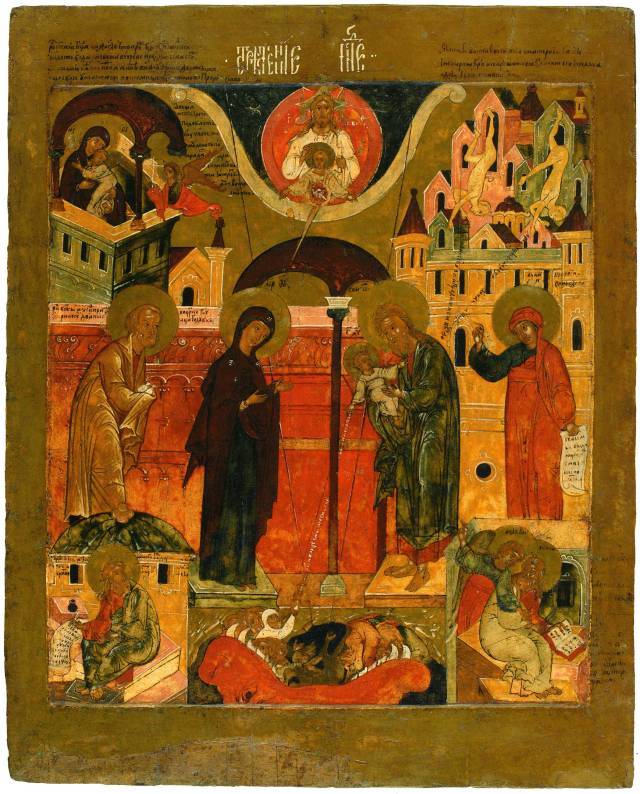
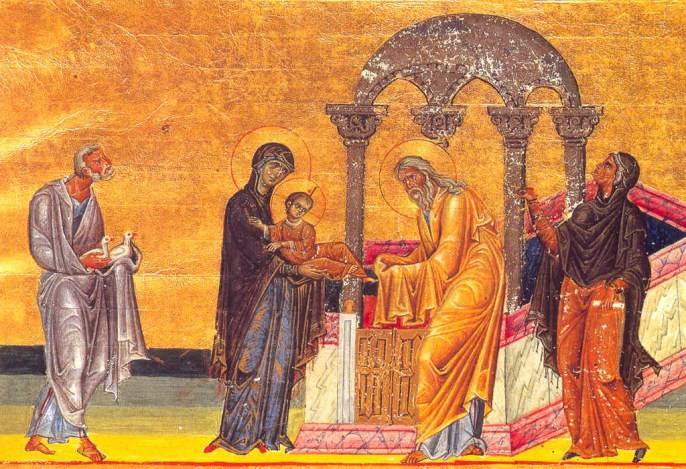
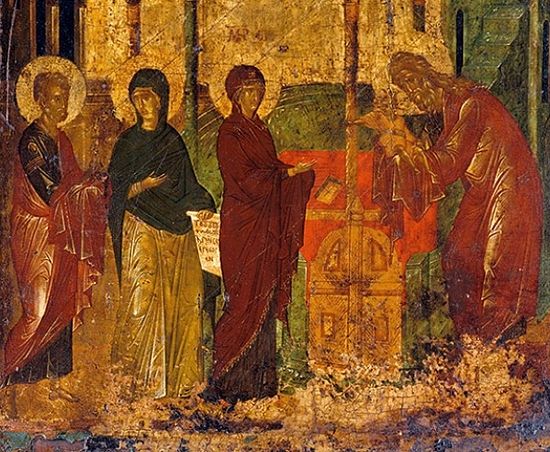
Lev Gillet’s Reflections on the Presentation of Our Lord in the Temple, the famous Byzantine ‘waltz’, Ormylia Women’s Monastery choir, Byzantine icons and hymns with lyrics
Symeon receiving Our Lord is of course an Icon in the true sense of the word of how we too receive Christ
* The Russian icon above emphasizes the meeting aspect. Pay attention to the way Jesus and Simeon are so face to face.
Lyrics for the famous Orthodox ‘waltz’, the Megalynarion, the “Magnification”; also called Velichaniye in Church Slavonic), the special Byzantine hymn for Panagia and the Presentation of the Lord in the Temple by Ormylia convent.
What glorious Hope, what tenderness amidst weariness, old age, frailty and shadows, what consolation especially when ‘dealing’ with end of life care, as I currently am, what a wonderful ending to our life, should we accept Lord’s offered Love! Rejoicing with Symeon, let us sing a hymn of thanksgiving to God and say: “Let me depart in peace, for my eyes have seen Your compassion and Your holy Salvation.”
-That which is fulfilled in you is beyond the understanding both of Angels and of mortals, O pure Virgin Mother.
-Symeon the Elder embraces in his arms the Maker of the Law and Master of all.
-The Creator, wishing to save Adam, took up his dwelling in your virgin womb.
-The whole race of mortals calls you blessed, pure Virgin, and glorifies you with faith as Mother of God.
[Come and see Christ, the Master of all, whom Symeon carries today in the temple.]
-You look upon the earth and make it tremble how then can I, aged and weary, hold you in my arms?
-Mary, you are the mystic tongs who conceived in your womb Christ, the burning coal.
[Symeon had lived for many years when he saw Christ, and cried aloud to him, ‘Now I seek my release.’]
[O God, who are before all things, of your own will you became man, and are carried in the temple as a child of forty days.]
-Symeon the priest received the Master of all, come down from heaven.
– Make bright my soul and the Light of my senses, that I may see you in purity, and I will proclaim that you are God.
– Pure Virgin Mother, why do you bring into the temple a new-born babe and commit him to Symeon’s hands?
From you, the Creator, I now seek release, for I have seen you, O Christ, my salvation and my light.
‘In the shadow and letter of the Law, Let us the faithful discern a figure. ‘Every male child that opens the womb shall be holy to God.’ Therefore the firstborn Word, Son of a Father who has no beginning, the firstborn child of a Mother who had not known man, we magnify.’ [Irmos]
Him whom the Ministers at the Liturgy on High entreat with trembling, here below Symeon now takes in his arms.
For those of old there was a pair of doves and two young pigeons In their place the godly Elder and Anna the sober prophetess, ministering to the One born from a Virgin and only offspring of the Father as he enters the temple, magnify him. [Irmos]
Glory to the Father, to the Son, and to the Holy Spirit.
In nature Unity, but in Persons Trinity, watch over your servants who put their faith in you.
‘You have granted me, O Christ, the joy of your salvation’, cried Symeon, ‘Take your servant, wearied by the shadow, as a new initiate and preacher of grace, as with praise he magnifies you.’ [Irmos]
Both now and ever and unto ages of ages, Amin.
Mother of God, hope of all Christians, protect, watch over, guard all those who put their hope in you.
Reverently holy Anna, sober and aged, openly confessed the Master, announcing him clearly in the temple. While as she proclaimed the Mother of God to all those present, she magnified her. [Irmos]
In accordance with the law of Moses, forty days after the birth of a male child, its mother had to present it in the tabernacle and to offer as a sacrifice either a lamb or a pair of doves or pigeons for purification ‘from the issue of her blood’. The presentation of a first-born creatures, whether animal or human, were considered to belong to God. Mary and Joseph obeyed this precept of the law. They brought Jesus to the Temple where he was blessed by the aged Simeon, and recognized as Saviour by the prophetess Anna, It is this event which we celebrate at the feast of February 2nd.
“Let us also go to meet Christ and let us receive him … Adorn thy bridal chamber … and welcome Christ the King; salute Mary, the heavenly gate.” These texts from the feast of the Presentation can also be applied to our souls. Each soul ought to be a Temple of God, to which Mary brings Jesus. And each one of us should, like Symeon, take the child in his arms and say to the Father: “My eyes have seen thy salvation.” The prayer of Symeon, “now lettest thou thy servant depart in peace” does not simply mean that someone who has seen Jesus and has held in his arms can now leave this life and die in peace: it also means for us, having seen and touched the Saviour, we are released from the hold that sin has on us, and, in peace, can leave the realm of evil. (The Year of Grace of the Lord by A Monk of the Eastern Church)
Ever since the Theophany of our Lord and Saviour Jesus Christ, this miracle keeps happening in the Jordan River, on this Feast Day, only on this day, once a year: the River Jordan Reverses its Flow! The calm river literally turns back when the Holy Cross is thrust into, parts start bubling up creating waves and the direction of flow is changed. After the crosses are removed from the water, the direction changes back to normal. I have been ‘baptised’ in the Jordan River myself, not on Theophany, so I have not personally witnessed this, but those friends of mine who have been present there on Theophany Day, all attest to it happening! May we acquire at least Nature’s ‘sensitivity’ before Our Master!
*
This miracle echoes excerpts from the Orthodox Service for the Great Sanctification of the water, conducted every liturgical year, at the Feast of the Theophany, known as Epiphany:
“Today the Jordan is cloven, and its waters shall be held from flowing, the Master being shown washed therein.
The waters saw Thee, O God, the waters saw Thee; they were afraid. Jordan turned back when it beheld the fire of the Godhead coming down and descending upon it in the flesh.”













 Just as we are here, our hearts did not turn to the Mother of God. When you say the “All Merciful”: “Do not abhor me, do not turn away from me, do not abandon me, do not leave,” a coolness comes, quietude, and every situation in which you ask for help is forgiven. The same dark, rotten, wicked, dirty person who comes into association with Her momentarily has a change of heart, and the heart becomes soft and compunctionate. The broken and humbled spirit comes, which is the only sign of Christianity—there must be a broken and humbled spirit. Other than this there is no indication. Not the keeping of fasts, not going to church, not reading Akathists and Canons—no! But a spirit that is broken and humbled cannot not forgive—it cannot! This is a state of the heart, a Godly heart…








 ORTHODOX CHRISTIAN FAITH AND LIFE