Day 4. Washing your face

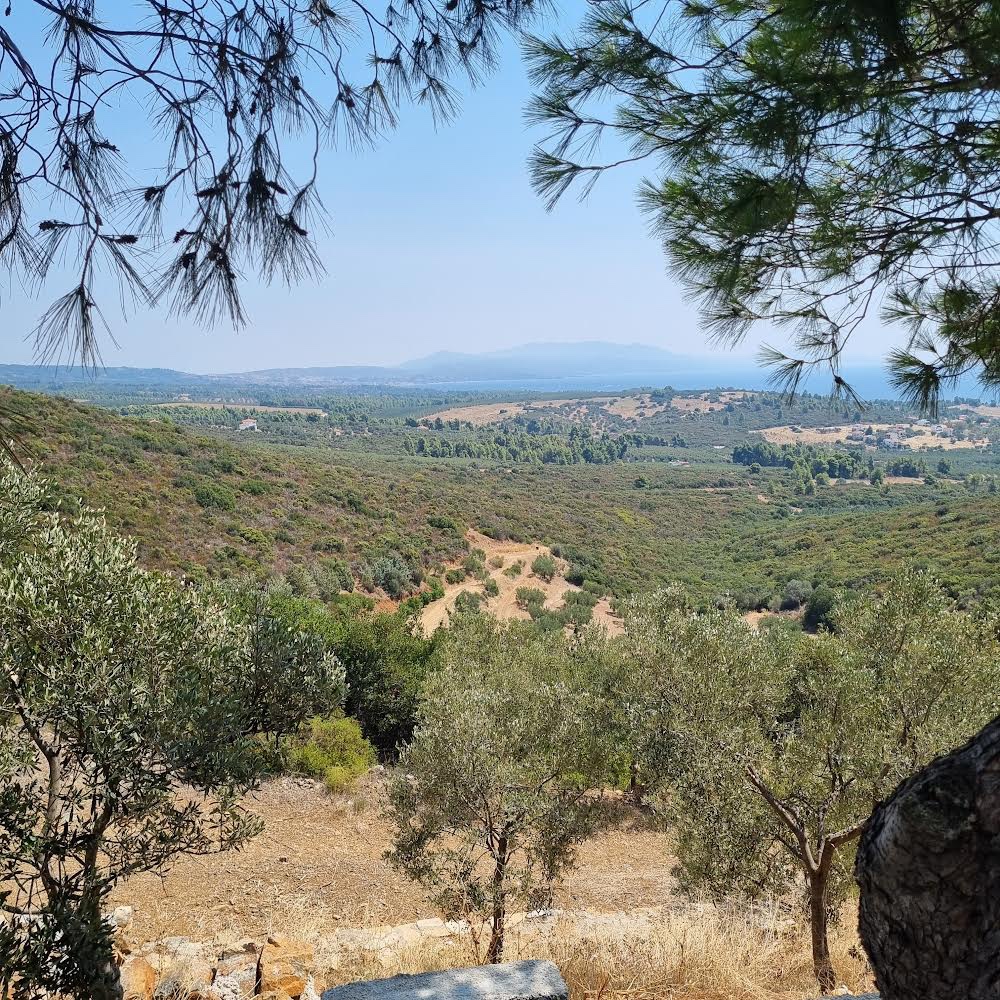
overlooking the sea from the Monastery of St Arsenios in the mountains

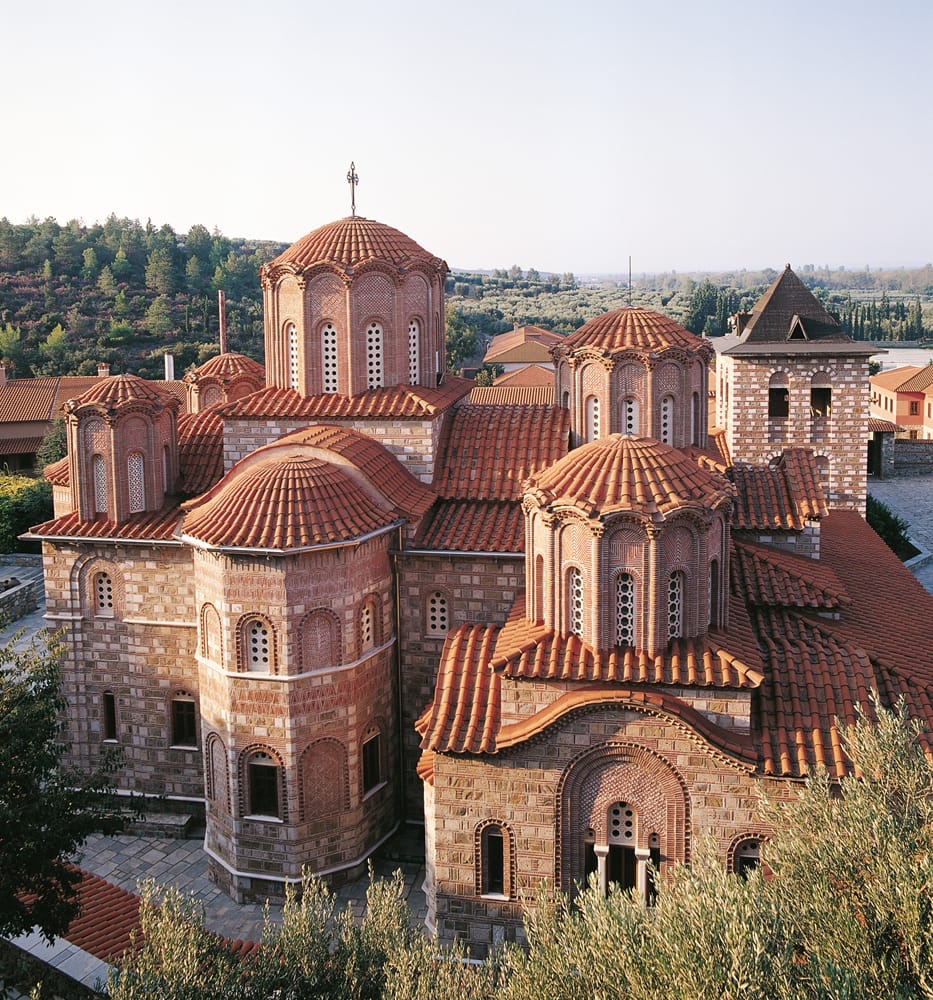
Monasteries are places of healing and light. The Monastery of St Arsenios is one such place.

N.b.This is as close as I came to Agion Oros in the distance!

Another little miracle enabled us to meet Theologos and Vaiga with children again . We were joined by a priest from Germany Fr Victor with his Presbytera and children. The usual courtesies were extended to us, loukoumi, coffee and biscuits along with the necessary water!

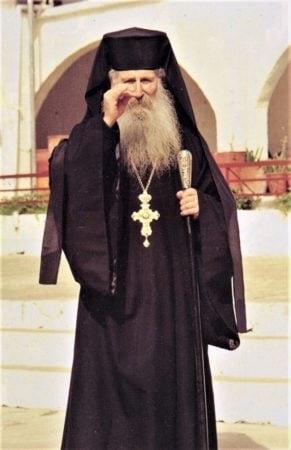
Geronda Theoklitos joined us and he afforded us a great deal of his precious time even though he had many confessions to hear.. It was a true blessing to meet him.God it seems bends time in order for those who seek Him to receive His grace . Time is not really measured in monasteries. Of course there are set times for worship and work but one does not sense time passing.

I told Geronda of the mutual ministry we have at our parish and he quoted a greek proverb
“Το ‘να χέρι νίβει τ’ άλλο και τα δυο το πρόσωπο” which when translated goes something like : ” The one hand washes the other hand and both wash the face “. I suppose we have similar saying” many hands make light work.”Washing the feet is an act of service and humility, but washing the face brings cleansing and refreshment.He gave another word:St Anthimos of Chios: “ εκείνο το ´γιατί κι εκείνο το ´εγώ´ που έχομεν, αυτά μας απομακρύνουν απο τον Θεό και μας χωρίζουν απο αυτόν» — «this “why” and this “I” which we have, these distance us from God and separate us from Him.”


The proximity of hospitality and holiness is palpable in Orthodox monasteries. Faith ,food and fellowship are inseparable. For some visitors monasteries are places not only of refreshment but of healing where quiet can replenish the soul and regenerate the spirit. It is most important for Orthodox Christians to renew their spiritual batteries. Such peace was abundant at Panorama monastery. Sister S shared the typicon and structures of monasticism and we glimpsed the evening service before heading back to Thessaloniki. I think words alone cannot convey the experience of visiting monasteries. For those who truly seek God then they are places where His energies are to be found…in abundance!


– “The orthodox monastics are like the lighthouse. The lighthouse has to be always on the rocks by the sea. Do you want them to go and live into the city and be added to the other street lights? They can not become a lantern and be placed into the city’s roadside. The orthodox monastic is like a remote lighthouse, that stands high on the rocks, directing the ships of this world with their flashes, and upon the open seas the ships are orientated in order to reach their destination, which is God.” Saint Paisios of Mount Athos from the book: Spiritual Awakening

Day 3 Thursday :the Angelic Habit

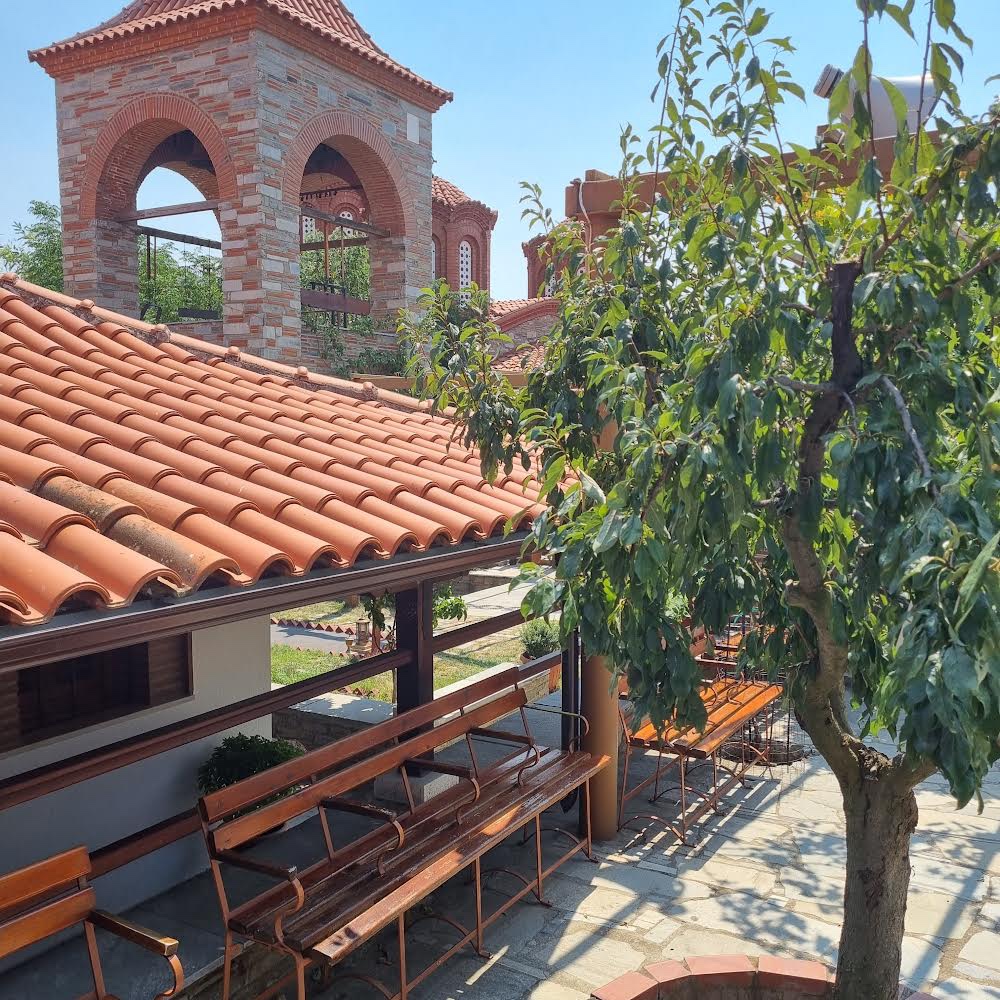
Monastery of St John the Forerunner at Metamorfosi

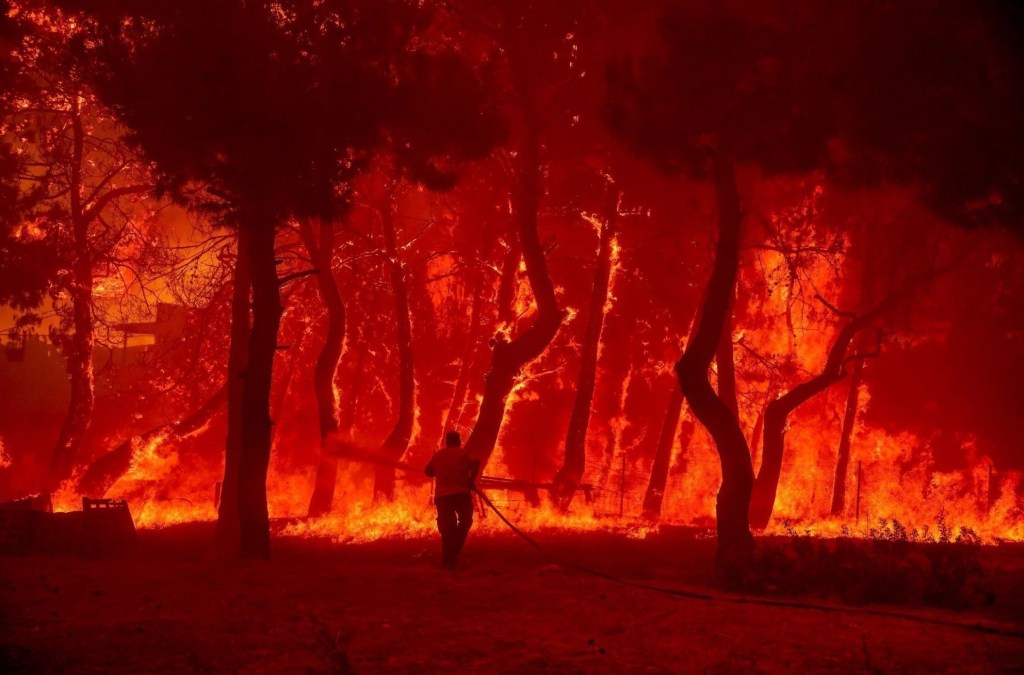
The drive from Thessaloniki to Halkidiki was furnished by olive trees but to remind us of the fragile nature of our planet there was the faint smell of smoke in the air. (*) As St Paul says in Romans 8″ creation is groaning “. Our first visit on the itinerary was the Monastery of St John the Forerunner at Metamorfosi. Although it has a strict typikon we were allowed to sing a glorious trilogy of apolytikia and Kyries. We were joined by Baia and Theologos.

… and four of their ten children.. Konstantinos overheard my English tones and introduced me to his wife Marina and mother Gabriela who lives in London. A most interesting exchange of spiritual experiences ensued. Gabriela studied at Lancaster university at the same time as I was studying by Post Graduate certificate of education at St Martin’s college now University of Cumbria ( Lancaster campus)and having been brought up in the middle east she is looking forward to Dmitry’s ordination to the diaconate in September in Arabic. Two priests joined us with their families for monastic hospitality “metrio cafes parakalo ” the most delicious cake, loukoumi and much needed water. It was after all 37c.

On to Ormilia monastery where Marta and Alexandra have stayed. We venerated the tomb of the founder Geronda Emilianos. K. said she wanted me to meet a nun who spoke better English than me ” if that’s possible” K. added with playful wit, ” This is Mother P. I was not at all offended or diminished by K. words, especially when I learned that mother P was born and brought up five miles from where I was born.

Ormylia monastery, Holy Convent of the Annunciation


We were in the company of people from Cyprus who had connections with our parish, a Belgian priest and a Serbian priest whose Metropolitan and Professor respectively sit on the same International Commission as me.Lunch time beckoned it was 4.00 after all. A wonderful local cafe near K’s beach house where we were joined by Nikos. We made the short journey to K’s beach house where we met the Romanian family who were staying there. You can’t get much closer to the sea! If you rolled over in bed you would be splashing in the gentle waves!

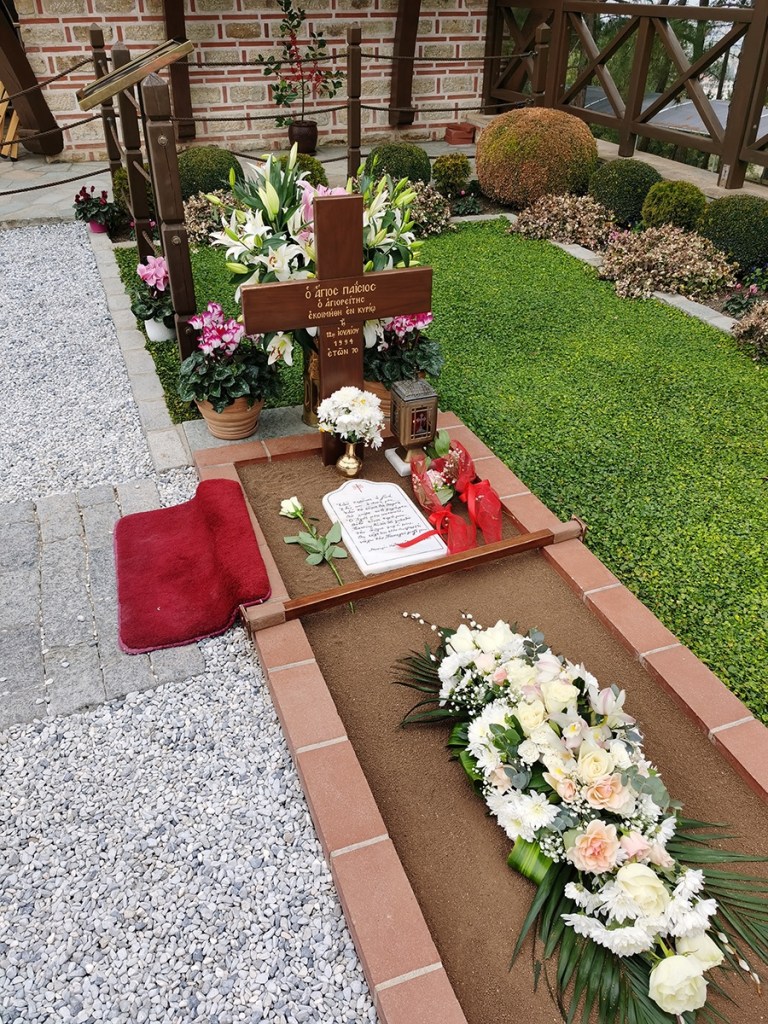
On to St Paisios Monastery where we met friends of Sayedna. We joined the queue to venerate the tomb of St Paisios. A little boy repeatedly took the blessing from priests in the queue. The light of joy shone in the eyes of the faithful, reflecting the Light of Christ. Everyone we met today, those wearing the angelic habit and those who were faithful Pilgrims were happy. God is glorified in his saints.

St. Paisios’ tomb
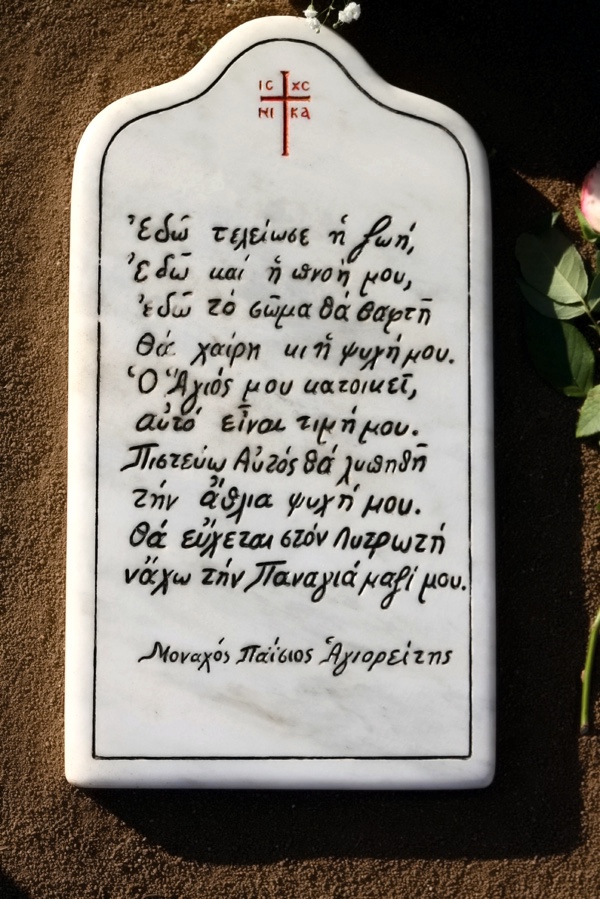
St. Paisios poem above his tomb

Above his tomb, inside the monastery yard, on a marble plaque is found a humble poem written by himself:

Here life has come to an end

Here my breath has stopped.
Here the body will be buried,
And my soul will rejoice.
My Saint dwells here, [St. Arsenios of Cappadochia]
And that is my honour.
I believe he will pity

My miserable soul

He will pray to the Saviour

To have the Virgin Mary with me.”


“God wants us, above all, to be happy and to enjoy inner peace. God is not a tyrant who pesters and intimidates us, but instead he wants us to be free.”St. Paisios

(*) Due to fires raging all over Greece at the time of this pilgrimage

Dadia National Park

Diary of a Pilgrim – Day 6 – Monday

Monday  12th

A blessed Apostles fast to you all. We are allowed fish wine and oil. God is so gracious!

An Icon shop near the church of St Lazarus had some komboskini and holy bracelets in the window. In the morning I  bought some to give to our children. I ordered a small icon print on wood of St. Amphilochius of Patmos. Maria the Iconographer and shopkeeper said she would have it ready for tomorrow afternoon. Some things happen very quickly in Cyprus!

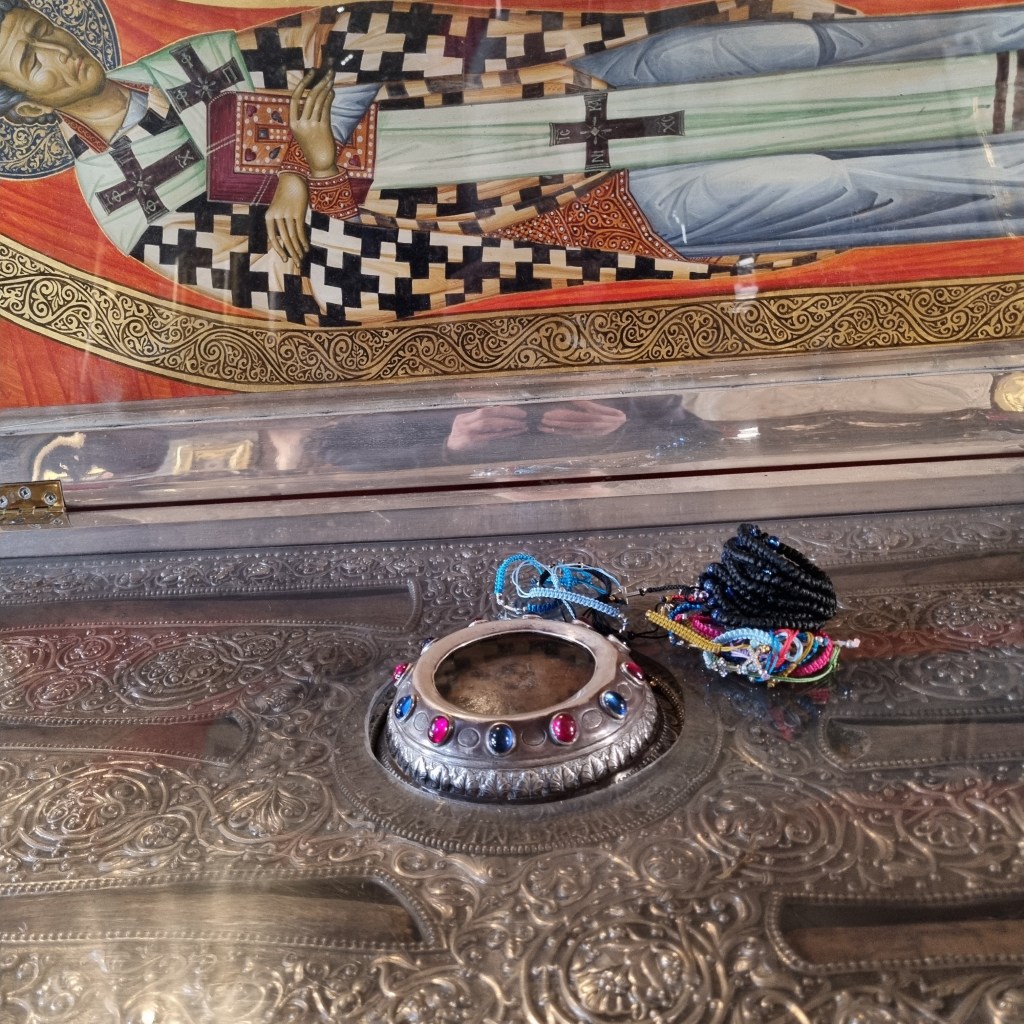
I took the bracelets and komboskini and placed them on the Holy relics of St Lazarus for blessing to give to our children at church. 

Wherever we go in accordance with  Saint Amphilochius’ instructions we should buy a tree in memory of a loved one, as a gift to others, as an act of contrition for our sins and to bear the fruit of goodness.

The prophet Nehemiah has a recurring theme in his book in the Old Testament :

“Remember me O my God for good.” It is the prayer of a pilgrim in this life who whilst knowing his sins, asks God to remember the good deeds he has done through following His commandments:

“Blessed art Thou, O Lord,

teach me Thy statutes.
 The choir of the saints has found the fountain of life

and the door of Paradise. 

May I also find the way through repentance,

the sheep that was lost am I,

call me up to You, O Savior, and save me.”

Little grass, have mercy!

A blessed Pentecost and Feast of the Holy Spirit!

*
Lord Have Mercy

Little grass, have mercy!

Little bird, have mercy!

Everything within me and around me, both the small and the great, things past and things infinite, the simple and the puzzling, the dark and the bright, the visible and the invisible, the mortal and the immortal, the good and the evil, all things and everything in all worlds that I know and feel, they motivate me to blatantly pray: Lord have mercy!

Our pain summarizes all human words in one prayer and cry: Lord have mercy!

Turned toward You we are found to overflow within our whole being only one sigh: Lord have mercy!

We would like to speak of ourselves, but our tears are pouring and we tell You of our entire soul within these two words: Lord have mercy!

Every creation has its heart, and the heart is with this heart because it sighs and tends towards You: Lord have mercy!

In this sad world, man has no greater need than to be granted mercy primarily from You: Lord have mercy!

And together with You and behind You that all things and all creation grant him mercy: Lord have mercy!

Mother, have mercy!

Friend, have mercy!

Little grass, have mercy!

Little bird, have mercy!

All that is within the entire cosmos:

Have Mercy! Have Mercy! Have Mercy!

Source: Translated by John Sanidopoulos

*

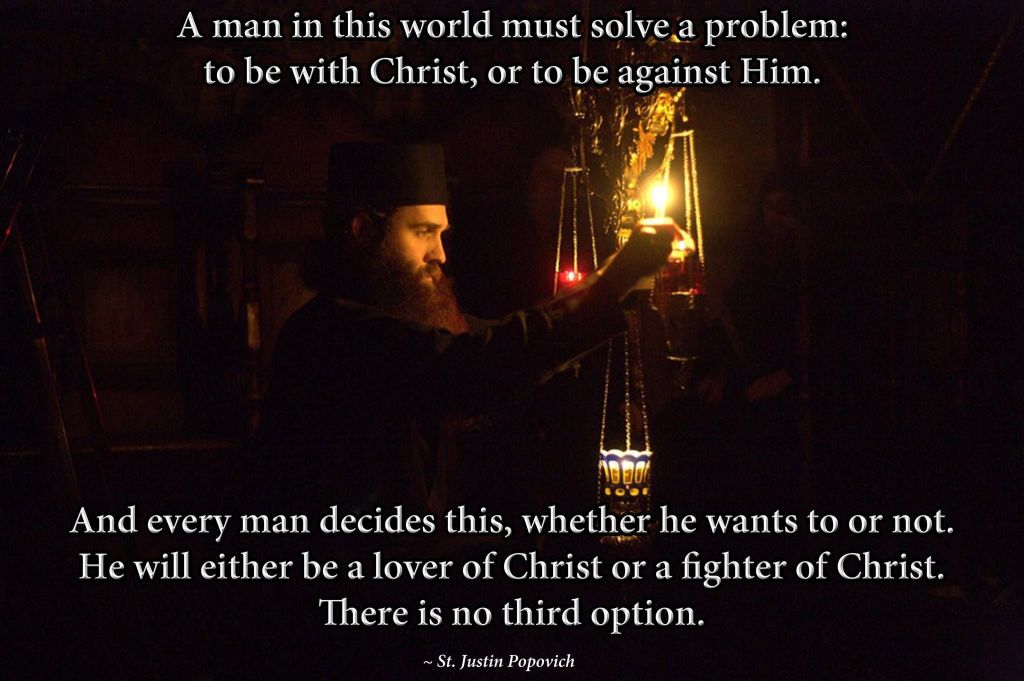
Do Saints visit us? Saint Justin Popovic is lately all the time in my thoughts.

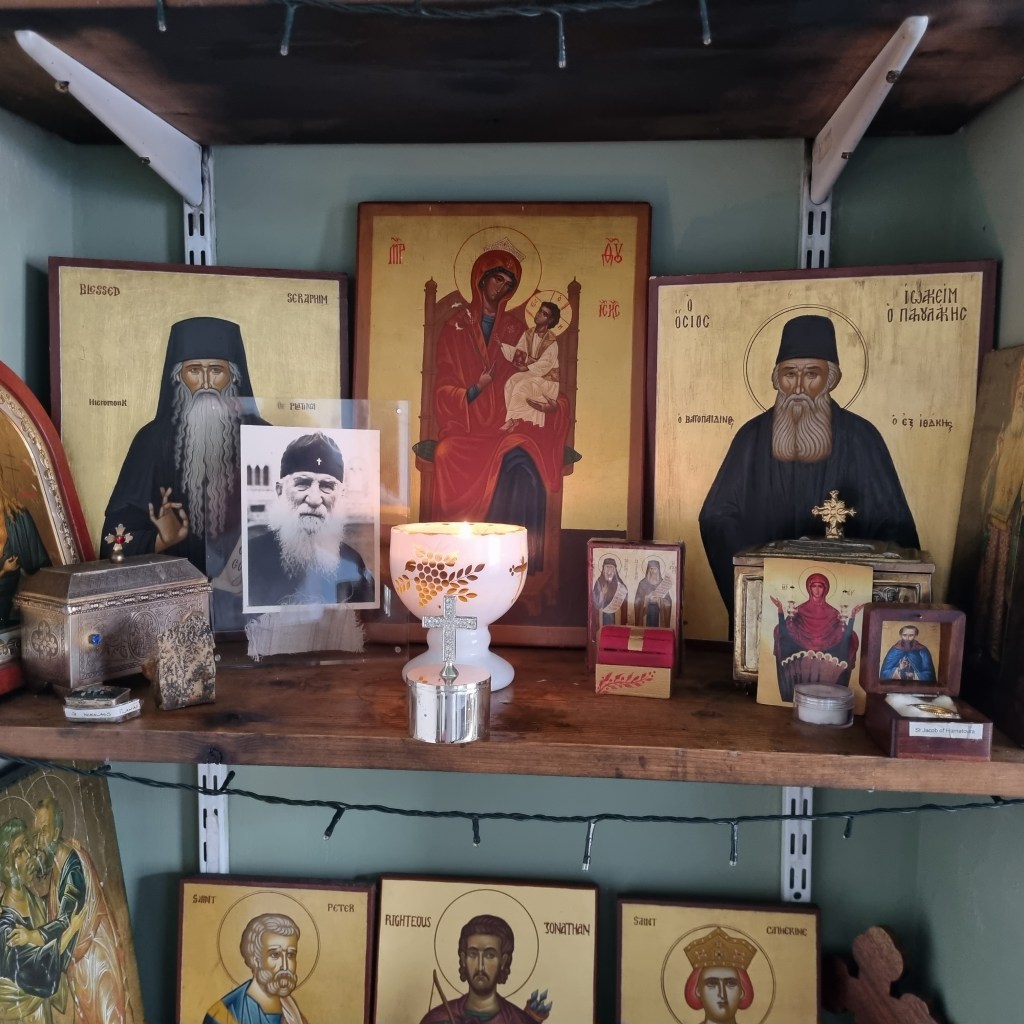
What probably started all ‘this’ was an “icon” in the beautiful icon corner of my little spiritual father.

Then, I came across some of Saint Justin’s quotes that truly moved me:

“Man sentenced God to Death; by His Resurrection, He sentenced Man to Immortality.” (A PASCHAL HOMILY OF BLESSED JUSTIN OF CHELIJE)

*

The Temple is but a piece of Heaven on Earth, Earth becoming Heaven, a haven of immortality, a haven of Paradise in the sea of Hell on Earth

Such powerful words of consolation! Such boldness of vision! They also felt like precisely describing my experience here on Earth, especially over the last few months: “A sea of Hell on Earth!”

“By reading the Bible you are adding yeast to the dough of your soul and body, which gradually expands and fills the soul until it has thoroughly permeated it and makes it rise with the truth and righteousness of the Gospel.”

This Saint set himself the rule of studying three chapters of the New Testament every day and continued to do so throughout his life! And I barely make a chapter every day with my busyness… I wish I could follow his example with his prayers!

*

“If you are suffering for your faith in Christ, the Lives of the Saints will console you and encourage you and make you bold and give you wings, and your torments will be changed into joy.

If you are in any sort of temptation, the Lives of the Saints will help you overcome it both now and forever.

If you are in danger from the invisible enemies of salvation, the Lives of the Saints will arm you with the ‘whole armor of God,’[1] and you will crush them all now and forever and throughout your whole lifefeeling with all your being that your life is in heaven, hidden with Christ in God, wholly above all deaths.[2]“ + St. Justin Popovich,” Introduction to the Lives of the Saints,” Orthodox Faith & Life in Christ

*

The more I study his work, the more I am astounded by his holiness and his compassionate, yet bold, uncompromising revelation of Truth! A  real treasure especially for the Orthodox Christians living in the West! “A way out of its innumerable humanistic hells!” “Is there a remedy for those innumerable deadly sicknesses? There is, there certainly is: repentance.  … (+ St. Justin Popovich, “Reflections on the Infallibility of European Man,” Orthodox Faith & Life in Christ)


Our Father St Justin amongst the saints pray to God for us!

How to Pray

How to Pray

Gerontissa Makrina had the gift of prayer since a child. Once she asked with tears our Lord to show her how to pray. That night an Angel of the Lord appeared to her in an all-white robe and taught her how men ought to pray depending on their spiritual condition. According to the Angel’s suggestions, if the soul experiences a perfect Love for God, then one should pray with his hands raised. If humility and remembrance of his sins prevail in his heart, then one should cross his hands on his chest and lower his head. If the soul is engaged in a battle against passions and experiences the ultimate humiliation (ie. Άκρα ταπείνωση), one should pray with his hands ‘tied’ behind his back, like a convict. Then the Angel started praying on his knees, weeping, like he was embracing Christ’s feet, revealing thus the soul’s awareness of its utter insignificance and its ineffable joy and comfort from God. (Pp. Words of the Heart, Gerontissa Makrina Vassopoulou 1921-1995, pp60-61).

See also by Gerontissa Makrina and How to Pray, How to Deal with Someone You Can’t Stand Dealing with

Martyrs of Obedience

Saint Efraim of Katounakia

Christ is in our midst!

I would like to share a few thoughts about mental health disorders from the point of view of a carer. While in the UK, I worked in a care home for some time and had some experience interacting with mentally ill people. However, I was a member of a team and was not fully responsible for anybody. Now, things are tougher because I am in many ways wholly responsible and a carer 24/7. In so many ways I feel I too need long-term support…

‘Give blood and receive the Spirit’


“A woman knows she has conceived when she stops losing blood. So it is with the soul, she knows she has conceived the Holy Spirit when the passions stop coming out of her. But as long as one is held back in the passions, how can one dare to believe that one is sinless? Give blood and receive the Spirit. (Abba Longinus, Sayings of the Desert Fathers)

During this week my thoughts were on a recent saint, Elder Efraim of Katounakia, famous for his 42 years of the martyrdom of obedience to a very difficult, harsh and especially towards the end mentally unstable Elder Nikiforos.

I also reflected a lot on Sister Aggeliki of blessed memory and her obedience to her mentally disturbed sister, keeping her awake with all kinds of ‘happenings’ every single night for about 60 years (!), after her unmercenary doctor’s duties all day and night! I was reminded especially of her obedience to all kinds of crazy errands she was sent and/or accompanied and her long-suffering to all the insults and every name under the sun her sister was calling her for decades! Why did Sister Aggeliki not leave? For the salvation of her sister’s soul. Because, as much as she wanted to become a nun in a monastery, she knew that her sister would then be committed to a mental hospital and there she would be deprived of all the church services she so longed to participate in. And it was only during these church services and Holy Communion that she would be so surprisingly quiet, ‘saneand absorbed …

These were precisely my Elder’s words upon this new obedience: “it is very important that you are patient and do everything that you can so that this poor soul is saved and enters the Kingdom of Heaven!Not that I bear any resemblance to these exalted ones, but I too must give blood to receive the Holy Spirit and thus receive the baptism of long-suffering and obedience. Grace does not come without blood and tears.

Your prayers and your thoughts

Let my prayers be set forth before Thee as incense

censing

Acknowledging Christ

MATTHEW 10:32-33


The Lord said to his disciples, “Every one who acknowledges me before men, I also will acknowledge before my Father who is in heaven; but whoever denies me before men, I also will deny him before my Father who is in heaven.

The Sunday after Pentecost in the Orthodox Church is dedicated to All Saints.  The purpose of the coming of the Holy Spirit at Pentecost is to make saints of us all. The first and most important element in this process of sanctification is acknowledging Christ before others. In the early Church, and at subsequent times of persecution and still to this day to acknowledge Christ may require a costly sacrifice, even martyrdom.

 In such a context,”talk is not cheap” and the Holy Apostles knew this when they wanted to share the life giving salvation that they had found and experienced in the Lord Jesus Christ. In the Epistle for the feat Hebrews 11:33-12:2 we read about the price of that confession of faith- “they were stoned, they were sawn in two, they were killed with the sword.”

We must understand that, as Christians, we are engaged in a spiritual battle in the world. Christ Himself said that the world will hate us but that He had overcome the world. We too have to overcome our timidity and fears, our reluctance to speak out for Christ in the world. We are in the world but not of it.

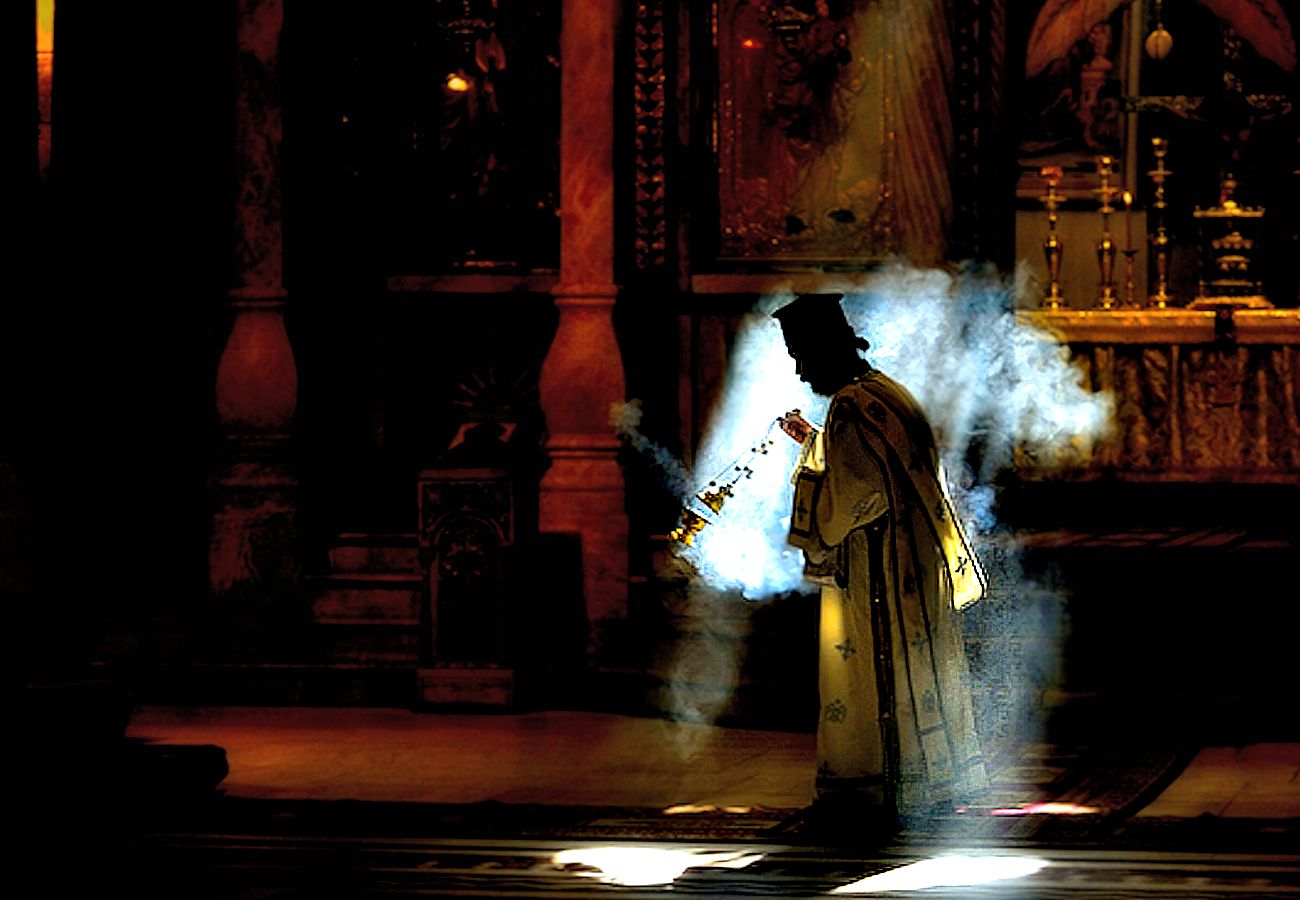
At every service of worship in the Orthodox Church we offer incense to God as a sign of our worship of the One true God Father, Son and Holy Spirit.  The action is a powerful symbol of our prayers rising to heaven as the smoke ascends. We read in the Old Testament, the prophet Malachi gives the instruction from God:

Malachi 1:11

From the rising of the sun, even to its going down,
My name shall be great among the Gentiles;
In every place incense shall be offered to My name,
And a pure offering;
For My name shall be great among the nations,”
Says the Lord of hosts.

 The priest blesses the incense which he puts on to the burning charcoal to cense the holy gifts at the Proskomedia with this prayer:

“ Blessed is our God, always now and ever, and unto the ages of ages . Incense we offer unto thee, O Christ our God, as a savour of spiritual sweetness which do Thou receive upon Thy most heavenly altar and send down upon us in return, the grace of thine all-Holy Sprit. Amen”

Incense has a long history in the Bible and in the tradition of the Church. God commanded Moses to use it in the Tabernacle and it was used in the Temple at Jerusalem where there was an altar of incense. Frankincense and sweet smelling myrrh was offered to Christ at His nativity. In our churches, the sacred censer has twelve bells symbolising the twelve apostles sounding forth their teaching with the proclamation of the gospel. The lower bowl represents the earth and the upper bowl heaven. The charcoal is lit and gives off fire and heat and fragrant incense is placed on the burning coal. Our offering in worship likewise should be sweet and full of zeal with the warmth of the Holy Spirit. We see at various points in the Holy Liturgy and at other services the priest censing the holy Icons of Christ, His All Holy Mother and the saints as well as the faithful who are made in the image of God. When we come home, we find that our clothes are permeated with the aroma of incense. One of our Parishioners remarked that her husband always knows when she has been to Church!

All this is very beautiful. The aroma and action engages with our senses to elevate our heart towards God, but we should not forget the context of what this meant for early Christians. They were required once a year to appear before a statue of Caesar and put a pinch of incense on burning charcoal and say “Caesar is Lord!”It was seen as an act of political loyalty. But of course many Emperors imagined that they were divine (gods) and the conscience of thousands of Christians would not allow them to do this simple act and say these words, because for them there was only one Lord, Jesus Christ. They were prepared to be killed rather than confess a false god.

Just a pinch of incense but to whom do we offer this?

Last century, St.Gabriel Urgebadze from Georgia was such a confessor. After compulsory service in the army, he became a monk in 1955. He made himself famous by setting fire to a banner of Lenin during a parade in Tbilisi in 1965. He spoke openly to the people: “Glory is not needed to this dead, but glory to Christ, who subdued death and blessed us with an eternal life.”He was arrested, tried, ruled to be psychotic and confined to a mental hospital for seven months. He was treated mercilessly by the authorities who demanded from him confession of an alleged conspiracy in the Church in return for him to escape the death sentence. Despite torture and severe interrogation he would not accede to their political machinations. He put Christ first! He acknowledged Christ.

St Polycarp of Smyrna when he was eighty six years of age was asked to renounce Christ he replied, “Eighty six years have I served Christ and He has done me no wrong. How can I blaspheme my King who served me?” He was burned at the stake. He put Christ first. He acknowledged Christ.

We are strengthened when we acknowledge Christ, when we make a public confession of our faith. The Holy Apostle Paul tells us that if we confess with our lips that Jesus Christ is Lord and believe in our hearts that God raised Him from the dead then we will be saved. Romans 10:9-10. We should tell others how much Christ means to us. At Pentecost we were equipped with all the resources we need to bring others to Christ, we have no excuse. If we acknowledge Him before others then He will acknowledge us before the Father in Heaven.

 Let us pray, that through the strengthening and by the power of the Holy Spirit, we may be found worthy to acknowledge and confess Christ.

Let my prayers be set forth before Thee as incense, and the lifting up of my hands as the evening sacrifice; hear Thou me, O Lord.


Joyous Father Pustinnyk

The Coronavirus Diary of a Joyous Pustinik — 42

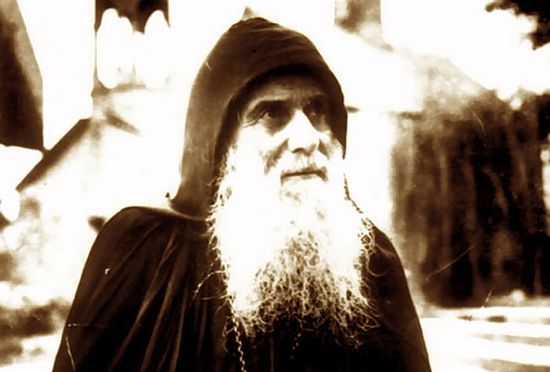
Elder Gabriel

Saint Gabriel

“Euge Agioi”

Some years ago on an excursion to London, I visited an exhibition at the British Museum entitled “Treasures of Heaven.” In it’s own way it was impressive. One could only wonder at the beauty of exquisite craftsmanship, but the collection of precious reliquaries drawn from around the world was a display of ornate but empty vessels.

Later, I felt a similar disquiet visiting the Victoria and Albert Museum in South Kensington at the amount of Church artefacts in a particular part of the museum. It seems that people were visiting and viewing holy items as if they were no longer to be found today within a living community but were things belonging to the past.  

 One gallery had scenery built in the form of a Church. It was filled with onlookers but empty of prayer and worshippers; they were interested observers, following a commentary with an audio guide.  

A short walk from the V&A Museum is the Russian Orthodox Cathedral. As soon as I  stepped into the Church-the lingering fragrance of incense charged the air. Entering into this Temple of living tradition one felt immediately the atmosphere of prayer, the peace and presence of Christ, His Mother and the Saints. I was able to venerate the holy Icons. I was no longer in the barren desert of history but was drinking from spiritual and living waters of the eternal present. God is glorified in His saints!


Euge Euge Agioi (Well done Saints!)


Acts 5:15
so that they brought the sick out into the streets and laid them on beds and couches, that at least the shadow of Peter passing by might fall on some of them.

Ephesians 5:30
For we are members of His body, of His flesh and of His bones.


Treasure from Heaven

A key that unlocks,

Bones yet transfigured

In a fragrant box.


Fragments of saints

To strengthen a prayer

Their earthly remains

For the faithful to share.


A transport of motion

From heaven to save

A grace filled devotion

That blesses the grave.


Members of Christ

Invested to be

Holy and precious

“Euge Agioi!”


“True faith is found in one’s heart, not mind. People who have faith in their mind will follow the antichrist. But the one’s who have it in their heart will recognise Him.”

Saint Gavriil Urgebadze

Baldness and the Comb

saint porphyrios

— What is ‘experience’ in spiritual life, dearest Father?

— A comb that you acquire when you go bald.

— So, isn’t it useless?

— No, because you can then use it to comb the hair of others!

Saint Porphyrios’ words; Testimony of Metropolitan Neophytos Morfou


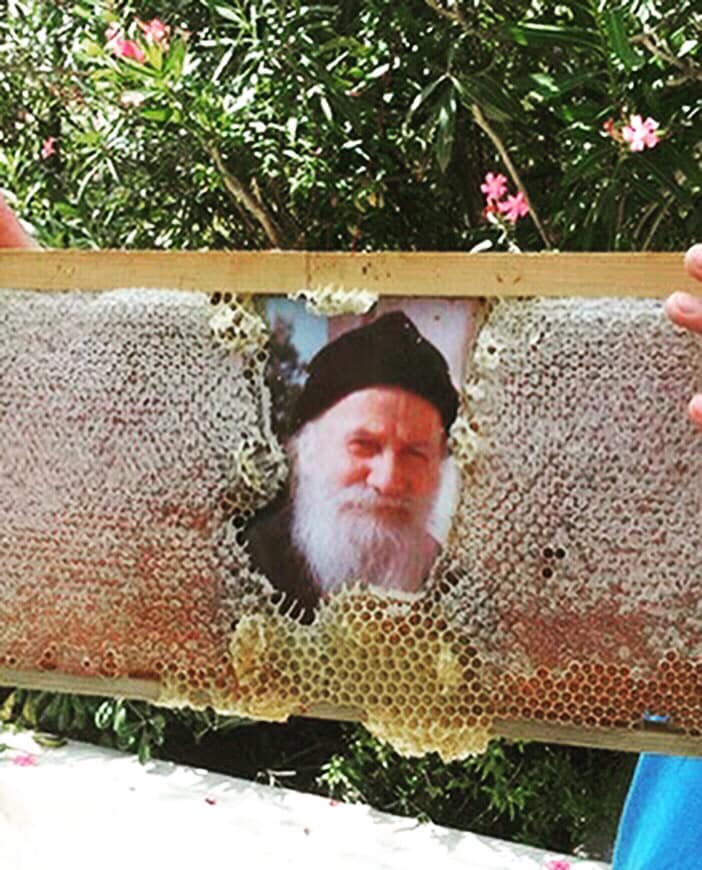
*Photograph above: Saint Porphyrios venerated by bees ☦️🐝

In the region of Kapandriti near Athens, a wonderful thing happens. Ten years ago, a devout beekeeper named Isidoros Ţiminis, thought to place in one of his hives an icon of the Crucifixion of the Lord. Soon thereafter, when he opened the hive, he was amazed that the bees showed respect and devotion to the icon, having “embroidered” it in wax, yet leaving uncovered the face and body of the Lord. Since then, every spring, he puts into the hives icons of the Savior, the Virgin Mary and the Saints, and the result is always the same. He placed a photograph of Elder Porphyrios (before he was canonized) in the hive, and the bees showed the same respect and veneration as towards other saints. (Mystagogy Resource Center)