Weak and Fallen Before Easter

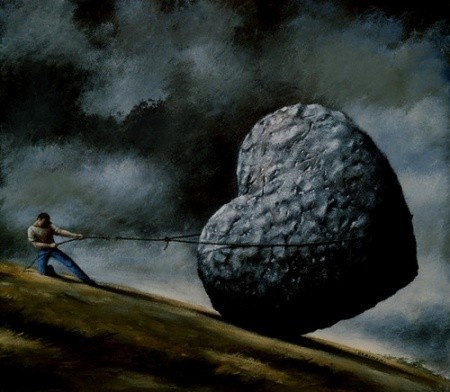
stone heart

We need to recognise that as Christians, if we are truly following Christ, not just abandoning him at the Cross, denying him or God forbid betraying Him, we will receive the same insults. Even Pilate would not remove that charge which he pinned to the Cross, Jesus of Nazareth King of the Jews, though the crowd protested.

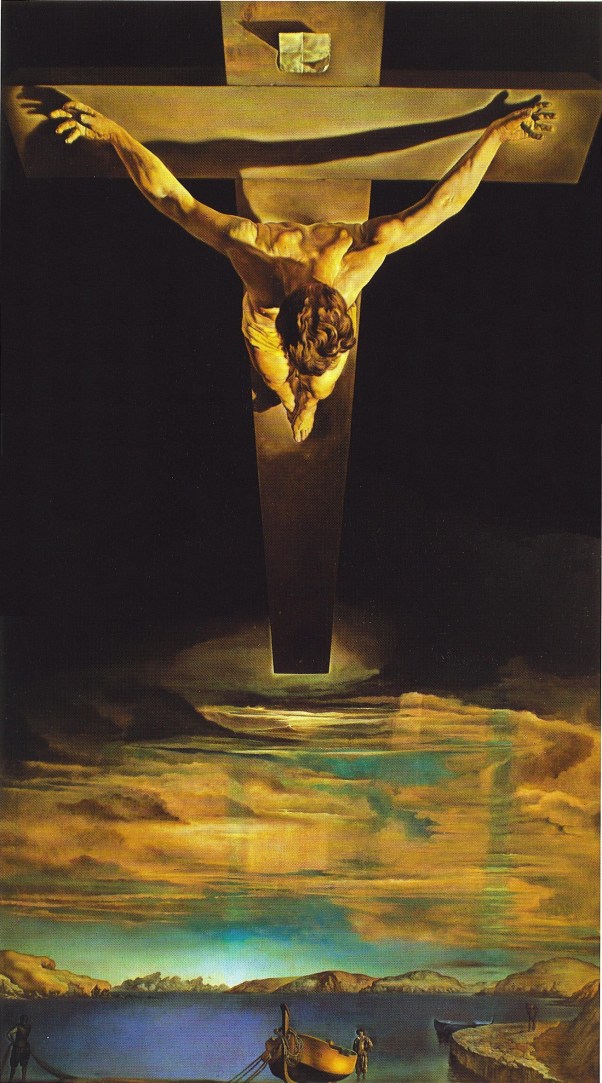
salvador-dali-christ-of-st-john-on-the-cross-1350506030_org


 May we all be blessed!


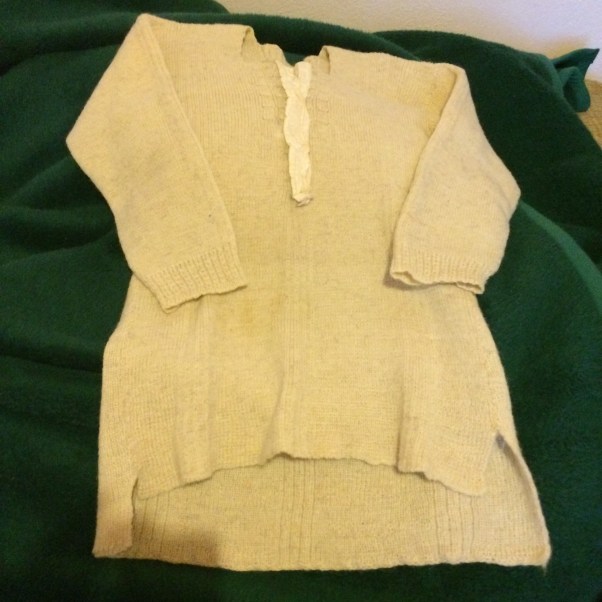
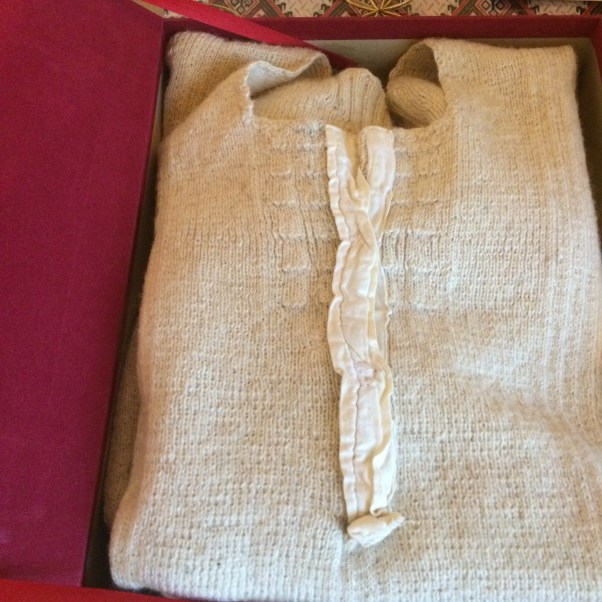
In a few hours, I’ll arrive at The Orthodox Christian Parish of the Holy and Life ­Giving Cross at Lancaster (United Kingdom), accompanying the Byzantine St Anysia Choir from Thessaloniki for Pascha; this choir also visited last year to help with the worship, particularly  the long, demanding  Holy Week services. We will also bring with us a hand crafted Icon, a comb and a prayer rope, all by St Paisios of Mount Athos, a Reliquary for containing these holy relics, and a handwritten Icon of his. We will also bring on loan  for Holy Week a piece of St. Paisios’ clothing, his undershirt, from another Monastery in Greece.

IMG_2679

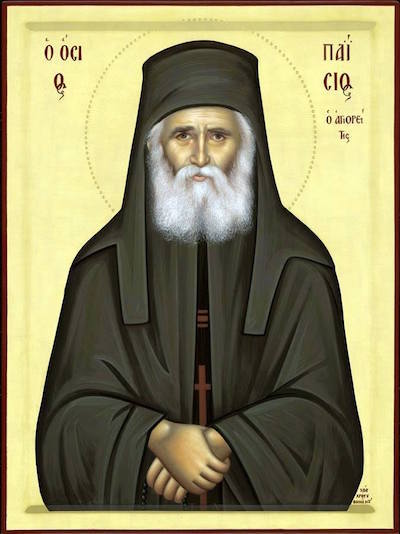
 I am deeply moved by the fact that I am ‘carrying’ my patron Saint, Saint Paisios, though the truth is that the Saints carry us! This is the nearest that people will get to venerating Saint Paisios since his body is not to be disturbed in Souroti.


I am still packing, since so many monasteries in Greece have overwhelmed us with their generosity, and there are so many blessings, candles, incense, icons, secondary relics etc. to bring to the UK!


IMG_2983IMG_2982

The hectic days to follow at the Holy Cross parish will take away from me all phone connections and internet, but they will give me in return a precious chance to shut the world away and lock myself in the heavy, crushing silence of the Holy Week.

Before I do that, I want to wish you with all my heart to enjoy a Blessed, Life-Changing Holy Week and Easter!


I must admit that I am very tired. I feel tired, vulnerable and afraid, with no control over anything. I am so exhaustedIndeed,  “Lent is a horrid period. Year by year, Lent is when some force within me pushes me out of my comfort zones, and I find myself in a lions’ den, face to face with the beasts, utterly unprepared to fight, totally helpless, fully aware that the only possible outcome is to be slaughtered.”

Slaughtered indeed! This is exactly what I feel! A corpse!

“This is nothing new. This happens every year. Yet, I somehow survive, because the same Force that pushes me out of my self-created kingdoms, out of my self-created games – that same Force saves me from those wild beasts at the last moment.”

And this changes everything.

And yet, every time, I forget all about this, and I experience such despair and death, just before God intervenes! As if He has utterly forsaken me!


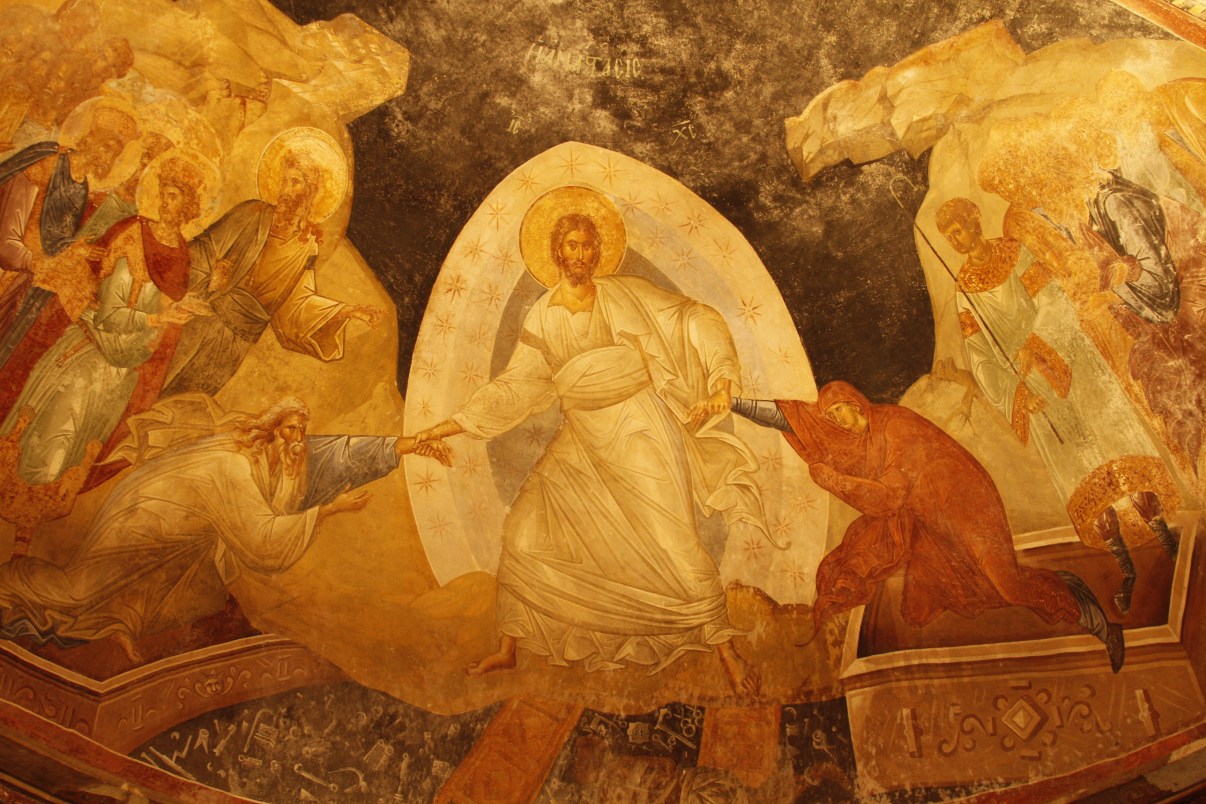
Anastasis_at_Chora.jpg

Now I understand why one focus of the Resurrection icon is Christ’s hands, pulling Adam and Eve! I desperately need this Hand to pull me out of this Hell!Weak and Fallen! In such a desperate need of healing, repentance, an intervention, a meeting with my spiritual father, a literal falling into his arms, the Sacrament of Confession! Is this who I really am? How can just 40 days reduce me to this? Is this  the real starting point of my change, repentance and redemption?


Deep in my heart, I bitterly realise that no healing is possible. No repentance is possible. No prayer is possible, until the heart that heals, repents and prays is my sinful, fallen, yet beating heart. False images do not have hearts. False images do not love. Most painful than all, false images will never reflect Christ, because there is nothing false in Christ, nothing common between Life and void. Prayer begins with pain at one’s fallen nature; it grows out of this pain, and its flowers bloom out of it.The taste of ashes in my mouth. Am I, fallen and depraved and sinful that I am, still the image of the Immortal God?


I need to hold on, just a little bit more, to the Living God, and may His immortal image remain within me. It may then reflect on me,  bless me and I may grow into it. Day by day, year by year, I may grow into this image, and be more Christ-like. Then His Life will be mine, His Resurrection will be mine.

So many miles to go before I sleep!


If you have ever experienced such confusion and fallenness, have courage and pray for me. Let us all fight in our body and spirit. His Resurrection is real, and it is coming. In His Resurrection we shall all be one!

The Forerunner of Orthodoxy in North America

What a fascinating story! Wishing you all a blessed Holy Week journey toward Pascha!

The First Known American Convert to Eastern Orthodox Christianity

A Young Philip Ludwell III

PLIII-portrait-Stratford-crop-vSM

This painting of a young Philip Ludwell III is the only known portrait of the man. It is exhibited at Stratford Hall Plantation, the historic home of the Lee Family of Virginia.

Located in the Northern Neck of Virginia, Stratford Hall was built in 1737-38 by Thomas Lee, a founder of the Ohio Company, and named after his grandfather’s home in London. Thomas Lee married Hannah, the sister of Philip Ludwell III. Among their six sons, two signed the Declaration of Independence and two served as the United States’ first European-based diplomats.

Philip Ludwell III died in 1767 in London and was buried in the Ludwell family vault of the church of St. Mary-le-Bow, in the Stratford area of London where the River Lea (Lee) meets the Thames. His daughter Hannah Philippa Ludwell Lee was also interred in this plot in 1784, just prior to her intended return to the fledgling United States.

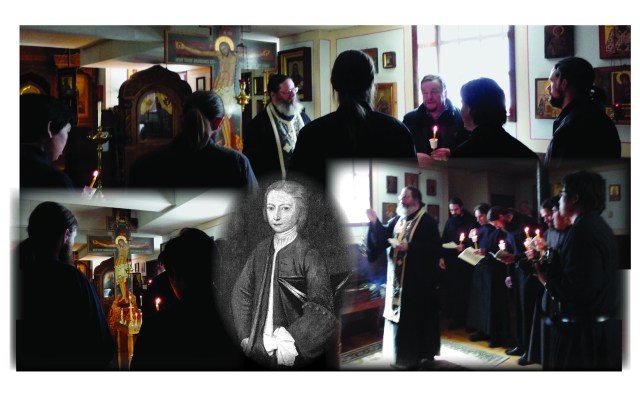
Ludwell-Panakhida-Collage.jpg

Philip Ludwell III is the first known convert to Eastern Orthodox Christianity in the Americas. He was a prominent figure in pre-revolutionary Virginia and a relative by blood or marriage of many great early figures in American history from George Washington to Lee. The scion of one of the largest landholding and politically prominent families in early Virginia, he was born at Green Spring near Williamsburg on December 28, 1716.

One year after his marriage to Frances Grymes in the summer of 1737, the young Ludwell travelled from Williamsburg to London, England. Twenty-three years later, in 1761, the Orthodox priest in London, Fr Stephen Ivanovsky, wrote:

In 1738, during the incumbency of the late Hieromonk Bartholomew Cassano at this holy Church, an English gentleman named Ludwell, born in the American lands and living there in the province of Virginia, came to London seeking the True Faith, which he, with God’s help, has swiftly found in the Holy Graeco-Russian Church. And so on the 31st of December of the same year he was confirmed in the same with the holy Chrism.

Life in Virginia

In 1740 Ludwell returned to Virginia. From 1742 to 1749 he was a member of the Virginia House of Burgesses where he argued for higher taxes on the importation of African slaves and headed a committee to seek a cure for cancer. In 1752 he became a member of the Royal Governor’s Council and served in this capacity until his death in 1767. As a member of the Council he was instrumental in obtaining a commission for a young George Washington as a Colonel in the Virginia militia in 1755. 

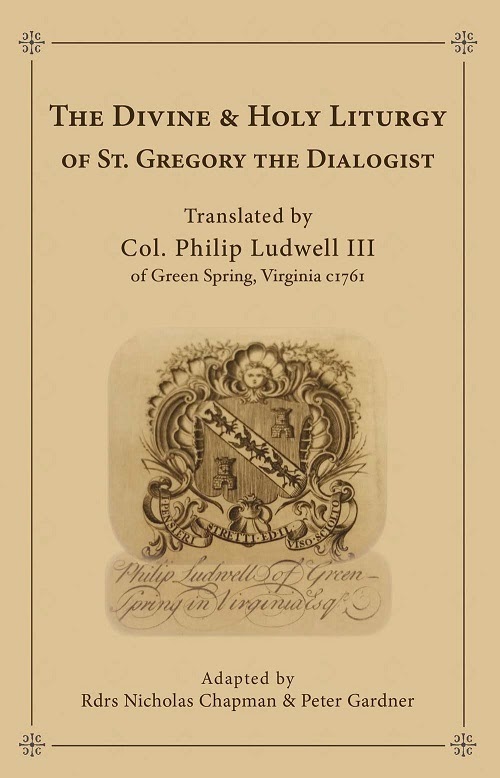
Meanwhile he continued to secretly practice his Orthodox faith, which at that time was treasonable. At some point in the 1750s he embarked upon an English translation of the “Orthodox Confession of the Catholic and Apostolic Eastern Church”, composed in 1640 by the Orthodox Bishop Metropolitan Peter Mogila of Kiev. Ludwell dedicated his translation to “the devout Christian reader,” and quoted the prophet Jeremiah:

Thus saith the Lord, Stand ye in the Ways, and see, and ask for the old Paths, where is the good Way, and walk therein, and ye shall find Rest for your Souls.

By 1751 he had three daughters: Hannah, Frances, and Lucy. In 1753 his wife Frances died.

London: His Final Years

In 1760 he moved with his daughters to London where they were received into the Orthodox Church on Holy Wednesday, 1762. In the same year, with the blessing of the Holy Synod of the Orthodox Church of Russia, Ludwell’s translation of Mogila’s catechism was published in a cloth edition. The Russian Synod also authorized Fr Stephen Ivanovsky in London to give the Ludwell family the consecrated elements of bread and wine to take back to Virginia and to prepare for them appropriate forms of Orthodox prayer for use in their native land.

One extant copy of what may be this ordo has been found in bound, but handwritten, form. It includes translations of the three principal Orthodox liturgies, morning and evening prayers, the service of confession and other texts. 

Philip Ludwell died in London on March 14, 1767 after a long illness. His funeral rites were served at the Orthodox Church there and he was buried at the Anglican church of St Mary Stratford Bowwhere there was a family vault. Over two hundred years later his life and inspiring story of faith is becoming known and reshaping our view of early America.


Ludwell-Confession-title-pageludwell.lgSeal-of-Lucy-Ludwell

Source

Divine Providence in a Convert’s Journey

Divine Providence in a Convert’s (*) Journey

ORTHODOXY IS A WAY OF LIFE

A talk with Marilyn Swezey, the secretary of Bishop Basil (Rodzianko)


My interviewee has had an extremely interesting and unusual life for an American woman. Charming, intelligent, she looks some 15 years younger than she really is. And behind her there is a long life full of the hard labors of a noble, self-sacrificing person who seeks to see Divine providence in every turn of her life. Here she is: secretary of Bishop Basil (Vasily) Rodzianko, assistant to Metropolitan Jonah (Paffhausen), an expert in the Russian literature and arts, honorable parishioner of the Cathedral of St. Nicholas the Wonderworker, Marilyn Pfeifer Swezey.

    Marilyn, how did you happen to get interested in Russia, in our country’s art?

—In the 1960s as a young woman I studied at a small Catholic college for women in New York. I studied classical art. Apart from the compulsory program we were to choose some optional subjects. I did not know why but I chose the Russian language course. That was the starting point for all the subsequent events in my life.

The paths we choose… Did you enjoy learning Russian?

—Yes, I had a wonderful teacher—Olga Constantinovna Voronova (1894-1981), former lady in waiting to the empress. She was a daughter of the councilor of state and master of the hunt of the court of His Imperial Highness, Count Constantine Petrovich Kleinmichel and Yekaterina Nikolaevna Bogdanova—the daughter of the marshal of the nobility of Kursk province.Olga Constantinovna’s husband, Pavel Voronov, a navy officer, served on the imperial yacht, the Standart, with the royal family for four years. The blessed memories of his service with the royal family remained with Pavel forever. The little Tsarevich Alexei loved him dearly—once the empress told Olga Constantinovna that the tsarevich used to keep her husband’s photograph at his bed. And, undoubtedly, Pavel Voronov was entirely devoted to the boy.

Olga Constantinovna testified: “I think it was impossible not to come to love this child who, besides his natural charm, gained the hearts of everybody by his kindness, his sympathy for others’ troubles—he was always the first to help and console—and by the patience with which he endured his illness, which at times made him a real sufferer.”

Before the departure of Pavel Voronov to war the Grand Duchess Olga gave him and Olga Constantinovna icons—one icon for each of them. From that day on they always had these icons with them—it was the only material remainder of the royal family that the couple managed to preserve during the years of the Revolution.

Let me cite you several extracts from the reminiscences by Olga Constantinovna:In January 1917 my husband began to have heart problems and he was returned from the front to St. Petersburg, or Petrograd, to be more exact. After the council of physicians at Maritime Hospital he was sent for two months to a spa resort in the Caucasus for treatment. Before our departure we were invited by the Empress to spend an evening together with her and the children. I had not seen them for a while and found a great change in Grand Duke Alexei. When I had visited the palace the previous time, the empress received me in one of its nurseries and the Tsarevich was delivered there to his bed. At the time he was recovering from a fit of his terrible disease and looked very pale and thin. All tried to cheer him up, and it was so moving to see the tender love with which his sisters played with him and cared for him. The Tsarina was knitting something for the Committee of temporary assistance to wounded soldiers headed by Grand Duchess Tatiana; from time to time she smiled to her son, though her look remained sad and anxious.

But I had never seen Grand Duke Alexei in such good shape before. He had grown up appreciably, transparency disappeared from his face, he had ruddy cheeks and looked absolutely healthy. Every time when the empress looked at him, a happy radiant smile lit up her face. The Tsarevich stayed near her all the time, sometimes kissed her face and hands, stroked her hair. This scene of the close, united, happy family remained in my memory forever. I was seeing them thenfor the last time.

The Nativity and New year of 1918 went of without joy, but quietly. I was melancholy but very delighted to receive a letter from Grand Duchess Tatiana in Tobolsk, Siberia, where the imperial family had been exiled…

Two days before the murder of the royal family, a priest was allowed to celebrate a Divine Liturgy in their prison (they had been deprived of such a consolation for a long time). Later he remembered how much he had been impressed by the depth of their spirit and the spiritual level the royal family had reached. He said he felt that they did not belong to this world any longer…

The memory of them will always support me on the path I have been walking in my life.”

—Yes, Olga Constantinovna was a wonderful person. She spoke such beautiful Russian… Her English was fluent and with a slight accent, and her French was excellent.

Our college was small, and the girls who learned Russian in the group numbered only six or seven, so we had a close communication with our teacher. Not only did Olga Voronova teach us Russian, but she also taught culture and history, especially the history of the Imperial court. And she loved the royal family—sincerely, faithfully. She passed this love on to us! I began to feel that the royal family became very close to my heart as well, as if I knew them personally! Later I gave my own children the names of the Holy Royal Martyrs.

And this is all thanks to Olga Constantinovna! Then I did not very clearly understand what a person I had met by Divine providence. I came to understand it later, after many years… Olga and Pavel Voronov were genuine Orthodox people. My acquaintance with Orthodoxy began precisely through them.

The stories of Olga Constantinovna about Orthodox Russia contained such a beauty and spiritual depth, that I wanted to become familiar with this country.

And did you succeed in this?

—Oh, yes! After being taught for a year by Olga Constantinovna, I set off travelling around Europe and spent three weeks in Russia. Russia and America were officially enemies, but the Russian common folk turned out to be such open-hearted people. I visited Leningrad, Moscow, Kiev… When I came to Moscow, I was a Protestant. But that trip changed my life radically!

What happened to you in Russia?

—I travelled with my friend. We were both aged 19. Now, when we freely travel from Russia to the USA and back, it is hard to imagine what an unusual experience it was for two American young ladies to travel to the USSR in the 1960s… My friend’s parents recommended us to visit a Catholic priest in Moscow. There were few of them in the capital—only for English-speaking and French-speaking diplomats.

    I remember Fr. Louis Dion very well. He served at a chapel attached to the embassy in Moscow. And he advised us that we should visit the Holy Trinity-St. Sergius Lavra. He said it was necessary for us to do it. He explained us the route. So we took a suburban train to Zagorsk, now Sergiyev Posad. There were four of us. I could speak little Russian, while all my companions did not know a word of it. The stations flew past the window and the train hurried through the little Russian halts. We thought, how do we know when it’s Zagorsk?

I asked an elderly woman, a babushka, who was sitting next to me, and she understood me and replied: “Of course, I will let you know. Don’t worry!” And she told us the right station. We alighted and found ourselves alone on a platform with no people around. Then we saw a handsome young officer nearby. He gave us a smile and I asked him in broken Russian, “How can I get to the monastery?” He answered, but I understood only half of what he said.

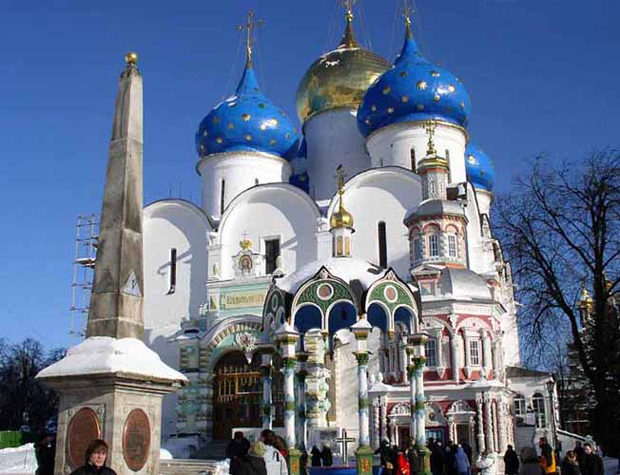
We started our way and were soon helped. We met a young man who led us up to the monastery’s gate. We looked around and saw amazing churches. I will remember forever the moment we entered the Holy Trinity Cathedral—I found myself in another world! Then I knew nothing of Venerable Sergius of Radonezh

There was nobody inside the church, except for a hieromonk who was reading an akathist to St. Sergius. We stood for a long time, listening to prayer, which was heard in total silence. I began to feel that wonderful atmosphere, which was not of this world. There was deep love and warmth. Peace. It was a gift of the Holy Spirit.

At that time I was already aware of the persecutions against the faithful in the Soviet Union, of the repressed and murdered clergy, of those who were left to rot in jails and mental hospitals. And—such beauty of Orthodoxy!

I don’t know how, I thought by myself there, before the relics of St. Sergius: “If I have an opportunity to help the faithful in Russia, then I must become Orthodox.” At that moment it was just in my thoughts. And even these thoughts were odd for a young American woman. It was many years later that I came to understand that St. Sergius heard my thought, my desire and helped it to come true.

And how did it happen?

—At first I decided to master my Russian and to study the Russian literature and history more thoroughly. After four years at college I enrolled in a two-year course at Harvard University. We studied Russian history, Russian literature; it was Prof. George Florovsky who gave us seminars. There were only 20 students in our course, which was very intensive. We read War and Peace by Leo Tolstoy, compared the legal systems of the USSR and America. Two years later I received a Master of Arts degree. We were trained as specialists who would work for the American government and they were going to offer me a job. Pending the invitation, I went to visit my parents, and soon I indeed received an invitation, but it was not a job offer—it was an invitation to the annual dinner party at Harvard University. My year of graduation was 1965—it was the year when women first acquired degrees at Harvard. That invitation was obviously God’s Providence for me, because it was at that dinner party that I met my future husband Robert Swezey.On the day of our engagement I finally received an invitation for work for the U.S. government in Washington, but it was too late: I was going to get married and live with my husband in Chicago and so could not work in Washington.

Although we did move to Washington with my husband—only four years later. It was there that I met Vladimir Tolstoy. We talked about Russia with him and everything at once came alive in my memory: the dreams, desires and prayer before St. Sergius’ relics. When Vladimir invited me to join the Christian Committee in Defense of the Rights of Persecuted Orthodox Christians in USSR, I accepted it without hesitating.

What can you say about the work in that Committee?

—The Committee’s chairman was Archpriest Victor Potapov, and I worked as its secretary: I helped, translated materials, organized meetings, and prepared articles for publication in defense of the persecuted. We gave coverage to cases of persecution of believers, raised and sent money, wrote protests to the Soviet embassy, did our best to inform the world public of the persecutions against the faithful in USSR. I think my trip to the Holy Trinity-St. Sergius Lavra was the crucial moment in choosing my path of life.

One day Vladimir Tolstoy asked me to become a godmother to his son Nikolai. And I answered: “But I am not Orthodox.” He said in reply: “So the time has come for you to become Orthodox!”

Maria Potapova, wife of Archpriest Viktor Potapov, was an active member of the Committee. She was the only Orthodox woman I knew at that time and so I asked her to be my godmother. She introduced me to her uncle, Bishop Basil (Rodzianko).

    In 1981, Bishop Basil received me into the Orthodox Church. And I became one of those who were concerned for Orthodox Russia with all their hearts. The Lord provided meetings with wonderful people for me, and it was the grace of God for me. I also became the secretary to Bishop Basil (Rodzianko) in 1981 and remained such until his repose in 1999. He introduced me to the world of Orthodoxy.

The bishop was experiencing material difficulties and I wrote a letter to my father: “Dad, could you possibly help Bishop Basil?” And in 1986 my father bought a flat for him where he lived and worked all his subsequent years. And this is the very flat—which later became a museum—where you and I are now.

And what did your parents think of your work and Orthodoxy?

—My parents were cradle Catholics but as the years went by they became Protestants. They were surprised with the path of life I chose and could not understand why they had such a “Russian” daughter! But they loved me very much and trusted my choice. Dad met with my dear teacher—Olga Voronova—and was deeply impressed.

Once, during one of my trips to my parents’ home in Florida, I advised them to have their house blessed according to the Orthodox rite—to call for an Orthodox priest, to celebrate a prayer service… My parents had no objections. At that time Bishop Basil was staying in Florida, too. I called him and he along with Fr. Michael blessed my parents’ house together with my parents themselves, as they were celebrating their golden wedding anniversary.

My father was very impressed by the blessing of the house. He was moved by it and told me: “This was like a baptism of our house!”

    A month later my father had a heart attack; he was 75. I believe it was the Lord Who had given me the idea to have my parents’ house blessed, because my father was thus prepared for what was to happen with him soon afterwards, during his illness. And this is what happened to him: he became Orthodox!

I asked him at hospital: “What if I invite an Orthodox priest, Fr. Michael, who together with Bishop Basil blessed your house?”

And my dad agreed! He was received into the Orthodox Church, took Communion and six hours later passed away. He reposed in the Lord very peacefully. I was at his bedside and saw his eyes shining with joy! Before the end he seemed to have seen someone near him—and his eyes began to shine! He wanted to greet joyfully the one whom he saw at the final moment of his life. Then he had another sigh—and passed on.

I think Bishop Basil prayed for him. Mom wanted that a funeral service be performed for dad in Washington. She knew she would move there to live close to me. And Bishop Basil performed a funeral service for him.

Did your mother become Orthodox as well?

—A wonderful story happened to my mom as well. Several years after my father’s death, also at the age of 75, she was taken to the hospital. A surgical operation on her stomach followed, with liquid in the lungs, and a grave condition… I asked her permission to call the same priest, Fr. Michael, and she agreed. Inspired by my father’s example, she too became Orthodox and took Communion. Fr. Michael, looking at her after Communion, said, “Your mother is like a flower which suffered from drought and now feeling the influence of life-giving water!”

Indeed it was so, and one could even see it with physical eyes—not only spiritually. After Communion mother began to feel better at once. An instantaneous relief! I believe Bishop Basil prayed for my mother as well.

Soon she was discharged from the hospital and lived for twenty-one more years, reposing at the age of 96. And all those years she was an active parishioner of the Orthodox Church! And one more amazing thing! Bishop Basil continued to care for my parents even after their death! My father died in 1990 and was buried in the cemetery, in that part of it which belonged to the St. Nicholas Church. When the bishop reposed, the cathedral provided him space there and so he was buried next to my father’s grave. My mother was buried beside them.

    I feel the providence of God, telling you all this, Olga! One thing follows another! Everything is interconnected!

Yes, Marilyn, I feel this too. Your story touches me to the heart!

—My father’s Orthodox name is Vladimir, my mother’s is Elisabeth.

Eternal memory to Vladimir and Elisabeth!

Marilyn, can you tell us about your years spent near Bishop Basil?

—You must know that he hosted programs for the faithful in Russia on the BBC. I recorded his sermons and helped him with everything. He was also my spiritual father. He led me to the Orthodox way of life, because Orthodoxy is a way of life!

    Every piece of furniture in this flat, except for these chairs, was brought here by the bishop from London. The flat is relatively small, but he arranged here a home church, a bedroom, and an office. Bishop Basil was very tall and used to sleep on a folding bed with his legs partly in the corridor… The kitchen was tiny but meals were arranged there regularly, and all visitors were accommodated with love. This flat reflects his way of life. It looks very simple, but it is filled with “treasures”: relics, writings of sermons, icons…

Many of the icons were painted in London by Tamara Elchaninova (widow of the famous Russian Orthodox priest and spiritual writer Fr. Alexander Elchaninov: 1881-1934, who emigrated to France). The bishop related that T. Elchaninova would spend summers in the 1960s with their family and painted these icons.

A cross is kept in the altar of the home church. This is the cross from the grave of the bishop’s wife (she was his wife when he was a priest). She was a very talented choir director, and she led the choirs of all the churches where he served.

Bishop Basil had been a married priest for many years. His wife died in 1978, and in the following year he became a monk. Then he was invited to the USA where he was raised to the rank of archimandrite, and then consecrated a bishop. It was the first and (to date) the only consecration of a bishop at the St. Nicholas Cathedral.

    There is a story associated with each photograph and each item in this flat. Here is the photo of the bishop’s grandfather, Michael Rodzianko, chairman of the Russian State Duma of the third and the fourth convocations (1911-1917). Here is photo of two grandsons who live in England. This is his niece, Mother Marina, who became a nun in Jerusalem. She is elder sister of Maria Potapova, the wife of Archpriest Victor Potapov. Maria Potapova is my godmother. Do you see how all is interconnected?

Metropolitan Jonah (Paffhausen) weekly serves a Liturgy in the house church. Now I am helping Metropolitan Jonah—it appears that Bishop Basil has “passed” me on to him. When Metropolitan Jonah serves here, Bishop Basil invisibly serves too because he is spiritually with us. The people who never saw Bishop Basil come here, feel his presence and get moved, tears began to flow and you do not know why…

    Do you feel spiritually connected with Bishop Basil?

—Beyond a doubt! I feel his support! He is like a part of my mind!… I feel his presence when I pray and always understand his answer. He helps, comforts…

I had two surgical operations in 1994 and 2006 and asked for his prayers so that the operations would go well and not be too painful. And both operations went very well!

The bishop had a spiritual intuition, a pastoral intuition. He opened an opportunity for me to sense the other world—the spiritual world. Here, in the West, people do not understand this; awareness of the spiritual world is not characteristic of the Western way of thinking, it was lost centuries ago. When the bishop received me into the Orthodox Church on the feast of Annunciation, 1981, I began to feel a new, spiritual dimension beside me which had not existed for me before. He developed in me the awareness of this inner, spiritual dimension.

    Bishop Basil experienced many miraculous events in his life and he used to share them with me. He and his wife deeply venerated St. Seraphim of Sarov. In Yougoslavia bishop Vasily, then still Fr. Vladimir, was arrested by the Communists and sentenced to eight years in prison. In jail he once was very exhausted, despondent and fell asleep without prayer for the first time in his life. And in a dream he saw St. Seraphim of Sarov who consoled him and said that his situation would improve soon.

Fr. Vladimir wrote this to his wife and the latter was very surprised as she was praying for her husband to St. Seraphim of Sarov, felt his presence, and the saint predicted her speedy help. And Fr. Vladimir was released after two years instead of eight!

The bishop was a very intelligent man and highly educated; he was versed in European languages. He knew English, French, and some German. He had a beautiful voice. In 1955 he was looking for a job and so he offered to the BBC: “I am a priest and I wish to do programs for believers.” He was answered: “No, programs for believers are not a part of the BBC policy.” But he changed this policy! Already after the first program a great number of letters were received from around Russia! And people thanked him!

Was Bishop Basil a strict spiritual father?

—The bishop used to say: “A loving father is he who finds a path appropriate for each spiritual child.” And his attitude to each person was defined by their spiritual strength, understanding the context of one’s life. He possessed an excellent pastoral intuition in understanding the people who came to him.

One of those people was Bishop Tikhon (Shevkunov). I first met him when he was still a layman, a graduate from the Gerasimov Institute of Cinematography called Gosha (a diminutive form of Georgy) Shevkunov. He also visited us as an archimandrite, while Bishop Basil was still alive. He also came several years ago with his book, Everyday Saints and Other Stories, translated into English.

I love his book very much! And love Bishop Tikhon himself. He is an extraordinary man. He was born to perform great deeds in the life of the Church.

Let me tell you this interesting story. Regarding the link between the spiritual world with our world.

    When Bishop Tikhon visited the previous time, still as an archimandrite, I wanted to give him something to remember Bishop Basil by. I am in charge of Bishop Basil’s archives, and I thought, “What will I give him as a present?”

I looked around in this flat-museum. I could give him an icon, a book, a photograph, any of the relics. But suddenly I felt something, as if Bishop Basil himself told me: “Give him my bishop’s miter.”

I came up to the wardrobe in which several bishop’s miters were stored. I chose a dark red one which was the most beautiful: Bishop Basil loved it and wore it often. And I gave it to Fr. Tikhon. He put it on. He could have worn it before, as an archimandrite, but nevertheless it was a bishop’s cap which had belonged to Bishop Basil…

Maybe you can remember any other episode from Bishop Basil’s life that you witnessed?

—One day Bishop Basil learned that his sister who lived in Russia was dying of liver cancer. He wanted to see her for the last time very much and tried to get a visa to Russia. But he was refused a visa for four times. At that time the Madrid visa treaty was signed: in case of an illness of family members visas were granted. I was aware of this and wrote a complaint against the violation of the treaty.

Two weeks passed and I was called from the consulate—they suggested I make an appointment with the ambassador Anatoly Dobrynin (1919-2010). I called to the USSR embassy and told them the bishop’s surname. “Oh, Rodzianko?” I heard the reply, and I was at once put through to the ambassador. This seemed impossible, but it did happen. The ambassador made an appointment through me as the bishop’s secretary.

And so I took Bishop Basil from New York where a meeting of the Synod was then beginning. When we approached the embassy I started looking for a parking lot, and the bishop asked me, “Will you join me? I do not want to go there alone.” “Sure,” I answered.

And we entered the embassy. The embassy workers saw the bishop: tall, with his fluffy white beard, in full monastic clothing: a cassock, black klobuk and veil, and was wearing a large panagia. He was a true Russian bishop!

    We were led to the ambassador. Anatoly Dobrynin served as the USSR ambassador to America for 24 years: over that time five General Secretaries succeeded each other in USSR and in the USA—six presidents. Dobrynin was an extraordinary figure and he played an important role in the resolution of the Cuban Missile Crisis along with stabilization of relations between the Soviet Union and the USA. He met us and cordially greeted the bishop; the latter introduced me to him and I became a witness of this historic conversation.

They spoke in Russian for about an hour. Dobrynin said to the bishop: “I feel certain you will not do anything in the USSR we don’t want you to do.” He also said: “My mother was a believer. She always blessed me when I returned to Russia from America. And she prayed for me. But now she is dead.”

The bishop replied, “She is still praying for you in heaven.” A pause followed. It lasted several moments. The ambassador’s face completely transformed. It was clear that the bishop’s words impressed him very much. Dobrynin was silent for some time and then pronounced in a changed voice, “Of course, I will grant you a visa.” And he personally gave the bishop a visa. It was evident that the words of Bishop Basil touched him deeply.

I was looking at these two mighty Russian men. And one of them really was stronger. I think the bishop was stronger.

    Were you together with the bishop until his final days?

—On the evening of September 16, 1999, I saw him alive for the last time. We drank tea together and talked. In the following morning I came back to him with the view of accompanying him to the migration service for the American citizenship ceremony (this event is usually fixed a month before). But by that moment he had already been granted another citizenship—the heavenly one. At night he had a stroke and died.

Bishop Tikhon (Shevkunov) wrote a preface to the book by Bishop Basil, My Life. Reminiscences. I would like to cite a few words by Bishop Tikhon from that preface:

On September 17, 1999, Russian Bishop Basil (Rodzianko) reposed in Washington. The bishop had reached the hour from which he would embark on a journey for which he had been seriously preparing all his life… He was a true bishop and master (in Russian: ‘vladyka’)! Indeed he infinitely ruled over human souls. His unforgettable and inimitable kindness, faith and love were his indestructible and wonderful power that even today reaches over those who were vouchsafed to know Bishop Basil personally.

Thank you for your marvelous talk, dear Marilyn! What would you say in conclusion to our website’s readers?

—May the Lord help and keep you, my dears!

Source: Pravislavie.ru

*In truth, aren’t we all converts to Christ, and received into His Church?


SergiyevPosad4.jpg


Stopped by Some Force


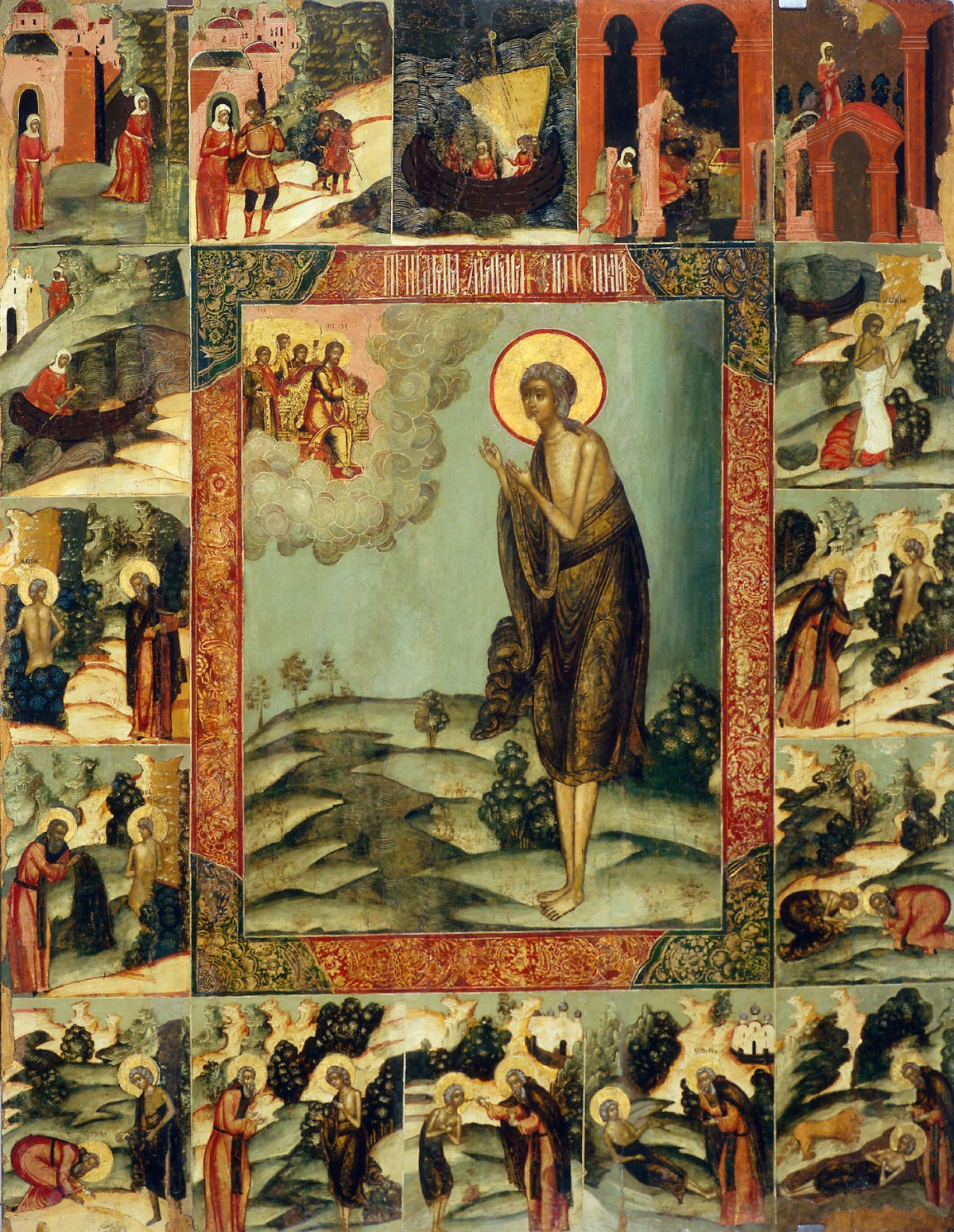
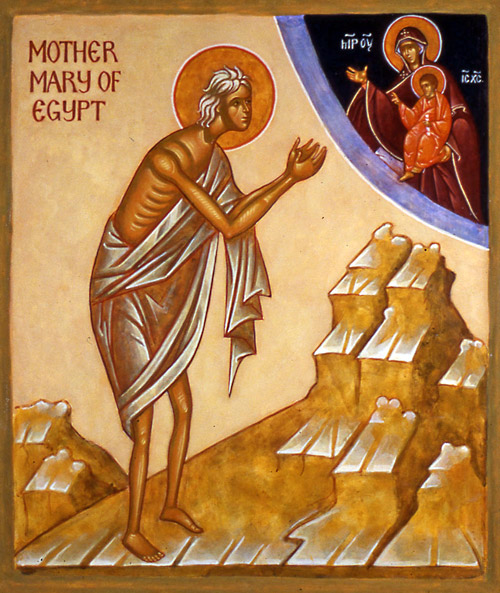
mary_of_egypt2.jpg


But when I trod on the doorstep which everyone passed, I was stopped by some force which prevented by entering. Meanwhile I was brushed aside by the crowd …


If we were in that mood we would, when we come to the doors of the church, be, however little, like Mary of Egypt. We would stop and say, ‘How can I come in?’ And if we did that with our whole heart, broken-heartedly, with a sense of horror of the fact that we are so distant from God, so alien, so unfaithful to Him, then the doors would open and we would see that we are not simply in a big space surrounded with walls but we are in a space which is God’s Heaven come to earth.
 Let us ask ourselves freely today how do we resemble, or not, Mary of Egypt

Mary of Egypt went through a tragedy before she met Christ. She was a sinner. She was a harlot. She was unfaithful to God in her soul and in her body. She had no reverence for this body which God had created and this soul. And yet she was tragically confronted with the fact that there was no way for her into the temple of God unless she rejected evil and chose purity, repentance, newness of life.

Let us ask ourselves freely today how do we resemble, or not, Mary of Egypt – Mary who had lived her life according to her own ways and desires, followed all temptations of her body and soul; and one day realised that as she was, she could not enter the temple of God.

So easily do we enter the divine temple, forgetting so easily that the church into which we come is a small part of a world that has chosen to be alien to God, that has rejected God, lost interest in Him; and that the few believers have created for God a place of refuge – yes, the church is the fullness of Heaven, and at the same time a tragic place of refuge, the only place where God has a right to be because He is wanted. And when we come here, we enter into the divine realm. We should come into it with a sense of awe, not just walk into it as into a space but walk into it as a space which is already the divine Kingdom.

Holy Week: How Can I Prepare Worthily For Easter?
If we were in that mood we would, when we come to the doors of the church, be, however little, like Mary of Egypt. We would stop and say, ‘How can I come in?’ And if we did that with our whole heart, broken-heartedly, with a sense of horror of the fact that we are so distant from God, so alien, so unfaithful to Him, then the doors would open and we would see that we are not simply in a big space surrounded with walls but we are in a space which is God’s Heaven come to earth.

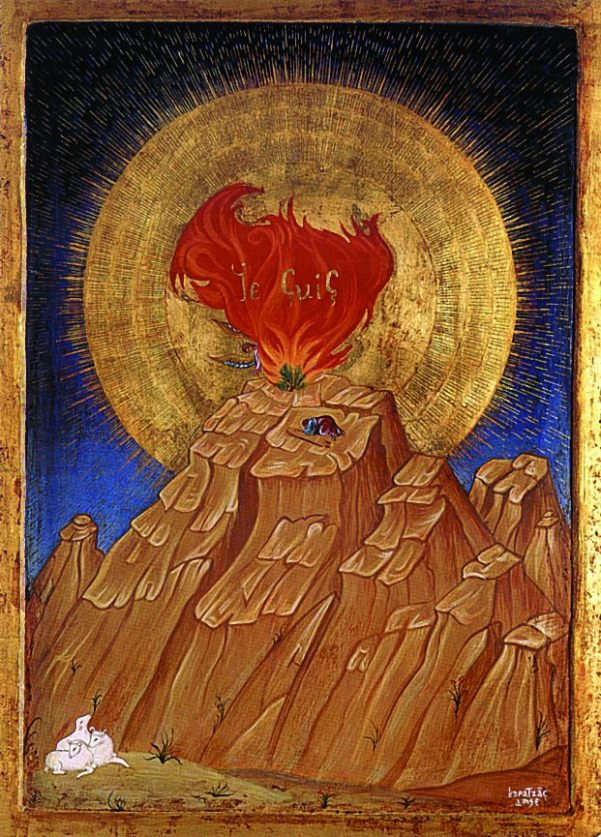
Let us therefore learn from this experience what it means to go step by step towards the Resurrection, because in order to reach the Resurrection we must go through Calvary, we must go through the tragedy of Holy Week and make it our own, partaking with Christ and His disciples and the crowds around in the horror, the terror of it; and also experience it as a scorching fire that will burn in us all that is unworthy of God and make us clean. And perhaps one day, when the fire will have burnt everything which is not worthy of God, each of us may become an image of the burning bush, aflame with divine fire and not consumed, because only that which could survive the fire of God would have remained is us. Amen.

burning.jpg

A Sermon on St. Mary of Egypt by METROPOLITAN ANTHONY OF SOUROZH

Holy Week: How Can I Prepare Worthily For Easter?

Rejected By The Church


“If You Cross The Jordan, …
… You Will Find Glorious Rest”

mary1

The holy day of the Exaltation of the Cross dawned while I was still flying about — hunting for youths. At daybreak I saw that everyone was hurrying to the church, so I ran with the rest. When the hour for the holy elevation approached, I was trying to make my way in with the crowd which was struggling to get through the church doors. I ad at last squeezed through with great difficulty almost to the entrance of the temple, from which the lifegiving Tree of the Cross was being shown to the people. But when I trod on the doorstep which everyone passed, I was stopped by some force which prevented by entering. Meanwhile I was brushed aside by the crowd and found myself standing alone in the porch. Thinking that this had happened because of my woman’s weakness, I again began to work my way into the crowd, trying to elbow myself forward. But in vain I struggled. Again my feet trod on the doorstep over which others were entering the church without encountering any obstacle. I alone seemed to remain unaccepted by the church. It was as if there was a detachment of soldiers standing there to oppose my entrance. Once again I was excluded by the same mighty force and again I stood in the porch. 

mary2

Having repeated my attempt three or four times, at last I felt exhausted and had no more strength to push and to be puched, so I went aside and stood in a corner of the porch. And only then with great difficulty it began to dawn on me, and I began to understand the reason why I was prevented from being admitted to see the life-giving Cross. The word of salvation gently touched the eyes of my heart and revealed to me that it was my unclean life which barred the entrance to me. I began to weep and lament and beat my breast, and to sigh from the depths of my heart. And so I stood weeping when I saw above me the ikon of the most holy Mother of God. And turning to her my bodily and spiritual eyes I said: 

`O Lady, Mother of God, who gave birth in the flesh to God the Word, I know, O how well I know, that it is no honour or praise to thee when one so impure and depraved as I look up to thy ikon, O ever-virgin, who didst keep thy body and soul in purity. rightly do I inspire hatred and disgust before thy virginal purity. But I have heard that God Who was born of thee became man on purpose to call sinners to repentance. Then help me, for I have no other help. Order the entrance of the church to be opened to me. Allow me to see the venerable Tree on which He Who was born of thee suffered in the flesh and on which He shed His holy Blood for the redemption of sinners an for me, unworthy as I am. Be my faithful witness before thy son that I will never again defile my body by the impurity of fornication, but as soon as I have seen the Tree of the Cross I will renounce the world and its temptations and will go wherever thou wilt lead me.’

mary5

Thus I spoke and as if acquiring some hope in firm faith and feeling some confidence in the mercy of the Mother of God, I left the place where I stood praying. And I went again and mingled with the crowd that was pushing its way into the temple. And no one seemed to thwart me, no one hindered my entering the church. I was possessed with trembling, and was almost in delirium. Having got as far as the doors which I could not reach before — as if the same force which had hindered me cleared the way for me — I now entered without difficulty and found myself within the holy place. And so it was I saw the lifegiving Cross. I saw too the Mysteries of God and how the Lord accepts repentance. Throwing myself on the ground, I worshipped that holy earth and kissed it with trembling. The I came out of the church and went to her who had promised to be my security, to the place where I had sealed my vow.

mary4

And bending my knees before the Virgin Mother of God, I addressed to her such words as these: 

`O loving Lady, thou hast shown me thy great love for all men. glory to God Who receives the repentance of sinners through thee. What more can I recollect or say, I who am so sinful? It is time for me, O Lady to fulfil my vow, according to thy witness. Now lead me by the hand along the path of repentance!’ And at these words I heard a voice from on high: 

`If you cross the Jordan,

you will find glorious rest.’

Hearing this voice and having faith that it was for me, I cried to the Mother of God: 

`O Lady, Lady, do not forsake me!’

With these words I left the porch of the church and set off on my journey. As I was leaving the church a stranger glanced at me and gave me three coins, saying: 

`Sister, take these.’

mary6

And, taking the money, I bought three loaves and took them with me on my journey, as a blessed gift. I asked the person who sold the bread: `Which is the way to the Jordan?’ I was directed to the city gate which led that way. Running on I passed the gates and still weeping went on my journey. Those I met I asked the way, and after walking for the rest of that day (I think it was nine o’clock when I saw the Cross) I at length reached at sunset the Church of St. John the Baptist which stood on the banks of the Jordan. After praying in the temple, I went down to the Jordan and rinsed my face and hands in its holy waters. I partook of the holy and life-giving Mysteries in the Church of the Forerunner and ate half of one of my loaves. Then, after drinking some water from Jordan, I lay down and passed the night on the ground. In the morning I found a small boat and crossed to the opposite bank. I again prayed to Our Lady to lead me whither she wished. Then I found myself in this desert and since then up to this very day I am estranged from all, keeping away from people and running away from everyone. And I live here clinging to my God Who saves all who turn to Him from faintheartedness and storms.” 

mary3

If You Cross The Jordan, You Will Find Glorious Rest [True Peace]

Committing Sins and Committing to God

“Tomorrow heralds the end of Great Lent, since it is the ‘First Resurrection’, Lazarus Saturday, which is followed by Palm Sunday, the Entry of our Lord into Jerusalem, and then by Passion Week will be over. Let us ponder still, once more, on another entry into Jerusalem, not the Entry into Jerusalem of our Lord, but the entry into Jerusalem of Mary of Egypt. What is her significance today?

Let us ponder on the words of the Mother of God, which led Mary to her salvation through repentance and her greatness: ‘If you cross the Jordan, you will find true peace’. These mysterious words are mystically addressed to each of us; the interpretation of their mystery is open to the souls of each of us, but only if we ask the Mother of God and St Mary to guide us. And then we shall find our own ‘entry into Jerusalem’.”

(Based on A Sermon on St. Mary of Egypt by Archpriest Andrew Philips)

Holy Mother Mary, pray to God for us!

mary7

Unaccepted By The Church


“If You Cross The Jordan, …
… You Will Find Glorious Rest”

mary1

The holy day of the Exaltation of the Cross dawned while I was still flying about — hunting for youths. At daybreak I saw that everyone was hurrying to the church, so I ran with the rest. When the hour for the holy elevation approached, I was trying to make my way in with the crowd which was struggling to get through the church doors. I ad at last squeezed through with great difficulty almost to the entrance of the temple, from which the lifegiving Tree of the Cross was being shown to the people. But when I trod on the doorstep which everyone passed, I was stopped by some force which prevented by entering. Meanwhile I was brushed aside by the crowd and found myself standing alone in the porch. Thinking that this had happened because of my woman’s weakness, I again began to work my way into the crowd, trying to elbow myself forward. But in vain I struggled. Again my feet trod on the doorstep over which others were entering the church without encountering any obstacle. I alone seemed to remain unaccepted by the church. It was as if there was a detachment of soldiers standing there to oppose my entrance. Once again I was excluded by the same mighty force and again I stood in the porch. 

mary2

Having repeated my attempt three or four times, at last I felt exhausted and had no more strength to push and to be puched, so I went aside and stood in a corner of the porch. And only then with great difficulty it began to dawn on me, and I began to understand the reason why I was prevented from being admitted to see the life-giving Cross. The word of salvation gently touched the eyes of my heart and revealed to me that it was my unclean life which barred the entrance to me. I began to weep and lament and beat my breast, and to sigh from the depths of my heart. And so I stood weeping when I saw above me the ikon of the most holy Mother of God. And turning to her my bodily and spiritual eyes I said: 

`O Lady, Mother of God, who gave birth in the flesh to God the Word, I know, O how well I know, that it is no honour or praise to thee when one so impure and depraved as I look up to thy ikon, O ever-virgin, who didst keep thy body and soul in purity. rightly do I inspire hatred and disgust before thy virginal purity. But I have heard that God Who was born of thee became man on purpose to call sinners to repentance. Then help me, for I have no other help. Order the entrance of the church to be opened to me. Allow me to see the venerable Tree on which He Who was born of thee suffered in the flesh and on which He shed His holy Blood for the redemption of sinners an for me, unworthy as I am. Be my faithful witness before thy son that I will never again defile my body by the impurity of fornication, but as soon as I have seen the Tree of the Cross I will renounce the world and its temptations and will go wherever thou wilt lead me.’

mary5

Thus I spoke and as if acquiring some hope in firm faith and feeling some confidence in the mercy of the Mother of God, I left the place where I stood praying. And I went again and mingled with the crowd that was pushing its way into the temple. And no one seemed to thwart me, no one hindered my entering the church. I was possessed with trembling, and was almost in delirium. Having got as far as the doors which I could not reach before — as if the same force which had hindered me cleared the way for me — I now entered without difficulty and found myself within the holy place. And so it was I saw the lifegiving Cross. I saw too the Mysteries of God and how the Lord accepts repentance. Throwing myself on the ground, I worshipped that holy earth and kissed it with trembling. The I came out of the church and went to her who had promised to be my security, to the place where I had sealed my vow.

mary4

And bending my knees before the Virgin Mother of God, I addressed to her such words as these: 

`O loving Lady, thou hast shown me thy great love for all men. glory to God Who receives the repentance of sinners through thee. What more can I recollect or say, I who am so sinful? It is time for me, O Lady to fulfil my vow, according to thy witness. Now lead me by the hand along the path of repentance!’ And at these words I heard a voice from on high: 

`If you cross the Jordan,

you will find glorious rest.’

Hearing this voice and having faith that it was for me, I cried to the Mother of God: 

`O Lady, Lady, do not forsake me!’

With these words I left the porch of the church and set off on my journey. As I was leaving the church a stranger glanced at me and gave me three coins, saying: 

`Sister, take these.’

mary6

And, taking the money, I bought three loaves and took them with me on my journey, as a blessed gift. I asked the person who sold the bread: `Which is the way to the Jordan?’ I was directed to the city gate which led that way. Running on I passed the gates and still weeping went on my journey. Those I met I asked the way, and after walking for the rest of that day (I think it was nine o’clock when I saw the Cross) I at length reached at sunset the Church of St. John the Baptist which stood on the banks of the Jordan. After praying in the temple, I went down to the Jordan and rinsed my face and hands in its holy waters. I partook of the holy and life-giving Mysteries in the Church of the Forerunner and ate half of one of my loaves. Then, after drinking some water from Jordan, I lay down and passed the night on the ground. In the morning I found a small boat and crossed to the opposite bank. I again prayed to Our Lady to lead me whither she wished. Then I found myself in this desert and since then up to this very day I am estranged from all, keeping away from people and running away from everyone. And I live here clinging to my God Who saves all who turn to Him from faintheartedness and storms.” 

mary3

If You Cross The Jordan, You Will Find Glorious Rest [True Peace]

Committing Sins and Committing to God

“Tomorrow heralds the end of Great Lent, since it is the ‘First Resurrection’, Lazarus Saturday, which is followed by Palm Sunday, the Entry of our Lord into Jerusalem, and then by Passion Week will be over. Let us ponder still, once more, on another entry into Jerusalem, not the Entry into Jerusalem of our Lord, but the entry into Jerusalem of Mary of Egypt. What is her significance today?

Let us ponder on the words of the Mother of God, which led Mary to her salvation through repentance and her greatness: ‘If you cross the Jordan, you will find true peace’. These mysterious words are mystically addressed to each of us; the interpretation of their mystery is open to the souls of each of us, but only if we ask the Mother of God and St Mary to guide us. And then we shall find our own ‘entry into Jerusalem’.”

(Based on A Sermon on St. Mary of Egypt by Archpriest Andrew Philips)

Holy Mother Mary, pray to God for us!

mary7

A Wounded Hand Nailed to the Cross

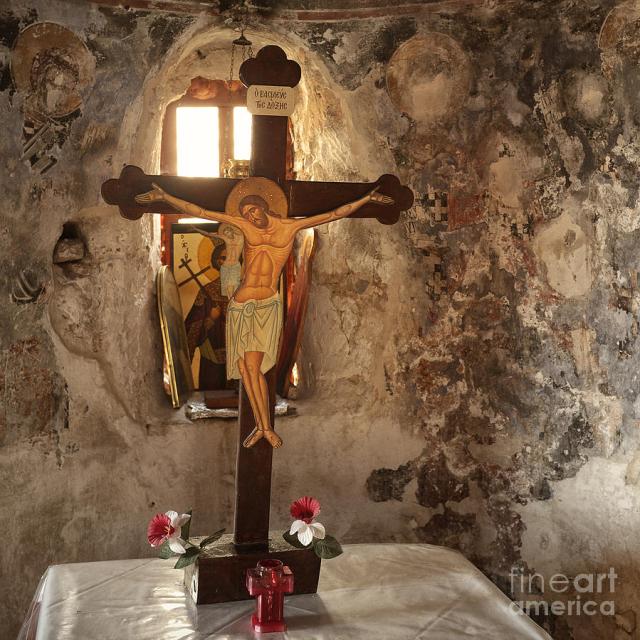
crucifix-in-orthodox-church-grigorios-moraitis.jpg

It was embittered!

Lord, by this time he stinks

A Retreat and Pilgrimage to Panagia Eleousa, Mikrokastro — Reflections 

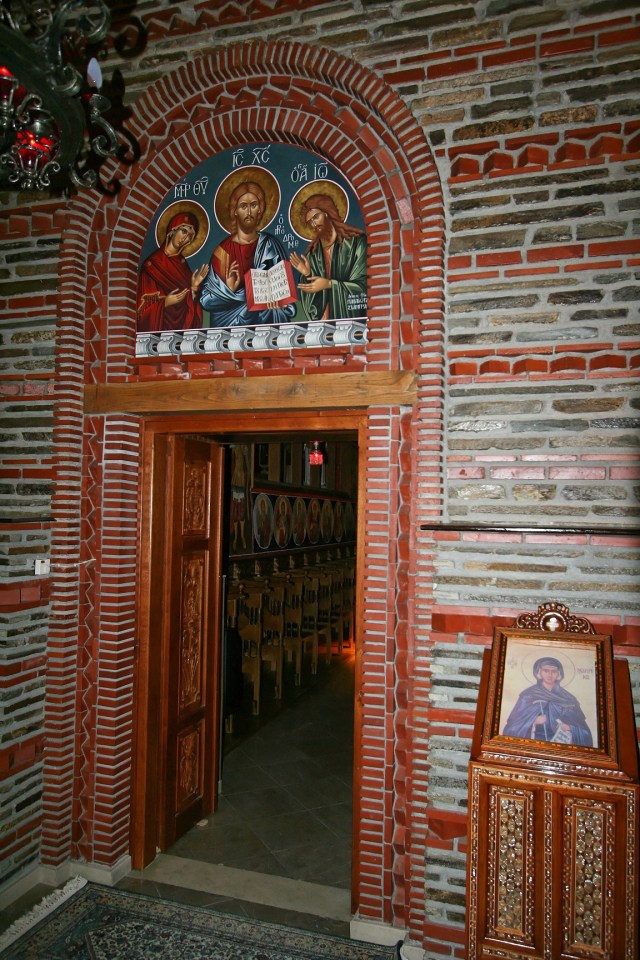
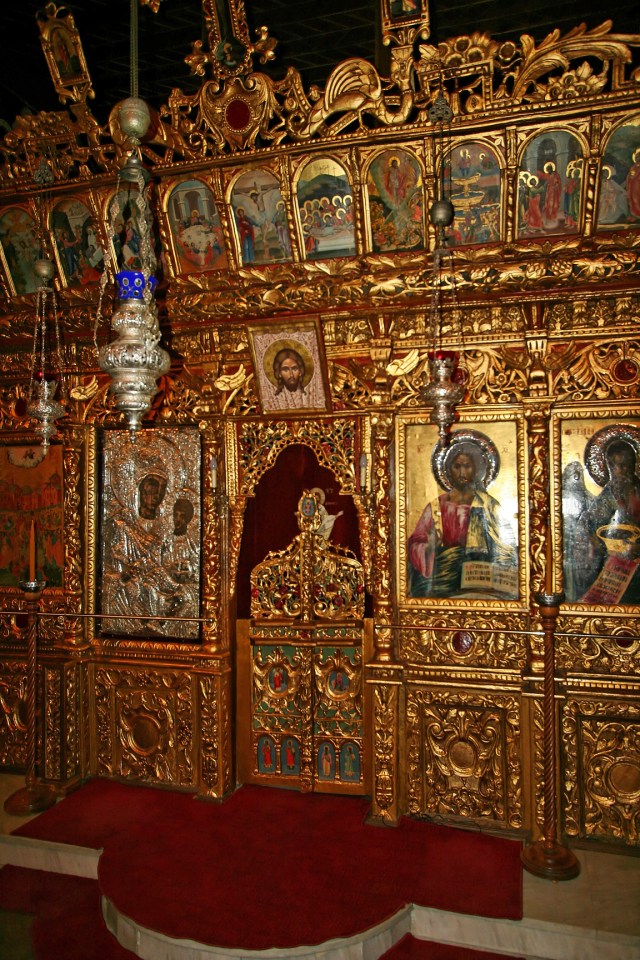
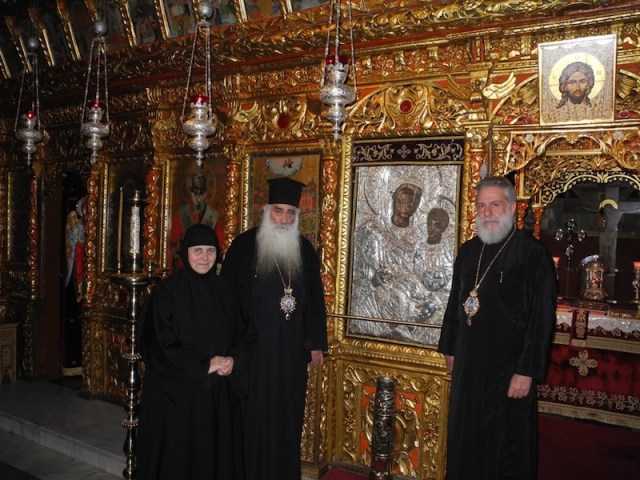
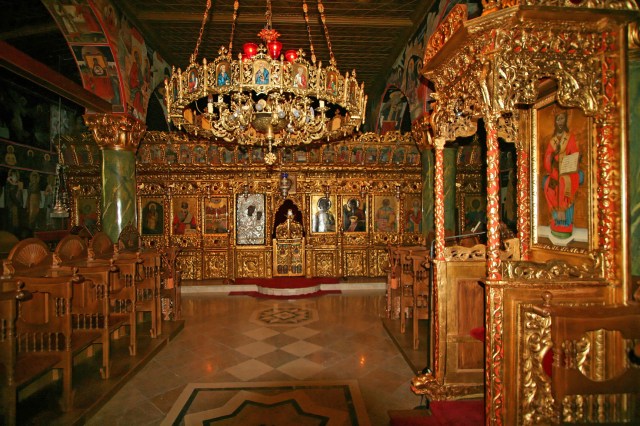
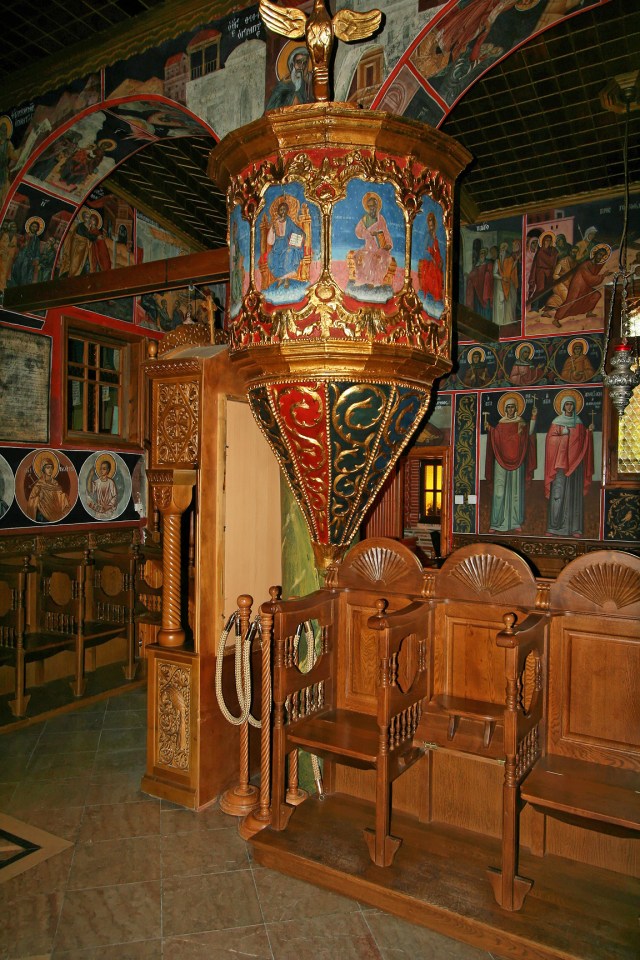
A retreat! Amidst various Lenten temptations and “the purifying draught of dishonour, sneers, derision and insults”! Mikrokastro monastery is my haven of peace, silence, hesychia and spiritual refreshment under the protecting Veil of the Theotokos. The grace-filled presence of Panagia Eleousa and the mesmerizing beauty of the Akathist Vigil at Mikrokastro monastery have offered me, again, a timely refuge! 


The exercise of authority is not a stone hand in a velvet glove- it is a wounded hand nailed to the Cross. (My spiritual father’s words)


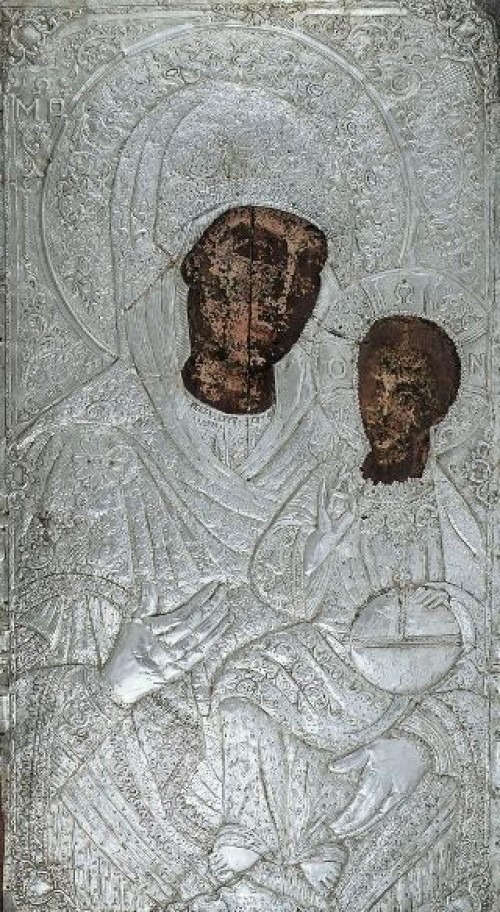
eleousa


Wonder-working icon of Panagia Eleousa, of Mercy at Mikrokastro


How difficult at times to show patience in annoyances and unmurmuring endurance of scorn, disregard of insults, and the habit, when wronged, of bearing it sturdily; when slandered, of not being indignant; when humiliated, not to be angry; when condemned, to be humble”, but how difficult does this feel! (St. John Climacus, Ladder of Divine Ascent, Step 2:8) Indeed a narrow path to theosis!  

It was embittered!

Lord, by this time he stinks


To the Theotokos, let us run now most fervently,

As sinners and lowly ones

Let us fall down in repentance,

Crying from the depths of our soul:

Lady, come and help us,

Have compassion upon us;

Hasten now for we are lost

In the host of our errors;

Do not turn your servants away,

For you alone are a hope to us.


It was embittered!

Lord, by this time he stinks

I have always been attracted to spiritual retreats,  removing myself from the usual environment to allow precious time for silence, hesychia, reflection prayer, meditation, and rest.  Have you ever felt the need to try to try to “Take stock” of your life and/or  re-commit to connecting with the spiritual aspects of life? I often feel such a need,  as I am usually laden with complex administrative duties and time-consuming writing tasks. Lately I have been so busy with translating a huge book on St. Paisios’ Life and Works, the forthocoming, 2nd edition of Elder [now Saint] Paisios of Mount Athos Hardcover – 2012, by Elder IsaacI understand that “Translation [can be] a Means of Grace” but with the book’s 750 pages (!) I sometimes feel doomed 😳 

It was embittered!

Lord, by this time he stinks

Silence has always been blue to me!

Lake Mapourika


We need to find God, and he cannot be found in noise and restlessness. God is the friend of silence. See how nature – trees, flowers, grass- grows in silence; see the stars, the moon and the sun, how they move in silence… We need silence to be able to touch souls.


silence4

“If you are praised, be silent. If you are scolded, be silent. If

you incur losses, be silent. If you receive profit, be silent. If

you are satiated, be silent. If you are hungry, also be silent.

And do not be afraid that there will be no fruit when all dies

down; there will be! Not everything will die down. Energy will

appear; and what energy! “ St. Feofil, the Fool for Christ


*

 
“Anyone who has had their heart broken learns to keep a little safety area.”

It was embittered!

Lord, by this time he stinks

PILGRIMAGES: PAINFUL AND DANGEROUS DESERTS

Pilgrimages are like crossing a desert. They can be painful if taken seriously, and can even be dangerous. They are painful because they crack the shield of one’s comfortable certainty that things can only be done one way. In truth, nothing is one, except Faith itself; by comparison, the manners in which this faith ‘becomes flesh’ are countless. There are as many shapes and nuances of the faith as there are human beings. This is a painful lesson to learn, but it is absolutely necessary. Without this understanding, one loses sight of the personal nature of any spiritual experience. There are as many prayers as there are sighs, and there are as many sighs as there are human hearts. There is no rule on Heaven or earth to regulate the outpouring of love or pain of one’s heart.

It was embittered!

Lord, by this time he stinks …


m2

m34

Suddenly, ‘The’ traditions of your local region become just that: local traditions, creations of a certain historical and cultural context which reflect the faith. As a pilgrim, you unavoidably find yourself immersed in a different context, a different embodiment of the same faith – other customs, other ways to pray, other saints and prayers, all embraced by the faithful in that region with the same absolute conviction that these local expressions of faith are ‘The’ only expressions of faith.


m8

Pilgrimages can also be dangerous and may lead (paradoxically) to a weakening of one’s faith. To some extend, this is a natural progression – when you grow in your faith, there is a moment when it becomes clear that what you previously held to be absolute truths are actually not. There are always other ways to express one’s faith. If you are weak of heart, this process of leaving your past behind may be a dangerous moment, and you risk losing your path while crossing the desert.


It was embittered!

Lord, by this time he stinks


However, if you take courage and press forward, the Spirit will lead you to a new understanding – a higher one, a more loving one, embracing the endless diversity of the personal ways in which we manifest our One Faith. When you leave behind the comfort of your home, prepare yourself for the dangers of the desert, but don’t lose heart: at the end of it all, God has already prepared a better, higher, more spiritual home for you.

It was embittered!

Lord, by this time he stinks


m9

m33


Mother Theologia, a true Mother, and Siatistis Pavlos, both immensely popular and widely revered throughout Greece


m10m7


“The first stage of tranquility consists in silencing the lips when the heart is excited. The second, in silencing the mind when the soul is still excited. The goal is a perfect peacefulness even in the middle of the raging storm.” (Ibid, Step 8.4) The Ladder of Divine Ascent is also known as The Monastic Bible. In many monasteries, it is a tradition to read this book during Trapeza meals throughout Great Lent.


It was embittered!

Lord, by this time he stinks

m11


There is only one way left to escape the alienation of present day society: to retreat ahead of it.

It was embittered!

Lord, by this time he stinks


m6

m31

There’s no cure, except the retreat into Love,
For the suffering of subtly afflicted hearts.

Rumi (1207 – 1273)


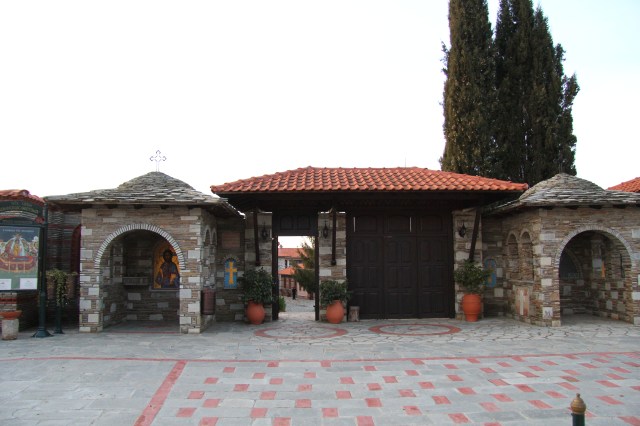
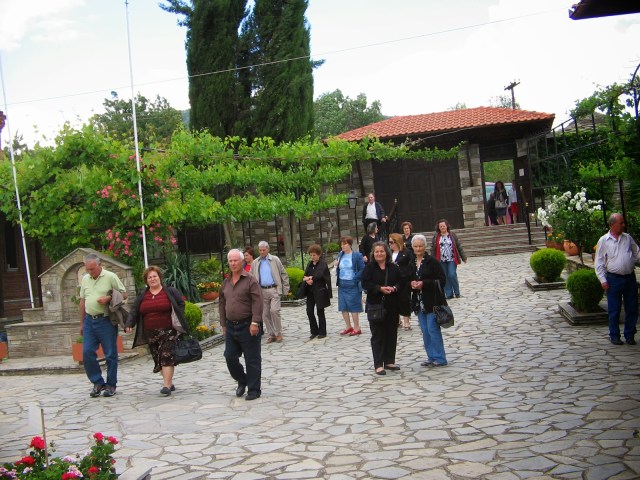
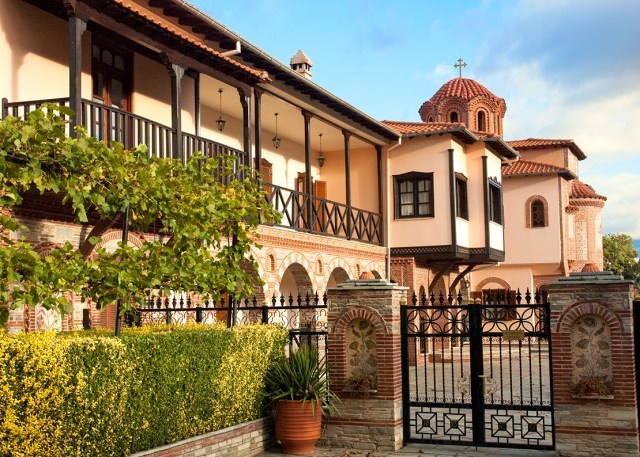
Mikrokastro is a village in northern Greece, near Siatista in the Kozani district. It derives its name from Mount Kastraki which lies on the other side of the village. This mountain is on the way to Saitista and is known for the massacre which occurred there at the hands of the Turks in November 1912, which is the year the inhabitants gained independence from the Turks. The monastery of the Dormition of the Theotokos was founded in 1753 and houses the miraculous icon of The wonder-working icon of Panagia Eleousa, Theotokos of Mercy, dating back to 1603, maybe as back as the 13th century, wondrously alive, even to the remotest ‘corners of the world’. The monastery at one time operated an old age home, an orphanage, and a hospital for sick children. During war times many sought refuge and sustenance from the monastery, and in turn the people loved the monastery and the bishop who made it  a center of the people’s lives. The monastery is the heart of western Macedonia and is truly a place where the command to “love one another” is exemplified.

*

Yearly on the 15th of August the male inhabitants of Siatista parade with their horses (the Cavalry of Siatista) in a procession of the icon from the monastery to Siatista. In Siatista a party ensues and the men dance on the baks of the horses while the wine flows freely, and people break their fasts with a great feast among friends and family till the early morning hours. This festivity goes back to Ottoman times when the Turks granted the inhabitants one day of freedom to do as they wished according to their traditions, and the men would ride their decorated horses to show their leventia (Greek word for manliness and courage).

  • Be sure to stop if near! The monastery is famous for its hospitality! [Telephone number:  +302465071307 ]


PILGRIMAGES: PAINFUL AND DANGEROUS DESERTS

It was embittered!

Lord, by this time he stinks


It was embittered, for it was abolished.

It was embittered, for it was mocked.

It was embittered, for it was slain.

It was embittered, for it was overthrown.

It was embittered, for it was fettered in chains.

It took a body, and met God face to face.

It took earth, and encountered Heaven. 

It took that which was seen, and fell upon the unseen.

O Death, where is your sting?

O Hell, where is your victory?

Christ is Risen!

Christ is risen, and you are overthrown.

Christ is risen, and the demons are fallen.

Christ is risen, and the angels rejoice.

Christ is risen, and life reigns.

Christ is risen, and not one dead remains in the grave.

For Christ, being risen from the dead, is become the first fruits of those who have fallen asleep.

To Him be glory and dominion unto ages of ages. Amen.


To Thee, the Champion Leader

The Akathist Hymn, chanted and in Icons, together with the Miraculous Athonite Akathist icon “Panagia of the Salutations the Myrrhgusher” at Holy Monastery Dionysiou 

akathist1

To Thee, the Champion Leader, we Thy servants dedicate a feast of victory and of thanksgiving as ones rescued out of sufferings, O Theotokos: but as Thou art one with might which is invincible, from all dangers that can be do Thou deliver us, that we may cry to Thee: Rejoice, O Unwedded Bride!

While the Emperor of Byzantium Heracleios was on an expedition to fight the aggression of the Persians on their own grounds, there appeared outside the walls of Constantinople barbaric hordes, mostly Avars. The siege lasted a few months, and it was apparent that the outnumbered troops of the Queen City were reaching desperation. However as history records, the faith of the people worked the impossible. The Venerable Patriarch Sergius with the Clergy and the Official of Byzantium Vonos, endlessly marched along the great walls of Constantinople with an Icon of the Theotokos in hand, and bolstered the faith of the defenders of freedom. The miracle came soon after. Unexpectedly, as the chronicler narrates, a great storm with huge tidal waves destroyed most of the fleet of the enemy, and full retreat ensued. The faithful of Constantinople spontaneously filled the Church of the Theotokos at Vlachernae on the Golden Horn, and with the Patriarch Sergius officiating, they prayed all night singing praises to the Virgin Mary without sitting. Hence the title of the Hymn “Akathistos”, in Greek meaning ‘not seated’.

*

The Akathist Hymn is chanted in all Orthodox Churches throughout the world during the five Fridays in the Great Lent, and constitutes a very concrete spiritual preparation for the Holy Week and Easter Services; a ‘staff’ to help us ascend the spiritual steps of the lengthy Lenten period, to finally reach the peak with our Lord’s Glorious Resurrection. 

*

Panagia herself, appearing to the Saints has said: “I will love, I will protect, and I will shelter every faithful person who greets me every day with the beautiful hymns of My Salutations, and who lives in accordance with the law of God. And on the last day of his life, I will defend him before My Son.”

The Akathist Hymn in Icons

The Laudations of Our Lady of the Akathist

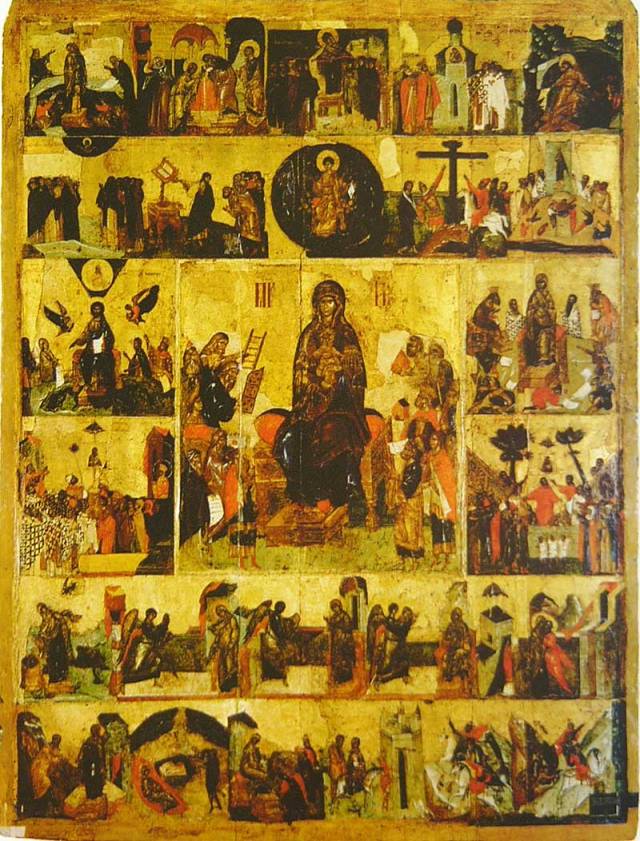
The Akathist to the Mother of God was most probably written by Roman the Melodist in the 6th century and has inspired Iconographers to depict the Akathist in images no less beautiful than the words which inspired them.


Structure of the Hymn; Structure of the Icon


akathist3


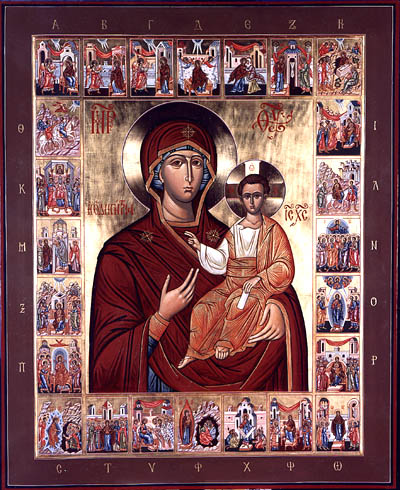
American Icon, bordered by the 24 Stanzas and their corresponding Greek letter


akathist4

Outer border shows 24 Stanzas; Inner border shows Old Testament Prophecies


The Main part of the Akathist Hymn is comprised of 24 stanzas. The stanzas alternate between long and short. Each short stanza is written in prose and ends with the singing of “Alleluia.” Each longer stanza ends with the refrain: “Rejoice, O Bride Unwedded.”Sometimes “Rejoice” is translated as “Hail”; this is probably closer to the Greek word used (Chaíre – Χαῖρε) and explains the name for the service based on this Hymn (and another name for the Icon): the Salutations of the Theotokos.


The stanzas are arranged in an acrostic following the Greek alphabet. Thus, the first stanza, “An Archangel was sent…”, begins with alpha: “γγελος πρωτοστάτης…” whilst the final stanza, “O All-Praised Mother…”, begins with omega: “ πανύμνητε Μῆτερ…”


Each stanza presents us with a scene, which as they progress cover the themes of the Annunciation, the Nativity, Christ, and the Theotokos herself, in that order. It is these scenes which are depicted around the outer border of most “Akathist Icons”.


The Mother of God: at the centre, but not the focus, of the Icon

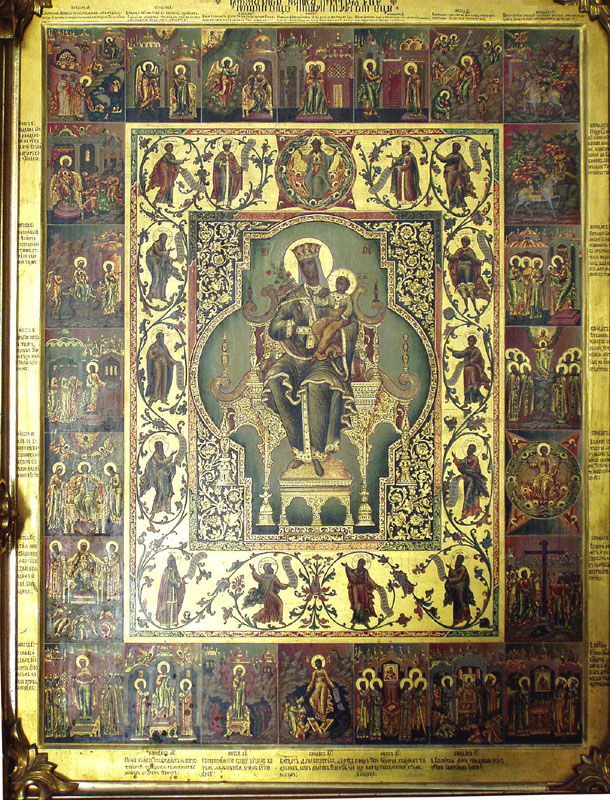
Yaroslav, 18th Century


At the centre of the Icon is the Mother of God to whom the Akathist is dedicated. She is surrounded by a number of people, usually between 11 and 15, who hold appear to be bowing down before her, holding scrolls and other objects. These men are various Old Testament Prophets, and the scrolls they hold are their prophecies relating to the Mother of God. The objects they hold are prefigurations of Mary found in the Old Testament Scriptures, but are also some of the titles given to Mary in the Akathist Hymn.

Despite the honour given to her, Mary sits at the centre of the icon directing us to her Son, our God, sitting in her lap.

As in the Icon at the top of the page, where Mary is not holding the infant Christ (Immanuel), then she is sat amid the praise with her hands held deferentially, palms outward, imploring us to give all honour and glory to God. Surrounding Mary’s seat is a mandorla-shaped wreath representing the Tree of Jesse, which climbs up over the Mother of God’s head to blossom forth an image of Christ Immanuel: God Incarnate. (The use of a “mandorla-wreath” to represent the Tree of Jesse is seen in this painted wall of the Sucevita Monastery, built in the 16th century in Romania).

Thus the Theotokos is the subject of the Icon, just as the Akathist is dedicated to her; however, just as the Akathist glorifies God, the focus of the Icon always leads us back to Jesus Christ. In the Akathist, Mary is not just called “All-glorious temple” but “All-glorious temple of Him Who is above the Seraphim” (from Oikos 8, i.e. the 16th Stanza of the Akathist). The praises of Mary are devoid of meaning without Jesus Christ, the Word of God, Who was incarnate within her. Likewise in the Icon inspired by the Akathist, Mary cannot be separated from her Son, shown either seated upon her, or blossoming above her.

Russian Icon (probably 19th Century)


While singing in honour of Your Son, O Mother of God, we all praise you as a living temple; for the Lord who holds all things in His hand dwelt in your womb, and He sanctified and glorified you, and taught all to cry to you: Hail, O Bride unwedded!

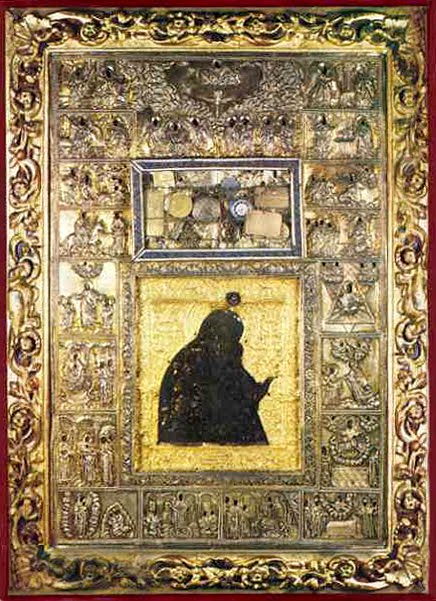
Miraculous icon of Panagia of the Salutations, Dionysiou Monastery, Mount Athos  

akathist5.jpg

Holy Monastery Dionysiou – Panagia of the Salutations the Myrrhgusher
“According to an inscription on the back of this icon, it was given as a gift to Saint Dionysius, founder of the Holy Monastery of Dionysiou on Mount Athos, by Emperor Alexios Komnenos, upon his visit to Trebizond in Asia Minor. According to Holy Tradition, this is the same icon that Patriarch Sergius processed around the walls of Constantinople in 626 A.D. during the reign of Emperor Heraclius. At that time Constantinople was attacked by the Persians and “Scythians” (Avars and Slavs) but saved through the intervention of the Most Holy Theotokos. A sudden hurricane dispersed the fleet of the enemy, casting the vessels on the shore near the great Church of the Theotokos at Blachernae near the Golden Horn. The people spent the whole night in front of this icon thanking her for the unexpected deliverance. In memory of this event the Akathist Hymn is chanted in the Orthodox Church.
In 1592 Algerian pirates stole the icon, but after a fierce storm, a frightening dream, and a great miracle, the leader of the pirates was forced to return it to the monastery. They had hid it in a chest, but the icon shattered it and it was drenched in myrrh. Because of this miracle, some pirates repented and entered the monastery to become monastics.
In 1767 certain theives from Dalmatia stole the icon, and upon their return to Dalmatia were apprehended by Greek shepherds who took the icon and brought it to Skopelos. On Skopelos island the Greek community leaders elected by the Turks, known as Dimogerontes, denied to the Dionysian monks from Mount Athos the return of the icon when they came to request its return. After three months Skopelos was punished by a plague which brought great tragedy to the island, and the Dimogerontes repented and had the icon returned to Dionysiou Monastery and also established a metochion for the monastery on the island.
The icon is small and darkened by time. It is housed in a chapel dedicated to the icon at Dionysiou Monastery where the Akathist Hymn is sung daily.” 
  
Panagia herself, appearing to the Saints has said: “I will love, I will protect, and I will shelter every faithful person who greets me every day with the beautiful hymns of My Salutations, and who lives in accordance with the law of God. And on the last day of his life, I will defend him before My Son.”


Source: iconreader.wordpress.com


St. Porphyrios and a Nightingale

My heart has been very moved by a passage from Wounded by Love, the Life and Wisdom of Saint Porphyrios. It speaks to so much of my own life and the world around me that for this post I would like to invite you in to hear his wonderful story of one lone nightingale. May the Celtic Orthodox spirit of seeing God’s energia in His creation bring peace to you. Please let it sink deep into your heart, I know that I am trying to do the same. Holy Father Porphyrios, pray to God for us!

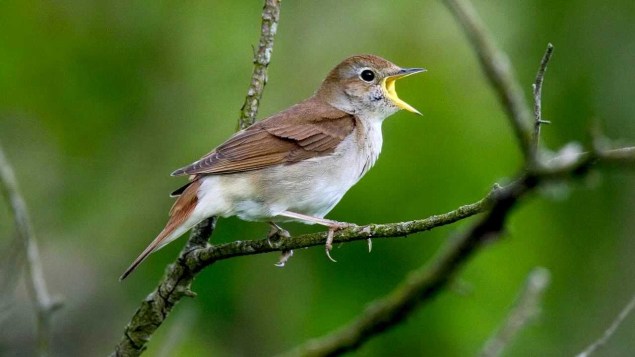
One morning I was walking alone in the virgin forest. Everything, freshened by the morning dew, was shining in the sunlight. I found myself in a gorge. I walked through it and sat on a rock. Cold water was running peacefully beside me and I was saying the prayer. Complete peace. Nothing could be heard. After a while the silence was broken by a sweet, intoxicating voice singing and praising the Creator. I looked. I couldn’t discern anything. Eventually, on a branch opposite me I saw a tiny bird. It was a nightingale. I listened as the nightingale trilled unstintingly, its throat puffed out to bursting in sustained song. The microscopic little bird was stretching back its wings in order to find power to emit those sweetest of tones, and puffing out its throat to produce that exquisite voice. If only I had a cup of water to give it to drink and quench its thirst!

Tears came to my eyes – the same tears of grace that flowed so effortlessly and that I had acquired from Old Dimas. It was the second time I had experienced them.

I cannot convey to you the things I felt, the things I experienced. I have, however, revealed to you the mystery. And I thought, ‘Why does this tiny nightingale produce these songs? Why does it trill like that? Why is it singing that exquisite thought? Why, why, why…why is it bursting its throat? Why, why, for what reason? Is it waiting for someone to praise it? Certainly not. No one there will do that.’ So I philosophized to myself. This sensitivity I acquired after the experience with Old Dimas. Previously I didn’t have it. What did that nightingale not tell me! And how much did I say to it in silence: ‘Little nightingale, who told you that I would pass by here? No one comes here. It’s such an out-of-the-way place. How marvelously you unceasingly carry on your duty, your prayer to God! How much you tell me, and how much you teach me, little nightingale! My God, how I am moved. With your warbling, dear nightingale, you show me how to hymn God, you teach me a thousand things beyond number…’

My poor health does not allow me to narrate all this to you as I feel it. A whole book could be written about it. I loved that nightingale very much. I loved it and it inspired me. I thought, ‘Why it and not me? Why does it hide from the world and not me?’ And the thought entered into my mind that I must leave, I must lose myself, I must cease to exist. I said to myself, ‘Why? Did it have an audience? Did it know I was there and could hear it? Who heard it as it was bursting its throat in song? Why did it go to such a hidden location? But what about of all these little nightingales in the middle of the thick forest, in the ravines, night and day, at sunset and sunrise? Who heard their throat-bursting song? Why did they go to such secret places? Why did they puff out their throats to bursting?’ The purpose was worship, to sing to their Creator, to worship God. That’s how I explained it.

I regarded all of them as angels of God, little birds that glorified God the Creator of all and no one heard them. Yes, believe me, they hid themselves so that no one would hear them. They weren’t interested in being heard; but there in solitude, in peace, in the wilderness, in silence, they longed to be heard, but by whom? None other than by the Maker of everything, the Creator of all, by Him who gave them life and breath and voice. You will ask, ‘Did they have consciousness? What am I to say?’ I don’t know if they did it consciously or not. I don’t know. These, after all, are birds. It may be, as Holy Scripture says, that today they live and tomorrow exist no more. We mustn’t think differently from what Holy Scripture says. God may present to us that all these were angels of God. We don’t know about these things. At all events they hid themselves that no one would hear their doxology.

So it is also for the monks there on the Holy Mountain; their life is unknown. You live with your elder and you love him. Prostrations and ascetic struggles are all part of daily life, but you don’t remember them, nor does anyone ask about you, ‘Who is he?’ You live in Christ; you belong to Christ. You live with everything and you live God, in whom all things live and move – in whom and through whom…you enter into the uncreated Church and live there unknown. And although you devote yourself in prayer to your fellow men, you remain unknown to all men, and perhaps they will never know you.

A Gaelic Blessing

Deep peace of the running wave to you.
Deep peace of the flowing air to you.
Deep peace of the quiet earth to you.
Deep peace of the shining stars to you.
Deep peace of the gentle night to you.
Moon and stars pour their healing light on you.
Deep peace of Christ,
of Christ the light of the world to you.
Deep peace of Christ to you


nightingale.jpg

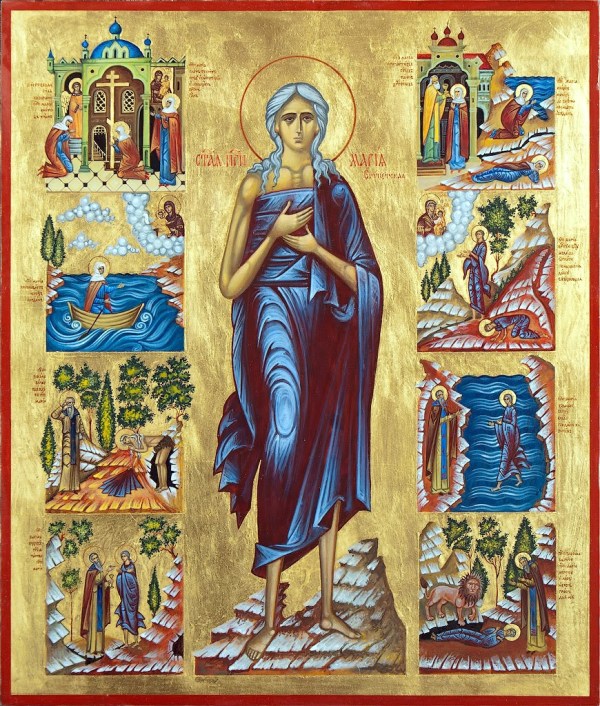
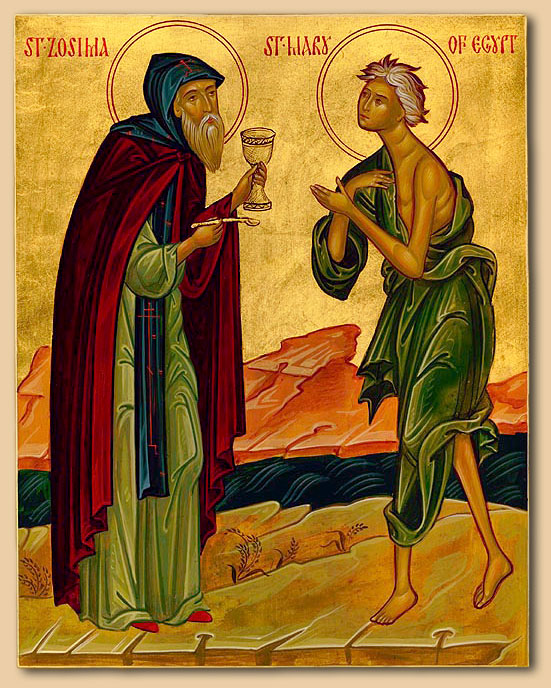
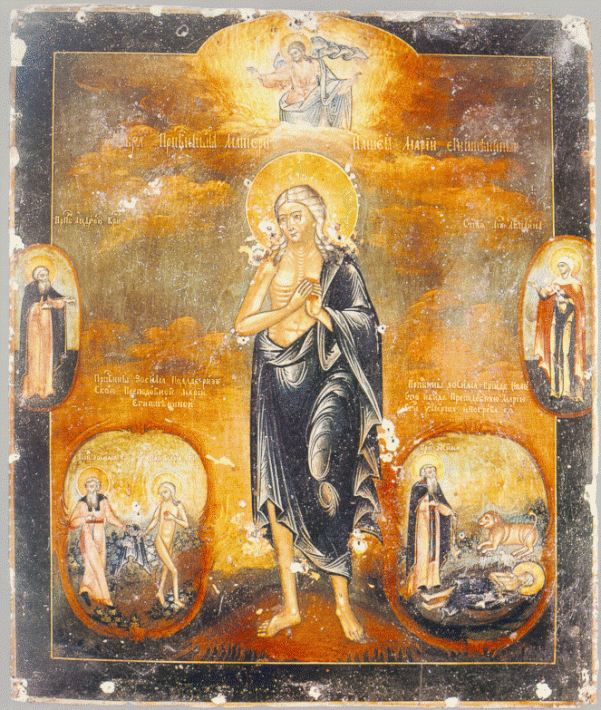
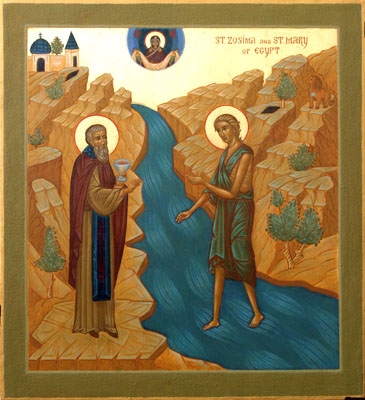
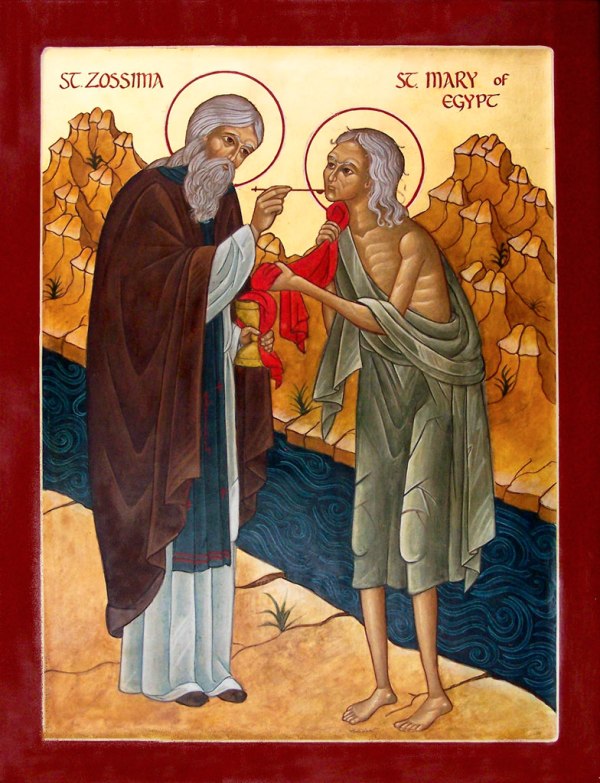
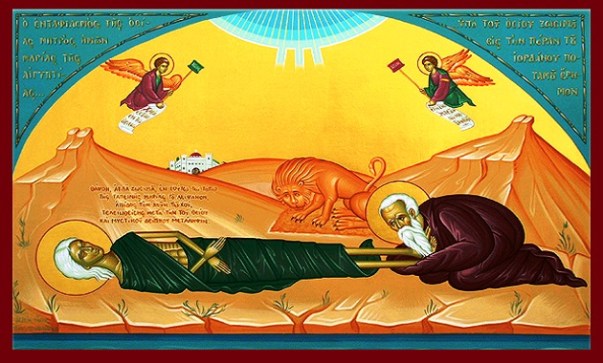
St. Mary of Egypt and St. Zosimas


A New Icon of St. Mary of Egypt and St. Zosimas: Notes on Form & Symbolism — Orthodox Arts Journal

A New Icon of St. Mary of Egypt and St. Zosimas Notes on Form & Symbolism By Fr. Silouan Justiniano St. Mary of Egypt receiving the Holy Eucharist from St. Zosimas by Fr. Silouan Justiniano. Egg tempera on wood, 10 7/8 in. x 19 in. In thee, O Mother, was exactly preserved what was…

via A New Icon of St. Mary of Egypt and St. Zosimas: Notes on Form & Symbolism — Orthodox Arts Journal

mary_of_egypt2