Why Be a Monastic? (II)

monk1

Why be a monk?

What is a monk? One who strives to love God with all his heart, all his soul and all his mind and all his strength, and to love his neighbor as himself.

Monasticism is the heart of the Christian Church. It is radical discipleship to Christ, taking the Lord at His word in the Scriptures, and striving to live by it in an integral way.

Monasticism is about living the Gospel without compromise. It is about living in Christ by the Holy Spirit, and growing by grace to the measure of the stature of the fullness of Christ. Monasticism is about life lived in obedience to Christ, in self-denial and bearing the cross of whatever suffering God sends us to help us work out our salvation. Monasticism is about working out our salvation in a community of like- minded men, by learning to love our brother “who is our life” (St Silouan).

Who can become a monk? Anyone. BUT, that does not mean that everyone is called to it. It is a calling, a charism, a gift. There are no impediments to becoming a monk. But not every community is able to receive everyone.

It is important to remember that monastic life is about striving for Christ. A monastery is not a psychiatric hospital, not a poorhouse, retirement home, group home or halfway house. To use it as such is to abuse it. To try to use it as a means to escape the responsibilities of life, or in order to be taken care of, will only lead to disappointment. This does not mean that the monastery does not take care of the ill, elderly or those in need. Those are important ministries of a monastic community. But to join the monastery to try to escape the necessities of living, working and relating in the world is to come to it for the wrong reason. The only reason to join the monastery is for the love of Christ, and the desire to follow Him.

Preparation for Monastic Life

St Ignatiy Brianchaninov writes that God-pleasing life in the world is the most important preparation for monastic life. This means to fulfill all one’s responsibilities,

and live according to the commandments, working to support oneself, and being merciful to the needy. And, of course, one must go to church, receive the sacraments, and live a life of prayer and fasting.

To join the monastery, on a practical level, one should have all one’s debts paid off. Bankruptcy, for the sake of convenience or laziness, is not an option. It may be best to live close to the monastery while paying off one’s debts, and do whatever it is that will pay them off as quickly as possible, and honorably.

We must battle to overcome consumerism and worldliness while living in the world. The Lord calls us to be “in the world, but not of the world.” If one has children, or ill or elderly parents, one cannot simply abandon them. Their welfare must be seen to. This is an essential Christian duty, which as the Lord tells us, cannot be abolished. It also means that one might have to put off monastic commitment until such issues are
resolved. Those issues have to be dealt with before one enters the community.

One cannot “retire” to a monastery. A monastery is a place of intense struggle, work and constant, demanding effort. Monks often work harder than those who are in the world, with hours per day of services on top of the work load. St Benedict’s motto was “Prayer and work.” We must strive to earn our own living by the work of our own hands. Everyone has to work, to contribute, to share the burden. The difference is that in the monastery, work is sanctified, and work sanctifies us, as our contribution to the life of the whole body. It is a means of serving one another, and of overcoming our selfishness.

Neither can one escape his problems or “issues” in the monastery. In contrast to living in the world, where there are endless distractions to keep us from confronting our problems, emotional and psychological issues, there are no distractions in the monastery. In the monastery, there are no television, movies, radio, newspapers, novels or friends, parties, alcohol or narcotics. There is only the silence, the services, our quiet work, and our prayers. And in the normal course of spiritual development, all our issues come up and hit us squarely in the face.

When to enter the monastic life

The virtually universal consensus of monastic spiritual fathers and mothers is that the younger one enters the monastic life, the better. It becomes harder and harder as one gets older.

In the past, and still in the “old countries,” it was not uncommon for children to enter the monastic life, either with their families or by themselves. Several prominent figures in the Orthodox churches in America became monastics at 11 or 12 years of age: Bp Jovan, Mo Benedicta, Fr Roman. Others entered in their late teens or early twenties.

The best time is generally from 18-25, because one’s identity has not yet crystalized, and one is looking for one’s place in life. From 25-29, one’s identity has

begun to solidify, and one gets into patterns that will be with him for his whole life. The early twenties are a time of great idealism and energy, while the older one gets, that becomes more and more moderated by experience. After 30, and especially after 35, it becomes more and more difficult. Some spiritual fathers recommend that people in their late 40’s and beyond simply remain in the world, in their own homes, and keep to the rule of life given by their spiritual father, a kind of “white monasticism.” Contemporary Roman Catholic monasteries seldom admit people over 40 or 45.

The old Orthodox tradition of retiring to a monastery is a wonderful thing, if one has resources that one can contribute so that he will not be an undue burden on the community. Still, it will require an enormous adjustment for an older person, who has either been on their own or had a family, to adjust to community life.

The Biggest Obstacle

To read about the biggest issue for people joining a monastery, the three ways men are called to the monastic life, according to the Fathers of the Church, how you choose a monastery, the distinctive features of Life in Common, the Koinobion, the Way of Spiritual Growth from Psychological Religion to Authentic Spirituality, the three levels of human life: the carnal man, the natural (“psychic” in Greek), and the spiritual man, spiritual healing and various psychological/ psychiatric health Issues, the Monastic Vows and Gospel Virtues: Poverty, Chastity, Obedience and Stability, and a lot more go to Monastery of St. John Articles and read the article in full.


Why be a monastic? (I)

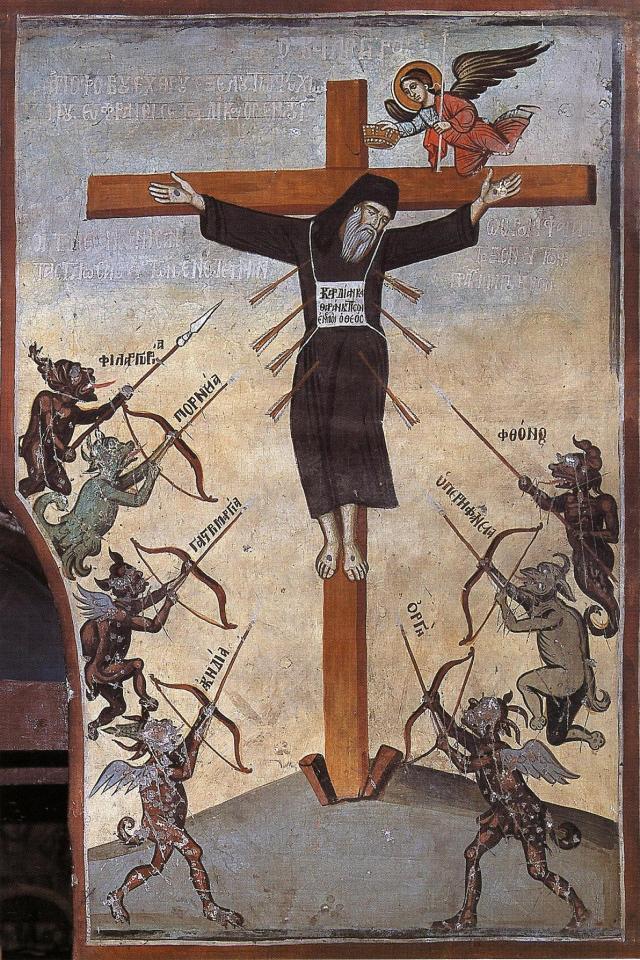
crucified monk.jpg

Monasticism in the Twenty First Century: A Viable Alternative or a Forgotten Ideal?

A brother went to see Abba Joseph and said to him,(subscript: )”Abba, as far as I can I say my prayer rule, I fast a little, I pray and meditate, I live in peace as far as I can, I purify my thoughts. What else can I do?” Then the old man stood up and stretched his hands towards heaven. His fingers became like ten lamps of fire and he said to him, “If you will, you can become all flame.”

This is what monasticism is: a longing for God that knows no limits. It is the beginning of the Age to come, of the Kingdom of Heaven still here on earth. The Church calls monasticism the Angelic Life. According to Holy Tradition, in the 4th century an angel appeared to St. Pachomius, the first of the monks struggling out in the Egyptian desert to establish a monastic community, and gave him a bronze tablet, inscribed with a Rule for his monks to follow. From Apostolic times to the present day thousands, hundreds of thousands, probably millions of people have left everything they had and scorned everything that this world has to offer in order to follow Christ and to live the Gospels more fully.

At times this impulse has been stronger, at times weaker, and the Holy Fathers speak of monasticism as a barometer of spiritual life in the Church. When monastic life flourishes, the faithful are really striving spiritually, and conversely, when few people find inspiration in the monastic ideal, monasteries diminish and are ignored, spiritual life amongst the faithful is on the decline. At the end of the 4th century, when persecution of Christians ceased and the Church knew peace for the first time, but the zeal of converts hadn’t cooled, and many Christians desired to give everything to Christ, monasticism even became a mass movement.

One of the travel writers of the period, St. Palladius, tells of his visit to “Oxyrhynchus, one of the cities of the Thebaid (in Egypt). It is impossible to do justice to the marvels, which we saw there. For the city is so full of monasteries that the very walls resound with the voices of monks. Other monasteries encircle it outside… The temples and capitols of the city were bursting with monks; every quarter of the city was inhabited by them… The monks were almost in the majority over the secular inhabitants… and there is no hour of day or night when they do not offer acts of worship to God… What can one say of the piety of the… people, who when they saw us strangers … approached us as if we were angels? How can one convey an adequate idea of the throngs of monks and nuns past counting? However, as far as we could ascertain from the holy bishop of that place, we would say that he had under his jurisdiction 10,000 monks and 20,000 nuns. It is beyond my power to describe their hospitality and their love for us. In fact each of us had our cloaks torn apart by people pulling us to make us go and stay with them.”

Closer to our own time, in Russia in 1907, towards the end of the spiritual revival of the 19th century and before the Revolution there were 24,000 monks and 66,000 nuns, about 90,000 monastics, living in 970 monasteries.

On the bleak side, the countryside of France, where my monastery is, is peppered by empty monasteries in ruins, remnants of the Age of Faith, as historians call the Middle Ages. They are testimonies to the spiritual barrenness of France, where more people believe in astrology than in Christ, and people spit at me on the streets because they think I’m a Moslem. It would never occur to them that a woman wearing black might be a nun. The scene at the airport here in Ottawa when I arrived was nothing like the scene in Oxyrhyncus when St. Palladius walked through the gates, and you could probably travel clear across Canada or America and not see a single monastery nor meet a single monk or nun.

But is monasticism completely a lost cause today? True, to modern eyes, the monk is increasingly a figure of yesterday, someone silly and eccentric. People think of roly-poly Friar Tuck from Robin Hood or of the sinister, murderous monks in the novel “The Name of the Rose”. The word “nun” brings to mind Mother Theresa or silly movies about nice but rather dumb women wearing strange, uncomfortable clothes. Even in someone with a more Orthodox frame of mind the word “monastic” applied to our times calls up the image of St. John of Shanghai, of Fr. Seraphim Rose, or the New Martyr the Grand Duchess Elizabeth, and we wonder what can these saints possibly have in common with us?

Is anything from their lives and experiences at all relevant or applicable, and how can we, Orthodox Christians of the 21 century, even dare to aspire to imitate them? The Sayings of the Desert Fathers and the lives of the founders of monasticism abound with dire warnings that monasticism, especially the strict asceticism of past centuries, will be just about impossible in the latter days. Once, when “the Holy Fathers were making predictions about the last generation, they said, “What have we ourselves done?” One of them, the great Abba Ischyrion replied, “We ourselves have fulfilled the commandments of God.” The others replied, “And those who come after us, what will they do?” He said, “They will struggle to achieve half our works.” They said, “And to those that come after them, what will happen?” He said, “The men of that generation will not accomplish any works at all and temptation will come upon them; and those who will persevere in that day will be greater than either us or our fathers”.

Reading St. Ignaty Brianchaninov’s instructions for contemporary monastics, first published a little over a century ago and known in English as “The Arena” can be downright depressing. “We are extremely weak,” he says, “while the temptations that surround us have increased enormously… Spiritual activity is quite unknown to us. We are completely engrossed in bodily activity and that with the purpose of appearing pious and holy in the eyes of the world and to get its reward. We have abandoned the hard and narrow way of salvation… we monks are diminished more than any nation, and we are humbled in all the earth today for our sins….” At the end of the Arena, St. Ignaty uses the image of beggars eating the scraps left over from a sumptuous banquet to describe the monks of the latter days, where the Lord says to them, “Brothers, in making my arrangements for the banquet, I did not have you in view. So I have not given you a proper dinner, and I am not giving you the gifts which have all been given away according to a previously made calculation which only I can understand.” If someone today so much as even dares think of monasticism everything around him, both worldly and Orthodox, of the Church seems to say, “Forget it! Don’t even try! It’s absolutely useless!”

In spite of the hardships and the off-putting advice of even the most authoritative Orthodox sources, many people still do choose to leave everything and everyone behind, to take up the cross of monastic struggles and to follow our Saviour. I don’t think that it’s too optimistic to speak of a sort of revival of monasticism in our times. In the 20 years that I’ve been struggling to be a monastic my monastery has doubled in size. Every week we get letters and phone-calls from women and girls that want to come, to enter or to learn more about our life. They are clearly searching for a deeper, more intense spiritual life and some form of dedication.

Our monasteries in the Holy Land are growing and flourishing. Since the years of Perestroika in Russia hundreds, if not thousands of monasteries have been opened. When I travel there, on the street every few feet of the way someone comes up to ask where I’m from, what monastery, for prayers, for a word of advice or consolation. They weep at the very sight of a nun and press lists of names into my hands, and their last kopecks and rubles. A very serious writer noted in surprise that in Russia more tourists visit monasteries than exhibits, museums or zoos.

What is it that continues to draw people to this way of life that is essentially a mystery, something that even the holiest monks speak of with awe and trembling?

Above all, monasticism is the way of repentance.

Not of the sort of repentance when we stop to sigh and feel sorry about the bad things we’ve done and then quickly move on to the next item on our list of things to do, or mumble a list of sins at confession so that we can go to Communion, but the sort that means a complete turn-about, a conversion, a profound change of lifestyle. This is the repentance of the Prodigal Son of the Gospels, who comes to realize that his entire way of life has been very wrong, and who leaves it all behind to go home to his father to ask forgiveness.

The service of monastic tonsure begins with a stichera paraphrasing this parable: “Make haste to open unto me Thy fatherly embrace, for as the Prodigal I have wasted my life. In the unfailing wealth of Thy mercy, O Saviour, reject not my heart in its poverty. For with compunction I cry to Thee, O Lord: Father, I have sinned against heaven and before Thee.” It is this longing for our Heavenly Father’s embrace, for His forgiveness, and for a home with Him that still makes people turn their backs on everything and trudge along this rocky road.

The first step along this road is renunciation of the world, leaving it behind.

This does not mean simply quitting school or your job, closing your bank account, moving to a monastery, putting on black and saying your prayers. According to the Holy Fathers the term “world” means the sum total of all our passions, attachments, opinions, petty likes and dislikes; everything that distances us from God and prevents us from discerning His Will.

“No one can draw nigh to God save the man who has separated himself from the world. But I call separation not the departure of the body, but departure from the world’s affairs”, says St. Isaac the Syrian, one of the greatest monastic fathers of all time. “…No one who has communion with the world can have communion with God, and no one who has concern for the world can have concern for God”, he continues.”

“If you truly love God”, begins St. John of the Ladder, another monastic guide, “and long to reach the Kingdom that is to come, if you are pained by your failings and are mindful of punishment and of the eternal judgement, if you are truly afraid to die, then it will not be possible to have an attachment, or anxiety, or concern for money, possessions, for family relationships, for worldly glory, for love and brotherhood, indeed, for anything of earth… Stripped of all thought of these, caring nothing about them, one will turn freely to Christ…”

At this point the most common question is “how do I know?” How do I know that I’m called to the particular form of renunciation of the world that monasticism represents? All of us have to leave the world in the sense of struggling to overcome our passions in one way or another; there’s no question about that. But how can a person be sure that the Lord means for him to do it by embracing the monastic life? How can we discern the will of God in this case? It’s very true that there’s no specific “monastic type” or particular character trait that defines someone as a candidate. My monastery has all sorts of people: fat, thin, old, young, outgoing, very shy, well-educated, high-school drop-outs, of the sweetest disposition, and some can be downright nasty at times. They did all sorts of things: one was a magazine editor, another a seamstress, someone was a semi-professional ball player, another sister has a PHD in philosophy, one of the youngest sisters came to us practically off the streets. Some of them had happy childhoods, others hated their parents, some of them were extremely successful at what they did, others hated their jobs. But all of them at some point in time became convinced of the necessity of dropping everything and starting along the road home to their Heavenly Father.

People often talk of vocations and callings, assuming that there has to be some sort of mystical experience to convince you to become a monastic. It’s true that a lot of monastics can look back to a particular event that was the turning point in their lives. 9 times out of 10 there’s nothing really otherworldly about it. If you hear voices or see angels probably the last place where you belong is a monastery! One of our sisters made her decision during an akathist before a miracle-working Icon of the Mother of God. All of her friends had gone dancing that night, but she chose to attend this akathist, and in the middle of it, it dawned on her that she was having a really good time; much better than she would have had dancing, and that it would make sense to do this full-time, as it were. Another sister was moved by the example of 2 nuns she met at the Synod Cathedral in NY. They were there to collect money for the Holy Land. Someone from the parish attacked them for no reason, accusing them of taking food from the kitchen without permission. Most of us would have tried to reason and explain the mistake, but one of the nuns, in a beautiful example of monastic humility, simply made a prostration and begged forgiveness. The fact that there really are still people today who try to do what the Gospels teach was a real revelation, and within a year this girl was a novice. Someone else was moved by a passage from St. John Cassian. One of our older nuns made her decision when her parish priest asked her if she knew anyone that might consider entering being a nun. This was soon after World War II, and this person had assumed that there were no longer any monasteries left, that monasticism wasn’t even a possibility. And when the priest asked, everything fell into place for her.

Even if there is such a moment, the choice and the decision to follow a monastic path is almost always a period of real struggle, of doubts, fears and temptations. A lot of the monastics I know, when the thought first came to them, wanted nothing to do with it and were quite shocked by the idea. The Holy Fathers emphasize that there is nothing that the evil one hates as much as monasticism and he will do everything possible to turn someone away from this path. If one is at all spiritually alert you can practically see and hear him at work at this point. I’ve known people to get incredible job offers, receive huge amounts of money, marriage proposals from tall, dark, handsome and rich men. An older nun I knew had her husband, missing for 20 years, turn up on her doorstep the day before she left. Another one had her son threaten to shoot himself, someone else’s mother starved herself for 6 weeks. If you speak to monastics you truly will find that fact is stranger than fiction! In spite of the trials, there’s a growing conviction that there is nothing else that you can do, that no matter what, the monastic life is the only viable alternative. And this nags at you until there’s just no other way out.

Once a monk escapes from the world he begins to try to finally think clearly and to concentrate on the things that will determine his eternal fate. He begins to really understand and to feel that we, wretched sinners, really are perishing, that we desperately need a Redeemer and Someone to heal our souls, and that in Him alone is life, that everything besides is empty and senseless. He begins to really feel and experience this, not just to say the words. Only when a person stops listening to the noise and clatter of the world, turns his eyes away from its wild, psychedelic colors, and when he gets over the hangover that the world leaves you with does he begin to see himself clearly and to discern the meaning and aim of life on this earth and to struggle against his enemy, the evil one. St. John of the Ladder tells us, “All who enter upon the good fight, the monastic life, which is tough and painful, but also easy, must realize that they must leap into the fire, if they…expect the heavenly fire to dwell within them…let everyone test himself, and then eat the bread of the monastic life with its bitter herbs.. .and drink the cup of it with its tears… Yes, it’s true. The monastic life is not “fun”. Most of us, especially those that had to go through a severe trial to leave the world, experience a “honeymoon” period, when you finally take the plunge, make the break with the world and get to a monastery. It’s such a relief to have all that behind you and to have finally started out on the way. Everything and everyone seems wonderful, you’re full of zeal, and you can practically see the grace, it’s so abundant. For some monastics this stage can go on for years. But sooner or later reality strikes and you see that everything that’s been written about the hardships of monastic life is not just fancy words or symbolic phrases or allegory. It’s not the physical side that’s hard. With some effort and discipline anyone can learn to get up early and to stand through long church services, to make prostrations and to work and work hard at jobs that you don’t necessarily like. A lot of people in the world have a much more difficult life in that sense. It’s the encounter with yourself and who you really are and the struggle to change that, that is the slow but painful, day by day, minute by minute work of the monk. The work is done largely through our contacts and conflicts with other people. St. John of the Ladder is very blunt about this: “…Derided, mocked, jeered, you must accept the denial of your will. You must patiently endure opposition, suffer neglect without complaint, put up with violent arrogance. You must be ready for injustice, and not grieve when you are slandered; you must not be angered by contempt and you must show humility when you have been condemned.” For most of us the most difficult element in all this is giving up your own will. In one of the most quoted monastic sayings Abba Dorotheus, another great teacher of the monastic life says: “I know of no fall that happens to a monk that does not come from trusting his own will and his own judgement… Do you know someone who has fallen? Be sure that he directed himself… nothing is more grievous… nothing is more pernicious.”

When I was a young novice I would get really annoyed at the writings of the Holy Fathers and the constant repetition that in the latter days monks will not be able to perform any podvigs, or great ascetic feats, but will work out their salvation through patience and long-suffering. “How boring!” I would think, “Surely if we set our minds and spirits to it, we can do it, too? How come all we’re allowed is to sit around and be patient?” The secret here is that this is truly a great mercy of the Lord. Today we are not only unchristian in our approach to life, in our thoughts, words and actions, we are outright anti- Christian. Were the Lord to grant us the grace and give us the strength to perform even just 1/10 of the ascetic feats of previous times, we would not only not profit, but the resulting pride and vain-glory would lead us straight to perdition. This is especially true in monasticism, where, for the inexperienced, the intense work on one’s self is very easy to confuse with the self-analysis that so many self-help/’feel-good-about-yourself” guides teach today.

Take, for example, the concept of “moods”. This is not an Orthodox concept; we do not have moods, we are inflicted by passions and we strive to acquire virtues. “Being in a bad mood” can never excuse your behavior in a monastery. This can be very hard for a novice to accept. Likewise, we do not have any “rights”; we have obligations and obediences, and we owe it to the Lord Himself to fulfill them, but no one owes us anything. Similarly, we cannot expect to be “happy” and “fulfilled”; we come to a monastery to weep for our sins. Today just about everything is “boring”. We’ve tried everything, we’re stubborn and very self-assured. To cure the boredom, some people decide to try monasticism. Young people especially want nothing more than to make an impression, cause a sensation. What could be more sensational than to suddenly have all your friends see you 30 pounds thinner, draped in black, clutching a prayer rope, expounding spiritual wisdom? Worst of all, in our times people are prouder than ever before. We take pride in our imaginary virtues, we even take pride in our sins. And most of all, we are proud of our minds. We see ourselves as great thinkers, understanding psychologists, brilliant philosophers, who of course can understand all the finer, most profound monastic truths much more deeply than those that came before us. The notions of humility, obedience, self-condemnation, meekness and renunciation of one’s will used to “go without saying” for Orthodox Christians, but today they have to be learned. One of the Russian new martyrs, Vladyka Varnava Beliaev, wrote that it takes 30 years for someone to start being a monk. That was said 80 years ago; today it probably takes 40 or 50!

So why bother? Is it really worth it? I remember Metropolitan Philaret, paraphrasing St. John of the Ladder, saying, “If everyone knew how hard it was in monasteries, no one would ever go. But if they knew the joys and rewards of monastic life, they would all come running. And it’s true, the rewards and the blessings really are there. One of the Optina Elders, St. Barsanuphius, taught, “True blessedness can only be acquired in a monastery. You can be saved in the world, but it is impossible to be completely purified.. .or to rise up and live like the angels and live a creative spiritual life in the world. All the ways of the world, …. laws destroy or at least slow down the development of the soul. And that’s why people can attain the angelic life only in monasteries… Monasticism is blessedness; the most blessed state that is possible for a person on this earth. There is nothing higher than this blessedness, because monasticism hands you the key spiritual life.” In what do we find this blessedness? There is the knowledge that every day of your life and every minute of your day are sanctified and significant before God. Even your “bad” days and your really low days having meaning before Him. As long as you live the life consciously there is no wasted time. There is the solemnity and beauty of the Divine Services of our Church, which is truly the beginning of the life of Heaven still here on earth. In the world our attendance in Church is always time stolen away from the world’s affairs, a welcome respite, a sort of spiritual treat. In the monastery the services determine the very patterns of life, and they are the real life; everything else is time stolen away from them. They nourish us, instruct us, and in a certain sense even entertain us. When I was entering the monastery one of my greatest fears was that eventually I would find the services boring-the same thing, year in, year out, forever. Instead I find that they contain such vast wealth and so many levels, each more profound than the one before it, that a lifetime is nowhere near enough to begin to appreciate them. The saints have become my close friends and mentors, I experience the feasts differently each year, every Great Lent and every Pascha are a completely new revelation. Above all, in monasticism there is what St. Theophan the Recluse called “being sure that God keeps you as His own”. If you accept the ways of the Lord as your life your conscience will soon be lit up with the knowledge that He, too has accepted you as His own. I remember the night I spent in church after my tonsure, after making my monastic vows. I had such a vivid sense that the Lord was with me, it seemed that Heaven was literally just around the corner, that if I opened the door of the church it would be right there. This wasn’t a feeling; I knew this.

There is nothing more beautiful than the way monastics die. Most of our sisters die having received Holy Communion, surrounded by the community, with prayers and chanting and tears. Not the desperate tears of the world, but tears at parting with a friend and sister, even if just for a while. The funeral service of a monk, which is quite different than that of a lay person, is a lesson on the monastic life and the solidly grounded hope of eternal life that it represents rather than a meditation on death. For those that spend their life on the threshold of the Age to Come death is merely stepping into the next room.

We do give up a lot in monastic life. My arms have ached after holding my friends’ children, knowing that I would never hold my own. But the Lord has given me many children of the spirit amongst the young novices that I work with in the monastery. A monastic will never know the special intimacy and closeness that is the blessing of an Orthodox marriage. And a married person will never know the spiritual kinship of a monastic community. There are no vacations from monasticism, no sick days, no time off. But every day is a feast.

“Monasticism”, one of the Optina elders said, “supports the entire world. And when there will be no more monasticism the Dread Judgement will be upon us.

And for those of us that are drawn to this way of life there simply is no other way to live. One writer described it like this: “Some people are very single- minded by nature. And there are ideas that permeate the lives of such people down to the very last detail. Everything beautiful, joyous and of consolation in this life is overshadowed for them by the memory of one thing, by a single thought: that of Christ Crucified. No matter how bright the sun might be, how beautiful nature, God’s creation is, how tempting faraway places might seem, they remember that Christ was Crucified, and everything is dim in comparison. We might hear the most beautiful music, the most inspired speeches, but these souls hear one thing: Christ was Crucified, and what can ever drown out the sound of the nails being hammered into His flesh? Describe to them the happiness of a family life, of a beloved husband or wife, of children, but Christ was Crucified, and how can we not show the Lord that He isn’t alone, we haven’t deserted Him. There are those that are willing to forget everything in the world so as to stand by His Cross, suffer His suffering and wonder at His Sacrifice. For them the world is empty, and only Christ Crucified speaks to their hearts. And only they know what sweetness they taste still on this earth by sharing in the eternal mystery of the Cross and only they hear what He says to them when they come to Him after a life full of incomprehensible hardships and inexplicable joy.

By Mother Ephrosynia of the Convent of Lesna, France, Lesna Monastery, Provemont, 5/18 December 2000. St. Sabbas the Sanctified

Emotions: A Blessing or a Curse?

A conversation  with Metropolitan Hierotheos of Nafpaktos 
Father what you have been saying has been a continuous surprise for me, from which I cannot yet recover. How can it be that emotion is also a result of the Fall, or rather that emotion itself is an ill condition?
 
-Emotion is mixed up with the passions of pleasure-loving. It is not completely identified with them, but is imbued by them to a great degree. A healthy man spiritually is a balanced man in all his manifestations. I said earlier that when man’s nous is illumined -when man is at the illumination of the nous- he is not moved by God simply psychologically and emotionally, but has true communion with God. Moreover, he sees in all creation the “causes of beings” -the uncreated governing energy of God. He is not moved emotionally by nature and its beauty, but sees the energy of God in it. As St. Isaac the Syrian says, faith based on theoria -which man attains when he is at the illumination of the nous- “is a gate to the mysteries of God”.
 
I will mention a simple example. St.Diadochos of Photiki says that the introductory joy is one thing and the perfecting joy is another. The first one, being strongly emotional, is mixed with fantasy, “is not devoid of fantasy”, while perfecting joy is associated with humility. Between emotional joy and perfecting joy there is “god-loving sorrow and painless tears”. Emotional joy, which is called introductory, is not entirely rejected, yet we must be led to the perfecting joy. This perfection and cure is achieved through the cross. “By the cross gladness prevails to all world”. Thus within the Church we struggle to transform all emotions as well as everything mundane. The transformation of emotions to genuine and authentic experiences is accomplished by repentance. Repentance leads us from a painful and tragic monologue to a dialogue with the living God. Through repentance, self-condemnation and humility, we transform emotions to spiritual experiences. In this case also holds true what we mentioned about fantasy. The more a person is emotionally ill, the more he reveals the death and darkness of his nous. And the more a person’s emotions are transformed, the more his nous is illumined; he is at the state of illumination. Can you see that the movement of the nous is very important? Can you see that it plays an important role whether the nous follows the movement according to nature or contrary to nature?
 
-Allow me, continued Irene, to ask you to explain even further how the emotions are transformed to spiritual experiences.
 
-I think I referred to the basic points. But since you wish I can expand more on the subject. The Fathers say that in the woman’s soul psychological experiences are connected more with spiritual ones. In other words, many women consider the so-called psychological conditions to be spiritual experiences. They may for example feel an emotional sweetness, while praying, and think that it is the coming of the grace of God. A lot of attention is needed, because at this point many images of fantasy intervene and create the preconditions for serious psychological anomalies.
 
I give you an example. A small girl expresses motherhood by playing with dolls. She feeds them, washes them, puts them to sleep, etc. When, however, she grows up and becomes a real mother, she does all these things undergoing pain. She feels pain to give birth to the child and pain and toil to bring it up. The little girl expresses motherhood, and, I could say, enjoys it emotionally, without pain and suffering, whereas becoming a mother for a woman is connected with pain and suffering; it is a “cross”. It is in this way somehow that we distinguish emotional joy from spiritual joy, emotions from spiritual experiences. Only true and complete repentance can cleanse all these psychological states and make them spiritual. And, naturally, it is our spiritual father who helps us with this; it is he who has the responsibility of distinguishing and curing this condition. In this way and with the help of our spiritual guide our nous is cured; it is led from the movement contrary to nature to that according to nature and, even more, above nature; the nous then is illumined and united with God and it is cured from fantasies and emotions. This is why the realisation of the real problem, and also the cure of the darkened nous are absolutely necessary.
 
Source-The illness and cure of the soul in the Orthodox Tradition
By Metropolitan Hierotheos of Nafpaktos

Saint Winifred and her Holy Spring


Icon of St. Winifred, painted by a modern Orthodox iconographer.
+ Commemorated November 3/16 
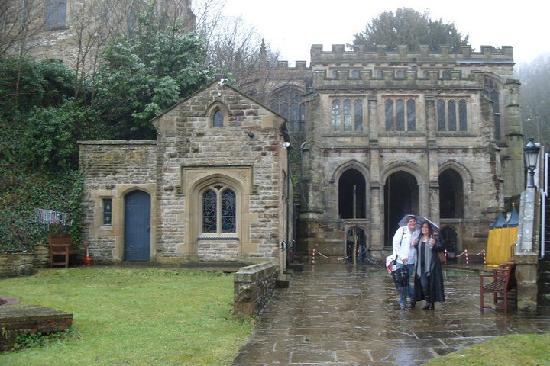
On March 1st, St. David’s Feast, we made a pilgrimage to St. Winifred’s Holy Well
img_0730
 

St. Winifred, whose name in her own language was Gwenfrewi, was born in North Wales in the early seventh century, when Christendom was still whole, and many great saints where living on the British Isles. She was of noble lineage, a descendant of the early Welsh kings of Powys, and the only daughter of Tyfid, Lord of the townships of Abeluyc (Trefynnon, later named Holywell), Maenwen & Gwenffynnon in Tegeingl. Her mother’s brother was St. Beuno, Abbot of Clynnog Fawr in Gwynedd. After difficulties he had encountered from the local princes of Clynnog, St. Beuno sought refuge with his sister’s family, and thus received land from her husband, Tyfid. From an early age, Winifred was instructed in the spiritual life by her uncle, and her sole desire was to dedicate herself to God and become a nun. She lived under St. Beuno’s care, near a chapel he had built in her native town of Abeluyc.


One Sunday, while St. Beuno was serving the Liturgy at the church, Winifred was alone in her house. A prince named Caradog was riding by, and stopped at the house to ask for a drink of water. Winifred was very beautiful, and Caradog was stricken with the desire to have her in marriage. The maiden’s resolve to preserve her virginity and become a nun was unshakeable, however, so the prince attempted to take her by force. Winifred struggled free and ran toward the church, but Caradog soon caught up with her on his horse. Out of anger at the refusal, he struck off her head with his sword. Her severed head rolled down the hillside to the churchyard. When her uncle and the congregation—which probably included Winifred’s other kin—saw what had happened, they were horrified. The wicked Caradog fell dead on the spot. (Other historical sources say that Caradog was killed by Winifred’s brother, Owain, as an act of revenge.)

A spring of healing water sprang forth at the place where St. Winifred’s head fell. St. Beuno took Winifred’ head and replaced it to her body, then prayed to God that she be restored whole. By St. Beuno’s prayers, Winifred came back to life. The two sat on a rock which was later named, “St. Beuno’s rock,” and her uncle told her that anyone seeking help through her prayers at that spot would find it. A red mark remained around her neck, as a remnant of her miraculous restoration.

With her parents’ blessing, Winifred soon received the monastic tonsure at her uncle’s hand. St. Beuno advised Winfred to remain at that church to live the monastic life, which she did, eventually gathering around her eleven honorable virgins, and instructing them in the Christian faith. St. Beuno himself became a missionary, traveling west to Ireland.

St. Winifred made a pilgrimage to Rome, and was greatly influenced by the order of monastic life there. When she returned home, she called a synod known as the “Synod of Winifred,” attended by other Christian ascetics of Wales, Dumnonia, and the North. The common ascetic practice in Wales at the time was the eremitic life. At the synod, all agreed that the safety of the coenobitic life she led was preferable to the solitary life. Thus, after seven years in Abeluyc, Winifred decided to go out and help establish other coenobitic communities. It is said that two hermits she approached with the idea, Sts. Diheufyr and Sadwrn, were not interested in what seemed to them an innovation. It was not until she reached Gwytherin that she was welcomed by her mother’s cousin, St. Eleri. Here, Winifred was presented to his mother, St. Tenoi, and together they established a double monastery in the village.[1] Winifred eventually succeeded St. Tenoi as abbess there.

St. Winifred reposed on November 3, 660 AD, and was buried in the monastic cemetery.

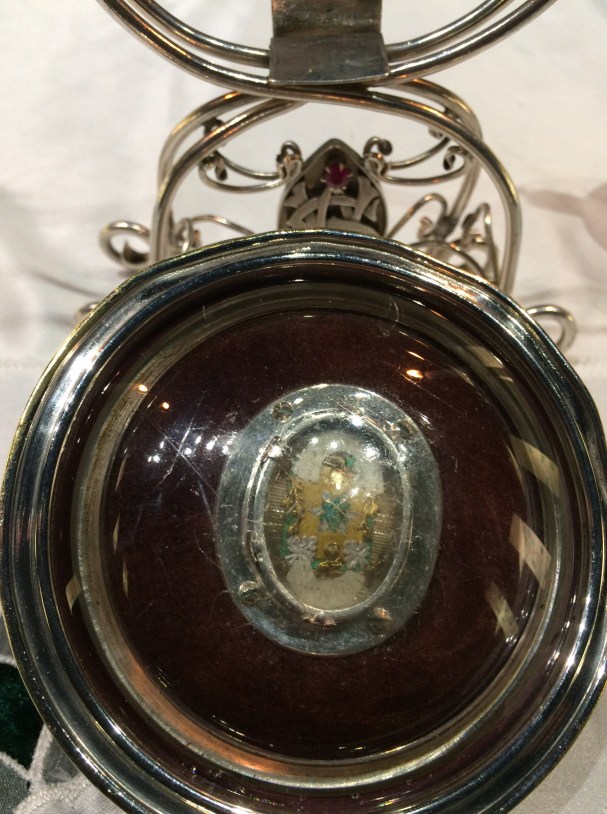
Recently a fragment of an eighth-century reliquary from Gwytherin, the Arch Gwenfrewi (Winifred’s Casket), was found, witnessing her status as a recognized saint almost from the moment of her death, the earliest such surviving evidence for any Welsh saint.

Veneration of the saint was mainly limited to Wales until the late eleventh, early twelfth century, when it began spreading throughout the British Isles. Other wells have been recorded as dedicated to her, including one in Dublin, Ireland. In 1136. Her relics were translated to an ornate shrine in Shrewsbury, while her original tomb was retained at Gwytherin and a fragment at Holywell. The spring that had broken forth in Holywell on the site where her severed head fell is still active; the temperature of the water never changes, summer or winter, and the supply remains constant regardless of drought or flood in the locality. It is so clear that the pebbles at the bottom are distinctly seen to be stained as though with blood. It is lined with fragrant moss, the Jungermannia oplevoides.[2]

*   *   *

Holy springs are still a strong tradition in Orthodox countries—among them are the spring of St. Athanasius on Mt. Athos, the spring of St. Theodora of Vasta in Peloponnesus, and the many holy springs connected with saints and the Mother of God in Russia. History shows that there were also many holy springs in Britain during its pre-schism period, but the miraculous spring of St. Winifred is now one of a kind there. The following description of her spring in the town which is now named for it, Holywell, is from Source, “Holywell – Clwyd” by Roy Fry & Tristan Gray Hulse.

HOLYWELLHolywell first enters written history in 1093, when “Haliwel” was presented to St. Werburgh’s Abbey, Chester. In 1240, the Welsh prince Dafydd ap Llewelyn, once more in control of this area in Wales, gave the holy well and church to the newly-established Basingwerk Abbey; and the Cistercian monks cared for the well and its pilgrims until the Reformation.

Winifred’s fame, and with it the fame of the Well, continued to spread throughout the middle ages, but little is factually recorded about the pilgrimage. By 1415, her feast had become a major solemnity throughout Wales and England. Kings could be found among her pilgrims. Henry V came in 1416. Richard III maintained a priest at the Well. But it was during the reign of the Welsh Henry VII that devotion reached its pinnacle, with the building of the present well-shrine under the patronage of Henry’s mother, Margaret Beaufort.

saint-winifred-and-her-holy-spring1saint-winifred-and-her-holy-spring3

Such glory was short lived, though the Well’s fame was never eclipsed. The Reformation swept away shrines and pilgrimages; but no attempt ever quite succeeded in destroying devotion to St. Winifred at her Well. Through all the years of religious persecution, pilgrims, Catholic and non-Catholic alike, continued to visit Holywell. It became the centre of Catholic resistance. James II and his queen visited the Well in 1686, to pray for an heir. But James was exiled, and the persecution renewed. Through these long years, Holywell and its pilgrims were served by the Jesuits. They wrote popular Lives of the saint; and even kept inns in the town, where Mass could be said in comparative safety.

In the nineteenth century, after Catholic Emancipation, it was the Jesuits who oversaw and directed the spectacular renaissance of the pilgrimage. A church opened in the town in the 1840’s was constantly enlarged and enriched. A pilgrim’s hospice was erected shortly afterwards. And under Fr. Beauclerk in the ‘nineties, the pilgrimage underwent a revival of medieval proportions. Pilgrims came literally in thousands, necessitating a branch rail line into the town. The popular press gave account of each reported cure. And the sick reported cures in such numbers that Holywell came to be called the ‘Lourdes of Wales’. Despite the alterations to pilgrimage patterns caused by the increasing secularism of 20th-century life, and by devotional changes within Catholicism itself, the Jesuit’s heritage continues: people are still coming to Holywell on pilgrimage.

THE WELL CRYPT AND CHAPEL

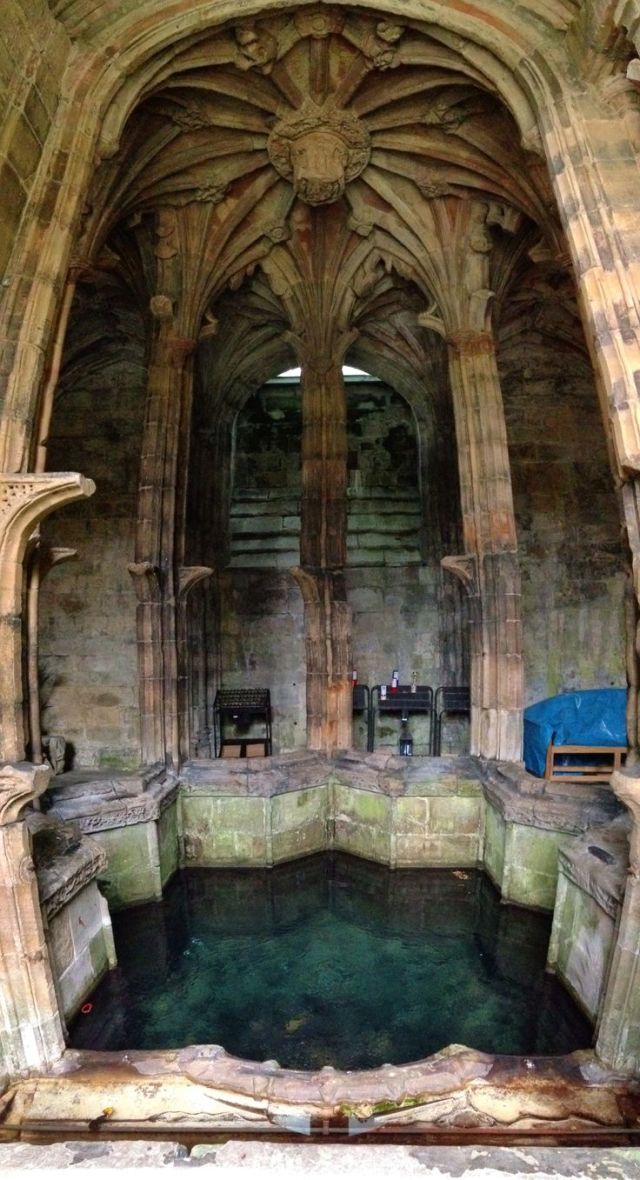
Unlike Gwytherin, with the grave and other relics of the saint, or Shrewsbury Abbey, which after 1138 enshrined Winifred’s body, the Holywell pilgrimage has always centred on the Well itself. A church, almost certainly on the site of the present Anglican church of St James, over-looking the Well, has stood by the Well, certainly since 1093 and probably since Winifred’s own time. And there may perhaps have been a further small chapel, connected more directly with the Well. But we have no indication as to the form of the Well itself throughout the middle ages. Celtic holy wells take many individual forms, and it is possible that until the end of the fifteenth century there was no form of structure at all around the spring itself, which is what the medieval Welsh votive poems suggest. The sheer force of the spring would support this.

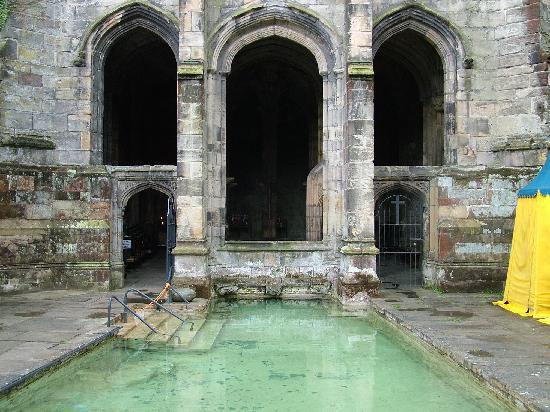
The present glorious structure was begun around 1500 and probably took ten or fifteen years to complete. It is unique, having no parallel anywhere in Europe; and is a masterpiece of late Perpendicular architecture. It takes the form of an almost square crypt, built into the steep hillside, but open to the North through a triple arcade which gives access to the Well. In the centre the spring rises in a star-shaped basin, before flowing into an oblong bath, access to which is gained at either end by steps. All around the Well, graceful columns rise to support the elaborately vaulted roof; and in the centre, directly over the source, is a large pendent boss, beautifully carved with the legend of St Winifred, but now badly worn. Originally, the spaces between the columns were filled with delicate Gothic tracery, destroyed by the Puritans. An open gallery in the west wall originally gave the pilgrim his first glimpse of the holy well as he descended from the chapel above, to enter the crypt through the now closed door.


The chapel comprises a nave and a side-aisle, and is built directly over the crypt, with which it is contemporary. At its east end an apse was built out onto the hillside to contain the altar. The well-crypt has never ceased to be used for its original purpose, but the chapel has seen many changes of use, used at times as a court-house, at others as a school. In consequence, it suffered great damage, but it was thoroughly restored and re-roofed in 1976. Both the interior and exterior of the chapel are enriched with fine, and often amusing, sculptures.

Considering the superior quality of the architecture, and the degree of technical skill required to build directly over the source of a small river, it is odd that not a single hard fact concerning its construction has survived. We do not know the name of its architect, nor the name of those who commissioned and paid for the shrine: not even the dates of its construction. The building itself yields the only clues. The emblems and coats of arms carved on the bosses of the crypt ceiling suggest the patronage of Margaret, Countess of Richmond and Derby, the pious mother of Henry VII. Margaret died in 1509. The arms of Catherine of Aragon suggest further royal patronage; and yet other badges indicate the beneficence of other noble families. Such patronage, which alone could account for the building’s splendour, is also the only real clue to dating it to the first decade of the sixteenth century.

Though its exact history will probably always remain a mystery, the shrine remains a fitting setting for the only British pilgrimage to have survived continuously for over 1300 years.

THE HOLYWELL CURE TRADITION

People have bathed in St Winifred’s Well for 1,350 years. They still do. Pilgrims today pass three times through the small inner bath, saying a decade of the Rosary; afterwards entering the outer pool to finish their prayers kneeling on St Beuno’s Stone, by the steps. Some pray for a cure; more “offer up” the discomfort of the icy waters for friends, or simply in honour of St. Winifred, or as a gesture of thanks. Pilgrimage has many reasons.

This ritual is as old as the pilgrimage itself. Maen Beuno, Beuno’s Stone, connects us directly with the time of St Winifred. The Medieval Lives say that Beuno sat on this stone when he told Winifred that anyone coming to the Well and asking something in her name, “might receive an answer to their request at least at the third time.” This was understood to mean that the petitioner should bathe three separate times. After the building of the present Well this meant three dips in the little bath. A carving opposite this bath shows how healthy pilgrims carried the sick through the waters on their backs. The stonework of the Well is covered with hundreds of graffiti, initials of hopeful or grateful pilgrims. Some inscriptions explicitly testify to cures received at the shrine.


The exterior pool formed no part of the original building, being added later; but its size witnesses to the crowds of pilgrims who came even during the times of religious persecution. Nor was their faith in vain. For 800 years there is a continuous record of cures and other favours claimed at the Well through the prayers of St Winifred—the only British shrine boasting such an uninterrupted history of pilgrimage and healing. Until the 1960s, the crypt was stacked with crutches left by cured pilgrims. Centuries of letters testify to the power of God and His saints in this place: records of cures not only of Catholics, but of Protestants; and even of those with no faith in anything. One account, touching in its simplicity, a scrap of paper left at the Well 100 years ago, can stand for all the rest:

A Protestant Father wishes to return thanks to God that through the use of St Winifred’s water, his only daughter was cured miraculously, Three years ago of a serious malady, which had resisted the efforts of several doctors & friends for the period of Three and a half years. Signed, C.T. Longley.

[1] Britannia Biographies, http://www.britannia.com/bios/ebk/winifred.html. Partly edited from Agnes Dunbar’s A Dictionary of Saintly Women (1904).

[2] Ibid.
St. Winifred’s life compiled from various sources by Pravoslavie.ru/Orthodox Christianity

An Unchristian Heart

Lenten Reflections (IV)

Elder Sampson: On Forgiveness

FORGIVENESS —The Holy Fathers are the children of the grace of the Holy Spirit. The result of this action of grace is when the heart excuses. It loves, it can speak well of someone and pray for him. It does not remember offense or evil.

Therefore it is impossible to forgive and not excuse. This is a psychological fact. The heart is made this way. It was not the brain, not the nervous system—as science attempts to teach, and the psychiatrists especially—but it was the heart that was made this way by God. It is called a Christian heart. It excuses, it does everything possible in order to justify and excuse. Isn’t that so?! That is a Christian quality!

 The pagan or the Moslem do not know about this… the action of the grace of the Holy Spirit Try telling a Moslem to justify and excuse, to love his enemy. He will kill you.

You will come to her with anger, scornful words, remembrance of wrongs, and especially with some sort of old accounts which were buried and decomposing and which will be resurrected!

Once I wanted to ask you why you never think to ask me, “What is it that angers you? What makes you so sad? What is it that upsets you so?”

It is always the same thing: an unchristian heart. A wicked heart that is unwilling to forgive. A heart that is at enmity with God because it does not want to forgive, does not intend to forgive, yet bethinks itself to say the Lord’s Prayer … “and forgive us our debts as we forgive our debtors …” while at the same time the heart and mind are at enmity with a man.

I get so upset at this … because external form is not useful to anyone, much less to God.

I think … I’ve always concluded: this means that they still have not gotten the point, that the whole secret, that all the salt of Christianity lies in this: to forgive, to excuse, to justify, not to know, not to remember evil. Not sin, but evil.


If you are quiet and peaceful within yourself, this means that you are absolutely at peace with heaven, and you are ready to endure any nastiness from that person. That person could overtake you, publicly remonstrate you, play dirty tricks on you, slander you, and you will smile. Not laugh, but smile! Because you will be so illuminated by blessed mercy

The drunkard, the fornicator, the proud—he will receive God’s mercy. But he who does not want to forgive, to excuse, to justify consciously, intentionally … that person closes himself to eternal life before God, and even more so in the present life. He is turned away and not heard [by God].

…Firstly, it is asked, what is a Christian heart? An unchristian heart is that which will not and cannot forgive and pardon. Cannot and will not! That is why such a heart is at enmity with God, cannot say the Lord’s Prayer, has no right to say the prayer “It is truly meet” and has no hope of eternal salvation, if it does not justify, pardon and somehow pray for a person, for people that it cannot stand, cannot forgive. We confess that the thief and the fornicator, the publican are saved, right? But the Pharisee was deprived of salvation, who only kept an external form of faith. He praised himself and could not forgive.

Father, can’t you tell us how we can make our hearts forgive?

The matter is that our reproaches, the most direct and perhaps coarse warnings do not work on the heart of such a person. The proud man is unable to forgive. A proud man does not want to forgive and asks, “Why can others not forgive and still pray and receive the Holy Mysteries—why do you insist that / forgive, and only then may I confess and receive Communion?” This is proud self-love and not Christian, when one does not want to and does not intend to forgive or love. How can the Lord God hear such a soul and forgive him anything, if his heart has no intention of forgiving?!

Father, well, people receive Communion anyway. Could it be that they make progress in some other virtues [despite their inability to forgive]?

No, no virtue can atone for the lack of forgiveness, the lack of love that these people have. No podvig [ascetic undertaking], no almsgiving can atone for refusal to forgive. Almsgiving by the fornicator is an abomination before God, for it is given by unclean hands. He gives alms, but at the same time intends to wallow in his beastly sin. His almsgiving cannot justify him if he does not repent and ask for help, that he might renounce his sin and his passion. And the unmerciful man is deprived of even the right to be heard and obtain the right to give alms. That is terrible! “And forgive us our debts, as we forgive our debtors.” That is the only condition for being heard, for salvation. You cannot buy off God with any formalities. The law of God is an absolute law! That is why it is so painful and difficult for us when we meet souls which are not Christian, that is, souls which have no intention, or even the desire, not only ability, to forgive. “And why,” you ask, “can’t you forgive?” “Because I am not loved,” the person says, “therefore I will not love!”

Father, do you allow them to approach the Chalice?

No.

The same thing happened with me and one sister. My heart has not forgiven her.

That is a function of the laws of female jealousy.

No, it’s not.

If that is so, then you need to work on yourself, so that you can excuse that person, and judge yourself before God. It is all so stupid and impudent. The thing is that this is Christianity.

Father, you told me before that you don’t advise me to meet with her.

Right. I don’t advise you to irritate the person or yourself. If you are quiet and peaceful within yourself, this means that you are absolutely at peace with heaven, and you are ready to endure any nastiness from that person. That person could overtake you, publicly remonstrate you, play dirty tricks on you, slander you, and you will smile. Not laugh, but smile! Because you will be so illuminated by blessed mercy, and by such righteousness before God and the Mother of God, that all of these evil scourges will be a pleasure to you.

Well, Father, one needs to be blessed in such cases.

Do you know what?! Orthodox Christianity possesses within itself the Grace of the Holy Spirit. And the meaning of Orthodoxy is in the association with the Holy Spirit, and to carry it within yourself. It can do anything!!! This is precisely the sign of being Orthodox.


But he who flees silence, who does not love silence, will have great difficulty passing through the toll-houses. The demons could seize him for that alone, that he did not love silence and solitude.

We did have some eruptions, but I’ll go to her straightaway.

Yes.

But you said that you don’t advise it.

I don’t advise it because I know her weaknesses and your weaknesses. You will come to her with anger, scornful words, remembrance of wrongs, and especially with some sort of old accounts which were buried and decomposing and which will be resurrected!

And I will be without peace after seeing her?

Accuse yourself, only do not accuse her, and not because she was wrong to you. This is a weak human being, so you take yourself in hand and be demanding only with yourself. This is what Christianity is all about.

In all circumstances being demanding only with yourself ?

Only with yourself. Even executioners can be excused and justified. He was fulfilling his duties—as he was ordered, so he does. I was never offended by them! [Elder Sampson was earlier shot by an executioner but survived.]

This is the lot of the Lord Himself. They crucified the Lord, but he said, “Lord, forgive them!”

Because they don’t know what they are doing. They haven’t the courage to say, “No! I won’t!” That is their only guilt. But the Lord will erase that guilt, because no one ever taught them.

Father, if I go to her, I will also need courage in order to smile at her.

If you come to her in the Lord, with the Jesus prayer in your pocket and the “All-Merciful,” you will sincerely smile. Your little knots* (*Little knots: that is, a prayer rope. Father blessed all of his spiritual children to pray with one, but in their pockets, secretly.) will be in your pocket. Very sincerely. You will say, “How do you feel? How happy I am that you look so well!” It is this Christian love that will be sincere, and not a Jesuitical kind!!

I think about her all the time. I should go to her, but I am afraid.

It is the sin of smallness of soul and the sin of lack of love, sisterly love. Yes, it is lack of love. I bear a terrible anxiety and sorrow, that none of us want to go after all to Κ . Everyone finds some excuse of their own. “It will be unprofitable, inconvenient—to what purpose would I be sacrificing myself!” But… that poor girl, alone between four walls.

Get strongly angry at yourself, take yourself in hand, have pity on yourself. (St. Theophany the Recluse)

But we are also alone!

You are healthy people, you should be glad that you are alone and no one comes to disturb your prayer, and you are allowed to be silent. What great wealth that is—to love and to be silent. More precious than gold! And you run away from this silence! That silence is torture to you. But he who flees silence, who does not love silence, will have great difficulty passing through the toll-houses. The demons could seize him for that alone, that he did not love silence and solitude. Because the soul is helpless when it has left the body…. Imagine for just a moment, that you have left your body, your “box,” right? You are alone. It is well if your Guardian Angel is present. But what if he isn’t? And the demons are tormenting you all around? And that will happen!!!


Father, don’t say such frightful things.

It is because we have not learned Christianity while here on the earth, but have substituted it with ceremony and formalities. To speak truthfully, we do not know how to pity ourselves. If we truly felt sorry for ourselves, we would think about our inevitable death, about the moment, the day of our separation from the body. We do not know how to pity ourselves, because we do not know how to get angry with ourselves and punish ourselves. St. Theophan the Recluse often advised in his letters: “Get strongly angry at yourself, take yourself in hand, have pity on yourself.”

The worst thing is not forgiving and not loving, and to have enmity in your heart. These are the three main reasons. The Lord will forgive the adulterer, the bandit, the thief, the Pharisee. But He will not forgive such a soul.

Well, I am not so cruel as to not forgive.

Take care for yourself. All of our Psalter readings, our Akathists and Canons, the Gospels—it is all empty if it does not make us soft, tender, loving, weeping. All of that reading will only be to our condemnation.

A spirit that is broken and humbled does not know how to have enmity. It forgives to the last, pardons to the last, and judges only itself, always searching endlessly for the guilt within itself. It will forgive and pardon every man, even though he were an executioner or a torturer. I have had many horrible ordeals in my life, but somehow it was all easily forgiven!

Father, did you really forgive it all in a moment?

One need only pray to the Mother of God and the offense is taken away. It is taken away if you only ask the Mother of God. It is enough for your heart to have some kind of direct contact with the Mother of God, and that horror, offense and injury, sorrow and slander will be taken away.


Father, perhaps it is only forgotten, but when you remember it resurfaces?

No! It cannot. If the heart has forgiven and excused, then it will not be remembered. It is remembered only in the attic, the memory, without the heart’s participation. That is why one must discriminate between these two things: the heart and the reason. A memory may be of the heart, or of the brain. If the heart has forgiven, then it will never remember, for it has no memory. The brain, the nervous system may not forget and may remember, but the heart will protest and force the brain to be silent.

Father, I had such an experience. In my heart I was at peace, but my reason remembered nevertheless.

Just as we are here, our hearts did not turn to the Mother of God. When you say the “All Merciful”: “Do not abhor me, do not turn away from me, do not abandon me, do not leave,” a coolness comes, quietude, and every situation in which you ask for help is forgiven. The same dark, rotten, wicked, dirty person who comes into association with Her momentarily has a change of heart, and the heart becomes soft and compunctionate. The broken and humbled spirit comes, which is the only sign of Christianity—there must be a broken and humbled spirit. Other than this there is no indication. Not the keeping of fasts, not going to church, not reading Akathists and Canons—no! But a spirit that is broken and humbled cannot not forgive—it cannot! This is a state of the heart, a Godly heart…

Father, the folk saying goes that time heals.

No! That is human wisdom, absolutely. The sharpness of the pain of heart or the impression on the nervous system may smooth out. But in this regard we are speaking in terms of the external circumstances, and not the spiritual or moral state.

The inner state?

Yes, the moral, the spiritual. That is, if the heart cannot forgive or excuse and after three year’s time remembers it just as distinctly.

No, Father, I can’t express my situation that way. This is how it was for me: when I remembered it, I frit bad. I could not even think of her, I felt sick. But now I don’t have the same reaction.

That is, your heart during that time strove to excuse and forgive her. Do you understand? It all depends on the heart. Otherwise it is not possible. After all, it is not the brain that receives the Grace of the Holy Spirit, but the heart. Saint Seraphim of Sarov always talked much about this to everyone.

What can an angry person do?

He must pray and pray for healing. For the sake of his faith, for the sake of his insistence the Lord will change his heart. Secondly, any manifestation of evil must always be redeemed through almsgiving. The alms must be something of your own, something you need, and not something that is lying around unused.

—Elder Sampson (The Orthodox Word, Vol. 30, 1994)

Posted by DiscerningThoughts 

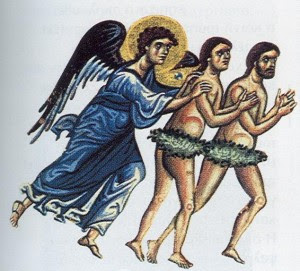
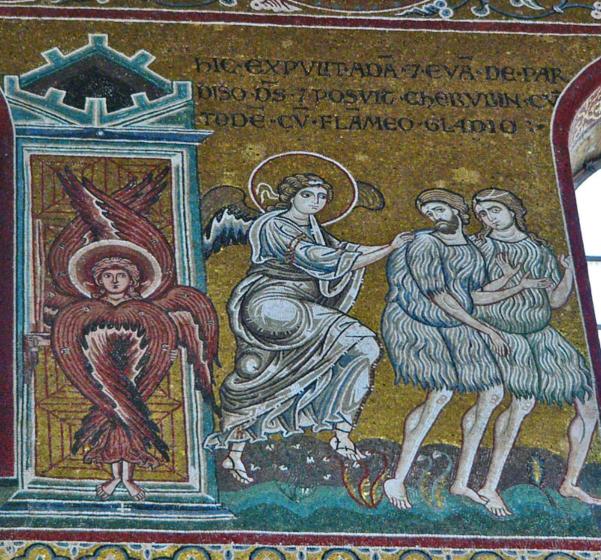
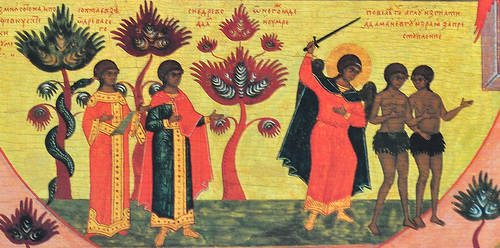
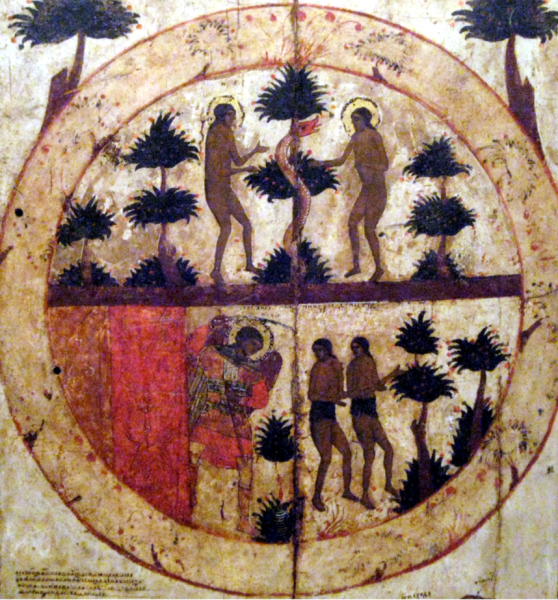
Adam’s lament


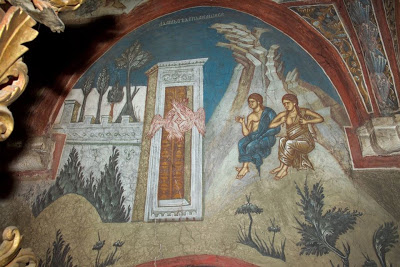
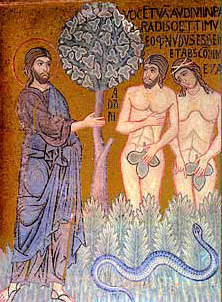
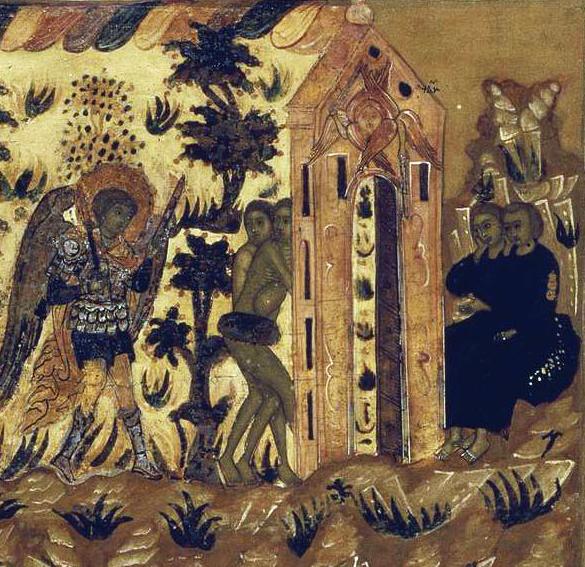
St. Silouan’s the Athonite poetry-prayer, Byzantine iconography, and Arvo Pärt’s lyrical musical/ choral  setting of the text  faithful to its every nuance.(*) 

lament1a

Lenten Reflections (III)

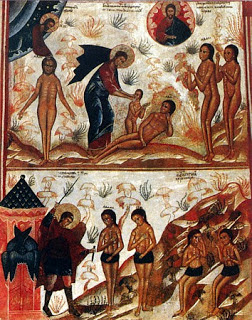
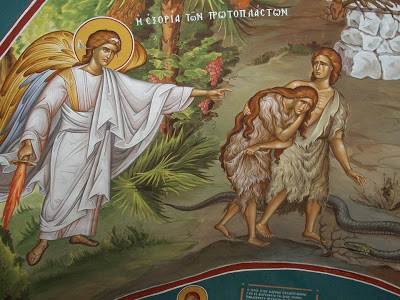
Adam, father of all mankind, in paradise knew the sweetness of the love of God; and so when for his sin he was driven forth from the garden of Eden, and was widowed of the love of God, he suffered grievously and lamented with a great moan. And the whole desert rang with his lamentations, for his soul was racked as he thought, ‘I have distressed my beloved   God’. He sorrowed less after paradise and the beauty thereof; for he sorrowed that he was bereft of the love of God, which insatiably, at every instant, draws the soul to Him.

In the same way the soul which has known God through the Holy Spirit, but has afterwards lost grace experiences the torment that Adam suffered. There is an aching and a deep regret in the soul that has grieved the beloved Lord.

Adam pined on earth, and wept bitterly, and the earth was not pleasing to him. He was heartsick for God, and this was his cry:

lament1b

My soul wearies for the Lord, and I seek Him in tears.

How should I not seek Him?

When I was with Him my soul was glad and at rest, and the enemy could not come nigh me;

But now the spirit of evil has gained power over me, harassing and oppressing my soul,

So that I weary for the Lord even unto death, And my spirit strains to God,

and there is naught on earth can make me glad, Nor can my soul take comfort in any thing,

but longs once more to see the Lord, that her hunger may be appeased.


lament1c

I cannot forget Him for a single moment, and my soul languishes after Him,

and from the multitude of my afflictions I lift up my voice and cry: ‘Have mercy upon me, O God. Have mercy on Thy fallen   creature.’

Thus did Adam lament, and the tears steamed down his face on to his beard, on to the ground beneath his feet, and the whole desert heard the sound of his moaning. The beasts and the birds were hushed in grief; while Adam wept because peace and love were lost to all men on account of his sin.


lament1d

Adam knew great grief when he was banished from paradise, but when he saw his son Abel slain by Cain his brother, Adam’s grief was even heavier. His soul was heavy, and he lamented and   thought:

Peoples and nations will descend from me, and multiply, and suffering will be their lot, and they will live in enmity and seek to slay one another.

And his sorrow stretched wide as the sea, and only the soul that has come to know the Lord and the magnitude of His love for us can understand.

I, too, have lost grace and call with Adam:

Be merciful unto me, O Lord! Bestow on me the spirit of humility and   love.


lament1e

O love of the Lord! He who has known Thee seeks Thee, tireless, day and night, crying with a loud voice:   “I pine for Thee, O Lord, and seek Thee in tears.

How should I not seek Thee?

Thou didst give me to know Thee by the Holy Spirit,

And in her knowing of God my soul is drawn to seek Thee in tears.” Adam wept:

The desert cannot pleasure me; nor the high mountains, nor meadow nor forest, nor the singing of birds.   I have no pleasure in any thing.


lament1f

My soul sorrows with a great sorrow: I have grieved God.

And were the Lord to set me down in paradise again,

There, too, would I sorrow and weep – ‘O why did I grieve my beloved   God?’


The soul of Adam fell sick when he was exiled from paradise, and many were the tears he shed in his distress. Likewise every soul that has known the Lord yearns for Him, and   cries:


Where art Thou, O Lord? Where art Thou, my Light? Why hast Thou hidden Thy face from me?

Long is it since my soul beheld Thee,

And she wearies after Thee and seeks Thee in tears. Where is my Lord?

Why is it that my soul sees Him not? What hinders Him from dwelling in me?


lament1g


This hinders Him: Christ-like humility and love for my enemies art not in me. God is love insaturable, love impossible to describe.

Adam walked the earth, weeping from his heart’s manifold ills, while the thoughts of his mind were on God; and   when his body grew faint, and he could no longer shed tears, still his spirit burned with longing for God, for he could not forget paradise and the beauty thereof; but even more was it the power of His love which caused the soul of Adam to reach out towards God.

I write of thee, O Adam: But thou art witness,

my feeble understanding cannot fathom thy longing after God,

Nor how thou didst carry the burden of repentance.

lament1h

O Adam, thou dost see how I, thy child, suffer here on earth. Small is the fire within me, and the flame of my love flickers low. O Adam, sing unto us the song of the Lord,

That my soul may rejoice in the Lord And be moved to praise and glorify Him

as the Cherubim and Seraphim praise Him in the heavens And all the hosts of heavenly angels

sing to Him the thrice-holy hymn.

O Adam, our father, sing unto us the Lord’s song, That the whole earth may hear

And all thy sons may lift their minds to God

and delight in the strains of the heavenly anthem, And forget their sorrows on earth.


lament1i


The Holy Spirit is love and sweetness for the soul, mind and body. And those who have come to know God by the   Holy Spirit stretch upward day and night, insatiable, to the living God, for the love of God is very sweet. But when the soul loses grace her tears flow as she seeks the Holy Spirit anew.

But the man who has not known God through the Holy Spirit cannot seek Him with tears, and his soul is ever harrowed by the passions; his mind is on earthly things. Contemplation is not for him, and he cannot come to know Jesus Christ. Jesus Christ is made known through the Holy Spirit.


Adam knew God in paradise, and after his fall sought Him in tears.

expulsion


O Adam, our father, tell us, thy sons, of the Lord. Thy soul didst know God on earth,

Knew paradise too, and the sweetness and gladness thereof,

And now thou livest in heaven and dost behold the glory of the Lord. Tell of how our Lord is glorified for His sufferings.

Speak to us of the songs that are sung in heaven, how sweet they are, For they are sung in the Holy Spirit.

Tell us of the glory of the Lord,

of His great mercy and how He loveth His creature. Tell us of the Most Holy Mother of God,

how she is magnified in the heavens, And the hymns that call her blessed.

Tell us how the Saints rejoice there, radiant with grace. Tell us how they love the Lord,

and in what humility they stand before God.

O Adam, comfort and cheer our troubled souls. Speak to us of the things thou dost behold in heaven. Why art thou silent?

Lo, the whole earth is in travail.

Art thou so filled with the love of God that thou canst not think of us? Or thou beholdest the Mother of God in glory,

and canst not tear thyself from the sight,

And wouldst not bestow a word of tenderness on us who sorrow, That we might forget the affliction there on earth?

O Adam, our father,

thou dost see the wretchedness of thy sons on earth.

Why then art thou silent?


And Adam speaks:

My children, leave me in peace.

I cannot wrench myself from the love of God to speak with you.

My soul is wounded with love of the Lord and rejoices in His beauty. How should I remember the earth?

Those who live before the Face of the Most High cannot think on earthly things.


O Adam, our father, thou hast forsaken us, thine orphans, though misery is our portion here on earth.

Tell us what we may do to be pleasing to God?

Look upon thy children scattered over the face of the earth, our minds scattered too.

Many have forgotten God.

They live in darkness and journey to the abysses of hell.


Trouble me not. I see the Mother of God in glory – How can I tear myself away to speak with you?

I see the holy Prophets and Apostles,

and all they are in the likeness of our Lord Jesus Christ, Son of God. I walk in the gardens of paradise,

and everywhere behold the glory of the Lord.

For the Lord is in me and hath made me like unto Himself.


O Adam, yet we are they children!

Tell us in our tribulation how we may inherit paradise, That we too, like thee, may behold the glory of the Lord. Our souls long for the Lord,

while thou dost live in heaven and rejoice in the glory of the Lord. We beseech thee – comfort us.

‘Adam’s Lament’ (2009) by Arvo Pärt

Why cry ye out to me, my children?

The Lord loveth you and hath given you commandments.

Be faithful to them, love one another, and ye shall find rest in God. Let not an hour pass without ye repent of your transgressions, That ye may be ready to meet the Lord.

The Lord said: ‘I love them that love me, and glorify them that glorify me.’


O Adam, pray for us, thy children.

Our souls are sad from many sorrows.

O Adam, our father, thou dwellest in heaven and dost behold the Lord seated in glory   On the right hand of God the Father.

Thou dost see the Cherubim and Seraphim and all the Saints And thou dost hear celestial songs

whose sweetness maketh thy soul forgetful of the earth.


But we here on earth are sad, and e weary greatly after God. There is little fire within us with which to love the Lord ardently. Inspire us, what must we do to gain paradise?


Adam makes answer:


Leave me in peace, my children, for from sweetness of the love of God I cannot think about the earth.


O Adam, our souls are weary, and we are heavy-laden with sorrow. Speak a word of comfort to us.

Sing to us from the songs thou hearest in heaven,

That the whole earth may hear and men forget their afflictions. O Adam, we are very sad.


Leave me in peace.

The time of my tribulation is past.

From the beauty of paradise and the sweetness of the Holy Spirit I can no longer be mindful of the earth.

But this I tell you:

The Lord loveth you, and do you live in love and be obedient to those in authority over you.

Humble your hearts, and the Spirit of God will live in you. He cometh softly into the soul and giveth her peace,

And bearth wordless witness to salvation. Sing to God in love and lowliness of Spirit, for the Lord rejoiceth therein.


O Adam, our father, what are we to do?   We sing but love and humility are not in us.


Repent before the Lord, and entreat of Him. He loveth man and will give all things.

I too repented deeply and sorrowed much that I had grieved God,


And that peace and love were lost on earth because of my sin. My tears ran down my face.

My breast was wet with my tears, and the earth under my feet; And the desert heard the sound of my moaning.

You cannot apprehend my sorrow,

nor how I lamented for God and for paradise. In paradise was I joyful and glad:

the Spirit of God rejoiced me, and suffering was a strange to me.

But when I was driven forth from paradise cold and hunger began to torment me;

The beasts and the birds that were gentle and had loved me turned into wild things

And were afraid and ran from me. Evil thoughts goaded me.

The sun and the wind scorched me. The rain fell on me.

I was plagued by sickness and all the afflictions of the earth. But I endured all things, trusting steadfastly in God.

Do ye, then, bear the travail of repentance.

Greet tribulation. Wear down your bodies. Humble yourselves And love your enemies,

That the Holy Spirit may take up His abode in you,

And then shall ye know and attain the kingdom of heaven. But come not night me:

Now from love of God

have I forgotten the earth and all that therein is. Forgotten even is the paradise I lost,

for I behold the glory of the Lord And the glory of the Saints

whom the light of God’s countenance maketh radiant as the Lord Himself.


O Adam, sing unto us a heavenly song,

That the whole earth may hearken

and delight in the peace of love towards God. We would hear those songs:

Sweet are they for they are sung in the Holy Spirit.


Adam lost the earthly paradise and sought it weeping. But the Lord through His love on the Cross gave Adam another paradise, fairer than the old – a paradise in heave where shines the Light of the Holy Trinity.


What shall we render unto the Lord for His love to us?

Source: St. Silouan the Athonite, by Archimandrite Sophrony.

(*) In an interview in Toronto in the 1980’s, Pärt shared his personal definition of minimalism as the process by which his music is reduced to the number One. In his view, that One is the Divine Creator. In Adam’s Lament (2009) he sees the Biblical Adam as a unifying symbol. Pärt said, “Our ancestor Adam foresaw the human tragedy that was to come and experienced it as his own guilty responsibility, the result of his sinful act. He suffered all the cataclysms of humanity into the depths of depression, inconsolable in his agony.” Adam’s Lament is based on a Russian text by the ascetic monk and poet, St. Silouan of Athos (1866–1938). Pärt’s fascination with Silouan is such that his setting of this text is faithful to its every nuance. The music reflects a range of devotional writing that’s by turns dramatic, passionate, humble and submissive.

Garments of Skin

Detail from North Door of Iconostasis

Forgiveness Sunday in Icon and Prayer

Lenten Reflections (II)

A composition of Icons and portions of Saturday vespers and the Sunday hymns on the theme of Forgiveness Sunday: The Expulsion of Adam and Eve from Paradise

From Saturday Vespers:

The Creation of Adam (Monreale)

The Lord, my Creator, took me as dust from the earth, and with the breath of life He gave me a soul and made me a living creature.

He honoured me as ruler on earth over all things visible and as a companion of the Angels.

But Satan the deceiver, using the serpent as his instrument, enticed me by food, separated me from the glory of God and gave me over to the earth and to the lowest depths of death. But as Master and compassionate, call me back again.

+++

Adam and Eve Hide from God

Wretch that I am, I have cast off the robe woven by God, disobeying Your divine command, Lord, at the counsel of the enemy, and I am clothed now in fig leaves and in garments of skin.

I am condemned to eat the bread of toil in the sweat of my brow, and the earth has been cursed so that it bears thorns and thistles for me.

But, Lord, who in the last times were made flesh of a Virgin, call me back and bring me into Paradise again.

+++

From Sunday of Forgiveness service:

Expulsion and Lamenting

Adam sat opposite Paradise and, lamenting his nakedness, he wept:
‘Woe is me ! By evil deceit was I persuaded and robbed, and exiled far from glory. Woe is me ! Once naked in my simplicity, now I am in want. But, Paradise, no longer shall I enjoy your delight; no more shall I look upon the Lord my God and Maker, for I shall return to the earth whence I was taken.Merciful and compassionate Lord, I cry to you, ‘Have mercy on me who am fallen’.

+++

Adam and Eve Lamenting

Through eating Adam was cast out of Paradise. And so, as he sat in front of it, he wept, lamenting with a pitiful voice and saying, ‘Woe is me, what have I suffered, wretch that I am! I transgressed one commandment of the Master, and now I am deprived of every good thing. Most holy Paradise, planted because of me and shut because of Eve, pray to him who made you and fashioned me, that once more I be filled with your flowers.’

Then the Saviour said to him, ‘I do not want the creature which I fashioned to perish, but to be saved and come to knowledge of the truth, because the one who comes to me I will in no way cast out.’

+++

Fall and Exile

ʺWoe is me!ʺ cried Adam in lament, “that a serpent and a woman have deprived me of intimate communion with God; and eating from the tree has estranged me from the Paradise of delight. Woe is me, for I cannot bear the disgrace! Once the king of all God’s creatures on the earth, I am now viewed as a hostage because of one piece of illicit advice; and though once vested with the glory of immortality, I, as mortal, carry about the skin of deadness lamentably. Woe is me! Which lamentation shall I enlist to collaborate with me? But You, Friend of man, who fashioned me from the earth, and who donned compassion; recall me from servitude to the enemy and save me.”

Return to Paradise

The stadium of virtue is now open; those who wish to compete, enter therein, girded for the good contest of Lent, for those who compete according to the rules shall receive their laurels rightfully. Taking up the full armor of the Cross, let us do battle against the Enemy. As an impregnable wall, we have the Faith, prayer as our breastplate, and acts of mercy as our helmet. Instead of sword, there is fasting, which cuts every evil from the heart. He who does this shall attain a true crown from Christ, the King of all, on Judgment Day.

(Idiomela of the Praises)

+++

Paradise; Abraham's Bosom

O precious Paradise, unsurpassed beauty, tabernacle built by God, unending gladness and delight, glory of the just, joy of prophets, and dwelling place of saints, with the sound of your leaves implore to the Maker of all to open for me the gates which I closed by my transgression, and may count me worthy to partake of the Tree of Life, and of the joy in which I delighted when I dwelt in you before Adam was banished from Paradise through disobedience and cast out from delight, beguiled by the words of a woman.

(from Saturday Vespers)

+++

The Expulsion from Paradise (Genesis 3)

Saturday Stichera for Forgiveness Sunday (pdf)

Selected Hymns for Forgiveness Sunday

Sermon on Forgiveness Sunday

Rid yourself of ALL bitterness

poison

Resentment is like taking poison and waiting for the other person to die. Malachy McCourt

*

No podvig [ascetic undertaking], no almsgiving can atone for the refusal to forgive.

Resentment and Forgiveness

Lenten Reflections (I)

by Hieromonk Damascene

1. The Misuse of the Incensive Power

Since we are approaching Forgiveness Sunday, I’ve chosen, with the blessing of His Grace Bishop Longin, to speak on the subject of Anger, Judgment, and Resentment, and on their cure: Forgiveness and Reconciliation. First I will speak about the problem and then I’ll discuss the solution.

Anger, judgment, remembrance of wrongs, grudges, resentment: these are passions with which all of us struggle in one way or another. Why are we prone to them? According to the Holy Fathers of the Church, the power that causes anger was part of man’s original nature, which was created “good” by God (cf. Genesis 1:31). The Fathers say that man’s soul was originally created with three powers: the intellective or “knowing” power, the appetitive or “desiring” power, and the incensive or “fervent” power. Man was supposed to use his intellective power to know God, his appetitive power to yearn for God, and his incensive power to courageously repel temptation—beginning with the temptation of the serpent in the Garden.

Instead of using their incensive power to repel temptation, however, Adam and Eve succumbed to their first temptation: they ate of the forbidden fruit. According to the Holy Fathers, the essence of the serpent’s temptation lies in these words: “Eat of this fruit and you shall be as gods” (cf. Genesis 3:5). St. John Chrysostom says that Adam “expected to become himself a god, and conceived thoughts above his proper dignity.” This is a key point which we’ll keep coming back to.

“No podvig [ascetic undertaking], no almsgiving can atone for the refusal to forgive.”

When the primordial Fall occurred, man’s original nature, created in the image of God, became corrupted. He acquired what the Holy Fathers call a fallen nature. He still had the image of God in him, but the image was tarnished: “buried,” as it were, under the corruption of his nature. Now he had an inclination toward sin, born of his desire to be God without God’s blessing. All of us share that fallen nature; there is a part of each one of us that wants to be God. In popular modern terms, that part of us is called the “ego.”

When man fell, the three powers of his soul became subject to corruption, along with his body, which became subject to death and decay. Now man used his intellective power to puff up with knowledge and be superior to others; now he used his appetitive power to lust after other people, after the things of this world, after sinful pleasures, wealth, and power; and he used his incensive power, not against temptation, but against other people, against things, and sometimes against life and God Himself. The incensive power expressed itself as sinful anger and wrath. The first man born of woman, Cain, got so angry and jealous that he murdered his own brother, Abel.

So, here we are, all members of the family of Adam and Eve, possessing a fallen nature that wants to be God, and a corrupted incensive power that gets angry at the wrong things.

Very clear teachings on anger and the incensive power can be found in the first volume of The Philokalia, in the teachings of St. John Cassian, a Holy Father of the fifth century. According to St. John Cassian, all anger directed at other people—all such wrong use of our incensive power—blinds the soul. He writes: “We must, with God’s help, eradicate the deadly poison of anger from the depths of our souls. So long as the demon of anger dwells in our hearts … we can neither discriminate what is good, nor achieve spiritual knowledge, nor fulfill our good intentions, nor participate in true life…. Nor will we share in divine wisdom even though we are deemed wise by all men, for it is written: Anger lodges in the bosom of fools (Eccles. 7:9). Nor can we discriminate in decisions affecting our salvation even though we are thought by our fellow men to have good sense, for it is written: Anger destroys even men of good sense (Proverbs 15:1). Nor will we be able to keep our lives in righteousness with a watchful heart, for it is written: Man’s anger does not bring about the righteousness of God (James 1:20)….

“If, therefore, you desire to attain perfection and rightly pursue the spiritual way, you should make yourself a stranger to all sinful anger and wrath. Listen to what St. Paul enjoins: Rid yourselves of all bitterness, wrath, anger, clamor, evil speaking, and all malice (Eph. 4:31). By saying ‘all’ he leaves no excuse for regarding any anger as necessary or reasonable. If you want to correct your brother when he is doing wrong or punish him, you must try to keep yourself calm; otherwise you yourself may catch the sickness you are seeking to cure and you may find that the words of the Gospel now apply to you: Physician, heal yourself (Luke 4:23), or Why do you look at the speck of dust in your brother’s eye, and not notice the beam in your own eye?(Matt. 7:3).

“No matter what provokes it, anger blinds the soul’s eyes, preventing it from seeing the Sun of righteousness…. Whether reasonable or unreasonable, anger obstructs our spiritual vision. Our incensive power can be used in a way that is according to nature only when turned against our own impassioned or self-indulgent thoughts. [2]

Here St. John Cassian is telling us that, when we use our incensive power against temptation—against impassioned or self-indulgent thoughts—we are using this power as it was originally intended to be used, according to our original, virtuous nature, created in the image of God. However, when we use our incensive power against anything else—especially against other people—we are misusing it, according to our fallen nature.

*

Καλή Σαρακοστή!

Lent – A Time For Forgiveness 

*

The Rite of Forgiveness

After the dismissal at Vespers, the priest stands beside the analogion, or before the ambon, and the faithful come up one by one and venerate the icon, after which each makes a prostration before the priest, saying, “Forgive me, a sinner.” The priest also makes a prostration before each, saying, “God forgives. Forgive me.” The person responds, “God forgives,” and receives a blessing from the priest. Meanwhile the choir sings quietly the irmoi of the Paschal Canon, or else the Paschal Stichera. After receiving the priest’s blessing, the faithful also ask forgiveness of each other.


Submerged Beauty


split26

Unless we look at a person and see the beauty there is in this person, we can contribute nothing to him.

One does not help a person by discerning what is wrong, what is ugly, what is distorted.

Christ looked at everyone he met, at the prostitute, at the thief, and saw the beauty hidden there.

Perhaps it was distorted, perhaps damaged, but it was beauty none the less, and what he did was to call out this beauty.


Based on Metropolitan Anthony of Sourozh


Letter To A New Convert

church2

Dear “John” (*),

I understand that you are on the way to becoming Orthodox. I know nothing about you, beyond the fact that you are English.

Before we go any further, there is one point I should make clear. I have not been told why you are about to convert, but I assure you there is no point whatsoever if it is for negative reasons. You will find as much “wrong” (if not more) in Orthodoxy as in the Anglican or Roman Churches.

So – the first point is, are you prepared to face lies, hypocrisy, evil and all the rest, just as much in Orthodoxy as in any other religion or denomination?

Are you expecting a kind of earthly paradise with plenty of incense and the right kind of music?

Do you expect to go straight to heaven if you cross yourself slowly, pompously and in the correct form from the right side?

Have you a cookery book with all the authentic Russian recipes for Easter festivities?

Are you an expert in kissing three times on every possible or improper occasion?

Can you prostrate elegantly without dropping a variety of stationery out of your pockets?

OR…..

Have you read the Gospels?

Have you faced Christ crucified? In the spirit have you attended the Last Supper – the meaning of Holy Communion?

AND….

Are you prepared, in all humility, to understand that you will never, in this life, know beyond Faith; that Faith means accepting the Truth without proof. Faith and knowledge are the ultimate contradiction –and the ultimate absorption into each other.

Living Orthodoxy is based on paradox, which is carried on into worship – private or public.

We know because we believe and we believe because we know.

Above all, are you prepared to accept all things as from God?

If we are meant, always, to be “happy”, why the Crucifixion? Are you prepared, whatever happens, to believe that somewhere, somehow, it must make sense? That does not mean passive endurance, but it means constant vigilance, listening, for what is demanded; and above all, Love.

Poor, old, sick, to our last breath, we can love. Not sentimental nonsense so often confused with love, but the love of sacrifice – inner crucifixion of greed, envy, pride.

And never confuse love with sentimentality.

And never confuse worship with affectation.

Be humble – love, even when it is difficult. Not sentimental so called love – And do not treat church worship as a theatrical performance!

I hope that some of this makes sense,

With my best wishes,
Mother Thekla
(sometime Abbess of the Monastery of the Assumption, Normanby)

(*) Sir John Tavener the composer

Mother Thekla, who died on Aug. 7, 2011 at aged 93, was the last surviving nun to have occupied the enclosed Orthodox Monastery of the Assumption in North Yorkshire, but became better known to the wider world as the spiritual muse of the composer Sir John Tavener. Mother Thekla wrote the following letter in 2009, when she was 91 years old. You can read more about her here.


Source: The Orthodox Parish of St Aidan and St Chad