Church Vertigo

Church-of-St-Vincent-Ferrer

Richard Silver (previously) has a unique way of looking at architecture, building composite photographs from several images that seamlessly reveal a structure’s interior. His new series captures the insides of New York churches … These images are composed of 6-10 shots, forming a vertical panorama so cohesive that it might give you vertigo.

Although Silver has been to hundreds of churches during his career and many years of travel, it’s only recently that he figured out how to capture the expansive inner beauty of their architecture. “Finding the perfect location in the center aisle then shooting vertically from the pew to the back of the church gives the perspective that only architecture of this style can portray,” says Silver.

church-2
Church of St. Stephen / Church of St. Paul the Apostle

Silver was born and raised in New York and has visited 75 countries in his life, including 13 last year alone. His previous careers involved computer science, real estate, and a stint on Wall Street, but he embraced photography full-time in 2011. You can see more of his vertical church series on his Flickr page here.

Calvary-Episcopal-Church
Calvary Episcopal Church

church-4
Serbian Orthodox Cathedral of St. Sava / Church of the Village

Church-of-St.-Francis-Xavier
Church of St. Francis Xavier

church-6
Vincent St. de Paul / Most Holy Redeemer Church

St-Monica's-Church
St. Monica’s Church

Source: “Vertical Panoramic Photographs of New York Churches by Richard Silver” Colossal http://www.thisiscolossal.com/2015/09/vertical-panoramic-churches/

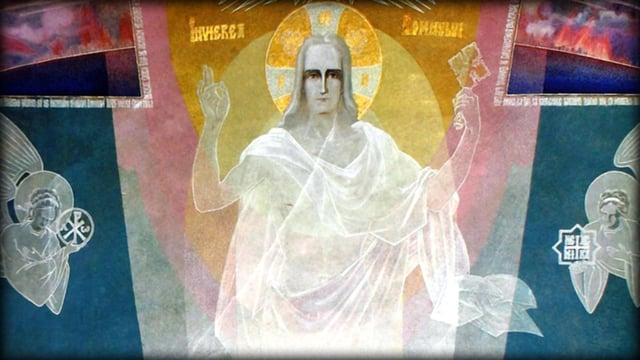
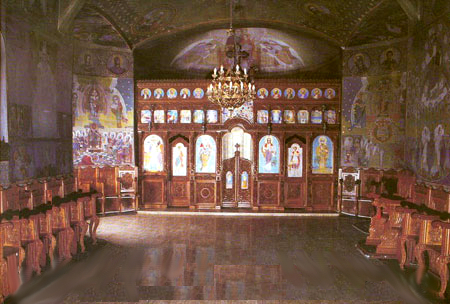
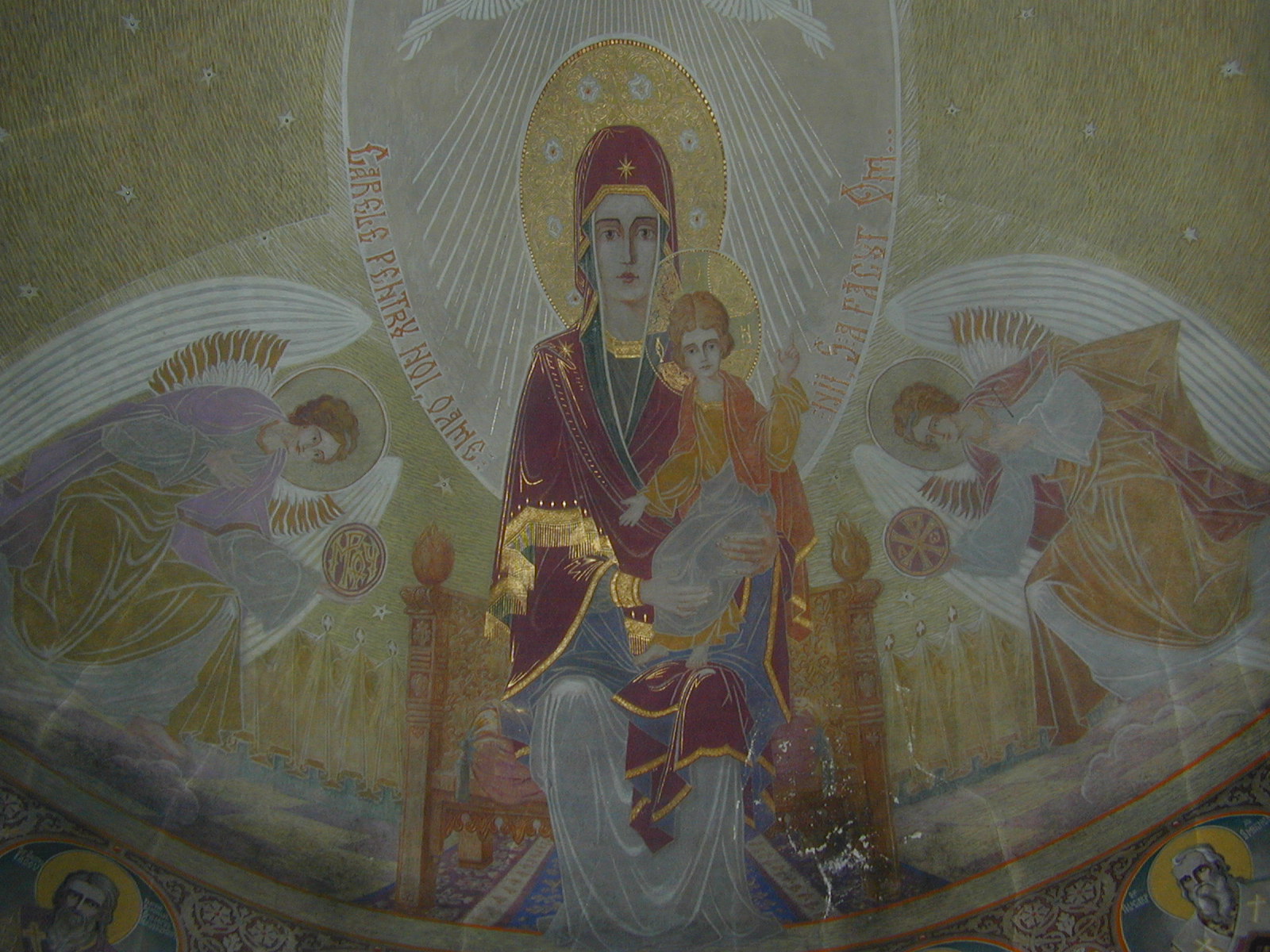
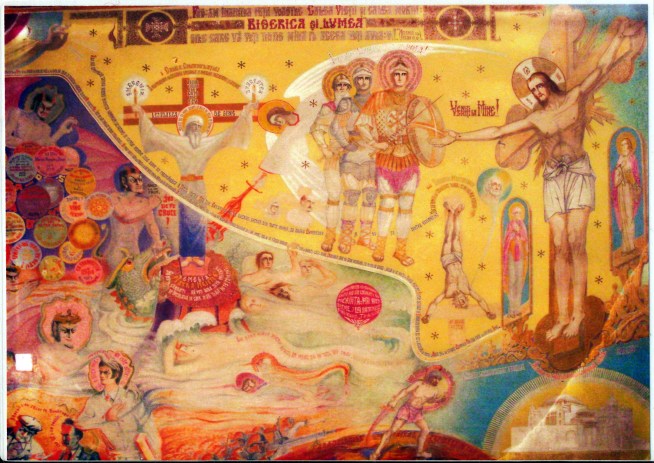
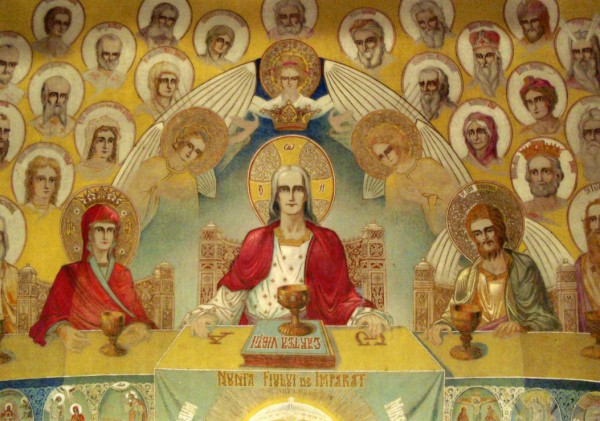
Draganescu Sistine Chapel

boca12

boca9   

   boca4 

 boca16

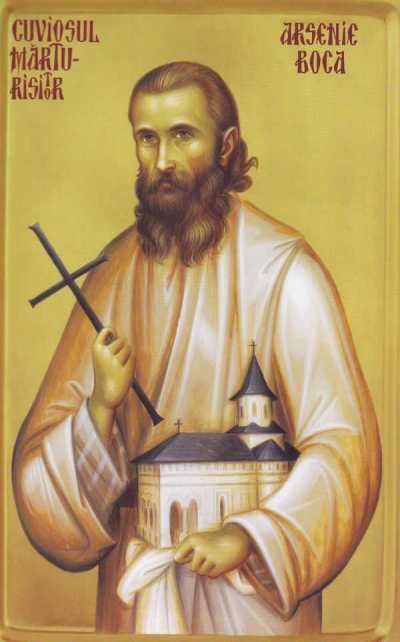
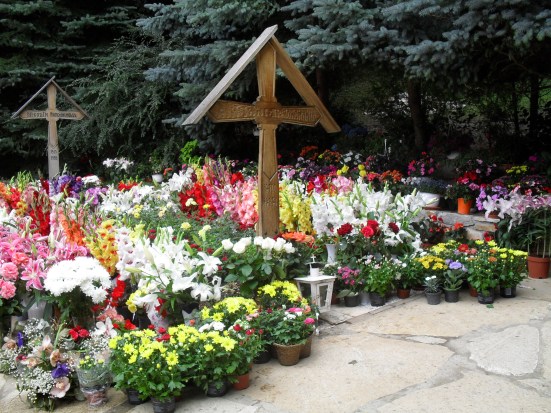
The Romanian Orthodox Church is considering a Romanian monk persecuted by the communists and known as the “saint of Transylvania” for sainthood. … Boca, who became a monk in 1940, was harassed by the Securitate secret police, detained and did forced labor on the Black Sea Canal, a notorious labor camp where tens of thousands of political prisoners worked in the 1950s. In 1959, he was banned from leading worship and the Prislop monastery, where he is now buried, was converted into a retirement home. He was forced to retire from the church in 1968 and spent 15 years painting religious images and icons in the small church of Draganescu in southern Romania. The church’s interiors are now considered among the most beautiful in the country. Elder Arsenie Boca reposed in the Lord in early 1989, a month before Romania’s anti-communist revolt, aged 79. Though he is not yet canonized, Elder Arsenie’s grave, located in Prislop Monastery, is visited by tens of thousands of pilgrims every year, where many miracles occur. One miracle which everyone can see is that the flowers over his grave never die or wither , neither in the hot summer or the frigid winter.
st arsenie boca 

 arsenie3

For his amazing life, the  documentary “Fr. Arsenie Boca – Man of God” is a MUST.  “His colleagues at the Theological Academy of Sibiu named him ‘The Saint’, he is considered a founding father of the Romanian Philokalia by father Dumitru Staniloaie, who thought of him as an unparalleled phenomenon of Romanian monasticism.

*
Sought after and followed by thousands of believers eager to quench their spiritual thirst from his inexhaustible spring of serenity; legendary for his prophesying and healing gifts, painter of souls and painter of churches, man of culture, philosopher of sciences and religion, father Arsenie Boca was, just like Saint Basil as depicted by him in his essential work The Path of the Kingdom.

*

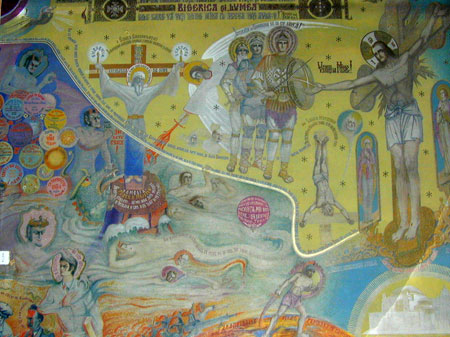
A disciple calmly walking across the stormy seas, an unmoving pillar against the troubled waves, a man among people, providing guidance and strength with otherworldly serenity, unflinching in the belief that God alone is ruler of our world. An unequaled personality, a magnet for thousands of people in all walks of life, and also a target for suspicion for the authorities of his day, who failed to understand the source of his exceptional power to gather people around him.” 

*

As one person interviewed in this documentary says: “Fr. Arsenie made Christ transparent to us.” He still does. His presence in the midst of us after his passing is a reminder of the proximity of Heaven. This film is an opportunity to (re)discover it for ourselves. https://www.youtube.com/watch?v=ptbTap5NHqw
 boca8  

 boca27

  boca15      

*

The Sistine Chapel of the Romanians: the Draganescu Church

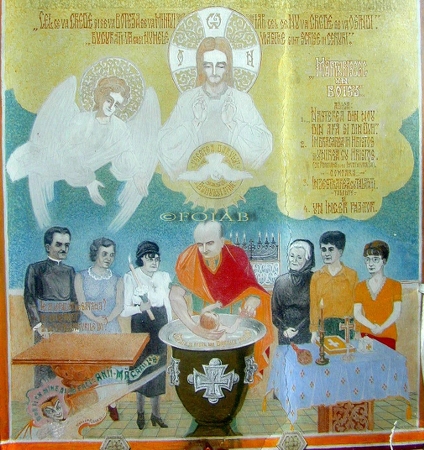
Father Arsenie Boca lived in Draganescu for 20 years and in 1968 he began painting the parish church, a work that took him more than 15 years. As he wasn’t allowed to celebrate service, some of the priests who visited the church over the years claim that Arsenie Boca has actually painted the sermons he delivered at Sambata de Sus.

*

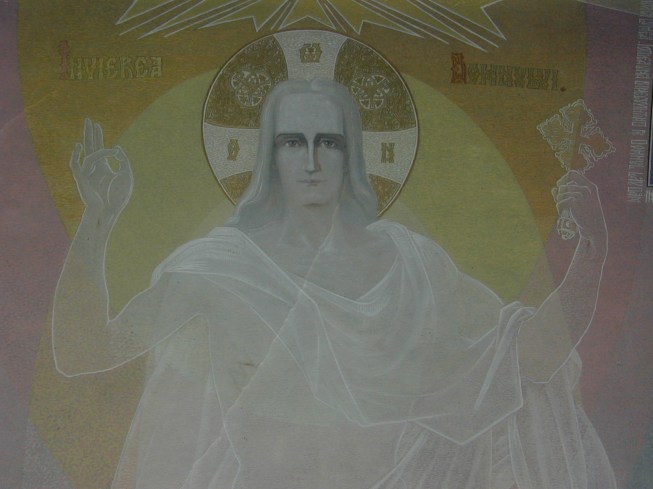
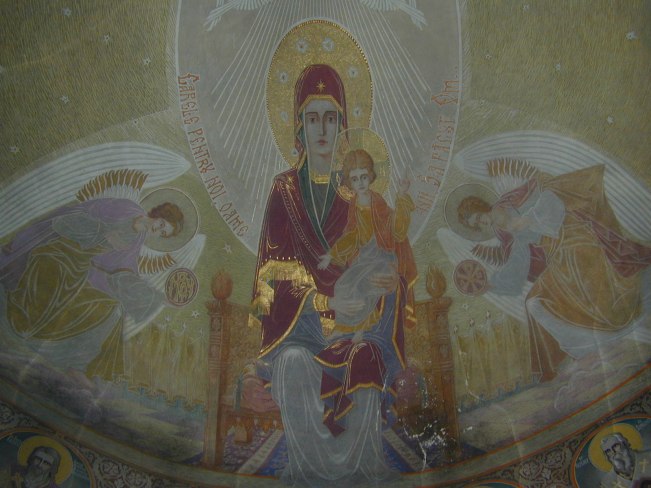
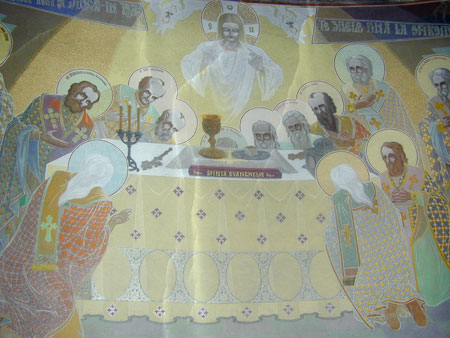
Rainbow colors reverberating in frescoes, light flowing from Christ’s Resurrection, Heaven trickling down through the painting brush, that’s the way the murals painted by Orthodoxy beacon Arsenie Boca at the “St. Nicholas” Church of the Draganescu town – Giurgiu County can be translated and rendered into metaphor. …
 boca6 

 boca7

boca22 

 boca13

Prophetic Artist in Shackles

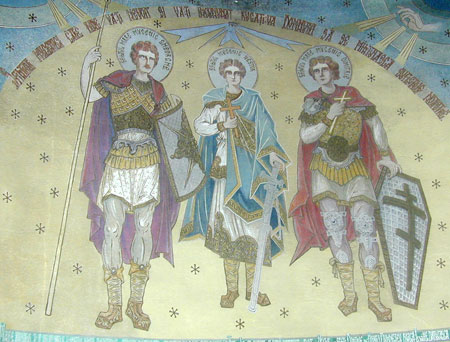
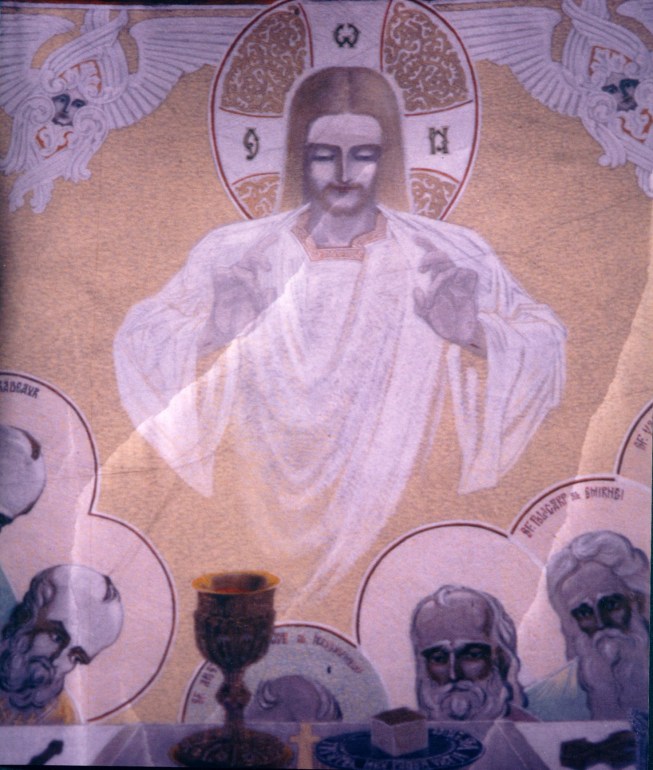
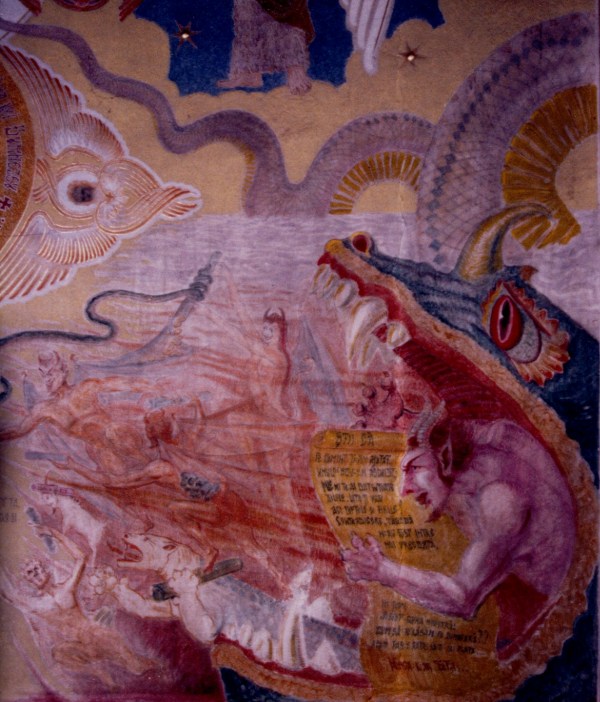
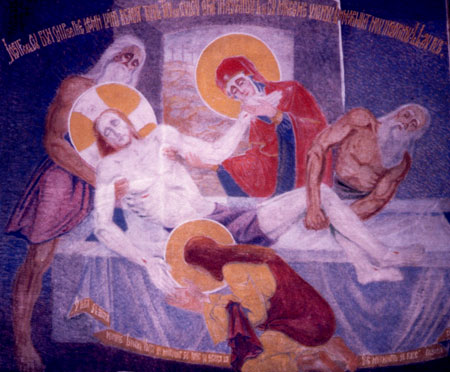
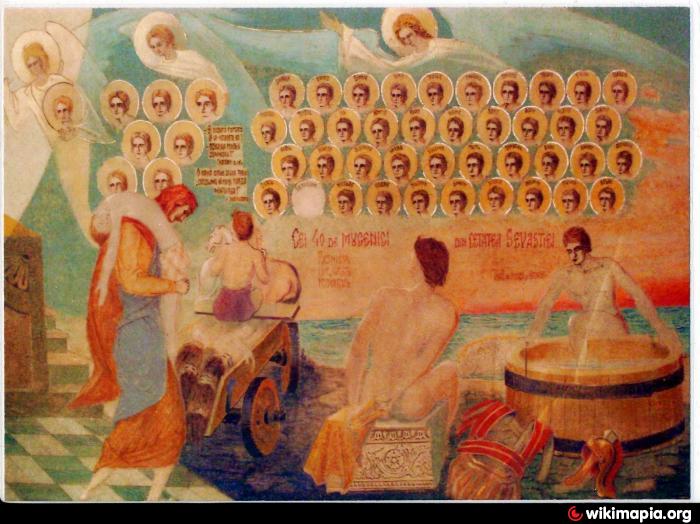
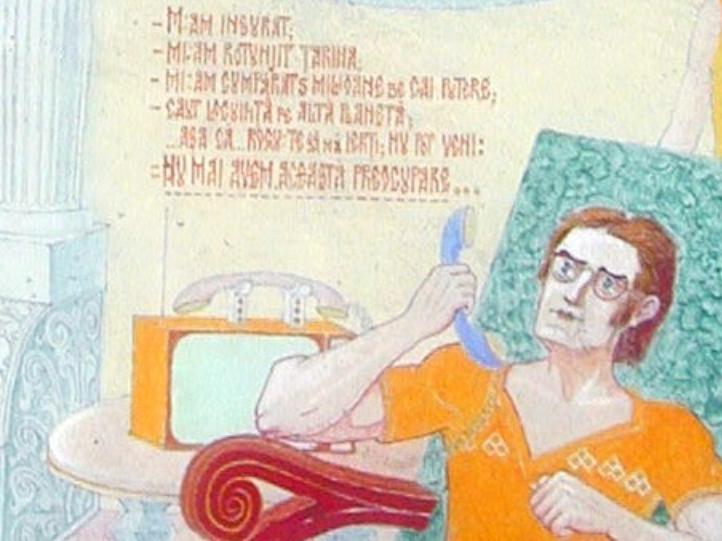
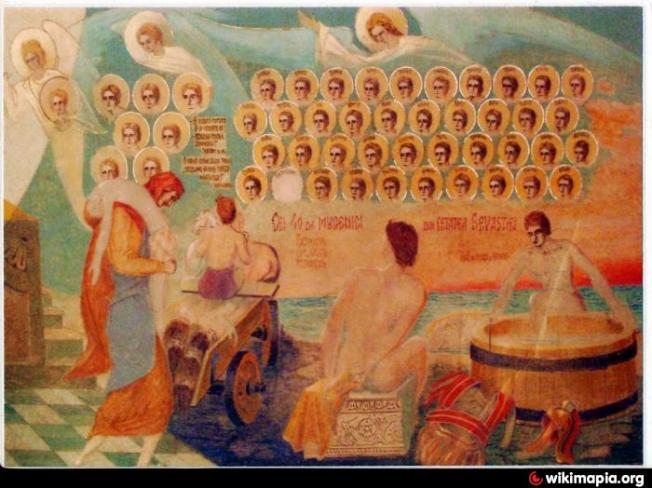
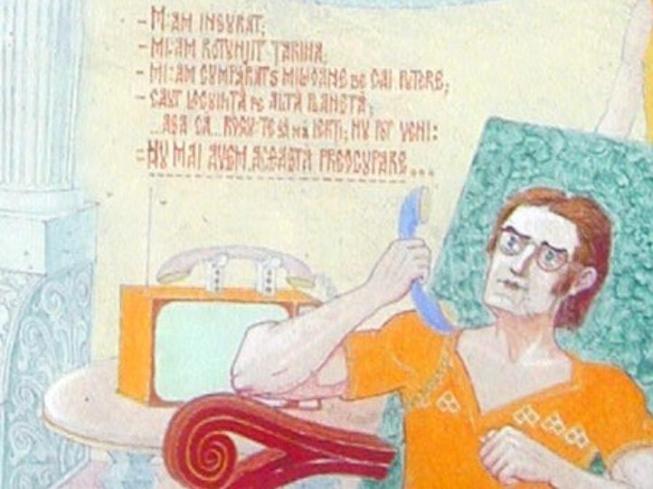
His frescoes are diaphanous, and the images are accompanied by metaphors referring to people’s weaknesses and sins, by aphorisms, quotations from the Holy Scripture, sometimes by teachings of the Father and biblical scenes: the Resurrection, a picture of hell, the Group of the Righteous. The paintings are said to have a visionary, prophetic content, as it is known that Father Arsenie Boca had the gift of spiritual far-sight: one of the scenes, two tall buildings engulfed in flames, is said to allude to the 9/11 attack on the Twin Towers, not to mention those where items like a cell phone, a space shuttle, satellite dishes, all unusual things in that period, appear.
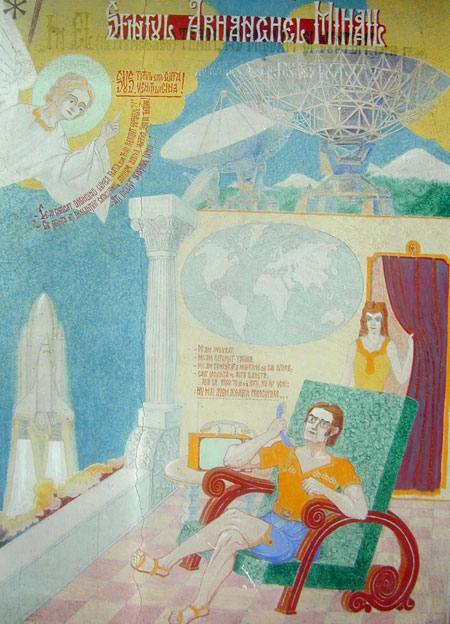
boca14

boca2

For his paintings, the art documentary “Picturi ale pr. Arsenie Boca pe biserica din Drăgănescu” at https://vimeo.com/82791105 is a MUST. Also, go to http://www.themidlandhostel.com/the-sistine-chapel-of-the-romanians-the-draganescu-church/ and http://www.agerpres.ro/engleza-destinatie-romania/2014/11/22/destination-romania-the-draganescu-church-swathed-in-father-arsenie-boca-s-prophetic-paintings-18-04-37 and watch a short art film “Father Arsenie Boca, one of Romania greatest Saint”  at https://www.youtube.com/watch?v=5r6ZX8M8vwY

boca23

boca11   

 boca5

Morning prayer by Arsenie Boca
Lord Jesus Christ, help me let go of myself today, as I can create great problems from small and insignificant issues, and this way, caring for myself, I will lose You.

*
Lord Jesus Christ, help me so that the prayer of Your Holy name will wander (work) through my mind more than lightning on the sky, so that I stay clear of even the shadow of bad thoughts as, look, I am sinning every minute.
*
Lord, coming secretly amongst people, have mercy upon us, because we stumble as we are walking in the dark. Our temptations are closing the eyes of our mind, forgetfulness has become like a wall amongst us, turning our hearts to stone and all together have made the prison cell in which we keep You crippled, starving and naked, wasting our days.
*

Lord, coming secretly amongst people, have mercy upon us and set fire to this prison cell, light up the love in our hearts, burn the thorns of our temptations and make our souls bright.

*

Lord, coming secretly amongst people, have mercy upon us, come and live within us, together with the Father and the Holy Spirit. The Holy Spirit prays through us with unspoken sighs, when word and mind don’t have the power.

*
Lord, coming secretly amongst people, have mercy upon us, because we don’t realise how imperfect we are and how close You are to our souls; and how distant we become through our sins. Shine Your light over us, so that we see light through Your eyes and live eternally through Your life. Our light and joy, praise be to You!

Amen!

 *

Solomon, I have outdone thee!

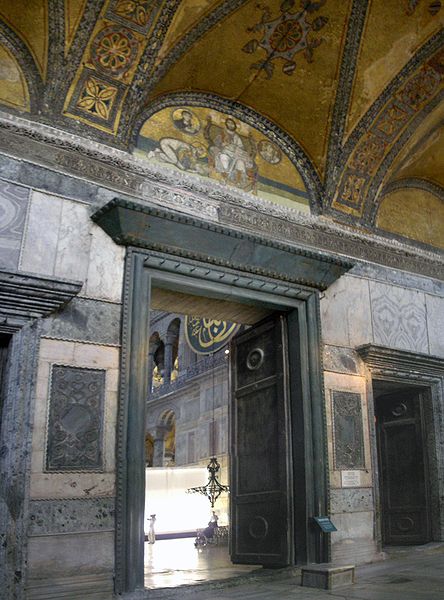
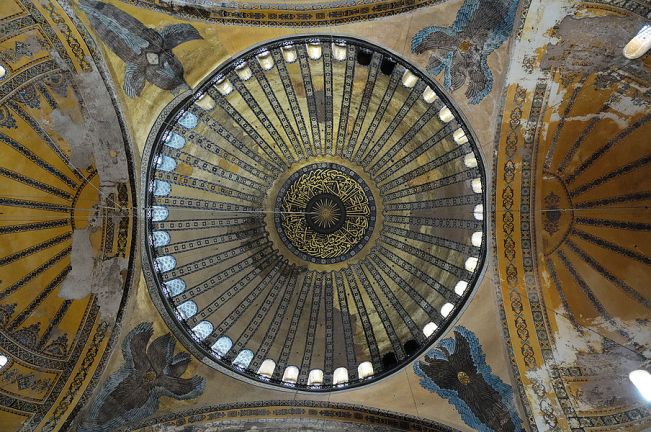
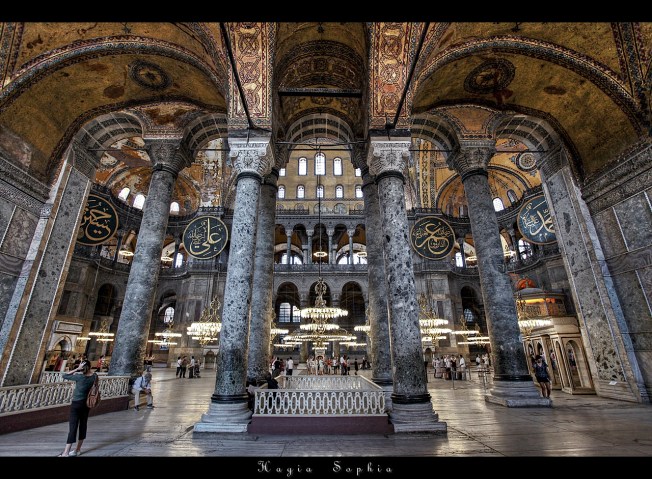
An excellent documentary and a unique website featuring the grandest Byzantine church of them all, “Hagia Sophia”, Church of the Holy Wisdom in Istanbul, Turkey  


agia1

Iconographer and Russian historian launches unique website featuring “Hagia Sophia,” Church of the Holy Wisdom

agia2

agia5

 agia4

agia6     agia9

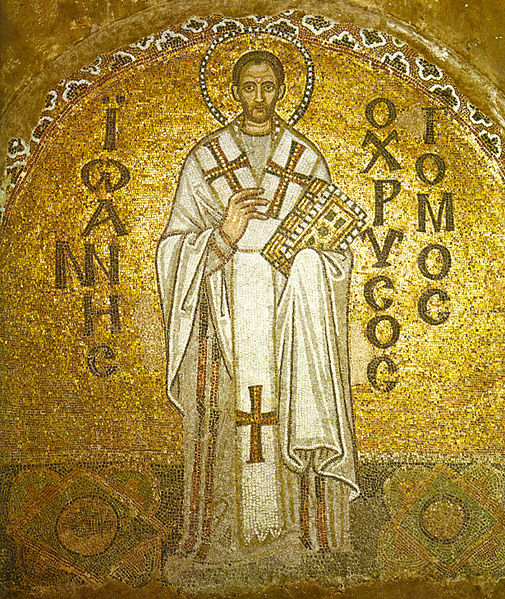
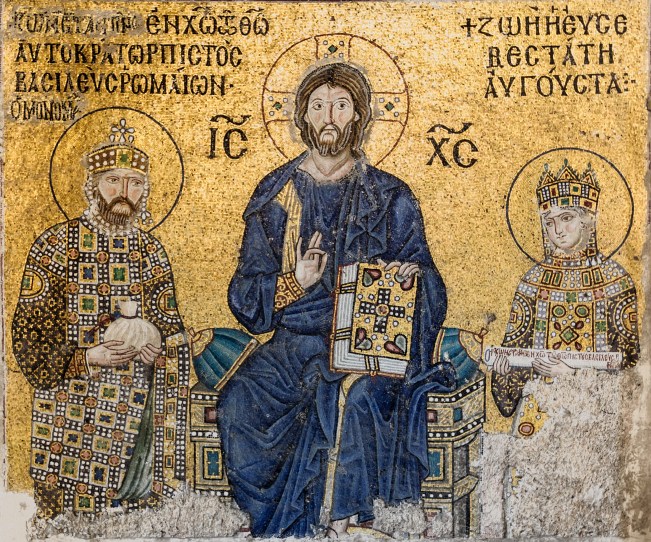
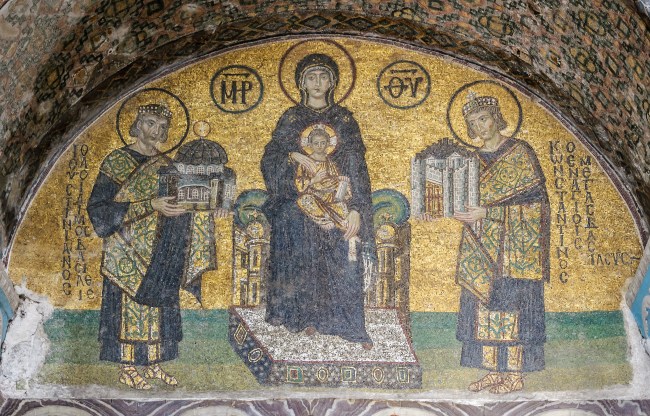
Mosaïque de l'impératrice Zoé, Sainte-Sophie (Istanbul, Turquie)    Mosaïques de l'entrée sud-ouest de Sainte-Sophie (Istanbul, Turquie)

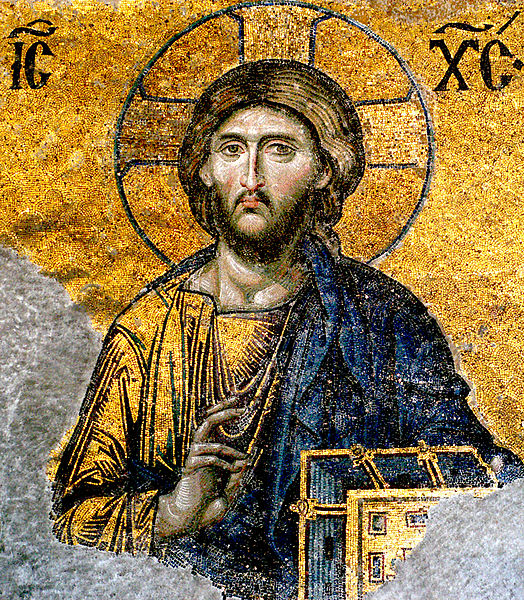
Deisis

An interesting new site illustrating the history of Constantinople’s Church of the Holy Wisdom  popularly known as “Hagia Sophia”  recently appeared on the internet.

A “must visit” for Orthodox Christians, especially those interested in Church history, iconography, mosaics, and ecclesiastical architecture, the site gives special attention to the magnificent “Deesis” mosaic in the church’s south gallery.  Depicting Christ flanked by the Theotokos and Saint John the Forerunner, the exquisite mosaic was uncovered in the 1930s.  It is one of the world’s most beloved images of Our Lord.

Built by the Byzantine Emperor Justinian in the early sixth century, Hagia Sophia replaced two earlier churches, the first built in 380 AD.

* In the time of Justinian, it had a thousand clergy and in Neara, Herakleion, there is a catalogue listing in the 7th century 600 people, consisting of “80 priests, 150 deacons, 40 deaconesses, 70 sub-deacons, 160 lectors, 25 cantors, and 75 door-keepers”.

http://pemptousia.com/2016/01/haghia-sophia-such-ecstasy-can-never-be-forgotten/

It is an engineering marvel, inasmuch as its massive freestanding central dome  the world’s largest of its kind  has withstood everything from earthquakes to invasions for 1500 years.  After the fall of Constantinople in 1453 AD, it became a mosque.  Its current status  that of a state museum  dates back to the early 1900s.

The site is the work of Bob Atchison, an iconographer and Russian historian from Seattle, WA who now lives in Austin, TX.  His interest in Hagia Sophia, and especially it’s Deesis mosaic, dates back to his childhood.

The site, which includes invaluable historical information, illustrations, maps and plans, and original photographs not readily found elsewhere, is of special interest to Orthodox Christians in general, and specifically to those desiring deeper insights into Orthodox Church history, iconography, liturgy, and ecclesiastical architecture.

*
When Justinian had finished the construction he supposedly proclaimed, “Solomon, I have outdone thee!”

*
The site may be accessed here : http://www.pallasweb.com/deesis


Source: http://oca.org/news/oca-news/iconographer-and-russian-historian-launches-unique-website-featuring-hagia

Healing the Wounded Soul

confession1

The Difference between a Spiritual Father and a Psychologist

By Metropolitan of Nafpaktos Hierotheos*

The spiritual Father, ought to perform his task on the basis of the Orthodox Tradition, it is clearly different from the psychologist, who works on the basis of an anthropocentric view of man and his life The psychologist wants to make people psychologically balanced. The spiritual father aims at man’s deification. The psychologist uses the views of whichever school of psychology he represents. The spiritual father uses the eternal word of God, which was revealed to the prophets, Apostles and saints.

The psychologist believes that illness is due primarily to traumatic experiences in the past, or so-called repressed experiences. The spiritual father is well aware that it is not simply a matter of memories of the past or repressed experiences stored up in the subconscious. A specific faculty of the soul is ill, the nous, which is the eye of the soul. The psychologist employs the method of questioning and listening. He tries to assist the person to become aware of his problem and helps him to mature psychologically. The spiritual father, illumined by the grace of God, locates the problem, which is the darkness of the nous or fantasies, and tries to lead the person to theoria of God by means of the Orthodox method of purification and illumination. The psychologist acts on the human level using thoughts and ideas. The spiritual father acts in a theanthropic way, on both the divine and human level. He uses the therapeutic method, but also sends Gods grace into the sick person’s heart through the Sacraments.

The psychologist thinks that everything happens on a human level, He does not acknowledge the existence of the devil and the energy of the uncreated grace of God. The spiritual father knows the difference between the grace of God, the energy of the devil, and spiritual and physical illness. The psychologist confines himself to making the ill person aware of his problem and enabling him to cope with it. The spiritual father guides the person to repentance, which means his complete transformation. He does not simply lead him to a point of rejecting certain states, but guides him towards the transformation of his passions. It is possible to find other significant differences between, a psychologist and a spiritual father, and the difference between anthropocentric and theocentric psychotherapy.

We accept the views of contemporary psychology and psychotherapy in two cases, as a concession. Firstly, in cases of people whose nervous system has been harmed for various reasons, such as physical or psychological problems. Secondly, in the cases of people who, by choice, have nothing to do with the Church and its Sacraments. I think they can be helped by modern psychology and psychotherapy, so as not to deteriorate further. Psychology can act as a pain-killer to comfort them in the dreadful despair in which they are imprisoned.

But, I repeat, man is created in the image of God and he must reach His likeness. This is, I could say, the final aim and secret entelechy of man. As long as this yearning is not satisfied and a person remains far from God, his suffering increases. Inasmuch as his basic destiny on earth, communion with God, is not fulfilled, no matter how much medicine he takes or how much psychoanalysis he undergoes, he will always be homeless and engaged in a tragic search. We want more than psychological balance; we are looking for fullness of life. We do not simply wish to develop religious feelings, but want our lives to be filled.

  • Yesterday a meeting with a young student of mine I really care about left me sleepless. Such anguish and suffering! Such a dead end! Still imprisoned in her psychiatric disorders, still refusing medication, still held captive by her vicious circle psychotherapy sessions, still trusting her therapist as God, still away from the great hospital for sick souls : the Church, still rejecting Christianity.