The Bottomless Pool

Falling, falling. Gusts of wind whistling down the shaft, past your ears. A shooting sound, so shrill that it shakes the earlobes. Falling … fast. You cannot see the crack in the limestone wall, where groundwater seeps into joints and faults of the rock. You cannot hear the drip in the pool below, that incessant plop, plop from the porticoes above. You cannot see the spongy fungus, clinging to the greenish ledge, where at best a shaft of sunlight shimmers on the rising water levels. All that you see is black upon black: ebony layer on sable dark deepening into the shaft. Your finger dislodges a pebble. It falls. No sound. Why should it not bounce off the slick walls? Ricochet, stone to stone, then drop distantly into the water below? But no, no sounds at all. You are falling into a depth without a bottom. Reach out and scrape the sides of the shaft. Nothing! As if the shaft were opening wider, wider, into an immeasurable, inconceivable space. ‘It makes no sense!’ your lips call out into … The space cannot hear. Wring your hands, cool and slick as a salamander’s back. Open your eyes. A Light shines upward from the bottomless depth. A pure, silvery-white, such as no sun that ever shone on earth. You yearn to close your eyes. Crouch low like a cricket, as pale as a salamander in a cave, a blind bat clinging to its portico ledge above. You yearn for legs immobile, unable to send you plunging into the abyss.

A familiar dream. Consulting your handbook over a fried egg on toast, you read: ‘You will undergo a great struggle, then rise to honour and health’. But this time, it is no dream.

For thirty-eight years, this nightmare has haunted you. Falling, always falling off a familiar precipice bove the unfamiliar pool. Wet stones line the waters below, slick with greenish white fungus from the little sunlight that ever enters. Paralysed, you lie on a kind of porch with a roof overhead. You long for the water that could make limbs bend, joints untwist in the light. But should you actually enter, fall into the pool, nothing shall be the same again. Why did you dream it again last night? Saturday night used to be so simple. A pint or two in the pub. A round of darts, a pack of Walkers crisps. A whinge about that old Romanian hag in the headscarf, selling The Big Issue in front of Tesco. What is this country coming to? Used to be: fry-up on a Sunday, then the eleven o’clock sing-along. A practical talk by Canon Smythe-Sudbury about the effects of acid rain on late spring hydrangeas. Gone is my gloomy Sabbath, you muse. No organs, no pews, no plaque of Thou shalt not’s – only wailing Byzantine chant, swishing of silks, and a lot of obscure words about an ‘ineffable, inconceivable, incomprehensible’ God. What on earth possessed you to plunge into this particular pool? Give me back my little green hymnal, you moan. My four-part harmonies, wafting on soft rains. Puritan-pale faces, awaiting to-do lists of do’s and don’ts.

A Gospel as practical as the portico at the shallow end, far, far away from the depths.

For years, perhaps decades, you long to join the ancient, apostolic Church. To sense the incense wafting over, to receive the fiery coal of God’s own Body on your tongue. To kiss a tattered volume of Saint John Chrysostom and call him your kin. Guard well your limbs. Paralysed by Protestant prattle and Latin lies – for three, thirty, thirty-eight years – muscles atrophy. Eyes grow faint, in unfamiliar sunlight. Safer to stay on the porticoes by the pool. Once you plunge deep … nothing, nothing at all will ever be the same. An Anglican craft, set adrift on an Orthodox ocean, shatters on rocks that it cannot see. A blind salamander, its eyes hurt by acid rays, withdraws into the sweet, soft shadows of the cave. Paralysed legs need never strain, if they choose never to walk.

The Physician never forces you to rise. Instead, he asks: ‘Do you want to be healed?’

For thirty-eight years, this dream has haunted you. Gently, always gently lowered into the pool when the water is troubled. Wet stones line the dark shaft that they call Beth hesdá,  house of mercy, slick with a greenish-white fungus from the little sunlight that ever enters. Paralysed, you lie on a kind of porch with a roof overhead. A stench of urine, dried faeces clings to your pallet. You long for the healing water that could unbend your limbs, untwist your joints. Forcing your elbows, you inch closer to the edge. You dip your hand in, when from nowhere, a blind man staggers in front of you. Should they not call it Beth zathá, the house of shame? ‘Let me not be put to shame, O my God’, you pray. In the pale shafts of afternoon light, you see his Image. His voice asks: ‘Do you want to be healed?‘No one’, you bark bitterly, ‘no one helps. No one cares’. Breathe in a sweetly bitter sweat, that old familiar stench of living death on the porticoes. Your paralysis is yours. Who takes it from you? But the Physician reads your heart better than you. ‘Rise’, he commands you. ‘Rise and walk’. With every agonising step, every twist of an unused muscle, you leave behind everything that you once were. You fall into a depth without a bottom.

In the light rising, you see the Son. ‘Sin no more’, he says. That is, ‘never look back’.

Beloved in Christ: you are free to stay paralysed, as long as you like. Skim the surface of the pool, from the quiet comfort of a familiar stench. No one thrusts you into the waters of Bethzatha, troubled from … below. Once you plunge deep, however, nothing is the same. Puritan-pale faces, enamored of a gloomy Sabbath, offer you a ‘practical’ gospel: do this, don’t do that. Salvation simply guaranteed. Only Christianity is not faith in do’s and don’ts. It is faith in Christ – and Christ is a depth without bottom.

It is not the five porticoes of the Law. It is the bottomless pool of Mercy.

Shout out ‘Christ is risen!’ with all your soul, you fall into the abyss. You leave behind the soft crumbly limestone walls; the half-hearted, man-made faith of the practical; the sullen, sanctimonious naysayers who protest that a corpse bound to a pallet rises on a Sabbath. You leave behind ‘religion’: that pale, pitiful mockery. Groundless and unstable, as a gust of wind. If Christ is risen, no faith is real but falling, falling – into the hands of the living God.

A fall that does not kill you … but brings you to Life.

THE BOTTOMLESS POOL (John 5.1b-15)

By Father Alexander Tefft

Drop Your Baggage


Reflections on Pilgrimages by three fellow ‘Pilgrims

pilgrim3.jpg

“No one descends from the Cross, but they take him down” Christ to Elder Sophrony (Sakharov)

[My interposed or ‘highlighted’ comments  are in brackets and in blue] 

“I had made grand plans [Oh yes! Sooo me!! Throw caution to the wind!]  this past summer. My goal was to retrace Paul’s first missionary journey. I would start in Antalya, shoot past Perge up north through the Taurus Mountains until I was just north of Yalvac (Antioch of Pisidia). From there I would swing west to Konya (Iconium) and do a quick circle hitting the ruins that were Lystra and Derbe before finishing back up at Konya. Unfortunately, just three days into this journey I ended up spraining my ankle. Even though that random injury shortened my planned 500+ mile journey down to seventy, it was still the longest I had ever walked in one setting and it was a great experience.

From start to finish I did that walk with this big black bag. In this bag I carried a tent and small blanket, some clothes, a Bible and a notebook, some food, and water. I carried lots of water. I would much rather not have the need, but I was going through some uninhabited mountains and near desert in weather that was in the nineties and sunny every single day. You might not think of it but water is heavy. Very heavy. As I was walking this bag gave me bruises on my shoulders. When I tried to loosen the straps to relieve them, it would end up chafing my lower ribs and back. [And blisters, corns and callouses on my feet]

[I have moved to the UK since May 20, ‘moved’ by a ‘similar’ missionary impulse. Little did I know that I would spend so much of my day walking from place to place, since I am not in possession of  a car (yet?) and my lodgings appropriately ‘primitive’ and remote, often getting lost in unfamiliar surroundings, carrying, more often than I would have liked, heavy objects in my backpack and bags. Never would I have grasped how spoilt and what a creature of comfort I am if I had not been restricted to such old, poorly maintained, cramped, uncomfortable, poor lodgings!]

There was no escaping the pain. This thing hurt and it was preventing me from being able to walk the walk I wanted to. It was a beautiful moment when I was able to hobble into my hotel in Isparta, drop my bag, and say, “I am done with you.” Like me dropping that bag, there are some things we will need to let go of if we are to chose to walk the life Jesus has called us to. 

 Mark 10:46 – Then they reached Jericho, and as Jesus and his disciples left town, a large crowd followed them. A blind beggar named Bartimaeus (son of Timaeus) was sitting beside the road.

The first set of baggage Bartimaeus need to drop is the Baggage of his background.What is your background? What is your cultural heritage? One of the popular memes floating around on the internet are those “Keep calm and _______” Keep calm and pray. Keep calm and drink starbucks. Keep calm and eat a cookie. Keep calm and kill zombies. Keep calm and watch gossip girl. You name it, they’ve “keep calmed” it. One of my favorite “Keep calm’s” is a T-shirt I have seen a few times: “I can’t keep calm. I’m Turkish.” Every culture has it’s own distinctions, some would say stereotypes, and there will always be some who will use one of those cultural distinctions, or their family upbringing, as an excuse for their behavior. “I cant help being an alcoholic, I’m…” Or, “I can’t control my temper. It is the ______ in me coming out.” Or “You think I’m rude? I’m _____. We’re all rude. Deal with it.”

Although our cultural background and family background might make us more likely to act in certain ways, ultimately we are all responsible for our own behavior. [I would have never been made so intensely aware of my own cultural/ family background, had I not moved to a ‘foreign’ country and being ‘forced’ to communicate all the time, in writing and in speaking, in a language which is not my mother tongue. Can you imagine? Two conferences in just two weeks! Most fascinating but forcing me to struggle as they were not in my mother tongue. We never realise how deeply rooted we are in an ‘environment’ until we are completely removed from it] Bartimaeus could have said his background was a blessing or a curse. On the one hand since Timaeus means “highly favored”, Bartimaeus would mean “highly favored son”. He was not born blind and so the name “favorite son” was probably not an ironic misnomer. On the other hand, Timaeus is a Greek name. Those who like philosophy might recognize that it was Timaeus who debated Socrates in Plato’s dialogues. Bartimaeus was a mixed blood in a very racist society. Whether you come from a home of abuse, shame, and poverty or whether you had an incredibly blessed and very loving background, there comes a point when you just need to let go. Leave it behind you. Walk your own walk.

 Mark 10:46 – Then they reached Jericho, and as Jesus and his disciples left town, a large crowd followed them. A blind beggar named Bartimaeus (son of Timaeus) was sitting beside the road.

In addition to the baggage of his background, Bartimaeus needed to drop the baggage of his disability. Bartimaeus was a blind beggar. In modern society being blind is not as crippling as it was in his day. We have books in braille. I have even been through a drive through for McDonalds where a sign says that they have braille menus available. I really hope no blind driver is ever pulling up to ask for one while I am anywhere near. We also have audio books and a program that will read any PDF file in a reasonably normal voice. We also have medical advances where many who would once have gone blind can now get surgery and see perfectly fine. Bartimaeus had none of that. He had no hope.

What is your disability? Most people would say I am average height, but in my family my shortness is a disability. All of my cousins and siblings, even most of the girls, are taller than me. Our family loves basketball. I love basketball, but I have a permanent unfixable disability against others in my family.  No matter how hard I try, I will never grow taller. It just won’t happen. But then I think of pros like Spud Webb and Mugsy Bogues. These guys were much shorter than I was and yet they played well against others who were far taller and better than anyone in my family. Just like our background, we need to drop the baggage of our supposed disabilities if we are to experience our miracle. If God calls us, He will enable us. [I have repeatedly felt so incompetent, weak, discouraged, vulnerable, frustrated, inadequate, struggling, the last three weeks, even while trying to accomplish such basic tasks, as moving, unpacking, struggling to have a reliable Wi-Fi connection–still a struggle!–registering at NHS, opening bank accounts, securing a variety of official documents …] 

Mark 10:47 – When Bartimaeus heard that Jesus of Nazareth was nearby, he began to shout, “Jesus, Son of David, have mercy on me!”

In addition to his background and disability, Bartimaeus needed to drop the baggage of his respectability. [Oh yes! Can you imagine what friends, relatives back in Greece think of me when they ask about what on earth I am doing here at the UK? Re-discovering Orthodoxy in a ‘secular’, ‘pagan’, ‘depraved’ country?! Certainly a country that is not God’s ‘chosen nation’ such as Greece!!??] In Mark 10:47 it says that Bartimaeus began to shout. There are two different Greek words that are both translated “shout” in the New Testament. One of those shouts is the cry of joy or greeting. When I am watching Real Madrid in football and Cristiano Ronaldo scores again, I am shouting right along with that announcer, “GOOOOOOOOOOAAAAAAAAAAAALLLLLLLLL!!!!!!!” When I spot an unexpected friend walking along at the far end of Sultanahmet Square, I will be shouting out their name. This type of shout is very different from the type of shout I would be proclaiming if I was in a car that just crashed off the side of a bridge. As that sinking car started to fill up with water and I was still trapped inside, my shout would become louder and louder as I grew more and more desperate.

The truth is, the more joyful or desperate we become, the less concerned we are with those around us. Joy and desperation both expose the fear of respectability as the shadow it really is. The rest of the time, most of us are far too concerned with our respectability. “What would they think if…” is a thought we all think much too often. Think about it. Ninety percent of the time we think about someone else, we are really only wondering what they are thinking about us. On the flip side, those same people, if they think of us at all,  are spending ninety percent of those thoughts wondering what we think of them. We are all trapped in a web of false respectability and we need to drop that baggage off and come to Jesus.

Mark 10:48 – “Be quiet!” Many of the people yelled at him. But he only shouted louder, “Son of David, have mercy on me!”

Very similar to that baggage of respectability that Bartimaeus had to drop was the baggage of others expectations of him. As much as I just said people don’t often think about you, on those rare moments when they do, they are sure to let you know just exactly what they think. When I first told a certain friends that I was moving to Turkey, they told me I was being stupid. [Likewise] They said I was doing a lot of good work right where I was and that I had no business giving all that up, and leaving my family and friends to go to the other side of the world. It hurt. I knew that I was doing the right thing, and others who I trust their voice in my life agreed, but to hear this person say those things even though I knew they were wrong really hurt.

Everybody around Bartimaeus told him to shut up. They wanted to silence him, but he wasn’t screaming for the crowd. His voice was aimed only at Jesus and he would not be quiet until he received his answer. Sometimes, pursuing our miracle means those around us might end up getting angry or confused. They might not understand what God has called us to or they might become disappointed because we are not following their dreams for our life. Oh well. We need to drop the baggage of other’s expectations if we are going to walk the life Jesus has called us to.[Precisely, ‘crazy’ though that ‘calling’ may appear]

Mark 10:49-50 – When Jesus heard him, he stopped and said, “Tell him to come here.” So they called the blind man. “Cheer up,” they said. “Come on. He’s calling you!” Bartimaeus threw aside his coat, jumped up, and came to Jesus.

The next thing Bartimaeus had to throw off was the baggage of his security.[Oh yes! To be sure, Jesus has blessed my every single day here with new friends, new ‘signposts’, caring, clairvoyant elders, miracles, Sants’ relics, you name it, but every single day I had also to learn the hard lesson to rely only on Him] Bartimaeus threw aside his coat. We hear that and think, “so what?” What we do not realize is how much of a big deal this would be for a poor person at that time. Bartimaeus was most likely homeless and, if so, that coat was his most prized possession. The poor man’s coat was also his blanket. In the hot summer days, it was his only protection from the sun. During the cloudless chilly nights, it was his shelter from the cold.

Following Jesus is not safe. [No ‘plans’ or comfortable old habits will do here] I am currently reading a book that is a collection of stories about people who have left their former religion to become followers of Christ. Every single one of them is using a fake name for the book. Most of them had to leave their homes and even their countries to become God followers. I have a friend who is in Bible college now who still has not told his family that he has become a follower of Jesus. He fears that when his father finds out, he will hire someone to forcefully bring him back to his home country or, failing that, just kill him.

I cannot imagine that but I can imagine giving away a thousand book library. For me those books were my security. They were my prized possession. But when Jesus said, “come here” they did not matter. Those things we hold dear, those things that make us feel safe, can be very good or decent things. There was nothing evil about Bartimaeus’s coat but when it weighed him down from coming to Jesus, it had to go. If there is anything in my life that I trust or value more than following Christ, it is baggage that needs to be dropped.

Mark 10:51-52 – “What do you want me to do for you?” Jesus asked him. The blind man said, “Rabbi, I want to see.” “Go,” said Jesus, “your faith has healed you.” Immediately he received his sight and followed Jesus along the road.

He received his sight and followed Jesus. His eyes were opened and his path was set.

So what is our baggage? Jesus is calling us today. He is asking us to come, follow him. What baggage do we need to leave by the roadside in order to obey? For some reading this, it might be the first time you have ever seriously considered following Him. What is holding you back? Is it a fear of losing your respectability? Do the expectations of your family and friends hold you back? Maybe there is something you have done in your past, or something that was done to you, which makes you believe you are not worthy. Drop the baggage.

Others reading this have been following after Jesus for a while now. He is asking you to come a little higher. What would that take? Do you fear you are unfit because of some disability or struggle? Are you unwilling to just let loose and scream? Does the next step that you already know he is calling you to take seem just a little too unsafe?

When Bartimaeus met Jesus, the Messiah was on His way to the cross. This was the last time he would ever pass through Jericho. He did not know it at the time but if Bartimaeus passed up this opportunity, he would never have another. We might think there is all the time in the world to let go of that painful baggage which we consider so dear. We think that, but we certainly do not know it. This might be the last such opportunity you will ever have to grab hold of your miracle. This could be your final opportunity. Will you drop the baggage and step out? Will you be willing to lay everything down at the roadside and begin walking in the footsteps of Jesus?”

Source: Between Two Seas

“It is later than you think. Hasten, therefore, to do the work of God”.” as my spiritual great-grandfather Blessed Seraphim Rose would say.

Keep Your Mind in Hell


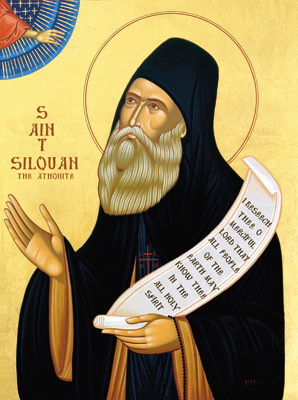
icon_st_silouan_athonite.jpg

… and Despair Not

Not for the faint-hearted!

“No one on this earth can avoid affliction; and although the afflictions which the Lord sends are not great, men imagine them beyond their strength and are crushed by them. This is because they will not humble their souls and commit themselves to the will of God.”


These words seem to sum up soberingly D. Balfour’s tumultuous life, and indeed in so many respects ours…


SPEECHLESS! “It seems ludicrous to rate a book like this according to a certain amount of stars…I searched for it after reading the book I Know a Man in Christ — a great book about our holy and blessed Elder Sophrony, which mentions this correspondence with the amazing Englishman David Balfour. I imagine that the only reason why anyone would be interested in this book would be to learn about this incredible spiritual friendship. (No! There are so many more reasons to want to study this book) And this book does allow for that — and much more besides. I’ve read letters of spiritual direction before. These letters go way beyond that. They give insights to the Elder and to St. Silouan which are simply impossible to convey otherwise. And this David Balfour — he went from Catholic hieromonk to Orthodox hieromonk to British Army major and intelligence officer to diplomatic interpreter to midlife husband and father to Oxford Byzantine scholar in old age. A biography of him wouldn’t go amiss, although I don’t think we’ll see one. And underlying his whole life is the gaining and the losing and the eventual regaining of that inestimable treasure, the Holy Orthodox Christian faith and Holy Grace. Not for the faint of heart.” (D. Kovacs )


Not for the faint of heart.” Most certainly!


What an intense book which can be read on so many levels! A heart-rending spiritual biography of a brother in Christ struggling for his faith and the salvation of his soul amidst staggering trials, temptations and tribulations! A sobering warning too to all of us to be deadly serious with our faith and never forsake our obedience to our spiritual father at any cost! Hell indeed broke loose when Balfour decided to disobey St. Silouan and use his own mind instead for his life-decisions! To give you just one example: After converting to Orthodoxy and becoming an Orthodox hieromonk, Balfour disobeyed St Silouan’s ‘suggestion’ to move to France, and then to England, and went to Greece instead. Things went well at first, but with the outbreak of the Second World War, Balfour was forced to flee Greece and started wandering all over Europe, while undergoing a very dark period of disobedience, disillusionment, doubt and eventual loss of his faith, to the extent that he decided to shave his beard and defrock himself in Cairo, Egypt! I cannot even begin to imagine how traumatic all this experiences must have been for him!

elder-sophrony


What a most sobering book! “For Whom the Bells Toll” indeed. How often have I betrayed the Lord and disobeyed my spiritual father in the past! How dire the consequences of my disobedience have always been! Indeed, how fragile our faith is, how precarious our decision to follow the Lord at any cost like a true disciple, how unpredictable our falls and how uncertain our salvation until the very last moment of our life!


Striving for Knowledge of God: Correspondence with David Balfour is a treasury of wisdom distilled from Fr. Sophrony’s reading of the Fathers of the Church, from his conversations with St. Silouan, and from his own experience. Since most of these letters were written to someone new to the Orthodox Church and to Orthodox monasticism, they are of greatest interest to anyone contemplating converting to Orthodoxy.


In particular, the correspondence touches and elaborates on the difference between Eastern Orthodox and Western thought, in both Christian and philosophical writings. Thus Fr.Sophrony mentions Schleiermacher, Spinoza and Kant, and St John of the Cross (The Dark Night of the Soul). He dedicates a few pages to the concepts of the heart and prayer. In Eastern Christianity, he argues, the spiritual heart is not an abstract notion but is linked with our material heart and has its physical location. In opposition to the Western search for some visionary mystical experience, Fr.Sophrony advocates the prayer of repentance, which is the basis of all spiritual life.


As a reply to Balfour’s doubt over the importance of specifically Eastern ascetic and dogmatic traditions, Fr.Sophrony asserts the organic integrity and integrality of ascetic life, dogma and the Church. Criticising Schleiermacher in connexion with this issue, he writes:


“There are three things I cannot take in: nondogmatic faith, nonecclesiological Christianity and nonascetic Christianity. These three – the church, dogma, and asceticism – constitute one single life for me.” – Letter to D. Balfour, August 21, 1945.


“If one rejects the Orthodox creed and the eastern ascetic experience of life in Christ, which has been acquired throughout the centuries, then Orthodox culture would be left with nothing but the Greek minor [key] and Russian tetraphony.” – Letter to D. Balfour.


Fr.Sophrony also warns against attributing to intellectual reasoning the status of being the sole basis for religious search:


Historical experience has demonstrated that natural intellectual reasoning, left to its own devices, fatally arrives at pantheistic mysticism with its particular perception of reality. If this takes place in the soul of the Christian who does not want to reject Christ (as in the case of Leo Tolstoy), he arrives at Protestant rationalism or at spiritualism, which stands mystically close to pantheism… I am convinced that the rejection of the Church will lead to the rejection of the Apostolic message about Сthat which was from the beginning, which we have heard, which we have seen with our eyes… and our hands have handled (1Jn.1:1) [148].


On a more general level, these letters are full with profound theological and spiritual insights. What a most blessed golden ‘chain’ of Grace and Sainthood! Elder Sophrony, already under consideration for glorification, was ordained to the diaconate by St Nicolai (Velimirovic) of Zicha and became a disciple of St Silouan the Athonite. Can you imagine? All these Saints were also ‘connected’ with the greatest probably Saint of our century, St. John Maximovitch! St. Nikolai Velimirovich is often referred to as Serbia’s New Chrysostom. St. John Maximovitch, who had been a young instructor at a seminary in Bishop Nikolai’s diocese of Ohrid, called him “a great saint and Chrysostom of our day [whose] significance for Orthodoxy in our time can be compared only with that of Metropolitan Anthony (Khrapovitsky). … They were both universal teachers of the Orthodox Church.”


Coming back to the book, of all theological concepts touched upon in this book, the one which most interests me  is the concept of Godforsakenness, as outlined by Fr.Sophrony, who worked out a distinction between two types:The first one is when man deserts God: To the extent that we live in this world, to that same extent we are dead in God. The second one is when God hides from man: a horrific state of Godforsakenness. When man has no more life in this world, i.e. cannot live by this world, the memory of the divine world draws him there, yet despite all this darkness encompasses his soul. He explains: these fluctuations of the presence and absence of grace are our destiny until the end of our earthly life. Fr.Sophrony saw suffering as a necessary stage in ascetic development: Divine grace comes only in the soul which has undergone suffering.


“We must have the determination to overcome temptations comparable to the sorrows of the first Christians. All the witnesses of Christ’s Resurrection were martyred. We should be ready to endure any hardship.”


“The most important thing in the spiritual life is to strive to receive the grace of the Holy Spirit. It changes our lives (above all inwardly, not outwardly). We will live in the same house, in the same circumstances, and with the same people, but our life will already be different. But this is possible only under certain conditions: if we find the time to pray fervently, with tears in our eyes. From the morning to ask for God’s blessing, that a prayerful attitude may define our entire day.”


“Whoever gives up his cross cannot be worthy of the Lord and become His disciple. The depths of the Divine Being are revealed to the Christian when he is crucified for our Savior. The Cross is the foundation of authentic theology.”


Not for the faint of heart, indeed!

The Holy and Great Synod of the Orthodox Church – Metropolitan Nikolaos of Mesogaias

metropolotan-mesogaias

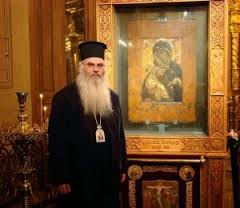
  • Theotokos of Vladimir, one of my favourite Theotokos icons, side by side with Metropolitan Nikolaos of Mesogaias, one of the most enlightened, holy and loved Hierarchs of our times, and a great favourite of mine! I had the blessing of meeting him in various church services and conferences in Greece and abroad and I have always experienced Holiness, Light and Love by his side! I would never let go of his hand!

His Eminence, Metropolitan Nikolaos of Mesogaias and Lavriotikis, recently sent the following encyclical message concerning the decision to convene the Holy and Great Synod in Crete, to the clergy and laity of the Holy Metropolis.

His Eminence’ Encyclical follows:

Dear Fathers and brothers, CHRIST IS RISEN!

I am sure you have been informed that beginning on the Sunday of Pentecost for about ten days the so called Holy and Great Synod will take place in Crete. This is a pan Orthodox Synod: in other words all the autocephalous Orthodox churches will participate, represented by arch-priests and headed by their leaders, that is to say their Patriarchs and Archbishops. Some have called it an Ecumenical Synod, although recently in particular for certain reasons they have avoided this title.

A Synod of this size is unique for the second millennium, that is it is the only one after the schism of Rome from the unit of the other Churches, namely from the body of the One, Holy, Catholic and Apostolic Church as we confess in the Creed.

The importance of this Synod and the hopes and expectations concerning it can be perceived. Therefore I consider it my pastoral responsibility to address you, to inform you of its ethos and its significance, since the laity according to our ecclesiastical tradition is not a mere spectator of events, but participates through prayer, dialogue and with their healthy reaction to the life of the Church.

A Synod of this dimension is convened in the name of the Tri-une God, chiefly for spiritual purposes, in order to unite the body of the faithful, to support them, to indicate the path of truth, to heal their perplexity and at the same time to bear witness to the contemporary world in the context of its mission, that is to say to reveal the one truth of God “to all nations” according to the exhortation of the Lord (Matthew Chapter 28, 19)

It must be done supported by the Holy Gospels, interpreted correctly, and according to the Holy Tradition of previous Synods, and to the teaching of the Holy Fathers, and of course with reference to the problems of the modern age. It is immediately obvious that the findings of this kind of Synod must be clear, very strong,prophetic and inspired by God. It is as though God opens His mouth to speak after a thousand years of Synodical silence and to a “ warped and crooked generation” (Deuteronomy 32,5), which is confused, makes compromises, reaches dead ends, makes errors, heresies, is in denial, full of atheistic madness, a generation which overthrows  basic timeless values. There is a threat from all sides to the human being, in an age of worldwide insecurity, where technology has super strength; digital imprisonment; co-ordinated insults against God; mass destruction of ancient civilizations; the violent uprooting of peoples from their historical roots; and apocalyptical persecutions of Christians.

The voice of the Church must be “the voice of the Lord is on the waters” (Psalm 29,3) or “ the noise of thy waterspouts ”.(Psalm 42,7) It must move people and resurrect dead lives. If we are not ready for something like that, then it is better to wait, better still even at the last moment to postpone the Synod for later.

If four hundred bishops are photographed together in Crete with conventional smiles, having previously stirred up nothing, or have signed texts without the blood of truth or the water of life, without the knife edge of spiritual speech or reason, with meaningless theological formalities, to camouflage the truth and beautify reality, all this will not only render the Synod meaningless, but will also, more importantly, damage the prestige of the Orthodox witness now and for ever.

The Synod must take place only if it has to say and show something so powerful that it will resurrect all our hopes, lighten our darkness, cancel out the politicians’ suspicions and the egoistic expediency of our age which reaches even to our clergy.

The whole world thirsts for truth, hope, light, strength, life and authenticity. This is what is missing in our age. We are congested by lies, compromises, mediocrity, suspicious expediency, dead religions, faith without substance, religious fanaticism without substance, shallow and ridiculous displays and shallow embraces.

We can no longer suffer the secularization, syncretism, opacity, bilingualism, and public relations theology: the degeneration of the Church from a sacrament of revelation of the true God and the manifestation of His will, to a semi –religious concoction with a worldly orientation. We hope and pray that the Synod will be a witness to unity which is certainly not something small, but also a prophetic message. Indeed the fact that all these Orthodox churches will meet and announce the fact that despite widely varying languages and mentality, despite our faults and human weaknesses, despite our misunderstandings and contrasts, our possible differences and conflicts we share this one faith in the Tri-une God and in the God-Man Lord Jesus Christ, in the sacraments of the Church and of the people and this common faith is what we confess and proclaim: this is great and holy and it alone makes the Synod Great and Holy. However its rationale must be God inspired. It must make as the other Synods did, an impression on history, and impart honour and value in our age as nothing else has done, it must make an indelible mark on the life of the Church. It will be the voice of God today! Otherwise it has no value. His silence is enough.

We do not wish to hear the human words of contemporary bishops nor to learn the thoughts of the more educated and clever than they are.

We want to hear the voice of God from the lips of our bishops and even more from the convocation of our Synod. If today’s lay Christians are not comforted, if we are not supported and illuminated, if coming ages do not have recourse to this Synod as a source of irrefutable truth, then why should it be convened? The rationale, the raison d’etre of the Church cannot be banal or a half measure or little, and what the Synod has to say and what it should say is certainly not little.

This has been a millennium inspired by theological wisdom such as that of Saint Gregory Palamas, an experience of unceasing continual worship, analysed indeed by theologian saints such as Saint Nicholas Kavasilas and Saint Symeon of Thessaloniki, a time of confession and the blood of the new martyrs, watered by the sweat of great ascetics such as Saint Seraphim of Sarov and the contemporary Saint Paisios, sealed by signs and miracles of the saints up to the present day such as Saint Nectarios and Saint Luke, bishop of Crimea, the saints of the Russian Church, of the Balkan Churches and of Greece, and of the whole world. A path through the sea of the grace of God within ecclesiastical unity must be registered as the “new rationale», the message of the Great Synod. Today when man has become a biological machine or a social unit or has degenerated into an ephemeral entity or a device for controlled thought, is it possible for the Orthodox witness of the community of God, engraved and documented through experience in our churches and monasteries in our sacraments and in our life not to be a stentorian pan Orthodox call in our times?

It is impossible to imagine that in this age of insidious and ferocious persecution of the church, unprecedented spiritual asphyxiation, confusion and “distress of nations with perplexity, the sea and the waves roaring.”(Luke 21,25), in an age full of the anguish of the last days, that this Great and unique Synod of the Orthodox will be content with a news report, a communication with photographs, bereft of meaning and dry in content. This Synod is the only one after the Schism. The secession of the West from the trunk of the ecclesiastical tree has most certainly caused errors, different teachings and heretical beliefs for which perhaps today’s Western Christians may not be so much to blame as is often presented.

The Synod has a huge responsibility to protect us from every danger of this sort, not harshly treating without pity those who unwittingly inherited the error but identifying it with pain, love and theological accuracy.

It also has the ineffable responsibility first and foremost to challenge the Orthodox to repent at the same time, so as to live consistently the truth which by the grace of God we inherited or discovered.

We must repent first if the others are to return. If we do not live this then the Orthodoxy we confess is lacking, and if the Synod does not tell us this, it may be great but it is not Orthodox.

Is ecumenism a heresy? Could it be a blessed initiative in some conditions ? Is anti-ecumenism always acceptable to God?

Can the Church be One and not Catholic and Holy, that is emphasizing the Orthodox confession and not the corresponding missionary testimony? Could it be Catholic without being one, that is to pursue the unity of Christianity, sacrificing its uniqueness, in other words its consciousness that it is the One Holy Catholic and Apostolic Church? We expect this Synod to speak persuasively about the uniqueness, holiness, Catholicity and apostolicity of the Church in an authentic dialogue full of repentance and practical holiness to the Orthodox, to speak with respect and love to those with other beliefs and not with overweening triumph or empty sweet talk to keep the worldly balance. We need to learn the traditional respect through which our ancestors in Constantinople showed that they were ready and willing to die

“We shall not deny thee, beloved Orthodoxy, nor will we be false to thee, tradition’s respect. We were born to thee, we will live in thee, and in thee we will fall asleep. If the times call for it we will die for thee many times.” Joseph Bryennios said.

If our ecumenism is not missionary or prophetic it cannot be Orthodox and ecclesiastical. Dear brothers, I ask you all to have a humble vigilance, to have heartfelt prayer, to struggle and have repentance, for God to give the Synod His voice and for the Synod’s rationale to be really God inspired, and for our hearts to be resurrected with the persuasion that “The Lord is alive” today.

We have so much need of this: everyone does! Only in this way will the Synod be Holy indeed and not by economy. If the Synod is not Holy it will not be Great either and if it is not Great then the question why it was convened will be the only thing Great about it.

Pebbles and Pilgrimages


I’ve been travelling for the last two weeks. It was simply wonderful, but I’m waiting for a few free hours to put together a post about all this, my moving to the UK, the Archdiocesan Conference with our Father and Metropolitan His Eminence Silouan which I attended, and all the new friends I made and the living signposts (newly baptised ‘converts’ with amazing stories to share, clairvoyant priests who would read your thoughts across the room! …) I met in just two weeks!


Meanwhile …


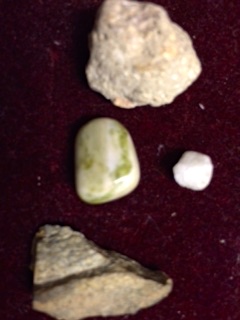
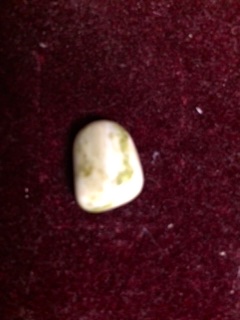
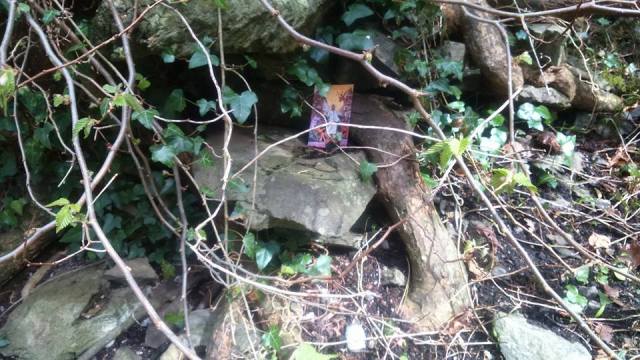
While unpacking here, I discovered a small box with 4 pebbles and put it in my icon corner (under construction …)

IMG_3033Orthodox Christian Celtic Pilgrimage

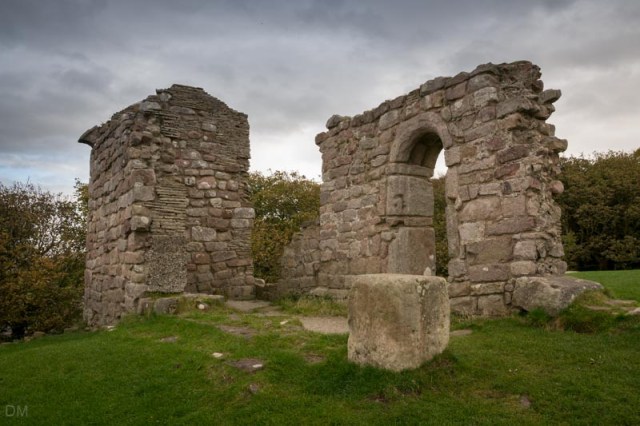
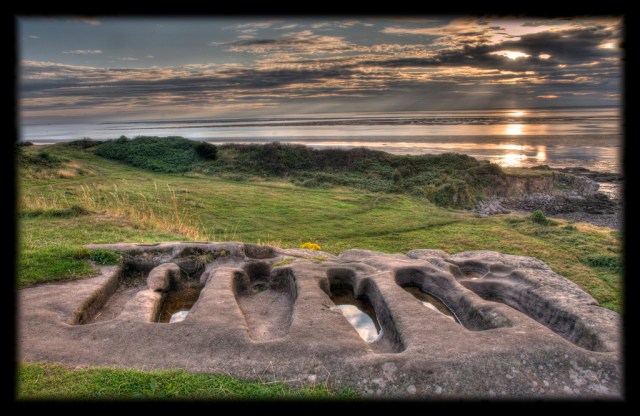
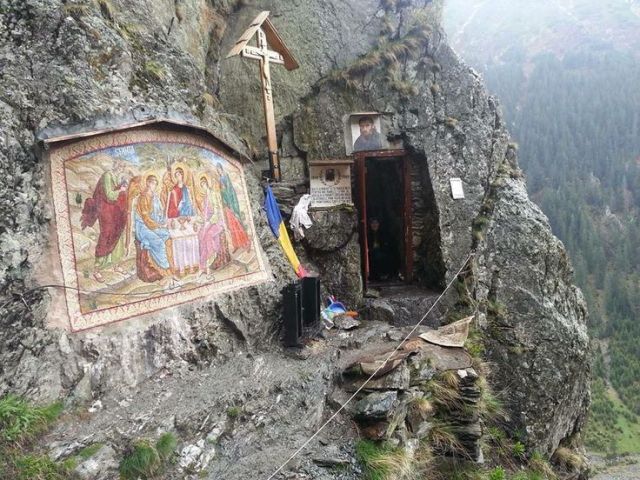
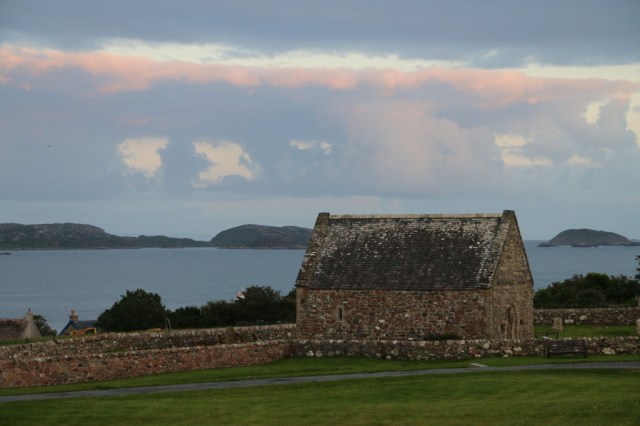
It all started with 3 pebbles I was given by my spiritual father back in 2015. (All but the pebble in the middle above) They were from St Patrick’s ChapelSt Herbert’s Island (Celtic Pilgrimages) and Sambata de Sus (Romania).

Heysham — St Patrick’s Chapel, Heysham, Lancashire, UK

heysham2

heysham1

IMG_1738

St Herbert’s Island

st herbert's 5

st herbert's1

st herbert's 3

st herbert's


Sambata de Sus

arsenie boca1For Fr. Arsenie Boca – the blessed Romanian elder and prophet, who “made Christ transparent to us”, watch the documentary The Man of God.

Little did I know then how those tiny pebbles would affect my life! They were not just a memento of my visit to the UK, but “relics” blessed with extraordinary Grace of most mighty Saints who were to turn my life upside down.

Back in Greece, these 3 pebbles started to exert a magnetic “attraction” in my icon corner and soon “assembled” there dozens of Saints’ relics from all over the world!

This Easter I was offered by my spiritual father yet one more …


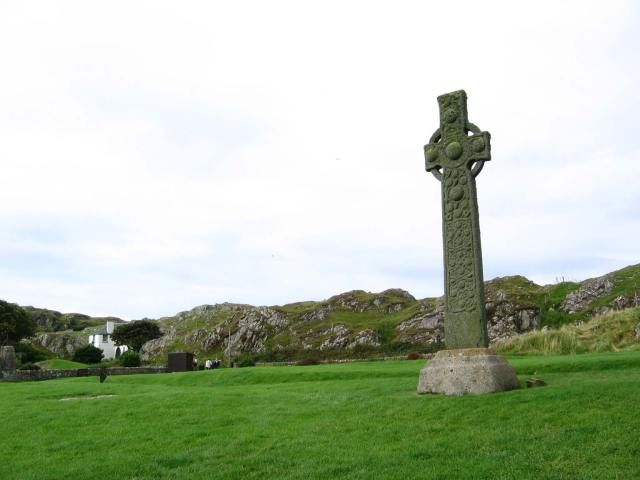
This pebble was picked by him when he was 10 (!) from Iona Island, another major Celtic pilgrimage.

iona2

iona3

iona1


I now know better …

Milestone

Milestone on My Pilgrimage


lancaster.jpg


Moved to Lancaster, Lancashire


holy-cross`

Through the prayers of Apostle Paul — “Go, for he is a chosen instrument of mine to carry my name before the Gentiles and kings and the sons of Israel; for I will show him how much he must suffer for the sake of my name.” (Acts of the Apostles 8:40; 9:1-19), St. Lydia’s of Thyatira, Apostle Paul’s first convert to Christianity in Europe (cf. Saints-Readings Today), and all the Saints, Lord Have Mercy on us, Amen.

Another ‘coincidence’: Tomorrow, God willing, on Saint Konstantine’s the Great and Saint Helen’s Feast, both Saints intimately related to the Holy, Life-giving Cross, I ‘return’ to my ‘thin place’,  the parish of Holy and Life-Giving Cross at Lancaster. Glory to God for all things!

The Lord’s Hands

The Israelites’, and mine … , Utter Despair and Bondage

The week before Holy Week I experienced, at the deepest core of my being, the Israelites’ impasse, their despair, helplessness and fear. My pilgrimage had come at a dead end!

The Israelites’, and mine …,  Miraculous Release from Captivity

Bright Week, that is the week immediately after Resurrection Sunday, was sealed with the Israelites’ (and mine) ineffable joy, relief, jubilation at their freedom, miraculous release from captivity and awe at God’s Works! What a reversal of fortune! What a most true Orthodox ‘Easter’, a most literal Pascha! If anybody had told me that I would live to see this, I would have told him “Impossible”! But nothing is impossible for God! Nothing! Glory to God for all things!

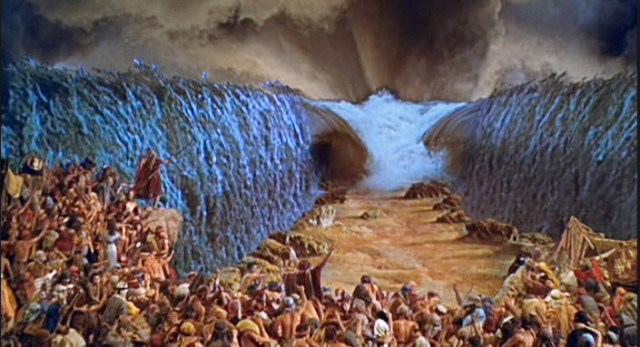
Prefiguration of Orthodox Easter, Pascha, the Israelites crossing the Red Sea

The Lord is my strength and my song;
    he has given me victory.
This is my God, and I will praise him—
    my father’s God, and I will exalt him!

… “Your right hand, O Lord,
    is glorious in power.
Your right hand, O Lord,
    smashes the enemy.

Prefiguration of Orthodox Easter, Pascha, Crossing of the Red Sea Bernardino Luini, c. 1481-1532

Crossing of the Red Sea
Bernardino Luini, c. 1481-1532

“Who is like you among the gods, O Lord
    glorious in holiness,
awesome in splendor,
    performing great wonders?
12 You raised your right hand,
    and the earth swallowed our enemies.

Prefiguration of Orthodox Easter, Pascha, the Israelites crossing the Red Sea

Crossing of the Red Sea
Bernardino Luini, c. 1481-1532

… The power of your arm
    makes them lifeless as stone
until your people pass by, O Lord,
    until the people you purchased pass by.
17 You will bring them in and plant them on your own mountain—
    the place, O Lord, reserved for your own dwelling,
    the sanctuary, O Lord, that your hands have established. (Exodus 15, A Song of Deliverance)

Prefiguration of Orthodox Easter, Pascha, Icon of the Israelites crossing the Red Sea

God’s Hands

These two weeks I have also come to pay attention to God’s Hands!

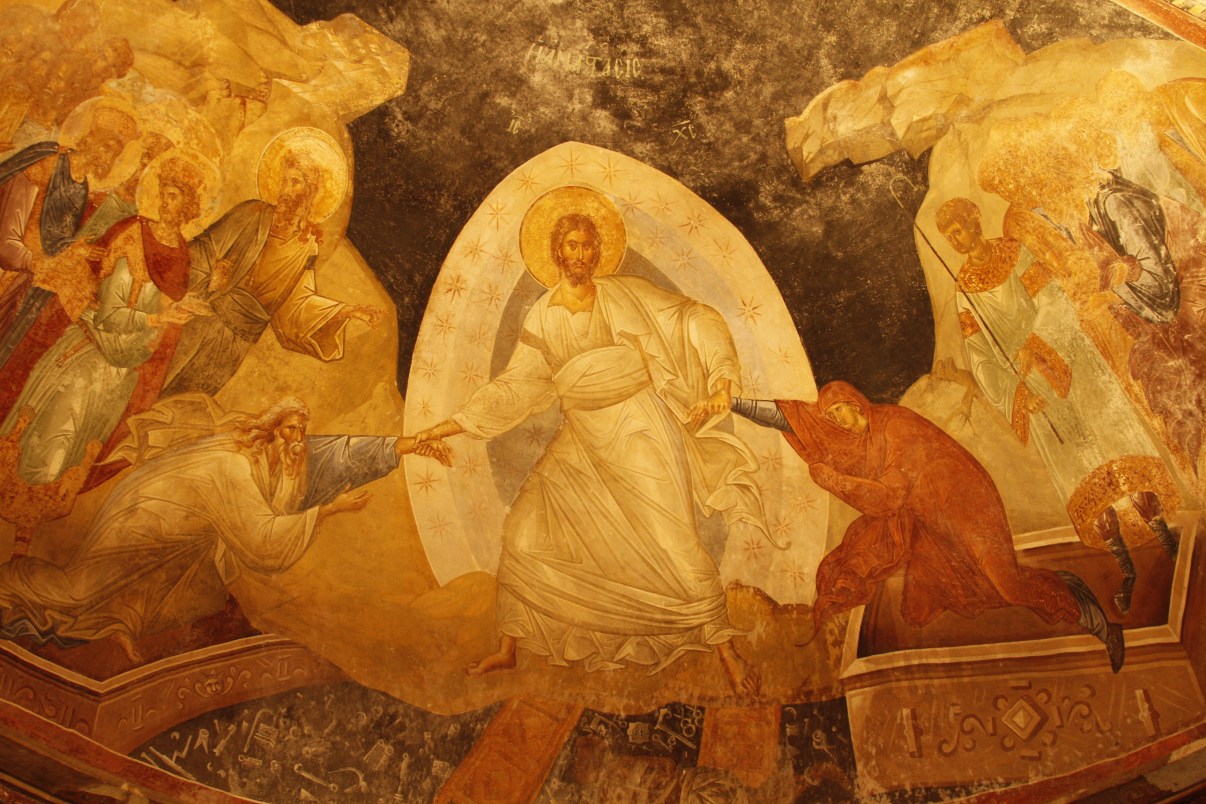
Have a close look at the Resurrection icon and Christ’s hands! Notice how Christ is pulling Adam from the tomb by the wrist, and not the hand. Why is that so? Have you ever observed this ‘detail’? And if so, has it ever occurred to you that this ‘detail’ might be revealing?


Christ's resurrection, Orthodox Easter, Pascha, Christ's resurrection, Orthodox Easter, Pascha, Resurrection icon

I have to confess that this Pascha was the first time in my life that I noticed how dramatically Christ is shown in the icon pulling Adam, the first man, from the tomb. Probably because I had never felt that badly the need of Someone pulling me along, forcefully, even if roughly.

Christ's resurrection, Orthodox Easter, Pascha, Resurrection icon

In the Icon, Jesus Christ stands victoriously in the centre. Robed in Heavenly white, He is surrounded by a mandorla of star-studded light, representing the Glory of God.  Eve is to Christ’s left, hands held out in supplication, also waiting for Jesus to act. This humble surrender to Jesus is all Adam and Eve need to do, and all they are able to do. Christ does the rest, which is why He is pulling Adam from the tomb by the wrist, and not the hand.


Christ's resurrection, Orthodox Easter, Pascha, Resurrection icon

In all Resurrection icons I have seen since, even where Jesus is pulling both Adam and Eve from the tomb, he is always pulling them by the wrist, and never the hand.

Christ's resurrection, Orthodox Easter, Pascha, Resurrection icon

Christ's resurrection, Orthodox Easter, Pascha, Resurrection icon


Praised be His name, the Lord pitied me, and indeed he dragged me, hurling me across my Red Sea! Now my home will be Great Britain. Which desert is awaiting for me, what revelations, what Mount Sinai? How are the next ’40 years’ of my wanderings going to unfold? Will I ever reach the Promised Land?

So, I am moving to UK, with my spiritual father’s blessing, trying to follow the Holy Spirit there. Indeed, I try to “dwell in my own country, but simply as sojourner. As citizen, I share in all things with others, and yet endure all things as if foreigner. Every foreign land is to me as my native country, and every land of my birth as a land of strangers. …” (cf. The Epistle of Mathetes to Diognetus)

My Lifestyle of course will NOT change– Suitcases 😃 Lover of the Theotokos, Pilgrim, Traveller, Hermit! 
Ah! The Raptures of Living! 

It IS Pascha!

Please excuse my long silence!

After fifteen days of silence, I need to address concerns and confirm that I am still alive. After my week at Lancaster Holy Cross parish, I found it very difficult to return to this ‘virtual life.’
This Pascha was the first Pascha of my life in so many respects and in the most literal sense of the word.

As of next Friday 20 May, I move to England!

What an experience! It felt like this:


red-sea
I confess to an incredible magnetic attraction to Celtic Orthodoxy.


Little did I know that British Saints are that mighty and violent!

“And from the days of John the Baptist until now the kingdom of heaven suffereth violence, and the violent take it by force.” (Matthew 11:12)

They have kidnapped me! I had no idea, no clue, no plan, no preparation, and suddenly I am “pulled”, “dragged” to England, uprooted!

Isn’t it amazing? In just 10 days!

I personally “blame” it on St Martin of Tours and St Patrick and St Herbert in particular; of course, I could be wrong …


If I ever told you all the “coincidences” years ago that led to THIS, you would not believe me! When God wills … All it takes is just a second!

To be continued …

Weak and Fallen Before Easter

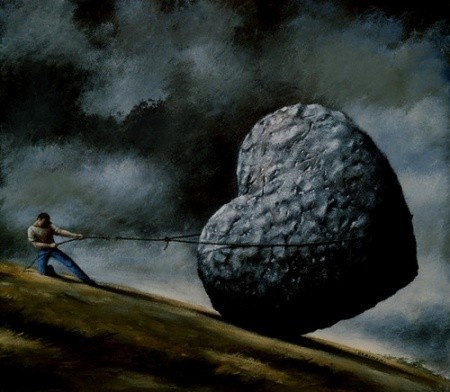
stone heart

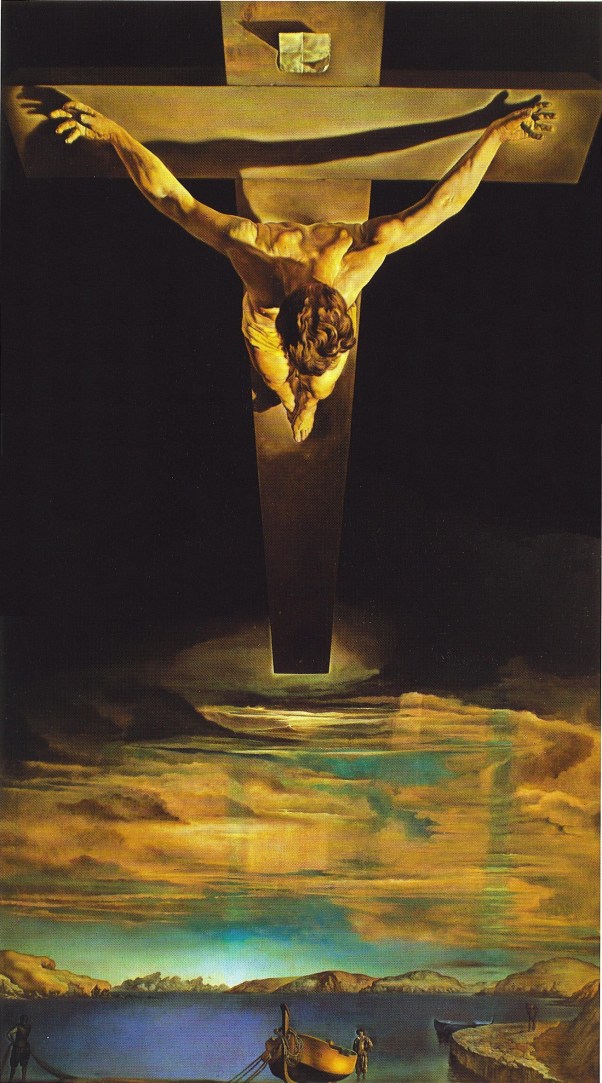
We need to recognise that as Christians, if we are truly following Christ, not just abandoning him at the Cross, denying him or God forbid betraying Him, we will receive the same insults. Even Pilate would not remove that charge which he pinned to the Cross, Jesus of Nazareth King of the Jews, though the crowd protested.

salvador-dali-christ-of-st-john-on-the-cross-1350506030_org


 May we all be blessed!


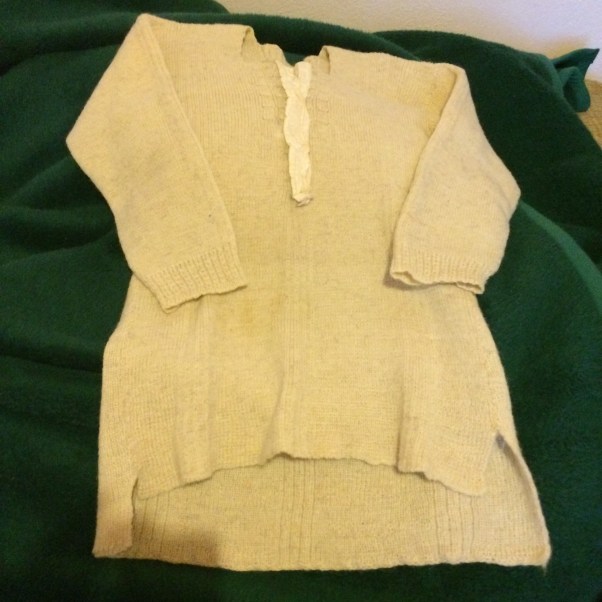
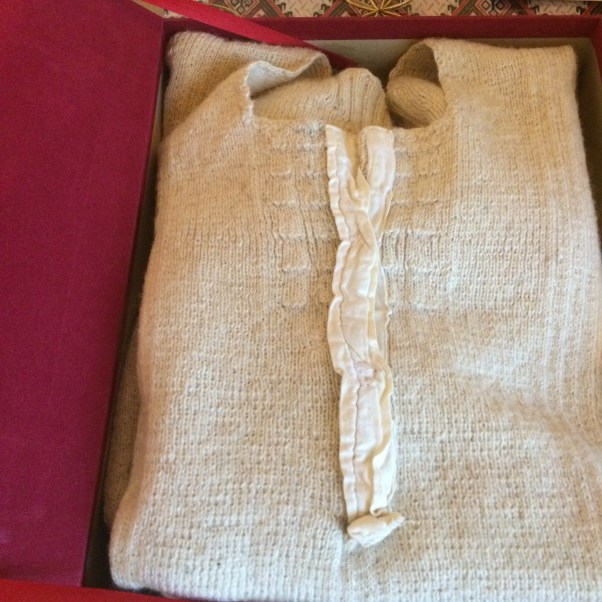
In a few hours, I’ll arrive at The Orthodox Christian Parish of the Holy and Life ­Giving Cross at Lancaster (United Kingdom), accompanying the Byzantine St Anysia Choir from Thessaloniki for Pascha; this choir also visited last year to help with the worship, particularly  the long, demanding  Holy Week services. We will also bring with us a hand crafted Icon, a comb and a prayer rope, all by St Paisios of Mount Athos, a Reliquary for containing these holy relics, and a handwritten Icon of his. We will also bring on loan  for Holy Week a piece of St. Paisios’ clothing, his undershirt, from another Monastery in Greece.

IMG_2679

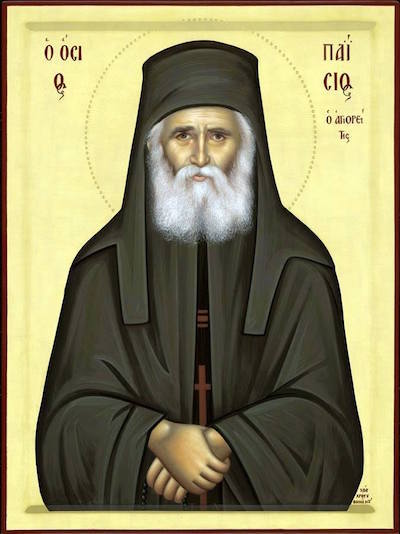
 I am deeply moved by the fact that I am ‘carrying’ my patron Saint, Saint Paisios, though the truth is that the Saints carry us! This is the nearest that people will get to venerating Saint Paisios since his body is not to be disturbed in Souroti.


I am still packing, since so many monasteries in Greece have overwhelmed us with their generosity, and there are so many blessings, candles, incense, icons, secondary relics etc. to bring to the UK!


IMG_2983IMG_2982

The hectic days to follow at the Holy Cross parish will take away from me all phone connections and internet, but they will give me in return a precious chance to shut the world away and lock myself in the heavy, crushing silence of the Holy Week.

Before I do that, I want to wish you with all my heart to enjoy a Blessed, Life-Changing Holy Week and Easter!


I must admit that I am very tired. I feel tired, vulnerable and afraid, with no control over anything. I am so exhaustedIndeed,  “Lent is a horrid period. Year by year, Lent is when some force within me pushes me out of my comfort zones, and I find myself in a lions’ den, face to face with the beasts, utterly unprepared to fight, totally helpless, fully aware that the only possible outcome is to be slaughtered.”

Slaughtered indeed! This is exactly what I feel! A corpse!

“This is nothing new. This happens every year. Yet, I somehow survive, because the same Force that pushes me out of my self-created kingdoms, out of my self-created games – that same Force saves me from those wild beasts at the last moment.”

And this changes everything.

And yet, every time, I forget all about this, and I experience such despair and death, just before God intervenes! As if He has utterly forsaken me!


Anastasis_at_Chora.jpg

Now I understand why one focus of the Resurrection icon is Christ’s hands, pulling Adam and Eve! I desperately need this Hand to pull me out of this Hell!Weak and Fallen! In such a desperate need of healing, repentance, an intervention, a meeting with my spiritual father, a literal falling into his arms, the Sacrament of Confession! Is this who I really am? How can just 40 days reduce me to this? Is this  the real starting point of my change, repentance and redemption?


Deep in my heart, I bitterly realise that no healing is possible. No repentance is possible. No prayer is possible, until the heart that heals, repents and prays is my sinful, fallen, yet beating heart. False images do not have hearts. False images do not love. Most painful than all, false images will never reflect Christ, because there is nothing false in Christ, nothing common between Life and void. Prayer begins with pain at one’s fallen nature; it grows out of this pain, and its flowers bloom out of it.The taste of ashes in my mouth. Am I, fallen and depraved and sinful that I am, still the image of the Immortal God?


I need to hold on, just a little bit more, to the Living God, and may His immortal image remain within me. It may then reflect on me,  bless me and I may grow into it. Day by day, year by year, I may grow into this image, and be more Christ-like. Then His Life will be mine, His Resurrection will be mine.

So many miles to go before I sleep!


If you have ever experienced such confusion and fallenness, have courage and pray for me. Let us all fight in our body and spirit. His Resurrection is real, and it is coming. In His Resurrection we shall all be one!

The Forerunner of Orthodoxy in North America

What a fascinating story! Wishing you all a blessed Holy Week journey toward Pascha!

The First Known American Convert to Eastern Orthodox Christianity

A Young Philip Ludwell III

PLIII-portrait-Stratford-crop-vSM

This painting of a young Philip Ludwell III is the only known portrait of the man. It is exhibited at Stratford Hall Plantation, the historic home of the Lee Family of Virginia.

Located in the Northern Neck of Virginia, Stratford Hall was built in 1737-38 by Thomas Lee, a founder of the Ohio Company, and named after his grandfather’s home in London. Thomas Lee married Hannah, the sister of Philip Ludwell III. Among their six sons, two signed the Declaration of Independence and two served as the United States’ first European-based diplomats.

Philip Ludwell III died in 1767 in London and was buried in the Ludwell family vault of the church of St. Mary-le-Bow, in the Stratford area of London where the River Lea (Lee) meets the Thames. His daughter Hannah Philippa Ludwell Lee was also interred in this plot in 1784, just prior to her intended return to the fledgling United States.

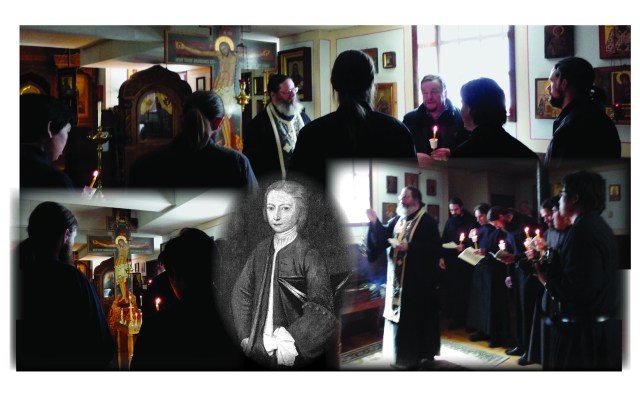
Ludwell-Panakhida-Collage.jpg

Philip Ludwell III is the first known convert to Eastern Orthodox Christianity in the Americas. He was a prominent figure in pre-revolutionary Virginia and a relative by blood or marriage of many great early figures in American history from George Washington to Lee. The scion of one of the largest landholding and politically prominent families in early Virginia, he was born at Green Spring near Williamsburg on December 28, 1716.

One year after his marriage to Frances Grymes in the summer of 1737, the young Ludwell travelled from Williamsburg to London, England. Twenty-three years later, in 1761, the Orthodox priest in London, Fr Stephen Ivanovsky, wrote:

In 1738, during the incumbency of the late Hieromonk Bartholomew Cassano at this holy Church, an English gentleman named Ludwell, born in the American lands and living there in the province of Virginia, came to London seeking the True Faith, which he, with God’s help, has swiftly found in the Holy Graeco-Russian Church. And so on the 31st of December of the same year he was confirmed in the same with the holy Chrism.

Life in Virginia

In 1740 Ludwell returned to Virginia. From 1742 to 1749 he was a member of the Virginia House of Burgesses where he argued for higher taxes on the importation of African slaves and headed a committee to seek a cure for cancer. In 1752 he became a member of the Royal Governor’s Council and served in this capacity until his death in 1767. As a member of the Council he was instrumental in obtaining a commission for a young George Washington as a Colonel in the Virginia militia in 1755. 

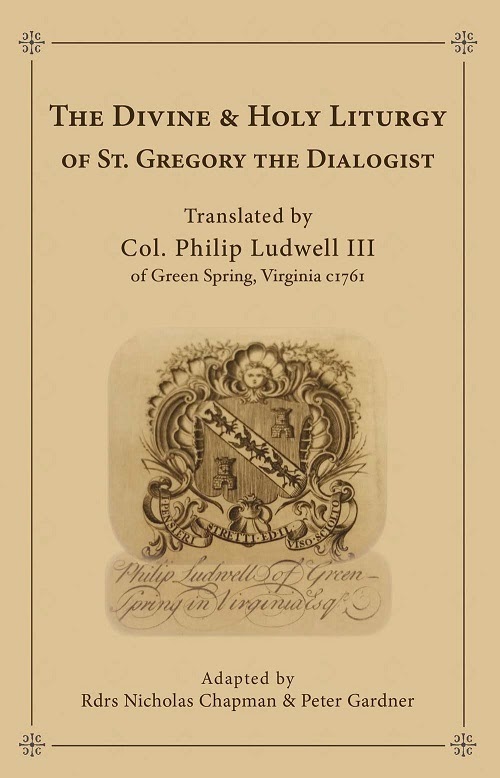
Meanwhile he continued to secretly practice his Orthodox faith, which at that time was treasonable. At some point in the 1750s he embarked upon an English translation of the “Orthodox Confession of the Catholic and Apostolic Eastern Church”, composed in 1640 by the Orthodox Bishop Metropolitan Peter Mogila of Kiev. Ludwell dedicated his translation to “the devout Christian reader,” and quoted the prophet Jeremiah:

Thus saith the Lord, Stand ye in the Ways, and see, and ask for the old Paths, where is the good Way, and walk therein, and ye shall find Rest for your Souls.

By 1751 he had three daughters: Hannah, Frances, and Lucy. In 1753 his wife Frances died.

London: His Final Years

In 1760 he moved with his daughters to London where they were received into the Orthodox Church on Holy Wednesday, 1762. In the same year, with the blessing of the Holy Synod of the Orthodox Church of Russia, Ludwell’s translation of Mogila’s catechism was published in a cloth edition. The Russian Synod also authorized Fr Stephen Ivanovsky in London to give the Ludwell family the consecrated elements of bread and wine to take back to Virginia and to prepare for them appropriate forms of Orthodox prayer for use in their native land.

One extant copy of what may be this ordo has been found in bound, but handwritten, form. It includes translations of the three principal Orthodox liturgies, morning and evening prayers, the service of confession and other texts. 

Philip Ludwell died in London on March 14, 1767 after a long illness. His funeral rites were served at the Orthodox Church there and he was buried at the Anglican church of St Mary Stratford Bowwhere there was a family vault. Over two hundred years later his life and inspiring story of faith is becoming known and reshaping our view of early America.


Ludwell-Confession-title-pageludwell.lgSeal-of-Lucy-Ludwell

Source