Finding the Faith of Joseph of Arimathea

icon7

An Interview with Fr. Jonathan Hemmings

The tradition of faith in Great Britain goes back to the Apostolic era!

by Tudor Petcu

A Romanian writer, Tudor is a graduate of the Faculty of Philosophy, University of Bucharest, Romania. He has published a number of articles related to philosophy and theology in different cultural and academic journals. His work focuses on the evolution of Orthodox spirituality in Western societies as well and he is going to publish a book of interviews with Westerners converted to Orthodoxy. In this article, he interviews Fr. Jonathan Hemmings, Orthodox theologian, who is the priest of the Holy Life-Giving Cross Orthodox Church in Lancaster, UK, talks about faith and love in Christ.

1.) Before discussing your conversion to Orthodoxy, I would appreciate it a lot if you could talk about your main spiritual experiences and journies untill you have discovered the Orthodox Church.

First of all, we need to be sure of what we mean when we use the term convert or “conversion.” We all need to be converted – both those who come from different traditions and confessions and those from traditionally Orthodox countries who are referred to as “cradle Orthodox”. Christianity is not a Philosophy, it is a relationship with the All Holy Trinity. We are converted to Christ and we are received into the (Orthodox) Church through Baptism and/or Chrismation. Sometimes this happens in the other order of events. Those who are Baptised Orthodox as babies need to employ the gift of the Holy Spirit given to them; those who are called to the Orthodox Christian faith are prompted by the same All Holy Spirit. As Metropolitan Kallistos said

“We Orthodox know where the Holy Spirit is but we cannot say where He is not.”

As scripture says

“the Holy Spirit moves where He wills.”

One has to experience the Orthodox Church either through her Liturgy or through the “living signposts of the faith” whom God sets before us if we are open to the Truth. By “ living signposts” I mean men and women who possess grace and in whom we see the light of Christ. Christianity in the west tends to be analytical and logical, Eastern Christianity is synthetic and mystical and engages the whole of our being.

You shall love the Lord your God with all your mind with all your strength, with all your heart and with all your soul.

The fact that we do metanoias (reverences or bows) shows that even prayer is a physical as well as a mental process. I have always believed in God, from a little child. I cannot remember a time when I did not believe in God. I had the right Christ, I just needed the right Church. Of course all this was a preparation for me to discover or rather recover the Orthodox faith.

2.) How would you characterise your own spiritual road to Orthodoxy? According to this question, would it be correct to say that Orthodoxy is able to heal the wounded souls?

I am like the Prodigal son in the parable who returns to his father. The Orthodox faith according to tradition was brought to Britain by St Joseph of Arimathea. An early Archbishop of Canterbury was Greek- St Theodore of Tarsus.  St Constantine the Great was made Augustus Emperor here in York when he was in charge of the sixth Legion. So I did not choose to find something “foreign”; I returned to the Church which was established here in Britain.

The Orthodox Church is Universal as we proclaim on the Sunday of Orthodoxy. The Church is the hospital for souls. As Blessed Augustine said

“Our hearts are restless until they find their rest in God”

Restlessness of the spirit is a characteristic of this age. So I have not discovered something new, I have recovered something authentic and original.

3.) Considering all what you have experienced over the years from the spiritual point of view, why is Orthodoxy so precious and meaningful to you?

Well, I believe Orthodoxy is not only original, unchanged and authentic but it is the teaching and preaching of Christ’s Apostles (Kerygma and Paradosi). Tradition is not simply historical, it is vital and dynamic. The Orthodox way fulfils the needs of the whole person and makes the broken person whole. It is precious because it is the

“pearl of great price.”

Once you find it, then you must share this treasure with others and not keep it to yourself.

4.) Do you think that Orthodoxy could be considered a burning bush?

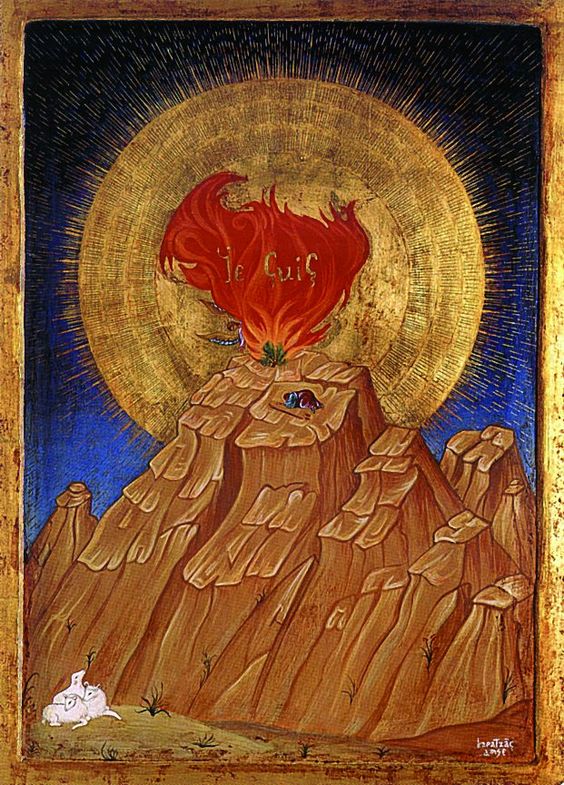
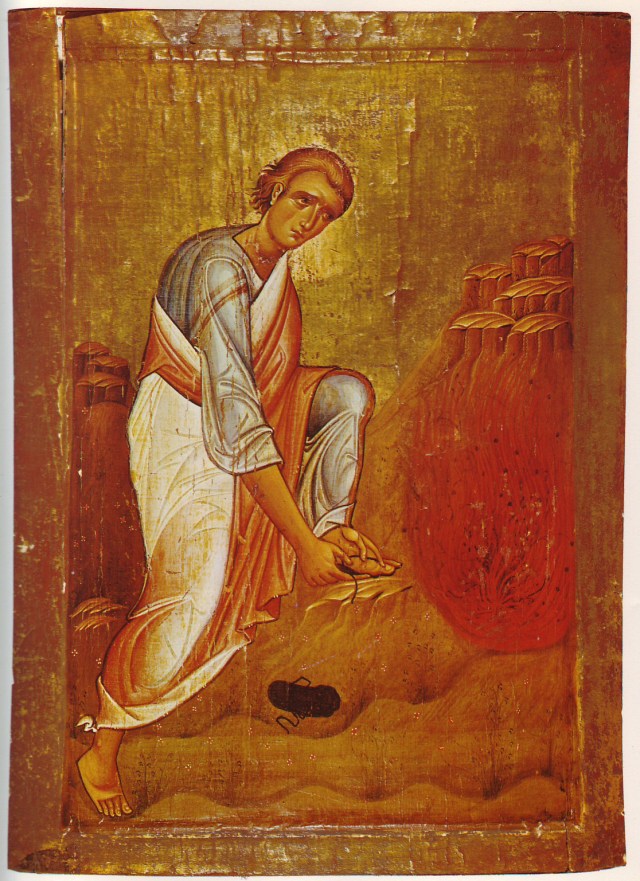
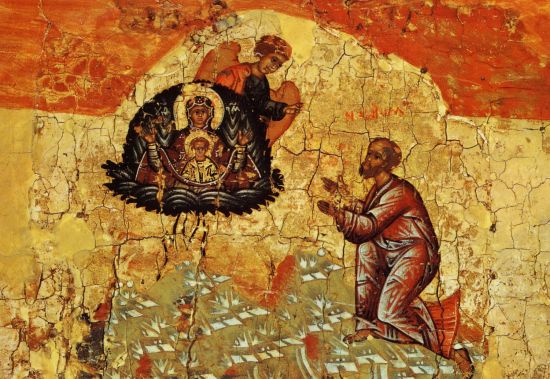
4. I have a stone from Mount Sinai which contains the image of the bush which Moses saw burning and yet which was not consumed. If you want to forge metal, you must first heat it and out it into the fire and then you can shape it to the tool you require. When we are put into the fire of God, the same happens. It is so God can shape us into the person that He has called us to be. When we are alive in God then we become all flame. We are standing on holy ground, so when we approach God we must do so with awe before the majestic power of God.

5.) Now, I would like you to tell me what does the Orthodox monasticism mean for you and what impressed you most in your monastic pilgrimage, if I can call it like that?

5. Orthodox Monasteries are “LightHouses” for souls. They are often remote and inaccessible because the quietness for the soul requires asceticism . They are full of angels because the angelic life is lived there. When we say in the Lord’s Prayer

“Thy kingdom come on earth as it is in heaven”

then this is what monks are doing. The very walls of the Churches are filled with prayer and so one can feel tangibly the peace of God. It is this peace which passes all understanding that one experiences. Again I say that Orthodoxy is Life in the sense that we experience it, we live it. I have been to many Orthodox Monasteries in Romania. The most memorable moments are when I met Pr Ioanichie Balan in Sihastria Monastery and when I served the Holy Liturgy with Pr. Teofil Paraian( the blind Staretz) at Sambata de Sus. These were moments when the veil between heaven and earth was very thin.

6.) What would be the difference between you as a heterodox and you as an Orthodox?

I am complete. When Our Lord died on the Cross he said in St John’s Gospel

“It is finished”

but this also means

“It is completed”

that is, the work of salvation. In this sense “conversion” is an extension of what I once was. As C. S. Lewis (much respected by Orthodox) once put it

“Imagine yourself as a living house. God comes in to rebuild that house. At first, perhaps, you can understand what He is doing. He is getting the drains right and stopping the leaks in the roof and so on; you knew that those jobs needed doing and so you are not surprised. But presently He starts knocking the house about in a way that hurts abominably and does not seem to make any sense. What on earth is He up to? The explanation is that He is building quite a different house from the one you thought of – throwing out a new wing here, putting on an extra floor there, running up towers, making courtyards. You thought you were being made into a decent little cottage: but He is building a palace. He intends to come and live in it Himself.”

C.S. Lewis, Mere Christianity

As I have said before, I have always loved God but the depths of Orthodoxy provide me with the resources that nourish my soul.

7.) I remember some words which impressed me much while I was discussing with a Swiss writer converted to Orthodoxy. He was saying that he was born to hate but through Orthodoxy reborn to love. How would you characterise these words as a convert to Orthodoxy?

We were all born to love. Christ summarised the Commandments as Loving God and Loving your neighbour. Orthodox Christianity can be summarised in these words. But love is a verb… we must put into action those things which we believe. I am sure the prisons in Romania are full of criminals who would call themselves Orthodox and who have been baptised as such, but sin found a place in their hearts. Glory to God he is merciful and loves mankind! And so we must live out our life in peace and repentance. Being Romanian does not make you Orthodox anymore than being Greek, Russian, Serb or British. There was no ethnic identity in the Garden of Eden before Adam and Eve’s transgressions. May the love of God embrace us all.

This interview is one of many that will be published in the book “The rediscovery of Orthodox heritage of the West” by Tudor Petcu, containing interviews with different Westerners converted to Orthodoxy. It will be published in two volumes and the first one will appear by the end of this year.

Journey to Orthodoxy

Ravages of Time

Destruction Of Monuments Of Eastern Christianity: A Photo Contest

The Interparliamentary Assembly on Orthodoxy announced the results of their second annual photo contest dedicated to the “Destruction of Monuments of Eastern Christianity.”

The contest, dedicated to the enduring spiritual and cultural monuments of the Eastern Christian Tradition, was organized at the proposal of the IAO’s Committee of Culture and in collaboration with the website OrthoPhoto.net, sharing beautiful photos from around the Orthodox world for twelve years.

Ravages of Time, Nature and Man

The international jury voted on photos divided into three categories:

  1. Abandoned monuments left to the ravages of time due to compulsive or voluntary discontinued usage
  2. Monuments that are accessible and in use, although damaged by weather or other sorts of pollutants and other natural elements
  3. Monuments that have suffered man-made damage and destruction.

Photos were judged on artistic value, as well as information about the monument, including its importance, location, and accessibility. Three prizes were awarded in each of the three categories. The winning photographs are:

Abandoned monuments left to the ravages of time due to compulsive or voluntary discontinued usage

First prize: The Church of the Nativity of the Theotokos in the village of Stepantsikovo in the Yaroslavl region of Russia, by Nikolay Spiridonov

Winning photograph:

Supplementary photographs:

The church made of bricks, with two altars, with a St. Nicholas’ chapel. The cost for its erection was covered by the parishioners on the spot of the old wooden church (seventeenth century). It is square-shaped, with five cupolas, two series of windows, an altar and a multi-level bell-tower. During the Soviet era, it was closed down and used as a storehouse. Currently, it is abandoned and destroyed. Up until 1764, the village was an estate owned by the monastery of Saints Boris and Gleb of Rostov.

Second prize: The Churches of St. Demetrios and St. George of the Castle on Aegina, Greece, by Nikolaos Mourtzis

Winning photograph:

Supplementary photographs:

At the top of Paleochora hill on Aegina, the so-called ‘small Mystras’, is a castle built by the Venetians in 1654 and two large interconnected churches, the Twin Basilicas with two altars-entrances, of Saint Demetrios and Saint Georgios of the Castle, one for the Latin Catholics and one for the Greek Catholics. For pedestrians visiting the place, the view is fantastic; the area of Souvala and Aegina (the town) can be seen from there. The signs of abandonment are visible, although occasional efforts have been made to save them.

Third prize: The Church of St. Mary of Sinti in Paphos, Cyprus, by Tomasz Mościcki

Winning photography:

The Panayia tou Sindi Monastery was built in the sixteenth century. Only the main church has remained. The rest of the monastery is almost completely dilapidated.

* * *

Monuments that are accessible and in use, although damaged by weather or other sorts of pollutants and other natural elements

First prize: The Ampouchala cloister in the Karelia region, on the northern slope of the Trialeti Range in Georgia, by Vakhtang Beridze

Winning photograph:

Supplementary photographs:

Abukhalo Skete is mentioned in the “History of the Kingdom of Georgia” by Vakhushti Bagration. The monastic compound is located in the Kareli district, on the northern side of Trialeti Mountain, and dates back to the seventeenth-eighteenth centuries.

The skete consists of several caves of different sizes carved into the rock and is inhabited by monks, as it used to be in the past.

Second prize: The Church of St. John the Baptist in Goles, Bulgaria, by Vyacheslav Popov

Winning photograph:

Goles is a village in western Bulgaria, in the Godech municipality of Sofia. Goles village is located in a mountainous area to the south of Vidlic Mountain. The church of St. John the Baptist that is currently operational was built in 1896-1900 and needs repair. There are a few votive offering-crosses in the village, dedicated to Saint Nicholas, Saint Elias, Saints Peter and Paul, and Saint George. Above the village of Goles, the monastery of Saint Nicholas is being renovated. We do not know the exact date of its erection.

Third prize: The Armenian Monastery of Agios Stefanos, 15 km northwest of the city of Tzolga, Iran, by Mohammad Nourmohammadian

Winning photograph:

Supplementary photographs:

The St. Stefanos Monastery is an Armenian monastery about 15 km northwest of Tzolga city in the East Azarbaijan Province of northwest Iran. The first monastery was built in the seventh century and completed in the tenth century. However, St. Bartholomew first founded a church on the site around 62 AD. It was partly destroyed during the wars between the Seljuks and the Byzantine Empire in the eleventh and twelfth centuries.

* * *

Monuments that have suffered man-made damage and destruction.

First prize: The Church of the Holy Protection in Bouzi village in Chelyabinsk, Russia, by Anzhela Usmanova

Winning photograph:

Supplementary photograph:

The church of the Holy Protection of the Mother of God in Bouzi village, to the north of the Chelyabinsk region, was built in the eighteenth-nineteenth centuries. It has three altars. Close to the church lies the abandoned building of the former school, a ground-floor building made of red bricks. It now houses the monks’ cells and a church. Currently, the population of the village is not more than one thousand. The church is on a hill and is visible from far away. The Sinara River flows under the mountain. The Resurrection was celebrated there in April 2014, after a break of 80 years.

Second prize: Church of the Archangel Michael in Ammochostos, Cyprus, by Constantinos Charalambous

Winning photograph:

Supplementary photographs:

The church of the upper parish of Lefkoniko was dedicated to the Archangel Michael. It was built in the early nineteenth century and had an imposing appearance, with an excellent wood-carved iconostasis and numerous Byzantine icons. The grandiose wall painting of the Archangel Michael was dominant in the interior of the church. All the official ceremonies and rituals of the community would take place here.

After the Turkish invasion in Cyprus, the church of the Archangel Michael in Lefkoniko village of the Famagusta province had the same fortune as several hundreds of other sacred monuments and sites of Christian pilgrimage in the occupied part of Cyprus: desecration and abandonment for forty-two years.

Third prize (tie): The Church of St. Petka in Kik, in Gospić Croatia, by Mirko Celic

Winning photograph:

Supplementary photographs:

Kik village is located halfway between Gospić and Gračac, Lika, Croatia. It is a part of the village Ploče. There is very little information about Saint Petka church in Kik, but it is known that it was moved in 1809 from the neighbouring village of Raduč since the latter got a bigger church dedicated to Saint Elijah the Prophet. The Kik church used to be the filial church of the cathedral church, dedicated to the Descent of the Holy Spirit, in the village of Ploče. During WW II Croat Nazis destroyed the church documents about the parish so the most important information about its history is lost. After the end of the war, the communists – the former parishioners, blew up the Ploča church, and used its stones to build community stables. They also burned down the Kik church, which remains devastated until today. In 1995, during the war operation “Storm”, the Croats banished all the remaining Orthodox Serbs from the area, and there is nobody to reconstruct these two monuments. Time and the weather continue to damage the remains of the Kik church.

Third prize (tie): Vrontama Monastery in Laconia Peloponnese, Greece, by Ioannis Gekas

Winning photograph:

Supplementary photographs:

At Vrontamas in the Evrotas Municipality of Laconia, around seven kilometers from the “Kleisoura” settlement, at an inaccessible site of the gorge in the middle of which Evrotas flows, there is a cave that some monks had chosen in the Byzantine years to dedicate themselves to God. They established a monastery with a narthex, a main church, a small chapel, cells, rainwater tanks, ovens, and the essentials for an austere life. The church is dedicated to the Virgin Mary and the great martyr Nikita, while the interior is dedicated to St. Nicholas. The wall paintings date back to the twelfth or fourteenth century (the bust-length Christ extending His hands in blessing), and those in the chapel are from the post-Byzantine era. Due to the unreachable location of the monastery, the sacredness of the place and the need for protection from the Supreme Power, the inhabitants of Vrontamas, in September 1825, sought refuge there to escape the fury of the enemy and defend themselves with safety. Ibrahim’s troops were tightly besieging the Christians, but the narrow space and the fortification of the castle brought only casualties to the besiegers. The furious raiders opened up holes at a weak point of the rock, placed explosives and blew up the monastery. The death was torturous, as the infidels brought in huge quantities of dry grasses and branches from the valley and placed them in the opening of the roof. Using torches, they started a fire at the top of the mountain, causing a strong explosion that was lethal for those entrapped.

The Burning Bush

bush2

The Role of a Spiritual Father

Excerpts from a transcript of a talk by Metropolitan Anthony (Bloom) of Sourozh about the role of a spiritual father; an unforgettable talk, for both its essence and the power of its pastoral word.

The Burning Bush

“It is easy and expected for a spiritual child to have humility. But what humility a priest or spiritual father must have in order not to intrude upon that sacred realm, to treat a person’s soul in the way that God commanded Moses to treat the ground surrounding the Burning Bush! Every human being—potentially or actually—is that very Bush. Everything surrounding him is sacred ground upon which the spiritual father may step only after removing his shoes, never stepping in any other way than that of the publican who stood in the back of the temple, looking in and knowing that this is the realm of the Living God, that this is a holy place, and he has no right to enter unless God Himself commands him, or as God Himself suggests he proceed or what words to say.”
*

Fatherhood consists in a person—and he or she may not even be a priest—giving another person birth to spiritual life. Looking at his spiritual father, that person saw, as the old saying goes, the radiance of eternal life in his eyes, and therefore was able to approach him and ask him to be his instructor and guide.

The second thing that distinguishes a father is that a father is as if of the same blood and spirit as his disciple; and he can guide his disciple because there is not only a spiritual but also a psychological resonance between them. Probably you remember how the Egyptian desert was once filled with ascetics and instructors, but people did not choose their instructors according to signs of his glory. They did not go to the one about whom they had heard the best reports, but rather sought out instructors who they understood, and who understood them.

This is very important, because obedience does not mean blindly doing what someone who has either material-physical or emotional-spiritual authority over us says. Obedience is when a novice has chosen an instructor whom he trusts unconditionally, in whom he finds what he has sought for. He hearkens not only to his every word, but even his to tone of voice, and tries through all of what manifests the elder’s personality and his spiritual experience to re-cultivate himself, to partake of that experience and become a human being who has grown beyond the limits of what he could have done by himself.

bush3

Obedience is first and foremost a gift of hearing—not only with the mind, or with the ear, but with one’s whole being, with an open heart; a reverent contemplation of the spiritual mystery of another human being.

On the part of the spiritual father, who has perhaps given you birth or received you already born but became a father to you, there should be a deep reverence for what the Holy Spirit is working within you.

A spiritual father, just as the simple and ordinary, commonplace priest, should be in a condition to see the beauty of God’s image in a person that cannot be taken away. (This condition often takes effort, thoughtfulness, and reverence for the person who comes to him.) Even if a person is marred by sin, the priest should see an icon in him that has been harmed either by conditions in life, from human neglect, or blasphemy. He should see an icon in him and have reverence for what has remained of this icon; and only for the sake of this, for the sake of the divine beauty within that person, he should labor to remove everything that deforms that image of God.

When Fr. Evgraf Kovalevsky was still a layman, he once said to me that when God looks at a human being, He does not see the virtues that he may lack, or the successes he has not attained—He sees the unshakeable, radiant beauty of His own Image.

Thus, if a spiritual father is incapable of seeing this eternal beauty in a person, to see the beginning of the process of fulfilling his call to become a God-man in the image of Christ, then he is not capable of leading him, for people are not built or made. They are only aided in their growth according to the measure of their own calling.

At this juncture, the word “obedience” calls for a bit of an explanation. Usually we talk about obedience as submission, being under authority, and often as a kind of enslavement to a spiritual father or a priest whom we call our spiritual father or elder—not to own our detriment only, but also to his.

Obedience consists in, as I have said, hearing with all the powers of our soul. However, this obligates both the spiritual father and the “listener” equally, because a spiritual father should also be listening with all his experience, all his existence, and all his prayer. I will even go further to say that that he should listen with all the power of the Holy Spirit working in him to what the Holy Spirit is bringing to pass in the person entrusted to his care. He should know how to search out the paths of the Holy Spirit in him, to be in awe before what God is doing, and not bring him up according to his own image or how he thinks he should develop, making him a victim of his spiritual guidance.

… One of the tasks of a spiritual father consists in educating a person in spiritual freedom, in the royal freedom of God’s children. He must not keep him in an infantile state all his life, running to his spiritual father over every trifle, but growing into maturity and learning how to hear what the Holy Spirit is wordlessly speaking to him in his heart.

Humility in Russian means a state of being at peace, when a person has made peace with God’s will; that is, he has given himself over to it boundlessly, fully, and joyfully, and says, “Lord, do with me as Thou wilt!” As a result he has also made peace with all the circumstances of his own life—everything for him is a gift of God, be it good or terrible. God has called us to be His emissaries on earth, and He sends us into places of darkness in order to be a light; into places of hopelessness in order to bring hope; into places where joy has died in order to be a joy; and so on. Our place is not necessarily where it is peaceful—in church, at the Liturgy, where we are shielded by the mutual presence of the faithful—but in those places where we stand alone, as the presence of Christ in the darkness of a disfigured world.

bush1

On the other hand, if we think about the Latin roots of the word humility, we see that it comes from the word humus, which indicates fruitful earth. St. Theophan writes about this. Just think about what earth is. It lies there in silence, open, defenseless, vulnerable before the face of the sky. From the sky it receives scorching heat, the sun’s rays, rain, and dew. It also receives what we call fertilizer, that is, manure—everything that we throw into it. And what happens? It brings forth fruit. And the more it bears what we emotionally call humiliation and insult, the more fruit it yields.

Thus, humility means opening up to God perfectly, without any defenses against Him, the action of the Holy Spirit, or the positive image of Christ and His teachings. It means being vulnerable to grace, just as in our sinfulness we are sometimes vulnerable to harm from human hands, from a sharp word, a cruel deed, or mockery. It means giving ourselves over, that it be our own desire that God do with us as He wills. It means accepting everything, opening up; and then giving the Holy Spirit room to win us over.

It seems to me that if a spiritual father would learn humility in this sense—seeing the eternal beauty in a person; if he would know his place, which is nothing other (and this is a place that is so holy, so wondrous) than the place of a friend of the bridegroom, who is appointed to safeguard the meeting of the bride—not his own bride—with the Bridegroom. Then the spiritual father can truly be a travelling companion to his spiritual child, walk with him step by step, protect him, support him, and never intrude upon the realm of the Holy Spirit.

Then the role of the spiritual father becomes a part of that spirituality and that maturing into the sanctity to which each of us is called, and which each spiritual father should help his spiritual children attain.

*

For more food for thought on this matter, go to:

WHAT IS SPIRITUAL DIRECTION? WHAT IS SPIRITUAL DECEPTION? by Fr Alexey Young (now Hieroschemamonk Ambrose), a spiritual child of Fr. Seraphim Rose, who offers some insightful words on the role of a spiritual father in our lives and how to relate to him, seeking to avoid deception and leading us to a true knowledge of God. Fr. Alexey also offers some recollections of his own spiritual father, Fr. Seraphim Rose.


And to:

St. John of Kronstadt: The Circle of Grace (2)

St. John of Kronstadt: The Circle of Grace

How fascinating to see a Saint through the eyes of another!

Who would have thought that St. John of Krostandt had helped finance, all the way from Russia and in very difficult times, the construction of St. Nicholas Cathedral in New York! A Saint worthy to meet St. Seraphim Sarov in a vision in January of 1901, in order to warn him of the impending Russian ‘Golgotha’. A spiritual father to Abbess Thaisia and founder of numerous women monasteries under her godly administration. St. Theophan the Recluse, himself a remarkable ascetic of the faith, spoke of him with wonder: “Father John of Kronstadt is a man of God. His prayer has reached God by virtue of his great faith. May the Lord keep him in humility and devotion to His holy will, and in self-sacrifice.”

The Athonite starets St. Silouan asked for St. John‘s  prayers to become a monk. Having finished his military service, before departing for home, Symeon (his name before tonsure) and the company clerk went to visit Father Ioann of Kronstadt to ask for his prayers and blessing. However, Father Ioann was absent from Kronstadt, so they decided to leave him letters instead. The clerk began to write a long letter in his best handwriting, but Semyon wrote only a few words: “Father, I wish to become a monk. Pray that the world does not detain me.” They returned to their barracks in St. Petersburg and, in the words of the Elder, the very next day he felt that all round him “the flames of hell were burning.” St Silouan recalled later in his life: “I still marvel at the power of his prayer. Almost 40 years have passed, yet I have not seen anyone serve the way he did.”

New martyr Alexander Hotovitzky, a Russian Saint living and serving in the United States from 1895 to 1914, also had the blessing to meet St. John of Krostandt and work together! Specifically, St. Alexander traveled to Russia in 1903, and while there, he paid a visit to Fr. John Sergiev — known even then as the wonderworker John of Kronstadt. After his return to America, St. Alexander spoke with a reporter from the Wilkes-Barre Times.  did the research and reprinted the resulting, fascinating article, one of the best things I have ever read in a newspaper, at Orthodox History. (The original date, incidentally, is April 7, 1904.)


*The Circle of Grace

The Altar and The Portico (I)

EPSON DSC pictureaidan28

altar

Aidan Hart: Embracing a Eucharistic Lifestyle

Liturgical “vs.” Secular Beauty in Life And Art


Excerpts (I) from a masterpiece of a talk, given by the renowned iconographer Aidan Hart at Sacred And Secular In Life And Art seminar in Oxford University,  a workshop dedicated to the memory of Philip Sherrard. (Oxford, 14-17 July, 2016).

Analysis of Works of Liturgical and Secular Art — Beauty seen in the light of Orthodoxy’s ‘aesthetics’. Liturgical art exists to help us live our whole lives liturgically. Vignettes from house architecture and decoration, furniture design, hospitality, music etc. to express love for God’s creation in daily life and to live life gently upon His earth, aiming towards a Eucharistic vision of Life: wholeness, harmony, unity.  Culture as the Liturgy of Preparation “Beauty is truth, truth beauty—that is all Ye know on earth, and all ye need to know.” (Ode on a Grecian Urn, By John Keats). Indeed, Beauty will save the world (Dostoyevski). Needless to point out, both this Eucharistic vision of Life and the importance of Beauty/Truth in Art and Life have been central concerns of this little city hermit’s blog and his journey on the Way.

 *

… In my reflections I would like to regard the term secular not in its pejorative sense, as the bad world outside the Church, but rather in its earlier sense as the larger world in whose midst the Church is planted to transfigure that world.

In considering our subject of sacred and secular we may have the image of a splendid garden city expanding into a wild jungle, rather than a fortress sealed off against siege from the world. This city does indeed have walls to keep bad things out, but it also has gates, and from its heart flows a River that brings life wherever it flows, as the prophet Ezekiel tells us in his vision (Ezekiel 47).


Eden within the forest

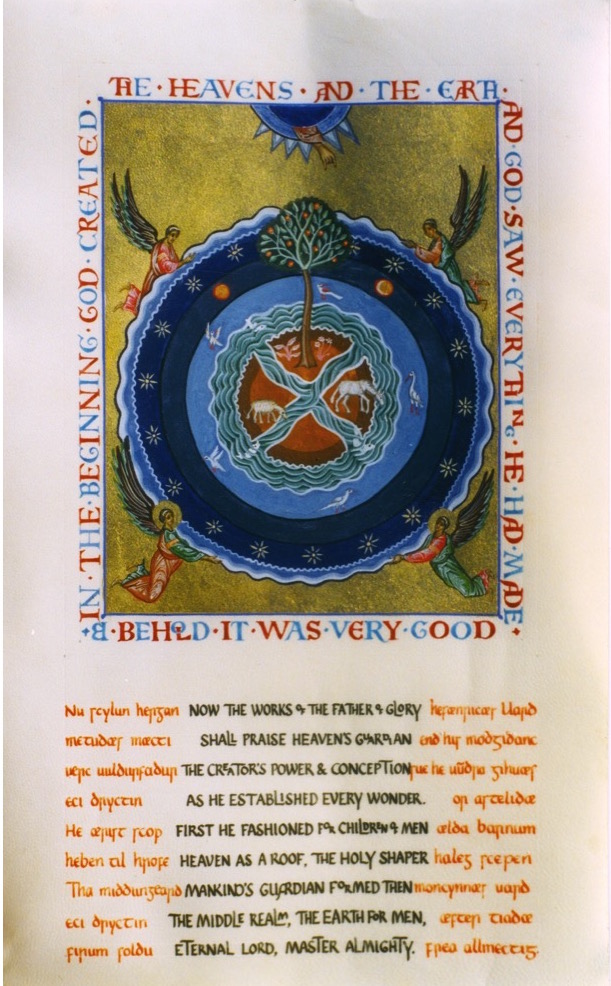
St Cadmon’s hymn of creation. Aidan Hart, calligraphy Clive Tolley.. Vellum.aidan1.jpg

God creating Adam. Palermo, Sicily. 12th C. Mosaic.aidan2.jpg

God creating Adam. Palermo, Sicily. 12th C. Mosaic.

The sacred as source

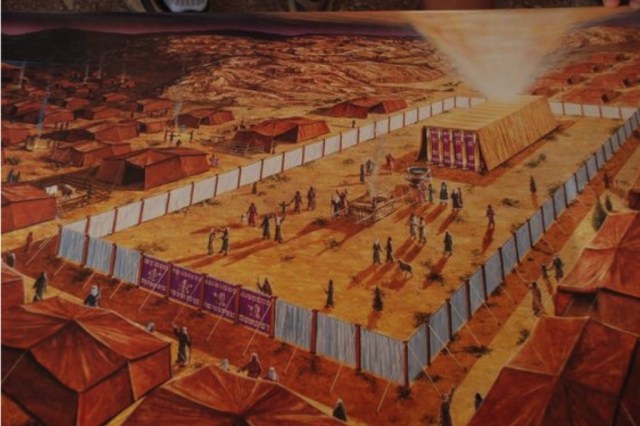
The Tent of Meeting.aidan3.jpg

The Tent of Meeting.

Metropolitan Kallistos Ware has said that one is Priest (Christ);

some are priests (the clergy); all are priests (the priesthood of the laity).

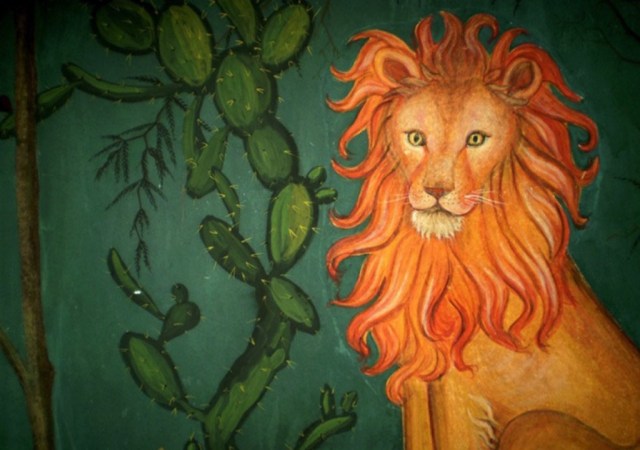
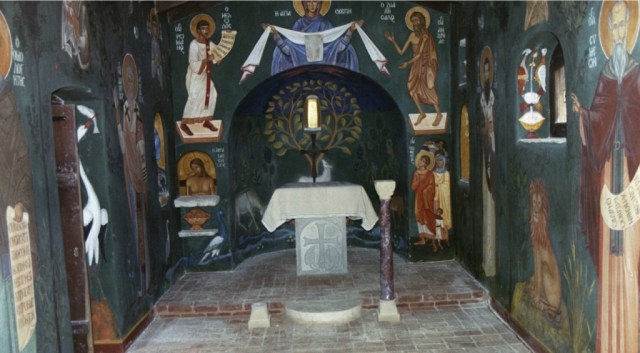
Philip and Denise Sherrard’s Chapel of the Life Giving Spring, Evia, Greece. Aidan Hart. Fresco.aidan10.jpgaidan9.jpgLion, below fresco of St Mary of Egypt. Chapel of the Life Giving Spring, Evia, Greece. Aidan Hart. Frescoaidan8.jpg

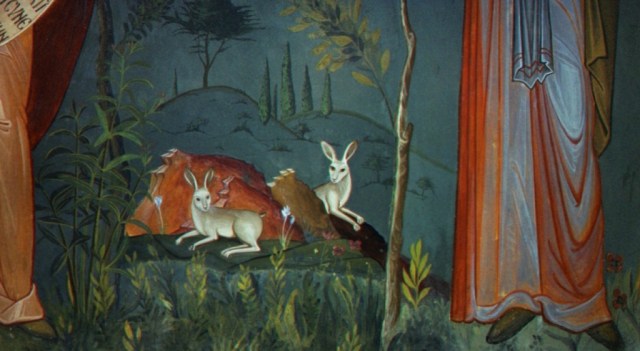
Hare, below icon of St Melangell of Wales. Chapel of the Life Giving Spring, Evia, Greece. Aidan Hart. Fresco.

aidan7.jpg

aidan6.jpg

Chapel of the Life Giving Spring, Evia, Greece. Aidan Hart. Frescoaidan5.jpg

aidan4.jpg


…And so it is that I believe liturgical art exists to help us live our whole lives liturgically. A church temple, as St Maximus the Confessor affirmed, is an image of the whole world. This splendid earth was created by God to be our temple within which to worship Him.


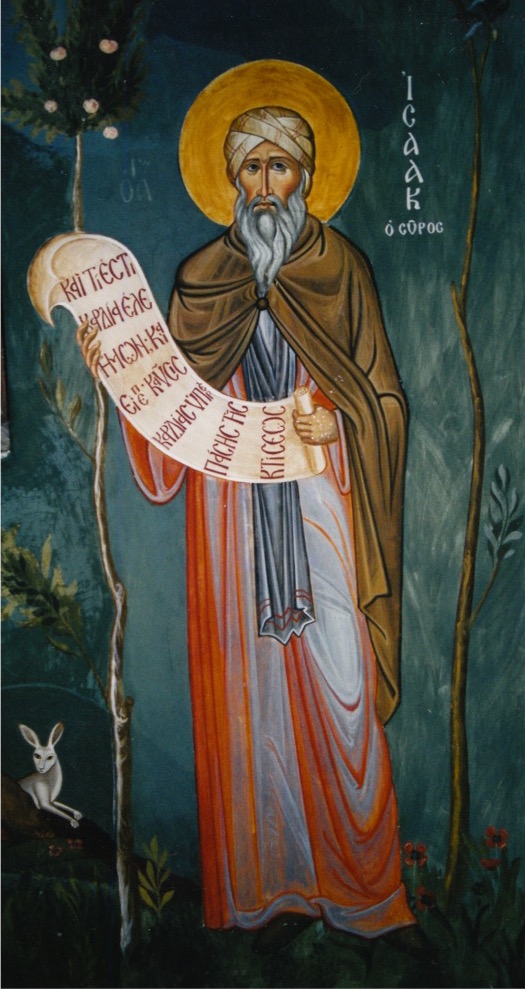
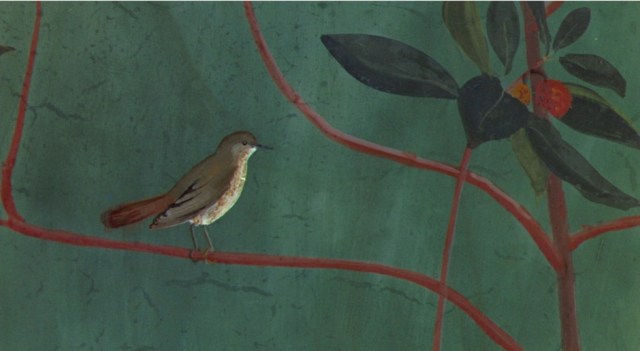
… I experienced this “coming together” of heaven and earth personally when I was frescoing Denise Sherrard’s chapel at her home in Evia, the chapel of the Life Giving Spring that she and Philip had built. We wanted to reflect Philip’s affirmation that the material world is an integral part of the spiritual life,[2] so I painted a tree between each standing saint. Some of the saints are also accompanied by a creature associated with their lives: St Melangell with a hare; St Mary of Egypt with the lion which dug her grave; bees with St John the Baptist who ate honey while in the wilderness, and so on.


I modelled the frescoed trees on the trees that grew outside the chapel. As I worked many hours each day in the chapel the awareness grew that the world is indeed created to be a temple, designed to inspire us to praise and love its Creator. The vision of paradisiacal trees that began inside that small chapel’s walls continued when I continued my life outside. The sacred transformed the secular, paradise extended into the ‘jungle’.


… Importantly, this sense of continuum was supported by Denise’s attempt to express love for God’s creation in her daily life and to live life gently upon His earth. The food we ate was prepared with love, much of it grown in Denise’s own garden. Even the wine was homemade.  The chapel itself had been made of local stone.

Immersion in the paradise of church worship affects the way we design our day-to-day lives outside the services. The architecture of our houses, our furniture design, our hospitality, our music – all aspects of life – can take their inspiration from the Liturgy. The Liturgy is like our tuning fork, helping to keep our daily lives in harmony with heaven’s.

*

Heaven’s music

… Having this inner music we will create a culture that will not only function well but will delight the eye and bring forth the logos or character of each raw material.

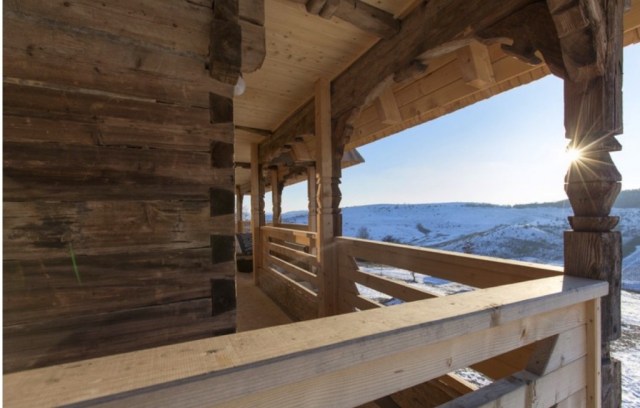
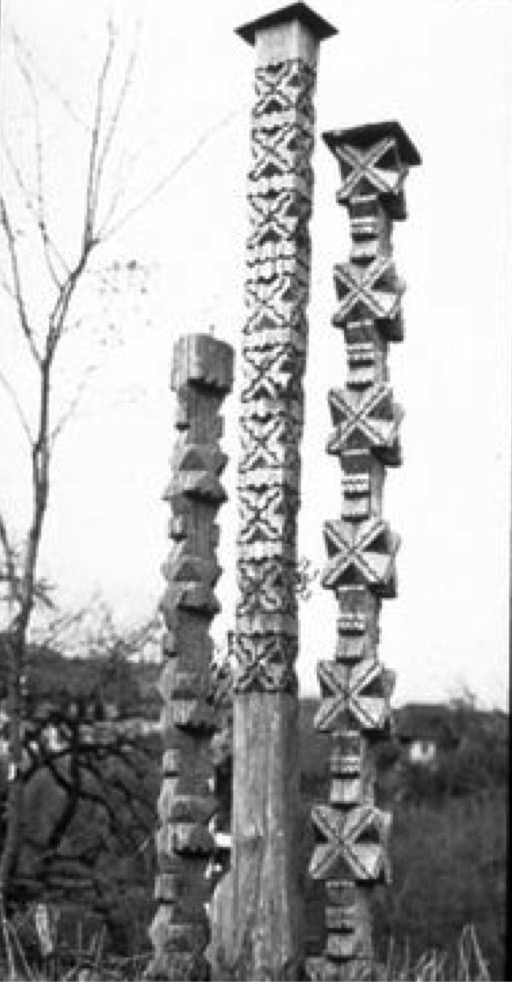
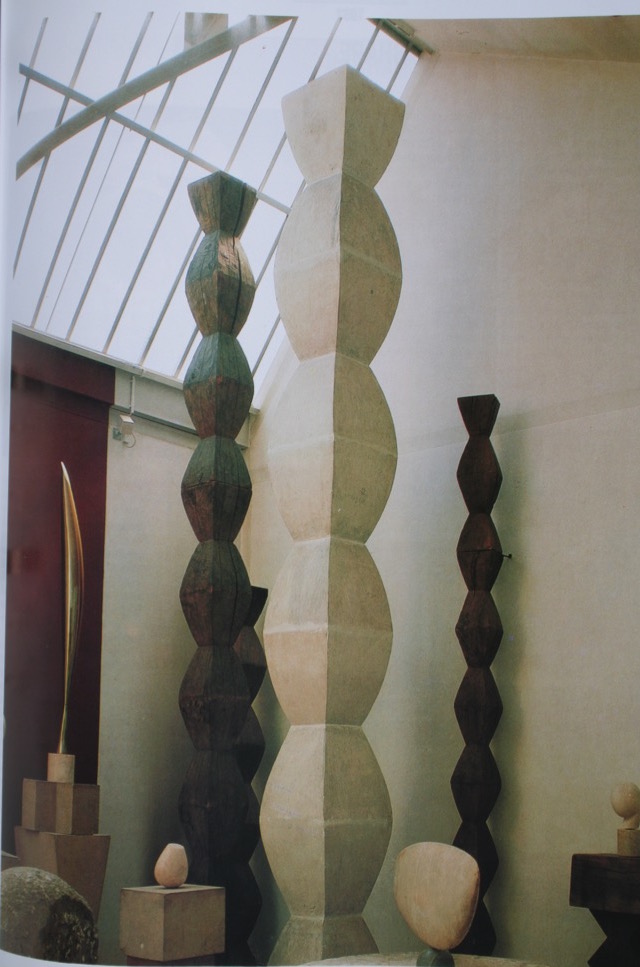
…In fact, in these and in the carved wooden columns outside one can see the inspiration for the sculptures fashioned by the father of modern abstract sculpture, Constantine Brancusi.

…This relates to what St Maximus the Confessor wrote some fourteen centuries earlier:

Do not stop short of the outward appearance which visible things present to the senses but seek with your intellect to contemplate their inner essences (logoi), seeing them as images of spiritual realities…

… Once when his friend Petre Pandrea was praising his sculpture, Brancusi replied that all he had done was to set up a branch office of Tismana Orthodox Monastery in Paris.  He saw his sculptures as an extension of the worship and ascetical life of that monastery. The sacred informed the secular.

aidan11.jpg

Rumanian grave posts, 10th c.

aidan12.jpg

‘Endless Columns’, in Brancusi’s studio, Paris.

aidan13.jpg

Tismana Orthodox Monastery, Rumania.

aidan14.jpg

Culture as the Liturgy of Preparation

As we shall explore a little later, this transformative process also works the other way: the art of life lived outside the temple walls should act as a portico, preparing us for entrance to the inner sanctum.

Our daily life can be an extended beginning to the first part of the Holy Liturgy, the Service of Preparation.

aidan16.jpg

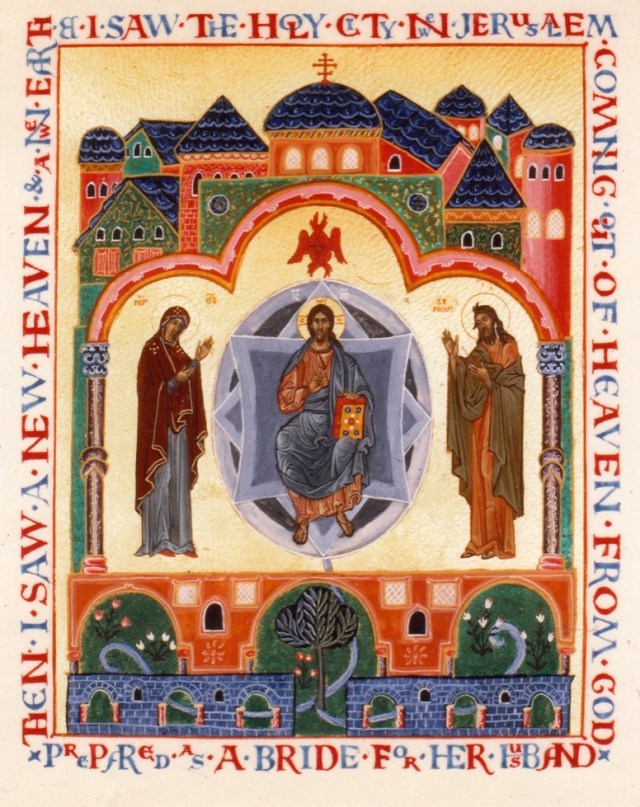
The New Jerusalem, on vellum, by Aidan Hart

aidan17.jpg

… Every aspect of our daily living can be seen as this same transformative process, culminating in the Holy Liturgy’s deification of the bread and wine. This is suggested by the etymology of the word culture, which stems from the Latin word colere, which means to inhabit, care for, till, worship. Culture then becomes cult, an act of worship. Culture is both tilling and working and worship.

Any failings in our modern culture are ultimately due to our failure to continue work into worship, to carry the cultivation of the land into the cult of the liturgy.

*

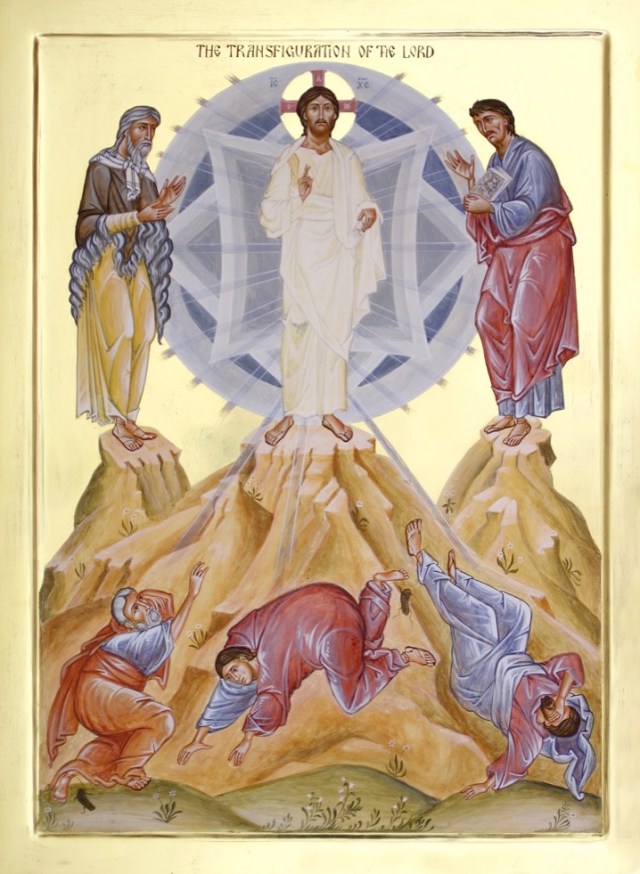
Sant’Apollinare in Classe apse (c. 534 AD). The Transfiguration; Paradise; the Second Coming; The New Jerusalem; Our Priestly roleaidan20.jpg

Sant’Apollinare in Classe

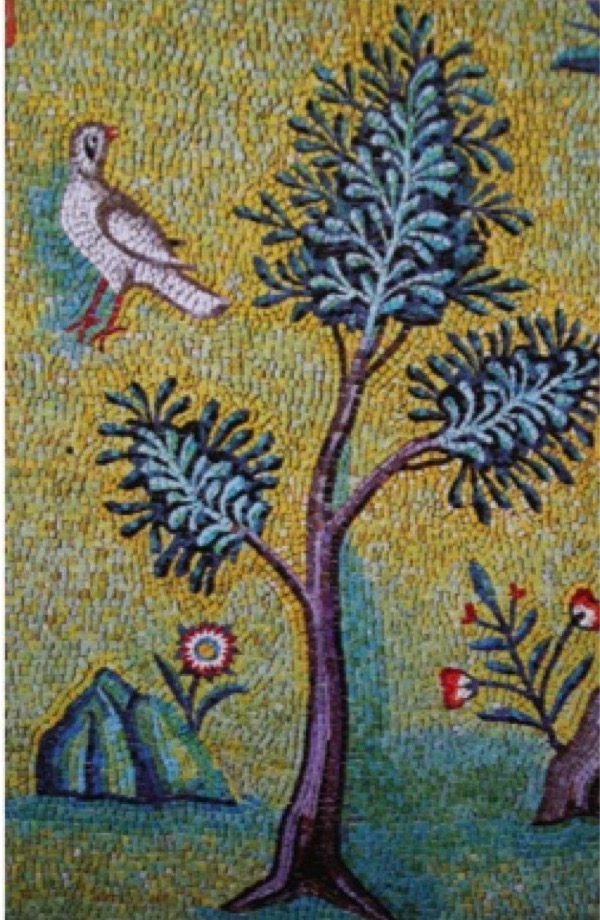
Creation transfigured. Sant’Apollinare in Classeaidan19.jpgaidan18.jpg

Portico and Nave

aidan21

In most of our churches today we have a rather rude transition from exterior to interior. But in most early churches it was not so. Most had a portico, a place colonnaded around, roofless yet walled.
 

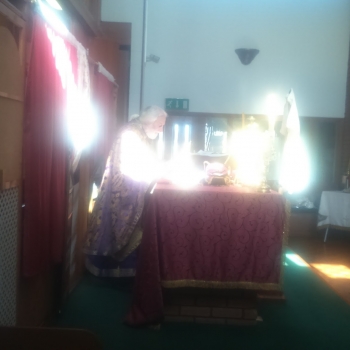
… Walking along the busy street you would spy this little paradise courtyard and be drawn towards its coolness and stillness. Once within this portico, through the open doors of the church you would eventually see hints of some glittering mosaics or wall paintings, and pins of light from oil lamps. So you would be drawn further in.

aidan23

aidan22

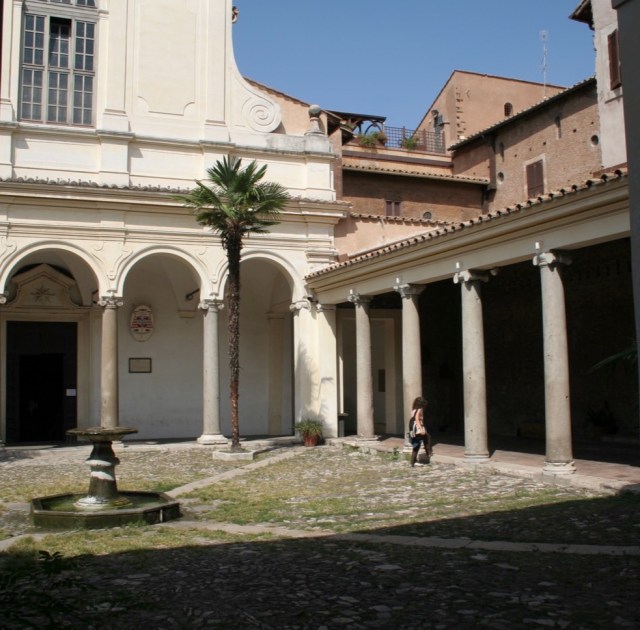
Portico with fountain, St Clement’s, Rome — Portico garden, St Cecilia’s, Rome.


…Once inside this exonarthex you would perhaps see images of the six days of creation, or the prophets, or, as in Iviron monastery,  the Psalms of Lauds illustrated, where all creation is praising God.

Aidan Hart Liturgical Art "vs." Secular Art Beauty as Truth and Truth Beauty

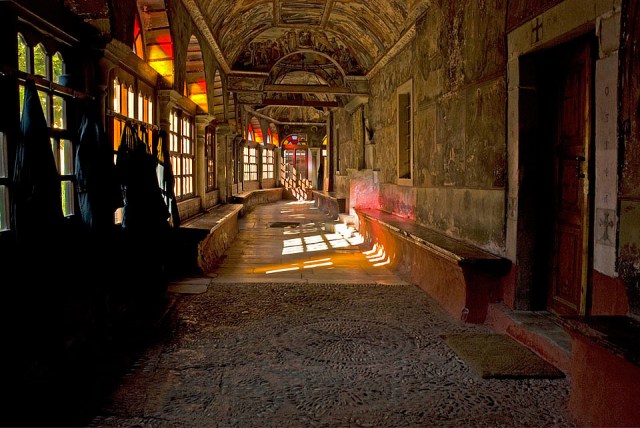
Exo-narthex, Iviron, Athos, with depictions of Psalms 158-150, all creation praising God

You might also see images of the day of judgement, reminding you that repentance and purification is needed to stand the glory of God’s light which can be experienced further inside.

aidan25aidan24

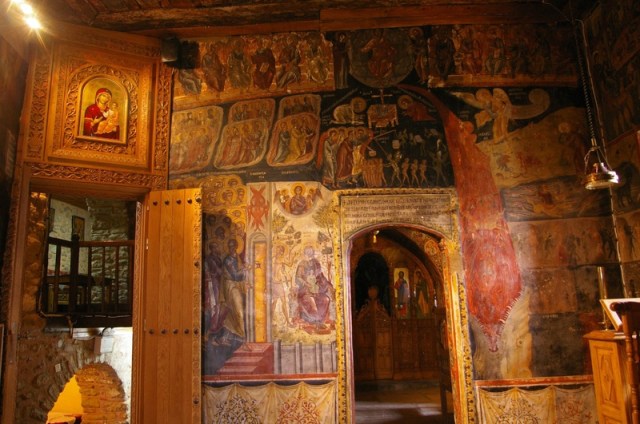
Narthex, with glimpse through to nave St Nicholas Anapafsas, Meteora.

After looking around these scenes you would see yet another door, and enter the narthex, where you would see perhaps frescoes of standing ascetics.

Eventually you would be drawn even further, into the nave. In this broad yet intimate place you find yourself surrounded by angels, saints, scenes in the life of Christ.

aidan28aidan27


…. But this journey began with the portico. Portico or threshold beauty draws us like the fragrance of a rose towards the rose. This threshold art and culture participates both in the hubbub of daily life and in the liturgical life of the Church. Culture should cultivate the soul in preparation for the seed of God’s word. …

Excerpts from Orthodox Arts Journal

Allowed to See

The Bible: the center of Theology of Father Symeon Krayiopoulos

The Bible: Father Symeon’s Kragiopoulos Centre of Theology

His discourse was also theological. He never ignored dogma, never indulged in moralizing, empty verbiage or flights of fancy. He spoke well, was comprehensible, and used theology, not as a system of knowledge, but as the essence of life, which imbues the whole of human existence. The centre of his theology was the Bible, which he knew in depth. His sermons were, at bottom, Biblical and he recommended that his ‘children’ read the Scriptures, and, indeed, he set a chapter of the New Testament to be read every day, by all of them. He immersed himself in the Scriptures, engaging with the text and enjoying the interpretational footnotes, both Patristic and modern.

We would often speak at length on the telephone about one passage or a single word.

His theological discourse wasn’t superficial. He knew theology in depth, he was up-to-date with theological bibliography and followed developments in academic theology. He was usually present at conferences of the Greek Society for Biblical Studies and took part in the discussions, reminding people, through what he said, that theology isn’t merely knowledge, but also an experience, without which knowledge ‘is puffed up’. And all the days of the conferences, when Fr. Symeon circulated as an ordinary member, he emanated the fragrance of Christ with his words, his smile and his presence. At one such conference in Cyprus, during a break, a professor from Thessaloniki approached a group of a few young people who were talking to Fr. Symeon and said: ‘Do you know what a blessing this moment is for you. In Thessaloniki we get to enjoy Fr. Symeon’s presence in drips and drabs. You’ve got him here when and for as long as you want’.


‘If you’re a theologian, you’ll pray properly; and,

if you pray properly, you’re a theologian’ (On Prayer 61)


His theological discourse was also niptic. He enjoyed the niptic fathers and imitated them in word and deed. The saying attributed to Saint Neilos: ‘If you’re a theologian, you’ll pray properly; and if you pray properly, you’re a theologian’ (On Prayer 61) was a rule of life. The silent assemblies, of which we spoke above, are a small example of his desire to teach the method of the prayer of the heart. And even if these silent assemblies have not been generally adopted as his vigils have, they were of great benefit, because the idea spread of using a prayer-rope and saying the Jesus prayer. Until then, it had been unknown to the wider public, neglected or held to be something that was appropriate only for monastics.

I realized just how much Fr. Symeon was imbued with the spirit of the prayer of the heart, how much he was himself niptic, from a long discussion we had as we were returning from a conference of the Greek Society for Biblical Studies on Patmos, the first of a series, at the end of September, 1975.

As we were sitting in the stern of the ship, in the moonlight, returning from the island of the Revelation, he showed himself to be a great niptic father, a holy teacher of the prayer of the heart. He was taken up, speaking from another world, and I tried to follow him, drinking in his words. We parted past midnight, with the feeling that we weren’t done with the subject. How could we be when ‘perfection is never-ending’?

Fr. Symeon never advertised his work. He never challenged anyone in his homilies. You learned about him from other people. I recommended his talks to someone and he said to me afterwards: ‘You mean there’s somebody like him in Thessaloniki and you didn’t tell me earlier?’

*

“I thank you, my Lord, that you allowed me to see what I am”


The Bible: the center of Theology of Father Symeon Krayiopoulos


I thank you, my LordThe event of salvation is conscious. We should know this and not fear it at all. Further, we should beg God to reveal our true selves to us. Then God will see that we accept this not with words, but in practice. Therefore, when at some point, either we make a mistake or something else happens, and God allows all of our wickedness, and our whole diseased and bleak inner state to be revealed, we need to accept it. We need even to be thankful, saying: “My God, such a thing I had awithin me and I didn’t recognize it! I thank you, my Lord, that you allowed me to see what I am”. 

You must see this and embrace it. Not in the sense that you will hang onto it, but in the sense that you will acknowledge that you are the one that has this within you. You ought to acknowledge it without wanting to blame and pass the responsibility to someone else and without averting your eyes as though not wanting to see it. Some men and women who work at lowly jobs, whatever happens, they stoop and patiently do the work completely. On the contrary, a person may be fragile or delicate, and supposedly ashamed, supposedly disgusted and supposedly isn’t able to do such work. If he does this work though, it will be incomplete. Here, though, in our own case, it’s necessary that we see our sin. We must see this thing that we hold onto as if we want it, and within which our soul has been sunk for an entire life. We must see it, must feel it. We must see how difficult it is, nearly impossible, to escape from this state.  Therefore, someone is completely convinced, and thinks: “It’s over. I’m going to perish”. This is Hades. Namely, someone sees that he is in Hades.

However, we know that we have a Saviour, we know that Christ came to earth. Then we start to understand what it means that he came to save us, and we run to the Saviour. We run to the Lord with pain, with prayer, with a cry, with faith, with hope and a firm conviction that the Lord will accept us and will save us. The Lord wants us to approach things exactly like this. This is not our own daring or our own boldness.  He wants us act just like that, to entrust ourselves in this way, and for this reason he gave us promises. So someone does this work, and little by little the decay of his soul, that lies in the subconscious and the unconscious, emerges.

How long will this last for? A lifetime. Until the end of our life, this is the work we have to do. But grace is involved. It also happens every so often that when you enter within yourself or when you give yourself to God, the decay you have within emerges on its own, and you see it whether you want to or not.

It is a bleak state, a filthy state, but grace is involved since in exactly this way you are redeemed, once and for all, and are saved. And it is through this that you are delivered from this state.

 *

Is our disposition such that the Lord is able  to be moved to compassion for us?

 The Bible: the center of Theology of Father Symeon Krayiopoulos

“And when Jesus went out He saw a great multitude; and He was moved with compassion for them, and healed their sick.”

Then – as the Gospel passage tells us – since the multitude had followed him into the desert for many hours and were hungry, the Lord with five loaves and two fish, having blessed and multiplied them, fed five thousand men with twelve additional baskets taken up.

The compassion of Christ is not simply some sentimentality, but is a manifestation of His love toward His creation. God always loves the world, He loves every individual person, but for Him to be moved to compassion and to show it, it is also necessary for a person to be appropriately receptive to it.

It’s not enough to simply do some good works (to pray, to go to church, to study). Whatever we do we are sinners and unworthy of God. Consequently, we are unacceptable. All the same, we need to do these things precisely to show our good disposition, to show that we want to be saved, that we choose God, we seek Him, we love Him. But is not enough for these things to be done only because of habit.

That’s why it is good, wherever we find ourselves, to ask ourselves night and day whether our disposition is such that the Lord is able to be moved to compassion for us. It is not necessary for you to journey along many and distant roads, climbing and descending, in order to achieve this. God is the one who covers the distance that exists between us and Him.

All a person needs to do is one little thing, but a little thing which is great and which is everything: to humble himself, to repent, to have the fear of God within him, to not be puffed up, self-inflated, and conceited.

And then – O, the wonder! – God will be found wherever we are. Then irrespectively of how things arise in our lives, we will feel the compassion of God and see how God will provide all that our souls and bodies need. It is not difficult for God – not difficult even for God to heal you from sickness or to put in order other problems and situations in your life. He can take care of everything. But we need to adopt that disposition that will elicit His compassion toward us. (August 3rd, 2014)


Transcribed talks by Archimandrite Symeon Kragiopoulos

 From: Holy Hesychasterion “The Nativity of Theotokos” Publications.

Translated by fr. Matthew Penney


(To be continued …)


For Fr. Symeon Kragiopoulos: The Portrait of a Spiritual Father – I, The Theologian and the ‘Liturgical’ Being (his famous church services and vigils), go here

For Fr. Symeon Kragiopoulos: The Portrait of a Spiritual Father – IIThe ‘Silent’ Assemblies of Father Symeon Kragiopoulos, (his famous silent sessions of the Jesus prayer), go here

For Fr Symeon Krayiopoulos: The Portrait of a Spiritual Father – III, A Servant of the Holy Mystery of Confession, go here …

Blessed Elder Philotheos Zervakos: The Circle of Grace (1)

elder-philotheos


Blessed Elder Philotheos Zervakos was spiritual father to Photios Kontoglou, Sister Angeliki the Unmercenary (my spiritual mother),  and a spiritual child of St. Nectarios of Aegina. During his youth he chanted several times  at vigils served by the saintly Fr. Nicholas Planas. Elder Philotheos experienced two life-saving miracles in his life with St. Demetrios and visibly encountered the Saint.


  • This post marks the beginning of a series which has always fascinated me: The ‘inter-connection’ of the Saints, the faithful and members from my spiritual family in the Holy Spirit.  Glory to God! The circle of Grace expands like ripples in the pool!  “That they all may be one; as thou, Father, art in me, and I  in thee, that they also may be one in us ” (John 17:21, KJV) There will be no commentary or analysis on my part in this series; just a plain presentation of facts and accompanying hyperlinks. I would be greatly indebted to any of you who might point out to me further  ‘inter-connections’.

A Servant of the Holy Mystery of Confession

 Father Symeon : A Servant of the Holy Mystery of Confession

Father Symeon : A Servant of the Holy Mystery of Confession

In confession, as in the whole of his everyday behaviour, Fr. Symeon was all love. Love overflowed from within him. He radiated love, not with words, nor with actions, but with his mere gaze, his smile, with a single word. He was formal, but not a slave to formalities. I remember one incident in particular. He’d given me the number of his personal telephone, the one in his room. I would usually phone him between 11-12 in the evening, which was the best time for him because, as he explained: ‘Now it’s the afternoon for me’.

We’d speak without restraints of time, but he would still be up in the morning for his rule. One evening, around midnight, the son of a friend of mine, a spiritual son of Fr. Symeon’s, who was studying abroad, telephoned me. He was very upset and asked for help with a really important problem which needed to be resolved immediately. I was in no position to advise him. Only the Elder could do so, but how? At that time of night nobody would have answered a telephone call to the monastery. I hesitated to give his confidential telephone number, because he’d told me not to give it to anyone at all. The case was such, however, that I decided that I’d just have to go against his instructions. So I gave it. And the boy was saved. The father saved his son.  The next day I asked forgiveness for the infraction, but he told me not to worry and that I’d done the right thing.

That was Father Symeon. A discerning, consoling and enlightened advisor to whom we had recourse and to whom we referred people with difficulties, so they could find refuge.

*

In his sermons, in his discussions, in confession, Fr. Symeon didn’t avoid taking a position on burning questions which others didn’t dare to touch on so as not to come into conflict with the prevailing, unhealthy atmosphere. Let me explain. There was at one time much ado generated over 666 and this was an issue that threw people into turmoil. Father Symeon did not leave his spiritual children in the dark over this. He clarified the issue in a series of talks, reassuring those who were worried. He did the same for bar codes and other similar issue which aggravated ill-informed believers. In general, he dealt with important ecclesiastical and theological issues with clear thinking, theological depth and knowledge of the Patristic tradition. And all of this with sobriety, without any spirit of contention.  If ever I wanted a second opinion on my own articles on Church matters, I would submit them to him and he would always make useful observations. For example, if I used acerbic language, he would suggest I tone it down.

In general, his discourse was prophetic. He did not ignore dogma, he was never restricted to dry moralizing, he used neither clichés nor soaring rhetoric. Well-grounded, comprehensible, he spoke in the name of God, telling the truth, castigating lies and thus bringing the faithful to his way of thinking. Listening to him, you felt that you were listening to the word of God, that his discourse was official, authentic and valid. He didn’t impose himself through human coercion, but spoke rather ‘in the Holy Spirit’. Without prevarication, he went straight to the heart of the matter and didn’t mince his words in order to please people. He told the truth of the Church, without pulling any punches, however hard this seemed to many people. He was a prophet in the Biblical sense, shaking people up to get them to cast off the fripperies with which their egotism had burdened them, so that they could see naked reality clearly.

*

Pain is a shortcut to salvation

Father Symeon : A Servant of the Holy Mystery of Confession

It says in the Gerondikon: “In the morning you may be in hell and in the evening you can be in paradise”. What is meant is that in the morning man may have committed sins, but, as in the course of the day he came to his senses, showed reverence, repented and wept for his sins. As the sun sets, it is no big deal for God to place him in paradise. Things are easy and the road to salvation is short. We, by having the wrong attitude, make things hard and the road to salvation “un-short”.

Whatever your condition is, if you repent, God welcomes you and you are saved. All you need is to repent truly.

You may repent for something you have done, but you repent because your egoism has been hurt. You go to confession, for the one and only reason that your egoism has been wounded. Not because you have sinned in the eyes of God. You had a good impression of yourself. As you have sinned though, you can no longer have it. And that makes you suffer. This is not repentance, though.

*

(To be continued)

For Fr. Symeon Kragiopoulos: The Portrait of a Spiritual Father – IIThe ‘Silent’ Assemblies of Father Symeon Kragiopoulos, (his famous silent sessions of the Jesus prayer), go here

For Fr. Symeon Kragiopoulos: The Portrait of a Spiritual Father – I, The Theologian and the ‘Liturgical’ Being (his famous church services and vigils), go here

Spared Death Penalty … Twice!

St. Demetrios of Thessaloniki and Elder Philotheos Zervakos

st demetrios and elder philotheos zervakos:  two miracles 


Two Miracles

May St. Demetrios intercede for Us! Today is a very special day for my hometown Thessaloniki. +St. Demetrios of Thessaloniki, 26 October. Thessalonians and all the world are glorifying “the myrrh-gushing saint and courageous martyr, Demetrius, the commander”.  Indeed, St Velimirovich is so right! “St. Paul bedewed Thessalonica with tears, Demetrius watered it with his blood.” Below follow two miracles of St. Demetrios to Elder Philotheos Zervakos, a most venerable contemporary elder, of special significance to me, since he was a spiritual father of my spiritual mother, Sister Aggeliki the Unmercenary :


st demetrios and elder philotheos zervakos:  two miracles 

st demetrios and elder philotheos zervakos:  two miracles 

As a young man, Fr. Philotheos Zervakos (+1980), the well-known abbot of Paros and spiritual son of St. Nektarios of Aegina, was imprisoned twice by the Turks during the final years of the Ottoman occupation of Thessaloniki. In his time of trial St. Demetrios, his patron, was a ready helper, as we read below in his own words:


st demetrios and elder philotheos zervakos:  two miracles 


St. Demetrios Protects Elder Philotheos From Harm The First Time


When I fulfilled my military service and was released, I decided to become a soldier for our Heavenly King in accordance with the counsel that Father Eusebios had given me. I disclosed all my intentions to the holy Nektarios, the Bishop of Pentapolis, who then was also the director of the Rizareion Seminary in Athens (now in blessed repose), and he told me, “Your goal is good, but I advise you to go to no other monastery than the one at Paros (Lagouvardos), where the brethren are virtuous and plentiful.” However, I insisted, telling him that my desire was to go to the Holy Mountain. He then said, “If you stay in Greece, go to the Lagouvardos Monastery, but if you insist on going to the Holy Mountain, then go with my blessing….”

After attending a vigil on May 8, 1907…my friend Nickolas Mitropoulos and I boarded the steamship “Pinios”, and we departed for the Holy Mountain from Piraeus….

Two days later, we arrived in Thessaloniki, which was then occupied by the Turks (I had great reverence for St. Demetrios, the patron saint of Thessaloniki since I was a child). I invited my friend Nickolas to join me to go venerate the tomb of the Great Martyr, St. Demetrios the Myrrh-gusher. We then got off the ship and went to venerate his tomb with compunction. On our way back to the ship, we checked in at the Greek hotel and rested all day and night. The next day, we prepared to depart for the Holy Mountain and went to the Customs Office; however, they did not permit us to depart: “You will not leave”, they told us, “because you are spies!” We, of course, denied this and pointed out that since our passports had been cleared by the Turkish Consulate and the Embassy, they should allow us to leave. However, they would not pay any attention to our words.

They did not put us in jail but under close surveillance and soldiers stood guard outside our hotel, and they followed us whenever we went out. This went on for quite a few days and we began to worry because our money was running low. One day, I told Nickolas, “I am going to the ‘konaki’ (governor’s house), to appear before the ‘pasha’ (governor): he will probably allow us to leave.” I arose very early the next morning and went to venerate the tomb of St. Demetrios again before going to the konaki. With tears and compunction, I asked the Saint to intercede to the Lord that we be permitted to freely go to the Holy Mountain. After praying for quite a while and sitting down to rest, the martyrdom of St. Demetrios came to my mind: I thought about how he was pierced with a lance and died for the love of Christ and for our holy faith, and how he was glorified by God both on earth and in heaven, and will be glorified unto all ages.

As I considered all this, a longing came to me to give my life for the love of Christ and the Orthodox faith too, supposing there was a way. I then asked St. Demetrios to intercede to the Lord again, however, not for my freedom, but that I be rendered worthy to die a martyr’s death. I then thought of a way to accomplish this goal. I told myself, “I will go to the konaki and courageously appear before the Turks. I will give them a reason to question me about my faith and then I will bear witness to their heresy. They will probably tell me to deny my faith, but I will stand firm and prefer death. Thus I will have a Martyr’s end.”

I went to the konaki immediately and entered inside. While I was going up a hallway, a Turkish officer noticed me and asked me what I wanted:

“I want to see the pasha.””And why do you want to see him?”

“I have something to tell him.”

“I am the pasha’s representative. Tell me what you want openly.”

“Since you are the pasha’s representative, then tell me, why will you not allow us to go to the Holy Mountain?”

“I will not give you a reason.”

“You are not good people”, I told him courageously, “you are unjust. Why are you detaining and distressing us like this? We are not at fault, we are not bad people and our papers are in order. I do not understand. Now we have run out money. How shall we live in this foreign and unknown place? How would you like it if you went to Greece and we did to you what you are doing to us?”

These words irritated him and moved him to anger. He began ringing a bell loudly and 30-35 soldiers and officers gathered around us immediately. They grabbed me and dragged me off to the White Tower, for what purpose I did not know; I thought perhaps to imprison me … As we walked to the White Tower, I asked St. Demetrios to intercede to the Lord to grant me a martyr’s death, provided it is His will; and if it was not, to be delivered from the hands of these atheistic, bloodthirsty, wild and barbaric Saracens.

After we had gone a little ways, their superior appeared and spoke to them in Turkish. I did not understand what he had told them but I did perceive that he was angry. He then lifted up his rod and struck the officer responsible for my arrest on the shoulder and sent them all away. When they left, he approached me with a cheerful grin on his face, and kindly patted me on the shoulder. He then handed me over to the prudent soldier from Ioannina and ordered him to take me to the Greek steamship “Mikali”, which was in the port of Thessaloniki, so that I could return to Greece.

I asked the soldier who the man was that had given the orders, not having the faintest idea. He told me that he was the pasha. I then asked him why the pasha had struck his own personal secretary, and what he had said to him. The soldier explained, “The pasha scolded his secretary because he had condemned you to death without asking permission.” I then asked him where they had been taking me. “They were taking you to the White Tower to execute you there”, he said, “all those who are condemned to death are taken there – as for the others, they put them in chains and abandon them to die from hunger, from thirst and from the stench.” I then rejoiced that I had been delivered from the hands of those wild Saracens – for I was not sure whether it would have been for the question of my faith that they had killed me. However, I was sad because I missed the opportunity to give my life for the faith. Martyrdom, however, must take place according to the rules as the divine preacher, the Apostle Paul, tells us, “An athlete is not crowned unless he competes according to the rules” (2 Tim. 2:5)….

The soldier and I then stopped by the hotel, where I bid my beloved friend Nickolas farewell….

Apparently, it was not the will of God for me to go to the Holy Mountain, and this is the reason I encountered all these obstacles. I feel a great debt of gratitude to my protector, the Great Martyr, St. Demetrios, through whose intercessions and prayers, I was delivered from death.

I had no idea why the pasha had shown so much interest in me, so I sought to find out. It was not until about two years later, when I went on a pilgrimage to the Holy Mountain, that I finally learned why from my friend Nickolas, who had gone and had remained on the Holy Mountain. He told me why the pasha had set me free and sent me back to Greece:

“Two or three days after you departed Thessalonika for Greece, the adjutant officer of the pasha came up and greeted me…He was an acquaintance of mine…He took me to his home where he offered me hospitality, and the following day we went to go see the pasha together…The Pasha said to him:

‘Your friend there, he was accompanied by another young man. One morning, as I was sleeping peacefully, St. Demetrios entered my room wearing a generals uniform and bearing weapons. With an austere look he commanded me: “Immediately, stand up, get dressed, put your shoes on, and go to such and such a road in the city to free a young man who has been unjustly condemned to death by your own private secretary. After freeing him, send him to the steamship ‘Mikali’, which is in the port of Thessaloniki and preparing to sail off for Greece.”

I hastened at once to save the young man from danger, and sent him off to Greece.'”

It was then that I realized that my helper and my deliverer from death had been the Great Martyr, St. Demetrios the Myrrh-gusher.

The prophecy of St. Nektarios had been fulfilled; no matter where I would go, I would end up at Logouvardos. I had learned a valuable lesson from this: I ought to always be completely obedient to my spiritual father, without being defiant, and I ought to not seek my will, but the will of my spiritual father – in imitation of our Lord Jesus Christ, “Who came into the world not to do His own will but the will of His Father, Who sent Him.”

st demetrios and elder philotheos zervakos:  two miracles 

st demetrios and elder philotheos zervakos:  two miracles 

St. Demetrios Protects Elder Philotheos From Harm The Second Time

Two years later, the Balkan war took place and on the Feast of St. Demetrios (October 26, 1912), Thessaloniki was liberated through the mediation and aid of her Patron Saint.

When we sailed into the port of Thessaloniki, I decided that it would be a good idea to disembark and go venerate the tomb of St. Demetrios, my guardian, and my protector and savior after God. I do not know why, but when I disembarked, the Turks once again took me to be a spy, and put me under surveillance for quite a few days. When I decided to leave Thessaloniki, and began passing through customs, they arrested me, and took me through three rows of barbed wire and locked me in. I found a youth locked in there also, and asked him why they had locked us up. He answered, “In order to murder us.” “But what evil have we done?” I asked. “Forget it,” he answered “do not bother to ask why.”


A moment later, a steamship from Romania sailed into the port of Thessaloniki carrying many passengers and a cargo of fuel oil. For some unknown reason, an oil container caught fire as the ship pulled in, and the flames spread rapidly through the entire ship. Loud blasts were heard a few minutes later, and flames were thrown sky high. Thessaloniki was all astir. Thousands of people came down to the shoreline – some to watch and others to rescue the endangered passengers with their boats. All the guards then left their posts to go see all the commotion. Seizing the opportunity, the young man pulled a small pair of clips from his pocket and cut through the barbed wire. Then he took me by the hand and lead me out. And paying a boatman, he told him to take us out to a Greek steamship which was anchored just outside the port. As we were climbing in the boat, the soldier who arrested me and locked me up came running over to seize me. However, the young man slapped him right across the face when he got to us, and he pulled back and walked away!

The boatman took us out to the Greek ship and we went aboard. I then went to put my things in order, and once I organized them, I went back to find the youth, my rescuer, to thank him and ask who he was and where he was from. However, I could not find him anywhere. I asked almost all the ship’s passengers and crew but soon realized that nobody had seen him either boarding or disembarking the ship. Who was he and what happened to him God only knows. (The only thing that I know is that many years later – after Thessaloniki had been liberated – I was celebrating the Divine Liturgy and preaching the word of God at the Church of St. Demetrios when I saw the icon of the Saint. I noticed that the young man who had freed me and lead me to the steamship bore a striking resemblance to St. Demetrios.)

st demetrios and elder philotheos zervakos:  two miracles 

st demetrios and elder philotheos zervakos:  two miracles 


His ‘Silent’ Assemblies

Father Symeon Kragiopoulos, the Jesus Prayer and his ‘Silent’ Assemblies

As well as the liturgy and other services, Fr. Symeon also held ‘silent’ assemblies. No-one spoke. Or rather, no-one heard because everybody was speaking mystically to God, using a prayer-rope and saying the Jesus Prayer: ‘Lord Jesus Christ, Son of God, have mercy upon me’. The church of Saint Athanasios was completely full. Everyone seated, heads bowed, holding a prayer-rope and seeking God’s mercy. These assemblies also lasted an hour. [Ed. In this, Elder Sophrony’s influence, fruit of Elder Symeon’s frequent visits to Essex Monastery and meetings with its abbot, cannot be exaggerated.]

Fr. Symeon laid great stress on sermons. He considered it as importance as a service, as indeed it is. The Word of God must first be received through the hearing, as the proclamation of the Gospel, so that people will believe and then receive Him as Holy Communion. The Elder spoke not only at the liturgy but on many other occasions as well. His discourse was always original. I asked him once: ‘How do you manage it? You’ve spoken for so many years and yet you don’t repeat yourself’. He laughed and I don’t remember his reply, but Fr. Symeon certainly spoke from his overflowing heart. His heart must have been overflowing, because he wouldn’t otherwise have been able to say new things all the time or he’d have addressed the brain rather than the heart. The Elder’s heart was always filled to overflowing because he nourished it continually with study, prayer and spiritual experiences. He told me once that, in confession, he heard problems that bothered a lot of people, but he didn’t have time to go into them in detail with each person. He spoke about them in his sermons. In the end, however, he always left the final word with God. ‘Let’s see what God will enlighten us to say today’, careful always that what he said was not his own words, but those of God.

Fr. Symeon’s sermons weren’t oratory. There were no well-turned phrases, rhetorical figures, great eloquence or any of the things that people admire in a fine speaker. His manner was simple, though he could be intense when the subject moved him to be. Fr. Symeon loved preaching. He went to great effort to get across to his audience not ideas but his very soul. A profound anatomist of the human soul, he analyzed issues clearly, as if he were holding a scalpel, cutting to the bone. He helped his listeners to understand the depths of their soul and brought them from there to repentance. Under his stole, they felt the love of God. And these souls multiplied when, on the initiative of the nuns of the monastery of The Birth of the Mother of God, in collaboration with other spiritual children of Fr. Symeon’s, his sermons began to be circulated more widely, first as recordings and then as a long series of volumes.

After services and preaching, the third main thrust of Fr. Symeon’s work was confession. What started with a few, later became a great number. How many days, and how many hours a day, do you need to confess a thousand, a thousand five hundred people? Where would they even have room to wait? The Elder found a solution. He gave out numbers.  He reckoned on seeing fifty a day. So, depending on the number they were given, each person knew which day, and roughly what time, the Elder would see them. Fr Symeon, closed all day within the confessional, would forget to eat, listening to the pain and shouldering the burden of the penitents. He gave remission, advice, directions, courage for the struggle and strength so that people could, by God’s grace, kill off their old self, so that new person could arise, walking in ‘the newness of life’.

In confession, he wasn’t a harsh judge. Nor was he a chastiser or punisher. You weren’t afraid, you didn’t despair. You felt he put himself in your position and understood you completely, was deeply empathetic and suffered with you. He was the doctor who cured you, the father who loved you, the friend who accompanied you. Confession wasn’t depressing, formal or legalistic. It happened once that we were together at a conference for confessors in the Monastery of the Comforter in Attica. Most of the time he listened without speaking. One spiritual guide asked him: ‘How is it, Father Symeon, that you have such success at confession?’. ‘I try to make sure’, he replied, ‘to be as low as possible, so that, however low people fall, I’ll be even lower and I’ll be there to catch them’. Wise words which embrace the whole meaning, the whole practice of the sacrament.

*

The Myrrhbearing Women approach the Lord with the logic of the heart

Father Symeon Kragiopoulos, the Jesus Prayer and his ‘Silent’ Assemblies

The Myrrhbearing women, despite knowing they were unable to roll the stone from the tomb, they decided to.  And as a result of this, they were first both to see and to learn of the Resurrection of the Lord. Moved by love (the logic of the heart, as Pascal says) they desired with great boldness to go again to the tomb, to anoint Christ’s lifeless body with myrrh. And just like that, they neither thought of what would happen next, nor whether they’d be able to enter or not. Along the way, they said only this: “Who will roll away the stone for us?” Despite all this, they did not stop, nor did they turn back, but instead kept going. This wealth of the emotional world, the all-consuming love belonging to the female nature, is a good characteristic. However, one must not rely on this alone.

It is not enough for the inside of an automobile to have only the steering wheel: what is needed is the driving force. It is necessary, therefore, for man to reach that point where the world of his heart, that sentimental treasure, becomes one with his nous. And this, as the Fathers say, is something achieved by the Jesus prayer.With the Jesus prayer, the nous descends into the heart and man’s powers are made one (just as sin has brought the division of his powers). For this reason, a saint moves simply, as he has only a conscious mind –not a subconscious nor an unconscious.

Therefore, the Myrrhbearing Women were animated by a simple, humble method. Putting their nous in their hearts –burning with the love of God– they succeeded in approaching the Risen Christ, and naturally were made holy.

*

Neptic ‘Psychotherapy’

The three levels of the soul

Father Symeon Kragiopoulos, the Jesus Prayer and his ‘Silent’ Assemblies

Conscious, subconscious, unconscious

The three levels of the soulAccording to what the expert scientists, the psychologists, say, our soul is divided into three levels. It is somewhat like an edifice which is filled with much unknown material.

The topmost part of the mind is the conscious, namely the part with which we understand ourselves.  This is where we become aware of our thoughts, our feelings, our entire disposition, and where we control and know these things. Beneath this level is the subconscious. The content of our subconscious is unknown. However, on occasion, because it is close to the conscious mind, it allows us to sense what it might contain.  Now and then, something springs from the subconscious and enters our conscious mind.

Even lower, in the deepest regions, or what we might call the basement of our soul, is the unconscious. The content of the unconscious is terra incognita, unknown land, and it is entirely unknowable to us. And so it is there, deep within us, that exist our personal experiences, our personal conditions. However, because these exist in the unconscious –in this dark basement- we neither know what exactly exists there nor can we control this content. According to the language of psychology, these experiences are repressed emotions and impulses that are pushed into the depths of the unconscious mind. According to the psychologists, this content of the unconscious gains autonomy and does whatever it wants. It doesn’t consider, nor does it ask, us.

That this is autonomic, all of us know. The moment you want to do the right thing, another power comes over you and forces you to do something else, something you don’t want to do, but which you do anyway.

Certainly these things were known to the fathers of the Church, and in particular the neptic fathers. For this reason, they preferred first that they themselves  –and later also advised others to –stay in the silence of the desert, and say the Jesus prayer (noetic prayer), trying to plummet the deepest depths of their souls, and in this way to start to know the content of the subconscious, and the unconscious,  in order to control it, and not allow it be autonomic and to do whatever it desired.

Because of this, a saint does not have a conscious, a subconscious, and an unconscious. The whole content of his soul is conscious. The saint controls it, and is not at the beck and call of repressed emotions and impulses.

We will see how man can become simple, and not be led blindly by the content which exists in the basement of his soul.

Holy Hesychasterion “The Nativity of Theotokos” Publications.

Archimandrite Symeon Kragiopoulos

For The Portrait of a Spiritual Father – I, The Theologian and the ‘Liturgical’ Being (his famous church services and vigils), go to here

 (To be continued)