The Prophecies of Saints Cosmas of Aetolia and Paisios of Mount Athos

St Nikolai Velimirovich, his Prayers by the Lake, St Paisios, and WWW3 and end-of -world prophecies and a lot more… Your prayers

Dear brothers and sisters, Christ is in our midst. Global events especially at the last two weeks have shocked and deeply saddened me, and my only consolation and light in that darkness was only the church services and the lives of the saints. And … St. Nikolai Velimirovich life and poetry, his Prayers by the Lake. So many of his poems I felt were as if written for us, right now!

Those global events have sparked interest all over the world in WWW3 and end-of -world prophecies and in particular those of recent Orthodox Saints, like St. Paisios who lived and died in the 20th century. I spend quite some time the last two weeks studying these prophesies because lots of people all over the world asked me for a blogpost selecting, presenting, and translating some of these prophesies. I soon realised how very careful one has to be not to distort the Saints’ words. This is precisely why St Paisios left that handwritten note about the electronic ID, which I have translated in the previous blogpost.

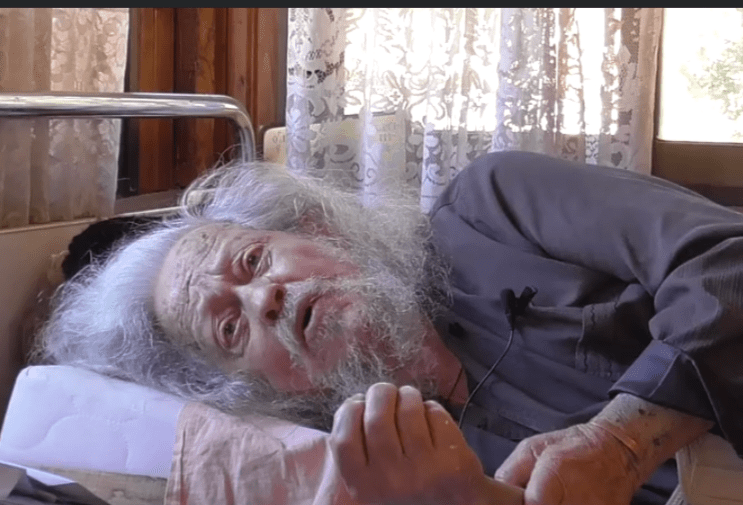
It all started on 13 June 2025, when the  Iraq nuclear power plant was struck by Israeli airstrikes during the opening stages of the Iran–Israel war (Operation Rising Lion), and further implemented on 22 June 2025, when the facility was bombed by the United States military. The blessed Elder Theodore Agiofarangitis of Crete (28-4-2016) had said to Metropolitan Fr. Neophytos of Morphou: “My children, you will be drinking your coffee in the morning and you will hear that the Jews have hit the Persian nuclear program! Then the great events will begin!” Lots of people, especially in Greece and Cyprus, felt that this prophesy had become news headlines! It had begun…
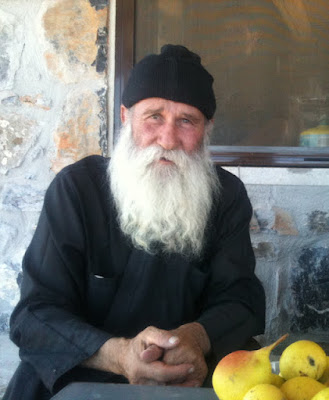
Elder Theodore the Cave-Dweller (2016), the last ascetic of Agiofarago in Crete

This blogspot is work in progress, a tentative draft, as I am still studying St. Paisios books and I would be most grateful if any of my readers could help me in tracing these, or other for that matter, prophesies. Any help would be most appreciated! Let us all please be very careful and please forgive me for any mistake in what follows. Although lots of ‘prophesies’ circulating recently have been attributed to St. Paisios, not all of them are reliable. To give you just one example:

Lots of websites and blogs reproduce nowadays that Saint Paisios said: “The Middle East will become a battlefield”. Some write a variation: “The battlefield will be Palestine, the grave the Dead Sea.” And they continue: “This will be the first half, but there will also be a second half”. Also: “the Saint is reported to have said: “War will come from above and from below. From above they will descend and from below they will ascend. And Greece will be in between.” Some interpret these words in the following manner: Saint Paisios wants to tell us with these prophetic words that World War III will begin in the parts of Syria and Palestine and then spread to Asia Minor and Constantinople). This phrase, although enigmatic, has been interpreted by spiritual people and theologians as a reference to future conflicts in the north and south of Greece, which will bring the country into a difficult geopolitical position but also into a position of increased importance.

The “above” war: Ukraine – Russia: The war in Ukraine, which broke out in 2022, renewed fears of a wider European or global conflict. The involvement of major powers, such as the US and Russia, combined with the military presence of NATO in the Balkans, is creating an explosive situation in the north of Greece. The Ukrainian crisis is recognized by many as the fulfillment of the “upper” part of the prophecy. It is a war that is descending, both literally and symbolically, towards the European south.

The “lower” war: Israel – Palestine and the Middle East: On the other hand, developments in the Middle East are also worrying. The resurgence of military conflicts between Israel and Hamas, attacks by Hezbollah, Iran’s stance and the ongoing instability in Syria and Lebanon, compose an explosive landscape. Israel’s geographical location and the theological-spiritual significance of this region lead many to interpret these conflicts as the “lower” war of prophecy. A war that is “rising,” and threatens to spread to the Mediterranean and Europe.

Greece in the Middle – Geopolitical Hub and Spiritual Responsibility:
The phrase “and Greece will be in the middle” is key to understanding the prophecy. Greece is, literally and figuratively, between the two war axes. It is a member of the West, but it also has deep cultural, religious, and geostrategic roots in the East. Greece’s geopolitical importance is constantly increasing, both because of its strategic location, natural resources, energy, and its role as a stabilising factor in the wider region.

The problem with these prophesies is they cannot be traced in any reliable book of St. Paisios. Part of them is written in one book which I remember very clearly Gerondas Gregorios of blessed memory warning us against reading it, because he told us the first volume in the series was ‘quite’ accurate and close to St Paisios’ life and words, but the second one included lots of ‘claims’ and opinions which were the author ‘s, not St. Paisios’! So we have to be very careful!

*

The only prophesies I traced in reliable recordings and publications of St. Paisios’ life and words the last two weeks are the following, presented in an article by Athanasios Zoitakis. If in a hurry, go straight to the Constantinople prophesies towards the end. i have also skipped lots of already fulfilled prophesies, such as the dissolution of the USSR in 1991, the Turkish invasion to Cyprus in July 1974.

*

In the first epistle to the Corinthians, Apostle Paul names the gifts of the Holy Spirit to Christ’s Church: But the manifestation of the Spirit is given to every man to profit withal. For to one is given by the Spirit the word of wisdom; to another the word of knowledge by the same Spirit; to another faith by the same Spirit; to another the gifts of healing by the same Spirit; to another the working of miracles; to another prophecy; to another discerning of spirits; to another divers kinds of tongues; to another the interpretation of tongues (1 Cor. 7–10). The Lord generously rewarded His disciples and apostles with these gifts—unlearned fishermen became theologians, prophets, and teachers. They preached the Gospel truth throughout the world, worked amazing miracles, and at the end of their lives were vouchsafed to receive a martyr’s crown.

It is no accident that the Holy Church calls St. Cosmas of Aitolia “equal to the apostles”. A fiery and sincere preacher, even during his lifetime he worked a multitude of miracles and healings, and was vouchsafed a martyric death.

The saint was not only an outstanding Orthodox enlightener; he is truly considered a great prophet of latter times. St. Cosmas of Aitolia left a great number of stunningly exact prophecies about the future of mankind (about scientific inventions, wars, and ecological catastrophes). Many of his predictions have already come to pass, while others are still awaiting their fulfillment.

These are not dreamed-up predictions in the spirit of the false prophecies of the much-hailed Nostrodamus, which had as their goal to lead man away from Christ, but true testimonies of the Holy Spirit, called to help us not fall into diabolical snares and to preserve the purity of the Orthodox faith.
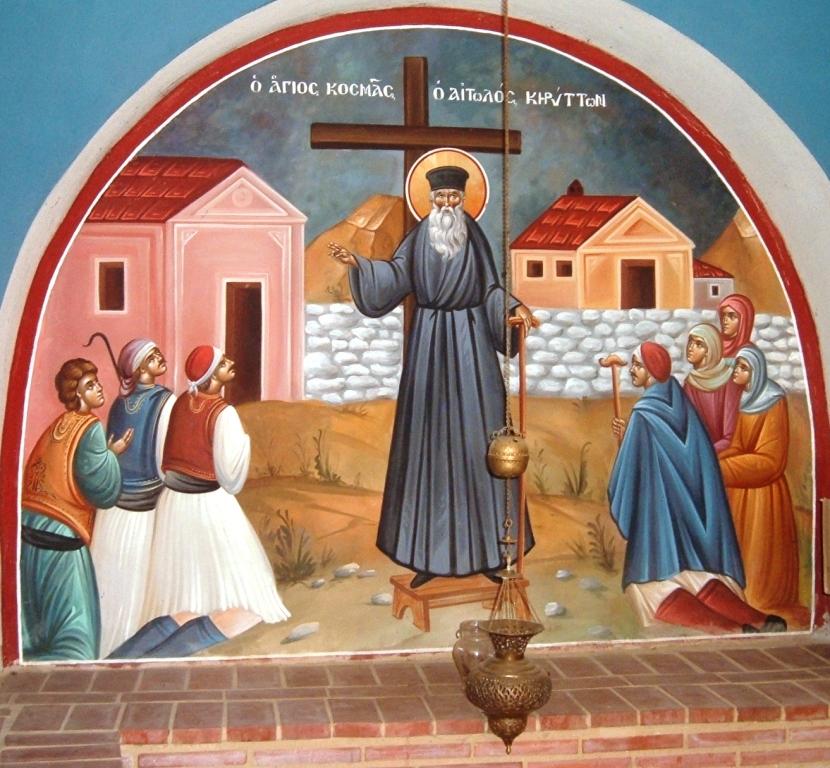
St. Cosmas of Aitolia preaching to the people. Photo: Mystagogy.    

Every town, every village that St. Cosmas visited preserves his prophetic words. Many of the saint’s prophecies have come down to us not only in written form, but also as oral history. People have been brought up from childhood on the saint’s precepts, and therefore even today there is no one in Greece who isn’t familiar with the prophecies of St. Cosmas of Aitolia.

Many of his prophecies are bound up with specific spheres of life, and cannot be understood without knowing the local realities and historical contexts. Some, to the contrary, are bound up with the destiny of universal Orthodoxy and the modern world. The majority of St. Cosmas’s prophecies have been preserved to our times. Some of these prophecies are known through the books, manuscripts, and codices of the eighteenth to nineteenth centuries. During the Second World War, a teacher in a school in Northern Epirus found a collection of seventy-two prophecies written in a Koran in the Albanian language. The saint’s prophecies were so essential to life, so popular, and important to the people that some did not want to part with his words even during the period of cruel persecutions, and they “hid” the prophecies of the great Orthodox saint in the sacred books of Islam.

If the main task of the prophets of the Old Testament period was to foretell the coming of the Messiah, then the main work of New Testament Prophets has been to foretell the end of the world and the Second Coming of Christ. All New Testament holy men, endowed with prophetic gifts (including St. Cosmas), foretold not some new events or states, but rather prepared their flock for the Terrible Judgment and the Second Coming of our Lord and Savior. They prepare us not only for overcoming the hardships and temptations of the last times, but also for the main goal of our earthly existence—“a good defense at the dread Judgment Seat of Christ”.[1]

“The prophets were great martyrs! They were greater martyrs than the martyrs, despite the fact that they did not all die a martyr’s death. This is because the martyrs did not suffer long, while the prophets saw how evil was being committed and so suffered continually. They shouted and shouted, while everyone else just blew their own horns.”[2] These words belong to our contemporary Athonite Elder Paisios of the Hagiorite. Elder Paisios (like any other Greek) was from early childhood immersed in the traditions connected with the name of Equal-to-the-Apostles Cosmas. Later in conversations with people who came to him he would often cite from the sermons and prophecies of this saint. The elder spent a long time restoring the monastery in Konitsa—a place that was uninterruptedly connected with the name of St. Cosmas of Aitolia (now there is a magnificent church built in his honor there). But the most important thing is that Elder Paisios explained to us certain of the saint’s “Constantinople” prophecies, which had previously evoked heated arguments amongst researchers.

The two saints were bound together by their common pain for their native land and the Orthodox Church. Both were outstanding missionaries, who brought a multitude of their contemporaries to Christ. There lives are examples of sacrificial service to God and neighbor.

Sts. Cosmas and Paisios showed with their entire lives that love for God is unthinkable without for your people. At the same time, in their relationship to their motherland these two ascetics were alien to superficial ardor, which flares brightly but quickly dies out. They showed that love for one’s motherland is a daily, exhausting and dangerous labor, bereft of anything showy and especially not carried on with any earthly reward in mind.
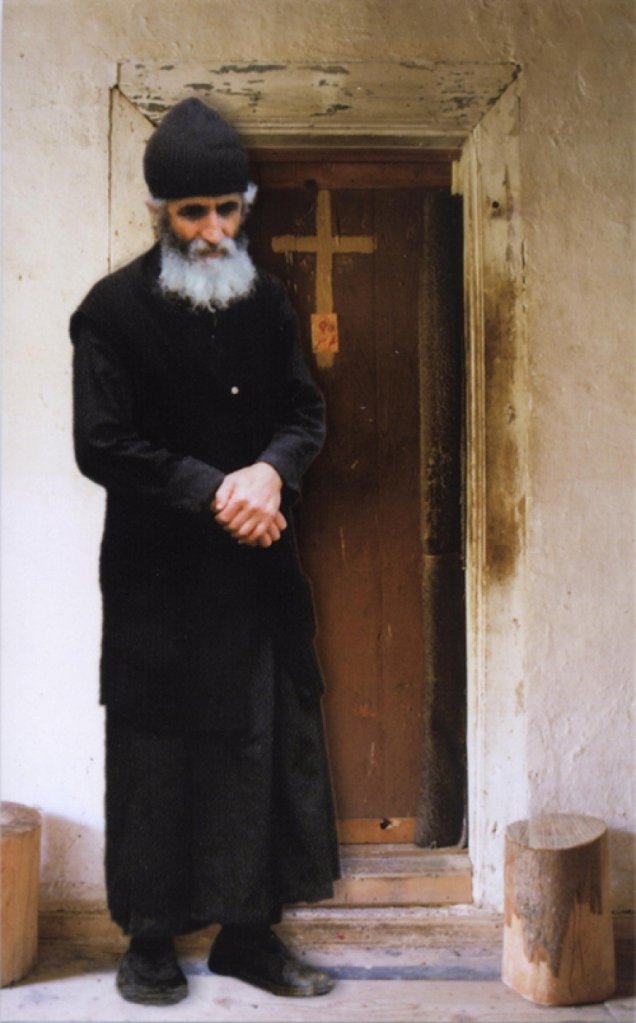
For this sacrificial labor first of all is needed deep humility, and dedication to God’s will. Elder Paisios’s life was penetrated with this. We can find such readiness for this self-denial in the words of Holy Hieromartyr Cosmas, which are a program for his entire work on earth:

“You may say, ‘But you are a monk, so what are you doing in the world?’ And I, my brothers, am not doing rightly. But because our people have become unlearned, I said, ‘Let Christ lose only me, but receive all the rest. Perhaps by God’s mercy and by your prayers I will be saved’.” Here Equal-to-the-Apostles Cosmas stands on equal ground with Apostle Paul, who said, For I could wish that myself were accursed from Christ for my brethren, my kinsmen according to the flesh (Rom. 9:3).

Wars, hunger, cold, unthinkable catastrophes and tragedies—all this was prophesied by St. Cosmas. But he names these events not in order to frighten the fainthearted and impressionable. The saint gives practical advice on how to overcome the adversities and withstand them while preserving our faith. He suffered through every word he spoke and they therefore had importance and significance not only for his contemporaries, but also for subsequent generations.

The prophecies of St. Cosmas of Aitolia have become essential instructions for several generations of people living on the Balkan Peninsula. Let us also listen to his words, follow his instructions, and preserve our hope and faith that with God’s help, all trials will in the end be turned to our benefit.

The prophecy of “the desired”

With his prophecies, St. Cosmas of Aitolia was able to return his compatriots, who had been languishing for over 300 years under a foreign yoke, to hope in their national rebirth. St. Cosmas’s contribution to the future liberation from Turkish rule was enormous. Here are the words of a song that became the anthem for the Greeks fighting against foreign rule:

Help, St. George
Help, St. Cosmas,
To take back Constantinople again
And the Church of Hagia Sophia.

St. George, as we know, was the protector of armies. And St. Cosmas became for the participants in the national-liberation movement a symbol of the struggle for the rebirth of Orthodoxy and the Greek motherland. They were inspired by his prophecies, which awakened faith and hope in them.

The saint, of course, could not speak openly with his flock about national liberation. He used the words, “the desired”, “the longed-for”. “When shall ‘the longed-for’ come?” the saint was often asked.

Here is how he answered that question:

“This place will one day become Romean[3] again. Happy is he who will live in this country.”

The saint often pronounced this prophecy when visiting the enslaved Balkan lands to preach. They were all soon liberated from the Turks.

“The desired will come to you in the third generation; your grandsons will see it.”

These words were again pronounced in Epirus. This Greek province was liberated during the Balkan war of 1912–1913, when the grandchildren of those to whom St. Cosmas spoke this prophecy were still alive.

“There is yet much suffering ahead. Do no forget my words: pray, act, and be calm. Until this gash on the sycamore tree closes over, your settlement will be enslaved and unhappy.”

The saint said this in the Epirus village of Tsaraplana. The gash on that tree cicatrized in 1912.

From the time the local inhabitants heard that prophecy they would go everyday to the sycamore and see if the wound on the tree had cicatrized. Over 130 years passed, and then the joyful news spread around the region: “It’s happened! The saint’s prophecy has been fulfilled!” And people were not deceived in their expectations—just a few months later they received their long-awaited freedom.

“The desired will come when two Pachalias will fall on the same day.”

The Annunciation and Pascha fell on the same day in 1912. Just a few months later, the regions to whose inhabitants the saint had addressed his prophetic words were liberated from Turkish rule (this is how Elder Paisios interpreted St. Cosmas’s prophecy).

“May these mountains be blessed: They will save many souls.”

The saint said these words in Vonitsa. In May 1821, the inhabitants of this area, following the prophetic advice of St. Cosmas, found refuge in the Lefkada Mountains.

“Thank your fate that you will find yourselves in the high mountains—they will save you from many calamities. You will hear danger, but you won’t see it. You will suffer for three days and three hours.”

Metsovo. Photo: Wikipedia.    

The saint pronounced this prophecy in the town of Metsovo. On May 27, 1854, there was in fact a cruel three-day battle. Many local people were able to escape death by hiding high in the mountains.

“O blessed mountain! How many women and children you will save when difficult years come.”

On November 4, 1912, the saint’s words were fulfilled. In the mountains of Siatista, 45,000 women and children were saved.

“First will come the red caps, then in fifty-four years they will be replaced by the English, and then there will be a Greek state.”

The saint pronounced this prophecy about the liberation of the Ionian Islands on the island of Cephalonia. These words were fulfilled with amazing accuracy: After the Venetians the islands were taken over by the French (a folk name for them was the “red caps”), and on the fifty-fourth year (!) the English replaced them, and only after that did the Ionian Islands, as St. Cosmas foretold, receive their long-awaited liberation.

“Catastrophe will reach the cross, but it won’t be able to go any lower. Do not be afraid. Do not leave your houses.”

With these words the saint addressed the inhabitants of Polineri. At the place where he preached, the saint as was his custom raised a large cross with which this prophecy is connected.

In November 1940, the armies of fascist Italy invaded Greece. Meeting practically no resistance they captured more and more territories. Finally they reached the cross about which the saint had prophesied. Alarmed at the threat of the Italian forces’ further advancement, the Greek authorities issued an order to evacuate the inhabitants of several areas, including Polineri. A one hundred-year-old inhabitant of the village of Tegos Nasioulas had not forgotten the saint’s prophetic words: He addressed his fellow villagers, convincing them not to leave their houses. The authorities considered them saboteurs who were trying to hold up the evacuation and make it easier for the Italian forces to advance. They asked the old man to be silent, even beat him cruelly, but he was he did not back down.

The Italians did in fact reach the cross, but they could not go any further—the Greek forces stopped their attack.

Prophecies about Constantinople

Regaining Constantinople has always been the dream of the Greeks and other Orthodox nations in the Balkans. Its fall was the most devastating and tragic date in Greek history. The rebirth of a national state did not reach its logical conclusion: the restoration of an Orthodox Empire with its capital in Constantinople. Having foretold the liberation from the Turkish yoke, St. Cosmas also foretold the future liberation of Constantinople. The “Constantinople” prophecies still await their fulfillment.
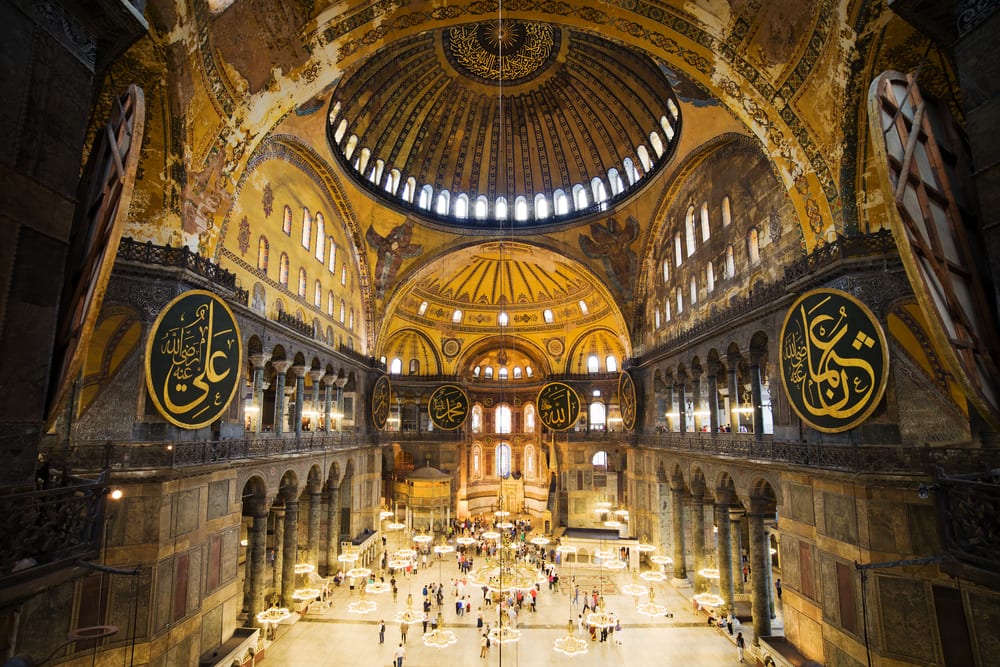
Many of St. Cosmas’s prophecies have long remained a puzzle to us and were the subject of the most contradictory explanations. Moreover, in the people’s consciousness they were mixed up with the many false prophecies that exist about the liberation of the City. Elder Paisios not only explained the saint’s words, which are still hard to understand, but he also helped separate the “wheat from the chaff”—the true testimony of the Holy Spirit from the predictions of false prophets who have led us into confusion and error.

The two saints are not only bound together by common prophesies about the fate of the City, but also by the their love of Byzantium and dedication to the idea of an Orthodox, multi-national empire—a sentiment natural to the majority of Greek ascetics.

For them Byzantium is not just a political program but also a way of thinking and perception of the world: “Byzantium placed the beginning of the Holy Mountain [Athos]. Today the Holy Mountain could renew Byzantium, if only we would preserve that strength in ourselves, not ‘be lazy’, not ‘lose our color’. Look, people are now disappointed in everything and are looking for something that is not of merely transitory value. This is very easy. If only we ourselves would not fade.”[4] Byzantium is an image of a sovereign state that is inseparably connected with Orthodoxy, founded upon Orthodoxy. It is a “Christian kingdom”, as St. Cosmas of Aitolia accurately defines it.

“The red vests will drive the Turks from the City”

We do not yet know the meaning of this prophecy. Some express the supposition that the color red will be present in the uniforms of the liberating soldiers.

“There will be so much blood spilled in the City that a three-year-old calf could swim in it.”

This prophecy was supplemented by Elder Paisiios: “In Constantinople there will be a fierce battle between the Russians and the Europeans. Very much blood will be spilled.”[5]

“Armies will pass through the valley of Mouzini headed for Constantinople. Let the women and children go to the mountains. They will ask you, ‘Is the City far away?’ Answer: ‘It is near’. By answering that way, you will avoid much disaster.”

The Mouzini Valley is located in Northern Epirus. Although this Greek province is now in the territory of Albania, it has a significantly non-Albanian (mainly Greek) population, whom St. Cosmas addressed in his prophecy.

“When you hear that a fleet is sailing in the Mediterranean Sea, know that the Constantinople question will soon be resolved.”

It is clear from the prophecies that in the struggle for Constantinople, the opposing sides will make broad use of their navies.

“The armies will not even get halfway to the City when they will hear news that “the desired” has come.”

Certain of St. Cosmas’s “Constantinople” prophecies were deciphered in the late twentieth century and supplemented by Elder Paisios the Hagiorite.

“Here is what the elder said when he was asked one day about the events in Serbia:

“ ‘Today, for the sake of the Turks the Europeans are creating an independent state with a Muslim population (Bosnia, Herzegovina). However, I see that in the future they will carefully divide Turkey itself as well: the Kurds and Armenians will rebel, and the Europeans will demand recognition of these peoples’ independence and rights to self-government. Then they will say to Turkey: “We once did you a favor, and now in the same way, the Kurds and Armenians should receive independence.” Thus will they ‘nobly’ divide Turkey into parts.

“St. Arsenius of Cappadocia told the faithful in Faras that they will lose their fatherland, but soon they will gain it back again.”[6]

“There will be yet another foreign army. It will not know Greek, but it will believe in Christ. They will also ask: ‘Where is the City?’”

The fate of Constantinople will be decided in a military and diplomatic contest of the largest world sovereignties, for whom for some (as yet unknown) reason the break up of Turkey will be profitable.

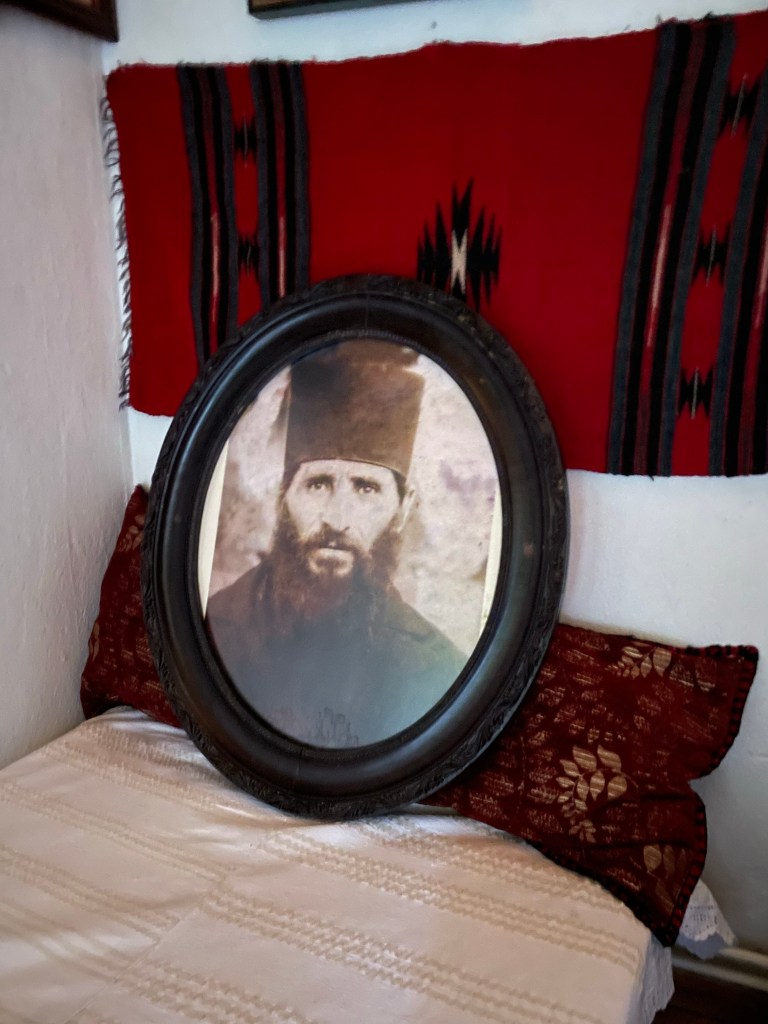
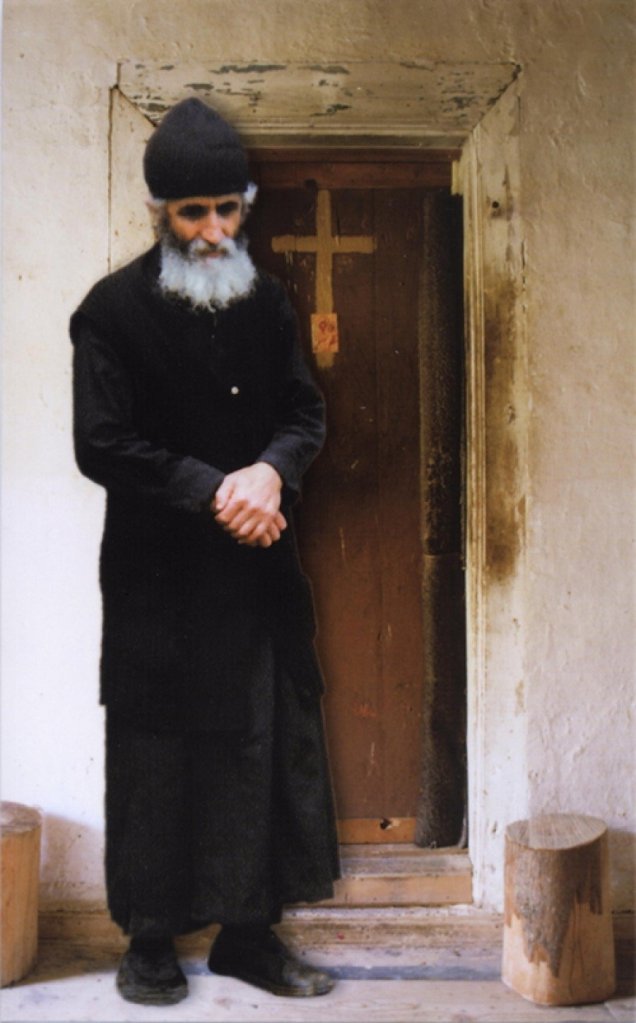
St. Paisios the Hagiorite.Elder Paisios emphasized that this will happen without Greece’s direct participation: “We will take Constantinople back, but not we ourselves. Because the majority of our young people have become degraded, we are not capable of such a thing. Nevertheless, God will arrange it that others will take the City and give it to us.”[7]

Many Greek researchers are convinced that Russia, of the same religion as them, will take an active part in deciding the Constantinople question. Truly, the Russian people fit to the greatest degree St. Cosmas’s description: “They will not know Greek, but they will believe in Christ.”

“One day a group of children, students of the Athonaida, decided to go to the elder and ask him whether the Greeks will take Constantinople and will they, the children, live to those times. They came to Fr. Paisios’s kaliva, took their treats, but were afraid to ask the question. One made a sign to another, and he to a third. But in the end, no one could bring himself to ask the elder. Then the elder said to them himself: ‘Well, young fellows? What did you want to ask? About Constantinople? We’ll take it, we will, and you will live to see it’.”[8]

“The antichrists (that is, the Turks.—A.Z.) will leave, but they will return, and then you will chase them to the Red Apple Tree.”

In Greek folk tradition the Red Apple Tree is the name for Kokkini Milia—a place somewhere in Mesopotamia, where the Turks will be driven after the liberation of Constantinople.

Of course, now it seems to us that the liberation of Constantinople, just like the break up of Turkey along with the strengthening of Russia are almost impossible. But let’s not forget that all is possible to God, and the situation in world politics can make a 180-degree turnaround at any moment.

“One day, Mr. D. K. visited Elder Paisios. At that time the USSR was a strong and seemingly invincible world power, and no one could even suppose that it could be destroyed (this was in the Brezhnev era).

But Elder Paisios said to him, by the by:

“You will see that the USSR will break apart.”

Mr. D. objected:

“But Geronda, who could break apart that enormous might? No one would even dare to touch its toenails.”

“You’ll see!”

The elder foretold that the breakup of the USSR will be obvious even to Mr. D., despite his advanced age.

The Elder went on:

“Know, that Turkey will also fall apart. There will be a war that will last two periods. We will be the victors, because we are Orthodox.

“Geronda, will we suffer losses in the war?”

“Eh, at the most they’ll occupy one or two islands, but they will give Constantinople to us. You’ll see, you’ll see!”

“The Turks will leave, but they will return again and reach Hexamilia.[9] One third of them will perish, one third will come to believe in Christ, and another third will go to Kokkini Milia.”

“No one can explain this, and all make mistaken suppositions. They say that Hexamilia is in Langadas, Kilnis,[10] in Thrace,[11] in Corinth; but no one knows that what the saint was talking about is the six miles of territorial waters[12].[13]

“Once, I met Elder Paisios, who was somewhat disturbed and upset. He gave me some treats and then began the conversation himself:

“ ‘Certain people came to me and said that a war will start, the Turks will enter Greece, and they will chase us six miles to Corinth (that is how they explained the prophecy of St. Cosmas of Aitolia, with their corrupt thinking). <…> Although I don’t like to talk on the theme of prophecies, they forced me to explain to them the meaning of the six miles about which St. Cosmas spoke. This is none other than six miles of the sea shelf. It is what we and Turkey have been gnawing at each other about in recent years and about which we will finally “lock horns”. But they will not enter Greece, they will only advance to these six miles, but then they will meet with great calamities from the north, as it is written, and all their plans will collapse.”[14]

“Today, reading prophecies is the same as reading the newspaper—they are so clearly written. My thoughts tell me that many events will take place there: The Russians will occupy Turkey, Turkey will disappear from the map, because one third of the Turks will convert to Christianity, a third with perish, and a third will head for Mesopotamia.”[15]

The prophecies of Sts. Cosmas and Paisios talk about how a third of the Turks will become Christians. It is notable that even now there are many crypto-Christians amongst the Turks. Many pilgrims who have been to Turkey tell about how during their travels people would come up to them, ask them for icons, prayer books, and look for opportunities to confess and receive Communion.

“Then it will come, when there will come two summers and two Paschalias together.”

For a long time the meaning of this prophecy was hidden from us, and only at the end of the twentieth century did Elder Paisios shed light on St. Cosmas’s words.

“They started telling me what St. Cosmas had said: ‘Then it will come, when there will come two summers and two Paschalias together’. They say that now (when Pascha coincided with the Annunciation and the last winter was like summer) it means that the Turks will attack Greece.

“We’ve all become prophets, father, and explain things with our minds however we want… Here I was forced to tell them that when St. Cosmas said, ‘Then it will come…’ he didn’t mean the Turks at all. He meant that liberation will come for the people of North Epirus. And truly, after this year, after so many years the borders were opened, and now they can more or less be connected with their fatherland.

“My father, I understood that these people bring very great harm by explaining the prophecies with their poor minds. And more than that, they pass on their false thinking to others.”[16]

To be continued …

OrthoChristian.com

At the foundation of this publication lies the book: Athanasios Zoutakis, The Life and prophecies of St. Cosmas of Aitolia (Moscow: 2007).

Athanasios Zoitakis
Translation by OrthoChristian.com

The author, Athanasios Zoitakis, is a doctoral candidate in history and teaches Church history in the History Department of Moscow State University. He is also currently the editor-in-chief of the Pravoslavie.ru Greek edition.

Pravoslavie.ru

[1] From the litany at Orthodox services.—Trans.

[2] St. Paisius the Hagiorite, With pain and love for Modern Man (Moscow: Word, 2003) 1:22.

[3] Romei—inhabitants of the Byzantine Empire. St. Cosmas was a consistent supporter of creating a “Romeian Empire”.

[4] See: Athanasios Rakovalic, Fr. Paisios said to me…” (Moscow, 2003) [Russia].

[5] Χριστόδουλος Αγιορείτης, ιερομοναχος. Σκέυος Εκλογής. Άγιον Όρος, 1996. Σ. 207.

[6] Ibid., 143.

[7] Χριστόδουλου Αγιορείτου. Ο Γέρων Παίσιος. Άγιον ΄Ορος, 1994. Σ. 210–221.

[8] Hieromonk Isaac, The Life of Elder Paisios of the Holy Mountain (Moscow: 2006), 211.

[9] Hexamilia: six miles.

[10] Langadas, Kilnis: a town in Macedonia.

[11] Thrace: a province in Greece

[12] The zone of six miles, including several islands in the Aegean Sea. The Turks are now actively making claims to this territory. The continually violate Greek air space, and in 1996, due to these territories a military conflict nearly broke out between Greece and Turkey. (These conflicts are still coming up at the time of this translation.—Trans.)

[13] Χριστόδουλος Αγιορείτης, ιερομοναχος. Σκέυος Εκλογής. Σ. 221.

[14] Χριστόδουλου Αγιορείτου.. Ο Γέρων Παίσιος. Σ. 211

[15] Ibid., 206.

[16] Ibid., 211.

Saint Paisios – Signs of the Times

Dear brothers and sisters, Christ is in our midst.

War is raging all over the world and the Fathers are urging us to fall on our knees and pray. Not stop our obediences, but pray!!! I am not ignoring this appalling tragedy unfolding day after day before our own eyes, but in this specific blogpost and in a couple more to follow, I would like to address one rather sensitive matter unfolding in Greece these days, and that is the Holy Synod’s of the Church of Greece decision, on June 12 and 13, 2025, under the presidency of His Beatitude Archbishop Ieronymos of Athens and All Greece, to endorse the new “personal number” system introduced by Presidential Decree 40/2025. This system aims to replace existing identification numbers, such as the ID card number, tax number (AFM), and social security number (AMKA), with a single unified number to streamline public sector registry integration. In its official statement, the Holy Synod clarified that the personal number does not raise theological concerns or infringe on individual freedoms, including personal data rights.  This approval and endorsement is one problem, but the Synod’s insistence “that the personal number does not raise theological concerns” is even more problematic since it seems to contradict most recent Saints’ opinions on this matter.

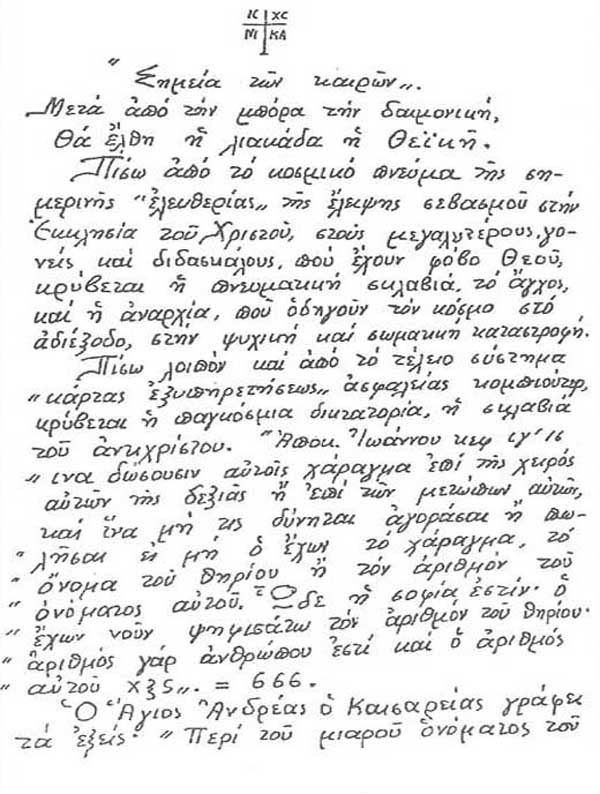
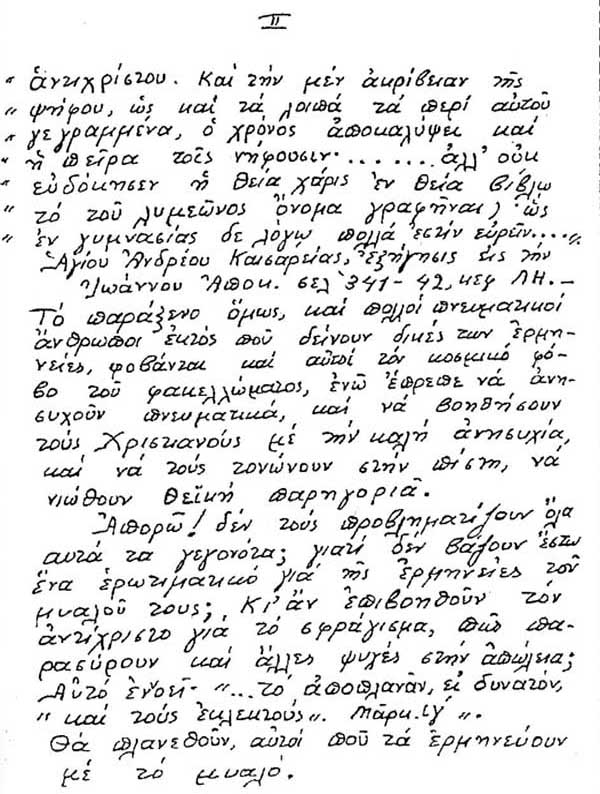
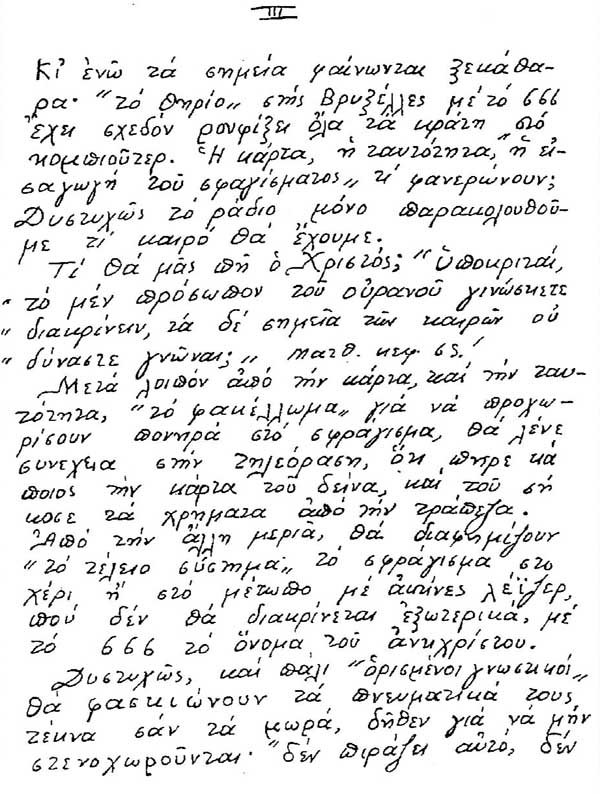
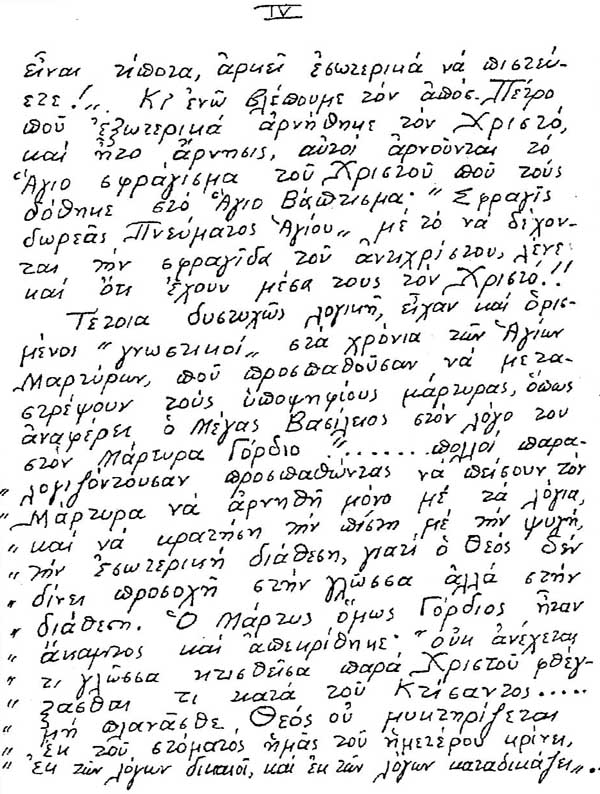
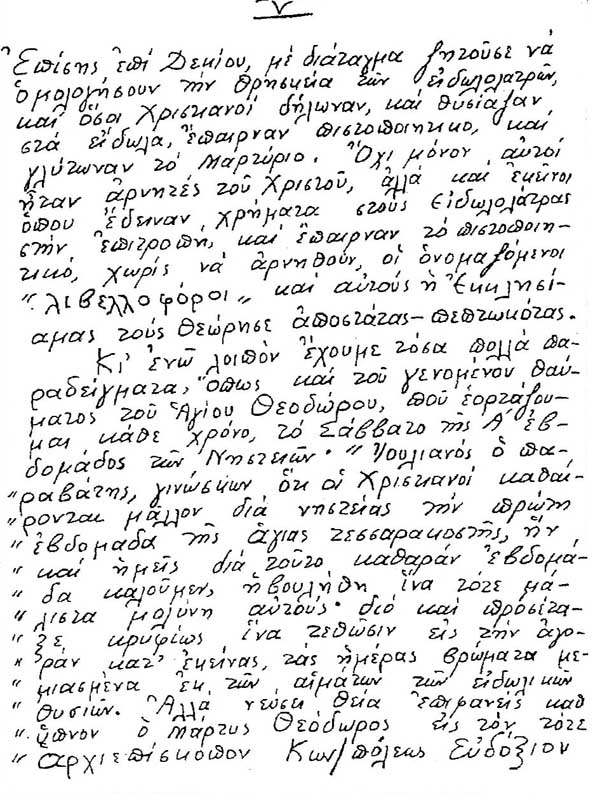
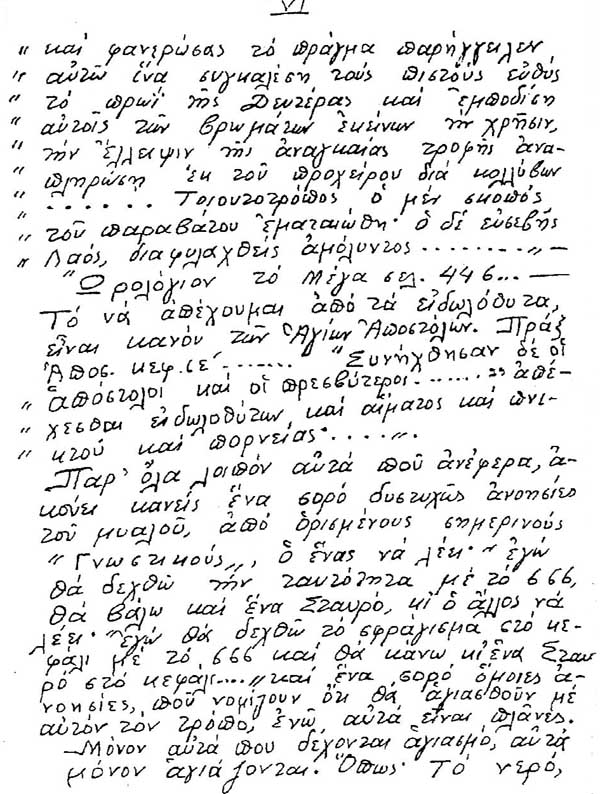
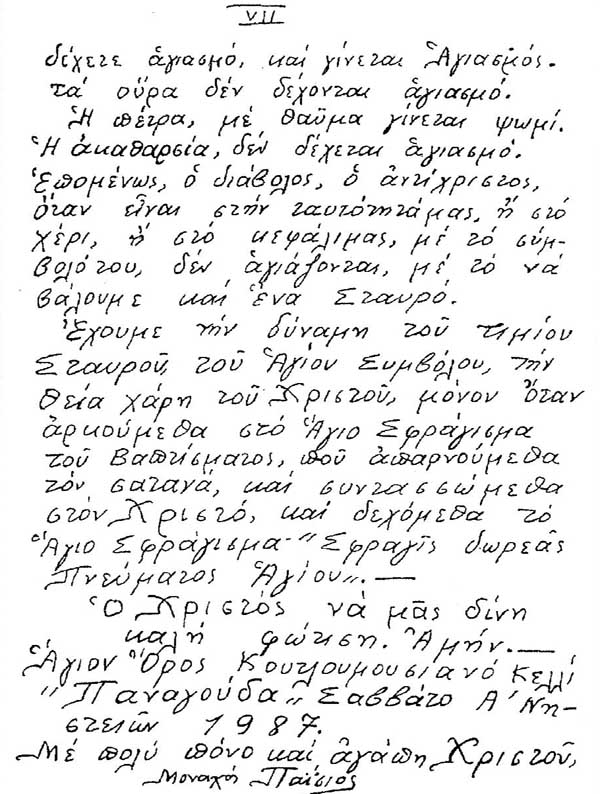
For this reason, I would like to present to you in a series 3 documents I have from + Gerondas Gregorios, my spiritual father of blessed memory, and St. Paisios, starting with the “Signs of the Times”. The following text of Saint Paisios is written in the Saint’s own hand, in the year 1987, and it was the only time he had given the order for it to be distributed in photocopies (with his handwriting and spelling errors), because as he himself said, he knew that they would try to deny that He had written it and to distort His opinion. What follows is the translation of St. Paisios’ text:

After the demonic storm, the Divine sunshine will come.

I

Behind the secular spirit of today’s “freedom” of disrespect for the Church of Christ, for elders, parents and teachers, who fear God, lies spiritual slavery, anxiety, and anarchy, which lead the world to a dead end, to mental and physical destruction.

So, behind the perfect “service card” computer security system, lies the global dictatorship, the slavery of the antichrist. “Rev. John ch. 13’ 16 “to give them a mark on their right hand or on their foreheads, and that they may not buy or sell except one who has the mark, the name of the beast or the number of his name. Here is wisdom; let him who has understanding calculate the number of the beast; for it is the number of a man, and his number is sixty-six”. = 666.

Saint Andrew of Caesarea concludes the following: “About the impure name of

II

Antichrist. And the accuracy of the vote, as well as the rest of what is written about him, will be revealed by time and experience will bring wisdom;…… but divine grace did not deign to write the name of Lymeon in a divine book; as in a gymnasium, there are many things to be found…. ” Saint Andrew of Caesarea, explanation of the Apocalypse of John, pp. 341-42, ch. 11. –
The strange thing is, many spiritual people, besides giving their own interpretations, are also afraid of the worldly fear of being enveloped, while they should be spiritually concerned, and help Christians with good concern, and stimulate them in faith, to feel divine comfort.

I wonder! Don’t all these events concern them? Why don’t they put at least a question mark on the interpretations of their minds? And if they rely on the antichrist for the sealing, how do they lead other souls to perdition? This means; “…deceive, if possible, even the elect.” Mark. 13’ ”.

Those who interpret them with their minds will be deceived.

And while the signs are clearly visible; “the beast” in Brussels with 666 has almost sucked all the states into the computer. What do the card, the identity card, “the introduction of the sealing” reveal? Unfortunately, we only watch the radio to see what weather we will have.

What will Christ tell us? “Hypocrites, you know how to discern the face of the sky, but you cannot understand the signs of the times?” Matt. chap. 2, 5!

So after the card, and the identity card, “the envelope” to proceed cunningly with the sealing, they will continue to say on television that someone took his card and withdrew his money from the bank.

On the other hand, they will advertise “the perfect system”; the sealing on the hand or forehead with laser beams, which will not be externally discernible, with 666 the name of the antichrist.

Unfortunately, again “certain gnostics” will swaddle their spiritual children like babies, supposedly so as not to worry; “this does not bother, it is nothing, it is enough that you believe inwardly!”. And while we see the apostate Peter who externally denied Christ, and it was denial, they deny the Holy sealing of Christ that was given to them in Holy Baptism; “Seal of the gift of the Holy Spirit” by accepting the seal of the antichrist, they also say that they have Christ within them!!

Unfortunately, such logic was also held by certain “gnostics” in the years of the Holy Martyrs, who were trying to convert the prospective martyrs, as Basil the Great mentions in his speech to the Martyr Gordius: “… many were foolish in trying to convince the Martyr to deny only with words, and to hold the faith with the soul, the inner disposition, because God does not pay attention to the tongue but to the disposition. However, the Martyr Gordius was inflexible and responded: “He does not tolerate any tongue created apart from Christ to speak against the Creator… do not be deceived. God is not mocked. “From our own mouths he judges us, from our words he justifies us and from our words he condemns us”.

Also, during the reign of Decius, he demanded by decree that the pagans confess their religion, and all those Christians who declared themselves Christians and sacrificed to idols received a certificate and were spared martyrdom. Not only were these deniers of Christ, but also those who gave money to the pagans in the commission and received the certificate without refusing, the so-called “libellophores” and these our Church considered apostates – fallen.

And while we have so many examples, such as the miracle of Saint Theodore, which is celebrated every year on Saturday of the First Week of Lent: “Julian the transgressor, knowing that the Christians They are rather purified by fasting in the first week of Holy Lent, which we also call Clean Week for this reason, and it was then decided to defile them. Therefore, he secretly ordered that during those days, odors contaminated with the blood of idolatrous sacrifices be placed in the market. But the Martyr Theodore, in a dream, divinely revealed to the then Archbishop of Constantinople, Eudooxion

and having made the matter known, he ordered him to summon the faithful immediately on Monday morning and prevent them from using those odors, and to make up for the lack of necessary food from what was at hand with kolibons”…… In this way the purpose of the transgressor was thwarted, and the pious People, preserved undefiled……” – Horologion the Great, p. 446…-

To abstain from idolatrous sacrifices is a rule of the Holy Apostles. Acts. Apos. chap. 6e’…… “And the apostles and the elders were gathered together…… to abstain from things sacrificed to idols and from blood and from things strangled and from fornication…”.

Despite all that I have mentioned, one unfortunately hears a mass of nonsense from certain “Gnostics” of today, one saying; “I will accept the identity with 666, I will also put a Cross”, and the other saying; “I will accept the seal on the head with 666 and I will also make a Cross on the head…..” and a mass of similar nonsense, who think that they will be sanctified in this way while these are errors.

Only those that accept sanctification, only those are sanctified. Like; Water,

accept sanctification, and it becomes Sanctification. Urine does not accept sanctification.

Stone, by a miracle, becomes bread. Impurity, does not accept sanctification.

Therefore, the devil, the antichrist, when he is in our identity or on our hand, or on our head, with his symbol, is not sanctified by putting on a Cross.

We have the power of the honorable Cross of the Holy Symbol, the divine grace of Christ, only when we are content with the Holy Seal of Baptism, when we renounce Satan, and we are united to Christ, and we accept the Holy Seal; “Seal of the gift of the Holy Spirit”. –

May Christ give us good enlightenment. Amen. –

Holy Mountain, Koutloumousiou cell “Panagouda”

Saturday of the First Lent 1987.

With much pain and love of Christ,

Monk Paisios”.

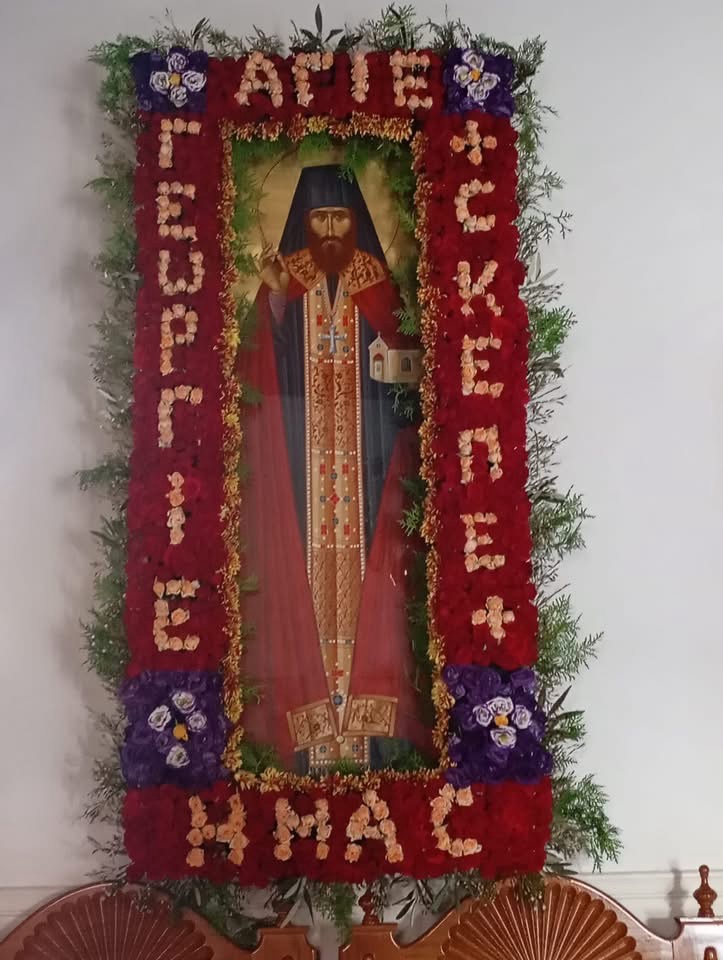
Open to me the gate of loving-kindness, blessed Mother of God

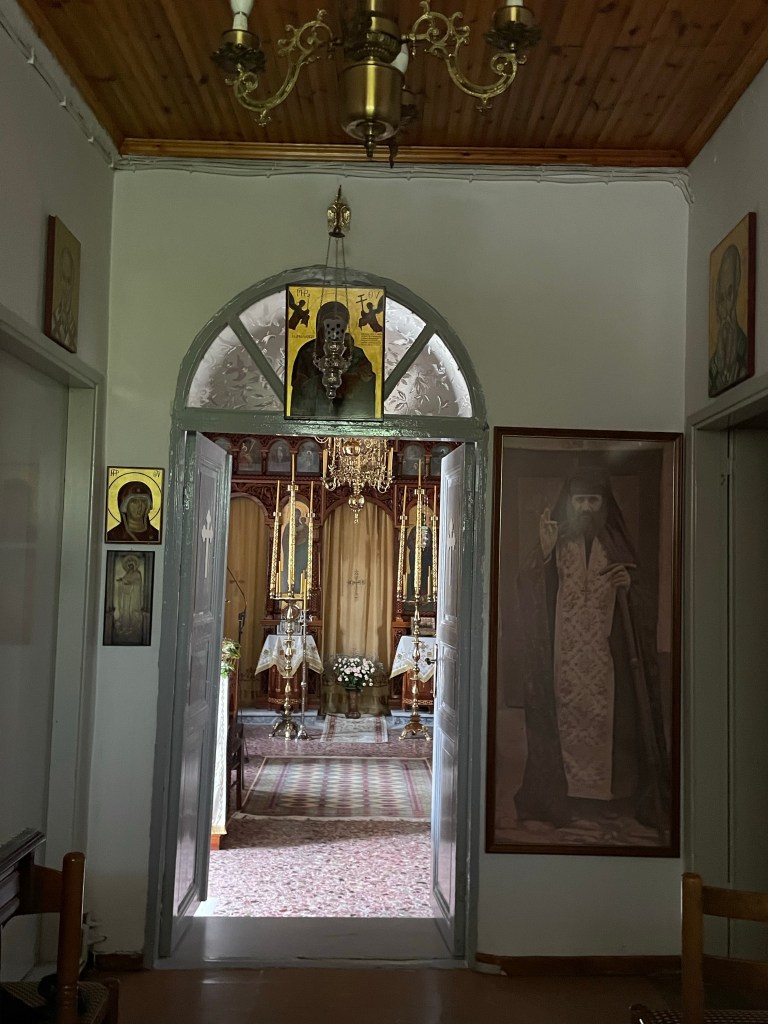
Inside St George Karslides cell and chapel

Dearest brothers and sisters in Christ, Christ has ascended! Truly He has ascended from earth to heaven!

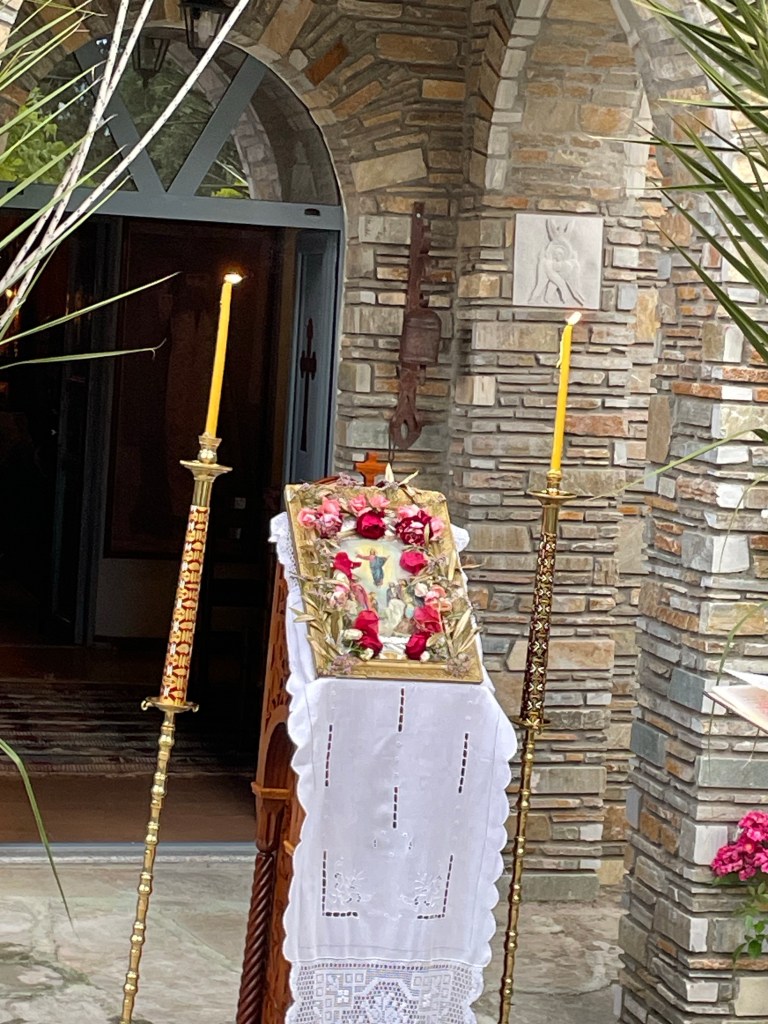
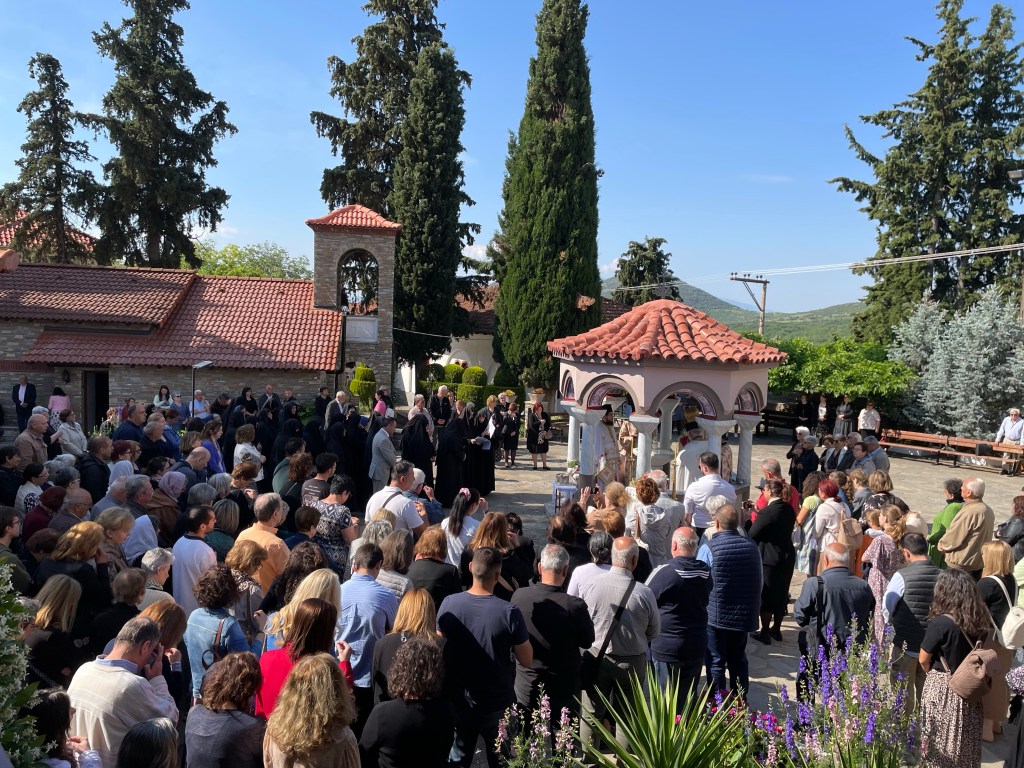
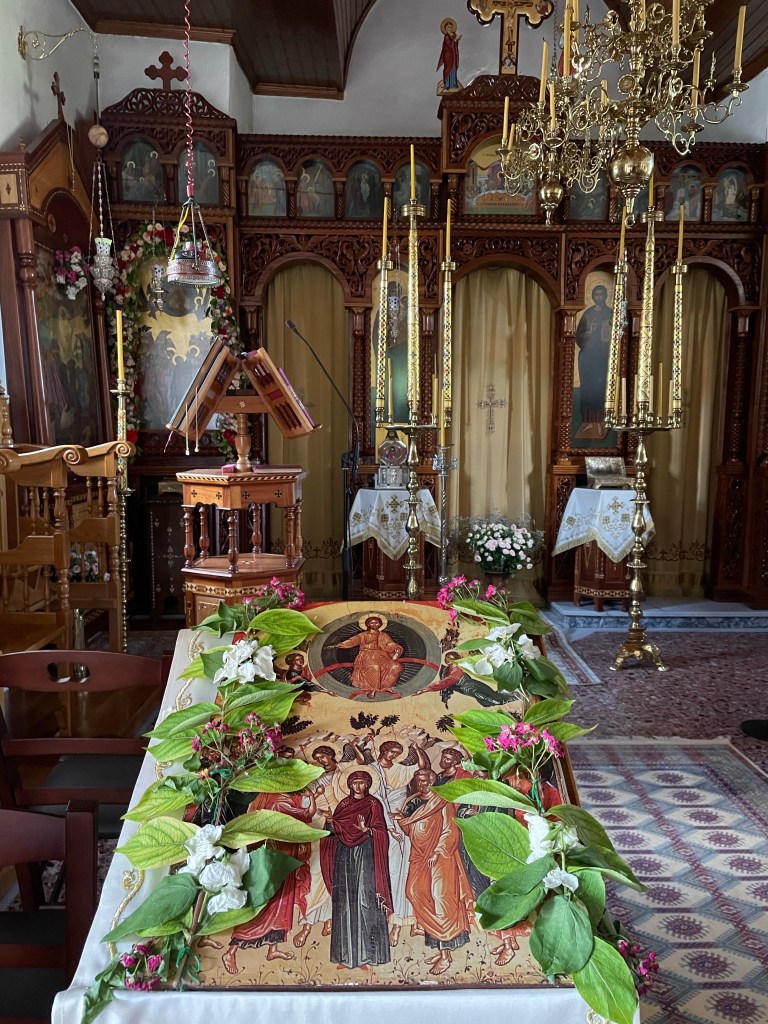
Here, at the Ascension Monastery, St George Karslides, in Taxiarhes (Sipsa), Drama, the sisters celebrate its annual Feast with a hierarchical Holy Liturgy at the Ascension chapel of the Saint and a blessing of the waters.

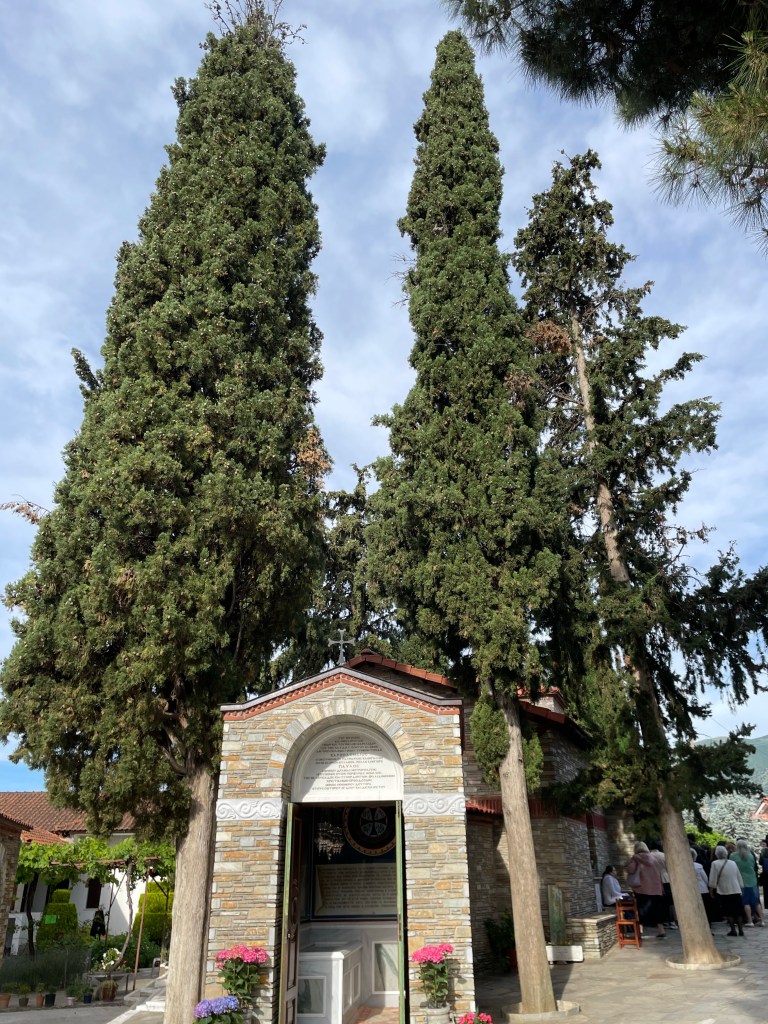
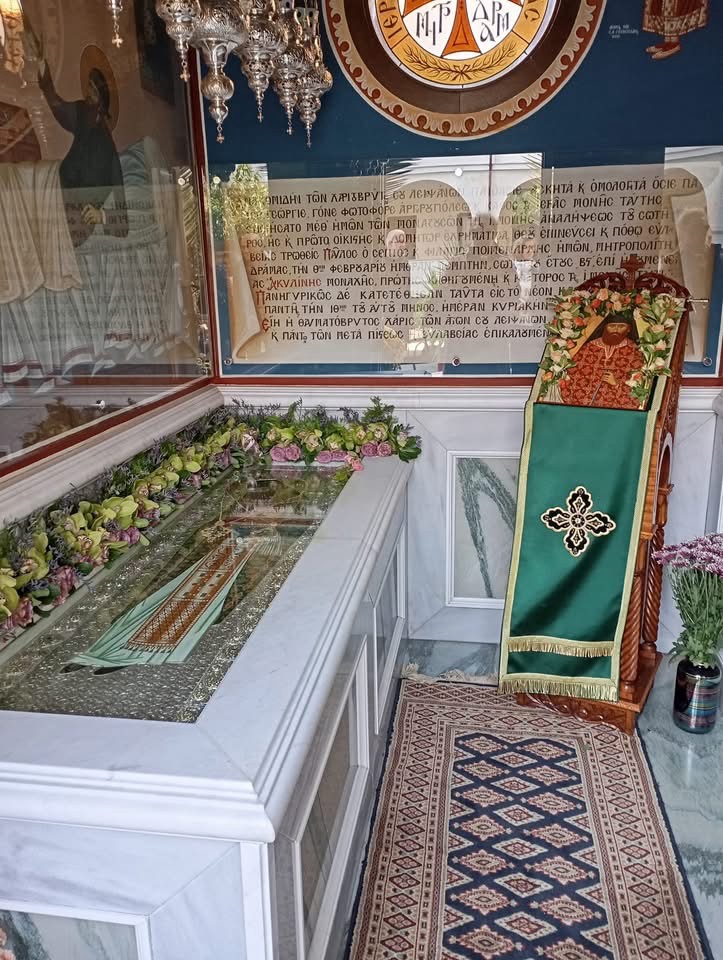
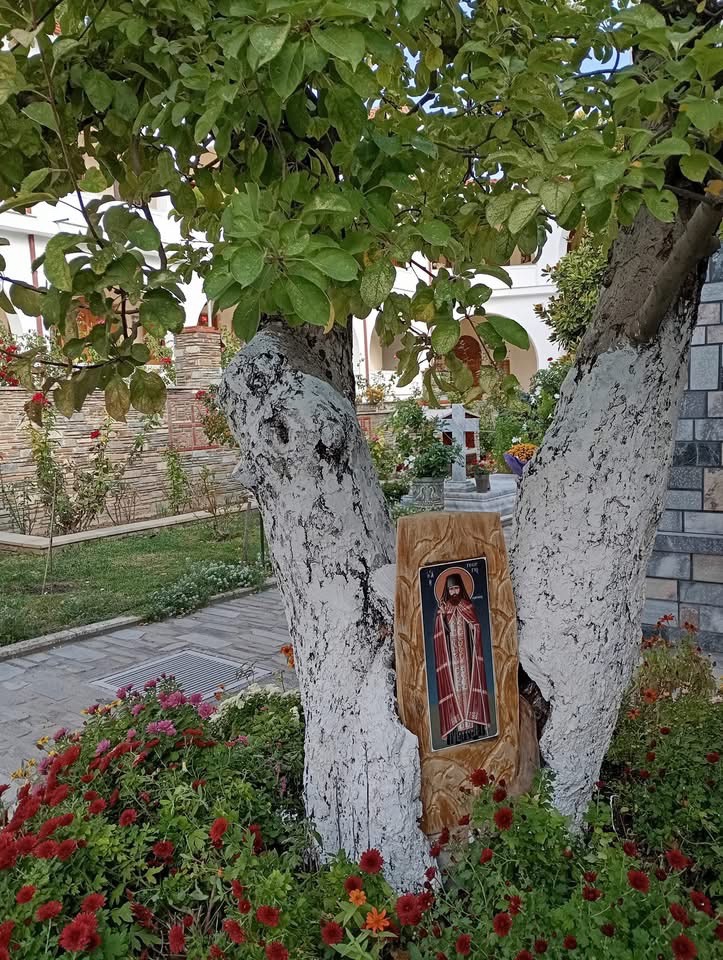
St. George last words were “Open to me the gate of loving-kindness, blessed Mother of God”. His dead body was supple, just said the case of those on the Holy Mountain.The two cypress trees at his grave bent, as though in veneration, as he had foretold, and lots of birds gathered at the time of his burial, with no fear of the large crowd of people. Everyone felt, was certain that they were burying a Saint.

These are the two cypress trees which bent at his burial and “un-bent” 40 days later

Indeed, for centuries, Middle Eastern and European cultures have revered the cypress as a symbol of the transition between life and death, with cypresses symbolizing the uplifting of the human spirit and the possibilities of eternal life. So many poems have been written about them by poets and philosophers. Cypresses are even discussed in Gerontikon (see below). But such participation of Nature in a Saint’s life is of an entirely different level.

This miracles brings to my mind another one, from the life of the Theotokos. The Synaxarion of the DORMITION (KOIMISIS) OF THE THEOTOKOS,
One of the Virgin’s prayers at the Garden of Gethsemane was to behold the holy Apostles who were then scattered throughout the world preaching the Gospel. When our Lady knelt and offered her petition and thanksgiving to her Creator, her prayer was accompanied by a wonderful manifestation: the olive trees growing on the Mount of Olives bowed with the Theotokos as though they were animate. When the Theotokos knelt, the trees bend down, when she arose, the trees straightened themselves out again. Thus, even trees revered and honored the Lady and Mistress of the cosmos. (Source: The Great Synaxaristes of the Orthodox Church)

Also, in the life of St Irene Chrysovalantou, we read that during one of her all-night vigils, one of the nuns, unable to sleep, left her cell and entered the courtyard. The nun was blessed to witness Irene motionless, hands raised in prayer and floating off the ground and two cypress tress bent to the ground before her. After Irene had finished her prayer, she blessed the trees and they returned to standing upright. God is glorified in His Saints.

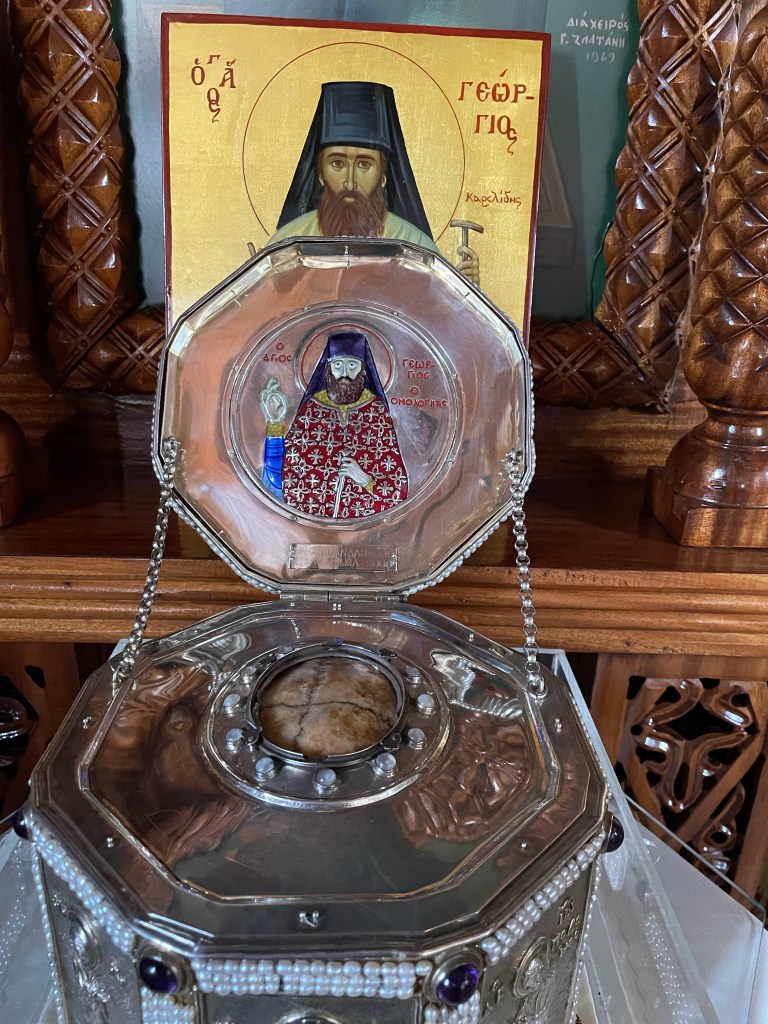
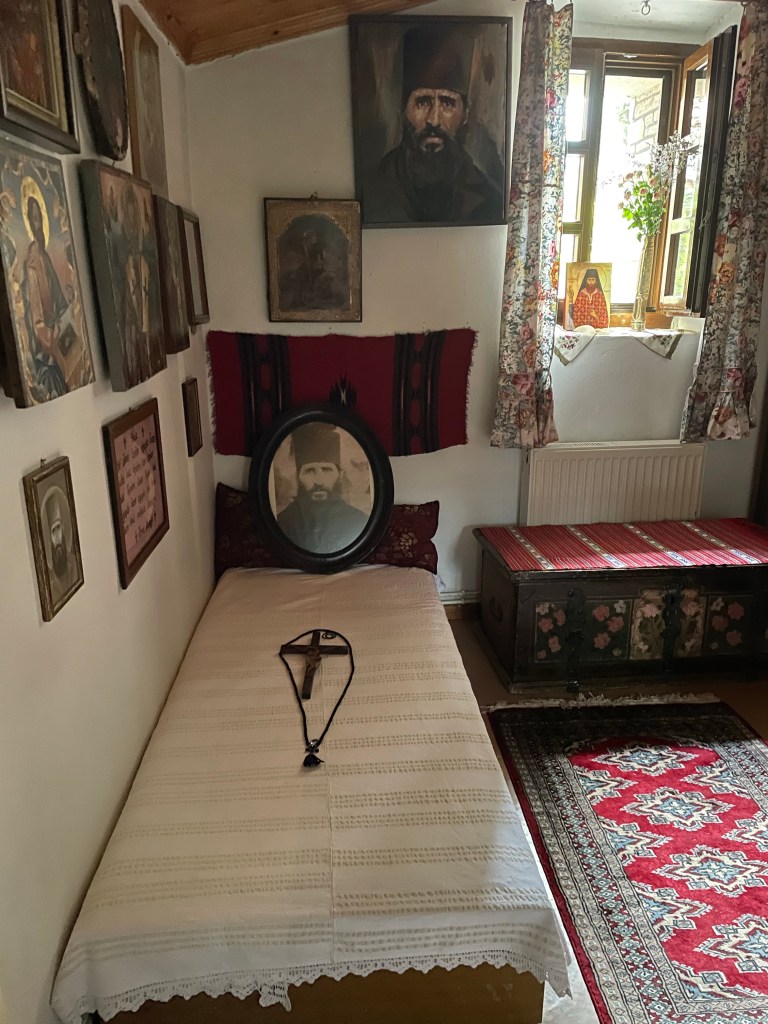
At the Ascension of our Lord feast, the cell of the Saint is open all day for pilgrims, a rare privilege, and Gerondissa Porfyria assigned my obedience for today to “guard” the chapel, the Saints’ relics which the Saint had brought from Russia (and his own of course), and the Saint’ holy cell which all have the fragrance of myrrh. I was speechless at the honour and the blessing!

The cross on his skull! He is one of few Saints known to bear an imprint of the sign of the cross on his skull.

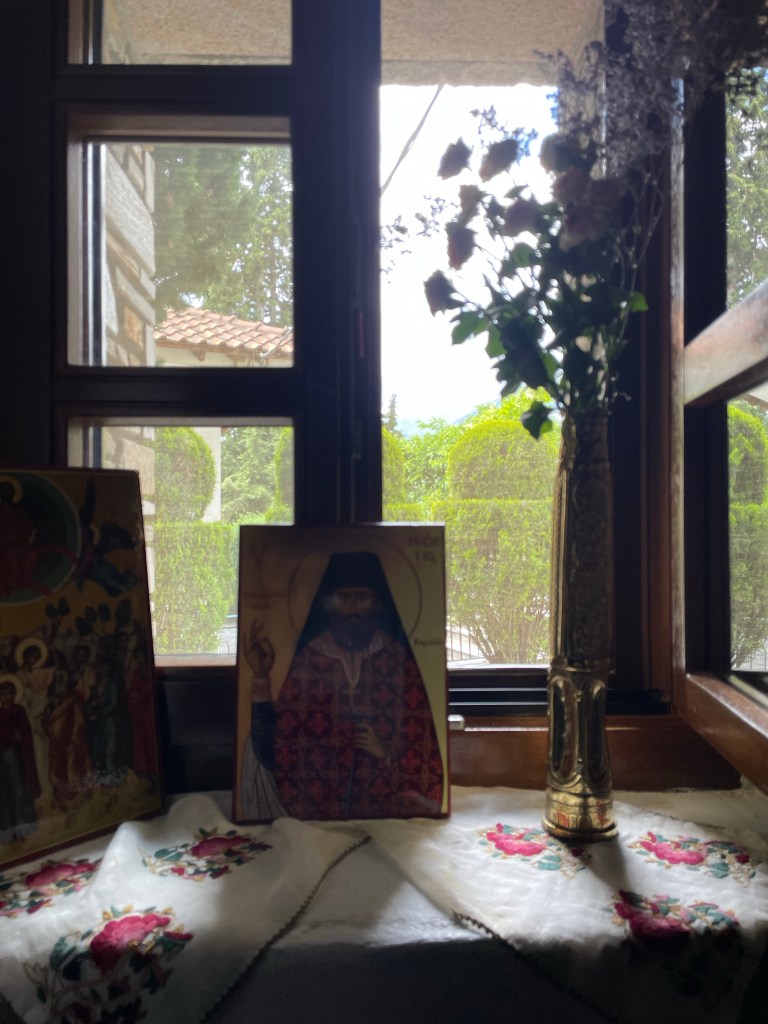
St. George Karslides cell

Here, when a special needs pilgrim prostrated last Sunday, the Saint ‘visited’ her and blessed her with an amazing abundance of fragrance felt by everybody here. Miracles of healing happen all the time. The faith of the pilgrims is so powerful. God is glorified in His Saints.

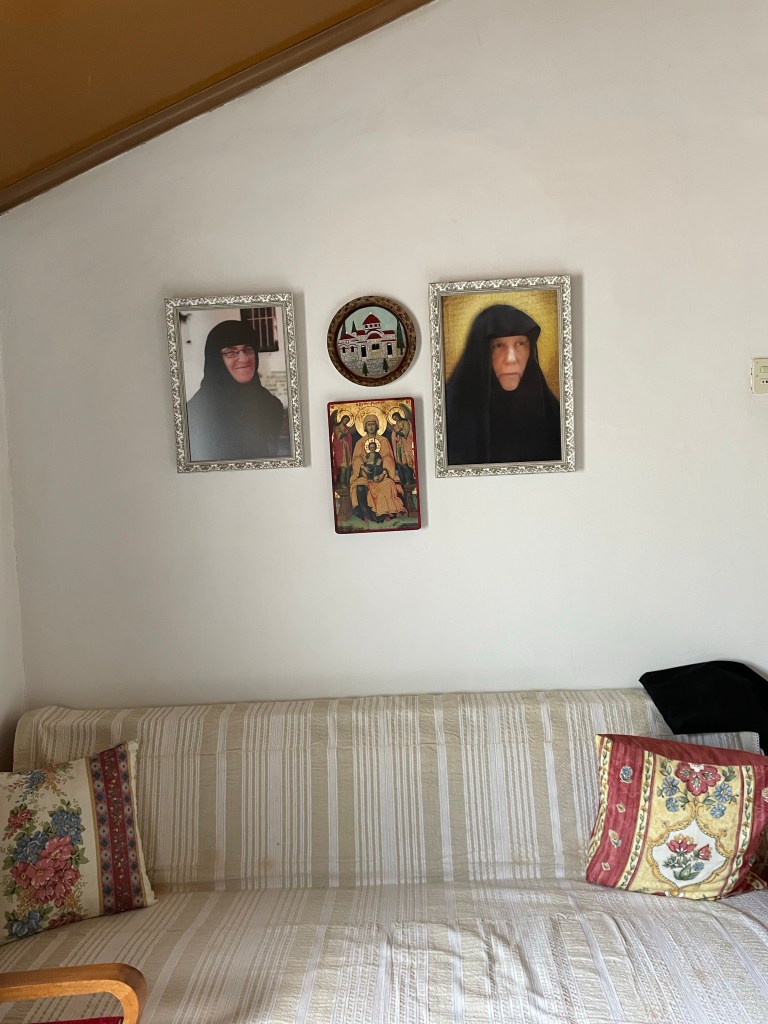
The cell next door to the Saint’s cell. Originally used for storage by the Saint. Later, + Gerondissa Akylina moved here in the final years of her life and had the care of the now Gerondissa Porfyria (cf the framed photos over the bed).

Sayings of Saint George Karslides (+ 1959)

– “God cares for everyone. Despair is basically a lack of faith”
– “The Panagia does not want big candles, she wants mercy shown to the poor.”
– The Elder said that what saves man is “the good works of God: humility, obedience, love, and mercy.”
– He said to a woman he met at the monastery: “What? You go to church every day and have not forgiven your children?”
– “Do not sit at the hour of the Divine Liturgy. Your mind should not fly here and there. As long as you are in church make the decision to devote all of the time to prayer.”
– “Do not think only about what to eat, what to wear, how large a house you will build. Knock on the doors of the poor, the sick, the orphans. Prefer more the houses of the sad rather than happy. If you do good works, you will have a large reward from God. You will be made worthy to see miracles, and in the other life you will have endless jubilation.”
– “The Christian who loves all people has a great reward, especially if he forgives those who do him evil. For if we don’t love our neighbor, all the good works we do will be worthless. They amount to nothing, we will be worthless. Love, my brethren. God requires love from us.”

Cypress and Gerontikon

One great elder was strolling at a place with different cypresses, big and small. The elder told one of the pupils, “Pull up this cypress!”

The cypress was small and one of the brothers did it with just one hand. Then the elder pointed to another cypress tree, bigger than the previous one, and said, “Pull up this one, too! The brother began to sway it in both directions and finally rooted it out.

Afterwards the elder showed his pupils an even bigger tree and told the brother to do the same thing. It took far more efforts and time for the pupil to pull up the tree. Then they came across an incredibly big cypress and the elder had the same request for his pupil. Though the brother was breaking his neck to pull it up, he failed to do it. On seeing that the elder told another brother to help him. Eventually they managed to pull up the tree together.

Then the elder said the following, “Here is how our passions work: we can easily eradicate them while they are small. However, if we neglect our fight with them, they get stronger. The bigger and stronger they get, the more effort is required to pull them up. Then there is a moment when it is impossible to root them up alone, and we remain helpless until we begin to seek help from the saint people who offer their assistance to humans upon God’s grace.

Prayer of an Old Man by +Elder Eusevios Vittis

Elder Gabriel, disciple of St. Paisios– cell of St. Christodoulos of the Koutloumousiou Monastery, Holy Mount Athos

Prayer of an Old Man

Lord, you know that I have already reached old age. Help me to realise this reality more deeply, so that I may not become tyrannical or boring or burdensome or unsympathetic and hateful to those around me and especially to my occasional co-workers.

Deliver me from insisting on my outdated ideas with senile stubbornness. I do not ask You to improve my judgment or memory. You gave me these invaluable gifts to a certain extent in my productive age. I thank You for this precious gift of Your goodness. Now, as my entire biological, psychological and spiritual existence is declining, the decline of my judgment and memory is bound to naturally follow. Often this situation diminishes me, saddens me, humiliates me beyond imagination and not rarely does it humiliate me in my own eyes, forcing me to constantly apologise for my small or large blunders and gaffes. Of course, I do not fully understand this alteration. However, You, Lord, You know how much my diminution and shrinkage are also necessary to me at this point. I humbly accept it, because You know. And since You know, I do not need to know the deeper “why”. Besides, I cannot understand it. So why should I be sad and suffer for this? Should I not humbly accept the corruption of my nature? And should I not also humbly submit to the order, which You, with such kindness for Your creatures, and therefore for me, have determined?

Seal my chatty lips with an inviolable seal so that I may not burden others with boring, meaningless and without any interest or meaning, retold stories of outdated events of some distant and forgotten years of an insignificant era. At the same time, however, soften my reactions and judgments about the judgment and memory of others. And never allow me to feel pangs of jealousy about the freshness of memory and the power of judgment of others. Make me, on the contrary, rejoice in it and thank You wholeheartedly for the flowers of youth, when I happen to be among them and smell their fragrance.

Enighten me with the meaning of the words of Your Apostle: “Even though our outward man is decaying, but the inward man is being renewed day by day” (2 Cor. 4:16). And may I strive to live this reality.

Finally, support my faltering and unsteady steps with Your “high arm,” so that I may no longer roll on, attached to the earth and contemplate “earthly things,” but instead have my gaze fixed on Heaven and help me contemplate the heavenly realities, until I rest in Your loving divine embrace.

My Lord, Lord, I thank You. Amen.

+ Elder Eusevios Vittis (+December, 2009) Memory Eternal!

Toward the last years of his life, I had the blessing to speak with him in private and pray together. Those piercing, blazing eyes! Elder Eusebios, the mystic, the poet, the Seer of God, as they called him! This Meeting burns still in my heart!  I have also met a number of his spiritual children and know firsthand how much he helped them in all their lives’ trials and tribulations, how Father-like he stood by their side! May we have his blessing!” (Little city hermit)


*

A distinguished scholar and theologian, yet humble; a tireless writer knowledgeable of many foreign languages and translator of ascetic texts; a holy spiritual father who dedicated his life to the salvation of the soul of his fellow man; a true Father of the Church, divinely illumined, frequently included in the ranks of Saint Paisios and Saint Porphyrios. This is how his disciples and spiritual children remember hieromonk Father Eusebios Vittis, who reposed at the age of 82, in his hesychastirion (skete) in Faya Petra of Sidirokastro (Greece), where he spent the final years of his life in prayer. “He was very humble. He did not want his name to be put on any of his books and he signed them with a pseudonym “Kehri” (translation: millet seed), signifying something “utterly unimportant.”

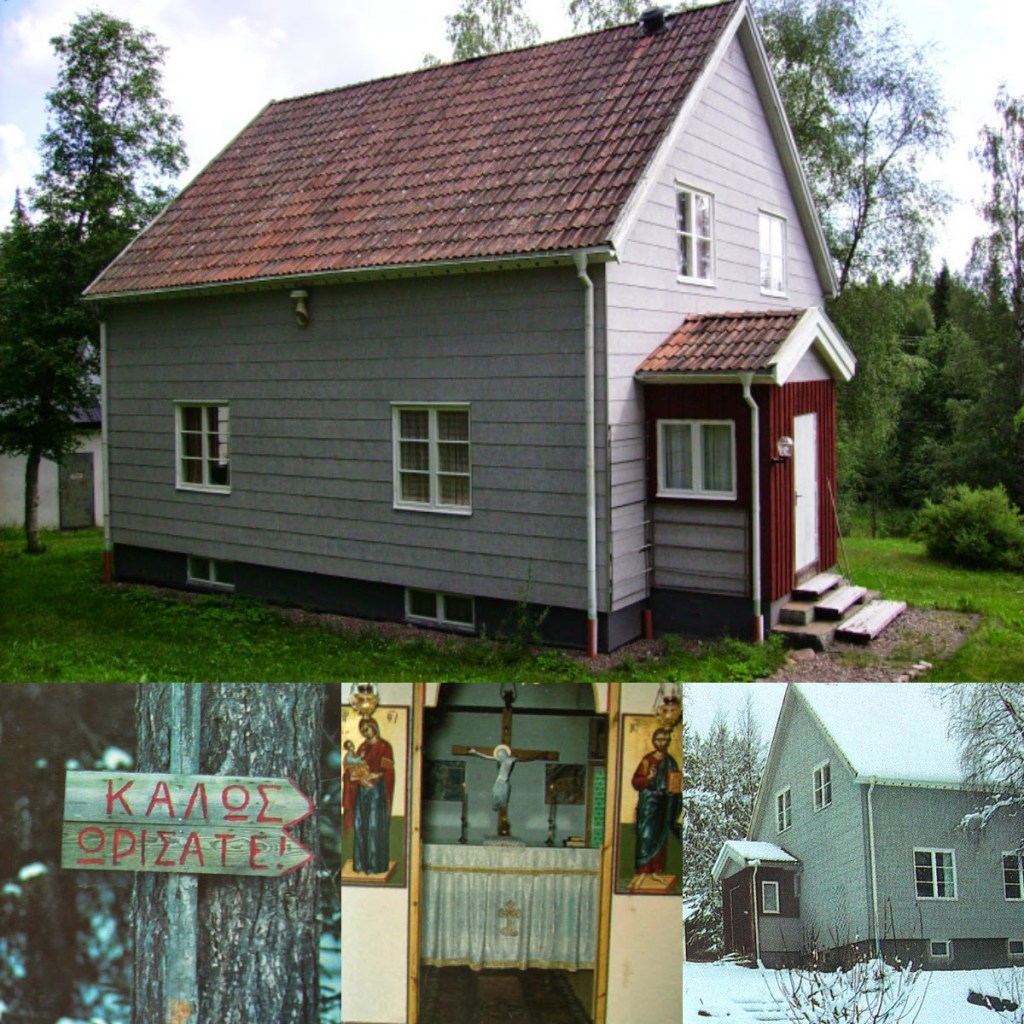
Hieromonk Eusebios Vittis came from Ptolemaida. He began his priestly work as a clergyman in Sweden. The lack of Orthodox priests in this country at the time made him decide to become a priest. His ordination took place in Stockholm. He then travelled all around the country to serve the various emerging Greek communities. Soon he started leading his life as a part-time janitor in a retreat house and diocese center belonging to the (Evangelical-Lutheran) Church of Sweden. He cared for the Orthodox and all people indeed without pay. He bought an old house in the forest a few kilometers away from his work and turned on of the rooms there to a chapel. The Holy Hesychastirion (Skete) of St. Nicholas in Ratvik, Sweden is entirely his own work. There he withdrew in 1973, with the aim of devoting himself to prayer, meditation and writing. Fr. Eusebios kept the Athonite schedule, and as recorded in the bulletin of the Metropolis of Sweden and all Scandinavia (1979), the monastery was seen throughout the years as being “the sleepless lamp of the Metropolis of Sweden and a place of spiritual healing for the faithful.” The visitors of the holy hesychastirion found comfort, rest for the soul, and the road leading toward salvation.

In 1980 Fr. Eusebios returned to Greece, in obedience to his spiritual father, and retreated to a hermitage in Faia Petra, Sidirokastro. He spent the last years of his life on earth in prayer and confession. Christ is Risen!

*

Another Prayer of an Old Man …

Psalm 71 

I have a safe place in you, O Lord. Let me never be ashamed. …Be a rock to me where I live, where I may always come and where I will be safe. For You are my rock and my safe place. … For You are my hope, O Lord God. You are my trust since I was young. You have kept me safe from birth. It was You Who watched over me from the day I was born. My praise is always of You. …

Do not let me fall by the way when I am old. Do not leave me alone when my strength is gone. 10 For those who hate me talk against me. Those who want to kill make plans together. 11 They say, “God has turned away from him. Run and catch him, for there is no one to take him out of trouble.”

1O God, do not be far from me! O my God, hurry to help me!  …

17 O God, You have taught me from when I was young. And I still tell about Your great works. 18 Even when I am old and my hair is turning white, O God, do not leave me alone. … 20 You have shown me many troubles of all kinds. But You will make me strong again. And You will bring me up again from deep in the earth. …

A Day of Dogs

A blessed Feast of the Annunciation to you, dear brothers and sisters in Christ. May the Theotokos, the invincible Defender, in her irresistible might, keep us safe from all trials. I am so moved by the icon, how Gabriel’s feet suggest that he is running to share the news with Mary!

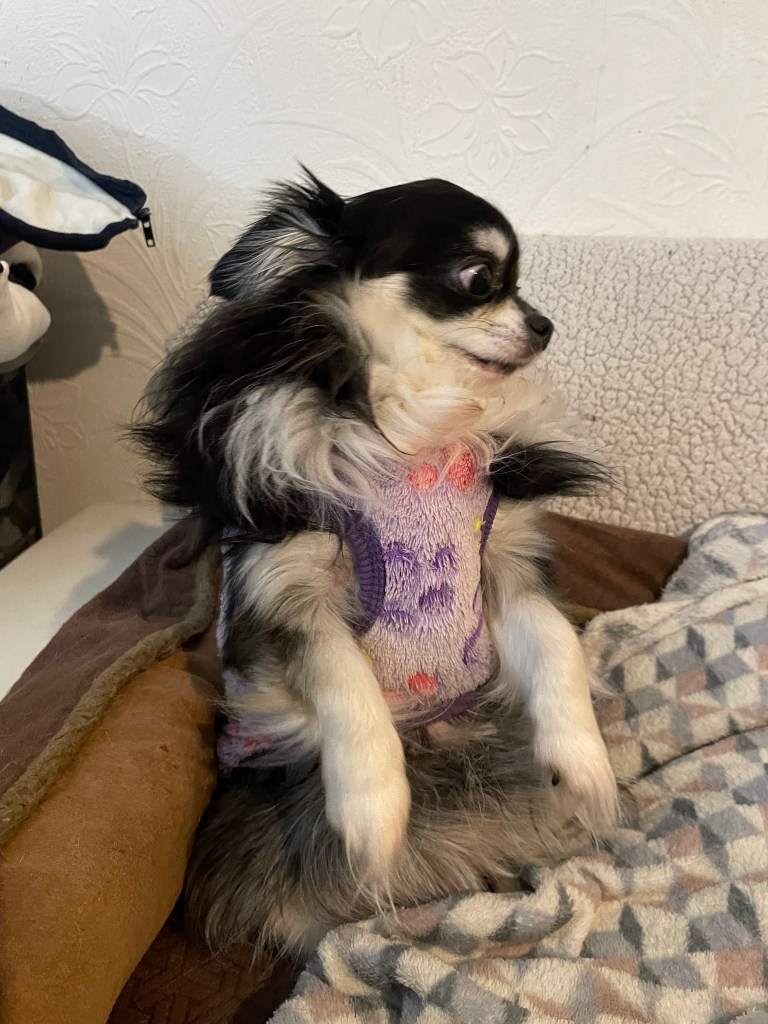
Last week in England, I had a day of dogs! Any number between 5 to 1 to the houses we visited in various pastoral visits. How comforting is their unconditional love, their presence with the elderly, the housebound, the downtrodden.

Certainly, the dogs have characters, the obedient, the timid, the loud, the excitable, the nervous,the angry, the loving. A bit like humans.

As much as Fathers and Saints have always shown love for God’s Creation, they have also warned us against idolatry:

Let us consider St. Silouan the Athonite words:

“There are people who grow attached to animals, stroke, caress them and talk with them; and they have abandoned the love of God, and thus the love between brothers, for which Christ died in terrible agony, is lost. It is foolish to do so. Feed animals and cattle, and do not beat them—in this consists man’s duty of kindness towards them; but to become attached, to love, caress and talk to them—that is folly for the soul.

“The soul that has gotten to know the Lord always stands before Him in love and awe; how can it be possible to love, stroke and talk with cattle, cats and dogs at the same time? This means that someone has forgotten the commandment of Christ to love God with all thy heart, and with all thy soul, and with all thy mind (Mt. 22:37)…”

True, it is hard for us to accept these words: is there anyone among us who has never patted a dog, or stroked a cat or talked to them, thus expressing their love for them? Moreover, they too need our love: just feeding them is not sufficient. They are emotional creatures: dogs, for instance, experience a whole gamut of emotions. (“The Blessed and the Dumb”)

Aren’t these words by the Saint very strict, maybe even too strict? Isn’t really the problem when affection (or, rather, attachment for a pet) replaces our love for people and God, making up for a lack or a complete absence of the latter?

As my spiritual father told me, we need “a strong balance here. No tightrope but one foot firmly planted in the love of the creator and one firmly planted in the love of His Creation. It is when we love dogs to the exclusion of God therein lies the problem. There was a popular sign in the back of car windows some years ago “A dog is for life not just for Christmas!” I would add “God is for life, not just for Christmas!”

This day of dogs reminded me of an obedience of mine back in Greece: to undertake dog walking of an ill person’s therapy dogs. These dogs offered him comfort, companionship, and joy but he could not take care of them. Many a time, I found myself grumbling about this extra, ‘pointless’ work every day. Surely I had other, far more important tasks and obediences to undertake? Then one day I read the following by St. Paisios which brought comfort and peace to my heart, and from that day onwards, I have started to learn saying Yes, from the heart, to the love of God, even in ‘pointless’ works:

“My mind tells me that even the animals are better than me; so, I humble myself and obey them. Very early this morning, being tired from praying all night and exhausted because of my illness, I lay down to rest. After a while, I heard a kitten meowing outside my cell as if she needed something. I really wanted to rest, but I humbled myself and went against my own will. I obeyed the kitten and replied to her calling. I went to open the door. It had started to rain and I let her in so she wouldn’t get wet. What do you think then? Should I obey the animals or not? My thoughts tell me I should.” – St Paisios

“So, I humble myself and obey them. What do you think then? Should I obey the animals or not? My thoughts tell me I should.” – St Paisios

Your prayers and your thoughts

Life after Death— Part 2

The aerial toll houses, the demons, our guardian angel and the Sacrament of Confession by + Elder Efraim, St. Andrew Skete

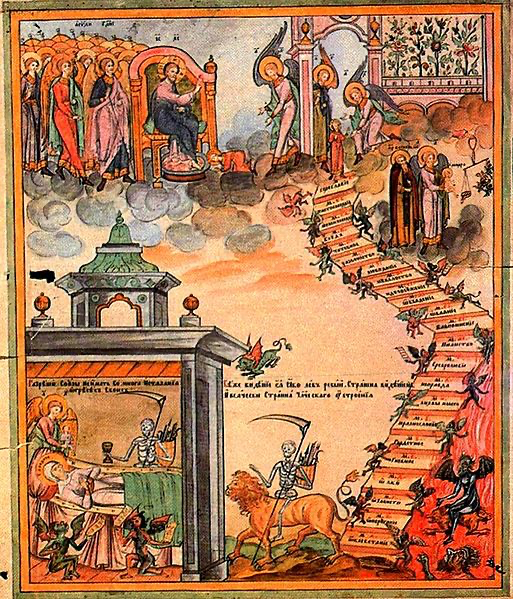
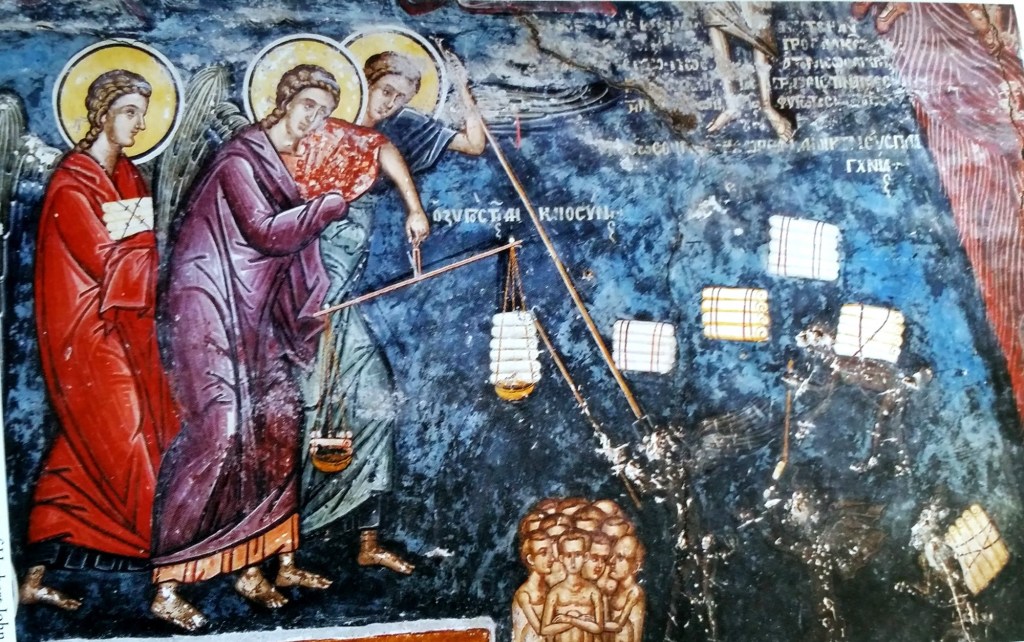
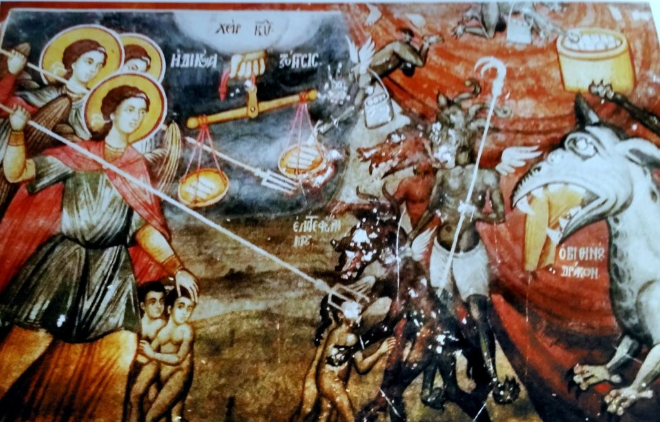
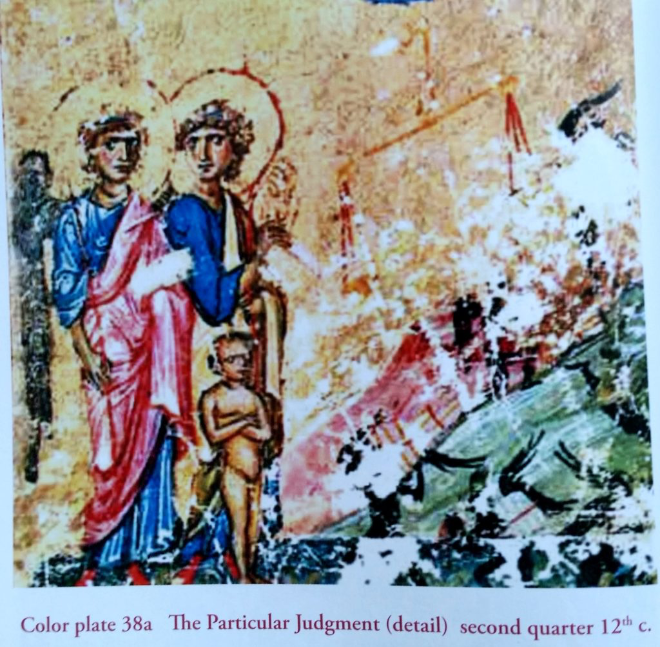
“… From the moment the soul leaves the body and until the third day is completed —counting with our own earthly time, because the soul does not experience time, unlike us who both measure and experience it— the soul passes through the aerial toll houses during this three-day period. As the demons fell at the words of Archangel Michael “Let us stand aright!”, some remained in the highest layers while descending and remained in the air… These are the so-called aerial toll houses. (1)

So as the soul of every Orthodox Christian ascends to Heavens after death, every soul without exception passes through the aerial toll houses. However, not everyone is forced to stop at the aerial toll houses. Only those who have unconfessed sins… The faithful who have repented and confessed their sins in the Sacrament of Confession, pass through the customs like a … rocket ! By express! That is, they are not forced to stop anywhere, their way upwards is not blocked…

They will stop somewhere, mid-way, only in the case where there is still an unconfessed sin. If it is not a mortal sin (2), this sin is “weighed” and overcome with any good acts they have committed, and they continue to the next aerial toll house, and so on and so forth, until they arrive in front of our Christ! If anyone’s upward movement is blocked midway by some mortal unconfessed sin, then they are destroyed on the spot and fall straight to hell…

We have cases, mostly of women, who have committed adultery or fornication, and who have confessed heavier, worse sins, but these sins they did not confess, out of shame, because of our old self and of the enemy who incited them to act in this way. So, they did not confess them at the risk of losing their souls. In the case of clergy this is even more terrible! Therefore, special attention must be paid here. Allow me to repeat this: when someone has confessed all his sins to a priest, he passes through the aerial toll houses without being hindered or stopped by anyone.

The worst aerial toll houses that today imprison and prosecute people are: First, of witchcraft, second, of homosexuality and immorality, then of selfishness, avarice, blasphemy… Mainly the first two that I mentioned. Satanism and immorality in their most extreme form worldwide…

During the first three days, the soul goes through the aerial toll houses, and when we pass through all of them, then the Guardian Angel of each one of us leads our soul to Christ, to the humanity of the Lord, because the Divinity is not visible… We then see our Christ as we see Him in the icons. Christ has exactly this form, the form that He had in the flesh.

This is the form He has when man stands before Him and worships Him. Our Christ then blesses him without saying anything at all. The soul worships Him and He only blesses it without saying anything. It is our first personal worship of Christ.

*

(1) Cf. The Holy Anaphora in Divine Liturgy:

Deacon: Let us stand aright! Let us stand in awe! Let us be attentive, that we may present the Holy Offering in peace.

The Holy Anaphora echoes the following incident:

The leader of all the angelic hosts — the six-winged Seraphim, the many-eyed Cherubim, the God-bearing Thrones, Dominions, Powers, Virtues, Principalities, Archangels, and Angels — is the Archangel Michael. When Satan, Lucifer, fell away from God and drew a part of the angels with him to destruction, then Archangel Michael stood up and cried out before the faithful angels: “Let us attend! Let us stand aright! Let us stand with fear!” and all of the faithful angelic heavenly hosts cried out: “Holy! Holy! Holy! Lord God of Sabaoth! Heaven and earth are full of Thy glory!”

(2) According to Gennadios Scholarios, George Koressios, the Orthodox Confession, and Chrysanthos of Jerusalem, mortal sins are those voluntary sins which either corrupt the love for God alone, or the love for neighbor and for God, and which render the one committing them an enemy of God and liable to the eternal death of hell. Generally speaking, they are: pride, love of money, sexual immorality, envy, gluttony, anger, and despondency, or indifference.”

To be continued … Part 1

*https://www.decani.org/en/spirituality/on-celebration-of-holy-archangel-michael

http://orthodoxinfo.com/praxis/exo_sintypes.aspx

https://thedepartureofthesoul.org

Life after Death — Part 1

Where the Soul goes away after death—The Great Journey

+ Elder Efraim, St. Andrew Skete

Our soul is taken out by Christ, with the executive minister Archangel Michael, to whom He gives the command. Archangel Michael is the one who “takes out” our soul by the command of the Lord. It is a supreme honour for us Orthodox that our Christ has appointed the leader of the Angels, Archangel Michael, to take out the soul of every Orthodox Christian.

When the leader comes to take the soul, not the officer, the soldier, but the leader, it means that we are princes! Like likes like. “Birds of a feather flock together”. The baptized Orthodox are the spiritual princes of the Kingdom of Heaven. It is the greatest honor that Michael, the leader of all Angels, comes!! He is cheerful, joyful and not at all strict, as some want to present or depict him… Angels have nothing to do with fear, terror and ugliness… Especially the Archangels Michael and Gabriel… If some are afraid, it is not from the sight of the Angel, but from the sight of their own unrepentant state… As at the sight of our Christ, some are demonized and go to hell because the unrepentant people themselves are not receptive to the divine vision.

So the Angels come, the demons come, the Saints come, the senses are dulled, and when the eyes, the physical eyes, fall asleep, then the soul with the mind sees everything. The soul has already entered the sphere of eternity of the other world before it even leaves the body. These are the last moments, the last photographs from which we can determine whether this soul is judged or is saved…

These are some secrets that the saints have revealed to Gerondes to pay attention to and discern … That is, if there is anxiety or sweating… the movements of the eyes right and left, up and down, the movements of the hands, the change of colour, screams or blasphemous expressions, a stench emitted from the mouth of the soul-bleeding person or from the environment, or agitation and fear, an increased heart rate and sweating, shared by the rest of us, in an incomprehensible way… all these mean that we have the presence of demons and that something is wrong… We must then be very careful and perform many forty-five liturgies.

But when he falls asleep, from the moment the guardian angel receives the soul, then such grace and cheerfulness are painted on the reliquary that you constantly want to be near him without fear or hesitation… These are perhaps the last moments because time is measured as the burial and at that moment we are given the opportunity by God to experience this mystical spectacle…

This is very important for us. We do not feel the separation… We want to be constantly close to the dying person… There was a monk that his “death-agony” lasted fifteen whole hours, and I was by his side all this time until his final breath. He had a little difficulty, but in the end he was saved… His death-agony lasted many hours and was exhausting for everyone…

So Archangel Michael takes the soul and delivers it into the hands of other Angels who depart for the aerial toll houses. As for the Guardian Angel, he stands next to the relic and does not leave until the burial. When there are cases when the burial is delayed (due to some circumstances, e.g. group deaths) the Guardian Angel remains near the deceased relic until the body is buried… As a debt of honour!

This is very important! Nonetheless, the soul, together with the other Angels, begins its journey…

To Be Cont.

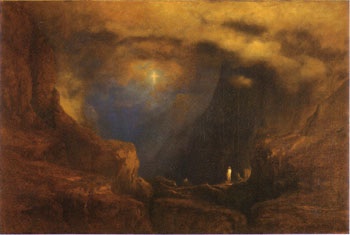
Through the Valley of the Shadow of Death

The Valley of the Shadow of Death By George Inness, 1867

Physical (biological) death vs “brain death”

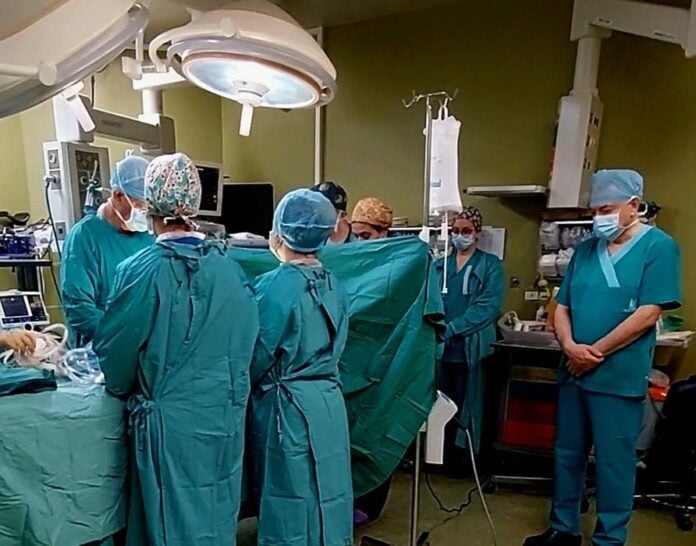
Is physical death the same as “brain death”? No! A “brain dead” patient may be in a coma and apnea, but most of his organs are functioning with appropriate medical support; so, when his organs are removed, he is still warm, his heart is still working, and his blood is circulating! (1)

They will tell you that organs are taken when the person is dead. This is not true. There are several recorded cases of “brain dead” people who came back from this state. The vital organs of the “donors” are taken while they are still ALIVE, resulting in a violent interruption of their life during the process of taking their organs. Many leading scientists in Greece and abroad (2) express serious scientific objections and do not hesitate to even propose the complete abandonment of the concept of “Brain Death”.

Professor of Pediatric Anesthesiology at the leading University of the USA, Harvard, and Director of the Intensive Care Unit at the University Children’s Hospital, Boston, Dr. Robert D. Truog states: “Brain Death remains incoherent in theory and confusing in practice. Furthermore, the only purpose that this concept (of brain death) serves is to facilitate the search for organs for transplantation. That is why, after all, the concept of “brain death” was “invented” only in 1968 by some Harvard scientists.”

The fact of death is a great mystery, the Holy Fathers of the Church tell us, and no one knows nor will ever know when (at what exact moment) the soul separates from the body… As long as the heart is functioning, the soul is united with the body.

Saint Paisios of Mount Athos, when asked about transplants, he categorically opposed the transplantation of vital organs (organs without which the donor cannot continue to live), for two reasons: First: “it constitutes an impermissible intervention, opposing the creative work of God, on the one hand, by killing the donor, and on the other by creating in us the conceit of animating the recipient.” And second: “It will become a cause for inventing ways to kill the sick in order to take their organs.”

Saint Porphyrios was also opposed to the transplantation of solid organs from “brain-dead” people. He made the following recommendation to a couple who wanted to donate the organs of their child after a serious accident: “There is only one death. Donate only the cornea of the eyes…” A person in a state of so-called “brain death” is a seriously ill patient but not dead… By taking vital organs from a “brain dead” patient, he is forcibly led to definitive clinical death… this action, by the criteria of Orthodox Theology, is equivalent to Murder.

They will say that organ donation is self-sacrifice and a noble act, an act of humanity and altruism. This is not true… The one who determines when we will die is our Creator and not us. In the Old and New Testaments, as well as in the Hymnography of our Church, it is emphasized that the Creator alone is the master of life and death. Even when there is consent, the “DONATION” of VITAL ORGANS IS NOT SELF-SACRIFICE, because it takes away from the donor the possibility of repentance, that is, to say, even at the last moment, “Forgive me, my God” and for God to possibly save his soul.

By a beloved brother in Christ, Stavros Amfoterodexios (cf. “Ehud the son of Gera, the son of Benjamin, a man equally adept with both of his hands” Judges 3:15)

1. Dr. Alan Shewmon, internationally renowned Professor of Pediatric Neurology at UCLA (University of California, Los Angeles).
2. K. Karakatsanis 2001, E. Panagopoulos 1998, M. Vrettos 1999, I. Kountouras 1999, K. Christodoulides 1995, N. Balamoutsos 1999, N. Konstantinidis 1999, M. Giala 1999, A. Avramidis 1995, P. Kougias 1999, A. Goulianos 1999, etc.) and abroad (R.D. Truog 1992, D.A. Shewmon 1997, R.M. Taylor 1997, etc.),

For every Angel in the world

Let us put aside the curses for the guilty and the hypocritical accusations of God – We ourselves first owe to Aggelos (Angel) an apology.

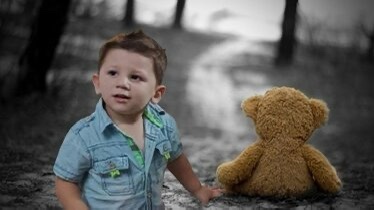
A three-year-old martyr. This is the Angel who made all of Greece cry. A little angel that no one heard, no one saw, no one understood the unspeakable torture he was going through. Not because there were no opportunities. But because in this case the brain-dead person is one: our society.

It is not possible that there was no doctor, an acquaintance or even a passerby who saw signs of abuse. But the same mentality prevails. Where should I go to… to get involved ? Let me not get into any… trouble too. Have we forgotten how a few months ago a girl had fallen prostrate on the road, hit by a car on Athens Avenue, and the passing cars passed her as if she were an inanimate object?

Perhaps little Angel was born to show us the monster in the mirror again. Perhaps he was a destined martyr for our Colosseum. He came with wings and leaves with wreaths. Every blow, every bruise, every cigarette stub, every cry of complaint, is a nail in the coffin of a society that has become alienated. To the point of not realizing that a hell exists next door. Or even worse, pretending not to realize it.

Thousands of prayers have been said for Aggelos, but our materialistic system has evicted miracles. God’s final signature has been replaced by the signature of a doctor. The sacred mystery of death is being mashed up in the gears of godless science. The relatives gave their consent for organ transplant, as soon as it was certified that the brain was not responding. An unfathomable organ that scientists are still “exploring”, but the “court issued its verdict” immediately. Sorrow upon sorrow; the switch of life is being turned off by a human decision. But joy upon joy, that the child will receive his due glory in the ages of ages to come. Fortunately, God has His own laws and draws His own conclusions.

Many fools blame God for what the Angel suffered. They only demand from God to make amends for what they neglect, for what they are indifferent to, for what they are willfully blind themselves, for what they cover up, for what they allow, for what they vote for, for what they incite with their own sins. As if God is our personal street cleaner, who will work for us while we are having our orgies.

Only a Luciferian mania can lead to such cases of child abuse. These happenings are purely demonic. All Christians discuss this among ourselves. The human race gets crazier and instead of blaming our apostasy for the suffering of children, we blame God.

When He gives us 100-200,000 children a year and we slaughter them before they are born, we say “stay out of it God – Let us commit our genocide”. And when some beasts abuse their own children, we say “where was God?” When He intervenes, they deny him. When they think He is not involved, they curse Him. They have it both ways in their unreasonable self-justification.

Oh Man, sit down and think, before you open your mouth. What conclusions can you draw when you don’t even know what to wish for such a tortured child like Angel? Are you sure that he must live a life that will perhaps be pitch black and scarred? Who will guarantee that he will not carry unspeakable wounds in his soul? Will you guarantee it? Will I guarantee it? We always hope for life, yes. We always hope for a miracle, yes. But how such a child will fare and what his eternal profit is, only God knows.

Have you considered how many thousands of such children like Angel have been saved by charitable organisations, like the Ark and the Smile of the Child, from the claws of such psychopathic parents? Do you understand what it means to be the shield against such beasts? Do you understand the enormous difficulty of managing such children and bringing them out into society? And do you understand why it is a crime for the state to target such structures?

“There is no salvation for our species,” others claim. Salvation does exist, and it has already been offered to us. We are the ones who choose to remain prodigal. We are being transformed into beasts, because you cannot serve two Masters at the same time. Ultimately, you will either resemble the good God, or the absolute evil, the ruler of this world. And our world has become possessed by Satan, for anyone who has even two drams of spiritual perception.

Such a world clips the wings of Angels. Such a world tortured the Angel. If you do not want the next Angel to fall again to other two-legged monsters, keep your eyes open. Keep your ears open. Take an interest in every evil you encounter. Curse your “Oh brother!”. Demand a welfare state. Pray for the children. Support the charitable organisations of the church and other governmental and non-governmental organisations. Regain the alertness of a proper citizen. And the wide embrace of a Christian brother. May evil retreat back to its root, so that all the Angels who find no place to tread together with us, can live free.

Transl. And adapt. By the dear brother in Christ, Elefterios Andronis, Sportime

In the Angels’ Arms

Police and doctors have never seen, for decades, a child so badly abused, especially at such a young age!

Little Angelos was badly abused by his mother and her partner in Therisos, Iraklio, and was discovered, following a neighbor’s call for emergency assistance. Upon arrival at the hospital, doctors discovered a large subdural hematoma, and the child was rushed into surgery to relieve the pressure. Examinations revealed large subdural hematoma and multiple injuries, including bruises, contusions and burns in various stages of healing, suggesting prolonged abuse. Memory Eternal, our little Angel! Christ is Risen! He is Risen indeed!

My little Angel

My little angel, soul so pure,

How did you suffer such a wound?

Cruel arms, meant to embrace you,

Offered you pain,

Sorrow and death.

A star in dark night your heart, 

The earth cried, the heaven moved,

Christ stood at the door

And took you in His arms.

Your body may rest here,

But your soul is now 

Joyfully  running in roads of Light.

At the feet of God, with radiant eyes, 

Your laughter lights a new dawn.

 The Theotokos took you in her arms, 

“Come my child, here there is no shadow”.

Angels chant in the deep blue

“Welcome, little one, to Paradise.”

Clouds have become a gentle crib,

Stars lull you to sleep

Fear not, dear one, sleep with no fear, 

No malice here can reach you.

On earth, the trees are still crying 

Rocks break, shadows watch you,

But your soul feels no pain any longer, 

Flies free, like spring snow.

The Theotokos is kissing you on the forehead,

“You will become the sign for every orphan”.

Christ is dressing you with light,

“Live now in peace”. Come,

Enjoy rewards and crowns I have prepared for you.

The moon is holding you in her arms.

Every night from now on,

You will speak secretly to the stars,

Whisper mystically to all who suffer

“Fear not, there is Light here”

Memory Eternal, Little Angel,

Forget us not weary sojourners

Angel of light, flying over wide meadows

Little flower that blossomed in rain

Bring His Life to all child victims.

By an Elder in Attiki, Ad.

https://youtu.be/2ma_Ouv74_8?si=Utv5g22QEeGMyQ7q