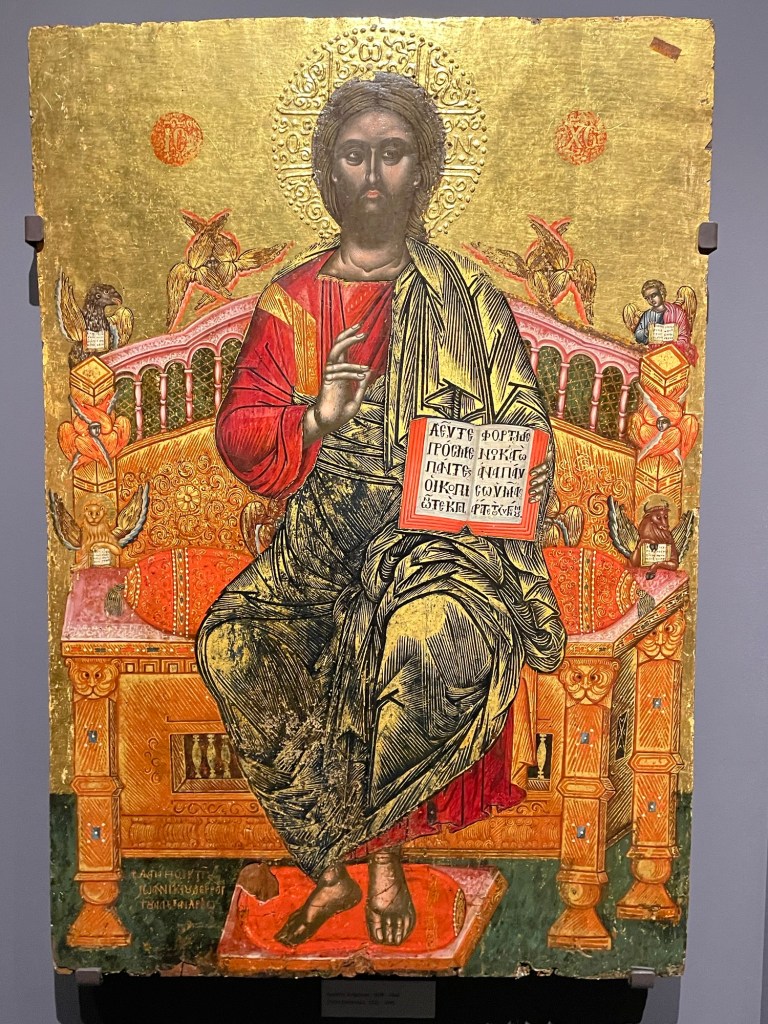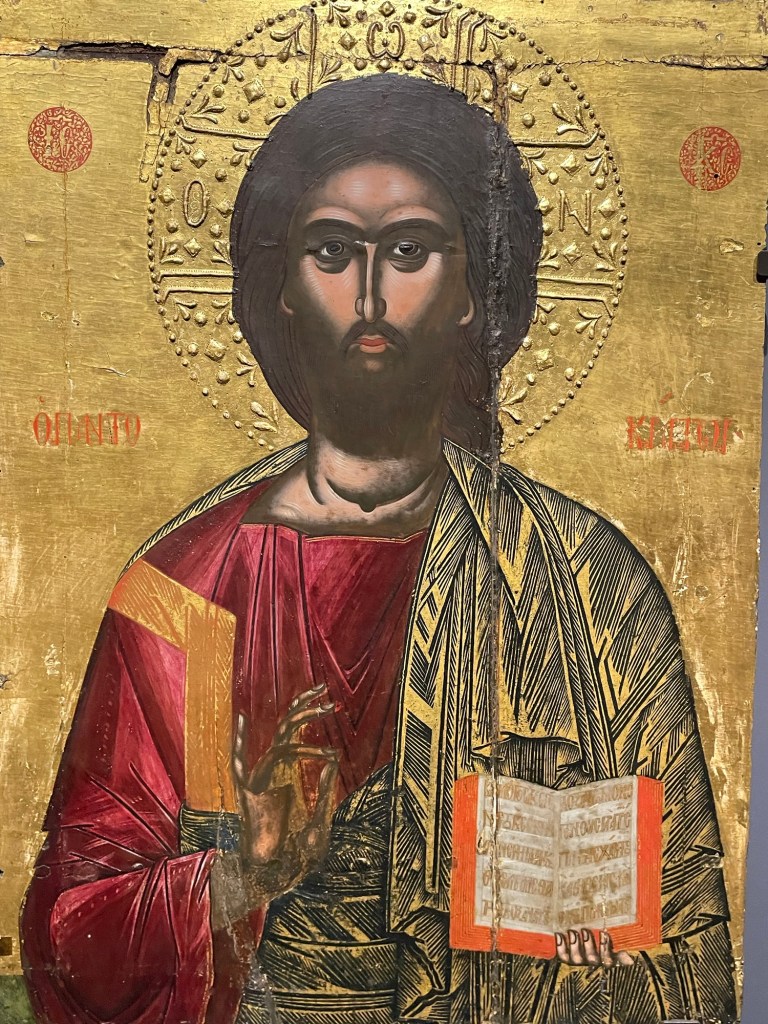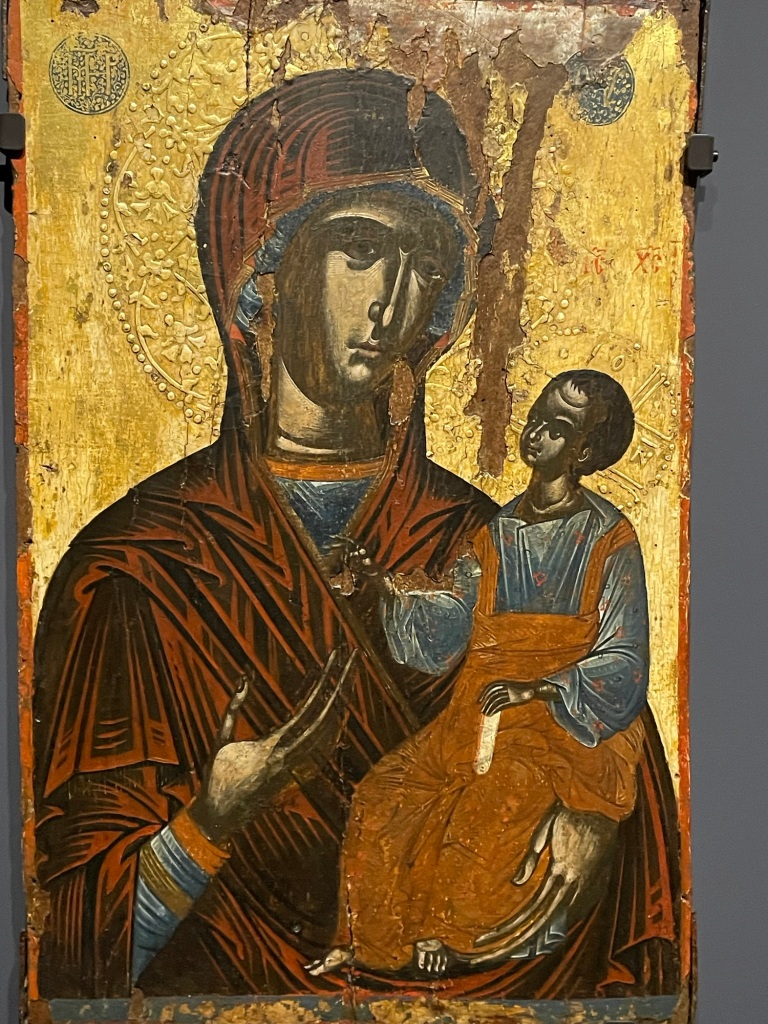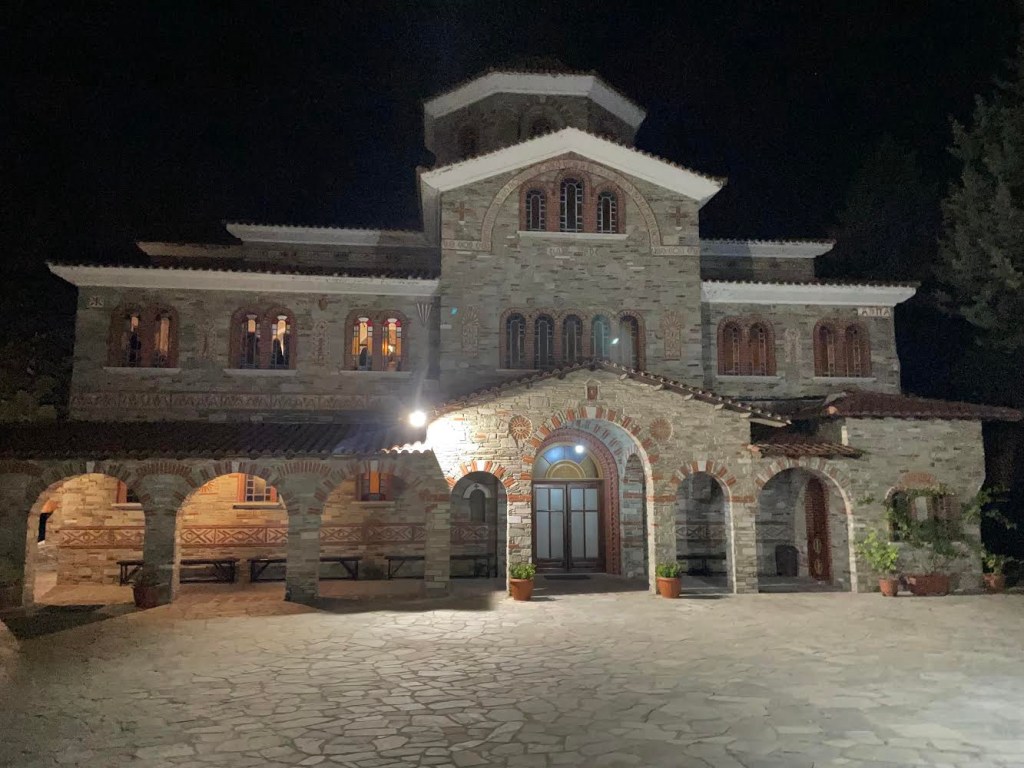
Day 2: To the Theotokos, let us run now most fervently

“My spirit seeks You early in the morning, O God, for Your commandments are a light upon the earth”.

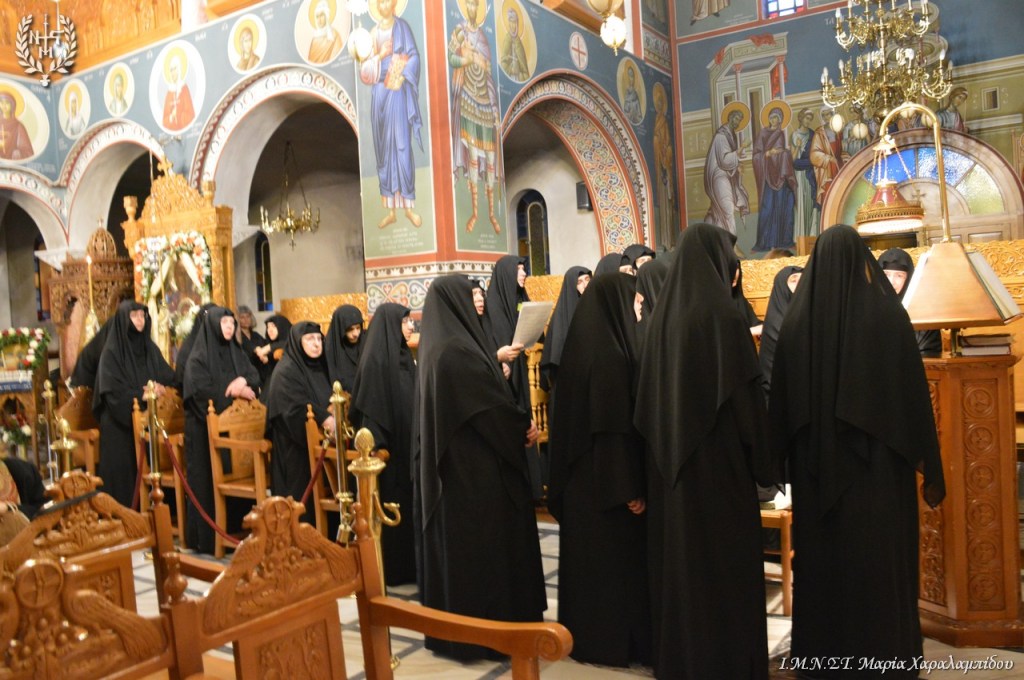
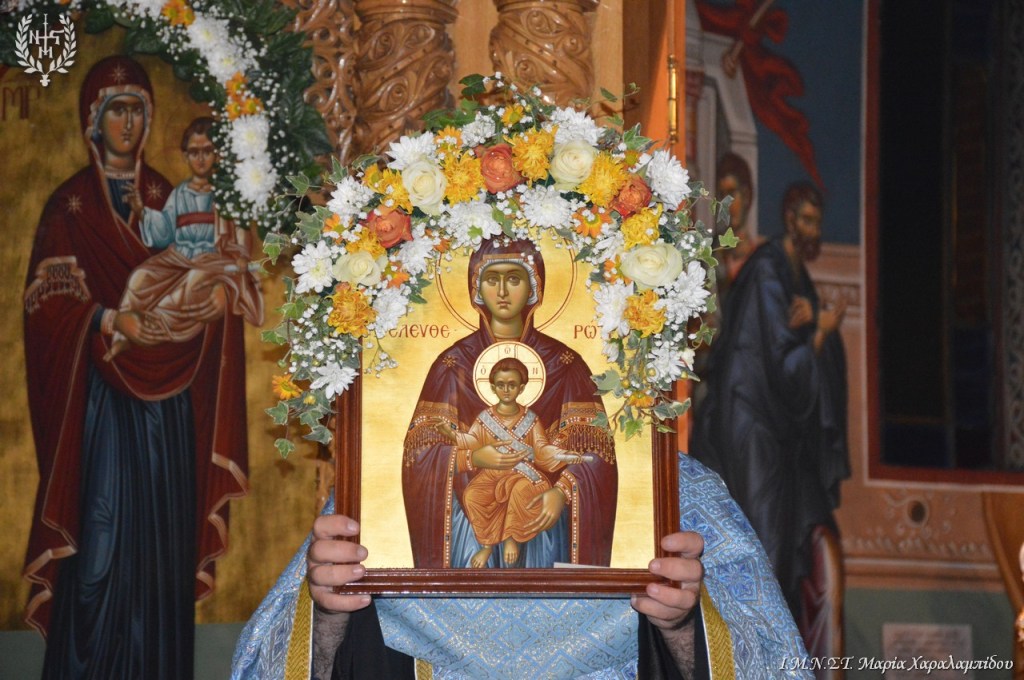
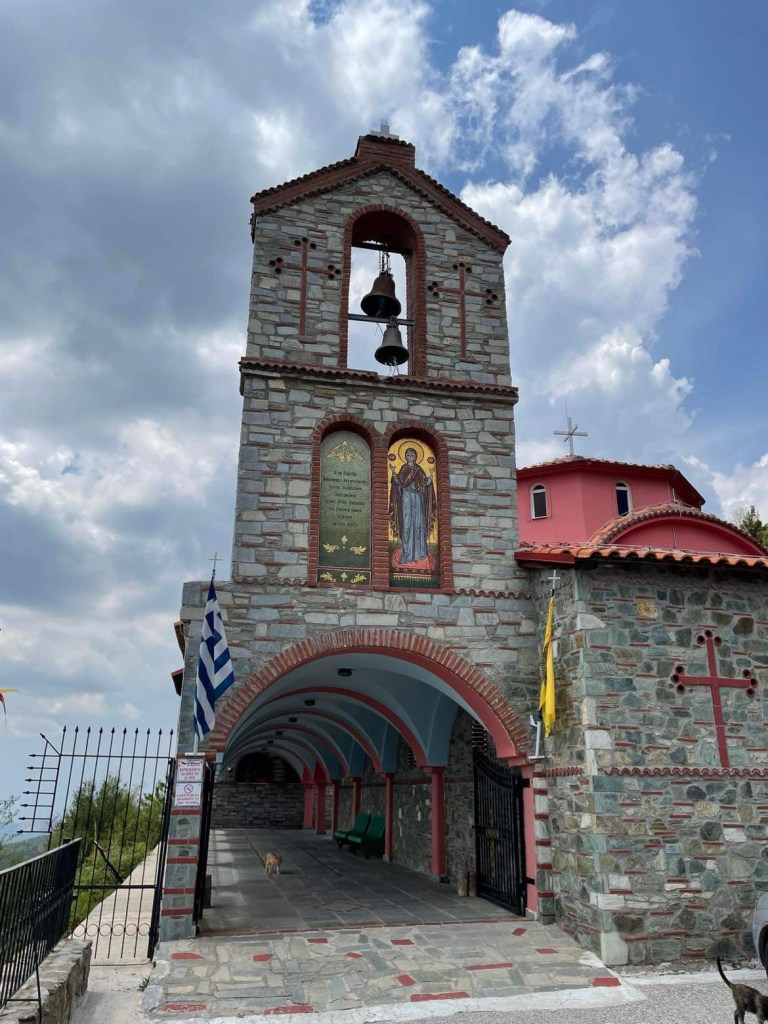
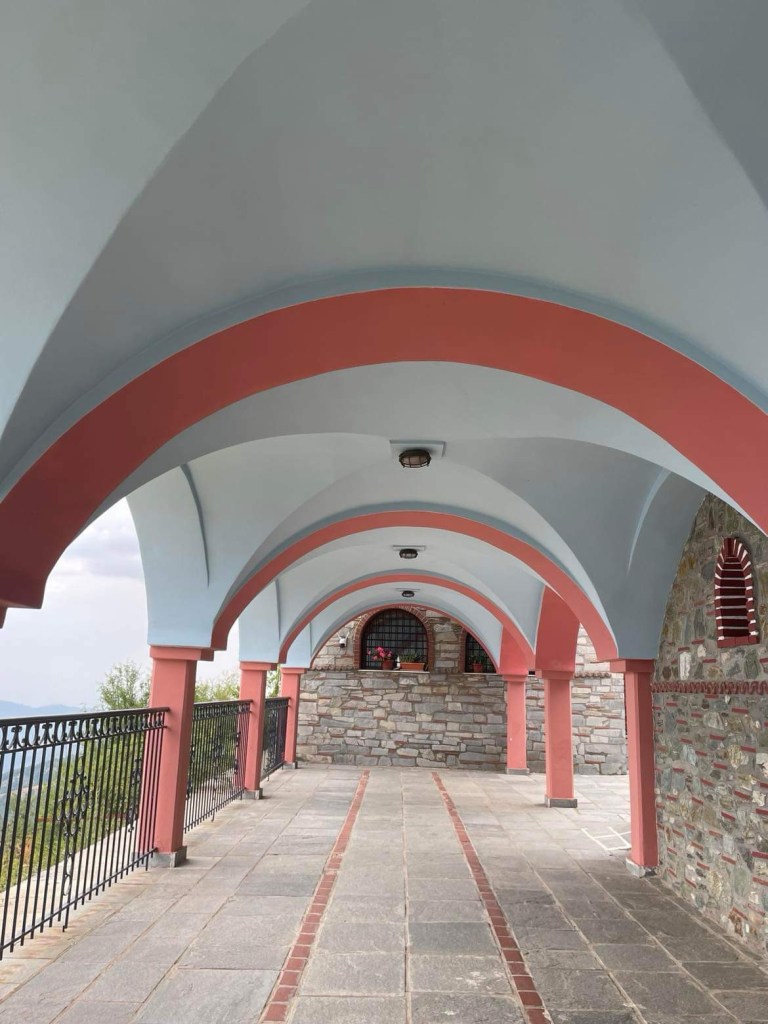
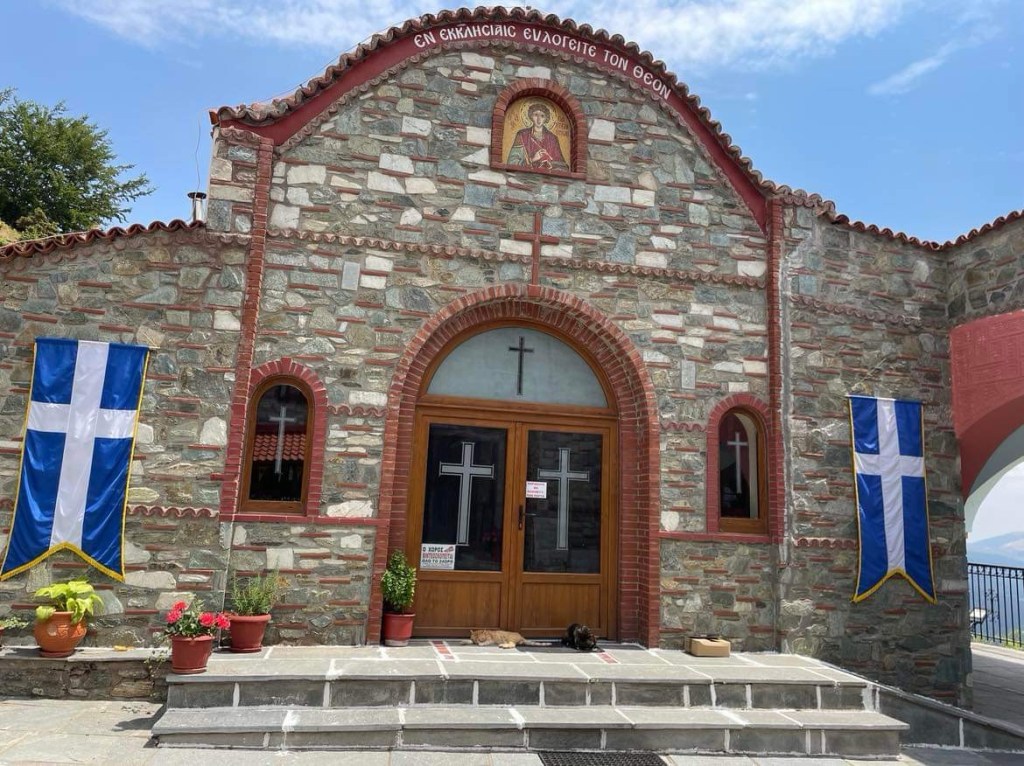
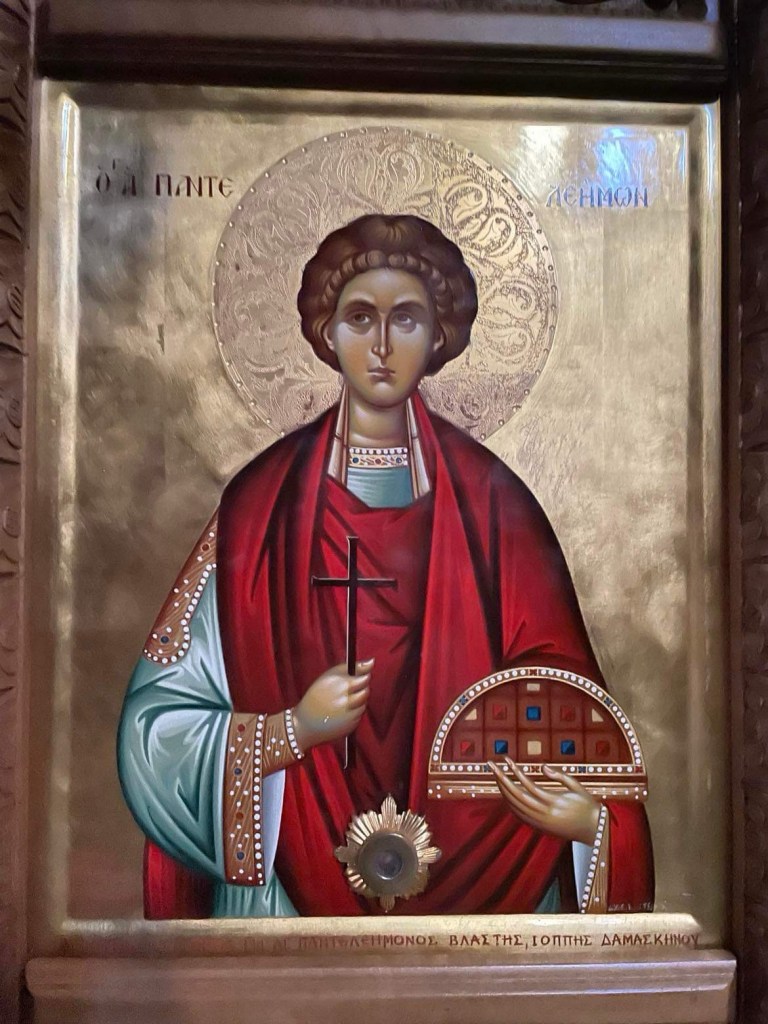
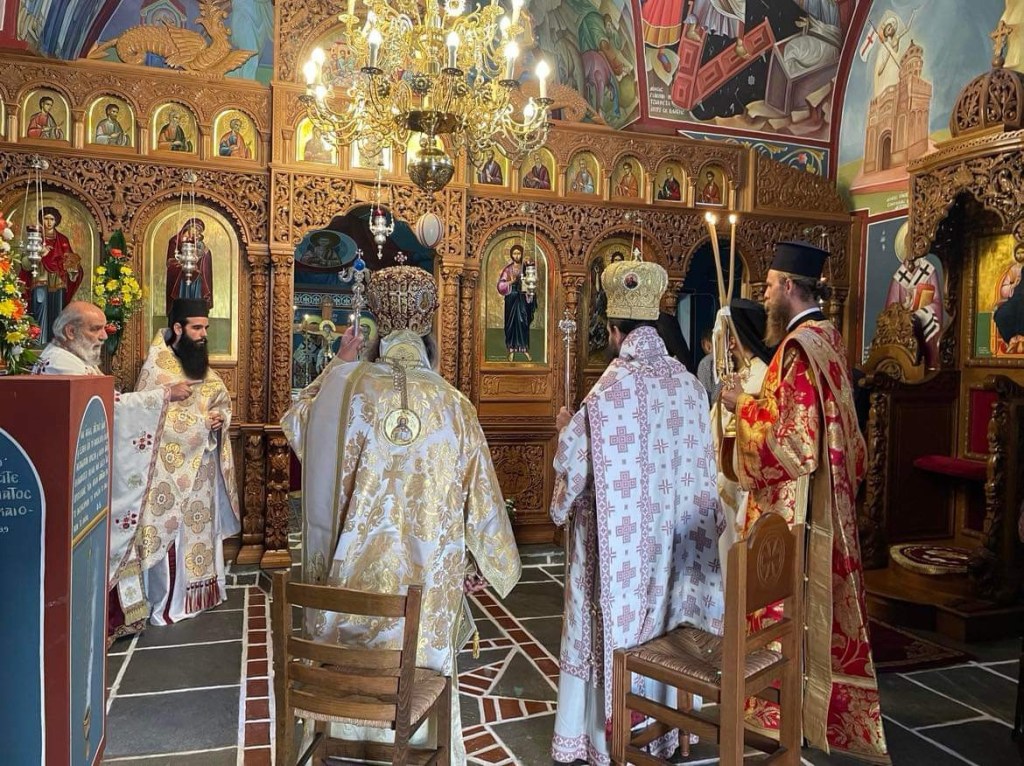
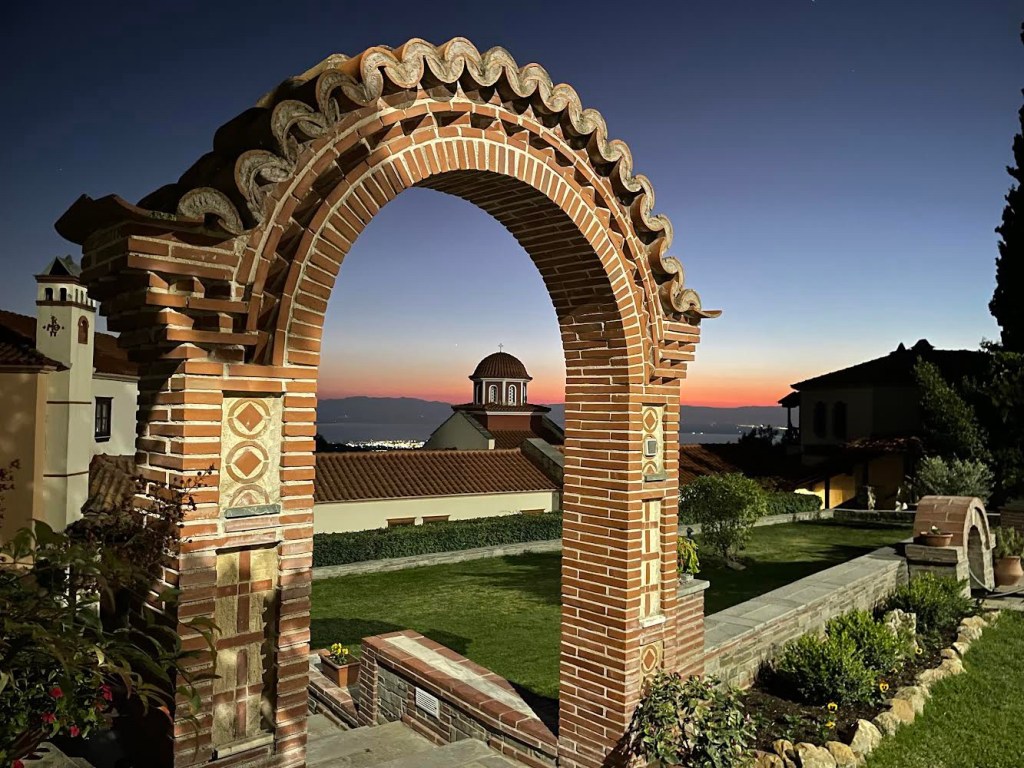
At 5 am, Matins begins, and everybody literally rushes to the church under the stars. “To the Theotokos let us run now most fervently”.
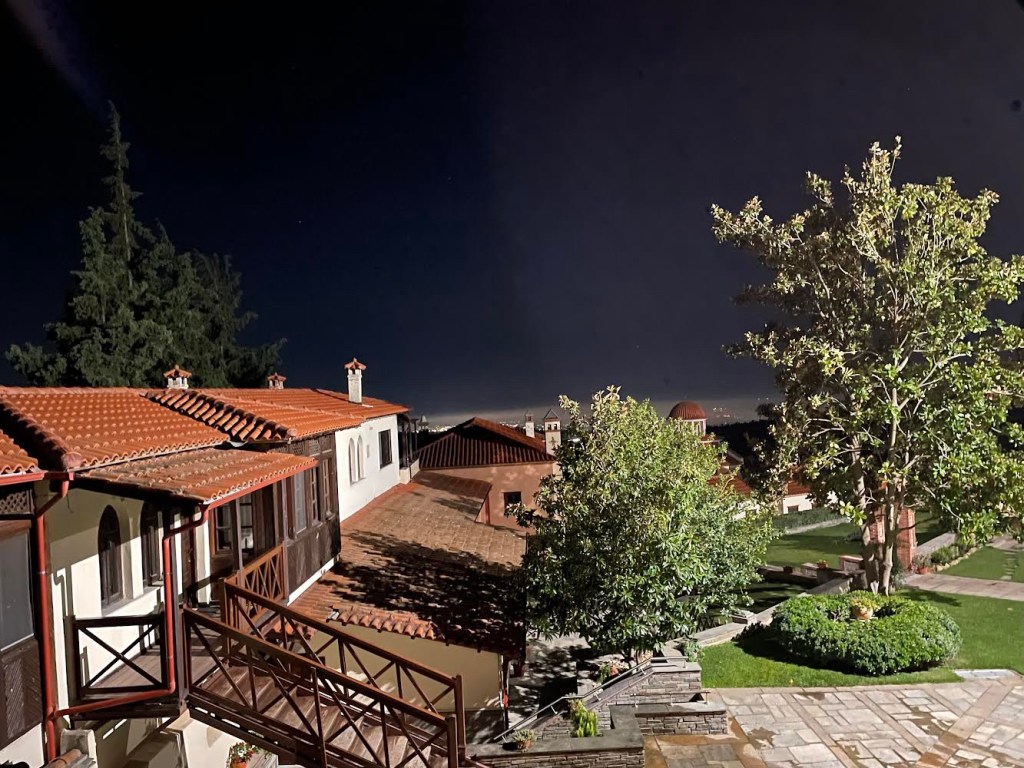
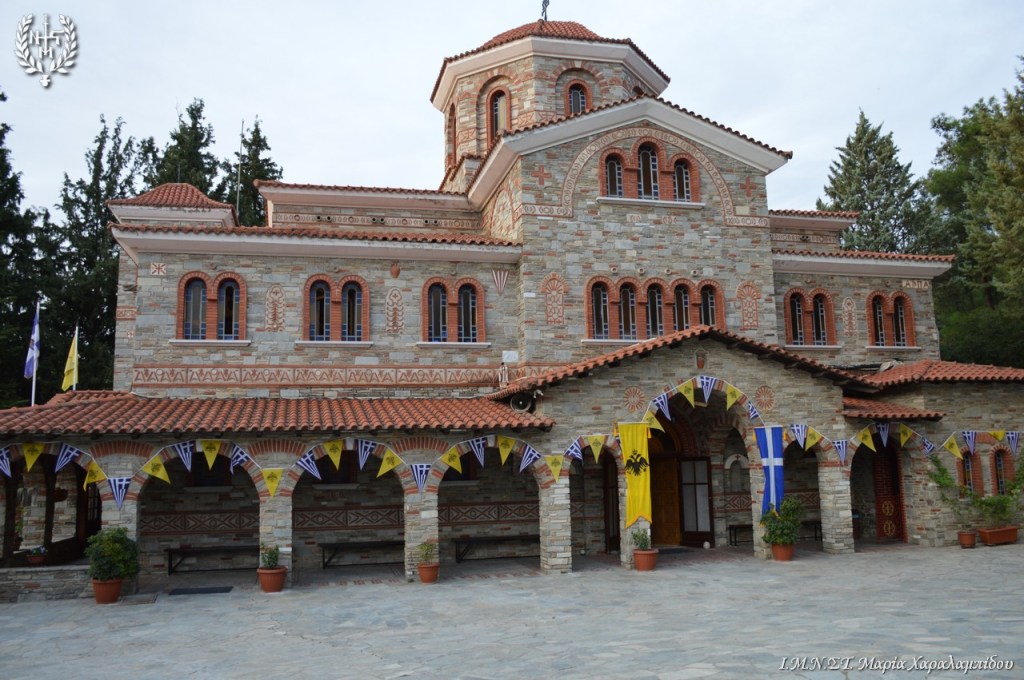
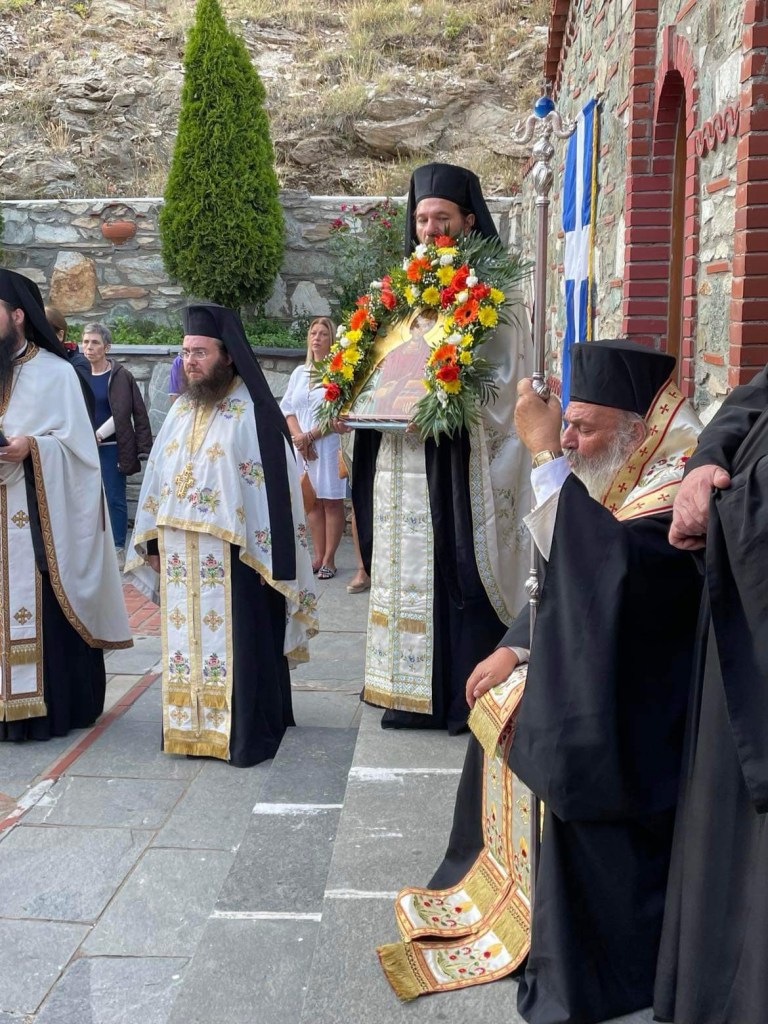
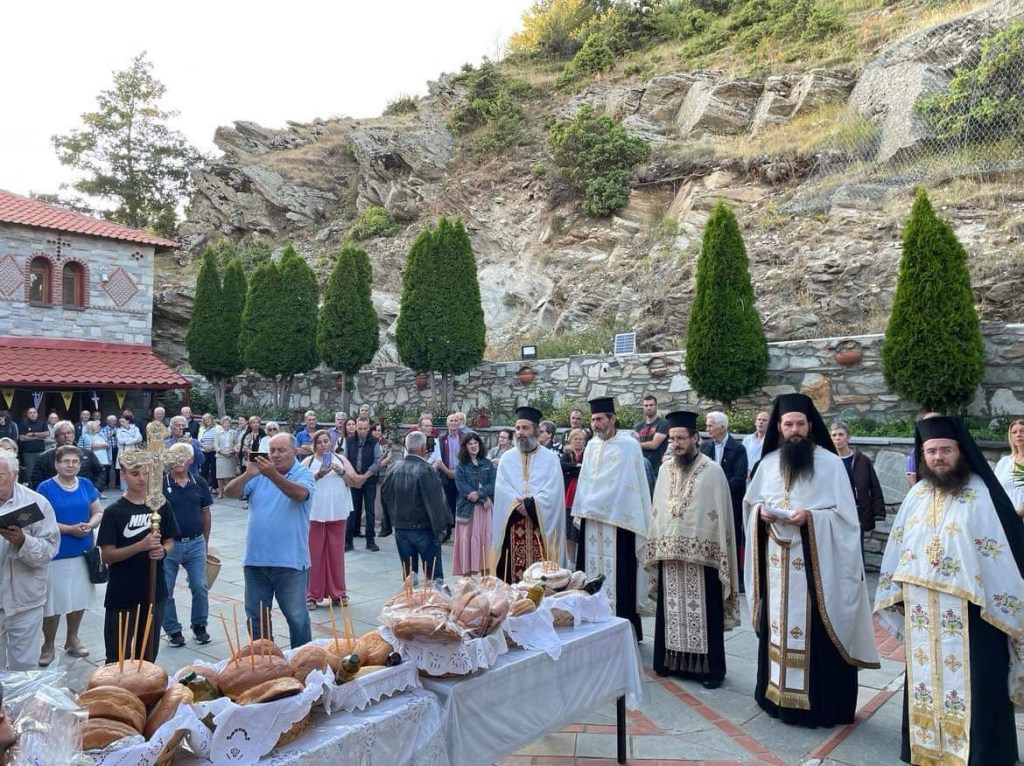
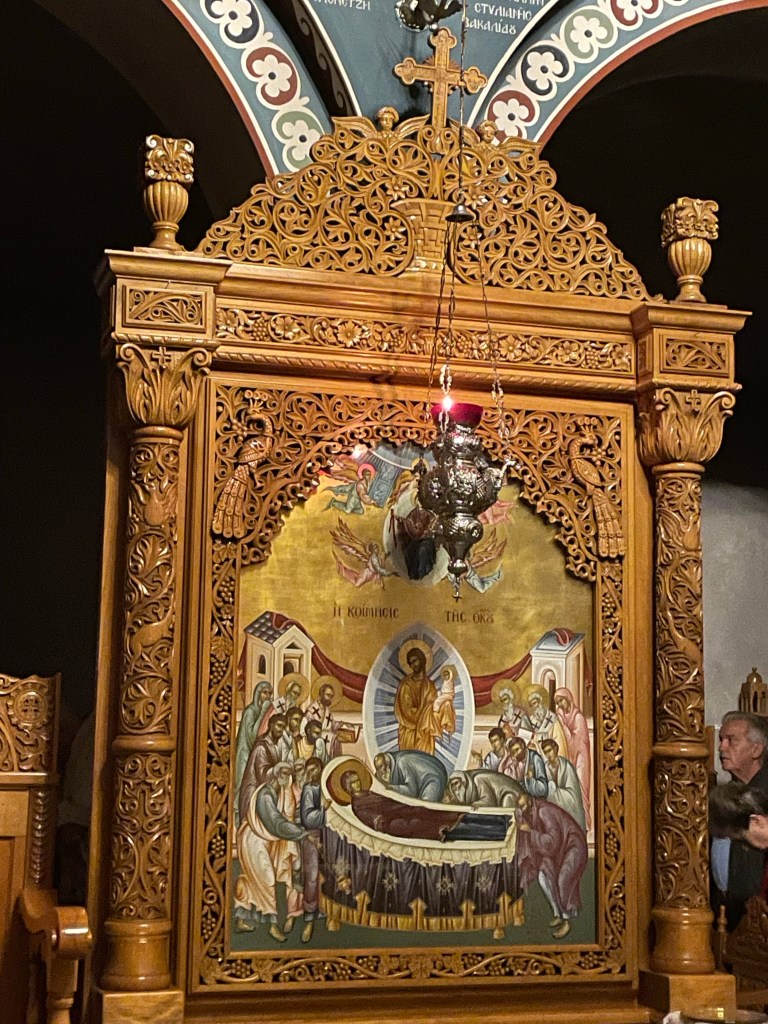
This monastery has 3 dedications to the Theotokos: the first is on The Mother of God of the Life-giving Spring or Life-giving Font (Greek: Ζωοδόχος Πηγή), on bright Friday; the second dedication is on the Dormition of the Theotokos, on August 15th; and its third dedication is on Panagia Eleftherotria, ie. Theotokos the Liberator, on the Feast of the Holy Protection, October 28th. This third dedication is the most important for the monastery and apparently for all the Greek nation. It is true that the piety of the faithful all over the world have adorned the Virgin Mary with thousands of names, but this particular one I have personally not encountered in any other nation.
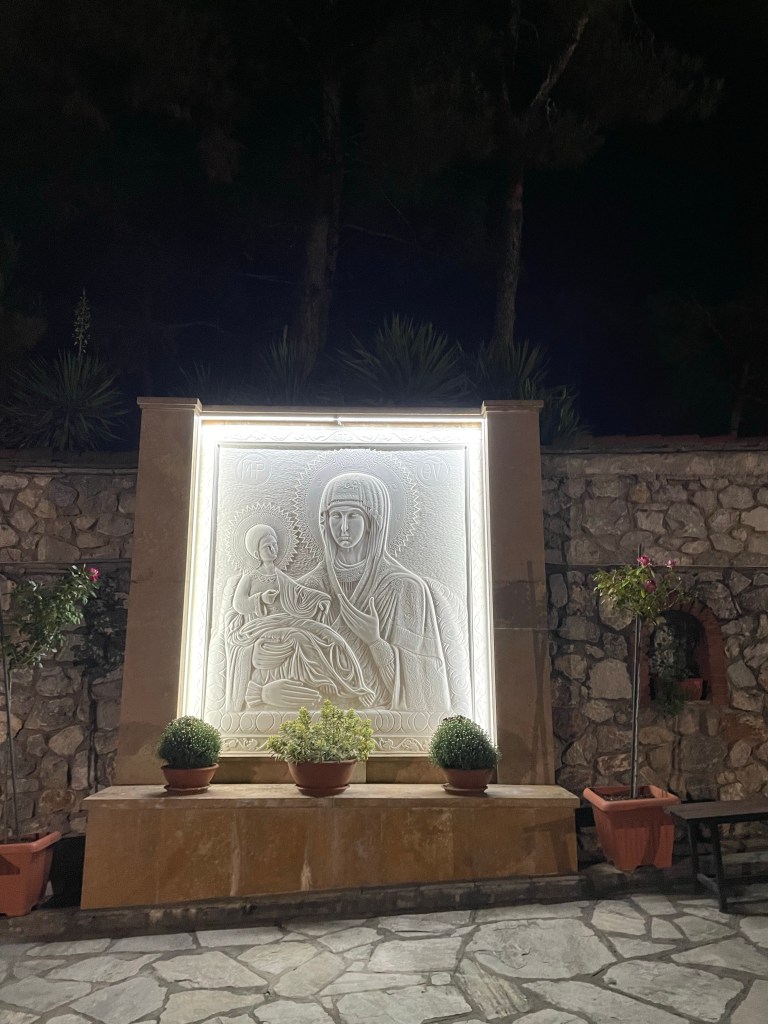
Most Holy Theotokos was declared a Great General, Τη Υπερμάχω Στρατηγώ, by the Greeks of Byzantium in 626 AD, to protect Constantinople from the combined siege by the Sassanid Persians, Avars and allied Slavs. After numerous sieges and attacks in the centuries to follow, culminating in the fall of Constantinople from the Ottomans, Panagia then became the “Eleftherotria”, the hope of thousands of Greek faithful and especially of Greek neomartyrs, suffering martyrdom under the Muslim yoke for more than 400 years.

Tradition holds that it was this Great General who freed the Greek Nation from the Turkish yoke in 1821 and protected the Greeks from the attack of the Italians in 1940 AD. This is why the Feast of “Αγία Σκέπη”, the Holy Protection of the Theotokos, was moved from Oct 1st to Oct 28, the Ohi Day, also referred to as the “Day of No”, the day when the Greek prime minister rejected an ultimatum given by the Italian dictator Benito Mussolini during World War II.
Panagia is, of course, the Protector of all Orthodox Church and nations, and a Mother to us all, liberating us not so much from our visible enemies, but from the invisible ones, ie. our passions, our sins, ultimately from the evil one. Pilgrims from all over the world tearfully share miracles and pray to Her here, in Her monastery, for liberty from their concerns, worries, thoughts, illnesses, for Liberty of their souls first, ultimately from sin.
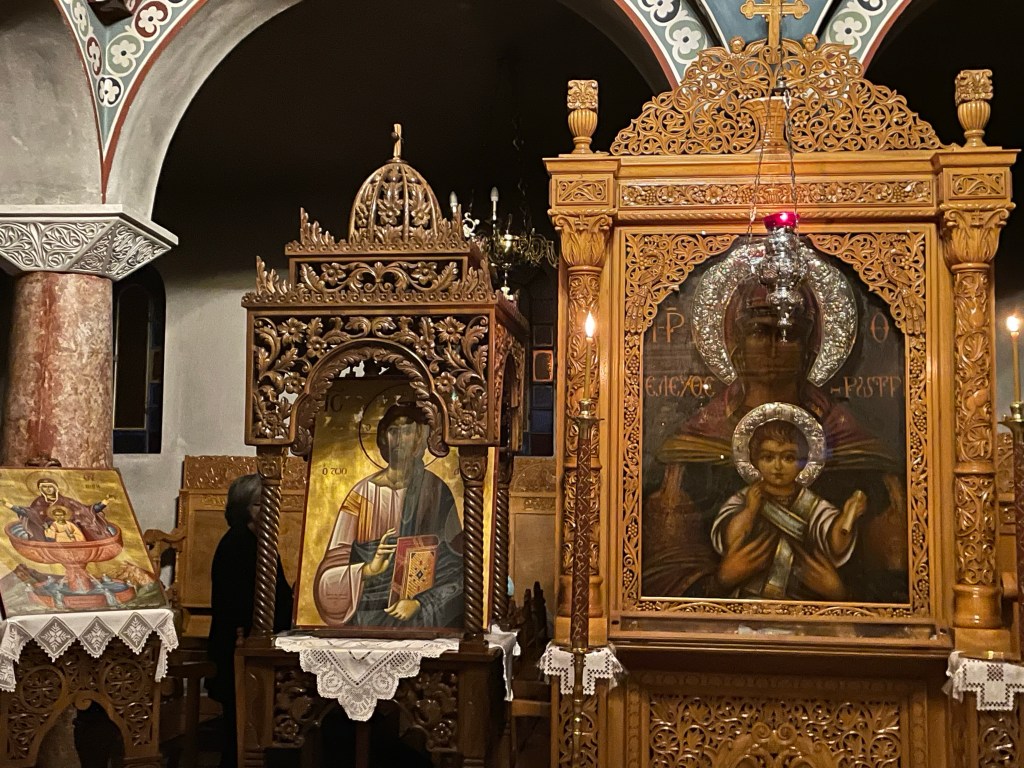
Beneath thy compassion,
We take refuge, O Mother of God:
do not despise our petitions in time of trouble,
but rescue us from dangers,
only pure one, only blessed one. (1)
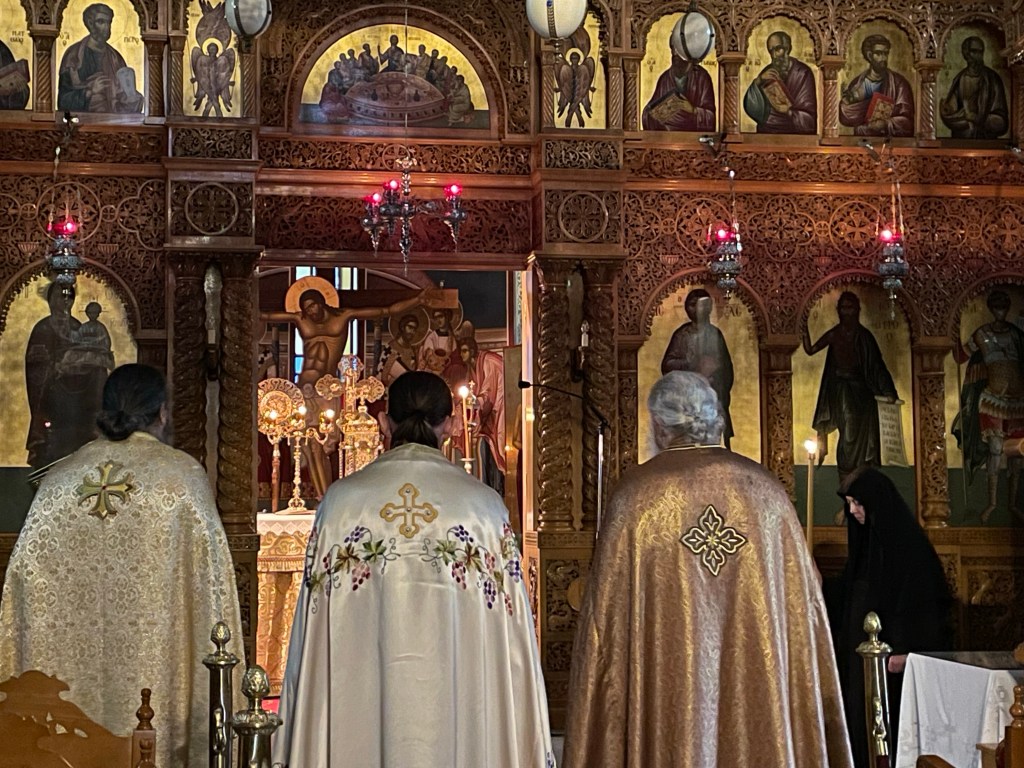
Holy Liturgy finishes at 8:30 and a light meal is awaiting us, before we all head to our obediences. Today, to our surprise, ironing, and not ivy pruning, is our obedience: ironing piles upon piles of the sisters’ and pilgrims‘ bedsheets. May it be blessed. Again, long hours of manual prayer await us, accompanied by the Jesus prayer. Glory to God for all things.
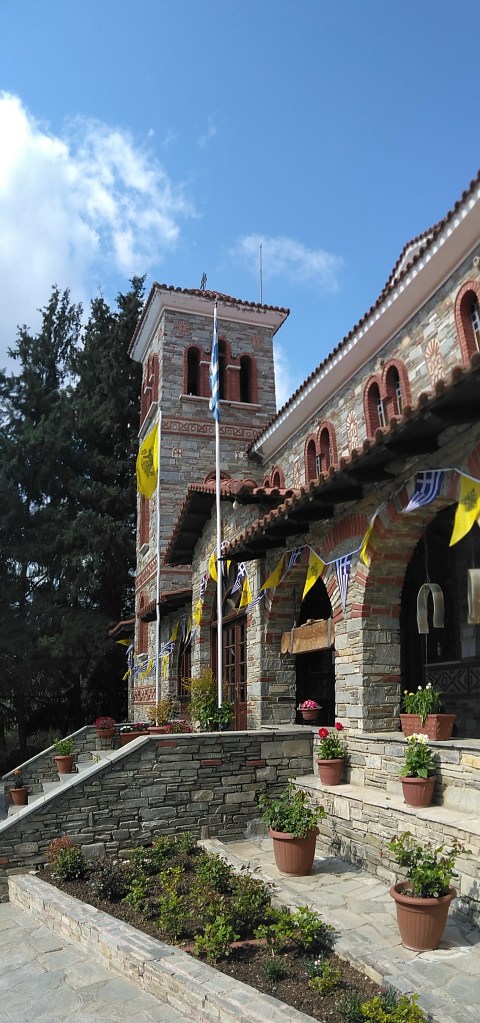
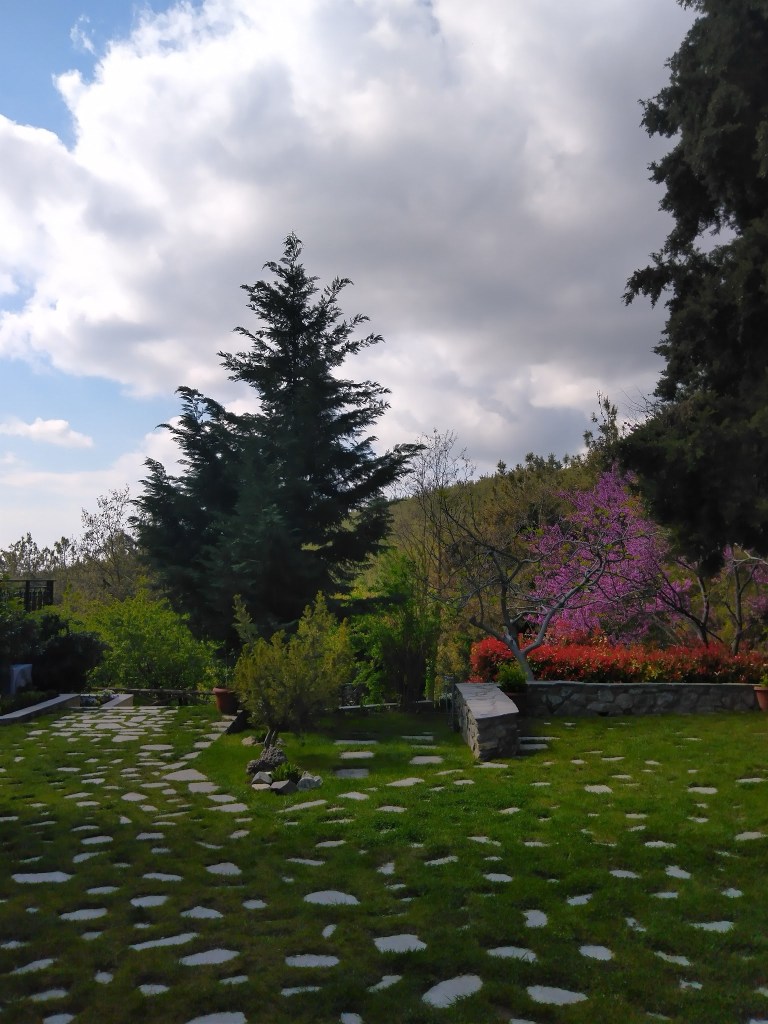
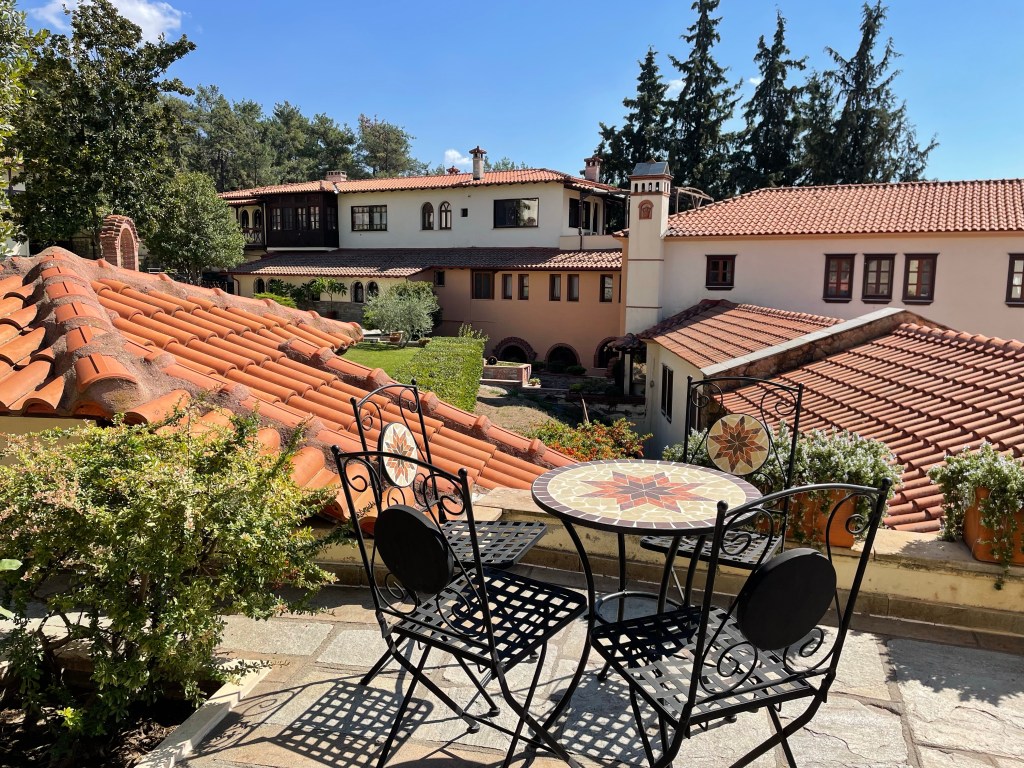
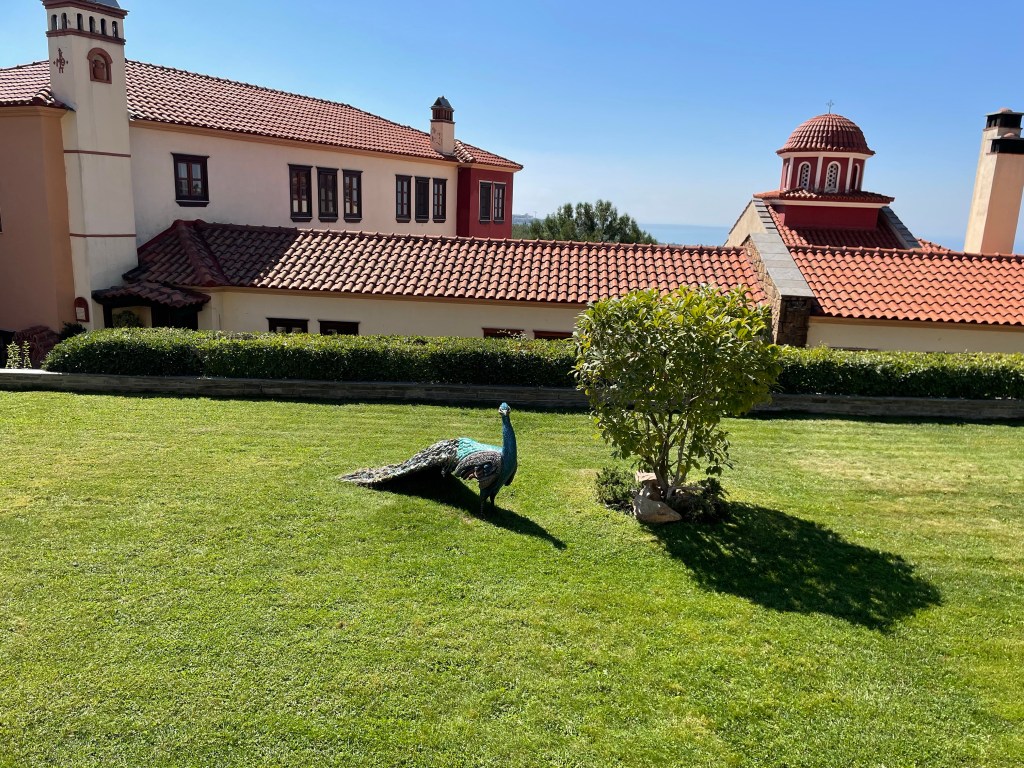
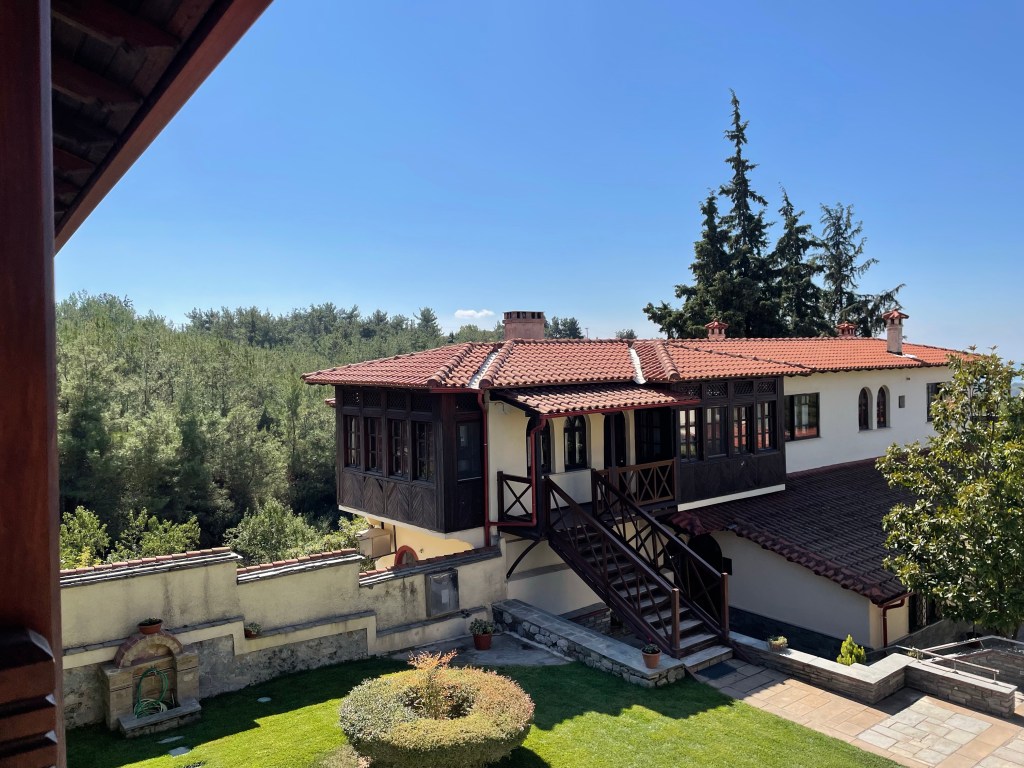
At long last, break time and a walk in the monastery gardens and lush forests! Once outside of the cells and the various workshops of iconography and embroidery, one marvels at the beauty of trees especially and flowers everywhere. Nature is enveloped in the Holy Spirit.
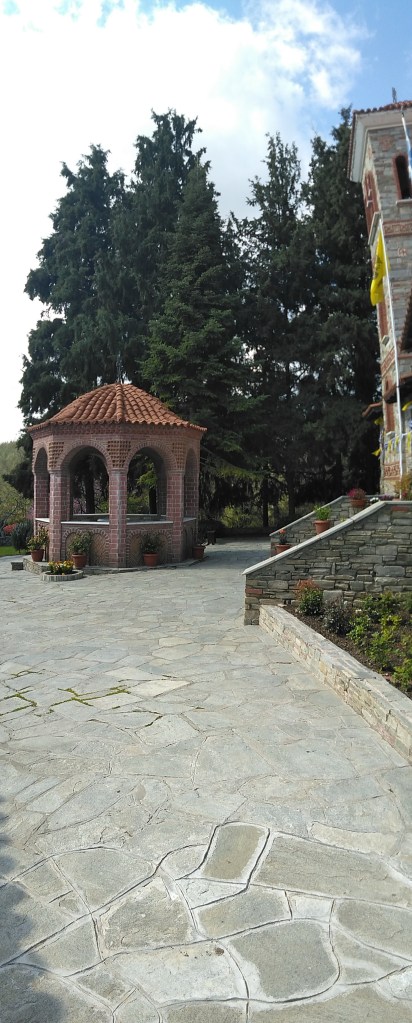
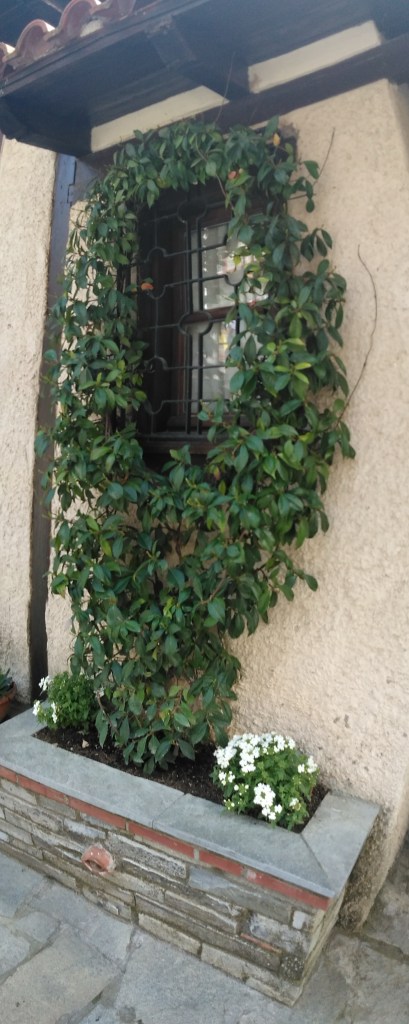
Most Holy Theotokos’ presence and protection is felt most powerfully in Her monastery gardens and forests, and there are votive offerings, “tamata” for Her everywhere.
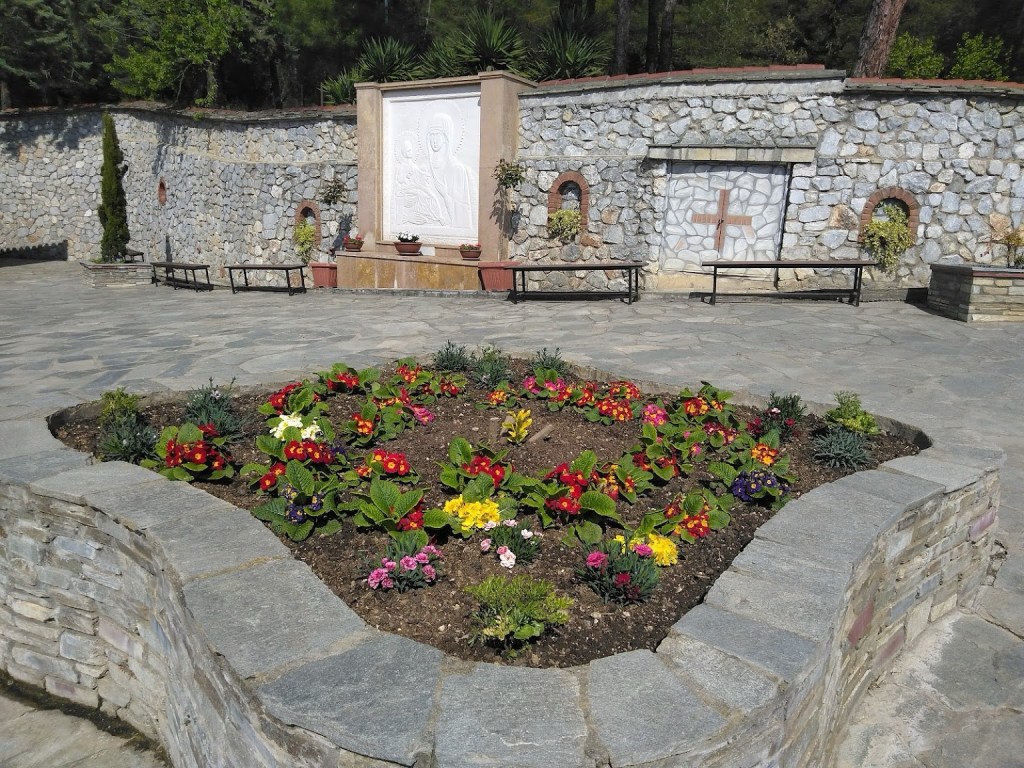
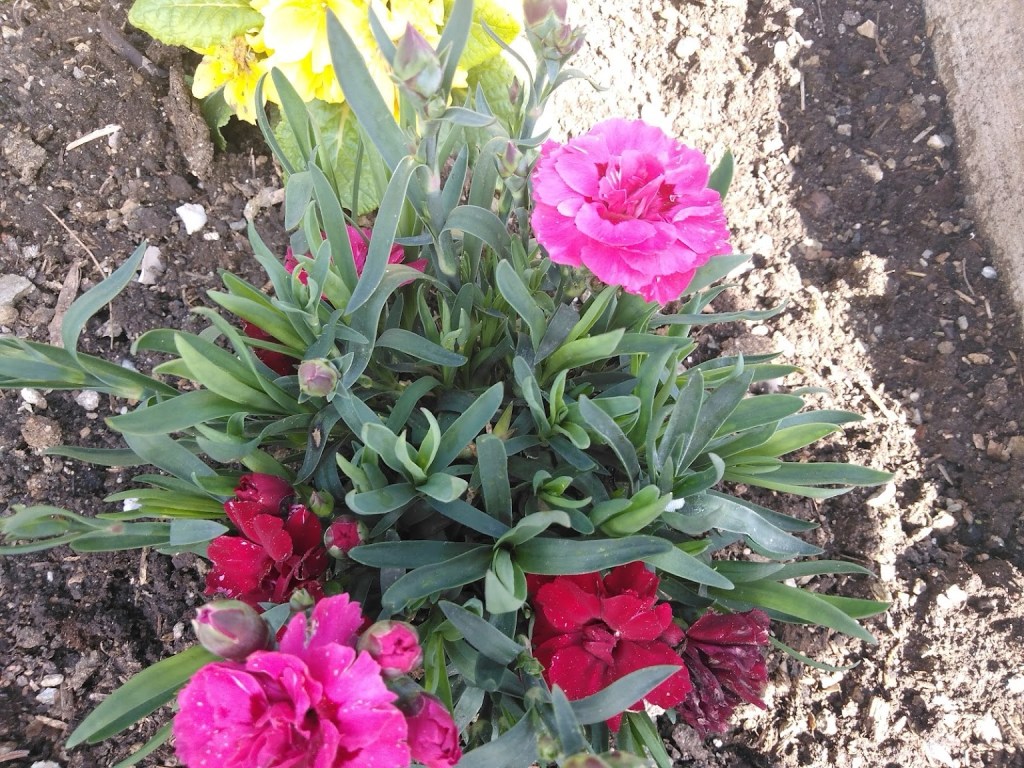
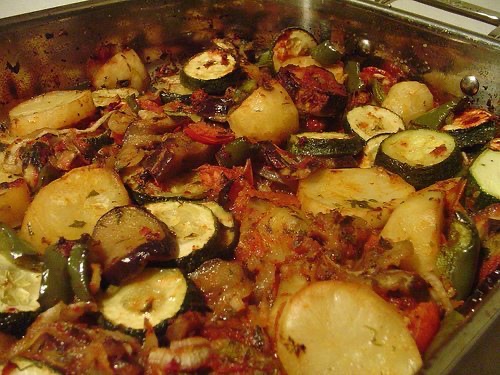
Enwrapped in such beauty and holiness, immersed in the Theotokos, one forgets tiredness, drowsiness, even hunger, but the semantron summons us again, this time for our midday meal of Greek Briam, a traditional Mediterranean recipe that uses all homegrown summer vegetables —potatoes, zucchini, aubergines, red onions, and tomatoes—and bakes them together in olive oil.
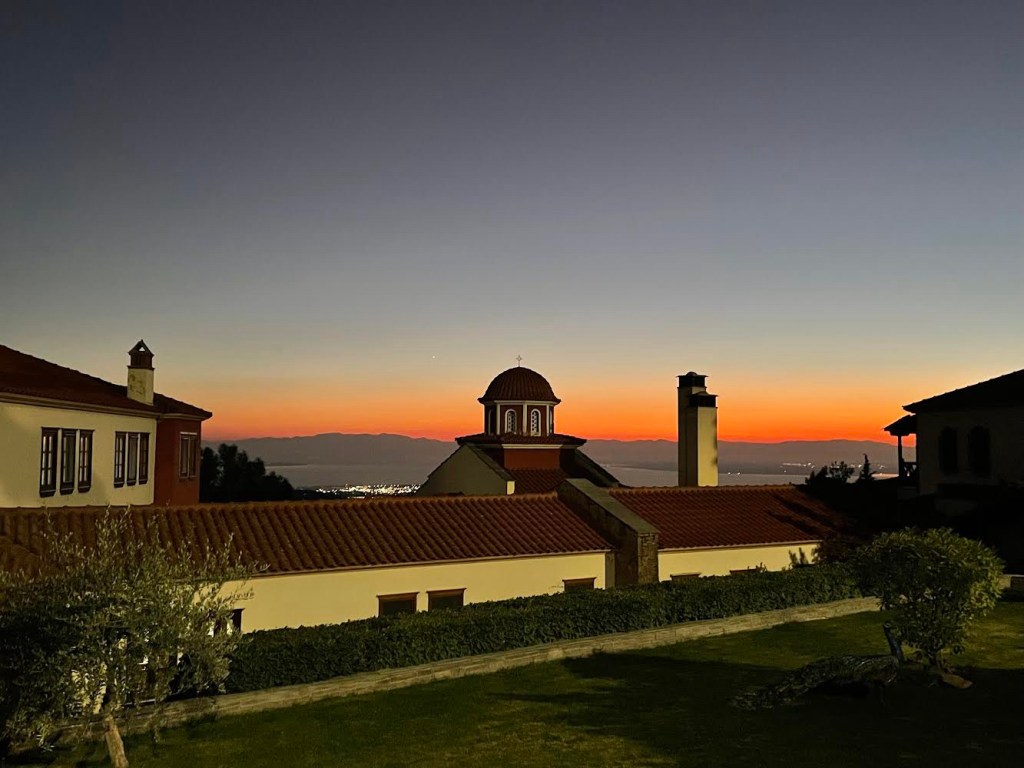
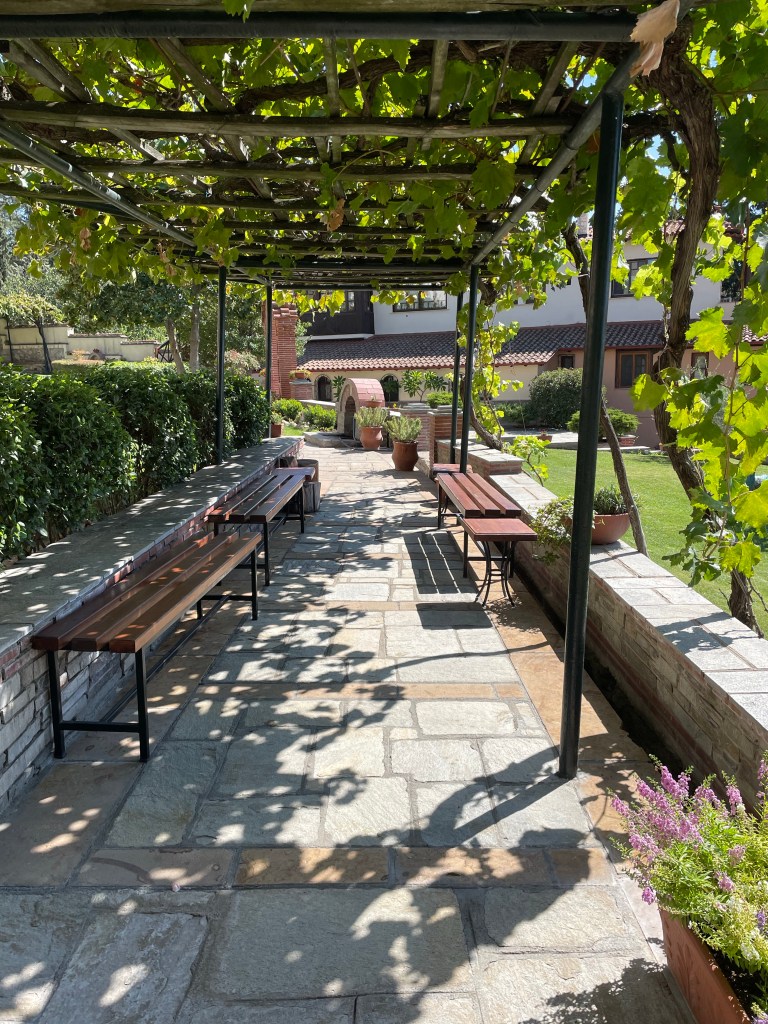
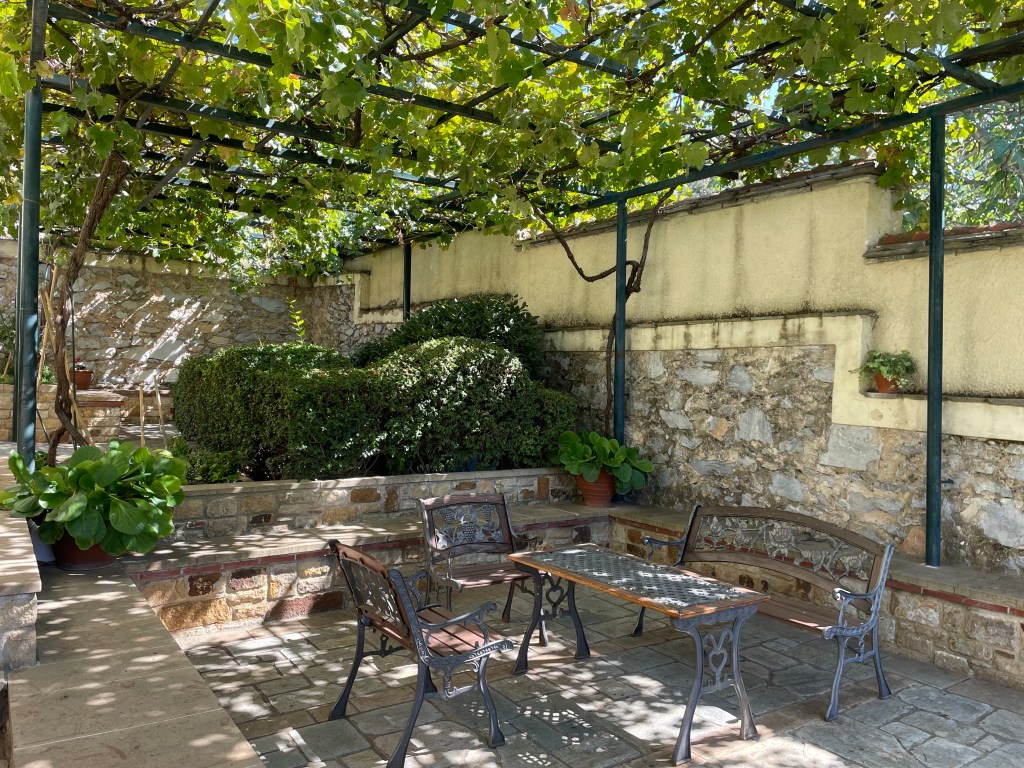
Siesta, quiet time follows, then Great Vespers, Compline, and another, very light, fasting meal, since most of the pilgrims are preparing for Holy Communion. Cars and pilgrims keep arriving in large numbers, especially now that weekend has started. At the sunset, pilgrims and monastics, all together, in small groups, share precious fellowship time in the monastery gardens. Even at the close of the day, Sisters continue to be amazing busy-bees with their obediences, errands, charity and gracious hospitality.
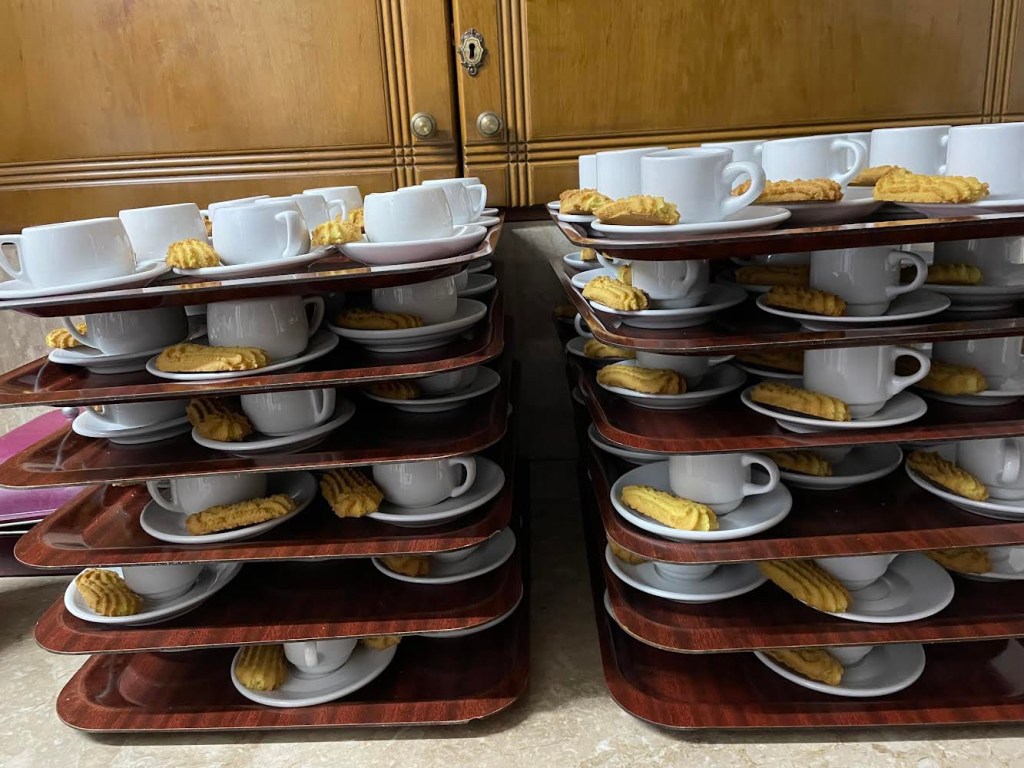
In anticipation of tomorrow’s guests 😀 At weekends, the numbers of the faithful at the monastery services increases exponentially!

The blessing of Gerondissa Melani seals our day and we retreat to hesychia in our cells. How richly, orderly, deeply and blessedly time flows in a monastery! So different to the hasty, stressful, exhausting, chaotic perception of time in our lives.

To the Theotokos, let us run now most fervently
Saint Porphyrios of Kavsokalyva on the Panagia:

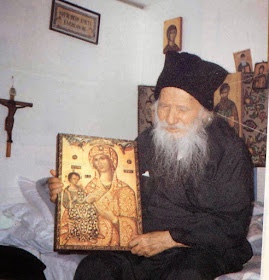
“Our Church highly honours our Panagia. I very much love our Panagia. When I was young on the Holy Mountain I very much adored her. I had a small icon of the Panagia under my pillow. Morning and night I embraced her. I lived with her night and day. Whatever happened to me, I resorted to her. What can I tell you? She is better than a mother. There was nothing else I wanted more. She had everything”.

(1) The oldest prayer we know of dedicated to the Virgin Mary. The earliest text of this hymn was found in a Coptic Christmas liturgy of the third century. It is written in Greek and dates to approximately 250 A.D. It is used in the Coptic liturgy to this day, as well as in the Orthodox, Ambrosian, and Latin liturgies. Orthodox Christianity Then and Now.

Monastery Diaries Day 1: A Time of Healing

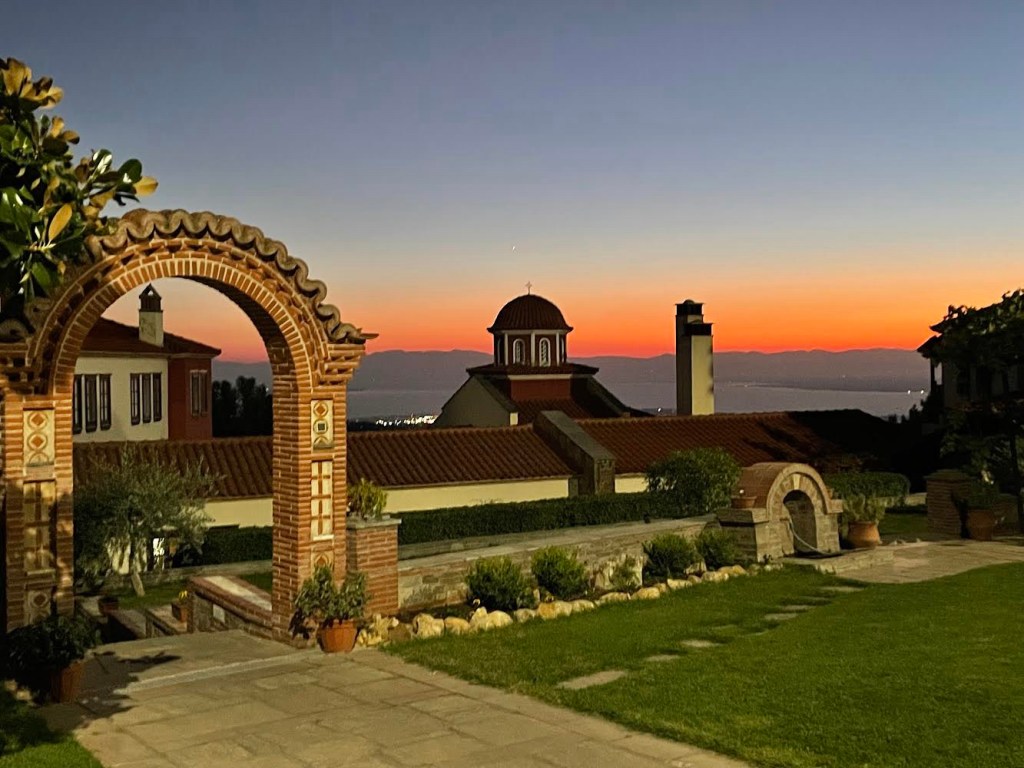
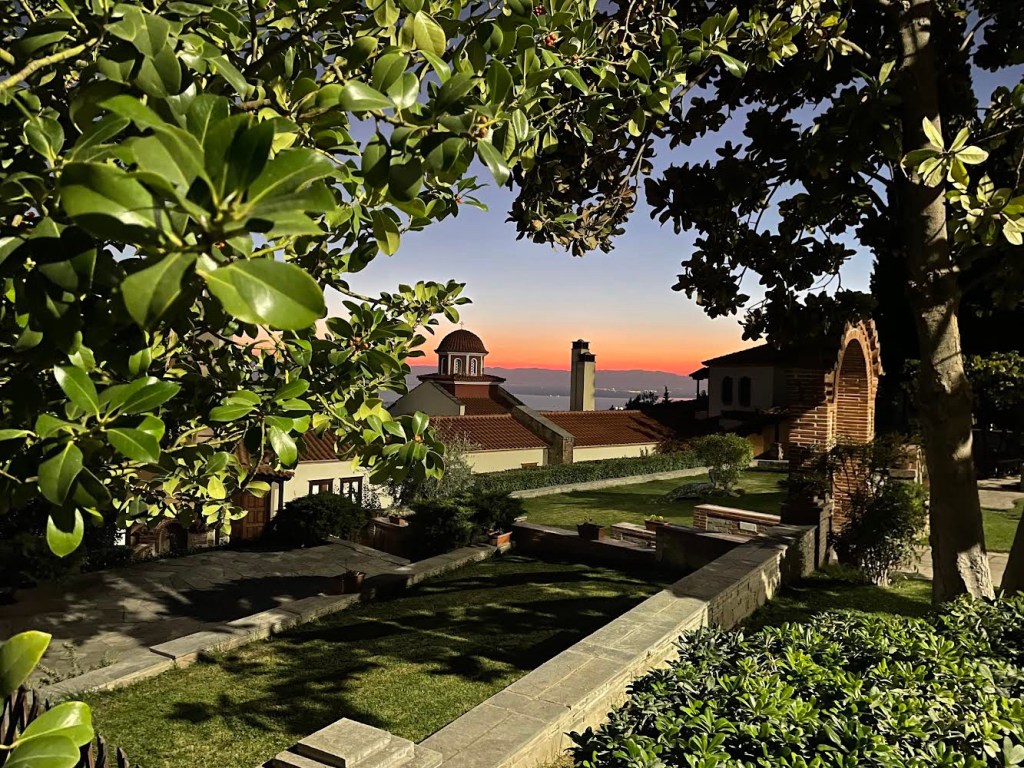
The time has come! The day has finally arrived! After a long, tiring month full of all kinds of jobs and obediences —other than a blessed Synaxis at Holy Cross, UK —and an especially hard time last week, I have finally arrived at the first monastery in my pilgrimage “list”: the Dormition of the Theotokos monastery at the Panorama suburbs of Thessaloniki.

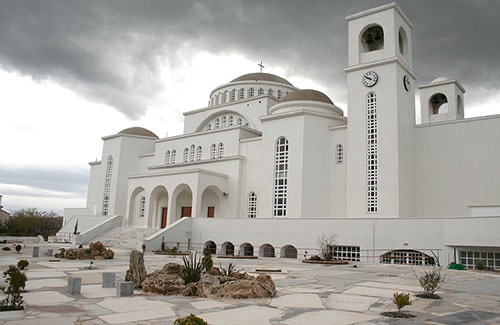
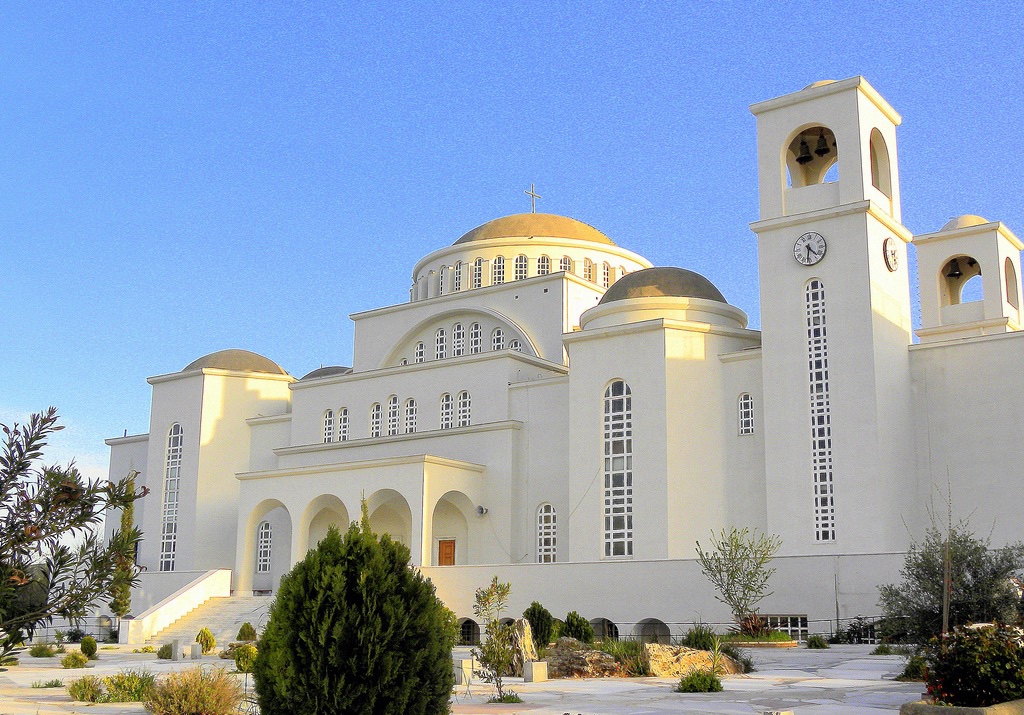
This most beautiful monastery is dedicated to Panagia Elefterotria, the Liberator. It was founded in 1957, has 60 nuns and Melania is their Mother Superior.

Last August, we visited this monastery together with Father J. but our visit was very brief …

I remember so little from our visit last year. I cannot find my way anywhere around. I have arrived so upset, sad and stressed out. Yet here at the monastery, there is an hesychia and a fullness of the Holy Spirit that is most healing.

The hospitality and kindness of the sisters is felt in their warm smiles and their radiant, kind, prayerful eyes. They offer me breakfast, ask me to wash the guests’ dishes, then take me to my room and I start meeting pilgrims from all over the world!

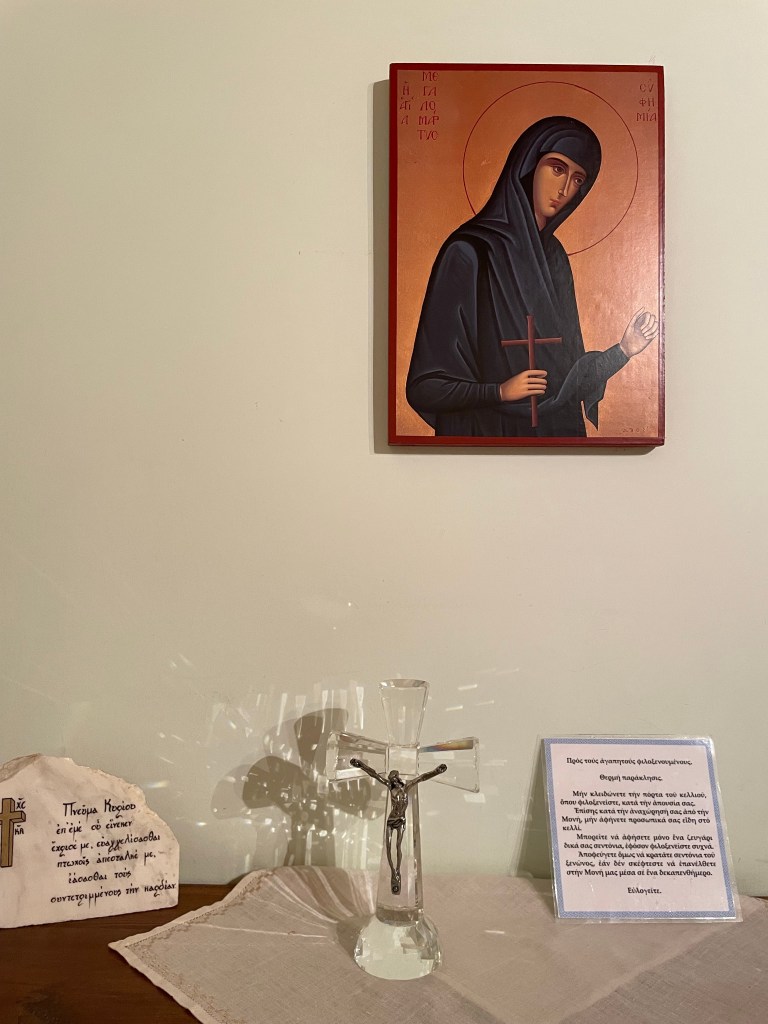
Talking about hospitality, please have a close look at this notice in my cell:

I translate the last two paragraphs: “To our dear guests: A humble request: … You can leave a pair of your own bedsheets if you are a frequent guest. Please do not keep the monastery bedsheets, if you are not considering returning to our monastery within a fortnight”. “Returning to our monastery within a fortnight”!

Everything is happening very fast and with as few words as possible. The sisters work hard and very fast, they multitask, they are such bright busy-bees, yet more importantly they constantly pray. They had to accommodate nearly 300 (!) pilgrims during Dormition Fast in August.

My first obedience, upon arrival, is ivy pruning. I sense that this will be my obedience all these days, until I leave, as the monastery fence is a very long, miles long fence. The other pilgrims from other countries cannot suffer the heat and the sun. As for me, after all this prolonged, all summer training of 40-45 Celsius here, this 30+ C heat and sun feels a bit autumn-like breeze!

So, I prune and pray and hope my sadness will fade away since this is what my spiritual father reassured me and is praying about. I always love to work in nature, yet even here my thoughts, my logismoi still bother me and interfere. But I have faith in my Gerondas’ words. I am under obedience, he will stand by my side on Judgment Day before our Lord, surely he knows better.

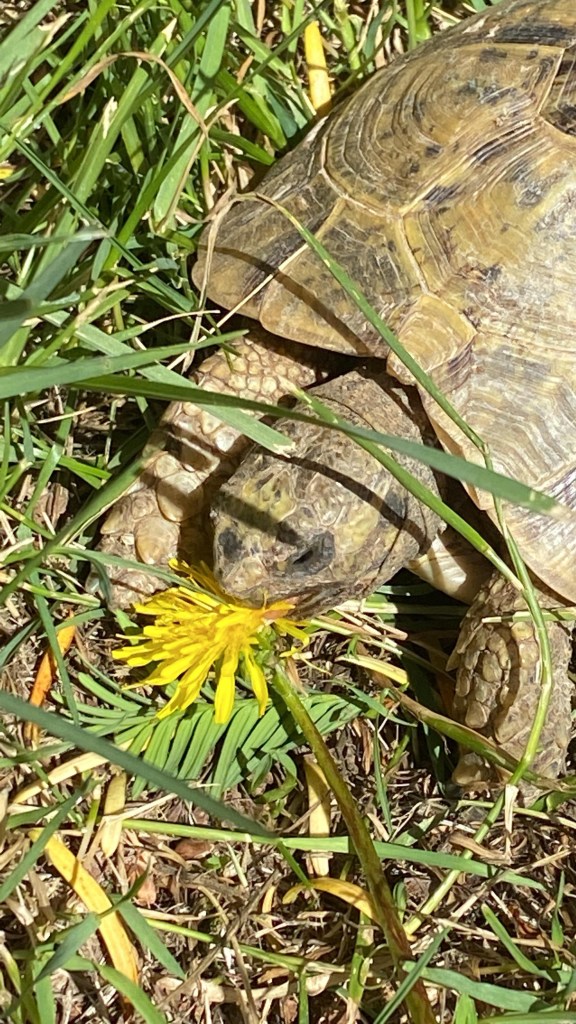
Hours pass under the sun with pruning and the Jesus prayer. A little tortoise seems confused with our pruning and we have gently to carry her across the road to greener paths. Glory to God! Little by little, my sorrow begins to evaporate with this heat, sun and prayers. So Gerondas was right, again! “A disciplined schedule, manual labour, study and prayer” (Abba Isaiah of Scetis Ascetic Discourses), and this blessed monastic community did work miracles for my pusillanimity and faintheartedness.

No time for logismoi, thoughts, moaning, worries, fear, sorrow and self-pity. This is the time, καιρός, for metanoia, obedience, faith, and joyful, godly, bright sorrow, “Charmolipi” (an old Greek work made up of ‘chara’ (joy) and ‘lipi’ (sadness). There is no equivalent word in English; it means a feeling of happiness and sadness at the same time.

10 Godly sorrow brings repentance that leads to salvation and leaves no regret, but worldly sorrow brings death. (2 Corinthians 7:10)

Lunch is served at midday, delicious crispy veggie balls and rice, and then a few words and fellowship with the other pilgrims before a bit of rest and Vespers and Little Compline. Of all the pilgrims I met today, I am most impressed by two, one from the States and the other from Canada, both baptised at a mature age, and both really close to Elder Efraim monasteries: Holy Protection Monastery, Pittsburgh, Pennsylvania and St. Kosmas Aitolos Greek Orthodox Monastery, Ontario and Holy Monastery of Virgin Mary the Consolatory, Panagia Parigoritissa, Quebec.

One has literally moved next to the monastery to be there all the time, and the other one does not mind driving 6 hours to be at the church services and the fathers of the monastery! This pilgrim was baptised in a Roman Catholic Church due to his Orthodox parents “carelessness and ignorance” — the pilgrim’s own words— but our Lord found him, guided him to His Church, and he is now on pilgrimage together with his mother! Glory to God for all things! All these Elder Efraim’s monasteries, 20 in total, I believe, in USA and Canada, are all following the Cenobitic way of monastic life (“Cenobitic” is derived from the Greek word “Keenovio” which means “common way of life”) therefore consisting of common work, common meals, and common rest periods.

These monasteries have wrought such a miraculous renewal and perform such amazing missionary work according to all first-hand testimonies I hear from our Protestant brethren finding the true faith and the true church. The value of this treasure and the unquestionable contribution of the Elder Ephraim to the Orthodox of North America and Canada is beyond appraisal.

After Little Compline, a small fasting dinner and then hesychia. My sorrow has been healed and joy fills my heart. What a transformation in just a few hours! My spiritual father was right: “The time there will be a time of healing”. All this prayer and few idle words, manual labour and study, have wrought a miracle.

Abba Isaiah of Scetis

Observe these three things: your manual labour, your study, and your prayer. Think to yourself daily, “I only have this day to do something in this world” and you won’t sin before God.

A Misty, Mystic Monastery

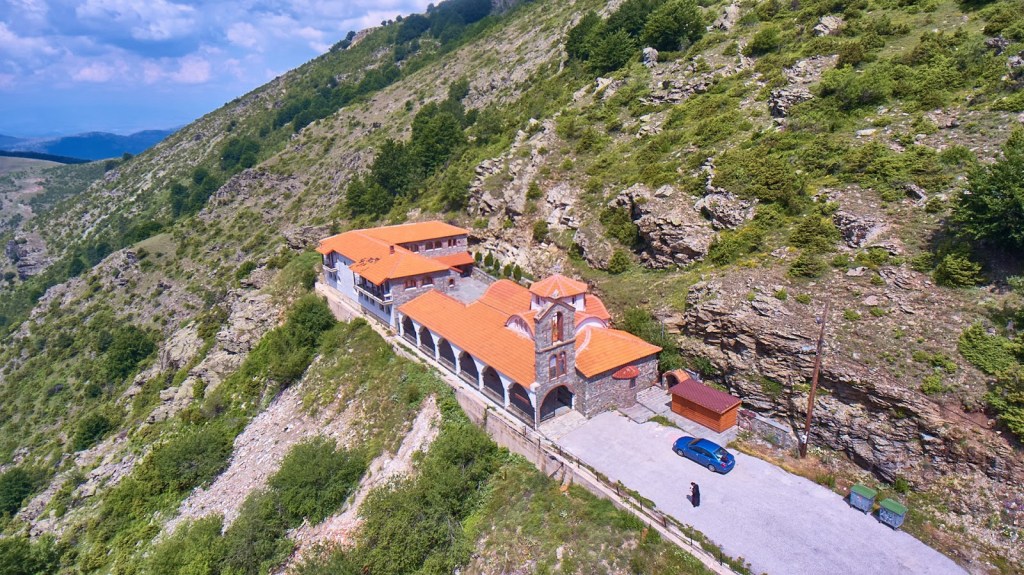
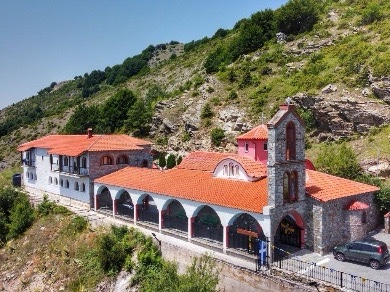
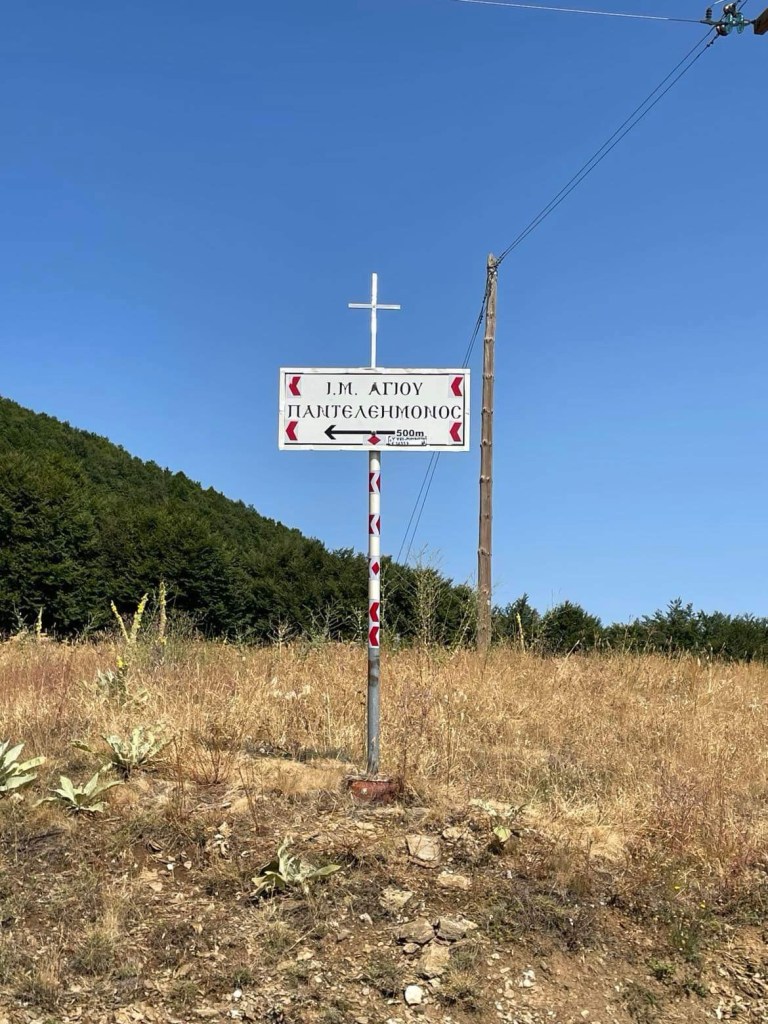
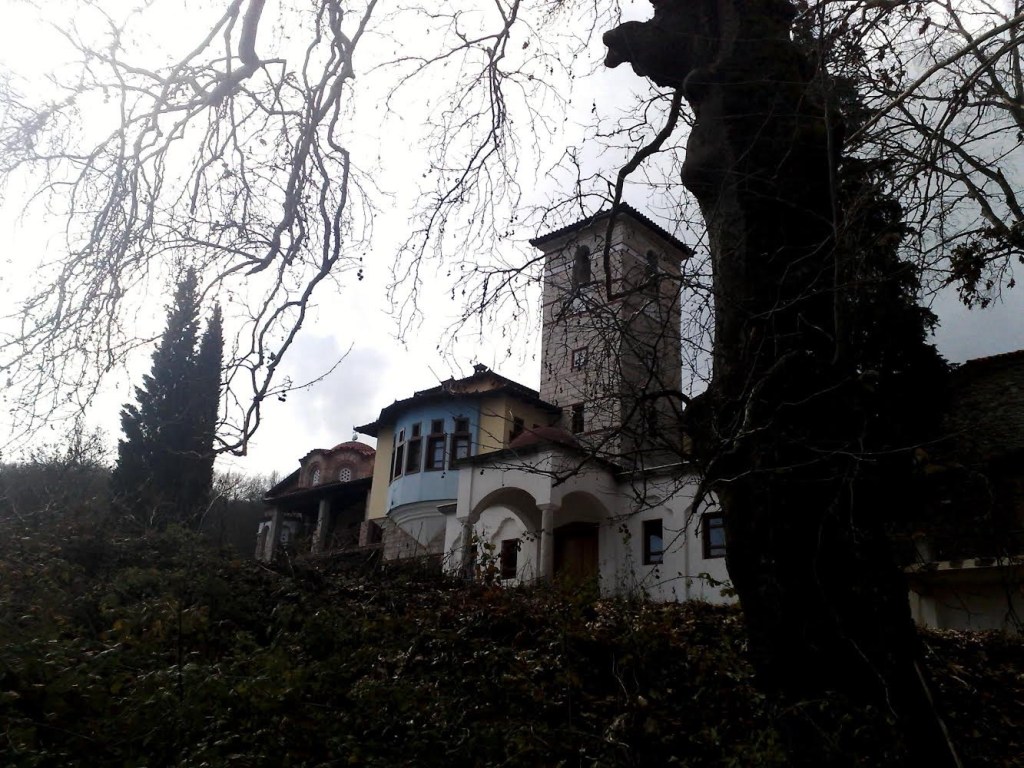
Last week, on the eve of St Panteleimon’s Feast, I arrived at his monastery at the suburbs of Vlasti, and 33km away from the bustling heart of Kozani, to help the monastic synodeia there for the Feast.

This was my first time there and the surrounding landscape scenery at 1650 m altitude was stunning. The landscape altered among numerous fields with sparse cedar, lammergeyer, oak and pine forests. At the higher positions, sheer rocks and alpine fields add a particular mountainous character. St Panteleimon’s misty and mystic monastery dates back to the 15th century and is almost permanently capped by gray clouds and fog. It is by far the monastery at the highest altitude all over Greece, Mount Athos included.

For stunning views of this mystic and misty monastery and the surrounding landscape, go to this YouTube link:

https://youtu.be/33sjBZ1Uty4?si=dwtg5uAWG4PQ0cEQ

Except for the incomparable beauty, this area is also known for its ecological characteristics, as it constitutes a biotope of bears and other predatory birds such as the war eagles, haggard eagles, snake eagles and the bullfinches. Vegetation is also lush, with a great variety of wild flowers and herbs. This travel/ pilgrimage destination indeed beckons not only pilgrims, but travelers seeking tranquility and untouched beauty.

For video excerpts of the church services these two days (Vespers and Matins- Holy Liturgy), go the following YouTube link:

https://youtu.be/M67AiZ3W9bk?si=Ko-VVexrZQrVKet_

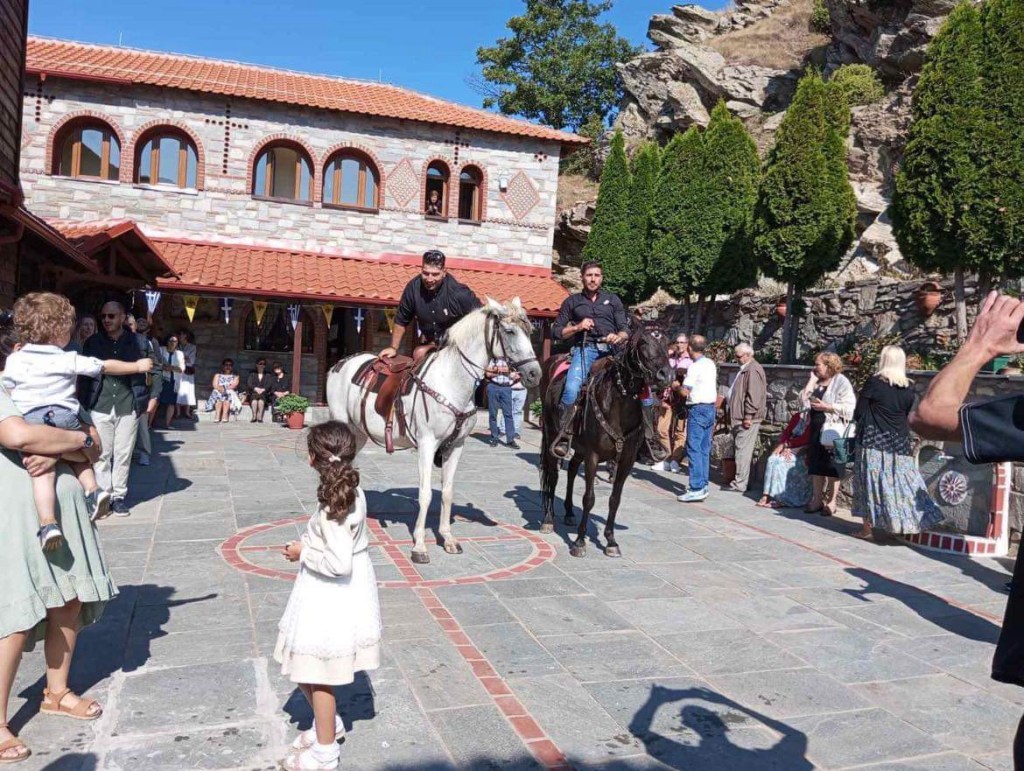
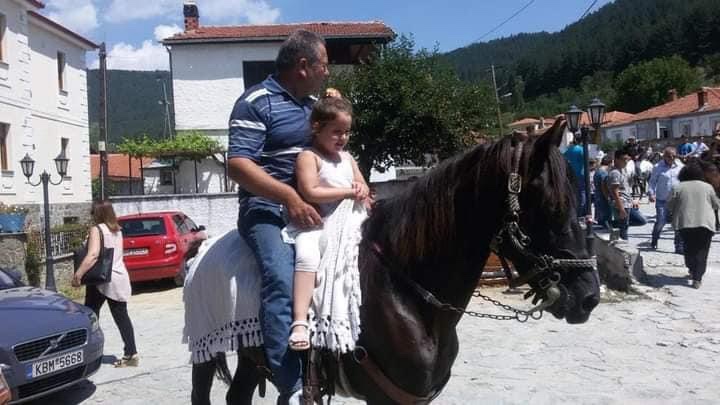
Though I normally share with you church services highlights, everyday Saints stories and elders’ spiritual encounters from my pilgrimages, this time I would like to introduce to you two local customs during the Feast, which I have encountered only in this area: the Horse Riders’ Tama (votive offering) to St Panteleimon and the Tranos Choros (Grand / Magnificent Dance).

The Horse Riders Tama to St Panteleimon

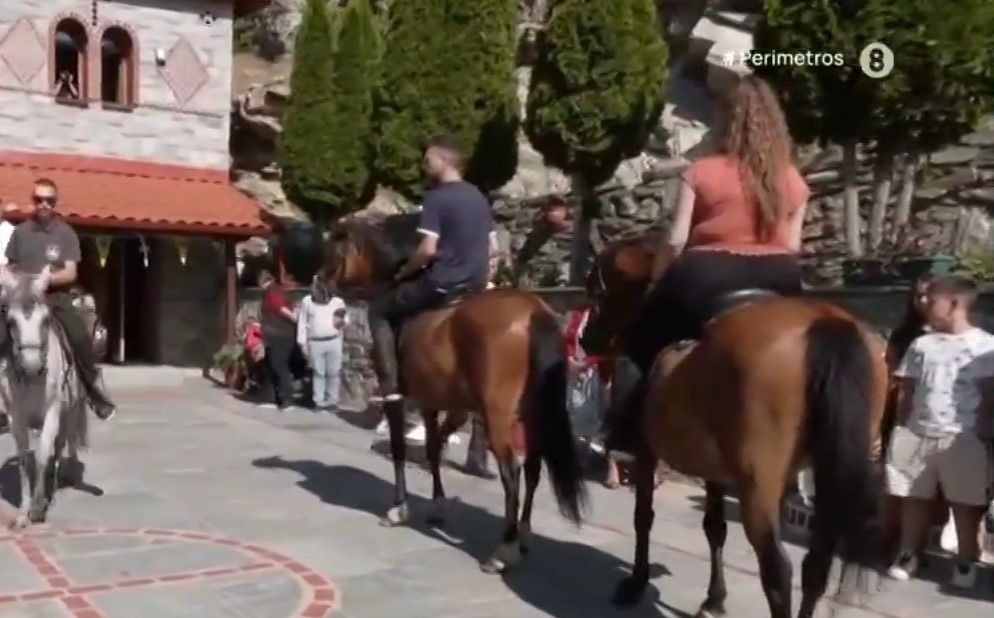
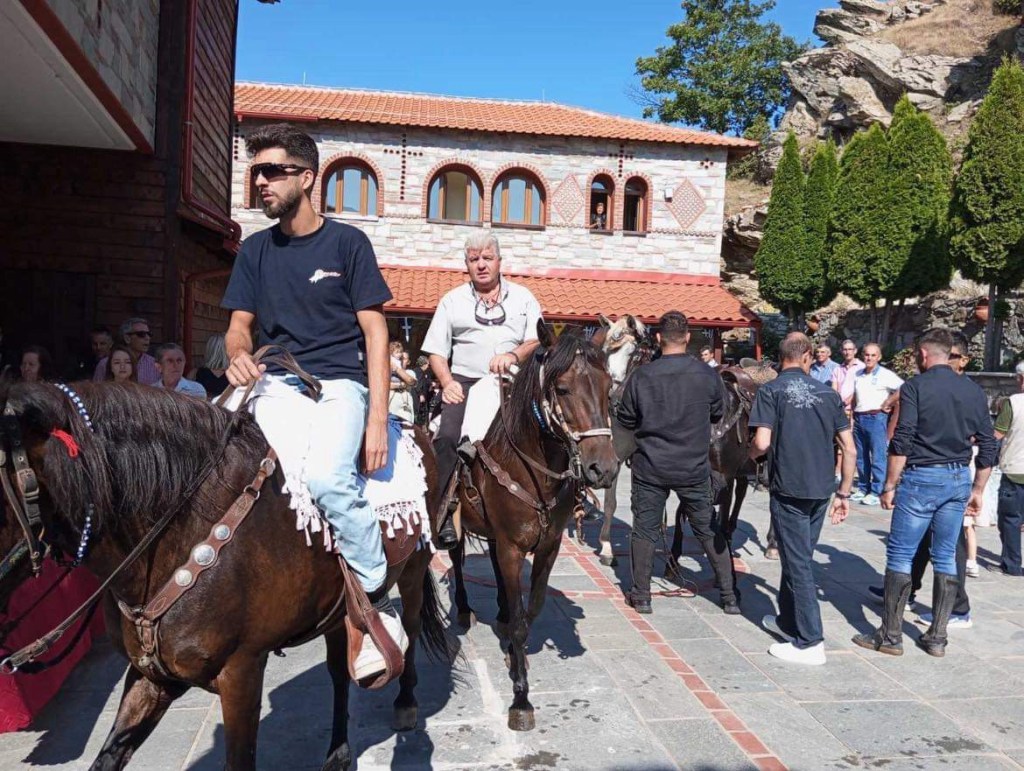
On the Feast day, the inhabitants of the nearest village Vlasti, as well as friends and relatives all over the world, who come specifically for St Panteleimon’s and later Panagia’s Feast on August 15, prepare their horses (some may borrow), and climb up to the monastery of Agios Panteleimon on Mount Muriki, so that they can attend church and honour the Saint.

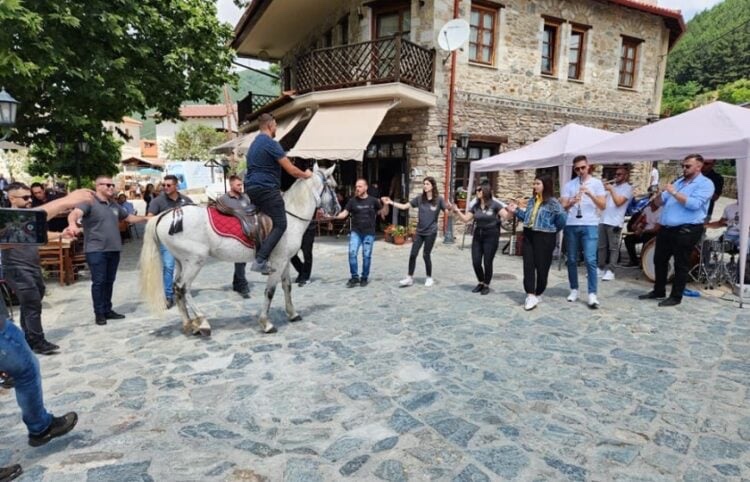
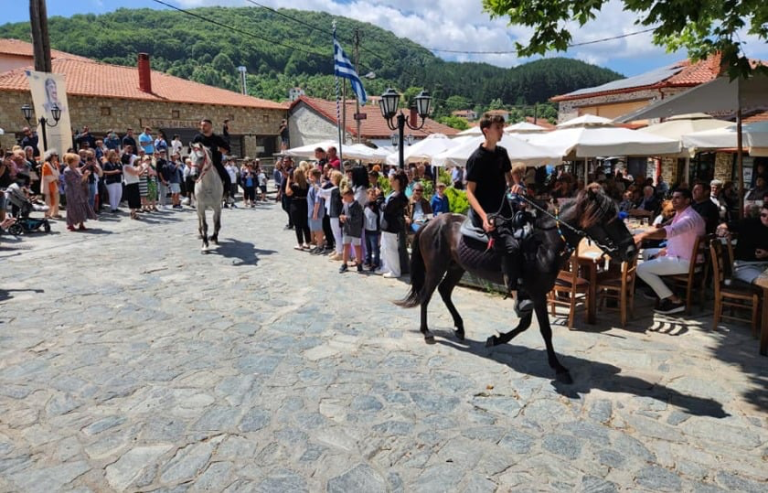
After the Divine Liturgy, the horse riders descend from the beautiful, meandering paths of the mountain, to the center of Vlasti, a nearby picturesque village, just 4 km away from the monastery, nested in the mids of alpine landscape and lushy fields, and sitting at an elevation of 1200m. Background music accompanies them all the way unto the monastery and back to the village feast.

Again, for video excerpts of the horse riders’ tama, and the village feast visit the following two YouTube links:

https://youtu.be/fvWVa5p3WqE?si=8s_Cua_sGHX5q8hT

https://youtu.be/XDf5ESyQhpk?si=SaSdyhfSe-wxU9iO

The Tranos Choros (Tranls. Grand / Magnificent Dance)

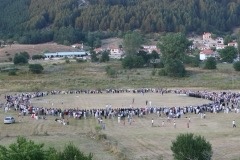
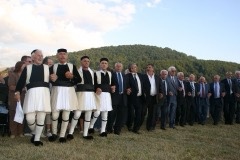
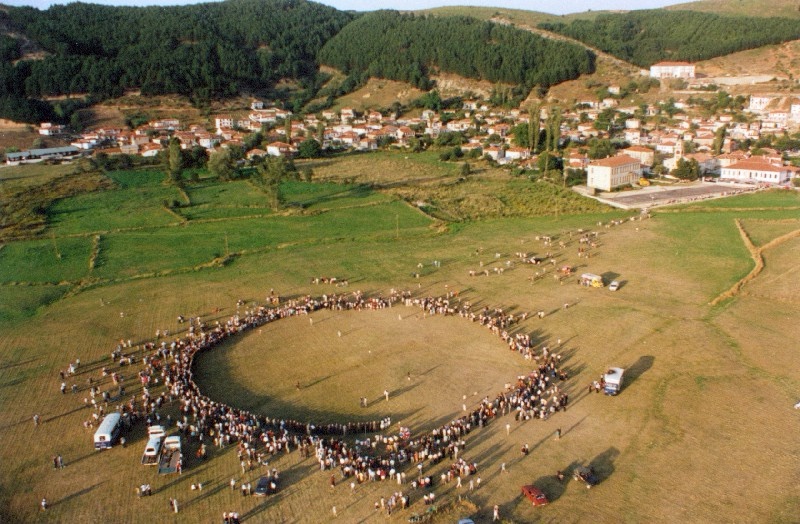
This dance is a traditional community event based on the dual elements of «song – dance» (a capella, ie. vocals and dance without the accompaniment of musical instruments). It bears a ritual character, passed on from one generation to the next. The term Tranos denotes the universal participation of the local community in its performance and its great importance to the community.

The dance is performed not only by permanent residents of the community, but also by Vlatsiotes all over the world, who, although are no longer inhabitants in their land of origin, make a point of returning to visit every summer during these feasts, with the aim of reconnecting with their village and reconfirming their group identity.

The Tranos Choros (Grand/ Magnificent Dance) is danced annually in Vlasti in the afternoon of July 27, day of the feast of Saint Panteleimon, as well as on the two days of the feast of the Dormition of our Lady Theotokos, on August 15 and 16.

The Tranos dance in Vlasti has its own rules. These rules define what time the dancers gather, their hierarchical position in the circle, the dance pattern, the order of songs, the specific dance motifs.

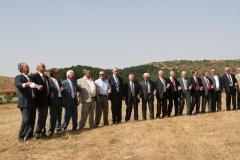
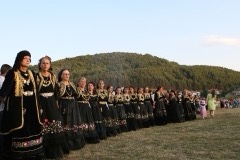
Hierarchy, based on gender and age, is a characteristic of its structure. The men lead the dance, positioned in order of seniority, those wearing traditional dress first . Age is again the criterion for each woman’s position in the dance circle. In the case of women of the same age, the criterion is their wedding date. Traditionally, the leading dancer is the eldest, an expert on both songs and rhythm.

The dance begins at the moment when the leading dancer crosses his left foot over the right. It is a particularly symbolic move, with the leading dancer raising his left leg and holding it above the right for the dance to begin. For the Tranos dance, this move has the same role as the raising of the conductor’s baton in a symphony orchestra. The movement is accompanied by a simultaneous move of the hand holding the kerchief and the rendering of the first verse of the song.

The lead dancer is joined in song by most of the men. The lyrics are repeated by the women’s semi-chorus and the men who are last in line. This ritual dance in the minds and hearts of the locals evokes people long departed. “This place has existed and will always exist. To paraphrase the poet George Seferis, «as the pines retain the form of the wind, even when the wind has gone and is no longer there»”

Watch this communal, ritual dancing in the following two YouTube videos:

https://youtu.be/Cl6WbI5brVw?si=cSt6-UyMcdMWUjy0

https://youtu.be/uLNkx5FSeUk?si=2lmqaKg8SgLzDG3e

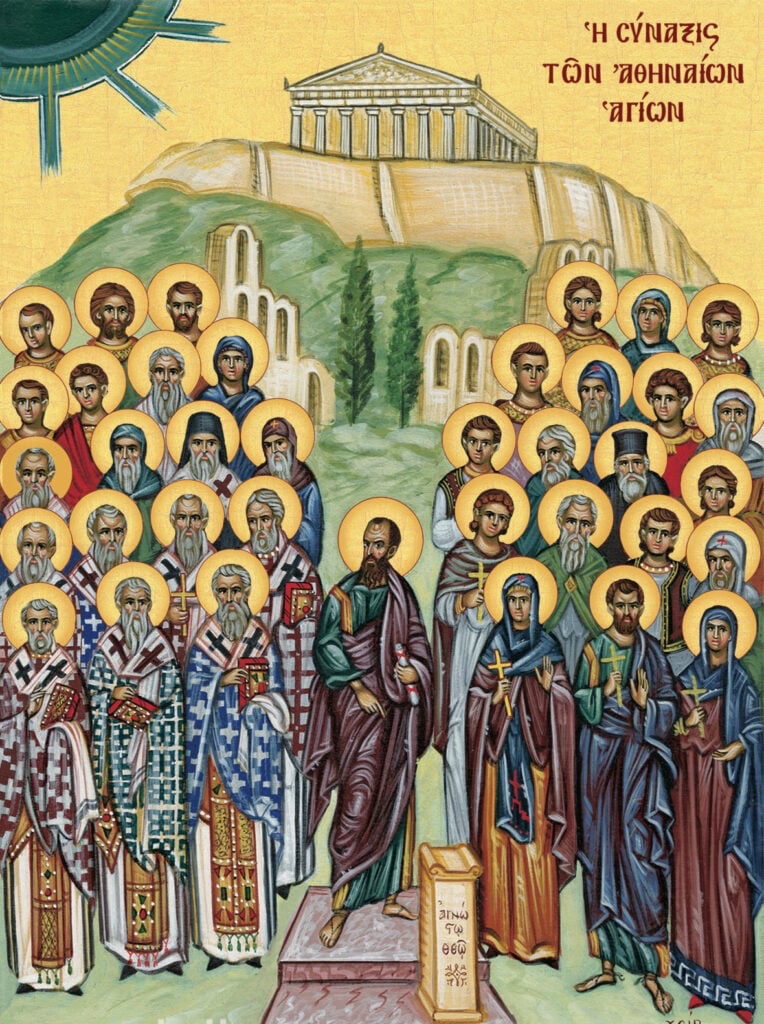
Synaxis of Saints in Athens, Old and New

* Diary notes from a recent pilgrimage

Thanks to my Holy Athens

Written by Andreas Christoforou – associate of the St Therapon church; Transl. little city hermit

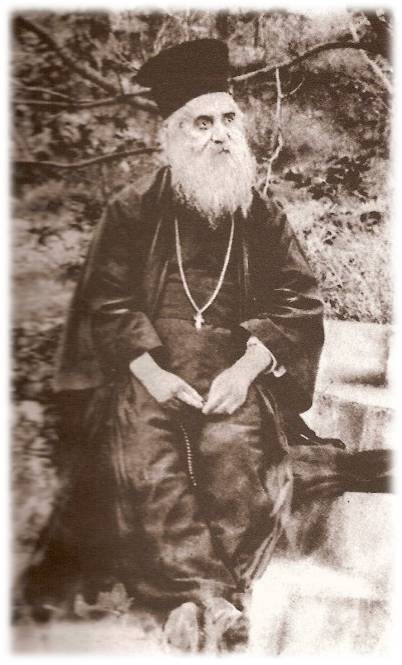
My beloved Athens, Thank you for hosting us for so many years and making us partakers of the Life of your Saints! Athens of Agios Nektarios! There in Aretaia hospital is still the bed where the sanctified soul of Saint Nektarios left his aching body to ascend to the King of Heaven! There somewhere in Koukaki was the poor house where he lived chased by the slanderers, not having to pay the rent. There he was seen by the indignant, unpaid landlady when she burst open his room, and to her amazement she saw him rapt in deep prayer, with hands raised to God!

Agios Nektarios: On the 2nd floor of the Aretaia hospital on Vasilisis Sophia in Athens is the ward where he was hospitalized for about 2 months and on November 8, 1920, Agios Nektarios fell asleep.
St Nektarios

There, on Vouliagmenis Avenue, Saint Nikolaos Planas worked and distributed “Eternal Life”! There in “Infectious Diseases” Hospital in Aegaleo, next to the Sacred Way, a leper, Saint Nikiforos left with the Martyrdom of Leprosy, a “smell of spiritual fragrance” and a successor, Great Fr. Eumenios Saridakis with his endless services and endless Repentance. There in the place of avoidance a secret group of anonymous lepers sanctified you daily, my Athens! While the old man Eumenios was leaving Loimodon Noson for Evangelism for his last hospitalization, on the way he blessed Athens and said: “How beautiful Athens is! Blessed Athens!” He blessed the streets, Omonia, the Agora, the Metropolis, the Parliament, the whole city! What else could the Holy Elder see in Athens, apart from the seal of Holiness that so many of its Saints, visible and hidden, ancient and modern, left on their path?

St Nikolaos Planas
St Nikolaos Planas
St Nikolaos Planas

At the Red Cross, a tireless deacon of everything, the wonderful Father Elpidios, brother of Saint Philomenos of the Holy Sepulchre, gave his testimony to the sick and the helpless! Buried, he sanctifies the Rhodopolis of Stamata together with the recently buried recently canonised Saint Athanasios Hamakiotis! The air of Athens was filled with fragrance in the 20th Century! And behold, the Roman figure of the sanctified Father Simon of Arvanitis and his successor, an accomplished Levite, the practical keeper of the Gospel, the Preacher of the Commandments of God, the humble and meek Father Markos Manolis appears! Who knew him and did not feel his Holiness? A man of overnight and continuous Repentance and prayer, of secret but also practical ministry?

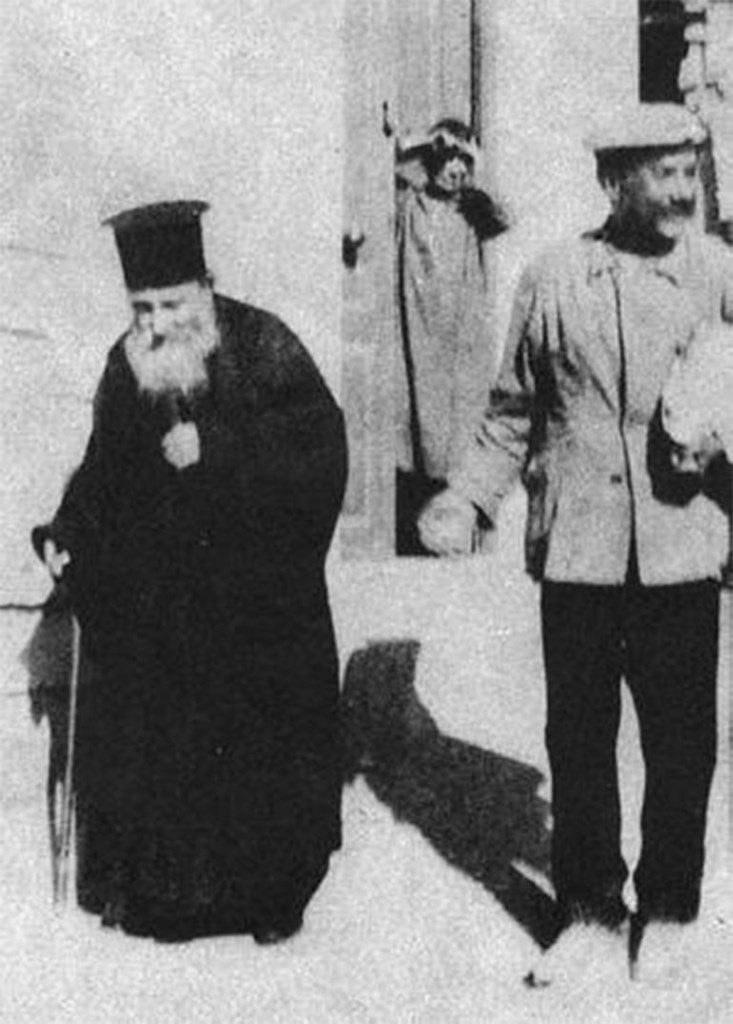
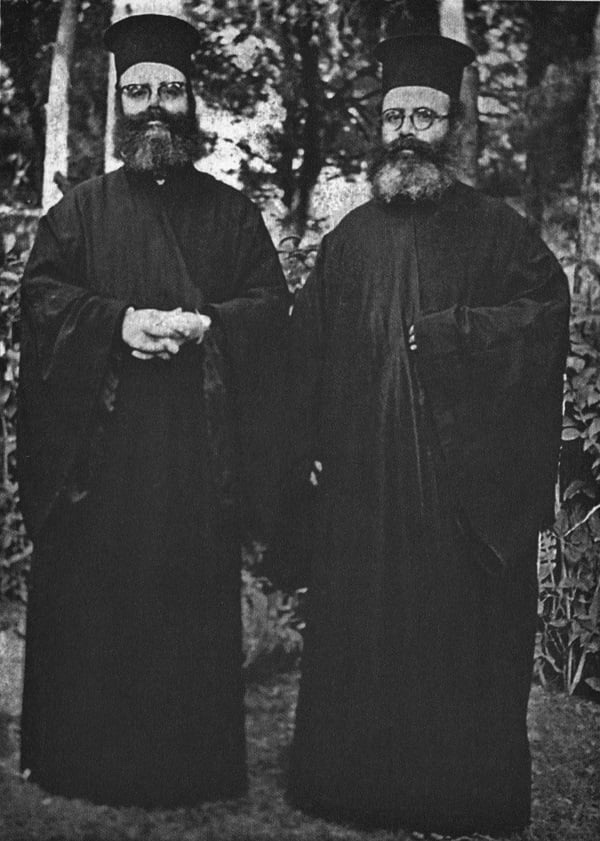
On the left, Elder Father Elpidios (1913-1983) and his twin brother Hieromartyr Filoumenos (1913-1979).
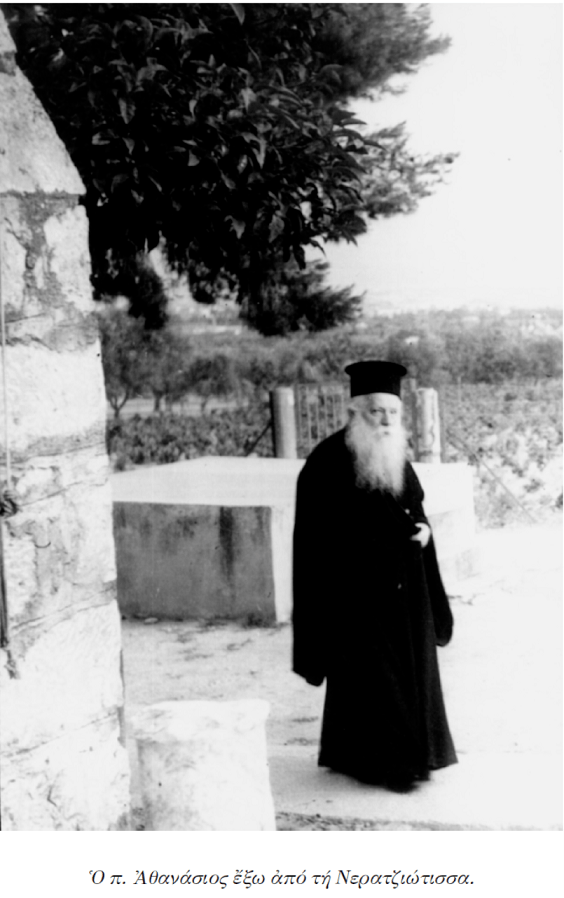
St Athanasios outside Neratziotissa, Athens suburb
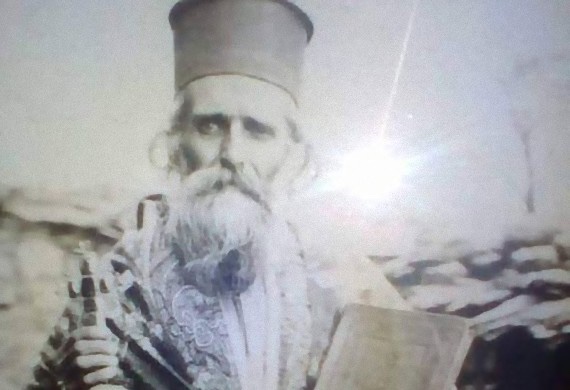
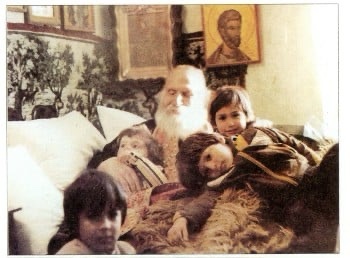
Gerondas Simon Arvanitis
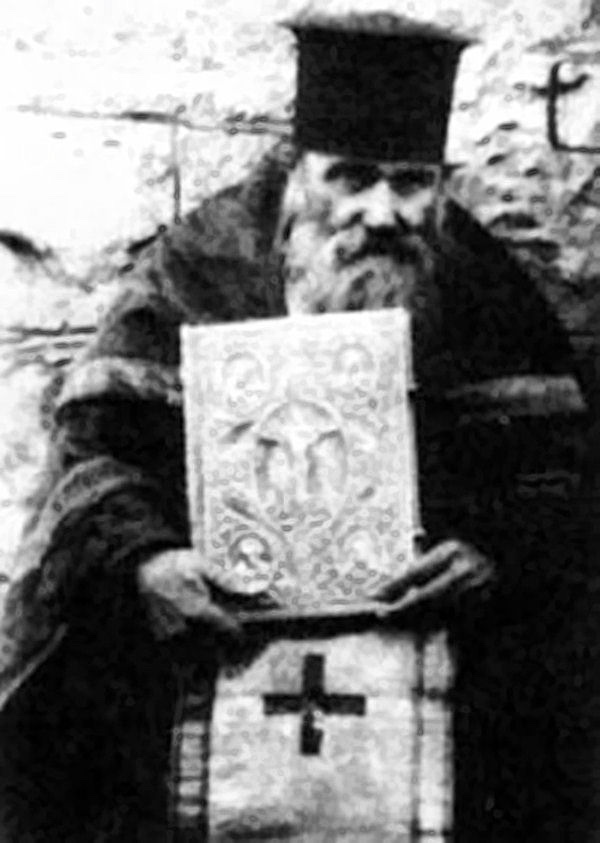
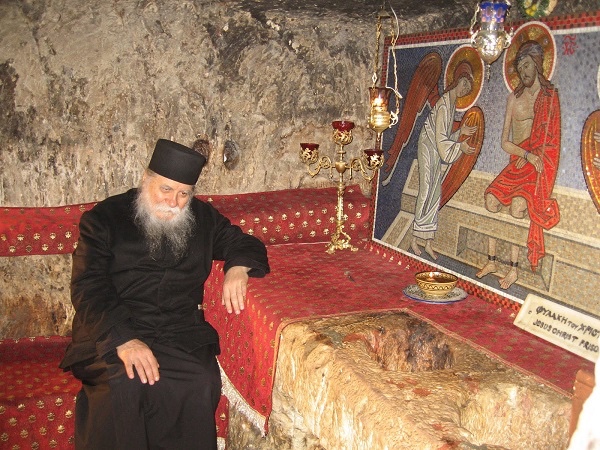
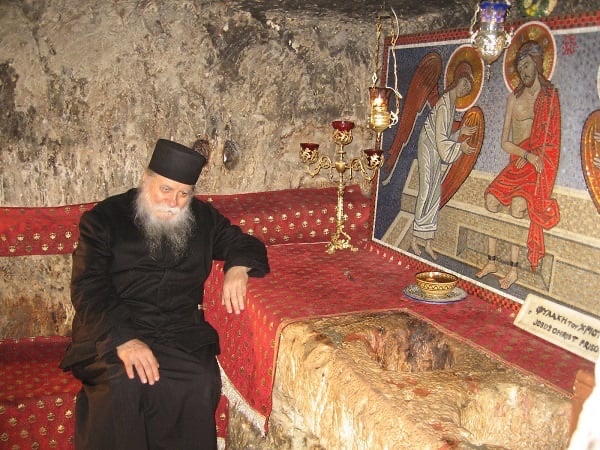
Father Markos Manolis in Holy Land, Christ’s Prison cell

Who knew the secret Father Antonios Gikizas who defamed and sanctified Alexandra Avenue, in the heart of the traffic in the semi-basement apartment? Who knew that this was the resting place of Saint Porphyry? Who would have imagined that in the heart of Athens, where trade, prostitution, illegal transactions, the stock market, the central market, give and take and bring, a huge figure of Holiness, an illiterate omniscient, an tireless Minister, would be consecrated in a small church of Agios Gerasimos, Saint Porphyrios?

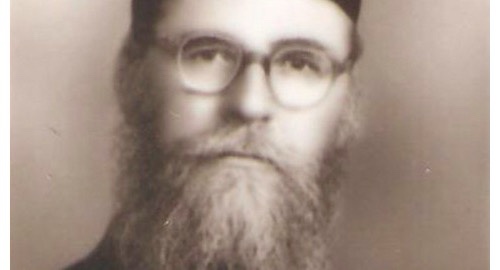
Father Antonios Gikizas— some Fathers claim he was the unknown spiritual father of Saint Porfyrios
Saint Porphyrios of Kafsokalyvia

Oh my Holy Athens! O bustling Holy Desert Athens! Oh Noble Athens, humble one, who produced so many great modern Saints who continued the Holiness of Saint Philothei, you remained Unknown as a place of Sanctification of the 20th and 21st Centuries! Everyone runs to worship! Where are you going; Did you go to Aretaiio? Did you go to St. Gerasimos at the Polyclinic? Did you go to Agios Ioannis on Vouliagmenis Avenue? Did you go to the Church of Saints Anargyroi at Infectious Diseases Hospital in Aegaleo? Did you go to Rodopolis? Did you go to Dionysus at the Church of St. George at the tomb of Fr. Mark?

Holy humble princess Athens! Have you smelled the Fragrant Air of these and many unknown Saints buried in her bowels? You have raised many Saints, my Athens, and you have them in your heart! The Tradition continues. Saint Nektarios opened the door of the 20th Century, and all the above and even more secret, unknown holy men and women have walked through it. Secret successors of the Holy Spirit still walk it today. Noise, chaos, traffic, marches, cars, pedestrians, traffic lights, trolleys and buses all move non-stop. And yet there are apartments – cells and retreats – in apartment buildings that secretly weave the thread of Life at night, invisible hesychasts, men and women, God rests in them, who are “poor in Spirit” and citizens of the Kingdom of Heaven!

Everyone is anxious about the Judgment for the coming great war that will shake the world, but few know that the course of the world is determined by the few, hidden, “insignificant” workers of Repentance who change with the tears of their own repentance the wrath of God for the wild debauchery, into Mercy and Providence for all the world. As long as God sees the Repentance of the few, he overlooks the sin of the many and life continues, the war is postponed, because new people repent and enter the Church!

Extend your Mercy to them! My despised Athens, you used to be the most beautiful city, then got ugly and humiliated, and now, you are full of Saints, old and modern! My Athens, thank you!

Andreas Christoforou, Refugee from Cyprus in Athens for 44 years!

Comments: When I read this text I felt ashamed that a refugee child came to show us around our house, revealing the spiritual treasures of Athens, which we did not know, while we should have known. I am ashamed but also grateful to him for this spiritual revelation he gave me. Dimitrios Tseleggidis, Professor of Dogmatics, University of Thessaloniki

Be still

Archimandrite Ioannikios Kotsonis, Saint Porfyrios’ spiritual child

“Be still and know that I am the Lord God.” Psalm 46:10

The excerpts below describe what happened to me when I met archimandrite Ioannikios Kotsonis, the spiritual father, the theologian and poet, at the Holy Monastery of the Transfiguration of our Saviour at Sohos last week. I was absorbed in the presence of the Holy Spirit and “reduced” to silence. “Be still and know that I am the Lord God.” Everybody else was asking him all kinds of questions, and only me remained silent by his side, so that in the end, puzzled he turned to me and asked me why I was not asking him any questions. “It is enough for me to see you, Father”, I replied. I was so absorbed in his presence! Such a tangible presence of holiness!

*

Fountains in the Desert (27)

Three Fathers used to go and visit blessed Anthony every year and two of them used to discuss their thoughts and the salvation of their souls with him, but the third always remained silent and did not ask him anything. After a long time, Abba Anthony said to him, “You often come here to see me, but you never ask me anything,” and the other replied, “It is enough for me to see you, Father.”

*

“In the summer of 2004, on a tour of Romanian Monasteries with a group of pilgrims from Ploiesti including my spiritual brother in Christ Fr. Bogdan Costin Georgescu, I had the privilege and blessing of meeting Father Ioanichie Balan in Sihastria Monastery. Father Ioanichie took us to the cell of his spiritual Father, Elder Cleopa and gave us a full tour of the monastery. As we made our way around the grounds he made the observation: “The English priest (referring to me) is very quiet!” After a translation, I replied “Forgive me Father but I have nothing to say!”

It was not that I was disinterested or reserved, quite the contrary I was fully engaged in the moment, and it had nothing to do with the language barrier. I was aware of being in the presence of a holy man and in a holy place. At such moments and places it is better to say nothing because the veil between heaven and earth is thin and we should cherish a glimpse of the uncreated light. We learn by listening and looking, but more than this, contentment of soul is to be found in sensitive stillness. For those in love, words are not necessary when one is absorbed in the presence of the other. Likewise when we live in harmony with God in the tangible presence of holiness, silence is to be preferred.”

Fr. Jonathan Hemmings

*

Elder Ioannikios was taught by Saint Porfyrios two things for spiritual grace: “the cheerful obedience to my Elders” and “unceasing noetic prayer, “Lord Jesus Christ, Son of God, have mercy on me.”

“Elder Porphyrios also stressed that, he had been greatly helped by study and diligence, that stillness – according to the expression, “Be still and know that I am the Lord God.”– generally found in the hymnography of our Church. He very much loved the hymns of our Church. He also liked to read, recite and sing them.

The hymns, the spiritual treasure of Orthodoxy, give a commentary, in the best possible way, of the Holy Scriptures, our Orthodox Tradition, the Patristic texts, the doctrines of the Church and the whole of Theology.”

Visit Here for more prophesies, testimonies and experiences with Saint Porfyrios —Elder Ioannikios

From Puppeteer to Actor of Christ 

This image has an empty alt attribute; its file name is josef.jpg


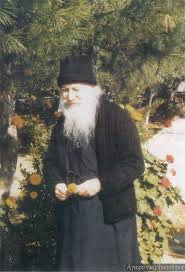
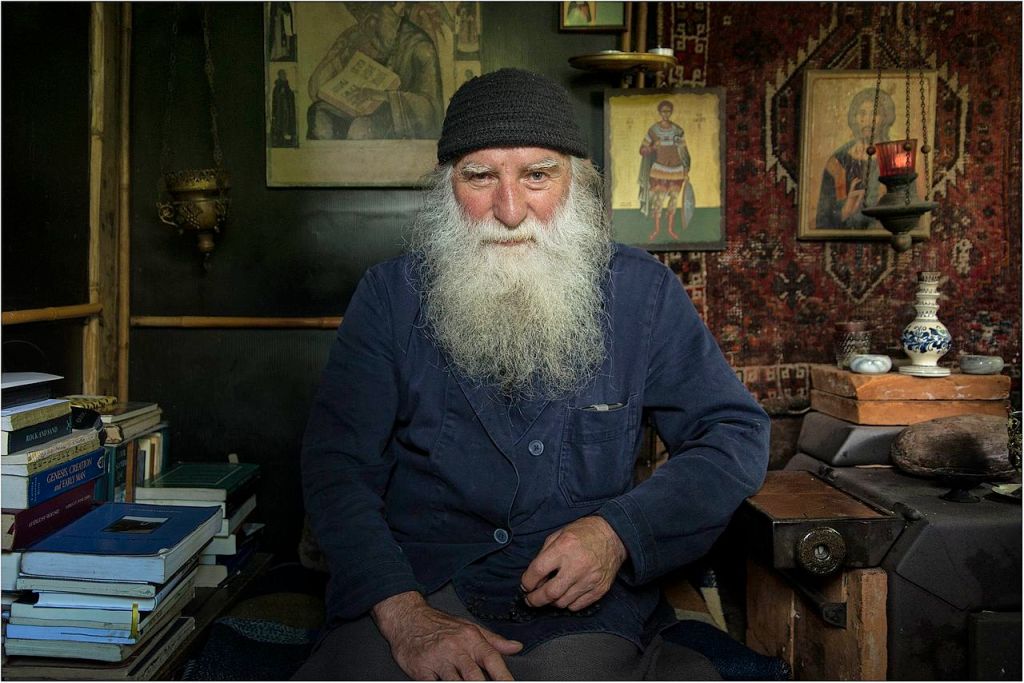
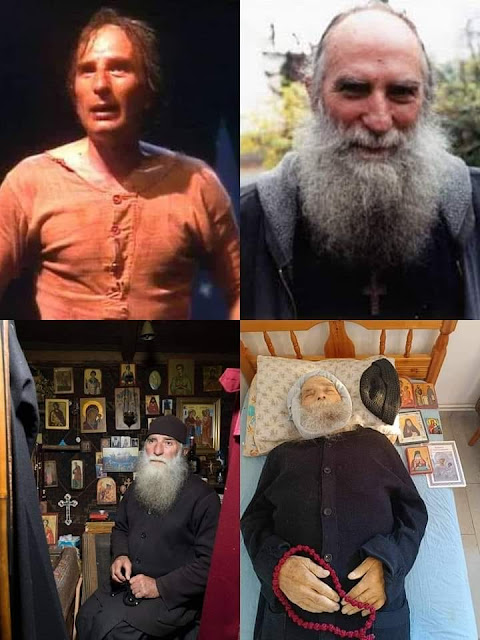
Yesterday, Saturday, June 1st, some friends from St. George Metochion took me to a pilgrimage to various hermitages outside Thessaloniki, near Ossa, where valiant Mothers lead ascetic lives, all alone, together with God, in the mountain wilderness. Surrounded by all these hermitages is the Transfiguration of Our Saviour Orthodox Monastery, in Sochos, a male monastery I have always wanted to visit for the last 12 months, since Josef Van den Berg has reposed there at 74, after an amazing meta-noia, conversion to God. (+ Oct. 16, 2023)

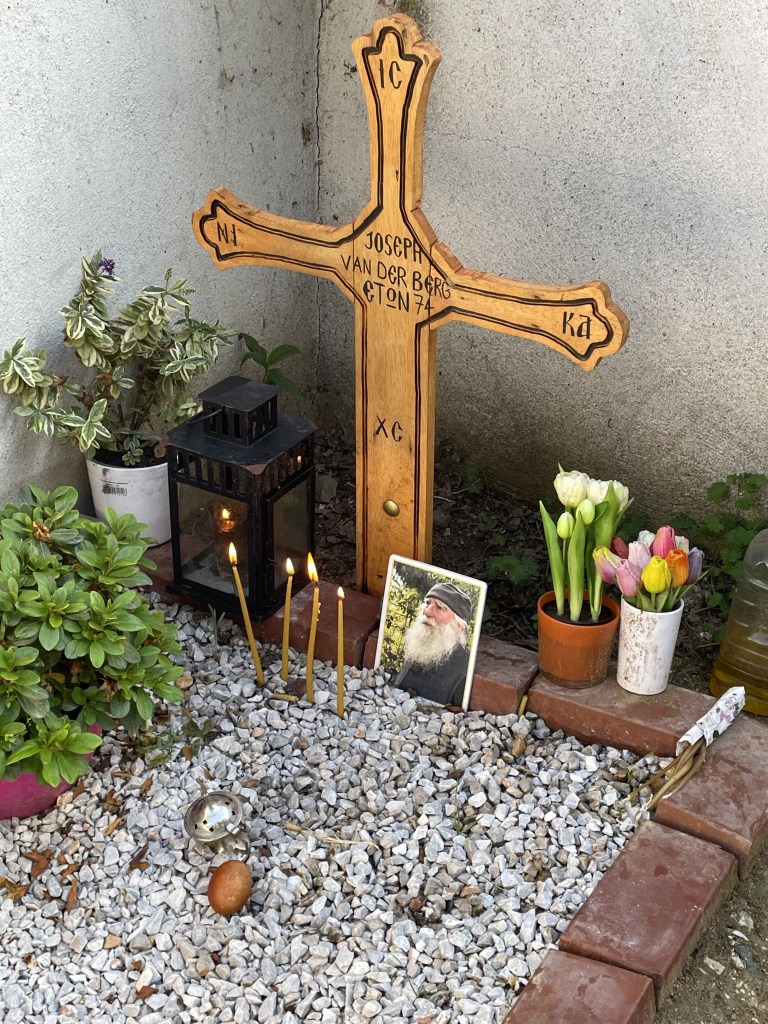
On Friday, October 13th 2023, the famous Dutch actor and puppeteer, Jozef Van den Berg, turned Orthodox Christ hermit reposed in the Lord at the age of 74 at Holy Transfiguration Monastery in Sochos, where he went to live the last few months of his life on earth, due to his failing health. His funeral was held on Tue 17th at the same Monastery and he was buried there. It was a blessing to light a candle and pray at his grave.

Jozef, who was born in Beers of the Netherlands on the 22nd of August 1949, was a very well known actor in the 1970’s and 1980’s in the Netherlands. He was initially an atheist and married with four children. Later, he began a successful career as a wandering puppeteer for children. Then he made his own performances in the theater, for children and adults. Van den Berg travelled the world, from Australia to Canada. In the 1980’s, Jozef Van den Berg played in his last play “Enough Wait” for his brother who was seriously ill and was in a wheelchair. On September 14, 1989, he would bring that performance to the De Sing but then something very special happened.

Let me begin a little earlier. On September 12th, 1989 was the Belgian première of Genoeg Gewacht at Antwerp [Belgium is a predominantly Dutch-speaking country]. That afternoon, Van den Berg had an encounter with God, as he described it later on. Sitting in his dressing room, he wrote a letter he wanted to use that night for the first time in his play. God asked him this question by his own pen: “Why don’t you ever see that I cannot come because I’m already here?” On September 12, 1989 he still played the premiere, which later turned out to be his very last show. Van den Berg was – according to his own words – being called by God, and had to answer that.
Before the evening show on September 14th, 1989 at De Singel Arts Center in Antwerp, he took his Bible and asked God what to do. He opened the Bible at the following words: “Go away from their midst and separate yourself” (II Cor. 6:17).

Before the beginning of the play he said to his audience:

“I will try to explain it to you. I hope that you have one thing for me and that is respect for my decision. I will never play again. I have approached a reality which cannot be played anymore. I have searched for a tremendously long time; have been everywhere. Eventually I came to the conclusion, and this conclusion, I have to admit, is that the seeker seeks but he is found. That’s why tonight is the last time I’m on stage. You don’t believe me, but that’s the deceitful side of theater.  Therefore, ladies and gentlemen, for this man, for Christ only, have I searched for this peace I wanted. And I know that it is so, and I quit this profession. For me, it’s over. I seek reality. I can’t say things that are not true for me anymore. I wish you a good day. I go. May you all go well. The money you paid can be given back at the box office.”

The audience was stunned. Was this real or was it theater? A deadly silence followed, and the theater audience reacted emotionally. Thus, on September 1989 at 7:55 pm, the theater career of Joseph Van den Berg came to an end.

That night was the beginning of an extraordinary conversion and odyssey. His quest led him to Maldon (Essex), Athens and the Holy Mountain of Athos, to further find out how he had to continue his road with God. His children and wife had difficulties understanding his conversion, and he was left all alone. Alone with God! Jozef gave up everything, job, fortune, family, everything, started living like a beggar, and eventually converted to Orthodox Christianity a year later, after paying visits to Elder Sophrony in Essex, Elder Porphyrios in Athens and Elder Paisos in Mount Athos.

An important event preceeded his conversion: a woman he knew from the Gurdjieff movement died in a serious traffic accident, and she had pointed out that she wanted to be buried in the Orthodox way. This happened on August 17th at Eindhoven. There, he heard the Trisagion for the first time in Dutch. That’s where he began to see that Gurdjieff wasn’t right.

At the end of September 1989 he went to the Greek Orthodox Monastery of Saint John the Baptist at Maldon, Essex, England, where he talked with Elder Archimandrite Sophrony, and he confirmed the experience God had given him and urged him to repentance. Elder Sophrony told him that he cannot sustain God’s Love if he does not endure the furnace of repentance. At the beginning of January 1990 he had a very important meeting in Athens with the Greek Elder Porphyrios. This last one too confirmed the experience God had given him in Antwerp, and he told him that he has to now to become an Actor of Christ. Saint Porfyrios urged him not to betray Christ and turn down His calling. He was then sent by Father Porphyrios to the Holy Mountain of Athos, where he had a meeting with Father Paisios, who too blessed him.

Back to Netherlands, with the blessing of three saints, things evolved in a different way than expected, everything started going seriously wrong as all three Saints had “warned” him, and he got in more and more trouble on all fronts. He couldn’t sleep anymore and  became over-tired. In the middle of this crisis, on June 18, 1990, he asked a priest in order to be accepted into the Orthodox Church. Months passed by in “dead-ends” and “walls” were raised all around him.

During the night of the 1st to the 2nd of June, he realized that he was left alone, and on June 2nd, 1991 he attended the Divine Liturgy at the [small Orthodox] Monastery of the Holy Prophet Elias at St. Hubert. That’s where he left what was left of his money on the collection plate. “Lord, from now on, You have to take care of me. I totally surrender.” There, Archimandrite Pachom read from the Gospel of that Sunday of All Saints: “He that loves father or mother more then me, is not worthy of me: and he that loves son or daughter more then me, is not worthy of me. And he that takes not his cross, and follows after me, is not worthy of me. He that finds his life, shall lose it: and he that loses his life for my sake, shall find it” (Matthew 10:37-39). Two hours later, after the Liturgy, he went straight to the Orthodox Monastery of the Nativity of the Theotokos near Asten, where he stayed for 19 days, and where he left his Mercedes Combi, because it didn’t want to start again. For him. It started for his brother a day later!

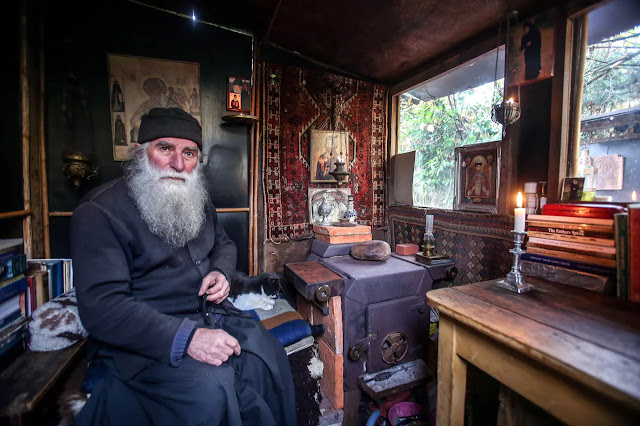
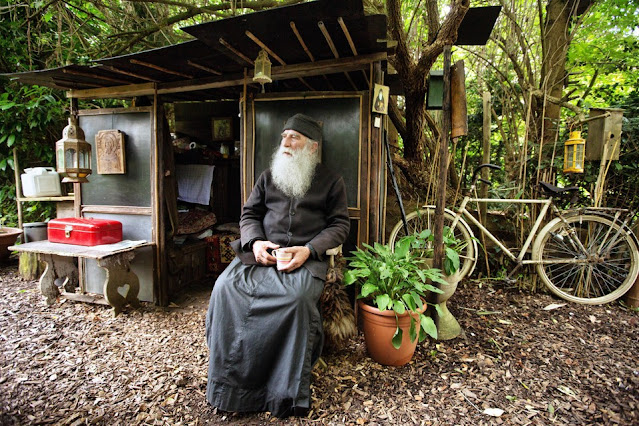
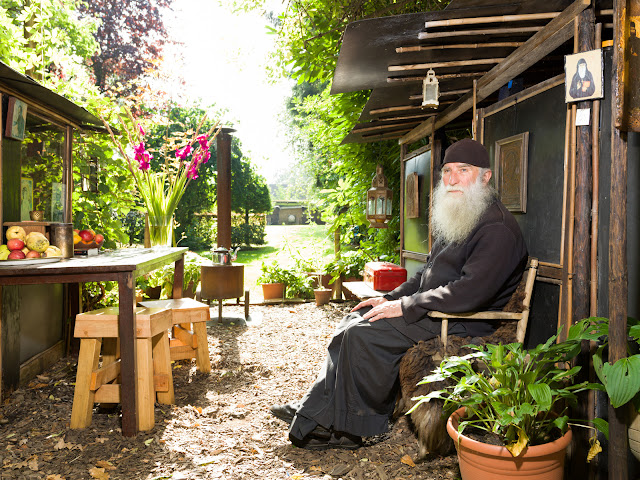
His only question was: “How does God want me to shape my calling?” Slowly, peace returned to him. From July 1991, Jozef Van den Berg started living as a hermit, first in the bicycle shed of the town hall in Neerijnen, later in a self-built chapel in the backyard of a fellow villager. There were four poles close to the quince tree, and Joseph understood from this that he had to build the “Pull-Up” under the quince tree. With this “messenger”, he built a small chapel of 2 by 1.5 meters, which still stands today. He prayed and received people every day. He lived on whatever people brought him. He had no connection to any utility whatsoever. Eventually, there was a toilet in the castle garden, which Joseph and his guests could use, and the last few years he hasd a mobile phone for emergencies.He obviously received a lot of a media due to his lifestyle since then…

In the end, he left Neerijnen in August 2023 and traveled to Sochos in Greece, where he reposed on the 13th 2023 at the age of 74 in the Greek Orthodox Transfiguration Monastery.

Read more here and here

More about this monastery and its founder and spiritual father, Archimandrite Ioannikios Kotsonis, the theologian and poet, the spiritual son of Saint Porfyrios in the next blogpost.

Under the Archangel’s Mighty Wings

This year, Holy Week was especially difficult due to an enforced isolation. A little city hermit delights in quietness and solitude, but not an enforced one, and not together with somebody else who is ‘difficult’, where one has to practice cutting your own will every minute. Nonetheless, His Will may be done, and so this painful week passed and that and most demanding obedience was concluded for the time being…

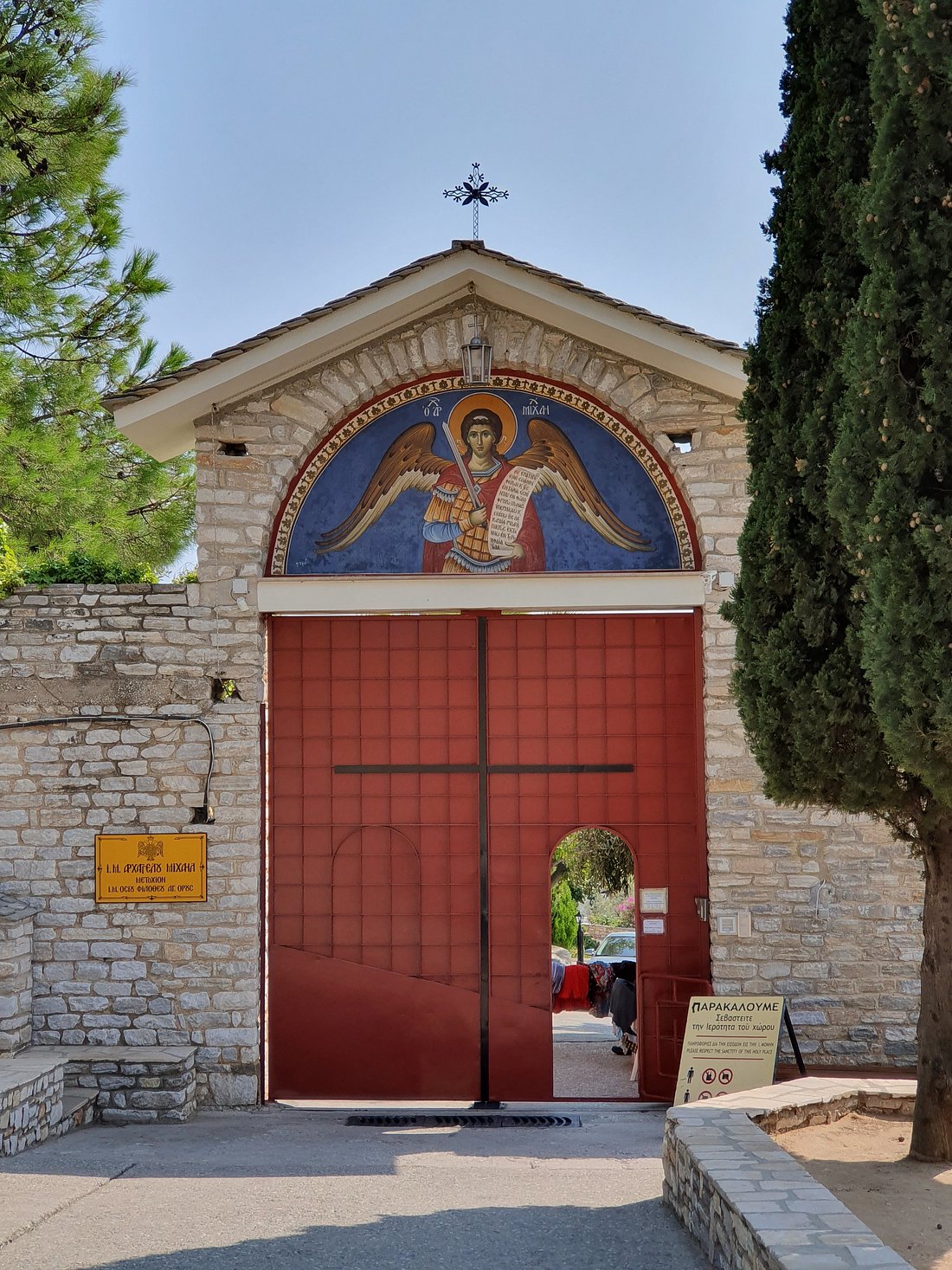
Thank God, the Bright Week which followed was “bright-er”. Its highlight was a pilgrimage by St. Arsenios Monastery, and especially our visit to the Monastery of Archangel Michael in Thassos on Bright Wednesday, the following day of its litany:

The Monastery of Archangel Michael is located on the way to Alyki, about 25 km, south of Limenas. It is built on the edge of a cliff, thus it gives a spectacular view of the Aegean Sea.

The view…

The Archangel Monastery is the biggest and by far the most popular monastery of Thassos, to pilgrims and tourists alike.


The monastery is a share of the Holy Monastery of Philotheos (at the monastic state of Mount Athos). Its historical origin is set in the Byzantine times. In 1090 AD the hermit Luke built a small chapel at the place obeying the command of Archangel Michael, who hit with his hand and a holy spring gushed out there. The holy water, which has been a source of many miracles, flowed in the chapel until the occupation of Thassos by the Turks. Then some irreverent Turks tried to pollute the spring mocking our faith and the result was that the spring dried out. Later the holy water gushed out again and keeps flowing until today in a different position, in a cave under some rocks near the sea. It is called the “on the knees” holy water because you enter the spring on your knees. It is still the source of miracles to the pilgrims who pray and ask for the Archangel’s help. 

In the convent is also found a piece of the Holy Nail, put in the right hand of the crucified Christ and it is kept in an artistically crafted hexapterygo (ie. silver six-winged plate) for the pilgrims to worship and for the protection of the convent and the island. This was dedicated to the Monastery of Philotheos by the emperor Nikiforos III Botaneiates and it was miraculously moved to this chapel as the Archangel wished. As part of religious celebration, every year, on the first Tuesday after Easter, the Monastery conducts a procession that starts at a small village of Theologos. During the procession, they carry the Holy Nail back to the convent.

This Monastery share remained abandoned until 1974, when the blessed Ephraim, Abbot of the Monastery of Philotheos, brought the first sisterhood in this place, where the facilities were rudimentary. The nuns have worked very hard to reconstruct the place and bring the convent to its present amazing condition.

The grace of the Holy Nail and the Archangel, as well as the plethora of miracles attract many pilgrims from all over the world, praying for help and protection from the trials and tribulations of life.  

Inside the cave

The Agiasma – Holy Water​

Nuns are most cautious when eager pilgrims want to visit the cave of the holy water. They insist that you should know that: 

  • Because  the journey has many difficulties, you must have the  appropriate physical health and condition and  ability and undertake personal  responsibility for the effort.
  • Most of the route consists of climbing  the rocks. Essential  supplies for the route are sports shoes and water. 
  • The duration is determined by the capabilities of each pilgrim.  It lasts an average of 2-5 hours.

From all 40 of us, only Father Nikodemus and two pilgrims attempted the descent and made it to the cave. The descent and the ascent took them a total of 6 hours, and then they disappeared for about another 6 hours to restore themselves until the night prayers. Have a look at the video below of the descent with the two company of two goats to see how difficult this descent is.

For more information about the miraculous spring of the Archangel and the Discovery of the Honorable Nail of the Saviour, go here.

The Earthly and the Celestial Pilgrims— Part 2

https://youtu.be/2MShiJk761s?si=s2Ga3kxsHLlmJiCL

https://youtu.be/WtlQEOeeCxA?si=bFDMsAXcZ42nwo7y

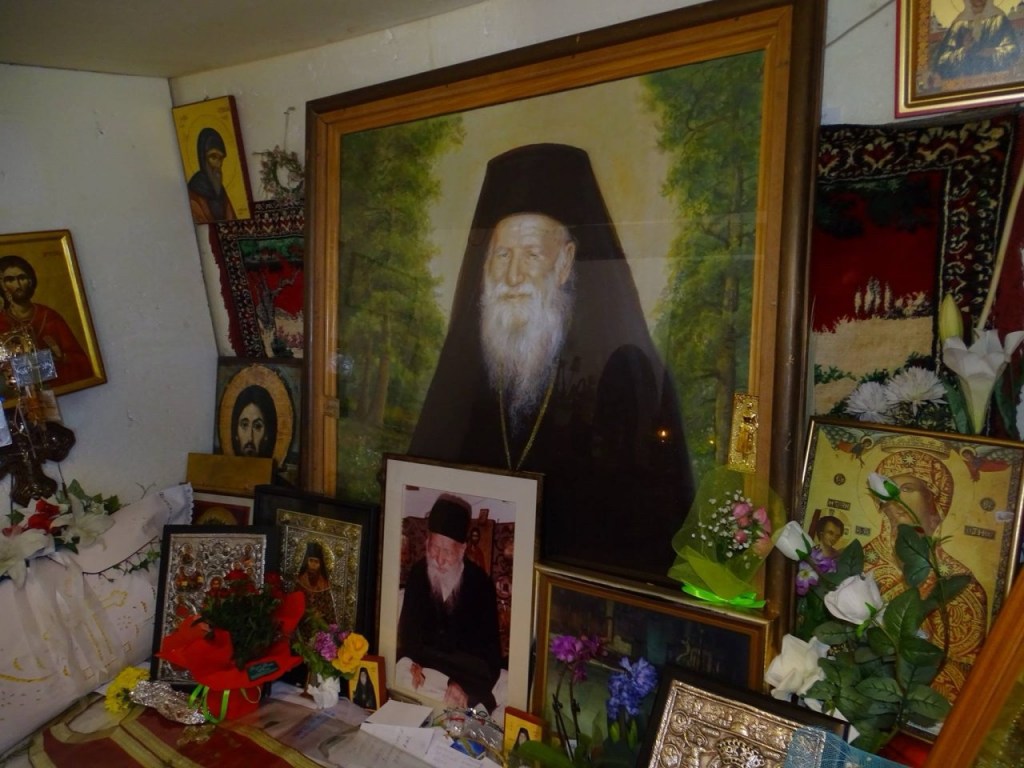
Upon entering the bright light of the monastery of St Porphyrios, I encountered two presences in its stillness.

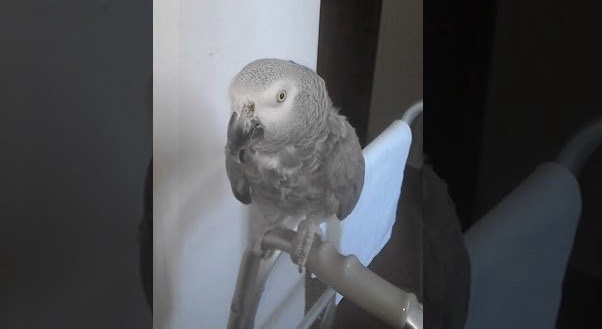
Peter, St Porphyrios’ parrot

Peter, St. Porphyrios’ parrot, still looking for him after 30+ years and reciting the Jesus prayer the Saint taught him.

Watch him in the video below recite the Jesus prayer in St Porphyrios’ voice!

https://youtu.be/ewtDpSFC7mk?feature=shared

https://youtu.be/ov2Td4coraE?si=zL-cO15sUsp_cEUb

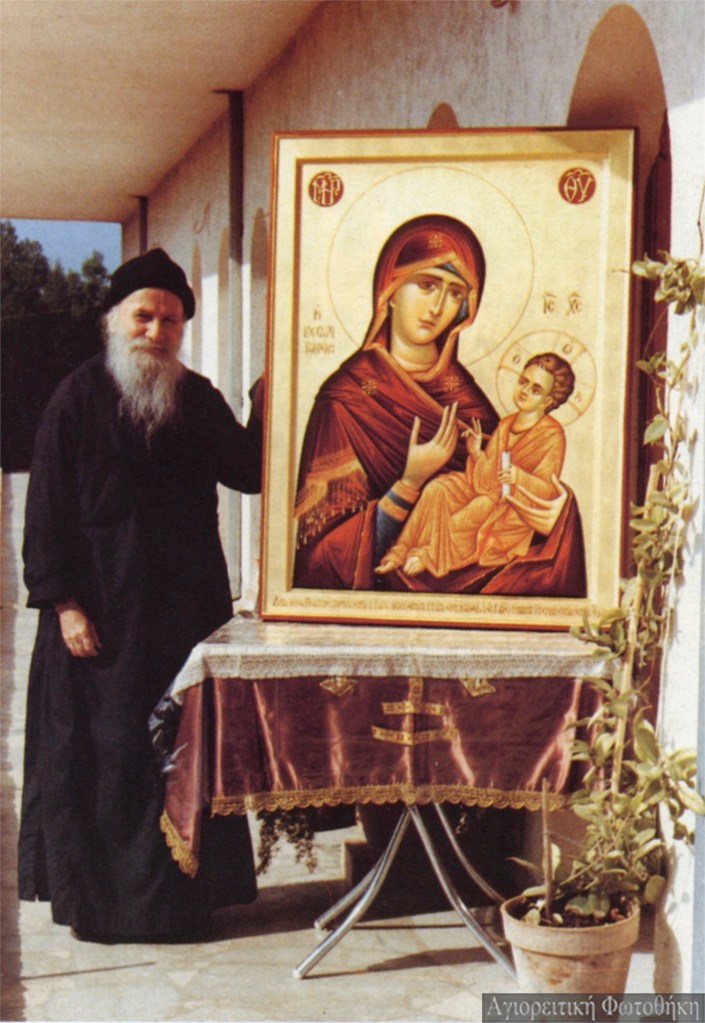
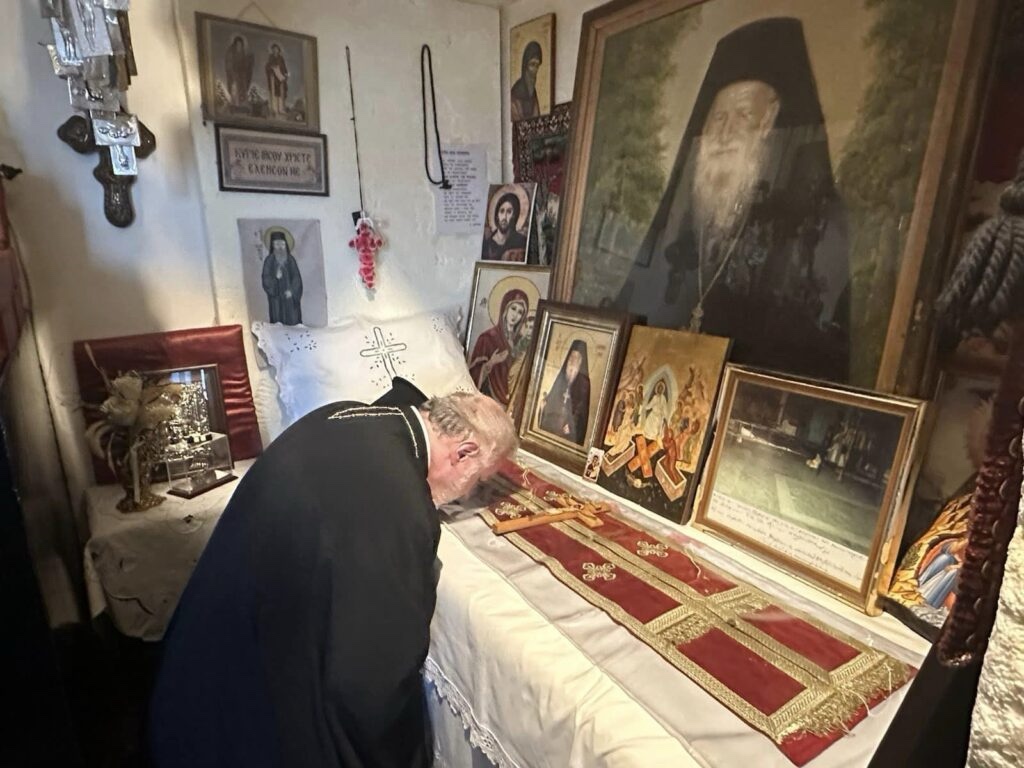
Nearby, one also encounters Giorgos Arvanitis’ grave, the only lay person buried in Milesi, a humble presence everywhere in the monastery,even in the Saint’s Cell, next to the Theotokos icon the Saint was photographed with.

Inside St Porphyrios’ cell. Listen to the Saint blessing us: https://youtube.com/shorts/mMxJjsr29Qo?si=uEZwJuq-z_tqxThM

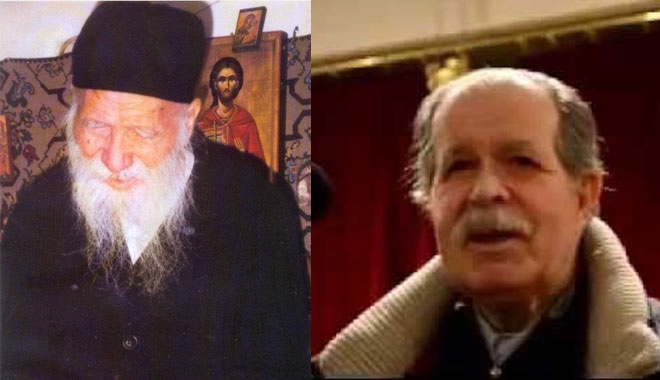
It was St Paisios who sent Georgios Arvanitis to St Porfyrios when Georgios asked his counsel on Mount Athos which spiritual father he recommended for him. St Paisios also humbly confessed to all pilgrims that “his TV was only black and white, whereas St Porphyrios’ was a colour one!” 🙂 So Georgios met St Porphyrios and “was captured by him” [his words].

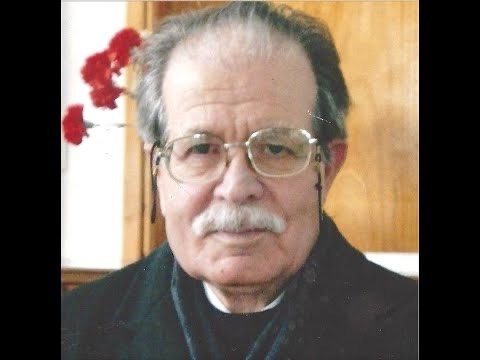
Georgios Arvanitis, the humble angel ministering St Porphyrios for over 30 years

Giorgos Arvanitis was a successful judge who gave up his career at the height of its success; he gave up everything to become the “beloved disciple” of St. Porphyrios, his “right hand” for over 30 years. He lived for years in a tent in the wilderness, next to St Porphyrios, when there was no monastery in Milesi, just forests and fields. In the beginning, he would sleep in his tent after long vigils together with the Saint, put on his suit and head to courts, then in the afternoon, return to his tent, take off his suit, put on his tracksuit and become one of the Saint’s workers. I’m the end, he gave up everything and was by the Saint’s side all the time, living in obedience.

His last interview before his reposal in the Lord, next to his beloved Father

https://youtu.be/dMSHtHE8pdY?si=1dkCM8plOobksC9

I spent all week studying Giorgos Arvanitis’ diaries and ‘anonymous’ books, and so wished I were him! I cannot begin to imagine what a blessing it must be spending 30+ years by the Saint’s side! Below is an except:

“The relationship between Sts. Porphyrios and Paisios was one of love and spiritual communication. Once, St. Paisios came to the little cell that St. Porphyrios had at first, and after they said whatever they said, St. Paisios left.

Then I [Georgios Arvanitis, the judge] went there, full of curiosity, to St. Paisios and told him: “What did you talk about, Elder? What did you discuss?”

He told me with disarming simplicity: “Eh, the ‘Lord Jesus Christ… [i.e. the Jesus Prayer]”

I expected them to discuss the 666, the 12 bishops, or various ecclesiastical topics. {Georgios Arvanitis, judge in retirement, is laughing} But they prayed together. They found an opportunity to pray together, to “breathe together” in prayer.” (Transcript of the recording here)

After studying closely the writings and memoirs of Archimandtite Mark Manolis of blessed memory and his spiritual children, and those by Georgios Arvantitis, it becomes even more obvious to me how vitally important is to find a spiritual father to do obedience and be in close, if possible, daily interaction with him and his whole spiritual family. God is glorified in His Saints!

Part 1

Pilgrimage to St Porphyrios — Holy Transfiguration Monastery, Milesi — Part 1

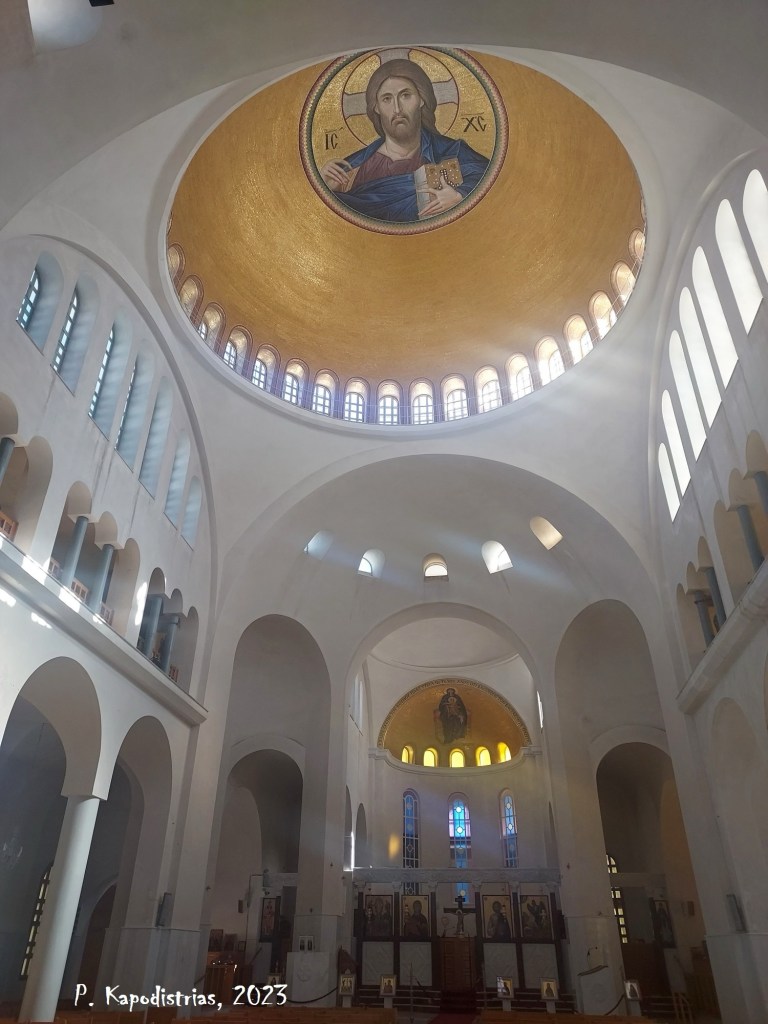
The Holy Monastery of the Transfiguration of Christ (celebrated August 6th), though technically a dependency, was founded by St. Porphyrios of Kavsokalyvia in Milesi, Attica, geographically between Oropos and Malakassa in the northern suburbs of Athens.

From one’s first step as a pilgrim in the area, one encounters the sanctity of the place and the total silence. One is struck by the astonishing Holy Church and the beautiful green surroundings.

A multitude of people hasten to the holy Hesychasterion which honors the memory of the Venerable Porphyrios on December 2nd, the day of his repose, in order to partake in the grace of this Saintly Elder.

The building of the monastery began in 1981, and the building occurred in stages, with the Katholikon being founded in 1990, with permission of Archbishop Seraphim of Athens. The walls of the church were completed in the spring of 1992, a few months after the repose of St. Porphyrios. (1)

St Porphyrios on his bed at the monastery near the end of his life

Upon arrival, we were blessed with the Supplication to the Saint, chanted by a small group of pilgrims, and personal memories with the Saint treasured and shared by their priest.

The Earthly and the Celestial Pilgrims— Part 1

The first fellow pilgrim to honour is certainly Archimandrite Mark Manolis of blessed memory. Father Mark is the spiritual father of both Father deacon N. and the local “guide/ “driver” M. who helped me throughout this pilgrimage to St Porphyrios. Many a times, all these hours together with both of them, I have wondered if such are Father Mark’s spiritual children, what a blessed spiritual father he must have been.

Upon arrival in Athens, at the airport, M. gave me a recent edition of her late spiritual father’s life, and ever since I started reading this book, on my flight back home, I was unable to put it down before reading it completely at one stretch!

The more I reflect and distil the blessings, the clearer it becomes to my mind how important it is to be under the obedience of and in close interaction with a true spiritual father. Also: how crucial is to discover and become a member in a spiritual family, cultivate the fellowship in a sisterhood/ brotherhood/ parish for our spiritual growth.

“For none of us lives for ourselves alone, and none of us dies for ourselves alone.” Romans, 14:7

One of the many testimonies about the late Hieromonk Markos Manolis at St. George parish church, in Dionysos, Attica (at the foot of Penteli Mountain, near Athens) is the following:

“I met hieromonk at the age of 23. The heights of his ascetics and self-sacrifice were unparalleled. He never slept and was always there for his spiritual children. A great many of his spiritual children had seen him walking above the ground during the Holy Liturgy. When he first saw me, he called me by my first name. I had never known him before. How come he knew my name?

His great humility and abstention from sleep and unceasing prayers had opened his spiritual eyes and he was endowed with the gift of foresight. He was one of the most militant adversaries of ecumenism, spiritual leader of the “Orthodox Press” newspaper, but above all a true spiritual father and leader of many spiritual brothers and sisters in Christ in villages, towns, hospitals, jails around Athens and in Athens itself.

Hieromonk Markos Manolis possessed the power of foresight which had been validated on multiple occasions . Personally speaking, he had foretold my future encounter with my husband two years before his departure from this world.” (2)

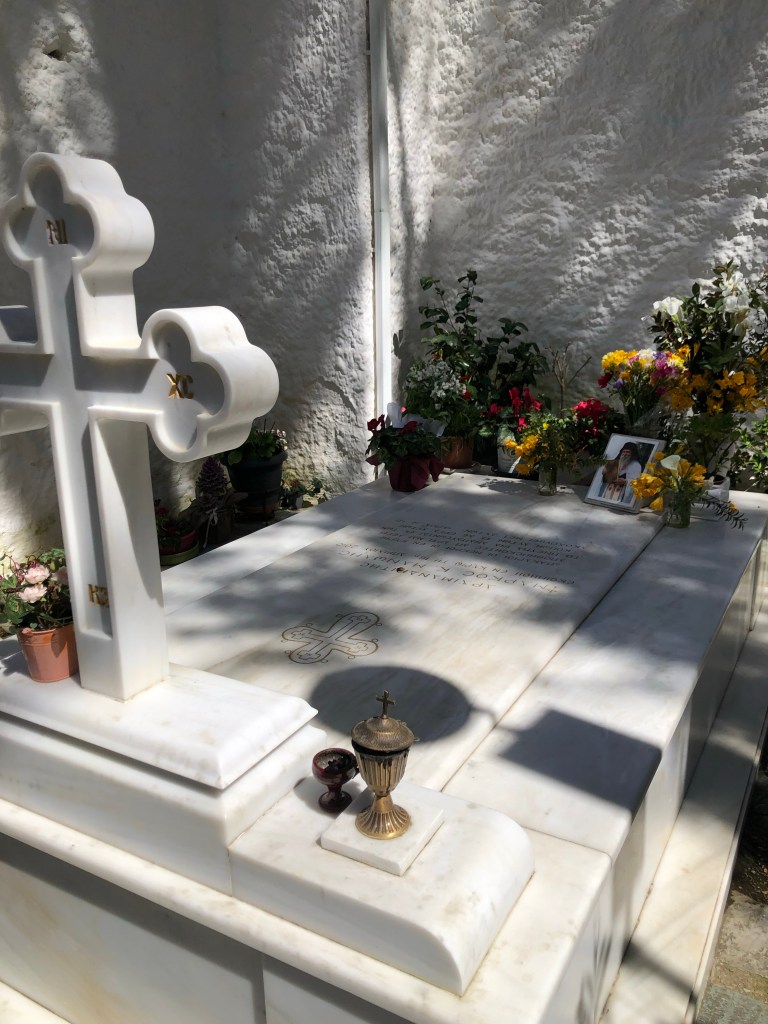
Inscribed on the tombstone: ‘Then I heard a voice from heaven saying to me, “Write: ‘Blessed are the dead who die in the Lord from now on.’ ” “Yes,” says the Spirit, “that they may rest from their labors, and their works follow them.” Revelation 14:13

To be continued…

(1) Full of Grace and Truth

(2) In the Footsteps of Jesus, Sophia Kioroglou

Pilgrimage to the Holy Monastery of Panagia Dobra and St. Luke the Surgeon

Another blessing of Mount Athos Gregoriou Metohion in Thessaloniki and Father Deacon Nephon and his synodeia.

During this pilgrimage, even before arriving at the monastery, I had the blessing to hear moving Confessions, such as that of:

an old lady, Konstantina, who told me (and truly meant it) how she had wasted all her life, saw only errors and sins behind her, had grown old and had not yet started repenting about all this;

a young student, Eirini, who told me how she was visited by Saint Luke Symferoupol during a scary hospital stay, decided to become a surgeon like him, dedicated her life to the Church and has been together with this Saint at every step of her life since;

a young invalid, Pandelis, and his tragic story: how first his father, and later his mother, abandoned him because they could not bear his disability since birth, the fact that they had to take care of a ‘half’ son (see photo below), and how he now lives all alone, but together with God and with the help of some of the faithful;

a courageous middle-aged widow and artist, Anna, and her martyrdom in taking care of her invalid husband after a car accident;

a brilliant architect, Anastasia, and her cancer martyrdom …

All these stories, together with lots of tears and prayers, were on our way to the monastery, and many more during our visit and on our way back to Thessaloniki. Stories of suffering, yet transfigured into joy, by His Love. After each Confession, especially Pandelis’, I felt even more shame for my own faintheartedness and unmanliness in my struggles and tiny Cross.

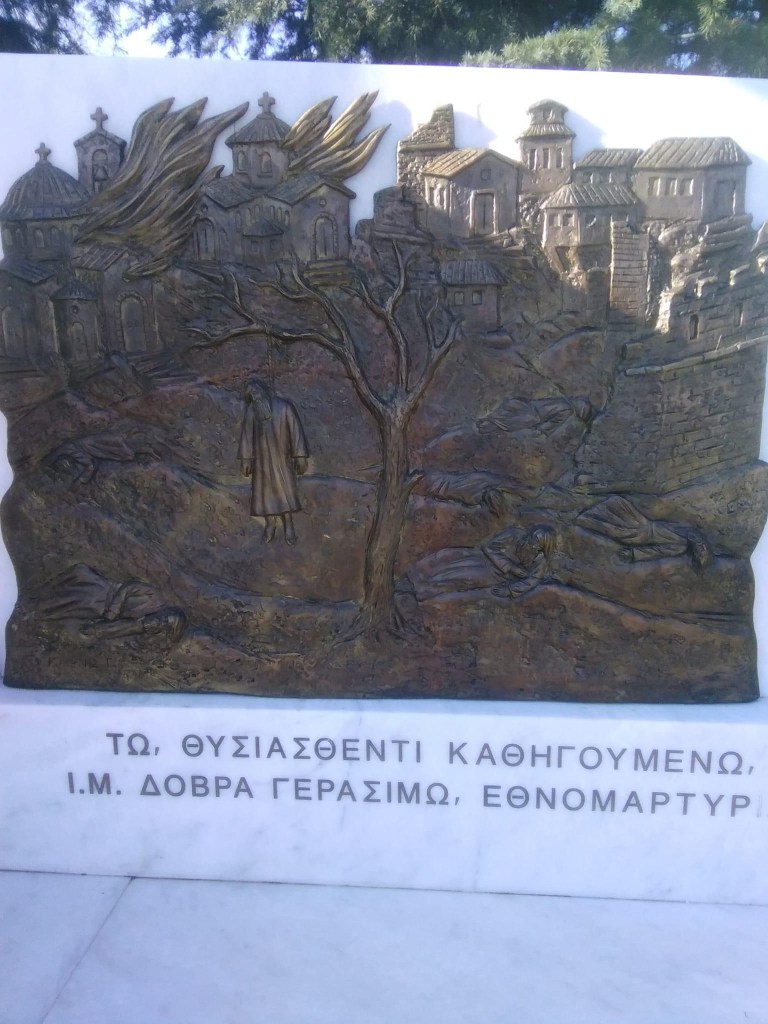
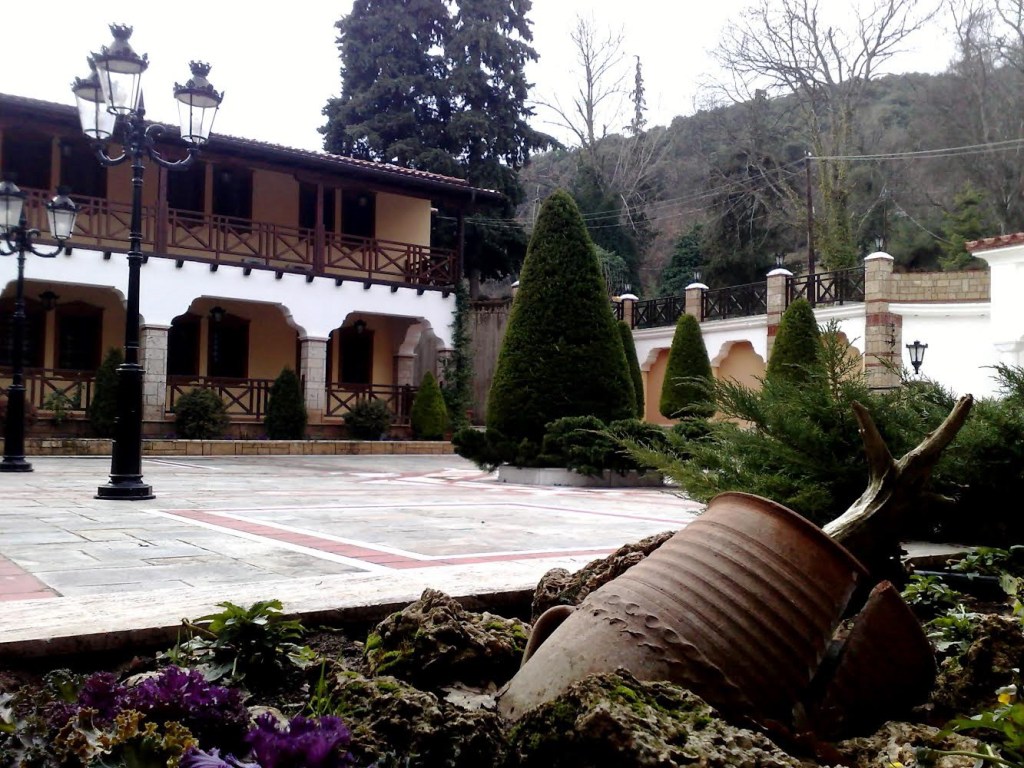
This Monastery honours the Dormition of the Theotokos and was founded in the 12th century according to a document in the National Library of Athens. Since then the Monastery has been serving ceaselessly the Holy Liturgy until 1822. During the period of the Greek Revolution, it was one of the most important national and religious centres of the region. It was here that the actions of Chief Karatassos were developed, and it was here, unfortunately, that the Turkish authorities were successful in dealing with them. The Monastery was burned in 1822, and his abbot, Hieromonk Gerasimos, was hung.

The Monastery was reformed in 1995 as a Cenobitic Monastery for Men.

The Katholikon which remains to this day was built in 1844.

In the year 2005, the brotherhood of the Monastery became acquainted with the newly-revealed Saint of the Russian land, St. Luke the Surgeon and Wonderworker, the Bishop of Simferopol. The holy Monastery preserves a portion of the Holy relic of the Saint.

The many miracles and the palpable presence of the Saint in the Monastery and in the surrounding region immediately made the Saint known, and at the initiative of the Metropolitan and through the support of pious Christians, the first large church in honour of St. Luke the Surgeon, at least in Greece, was founded on the grounds of the Holy Monastery. Every Saturday Divine Liturgy is served, and every Tuesday evening Vespers and Paraklesis are served in the Holy Church of the Saint under construction. Each of the faithful has the opportunity to venerate his grace-flowing relics.

In the area of the Monastery also are the ecclesiastical camps and the educational centre of Byzantine Arts (iconography, mosaics, woodworking, and preservation).

Panagia Dobra’s famous Holy Water and one of the many monastery cats swimming in it and sipping it joyfully

Video on the Monastery of Panagia Dobra