Archbishop Anastasios, the Science Lover who Became an Apostle of Peace

Archbishop Anastasios, the science lover who became an apostle of peace

Global Christian Forum


Renowned for his friendly, peaceful attitude and his inspiring speeches, nothing seems impossible for this man. He has struggled and faced a multitude of difficulties including severe illness and persecution, and he was asked to take up a new position at age 62. He committed to a country whose language and culture were unknown to him, arriving in the only officially declared atheist state, asked to rebuild the church.

In Tirana, Albania, 24 years later, he hosted the Global Christian Forum (GCF) consultation from 1-5 November. There, 150 high-level leaders and representatives of various church traditions from more than 60 countries gathered to listen and learn, and to stand in solidarity with churches and Christians experiencing discrimination and persecution in the world today.“It’s the fruit of our work together in Albania,” said Archbishop Anastasios of Tirana, Durrës and All Albania.

Archbishop Anastasios granted an interview to the World Council of Churches (WCC) news. This conversation took place in the archbishop’s residence in Tirana.

“I keep the window to remind me that life can end in a second.  We must not waste a single day.”

An apostle of peace and reconciliation, since meeting him in 1997, he is one of my greatest role models. I know, I’m merely one of many who share this. We meet in his residence office the day after his 86th birthday.  He extends a warm greeting, offering Greek coffee and cakes.  The welcoming room has warm colours, flowers and icons. It tells Archbishop Anastasios’s life story, one sometimes reflecting hazard. A double-glazed pane stopped a bullet that is suspended while it was in full flight toward him. It was fired by a sniper during the 1997 political upheaval that pushed predominantly Muslim Albania into chaos, nearly claiming the archbishop’s life. “I keep the window,” Archbishop Anastasios notes, “to remind me that life can end in a second. We must not waste a single day.”

Few men use their days like Archbishop Anastasios. Frail but energetic, he has spent the last 24 years overcoming immense obstacles to achieve a near-miracle in one of Europe’s poorest countries.

From Greece to Africa and Albania

Born into a religious family in Pireus, Greece on 4 November 1929, as a boy he was interested in science, but his view changed after four years of Nazi occupation of Greece. That brought fear, destruction, and the horrors of the Second World War.  He realized that the only way to make sense of the suffering was to work for eternal peace; the kind that can only come from Jesus Christ. He has dedicated his life and career to fulfilling Christ’s mandate.

His official title is Archbishop of Tirana, Durres and All Albania, but Anastasios has sometimes been called the Archbishop of Tirana and All. It isn’t a title he objects to. “I am everyone’s archbishop. For us, each person is a brother or sister. The church is not just for itself. It is for all the people.”

During the 1990s, around 160,000 people perished in the Balkan Peninsula violence. Although the conflicts largely hinged on ethnic differences, religion played a critical role in the three-sided war that embroiled Orthodox Christians, Roman Catholics, and Muslims. The archbishop discovered soon after arriving in Albania in 1992, his role was not merely to lead the Orthodox Church in Albania. “You must bear in mind that Albania had very little experience of being an independent country and even less of freedom.” During the communist era, from 1945 to 1990, Albania, just north of Greece, became the only country in the world to prohibit all religious practice. Just the act of crossing oneself could land one in prison. Every church, mosque and synagogue was destroyed or converted to secular use as Albanians, who now number 3 million, were isolated from the rest of the world.

The archbishop recalls, “The Albanian State was created in 1912-1913. Then there were 25 years of trying to build up that state in Europe’s poorest country. In such a setting it is necessary to think in larger terms, about social development as a whole, to think not in terms of decades but centuries….We must think what it means to be free.”

If you have faith, stay and struggle

After communism collapsed, in 1991 the Ecumenical Patriarch of Constantinople, the spiritual leader of Orthodox Christians, decided to send Archbishop Anastasios to Albania to report on the country’s religious situation. He found 1,600 destroyed churches and only 22 elderly priests still alive of the 440 who served Albania before communism. Albanians were, however, desperate for religious freedom and many gathered for services in fields where nothing remained of their former churches except broken bells.

He saw the despair in Albanians’ faces. “I thought, who’s going to help these people? Who is going to give them hope?’ I said to myself, ‘If you have faith, stay and struggle. If you don’t, go home.’” So he stayed. Over the next decade, Archbishop Anastasios fought to overcome centuries of ethnic and religious hostility, to establish a new church throughout the nation.

Archbishop Anastasios underline “About 150 new churches (both large and small) have been erected, 60 churches and monasteries, designated as cultural monuments, have been renovated and restored, and 160 churches have been repaired. More than 70 buildings have been purchased, built and reconstructed to make preschools, schools, youth centres, health centers, metropolitan sees, hospitality homes, workshops, soup kitchens, etc. Altogether there have been more than 460 building projects”.

All kinds of education are crucial for the archbishop. “Education is far more than books to read and facts to memorize. The goal must be to help shape people who are not only capable intellectually or skilled in certain specializations, but motivated by respect and love rather than greed and fear,” he observes.

“God did not give us a spirit of fear but of power. Those who fear God fear nothing else.”

Women and men at the seminary

Educational work to prepare men and women for service in the church became a key concern.

“We are struggling with the problem of the shortage of priests. The young generation was raised in an atheistic climate, and after that came the capitalist dream, which made many decide to go to other countries. The scent of money is very powerful. Gradually some people realize money does not bring happiness, that happiness can only come from something deeper.

“As you will have noticed, there are not only men but also women at the seminary; perhaps a third of the enrollment. It used to be the vocation of women was mainly in the home, but now they have a public life and the church must use their gifts. Women exercise another form of church service. There are many women who have graduated from the seminary and who are playing an important role in the activities of the church in Albania, diaconal works of mercy, teachers, administration, mission activity, and so forth. We would have achieved much less without them.”

The Church should be present

The archbishop emphasized that the church should be present in all areas of life. He introduced new health care, educational and developmental programmes, social and relief efforts, cultural and environmental projects along with other necessities of civilization.

He says, “In each area of life we must implant a spiritual dimension. Culture is more than technology! Most of all it is respect for the dignity of people. Culture requires respect for God’s creation. Where it exists, there is beauty.”

A first priority for the archbishop is children and young people. “We have opened many kindergartens, nurseries and schools. My only regret is that we cannot help more young people. We do what we can with the staff and space we can afford.”

When Anastasios was ordained, he went to Africa.  “In the evening of the day I was ordained a priest in May 1964, I flew to Uganda, which I had thought about so often and with such longing. I had thought that Africa would be my home for the remainder of my life. But malaria ended that dream…..It was my first experience of being close to death. I remember the phrase that formed in my thoughts when I thought I would die: ‘My Lord, you know that I tried to love you.’ Then I slept and the next day I felt well!  There was a second attack when I went to Geneva to attend a mission conference. Fortunately doctors there were able to identify the illness and knew how to treat it. When I was well enough to leave the hospital they said I must forget about returning to Africa.”

The Archbishop returned to his studies, but did not forget Africa. With a scholarship, he pursued post-graduate studies in Germany at the University of Hamburg, from 1965-1969. He specialized in the History of Religion, but also studied ethnology, missiology, and African studies. His dissertation was, “The Spirits Mbandwa and the Frame of their Cult: A Research on the African Religion of Western Uganda.”

Local and global ecumenical movement

In 1969, the WCC called Anastasios to accept a position in the Commission of World Mission and Evangelism as the “Secretary for Research and Relation with the Orthodox Churches.” He later became the first Orthodox moderator of the Commission for Mission and Evangelism (1984-91), presiding over the San Antonio World Mission Conference (1989).

Then in January 1991, the Ecumenical Patriarchate decided to re-establish the Church of Albania. Two months after his 61st birthday, Anastasios received a phone call from the Patriarchate of Constantinople asking if he would go to Albania to see if anything was left of the Orthodox Church. It not originally intended as a permanent assignment, only to see if and how the local church could be revived.

He says, “Only later was I asked by authorities of the Patriarchate if I would be willing to accept election as Archbishop of Albania. After a period of reflection and prayer, I was open, on three conditions. The first was that it must be clear that this was the wish of the Orthodox in Albania. Second, that this was the desire of the Ecumenical Patriarchate. Third, that the Albanian authorities would accept this decision. Otherwise the situation of the church would only be more difficult. My answer was much less than yes! I was like Jonah, looking for a path of escape! But inside my prayer was, ‘Your will be done.’”

He explained, “The Orthodox people were indeed pressing me to stay. How could I refuse them? How could I say I had a different plan for the rest of my life? They were praying for me every day. Remaining in Albania would mean putting aside all the ideas I had about what I would be doing with the remainder of my life. I had in mind a peaceful retirement in Greece, giving lectures at the university and writing books.”

“It has been important for me not only to learn Albanian but to take care that whenever I say something I say it not just in a way that can be understood but say it well”.

One of Albania’s most serious investors and job creators

Language skills, education and church buildings are important for the archbishop:  “Church building often involves more than just a structure for worship. When we build or restore a church or monastery, often we also have to rebuild the road.”

“With all our construction projects, the church has become a significant factor in the economic development of Albania. We are one of Albania’s most serious investors and job creators.”

Anastasios’s most ambitious project, which he views as the capstone of his mission in Albania, was to rebuild an Orthodox cathedral in Tirana to replace one demolished by the communist government. The name he chose for the cathedral embodies what he has accomplished for the Orthodox Church in Albania and the Albanian people – resurrection.

Ecumenical vision beyond a Balkan

The Archbishop also talks of his ecumenical vision “Beyond a Balkan, European perspective, we are trying to respectfully and lovingly embrace the whole church and the entire world that Christ himself has raised, redeemed and enlightened by His cross and resurrection. The ecumenical vision offers a special power, endurance and perspective for every local and concrete situation. Besides this, the emphasis on the ecumenicity and catholicity of the church, and the gaze on the incarnate word of God in the Holy Spirit, offers to the Orthodox thought and conscience an open horizon with boundless majesty.”

Interfaith dialogue, he pointed out, is not simply exchanges of words. “It helped being in the World Council of Churches’ committee for dialogue with other religions, but what we did was academic. Here you learn that often the best dialogue is in silence; it is love without arguments.”

We could keep talking for hours but more media wait outside. The archbishop concludes with a smile: “You can only do your job with love and humility! I feel I’m still like a student or like a missionary for justice and peace!

Archbishop Dr Anastasios(born Anastasios Yannoulatos, Greek: Αναστάσιος Γιαννουλάτος, Albanian: Anastas Janullatos, 4 November 1929) is Archbishop of Tirana, Durrës and All Albania and as such the primate and Head of the Holy Synod of the Autocephalous Orthodox Church of Albania, is professor emeritus of the National University of Athens and honorary member of the Academy of Athens. He has served as primate of Albania since 1992. In this capacity, he reconstructed the Orthodox Autocephalous Church of Albania from ruins and initiated important contributions in healthcare, development work, emergency relief, culture, ecology and peace-making. From 1984-1991, Anastasios was moderator of the WCC’s Commission on World Mission and Evangelism;  from 2004- 2013 President of the World Council of Churches, from 1981 to 1990, he was the acting archbishop of East Africa, where he organized and developed the Orthodox Mission in East Africa; and from 1983-1986, dean of the Theological School at the University of Athens. Honorary President of the World Conference of Religions for Peace.

23 December 2015

By Marianne Ejdersten* 

Read also

In Love, For Love, By Love: Missionary Series II

archbishop anastasios yannoulatos orthodox missions city hermit

archbishop anastasios yannoulatos orthodox missions city hermit


II. Adapting to a New Culture — The Three Stages in a Missionary’s Life — Different Types of Missionaries

Adapting to a New Culture

FR. LUKE: Different people have different ideas of what mission is about. Some think that it is a romantic adventure, and it’s true that there is excitement and adventure to mission, especially in the initial stages. Once one enters the mission field and begins to live the daily life, trying to proclaim the gospel among people who aren’t always open or interested, the romanticism quickly disappears. This is a stage of frustration that many missionaries experience. The missionary has to work through this, but once he does, he is ready to begin serious missionary work. He understands that an authentic mission requires a commitment that is greater than any frustration or obstacle, a commitment that demands time, effort, and sacrificeIn Love, For Love, By Love

archbishop anastasios yannoulatos orthodox missions city hermit

A Commitment that Demands Time, Effort, and Sacrifice

During our first years in Albania, the Church faced a major crisis. The government was trying to kick the archbishop out of the country and we were afraid that the foundation he had built for the Church’s work might be destroyed. When I voiced my worries, the archbishop said, “Fr. Luke, you have to remember something. Albania, under the worst form of communism and as the only totally atheistic state in the world, was a stronghold of Satan for almost fifty years. Now that democracy has come, don’t think that Satan is simply going to lie down and let the gospel be proclaimed. We are not fighting against flesh and blood, but against the principalities and powers of darkness, and this means that it’s going to be hard, that there is going to be suffering, that there are going to be casualties. We have to be ready for this.” If you want to follow the Christian life, it’s the same thing. Missionary life is a life of the Cross, a life of sacrifice, of humble service, and of not always being appreciated. The archbishop told me that the missionary must be ready to be crucified by the very people he is trying to help. We can’t be devastated when this happens.

archbishop anastasios yannoulatos orthodox missions city hermit

Missionary life is a life of the Cross, a life of sacrifice, of humble service, and of not always being appreciated

archbishop anastasios yannoulatos orthodox missions city hermit

The missionary must be ready to be crucified by the very people he is trying to help

RTE: I imagine that the initial period of missionary enthusiasm is very similar to what new Christians go through. I remember once wishing aloud that a warmly enthusiastic new convert would come down to earth, but a Russian friend said, “Oh no. This is his spiritual childhood. Don’t deprive him of it. He will never be so innocently happy in his Christian life again. He will discover the difficulties and troubles of our earthly Church soon enough, but for now God has given him this heavenly joy. It will come to a natural end at the right time, and then he will struggle.” I think she was right. But once the struggle begins, how do you help new missionaries adapt?

archbishop anastasios yannoulatos orthodox missions city hermit

The Three Stages in a Missionary’s Life

The Initial Excitement of Entering a New Culture

FR. LUKE: There is a typical pattern that missionaries go through. As I said, in the initial excitement of entering a new culture, seeing new people and new ways of doing things, there is warm enthusiasm, “Ah, these people are wonderful….” For example, on my own first short-term trip to Africa, I lived in a village for a month. I saw Kenyans walking an hour to church, and then sitting in church for four hours with no desire to leave quickly. To an outsider they seem so joyful and faithful that you generalize and say, “These people are just wonderful.” After you’ve been in the culture a little longer, however, you start to see the other side: “OK, some of these people are faithful, pious Christians … but there are also people hanging around to get something material from the church, who aren’t so honest or sincere.”

archbishop anastasios yannoulatos orthodox missions city hermit

The Disillusionment by the Fifth or Sixth Month in the Mission

Usually by the fifth or sixth month in the mission field the pendulum starts to swing back and the missionary begins to see things with a negative eye. This is the most dangerous time. I’ve seen missionaries so disillusioned that they leave the mission field – or perhaps they don’t leave, but they allow their disillusionment to darken their entire experience. They view everything and everyone from a negative perspectiveIf this happens, it’s a tragedy, and it’s better for the missionary to leave than to offer such a distorted view of the gospel.

archbishop anastasios yannoulatos orthodox missions city hermit

The Third Stage in which the Missionary Sees Both Good and Bad Within the ‘New’ Culture

It is important to prepare missionaries for these two stages, and there is still another phase which any good missionary will eventually reach. In this third stage, the missionary sees both good and bad within the culture. In any culture, including our own, we realize that there are faithful, pious people, as well as con-artists and those who are insincere. There are also good people who are weak, and who may fall into temptation. This is the reality.

archbishop anastasios yannoulatos orthodox missions city hermit

RTE: Of life on earth.

When You Become a Missionary You Become a Person Without a Home

FR. LUKE: Exactly, of everywhere. We can’t go on mission expecting to find people open and ready to embrace the gospel. It is important to challenge the cross-cultural worker to adapt as soon as possible, but not to go native, not to give up his old culture in trying to blindly embrace the new. This is dangerous. When you become a missionary you become a person without a home. Although you have left your own culture, you will never fully adapt to the new. The indigenous people will never truly see you as one of themselves, no matter how hard you try. You become a third culture person.

archbishop anastasios yannoulatos orthodox missions city hermit

You Become a Third Culture Person

Another common mistake in the history of western Christians has been for the missionary to create a western compound, a small western society in the midst of a new culture. When you leave that compound in the morning you enter the local culture, but when you come back at night, everything is like it is at home. This should not be the goal. We must strive to live among the people, close to the people.

archbishop anastasios yannoulatos orthodox missions city hermit

Pulling Indigenous People Out of Their Cultural Setting or Leaving Neophyte Christians in Their Villages?

RTE: St. Macarius of Altai found that if he left the new Altai Christians in their villages, they would inevitably be drawn back into unchristian practices. The pull of society was just too great. So he created new Christian villages within the society, and asked the Christians he baptized to live there. The Spanish missionaries in California did the same thing. What do you think of this?

archbishop anastasios yannoulatos orthodox missions city hermit

FR. LUKE: There are pros and cons to these different methods. There is validity to pulling people out of their culture and trying to create a village of new believers, and something positive in trying to avoid temptations which may be too strong for a neophyte Christian. A danger in pulling indigenous people out of their cultural setting is that they may also lose their connection with the people they left behind.

RTE: Also, I imagine that they would become dependent on the missionary who is the inspiration for the village.

archbishop anastasios yannoulatos orthodox missions city hermit

FR. LUKE: Yes, and to some degree they may be tempted to adopt the missionary’s cultural baggage, whether western or whatever, and then it is hard for them to be salt for their own society. Along the same line of thought, another danger that missionary agencies have realized for centuries is that if you take the indigenous Christian out of his home setting and send him to the missionary country for training or for seminary, after he has lived in another culture for four or five years, he adapts to that culture and can’t really fit into his own again. His own people will see him as a foreigner if he goes back – and many don’t return at all.

archbishop anastasios yannoulatos orthodox missions city hermit

Different Types of Missionaries: the Outreaching, the Itinerary and the Silent Witness

RTE: We are speaking of missionaries going into a new culture, but there are other types of missionaries as well – like the Greek St. Cosmas of Aitoliawho didn’t settle in any one place but traveled throughout Greece and modern-day Albania, preaching to both Christians and Moslems.

Another is St. Symeon the Stylite, who didn’t go anywhere. People came to him on his pillar from as far south as the Arabian peninsula – not only for spiritual help but for prayers for failed crops, for drastic weather. Arab tribes came to have him adjudicate their differences, and westerners came also, from Paris, Rome, and Britain.

st symeon stylites archbishop anastasios yannoulatos orthodox missions city hermit

st symeon stylites archbishop anastasios yannoulatos orthodox missions city hermit


In our Orthodox tradition we have the outward-reaching evangelical missionary efforts of St. Paul, Sts. Cyril and Methodius, and St. Innocent of Alaska, but then we also have the example of monastics who settled in an area to cultivate their spiritual life, reached a high level of sanctity, and eventually shone forth and attracted people with a centrifugal force.

RTE: Like the candle in front of the icon – so bright that everyone came to see what it was.


st symeon stylites archbishop anastasios yannoulatos orthodox missions city hermit


LUKE: Yes. And both are necessary. One of the great dangers in our Church is that I sometimes hear people say, “This ideal of a holy man settling in an area and attracting people to himself – this is true Orthodoxy. This is our only form of mission.” This is totally inaccurate. Yes, one can certainly see the silent witnesses through the centuries, but simultaneously, we had missionaries consciously reaching out, crossing cultures, going to other places. From the fourth century on, we have numerous examples of monks not only going into the desert to retreat from society, but also settling close to pagan villages and purposefully joining other monastics in organized bands to proclaim the gospel.


mission4


Go here for Part I

To Be Continued …

Source: Everything in Love: The Making of a Missionary

In Love, For Love, and By Love: Missionary Series I


In Love, For Love, and By Love -- Missionary Series and orthodox city hermit


I. The Making of a Missionary


For over a decade, Fr. Luke and Presbytera Faith Veronis served as Orthodox missionaries in Albania under the spiritual leadership of Archbishop Anastasios (Yannoulatos), with Fr. Luke directing the Holy Resurrection Theological Seminary in Durres. The Veronis family has now returned to the U.S., where Fr. Luke pastors Sts. Constantine and Helen Greek Orthodox Church in Webster, Massachusetts, and is Adjunct Professor of Missiology at Holy Cross Greek Orthodox Theological School and St. Vladimir’s Seminary. Below, Fr. Luke offers an invigorating account of life in the mission field and what it takes to be a long-term missionary: In Love, For Love, and By Love. 


In Love, For Love, and By Love -- Missionary Series and orthodox city hermit


Do everything in love, for love, and by love.

RTE: Father Luke, what makes a good missionary?

LUKE: Something obvious but central, and that is love. I once spoke with an old Greek monk, Fr. Antonios, from St. John the Forerunner Monastery in Kareas, near Athens. The Kareas Monastery has sent out missionary-nuns for over twenty years and when he came to Albania, I asked him, “Give me some advice on being a good missionary. What should I remember from you?” He said, “If you remember this you will do well. Do everything in love, for love, and by love. If you do this, you will be a great missionary.” This sounds simplistic but it is absolutely central to what a true missionary wants to be. Everything that you do when you are trying to adapt to a culture, struggling to learn a language, or understand a people, you do out of love for them.


One of the first things a missionary must do is to learn the language, no matter how hard it is. This is a sign of love for the people, a sign that you respect the dignity of their culture, and this respect must be communicated before you ever proclaim the gospel. His Beatitude, Archbishop Anastasios of Albania says that when you go into a country, you keep whatever is good in the culture, even if it is different from the way you do things. Anything that is completely incompatible with the gospel you have to reject, but there are many things that can be baptized and given new meaning.


 An ambassador of God’s love


Also, you need to enter the mission field with extreme humility. You are not going to “save” these people, and you are not going simply to teach. First and foremost, you are going as an ambassador of God’s love, to offer a witness of His love in concrete ways. Your emphasis should be, “I’m on a journey – let me show you where I am going, and if you are interested, join me on this journey.” I may be leading the journey for part of the way but there are going to be times when the indigenous Christians will lead me; I will be learning from them, even about spiritual life. We are taking each other’s hands and walking towards the Kingdom of God.

This is extremely important because too often I see western missionaries come with extreme arrogance, ignorant of the culture they are entering and uninterested in learning about it. They are arrogant in thinking that they are bringing the gospel for the first time, as if they are the saviour. They forget that Jesus Christ is the Saviour; we are simply His ambassadors. We must always remember that we are still working out our own salvation, but along the way we can invite others to join us on this journey, to travel together.


Archbishop Anastasios In Love, For Love, and By Love -- Missionary Series and orthodox city hermit

I’m on a journey

Archbishop Anastasios gives a great example when he says about himself, “I am simply a candle that is lit in front of an icon. I shine so that people can see the icon. One day my candle will be snuffed out. When my candle goes out, someone else will have to come and let their light shine before the icon. The important thing is the icon, not the candlelight.”

Archbishop Anastasios In Love, For Love, and By Love -- Missionary Series and orthodox city hermit

My suggestion for new missionaries is to spend the first year just learning the language, the culture, the ways of the people, and not focus too much on preaching the gospel. Of course, you preach first and foremost with your life. Francis of Assisi once said, “Preach the gospel at all times, and if necessary, use words.” By focusing on the language, culture and individuals, you show that you are interested in them as people, not solely in making them converts.

Archbishop Anastasios In Love, For Love, and By Love -- Missionary Series and orthodox city hermit

RTE: In your book, Missionaries, Monks, and Martyrs, you included St. Macarius (Gloukharev) of Altai, who is a fascinating example of preaching with one’s life. He went to a remote part of Siberia, where he taught in village after village, with no success. After years of fruitless labor, he left and returned later to go at it differently, through active service with homeopathic medicines and simple offers of help. Only then, was his gospel message received.

Archbishop Anastasios In Love, For Love, and By Love -- Missionary Series and orthodox city hermit


in love orthodoxy missions city hermit

Another aspect that is extremely important for missionaries in the field is to identify as best they can with the people, to live at the level of the indigenous people. Now, this isn’t always possible. We from the West may give up a lot of our comforts and live at a level far lower than in our home country, but still live far above their means. We have to struggle with this, and like many things in our faith, we have to live in the tension between the goal and what we can actually do. Constant effort and growth are the keys.

in love orthodoxy missions city hermit

I remember asking Archbishop Anastasios what he considered his greatest contribution to the mission field – and we know that he has made many significant contributions as a churchman, a hierarch, a professor at the University of Athens, a missiologist, and as a missionary. Reflecting on his achievements, he said, “I feel that the greatest contribution I’ve made in Africa and in Albania is that I’ve lived among the people and tried to identify with them.” In Africa, he traveled to the most remote, poverty-stricken communities, visiting and encouraging people. In Albania, he flies by helicopter to inaccessible villages far up in the mountains. He wants to be close to his flock, and he always feels at ease with everyone. More importantly, the people are at ease with him, and see him as someone who loves and identifies with them.

in love orthodoxy missions city hermit

When Albania fell into anarchy in 1997, the army storage facilities were broken into and the anarchists stole machine guns and hand arms. You could buy a Kalashnikov on the street for five dollars, and little kids were shooting Kalashnikovs into the air outside my apartment and all over the city. Total anarchy reigned throughout the country, and the embassies began evacuating their citizens. Almost every foreigner left. Although the archbishop is Greek, and could have been evacuated with the Greek Embassy, the thought never crossed his mind. He was the archbishop, and he had to stay with his people. I also stayed, along with a handful of other missionaries. We wondered how we would protect the archbishop if armed bandits broke into the  archdiocese – and we were pretty sure this would happen. We watched one day, as ten armed and masked men broke into and looted an electronics store across the street. We expected the same thing to happen to us.

He was the archbishop, and he had to stay with his people

archbishop anastasios missionary city hermit orthodoxy

orthodoxy missions city hermit

We understood what a terrible message this would give

People often ask us if we considered leaving with those who were evacuated. To be honest, we didn’t. We understood what a terrible message this would give. People would think, “Look at these missionaries. At the first sign of danger, they abandon us.” We had to show them that we would stay with them in times of danger, in the midst of anarchy and chaos. We were one with them, and the love of God knows no bounds! We may never be able to identify completely with the indigenous people, but we must show them, as much as possible, “We are with you!”

orthodoxy missions city hermit

I remember another story of the archbishop’s that exemplifies this missionary outlook.  When Archbishop Anastasios was archbishop of East Africa, he often served in simple village churches with mud walls, tin roofs, and paper icons on the mud iconostasis. In the early 1980’s he was invited to attend a conference in Leningrad, and for the Sunday liturgy, he served in one of the beautiful Russian cathedrals, perhaps St. Isaac’s.  He celebrated liturgy surrounded by magnificence, and he began to wonder, “Where is God? In the midst of this opulence, or in the little mud chapel in Africa?”

orthodoxy missions city hermit

orthodoxy missions city hermit

orthodoxy missions city hermit

God is wherever the Eucharist is

So when it came time to preach the sermon he raised this question: “Is God in the mud churches of Africa with their paper icons, or is He in these magnificent cathedrals in Russia?” When he asked this, the translator was a little embarrassed to repeat the question, but Fr. Anastasy continued, “As I travel throughout the world and worship in many different types of church structures, I understand that God is wherever the Eucharist is. He is in both the mud churches of Africa and the beautiful cathedrals of Russia.

RTE: Also, these cathedrals were built with sacrifice and love by thousands of people, rich and poor, who wanted to give the best they had to beautify God’s house.

FR. LUKE: Right, and the point is that we have to feel comfortable everywhere, and realize that Christ works everywhere. It is not our role to judge, but to offer a witness for Christ.

orthodoxy missions city hermit


 Continued to Part II

Source: EVERYTHING IN LOVE: THE MAKING OF A MISSIONARY


Anastasios Yannoulatos: Modern-Day Apostle

Indifference to mission is a denial of Orthodoxy


anastasios-yannoulatos-modern-day-apostle


Anastasios Yannoulatos: Modern-Day Apostle. An amazing person  my family has been honoured to collaborate with in his missionary endeavours. An apostle of peace and reconciliation, since meeting him in 1997, he is one of my greatest role models.

For the first half of the twentieth century, the Orthodox Church was relatively inactive in missions. The great missionary efforts of the Russian church came to a close as the Communist curtain placed the church in bondage. Meanwhile, the Orthodox churches of the Balkans struggled to overcome the effects of the previous five centuries of Muslim subjugation. Although the Orthodox lands of Greece, Romania, Bulgaria, and Serbia gained their independence, a strong sense of nationalism prevailed within the churches, and the idea of outreach beyond the borders of their own countries was a concept to which few gave much thought.


“Inertia in the field of mission means, in the last analysis, a negation of Orthodoxy, a backslide into the practical heresy of localism”

It was not until the late 1950s that a number of young Orthodox theologians began to raise their voices about the need for external missions. From an international Orthodox youth conference held in 1958 in Athens, a call toward missions began to develop. These young people expressed the idea that the church’s responsibility toward missions was not simply some­ thing of the past but a call for the contemporary church as well. Despite the struggling situation of a poor church just freed from bondage, the apostolic call of the Lord demanded a response. The leader of this fledgling group was Anastasios Yannoulatos, a young Orthodox theologian from Greece. He challenged the Church of Greece, as well as the Orthodox Church at large, to recover its long-held missionary tradition.


In 1959 Yannoulatos helped found Porefthentes (“Go ye”), a missionary movement whose goal was to rekindle the mission­ary conscience of the Orthodox Church, as well as to educate the non-Orthodox world about the rich missionary heritage of the Church of Greece, as well as the Orthodox Church at large, to recover its long­ held missionary tradition.


Yannoulatos challenged the Church of Greece, as well as the Orthodox Church at large, to recover its long-held missionary tradition.


Yannoulatos challenged the Eastern Church. This movement began to produce a journal in Greek and English called Porefthentes. In its inaugural issue, Yannoulatos wrote a provocative article entitled “The Forgotten Commandment,” which challenged the church to rediscover the missionary zeal of previous generations. In this article, Yannoulatos questioned the accepted apathy toward missions that prevailed in the contemporary Orthodox Church:


“It is not a question of ‘can we?’ but of an imperative command “we must.” “Go ye therefore and teach all nations.” “Go ye into all the world and preach the Gospel to every creature.” There is no “consider if you can,” there is only a definite, clear cut command of Our Lord…. If we let ourselves rest peacefully in this habitual inertia in the matter of foreign missions, we are not simply keeping the pure light of the Faith “under the bushel,” but we are betraying one of the basic elements of our Orthodox tradition. For missionary work has always been a tradition within the Orthodox Church…. Missionary activity is not simply something “useful” or just “nice,” but something imperative, a foremost duty, if we really want to be consequent to our Orthodox Faith.”


As Christians we do believe in miracles.


Yannoulatos emerged as a leading missions advocate in the following years. He dared the Orthodox faithful to recover the authentic meaning of the “one holy catholic and apostolic Church,” in the words of the Nicene Creed. He even hoped to establish some type of external Orthodox mission center. His enthusiasm, however, was derided within most Orthodox circles as an unrealistic goal. Following an address he gave on this issue to theological students at the University of Athens in January 1959, someone in the audience remarked skeptically that “the organization of an Orthodox External Mission is tantamount to a miracle.” To this Yannoulatos responded, “We fully agree. But as Christians we do believe in miracles.”


Mission was not the duty of only the first generation of Christians. It is the duty of Christians of all ages … It is an essential expression of the Orthodox ethos.


The life and work of Anastasios Yannoulatos, probably the foremost Orthodox missiologist in the world today, exemplifies the realization of this miracle in the contemporary Orthodox Church.


His Early Life


Anastasios Yannoulatos was born on November 4, 1929, to a pious Orthodox family in Greece. Raised within the faith, he participated actively in the church during his formative years. His first great interest was in mathematics, and throughout his teenage years Yannoulatos thought of pursuing a career in this field. His views changed with the coming of World War II. During the war years, Yannoulatos began to experience his faith in a very personal way. He witnessed much suffering and disas­ter from the war and could make sense of the chaos only by delving deeper into his faith. For the world and for his own country to recover from the evil of both the Second World War and the ensuing Greek Civil War, Yannoulatos understood the urgent need for a message of eternal peace, the peace that comes through Jesus Christ.


This experience led Yannoulatos to abandon his interest in other disciplines and to pursue theology. So fervent was his desire that he has said, “It was not enough for me to give something to God, I had to be given totally to Him. I wanted to live with my whole being in Christ.”  Thus, in 1947 he entered the Theological School of the University of Athens. He graduated with highest honors in 1952.


Following two years of service in the army, Yannoulatos joined the brotherhood of ZOE, a religious organization focused on the spiritual renewal of the church in Greece. Yannoulatos’s personal responsibilities included missions to the youth of his country. He became the leader of student movements and teen­ age camps and strove to make the Orthodox faith real and concrete to his young charges. Through these experiences, Yannoulatos discovered the impact such outreach programs had on the church at large. He realized that without such missionary outreach, the church loses its focus and ultimately diminishes.


During these years, Yannoulatos also participated in an international Orthodox youth movement called Syndesmos. He served as the general secretary of the Committee for Missions during 1958-61, and as vice-president of the whole movement from 1964 to 1977. Here he met other young leaders with a similar zeal for proclaiming the Gospel. Together they began to realize how Christ could never be satisfied with proclaiming the Gospel simply within the church. His original command was to go to”all nations.” Thus missions are not merely internal, but external as well. The Great Commission of the past is an imperative respon­sibility for the present. Yannoulatos wrote at the time:


“Church without mission is a contradiction in terms…. If the Church is indifferent to the apostolic work with which she has been entrusted, she denies herself, contradicts herself and her essence, and is a traitor in the warfare in which she is engaged.A static Church which lacks vision and a constant endeavor to proclaim the Gospel to the oikoumene could hardly be recognized as the one, holy, catholic and apostolic Church to whom the Lord entrusted the continuation of His Work.”


The 1960s-Following the Call of God


This understanding of the importance of external missions for the church filled the heart of Yannoulatos. Following his ordina­tion to the diaconate in 1960, Yannoulatos proceeded to found the inter-Orthodox mission center Porefthentes. The goal of this center was to educate the church in the area of missions, as well as to motivate and send missionaries throughout the world.


Church without mission is a contradiction in terms…. If the Church is indifferent to the apostolic work with which she has been entrusted, she denies herself, contradicts herself and her essence, and is a traitor in the warfare in which she is engaged.


Yannoulatos himself planned on becoming a ‘foreign’ mis­sionary. In fact, immediately following his ordination to the priesthood on May 24, 1964, he left for East Africa and celebrated his first liturgy in Uganda. Shortly after his arrival, however, the young priest contracted malaria and returned to Greece. Despite the doctors’ recommendation that he not return to Africa, Yannoulatos was not daunted by the setback. He realized more than ever the importance of increasing the missionary awareness in the church and sought new ways to fulfill the Great Commis­sion of Christ. Following the advice of one of his professors, Yannoulatos decided the best way he could influence the church was by making a significant contribution in the academic world. He believed that if he could not directly work in the mission field, he could still try to pave the way for others to go. Thus, he decided to pursue further studies in missiology and the history of religions.


From 1965 to 1969, Yannoulatos studied the history of reli­gions at the universities in Hamburg and Marburg in Germany, with an emphasis on religious plurality and the Orthodox Church. His work focused on the general history of religions, African religions, missiology, and ethnology. He traveled to Makerere University in Kampala, Uganda, to conduct field research and collect material for his doctoral thesis, entitled “The Spirit Mbandwa and the Framework of Their Cults: A Research of Aspects of African Religion.” Overall, he desired to establish a basis for the whole process of a serious study of missions in the Orthodox Church. Through this research, he sought support for his original thesis that it was impossible to truly be Orthodox without having an interest in missions.


Along with his studies, Yannoulatos actively participated in the worldwide ecumenical movement. By taking part in the Commission on World Mission and Evangelism (CWME) of the World Council of Churches (WCC), the budding missiologist felt that he could both learn from other Christian traditions as well as introduce these members to the rich missionary heritage of the Orthodox Church. In 1963, Yannoulatos became the youngest member of the CWME at a conference in Mexico City. He has continued to play a pivotal role in this ecumenical setting and ultimately served as its moderator from 1984 to 1991, the first Orthodox missiologist to hold such a place of leadership.


The 1970s-Planting Missionary Foundations Within the Church


During the following decade, the Church of Greece began to hear and respond to the voice of this bold visionary. In 1968 Yannoulatos and his Porefthentes staff established the frame­ work of the Bureau of External Missions within Apostoliki Diakonia (the service branch of the Church of Greece). The establishment of a permanent missionary organization within the official Orthodox Church in Greece was a milestone. The church recognized the work of Yannoulatos by elevating him on November 19, 1972, to the episcopacy with the title “Bishop of Androussa” and making him general director of the whole department of Apostoliki Diakonia. Through Bishop Anastasios’s leadership, this commission of the Church of Greece acted as the main body for all the missionary efforts of the church both within Greece and abroad.


Along with his ecclesiastical responsibilities, Bishop Anastasios continued to be active on the academic level. In 1972 the University of Athens elected him as associate professor of the history of religions. At the university, he established and di­rected a centre for missionary studies during 1971-76. This center paved the way for another landmark, when a chair of missiology was finally created in 1976. In this academic atmosphere Bishop Anastasios continued to proclaim his “wake-up” call to the church, challenging its complacency in missionary outreach:


It was Yannoulatos’s thesis that it was impossible to be truly Orthodox without having an interest in missions.


“Inertia in the field of mission means, in the last analysis, a negation of Orthodoxy, a backslide into the practical heresy of localism…. It is unthinkable for us to speak of “Orthodox spirituality,” of “a life in Christ,” of emulating the Apostle Paul, founder of the Greek Church, while we stay inert as to mission; it is unintelligible to write about intense liturgical and spiritual living of the Lord’s Resurrection by us, while we abide slothful and indifferent to the call of ecumenical missions, with which the message of the Resur­rection is interwoven.”

Bishop Anastasios continually tried to educate the Orthodox faithful to a fuller understanding of the Nicene Creed, which proclaimed the belief in “one, holy, catholic and apostolic Church.” Professing such a creed while staying indifferent to missions, Yannoulatos held, was hypocrisy. As he noted,


“Only when it is realized that worldwide ecumenical mission is an initial and prime implication in a fundamental article of the “Credo,” elemental for the Orthodox comprehension of what the Church is, and that what is termed “foreign mission” is not an “external” matter but an inner need, a call to repentance and aligning ourselves with the spirit of the Gospel and the tradition of our Church, only then shall we have the proper and hope­ bearing theological start for what comes next.”

Foreign missions is not simply a branch of authentic Ortho­dox life, or even Orthodox theology, but rather is central to a proper understanding of the church. When Orthodox Christians confess, “I believe in one … apostolic Church,” “apostolic” does not refer only to apostolic succession. More important, it implies having an “apostolic fire and zeal to preach the gospel ‘to every creature’ (Mk 16:15), because it nurtures its members so that they may become ‘witnesses in Jerusalem and in Judea and Samaria, and to the end of the earth’ (Acts 1:8).”


Bishop Anastasios continued to challenge the apathetic atti­tude of the church toward missions by writing:


“The Gospel is addressed to all peoples, and therefore the work of the Church remains incomplete as long as it is restricted to certain geographical areas or social classes. Its field of action is universal and is active both in sectors that welcome the good tidings and those which at first may reject them. Mission was not the duty of only the first generation of Christians. It is the duty of Christians of all ages.... Witness is the expression of the vitality of the Church as well as a source of renewal and renewed vigor…. Everyone should contribute to and participate in it, whether it be directly or indirectly. It is an essential expression of the Orthodox ethos.”


Along with influencing the academic world in Greece and abroad, Bishop Anastasios had an impact on other areas of church life as well. In 1972 the bishop worked together with Fr. Anthony Romeos and founded a monastery of nuns whose emphasis would be on external missions. This group became the Convent of St. John the Forerunner in Kareas, Greece. Bishop Anastasios helped guide these women to become nuns who would actively participate in missionary work throughout the world. The convent also welcomed women from foreign lands to join their community and learn the monastic way of life, with the goal of carrying the monastic lifestyle back to their home coun­tries.


The 1980s-Theory Becomes Practice


In the 1960s,when Yannoulatos first fell ill to malaria, his doctors told him that he would never be able to work overseas as a missionary. The providence of God spoke differently. In 1980 the Orthodox Church of East Africa faced great difficulties. The region had been the most active Orthodox mission field in the world over the past two decades. The church’s footing, however, was jeopardized by internal problems that ultimately led to the defrocking of a Kenyan bishop by the Patriarchate of Alexandria. The East African Orthodox Church seemed to be on the verge of collapse.


During this time Patriarch Nicholas, the head of the Ortho­dox Church in Africa, invited Bishop Anastasios to become acting archbishop of the Archdiocese of East Africa. The bishop consented but continued to keep his responsibilities both at the University of Athens and in Apostoliki Diakonia. During this transitional period, Yannoulatos saw his role as one of reorganiz­ing the Church of East Africa. His main priority was to create a strong Orthodox community led by local leaders.


“By focusing on the training and establishing of indigenous leaders, Bishop Anastasios remained faithful to Orthodox mis­sions tradition. As he noted in an earlier writing, “The incarna­tion of God’s Word in the language and customs of a country has been and must be the first concern of all Orthodox mission. Its intent is the planting and growth of a native Church, self­ powered and self-governing, able to turn to account all the genuine strands of national tradition, transforming and hallow­ing them in harmony with the people’s nature, to the glory of God.”

In 1972, Archbishop Makarios III of Cyprus built an Ortho­dox Seminary in Nairobi, Kenya, but political instability in Cyprus prevented the archbishop from completing his project. The school remained vacant for ten years. Bishop Anastasios’s first action as the new leader of the church was to finish the seminary and open it immediately. During the 1970s, many of the faithful within the African Orthodox Church became disillu­sioned and disheartened with the floundering church and began to leave. Yannoulatos realized that the only way to bring these people back, as well as to bring new converts into the faith, was through the training of local leaders and priests.


Hence, Bishop Anastasios officially opened the Archbishop Makarios III Orthodox Patriarchal Seminary in 1982. Over the following decade, the school averaged 45 students annually, using 12 professors from East Africa, Europe, and the United States. The acting archbishop eventually ordained 62 priests and deacons, as well as 42 readers and catechists, from the school’s graduates. These indigenous leaders came from eight different tribes in Kenya, Uganda, and Tanzania and provided the founda­tion for the renewal of the church in East Africa.


Along with training local leaders, the acting archbishop also supported the Orthodox missionary tradition of translation, which he believed was sanctioned by Christ during the event of Pentecost. Thus, he concentrated on publications, organizing the translation of services into seven different languages.


Bishop Anastasios also tried to establish a sense of perma­nency in the structures of the church by guiding the construction of 67 new church buildings, 23 of them stone, and 44 wooden and mud. He also helped renovate 25 existing church buildings. His construction accomplishments included seven mission stations, seven health-care stations, five primary schools, and twelve nursery schools.


His work in Africa drew worldwide attention. The Greek Orthodox Church in America assisted him by sending mission­aries to East Africa. The impact of these missionaries was felt not only within the Church of East Africa but also throughout America. Many of the short-term missionaries, returning to their homes in the United States, helped increase a missionary aware­ness and consciousness within their own parishes. The Orthodox Church in Greece and Finland also responded to a series of lectures the bishop gave on the imperative of missions by send­ ing missionary teams of their own to Kenya.


The most important aspect of Bishop Anastasios’s work in East Africa, however, was not the ordinations, the publications, or the missionary interest created by the mission teams. It was instead his efforts to assimilate with the indigenous Christians. By identifying closely with the Orthodox Christians of this region, he encouraged and empowered them to embrace the faith as authentically their own. As a result, the Church of East Africa continued to mature even after his departure as acting arch­bishop in 1991.


In addition to his achievements in Africa, Bishop Anastasios has left his mark in other ways. In 1981, the bishop began editing, through the auspices of Apostoliki Diakonia, the first official missionary magazine of the Church of Greece, entitled Panta ta Ethne (All nations). This magazine continues to disseminate mission information and challenge Orthodox Christians throughout Greece to respond to the missionary mandate.


The 1980s also saw Bishop Anastasios intensify his activity in the WCC. After participating in the World Mission Conference at Melbourne in 1980, as well as the general assembly of the WCC at Vancouver in 1983, the bishop became the moderator of CWME during 1984-91 and presided at the World Mission Conference at San Antonio in 1989. His missiological impact not only influenced the Orthodox world but also touched broad ecumenical circles. As the prominent Protestant theologian and missionary David J. Bosch noted,

“Anastasios has remained the driving force behind the missionary movement in Orthodoxy. And since the Orthodox churches joined the WCC in 1948, he and others have made a major contribution to missionary thinking and practice in ecumenical circles…. The cross-fertilization in the area of Missiology between Orthodoxy and Protestantism has indeed been a major area of theological renewal in the ecumenical movement since 1961. Only three papers were read in the conference plenary during the first few days. . . . Whereas the first two papers were interesting and challenging, it was Anastasios’ presentation that provided the theological framework for the conference theme “Your Will Be Done” … its overall thrust was truly ecumenical in the best sense of the word.”


The 1990s-the Culmination of His Work


A new challenge confronted Bishop Anastasios with the coming of a new decade. In January 1991, the Patriarchate of Constantinople elected Anastasios to go to Albania as “Patriarchal Exarch” with a mandate to contact and organize Orthodox people irrespective of their ethnic origin. On June 24,1992, he was unanimously elected Archbishop of Tirana and All Albania. His task then became one of reestablishing the Orthodox Autocephalous Church of Albania. The Orthodox Church in Albania had been decimated after forty years of the most severe persecution. During the years of Communist control the number of Orthodox clergy had diminished from 450 in 1945 to 22 in 1990. All the surviving clergy were over the age of seventy. A new opportunity to revive life into a church that had been almost destroyed confronted Archbishop Anastasios.


Anastasios saw this new challenge as an opportunity to synthesize the elements of his life. Before Communism, Albania was a country with a 69 percent Muslim population. Archbishop
Anastasios had written a book and many articles on Islam. The uncertainties that the church faced with various political groups was something familiar for him from his work in East Africa. The challenge to resurrect a local church from an atheistic abyss would require a miracle, more radical than the miracle required initiatives on four different frontiers. But as his life has shown, Archbishop Anastasios believes in miracles.


Overall, Archbishop Anastasios’s priorities in Albania during his first three years of episcopacy were to train local leaders, perform responsible pastoral work to approximately one quarter of the population that claimed an Orthodox heritage, and to open dialogue and bridges to people of other faiths or no faith. In response to his leadership, the church quickly established the Resurrection of Christ Orthodox Seminary in a rented hotel building in the city of Durres. The school presently has a three-year program, with each class containing approximately thirty students. Through this seminary sixty new priests and deacons have joined the ranks of clergy within the first three years of Archbishop Anastasios’s episcopacy. The archbishop’s latest plans include moving the seminary into a new two million dollar spiritual center by the end of 1995.


Along with training local spiritual leaders, Archbishop Anastasios has mobilized the laity through various intellectual, youth, and women’s groups. These organizations have participated in the overall ministry of preaching, teaching, and sharing the good news of Jesus Christ to believers in cities and villages throughout Albania. The archbishop has also organized work in a variety of other areas. He is helping to reestablish the physical presence of Orthodoxy by building and renovating churches throughout Albania. At present, thirty-eight new churches have been built, and forty-three others have been renovated. Sixty other projects, which include church centers and a medical clinic, are in progress. A printing house produces the monthly newspaper Ngjallja (Resurrection), along with Orthodox books and various catechetical materials. Its goal is to disseminate church news and religious education throughout the country. Another office, called Service of Love, is devoted to a social outreach ministry, which helps distribute humanitarian aid and cultivate long-term developmental projects.


During this short period of reestablishment, the Orthodox Church has quickly left its former isolation and joined the world- wide Christian community. Efforts have been made for official relationships not only within pan-Orthodox circles but also within ecumenical organizations as well. In fact, the church has already become a full member in both the Conference of European Churches and the World Council of Churches.


Despite obstacles and restrictions placed upon the church from various sources within Albania, the future looks bright. The reawakening of Orthodox faithful combined with the influx of converts are a result of Archbishop Anastasios’s holistic outreach to nominal Christians, non-Christians, and atheists alike.


To resurrect the Church from its atheistic abyss would require a miracle, but Archbishop Anastasios believes in miracles.

Conclusion


Over the past thirty years, the impact and influence of Anastasios Yannoulatos cannot be overstated. As a young theologian in the 1950s, he had a vision to rekindle the missionary spirit of the Orthodox Church. Thirty-five years later, it is clear he has achieved his goal. Indeed, missions has truly become part of the basic life of twentieth-century Orthodoxy. As the archbishop notes himself, “Here is the first and major contribution I have made-a theological contribution to help the church rediscover who she really is. It was a contribution of LIFE. My theological position has always been to live the mystery of the one holy catholic and apostolic Church. To live the mission of the Church with its proper universal and eschatological perspective.”


A summary of the archbishop’s life can be seen in his initiatives on four different frontiers. First, out of concern for the Orthodox Church itself, he sought to revive missionary interest and consciousness that has been a part of its tradition throughout the ages.

Second, he has made significant contributions to the field of missiology. Archbishop Anastasios has written nine scholarly books, five catechetical books, over sixty treatises, and more than eighty articles. He founded and published two mission maga­ zines, Porefthentes (1960-70) and Panta ta Ethne (1981-92), and since 1981 he has been a contributing editor of the INTERNATIONAL BULLETIN OF MISSIONARY RESEARCH. Along with this, he has ap­peared numerous times on television, appealing to the public to embrace the eternal message of Jesus Christ and his holy church. In 1989, the Holy Cross Greek Orthodox School of Theology in Brookline, Massachusetts, granted an honorary Doctor of Theol­ogy degree to the archbishop. And in 1993, Archbishop Anastasios was unanimously elected correspondent member of the Acad­emy of Athens, which is the highest academic society of Greece. And in 1995, the Theological School of Thessalonika awarded him an honorary Doctor of Theology degree and the Historical Archeological School of loannina gave him an honorary Doctor of Philosophy degree.

The third frontier has been his life in East Africa and Albania. He desired to live the life and share in external missions of the church. He wished to show all people of the world, regardless of their origin, that God loves and cares for them.

Finally, the last frontier has been in ecumenical circles.Through the WCC, Archbishop Anastasios has given witness to Orthodox mission theology and spirituality to the non-Orthodox world. He has worked together with his Christian contemporar­ies to define missions in the twentieth century and to witness effectively to other faiths and traditions.

Archbishop Anastasios Yannoulatos’s life and work can be summarized in his own words. Throughout his sixty-five years of life, he has tried to live and proclaim the mystery of the “one, holy, catholic and apostolic Church,” that is, to live the mission of the church within its proper universal perspective. “Mission is an essential expression of Orthodox self-consciousness, a cry in action for the fulfillment of God’s will’on earth as it is in heaven.’ … Indifference to mission is a denial of Orthodoxy.”


Indifference to mission is a denial of Orthodoxy

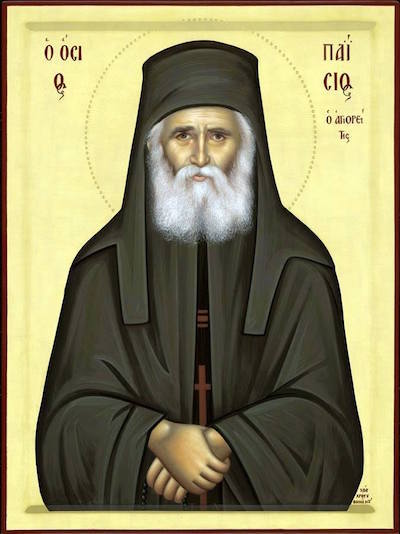
St. Paisios the Athonite

Icons, Photographs and Video on his feast day

a1a2

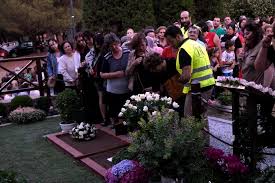
I may be on a pilgrimage in Romanian monasteries, but St Paisios’ the Athonite, my patron Saint‘s, presence is strongly felt all over Romania. Plenty of icons of his and books with his services and spiritual counsels in all monasteries and churches I have been so far! I truly regret having to leave this week of all weeks Greece, but thanks be to God, while this was going on inside Souroti monastery church on July 12, and this outside the church, near his tomb

a3

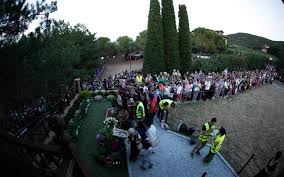
Much longer queues than in 2013 … every year longer! The Lord is glorified in His saints!


the faithful all over in Romania were holding Vigils and praying Akathists and Supplication canons, asking for his prayers.

Wherever I go, the moment Romanians realise that I am Greek and my home town is near Souroti, they start asking for my telephone number and email, so that I can make arrangements and help them go and venerate his tomb.


Just in case you missed it, this is a beautiful documentary (in Russian with English subtitles) about the life of St. Paisios the Athonite and his years spent on Mount Sinai in Egypt.

And another one:

And yet another one by the Patriarchate of Moscow (a film documentary of six episodes with total duration of 5 hours on the holy life and work of Saint Paisius of Mount Athos):

Weak and Fallen Before Easter

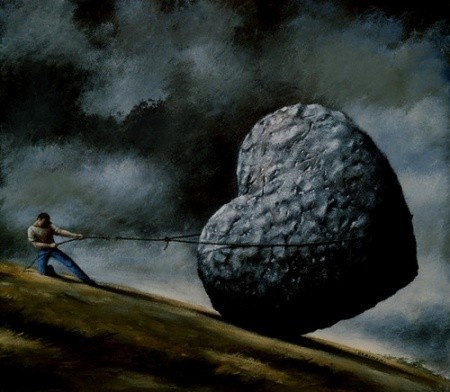
stone heart

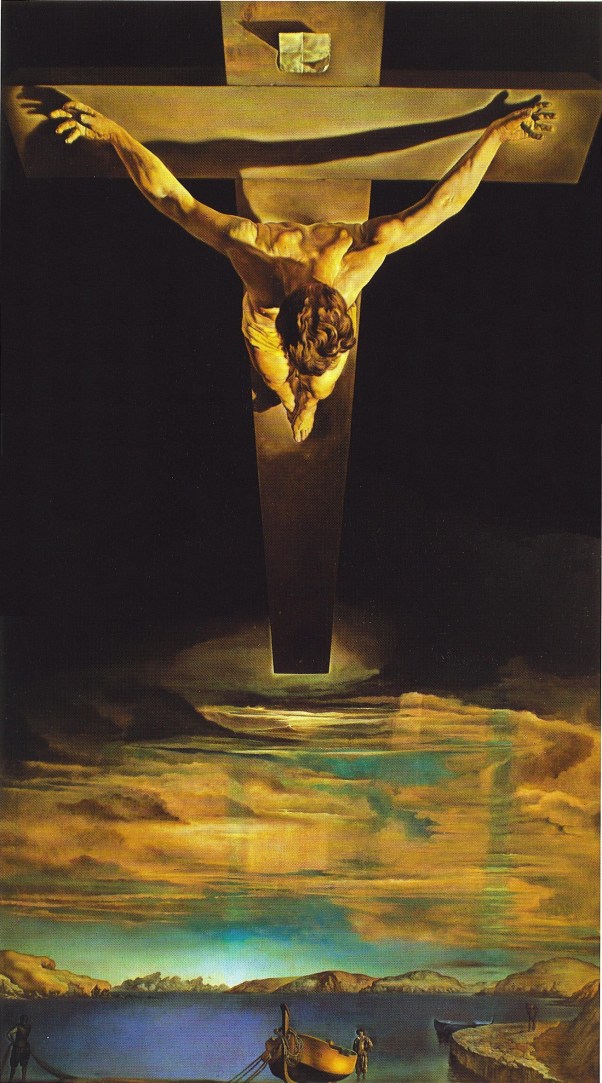
We need to recognise that as Christians, if we are truly following Christ, not just abandoning him at the Cross, denying him or God forbid betraying Him, we will receive the same insults. Even Pilate would not remove that charge which he pinned to the Cross, Jesus of Nazareth King of the Jews, though the crowd protested.

salvador-dali-christ-of-st-john-on-the-cross-1350506030_org


 May we all be blessed!


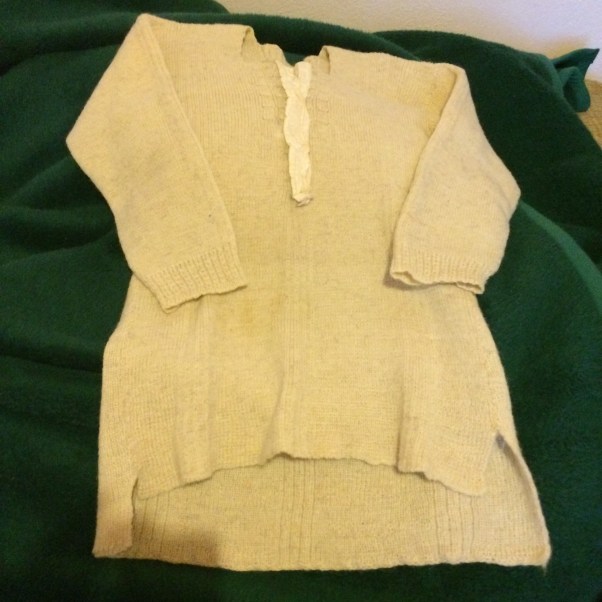
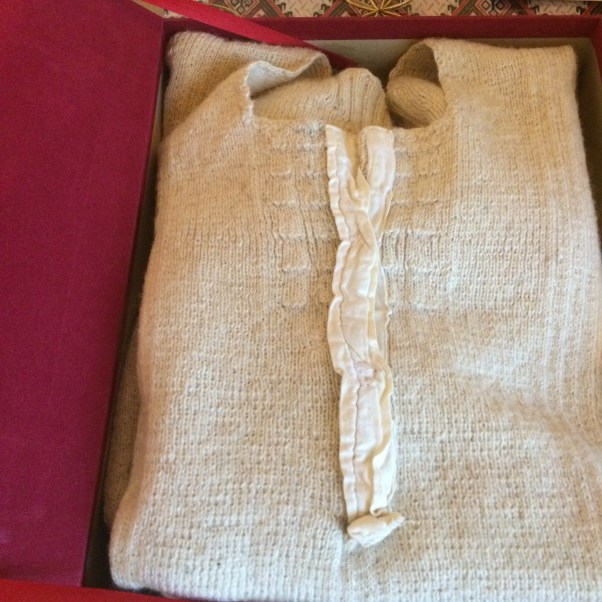
In a few hours, I’ll arrive at The Orthodox Christian Parish of the Holy and Life ­Giving Cross at Lancaster (United Kingdom), accompanying the Byzantine St Anysia Choir from Thessaloniki for Pascha; this choir also visited last year to help with the worship, particularly  the long, demanding  Holy Week services. We will also bring with us a hand crafted Icon, a comb and a prayer rope, all by St Paisios of Mount Athos, a Reliquary for containing these holy relics, and a handwritten Icon of his. We will also bring on loan  for Holy Week a piece of St. Paisios’ clothing, his undershirt, from another Monastery in Greece.

IMG_2679

 I am deeply moved by the fact that I am ‘carrying’ my patron Saint, Saint Paisios, though the truth is that the Saints carry us! This is the nearest that people will get to venerating Saint Paisios since his body is not to be disturbed in Souroti.


I am still packing, since so many monasteries in Greece have overwhelmed us with their generosity, and there are so many blessings, candles, incense, icons, secondary relics etc. to bring to the UK!


IMG_2983IMG_2982

The hectic days to follow at the Holy Cross parish will take away from me all phone connections and internet, but they will give me in return a precious chance to shut the world away and lock myself in the heavy, crushing silence of the Holy Week.

Before I do that, I want to wish you with all my heart to enjoy a Blessed, Life-Changing Holy Week and Easter!


I must admit that I am very tired. I feel tired, vulnerable and afraid, with no control over anything. I am so exhaustedIndeed,  “Lent is a horrid period. Year by year, Lent is when some force within me pushes me out of my comfort zones, and I find myself in a lions’ den, face to face with the beasts, utterly unprepared to fight, totally helpless, fully aware that the only possible outcome is to be slaughtered.”

Slaughtered indeed! This is exactly what I feel! A corpse!

“This is nothing new. This happens every year. Yet, I somehow survive, because the same Force that pushes me out of my self-created kingdoms, out of my self-created games – that same Force saves me from those wild beasts at the last moment.”

And this changes everything.

And yet, every time, I forget all about this, and I experience such despair and death, just before God intervenes! As if He has utterly forsaken me!


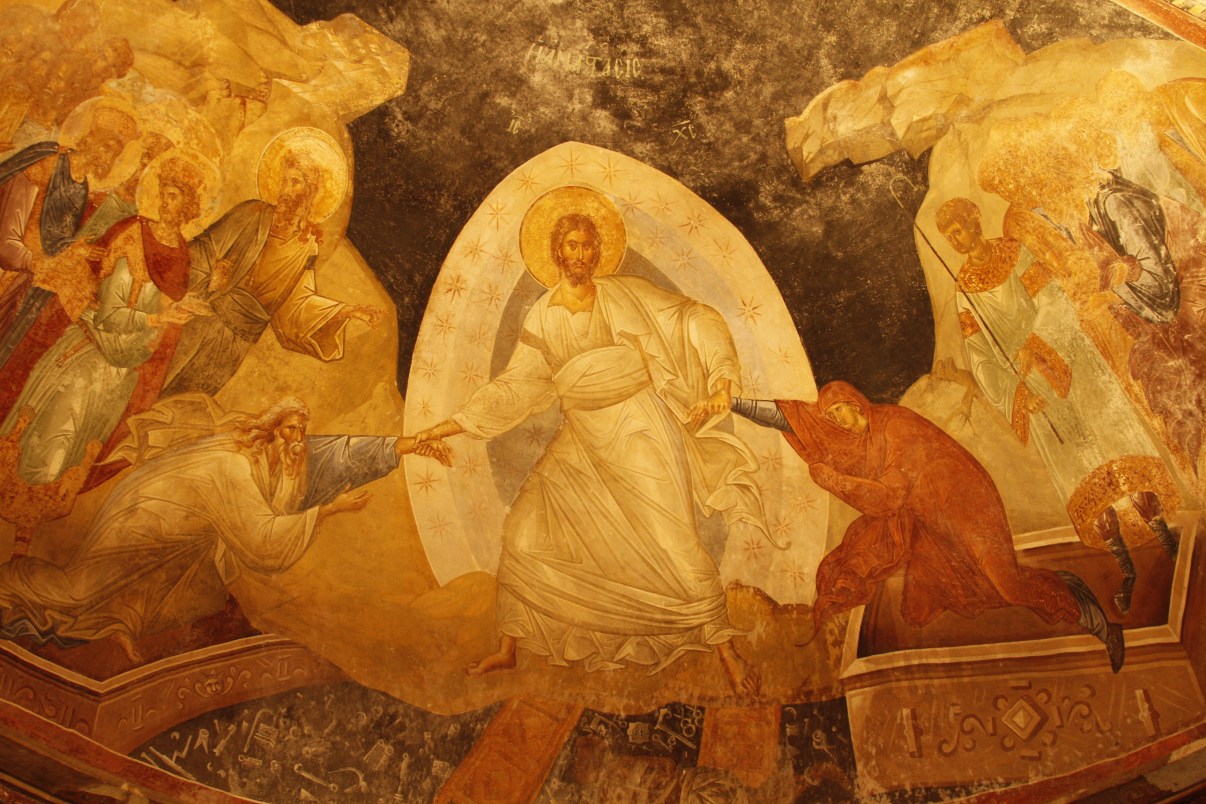
Anastasis_at_Chora.jpg

Now I understand why one focus of the Resurrection icon is Christ’s hands, pulling Adam and Eve! I desperately need this Hand to pull me out of this Hell!Weak and Fallen! In such a desperate need of healing, repentance, an intervention, a meeting with my spiritual father, a literal falling into his arms, the Sacrament of Confession! Is this who I really am? How can just 40 days reduce me to this? Is this  the real starting point of my change, repentance and redemption?


Deep in my heart, I bitterly realise that no healing is possible. No repentance is possible. No prayer is possible, until the heart that heals, repents and prays is my sinful, fallen, yet beating heart. False images do not have hearts. False images do not love. Most painful than all, false images will never reflect Christ, because there is nothing false in Christ, nothing common between Life and void. Prayer begins with pain at one’s fallen nature; it grows out of this pain, and its flowers bloom out of it.The taste of ashes in my mouth. Am I, fallen and depraved and sinful that I am, still the image of the Immortal God?


I need to hold on, just a little bit more, to the Living God, and may His immortal image remain within me. It may then reflect on me,  bless me and I may grow into it. Day by day, year by year, I may grow into this image, and be more Christ-like. Then His Life will be mine, His Resurrection will be mine.

So many miles to go before I sleep!


If you have ever experienced such confusion and fallenness, have courage and pray for me. Let us all fight in our body and spirit. His Resurrection is real, and it is coming. In His Resurrection we shall all be one!

The Forerunner of Orthodoxy in North America

What a fascinating story! Wishing you all a blessed Holy Week journey toward Pascha!

The First Known American Convert to Eastern Orthodox Christianity

A Young Philip Ludwell III

PLIII-portrait-Stratford-crop-vSM

This painting of a young Philip Ludwell III is the only known portrait of the man. It is exhibited at Stratford Hall Plantation, the historic home of the Lee Family of Virginia.

Located in the Northern Neck of Virginia, Stratford Hall was built in 1737-38 by Thomas Lee, a founder of the Ohio Company, and named after his grandfather’s home in London. Thomas Lee married Hannah, the sister of Philip Ludwell III. Among their six sons, two signed the Declaration of Independence and two served as the United States’ first European-based diplomats.

Philip Ludwell III died in 1767 in London and was buried in the Ludwell family vault of the church of St. Mary-le-Bow, in the Stratford area of London where the River Lea (Lee) meets the Thames. His daughter Hannah Philippa Ludwell Lee was also interred in this plot in 1784, just prior to her intended return to the fledgling United States.

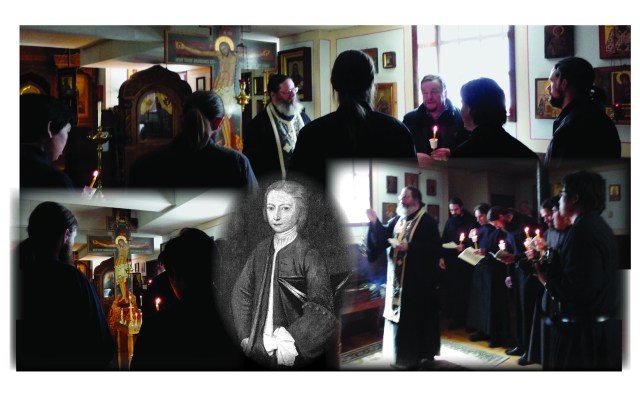
Ludwell-Panakhida-Collage.jpg

Philip Ludwell III is the first known convert to Eastern Orthodox Christianity in the Americas. He was a prominent figure in pre-revolutionary Virginia and a relative by blood or marriage of many great early figures in American history from George Washington to Lee. The scion of one of the largest landholding and politically prominent families in early Virginia, he was born at Green Spring near Williamsburg on December 28, 1716.

One year after his marriage to Frances Grymes in the summer of 1737, the young Ludwell travelled from Williamsburg to London, England. Twenty-three years later, in 1761, the Orthodox priest in London, Fr Stephen Ivanovsky, wrote:

In 1738, during the incumbency of the late Hieromonk Bartholomew Cassano at this holy Church, an English gentleman named Ludwell, born in the American lands and living there in the province of Virginia, came to London seeking the True Faith, which he, with God’s help, has swiftly found in the Holy Graeco-Russian Church. And so on the 31st of December of the same year he was confirmed in the same with the holy Chrism.

Life in Virginia

In 1740 Ludwell returned to Virginia. From 1742 to 1749 he was a member of the Virginia House of Burgesses where he argued for higher taxes on the importation of African slaves and headed a committee to seek a cure for cancer. In 1752 he became a member of the Royal Governor’s Council and served in this capacity until his death in 1767. As a member of the Council he was instrumental in obtaining a commission for a young George Washington as a Colonel in the Virginia militia in 1755. 

Meanwhile he continued to secretly practice his Orthodox faith, which at that time was treasonable. At some point in the 1750s he embarked upon an English translation of the “Orthodox Confession of the Catholic and Apostolic Eastern Church”, composed in 1640 by the Orthodox Bishop Metropolitan Peter Mogila of Kiev. Ludwell dedicated his translation to “the devout Christian reader,” and quoted the prophet Jeremiah:

Thus saith the Lord, Stand ye in the Ways, and see, and ask for the old Paths, where is the good Way, and walk therein, and ye shall find Rest for your Souls.

By 1751 he had three daughters: Hannah, Frances, and Lucy. In 1753 his wife Frances died.

London: His Final Years

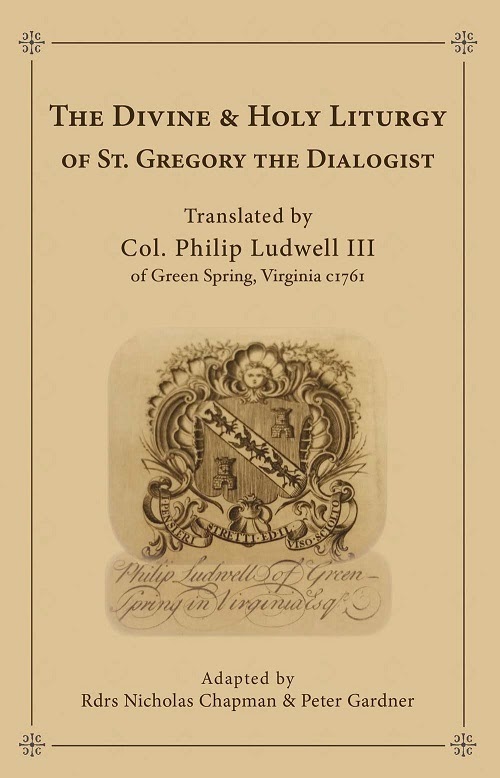
In 1760 he moved with his daughters to London where they were received into the Orthodox Church on Holy Wednesday, 1762. In the same year, with the blessing of the Holy Synod of the Orthodox Church of Russia, Ludwell’s translation of Mogila’s catechism was published in a cloth edition. The Russian Synod also authorized Fr Stephen Ivanovsky in London to give the Ludwell family the consecrated elements of bread and wine to take back to Virginia and to prepare for them appropriate forms of Orthodox prayer for use in their native land.

One extant copy of what may be this ordo has been found in bound, but handwritten, form. It includes translations of the three principal Orthodox liturgies, morning and evening prayers, the service of confession and other texts. 

Philip Ludwell died in London on March 14, 1767 after a long illness. His funeral rites were served at the Orthodox Church there and he was buried at the Anglican church of St Mary Stratford Bowwhere there was a family vault. Over two hundred years later his life and inspiring story of faith is becoming known and reshaping our view of early America.


Ludwell-Confession-title-pageludwell.lgSeal-of-Lucy-Ludwell

Source

Bede’s World

Yesterday, I met Fr. John Nankivell at my hometownduring a pilgrimage in Greece! He spoke in fluent Greek! What a kind, gentle, most erudite Father, with such a fine sense of humour! May we have his blessing! Below follows a most interesting (and subversive) interview of his on Early Christianity in the British Isles.

BEDE’S WORLD: EARLY CHRISTIANITY IN THE BRITISH ISLES

Fr. John Nankivell, pastor of the Greek Orthodox Church of the Nativity of the Mother of God in Walsall, West Midlands, spent over thirty years teaching chemistry and religious studies before retiring as principal of Joseph Chamberlain College in Central Birmingham to take on a full-time ministry. His first book, Saint Wilfrid, on Wilfrid of York was published in 2002, and he has served as chaplain on a number of occasions to the annual Friends of Orthodoxy on Iona pilgrimage. In co-operation with other West Midlands parishes, the Church of the Nativity of the Mother of God houses the St. Theodore of Canterbury Study Centre, running theology courses that lead to University of Wales [Lampeter] qualifications.

RTE: Fr. John, you’ve written a fascinating book on St. Wilfrid and the world he lived in. While Venerable Bede portrays him as an able advocate of the seventh-century universal Church, modern accounts of “Celtic” versus “Roman” Christianity seem far more ready to cast him as a villain. Wouldn’t we be right, though, in saying that Wilfrid, in the eye of the storm, and Bede, our chief observer, are two pivotal figures in any discussion of early Christian Britain?

FR. JOHN: There are so many exceptional figures from the sixth and seventh centuries on these islands that it is difficult to isolate one or two of them. Without Bede, ‘the first scientific genius of the Germanic people,’ as R.W. Southern calls him, we would, of course, know very little about any of them.

His homilies on the Gospels stand beside those of St. Gregory the Great as a monument of patristic writing. He was a monk and a scholar. But his scholarship was the servant of his love for the truth and the Gospel. This is why his writings were of such value to the missionaries from these lands to Germany. And it is why they endure as devotional reading to this day.

St. Wilfrid left no writings. Like Bede, he was a devout monk, whose greatest joy was to pray continuously in his cell, singing the psalms. But his abilities and his times required of him a life of ceaseless activity as a bishop, an abbot, a missionary, and someone at the forefront in dealing with matters of Church order and organization. One physical monument he has left to our day is the crypt at Hexham. It gives us some idea of his great buildings at York and Ripon, which would have inspired generations of Christians. His foundation work as a missionary in Sussex and Frisia inspired his successors and lives on in their continuing Christianity. The great monasteries he founded in central and northern England were centres of the Christian life for generations. His Vita, the first Anglo-Saxon ‘biography,’ remains an inspiration to those modern Orthodox Christians who seek to establish and nurture the faith in our multi-ethnic, multi-faith and often hostile world. But there are so many gigantic figures from these times: Columba, Aidan, Theodore, Finan, Cuthbert….

RTE: Before we delve into the world of Venerable Bede and St. Wilfrid, perhaps we should begin at an earlier point. The notion of an Orthodox Celtic Christianity co-existing in pre-schism England alongside a more “continental” model has been embraced by quite a number of Orthodox believers over the past decades. Who were the original peoples we think of as Celts, and where did they live?FR. JOHN: As I understand it, the term “Celtic” was first used in the eighteenth century to refer to language groups. In this linguistic sense, both the inhabitants of Ireland and the inhabitants of Britannia (the “British”) were people whom we now speak of as “Celtic” folk. They were bound together by similarities in language, in which there were two distinct strands: the Gaelic Goedelic branch, and the Brythonic. The Irish and the Scots (who are Irish in origin) use the Gaelic, and the Welsh, Cornish and Bretons (of Brittany in France) use the Brythonic form.

Many people know that it was the Celts of Asia Minor, the Galatians, for whom St. Paul wrote his Epistle. There were also Celts in Galicia in northwest Spain, which had connections with the British Church. There are still many place names referring to Celts in central and western Europe: Gaul itself, Gallia, and the Pays de Galles, the French name for Wales. The name Gall (Celtic) turns up all through Europe – even today the Turkish football team Galatasaray owes its name to the Galatians.

Dates are complicated though, as there were large movements of Celtic peoples before the Romanization of Britain. No one knows when they arrived on these islands, but it was a long time before the Christian period of Venerable Bede and St. Wilfrid. Here in England we had the native British, the Irish (the Scotti) both in Ireland (Hibernia) and in northern Britain, and the Picts further north. The term Scotti came eventually to refer only to the Irish settled in north Britain. When these Scots were eventually united with the Picts, the whole area became known as Scotland.

The Picts may or may not have been Celtic. We don’t know what their language was. About the Picts themselves, very little is known, and nearly every assertion made about them is open to challenge. Their lands were never part of the Roman Empire, and the great walls of Antoninus and Hadrian were built to keep them at bay.

So, when the Romans came here to Northumbria where Bede later lived, the peoples they found were these British peoples. Although the Romans obviously structured the local government around their own cities, they also accommodated these tribal areas and some of the British names were kept by the incoming Anglo-Saxons, such as Bernicia and Deira, the two parts of Northumbria.

Roman Britain

RTE: Many of us have an idea of Roman and post-Roman Britain as being cut off from the rest of Europe, and rather wild.FR. JOHN: This is a common idea, but it’s not true. From 63 BC to 410 AD the Roman roads were open and well-traveled, and Britain was solidly a part of the Empire. A couple of hundred years ago there was a view that once the Romans withdrew, society fell into shambles and chaos under Pictish invasions. In fact, there’s evidence for marauding Picts, and also marauding Germans. There is good evidence that the British invited the Germanic tribes to help them fight the Picts in the north, and that is one way in which they came. But, there is a lot of debate about this, and some speculation that Germanic peoples came not only as military mercenaries, but also as agricultural settlers, motivated by rising sea levels which forced them to look for new land.

Of course, the Roman troops themselves were multi-ethnic, and many of them would have retired here. They would have been pensioned off with land, and married local British women. Along Hadrian’s wall you have evidence of all the religious life that was current in Rome at that time, quite substantial Mithraic temple remains, as well as Christian elements.

RTE: When the Romans withdrew in 410, did Christianity leave with them, or was there a recognizable tradition left?

FR. JOHN: Not only were things left, but Christianity was well-established.

The Romans had been in Britain about 500 years. We don’t know when Christianity arrived here, but it was certainly aided by the fact that this was part of the Roman Empire, and there is no reason to believe that it was very different from any other part of the Roman Empire, or much further behind in its Church development. We simply don’t have the names of those very early Christians and missionaries; we can’t say that a certain person is the “Apostle to Britain.” Of course, by Orthodox tradition, Aristobulus, one of the seventy disciples of the Lord, is given that title in the Orthodox Menaion, but we don’t have British sources for this, nor does Bede refer to it. It is a Greek Orthodox tradition.

RTE: Then St. Alban, the first martyr of Britain, would be one of our earliest known Christians?FR. JOHN: Yes. Some date St. Alban as early third century, some as mid-third century, some as a victim of the early fourth-century Diocletian persecutions.

A case can be made for each of the three dates, as there was an early Christian persecution in the 220’s, then the 251 Decian persecutions centered in northern Africa, followed by Diocletian’s. The weight of scholarly opinion shifts back and forth over the most likely date of Alban’s martyrdom. Presently, the later date seems to be favoured.

We also have Julian and Aaron, the martyrs of Caerleon, in what is now south Wales, who are mentioned by Bede as being martyred in the same persecution as St. Alban. Some people take the fact of the name Aaron to suggest a Jewish presence here, saying that Christianity may have come through the Jewish communities, as it did in much of the rest of the Roman Empire, but the only evidence for this is the name.

The real archaeological and historical evidence for early Christianity begins in the third century, and there are important fourth-century finds. The archaeological work that has been done in the past fifty years has very much increased our knowledge.

What is certain is that by the time of the Council of Arles in 314 there were three British bishops. We don’t know where these bishops came from, although it is possible that one came from York. We can say, though, that by the early fourth century, shortly after Constantine embraced Christianity, there was probably a full ecclesiastical and diocesan structure here, most probably based on the twelve Roman provinces.

In Ireland things were more complex and unclear. In the fifth century Pope Celestine sent Palladius to be bishop of the Irish. He appears to have been active in the South. At the same time, the Briton, St. Patrick, carried out his work in the North. By the sixth century there was an extensive and vigorous series of monasteries, around which the Church was largely organized. According to Bede, the bishops were under the authority of the abbots, and this has led some to assert that Ireland had no diocesan structure.

There were probably differences across the country, and a full traditional structure came into being only over a long period.

Evidence of Early Christianity in Britain

St. Bede
St. Bede

RTE: When you speak of archaeological evidence for early Christianity, what has been found?FR. JOHN: There are some very important things in the British Museum. From Lullingstone, a village south of London, the museum now has Christian frescoes from a house church. These excavations show an active and growing Christian community; the frescoes portray figures standing in prayer, and the Chi-Rho in plaster. It’s in an amazing state of preservation and has been moved to the British Museum.

Another important find was from Hinton St. Mary, in Dorset, a fourthcentury mosaic: the Lord with the Chi-Rho, also now in the British Museum. Other work has been done, for example, at the site of one of the main Roman cities, Uriconium in Shropshire near the Wrekin. Wrekin itself is a British pre-Roman name. It was one of the four or five largest cities in Britain and, although there is not much left above ground, recent surveys seem to show major building having been undertaken in the fourth century – either a large basilica or a Roman building turned into a basilica, which suggests the presence of an important British bishop in the fourth century.

The written evidence is actually later, in the fifth to sixth centuries. One of our earliest sources is Gildas (+c. 570), called the Wise by the Church, who is commemorated in several western Orthodox calendars. As an historical source Gildas is very frustrating because his chief concern is to berate the Christians of his time. He was a British author writing for a British audience – in Latin, of course, which was the written language of communication. Most of his work consists of Old Testament quotations, including quite a lot from the Prophet Jeremiah, that Gildas freely applies to the kings of his time, saying what terrible people they are and how destruction will come upon them. He also attacks the bishops, and the impression you get from Gildas is of a wellestablished, middle-aged, flabby church that needs sorting out. So it seems to have been a long established church by the fifth or sixth century.

St. Aidan.
St. Aidan.

Bede says that his History of the English Church and People is an attempt to give good examples of good men to improve us, so there is much there to admire, but in a private letter to Egbert, the Bishop at York, two or three years before Bede’s death, Bede, like Gildas, speaks of a similar sort of corruption and lack of interest on the part of some of the clergy for their people. This was a major source of concern for Bede, and when he writes to the bishop all these things come out. He doesn’t wash his own era’s dirty linen in public, but he makes use of Gildas’ in his history.So there was an established British Church rather early, but when we talk about what it “was like,” we are talking about a church that was the same in fundamentals as the Gallic Church or the Spanish Church, the Italian Church, or the Church in Asia Minor… What was the difference between them? What was the difference, for example, between Irenaus of Lyons and anyone else in the Christian world? Obviously there were distinctive characteristics about Irenaean theology and his link with Asia Minor, but it was all part of the universal Church.

Another thing about the British Church that shows the extent to which things had developed, was the response to the Pelagian[1] heresy. Pelagius (the only British person to turn up in early patristic literature) spent much of his time in Rome, and in fact I think it’s Jerome that talks about him being “stuffed with Irish porridge,” which has misled some into thinking that he was Irish. Bishop Germanus of Auxerre in Burgundy (+448) was sent to Britain twice to help sort out the heresy. British representatives had participated in earlier councils, as well as in the reaction to the heresy, so Britain was obviously part of the main-stream Christian world.

RTE: You have said that Bede’s History of the English Church and People is so rich that it can be read over and over again, and is our basic text for the period. By Bede’s lifetime, were the original British inhabitants still there, had they been pushed out, or did they simply intermarry with the new Angle and Saxon settlers?

FR. JOHN: The Germanic peoples settled in Britain in the fourth, fifth and sixth centuries, from tribal groups that had settled along the coasts of Scandinavia, North Germany, and the Netherlands. They came first as mercenaries and economic migrants, but increasingly as adversaries and invaders. The Welsh, Scots and Irish called them Saxons or “Sassenachs”.

The rest of the world now knows their descendants as the English. Angles and Saxons formed the major groups and “Anglo-Saxon” is the term generally used to refer to them.

In the mid-nineteenth century there was a view, sparked by a quote of Gildas about the “ferocious Saxon,” of militarily superior Germanic peoples coming in and driving the local people (the British) west into Cornwall and Wales, leaving the Angles and Saxons (the “English”). There was bitter warfare between the Anglo-Saxons and the British, and many of the British who fled before the Northumbrian sword would have seen their churches taken over by the newly converted English. Even when both the British and the Anglo-Saxon (“English”) kingdoms were Christian, there are late seventh-, early eighth-century letters showing that they so distrusted each other that they wouldn’t eat off of the same plates.

There was also a general British move westwards to the mountain fastnesses to live separately, but the situation was more complex than this. There was probably a much stronger British presence left in Northumbria than is usually assumed, and Bede himself may be partly responsible for this under-representation of the British in the development of the Church. Although he consistently attacks them for failing to evangelize the English, there is every evidence to show that the Anglo-Saxon tribes were steadily being Christianized, but we don’t know by whom. All that Bede tells us about the Hwicce people of the Severn valley, for example, is that Wilfrid consecrated Oftfor as their bishop at Worcester. So, if they weren’t yet Christian, why did they need a bishop? This is one area where the silent evidence is very strong for a British Christian presence, strong enough to lead to the conversion of the incoming Angles.

Bede leaves us with the impression that the British were pretty much gone, and that the British churches had been taken over by the English Anglo-Saxons, as they were baptized. My guess is that there were British still around and that there had been a lot of intermingling. There is also some evidence that some of the British, including a bishop, were going to Galicia. This may have been on pilgrimage, but there were also people emigrating because of the Anglo-Saxon presence.

Formative Missions and Early Liturgies

RTE: So, in the sixth to seventh centuries in which Bede is writing, it seems we have a few very visible missionaries: St. Augustine of Canterbury sent by Pope Gregory the Great from Rome to southern Britain, and St. Paulinus who, as part of that same mission, baptized in Northumbia as well; St. Columba who left Ireland to found his monastery on Iona off the west coast of Scotland, and whose disciple, St. Aidan of Iona, in turn founded the great monastery at Lindisfarne on the east coast; and St. Wilfrid, who having received his monastic formation under Aidan, went to Rome and brought back more of the practices of the world-wide Church, founding influential monasteries in Northumbria and later becoming a bishop himself.

St. Cuthbert
St. Cuthbert

FR. JOHN: Yes, and it’s important to remember that these were all strands of one intermingled Church culture. The Irish Aidan, for example, arrived in Northumbria without a knowledge of Anglo-Saxon, and in the early days the Anglo-Saxon King Oswald (who had been exiled on Iona) would interpret for him. In time, the Irish became bilingual and some of the English monks became fluent in Irish. Many Angles, including St. Chad of Mercia and his brother, St. Cedd, who brought Christianity to Essex, retained a great love for Irish ways and carried Ionan Christianity well beyond the boundaries of Northumbria. Wilfrid, who is often portrayed as an opponent of the Irish, is a more complex example of the same tradition.There is really almost nothing in the first 700 years that we can point out now that is specifically Irish or British, other than individuals. If you pick any passage from one of Bede’s sermons, for example, without knowing who had written it, you could be reading any of the Greek or Latin fathers.

Another remarkable Northumbrian Angle was St. Benedict Biscop, who was a great traveler to the Mediterranean world, where he collected books, icons, and relics for his monasteries at Wearmouth and Jarrow, Bede’s own monastery. He persuaded both cantors and icon painters to come to Northumbria and teach his monks, and Biscop created one of the West’s great libraries at Jarrow, where Bede, among others, gained encyclopedic knowledge. St. Wilfrid not only went to Rome, but was also the first missionary to Frisia (northern Holland), and his disciple St. Willibrord came after him to establish Christianity there. A century later the well-known St. Boniface of Crediton was active in Germany. There would be a huge demand for manuscripts from Bede’s Jarrow monastery by the Germans, and Boniface himself wrote saying, “Please send these, I need them.” They used Bede’s History quite extensively, and there is speculation about what its importance would have been in the Christianization of the Germanic peoples. Some of these manuscripts still exist and seem to have been done in haste, with mistakes in spelling, etc.

RTE: It’s quite common for Orthodox to speak of missionaries having consistently translated the gospels and service books into local languages, but, that wasn’t the tradition in the West, was it? There wasn’t a written British, Welsh, Breton, or Irish ecclesiastical language. The liturgy and services would have all been in Latin.

FR. JOHN: Yes, always in Latin. The many small scraps of British liturgical manuscripts that we have from those early centuries are all in Latin, and probably all follow the Roman usage. They are very recognizable: “Let us lift up our hearts,” “And with thy spirit,” “Sanctus, sanctus, sanctus…” There is nothing here that is different or distinctive. They were part of the family of early western liturgies. The earliest fairly complete liturgical manuscript we have is from the eighth century.

In studying these fragments, liturgiologists may find small differences, but it is the same with our English Orthodox liturgies now. From place to place in the English-speaking world, we have small divergences of usage or expression, but there is nothing that shows a distinctive theology. We have no records of liturgical differences or of discussions about local usages, which indicates that, liturgically, everything was settled.

The earliest bit of non-Latin writing that we have is from the eighthcentury Lichfield Gospels. It is in Welsh. There is speculation that this manuscript originated in South Wales at Llandeilo Fawr, which means “the great holy place of St. Teilo,” and was probably a church. It is called Llantwit Major in English. St. Teilo had a big school there; he was contemporary with St. David of Wales, late fifth-early sixth centuries. The book is called the Lichfield Gospels because it is presently in Lichfield, England.

Seventh-Century Ireland

RTE: And what was the relationship of the Irish to the British, Anglo- Saxons, and the Picts at this time?FR. JOHN: The Irish influence in seventh-century Northumbria was profound. The relations between Ireland and Britain go back to the earliest use of the seaways between Ulster and Argyll, between Wexford and southwest Wales, but this influence went both ways and we know that the early British (and this includes the area that is now Wales) were quite significant as missionaries, particularly along the coast of Ireland in the fourth and fifth centuries. We don’t have many details about their actual activity, but we do have names from the dedication of churches. The best-known British missionary is St. Patrick, the deacon’s son snatched by pirates from Britain and sold into slavery in fifth-century Ireland, who later returned as a free man intent on winning his pagan masters for Christ. The evidence of early churches named after certain saints links St. Patrick with Ulster and northeast Ireland. We also know of St. Patrick’s connection with Gaul, and interestingly, near St. Germanus’ relics in Auxerre, France, is an early fresco that the local people like to believe is Bishop Germanus blessing St. Patrick. In fact, there are some textual links between the two.

There were also Christians in the south of Ireland from early times. In 431 the Pope sent Bishop Palladius from Gaul to Ireland to organize an already existing church. Church dedications link this mission with Wicklow and with southwest Wales; it’s from Britain that the southern Irish had received their Christianity and learned their Latin.

Having received their faith from Britain, the Irish church became the most flourishing part of western Christendom in the sixth century. People came to Ireland from all over Europe to pray and study in the numerous monasteries, and Irish missionaries carried the faith across Europe, particularly to the Germanic kingdoms that had come into being after the collapse of Roman rule.

The great missionary movement from Ireland began in the sixth century.

The most famous examples of this are the two saints Columbanus and Columba, both named after the dove and noted for their ascetic life, but both men of authority and deep learning. Columbanus’ mission was to the Franks of Gaul and the Lombards of north Italy; Columba’s to the Picts.

St. Wilfrid
St. Wilfrid

One of the reasons St. Columba left Ireland in 563 and founded his monastery on the tiny island of Iona, off Mull, was to be a missionary to the Picts, whom St. Ninian, working from Whithorn (now southwest Scotland) had first preached to in the fourth century. In fact, Columba was going to an existing Irish kingdom, Dalriata, of which Iona was a part. Next to it was a British kingdom, Strathclyde, and north of that was the Pictish Kingdom, both southern and northern Picts. By the mid-seventh century, the Picts were Christian, and as southern Pictland was part of Northumbria for a time, St. Wilfrid served as bishop for Picts in the north of his diocese.Columba’s Iona became the centre of a major monastic commonwealth stretching from north Ireland, where daughter monasteries were founded at Derry, Durrow, Tiree in the Hebrides, Pictland and Northumbria. In 616, half a century after its foundation, the Northumbrian Prince Oswald came to live at Iona, and by Wilfrid’s time, there was no need to travel to Ireland, as Oswald had invited the Irish Aidan to Northumbria and it was at Aidan’s monastery at Lindisfarne that Wilfrid was first instructed in monasticism.

Besides the followers of Columba, such as Aidan and Cuthbert in Lindisfarne and Northumbria, there were already south Irish missionaries in Britain, such as St. Fursey in East Anglia, who were independent of Iona.

But, East Anglia was also influenced by clergy from Gaul, Northumbria, and Mercia and of course, the British, who are overlooked in all of the literature.

RTE: Authors who support the idea of very distinct differences between Celtic Christianity and that of the rest of England and the continent, often cite Egyptian and Coptic influences on art and monasticism in Christian Ireland. What do you think of this?

FR. JOHN: I think the evidence for artistic influence from the eastern Mediterranean is clear, and to be expected from the importance of the searoutes we discussed earlier on. The swirls on the cover of St. Cuthbert’s pocket Gospel book, buried with him in his coffin, are often linked with Coptic design. Monasticism had its origins in the wilderness of Palestine and the deserts of Egypt, and spread out from there. The influence of St. Athanasius’ life of St. Antony in its Latin translation was crucial in the spread of the monastic ideal to the West. Doubtless there were direct connections between the monastics of the East and the Irish, as there were with southern Gaul, for example. This is rather a point of similarity between Irish traditions and those of the Continent, than of distinctiveness.

RTE: In your book on St. Wilfrid, you mention several very influential Northumbrian women. Did the role of women in Northumbria and Ireland differ from the rest of the Church?

FR. JOHN: Women were of the utmost importance in the Church of seventhcentury Britain. I tried to bring this out in the book on St. Wilfrid. Queen Eanfled was very much St. Wilfrid’s spiritual mother in his formative years, and continued to influence him throughout her life. Queen Bertha probably did as much to bring the Gospel to the Germanic people of Kent as did Augustine. The role of these powerful queens in the policy of the newlyformed Anglo-Saxon kingdoms was substantial. Better known, of course, is St. Hilda, whose monastery at Whitby was a training ground for future clergy, including bishops; she was very much a teacher of the teachers. There are other examples of such ‘double’ monasteries, that is both a monastery for women and one for men, under the joint direction of an abbess. And it was always an abbess, not an abbot. These occurred in the Frankish areas of the continent. Other examples of such important women leaders were St. Mildred on the isle of Thanet in Kent, and St. Milburgha in Shropshire. This leadership role of women seems to have been a particular feature of the Anglo-Saxon and other Germanic Christians. They also played an important part in the Anglo-Saxon missions to Germany.

RTE: What can we say about the early Church in the area that is now Wales?

FR. JOHN: We know of St. Samson, St. Beuno, St. David, St. Illtyd and St. Petroc, and others who were active in Wales, Cornwall and Brittany (northern France) in the sixth to seventh centuries. When the Anglo-Saxon pagans arrived in Britain, they found a well-established British church with its bishops, martyrs, monastics, missionaries, its hermitages, monasteries, parish churches, liturgical traditions, relics and iconography.

This we discussed earlier. Increasingly, the centre of gravity of the ancient British church shifted towards the West. There was little Anglo-Saxon influence on Wales and Cornwall. But, as I said before, the British presence in ‘England’ continued.

Orthodox Rome

Lastingham Crypt
Lastingham Crypt

RTE: In your writing and talks you identify seventh- and eighth-century Rome as part of the Byzantine world, and have remarked that Rome was actually holding Orthodoxy in a purer form than in the East, where iconoclasm was steadily taking root. This is something to ponder, that Rome was guarding the Orthodox tradition…FR. JOHN: …as Rome always had to. Most of the heresies were eastern inventions, weren’t they? Rome might not have been as inventive as eastern Christendom, but it held a clear Orthodox traditional position.

Going back for a moment to the previous century, St. Augustine of Canterbury had come in 597, sent by St. Gregory the Great (+603). Gregory was an important and major figure, who reformed the whole of northern Italy after the Lombard invasions. Virtually all of Europe was under Germanic influence: the Lombards in north Italy, the Anglo-Saxons and Jutes in Britain, the Franks in France, and the Visigoths in Spain. Following the Lombard invasions came famine and plague; everything fell apart. It was St. Gregory, as pope of Rome and of patrician background, who was able to bring about the revival of Italy – through the movement of grain, the feeding of the people, the rebuilding of cities and churches. He not only gave all of his family wealth for this physical revival, but he took a very active interest in the liturgical and monastic life of Rome and the development of the Church’s mission.

The Persian invasions of the Holy Land (they took Jerusalem in 614) led to a large number of Syrian, Palestinian and Greek exiles seeking refuge in Rome, where they established monasteries and other institutions. Rome became a place of great ethnic and linguistic diversity, with a variety of liturgical and ecclesiastical traditions.

Also, 621 marked the flight of Mohammed from Mecca to Medina, which was the beginning of Muslim influence. Within a decade of his death, Muslims had moved through the Middle East and North Africa. This is when many Christians, including Theodore of Tarsus, the Syrian monk whom the pope named the first archbishop of Canterbury, fled to Italy. In 641 a Greek from Jerusalem became pope, and many of the popes of the following century were also Greek or Syrian. There were quite important Greek and Syrian monasteries in Rome at this time, and Greek elements were introduced into the Roman liturgy.

There were also theological exiles in Rome from the East. In his attempts to reconcile the Monophysite Christians of Egypt and gain their support in his conflicts with the Persians and Arabs, Emperor Heraclius involved himself in theology by attempting to impose an unorthodox, compromise doctrine known as Monothelitism[2] on the Church. He persecuted the doctrine’s opponents, such as the great theologian of the seventh century, Maximus the Confessor, and many of them also made their way to Rome. The Lateran Council of 649 in Rome dealt with the question of Monothelitism, which was condemned in 681 in Constantinople by the Sixth Ecumenical Council.

Many of the seventh-century popes used their position to create impressive churches, such as St. Pancras. St. Peter’s was refurbished and great secular buildings like the Senate house were converted into churches. Much of the architecture and iconography of these new buildings was the work of Byzantine artists, and the city took on an appearance not unlike Ravenna and Constantinople.

When Wilfrid went to Rome in 702-3 to plead his case over his uncanonical deposition, he appeared in front of Pope John, a Greek. The Greek fathers of the council discussed the charges in Greek, in proceedings lasting over seventy sessions and four months. His appeal to Rome was fitting.

If Wilfrid had been in Asia Minor, he would have appealed to Constantinople; a bishop in his position in Syria would have appealed to Antioch. Protestant historians who posit an early British church independent of Rome and castigate Wilfrid for seeking to bring Britain into subservience to the pope are as far from the mark as those Roman Catholics who use Wilfrid’s appeal to Rome as evidence for a full-blown doctrine of papal primacy in the seventh century.

There was a unity of practice and understanding in the seventh century that’s difficult for us to appreciate now. It was possible for someone holding the office of bishop to be an Irishman in Gaul, a Syrian in Rome, or a Greek in Britain. For instance, Bishop Agilbert, a Frank who became a bishop in Gaul, then went to Ireland to study the Scriptures. From Ireland he went to England as bishop to the kingdom of the West Saxons, and later returned to Gaul to accept the bishopric of Paris, which he held from 664 until his death. His life is an example of the rich diversity of Christian influence on Britain – Irish, Gallic, Frankish, and Roman.

Agilbert was also the bishop who ordained Wilfrid to the priesthood in his own monastery at Ripon and brought him to the fore at the meeting often called the Synod of Whitby in 664.

The Synod of Whitby

Escomb Church
Escomb Church

RTE: That brings us to the Synod itself, which seems to be what most contemporary writings about a Celtic church call its “death knell.” What were the real differences between the Irish-British-Welsh churches and the Roman or Anglo-Saxon usage that were settled at the Council?FR. JOHN: They were two of the three things that Augustine of Canterbury had brought up at his meeting with the British bishops: the dating of Easter and the form of the monastic tonsure – that is, the way in which monks cut their hair after taking their vows. The completion of baptism by the bishop, probably meaning chrismation, was the third thing, but that was not raised at Whitby. The dating of Easter was by far the most serious issue.

In regards to chrismation, what is fairly clear from the texts we do have from the West, and in the Byzantine rite for baptism, is that virtually all of the churches allowed the priest to administer chrismation, in fact they expected it to be so. But Rome was distinct in saying that the sacrament should be given by the bishop.

RTE: As it remains today. A Catholic bishop administers confirmation parish by parish, to groups of young people around age 12-14.

FR. JOHN: Yes. The Anglicans follow this as well, and it’s quite easy to see how this came about. No bishop could attend every baptism, so they had to split the sacrament and put the chrismation off until he came around. Over the centuries, it was pushed further and further back.

That was the third point and interestingly, at the Synod of Whitby where the first two practices were decided, this third question was not even mentioned. Yet, we find Cuthbert, who is often claimed as an honorary Celt, going around and completing baptisms following the Roman practice. Ireland itself didn’t change to the Roman confirmation practice until the eleventh or twelfth centuries. This is another instance where the divisions between the “Celtic” and “Roman” contingents were not so clear-cut.

The main purpose of the Synod of Whitby was to resolve the question of the date of Easter. It was important that the unity of the Church should be particularly clear on the most important festival of the year. As it was, those who followed the “Irish” calendar – and they included King Oswy of Northumbria and the monastics of Lindisfarne and Whitby, whom his father King Oswald had brought from Iona – could be celebrating the Resurrection, while those who followed the “Roman” date, including Oswy’s queen, Eanfled, were still keeping the Lenten fast. This was bad for the unity of the Church, but it also caused political disunity in Northumbria.

Oswy summoned both political and religious leaders to the Synod, as Constantine and other Christian rulers had before him.

Bede gives us a rather full account of the proceedings, with St. Wilfrid acting as spokesman for the universal “Roman” date kept by the Church throughout the world, and St. Colman, Bishop of Northumbria, for the “Irish” date, which traditionally had the authority of the Apostle and Evangelist John, and was used by the northern Irish, St. Columba, and the Iona monastics. (Although, even within the “Irish” usage, there were a variety of observances.) Interestingly, this was not the practice of all of the Irish. The southern Irish had already changed to the universal Church dating of Easter. St. Wilfrid did not deny the sanctity of Columba, nor did he think that the Ionan way of keeping Easter was seriously harmful if they were unaware of the rest of the Church’s unanimity in observing the universal date. Once they were aware, however, that they alone were keeping another date, they should acquiesce.

Whitby Abbey
Whitby Abbey

Most of those on the “Irish” side agreed to use the universal date of Easter, including St. Cuthbert, St. Hilda, St. Bosa, Sts. Cedd and Chad. Only Bishop Colman and his monks (both English and Irish), out of loyalty to St. Columba and their tradition, could not submit to the decision and left for Ireland. This wasn’t a matter of ethnicity, but of where people stood on the calendar question.It wasn’t an issue after that. Even the northern Irish, to whom Colman and his monks went after leaving Northumbria, voluntarily changed their practice within fifty years. Iona itself adopted the universal dating of Easter in 716 and Whitby was only resurrected as an issue by Protestant reformers at the time of the Reformation.

It’s extraordinary how people now get so worked up about the Synod of Whitby. It would be understandable if it were about something fundamental, like the sermons that have gone on in Durham in recent years, with an Anglican bishop speaking of the Resurrection as “a conjuring trick with bones.” This is an important divergence from the fundamentals of the Faith, but how a monk cuts his hair is not.

RTE: Orthodox Christians who see the Council of Whitby as an Armageddon that stifled a great spiritual tradition often don’t know that after the Russian Revolution in 1917, one of the conditions set by the newly independent state of Finland to recognize Orthodoxy as one of its national churches, was that the Finnish Orthodox would exclusively use the Gregorian calendar.

FR. JOHN: Which is a radical change because the Gregorian calendar is now in conflict with Nicea, although that wasn’t done deliberately. Still, once or twice a decade, Pascha celebrated according to the Gregorian calendar falls either on or before the Jewish Passover, not after, as the Nicean Council decreed it must. Pascha must follow the Old Passover. It cannot coincide or precede it. Moving Pascha to the Gregorian calendar was a fundamental change, it broke the ancient practice of the Church, whereas Whitby brought all into unity.

The Idea of a Celtic Church

RTE: Why do you think people are so drawn to this idea of a Celtic church that had a separate, almost otherworldly, existence? Is it because we live in a technological age that we long for a more wholesome and natural way of life?FR. JOHN: I think there is a lot in that, and if you read the Frenchman Ernest Renan and the Englishman Matthew Arnold, they make a radical distinction between the Celts and the Anglo-Saxons – the Celt being nature-loving, mystical, spiritual and the Anglo-Saxon being organized, efficient and technocratic.

They even talk about industrialization, but from the standpoint of their own nineteenth-century anti-industrialization movement, which they project back onto these two peoples. What’s even more bizarre, of course, is that St. Cuthbert is always presented as a great representative of the Celtic tradition, but in fact, he was an Englishman, an Anglo-Saxon…

RTE: …who was quite in agreement with the Synod of Whitby.

FR. JOHN: Yes. And Aidan, on the other hand, who was one of the “real Celts” from Iona, was running around the peninsula organizing: converting kings, baptizing people, setting up churches, like any good “Anglo-Saxon.”

If you adhere to this notion of “Anglo-Saxon” versus “Celtic” Christianity, then you also have to decide what to think about Irish and British Christianity. Are they, or are they not the same thing? There was a definite relationship between Britain and Ireland but the Irish practices weren’t always the same as the British, but they were both Celts…. So what is this “Celtic Christianity?” It’s a confusing and not very helpful term. Neither the Irish/Scotti, nor the British/Welsh/Bretons would have ever thought of themselves as belonging to a “Celtic church” that was somehow separate from the rest of the Church.

So this is partly unclear thinking, and partly a creation of Anglican reformers in the sixteenth century who had to demonstrate a pre-Roman Church in Britain of which they were the continuation, in order to show that the medieval Catholic period had been a disruption of that. So Wilfrid, who was the spokesman for the Orthodox Easter at Whitby, was seen as “Roman” and demonized. The Celtic overlay came later.

RTE: A strong affinity with nature, and a less austere, more “warm-hearted” approach often glosses our modern view of the Celtic-speaking monks, but when one reads the early penitentials and monastic rules, there was also a rigorous asceticism – monks standing in prayer through the night up to their necks in ice-cold water, arduous fasting and strict penance for sin.

And, their prayers and poetry often seem to be a request for protection against the forces of nature. It wasn’t an endless summer.

FR. JOHN: Yes. Some of the earliest poetry we have is British, from the eighth, ninth, tenth centuries, although it could be based on something earlier.

In this, there is a strong emphasis on nature, on the Incarnation and the Resurrection, all of which makes them particularly close to the Fathers of the East. But, there is nothing in the documents up to the time of Bede that tells us much about them. As you say, we have these monastic rules which are very austere, and say traditional sorts of things about humility and so on, just as you would find in the sayings of the Egyptian desert fathers. Also, you had the centrality of the office, and above all, the psalms.

In many monasteries and hermitages the entire psalter was said twice a day, often from memory.

All of these things differ from this modern view that they were rather relaxed about rules. Nor, of course, was St. Cuthbert, who is often held up as a prototype Celtic monk. In Bede’s life of Cuthbert, Bede describes his very firm treatment of the monks when he becomes abbot of Lindisfarne.

He expected the monks to follow a much stricter rule than they had up to that time and there was a great deal of animosity towards him because of the changes he was demanding. When things got very fierce in the chapter meeting, he just got up and walked out. And he did that every day – walked out of the meeting – until they capitulated. Although there is a great emphasis on his hermit life, he was quite an attentive abbot.It’s a little upsetting to find our own Orthodox people taking these passionate and one-sided views. It doesn’t really matter if a saint is Celtic, British, Anglo-Saxon, Roman, Greek or Syrian, if there is something in his life we can learn from. There’s a new book out, The Lost Saints of Britain by Ian Thompson, about the “Celtic” saints who have been lost because of the nasty Anglo-Saxons and a horrible Greek named Theodore who tried to destroy the Celtic tradition!

And why was it so important in this new book to vilify St. Wilfrid, for example, to the extent of putting a special appendix, a psychoanalysis saying he suffered from sexual repression as evidenced by his cold baths? Even if it were true, does this mean that everyone who takes a cold bath is repressed? The greatest cold bather was Cuthbert, standing up to his neck in freezing water. So did many of the Irish ascetics and one of the Jarrow monks who stood in the Tyne with ice floating around him.

RTE: Could you say a bit more about this horrible Greek? We often miss the point that possibly the greatest archbishop of Canterbury was neither British nor Roman, but a Syriac-speaking monk from Antioch – a highly educated and saintly eastern Church Father.

FR. JOHN: Theodore was born in Tarsus, educated in Antioch, probably studied in Constantinople and later emigrated to Rome after the Persian invasions. He was sixty-six or sixty-seven when he was sent by the pope to be the archbishop of Britain, and he died twenty-one years later. He was the expert in the west on Monothelitism.

The Lateran Council that dealt with the Monothelite heresy, had been called in 649, and the Pope assembled evidence from all over the western world. He asked Theodore to draw up a statement of faith for the council. He set up a famous school in Canterbury that Bede is very complimentary about, where he taught Greek and Latin.

We have fragments of some of his learned biblical commentaries and analysis. We are sure they are his because they were written by someone writing in Latin as a second language, who knew Syriac and the eastern Christian world. His geographical and horticultural notes about the Near East are unmistakable.

He had great authority with the Anglo-Saxon kings, and he created a diocesan structure here, to properly attend to people’s spiritual needs. In his twenty- one years as archbishop, he created a diocesan structure so well-tuned to the diverse cultural and geographical realities of the country that many of the dioceses he created remain in place to this day. He was the first primate of England to hold councils of the whole church to establish an ordered and common pattern of life in all the disparate kingdoms of the land.

RTE: And taking into account what Gildas, and later Bede in his letter to the bishop, said about the state of the Church, perhaps this was necessary.

FR. JOHN: Yes. Of course, you can also find evidence for some for the things people sometimes criticize, because Archbishop Theodore was trying to bring about a uniform ecclesiastical practice among these small kingdoms and diverse peoples, and there were quite strong rules and canons.

RTE: Going back to claims for a distinctly separate Celtic church, I remember Dr. Tarek Mitri, an Orthodox professor from Lebanon, saying that while we seem to be growing more alike in our tastes and preferences on a global level, we are actually breaking down into smaller and smaller groups as a way to locate ourselves, and this often results in a search for ambiguous “roots” or identities. For instance, now in the Balkans, there are ethnic groups which are trying to reconstruct their histories to reflect what they would like to believe about themselves.

FR. JOHN: And, of course, the internet makes it possible to create a substantial community of one or two thousand people without actually meeting them. Some people inhabit that world.

RTE: Also, after Protestant reformers minimized prayer to the Mother of God and the saints and prohibited the veneration of relics and prayers for the dead, it is understandable that some contemporary Protestants feel the need to compensate for this lost spiritual contact by emphasizing the “warm-hearted” and “green” aspects of early British and Irish Christianity.

We often don’t realize that early texts such as Bede’s History of the English Church and People, or the Life of St. Columba by Adamnan, are richer and more satisfying than what has been written about as “Celtic” in the past fifty years. Going back to these contemporary writings is a tonic, like refreshing oneself with the Gospel after a spell of cloudy theology.

FR. JOHN: I think you have touched on another very important source for these romantic views of the ‘Celtic church.’

RTE: Yet it is difficult to completely renounce this sense of “differentness” that many of us have felt in what we’ve thought of as the Celtic church.

Although the romantic view has been overstated, can you sum up the truly distinctive characteristics of Christianity in Celticspeaking lands?

FR. JOHN: I think most of them have arisen in our discussions: a love of the monastic life with all its rigours, its discipline, and its harmony with the created world; the centrality of a life of prayer, based on the psalms; a commitment to the spreading of the faith; an emphasis on the Incarnation and the Resurrection of our Lord; a devotion to learning; and a creative and open artistic imagination that was able to develop a rich harmony of its own traditions with those of the wider Christian world.

But I think that if one dips into those great illuminated manuscripts, they show the unity and harmony of the northern Christian world in Bede’s time. For instance, some of the wellknown “Celtic” pages in the Lindisfarne Gospel are not Irish, but Anglo- Saxon, and the monks producing these illuminated manuscripts in monastery workshops would have known and included earlier Christian styles, such as in the Roman mosaics along Hadrian’s Wall.

There was also a strong seventh-century Mediterranean influence on the texts that I mentioned earlier; some of this influence was from Rome and Gaul, and some from Middle Eastern and North African exiles who had gathered in Rome. Also, you’ve got the strange depictions of animals, elongated dogs and other creatures that are quite distinctly Germanic, and the threelegged, so-called, triskeles that are Irish. There was mutual influence here. There is uncertainty about where many of these manuscripts actually originated.

The Book of Kells could have come from a Northumbrian workshop via Iona. It contains an icon of the Mother of God that is pure Byzantine. So, in all these illuminated manuscripts you have the Romano-Greek Mediterranean influence, the Germanic influence, and the Irish influence, all beautifully synthesized. That is the reality and the beauty of the Church in this country – it had all of these elements.

30 / 03 / 2009

[1]Pelagianism: A heresy constructed by Pelagius, a fifth -century British lay ascetic, and Celestius, a priest, who denied the inheritance of the sin of Adam by his descendants, considering that each man is born innocent, and only thanks to moral freedom does he fall into sin. Pelagianism was condemned at the Third Ecumenical Council, along with Nestorianism.
 
[2]Monothelitism: Monothelitism was a softened form of Monophysitism. While acknowledging two natures in Christ, the Monothelites taught that in Christ there was only one will – namely the Divine will. Adherents of the doctrine included several patriarchs of Constantinople who were later excommunicated (Pyrrhus, Paul, Theodore) and Honorius, Pope of Rome. The teaching was rejected as false at the Sixth Ecumenical Council.

Visited by God

Jeanne Harper, Visited by God: The Story of Michael Harper’s 48 Year-long Ministry (Aquila Books, 2013), 146 pages.
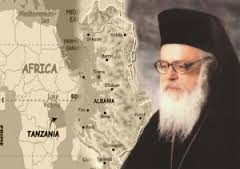
Visited by God is the extraordinary spiritual journey of an extraordinary Spiritual man – Michael Harper. I think that I would not be missing the mark to say that Michael Harper was the leader of the Charismatic renewal in England and many other parts of the Globe. Beginning as an Anglican chaplain under John Stott at All Souls Church, Langham Place, London, his journey finally culminated in his introducing an authentically British Orthodoxy as Dean of a new Antiochian Orthodox Deanery with English-speaking parishes all over the country.

His journey was a long and often ‘very difficult’ and testing one. In some ways I can liken it to the journey of St. Paul in that he depended solely on the Holy Spirit to lead him and lead him the Holy Spirit did! It all began in 1962 when Michael was visited by God while studying St Paul’s two prayers in his Epistle to the Ephesians. He ‘saw’ the Church as God saw her – broken by divisions and untended wounds.

It was almost from that very moment that Michael’s God-given mission for unity in the Church began. But there were many in the Anglican Church who opposed this renewal and together with Pentecostalism the movement was dismissed as over-emotionalism and therefore unacceptable. Inevitable disputes and arguments occurred but this did not deter Michael. On the contrary his detractors spurred him on! He continued to go wherever in the world there were people hungry for the power to live what they believed.

One might come to the conclusion that Michael’s journey as leader of the Charismatic renewal movement would result in a very broad liberality but when the Church of England’s General Synod of 1975 passed the motion allowing women into the priesthood, Michael felt more than just stirrings of discontent. Jeanne Harper describes Michael’s anguish which led to a most difficult and painful decision – to leave the Church of England – whom he called his foster mother, so faithfully had she cared for him and led him to his real mother, Orthodoxy.

Jeanne describes how he was led by the Holy Spirit to the Orthodox Church and in 2000 Michael founded the English-speaking Antiochan Orthodox Parish of St. Botolph’s near Liverpool Street, London. At the same time Michael was appointed as a director of the Institute for Orthodox Christian Studies Cambridge. And in 2005 he was elevated to Archpriest.

The silken thread of a spider is spun from behind him as he moves forward to spin his web. The spider cannot see his work until he looks back and then the pattern of his web with all its links is revealed. Looking back over the web of Michael Harper’s life one thing is clear – from the very beginning Michael’s journey had a pattern and this pattern was a pure reflection of God’s will in his life. Once this was achieved Michael was taken in 2010 and lives in constant joy and prayer along with the saints in glory.

Jeanne Harper shares this God given Spirit filled journey of her husband with the reader and in so doing cannot fail to make us all yearn for the presence of the Holy Spirit to touch and lead all our lives.

And let us not lose this opportunity.

Reviewed by David Suchet CBE

* Last but not least, the concluding chapter “The British Antiochian Orthodox Deanery Mission” is written by Fr. Jonathan Hemmings, one of the priests of the Deanery, whose parishes are strategically spread over England and are to be found in Ireland, north and south. The Dean who succeeded Father Michael, is Father Gregory Hallam, whose vibrant parish is in Manchester. Fr. Jonathan Hemmings ministers in Lancaster at the Orthodox Church of the Holy and Life Giving Crossworshipping at St Martin of Tours, Westgate. He writes the following chapter on the story of the Deanery and its missionary vision.

Christmas and Islam’s New Martyrs

“Is Christianity in trouble?  Is it in danger of becoming extinct?  I don’t believe so…” (1)


“The gates of hell shall not prevail against it” (Matthew 16:18)


martyr1martyr3martyr4


New Martyr Father Daniil Sysoev of Moscow
Confessor and Defender of Orthodoxy, and Apostle to the Muslims
†Nov. 19, 2009

“And when he had opened the fifth seal, I saw under the altar the souls of them that were slain for the word of God, and for the testimony which they held” (Revelation 6:9)

“And white robes were given unto every one of them; and it was said unto them, that they should rest yet for a little season, until their fellowservants also and their brethren, that should be killed as they were, should be fulfilled.” (Revelation 6:11)


martyr5.jpg
martyr9martyr10

May 13, 2001 — the martyric death of Priest Igor Rozin on the feast day of St. Ignatius, Bishop of the Caucasus, in the city of Tyrnyauz in the North Caucasus.

martyr6
martyr14martyr13martyr12martyr11


† New Martyr Evgeny Rodionov of Chechnya (May 23) http://facingislam.blogspot.gr/2013/05/new-martyr-evgeny-rodionov-of-chechnya.html


free-decorative-line-divider-clip-art-582650

Without specifically mentioning Islam, over a millennium of Muslim persecution of Christians, the genocide against Christians today, or the theological jihad of the tawhidists, His Beatitude Metropolitan Tikhon, in less than 350 words, conveys the depth of the mystery, paradox and irony of the Incarnation:

[The Word of God] sees a world in bondage to the forces of evil and He submits Himself to that evil in order to destroy it forever.


It is because Jesus Christ, the Incarnate Word and Son of God, the Second Person of the Blessed Trinity, voluntarily “submits” (the meaning of the word, “Islam”) Himself to the forces of evil, that His extreme humility, His kenotic sacrifice, destroys that evil forever.

This is why the forces of Islam “rage against the Lord and against His Christ” (cf. Psalm 2), for they know that they have been defeated by Him Who is pure, holy, humble, and meek, Who becomes man and sacrifices Himself to restore all mankind to the Father.

Through His meekness, the proud are humbled.

Through His submission, those who try to force submission from others are overthrown.

Through His forgiveness from the Cross, even His persecutors can be converted and inherit the Kingdom!

We shall have to endure much to enter the Kingdom, but as His Beatitude and Bishop Paul remind us, Christ has already won the victory through His Incarnation, His sufferings, His crucifixion, and His Resurrection. Let us walk as Children of Light, and confess Him faithfully, so that we shall not be ashamed at His Second and Glorious Coming! (2)

martyr7martyr8


21 Coptic Martyrs of Libya http://facingislam.blogspot.gr/search/label/Coptic%20Martyrs

 “…Truly, “Great are the works of the Lord!”
 
He sees a world filled with suffering and He Himself voluntarily suffers to make a path to healing.
 
He sees a world dying and He Himself dies to bring resurrection and unending life.
 
He sees a world in darkness and He Himself enters that darkness to bring a divine light that can never be extinguished.
 
He sees a world in bondage to the forces of evil and He submits Himself to that evil in order to destroy it forever. …” (3)


martyrs15.jpg


† 4 November 2014
Pakistani New Martyrs Shahzad and Shama, killed by a Muslim mob

Christian couple lynched for blasphemy: the police accused of negligence http://facingislam.blogspot.gr/2015/10/pakistani-new-martyrs-shahzad-and-shama.htm


“And war broke out in heaven:  Michael and his angels fought with the dragon; and the dragon and his angels fought, but they did not prevail, nor was a place found for them in heaven any longer.  So the great dragon was cast out, that serpent of old, called the Devil and Satan, who deceives the whole world; he was cast to the earth, and his angels were cast out with him.  Then I heard a loud voice saying in heaven, ‘Now salvation, and strength, and the kingdom of our God, and the power of His Christ have come, for the accuser of our brethren, who accused them before our God day and night, has been cast down.  And they overcame him by the blood of the Lamb and by the word of their testimony, and they did not love their lives to the death.  Therefore rejoice, O heavens, and you who dwell in them!  Woe to the inhabitants of the earth and the sea!  For the devil has come down to you, having great wrath, because he knows that he has a short time.’”(Revelation 12:7-12)


martyr16.jpg

New-Martyr Mary the Copt

Friday, March 28, 2014

Killed by a Muslim Mob who saw the Cross hanging from her rearview mirror.http://facingislam.blogspot.gr/2015/07/new-martyr-mary-copt.html

martyr19.jpg

New Martyr Helen the Accountant

†March 15, 2013

Killed by her Muslim husband for converting to Christ.

martyr17martyr18

New Martyr Fr. Ragheed Ganni of Iraq, 

Heroic Chaldean Confessor and Witness for Christ

New Martyr Fr. Ragheed Ganni and his Three Sub-Deacons (†2007)

“And I saw thrones, and they sat upon them, and judgment was given unto them: and I saw the souls of them that were beheaded for the witness of Jesus, and for the word of God, and which had not worshipped the beast, neither his image, neither had received his mark upon their foreheads, or in their hands” (Revelation 20:4)

“The blood of the martyrs is the seed of the Church.” (  Tertullian’s  famous quote)


Dedicated to our Church’s most choice children, the faithful martyrs, who guarantee its ongoing life, especially amidst its most glorious eras, those of persecution.
(1) For the full Nativity message of His Grace, Bishop Paul, in light of the genocide against Christians is occurring in the Middle East,  go to http://midwestdiocese.org/news_151221_2.html
 
 
See also Paris Massacre: An Act of war and the Army of Islam’s New Martyrs at https://orthodoxcityhermit.com/2015/11/14/paris-massacre-an-act-of-war-and-the-army-of-islams-new-martyrs/