DUSK IN THE QUEEN OF CITIES

The sun is racing to hide behind the aged Theodosian walls and reign in full purple over the vast Thracian plain. The guided tour program has ended and pilgrims have scattered in groups at the market for shopping and dinner.

Our company – seven souls – is walking through old Constantinople, searching for some relics of the Byzantine Queen of Cities in the modern city of 15 millions. Tonight, the last night of the pilgrimage, we would try to discover some Byzantine churches, more than a thousand years old, that still stand forgotten by Time, but unfortunately, also by Greek visitors to the City.

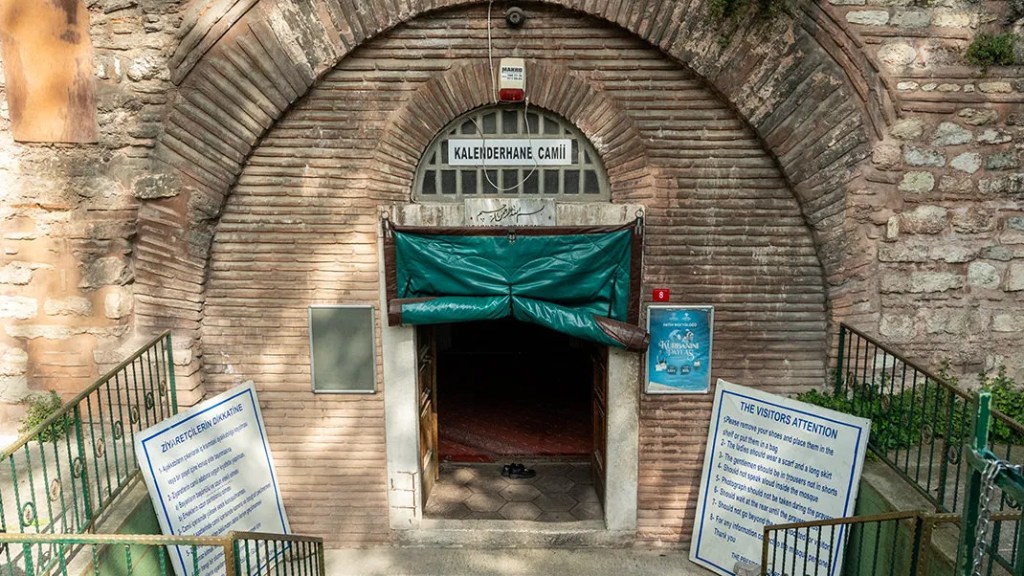
We cross a main street and turn left onto a smaller one. In front of us stands a large mosque, which externally bears the characteristics of a monastery chapel except for the Cross, which has been absent from its dome for some centuries.
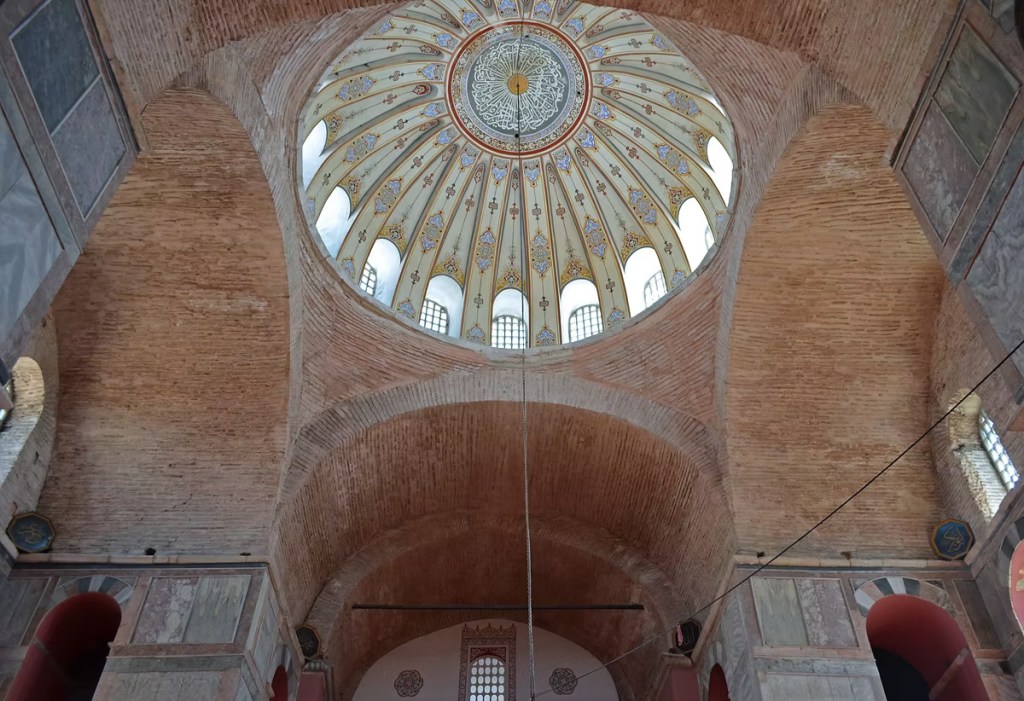
We proceed and ask the hodja for permission to enter. Eager and friendly, he welcomes us and allows us entry. At the same time, he explains to us that this is where the famous monastery of Akataliptos (1) was located in Byzantine times. However, the time of prayer is approaching for the faithful Muslims; the hodja leaves us and, dressed in his official uniform, enters the interior and begins namaz (2). About a dozen men gather around him, repeating some prayers and kneeling when he gives the order.
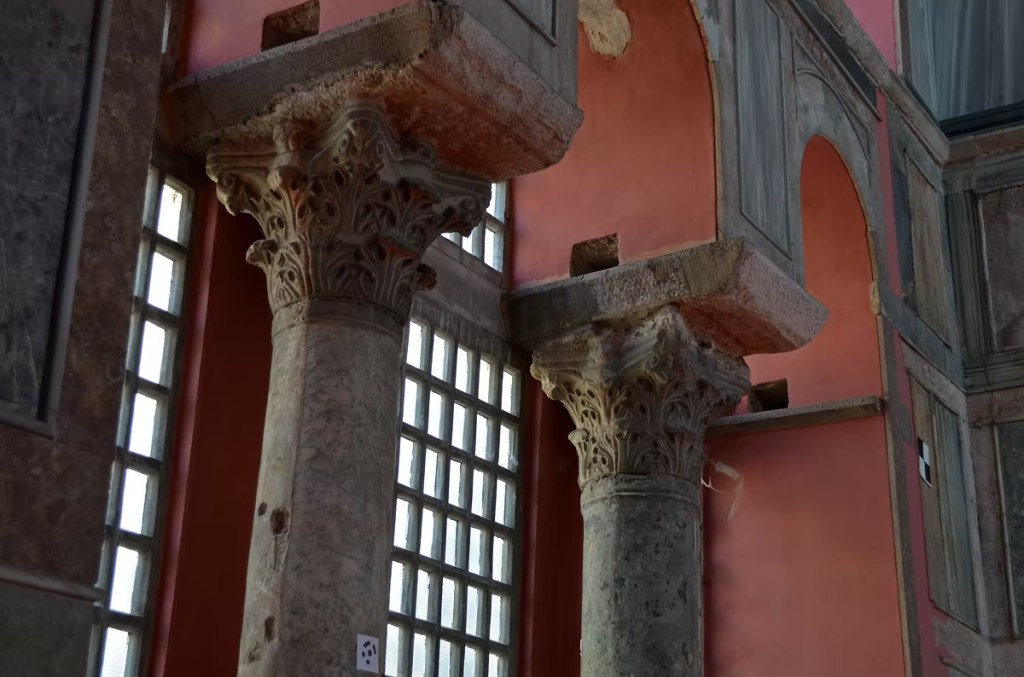
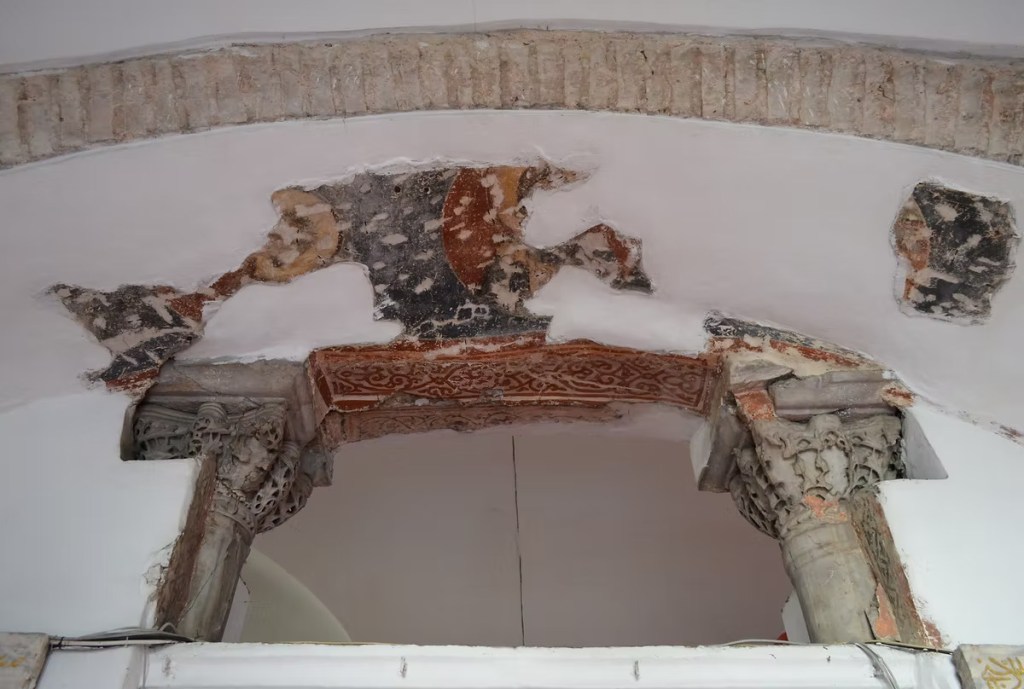
Barefoot and silent, we explore the interior of the mosque, persistently searching its walls and arches for some fragments of frescoes or mosaics. However, we cannot see anything, since the plaster has been scraped off along with the iconographies that were depicted on it (aniconic Islam strictly forbids the depiction of the physical form of God and His prophets). Only in the arch of the central entrance from the apse to the main temple do we see traces of fresco. The figures are unrecognisable.

We leave the mosque, without having satisfied our desire to discover something unique from the years of Byzantine glory. As we stand in the courtyard of the mosque, we observe symmetrically towards the central building, constructions that could be the chapels of the catholicon (3).

As it has already become dark for good, we move to the left and enter a garden with trees, where there are many ruins haphazardly thrown away, who knows since when. Carved marbles, capitals, broken columns, stones and a wall on the north side of the garden, elsewhere collapsed, elsewhere standing still. It was as if we had entered another era. A few steps behind us was the City of the 21st century, and yet in that space we felt that time had stopped counting.
With considerable hesitation and some fear lest someone might stop us, we enter the ruins and proceed to the depths where an iron door is visible. Could it be a chapel? After crossing the garden of ruins, we reach the locked door. Its window has no glass and in the dim light we can make out the interior. It does indeed appear to be one of the chapels of the catholicon. However, there are no murals or mosaics in it, as we had imagined, but only cleaning supplies, trash cans, brooms, dust pans, street cleaners’ uniforms…

We return somewhat disappointed, but something does not let us abandon that place yet. We search through the ruins. We stop at a large marble slab, leaning against a terrace. Is it perhaps the breastplate of the old iconostasis? Does it have relief crosses and other Christian symbols somewhere? In a little while we will grasp that this marble is a Holy Altar. The casket of the inauguration is clearly visible, from which the cap and of course its contents are missing. There we bow as we feel that we are in front of a plundered holy Altar, one of the many that were desecrated and destroyed after the Fall. In shock, we embrace its edge.
We leave the garden and return to the mosque. We want to beg the kind-hearted hodja to open the right chapel for us, the entrance to which we have already located among the grass and the bushes on the other side of the mosque. He takes the keys and we follow him with awe and hope. We cross another garden with fewer ruins and reach the iron door. At this point, the light of a spotlight falls on the outside, but the interior of the chapel remains dark. It has many small spaces, niches, arches; an ideal place for a vigil!

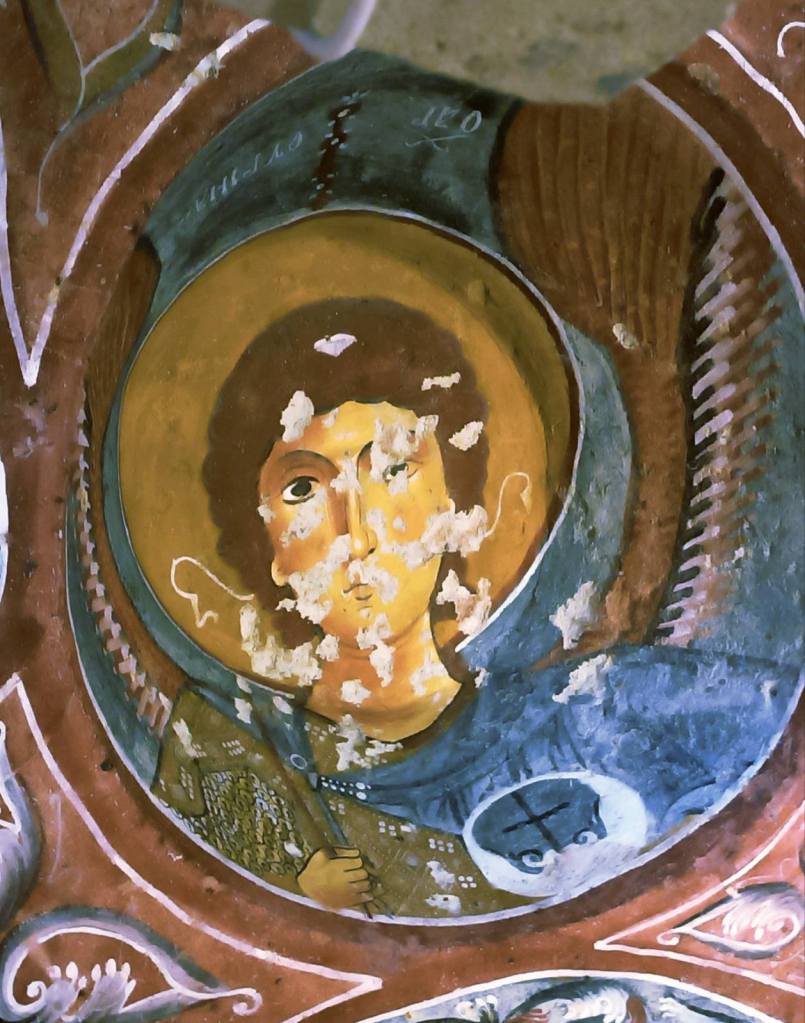
The guide shows us a tomb, but his limited English does not allow him to explain more to us. However, he allows us to take photographs, as he draws our attention to the places where there are fragments of a mural-fresco, as he calls it. In the flash of the camera we can indeed see a few icons preserved in much better condition than those of the Catholicon. In a niche is the representation of the Theotokos – in the type of Platytera, (ie. More Spacious than the Heavens) – and on either side of it is the inscription Panagia the Kyriotissa (4).
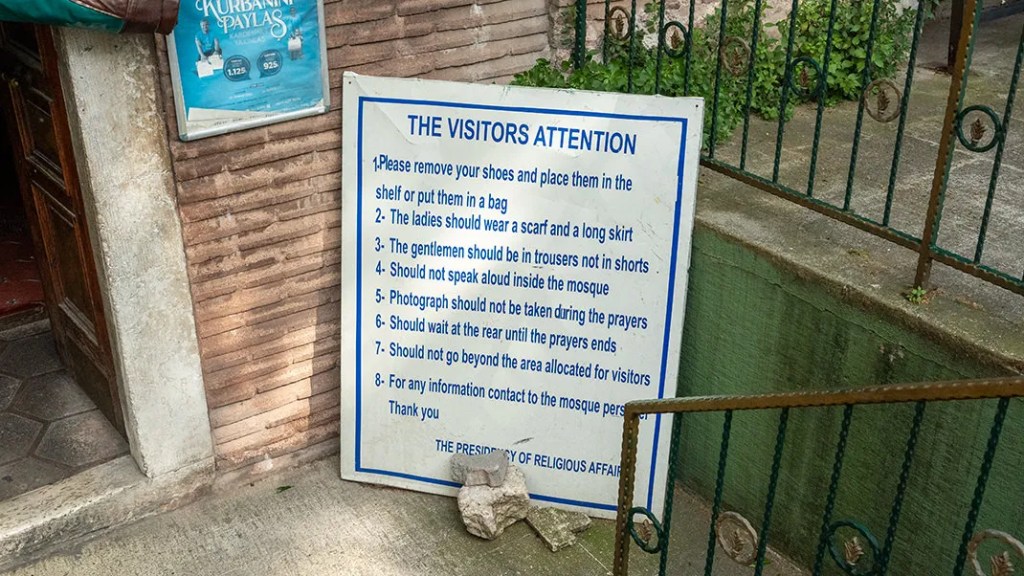
We worship the mural of the Theotokos, humming Axion estí (ie. It is Meet and Right). In a moment we leave the solemn chapel and the priest locks the rusty lock again. He tells us that tomorrow all of us pilgrims could come to see this monument. We thank him and leave but we still do not feel like returning to the hotel. Today is our last night in the City and we would like to experience more of its secrets.
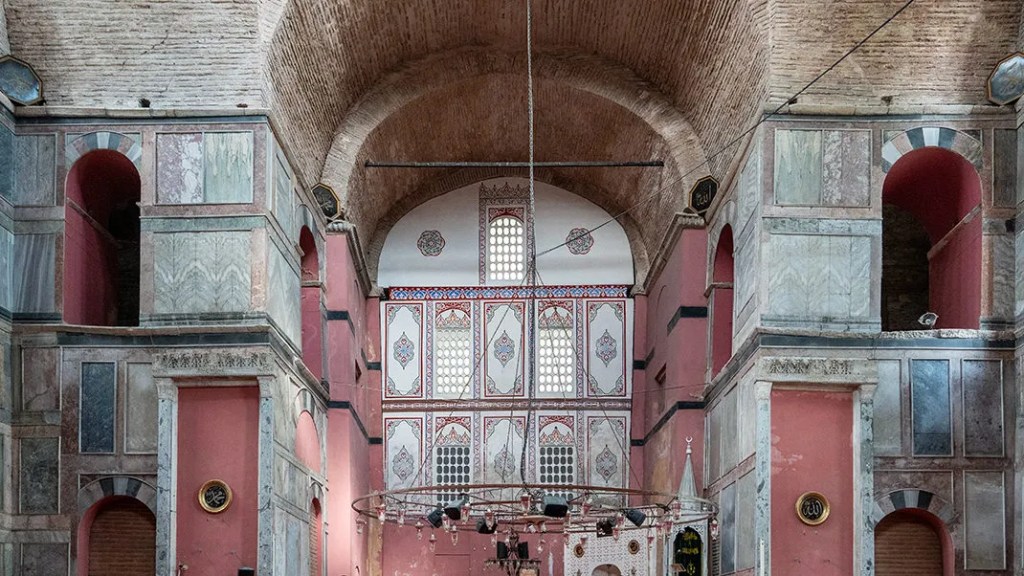
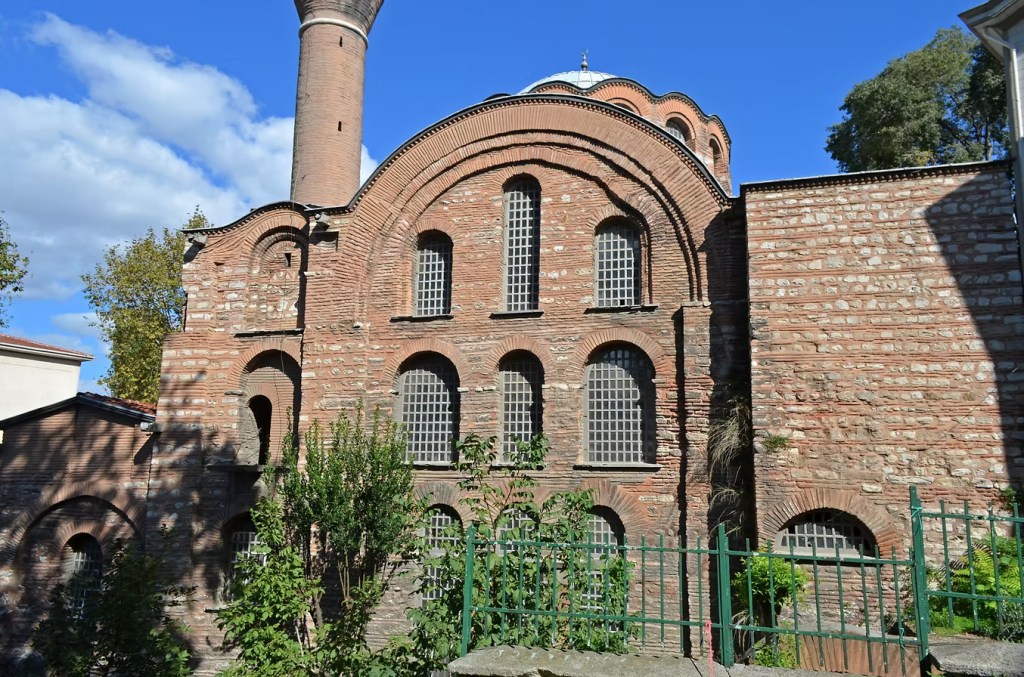
We now head north, continuing our journey through the old neighbourhoods. Somewhere we pass under an arch from the Byzantine period, a ruin that still stands. Next to it is a huge plane tree. Now the lights are fading and the area looks like a remote neighbourhood. In an opening in the semi-darkness, some children are playing ball. At the end of the small road that we cross, we turn into an alley and find ourselves in front of a small but beautiful and perfectly preserved, at least externally, Byzantine church. An elegant work of art with its central dome, three smaller domes in the narthex and two chapels integrated into the entire building. However, inside this little church is a Muslim mosque.To our surprise, we see Christian symbols welcoming us, carved into the marble slabs on either side of the central entrance.
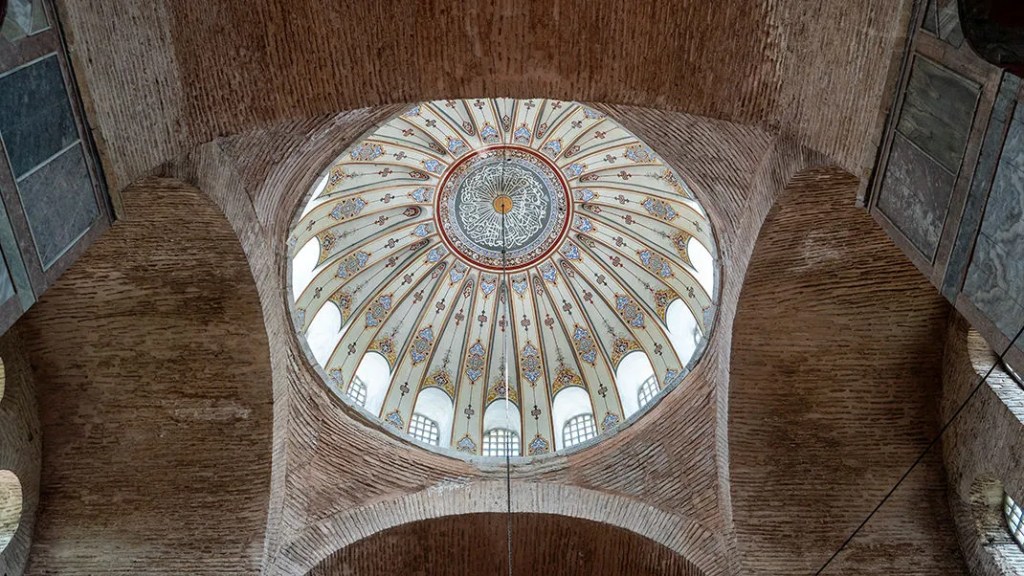
The hour is past and the door is closed. However, someone seems to be inside and we gather the courage and knock to let us in. It is the hodja of the mosque, not as cheerful as the previous one, and he hurries to show us the fresco in the right dome of the narthex. In the dim light we see Christ Pantocrator at the centre of the dome and around Him a choir of Saints. The middle dome and the left are plastered on the inside. In the main church there is nothing to remind of the Byzantine past of this building, except for a few Corinthian capitals. The chapel on the right serves as a storeroom; it is closed. On the left, the other chapel is open and illuminated. It has been converted into… a restroom, three toilets in a row, in the space that once was the Sanctuary… Somewhere there is a small door, and a narrow, almost hidden staircase, leading up to a small room.
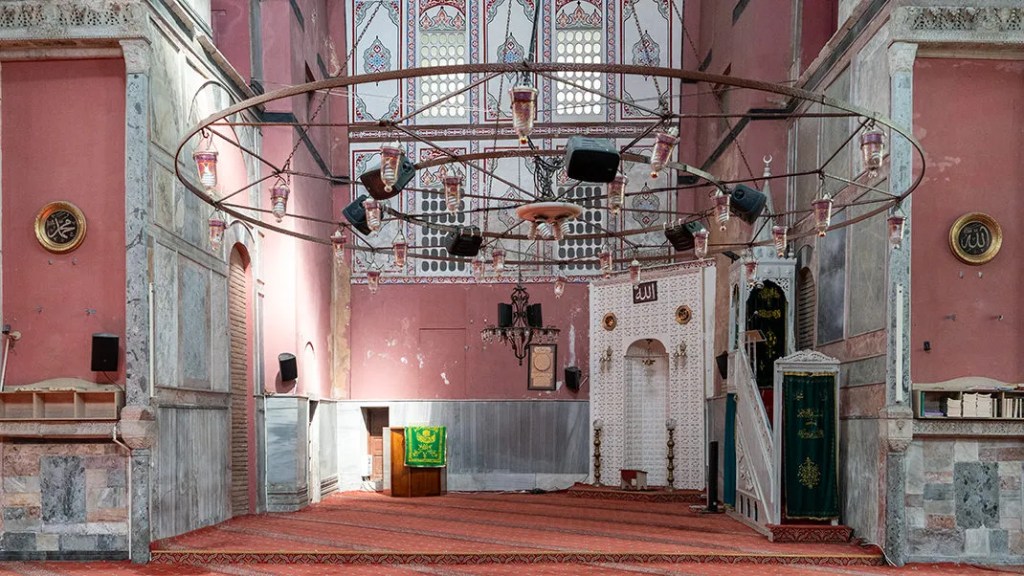
“The priest used to live there”, the hodja explains to us and adds in his broken English: “Byzantine holy water”, showing us a stone jar in the narthex filled with water. What could this be? A bottle of holy water from the Byzantine years, which has changed its use and is now used for washing Allah’s faithful before their prayer?
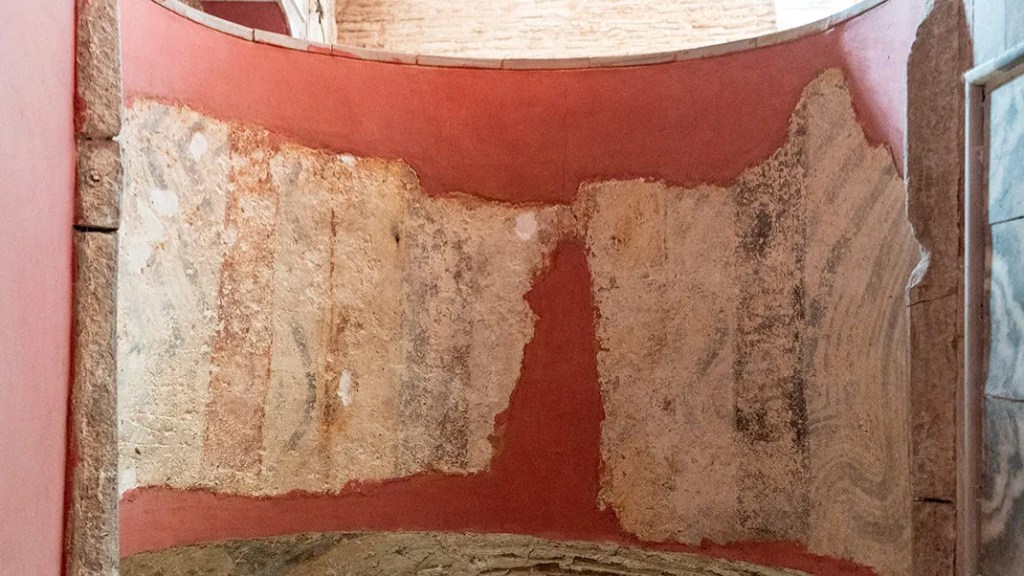
We thank the hodja, apologise for the evening disturbance and make our way to leave. At the exit of the mosque, a basket has been placed and we are asked to put whatever tip we want into the basket…We leave and take the road back. It is already late but we are in no hurry to return. In our inner world, emotions are mixed, especially of those who were coming to old Constantinople for the first time. Everyone reflects on what they saw tonight…
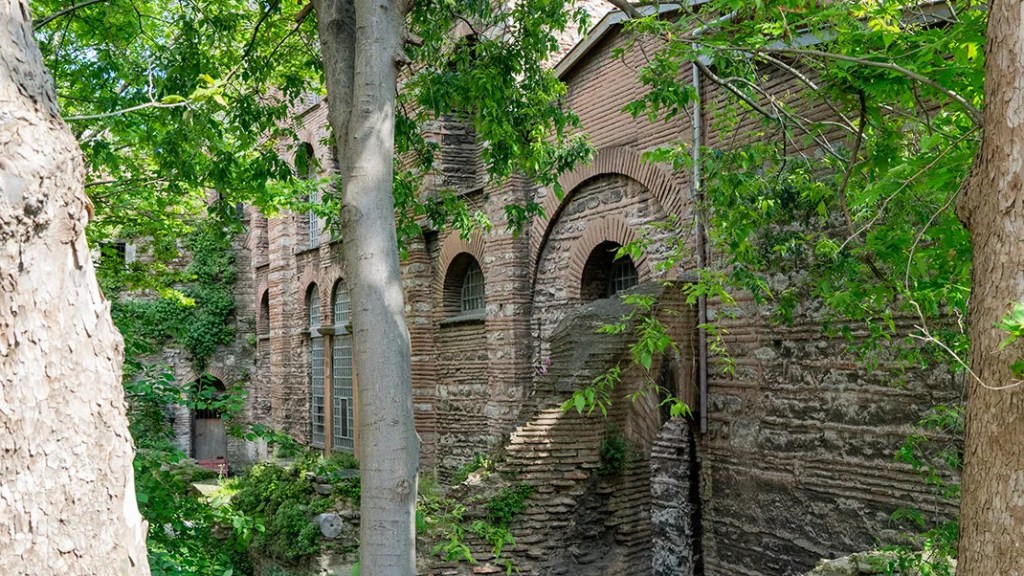
More than five hundred years have passed since the Queen of Cities fell, but some thousand-year-and more-old buildings remain standing, provoking with their presence Time, the Catalyst. They remain standing and wait. What are they waiting for? Are they waiting for sensitive international organisations to protect them and stop the work of desecration? Are they waiting for tourists to photograph them? Are they waiting for the Greek visitors, who have completely forgotten about them? Are they waiting for incense to be fragrant, for candles and multi-branched chandeliers to light their kube5 (Turk. ie dome)? Are they waiting for the sound of ‘Christ is Risen’ to be heard under their thousand-year-old arches?

And yet, they are waiting…

Hieromonk Synesios, Monastery of St.A, V, Ch.

Notes

  1. The Monastery of Christ Akataleptos (the Incomprehensible Christ) is first mentioned in a document from the year 1094 and existed until the end of the Byzantine empire. For a long time, it was believed that the Kalenderhane mosque was the church of this monastery. However, this church is now securely identified as that of the monastery of the Mother of God Kyriotissa. The former Byzantine church known as Eski Imaret Camii, which was usually taken for that of Christ Pantepoptes (the All-Overlooking Christ), has only recently been identified with the church of the monastery of Christ Akataleptos. Cf. https://www.byzantium1200.com/akataleptos.html
  2. Namaz: Turkish word for prayer with genuflection.
  3. Catholicon: In the Orthodox Church, a catholicon is the main church of a monastery, often located at the center of a monastic complex and serves as the primary location for main liturgical services.
  4. The Church of Theotokos Kyriotissa (probably now Kalenderhane Mosque) is located near the east end of the Aqueduct of Valens in Constantinople. While it is a large Middle Byzantine church with a cross-in-square plan covered by a dome, it has a complex structural history, with several stages of building on the site, including a bath complex. Cf.https://www.thebyzantinelegacy.com/kyriotissa

Etheria’s Pilgrimage

Dear Fathers, brothers and sisters,

Christ is in our midst. Please forgive my absence of nearly a month, but this was a time of intensive reflection after my first ’round’ of pilgrimages to monasteries so that we could decide what to do and where to go next. By the way, this month I also visited another monastery, which was so hesychastic and hidden that I did not have the blessing to share with you anything, be it photographs or discussions with the monastics there!

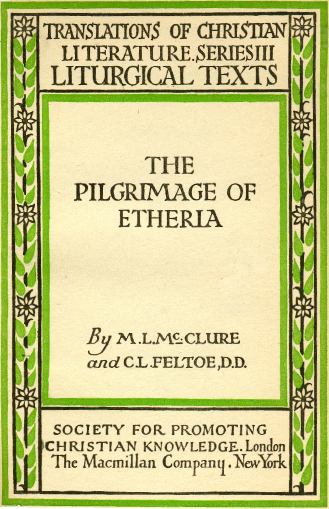
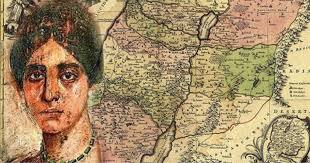
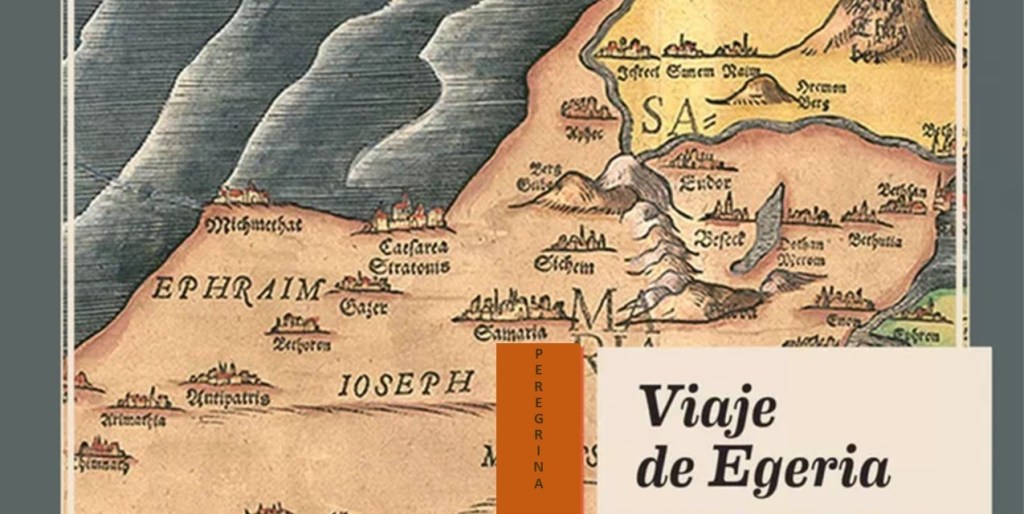
During these quiet weeks of reflection, hesychia and quiet, friends introduced me to the Travels of Egeria, alias Pilgrimage of Aetheria or Pilgrimage to the Holy Lands (Peregrinatio or Itinerarium Egeriae), the earliest extant graphic account of a Christian pilgrimage to the Holy Land about 381/2–384, from Mount Sinai to Constantinople.

Who is this Egeria, this Christian woman who took a journey lasting four years to the Middle East in the middle of the fourth century c.e. and wrote a journal of her travels?

Her manuscript lay dormant until the late 1800s. Other Latin writers made mention of her, so her accounts circulated among religious pilgrims before they were lost for centuries. Her name was Egeria (also known as Eutheria, Aetheria, and Silvia), and she was writing for other religious women who lived in Europe, perhaps on the Atlantic coast of Spain or France.

Most likely she was a nun commissioned by her community to put her curious and adventurous mind to work for the benefit of the spiritual life of her sisters. She went on pilgrimage to the most important sites of the Christian and Jewish world of her day.

Her account is one of the most valuable documents scholars have of the fourth-century world of travel, piety, early monasticism, women’s roles, and even the development of late Latin.

Her book has two parts. The first part is a travelogue and is simply her report of her pilgrimage. She tells her sisters of her visits to such hallowed and historical places as Jerusalem, Edessa, sites in Mesopotamia, Mount Sinai, Jericho, the Jordan River, Antioch, and Constantinople, and of meeting people (usually monks and mystics) serving the places.

She follows the itinerary of the people who made the places famous and prays there. Often her comments about the rustics at the sacred sites show a bit of dry humour.

Her tourist program has many other objectives, such as following the path of Moses through the desert to Mt. Sinai, her plan to visit the home of Abraham’s family (Carrhae or biblical Harran, southeast of Edessa), and her hope to go to Thomas the Apostle’s tomb in Edessa.

The travelogue is incomplete, for like any good pilgrim she concocted ever more schemes to visit other places like Ephesus to pray at the tomb of the John the “Beloved” Apostle. This part of her travels is missing from the manuscript.

The second part is more a journalistic report on the church of Jerusalem’s liturgical practices over the three years she lodged there. Her record of the practices surrounding daily life and prayer of the church is the first one that scholars have on the topic.

She also reports on how the church’s celebrations correspond to its unique location in the Holy Land. The liturgies she describes are hardly stationary ceremonies in one church location, but they involve processions from place to place according to the occasion. In addition, her descriptions are useful for historians of church architecture.

Her account allows modern readers to see things like the need for military escorts in various places of the Holy Land, the unfailing hospitality of the monasteries along the way, the road network, and the system of inns maintained by the empire.

She speaks of the monks, the nuns, and the religious laity in the Holy Land and their patterns of fasting and the instruction of the candidates for entrance into the church. Finally, she epitomises the heart of the pilgrim and shows pluck and pithiness as she describes each stage of her spiritual journey. Having done part of this pilgrimage myself, even the ascent of Sinai, I have to say how impressed I am by her fearlessness and stamina !

THE ASCENT OF SINAI

We reached the mountain late on the sabbath, and arriving at a certain monastery, the monks who dwelt there received us very kindly, showing us every kindness; there is also a church and a priest there. We stayed there that night, and early on the Lord’s Day, together with the priest and the monks who dwelt there, we began the ascent of the mountains one by one. These mountains are ascended with infinite toil, for you cannot go up gently by a spiral track, as we say snail-shell wise, but you climb straight up the whole way, as if up a wall, and you must come straight down each mountain until you reach the very foot of the middle one, which is specially called Sinai. By this way, then, at the bidding of Christ our God, and helped by the prayers of the holy men who accompanied us, we arrived at the fourth hour, at the summit of Sinai, the holy mountain of God, where the law was given, that is, at the place where the Glory of the Lord descended on the day when the mountain smoked.1 Thus the toil was great, for I had to go up on foot, the ascent being impossible in the saddle, and yet I did not feel the toil, on the side of the ascent, I say, the toil, because I realised that the desire which I had was being fulfilled at God’s bidding. In that place there is now a church, not great in size, for the place itself, that is the summit of the mountain, is not very great; nevertheless, the church itself is great in grace. When, therefore, at God’s bidding, we had arrived at the summit, and had reached the door of the church, lo, the priest who was appointed to the church came from his cell and met us, a hale old man, a monk from early life, and an ascetic as they say here, in short one worthy to be in that place; the other priests also met us, together with all the monks who dwelt on the mountain, that is, not hindered by age or infirmity. No one, however, dwells on the very summit of the central mountain; there is nothing there excepting only the church and the cave where holy Moses was.2 When the whole

1 Exod. xix. 18.
2 Exod. xxxiii. 22.


passage from the book of Moses had been read in that place, and when the oblation had been duly made, at which we communicated, and as we were coming out of the church, the priests of the place gave us eulogiae,1 that is, of fruits which grow on the mountain. … I began to ask them to show us the several sites. Thereupon the holy men immediately deigned to show us the various places. They showed us the cave where holy Moses was when he had gone up again into the mount of God,2 that he might receive the second tables after he had broken the former ones when the people sinned; they also deigned to show us the other sites which we desired to see, and those which they themselves well knew.

1 This word is still used in the Eastern Church for food which has been blessed by a priest, e. g. the first fruits from an orchard or a vineyard.
2 Exod. xxxiv. 4.


… From the summit of the central mountain, those mountains, which we could scarcely climb at first …From thence we saw Egypt and Palestine, and the Red Sea and the Parthenian Sea,1 which leads to Alexandria and the boundless territories of the Saracens, all so much below us as to be scarcely credible, but the holy men pointed out each one of them to us.”

This is a highly readable, exciting book, available as a full Audio Book, read by David Wales, and available online, which I strongly recommend you to have a look at, if you haven’t already.

Last Words from Father James Bernstein

In Memoriam: Archpriest James Bernstein

https://youtu.be/YIfavpjvuSs?si=7F8M4x9_u0u1VWKm

Christ is Risen! He is Risen indeed!

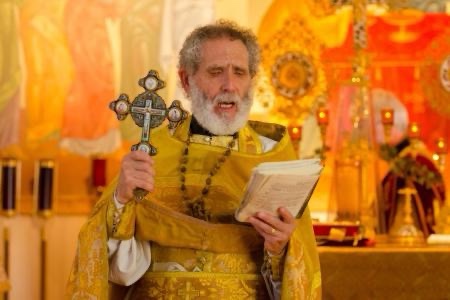
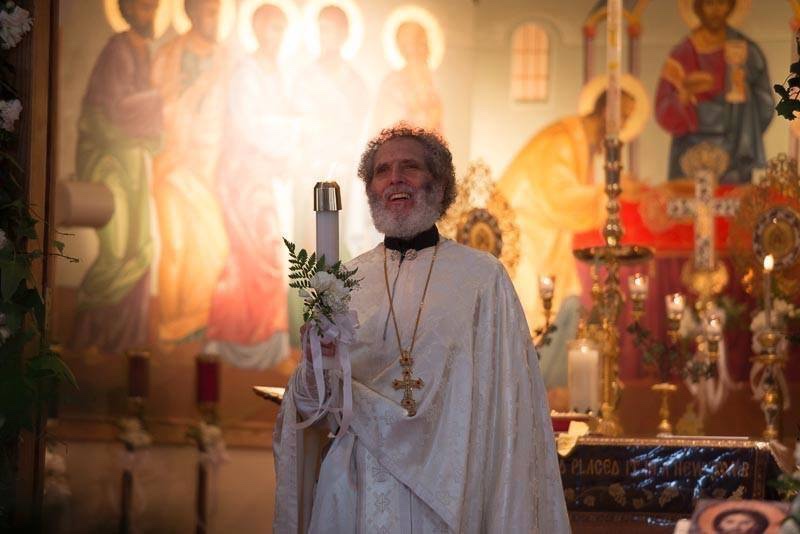
With faith in Christ and hope in the resurrection, we share news of the repose of Archpriest James Bernstein, an alumnus of St Vladimir’s Seminary. Fr James fell asleep in the Lord in the morning hours of June 17, 2024, surrounded by his family.

The Very Rev. A. James Bernstein was born in Lansing, MI on May 6, 1946, and was raised in a conservative Jewish family in Queens, NY. A teenage chess champion, Fr James had a dramatic conversion experience at the age of sixteen after reading the New Testament. His spiritual journey included a number of twists and turns: he was chapter president of Inter-Varsity Christian Fellowship at Queens College, helped found the Jews for Jesus ministry in San Francisco, was a staff member of the Christian World Liberation Front in Berkeley, served as a pastor of an Evangelical Orthodox Church near Silicon Valley, and in the 1980s was received into the Eastern Orthodox Church. Fr James went on to attend St Vladimir’s Seminary and graduated with a Master of Divinity (M.Div.) degree in 1989. He was ordained to the holy priesthood the year prior.

Fr James’ priestly ministry took him to the state of Washington, where he was assigned pastor of St Paul Antiochian Orthodox Church in Brier. He served there for more than twenty-five years before retiring in 2017. During his parish ministry he also authored numerous works through Ancient Faith Publishing and was a contributor to the Orthodox Study Bible: New Testament and Psalms (Thomas Nelson, 1993). Probably his most famous book is SURPRISED BY CHRIST: My Journey from Judaism to Orthodox Christianity. 2008. (Is in 4th printing). And what a book it is! Mesmerising! I especially enjoy the Audiobook version where one can listen Father himself reading his book.

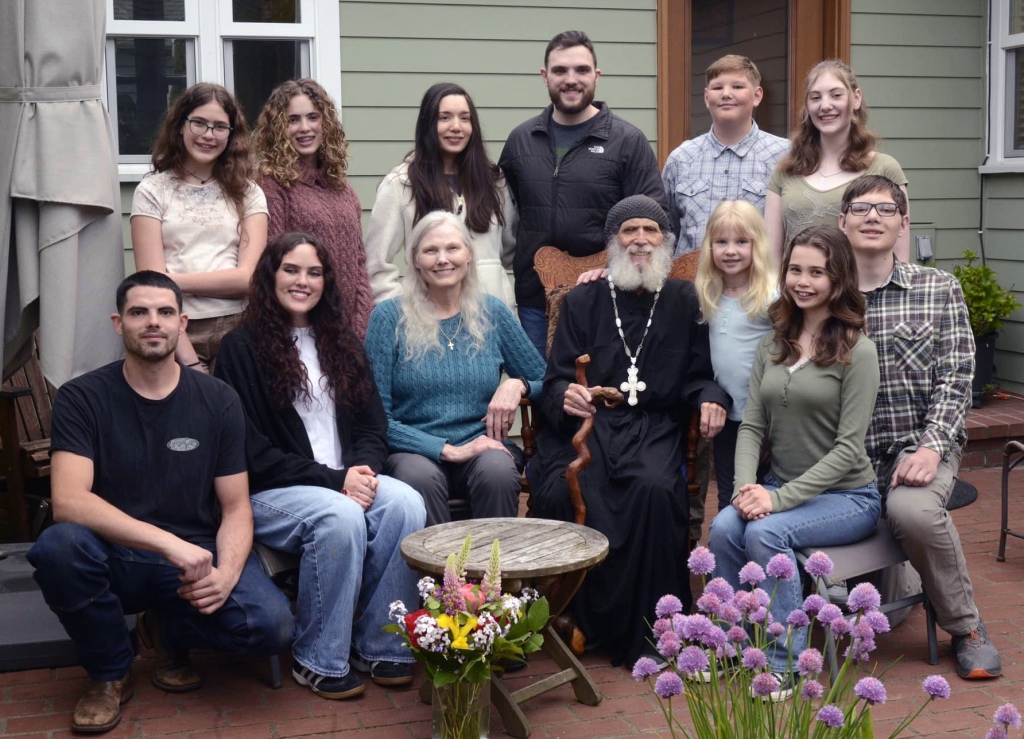
Fr James with some of his children and grandchildren

Fr James is survived by his wife, Kh. Martha (Bonnie); children Kh. Heather (Fr David) Sommer, Holly Bernstein, Peter Bernstein, and Mary (James) Curry; grandchildren John (Audrey), Nicholas, Ephramia, Elizabeth, and Irene Sommer; Violet Bernstein; and Noah, Levi, Lina, and Sarah Curry.

Funeral information may be found on the Antiochian Archdiocese website, here.

May the memory of Archpriest James be eternal!

A section of this article was adapted from Ancient Faith Ministries’ website.

Source: St.Vladimir’s

Travelling Light

Today, my good friend A. sent me this:

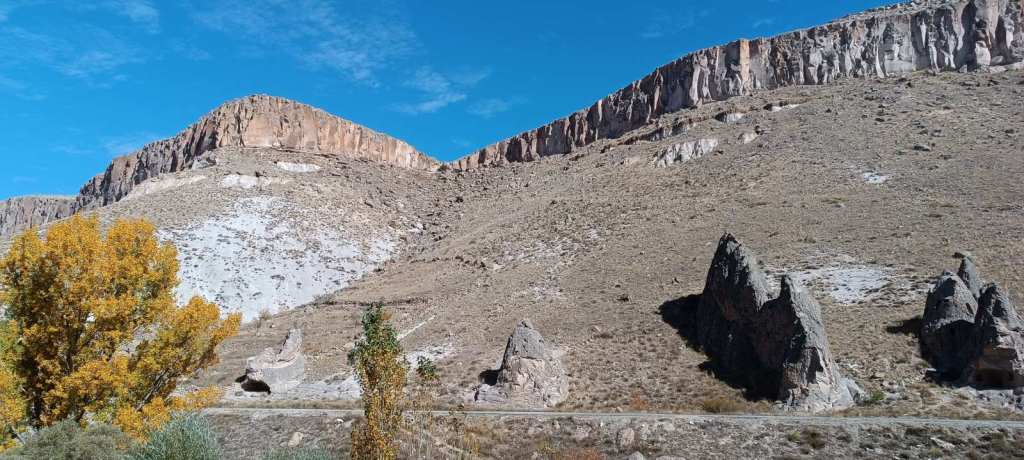
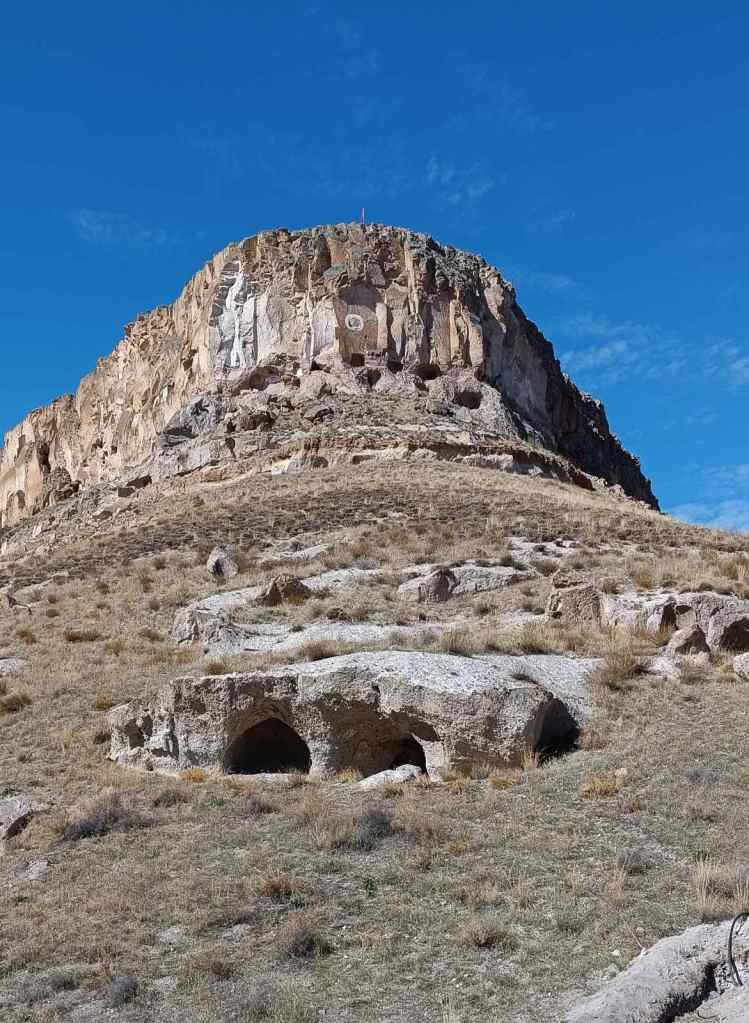
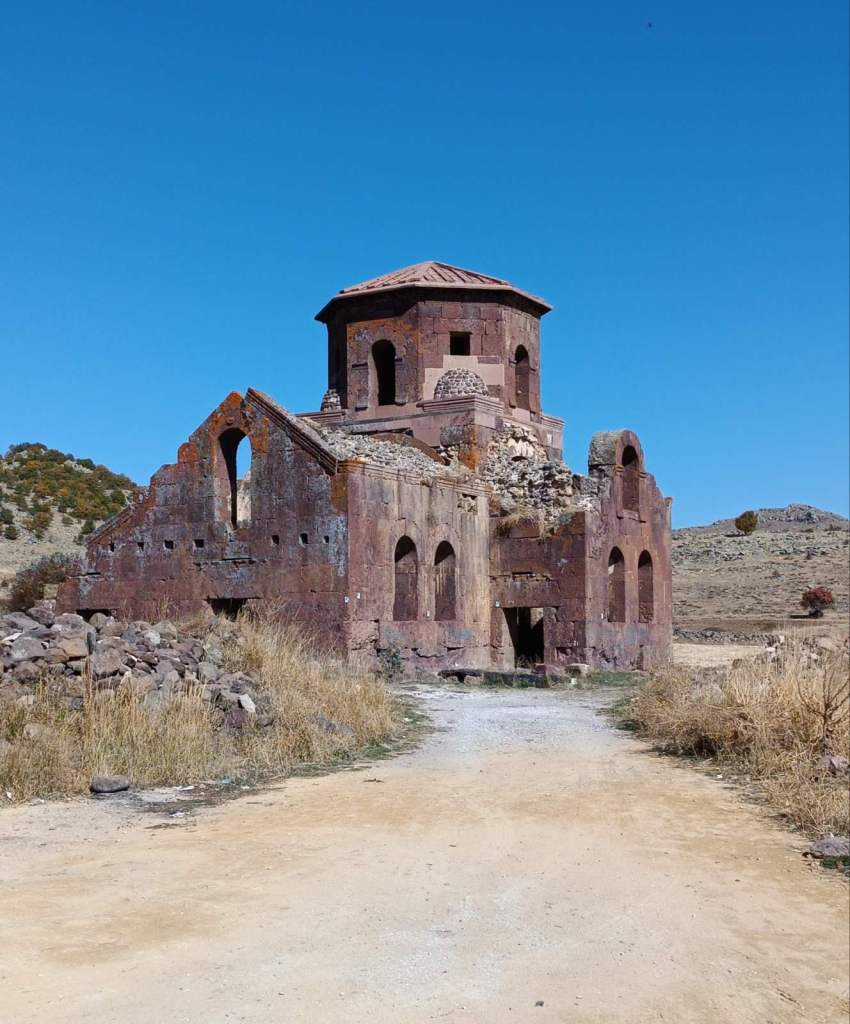
“We are travelling to an unknown city of Cappadocia, walking in the midst of volcanic valleys …

… which Greek people have turned into fertile land …

… climbing high, up to the crenellations where Digenes Akrites (1) raised their swords …

… where the powers of Light fought those of Darkness …

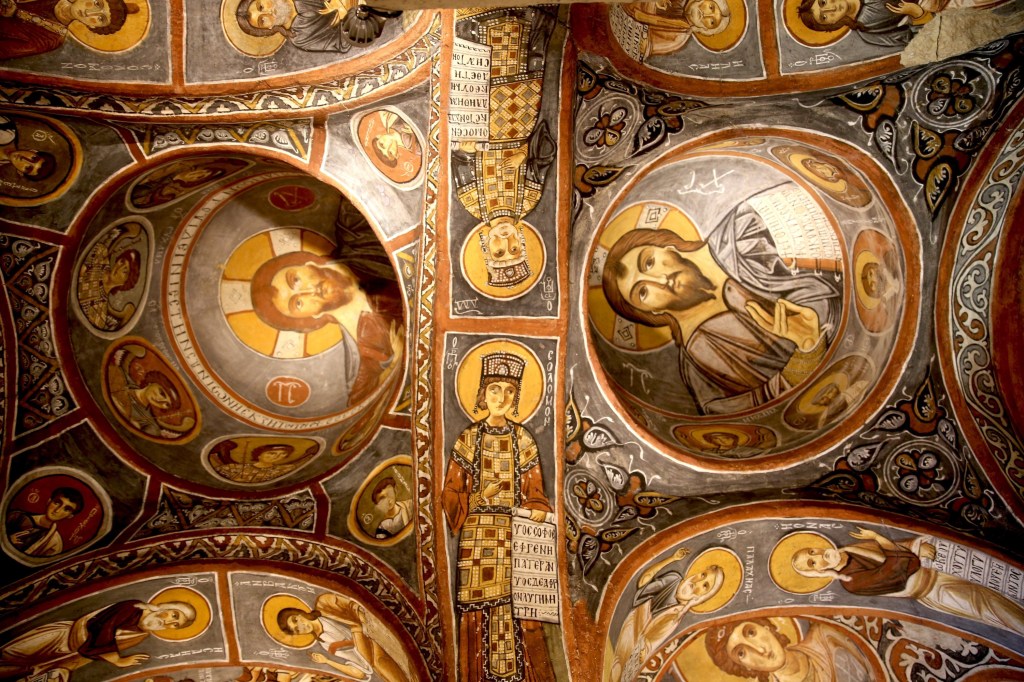
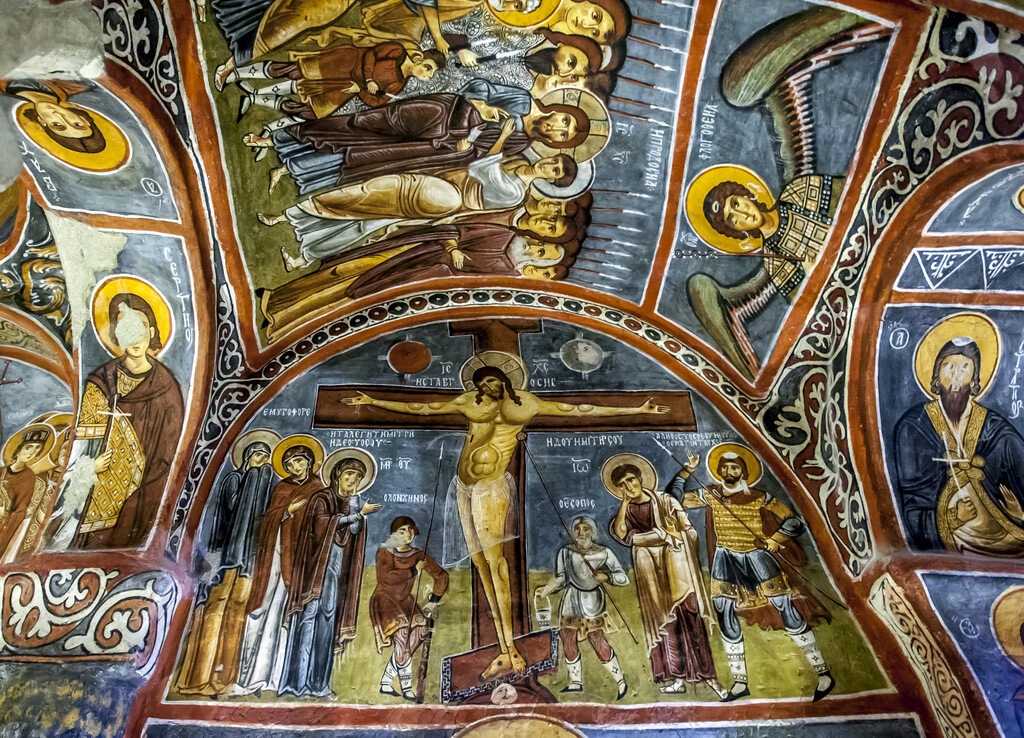
We are going to celebrate Holy Liturgy there, in an orthodox temple (2)

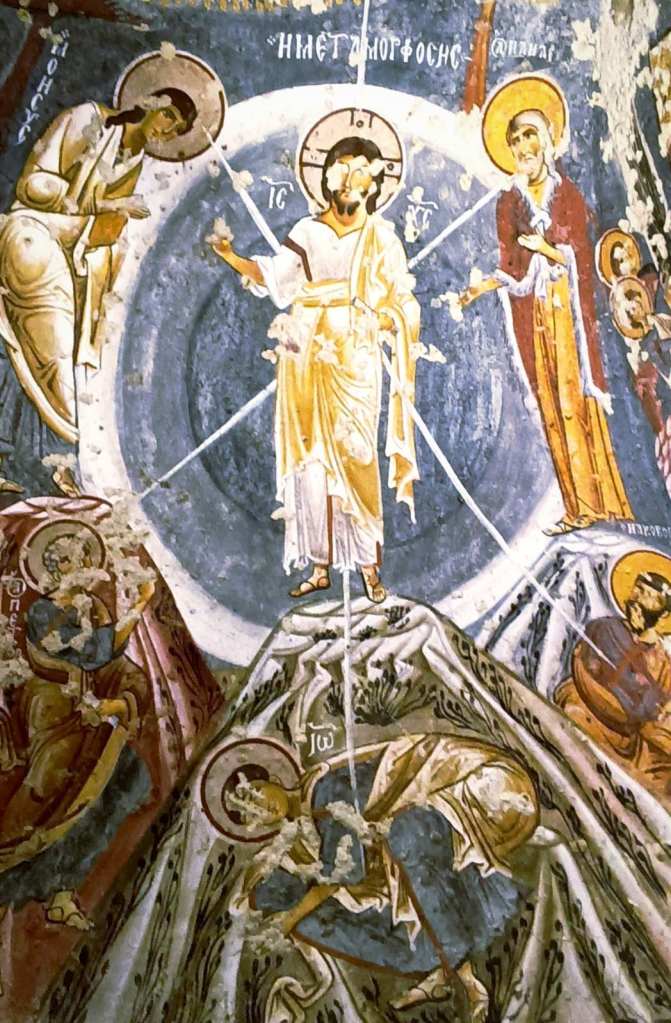
… so that Tabor light will shine in our souls (3)

… and all mankind

(1) Digenes Akritas: “digenes” literally means “born of two races”, i.e. “Roman” (Byzantine/Greek) and “Saracen” and “Akritas” means “frontiersman.”, existing at the borders between Christendom and Islamic lands

(2) Kizil Kilise, the Red Church

(3) Karanlik Kilise in Goreme

Day 5: Returning

Panorama Monastery Dormition of the Theotokos
On our way back from St. Arsenios Monastery

Some years ago I learned that numbers are not important. The number of people attending Church is not an accurate indicator of either faith or success; however one measures success? Geronda Theoklitos of St Arsenios monastery confirmed this independently of my thoughts when he said ” look after your small flock.”
” God looks at the heart not on the outward appearence” as the prophet Samuel said to Jesse, the father of David.
I have passed through security and passport control. The flight is delayed. Time to pray. We pray that God will keep us all in his love.
“Wherefore, O you who fear the Lord, praise Him in the places where ye now are. Change of place does not effect any drawing nearer unto God, but wherever you may be, God will come to you, if the chambers of your soul be found of such a sort that He can dwell in you and walk in you.” St Gregory of Nyssa 8

Day 4. Washing your face

overlooking the sea from the Monastery of St Arsenios in the mountains

Monasteries are places of healing and light. The Monastery of St Arsenios is one such place.

N.b.This is as close as I came to Agion Oros in the distance!

Another little miracle enabled us to meet Theologos and Vaiga with children again . We were joined by a priest from Germany Fr Victor with his Presbytera and children. The usual courtesies were extended to us, loukoumi, coffee and biscuits along with the necessary water!

Geronda Theoklitos joined us and he afforded us a great deal of his precious time even though he had many confessions to hear.. It was a true blessing to meet him.God it seems bends time in order for those who seek Him to receive His grace . Time is not really measured in monasteries. Of course there are set times for worship and work but one does not sense time passing.

I told Geronda of the mutual ministry we have at our parish and he quoted a greek proverb
“Το ‘να χέρι νίβει τ’ άλλο και τα δυο το πρόσωπο” which when translated goes something like : ” The one hand washes the other hand and both wash the face “. I suppose we have similar saying” many hands make light work.”Washing the feet is an act of service and humility, but washing the face brings cleansing and refreshment.He gave another word:St Anthimos of Chios: “ εκείνο το ´γιατί κι εκείνο το ´εγώ´ που έχομεν, αυτά μας απομακρύνουν απο τον Θεό και μας χωρίζουν απο αυτόν» — «this “why” and this “I” which we have, these distance us from God and separate us from Him.”


The proximity of hospitality and holiness is palpable in Orthodox monasteries. Faith ,food and fellowship are inseparable. For some visitors monasteries are places not only of refreshment but of healing where quiet can replenish the soul and regenerate the spirit. It is most important for Orthodox Christians to renew their spiritual batteries. Such peace was abundant at Panorama monastery. Sister S shared the typicon and structures of monasticism and we glimpsed the evening service before heading back to Thessaloniki. I think words alone cannot convey the experience of visiting monasteries. For those who truly seek God then they are places where His energies are to be found…in abundance!


– “The orthodox monastics are like the lighthouse. The lighthouse has to be always on the rocks by the sea. Do you want them to go and live into the city and be added to the other street lights? They can not become a lantern and be placed into the city’s roadside. The orthodox monastic is like a remote lighthouse, that stands high on the rocks, directing the ships of this world with their flashes, and upon the open seas the ships are orientated in order to reach their destination, which is God.” Saint Paisios of Mount Athos from the book: Spiritual Awakening

Flying in Kairos, or Kiss a Joy as it Flies

The travelling guide’s diary—1

I had never thought one can really “bend”, transcend Time until I spent last week together with my little Abouna. Together, we drove hundreds of miles, visited a number of Holy monasteries, met Gerondas, received holy words, but most importantly, for me at least, we transcended Time into Kairos, ie. made a Leap unto God’s Saving Time, God’s Providence for our salvation.

How many dimensions exist in reality? And which dimension were we travelling together with Abouna?! Which dimension is Love? Fifth? This ‘travelling’ has probably been one the most liberating, healing experiences ever in my life, especially since I was so stressed, worked out and nearly burnt out in my obediences the last twelve months. Though the truth is that I was really stressed, worked out and burnt out by my own mind.

Time is relative; its only worth depends upon what we do as it is passing.” as Einstein wisely pointed out to us. And “ there are only two ways to live your life. One is as though nothing is a miracle. The other is as though everything is a miracle”. And: “God does not play dice with the universe.” Or with our lives. How true all these! And all this I experienced first-hand during these four days together with Abouna.

God is indeed the master of time and circumstance: “And He changes the times and the seasons; He removes kings and raises up kings; He gives wisdom to the wise And knowledge to those who have understanding.” Daniel 2:21

“The Lord gave us chronos time, calendar time, that we may turn it into kairos time, salvation time, time filled with opportunities for us to respond to God’s gracious invitation to the Kingdom”. ~Fr. Anthony Coniaris

Little did I understand those quotes and how literally they are to be taken before I became Abouna’s chauffeur, guide, interpreter and secretary for four days and a witness to how God scandalously intervenes in our lives and plans and provides the precise timing, reversals, cancelations and interruptions so that we meet the “right” people in the “right” place! I became a witness to all these miracles, but also to Abouna’s ease at this “normal”, swimming, flying, floating in Kairos.

***God has a way of surprising us and altering our plans.The visit to St Dimitrios shrine was full of such delightful God- intervening surprises.***

Indeed, a plethora of details is to follow, but let it suffice for the time being to say that this 4 days’ intensive course into Abouna’s daily time ‘management’ have drastically changed my experience of Time, and hopefully this ‘meta-noia’ will last. The list of my obediences after his visit is the same, or even longer, but I somehow have “more” Time, and I certainly have more Joy and Gratitude and Thanksgiving.

Time and stress seem to have loosened their grip on me. “Therefore do not worry about tomorrow, for tomorrow will worry about its own things. Sufficient for the day is its own trouble.” (Matthew 6:34) I have also, immediately—in obedience— started taking two half days off for hesychia and have resumed my Byzantine chanting lessons which I had sadly given up before summer because “I had no time …”. And I feel that this is only the beginning in this so post-quantum, and yet so ancient, and so St Porfyrios, and indeed all the saints’ experience of flying in Kairos:

“Poor people… We live, we read books […] and yet we remain in a relaxed state, recklessly living without Christ. Christ is different. When He comes to a person, entering his soul, the soul changes. A soul [that knows Christ] lives everywhere: on the stars, in the spiritual world, in the Universe. Life without Christ is not real life. … Christ is the new life. Christ is everything. He is joy. He is life. He is the light, the true light, allowing a person to rejoice, to fly, to see everything and everyone. … Love Christ and prefer nothing to His love. He is the source of life, He is everything. Everything most beautiful is in Christ.”

Glory to God for all things! Vignettes from our 4 days together to follow soon  …

Creation is groaning … Another young wild horse of Petala found dead yesterday, after losing habitat

Abouna’s Feedback on my Reflection

*** God it seems bends time in order for those who seek Him to receive His grace . Time is not really measured in monasteries. Of course there are set times for worship and work but one does not sense time passing.***

***

“May it be blessed

 I think this is a most clearly distilled profile of our time with Christ. I don’t think it is in any way an alternative diary but a complementary (with an e) account of our joint experience. I too found this to be so true.

Indeed  in my first day’s  diary I think I mention  so many blessings in such a short time. I find St Porphyrios words  so poignant for they dispense our lived experience in Christ  in such a lyrical way.

The people that we met were so lovely. The Christian soul is often seen in the eyes. I wrote to Theologos and said when I met his family heart spoke to heart and spirit to spirit.

William Blake in his poem “Eternity” wrote

“He who binds to himself a joy Does the winged life destroy; But he who kisses the joy as it flies Lives in eternity’s sun rise.”

May we kiss this joy as it flies

William Blake

My love and prayers in Christ 

Little Abouna

Little pilgrimage to Thessaloniki, Day 1, Part 1

Tuesday 22nd August.

The dark grey skies of Manchester belie the future sun 3 hours to the east. We pass through dark days physically and mentally as human beings and often assume ” that is how it is.” Yet how much more we appreciate the sun when our usual weather is rain, and how much more we appreciate the rain when we have unremitting heat.The” wings” of the iconostasis were repaired yesterday by two of the faithful. Great! “Ready for take off!”one of the faithful e mailed me to say. Me too….as we are called to board the flight.

The sun comes out as we climb the steps into the aeroplane. I pray the Jesus prayer for all the passengers and crew 33 rows x6 plus pilot,copilot and 4 crew…you do the maths. Then I say prayers for all the faithful. Descending onto terra firma one is hit with the wall of heat 34c. It was a great joy to see two other English Orthodox priests fr S and fr D as we pass through customs. Fancy that! Three Othodox priests all bound for Thessaloniki and all three English men, not a Greek priest in sight. God has a sense of humour. K. is there to meet me at the airport,a great joy. The years and distance slip away.

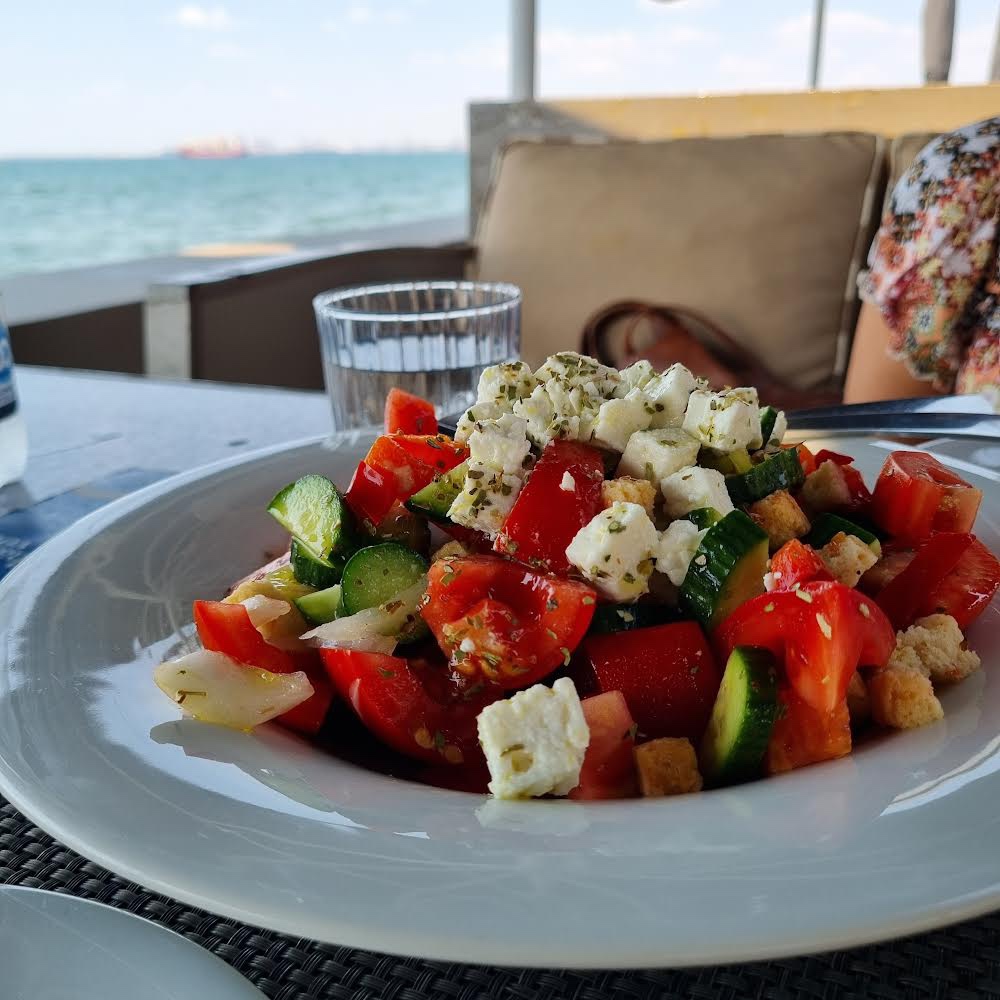
We drive to the city centre and go for a refreshing Greek Salad at a local Taverna by the sea. My room at the hotel is rather too spacious and although a siesta beckons (I have been awake since 2.30 this morning) I am not really tired, plus I have a very important appointment with St Dimitrios at 6.00 p.m. Greek time 4.00 p.m. British time.
To be continued…

Diary of a Pilgrim: Reflection

Kykkos monastery, Cyprus

Thursday15th

Glory to God through your prayers I have returned home.The title of my diary was set really by one of our parishioners when , before I left , he wished me a :”blessed pilgrimage.” At first I thought this a little odd, a good holiday, yes, which means holy day, but pilgrimage? It is not as though I was going to Jerusalem ( well not until October). I understand the spiritual element of the word but looking up the Latin origin “peregrinus” it means “a foreigner.” The Romanian word is the same for pilgrim.


In the book of Leviticus we read:
“When a stranger resides with you in your land, you shall not wrong him. The stranger who resides with you shall be to you as one of your citizens; you shall love him as yourself, for you were strangers in the land of Egypt.”

Our Lord, His most holy Mother and Joseph were also foreigners in Egypt when Christ was a child. Our Lord met with the Samaritan woman, the Syrian phoenician woman and commended the one grateful leper of the ten who were healed , “has no one returned to thank God except this foreigner?” Our Lord Jesus Christ said “love your neighbour as yourself “echoing the words of the Old testament law and when asked who is my neighbour , he used the example of a Samaritan, a foreigner.


Luke 13:29
And they shall come from the east and from the west, and from the north and from the south, and shall sit down in the Kingdom of God.


There are no boundaries in God’s kingdom and no foreigners.

The Coronavirus Diary of a Joyous Pustinik — 41

scaling-the-heights-of-hubris

I recall being at the Monastery of Sambata de Sus Monastery in Romania and concelebrating at a Holy Liturgy with seven other priests. Even though I do not speak the language, except for a few words, I understood the whole of the Liturgy and felt a unity in the Holy Spirit; it was as if I was hearing the Holy Eucharist in my own language. I can truly say that experience was not unique, I have felt that same mystical knowledge and full participation of worship in Greece. Our Parish itself is a little Pentecost composed of people from all over the world. The whole experience of worship is permeated with the Holy Spirit’s presence whose gifts and fruits we enjoy.


1 John 4:16

….. God is love, and he who abides in love abides in God, and God in him.


This is The Holy Spirit’s gift and His language is love.

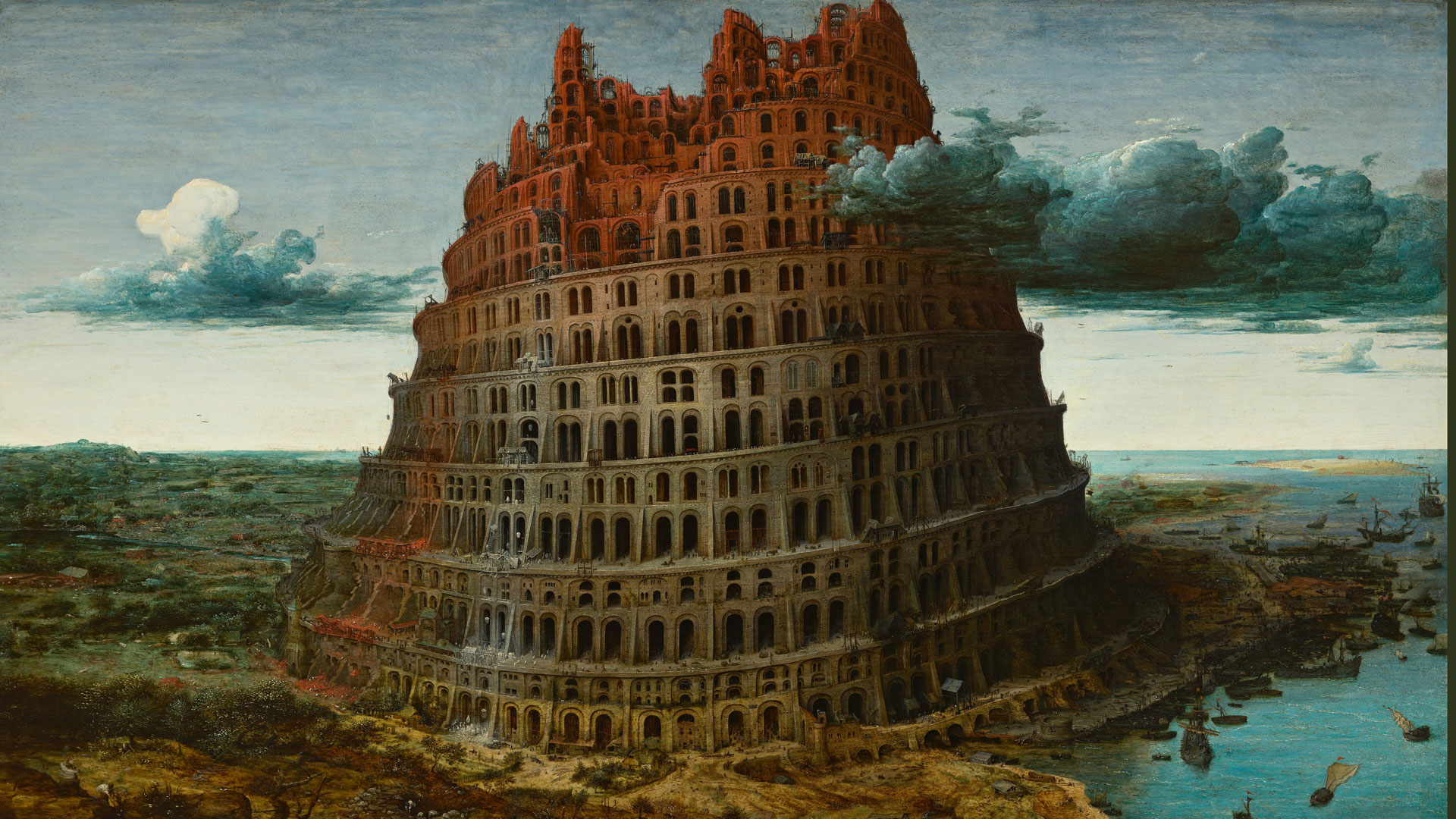
 Deconstructing the tower of Babel


Genesis 11

The Tower of Babel

 1 Now the whole world had one language and a common speech. 2 As people moved eastward, they found a plain in Shinar and settled there. 

 3 They said to each other, “Come, let’s make bricks and bake them thoroughly.” They used brick instead of stone, and tar for mortar. 4 Then they said, “Come, let us build ourselves a city, with a tower that reaches to the heavens, so that we may make a name for ourselves; otherwise we will be scattered over the face of the whole earth.” 


“Let’s scale the heights and take the lights 

of the firmament.

We’ll call the tune and pocket the moon.

Come on! let’s grab the Sun and that being done

We will be called great!

Let’s create another state by

 Storming heaven’s gate and gain control.”


 From below…the bright “hello”

 Led to a sad “goodbye.”

The smile became a rueful sigh.

And people asking why?

And who are you?

What did you say?

That once friendly question where

is met by a beleaguered stare!

From nostalgic then to…. tell us when?

The change from common sense

 to non-sense came because of man.

What was his plan?

 To build a tower and to steal God’s power!


Much later in an upper room, 

Diners seated round a table

Take bread and wine,

  And as they are able

  De-construct the tower of Babel.

 God initiates a conversation

His language: love, for every nation.

And from above that which was lost

Is found, and invested with a Pentecost!


 A soldier asked Abba Mios if God accepted repentance. After the old man had taught him many things, he said, “Tell me, my dear, if your cloak is torn, do you throw it away?” He replied, “No, I mend it and use it again.” The old man said to him, “If you are so careful about your cloak, will not God be equally careful about his creature?”