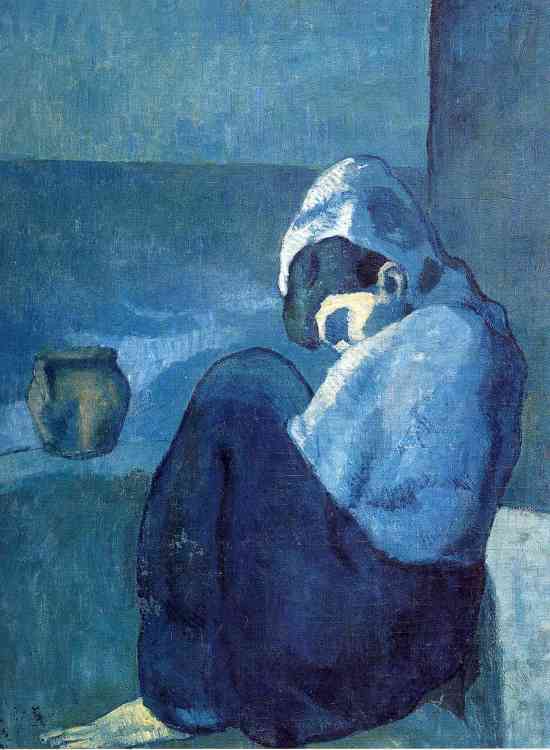
On the Forty Days of Lent


THE FIFTEENTH INSTRUCTION. ON THE HOLY FORTY DAYS OF LENT

deacon2


Abba Dorotheos

In the Law it is written that God commanded the sons of Israel to give a tenth part of all they had acquired during each year, and thereby bring a blessing upon all their deeds. With this in mind, the Holy Apostles established and committed to us as a help and benefaction for our souls something yet greater and more exalted–that we should set apart a tenth portion of the very days of our lives and devote them to God. Thereby might we also receive a blessing for all our deeds, and yearly cleanse the sins we have committed over the course of the whole year. Thus discerning, they have sanctified for us out of the 365 days of the year these seven weeks of Holy Great Lent.
So they set apart these seven weeks; but later the Fathers deemed it wise to add yet another week: first of all, so that those wishing to initiate themselves in the ascesis of the fast over the course of this week might accustom themselves to it and prepare themselves for it; and secondly, in order to render honor to the number of days of the Great Fast which our Lord Jesus Christ fasted. For after subtracting Saturdays and Sundays from the eight weeks we have forty days; the fast on Great Saturday is particularly honored, because it is most sacred, and the only Saturday throughout the year on which a fast it kept.
Seven weeks minus Saturdays and Sundays make thirty-five days, then to this is added the fast of Holy and Great Saturday and half of the Bright and Light-bearing night; thus we have thirty-six and a half days, which equals exactly a tenth part of the 365 days of the year. For the tenth part of three hundred is thirty, the tenth part of sixty is six, and a tenth part of five is one-half (of the Bright Day). So, as we have said, there are thirty-six and a half days–the tenth portion of the whole year which, as I have said, the Holy Apostles have sanctified for us for repentance and the cleansing of the sins of the whole year.

So blessed, O brethren, is he who preserves himself well in these holy days as he should. For though it might happen that being human we sin out of infirmity or negligence, still God has given these holy days in order that, striving with heedfulness and humility of wisdom, we take care for ourselves and repent for all of our sins, and we will be cleansed of the sins we committed during the whole year. Then our souls will be delivered from their weight, and we will arrive at the Holy Day of the Resurrection cleansed, receive Communion of the Holy Mysteries uncondemned, having become new through the repentance of the Holy Fast. In spiritual rejoicing, with God’s help, we will celebrate the entire Holy Pentecost season–for the Pentecost season, as the Holy Fathers say, is the repose and resurrection of the soul. This is signified by our not kneeling during whole Holy Pentecost season.

Thus he who desires during these days of Lent to be cleansed of the sins he has committed over the course of the whole year should first of all refrain from eating much food, for the lack of limitation in food, as the Fathers say, gives birth to every evil in man. … However we must not limit our temperance to food, but refrain also from every other sin. Just as we fast with our stomachs, we should fast also from every other sin; just as we fast with the belly, we should fast also with the tongue, restraining it from slander, from lying, idle-talking, from belittlement, from anger, and in a word, from every sin that is performed by the tongue. We must likewise fast with the eyes, that is, not look at vain things, not give freedom to our eyes, not look at anyone shamelessly and without fear. The hands and feet should also be constrained from every evil deed. Having fasted, as St. Basil the Great says, by a favorable fast, removing ourselves from all the sins of all of our senses, we shall attain to the holy day of the Resurrection, having become as we have said, new, pure and worthy of Communion of the Holy Mysteries. …

deacon7.jpg

Now the Powers of Heaven Minister Unseen with Us

Great Entrance During Presanctified Liturgy


Holy Trinity Seminary Choir sings “Now the Powers of heaven minister unseen with us. Lo, the King of glory enters in. Lo, the mystical Sacrifice, fully accomplished, is borne on high” during Pre-sanctified Liturgy .

PRIEST: (Standing before the icon of Christ) Almighty Lord, You have created all things in wisdom. In Your inexpressible providence and great goodness You have brought us to these saving days, for the cleansing of our souls and bodies, for control of our passions, in the hope of the Resurrection. After the forty days You delivered into the hands of Your servant Moses the tablets of the law in characters divinely traced. Enable us also, O benevolent One, to fight the good fight, to complete the course of the fast, to keep the faith inviolate, to crush underfoot the heads of unseen tempters, to emerge victors over sin and to come, without reproach, to the worship of Your Holy Resurrection. For blessed and glorified is Your most honorable and majestic name, of the Father, the Son and the Holy Spirit, now and forevermore. –

See more at: http://lent.goarch.org/prayers/presanctified.asp#continue


deacon1

Communion during Great Lent

The Liturgy of the Presanctified Gifts, informally the Presanctified Liturgy, is a liturgical service for the distribution of the Holy Gifts on the weekdays of Great Lent. Because Great Lent is a season of repentance, fasting, and intensified prayer, the Orthodox Church regards more frequent reception of communion as especially desirable at that time. However, the Divine Liturgy has a festal character not in keeping with the season. Thus, the Presanctified Liturgy is celebrated instead; the Divine Liturgy is only performed on Saturdays and Sundays. Although it is possible to celebrate this service on any weekday of Great Lent, the service is prescribed to be celebrated only on Wednesdays and Fridays of Lent, Thursday of the fifth week of Lent (when the Great Canon of St. Andrew is read), and Monday to Wednesday of Holy Week. 


His Life In Christ: Pilgrimage To The Holy Places Of St. John Of Krostandt — Part II

KUREMÄE, ESTONIA Pühtitsa Dormition Convent

Pühtitsa’s Dormition Convent in the Republic of Estonia is situated near the village of Kuremäe (Stork-mount) between Lake Peipus and the Gulf of Finland, not far from the Russian border. It is located on a site known as Puhitsetud, meaning “blessed” or “sacred” in Estonian, and has its own unique story that inspired the monastery’s founding and St. John’s spiritual and material help.

Byzantine-Russian Orthodoxy was probably the earliest form of Christi- anity in Estonia, with the baptisms of native Seto and Rus peoples occurring in the 11th-12th centuries, and the first Christian church constructed around the same time in Yuryev (now Tartu) (1). In Revel (Tallinn) the Russian Church and cemetery of St. Nicholas was established decades before its earliest written documentation in 1371, when it was described as being situated “between the Oleviste (Church of St. Olaf, King of Norway) and the town wall”. Viking-era hoards have been found in the region, as Estonia was not only on a trade route, but the site of frequent wars between the Estonians and their Swedish, Danish and German neighbors. By 1228 Estonia was a principality of the Holy Roman Empire, and over the next centuries found its territory divided and re-divided between the Poles, Swedes and Danes, with much of the population subjected to Lutheranism at the Reformation. Coming again under imperial Russian rule in the 18th century, Estonia declared its independence in 1920, retaining its sovereignty until invaded by the Soviets in 1939-40, when it was incorporated into the USSR. Twenty-five percent of the population was deported or listed as casualties of World War II. The Republic of Estonia finally obtained its sovereignty in 1991.


blog6

Pühtitsa Convent of the Dormition, Estonia.


Pühtitsa Convent was founded on the site of a late 16th-century appearance of the Mother of God to Lutheran shepherds from the nearby village of Kuremäe. The hill where she appeared had been considered a holy place from pre-Christian times, and when they climbed to the summit, the shepherds who had witnessed the appearance found an icon of the Dormition hidden in the fissure of a tree. As Protestants, they no longer venerated icons, but they told their story and gave the icon to local Russian Orthodox, who built a small wooden chapel on the site. The chapel was destroyed several times by Lutheran Swedes, but each time the icon was saved and the chapel rebuilt by native Orthodox who held fast to their miraculous image.

Seventeenth-century Lutheran records preserve the complaints of Protestant pastors about the existence of these Orthodox chapels, and Swedish authorities occasionally resorted to military force to destroy them. Accord- ing to Estonian historian Jaanus Plaat, “In 1699, the Jõhvi pastor reported that people came to the ‘great heretical party’ held in August [the Feast of the Dormition], from several parishes and even from Russia.ii During decades of Lutheran iconoclasm, the icon was intermittently sent to the town of Narva for safekeeping until 1818, when a wooden church dedicated to St. Elijah was built in nearby Vasknarva and the icon was transferred there. Ties between the settlements remained close, however, and an annual thirty-kilometer procession was held on the Feast of the Dormition to carry the icon from Vasknarva to the Pühtitsa chapel. According to Metropolitan Kornelius of the Estonian Church, “The [19th-century] procession was onerous. There was no proper road from the village of Vasknarva to Pühtitsa, only a narrow path that went through marshes and forests. The locals said that people went in single-file and waded through mud up to their knees. They took turns carrying the icon, pressing it to their chests.”

The tradition continues today, with a procession from Vasknarva to Püh- titsa a few days before Dormition, usually on the 26th of August. A later version of the original wooden chapel now stands in the same spot under the great oak outside the monastery gates, and the icon is enshrined a few hundred meters away in Pühtitsa Monastery’s Dormition Church. Petitions continue to be answered and healings occur five hundred years after the icon’s finding, and a second Dormition procession with the icon is held every August 15/28 from the church to the holy healing spring at the bottom of the hill for a moleben, and then back to the church.

blog7

Chapel with old oak where the Pühtitsa Dormition Icon was found.


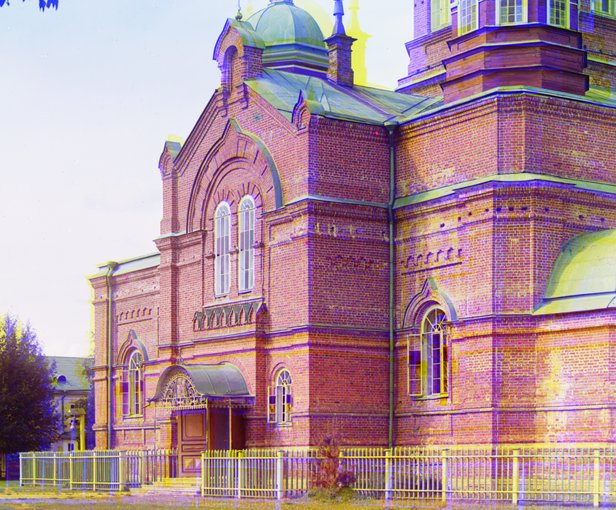
Estonia was remanded to Russian control in 1721 after the Great Northern War, and in 1888 the Russian Orthodox Church sent a nun from Kostroma’s Ipatiev Monastery to found a convent in Kuremäe. Overriding objections from local German Lutheran landowners, Prince Sergei Shakhovskoy, the governor-general of Estonia, sponsored the foundation, which was formally established in 1891 as the Pühtitsa Convent of the Dormition of the Mother of God. The convent’s main church was designed and built by Mikhail Preobrazhensky in the Russian Revival style. There are six other churches in the monastery, which today resembles a small village.

After the Russian Revolution the newly independent Estonian government confiscated much of the monastery’s farm land, and at the outset of World War II Estonia was occupied and annexed to the USSR. Although monasteries were closed throughout the Soviet Union, and in World War II a German concentration camp for Russian, Estonian, Jewish and other prisoners was set up on monastery territory, Pühtitsa was not closed. It is nothing short of a miracle that throughout the persecution and vicissitudes of the Russian Revolution, Estonia’s annexation by the USSR, and two world wars, Pühtitsa was one of the very few Russian monasteries to have a continuous monastic presence throughout the 20th century. Thus it is a double treasure for pilgrims, for it is one of a few Russian women’s convents, and the only one associated with St. John of Kronstadt, to have an unbroken tradition from before the Russian Revolution.

blog8

St. John of Kronstadt and the Founding of Pühtitsa Convent

Saint John not only nurtured the convent’s founding, but often came himself to help form the spiritual and community life of the sisters. They in turn trusted him implicitly. As one sister relates, “Even after his repose, when his memory was reviled under a dark cloud of Soviet misinformation, there was not a single cell, or hardly a home in the nearby village where a portrait of “dear Batiushka,” as the sisters called him, did not hang next to the icons.”


Saint John’s commemoration days—Oct.19/Nov.1 (his birthday and translation of the relics of his patron saint, St. John of Rila) and Dec. 20/Jan.2 (the day of his repose)—were celebrated as monastery feastdays even before his canonization.(2) Monastery and farm work came to a halt, and after Divine Liturgy and a panikhida (memorial service) for Fr. John, a festive trapeza of baked fish, mushroom and potato piroshky, and sweet rolls baked in the archpastor’s memory was provided for the sisterhood, monastery workers, and guests. Panikhidas for Fr. John and Blessed Xenia of St. Petersburg were served at other times as well, and when the monastery experienced sorrows and difficulties, help always arrived through their intercession.

Walking up the hill towards the monastery entrance, there is a tiny wooden chapel under an old oak tree to the right, which Fr. John called the “Oak of Mamre” and next to which he loved to pray. The chapel commemorates the 16th-century finding of the monastery’s great treasure on this site—the miracle-working Dormition Icon of the Mother of God. In the archway (the “Holy Gates”) leading into the monastery, the pilgrim is welcomed with frescoes of the finding of the miraculous Dormition icon and of St. John of Kronstadt.

The view from the Holy Gates opens onto Dormition Church, built with the blessing of Fr. John. Returning from the holy spring one day together with Abbess Barbara, he pointed to the monastery, saying, “Matushka Barbara, look at what a beautiful church we have on top of the hill.” The new church, which he saw as if it already existed, eventually replaced the original small monastery church dedicated to the Smolensk Icon of the Mother of God.(3)

blog9

The holy treasure of the monastery, the miracle-working icon of the Dormition miraculously found in the 16th century, is given central place in the cathedral. As in the time of St. John of Kronstadt, on the Feast of the Dormition August 15/28, an assembly of hierarchs, clergy, sisters, and thousands of pilgrims still process with the icon from the church to the holy spring at the bottom of the hill.

Another icon in the Dormition church associated with St. John is a beautiful miracle-working Vladimir icon of the Mother of God, painted on Mt. Athos as a gift and blessing for Pühtitsa monastery in honor of the fortieth anniversary of Fr. John’s ordination to the priesthood in 1895. The large icon (175 x 105 cm.) required a decree from Tsar Nicholas II for its transfer from the Holy Mountain. The cathedral is also graced with a second icon painted on Mt. Athos, at the Russian monastery of Saint Panteleimon in 2000. The icon depicts St. John of Kronstadt and was given by the monastery brotherhood as a blessing for Pühtitsa convent.


A fourth highly-prized icon, the Pühtitsa Icon of the Mother of God “At the Spring”, is also connected to the archpastor. In 1894, one of Pühtitsa’s sisters painted the icon as a gift for Father John’s name day, portraying the 16th-century appearance of the Mother of God. The icon was presented by the sisters with the inscription, “To Archpriest Father John (Ilyich) Sergiev, the work of painters from Dormition Convent on the Holy Mount, Estlyand Province, October 19, 1894.” Father John kept the icon until his repose, after which it was cared for by a pious couple in St. Petersburg, and finally by a nun from the then-closed Convent of St. John of Rila in St. Petersburg, also founded by Fr. John. During those dark decades, the nun guarding the icon had a dream in which the Mother of God instructed her to return the image to Pühtitsa. This only became possible after the nun’s death in 1946, when the icon was received with great reverence by the sisters.

In 2006, to commemorate the appearance of the Mother of God and the finding of the icon, His Holiness Patriarch Alexei II established the feast of the Pühtitsa Icon of the Mother of God on June 18/July 1, which is celebrated annually at the monastery with ever-growing numbers of pilgrims. On the eve of the feast, an akathist is sung antiphonally by two choirs and after morning liturgy the icon is carried in procession to the site where the Theotokos appeared in the 16th century.

Remembering Saint John

According to the older generation of nuns, when Fr. John came to the convent the sisters decorated the belfry and the guesthouse with colored lanterns. The train from St. Petersburg would arrive at the nearby station at 2:00 AM, and the entire sisterhood along with pilgrims would wait for their spiritual father at the gate, where he was greeted with the ringing of church bells. As he approached, the sisters would begin the Lenten stichera, “Behold, the Bridegroom Cometh at Midnight”. Always “cheerful, shining and infinitely benevolent,” Fr. John would step out of his carriage and bless each person awaiting him, then accompanied by the sisters he would first go to church to serve a moleben before the Dormition icon, and only then retire to his cell for a short rest. By 4:00 am the sisters had gathered in church for the midnight office, and two hours later Father John would arrive to start Matins, always reading the canon aloud himself. After hearing confessions he would celebrate the liturgy, and give Holy Communion to the sisters.


Although Fr. John reposed before the Dormition Church was completed, he did participate in the 1895 hierarchical consecration of the nearby trapeznaya Church of Saints Simeon and Anna and served many liturgies for the sisters. One monastery tradition holds that once as Fr. John was preparing the holy gifts for liturgy during the Proskomedia, he cut his finger. When it bled, he prophesied: “This monastery will stand to the end of the ages; blood will be shed for Christ on this mountain, there will be martyrs.” He later predicted both world wars and everything that would happen to the monastery. “Hold to the grass, the enclosure will save,” he said to the first sisters.

Father John also frequently visited the small church dedicated to St. Sergius of Radonezh, built in 1895 over the tomb of the monastery’s first patron, Prince Sergei Shakhovskoy, where he served panikhidas in the presence of the Duke’s wife, Elizaveta Dmitrievna.

St. John’s Memorial Room

A short walk from Dormition Church and across from the trapeznaya is a hospice housing elderly and ill sisters. On the second floor are three small rooms, dedicated to the history of Pühtitsa Convent and containing a number of Fr. John’s personal belongings. As the pilgrim enters the first of these quiet light-filled rooms, the door creaking on its hinges, a standing wardrobe to the right displays two of Fr. John’s podrazniks, one a blue velvet and the other an off-white linen podraznik for summer. The cabinet is dominated, however, by a large black wool fur-lined winter ryasa, so heavy that it is difficult to lift. Much of Fr. John’s ministry was on foot or in sledges or open horse-drawn cabs, and such warmly-lined ryasas were indispensable to avoid frostbite in the bitter cold of northern Russia. Next to the cabinet is a portrait of Fr. John wearing the same ryasa.

blog14

Gatehouse, Pühtitsa Convent.


Other of St. John’s possessions on display include small personal items such as portraits, letters, a cane, icons, and a carefully-kept Gospel. Here also is his archpriest’s mitre, pectoral cross and the Nativity vestments in which he served at Pühtitsa, as well as a cross presented to him by Tsar Nicholas II.

Father John deeply loved Pühtitsa. “Kiss this land,” he would say, “it has been blessed by the appearance of the Theotokos.” Eventually Fr. John sent over fifty of his spiritual daughters to the monastery to live under the guidance of the Mother Superior Varvara and her successor Abbess Alexia. According to the monastery chronicle, he would often send them off with the exhortation, “Go to Pühtitsa, it is just three steps away from the Heavenly Kingdom.” The third Pühtitsa abbess, Rev. Mother Joanna (Korovnikova), was Fr. John’s goddaughter and the daughter of his church warden at St. Andrew’s Cathedral who had come to Pühtitsa as a young girl. One of the museum’s books inscribed by St. John reads: “To the pious maiden Anna Alexeevna Korovnikova with a blessing. Archpriest John Sergiev. October 1, 1890.”

In 2008, for the 100th anniversary of the repose of St. John of Kronstadt, the monastery issued its first in-house Russian publication, Pühtitsa Convent and its Protector, the Righteous Saint John of Kronstadt. Drawn heavily from the monastery Chronicles, the book recounts Fr. John’s visits to the convent, including passages of his letters to the convent’s first two abbesses, and the memoirs of sisters who knew him.

From the first days of the monastery’s existence the sisters provided for themselves and the pilgrims with their own hands by farming and raising animals. They participated in the monastery’s construction, and as the sisterhood grew, Pühtitsa eventually supported a community of lay medical nurses (Sisters of Mercy), a free clinic, pharmacy, an orphanage, and a school where girls could be educated to age eighteen. Father highly appreciated the labor of the sisters, and held them up as an example to others, saying: “The sisters in Pühtitsa are walking towards the Heavenly Kingdom with huge steps”. In later years, walking around the monastery cemetery where the first nuns were already buried, Fr. John would take off his hat and bow first to one side, and then to the other, saying to the sisters: “You have many relics resting here!”

Father John guided, instructed, and healed the sisters through his prayer. He concerned himself with their everyday needs as well as spiritual guidance, and his letters to the first abbesses often ended with such instructions as, “I am sending 500 rubles to buy flour and provisions… and am asking you to take care to provide good nutrition.”

Statue of St. John of Kronstadt in house-museum garden.

blog11


Sister Lyudmila’s Healing

Next to the wardrobe in the memorial room is a small chair on which Fr. John sat one day when he healed a novice close to death, a story that her spiritual daughter, Nun Ioasipha (Malyarova) repeated for sisters and pil- grims until her own repose in 1990:

My eldress, Nun Lyudmila (Kulikova), who entered the monastery at the age of 16 in 1892, used to recall her miraculous healing by Fr. John from a deadly disease. As a young novice, Sister Lyudmila was given the obedience to bring bricks by boat from the village of Skamya two kilometers from the monastery on the Narova River. Once, after loading the bricks, she slipped getting into the rowboat and fell into the icy water of the river. It was October and the water near the shore had already begun to freeze. Wet and chilled through, it took her several hours to get back to the monastery, and from the exposure she developed a consumptive lung condition. She was admitted to the hospital, but soon sent home with the words: “Prepare her for the long journey.” Father John arrived at the monastery shortly after, and Mother Superior Alexia asked him
to bless the sick novice. She was carried to the abbess’ quarters, and Fr. John sorrowfully shook his head: “What a sick girl, what a sick girl”.

Without turning his gaze away, he touched her chest and drew his fingers together as if gathering up the edges of a piece of fabric. Lamenting and praying, he touched another spot on her chest as if he was closing up invisible wounds, and then blessed the novice, saying simply, “Thank God, you will live and live long!” With the blessing of Fr. John, Lyudmilla was carried to church, where she lay behind the harmonium listening to the service. By the end of vigil she was able to sit up, and during the morning liturgy the sisters helped her to approach Holy Communion. After Fr. John gave her Holy Communion, she was able to walk to her cell without help.


blog10

St. John of Kronstadt.


The following year, the abbess went to Revel (Tallinn), taking Mother Lyudmila to be checked by the doctor who had predicted her death.
He was very surprised to see his patient recovered and after examining her X-rays, shook his head saying: “I do not understand this at all. You were sure to die. Your lungs were laced with holes, but some mighty hand repaired it…. A great miracle was accomplished for you.” Mother Lyudmila lived until 1966, dying peacefully at the age of 90.

Schemanun Sergia: Childhood Healing

Schemanun Sergia (Andreeva), who was born in 1900, also told the story of her wondrous recovery from a severe illness through Fr. John’s prayers: “As a child my family lived in Finland, and when I was five, I broke my leg. It was a complex fracture and although my parents took me to different doctors who did what they could, the leg remained weak. After a year I could hardly move, even with crutches. From Finland we went to Fr. John of Kronstadt, who sat me on a little chair. My mother cried out, ‘Father, heal her leg!’ Father moved his hand three times along my injured leg and said, ‘She will walk, but she will not be completely healthy’. Then he brought a prosphora and gave it to me. I was very glad about Father’s gift of prosphora, and we returned home consoled. On the way back, I hardly needed the crutches, and when we arrived home I began walking slowly by holding to the walls. To the great surprise of my parents, I began walking without the crutches and even running. When I turned eighteen Father John blessed me to join the monastery.”

Sister Sergia spent almost seventy years in the monastery at different obediences including caring for the farm animals and as a choir director for the monastery. Before her repose in 1985 she was tonsured into the Great Schema.

Father John spiritually strengthened the community with each visit, and as he wrote to Mother Alexia, the second abbess, “I pray God that in Pühtitsa, with the protection of the Heavenly Queen, there will be a blossoming of truth, sanctity and piety amongst the sisters.”

That God did protect the monastery was demonstrated during a visit of a local commissar during the years of Soviet occupation. Telling villagers that he was going to arrest the abbess “and drag her out tied to my horse,” he arrived at the monastery hostile and belligerent. The abbess came out and received him calmly, upon which he demanded food and drink. The commissar drank so much that he left without doing anything, and on the way home the unfortunate man fell from his horse in his drunken stupor and was himself dragged on the ground until dead.

Former Abbess Varvara with young pilgrim.


blog13


After World War II, the monastery managed to stay afloat through the last difficult decades of the Soviet period. From 1968 to 2011 the sisterhood flourished under the capable hand of Abbess Varvara, who drew many young Russian and Estonian nuns after the fall of Communism. Today, guided by Pühtitsa’s eighth abbess, Rev. Mother Filareta, pilgrims continue to be moved by the legacy and spiritual protection of St. John of Kronstadt, and the sisters apply to him the words of another luminous 20th-century wonderworker, St. John Maximovitch: “Tell the people, even though I died, I am alive!”

DIRECTIONS:

To reach Pühtitsa Monastery by public transport, take a plane or train to Tallinn, Estonia. From Tallinn’s central bus station at Lastekodu 46, there is a direct bus to Kuremäe, the village outside the monastery, once a day on Monday and Friday. On other days you can take a bus from Tallinn to Johvi, and then local bus 116 to Kuremäe, which makes the round trip several times a day. Tell the driver you want to get off as close as possible to Pühtitsa Monastery.


(1) Yuryev is illustrative of the multi-cultural history and Orthodox influence in Estonia: the first documented record of the area was made in 1030 by chroniclers of Kievan Rus when Yaroslav I the Wise, Prince of Kiev and son of St. Vladimir the Great, built a fort there and named it Yuryev after his own patron saint, St. George. Yaroslav I had strong ties with Scandinavia as he had been in exile at the court of the first Swedish Christian King, Olof Skötkonung, and had married Olof’s daughter Ingegard. Ingegard in turn became St. Anna of Novgorod.

(2) St. John of Kronstadt was formally canonized by the Holy Synod of the Russian Orthodox Church in 1990. He had previously been recognized as a saint by the hierarchs of the Russian Orthodox Church Outside of Russia in 1964. His feast days are Oct.19/Nov.1 (his birthday and translation of the relics of his patron saint, St. John of Rila) and Dec. 20/Jan.2 (the day of St. John of Kronstadt’s repose).

(3) Another famous icon, that of the Pühtitsa icon of the Smolensk Mother of God gave its name to the original convent church and was highly venerated by St. John and the sisterhood. It still occupies a prominent place in the newer Dormition Cathedral. The foundation of Dormition Cathedral was laid by St. John, but he did not live to see its completion.

Source: Road to Emmaus Vol. XV, No. 1 (#56)


 [To Be Continued]

His Life In Christ: Pilgrimage To The Holy Places Of St. John Of Krostandt — Part I

blog3


A century after his repose, the great archpriest St. John of Kronstadt remains an iconic figure: a man of ferocious dedication to God who was graced with a deep and miraculous prayer life, yet manifested a radical sympathy for the poor that still astounds with its creative and vigorous solutions. After an impoverished childhood in Russia’s remote Archangelsk region and seminary in St. Petersburg, Fr. John Sergiev was assigned to the tumultuous naval port of Kronstadt, where he not only served daily liturgy and prayed long into the night, but actively worked to alleviate the spiritual and material needs of each person he met. A support for Russia’s tsars, clergy, merchants, students, paupers and monastics, he interceded for and assisted everyone who approached him: Russian or foreigner, Christian, Moslem, Jew, or agnostic.

photo11

Archangelsk and St. Petersburg

photo1photo2photo5photo6photo7photo8photo10

Arkhangelsk, northern pearl of Russia

Saint John’s wisdom comes to us today through his candid written reflections in My Life in Christ (*) and through his intercession, but for the pilgrim fortunate enough to visit Russia and Estonia, there is also a substantial material legacy of his life and ministry, preserved and newly restored through the selfless labors of many contemporary Orthodox. These holy places are an alternative form of iconography, another form of the “stones crying out,” that they, too, have been touched by grace.

photo22photo23photo24photo25photo26photo27photo28photo29

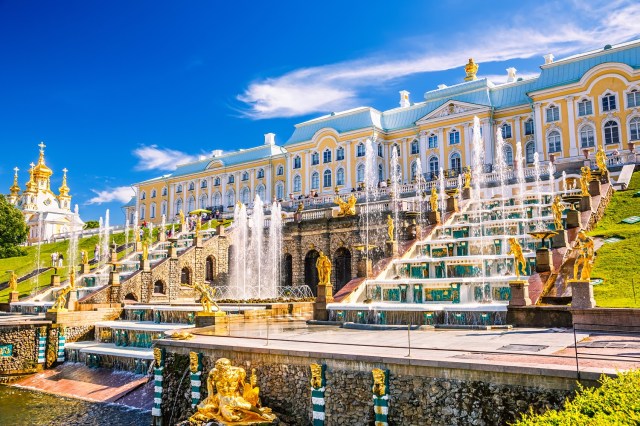
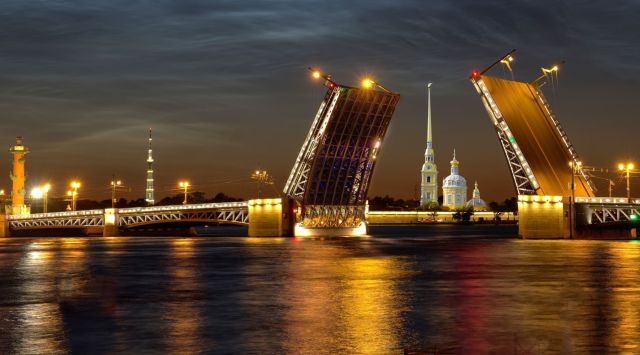
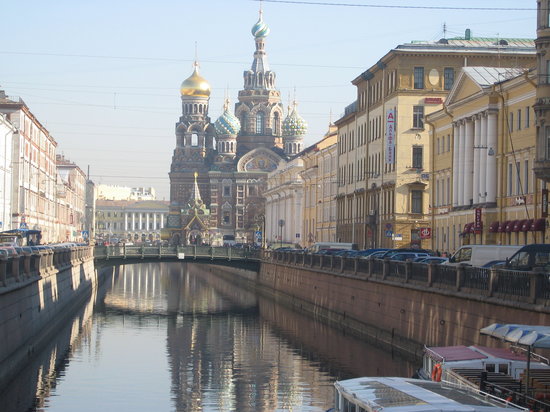
St. Petersburg, The Venice of the North


These restored and accessible sites of St. John’s life and labors include the Monastery of St. John the Theologian for women, founded by St. John in his native village of Sura in the Archangelsk region in the far north of Russia; Pühtitsa Convent of the Dormition in the Republic of Estonia, which he nurtured and shepherded through its first decades; St. John’s much-venerated relics in the famous women’s monastery of St. John of Rila in St. Petersburg, Russia; the site of his own Church of St. Andrew in nearby Kronstadt where he served throughout his priestly life—along with a second even larger Kronstadt church, the Navy Cathedral of St. Nicholas, for which he initiated the building and laid the foundation; and finally, Fr. John’s own home, a second-floor apartment in Kronstadt where he lived with his wife Elizabeth for a half century until his repose in 1908.


ARCHANGELSK REGION, RUSSIA

photo4photo3photo9

The village of Sura

Sura Monastery of St. John the Theologian

The village of Sura on the upper reaches of the Pinega River, in the Arch- angelsk region of northern Russia, is the birthplace of St. John of Kronstadt. Sura is one of the most ancient villages of the native Chud people, and even today has both pagan activity and Old Believer influences. In the only autobiographical sketch composed by St. John, and published in an 1888 issue of the magazine Sever (North), he describes his early childhood:

I am the son of a churchman from the village of Soursk, district of Pinezhsk, province of Archangelsk. From very early childhood, as early as I can remember, at the age of four or five, perhaps even earlier, my parents taught me to pray and by their religious frame of mind made me a religiously-minded boy. At home, in my sixth year, Father brought me a primer, and Mother began to teach me the alphabet; but reading and writing came to me with great difficulty, which was the cause of no little sorrow to me. I just couldn’t master the identity between our speech and writing; in my time reading and writing were not taught as it is now: we were all taught ‘Az’ (for ‘A’), ‘Boukee’ (for ‘B’), Vedi,’ etc., as if ‘A’ were one thing and ‘Az’ a different thing. For a long time did this wisdom elude me, but having been taught by Father and Mother to pray, grieving over my failures in studies, I prayed fervently to God, so that He would grant me understanding—and I remember how, suddenly, it was as if a veil were lifted from my mind, and I began to comprehend studies well. When I was ten I was taken to the Archangelsk parish school. My father, naturally, received a very small salary, so that it must have been terribly difficult to live. I already understood the real position of my parents, and for this reason my inability at school was indeed a calamity. I thought little of the significance my studies would have on my future, and grieved especially over how Father was needlessly spending his last means to support me.


Left in Archangelsk completely alone, I was deprived of my parents and had to arrive at everything myself. Among the boys of my age group in class, I did not find, nor did I seek, support or assistance; they were all more able than I, and I was the last pupil. Anguish took hold of me. Then it was that I turned for help to the Almighty, and a change took place in me. In a short time I moved forward to such an extent that I ceased to be the last pupil. The further I went, the better and better I became in my studies, and by the end of the courses was among the first transferred to the seminary, which I finished first in 1851 and was sent to the Petersburg Academy on a full scholarship…

archaic20archaic21

Father John returned to Sura throughout his life, and after his ordination established a six-year grammar school for the village children. In 1899 he founded an informal women’s community, first comprised of a wooden church dedicated to St. John the Theologian and a few monastic cells. This was followed by a beautiful stone church dedicated to St. Nicholas, and after Fr. John’s repose, the Dormition Cathedral, built in 1915, about which he correctly prophesied that the church would be built but that no one would serve in it.

aaa.jpg

St. Nicholas wooden church (1687), Zachachie, Archangelsk (Arkhangelsk) region

bbb.jpg

Church of St John the Theologian, Plesetsk, Arkhangelsk Region

The monastery began with two nuns: Barbara, the superior, and Riassaphore Nun Angelina with thirty-three novices that Fr. John had blessed to live in the newly opened community. On July 20, 1900, the wooden church was consecrated in Fr. John’s presence and in the fall of the same year the community was officially recognized. Father John instructed the novices through his own teaching and sent them for preparation to the Leushino Convent under the well-known Abbess Thaisia, who directed over 700 nuns! Several letters still survive from Fr. John to Abbess Thaisia about the reception of the novices.(1)

blog2

St. John with Abbess Thaisia, late 19th century.

Settling at the site of the monastery, the sisters assisted in the construction work and gardening; they later recalled the particularly hard labors of those early years and the savagely cold winters. In the early 1900s the monastery opened a podvoriye, a city outpost in Archangelsk and a second in St. Petersburg that would later become the famous Karpovka Ioannavsky Monastery where Fr. John would be buried.
leushino1
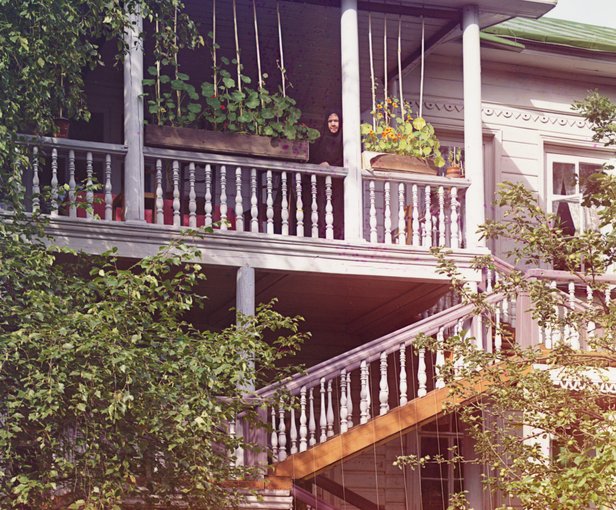
Mother Superior Taisiia on the Veranda
leushino2leushino3
Leushinskii Monastery, Leushino, Russian Empire

The convent priest was Fr. Dimitri Fedosikhin, formerly a train engineer who was healed by Fr. John after a revolutionary bombing of his train had left him near death. Father John later encouraged him to accept the priesthood, and Fr. Dimitri became rector of the Archangelsk cathedral and the last spiritual father of the Sura women’s monastery. The Sura convent was closed on Dec. 8, 1920 by the local Soviet and the sisters dispersed, arrested and exiled. The newly built Dormition Church was turned into a club, and St. Nicholas Church destroyed. In 1920 Fr. Dimitri was arrested along with 140 other Orthodox, including a number of the nuns, who protested the closing of the monastery. He was sentenced to five years in the gulag camps and the remaining nuns were dispersed and exiled.

On returning to Arkhangelsk in the spring of 1925, Fr. Dimitri petitioned for the reopening of the cathedral, which had been closed after his departure. His request went unanswered and on Pascha he opened the church and served on his own initiative. He was re-arrested, sentenced to three more years in the camps and a further five-year exile in Kazakhstan. In Kazakhstan, he and his wife were tonsured as monastics and he was secretly consecrated to the episcopate as Schema-bishop Peter. On his return from exile Fr. Dimitri traveled from place to place, confessing and serving liturgy for his spiritual children, until he was arrested for the third time in 1941 and sent to the camps again, from which he never returned.


blog3

St. John with Sura relatives, 1890.


On Oct. 31, 1994, the archbishop of Archangelsk blessed the formation of the revived St. John the Theologian Convent in Archangelsk. The initial attempt to regain the property and buildings was unsuccessful, however, and the community relocated to the village of Yershovka, where they organized a new monastery, also dedicated to St. John the Theologian. A local committee of clergy and laypeople, meanwhile, continued to press for the return of the Sura monastery territory and eventually succeeded. In October 2012, the Holy Synod passed a resolution reopening the Sura convent, and naming Nun Mitrofania (Mikolka) as abbess. A new community of sisters has formed at Sura and begun restoration of the badly damaged buildings.

Future plans include rebuilding the churches and cells, a home for orphaned girls, a domicile for the elderly, a Sunday school, and the revival of local handicrafts. The ruined Dormition church is now being restored, a house-church dedicated to St. John has opened in Sura, and the monastery welcomes pilgrims, most of whom visit from the well-known Monastery of St. Artemy of Verkola, about thirty-five miles away. Pilgrim accommodations will be made available as the monastery is revived.

In the summer of 2013, a cross procession/pilgrimage voyage was held in honor of the 185th anniversary of St. John of Kronstadt’s birth. The aim of the event was not only the restoration of pilgrimage to the shrines of the Russian north, but to attract attention to the Sura Convent of St. John the Theologian. Participants in the cross procession sailed 2,000 kilometers along the Neva River, through Lake Ladoga, the Svir River, Lake Onega, the White Sea to Archangelsk, and further down the North Dvina and Pinega Rivers to the village of Sura. This was the same route that St. John would have taken on his own visits to Sura. Prayer services and processions involving local churches and parishioners were held during the frequent stops.

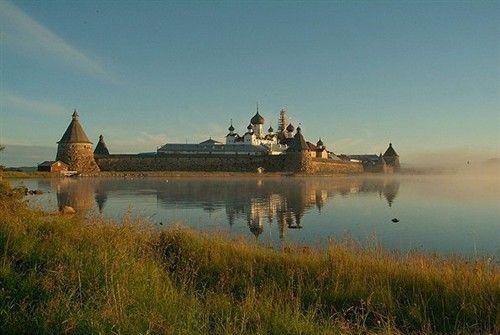
neva-riverLake_Ladoga_-_superior_mirage_2LakeLadoga3

valaamladoga1ladoga2ladoga3

Neva River and Lake Ladoga

lake1lake2lake3LakeLadoga3

Svir River and Lake Onega

photo40photo42photo43

White Sea to Archangelsk

photo40photo41photo44

North Dvina and Pinega Rivers

DIRECTIONS:

Getting to the Sura Ioannovsky Monastery is not terribly difficult if you have the time, but neither is it for the faint-hearted. From Moscow to Archangelsk is about 1200 km (21 hours by train). From St. Petersburg it is 25 hours by train. From Archangelsk, take a second train (running every other day) several hundred kilometers to the town of Karpogory. From Karpogory, there may be an infrequent bus to Sura, but the best option is to hire a taxi or private car. Sadly, the river steamboats that St. John customarily took to Sura from St. Petersburg were discontinued after the Russian Revolution.

blog4

St. John of Kronstadt with wife, Matushka Elizabeth.

Source: HIS LIFE IN CHRIST, Road to Emmaus Vol. XV, No. 1 (#56)

(1 ) Abbess Thaisia’s memoirs of her conversations with St. John of Kronstadt are included as an appendix to: Abbess Thaisia of Leushino: The Autobiography of a Spiritual Daughter of St. John of Kronstadt, St. Herman of Alaska Press, Platina, CA, 1989.The following “Conversations” provide an intimate, realistic glimpse into the life of a magnificent Saint of God, showing us his endearing, human side, and then calling us beyond the earth to the eternal realm in  which his soul constantly abided. We give thanks to God that God that Abbess Thaisia was able to record so precisely these soul-saving talks. It was not in vain that the Lord gifted her with an almost photographic memory! Both her Autobiography and the “Conversations” are fascinating and soul-saving readings!

*

My Life in Christ: Extracts from the Diary of Saint John of Kronstadt


For the 2nd Part, go to His Life In Christ: Pilgrimage To The Holy Places Of St. John Of Krostandt — Part II


On the Silent and Invisible Warfare


e

Way of the Ascetics 

By Tito Colliander


Chapter One: On a Resolute and Sustained Purpose


IF you wish to save your soul and win eternal life, arise from your lethargy, make the sign of the Cross and say:

In the name of the Father, and of the Son and of the Holy Ghost. Amen.

Faith comes not through pondering but through action. Not words and speculation but experience teaches us what God is. To let in fresh air we have to open a window; to get tanned we must go out into the sunshine. Achieving faith is no different; we never reach a goal by just sitting in comfort and waiting, say the holy Fathers. Let the Prodigal Son be our example. He arose and came (Luke 15:20).

However weighed down and entangled in earthly fetters you may be, it can never be too late. Not without reason is it written that Abraham was seventy-five when he set forth, and the labourer who comes in the eleventh hour gets the same wages as the one who comes in the first.

Nor can it be too early. A forest fire cannot be put out too soon; would you see your soul ravaged and charred?

In baptism you received the command to wage the invisible warfare against the enemies of your soul; take it up now. Long enough have you dallied; sunk in indifference and laziness you have let much valuable time go to waste. Therefore you must begin again from the beginning: for you have let the purity you received in baptism be sullied in dire fashion.

b

Arise, then; but do so at once, without delay. Do not defer your purpose till “tonight” or “tomorrow” or “later, when I have finished what I have to do just now.” The interval may be fatal.

No, this moment, the instant you make your resolution, you will show by your action that you have taken leave of your old self and have now begun a new life, with a new destination and a new way of living. Arise, therefore, without fear and say: Lord, let me begin now. Help me! For what you need above all is God’s help. . Hold fast to your purpose and do not look back. We have been given a warning example in Lot’s wife, who was turned into a pillar of salt when she looked back (Genesis 19:26). You have cast off your old humanity; let the rags lie. Like Abraham, you have heard the voice of the Lord: Get thee out of thy country, and from thy kindred, and from thy father’s house, into a land that I will show thee (Genesis 12:1). Towards that land hereafter you must direct all your attention.

a

Chapter 2: On The Insufficiency Of Human Strength


THE holy Fathers say with one voice: The first thing to keep in mind is never in any respect to rely on yourself. The warfare that now lies before you is extraordinarily hard, and your own human powers are altogether insufficient to carry it on. If you rely on them you will immediately be felled to the ground and have no desire to continue the battle. Only God can give you the victory you wish.

This decision not to rely on self is for most people a severe obstacle at the very outset. It must be overcome, otherwise we have no prospect of going further. For how can a human being receive advice, instruction and help if he believes that he knows and can do everything and needs no directions? Through such a wall of self-satisfaction no gleam of light can penetrate. Woe unto them that are wise in their own eyes, and prudent in their own sight, cries the prophet Isaiah (5:21), and the apostle St. Paul utters the warning: Be not wise in your own conceits (Romans 12:16). The kingdom of heaven has been revealed unto babes, but remains hidden from the wise and prudent (Matthew 11:25).

We must empty ourselves, therefore, of the immoderately high faith we have in ourselves. Often it is so deeply rooted in us that we do not see how it rules over our heart. It is precisely our egoism, our self-centeredness and self-love that cause all our difficulties, our lack of freedom in suffering, our disappointments and our anguish of soul and body.

d

Take a look at yourself, therefore, and see how bound you are by your desire to humour yourself and only yourself. Your freedom is curbed by the restraining bonds of self-love, and thus you wander, a captive corpse, from morning till eve. “Now I will drink,” “now I will get up,” “now I will read the paper.” Thus you are led from moment to moment in your halter of preoccupation with self, and kindled instantly to displeasure, impatience or anger if an obstacle intervenes.

If you look into the depths of your consciousness you meet the same sight. You recognize it readily by the unpleasant feeling you have when someone contradicts you. Thus we live in thralldom. But where the Spirit of the Lord is, there is liberty (11 Corinthians 3:17).

How can any good come out of such an or biting around the ego? Has not our Lord bidden us to love our neighbour as ourselves, and to love God above all? But do we? Are not our thoughts instead always occupied with our own welfare?

No, be convinced that nothing good can come from yourself. And should, by chance, an unselfish thought arise in you, you may be sure that it does not come from you, but is scooped up from the wellspring of goodness and be stowed upon you: it is a gift from the Giver o life. Similarly the power to put the good thought into practice is not your own, but is given you by the Holy Trinity.

f

Chapter Three: On The Garden Of The Heart

THE new life you have just entered has often been likened to that of a gardener. The soil he tills he has received from God, as well as the seed and the sun’s warmth and the rain and the power to grow. But the work is entrusted to him.

If the husbandman wishes to have a rich harvest, he must work early and late, weed and aerate, water and spray, for cultivation is beset by many dangers that threaten the harvest. He must work without ceasing, be constantly on watch, constantly alert, constantly prepared; but even so, the harvest ultimately des wholly on the elements, that is, on God.

The garden that we have undertaken to tend watch over is the field of our own heart; the harvest is eternal life.

Eternal, because it is independent of time and space and other external circumstances: it is the true life of freedom, the life of love and mercy and light, that has no bounds whatever, and for just that reason is eternal. It is a spiritual life in a spiritual dominion: a state of being. It begins here, and has no end, and no earthly power can coerce it; and it is to be found in the human heart.

Persecute yourself, says St. Isaac of Syria, and your enemy is routed as fast as you approach. Make peace with yourself, and heaven and earth make peace with you. Take pains to enter your own innermost chamber and you will see the chamber of heaven, for they are one and the same, and in entering one you behold them both. The stairway to the kingdom is within you, secret in your soul. Cast off the burden of sin and you will find within you the upward path that will make your ascent possible.

The heavenly chamber of which the saint speaks here is another name for eternal life. It is also called the kingdom of heaven, the kingdom of God, or quite simply, Christ. To live in Christ is to live in eternal life.

c

Chapter Four: On the Silent and Invisible Warfare

NOW that we know where the battle we have just begun is to be fought, and what and where our goal is, we also understand why our warfare ought to be called the invisible warfare. It all takes place in the heart, and in silence, deep within us; and this is another serious matter, on which the holy Fathers lay much stress: keep your lips tight shut on your secret! If one opens the door of the steam bath the heat escapes, and the treatment loses its benefit.

Thus say nothing to anyone of your newly conceived purpose. Say nothing of the new life you have begun or of the experiment you are making and experiences you expect to have. All this is a matter between God and you, and only between you two. The only exception might be your father-confessor.

g

This silence is necessary because all chatter about one’s own concerns nourishes self-preoccupation and self-trust. And these must be stifled first of all! Through stillness one’s trust grows in Him who sees what is hidden; through silence one talks with Him who hears without words. To come to Him is your endeavour, and in Him shall be all your confidence: you are anchored in eternity, and in eternity there are no words.

Hereafter you will consider that everything that happens to you, both great and small, is sent by God to help you in your warfare. He alone knows what is necessary for you and what you need at the moment: adversity and prosperity, temptation and fall. Nothing happens accidentally or in such a way that you cannot learn from it; you must understand this at once, for this is how your trust grows in the Lord whom you have chosen to follow.

Still another piece of information the saints offer on the way: you should see yourself as a child who is setting out to learn the first sounds of letters and who is taking his first tottering steps. All worldly wisdom and all the skills you may have are totally worthless in the warfare that awaits you, and equally without value are your social standing and your possessions. Property that is not used in the Lord’s service is a burden, and knowledge that does not engage the heart is barren and therefore harmful, because it is presumptuous. It is called naked, for it is without warmth and fosters no love. You must thus abandon all your knowledge and become a dunce in order to be wise; you must become a pauper in order to be rich, and a weakling if you wish to be strong.

Melancholy, Sadness, Anxiety


Melancholy, sadness, anxiety

Melancholy, sadness, anxiety

 by Elder Porphyrios

The crucial thing is to enter the Church – to unite with our fellow beings, with everyone’s joys and sorrows, to feel them as our own, to pray for all, to ache for their salvation, to forget about ourselves, to do everything for others, like Christ did for us. In the Church we become one with every sorrowful, aching and sinful person. Nobody should want to be saved alone, without the salvation of others. It is wrong for one to pray for himself to be saved. We must love others and pray that no one be lost; that everyone enters the Church. This is what matters. And it’s with this desire that one should leave the world to go to the monastery or the desert.

In the Church, which has the mysteries that save, there is no desperation. We may be extremely sinful. However, we confess, the priest reads the prayer over us and so we are forgiven and we move towards immortality, without any anxiety, without any fear.

Whoever lives in Christ, becomes one with Him, with His Church. He lives something crazy! This life is different to human life. It’s joy, light, gladness, an uplift. This is the Church’s life, the Gospel’s life, God’s Kingdom. “The Kingdom of God is within you” (Luke 17:21). Christ comes in us and we are in Him. And just like a piece of iron placed in fire becomes fire and light; outside the fire, again it turns to dark iron, darkness.

The ones blaming the Church for its representatives’ mistakes, aiming supposedly at helping in its correction, are greatly mistaken. They don’t love the Church. Nor, Christ to be sure. We love the Church; when in prayer we embrace every part of it and we do as Christ does. We sacrifice ourselves, remain alert, do everything, just like Him, the One “who, when He was reviled, did not revile in return; when He suffered, He did not threaten” (1 Peter 2:23).

We need to pay attention to the basic part too. We need to live the mysteries, especially the mystery of Holy Communion. It’s in these that Orthodoxy is found. Christ is offered to the Church through the mysteries and primarily through Holy Communion.

For many, however, our religion is a struggle, agony and anxiety. For this reason  many “religious” people are considered unhappy, because others see their bad state. Indeed, if one is unable to see the depth of the religion and does not live it, the religion ends up a sickness and a terrible one. So terrible, that one loses control over his actions, becomes weak-willed and powerless, is in agony and under stress and behaves under the influence of an evil spirit (meaning demonic energy). He does prostrations, cries, shouts, is supposedly humble, and all this humility is a satanic act. For some of these people the religion is like a type of hell. In church they do prostrations, make the sign of the cross, they say “we are sinners, unworthy,” and as soon as they get out, start blaspheming all things holy when someone annoys them just a little. It is obvious that there is a demon in the middle.

In reality, Christianity transforms a person and heals him. The most important prerequisite, however, for someone to perceive and distinguish truth is humility. Egoism darkens one’s mind, confuses him, leads him into deception, into heresy. It is very important for one to comprehend the truth.

All the confused are going to the heretical groups – confused children of confused parents.

Often, neither toil, nor repentance, nor the sign of the cross attract grace. There are secrets. The most important one is to avoid forms and go to the substance. Everything that happens must happen with love.

When you don’t live with Christ, you live in melancholy, in sadness, in stress, in grief. You don’t live correctly. So then many anomalies appear also in the body. The body gets affected, the endocrinous glands, the liver, the spleen, the pancreas, the stomach. You are told: “In order to be healthy, you must have some milk in the morning, an egg, butter and a couple of rusks.” And yet, if you live correctly, if you love Christ, you are just fine with an apple and an orange. The greatest of all medicine is to offer oneself in devotion to Christ. Everything gets healed. Everything functions properly. God’s love transforms all; it alters, it sanctifies, it corrects, it changes, it modifies everything.

Love for Christ is unlike anything else. It doesn’t end, you can’t have enough of. It transmits life, gives strength, grants health, it keeps giving…and the more it gives, the more one wishes to fall in love. Whilst human love may wear one out, drive him crazy. When we love Christ, all other loves recede. Other loves have a saturation point…Love for Christ doesn’t have one. Carnal love has a saturation point. Jealousy, complaining or even murder may follow. It may convert to hate. Love in Christ does not deteriorate. Worldly love can be maintained for a little while and then it slowly fades, whereas divine love keeps growing and deepening. Any other love may bring a person to despair. Yet divine love, raises us to God’s domain, gives us serenity, joy, completion. Other pleasures tire while this one you can’t have enough of. It’s an insatiable pleasure, that no one ever gets tired of. It’s the utmost of goods.

When you love Christ, despite all your weaknesses and their conscious acknowledgment, you still have the certainty that you have overcome death, because you reside in the communion Christ’s love.

We need to feel Christ as our friend. He is our friend. He confirms this Himself when He says: “You are my friends…” (John 15:14). We need to look at Him and approach Him as a friend. Do we fall? Do we sin? We should run to Him with feelings of familiarity, in love and trust; not in fear of punishment but in courage granted by the sense of friendship. And say to Him: “Lord, I did it, I fell, forgive me”. But at the same time we need to feel He loves us, and tenderly accepts us with love and forgives us. We need not be separated by sin from Christ. When we believe that He loves us and we love Him, we will not feel estranged and divided, even when we sin. We have secured His love and no matter how we may behave, He loves us.

The Gospel surely states symbolically that the unjust will be found where there is “crying and gnashing of teeth”; this is what it’s like away from God. And from the neptic Fathers of our Church many speak of fear of death and hell. They say: “always bear death in mind”. If we examine those words deeply, they create a fear of hell. As man tries to avoid sin, he brings those thoughts to mind so that his soul gets overrun by the fear of death, hell and the devil.

They all have their meaning, time and occasion. Fear, as a concept, is good during the first stages. It is for beginners, for the those in whom their old self still lives. The beginner, not having been refined yet is retained from evil by fear. And fear is necessary while we are still material and succumbed. But this is a stage, a low degree of relationship with the divine. We take it in as a transaction so that we can win Paradise or escape hell. If we cross examine it, it indicates self-interest, benefit. I don’t like this way. When man advances and enters into God’s love, what need is there for fear? Whatever he does, he does so from love, and this is of so much more value. Becoming good due to fearing God and not out of love is of little value.

Whoever wants to become a Christian must first become a poet. If the soul gets crushed and becomes unworthy of Christ’s love, Christ ceases relations, because Christ doesn’t want ‘unrefined’ souls next to Him.

Let nobody see you, nobody understand your gestures of devotion towards the divine. Do everything in private, in secrecy, like the ascetics. Remember what I told you about the nightingale? It chirps in the woods. In silence. As if someone is listening, praising? What beautiful chirping in the wilderness! Have you seen the way their larynx puffs up? That’s what happens to him who falls in love with Christ. If they love, “their throat puffs up, they are taken up, their tongue can’t stop”. They go into a cave, a dale and live God in secret, “silent sighing”.

Scorn passions, do not preoccupy yourselves with the devil. Turn to Christ.

Divine grace teaches us our duty. To attract it, we need love, yearning. God’s grace needs divine love. Love is enough, to get us into the right ‘shape’ for prayer. Christ will by himself pore over our heart, as long as He can find some things that please Him: good intention, humility and love. Without these we cannot say, “Lord Jesus Christ have mercy on me”.

Even the smallest grumbling against your neighbor negatively affects your soul and you are unable to pray. When the Holy Spirit finds the soul in this state, it does not dare approach.

We need to ask that God’s will is done; this is the most beneficial, the safest for us and for those we pray for. Christ will grant us everything abundantly. When there is even just a little egoism, nothing happens.

When God won’t give us what we persistently ask for, He has His reason. God has His secrets too.

If you aren’t obedient (to a spiritual father) and have no humility, the prayer (that is, Lord Jesus Christ have mercy on me) won’t take effect and there is even the fear of delusion.

Let not the prayer (Lord Jesus Christ have mercy on me) become tedious work. Pressure may bring about a reaction internally, may do harm. Many people have gotten sick through the prayer because they pressed themselves. Certainly, you can do it, when it becomes tedious work, but it’s not healthy.

It’s not necessary to particularly focus to say the prayer. You don’t need to put effort into it when you have divine love. Wherever you are, on a stool, on a chair, in a car, anywhere, in the street, at school, in the office, at work you can say the prayer, “Lord Jesus Christ have mercy on me”, softly, without pressure, without strain.

What’s important in prayer is not the duration but the intensity. Pray even just for five minutes, but given to God with love and yearning. Someone may pray all night, yet this 5 minutes of prayer be superior. It’s a mystery, but that’s the way it is.

A person of Christ makes prayer out of everything. He turns difficulty and sorrow into a prayer. Whatever happens to him, he immediately says: “Lord Jesus Christ…”. Prayer benefits in all, even the simplest things. For example, do you suffer insomnia; do not think of sleep. Get up, go outside, come back into the room, fall back into your bed as if for the first time, without thinking if you will sleep or not. Concentrate, say the doxology and then three times “Lord Jesus Christ…” and in this way you will fall asleep.

Everything is inside us, instincts and all, and are asking for fulfillment. If we don’t fulfill them they will take their revenge, unless we redirect them elsewhere, towards the higher, towards God.

You don’t become holy hunting down evil. Forget about evil. Look towards Christ and He will save you. Instead of standing outside the door to drive away the enemy, ignore him. Is evil coming this way? Gently let yourself go the other way. Meaning, is evil coming to attack you, give your internal strength to the good, to Christ. Plead: “Lord Jesus Christ, have mercy on me”. He knows how to have mercy on you, in what way. And when you are filled with good, you won’t turn to evil anymore. You will become good by yourself, with God’s grace. How can evil find any ground anymore? It disappears!

Does a phobia or disappointment get a hold of you? Turn to Christ. Love him in simplicity, with humility, without demands and He will free you.

Do not choose negative ways to correct yourselves. You don’t need to be afraid of the devil, or hell, or anything. They create a reaction. I too have a little experience in those things. The point is not to sit, to beat or strain yourselves to improve. The point is to live, to study, to pray, to advance in love, in Christ’s love, in the Church’s love.

Leave all your weaknesses so that the opposing spirit (the devil) won’t become aware of it and immerse you and hold you down in grief. Do not make any effort to free yourselves from them. Strive in gentleness and simplicity, without strain and anxiety. Do not say to yourselves: “Now I will strain myself, I will pray to obtain love, to become good, etc”. It’s not good to strain and beat yourself in order to become good. In this way you will only react more. Everything must happen in a soft way, freely and with no rush. Neither should you say: “God free me from it,” for example, from anger, or sadness. It’s not good to think and/or pray about a particular passion. Something takes place in our soul and we get more tangled up. Dash yourself to overcome the passion and you will see that it will entwine you, grasp you and you won’t be able to do anything.

Freedom cannot be won, if we do not free ourselves internally from confusion and the passions.

This is what our Church is, this is our joy, this is everything for us. And this is what man today is looking for. And he takes poison and drugs so that he can enter joyous worlds, but fake joy. He feels something at that particular moment but the next day he feels torn. One thing scrapes him, eats him up, smashes him, burns him. While the other, that is being given to Christ, enlivens him, gives him joy, makes him enjoy life, feel strong, magnificence.

The ability to sanctify your soul is a great art. One can become holy anywhere. Even in Omonia (the main square in Athens) one can be sanctified, if he wants. You can become saints at work, no matter what it is – in calmness, patience and love. Each day make a new beginning, a new mood, enthusiastically and with love, prayer and silence – not with stress and a heavy heart.

Work vigilantly, simply, gently, without anxiety, joyfully and gladly, in a good mood. Then divine grace comes.

All unpleasant things, that remain in your soul and make you stressed, can become a reason for worshipping God and so stop hurting you. Trust in God.

There is no need in trying hard and strain yourselves. All your effort should be focused on gazing at the light, attaining the light. In this way, instead of turning to grief which is not of God’s Spirit, you should turn yourselves to praising God.

Grief shows that we don’t entrust our life to Christ.

When communication with Christ takes place simply, softly, under no pressure, it causes the devil to flee. Satan won’t flee from pressure, strain. He distances himself from calmness and prayer. He retreats when he sees the soul ignore him and turn to Christ with love. He cannot take disregard because he is arrogant. But the evil spirit understands it when you push yourselves, and it fights you. Don’t bother with the devil, don’t even ask that he flee. The more you ask that he flee, the more he will entangle you. Ignore the devil. Do not fight him directly. When you stubbornly fight against the devil, he attacks you back like a tiger, a wildcat. When you shoot bullets at him, he throws back a grenade. When you throw a bomb at him he shoots back a missile. Don’t look at evil. Look into God’s arms, fall into His arms and move on.

A humble person is conscious of his inner state, and no matter how ugly it is, he does not lose his personality. He does not lose his balance. The opposite happens with the egoist, the one who has feelings of inferiority. In the beginning he resembles a humble person. But if one tempts him just a little, he loses his peace, gets irritated, gets upset.

When a person lives without God, without peace, without trust, in anxiety, depression, hopelessness, he develops physical and psychological illnesses. Psychological illness, neurological illness, discord are demonic states. It is also demonic to speak as though humble. It is called a feeling of inferiority. Real humility does not speak out, does not pretend to be humble, that is to say: “I’m a sinner, unworthy, the least of all…”. A humble person is afraid that they may fall into vainglory. God’s grace does not draw near that. In contrast, God’s grace can be found where there is real humility, divine humility, perfect trust in God, dependence on Him.

The vainglorious person alienates his soul from eternal life. Ultimately, egoism is complete foolishness! Vainglory makes us hollow. When we engage in showing off, we end up completely empty. We must do whatever we do to please God; selflessly, without vainglory, without pride, without ego, without, without…

Our soul must not rebel and say: “why did God do this thing, why did He do the other thing that way, couldn’t He have done it differently?” All this indicates internal small-heartedness and reaction. It shows the big opinion we have of ourselves, our pride and our great ego. Those “whys” greatly torture a person, create what people call “complexes”. For example, “why should I be so tall?” or – the opposite – “very short?”. It remains inside. And one may pray and stay awake (to do so), but get the opposite result. And he may suffer and exasperate himself pointlessly. Whilst with Christ, with grace, it all disappears. There remains this “something” deep down, meaning “why,” but God’s grace overshadows man and while the root may be a complex, a rosebush grows over it with beautiful roses, and the more one waters it through faith, love, patience and humility, the more evil loses its power and ceases to exist; that is, it doesn’t disappear, but it withers. The more the rosebush isn’t watered, the more it withers, dries up, disappears and thorns grow out of it instead.

We tempt God when we ask something of Him, but our life is far from God. We tempt Him when we ask for something but our life is not in accordance with His will – that is, (we ask for) things against God: stress and anxiety on one hand, but on the other we entreat Him.

Your spiritual father may tell you: “How I would have liked to be in a quiet place,  free from all other affairs and to hear about your life right from the beginning, from when you felt yourself; all the things you can remember and the way you dealt with them, not only the unpleasant but also the pleasant, not only your sins but also the good. Successes and failures. Everything, everything that is part of your life”.

I’ve applied this type of general confession many times and have seen miracles happen. During the time you speak to the confessor, divine grace comes to relieve you from all your ordeals and wounds and psychological traumas and guilt; because, as you are speaking your confessor sincerely prays for your deliverance.

Let us not go back to the sins that we have confessed. The remembrance of sins wounds. Did we ask for forgiveness? It’s over. God forgives everything through confession. I also believe that I sin. I’m not in the right path. But whatever bothers me I pray about; I don’t keep it inside me. I go to my spiritual father. I confess it, it’s over! Let us not turn back and talk about what we did not do. The important thing is what we will do now, from this moment on.

Desperation and disappointment is the most terrible thing. It’s Satan’s trap, to make a person lose his eagerness for spiritual things and bring him to desperation.

Almost all disease is due to the lack of trust in God and this causes stress. Stress is caused by the abolishment of religious feelings. If you don’t feel love for Christ, if you don’t occupy yourselves with holy matters, you will surely fill up with melancholy and evil.

Something that can also help the depressed is an occupation, interest for life. The garden, plants, flowers, trees, the country, a walk outdoors, a hike, all this can bring a person out of idleness and create other interests for him. They act like medicine. Occupying oneself with art, music, etc is very beneficial. But I attach the greatest value to the Church, to studying the Holy Scripture, to the services. By studying God’s word, one is healed without being aware of it.

Let us not lose hope, or be in a rush, nor judge according to superficial or external things. If, for example, you see a nude or lewdly dressed woman, don’t remain on the external image, but enter deep, into her soul. She may be a very good soul that has existential questions, that she may be manifesting through her extreme appearance. She has internal strength, the strength of projection, she wants people to look at her. However, in ignorance, she has twisted things. Imagine if she were to meet Christ. She would believe, and turn all this ardour to Christ. She would do everything to attract God’s grace. She would become a saint.

Often, through our anxiety and fears and poor spiritual state, without knowing or wanting, we can hurt other people, even if we love them very much, like a mother her child for example. A mother can transmit to a child all her stress regarding his life, his health, his progress, even without talking to him directly or showing what she feels. This love, this natural love may hurt him at some point. This does not happen, however, with Christ’s love, which is connected to prayer and the holiness of someone’s life. This love sanctifies a person, pacifies him, because God is love.

Source (greek):
Life and Words, pub. Holy Monastery of Chrisopigi of Chania
2003
Elder Porphyrios

Translate by: Holy Monastery of Pantokrator

  • A word of caution: all spiritual Mothers and Fathers I have encountered in my pilgrimages, with one mind, conclude that pride is the root of all our disorders. More specifically: if someone is proud and he is a lay person, he ends up having ‘psychological’ / ‘psychiatric’ problems; if he is a monk/ nun, he/she will end up ‘possessed’.  May the Lord have mercy on all of us!

Orthodox Icons

The Phenomenon of the Orthodox Icon: A Theological Perspectivekalo1

On the first Sunday of Great Lent the church commemorates the “Triumph of Orthodoxy” which is also known as the Week of Orthodoxy. This feast originated in the 9th. The iconoclasm heresy originated in the 8th century in present day Greece and very quickly spread throughout the Christian world. Christians were persecuted for painting, venerating and simply having the holy icons. In fact, many were martyred, imprisoned and killed.

kalo2

The seventh Ecumenical Council (787) reaffirmed the need and importance of venerating icons. However, persecutions continued until 843 when a pious empress  supported the final triumph of Orthodoxy over the iconoclasm heresy. Since then, a special service was created in honor of this victory in orthodox cathedrals when a bishop is present on the first Sunday after the start of the Great Lent.

Many people were ready to give up their lives while defending the holy icons. So what is an icon? What is its meaning? All of these questions are answered in a talk with Father Sergious, who is in charge of the icon-painting studio and icon painting school at St. Elisabeth Convent.

What is an icon and how can one describe an icon using only three words? 

kalo3

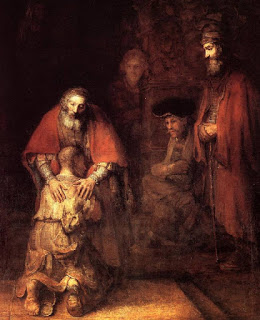
The first word is “picture”. Since an icon is indeed a picture of a person, a human. Nevertheless, not every picture is an icon. Initially it can be very difficult to establish the necessary requirements for a picture to be referred to as an icon and to determine what is and what is not an icon. For example, if we take The Return of the Prodigal Son by Rembrandt, the painting is essentially not an icon.

However, the painting expresses a theological and very profound love of God towards man in comparison to some of the more contemporary images of the same biblical event. Of course, according to the church canons we cannot place this painting into the iconostasis of the church or serve and venerate it. Still, from the point of view of a “picture” there is a definite and concrete theological perspective that the painting does indeed contain.

kalo4

Very often in the fragments of icons, mosaics, or frescoes one could see emperors, empresses, as well as rich donors praying in from of the Lord or the Mother of God. What is more interesting is that the image is created in accordance with the church canons.

This is because even the most “correct” and canonical icons can include images of regular, earthly and secular people. Such people are not the center of the icon because Christ is and must be the center but these people are still be depicted as they are turned to Christ. So even the most plain and regular person has the right to be pictured. Even if he or she is still alive. From this, you can see that an icon is much more complex than originally perceived.
An icon is a picture, along with the presence of the Image of God, but this Image cannot be captured, it cannot be grasped by any human logic and it cannot be contained in any amount of words or paragraphs which say which icon has this “image” and which does not.

kalo5

If an icon is present then God is present as well.

“The idea of a New Testament icon, as interpreted by the Holy Fathers, is to properly express, clearly explain as much as possible through artistic expression, the truth of God’s incarnation. The image of Jesus is the image of God. (L. Ouspensky “Theology of the Icon”)

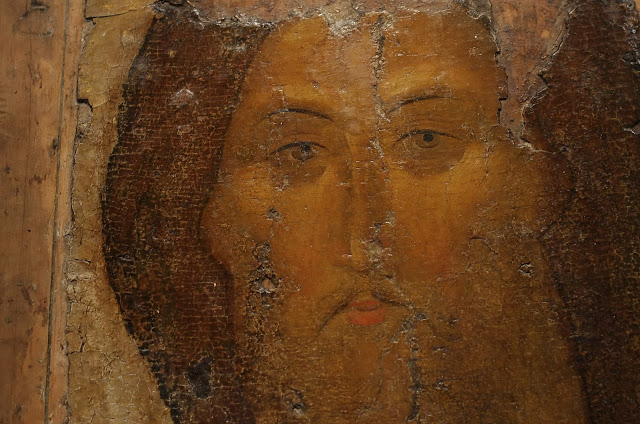
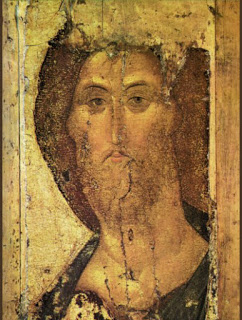
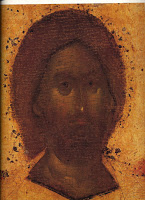
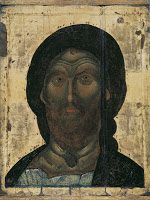
If we take this quote and look at the icon of Christ from the Zvenigrod Deesis – an image that is undoubtedly an icon, then we can conclude that here the icon expresses the dogmatic truth of incarnation with extreme precision and fullness that is not easily accomplished. There can be no argument here and I think that while looking at the image one can start to assert that if such an icon exists, then there is a God (Father George Florensky said something very similar: “If there is an icon of the holy Trinity then there is a God.)

kalo6

The height of such artistic expression, that is presented to us, also prompts us to think that masterpieces cannot reach such levels alone, without  God and the acknowledgement of his existence. Here, while looking at this icon (Christ from the Zvenigrod Deesis) the incarnation of God is expressed with such emphasis that you do not always see in contemporary icons. Icons may have all the canonical aspects, gold leaf plating and other features but you do not always see the most important aspect, the truth of our Lord’s incarnation  –  is not there.

kalo7

An Uncontainable Combination

Everyone knows that artistic forms of expression existed long before the time of Christ. Ancient art forms are still unattainable…but these masterpieces generally depicted secular, human beauty which was often very generic, distant and cold. For example, take the image of Aphrodite. The image is one of beauty and harmony but at the same time, she is not alive, not real and therefore very distant to the everyday person. These art forms either depicted false idols or gods and the beauty was rather fictional and unattainable rather than being real and personal.

Christ comes into the world that appears to be beautiful but also deceitful at because the world that our Savior comes into is filled with sin. Christ is able to show us true beauty. Beauty that is very human in one sense and one that each one of us can feel. That same beauty is also filled with the Devine. An icon is also a phenomenon and a true wonder of the world because it processes the Devine and at the same time is made up of earthly materials such as wood and paint. Even the person who paints the icon is typically an ordinary human being and not always a saint.

kalo8

You see, in a way an icon repeats this unique paradox – where the uncontainable and combinable is combined, the same way as it is in Christ. It is difficult to imagine God and Man in one. It is hard to comprehend because everything human is always limited in understanding and miniscule but everything related to God is grand and uncontainable. The icon also connects the Devine and the human aspects and we in turn can see its beauty, its phenomena and its complexity. Once again, since we can not explain God in a few paragraphs we cannot in the same way explain an icon and its mystery. This is why we need to look further and more in depth. The ability to understand and interpret an icon comes with the experience of every individual meeting with God and their individual connection to their Maker. This is because our entire life is a path towards meeting the Lord and so our closeness to God is proportional to our ability to feel the beautiful mystery of the icon.

kalo9

We need each other

It is almost as if all the iconographers are in essence doomed: when we sit with our paintbrushes and we feel a colossal pressure of sin, our personal and that of the rest of the world. It is difficult for us because we need to depict the Truth of our Lord’s incarnation. Maybe people no longer need this Truth. It is very important to have people in this world who are in need of this truth and the Image of God. If we have people like that then we will still be able to do something. Even if we are “overeducated” and we have the most ideal sketches in front of us:  We will not be able to do anything.

kalo10

Why did Andrei Rublev paint icons the way he did?

It is because in his time people needed God. People could not live without God. This was his real inspiration that enabled him to depict Christ. Only this. It was not his personal talent, which without a doubt he did possess as an artist. Moreover, he was quite talented, may I add.  Nevertheless, along with the talent there was a desire to be with God. In addition, if we can talk to people about God, show them the true beauty of the icon, maybe this might help people get back to the one main beauty – which we see in Christ.

kalo11
This is why we have a very serious duty and responsibility in front of others.

kalo12

kalo13

kalo14

Weakness at the Beginning of Lent

depression10

I am tired. I feel tired and afraid, with no control over anything. At my best moments, I realise that this is a gift – the gift of awareness, of truth. Because the truth is we are never in control over anything. We invent little worlds (our group of friends; our family; our parish; our monastery) over which we may claim some sort of dominion. We invent silly games (our careers, the rules of our society) which we can win. We upgrade or downgrade these games carefully, so that we are never pushed beyond what we feel we can control.

depression6

But look up, look beyond the borders of these silly little kingdoms where we rule. Lent is a horrid period. Year by year, Lent is when some force within me pushes me out of my comfort zones, and I find myself in a lions’ den, face to face with the beasts, utterly unprepared to fight, totally helpless, fully aware that the only possible outcome is to be slaughtered.

This is nothing new. This happens every year. Yet, I somehow survive, because the same Force that pushes me out of my self-created kingdoms, out of my self-created games – that same Force saves me from those wild beasts at the last moment.

depression7

And this changes everything.

Perhaps I should not share this with you. Perhaps it would help the monastery more if I kept my weakness to myself and pretended to be someone I am not. This would be the proper thing to do – but I have never tried to be proper; I have never cared to replace my honest, weak self with the false image of a man who is in control. Those who play this game are one step away from a type of suicide – not to allow yourself to be seen, to cover yourself under the expectations of others, to betray the feeble, yet precious being that you are out of fear that you will not stand up to the standards of others… This is the definition of hell, the betrayal of one’s deepest, most intimate self. I don’t want to leave this world having played a respectable part, yet knowing that who-I-am was never visible. What can be worse than to go though life as someone else?  What bigger failure than to sell out your own self?

depression8

If you don’t live as yourself – weak and fallen, as you are – how can you love? Whose love is it that you feel? With whose love do you embrace the world around you? Whose good deeds and whose sins are your good deeds and your sins? When you hide yourself under an image, you basically step aside and die – all that is left is the image you created. It is this image – not yourself – who loves and hates, who lives and dies. You will never experience love – your love – until you own up to your true self. You will never experience life – not even death, ultimately – until you settle down in your own life and accept yourself as you are. I don’t mean this in the sense of ‘this is who I am and there is no reason to change’, but in the sense of ‘this is who I am, this is the real starting point of any change’.

depression9

No healing is possible. No repentance is possible. No prayer is possible, until the heart that heals, repents and prays is your sinful, fallen, yet beating heart. False images do not have hearts. False images do not love. Most painful than all, false images will never reflect Christ, because there is nothing false in Christ, nothing common between Life and void. Prayer begins with pain at one’s fallen nature; it grows out of this pain, and its flowers bloom out of it.

By Father Seraphim Aldea


In Step With Sts. Patrick and Gregory of Tours

Happy St. Patrick’s Day! Today I feel most joyous! It is St. Patrick’s Day and my spiritual great grandfather Seraphim Rose of Blessed Memory had a special love for this Saint. Two beloved Saints together! Their prayerful presence is so intensely felt! I May we have their intercessions! God is glorified in His saints! St Patrick pray for us!

st patrick4

“In San Francisco there was one who got on fire with the idea of the Jesus Prayer. He began adding prayer to prayer, and he finally came to, in the morning, 5,000. Right in the middle of the world, in the middle of the city, in the morning, before doing anything else, before eating, he was able to say 5,000 Jesus Prayers on the balcony, and he felt wonderfully refreshed and inspired. It happened one morning that somebody else came out right underneath the balcony and began busying himself and doing something while this person was saying his last thousand, and it so happened that this person was so put out by this that he ended up by throwing dishes at him! How can you deal with a person occupying himself with the spiritual life, with the Jesus Prayer, when all of a sudden, while he is saying it, he is able to start throwing dishes?” (excerpt from Fr. Seraphim’s talk on St. Patrick’s day, see below for the full text)

A Homily by Fr. Seraphim Rose of Platina

EDITOR’S NOTE: As an example of Fr. Seraphim’s simple, down-to-earth approach to spiritual life, we present here a faithful transcription of one of his “unprepared” recorded talks. It was given on St. Patrick’s day, March 17, 1977, to monks and pilgrims at the St. Herman of Alaska Monastery. 

1. A PERSPECTIVE ON ST. PATRICK

THE CONFESSION OF ST. PATRICK [or here] is a very simple document about how he planned to serve God and a few of the trials and sufferings he went through. From what St. Patrick writes, we see that in his lifetime he did not have the universal glory that surrounds him today. He apparently did miracles and many people had great respect for him, but he still had difficulties with bishops and church people, and there was controversy over whether he was doing things the way he should be doing them. This shows us that even those who later become quite glorious have to go through—in their own lifetimes—the same struggles that each one of us must go through; and it’s not seen until the end whether a person even saves his soul.

It is extremely important that we look at St. Patrick, not from the point of view of glory in the eyes of men, but as he is: that is, spiritually—his spiritual worth. It is of absolutely no significance that today everybody wears green on his day. When I was going to school, you had to do something to anyone who didn’t wear green—tie him up or something. It was obvious that those who did this had no idea of what St. Patrick meant, or what kind of Orthodox saint he was; it was just that the general opinion had been formed in society that he was very important. Gradually he is deprived of all religious meaning, and in the end the honoring of his memory becomes something close to superstition, some kind of a totally meaningless ritual. Of course, this is not what we should look at St. Patrick for. He was a burning apostle of Christ, and because he was close to God, and because God chose him, he was able to convert the whole of Ireland’s people.

All of us are very inspired by lives like his, and this makes one want to do something oneself. What can one do? The inexperienced convert gets the idea: “Oh! I’ll go to Ireland and do something.” Of course, it will not work out. It will not be like St. Patrick because it could only be done once. In a small way it is possible to imitate him, but in general such literal imitations do not work out. We should look to lives like that of St. Patrick for some kind of inspiration or guidance as to what we can do ourselves in our own conditions.

What is realistic? What can we do to be burning with that same apostleship in the conditions we have today? We look around, and we see that there does not seem to be too much of the inspiring phenomena of St. Patrick’s era: whole countries being converted, great monastic revivals, great movements towards Orthodoxy. On the contrary, we look around and see things which may very easily make us discouraged. One asks why there are no great apostles like St. Patrick today. Of course, it is very realistic historically. There was an age of apostles, there was an age when whole peoples were unconverted and apostles were sent out to them. Today, virtually the whole world has heard about Christ, and there are very few totally pagan peoples left who are not getting the Word preached to them. In Africa, as we continue to hear, the Orthodox Gospel is being preached to those wild tribes, from one country to the next, in East and Central Africa. But in most places, the peoples of the world have become rather weary, tired, worn out people who once heard of Christianity and have now got bored with it. It is very difficult to inspire oneself with that. Here and there are a few converts who find that Christianity is something fresh, that it is not the same as the ordinary idea of it. Nevertheless, not too much is very inspiring when you look around the world, from the point of view of Orthodoxy.

Slemish_mountain_County_Antrim

Slemish, where St. Patrick lived as a slave in his youth


2. THE CONDITIONS OF MODERN LIFE

There are, of course, definite reasons for this. The conditions of the world today are quite different from what they were in the past. The whole phenomenon of the apostasy, of the falling away from the truth, means that people do not know how to accept the Gospel freshly. They have already heard about it and have been inoculated against it. Therefore, very few of them—when they hear the message of Orthodoxy—come.

Another thing in the air today that is different from earlier times is this “Mickey Mouse” atmosphere. It is the lack of seriousness that one sees in the air, in just everyday customs. For example, when people part, they say, “Take it easy”—the sort of thing that indicates: “Relax, take it easy, there’s nothing important going on. Just go along with whatever happens.” We used to say things like: “God be with you.” “Goodbye” even comes from the word “God”.

The young people of today are very much absorbed in the whole fantasy world of television. “Mickey Mouse’s” place is even called Disneyland, Disney World. Our whole spiritual and sober outlook is affected by this—even religious views. There is a very sincere fundamentalist Protestant in Florida who has a big parcel of land right next to Disney World, and who is going to make a replica of the Temple of Jerusalem, in order to attract the people going to Disney World to come over there for a spiritual thing, on the same level. They’ll be saying “ah! ” and “ooh! “—It will be the same thing as all the fairy castles they saw in Disney World. This whole atmosphere—this unreal, movie-type atmosphere is very much in, not only the air, but our very homes. It affects the whole seriousness of life, the way children are brought up—though children are obviously not brought up anymore. The whole idea of bringing them up, of raising them in a certain mold, is gone now. They just raise themselves, go into whatever influences are around, and the result is something very unserious. This is the chief reason why, when young people become independent, so many of them simply go crazy and get involved with various wild religions and drugs, why they run into crime and all kinds of mad things. In childhood they never had down-to-earth contact, either with spiritual life or simply with the seriousness of living from one day to the next. That is one of the chief things that makes our times different and much more difficult for spiritual efforts.

Another thing is all the modern conveniences which surround us and which, without a doubt, depersonalize and cause people to be less concerned for each other, more concerned about things, gadgets. The very idea of the telephone means that you can instantly have contact with someone for the sake of a message—nothing personal about it. If you have to go to great lengths to get to him, your soul is different than it would be if you just had to dial a number. All this makes our times different and very unfavorable to any kind of spiritual activity such as apostleship, missionary activity, leading just an ordinary spiritual life, monastic life and the rest.

Something else also is in our air which we Orthodox Christians have to be mindful of, and that is the weight of tradition. If we accept all that the Church hands down to us simply as something already accomplished, something given to us without our effort, as if it is just there and we can take it for granted—this already deadens us spiritually, because everything that is high must be fought for, must be struggled for. That is one reason why modern conveniences only depersonalize. The whole effort to make everything more convenient takes away the element of struggle, which is the fabric, the fiber of life.

With all these things in view, the whole of modern life becomes extremely oppressive. For a long time now, as far back as William Butler Yeats, seventy-five years ago or so, everything in the modern age had been accomplished and done, all the seeds had been sown. The twentieth century can add almost nothing of its own. It has only put into effect that which has already been sown in the eighteenth and nineteenth centuries. The result was that there was nothing more to do. Everything is done, it’s hopeless. As William Butler Yeats, a sensitive Irish poet, expresses it in his poem The Second Coming:

Turning and turning in the widening gyre
The falcon cannot hear the falconer;
Things fall apart; the centre cannot hold;
Mere anarchy is loosed upon the world,
The blood-dimmed tide is loosed, and everywhere
The ceremony of innocence is drowned;
The best lack all conviction, while the worst
Are full of passionate intensity.

Surely some revelation is at hand;
Surely the Second Coming is at hand
The Second Coming! Hardly are these words out
When a vast image of Spiritus Mundi
Troubles my sight: somewhere in sands of the desert
A shape with lion body and the head of a man,
A gaze blank and pitiless as the sun,
Is moving its slow thighs, while all about it
Reel shadows of the indignant desert birds.
The darkness drops again; but now I know
That twenty centuries of stony sleep
Were vexed to nightmare by a rocking cradle,
And what rough beast, its hour come round at last,
Slouches toward Bethlehem to be born?

This is a kind of factual view of life: the worst people are simply immersed in evil deeds and the best people are going frantic, because there is no more spirituality left, there is nothing left to strive for, everything is taken away, materialism is triumphing, there is no hope for the world, and “the beast slouches toward Bethlehem to be born”—the vision of Antichrist. The world is going hopelessly down and there is no hope of getting out.

3. THE TIMELESS SPIRITUAL LIFE

All of this is the negative side we see surrounding us today, and it is a very real part of the atmosphere we breathe every day. On the other hand, we have the Orthodox Christian revelation; that is, the revelation of God to His Church. It has come down to us now these two thousand years, very richly, with many testimonies of Scriptures and Holy Fathers, giving us a definite spiritual outlook, a definite spiritual law of life. The spiritual life and its aim do not change from one time to the next. In fact, we know that from the very beginning, from the time when the Gospel was first preached until now, there are being gathered out of the world citizens of one kingdom, all going towards the heavenly kingdom. All these citizens will speak the same language, and know each other, because they have gone through the one, same Orthodox life, the same spiritual struggle, according to the laws of spiritual life.

The Holy Fathers spoke about the latter times as times of great weakness, in which there would not be the great signs which were performed in the early times of the apostles and in the desert by the first monks, when thousands of miracles were being worked, great Fathers were raising people from the dead, many supernatural events were occurring; and these very Holy Fathers said that this dazzling age of miracles would fade away, and in the end there would be almost nothing at all like that. In fact, those who would be saving themselves would seem totally indistinguishable from everybody else, except that they would somehow keep alive the struggle against all these temptations. Just keeping alive the spark of the true Christian Faith, without making miracles, without doing anything out of the ordinary, would already make them, if they endured to the end, as great as or even higher than those great Fathers who worked miracles.

Therefore, in our times, it seems that outward activity for Orthodox Christians is greatly limited in comparison with past times. It seems that way. Still, the inward spiritual activity must be just as possible for those who are willing to struggle. And, in fact, we look around us and we see rather spectacular examples in our century: St. John of Kronstadt, who worked thousands of miracles, probably more miracles than anyone in the history of the Church; St. Nectarios in Greece, a very humble person, in complete disgrace as a bishop, but a wonder-worker especially after his death; and our own Archbishop John [Saint John of San Francisco, glorified in 1994], who lived and actually walked our very soil and passed within forty miles of here many times, undoubtedly blessing all this area, especially with the icon of the Kursk Mother of God. And so it’s obvious, in looking at these people and realizing they are spiritual giants, that it is possible to do something even in our evil times.

st patrick-ireland

St. Patrick, using the shamrock to teach about the Holy Trinity

4. AWARENESS

This brings us to some of the practical considerations concerning the qualities needed for being spiritually creative and fruitful. There are a few important things which come to mind. One thing is that we must see things the way they are; that is, not go off blind, acting blindly without knowing what’s going on in the world. We must be aware that there is such a thing as apostasy, that there are many different kinds of people who call themselves Christians, that they are acting in different ways and some of them are definitely in conflict with each other and with us, and that it can’t be that all of them are right and are on the right path. We can see historically how many different kinds of errors, wrong views, wrong kinds of actions got mixed in with Christian faith. We see the frightful modern revolutionary movement; that is, the movement totally away from religion, aiming towards a great world empire of atheism, a foreshadowing of which is seen in Communism. This is not just among the unbelievers or among those who don’t believe in the Orthodox way, but even among Orthodox people. We look around and see that many Orthodox people are simply, totally worldly and do not think about the higher side of their Faith. They take it for granted. “It’s all automatic. That’s what has been handed down. There’s always a priest somewhere. If he’s not in this town, he’s in the next one. He has sacraments and Holy Communion. We just go to him and get what we need and that’s all…. You go home and you’re satisfied…”

By reading and getting a historical perspective, we see that in past ages this was not considered enough, even by ordinary laymen. They were constantly doing things out of the ordinary. They were getting up very early in the morning. Every village had daily services. At four or five o’clock in the morning, Matins would begin. The people woke up and they went to church every morning, and again to Vespers in the evening. We take many, many Lives of Saints, and we read how they heard the church bell when they were children. If the child was very zealous for God, he would be the first one up in the morning and he would wake the parents up and get them ready for church. If the father could not go because he had to work in the fields, the child would get the mother up and they would go to church. Sometimes he went by himself. The whole atmosphere was penetrated with churchliness. And now, we see worldliness. Very seldom can one find a place where even daily services are celebrated in the world. People have grown unaccustomed to the idea that there is supposed to be an everyday church, everyday church services.

This, then, is one of the very great things which we see in front of us: this worldly attitude of people who are themselves in the Church. We must look at it realistically and see it the way it is: apostasy, error, evil, demonic activity and worldliness such as never before in the history of the world. These things are all anti-spiritual, anti-Orthodox. They lead down; and if anyone follows these paths, they do not lead one to salvation.

Then, once having done this—that is, having looked at things the way they are and been realistic about them—one must learn to fight on the right battlefields. The whole spiritual life is struggle. One must learn to know where one must fight, what one must do. This is extremely important, because it is very easy in the beginning stage to go totally off, by picking up and reading a book that talks about spirituality, hesychasm, and so on.

5. IMITATION SPIRITUALITY

Bishop Theophan the Recluse [+1894], when quoting some of the Holy Fathers, deliberately omitted many of the passages which dealt with the physical sides of prayer. He did this knowing that—even in his time, the 19th century—many people would take those physical aspects as the end and begin imitating without getting the essence. Therefore he just left those writings out of his published works. Now, however, many of them are being published in English and you can read how you are supposed to sit on a stool with your head down, etc. People begin to imitate; they begin to think “this is it! “—and it is a matter of fact that if you fast for a long time and do certain exercises, you begin to have all kinds of things happen to you. But that is not spiritual life. It is almost guaranteed, on the contrary, that it is the activity of demons. The spiritual life is much more serious, much more down-to-earth, and therefore that is not the place where you are supposed to find it first of all.

Usually one can spot people who are not serious and are imitating. We even have a story from the early history of our brotherhood…. In San Francisco there was one who got on fire with the idea of the Jesus Prayer. He began adding prayer to prayer, and he finally came to, in the morning, 5,000. Right in the middle of the world, in the middle of the city, in the morning, before doing anything else, before eating, he was able to say 5,000 Jesus Prayers on the balcony, and he felt wonderfully refreshed and inspired. It happened one morning that somebody else came out right underneath the balcony and began busying himself and doing something while this person was saying his last thousand, and it so happened that this person was so put out by this that he ended up by throwing dishes at him! How can you deal with a person occupying himself with the spiritual life, with the Jesus Prayer, when all of a sudden, while he is saying it, he is able to start throwing dishes?

This means that inside of him the passions were free, because he had some kind of deceived idea or opinion that he knew was right for himself spiritually.  He acted according to his opinion, but not soberly, not according to knowledge; and when the opportunity came, the passions came out.  In this case it is more profitable not to say those 5,000 Jesus Prayers, but to do something else that is spiritual.

This, then, is not where we should be fighting the battle.  We should begin fighting the battle right on the level of awareness, by being aware that we are surrounded by worldly forces.  We must fight them by keeping our minds constantly up rather than down; that is, having in mind heavenly things.  (I will explain shortly what is involved in this). For all practical purposes, in our times this means that we will have to be a little crazy; that is, we will not be in step with what ordinary church people are doing. We will be considered a little, at least a little, out of the ordinary, or even crazy.  This is an absolutely essential thing.  I’ll come back to this theme.
st patrick's grave

The purported grave site of St. Patrick in Downpatrick

6. LOOKING UPWARD

The Holy Scriptures, the writings of the Holy Fathers, the examples of Saint’s lives, the services of the Church—all these things have to do, not with worldliness in our daily life, but with conducting us to heaven. By looking above to these things, we are enabled to have zeal; that is, to see that there is something above this routine of worldliness, which is very boring, discouraging, and leads nowhere. But these higher things—these services, tales of people who have come back from the dead, Lives of Saints, writings of the Holy Fathers, Holy Scriptures, the interpretations of the Holy Fathers on passages of Scripture, which are very profound sometimes—these things always make us very zealous, if we have a spark of love for God within ourselves. We want ourselves to be living in such a state and to be going to heaven. But this zeal,  by itself, must be of such a kind that it does not come just in a spurt and then eventually fade away. It must be of such a kind that it will last. This means the zeal must be tempered by something deeper, and that something deeper is what St. Seraphim calls determination; that is, zeal that is constant and keeps going—a sort of constant point for your whole life. It keeps you going even when you’re discouraged, because you see that there is something above towards which you are striving, and which does not depend upon your moods or your opinions. It is something which must be your constant possession. It is your determination to get to heaven. And this determination, or rather this zeal which becomes determination, must be constant, so that it will not go up and down and burn out.

In everything that happens, we must look at the higher side, that is, the spiritual side; because if we are sometimes looking at the higher side and sometimes at the lower side, we will be up and down. And the lower side is so powerful, operating even through what we saw in the life of St. Patrick in the golden age of Christianity: even through bishops, through those who are supposed to be the very ones leading the flock to heaven. They can be contrary, because they are human beings also. They can be actually discouraging, keeping people away from that goal; in our times, of course, it is even worse.

Therefore, if we are sometimes looking above and sometimes below, if we are going one foot forward, one foot back, and then one foot forward and two feet back, we will simply not get to the gate of heaven. We must be at all times where we are in some way looking at the spiritual reality. I have an interesting quote from Abba Dorotheos of Gaza which we read just recently in church, and which gives a little hint about this. He says: “It is good, O brethren, as I always tell you, to place your hope for every deed upon God, and to say nothing happens without the will of God. Of course, God knew that this was good and useful and profitable, and therefore He did it, even though this matter also had some outward cause. For example, I could say that inasmuch as I ate food with pilgrims and forced myself a little in order to play the host to them, (that is, he overate) therefore my stomach was weighed down, and there was a numbness caused in my feet, and from this I became ill. I could also cite various other reasons for one who seeks them. For one who seeks them there is no lack of them. But the most sure and profitable thing is to say: in truth, God knew that this would be more profitable for my soul, and therefore it happened in this way. For out of everything which God creates, there is nothing of which it can be said that it is not good. For in the beginning He created all, and behold, they were all very good. And so no one should grieve over what happens, but in everything he should place his hope in God’s Providence, and be at ease.”*

7. FINDING THE REAL CAUSES

There is a very interesting book from the same period of Abba Dorotheos (the sixth century) by St. Gregory of Tours, History of the Franks, which is all about the life at the court of that time and religious people. There are very many interesting lives of Saints in it, as well as the lives of the kings. The kings of that time were particularly unedifying spectacles. They were constantly poisoning each other. The women were even worse…. There was one Brunehild and her sister Fredegund. They were trying to get their sons and grandsons on the throne, and what they didn’t do to get them there! They were dragging people by horse’s tails and killing them off, and lying and cheating and fantastic things—very uninspiring. But this bishop, St. Gregory, was there and was writing a history of this people, writing in such a way that it actually comes out very inspiring. Behind everything there is a meaning. St. Gregory is constantly on the lookout for comets, earthquakes, and such things. When a king does something wrong, there is an earthquake nearby, or if he goes and kills a person or a whole village unjustly, then there is a famine: and St. Gregory always sees that God is looking out. There is always something spiritual whenever something happens—a comet is seen, the king dies, etc. There is always a connection between what happens in the world and the moral state of the people. Even when the moral state is very bad, all the constant earthquakes and famines and everything else remind us that it is the wrong way to behave, and inspire people to behave correctly. Nowadays, the historians say that this is a horribly outmoded way of looking at things, that it is very “quaint” and “naive” and unsophisticated, and that of course nobody can think like that now. They think it’s very cute, in fact, to look at this after all these centuries and to see how people used to think. “But of course,” they say, “we serious historians are looking for the real causes.” By real causes they mean what a person ate and what it caused his feet to do and so forth. The Christian point of view, however, is that these are not the real causes, but the secondary causes. The real cause is the soul and God: whatever God is doing and whatever the soul is doing. These two things actualize the whole of history, and all the external events—what treaty was signed, or the economic reasons for the discontent of the masses, and so forth—are totally secondary. In fact, if you look at modern history, at the whole revolutionary movement, it is obvious that it is not the economics that is the governing factor, but various ideas which get into people’s souls about actually building paradise on earth. Once that idea gets there, then fantastic things are done, because this is a spiritual thing. Even though it is from the devil, it is on a spiritual level, and that is where actual history is made; all the external things mean nothing.

Thus St. Gregory is actually looking at history in the correct way, because he sees that there is a first cause, which is what God does in history and how the soul reacts to it, and that the secondary cause is ordinary events. Therefore, whenever he sees some great event like a comet or an eclipse, he tries to give it meaning. At one point, in telling of a strange sign that was seen in the sky over Gaul, he says in all simplicity, “I have no idea what all this meant.”** Of course, from the scientific point of view we know that we can predict these things, that they are caused by the shadow of the moon and so forth; but from St. Gregory’s point of view, why does God choose to frighten us like this? What is the moral meaning of it? He was constantly looking above, not below.

8. CONSTANT CHEERFULNESS

Our whole modern outlook is to look below to find the causes, the secondary causes. The whole Christian outlook is to look above, and that is why such people as St. Gregory as we can see by reading their writings and their lives—are constantly cheerful. This does not mean that they are overly happy, but rather that they are in a state of deep happiness, because they are constantly looking above and keeping in mind, with determination and constancy, to get to a certain place, which is heaven, and thus they see all the details in the world in that light. If what they see has to do with evil, with the nets of demons, with worldliness, with boredom, with discouragement, or just with ordinary details of living, all that is secondary and is never allowed to be first. In fact, we are told by the Holy Fathers that we are supposed to see in everything something for our salvation. If you can do that, you can be saved.

In a pedestrian way, you can look at something like a printing press which does not operate. You are standing around and enjoying yourself, watching nice, clean, good pages come out printed, which gives a very nice sense of satisfaction, and you are dreaming of missionary activity, of spreading more copies around to a lot of different countries. But in a while it begins to torture you, it begins to shoot pages right and left. The pages begin to stick and to tear each other on top. You see that all those extra copies you made are vanishing, destroying each other, and in the end you are so tense that all you can do is sort of stand there and say the Jesus Prayer as you try to make everything come out all right. Although that does not fill one with a sense of satisfaction (as would watching the nice, clean copies come out automatically), spiritually it probably does a great deal more, because it makes you tense and gives you the chance to struggle. But if instead of that you just get so discouraged that you smash the machine, then you have lost the battle. The battle is not how many copies per hour come out: the battle is what your soul is doing. If your soul can be saving itself and producing words which can save others, all the better; but if you are producing words which can save others and are all the time destroying your own soul, it’s not so good.

9. DAILY SPIRITUAL INJECTIONS

Again, in everything one must be looking upward, and not downward, at the kingdom of heaven and not down at the details of earthly life. That is, the details of earthly life must be second, and this looking upward must be with zeal, determination and constancy. Constancy is something which is worked out by a spiritual regime based upon wisdom handed down from the Holy Fathers—not mere obedience to tradition for tradition’s sake, but rather a conscious assimilation of what wise men in God have seen and written down. On the outward side, this constancy is worked out by a little prayer, and we have this basic little prayer in the church services which have come down to us. Of course in different places they are performed according to one’s strength, more or less.

Constancy involves also a regular reading of spiritual texts, for example at mealtime, because we must be constantly injected with other-worldliness. This means constantly nourishing ourselves with these texts, whether in services or in reading, in order to fight against the other side, against the worldliness that constantly gnaws at us. If for just one day we stop these other-worldly “injections,” it is obvious that worldliness starts taking over. When we go without them for one day, worldliness invades—two days, much more. We find that soon we think more and more in a worldly way, the more we allow ourselves to be exposed to that way of thinking and the less we expose ourselves to other-worldly thinking.

These injections—daily injections of heavenly food—are the outward side, and the inward side is what is called spiritual life. Spiritual life does not mean being in the clouds and saying the Jesus Prayer or going through various motions. It means discovering the laws of this spiritual life as they apply to one in one’s own position, one’s situation. This comes over the years by attentive reading of the Holy Fathers with a notebook, writing down those passages which seem most significant to us, studying them, finding how they apply to us, and, if need be, revising earlier views of them as we get a little deeper into them, finding what one Father says about something, what a second Father says about the same thing, and so on. There is no encyclopedia that will give you that. You cannot decide you want to find all about some one subject and begin reading the Holy Fathers. There are a few indexes in the writings of the Fathers, but you cannot simply go at spiritual life that way. You have to go at it a little bit at a time, taking the teaching in as you are able to absorb it, going back over the same texts in later years, reabsorbing them, getting more, and gradually getting to find out how these spiritual laws apply to you. As a person does that, he discovers that every time he reads the same Holy Father he finds new things. He always goes deeper into it.

10. PRESERVING ZEAL

If one has all this in mind, having the possibility of constant spiritual nourishment, then one must say that it is not true that the whole church situation is hopeless today and that one can do nothing. In fact, the possible activities for today are quite surprising and unexpected. What might come out, we don’t know, but there are all kinds of possibilities. We should always learn to expect what is the unexpected, to be prepared for something that might not have been the same way just a little while ago, but that is still within the possibility of true Christianity. This is only done by looking up and not down. We have right in front of us an example of somebody who was like that constantly, and that’s our Archbishop John. It is obvious that he was constantly in a different world. He himself, I recall once, gave a sermon on the spiritual life, the mystical life, in which he said: “We have no such thing as some of the later saints of the Latin Church who were sort of up in the clouds—some kind of a realm of sweetness and light and pink clouds—that’s prelest. All of our sanctity is based upon having your feet straight on the ground, and, while being of the earth, constantly having the mind lifted upward.” It’s obvious that Archbishop John was himself like that. He would come from time to time to our shop next to the Cathedral [in San Francisco], and would always have something new and inspiring to say. He would come with a little portfolio, and would open it up and say, “Look! Here is a picture of St. Alban and here is his Life.” He had found it somewhere. He was collecting these things: the lives of Romanian saints and all kinds of different things which were very inspiring and had nothing to do with everyday business or the administration of the diocese. In fact, some said he was a bad administrator, but I don’t know. I doubt it, because I know that whenever anyone wrote him a letter, that person always got a reply back in the language he wrote it in, within a very short time; therefore, when it came to things like that, he was very, very careful. But the first thing he was careful about was being constantly in the other world, constantly inspired and constantly living by that. The opposite of this is to make even the Church into some kind of business, to be looking at only the administrative side or the economic side or the lower, worldly side. If you do that long enough, you will lose the spark, you will lose the higher side. Archbishop John gave us the example of constantly looking up, constantly thinking of the higher things. In the end, the deeper you get into this, the more you see that there is nothing else possible. If you are an Orthodox Christian, you can do this and have people call you crazy or say that you are a little bit touched, or something like that; but still you have your own life—you lead it and you get to heaven. The alternative is to be bogged down in this boring world, which is totally overrun by machines and conveniences and opinions. You would be surprised at how these, opinions about what is right and what is wrong, what is the way to act and so forth, have no contact with reality. It even happens that there is a certain opinion in the air—I’d say it is universal among church people if they ever stopped to think about it—that of course, when you come to church you must be warm, because you cannot think about church services and prepare yourself for Communion when you have to think about cold feet. People tell us this. “It’s a very great draw back,” they say. “You cannot go and have cold feet and expect to have any spirituality come out.” This happens to be an opinion, and it’s totally off. The Holy Fathers have been living throughout the centuries in all kinds of conditions; and, though there is no deliberate plot of torturing oneself with cold feet—still, this is something which helps to make one a little more sober about the spiritual life, perhaps to help one to appreciate what one has, and not to just take for granted that one is going to be comfortable and cozy and that’s it. In our time, if one undertakes anything in the Church, and does not have in mind to be looking constantly to the heavenly realm, one will lose the spark of zeal, the interest in doing spiritual things, and will become worldly. Worldly means dead, spiritually dead.

st patrick6.jpg

11. THE MIND OF THE FATHERS

It is very difficult in our times to be looking to heaven, because of all the weight, the dead weight of worldliness which lies upon us. If one applies oneself constantly, however, one can begin to do it. Even with a little bit of struggle, if applied constantly, one begins to form for oneself a whole different viewpoint, a whole different way of looking at life, a whole different possibility for action. Any kind of spiritual activity that is to come out of our world today, any kind of Orthodox missionary activity, apostleship, etc., must be on the basis of such a view of things. It must be based on looking first at what God wants, first at what is the higher side, first at what the Holy Fathers think, and only then looking down at the practical means one has to use, at money problems, and even at things like sicknesses, because they are all sent for our good, and we have to find how to bring the good out of them. If one does not do that, one is weighed down, especially in our days. If a person is in a place of leadership, such as a priest in a parish, and if he is going to look back and look first at the people, he will see that 99% of them are going to drag him down, because they have their problems and passions, confessions weigh him down, and so on. If this side becomes too important for him, it simply drags him back and he cannot lead them to heaven. Of course, a pastor or any kind of spiritual leader must be leading to heaven first himself and then the others, by looking first to the other world. We don’t have to imagine what that other world is like or have opinions about it, because we have the whole treasury—much of which is now available in English—of the writings of the Holy Fathers. Recently we have had such great fathers as Bishop Ignatius Brianchininov (+1867), who was one of the sharpest ones to speak about the apostasy, and also one of the greatest ones to speak about the Holy Fathers. We must get into their language, into their way of looking at things, because that is Orthodoxy. Orthodoxy, of course, does not change from one day to the next, or from one century to the next. Looking at the Protestant and Roman Catholic world, we can see that certain spiritual writings get out of date. Sometimes they come back into fashion again, sometimes they go out. It is obvious that they are bound up with worldly things, which appeal to people at one time, or rather to the spirit of the times. This is not so with our Orthodox holy writings. Once we get into the whole Orthodox Christian outlook—the simply Christian outlook—which has been handed down from Christ and the apostles to our times, then everything becomes contemporary. You read the words of someone like St. Macarius, who lived in the deserts of Egypt in the 6th century, and he’s speaking to you now. His conditions are a little different, but he’s speaking right to you now, in the same language; he’s going to the same place, he’s using the same mind, he has the same temptations and failings, and there’s nothing different about him. It’s the same with all the other fathers from that time down to our century, like St. John of Kronstadt (+1908). They all speak the same language, one kind of language, the language of spiritual life, which we must get into. When we do that, we can save ourselves; and, as St. Seraphim says, “When you acquire the Spirit of Peace, the Holy Spirit, you can save thousands around you.” It is not for us to calculate whether thousands around us will be saved. It is only for us to acquire the Holy Spirit, and what God will do with that is His doing.

We have yet to expect in our times many surprising things, so we should not have the opinion that it is too late to do anything, everything is stuck, nobody cares, the world is collapsing…. All that is opinion, and opinion is the first stage of prelest (deception). Therefore we should free ourselves from being stuck in opinions, and should look at things freshly, i.e., according to the spiritual life. Father Nicholas Deputatov, who is obviously one who has much love for the Holy Fathers, has read their writings, underlined them and written them out in books. He says: When I get in a very low mood, very discouraged and despondent, then I open one of my notebooks, and I begin to read something that inspired me. It is almost guaranteed that when I read something which once inspired me, I will again become inspired, because it’s my own soul that was at one time being inspired, and now I see that it was something which inspired me then and can nourish me now also. So it’s like an automatic inspiration, to open up something which inspired me before.

Thus, when we think of someone like St. Patrick, our attitude should not be merely: “Aha, that was a long time ago, that was inspiring; but now—well, what’s the use?” On the contrary, in the activity of St. Patrick we should see the activity of a contemporary person, of a soul who was burning with zeal and love for God. He has gone to that country where we are to be citizens, if only we will strive. We are all of the same nationality, the Christian race. St. Patrick’s life should be for us a contemporary thing, something which applies to us today. Whatever inspiration we can take from it, is for us right now. And however much fruit this bears, depends on how much we love God and how much opportunity there is. The inspiration is ours for free.

Endnotes

* The Counsels of Abba Dorotheos, chapter 12 (translated from the Russian version by Fr. Seraphim Rose).

** The History of the Franks, V, 23.

St. Patrick2


Troparion — Tone 3

Holy Bishop Patrick, / Faithful shepherd of Christ’s royal flock, / You filled Ireland with the radiance of the Gospel: / The mighty strength of the Trinity! / Now that you stand before the Savior, / Pray that He may preserve us in faith and love!

Kontakion — Tone 4

From slavery you escaped to freedom in Christ’s service: / He sent you to deliver Ireland from the devil’s bondage. / You planted the Word of the Gospel in pagan hearts. / In your journeys and hardships you rivaled the Apostle Paul! / Having received the reward for your labors in heaven, / Never cease to pray for the flock you have gathered on earth, / Holy bishop Patrick!
God is glorified in His Saints! St Patrick pray for us!

The Struggle of Great Lent – Ι


At this time we’re entering the great spiritual arena of the blessed Great Lent. Holy and Great Lent is a time of compunction, for repentance, for tears, for a change in ourselves, for a new stage in the spiritual life. Like an affectionate mother caring for her children, us Christians, the Church has designated this time of Lent as dedicated to the struggle, in order to help its children fight harder, to purify themselves, draw closer to God and to counted worthy of celebrating the great day of the radiant Resurrection.

lent

Christians, especially monks, have always paid particular attention to this spiritual arena and have thought it especially sacred, because it’s a period which envisages both spiritual and bodily struggles. There’s the struggle of fasting, the struggle of vigils, the struggle of purification and the struggle to fulfill one’s spiritual duties which are many more than at other times of the year. There’s a spiritual “defragmentation” and people pay greater attention to the voice of their conscience in order to correct what they’ve maybe neglected and to improve spiritually.

The Church assists us but with penitential hymns and services, as well as with teachings, to oil us up for the fight for the purification of our souls.

We have the penitential evening Divine Liturgies of the Presanctified Gifts. The Presanctified is extremely beneficial. It’s Cherubic Hymn is full of spirituality, contemplation, angelic presence. That’s why we should come to these liturgies during Great Lent with even greater compunction. We who consume the Body and Blood of Christ must be so pure and clean, so straight in body and soul for divine grace to have its effect. For this reason we must lead very careful lives. Both n our cells and in church we must wet our face with tears so as to wash our souls and be worthy to take communion. Of course, the devil often makes us wanting in compunction, me more than anyone. Which means we can’t have tears and we often have bad thoughts. Bad thoughts and the sinful images that accompany them must be rejected as soon as they make their appearance. And when we have wicked thoughts or our soul is cold towards one of the brethren, let’s not approach the God of lover, Who is so pure and holy.

Throughout this period, at every service in Great Lent, we say the prayer of Saint Efraim the Syrian, whish is as follows: “Lord and Master of my life, do not give me the spirit of sloth, inquisitiveness, lust for power or idle talk, but give rather the spirit of sobriety, humility, patience and love to me, your servant. Indeed, Lord King, grant me to see my own errors and not to judge my brother, for you are blessed to the ages of ages. Amen”.

With these words, the saint wishes to make us understand very clearly, that, apart from other virtues we need to take special care with the last case, that of self-censure and of criticism of our bothers and that without love for our fellow human beings there’s no chance of making even the slightest progress towards our spiritual purification. If we don’t pay attention to our thoughts, our words and our heart, there’s no benefit in fasting. Fasting is of benefit when it’s combines with love for our neighbour and when we don’t criticize others. When we don’t criticize our fellows and instead criticize ourselves, then we’re marked by love for others and love for our soul, concern for purification and the fulfillment of the great commandment, that of love of God and one’s neighbour. Love for God and for our fellows  are the two great virtues which support the whole of the spiritual structure, because if they are absent, they others cannot take form. “God is love and those who live in God in love have God living in them, too” (I. Jn. 4, 16).

Another issue which demands that we push ourselves as hard as possible is prayer We should pray in the name of Christ, without neglecting any opportunity and without any waste of time. In the personal vigil in our cell, we should push ourselves, shouldn’t let sleep overcome us, nor neglect nor idleness; we should engage willingly I spiritual matters. As soon as we wake up, prayer should take first place then our rule, our prayer-rope, study and the contemplation of God. We should go to church with great readiness and so get the best results from our presence in the arena.

Apart from this, fasting together with bodily exertion helps as regards the forgiveness of sins. “Behold my humility and my efforts and forgive all my sins”. When we labour with the fast, with kneeling, with prayers, with an effort from our heart and mind, this Godly exertion is holy and is richly rewarded by God, because it make people worthy of the crown of glory and honour. The demons fear the fast greatly, because it lays them low. “This kind [of demon] will not depart other than with prayer and fasting”, said the Lord (Math. 17, 21). This is why the holy fathers always began any Godly task with a fast. They considered a fast to be very powerful and that the Holy Spirit does nor overshadow people when they’re replete with food and their stomachs are full. And any Christian who desires purification has to start from this foundation which is fasting, prayer and vigilance. When these three are combined, then people have acquired great stature.

In olden times, the fathers had a holy custom. On the eve of Lent, they would leave the monasteries and go deeper into the desert, where they lived in great asceticism until Lazarus Saturday, when they returned in order to celebrate Palm Sunday all together. Some would take a few of the basic essentials as far as food was concerned, others would eat only green plants, in order to struggle more fiercely in the desert. Thereafter they would spend all the days on Great Week together in church, existing on a piece of fried rusk and a few nuts a day. We were given the blessing and the grace of knowing ascetic people who spent not only Great Lent in fasting and spiritual struggle.

Our departed elder, Elder Iosif the Cave-Dweller (he used to live in caves, which is where I met him), kept a very strict fast during Great Lent. And, of course, he imposed it on us, too. From Monday to Friday, five days of the week there was no food, except a handful of flour, from which we made a batter with just water. That was it. A little plate every twenty-four hours. And, at the same time, hard work lifting loads on our back during the day and the whole night hundreds of prostrations and hours of prayer. And all of this in order to purify the inner person, to make it cleaner, more honourable in the eyes of God, in order to acquire boldness before God and be able to pray for the whole world. Because the world, people everywhere, needs the prayers of the saints, particularly those of ascetics. Saint Anthony the Great supported the whole world with his prayers.

By Elder Ephraim of Arizona, a living legend, a priest-monk for almost 60 years, who has served as an elder for more than 50 years. He was a disciple of Elder Joseph the Hesychast of Mount Athos and lived in monastic obedience to him for 12 years until his Elder’s repose in 1959. He is the spiritual guide of several monasteries on Mount Athos and Greece, and has founded several (20 and going!) monasteries in the United States. He resides in Arizona at St. Anthony’s Greek Orthodox Monastery.


 For those who cannot understand Greek, please do not despair 😃, as there is a translator in English, and Greek and English sessions alternate throughout the video.

Source: Pemptousia

[To Be Continued]