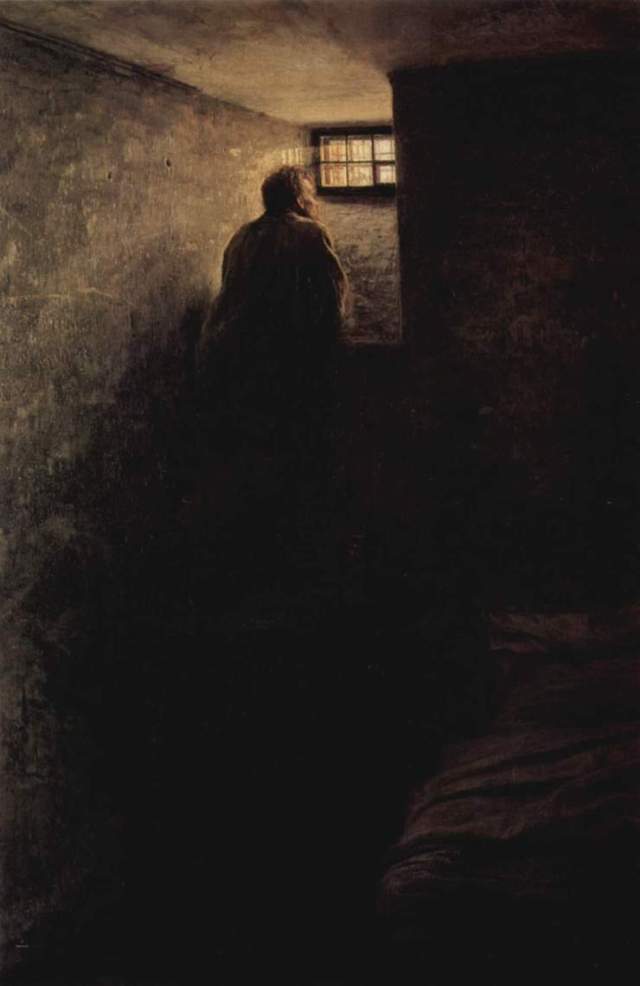
Christ’s Light in Tolstoy’s Prison


the prisoner

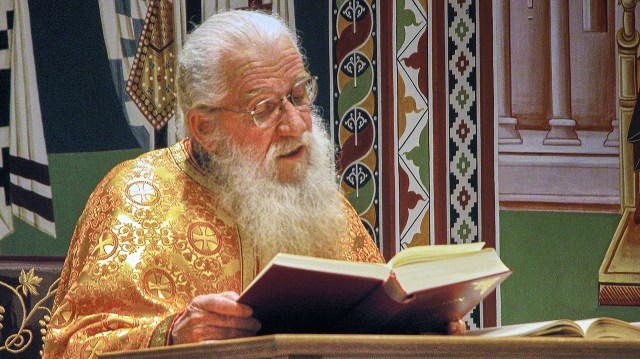
A Vision granted to Nun Maria concerning her brother Leo Tolstoy. Also, his apostasy, his excommunication by the Russian Orthodox Church, his tragic final days, the torturous struggle that went on in his soul at his last breath, and St. John’s of Kronstadt and St. Theophan’s the Recluse ‘examination’ of his spiritual condition


“I have renounced the Church that calls itself Orthodox… I renounce all the sacraments… I have truly renounced the Church, I have stopped fulfilling its rites, and I have written in my will to my close ones that they should not allow any clergymen from the Church near me when I will be dying…” (Lev Nicholaevich Tolstoy). Yet, in his final days, Tolstoy sought the most famous Russian monastery, Optina Hermitage, where ascetic elders were living. He wanted to meet with them, but at the last minute he lost his resolve, about which he regretfully told his sister, a nun of Shamordino Convent near Optina. When at Ostapovo station he felt his approaching death, he asked that a telegram be sent to Optina Hermitage with the request that they send him Elder Joseph. However, when two priests arrived in Astapovo, the writer’s followers would not allow them to meet…”


*

“Throughout the history of Russian literature there has never been a more tragic personality than Lev Nicholaevich Tolstoy, the “great writer of the Russian land,” in the words of Ivan Turgenev. His literary works reach the heights not only of Russian, but world literature. Therefore, the pain and perplexity of many people who respect his works are understandable; these include Orthodox Christians, for whom the reason for the decision on February 20, 1901 by the Holy Governing Synod to excommunicate him may still be unclear.

The Holy Synod simply cited by its decision a fact that had already taken place—Count Leo Tolstoy excommunicated himself from the Church and completely broke off ties with it. This is something that he not only did not deny, but even resolutely emphasized at every convenient opportunity: “It is perfectly justifiable that I have renounced the Church that calls itself Orthodox… I renounce all the sacraments… I have truly renounced the Church, I have stopped fulfilling its rites, and I have written in my will to my close ones that they should not allow any clergymen from the Church near me when I will be dying…” These are just a few of the great writer’s numerous proclamations in this regard.

Furthermore, when Leo Tolstoy was twenty-seven years old, he nurtured the idea of creating a new faith, which his diary entries of the time witness. In his old age, when he felt that his aim was nearly accomplished, the writer created a small sect of his fans and wrote “The Gospel according to Tolstoy.” The main object of Tolstoy’s attacks became the Orthodox Church. His words and actions directed against the Church were horrifying to the Orthodox consciousness. Furthermore, Leo Tolstoy’s activities during the final ten years of his life were, unfortunately, truly destructive for Russia, which he loved. They brought misfortune to the people whom he so badly wanted to serve. It is no accident that the leader of the Bolsheviks extremely valued the aim of Leo’ Tolstoy’s activity, and called the writer “the mirror of the Russian revolution.”

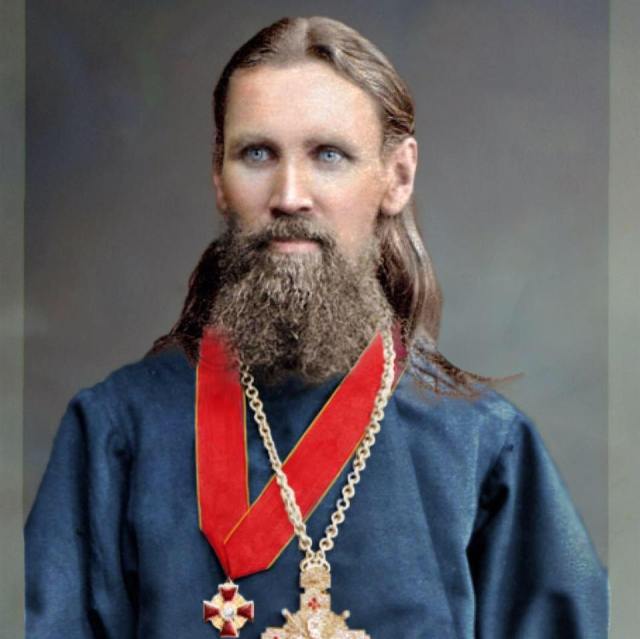
Great ascetics of the Russian Orthodox Church—St. John of Kronstadt, St. Theophan the Recluse, and many others, admitted with regret that Count Tolstoy purposefully used his great talent to destroy Russia’s traditional spiritual and social order.

The writer’s final days speak to us about the torturous struggle that went on in his soul. He fled his family nest, Yasnaya Polyana—not to his like-minded friends, the “Tolstoyans,” but to the most famous Russian monastery, Optina Hermitage, where ascetic elders were living. He wanted to meet with them, but at the last minute he lost his resolve, about which he regretfully told his sister, a nun of Shamordino Convent near Optina. When at Ostapovo station he felt his approaching death, he asked that a telegram be sent to Optina Hermitage with the request that they send him Elder Joseph. However, when two priests arrived in Astapovo, the writer’s followers would not allow them to meet…

Nevertheless, because the writer himself never made peace with the Church (Leo Tolstoy never publicly renounced his tragic spiritual error), the excommunication by which he separated himself from the Church cannot be removed. This means that canonically he cannot be commemorated in the Church. But the compassionate heart of any Christian who holds the literary works of this great writer in high regard cannot be closed to sincere, humble prayer for his soul. (Archimandrite Tikhon, Shevkunov) Source: OrthoChristian


The Silent Angel

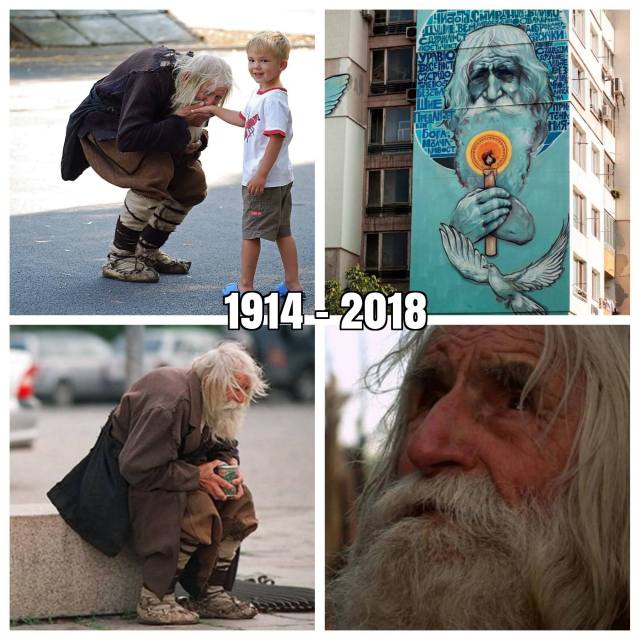
dobri

Elder Dobri is the subject of a 2015 documentary, “The Silent Angel,” which features interviews with his family, relatives, and friends, and also with Bulgaria’s last King and former Prime Minister Simeon Saxe-Coburg-Gotha.

An icon of charity, Dobri Dimitrov Dobrev,  was born on July 20, 1914 in the village of Bailovo. His father died in World War I and his mother raised the children. He married in 1940, when Bulgaria was participating in the Second World. A shell fell near him during one of the bombings in Sofia, depriving him of nearly all his hearing. He had four children with his wife, two of whom he outlived.

Over the years, the elder became more and more detached from the material aspects of life, devoting himself entirely to the spiritual life. Around the year 2000, he donated all of his belongings to the Orthodox Church and began living in a small and modest addition to the Sts. Cyril and Methodius Church in his native village. It is also about that time that he began to collect money towards the restoration of churches and monasteries throughout Bulgaria.

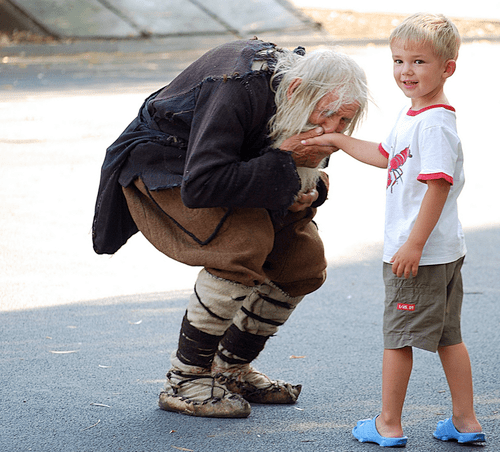
He came under the spotlight when it was revealed that for years he had walked more than 12.5 miles to reach Sofia from his home in the village of Bailovo to beg for money and then donate it for charity.

After spending years at the entrance of the Alexander Nevsky Cathedral, with a plastic cup in his hand, he collected about BGN 40,000 ($24,700 today) for the cathedral in Sofia, BGN 10,000 ($12,350 today) for the Sts. Cyril and Methodius Church in Bailovo, and BGN 25,000 ($31,000 today) for the restoration of the Eleshnishki Monastery of the Mother of God located to the east of Sofia, and the local church of the Gorno Kamartsi village.

His spirit of utter selflessness and sacrifice earned him the popular title “The Saint of Bailovo.”

Yesterday, Elder Dobri Dobrev (Grandpa Dobri), reposed in the Lord. He was 103 years old. He reposed at the Monastery of St. George in Kremikovtsi, to the northeast of Sofia.

dobri

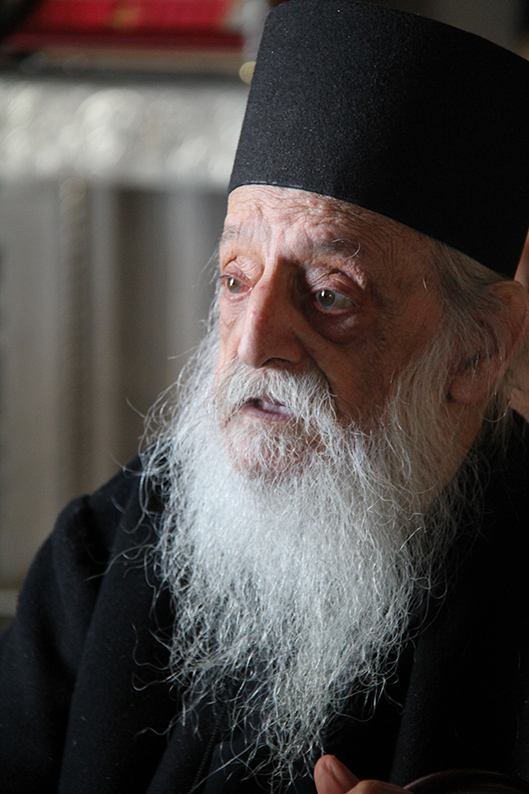
+ Fr. Nektarios Vitalis — Memory Eternal

vitalis

+ February 8, 2017

Fr. Nektarios Vitalis is at long last with our Saviour Christ and his beloved patron Saint, St. Nektarios. May he pray for us! His was a life full of visions, visitations and miracles with his patron saint, even near-death, after-life  experiences! Miracles and signs of Holiness even during his Memorial Service and Funeral!

Καλό Παράδεισο, Γέροντα! Καλή αντάμωση στην Αιωνιότητα!

Greek traditional wish for the departed: “A Blessed Paradise, Gerondas! Until we meet again in Eternity!

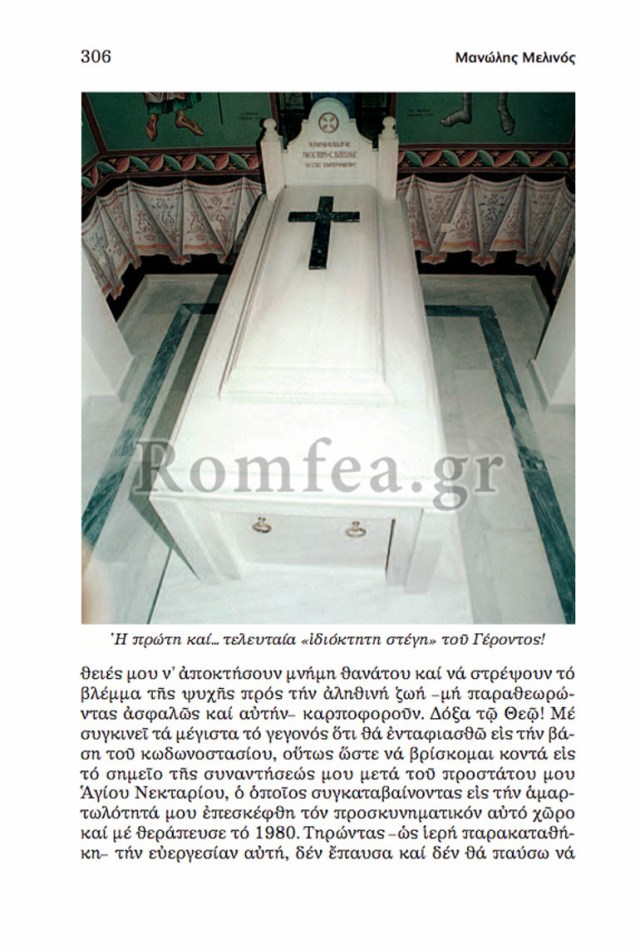
Below follow Fr. Nektarios’ recalling of his miraculous healing of cancer by St. Nektarios, a few youtube videos where he tells of St. Nektarios’ visitations to him and his near-death, ‘after-life’ experience, and his final will, testament and tomb.

Miracle of Saint Nektarios: The Healing of Fr. Nektarios Vitalis of Cancer

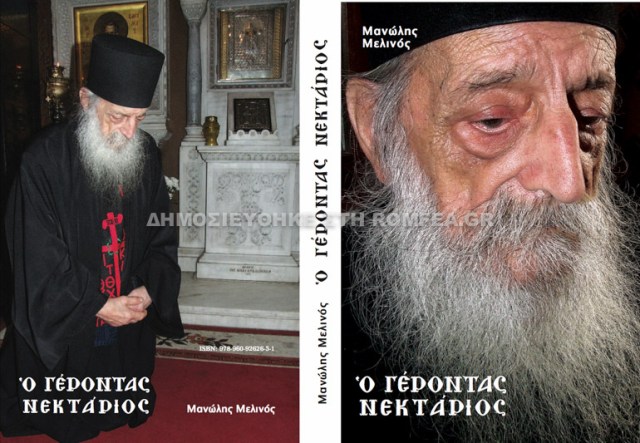
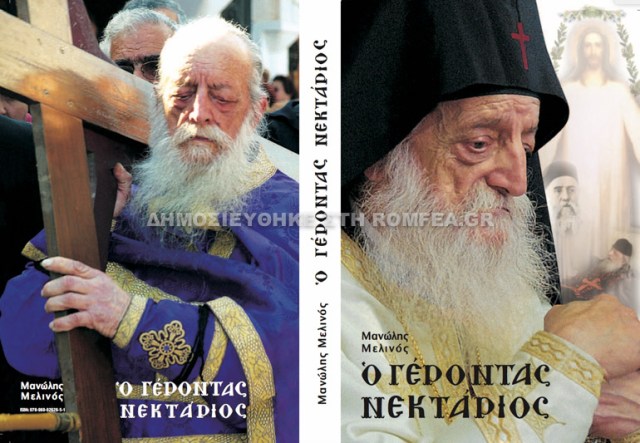
Fr. Nektarios Vitalis, well-known in Lavrio [a city in Attika, Greece] for his deeds and his sympathy to the poor and those written-off by the world in these difficult times, retells the following incident from when he was dying from cancer. What is said below has been told elsewhere, repeatedly, including in the book I talked to Saint Nektarios (Athens 1997, by the renowned writer Mr. Manolis Melinos).

Fr. Nektarios Vitalis recalls:

“I was suffering from a serious form of cancer. My chest was an open wound that was continuously running blood and pus. I would tear my undershirts from the pain. It was a tragic situation, and I was headed directly to death. So you understand, I had even prepared my grave clothes….

“On the 26th of March 1980, in the morning, I was talking in my office in the basement of the Church with Sofia Bourdoy (the church care-taker [a woman who cleans the church]) and the icon painter Helen Kitraki, when the door suddenly opened and an old, unknown man entered. He had a snow-white beard, was short and was slighty bald. He looked exactly the same as St. Nektarios appears in photographs. He took three candles without paying and lit only two. He venerated all the icons of the church, but passed over the icon of St. Nektarios without venerating it. He did not see me where I was. I had terrible pains when they pulled aside the curtain of the office and went to see the old man. He faced the Beautiful Gate [the Royal Doors in the Holy Iconostasion], crossed his palms and without looking around he asked: ‘Is the Geronta [Elder] here?’

“The church care-taker knowing my disease wanted to protect me…: ‘No, no…he is at home with the flu….’

“He replied: ‘Never mind. Pray, and have a Good Resurrection,’ [the traditional Orthodox greeting during Great Lent in anticipation of Pascha ‘Kali Anastasi’] he said as he left.

“The church care-taker came running to me and said ‘Father Nektarios, the old man who just left resembled St. Nektarios himself! His eyes flew flames. It seems to me that was St. Nektarios and he came to help you….’

“I thanked her thinking that she said this to console me. But deep down something was wrong. I sent her along with the icon painter to find the unknown man and quickly bring him back. I walked into the sanctuary and venerated the Crucified One [the icon of Christ on the Cross in every Holy Altar] crying, and once again asking Christ to heal me. Their footsteps stopped: ‘Father, the Elder has come!’

“I tried to kiss his hand, but out of humilty he did not let me. He bent and kissed my own! I asked him: ‘What is your name?’

“‘Anastasios, my son,’ he said, relating his baptismal name that he had before he become a monk….

“I led him to venerate the holy relics. He took out a pair of glasses with only one arm, and as soon as we saw them we were amazed! They were the same glasses of St. Nektarios that we had in the case with the holy relics. They were given to me by the old Gerontissa [Eldress] Nektaria of the monastery in Aegina.

“‘Belief is everything!’ said the stranger, as he put on his glasses.

“He began with reverence to embrace all the holy relics as the church care-taker showed, except for the relics of St. Nektarios, which he passed over….

“‘Geronta, forgive me,’ I said, ‘but why don’t you venerate the miraculous Saint Nektarios?’

“He turned and looked at me smiling. I asked him: ‘Where are you staying Geronta?’

“He showed me the ceiling, where we were building the new church [dedicated to St. Nektarios], saying: ‘My house is still not ready and I’m worried. My position does not allow me to live here and there….’

“‘Geronta, I must confess, you were told a lie earlier. I have cancer! But I want to get well, to make the Holy Altar, to finish the Church first, and then I can die….’

“‘Do not worry,’ he told me. ‘I’m leaving now. I’m going to Paros [an island in Greece] to venerate St. Arsenios and to visit Fr. Philotheos [Zervakos],’ he added, starting to leave and passing by the big icon without giving it a second thought….

“I stopped him and put my hands to his face.

“‘My Geronta, my Geronta, your face looks exactly like St. Nektarios who is honored here in our church….’

“Then, tears rolled from his eyes. He crossed me and embraced me with his hands. Taking courage I opened my hands to hug him. But when I spread out my hands, and while I was watching I could see him before my face, my arms closed back to my chest! The hairs then stood up on my arms and I crossed myself!

“I said again: ‘O my Geronta, I beg you, I want to live to do my first Liturgy. Help me to live….’

“He left from being close to me and stopped in front of his icon and said: ‘Oh, my child Nektarios, don’t worry. It is a passing trial, and you will be well! The miracle which you are asking for will happen, and it will be told to the whole world. Don’t be afraid….’

“Immediately he left us by walking through a closed door….

“The women ran to catch up to him. They reached him at the bus stop. He went inside and disappeared before the bus left!”

This story is always told by Fr. Nektarios Vitalis, a respected and reliable person, in the presence of witnesses. Fr. Nektarios eventually became well – to the amazement of doctors, radiologists, and forecasters of death. Because above all is Christ, our living God, and our intercessors before God, the Saints, plus our Mother the Panagia!

For “where God wills, the laws of nature are overcome….”

~From Mystagogy: The Weblog of John Sanidopoulos,(http://www.johnsanidopoulos.com/2009/06/miracle-of-saint-nektarios-healing-of.html).


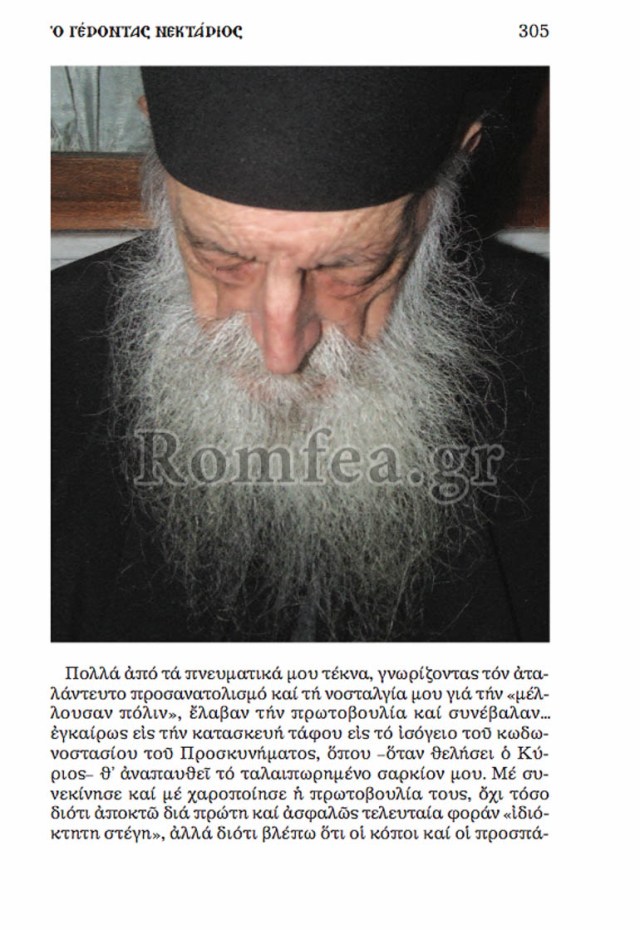
gerontas-nektarios-1gerontas-nektarios-3gerontas-nektarios-4gerontas-nektarios-5gerontas-nektarios-6

gerontas-nektarios-2


You Are Not Alone

CandleWind

… Even in that place of darkness and suffering, you still retain the control over whether you “throw away” your confidence or you keep it! Even when you feel powerless, you always have the power, the choice, the freedom, to hold onto you confidence and your faith.

And when you hold on, you build spiritual endurance. …

… But even if you stumble and “throw away” your confidence, there is still hope, because you are never alone. You never suffer by yourself. Being a part of the Body of Christ means you don’t stand by yourself, you don’t “believe” by yourself, but in the companionship of all the faithful through the centuries. That’s a mighty big family! And a huge source of encouragement and strength.

I never will forget sitting with one who was in such pain over a certain challenge in his life. This person confided in me that he had lost his faith. His face filled with amazement and wonder when I replied “Don’t worry about your faith, we will hold it for you until you get back!” That’s the power of the Church, the Body of Christ. You don’t have to endure suffering by yourself. We believe, we love, we stand with each other as the Body of Christ.

So, today, when (not if) you come across one suffering, be present to them and assure them they are not by themselves. They do not suffer alone. You are with them. The Church, the Body of Christ adds endurance to their weakness, and hope to their despair.


For the complete post “Develop Endurance” by Fr. Barnabas Powell, go to Faith Encouraged

*With gratitude to St. Nektarios and St. John of Krostandt  and all my Church family

st john of krostandt

When you are praying alone, and your spirit is dejected, and you
are wearied and oppressed by your loneliness, remember then, as
always, that God the Trinity looks upon you with eyes brighter
than the sun; also all the angels, your own Guardian Angel, and
all the Saints of God. Truly they do; for they are all one in God,
and where God is, there are they also. Where the sun is, thither
also are directed all its rays. Try to understand what this means.

St. John of Kronstadt

Not Always This Way

elder

A businessman went to a priest and said:

—Batushka, what’s going on…? I believe in God, I don’t deceive anyone, I don’t steal, I don’t cheat on my wife… I work honestly… My wife has left me for another man, my business is failing, my car broke down, my daughter has problems in college, my son can’t find work, and so on, and so on… What can I do?

—Give thanks to God… Hang a tablet on your door at home that says “IT WILL NOT ALWAYS BE THIS WAY,” forgive everyone, and let go of resentments.

—That’s it?!

—That’s it.

After a while, they met again:

—Batushka, everything is great! My business has taken off, my wife returned, everything with my kids is even better than expected, and so on, and so on. Glory to God!

—I’m very glad for you! But don’t take the tablet down from your door…


Orthodox Christianity

A Westerner Looks East for the Truth

barnabas

Stanley ( Barnabas) Dickinson

+ Memory Eternal!

Kalo Paradeiso! Kali Synandisi! [Greek wishes on a funeral]
May you enter Paradise! May we meet again there!

October 10, 2017
Acts 11:22-24
22 Then news of these things came to the ears of the church in Jerusalem, and they sent out Barnabas to go as far as Antioch. 23 When he came and had seen the grace of God, he was glad, and encouraged them all that with purpose of heart they should continue with the Lord. 24 For he was a good man, full of the Holy Spirit and of faith. And a great many people were added to the Lord.

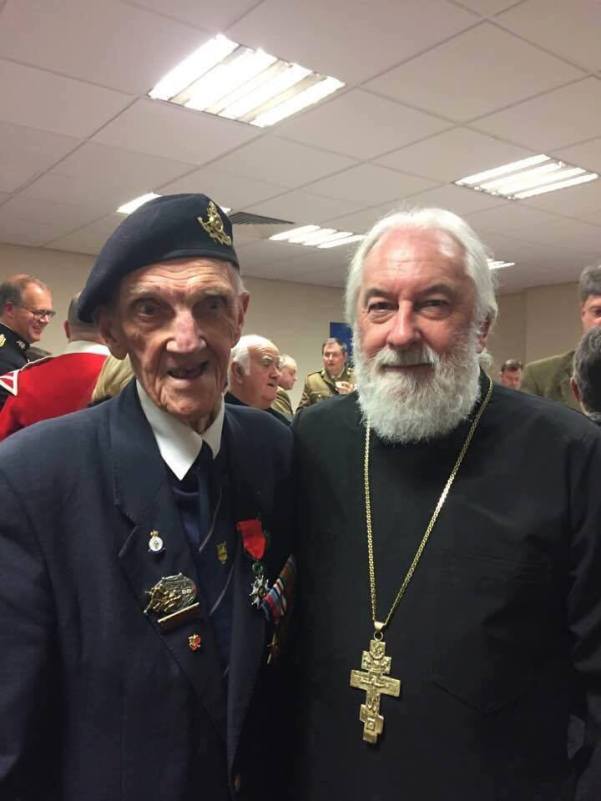
It is with gladdening sorrow that we have composed and dedicated this issue of the Stavronian to our beloved elder Barnabas, founder of the Parish of Holy and Life-Giving Cross and Normandy veteran. Our brother Barnabas peacefully fell asleep in the Lord at 21:40, October 10, three days before his 94th birthday. He was not alone when he passed into God’s keeping. Apart from the angels that attended his repose, members of the Parish, his spiritual family, were there as well as his own family were at his bedside. He was holding my hand when he breathed his last breath. He received Holy Unction the same morning. He even drew energy to make the sign of the cross. We asked him for a word from the Lord and he said “Love”! It was a holy repose with the faithful holding lighted candles. I thank God that he entrusted to me the unworthy priest this holy soul and brave soldier of Christ as an example of the Christian life. As a founder of the Orthodox Community of the Holy Cross he will remain forever inour prayers. May angels take him to his just reward in the Heavenly Kingdom of Our Lord Jesus Christ. May his memory be eternal. Christ is Risen!”

Fr. Jonathan
*
HEAVEN: FROM PROTESTANTISM TO ORTHODOXY 
A Westerner Looks East for the Truth
By Barnabas Dickinson
 
“When God the Holy Spirit says ‘Dsomething, you jolly well do it, or else…’,but what? Our loving Saviour had some stern words about lukewarmness, about turning back, having put one’s hand to the plough. … During the years of strife in the Church of England over this matter, pressure groups formed on both sides of the divide, and I attended rallies of the opposition in the Blackburn diocese. …What happens next? What do we do? Where do we go? What is our place in the Church? Speeches and discussion led nowhere… People were bewildered, defeated, hurt. Then, for me, God the Holy Spirit took a hand. Right at the end, in the question and answer session, a priest I did not know [ie. Father Jonathan Hem-mings] said very simply, ‘If anyone is wondering where to go’, they should be aware that Orthodox Church services in English are becoming available’, or words to that effect. Option (7) had come out of the blue, completely unexpected, and when the rally broke up for a cup of tea, I approached him. …
… One Saturday in the Spring of 1995, Fr Jonathan took me to the railway station for my train back to Chorley. He said to me, ‘It’s decision time’. The Patriarch of Antioch, who had taken personal oversight of this English group in May 1995, and the Holy Synod, had decided to accept us into membership of the Orthodox Church. ‘Are you coming, or are you not?’ Father Jonathan said. I said that I would …Grass did not grow under our feet, and quite soon, on Wednesday of Bright Week I was received into the Church, along with half a dozen others, including Fr Jonathan, now a lay member of the Church, having resigned his Anglican priesthood after Easter Day; eastern and western coincided that year. Our baptism in the Church of England was accepted as valid, having been in the threefold Name, and we were chrismated at the hands of Father Alexey, with Holy Oil consecrated by the Patriarch. For the first time I received the true Body and Blood of our Saviour. Now, twenty six years later I would not be anywhere else.

Thanks be to God for bringing Fr Jonathan into my life, and for all things. Lord Jesus Christ, Son of God, have mercy on me a sinner.”

barnabas2
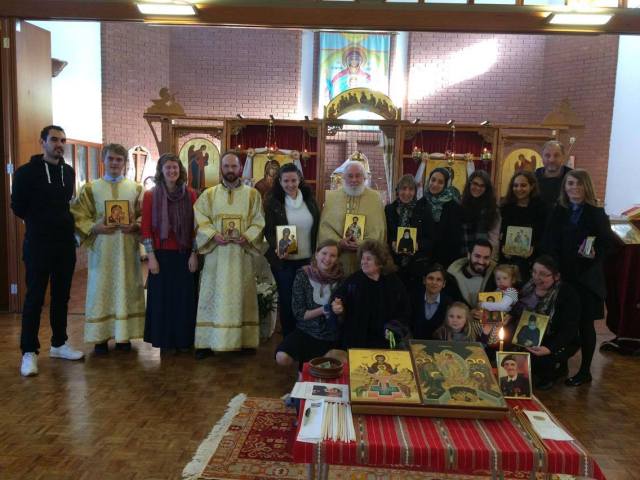
Barnabas’ icons have been bequeathed to our parish. Barnabas’ legacy of icons by the hand of Dimitrios Hakim perfectly compliment the parish icons by the same artist.

To find out more about Barnabas, a most dear father to this poor little city hermit, please have a look at the November Stavronian which this month is dedicated to our beloved elder and co founder of the Church of the Holy Cross, Stanley ( Barnabas) Dickinson at
http://www.orthodox-lancaster.org.uk/newsletter


The Rocks Split


golgotha1

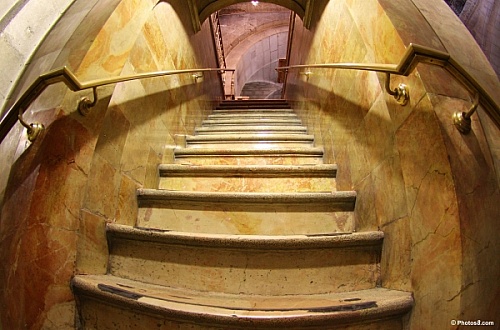
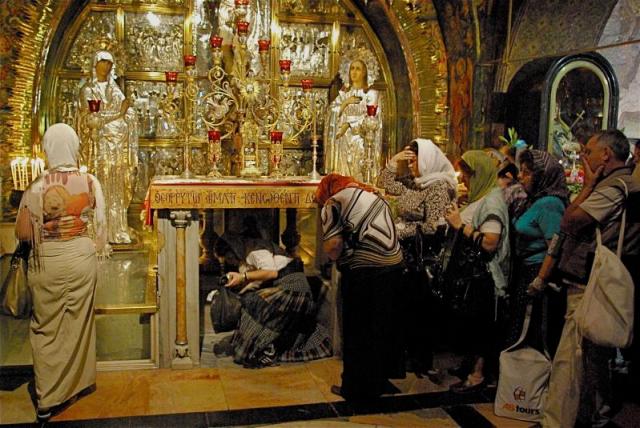
Ascending to The Horrendous Golgotha (John 19, 17), i.e. “The Place of the Skull” (“Golgotha” in Hebrew), was by far the most gut wrenching experience at our pilgrimage. Here the mystery of divine economy was accomplished, here the New Testament was sealed with the blood of the Theanthropos (Godman) which cleansed humanity from the evils of sin and death.

Stairway to Calvary in Holy Sepulchre Church

Stairway to Calvary in Holy Sepulchre Church …

*

Like in the prison of Christ, suddenly everything — the raw violence, the injustice and the hubris recorded in the “Twelve Gospel” readings* -– everything, becomes scarily all too real!


33 They came to a place called Golgotha (which means “the place of the skull”). …

From noon until three in the afternoon darkness came over all the land. 46 

44 It was now about noon, and darkness came over the whole land until three in the afternoon, 45 for the sun stopped shining. And the curtain of the temple was torn in two. 46 Jesus called out with a loud voice, “Father, into your hands I commit my spirit.”[c] When he had said this, he breathed his last. (Luke 23, 44-46)

About three in the afternoon Jesus cried out in a loud voice, “Eli, Eli,[a] lema sabachthani?” (which means “My God, my God, why have you forsaken me?”).[b]

50 And when Jesus had cried out again in a loud voice, he gave up his spirit.

51 At that moment the curtain of the temple was torn in two from top to bottom. The earth shook, the rocks split 52 and the tombs broke open. The bodies of many holy people who had died were raised to life. 53 They came out of the tombs after Jesus’ resurrection and[c] went into the holy city and appeared to many people.” (Matthew 33, 45-53)


“Today is hung upon the Tree, He Who did hang the land in the midst of the waters. A Crown of thorns crowns Him Who is King of Angels. He is wrapped about with the purple of mockery Who wrapped the Heavens with clouds. He received buffetings Who freed Adam in Jordan. He was transfixed with nails Who is the Bridegroom of the Church. He was pierced with a spear Who is the Son of the Virgin. We worship Thy Passion, O Christ. Show also unto us thy glorious Resurrection.”

 *

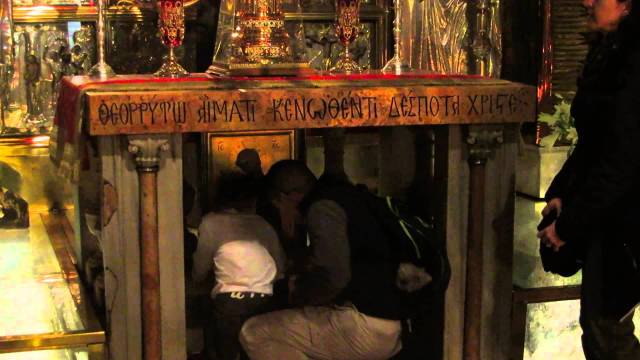
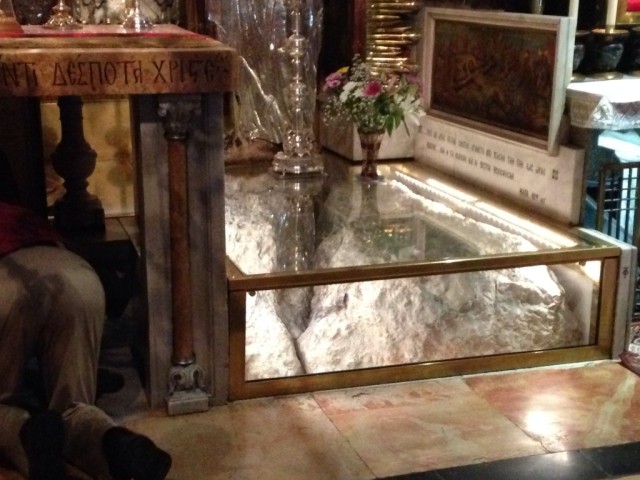
This is the hole through which you can touch the very earth where the Cross actually stood.

golgotha10

calvary12

The queue of the pilgrims never ends here.

calvary13.jpg


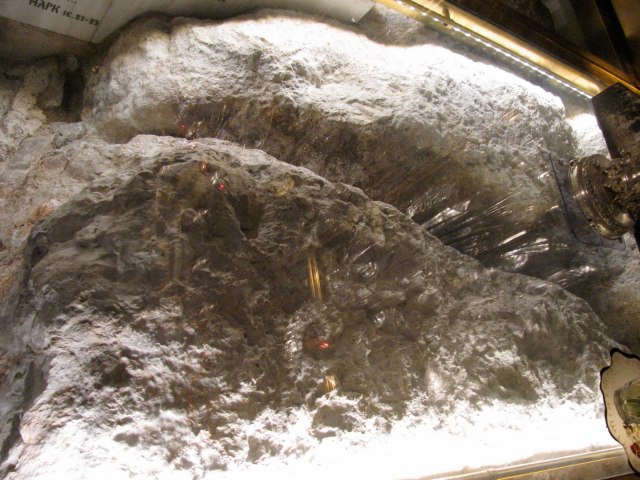
Just look at this ancient rock, the Rock of Calvary, literally split in half, exuding the fragrance of Holiness and Sanctity!


golgotha5


“Oh look, my soul, look!

How the rock was split in half

At the sight of the Crucifixion

Of the Invaluable Treasure!”

(Excerpt of a poem by St. John Jacob (the Romanian)


golgotha4


How much more should our hearts be torn and wounded by love if an inanimate material felt the hubris and shuddered and literally split in two at the sight of our Lord on the Cross!     Indeed, we need to continually beseech the Lord for “pardon and remission of our sins and transgressions”, “that we may complete the remaining time of our life in peace and repentance”. 

“Before the end to our life comes, because then we lose the right to pray for ourselves… because the time given to us for our repentance has expired.”


Glory to Thy Forbearance, O Lord!

Lord Jesus Christ forgive us the sinners.


* Service of the HOLY PASSION of our Lord Jesus Christ on Great Holy Thursday Evening


The Little Orphan

orphan-sos2


The Little Orphan

an autobiographical poem

by St. John Jacob (the Romanian)

Blessed John (Jacob) of Neamts, the New Chozebite

“the child of zero” who “followed the One”*


Resurrection Day!

The bells are ringing!

Old men sit at their verandas,

Others are at their doorsteps.


The young and the children

Go out in their best clothes

To meet their friends at the church

Of the cemetery.


This mystical fragrance

Of the Holy Feast!

They take it in … like incense,

From herbs and flowers.


The Fields are robed

In a beautiful dress

And everything looks now

Renewed on the earth.


Near the Holy Altar

Of the wooden church

A little child offers

Candles and oil.


He kisses the Holy Cross

In front of the fresh tomb

And kneels crying

With sighs.


When the bells are ringing

In a jubilant tone

Near the Cross the little orphan

Sheds tears with pain.


Suddenly, while absorbed in his tears

And his deep sighs,

At the ringing of the bells

A sweet voice he hears :


“Cry Not, my child, today

Feel not sad, because, look!

By your side am I

Christ is Risen!”


Was this his mother’s voice

Coming from the tomb

His sadness to dispel

From his broken bosom?


Immediately the orphan

Rises and ecstatically looks up,

Searching to find

Who was speaking to him.


Then, from the Altar most Holy

By the smoked wall

He sees the Risen Christ

Sweetly smiling to him.


His little heart is lit

His face calms

His pain leaves him

And such is his mind:


“If I see here

The Risen Lord

Then my mother too

Is risen with Him.”


Speaking thus to his mind

Humbly he bows

And kissing the tomb

Returns to his ‘home’!


Alone, lonely, he lives

At his earthly lodgings,

His poor father

Died at the war.


Often at nights he sleeps

By the tomb with them.

Crying in the morning he returns

Back to the deserted house.


But the bells ring!

Again at the cemetery

His mother’s voice

Is heard to say:


“Cry not, my child, today

Do not be sad,

Because, lo, I am with you

Christ is Risen!”


Since then our little orphan

Stopped sighing.

And whenever the bells ring

His heart is consoled!


* A Hermit from the Holy Land with complete Incorruptible Relics at the monastery of St. George Choziba! He was a great ascetic and a poet. He called himself “the child of zero” who “followed the One”. After his all night- vigils, he would briefly rest in the verandah of the monastery and write his so moving poetry, sadly not translated yet in English.
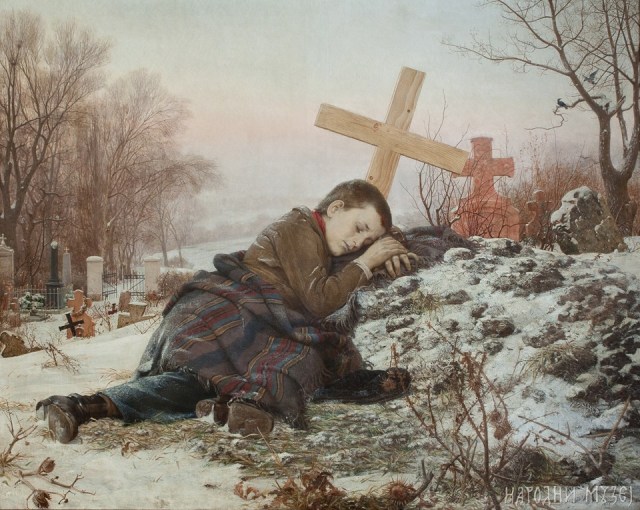
* The painting is by the Serbian artist Uroš Predić, Siroče (Orphan), oil on canvas, 1888. National Museum

His Eyes a Flame of Fire


pater-Symeon-Kragiopoulos


Elder Symeon Kragiopoulos (+30 September, 2015 )

Archimandrite Symeon Kragiopoulos was a lecturer, preacher, and confessor in the Metropolis of Thessaloniki, Greece. His spiritual lectures often drew on his study of psychology. Thirty books have been published in Greece based on his lectures. He founded two monastic communities, Holy Trinity for men and the Nativity of the Theotokos for women.

A Memorial Service was performed in the Church and a Trisagion at the cemetery.

Such gladdening sorrow, bright sorrow as hundreds of his spiritual children prayed with tears for him … to him.

At the homily one Mount Athos Elder described  Elder Symeon as “the eye through which Thessaloniki, and indeed all the world, saw God” + Memory Eternal!

Iera-moni-Agias-Triadas-Panorama


“My heart is torn apart…”


It tears me apart, every time I speak

with a person in pain.

My heart is crushed, in a good sense.

I would have regretted it a thousand times, if I hadn’t been hurt,

if I hadn’t empathised with the pain of this person.

Hurting and empathising in such a way is one thing

but sinking and despairing is totally another.

The latter is no good.

There is no end to suffering in this world.

There is no end to pain.

But in all this suffering, a great mystery is hidden!

Nothing else does to us such great good as pain.

Our very own pain

and the pain of our own people.

All the rest can be accommodated.

But pain, which you can feel on your own body,

nobody can take away from you.

You may even be a king: If pain seizes you,

you’ll have to bear it.

You may be given some pitiful aid

to be comforted, which will barely suffice.

Especially when you are dealing with soul pain.

The miraculous thing is that God

when you least expect it

and while you have little awareness of it,

condescends and doesn’t take pity on you,

but allows you to get hurt and suffer something

which is more than a single pain,

precisely because he wants to grant you His mercy.

 Archimandrite Symeon Kragiopoulos

Holy Hesychasterion “The Nativity of Theotokos” Publications


To read more of Elder Symeon’s God-inspired words check out this link.

*”His head and His hair were white like white wool, like snow; and His eyes were like a flame of fire” (Revelation 1:14)

A Journey of Pain and Love to Heaven

Nobody would dispute that the most important day in a person’s life, after his birth and baptism, is that of his marriage. It is no surprise, then, that the aim of contemporary worldly and institutional upheavals is precisely to crush the most honorable and sacred mystery of marriage. For many people, marriage is an opportunity for pleasures and amusements. Life, however, is a serious affair. It is a spiritual struggle, a progression toward a goal—heaven. The most crucial juncture, and the most important means, of this progression is marriage. It is not permissible for anyone to avoid the bonds of marriage, whether he concludes a mystical marriage by devoting himself to God, or whether he concludes a sacramental one with a spouse.

Today we will concern ourselves primarily with sacramental marriage. We will consider how marriage can contribute to our spiritual life, in order to continue the theme of our previous talk [1]. We know that marriage is an institution established by God. It is “honorable” (Heb 13.4). It is a “great mystery” (Eph 5.32). An unmarried person passes through life and leaves it; but a married person lives and experiences life to the full.

One wonders what people today think about the sacred institution of marriage, this “great mystery”, blessed by our Church. They marry, and it’s as if two checking accounts or two business interests were being merged. Two people are united without ideals, two zeros, you could say. Because people without ideals, without quests, are nothing more than zeros. “I married in order to live my life”, you hear people say, “and not to be shut inside four walls”. “I married to enjoy my life”, they say, and then they hand over their children—if they have children—to some strange woman so they can run off to the theatre, the movies, or to some other worldly gathering. And so their houses become hotels to which they return in the evening, or, rather, after midnight, after they’ve had their fun and need to rest. Such people are empty inside, and so in their homes they feel a real void. They find no gratification there, and thus they rush and slide from here to there, in order to find their happiness.

They marry without knowledge, without a sense of responsibility, or simply because they wish to get married, or because they think they must in order to be good members of society. But what is the result? We see it every day. The shipwrecks of marriage are familiar to all of us. A worldly marriage, as it is understood today, can only have one characteristic—the murder of a person’s spiritual life. Thus we must feel that, if we fail in our marriage, we have more or less failed in our spiritual life. If we succeed in our marriage, we have also succeeded in our spiritual life. Success or failure, progress or ruin, in our spiritual life, begins with our marriage. Because this is such a serious matter, let us consider some of the conditions necessary for a happy, truly Christian marriage.

In order to have a successful marriage, one must have the appropriate upbringing from an early age. Just as a child must study, just as he learns to think, and take an interest in his parents or his health, so too must he be prepared in order to be able to have a successful marriage. But in the age in which we live, no one is interested in preparing their children for this great mystery, a mystery which will play the foremost role in their lives. Parents are not interested, except in the dowry, or in other such financial matters, in which they are deeply interested.

The child, from an early age, must learn to love, to give, to suffer deprivation, to obey. He must learn to feel that the purity of his soul and body is a valuable treasure to be cherished as the apple of his eye. The character of the child must be shaped properly, so that he becomes an honest, brave, decisive, sincere, cheerful person, and not a half, self-pitying creature, who constantly bemoans his fate, a weak-willed thing without any power of thought or strength. From an early age, the child should learn to take an interest in a particular subject or occupation, so that tomorrow he will be in a position to support his family, or, in the case of a girl, also to help, if this is necessary. A woman must learn to be a housewife, even if she has an education. She should learn to cook, to sew, to embroider. But, my good Father, you may say, this is all self- evident. Ask married couples, however, and you’ll see how many women who are about to marry know nothing about running a household.

Once we reach a certain age, moreover, the choice of one’s life partner is a matter which should not be put off. Neither should one be in a hurry, because, as the saying goes, “quick to marry, quick to despair”. But one should not delay, because delay is a mortal danger to the soul. As a rule, the normal rhythm of the spiritual life begins with marriage. An unmarried person is like someone trying to live permanently in a hallway: he doesn’t seem to know what the rooms are for. Parents should take an interest in the child’s social life, but also in his prayer life, so that the blessed hour will come as a gift sent by God.

Naturally, when he comes to choose a partner, he will take to account his parents’ opinion. How often have parents felt knives piercing their hearts when their children don’t ask them about the person who will be their companion in life? A mother’s heart is sensitive, and can’t endure such a blow. The child should discuss matters with his parents, because they have a special intuition enabling them to be aware of the things which concern them. But this doesn’t mean that the father and mother should pressure the child. Ultimately he should be free to make his own decision. If you pressure your child to marry, he will consider you responsible if things don’t go well. Nothing good comes from pressure. You must help him, but you must also allow him to choose the person he prefers or loves—but not someone he pities or feels sorry for. If your child, after getting to know someone, tells you, “I feel sorry for the poor soul, I’ll marry him”, then you know that you’re on the threshold of a failed marriage. Only a person whom he or she prefers or loves can stand by the side of your child. Both the man and the woman should be attracted to each other, and they should truly want to live together, in an inward way, unhurriedly. On this matter, however, it is not possible to pressure our children. Sometimes, out of our love, we feel that they are our possessions, that they are our property, and that we can do what we want with them. And thus our child becomes a creature incapable of living life either married or unmarried.

Of course, the process of getting acquainted, which is such a delicate issue—but of which we are often heedless—should take place before marriage. We should never be complacent about getting to know each other, especially if we’re not sure of our feelings. Love shouldn’t blind us. It should open our eyes, to see the other person as he is, with his faults. “Better to take a shoe from your own house, even if it’s cobbled”, says the folk proverb. That is, it’s better to take someone you’ve gotten to know. And acquaintanceship must always be linked with engagement, which is an equally difficult matter.

When I suggested to a young woman that she should think seriously about whether she should continue her engagement she replied: “If I break it off, my mother will kill me”. But what sort of engagement is it, if there’s no possibility of breaking it off? To get engaged doesn’t mean that I’ll necessarily get married. It means that I’m testing to see whether I should marry the person I’m engaged to. If a woman isn’t in a position to break off her engagement, she shouldn’t get engaged, or, rather, she shouldn’t go ahead with the marriage. During the engagement, we must be especially careful. If we are, we will have fewer problems and fewer disappointments after the wedding. Someone once said that, during the period of getting to know one another, you should hold on to your heart firmly with both hands, as if it were a wild animal. You know how dangerous the heart is: instead of leading you to marriage, it can lead you into sin. There is the possibility that the person you’ve chosen sees you as a mere toy, or a toothbrush to be tried out. Afterwards you’ll be depressed and shed many tears. But then it will be too late, because your angel will have turned out to be made of clay.

Don’t choose a person who wastes his time at clubs, having good time, and throwing away his money on traveling and luxuries. Neither should you choose someone who, as you’ll find out, conceals his self-centeredness beneath words of love. Don’t choose a woman as your wife who is like gun powder, so that as soon as you say something to her, she bursts to flames. She’s no good as a wife.

Moreover, if you want to have a truly successful marriage, don’t approach that young woman or man who is unable to leave his or her parents. The commandment of Christ is clear: man leaves his father and mother, and is united to his wife” (Mk 10.7). But when you see the other person tied to his mother or father, when you see that he obeys them with his mouth hanging open, and is prepared to do whatever they tell him, keep well away. He is emotionally sick, a psychologically immature person, and you won’t be able to create a family with him. The man you will make your husband should be spirited. But how can he be spirited when he hasn’t realized, hasn’t understood, hasn’t digested the fact that his parents’ house is simply a flower-pot in which he was put, to be taken out later, and transplanted somewhere else?

Also, when you’re going to choose a husband, make sure that he’s not an uncommunicative type—in which case he’ll have no friends. And if today he has no friends, tomorrow he’ll find it difficult to have you as a friend and partner. Be on your guard against grumblers, moaners, and gloomy people who are like dejected birds. Be on your guard against those who complain all the time: “You don’t love me, you don’t understand me”, and all that sort of thing. Something about these creatures of God isn’t right. Also be on your guard against religious fanatics and the overly pious. Those, that is, who get upset over trivial things, who are critical of everything and hypersensitive. How are you going to live with such a person? It will be like sitting on thorns. Also look out for those who regard marriage as something bad, as a form of imprisonment. Those who say: But I’ve never in my whole life thought about getting married.

Watch out for certain pseudo-Christians, who see marriage as something sordid, as a sin, who immediately cast their eyes down when they hear anything said about it [2]. If you marry someone like this, he will be a thorn in your flesh, and a burden for his monastery if he becomes a monk. Watch out for those who think that they’re perfect, and find no defect in themselves, while constantly finding faults in others. Watch out for those who think they’ve been chosen by God to correct everyone else.

There is another serious matter to which you should also pay attention: heredity. Get to know well the father, the mother, the grandfather, the grandmother, the uncle. Also, the basic material prerequisites should be there. Above all, pay attention to the person’s faith. Does he or she have faith? Has the person whom you’re thinking of making the companion of your life have ideals? If Christ means nothing to him, how are you going to be able to enter his heart? If he has not been able to value Christ, do you think he will value you? Holy Scripture says to the husband that the wife should be “of your testament” (Mal 2.14), that is, of your faith, your religion, so that she can join you to God. It is only then that you can have, as the Church Fathers say, a marriage “with the consent of the bishop” [3], that is, with the approval of the Church, and not simply a formal license.

Discuss things in advance with your spiritual father. Examine every detail with him, and he will stand by your side as a true friend, and, when you reach the desired goal, then your marriage will be a gift from God (cf. 1 Cor 7.7). God gives his own gift to each one of us. He leads one person to marriage and another to virginity. Not that God makes the choice by saying “you go here”, and “you go there”, but he gives us the nerve to choose what our heart desires, and the courage and the strength to carry it out.

If you choose your spouse in this way, then thank God. Bring him into touch with your spiritual father. If you don’t have one, the two of you should choose a spiritual father together, who will be your Elder, your father, the one who will remind you of, and show you God.

You will have many difficulties in life. There will be a storm of issues. Worries will surround you, and maintaining your Christian life will not be easy. But don’t worry. God will help you. Do what is within your power. Can you read a spiritual book for five minutes a day? Then read. Can you pray for five minutes a day? Pray. And if you can’t manage five minutes, pray for two. The rest is God’s affair.

When you see difficulties in your marriage, when you see that you’re making no progress in your spiritual life, don’t despair. But neither should you be content with whatever progress you may have already made. Lift up your heart to God. Imitate those who have given everything to God, and do what you can to be like them, even if all you can do is to desire in your heart to be like them. Leave the action to Christ. And when you advance in this way, you will truly sense what is the purpose of marriage. Otherwise, as a blind person wanders about, so too will you wander in life.

What then is the purpose of marriage? I will tell you three of its main aims. First of all, marriage is a path of pain. The companionship of man and wife is called a “yoking together” (syzygia), that is, the two of them labor under a shared burden. Marriage is a journeying together, a shared portion of pain, and, of course, a joy. But usually it’s six chords of our life which sound a sorrowful note, and only one which is joyous. Man and wife will drink from the same cup of upheaval, sadness, and failure. During the marriage ceremony, the priest gives the newly-weds to drink from the same cup, called the “common cup” [4], because together they will bear the burdens of marriage. The cup is also called “union” [5], because they are joined together to share life’s joys and sorrows.

When two people get married, it’s as if they’re saying: Together we will go forward, hand in hand, through good times and bad. We will have dark hours, hours of sorrow filled with burdens, monotonous hours. But in the depths of the night, we continue to believe in the sun and the light. Oh, my dear friends, who can say that his life has not been marked by difficult moments? But it is no small thing to know that, in your difficult moments, in your worries, in your temptations, you will be holding in your hand the hand of your beloved. The New Testament says that every man will have pain, especially those who enter into marriage.

“Are you free from a wife?”—which means, are you unmarried?—asks the Apostle Paul. “Then do not seek a wife. But if you do marry, you are not doing anything wrong, it is no sin. And if a girl marries, she does not sin, but those who marry will have hardships to endure, and my aim is to spare you” (1 Cor 7.27-28). Remember: from the moment you marry, he says, you will have much pain, you will suffer, and your life will be a cross, but a cross blossoming with flowers. Your marriage will have its joys, its smiles, and its beautiful things. But during the days of sunshine, remember that all the lovely flowers conceal a cross, which can emerge into your sunshine at any moment.

Life is not a party, as some people think, and after they get married take a fall from heaven to earth. Marriage is a vast ocean, and you don’t know where it will wash you up. You take the person whom you’ve chosen with fear and trembling, and with great care, and after a year, two years, five years, you discover that he’s fooled you.

It is an adulteration of marriage for us to think that it is a road to happiness, as if it were a denial of the cross. The joy of marriage is for husband and wife to put their shoulders to the wheel and together go forward on the uphill road of life. “You haven’t suffered? Then you haven’t loved”, says a certain poet. Only those who suffer can really love. And that’s why sadness is a necessary feature of marriage. “Marriage”, in the words of an ancient philosopher, “is a world made beautiful by hope, and strengthened by misfortune”. Just as steel is fashioned in a furnace, just so is a person proved in marriage, in the fire of difficulties. When you see your marriage from a distance, everything seems wonderful. But when you get closer, you’ll see just how many difficult moments it has.

God says that “it is not good for the man to be alone” (Gen 2.18), and so he placed a companion at his side, someone to help him throughout his life, especially in his struggles of faith, because in order to keep your faith, you must suffer and endure much pain. God sends his grace to all of us. He sends it, however, when he sees that we are willing to suffer. Some people, as soon as they see obstacles, run away. They forget God and the Church. But faith, God, and the Church, are not a shirt that you take off as soon as you start to sweat.

Marriage, then, is a journey through sorrows and joys. When the sorrows seem overwhelming, then you should remember that God is with you. He will take up your cross. It was he who placed the crown of marriage on your head. But when we ask God about something, he doesn’t always supply the solution right away. He leads us forward very slowly. Sometime[s] he takes years. We have to experience pain, otherwise life would have no meaning. But be of good cheer, for Christ is suffering with you, and the Holy Spirit, “through your groanings is pleading on your behalf” (cf. Rom 8.26).

Second, marriage is a journey of love. It is the creation of a new human being, a new person, for, as the Gospel says, “the two will be as one flesh” (Mt 19.5; Mk 10.7). God unites two people, and makes them one. From this union of two people, who agree to synchronize their footsteps and harmonize the beating of their hearts, a new human being emerges. Through such profound and spontaneous love, the one becomes a presence, a living reality, in the heart of the other. “I am married” means that I cannot live a single day, even a few moments, without the companion of my life. My husband, my wife, is a part of my being, of my flesh, of my soul. He or she complements me. He or she is the thought of my mind. He or she is the reason for which my heart beats.

The couple exchanges rings to show that, in life’s changes, they will remain united. Each wears a ring with the name of the other written on it, which is placed on the finger from which a vein runs directly to the heart. That is, the name of the other is written on his own heart. The one, we could say, gives the blood of his heart to the other. He or she encloses the other within the core of his being.

“What do you do?” a novelist was once asked. He was taken aback. “What do I do? What a strange question! I love Olga, my wife”. The husband lives to love his wife, and the wife lives to love her husband.

The most fundamental thing in marriage is love, and love is about uniting two into one. God abhors separation and divorce. He wants unbroken unity (cf. Mt 19.3-9; Mk 10.2-12). The priest takes the rings off the left finger, puts them on the right, and then again on the left, and finally he puts them back on the right hand. He begins and ends with the right hand, because this is the hand with which we chiefly act. It also means that the other now has my hand. I don’t do anything that my spouse doesn’t want. I am bound up with the other. I live for the other, and for that reason I tolerate his faults. A person who can’t put up with another can’t marry.

What does my partner want? What interests him? What gives him pleasure? That should also interest and please me as well. I also look for opportunities to give him little delights. How will I please my husband today? How will I please my wife today? This is the question which a married person must ask every day. She is concerned about his worries, his interests, his job, his friends, so that they can have everything in common. He gladly gives way to her. Because he loves her, he goes to bed last and gets up first in the morning. He regards her parents as his own, and loves them and is devoted to them, because he knows that marriage is difficult for parents. It always makes them cry, because it separates them from their child.

The wife expresses love for her husband through obedience. She is obedient to him exactly as the Church is to Christ (Eph 5.22-24). It is her happiness to do the will of her husband. Attitude, obstinacy, and complaining are the axes which chop down the tree of conjugal happiness. The woman is the heart. The man is the head. The woman is the heart that loves. In her husband’s moments of difficulty, she stands at his side, as the empress Theodora stood by the emperor Justinian. In his moments of joy, she tries to raise him up to even higher heights and ideals. In times of sorrow, she stands by him like a sublime and peaceful world offering him tranquility.

The husband should remember that his wife has been entrusted to him by God. His wife is a soul which God has given to him, and one day he must return it. He loves his wife as Christ loves the Church (Eph 5.25). He protects her, takes care of her, gives her security, particularly when she is distressed, or when she is ill. We know how sensitive a woman’s soul can be, which is why the Apostle Peter urges husbands to honor their wives (cf. 1 Pet 3.7). A woman’s soul gets wounded, is often petty, changeable, and can suddenly fall into despair. Thus the husband should be full of love and tenderness, and make himself her greatest treasure. Marriage, my dear friends, is a little boat which sails through waves and among rocks. If you lose your attention even for a moment, it will be wrecked.

As we have seen, marriage is first of all a journey of pain; second a journey of love; and, third, a journey to heaven, a call from God. It is, as Holy Scripture says, a “great mystery” (Eph 5.32). We often speak of seven “mysteries”, or sacraments. In this regard, a “mystery” is the sign of the mystical presence of some true person or event. An icon, for instance, is a mystery. When we venerate it, we are not venerating wood or paint, but Christ, or the Theotokos, or the saint who is mystically depicted. The Holy Cross is a symbol of Christ, containing his mystical presence. Marriage, too, is a mystery, a mystical presence, not unlike these. Christ says, “wherever two or three are gathered together in my name, there I am among them” (Mt 18.20). And whenever two people are married in the name of Christ, they become the sign which contains and expresses Christ himself. When you see a couple who are conscious of this, it is as if you are seeing Christ. Together they are a theophany.

This is also why crowns are placed on their heads during the wedding ceremony, because the bride and groom are an image of Christ and the Church. And not just this, but everything in marriage is symbolic. The lit candles symbolize the wise virgins. When the priest places these candles into the hands of the newly-weds, it is as if he is saying to them: Wait for Christ like the wise virgins (Mt 25.1-11). Or they symbolize the tongues of fire which descended at Pentecost, and which were in essence the presence of the Holy Spirit (Acts 2.1-4). The wedding rings are kept on the altar, until they are taken from there by the priest, which shows that marriage has its beginning in Christ, and will end in Christ. The priest also joins their hands, in order to show that it is Christ himself who unites them. It is Christ who is at the heart of the mystery and at the centre of their lives [6].

All the elements of the marriage ceremony are shadows and symbols which indicate the presence of Christ. When you’re sitting somewhere and suddenly you see a shadow, you know that someone’s coming. You don’t see him, but you know he’s there. You get up early in the morning, and you see the red horizon in the east. You know that, in a little while, the sun will come up. And indeed, there behind the mountain, the sun starts to appear.

When you see your marriage, your husband, your wife, your partner’s body, when you see your troubles, everything in your home, know that they are all signs of Christ’s presence. It is as if you’re hearing Christ’s footsteps, as if he was coming, as if you are now about to hear his voice. All these things are the shadows of Christ, revealing that he is together with us. It is true, though, that, because of our cares and worries, we feel that he is absent. But we can see him in the shadows, and we are sure that he is with us. This is why there was no separate marriage service in the early Church. The man and woman simply went to church and received Communion together. What does this mean? That henceforth their life is one life in Christ.

The wreaths, or wedding crowns, are also symbols of Christ’s presence. More specifically, they are symbols of martyrdom. Husband and wife wear crowns to show that they are ready to become martyrs for Christ. To say that “I am married” means that I live and die for Christ. “I am married” means that I desire and thirst for Christ. Crowns are also signs of royalty, and thus husband and wife are king and queen, and their home is a kingdom, a kingdom of the Church, an extension of the Church.

When did marriage begin? When man sinned. Before that, there was no marriage, not in the present-day sense. It was only after the Fall, after Adam and Eve had been expelled from paradise, that Adam “knew” Eve (Gen 4.1) and thus marriage began. Why then? So that they might remember their fall and expulsion from paradise, and seek to return there. Marriage is thus a return to the spiritual paradise, the Church of Christ. “I am married” means, then, that I am a king, a true and faithful member of the Church.

The wreaths also symbolize the final victory which will be attained in the kingdom of heaven. When the priest takes the wreaths, he says to Christ: “take their crowns to your kingdom”, take them to your kingdom, and keep them there, until the final victory. And so marriage is a road: its starts out from the earth and ends in heaven. It is a joining together, a bond with Christ, who assures us that he will lead us to heaven, to be with him always. Marriage is a bridge leading us from earth to heaven. It is as if the sacrament is saying: Above and beyond love, above and beyond your husband, your wife, above the everyday events, remember that you are destined for heaven, that you have set out on a road which will take you there without fail. The bride and the bridegroom give their hands to one another, and the priest takes hold of them both, and leads them round the table dancing and singing. Marriage is a movement, a progression, a journey which will end in heaven, in eternity.

In marriage, it seems that two people come together. However it’s not two but three. The man marries the woman, and the woman marries the man, but the two together also marry Christ. So three take part in the mystery, and three remain together in life.

In the dance around the table, the couple are led by the priest, who is a type of Christ. This means that Christ has seized us, rescued us, redeemed us, and made us his. And this is the “great mystery” of marriage (cf. Gal 3.13).

In Latin, the word “mystery” was rendered by the word sacramentum, which means an oath. And marriage is an oath, a pact, a joining together, a bond, as we have said. It is a permanent bond with Christ.

“I am married”, then, means that I enslave my heart to Christ. If you wish, you can get married. If you wish, don’t get married. But if you marry, this is the meaning that marriage has in the Orthodox Church, which brought you into being. “I am married” means I am the slave of Christ.

Endnotes


I.  i.e., “Spiritual Life”, which appears below, on pp. 147-163.

2.  See, for example, John Chrysostom, Homily on Colossians 12.6 “What shame is there in that which is honorable? Why do you blush over what is undefiled? In so doing, you slander the root of our birth, which is a gift from God” (PG 62.388).

3.  Ignatius of Antioch, Letter to Polycarp (PG 5.724B).

4.  Symeon of Thessaloniki, Dialogos 277 (PG 155.508B).

5.   C. Kallinikos, The Christian Temple and its Ceremonies (Athens, 1968), 514.

6.   St. Gregory the Theologian, Letter 193: “I place the hand of the one in the other, and place both in the hand of God” (PG 37.316C).
 

Source