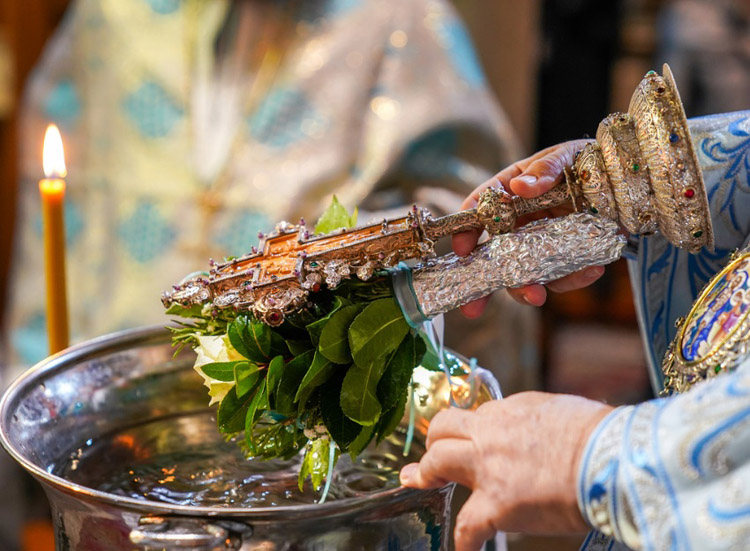
“On this day, the celestials join with the terrestrials”

Dear brothers and sisters, a blessed Theophany in our hearts!

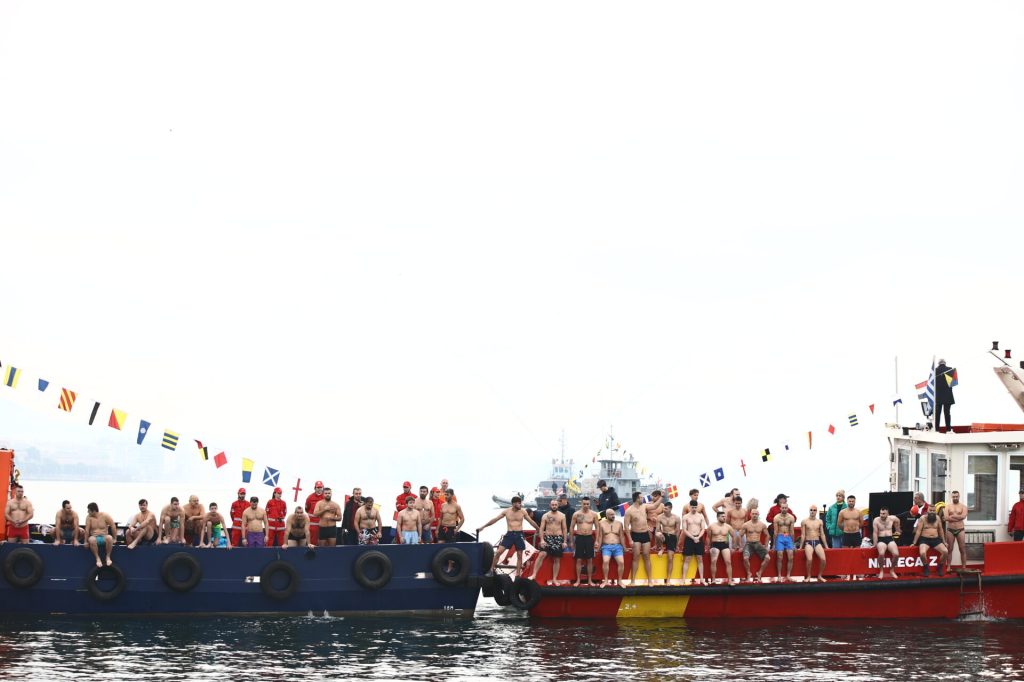
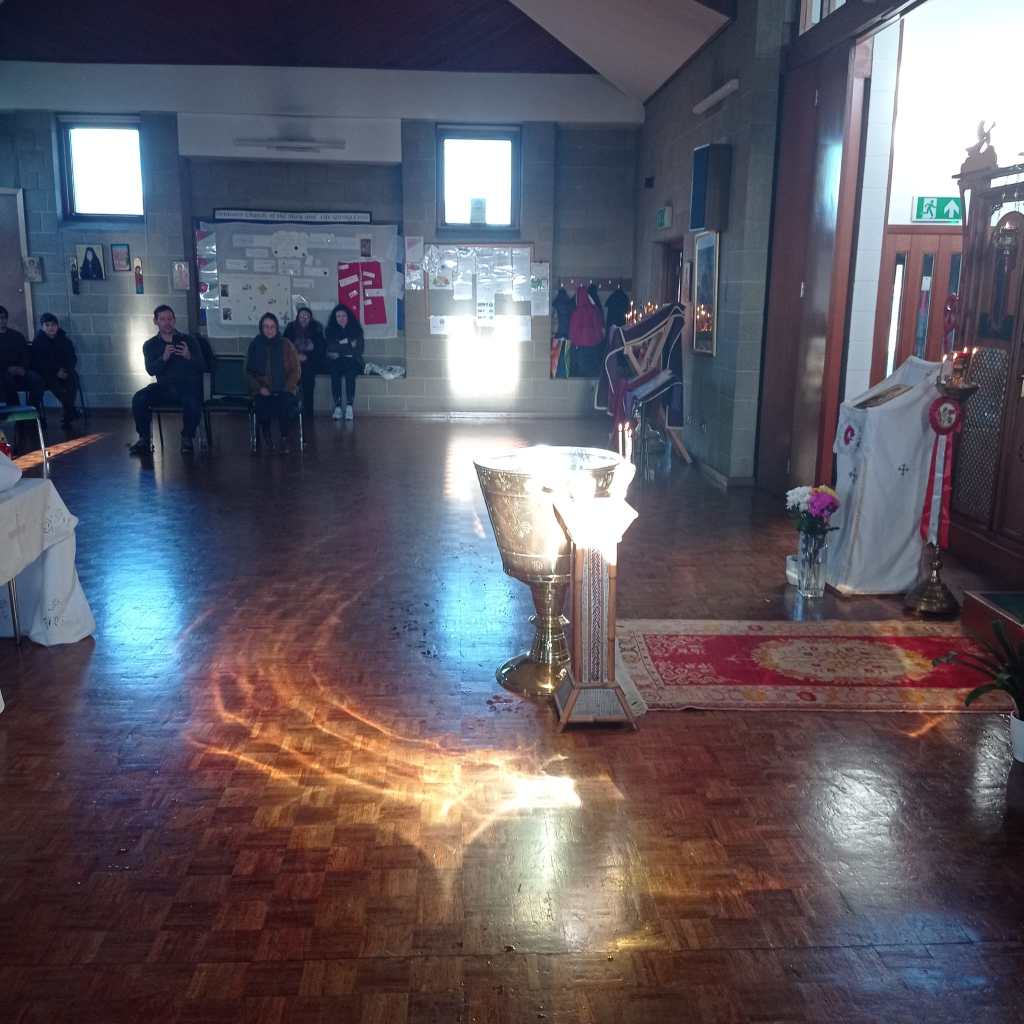
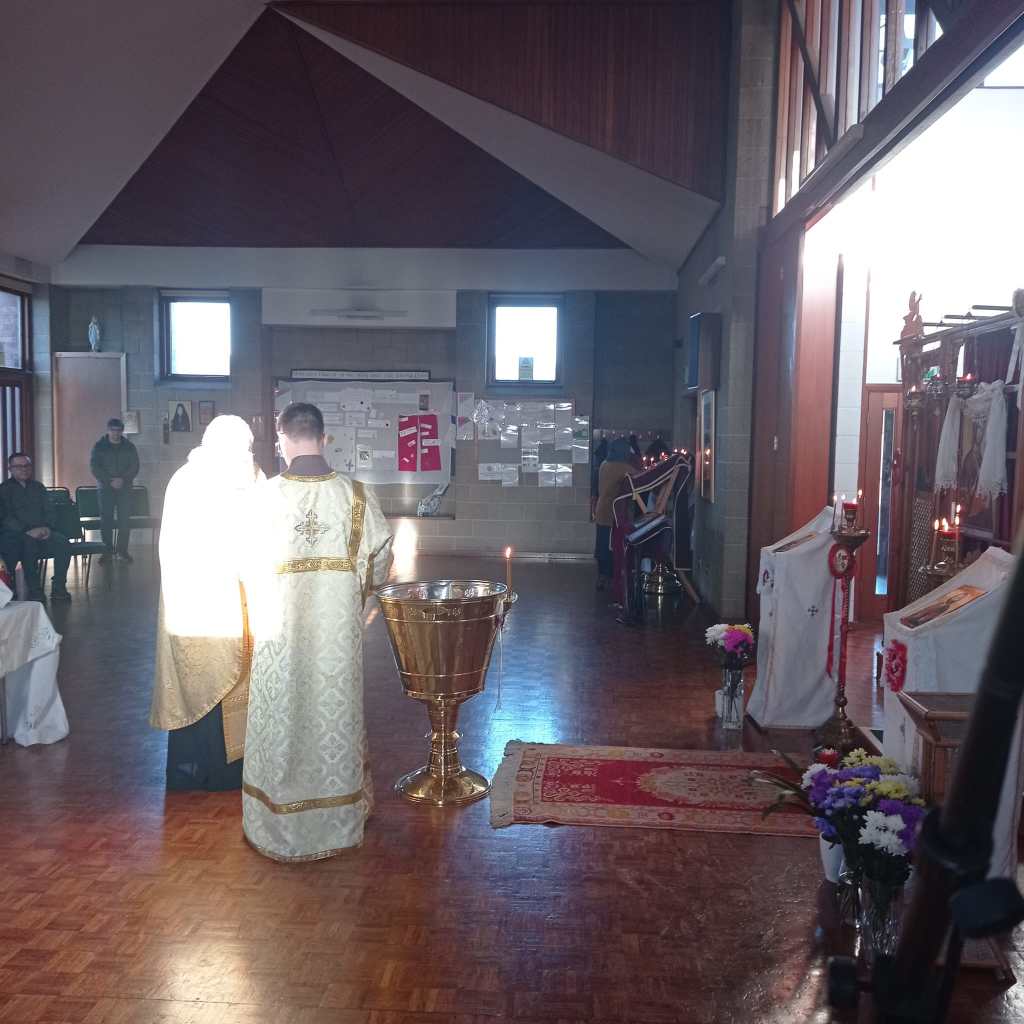
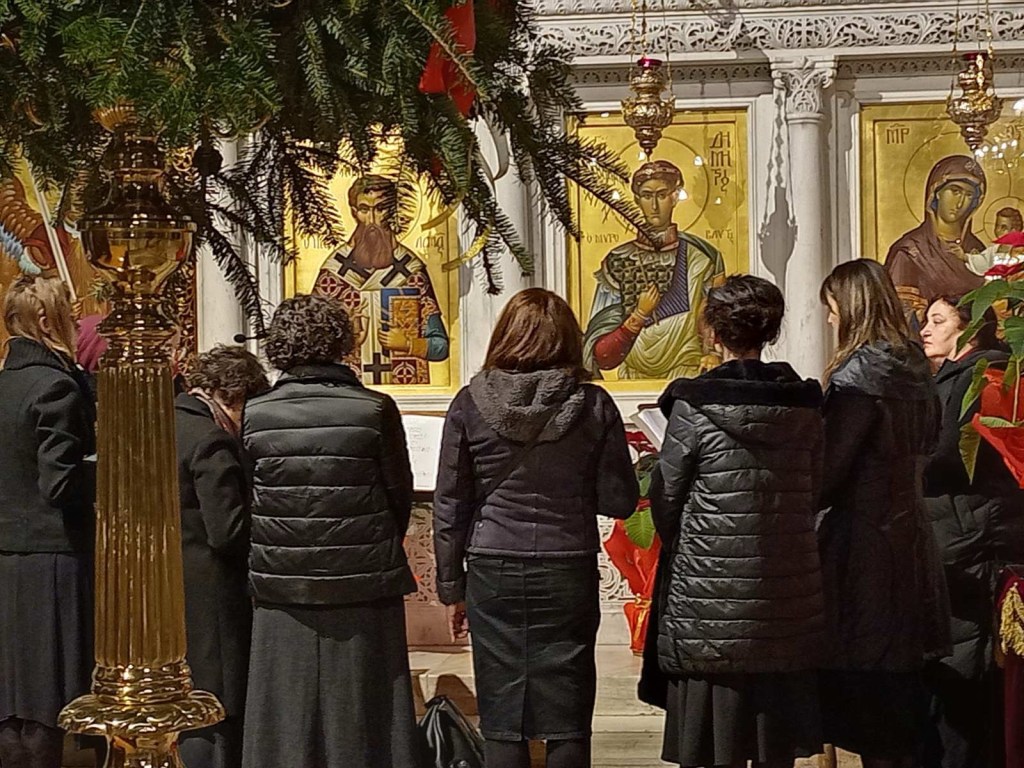
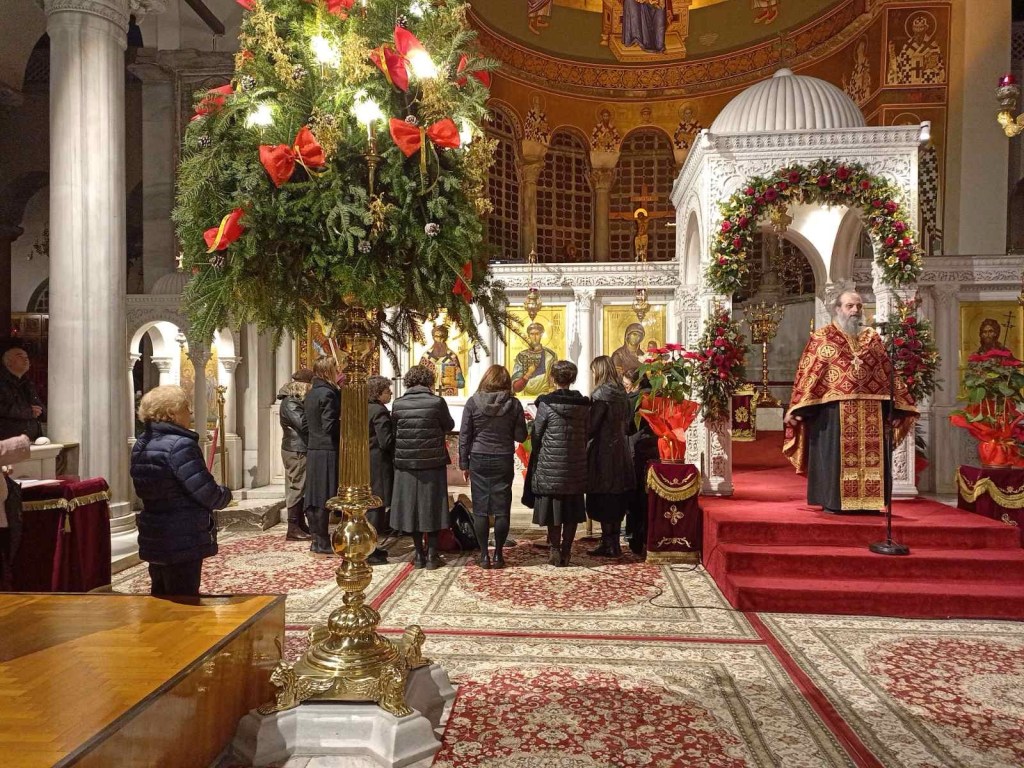
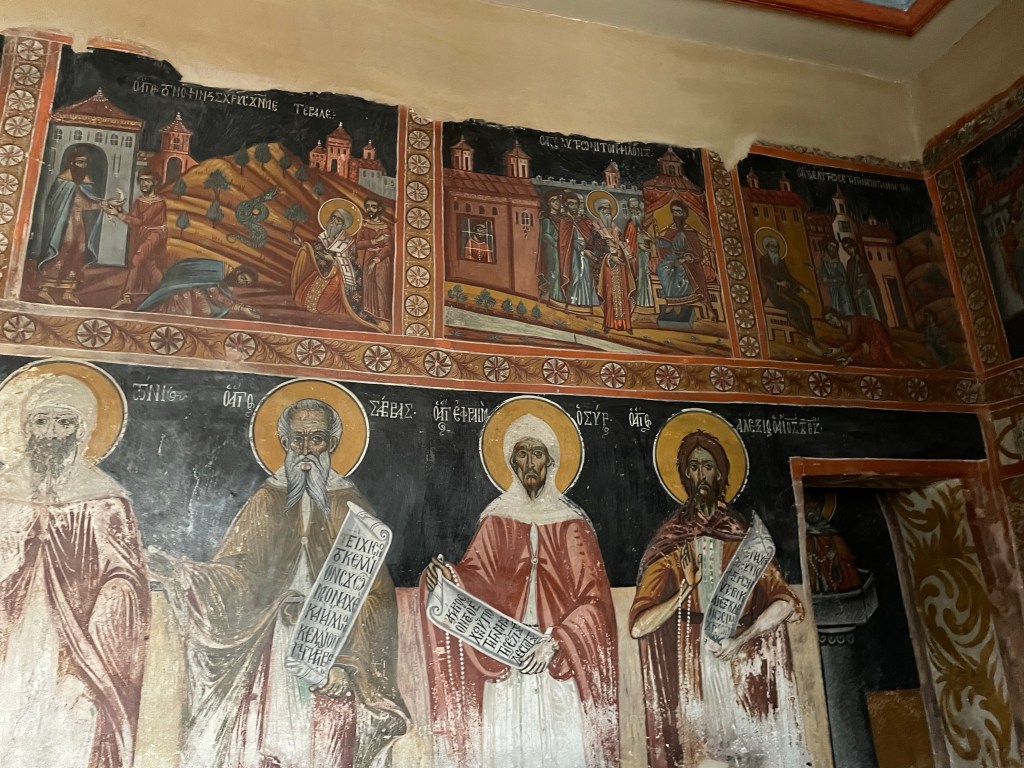
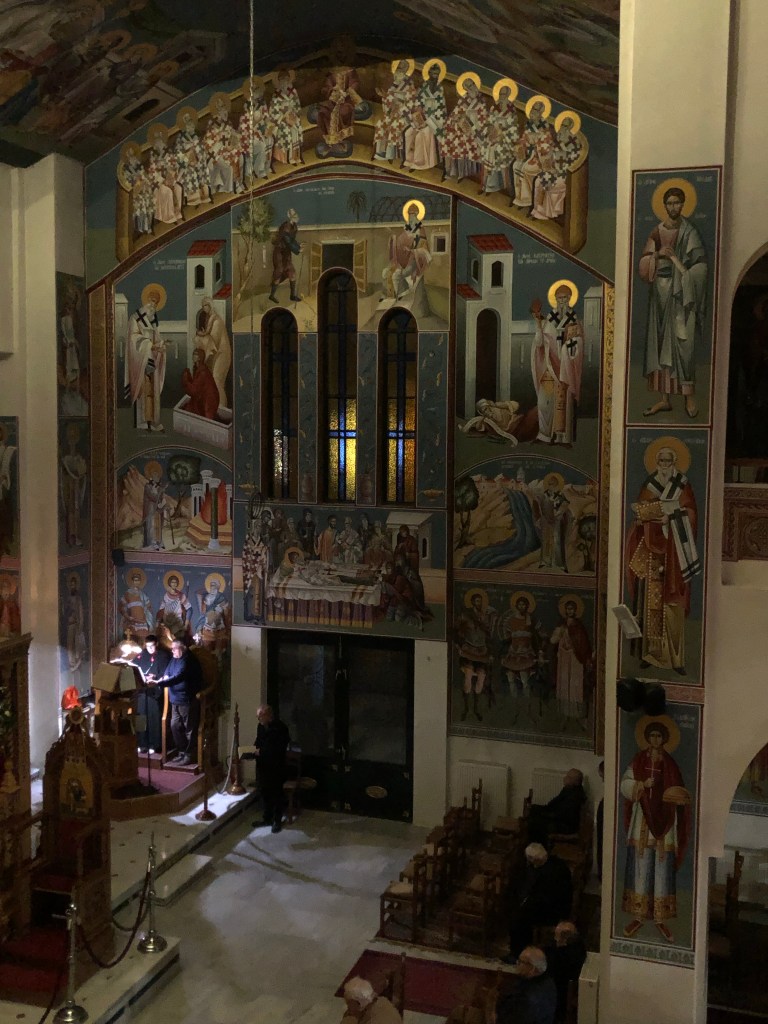
Today, I attended the church services at the Ascension Church, a church dating back in 1894, in the area of the “castles” or “countrysides” in the city of Thessaloniki. Throughout the long services, I was deeply moved and felt many times “the celestial joining the terrestrials”.
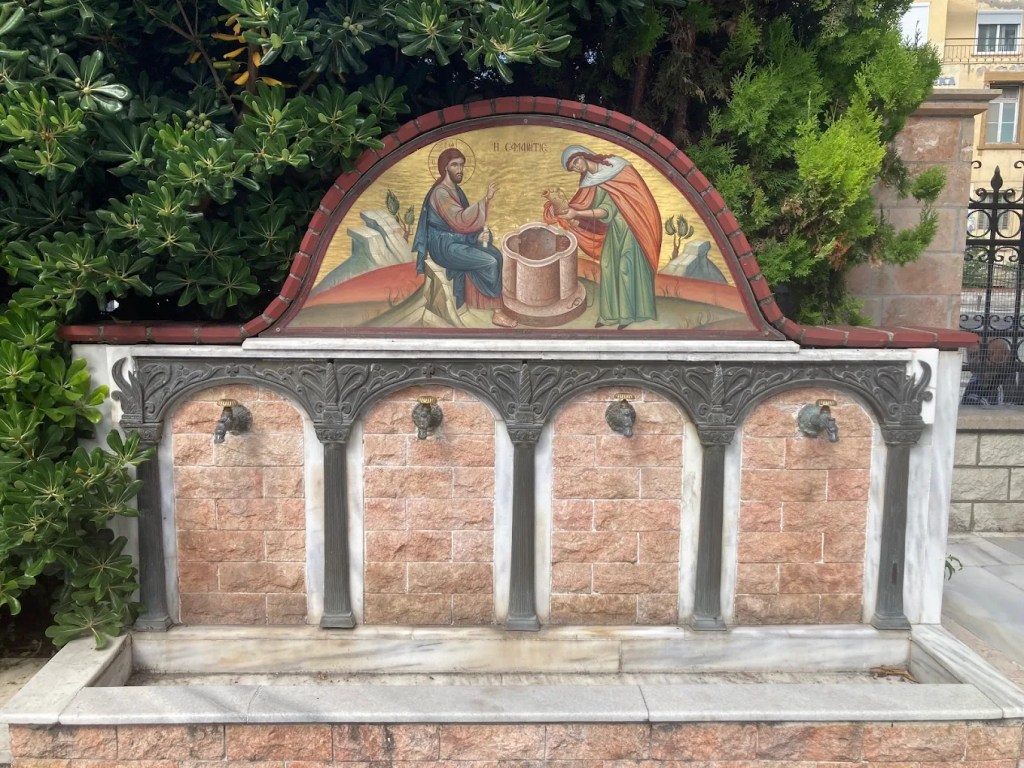
To begin with, I suddenly recalled, most vividly, dear childhood memories with priests, catechists, music teachers and choir masters, long departed from this life, yet so present today! They ‘joined’ us ‘on this day’… This was, after all, the first parish in my life where, other than the Sunday and Feasts liturgies, I also regularly attended piano and choir lessons at its parish classes as a very young child. May their memory be eternal!

Then, my grandmother Styliani also ‘joined’ us. This is the church she used to come for decades and offer her embroidery for charity. A holy widow, her husband died when she was about 25 years old leaving her all alone with two little children between world wars, who spent all her life in prayer and charity works despite her poverty. My childhood memories of her are of a gentle, quiet soul sitting in an armchair, silently praying and embroidering tablecloths. I remember her telling me once how an angel helped her in a dream and explained to her how to embroider a very intricate pattern! We were so connected together, especially through her last confession before her death. (This is a very moving story to be told in more detail another time). May her memory be eternal.
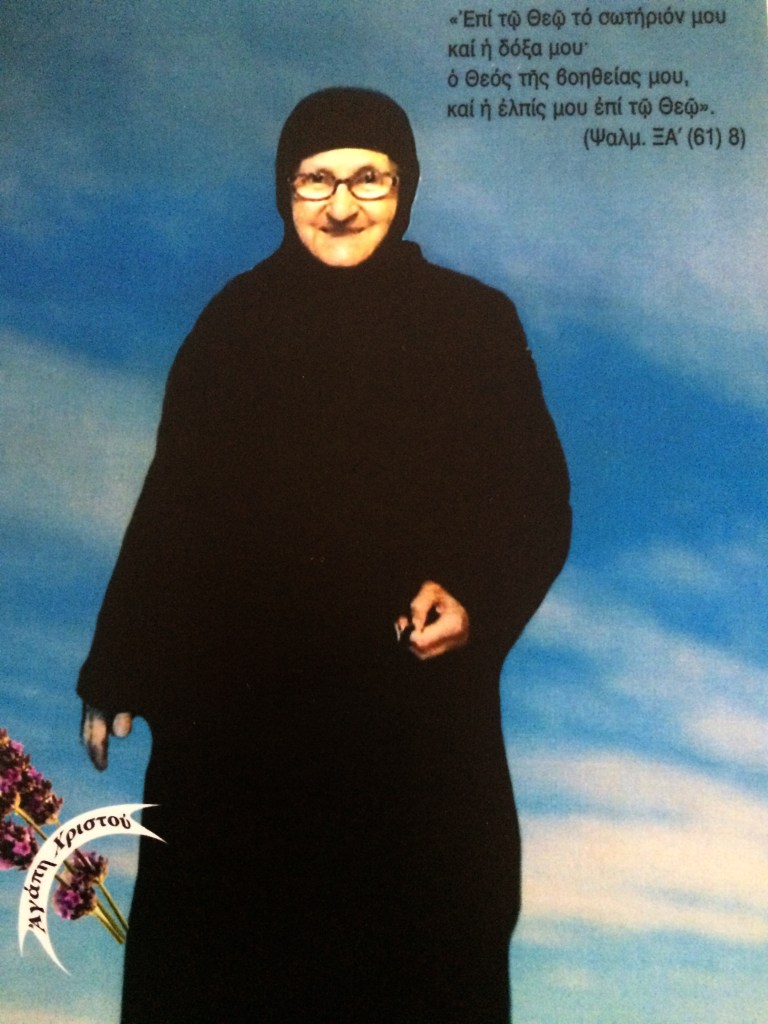
Then, Sister Aggeliki ‘joined’ us. On this day of Theophany, Sister Aggeliki fell asleep in the Lord. What a living signpost! I remembered today all her dedication, patience, prayers, and especially one miracle of hers to a young member of our family. It involved a long trip to the States and a small, yet vital surgical operation ‘photographed’ by her, but this too is another, very moving story to be sometime told in more detail. May her memory be eternal.
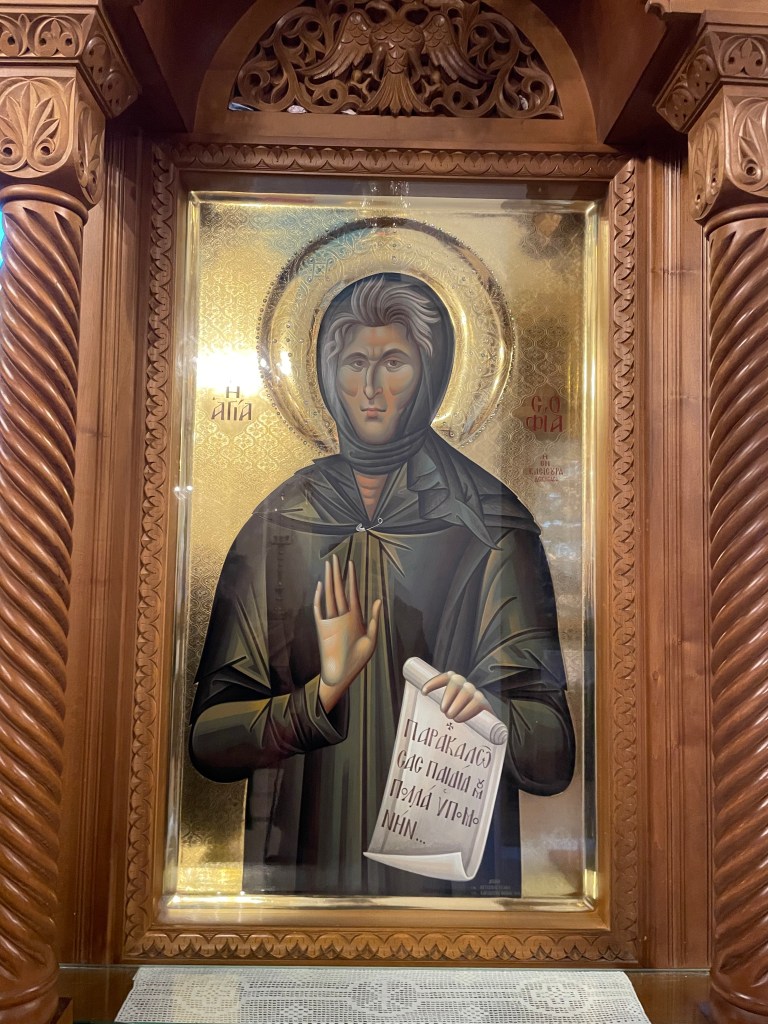
Then, Eldress Sophia, the holy “fool for Christ” of Panagia Kleisoura Monastery, ‘joined’ us. I recently found out that when she first arrived to Thessaloniki as a refugee, she spent some time here in this church, serving as a sexton/ sacristan before she departed for Kleisoura monastery. Hence, her icon at the entrance and her relics. More photos here

The more the service advanced, the more ‘celestials were joining with the terrestrials’, and this was felt throughout the whole parish. I only offer a few examples even for myself…

Then, Fr P. started saying the holy prayers of Epiphany:

“That it may become a cleansing of the souls and bodies of all those who in faith draw and partake of it, let us pray to the Lord. Choir… That we may be made worthy to be filled with sanctification through the partaking of this water, by the invisible manifestation of the Holy Spirit, let us pray to the Lord. … That the Lord God may hearken unto the voice of supplication of us sinners and have mercy on us, let us pray to the Lord.”

Here he just broke down in tears and could not continue! I have never experienced anything like this in all my life in a church or a monastery or even the Jordan river itself! We were all in tears and started silently praying with all our hearts … for some time … In the end, another priest concluded the prayers, and soon a Holy procession followed and the waters at Thermaikos golf, outside, were blessed too.

“Many Christians, with a devout desire, seek to be baptized in the Jordan River, but no matter how many times they enter the Jordan River and how many bottles of holy water we drink, if we do not repent, we will not be saved. Near us, next to us, is the Jordan River. It flows within the Church, it is sweet repentance and confession.
Let us bathe in repentance, because with it all sins are erased. And the bath of repentance is the second baptism. And this bath of Divine baptism, which is called repentance, is done consciously and decisively. I wash, so as not to get dirty again, regardless of whether I fail. But I wash with the decision not to get the robe of my soul dirty again.”
+Elder Ephraim Philotheitis.

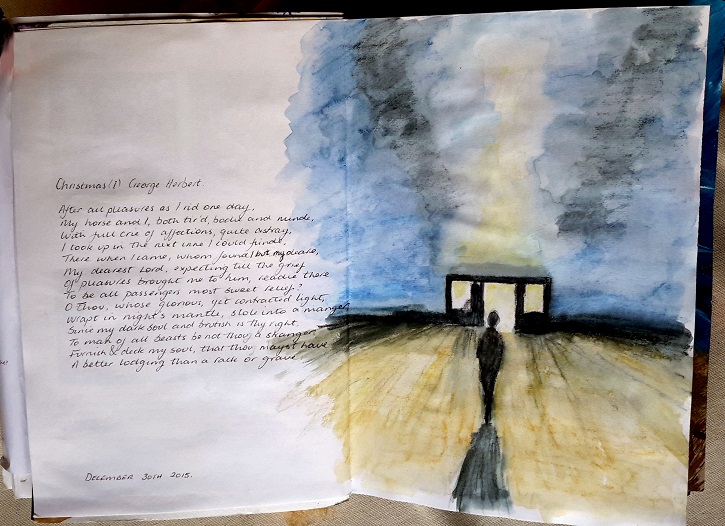
Christmas (I)

Image by Linda Richardson

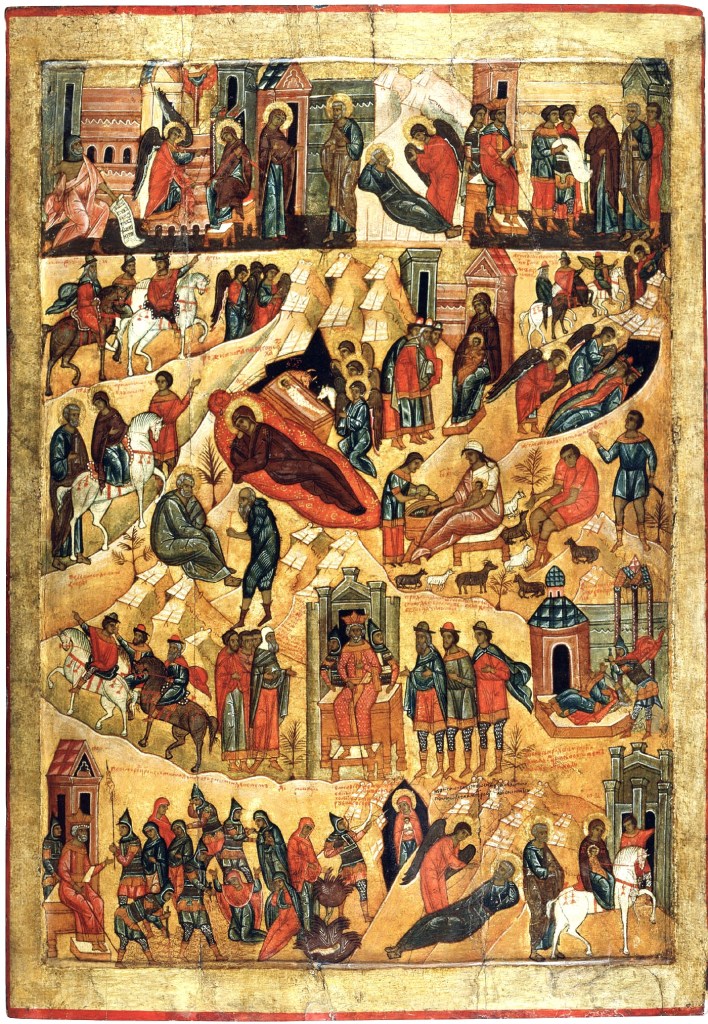
Dear brothers and sisters in Christ, Christ is born. Glorify Him. May we too mystically return to our ‘country’, our ‘normal’ lives, after these Twelve Days, by “another way” (cf. Matthew 2:12), like the Magi, radically changed in our hearts! Because there is another way for each one of us. Not the way of the world, not the way of death, not the way of mundane life, of anger and confusion and busyness, of sorrow, sin, loneliness and suffering. But another way, for each one of us, obtainable because of our mystical meeting with Jesus Christ at the Manger, “at the next inn”.

*

Christmas I

By George Herbert

After all pleasures as I rid one day,
My horse and I, both tired, body and mind,
With full cry of affections, quite astray;
I took up the next inn I could find.

There when I came, whom found I but my dear,
My dearest Lord, expecting till the grief
Of pleasures brought me to Him, ready there
To be all passengers’ most sweet relief?

Oh Thou, whose glorious, yet contracted light,
Wrapt in night’s mantle, stole into a manger;
Since my dark soul and brutish is Thy right,
To man of all beasts be not Thou a stranger:

Furnish and deck my soul, that Thou mayst have
A better lodging, than a rack, or grave.

*

George Herbert is probably my favourite poet. Even in this ‘simple’ sonnet, the Nativity story is told from an innovative angle, and realigns one of Herbert’s favourite tropes for denoting the relationship of God and the soul, that of a kindly host and needy guest.

Shoppers and partygoers, busy staff and busy-er families alike might sympathise with the exhausted rider (“quite astray”) evoked at the beginning of Christmas (I). The unexpected opening modifier, “After all pleasures,” contains an important ambiguity. The preposition “after” suggests both a following in time, and an actual pursuit. Herbert’s speaker, seemingly, is exhausted both by the pleasures experienced and by the process of chasing them, as if unsatisfied pursuit, unsatisfied consumption and busyness were as crazily embroiled in the 17th century as the 21st.

The older meaning of “affection” is “disposition”, and the plural, “affections”, in line three, suggests a throng of bodily and emotional needs, rushing about like hunting dogs that are “in full crie” and yet have lost the scent of their prey. There’s no lecture on the emptiness of pleasure-seeking – simply a vividly realised picture of heated chase and confused disappointment – “the grief/ Of pleasures …” What an amazing line and how theologically true echoing the Prodigal Son parable! How patiently is the Lord awaiting each one of us until “the grief of pleasures” brings us to Him and then He offers relief!

That the inn where the rider pauses is partly an ordinary country inn, a natural place of recovery for huntsman and horse, is suggested by the wonderfully casual demotic of “I took up in the next inne I could finde”. But this inn is also the one in Bethlehem, whose stables are Christ’s birthplace. Touching on his favourite, lovely “hospitality” metaphor, Herbert reveals that Christ is already there, awaiting the traveller “and all passengers” like the kindliest of welcoming hosts.

A little metaphysical punning follows. God has “contracted” his light to be born in human time; he has made his light very much smaller to suit his incarnation, and he has made mankind a binding promise. There’s an almost maternal tenderness in this image of God “wrapt in night’s mantle”.

The mood is picked up in the emotional repetition of the epithet, “My dear,/ My dearest Lord …” From then on, the sonnet turns from first-person narrative to direct apostrophe, from anecdote to prayer.

The symbolism of Christ’s rebirth in the human soul is hardly original. But Herbert’s metaphysics are always strongly rooted in the actual, and his speaker’s prayer is sharp and fresh when he pleads, “To Man of all beasts be not thou a stranger …” The supposed overlord of the animal kingdom, Man, is singled out but also “contracted” at a stroke, to become just another beast in the stable. An almost timid recognition of how distant such a being is from God underlines the plea, “Be not thou a stranger”.

And then Herbert lightens the mood with a new metaphor, one of immediate interest to any of his parishioners planning to “deck the hall” – or the hovel. But the reference is only briefly playful, and Herbert’s speaker is looking ahead to the crucifixion when he asks that his “dark soul and brutish” be furnished and decked so as to be a fit lodging for Christ, “better … than a rack or grave”. (Cf. Carol Rumens’ Poem of the Week, 2014, The Guardian).

The conclusion of this poem where the weary traveller after a day (a life?) of travel, finds solace in the presence of God comes in such start contrast to the closing lines of Robert Frost’s dark, winter poem, “Stopping by Woods on a Snowy Evening”:

“The woods are lovely, dark and deep,   

But I have promises to keep,   

And miles to go before I sleep,   

And miles to go before I sleep.”

How blessed are we that in the darkness of our world, the light of His presence breaks through piercing our personal struggle with the company of angels. Christ is born. Glorify Him.

May we too return to our ‘country’, our ‘normal’ lives, by “another way” (cf. Matthew 2:12), like the Magi, radically changed in our hearts!

A Lonely Christmas

* “The Christmas of a Lonely Woman”, by St. Nikolai Velimirovich. Dedicated to all those struggling, especially during this holiday season, with sadness, loneliness, and depression. Truly wondering why such sorrow, suffering and depression, especially in these days, is so widespread. Is it because of our extreme self-centredness or is there truly such extreme sorrow and anguish in our world? Such a temptation! Such a ‘difficult’ feast for all those who are ‘alone’. “I alone am left, and they seek to take my life.” 3 Kingdoms 19:10 Μόνος, μονώτατος ειμι!

*

A blessed feast, dear brothers and sisters. “The sacrifices of God is a broken and contrite heart. 11 of the 12 Apostles were martyrs, each facing a commission and personal struggle. It is not a coincidence that we celebrate St. Stephen in two days’ time the protomartyr. Courage, not comfort, is the Christian calling. Yet in the darkness of our world, the light of His presence breaks through piercing our personal struggle with the company of angels. Christ is born. Glorify Him.” (Fr. J.H.)

*

You complain about loneliness in the middle of a big city. So many people around you seethe like an anthill, and you still feel like you are in the desert. On major holidays the situation is unbearable. Everywhere joy is overflowing, while you are being pushed towards sadness. The festive days of Christmas and Easter seem like empty containers that you fill with tears. When these holy feasts are far behind or ahead of you, you are calmer. But when they approach and come, grief and desolation conquer your soul.
What can I do for you? I will tell you the story of Joanna’s Christmas, because perhaps it will benefit you. I will leave it to her to narrate it, just as she told it to me.


“For forty-something years I have seen this world as a woman. Never any joy, except a little as a child in the home of my parents. But before the world I didn’t show I was sad. Before people I pretended to be joyful, and in my loneliness I wept. Everyone considered me a happy creature, since I showed as much. I would hear complaints all around me, from the married and the unmarried, the rich and the poor, everyone. And I thought: Why should I also complain to these miserable ones about my own misery, and just increase the sorrow around me? God, if I show myself happy I will be more useful in this unhappy world, but my secret I will hide within and I will cry in my loneliness. I prayed to God to show Himself to me somehow, at least one of His fingers so I can feel. I prayed thus, in order to not disappear in my hidden sadness. From any income I gave to charity anywhere I had an opportunity. I would visit the sick and the orphans, and brought them joy from my own apparent joy. ‘I believe in You, my good God,’ I would frequently say, ‘but I beg You, appear to me in some way, to believe in You more. I believe, Lord, help my unbelief’ (Mk. 9:24). I would repeat these words from the Gospel. And indeed, I experienced the Lord’s appearance to me.

Most difficult for me were the big holidays. After the Liturgy I would shut myself in my room and I cried the whole Christmas and Easter. But last Christmas God appeared to me. This happened as follows. The big day was approaching. I decided to prepare everything like my mother prepared for me: meat and pasta and deserts and everything else. ‘May the Holy Trinity be merciful to the four corners of the earth.’ While I did these things I prayed without ceasing: ‘Lord, send me visitors, but especially the totally hungry and poor! I beg You, appear to me in this way.’ Now and then I thought: ‘Crazy Joanna, what visitors are you waiting for on Christmas? On this holy day everyone is in their own home. How will someone come and visit you?’ And I cried and cried. But again I would repeat the prayer as I was preparing.
When I returned home from church on Christmas, I lit the candle and laid out the table. I put out all the food, and I began to walk back and forth in the room. ‘My God, do not abandon me!’ Again I prayed. Few passed by on the road. It was Christmas, and our road was deserted. But once the snow crackled under someone’s feet, I flew to the door! ‘Perhaps it is my visitor? It isn’t.’ This is how I passed my time. The afternoon came and went, and I was alone. I began to cry and scream: ‘Now I see, Lord, that You have forsaken me altogether.’ This is how I wept and I silently wept continuously!

Suddenly someone knocked on the door, and I heard voices: ‘Give brother, give sister.’ I quickly ran and opened the door. Before me stood a blind man with his guide, both hunched, ragged and frozen. ‘Christ is born, my sirs!’ I cried out merrily. ‘Truly He is born!’ they rattled with their teeth trembling. ‘Mercy, sister, have mercy on us! We are not asking for money. From this morning nobody has offered us bread, some money or a glass of raki. We are very hungry.” Because of my joy I was lifted up to the third heaven. I led them into my home and served them a full table. With tears of joy I served them. Intimidated they asked me: ‘Why are you crying, miss?’ ‘Out of joy, my sirs, out of sheer and bright joy! That for which I prayed to God was given to me by God. I prayed to Him for a few days, to send me exactly the visitors such as you are, and behold, such He sent me. You did not come here by chance, but my good Lord sent you. Today He appeared to me through you. This is the most joyful Christmas of my life. Now I know that our God is alive. Glory to Him and thanksgiving!’ They, my beloved visitors, responded, ‘Amen’. I kept them till the evening, filled their bags and said goodbye.”

Such was the previous Christmas of Joanna. Grant O God that this year it will be even more joyful. You also pray, daughter, that the heavenly Father will manifest Himself to you in some way – and God’s ways are many – so that you may experience a miracle. Do not prepare for sadness on this big day, but prepare for joy. And He Who is All-seeing and All-merciful, will make you joyful.’
Source: From Missionary Letters of Saint Nikolai Velimirovich; Orthodox Christianity Then and Now; By John Sanidopoulos

My Twelve Days of Christmas — Part B

New Year 2024

My spiritual father’s wish for the New Year: “Hope for the New Year is a gift from God along with faith and love. We should embrace these graces; we will be blessed as peacemakers and become wise if we love His Commandments.”

*

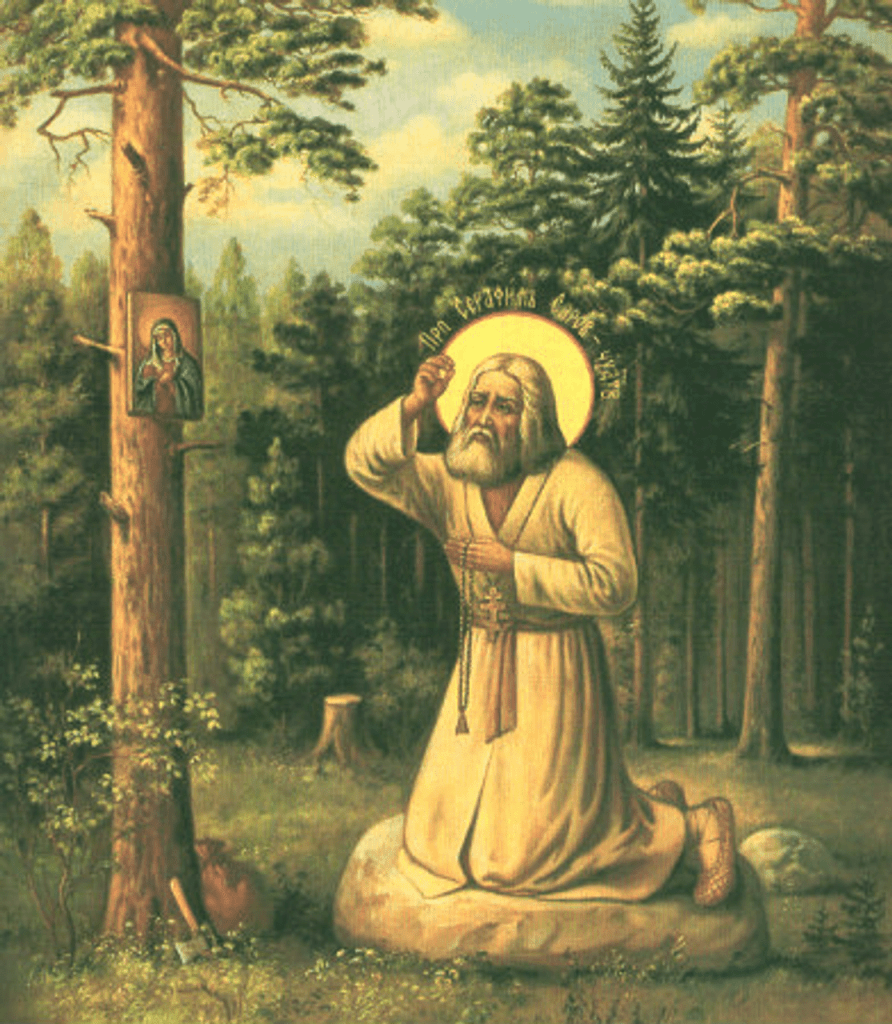
Jan 2 +Seraphim the Wonderworker of Sarov

May the holy one pray for us. Back to home, work, hospital/ emergency rooms, crises, implosions, explosions, yet with more hope. Theophany is at the end of this long, dark tunnel. Glory to God!

“You cannot be too gentle, too kind. Shun even to appear harsh in your treatment of each other. Joy, radiant joy, streams from the face of one who gives and kindles joy in the heart of one who receives.” St Seraphim of SarovIf only I could interact like this with some difficult family members!

*One of our friends K. who was in hospital and 3 times came near death, got back home! When his mind was in a haze in hospital, and he thought he was at work and gave orders to his employees, and he would not recognise even family members, yet when they prayed the Trisagion, he made his cross! And when one of the doctors was explaining to family members how that particular treatment brought him back to life, the unconscious K. corrected him and told him that it was not that medicine but God who had brought him back! And then, he returned to his coma!

*

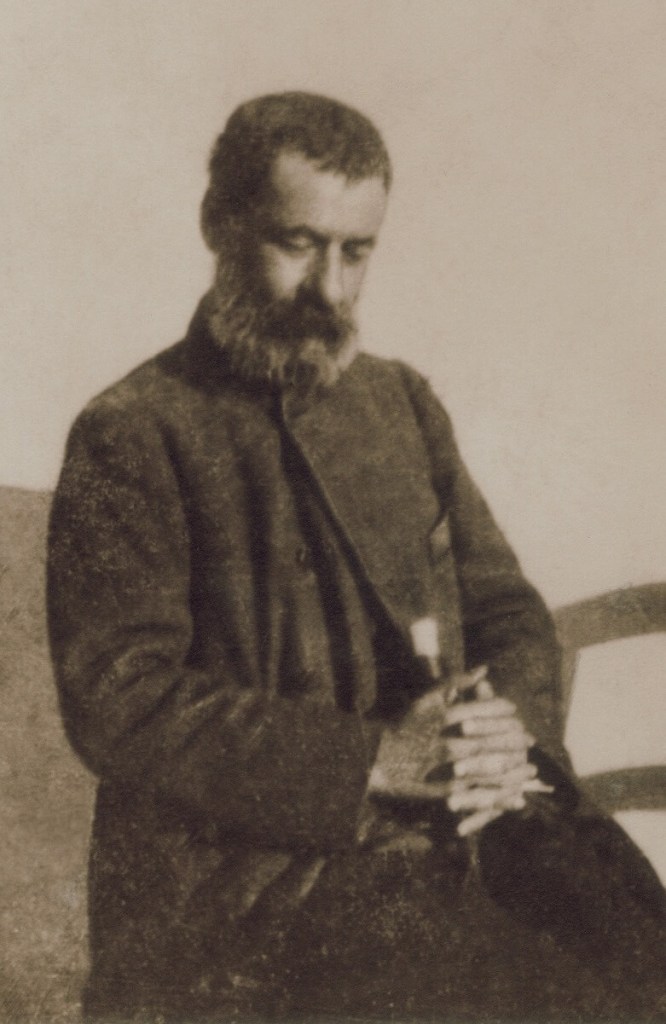
Jan 3 + The finding of the Holy Relics of St. Ephraim in N. Makri, Attica (1950) + Alexandros Papadiamandis Repose

Cleaning, tidying, cooking, skype prayer sessions, lots of telephone calls and Papadiamandis, the Saint of Greek literature! Papadiamandis’ desire to glorify God is shown even more in the way he ended his life and in his attitude toward death. In a prayer he offered at the end of a poem entitled, “To the Little Panagia in the Turret,” he beseeches her, “comfort me, as well, my Panagia, before / I depart and will be no more.” In a letter written by Papa-George Rigas, we learn about the last moments of Papadiamandis’s life on Earth:

His repose took place as follows: He became ill on the 29th of November 1910. On the third day of his illness, he fainted. When he revived, he asked, “What happened to me?” “It’s nothing, a small fainting spell,” his three brothers who were at his side told him. “I haven’t fainted,” Alexandros said, “in so many years; doesn’t it seem that it’s a prelude to my repose? Get the priest immediately and don’t delay.”… Soon after, having been called [by his brothers], the priest and the doctor arrived at the same time. Papadiamandis was, above all things…a pious Christian. So, as soon as he saw the doctor, he asked him, “What are you doing here?” “I came to see you,” the doctor told him. “Keep quiet,” the sick man told him. “I will first follow the ecclesiastical path [and call upon the help of God], and then you can come later.”…

Papadiamandis death bed in his cell

He had control of his faculties until the end and wanted to write a story. Until the end, his mind was dedicated to God. On his own, a few hours before his repose, he called for the priest to come so he could partake of Holy Communion. “Perhaps later on I won’t be able to swallow!” he explained. It was the eve of his repose and, as irony would have it, it was the day they told him that he would receive the medal of the Cross of the Savior. On the eve of his repose, the second of January, he said, “Light a candle [and] bring me an [ecclesiastical] book.” The candle was lit. The book was about to be brought. However, Papadiamandis wearily said, “Don’t worry about the book; tonight I will sing whatever I remember by heart.” And he began to chant in a trembling voice, “Thy Hand Touching” [a troparion from the 9 the Hour of the eve of Theophany].

Papadiamandis sang this final hymn and, as day broke between the second and third of January of his sixtieth year, he wearily fell asleep. After passing through the furnace of pain and trials and tasting many of the bitter dregs of life while faithfully living the liturgical life of the Church, he now stretched out his strong wings to fly to the upper chapel of the angels, toward which he had oriented his whole life. It snowed on the following day and, like Uncle Yiannios in the story, “Love in the Snow,” Papadiamandis lay down his worn-out body, presenting himself, his life, and his work before the Judge, the Ancient of Days, the Thrice-Holy. This was, finally, the only judgment with which he was concerned as he passed through life. Though his life and struggle in this world have ended, his work will continue to give witness to his devotion to the liturgical tradition of the Orthodox Church for generations to come.

More about this ‘Saint’ of Greek literature in A Greek Dostoyevski

The Gleaner, A Christmas Story by Papadiamandis

*

Jan 4 + Forefeast of the Theophany of Our Lord and Saviour Jesus Christ, St. Nikiforos the leper

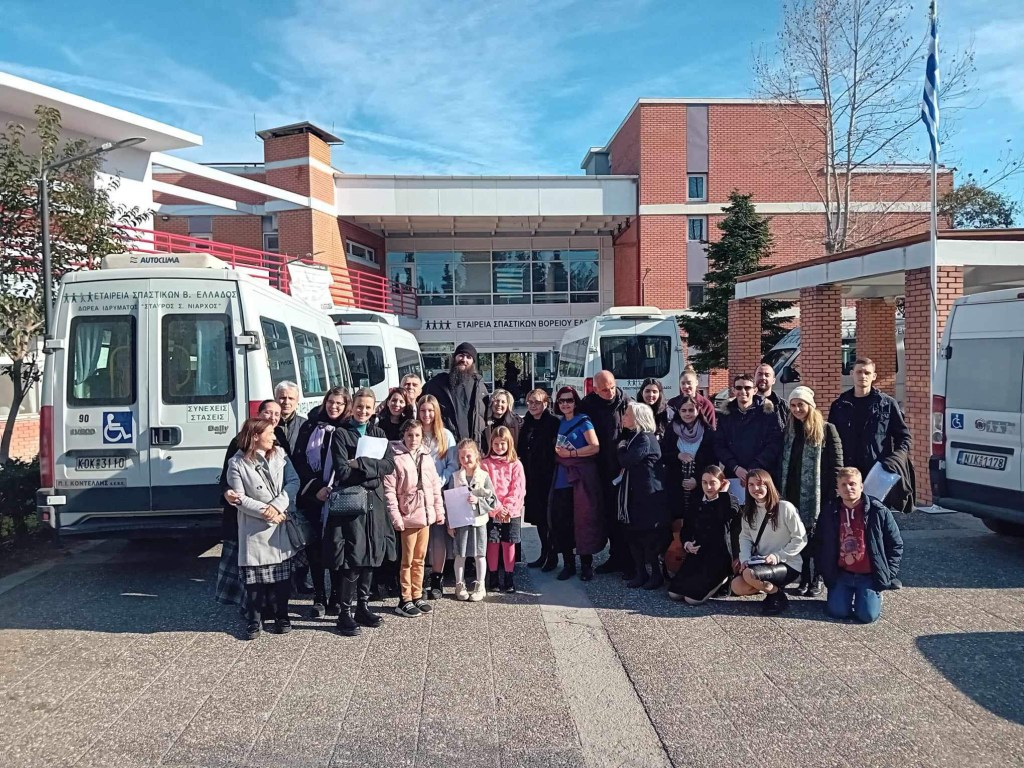
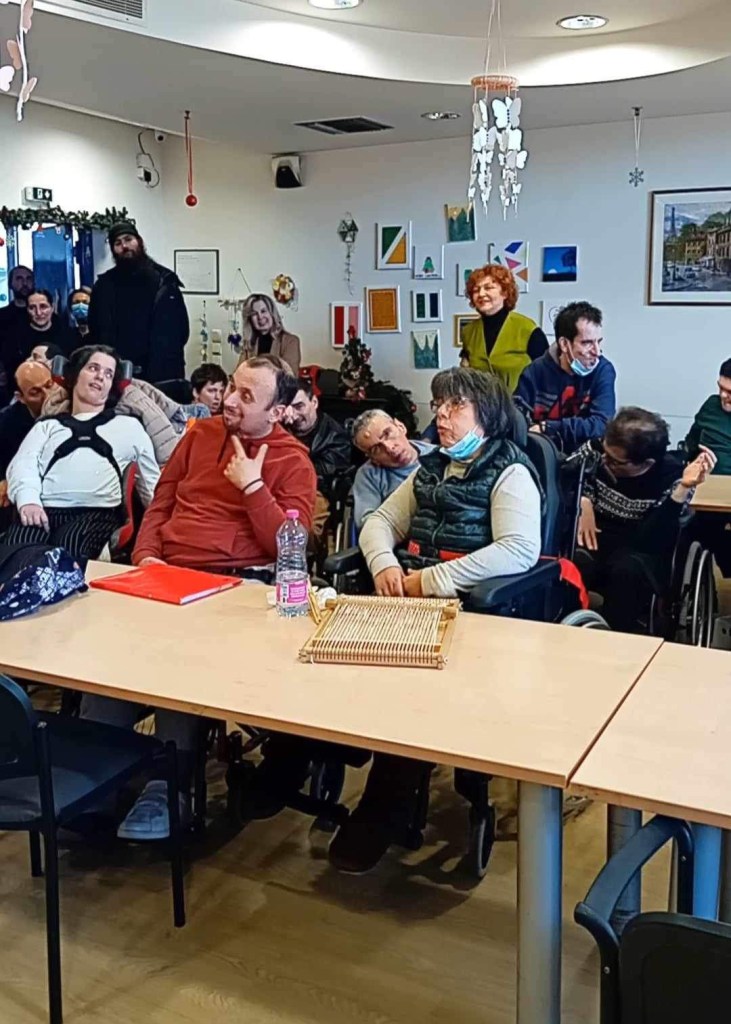
Theophany carols to cancer hospitals, spastics society and autistic foundation centres.

Jan 5 + Eve of the Theophany of Our Lord and Saviour Jesus Christ

Vespers Holy Liturgy in church and the visit of our new Bishop Philotheos. Such a humble and full of God’s love this Bishop he is! He discreetly emerged from the Royal Doors and joined us, chanting and blessing us- no special ceremony! Such a beautiful, brief homily and chanting! May the Lord richly bless him! We all wanted to stay all day, every day, with him!

More photos here

Jan 6 + The Theophany of Our Lord and Saviour Jesus Christ- The Blessing of Jordan

Church service, blessing of waters at the Thessaloniki harbour, blessing of our house by the parish priest and lots of telephone calls from dear brothers and sisters, Glory to God! Turning point to this descent to Hades! Epiphany! Ascent to Heavens!

1917, Blessing of waters in Thessaloniki harbour, same location with 2024

Meanwhile, somewhere in the UK

The blessing of Jordan

The brightness of Theophany

Jan 7 — Synaxis of John the Holy Glorious Prophet, Baptist, & Forerunner, Afterfeast of the Theophany of Our Lord and Saviour Jesus

SAINT JOHN THE FORERUNNER AND BAPTIST

Thirty years of fasting and silence–

This, not even the mountain beasts can endure!

The lion alleviates his hunger with the music of roaring,

And the tree rustles when the wind approaches.

But you neither rustle, nor moan.

Neither your lament nor your song through the wilderness echoes!

Tell me, are you a man? What is your name?

Will you ever want to speak with someone?

“The voice, the voice, the voice: I am the voice–

But the Word of God, He is.

To the children of Israel I was sent to cry out:

Repent, O people; behold, He comes.
Bring forth good fruit, each according to your strength.
Behold, behold He comes–oh, wonder of wonders!

In the midst of the water, fire from heaven is concealed!

Behold, the Lamb of God, among the wolves, walks.

Wolves, your lupine temper in the water, cleanse!”

Thirty years of silence and fasting:

Of your body, what remains, save your voice?

Your withered body is but a shadow of your voice,

Which proclaims the news: Behold, God is come to us!

Your withered body was a reed, which Herod broke.

But the voice goes on and on, with no one to silence it.

Whose voice is that, at which even the centuries tremble?

A hungry lion! No, No–a man of faith.

The Prologue from Ochrid

*

Και του Χρόνου!

By C.

My Twelve Days of Christmas — Part A

Dec 24 — Eve of the Nativity of Christ, Eugenia the Righteous Nun-martyr of Rome and those with her

Suddenly our friend D. is in hospital, and soon in intensive care. Agony, heartache and a complete mess at work.

Dec 25 — THE NATIVITY OF OUR LORD AND SAVIOR, JESUS CHRIST

Thank God, we made it to church and received Holy Communion. Only our Christmas meal got cancelled as our hosts got down with the flu. So we brought them chicken soup, exchanged presents and wishes in the balcony, and spent the remainder of the day in hesychia.

Dec 26 — SYNAXIS OF THE HOLY THEOTOKOS

Thank God, an invitation from dear brothers and sisters from the Metochion of St. George to rescue us from our ‘lockdown’. These days are difficult when you are alone or together with difficult family members. The meal, the company and the carols were a great blessing despite the little temptation on our way when both of our back tyres got flat/ punctured (a neighbour’s prank) and we had to call road assistance etc.

The greatest blessing of all was our hostess, A., a widow and a valiant Christian soul. When that car hit her husband’s car, cut him half and left him paralysed from the waist down, she bore bravely the Cross for 10, even more, years, becoming the pillar of her family, until her husband reposed in the Lord, supporting her orphan young boy. This day brought me even closer to dear A., and I am sure I can learn a lot how one should live, just by being next to her and observing her.

Dec 27 — STEPHEN, ARCHDEACON & FIRST MARTYR

Back to work and hospital/ doctors check about D. Thankfully, lots of chanting rehearsals too.

Dec 28–20, 000 Martyrs burned in Nicomedia, Simon the Myrrhbearer, Founder of Simonopetra, Monastery of Mount Athos, Afterfeast of the Nativity

Dec 29–14,000 infants (Holy Innocents) slain by Herod in Bethlehem

St. Anysia’s relics

The evening at St Demetrius’ church, in front of St. Anysia’s relics, was a blessing words cannot describe. The choir’s hymns were celestial.

Look at this little Romanian pilgrim venerating the Saint! Isn’t she beautiful?! She is real!

Dec 30 — Anysia the Virgin-martyr of Thessaloniki

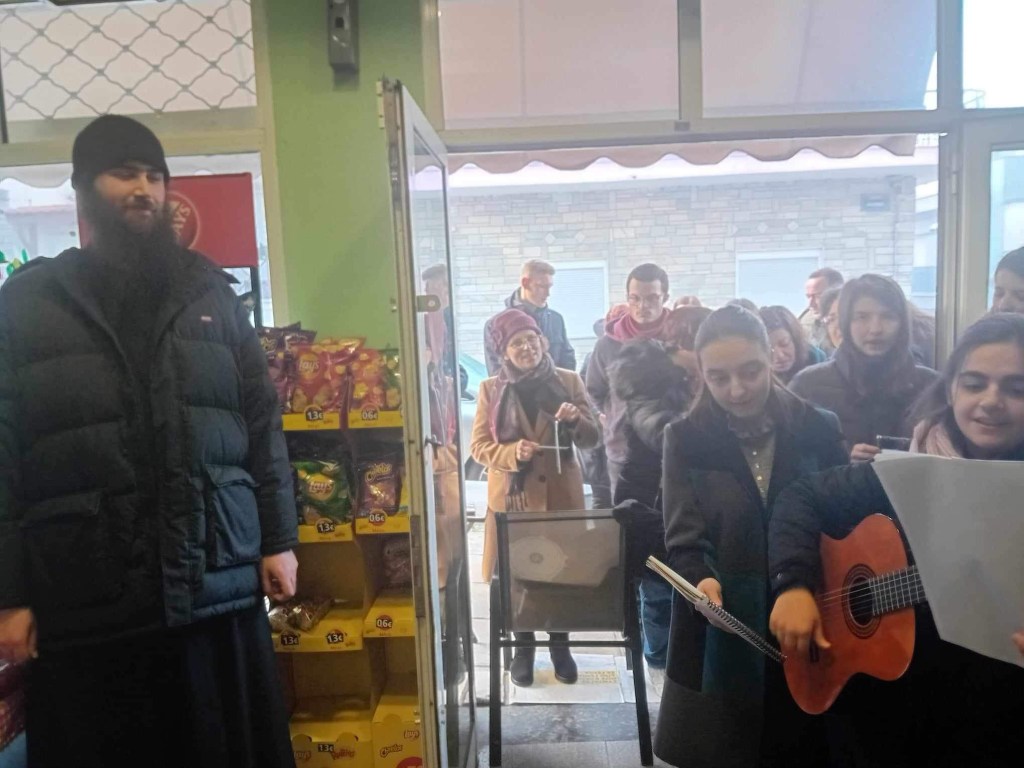
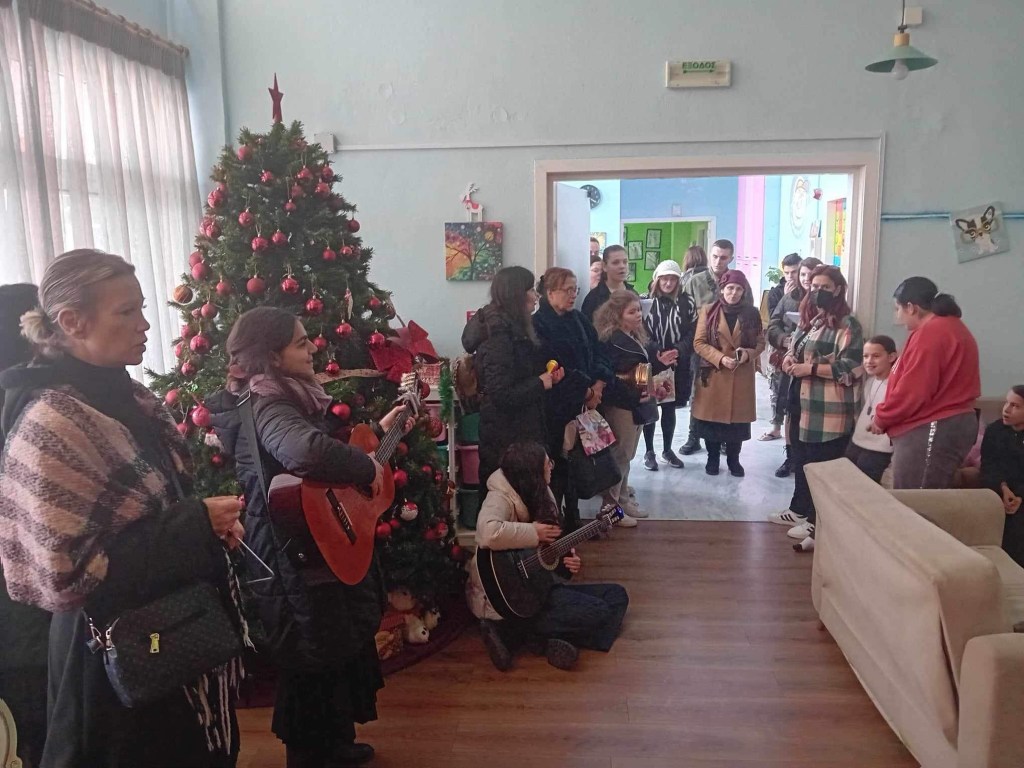
Christmas carols to local charity stores, hospitals, orphanages etc, with St George Metochion choir of all the faithful. Father Deacon Nephon on the right (2.17 m tall) is the heart and soul of all our activities, and such a help and consolation in our lives!

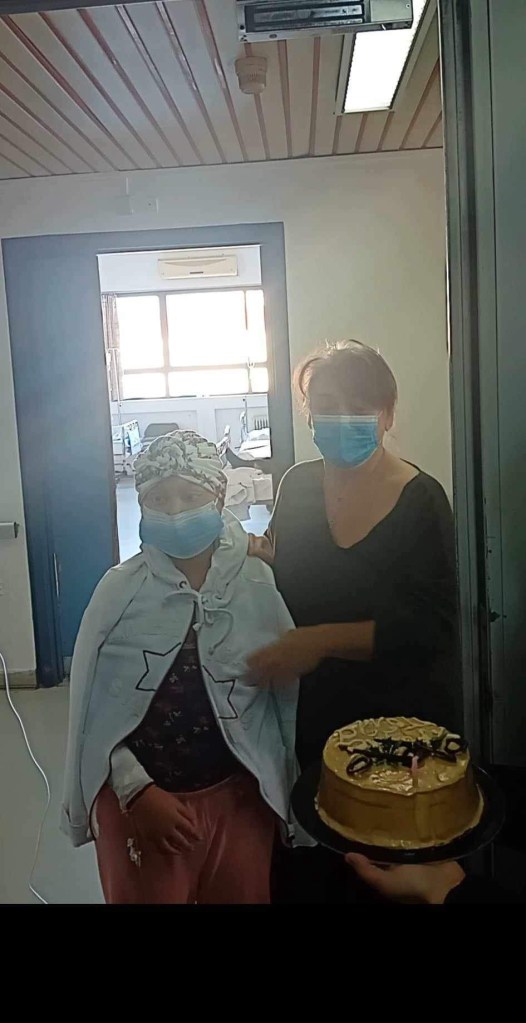
The highlight of the visit was, of course, Konstantina, a little girl, suffering from a range of diseases, kidney failure to terminal cancer, pleading God, as Fr. Deacon Nephon told us, to end her life as she could take no more suffering. We sang carols to her, offered her presents and lit a birthday cake.

This tour to hospitals and orphanages made me realise how little I am suffering bearing my own Cross, whereas I believe that my burden is sooo heavy. Little did I know!

Later in the afternoon, we drive to Serres to spend the weekend and New Year’s Day together with dear friends. Such a blessing again not to be left alone these days. These Christmas blues … But it seems that we can never have enough of hospitals these days. Three hours after our arrival, V.’ mother nearly collapsed and we had to take her to Serres’ hospital. We spent a long vigil there until 03:30, but thank God, although she had to stay in hospital, her condition was stabilised.

Dec 31 —Apodosis of the Nativity of Our Lord and Savior, Jesus Christ, Melania the Younger, Nun of Rome, 

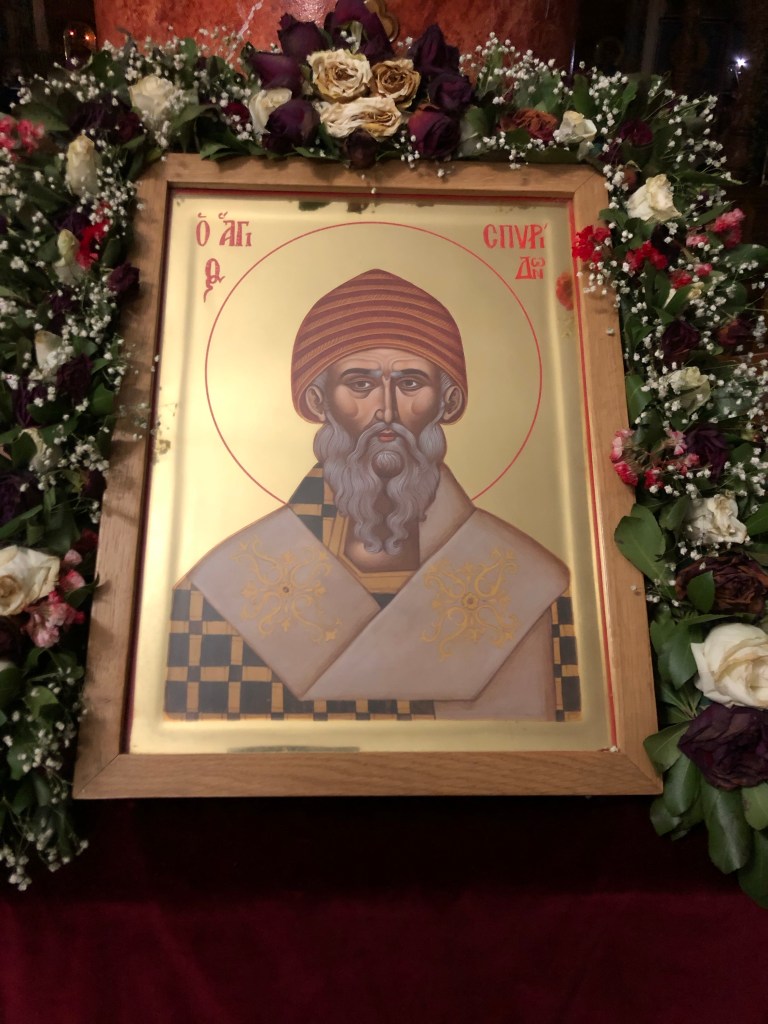
I barely made it to church in the morning with just three hours sleep, and then slept most of the day after we got back. We welcomed the New Year in church, in a vigil, and it was the first time in my life that while we were on our way to Holy Communion, we could hear all the fireworks and celebrations outside. The vigil took place in a beautiful, new church, dedicated to St. Spyridon.

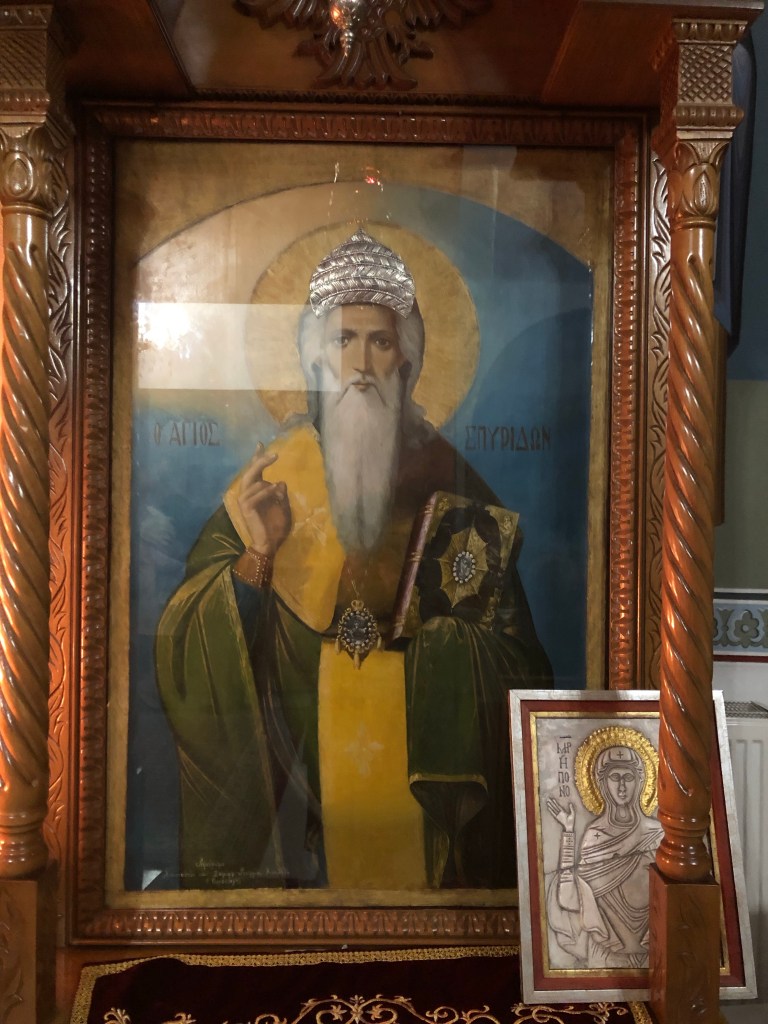
I forgot to mention that in the evening of Dec 30, right after our arrival in Serres, Father Ioustinos from Jacob’s Well in Jerusalem, 83 years young, called me, after so many years, and together with his news, he offered to make an icon, possibly of St Spyridon!!!

Jan 1–Circumcision of Our Lord and Savior Jesus Christ, Basil the Great, Archbishop of Caesarea in Cappadocia

Today, we made a pilgrimage to the monastery of St. John the Forerunner in Serres.

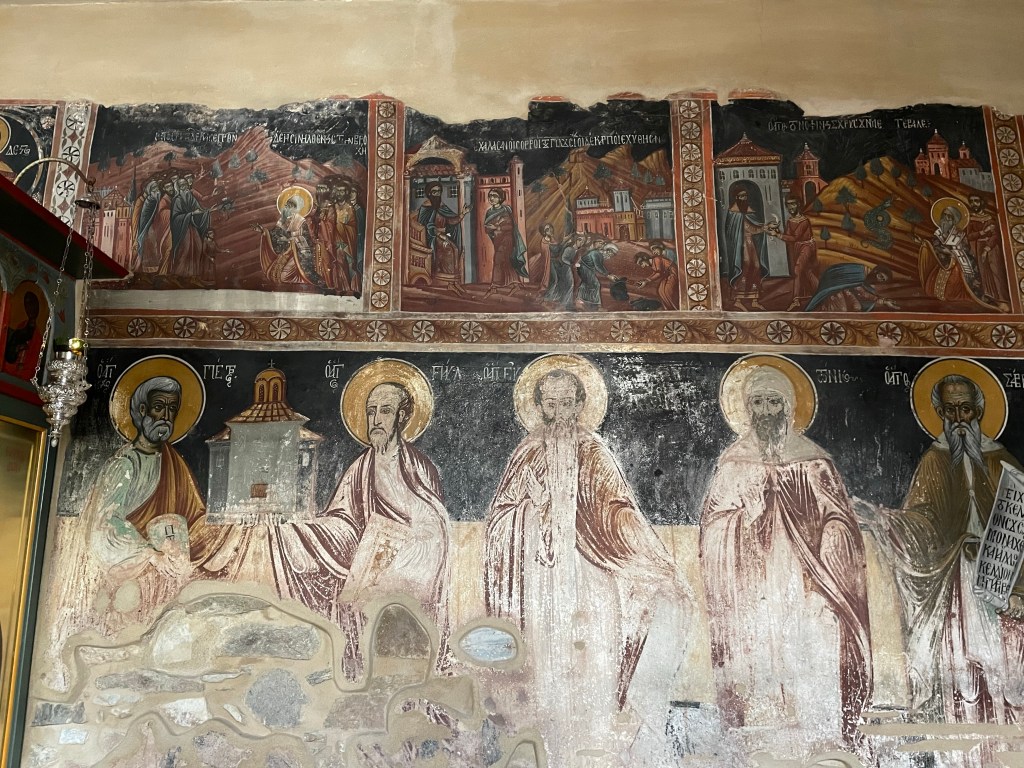
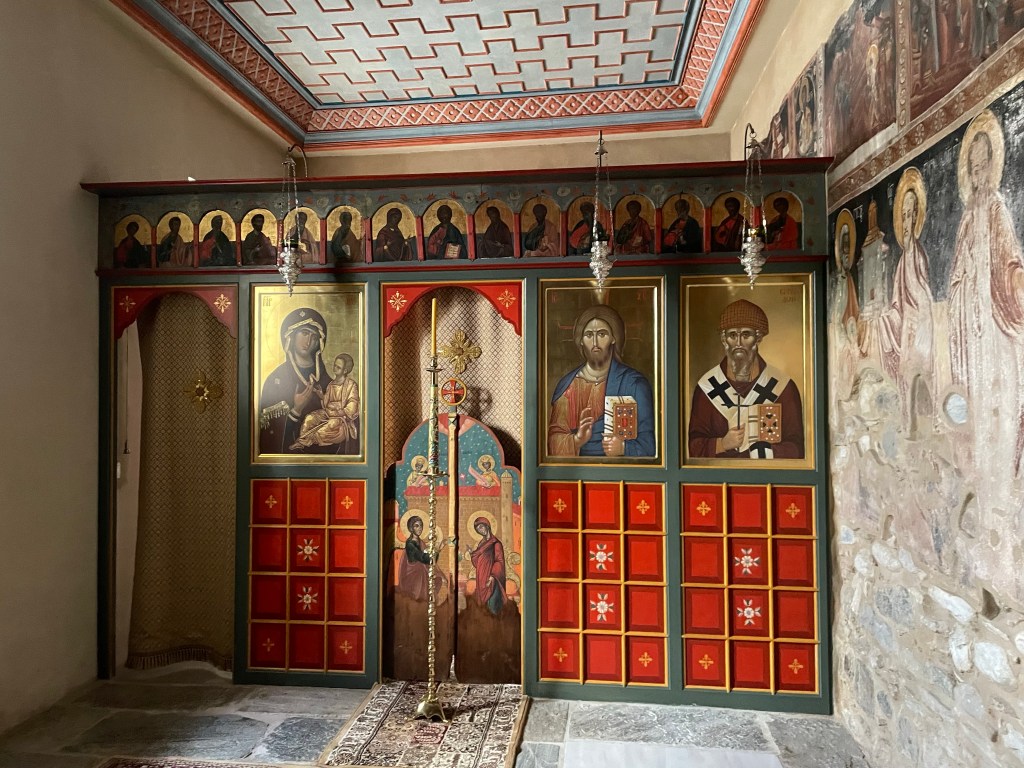
This is a monastery I have visited in the past, but this time our friend V. led me inside a hidden chapel-within- the-chapel from 1270! Of course, it was dedicated to St Spyridon!

Nature was so beautiful outside and everywhere little chapels awaited us to be discovered.

By C.

To be continued …

A blessed 2024

THE GATE OF THE YEAR

‘God Knows’

And I said to the man who stood at the gate of the year:

“Give me a light that I may tread safely into the unknown”.

And he replied:

“Go out into the darkness and put your hand into the Hand of God.

That shall be to you better than light and safer than a known way”.

So I went forth, and finding the Hand of God, trod gladly into the night.

And He led me towards the hills and the breaking of day in the lone East.

So heart be still:

What need our little life

Our human life to know,

If God hath comprehension?

In all the dizzy strife

Of things both high and low,

God hideth His intention.

God knows. His will

Is best. The stretch of years

Which wind ahead, so dim

To our imperfect vision,

Are clear to God. Our fears

Are premature; In Him,

All time hath full provision.

Then rest: until

God moves to lift the veil

From our impatient eyes,

When, as the sweeter features

Of Life’s stern face we hail,

Fair beyond all surmise

God’s thought around His creatures

Our mind shall fill.

Minnie Louise Haskins, British poet and academic

Christ is Born!

*Tiny English subtitles on top 🙂

Dear Fathers and MOTHER’s, brothers and sisters in Christ,

Χριστός ᾽Ετέχθη! Αληθώς ᾽Ετέχθη! Christ is Born! Truly, He is Born!

Christ is born, Glorify Him!


Please accept my warm greetings for the Feast of the Nativity.

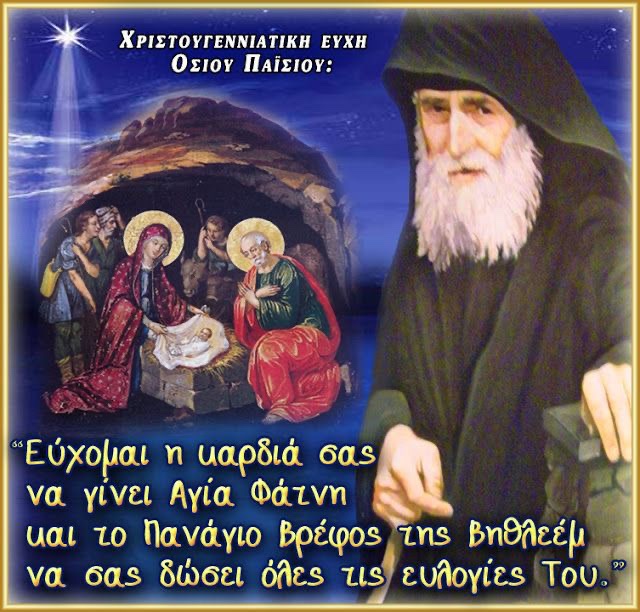
May our hearts become a Holy Manger and the Holy Babe of Bethlehem grant us all his blessings! (St Paisios’ prayer)


On this Feast of the Nativity of our Lord Jesus Christ in the flesh, I extend my love and poor prayers in Christ.
In dearest Father Jonathan’s words, “Let us remember in our prayers and through actions, the poor, the lonely, the oppressed, the sick, the housebound, those in prison, all exiles from their land, and those who suffer in war.”


“When God comes to us,
May the joy of the archangels be yours,

May the wisdom of the wise men be yours,

May the watchfulness of the shepherds be yours,

May the contemplation of Joseph be yours,

May the humility of the oxen and donkey be yours,

May the brightness of the stars be yours,

May the love of the Holy Virgin be yours,

May the peace of the Christ Child be yours.

Today the earth gives a cave. Today the heavens give a sign!

Today the Magi offer gifts

Today the angels glorify in praise

Today the shepherds hear the proclamation

Today we offer our hearts”


“We worship thy Nativity O ChristShow us also Thy Divine Theophany”
Eν Χριστώ

THE HOLY SPIRIT AND SPARROWS

parrows3parrows4

“And the Spirit of God was hovering over the face of the waters.” How much Love is hidden in this laconic, “modest” statement in Genesis 1:2! “And suddenly a sound came like the rush of a mighty wind, and it filled all the house where they were sitting. And all began to speak in other tongues, other doctrines, other teachings, of the Holy Spirit.” (Great Vespers of Pentecost). How lofty is the Holy Spirit’s descent in fiery tongues at the foundation of the Church! How different Pentecost is to Creation, and yet, it is the same vital outpouring of the Holy Spirit from the Lord, the Giver of Life.
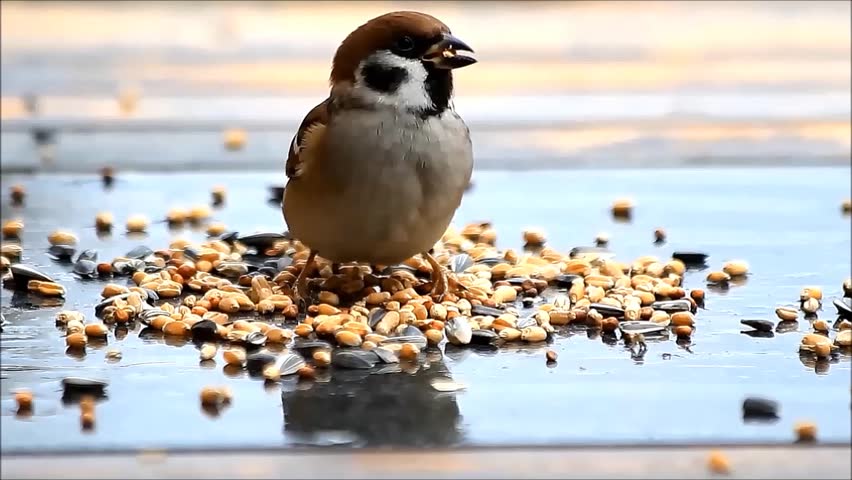
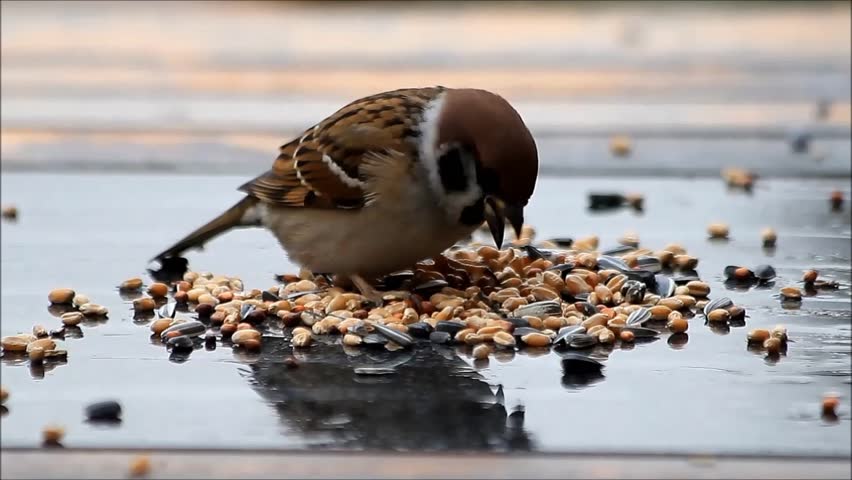
“Beside them will the birds of the heaven lodge, from the midst of the rocks will they give voice.” (Psalm 103:12) Oh, and what a voice! Our balcony is perched on the 5th floor of a neighbourhood full of plane trees. I am lulled to sleep to the trill of nightingales when all other birds shush; I wake up to the chirping of swallows, warblers, swifts, sobre tits, collared doves, chickadees, tit-mice and crows … even if in a city. Branches reach out to our balcony handrail and literally hug our oleanders, jasmine and honeysuckle. I have always loved birds, any bird really, but I have always had a special fondness for sparrows.
“There will the sparrows make their nests; the house of the heron is chief among them. ” (Psalm 103:17) Recently, while in lockdown, I made up my mind to seek “company” in our neighbourhood. I placed a feeding dish on the floor of our balcony and put seed, grains and rice on its ledge. I also put another dish by its side, full of water, as Greek spring tends to get too hot and dry. A large pot of fully-grown oleander was strategically placed by their side. And I waited …
“All things wait on Thee, to give them their food in due season; when Thou givest it them, they will gather it.” (Psalm 103:27). To my disappointment, the first week or so nothing happened. Absolutely nothing, as if my plates were invisible even to branches that outreached towards them, touched them. But then, soon enough, a first visitor arrived, only to bring another one and another … To my excitement, my visitors were mostly sparrows, as this corner is a bit narrow for any bigger bird really to squeeze in. How moving was it to see the response of the sparrows to my care and how fast did they bring others to the feast! Just like the All-Holy Spirit empowered the apostles to bring others to the Feast in the Kingdom of Heaven. Indeed, was it not “the Holy Spirit [himself which] descended in bodily form like a dove upon Him”? (Luke 3:22).
“When Thou openest Thy hand, all things shall be filled with goodness”(Psalm 103: 28) Soon, I would work on my laptop but could not resist, now and then, to peep out, across our living room french doors: my tiny feathered friends outside were joyfully eating, jumping from one oleander branch to another, playing and bathing. How much did they enjoy the sunshine, how carefree were they and what a musical noise did they always make! In no less than another week, those tiny creatures, which were too tiny even for the palm of my hand, began to depend on me for their food, and I felt responsible for them. I noticed that whenever absorbed in my papers, I forgot to replenish their food, they would still arrive and sit in the middle of their empty plate and stare at me in disappointment.
“Thou wilt send forth Thy Spirit, and they shall be created; and Thou shalt renew the face of the earth.” (Psalm 103:30) My heart melts with joy just to watch them no doubt sing praises to our Lord. If I, sinful as I am, have such love and com-passion for those tiny creatures, how much more does our Lord care for them? “Are not two sparrows sold for a penny? Yet not one of them will fall to the ground outside your Father’s care. Yet not one of them will fall to the ground outside your Father’s care.” Amazing! And what a joy and comfort to hear from our Lord’s infallible lips that “even the very hairs of your head are all numbered. So don’t be afraid; you are worth more than many sparrows.” (Matthew 10:29-31)
“Likewise the Spirit also helps our weakness: for we know not what we should pray for as we ought but the Spirit himself makes intercession for us with groanings which cannot be uttered.” (Romans 8:26). I have always felt the Holy Spirit a bit elusive and enigmatic as the third person of the Holy Trinity. So essential, so powerful, and yet so mysterious! St. Seraphim of Sarov revealed to Motovilov that the true aim of our Christian life is the acquisition of the Holy Spirit. As for fasts, and vigils, and prayer, and almsgiving, and every good deed done because of Christ, they are only means of acquiring the Holy Spirit.
“Did ye receive the Holy Spirit?” (Acts 19:2) What a question that of Paul to the Ephesian
disciples to answer! Isn’t it really asked of every one of us? Is it enough to answer: I have received the mystery or sacrament of the Spirit after my Baptism, when I was anointed with the Holy Chrism? Or does all this go deeper? Lev Gillet thinks that the real question we have to answer is whether and how this seed of the Spirit has been afterwards developed within the soul.
“Heavenly King, O Comforter, the Spirit of truth, … O treasury of every good thing and Bestower of life” Such a vital outpouring of the Holy Spirit from the Lord, the Giver of Life, even for … sparrows. The Holy Spirit is a breath a wind, may this breath direct us where He wills. “Come and dwell in us, and cleanse us from every stain, and save our souls, O Good One. Αmen”

Christ has Ascended!

20200527_141610

Dear Friends in Christ,

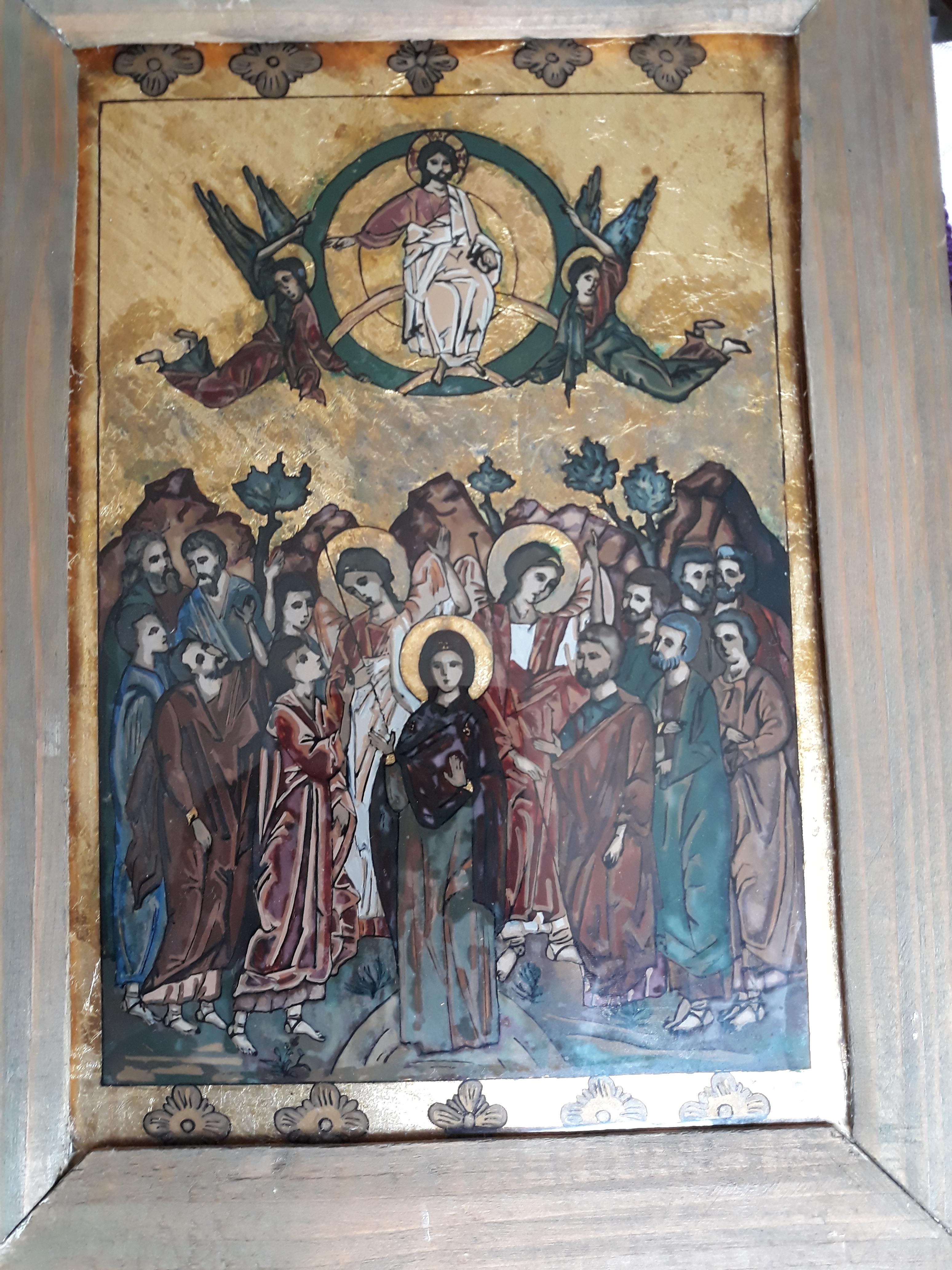
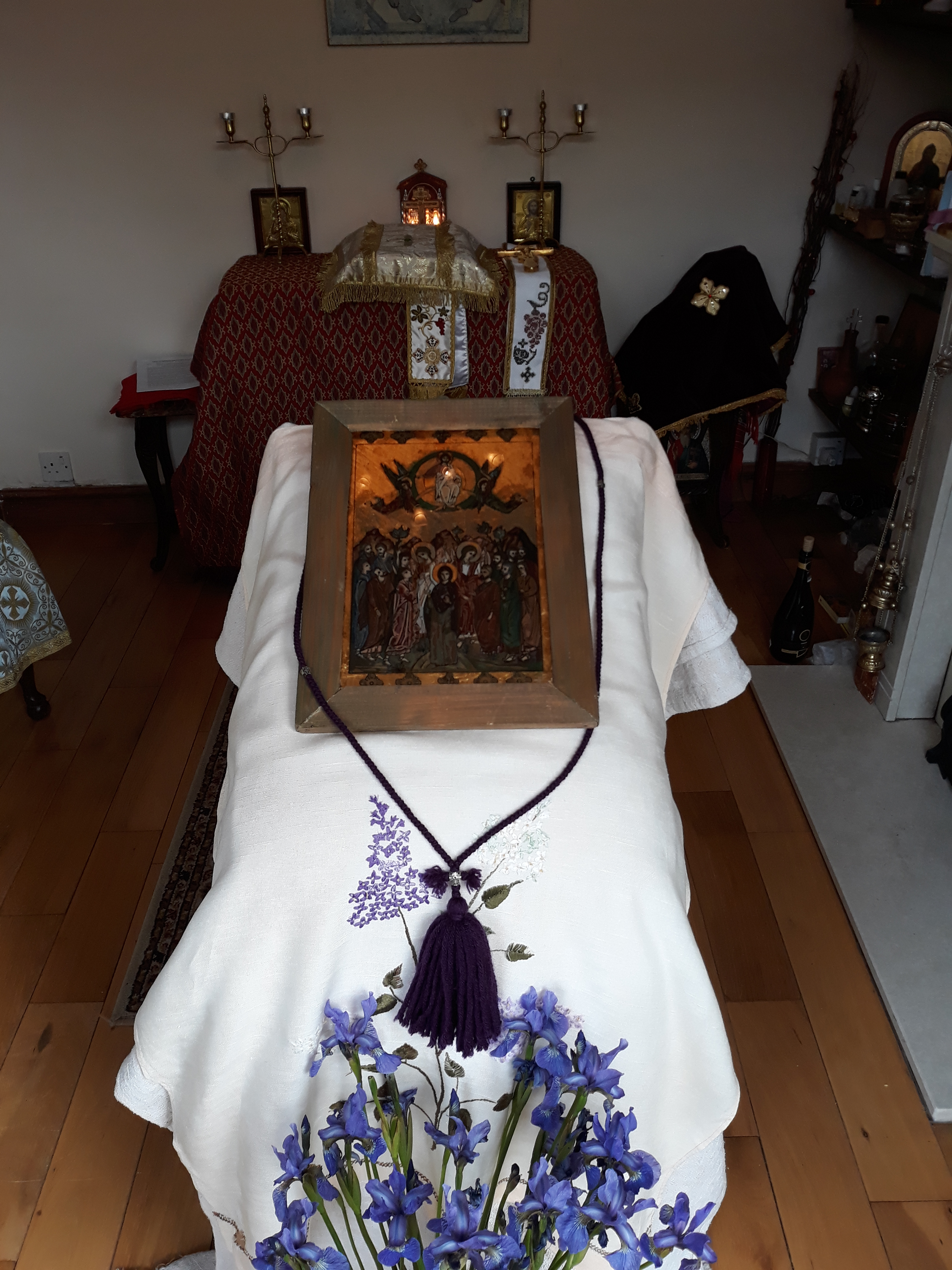
The Icon was painted on glass by Georgiana Necula, the flowers were given today by one of the sisters of the Parish and the icon stand drape was a curtain embroidered by my grandmother in the 1930s.

20200527_142025

“Leaving the things of earth upon the earth, and surrendering to the earth things of ashes, come, let us come to our senses and raise our eyes and thoughts on high; let us, O mortals, turn our gaze together with the senses up unto the heavenly gates. Let us consider ourselves present at the Mount of Olives, and gaze intently at the Redeemer Who is riding upon a cloud; for the Lord hath hastened up from there into the heavens. And there the bountiful Giver of gifts distributed gifts unto His Apostles, calling to them as a Father, and strengthening them; He guided them like sons and said unto them: I am not separated from you; I am with you, and no one shall be against you.” (OIKOS FOR THE ASCENSION)

Christ is in our midst

A Joyous Pustinnyk

Reflections on the Sunday of the Myrrh Bearing Women

Freedom concept

ACTS OF THE APOSTLES 6:1-7

… “it is not right that we should give up preaching the word of God to serve tables. Therefore, brethren, pick out from among you seven men of good repute, full of the Spirit and of wisdom, whom we may appoint to this duty. But we will devote ourselves to prayer and to the ministry of the word.” 

MARK 15:43-47; 16:1-8

“… and he rolled a stone against the door of the tomb. …  “Who will roll away the stone for us from the door of the tomb?” And looking up, they saw that the stone was rolled back; for it was very large. “

“Who will roll away the stone for us from the door of the tomb?” This is the question that the holy women myrrh bearers were considering as they made their way to anoint the body of Our Lord in accordance with the funerary rites. The tomb of our Lord was sealed. Who will roll away the stone….is a question which we should consider today? For today there are tombs of indifference towards Our Lord- for the unbeliever, He remains buried in history. We must not leave Christ in the sepulchre but bring His Light out to the people and share the message of the Resurrection.

It is this very point that the first disciples were considering as we read in the Acts of the Apostles.

“it is not right that we should give up preaching the word of God to serve tables. Therefore, brethren, pick out from among you seven men of good repute, full of the Spirit and of wisdom, whom we may appoint to this duty. But we will devote ourselves to prayer and to the ministry of the word.”

The Apostles considering the needs of the widows, orphans appointed seven deacons to administer the diaconal ministry to the poor so that they could devote themselves to prayer and the ministry of the word. The Church in her wisdom provides for both aspects of service; the spiritual and bodily needs.

We do not bury Christ in the Church but we take His message and His compassion out into the world. We see how the Church in the first century was not inward-looking at all but took the message with great zeal to the nations. The Church was missionary in outlook from the very beginning. The word Apostolic Church is self-defining and denotes those who are sent out!

We can bury Christ in the Bible unless we open it, read it, mark the words, learn the message and inwardly digest the truth for our salvation under the guidance of the Holy Spirit. The Bible is not an ornament on our bookshelves, neither is the Bible just some historical document; it is the place where we encounter the inspired word of God and where we meet the Word of God in Christ.

“Who will roll away the stone for us from the door of the tomb?”

Christ can remain buried in our minds. There are those who say: “ Oh I worship God in my own way, there is no need to go to Church!”  Such people shut Our Lord up in the tomb of their own imagination, worship Him at their own convenience and apply misguided reasoning to what constitutes faith.

There are those who are embarrassed to talk about Christ when the opportunity arises or to profess their Christian faith lest others, conforming to a more liberal, secular disposition, would see them as odd or be worse, be offended.  At such time we leave the stone sealed at the tomb!

We are in a sense to be myrrh bearers but we must ask the question “Who will roll away the stone of the tomb for us?”

“And looking up, they saw that the stone was rolled back; for it was very large.”

As the women go into the tomb they see an angel in the form of a young man who gives them the message- for that is what angels do – they give messages:

And he said to them, “Do not be amazed; you seek Jesus of Nazareth, who was crucified. He has risen, He is not here; see the place where they laid him. But go, tell his disciples and Peter that he is going before you to Galilee; there you will see him, as he told you.”

We often find ourselves vulnerable and afraid like the myrrh bearers, but we are compelled by the love of God to become human messengers of this Gospel!

“To love at all is to be vulnerable. Love anything and your heart will be wrung and possibly broken. If you want to make sure of keeping it intact you must give it to no one, not even an animal. Wrap it carefully round with hobbies and little luxuries; avoid all entanglements. Lock it up safe in the casket or coffin of your selfishness. But in that casket, safe, dark, motionless, airless, it will change. It will not be broken; it will become unbreakable, impenetrable, irredeemable. To love is to be vulnerable.”

― C.S. Lewis, The Four Loves

We must not leave Christ buried under the concerns of worldly cares, we must roll away the stone from the tomb of our heart and soul, and open our mouth to proclaim the message of salvation: Christ is Risen!

By a Joyous Pustinnyk