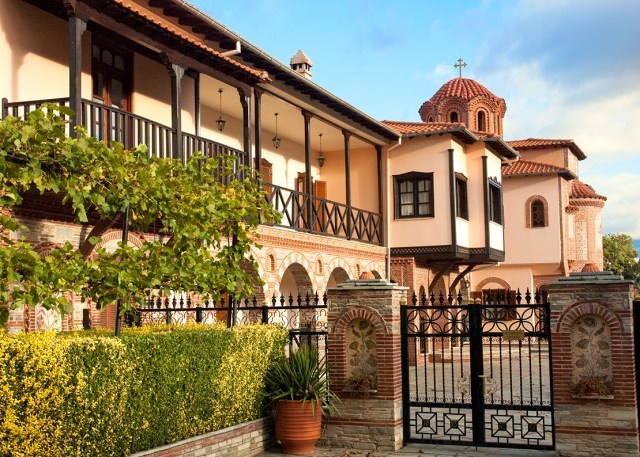
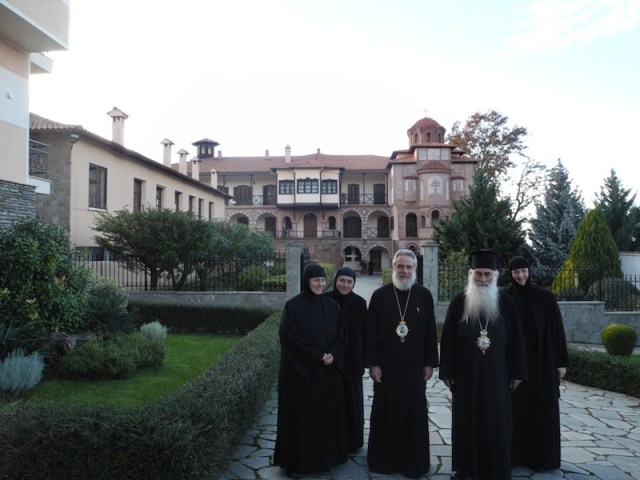
Pilgrimage to Mikrokastro Mother of God Monastery

This post has been long due, since Mikrokastro Mother of God Monastery has been my refuge and retreat since 2014, ever since I discovered it, or better ever since our Holy Lady revealed herself to me there.  A most  holy place, a ‘thin’ place I keep returning, especially when badly in need of spiritual nourishment, in times of trials, adversity, tribulations and temptations. This is a place where the Mother of God comforts all her children, a place where its peace invades you and the fellowship of the nuns warms you.



a1a2a4a5a8

a11a15a16a17

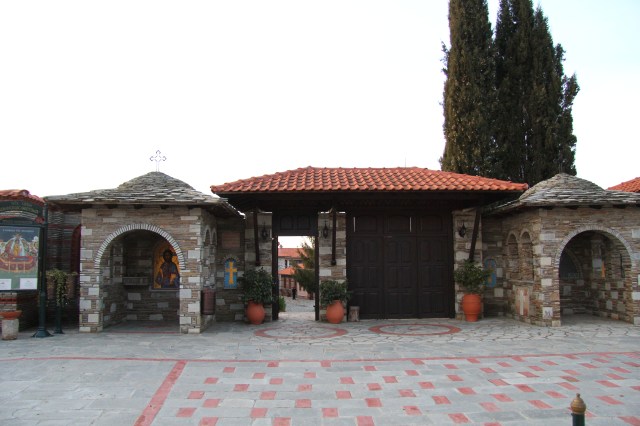
Part A: A brief history of the Monastery of the Mikrokastro Mother Of God


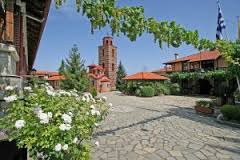
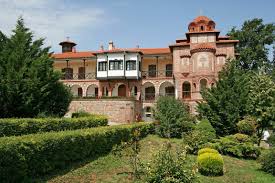
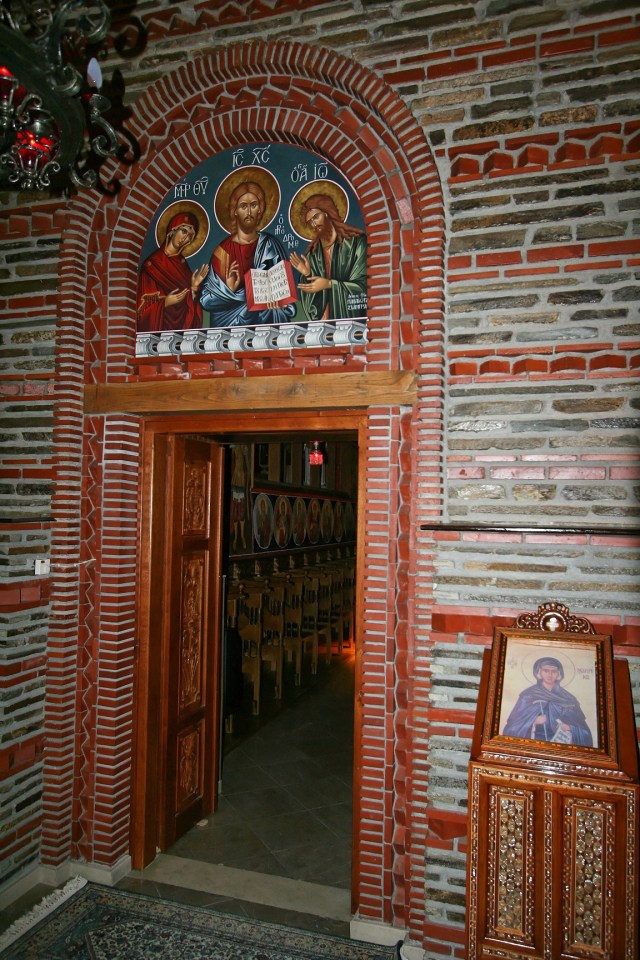
The Holy Monastery is dedicated to the Assumption of the Mother of God. According to historians, the main church of the monastery is estimated to have been founded 200-250 years ago. The iconography in the church was completed in 1797 (about 200 years ago), as is shown by the inscription that still exists on the west wall of the church.
a7


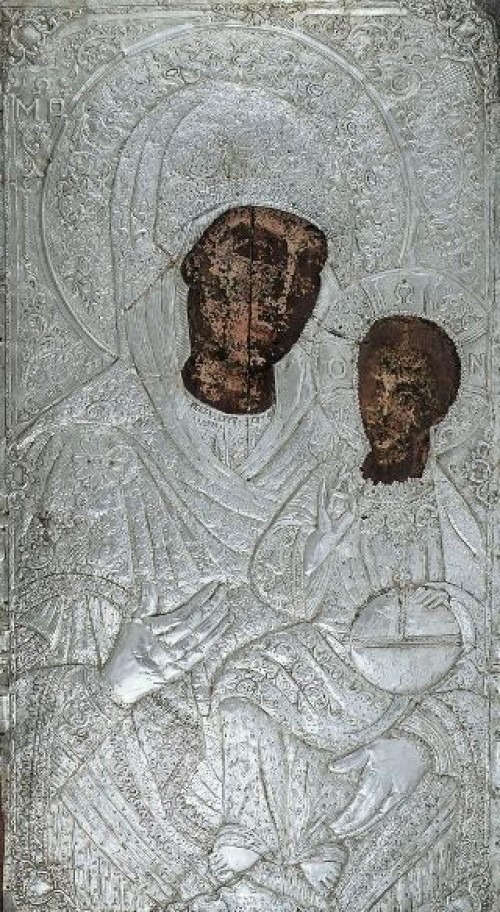
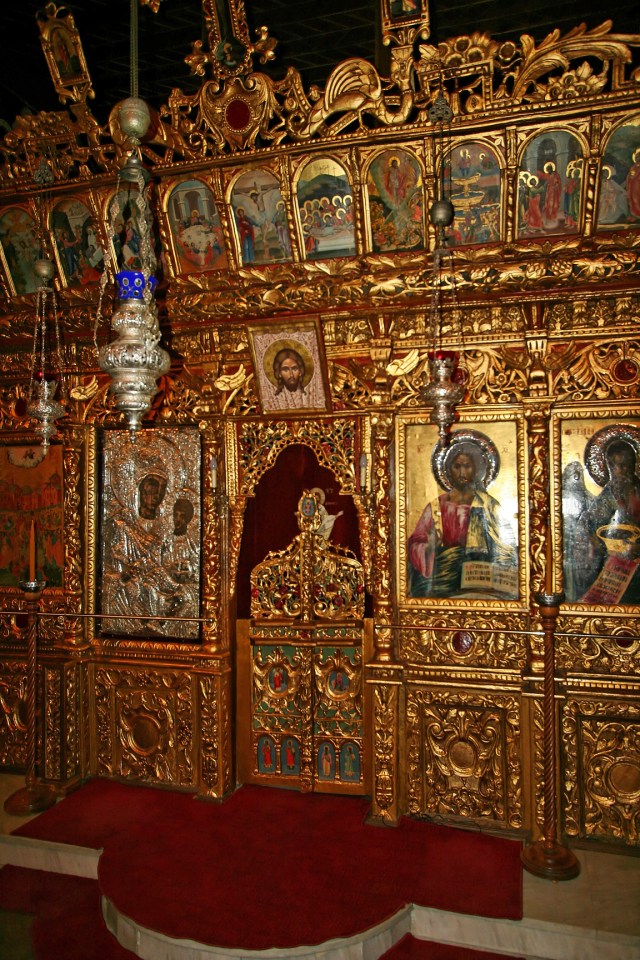
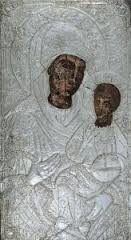
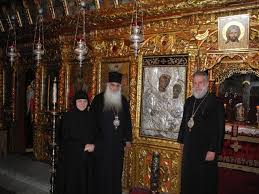
The history of this place started with a small chapel in the nearby village of Mikrokastro, but its propitious geographical position as a passing place on the journey from Kozani to Kastoria helped the site become a place of worship. This was mainly due to the presence of the Holy Icon of the Eleoussa Mother of God on the icon screen; it is not known when or under what historical and religious circumstances this Icons was found here.


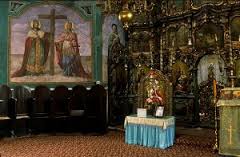
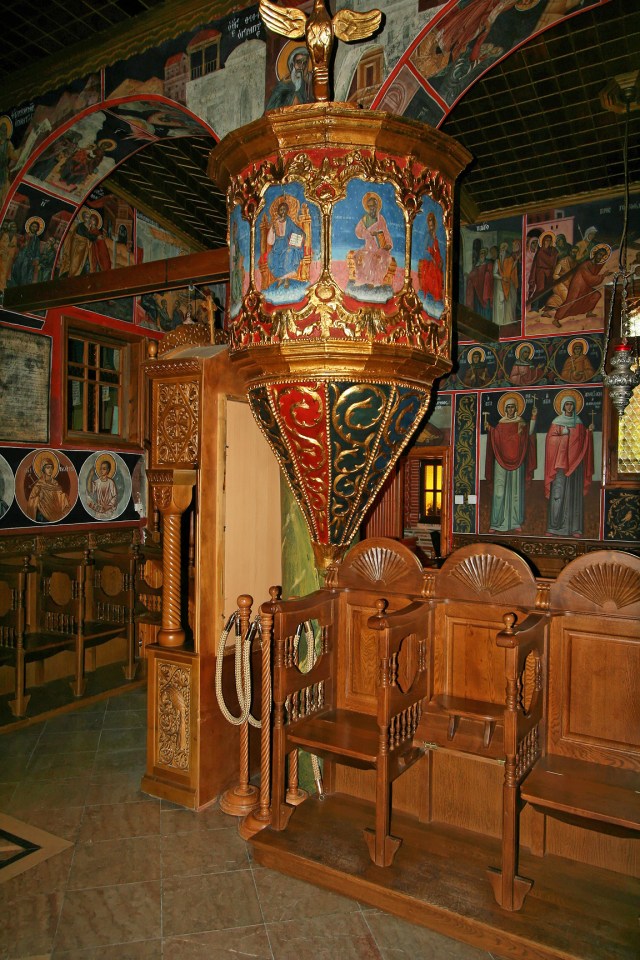
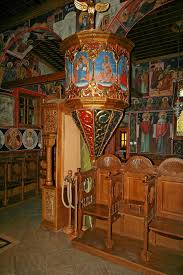
The miracle-working power of the Icon contributed to the place quickly becoming the most important place of worship in Western Macedonia. According to the inscription mentioned above, the church’s frescoes were painted by iconographers from Kopessovo in Epirus, who, despite Western influence, tried to remain loyal to the Byzantine tradition following the standards of the Konstantinos Palaiologos era. The more popular manner of the depictions does not diminish the sweetness of the facial expression or the comforting feeling instilled in the souls of the faithful.
a9a10a12a13a14

a19


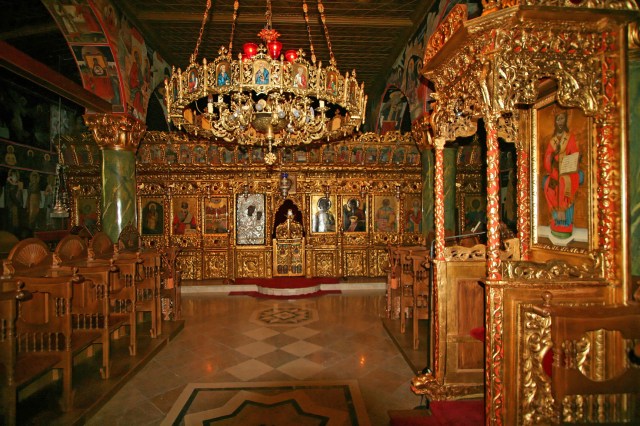
The icon screen of the convent is one of the most beautiful in the region and was made by skilled craftsmen either from the local area or Epirus. The miracle-working Icon of the Mother of God found in and belonging to the monastery dates back to either the 12th or the 13th century according to modern methods of dating holy icons.


The plenty votive offerings to the Mother of God helped the property of the Monastery to increase, and this property was taken care of by workmen inhabiting the area. In 1820 this place of worship was characterized as a Holy Monastery for reasons of prestige because of the presence of the Holy Icon, since it never had a monastic brotherhood. It only had an Abbot appointed by the Bishop of Siatista and an administration Committee.


This Holy place played an important religious and national role supporting the nation’s struggle for independence in 1821, offering hospitality and a hiding place to revolutionaries of the independence struggle, maintaining an ammunition store, paying the salary of the village teacher, and strengthening the inhabitants’ faith so that they could resist the pressure of Islamic proselytism.


The monastery participated in the historic events of 1878, offering moral and material support, in the Macedonian struggle during the years 1904-1908, in the war of liberation in 1912, in the relief of the victims of the Asia Minor disaster, in the epic struggle of 1940-1941 and its climax, i.e. the historic Fardikampos battle in March 1943. The monastery “offered soul, blood and money” offering the sacrifice even of its priest.


After the war, the bishop of Sisani and Siatista, Iakovos Kleomvrotos, (later to become Bishop of Mytilini), a powerful personality of the clergy, realised that the Holy Monastery was a more suitable place for spiritual and social activity than mountainous Siatista.


In 1952 he founded a School of Agriculture here for the farmers’ sons of the area, which, after functioning for two years, closed and was given to the Swiss Red Cross with a view to founding a hospital for local children suffering from glandular problems. In this building a primary school was also set up. In this way, hundreds of local children were helped.


Other buildings at the same location include the boarding school of the School of Housekeeping, which was used as a guest house and later as a home for the elderly. In addition, another building was erected in which his successor – Bishop Polykarpos – founded an orphanage.


Bishop Antonios was elected in 1974, and he showed great interest in the restoration and peopling of the monasteries in the region. In 1981 the position of the Abbot fell vacant and Father Stephanos Renos took over. With the moral, spiritual and material support of the Bishop as well as the contribution of the faithful and well-known donors, Father Stephanos Renos did great renovation work and added new buildings, a guest house and chapels.


In 1993, by a presidential decree, the Holy Monastery was turned into a monastery for women, and some time later the first monastics entered the monastery.


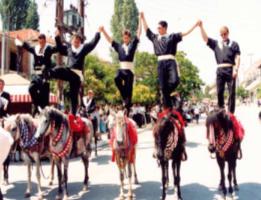
Two noticeable customs have been preserved since the years of Turkish domination. The first is the custom of Horseriding. On the 15th August, a religious festival day, the young men from Siatista armed and riding ornate horses came to the festival to venerate the Mother of God and under the unsuspicious eyes of the Turks the leaders of the struggle talked about the issues concerning the revolution, and the hope of freedom for the enslaved Greeks was strengthened. This custom has been preserved until today and has been incorporated in the whole festive religious atmosphere.

a18


eleousa Mother of god orthodox city hermit pilgrimage retreat mikrokastro horse ridingeleousa Mother of god orthodox city hermit pilgrimage retreat mikrokastro horse riding

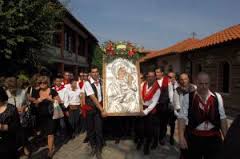
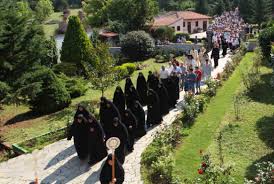
The second custom is the carrying in procession of the icon of the Mother of God That is, apart from extraordinary events such as insect epidemics, droughts and illnesses, during which the inhabitants of the area carried the icon in procession around the area to ward off evil, the inhabitants of Siatista have been taking the same icon in procession regularly for centuries now. In all weathers and accompanied by many people of all ages, they cover a three-hour distance on foot holding the icon in their hands until they arrive in their town, where the icon is solemnly received and taken to the cathedral and a prayer is chanted. After this, the Icon is taken to every house and flat. This event witnesses the fact that neither the Mother of God’s grace nor the people’s faith have diminished.
a3

icon procession mikrokastro eleousa Mmother of god orthodox city hermit pilgrimage retreat mikrokastro


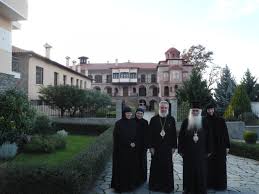
The grace of the Mother of God has gathered peace-loving and pious women who have offered themselves to life-long service in the monastery, vowing to find salvation through the basic virtues of monastic life: obedience, chastity, lack of property, prayer, charity, and at the same time trying to achieve the moral elevation of local inhabitants.

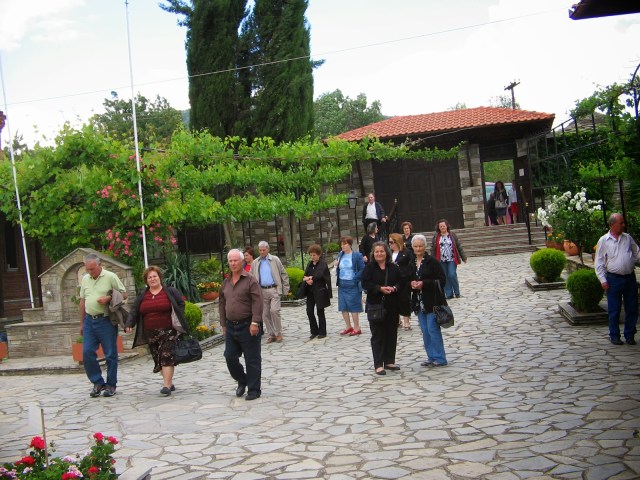
The small sisterhood has devoted itself to a struggle for inner order, the restoration of buildings, the organization of worship, tree-planting on the land belonging to the convent, hospitality and spiritual outreach to visitors. The sisterhood sows with patience, cultivates the seeds of the virtues referred to in the Gospel with assiduity, re-baptizes the faithful in the genuine spiritual concepts of the Orthodox Church and the Holy Fathers, interprets the Gospel, comforts the sad and turns the beautiful stone-built monastery into a safe harbour, where people struggling in life can find shelter and relief.


Contact Information:

Mikrokastro, Siatista, Greece

Tel no: +30 24650 71307

To be continued …

Part B: Lessons from the Monastery and Miracles at Mikrokastro Mother Of God to follow soon


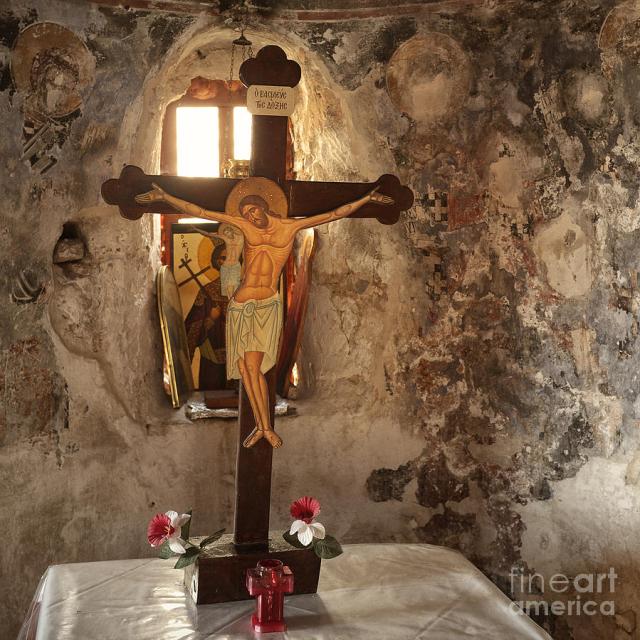
A Wounded Hand Nailed to the Cross

crucifix-in-orthodox-church-grigorios-moraitis.jpg

It was embittered!

Lord, by this time he stinks

A Retreat and Pilgrimage to Panagia Eleousa, Mikrokastro — Reflections 

A retreat! Amidst various Lenten temptations and “the purifying draught of dishonour, sneers, derision and insults”! Mikrokastro monastery is my haven of peace, silence, hesychia and spiritual refreshment under the protecting Veil of the Theotokos. The grace-filled presence of Panagia Eleousa and the mesmerizing beauty of the Akathist Vigil at Mikrokastro monastery have offered me, again, a timely refuge! 


The exercise of authority is not a stone hand in a velvet glove- it is a wounded hand nailed to the Cross. (My spiritual father’s words)


eleousa


Wonder-working icon of Panagia Eleousa, of Mercy at Mikrokastro


How difficult at times to show patience in annoyances and unmurmuring endurance of scorn, disregard of insults, and the habit, when wronged, of bearing it sturdily; when slandered, of not being indignant; when humiliated, not to be angry; when condemned, to be humble”, but how difficult does this feel! (St. John Climacus, Ladder of Divine Ascent, Step 2:8) Indeed a narrow path to theosis!  

It was embittered!

Lord, by this time he stinks


To the Theotokos, let us run now most fervently,

As sinners and lowly ones

Let us fall down in repentance,

Crying from the depths of our soul:

Lady, come and help us,

Have compassion upon us;

Hasten now for we are lost

In the host of our errors;

Do not turn your servants away,

For you alone are a hope to us.


It was embittered!

Lord, by this time he stinks

I have always been attracted to spiritual retreats,  removing myself from the usual environment to allow precious time for silence, hesychia, reflection prayer, meditation, and rest.  Have you ever felt the need to try to try to “Take stock” of your life and/or  re-commit to connecting with the spiritual aspects of life? I often feel such a need,  as I am usually laden with complex administrative duties and time-consuming writing tasks. Lately I have been so busy with translating a huge book on St. Paisios’ Life and Works, the forthocoming, 2nd edition of Elder [now Saint] Paisios of Mount Athos Hardcover – 2012, by Elder IsaacI understand that “Translation [can be] a Means of Grace” but with the book’s 750 pages (!) I sometimes feel doomed 😳 

It was embittered!

Lord, by this time he stinks

Silence has always been blue to me!

Lake Mapourika


We need to find God, and he cannot be found in noise and restlessness. God is the friend of silence. See how nature – trees, flowers, grass- grows in silence; see the stars, the moon and the sun, how they move in silence… We need silence to be able to touch souls.


silence4

“If you are praised, be silent. If you are scolded, be silent. If

you incur losses, be silent. If you receive profit, be silent. If

you are satiated, be silent. If you are hungry, also be silent.

And do not be afraid that there will be no fruit when all dies

down; there will be! Not everything will die down. Energy will

appear; and what energy! “ St. Feofil, the Fool for Christ


*

 
“Anyone who has had their heart broken learns to keep a little safety area.”

It was embittered!

Lord, by this time he stinks

PILGRIMAGES: PAINFUL AND DANGEROUS DESERTS

Pilgrimages are like crossing a desert. They can be painful if taken seriously, and can even be dangerous. They are painful because they crack the shield of one’s comfortable certainty that things can only be done one way. In truth, nothing is one, except Faith itself; by comparison, the manners in which this faith ‘becomes flesh’ are countless. There are as many shapes and nuances of the faith as there are human beings. This is a painful lesson to learn, but it is absolutely necessary. Without this understanding, one loses sight of the personal nature of any spiritual experience. There are as many prayers as there are sighs, and there are as many sighs as there are human hearts. There is no rule on Heaven or earth to regulate the outpouring of love or pain of one’s heart.

It was embittered!

Lord, by this time he stinks …


m2

m34

Suddenly, ‘The’ traditions of your local region become just that: local traditions, creations of a certain historical and cultural context which reflect the faith. As a pilgrim, you unavoidably find yourself immersed in a different context, a different embodiment of the same faith – other customs, other ways to pray, other saints and prayers, all embraced by the faithful in that region with the same absolute conviction that these local expressions of faith are ‘The’ only expressions of faith.


m8

Pilgrimages can also be dangerous and may lead (paradoxically) to a weakening of one’s faith. To some extend, this is a natural progression – when you grow in your faith, there is a moment when it becomes clear that what you previously held to be absolute truths are actually not. There are always other ways to express one’s faith. If you are weak of heart, this process of leaving your past behind may be a dangerous moment, and you risk losing your path while crossing the desert.


It was embittered!

Lord, by this time he stinks


However, if you take courage and press forward, the Spirit will lead you to a new understanding – a higher one, a more loving one, embracing the endless diversity of the personal ways in which we manifest our One Faith. When you leave behind the comfort of your home, prepare yourself for the dangers of the desert, but don’t lose heart: at the end of it all, God has already prepared a better, higher, more spiritual home for you.

It was embittered!

Lord, by this time he stinks


m9

m33


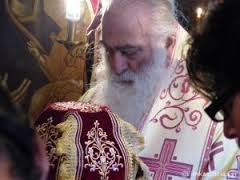
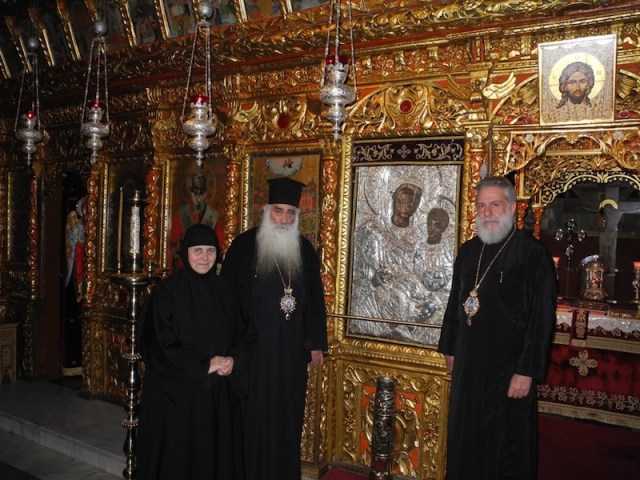
Mother Theologia, a true Mother, and Siatistis Pavlos, both immensely popular and widely revered throughout Greece


m10m7


“The first stage of tranquility consists in silencing the lips when the heart is excited. The second, in silencing the mind when the soul is still excited. The goal is a perfect peacefulness even in the middle of the raging storm.” (Ibid, Step 8.4) The Ladder of Divine Ascent is also known as The Monastic Bible. In many monasteries, it is a tradition to read this book during Trapeza meals throughout Great Lent.


It was embittered!

Lord, by this time he stinks

m11


There is only one way left to escape the alienation of present day society: to retreat ahead of it.

It was embittered!

Lord, by this time he stinks


m6

m31

There’s no cure, except the retreat into Love,
For the suffering of subtly afflicted hearts.

Rumi (1207 – 1273)


Mikrokastro is a village in northern Greece, near Siatista in the Kozani district. It derives its name from Mount Kastraki which lies on the other side of the village. This mountain is on the way to Saitista and is known for the massacre which occurred there at the hands of the Turks in November 1912, which is the year the inhabitants gained independence from the Turks. The monastery of the Dormition of the Theotokos was founded in 1753 and houses the miraculous icon of The wonder-working icon of Panagia Eleousa, Theotokos of Mercy, dating back to 1603, maybe as back as the 13th century, wondrously alive, even to the remotest ‘corners of the world’. The monastery at one time operated an old age home, an orphanage, and a hospital for sick children. During war times many sought refuge and sustenance from the monastery, and in turn the people loved the monastery and the bishop who made it  a center of the people’s lives. The monastery is the heart of western Macedonia and is truly a place where the command to “love one another” is exemplified.

*

Yearly on the 15th of August the male inhabitants of Siatista parade with their horses (the Cavalry of Siatista) in a procession of the icon from the monastery to Siatista. In Siatista a party ensues and the men dance on the baks of the horses while the wine flows freely, and people break their fasts with a great feast among friends and family till the early morning hours. This festivity goes back to Ottoman times when the Turks granted the inhabitants one day of freedom to do as they wished according to their traditions, and the men would ride their decorated horses to show their leventia (Greek word for manliness and courage).

  • Be sure to stop if near! The monastery is famous for its hospitality! [Telephone number:  +302465071307 ]


PILGRIMAGES: PAINFUL AND DANGEROUS DESERTS

It was embittered!

Lord, by this time he stinks


It was embittered, for it was abolished.

It was embittered, for it was mocked.

It was embittered, for it was slain.

It was embittered, for it was overthrown.

It was embittered, for it was fettered in chains.

It took a body, and met God face to face.

It took earth, and encountered Heaven. 

It took that which was seen, and fell upon the unseen.

O Death, where is your sting?

O Hell, where is your victory?

Christ is Risen!

Christ is risen, and you are overthrown.

Christ is risen, and the demons are fallen.

Christ is risen, and the angels rejoice.

Christ is risen, and life reigns.

Christ is risen, and not one dead remains in the grave.

For Christ, being risen from the dead, is become the first fruits of those who have fallen asleep.

To Him be glory and dominion unto ages of ages. Amen.