Dear brothers and sisters, Christ is in our midst.
War is raging all over the world and the Fathers are urging us to fall on our knees and pray. Not stop our obediences, but pray!!! I am not ignoring this appalling tragedy unfolding day after day before our own eyes, but in this specific blogpost and in a couple more to follow, I would like to address one rather sensitive matter unfolding in Greece these days, and that is the Holy Synod’s of the Church of Greece decision, on June 12 and 13, 2025, under the presidency of His Beatitude Archbishop Ieronymos of Athens and All Greece, to endorse the new “personal number” system introduced by Presidential Decree 40/2025. This system aims to replace existing identification numbers, such as the ID card number, tax number (AFM), and social security number (AMKA), with a single unified number to streamline public sector registry integration. In its official statement, the Holy Synod clarified that the personal number does not raise theological concerns or infringe on individual freedoms, including personal data rights. This approval and endorsement is one problem, but the Synod’s insistence “that the personal number does not raise theological concerns” is even more problematic since it seems to contradict most recent Saints’ opinions on this matter.
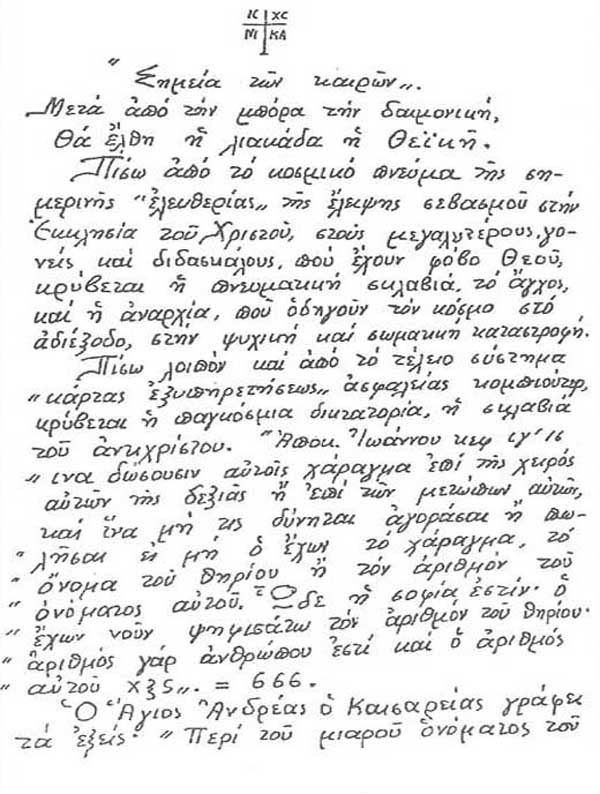
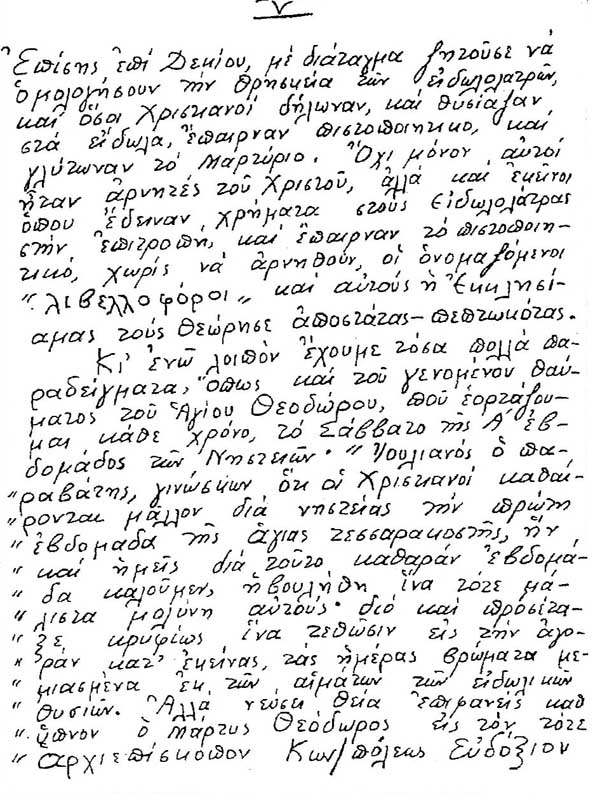
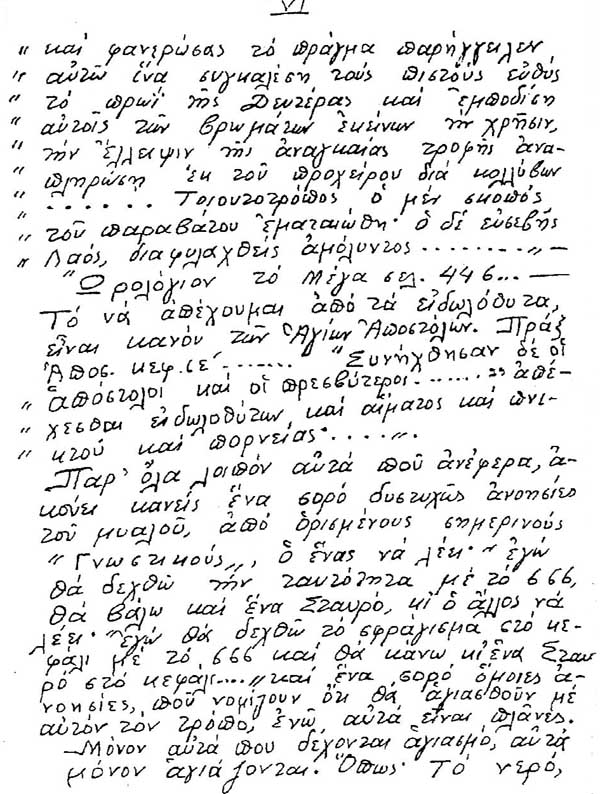
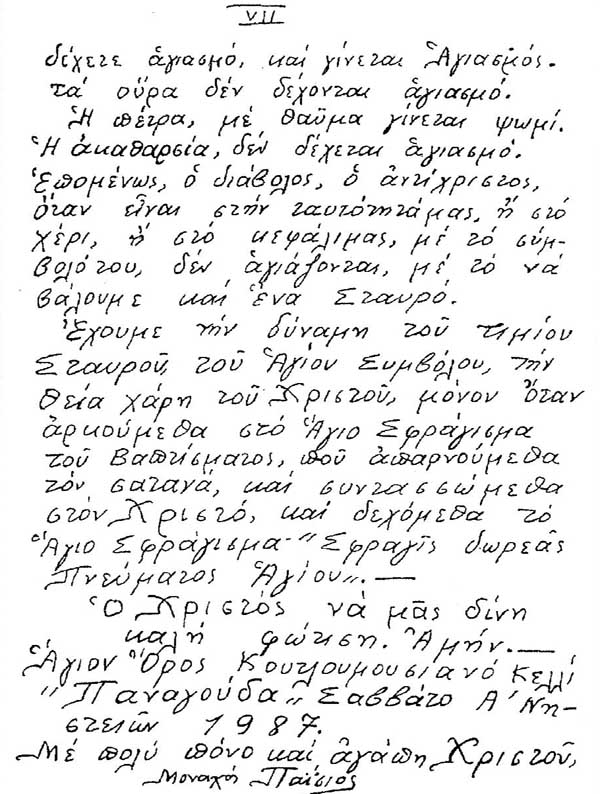
For this reason, I would like to present to you in a series 3 documents I have from + Gerondas Gregorios, my spiritual father of blessed memory, and St. Paisios, starting with the “Signs of the Times”. The following text of Saint Paisios is written in the Saint’s own hand, in the year 1987, and it was the only time he had given the order for it to be distributed in photocopies (with his handwriting and spelling errors), because as he himself said, he knew that they would try to deny that He had written it and to distort His opinion. What follows is the translation of St. Paisios’ text:
After the demonic storm, the Divine sunshine will come.
I
Behind the secular spirit of today’s “freedom” of disrespect for the Church of Christ, for elders, parents and teachers, who fear God, lies spiritual slavery, anxiety, and anarchy, which lead the world to a dead end, to mental and physical destruction.
So, behind the perfect “service card” computer security system, lies the global dictatorship, the slavery of the antichrist. “Rev. John ch. 13’ 16 “to give them a mark on their right hand or on their foreheads, and that they may not buy or sell except one who has the mark, the name of the beast or the number of his name. Here is wisdom; let him who has understanding calculate the number of the beast; for it is the number of a man, and his number is sixty-six”. = 666.
Saint Andrew of Caesarea concludes the following: “About the impure name of
II
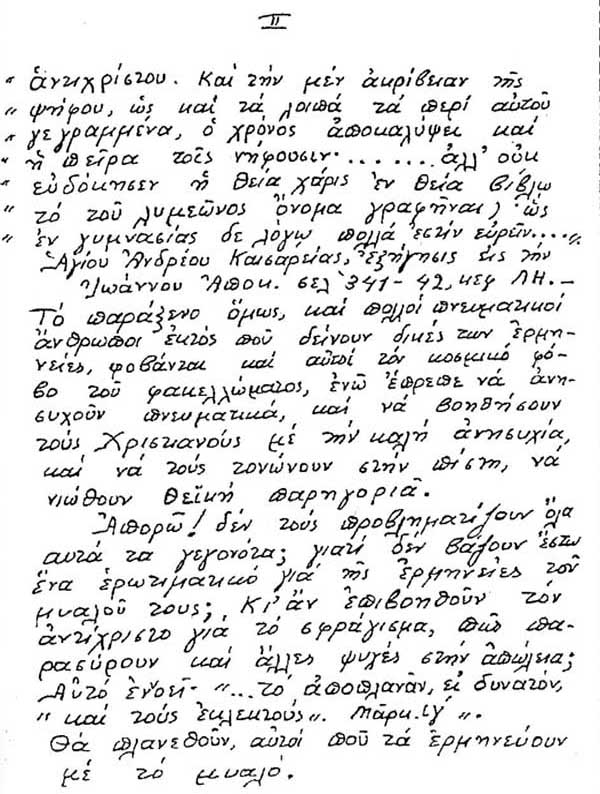
Antichrist. And the accuracy of the vote, as well as the rest of what is written about him, will be revealed by time and experience will bring wisdom;…… but divine grace did not deign to write the name of Lymeon in a divine book; as in a gymnasium, there are many things to be found…. ” Saint Andrew of Caesarea, explanation of the Apocalypse of John, pp. 341-42, ch. 11. –
The strange thing is, many spiritual people, besides giving their own interpretations, are also afraid of the worldly fear of being enveloped, while they should be spiritually concerned, and help Christians with good concern, and stimulate them in faith, to feel divine comfort.
I wonder! Don’t all these events concern them? Why don’t they put at least a question mark on the interpretations of their minds? And if they rely on the antichrist for the sealing, how do they lead other souls to perdition? This means; “…deceive, if possible, even the elect.” Mark. 13’ ”.
Those who interpret them with their minds will be deceived.
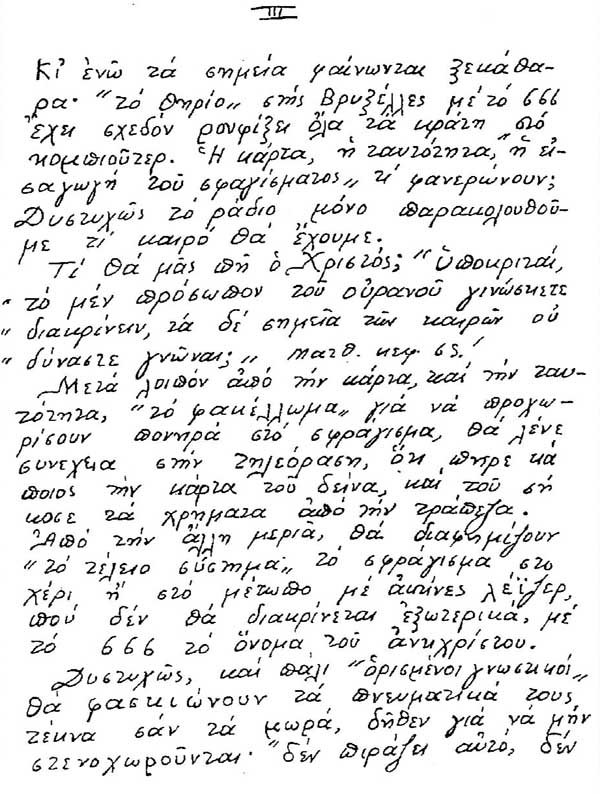
And while the signs are clearly visible; “the beast” in Brussels with 666 has almost sucked all the states into the computer. What do the card, the identity card, “the introduction of the sealing” reveal? Unfortunately, we only watch the radio to see what weather we will have.
What will Christ tell us? “Hypocrites, you know how to discern the face of the sky, but you cannot understand the signs of the times?” Matt. chap. 2, 5!
So after the card, and the identity card, “the envelope” to proceed cunningly with the sealing, they will continue to say on television that someone took his card and withdrew his money from the bank.
On the other hand, they will advertise “the perfect system”; the sealing on the hand or forehead with laser beams, which will not be externally discernible, with 666 the name of the antichrist.
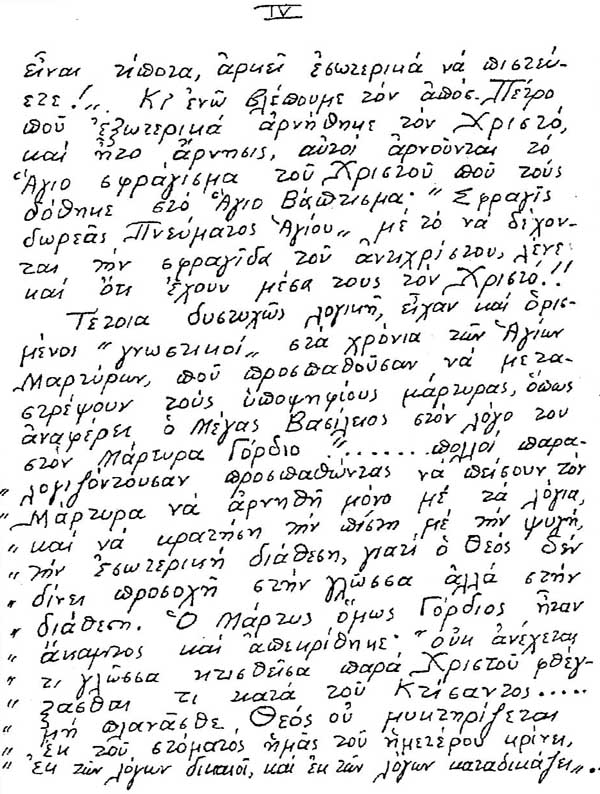
Unfortunately, again “certain gnostics” will swaddle their spiritual children like babies, supposedly so as not to worry; “this does not bother, it is nothing, it is enough that you believe inwardly!”. And while we see the apostate Peter who externally denied Christ, and it was denial, they deny the Holy sealing of Christ that was given to them in Holy Baptism; “Seal of the gift of the Holy Spirit” by accepting the seal of the antichrist, they also say that they have Christ within them!!
Unfortunately, such logic was also held by certain “gnostics” in the years of the Holy Martyrs, who were trying to convert the prospective martyrs, as Basil the Great mentions in his speech to the Martyr Gordius: “… many were foolish in trying to convince the Martyr to deny only with words, and to hold the faith with the soul, the inner disposition, because God does not pay attention to the tongue but to the disposition. However, the Martyr Gordius was inflexible and responded: “He does not tolerate any tongue created apart from Christ to speak against the Creator… do not be deceived. God is not mocked. “From our own mouths he judges us, from our words he justifies us and from our words he condemns us”.
Also, during the reign of Decius, he demanded by decree that the pagans confess their religion, and all those Christians who declared themselves Christians and sacrificed to idols received a certificate and were spared martyrdom. Not only were these deniers of Christ, but also those who gave money to the pagans in the commission and received the certificate without refusing, the so-called “libellophores” and these our Church considered apostates – fallen.
And while we have so many examples, such as the miracle of Saint Theodore, which is celebrated every year on Saturday of the First Week of Lent: “Julian the transgressor, knowing that the Christians They are rather purified by fasting in the first week of Holy Lent, which we also call Clean Week for this reason, and it was then decided to defile them. Therefore, he secretly ordered that during those days, odors contaminated with the blood of idolatrous sacrifices be placed in the market. But the Martyr Theodore, in a dream, divinely revealed to the then Archbishop of Constantinople, Eudooxion
and having made the matter known, he ordered him to summon the faithful immediately on Monday morning and prevent them from using those odors, and to make up for the lack of necessary food from what was at hand with kolibons”…… In this way the purpose of the transgressor was thwarted, and the pious People, preserved undefiled……” – Horologion the Great, p. 446…-
To abstain from idolatrous sacrifices is a rule of the Holy Apostles. Acts. Apos. chap. 6e’…… “And the apostles and the elders were gathered together…… to abstain from things sacrificed to idols and from blood and from things strangled and from fornication…”.
Despite all that I have mentioned, one unfortunately hears a mass of nonsense from certain “Gnostics” of today, one saying; “I will accept the identity with 666, I will also put a Cross”, and the other saying; “I will accept the seal on the head with 666 and I will also make a Cross on the head…..” and a mass of similar nonsense, who think that they will be sanctified in this way while these are errors.
Only those that accept sanctification, only those are sanctified. Like; Water,
accept sanctification, and it becomes Sanctification. Urine does not accept sanctification.
Stone, by a miracle, becomes bread. Impurity, does not accept sanctification.
Therefore, the devil, the antichrist, when he is in our identity or on our hand, or on our head, with his symbol, is not sanctified by putting on a Cross.
We have the power of the honorable Cross of the Holy Symbol, the divine grace of Christ, only when we are content with the Holy Seal of Baptism, when we renounce Satan, and we are united to Christ, and we accept the Holy Seal; “Seal of the gift of the Holy Spirit”. –
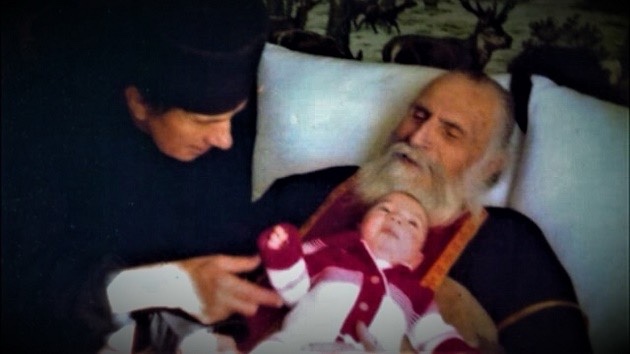
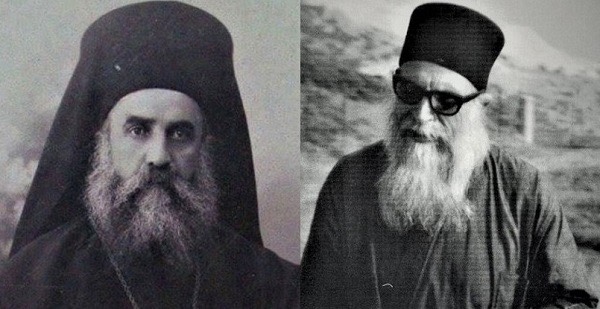
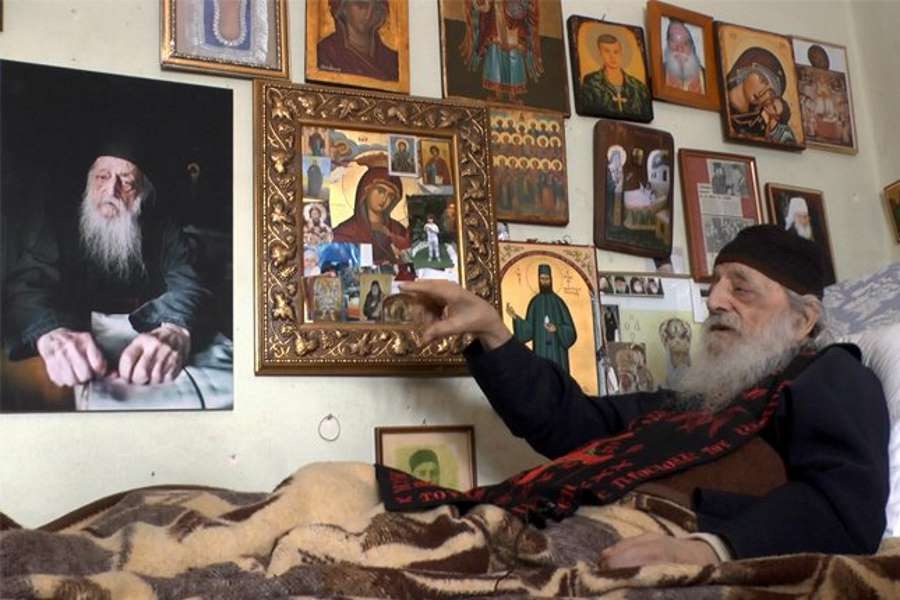
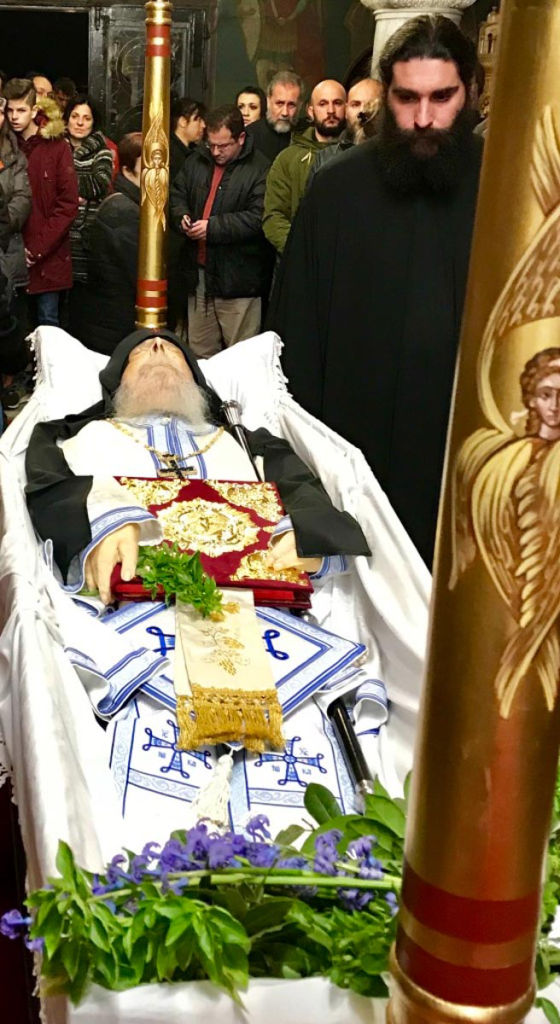
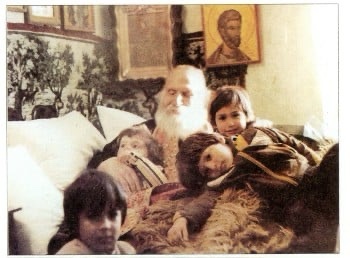
On the left is Monk Zosimas (+2010) with Elder Simon Arvanitis (1901-1988) on his deathbed blessing the child of a spiritual child of his.
*** Incl. St Nektarios’ prophesy about Elder Simon, and St Porfyrios and St Iakovos Tsalikis words for him.***
Panagiotis, Elder Simon’s baptismal name, was a man of unbelievable physical and spiritual strength. He grew up helping his large family by working as an itinerant greengrocer or as a laborer on estates. Endowed with great muscular strength, from the age of thirteen he was lifting sacks weighing 80 kilograms or more. His favorite occupation when he rested, was the study of the Gospel. On Saturdays, as soon as he finished work, he went to the chapels for prayer and study, abstaining entirely from all food, until Sunday evening, when he returned to his house and ate.
Panagiotis visited Mount Athos a few times. When he was young he liked to go on long journeys. Once he started from Athens and walked to Ouranoupolis. There he put his clothes on his back and swam to Mount Athos!
His visit to Kavsokalyva of Mount Athos at the age of 16 was to seal his life. There the Fathers were gathered and waiting for Metropolitan Nektarios Kephalas to arrive, our well-known Saint Nektarios [the Bishop of Pentapolis and Wonderworker], who would be visiting them.
When he arrived, one by one the Fathers approached him reverently and received his blessing. After the Fathers did this, the pilgrims followed. In his turn, Panagiotis also went to receive the blessing of the Saint. Saint Nektarios then took him by the hand and said to him prophetically:
“You, my child, will become a spiritual father and save souls. To the man who will come to you and speak of his sin for the first time, though he did not know that what he did was a sin, be lenient and do not let him go. But if he comes and continues in his sin, be strict with him and rebuke him.”
The prophecy of Saint Nektarios took place when the fullness of time came. Panagiotis later became Father Simon, who indeed saved many souls.
Saint Nektarios and Elder Simon
Other contemporary Saints such as St Iakovos Tsalikis also came to know and admire Fr Simon’s selflessness, wisdom and love, which have inspired countless struggling Christians during his life and after his blessed repose. St. Porphyrios had said of him that no one else had such faith as Elder Simon’s!
Hesychastic years in the cave of Saint Gregorios followed, until the then Metropolitan made Panagiotis a monk in Agios Charalambos and gave him the name Simon. He longed to be a cave-dwelling hermit, and continually begged this from the Monastery elders. The elders prayed for a week to Panagia to determine the correct path. After a week, Simon was told: “The Holy Mother informed us that you must return to the world which needs you to be led to salvation”.
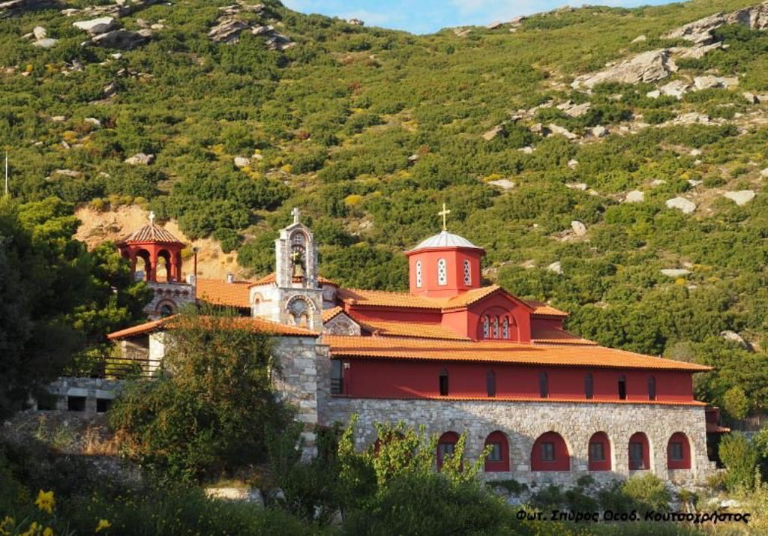
In obedience, he was ordained a priest-monk and started serving local parishes and chapels at Athens suburbs, and later the monastery of St.Panteleimon, Mt.Penteli, which he founded.
St Panteleimon Monastery, Panteleimon
One of the first monks there, Zosimas, had a phobia of the dark. Fr Simon prayed over him and allowed him to sleep in his own cell while he, the elder, slept on the roof of the cell. Zosimas had a dream that the devil appeared and said: “Your Elder is up on the roof and I can’t come inside”. With the prayers of Fr Simon, he was healed.
One of the most well known miracles of Elder Simon is the miracle of the huge hare and the starving pilgrims in 1943. That time, he was appointed a Spiritual Father at the Monastery of the Transfiguration, near which there is a small chapel, dedicated to the All-Great Taxiarches. In 1943, on the eve of the festival, a large number of people had flocked for the celebration, at a time when hunger oppressed the people and the idea of food at a festival seemed like a dream. The only edible thing there was a sack of onions. However, Father Simon, taking pity on the hungry people, in imitation of Christ our Lord, and with unshakable faith in God’s providence, ordered them to clean all the onions and immersed himself in prayer. And suddenly, before the astonished eyes of the pilgrims, a huge hare came down from the mountainside and entered the kitchen all alone, on his own, offering himself for their meal! And the pilgrims, just like in the miracle of the multiplication of loaves, “all ate and were satisfied”, and there were plenty left overs.
What a “shocking” miracle! Poor huge hare! Even more shocking for me and many people who never eat animal’s meat. But these times were very trying ones and hundreds of people were literally dying from starvation every day! See footnote below*
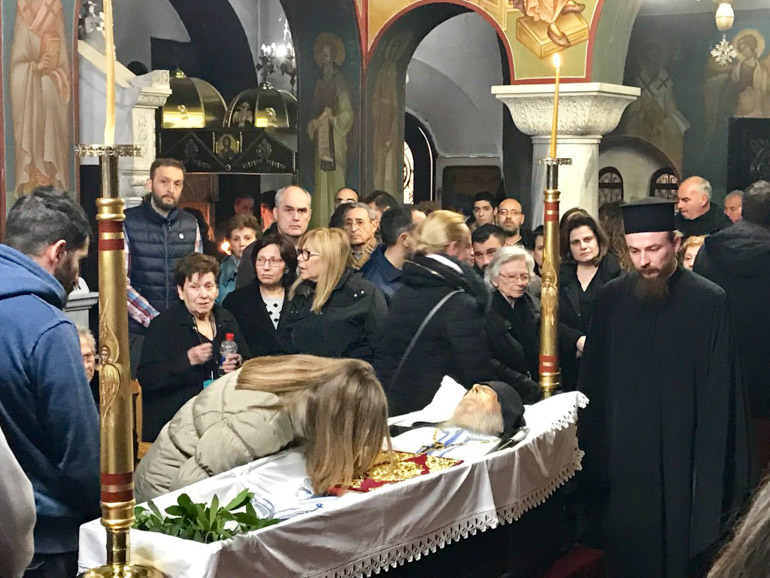
Fr Simon reposed in 1988. On the day of his burial, the grace of God was evident. The Metropolitan approached to kiss his body and the elder lifted his hand for the Metropolitan to kiss! What a blessed Elder and yet another revelation to us during our recent pilgrimage to Athens/ Aegina! Christ is Risen!
*
* One of the greatest calamities of the Greek people during the years of the Nazi Occupation was the terrible famine of 1941-1942 which claimed the lives of at least 300,000 people and caused serious illness in approximately 1,500,000. The spectre of hunger soon began to dominate. Children were among his first victims. They wandered around hungry, ragged and barefoot looking in the garbage to find something to eat. Bones, fruit skins and food scraps were the only food for many. On the sidewalks, many fainted from hunger began to fall, while the weakest organisms succumbed to the fatal… In the few ration centers the daily menu was as follows: pumpkins 100 drams, tomatoes 3 drams and onions 8 drams (without oil). Note that the oka had 400 drams and was equivalent to 1,282 grams. It is estimated that at least 200,000 contracted tuberculosis during the Nazi Occupation. 300,000 died of starvation and 1,500,000 became ill from malnutrition. The total calories from this “snack” were 290, of which only 200 were usable by the human body. Nonetheless, 500,000 infants, 500,000 toddlers, 1,200,000 children and many teenagers who needed the scrapbooks were fed on this 200 calories daily menu for months! On the streets, the chilling and macabre sight of the dead being carried for burial in two-wheeled wooden carts and with a cleaning cart began to appear. The dead were piled up, first by the tens and later by the hundreds in cemeteries unburied, as there were not enough undertakers to bury them! The unburied dead from starvation soon became a very serious problem. In streets, squares and courtyards of houses, people were dying every day and their bodies remained there, where they collapsed, until a Municipal cart passed by to collect them and take them to the cemeteries. But there was a problem there too: the undertakers were few, they too were exhausted from hunger and the dead were many. Others left their dead relatives outside hospitals and others outside cemeteries, stealing the dead’s identity documents in order to appropriate the pension they were entitled to. Protothema, my translation.
For more miracles of , go to Orthodox Christianity Then And Nowhere and here .
Yetanother link in the chain of holiness to His Kingdom, revealed to us, during our recent pilgrimage to Athens and Aegina, another stepping-stone on the Way! The humble Saint of Marousi, To St Athanasios Hamakiotis! Glory to God for all things! This blogpost will present his life and three of the most memorable miracles during his life and after his repose in the Lord.
1.The incident with the Holy Communion took place at the end of St Athanasios Hamakiotis life. His end was blessed, reminiscent of the end of the great saints that we read in the old Synaxaria: “While he was in the hospital, the priest from the Petraki Monastery would come every day to give him Communion. In the last few days the fever had skyrocketed. The thermometer read 42 degrees. At midnight on the 15th to 16th of August he turned and told the nun. -‘Child, be ready tonight’. -‘Why Elder?’ -‘Tonight I will have a big visit and we must be ready to take communion. It’s an opportunity; don’t miss this opportunity’. – ‘Yes, Elder, tomorrow the priest will come’, answered the nun, without understanding what the elder meant. ‘No, tonight, we will have communion’, he insisted. ‘The angels will come! Now read the Holy Communion Canon’. The nun read it and as soon as she finished, he said to her: – ‘Repeat it’.She read it a second time and then, the Elder told her: – ‘Since we won’t be in time, read to me the final prayers’. The nun read: ‘I believe Lord and I confess…’ and the rest.
The Elder continued. -‘Sing now ‘On the divine prison the uncle Abbakum…’ He even provided the tone. The nun chanted: ‘Above the divine prison, the great Abbacum, stand with us and show us, a bright Angel, clearly saying: Today is salvation for the world, because Christ has risen as almighty.’ Indeed, what a nice and how appropriate for the moment choice. – ‘Repeat it’. The nun repeated it. ‘And another time.’ We leave the continuation of the narrative to the nun who experienced this shocking moment: ‘While I was chanting the troparion and I came to the word ‘Abbakum’, I experienced an urgent impulse to fall down on my knees. I quickly knelt down, he threw the sheet over me and half covered me. The Elder, with all the strength he possessed, stood up a little, raised his hands and in awe said the words before the Holy Communion, as the priests say them. I was afraid that he would fall and tried to see what he was doing by pulling the sheet aside a little. He made the same movements that he made when he took communion at the Holy Altar, saying: ‘Here I come to Christ the immortal king and our God. They are transmitted to me by Athanasios, the unworthy Hieromonk, the holy and all-holy…’ He opened his mouth and received Holy Communion from a beautiful angel! I was amazed to see him in the night with the little light taking communion and drinking the blood of the Lord and saying: ‘in the name of the Father… and of the Son… and of the Holy Spirit’. He said ‘Amen’ and calmly bowed, filled with unspeakable joy and profound emotion at God’s unexpected gift. Then he turned and said to me: – ‘Now read the Thanksgiving prayers’. I read them, although I felt overwhelmed by that experience. Then a sweet sleep took him.
It dawned. And because Fr. S. from the Petraki Monastery would come every morning to offer Holy Communion, I say to him: – ‘Elder, let’s read the Holy Communion; Fr. S. will arrive soon to offer Holy Communion to you’. The Elder reacted. – ‘No, my daughter. I have already received Holy Communion, once! Did you see anything?’ I didn’t know how to behave. -‘Uh…no…Elder.’.. What could I say? After some time, Fr. S. came with Holy Communion. As soon as he saw him, he said again: – ‘I have already received Holy Communion, once!’ P. S. left shocked and speechless.
Monastic Calling
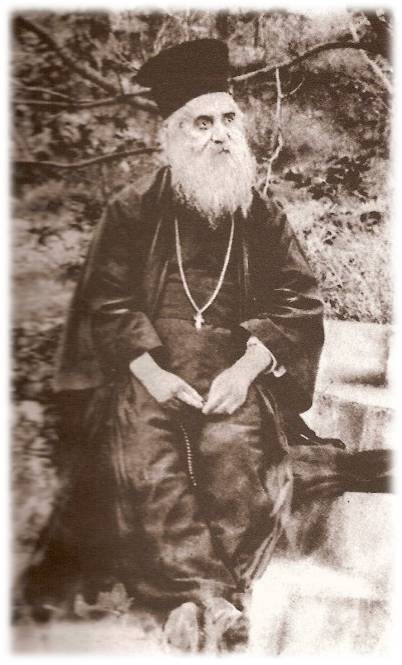
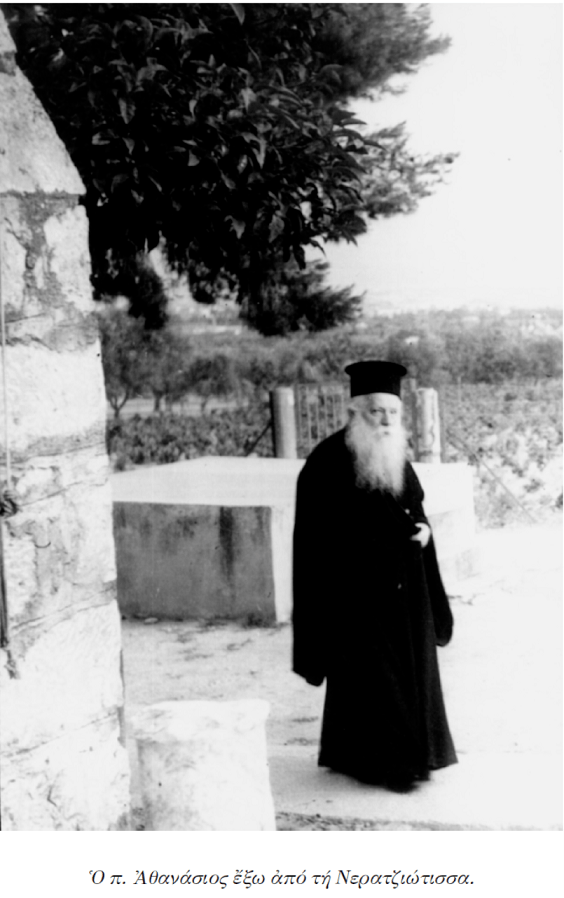
Who was this St. Athanasios? He was born George Hamakiotis in 1891 in a mountain village in Kalavyrta. He became a monastic novice at the age of 15, and after finishing seminary 7 years later, he became a monk with the name Athanasios. He was ordained a deacon at the age of 25, and a priest at the age of 30 in 1921. In 1931, he went to serve various churches in Athens. In 1936, he was appointed rector of the Panagia Neratziotissa Church in Maroussi, which became known throughout all of Attica thanks to Fr. Athanasios’ prolific work.
Father Athanasios was distinguished from his childhood for his fiery love for God. His village church and the surrounding chapels were his favorite retreat. He used to run there since he was a small child to pray. In Agia Lavra he stood out from all the monks for his spiritual struggles. Father Anthimos, another elder in Agios Lavra recalls: “In his face I met a real monk. Father Athanasios observed the monastic rule to a much greater degree than the other monks.”
Indeed he lived with more askesis and spiritual ‘violence’ than all the rest. Not only would he never be absent from the monastery services, but while the service started at 4 in the morning, he would get up two hours earlier. So for two hours, in the peace of the night, he prayed, or studied the Holy Bible and the Fathers of the Church. “The monk’s weapons are study and prayer” according to the Holy Fathers. Indeed, to defeat sleep, he would read while walking around his cell, holding a candle in one hand and the book in the other.
But there was a period when the monastery had an abundance of monks and a lack of cells. Thus the monks were forced to live in the same cell three, four, five together. Again Fr. Athanasios found a way not to give up his beloved spiritual study. He would place the oil lamp behind his headboard and, in order not to disturb the other monks, he would place a rough piece of cardboard that limited the light only to him. Thus, with this primitive ‘table lamp’, he could immerse himself undisturbed in the texts of the Bible and the Holy Fathers and slowly enter their spirit.
Not only then but throughout his life the Elder read, and not just read, but studied diligently. He underlined on the books, commented, took notes, or copied into notebooks, whatever he liked and impressed him. This can be seen in his books, but also in his manuscript collections, which are preserved either in the monastery or at his spiritual children. He also kept clippings from magazines and even newspapers, anything that would be useful for his spiritual training and pastoral ministry.
Priest in Neratziotissa
A loner, he loved the monastic life, which is why he sought out the isolated church of Nerantziotissa, which had been a men’s monastery since ancient times. Many pilgrims from almost all parts of Attica, but also from elsewhere, came to receive the blessing of that excellent priest. His fame had now gone beyond the then narrow limits of our city.
2. Once upon a time, a sick child came to Nerantziotissa with his parents and relatives, since science had proven powerless to restore the child’s health. Father Athanasios, after sending the relatives and other followers away, and recommending absolute silence, took the child and his mother and entered the church to pray. Throughout his prayer in the church in front of the icon of the Virgin Mary, on his knees, Father Athanasios had raised his two hands to the sky and tears were running down his cheeks. The child was on the slabs below and the mother was kneeling next to him. When Father Athanasios finished his prayer and made the sign of the Cross on the child, he got up, walked and left the church alone. Panagia Neranziotissa had performed her miracle. And that wasn’t the only thing. Father Athanasios had the privilege of having his soul full of divine grace, which he channeled through his constant prayer to those who came to him with a spirit of humility and repentance. The road to salvation was opening before them and Neranziotissa was becoming a site of holy pilgrimage. Athanasios Hamakiotis: The Saint of Marousi
Father Athanasios continued his hesychastic programme even when he was in Neratziotissa. He never forgot that he was a monk. His whole life was a litany around and in the Temple. He loved holy services and he lived ‘in’ them. The centre of his life was the Divine Liturgy. As Metropolitan Iakovos of Argolida writes: “The Divine Liturgy was his thought, the desire of his soul, his being, it was everything for him, so much did the grace of the mystery affect him, that he was literally transmuted when he officiated”. In his ceremonial movements he was austere, measured, serene, his gait quiet and humble. There are not a few who saw him at the time of the Divine Liturgy, or during the Great Entrance, but also at other times even outside the church, his eyes transfixed to Heavens, his face shining, his feet not touching the ground, conversing with God in hesychia. Often some adults who saw this exquisite sight were stunned. They barely contained their surprise and hushed their voices, so as not to create disorder. But the little children could not be held back. They interrupted the Liturgy with their voices and shouted: “Mom, the priest doesn’t step on the ground! The priest is flying!” As the Divine Liturgy progressed, the Elder ascended. His countenance changed, his hands trembled, his eyes streamed with tears. When it was time to take communion, he would not leave anyone in the sanctuary. At that unique moment he wanted to be alone and said: “And now, Lord, You and I.”
According to the testimony of Father A.L.: “There was no end to the tears that he would shed at the time of the Divine Liturgy. Especially, at the time of Holy Communion, he would shed even more tears, pleading God: “Do not burn me, Lord. Burn away my sins.” And his tears would flow. I have never seen an Elder cry like this before. It surprised me so much! Once, I had the boldness to ask him: -Why are you crying, Elder? – I am crying for my sins, he answered. Because they are so many that I shouldn’t be at the altar. I should have been somewhere else!”
Prayer was always on his lips. Especially at night until late in the morning he prayed outside his little house. Many saw him in the dark with his hands raised praying. The Elder felt a special love for the Most Holy Theotokos and the saints. An attitude of childlike, pure devotion. He addressed Panagia as “Our Lady Theotokos”, or “My lady”; “Save us, my Mother”. He would rest his head on her image and repeat the same words, or other simple requests. He even said: “May the candle of Panagia always be lit in the cell.” He addressed Saint Anna similarly. When he approached her icon and looked at her, he would say: “Mother of my mother, help us.” Among the other saints, it seems that he especially loved and honoured Saint John the Baptist. He would say his prayers and when he would conclude, he would turn to him and say: “My lord, we shall meet again.”
The area St. Athanasios Hamakiotis truly excelled was Confession. Thousands of people found in him a true spiritual father and bowed their heads under his epitrachelion. He heard Confessions until very late into the night despite his fragile health. The subject of repentance was his favorite sermon. He was constantly calling for repentance.
His charity and almsgiving were unparalleled. He didn’t even want to touch the money. When they gave him money he looked for ways to get rid of it. He ran to the poor and sick, to the paralyzed. He helped them not only financially, but also took care of them himself. In a short time, Neratziotissa had become a charity center. He even said in one of his sermons: “Child, do you realise what is accomplished with charity? The world offers rags and buys Paradise.”
3. Of the many recorded incidents, we will offer one that shows his immense sacrificial love. It was the nightmarish winter of 1942. People were dying in the streets from hunger and disease. A spiritual daughter of his, one of the most beloved children of Elder Athanasios, sick and exhausted, was dying. She understood that her end was near and told her relatives to prepare her shroud. Her only consolation was a small gospel with a thick dark cover. She would read for a while, then get dizzy and leave it next to her pillow. In her daze, she turned and saw it. It looked like bread to her. And she sighed: – Oh, my Christ! I wish I had some white bread! Those in the room smiled. At that time, there was no bread, let alone white bread! Just twelve grams of lupin beans were given with the ration card and, even for this humble food, they had to wait for more than ten days to distribute it! The sick woman was thinking: – “Temptation, this is what it is! “Man does not live by bread alone” (Matthew 4:4).
Everything outside was covered in snow. The people of Marousi never remember so much snow before. It was over half a meter. And the cold was bitter. Everything had died. Father Athanasios was on the other side of the city, somewhere in Pefki, where he was blessing a house. The people of the house, instead of money, offered him two pieces of white bread. It was the best gift they could offer him. But the Elder did not keep it for himself, nor did he put a morsel in his mouth. He reflected on his spiritual children. He remembered the two who were most in need. One was the sick woman we mentioned. He started for her home. The road was long and, with so much snow, extremely difficult. But, “love does not seek its own things” (1 Cor. 13:5). It counts for nothing! Who knows how long, or, rather, how many hours, St. Athanasios walked in the snow! He arrived at the house of the bedridden woman who craved some white bread and went straight to her room. – “How are you doing, my child?” – “I’m not well, my father.” Then, the man of the Holy God, Elder Fr. Athanasios Hamakiotis, took a piece of white bread from his neck. – “Child, I went and did a house blessing, and they gave me some bread; here it is! I brought it to you!” The sick woman was dumbfounded. She began to cry and, through her sobs, told him about the “temptation” she had experienced a while ago. The Elder smiled in satisfaction. – “Do you see, my child, how much God loves us?” The blessed Elder sat down, spoke words of consolation to her, supported her shattered morale and blessed her. The dying woman slowly recovered, survived and recounts this incident with tears to this day.
Father Athanasios, however, did not finish his daily mission here. He continued his course in the snow. You see, he even had one more piece of bread to offer. Another poor young lady, sick with adenopathy, was starving and suffering. The Elder also arrived at this house. He offered the second piece of white bread, comforted the sick woman there, and left. Exhausted, frozen, hungry, alone, he arrived back at “Neratziotissa”. The long road of sacrificial love of the Spiritual Father, at least for that day, had ended…
For the last four years of his life, Father Athanasios lived in the small Panagia Faneromeni Monastery, which he had built himself in Attica. His life of prayer, service, and sacrifice, continued there too. To all this was added the spiritual guidance of the nuns there. In every way he tried to help them grow in Christ. And he was preparing for the great journey, praying with tears and waiting… Then, in May 1967, his health began to deteriorate and he was transferred to Evangelismos hospital. According to the testimonies of his spiritual children, who served him, lots of miracles took place there. Every day, he would pray, receive the Holy Mysteries and offer his last words to his spiritual children.
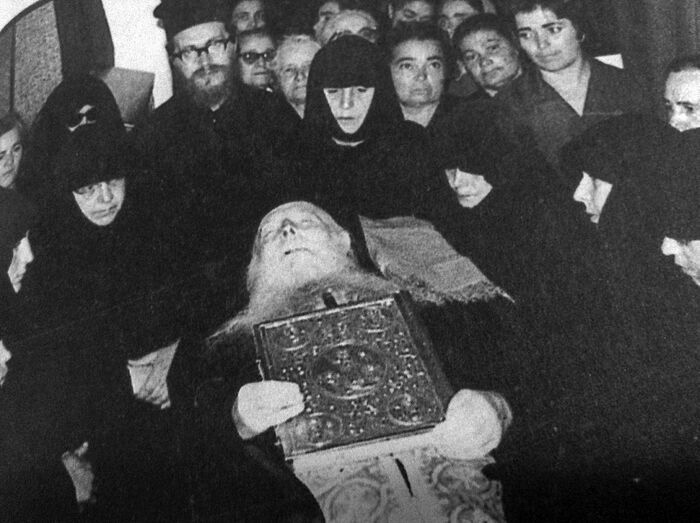
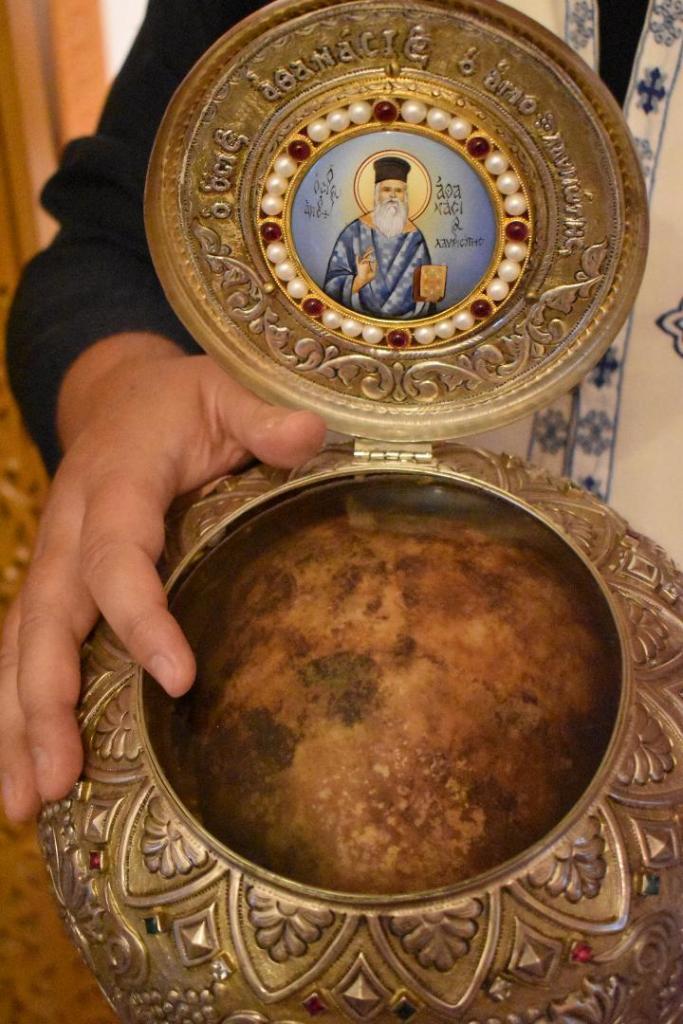
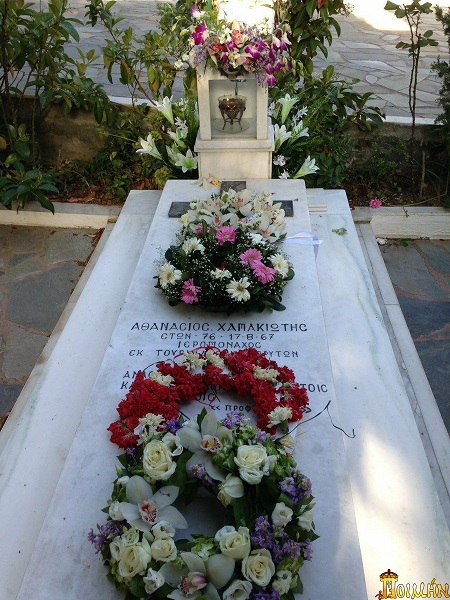
On August 17, 1967, the Monk Athanasios Hamakiotis, the Elder of Neratziotissa, surrendered his holy soul to the Lord. His “warm and flexible” skin was buried in the Holy Sanctuary of Faneromeni, next to the Katholikon of the Hesychasterion. 47 years have passed since his final sleep. And the day of great joy came. On October 23, 2014, the day of commemoration of the holy Apostle James of Adelfotheos, the Most Reverend Metropolitan Mr. Kyrillos of Kifissia, Marousi and Oropos celebrated the Divine Liturgy in the Catholic Church of the Hesychastiri of Faneromeni, assisted by two other high priests and several clergy. After the Divine Liturgy, the remains of the holy father were collected. Everything was done simply and humbly, as the old man would have wanted. Those who were informed of it flooded the area of the Hermitage. With great emotion, the Most Reverend Metropolitan Mr. Kyrillos took in his hands the skull of the holy father and blessed those present. The holy relics were prepared by the Fathers and then taken to the Katholikon, where everyone worshiped with reverence. Then they were escorted and placed in the old man’s cell. A few hours passed and the old man made his presence felt. A sweet fragrance flooded his cell and the whole area of the monastery. “God is truly wonderful among his saints”. Excerpts from Metropolitan Mr. Nektarios’ book, “Hieromonk Athanasios Hamakiotis – In the Steps of Holiness”. My translation. Source: Vima Orthodoxias
This sweet fragrance continues to appear from time to time to this day, as many clergy and laity have attested. The elder is remembered for the beautiful way he served Liturgy and the sacrificing charity and love he offered to all people. The fragrance and the many miracles which continue to this day attested to his holiness and his official canonization was a matter of time. Elder Athanasios was initially proposed for canonization by the Holy Synod of the Church of Greece in August 2017.
Announcing the canonization of St. Athanasios on 16th of November 2023, the Metropolis of Kifisia writes: “Our Sacred Metropolis delights and rejoices in hearing the above Decision of the Holy and Sacred Synod of the Ecumenical Patriarchate. The celebration of his memory was set for the 17th of August of each year, the day of his venerable repose, and on the 23rd of October, the day of the translation of his sacred relics.”
St Athanasios’ cell, his personal belongings, and his relics remain there to our day. Orthochristian,
The ‘hidden’ Fr Antonio’s Gikizas and his close relationship with St Porfyrios –he even knew St Nektarios! — wasanother mystery revealed to us during our recent pilgrimage to Athens and Aegina, another link in the chain of holiness to His Kingdom, another stepping-stone on the Way! Glory to God for all things! What a Joy on Heaven and earth when a new Saint reveals himself to the Church, when new “living stones of His Temple” are revealed. “Ye also, as lively stones, are built up a spiritual house, an holy priesthood, to offer up spiritual sacrifices, acceptable to God by Jesus Christ.” (1 Peter 2:5)
*
Who would have imagined that on one of Athens’ busiest avenues, at 59 Alexandras Avenue, in the semi-basement of an apartment building, lived an elder like those we read in the Desert Fathers, with profound humility, compassion and great discernment! It was to this humble, ‘hidden’ priest, Saint Porfyrios would regularly go for Confession, a fact not widely known. One would lay hands on the other and they would confess. One wonders what it was that tied these two elders together.
*
This venerable cleric, Father Antonio’s Gikizas, was born in Kranidi, Argolis, on January 7, 1910, and died in Athens, at the age of 89, on September 30, 1999. His academic knowledge was admirable not only for his time but also for ours with his four bachelor degrees and six foreign languages and many more. This academic excellence should normally separate him from the illiterate St Porphyrios, but Father Antonios, despite his great qualifications, always tried to avoid the high offices that were offered to him throughout his life. His humility was profound. When he was still a small child, he met Saint Nektarios, for whom he had a special reverence. And later in his life, he met St Porfyrios. His acquaintance with the elder – and later Saint of the Church – Porphyrios took place when he served for a short time as a preacher in Kymi of Evia.
*
So, what was it that tied these two elders together? Fathers believe that it was their profound humility and their focus on repentance and the Sacrament of Confession throughout their lives. Father Antonios of blessed memory insisted that what we all need, more than anything else, is “repentance, this gift from God. … Repentance is the key for our entry into the heavenly world, in His Uncreated Church…”. Clearly this was the focus of Saint Porphyrios’ life too, as revealed in his Testament to his Spiritual children, six months before he fell asleep in the Lord: “From a small child I was in sins——But the world thought I was good and everyone shouts that I am a saint. As for me, I feel that I am the most sinful person in the world.——whatever I remembered, of course I have confessed —-But now I have a feeling that my spiritual sins are too many and I ask those of you who have known me to pray for me because I too humbly prayed for you while I lived!” I truly wonders why would such holy men feel that sinful and regularly go to Confession until old age… To confess what? And if they felt and acted thus, what about us?
*
How inter-connected Holiness, Saints are in God’s Providence! Glory to God for all things! “That they all may be one; as thou, Father, art in me, and I in thee, that they also may be one in us” (John 17:21)
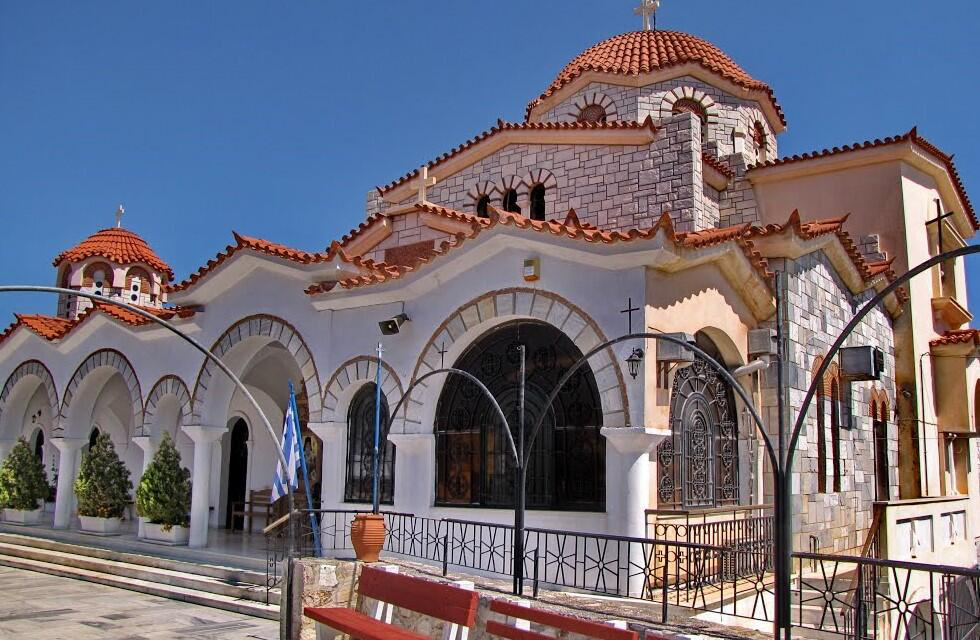
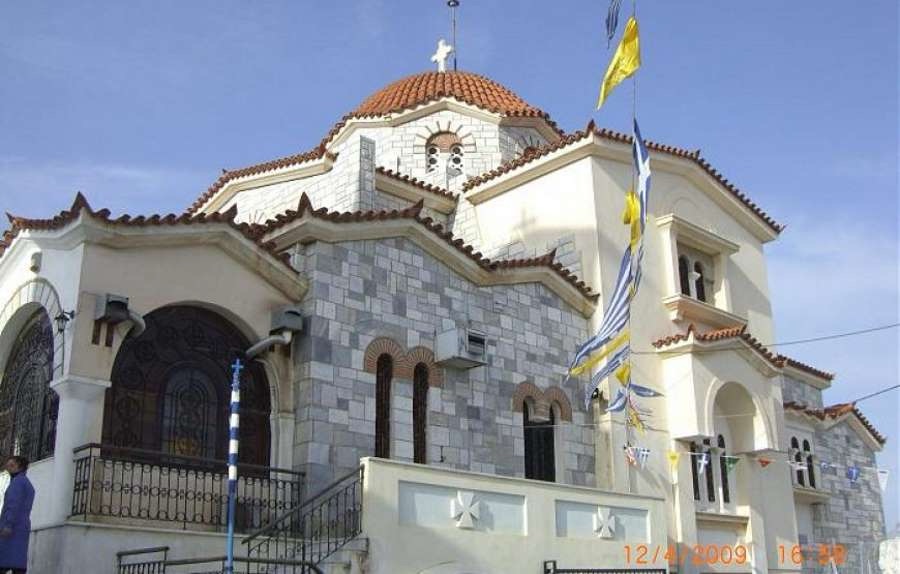
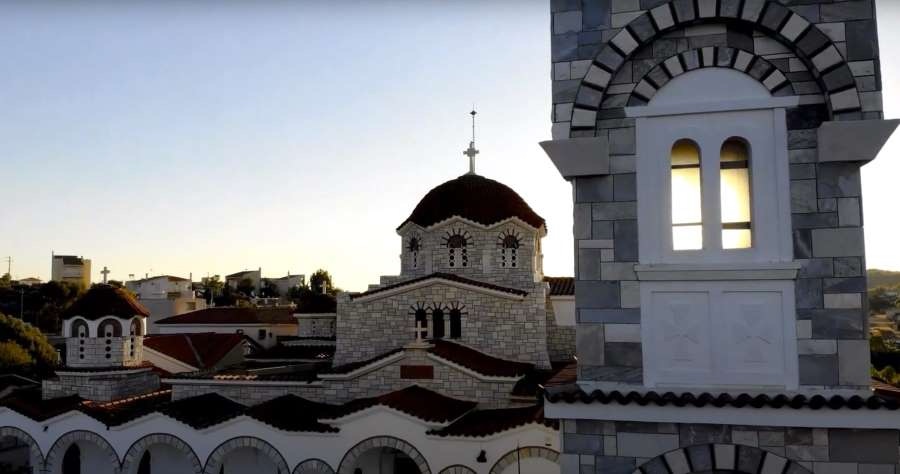
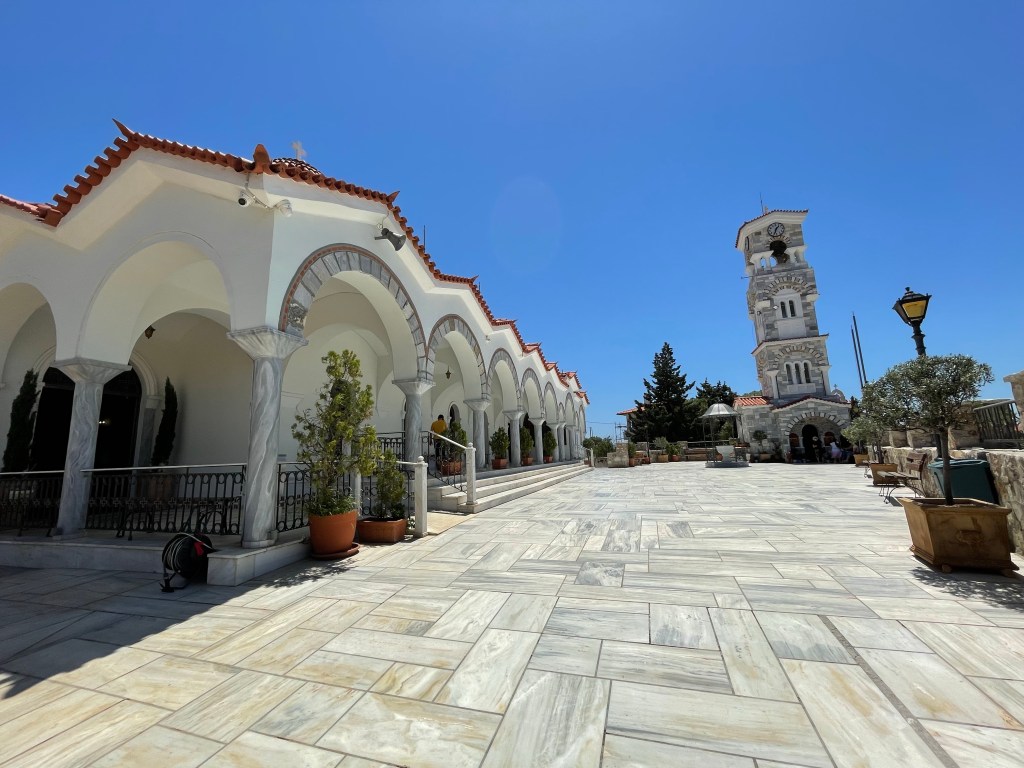
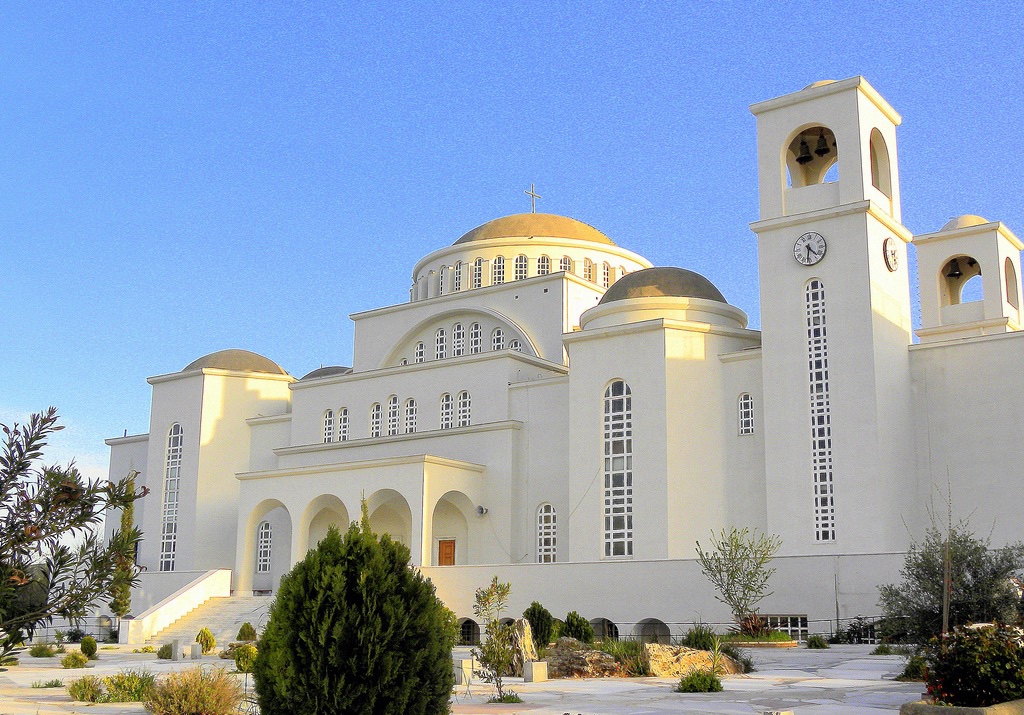
… in his Church (Kamariza) at Lavrio, Attica. This church was another stop at our recent Athens-Aegina pilgrimage, and dominates in the centre of the mining activity in Lavrio, both during antiquity and in modern times.
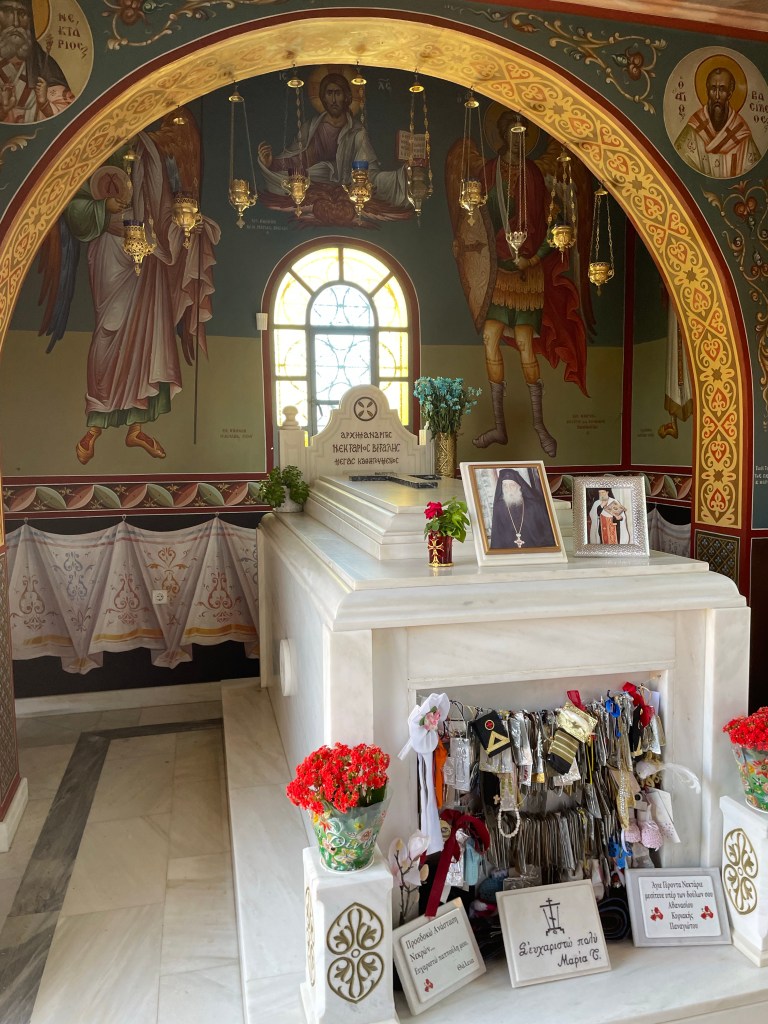
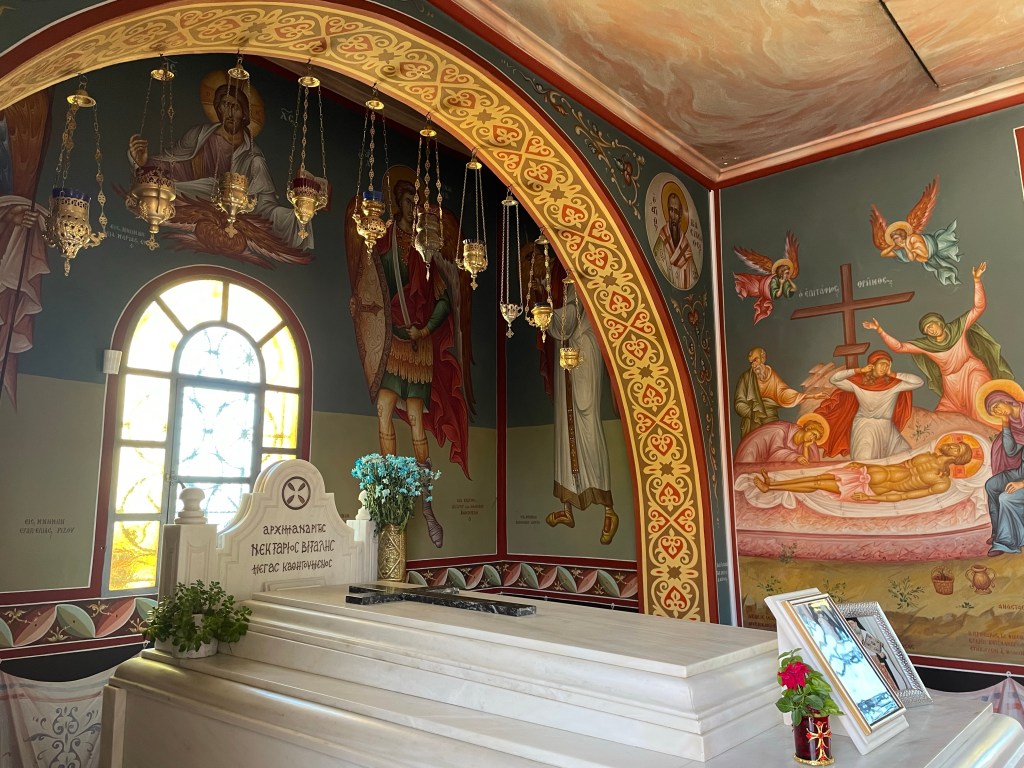
It was founded by the archimandrite Nektarios Vitalis, of blessed memory, in memory of the time that Agios Nektarios passed through this area.
Its construction started in 1966 and from 1972 it has functioned as a Holy Pilgrimage, attracting crowds of people from all over Greece.
Architecturally it is cross-in-square with a dome and follows the Byzantine order. Many outbuildings and chapels have been added to it. It celebrates on November 9th, day of death of Agios Nektarios, and on September 3rd, day of the translation of his relics.
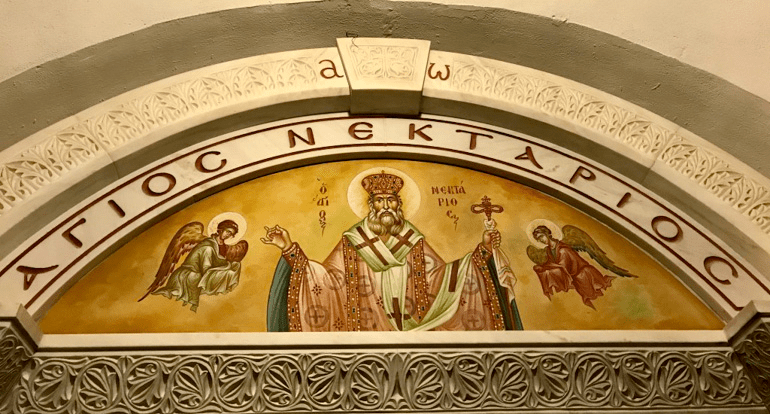
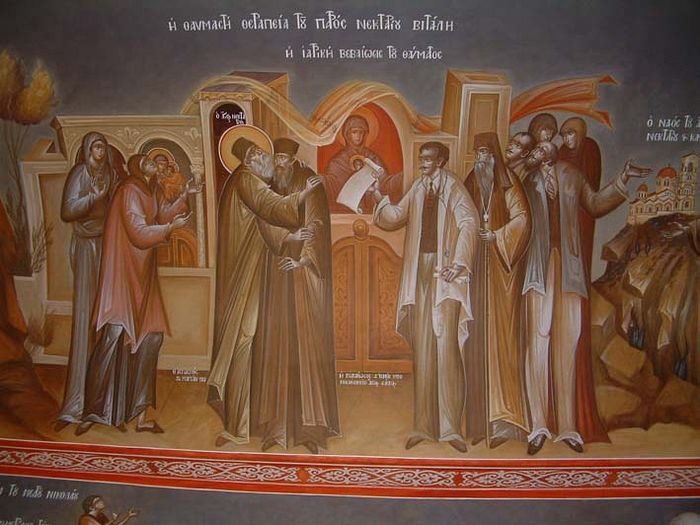
Icon of St. Nektarios embracing and healing Fr. Nektarios Vitalis, along with the two women bearing witness to this to the left, and the doctors confirming the miracle to the right. The icon is from the church of St. Nektarios in Aretaieion Hospital. Photo: Mystagogy
+ Archimandrite Nektarios Vitalis of blessed memory is well-known in Lavrio [a city in Attika, Greece] for his deeds and his sympathy to the poor and those written-off by the world. Vasileios was his baptismal name, was born in a big family with 16 siblings and lived a holy childhood. His life was a chain of miracles, starting with his baptism, when in the baptismal font, the sign of the Cross appeared and the priest said: “either this boy will die or he will wear the Cross”. Throughout his life Elder Nektarios was blessed with a very close relationship with Saint Nektarios. It started when as a young man, Elder Nektarios went to the grave of St Nektarios in Aegina and asked the Saint about his calling, and St Nektarios reassured him in a miracle that indeed he would become a priest and would also receive his name.
Miracle of Saint Nektarios: The Healing of Fr. Nektarios Vitalis of Cancer
November 9, 2012
Fr. Nektarios Vitalis retells the following incident how St Nektarios visited him in his church and healed him when he was dying from cancer. What is said below has been told elsewhere, repeatedly, including in the book I talked to Saint Nektarios (Athens 1997, Manolis Melinos):
“I was suffering from a serious form of cancer. My chest was an open wound that was continuously running blood and pus. I would tear my undershirts from the pain. It was a tragic situation, and I was headed directly to death. So you understand, I had even prepared my grave clothes….
“On the 26th of March 1980, in the morning, I was talking in my office in the basement of the Church with Sofia Bourdoy (the church care-taker [a woman who cleans the church]) and the icon painter Helen Kitraki, when the door suddenly opened and an old, unknown man entered. He had a snow-white beard, was short and was slighty bald. He looked exactly the same as St. Nektarios appears in photographs. He took three candles without paying and lit only two. He venerated all the icons of the church, but passed over the icon of St. Nektarios without venerating it. He did not see me where I was. I had terrible pains when they pulled aside the curtain of the office and went to see the old man. He faced the Beautiful Gate [the Royal Doors in the Holy Iconostasion], crossed his palms and without looking around he asked: ‘Is the Geronta [Elder] here?’
“The church care-taker knowing my disease wanted to protect me…: ‘No, no…he is at home with the flu….’
“He replied: ‘Never mind. Pray, and have a Good Resurrection,’ [the traditional Orthodox greeting during Great Lent in anticipation of Pascha ‘Kali Anastasi’] he said as he left.
“The church care-taker came running to me and said ‘Father Nektarios, the old man who just left resembled St. Nektarios himself! His eyes flew flames. It seems to me that was St. Nektarios and he came to help you….’
“I thanked her thinking that she said this to console me. But deep down something was wrong. I sent her along with the icon painter to find the unknown man and quickly bring him back. I walked into the sanctuary and venerated the Crucified One [the icon of Christ on the Cross in every Holy Altar] crying, and once again asking Christ to heal me. Their footsteps stopped: ‘Father, the Elder has come!’
“I tried to kiss his hand, but out of humilty he did not let me. He bent and kissed my own! I asked him: ‘What is your name?’
“‘Anastasios, my son,’ he said, relating his baptismal name that he had before he become a monk….
“I led him to venerate the holy relics. He took out a pair of glasses with only one arm, and as soon as we saw them we were amazed! They were the same glasses of St. Nektarios that we had in the case with the holy relics. They were given to me by the old Gerontissa [Eldress] Nektaria of the monastery in Aegina.
“‘Faith is everything!’ said the stranger, as he put on his glasses.
“He began with reverence to embrace all the holy relics as the church care-taker showed, except for the relics of St. Nektarios, which he passed over….
“‘Geronta, forgive me,’ I said, ‘but why don’t you venerate the miraculous Saint Nektarios?’
“He turned and looked at me smiling. I asked him: ‘Where are you staying Geronta?’
“He showed me the ceiling, where we were building the new church [dedicated to St. Nektarios], saying: ‘My house is still not ready and I’m worried. My position does not allow me to live here and there….’
“‘Geronta, I must confess, you were told a lie earlier. I have cancer! But I want to get well, to make the Holy Altar, to finish the Church first, and then I can die….’
“‘Do not worry,’ he told me. ‘I’m leaving now. I’m going to Paros [an island in Greece] to venerate St. Arsenios and to visit Fr. Philotheos [Zervakos],’ he added, starting to leave and passing by the big icon without giving it a second thought….
“I stopped him and put my hands to his face.
“‘My Geronta, my Geronta, your face looks exactly like St. Nektarios who is honored here in our church….’
“Then, tears rolled from his eyes. He crossed me and embraced me with his hands. Taking courage I opened my hands to hug him. But when I spread out my hands, and while I was watching I could see him before my face, my arms closed back to my chest! The hairs then stood up on my arms and I crossed myself!
“I said again: ‘O my Geronta, I beg you, I want to live to do my first Liturgy. Help me to live….’
“He left from being close to me and stopped in front of his icon and said: ‘Oh, my child Nektarios, don’t worry. It is a passing trial, and you will be well! The miracle which you are asking for will happen, and it will be told to the whole world. Don’t be afraid….’
“Immediately he left us by walking through a closed door….
“The women ran to catch up to him. They reached him at the bus stop. He went inside and disappeared before the bus left!”
This story is always told by Fr. Nektarios himself, a respected and reliable person, and in the presence of witnesses. Fr. Nektarios eventually became well – to the amazement of doctors, radiologists, and forecasters of death. Because above all is Christ, our living God, and our intercessors before God, the Saints, plus our Mother the Panagia!
For “where God wills, the laws of nature are overcome….”
A short encomium written by Mr. Manolis Melinos, who wrote several books on St. Nektarios, his life and miracles, and especially came to know Elder Nektarios: ELDER NEKTARIOS The sweet, the simple, the father, The brother, the fellow man, The consoler, the humble one, The child among children, the great one among the great, the elder among the elders, in other words, the child-elder, reposed today, February 8th, 2018 at the age of 88. Now he is an intercessor for us at the heavenly Altar, together with St. Nektarios, near the Great High Priest Christ, Whom he had and never abandoned! You all and everyone knows my spiritual relationship with him for 33 years, and I am deeply thankful to God Who made me worthy to be near him and to write his biography… Now, humanly, our large spiritual family is in mourning along with my biological family, and I unworthily entreat God to make him worthy to continue to pray on behalf of us. In the proper time, I will return to write more in detail, but I am compelled at least to write this. (Source)
+ Elder Nektarios near death experience — video where the Elder recalls this great miracle of his “death”, his ascent to Heaven, his meeting Christ and Saint Nektarios in Paradise, and his return back to life
Written by Andreas Christoforou – associate of the St Therapon church; Transl. little city hermit
My beloved Athens, Thank you for hosting us for so many years and making us partakers of the Life of your Saints! Athens of Agios Nektarios! There in Aretaia hospital is still the bed where the sanctified soul of Saint Nektarios left his aching body to ascend to the King of Heaven! There somewhere in Koukaki was the poor house where he lived chased by the slanderers, not having to pay the rent. There he was seen by the indignant, unpaid landlady when she burst open his room, and to her amazement she saw him rapt in deep prayer, with hands raised to God!
Agios Nektarios: On the 2nd floor of the Aretaia hospital on Vasilisis Sophia in Athens is the ward where he was hospitalized for about 2 months and on November 8, 1920, Agios Nektarios fell asleep.St Nektarios
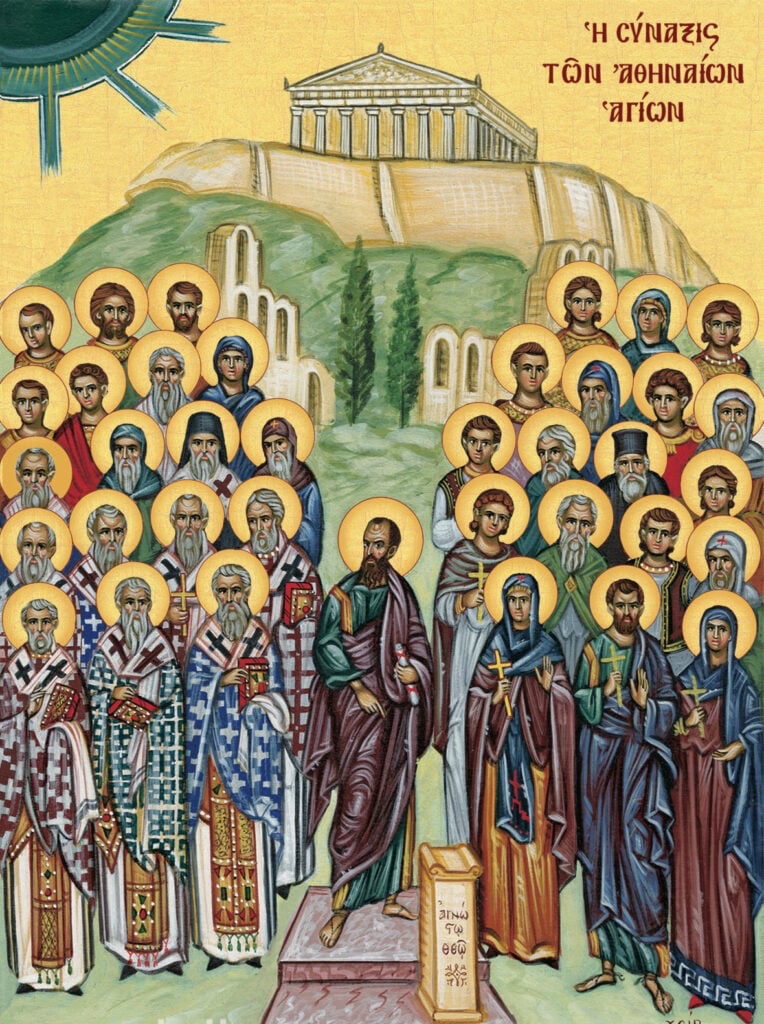
There, on Vouliagmenis Avenue, Saint Nikolaos Planas worked and distributed “Eternal Life”! There in “Infectious Diseases” Hospital in Aegaleo, next to the Sacred Way, a leper, Saint Nikiforos left with the Martyrdom of Leprosy, a “smell of spiritual fragrance” and a successor, Great Fr. Eumenios Saridakis with his endless services and endless Repentance. There in the place of avoidance a secret group of anonymous lepers sanctified you daily, my Athens! While the old man Eumenios was leaving Loimodon Noson for Evangelism for his last hospitalization, on the way he blessed Athens and said: “How beautiful Athens is! Blessed Athens!” He blessed the streets, Omonia, the Agora, the Metropolis, the Parliament, the whole city! What else could the Holy Elder see in Athens, apart from the seal of Holiness that so many of its Saints, visible and hidden, ancient and modern, left on their path?
St Nikolaos PlanasSt Nikolaos PlanasSt Nikolaos Planas
At the Red Cross, a tireless deacon of everything, the wonderful Father Elpidios, brother of Saint Philomenos of the Holy Sepulchre, gave his testimony to the sick and the helpless! Buried, he sanctifies the Rhodopolis of Stamata together with the recently buried recently canonised Saint Athanasios Hamakiotis! The air of Athens was filled with fragrance in the 20th Century! And behold, the Roman figure of the sanctified Father Simon of Arvanitis and his successor, an accomplished Levite, the practical keeper of the Gospel, the Preacher of the Commandments of God, the humble and meek Father Markos Manolis appears! Who knew him and did not feel his Holiness? A man of overnight and continuous Repentance and prayer, of secret but also practical ministry?
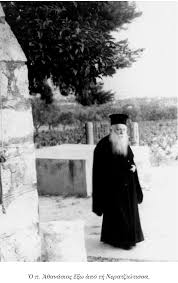
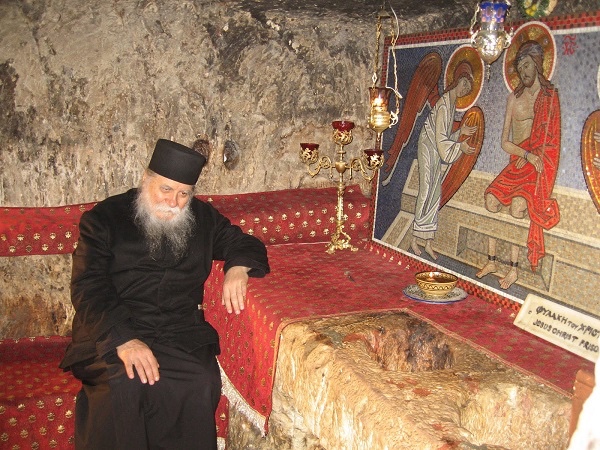
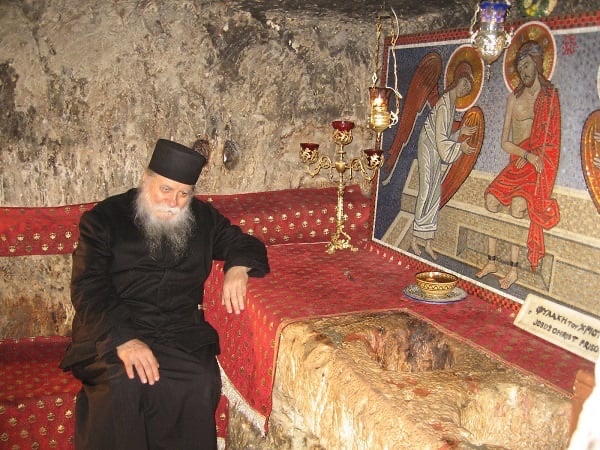
On the left, Elder Father Elpidios (1913-1983) and his twin brother Hieromartyr Filoumenos (1913-1979).St Athanasios outside Neratziotissa, Athens suburbGerondas Simon ArvanitisFather Markos Manolis in Holy Land, Christ’s Prison cell
Who knew the secret Father Antonios Gikizas who defamed and sanctified Alexandra Avenue, in the heart of the traffic in the semi-basement apartment? Who knew that this was the resting place of Saint Porphyry? Who would have imagined that in the heart of Athens, where trade, prostitution, illegal transactions, the stock market, the central market, give and take and bring, a huge figure of Holiness, an illiterate omniscient, an tireless Minister, would be consecrated in a small church of Agios Gerasimos, Saint Porphyrios?
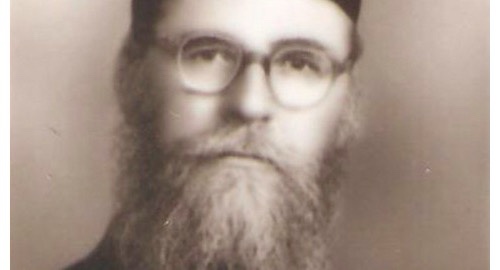
Father Antonios Gikizas— some Fathers claim he was the unknown spiritual father of Saint PorfyriosSaint Porphyrios of Kafsokalyvia
Oh my Holy Athens! O bustling Holy Desert Athens! Oh Noble Athens, humble one, who produced so many great modern Saints who continued the Holiness of Saint Philothei, you remained Unknown as a place of Sanctification of the 20th and 21st Centuries! Everyone runs to worship! Where are you going; Did you go to Aretaiio? Did you go to St. Gerasimos at the Polyclinic? Did you go to Agios Ioannis on Vouliagmenis Avenue? Did you go to the Church of Saints Anargyroi at Infectious Diseases Hospital in Aegaleo? Did you go to Rodopolis? Did you go to Dionysus at the Church of St. George at the tomb of Fr. Mark?
Holy humble princess Athens! Have you smelled the Fragrant Air of these and many unknown Saints buried in her bowels? You have raised many Saints, my Athens, and you have them in your heart! The Tradition continues. Saint Nektarios opened the door of the 20th Century, and all the above and even more secret, unknown holy men and women have walked through it. Secret successors of the Holy Spirit still walk it today. Noise, chaos, traffic, marches, cars, pedestrians, traffic lights, trolleys and buses all move non-stop. And yet there are apartments – cells and retreats – in apartment buildings that secretly weave the thread of Life at night, invisible hesychasts, men and women, God rests in them, who are “poor in Spirit” and citizens of the Kingdom of Heaven!
Everyone is anxious about the Judgment for the coming great war that will shake the world, but few know that the course of the world is determined by the few, hidden, “insignificant” workers of Repentance who change with the tears of their own repentance the wrath of God for the wild debauchery, into Mercy and Providence for all the world. As long as God sees the Repentance of the few, he overlooks the sin of the many and life continues, the war is postponed, because new people repent and enter the Church!
Extend your Mercy to them! My despised Athens, you used to be the most beautiful city, then got ugly and humiliated, and now, you are full of Saints, old and modern! My Athens, thank you!
Andreas Christoforou, Refugee from Cyprus in Athens for 44 years!
Comments: When I read this text I felt ashamed that a refugee child came to show us around our house, revealing the spiritual treasures of Athens, which we did not know, while we should have known. I am ashamed but also grateful to him for this spiritual revelation he gave me. Dimitrios Tseleggidis, Professor of Dogmatics, University of Thessaloniki
Doxastikon of the Stichera in the Plagal of the Second Tone
You traveled the path of the ascetics well, towards the working of virtues, O God-bearer Paisios, and you drove out the man of the flesh from your heart, while your nous meditated on unceasing prayer, andtheoria of the Uncreated Light. Therefore, having partaken of the gifts of your graces, we hymn you, O Venerable One, and we say with joy: Rejoice, the offspring of Farasa, the pride of Athos, the pillar of Konitsa, the teacher of Monastics, the dweller of Sinai. Rejoice, you who were adorned with the garment of dispassion, and therefore became a guide to the youth, the lifting-up of the fallen, and the return of the deluded. Rejoice, O example for Monastics, the type for laymen, and the rest and refreshment for the faithful Orthodox. And now, O Godly-adorned Elder, ceaselessly entreat Christ God on behalf of us, who celebrate your sacred memory.
It all started most unusual. As I was walking in the street, at about 16:00, under the sizzling sun, on my way back to St Porfyrios after an obedience , I saw an old priest, nearly 80 years old waiting, all alone, at the bus stop. I stopped to get his blessing and inquire if he needed any help because this was not the right time for anyone to be all alone in the streets, under the scorching sun, esp. if you are 80+. But this priest was not your ‘ordinary’ elderly priest!
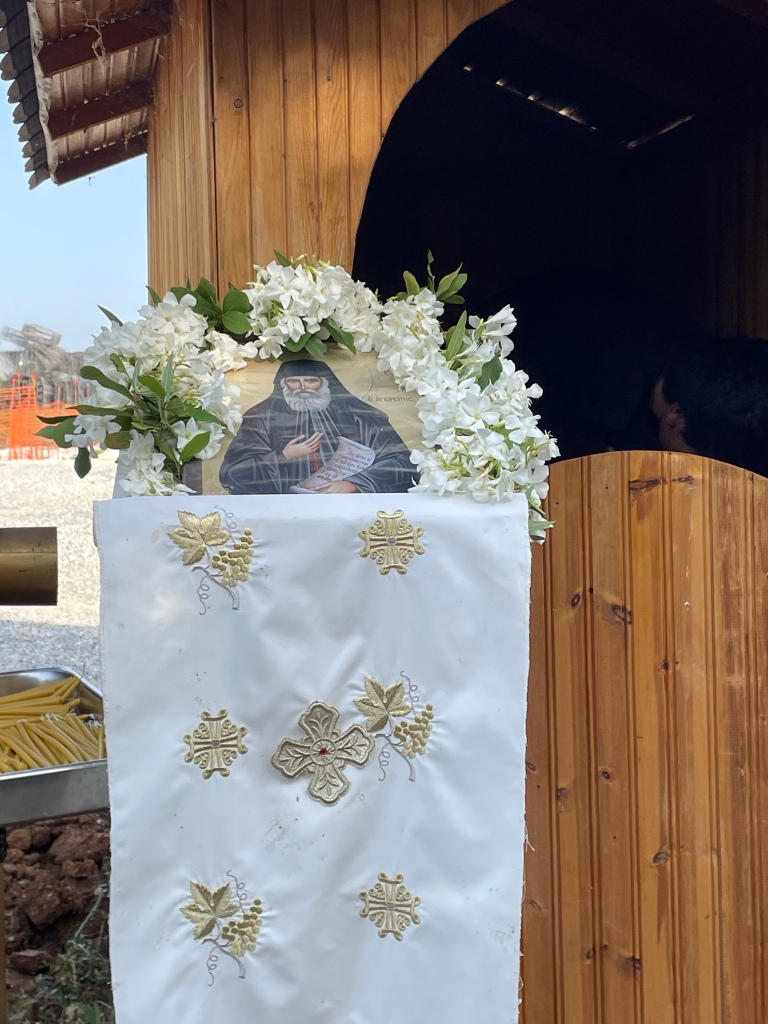
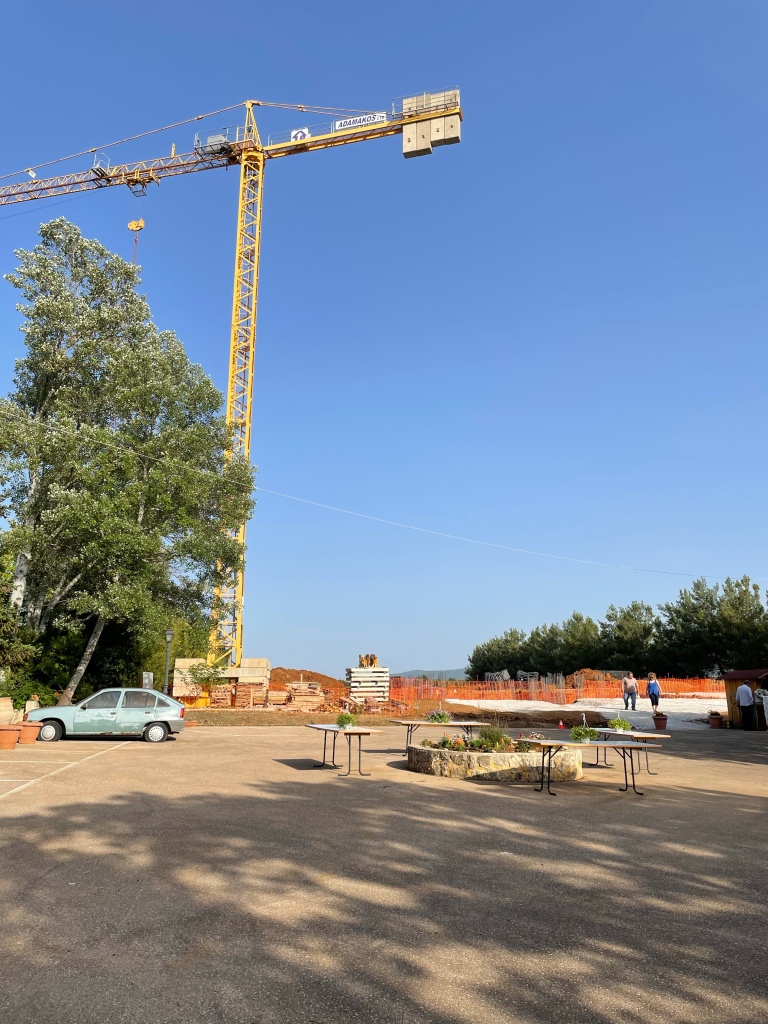
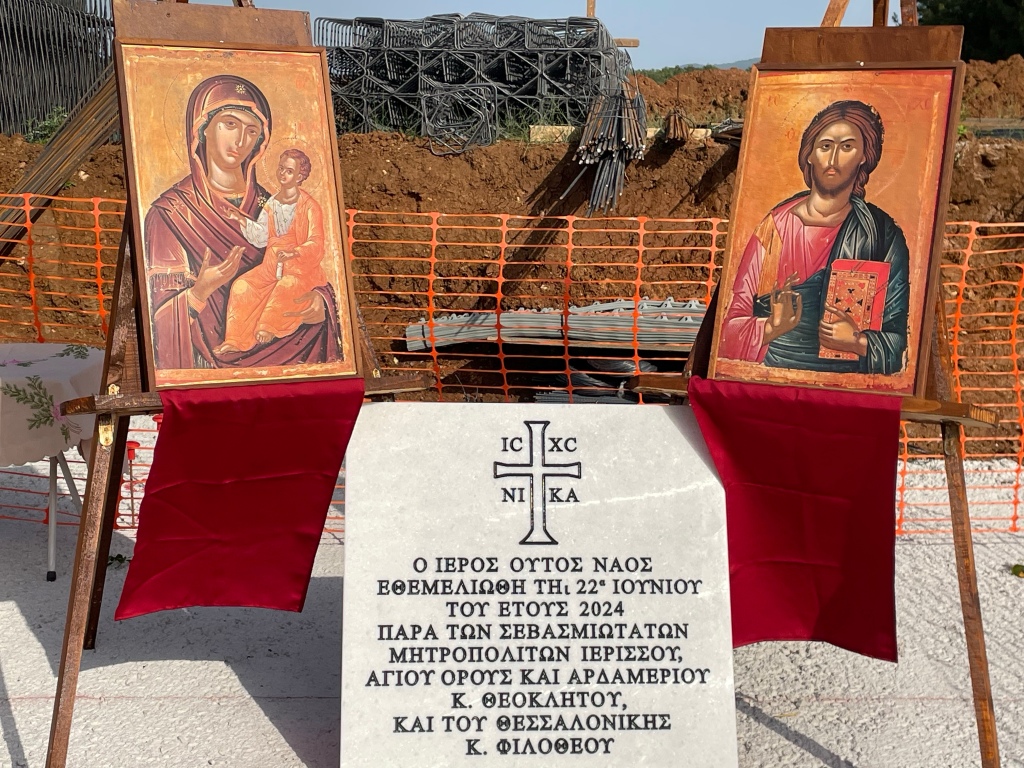
It turned out that Father Methodios was the parish priest at Thessaloniki St Gregory Palamas cathedral, and he was very excited about something and most eager to share his news with me! His tama to St Paisios —to build him a church—would be brought to fruition in just a few days, this Saturday evening before Pentecost, near Sarakina, a small, nearby town, 45’ drive from Thessaloniki. The main church will be consecrated to St Paisios, and the two chapels to St Gregory Palamas and St Porfyrios! Further on, he explained to me how he had offered the donation of 7.5 acres and how the monastery of the Assumption in Panorama had undertaken all the work. In the end, Father Methodios invited me to the the laying of the Foundation Stone for the construction of the Holy Church of Saint Paisios, gave me his private mobile number, supplied all necessary names and references, monastery ones included, offered ample navigation guidance for the trip to the ‘unknown’ he was inviting me, and kept repeating that I should come, that St Paisios had arranged our meeting at the bus stop!
He also described to me most vividly an overnight stay by St Paisios at his house! One evening, late in the night, his doorbell rang and the priest’s sister went to open the door. She returned pale and was utterly dumbfounded! When Father Methodios asked her who was at the door, all she could whisper was “A Saint!”. So Father Methodios went to the door and to his surprise saw St Paisios! ‘Father, how come you are here?’ And St Paisios smiled and told him: ‘Haven’t we been discussing about this visit and overnight stay all this time? Well, now is the time!’ And so he spent the night at his house.
What an amazing experience, a most exciting opportunity! How can one refuse such an opportunity? To tell you the truth, I was a little concerned that I have to drive on your own in these thickets, but how could I refuse? And deep in my heart, I felt that St Paisios would be with me. —And St Porphyrios.
I felt joy even at the prospect! It was such a joy to meet such an old, blessed priest, full of joy, radiating the Holy Spirit under the heat! I felt such joy that such priests still exist 🙏 Glory to God! If only you saw his eyes! These days I had been studying in detail the making of St Porfyrios monastery in Milesi, all the Saint’s work, toil, prayers, the volunteers, all the people who helped in every possible way. And while contemplating all this, I met this priest! Amazing!
So, if St Paisios and St Porfyrios would be travelling with me then it felt safe! Anyway, out of precaution, I also started making inquiries to the Monastery about the precise location —no gps it turned out, I am afraid,only vague road signs, cranes,oh dear…— trying also to find somebody else willing to join in the escapade. It turned out that nearly everybody was planning to be away this long weekend of the Monday of the Holy Spirit (nearly national holiday). Nearly.
Eventually, the Saints and my spiritual father’s prayers have provided me a travel companion for Saturday’s holy expedition. A fellow chanter had another obedience nearby so arrangement were sorted out really fast. And another chanter too, a blessed three tied cord, God will not despise? “And if one prevail against him, two shall withstand him; and a threestrand cord is not quickly broken.” Ecclesiastes 4:12. Glory to God for all things.
Of course it was still a mystery where and what precisely this church was. But Mysteries are revealed not understood!🙂 My spiritual Father assured me that Our Lord said I am the Way the Truth and the Life. Without the way there is no going, without the truth there is no knowing, without the life there is no living. He was assured that the Way would find a way for me. He keeps encouraging me these days to be open to the Holy Spirit and be led by Him.
The ancient saints travelled many miles to many places. I wish I could do some of this traveling together with him. But maybe at hisspiritual stage, it is only conducted in Spirit? The thoughts are spiritual for a spiritual father who travels with his spiritual children, whether in this life or the next.
Part Two:
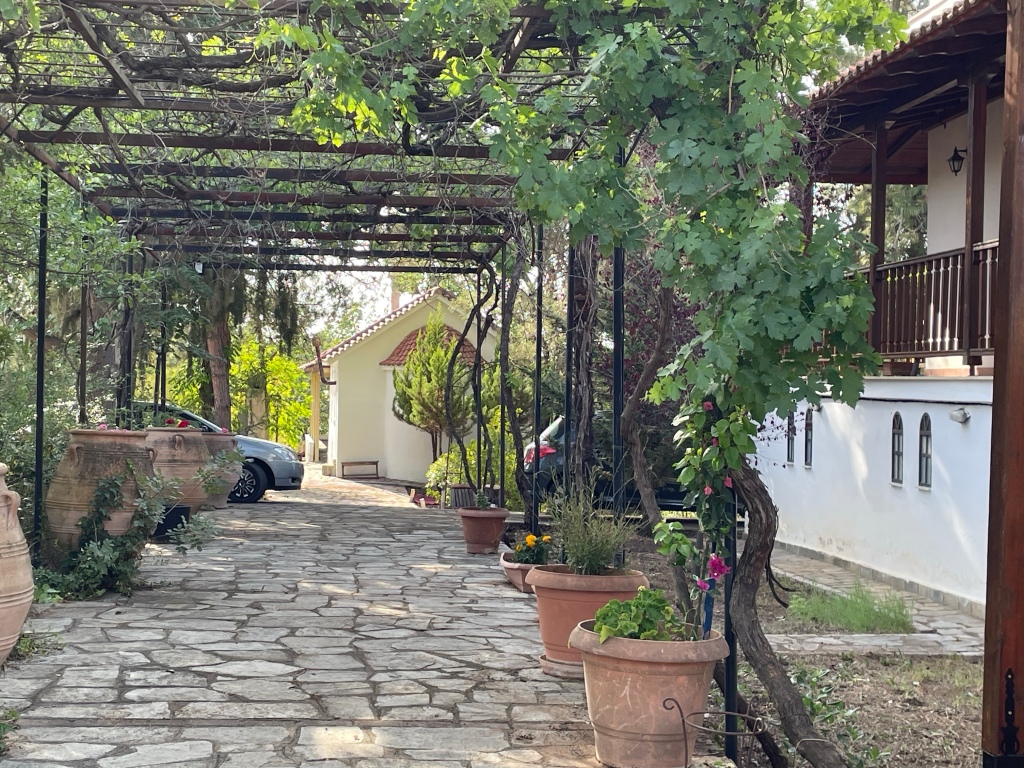
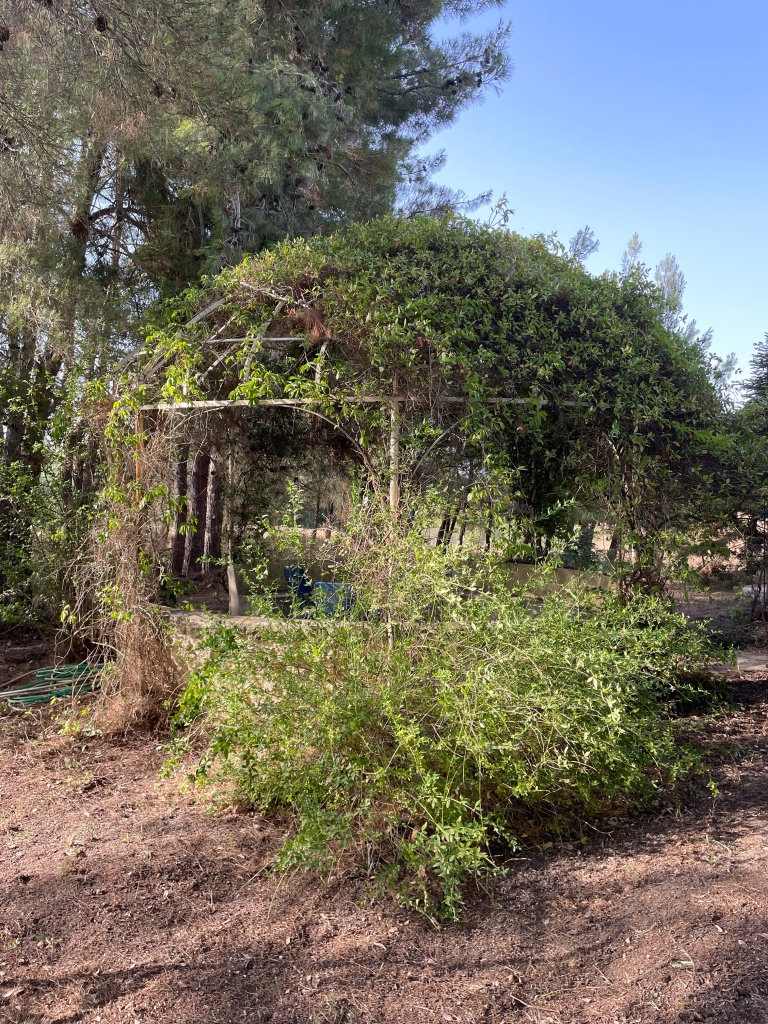
Well, it was not a wilderness we ended up, after climbing up and down Hortiatis mountain and traversing small villages. We arrived at a pretty ‘civilised’ place, a spiritual centre and a small church in a 7.5 acres land, dedicated to The Mother of God of the Life-giving Spring or Life-giving Font (Greek: Ζωοδόχος Πηγή, translit. Zōodóchos Pēgḗ, part of Father Methodios’ family inheritance. Here, Father Methodios would gather his spiritual children for years for spiritual retreats. Here, he also retreated in hesychia to pray. At its centre, this new church to St Paisios will be erected, a metochion to Panorama Monastery of the Dormition of Our Lady.
This is the original chapel of The Mother of God of the Life-giving Spring and the spiritual centre.
Father Methodios’ mother grave, behind the Theotokos chapel
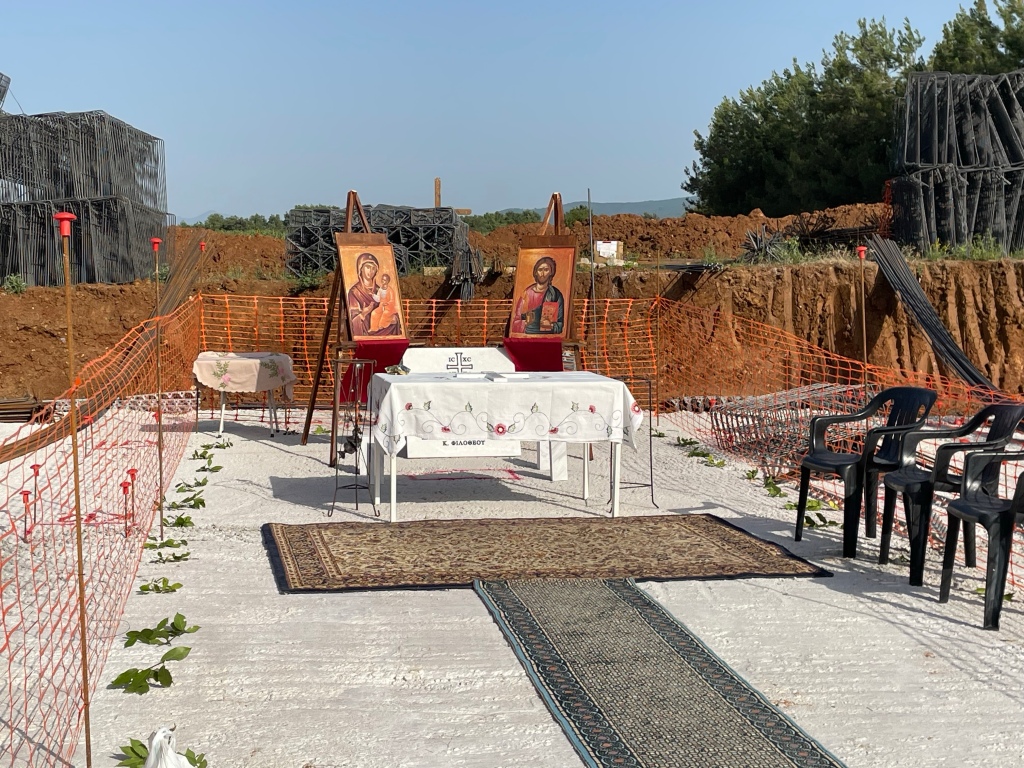
Why a Cross on the Foundation stone?
“As is well known, the Passion of the Lord culminates in His Crucifixion. On the Cross, the God-man Jesus Christ, being “The King of Glory”, gave the hardest and most terrible battle in human History, defeating the Devil and Sin. With His Holy Blood that was shed on the Cross, He strengthened and secured His Church. That is why we placed the plaque with the engraved Holy Cross on the foundations of the Church, because the Cross is, first of all, the foundation of our faith. And every Orthodox church has not only in its foundations, but also internally, externally and on its roof (in the dome) the sign of the Cross to bear witness to the victory of Christ to all those who may be inside or outside the Church.
Secondly, the Cross is the symbol of Sacrifice. Christ on His Cross gave the unique and unparalleled example of the supreme sacrifice for the human race, in order to teach us that, His earthly Church and Her members must always follow the path of sacrifice for the salvation of the world. This is the role of the Church and her children.
Thirdly, the meaning of the Cross is joy. “Behold, through the Cross joy has come to the world”, we recite every Sunday morning, but also every day for forty days after Easter. As the Apostle Paul writes, “if we die on the cross with Christ” (Gal. 2:20); if we live our personal crucifixion, daily crucifying “our sinful self with its passions and desires” (Gal. 5:24), then surely true joy will come to us, which, according to the promise of Christ, “no one will be able to take away from us.” (Jn 16:22)
Fourthly, the Cross is hope. Through the Cross, the secured and unwavering hope is born. If we rely on the Cross of Christ, we will never bend under the weight of trials and tribulations in our lives. (Source)
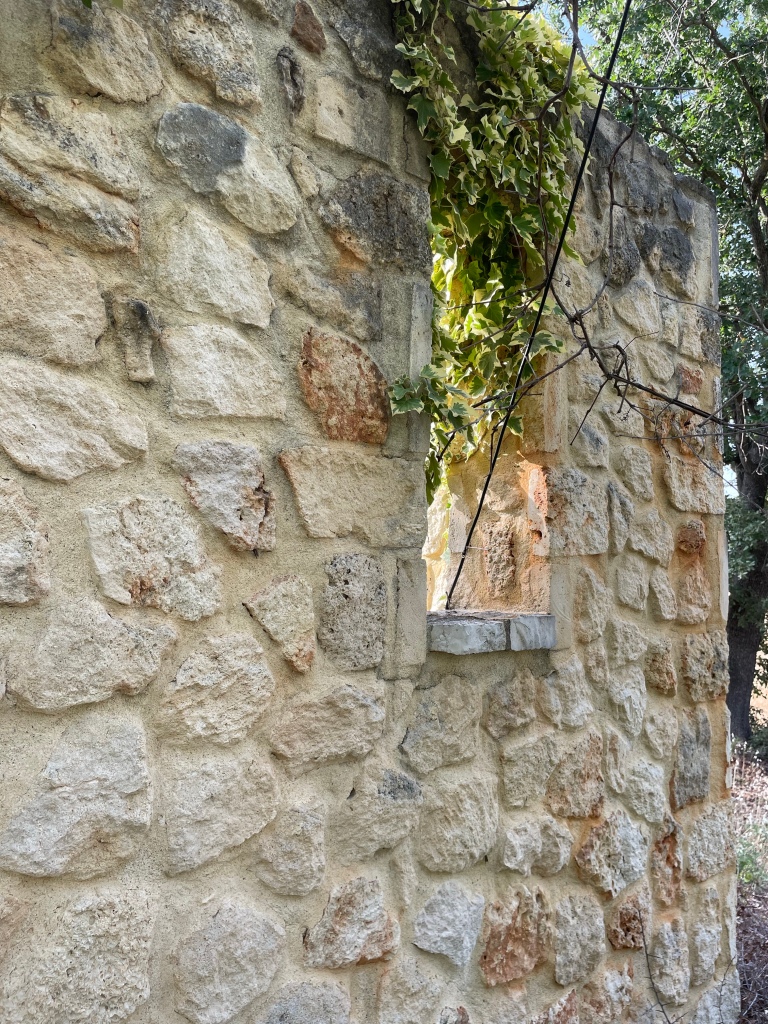
We arrived early and the place was rather empty, other than Father Methodios and some workers. All around us, Nature was enchanting.
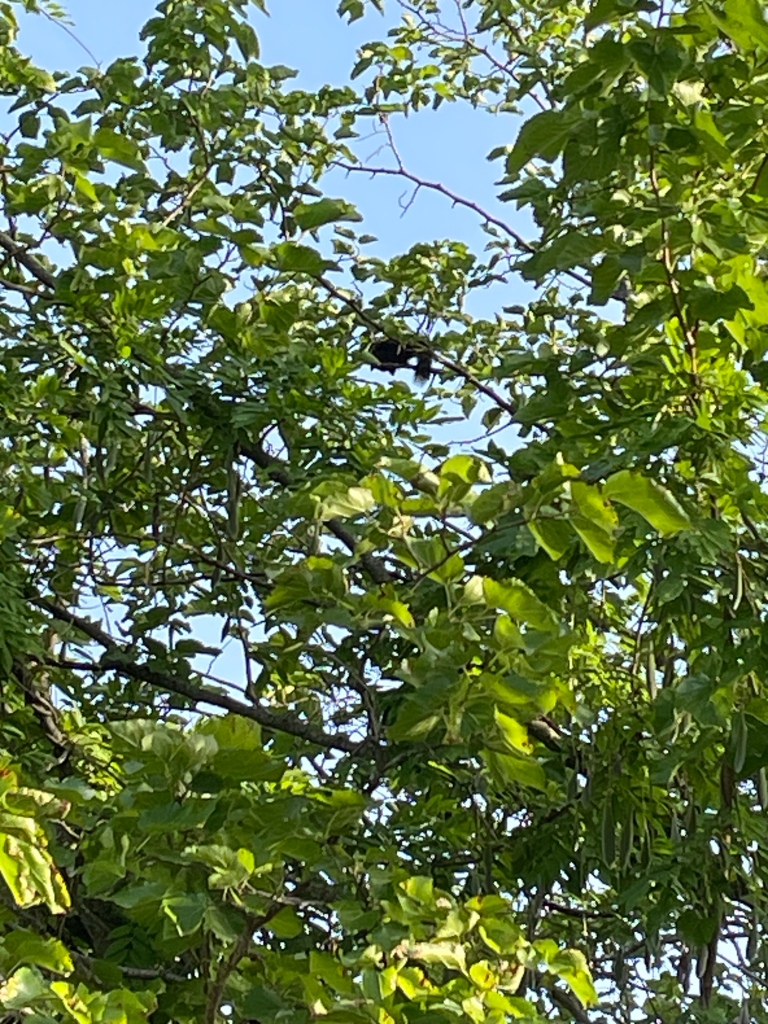
Can you spot the squirrel?🐿️
Lots of water and a miracle with water when the original church of the Theotokos was founded.
Everybody is drinking from this abundant, fruit of prayer, holy water, gushing out!
“On the last and greatest day of the feast, Jesus stood and said in a loud voice, ‘If anyone is thirsty, let him come to me and drink. Whoever believes in me, as the Scripture has said, streams of living water will flow from within him.’ By this he meant the Spirit, whom those who believed in him were later to receive. Up to that time the Spirit had not been given, since Jesus had not yet been glorified.” (John 7:37-39)
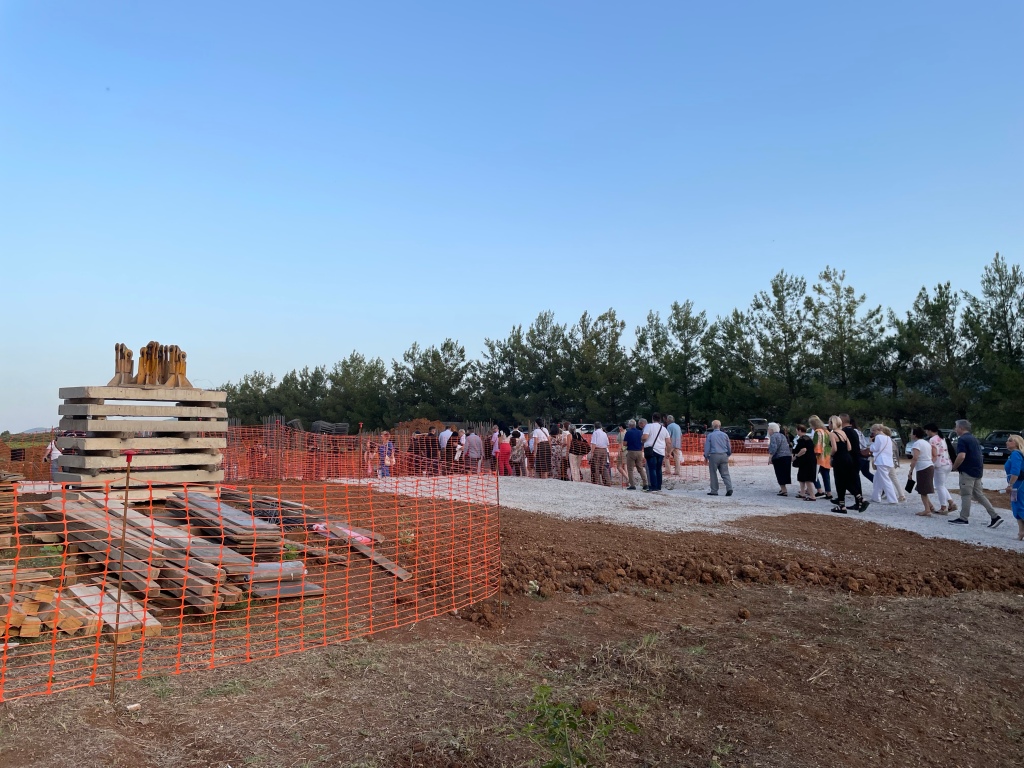
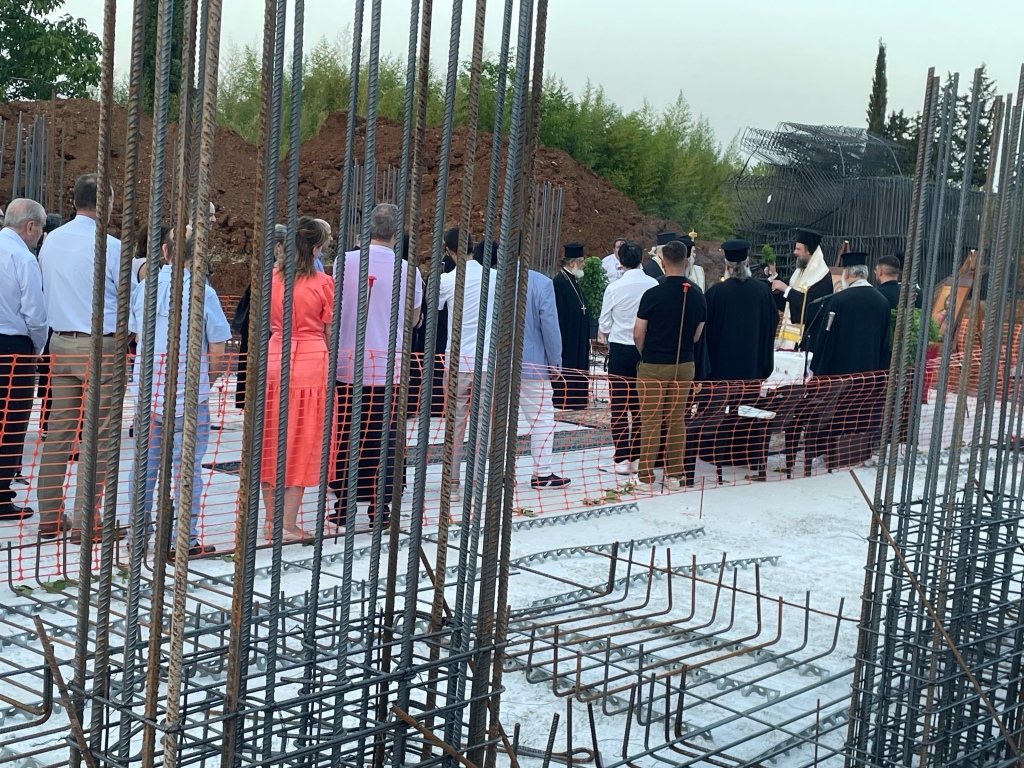
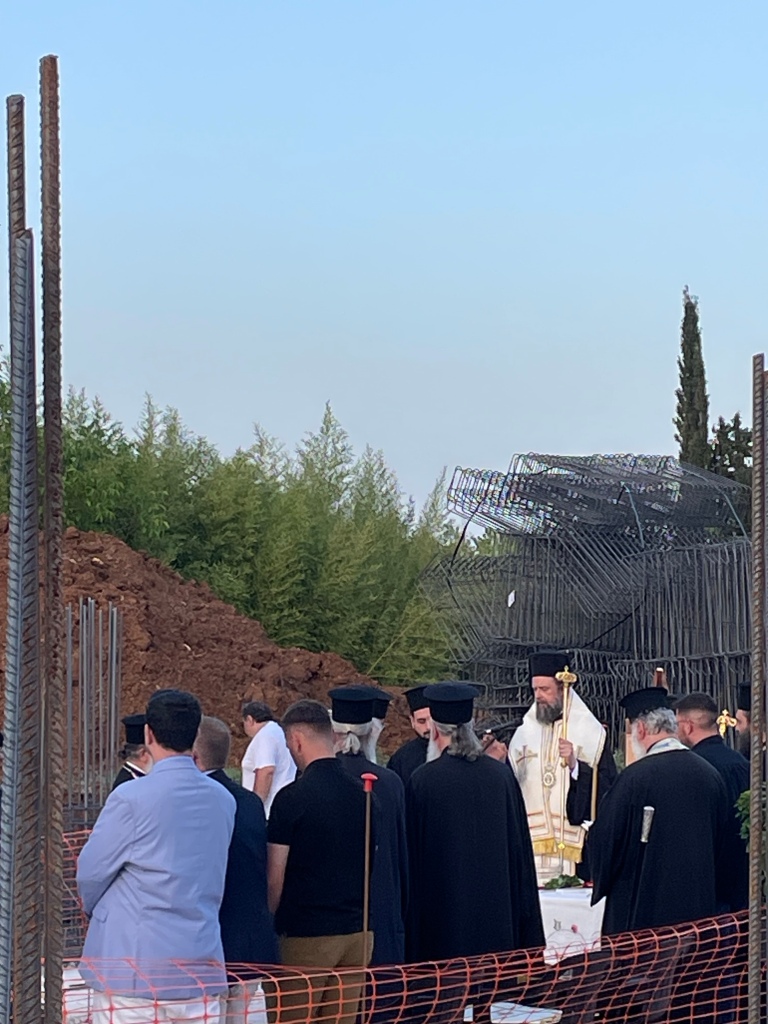
Gradually, more people started arriving, and the place was crowded, Bishops arrived and the ceremony started.
Bishop Philotheos from Thessaloniki laid the Foundation stone, blessed us all sprinkling holy water to us and the new church’s four corners. We all chanted together the Apolytikion of St Paisios, St Gregory Palamas and St Porfyrios, the two chapels. This is the first church to be dedicated to Saint Paisios and St Porfyrios! The bishop used St Paisios’ holy cross with a piece of the True Cross of Christ, a gift to Father Methodios 52 years ago! Saint Paisios also prayed and blessed his calling to become a hieromonk. Amidst lots of chanting and prayer, Father Methodios thanked us all in tears and told us that he had been praying about this for the last 40 years of his life!
“Lord, now lettest Thou Thy servant depart in peace according to Thy word, for mine eyes have seen Thy salvation: which Thou hast prepared before the face of all people. A light for revelation to the Gentiles, and to be the glory of Thy people Israel (Lk 1.29–32)
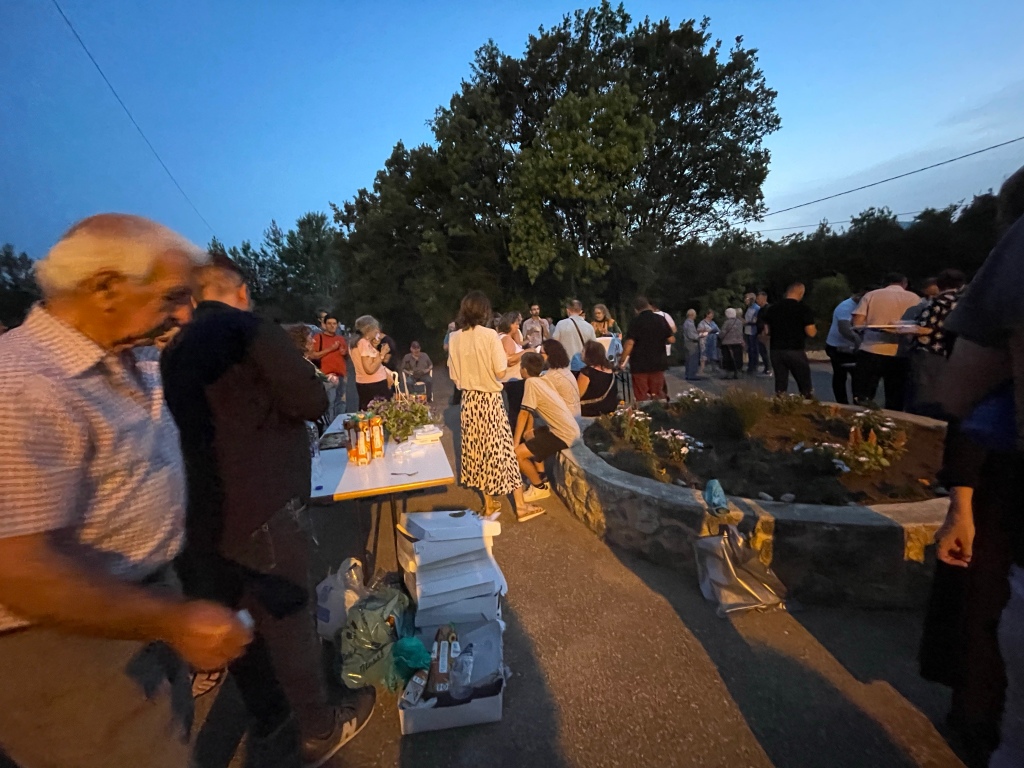
Then, a traditional Greek bouffet followed, lots of brothers and sisters all over the region and Thessaloniki to greet.
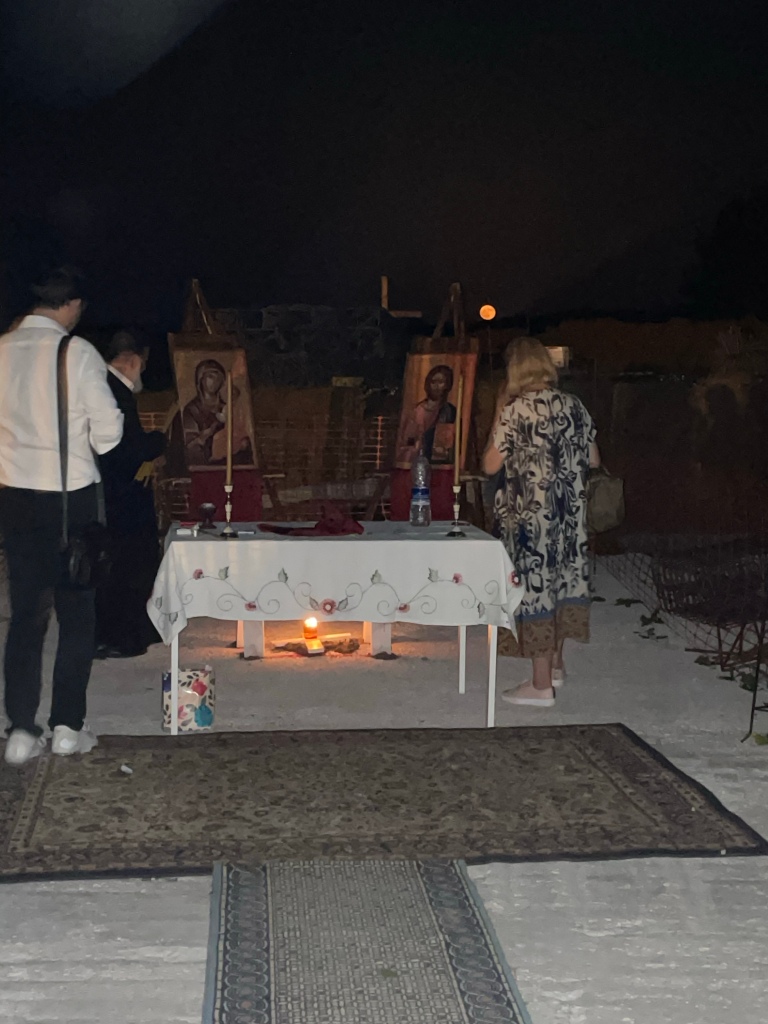
Night arrived amidst joyful fellowship, we helped clean up and tidy the place, and left, full of joy, nearly midnight! What an experience! May God soon bless us to perform the Consecration of our Holy Church, so that the glorious and majestic name of God always be glorified in it.
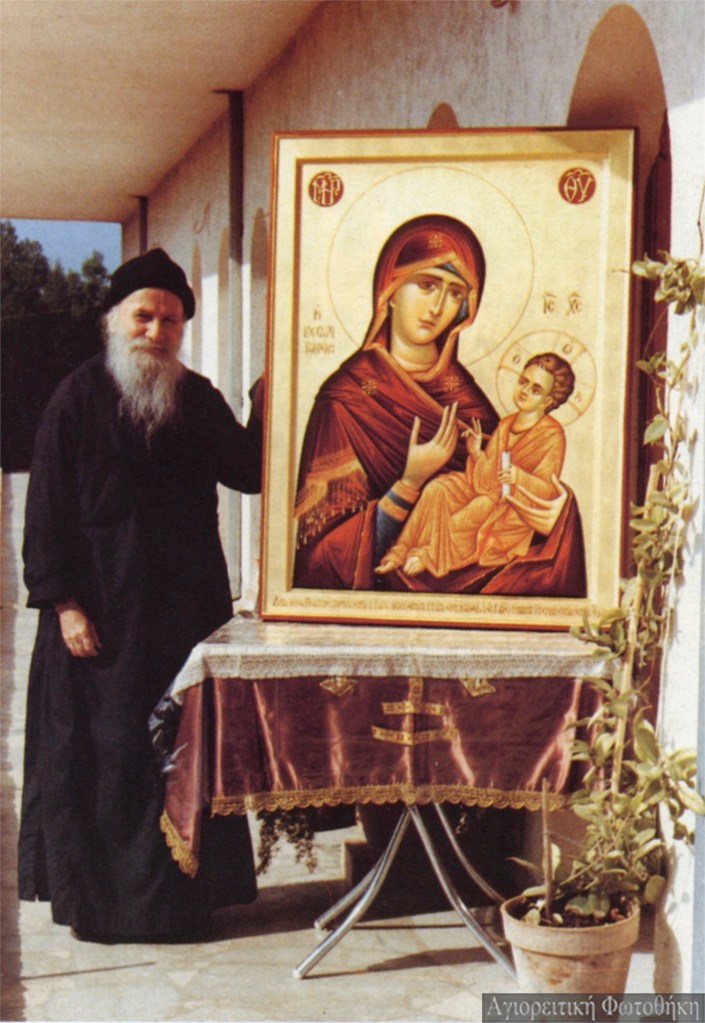
Nearby, one also encounters Giorgos Arvanitis’ grave, the only lay person buried in Milesi, a humble presence everywhere in the monastery,even in the Saint’s Cell, next to the Theotokos icon the Saint was photographed with.
It was St Paisios who sent Georgios Arvanitis to St Porfyrios when Georgios asked his counsel on Mount Athos which spiritual father he recommended for him. St Paisios also humbly confessed to all pilgrims that “his TV was only black and white, whereas St Porphyrios’ was a colour one!” 🙂 So Georgios met St Porphyrios and “was captured by him” [his words].
Georgios Arvanitis, the humble angel ministering St Porphyrios for over 30 years
Giorgos Arvanitis was a successful judge who gave up his career at the height of its success; he gave up everything to become the “beloved disciple” of St. Porphyrios, his “right hand” for over 30 years. He lived for years in a tent in the wilderness, next to St Porphyrios, when there was no monastery in Milesi, just forests and fields. In the beginning, he would sleep in his tent after long vigils together with the Saint, put on his suit and head to courts, then in the afternoon, return to his tent, take off his suit, put on his tracksuit and become one of the Saint’s workers. I’m the end, he gave up everything and was by the Saint’s side all the time, living in obedience.
His last interview before his reposal in the Lord, next to his beloved Father
I spent all week studying Giorgos Arvanitis’ diaries and ‘anonymous’ books, and so wished I were him! I cannot begin to imagine what a blessing it must be spending 30+ years by the Saint’s side! Below is an except:
“The relationship between Sts. Porphyrios and Paisios was one of love and spiritual communication. Once, St. Paisios came to the little cell that St. Porphyrios had at first, and after they said whatever they said, St. Paisios left.
Then I [Georgios Arvanitis, the judge] went there, full of curiosity, to St. Paisios and told him: “What did you talk about, Elder? What did you discuss?”
He told me with disarming simplicity: “Eh, the ‘Lord Jesus Christ… [i.e. the Jesus Prayer]”
I expected them to discuss the 666, the 12 bishops, or various ecclesiastical topics. {Georgios Arvanitis, judge in retirement, is laughing} But they prayed together. They found an opportunity to pray together, to “breathe together” in prayer.” (Transcript of the recording here)
After studying closely the writings and memoirs of Archimandtite Mark Manolis of blessed memory and his spiritual children, and those by Georgios Arvantitis, it becomes even more obvious to me how vitally important is to find a spiritual father to do obedience and be in close, if possible, daily interaction with him and his whole spiritual family. God is glorified in His Saints!
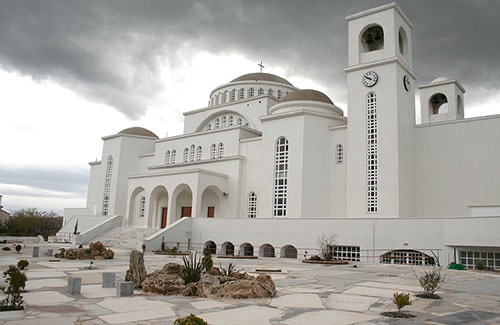
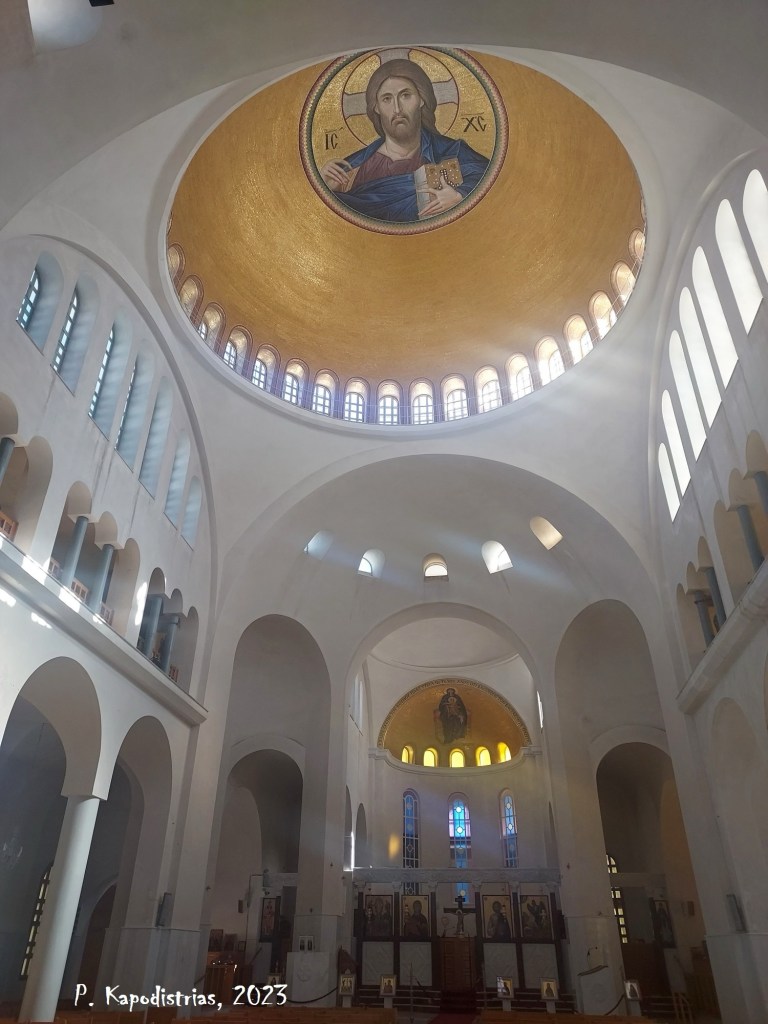
The Holy Monastery of the Transfiguration of Christ (celebrated August 6th), though technically a dependency, was founded by St. Porphyrios of Kavsokalyvia in Milesi, Attica, geographically between Oropos and Malakassa in the northern suburbs of Athens.
From one’s first step as a pilgrim in the area, one encounters the sanctity of the place and the total silence. One is struck by the astonishing Holy Church and the beautiful green surroundings.
A multitude of people hasten to the holy Hesychasterion which honors the memory of the Venerable Porphyrios on December 2nd, the day of his repose, in order to partake in the grace of this Saintly Elder.
The building of the monastery began in 1981, and the building occurred in stages, with the Katholikon being founded in 1990, with permission of Archbishop Seraphim of Athens. The walls of the church were completed in the spring of 1992, a few months after the repose of St. Porphyrios. (1)
St Porphyrios on his bed at the monastery near the end of his life
Upon arrival, we were blessed with the Supplication to the Saint, chanted by a small group of pilgrims, and personal memories with the Saint treasured and shared by their priest.
The Earthly and the Celestial Pilgrims— Part 1
The first fellow pilgrim to honour is certainly Archimandrite Mark Manolis of blessed memory. Father Mark is the spiritual father of both Father deacon N. and the local “guide/ “driver” M. who helped me throughout this pilgrimage to St Porphyrios. Many a times, all these hours together with both of them, I have wondered if such are Father Mark’s spiritual children, what a blessed spiritual father he must have been.
Upon arrival in Athens, at the airport, M. gave me a recent edition of her late spiritual father’s life, and ever since I started reading this book, on my flight back home, I was unable to put it down before reading it completely at one stretch!
The more I reflect and distil the blessings, the clearer it becomes to my mind how important it is to be under the obedience of and in close interaction with a true spiritual father. Also: how crucial is to discover and become a member in a spiritual family, cultivate the fellowship in a sisterhood/ brotherhood/ parish for our spiritual growth.
“For none of us lives for ourselves alone, and none of us dies for ourselves alone.” Romans, 14:7
One of the many testimonies about the late Hieromonk Markos Manolis at St. George parish church, in Dionysos, Attica (at the foot of Penteli Mountain, near Athens) is the following:
“I met hieromonk at the age of 23. The heights of his ascetics and self-sacrifice were unparalleled. He never slept and was always there for his spiritual children. A great many of his spiritual children had seen him walking above the ground during the Holy Liturgy. When he first saw me, he called me by my first name. I had never known him before. How come he knew my name?
His great humility and abstention from sleep and unceasing prayers had opened his spiritual eyes and he was endowed with the gift of foresight. He was one of the most militant adversaries of ecumenism, spiritual leader of the “Orthodox Press” newspaper, but above all a true spiritual father and leader of many spiritual brothers and sisters in Christ in villages, towns, hospitals, jails around Athens and in Athens itself.
Hieromonk Markos Manolis possessed the power of foresight which had been validated on multiple occasions . Personally speaking, he had foretold my future encounter with my husband two years before his departure from this world.” (2)
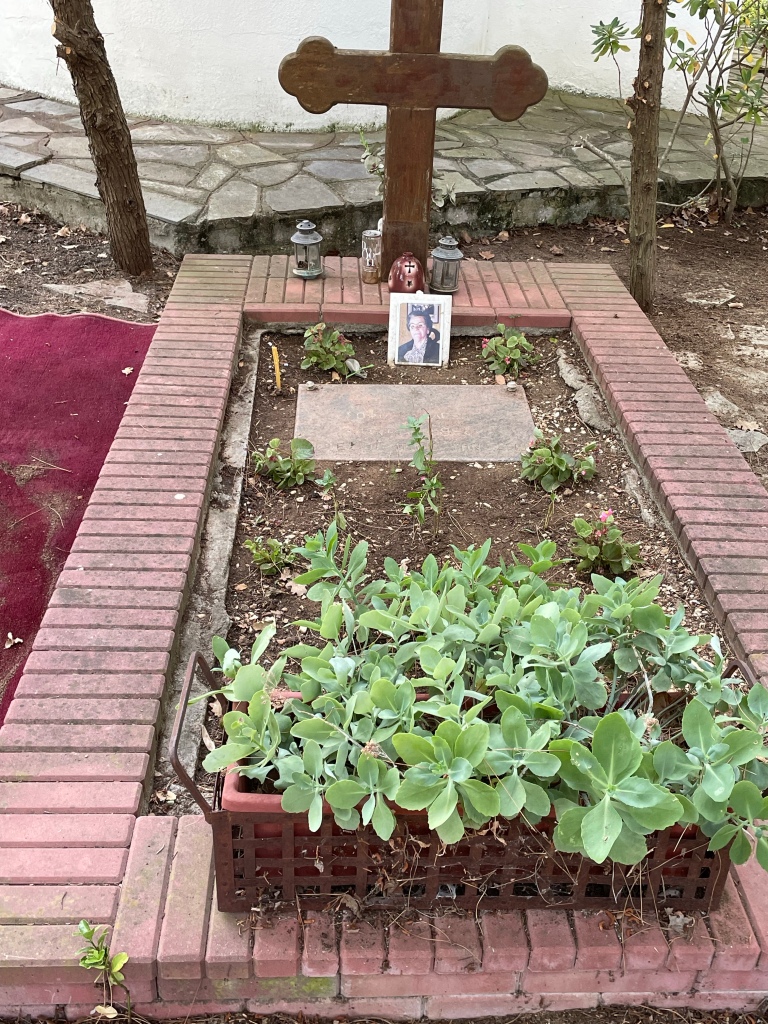
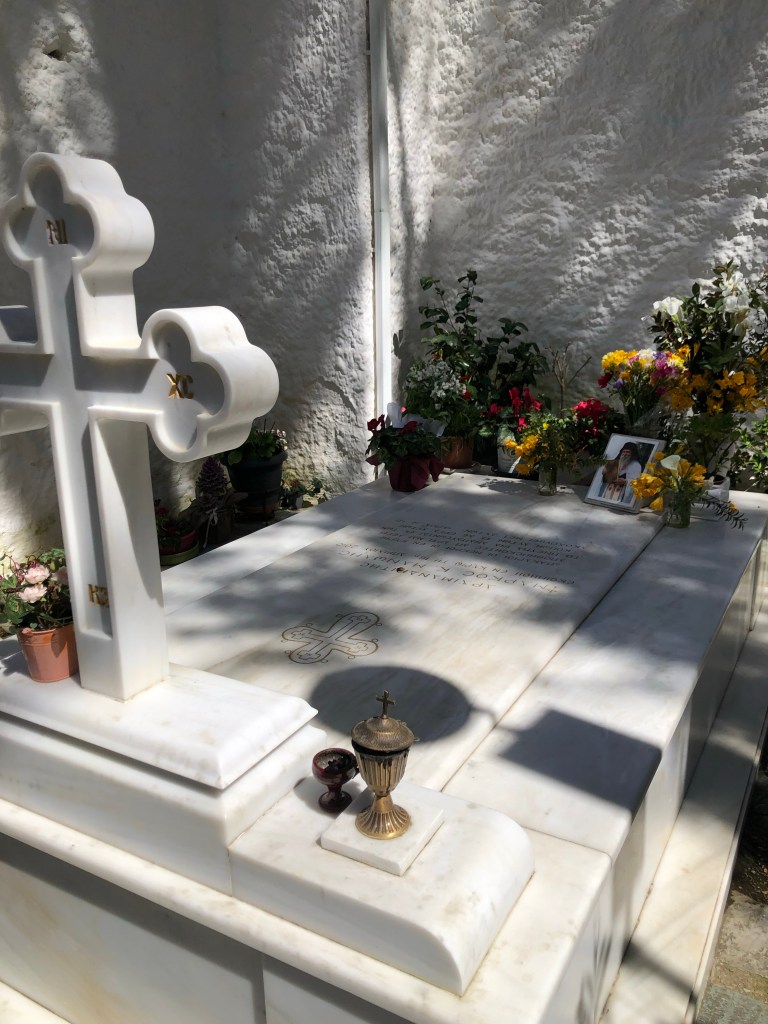
Inscribed on the tombstone: ‘Then I heard a voice from heaven saying to me, “Write: ‘Blessed are the dead who die in the Lord from now on.’ ” “Yes,” says the Spirit, “that they may rest from their labors, and their works follow them.” Revelation 14:13














 ORTHODOX CHRISTIAN FAITH AND LIFE