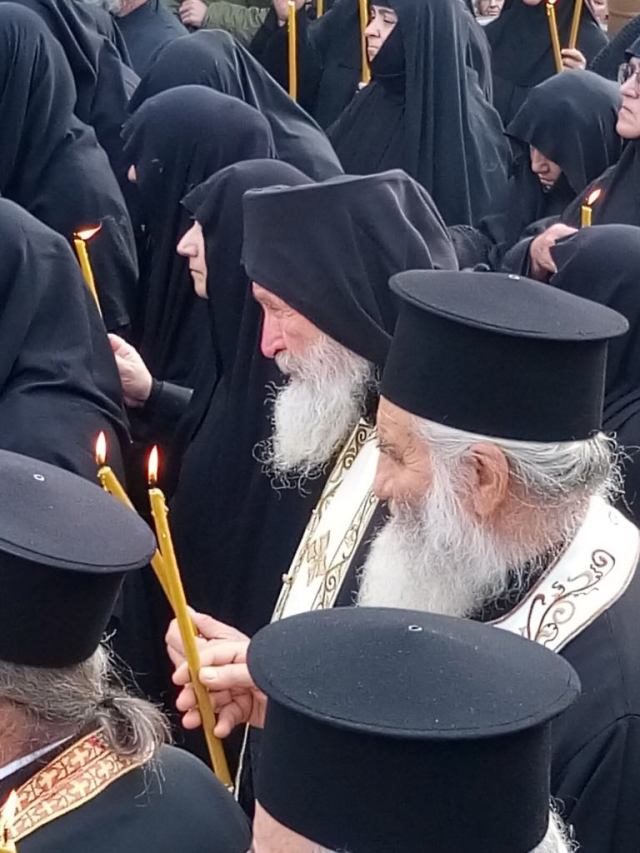
Blessed Elder Amvrosios Lazaris the Athonite and the Dread Judgment Day

Picture 038

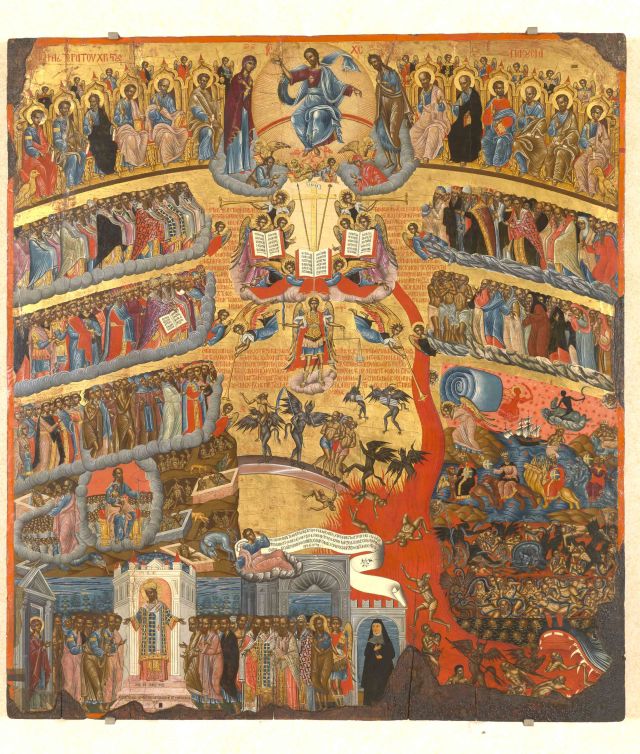
“The Dread Judgment “Day” will last as long as the Six Psalms last, a few minutes.  At this time, while we will be judged, the Angels will chant the Six psalms. …

All the people who will be alive at this moment, they will instantly experience death and then be immediately resurrected. Our bodies will be immaterial, space-less. We will be able to see each other’s body and we will all be 33 years old.

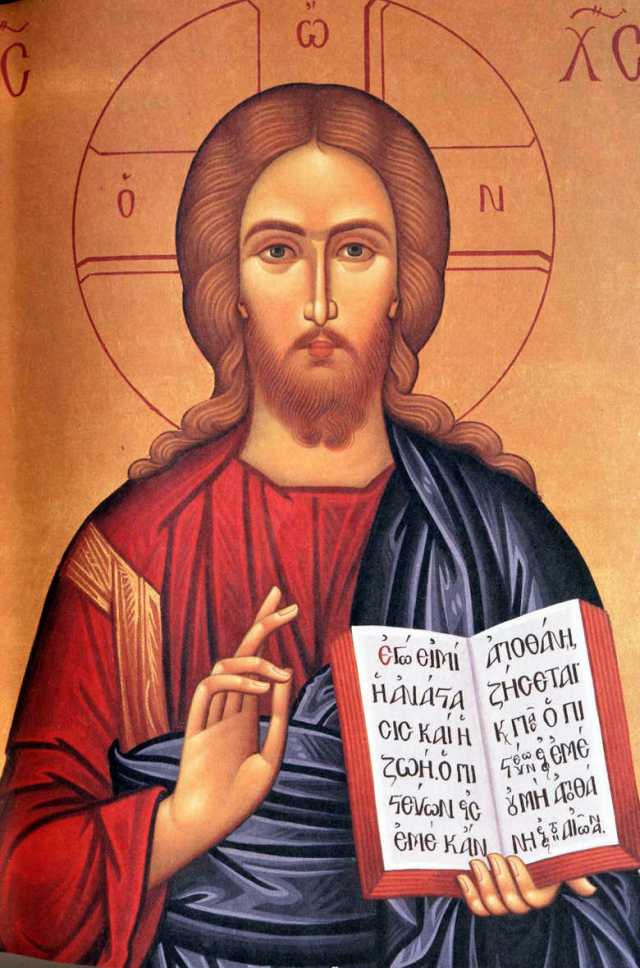
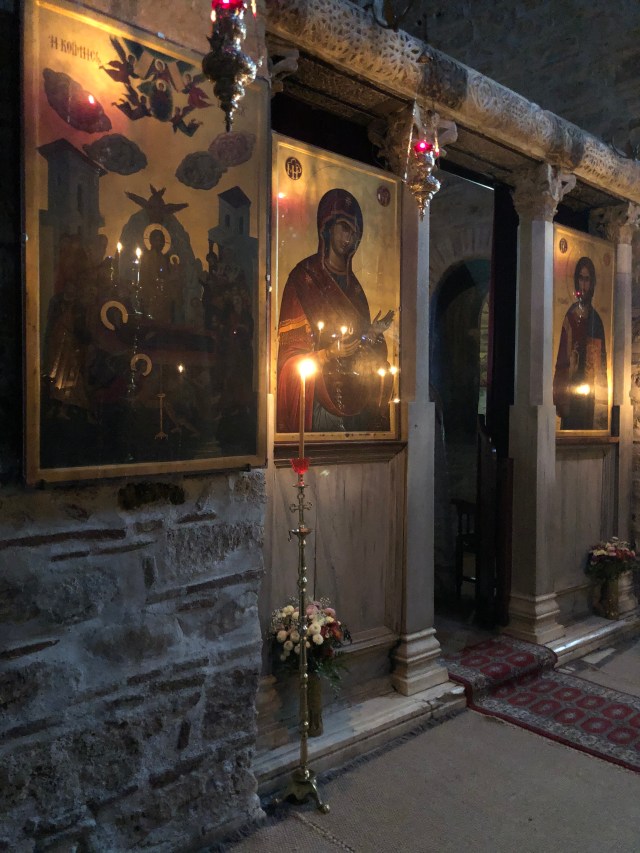
Christ Icon on Iconostasis

Our Lord will hold the Book of Life, the Gospel, open, and immediately, each one of us will go on our own either to the right or to the left, because we will know in our hearts whether we are for Paradise or not.

Christ icon on Bishop's throne

This is exactly why in the Bishop’s throne, the Book in the icon of Christ is open and there is no candle over this icon–this indicates that there will be no Mercy in the Second Coming. While in the Iconostasis, the Book which Christ is holding is closed and there is a candle lit over the icon because there is still Mercy. “

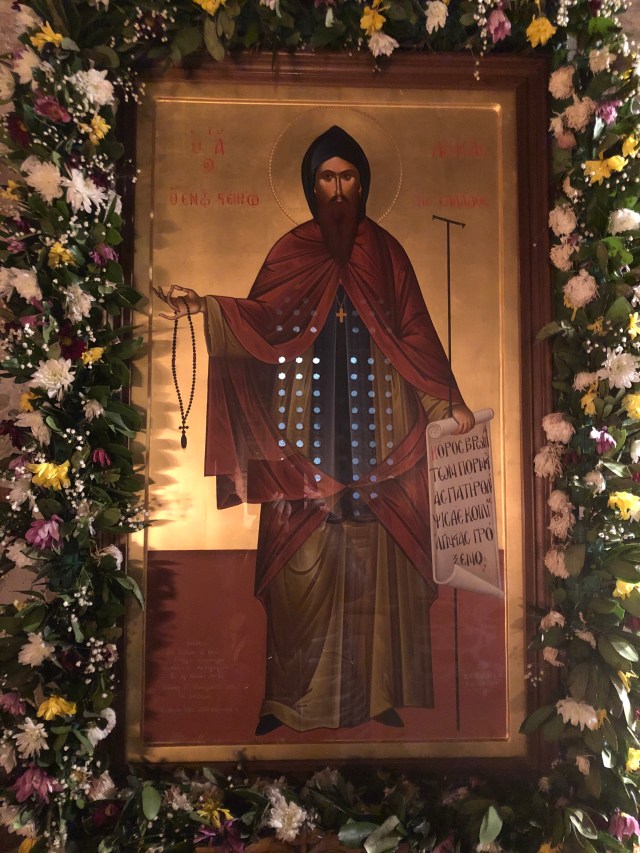
✝️ Blessed Elder Amvrosios Lazaris the Athonite (21/12/1912 – 02/12/2006)  ☦️

geron-amvrosios-071

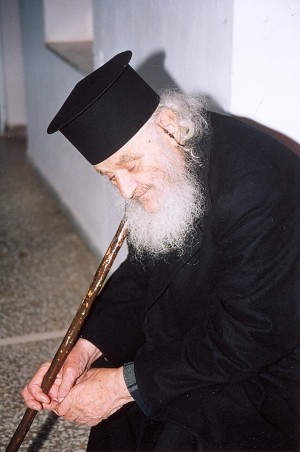
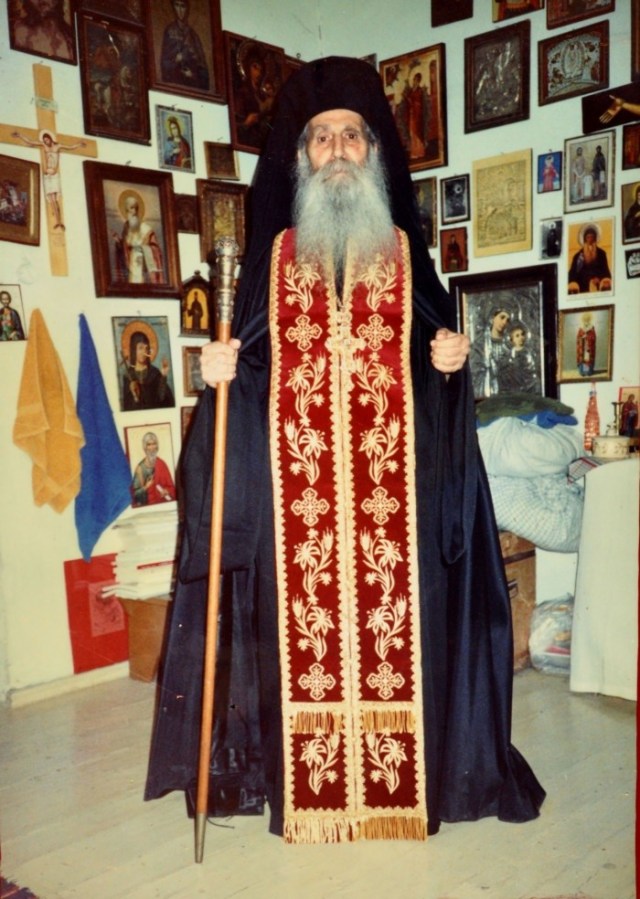
The Hieromonk Amvrosios (born Spyridon Lazaridis) departed this life on 2 December 2006 (New Calendar), at the age of 92. He was the spiritual father of the Holy Monastery of Our Most Holy Lady Gavriotissa, Dadi, and of thousands of Christians from all over Greece.

During a chat, I [Archimandrite Ephraim, Abbot of the Vatopaidi Monastery] once had with the late Elder, he told me that after his military service, he wanted to go to the Holy Mountain, but he didn’t know how or where to go. Then a young man of about 25 appeared and told him: “I know the place, come with me”. And so he went.

They set off together, went down to the harbour and embarked on a boat. “He gave me bread, as well”, he said, “and we ate together all the days I was with him. He didn’t tell me his name, though, and I didn’t ask. So we arrived at Dafni and from there walked on, further up the Holy Mountain.

When I was with him, I felt very safe. As we went along, he showed me the Monastery of Xiropotamou, where they honour the Forty Martyrs. He asked if I would like to pay my respects and I agreed to do so. We went into the katholiko, the main church of the Monastery, and when I kissed the icon, forty men appeared and surrounded us. The young man turned to me and said: “They’re the Forty Martyrs and they’re happy that you’re going to be a monk”.

From there we continued on our way and reached Karyes, and from there went to the Holy Monastery of Koutloumousi. The young man stopped, pointed out the monastery to me and said: “You’ll stay here, Spyro. You’ll become a monk. You’ll be patient and obedient to the Elder”. And he disappeared.

It would seem that this was an angel of the Lord, Spyridon’s guardian angel. Spyridon remained at this monastery as a novice, and, at the age of 25, became a monk with the name of Hariton.

… Elder Amvrosios was always in communion with the Saints. Once,  “When I was in bed, in pain, I [Elder Amvrosios himself says] could see the chapel of the Holy Unmercenary Doctors opposite, and I asked them to help me. Two doctors appeared in white smocks and they tried to set my leg. ‘Pull, Kosmas’ said one. ‘Hold it here, Damianos’, said the other. In five minutes, the pain had gone and I was well again”. When the brethren in the monastery saw him completely well, they praised God and the Holy Unmercenary Doctors.

ger-amvrosios-kai-ger-porfyrios-oi-agioreites-kai-alloi

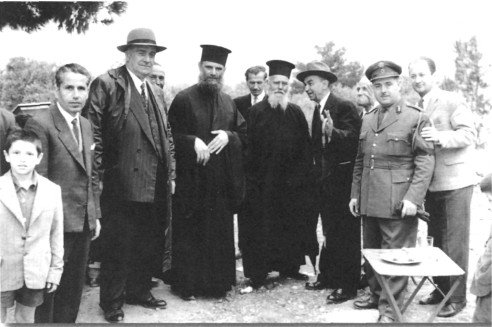
The blessed Elders Porfyrios Kavsokalyvitis († 02/12/1991) and Amvrosios the Athonite (†02/12/2006) together with some lay pilgrims on a visit.


Read more about Elder Amvrosios’ life, here

What did Jesus Christ look like?

Saint Paisios the Athonite: How Jesus Christ looked like?

By Saint Paisios the Athonite

It was the evening after the feast of the Finding of the head of St. John the Forerunner, the eve of the feast day of St. Apostle Carp. I felt very inspired that evening. I did not want to sleep at all and I thought, “ Well, let me write something about Fr. Tikhon and send it to the sisters in Souroti”. By 8:30a.m. I wrote about 30 pages. I still did not want to sleep but decided to lie down for a while because my legs were weak.

Sunrise began. By 9a.m. I was still not sleeping. And suddenly I saw that one of the walls of my cell (the one near which my bed stood) just disappeared. I saw Christ – He was in the light, just about 6 meters from me. I saw Him from His side. His hair was bright and His eyes were blue. He did not say a word to me, but only looked – not right at me, but a bit more to the side.

I saw everything with the non-corporal eyes. In such cases, it does not matter whether your corporal eyes are closed or not. I saw that with my spiritual eyes.

When I saw Him, I thought, “ How could they all spit in that Face? How could they – the people without any fear of God – hit that Face? How could they slam the nails into that Body? Oh, God…”

I was struck by that. How pleased I felt at that moment! What a joy I felt! I cannot express that beauty with words. It was the very beauty about which it was said: “You are fairer than the sons of men; Grace is poured upon Your lips” (Psalm 45:2). This is what that beauty was. I have never seen anything like that on any of His images. There was only one – I do not remember where I have seen it – which looked a bit alike.

A person should work in a monastery ever for a thousand years to see this beauty at least for a moment. What great and indescribable things are gifted to people – and how miserable are the things we try to deal with!


After this vision, Saint Paisios the Athonite ordered to the nuns from the monastery of Souroti to make an icon of Christ exactly like he saw Him. The image represents this icon.

Saint Iakovos Tsalikis – 11 Months After His Death

Make Good Use of Pain

Suffering
“God will centrifuge each one of us” (!)  Those words by Gerondissa Philothei were repeated rather ‘ominously’ 3 to 4 times at the first (*) homily I attended at the Nativity of the Theotokos Monastery in Panorama. Doesn’t the centrifugal force cause an object to move out and away from the centre of its path? Is God through various afflictions centrifuging me away from the centre of my old self?

“How good it would have been if we did not let the pain go to waste! One way or another we will suffer. But our whole torture and struggle will go down the drain unless we make good use of pain unless we exploit it. …When we suffer, when a pain insists, let us think like that: “God wants something good to come out of this in me, and I act as if I do not get it. And all I do is moan and groan.” …. 

“Know this: When pain will have completed the work it is supposed to do, God takes away. It is not difficult at all for God to remove whichever pain. … A Christian is capable of making such good use of every pain so that he can constantly be in paradise. …. Let there be no complaint, no rebellion, no kicking about.

If possible, whichever pain you have, deal with it by saying these words: “Let it be blessed, my God. Whatever You Want.” This way our pain won’t get wasted but will be exploited to the full. We will take advantage of it, and the great good which saves will come to our hearts. When God visits you with sorrows, say: “Thank you, my God. As I had absolutely no intention to embrace a few ugly things, a few pains, and truly follow your path, you caught up with me and gave me a few. How can I thank you enough?” (!) [+S.K]

*

(*) The first homily, that is after 35 or so years to be precise. Because Elder Symeon Kragiopoulos monastery was my starting point to the Church.  The moment I stepped my foot into the narthex, it all came back to me. Literally that “taste” and “fragrance” of life and teachings which I understood so little back then, yet never forgot since.  What an encouragement for my ‘new’ obediences!   The second ‘word’ which I received soon after was a mission to make pilgrimages and establish contacts with all nearby Thessaloniki monasteries. All nearby monasteries?! Quite bold a list of obediences for such a timid little city hermit. But may it be blessed. Your prayers

[Monastery Diaries 7]


Newfoundland Winter & Festivities

Amazing! What a blessing to have a chapel (and a priest 🙂 ) at home! May the Lord richly bless you!

matushka constantina's avatarlessons from a monastery

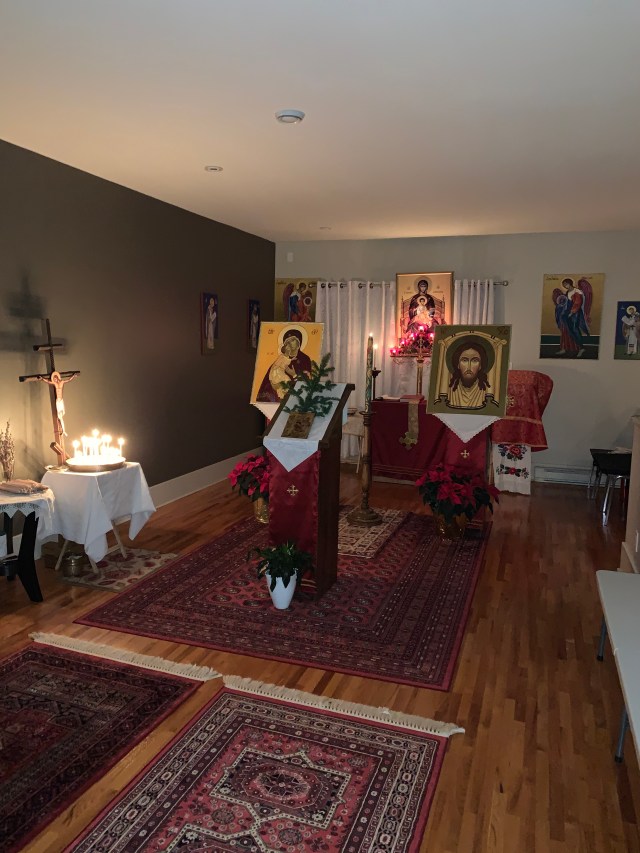
IMG_0323 Christmas Eve at Holy Lady of Vladimir Mission

While I sit in my living room seeing nothing but white outside, snow piling up against my windows, I thought I might as well share some recent photos of life in Newfoundland. We’re in the middle of a blizzard. In fact a state of emergency has been declared to keep people off the roads. They say we may get up to 75cm of snow in this single snowfall – that’s more than ever before. By God’s grace we still have power. Right now shoveling snow is tomorrow’s problem.

Here are pictures of our Christmas. My mum visited from New Brunswick which made it extra special.

(In case you’re wondering what book Fr. John is holding with a smile on his face, it is Cicero’s “How to Win an Argument” – he picked it out himself. The inscription, however, was all me. It…

View original post 125 more words

The Monastery Diaries 6

elder symeon kragiopoulos monasteries.jpg

Nativity of the Theotokos Monastery


assumption monastery panorama.jpg

Assumption Monastery


New 2020 obediences–New Envoy duties


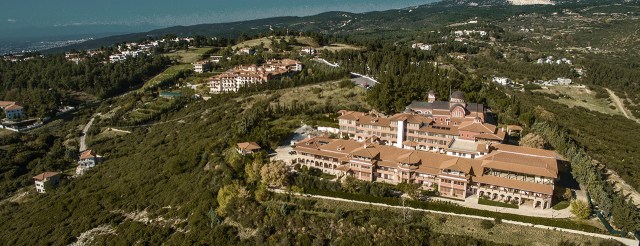
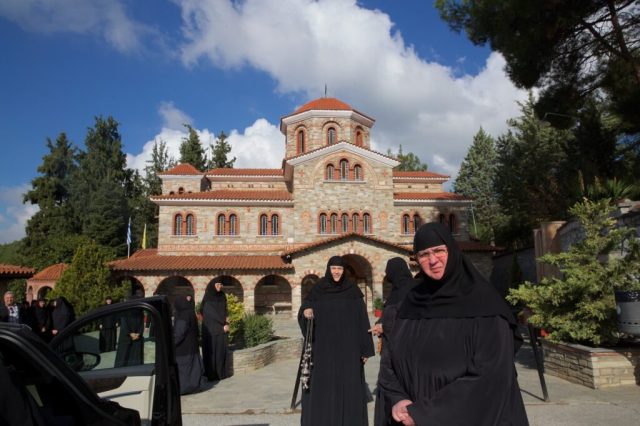
This time to two monasteries at the suburbs of Thessaloniki, both at Panorama. The one is of the Nativity of the Theotokos, which belongs together with the nearby men’s monastery of the Holy Trinity, to +Elder Symeon Kragiopoulos’ monastery ‘complex‘. The opening photograph at their website shows both monasteries; the women’s monastery is the smaller one in the background); the second monastery is of the Assumption to the Theotokos  https://www.google.com/maps/uv?hl=en&pb=!1s0x14a846fddfe0e7d3%3A0xc72518e226191bdc!3m1!7e115!4shttps%3A%2F%2Flh5.googleusercontent.com%2Fp%2FAF1QipPPDnFBdX1QlSJkJUMbysQeSsbBjsnLEGKPQOrb%3Dw480-h320-k-no!5zzpPPhc69zrHOuc66zrXOr86xIM6ZzrXPgc6sIM68zr_Ovc6uIM6azr_Ouc68zq7Pg861z4nPgiDPhM63z4IgzpjOtc6_z4TPjM66zr_PhSDPgM6xzr3Ov8-BzrHOvM6xIC0gR29vZ2xlIFNlYXJjaA&imagekey=!1e10!2sAF1QipMNsnxgG8ntgkYI5Rvp_YnQPBa30XAbs3XvDizB&sa=X&ved=2ahUKEwiiq6-hs_nmAhURaFAKHRJ_BoMQoiowGHoECAwQBg


Never a dull moment! So much to discover… I hardly know anything about the inner life of these two monasteries. Your prayers

New Year’s Resolutions

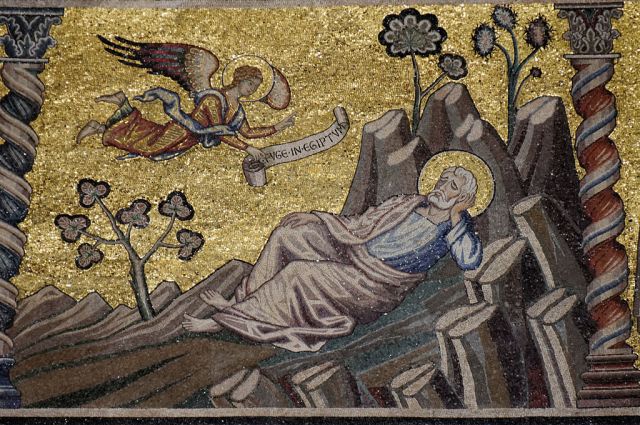
Battistero_di_San_Giovanni_mosaics.jpg

“Arise, and take the young child and his mother, and flee into Egypt” (Matthew 2:13)

“The angel commands us, as he did Joseph. ‘Arise, and take the young child and his mother, and flee into Egypt’ (Matthew 2:13). That is to say: renounce your sin and your slackness; take into your soul the Jesus you saw at Bethlehem and Mary, whom you must never separate from her son; flee the evil and the temptations that surround you; set yourself a hidden, retired, silent life, a life of intimacy with the small child and his mother — and also with Joseph”. (Lev Gillet, The Year of Grace of the Lord, p73).

The life of the Holy Family, whether in Egypt or later on at Nazareth — what an inspiration and a model for us! This is a year I truly want to hide and disappear together with Him. God willing, the goal will be the first three rungs of Saint John Climacus Ladder of Divine Ascent: 1.On renunciation of the world–2.On detachment–3. On exile or pilgrimage.

Blessed New Year 2020 to all!

Your prayers


The Monastery of Hosiοs Loukas

monastery of hosios loukas.jpeg

IMG_1554

From Steiri, through the prayers of Saint Luke, whose presence is tangibly felt in his monastery.With all best wishes for the forthcoming New Year, and Theophany, and to those still awaiting the celebration of the Nativity. 

*

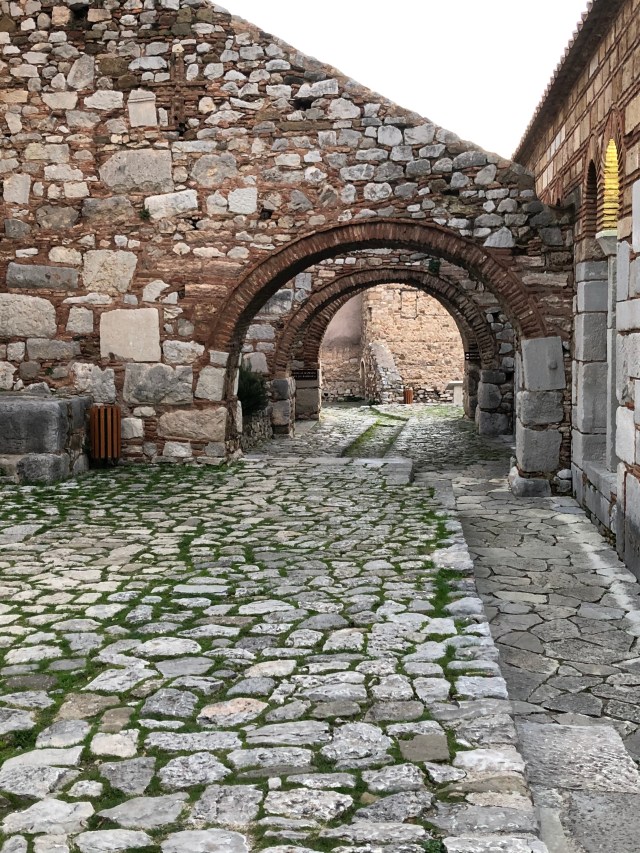
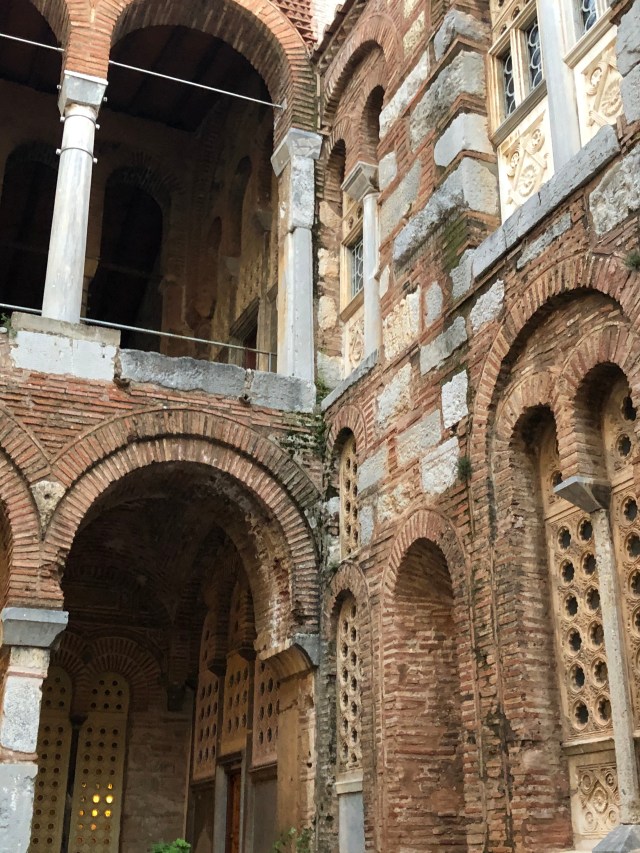
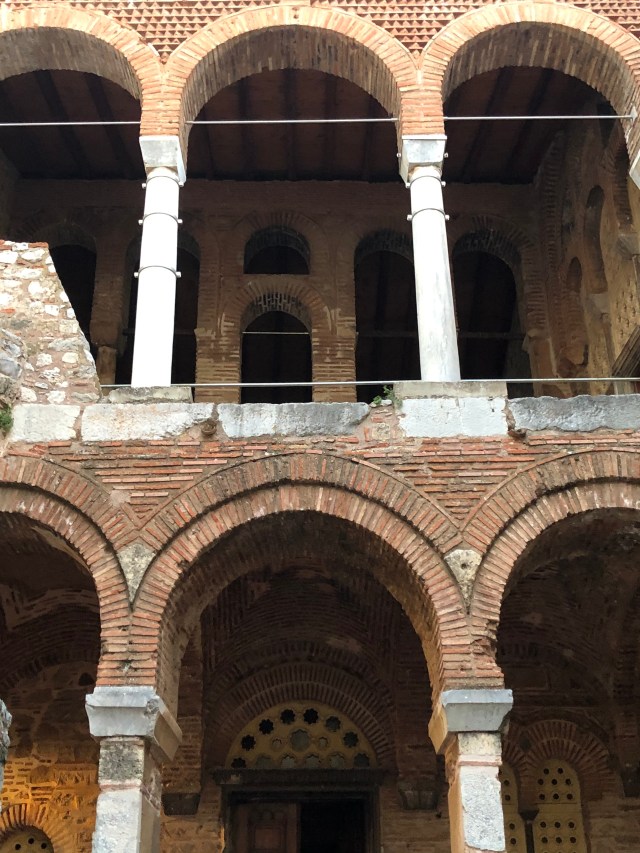
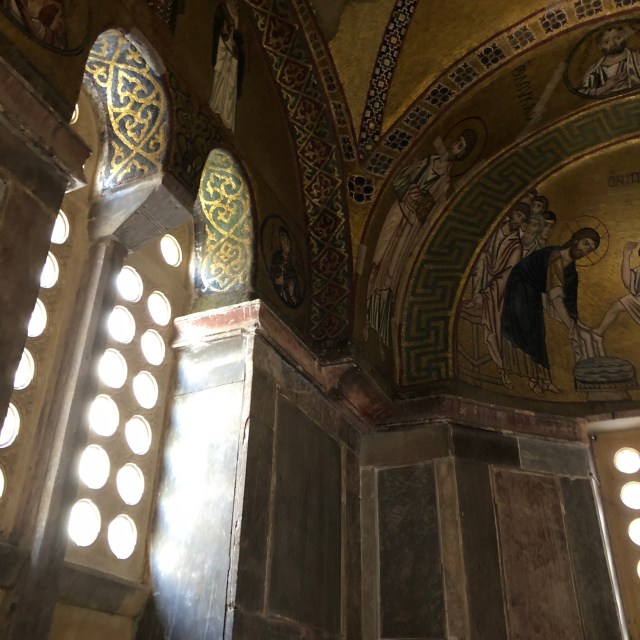
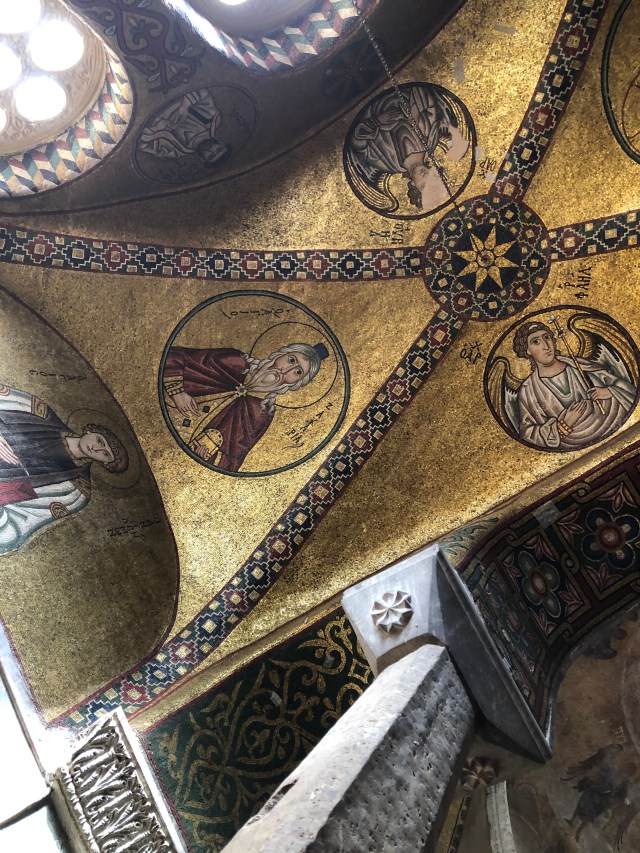
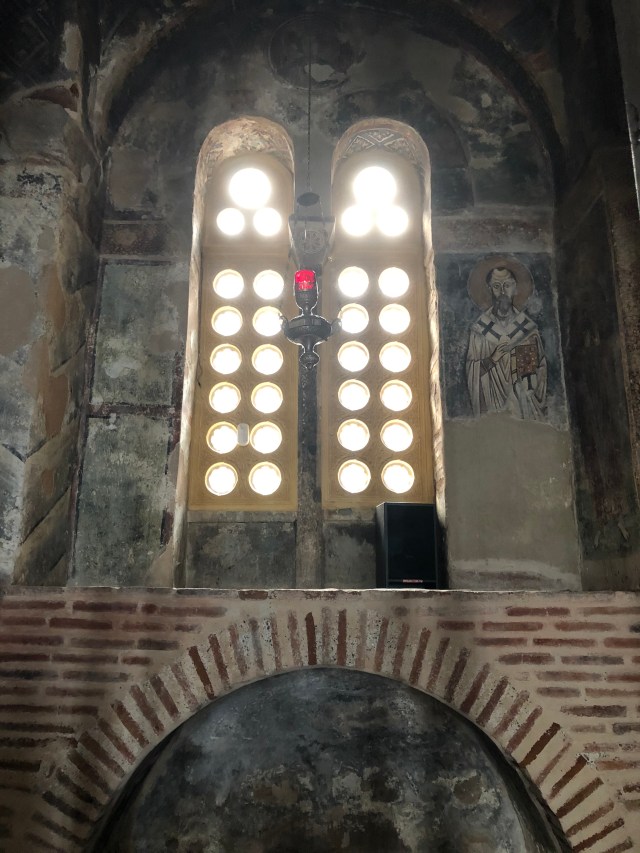
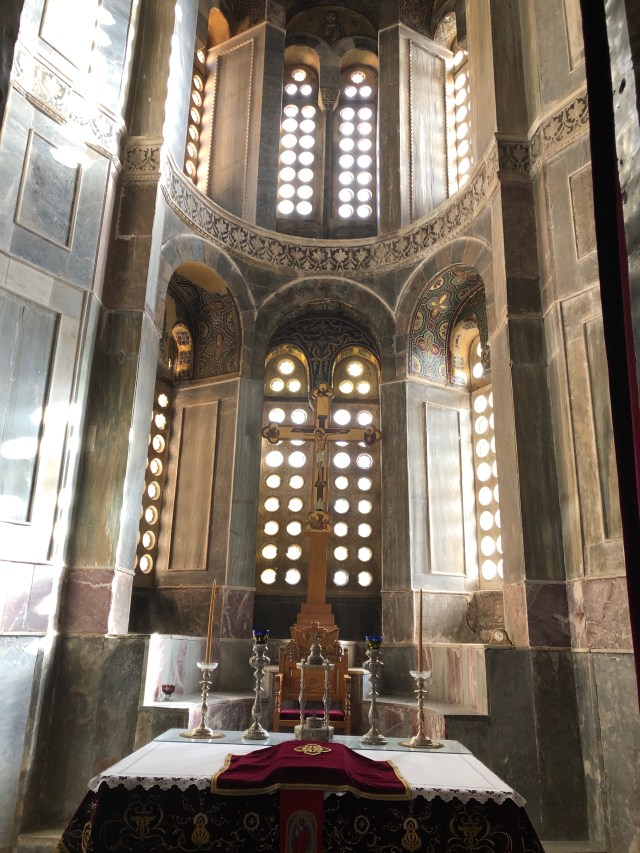
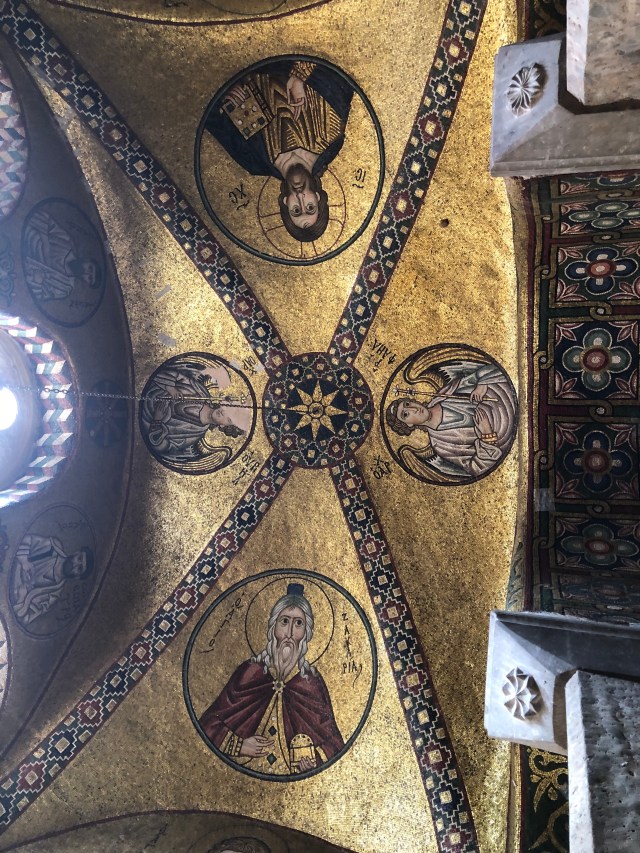
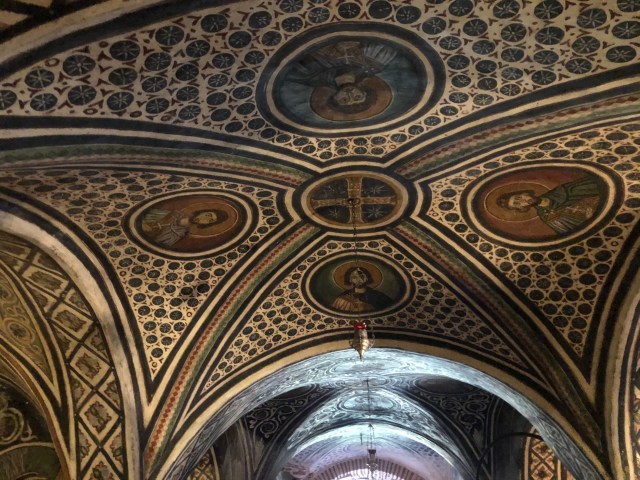
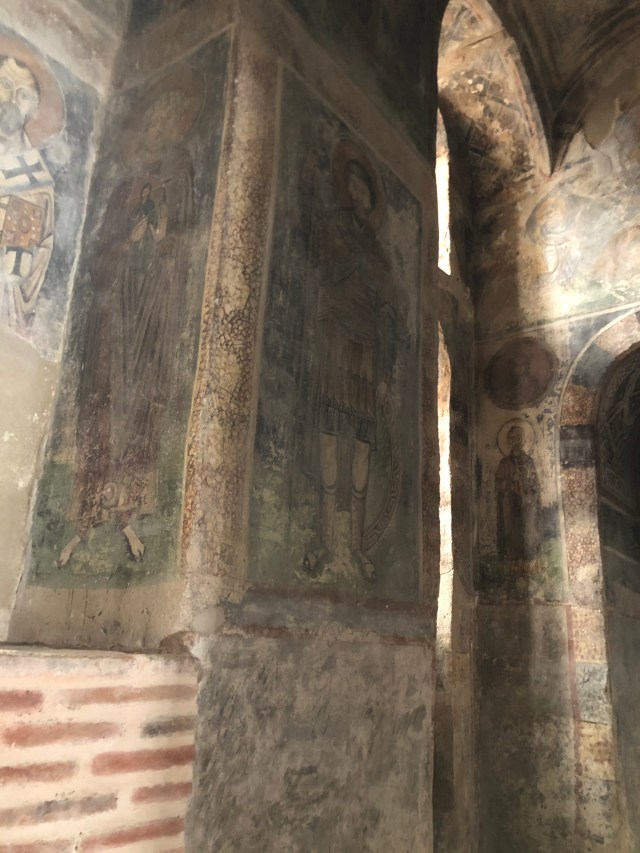
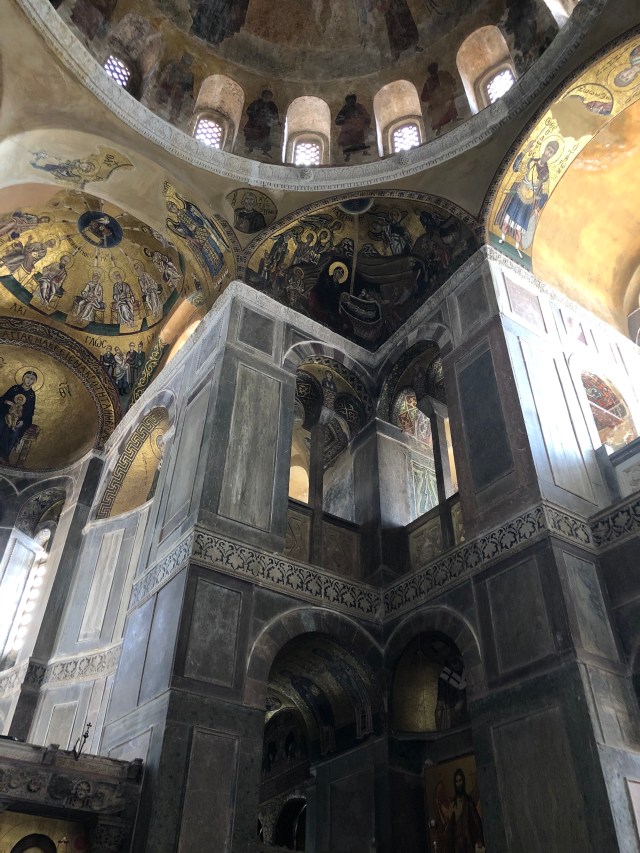
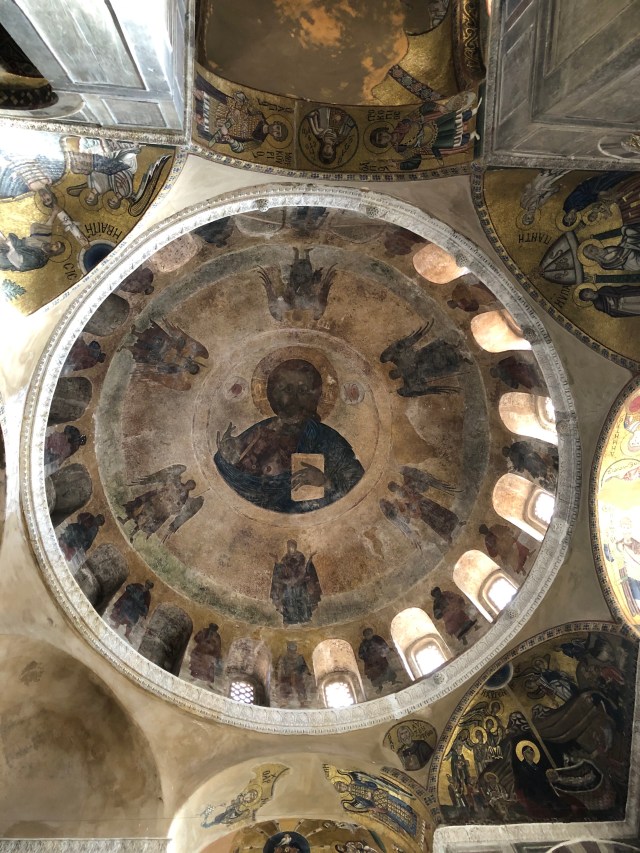
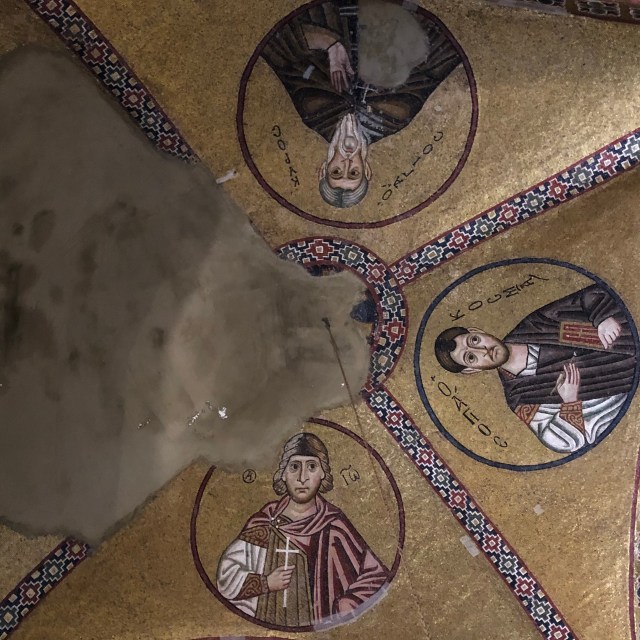
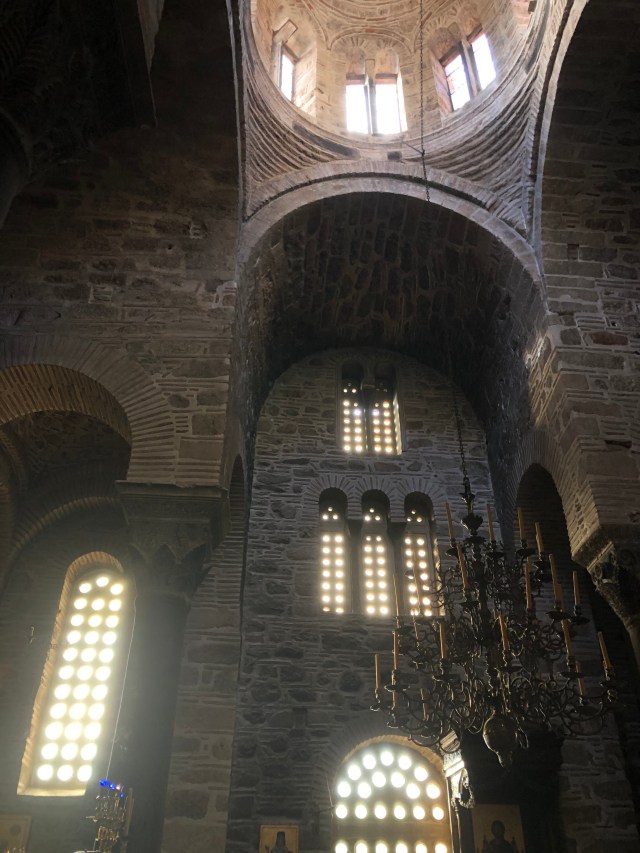
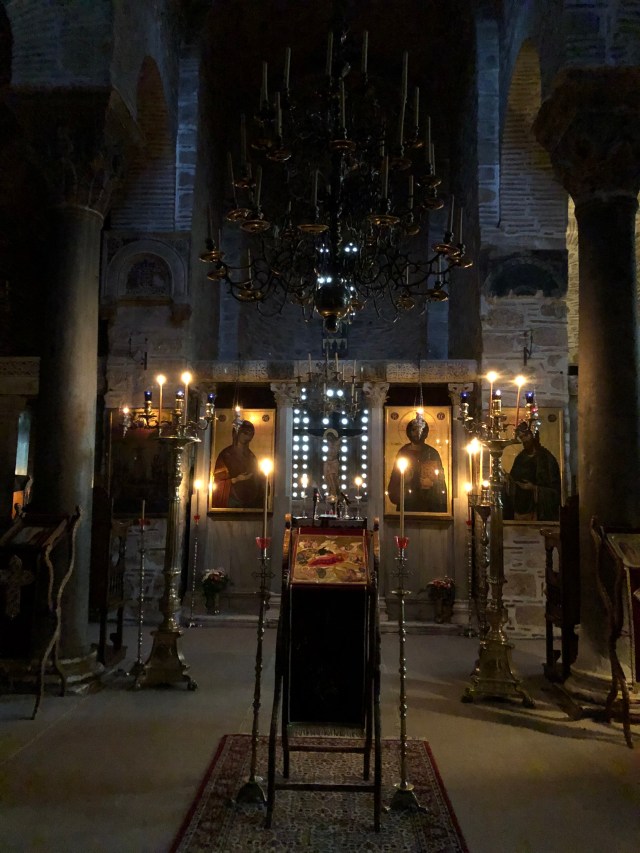
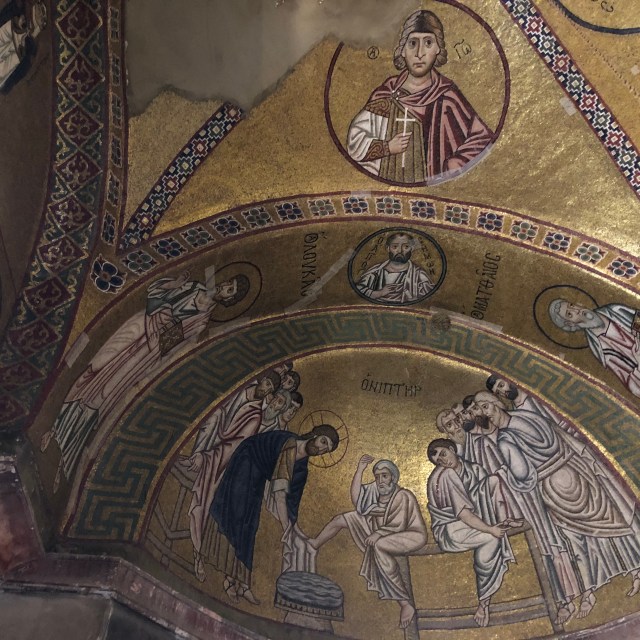
On the western slope of mount Elikonas, opposite mount Parnassus, after the village of Steiri, at a distance of approximately 30km from Livadeia, is the famous Monastery of Osios Loukas (St Luke), the largest and best-preserved monastery complex of the Middle Byzantine Period, with exceptional architecture and excellent decoration of mosaics, wall paintings and sculptures. With the Nea Moni of Chios and the Monastery of Daphni, the monastery of Osios Loukas is included in the list of world heritage monuments of UNESCO since 1990. Hosios Loukas is a breath-taking Byzantine monastery in a picturesque green and golden valley full of flowering almond and olive trees, near the town of Distomo. The landscape surrounding the Monastery of Hosios Loukas may not be as breath-taking as Meteora, but is still spectacularly blessed in beauty, even in wintertime when we visited it. As to the exquisite, stunning Beauty inside the monastery complex, and especially the katholikon, the main church, I hope these photos and videos can capture some of it.


IMG_2713IMG_3363IMG_9700IMG_9813

IMG_0324

IMG_1109

Saint Luke

Hosios Loukas Monastery meaning “Blessed Saint Luke” was not built in honour of Luke the Evangelist, but was established by the Greek monk Loukas. He was buried in the crypt of the monastery when he died in AD 953. I am still puzzled at the spelling of the word “Hosios”, as I have never encountered it before, but that is the official English ‘translation’ and the spelling adopted by UNESCO.

Saint Luke, born in AD 896, abandoned his home when he was an adolescent in search of spirituality. In the following years, he became a healer and was renowned for healing ailments that were practically impossible to cure.

Lukas developed a great talent as a prophet and predicted that Romano II would liberate Crete from the Arabs after his death. When the emperor defeated the Saracen Arabs, he commissioned a church to be built in his honour. [For  a more detailed Life, go to the bottom of the page]

IMG_1320

IMG_9353IMG_7695IMG_1397IMG_6542

Exploring the monastery

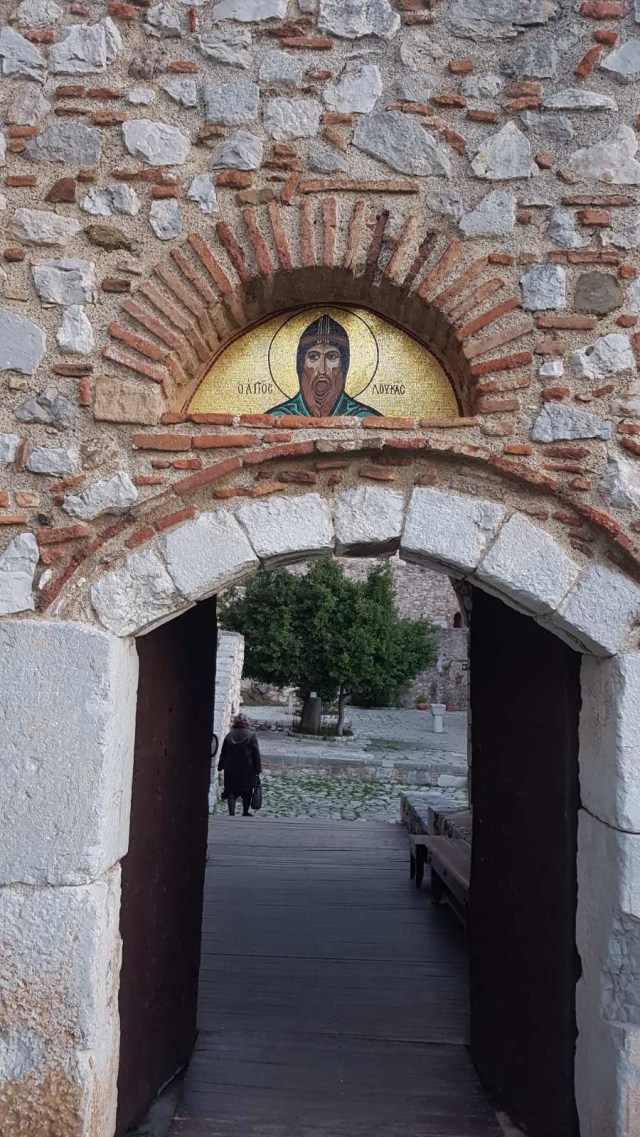
One of the most striking aspects of the monastery is found at the entrance. If you look up, you will see a spectacular gold mosaic of the saint. Attached to the abbey is a large church, Katholikon, which in its turn is attached to a smaller temple, or Theotokos, erected between 997 and 1011 to honour the Virgin Mary.

The temples are beautifully decorated with numerous frescoes and mosaics, all perfectly preserved.  Underneath the Katholikon is the crypt where the remains of the saint lie.


IMG_1399IMG_8754IMG_8752IMG_8075IMG_2910IMG_2378IMG_1167IMG_3117IMG_9637IMG_9093IMG_0640IMG_5636IMG_1396IMG_6355IMG_1197IMG_1398

Although Hosios Loukas is smaller, the building reminded us of Hagia Sophia in Istanbul or St. Mark’s Basilica in Venice.


This monk is the one who did the guided tour for our group (St. Arsenios monastery, Chalkidiki). There are only three monks, all hieromonks, in this monastery complex, and they are all so full of His Grace!

Luke of Steiris, Luke Thaumaturgus, Luke the Younger, Luke of Hellas, or Luke the Wonder-worker (896 — 953 AD) was a Byzantine saint of the tenth century AD who lived in the themes (provinces) of Hellas and Peloponnese in Greece, and who founded the Monastery of Hosios Loukas (Venerable Luke) on the slopes of Mount Helicon, between Delphi and Levadia, near the coast of the Gulf of Corinth in Boeotia, Greece. 

The principal source for Luke’s life is an anonymous Life written by a monk of Hosios Loukas who had been one of Luke’s followers. His feast day is commemorated on February 7,and the translation of his relics on May 3. His relics are preserved in his monastery of Hosios Loukas.

Early Life

Saint Luke was born in 896 to pious parents who came from Aegina but were forced to settle on the Greek mainland due to Saracen raids. Luke was the third of the seven children of Stephen and Euphrosyne. From his earliest years, he showed a desire for a life of ascesis and contemplation usually only found in seasoned elders. He abstained from all flesh, cheese, eggs, and delicacies, drank only water, and kept a total fast on Wednesdays and Fridays. While herding cattle or tilling the family fields, he would often give away his food and even his clothing to the poor, returning home naked. He once gave away almost all the seed which was needed for planting in the fields. The Lord rewarded him for his charity, and the harvest gathered was greater than ever before.

When his father died, he abandoned farm work to devote himself entirely to prayer, making such progress that he was often witnessed by his mother lifted above the ground while praying.[3]

Monasticism

As a child Luke tried twice to leave home to seek a solitary life of prayer. The first time, he attempted to withdraw to Thessaly, but was captured by soldiers lying in wait for escaped slaves and was returned home.[4] The second time he had more success, meeting two monks journeying from Rome to Jerusalem[5] who took him to a monastery in Athens where he received the small habit.[6][note 3] At this point he was only fourteen years old (910 AD), and Luke’s mother who was very concerned for him, prayed for her son’s return. After seeing his mother in a dream, tearfully calling for her son, the abbot sent him home.

He returned home for four months, and then with his mother’s blessing he set out again upon the monastic life, going to a solitary place on a mountain called Ioannou (or Ioannitsa). Here there was a church dedicated to the holy Unmercenaries Cosmas and Damian, where he lived an ascetical life in constant prayer and fasting for seven years.[7] The Life records with suspicious symmetry that during this time Luke received the great habit[note 4] from two monks[note 5] travelling from Jerusalem to Rome (presumably the same two from whom he had received the small habit on their outward journey).[8] After this, St Luke redoubled his ascetic efforts, for which the Lord granted him the gift of foresight.

Luke’s fame spread and a number of miracles are ascribed to him during this period, such as revealing to two brothers the location of their dead father’s buried treasure.[9]Numerous proofs of Luke’s holiness are also given, such as sleeping in a trench to remind himself of death,[10] or being visited in a dream by an angel who let a hook down Luke’s mouth and “drew out a certain fleshly member therefrom”, freeing him from the temptations of the flesh.[11]

After a seven years on Ioannou, the saint moved to Corinth because of an invasion of the Bulgarian emperor Symeon (which Luke had predicted).[12] Hearing about a certain Stylite at Zemena (Gimenes) near Corinth, he went to see him, and remained for ten years to serve the ascetic with humility and obedience.

Afterwards, ca. 927 AD, the saint returned again to Mount Ioannou to build his own community and again pursue asceticism. Often he would be forced to move by the number of visitors who learned of his holiness, and came to him for prayer or a word of counsel or prophecy, no matter how secretly he tried to live. Luke drew so many followers that he found the distractions unbearable and decided to retreat further into the wilderness, with the blessing of his Elder Theophylactus.[13] Three years later, however, Luke was displaced again, this time by a Magyar invasion.

Luke retreated with the local villagers to the nearby island of Ampelon.[14] Once there, Luke found the desert island to be a suitable place to pursue his solitary ascetic life, and stayed for three years, enduring terrible thirsts.[15] His sister would occasionally bring him some bread, but he gave much of it away to the needy or to passing sailors.

Eventually Luke’s disciples persuaded him to leave, and he returned to the mainland and settled for the remainder of his life in the far more amenable environment of the present Hosios Loukas, where he founded his hermitage ca. 946 AD in the area of Stiris (which may be a corruption of Soterion, or place of healing).[16][note 6]

Here brethren gathered to the elder, and a small monastery grew up, the church of which was dedicated to the Great Martyr Barbara. Dwelling in the monastery, the saint performed many miracles, healing sicknesses of soul and of body.

Death

Saint Luke fell ill in his seventh year at Stirion. Foreseeing his end, the saint confined himself in a cell and for three months prepared for his departure. When asked where he was to be buried, the monk replied, “Throw my body into a ravine to be eaten by wild beasts.” When the brethren begged him to change these instructions, he commanded them to bury his body on the spot where he lay. Embracing his disciples, he asked them to pray for him, prophesying that the place where he died would someday be the site of a great church and monastery. Then raising his eyes to heaven, he said, “Into Thy hands, O Lord, I commend my spirit!” and reposed in peace and joy. St Luke fell asleep in the Lord on February 7, 953.

Myrrh flowed from his holy relics,[note 7] and many healings occurred. His tomb exuded a fragrant oil which was collected and burned in a lamp, and many miracles and healings were wrought at the tomb. The rumour that his relic worked miracles brought great numbers of believers to the monastery to be healed, and the original buildings gave way to more monumental structures.[16] As the Saint had predicted, two churches and a monastery were built there, and the monastery of Hosios Loukas became a great place of pilgrimage, as it remains to this day.[note 8]

Troparion, Kontakion

Troparion of St Luke of Mount Stirion Tone 1[17]
Let us firmly honour Luke the Godbearer with hymns and chants,
the glory of the faithful,
the boast of the righteous,
bright light of Stirion and its true inhabitant;
he brings near to Christ those who cry out in faith:
Glory to Him Who has strengthened thee;
Glory to Him Who has crowned thee;
Glory to Him Who through thee works healings for all.

Kontakion of St Luke of Mount Stirion Tone 8[17]
God in ineffable judgment chose thee before thou wast fashioned according to His good pleasure;
He took thee from thy mother’s womb,
He sanctified thee as His servant.
As the Lover of mankind,
He guided thee to Himself,
before Whom thou dost now stand rejoicing,
O Luke.

(OrthodoxWiki)
 

IMG_1438

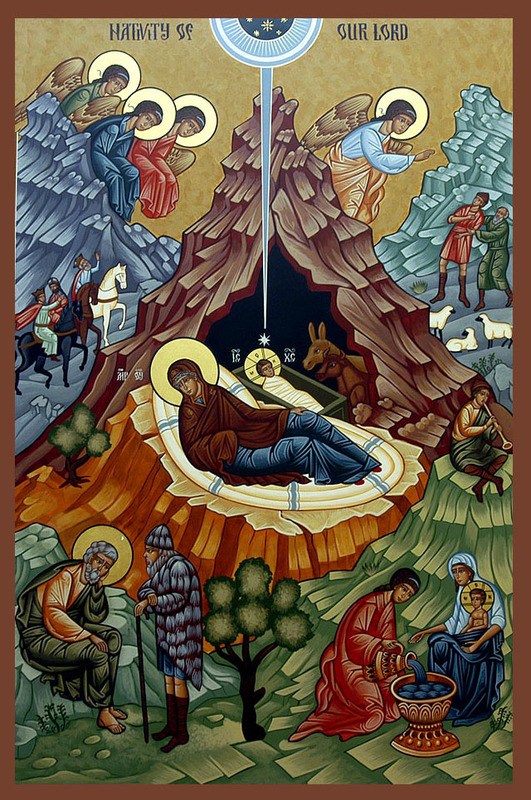
A Blessed Nativity

nativity-icon.jpg

“Dear Fathers and Friends in Christ,

On this Day of the Nativity of our Lord and Saviour Jesus Christ in the flesh, I wish you every blessing for you and your families.

May the joy of the angels be yours; may the faith of the shepherds be yours; may the wisdom of the magi be yours and may the light of Christ banish the darkness before our path as the Prince of Peace comes to reign in our hearts today.” (Fr. Jonathan H.)


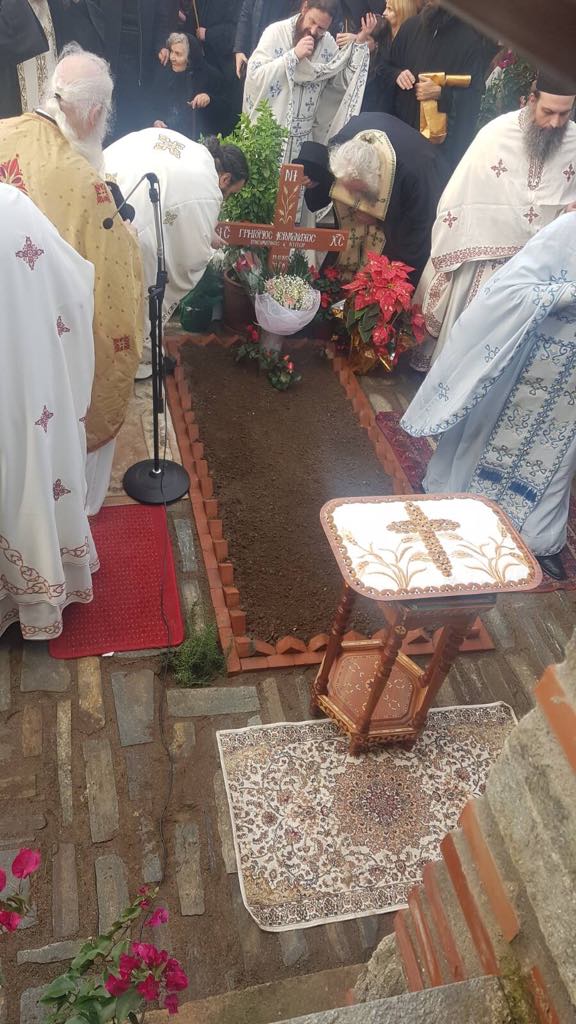
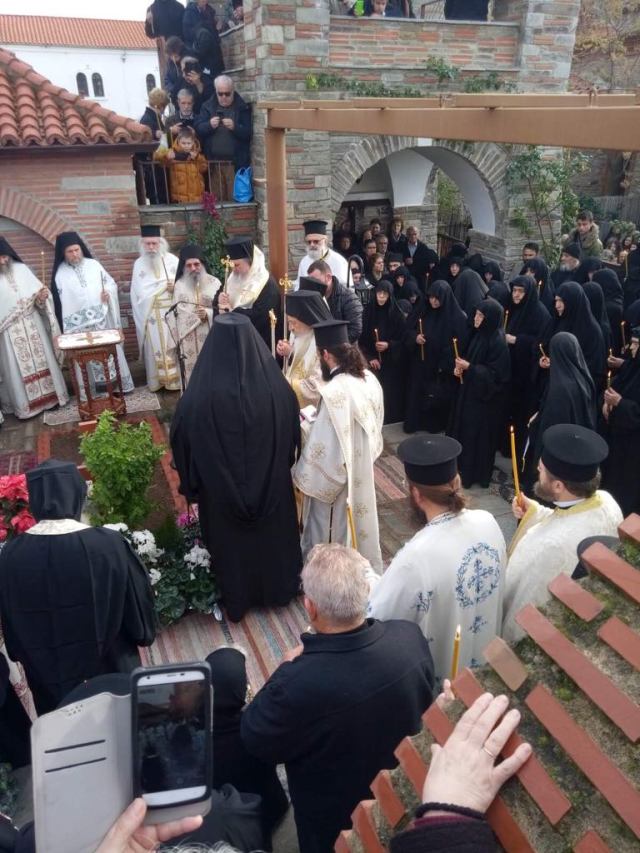
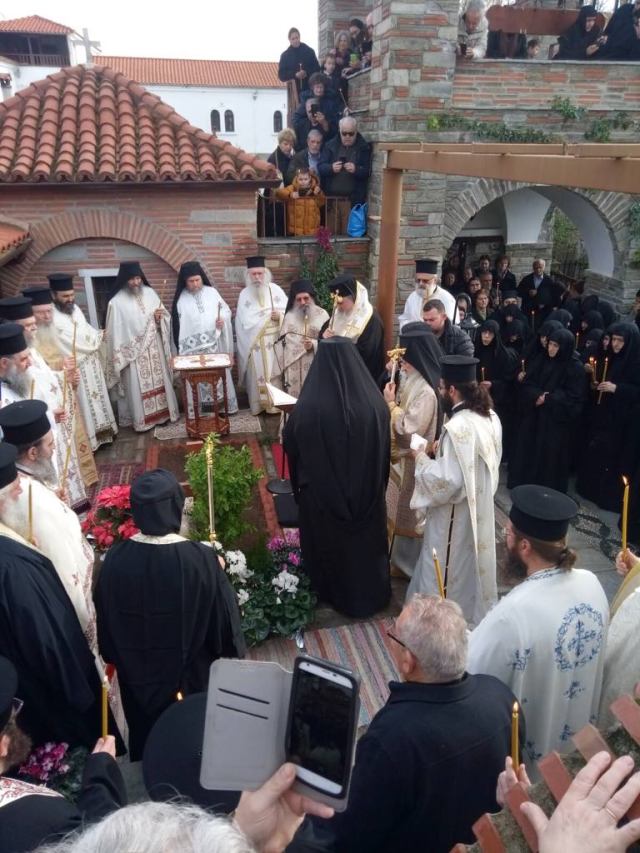
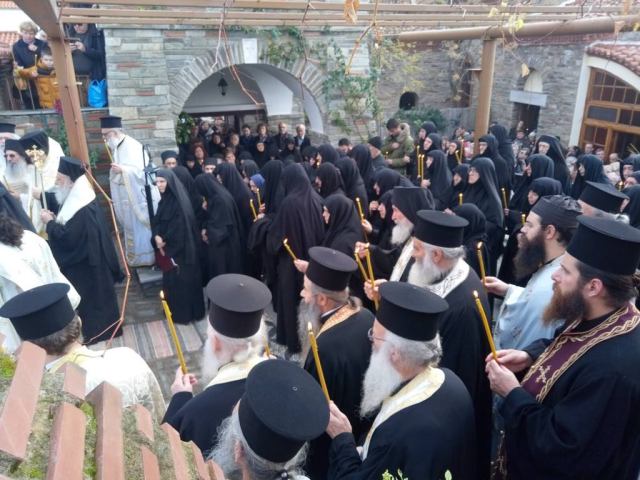
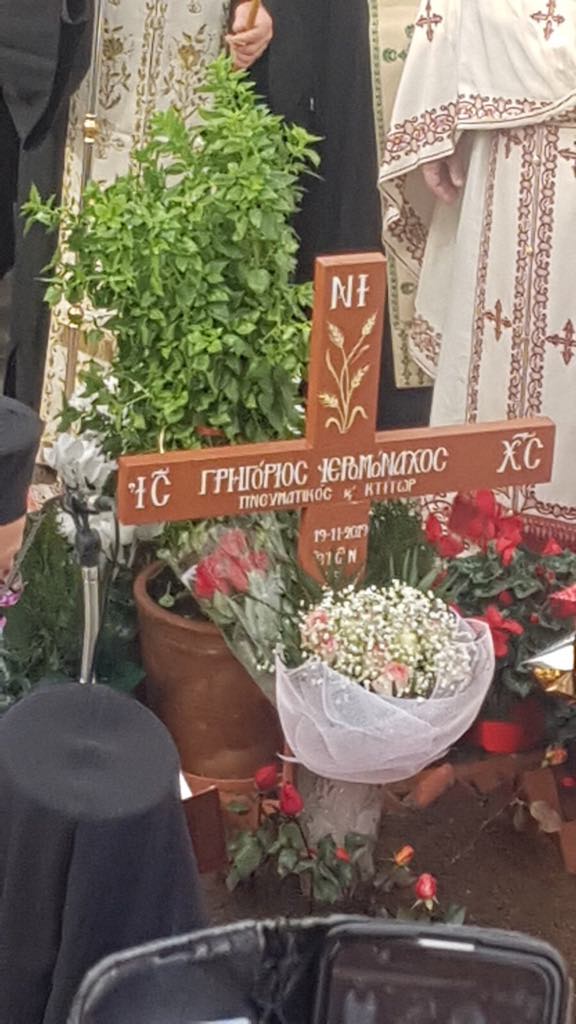
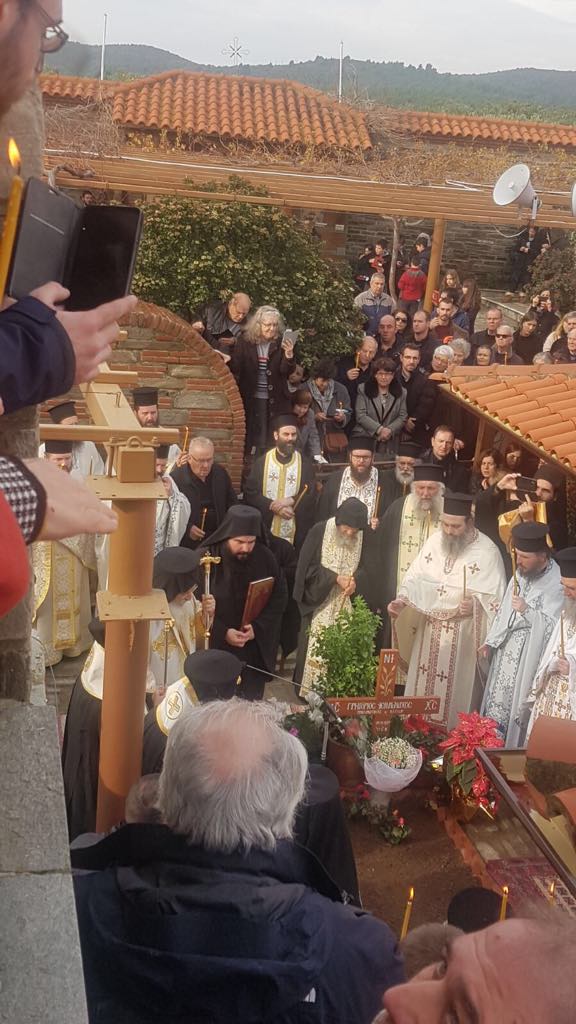
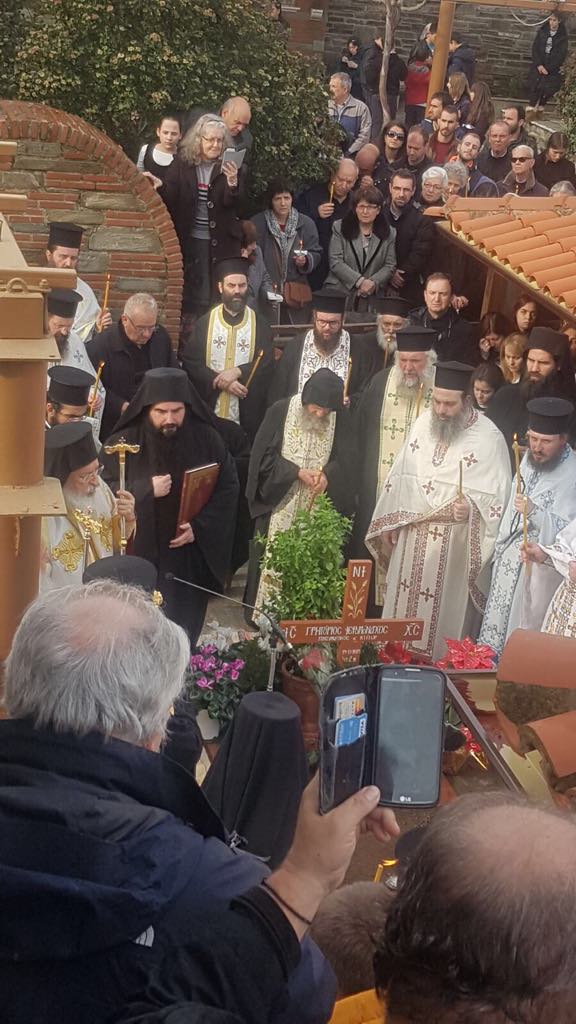
Elder Gregorios 40 day Memorial Service

80782350_2416154011827872_861637634340945920_n

Elder Gregorios

+19-11-2019

“Love in Christ is a sacrificial Love, a self-sacrificing, self-denying Love, Agape. You sacrifice everything for the person you love, “your neighbour”. By “our neighbour”, we mean every person as God’s Image, even our enemy. By “love” we do not mean that we should do whatever the other person wants us to do, but to love him with Christ’s burning and flaming Heart, for his salvation” (+ Elder Gregorios Papasotiriou)
*

This is how we have always felt and feel his love. Blessed Paradise, Elder. At long last, you will be reunited with your beloved spiritual father, Saint Paisios. “Kai sta dika mas.” “And to our own!”  May we be reunited with you in Heaven in God’s Kairos!

80395516_2564822247082250_924611471332081664_n79876452_1235423190002125_19557734877757440_n

All the faithful present experienced an urge to pray to Elder, and not for him. 

80421158_767691993747125_6627701451936235520_n79686065_1048267265513180_241326172183461888_n80315340_977067915998194_2080091569561534464_n80640184_447932872543924_1165895110454411264_n80494444_1191848591021578_2010228089631539200_n80059071_1052973311710959_8126907860173979648_n80350077_589087115198686_6912717203980681216_n