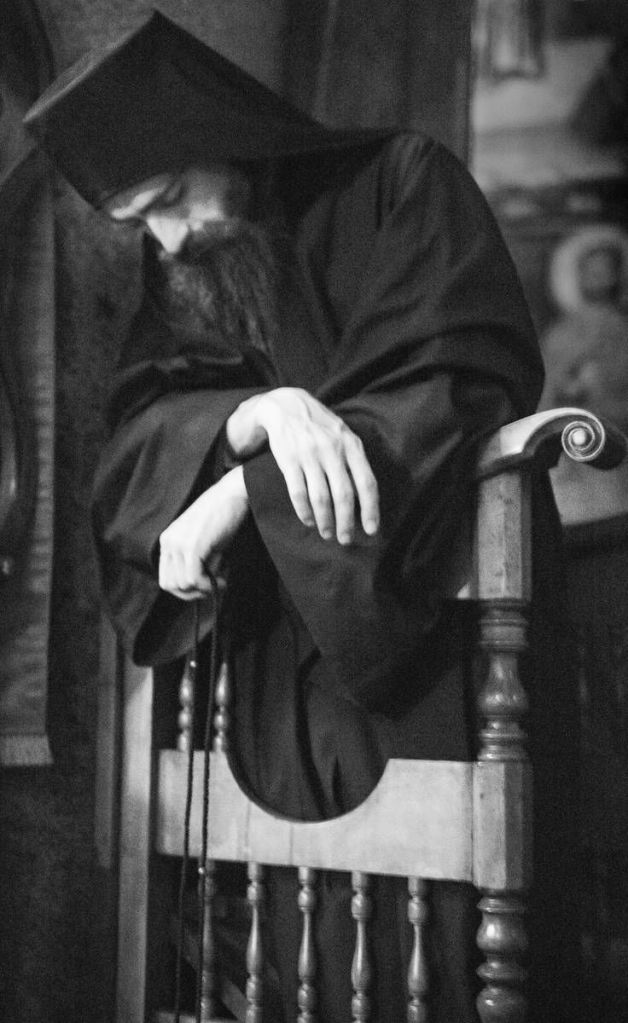
A rustling of paper
The squeak of the chair
The cough
The sniff and sneeze
The dropped pencil
The ruler being placed on the desk
The buzz of the electric light
The hum of the traffic outside
The wind and rain on the windows
The voice saying: “Stop writing please boys”!
On the board outside in large red letters on the white background SILENCE — EXAMINATION IN PROGRESS. Complete silence is hardly possible.
The history of silence, ironically it seems, starts, as physicists say with the “big bang” — I say ironically because there was no one there to hear it unless you believe in God and since the big bang may have happened in a vacuum, there was no sound.
Our lives more than ever are filled with sound; it seems as though we cannot do without distractions; from the mp3s to the music that invades our lives. We need to have space, peace and quiet.
John Cage
4′33″ (pronounced Four minutes, thirty-three seconds or, as the composer himself referred to it, Four, thirty-three) is a three-movement composition by American avant-garde composer John Cage (1912–1992). It was composed in 1952 for any instrument (or combination of instruments), and the score instructs the performer not to play the instrument during the entire duration of the piece throughout the three movements (the first being thirty seconds, the second being two minutes and twenty-three seconds, and the third being one minute and forty seconds). Although commonly perceived as “four minutes thirty-three seconds of silence” — the piece actually consists of the sounds of the environment that the listeners hear while it is performed. Over the years, 4′33″ became Cage’s most famous and most controversial composition. The writer composer is trying to show that there is no such thing as silence — that there is a movement and dynamic — he invites us to listen.
Silence sometimes has a bad press in the Bible — often when it is used, it refers to God silencing His people to stop their mouths:
He silences the lips of trusted advisers and takes away the discernment of elders. (Job 12:20)
But the king will rejoice in God; all who swear by God’s name will praise him, while the mouths of liars will be silenced. (Psalm 63:11)
“Therefore, her young men will fall in the streets; all her soldiers will be silenced in that day,” declares the LORD. (Jeremiah 50:30)
Hearing that Jesus had silenced the Sadducees, the Pharisees got together…. (Matthew 22:34)
In a positive way however, silence is the space in which God speaks. A relationship between two people involves dialogue — speaking and listening. If we cannot listen we cannot have a relationship. My silence allows others to speak and your silence allows you to hear me. At the very heart of God’s universe is a dialogue between heaven and earth — from creation onwards it has always been so. It is in fact what happens in an iconic way with the Holy Liturgy. When Christ came to earth there were those who heard him and those that did not. If you want to acquire a quality of reception on your radio, you have to turn it on and tune in until your radio receiver allows you to hear. Our hearts, minds and souls are like radio receivers — if you want to acquire a quality of prayer, you must tune your heart towards God in a qualitative receptive silence.
Silence between notes makes music, silence between words makes language — otherwise we have cacophony and noise. Any teacher can vouch for that truth and every pupil knows it.
We need space and silence. When the desert father went into the silence of the desert in the fourth century they found the devil and themselves before they found God. When Jesus went into the desert he was tempted too by the voice of the devil. St Seraphim went into the desert of the Northern Thebaid in Russia as a hermit but not before he had learned obedience and humility within a community. Without obedience to a rule one would go mad. Silence can be torture and is a torture with white noise. Yet in solitude we can listen to other things — the birds of the air, the wind, the sea — we never have complete silence for the whole of Creation is either singing or groaning. We can be part of a communal silence in the monastic tradition — the silence of a community is a dynamic silence — it is not the silence of the one — the monolith — but of corporate sharing— full and replete — like the dynamic of the Holy Trinity.
The definition that Metropolitan Kallistos gives of prayer is, I think, so valuable — “I just sit and look at God and He just sits and looks at me.” Sometimes words are unnecessary — when one is in love with another person words sometimes becomes an interruption to that shared mutual appreciation.
Prayer is a relationship with God and an encounter with the real world not limited by time and space — it is not two dimensional but brings us into the very reality of our being. It brings us into contact with those invisible dimensions which interpenetrate our life. For life lived without prayer, without God is only two dimensional — it is a flat world and it is lived in relationship only to self. But in fact Visible and Invisible coexist as fire is present in red hot iron as hydrogen and oxygen co-exist to bring us thirst quenching water. They are not mutually exclusive.
Prayer as Metropolitan Antony Bloom said in “Courage to Pray” is an end to isolation — it is living our life with someone. Prayer makes us aware of God’s presence which we would not be if we did not pray — like switching the radio on and tuning in we have to make the effort to hear God speaking. Indeed he who does not pray is in isolation — the more we pray the more we realise our need upon God — the reality of our vulnerable state of mortality comes to the for, but at the same time we begin to appreciate more grace and divine support. Prayer does not change God — prayer changes us, because it is God the Holy Spirit praying in us. C. S. Lewis, that great friend of Orthodoxy, expresses it like this in his poem on Prayer:
Master they say that when I seem
To be in speech with you,
Since you make no replies, it’s all a
dream – One talker aping two.
They are half right, but not as they
imagine; rather, I
Seek in myself the things I meant to
say, And lo! The wells are dry.
Then, seeing me empty, you forsake
The listener’s role, and through
My dead lips breathe and into utterance wake
The thoughts I never knew.
And thus you neither need reply
Nor can; thus while we seem
Two talking, thou art One forever, and I
No dreamer, but thy dream.
– C.S. Lewis
So we need to distinguish between negative silence, which is isolation from God, and positive quietude — calm, hesychia — which is union with God. The experienced use of mental prayer (or prayer of the heart), requiring solitude and quiet, is called “Hesychasm” (from the Greek “hesychia”, meaning calm, silence), and those practicing it were called “hesychasts.” “A sign of spiritual life is the immersion of a person within himself and the hidden workings within his heart.”
“Acquire a peaceful spirit, and around you thousands will be saved.” (St Seraphim of Sarov.)
In our busy life bombarded by sound — we value things by what we do, what is achieved, the end product, the target fulfilled, the box ticked, but perhaps rather than the measure of doing perhaps we need to recalibrate our lives into being — after all we are not human doings but human beings. We should try to set aside at least half an hour each day for quiet reflection and application: SILENCE — EXAMINATION IN PROGRESS – — since we shall experience it sooner or later:
[The Seventh Seal and the Golden Censer] When he opened the seventh seal, there was silence in heaven for about half an hour. (Revelation 8:1)
Eν Χριστώ
Fr. Jonathan
ابونا جوناثان

 ORTHODOX CHRISTIAN FAITH AND LIFE