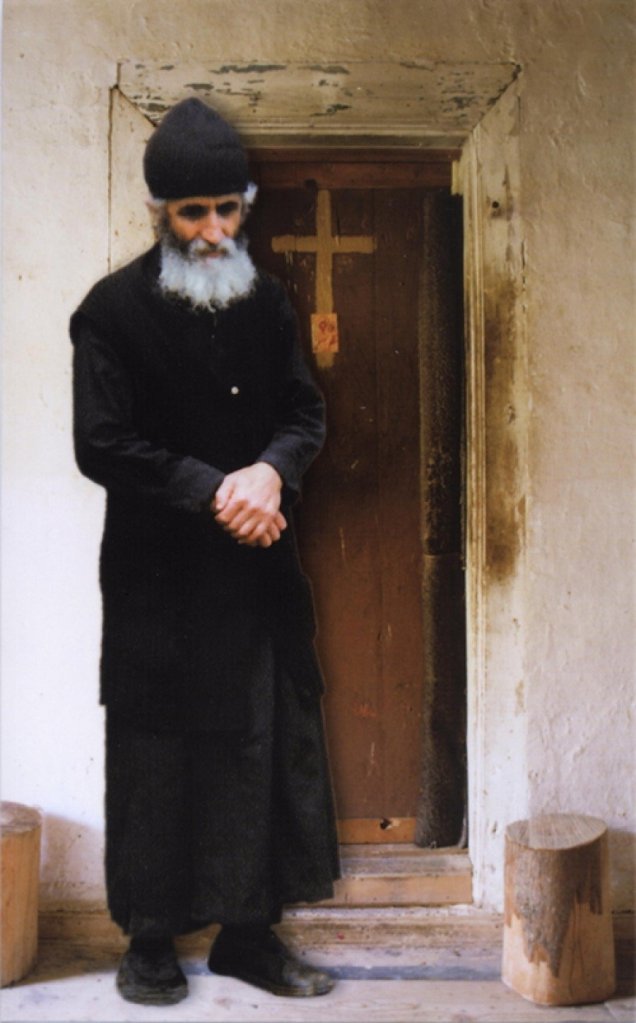
St Nikolai Velimirovich, his Prayers by the Lake, St Paisios, and WWW3 and end-of -world prophecies and a lot more… Your prayers
Dear brothers and sisters, Christ is in our midst. Global events especially at the last two weeks have shocked and deeply saddened me, and my only consolation and light in that darkness was only the church services and the lives of the saints. And … St. Nikolai Velimirovich life and poetry, his Prayers by the Lake. So many of his poems I felt were as if written for us, right now!
Those global events have sparked interest all over the world in WWW3 and end-of -world prophecies and in particular those of recent Orthodox Saints, like St. Paisios who lived and died in the 20th century. I spend quite some time the last two weeks studying these prophesies because lots of people all over the world asked me for a blogpost selecting, presenting, and translating some of these prophesies. I soon realised how very careful one has to be not to distort the Saints’ words. This is precisely why St Paisios left that handwritten note about the electronic ID, which I have translated in the previous blogpost.
It all started on 13 June 2025, when the Iraq nuclear power plant was struck by Israeli airstrikes during the opening stages of the Iran–Israel war (Operation Rising Lion), and further implemented on 22 June 2025, when the facility was bombed by the United States military. The blessed Elder Theodore Agiofarangitis of Crete (28-4-2016) had said to Metropolitan Fr. Neophytos of Morphou: “My children, you will be drinking your coffee in the morning and you will hear that the Jews have hit the Persian nuclear program! Then the great events will begin!” Lots of people, especially in Greece and Cyprus, felt that this prophesy had become news headlines! It had begun…
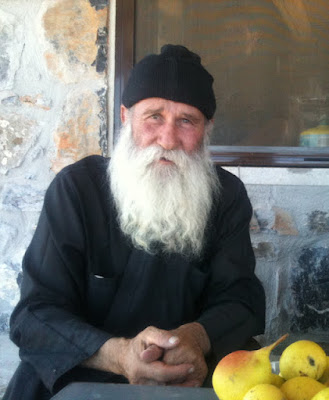
This blogspot is work in progress, a tentative draft, as I am still studying St. Paisios books and I would be most grateful if any of my readers could help me in tracing these, or other for that matter, prophesies. Any help would be most appreciated! Let us all please be very careful and please forgive me for any mistake in what follows. Although lots of ‘prophesies’ circulating recently have been attributed to St. Paisios, not all of them are reliable. To give you just one example:
Lots of websites and blogs reproduce nowadays that Saint Paisios said: “The Middle East will become a battlefield”. Some write a variation: “The battlefield will be Palestine, the grave the Dead Sea.” And they continue: “This will be the first half, but there will also be a second half”. Also: “the Saint is reported to have said: “War will come from above and from below. From above they will descend and from below they will ascend. And Greece will be in between.” Some interpret these words in the following manner: Saint Paisios wants to tell us with these prophetic words that World War III will begin in the parts of Syria and Palestine and then spread to Asia Minor and Constantinople). This phrase, although enigmatic, has been interpreted by spiritual people and theologians as a reference to future conflicts in the north and south of Greece, which will bring the country into a difficult geopolitical position but also into a position of increased importance.
The “above” war: Ukraine – Russia: The war in Ukraine, which broke out in 2022, renewed fears of a wider European or global conflict. The involvement of major powers, such as the US and Russia, combined with the military presence of NATO in the Balkans, is creating an explosive situation in the north of Greece. The Ukrainian crisis is recognized by many as the fulfillment of the “upper” part of the prophecy. It is a war that is descending, both literally and symbolically, towards the European south.
The “lower” war: Israel – Palestine and the Middle East: On the other hand, developments in the Middle East are also worrying. The resurgence of military conflicts between Israel and Hamas, attacks by Hezbollah, Iran’s stance and the ongoing instability in Syria and Lebanon, compose an explosive landscape. Israel’s geographical location and the theological-spiritual significance of this region lead many to interpret these conflicts as the “lower” war of prophecy. A war that is “rising,” and threatens to spread to the Mediterranean and Europe.
Greece in the Middle – Geopolitical Hub and Spiritual Responsibility:
The phrase “and Greece will be in the middle” is key to understanding the prophecy. Greece is, literally and figuratively, between the two war axes. It is a member of the West, but it also has deep cultural, religious, and geostrategic roots in the East. Greece’s geopolitical importance is constantly increasing, both because of its strategic location, natural resources, energy, and its role as a stabilising factor in the wider region.
The problem with these prophesies is they cannot be traced in any reliable book of St. Paisios. Part of them is written in one book which I remember very clearly Gerondas Gregorios of blessed memory warning us against reading it, because he told us the first volume in the series was ‘quite’ accurate and close to St Paisios’ life and words, but the second one included lots of ‘claims’ and opinions which were the author ‘s, not St. Paisios’! So we have to be very careful!
*
The only prophesies I traced in reliable recordings and publications of St. Paisios’ life and words the last two weeks are the following, presented in an article by Athanasios Zoitakis. If in a hurry, go straight to the Constantinople prophesies towards the end. i have also skipped lots of already fulfilled prophesies, such as the dissolution of the USSR in 1991, the Turkish invasion to Cyprus in July 1974.
*
In the first epistle to the Corinthians, Apostle Paul names the gifts of the Holy Spirit to Christ’s Church: But the manifestation of the Spirit is given to every man to profit withal. For to one is given by the Spirit the word of wisdom; to another the word of knowledge by the same Spirit; to another faith by the same Spirit; to another the gifts of healing by the same Spirit; to another the working of miracles; to another prophecy; to another discerning of spirits; to another divers kinds of tongues; to another the interpretation of tongues (1 Cor. 7–10). The Lord generously rewarded His disciples and apostles with these gifts—unlearned fishermen became theologians, prophets, and teachers. They preached the Gospel truth throughout the world, worked amazing miracles, and at the end of their lives were vouchsafed to receive a martyr’s crown.
It is no accident that the Holy Church calls St. Cosmas of Aitolia “equal to the apostles”. A fiery and sincere preacher, even during his lifetime he worked a multitude of miracles and healings, and was vouchsafed a martyric death.
The saint was not only an outstanding Orthodox enlightener; he is truly considered a great prophet of latter times. St. Cosmas of Aitolia left a great number of stunningly exact prophecies about the future of mankind (about scientific inventions, wars, and ecological catastrophes). Many of his predictions have already come to pass, while others are still awaiting their fulfillment.
These are not dreamed-up predictions in the spirit of the false prophecies of the much-hailed Nostrodamus, which had as their goal to lead man away from Christ, but true testimonies of the Holy Spirit, called to help us not fall into diabolical snares and to preserve the purity of the Orthodox faith.
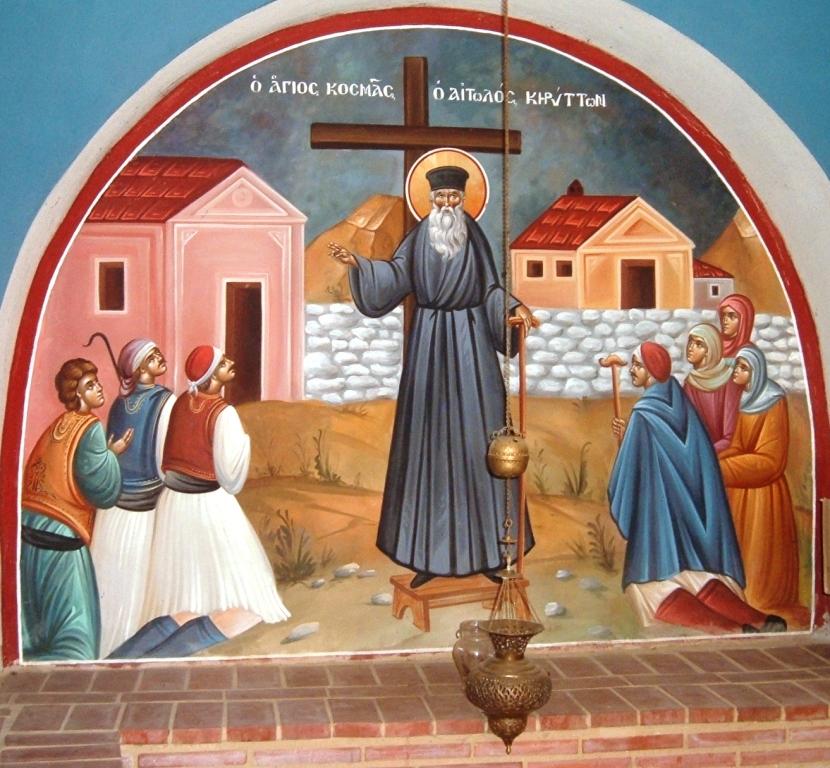
Every town, every village that St. Cosmas visited preserves his prophetic words. Many of the saint’s prophecies have come down to us not only in written form, but also as oral history. People have been brought up from childhood on the saint’s precepts, and therefore even today there is no one in Greece who isn’t familiar with the prophecies of St. Cosmas of Aitolia.
Many of his prophecies are bound up with specific spheres of life, and cannot be understood without knowing the local realities and historical contexts. Some, to the contrary, are bound up with the destiny of universal Orthodoxy and the modern world. The majority of St. Cosmas’s prophecies have been preserved to our times. Some of these prophecies are known through the books, manuscripts, and codices of the eighteenth to nineteenth centuries. During the Second World War, a teacher in a school in Northern Epirus found a collection of seventy-two prophecies written in a Koran in the Albanian language. The saint’s prophecies were so essential to life, so popular, and important to the people that some did not want to part with his words even during the period of cruel persecutions, and they “hid” the prophecies of the great Orthodox saint in the sacred books of Islam.
If the main task of the prophets of the Old Testament period was to foretell the coming of the Messiah, then the main work of New Testament Prophets has been to foretell the end of the world and the Second Coming of Christ. All New Testament holy men, endowed with prophetic gifts (including St. Cosmas), foretold not some new events or states, but rather prepared their flock for the Terrible Judgment and the Second Coming of our Lord and Savior. They prepare us not only for overcoming the hardships and temptations of the last times, but also for the main goal of our earthly existence—“a good defense at the dread Judgment Seat of Christ”.[1]
“The prophets were great martyrs! They were greater martyrs than the martyrs, despite the fact that they did not all die a martyr’s death. This is because the martyrs did not suffer long, while the prophets saw how evil was being committed and so suffered continually. They shouted and shouted, while everyone else just blew their own horns.”[2] These words belong to our contemporary Athonite Elder Paisios of the Hagiorite. Elder Paisios (like any other Greek) was from early childhood immersed in the traditions connected with the name of Equal-to-the-Apostles Cosmas. Later in conversations with people who came to him he would often cite from the sermons and prophecies of this saint. The elder spent a long time restoring the monastery in Konitsa—a place that was uninterruptedly connected with the name of St. Cosmas of Aitolia (now there is a magnificent church built in his honor there). But the most important thing is that Elder Paisios explained to us certain of the saint’s “Constantinople” prophecies, which had previously evoked heated arguments amongst researchers.
The two saints were bound together by their common pain for their native land and the Orthodox Church. Both were outstanding missionaries, who brought a multitude of their contemporaries to Christ. There lives are examples of sacrificial service to God and neighbor.
Sts. Cosmas and Paisios showed with their entire lives that love for God is unthinkable without for your people. At the same time, in their relationship to their motherland these two ascetics were alien to superficial ardor, which flares brightly but quickly dies out. They showed that love for one’s motherland is a daily, exhausting and dangerous labor, bereft of anything showy and especially not carried on with any earthly reward in mind.
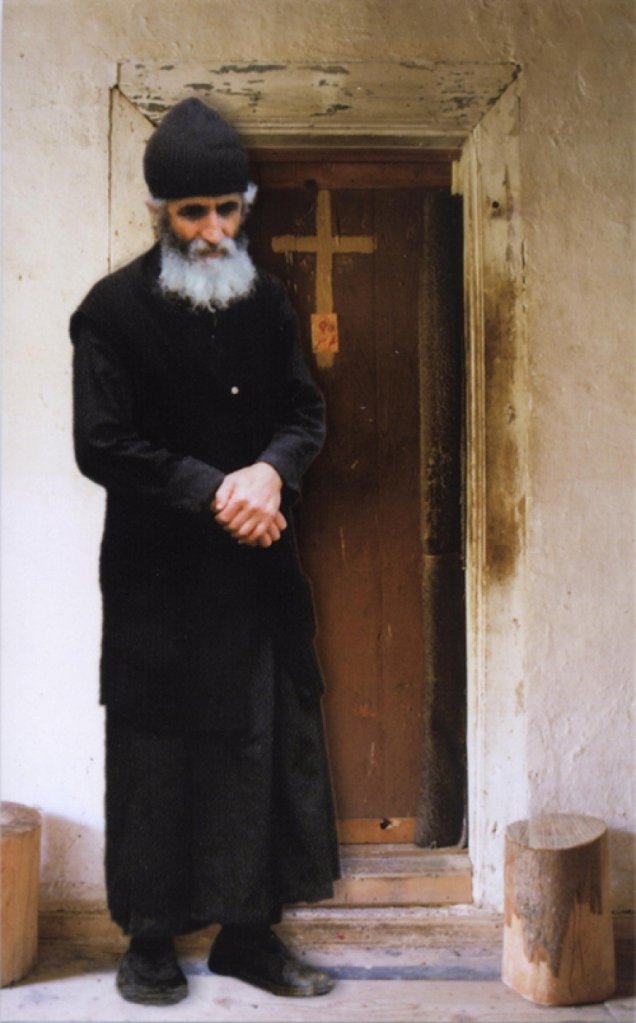
For this sacrificial labor first of all is needed deep humility, and dedication to God’s will. Elder Paisios’s life was penetrated with this. We can find such readiness for this self-denial in the words of Holy Hieromartyr Cosmas, which are a program for his entire work on earth:
“You may say, ‘But you are a monk, so what are you doing in the world?’ And I, my brothers, am not doing rightly. But because our people have become unlearned, I said, ‘Let Christ lose only me, but receive all the rest. Perhaps by God’s mercy and by your prayers I will be saved’.” Here Equal-to-the-Apostles Cosmas stands on equal ground with Apostle Paul, who said, For I could wish that myself were accursed from Christ for my brethren, my kinsmen according to the flesh (Rom. 9:3).
Wars, hunger, cold, unthinkable catastrophes and tragedies—all this was prophesied by St. Cosmas. But he names these events not in order to frighten the fainthearted and impressionable. The saint gives practical advice on how to overcome the adversities and withstand them while preserving our faith. He suffered through every word he spoke and they therefore had importance and significance not only for his contemporaries, but also for subsequent generations.
The prophecies of St. Cosmas of Aitolia have become essential instructions for several generations of people living on the Balkan Peninsula. Let us also listen to his words, follow his instructions, and preserve our hope and faith that with God’s help, all trials will in the end be turned to our benefit.
The prophecy of “the desired”
With his prophecies, St. Cosmas of Aitolia was able to return his compatriots, who had been languishing for over 300 years under a foreign yoke, to hope in their national rebirth. St. Cosmas’s contribution to the future liberation from Turkish rule was enormous. Here are the words of a song that became the anthem for the Greeks fighting against foreign rule:
Help, St. George
Help, St. Cosmas,
To take back Constantinople again
And the Church of Hagia Sophia.
St. George, as we know, was the protector of armies. And St. Cosmas became for the participants in the national-liberation movement a symbol of the struggle for the rebirth of Orthodoxy and the Greek motherland. They were inspired by his prophecies, which awakened faith and hope in them.
The saint, of course, could not speak openly with his flock about national liberation. He used the words, “the desired”, “the longed-for”. “When shall ‘the longed-for’ come?” the saint was often asked.
Here is how he answered that question:
“This place will one day become Romean[3] again. Happy is he who will live in this country.”
The saint often pronounced this prophecy when visiting the enslaved Balkan lands to preach. They were all soon liberated from the Turks.
“The desired will come to you in the third generation; your grandsons will see it.”
These words were again pronounced in Epirus. This Greek province was liberated during the Balkan war of 1912–1913, when the grandchildren of those to whom St. Cosmas spoke this prophecy were still alive.
“There is yet much suffering ahead. Do no forget my words: pray, act, and be calm. Until this gash on the sycamore tree closes over, your settlement will be enslaved and unhappy.”
The saint said this in the Epirus village of Tsaraplana. The gash on that tree cicatrized in 1912.
From the time the local inhabitants heard that prophecy they would go everyday to the sycamore and see if the wound on the tree had cicatrized. Over 130 years passed, and then the joyful news spread around the region: “It’s happened! The saint’s prophecy has been fulfilled!” And people were not deceived in their expectations—just a few months later they received their long-awaited freedom.
“The desired will come when two Pachalias will fall on the same day.”
The Annunciation and Pascha fell on the same day in 1912. Just a few months later, the regions to whose inhabitants the saint had addressed his prophetic words were liberated from Turkish rule (this is how Elder Paisios interpreted St. Cosmas’s prophecy).
“May these mountains be blessed: They will save many souls.”
The saint said these words in Vonitsa. In May 1821, the inhabitants of this area, following the prophetic advice of St. Cosmas, found refuge in the Lefkada Mountains.
“Thank your fate that you will find yourselves in the high mountains—they will save you from many calamities. You will hear danger, but you won’t see it. You will suffer for three days and three hours.”
Metsovo. Photo: Wikipedia.
The saint pronounced this prophecy in the town of Metsovo. On May 27, 1854, there was in fact a cruel three-day battle. Many local people were able to escape death by hiding high in the mountains.
“O blessed mountain! How many women and children you will save when difficult years come.”
On November 4, 1912, the saint’s words were fulfilled. In the mountains of Siatista, 45,000 women and children were saved.
“First will come the red caps, then in fifty-four years they will be replaced by the English, and then there will be a Greek state.”
The saint pronounced this prophecy about the liberation of the Ionian Islands on the island of Cephalonia. These words were fulfilled with amazing accuracy: After the Venetians the islands were taken over by the French (a folk name for them was the “red caps”), and on the fifty-fourth year (!) the English replaced them, and only after that did the Ionian Islands, as St. Cosmas foretold, receive their long-awaited liberation.
“Catastrophe will reach the cross, but it won’t be able to go any lower. Do not be afraid. Do not leave your houses.”
With these words the saint addressed the inhabitants of Polineri. At the place where he preached, the saint as was his custom raised a large cross with which this prophecy is connected.
In November 1940, the armies of fascist Italy invaded Greece. Meeting practically no resistance they captured more and more territories. Finally they reached the cross about which the saint had prophesied. Alarmed at the threat of the Italian forces’ further advancement, the Greek authorities issued an order to evacuate the inhabitants of several areas, including Polineri. A one hundred-year-old inhabitant of the village of Tegos Nasioulas had not forgotten the saint’s prophetic words: He addressed his fellow villagers, convincing them not to leave their houses. The authorities considered them saboteurs who were trying to hold up the evacuation and make it easier for the Italian forces to advance. They asked the old man to be silent, even beat him cruelly, but he was he did not back down.
The Italians did in fact reach the cross, but they could not go any further—the Greek forces stopped their attack.
Prophecies about Constantinople
Regaining Constantinople has always been the dream of the Greeks and other Orthodox nations in the Balkans. Its fall was the most devastating and tragic date in Greek history. The rebirth of a national state did not reach its logical conclusion: the restoration of an Orthodox Empire with its capital in Constantinople. Having foretold the liberation from the Turkish yoke, St. Cosmas also foretold the future liberation of Constantinople. The “Constantinople” prophecies still await their fulfillment.
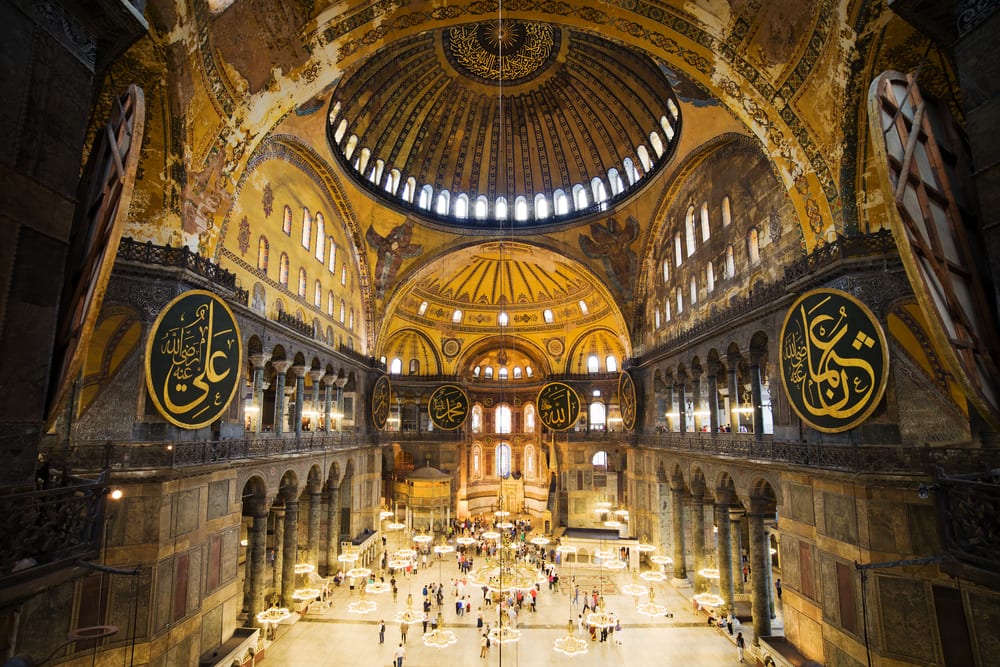
Many of St. Cosmas’s prophecies have long remained a puzzle to us and were the subject of the most contradictory explanations. Moreover, in the people’s consciousness they were mixed up with the many false prophecies that exist about the liberation of the City. Elder Paisios not only explained the saint’s words, which are still hard to understand, but he also helped separate the “wheat from the chaff”—the true testimony of the Holy Spirit from the predictions of false prophets who have led us into confusion and error.
The two saints are not only bound together by common prophesies about the fate of the City, but also by the their love of Byzantium and dedication to the idea of an Orthodox, multi-national empire—a sentiment natural to the majority of Greek ascetics.
For them Byzantium is not just a political program but also a way of thinking and perception of the world: “Byzantium placed the beginning of the Holy Mountain [Athos]. Today the Holy Mountain could renew Byzantium, if only we would preserve that strength in ourselves, not ‘be lazy’, not ‘lose our color’. Look, people are now disappointed in everything and are looking for something that is not of merely transitory value. This is very easy. If only we ourselves would not fade.”[4] Byzantium is an image of a sovereign state that is inseparably connected with Orthodoxy, founded upon Orthodoxy. It is a “Christian kingdom”, as St. Cosmas of Aitolia accurately defines it.
“The red vests will drive the Turks from the City”
We do not yet know the meaning of this prophecy. Some express the supposition that the color red will be present in the uniforms of the liberating soldiers.
“There will be so much blood spilled in the City that a three-year-old calf could swim in it.”
This prophecy was supplemented by Elder Paisiios: “In Constantinople there will be a fierce battle between the Russians and the Europeans. Very much blood will be spilled.”[5]
“Armies will pass through the valley of Mouzini headed for Constantinople. Let the women and children go to the mountains. They will ask you, ‘Is the City far away?’ Answer: ‘It is near’. By answering that way, you will avoid much disaster.”
The Mouzini Valley is located in Northern Epirus. Although this Greek province is now in the territory of Albania, it has a significantly non-Albanian (mainly Greek) population, whom St. Cosmas addressed in his prophecy.
“When you hear that a fleet is sailing in the Mediterranean Sea, know that the Constantinople question will soon be resolved.”
It is clear from the prophecies that in the struggle for Constantinople, the opposing sides will make broad use of their navies.
“The armies will not even get halfway to the City when they will hear news that “the desired” has come.”
Certain of St. Cosmas’s “Constantinople” prophecies were deciphered in the late twentieth century and supplemented by Elder Paisios the Hagiorite.
“Here is what the elder said when he was asked one day about the events in Serbia:
“ ‘Today, for the sake of the Turks the Europeans are creating an independent state with a Muslim population (Bosnia, Herzegovina). However, I see that in the future they will carefully divide Turkey itself as well: the Kurds and Armenians will rebel, and the Europeans will demand recognition of these peoples’ independence and rights to self-government. Then they will say to Turkey: “We once did you a favor, and now in the same way, the Kurds and Armenians should receive independence.” Thus will they ‘nobly’ divide Turkey into parts.
“St. Arsenius of Cappadocia told the faithful in Faras that they will lose their fatherland, but soon they will gain it back again.”[6]
“There will be yet another foreign army. It will not know Greek, but it will believe in Christ. They will also ask: ‘Where is the City?’”
The fate of Constantinople will be decided in a military and diplomatic contest of the largest world sovereignties, for whom for some (as yet unknown) reason the break up of Turkey will be profitable.
St. Paisios the Hagiorite.Elder Paisios emphasized that this will happen without Greece’s direct participation: “We will take Constantinople back, but not we ourselves. Because the majority of our young people have become degraded, we are not capable of such a thing. Nevertheless, God will arrange it that others will take the City and give it to us.”[7]
Many Greek researchers are convinced that Russia, of the same religion as them, will take an active part in deciding the Constantinople question. Truly, the Russian people fit to the greatest degree St. Cosmas’s description: “They will not know Greek, but they will believe in Christ.”
“One day a group of children, students of the Athonaida, decided to go to the elder and ask him whether the Greeks will take Constantinople and will they, the children, live to those times. They came to Fr. Paisios’s kaliva, took their treats, but were afraid to ask the question. One made a sign to another, and he to a third. But in the end, no one could bring himself to ask the elder. Then the elder said to them himself: ‘Well, young fellows? What did you want to ask? About Constantinople? We’ll take it, we will, and you will live to see it’.”[8]
“The antichrists (that is, the Turks.—A.Z.) will leave, but they will return, and then you will chase them to the Red Apple Tree.”
In Greek folk tradition the Red Apple Tree is the name for Kokkini Milia—a place somewhere in Mesopotamia, where the Turks will be driven after the liberation of Constantinople.
Of course, now it seems to us that the liberation of Constantinople, just like the break up of Turkey along with the strengthening of Russia are almost impossible. But let’s not forget that all is possible to God, and the situation in world politics can make a 180-degree turnaround at any moment.
“One day, Mr. D. K. visited Elder Paisios. At that time the USSR was a strong and seemingly invincible world power, and no one could even suppose that it could be destroyed (this was in the Brezhnev era).
But Elder Paisios said to him, by the by:
“You will see that the USSR will break apart.”
Mr. D. objected:
“But Geronda, who could break apart that enormous might? No one would even dare to touch its toenails.”
“You’ll see!”
The elder foretold that the breakup of the USSR will be obvious even to Mr. D., despite his advanced age.
The Elder went on:
“Know, that Turkey will also fall apart. There will be a war that will last two periods. We will be the victors, because we are Orthodox.
“Geronda, will we suffer losses in the war?”
“Eh, at the most they’ll occupy one or two islands, but they will give Constantinople to us. You’ll see, you’ll see!”
“The Turks will leave, but they will return again and reach Hexamilia.[9] One third of them will perish, one third will come to believe in Christ, and another third will go to Kokkini Milia.”
“No one can explain this, and all make mistaken suppositions. They say that Hexamilia is in Langadas, Kilnis,[10] in Thrace,[11] in Corinth; but no one knows that what the saint was talking about is the six miles of territorial waters[12].[13]
“Once, I met Elder Paisios, who was somewhat disturbed and upset. He gave me some treats and then began the conversation himself:
“ ‘Certain people came to me and said that a war will start, the Turks will enter Greece, and they will chase us six miles to Corinth (that is how they explained the prophecy of St. Cosmas of Aitolia, with their corrupt thinking). <…> Although I don’t like to talk on the theme of prophecies, they forced me to explain to them the meaning of the six miles about which St. Cosmas spoke. This is none other than six miles of the sea shelf. It is what we and Turkey have been gnawing at each other about in recent years and about which we will finally “lock horns”. But they will not enter Greece, they will only advance to these six miles, but then they will meet with great calamities from the north, as it is written, and all their plans will collapse.”[14]
“Today, reading prophecies is the same as reading the newspaper—they are so clearly written. My thoughts tell me that many events will take place there: The Russians will occupy Turkey, Turkey will disappear from the map, because one third of the Turks will convert to Christianity, a third with perish, and a third will head for Mesopotamia.”[15]
The prophecies of Sts. Cosmas and Paisios talk about how a third of the Turks will become Christians. It is notable that even now there are many crypto-Christians amongst the Turks. Many pilgrims who have been to Turkey tell about how during their travels people would come up to them, ask them for icons, prayer books, and look for opportunities to confess and receive Communion.
“Then it will come, when there will come two summers and two Paschalias together.”
For a long time the meaning of this prophecy was hidden from us, and only at the end of the twentieth century did Elder Paisios shed light on St. Cosmas’s words.
“They started telling me what St. Cosmas had said: ‘Then it will come, when there will come two summers and two Paschalias together’. They say that now (when Pascha coincided with the Annunciation and the last winter was like summer) it means that the Turks will attack Greece.
“We’ve all become prophets, father, and explain things with our minds however we want… Here I was forced to tell them that when St. Cosmas said, ‘Then it will come…’ he didn’t mean the Turks at all. He meant that liberation will come for the people of North Epirus. And truly, after this year, after so many years the borders were opened, and now they can more or less be connected with their fatherland.
“My father, I understood that these people bring very great harm by explaining the prophecies with their poor minds. And more than that, they pass on their false thinking to others.”[16]
To be continued …
At the foundation of this publication lies the book: Athanasios Zoutakis, The Life and prophecies of St. Cosmas of Aitolia (Moscow: 2007).
Athanasios Zoitakis
Translation by OrthoChristian.com
The author, Athanasios Zoitakis, is a doctoral candidate in history and teaches Church history in the History Department of Moscow State University. He is also currently the editor-in-chief of the Pravoslavie.ru Greek edition.
[1] From the litany at Orthodox services.—Trans.
[2] St. Paisius the Hagiorite, With pain and love for Modern Man (Moscow: Word, 2003) 1:22.
[3] Romei—inhabitants of the Byzantine Empire. St. Cosmas was a consistent supporter of creating a “Romeian Empire”.
[4] See: Athanasios Rakovalic, Fr. Paisios said to me…” (Moscow, 2003) [Russia].
[5] Χριστόδουλος Αγιορείτης, ιερομοναχος. Σκέυος Εκλογής. Άγιον Όρος, 1996. Σ. 207.
[6] Ibid., 143.
[7] Χριστόδουλου Αγιορείτου. Ο Γέρων Παίσιος. Άγιον ΄Ορος, 1994. Σ. 210–221.
[8] Hieromonk Isaac, The Life of Elder Paisios of the Holy Mountain (Moscow: 2006), 211.
[9] Hexamilia: six miles.
[10] Langadas, Kilnis: a town in Macedonia.
[11] Thrace: a province in Greece
[12] The zone of six miles, including several islands in the Aegean Sea. The Turks are now actively making claims to this territory. The continually violate Greek air space, and in 1996, due to these territories a military conflict nearly broke out between Greece and Turkey. (These conflicts are still coming up at the time of this translation.—Trans.)
[13] Χριστόδουλος Αγιορείτης, ιερομοναχος. Σκέυος Εκλογής. Σ. 221.
[14] Χριστόδουλου Αγιορείτου.. Ο Γέρων Παίσιος. Σ. 211
[15] Ibid., 206.
[16] Ibid., 211.

 ORTHODOX CHRISTIAN FAITH AND LIFE
I don’t know who you are but I humbly ask your prayers from the bottom of my heart for me Niketas (GreatMartyr) and my wife Daphne (Dymphna but the Greek name) as we are fairly certain we will no longer have a place to live in a couple days here, since we will probably get evicted. Glory to God but I hope we can move to Kendalia, if our Lord Jesus has anything to say about it. I am a grievous sinner but Holy GreatMartyr Niketas, Holy Gerondissa Galaktia, Holy Geronda Porphyrios, Holy Geronda and Equal to the Apostles Ephraim, and Holy GreatMartyr Marina, and Holy Gerondissa Gavrielia, and Holy Geronda Evmenios, Holy Bishop John of Shanghai and San Francisco and Holy Mother Silouana have all seemed to be taking care of me. I praise God for all of them, and we want to move closer to Holy Archangels monastery, and we are already in south central Texas. I have no spiritual Father like my beloved Holy Geronda Joseph the Hesychast to show me prayer. We don’t know what we will do but I hope that God will take us where we need to go. Glory to Jesus Christ.
LikeLiked by 1 person
My poor prayers
LikeLiked by 1 person