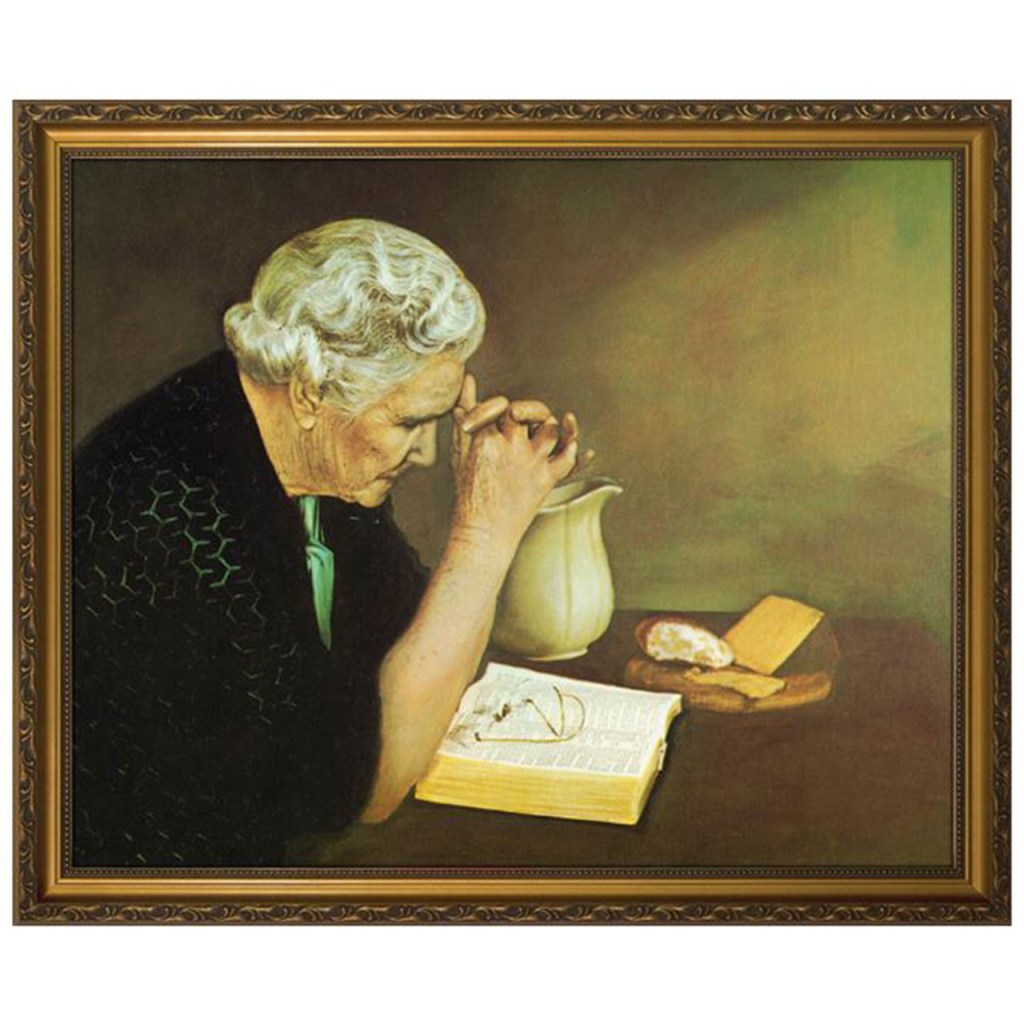
Father Josiah Trenham on “The Most Important Times to Give Thanks” and George Herbert’s poem “Gratefulness” From The Temple (1633)
| “Gratefulnesse” THou that hast giv’n so much to me, Give one thing more, a gratefull heart. See how thy beggar works on thee By art. He makes thy gifts occasion more, And sayes, If he in this be crost, All thou hast giv’n him heretofore Is lost. But thou didst reckon, when at first Thy word our hearts and hands did crave, What it would come to at the worst To save. Perpetuall knockings at thy doore, Tears sullying thy transparent rooms, Gift upon gift, much would have more, And comes. This notwithstanding, thou wentst on, And didst allow us all our noise: Nay, thou hast made a sigh and grone Thy joyes. Not that thou hast not still above Much better tunes, then grones can make; But that these countrey-aires thy love Did take. Wherefore I crie, and crie again; And in no quiet canst thou be, Till I a thankfull heart obtain Of thee: Not thankfull, when it pleaseth me; As if thy blessings had spare dayes: But such a heart, whose pulse may be Thy praise. |
Perhaps the scenario of this poem seems a little ridiculous to you: no one need spend so much vigour on trying to persuade God of the virtues of gratefulness, as it’s a gift that’s so obviously within His will to give. Please forgive me but I do find all this elaborateness and farfetchedness — indeed one of the hallmarks of seventeenth-century metaphysical poetry — charming in its “innocence”. Esp. when compared to our century’s meta-diction and meta-visions…
The first two lines of the poem could be taken in isolation as an earnest and prayerful reminder to be thankful always for God’s goodness, perhaps in the same vein as a verse from Joseph Addison’s wonderful hymn of 1712: ‘When all Thy mercies, O my God’:
Ten thousand thousand precious gifts
My daily thanks employ;
Nor is the least a cheerful heart
To taste those gifts with joy.
But as the poem progresses, it seems that such is the weakness of our human condition that even an act or disposition of gratitude needs divine provenance – and persistence on the part of the poet: ‘Thy beggar works on thee by art’ (stanza 1); ‘Perpetuall knockings at Thy doore’ (stanza 4); ‘I crie, and crie again’ (stanza 7).
George Herbert leaves us in no doubt that God is gracious when beholding our noise, indeed our every ‘sigh and grone’.
What I find most moving is that the beggar’s request in the final stanza — not just a grateful heart from time to time, but one that is grateful all the time, continuously, as a beating pulse — is indeed granted in the end!
Look at another, famous poem of his, “Praise (II)” :
KIng of Glorie, King of Peace,
…
Thou hast granted my request,
Thou hast heard me:
Sev’n whole dayes, not one in seven,
I will praise thee.”
What a gift! How are lives, certainly mine, would be transformed, were our hearts grateful, did we possess hearts “whose pulse may be Thy praise”! Listen to the hymn of ‘Gratefulnesse’ here.

 ORTHODOX CHRISTIAN FAITH AND LIFE
When the lions consumed the body and ground the bones of St ignatios the God bearer at the arena in Rome they did not consume his heart. The lions could not consume the heart because it was too great for them, for it was filled with the love of Christ. They were unable, because it contained the Kingdom of God.
LikeLiked by 1 person