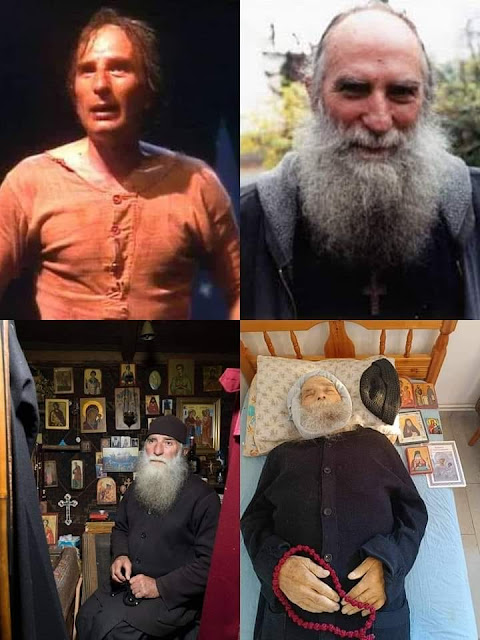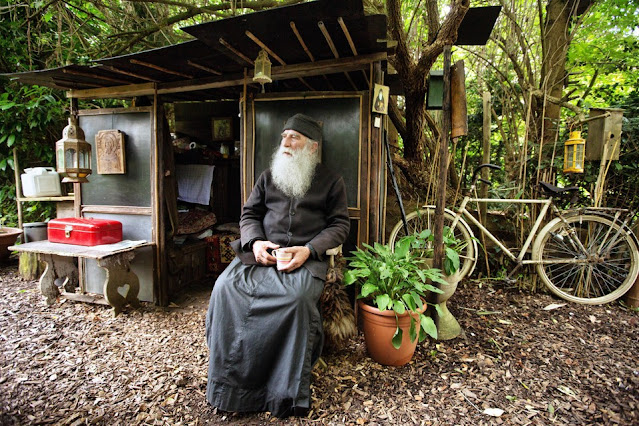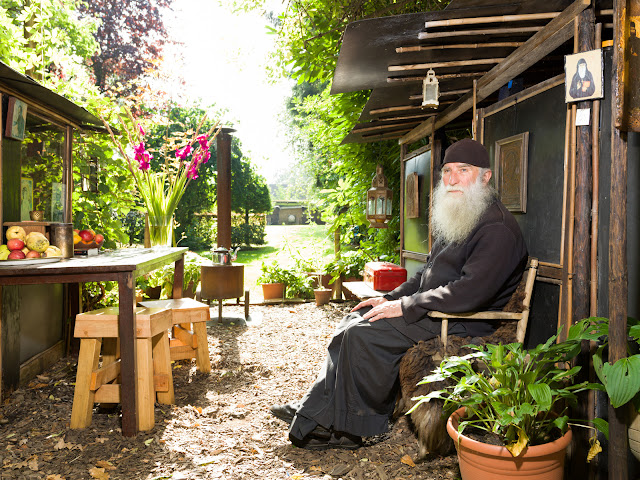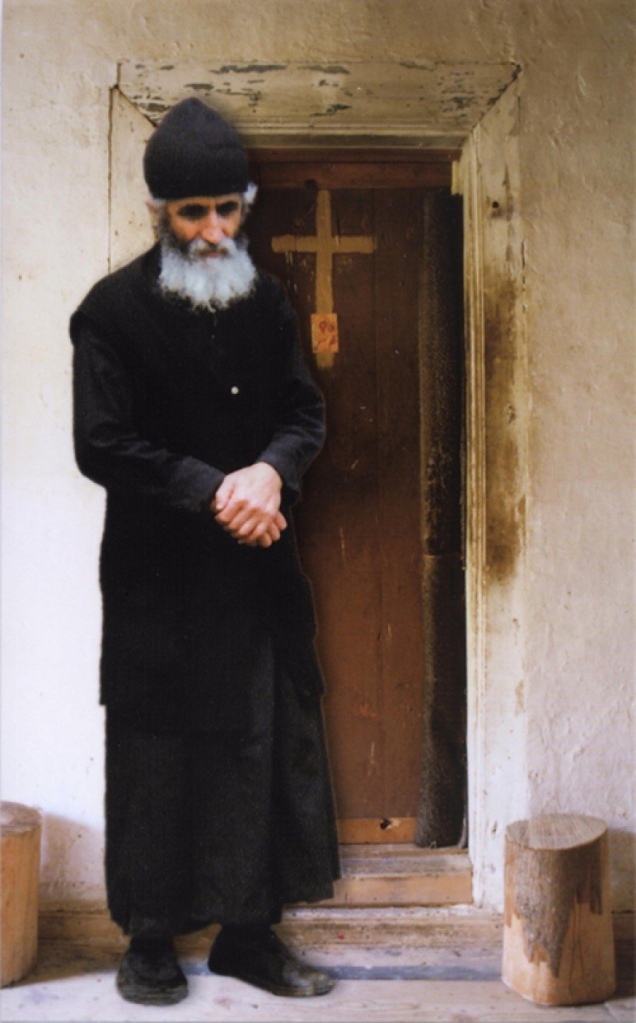
Saint Paisios in Sarakina

Part One:

It all started most unusual. As I was walking in the street, at about 16:00, under the sizzling sun, on my way back to St Porfyrios after an obedience , I saw an old priest, nearly 80 years old waiting, all alone, at the bus stop. I stopped to get his blessing and inquire if he needed any help because this was not the right time for anyone to be all alone in the streets, under the scorching sun, esp. if you are 80+. But this priest was not your ‘ordinary’ elderly priest!

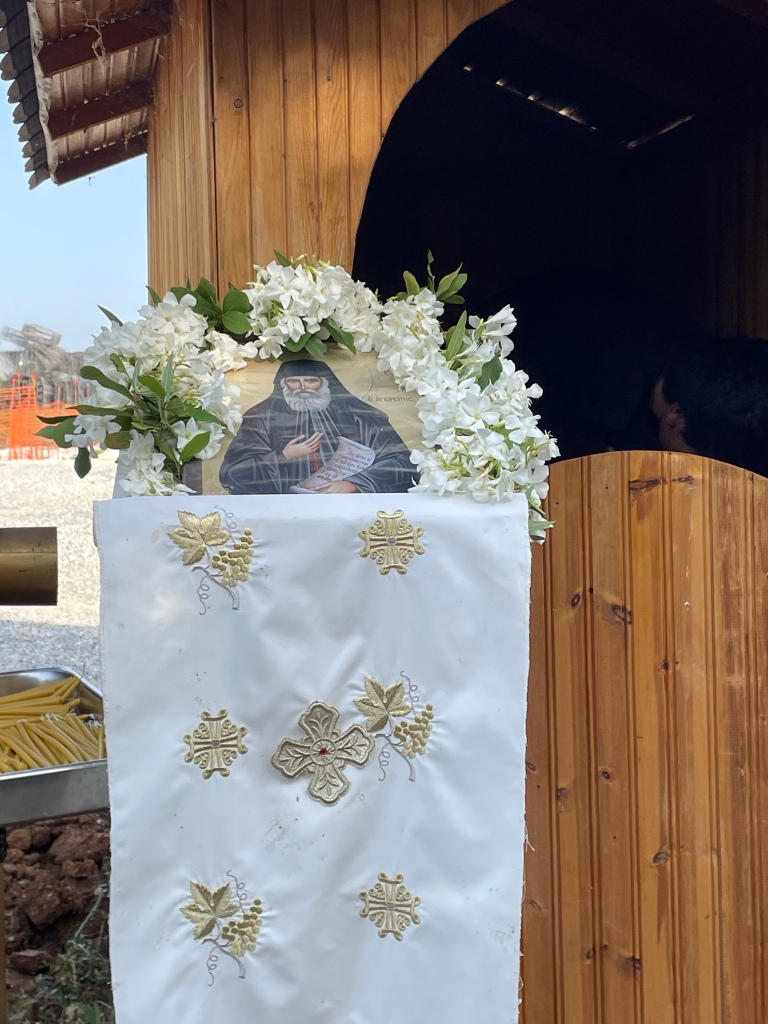
It turned out that Father Methodios was the parish priest at Thessaloniki St Gregory Palamas cathedral, and he was very excited about something and most eager to share his news with me! His tama to St Paisios —to build him a church—would be brought to fruition in just a few days, this Saturday evening before Pentecost, near Sarakina, a small, nearby town, 45’ drive from Thessaloniki. The main church will be consecrated to St Paisios, and the two chapels to St Gregory Palamas and St Porfyrios! Further on, he explained to me how he had offered the donation of 7.5 acres and how the monastery of the Assumption in Panorama had undertaken all the work. In the end, Father Methodios invited me to the the laying of the Foundation Stone for the construction of the Holy Church of Saint Paisios, gave me his private mobile number, supplied all necessary names and references, monastery ones included, offered ample navigation guidance for the trip to the ‘unknown’ he was inviting me, and kept repeating that I should come, that St Paisios had arranged our meeting at the bus stop!

He also described to me most vividly an overnight stay by St Paisios at his house! One evening, late in the night, his doorbell rang and the priest’s sister went to open the door. She returned pale and was utterly dumbfounded! When Father Methodios asked her who was at the door, all she could whisper was “A Saint!”. So Father Methodios went to the door and to his surprise saw St Paisios! ‘Father, how come you are here?’ And St Paisios smiled and told him: ‘Haven’t we been discussing about this visit and overnight stay all this time? Well, now is the time!’ And so he spent the night at his house.

What an amazing experience, a most exciting opportunity! How can one refuse such an opportunity? To tell you the truth, I was a little concerned that I have to drive on your own in these thickets, but how could I refuse? And deep in my heart, I felt that St Paisios would be with me. —And St Porphyrios.

I felt joy even at the prospect! It was such a joy to meet such an old, blessed priest, full of joy, radiating the Holy Spirit under the heat! I felt such joy that such priests still exist 🙏 Glory to God! If only you saw his eyes! These days I had been studying in detail the making of St Porfyrios monastery in Milesi, all the Saint’s work, toil, prayers, the volunteers, all the people who helped in every possible way. And while contemplating all this, I met this priest! Amazing!

So, if St Paisios and St Porfyrios would be travelling with me then it felt safe! Anyway, out of precaution, I also started making inquiries to the Monastery about the precise location —no gps it turned out, I am afraid,only vague road signs, cranes,oh dear…— trying also to find somebody else willing to join in the escapade. It turned out that nearly everybody was planning to be away this long weekend of the Monday of the Holy Spirit (nearly national holiday). Nearly.

Eventually, the Saints and my spiritual father’s prayers have provided me a travel companion for Saturday’s holy expedition. A fellow chanter had another obedience nearby so arrangement were sorted out really fast. And another chanter too, a blessed three tied cord, God will not despise? “And if one prevail against him, two shall withstand him; and a threestrand cord is not quickly broken.” Ecclesiastes 4:12. Glory to God for all things.

Of course it was still a mystery where and what precisely this church was. But Mysteries are revealed not understood!🙂 My spiritual Father assured me that Our Lord said I am the Way the Truth and the Life. Without the way there is no going, without the truth there is no knowing, without the life there is no living. He was assured that the Way would find a way for me. He keeps encouraging me these days to be open to the Holy Spirit and be led by Him.

The ancient saints travelled many miles to many places. I wish I could do some of this traveling together with him. But maybe at hisspiritual stage, it is only conducted in Spirit? The thoughts are spiritual for a spiritual father who travels with his spiritual children, whether in this life or the next.

Part Two:
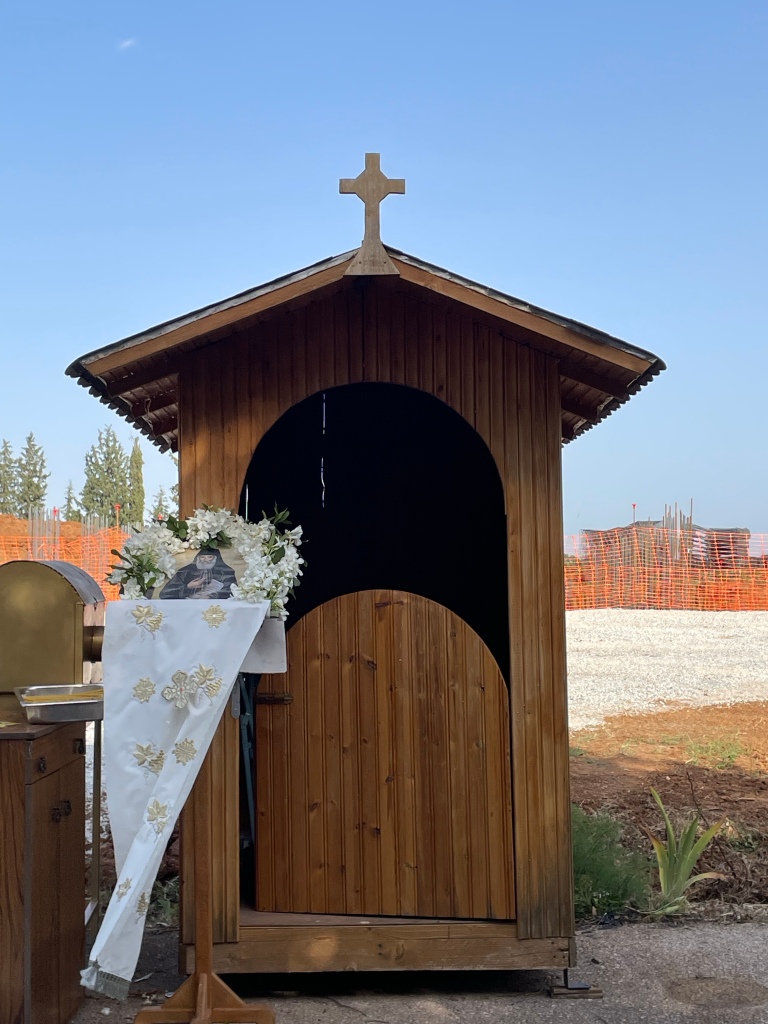
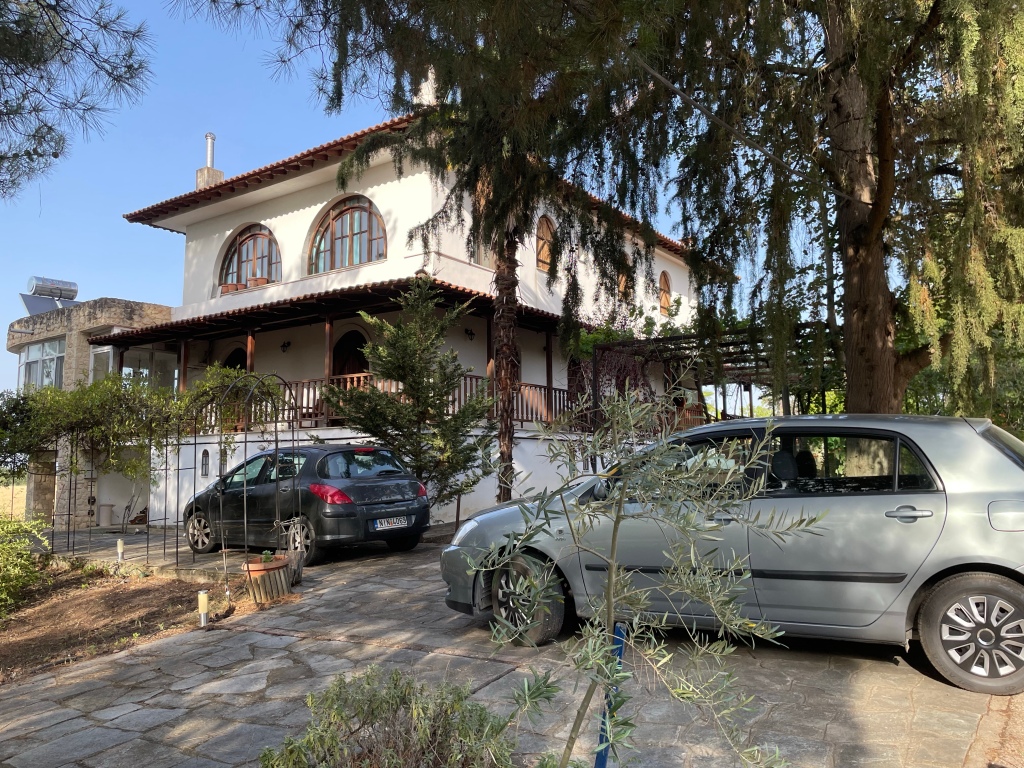
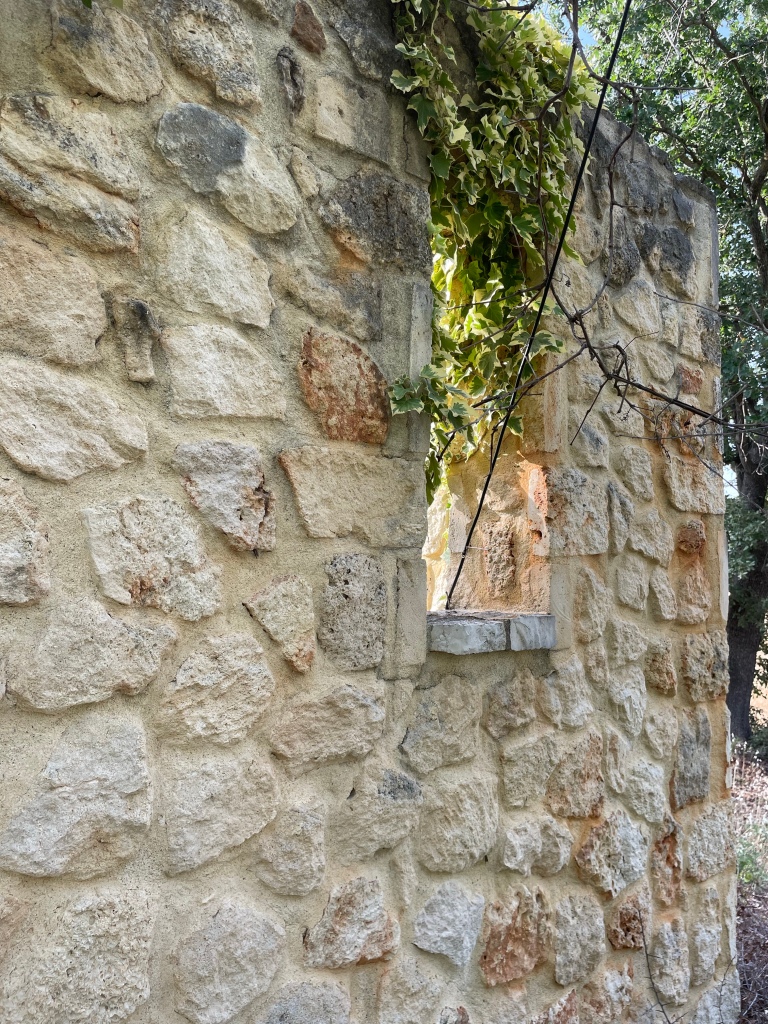
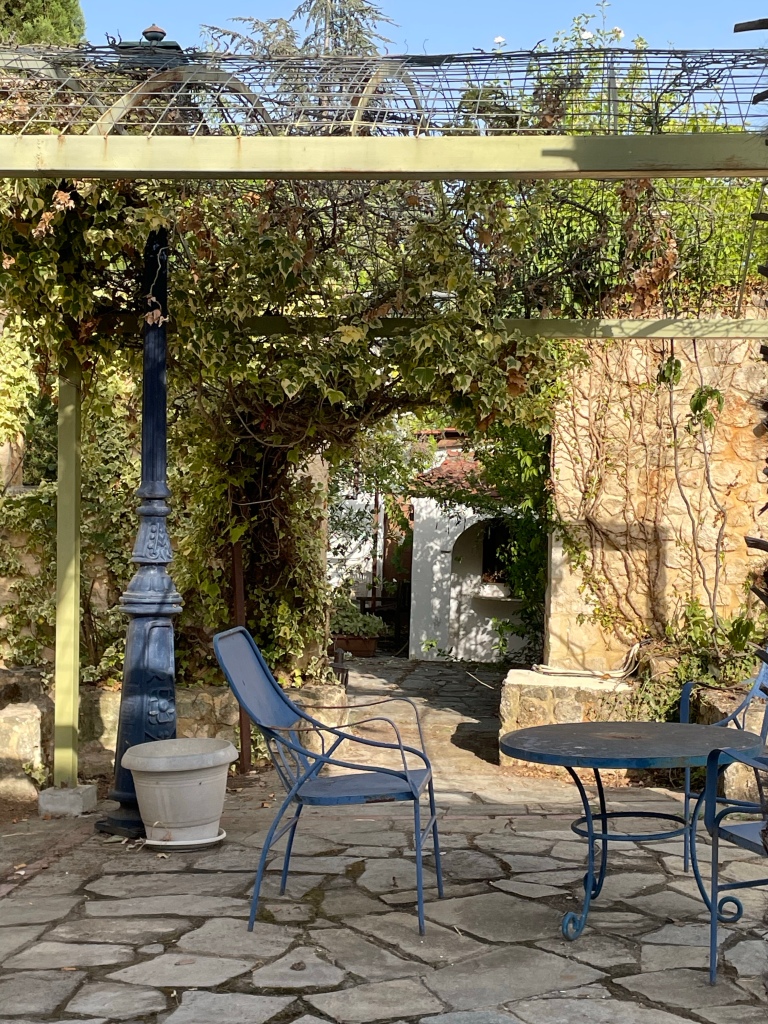
Well, it was not a wilderness we ended up, after climbing up and down Hortiatis mountain and traversing small villages. We arrived at a pretty ‘civilised’ place, a spiritual centre and a small church in a 7.5 acres land, dedicated to The Mother of God of the Life-giving Spring or Life-giving Font (Greek: Ζωοδόχος Πηγή, translit. Zōodóchos Pēgḗ, part of Father Methodios’ family inheritance. Here, Father Methodios would gather his spiritual children for years for spiritual retreats. Here, he also retreated in hesychia to pray. At its centre, this new church to St Paisios will be erected, a metochion to Panorama Monastery of the Dormition of Our Lady.
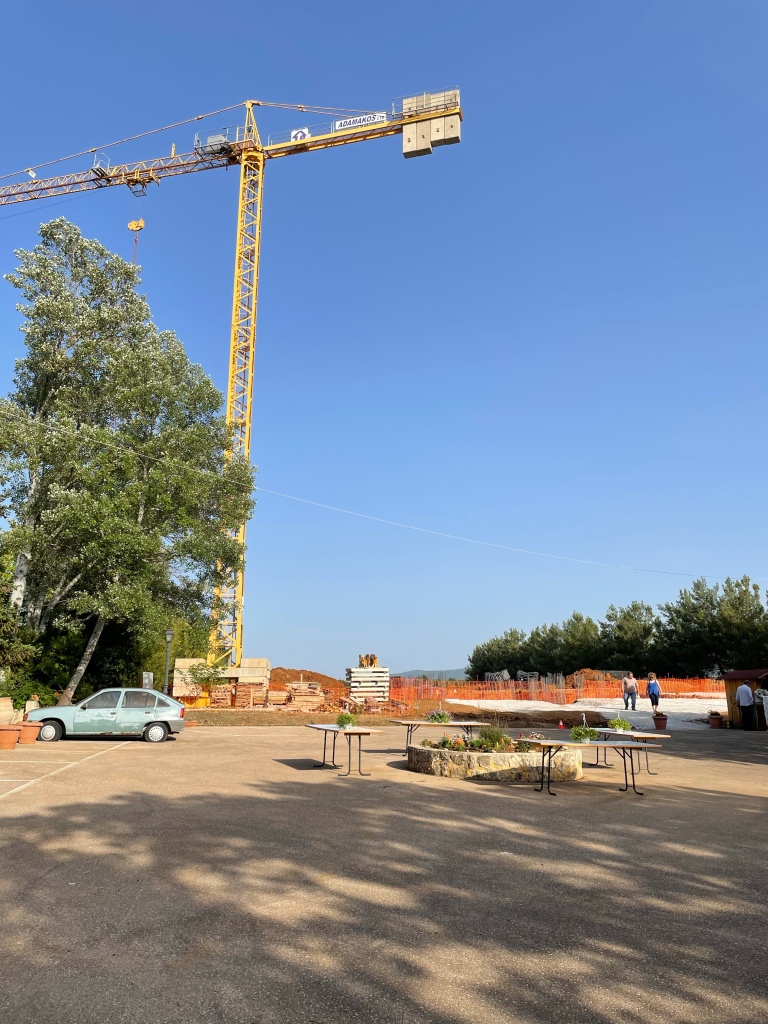
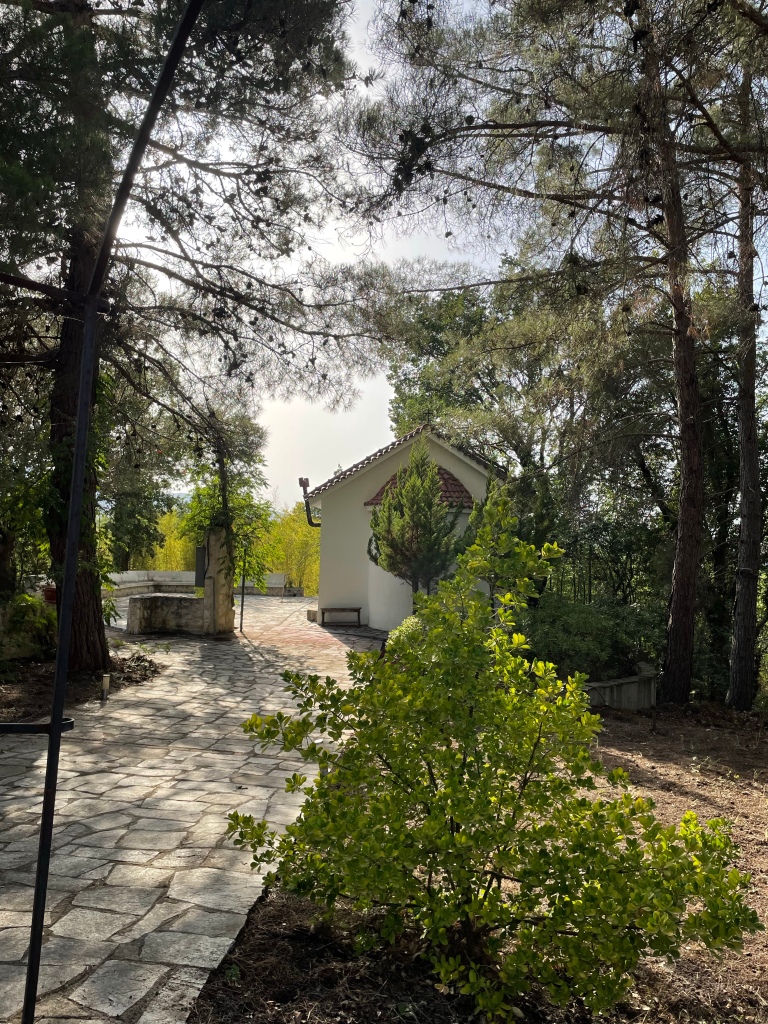
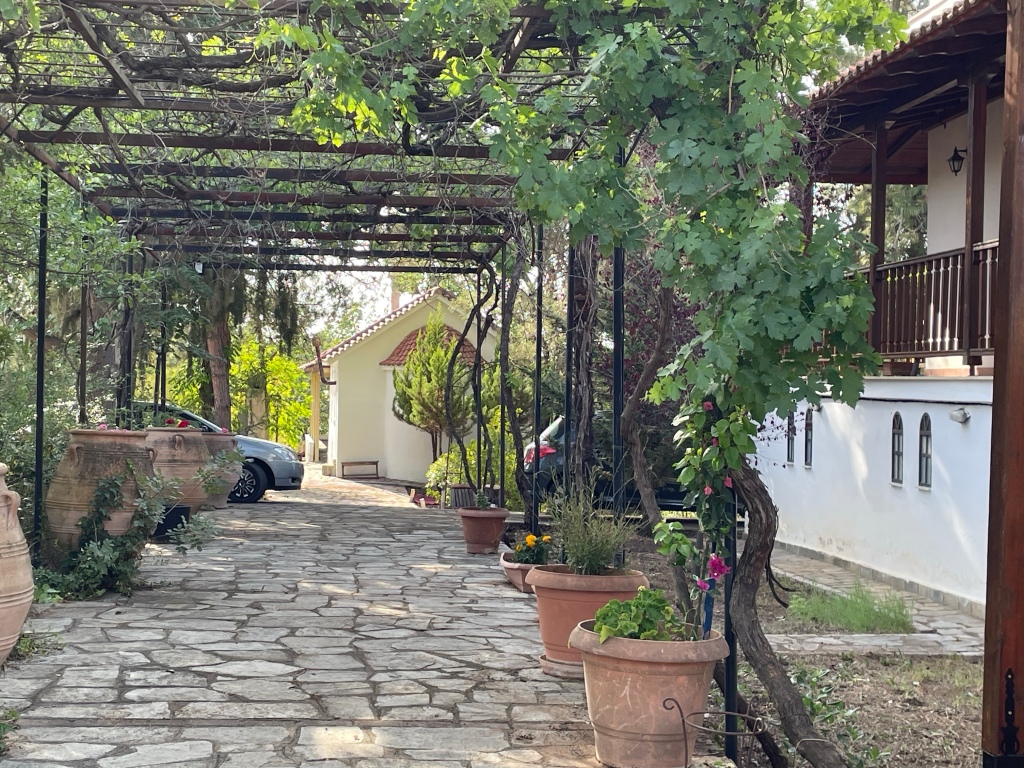
This is the original chapel of The Mother of God of the Life-giving Spring and the spiritual centre.
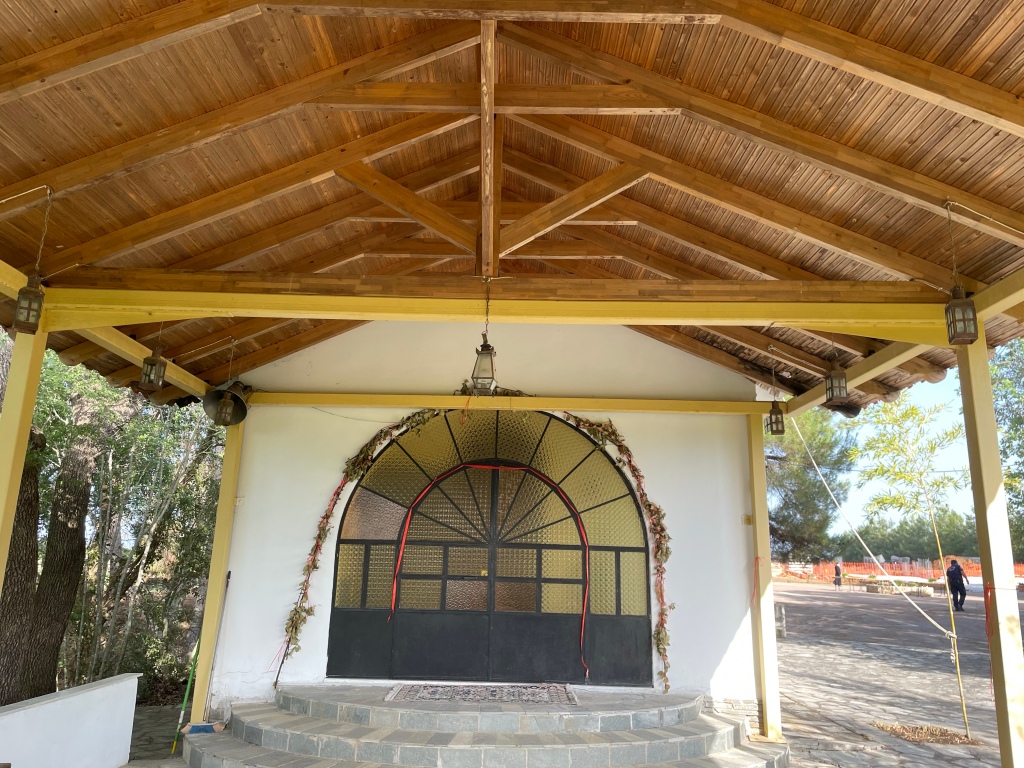
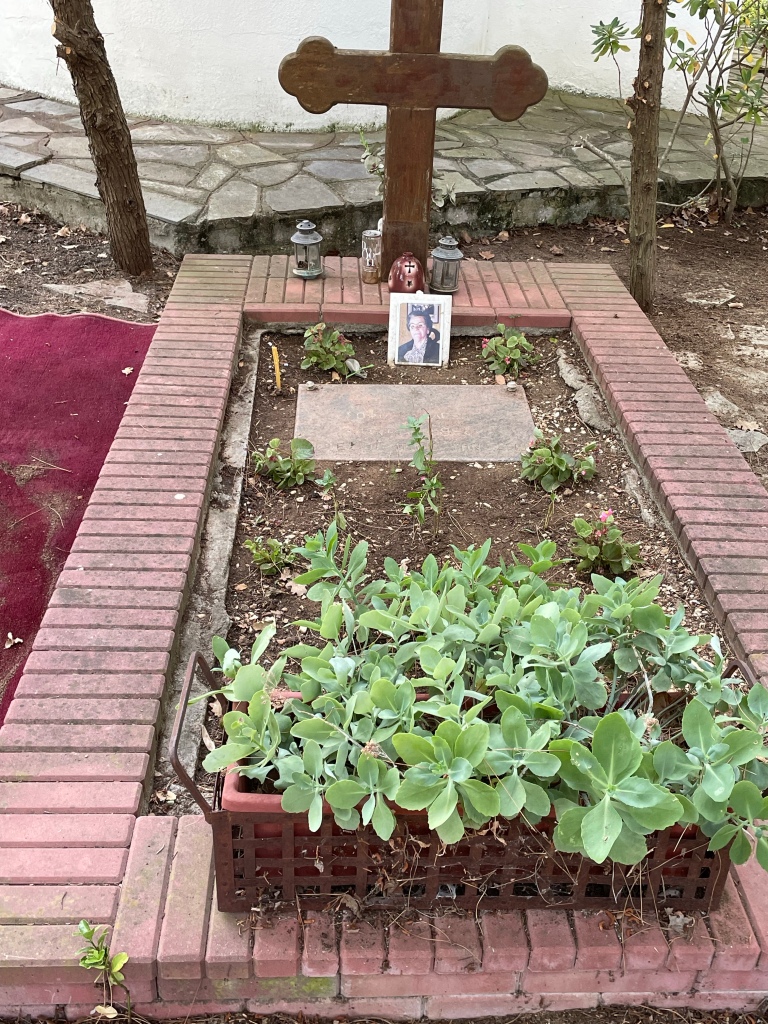
Father Methodios’ mother grave, behind the Theotokos chapel

Why a Cross on the Foundation stone?
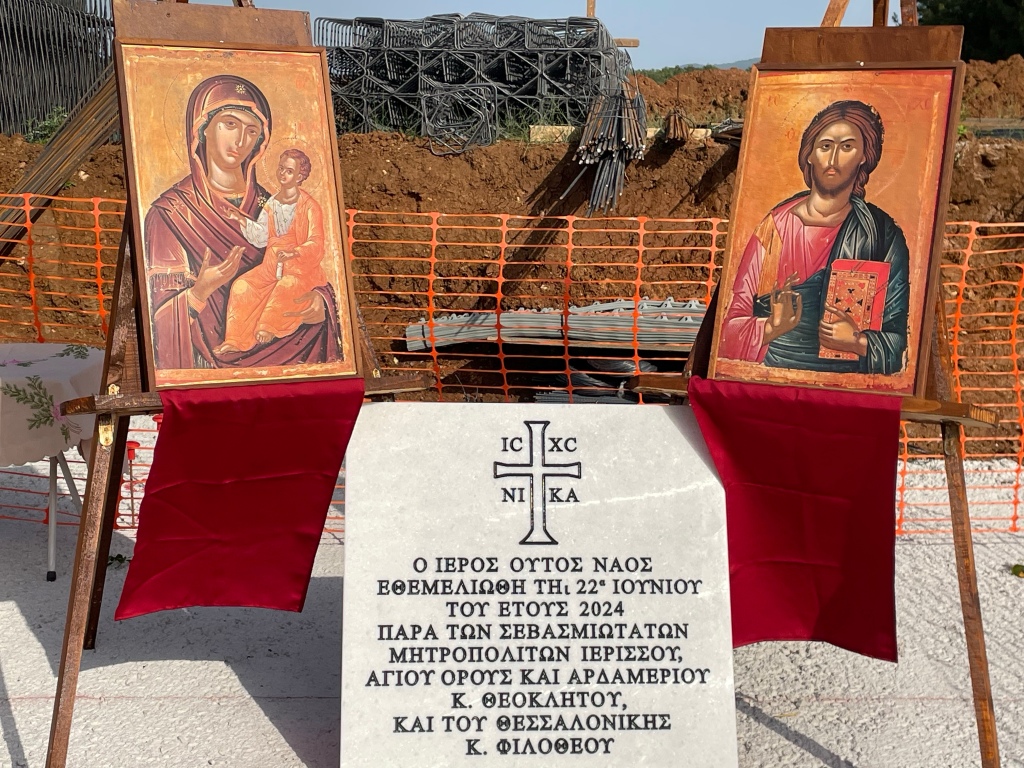
“As is well known, the Passion of the Lord culminates in His Crucifixion. On the Cross, the God-man Jesus Christ, being “The King of Glory”, gave the hardest and most terrible battle in human History, defeating the Devil and Sin. With His Holy Blood that was shed on the Cross, He strengthened and secured His Church. That is why we placed the plaque with the engraved Holy Cross on the foundations of the Church, because the Cross is, first of all, the foundation of our faith. And every Orthodox church has not only in its foundations, but also internally, externally and on its roof (in the dome) the sign of the Cross to bear witness to the victory of Christ to all those who may be inside or outside the Church.

 Secondly, the Cross is the symbol of Sacrifice. Christ on His Cross gave the unique and unparalleled example of the supreme sacrifice for the human race, in order to teach us that, His earthly Church and Her members must always follow the path of sacrifice for the salvation of the world. This is the role of the Church and her children.

Thirdly, the meaning of the Cross is joy. “Behold, through the Cross joy has come to the world”, we recite every Sunday morning, but also every day for forty days after Easter. As the Apostle Paul writes, “if we die on the cross with Christ” (Gal. 2:20); if we live our personal crucifixion, daily crucifying “our sinful self with its passions and desires” (Gal. 5:24), then surely true joy will come to us, which, according to the promise of Christ, “no one will be able to take away from us.” (Jn 16:22)

Fourthly, the Cross is hope. Through the Cross, the secured and unwavering hope is born. If we rely on the Cross of Christ, we will never bend under the weight of trials and tribulations in our lives. (Source)

We arrived early and the place was rather empty, other than Father Methodios and some workers. All around us, Nature was enchanting.
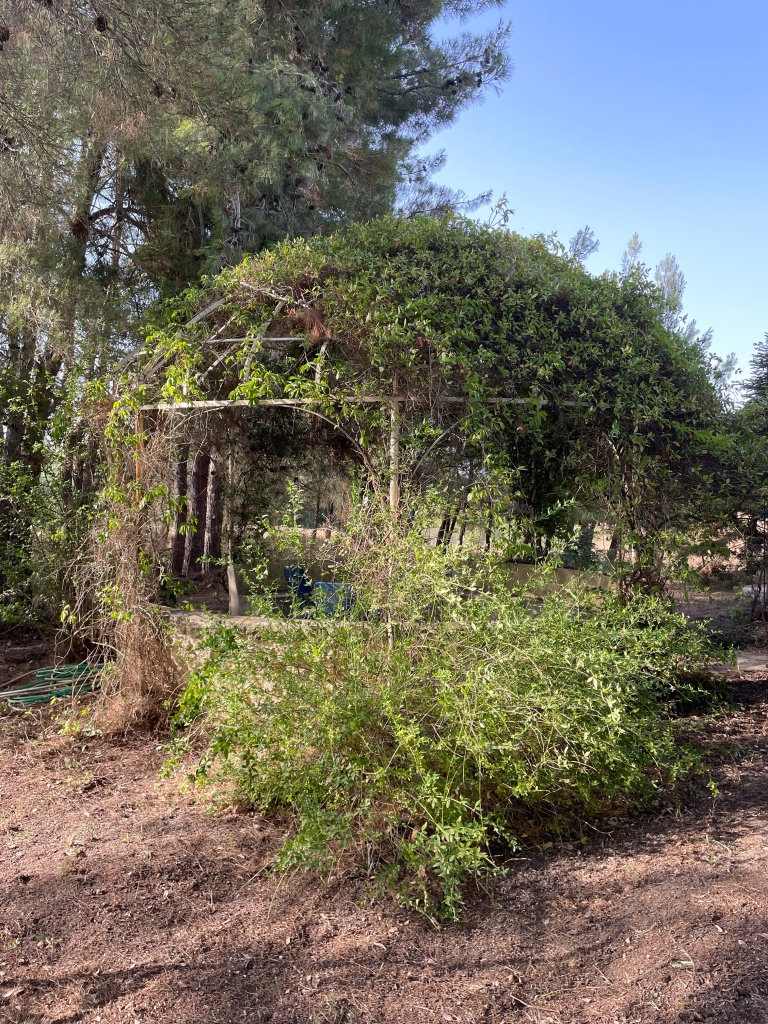
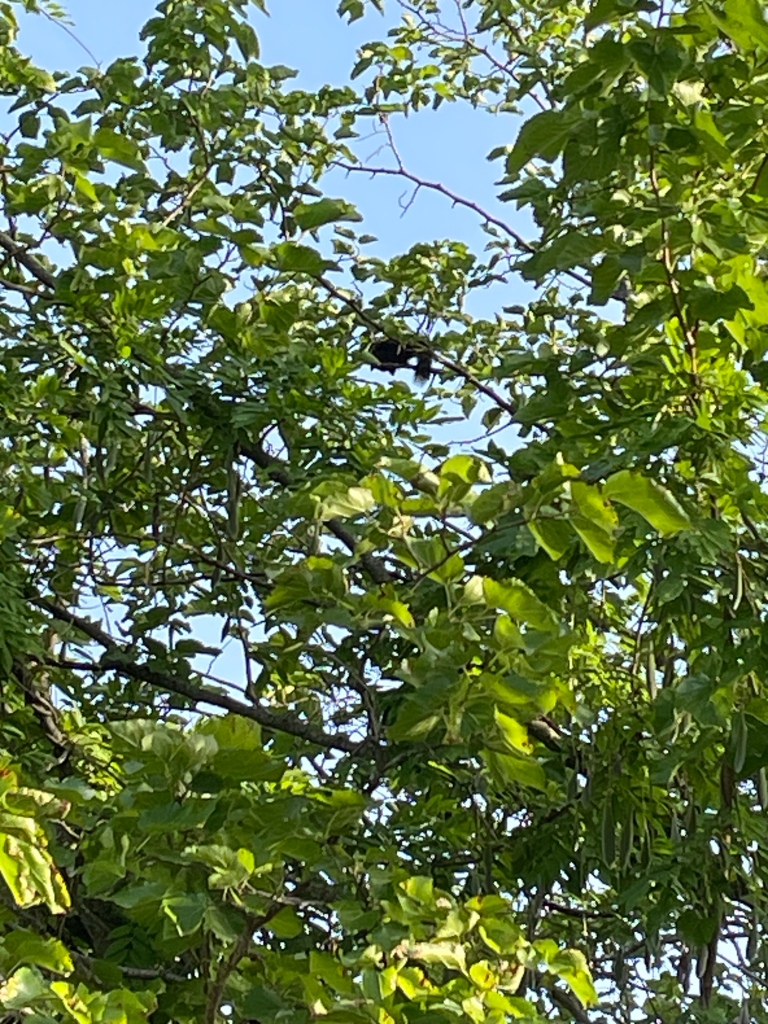
Can you spot the squirrel?🐿️

Lots of water and a miracle with water when the original church of the Theotokos was founded.
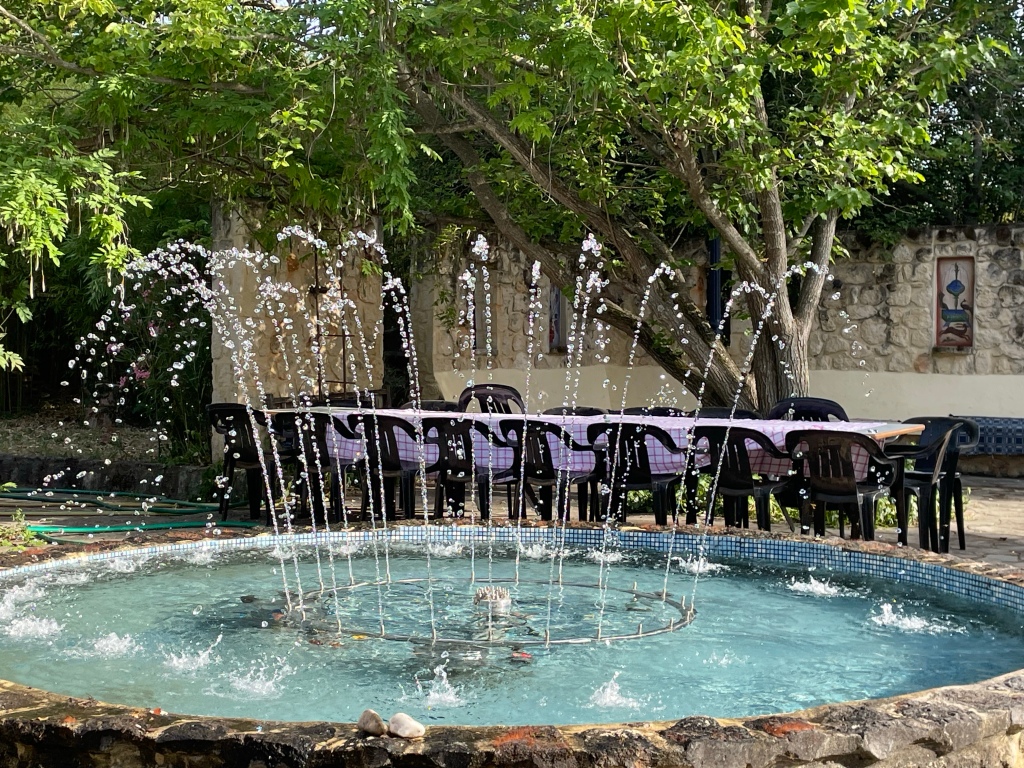
Everybody is drinking from this abundant, fruit of prayer, holy water, gushing out!

“On the last and greatest day of the feast, Jesus stood and said in a loud voice, ‘If anyone is thirsty, let him come to me and drink. Whoever believes in me, as the Scripture has said, streams of living water will flow from within him.’ By this he meant the Spirit, whom those who believed in him were later to receive. Up to that time the Spirit had not been given, since Jesus had not yet been glorified.” (John 7:37-39)

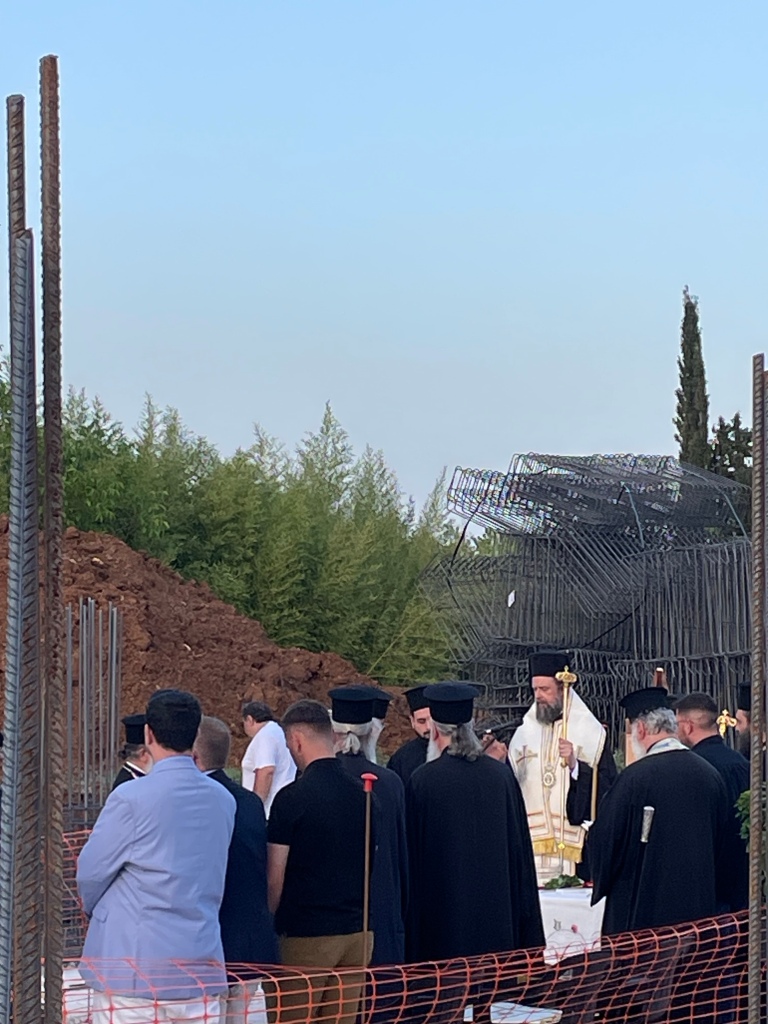
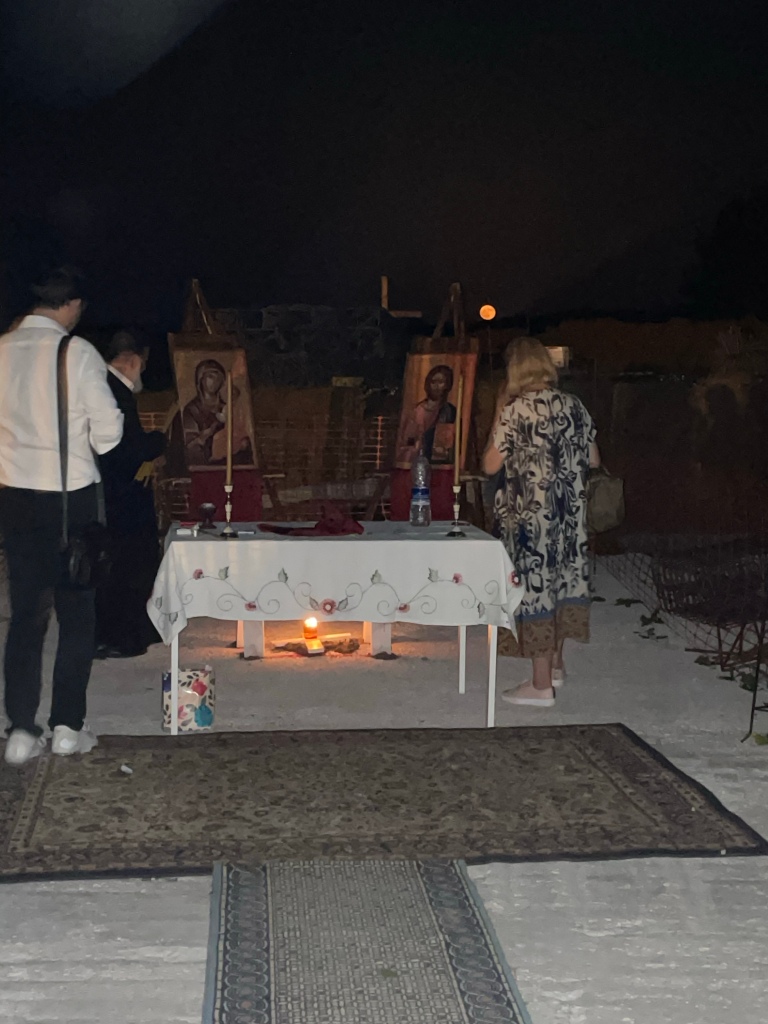
Gradually, more people started arriving, and the place was crowded, Bishops arrived and the ceremony started.
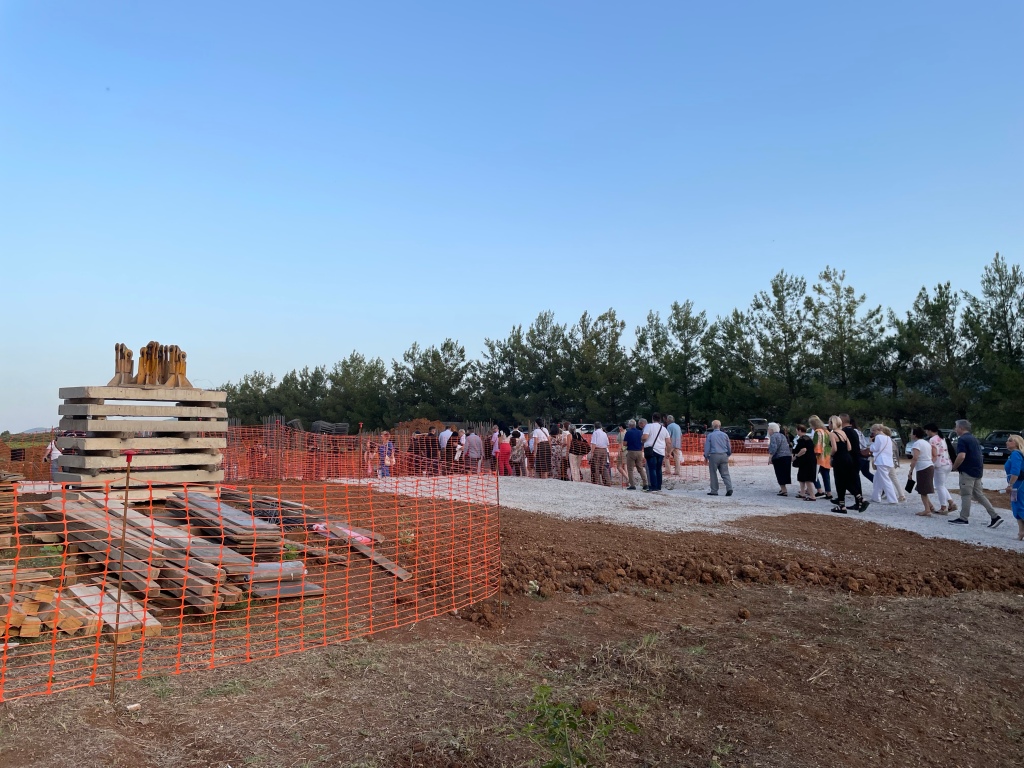
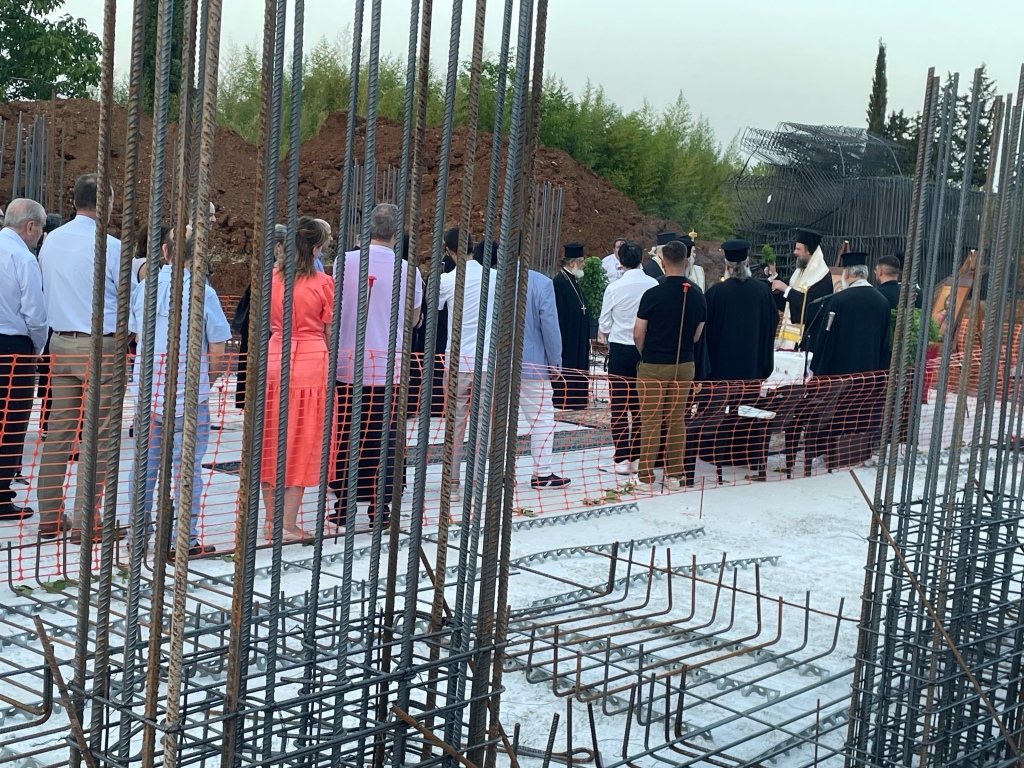
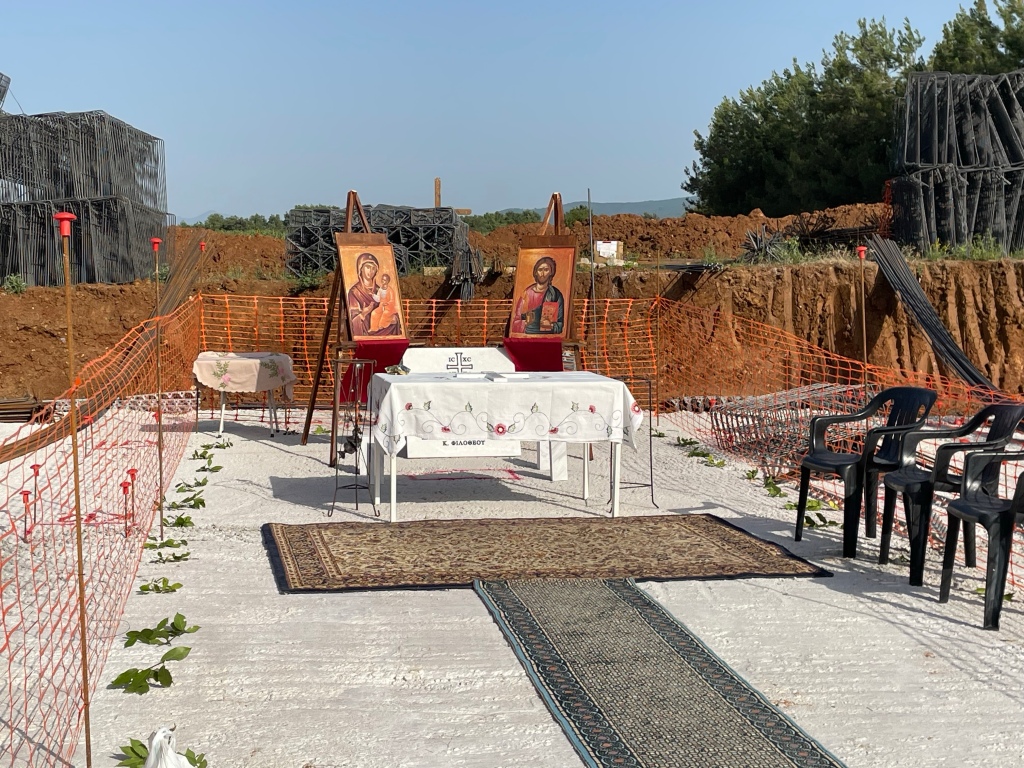
Bishop Philotheos from Thessaloniki laid the Foundation stone, blessed us all sprinkling holy water to us and the new church’s four corners. We all chanted together the Apolytikion of St Paisios, St Gregory Palamas and St Porfyrios, the two chapels. This is the first church to be dedicated to Saint Paisios and St Porfyrios! The bishop used St Paisios’ holy cross with a piece of the True Cross of Christ, a gift to Father Methodios 52 years ago! Saint Paisios also prayed and blessed his calling to become a hieromonk. Amidst lots of chanting and prayer, Father Methodios thanked us all in tears and told us that he had been praying about this for the last 40 years of his life!

“Lord, now lettest Thou Thy servant depart in peace according to Thy word, for mine eyes have seen Thy salvation: which Thou hast prepared before the face of all people. A light for revelation to the Gentiles, and to be the glory of Thy people Israel (Lk 1.29–32)

Then, a traditional Greek bouffet followed, lots of brothers and sisters all over the region and Thessaloniki to greet.
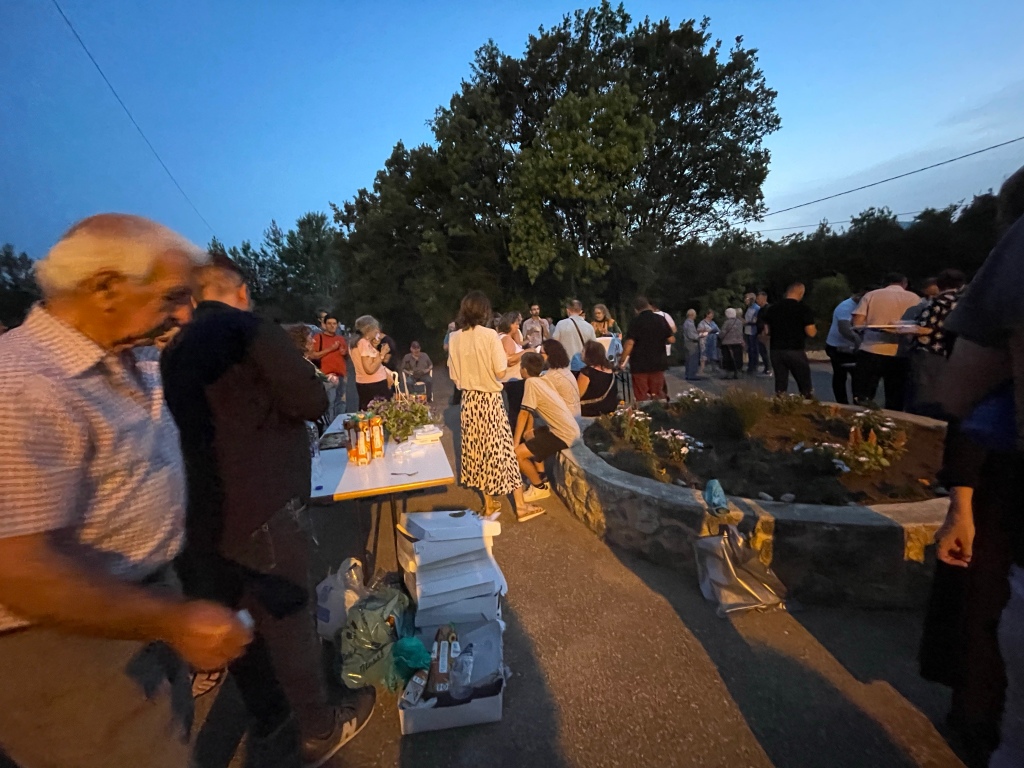
Night arrived amidst joyful fellowship, we helped clean up and tidy the place, and left, full of joy, nearly midnight! What an experience! May God soon bless us to perform the Consecration of our Holy Church, so that the glorious and majestic name of God always be glorified in it.
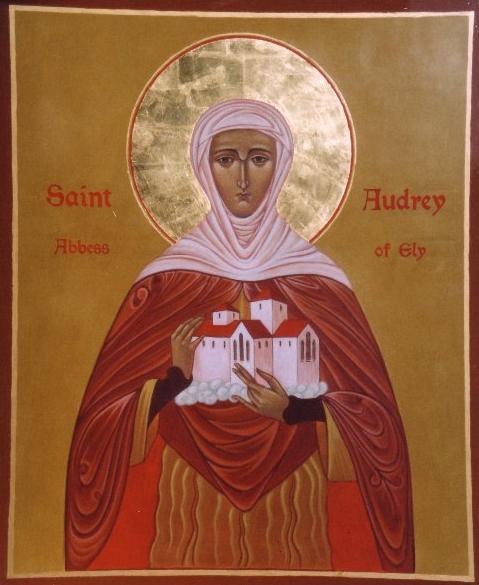
A Miracle by St. Etheldreda

In thee the Image of God was preserved, O noble Audrey, for thou didst take up thy cross and follow Christ. Royal virgin, thou didst teach the multitude by thine example that the flesh is to be scorned as fleeting, while the soul needeth great care as immortal. Wherefore, O holy Audrey, thou dost now make glad with the angels.

VENERABLE ETHELDREDA, ABBESS OF ELY

Commemorated: June 23

Holy Queen St. Etheldreda, Abbess of Ely (AD. 636-679), (Aethelthryth, Audrey) is the most venerated English female saint. A Saint renowned for her perpetual virginity-despite her two marriages!- and glorified by incorruption.

Back on 18th July 2018, the Saint decided to make a powerful entrance into our lives, revealed herself as the patron Saint for our fellowship, and Father J. organically became the fellowship’s spiritual Father.

A powerful entrance indeed! I remember most vividly how we folded various female saints’ names as potential patrons in lots, put them in Father’s skoufia to draw, and when her name was picked and Father started blessing us with holy water, these ‘water’ drops burned, literally so, the surface of the table where the water bowl was placed on! Perplexed we turned to Father to explain to us what was happening, but he bowed and left in silence. God is glorified in His Saints!

What we found most moving in St Etheldreda’s podvig was the central role her spiritual father, St. Wilfrid of York, “the Apostle of Sussex”, played throughout her brief, yet tumultuous and full of suffering, sanctified life. This most powerful Patron Saint, always ready to help everybody in distress, especially married women in trouble with their husbands, humbly obeyed her spiritual father in every step she made and decision she took in her life. A holy rebel and a scandal she was, yet always under an Omoforion and an Epitrahelion!

To begin with, it was her spiritual father, who blessed her vow of chastity at a very young age and guided her during all her patient waiting for 15 or more years, until she would become a nun. (And until she had been twice married!) 

St. Wilfrid was such a close adviser to her that Egfrith, hew lawful, second husband —her first husband had already reposed after three years of “marriage” —entreated him to use his influence to induce his wife to become, in fact, what, as yet, she had been only in name. He even promised Wilfrid great things for himself and for his churches, should he be able to persuade the Queen that her duty to God was her duty to her husband. But Wilfrid feigned to enter into the King’s view of the matter, whereas, in fact, he steadfastly encouraged the Queen to persist in her celibate life and even advised her to ask permission to leave the court and become a nun. (Egfrith never forgave him.) 

During one of her escapes, it was St. Wilfrid who tonsured her a nun, and later on, when St Etheldreda eventually retreated to Ely and founded a double monastery there with communities for monks and nuns, who lived separately but prayed together in the common church, and became the first Abbess, her spiritual father continued to support her. It was St. Wilfrid who made her abbess and gave the veil to her first nuns. He obtained special privileges for her, from the Pope, and often visited her and helped her with advice and suggestions useful in the management of her large establishment. 

We found most moving this strong connection of the Saint with her spiritual Father. Nothing seemed to be able to separate her from him. Through her example, we understood more clearly how essential for all of us and vital in our sanctification is our obedience to a spiritual Father, especially through the sacrament of Confession, in the Church. Especially in times of suffering and temptation, when only the Church, the Saints and your spiritual father can truly support you and be your Rock, your icon of Christ the Rock.

This holy relationship between the faithful and their spiritual Fathers is a pattern we observe in many Celtic women Saints. For example, St Dymphna and her spiritual Father, St Gerebernus, fled together defying the Father King’s immoral demand to marry his daughter, crossed the Channel, and eventually faced martyrdom together. St Winifred and St Beuno is another like Celtic holy pair, where Winifred, from an early age, was instructed in the spiritual life by St. Beuno and lived under his care a chaste life, dedicated to God, until she met her martyrdom. Beuno took Winifred’ head and replaced it to her body, then prayed to God that she be restored whole. By St. Beuno’s prayers, Winifred came back to life. This miracle was just one of many in their holy relationship and life together until their glorification.

St Etheldreda, a queen and most powerful lady, is setting a clear example to us how important it is to endure the martyrdom of the dying of our will in our obedience to our spiritual father, in order to overcome our fallen nature, our old self, our tendency to become autonomous, form our own opinions, and become thus self-centred rather than God-centred. In all our life’s decisions, momentous or ‘small’. St Etheldred, the Saint and queen, may have abandoned two husbands but understood all too well that following our conscience and not acting in obedience, even in our most ‘pious’ endeavours, is a very tricky path and most of the times, if not all, the beginning of prelest.

By C.

Last Words from Father James Bernstein

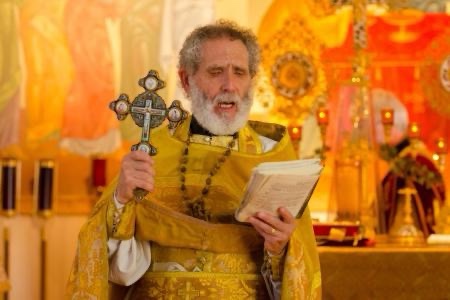
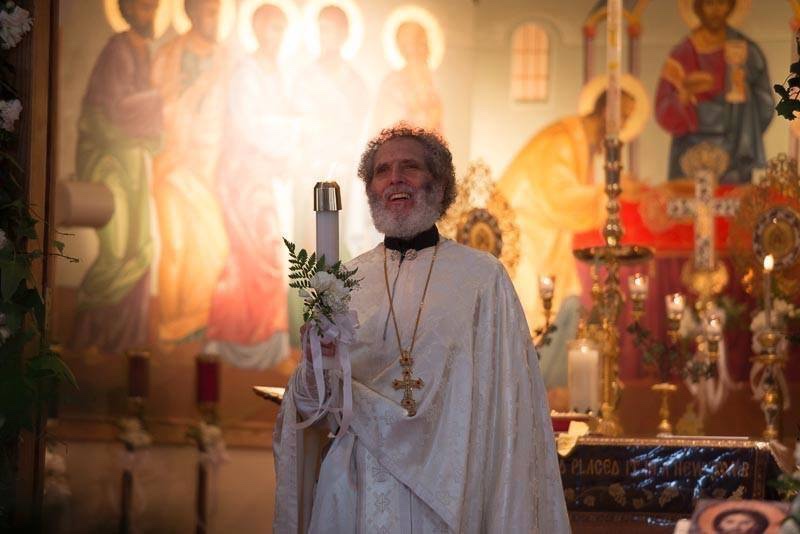
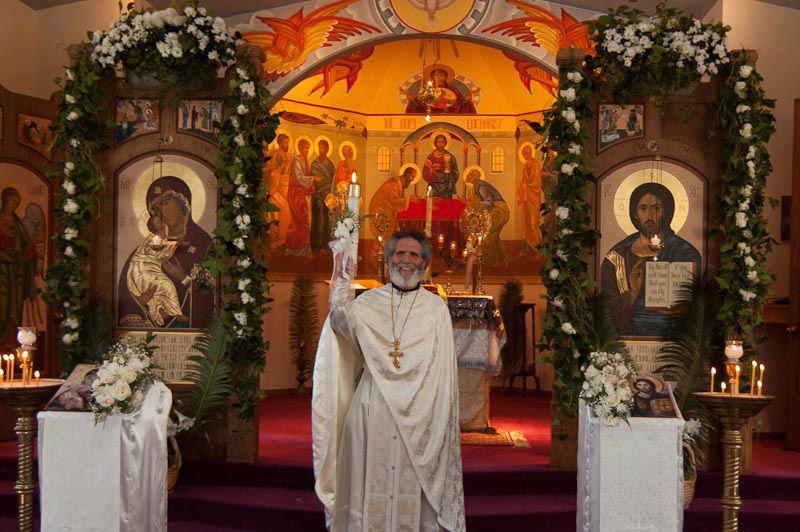
In Memoriam: Archpriest James Bernstein

https://youtu.be/YIfavpjvuSs?si=7F8M4x9_u0u1VWKm

Christ is Risen! He is Risen indeed!

With faith in Christ and hope in the resurrection, we share news of the repose of Archpriest James Bernstein, an alumnus of St Vladimir’s Seminary. Fr James fell asleep in the Lord in the morning hours of June 17, 2024, surrounded by his family.

The Very Rev. A. James Bernstein was born in Lansing, MI on May 6, 1946, and was raised in a conservative Jewish family in Queens, NY. A teenage chess champion, Fr James had a dramatic conversion experience at the age of sixteen after reading the New Testament. His spiritual journey included a number of twists and turns: he was chapter president of Inter-Varsity Christian Fellowship at Queens College, helped found the Jews for Jesus ministry in San Francisco, was a staff member of the Christian World Liberation Front in Berkeley, served as a pastor of an Evangelical Orthodox Church near Silicon Valley, and in the 1980s was received into the Eastern Orthodox Church. Fr James went on to attend St Vladimir’s Seminary and graduated with a Master of Divinity (M.Div.) degree in 1989. He was ordained to the holy priesthood the year prior.

Fr James’ priestly ministry took him to the state of Washington, where he was assigned pastor of St Paul Antiochian Orthodox Church in Brier. He served there for more than twenty-five years before retiring in 2017. During his parish ministry he also authored numerous works through Ancient Faith Publishing and was a contributor to the Orthodox Study Bible: New Testament and Psalms (Thomas Nelson, 1993). Probably his most famous book is SURPRISED BY CHRIST: My Journey from Judaism to Orthodox Christianity. 2008. (Is in 4th printing). And what a book it is! Mesmerising! I especially enjoy the Audiobook version where one can listen Father himself reading his book.

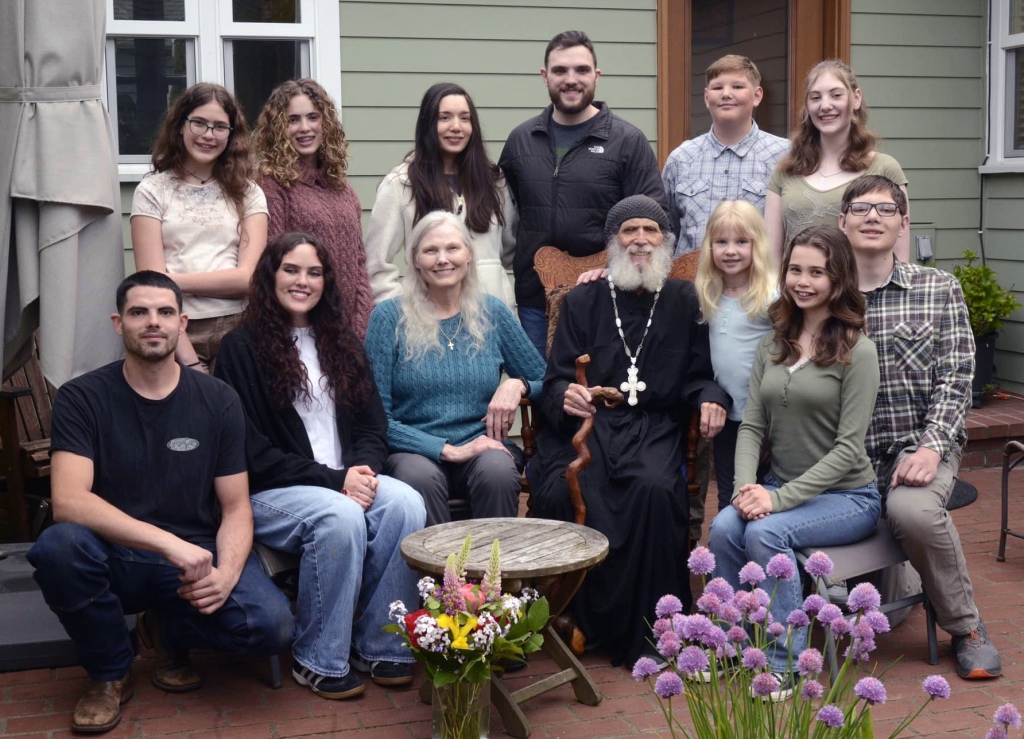
Fr James with some of his children and grandchildren

Fr James is survived by his wife, Kh. Martha (Bonnie); children Kh. Heather (Fr David) Sommer, Holly Bernstein, Peter Bernstein, and Mary (James) Curry; grandchildren John (Audrey), Nicholas, Ephramia, Elizabeth, and Irene Sommer; Violet Bernstein; and Noah, Levi, Lina, and Sarah Curry.

Funeral information may be found on the Antiochian Archdiocese website, here.

May the memory of Archpriest James be eternal!

A section of this article was adapted from Ancient Faith Ministries’ website.

Source: St.Vladimir’s

Be still

Archimandrite Ioannikios Kotsonis, Saint Porfyrios’ spiritual child

“Be still and know that I am the Lord God.” Psalm 46:10

The excerpts below describe what happened to me when I met archimandrite Ioannikios Kotsonis, the spiritual father, the theologian and poet, at the Holy Monastery of the Transfiguration of our Saviour at Sohos last week. I was absorbed in the presence of the Holy Spirit and “reduced” to silence. “Be still and know that I am the Lord God.” Everybody else was asking him all kinds of questions, and only me remained silent by his side, so that in the end, puzzled he turned to me and asked me why I was not asking him any questions. “It is enough for me to see you, Father”, I replied. I was so absorbed in his presence! Such a tangible presence of holiness!

*

Fountains in the Desert (27)

Three Fathers used to go and visit blessed Anthony every year and two of them used to discuss their thoughts and the salvation of their souls with him, but the third always remained silent and did not ask him anything. After a long time, Abba Anthony said to him, “You often come here to see me, but you never ask me anything,” and the other replied, “It is enough for me to see you, Father.”

*

“In the summer of 2004, on a tour of Romanian Monasteries with a group of pilgrims from Ploiesti including my spiritual brother in Christ Fr. Bogdan Costin Georgescu, I had the privilege and blessing of meeting Father Ioanichie Balan in Sihastria Monastery. Father Ioanichie took us to the cell of his spiritual Father, Elder Cleopa and gave us a full tour of the monastery. As we made our way around the grounds he made the observation: “The English priest (referring to me) is very quiet!” After a translation, I replied “Forgive me Father but I have nothing to say!”

It was not that I was disinterested or reserved, quite the contrary I was fully engaged in the moment, and it had nothing to do with the language barrier. I was aware of being in the presence of a holy man and in a holy place. At such moments and places it is better to say nothing because the veil between heaven and earth is thin and we should cherish a glimpse of the uncreated light. We learn by listening and looking, but more than this, contentment of soul is to be found in sensitive stillness. For those in love, words are not necessary when one is absorbed in the presence of the other. Likewise when we live in harmony with God in the tangible presence of holiness, silence is to be preferred.”

Fr. Jonathan Hemmings

*

Elder Ioannikios was taught by Saint Porfyrios two things for spiritual grace: “the cheerful obedience to my Elders” and “unceasing noetic prayer, “Lord Jesus Christ, Son of God, have mercy on me.”

“Elder Porphyrios also stressed that, he had been greatly helped by study and diligence, that stillness – according to the expression, “Be still and know that I am the Lord God.”– generally found in the hymnography of our Church. He very much loved the hymns of our Church. He also liked to read, recite and sing them.

The hymns, the spiritual treasure of Orthodoxy, give a commentary, in the best possible way, of the Holy Scriptures, our Orthodox Tradition, the Patristic texts, the doctrines of the Church and the whole of Theology.”

Visit Here for more prophesies, testimonies and experiences with Saint Porfyrios —Elder Ioannikios

From Puppeteer to Actor of Christ 

This image has an empty alt attribute; its file name is josef.jpg


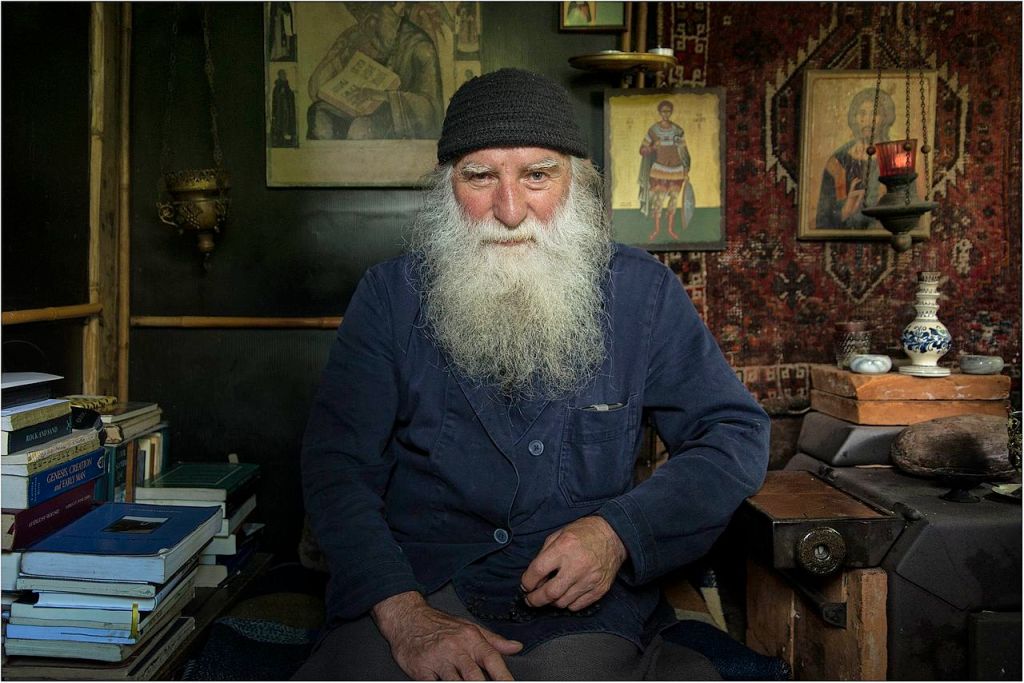
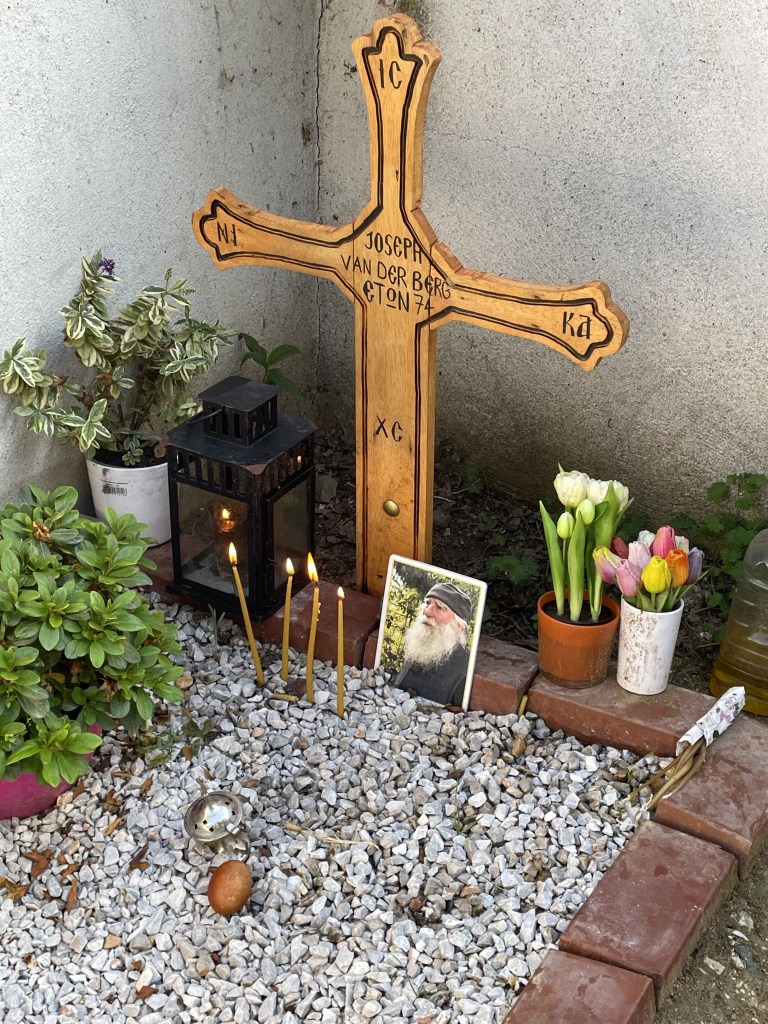
Yesterday, Saturday, June 1st, some friends from St. George Metochion took me to a pilgrimage to various hermitages outside Thessaloniki, near Ossa, where valiant Mothers lead ascetic lives, all alone, together with God, in the mountain wilderness. Surrounded by all these hermitages is the Transfiguration of Our Saviour Orthodox Monastery, in Sochos, a male monastery I have always wanted to visit for the last 12 months, since Josef Van den Berg has reposed there at 74, after an amazing meta-noia, conversion to God. (+ Oct. 16, 2023)

On Friday, October 13th 2023, the famous Dutch actor and puppeteer, Jozef Van den Berg, turned Orthodox Christ hermit reposed in the Lord at the age of 74 at Holy Transfiguration Monastery in Sochos, where he went to live the last few months of his life on earth, due to his failing health. His funeral was held on Tue 17th at the same Monastery and he was buried there. It was a blessing to light a candle and pray at his grave.

Jozef, who was born in Beers of the Netherlands on the 22nd of August 1949, was a very well known actor in the 1970’s and 1980’s in the Netherlands. He was initially an atheist and married with four children. Later, he began a successful career as a wandering puppeteer for children. Then he made his own performances in the theater, for children and adults. Van den Berg travelled the world, from Australia to Canada. In the 1980’s, Jozef Van den Berg played in his last play “Enough Wait” for his brother who was seriously ill and was in a wheelchair. On September 14, 1989, he would bring that performance to the De Sing but then something very special happened.

Let me begin a little earlier. On September 12th, 1989 was the Belgian première of Genoeg Gewacht at Antwerp [Belgium is a predominantly Dutch-speaking country]. That afternoon, Van den Berg had an encounter with God, as he described it later on. Sitting in his dressing room, he wrote a letter he wanted to use that night for the first time in his play. God asked him this question by his own pen: “Why don’t you ever see that I cannot come because I’m already here?” On September 12, 1989 he still played the premiere, which later turned out to be his very last show. Van den Berg was – according to his own words – being called by God, and had to answer that.

Before the evening show on September 14th, 1989 at De Singel Arts Center in Antwerp, he took his Bible and asked God what to do. He opened the Bible at the following words: “Go away from their midst and separate yourself” (II Cor. 6:17).

Before the beginning of the play he said to his audience:

“I will try to explain it to you. I hope that you have one thing for me and that is respect for my decision. I will never play again. I have approached a reality which cannot be played anymore. I have searched for a tremendously long time; have been everywhere. Eventually I came to the conclusion, and this conclusion, I have to admit, is that the seeker seeks but he is found. That’s why tonight is the last time I’m on stage. You don’t believe me, but that’s the deceitful side of theater.  Therefore, ladies and gentlemen, for this man, for Christ only, have I searched for this peace I wanted. And I know that it is so, and I quit this profession. For me, it’s over. I seek reality. I can’t say things that are not true for me anymore. I wish you a good day. I go. May you all go well. The money you paid can be given back at the box office.”

The audience was stunned. Was this real or was it theater? A deadly silence followed, and the theater audience reacted emotionally. Thus, on September 1989 at 7:55 pm, the theater career of Joseph Van den Berg came to an end.

That night was the beginning of an extraordinary conversion and odyssey. His quest led him to Maldon (Essex), Athens and the Holy Mountain of Athos, to further find out how he had to continue his road with God. His children and wife had difficulties understanding his conversion, and he was left all alone. Alone with God! Jozef gave up everything, job, fortune, family, everything, started living like a beggar, and eventually converted to Orthodox Christianity a year later, after paying visits to Elder Sophrony in Essex, Elder Porphyrios in Athens and Elder Paisos in Mount Athos.

An important event preceeded his conversion: a woman he knew from the Gurdjieff movement died in a serious traffic accident, and she had pointed out that she wanted to be buried in the Orthodox way. This happened on August 17th at Eindhoven. There, he heard the Trisagion for the first time in Dutch. That’s where he began to see that Gurdjieff wasn’t right.

At the end of September 1989 he went to the Greek Orthodox Monastery of Saint John the Baptist at Maldon, Essex, England, where he talked with Elder Archimandrite Sophrony, and he confirmed the experience God had given him and urged him to repentance. Elder Sophrony told him that he cannot sustain God’s Love if he does not endure the furnace of repentance. At the beginning of January 1990 he had a very important meeting in Athens with the Greek Elder Porphyrios. This last one too confirmed the experience God had given him in Antwerp, and he told him that he has to now to become an Actor of Christ. Saint Porfyrios urged him not to betray Christ and turn down His calling. He was then sent by Father Porphyrios to the Holy Mountain of Athos, where he had a meeting with Father Paisios, who too blessed him.

Back to Netherlands, with the blessing of three saints, things evolved in a different way than expected, everything started going seriously wrong as all three Saints had “warned” him, and he got in more and more trouble on all fronts. He couldn’t sleep anymore and  became over-tired. In the middle of this crisis, on June 18, 1990, he asked a priest in order to be accepted into the Orthodox Church. Months passed by in “dead-ends” and “walls” were raised all around him.

During the night of the 1st to the 2nd of June, he realized that he was left alone, and on June 2nd, 1991 he attended the Divine Liturgy at the [small Orthodox] Monastery of the Holy Prophet Elias at St. Hubert. That’s where he left what was left of his money on the collection plate. “Lord, from now on, You have to take care of me. I totally surrender.” There, Archimandrite Pachom read from the Gospel of that Sunday of All Saints: “He that loves father or mother more then me, is not worthy of me: and he that loves son or daughter more then me, is not worthy of me. And he that takes not his cross, and follows after me, is not worthy of me. He that finds his life, shall lose it: and he that loses his life for my sake, shall find it” (Matthew 10:37-39). Two hours later, after the Liturgy, he went straight to the Orthodox Monastery of the Nativity of the Theotokos near Asten, where he stayed for 19 days, and where he left his Mercedes Combi, because it didn’t want to start again. For him. It started for his brother a day later!

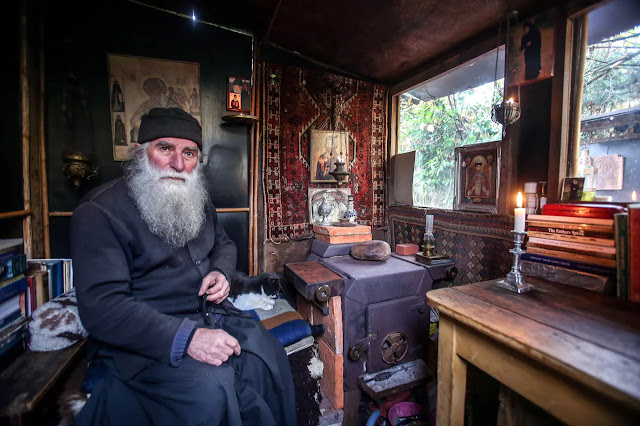
His only question was: “How does God want me to shape my calling?” Slowly, peace returned to him. From July 1991, Jozef Van den Berg started living as a hermit, first in the bicycle shed of the town hall in Neerijnen, later in a self-built chapel in the backyard of a fellow villager. There were four poles close to the quince tree, and Joseph understood from this that he had to build the “Pull-Up” under the quince tree. With this “messenger”, he built a small chapel of 2 by 1.5 meters, which still stands today. He prayed and received people every day. He lived on whatever people brought him. He had no connection to any utility whatsoever. Eventually, there was a toilet in the castle garden, which Joseph and his guests could use, and the last few years he hasd a mobile phone for emergencies.He obviously received a lot of a media due to his lifestyle since then…

In the end, he left Neerijnen in August 2023 and traveled to Sochos in Greece, where he reposed on the 13th 2023 at the age of 74 in the Greek Orthodox Transfiguration Monastery.

Read more here and here

More about this monastery and its founder and spiritual father, Archimandrite Ioannikios Kotsonis, the theologian and poet, the spiritual son of Saint Porfyrios in the next blogpost.