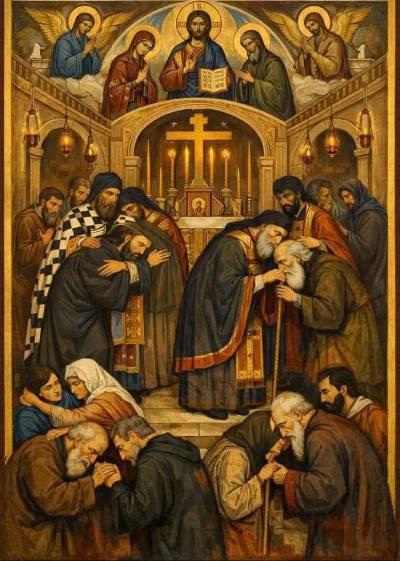
Born for Eternity

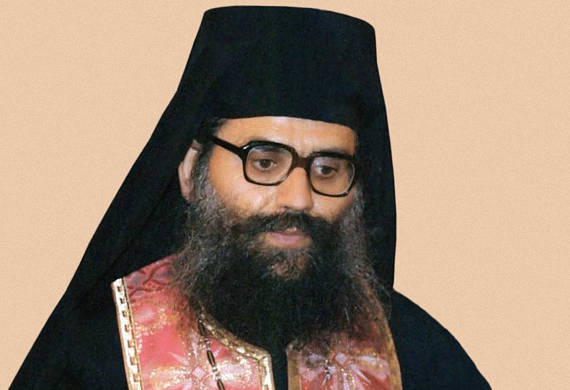
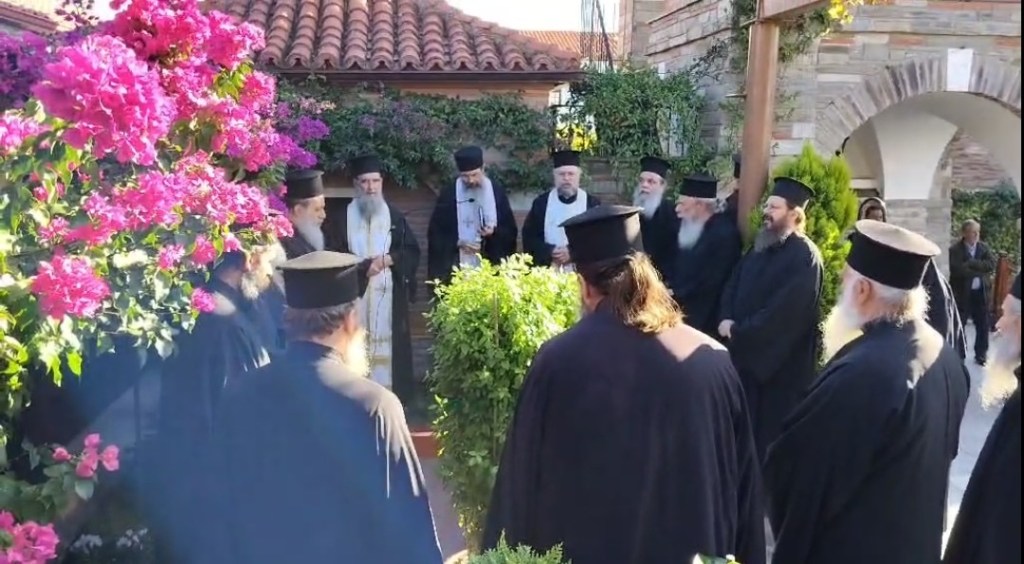
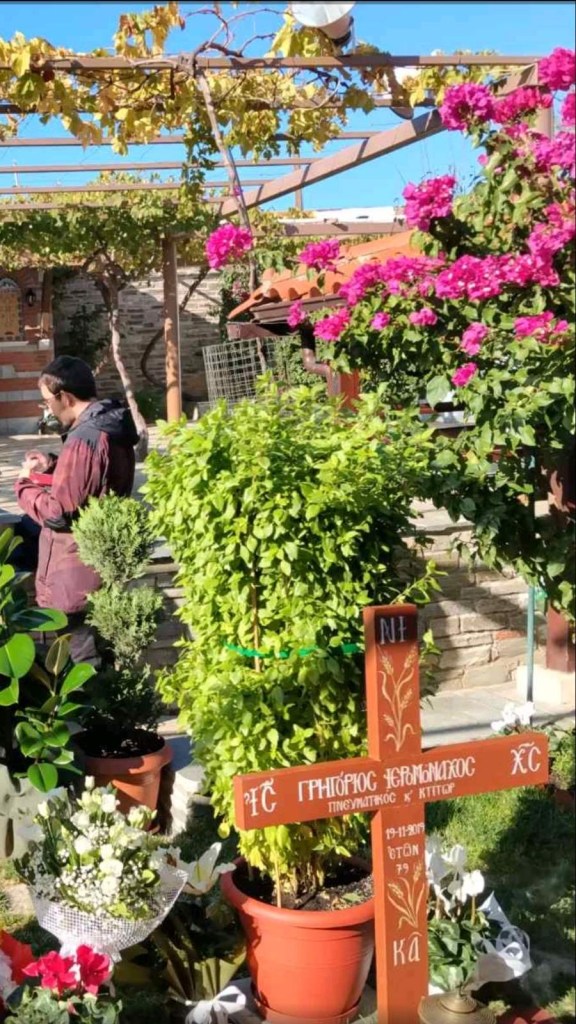
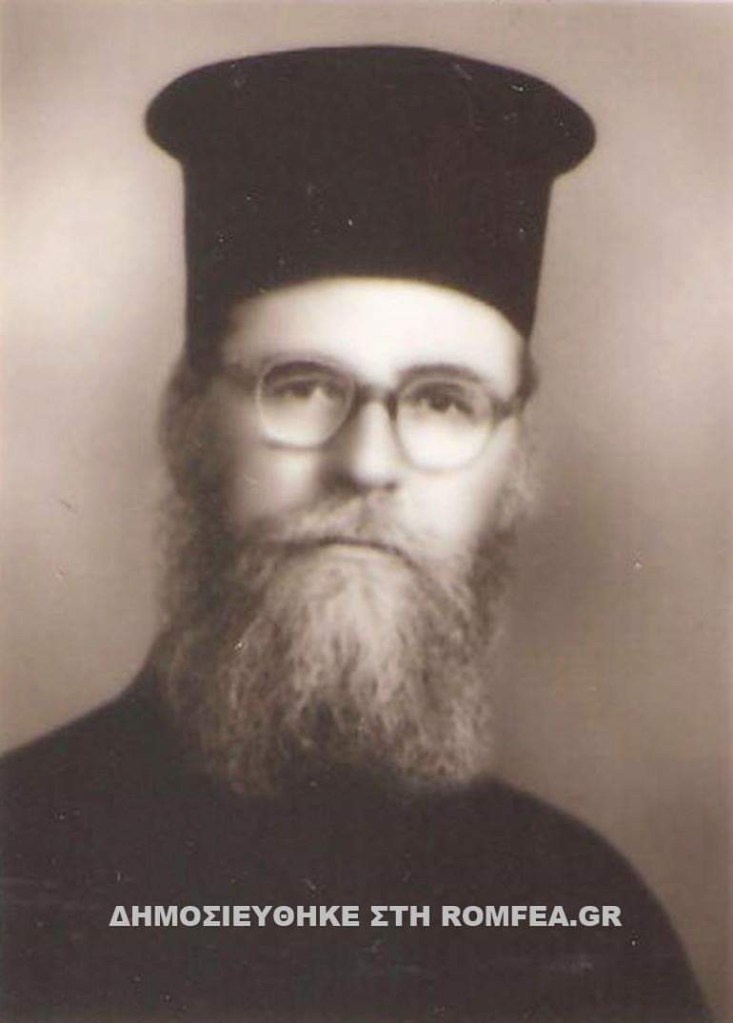
+ Father Gregorios, 19 November, 2019 — 6th year Memorial service

Memory Eternal, dearest Father!

“Love in Christ is a sacrificial Love, a self-sacrificing, self-denying Love, Agape. You sacrifice everything for the person you love, “your neighbour”. By “our neighbour”, we mean every person as God’s Image, even our enemy. By “love” we do not mean that we should do whatever the other person wants us to do, but to love him with Christ’s burning and flaming Heart, for his salvation” (+ Elder Gregorios Papasotiriou)

*

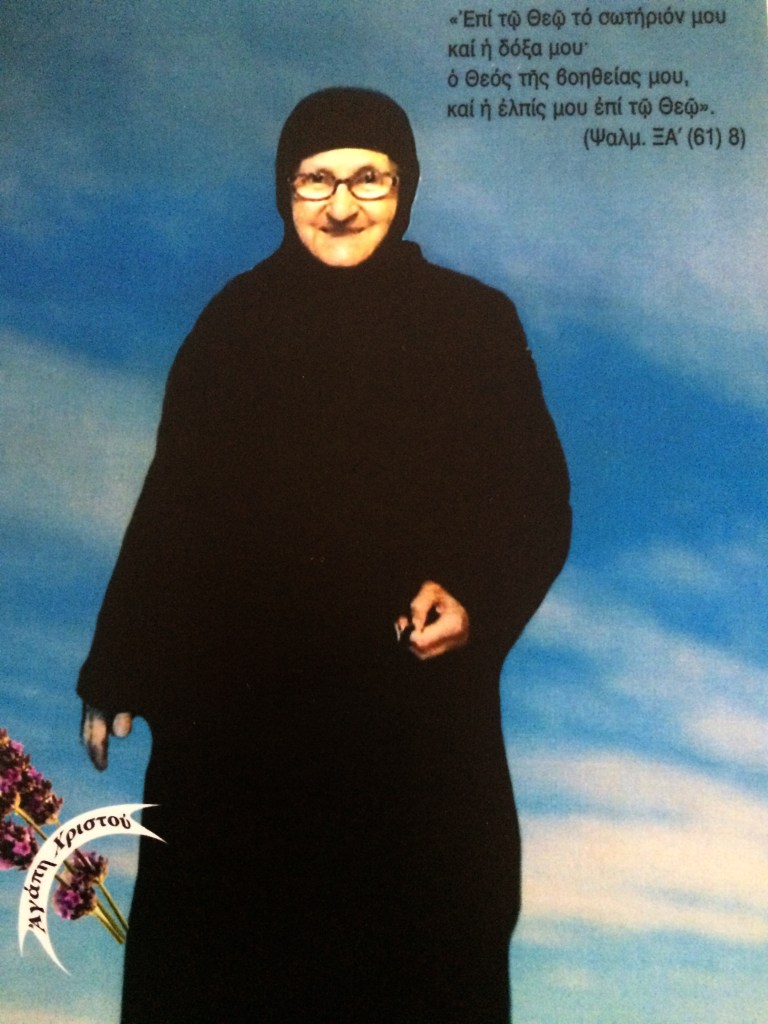
This is how we have always felt his love! For yearsGerondas Gregorios of blessed memory offered his prayers with tears and his never-to-be-forgotten spiritual guidance. My rebirth in Christ ((John 3:4), my new life literally started with his guidance about 40 years ago. I feel so unworthy of such a blessing!

*

Father Gregorios, born Dimitrios Papasotiriou, was born on February 16, 1940 in Paleokomi, Serres, to pious parents, Alexios and Efthymia.

From his childhood, he was characterized by an inclination for life in Christ and very early he felt the divine call for the priesthood and complete dedication to the Lord through the monastic calling. Thus, after completing his studies at the Theological School of Aristotle University of Thessaloniki, he came to the Holy Metropolis of Kassandria, where he was ordained a deacon and priest by the blessed Metropolitan Synesios Visvinis. During his stay in Polygyros, the Elder, together with other fathers under the guidance of Fr. Spyridon Trantelis (later Metropolitan of Lagadas), formed a group that served the people of God, as well as the children of the Polygyros boarding school for boys, with much love and self-sacrifice.

From his student years, the Elder particularly loved Mount Athos. He visited it very often and was particularly associated with the Holy Monastery of Saint Dionysios and the blessed Hegumen Fr. Gabriel, who became his spiritual father for a number of years. However, the main turning point in the Elder’s spiritual journey was his acquaintance with Saint Paisios the Athonite. He became connected to him with an unbreakable spiritual bond, becoming his disciple and striving throughout his life to imitate his holy life. In fact, Saint Paisios also became his godfather during the monastic tonsure of Elder Gregory in the cell of the Holy Cross in the year 1977.

In the year 1970, the flame of hesychia led Father Gregory to the then dilapidated Metochion of the Holy Monastery of Saint Dionysios in Metamorphosis, Chalkidiki, where, with the blessing of the local Bishop, he settled in a monastic cell-barn next to the Church of the Holy Forerunner.

This place from then on became the arena of his great ascetic struggles and the base for his priestly-pastoral ministry here in Chalkidiki. Only God knows his ascetic labors and efforts in order to serve the people of God with the pilgrimages, the preaching, the confession, the holy services, the vigils, the divine Liturgies. Saint Porphyrios, who attended a divine Liturgy in 1974, commented: “When Father Gregory serves the Holy Liturgy, all of God is within him and all of Father Gregory is within God.”

With the encouragement or rather the command of Saint Paisios, the life of the Monastery begins in 1975. The Holy Monastery of Dionysios grants the necessary area for the construction of the Holy Hesychasterion. The blessed Abbots Fr. Gabriel and Fr. Charalambos supported Elder Gregory with great love, foreseeing that the now deserted place of the old Metochion would be transformed into a spiritual oasis. Then the first group of spiritual children of the Elder was established, which formed the nucleus of the later sisterhood. The first Abbess was Eleni Paschaloglou from Rodolivos, Serres – herself a spiritual child of Elder Gregory -, later Elder Ephemia, who passed away to the Lord almost five months after the Elder’s “fallen asleep” after 45 years of sacrificial ministry in the Monastery.

The life of Father Gregory is henceforth spent in material and spiritual labours for the construction of the Hesychastirion, for the guidance of the Monastics, but also in his great offering as a priest, preacher and above all a spiritual father to the people of God. The Elder who abhorred worldly prominence and loved humility and obscurity, is now becoming well known as Father Gregory the Spiritual Father. Hundreds of souls found the path to salvation with him, thousands rested under his rock, countless were helped by his spiritual guidance.

The blessed Elder suffered from many illnesses throughout his life, which he bore with great patience and a doxological disposition as if someone else were suffering. Especially the last few years were a cross of painful trials and a life of patience, because the pain and illnesses reached their peak.

The good God, wanting to rest the good shepherd and His faithful steward, called him to Himself after a sudden stroke on November 19, 2019. The funeral service and burial were held on November 21, the day of the Feast of the Entrance into the Temple of Our Most Holy Lady the Theotokos and Ever-Virgin Mary, the birthday of the Monastery, when 45 years ago Saint Paisios gave the blessing and the command to Father Gregory to begin the great work for which he sacrificed his life.” (Ραδιοχρηστότητα, by his spiritual son and priest Father Nikolaos at St. Palnteleimon, Mesimeri )

May we have his prayers! “Kai sta dika mas.” “And to our own!”  May we be reunited with you dearest Father in Heaven in God’s Kairos!

From Singer to Monk, From Cancer to His Kingdom

“We pray again for the repose of the soul of your servant Dionysios the Monk… † October 19, 1993

The famous and great singer Dionysios Theodosis who became a monk at Mikra Agia Anna on Mount Athos, shortly before cancer led him to Christ at the age of 35…

No one knew his secret throughout his battle with the incurable disease, until at his funeral procession at the Church of St Thomas the Apostle in Goudi, his spiritual director, Fr. Spyridon Mikragiannanitis, mentioned:
“We pray again for the repose of the soul of your servant Dionysios the Monk!”
Everyone was speechless.

Dionysios Theodosis (June 16, 1958 – October 19, 1993) was a Greek singer.
During his career, he collaborated with well-known Greek composers including Yiannis Spanos, Giorgos Hatzinasios and Marios Tokas and with singers such as Giorgos Dalaras, Dimitra Galani and Haris Alexiou.

He was experiencing great existential impasses, until he met Saint Paisios, who discerned his pain and said:
“You, my child, are bringing me a lot of pain, you need to confess, and to a good spiritual father.
Go to the Mikra Agia Anna and talk to Father Dionysios, he is good and will help you”.

Dionysis followed the advice and set off by boat for Mikra Agia Anna.
A monk next to him struck up a conversation and introduced himself: “Father Dionysios Mikragiannanitis”.
After the initial surprise, they struck up a conversation for a while, but Dionysis thought he was a “jester” since this was not the image he had had until then of a spiritual person:
that is, a serious, perhaps even grim old man.
His illness, however, came to radically change the landscape.
He began chemotherapy in London.
His visits to Mikra Agia Anna intensified and he announced to the Fathers that he wanted to become a monk!
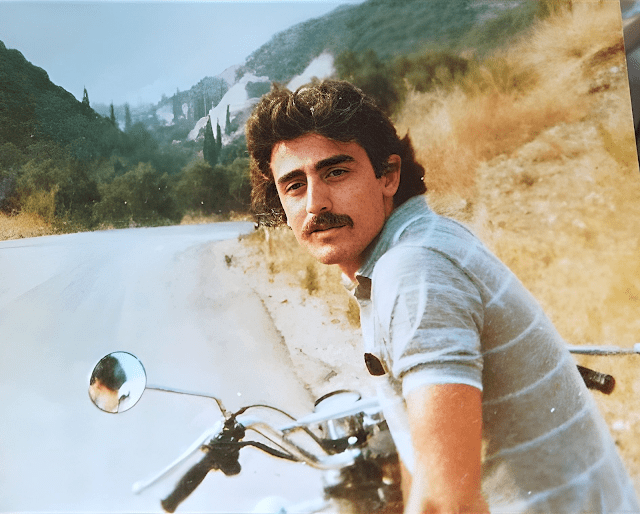
At least once a month when he finished at dawn his work he would take his motorcycle and travel to Mount Athos.

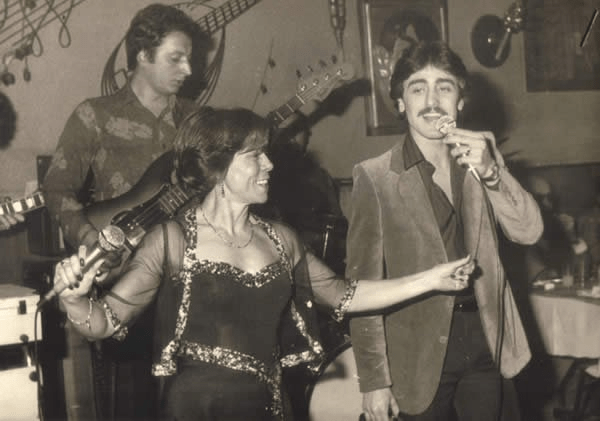
With his mother, also a singer, in a shop somewhere in Istanbul…

During that time, the song “As Long as a Coffee Lasts” was also written, which he performed himself and which few know that he dedicated to his Elder!

He wished to get well and dedicate his life to hesychasm.
His elder, Dionysios, before leaving for treatment abroad, shaves his head and allows him to visit the hospital in England without his cassock.

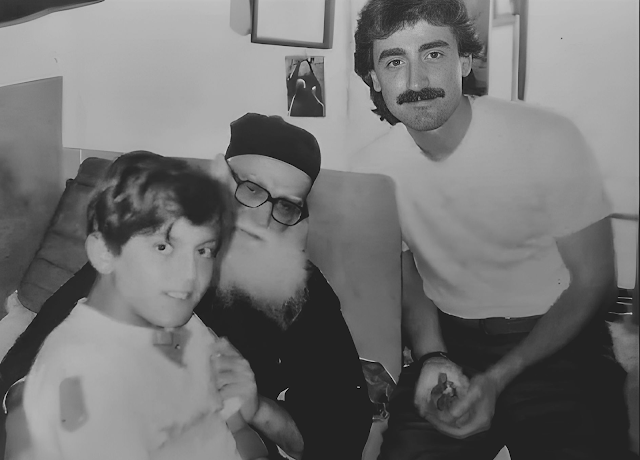
On Mount Athos, together with Elder Efraim Katounakia

No one knows his secret, not even his mother Despo, who stands by his side in his last moments and reads a book he gave her about the garden of the Virgin Mary.

She is impressed by what he tells her about Mount Athos.

She prays to God in her heart:
“May my son get well and with my blessing come to serve you.”

Dionysios says his prayers in the bed of the hospital and she does not know that those prayers are his monastic rule!
One day, the English nurse tells Dionysis’ mother in a lacklustre voice, lacking any real emotion: «he died».

The funeral took place in Greece.
Among other relatives, friends, well-known singers, actors and musicians, his elder, Dionysios, also attended.

Fr. Spyridon revealed the secret at the ceremony when he said the name of the deceased: “the servant of God, monk Dionysios”(!)
The congregation was amazed.

Immediately after the ceremony the Fathers took his body, wrapped it in a sheet and monk Dionysios was buried in Mikra Agia Anna, in the place where he wanted to become a monk.

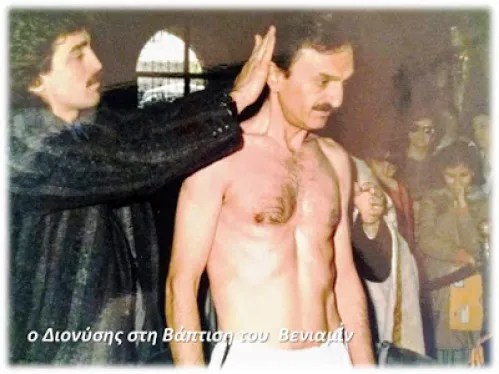
His stepfather and godson Benjamin Koul, a person who converted to Orthodoxy by Dionysis often visited his grave, knowing the people of Mikra Agia Anna.
(Benjamin was a Turk and was baptized in Greece.
His son, Dionysis Theodosis, was his godfather in the Sacrament…)

At the baptism of his step-father and godson


His wish was to be buried next to his child when he departed this life.

His wish was fulfilled.
He fell ill a few years later and also departed this life, adding another painful loss to the lady-Despo who, when the three years of his burial had passed, took the bones and brought them to Ouranoupoli.

There the monks received them and buried them next to those of his spiritual father, godfather and child, monk Dionysis.

From the page, “Dionysis Theodosis / DionisisTheodosis” and Amfoterodexios

Please watch monk Dionysis sing the song he dedicated to his spiritual father. At first sight, it looks erotic but it is about Agape!

As long as a coffee lasts

Dedicated to his spiritual father

Don’t leave me alone this night,
I am roaming in a minefield
When I drink you up and dry up this night
Either I’ll be saved or I’ll be lost

Stay a little longer
Until I escape
And if you want, hold me
As long as a coffee lasts
Stay a little longer
Until I escape
And then say bye
And that you will come again

Don’t leave me alone this night
My mind turns to evil
Comfort my pain this night
Lead me on with your love, like a baby

Stay a little longer
Until I escape
And if you want, hold me
As long as a coffee lasts
Stay a little longer
Until I escape
And then say bye
And that you will come again (2)

Memory Eternal! Christ is Risen!

The Thebaid Desert Fathers Death to the World

Dear brothers and sisters,

Christ is in our midst.

An interim to all these prophesies I have recently posted. Kindly have a look at this conclusion of a chapter I am in the process of translating for Gregoriou monastery of Mount Athos.

“Here is a beautiful summary of spiritual work left to us by Abba John the Dwarf, one of the most discerning and holy ascetics. With this we end this brief presentation.

Every morning, make a beginning with every virtue and commandment of God.

And strive

With much patience,

With fear and long-suffering,

With love of God,

With all the readiness of soul and body,

With much humility,

With patience bearing the sorrow of the heart and carefully guarding it,

With much prayer,

With prayer for others with sighs,

With purity of tongue,

With watchfulness over the eyes.

Do not be angry,

even if you are insulted,

but have peace within yourself;

Do not return evil for evil;

Do not pay attention to the mistakes of others;

Do not give value to yourself, who is below all creation;

Oppose and renounce the material world

and everything that has to do with the flesh.

Live:

With a willingness to take up your cross,

With a fighting spirit,

With poverty of spirit,

With askesis and spiritual determination,

With repentance and tears,

With a warlike struggle,

With discernment,

With purity of soul, With food as much as it should be,

Working quietly at your handiwork,

With night vigils,

Enduring hunger and thirst, cold and nakedness,

By toiling.

And above all and with all these together:

To seal yourself your coffin lid as if you have died,

Bearing in mind that death is near you every minute … ( Abba John the Dwarf, 34).

“Will modern man want to hear these messages sent to us by the ancient ascetics of Thebaid and their other peers? Will he want to?” (+ Elder Eusevios Vittis of blessed memory)

St Porfyrios’ unknown Father Confessor: Father Antonios Gikizas

The ‘hidden’ Fr Antonio’s Gikizas and his close relationship with St Porfyrios –he even knew St Nektarios! — was another mystery revealed to us during our recent pilgrimage to Athens and Aegina, another link in the chain of holiness to His Kingdom, another stepping-stone on the Way! Glory to God for all things! What a Joy on Heaven and earth when a new Saint reveals himself to the Church, when new “living stones of His Temple” are revealed. “Ye also, as lively stones, are built up a spiritual house, an holy priesthood, to offer up spiritual sacrifices, acceptable to God by Jesus Christ.” (1 Peter 2:5)

*

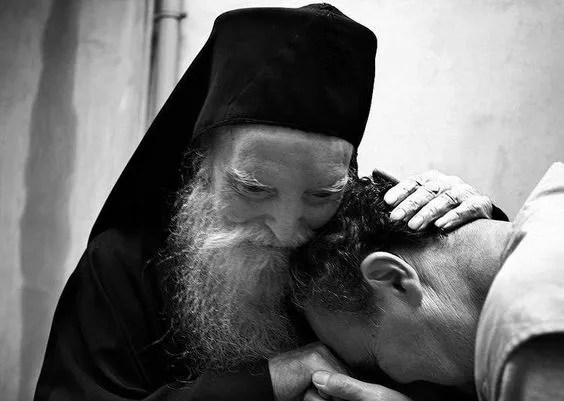
Who would have imagined that on one of Athens’ busiest avenues, at 59 Alexandras Avenue, in the semi-basement of an apartment building, lived an elder like those we read in the Desert Fathers, with profound humility, compassion and great discernment! It was to this humble, ‘hidden’ priest, Saint Porfyrios would regularly go for Confession, a fact not widely known. One would lay hands on the other and they would confess. One wonders what it was that tied these two elders together.

*

This venerable cleric, Father Antonio’s Gikizas, was born in Kranidi, Argolis, on January 7, 1910, and died in Athens, at the age of 89, on September 30, 1999. His academic knowledge was admirable not only for his time but also for ours with his four bachelor degrees and six foreign languages and many more. This academic excellence should normally separate him from the illiterate St Porphyrios, but Father Antonios, despite his great qualifications, always tried to avoid the high offices that were offered to him throughout his life. His humility was profound. When he was still a small child, he met Saint Nektarios, for whom he had a special reverence. And later in his life, he met St Porfyrios. His acquaintance with the elder – and later Saint of the Church – Porphyrios took place when he served for a short time as a preacher in Kymi of Evia.

*

So, what was it that tied these two elders together? Fathers believe that it was their profound humility and their focus on repentance and the Sacrament of Confession throughout their lives. Father Antonios of blessed memory insisted that what we all need, more than anything else, is “repentance, this gift from God. … Repentance is the key for our entry into the heavenly world, in His Uncreated Church…”. Clearly this was the focus of Saint Porphyrios’ life too, as revealed in his Testament to his Spiritual children, six months before he fell asleep in the Lord: “From a small child I was in sins——But the world thought I was good and everyone shouts that I am a saint. As for me, I feel that I am the most sinful person in the world.——whatever I remembered, of course I have confessed —-But now I have a feeling that my spiritual sins are too many and I ask those of you who have known me to pray for me because I too humbly prayed for you while I lived!” I truly wonders why would such holy men feel that sinful and regularly go to Confession until old age… To confess what? And if they felt and acted thus, what about us?

*

How inter-connected Holiness, Saints are in God’s Providence! Glory to God for all things! “That they all may be one; as thou, Father, art in me, and I in thee, that they also may be one in us” (John 17:21)

For Granted

Taking things for granted is a trap most of us fall into. It is easy to get used to things and to stop noticing. We stop noticing God’s little gifts, little gestures of love of those around us, our comforts and advantages. The last four weeks, since Father J. has been taken gravely ill, have been a time of deep sadness but also of reflection and hopefully of growth.


Familiarity is a dangerous element in our spiritual life. I have spent so much time with Father J. over the last 18 years, I have relied so much on his advice, prayers, lifts to church, on his love, tolerance and good will that I think I have come to take it all for granted. In any crisis, I assume that he will be there to guide me and especially pray for me. In this crisis, for the first time, I had to pray for him and couldn’t ask for his guidance. I felt lost, but I also felt more than ever the power of prayer, the strengthening bonds of fellowship and I experienced once again the manifold grace of brothers and sisters in Christ praying together. For years now, I have felt that father joyfully carried me and every single person in his church on his back like a cross. His care and prayers make up for our negligence and lack of zeal, for all our lack of love towards God, the church and others.

As a community, especially the cradle Orthodox, we always take for granted that we shall have a church where the Holy Liturgy will be served every Sunday (take it or leave it as it suits us), that there will be a Father to come bless our house, cars, food and visit us when we are ill, that there will be a Father to sign the papers of church attendance for our children to get a place at a desired school and give us a reference of good character, that this Father will pray for us whenever we ask him, that he will be there to hear our confession whenever
we feel burdened, that he will settle our little squabbles, that he will baptise our children and read us the prayers on our death bed and serve at our funeral. In the case of our parish, we take for granted even more than that, that our Father will make sure everyone has transport to get to church, that he will answer the phone to hear our little troubles at any hour of the day or night, that he will arrive first in church and leave last and generally make sure that everything is well with the church and in our life. The last weeks have forcefully reminded me that all these are not our due or by any means guaranteed to be there and that we are blessed to have had all these for so many years through God’s grace and Father J.’s love, faith and energy.

Umberto Eco said: “Absence is to love as wind is to fire: it extinguishes the little flame, it
fans the big.” I cannot exactly quantify my affection for Father J., but I have thought
of him more over the last month than ever before. In his absence, so many touching memories and images came flooding in bringing along both sadness and joy. One of my favourite mental snapshots is of Father looking up to see somebody come through the church door. Every time his eyes light up with joy when his gaze rests on you as you come in through the door and I noticed that Father’s joy is even greater when someone comes who has not been to the church in months or years. This joyful, loving gaze makes you feel so welcome and loved and somehow special. It makes you feel that you are coming home. And this image lead on to another memory of Father crying when he reads the Gospel of the Return of the prodigal son. I cannot remember him ever reading it without tears in his eyes. His love for all these many prodigal children that we are is so great that he stands by us in prayer before God no matter what we are or have done. I know for sure he has stood by me with gentleness and patience even when I disobeyed his spiritual guidance or I argued back or wanted to leave the church.

St John of the Ladder teaches that it is more fearful to anger your Spiritual Father than to
disobey and anger God himself. If we anger God, our spiritual father has the grace to pray for us, to intercede and obtain forgiveness for us, but if our spiritual father turns away from us, we have no defence or advocate before God. This is how I have felt about my Spiritual Father, about Father J. He has been my advocate before God, my safety rope for the rock climbing. This rope has kept me connected to the rock when I fell, it stopped me from walking away and giving up when the going got too hard.

Fr Seraphim of Mull Monastery tells the story of the advice he received from his spiritual
father just before he was ordained. He told him that the value of his priesthood will be measured in the madness of his love for every single human being who will stand before him irrespective of what they look like, who they are, where they come from, what they have done.

This is exactly how I see Father’s ministry. In his love of all people and in his joyful daily sacrifices for us, I see the reflection of God’s love for all his children. By knowing Father, I feel I have come a step closer to understanding God’s love for every single one of us.


The church or monastery is like a beehive. The spirit of the queen permeates the whole hive and sets the tone for all the bees. If the queen bee is aggressive the whole hive will be an aggressive one, just so when a community has a very loving father, like us, the whole community is loving and gentle. And if at times this isn’t the case, Father dissipates all tension by his prayers and mild spirit.


As Father is recovering from his illness and there is a general sigh of relief in the community and a sense of joy and expectation, I have made a vow not to take my spiritual father for granted ever again or any of God’s gifts to our community, but rejoice in each of them and see them for what they are – signs of God’s love: the beautiful church filled with the gifts from Old parishioners, the people who have prepared the prosphoro, brought the wine, oil and candles and cleaned the church, the people who have come to give and receive and most of all the presence of a father through whose hand a gentle and humble God reaches out to his people. None of my or anyone’s giving of time, money or energy can match the wonder of these gifts.

A. McC.

* Kalo Stadio! A blessed Great Lent!

Eros, Philia, Agape

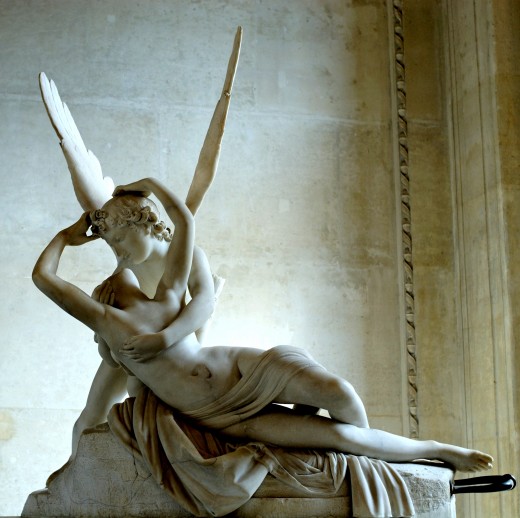
canova

Love 

* This is by far the most famous neo-classical sculpture ever commissioned. It was sculpted by Antonio Canova. It was first commissioned in 1787.

*
“What type of love do you mean: Eros, Philia or Agape?”
The man looked at him without understanding a word.
“There are three words in Greek to designate love,” Petrus said. “Today you are seeing the manifestation of Eros, that sentiment between two persons.”

“The two seem to love one another. In a short time they will be fighting alone for life, establishing themselves in a house and taking part in the same adventure: that’s what makes love grand and dignified. He will pursue his career, she probably knows how to cook and will make an excellent housewife because since she was a little girl she was brought up to do that. She will accompany him, they will have children and they will manage to build something together, they will be happy for ever.”

“Al of a sudden, however, this story could happen the other way around. He is going to feel that he is not free enough to show all the Eros, all the love that he has for other women. She may begin to feel that she has sacrificed a career and a brilliant life to accompany her husband. So, instead of creating together, each of them will feel robbed in their way of loving. Eros, the spirit that joins them, will start to display only his bad side. And what God had meant to be man’s most noble sentiment will begin to be a source of hatred and destruction.”

“Notice how odd it is,” continued my guide. “Despite being good or bad, the face of Eros is never the same in all persons.”

Then he continued, pointing to an elderly couple:
“Look at those two: they haven’t let themselves be affected by hypocrisy, like so many others. They look like they are a couple of farm workers: hunger and need have obliged them to overcome many a difficulty together. They have discovered love through work, which is where Eros shows his most beautiful face, also known as Philia.”
“What’s Philia?”
“Philia is love in the form of friendship. It’s what I feel for you and others. When the flame of Eros no longer able to shine, it’s Philia who keeps couples together.”

“And what about Agape?”
“Agape is total love, the love that devours those that experience it. Whoever knows and experiences Agape sees that nothing else in this world is of any importance, only loving. This was the love that Jesus felt for humanity, and it was so great that it shook the stars and changed the course of man’s history.”
“During the millennia of the history of civilization, many people have been smitten by this Love that Devours. They had so much to give – and the world demanded so little – that they were obliged to seek out the deserts and isolated places because love was so great that it transfigured them. They became the hermit saints that we know today.”
“For me and you who have experienced another form of Agape, this life here may seem hard and terrible. Yet the Love that Devours makes everything lose its importance: these men live only to be consumed by their love.”
He took a pause.
“Agape is the Love that Devours,” he repeated once more, as if this was the phrase that best defined that strange type of love. “Luther King once said that when Christ spoke of loving our enemies he was referring to Agape. Because according to him, it was impossible to like our enemies, those who do us harm and try to make our daily suffering all the worse.”
“But Agape is a lot more than liking. It is a sentiment that invades everything, fills all the cracks and makes any attempt at aggression turn to dust.”
“There are two forms of Agape. One is isolation, life dedicated only to contemplation. The other is precisely the opposite: contact with other human beings, and enthusiasm, the sacred sense of work. Enthusiasm means trance, ecstasy, connecting with God. Enthusiasm is Agape directed at some idea, something.”
“When we love and believe in something from the bottom of our soul, we feel stronger than the world and we are imbued with a serenity that comes from the certainty that nothing can conquer our faith. This strange force makes us always make the right decisions at the right time, and we are surprised at our own capacity when we fulfill our objective.”
“Enthusiasm usually manifests itself in all its power in the early years of our life. We still have a strong tie with the divinity and we give ourselves with such zeal to our toys that dolls take on a life of their own and little tin soldiers manage to march. When Jesus said that the kingdom of Heaven belonged to the children, he was referring to Agape in the form of Enthusiasm. The children reached him without paying any attention to his miracles, his wisdom, the Pharisees and the apostles. They came happily, driven by Enthusiasm.”


taken from THE PILGRIMAGE by Paulo Coehlo

“May you never lose your enthusiasm at any moment for the rest of your life: it’s your greatest strength, intent on the final victory. You cannot let it slip through your fingers just because as time passes we have to face some small and necessary defeats.”

Source:  Paulo Coehlo Writer Official Site http://paulocoelhoblog.com/2013/04/05/love-as-eros-philos-and-agape/

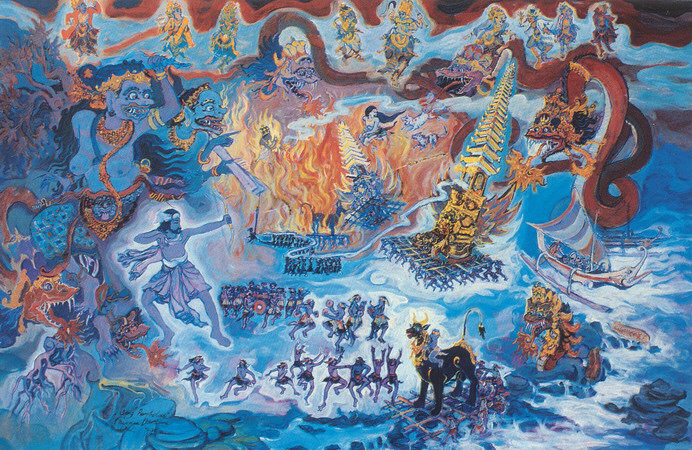
Balinese ‘Dancing’ Jesus

asian200

I have long been eager to get acquainted with nonwestern Christian art, especially artworks representing Christ and Bible themes by Asian artists. So, I got very excited when I discovered the Asian Christian Arts Association or the ACAA, established in Bali, where Christian artists and theologians from all over Asia meet, exchange ideas and inspire each other. Nyoman Darsane, a fascinating Balinese artist who depicts Biblical characters as traditional Balinese dancers, employing various Balinese symbolisms in his images, was one of the first Asian ‘Christian’ artists to attract my attention. Then, I came across Victoria Jones’ post at The Jesus Question about him. Darsane is an incredibly talented painter who masterfully combines the joy of the Gospel with his Balinese culture, and Victoria’s post is thoroughly researched, offers excellent commentary and insights and does him justice!

Victoria Emily Jones's avatarThe Jesus Question

Balinese artist Nyoman Darsane was born in 1939 and raised as a Hindu.  At age seventeen, he became a Christian and as a result was ostracized by his family and village community.  But because he so persistently strove, through his art, to give Christianity a Balinese shape, they eventually decided to accept him back in.  They saw that he still loved and respected the culture; he was still “one of them,” even though his religious beliefs took a different turn.  Does he feel that, as a Balinese Christian, his identity is divided, that he cannot fully embrace both at once?  Not at all.  “Bali is my body; Christ is my life,” he says.  In other words, Jesus Christ is his all, but can he not pray to and worship and express his love for Jesus Christ in a Balinese fashion?  And can he not picture Jesus as a fellow Balinese…

View original post 1,605 more words