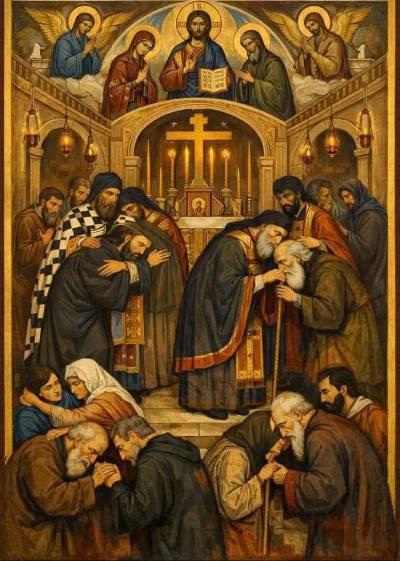
Born for Eternity

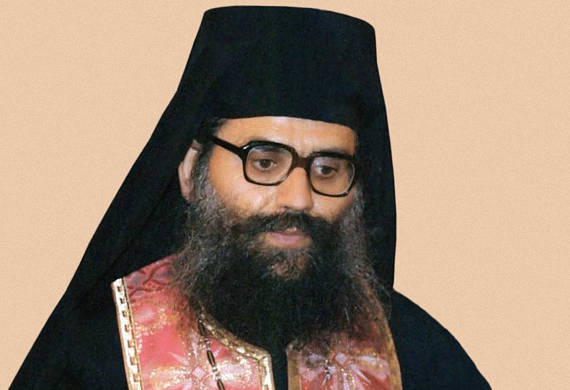
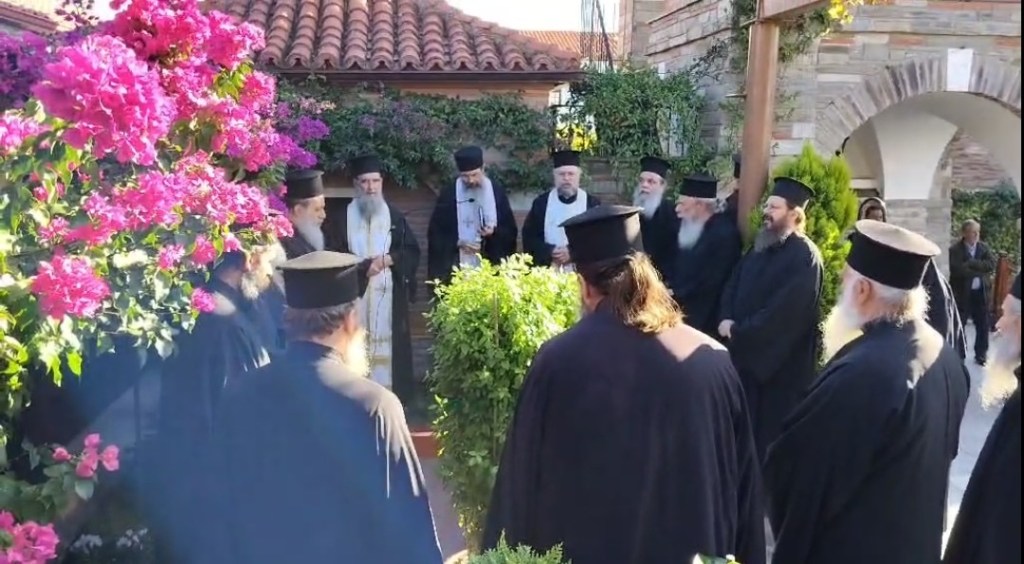
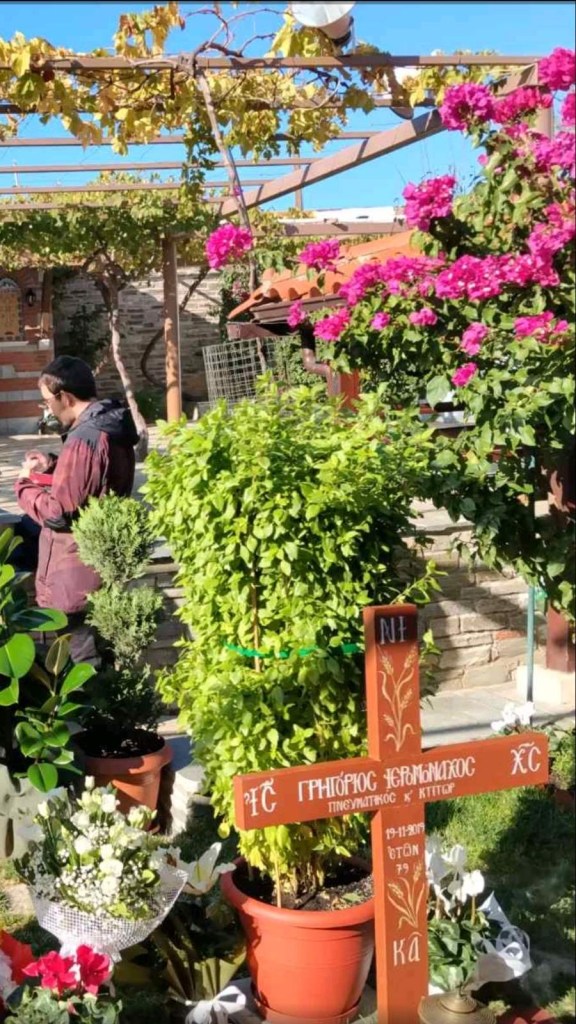
+ Father Gregorios, 19 November, 2019 — 6th year Memorial service

Memory Eternal, dearest Father!

“Love in Christ is a sacrificial Love, a self-sacrificing, self-denying Love, Agape. You sacrifice everything for the person you love, “your neighbour”. By “our neighbour”, we mean every person as God’s Image, even our enemy. By “love” we do not mean that we should do whatever the other person wants us to do, but to love him with Christ’s burning and flaming Heart, for his salvation” (+ Elder Gregorios Papasotiriou)

*

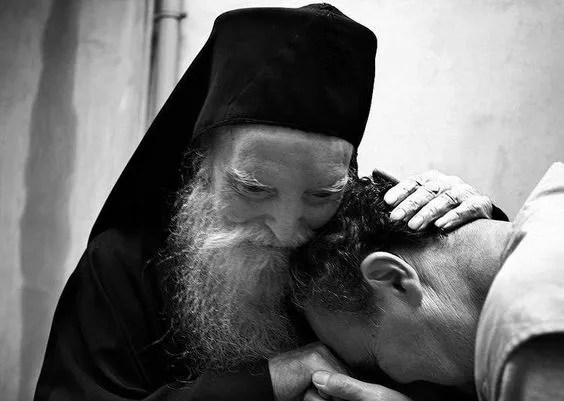
This is how we have always felt his love! For yearsGerondas Gregorios of blessed memory offered his prayers with tears and his never-to-be-forgotten spiritual guidance. My rebirth in Christ ((John 3:4), my new life literally started with his guidance about 40 years ago. I feel so unworthy of such a blessing!

*

Father Gregorios, born Dimitrios Papasotiriou, was born on February 16, 1940 in Paleokomi, Serres, to pious parents, Alexios and Efthymia.

From his childhood, he was characterized by an inclination for life in Christ and very early he felt the divine call for the priesthood and complete dedication to the Lord through the monastic calling. Thus, after completing his studies at the Theological School of Aristotle University of Thessaloniki, he came to the Holy Metropolis of Kassandria, where he was ordained a deacon and priest by the blessed Metropolitan Synesios Visvinis. During his stay in Polygyros, the Elder, together with other fathers under the guidance of Fr. Spyridon Trantelis (later Metropolitan of Lagadas), formed a group that served the people of God, as well as the children of the Polygyros boarding school for boys, with much love and self-sacrifice.

From his student years, the Elder particularly loved Mount Athos. He visited it very often and was particularly associated with the Holy Monastery of Saint Dionysios and the blessed Hegumen Fr. Gabriel, who became his spiritual father for a number of years. However, the main turning point in the Elder’s spiritual journey was his acquaintance with Saint Paisios the Athonite. He became connected to him with an unbreakable spiritual bond, becoming his disciple and striving throughout his life to imitate his holy life. In fact, Saint Paisios also became his godfather during the monastic tonsure of Elder Gregory in the cell of the Holy Cross in the year 1977.

In the year 1970, the flame of hesychia led Father Gregory to the then dilapidated Metochion of the Holy Monastery of Saint Dionysios in Metamorphosis, Chalkidiki, where, with the blessing of the local Bishop, he settled in a monastic cell-barn next to the Church of the Holy Forerunner.

This place from then on became the arena of his great ascetic struggles and the base for his priestly-pastoral ministry here in Chalkidiki. Only God knows his ascetic labors and efforts in order to serve the people of God with the pilgrimages, the preaching, the confession, the holy services, the vigils, the divine Liturgies. Saint Porphyrios, who attended a divine Liturgy in 1974, commented: “When Father Gregory serves the Holy Liturgy, all of God is within him and all of Father Gregory is within God.”

With the encouragement or rather the command of Saint Paisios, the life of the Monastery begins in 1975. The Holy Monastery of Dionysios grants the necessary area for the construction of the Holy Hesychasterion. The blessed Abbots Fr. Gabriel and Fr. Charalambos supported Elder Gregory with great love, foreseeing that the now deserted place of the old Metochion would be transformed into a spiritual oasis. Then the first group of spiritual children of the Elder was established, which formed the nucleus of the later sisterhood. The first Abbess was Eleni Paschaloglou from Rodolivos, Serres – herself a spiritual child of Elder Gregory -, later Elder Ephemia, who passed away to the Lord almost five months after the Elder’s “fallen asleep” after 45 years of sacrificial ministry in the Monastery.

The life of Father Gregory is henceforth spent in material and spiritual labours for the construction of the Hesychastirion, for the guidance of the Monastics, but also in his great offering as a priest, preacher and above all a spiritual father to the people of God. The Elder who abhorred worldly prominence and loved humility and obscurity, is now becoming well known as Father Gregory the Spiritual Father. Hundreds of souls found the path to salvation with him, thousands rested under his rock, countless were helped by his spiritual guidance.

The blessed Elder suffered from many illnesses throughout his life, which he bore with great patience and a doxological disposition as if someone else were suffering. Especially the last few years were a cross of painful trials and a life of patience, because the pain and illnesses reached their peak.

The good God, wanting to rest the good shepherd and His faithful steward, called him to Himself after a sudden stroke on November 19, 2019. The funeral service and burial were held on November 21, the day of the Feast of the Entrance into the Temple of Our Most Holy Lady the Theotokos and Ever-Virgin Mary, the birthday of the Monastery, when 45 years ago Saint Paisios gave the blessing and the command to Father Gregory to begin the great work for which he sacrificed his life.” (Ραδιοχρηστότητα, by his spiritual son and priest Father Nikolaos at St. Palnteleimon, Mesimeri )

May we have his prayers! “Kai sta dika mas.” “And to our own!”  May we be reunited with you dearest Father in Heaven in God’s Kairos!

From Singer to Monk, From Cancer to His Kingdom

“We pray again for the repose of the soul of your servant Dionysios the Monk… † October 19, 1993

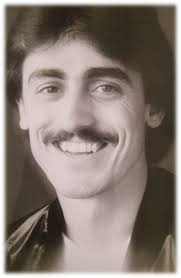
The famous and great singer Dionysios Theodosis who became a monk at Mikra Agia Anna on Mount Athos, shortly before cancer led him to Christ at the age of 35…

No one knew his secret throughout his battle with the incurable disease, until at his funeral procession at the Church of St Thomas the Apostle in Goudi, his spiritual director, Fr. Spyridon Mikragiannanitis, mentioned:
“We pray again for the repose of the soul of your servant Dionysios the Monk!”
Everyone was speechless.

Dionysios Theodosis (June 16, 1958 – October 19, 1993) was a Greek singer.
During his career, he collaborated with well-known Greek composers including Yiannis Spanos, Giorgos Hatzinasios and Marios Tokas and with singers such as Giorgos Dalaras, Dimitra Galani and Haris Alexiou.

He was experiencing great existential impasses, until he met Saint Paisios, who discerned his pain and said:
“You, my child, are bringing me a lot of pain, you need to confess, and to a good spiritual father.
Go to the Mikra Agia Anna and talk to Father Dionysios, he is good and will help you”.

Dionysis followed the advice and set off by boat for Mikra Agia Anna.
A monk next to him struck up a conversation and introduced himself: “Father Dionysios Mikragiannanitis”.
After the initial surprise, they struck up a conversation for a while, but Dionysis thought he was a “jester” since this was not the image he had had until then of a spiritual person:
that is, a serious, perhaps even grim old man.
His illness, however, came to radically change the landscape.
He began chemotherapy in London.
His visits to Mikra Agia Anna intensified and he announced to the Fathers that he wanted to become a monk!
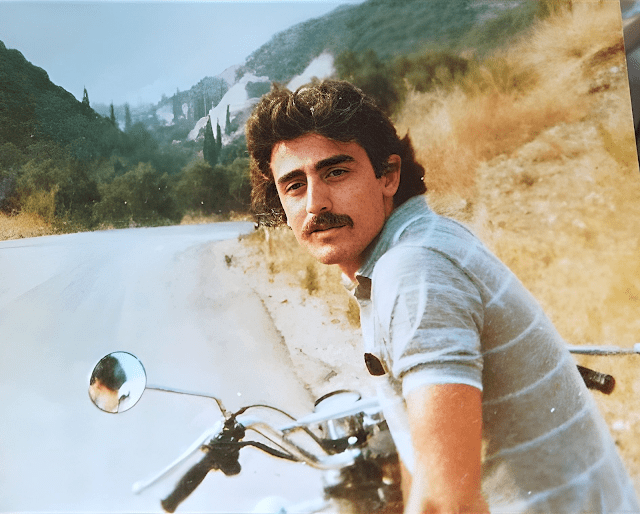
At least once a month when he finished at dawn his work he would take his motorcycle and travel to Mount Athos.

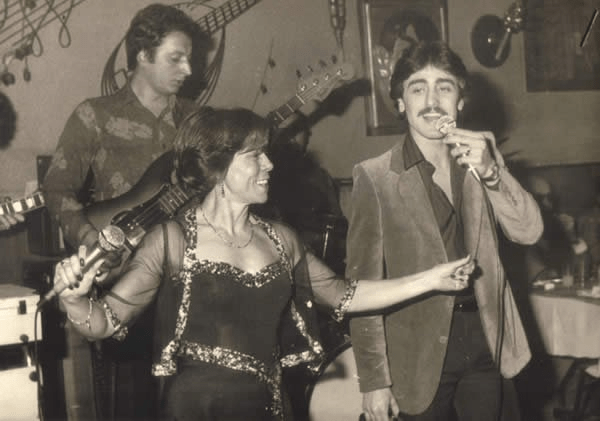
With his mother, also a singer, in a shop somewhere in Istanbul…

During that time, the song “As Long as a Coffee Lasts” was also written, which he performed himself and which few know that he dedicated to his Elder!

He wished to get well and dedicate his life to hesychasm.
His elder, Dionysios, before leaving for treatment abroad, shaves his head and allows him to visit the hospital in England without his cassock.

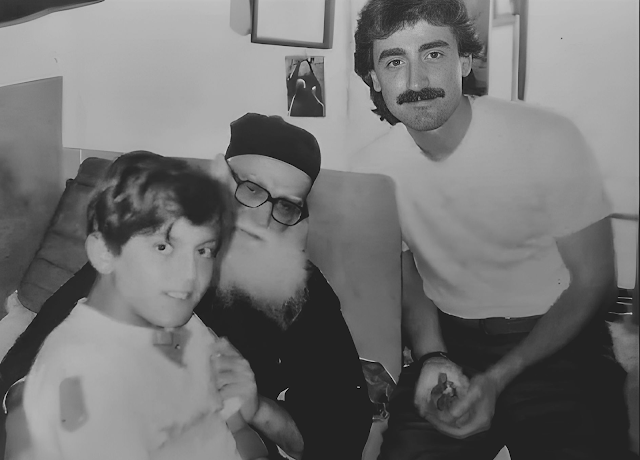
On Mount Athos, together with Elder Efraim Katounakia

No one knows his secret, not even his mother Despo, who stands by his side in his last moments and reads a book he gave her about the garden of the Virgin Mary.

She is impressed by what he tells her about Mount Athos.

She prays to God in her heart:
“May my son get well and with my blessing come to serve you.”

Dionysios says his prayers in the bed of the hospital and she does not know that those prayers are his monastic rule!
One day, the English nurse tells Dionysis’ mother in a lacklustre voice, lacking any real emotion: «he died».

The funeral took place in Greece.
Among other relatives, friends, well-known singers, actors and musicians, his elder, Dionysios, also attended.

Fr. Spyridon revealed the secret at the ceremony when he said the name of the deceased: “the servant of God, monk Dionysios”(!)
The congregation was amazed.

Immediately after the ceremony the Fathers took his body, wrapped it in a sheet and monk Dionysios was buried in Mikra Agia Anna, in the place where he wanted to become a monk.

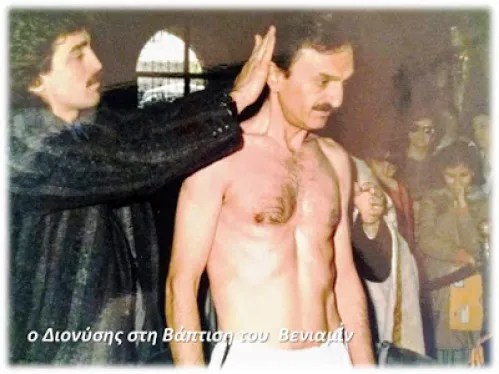
His stepfather and godson Benjamin Koul, a person who converted to Orthodoxy by Dionysis often visited his grave, knowing the people of Mikra Agia Anna.
(Benjamin was a Turk and was baptized in Greece.
His son, Dionysis Theodosis, was his godfather in the Sacrament…)

At the baptism of his step-father and godson


His wish was to be buried next to his child when he departed this life.

His wish was fulfilled.
He fell ill a few years later and also departed this life, adding another painful loss to the lady-Despo who, when the three years of his burial had passed, took the bones and brought them to Ouranoupoli.

There the monks received them and buried them next to those of his spiritual father, godfather and child, monk Dionysis.

From the page, “Dionysis Theodosis / DionisisTheodosis” and Amfoterodexios

Please watch monk Dionysis sing the song he dedicated to his spiritual father. At first sight, it looks erotic but it is about Agape!

As long as a coffee lasts

Dedicated to his spiritual father

Don’t leave me alone this night,
I am roaming in a minefield
When I drink you up and dry up this night
Either I’ll be saved or I’ll be lost

Stay a little longer
Until I escape
And if you want, hold me
As long as a coffee lasts
Stay a little longer
Until I escape
And then say bye
And that you will come again

Don’t leave me alone this night
My mind turns to evil
Comfort my pain this night
Lead me on with your love, like a baby

Stay a little longer
Until I escape
And if you want, hold me
As long as a coffee lasts
Stay a little longer
Until I escape
And then say bye
And that you will come again (2)

Memory Eternal! Christ is Risen!

The Thebaid Desert Fathers Death to the World

Dear brothers and sisters,

Christ is in our midst.

An interim to all these prophesies I have recently posted. Kindly have a look at this conclusion of a chapter I am in the process of translating for Gregoriou monastery of Mount Athos.

“Here is a beautiful summary of spiritual work left to us by Abba John the Dwarf, one of the most discerning and holy ascetics. With this we end this brief presentation.

Every morning, make a beginning with every virtue and commandment of God.

And strive

With much patience,

With fear and long-suffering,

With love of God,

With all the readiness of soul and body,

With much humility,

With patience bearing the sorrow of the heart and carefully guarding it,

With much prayer,

With prayer for others with sighs,

With purity of tongue,

With watchfulness over the eyes.

Do not be angry,

even if you are insulted,

but have peace within yourself;

Do not return evil for evil;

Do not pay attention to the mistakes of others;

Do not give value to yourself, who is below all creation;

Oppose and renounce the material world

and everything that has to do with the flesh.

Live:

With a willingness to take up your cross,

With a fighting spirit,

With poverty of spirit,

With askesis and spiritual determination,

With repentance and tears,

With a warlike struggle,

With discernment,

With purity of soul, With food as much as it should be,

Working quietly at your handiwork,

With night vigils,

Enduring hunger and thirst, cold and nakedness,

By toiling.

And above all and with all these together:

To seal yourself your coffin lid as if you have died,

Bearing in mind that death is near you every minute … ( Abba John the Dwarf, 34).

“Will modern man want to hear these messages sent to us by the ancient ascetics of Thebaid and their other peers? Will he want to?” (+ Elder Eusevios Vittis of blessed memory)

For Granted

Taking things for granted is a trap most of us fall into. It is easy to get used to things and to stop noticing. We stop noticing God’s little gifts, little gestures of love of those around us, our comforts and advantages. The last four weeks, since Father J. has been taken gravely ill, have been a time of deep sadness but also of reflection and hopefully of growth.


Familiarity is a dangerous element in our spiritual life. I have spent so much time with Father J. over the last 18 years, I have relied so much on his advice, prayers, lifts to church, on his love, tolerance and good will that I think I have come to take it all for granted. In any crisis, I assume that he will be there to guide me and especially pray for me. In this crisis, for the first time, I had to pray for him and couldn’t ask for his guidance. I felt lost, but I also felt more than ever the power of prayer, the strengthening bonds of fellowship and I experienced once again the manifold grace of brothers and sisters in Christ praying together. For years now, I have felt that father joyfully carried me and every single person in his church on his back like a cross. His care and prayers make up for our negligence and lack of zeal, for all our lack of love towards God, the church and others.

As a community, especially the cradle Orthodox, we always take for granted that we shall have a church where the Holy Liturgy will be served every Sunday (take it or leave it as it suits us), that there will be a Father to come bless our house, cars, food and visit us when we are ill, that there will be a Father to sign the papers of church attendance for our children to get a place at a desired school and give us a reference of good character, that this Father will pray for us whenever we ask him, that he will be there to hear our confession whenever
we feel burdened, that he will settle our little squabbles, that he will baptise our children and read us the prayers on our death bed and serve at our funeral. In the case of our parish, we take for granted even more than that, that our Father will make sure everyone has transport to get to church, that he will answer the phone to hear our little troubles at any hour of the day or night, that he will arrive first in church and leave last and generally make sure that everything is well with the church and in our life. The last weeks have forcefully reminded me that all these are not our due or by any means guaranteed to be there and that we are blessed to have had all these for so many years through God’s grace and Father J.’s love, faith and energy.

Umberto Eco said: “Absence is to love as wind is to fire: it extinguishes the little flame, it
fans the big.” I cannot exactly quantify my affection for Father J., but I have thought
of him more over the last month than ever before. In his absence, so many touching memories and images came flooding in bringing along both sadness and joy. One of my favourite mental snapshots is of Father looking up to see somebody come through the church door. Every time his eyes light up with joy when his gaze rests on you as you come in through the door and I noticed that Father’s joy is even greater when someone comes who has not been to the church in months or years. This joyful, loving gaze makes you feel so welcome and loved and somehow special. It makes you feel that you are coming home. And this image lead on to another memory of Father crying when he reads the Gospel of the Return of the prodigal son. I cannot remember him ever reading it without tears in his eyes. His love for all these many prodigal children that we are is so great that he stands by us in prayer before God no matter what we are or have done. I know for sure he has stood by me with gentleness and patience even when I disobeyed his spiritual guidance or I argued back or wanted to leave the church.

St John of the Ladder teaches that it is more fearful to anger your Spiritual Father than to
disobey and anger God himself. If we anger God, our spiritual father has the grace to pray for us, to intercede and obtain forgiveness for us, but if our spiritual father turns away from us, we have no defence or advocate before God. This is how I have felt about my Spiritual Father, about Father J. He has been my advocate before God, my safety rope for the rock climbing. This rope has kept me connected to the rock when I fell, it stopped me from walking away and giving up when the going got too hard.

Fr Seraphim of Mull Monastery tells the story of the advice he received from his spiritual
father just before he was ordained. He told him that the value of his priesthood will be measured in the madness of his love for every single human being who will stand before him irrespective of what they look like, who they are, where they come from, what they have done.

This is exactly how I see Father’s ministry. In his love of all people and in his joyful daily sacrifices for us, I see the reflection of God’s love for all his children. By knowing Father, I feel I have come a step closer to understanding God’s love for every single one of us.


The church or monastery is like a beehive. The spirit of the queen permeates the whole hive and sets the tone for all the bees. If the queen bee is aggressive the whole hive will be an aggressive one, just so when a community has a very loving father, like us, the whole community is loving and gentle. And if at times this isn’t the case, Father dissipates all tension by his prayers and mild spirit.


As Father is recovering from his illness and there is a general sigh of relief in the community and a sense of joy and expectation, I have made a vow not to take my spiritual father for granted ever again or any of God’s gifts to our community, but rejoice in each of them and see them for what they are – signs of God’s love: the beautiful church filled with the gifts from Old parishioners, the people who have prepared the prosphoro, brought the wine, oil and candles and cleaned the church, the people who have come to give and receive and most of all the presence of a father through whose hand a gentle and humble God reaches out to his people. None of my or anyone’s giving of time, money or energy can match the wonder of these gifts.

A. McC.

* Kalo Stadio! A blessed Great Lent!

Does Orthodoxy Matter? A Case Study

orthodoxy1


And here’s the challenging question …

In the absence of an Orthodox church nearby would you be prepared to pray at home rather than pray with the heterodox?


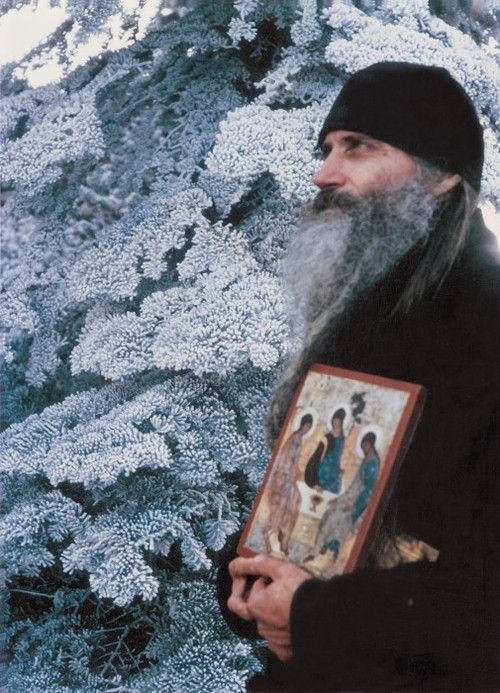
Father Seraphim Rose holding an icon of the Holy Trinityblessed seraphim.jpg

Orthodoxy means “true glory” or “true faith.”  We Orthodox think very highly of the word.  Or do we?  When it comes down to it, does Orthodoxy actually matter all that much to us (as it should)?  Orthodox Christians in the west find themselves living among many different Christianities and it can sometimes be tempting to think that notwithstanding some of the more obvious differences, (icons, the Theotokos, fasting, worship, for example), all these Christian traditions share much the same faith as us.  If you are of this opinion, then I am sorry to have to disappoint you, but it just isn’t true at all.  How so?

I am going to consider this issue by looking at a case study which reveals the damage that heresy can do in our personal lives, our relationships and even to the society and world that we live in.  It is a fictional story, but quite typical.

John and Mary go to an Evangelical Anglican Church.  John is Orthodox (Greek tradition).  Mary is Anglican.  This is her second marriage, being a young widow with one teenage son (Ian, 15) still living at home. She now has two children with John, daughters, aged 5 and 7.  John would prefer to go to his local Greek Church but his wife is a committed Anglican, and their children, although baptised in the Orthodox Church (with the exception of Ian), prefer the “lively worship songs”, as they put it, which are included in the church’s family service.  Ian is very involved in the local youth group and is thinking eventually of becoming an Anglican minister.  Does Orthodoxy then matter to John?  Well, yes, but only in a remote nostalgic sort of way.  It is some years now since he has attended Divine Liturgy, the last time was at Pascha in 2008.  His stepson, Ian, will have nothing to do with what he considers to be the “stuffy incomprehensible worship” at his stepdad’s church which he has visited once, just after his stepfather’s marriage.
Ten years later ….

Neither John nor Mary now regularly attend the Anglican Church.  John still hasn’t been back to the Orthodox Church since Pascha 2008 and Mary doesn’t like the new Vicar who is a woman.  Mary is quite a conservative evangelical believer who maintains that a woman should not be in a place of authority within the Church over men.  (This is the evangelical doctrine of the”headship of the male.”)  Her two daughters, now 15 and 17 still attend on their own and are very active in the youth group.  Ian, who shares his mother’s conservative outlook, has also left the church, disagreeing with what he believes to be the Anglican Church’s tolerance of homosexual partnerships.  He has started attending a very conservative Baptist church that teaches pure Calvinism, in particular, the doctrines known as TULIP (from the first letter of each doctrine), namely:-
Total Depravity – As a result of Adam’s fall, all humanity, is dead in sins and therefore damned.  Humanity’s nature is corrupt and utterly incapable of godliness.

Unconditional Election – Because man is dead in sin, he is unable to initiate a response to God; therefore, from eternity God elected certain people to salvation and others to damnation. Election and predestination are unconditional; they are not based on man’s response because man is unable to respond to God, nor does he want to.

Limited Atonement – Because God determined that certain people should be saved as a result of His unconditional election, He determined that Christ should die for the elect alone. All whom God has elected, and for whom Christ died, will be saved but the rest will be damned to hell for all eternity; again as determined by God’s sovereign will.

Irresistible Grace – Those whom God elected He draws to Himself through irresistible grace. God makes man willing to come to Him. When God calls, man responds.  Man cannot choose to love God by his own choice and freedom.

Perseverance of the Saints – The precise people God has elected and drawn to Himself through the Holy Spirit will persevere in faith to the end. None whom God has elected will ever be lost; they are eternally secure even though they may sin grievously after election.

Although Ian is a pious and committed believer these doctrines trouble him.  He begins to doubt that he is one of the elect, chosen by God for salvation.  His sinful life (he occasionally resorts to prostitutes) troubles him greatly but his church tells him that he is unable to make any right choice and save himself.  Ian enters a very dark period of depression, made much worse by the impact of these heresies on his mental health.  His fragile relationship with his atheist girlfriend disintegrates.  He seeks medical help for a latent depression which has now become the full blown clinical variety.

Five years further on, the two daughters are now at the same university, one just about to graduate but they have been unable to find an evangelical church they like nearby, so they have stopped attending church on the grounds that they believe in Christ and are saved, so what’s the point?  Back home John and Mary now lead thoroughly secular lives.  John sometimes thinks wistfully of his childhood back in Cyprus when he used to attend church with his Nana but this seems to him a very distant idealised time now.  He hopes, nonetheless, that his wife or children will respect his wish for an Orthodox funeral if he dies first.

So, did Orthodoxy matter to John?  Well yes, particularly earlier on, but for most of his adult life only in a nominal sort of way.  He had certainly not been catechised in his youth and his grasp of the faith, therefore, had always been somewhat tenuous.  Did Anglican evangelicalism then strike him as being similar to Orthodoxy?  Well yes, mostly.  He only saw differences in the worship style which often set his teeth on edge.  Let’s face it.  He attended the evangelical Anglican Church for the sake of his wife and family.  When they stopped going, so did he.  There is only one God after all and this was just a different way of being a Christian, it seemed to him.  He did lament his stepson’s involvement in the Calvinist church because he could see how its refusal of human freedom and choice, its dark doctrines of divine election to salvation or damnation, did not feel right to him, but he couldn’t really say why. 

Did Mary his wife ever consider Orthodoxy when the lady Vicar arrived?  Well, no, why should she?  Her husband rarely spoke of his childhood faith and she concluded that it could not have meant much to him in that case, so why should she consider it?  John and Mary now spend a conventional Sunday together as most couples do in their street, getting up late, going to the gym occasionally, shopping at B&Q, taking a drive into the countryside; just the usual and normal things everyone does nowadays.  Both still consider themselves as Christians, but obviously not of the fanatical sort whom they blame, quite rightly, for destroying Ian’s piece of mind.  As for the two girls, well they eventually graduated and now have families of their own.  Churchgoing, however, has become completely alien to all their families with the rest.

So, does Orthodox Christianity matter to you?
Does it matter enough for you to find out about it in more depth?
Does it matter enough for you to practice it as faithfully as you can, notwithstanding the distractions of modern life?
Does it matter enough for you to stay loyal to this faith no matter what challenges are presented to it by both family life and society as a whole?

And here’s the challenging question …

In the absence of an Orthodox church nearby would you be prepared to pray at home rather than pray with the heterodox?

Thin Places

   grand4

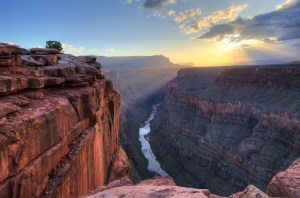
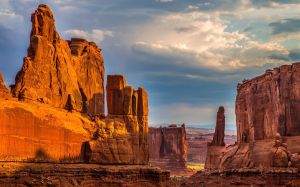
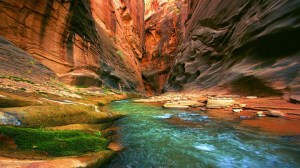
  • Thin Places: “Thin Places,” comes from a Celtic Christian concept. The Celts believed that physical locations existed in which God’s presence was more accessible than elsewhere, places where heaven and earth seemed to touch, where the line between holy and human met for a moment, “the places in the world where the walls are weak”, “those rare locales where the distance between heaven and Earth collapses”, as Eric Weiner puts it in his spirituality travelogue, Man Seeks GodFor such a ‘thin place’ for me visit my blog post on the Holy and Life-Givng Cross Orthodox parish at Lancaster.

grand2

grand3

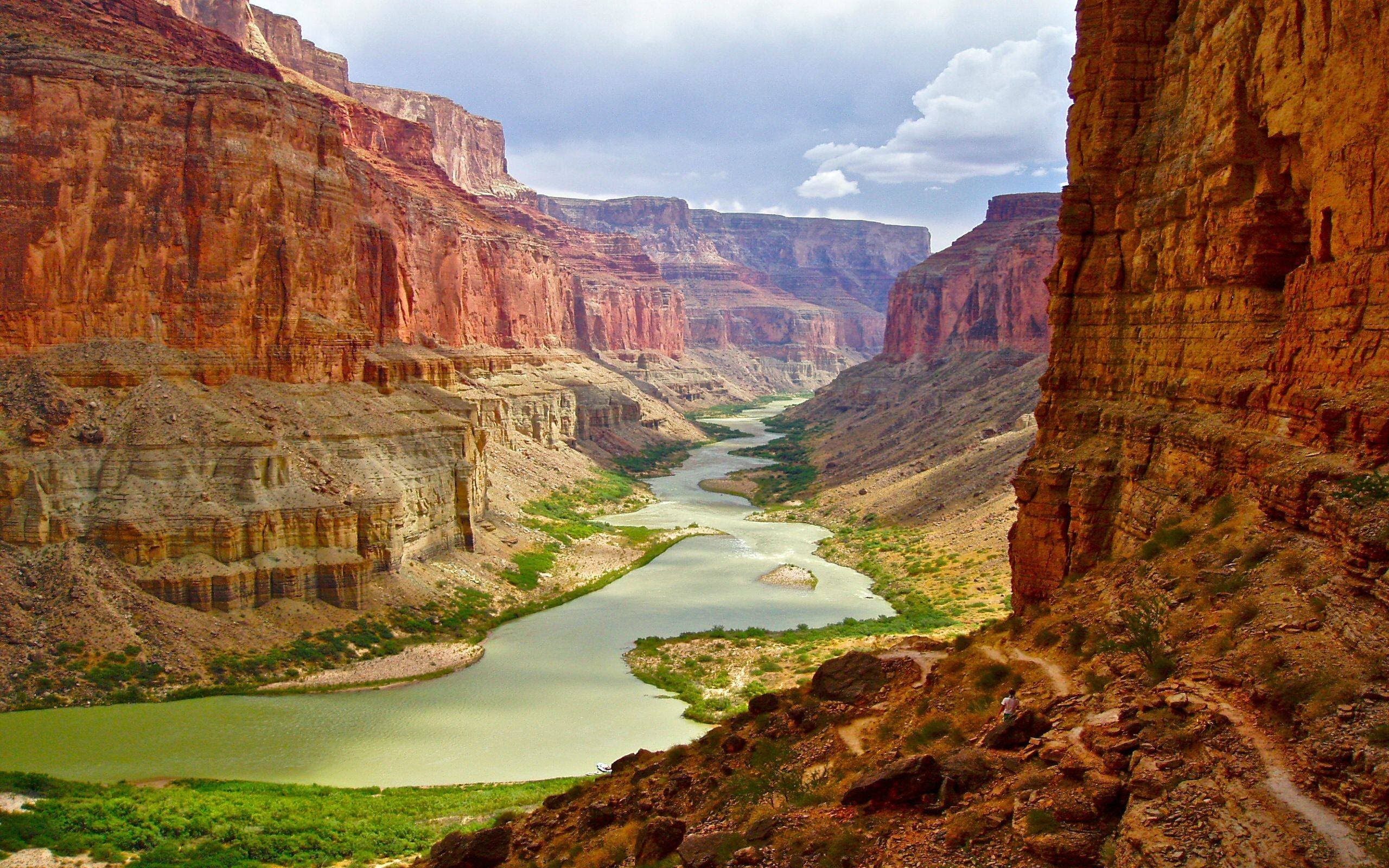
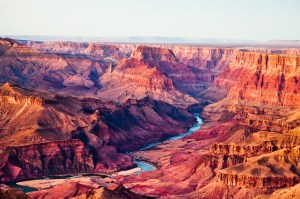
“This is a difficult post for me to write … I have always believed that Art and Nature are two vital ways to make our  prayer come to life, two ways to lead us ‘into’ knowing God.  And yet, I feel God has offered me such a rare gift at the end of a very tough year that I need to give myself time to allow it to sink in before I fully understand what I was given. … I was on a day-tour of the Grand Canyon.

IMG_1859
The sense of unmanageable Beauty one has before the wilderness of the Grand Canyon is just that: a true revelation of God, a true revelation of the correct relationship we are to have with Him. When I was there, facing this extraordinary demonstration of what authentic creativity is, all I felt was silence: a thick blanket of silence that covered my heart, my brain, my body… Before God’s presence, one goes numb, afraid to even breathe, afraid to approach it or draw near in any way. My eye-sight is not worthy to touch such beauty, my voice is not real, authentic enough to even whisper a prayer; all of one’s senses go silent, paralysed before such overwhelming power.

grand5

And yet, my heart continued to pray in a different way. Deep down, my being seems to hide a different kind of worship, a different kind of relating to Christ. I don’t know when and how I learnt it; it just exists, the way instincts simply exist. Before such beauty, one discovers how different we are from what we’ve learnt to think we are – we are so much deeper, so much more beautiful, so much more able to worship and truly pray. It’s as if we were created with a set of spiritual senses and abilities, which we later – for some painful reason – fail to recognise in ourselves and fail to develop. We waste so much of our own being, we are so removed, so distant from our real selves… We learn to adapt to this world, and we end up replacing our spiritual senses with material ones.

grand6

Then, in moments like these, we find ourselves face to face with His presence, and a sort of engine just starts working again in our hearts – all by itself, with no input, no doing of our own.

grand1

I was simply present; I was in awe at the presence of my true self as much as I rejoiced in God’s presence. There was nothing but silence in me; yet, this silence was as alive, as ‘eloquent’ in its worship as the most grace-filled moments I’ve been blessed with the Holy Altar.”

IMG_1935

Sculpting in Time

Andrej_Rublëv_001


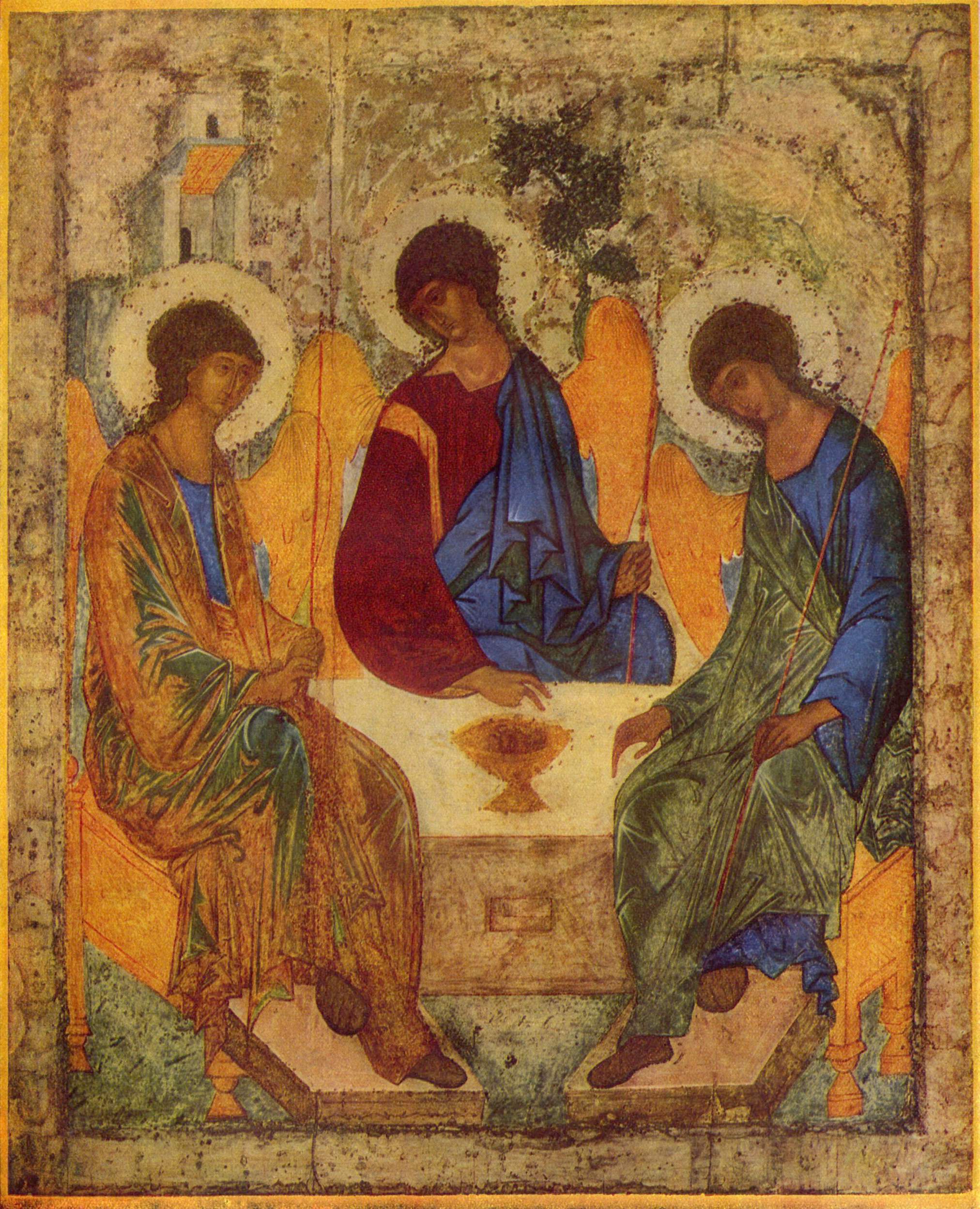
This is Iconographer Andrei Rublev’s ( Андре́й Рублёв) famous work on the Trinity – Angels at Mamre ( Holy Trinity). For those of you familiar with his art, the colour explication that follows is superfluous. What I would really like to share with you is my (re)discovery of these colours yesterday through Tarkovsky‘s lens. These colours become so alive at the ending of his movie Andrei Rublev (1966) after three hours of black and white! Pay particular attention to https://www.youtube.com/watch?v=FsEbrhv2jGY, esp. 4:50′ to  8:00′.

For those of you who are not familiar with this icon, Rublev gives each person of the Trinity different clothing. On the right, the Holy Spirit has a garment of the clear blue of the sky, wrapped over with a robe of a fragile green. So the Spirit of creation moves in sky and water, breathes in heaven and earth. All living things owe their freshness to his touch. The green mantle of the Spirit, scintillating with light, is clearly a Rublev achievement. Green belongs to the Spirit because the Spirit is the source of life.

The Son has the deepest colors; a thick heavy garment of the reddish-brown of earth and a cloak of the blue of heaven. In his person he unites heaven and earth, the two natures are present in him, i.e., human and divine, (and this is why on the table are placed two of his fingers) and over his right shoulder (the Government shall be upon his shoulder) there is a band of gold shot through the earthly garment, as his divinity suffuses and transfigures his earthly being. The red signifies his earthly passion, and the gold band, his royal status as Christ the King.

The Father seems to wear all the colors in a kind of fabric that changes with the light, that seems transparent, that cannot be described or confined in words. The Father’s ghostly outer garment hints at his inconceivable divine nature. And this is how it should be. No one has seen the Father, but the vision of him fills the universe. His robe is iridescent, shifting from glowing golden-red to azure blue, a triumph of the painter’s art. “You robe yourself in light as in a garment” (Ps 104:2).

The wings of the angels or persons are gold. Their seats are gold. The chalice in the center is gold, and the roof of the house. Whether they sit, whether they fly, all is perfect, precious, and worthy. In stasis, when there is no activity apparent on the part of God, his way is golden. When he flies, blazes with power and unstoppable strength, his way is golden. And in the Sacrifice at the center of all things, his way is golden.

The light that shines around their heads is white, pure light. Gold is not enough to express the glory of God. Only light will do, and that same white becomes the holy table, the place of offering. God is revealed and disclosed here, at the heart, in the whiteness of untouchable light, the Uncreated Light.

For more information, go to:

https://www.youtube.com/watch?v=6g-DkKDQ_5g

https://www.youtube.com/watch?v=vOYFHbmmWZ0