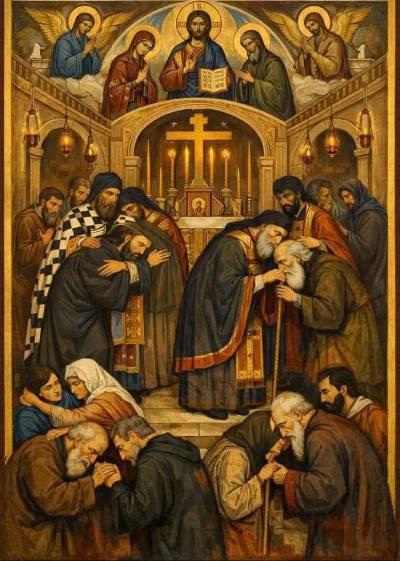
Born for Eternity

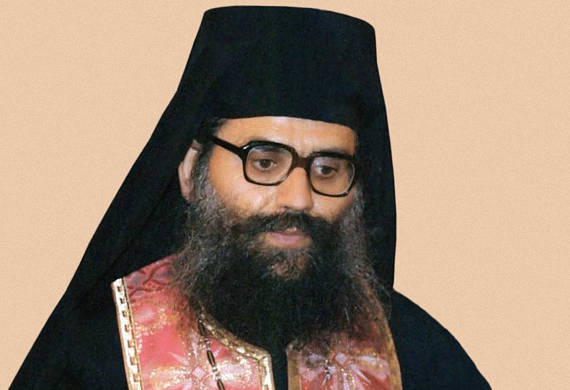
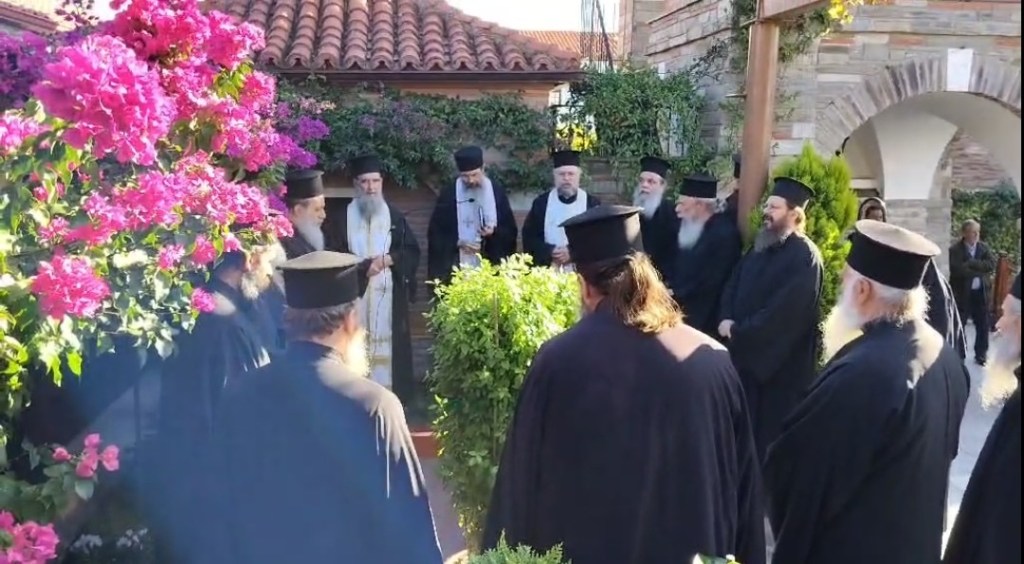
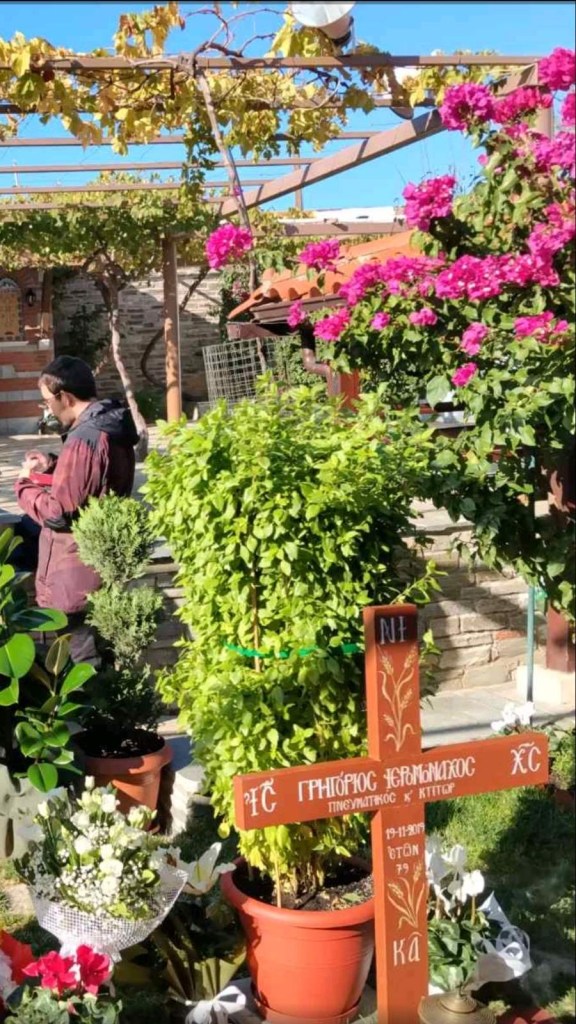
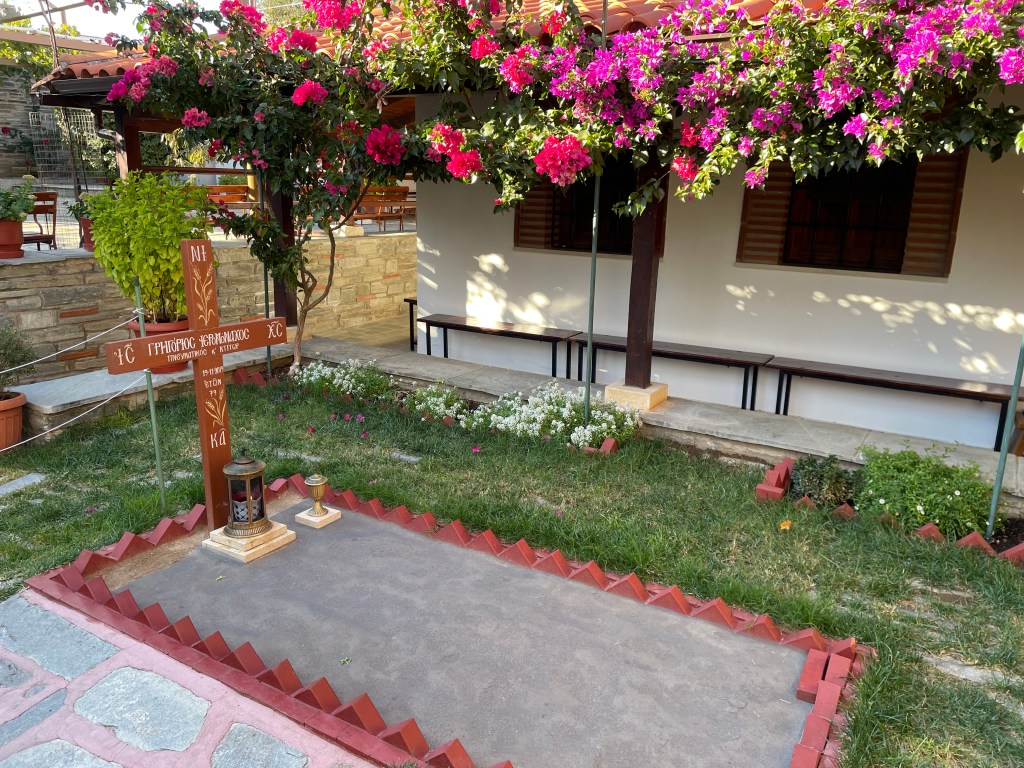
+ Father Gregorios, 19 November, 2019 — 6th year Memorial service

Memory Eternal, dearest Father!

“Love in Christ is a sacrificial Love, a self-sacrificing, self-denying Love, Agape. You sacrifice everything for the person you love, “your neighbour”. By “our neighbour”, we mean every person as God’s Image, even our enemy. By “love” we do not mean that we should do whatever the other person wants us to do, but to love him with Christ’s burning and flaming Heart, for his salvation” (+ Elder Gregorios Papasotiriou)

*

This is how we have always felt his love! For yearsGerondas Gregorios of blessed memory offered his prayers with tears and his never-to-be-forgotten spiritual guidance. My rebirth in Christ ((John 3:4), my new life literally started with his guidance about 40 years ago. I feel so unworthy of such a blessing!

*

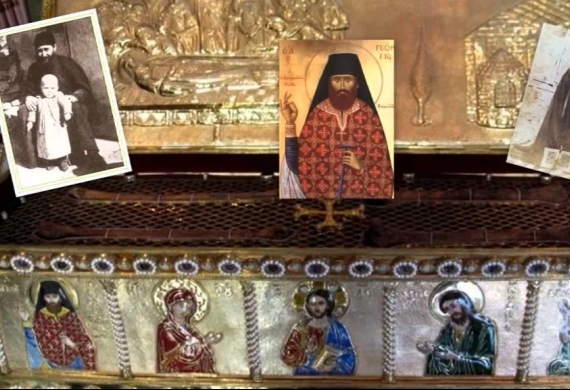
Father Gregorios, born Dimitrios Papasotiriou, was born on February 16, 1940 in Paleokomi, Serres, to pious parents, Alexios and Efthymia.

From his childhood, he was characterized by an inclination for life in Christ and very early he felt the divine call for the priesthood and complete dedication to the Lord through the monastic calling. Thus, after completing his studies at the Theological School of Aristotle University of Thessaloniki, he came to the Holy Metropolis of Kassandria, where he was ordained a deacon and priest by the blessed Metropolitan Synesios Visvinis. During his stay in Polygyros, the Elder, together with other fathers under the guidance of Fr. Spyridon Trantelis (later Metropolitan of Lagadas), formed a group that served the people of God, as well as the children of the Polygyros boarding school for boys, with much love and self-sacrifice.

From his student years, the Elder particularly loved Mount Athos. He visited it very often and was particularly associated with the Holy Monastery of Saint Dionysios and the blessed Hegumen Fr. Gabriel, who became his spiritual father for a number of years. However, the main turning point in the Elder’s spiritual journey was his acquaintance with Saint Paisios the Athonite. He became connected to him with an unbreakable spiritual bond, becoming his disciple and striving throughout his life to imitate his holy life. In fact, Saint Paisios also became his godfather during the monastic tonsure of Elder Gregory in the cell of the Holy Cross in the year 1977.

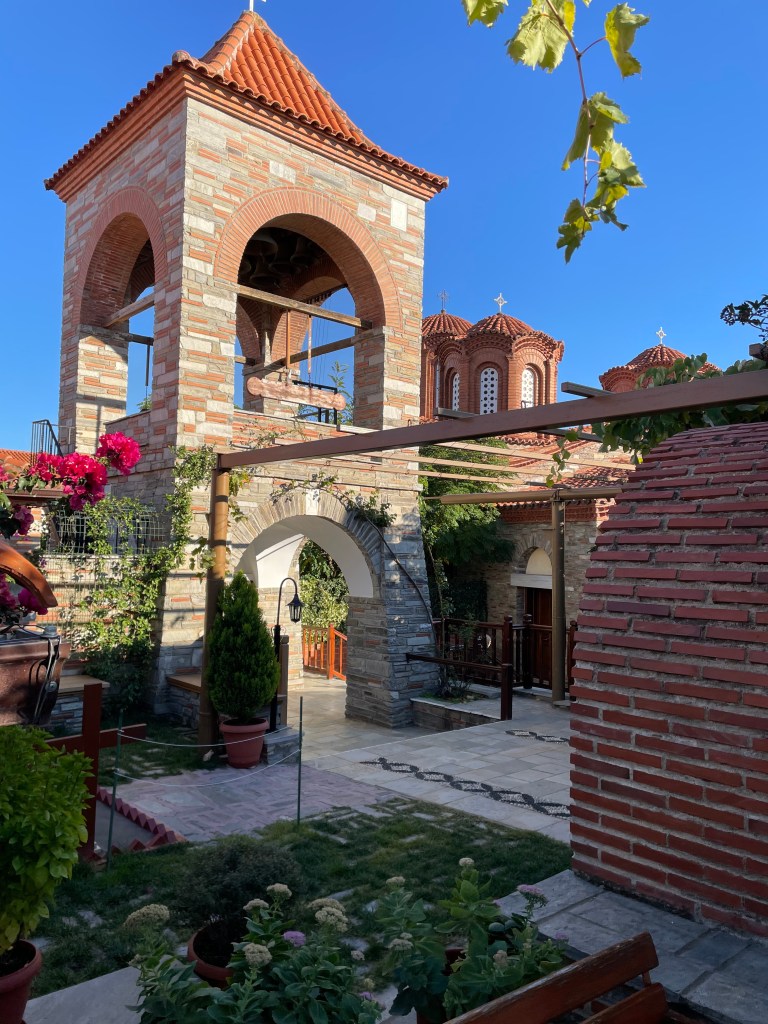
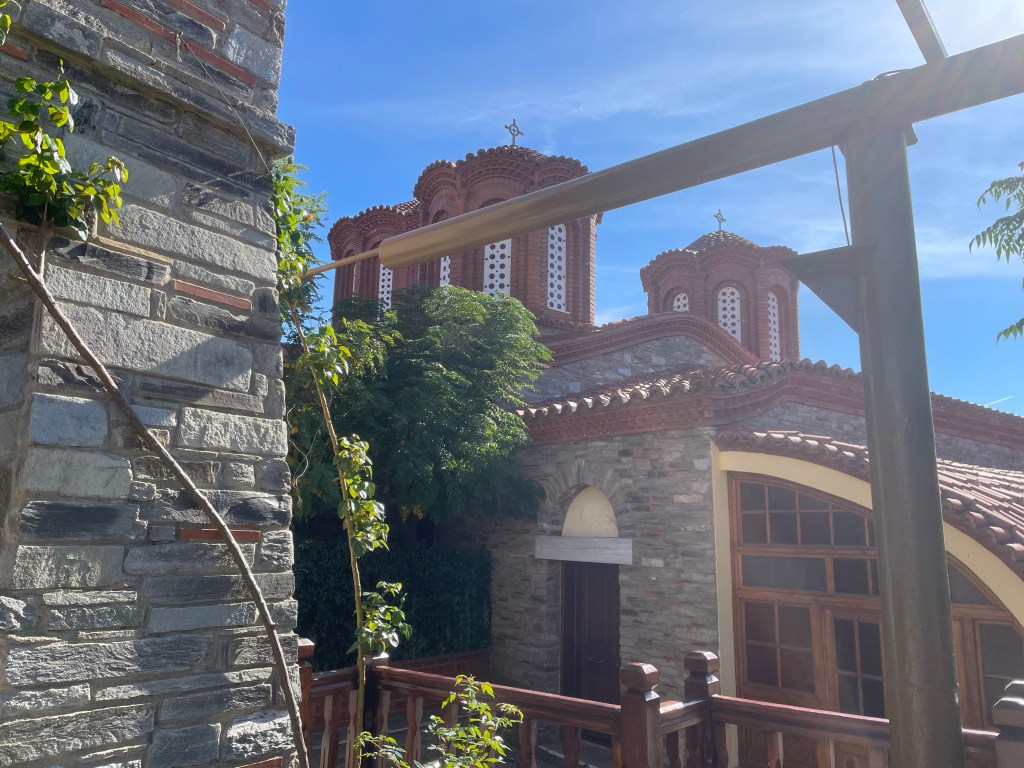
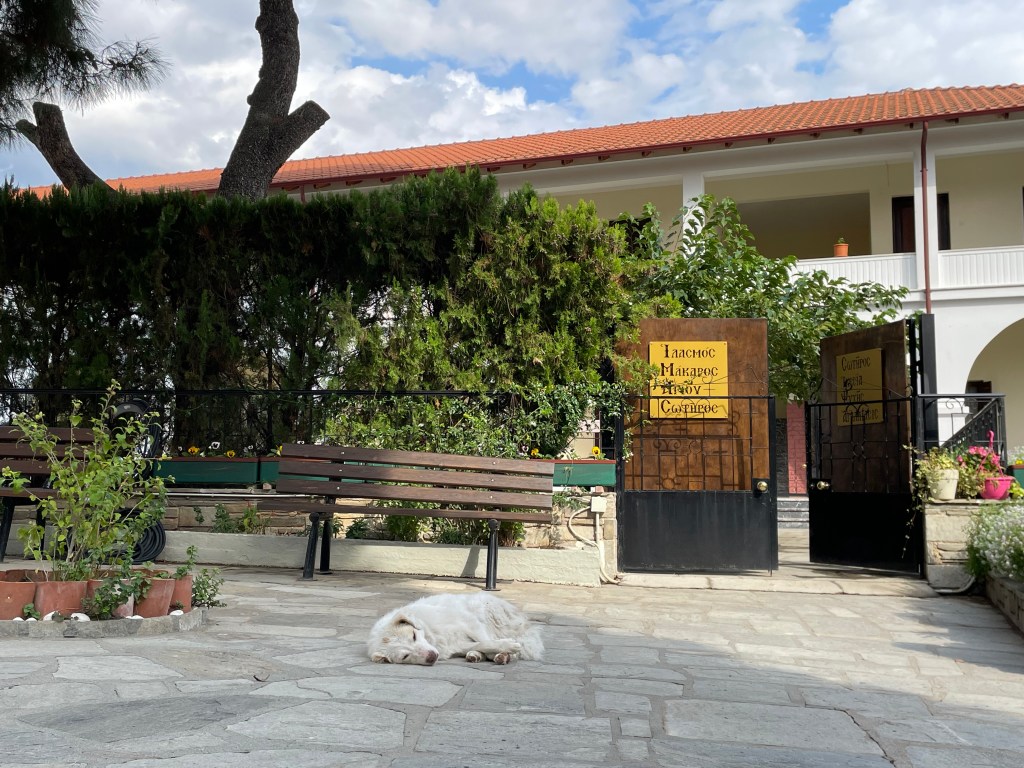
In the year 1970, the flame of hesychia led Father Gregory to the then dilapidated Metochion of the Holy Monastery of Saint Dionysios in Metamorphosis, Chalkidiki, where, with the blessing of the local Bishop, he settled in a monastic cell-barn next to the Church of the Holy Forerunner.

This place from then on became the arena of his great ascetic struggles and the base for his priestly-pastoral ministry here in Chalkidiki. Only God knows his ascetic labors and efforts in order to serve the people of God with the pilgrimages, the preaching, the confession, the holy services, the vigils, the divine Liturgies. Saint Porphyrios, who attended a divine Liturgy in 1974, commented: “When Father Gregory serves the Holy Liturgy, all of God is within him and all of Father Gregory is within God.”

With the encouragement or rather the command of Saint Paisios, the life of the Monastery begins in 1975. The Holy Monastery of Dionysios grants the necessary area for the construction of the Holy Hesychasterion. The blessed Abbots Fr. Gabriel and Fr. Charalambos supported Elder Gregory with great love, foreseeing that the now deserted place of the old Metochion would be transformed into a spiritual oasis. Then the first group of spiritual children of the Elder was established, which formed the nucleus of the later sisterhood. The first Abbess was Eleni Paschaloglou from Rodolivos, Serres – herself a spiritual child of Elder Gregory -, later Elder Ephemia, who passed away to the Lord almost five months after the Elder’s “fallen asleep” after 45 years of sacrificial ministry in the Monastery.

The life of Father Gregory is henceforth spent in material and spiritual labours for the construction of the Hesychastirion, for the guidance of the Monastics, but also in his great offering as a priest, preacher and above all a spiritual father to the people of God. The Elder who abhorred worldly prominence and loved humility and obscurity, is now becoming well known as Father Gregory the Spiritual Father. Hundreds of souls found the path to salvation with him, thousands rested under his rock, countless were helped by his spiritual guidance.

The blessed Elder suffered from many illnesses throughout his life, which he bore with great patience and a doxological disposition as if someone else were suffering. Especially the last few years were a cross of painful trials and a life of patience, because the pain and illnesses reached their peak.

The good God, wanting to rest the good shepherd and His faithful steward, called him to Himself after a sudden stroke on November 19, 2019. The funeral service and burial were held on November 21, the day of the Feast of the Entrance into the Temple of Our Most Holy Lady the Theotokos and Ever-Virgin Mary, the birthday of the Monastery, when 45 years ago Saint Paisios gave the blessing and the command to Father Gregory to begin the great work for which he sacrificed his life.” (Ραδιοχρηστότητα, by his spiritual son and priest Father Nikolaos at St. Palnteleimon, Mesimeri )

May we have his prayers! “Kai sta dika mas.” “And to our own!”  May we be reunited with you dearest Father in Heaven in God’s Kairos!

From Singer to Monk, From Cancer to His Kingdom

“We pray again for the repose of the soul of your servant Dionysios the Monk… † October 19, 1993

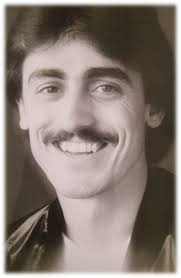
The famous and great singer Dionysios Theodosis who became a monk at Mikra Agia Anna on Mount Athos, shortly before cancer led him to Christ at the age of 35…

No one knew his secret throughout his battle with the incurable disease, until at his funeral procession at the Church of St Thomas the Apostle in Goudi, his spiritual director, Fr. Spyridon Mikragiannanitis, mentioned:
“We pray again for the repose of the soul of your servant Dionysios the Monk!”
Everyone was speechless.

Dionysios Theodosis (June 16, 1958 – October 19, 1993) was a Greek singer.
During his career, he collaborated with well-known Greek composers including Yiannis Spanos, Giorgos Hatzinasios and Marios Tokas and with singers such as Giorgos Dalaras, Dimitra Galani and Haris Alexiou.

He was experiencing great existential impasses, until he met Saint Paisios, who discerned his pain and said:
“You, my child, are bringing me a lot of pain, you need to confess, and to a good spiritual father.
Go to the Mikra Agia Anna and talk to Father Dionysios, he is good and will help you”.

Dionysis followed the advice and set off by boat for Mikra Agia Anna.
A monk next to him struck up a conversation and introduced himself: “Father Dionysios Mikragiannanitis”.
After the initial surprise, they struck up a conversation for a while, but Dionysis thought he was a “jester” since this was not the image he had had until then of a spiritual person:
that is, a serious, perhaps even grim old man.
His illness, however, came to radically change the landscape.
He began chemotherapy in London.
His visits to Mikra Agia Anna intensified and he announced to the Fathers that he wanted to become a monk!
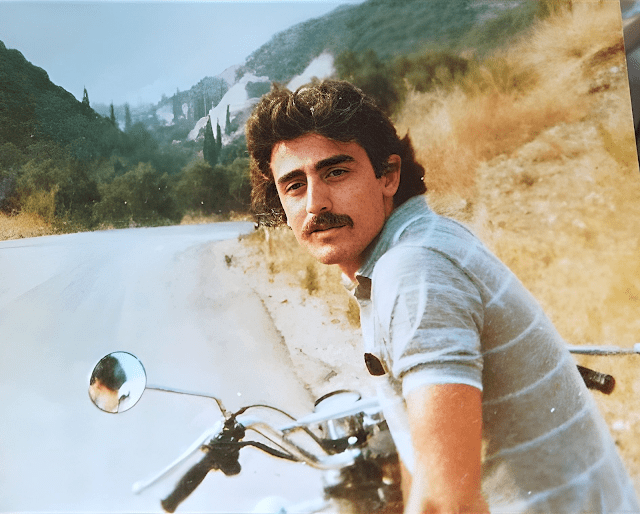
At least once a month when he finished at dawn his work he would take his motorcycle and travel to Mount Athos.

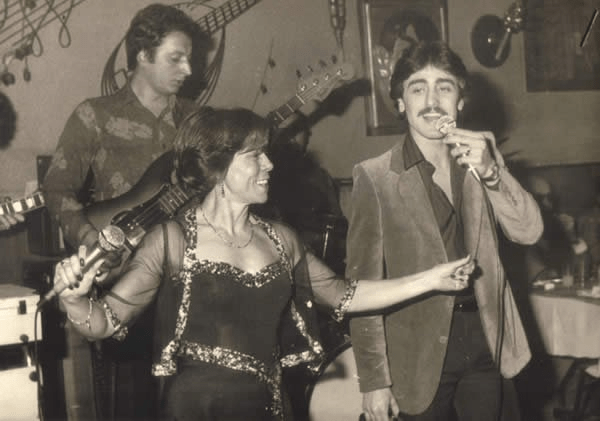
With his mother, also a singer, in a shop somewhere in Istanbul…

During that time, the song “As Long as a Coffee Lasts” was also written, which he performed himself and which few know that he dedicated to his Elder!

He wished to get well and dedicate his life to hesychasm.
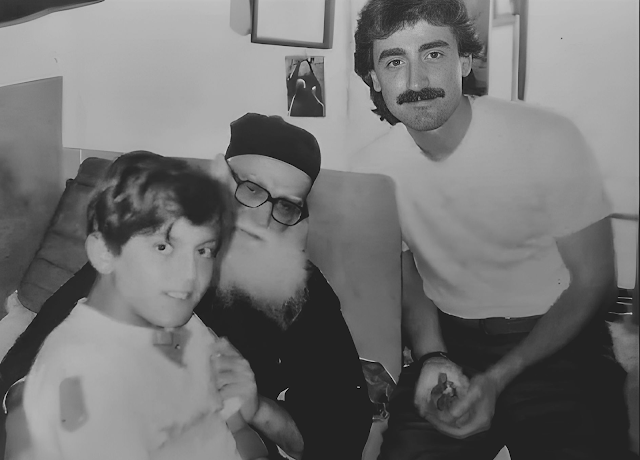
His elder, Dionysios, before leaving for treatment abroad, shaves his head and allows him to visit the hospital in England without his cassock.

On Mount Athos, together with Elder Efraim Katounakia

No one knows his secret, not even his mother Despo, who stands by his side in his last moments and reads a book he gave her about the garden of the Virgin Mary.

She is impressed by what he tells her about Mount Athos.

She prays to God in her heart:
“May my son get well and with my blessing come to serve you.”

Dionysios says his prayers in the bed of the hospital and she does not know that those prayers are his monastic rule!
One day, the English nurse tells Dionysis’ mother in a lacklustre voice, lacking any real emotion: «he died».

The funeral took place in Greece.
Among other relatives, friends, well-known singers, actors and musicians, his elder, Dionysios, also attended.

Fr. Spyridon revealed the secret at the ceremony when he said the name of the deceased: “the servant of God, monk Dionysios”(!)
The congregation was amazed.

Immediately after the ceremony the Fathers took his body, wrapped it in a sheet and monk Dionysios was buried in Mikra Agia Anna, in the place where he wanted to become a monk.

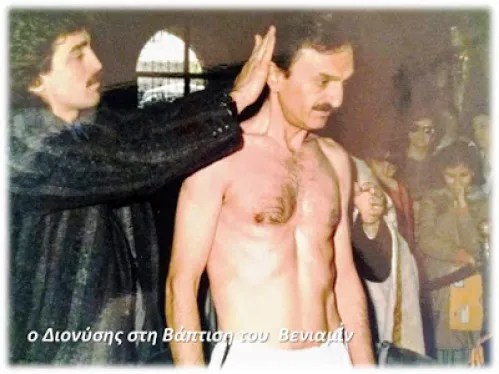
His stepfather and godson Benjamin Koul, a person who converted to Orthodoxy by Dionysis often visited his grave, knowing the people of Mikra Agia Anna.
(Benjamin was a Turk and was baptized in Greece.
His son, Dionysis Theodosis, was his godfather in the Sacrament…)

At the baptism of his step-father and godson


His wish was to be buried next to his child when he departed this life.

His wish was fulfilled.
He fell ill a few years later and also departed this life, adding another painful loss to the lady-Despo who, when the three years of his burial had passed, took the bones and brought them to Ouranoupoli.

There the monks received them and buried them next to those of his spiritual father, godfather and child, monk Dionysis.

From the page, “Dionysis Theodosis / DionisisTheodosis” and Amfoterodexios

Please watch monk Dionysis sing the song he dedicated to his spiritual father. At first sight, it looks erotic but it is about Agape!

As long as a coffee lasts

Dedicated to his spiritual father

Don’t leave me alone this night,
I am roaming in a minefield
When I drink you up and dry up this night
Either I’ll be saved or I’ll be lost

Stay a little longer
Until I escape
And if you want, hold me
As long as a coffee lasts
Stay a little longer
Until I escape
And then say bye
And that you will come again

Don’t leave me alone this night
My mind turns to evil
Comfort my pain this night
Lead me on with your love, like a baby

Stay a little longer
Until I escape
And if you want, hold me
As long as a coffee lasts
Stay a little longer
Until I escape
And then say bye
And that you will come again (2)

Memory Eternal! Christ is Risen!

The Thebaid Desert Fathers Death to the World

Dear brothers and sisters,

Christ is in our midst.

An interim to all these prophesies I have recently posted. Kindly have a look at this conclusion of a chapter I am in the process of translating for Gregoriou monastery of Mount Athos.

“Here is a beautiful summary of spiritual work left to us by Abba John the Dwarf, one of the most discerning and holy ascetics. With this we end this brief presentation.

Every morning, make a beginning with every virtue and commandment of God.

And strive

With much patience,

With fear and long-suffering,

With love of God,

With all the readiness of soul and body,

With much humility,

With patience bearing the sorrow of the heart and carefully guarding it,

With much prayer,

With prayer for others with sighs,

With purity of tongue,

With watchfulness over the eyes.

Do not be angry,

even if you are insulted,

but have peace within yourself;

Do not return evil for evil;

Do not pay attention to the mistakes of others;

Do not give value to yourself, who is below all creation;

Oppose and renounce the material world

and everything that has to do with the flesh.

Live:

With a willingness to take up your cross,

With a fighting spirit,

With poverty of spirit,

With askesis and spiritual determination,

With repentance and tears,

With a warlike struggle,

With discernment,

With purity of soul, With food as much as it should be,

Working quietly at your handiwork,

With night vigils,

Enduring hunger and thirst, cold and nakedness,

By toiling.

And above all and with all these together:

To seal yourself your coffin lid as if you have died,

Bearing in mind that death is near you every minute … ( Abba John the Dwarf, 34).

“Will modern man want to hear these messages sent to us by the ancient ascetics of Thebaid and their other peers? Will he want to?” (+ Elder Eusevios Vittis of blessed memory)

Day 6 Silence as Sacrament

Reflections on silence and holy obedience

“Be silent, all flesh, before the Lord,” exclaims the prophet Zechariah (Zech 2:13).

Upon entrance, silence envelops me. Abruptly, I am separated from the tumult, noise, busyness and endless distractions of the outside world.

“Peace, be still!” Jesus orders the wind of noise, confusion and tumult to cease in the midst of our own storms and turmoil.

I feel separated from other people, all people, too! Is anybody here?! What a contrast to last night’s feast! There, at the vigil in St. Demetrios church, in Thessaloniki, an amazing Resurrectional experience unfolded in a packed church! So many holy chalices all around the Royal Doors! So many people receiving Holy Communion and then, at the dismissal of the holy liturgy, flooding the streets outside the church. Here, I am all alone — the silence of the heart! And what a deafening, thundering silence that is!

“When the Lamb opened the seventh seal, there was silence in heaven for about half an hour.” (Rev. 8:1)

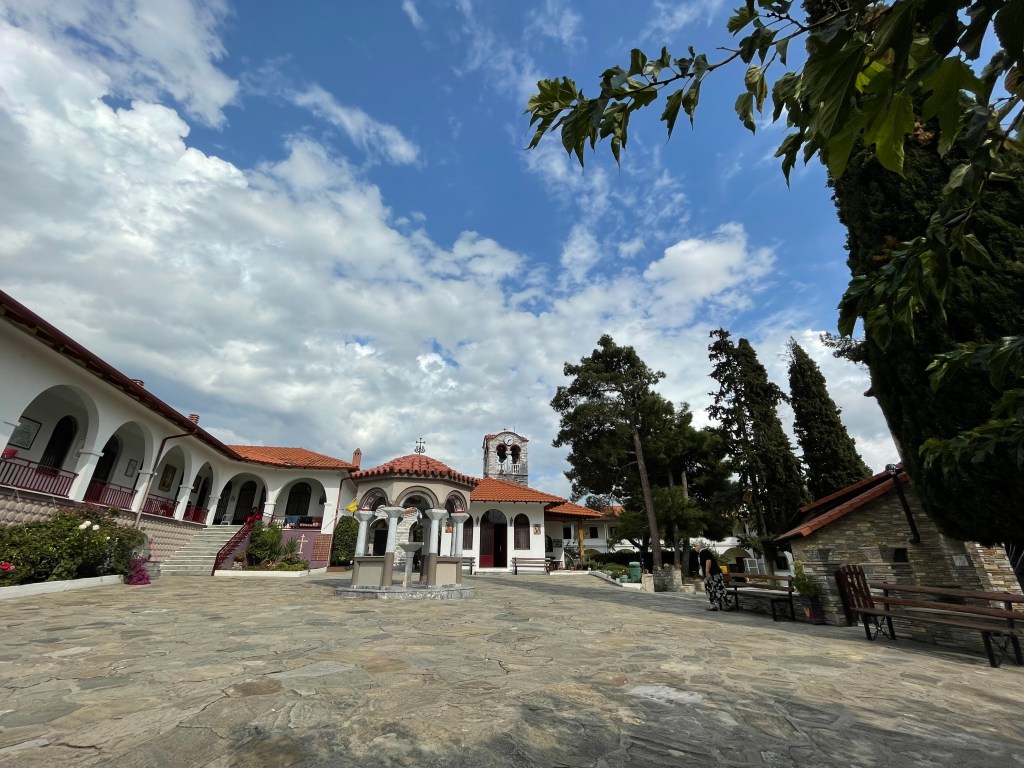
Yet, how can it be that a monastery of more than 50 sisters plus novices and postulants look and feel so uninhabited, so “desolate”! Am I really all alone here? ...

“Let us love silence till the world is made to die in our hearts.” St. Isaac of Syrian

Sister Elizabeth approaches and welcomes me. She gently inquires about my news. This sister was coordinating my endless faxes to Gerondas when I was at the UK and sending his replies. She knows everything about me! Her question: “Have you got a spiritual father now?”

This question will become a refrain during my brief stay here, asked by all sisters who spend some time with me. In fact, a refrain addressed not only to me, but to all pilgrims and visitors here. It is not that the sisters are not concerned with/about our problems and sorrows, but our obedience to a spiritual father seems of paramount importance and the key to everything. Even if with his guidance and help, our problems are eventually not “solved”. The mystery of holy obedience. Obedience shows love for Christ. And Christ especially loves the obedient” (St. Porphyrios, Wounded by Love, p. 25).

Saint Simeon the New Theologian wrote the following to one of his spiritual children:  “We conceived you through teaching, we underwent labour pains through repentance, we delivered you with much patience and birth pangs and severe pain and daily tears”  (Epistle 3, 1-3).

Barsanuph’s soul-stirring prayer makes the immense love of a spiritual father for his spiritual children more palpable: «Behold, here am I and the children that You gave to me; protect them in Your Name, shelter them with Your right hand. Lead us to the harbor of Your Will and inscribe their names in Your book…  Lord, either include my children along with me in Your Kingdom, or erase me also from Your Book… » (Nicodemus of the Holy Mountain, “Book of Barsanuph and John”, Response 99).

Reciprocally, in this mystery of Christ, the spiritual child should place everything at his Father’s feet, with humility and filial trust. Saint Basil the Great urges us to “not keep any movement of the soul secret, but to bare whatever is hidden in the heart”  (“Oroi Kata Platos” – Conditions breadthwise, 26, ΒΕΠΕΣ 53, 184). Nothing should be concealed from our spiritual father. That is the only way our sins are forgiven by God.  We are freed of the burden of guilt. We uproot our passions. And the spiritual father thereafter guides us safely through our spiritual life. There is simply no other way! Our goal is not simply to manage/ solve all our problems here on earth, but “receive the end of your faith—the salvation of your souls”. (1 Peter 1:9)

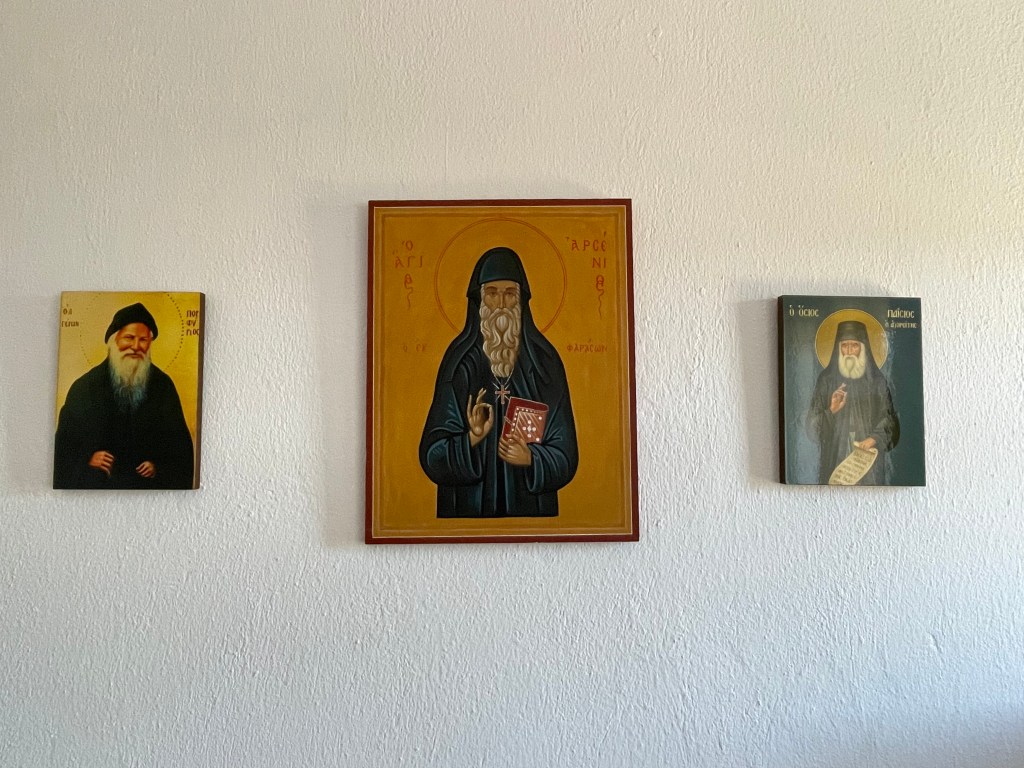
Other sisters soon join us for a minute to welcome me and hear the news about St Demetrios’ vigil in his church –it is after all his feast today– but they quickly disappear. Not a minute of idle or small talk. I am shown to my St Paisios, St Arsenios and St Porfyrios (!) cell, and there is still some free time until our common meal at 15:00 to take a quiet walk inside the monastery or … sit in my cell.

Inside my cell

“A brother came to Scetis to visit Abba Moses and asked him for a word. The old man said to him, ‘Go, sit in your cell, and your cell will teach you everything.’

God calls each one of us in silence and invites us to go into our inner “room,” shut the door and pray to our Father in secret, assured that He will answer our prayer (Mt 6:6). It is only in this silence and stillness that we can listen to Him, hear His “still small voice” (1 Kings 19:11-13). The quiet water of Siloe flows without noise or sound, “goes softly’ (Is. 8:6).

Gradually, the guests house starts to get filled: two young ladies, university students, in their early twenties, settle in, then another one arrives, this one still in high school, with fond memories of +Elder Gregorios treating her with candies and hugs, and finally a young engineer who attended at the nearby Ormylia monastery a service of monastic tonsure.

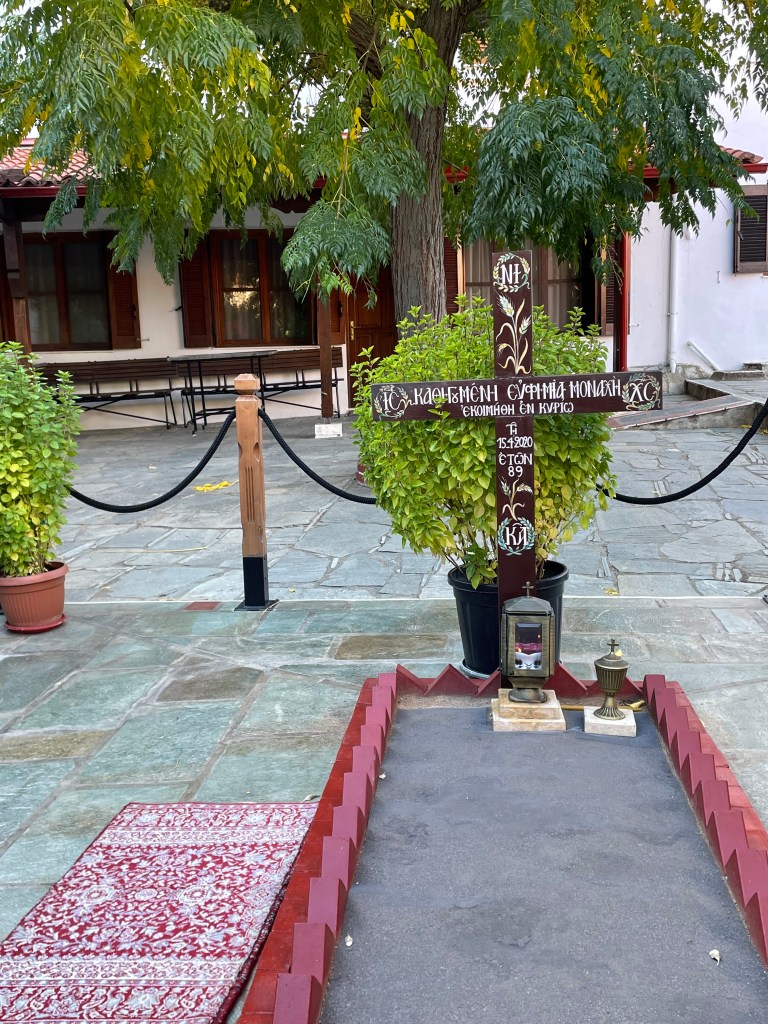
Gerondissa Euphemia’s grave (+15 April 2020, 88 years old). She was the first Abbess of the monastery and fell asleep in the Lord shortly after Gerondas Gregorios’ departure to Heaven (19 Νοεμβρίου 2019).

Bells ring and the common meal with the sisters begins, with a reading of Saint Gregory Palamas’ homily on St Demetrios. Our meal is a very ascetic one, as we are all preparing for Sunday Holy Communion.

We retire very early in our cells. The Sunday service will be a vigil from 23:00 to 03:00!

At the insistence of Sister Elisavet, I prepare a brief note for Abbess Mariam. Briefly, I share my news and ask her blessing. No questions or requests. Only her blessing to allow me to stay here longer and more often. –Which was one of the things +Gerondas Gregorios had always urged me to do, Sister Elisavet points out to me …

I give the note to the sister in charge of the guests’ house, pray and wait. After all, our vigil will begin very soon.

*

“Do not be afraid that there will be no fruit when all dies down; there will be! Not everything will die down. Energy will appear; and what energy!” St. Symeon the New Theologian

“Silence is the sacrament of the world to come” — St Isaac the Syrian

Day 4 “Take off your shoes”

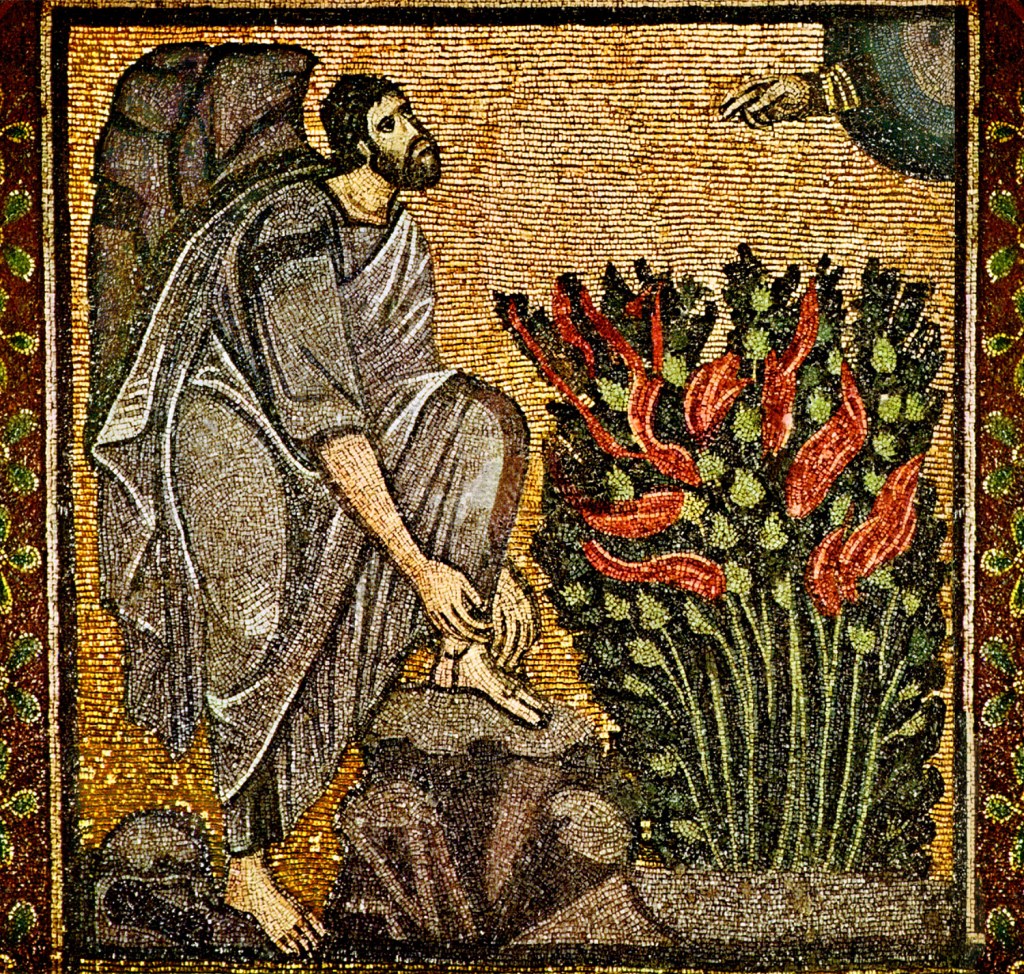
The Burning Bush

His holy presence is immediately felt upon entering the monastery gates! This Saint is St. Georgios’  Karslidis, the New Confessor of Drama, the founder and first spiritual father of the Ascension Monastery. A bit exhausted after the long drive, off we rush to kneel before his relics and venerate them. … Rush! Waste no more time! “The doors are not yet shut; the bridegroom hears you”. St. Basil the Great

“Take off your shoes”

Hundreds and thousands of the faithful, all these years, especially since his canonisation in 2008, have knelt before him, to seek comfort in life’s trials and tribulations. So many miracles are happening and are being recorded every day!

“Take off your shoes”

Next, we kneel at Gerondissa Akylina‘s grave. Saint Paisios characterized her as “Gerondissa of Gerondisses; ie. Abbess of Abbesses” and Saint Porphyrios of Kausokalyvite called her “Cherub with golden wings”. Her canonisation is expected to take place soon and her relics are now displayed inside the Ascension Church, next to those of St.George Karslides, for veneration too.

So many contemporary Saints and spiritual Fathers and Mothers have blessed her diaconate: Saint Paisios, +Gerondas Iosif Vatopedi, +Gerondas Gavriil Dionysiatis, +Gerondas Gerasimos Mikragiannanitis, +Gerondas Theofilos (Lydia), Elder Efraim of Arizona, establishing her prayer rule, +Elder Georgios Kapsanis Gregoriou, +Elder Aimilianos, Saint Porfyrios, Mother Nikodemi-Ormylia monastery, +Mother Fevronia-Dormition Panorama monastery, to name just a few.

(Mother Porfyria’s obedience for a decade was the exclusive care of the elderly and frail Gerondissa Akylina).

“Take off your shoes.” 

The nuns welcome us, show us to our rooms, offer us a meal, in the separate guests’ house, and leave us to rest before Vespers. Yet, what seems most urgent is the need to repent. Now, on the interpretation of the Greek Fathers of the Burning Bush, St. Gregory of Nyssa for example, shoes, made from the skins of dead animals, signify the deadness of repetition, boredom, inattentiveness. 

“And the angel of the LORD appeared unto him in a flame of fire out of the midst of a bush: and he looked, and, behold, the bush burned with fire, and the bush was not consumed. … And he [God] said, Draw not nigh hither: put off thy shoes from off thy feet, for the place whereon thou standest is holy ground.” (Exodus 3:2-5 KJV )

“Take off your shoes.” 

Start afresh, free yourself from what is lifeless, from enslavement to the trivial, the mechanical, the repetitive. Shake off the deadness of boredom. Wake up. Come to yourself. Open your spiritual eyes. Cleanse the doors of your perception. Look and see! Listen!

“Take off your shoes.”

The monastic triptych of “prayer, study and work” (Abba Isaiah of Scetis ascetic discourses) is observed here too, but with a greater austerity than in other monasteries, probably because of the +Gerondas’ and +Gerondissa’s relics’ omnipresence and the specific typikon they follow, at the inspiration of +St. Efraim of Arizona. A variation of this salvific triptych is “prayer, attention and work”. This triptych offers balance, healing, consolation. There are 38 sisters in this monastery, and lots of young novices and postulants, pre-novices. Nuns come and go busy bees, novices and postulants race all round, pilgrims flock, beautiful gardens and fields surround us, yet everything fades before my eyes. My heart has been struck, smitten (Psalm 102:4)

“Take off your shoes.” 

In the evening, I text to Gerondissa Porfyria to plead for a meeting, even for 5 minutes, anytime, before we leave the next day. The day is coming to a close. We retire to our cells. I pray and wait …

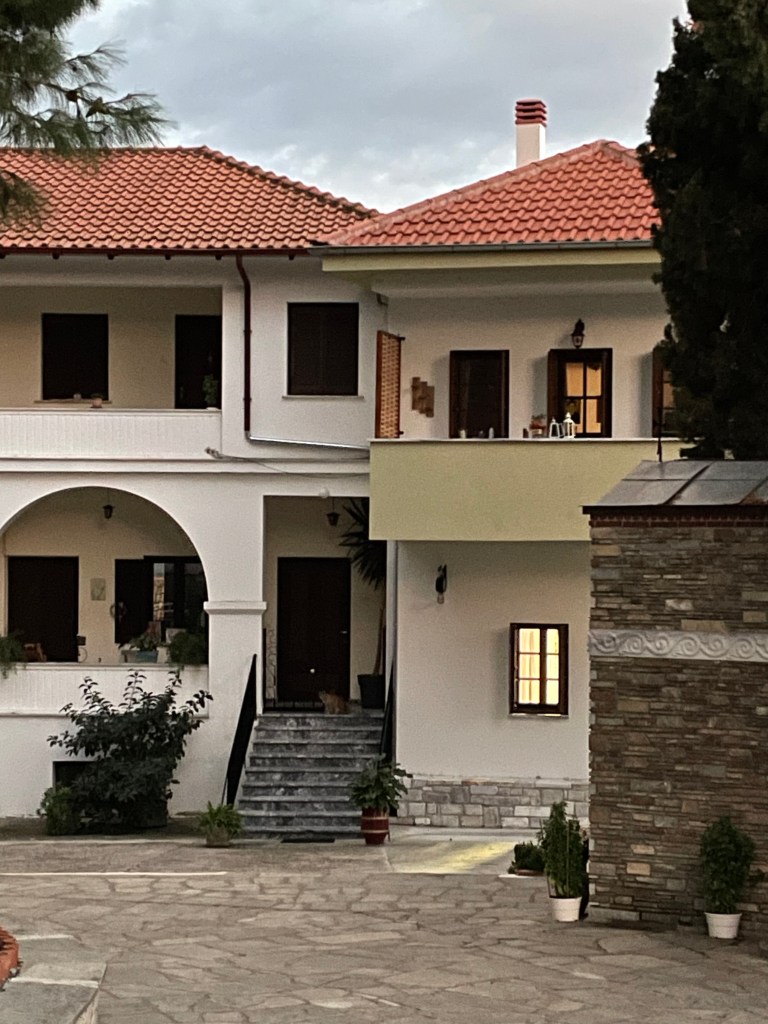
Gerondissa Porfyria’s balcony is the one with the lanterns

St. Gregory of Nyssa

Sandaled feet cannot ascend that height where the light of truth is seen, but the dead and earthly covering of skins, which was placed around our nature at the beginning … must be removed from the feet of the soul.

St. George Karslides

“God cares for everyone. Despair is in effect a lack of faith.”

Does Orthodoxy Matter? A Case Study

orthodoxy1


And here’s the challenging question …

In the absence of an Orthodox church nearby would you be prepared to pray at home rather than pray with the heterodox?


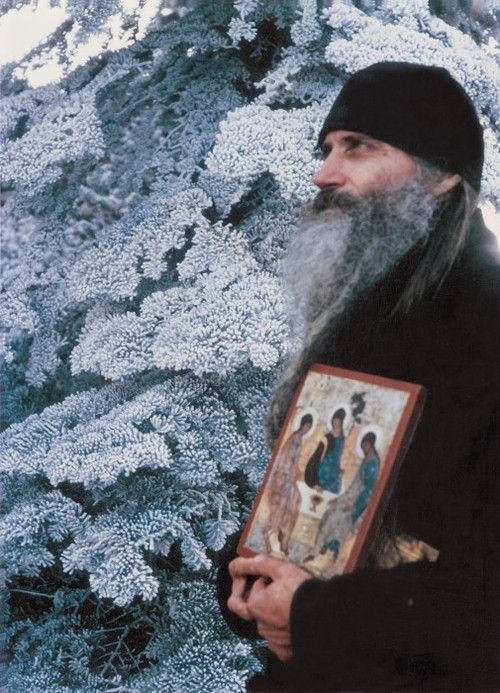
Father Seraphim Rose holding an icon of the Holy Trinityblessed seraphim.jpg

Orthodoxy means “true glory” or “true faith.”  We Orthodox think very highly of the word.  Or do we?  When it comes down to it, does Orthodoxy actually matter all that much to us (as it should)?  Orthodox Christians in the west find themselves living among many different Christianities and it can sometimes be tempting to think that notwithstanding some of the more obvious differences, (icons, the Theotokos, fasting, worship, for example), all these Christian traditions share much the same faith as us.  If you are of this opinion, then I am sorry to have to disappoint you, but it just isn’t true at all.  How so?

I am going to consider this issue by looking at a case study which reveals the damage that heresy can do in our personal lives, our relationships and even to the society and world that we live in.  It is a fictional story, but quite typical.

John and Mary go to an Evangelical Anglican Church.  John is Orthodox (Greek tradition).  Mary is Anglican.  This is her second marriage, being a young widow with one teenage son (Ian, 15) still living at home. She now has two children with John, daughters, aged 5 and 7.  John would prefer to go to his local Greek Church but his wife is a committed Anglican, and their children, although baptised in the Orthodox Church (with the exception of Ian), prefer the “lively worship songs”, as they put it, which are included in the church’s family service.  Ian is very involved in the local youth group and is thinking eventually of becoming an Anglican minister.  Does Orthodoxy then matter to John?  Well, yes, but only in a remote nostalgic sort of way.  It is some years now since he has attended Divine Liturgy, the last time was at Pascha in 2008.  His stepson, Ian, will have nothing to do with what he considers to be the “stuffy incomprehensible worship” at his stepdad’s church which he has visited once, just after his stepfather’s marriage.

Ten years later ….

Neither John nor Mary now regularly attend the Anglican Church.  John still hasn’t been back to the Orthodox Church since Pascha 2008 and Mary doesn’t like the new Vicar who is a woman.  Mary is quite a conservative evangelical believer who maintains that a woman should not be in a place of authority within the Church over men.  (This is the evangelical doctrine of the”headship of the male.”)  Her two daughters, now 15 and 17 still attend on their own and are very active in the youth group.  Ian, who shares his mother’s conservative outlook, has also left the church, disagreeing with what he believes to be the Anglican Church’s tolerance of homosexual partnerships.  He has started attending a very conservative Baptist church that teaches pure Calvinism, in particular, the doctrines known as TULIP (from the first letter of each doctrine), namely:-
Total Depravity – As a result of Adam’s fall, all humanity, is dead in sins and therefore damned.  Humanity’s nature is corrupt and utterly incapable of godliness.

Unconditional Election – Because man is dead in sin, he is unable to initiate a response to God; therefore, from eternity God elected certain people to salvation and others to damnation. Election and predestination are unconditional; they are not based on man’s response because man is unable to respond to God, nor does he want to.

Limited Atonement – Because God determined that certain people should be saved as a result of His unconditional election, He determined that Christ should die for the elect alone. All whom God has elected, and for whom Christ died, will be saved but the rest will be damned to hell for all eternity; again as determined by God’s sovereign will.

Irresistible Grace – Those whom God elected He draws to Himself through irresistible grace. God makes man willing to come to Him. When God calls, man responds.  Man cannot choose to love God by his own choice and freedom.

Perseverance of the Saints – The precise people God has elected and drawn to Himself through the Holy Spirit will persevere in faith to the end. None whom God has elected will ever be lost; they are eternally secure even though they may sin grievously after election.

Although Ian is a pious and committed believer these doctrines trouble him.  He begins to doubt that he is one of the elect, chosen by God for salvation.  His sinful life (he occasionally resorts to prostitutes) troubles him greatly but his church tells him that he is unable to make any right choice and save himself.  Ian enters a very dark period of depression, made much worse by the impact of these heresies on his mental health.  His fragile relationship with his atheist girlfriend disintegrates.  He seeks medical help for a latent depression which has now become the full blown clinical variety.

Five years further on, the two daughters are now at the same university, one just about to graduate but they have been unable to find an evangelical church they like nearby, so they have stopped attending church on the grounds that they believe in Christ and are saved, so what’s the point?  Back home John and Mary now lead thoroughly secular lives.  John sometimes thinks wistfully of his childhood back in Cyprus when he used to attend church with his Nana but this seems to him a very distant idealised time now.  He hopes, nonetheless, that his wife or children will respect his wish for an Orthodox funeral if he dies first.

So, did Orthodoxy matter to John?  Well yes, particularly earlier on, but for most of his adult life only in a nominal sort of way.  He had certainly not been catechised in his youth and his grasp of the faith, therefore, had always been somewhat tenuous.  Did Anglican evangelicalism then strike him as being similar to Orthodoxy?  Well yes, mostly.  He only saw differences in the worship style which often set his teeth on edge.  Let’s face it.  He attended the evangelical Anglican Church for the sake of his wife and family.  When they stopped going, so did he.  There is only one God after all and this was just a different way of being a Christian, it seemed to him.  He did lament his stepson’s involvement in the Calvinist church because he could see how its refusal of human freedom and choice, its dark doctrines of divine election to salvation or damnation, did not feel right to him, but he couldn’t really say why. 
Did Mary his wife ever consider Orthodoxy when the lady Vicar arrived?  Well, no, why should she?  Her husband rarely spoke of his childhood faith and she concluded that it could not have meant much to him in that case, so why should she consider it?  John and Mary now spend a conventional Sunday together as most couples do in their street, getting up late, going to the gym occasionally, shopping at B&Q, taking a drive into the countryside; just the usual and normal things everyone does nowadays.  Both still consider themselves as Christians, but obviously not of the fanatical sort whom they blame, quite rightly, for destroying Ian’s piece of mind.  As for the two girls, well they eventually graduated and now have families of their own.  Churchgoing, however, has become completely alien to all their families with the rest.

So, does Orthodox Christianity matter to you?
Does it matter enough for you to find out about it in more depth?
Does it matter enough for you to practice it as faithfully as you can, notwithstanding the distractions of modern life?
Does it matter enough for you to stay loyal to this faith no matter what challenges are presented to it by both family life and society as a whole?

And here’s the challenging question …

In the absence of an Orthodox church nearby would you be prepared to pray at home rather than pray with the heterodox?
The Mystery of Tomorrow

A dear sister in Christ, a nun in a Greek monastery, recommended Mother Gavrilia’s book to me a month ago, to study again, and draw inspiration and courage and faith in my poor, little missionary endeavours, by that Missionary and Unmercenary Giant. I am so grateful for this Holy Mother and her book. I have had it for many years and read it many times. Each time it goes deeper, deeper. I am reading this again after many years of traveling and the book was packed away. She always, through the message of the Holy Spirit-alive in her, has a word or two about my/your struggles. Especially now. I feel her so close to my side. Mother Gavrilia is such a role model in her fearlessness, her humility and obedience to God’s Will, her dedication to the service of all mankind, her Faith! May we have her blessing!


A poem in the book touched my heart so deeply: 


THOU HAST made me known to friends

whom I knew not.

Thou hast given me seats in homes not my own.


Thou hast brought the distant near

and made a brother of the stranger.

I am uneasy at heart

when I have to leave my accustomed shelter;

I forget that there abides the old in the new,

and that there also thou abidest.


Through birth and death,

in this world or in others,

wherever thou leadest me, it is thou the same,

the one companion of my endless life,

who ever linkest my heart

with bonds of joy to the unfamiliar.


When one knows thee,

then alien there is none,

then no door is shut.


Oh, grant me my prayer

that I may never lose the bliss

of the touch of the one

in the play of the many.


 [R. Tagore, Gitanjali, LXIII]

This poem, dated March 24, 1964, exactly ten years after she was “reborn”, was found among her papers. On the top of that page, she made the sign of the Cross

ic xc ni ka

and added:

24-3-1954

Athens-Israel-Cyprus-Lebanon-Jordan-Syria-Iraq-Iran-Pakistan-INDIA

24-3-1964

Jordan-Greece-Turkey-France-Switzerland-USA-France-Belgium-Danemark-Sweden-Germany-Greece-Lebanon-INDIA


Arvo Pärt – And then came the evening and the morning (1990)


 Mother gavrilia orthodox pilgrim missionary

“God is Love” … and Mother Gavrilia‘s entire life, which was a hymn to the Lord, became thanks to Him, a burnt offering, a holocaust to His Love.
 

mother-gavrilia orthodox pilgrim missionary


“Only one thing do I know that I have always, and it is not pride, nor fantasy, but that which I have day and night, wherever I find myself–three things: first, Faith; second, Faith; third, Faith. That’s all! Nothing else can I say to you. It has directed all my life.”


Jaws of Eternity

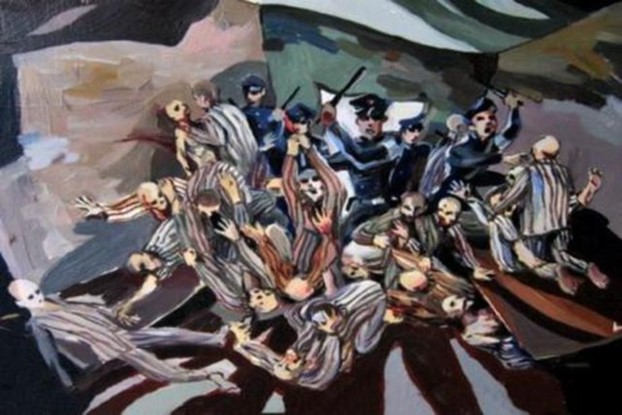
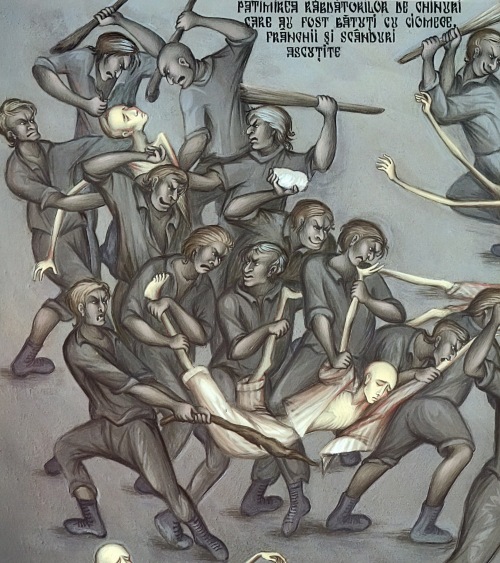
pitesti8

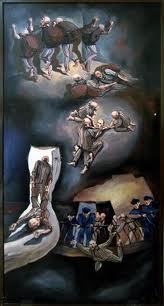
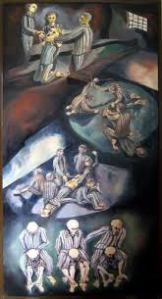
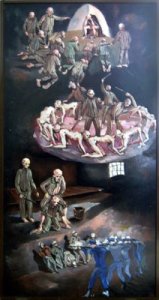
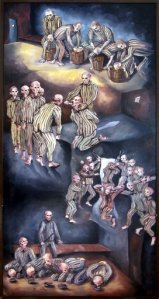
Heartbreaking Paintings and Poems from Communist Prisons in Romania — II

DAYS

by

Radu Gyr

Tuesday, Wednesday, Saturday, Monday

Neutral days without form,

Like a great fog

Over the landscape

Good morning, prison cell!

Good night, prison bars!

I’d smash you as a mastiff in his fangs

I’d rend you with my teeth, O Cell!

I stand in Time terribly naked

With my soul planted in liquid eternity,

Like an atoll in an ocean

Beaten by torrid winds…

Dungeon, dungeon, mad fortress,

How my hate would set fire to you!

Life, life outside,

How dare you dance in my dreams like a puppet!

Tuesday,Wednesday,Friday – what day is it?

the week is a dead amassment;

My months pass through no calendar,

My island is on no map.

Monday, Wednesday, Thursday – The devil take you!

Stinking days – Stagnant days,

Here in the jaws of eternity

Who shall count your dark hundreds?

pitesti9

HUNGRY

by

Nichifor Crainic


If ever I was a cluster of grapes,

today I am residue left by the press.

Into the fathomless hunger in me

pour some drop of juice.

I feel how my body is melting away,

a soup of amaranth would warm it.

If touched by a blade of grass

in a flash I’d be green.

At least let my phantom arm

pick an apple from a tree.

It will fill my mouth with aroma

and I would truly live.

In the country of sheep folds and bread

I dream of mushroom soup.

Let me shelter with the dogs

near the heaven of a bowl of terci.*

On the depth of my hunger

blind deserts open up.

When the last spoonful is eaten

I drop over my bowl and spoon.

O God, You Who

out of two fishes and five loaves

made mountains of food

and satisfied thousands of poor

Repeat the miracle, O Good One,

and satisfy thousands of mouths.

Listen also to my prayer,

Give me the basket of crumbs.

* terci – a thin gruel often given to dogs


pitesti prison 1

JESUS IN THE NIGHT

by

Radu Gyr

This night Jesus entered my cell.

O how sad, how tall was Christ!

The moon followed Him into my cell

And made Him taller, sadder still.

He sat by me upon my mat;

“Put your hand upon my wounds.”

On His ankle there were scars from sores and rust

As if He too had worn chains once…

His hands were like lilies upon a grave,

His eyes as deep as forests;

His garments whitened by the moon,

Silvering in His hands old wounds.

Sighing, He stretched His weary bones

Upon my lousy mat;

In His sleep He shone forth, but the heavy bars

Lengthened upon Him like rods.

I rose from beneath my gray blanket.

“Lord, from whence come you? Out of which eternity?”

Jesus put His finger to His lips

And signed me to be still.

My cell seemed like a mountain peak;

Rats and roaches swarmed around;

I felt my head fall heavy upon my hand

And I slept, a thousand years…

When I awoke from my heavy trance

The straw smelled of roses;

I was in my cell and there was moonlight

But Jesus was nowhere.

“Where are you, Lord?” I cried between the bars.

Across the moon came drifts of mist…

I touched myself, and found upon my palms

The sign of His nails.


pitesti_prison 2

VISIT 

by

Radu Gyr

The exhausted wind froze

like a bow on a cracked violin.

Last night an angel knocked in my door,

his voice weak, his tread tired.

I don’t know if he came from heaven

or some earthly cross

but he looked at me with wounded eyes,

trembling with cold when I welcomed him.

In his eyes of strange god

it was as if some grave illness battled

and he gazed at me with blood-filled eyes

and all that night he wept upon my breast.

In the morning I found him no more.

vestiges of red footprints faded from my door.

Far away in the sky on a cracked violin

the wind fell like a broken bow.

*

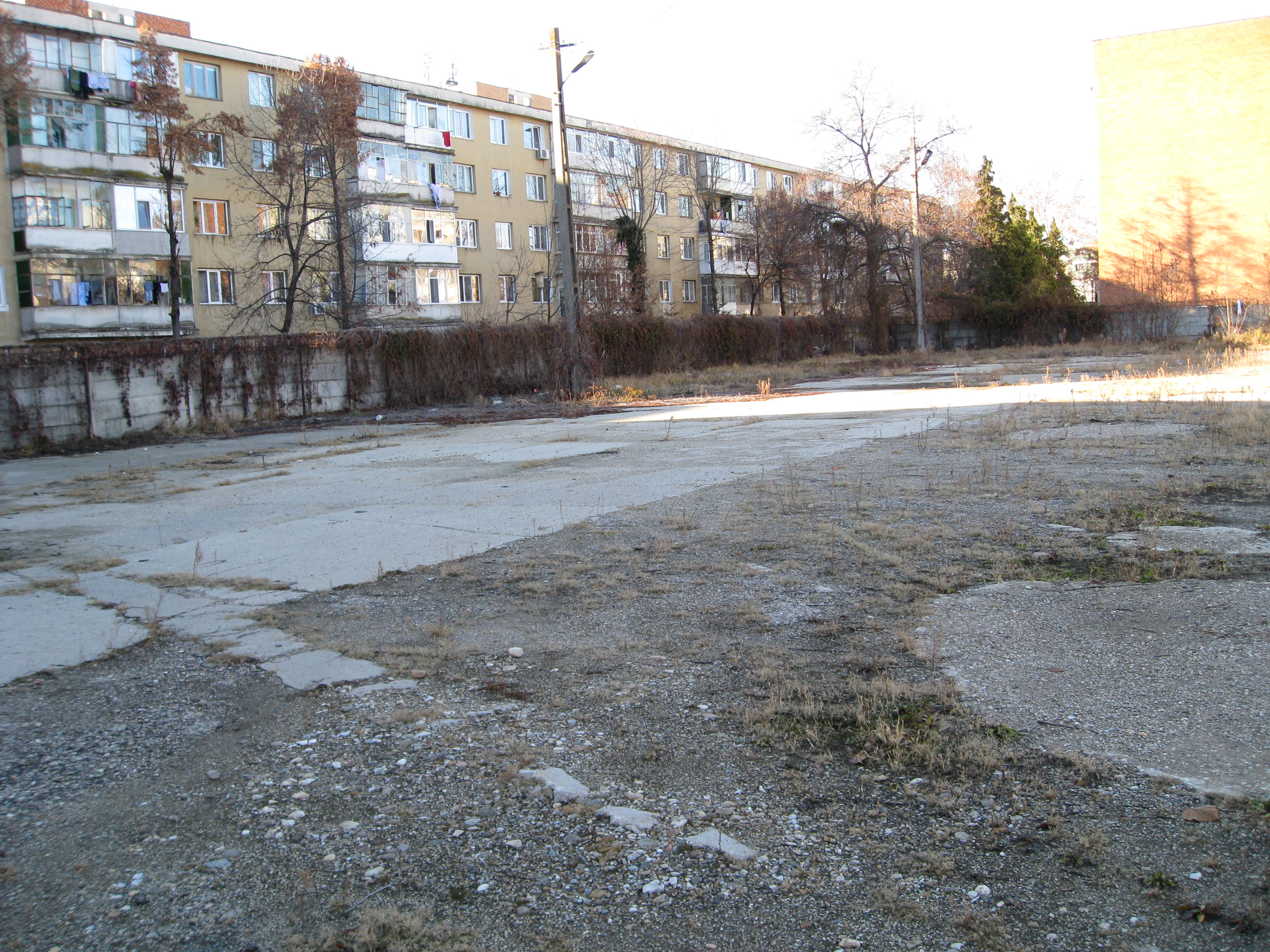
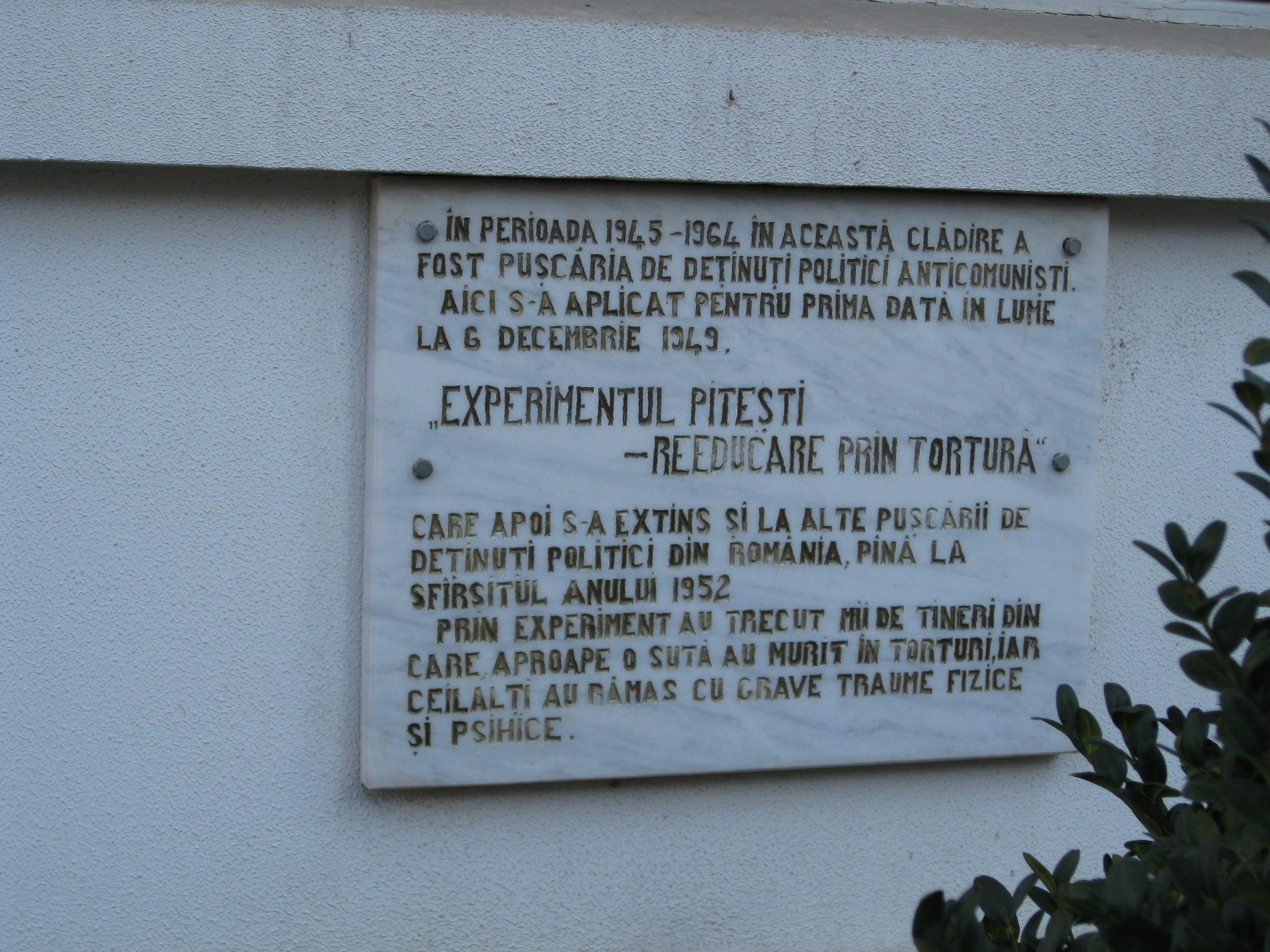
Pitesti Prison — Gulag

Pitesti_prison_yard

Pitesti_prison_plaque

Poems from Communist Prisons by Mother Alexandra

Foreword

Within this booklet are a few poems originally written in Romanian, chosen from a large collection, POEZII DIN INCHISORI, edited by Zahu Pana, published by CUVANTUL ROMANESC, 1982

They were written or rather composed by political prisoners who had no paper on which to write. They were memorized by those who survived, and finally spirited out to the free West. Remarkable in that they are true poetry of the soul, they express various emotions of those unjustly imprisoned by the Communist Party, for the crime of independent thought. None of these poets were criminals. They were philosophers, theologians (lay or clergy), generals, intellectuals of all sorts, factory workmen and tillers of the soil. Women and even children shared the same fate.

Source: https://orthodoxyinottawa.wordpress.com/poems-from-communist-prisons/

And http://www.romanianstudies.org/content/2012/11/poetry-in-translation-cxlvi-sergiu-mandinescu-1926-1964-romania-prison-warder-suflet-de-calau

Traced Through Mud

pitesti6

Heartbreaking Paintings and Poems from Communist Prisons in Romania — I

*

Prison Warder

by

Sergiu MANDINESCU

A muffled night

a bottomless abyss

a peacock’s cry

that never goes amiss.

Great panthers watching in the night

and tigers ready for the pounce,

the pythons flawlessly advance

a path so trite.

The shadow’s silence so profound

fills to the brim the darkest mind –

a jungle full of beasts of any kind,

but human soul is nowhere to be found!

pitesti5

Glory

by

Radu Budisteanu

Blessed be suffering

which brings man out of a flat groove –

swift sling hurled at a Goliath,

tree in which knowledge is born.

Blessed be suffering.

Without it, good earth would be clay,

the heart would not catch the murmur of a tear

and sin would not know what contrition is.

Blessed be suffering.

If there were not death, would there be love?

Value is given to all by separation,

fruit in the hidden furrow of the passing rays.

Blessed be suffering,

its breast a resting place, a caress upon the brow,

the strong altar screen of the sense let it be,

archway through which alone desire passes.

Blessed be suffering

fruit of the hidden furrow of a passing ray

soul with large embracing arms

like an all enveloping mantle.


pitesti4

Unwritten Letters

by

Radu Gyr

Our life often lies hidden

in a humble corner of paradise,

in letters which were never sent us

by a hand that never wrote them.

We know not what we’d have the pages say,

what unwritten love song

but the hand which does not write us,

at all times we hold in a dream.

And the phrases that do not come,

in memory’s eye become ever dearer

and that hand which gave me light

as blossom upon my heart I hold.

And thus through the door crack,

we watch with unquenchable longing

for letters that were never sent

by a hand that did not write them.


pitesti3

Birthday wishes

by

Radu Gyr

For your birthday

I don’t know what

To bring you as a gift.

Bruised upon my bones

My skin only do I have.

Since I have pulled in harness,

Since I have sighed in yoke,

All that was plenteous

Has melted away as snow.

The owls hoot,

the darkness deepens;

The nails on my hands

Grow long for retribution…

grow you,too,

My timid voice,

Grow as a djinn,

Grow as a great bird;

Gather in your flight

And bring to the assailant

The crying of orphans,

The suffocating voice of mothers

Drowned in tears, the mourning of the homeless.

Hate of the whole country

Rise up, now!

Master your curses,

Doom this day!

Curse it with fire and brimstone

For the savage beast

That is bore,

Over the horizon to rise

And with his horns

The world to overthrow.

O my mild voice,

Grow strong, little by little,

As a spring grows

In volume, increasing,

As down the mountains it falls.

Become a sickle;upon his brown

Bludgeon the beast!

O my voice, grow! From the forest swell

Out of the felled woods,

Out of the deserted villages,

Out of the dried-up oil-wells,

Grow out of golden grain

That is taken over the foreign roads,

Grow out of the ruins,

Sound from the depths of prison dungeons,

There where rots in chains

All that stands firm in the land

And is about to die…

Out of gaunt and livid beings

Arise, open eagle’s wings;

Soar over the foe –

Dirty bloodsuckers!

Fly over frontiers

Which have not yet been stolen,

Pass cities and villages

Where in the dead of night

Whispered Christian prayers

Can still be heard

Cross as best you can

The endless steppes

And the sad waters;

Over forests and towns

Look for and follow paths

Traced through mud.

Go far!

Fly as the genii in the legends

Until you come to

Imperial courts

Without royal faces,

Barbaric monasteries

Without altars,

Without God.

Rise, O myvoice,

Lift yourself

Upon wings of fire

In heavenly heat,

And fall back as a tunderbolt!

Blast the citadel

of the beast’s den!

Seed of his seed destroy!

In the land and in eternity,

A word of execration

Let his name be!

Let perish in the mold

All which he stole!

His dust and ashes

Let the earth swallow!

May my unbounded hate

Burn up Satan,

Ana’s* brother!

Thunder blast him!

In scum putrify him!

O heaven,

On his birthday,

Satan’s birthday –

Ana’s* brother –

What offering have you

Sent him, John Doe?

*Ana – Ana Pauker , born in Romania, lived in Russia , an intimate friend of Stalin, an all-powerful one in Romania until the postumous fall of Stalin.


Datta. Dayadhvam. Damyata.

Lords_Prayer_Religious

A favourite scene by an all-time favourite film-maker of spiritual quest: The Sacrifice (Offret) by A.Tarkovsky 1986 – PRAYER: The Lord’s Prayer. The scene poignantly illustrates the power of faith and self-sacrifice.

https://www.youtube.com/watch?v=f4z8Y-NpW1c

The Sacrifice, Tarkovsky’s swan song, tells in esoteric terms of Christian iconography, masterly mise-en-scène, and astounding use of sound composition, of a literary critic, once an actor (Josephson), who promises to give up everything ‘that connects him with the world’ in a bid to save it from the impending nuclear holocaust he hears announced on television.