Nothing had prepared me for what happened today at the monastery! Literally the last minute before I departed! I am still in tears of gratitude and trying to digest the Burning Bush Our Lord and Panagia have granted me to experience.
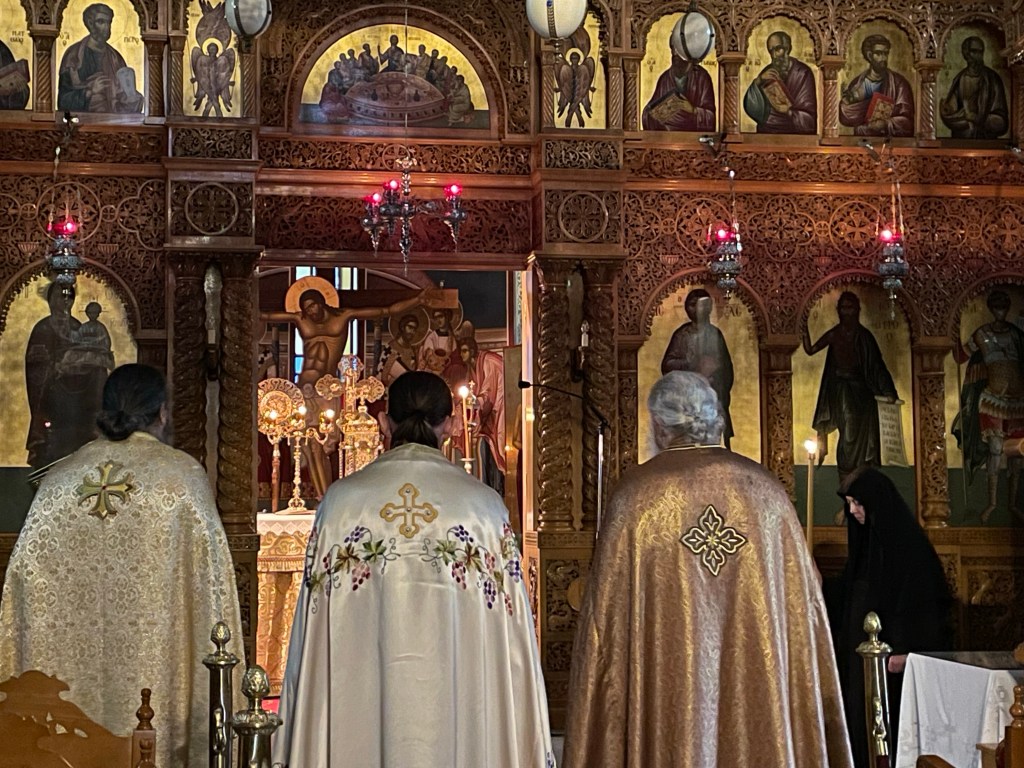
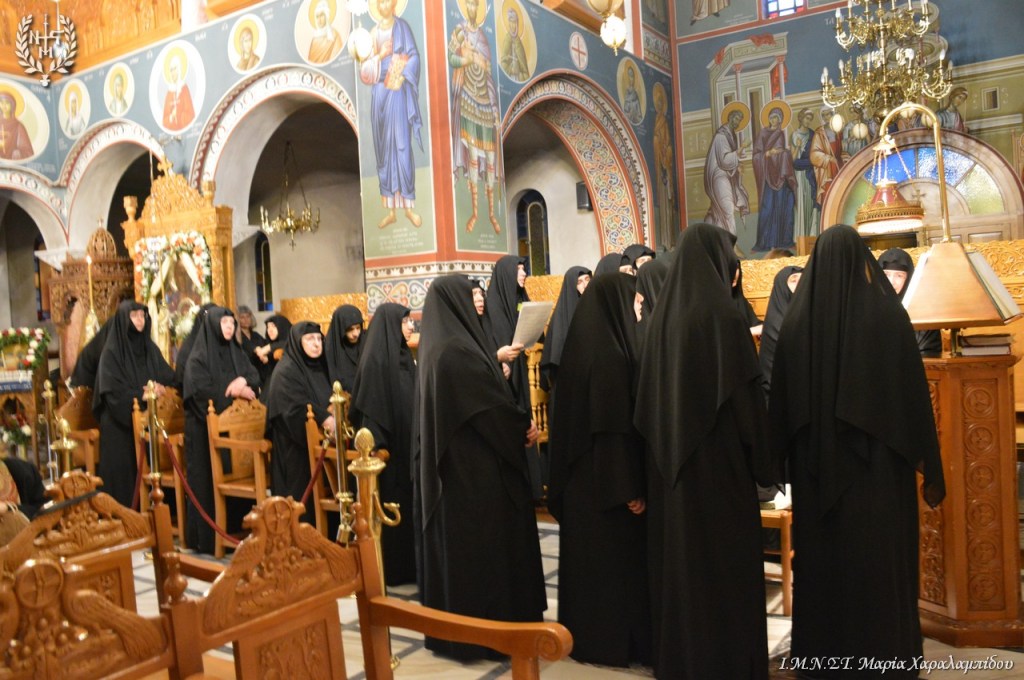
The day started as usual with very early Midnight Office, Matins and Holy Liturgy. The chanting of the sisters was most beautiful and the faithful in the church were praying with tears and prostrations to the Theotokos. Soon the church was full with lots of people with health conditions or impairments, all pouring out their hearts in prayer for a miracle. “For an angel went down at a certain season into the pool, and troubled the water: whosoever then first after the troubling of the water stepped in was made whole of whatsoever disease he had.” (John 5:4)
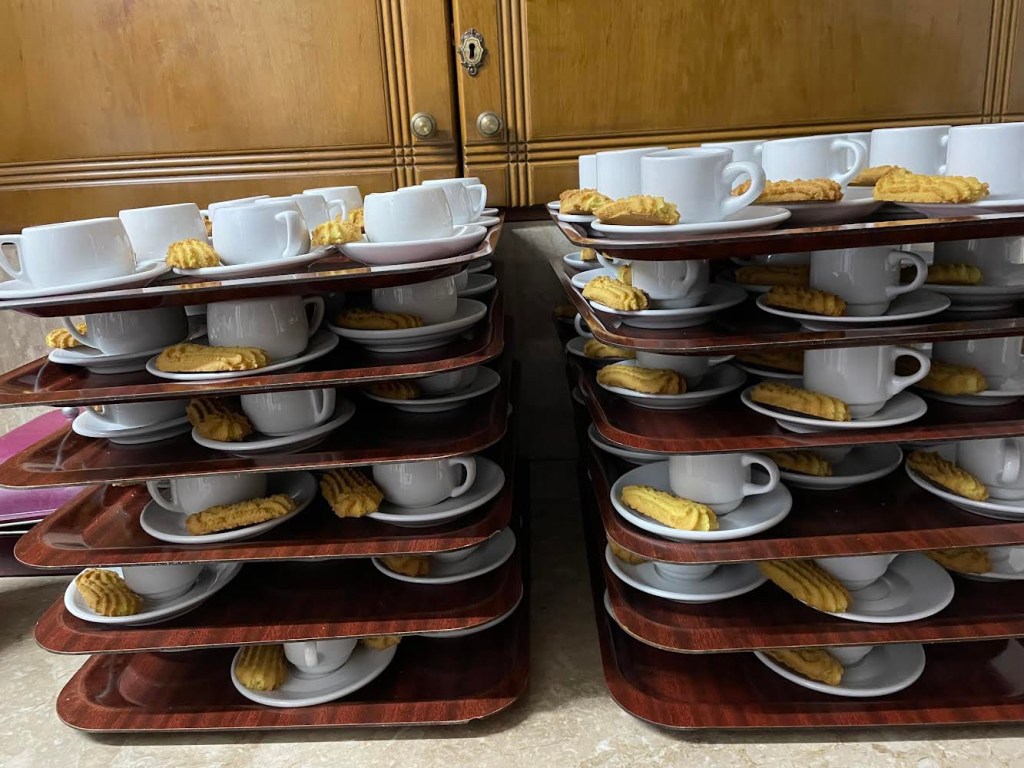
Why was my heart so lukewarm? What common did I have with all these fervent disciples? My pilgrimage was soon coming to an end, after the formal Sunday meal at the monastery trapeza (ie. refectory), at the end of the Holy Liturgy, and coffee offered to the monastery guests, in other words in about 3 hours. My days here have indeed been a time of healing, but how did this compare to the thousands of miles and long hours, nearly a day, some of my brethren and sisters had travelled to make it here?
I tried to make the best of my few remaining hours and spend quite a lot of time with the Pennsylvania brother sharing amazing experiences of his with Geronda Efraim of Arizona of blessed memory. We decided to stay in touch since by God’s Providence we both arrived and were leaving the monastery the same days and hours. I prayed and watched other pilgrims who had sat down in corners with the sisters and were talking privately. I had not made such a “connection” with any of the sisters for all their warm hospitality. This felt a bit sad and disappointing but may it be blessed.
The meal at the Trapeza was very formal and characterized by prayer, reverence and serenity, as the process of the meal is a ritual. The readings were on the Gospel reading for today, esp. the line “The Lord said, “As you wish that men would do to you, do so to them. … Be merciful, even as your Father is merciful”, and they were from St Gregory Palamas and St Paisios the Athonite. At the end, Gerondissa Melani spoke for a few minutes, highlighting a few points, and then we were ceremoniously escorted outside by the sisters, to the monastery gardens.
I was about to thank the “arhondarissa”, the sister in charge of the guests, for their hospitality during my stay, and proceed to the parking lot, outside of the monastery gates, when I heard a sister calling out my name! I turned around and lo, a sister approached me, wishing to introduce herself! It was Sister I.
Yesterday evening, I had indeed made a request to the arhondarissa to meet Sister I, if that was possible, at the persistent recommendation of a friend, who knows this sister for decades, but nothing had happened, so I assumed that the sister was just too busy to meet me.
Sister I. was indeed a revelation. In just a few minutes, she conducted a thorough spiritual surgical procedure on me and started gently to guide me!I have no words for what happened during these few minutes together. Our 10’ discussion started in light rain and ended in bright sunshine! But it was her eyes that were most radiant and her smile most bright than the sun! Her eyes and smile reminded me of an elder who has charisma from God: Gerondas Efthymios, St Paisios successor, a Geronda that I briefly met at Gerondas Gregorios funeral. Radiant eyes, bright smile, the burning bush!
Back to Sister I., we first got introduced to each other and soon started discussing missionary work at the UK, as Sister I. has been visiting the country, engaging in like activity, and Essex monastery in particular. She is the spiritual daughter of St. Sophronios the Athonite, the founder of Essex monastery, if I got that right. She certainly cited lots of his sayings and spiritual pedagogy. Sister I. has been involved in helping British people discover and reclaim their lost Orthodox heritage, their Saints, and return to the Orthodox Church.
I spoke to her about my recent visit to a parish at the UK, small but compact, with lots of catechumens and inquirers, and told her that the love and holiness I experienced at their church services and gatherings made me feel like I was in the Acts of the Apostles, in those early church communities. She agreed, having experienced similar cases, and we were both reminded of Saint Arsenios of Paros †1877 prophecy that “the Church in The British Isles will only begin to grow when she begins to again venerate her own Saints”
Soon though, our discussion moved to another level and felt more like prayer than a mere exchange of opinions. How piercing were her spiritual X- Rays! “He told me everything I ever did.” (John 4:39) I have never experienced something of the like with a “mere stranger”! Sister I. felt like a Gerondissa who has charisma from God! (*) She revealed to me how I should walk together with the Lord. A real Mother! Among other things very personal she insisted on the Jesus Prayer and Divine Liturgy, which is Everything! I need to pray and reflect on all she revealed to me, and certainly discuss it with my spiritual father to see if he blesses her words.
Sister I. promised to spend more time with me next time we meet in God’s Providence. She told me we could do an obedience together, pray and be open to what God wants us to do together then. I certainly want to meet this Sister again. I have no words to express my gratitude and thanksgiving to our Lord. What an experience! What a great event of my life, the meeting with this Sister! “It was given to me,the least of men, to live approximately the same experience”. Indeed, He has kept the good wine until now.”
“The greatest event of the life of our holy elder, as he himself related and wrote, was his meeting with his holy Father, Silouan. The historical fact of this spiritual bond had definitive importance for the later spiritual development and theology of Saint Sophrony, who write: ‘By the prayers of Saint Silouan, I, too, was placed in the same spiritual perspective … It was given to me,the least of men, to live approximately the same experience.’” Archimandrite Zachariah, The Seven Basic Points of the Theology of Saint Sophrony
(*) My spiritual father told me that he prefers the term “she [Sister I.] / he [Gerondas Efthymios] has charisma from God. In order not to confuse her/him with those Protestant evangelicals who claim to be charismatic and who roll around on the floor” (his words).
“My spirit seeks You early in the morning, O God, for Your commandments are a light upon the earth”.
At 5 am, Matins begins, and everybody literally rushes to the church under the stars. “To the Theotokos let us run now most fervently”.
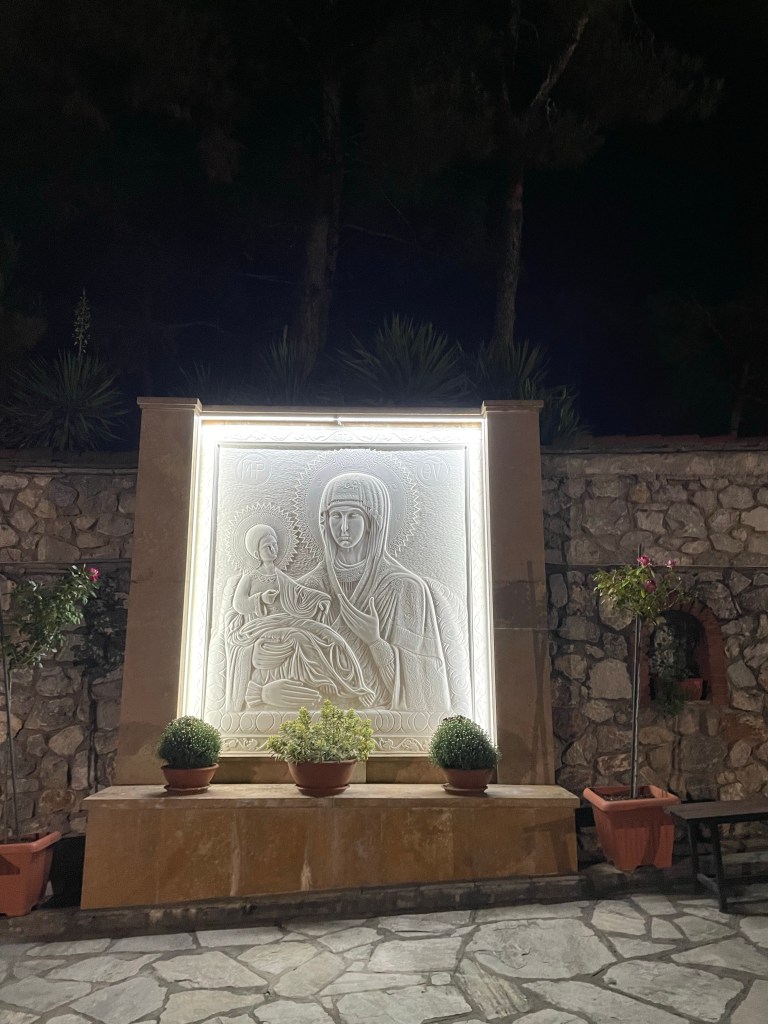
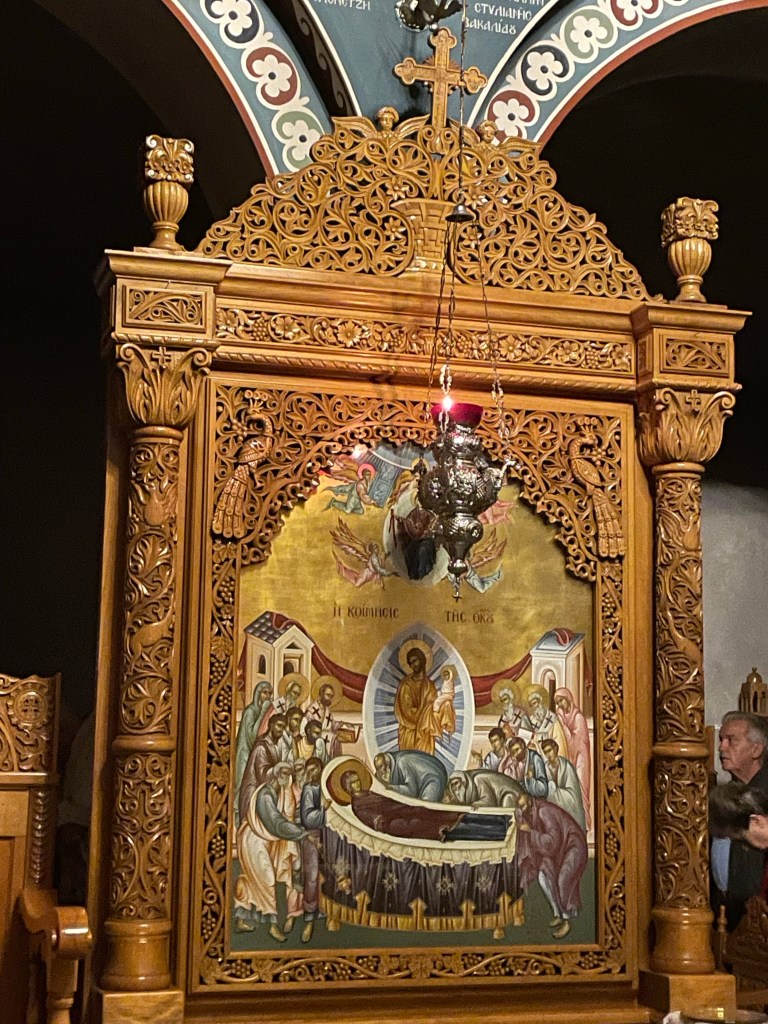
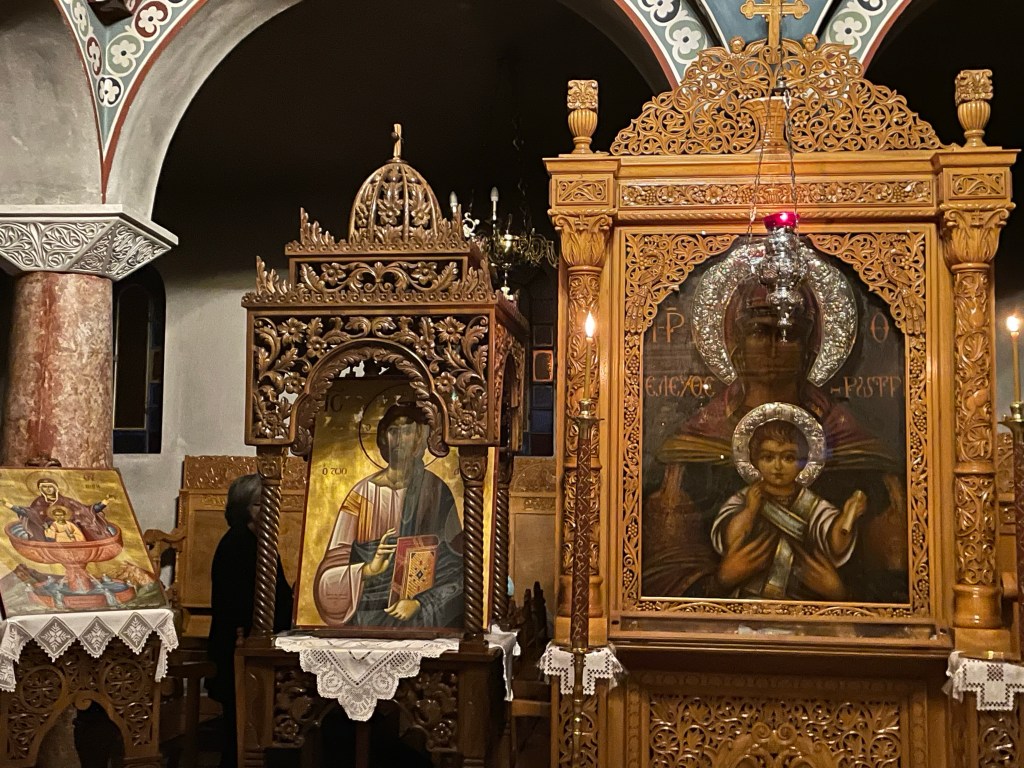
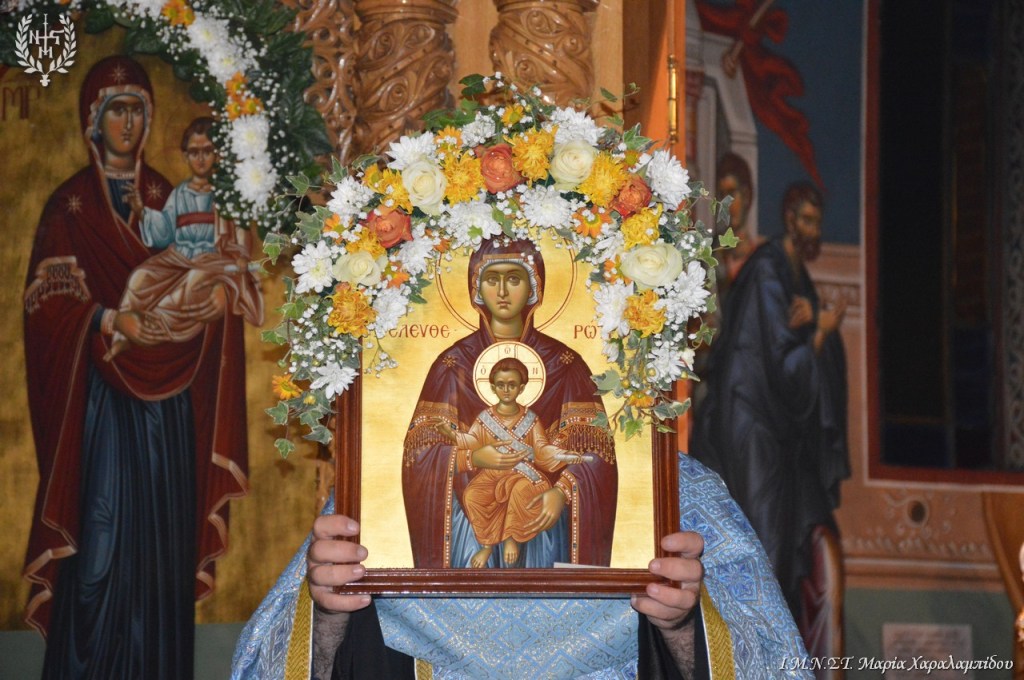
This monastery has 3 dedications to the Theotokos: the first is on The Mother of God of the Life-giving Spring or Life-giving Font (Greek: Ζωοδόχος Πηγή), on bright Friday; the second dedication is on the Dormition of the Theotokos, on August 15th; and its third dedication is on Panagia Eleftherotria, ie. Theotokos the Liberator, on the Feast of the Holy Protection, October 28th. This third dedication is the most important for the monastery and apparently for all the Greek nation. It is true that the piety of the faithful all over the world have adorned the Virgin Mary with thousands of names, but this particular one I have personally not encountered in any other nation.
Most Holy Theotokos was declared a Great General, Τη Υπερμάχω Στρατηγώ, by the Greeks of Byzantium in 626 AD, to protect Constantinople from the combined siege by the Sassanid Persians, Avars and allied Slavs. After numerous sieges and attacks in the centuries to follow, culminating in the fall of Constantinople from the Ottomans, Panagia then became the “Eleftherotria”, the hope of thousands of Greek faithful and especially of Greek neomartyrs, suffering martyrdom under the Muslim yoke for more than 400 years.
Tradition holds that it was this Great General who freed the Greek Nation from the Turkish yoke in 1821 and protected the Greeks from the attack of the Italians in 1940 AD. This is why the Feast of “Αγία Σκέπη”, the Holy Protection of the Theotokos, was moved from Oct 1st to Oct 28, theOhi Day, also referred to as the “Day of No”, the day when the Greek prime minister rejected an ultimatum given by the Italian dictator Benito Mussolini during World War II.
Panagia is, of course, the Protector of all Orthodox Church and nations, and a Mother to us all, liberating us not so much from our visible enemies, but from the invisible ones, ie. our passions, our sins, ultimately from the evil one. Pilgrims from all over the world tearfully share miracles and pray to Her here, in Her monastery, for liberty from their concerns, worries, thoughts, illnesses, for Liberty of their souls first, ultimately from sin.
Beneath thy compassion, We take refuge, O Mother of God: do not despise our petitions in time of trouble, but rescue us from dangers, only pure one, only blessed one. (1)
Holy Liturgy finishes at 8:30 and a light meal is awaiting us, before we all head to our obediences. Today, to our surprise, ironing, and not ivy pruning, is our obedience: ironing piles upon piles of the sisters’ and pilgrims‘ bedsheets. May it be blessed. Again, long hours of manual prayer await us, accompanied by the Jesus prayer. Glory to God for all things.
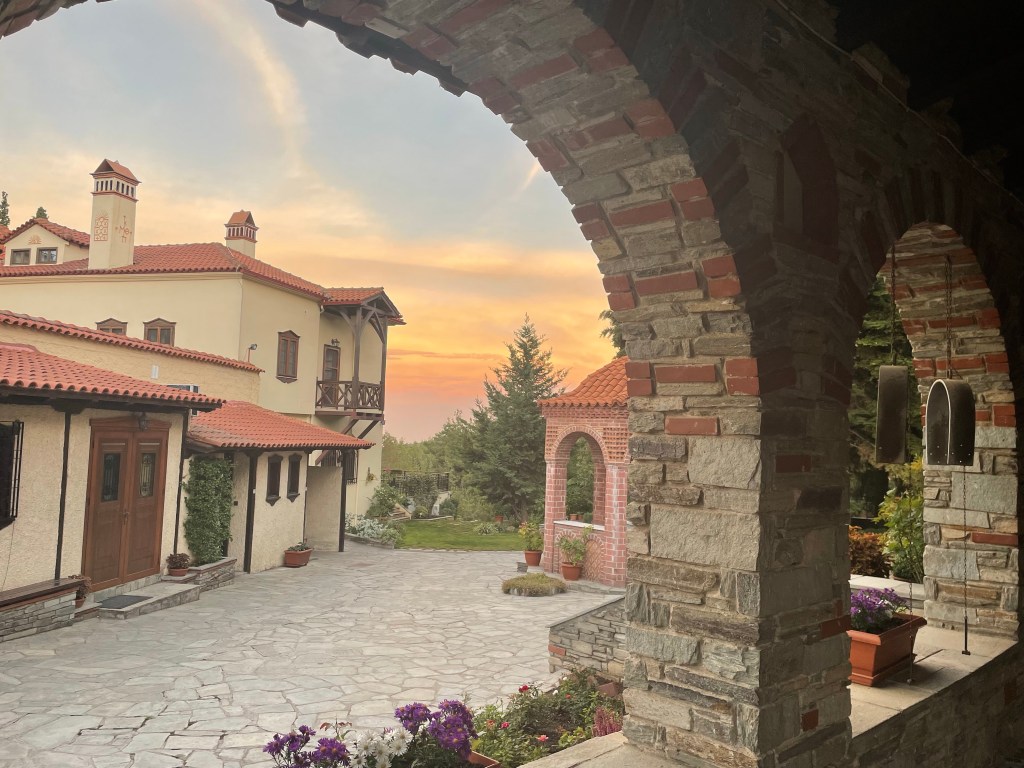
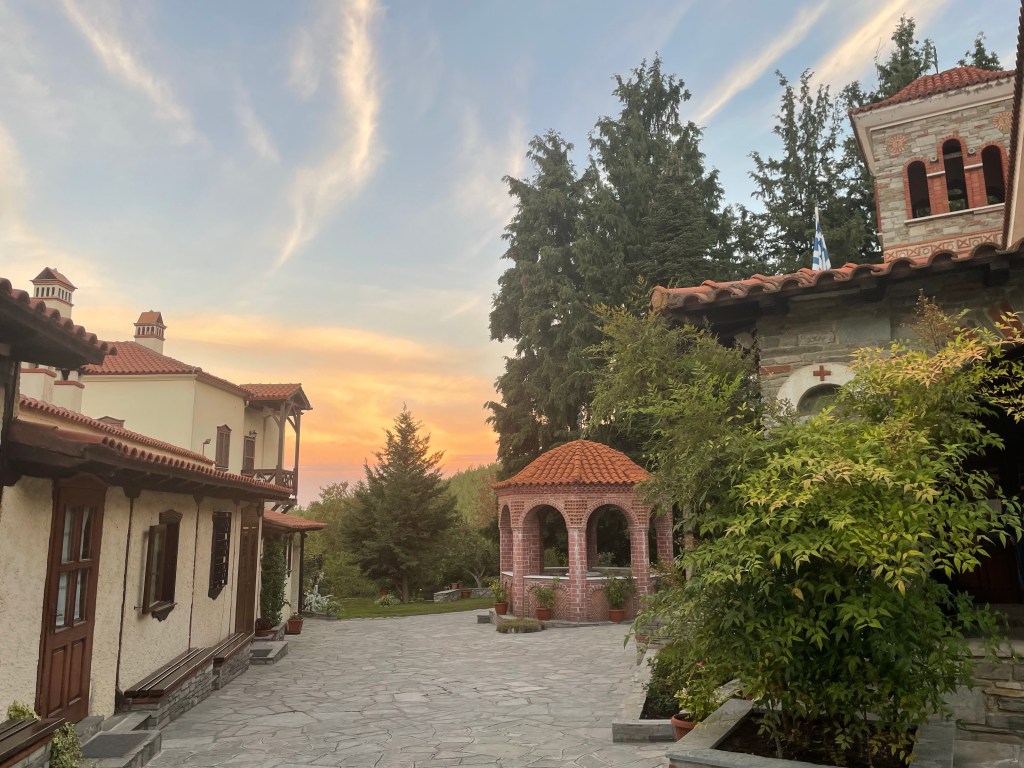
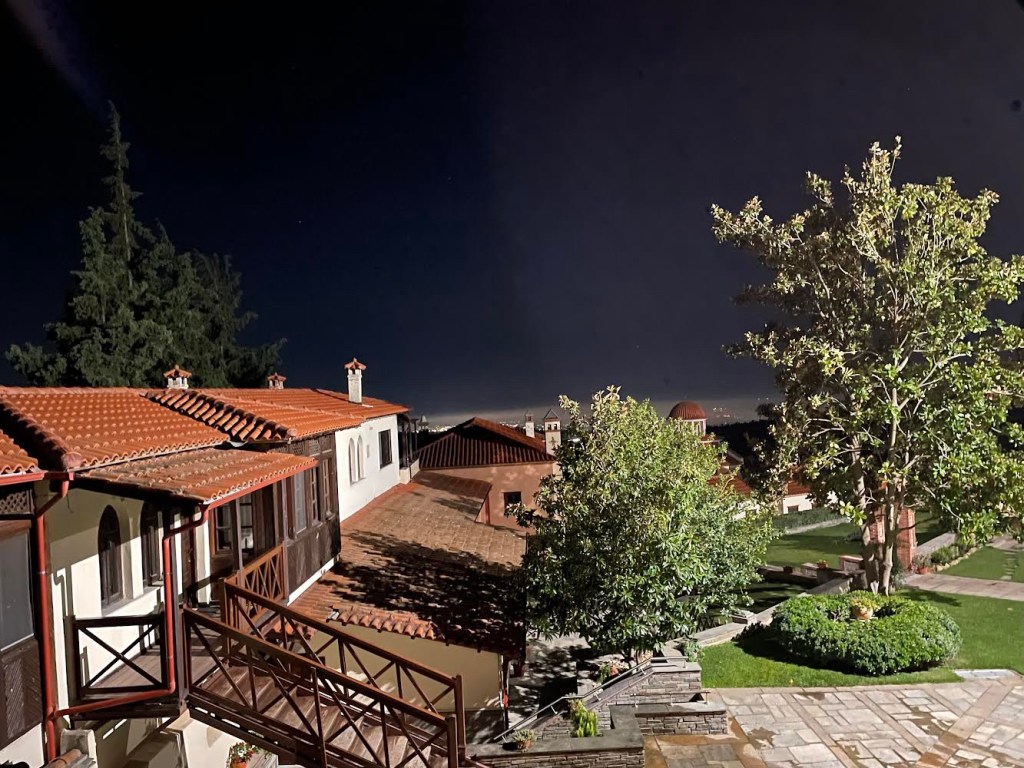
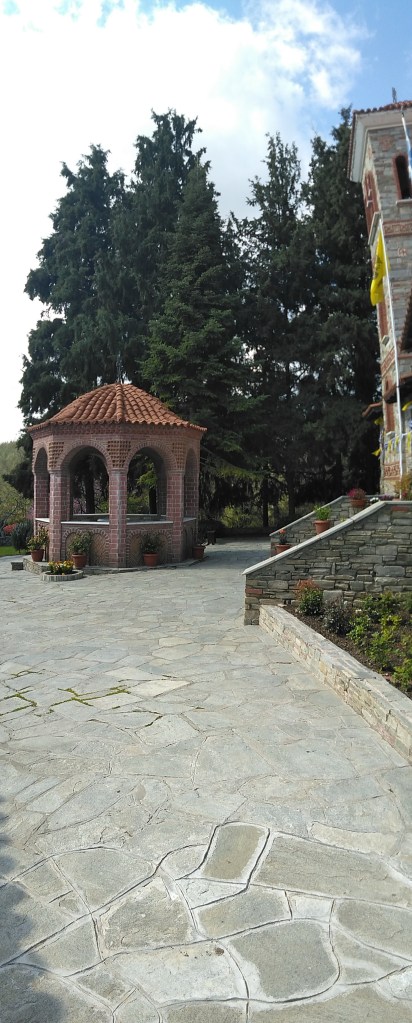
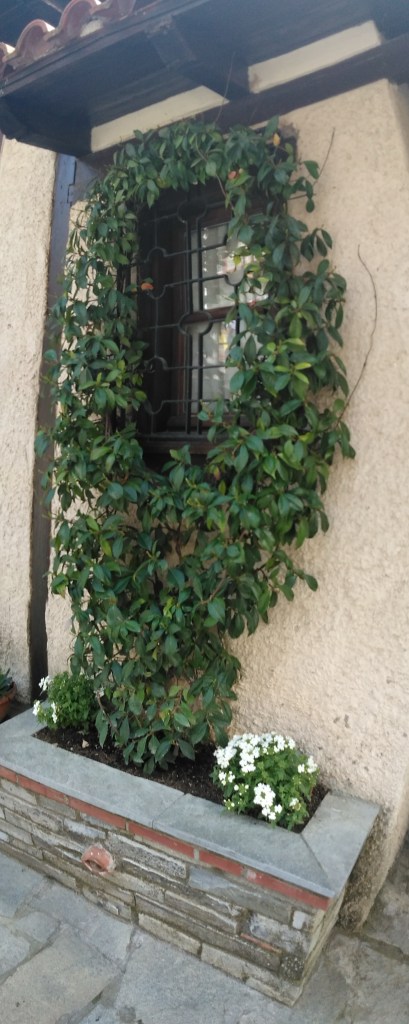
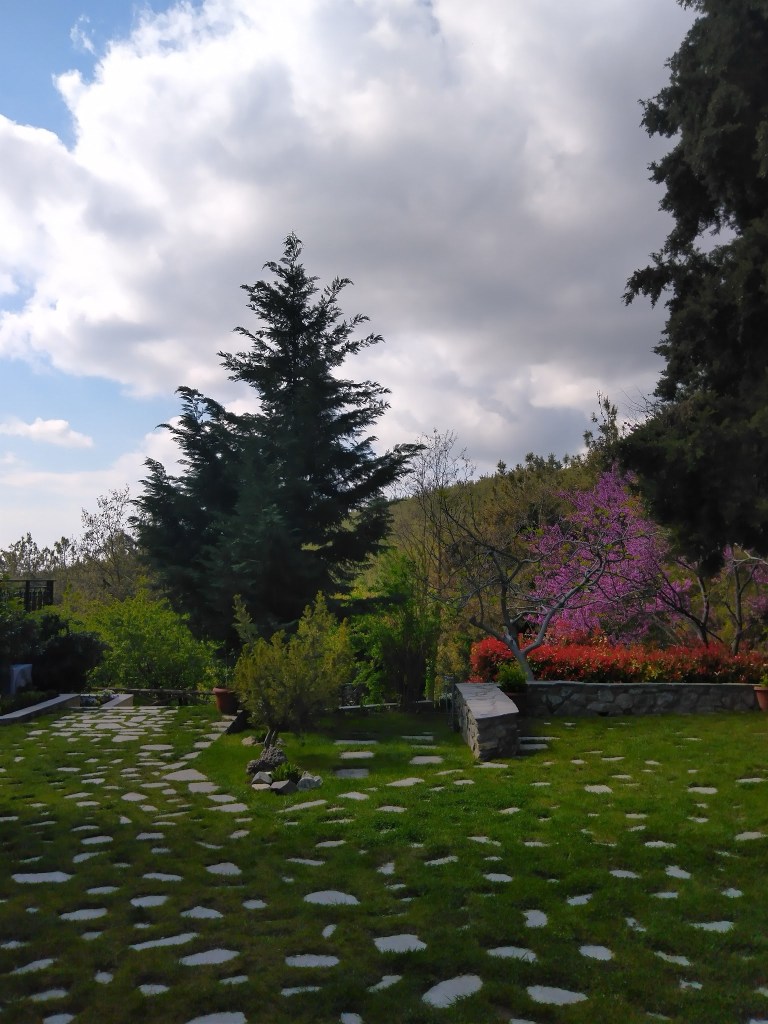
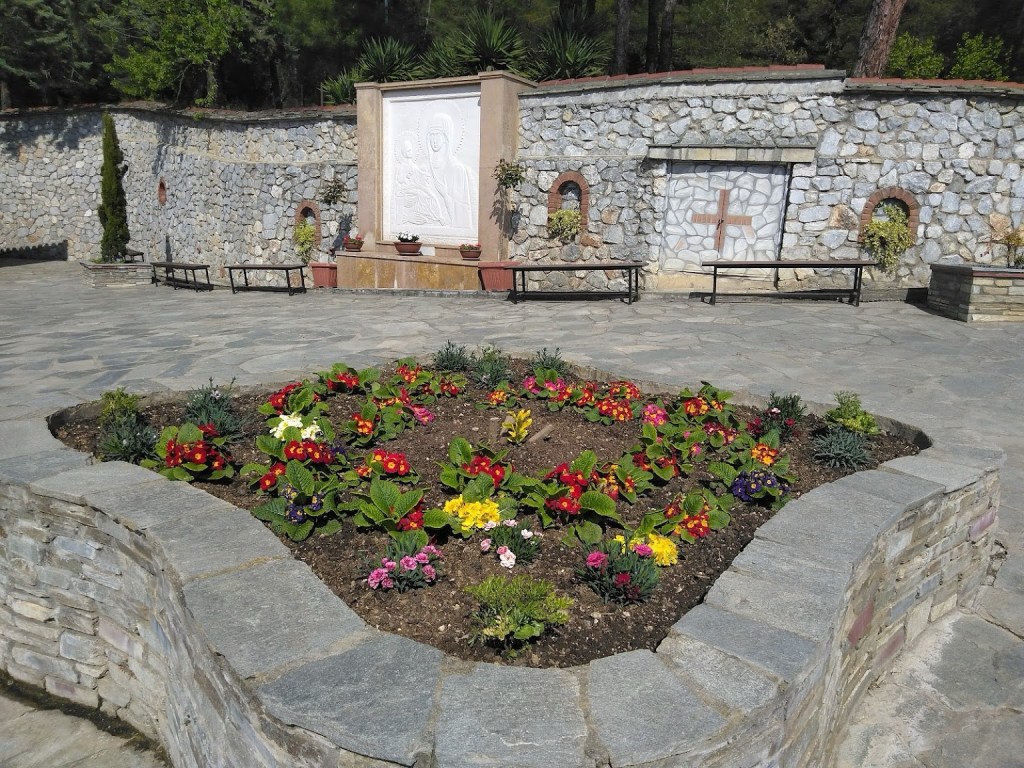
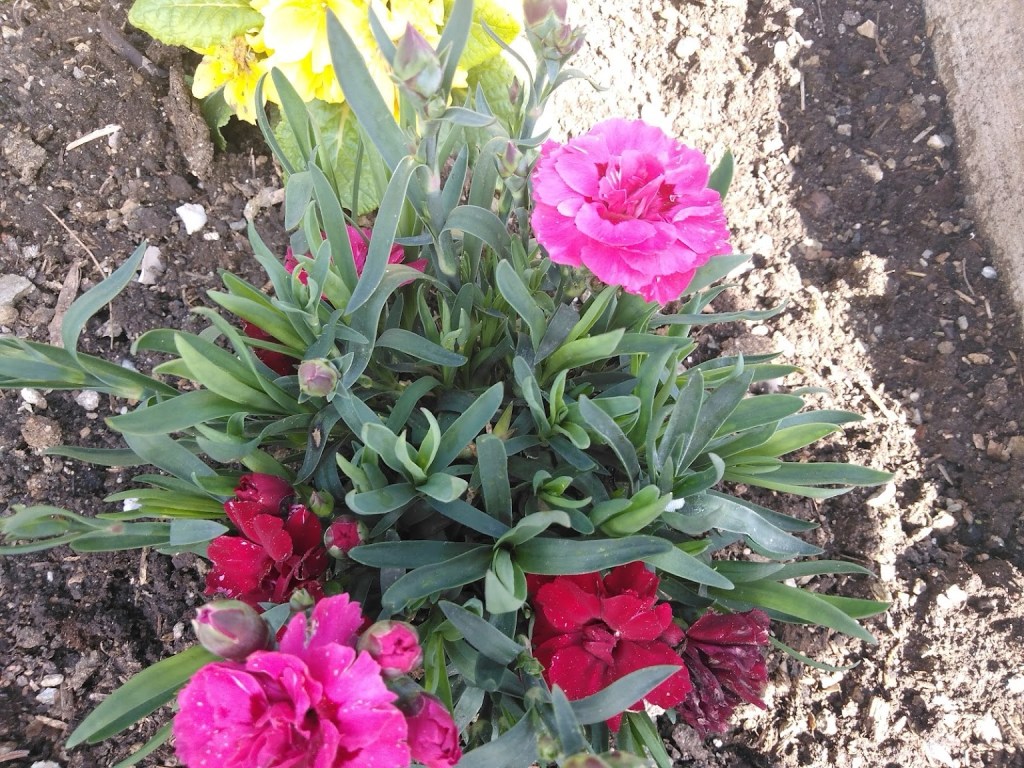
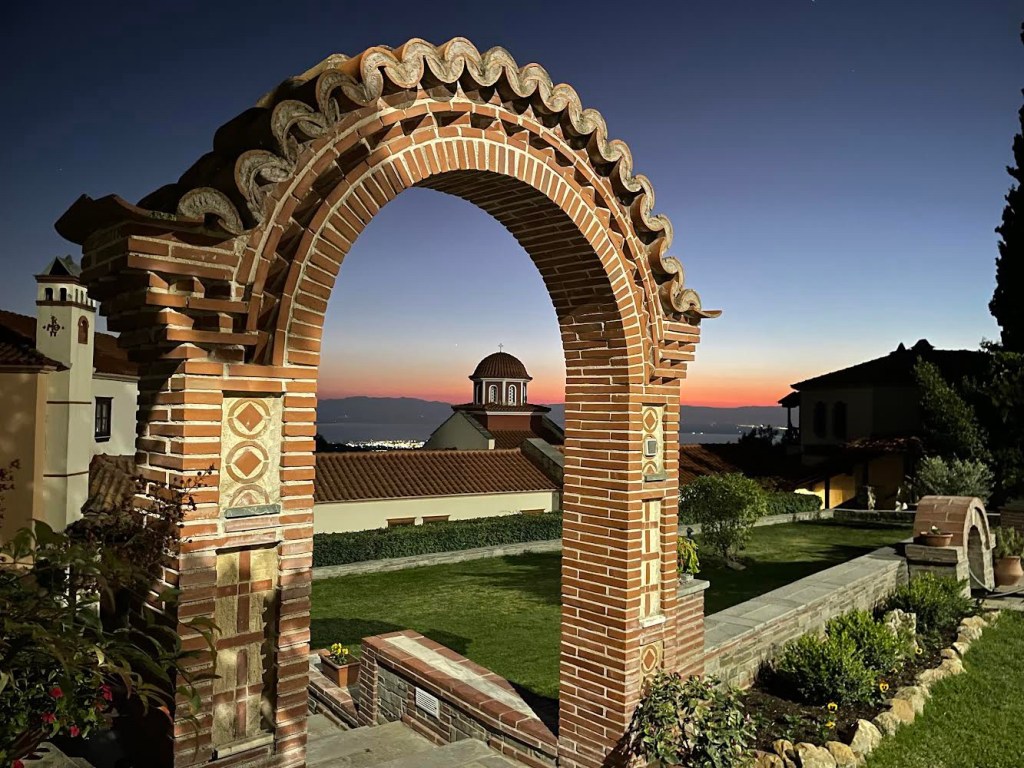
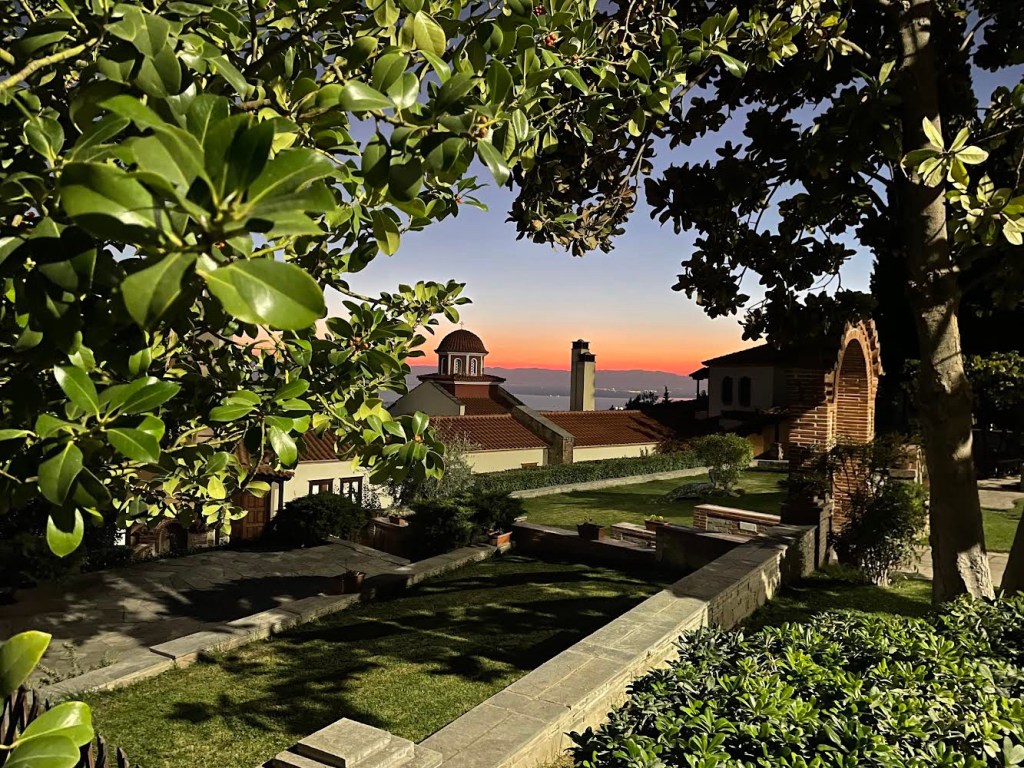
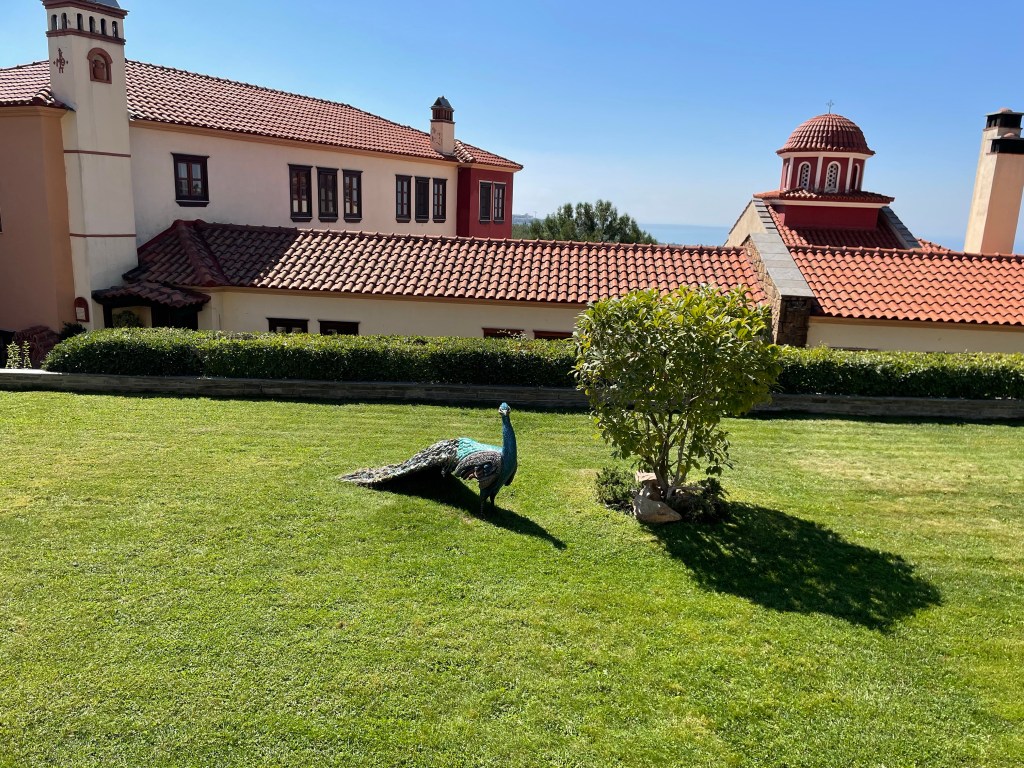
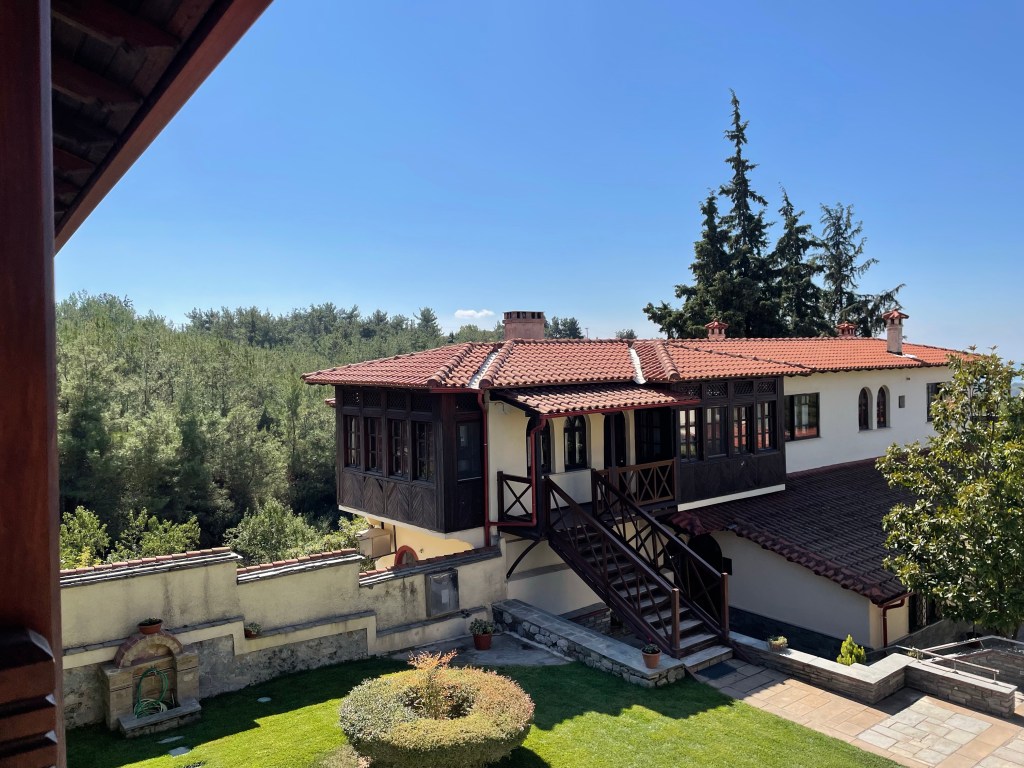
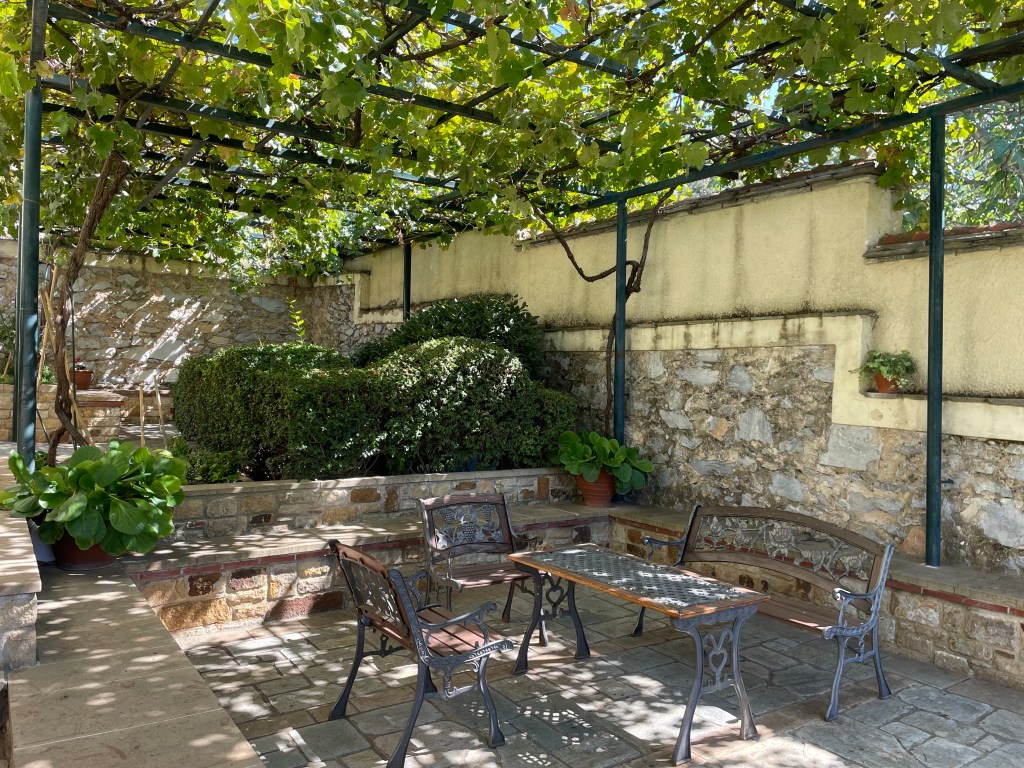
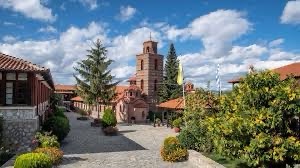
At long last, break time and a walk in the monastery gardens and lush forests! Once outside of the cells and the various workshops of iconography and embroidery, one marvels at the beauty of trees especially and flowers everywhere. Nature is enveloped in the Holy Spirit.
Most Holy Theotokos’ presence and protection is felt most powerfully in Her monastery gardens and forests, and there are votive offerings, “tamata” for Her everywhere.
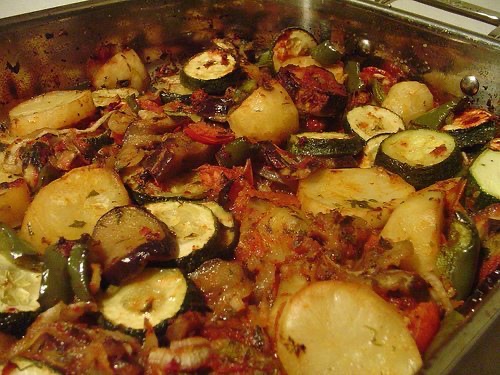
Enwrapped in such beauty and holiness, immersed in the Theotokos, one forgets tiredness, drowsiness, even hunger, but the semantron summons us again, this time for our midday meal of Greek Briam, a traditional Mediterranean recipe that uses all homegrown summer vegetables —potatoes, zucchini, aubergines, red onions, and tomatoes—and bakes them together in olive oil.
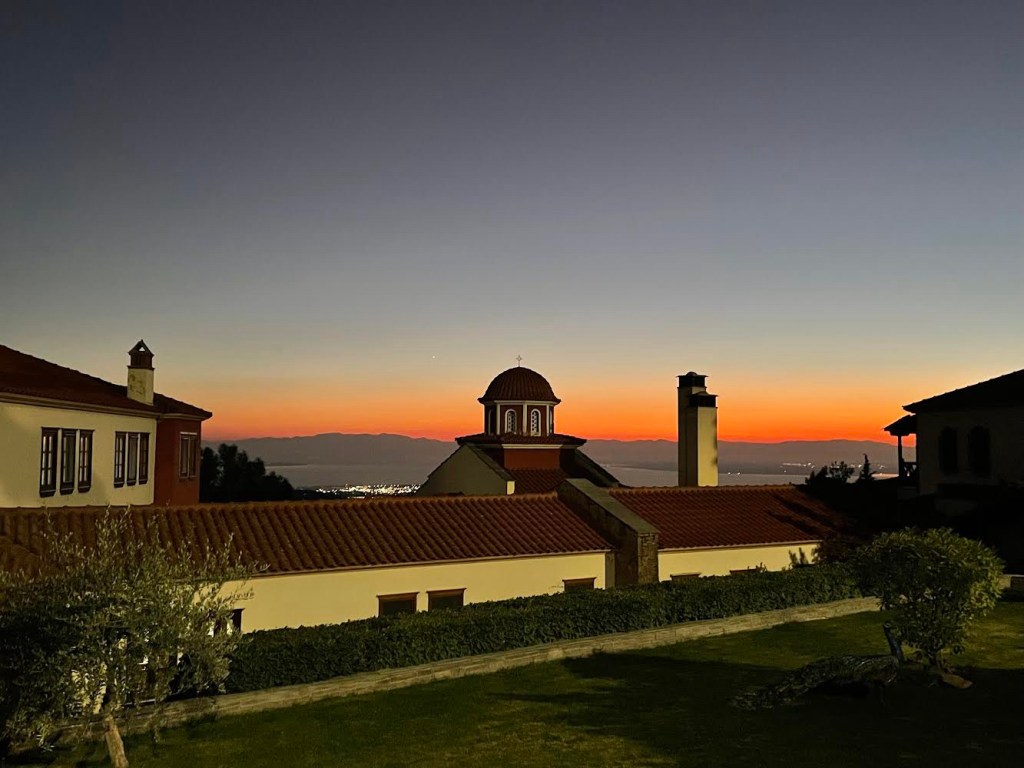
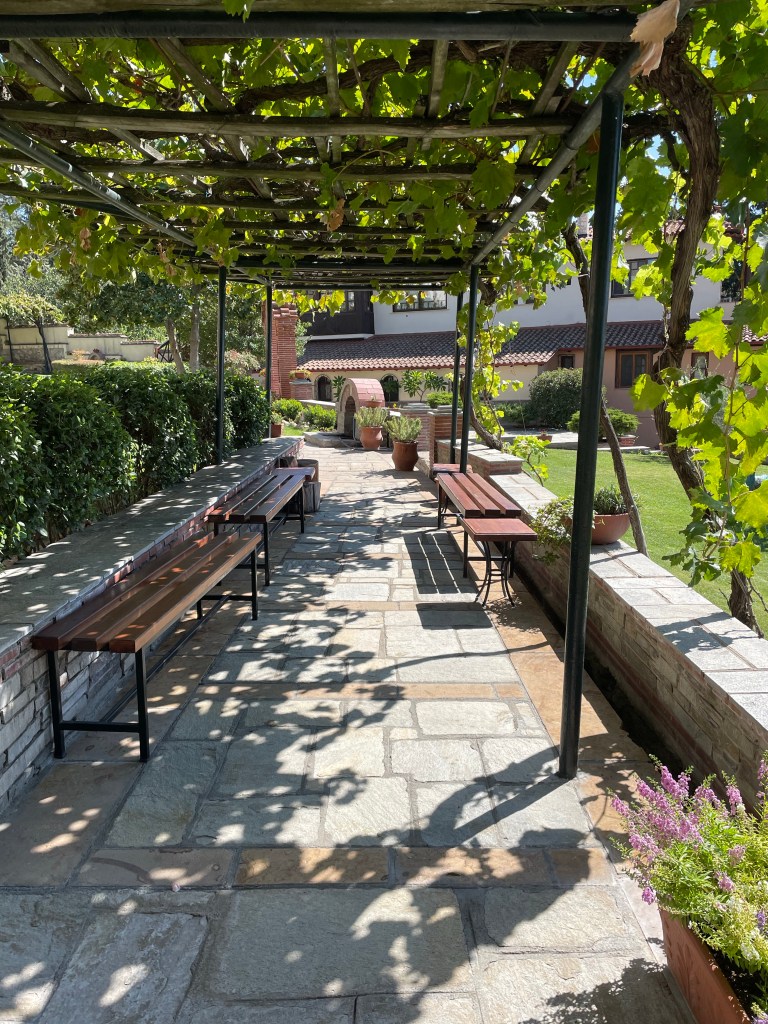
Siesta, quiet time follows, then Great Vespers, Compline, and another, very light, fasting meal, since most of the pilgrims are preparing for Holy Communion. Cars and pilgrims keep arriving in large numbers, especially now that weekend has started. At the sunset, pilgrims and monastics, all together, in small groups, share precious fellowship time in the monastery gardens. Even at the close of the day, Sisters continue to be amazing busy-bees with their obediences, errands, charity and gracious hospitality.
In anticipation of tomorrow’s guests 😀 At weekends, the numbers of the faithful at the monastery services increases exponentially!
The blessing of Gerondissa Melani seals our day and we retreat to hesychia in our cells. How richly, orderly, deeply and blessedly time flows in a monastery! So different to the hasty, stressful, exhausting, chaotic perception of time in our lives.
To the Theotokos, let us run now most fervently
Saint Porphyrios of Kavsokalyva on the Panagia:
“Our Church highly honours our Panagia. I very much love our Panagia. When I was young on the Holy Mountain I very much adored her. I had a small icon of the Panagia under my pillow. Morning and night I embraced her. I lived with her night and day. Whatever happened to me, I resorted to her. What can I tell you? She is better than a mother. There was nothing else I wanted more. She had everything”.
(1) The oldest prayer we know of dedicated to the Virgin Mary. The earliest text of this hymn was found in a Coptic Christmas liturgy of the third century. It is written in Greek and dates to approximately 250 A.D. It is used in the Coptic liturgy to this day, as well as in the Orthodox, Ambrosian, and Latin liturgies. Orthodox Christianity Then and Now.
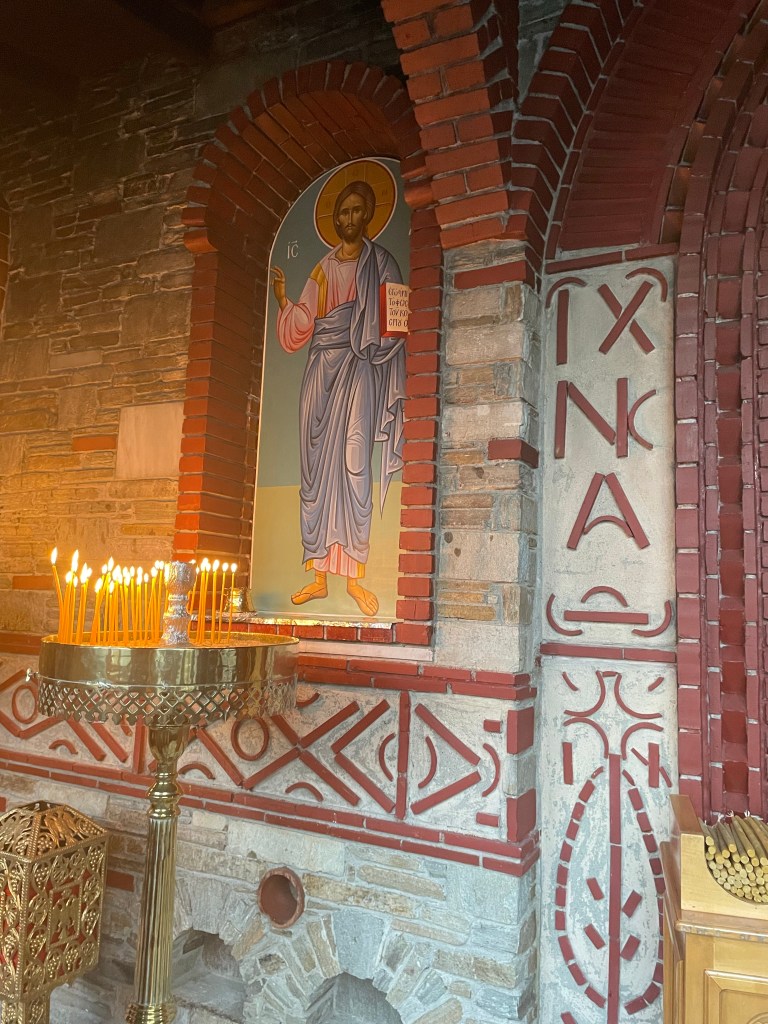
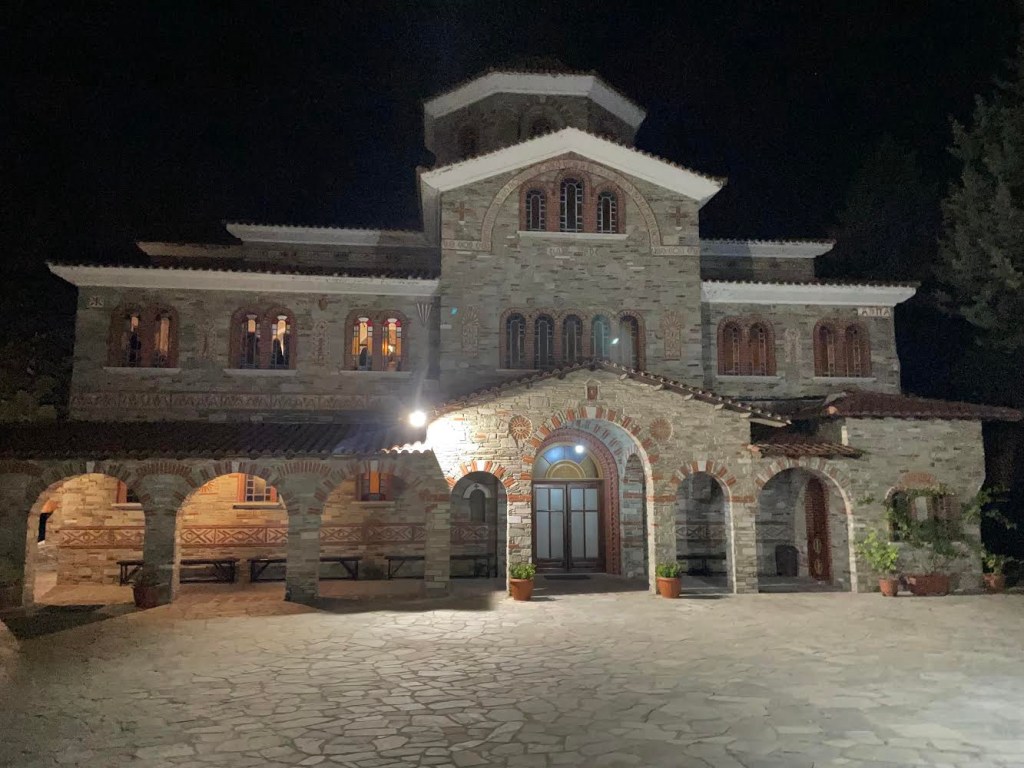
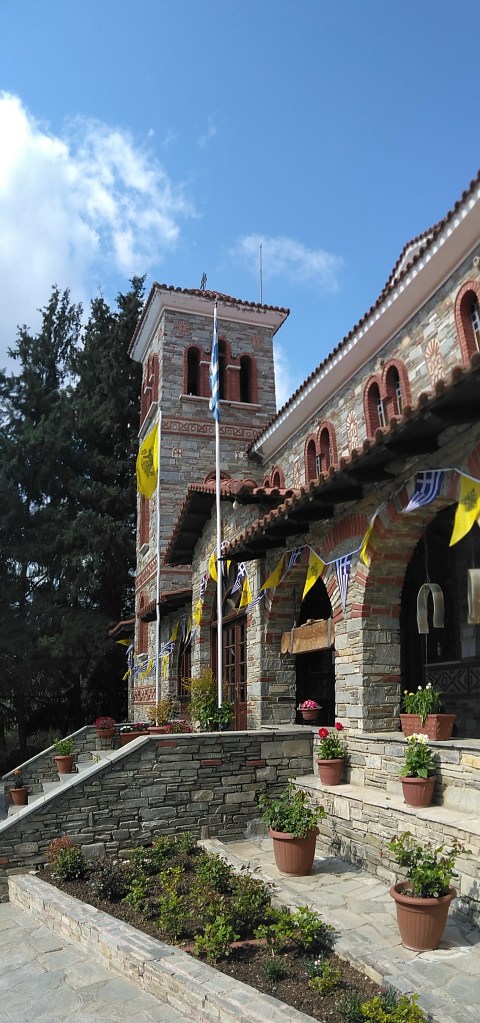
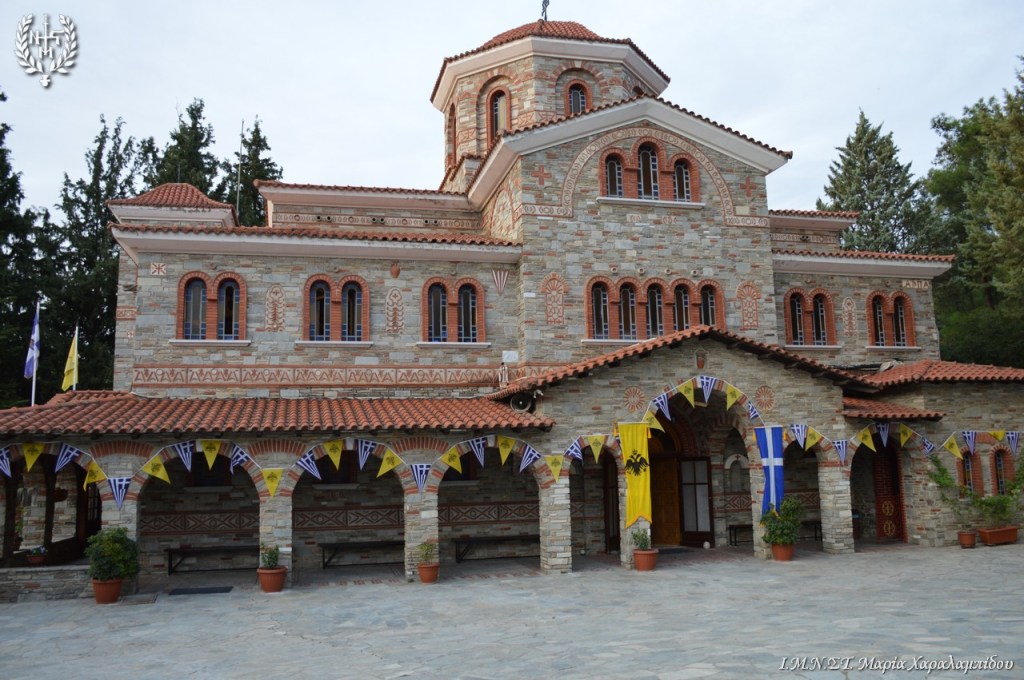
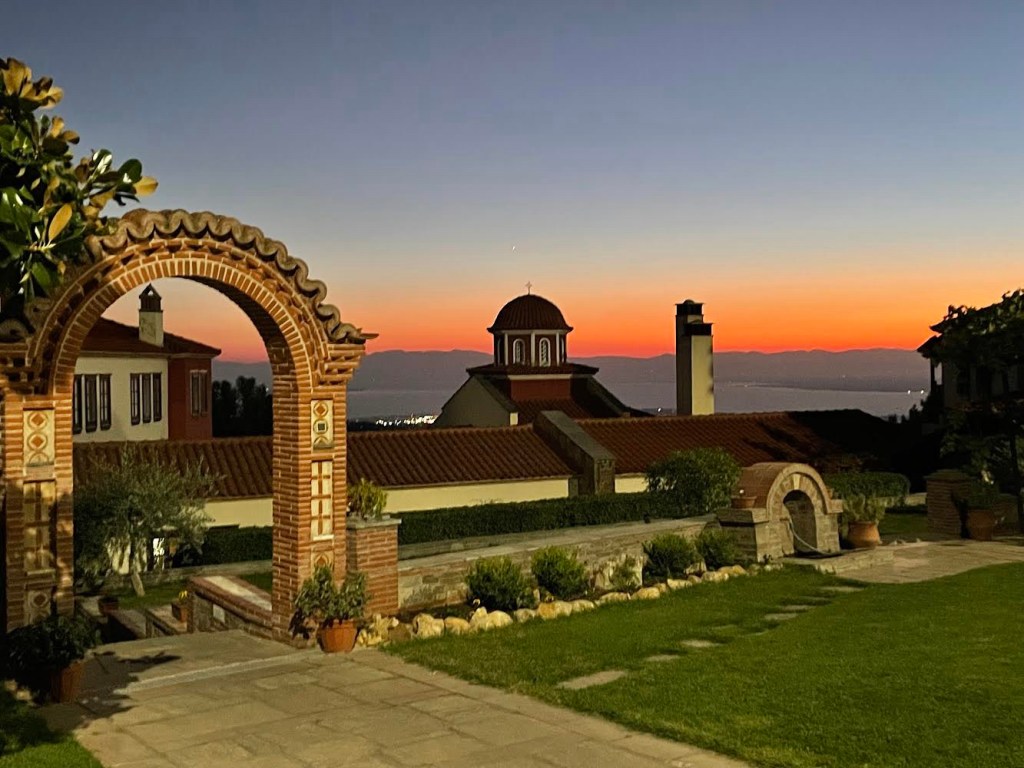
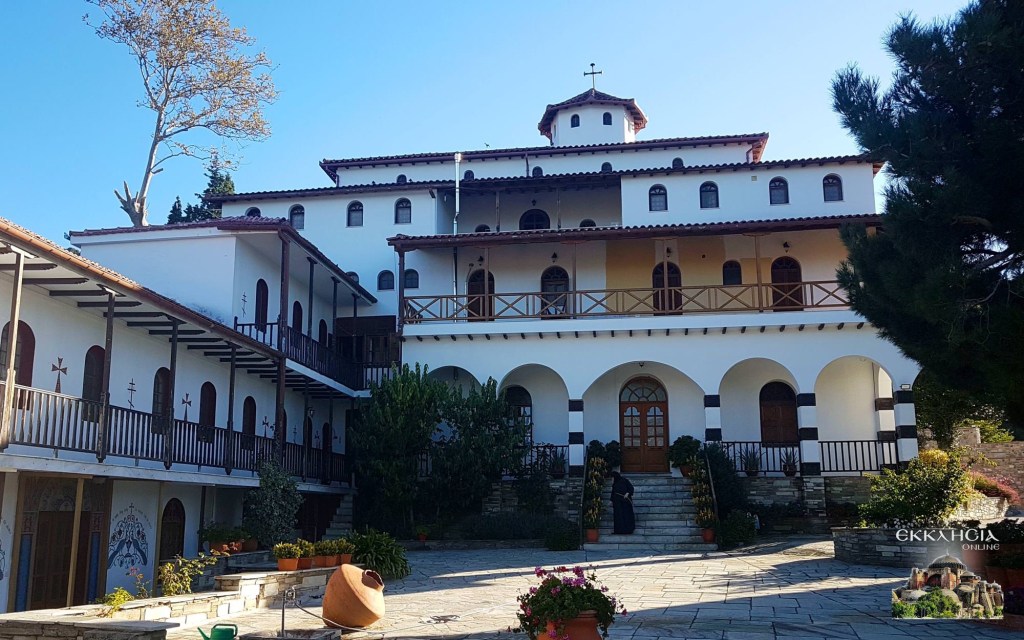
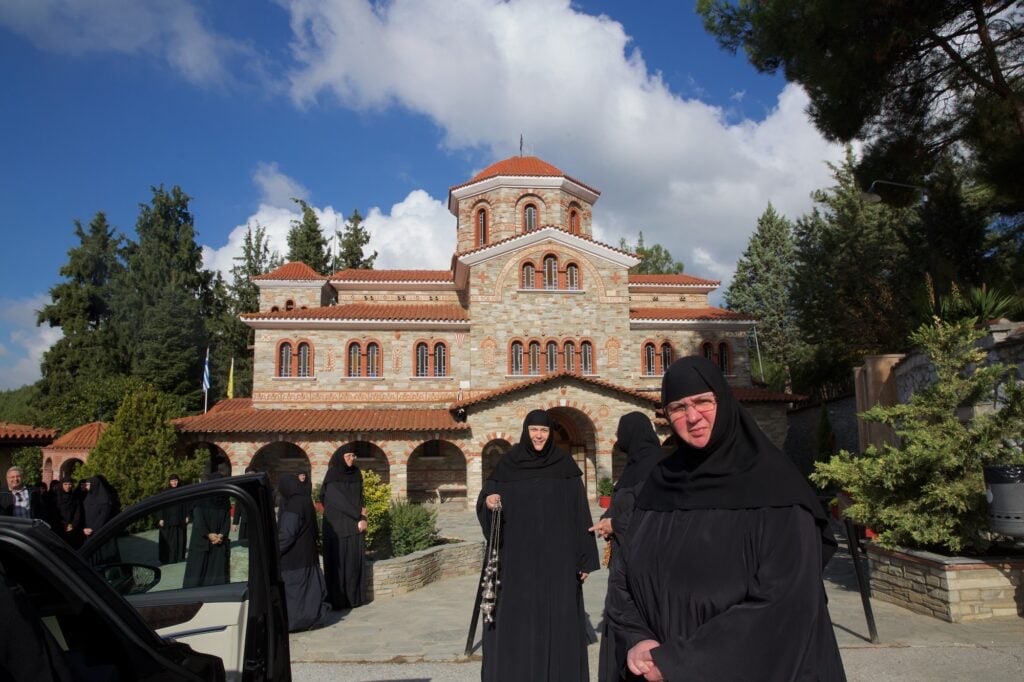
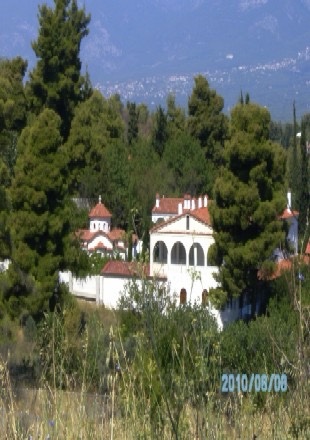
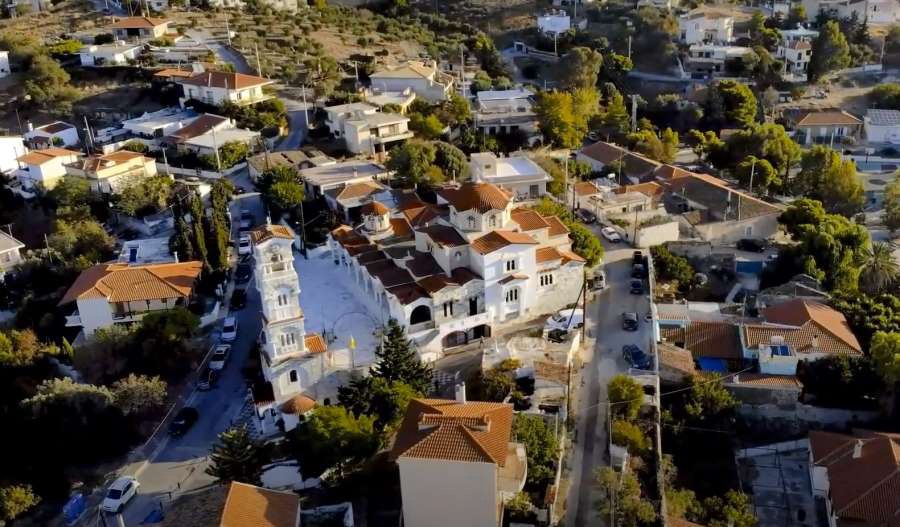
The time has come! The day has finally arrived! After a long, tiring month full of all kinds of jobs and obediences —other than a blessed Synaxis at Holy Cross, UK —and an especially hard time last week, I have finally arrived at the first monastery in my pilgrimage “list”: the Dormition of the Theotokos monastery at the Panorama suburbs of Thessaloniki.
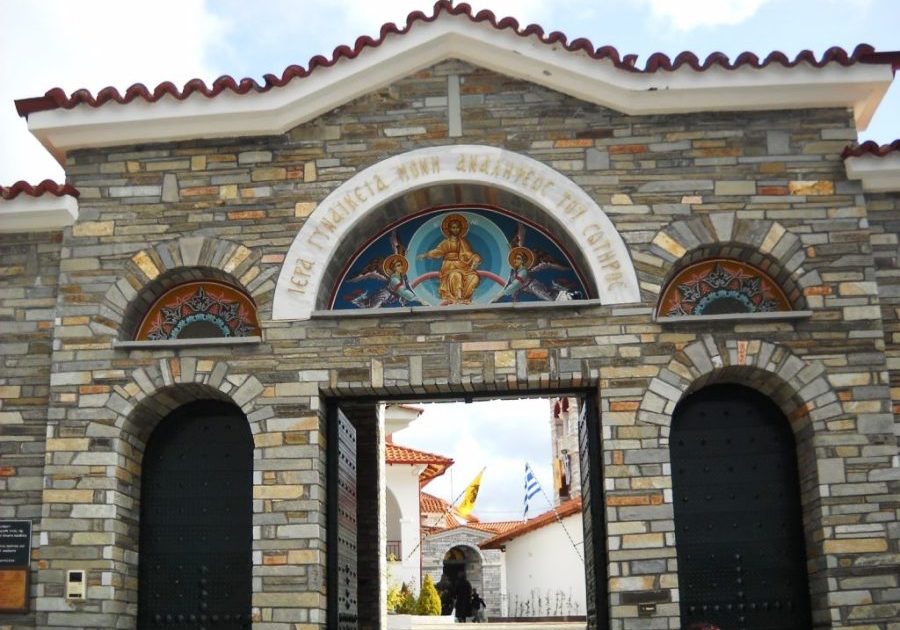
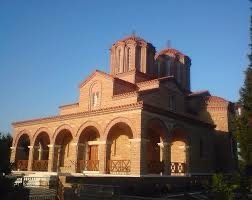
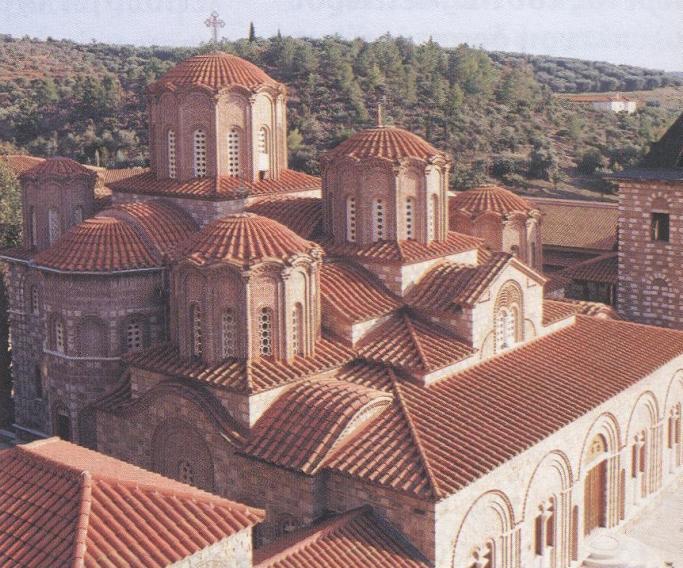
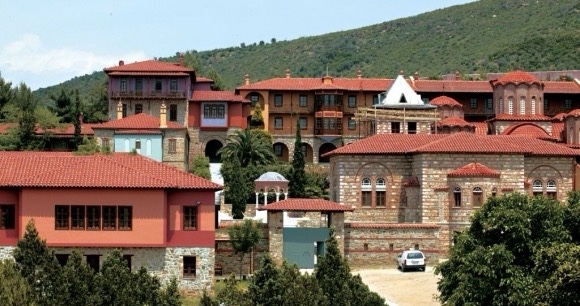
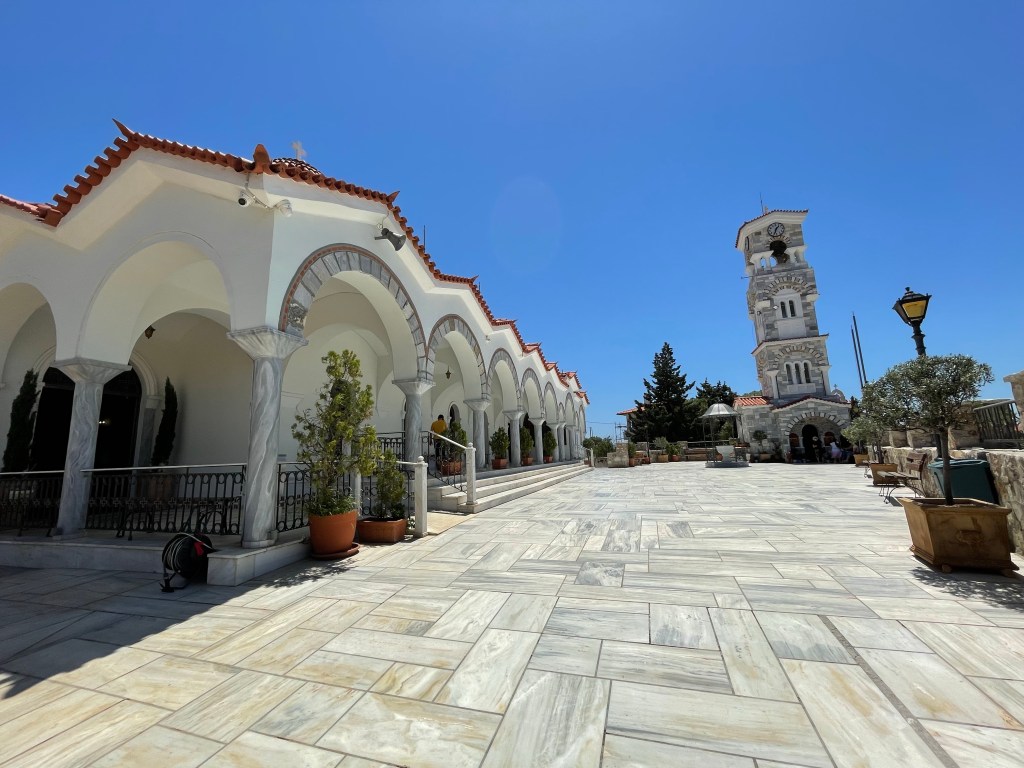
This most beautiful monastery is dedicated to Panagia Elefterotria, the Liberator. It was founded in 1957, has 60 nuns and Melania is their Mother Superior.
Last August, we visited this monastery together with Father J. but our visit was very brief …
I remember so little from our visit last year. I cannot find my way anywhere around. I have arrived so upset, sad and stressed out. Yet here at the monastery, there is an hesychia and a fullness of the Holy Spirit that is most healing.
The hospitality and kindness of the sisters is felt in their warm smiles and their radiant, kind, prayerful eyes. They offer me breakfast, ask me to wash the guests’ dishes, then take me to my room and I start meeting pilgrims from all over the world!
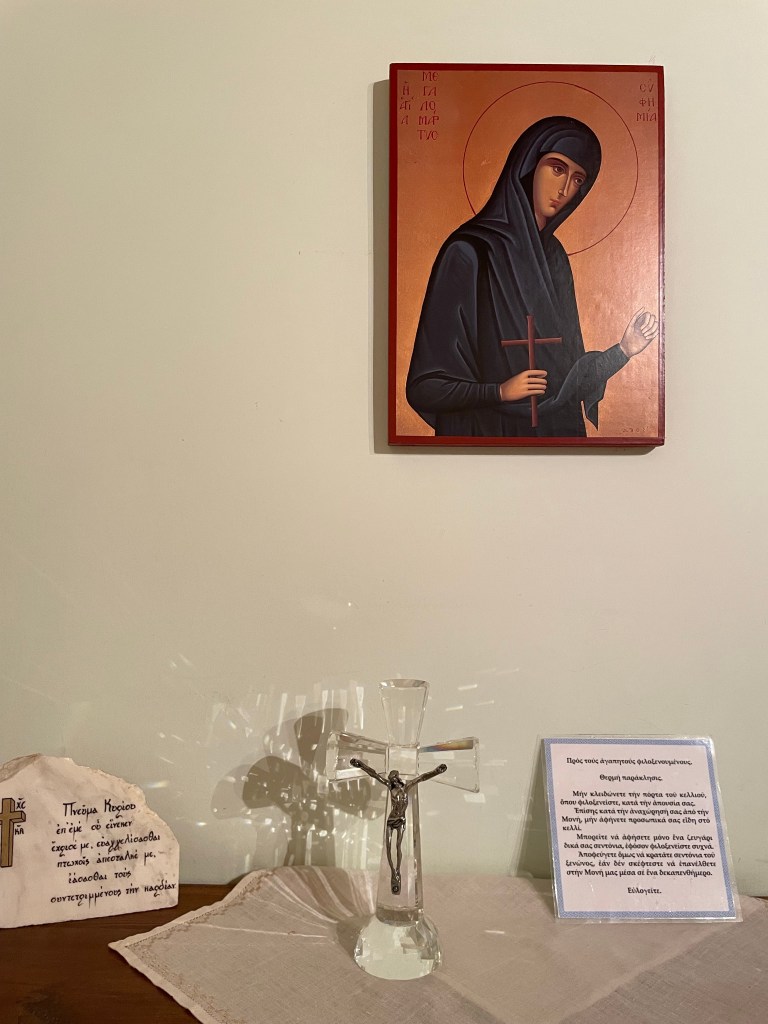
Talking about hospitality, please have a close look at this notice in my cell:
I translate the last two paragraphs: “To our dear guests: A humble request: … You can leave a pair of your own bedsheets if you are a frequent guest. Please do not keep the monastery bedsheets, if you are not considering returning to our monastery within a fortnight”. “Returning to our monastery within a fortnight”!
Everything is happening very fast and with as few words as possible. The sisters work hard and very fast, they multitask, they are such bright busy-bees, yet more importantly they constantly pray. They had to accommodate nearly 300 (!) pilgrims during Dormition Fast in August.
My first obedience, upon arrival, is ivy pruning. I sense that this will be my obedience all these days, until I leave, as the monastery fence is a very long, miles long fence. The other pilgrims from other countries cannot suffer the heat and the sun. As for me, after all this prolonged, all summer training of 40-45 Celsius here, this 30+ C heat and sun feels a bit autumn-like breeze!
So, I prune and pray and hope my sadness will fade away since this is what my spiritual father reassured me and is praying about. I always love to work in nature, yet even here my thoughts, my logismoi still bother me and interfere. But I have faith in my Gerondas’ words. I am under obedience, he will stand by my side on Judgment Day before our Lord, surely he knows better.
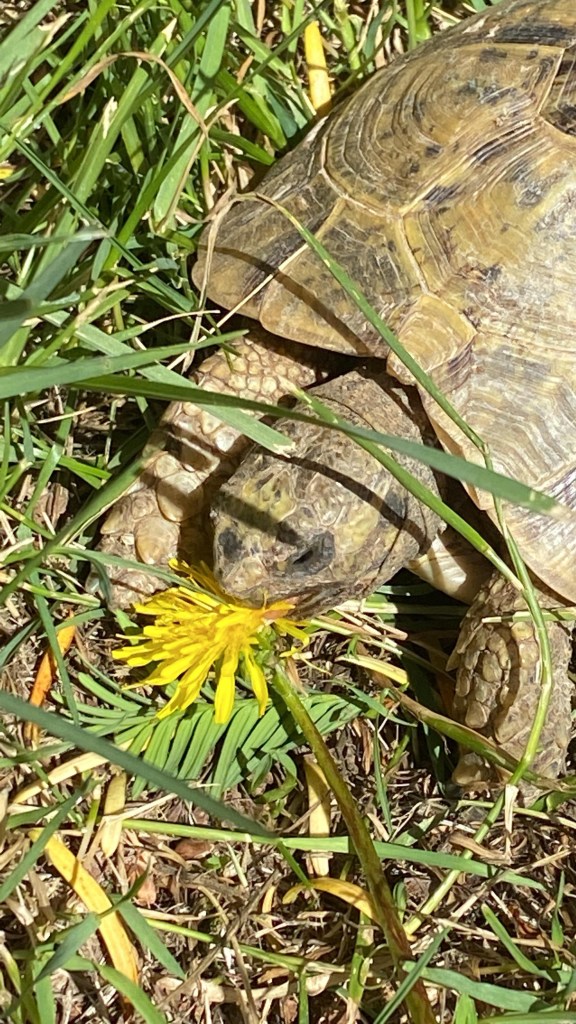
Hours pass under the sun with pruning and the Jesus prayer. A little tortoise seems confused with our pruning and we have gently to carry her across the road to greener paths. Glory to God! Little by little, my sorrow begins to evaporate with this heat, sun and prayers. So Gerondas was right, again! “A disciplined schedule, manual labour, study and prayer” (Abba Isaiah of Scetis Ascetic Discourses), and this blessed monastic community did work miracles for my pusillanimity and faintheartedness.
No time for logismoi, thoughts, moaning, worries, fear, sorrow and self-pity. This is the time, καιρός, for metanoia, obedience, faith, and joyful, godly, bright sorrow, “Charmolipi” (an old Greek work made up of ‘chara’ (joy) and ‘lipi’ (sadness). There is no equivalent word in English; it means a feeling of happiness and sadness at the same time.
10 Godly sorrow brings repentance that leads to salvation and leaves no regret, but worldly sorrow brings death. (2 Corinthians 7:10)
One has literally moved next to the monastery to be there all the time, and the other one does not mind driving 6 hours to be at the church services and the fathers of the monastery! This pilgrim was baptised in a Roman Catholic Church due to his Orthodox parents “carelessness and ignorance” — the pilgrim’s own words— but our Lord found him, guided him to His Church, and he is now on pilgrimage together with his mother! Glory to God for all things! All these Elder Efraim’s monasteries, 20 in total, I believe, in USA and Canada, are all following the Cenobitic way of monastic life (“Cenobitic” is derived from the Greek word “Keenovio” which means “common way of life”) therefore consisting of common work, common meals, and common rest periods.
After Little Compline, a small fasting dinner and then hesychia. My sorrow has been healed and joy fills my heart. What a transformation in just a few hours! My spiritual father was right: “The time there will be a time of healing”. All this prayer and few idle words, manual labour and study, have wrought a miracle.
Abba Isaiah of Scetis
“Observe these three things: your manual labour, your study, and your prayer. Think to yourself daily, “I only have this day to do something in this world” and you won’t sin before God.“
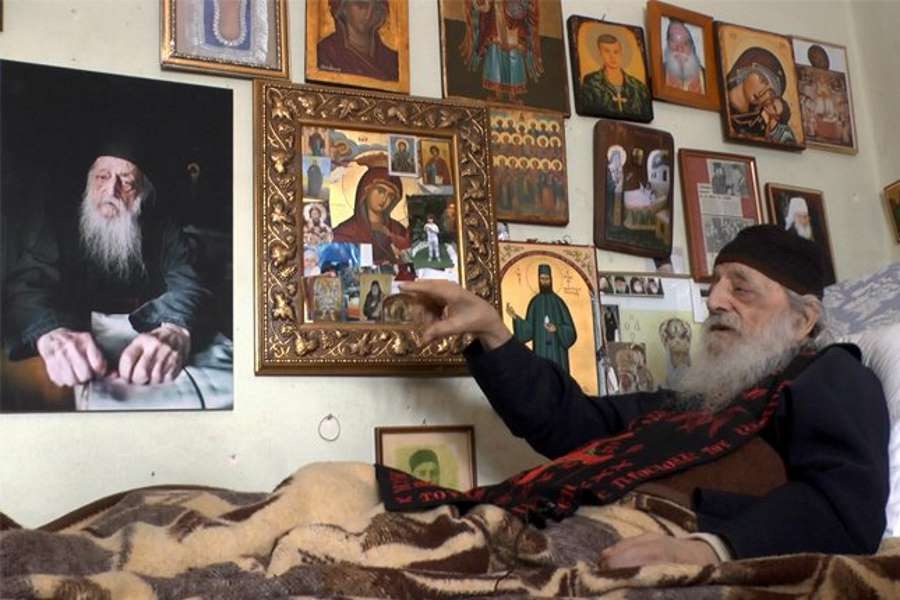
Elder Gregorios of blessed memory, founder and spiritual father of the Forerunner’s Monastery at Metamorfosi, Chalkidiki, together with Saint Paisios and Abbess Euphemia of blessed memory
Dear brothers and sisters, Christ is in our midst! A blessed new ecclesiastical year to all! I have just received the news of a new obedience for the coming ecclesiastical year, and you will see how prophetic the article below was, back in August, to God’s economia, divine providence for me. The new obedience is a number of pilgrimages to, and resulting diaries of my stays at, various traditional, coenobitic women’s monasteries all over Greece, and abroad, and it will start end of September. Something like The Adventures of a Pilgrim in the 21st century… Please forgive my boldness. I know that I cannot compare; it is just to give you the idea. What follows is a summary of what I was studying a month ago, before the actual invitation arrived. Your prayers and your thoughts
Spiritual experience as basis of spiritual guidance
Recently (Aug 2024) I read an article about traditional, coenobitic women’s monasteries. I was impressed with their long list and history and conducted further research. The ‘secret’ which becomes apparent for their longevity, stability and spiritual wealth is their obedience to a Gerondas. Certainly, all nuns owe obedience to their Mother, the Abbess, but what emerges in this study is the necessity also of an obedience to a spiritual Father. In the majority also of these cases, a holy Elder, already canonised or about to be canonised. Let me offer some examples.
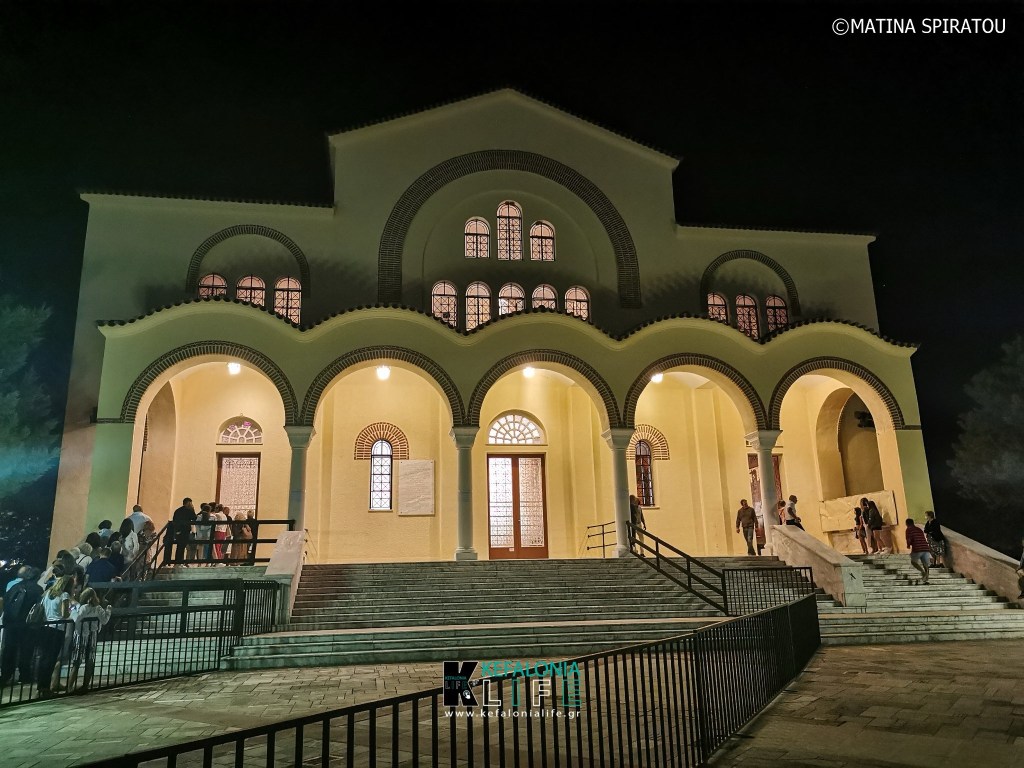
Saint Gerasimos the New on Kefallinia, who lived for quite a long time on the Holy Mountain, founded what was, for the time, a pioneering women’s coenobium, the ‘New Jerusalem’, at Omala, Kefallinia.
New Jerusalem, Keffalinia and St Gerasimos the New
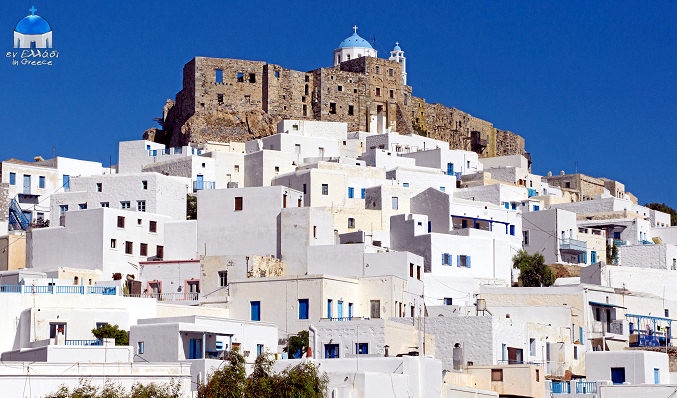
Saint Anthimos in Kefallinia founded six monasteries, of which three were women’s: Ayia Paraskevi in Lepeda, Kefallinia, Our Lady the Portaïtissa (Gatekeeper) on Astypalaia and the Live-Receiving Spring in Sikinos.
Our Lady the Portaïtissa (Gatekeeper) on Astypalaia and Saint Anthimos
Saint Pachomios Arelas, the elder of Saint Nektarios and of Saint Anthimos in Chios founded the Convent of Saint Constantine.
Convent of Saint Constantine in Chios and Saint Pachomios
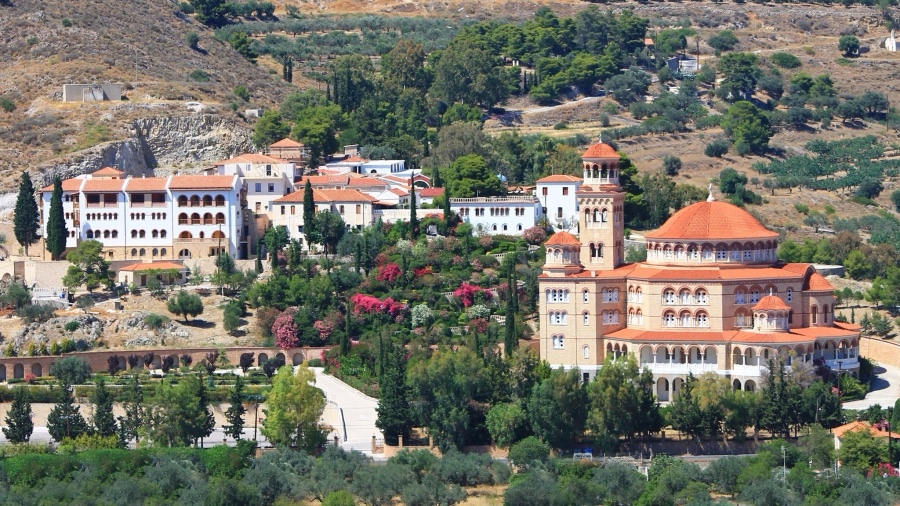
Saint Nektarios of Pentapolis, the saint of the 20th century, founded the women’s monastery of the Holy Trinity on Aegina, on the model of the Convent on Chios.
Aegina, Holy Trinity monastery and St Nektarios
Elder Daniïl Katounakiotis was the spiritual guide of Abbess Theodosia and, with her, all the nuns of the Monastery of Kekhrovouni on Tinos.
St Pelagia’s monastery, Kehrovouni, Tina’s and Elder Daniel Katounakiotid
Saint Anthimos of Chios founded the Convent of Our Lady our Help in Frangomahalas.
Saint Savvas in Kalymnos became the Elder of the Holy Monastery of All Saints on Kalymnos.
All Saints’ Monastery, Kalymnos and Saint Savas
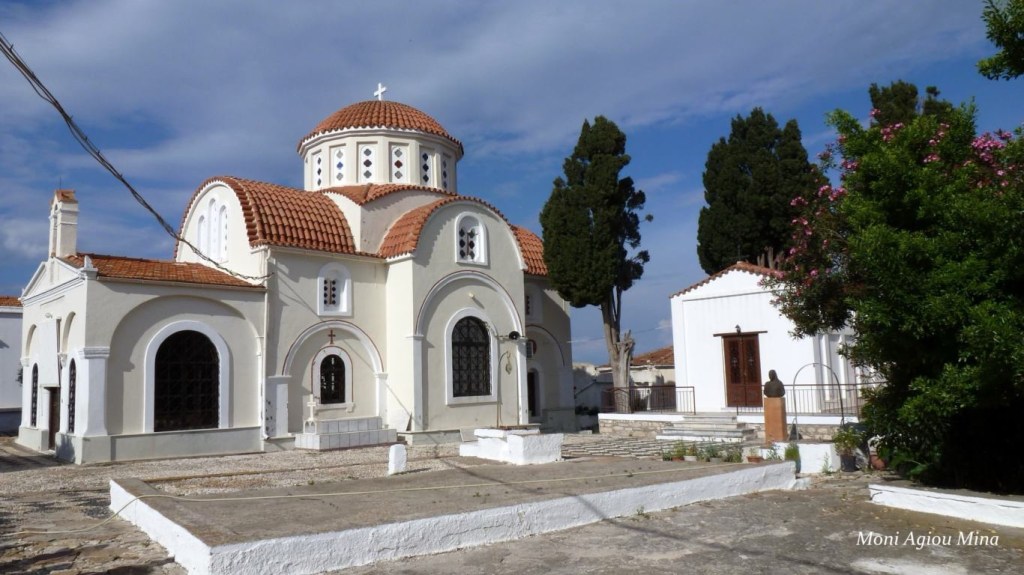
Elder Amfilohios Makris founded the women’s monasteries of the Annunciation, ‘Beloved Mother’, on Patmos, the Eleousa (Merciful) on Kalymnos, the Annunciation on Ikaria and Saint Minas on Aegina.
St Amphilohios’ Monastery, Patmos
Elder Filotheos Zervakos founded two women’s monasteries on Paros, the Myrtidiotissa, Thapsana and Saint Filotheos.
Myrtidiotissa, Paros and St Filotheos Zervakos
Elder Ieronymos Simonopetritis, who lived for many years at the dependency of the Ascension in Vyrona, Attica, tonsured and guided hundreds of nuns.
Elder Iosif the Hesychast sent many nuns to women’s monasteries and guided them either in person or by letter.
Odegetria Virgin Mary Monastery and Elder Iosif the HesychastDormition of the Theotokos Monastery in Panorama, Thessaloniki
Saint George Karslidis founded the Holy Monastery of the Ascension at Sipsa.
Sipsa, Holy Ascension Monastery and Saint Karslidis
Elder Kornilios Marmarinos directed the women’s Monastery of the Protecting Veil at Halkios, Chios.
Elder Athanasios Hamakiotis founded the monastery of the Faneromeni (Our Lady made Manifest) in Rodopolis.
Saint Porfyrios Kavsokalyvitis founded the Monastery of the Transfiguration at Milesi and directed the spiritual life of many nuns.
St Porphyrios monastery, Milesi
Saint Païsios the Athonite was linked to the nuns at the Monastery of Saint John the Theologian at Souroti and guided their spiritual lives.
St Paisios monastery, Souroti
Elder Efsevios Yannakakis founded two women’s monasteries, the Entry of the Mother of God in Markopoulos, Attica, and Saint John the Theologian at Verino, on Aigio.
Dormition Monastery, Mikrokastro
Elder Mitrofanis directed the spiritual life of the monasteries of Our Lady Rovelista and the Lower Mother of God in Arta, as well as the Life-Receiving Spring at Areia in Nafplio.
Elder Damaskinos directed the Holy Monastery Saint John at Makryno, in Megara.
Elder Polykarpos founded the Monastery of Saint John the Theologian at Souroti and the Monastery ‘Our Lady of Evros’ in Alexandroupolis.
Annunciation monastery, Ormylia and Elder AimilianosOrmylia, the largest Orthodox coenobitic monastery in GreeceOrmylia
Of course, there were also many other Elders, but the sheer size of the volume has made it impossible to include their biographies. There are also some who are still alive but who are recognized by the complement of the Church as charismatic Elders who have founded and guided the spiritual life of women’s monasteries, such as Elder Nektarios Marmarinos, Elder Aimilianos Simonopetritis, Elder Efraim in Arizona, Elder Filotheos Karakallinos, Metropolitan Athanasios of Lemesos, Elder Alexios Xenofontinos and many others.
*
Why so? Why do women monasteries need a spiritual Father, in addition to their spiritual Mother, to practise obedience?Please pay close attention to what the Elders testify:
“It often been observed that some nuns find it difficult to express certain troubling thoughts to the Abbess, and that they find it easier to do so to the Elder. Of course, it’s obligatory for the Abbess to agree to hear the thoughts of all the nuns, but in such a case we see that the Elder can be of help in the resolving the situation to the spiritual benefit of the nun concerned.
Besides, the Elder is more easily able to reconcile and placate the nuns regarding any friction or pettiness which disturbs the interpersonal communion of the nuns, especially when certain passions are prevalent which tend to appear more often in the feminine nature, such as envy, jealousy, complaining and disparagement. In other words, the Elder has this advantage not only from a spiritual, but also a psychological and biological point of view.
In recent times, many devout but inexperienced priest monks and even married priests have had women gather round them who have wanted to enter the monastic life and so these men have undertaken to found a monastery and to guide the new nuns. Their aim may be worthy. But such a task should be undertaken in the proper, traditional way. The Orthodox monastic tradition tells us that an Elder must perform this service selflessly and be, at the same time a teacher, an experienced doctor and overseer of souls, a good shepherd, and a much-wanted father for the persons who have been entrusted to him. Women’s monasteries which have had the support of such Elders have known spiritual progress and vitality, and continue to do so.”
We hope there’ll be a dynamic continuation of the traditional position of the Elder within modern, women’s, Orthodox monasticism and pray that all the Elders and Abbesses will be enlightened and fortified by the Lord so that they can carry out the elevated and selfless task which has been assigned to them by Divine Providence. For the nuns, we pray that they may observe their monastic vows punctiliously, so that they can make their way towards sanctification unfalteringly and in safety and can experience Christ the Bridegroom ‘dwelling and walking within their hearts’. Amen
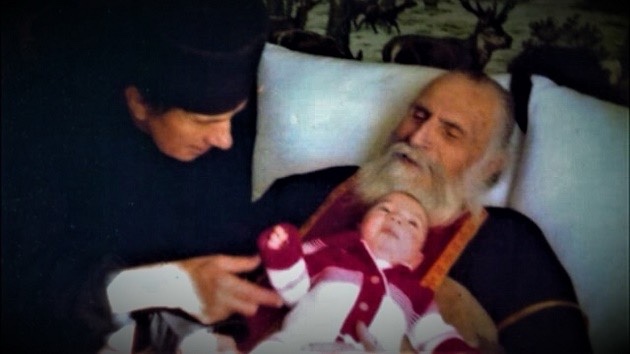
On the left is Monk Zosimas (+2010) with Elder Simon Arvanitis (1901-1988) on his deathbed blessing the child of a spiritual child of his.
*** Incl. St Nektarios’ prophesy about Elder Simon, and St Porfyrios and St Iakovos Tsalikis words for him.***
Panagiotis, Elder Simon’s baptismal name, was a man of unbelievable physical and spiritual strength. He grew up helping his large family by working as an itinerant greengrocer or as a laborer on estates. Endowed with great muscular strength, from the age of thirteen he was lifting sacks weighing 80 kilograms or more. His favorite occupation when he rested, was the study of the Gospel. On Saturdays, as soon as he finished work, he went to the chapels for prayer and study, abstaining entirely from all food, until Sunday evening, when he returned to his house and ate.
Panagiotis visited Mount Athos a few times. When he was young he liked to go on long journeys. Once he started from Athens and walked to Ouranoupolis. There he put his clothes on his back and swam to Mount Athos!
His visit to Kavsokalyva of Mount Athos at the age of 16 was to seal his life. There the Fathers were gathered and waiting for Metropolitan Nektarios Kephalas to arrive, our well-known Saint Nektarios [the Bishop of Pentapolis and Wonderworker], who would be visiting them.
When he arrived, one by one the Fathers approached him reverently and received his blessing. After the Fathers did this, the pilgrims followed. In his turn, Panagiotis also went to receive the blessing of the Saint. Saint Nektarios then took him by the hand and said to him prophetically:
“You, my child, will become a spiritual father and save souls. To the man who will come to you and speak of his sin for the first time, though he did not know that what he did was a sin, be lenient and do not let him go. But if he comes and continues in his sin, be strict with him and rebuke him.”
The prophecy of Saint Nektarios took place when the fullness of time came. Panagiotis later became Father Simon, who indeed saved many souls.
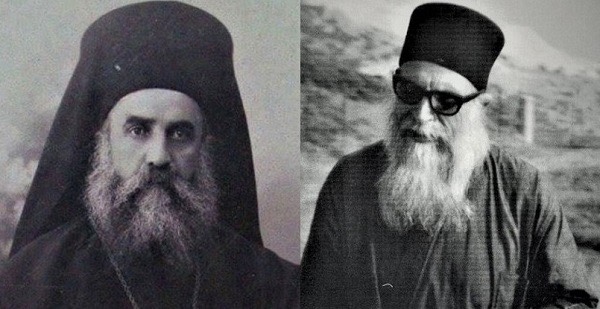
Saint Nektarios and Elder Simon
Other contemporary Saints such as St Iakovos Tsalikis also came to know and admire Fr Simon’s selflessness, wisdom and love, which have inspired countless struggling Christians during his life and after his blessed repose. St. Porphyrios had said of him that no one else had such faith as Elder Simon’s!
Hesychastic years in the cave of Saint Gregorios followed, until the then Metropolitan made Panagiotis a monk in Agios Charalambos and gave him the name Simon. He longed to be a cave-dwelling hermit, and continually begged this from the Monastery elders. The elders prayed for a week to Panagia to determine the correct path. After a week, Simon was told: “The Holy Mother informed us that you must return to the world which needs you to be led to salvation”.
In obedience, he was ordained a priest-monk and started serving local parishes and chapels at Athens suburbs, and later the monastery of St.Panteleimon, Mt.Penteli, which he founded.
St Panteleimon Monastery, Panteleimon
One of the first monks there, Zosimas, had a phobia of the dark. Fr Simon prayed over him and allowed him to sleep in his own cell while he, the elder, slept on the roof of the cell. Zosimas had a dream that the devil appeared and said: “Your Elder is up on the roof and I can’t come inside”. With the prayers of Fr Simon, he was healed.
One of the most well known miracles of Elder Simon is the miracle of the huge hare and the starving pilgrims in 1943. That time, he was appointed a Spiritual Father at the Monastery of the Transfiguration, near which there is a small chapel, dedicated to the All-Great Taxiarches. In 1943, on the eve of the festival, a large number of people had flocked for the celebration, at a time when hunger oppressed the people and the idea of food at a festival seemed like a dream. The only edible thing there was a sack of onions. However, Father Simon, taking pity on the hungry people, in imitation of Christ our Lord, and with unshakable faith in God’s providence, ordered them to clean all the onions and immersed himself in prayer. And suddenly, before the astonished eyes of the pilgrims, a huge hare came down from the mountainside and entered the kitchen all alone, on his own, offering himself for their meal! And the pilgrims, just like in the miracle of the multiplication of loaves, “all ate and were satisfied”, and there were plenty left overs.
What a “shocking” miracle! Poor huge hare! Even more shocking for me and many people who never eat animal’s meat. But these times were very trying ones and hundreds of people were literally dying from starvation every day! See footnote below*
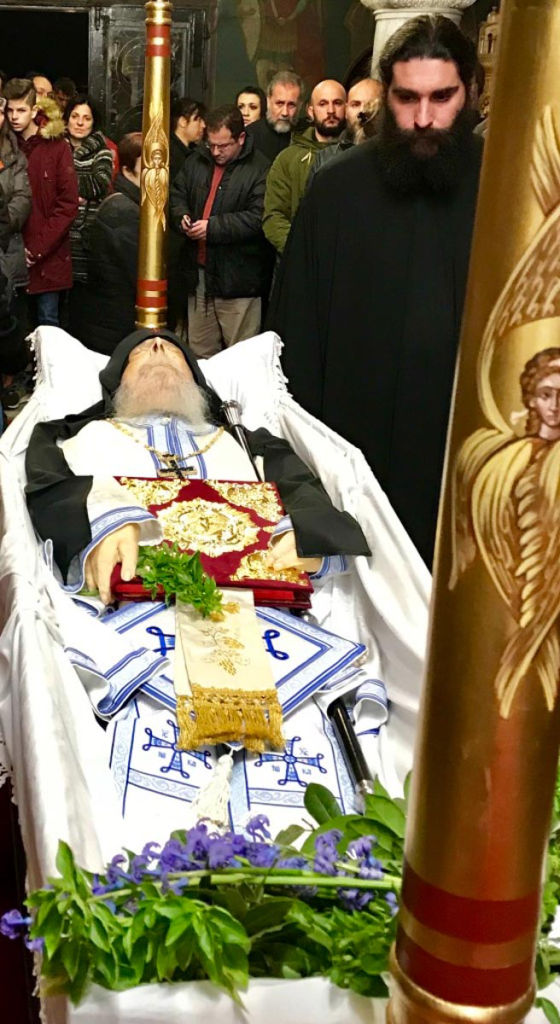
Fr Simon reposed in 1988. On the day of his burial, the grace of God was evident. The Metropolitan approached to kiss his body and the elder lifted his hand for the Metropolitan to kiss! What a blessed Elder and yet another revelation to us during our recent pilgrimage to Athens/ Aegina! Christ is Risen!
*
* One of the greatest calamities of the Greek people during the years of the Nazi Occupation was the terrible famine of 1941-1942 which claimed the lives of at least 300,000 people and caused serious illness in approximately 1,500,000. The spectre of hunger soon began to dominate. Children were among his first victims. They wandered around hungry, ragged and barefoot looking in the garbage to find something to eat. Bones, fruit skins and food scraps were the only food for many. On the sidewalks, many fainted from hunger began to fall, while the weakest organisms succumbed to the fatal… In the few ration centers the daily menu was as follows: pumpkins 100 drams, tomatoes 3 drams and onions 8 drams (without oil). Note that the oka had 400 drams and was equivalent to 1,282 grams. It is estimated that at least 200,000 contracted tuberculosis during the Nazi Occupation. 300,000 died of starvation and 1,500,000 became ill from malnutrition. The total calories from this “snack” were 290, of which only 200 were usable by the human body. Nonetheless, 500,000 infants, 500,000 toddlers, 1,200,000 children and many teenagers who needed the scrapbooks were fed on this 200 calories daily menu for months! On the streets, the chilling and macabre sight of the dead being carried for burial in two-wheeled wooden carts and with a cleaning cart began to appear. The dead were piled up, first by the tens and later by the hundreds in cemeteries unburied, as there were not enough undertakers to bury them! The unburied dead from starvation soon became a very serious problem. In streets, squares and courtyards of houses, people were dying every day and their bodies remained there, where they collapsed, until a Municipal cart passed by to collect them and take them to the cemeteries. But there was a problem there too: the undertakers were few, they too were exhausted from hunger and the dead were many. Others left their dead relatives outside hospitals and others outside cemeteries, stealing the dead’s identity documents in order to appropriate the pension they were entitled to. Protothema, my translation.
For more miracles of , go to Orthodox Christianity Then And Nowhere and here .
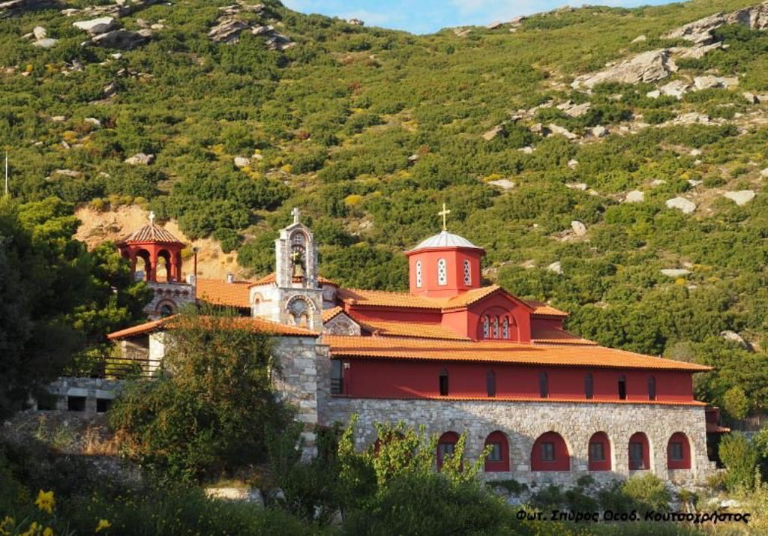
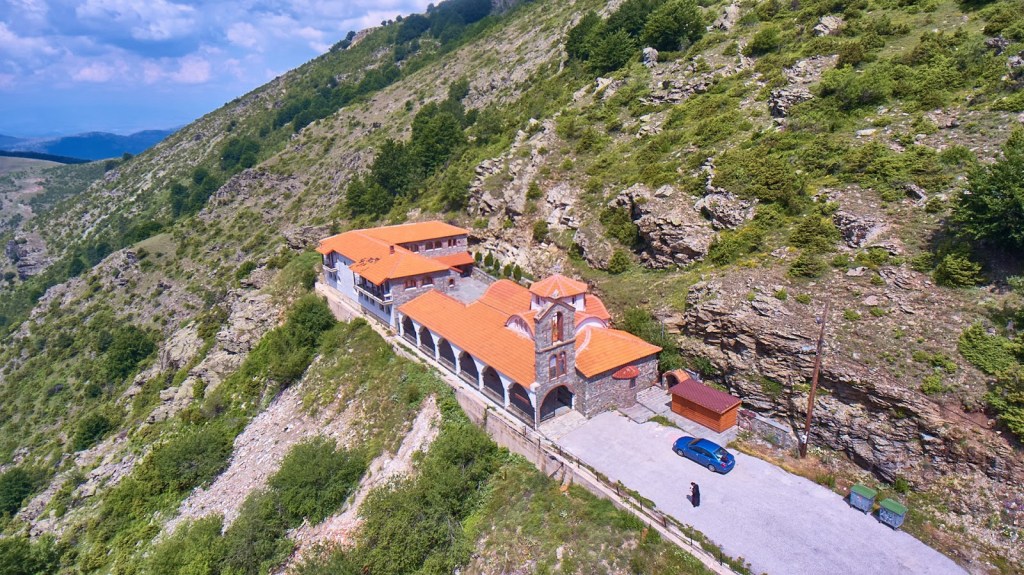
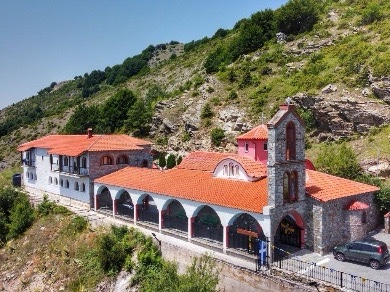
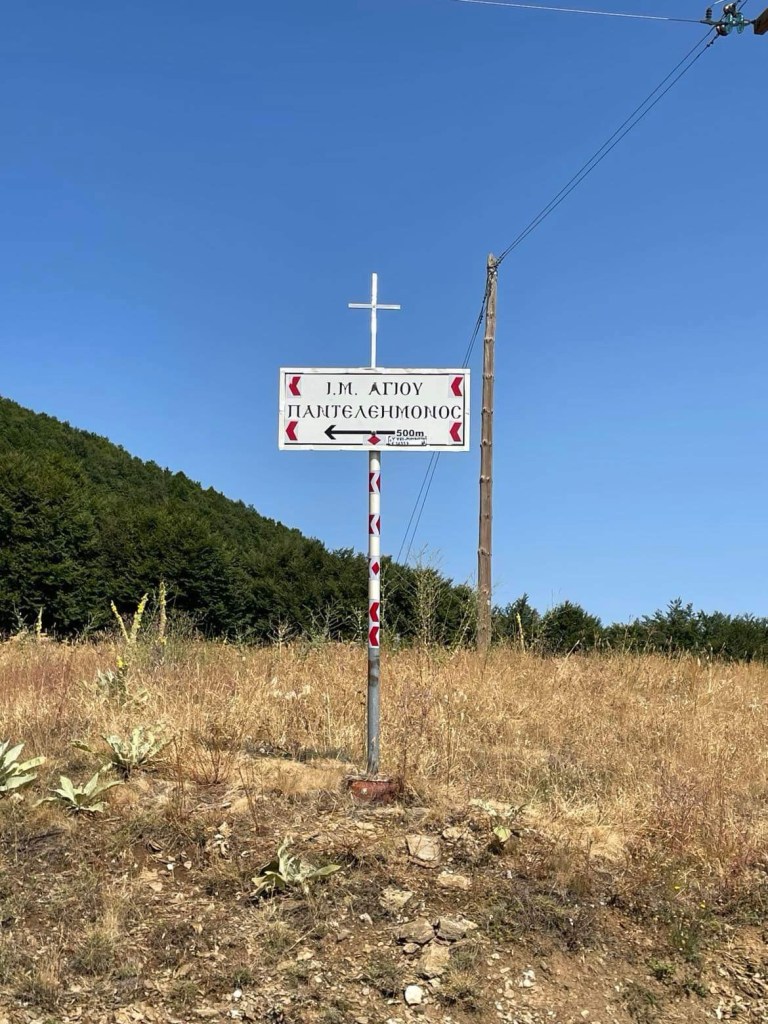
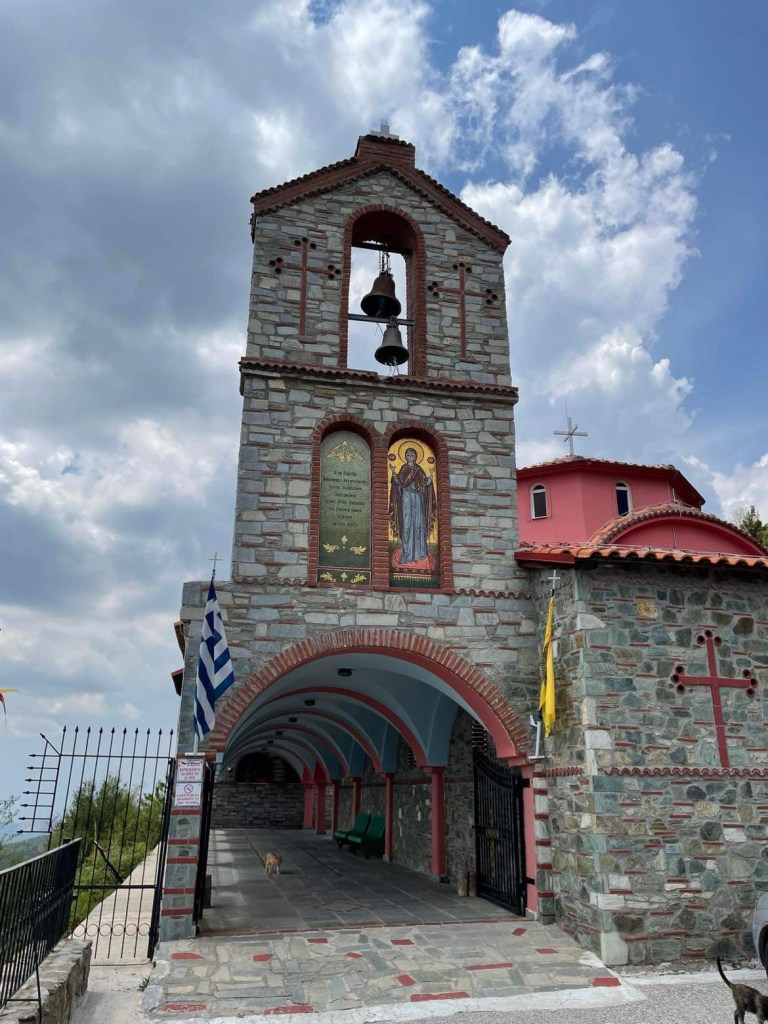
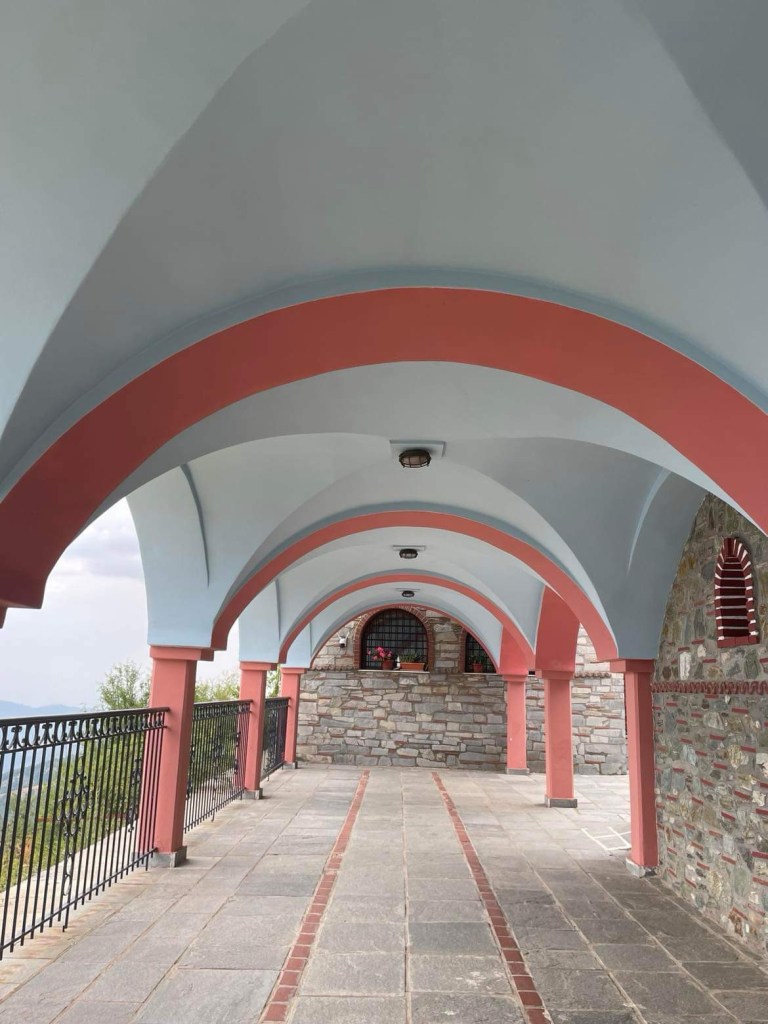
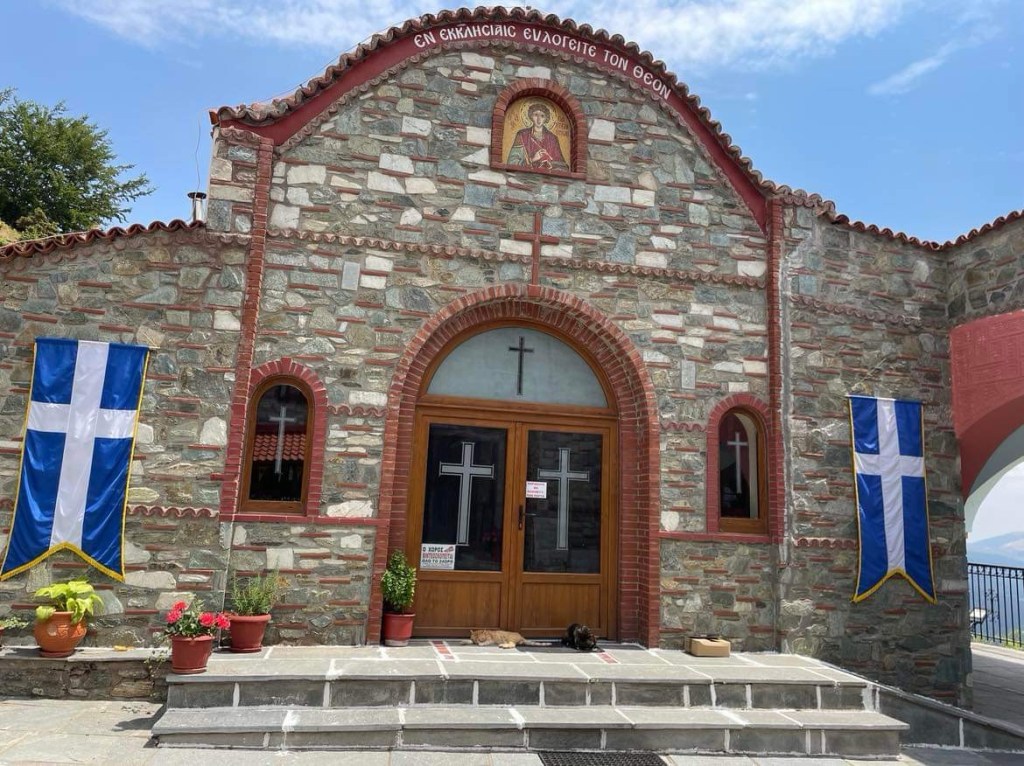
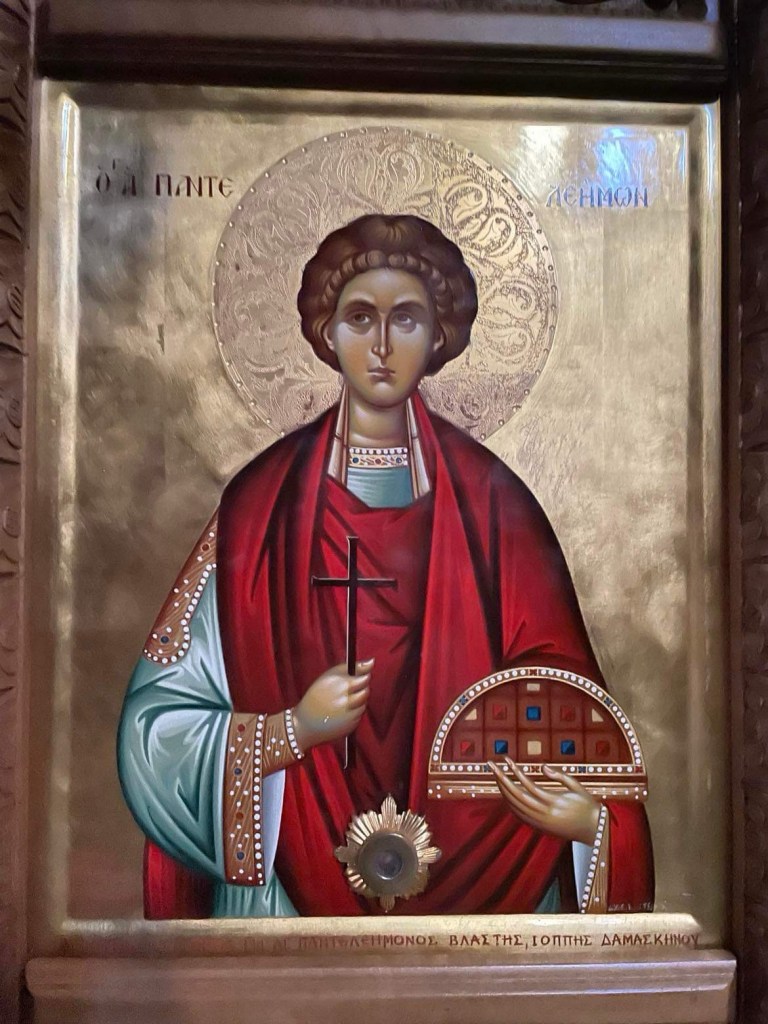
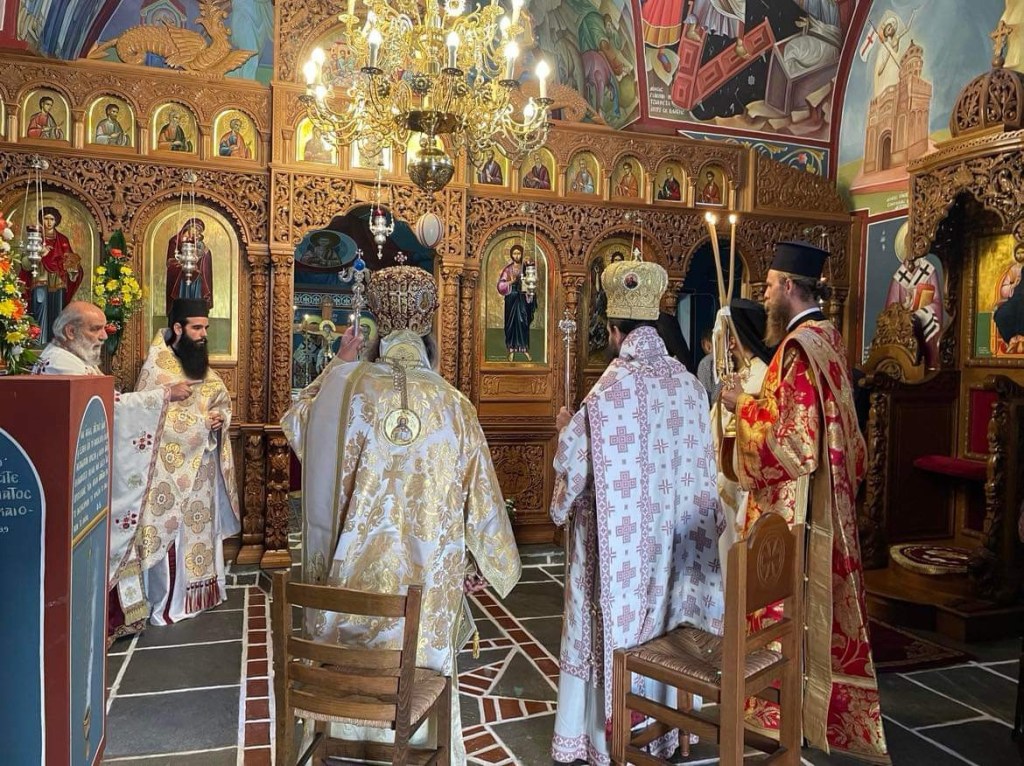
Last week, on the eve of St Panteleimon’s Feast, I arrived at his monastery at the suburbs of Vlasti, and 33km away from the bustling heart of Kozani, to help the monastic synodeia there for the Feast.
This was my first time there and the surrounding landscape scenery at 1650 m altitude was stunning. The landscape altered among numerous fields with sparse cedar, lammergeyer, oak and pine forests. At the higher positions, sheer rocks and alpine fields add a particular mountainous character. St Panteleimon’s misty and mystic monastery dates back to the 15th century and is almost permanently capped by gray clouds and fog. It is by far the monastery at the highest altitude all over Greece, Mount Athos included.
For stunning views of this mystic and misty monastery and the surrounding landscape, go to this YouTube link:
Except for the incomparable beauty, this area is also known for its ecological characteristics, as it constitutes a biotope of bears and other predatory birds such as the war eagles, haggard eagles, snake eagles and the bullfinches. Vegetation is also lush, with a great variety of wild flowers and herbs. This travel/ pilgrimage destination indeed beckons not only pilgrims, but travelers seeking tranquility and untouched beauty.
For video excerpts of the church services these two days (Vespers and Matins- Holy Liturgy), go the following YouTube link:
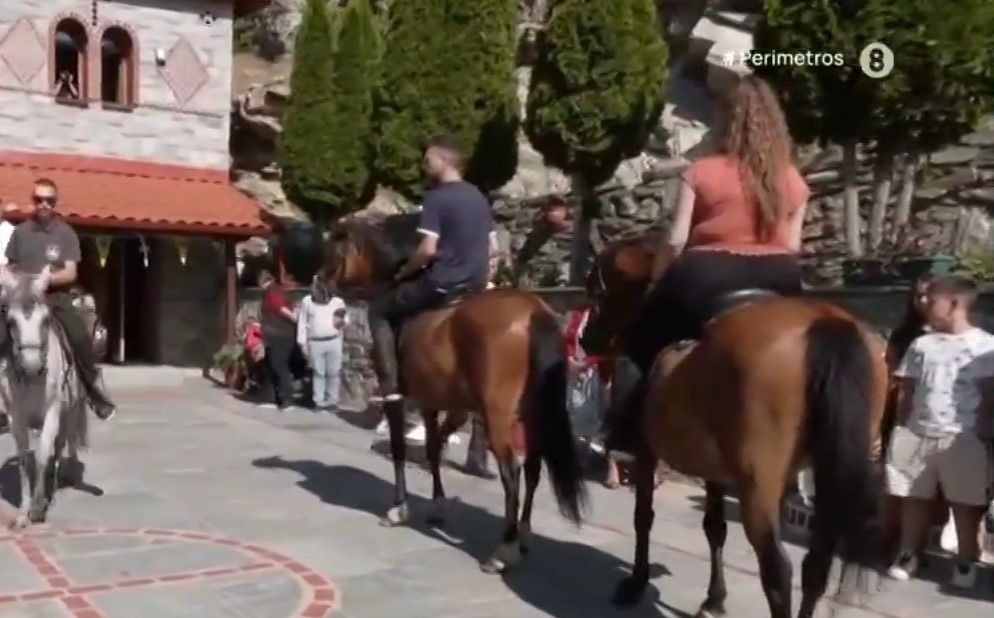
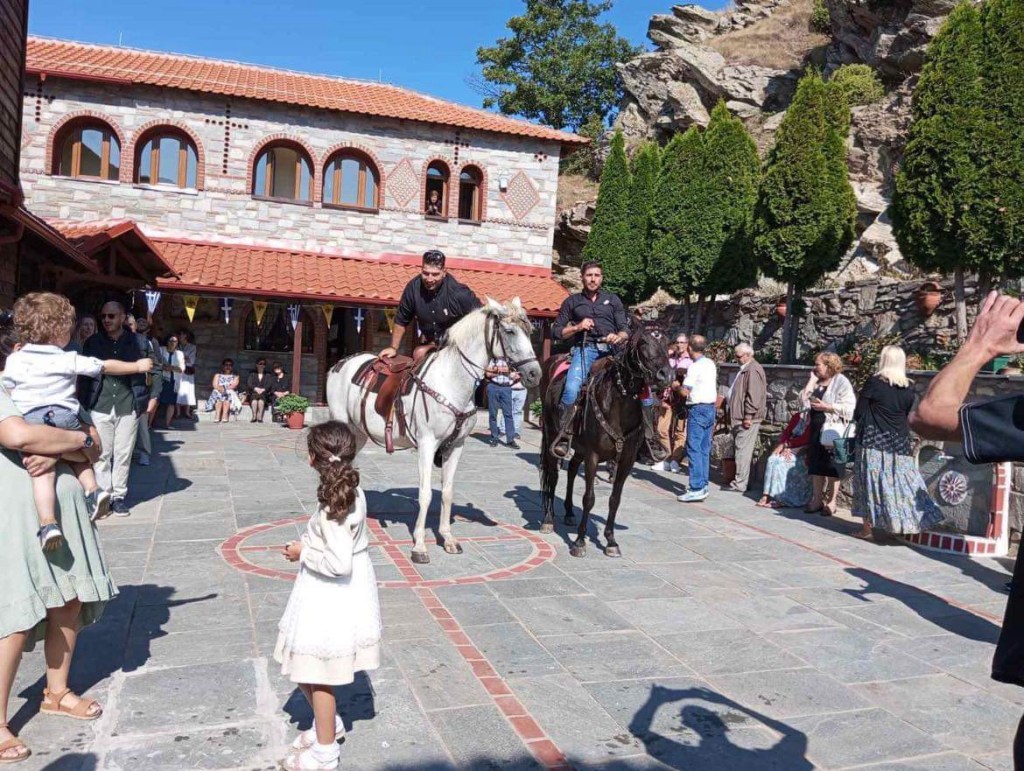
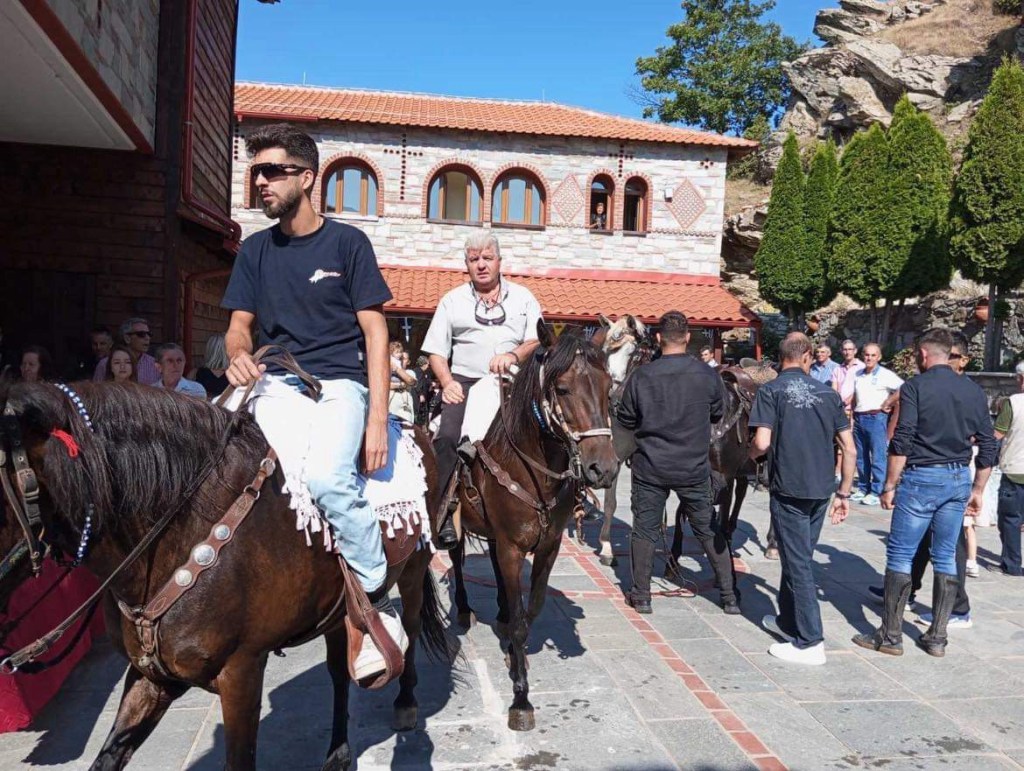
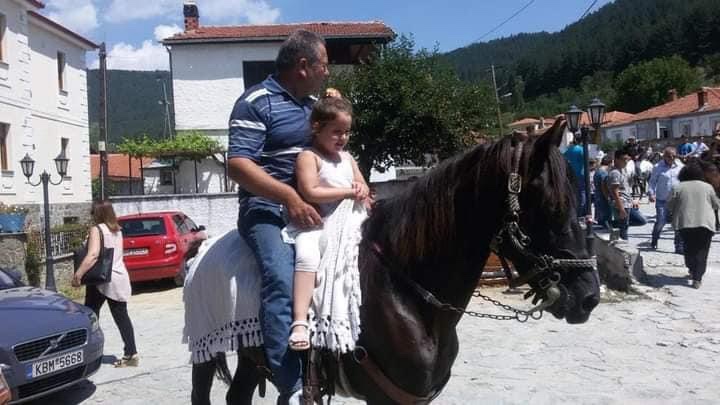
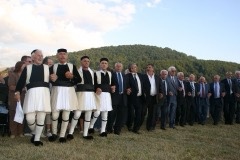
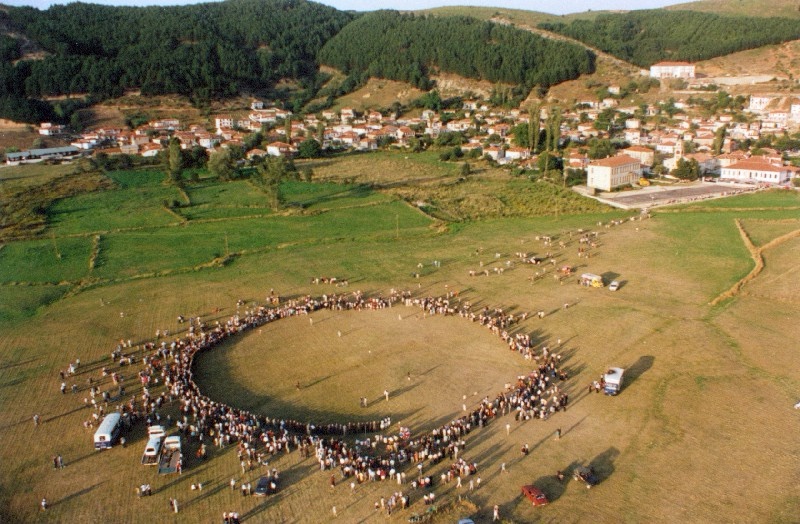
Though I normally share with you church services highlights, everyday Saints stories and elders’ spiritual encounters from my pilgrimages, this time I would like to introduce to you two local customs during the Feast, which I have encountered only in this area: the Horse Riders’ Tama (votive offering) to St Panteleimon and the Tranos Choros (Grand / Magnificent Dance).
The Horse Riders Tama to St Panteleimon
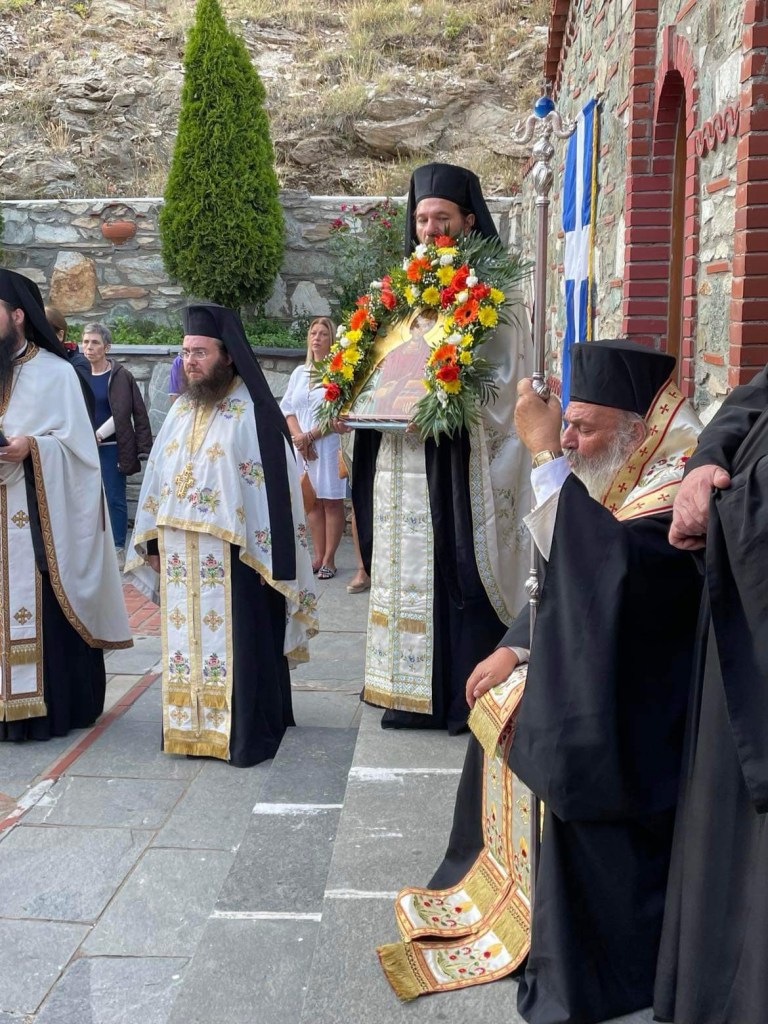
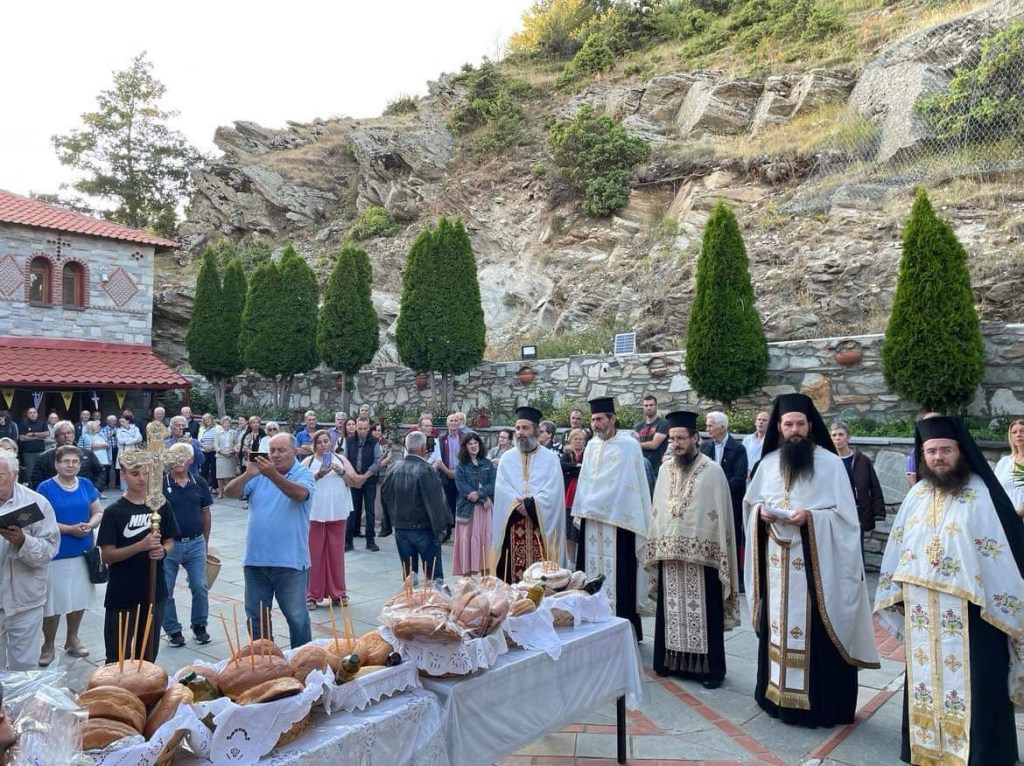
On the Feast day, the inhabitants of the nearest village Vlasti, as well as friends and relatives all over the world, who come specifically for St Panteleimon’s and later Panagia’s Feast on August 15, prepare their horses (some may borrow), and climb up to the monastery of Agios Panteleimon on Mount Muriki, so that they can attend church and honour the Saint.
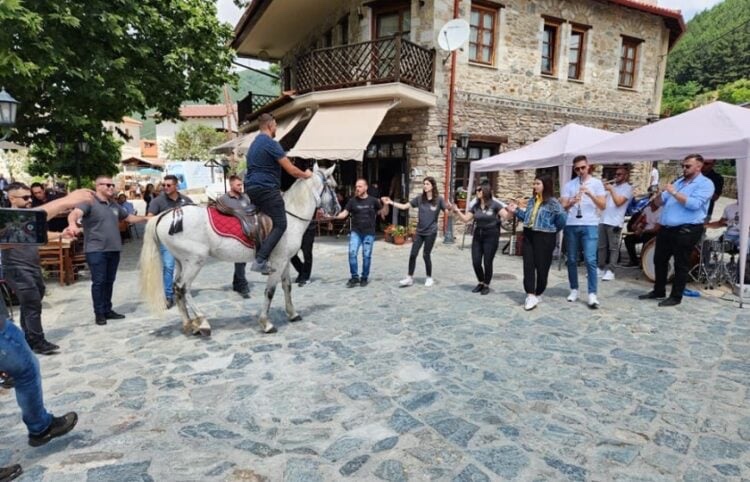
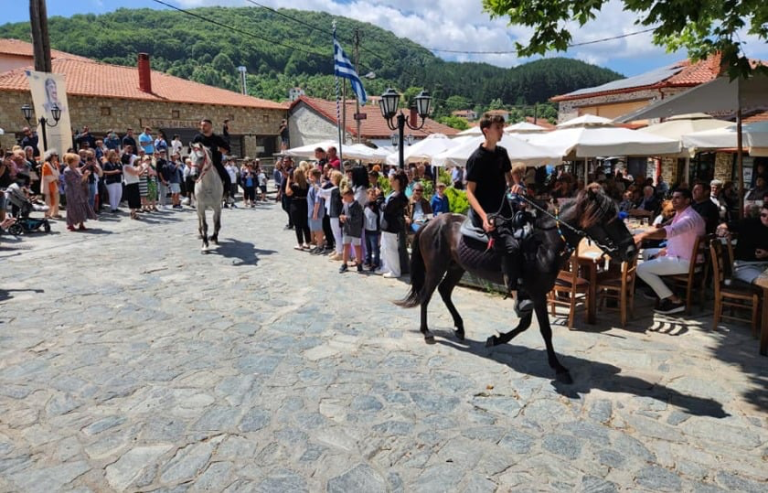
After the Divine Liturgy, the horse riders descend from the beautiful, meandering paths of the mountain, to the center of Vlasti, a nearby picturesque village, just 4 km away from the monastery, nested in the mids of alpine landscape and lushy fields, and sitting at an elevation of 1200m. Background music accompanies them all the way unto the monastery and back to the village feast.
Again, for video excerpts of the horse riders’ tama, and the village feast visit the following two YouTube links:
The Tranos Choros (Tranls. Grand / Magnificent Dance)
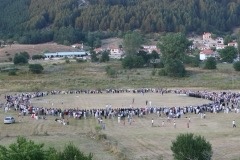
This dance is a traditional community event based on the dual elements of «song – dance» (a capella, ie. vocals and dance without the accompaniment of musical instruments). It bears a ritual character, passed on from one generation to the next. The term Tranos denotes the universal participation of the local community in its performance and its great importance to the community.
The dance is performed not only by permanent residents of the community, but also by Vlatsiotes all over the world, who, although are no longer inhabitants in their land of origin, make a point of returning to visit every summer during these feasts, with the aim of reconnecting with their village and reconfirming their group identity.
The Tranos Choros (Grand/ Magnificent Dance) is danced annually in Vlasti in the afternoon of July 27, day of the feast of Saint Panteleimon, as well as on the two days of the feast of the Dormition of our Lady Theotokos, on August 15 and 16.
The Tranos dance in Vlasti has its own rules. These rules define what time the dancers gather, their hierarchical position in the circle, the dance pattern, the order of songs, the specific dance motifs.
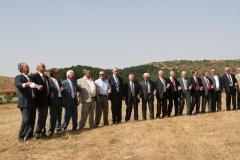
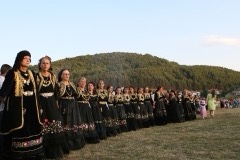
Hierarchy, based on gender and age, is a characteristic of its structure. The men lead the dance, positioned in order of seniority, those wearing traditional dress first . Age is again the criterion for each woman’s position in the dance circle. In the case of women of the same age, the criterion is their wedding date. Traditionally, the leading dancer is the eldest, an expert on both songs and rhythm.
The dance begins at the moment when the leading dancer crosses his left foot over the right. It is a particularly symbolic move, with the leading dancer raising his left leg and holding it above the right for the dance to begin. For the Tranos dance, this move has the same role as the raising of the conductor’s baton in a symphony orchestra. The movement is accompanied by a simultaneous move of the hand holding the kerchief and the rendering of the first verse of the song.
The lead dancer is joined in song by most of the men. The lyrics are repeated by the women’s semi-chorus and the men who are last in line. This ritual dance in the minds and hearts of the locals evokes people long departed. “This place has existed and will always exist. To paraphrase the poet George Seferis, «as the pines retain the form of the wind, even when the wind has gone and is no longer there»”
Watch this communal, ritual dancing in the following two YouTube videos:
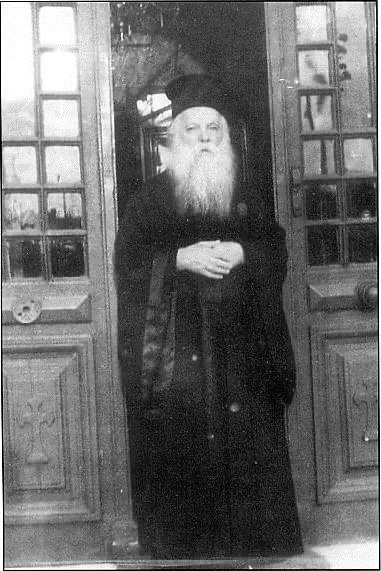
Yetanother link in the chain of holiness to His Kingdom, revealed to us, during our recent pilgrimage to Athens and Aegina, another stepping-stone on the Way! The humble Saint of Marousi, To St Athanasios Hamakiotis! Glory to God for all things! This blogpost will present his life and three of the most memorable miracles during his life and after his repose in the Lord.
1.The incident with the Holy Communion took place at the end of St Athanasios Hamakiotis life. His end was blessed, reminiscent of the end of the great saints that we read in the old Synaxaria: “While he was in the hospital, the priest from the Petraki Monastery would come every day to give him Communion. In the last few days the fever had skyrocketed. The thermometer read 42 degrees. At midnight on the 15th to 16th of August he turned and told the nun. -‘Child, be ready tonight’. -‘Why Elder?’ -‘Tonight I will have a big visit and we must be ready to take communion. It’s an opportunity; don’t miss this opportunity’. – ‘Yes, Elder, tomorrow the priest will come’, answered the nun, without understanding what the elder meant. ‘No, tonight, we will have communion’, he insisted. ‘The angels will come! Now read the Holy Communion Canon’. The nun read it and as soon as she finished, he said to her: – ‘Repeat it’.She read it a second time and then, the Elder told her: – ‘Since we won’t be in time, read to me the final prayers’. The nun read: ‘I believe Lord and I confess…’ and the rest.
The Elder continued. -‘Sing now ‘On the divine prison the uncle Abbakum…’ He even provided the tone. The nun chanted: ‘Above the divine prison, the great Abbacum, stand with us and show us, a bright Angel, clearly saying: Today is salvation for the world, because Christ has risen as almighty.’ Indeed, what a nice and how appropriate for the moment choice. – ‘Repeat it’. The nun repeated it. ‘And another time.’ We leave the continuation of the narrative to the nun who experienced this shocking moment: ‘While I was chanting the troparion and I came to the word ‘Abbakum’, I experienced an urgent impulse to fall down on my knees. I quickly knelt down, he threw the sheet over me and half covered me. The Elder, with all the strength he possessed, stood up a little, raised his hands and in awe said the words before the Holy Communion, as the priests say them. I was afraid that he would fall and tried to see what he was doing by pulling the sheet aside a little. He made the same movements that he made when he took communion at the Holy Altar, saying: ‘Here I come to Christ the immortal king and our God. They are transmitted to me by Athanasios, the unworthy Hieromonk, the holy and all-holy…’ He opened his mouth and received Holy Communion from a beautiful angel! I was amazed to see him in the night with the little light taking communion and drinking the blood of the Lord and saying: ‘in the name of the Father… and of the Son… and of the Holy Spirit’. He said ‘Amen’ and calmly bowed, filled with unspeakable joy and profound emotion at God’s unexpected gift. Then he turned and said to me: – ‘Now read the Thanksgiving prayers’. I read them, although I felt overwhelmed by that experience. Then a sweet sleep took him.
It dawned. And because Fr. S. from the Petraki Monastery would come every morning to offer Holy Communion, I say to him: – ‘Elder, let’s read the Holy Communion; Fr. S. will arrive soon to offer Holy Communion to you’. The Elder reacted. – ‘No, my daughter. I have already received Holy Communion, once! Did you see anything?’ I didn’t know how to behave. -‘Uh…no…Elder.’.. What could I say? After some time, Fr. S. came with Holy Communion. As soon as he saw him, he said again: – ‘I have already received Holy Communion, once!’ P. S. left shocked and speechless.
Monastic Calling
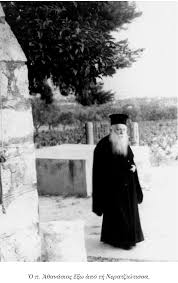
Who was this St. Athanasios? He was born George Hamakiotis in 1891 in a mountain village in Kalavyrta. He became a monastic novice at the age of 15, and after finishing seminary 7 years later, he became a monk with the name Athanasios. He was ordained a deacon at the age of 25, and a priest at the age of 30 in 1921. In 1931, he went to serve various churches in Athens. In 1936, he was appointed rector of the Panagia Neratziotissa Church in Maroussi, which became known throughout all of Attica thanks to Fr. Athanasios’ prolific work.
Father Athanasios was distinguished from his childhood for his fiery love for God. His village church and the surrounding chapels were his favorite retreat. He used to run there since he was a small child to pray. In Agia Lavra he stood out from all the monks for his spiritual struggles. Father Anthimos, another elder in Agios Lavra recalls: “In his face I met a real monk. Father Athanasios observed the monastic rule to a much greater degree than the other monks.”
Indeed he lived with more askesis and spiritual ‘violence’ than all the rest. Not only would he never be absent from the monastery services, but while the service started at 4 in the morning, he would get up two hours earlier. So for two hours, in the peace of the night, he prayed, or studied the Holy Bible and the Fathers of the Church. “The monk’s weapons are study and prayer” according to the Holy Fathers. Indeed, to defeat sleep, he would read while walking around his cell, holding a candle in one hand and the book in the other.
But there was a period when the monastery had an abundance of monks and a lack of cells. Thus the monks were forced to live in the same cell three, four, five together. Again Fr. Athanasios found a way not to give up his beloved spiritual study. He would place the oil lamp behind his headboard and, in order not to disturb the other monks, he would place a rough piece of cardboard that limited the light only to him. Thus, with this primitive ‘table lamp’, he could immerse himself undisturbed in the texts of the Bible and the Holy Fathers and slowly enter their spirit.
Not only then but throughout his life the Elder read, and not just read, but studied diligently. He underlined on the books, commented, took notes, or copied into notebooks, whatever he liked and impressed him. This can be seen in his books, but also in his manuscript collections, which are preserved either in the monastery or at his spiritual children. He also kept clippings from magazines and even newspapers, anything that would be useful for his spiritual training and pastoral ministry.
Priest in Neratziotissa
A loner, he loved the monastic life, which is why he sought out the isolated church of Nerantziotissa, which had been a men’s monastery since ancient times. Many pilgrims from almost all parts of Attica, but also from elsewhere, came to receive the blessing of that excellent priest. His fame had now gone beyond the then narrow limits of our city.
2. Once upon a time, a sick child came to Nerantziotissa with his parents and relatives, since science had proven powerless to restore the child’s health. Father Athanasios, after sending the relatives and other followers away, and recommending absolute silence, took the child and his mother and entered the church to pray. Throughout his prayer in the church in front of the icon of the Virgin Mary, on his knees, Father Athanasios had raised his two hands to the sky and tears were running down his cheeks. The child was on the slabs below and the mother was kneeling next to him. When Father Athanasios finished his prayer and made the sign of the Cross on the child, he got up, walked and left the church alone. Panagia Neranziotissa had performed her miracle. And that wasn’t the only thing. Father Athanasios had the privilege of having his soul full of divine grace, which he channeled through his constant prayer to those who came to him with a spirit of humility and repentance. The road to salvation was opening before them and Neranziotissa was becoming a site of holy pilgrimage. Athanasios Hamakiotis: The Saint of Marousi
Father Athanasios continued his hesychastic programme even when he was in Neratziotissa. He never forgot that he was a monk. His whole life was a litany around and in the Temple. He loved holy services and he lived ‘in’ them. The centre of his life was the Divine Liturgy. As Metropolitan Iakovos of Argolida writes: “The Divine Liturgy was his thought, the desire of his soul, his being, it was everything for him, so much did the grace of the mystery affect him, that he was literally transmuted when he officiated”. In his ceremonial movements he was austere, measured, serene, his gait quiet and humble. There are not a few who saw him at the time of the Divine Liturgy, or during the Great Entrance, but also at other times even outside the church, his eyes transfixed to Heavens, his face shining, his feet not touching the ground, conversing with God in hesychia. Often some adults who saw this exquisite sight were stunned. They barely contained their surprise and hushed their voices, so as not to create disorder. But the little children could not be held back. They interrupted the Liturgy with their voices and shouted: “Mom, the priest doesn’t step on the ground! The priest is flying!” As the Divine Liturgy progressed, the Elder ascended. His countenance changed, his hands trembled, his eyes streamed with tears. When it was time to take communion, he would not leave anyone in the sanctuary. At that unique moment he wanted to be alone and said: “And now, Lord, You and I.”
According to the testimony of Father A.L.: “There was no end to the tears that he would shed at the time of the Divine Liturgy. Especially, at the time of Holy Communion, he would shed even more tears, pleading God: “Do not burn me, Lord. Burn away my sins.” And his tears would flow. I have never seen an Elder cry like this before. It surprised me so much! Once, I had the boldness to ask him: -Why are you crying, Elder? – I am crying for my sins, he answered. Because they are so many that I shouldn’t be at the altar. I should have been somewhere else!”
Prayer was always on his lips. Especially at night until late in the morning he prayed outside his little house. Many saw him in the dark with his hands raised praying. The Elder felt a special love for the Most Holy Theotokos and the saints. An attitude of childlike, pure devotion. He addressed Panagia as “Our Lady Theotokos”, or “My lady”; “Save us, my Mother”. He would rest his head on her image and repeat the same words, or other simple requests. He even said: “May the candle of Panagia always be lit in the cell.” He addressed Saint Anna similarly. When he approached her icon and looked at her, he would say: “Mother of my mother, help us.” Among the other saints, it seems that he especially loved and honoured Saint John the Baptist. He would say his prayers and when he would conclude, he would turn to him and say: “My lord, we shall meet again.”
The area St. Athanasios Hamakiotis truly excelled was Confession. Thousands of people found in him a true spiritual father and bowed their heads under his epitrachelion. He heard Confessions until very late into the night despite his fragile health. The subject of repentance was his favorite sermon. He was constantly calling for repentance.
His charity and almsgiving were unparalleled. He didn’t even want to touch the money. When they gave him money he looked for ways to get rid of it. He ran to the poor and sick, to the paralyzed. He helped them not only financially, but also took care of them himself. In a short time, Neratziotissa had become a charity center. He even said in one of his sermons: “Child, do you realise what is accomplished with charity? The world offers rags and buys Paradise.”
3. Of the many recorded incidents, we will offer one that shows his immense sacrificial love. It was the nightmarish winter of 1942. People were dying in the streets from hunger and disease. A spiritual daughter of his, one of the most beloved children of Elder Athanasios, sick and exhausted, was dying. She understood that her end was near and told her relatives to prepare her shroud. Her only consolation was a small gospel with a thick dark cover. She would read for a while, then get dizzy and leave it next to her pillow. In her daze, she turned and saw it. It looked like bread to her. And she sighed: – Oh, my Christ! I wish I had some white bread! Those in the room smiled. At that time, there was no bread, let alone white bread! Just twelve grams of lupin beans were given with the ration card and, even for this humble food, they had to wait for more than ten days to distribute it! The sick woman was thinking: – “Temptation, this is what it is! “Man does not live by bread alone” (Matthew 4:4).
Everything outside was covered in snow. The people of Marousi never remember so much snow before. It was over half a meter. And the cold was bitter. Everything had died. Father Athanasios was on the other side of the city, somewhere in Pefki, where he was blessing a house. The people of the house, instead of money, offered him two pieces of white bread. It was the best gift they could offer him. But the Elder did not keep it for himself, nor did he put a morsel in his mouth. He reflected on his spiritual children. He remembered the two who were most in need. One was the sick woman we mentioned. He started for her home. The road was long and, with so much snow, extremely difficult. But, “love does not seek its own things” (1 Cor. 13:5). It counts for nothing! Who knows how long, or, rather, how many hours, St. Athanasios walked in the snow! He arrived at the house of the bedridden woman who craved some white bread and went straight to her room. – “How are you doing, my child?” – “I’m not well, my father.” Then, the man of the Holy God, Elder Fr. Athanasios Hamakiotis, took a piece of white bread from his neck. – “Child, I went and did a house blessing, and they gave me some bread; here it is! I brought it to you!” The sick woman was dumbfounded. She began to cry and, through her sobs, told him about the “temptation” she had experienced a while ago. The Elder smiled in satisfaction. – “Do you see, my child, how much God loves us?” The blessed Elder sat down, spoke words of consolation to her, supported her shattered morale and blessed her. The dying woman slowly recovered, survived and recounts this incident with tears to this day.
Father Athanasios, however, did not finish his daily mission here. He continued his course in the snow. You see, he even had one more piece of bread to offer. Another poor young lady, sick with adenopathy, was starving and suffering. The Elder also arrived at this house. He offered the second piece of white bread, comforted the sick woman there, and left. Exhausted, frozen, hungry, alone, he arrived back at “Neratziotissa”. The long road of sacrificial love of the Spiritual Father, at least for that day, had ended…
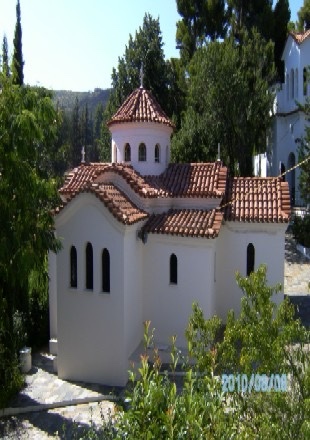
For the last four years of his life, Father Athanasios lived in the small Panagia Faneromeni Monastery, which he had built himself in Attica. His life of prayer, service, and sacrifice, continued there too. To all this was added the spiritual guidance of the nuns there. In every way he tried to help them grow in Christ. And he was preparing for the great journey, praying with tears and waiting… Then, in May 1967, his health began to deteriorate and he was transferred to Evangelismos hospital. According to the testimonies of his spiritual children, who served him, lots of miracles took place there. Every day, he would pray, receive the Holy Mysteries and offer his last words to his spiritual children.
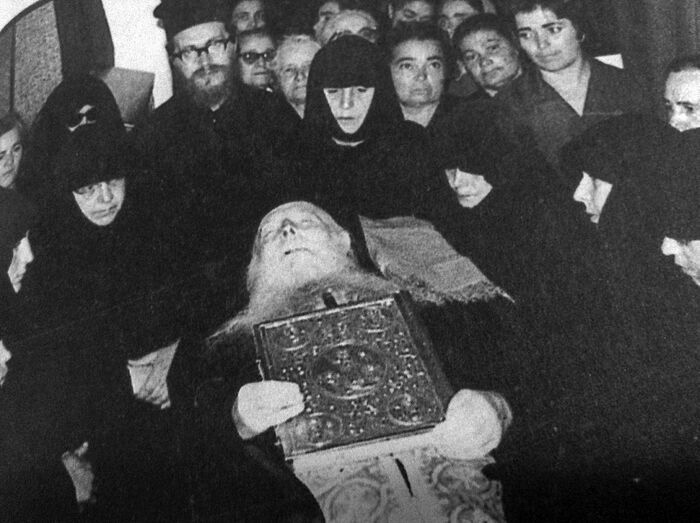
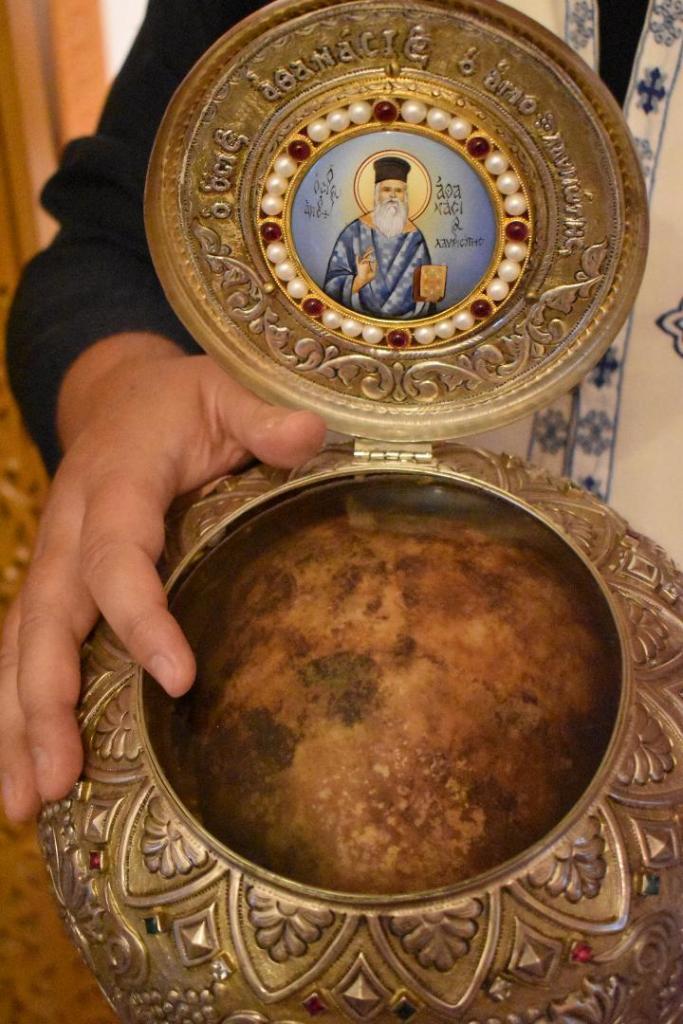
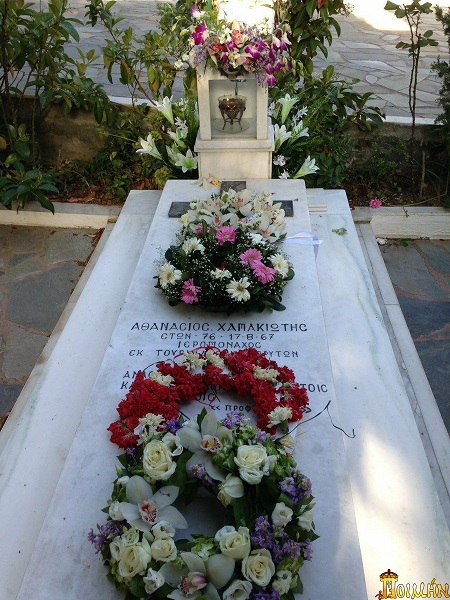
On August 17, 1967, the Monk Athanasios Hamakiotis, the Elder of Neratziotissa, surrendered his holy soul to the Lord. His “warm and flexible” skin was buried in the Holy Sanctuary of Faneromeni, next to the Katholikon of the Hesychasterion. 47 years have passed since his final sleep. And the day of great joy came. On October 23, 2014, the day of commemoration of the holy Apostle James of Adelfotheos, the Most Reverend Metropolitan Mr. Kyrillos of Kifissia, Marousi and Oropos celebrated the Divine Liturgy in the Catholic Church of the Hesychastiri of Faneromeni, assisted by two other high priests and several clergy. After the Divine Liturgy, the remains of the holy father were collected. Everything was done simply and humbly, as the old man would have wanted. Those who were informed of it flooded the area of the Hermitage. With great emotion, the Most Reverend Metropolitan Mr. Kyrillos took in his hands the skull of the holy father and blessed those present. The holy relics were prepared by the Fathers and then taken to the Katholikon, where everyone worshiped with reverence. Then they were escorted and placed in the old man’s cell. A few hours passed and the old man made his presence felt. A sweet fragrance flooded his cell and the whole area of the monastery. “God is truly wonderful among his saints”. Excerpts from Metropolitan Mr. Nektarios’ book, “Hieromonk Athanasios Hamakiotis – In the Steps of Holiness”. My translation. Source: Vima Orthodoxias
This sweet fragrance continues to appear from time to time to this day, as many clergy and laity have attested. The elder is remembered for the beautiful way he served Liturgy and the sacrificing charity and love he offered to all people. The fragrance and the many miracles which continue to this day attested to his holiness and his official canonization was a matter of time. Elder Athanasios was initially proposed for canonization by the Holy Synod of the Church of Greece in August 2017.
Announcing the canonization of St. Athanasios on 16th of November 2023, the Metropolis of Kifisia writes: “Our Sacred Metropolis delights and rejoices in hearing the above Decision of the Holy and Sacred Synod of the Ecumenical Patriarchate. The celebration of his memory was set for the 17th of August of each year, the day of his venerable repose, and on the 23rd of October, the day of the translation of his sacred relics.”
St Athanasios’ cell, his personal belongings, and his relics remain there to our day. Orthochristian,
The ‘hidden’ Fr Antonio’s Gikizas and his close relationship with St Porfyrios –he even knew St Nektarios! — wasanother mystery revealed to us during our recent pilgrimage to Athens and Aegina, another link in the chain of holiness to His Kingdom, another stepping-stone on the Way! Glory to God for all things! What a Joy on Heaven and earth when a new Saint reveals himself to the Church, when new “living stones of His Temple” are revealed. “Ye also, as lively stones, are built up a spiritual house, an holy priesthood, to offer up spiritual sacrifices, acceptable to God by Jesus Christ.” (1 Peter 2:5)
*
Who would have imagined that on one of Athens’ busiest avenues, at 59 Alexandras Avenue, in the semi-basement of an apartment building, lived an elder like those we read in the Desert Fathers, with profound humility, compassion and great discernment! It was to this humble, ‘hidden’ priest, Saint Porfyrios would regularly go for Confession, a fact not widely known. One would lay hands on the other and they would confess. One wonders what it was that tied these two elders together.
*
This venerable cleric, Father Antonio’s Gikizas, was born in Kranidi, Argolis, on January 7, 1910, and died in Athens, at the age of 89, on September 30, 1999. His academic knowledge was admirable not only for his time but also for ours with his four bachelor degrees and six foreign languages and many more. This academic excellence should normally separate him from the illiterate St Porphyrios, but Father Antonios, despite his great qualifications, always tried to avoid the high offices that were offered to him throughout his life. His humility was profound. When he was still a small child, he met Saint Nektarios, for whom he had a special reverence. And later in his life, he met St Porfyrios. His acquaintance with the elder – and later Saint of the Church – Porphyrios took place when he served for a short time as a preacher in Kymi of Evia.
*
So, what was it that tied these two elders together? Fathers believe that it was their profound humility and their focus on repentance and the Sacrament of Confession throughout their lives. Father Antonios of blessed memory insisted that what we all need, more than anything else, is “repentance, this gift from God. … Repentance is the key for our entry into the heavenly world, in His Uncreated Church…”. Clearly this was the focus of Saint Porphyrios’ life too, as revealed in his Testament to his Spiritual children, six months before he fell asleep in the Lord: “From a small child I was in sins——But the world thought I was good and everyone shouts that I am a saint. As for me, I feel that I am the most sinful person in the world.——whatever I remembered, of course I have confessed —-But now I have a feeling that my spiritual sins are too many and I ask those of you who have known me to pray for me because I too humbly prayed for you while I lived!” I truly wonders why would such holy men feel that sinful and regularly go to Confession until old age… To confess what? And if they felt and acted thus, what about us?
*
How inter-connected Holiness, Saints are in God’s Providence! Glory to God for all things! “That they all may be one; as thou, Father, art in me, and I in thee, that they also may be one in us” (John 17:21)
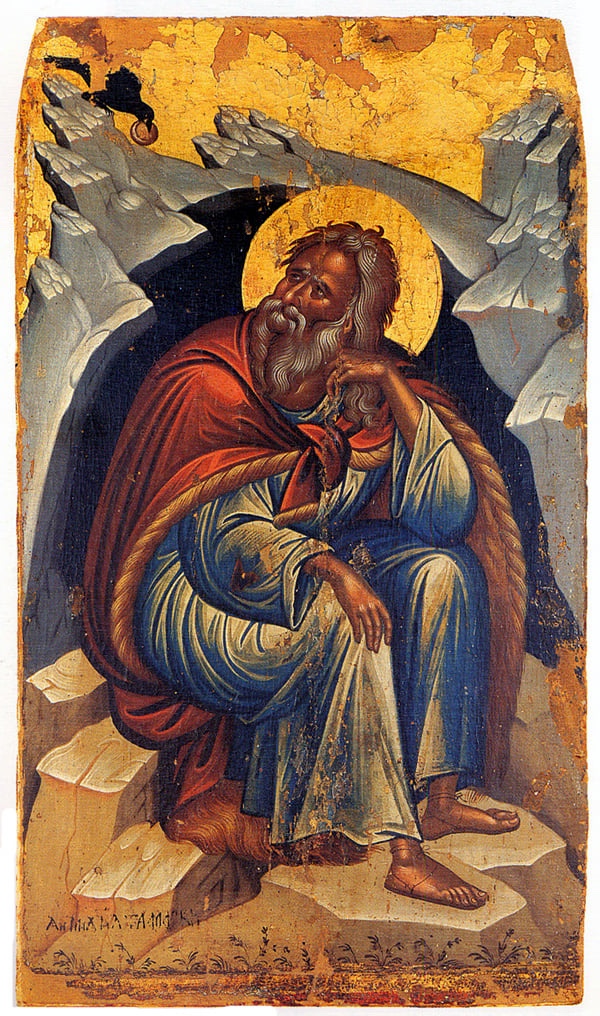
How an icon of Prophet Elijah (20th July) was a revelatory moment for Fr Jonathan Hemmings in his conversion to Orthodoxy
The grace bearing nature of Icons within Holy Orthodoxy means that we encounter a window into heaven. The veneration of an icon is the expression of the love we have for our Lord and Saviour, His most Holy Mother and His sanctified family, the righteous who foretold His coming and the saints who followed His example; it is the physical expression and consequence of our belief in the communion of saints. We venerate the prototype who is worthy and who in turn prays for us. The grace that is given to each Icon, which in its very formation and writing is the fruit of prayer rather than art, brings us to a deeper understanding of our own salvation.
I remember some years ago on the feast of the St. Elijah (Elias) looking at the Icon of the Prophet. I had read the story of this bold ambassador of God’s word as a student of the Old Testament years before; how he dared to speak the word of God to his own people who were following other gods and how he earned the wrath of the evil Queen Jezebel and her 400 hundred prophets of Baal. Exhausted by his labours the righteous prophet seeks refuge in a cave. There God sustains him through commanding ravens to feed his servant. The Icon of the prophet shows him in a cave with a black bird with food in his beak coming to feed the prophet. 1 Kings 17:2-6 (New King James Version) 2Then the word of the LORD came to him, saying, 3“Get away from here and turn eastward, and hide by the Brook Cherith, which flows into the Jordan. 4And it will be that you shall drink from the brook, and I have commanded the ravens to feed you there.” 5So he went and did according to the word of the LORD, for he went and stayed by the Brook Cherith, which flows into the Jordan. 6The ravens brought him bread and meat in the morning, and bread and meat in the evening; and he drank from the brook.
This for me, as I looked at the Icon was a revelatory moment. Exhausted spiritually, these words came back to me with great force for I too was hungry for spiritual food which was to be found in the East and God sent black robed priests from the west to come and feed me and others so that we could be strengthened and sustained.
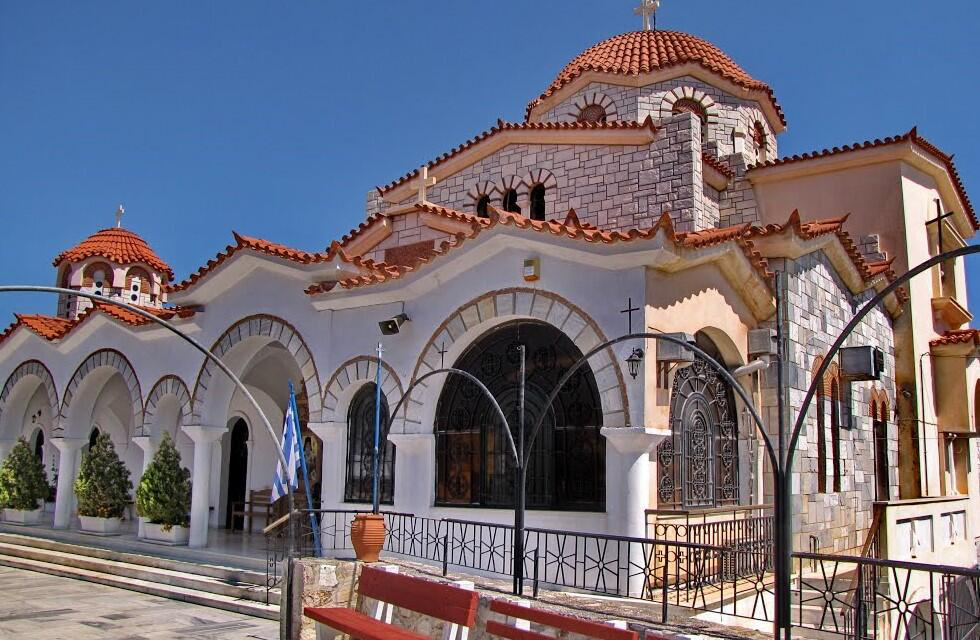
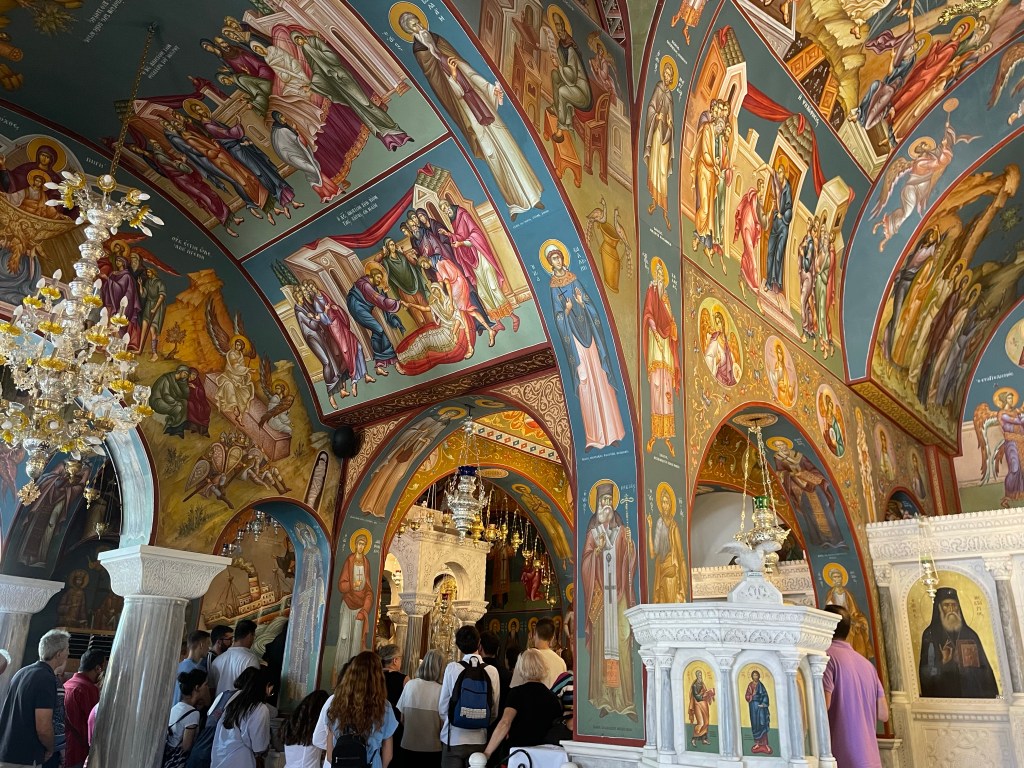
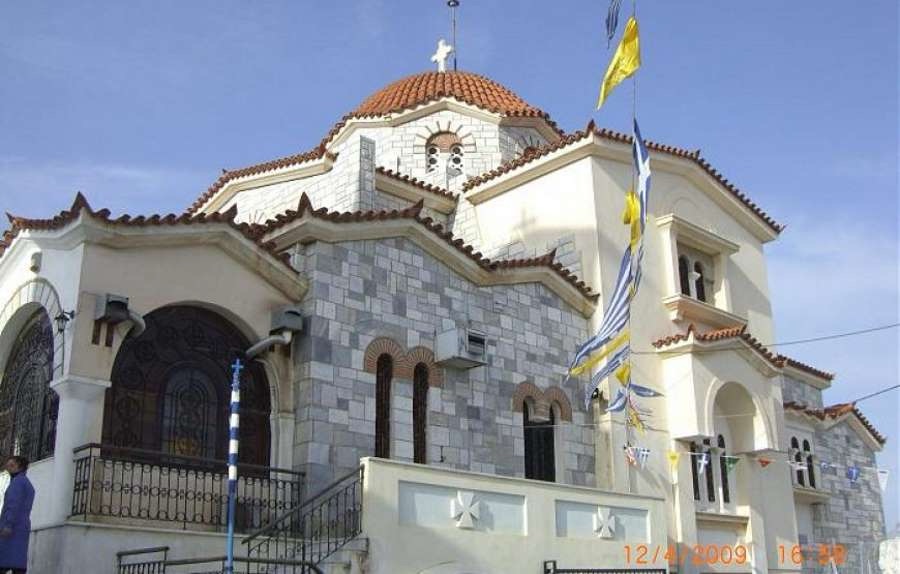
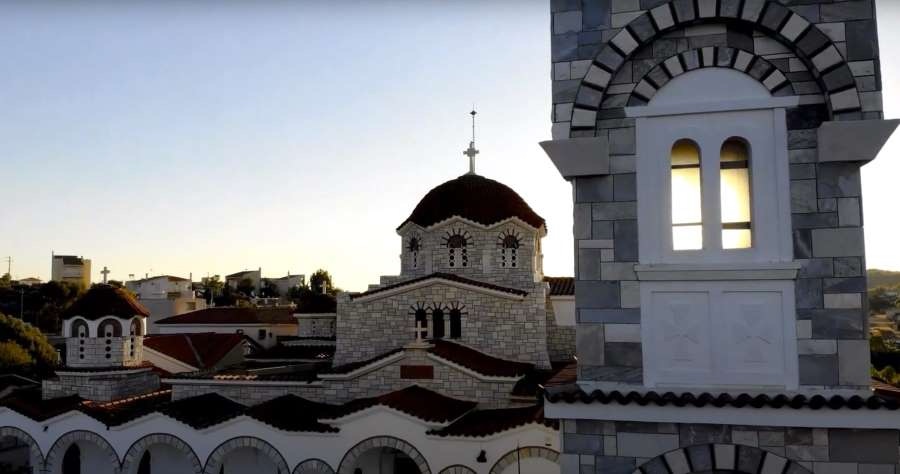
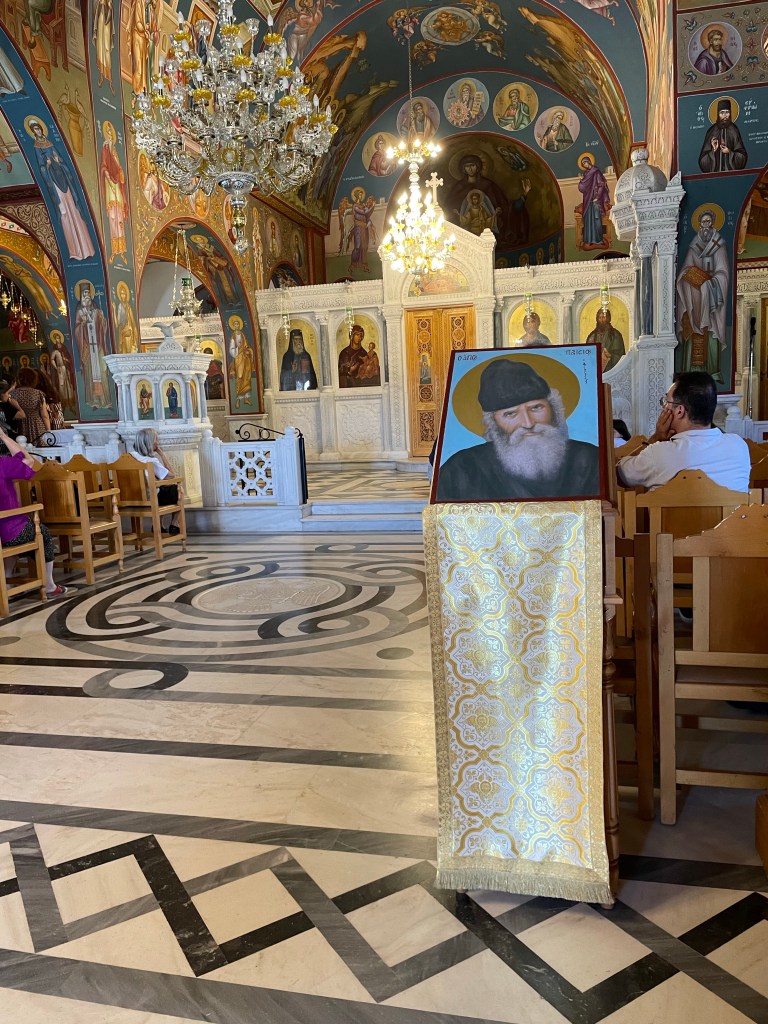
… in his Church (Kamariza) at Lavrio, Attica. This church was another stop at our recent Athens-Aegina pilgrimage, and dominates in the centre of the mining activity in Lavrio, both during antiquity and in modern times.
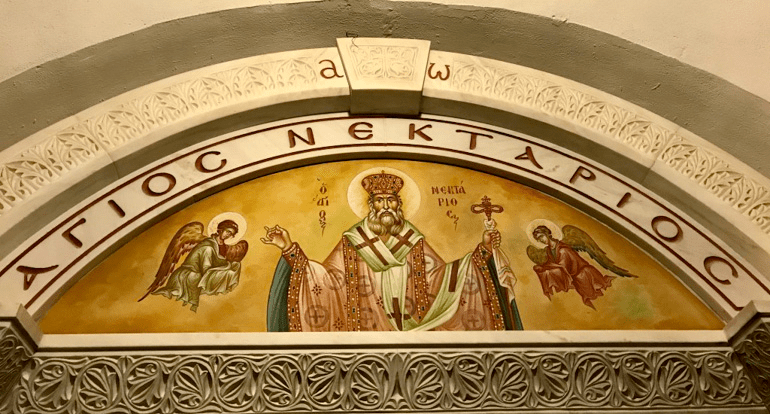
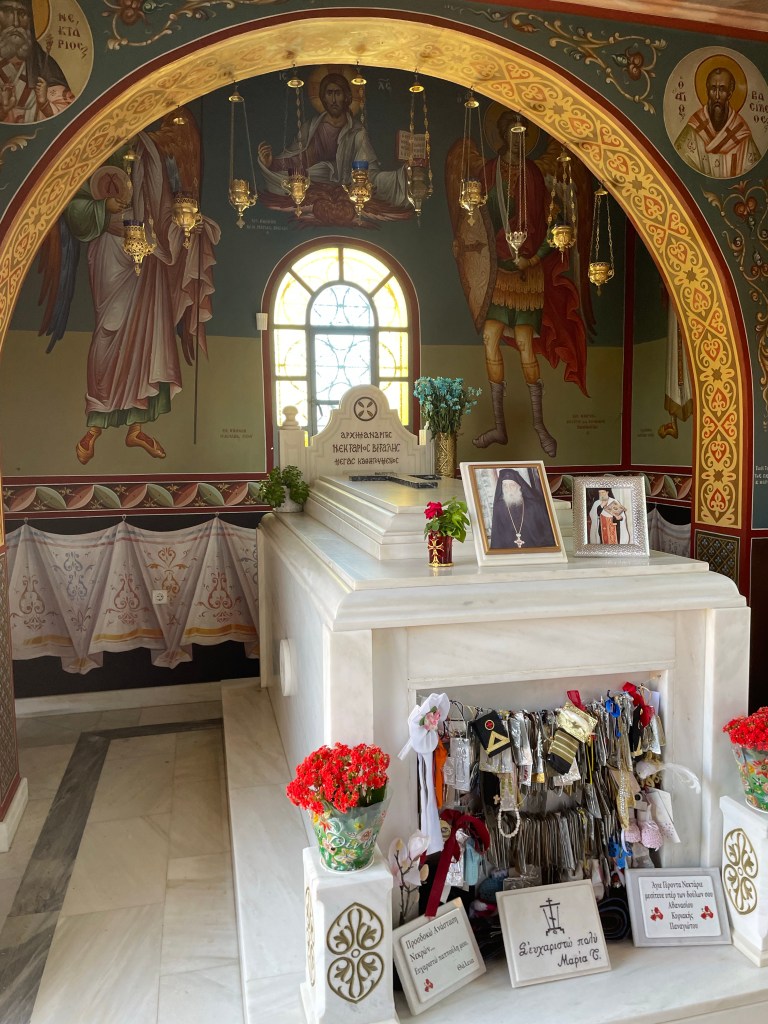
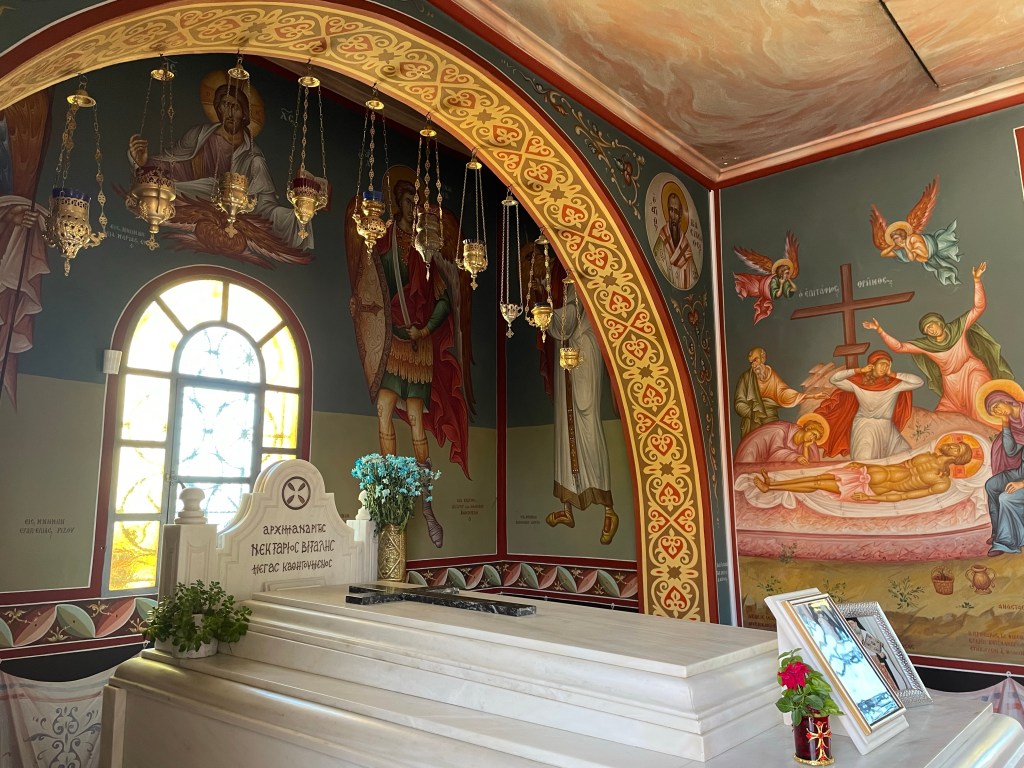
It was founded by the archimandrite Nektarios Vitalis, of blessed memory, in memory of the time that Agios Nektarios passed through this area.
Its construction started in 1966 and from 1972 it has functioned as a Holy Pilgrimage, attracting crowds of people from all over Greece.
Architecturally it is cross-in-square with a dome and follows the Byzantine order. Many outbuildings and chapels have been added to it. It celebrates on November 9th, day of death of Agios Nektarios, and on September 3rd, day of the translation of his relics.
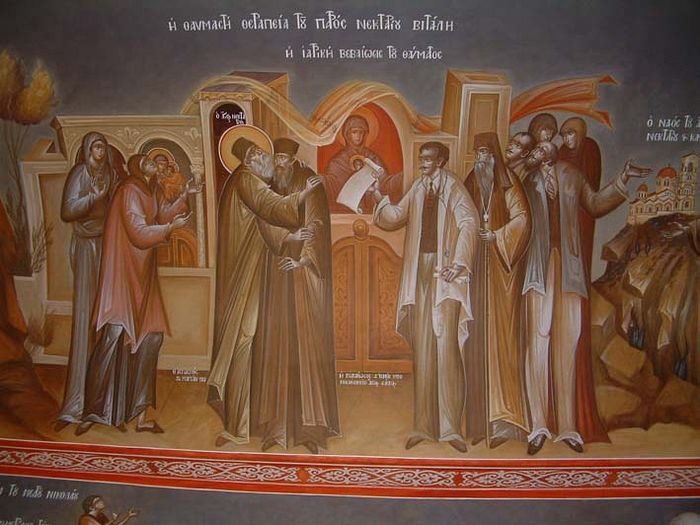
Icon of St. Nektarios embracing and healing Fr. Nektarios Vitalis, along with the two women bearing witness to this to the left, and the doctors confirming the miracle to the right. The icon is from the church of St. Nektarios in Aretaieion Hospital. Photo: Mystagogy
+ Archimandrite Nektarios Vitalis of blessed memory is well-known in Lavrio [a city in Attika, Greece] for his deeds and his sympathy to the poor and those written-off by the world. Vasileios was his baptismal name, was born in a big family with 16 siblings and lived a holy childhood. His life was a chain of miracles, starting with his baptism, when in the baptismal font, the sign of the Cross appeared and the priest said: “either this boy will die or he will wear the Cross”. Throughout his life Elder Nektarios was blessed with a very close relationship with Saint Nektarios. It started when as a young man, Elder Nektarios went to the grave of St Nektarios in Aegina and asked the Saint about his calling, and St Nektarios reassured him in a miracle that indeed he would become a priest and would also receive his name.
Miracle of Saint Nektarios: The Healing of Fr. Nektarios Vitalis of Cancer
November 9, 2012
Fr. Nektarios Vitalis retells the following incident how St Nektarios visited him in his church and healed him when he was dying from cancer. What is said below has been told elsewhere, repeatedly, including in the book I talked to Saint Nektarios (Athens 1997, Manolis Melinos):
“I was suffering from a serious form of cancer. My chest was an open wound that was continuously running blood and pus. I would tear my undershirts from the pain. It was a tragic situation, and I was headed directly to death. So you understand, I had even prepared my grave clothes….
“On the 26th of March 1980, in the morning, I was talking in my office in the basement of the Church with Sofia Bourdoy (the church care-taker [a woman who cleans the church]) and the icon painter Helen Kitraki, when the door suddenly opened and an old, unknown man entered. He had a snow-white beard, was short and was slighty bald. He looked exactly the same as St. Nektarios appears in photographs. He took three candles without paying and lit only two. He venerated all the icons of the church, but passed over the icon of St. Nektarios without venerating it. He did not see me where I was. I had terrible pains when they pulled aside the curtain of the office and went to see the old man. He faced the Beautiful Gate [the Royal Doors in the Holy Iconostasion], crossed his palms and without looking around he asked: ‘Is the Geronta [Elder] here?’
“The church care-taker knowing my disease wanted to protect me…: ‘No, no…he is at home with the flu….’
“He replied: ‘Never mind. Pray, and have a Good Resurrection,’ [the traditional Orthodox greeting during Great Lent in anticipation of Pascha ‘Kali Anastasi’] he said as he left.
“The church care-taker came running to me and said ‘Father Nektarios, the old man who just left resembled St. Nektarios himself! His eyes flew flames. It seems to me that was St. Nektarios and he came to help you….’
“I thanked her thinking that she said this to console me. But deep down something was wrong. I sent her along with the icon painter to find the unknown man and quickly bring him back. I walked into the sanctuary and venerated the Crucified One [the icon of Christ on the Cross in every Holy Altar] crying, and once again asking Christ to heal me. Their footsteps stopped: ‘Father, the Elder has come!’
“I tried to kiss his hand, but out of humilty he did not let me. He bent and kissed my own! I asked him: ‘What is your name?’
“‘Anastasios, my son,’ he said, relating his baptismal name that he had before he become a monk….
“I led him to venerate the holy relics. He took out a pair of glasses with only one arm, and as soon as we saw them we were amazed! They were the same glasses of St. Nektarios that we had in the case with the holy relics. They were given to me by the old Gerontissa [Eldress] Nektaria of the monastery in Aegina.
“‘Faith is everything!’ said the stranger, as he put on his glasses.
“He began with reverence to embrace all the holy relics as the church care-taker showed, except for the relics of St. Nektarios, which he passed over….
“‘Geronta, forgive me,’ I said, ‘but why don’t you venerate the miraculous Saint Nektarios?’
“He turned and looked at me smiling. I asked him: ‘Where are you staying Geronta?’
“He showed me the ceiling, where we were building the new church [dedicated to St. Nektarios], saying: ‘My house is still not ready and I’m worried. My position does not allow me to live here and there….’
“‘Geronta, I must confess, you were told a lie earlier. I have cancer! But I want to get well, to make the Holy Altar, to finish the Church first, and then I can die….’
“‘Do not worry,’ he told me. ‘I’m leaving now. I’m going to Paros [an island in Greece] to venerate St. Arsenios and to visit Fr. Philotheos [Zervakos],’ he added, starting to leave and passing by the big icon without giving it a second thought….
“I stopped him and put my hands to his face.
“‘My Geronta, my Geronta, your face looks exactly like St. Nektarios who is honored here in our church….’
“Then, tears rolled from his eyes. He crossed me and embraced me with his hands. Taking courage I opened my hands to hug him. But when I spread out my hands, and while I was watching I could see him before my face, my arms closed back to my chest! The hairs then stood up on my arms and I crossed myself!
“I said again: ‘O my Geronta, I beg you, I want to live to do my first Liturgy. Help me to live….’
“He left from being close to me and stopped in front of his icon and said: ‘Oh, my child Nektarios, don’t worry. It is a passing trial, and you will be well! The miracle which you are asking for will happen, and it will be told to the whole world. Don’t be afraid….’
“Immediately he left us by walking through a closed door….
“The women ran to catch up to him. They reached him at the bus stop. He went inside and disappeared before the bus left!”
This story is always told by Fr. Nektarios himself, a respected and reliable person, and in the presence of witnesses. Fr. Nektarios eventually became well – to the amazement of doctors, radiologists, and forecasters of death. Because above all is Christ, our living God, and our intercessors before God, the Saints, plus our Mother the Panagia!
For “where God wills, the laws of nature are overcome….”
A short encomium written by Mr. Manolis Melinos, who wrote several books on St. Nektarios, his life and miracles, and especially came to know Elder Nektarios: ELDER NEKTARIOS The sweet, the simple, the father, The brother, the fellow man, The consoler, the humble one, The child among children, the great one among the great, the elder among the elders, in other words, the child-elder, reposed today, February 8th, 2018 at the age of 88. Now he is an intercessor for us at the heavenly Altar, together with St. Nektarios, near the Great High Priest Christ, Whom he had and never abandoned! You all and everyone knows my spiritual relationship with him for 33 years, and I am deeply thankful to God Who made me worthy to be near him and to write his biography… Now, humanly, our large spiritual family is in mourning along with my biological family, and I unworthily entreat God to make him worthy to continue to pray on behalf of us. In the proper time, I will return to write more in detail, but I am compelled at least to write this. (Source)
+ Elder Nektarios near death experience — video where the Elder recalls this great miracle of his “death”, his ascent to Heaven, his meeting Christ and Saint Nektarios in Paradise, and his return back to life











 ORTHODOX CHRISTIAN FAITH AND LIFE