A blessed Feast of the Annunciation to you, dear brothers and sisters in Christ. May the Theotokos, the invincible Defender, in her irresistible might, keep us safe from all trials. I am so moved by the icon, how Gabriel’s feet suggest that he is running to share the news with Mary!
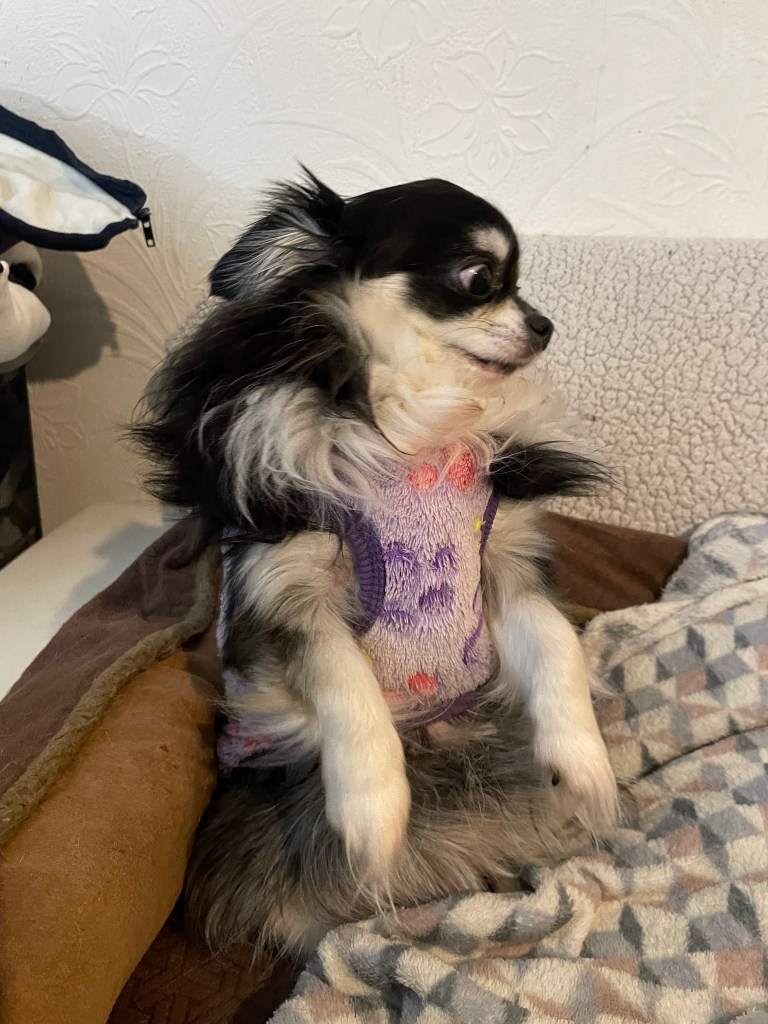
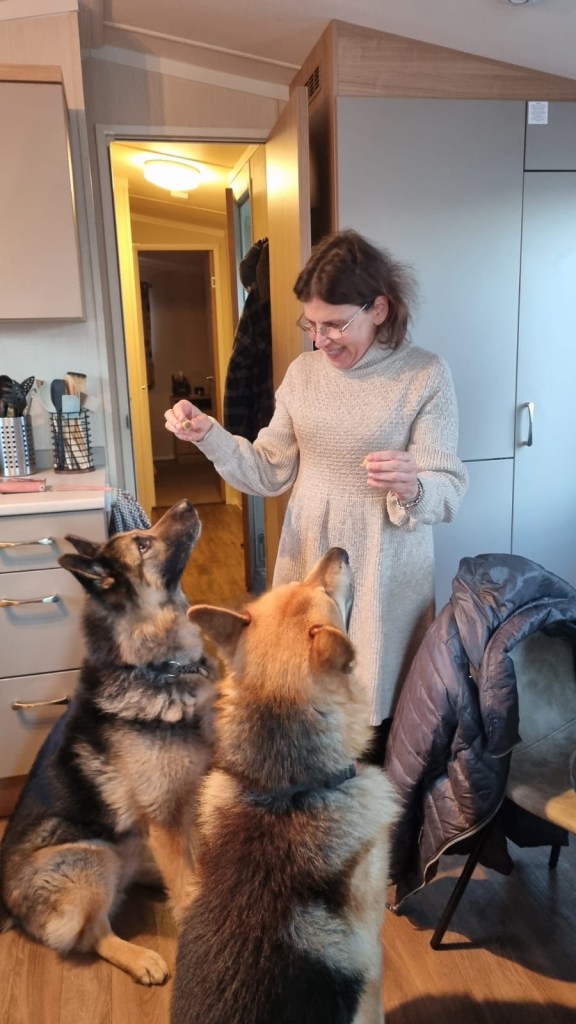
Last week in England, I had a day of dogs! Any number between 5 to 1 to the houses we visited in various pastoral visits. How comforting is their unconditional love, their presence with the elderly, the housebound, the downtrodden.
Certainly, the dogs have characters, the obedient, the timid, the loud, the excitable, the nervous,the angry, the loving. A bit like humans.
As much as Fathers and Saints have always shown love for God’s Creation, they have also warned us against idolatry:
Let us consider St. Silouan the Athonite words:
“There are people who grow attached to animals, stroke, caress them and talk with them; and they have abandoned the love of God, and thus the love between brothers, for which Christ died in terrible agony, is lost. It is foolish to do so. Feed animals and cattle, and do not beat them—in this consists man’s duty of kindness towards them; but to become attached, to love, caress and talk to them—that is folly for the soul.
“The soul that has gotten to know the Lord always stands before Him in love and awe; how can it be possible to love, stroke and talk with cattle, cats and dogs at the same time? This means that someone has forgotten the commandment of Christ to love God with all thy heart, and with all thy soul, and with all thy mind (Mt. 22:37)…”
True, it is hard for us to accept these words: is there anyone among us who has never patted a dog, or stroked a cat or talked to them, thus expressing their love for them? Moreover, they too need our love: just feeding them is not sufficient. They are emotional creatures: dogs, for instance, experience a whole gamut of emotions.” (“The Blessed and the Dumb”)
Aren’t these words by the Saint very strict, maybe even too strict? Isn’t really the problem when affection (or, rather, attachment for a pet) replaces our love for people and God, making up for a lack or a complete absence of the latter?
As my spiritual father told me, we need “a strong balance here. No tightrope but one foot firmly planted in the love of the creator and one firmly planted in the love of His Creation. It is when we love dogs to the exclusion of God therein lies the problem. There was a popular sign in the back of car windows some years ago “A dog is for life not just for Christmas!” I would add “God is for life, not just for Christmas!”
This day of dogs reminded me of an obedience of mine back in Greece: to undertake dog walking of an ill person’s therapy dogs. These dogs offered him comfort, companionship, and joy but he could not take care of them. Many a time, I found myself grumbling about this extra, ‘pointless’ work every day. Surely I had other, far more important tasks and obediences to undertake? Then one day I read the following by St. Paisios which brought comfort and peace to my heart, and from that day onwards, I have started to learn saying Yes, from the heart, to the love of God, even in ‘pointless’ works:
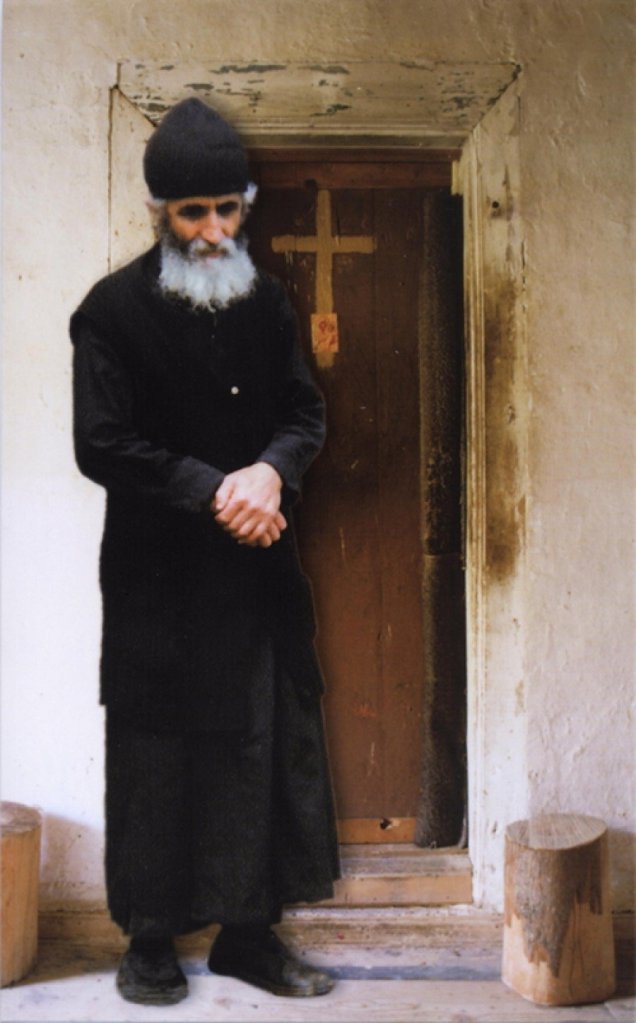
“My mind tells me that even the animals are better than me; so, I humble myself and obey them. Very early this morning, being tired from praying all night and exhausted because of my illness, I lay down to rest. After a while, I heard a kitten meowing outside my cell as if she needed something. I really wanted to rest, but I humbled myself and went against my own will. I obeyed the kitten and replied to her calling. I went to open the door. It had started to rain and I let her in so she wouldn’t get wet. What do you think then? Should I obey the animals or not? My thoughts tell me I should.” – St Paisios
“So, I humble myself and obey them. … What do you think then? Should I obey the animals or not? My thoughts tell me I should.” – St Paisios
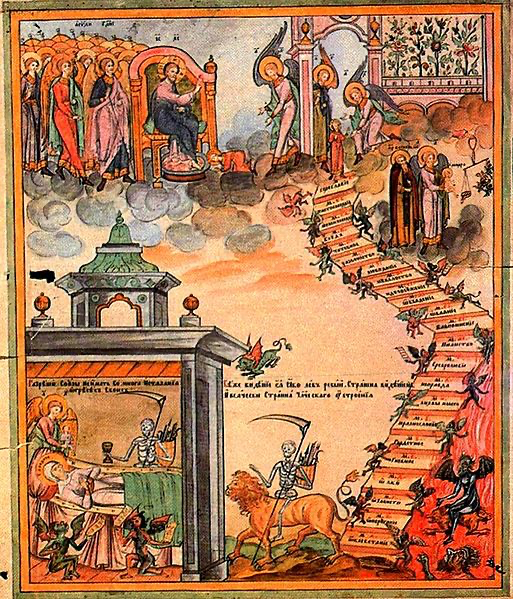
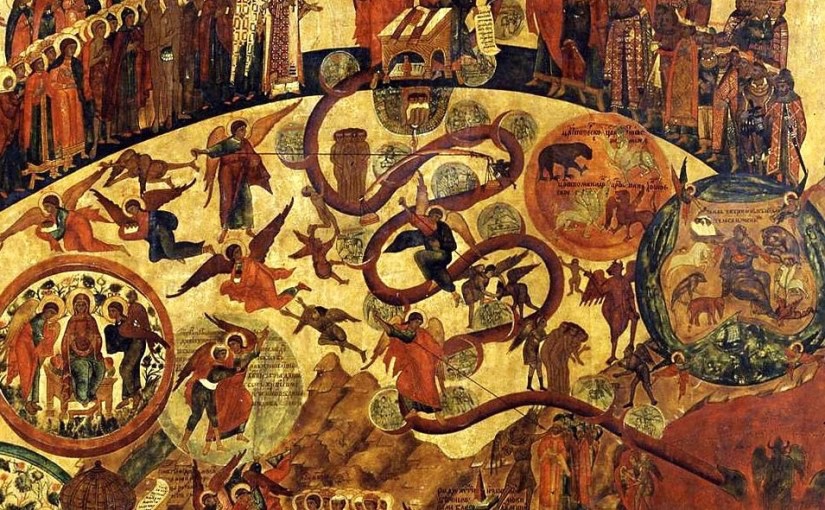
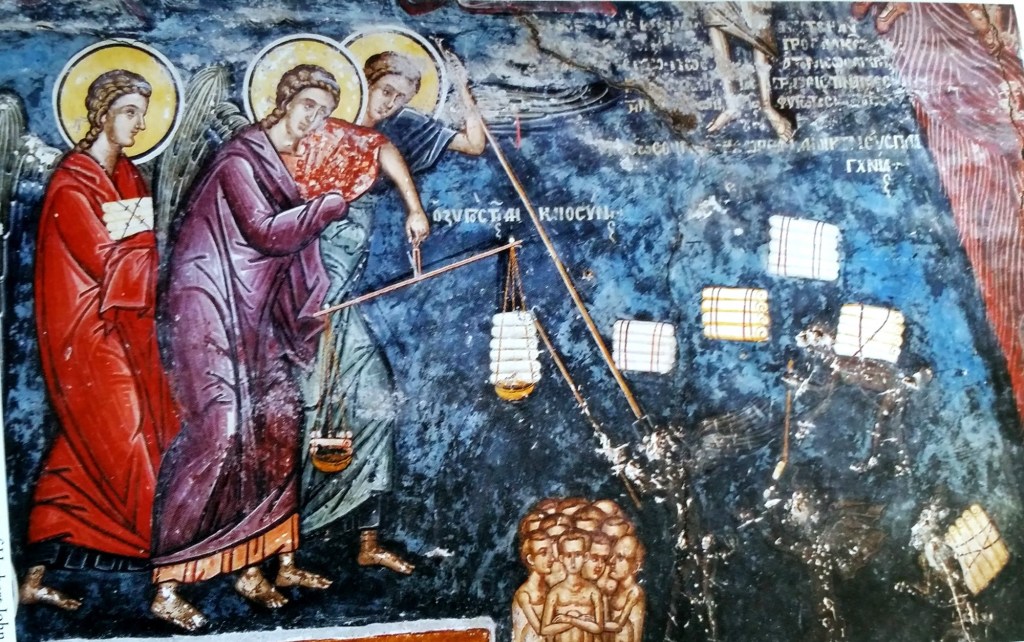
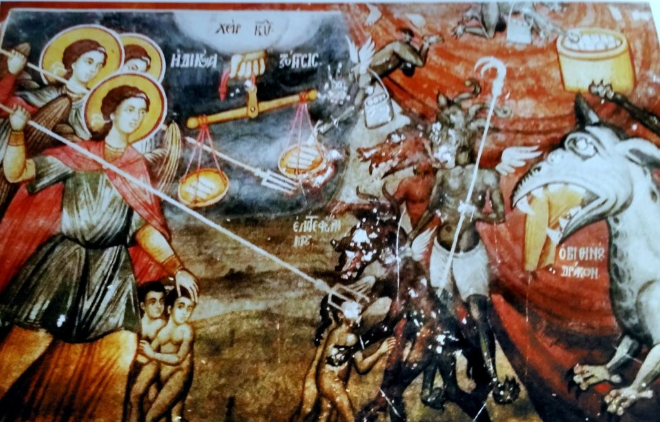
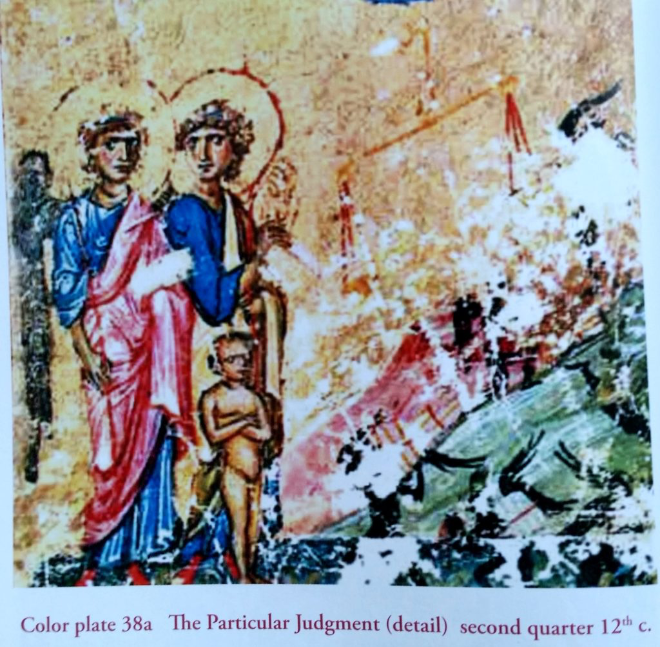
The aerial toll houses, the demons, our guardian angel and the Sacrament of Confession by + Elder Efraim, St. Andrew Skete
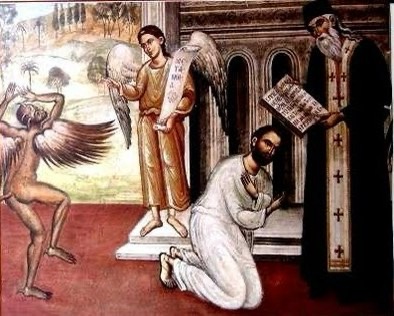
“… From the moment the soul leaves the body and until the third day is completed —counting with our own earthly time, because the soul does not experience time, unlike us who both measure and experience it— the soul passes through the aerial toll houses during this three-day period. As the demons fell at the words of Archangel Michael “Let us stand aright!”, some remained in the highest layers while descending and remained in the air… These are the so-called aerial toll houses. (1)
So as the soul of every Orthodox Christian ascends to Heavens after death, every soul without exception passes through the aerial toll houses. However, not everyone is forced to stop at the aerial toll houses. Only those who have unconfessed sins… The faithful who have repented and confessed their sins in the Sacrament of Confession, pass through the customs like a … rocket ! By express! That is, they are not forced to stop anywhere, their way upwards is not blocked…
They will stop somewhere, mid-way, only in the case where there is still an unconfessed sin. If it is not a mortal sin (2), this sin is “weighed” and overcome with any good acts they have committed, and they continue to the next aerial toll house, and so on and so forth, until they arrive in front of our Christ! If anyone’s upward movement is blocked midway by some mortal unconfessed sin, then they are destroyed on the spot and fall straight to hell…
We have cases, mostly of women, who have committed adultery or fornication, and who have confessed heavier, worse sins, but these sins they did not confess, out of shame, because of our old self and of the enemy who incited them to act in this way. So, they did not confess them at the risk of losing their souls. In the case of clergy this is even more terrible! Therefore, special attention must be paid here. Allow me to repeat this: when someone has confessed all his sins to a priest, he passes through the aerial toll houses without being hindered or stopped by anyone.
The worst aerial toll houses that today imprison and prosecute people are: First, of witchcraft, second, of homosexuality and immorality, then of selfishness, avarice, blasphemy… Mainly the first two that I mentioned. Satanism and immorality in their most extreme form worldwide…
During the first three days, the soul goes through the aerial toll houses, and when we pass through all of them, then the Guardian Angel of each one of us leads our soul to Christ, to the humanity of the Lord, because the Divinity is not visible… We then see our Christ as we see Him in the icons. Christ has exactly this form, the form that He had in the flesh.
This is the form He has when man stands before Him and worships Him. Our Christ then blesses him without saying anything at all. The soul worships Him and He only blesses it without saying anything. It is our first personal worship of Christ.
*
(1) Cf. The Holy Anaphora in Divine Liturgy:
Deacon: Let us stand aright! Let us stand in awe! Let us be attentive, that we may present the Holy Offering in peace.
The Holy Anaphora echoes the following incident:
The leader of all the angelic hosts — the six-winged Seraphim, the many-eyed Cherubim, the God-bearing Thrones, Dominions, Powers, Virtues, Principalities, Archangels, and Angels — is the Archangel Michael. When Satan, Lucifer, fell away from God and drew a part of the angels with him to destruction, then Archangel Michael stood up and cried out before the faithful angels: “Let us attend! Let us stand aright! Let us stand with fear!” and all of the faithful angelic heavenly hosts cried out: “Holy! Holy! Holy! Lord God of Sabaoth! Heaven and earth are full of Thy glory!”
(2) According to Gennadios Scholarios, George Koressios, the Orthodox Confession, and Chrysanthos of Jerusalem, mortal sins are those voluntary sins which either corrupt the love for God alone, or the love for neighbor and for God, and which render the one committing them an enemy of God and liable to the eternal death of hell. Generally speaking, they are: pride, love of money, sexual immorality, envy, gluttony, anger, and despondency, or indifference.”
Where the Soul goes away after death—The Great Journey
+ Elder Efraim, St. Andrew Skete
Our soul is taken out by Christ, with the executive minister Archangel Michael, to whom He gives the command. Archangel Michael is the one who “takes out” our soul by the command of the Lord. It is a supreme honour for us Orthodox that our Christ has appointed the leader of the Angels, Archangel Michael, to take out the soul of every Orthodox Christian.
When the leader comes to take the soul, not the officer, the soldier, but the leader, it means that we are princes! Like likes like. “Birds of a feather flock together”. The baptized Orthodox are the spiritual princes of the Kingdom of Heaven. It is the greatest honor that Michael, the leader of all Angels, comes!! He is cheerful, joyful and not at all strict, as some want to present or depict him… Angels have nothing to do with fear, terror and ugliness… Especially the Archangels Michael and Gabriel… If some are afraid, it is not from the sight of the Angel, but from the sight of their own unrepentant state… As at the sight of our Christ, some are demonized and go to hell because the unrepentant people themselves are not receptive to the divine vision.
So the Angels come, the demons come, the Saints come, the senses are dulled, and when the eyes, the physical eyes, fall asleep, then the soul with the mind sees everything. The soul has already entered the sphere of eternity of the other world before it even leaves the body. These are the last moments, the last photographs from which we can determine whether this soul is judged or is saved…
These are some secrets that the saints have revealed to Gerondes to pay attention to and discern … That is, if there is anxiety or sweating… the movements of the eyes right and left, up and down, the movements of the hands, the change of colour, screams or blasphemous expressions, a stench emitted from the mouth of the soul-bleeding person or from the environment, or agitation and fear, an increased heart rate and sweating, shared by the rest of us, in an incomprehensible way… all these mean that we have the presence of demons and that something is wrong… We must then be very careful and perform many forty-five liturgies.
But when he falls asleep, from the moment the guardian angel receives the soul, then such grace and cheerfulness are painted on the reliquary that you constantly want to be near him without fear or hesitation… These are perhaps the last moments because time is measured as the burial and at that moment we are given the opportunity by God to experience this mystical spectacle…
This is very important for us. We do not feel the separation… We want to be constantly close to the dying person… There was a monk that his “death-agony” lasted fifteen whole hours, and I was by his side all this time until his final breath. He had a little difficulty, but in the end he was saved… His death-agony lasted many hours and was exhausting for everyone…
So Archangel Michael takes the soul and delivers it into the hands of other Angels who depart for the aerial toll houses. As for the Guardian Angel, he stands next to the relic and does not leave until the burial. When there are cases when the burial is delayed (due to some circumstances, e.g. group deaths) the Guardian Angel remains near the deceased relic until the body is buried… As a debt of honour!
This is very important! Nonetheless, the soul, together with the other Angels, begins its journey…
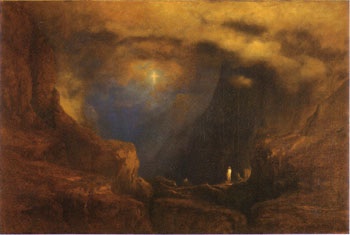
The Valley of the Shadow of Death By George Inness, 1867
Physical (biological) death vs “brain death”
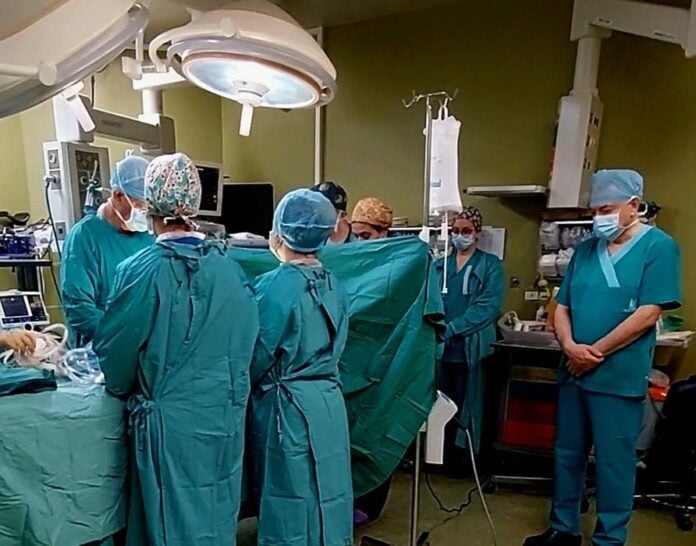
Is physical death the same as “brain death”? No! A “brain dead” patient may be in a coma and apnea, but most of his organs are functioning with appropriate medical support; so, when his organs are removed, he is still warm, his heart is still working, and his blood is circulating! (1)
They will tell you that organs are taken when the person is dead. This is not true. There are several recorded cases of “brain dead” people who came back from this state. The vital organs of the “donors” are taken while they are still ALIVE, resulting in a violent interruption of their life during the process of taking their organs. Many leading scientists in Greece and abroad (2) express serious scientific objections and do not hesitate to even propose the complete abandonment of the concept of “Brain Death”.
Professor of Pediatric Anesthesiology at the leading University of the USA, Harvard, and Director of the Intensive Care Unit at the University Children’s Hospital, Boston, Dr. Robert D. Truog states: “Brain Death remains incoherent in theory and confusing in practice. Furthermore, the only purpose that this concept (of brain death) serves is to facilitate the search for organs for transplantation. That is why, after all, the concept of “brain death” was “invented” only in 1968 by some Harvard scientists.”
The fact of death is a great mystery, the Holy Fathers of the Church tell us, and no one knows nor will ever know when (at what exact moment) the soul separates from the body… As long as the heart is functioning, the soul is united with the body.
Saint Paisios of Mount Athos, when asked about transplants, he categorically opposed the transplantation of vital organs (organs without which the donor cannot continue to live), for two reasons: First: “it constitutes an impermissible intervention, opposing the creative work of God, on the one hand, by killing the donor, and on the other by creating in us the conceit of animating the recipient.” And second: “It will become a cause for inventing ways to kill the sick in order to take their organs.”
Saint Porphyrios was also opposed to the transplantation of solid organs from “brain-dead” people. He made the following recommendation to a couple who wanted to donate the organs of their child after a serious accident: “There is only one death. Donate only the cornea of the eyes…” A person in a state of so-called “brain death” is a seriously ill patient but not dead… By taking vital organs from a “brain dead” patient, he is forcibly led to definitive clinical death… this action, by the criteria of Orthodox Theology, is equivalent to Murder.
They will say that organ donation is self-sacrifice and a noble act, an act of humanity and altruism. This is not true… The one who determines when we will die is our Creator and not us. In the Old and New Testaments, as well as in the Hymnography of our Church, it is emphasized that the Creator alone is the master of life and death. Even when there is consent, the “DONATION” of VITAL ORGANS IS NOT SELF-SACRIFICE, because it takes away from the donor the possibility of repentance, that is, to say, even at the last moment, “Forgive me, my God” and for God to possibly save his soul.
By a beloved brother in Christ, Stavros Amfoterodexios (cf. “Ehud the son of Gera, the son of Benjamin, a man equally adept with both of his hands” Judges 3:15)
1. Dr. Alan Shewmon, internationally renowned Professor of Pediatric Neurology at UCLA (University of California, Los Angeles).
2. K. Karakatsanis 2001, E. Panagopoulos 1998, M. Vrettos 1999, I. Kountouras 1999, K. Christodoulides 1995, N. Balamoutsos 1999, N. Konstantinidis 1999, M. Giala 1999, A. Avramidis 1995, P. Kougias 1999, A. Goulianos 1999, etc.) and abroad (R.D. Truog 1992, D.A. Shewmon 1997, R.M. Taylor 1997, etc.),
Let us put aside the curses for the guilty and the hypocritical accusations of God – We ourselves first owe to Aggelos (Angel) an apology.
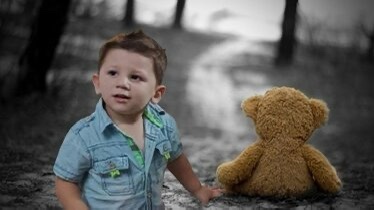
A three-year-old martyr. This is the Angel who made all of Greece cry. A little angel that no one heard, no one saw, no one understood the unspeakable torture he was going through. Not because there were no opportunities. But because in this case the brain-dead person is one: our society.
It is not possible that there was no doctor, an acquaintance or even a passerby who saw signs of abuse. But the same mentality prevails. Where should I go to… to get involved ? Let me not get into any… trouble too. Have we forgotten how a few months ago a girl had fallen prostrate on the road, hit by a car on Athens Avenue, and the passing cars passed her as if she were an inanimate object?
Perhaps little Angel was born to show us the monster in the mirror again. Perhaps he was a destined martyr for our Colosseum. He came with wings and leaves with wreaths. Every blow, every bruise, every cigarette stub, every cry of complaint, is a nail in the coffin of a society that has become alienated. To the point of not realizing that a hell exists next door. Or even worse, pretending not to realize it.
Thousands of prayers have been said for Aggelos, but our materialistic system has evicted miracles. God’s final signature has been replaced by the signature of a doctor. The sacred mystery of death is being mashed up in the gears of godless science. The relatives gave their consent for organ transplant, as soon as it was certified that the brain was not responding. An unfathomable organ that scientists are still “exploring”, but the “court issued its verdict” immediately. Sorrow upon sorrow; the switch of life is being turned off by a human decision. But joy upon joy, that the child will receive his due glory in the ages of ages to come. Fortunately, God has His own laws and draws His own conclusions.
Many fools blame God for what the Angel suffered. They only demand from God to make amends for what they neglect, for what they are indifferent to, for what they are willfully blind themselves, for what they cover up, for what they allow, for what they vote for, for what they incite with their own sins. As if God is our personal street cleaner, who will work for us while we are having our orgies.
Only a Luciferian mania can lead to such cases of child abuse. These happenings are purely demonic. All Christians discuss this among ourselves. The human race gets crazier and instead of blaming our apostasy for the suffering of children, we blame God.
When He gives us 100-200,000 children a year and we slaughter them before they are born, we say “stay out of it God – Let us commit our genocide”. And when some beasts abuse their own children, we say “where was God?” When He intervenes, they deny him. When they think He is not involved, they curse Him. They have it both ways in their unreasonable self-justification.
Oh Man, sit down and think, before you open your mouth. What conclusions can you draw when you don’t even know what to wish for such a tortured child like Angel? Are you sure that he must live a life that will perhaps be pitch black and scarred? Who will guarantee that he will not carry unspeakable wounds in his soul? Will you guarantee it? Will I guarantee it? We always hope for life, yes. We always hope for a miracle, yes. But how such a child will fare and what his eternal profit is, only God knows.
Have you considered how many thousands of such children like Angel have been saved by charitable organisations, like the Ark and the Smile of the Child, from the claws of such psychopathic parents? Do you understand what it means to be the shield against such beasts? Do you understand the enormous difficulty of managing such children and bringing them out into society? And do you understand why it is a crime for the state to target such structures?
“There is no salvation for our species,” others claim. Salvation does exist, and it has already been offered to us. We are the ones who choose to remain prodigal. We are being transformed into beasts, because you cannot serve two Masters at the same time. Ultimately, you will either resemble the good God, or the absolute evil, the ruler of this world. And our world has become possessed by Satan, for anyone who has even two drams of spiritual perception.
Such a world clips the wings of Angels. Such a world tortured the Angel. If you do not want the next Angel to fall again to other two-legged monsters, keep your eyes open. Keep your ears open. Take an interest in every evil you encounter. Curse your “Oh brother!”. Demand a welfare state. Pray for the children. Support the charitable organisations of the church and other governmental and non-governmental organisations. Regain the alertness of a proper citizen. And the wide embrace of a Christian brother. May evil retreat back to its root, so that all the Angels who find no place to tread together with us, can live free.
Transl. And adapt. By the dear brother in Christ, Elefterios Andronis, Sportime
Police and doctors have never seen, for decades, a child so badly abused, especially at such a young age!
Little Angelos was badly abused by his mother and her partner in Therisos, Iraklio, and was discovered, following a neighbor’s call for emergency assistance. Upon arrival at the hospital, doctors discovered a large subdural hematoma, and the child was rushed into surgery to relieve the pressure. Examinations revealed large subdural hematoma and multiple injuries, including bruises, contusions and burns in various stages of healing, suggesting prolonged abuse. Memory Eternal, our little Angel! Christ is Risen! He is Risen indeed!
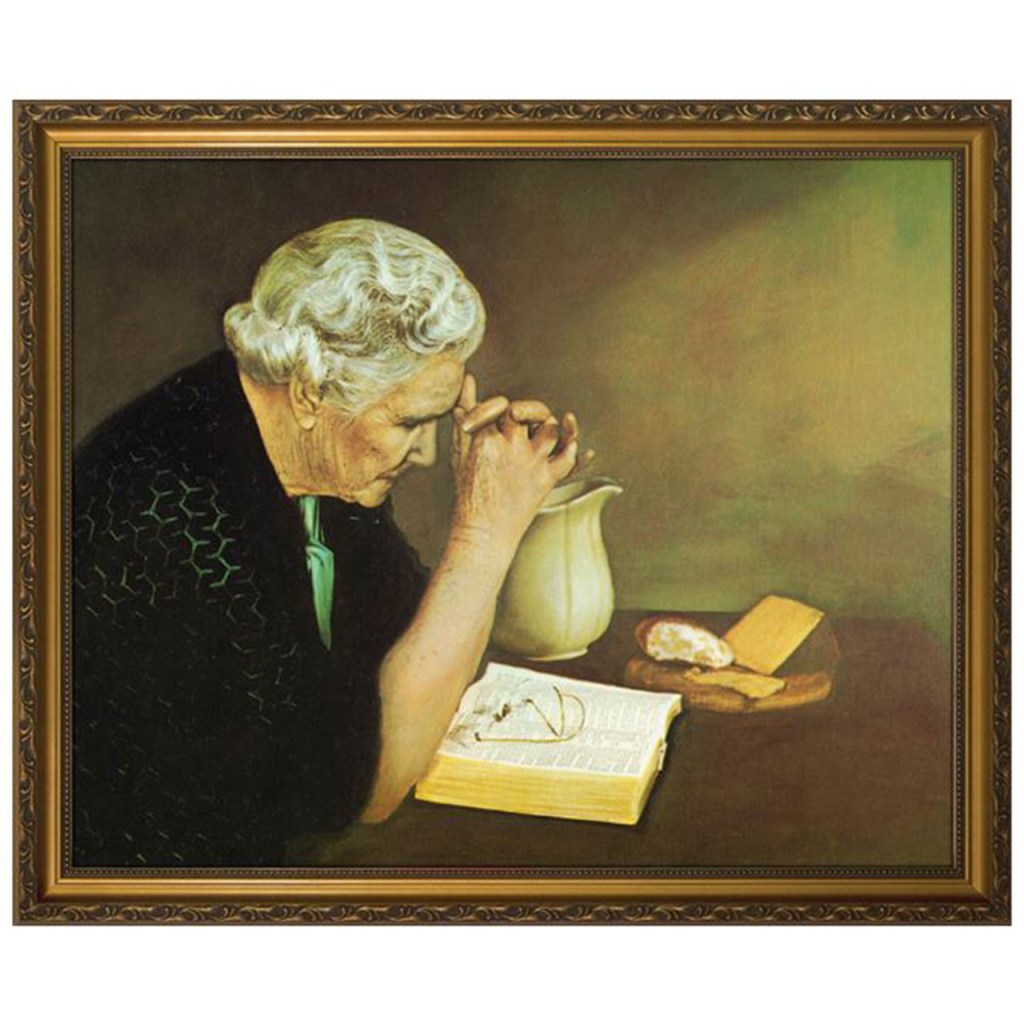
Gratitude by Jack Garren (In the 1960s, his grandmother, Myrtle Copple)
Father Josiah Trenham on “The Most Important Times to Give Thanks” and George Herbert’s poem “Gratefulness” From The Temple (1633)
“Gratefulnesse”
THou that hast giv’n so much to me, Give one thing more, a gratefull heart. See how thy beggar works on thee By art.
He makes thy gifts occasion more, And sayes, If he in this be crost, All thou hast giv’n him heretofore Is lost.
But thou didst reckon, when at first Thy word our hearts and hands did crave, What it would come to at the worst To save.
Perpetuall knockings at thy doore, Tears sullying thy transparent rooms, Gift upon gift, much would have more, And comes.
This notwithstanding, thou wentst on, And didst allow us all our noise: Nay, thou hast made a sigh and grone Thy joyes.
Not that thou hast not still above Much better tunes, then grones can make; But that these countrey-aires thy love Did take.
Wherefore I crie, and crie again; And in no quiet canst thou be, Till I a thankfull heart obtain Of thee:
Not thankfull, when it pleaseth me; As if thy blessings had spare dayes: But such a heart, whose pulse may be Thy praise.
Perhaps the scenario of this poem seems a little ridiculous to you: no one need spend so much vigour on trying to persuade God of the virtues of gratefulness, as it’s a gift that’s so obviously within His will to give. Please forgive me but I do find all this elaborateness and farfetchedness — indeed one of the hallmarks of seventeenth-century metaphysical poetry — charming in its “innocence”. Esp. when compared to our century’s meta-diction and meta-visions…
The first two lines of the poem could be taken in isolation as an earnest and prayerful reminder to be thankful always for God’s goodness, perhaps in the same vein as a verse from Joseph Addison’s wonderful hymn of 1712: ‘When all Thy mercies, O my God’:
Ten thousand thousand precious gifts My daily thanks employ; Nor is the least a cheerful heart To taste those gifts with joy.
But as the poem progresses, it seems that such is the weakness of our human condition that even an act or disposition of gratitude needs divine provenance – and persistence on the part of the poet: ‘Thy beggar works on thee by art’ (stanza 1); ‘Perpetuall knockings at Thy doore’ (stanza 4); ‘I crie, and crie again’ (stanza 7).
George Herbert leaves us in no doubt that God is gracious when beholding our noise, indeed our every ‘sigh and grone’.
What I find most moving is that the beggar’s request in the final stanza — not just a grateful heart from time to time, but one that is grateful all the time, continuously, as a beating pulse — is indeed granted in the end!
Look at another, famous poem of his, “Praise (II)” :
KIng of Glorie, King of Peace, … Thou hast granted my request, Thou hast heard me:
Sev’n whole dayes, not one in seven,
I will praise thee.”
What a gift! How are lives, certainly mine, would be transformed, were our hearts grateful, did we possess hearts “whose pulse may be Thy praise”! Listen to the hymn of ‘Gratefulnesse’ here.
In the name of the Father and of the Son and of the Holy Spirit, One God. Amen “You are the Light of the world”…(Matthew 5:14-16)
14 You are the light of the world. A city that is set on a hill cannot be hidden. 15 Nor do they light a lamp and put it under a basket, but on a lamp stand, and it gives light to all who are in the house. 16 Let your light so shine before men, that they may see your good works and glorify your Father in heaven.
We are called to be lights in the world, not only in our parish, but to our family, community, city where we live, because Christ is the Light of the world. How we become lights and how we share this light with others rests in the gift of God and in our response to that grace, a synergy of love.
We must share Christ’s Light because the world is so full of darkness. It is thirsty and suffering and in need of Christ — the flame in our hearts is to be shared and offered. St John Chrysostom said “You are the light of the world, not of a single nation or of cities but of the whole world.” Minister to those you meet, share the gospel, attend to your own salvation all in the spirit of love, joy, humility and service. Each of us has talents — maybe 5, maybe 3, maybe just 1, — but we must use those talents to the glory of God and within the love of God and Light of Christ. The one thing about Light is that it does not draw attention to itself but to everything else, one candle in a dark room will reveal all the obstacles in that room so that we may negotiate our way around them.
I want, if you will indulge me, to speak about those who have been lights in the world to me in my own journey of faith. The lights of Christ cross boundaries of borders, culture, time and geography. Indeed the saints show are no boundaries to God’s love. My own encounter with the light of Orthodoxy came when I was an undergraduate studying Biblical Studies, Hebrew and Greek at Sheffield University. I had been brought up in the Christian faith, I attended church, sang in the choir, served at the altar. I believed in God; from my earliest memories I loved Christ. When I went to University I found that all those doctrines, teachings and beliefs were questioned, not by me but by a new analytical liberal critical theology which questioned everything, Christ’s miracles, his teachings even his Resurrection. It was deeply troubling.
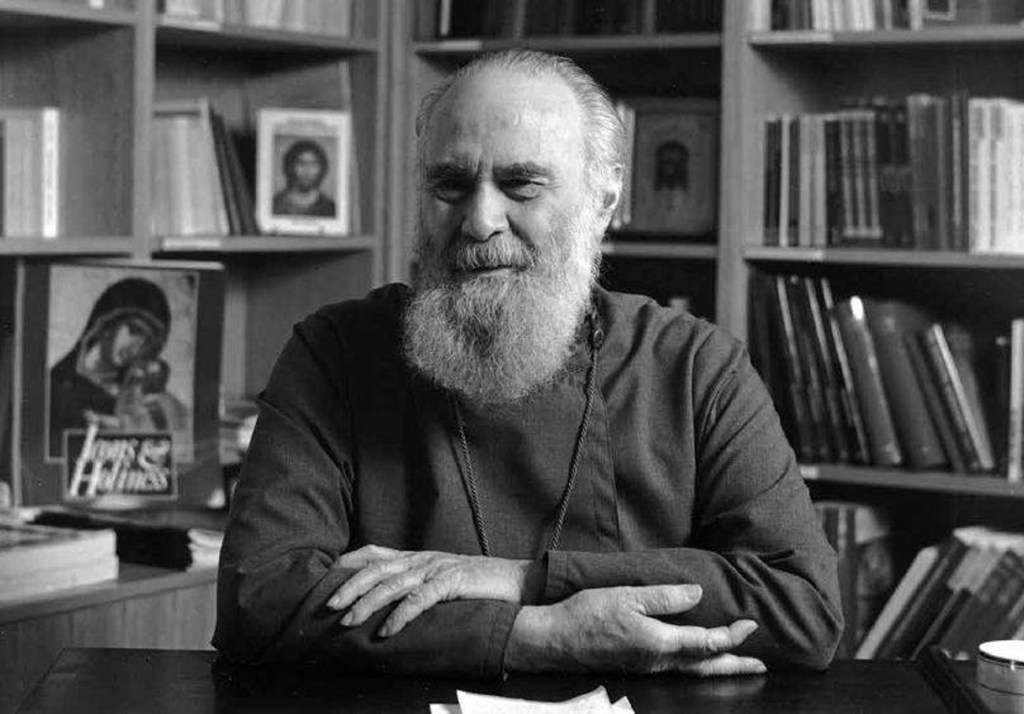
Metropolitan Antony of Sourozh
Into this maelstrom of confusion and darkness shone a light to lighten the darkness to my delight. I was invited to go to a lecture by a certain Metropolitan Antony of Sourozh. I had never met the Orthodox before but later I found out that this man had spoken the Epilogue on the BBC when T.V.s were in black and white and when programmes finished at 10.00 p.m. When this man spoke a flood of light pierced the darkness of my disappointed soul, and I said to myself “if all orthodox are like this, then they have something very special to offer the world.” He spoke with authority, simplicity, humility and wisdom. It was so reassuring that some eminent figures spoke the truth in love against the prevailing tide of fashionable skepticism. The words in St John’s Gospel 1:5 “The light shines in the darkness and the darkness has not overcome it…” reveal how darkness did not understand Light or overpower it or appropriate it or absorb it. Authentic preaching always brings light and pierces gloom with the sword of the truth of the Gospel.
Light also points the way, it is timely, providential and even prophetic.. I can think of three other men of God who were lights to lighten my path: Archimandrite Barnabas of New Mills. He wrote in 1987 a post card at Christmas to me in which he said “ you will be Orthodox in the place where you now teach.” Eight years later I became Orthodox and his words came true. Archimandrite David of Walsingham was prophetic too, When I asked him to write an Icon of the Mother of God of Walsingham for me he said “If I paint this icon of the Mother of God for you, you realise you will become Orthodox”. I was an Anglican deacon at the time! When I was studying at Oxford to be an Anglican priest a then Archimandrite Kallistos was my tutor in Early Church History. He enlightened me to the teachings of the fathers – — how timely and providential was that light!
Metropolitan Kallistos of Diokleia, Archimandrite Barnabas, Metropolitan Anthony, all of thrice blessed memory. They are not yet glorified, but I know many people who were influenced by them. You see brothers and sisters, nothing is ever lost in Christ, A remote hermit whose monastery in Wales did not develop yet his words touched the hearts so many. An icon painter who could transmit the love of Christ not in words but in brush strokes, an academic who transmitted the light of Christ through teaching. What talents! All of these took their faith seriously but lightened this truth with their delivery, self-effacement, and sense of kind humour. Orthodoxy is not like brash strip lighting — it attracts gentleness of the soul because it is a gentle light flame of a candle that gives a mellow light whilst burning itself up in ascetic self-sacrifice.
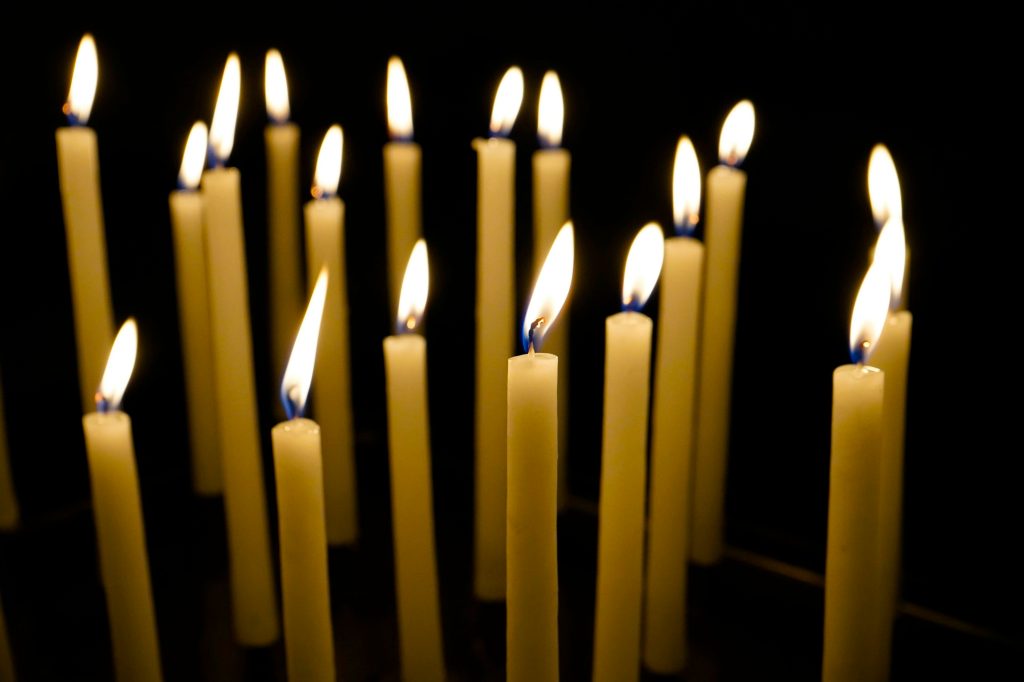
St. Paisios on Prayer and Lighting Candles: “Elder, when we light a candle, do we say that it is for some purpose? — You are lighting it, but where do you send it? Aren’t you sending it somewhere? With a candle, we are seeking something from God. When you light it, you should say: “For those who are suffering in body and soul”, “for those who have the greatest need”, and among them is also the living and the reposed. Do you know how much rest the departed sense when we light a candle for them? Thus, one has spiritual communication with the living and with the reposed. The candle, in a few words, is an antenna that brings us into communication with God, with the sick, with the departed, etc.”
In our parish we have a candle maker, once a month after gathering all the candles, she recycles the ends and brings them back to church. Perhaps you could have a candle maker in your parish to provide lights someone to trim the lamps, supply the wicks and oil — this is a service, however humble. We have someone who cleans the floors. We have someone who puts the chairs out and sets up church — humble duties but so vital for worship as preparation.
We must not be discouraged in bringing the light of Christ to others, when we see no growth or little response. Do not give up when you are frustrated or disappointed, be persistent even when only a few attend the Great Vespers or Holy Liturgy. The newly gloried Cleopa of Sihastria used to say to his spiritual children “Rabdare Rabdare Rabdare” — “Patience, patience, patience!” There will be growth! The newly glorified Saint Amphilochios of Patmos said: “Do not be afraid because of your Orthodoxy because as an Orthodox in the west you will often be isolated and always in a small minority. Do not make compromises but do not attack other Christians. Be neither defensive nor aggressive, simply be yourself.” I would add, “be yourself simply.”
Simplicity was the hallmark of many of the recent saints. St Pophyrios, St Paisios, St Nicholas Planas to name but three. Of course as a compliment to St Amphilochios, St Arsenios of Paros said “when the church of the British Isles begins to venerate their own saints then the Church will begin to grow.” We see this in our parishes. All Orthodox churches now have enquirers and catechumens. God is doing something truly wonderful. As Metropolitan Kallistos of blessed memory said; “We know where the Holy Spirit is we cannot say where he is not, for he moves where he wills.”
Indeed the Holy Spirit is guiding people into the Light of Orthodoxy. There is a hunger and thirst after righteousness, a discontent with diluted, liberal teaching to suit the political correctness of popular culture. We must feed them with the bread of heaven and give them living waters to drink. Light makes things grow in all of creation. The harvest is ready but the labourers are few. It is usually the same people who you can count on your fingers that help in a Parish — those who give their time and talents with fervour.
The parable of the talents is most appropriate – we all have talents, to deny this is to deny the creativity of God. We had a most devout parishioner Barnabas of blessed memory. At 90 years of age, he drove 90 miles from his home and back to church every Sunday and he gave a lift to other Parishioners going out of his way, because they had no transport. Perhaps we can offer lifts to those with no transport. I recall travelling through Romania from Bucharest to Ploiesti and in the fields there were thousands of sun flowers. As we made our way the sun flowers had their heads lifted high tracking the sun up above. As the sun moved so the heads of the flowers moved until the sun went down when they bowed their heads. We must track the Son of God the Light of the world.
As St Paul says in Hebrews: “Keep your eyes fixed on Christ who is the author and finisher of your life”. God said “Let there be light and there was Light”. God speaks and it is so. We have to have ears to hear God’s word and eyes to see His light — an inner spiritual ear and inner spiritual sight, which is why we seal these senses at chrismation with the seal of the gift of the Holy Spirit with holy chrism oil so God may sanctify our life and make our body the temple of the Holy Spirit. We must always be aware that in order to be lights first we must listen to the voice of God bowing our heads to listen to His will for us. It is equally true about listening to others. Metropolitan Antony of Sourozh writes in his book Courage to pray: “Hearing means bowing our heads in humility which is capable of accepting what the other person is sowing on the ground of our mind and heart. This is the true meaning of the word humility. The word comes from the latin “humus,“ meaning fertile soil. Like the rich, silent creative earth we should offer ourselves to the Other, receiving His word in the fertile soil of our minds and hearts”. We see this humility in many of our saints St Porphyrios, St Paisios, St Silouan and St Nicholas Planas just to name a few.
St.Porphyrios taught parents to love their children: “Lord Jesus Christ, give Your light to my children I entrust them to You. You gave them to me, but I am weak and unable to guide them, so, please, illuminate them…” When children grow up in an atmosphere of freedom and at the same time are surrounded by the good example of grown-ups, they are a joy to see. The secret is to be good and saintly and to inspire and radiate. The life of the children seems to be affected by the radiation of their parents. If the parents insist, ‘Come on now, go and make confession, go and receive Communion’, and so on, nothing is achieved. But what does your child see in you? How do you live and what do you radiate? Does Christ radiate in you? That is what is transmitted to your child.
This is where the secret lies. Does Christ’ light radiate in you? That’s the secret, that’s the key to everything, isn’t it? Does Christ’s light radiate in us? If He does, the children indeed, the people you meet will feel Him radiating. Does Christ radiate in you? What a thing to say to us, what an invitation the idea that Christ could radiate in us, in us, unworthy, sad, overworked and worn out parents, in the tired Sunday School teachers and the overworked youth ministry worker. Does Christ radiate in you? Stop talking. Pray, pray, pray. Let Him fill you up, so that He will radiate light in you and pour into the children who surround you and who absorb Him from you.
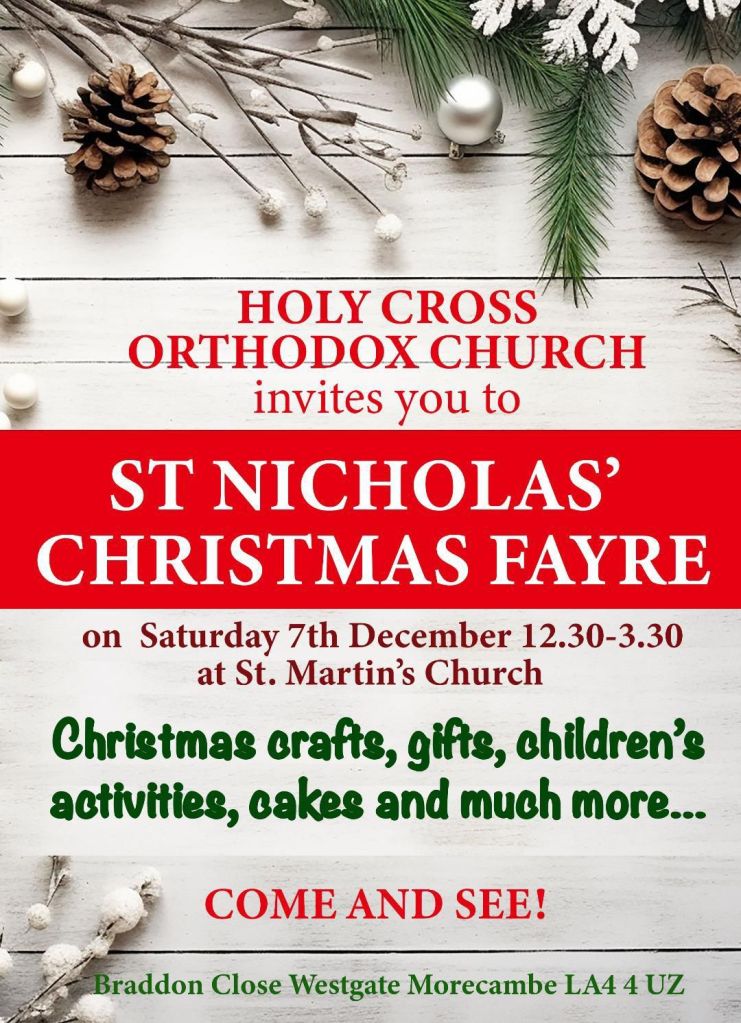
Our local saint is just a mile away St Patrick — yes, he is British not Irish — he was taken by pirates from the north west coast of Britain, after escaping from Ireland he returned to convert the Irish to Christianity but not before establishing a monastery in Heysham next to Morecambe. It is still there today. Sayedna has visited the remains of the chapel and the monks cells. There are even caves where the hermits used to live. He was born in Britain but St Patrick became the Enlightener of the Irish. You may be born in Romania or Lebanon or Russia but God sent you here to be lights in His world. Perhaps you could be a light to the children helping in Sunday school. Parents bring your children to Church bring them up in the Light of the Gospel.
One of my favourite verses in the Bible is from the Psalms: “The sacrifices of God are a broken spirit, a broken and a contrite heart, these O God You will not despise.” (Psalm 51:17) In order for lives to be filled with Christ’s light we need a broken heart, broken by and repentant for our sins. Unless our heart is cracked the light cannot enter into the tomb. If it is cracked, the light can flood in, otherwise it is hard, and like stone, impermeable, immovable and self- contained. “The eye is the lamp of the body. If your eyes are good, your whole body will be full of light. But if your eyes are bad your whole body will be full of darkness. If then the light within you is darkness how great is that darkness.” (Matthew 6:22-23)
I am blessed to be here in Staffordshire which is my home county. The motto of the city in which I was born which was then in south Staffordshire (now in the west midlands) is “Out of darkness cometh light.” We bring those in darkness to Christ so that they too may become children of the light by adoption and grace. God’s power is revealed in our weakness, in these earthen broken vessels. 2 Corinthians 4:6-18 is to be read. (1 Thess. 5:5-11) “You are children of the light and the day; we are not of the night, nor of darkness. Therefore let us not sleep, as do others; but let us watch and be sober.” So here we see how watchfulness is also a prerequisite for becoming lights in our parishes. First attend to your own salvation before addressing the needs of others do not be blind guides as our Lord called the Pharisees. (Matthew 15:14.)
I am not a physicist, far from it, but according to the law of physics light is composed of photons, which are packets of electromagnetic energy. We in a spiritual sense must become packets of Christ’s magnetic energia, delivering like a holy postal service, the parcels of Christ’s gifts to the household of faith. In Colossians 1:29 the holy Apostle Paul says that he labours with all his energy and that God powerfully works within him.
The Story of St Nikolaos Planas Papa Nicholas Planas was not a missionary to foreign lands. He was not a confessor or martyr who suffered or died for his faith in Christ. He was not a learned, gifted theologian who wrote books and taught the Faith, indeed he had a speech impediment. He was simply a parish priest who prayerfully served the Liturgy, day in and day out, month after month, year after year for fifty years. He had very few words to say at all – even to his closest followers. His life has no astounding feats of asceticism; he was a priest on the outskirts of a city. He did not die for the Faith or preach to the multitudes. He built no monasteries, no philanthropic institutions, nor even a single church. Indeed, for some time he didn’t have a church of his own, he just went from church to church.
Yet each year on March 2 the Orthodox Church universally recognises Papa-Nicholas as a saint worthy of veneration and emulation. This is because he did the most important thing that any Christian can do, a simple task that he unwaveringly followed to his salvation and canonisation: he listened to and performed God’s will to the fullest degree possible within his circumstances. Simplicity is the theme of Papa-Nicholas’ life. He was a simple parish priest, who modestly performed the mysteries and services of the church, who cared for his flock with meekness, and who treated all with love and in innocence. It is this very simplicity which serves as an example for all of us.
At the proskomede St Nicholas Planas would often take hours praying for so many people. One of his servers used to say “Oh, come on, dear father are you praying for the whole world?” When one young server saw him raised above the floor in the Divine Liturgy, the little boy remarked on this miracle to his mother and when questioned about this St Nikolaos said with due humility “all priests do this.” He used to go around with two bags tied around his waist with the names of the living and departed which he called his debts and invoices.
Now I have used the examples of the fathers of the church and of present day priests, Bishops and monks but families can bless a Parish in so many ways. The monks on Mt Athos say that prayer, attention and work are the hallmarks of service to Christ. No less in a parish than in a monastery. Prayer which involves acquiring stillness, the virtue of humility and obedience, attention which involves opening the senses and discernment to what talents God has given us and work which involves drawing upon the power and energy of the Holy Spirit will make us lights in the Parishes where we serve. We see these three elements in the lives of the modern saints of our time.
So given these prerequisites how then can we be lights in our parishes? What practical ways can we be lights to others? I invite you to think about them and I leave this question with you. The glory be to God.
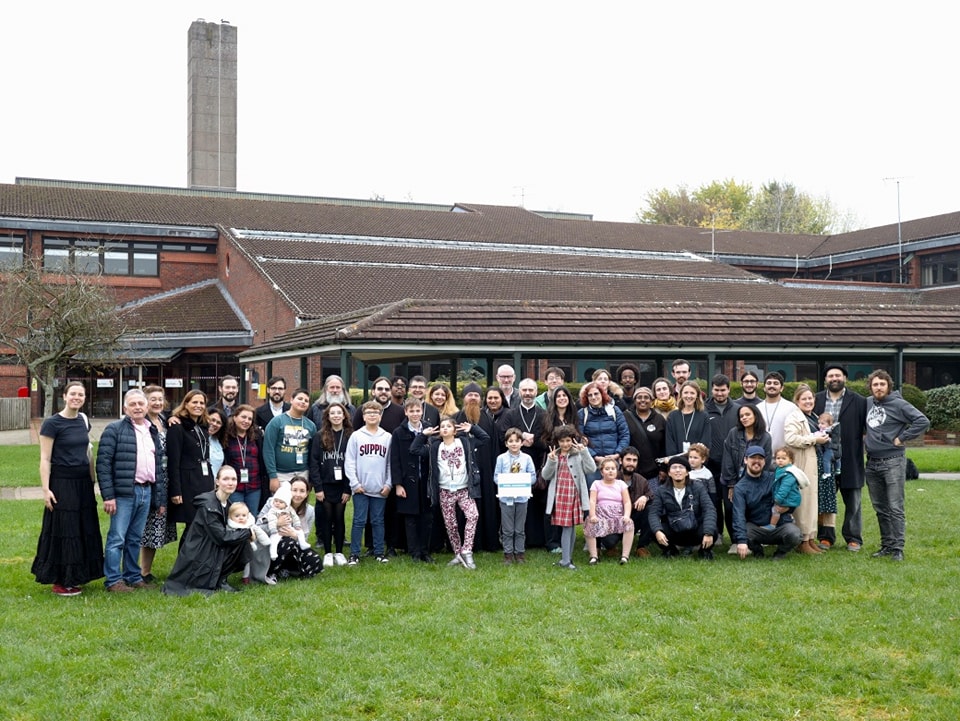
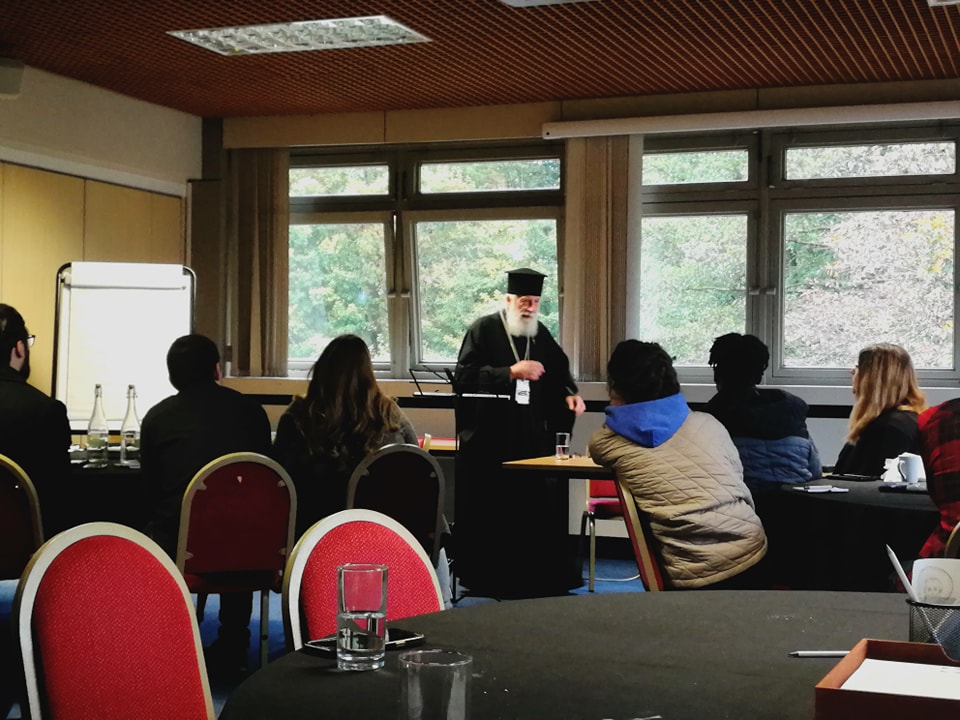
A key-talk at the Antiochian Orthodox Christian Archdiocese of the British Isles and Ireland Family Retreat (Nov.2024)
By Father Jonathan Hemmings from the Holy Cross parish, Morecambe
Nowadays, during the Nativity Fast, Thessaloniki has been transformed into a hub of 40 Days Liturgy, and I have been giving names of Living and Departed from all over the world. What is the power of 40 Day Liturgy? This testimony by Metropolitan of Morfou, Neofytos is worthy of heed:
“I told a certain priest, who serves in a community with few residents, to start celebrating the 40 Days Liturgy for the Nativity Fast. And the good priest told me: -But, Your Holiness, our village has few residents, we don’t even have regular chanters, how will I celebrate the 40 Days Liturgy? -Get a woman, I tell him, to say “Kyrie eleison”, “Amen”, “Grant this, O Lord” … This priest actually celebrating 40 Days Liturgy for the Nativity Fast 4 years ago. In the third year, during Christmas, he came moved and told me: “I thank you for having me celebrate 40 Days Liturgy, because you became the occasion for me for the Divine Liturgy to be not simply an “auditory experience”, (he also found chanters), not only for us to read prayers (a reading experience), but it also became a visible one. I saw it with my own eyes! —Lord have mercy, I told him. What did you see? And he said to me: -This morning I mentioned 2,000 names in the Office of Oblation (Proskomide) * When, furing the Divine Liturgy, I exclaimed “Especially for our most holy, pure, blessed, and glorious Lady, the Theotokos and ever-virgin Mary”, and the chanter outisde began to sing “It is truly meet to bless you, O Theotokos, ever-blessed and most pure, and the Mother of our God. More honorable than the Cherubim, and more glorious beyond compare than the Seraphim, without defilement you gave birth to God the Word. True Theotokos we magnify you!”, the altar, which you know is very small, began to open up, until it became a huge stadium steps. On it I saw standing all those whom I had mentioned in the Prothesis. There were also people whom I had buried in recent years, but also people from other villages, whom I knew and have in my diptychs. Indeed, I also saw the mood of each one. Sometimes I saw someone bright, sometimes sad, sometimes black, sometimes gray. There was also this one, who had died of cancer at a very young age a few years ago, and he shone so much that he spread light to those around him. Addressing all those I saw, I said to them in a low voice so that the chanter outside would not hear: -What do you want? And they all bowed slightly and said to me: -We thank you, Father, and they left.
This is the power of the 40 Days Liturgy!
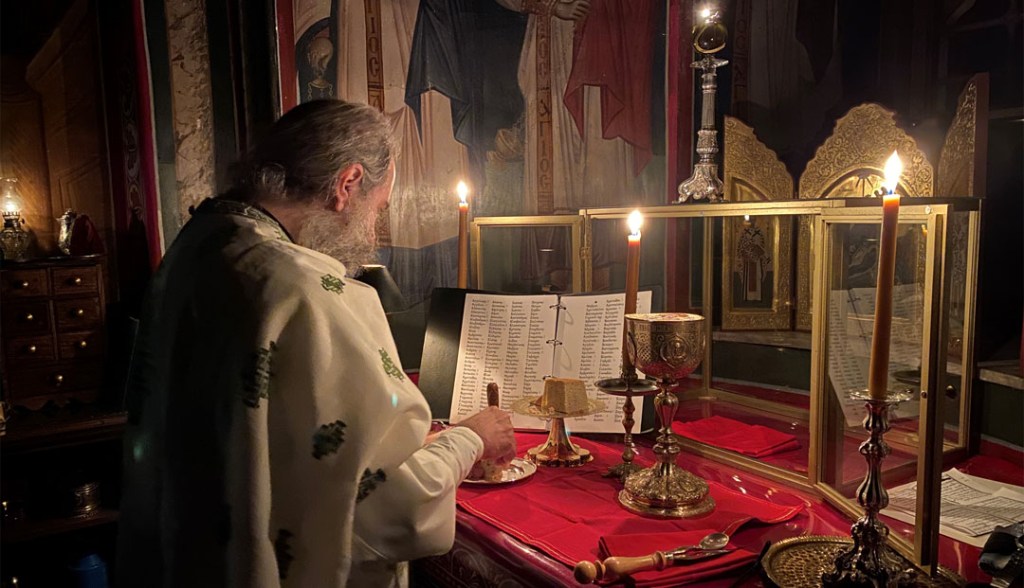
* The Office of Oblation (Proskomide) has been a service of offering gifts to God in preparation for the Sacrament of Holy Eucharist or Holy Communion in the Divine Liturgy. The Office of Oblation is thus a prerequisite for the Divine Liturgy. Today, the priest conducts the Office of Oblation inaudibly during Matins behind the Altar Iconostasis (Icon Screen).
Christ is in our midst. Please forgive my absence of nearly a month, but this was a time of intensive reflection after my first ’round’ of pilgrimages to monasteries so that we could decide what to do and where to go next. By the way, this month I also visited another monastery, which was so hesychastic and hidden that I did not have the blessing to share with you anything, be it photographs or discussions with the monastics there!
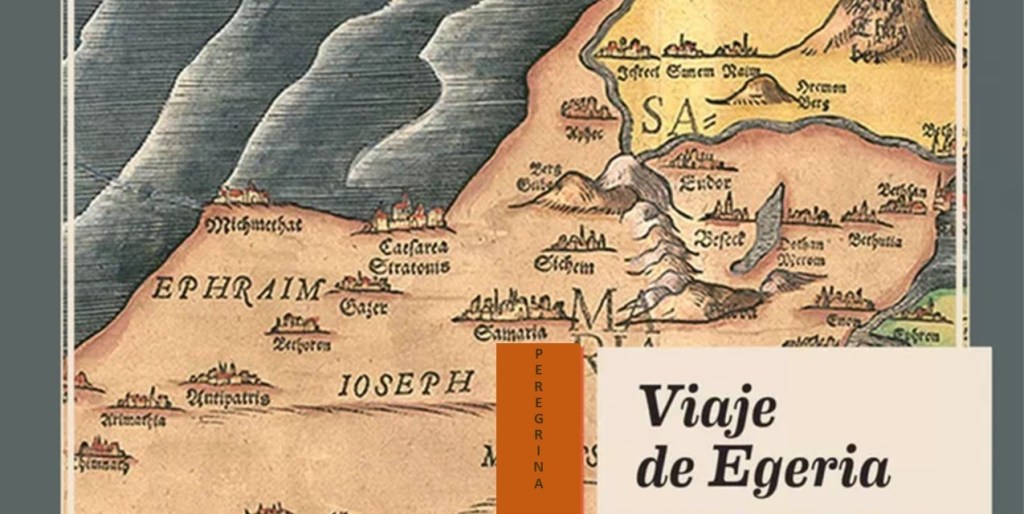
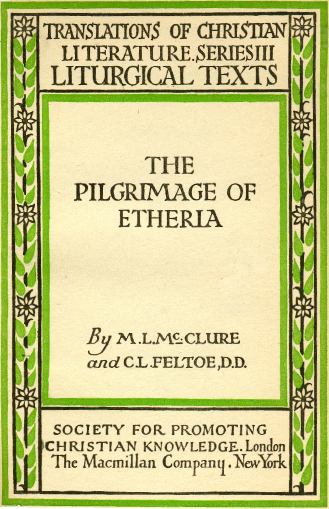
During these quiet weeks of reflection, hesychia and quiet, friends introduced me to the Travels of Egeria, alias Pilgrimage of Aetheria or Pilgrimage to the Holy Lands(Peregrinatio or Itinerarium Egeriae), the earliest extant graphic account of a Christian pilgrimage to the Holy Land about 381/2–384, from Mount Sinai to Constantinople.
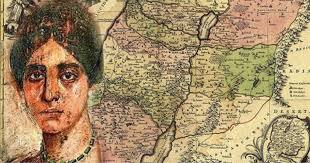
Who is this Egeria, this Christian woman who took a journey lasting four years to the Middle East in the middle of the fourth century c.e. and wrote a journal of her travels?
Her manuscript lay dormant until the late 1800s. Other Latin writers made mention of her, so her accounts circulated among religious pilgrims before they were lost for centuries. Her name was Egeria (also known as Eutheria, Aetheria, and Silvia), and she was writing for other religious women who lived in Europe, perhaps on the Atlantic coast of Spain or France.
Most likely she was a nun commissioned by her community to put her curious and adventurous mind to work for the benefit of the spiritual life of her sisters. She went on pilgrimage to the most important sites of the Christian and Jewish world of her day.
Her account is one of the most valuable documents scholars have of the fourth-century world of travel, piety, early monasticism, women’s roles, and even the development of late Latin.
Her book has two parts. The first part is a travelogue and is simply her report of her pilgrimage. She tells her sisters of her visits to such hallowed and historical places as Jerusalem, Edessa, sites in Mesopotamia, Mount Sinai, Jericho, the Jordan River, Antioch, and Constantinople, and of meeting people (usually monks and mystics) serving the places.
She follows the itinerary of the people who made the places famous and prays there. Often her comments about the rustics at the sacred sites show a bit of dry humour.
Her tourist program has many other objectives, such as following the path of Moses through the desert to Mt. Sinai, her plan to visit the home of Abraham’s family (Carrhae or biblical Harran, southeast of Edessa), and her hope to go to Thomas the Apostle’s tomb in Edessa.
The travelogue is incomplete, for like any good pilgrim she concocted ever more schemes to visit other places like Ephesus to pray at the tomb of the John the “Beloved” Apostle. This part of her travels is missing from the manuscript.
The second part is more a journalistic report on the church of Jerusalem’s liturgical practices over the three years she lodged there. Her record of the practices surrounding daily life and prayer of the church is the first one that scholars have on the topic.
She also reports on how the church’s celebrations correspond to its unique location in the Holy Land. The liturgies she describes are hardly stationary ceremonies in one church location, but they involve processions from place to place according to the occasion. In addition, her descriptions are useful for historians of church architecture.
Her account allows modern readers to see things like the need for military escorts in various places of the Holy Land, the unfailing hospitality of the monasteries along the way, the road network, and the system of inns maintained by the empire.
She speaks of the monks, the nuns, and the religious laity in the Holy Land and their patterns of fasting and the instruction of the candidates for entrance into the church. Finally, she epitomises the heart of the pilgrim and shows pluck and pithiness as she describes each stage of her spiritual journey. Having done part of this pilgrimage myself, even the ascent of Sinai, I have to say how impressed I am by her fearlessness and stamina !
THE ASCENT OF SINAI
We reached the mountain late on the sabbath, and arriving at a certain monastery, the monks who dwelt there received us very kindly, showing us every kindness; there is also a church and a priest there. We stayed there that night, and early on the Lord’s Day, together with the priest and the monks who dwelt there, we began the ascent of the mountains one by one. These mountains are ascended with infinite toil, for you cannot go up gently by a spiraltrack, as we say snail-shell wise, but you climb straight up the whole way, as if up a wall, and you must come straight down each mountain until you reach the very foot of the middle one, which is specially called Sinai. By this way, then, at the bidding of Christ our God, and helped by the prayers of the holy men who accompanied us, we arrived at the fourth hour, at the summit of Sinai, the holy mountain of God, where the law was given, that is, at the place where the Glory of the Lord descended on the day when the mountain smoked.1 Thus the toil was great, for I had to go up on foot, the ascent being impossible in the saddle, and yet I did not feel the toil, on the side of the ascent, I say, the toil, because I realised that the desire which I had was being fulfilled at God’s bidding. In that place there is now a church, not great in size, for the place itself, that is the summit of the mountain, is not very great; nevertheless, the church itself is great in grace. When, therefore, at God’s bidding, we had arrived at the summit, and had reached the door of the church, lo, the priest who was appointed to the church came from his cell and met us, a hale old man, a monk from early life, and an ascetic as they say here, in short one worthy to be in that place; the other priests also met us, together with all the monks who dwelt on the mountain, that is, not hindered by age or infirmity. No one, however, dwells on the very summit of the central mountain; there is nothing there excepting only the church and the cave where holy Moses was.2 When the whole
1 Exod. xix. 18. 2 Exod. xxxiii. 22.
passage from the book of Moses had been read in that place, and when the oblation had been duly made, at which we communicated, and as we were coming out of the church, the priests of the place gave us eulogiae,1 that is, of fruits which grow on the mountain. … I began to ask them to show us the several sites. Thereupon the holy men immediately deigned to show us the various places. They showed us the cave where holy Moses was when he had gone up again into the mount of God,2 that he might receive the second tables after he had broken the former ones when the people sinned; they also deigned to show us the other sites which we desired to see, and those which they themselves well knew.
1 This word is still used in the Eastern Church for food which has been blessed by a priest, e. g. the first fruits from an orchard or a vineyard. 2 Exod. xxxiv. 4.
… From the summit of the central mountain, those mountains, which we could scarcely climb at first …From thence we saw Egypt and Palestine, and the Red Sea and the Parthenian Sea,1 which leads to Alexandria and the boundless territories of the Saracens, all so much below us as to be scarcely credible, but the holy men pointed out each one of them to us.”
This is a highly readable, exciting book, available as a full Audio Book, read by David Wales, and available online, which I strongly recommend you to have a look at, if you haven’t already.










 ORTHODOX CHRISTIAN FAITH AND LIFE