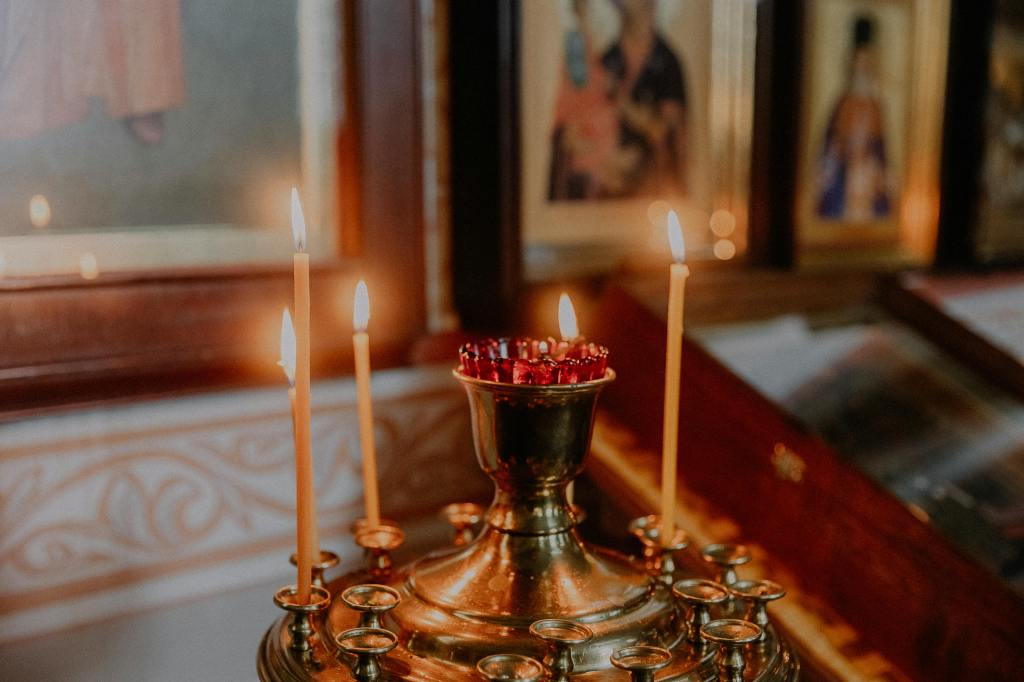
Day 5 If we Burn Ourselves Up as a Candle

… We Become Lights in the World.

Nothing had prepared me for what happened today at the monastery. Mother Porfyria had texted me back at night that, God willing, we would meet briefly today, sometime before we leave. In turn, I had texted my spiritual father for his prayers to help me discern what to discuss with her in these precious, few minutes. His reply: “Let Christ decide. He will be there with you”.

And yet, nothing had prepared me for what happened today at the monastery. I remember that this is what I had told you at my first monastery pilgrimage, at Panorama Dormition Monastery, but this time the spiritual experience was far more powerful, overwhelming I would say.
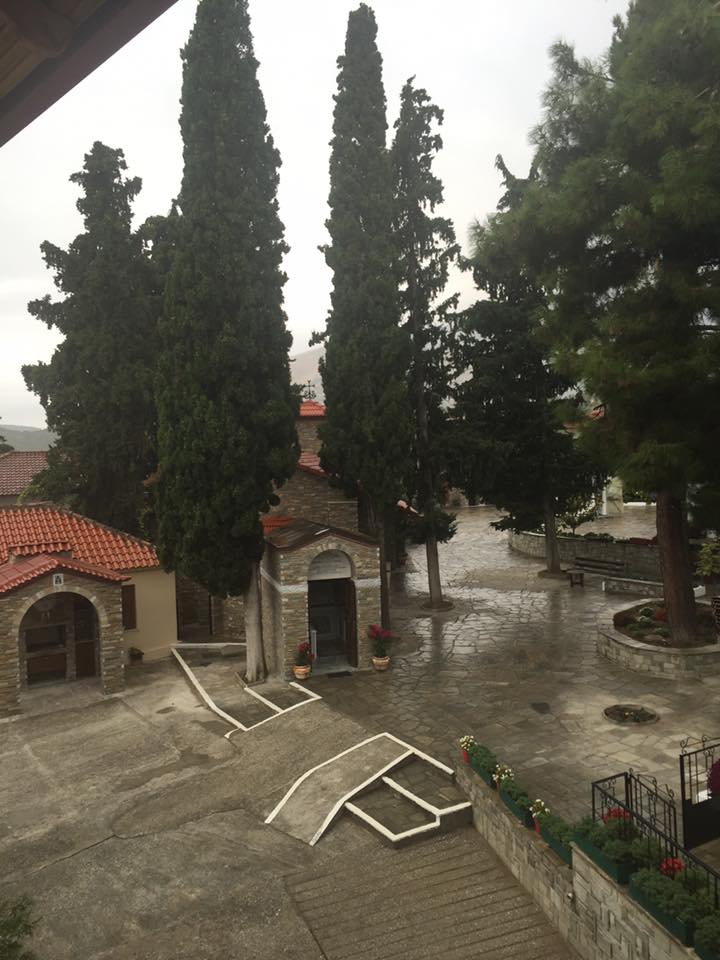
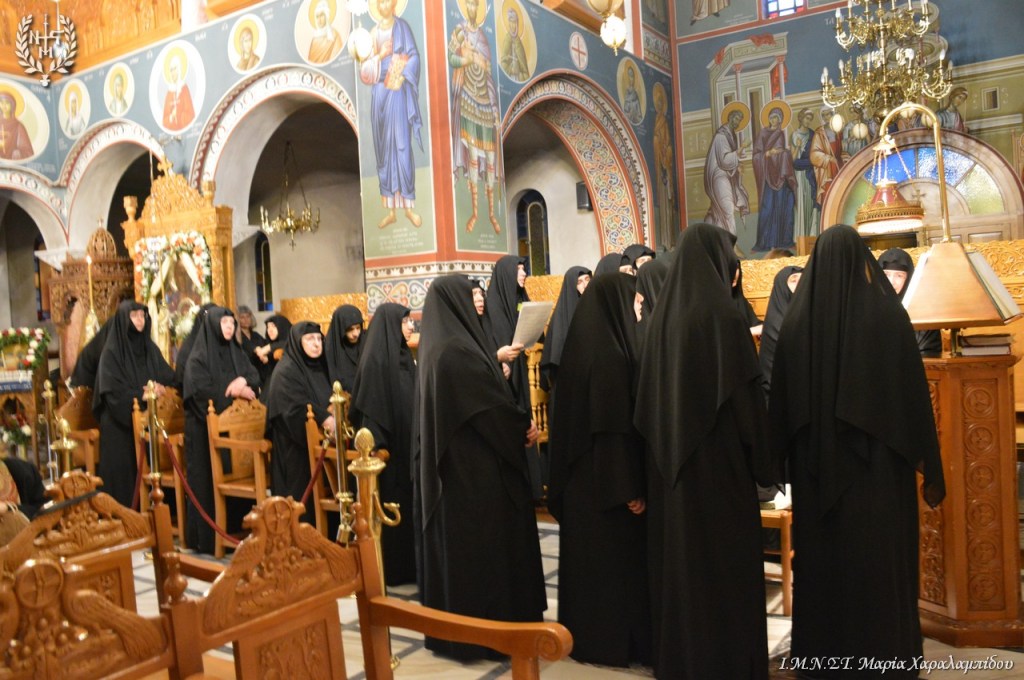
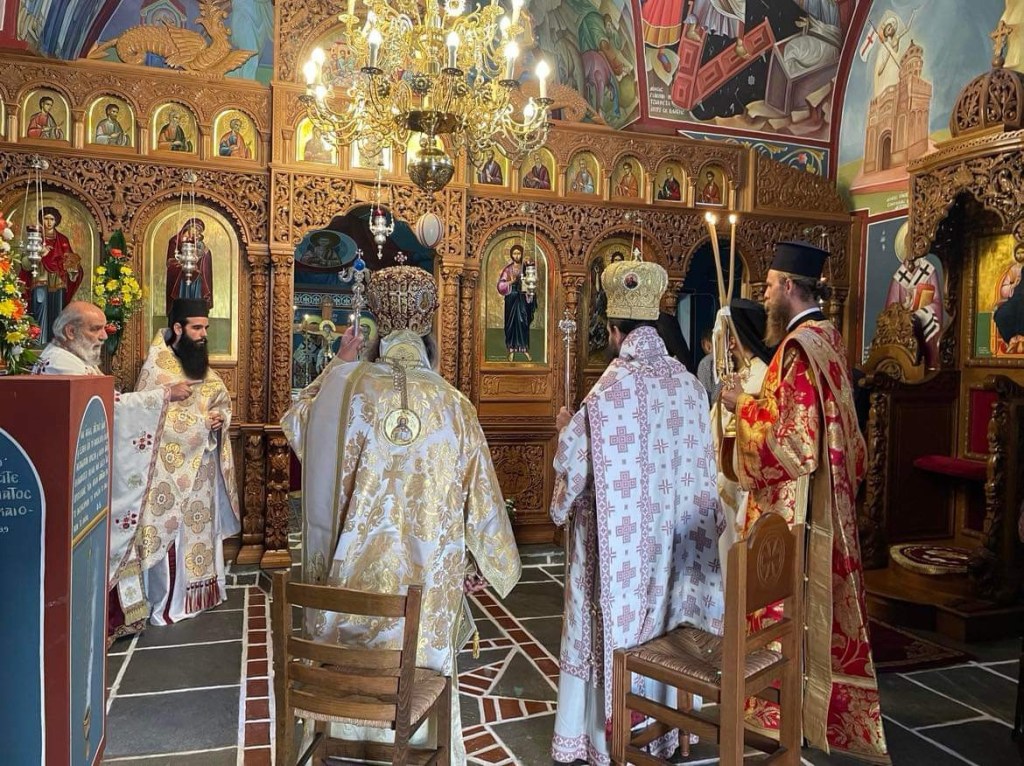
Such beautiful chanting in Church! Listen to a recording of sisters chanting Matins, Semantron and Bells:
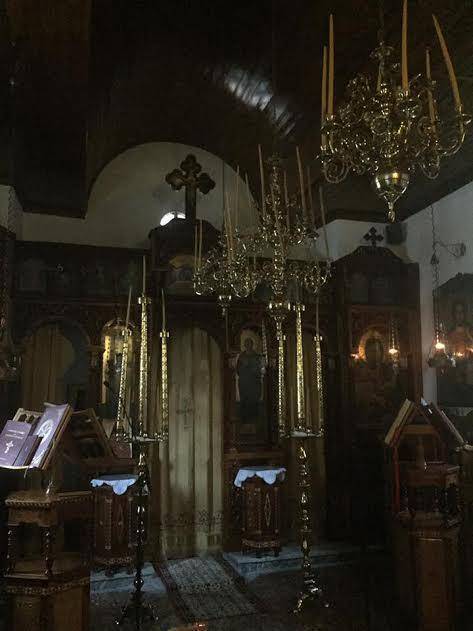
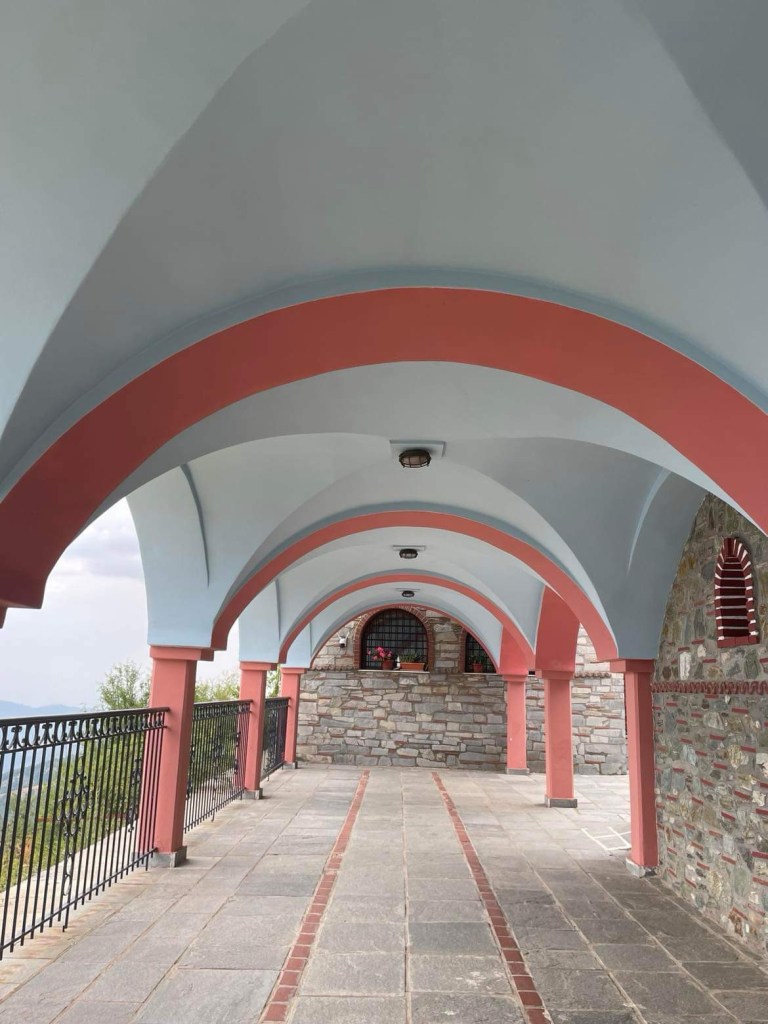
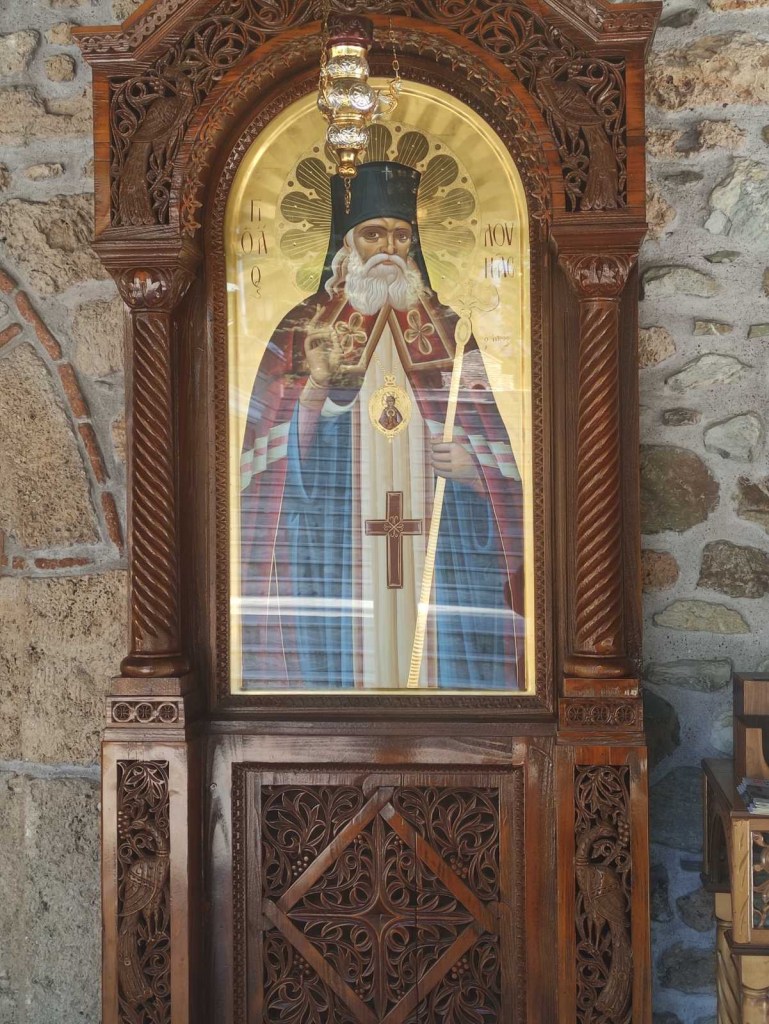
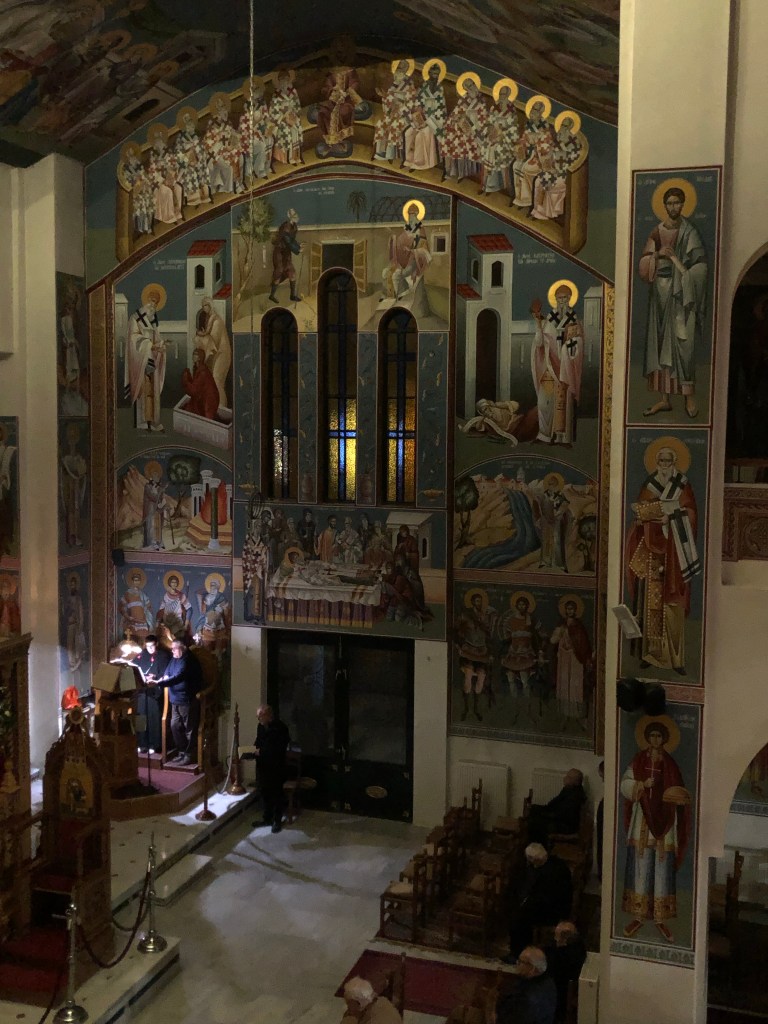
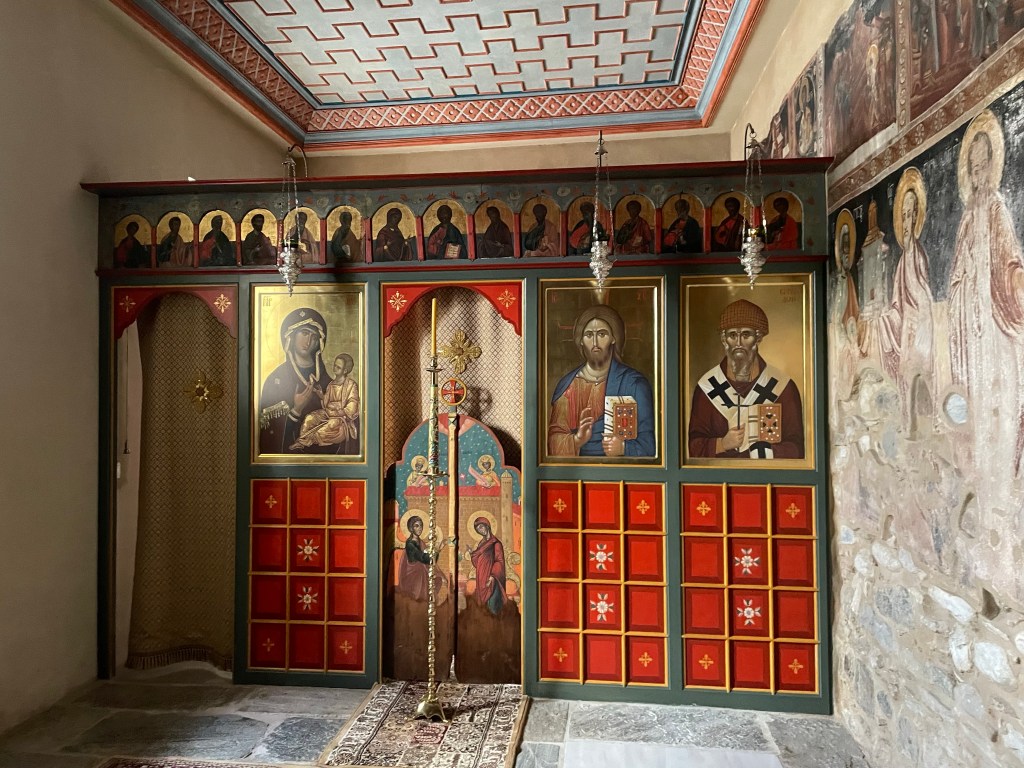
After the Holy Liturgy, I went straight to St George Karslidis cell and chapel, open to the faithful only on Feast Days and Sundays, thinking that Mother Porfyria would rest a bit after these long church services, before venturing out in the public. She is so loved by the sisters and all the faithful that there is always a long queue following her wherever she is going. Here one feels what joyful obedience out of love is.
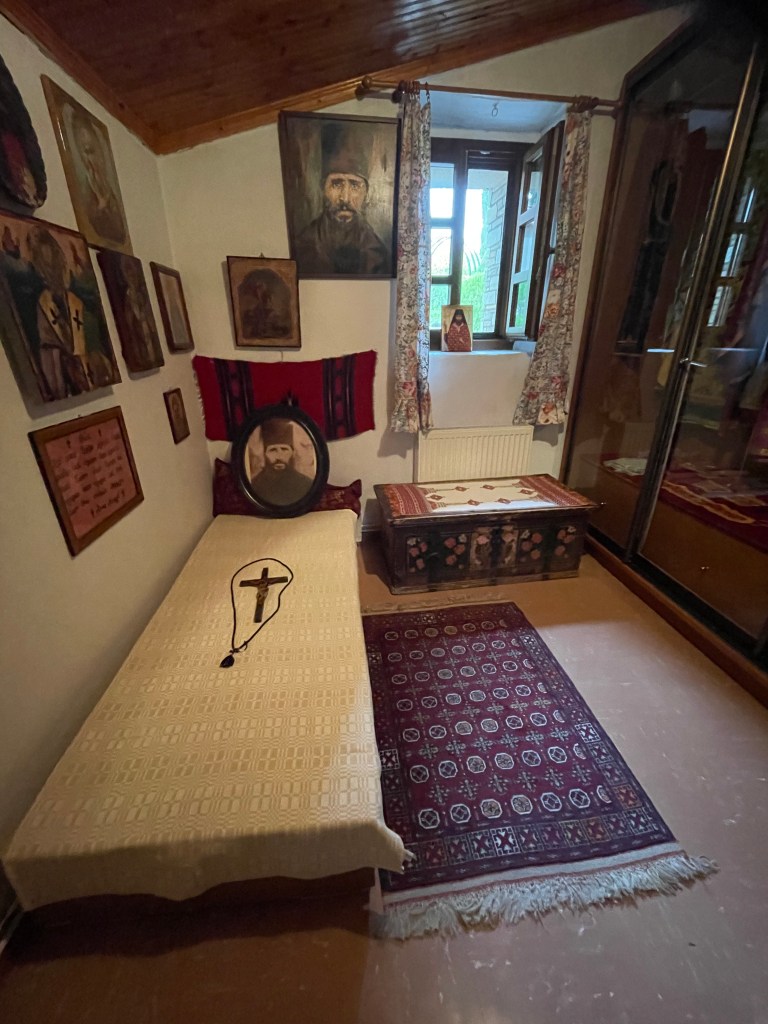
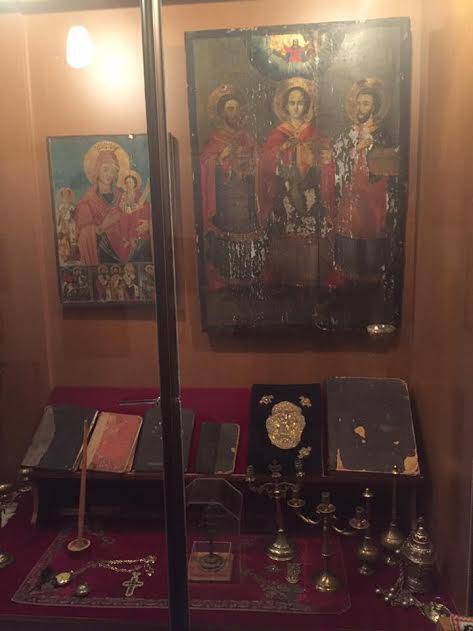
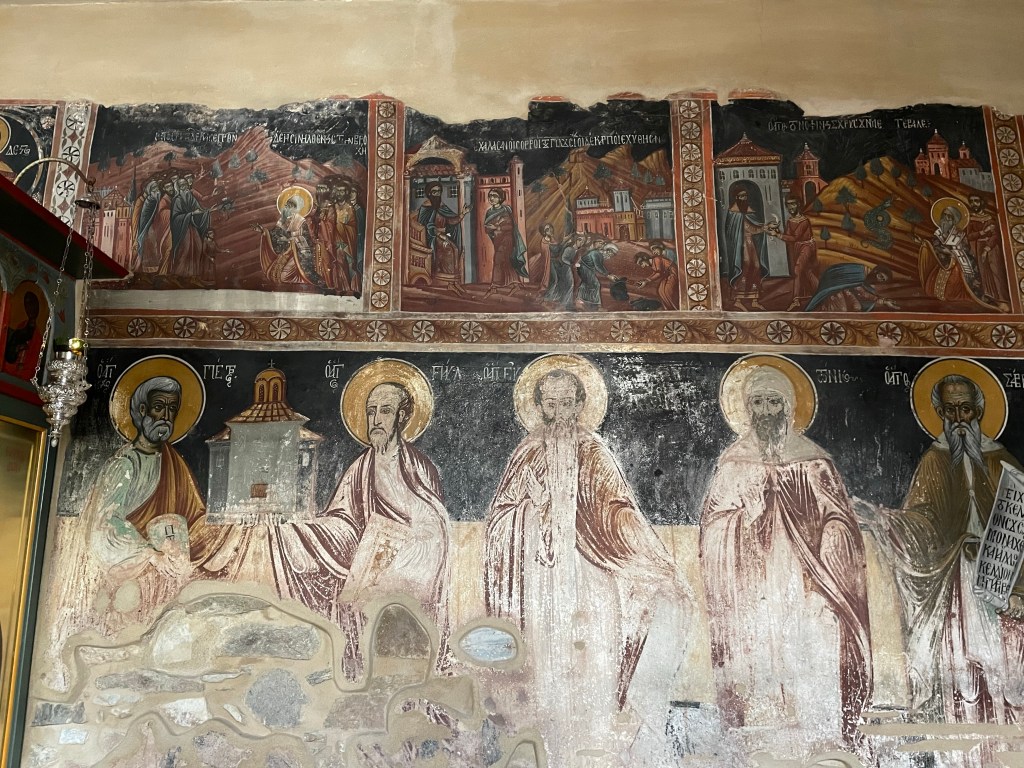
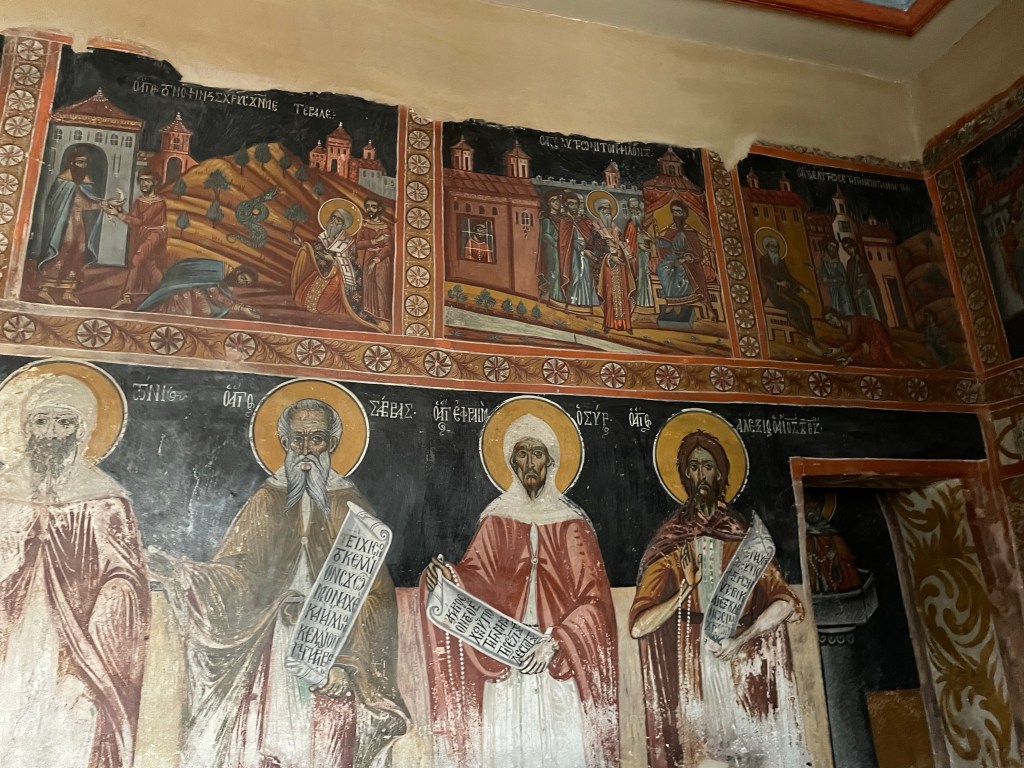
Saint George Karslides cell

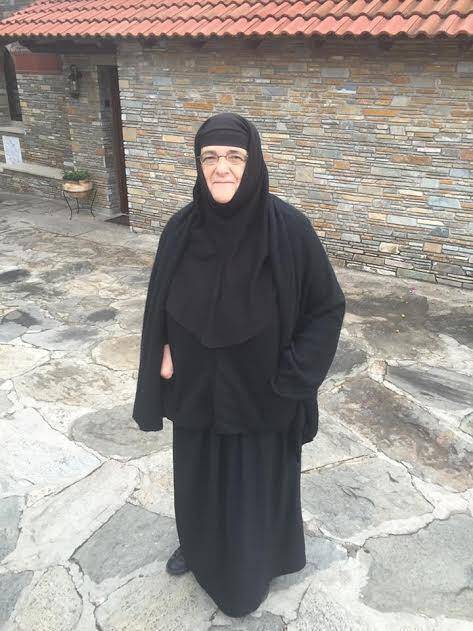
And then, it happened! When I emerged out of St George Karslidis cell, I saw her! but what did I see?! I saw Gerondissa climbing up the stairs of the guests’ house in a hurry and ‘frantically’ searching for me everywhere, checking the guests’ living room, and ignoring everybody else! I rushed towards her and asked her to forgive my disappearance, but I thought she might rest a bit. Are you kidding me? Mother Porphyria rest a bit? How little do I still know her! No sleep, no rest, no ease, no break-fast, no coffee, nothing for her sake, only burning herself as a candle, always full of love and humility, always ready to sacrifice everything for her ‘neighbour! 

If we burn ourselves up as a candle, we become lights in the world.

It was so embarrassing for me! I must have scandalised all the pilgrims and the sisters in the monastery! First this frantic search, and then this grabbing me and ‘pushing’ me further and further behind the inner gates, since pilgrims and sisters never stopped approaching her, literally disappearing and returning after half an hour! Half an hour?! So, the Abbess disappeared for half an hour at the monastery’s busiest visitors’ time, after the Sunday Holy Liturgy, with the monastery literally packed, overflowing with people?!
What’s more, not for 5 min but for half an hour, all alone, listening to her precious spiritual counsel! What a blessing! And what a profound spiritual encounter ours was! Mother Porphyria reflected on our “common” Way of the Cross, dating back to 1988, at our visit to Sipsa monastery, both of us lay persons then, both of us spiritual daughters of + Gerondas Gregorios. Such a beautiful synaxis after so many years! She insisted how our first meeting sealed our future in God’s unfathomable Providence. Back at this time, she was exploring various monasteries with the desire to become a nun, while I was visiting various monasteries for my spiritual growth, before my graduate studies and work at the States. This first meeting dates back to the Pentecost Feast of 1988. Our 36 years anniversary in her words!
Providence brought us to the same monastery, with the blessing of +Gerondas Gregorios, and the following amusing misunderstanding happened then: because I arrived earlier than Mother Porphyria, the sisters at Sipsa monastery thought that I was the one interested to become a novice. So they offered me a single room to have more “space” and privacy to pray. When Mother Porphyria arrived, the sisters understood their mistake but because they did not want to upset me and have me change room, they left me all alone, at peace, and accommodated Mother Porphyria in a double room. Of course, I was clueless about all this, and when I met her, later in the day, at the services and the meals, she did not give anything away. To this day, she finds all this very funny!

Glory to God for all His gifts, especially our fellow travellers in the Way! Mother Porphyria stressed how important is to be always grateful, how God loves those who are grateful. Our faith and life is literally eucharistic. Glory to God for all things were Saint John Chrysostom. last words as he died in exile in the year 407. The word “Eucharist” is derived from the Greek word eucharistia, meaning ‘thanksgiving. This term originated in the 1st or 2nd century A.D. as early Christians commemorated Christ’s Last Supper with thanksgiving. Such thanksgiving inspires and empowers us to act in humble, loving, compassionate ways, with empathy and in service to others.
She also told me that gratitude and total surrender to God will make us fools for Christ and full in His Joy. Galatians 2:20 speaks to the profound change that occurs when we surrender to God: “I have been crucified with Christ and I no longer live, but Christ lives in me. The life I now live in the body, I live by faith in the Son of God, who loved me and gave himself for me.” And then, the greater the trials and tribulations, the greater our Joy will be. Mother Porphyria told me that this was a key teaching of Gerondas Gregorios of blessed memory to his spiritual children.

She then added that when we are ‘crucified’ wherever God’s Providence has placed us, then our martyrdom, and especially our prayers during our martyrdom, transfuses our crucifiers with His love. And this is such a blessing to offer to the world because sadly there are lots of people who rebel against God’s boundless Love and refuse to accept it and then share it. But the key to become such a channel for God’s Love is the will to be crucified and our gratitude for all our crosses. There is simply no other way!
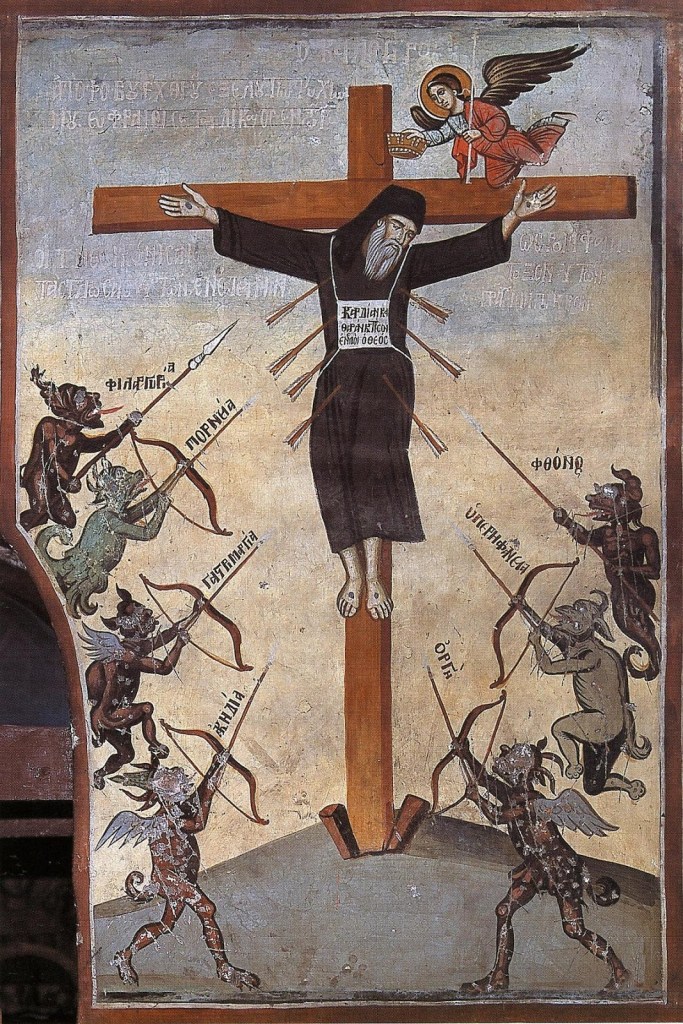
God is indeed doing something wonderful. If we burn ourselves up as a candle, we become lights in the world. These are my spiritual Father’s words.

Just as the oil and wick burn in the vigil lamp, submissive to our will, so let our souls also burn with the flame of love in all our sufferings, always being submissive to God’s will”, St. Nikolai Velimirovich.

This burning, of course, hurts, but Christ, our Bridegroom, bore the heaviest Cross of all: All our crosses plus only He knows what more …

Then Mother Porfyria moved on to some very private matters for herself and myself, which obviously I cannot share. All I can say is that her words were overpowering. A bit too powerful and profound for my spiritual level … standing in awe before the Burning Bush… We have been meeting all these years, but never before had she administered such a “deadly blow” on me! She has always been supportive and kind, wiping my tears, but this time was “only” “tough love”. Days later, and I find myself still reeling… Very tough love…

When I shared these words with my spiritual father, he told me: “Indeed tough love but which bolsters faith in an uncomfortable way”. And it was not so much her words, but the Holy Spirit through her words. Such a powerful presence! Even now, days later. Palpably so…My eyes have opened a little bit to the price our spiritual fathers and mothers “pay” when we ask for their prayers.

Please forgive me for not being able to share further our private discussion. And also forgive me if I cannot put her holy wisdom into words. Days later, I listened to a homily from Essex Monastery, which emphasises the same point: “The Taste of Death is a Prelude to Resurrection Life” How Elders burn themselves up to offer light and “how their spiritual children can make them prophets [ie. prophetic lights] with their holy obedience”, in Saint Sophrony’s own words. But I repeat, it is one thing to just listen to these holy words, and another thing the holiness of the speaker to be transfused to your heart and nous. “… and a great multitude of people … came to hear Him and be healed of their diseases … for power went out of Him and healed them all” (Luke 6: 17-19).

One thing I can certainly share is Mother Porfyria’s insistence on the power of the Psalter in spiritual warfare, which she also stressed at a group discussion with the faithful, at the monastery courtyard, shortly after our private discussion: “The Psalms of the prophet David – the sacred Psalter – are an age old weapon, an effective cure against fear, terror, and demonic forces.”
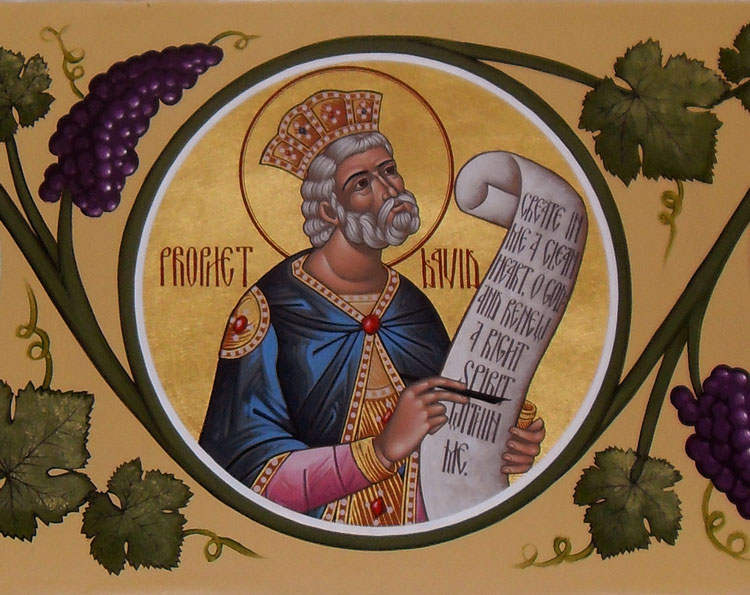
Mother Porfyria’s insistence on the power of the Psalter, reminded me of another homily, by Metropolitan Neophytos of Morfu this time, about a holy ascetic of our times, Elder Theodoros the cave-dweller from Agiofarango, Crete (†2016), about the power of the Psalter:

“If you were to ask me to tell you what I learned after so many years in the desert, I would simply answer this: the power of the Psalter. If I were to start my life over, I would struggle to do one thing: memorize the Psalter. This is the womb of noetic prayer. This is the fertile soil where the seed of prayer thrives. It scourges the demons. When I was reading the Psalter during my vigils, a demon came, roaring like a wild boar in my ear, especially when I said the verse, “Let God arise and let his enemies be scattered, and let those who hate him flee before him…” (Ps 68:1 (67 LXX)) and the verse that says, “…for You are my Lord and my God”. He was in a rage, grabbing me by the throat and choking me. He tried to mess up my words so that I wouldn’t say it.”

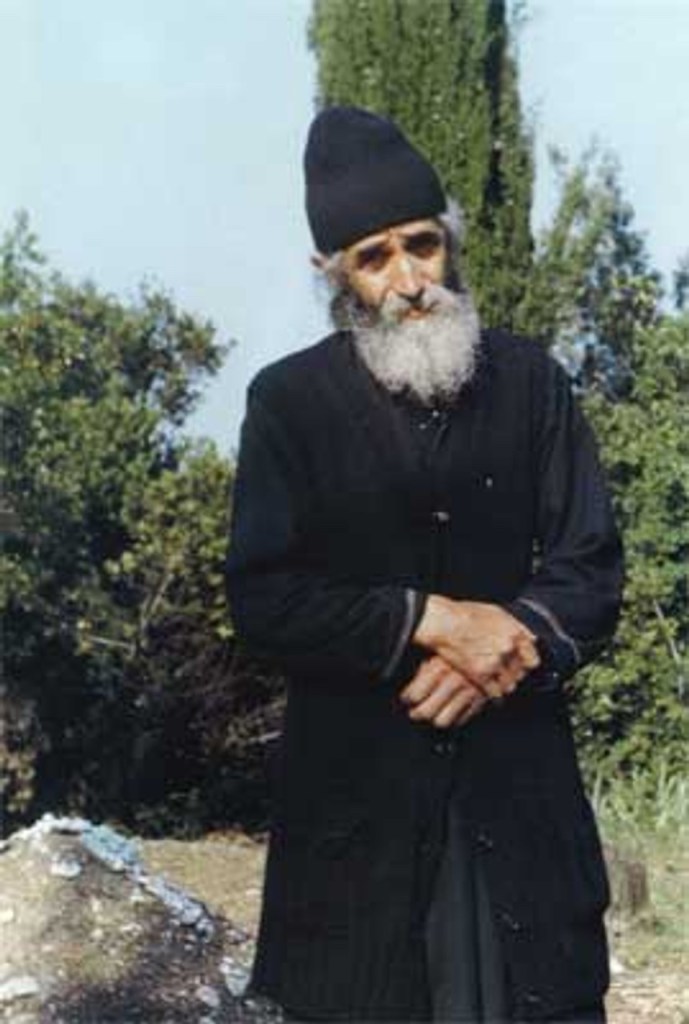
Saint Paisios of Mount Athos reveals a similar experience of his about the power of the Psalter:

“How much consolation I find with the Psalter! That hour and a half when I read the Psalter, I see it as the most positive help to the world… The Psalter is divinely inspired, it was written with divine illumination, this is why it is so potent, so deep in meaning… With the Psalter I feel like rejoicing… I was pounding the devil with a cannon. During the day I pounded him with the Psalter, at night with prayer.” https://www.orthodoxwitness.org/the-power-of-the-psalter
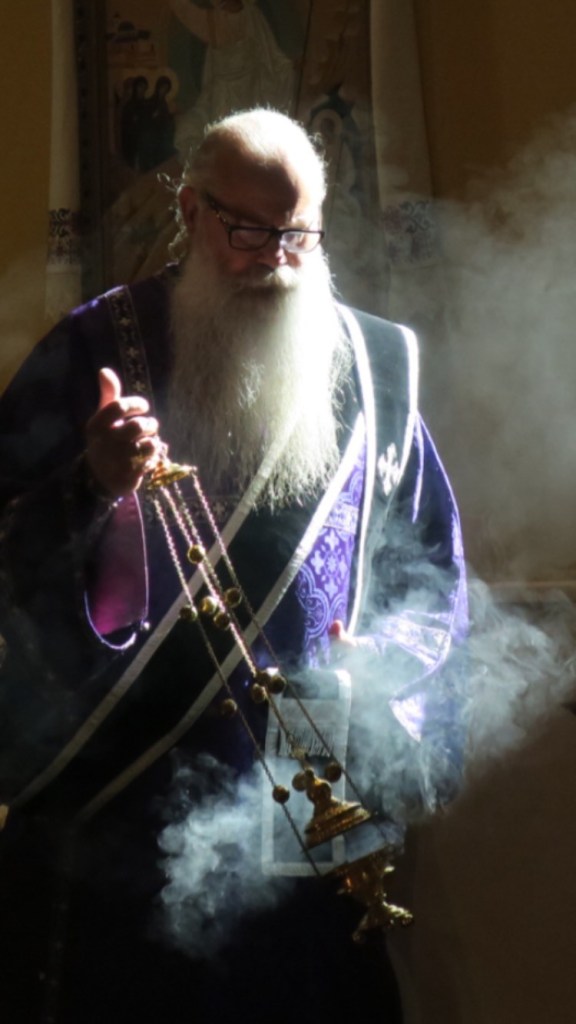
Mother Porphyria also urged the faithful that flocked around her to cense, ie. offer incense to, not only our icons, immediate environment and people near us, but also God’s creation!, those afar, our families at school, our colleagues at work, our families and friends away, all over the world … She told us that is what Fathers have told her and insisted on this. So, we must sense and cense … since before we offer incense we must sense them.

If we burn ourselves up as a candle, we become lights in the world.

What I find most moving, though, are not her words to me or to all the faithful huddling up near her, but the prayer and the Holy Spirit she transfused us through her words.

Like the other sister with a charisma from God at Panorama Dormition monastery, who offered me 5 minutes of her time before I left the monastery. When she told me, for example, to focus on the Holy Liturgy “which is Everything” in Saint Sophrony’s of Essex words, or the Jesus prayer, she transfused the energy of the Jesus prayer to me, and for some hours and days after this, the Jesus prayer would not stop echoing in my heart. Likewise, when Mother Porphyria spoke to us about the power of the Psalter, she transfused this energy, and from there on, for some days, all I could do was to recite the Psalter…

St. Justin Popovich

“To be Orthodox means to have the God-man Christ constantly in your soul, to live in Him, think in Him, feel in Him, act in Him. In other words, to be Orthodox means to be a Christ-bearer and a Spirit-bearer.”

Day 4 “Take off your shoes”

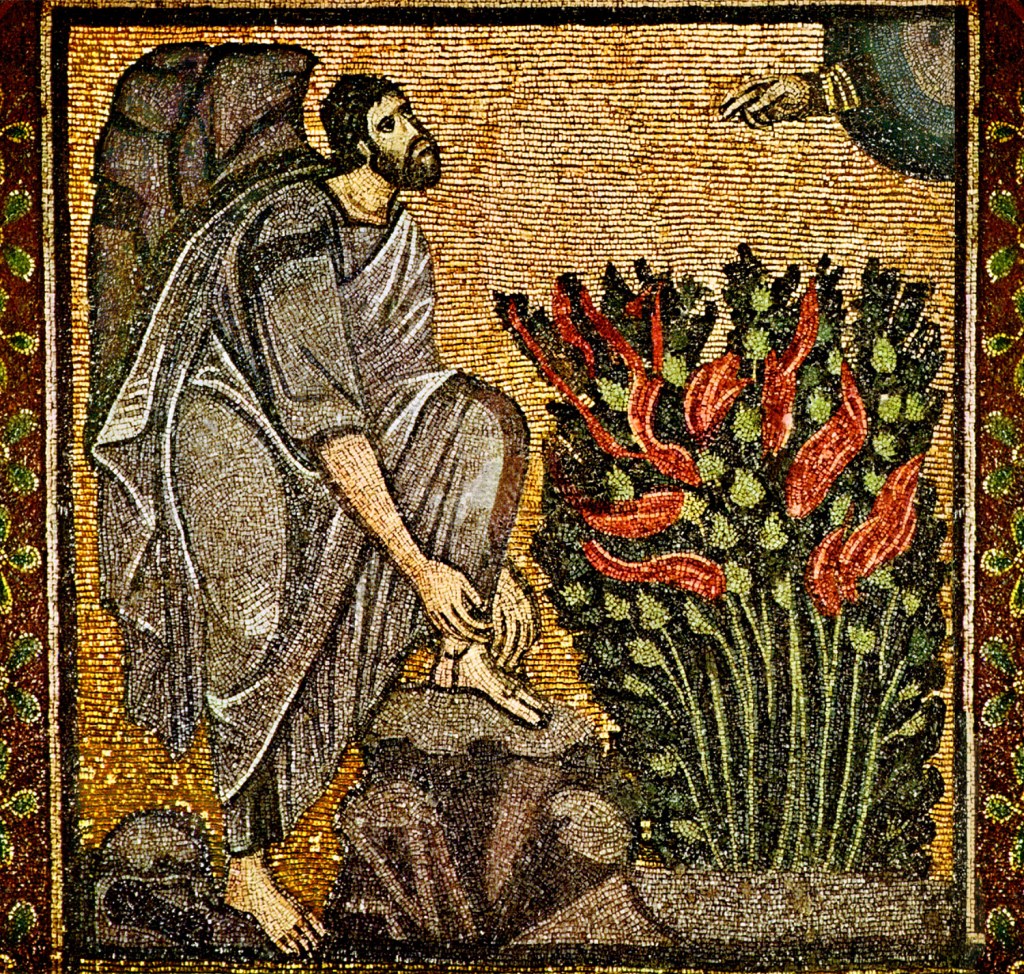
The Burning Bush

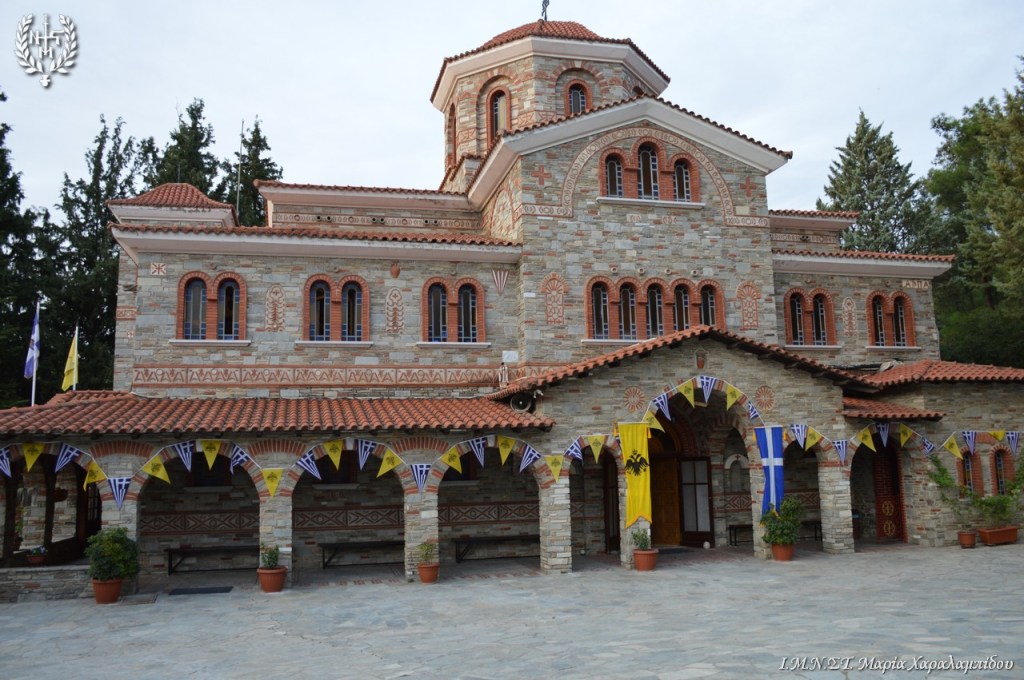
His holy presence is immediately felt upon entering the monastery gates! This Saint is St. Georgios’  Karslidis, the New Confessor of Drama, the founder and first spiritual father of the Ascension Monastery. A bit exhausted after the long drive, off we rush to kneel before his relics and venerate them. … Rush! Waste no more time! “The doors are not yet shut; the bridegroom hears you”. St. Basil the Great

“Take off your shoes”

Hundreds and thousands of the faithful, all these years, especially since his canonisation in 2008, have knelt before him, to seek comfort in life’s trials and tribulations. So many miracles are happening and are being recorded every day!

“Take off your shoes”

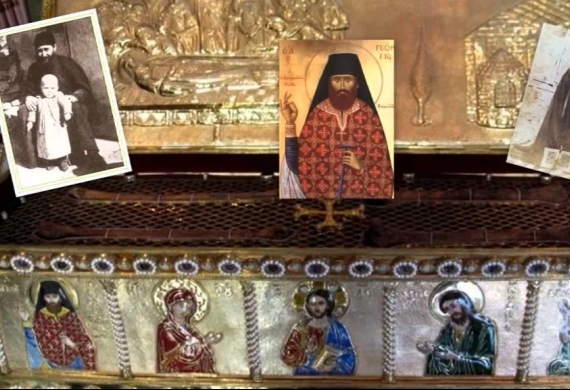
Next, we kneel at Gerondissa Akylina‘s grave. Saint Paisios characterized her as “Gerondissa of Gerondisses; ie. Abbess of Abbesses” and Saint Porphyrios of Kausokalyvite called her “Cherub with golden wings”. Her canonisation is expected to take place soon and her relics are now displayed inside the Ascension Church, next to those of St.George Karslides, for veneration too.

So many contemporary Saints and spiritual Fathers and Mothers have blessed her diaconate: Saint Paisios, +Gerondas Iosif Vatopedi, +Gerondas Gavriil Dionysiatis, +Gerondas Gerasimos Mikragiannanitis, +Gerondas Theofilos (Lydia), Elder Efraim of Arizona, establishing her prayer rule, +Elder Georgios Kapsanis Gregoriou, +Elder Aimilianos, Saint Porfyrios, Mother Nikodemi-Ormylia monastery, +Mother Fevronia-Dormition Panorama monastery, to name just a few.

(Mother Porfyria’s obedience for a decade was the exclusive care of the elderly and frail Gerondissa Akylina).

“Take off your shoes.” 

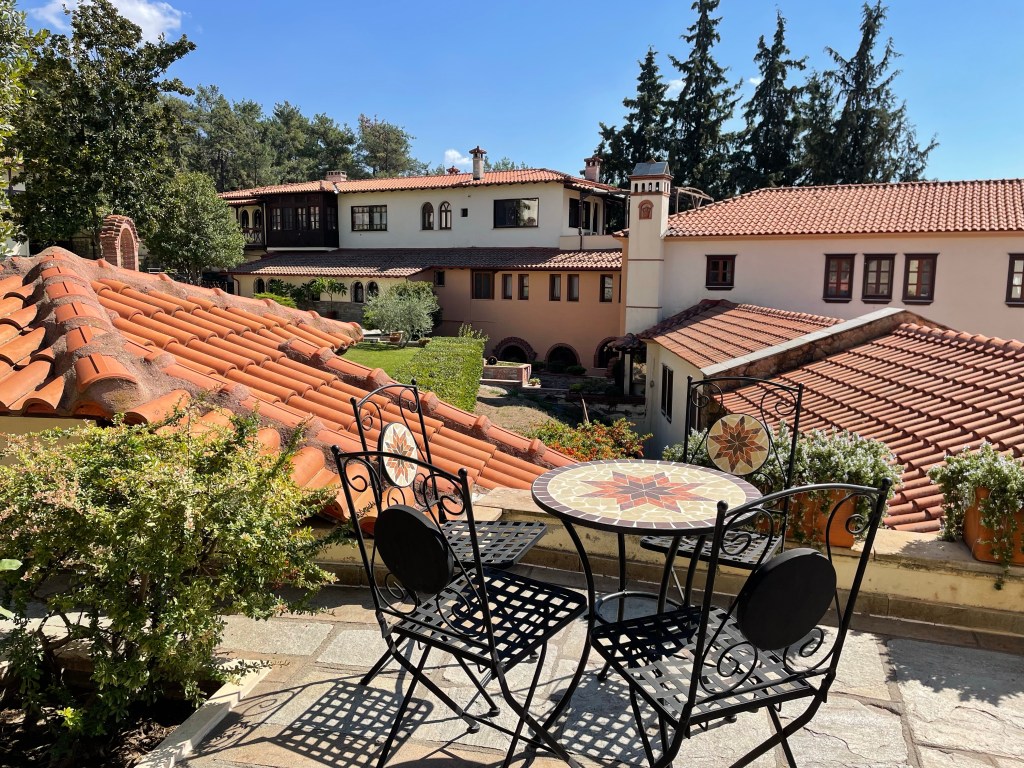
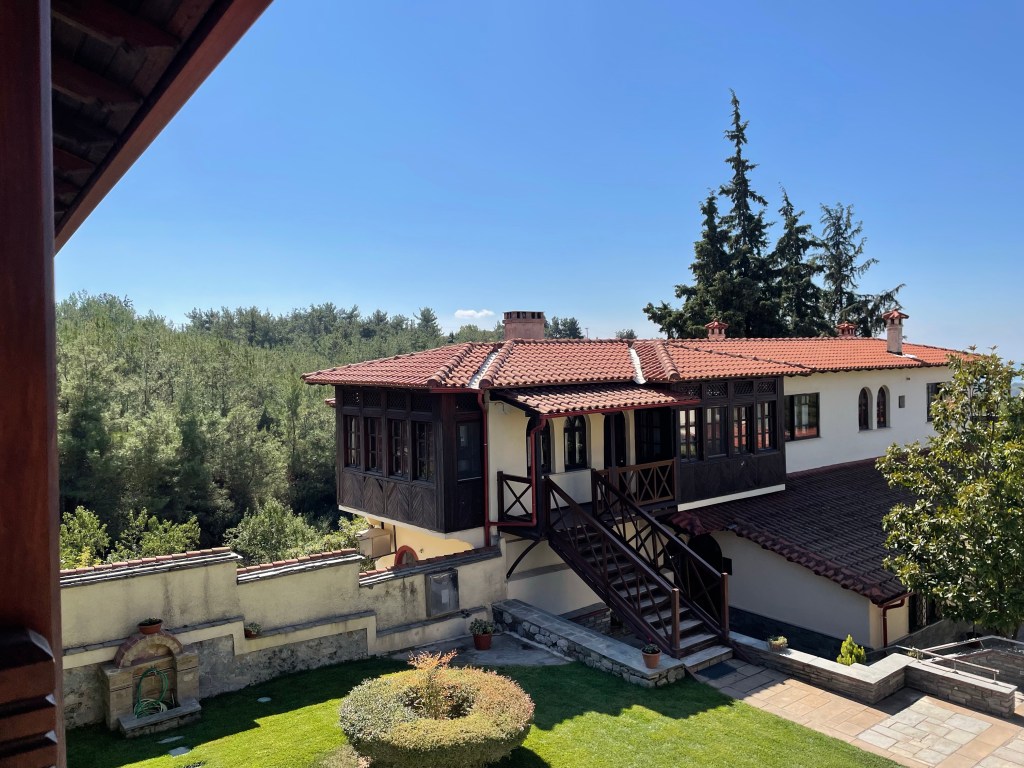
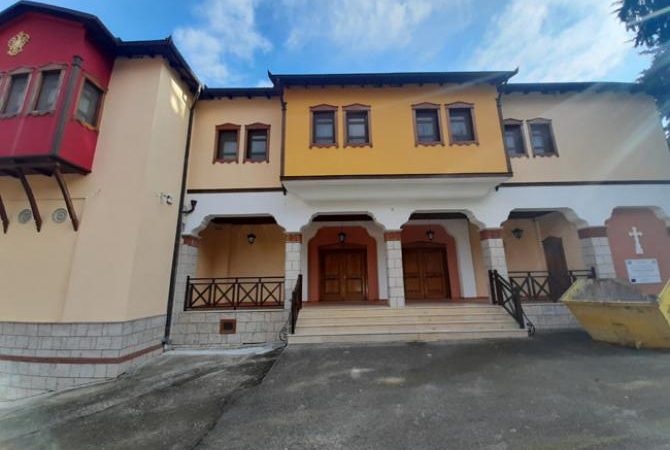
The nuns welcome us, show us to our rooms, offer us a meal, in the separate guests’ house, and leave us to rest before Vespers. Yet, what seems most urgent is the need to repent. Now, on the interpretation of the Greek Fathers of the Burning Bush, St. Gregory of Nyssa for example, shoes, made from the skins of dead animals, signify the deadness of repetition, boredom, inattentiveness. 

“And the angel of the LORD appeared unto him in a flame of fire out of the midst of a bush: and he looked, and, behold, the bush burned with fire, and the bush was not consumed. … And he [God] said, Draw not nigh hither: put off thy shoes from off thy feet, for the place whereon thou standest is holy ground.” (Exodus 3:2-5 KJV )

“Take off your shoes.” 

Start afresh, free yourself from what is lifeless, from enslavement to the trivial, the mechanical, the repetitive. Shake off the deadness of boredom. Wake up. Come to yourself. Open your spiritual eyes. Cleanse the doors of your perception. Look and see! Listen!

“Take off your shoes.”

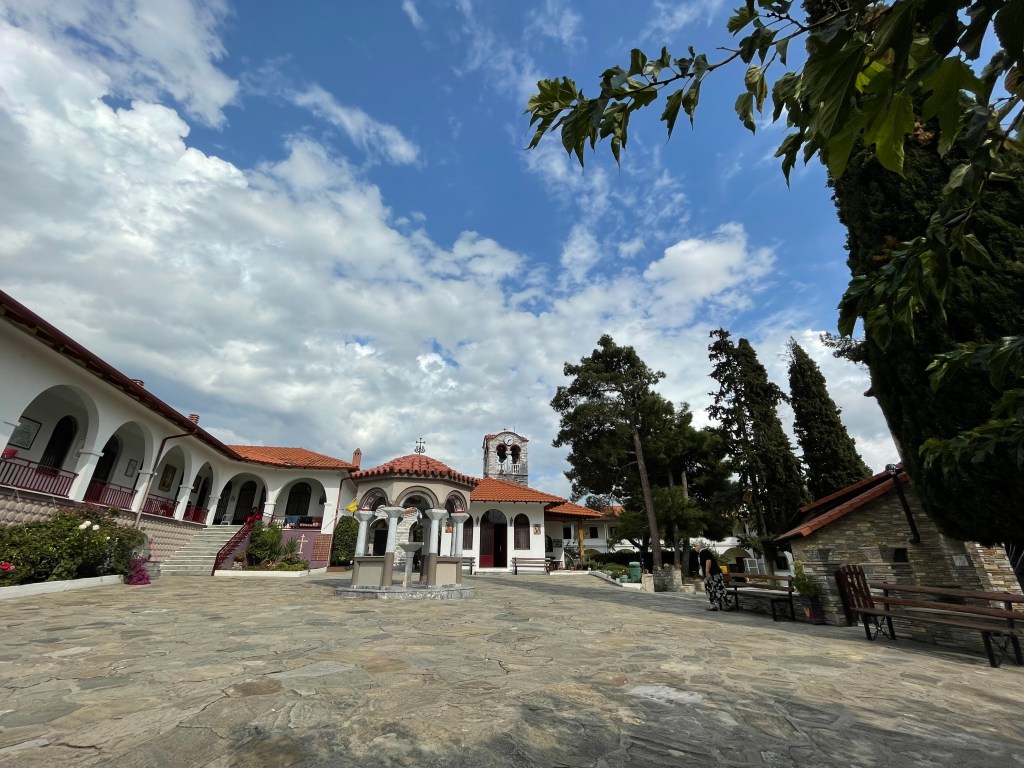
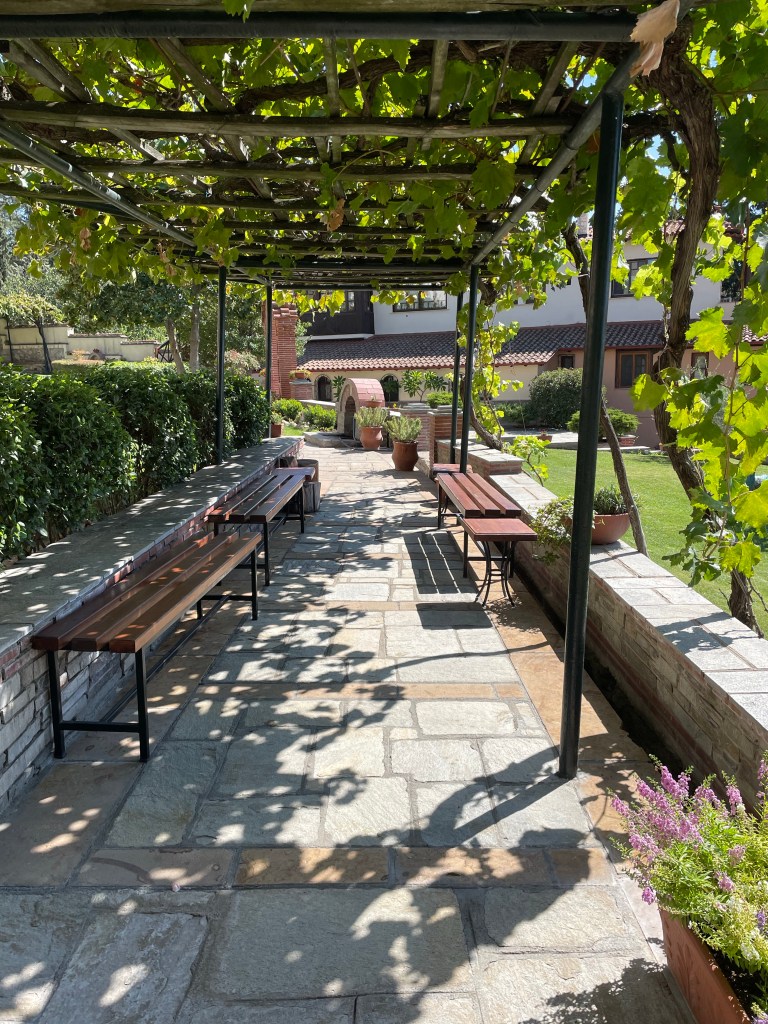
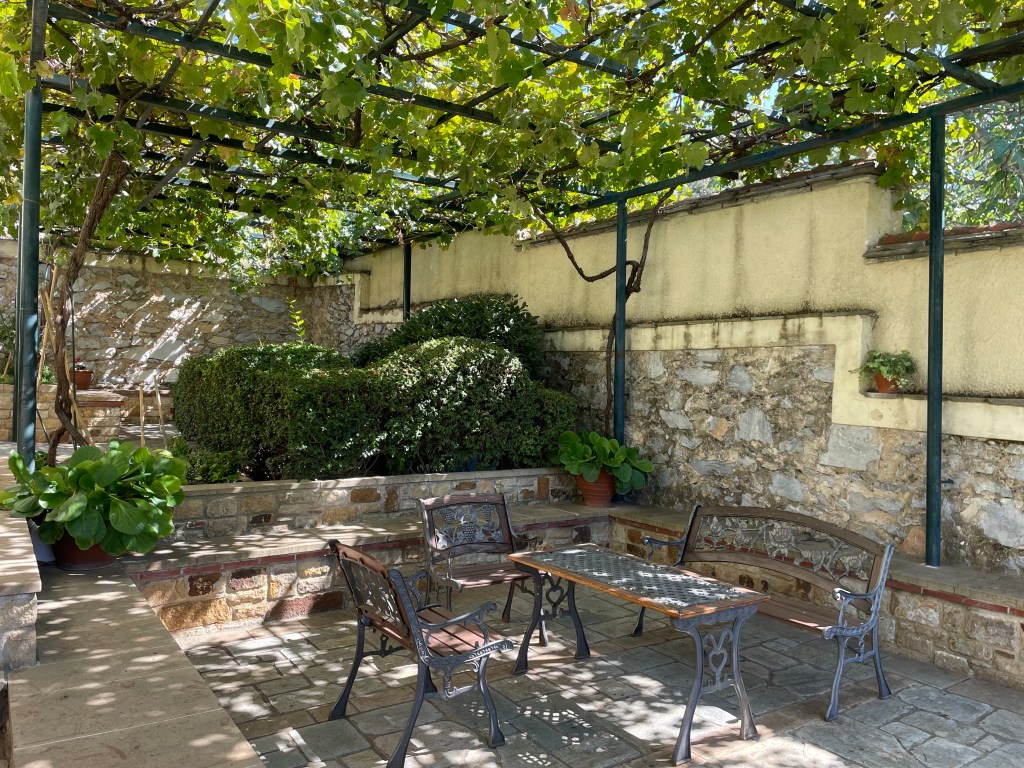
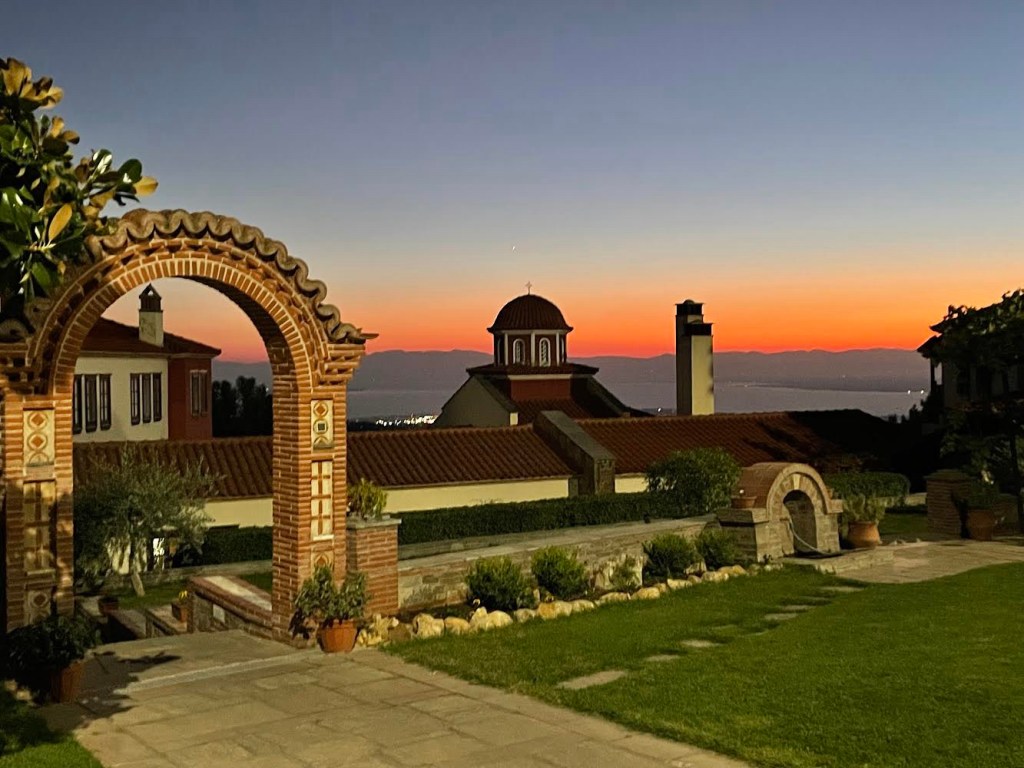
The monastic triptych of “prayer, study and work” (Abba Isaiah of Scetis ascetic discourses) is observed here too, but with a greater austerity than in other monasteries, probably because of the +Gerondas’ and +Gerondissa’s relics’ omnipresence and the specific typikon they follow, at the inspiration of +St. Efraim of Arizona. A variation of this salvific triptych is “prayer, attention and work”. This triptych offers balance, healing, consolation. There are 38 sisters in this monastery, and lots of young novices and postulants, pre-novices. Nuns come and go busy bees, novices and postulants race all round, pilgrims flock, beautiful gardens and fields surround us, yet everything fades before my eyes. My heart has been struck, smitten (Psalm 102:4)

“Take off your shoes.” 

In the evening, I text to Gerondissa Porfyria to plead for a meeting, even for 5 minutes, anytime, before we leave the next day. The day is coming to a close. We retire to our cells. I pray and wait …

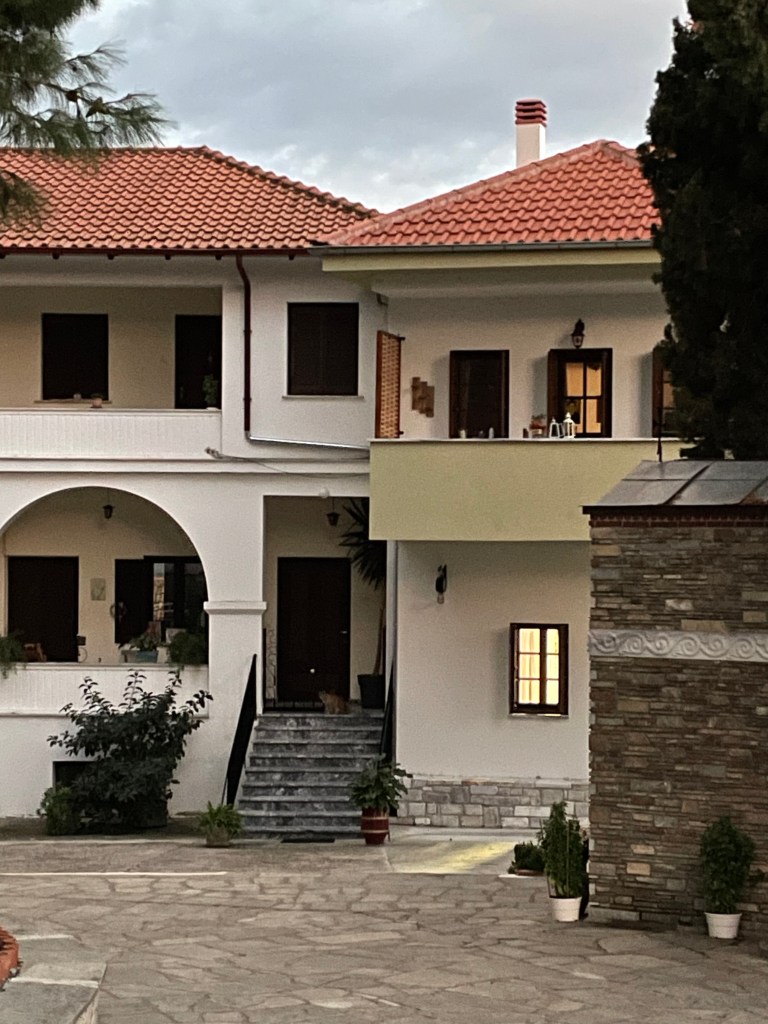
Gerondissa Porfyria’s balcony is the one with the lanterns

St. Gregory of Nyssa

Sandaled feet cannot ascend that height where the light of truth is seen, but the dead and earthly covering of skins, which was placed around our nature at the beginning … must be removed from the feet of the soul.

St. George Karslides

“God cares for everyone. Despair is in effect a lack of faith.”

Monastery Diaries Day 1: A Time of Healing

The time has come! The day has finally arrived! After a long, tiring month full of all kinds of jobs and obediences —other than a blessed Synaxis at Holy Cross, UK —and an especially hard time last week, I have finally arrived at the first monastery in my pilgrimage “list”: the Dormition of the Theotokos monastery at the Panorama suburbs of Thessaloniki.

This most beautiful monastery is dedicated to Panagia Elefterotria, the Liberator. It was founded in 1957, has 60 nuns and Melania is their Mother Superior.

Last August, we visited this monastery together with Father J. but our visit was very brief …

I remember so little from our visit last year. I cannot find my way anywhere around. I have arrived so upset, sad and stressed out. Yet here at the monastery, there is an hesychia and a fullness of the Holy Spirit that is most healing.

The hospitality and kindness of the sisters is felt in their warm smiles and their radiant, kind, prayerful eyes. They offer me breakfast, ask me to wash the guests’ dishes, then take me to my room and I start meeting pilgrims from all over the world!

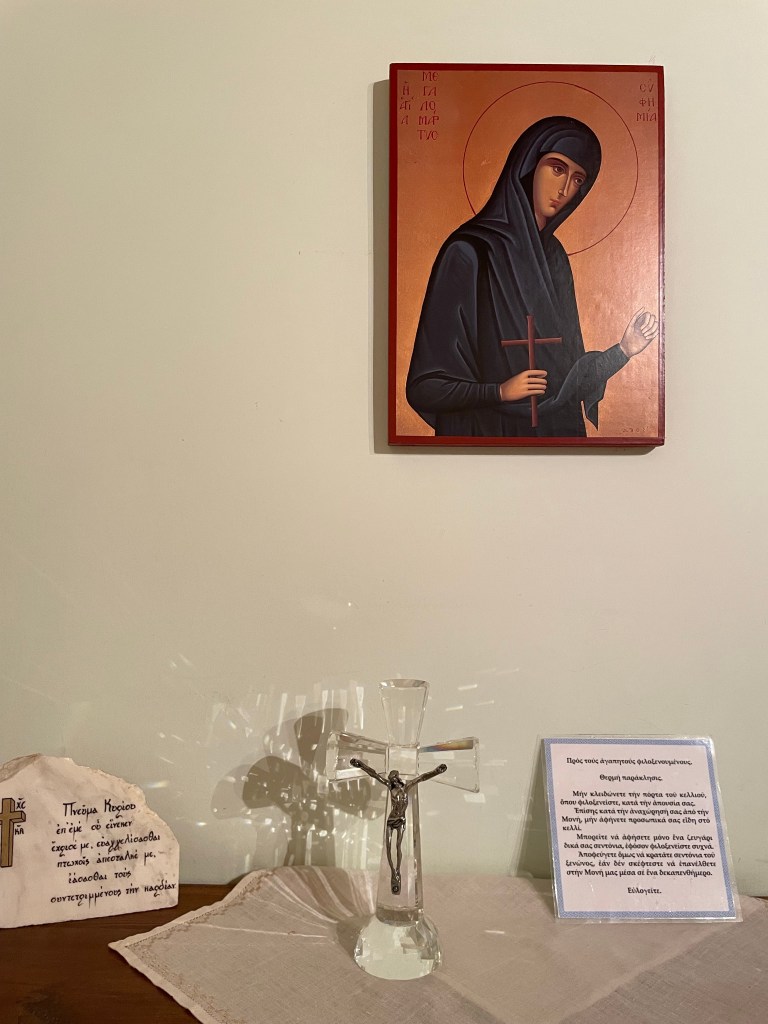
Talking about hospitality, please have a close look at this notice in my cell:

I translate the last two paragraphs: “To our dear guests: A humble request: … You can leave a pair of your own bedsheets if you are a frequent guest. Please do not keep the monastery bedsheets, if you are not considering returning to our monastery within a fortnight”. “Returning to our monastery within a fortnight”!

Everything is happening very fast and with as few words as possible. The sisters work hard and very fast, they multitask, they are such bright busy-bees, yet more importantly they constantly pray. They had to accommodate nearly 300 (!) pilgrims during Dormition Fast in August.

My first obedience, upon arrival, is ivy pruning. I sense that this will be my obedience all these days, until I leave, as the monastery fence is a very long, miles long fence. The other pilgrims from other countries cannot suffer the heat and the sun. As for me, after all this prolonged, all summer training of 40-45 Celsius here, this 30+ C heat and sun feels a bit autumn-like breeze!

So, I prune and pray and hope my sadness will fade away since this is what my spiritual father reassured me and is praying about. I always love to work in nature, yet even here my thoughts, my logismoi still bother me and interfere. But I have faith in my Gerondas’ words. I am under obedience, he will stand by my side on Judgment Day before our Lord, surely he knows better.

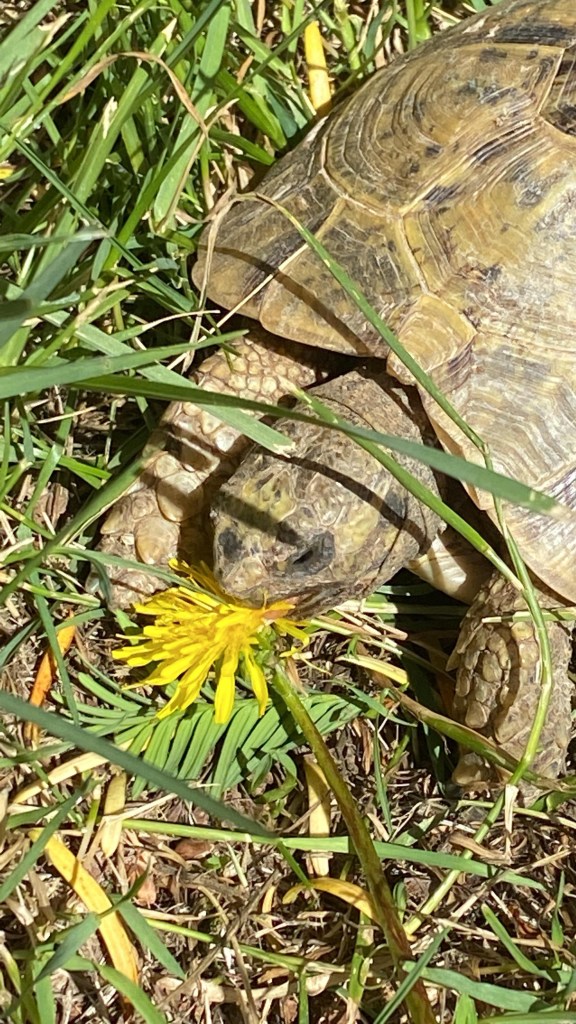
Hours pass under the sun with pruning and the Jesus prayer. A little tortoise seems confused with our pruning and we have gently to carry her across the road to greener paths. Glory to God! Little by little, my sorrow begins to evaporate with this heat, sun and prayers. So Gerondas was right, again! “A disciplined schedule, manual labour, study and prayer” (Abba Isaiah of Scetis Ascetic Discourses), and this blessed monastic community did work miracles for my pusillanimity and faintheartedness.

No time for logismoi, thoughts, moaning, worries, fear, sorrow and self-pity. This is the time, καιρός, for metanoia, obedience, faith, and joyful, godly, bright sorrow, “Charmolipi” (an old Greek work made up of ‘chara’ (joy) and ‘lipi’ (sadness). There is no equivalent word in English; it means a feeling of happiness and sadness at the same time.

10 Godly sorrow brings repentance that leads to salvation and leaves no regret, but worldly sorrow brings death. (2 Corinthians 7:10)

Lunch is served at midday, delicious crispy veggie balls and rice, and then a few words and fellowship with the other pilgrims before a bit of rest and Vespers and Little Compline. Of all the pilgrims I met today, I am most impressed by two, one from the States and the other from Canada, both baptised at a mature age, and both really close to Elder Efraim monasteries: Holy Protection Monastery, Pittsburgh, Pennsylvania and St. Kosmas Aitolos Greek Orthodox Monastery, Ontario and Holy Monastery of Virgin Mary the Consolatory, Panagia Parigoritissa, Quebec.

One has literally moved next to the monastery to be there all the time, and the other one does not mind driving 6 hours to be at the church services and the fathers of the monastery! This pilgrim was baptised in a Roman Catholic Church due to his Orthodox parents “carelessness and ignorance” — the pilgrim’s own words— but our Lord found him, guided him to His Church, and he is now on pilgrimage together with his mother! Glory to God for all things! All these Elder Efraim’s monasteries, 20 in total, I believe, in USA and Canada, are all following the Cenobitic way of monastic life (“Cenobitic” is derived from the Greek word “Keenovio” which means “common way of life”) therefore consisting of common work, common meals, and common rest periods.

These monasteries have wrought such a miraculous renewal and perform such amazing missionary work according to all first-hand testimonies I hear from our Protestant brethren finding the true faith and the true church. The value of this treasure and the unquestionable contribution of the Elder Ephraim to the Orthodox of North America and Canada is beyond appraisal.

After Little Compline, a small fasting dinner and then hesychia. My sorrow has been healed and joy fills my heart. What a transformation in just a few hours! My spiritual father was right: “The time there will be a time of healing”. All this prayer and few idle words, manual labour and study, have wrought a miracle.

Abba Isaiah of Scetis

Observe these three things: your manual labour, your study, and your prayer. Think to yourself daily, “I only have this day to do something in this world” and you won’t sin before God.

A Misty, Mystic Monastery

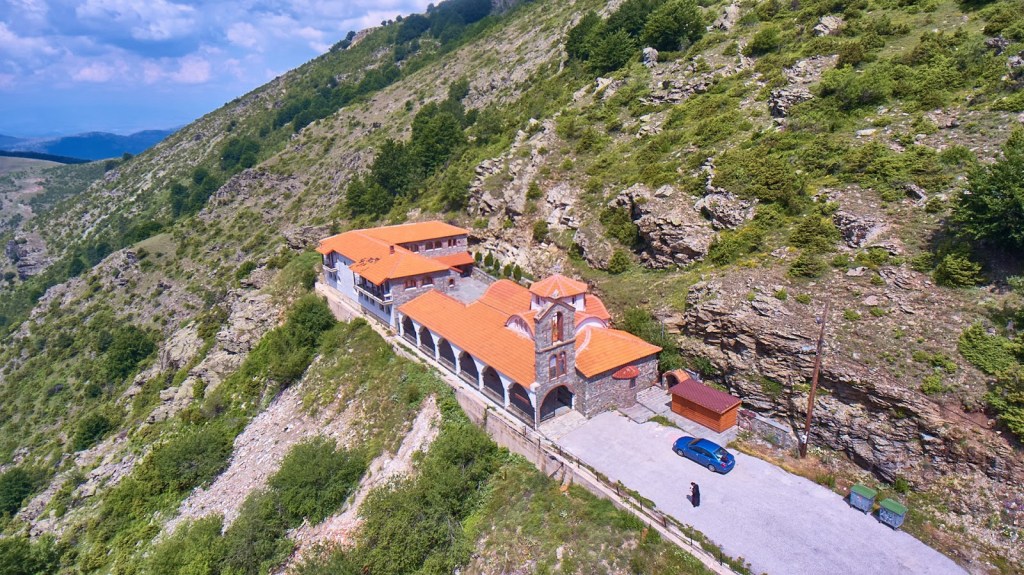
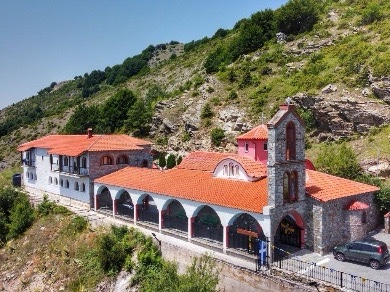
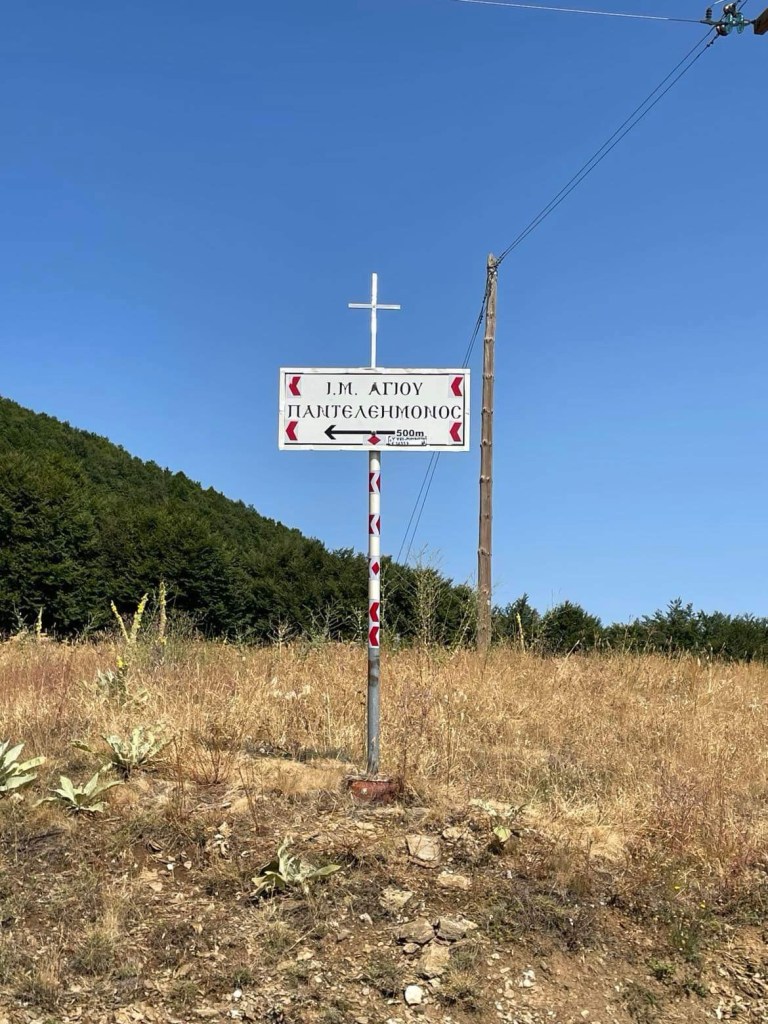
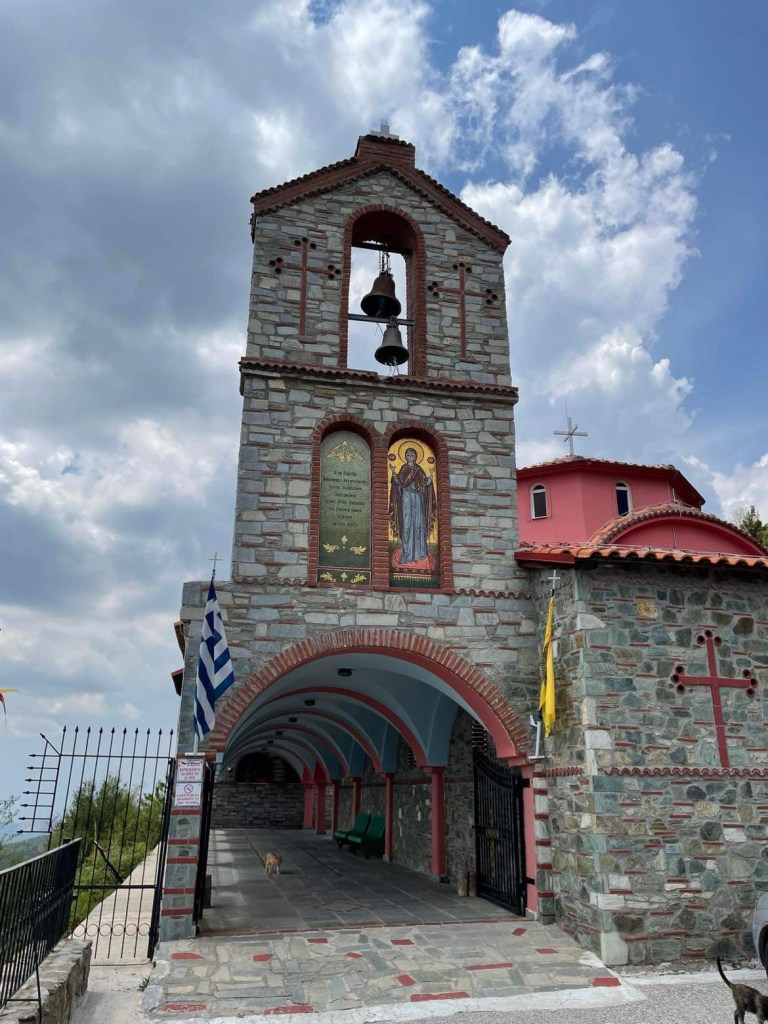
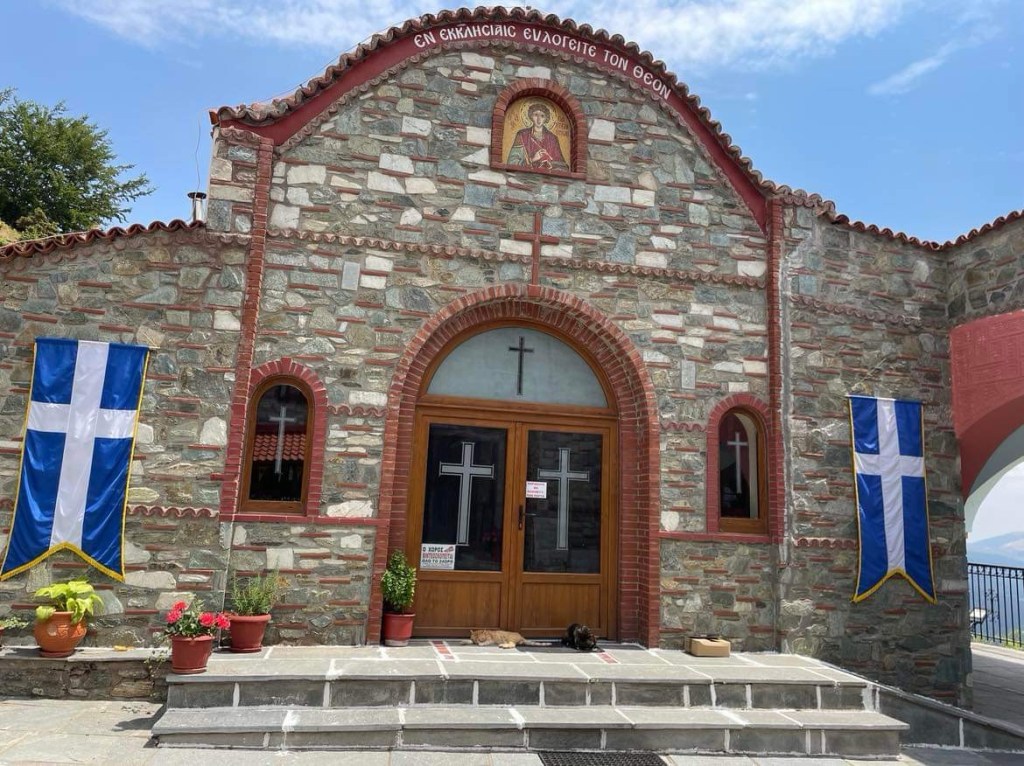
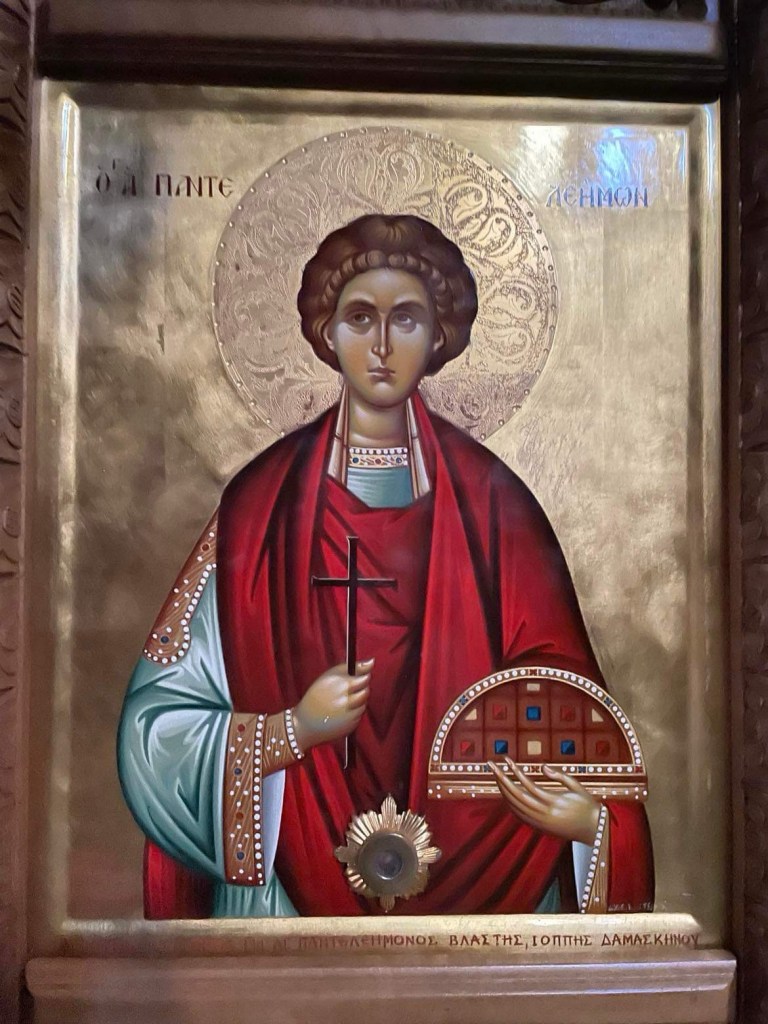
Last week, on the eve of St Panteleimon’s Feast, I arrived at his monastery at the suburbs of Vlasti, and 33km away from the bustling heart of Kozani, to help the monastic synodeia there for the Feast.

This was my first time there and the surrounding landscape scenery at 1650 m altitude was stunning. The landscape altered among numerous fields with sparse cedar, lammergeyer, oak and pine forests. At the higher positions, sheer rocks and alpine fields add a particular mountainous character. St Panteleimon’s misty and mystic monastery dates back to the 15th century and is almost permanently capped by gray clouds and fog. It is by far the monastery at the highest altitude all over Greece, Mount Athos included.

For stunning views of this mystic and misty monastery and the surrounding landscape, go to this YouTube link:

https://youtu.be/33sjBZ1Uty4?si=dwtg5uAWG4PQ0cEQ

Except for the incomparable beauty, this area is also known for its ecological characteristics, as it constitutes a biotope of bears and other predatory birds such as the war eagles, haggard eagles, snake eagles and the bullfinches. Vegetation is also lush, with a great variety of wild flowers and herbs. This travel/ pilgrimage destination indeed beckons not only pilgrims, but travelers seeking tranquility and untouched beauty.

For video excerpts of the church services these two days (Vespers and Matins- Holy Liturgy), go the following YouTube link:

https://youtu.be/M67AiZ3W9bk?si=Ko-VVexrZQrVKet_

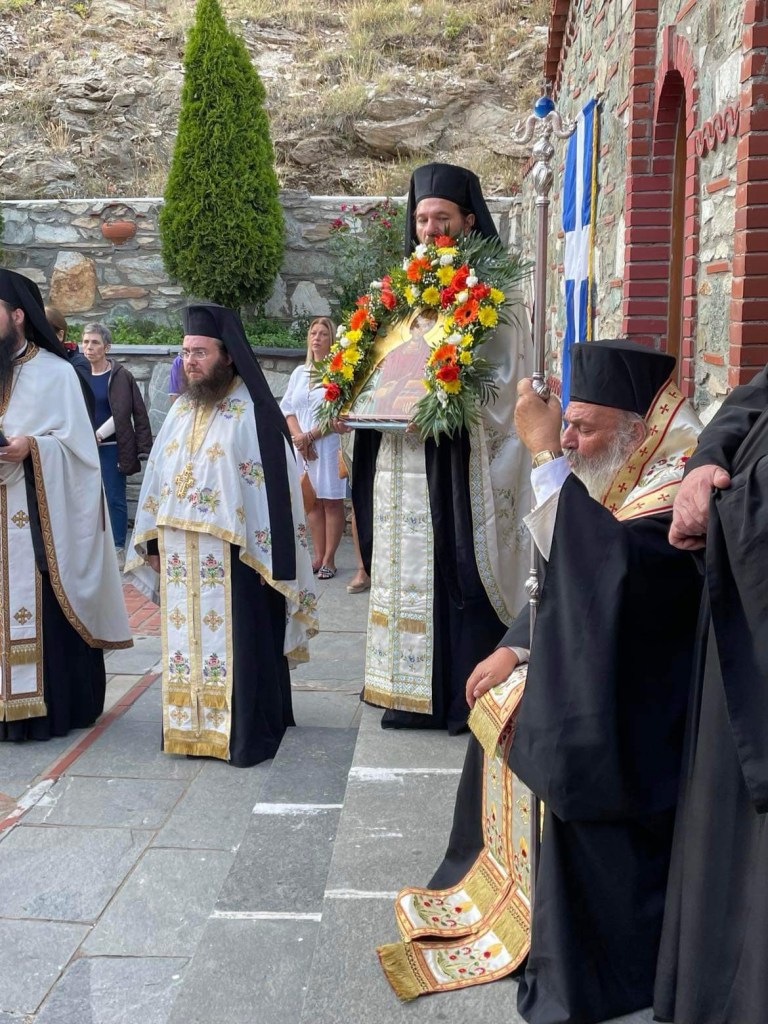
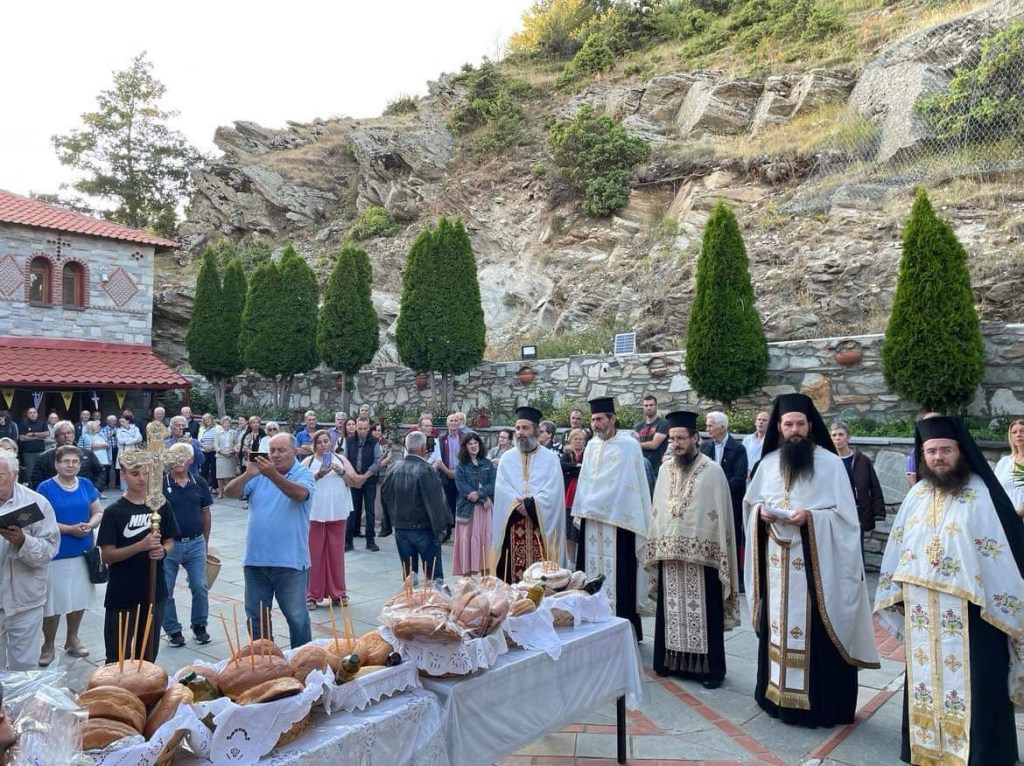
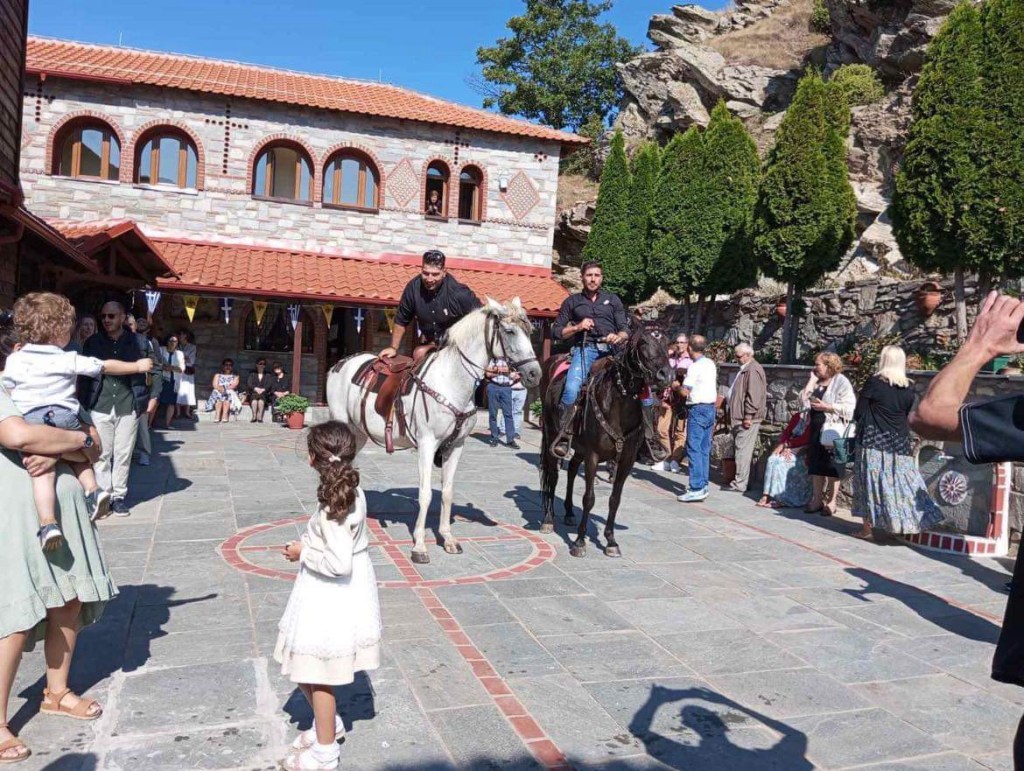
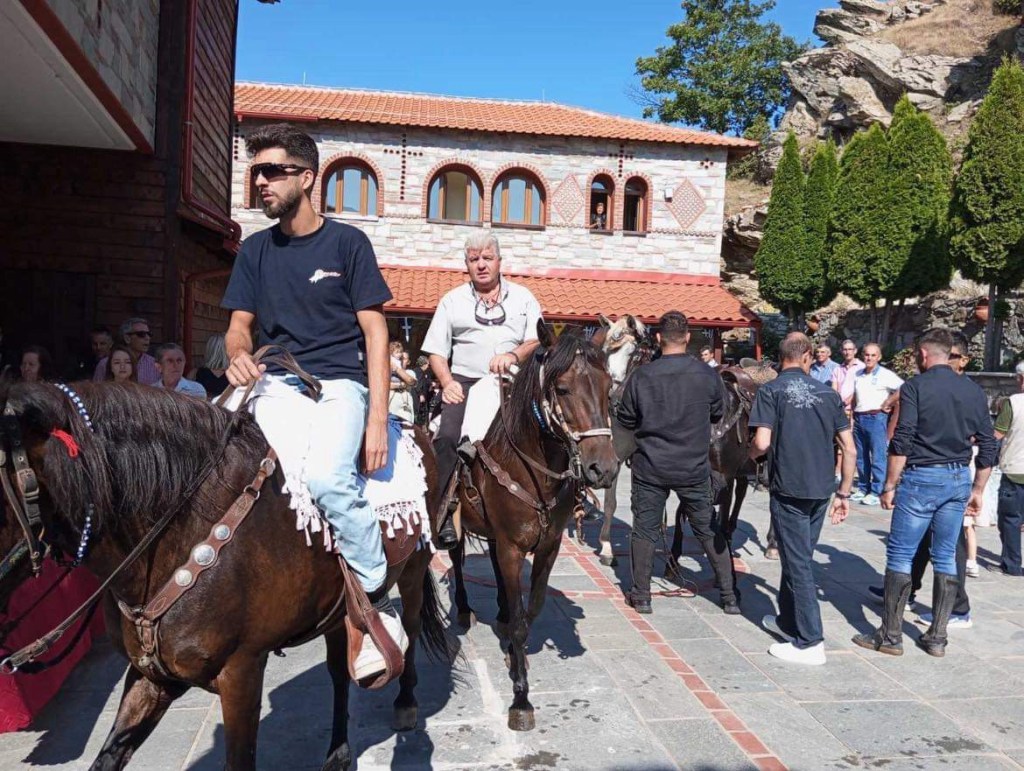
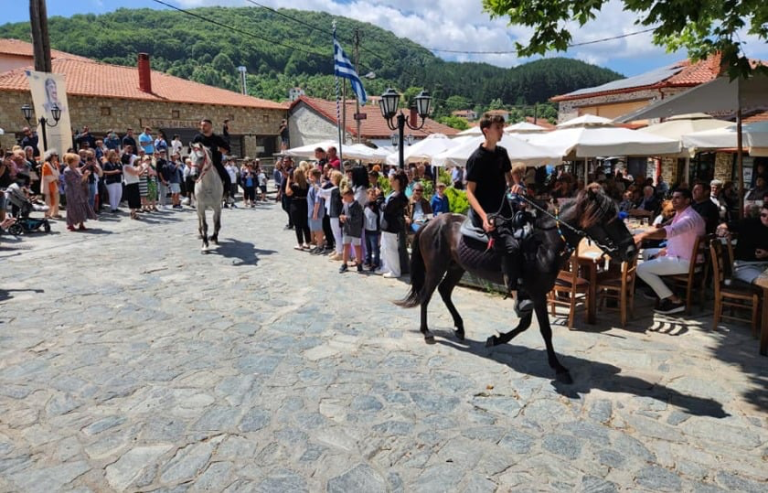
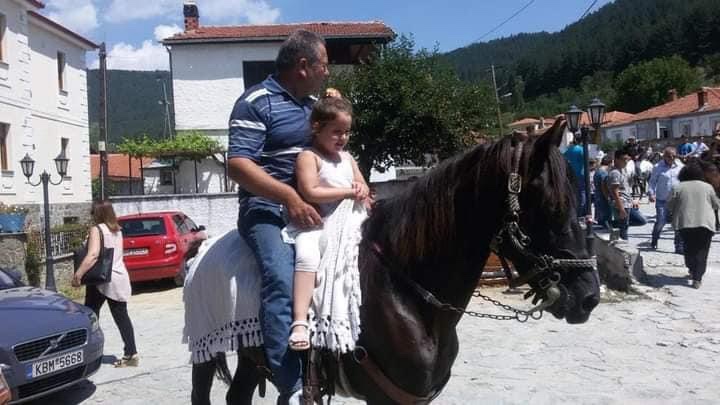
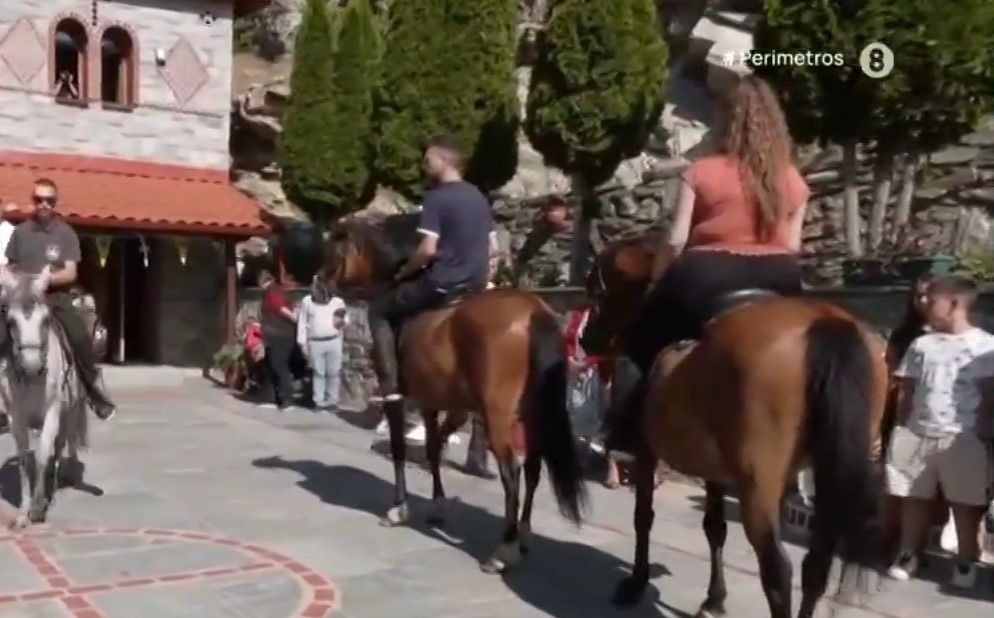
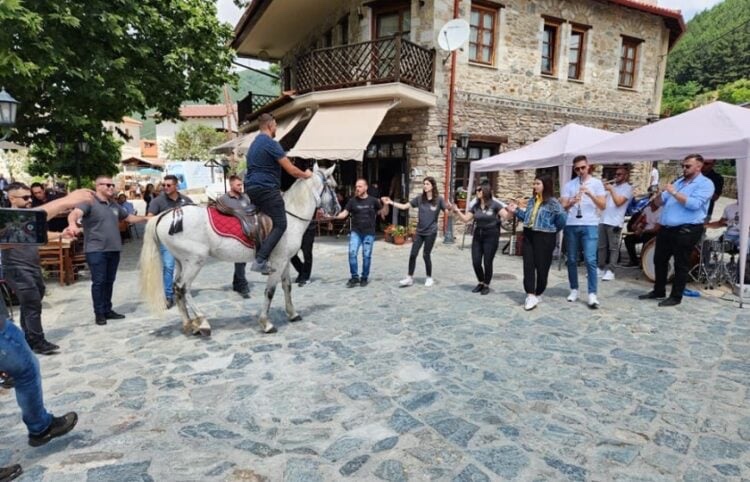
Though I normally share with you church services highlights, everyday Saints stories and elders’ spiritual encounters from my pilgrimages, this time I would like to introduce to you two local customs during the Feast, which I have encountered only in this area: the Horse Riders’ Tama (votive offering) to St Panteleimon and the Tranos Choros (Grand / Magnificent Dance).

The Horse Riders Tama to St Panteleimon

On the Feast day, the inhabitants of the nearest village Vlasti, as well as friends and relatives all over the world, who come specifically for St Panteleimon’s and later Panagia’s Feast on August 15, prepare their horses (some may borrow), and climb up to the monastery of Agios Panteleimon on Mount Muriki, so that they can attend church and honour the Saint.

After the Divine Liturgy, the horse riders descend from the beautiful, meandering paths of the mountain, to the center of Vlasti, a nearby picturesque village, just 4 km away from the monastery, nested in the mids of alpine landscape and lushy fields, and sitting at an elevation of 1200m. Background music accompanies them all the way unto the monastery and back to the village feast.

Again, for video excerpts of the horse riders’ tama, and the village feast visit the following two YouTube links:

https://youtu.be/fvWVa5p3WqE?si=8s_Cua_sGHX5q8hT

https://youtu.be/XDf5ESyQhpk?si=SaSdyhfSe-wxU9iO

The Tranos Choros (Tranls. Grand / Magnificent Dance)

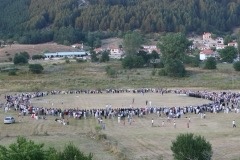
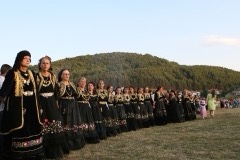
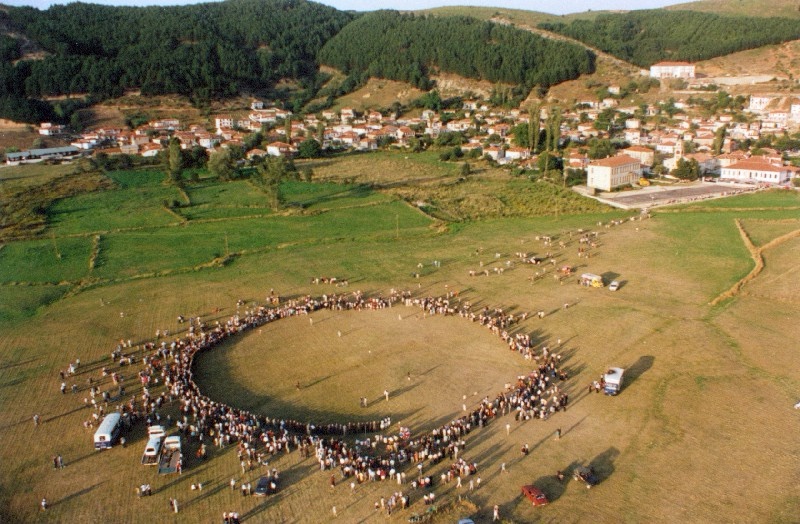
This dance is a traditional community event based on the dual elements of «song – dance» (a capella, ie. vocals and dance without the accompaniment of musical instruments). It bears a ritual character, passed on from one generation to the next. The term Tranos denotes the universal participation of the local community in its performance and its great importance to the community.

The dance is performed not only by permanent residents of the community, but also by Vlatsiotes all over the world, who, although are no longer inhabitants in their land of origin, make a point of returning to visit every summer during these feasts, with the aim of reconnecting with their village and reconfirming their group identity.

The Tranos Choros (Grand/ Magnificent Dance) is danced annually in Vlasti in the afternoon of July 27, day of the feast of Saint Panteleimon, as well as on the two days of the feast of the Dormition of our Lady Theotokos, on August 15 and 16.

The Tranos dance in Vlasti has its own rules. These rules define what time the dancers gather, their hierarchical position in the circle, the dance pattern, the order of songs, the specific dance motifs.

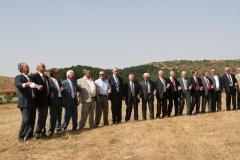
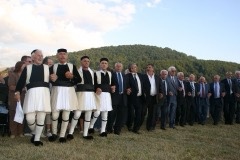
Hierarchy, based on gender and age, is a characteristic of its structure. The men lead the dance, positioned in order of seniority, those wearing traditional dress first . Age is again the criterion for each woman’s position in the dance circle. In the case of women of the same age, the criterion is their wedding date. Traditionally, the leading dancer is the eldest, an expert on both songs and rhythm.

The dance begins at the moment when the leading dancer crosses his left foot over the right. It is a particularly symbolic move, with the leading dancer raising his left leg and holding it above the right for the dance to begin. For the Tranos dance, this move has the same role as the raising of the conductor’s baton in a symphony orchestra. The movement is accompanied by a simultaneous move of the hand holding the kerchief and the rendering of the first verse of the song.

The lead dancer is joined in song by most of the men. The lyrics are repeated by the women’s semi-chorus and the men who are last in line. This ritual dance in the minds and hearts of the locals evokes people long departed. “This place has existed and will always exist. To paraphrase the poet George Seferis, «as the pines retain the form of the wind, even when the wind has gone and is no longer there»”

Watch this communal, ritual dancing in the following two YouTube videos:

https://youtu.be/Cl6WbI5brVw?si=cSt6-UyMcdMWUjy0

https://youtu.be/uLNkx5FSeUk?si=2lmqaKg8SgLzDG3e

Saint Paisios the Athonite

A photographic tribute, worldwide first screening of the day of his canonization and an adaptation of Agni Parthene Despoina for St Paisios

https://youtu.be/IQhNrRF89HM?si=bGIsNDsIqjM20OMD

Worldwide first screening of the day of his canonization

https://youtu.be/rhFb44bRQdg?si=y2TdvN2Z50ecdHZK

An adaptation of Agni Parthene Despoina for St Paisios

https://youtu.be/U4-aACI6vbY?si=ywyEkuVKidxHsEsZ

Doxastikon of the Stichera in the Plagal of the Second Tone

You traveled the path of the ascetics well, towards the working of virtues, O God-bearer Paisios, and you drove out the man of the flesh from your heart, while your nous meditated on unceasing prayer, andtheoria of the Uncreated Light. Therefore, having partaken of the gifts of your graces, we hymn you, O Venerable One, and we say with joy: Rejoice, the offspring of Farasa, the pride of Athos, the pillar of Konitsa, the teacher of Monastics, the dweller of Sinai. Rejoice, you who were adorned with the garment of dispassion, and therefore became a guide to the youth, the lifting-up of the fallen, and the return of the deluded. Rejoice, O example for Monastics, the type for laymen, and the rest and refreshment for the faithful Orthodox. And now, O Godly-adorned Elder, ceaselessly entreat Christ God on behalf of us, who celebrate your sacred memory.

Selected hymns to Saint Paisios the Athonite

From Puppeteer to Actor of Christ 

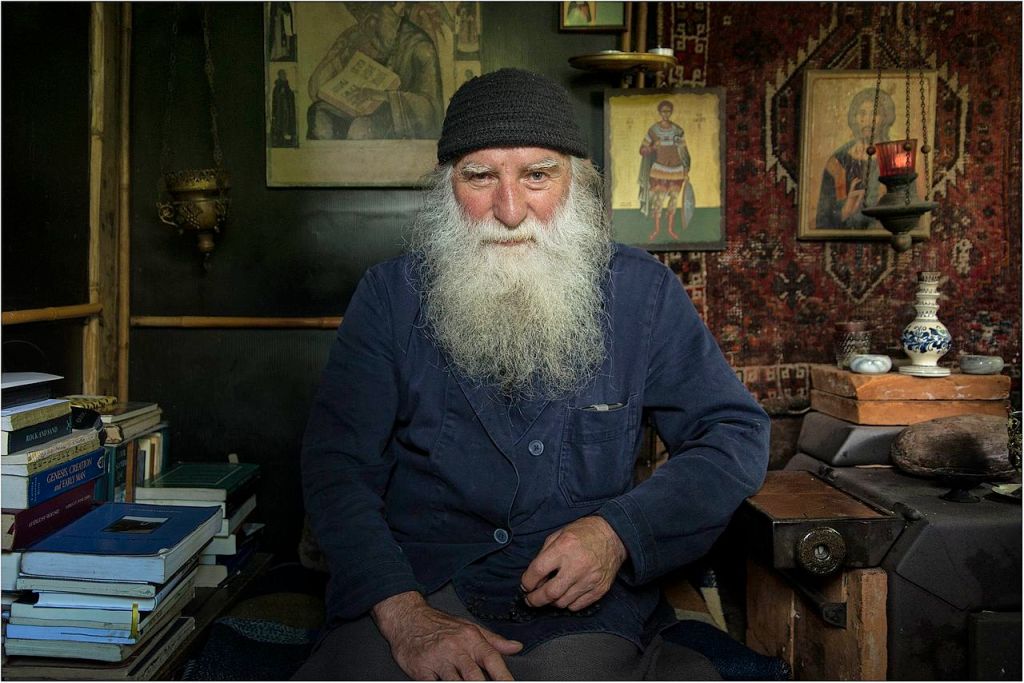
This image has an empty alt attribute; its file name is josef.jpg


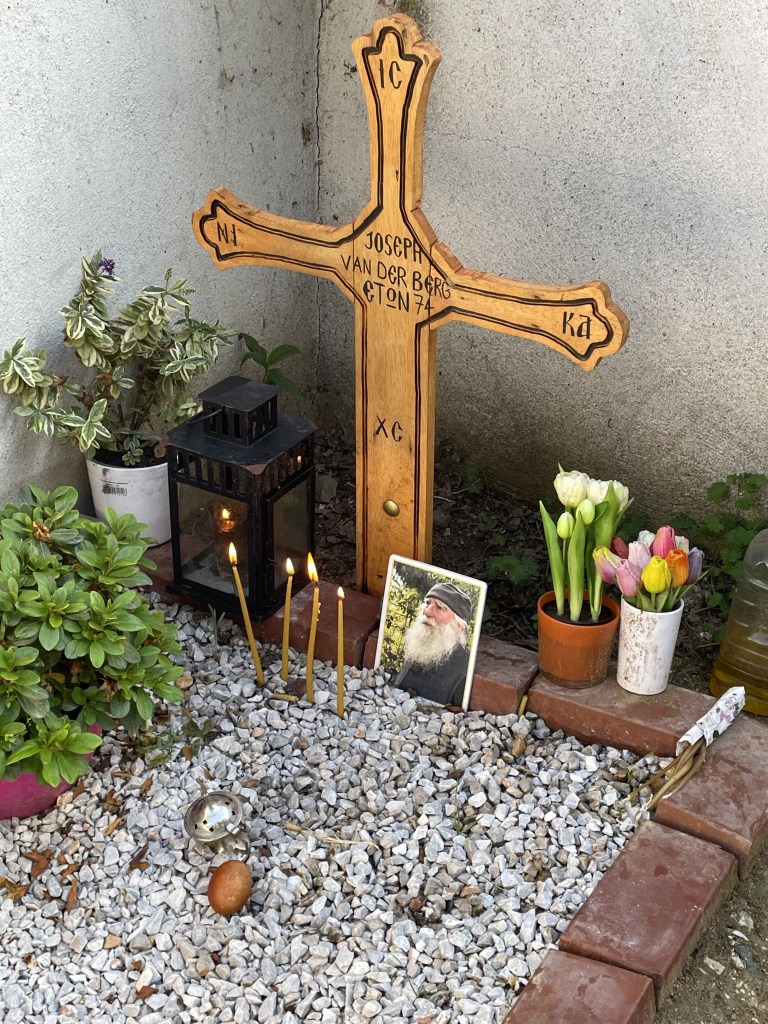
Yesterday, Saturday, June 1st, some friends from St. George Metochion took me to a pilgrimage to various hermitages outside Thessaloniki, near Ossa, where valiant Mothers lead ascetic lives, all alone, together with God, in the mountain wilderness. Surrounded by all these hermitages is the Transfiguration of Our Saviour Orthodox Monastery, in Sochos, a male monastery I have always wanted to visit for the last 12 months, since Josef Van den Berg has reposed there at 74, after an amazing meta-noia, conversion to God. (+ Oct. 16, 2023)

On Friday, October 13th 2023, the famous Dutch actor and puppeteer, Jozef Van den Berg, turned Orthodox Christ hermit reposed in the Lord at the age of 74 at Holy Transfiguration Monastery in Sochos, where he went to live the last few months of his life on earth, due to his failing health. His funeral was held on Tue 17th at the same Monastery and he was buried there. It was a blessing to light a candle and pray at his grave.

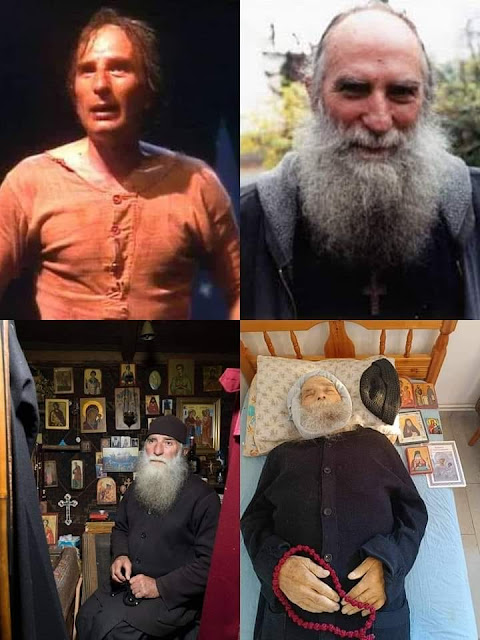
Jozef, who was born in Beers of the Netherlands on the 22nd of August 1949, was a very well known actor in the 1970’s and 1980’s in the Netherlands. He was initially an atheist and married with four children. Later, he began a successful career as a wandering puppeteer for children. Then he made his own performances in the theater, for children and adults. Van den Berg travelled the world, from Australia to Canada. In the 1980’s, Jozef Van den Berg played in his last play “Enough Wait” for his brother who was seriously ill and was in a wheelchair. On September 14, 1989, he would bring that performance to the De Sing but then something very special happened.

Let me begin a little earlier. On September 12th, 1989 was the Belgian première of Genoeg Gewacht at Antwerp [Belgium is a predominantly Dutch-speaking country]. That afternoon, Van den Berg had an encounter with God, as he described it later on. Sitting in his dressing room, he wrote a letter he wanted to use that night for the first time in his play. God asked him this question by his own pen: “Why don’t you ever see that I cannot come because I’m already here?” On September 12, 1989 he still played the premiere, which later turned out to be his very last show. Van den Berg was – according to his own words – being called by God, and had to answer that.

Before the evening show on September 14th, 1989 at De Singel Arts Center in Antwerp, he took his Bible and asked God what to do. He opened the Bible at the following words: “Go away from their midst and separate yourself” (II Cor. 6:17).

Before the beginning of the play he said to his audience:

“I will try to explain it to you. I hope that you have one thing for me and that is respect for my decision. I will never play again. I have approached a reality which cannot be played anymore. I have searched for a tremendously long time; have been everywhere. Eventually I came to the conclusion, and this conclusion, I have to admit, is that the seeker seeks but he is found. That’s why tonight is the last time I’m on stage. You don’t believe me, but that’s the deceitful side of theater.  Therefore, ladies and gentlemen, for this man, for Christ only, have I searched for this peace I wanted. And I know that it is so, and I quit this profession. For me, it’s over. I seek reality. I can’t say things that are not true for me anymore. I wish you a good day. I go. May you all go well. The money you paid can be given back at the box office.”

The audience was stunned. Was this real or was it theater? A deadly silence followed, and the theater audience reacted emotionally. Thus, on September 1989 at 7:55 pm, the theater career of Joseph Van den Berg came to an end.

That night was the beginning of an extraordinary conversion and odyssey. His quest led him to Maldon (Essex), Athens and the Holy Mountain of Athos, to further find out how he had to continue his road with God. His children and wife had difficulties understanding his conversion, and he was left all alone. Alone with God! Jozef gave up everything, job, fortune, family, everything, started living like a beggar, and eventually converted to Orthodox Christianity a year later, after paying visits to Elder Sophrony in Essex, Elder Porphyrios in Athens and Elder Paisos in Mount Athos.

An important event preceeded his conversion: a woman he knew from the Gurdjieff movement died in a serious traffic accident, and she had pointed out that she wanted to be buried in the Orthodox way. This happened on August 17th at Eindhoven. There, he heard the Trisagion for the first time in Dutch. That’s where he began to see that Gurdjieff wasn’t right.

At the end of September 1989 he went to the Greek Orthodox Monastery of Saint John the Baptist at Maldon, Essex, England, where he talked with Elder Archimandrite Sophrony, and he confirmed the experience God had given him and urged him to repentance. Elder Sophrony told him that he cannot sustain God’s Love if he does not endure the furnace of repentance. At the beginning of January 1990 he had a very important meeting in Athens with the Greek Elder Porphyrios. This last one too confirmed the experience God had given him in Antwerp, and he told him that he has to now to become an Actor of Christ. Saint Porfyrios urged him not to betray Christ and turn down His calling. He was then sent by Father Porphyrios to the Holy Mountain of Athos, where he had a meeting with Father Paisios, who too blessed him.

Back to Netherlands, with the blessing of three saints, things evolved in a different way than expected, everything started going seriously wrong as all three Saints had “warned” him, and he got in more and more trouble on all fronts. He couldn’t sleep anymore and  became over-tired. In the middle of this crisis, on June 18, 1990, he asked a priest in order to be accepted into the Orthodox Church. Months passed by in “dead-ends” and “walls” were raised all around him.

During the night of the 1st to the 2nd of June, he realized that he was left alone, and on June 2nd, 1991 he attended the Divine Liturgy at the [small Orthodox] Monastery of the Holy Prophet Elias at St. Hubert. That’s where he left what was left of his money on the collection plate. “Lord, from now on, You have to take care of me. I totally surrender.” There, Archimandrite Pachom read from the Gospel of that Sunday of All Saints: “He that loves father or mother more then me, is not worthy of me: and he that loves son or daughter more then me, is not worthy of me. And he that takes not his cross, and follows after me, is not worthy of me. He that finds his life, shall lose it: and he that loses his life for my sake, shall find it” (Matthew 10:37-39). Two hours later, after the Liturgy, he went straight to the Orthodox Monastery of the Nativity of the Theotokos near Asten, where he stayed for 19 days, and where he left his Mercedes Combi, because it didn’t want to start again. For him. It started for his brother a day later!
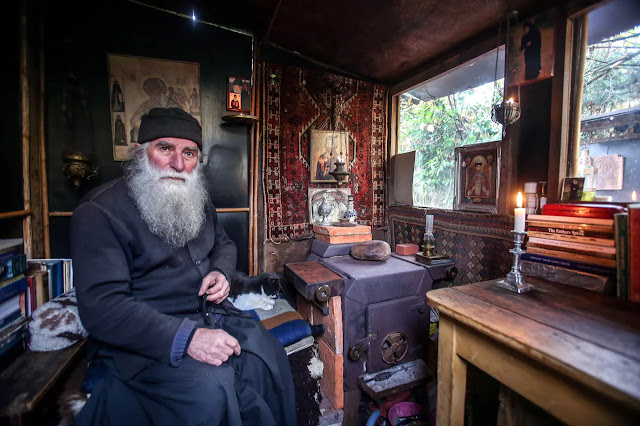
His only question was: “How does God want me to shape my calling?” Slowly, peace returned to him. From July 1991, Jozef Van den Berg started living as a hermit, first in the bicycle shed of the town hall in Neerijnen, later in a self-built chapel in the backyard of a fellow villager. There were four poles close to the quince tree, and Joseph understood from this that he had to build the “Pull-Up” under the quince tree. With this “messenger”, he built a small chapel of 2 by 1.5 meters, which still stands today. He prayed and received people every day. He lived on whatever people brought him. He had no connection to any utility whatsoever. Eventually, there was a toilet in the castle garden, which Joseph and his guests could use, and the last few years he hasd a mobile phone for emergencies.He obviously received a lot of a media due to his lifestyle since then…

In the end, he left Neerijnen in August 2023 and traveled to Sochos in Greece, where he reposed on the 13th 2023 at the age of 74 in the Greek Orthodox Transfiguration Monastery.

Read more here and here

More about this monastery and its founder and spiritual father, Archimandrite Ioannikios Kotsonis, the theologian and poet, the spiritual son of Saint Porfyrios in the next blogpost.

Under the Archangel’s Mighty Wings

This year, Holy Week was especially difficult due to an enforced isolation. A little city hermit delights in quietness and solitude, but not an enforced one, and not together with somebody else who is ‘difficult’, where one has to practice cutting your own will every minute. Nonetheless, His Will may be done, and so this painful week passed and that and most demanding obedience was concluded for the time being…

Thank God, the Bright Week which followed was “bright-er”. Its highlight was a pilgrimage by St. Arsenios Monastery, and especially our visit to the Monastery of Archangel Michael in Thassos on Bright Wednesday, the following day of its litany:

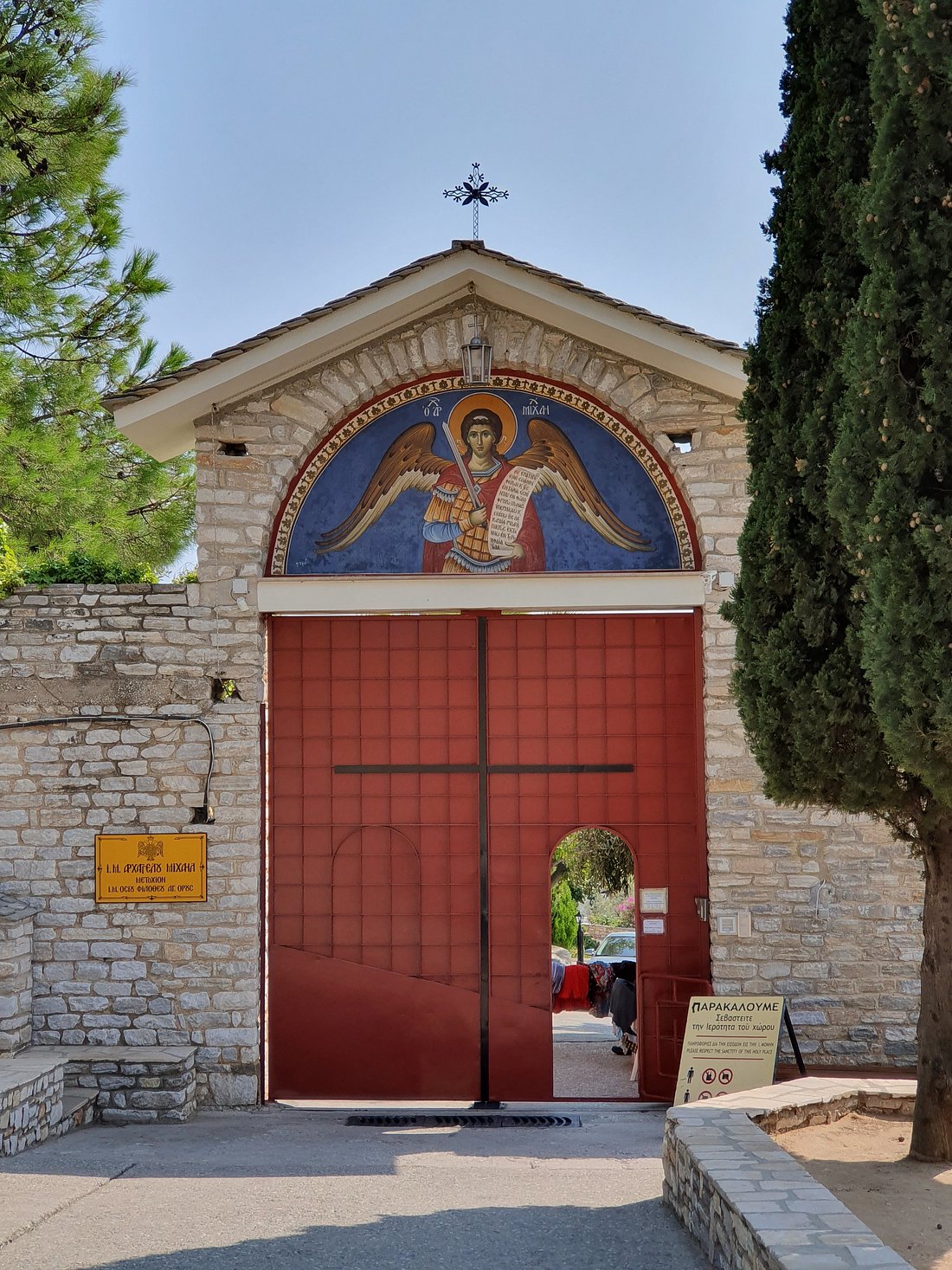
The Monastery of Archangel Michael is located on the way to Alyki, about 25 km, south of Limenas. It is built on the edge of a cliff, thus it gives a spectacular view of the Aegean Sea.

The view…

The Archangel Monastery is the biggest and by far the most popular monastery of Thassos, to pilgrims and tourists alike.


The monastery is a share of the Holy Monastery of Philotheos (at the monastic state of Mount Athos). Its historical origin is set in the Byzantine times. In 1090 AD the hermit Luke built a small chapel at the place obeying the command of Archangel Michael, who hit with his hand and a holy spring gushed out there. The holy water, which has been a source of many miracles, flowed in the chapel until the occupation of Thassos by the Turks. Then some irreverent Turks tried to pollute the spring mocking our faith and the result was that the spring dried out. Later the holy water gushed out again and keeps flowing until today in a different position, in a cave under some rocks near the sea. It is called the “on the knees” holy water because you enter the spring on your knees. It is still the source of miracles to the pilgrims who pray and ask for the Archangel’s help. 

In the convent is also found a piece of the Holy Nail, put in the right hand of the crucified Christ and it is kept in an artistically crafted hexapterygo (ie. silver six-winged plate) for the pilgrims to worship and for the protection of the convent and the island. This was dedicated to the Monastery of Philotheos by the emperor Nikiforos III Botaneiates and it was miraculously moved to this chapel as the Archangel wished. As part of religious celebration, every year, on the first Tuesday after Easter, the Monastery conducts a procession that starts at a small village of Theologos. During the procession, they carry the Holy Nail back to the convent.

This Monastery share remained abandoned until 1974, when the blessed Ephraim, Abbot of the Monastery of Philotheos, brought the first sisterhood in this place, where the facilities were rudimentary. The nuns have worked very hard to reconstruct the place and bring the convent to its present amazing condition.

The grace of the Holy Nail and the Archangel, as well as the plethora of miracles attract many pilgrims from all over the world, praying for help and protection from the trials and tribulations of life.  

Inside the cave

The Agiasma – Holy Water​

Nuns are most cautious when eager pilgrims want to visit the cave of the holy water. They insist that you should know that: 

  • Because  the journey has many difficulties, you must have the  appropriate physical health and condition and  ability and undertake personal  responsibility for the effort.
  • Most of the route consists of climbing  the rocks. Essential  supplies for the route are sports shoes and water. 
  • The duration is determined by the capabilities of each pilgrim.  It lasts an average of 2-5 hours.

From all 40 of us, only Father Nikodemus and two pilgrims attempted the descent and made it to the cave. The descent and the ascent took them a total of 6 hours, and then they disappeared for about another 6 hours to restore themselves until the night prayers. Have a look at the video below of the descent with the two company of two goats to see how difficult this descent is.

For more information about the miraculous spring of the Archangel and the Discovery of the Honorable Nail of the Saviour, go here.

Pilgrimage to the Holy Monastery of Panagia Dobra and St. Luke the Surgeon

Another blessing of Mount Athos Gregoriou Metohion in Thessaloniki and Father Deacon Nephon and his synodeia.

During this pilgrimage, even before arriving at the monastery, I had the blessing to hear moving Confessions, such as that of:

an old lady, Konstantina, who told me (and truly meant it) how she had wasted all her life, saw only errors and sins behind her, had grown old and had not yet started repenting about all this;

a young student, Eirini, who told me how she was visited by Saint Luke Symferoupol during a scary hospital stay, decided to become a surgeon like him, dedicated her life to the Church and has been together with this Saint at every step of her life since;

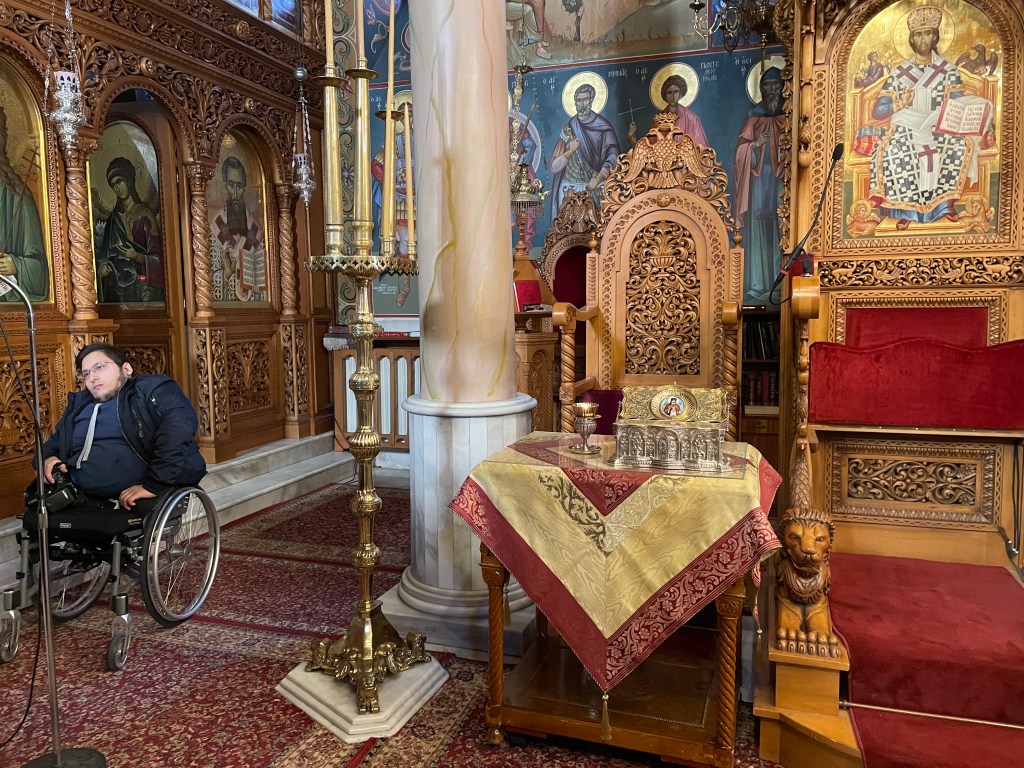
a young invalid, Pandelis, and his tragic story: how first his father, and later his mother, abandoned him because they could not bear his disability since birth, the fact that they had to take care of a ‘half’ son (see photo below), and how he now lives all alone, but together with God and with the help of some of the faithful;

a courageous middle-aged widow and artist, Anna, and her martyrdom in taking care of her invalid husband after a car accident;

a brilliant architect, Anastasia, and her cancer martyrdom …

All these stories, together with lots of tears and prayers, were on our way to the monastery, and many more during our visit and on our way back to Thessaloniki. Stories of suffering, yet transfigured into joy, by His Love. After each Confession, especially Pandelis’, I felt even more shame for my own faintheartedness and unmanliness in my struggles and tiny Cross.

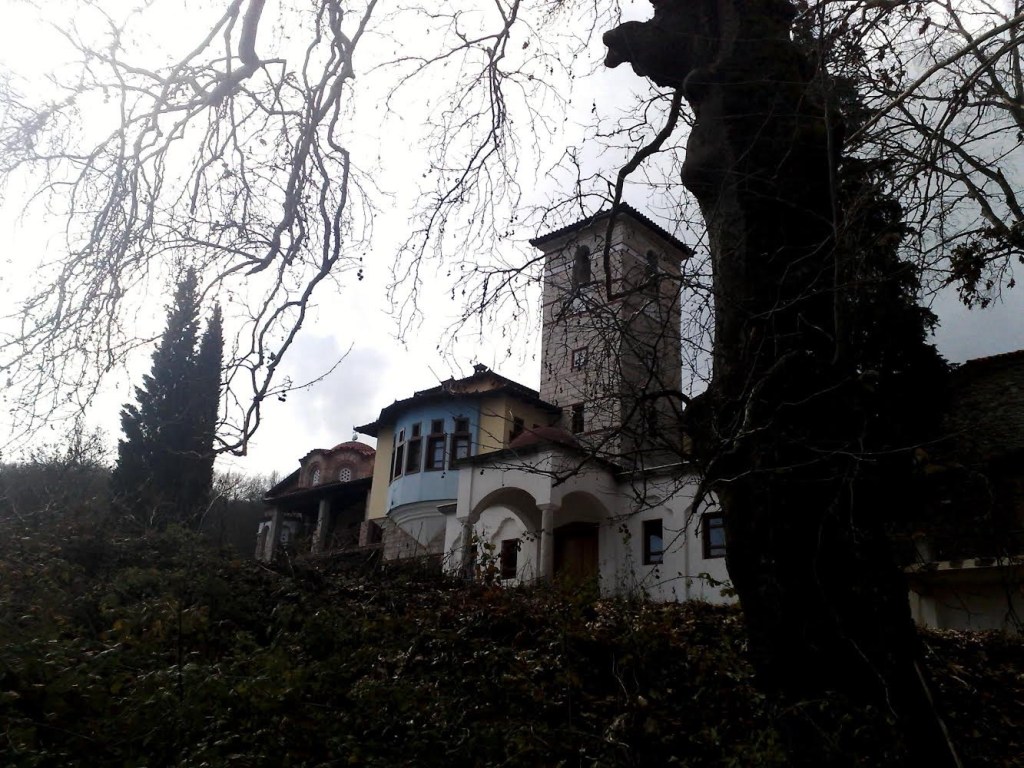
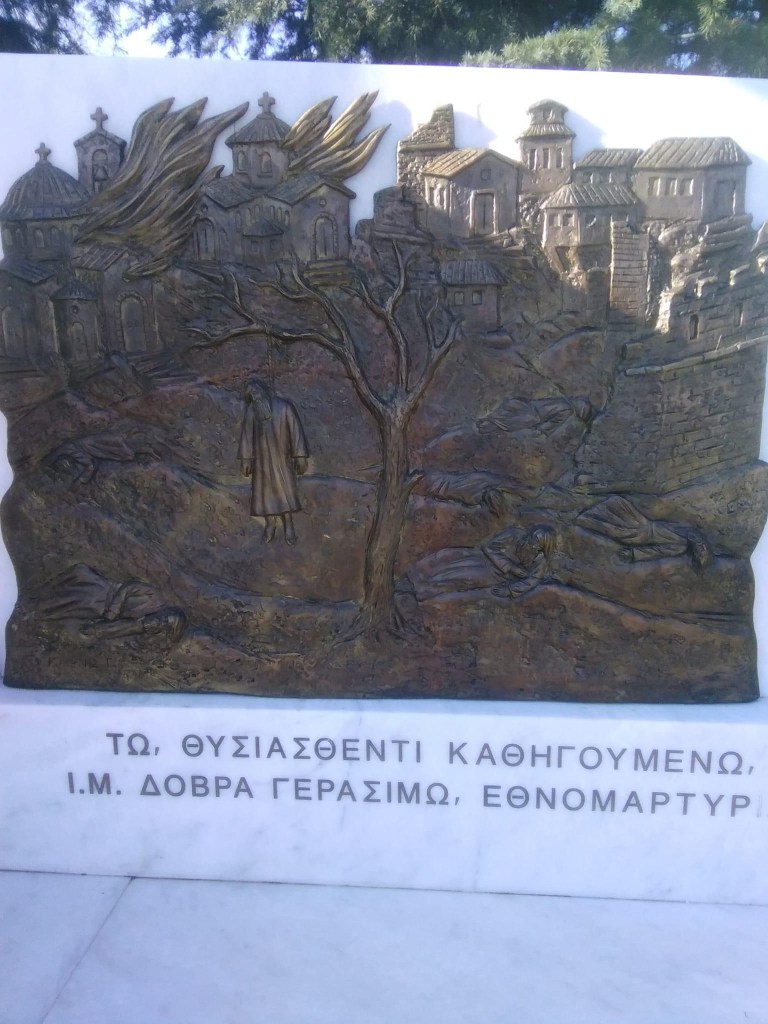
This Monastery honours the Dormition of the Theotokos and was founded in the 12th century according to a document in the National Library of Athens. Since then the Monastery has been serving ceaselessly the Holy Liturgy until 1822. During the period of the Greek Revolution, it was one of the most important national and religious centres of the region. It was here that the actions of Chief Karatassos were developed, and it was here, unfortunately, that the Turkish authorities were successful in dealing with them. The Monastery was burned in 1822, and his abbot, Hieromonk Gerasimos, was hung.

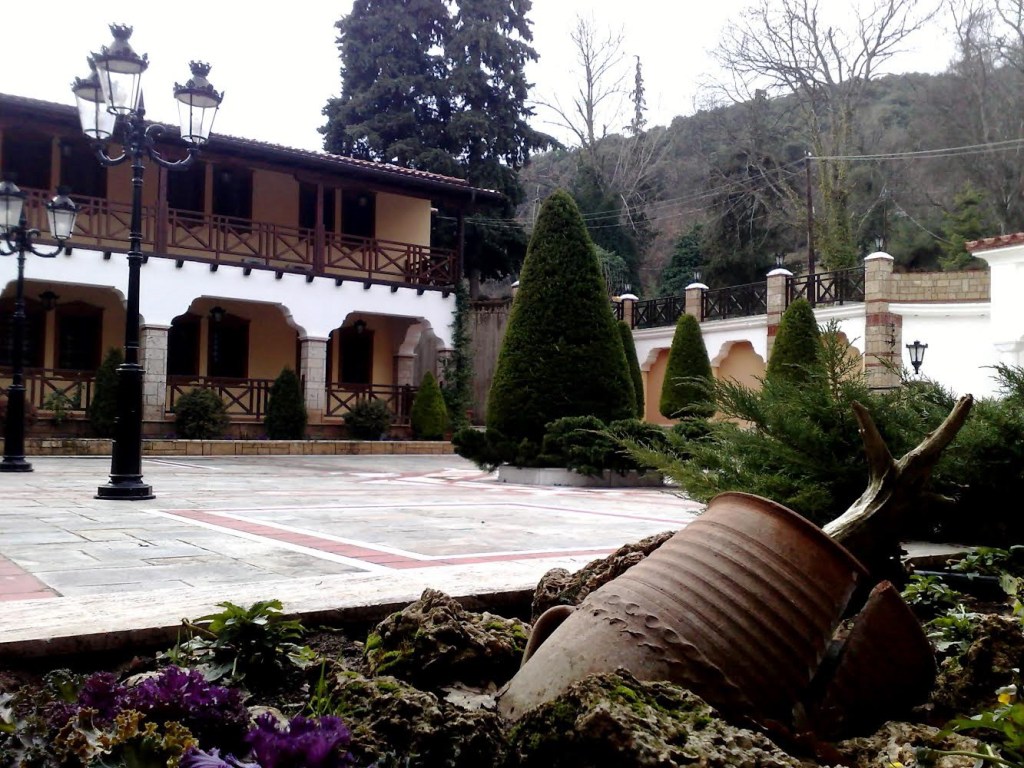
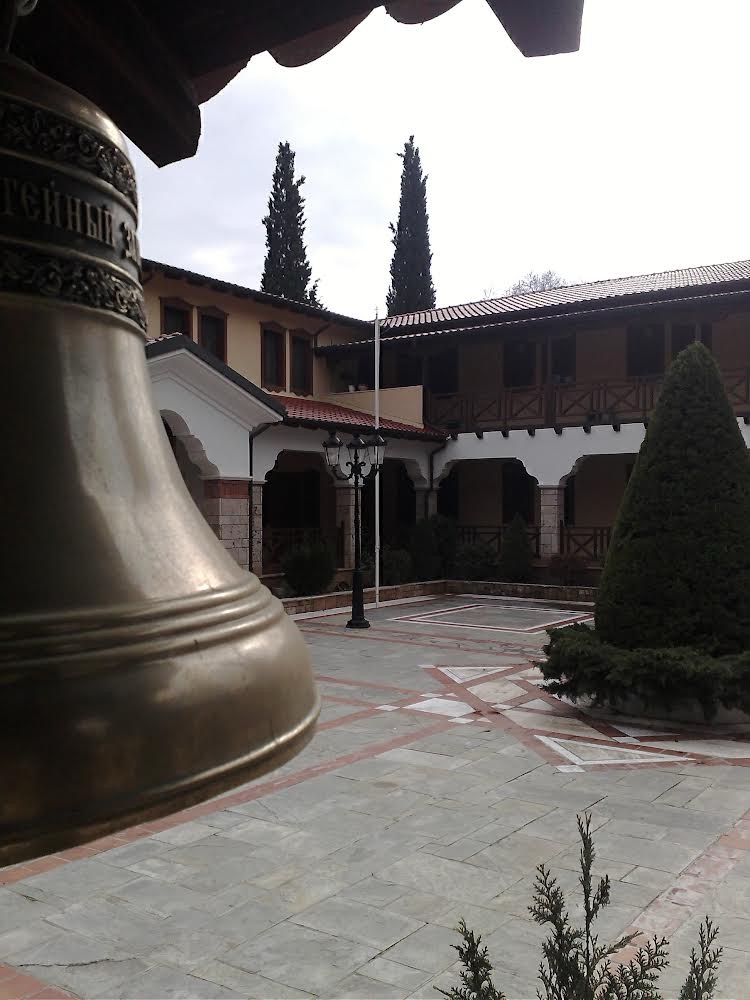
The Monastery was reformed in 1995 as a Cenobitic Monastery for Men.

The Katholikon which remains to this day was built in 1844.

In the year 2005, the brotherhood of the Monastery became acquainted with the newly-revealed Saint of the Russian land, St. Luke the Surgeon and Wonderworker, the Bishop of Simferopol. The holy Monastery preserves a portion of the Holy relic of the Saint.

The many miracles and the palpable presence of the Saint in the Monastery and in the surrounding region immediately made the Saint known, and at the initiative of the Metropolitan and through the support of pious Christians, the first large church in honour of St. Luke the Surgeon, at least in Greece, was founded on the grounds of the Holy Monastery. Every Saturday Divine Liturgy is served, and every Tuesday evening Vespers and Paraklesis are served in the Holy Church of the Saint under construction. Each of the faithful has the opportunity to venerate his grace-flowing relics.

In the area of the Monastery also are the ecclesiastical camps and the educational centre of Byzantine Arts (iconography, mosaics, woodworking, and preservation).

Panagia Dobra’s famous Holy Water and one of the many monastery cats swimming in it and sipping it joyfully

Video on the Monastery of Panagia Dobra

My Twelve Days of Christmas — Part A

Dec 24 — Eve of the Nativity of Christ, Eugenia the Righteous Nun-martyr of Rome and those with her

Suddenly our friend D. is in hospital, and soon in intensive care. Agony, heartache and a complete mess at work.

Dec 25 — THE NATIVITY OF OUR LORD AND SAVIOR, JESUS CHRIST

Thank God, we made it to church and received Holy Communion. Only our Christmas meal got cancelled as our hosts got down with the flu. So we brought them chicken soup, exchanged presents and wishes in the balcony, and spent the remainder of the day in hesychia.

Dec 26 — SYNAXIS OF THE HOLY THEOTOKOS

Thank God, an invitation from dear brothers and sisters from the Metochion of St. George to rescue us from our ‘lockdown’. These days are difficult when you are alone or together with difficult family members. The meal, the company and the carols were a great blessing despite the little temptation on our way when both of our back tyres got flat/ punctured (a neighbour’s prank) and we had to call road assistance etc.

The greatest blessing of all was our hostess, A., a widow and a valiant Christian soul. When that car hit her husband’s car, cut him half and left him paralysed from the waist down, she bore bravely the Cross for 10, even more, years, becoming the pillar of her family, until her husband reposed in the Lord, supporting her orphan young boy. This day brought me even closer to dear A., and I am sure I can learn a lot how one should live, just by being next to her and observing her.

Dec 27 — STEPHEN, ARCHDEACON & FIRST MARTYR

Back to work and hospital/ doctors check about D. Thankfully, lots of chanting rehearsals too.

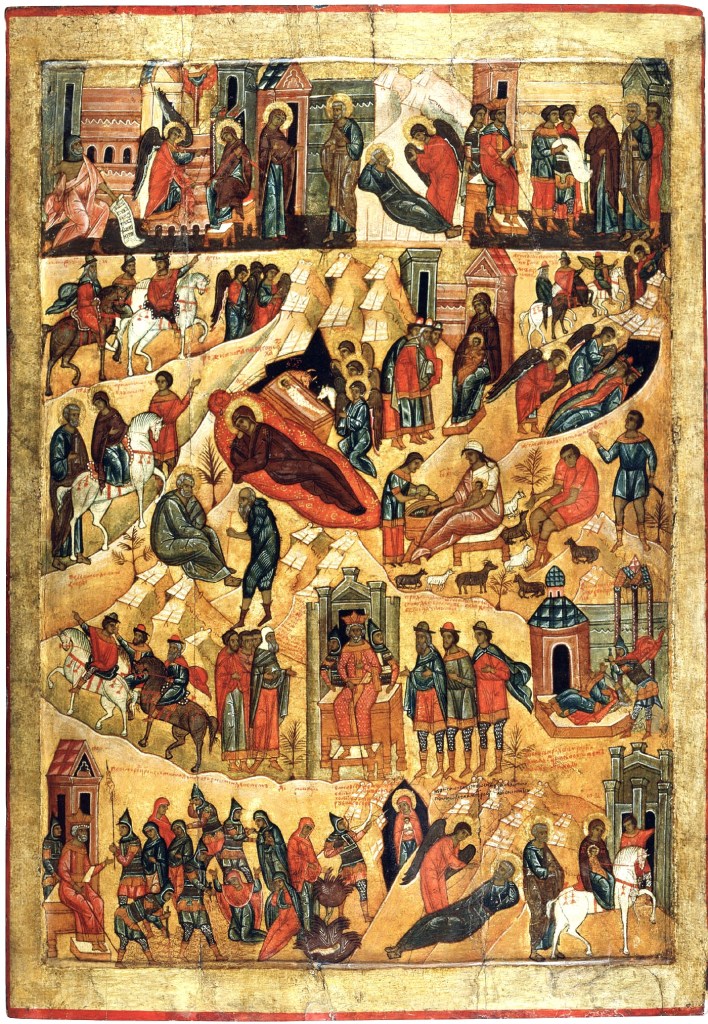
Dec 28–20, 000 Martyrs burned in Nicomedia, Simon the Myrrhbearer, Founder of Simonopetra, Monastery of Mount Athos, Afterfeast of the Nativity

Dec 29–14,000 infants (Holy Innocents) slain by Herod in Bethlehem

St. Anysia’s relics

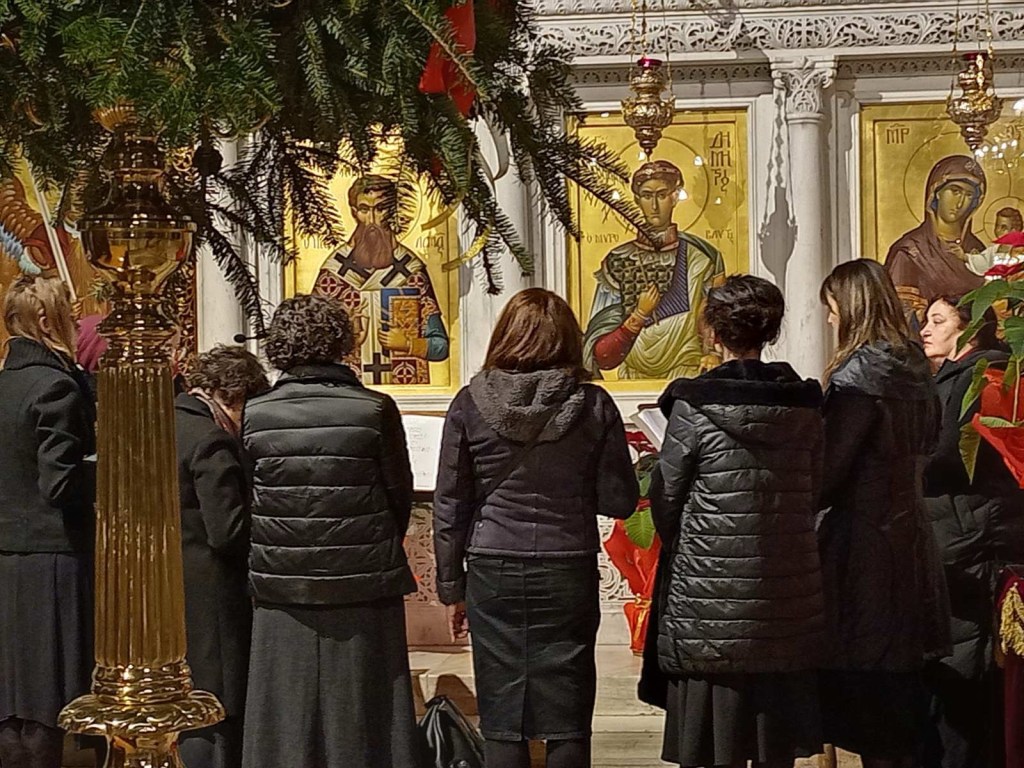
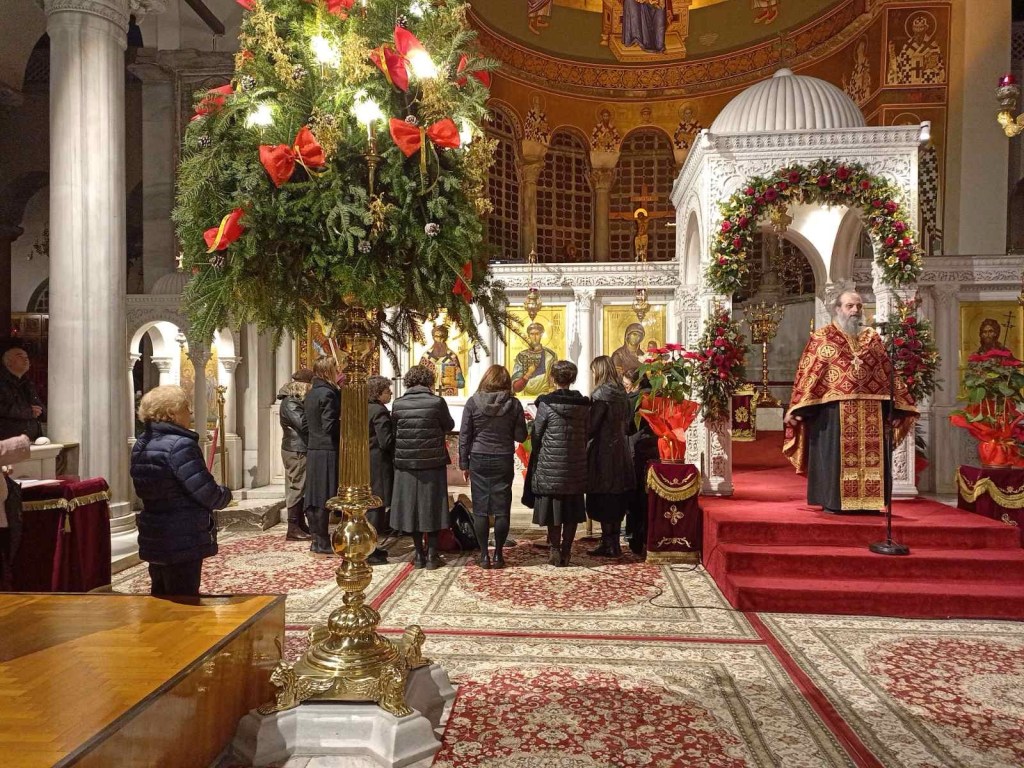
The evening at St Demetrius’ church, in front of St. Anysia’s relics, was a blessing words cannot describe. The choir’s hymns were celestial.

Look at this little Romanian pilgrim venerating the Saint! Isn’t she beautiful?! She is real!

Dec 30 — Anysia the Virgin-martyr of Thessaloniki

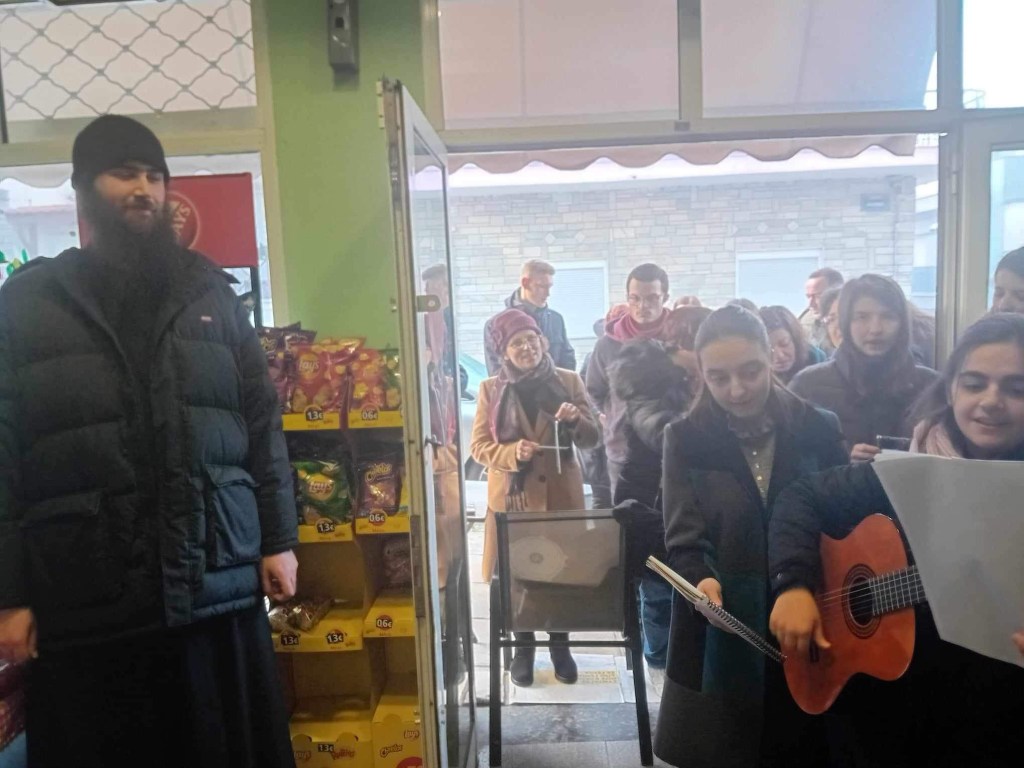
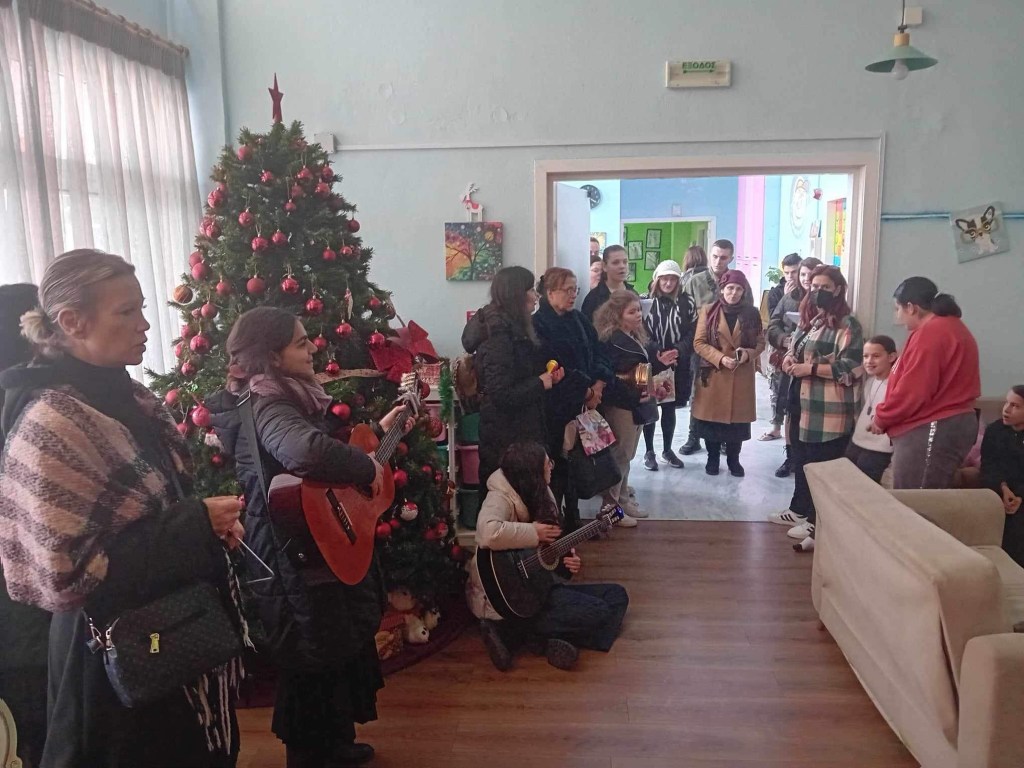
Christmas carols to local charity stores, hospitals, orphanages etc, with St George Metochion choir of all the faithful. Father Deacon Nephon on the right (2.17 m tall) is the heart and soul of all our activities, and such a help and consolation in our lives!

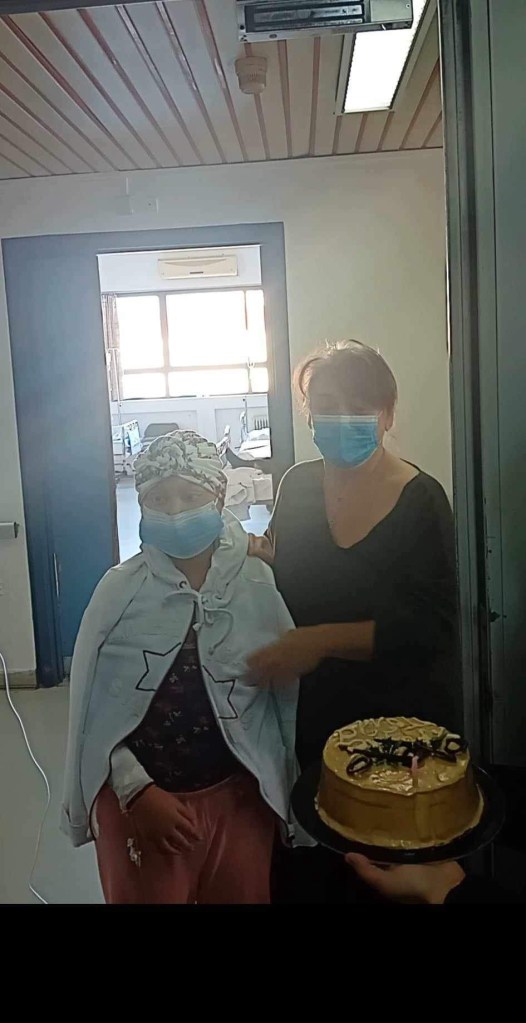
The highlight of the visit was, of course, Konstantina, a little girl, suffering from a range of diseases, kidney failure to terminal cancer, pleading God, as Fr. Deacon Nephon told us, to end her life as she could take no more suffering. We sang carols to her, offered her presents and lit a birthday cake.

This tour to hospitals and orphanages made me realise how little I am suffering bearing my own Cross, whereas I believe that my burden is sooo heavy. Little did I know!

Later in the afternoon, we drive to Serres to spend the weekend and New Year’s Day together with dear friends. Such a blessing again not to be left alone these days. These Christmas blues … But it seems that we can never have enough of hospitals these days. Three hours after our arrival, V.’ mother nearly collapsed and we had to take her to Serres’ hospital. We spent a long vigil there until 03:30, but thank God, although she had to stay in hospital, her condition was stabilised.

Dec 31 —Apodosis of the Nativity of Our Lord and Savior, Jesus Christ, Melania the Younger, Nun of Rome, 

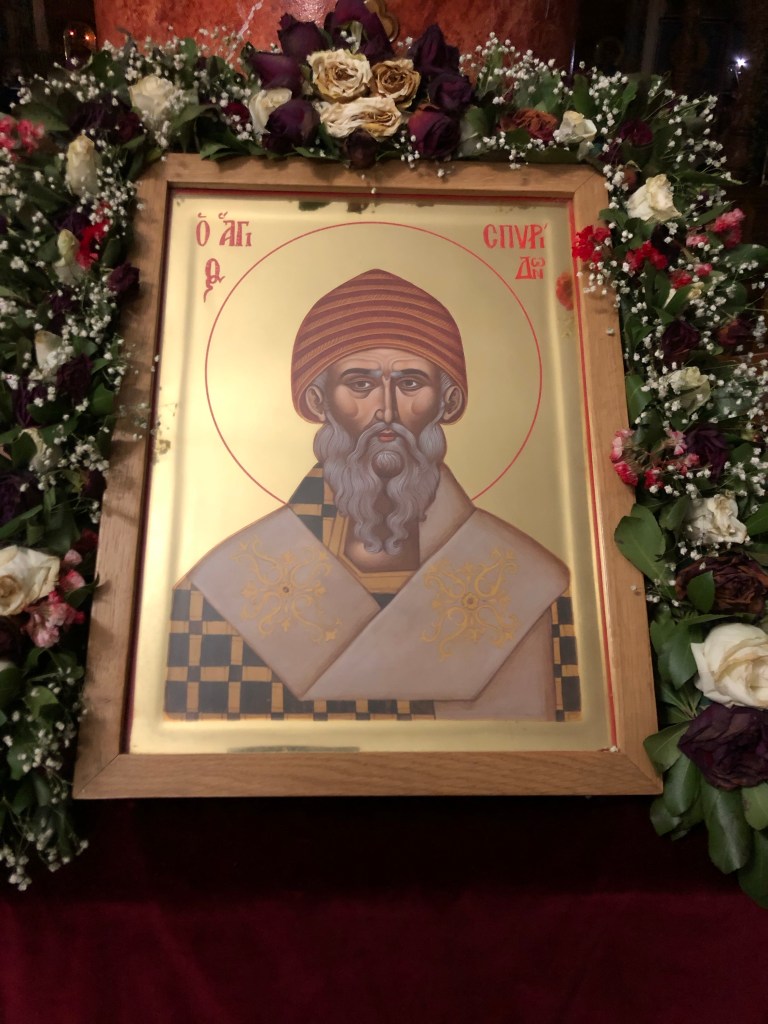
I barely made it to church in the morning with just three hours sleep, and then slept most of the day after we got back. We welcomed the New Year in church, in a vigil, and it was the first time in my life that while we were on our way to Holy Communion, we could hear all the fireworks and celebrations outside. The vigil took place in a beautiful, new church, dedicated to St. Spyridon.

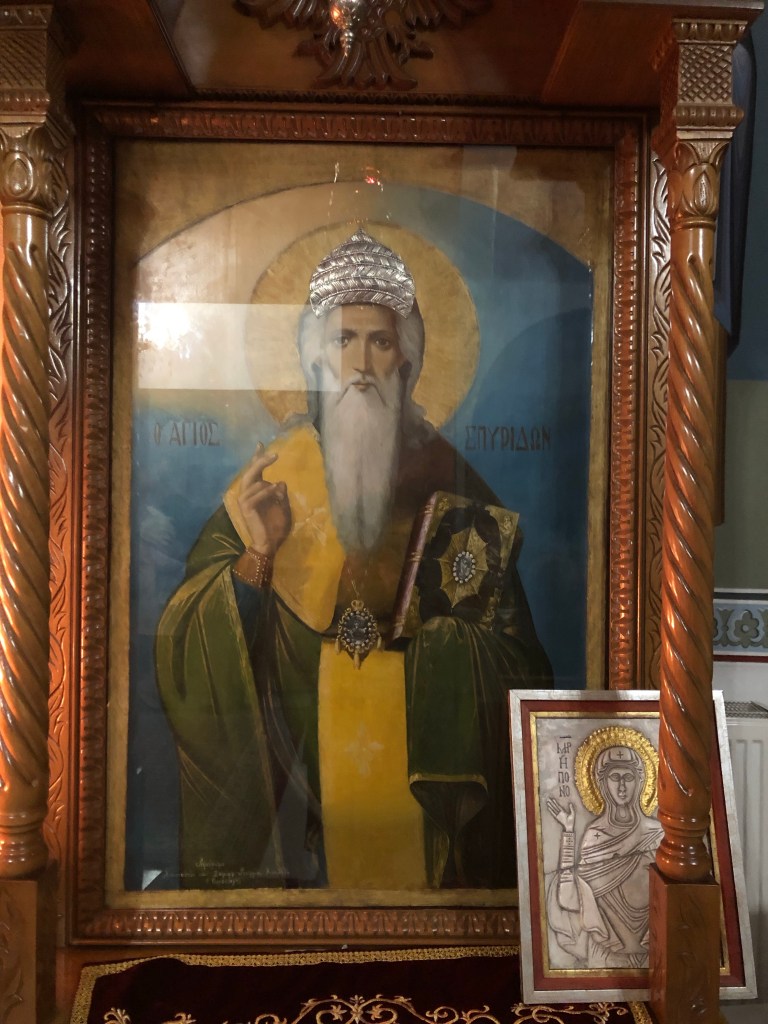
I forgot to mention that in the evening of Dec 30, right after our arrival in Serres, Father Ioustinos from Jacob’s Well in Jerusalem, 83 years young, called me, after so many years, and together with his news, he offered to make an icon, possibly of St Spyridon!!!

Jan 1–Circumcision of Our Lord and Savior Jesus Christ, Basil the Great, Archbishop of Caesarea in Cappadocia

Today, we made a pilgrimage to the monastery of St. John the Forerunner in Serres.

This is a monastery I have visited in the past, but this time our friend V. led me inside a hidden chapel-within- the-chapel from 1270! Of course, it was dedicated to St Spyridon!

Nature was so beautiful outside and everywhere little chapels awaited us to be discovered.

By C.

To be continued …

Travelling Light

Today, my good friend A. sent me this:

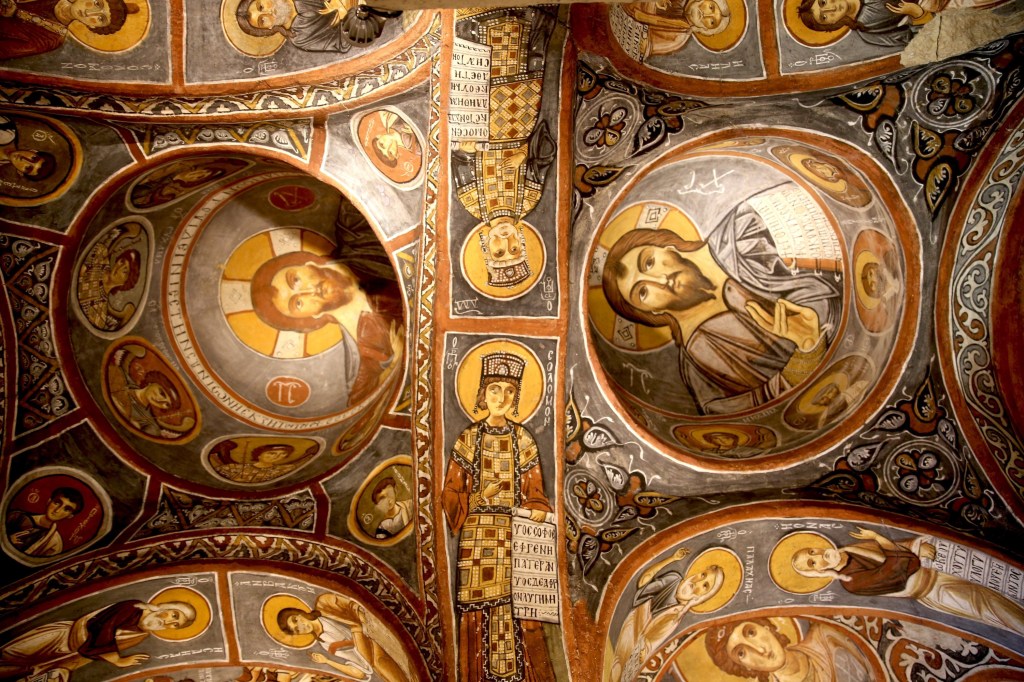
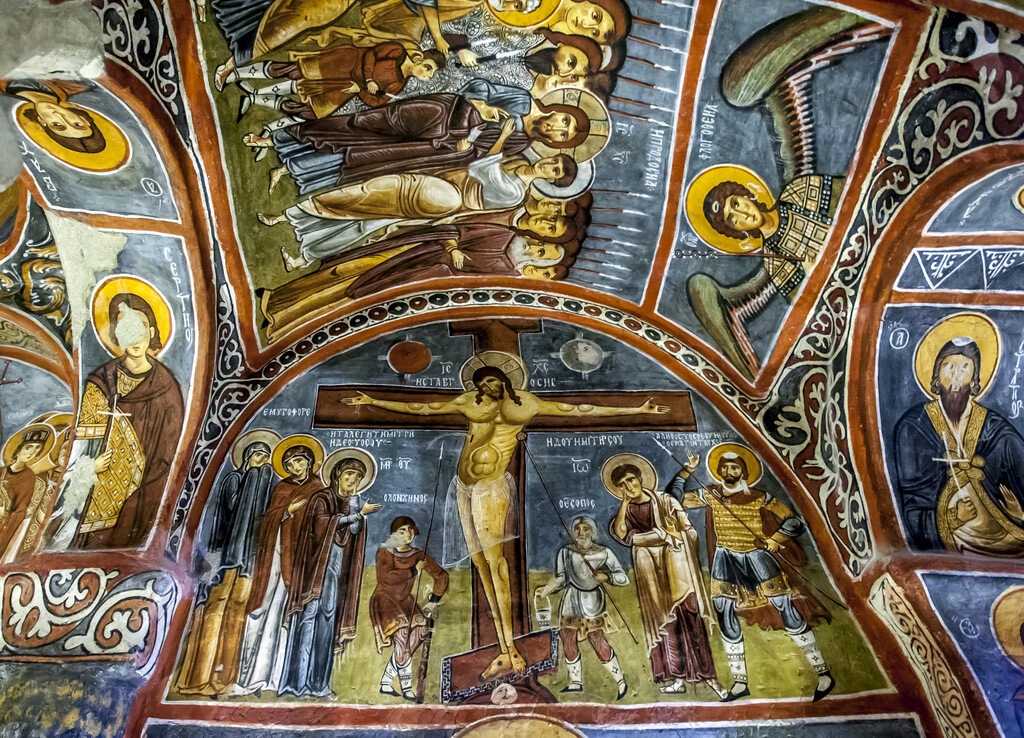
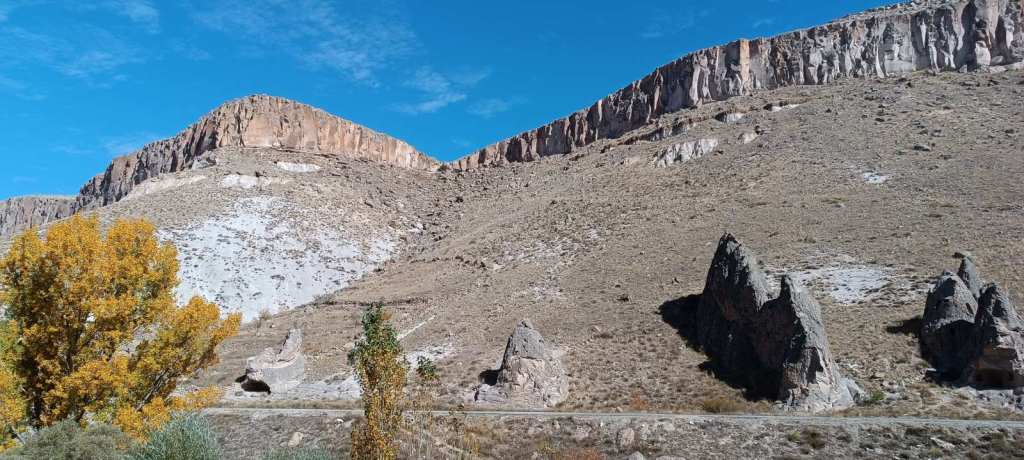
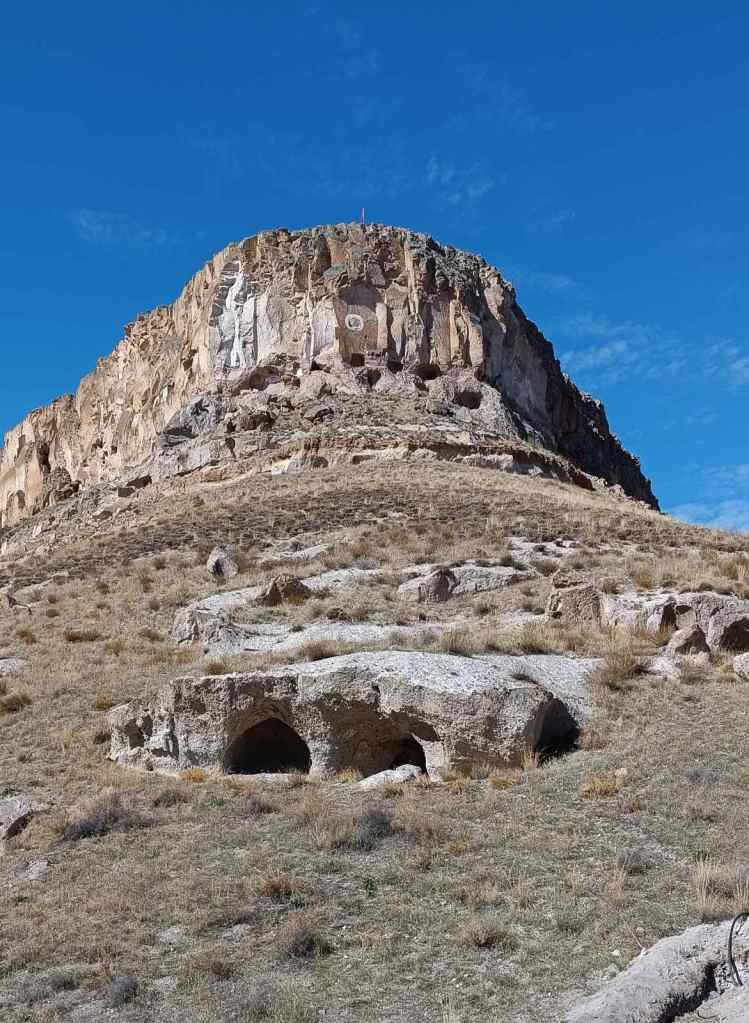
“We are travelling to an unknown city of Cappadocia, walking in the midst of volcanic valleys …

… which Greek people have turned into fertile land …

… climbing high, up to the crenellations where Digenes Akrites (1) raised their swords …

… where the powers of Light fought those of Darkness …

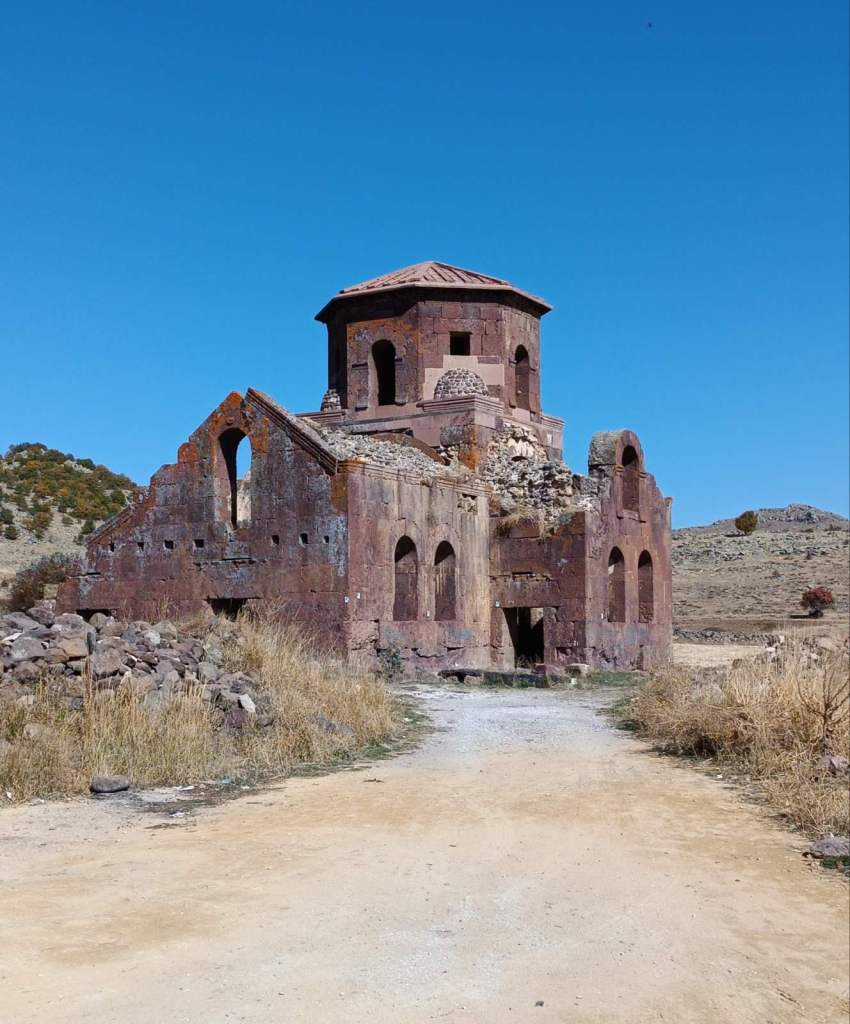
We are going to celebrate Holy Liturgy there, in an orthodox temple (2)

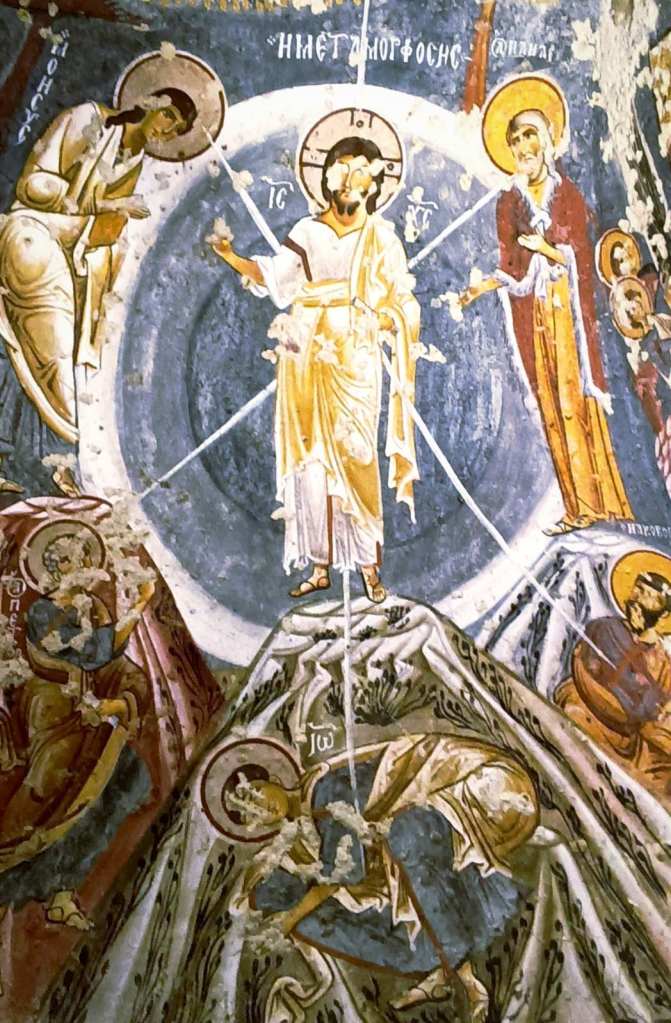
… so that Tabor light will shine in our souls (3)

… and all mankind

(1) Digenes Akritas: “digenes” literally means “born of two races”, i.e. “Roman” (Byzantine/Greek) and “Saracen” and “Akritas” means “frontiersman.”, existing at the borders between Christendom and Islamic lands

(2) Kizil Kilise, the Red Church

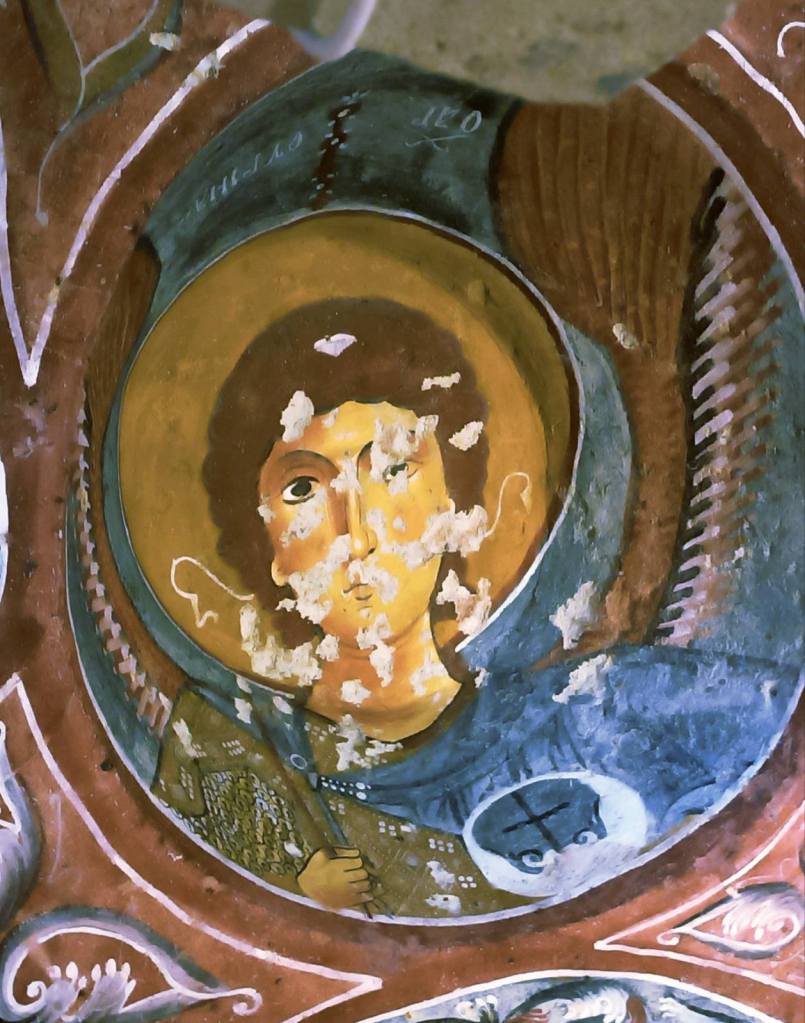
(3) Karanlik Kilise in Goreme