SLICES OF WARM BREAD 

A spiritual Father’s diary

“Someone recently described Thessaloniki as like a dry cake. I’m not sure about this simile. I would prefer to describe it in terms of warm slices of bread. Exchanging a cold, windy, wet Manchester of 13C for a calm, warm late evening 25C, Thessaloniki was indeed a taster of what was to come. Having navigated the vicissitudes of the roaming signal with a friendly local, a familiar “taxi” driver arrived to pick me up from the terminal. 

I have often thought that the word terminal speaks of rather sad endings rather than the springboard and opening to new adventures. 

Having been delivered to my assigned apartment I enjoyed the sleep of the just traveller. 

The five days in Thessaloniki spent with my spiritual children had both an eternal and a brief dimension. Time expands and contracts according to God’s ordinance. 

House blessings, Confessions, Social Gatherings, Prayers, Church and Monastery Visits and the not so mundane coffee stops roll into a well risen loaf with the yeast of kindness and the warmth of hospitality. 

In just one day we visited: 

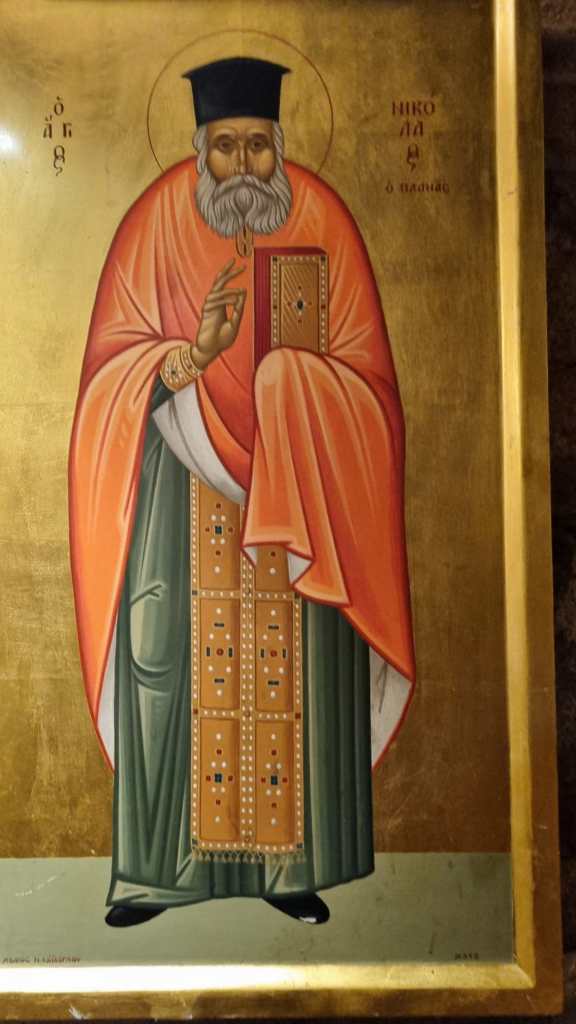
  1. The Holy Church of St Nicholas Orphanos 
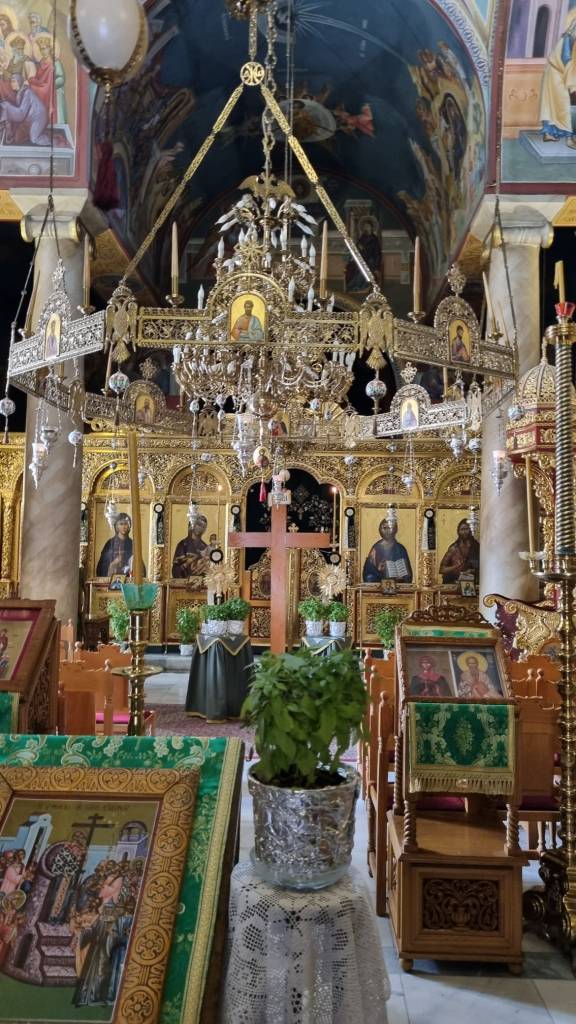
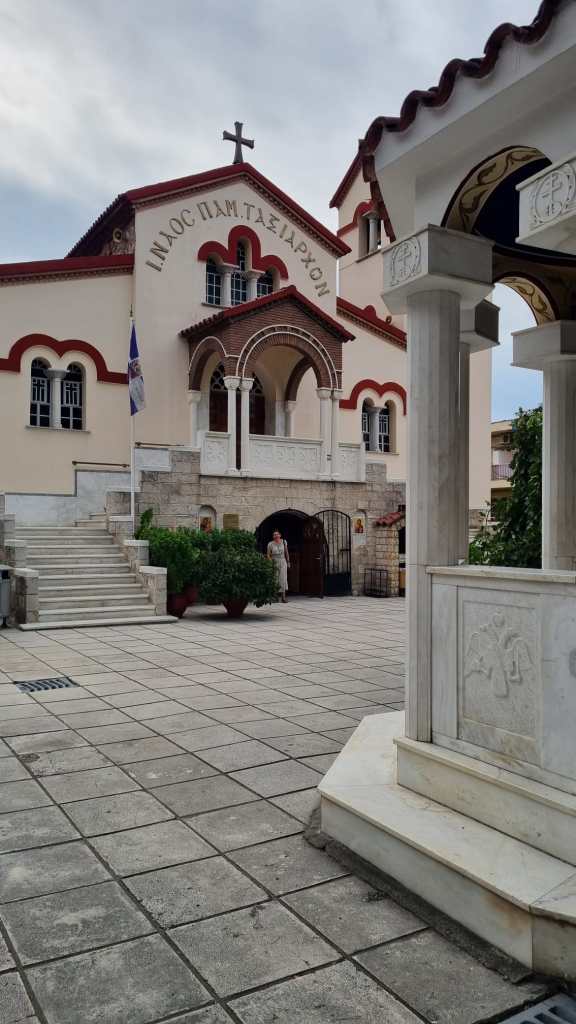
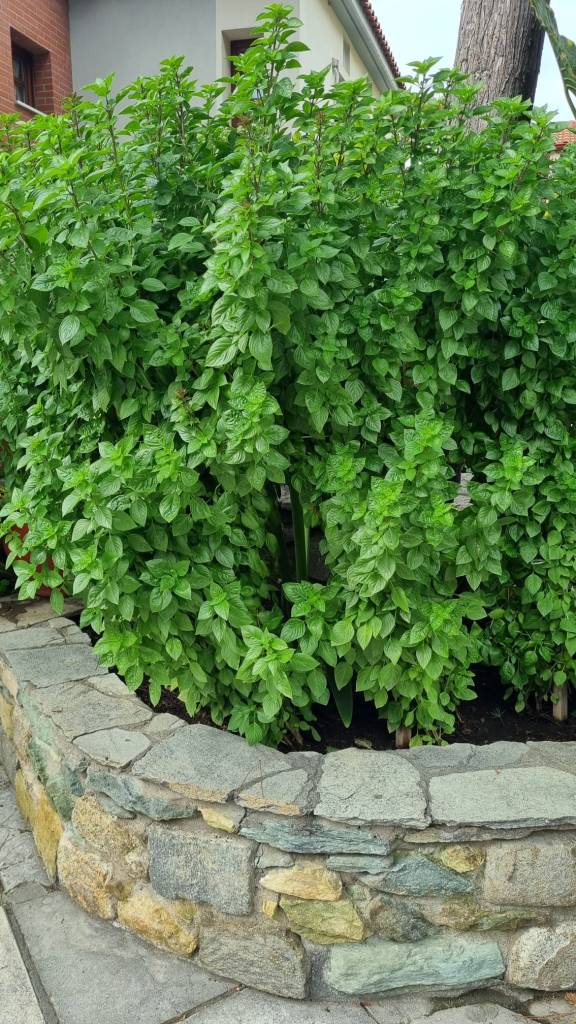
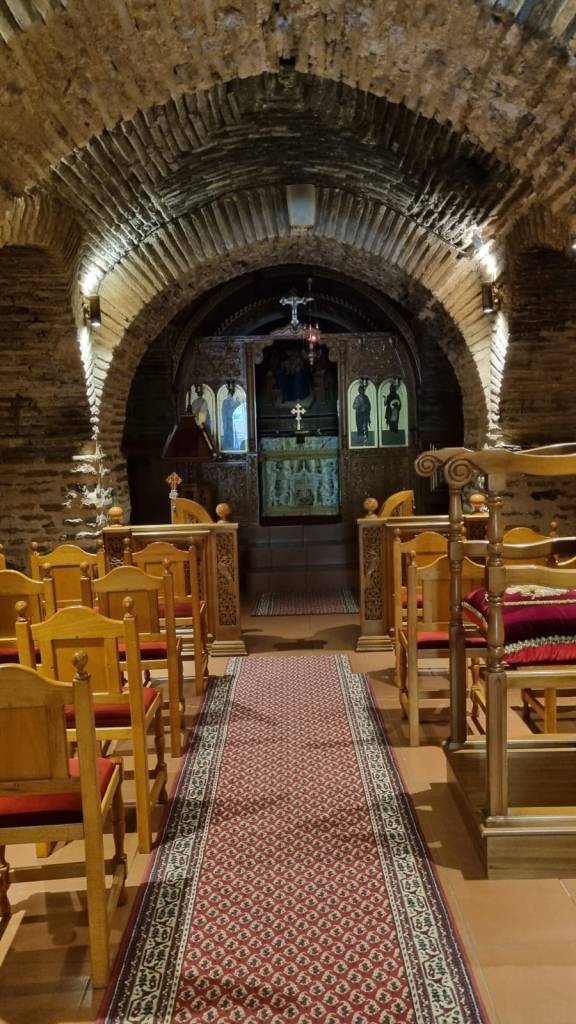
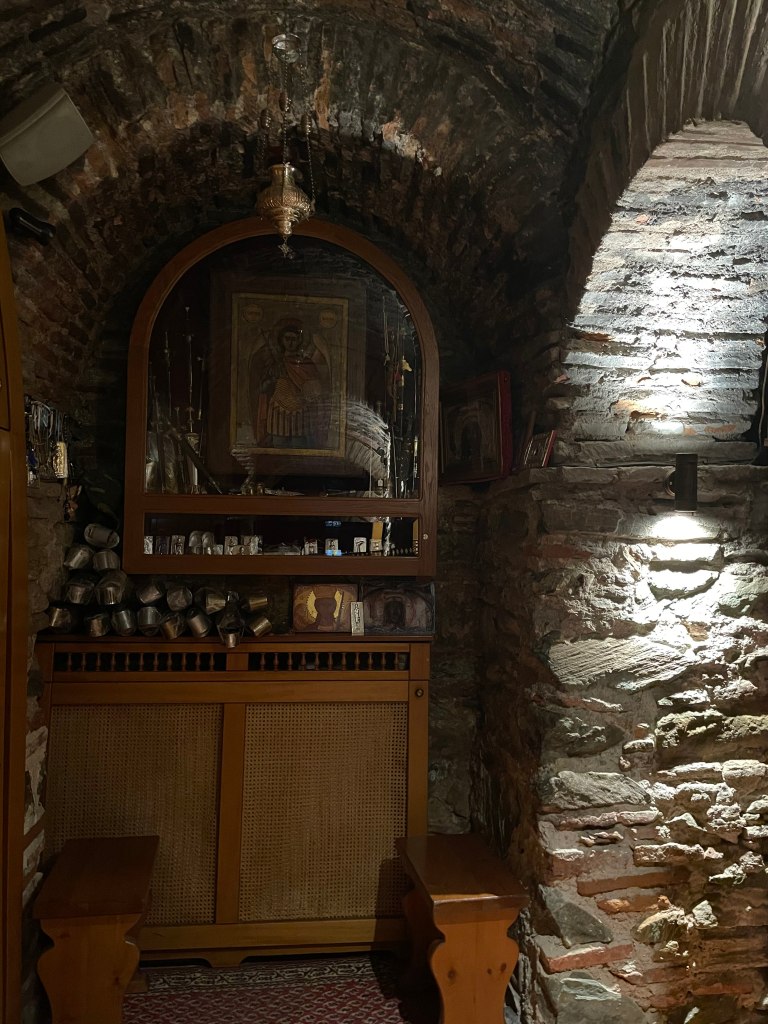
  2. The Church of Pammegistoi Taxiarches where there was a Byzantine Crypt and huge Basil bushes outside. 
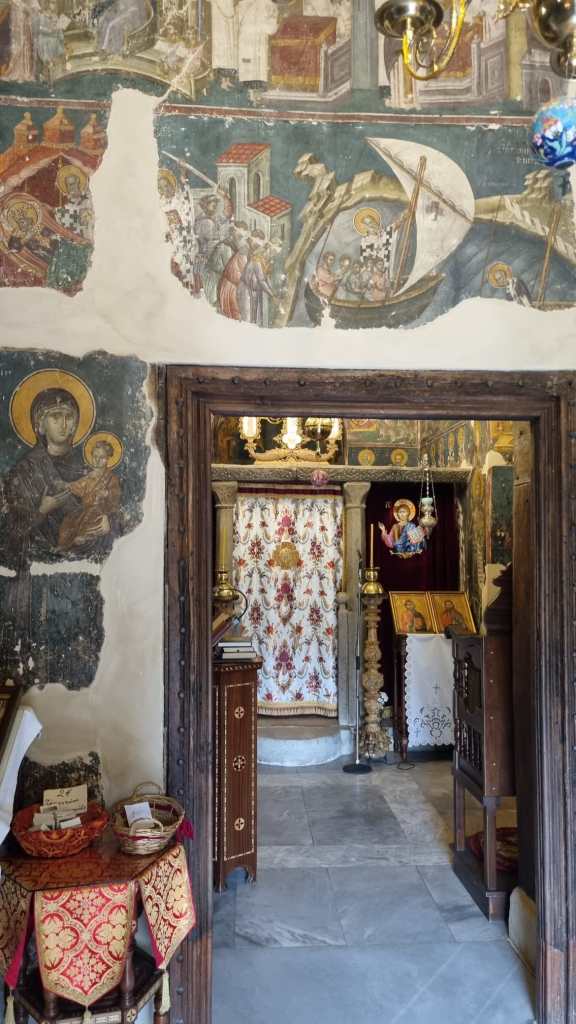
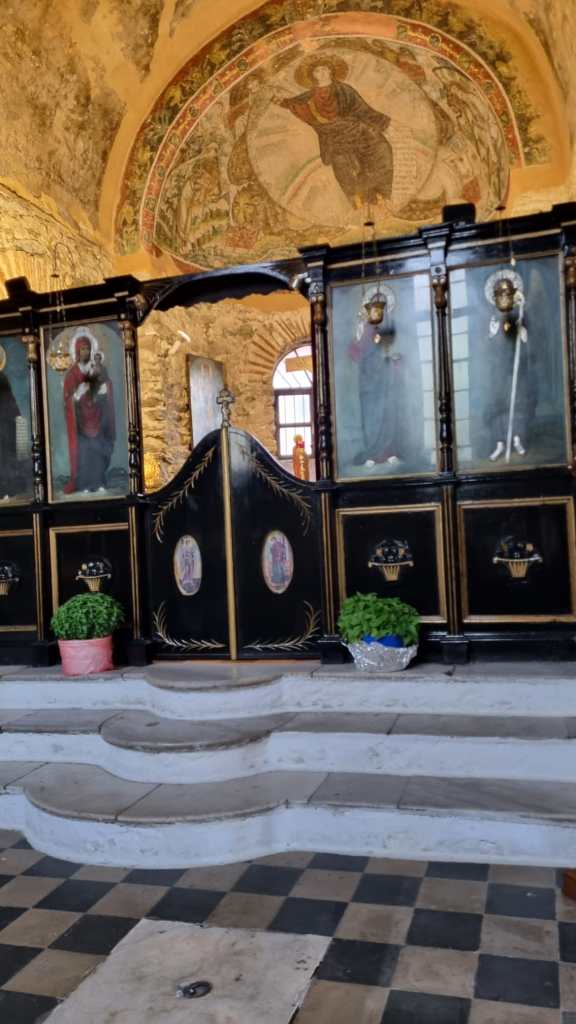
  3. Vlatadon Monastery. 
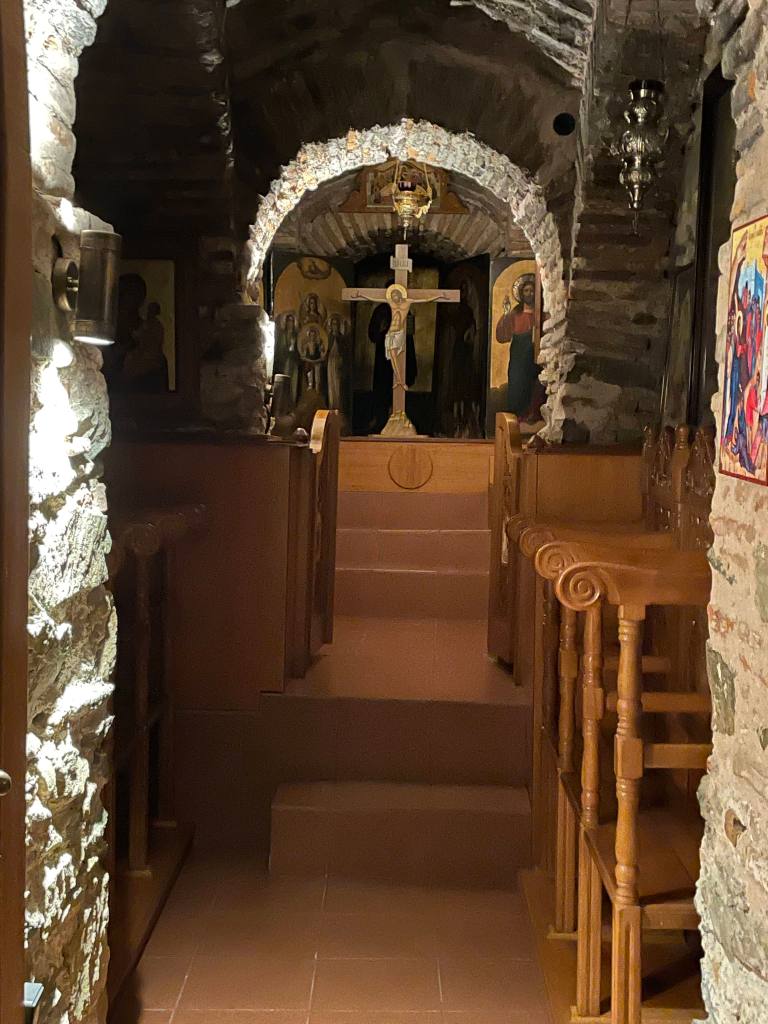
  4. Latomos Monastery and later the cave Church of St David the Dendrite. 
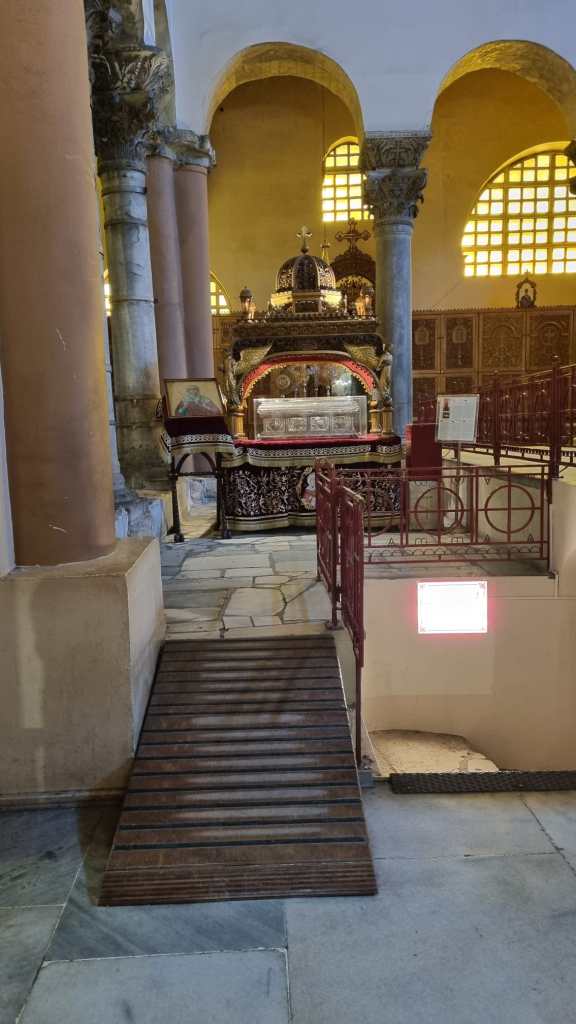
  5. St Demetrios Church. 
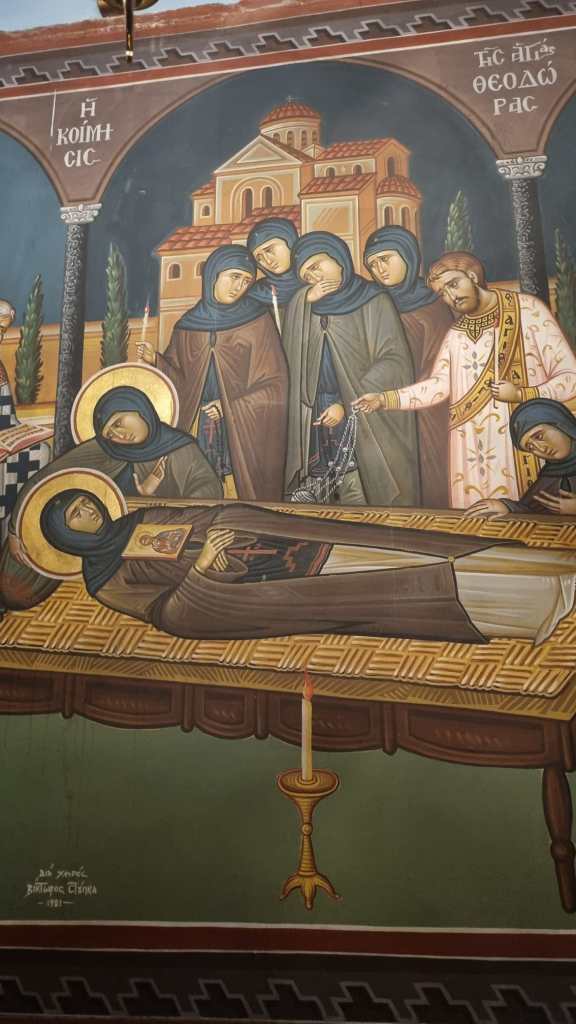
  6. St Theodora Monastery and Church where we venerated the holy relics of St Theodora and St David. 
Church of St Theodora

Stopping for late lunch the first thing to arrive on our table was warm sliced bread — a gift and a symbol of the spiritual slices of holiness we had tasted earlier. 

St Demetrios church St Anysia relics
Church of Pammegistoi Taxiarches with byzantine crypt
St Nicholas Orphanos
Basil bush
Osios David the Dendrite Latomos monastery
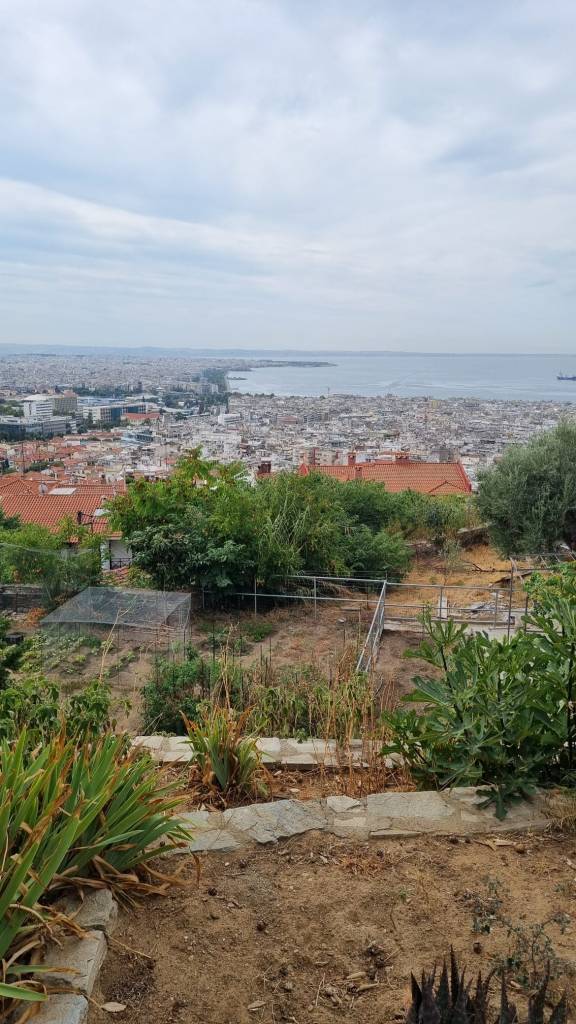
View from Vlatadon Monastery

We took the bread, blessed it, gave thanks, broke it and shared the humble gift with the meal — a eucharistic pattern that is woven into every fabric of the Christian Life. 

So many precious memories in a short space of time — but God’s time (kairos not chronos). For these treasured moments I give thanks to God”.

My Twelve Days of Christmas — Part A

Dec 24 — Eve of the Nativity of Christ, Eugenia the Righteous Nun-martyr of Rome and those with her

Suddenly our friend D. is in hospital, and soon in intensive care. Agony, heartache and a complete mess at work.

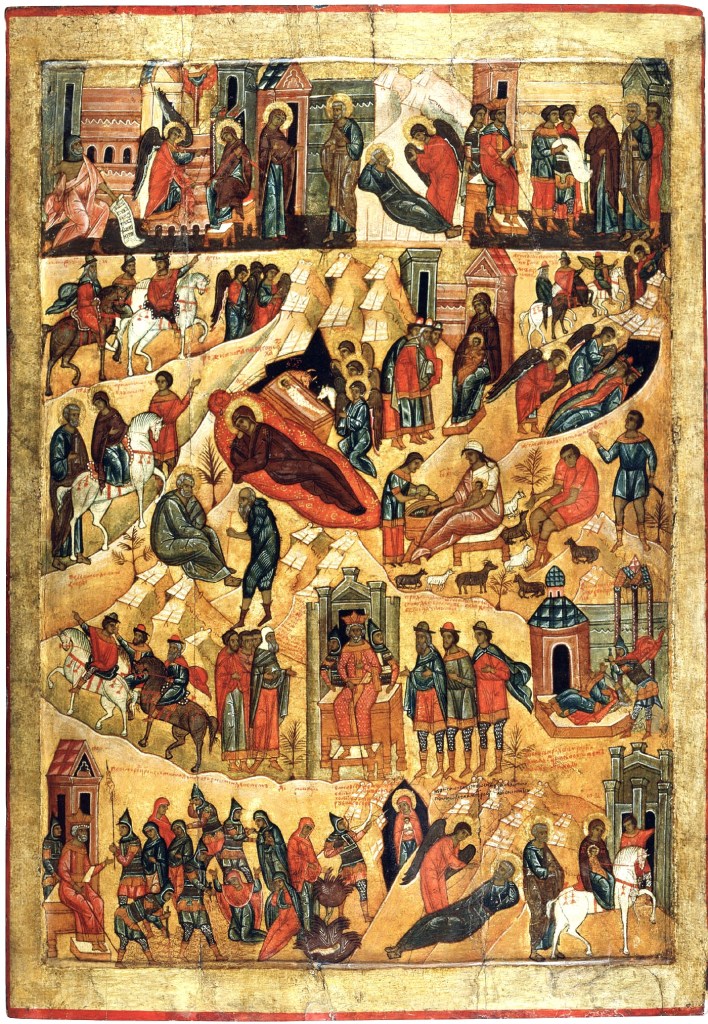
Dec 25 — THE NATIVITY OF OUR LORD AND SAVIOR, JESUS CHRIST

Thank God, we made it to church and received Holy Communion. Only our Christmas meal got cancelled as our hosts got down with the flu. So we brought them chicken soup, exchanged presents and wishes in the balcony, and spent the remainder of the day in hesychia.

Dec 26 — SYNAXIS OF THE HOLY THEOTOKOS

Thank God, an invitation from dear brothers and sisters from the Metochion of St. George to rescue us from our ‘lockdown’. These days are difficult when you are alone or together with difficult family members. The meal, the company and the carols were a great blessing despite the little temptation on our way when both of our back tyres got flat/ punctured (a neighbour’s prank) and we had to call road assistance etc.

The greatest blessing of all was our hostess, A., a widow and a valiant Christian soul. When that car hit her husband’s car, cut him half and left him paralysed from the waist down, she bore bravely the Cross for 10, even more, years, becoming the pillar of her family, until her husband reposed in the Lord, supporting her orphan young boy. This day brought me even closer to dear A., and I am sure I can learn a lot how one should live, just by being next to her and observing her.

Dec 27 — STEPHEN, ARCHDEACON & FIRST MARTYR

Back to work and hospital/ doctors check about D. Thankfully, lots of chanting rehearsals too.

Dec 28–20, 000 Martyrs burned in Nicomedia, Simon the Myrrhbearer, Founder of Simonopetra, Monastery of Mount Athos, Afterfeast of the Nativity

Dec 29–14,000 infants (Holy Innocents) slain by Herod in Bethlehem

St. Anysia’s relics

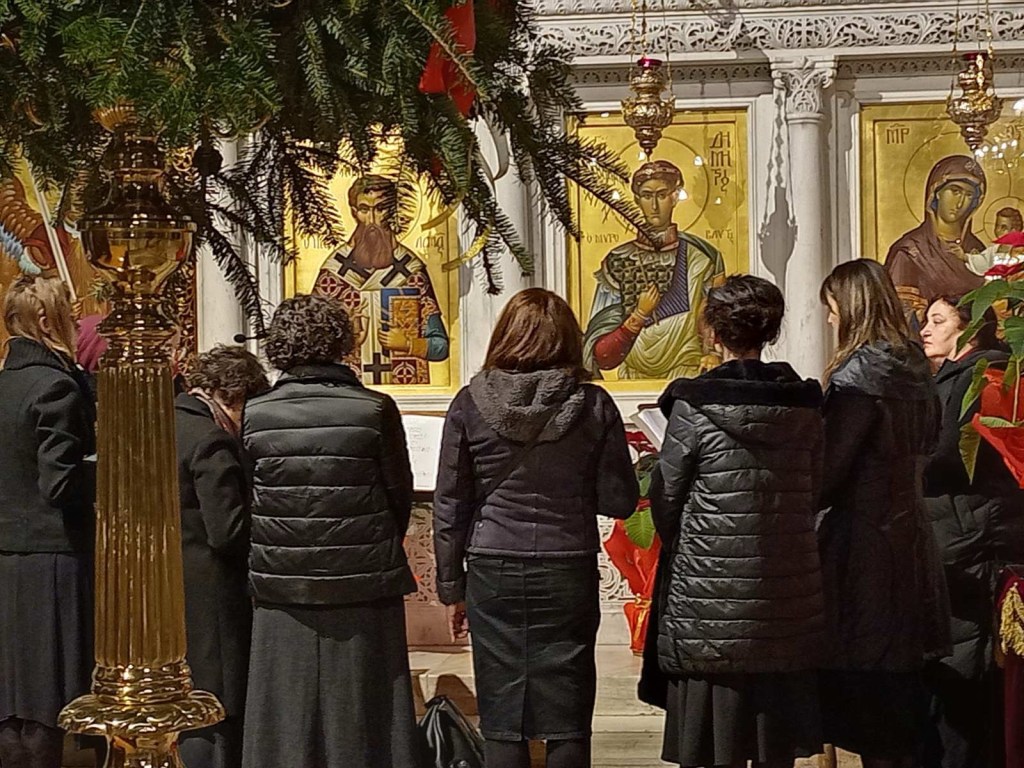
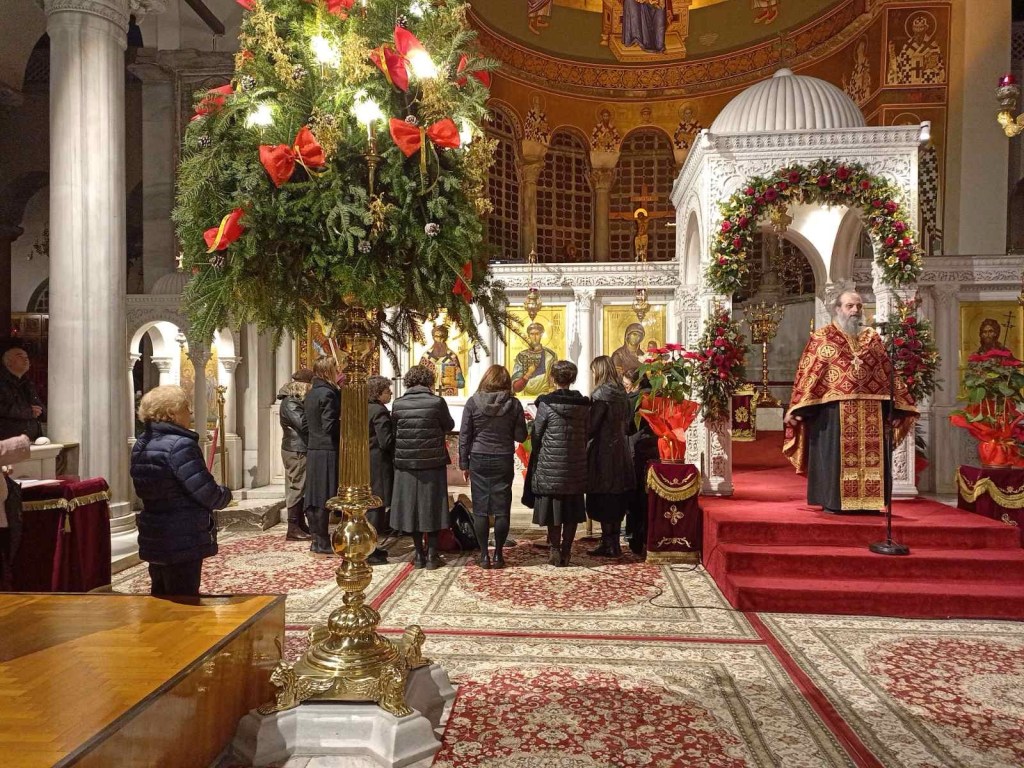
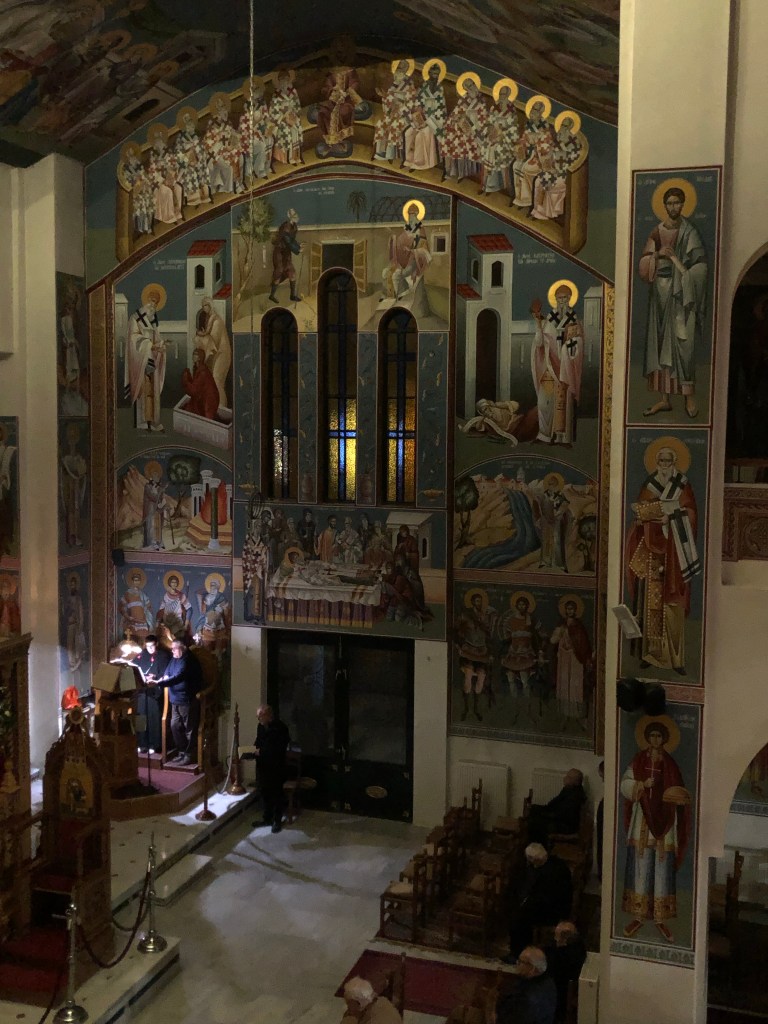
The evening at St Demetrius’ church, in front of St. Anysia’s relics, was a blessing words cannot describe. The choir’s hymns were celestial.

Look at this little Romanian pilgrim venerating the Saint! Isn’t she beautiful?! She is real!

Dec 30 — Anysia the Virgin-martyr of Thessaloniki

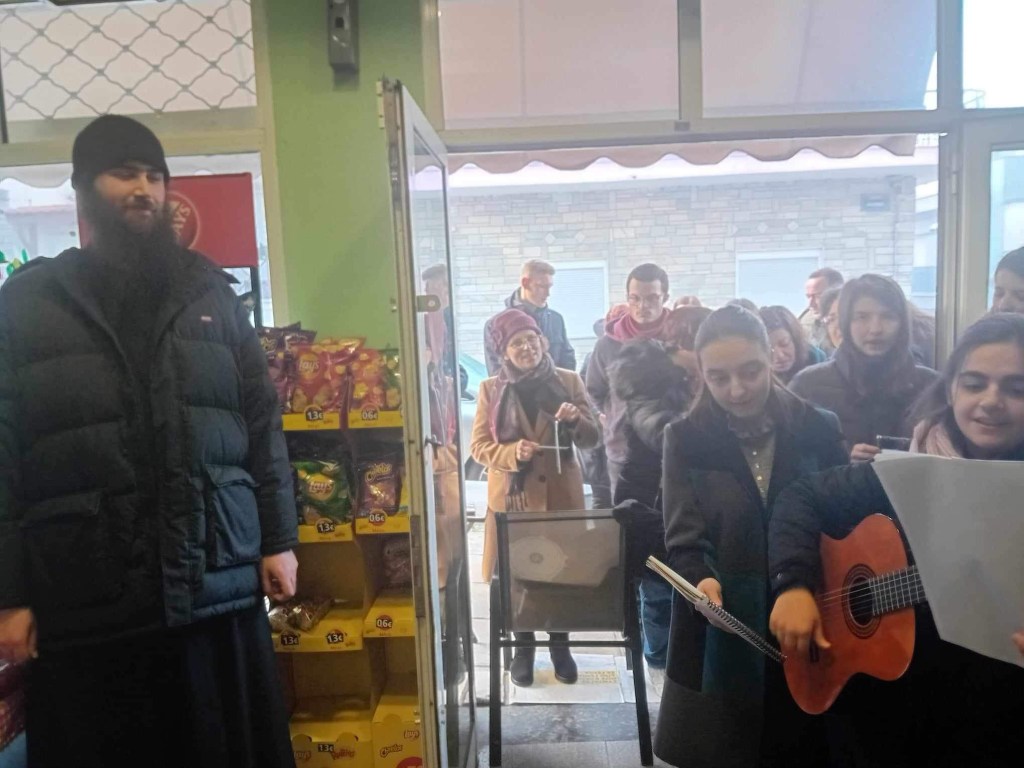
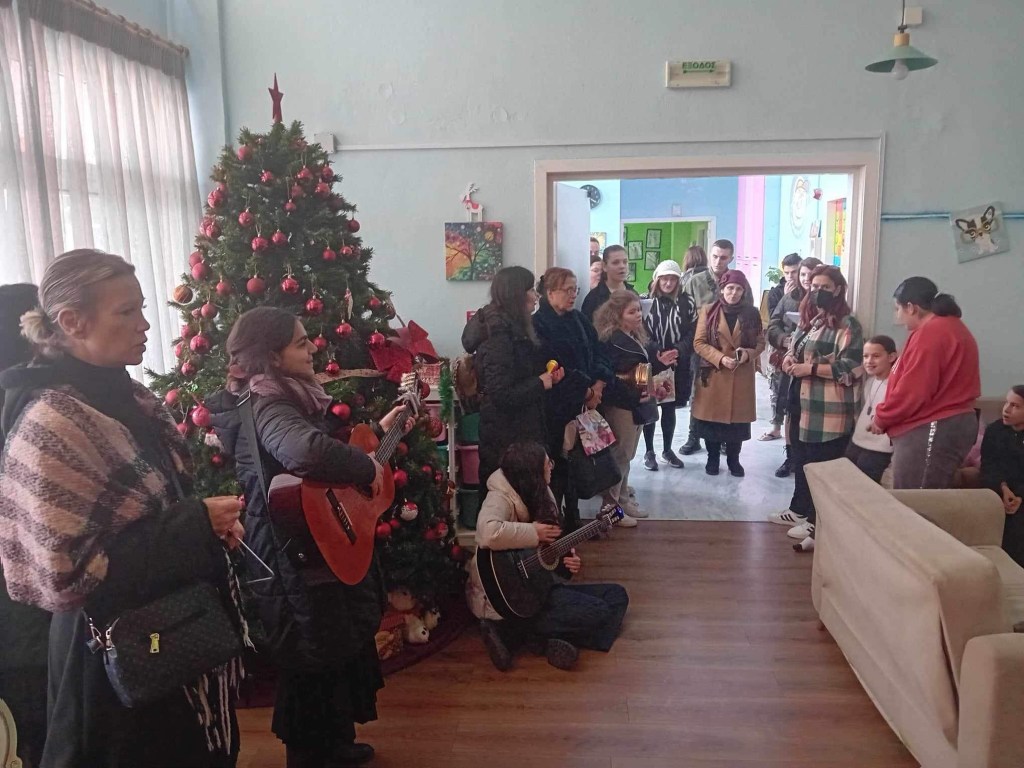
Christmas carols to local charity stores, hospitals, orphanages etc, with St George Metochion choir of all the faithful. Father Deacon Nephon on the right (2.17 m tall) is the heart and soul of all our activities, and such a help and consolation in our lives!

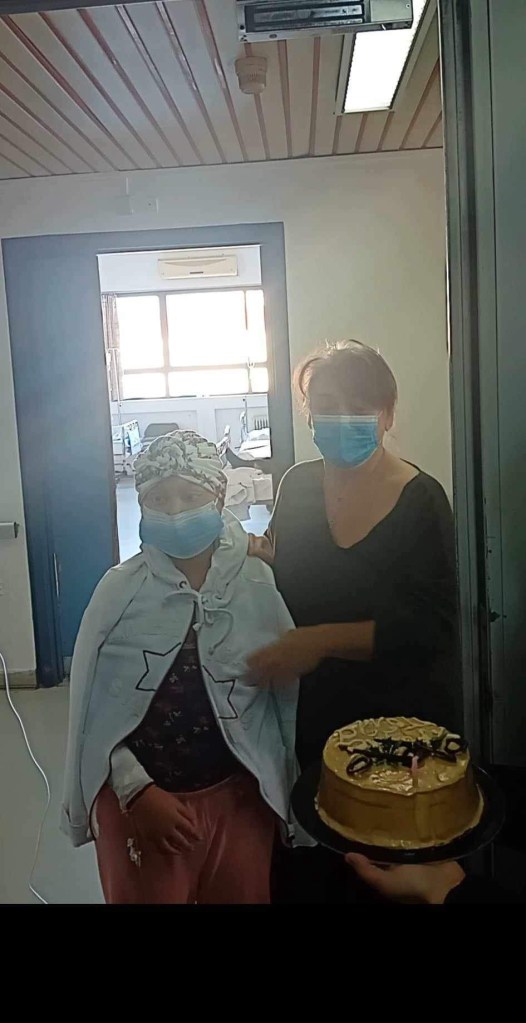
The highlight of the visit was, of course, Konstantina, a little girl, suffering from a range of diseases, kidney failure to terminal cancer, pleading God, as Fr. Deacon Nephon told us, to end her life as she could take no more suffering. We sang carols to her, offered her presents and lit a birthday cake.

This tour to hospitals and orphanages made me realise how little I am suffering bearing my own Cross, whereas I believe that my burden is sooo heavy. Little did I know!

Later in the afternoon, we drive to Serres to spend the weekend and New Year’s Day together with dear friends. Such a blessing again not to be left alone these days. These Christmas blues … But it seems that we can never have enough of hospitals these days. Three hours after our arrival, V.’ mother nearly collapsed and we had to take her to Serres’ hospital. We spent a long vigil there until 03:30, but thank God, although she had to stay in hospital, her condition was stabilised.

Dec 31 —Apodosis of the Nativity of Our Lord and Savior, Jesus Christ, Melania the Younger, Nun of Rome, 

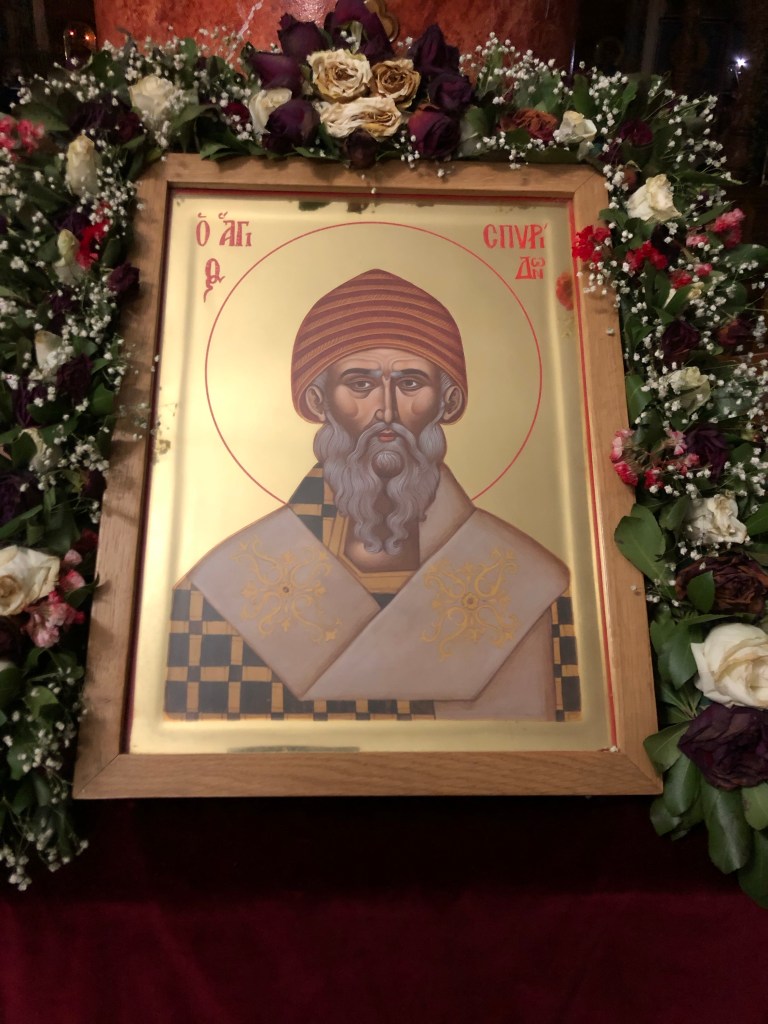
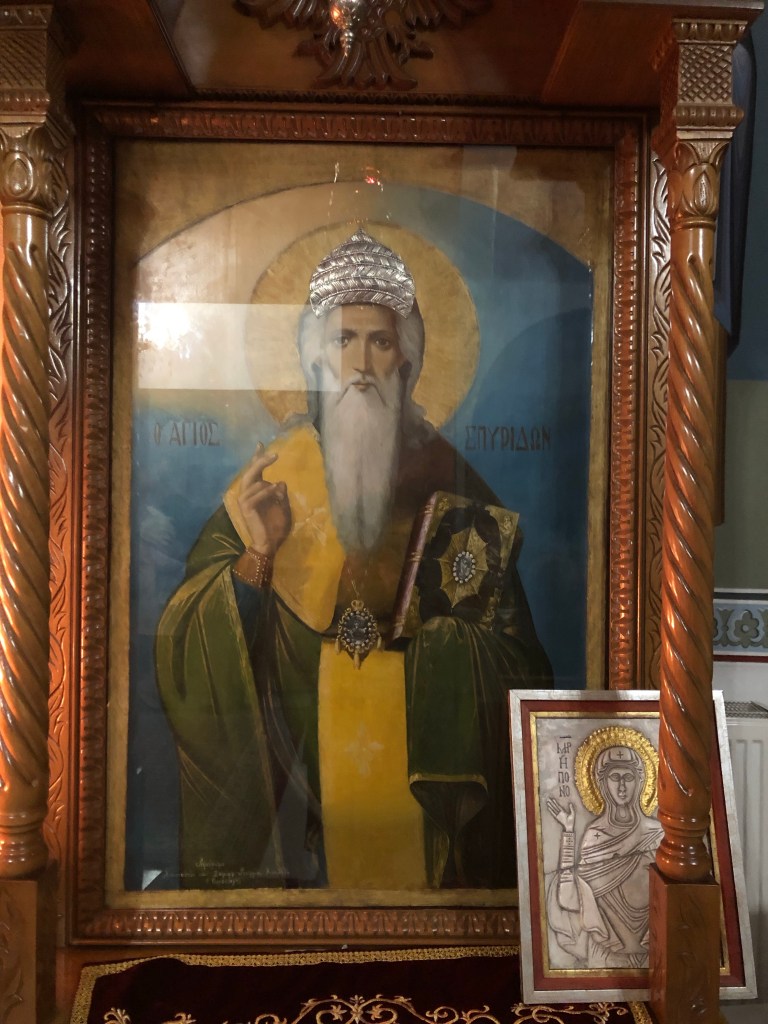
I barely made it to church in the morning with just three hours sleep, and then slept most of the day after we got back. We welcomed the New Year in church, in a vigil, and it was the first time in my life that while we were on our way to Holy Communion, we could hear all the fireworks and celebrations outside. The vigil took place in a beautiful, new church, dedicated to St. Spyridon.

I forgot to mention that in the evening of Dec 30, right after our arrival in Serres, Father Ioustinos from Jacob’s Well in Jerusalem, 83 years young, called me, after so many years, and together with his news, he offered to make an icon, possibly of St Spyridon!!!

Jan 1–Circumcision of Our Lord and Savior Jesus Christ, Basil the Great, Archbishop of Caesarea in Cappadocia

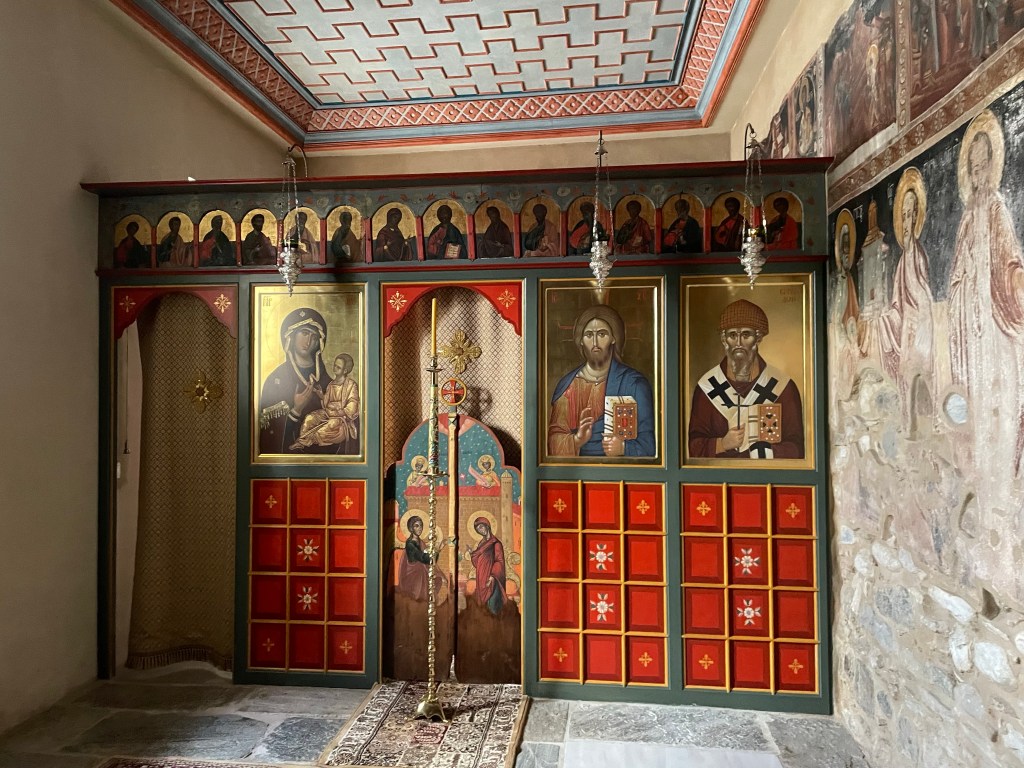
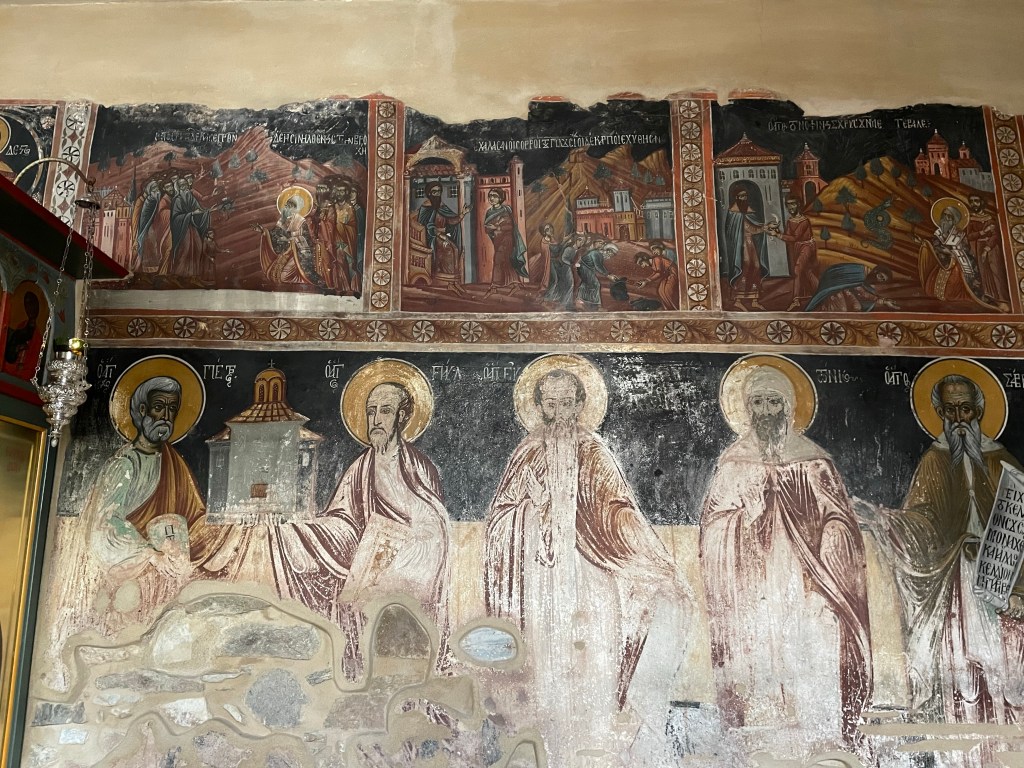
Today, we made a pilgrimage to the monastery of St. John the Forerunner in Serres.

This is a monastery I have visited in the past, but this time our friend V. led me inside a hidden chapel-within- the-chapel from 1270! Of course, it was dedicated to St Spyridon!

Nature was so beautiful outside and everywhere little chapels awaited us to be discovered.

By C.

To be continued …

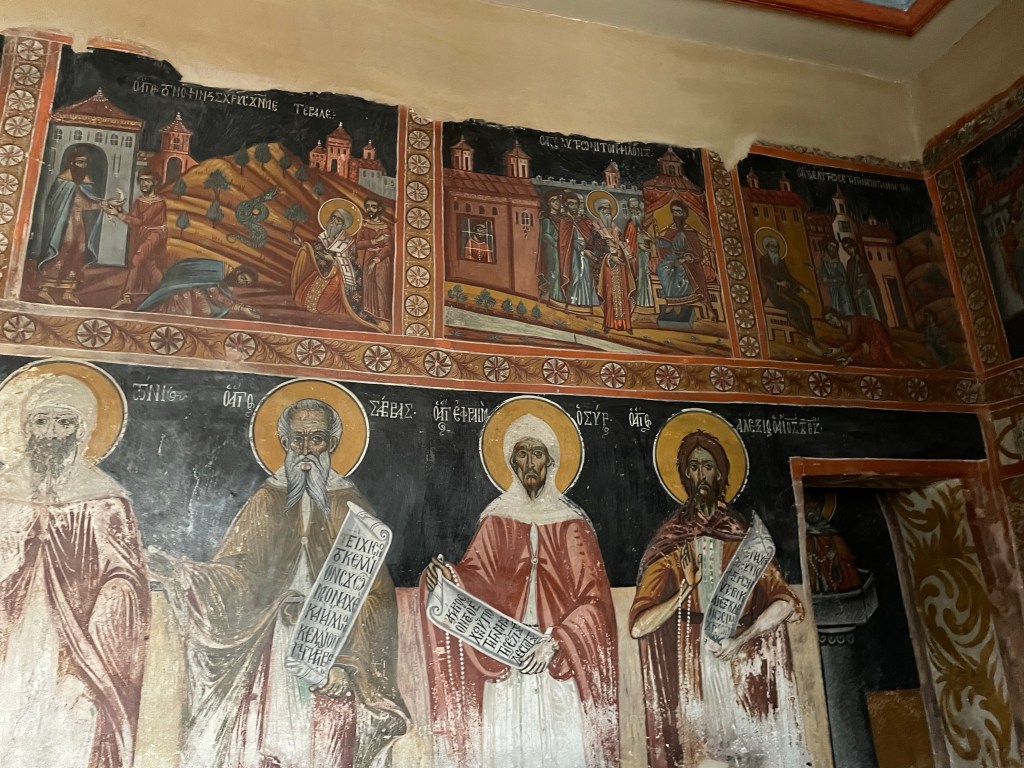
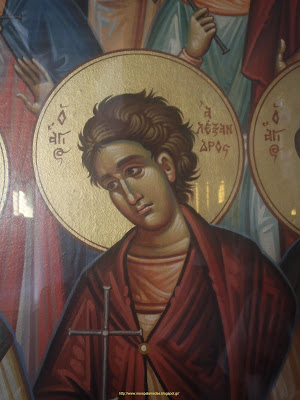
Holy NeoMartyr Alexander the Dervish from Thessaloniki, Laodigitria (+ 1794)

AlexandrosDervisis01

Verses
Give your head O straight-forward Alexander,
And receive a crown from the hand of the Lord.


Alexander was a very handsome, young Orthodox Christian from Thessaloniki who lived in Laodigitria — the church/monastery I presented in my previous blogpost — and was sent to Smyrna by his parents who sought in this way to protect their son from the local Muslims. Unfortunately, however, Alexander did come under the influence of the Muslim faith and accepted Islam. Moreover, he later made a pilgrimage to Mecca and even became a dervish, that is, a member of a Muslim monastic order.
It was not long, however, before his conscience began to trouble him. He found he could not tolerate the position he was in, that is, he could not stand by silently while Orthodox Christians, to whom he still felt related, were persecuted. To lighten the burden of his conscience, he began to feign insanity. While playing the role of a madman, Alexander tirelessly rebuked the Muslims for the injustices they committed against the Christians.
Later, while in Egypt, some Muslims from the island of Crete plotted to murder him because, as time went by, he sounded more and more like a Christian and less like a Muslim. Before their evil plans could be carried out, Alexander left Egypt and returned to Thessaloniki.
Later he went on to the island of Chios where he still dressed as a dervish but began to attend Orthodox services and continued to preach to the Muslims in Chios, beseeching them to act with justice towards the Orthodox.
From Chios, Alexander returned to Smyrna, the city where he had first abandoned his Orthodox Christian faith. The time had now come for him to witness for Jesus Christ. Voluntarily he appeared before the kadi of the city and told him his story. He said:
“Mulla! I was an Orthodox Christian and because of my foolishness, I denied my faith and became a Muslim. Later I realized my former faith was light, which I lost, while your faith, as I have come to know it, is darkness. So I have come before you to confess I have made a mistake by denying the light and accepting the darkness. I was born an Orthodox Christian! I want to die an Orthodox Christian! Behold, you have heard my decision, Mulla, now do to me whatever you wish, for I am ready to endure every torture and to even spill my blood for the love of my Jesus Christ, whom I wrongly denied.”
After these words were spoken, Alexander took off his Muslim head covering and replaced it with a Christian one. Those present in the courtroom could not believe their ears. In fact, they thought they must be listening to a madman.
But one by one, beginning with the mulla, they began in a soft sympathetic voice to tell him he had spoken unheard-of things, and perhaps he was not well and should come to his senses. How could he, a dervish, shame his religion and his integrity in such a manner?
To all of these remonstrances, Alexander responded: “It is true, I was out of my mind, but now frankly I have come to my senses and I confess my iniquity. You say because I am a dervish, how do I say such things? I truly speak the truth, for I have gone to your Mecca, and have examined all of your faith, and I have understood everything about it to be false and abominable.”
The Muslims present responded to Alexander’s declarations by saying he must be drunk, and as such they had him put in prison. On the following day when more Muslims gathered around the mulla, Alexander was questioned again but with the same results. The Muslims felt embarrassed that one of their best, a dervish, could renounce Islam and therefore tried very hard to persuade him to give up the notion of returning to Christianity.
They began to flatter him with soft soothing words, reminding him of his position, his integrity as a dervish, and the thought that it would be a pity for him to sacrifice his youth, his very life. They offered him money, clothes, anything he might wish, but none of this made an impression on Alexander who was determined to witness for Jesus Christ and suffer any and all consequences.
Alexander turned a deaf ear to the threats of physical torture and death as he had previously to the flattery and promises of material rewards. Nothing could persuade him to give up Jesus Christ for the religion preached by Muhammad. And so he responded:
“O how foolish you are to bring up death. I came here for this purpose, to die for the love of my sweetest Jesus Christ. You are trying in vain to change my unwavering decision with your deceiving threats and your insignificant promises. As for myself, I think of dying for my holy faith which I wrongly denied and to die to this false life and to gain the other, the eternal one. I was born an Orthodox Christian and I wish to die an Orthodox Christian. This is what I desire, this is what I thirst for. So you do whatever you wish. I am ready to suffer everything for my Master Jesus Christ.”
Alexander was returned to prison where he stayed until Friday, a Muslim holy day on which it was customary for the important Muslims of the city to gather about the kadi of each city and attend with services at the mosque. On this occasion, Alexander was the topic of their conversation.
When brought before the kadi for the third time, the same flattery, promises and threats were made. To these Alexander replied by simply saying: “I was born an Orthodox Christian, I wish to die an Orthodox Christian. I will not exchange the light for darkness. I worship Father, Son and Holy Spirit, Trinity consubstantial and undivided.” Saying this, he made the sign of the cross.
This was the last straw for the kadi and the Muslims present. Alexander was immediately sentenced to death. He was bound and led to the place of execution accompanied by many Muslims who continued to try to persuade him to change his mind. To their admonitions, Alexander responded, “I am an Orthodox Christian and I die as an Orthodox Christian.”
Many people, Muslims, Orthodox Christians, Westerners and Armenians gathered for the execution. Alexander stood in the centre. The executioner then placed his sword in front of Alexander’s eyes to frighten him. But the Neomartyr remained calm and unaffected.
Alexander was then ordered to kneel, at which point the order came from the mulla for a stay of execution. The stay continued for an hour during which time Alexander prayed. When he gave no sign of changing his mind or of being willing to convert, the execution proceeded and he was beheaded.
Thus Alexander the dervish from Thessaloniki sacrificed his life for the love of Jesus Christ in the city of Smyrna, Asia Minor on May 26, 1794.
From Witnesses For Christ: Orthodox Christian Neomartyrs of the Ottoman Period 1437-1860, by Nomikos Michael Vaporis, pp. 217-219.
Alexandros_Dervish Sant'Alessandro_il_Derviscio
Such close ties between New Martyr Alexander the Dervish and Laodigitria church are quite common in Thessaloniki; in its various historic churches, local neomartyrs (from the Ottoman rule) have received the crown of martyrdom in their yards. Like the Church of Saint Minas and the new martyr Christodoulos from Kassandreia (+27 July, 1777) who was hanged at its central entrance. But again that will be the topic of another blog post. It is no exaggeration that Thessaloniki, throughout the centuries, has proven to be “agiotokos”, a cradle for so many ‘local’ Saints.
*
Apolytikion in Plagal of the First Tone
In lawful contest O Martyr, you were valiant, you were wounded after prevailing against the enemy, and you are seen Alexander as a companion of Martyrs. Therefore as its holy offshoot, Thessaloniki honours you, and with longing, it proclaims to you: Do not cease interceding for the mercy of those who honour you.
Kontakion in the Third Tone
The city of Thessaloniki celebrates today your holy memory, Alexander Neomartyr; you are its own divine offspring and offshoot; you contested in Smyrna with brave resolve for love of the Lord; therefore entreat Him that He may save us all.
Megalynarion
You contested lawfully for Christ, Alexander Martyr, and destroyed the enemy; therefore Thessaloniki reverences your memory, honouring your struggles and your contests.
Panagia Laodigitria

panagialaodigitrialagoudiani1

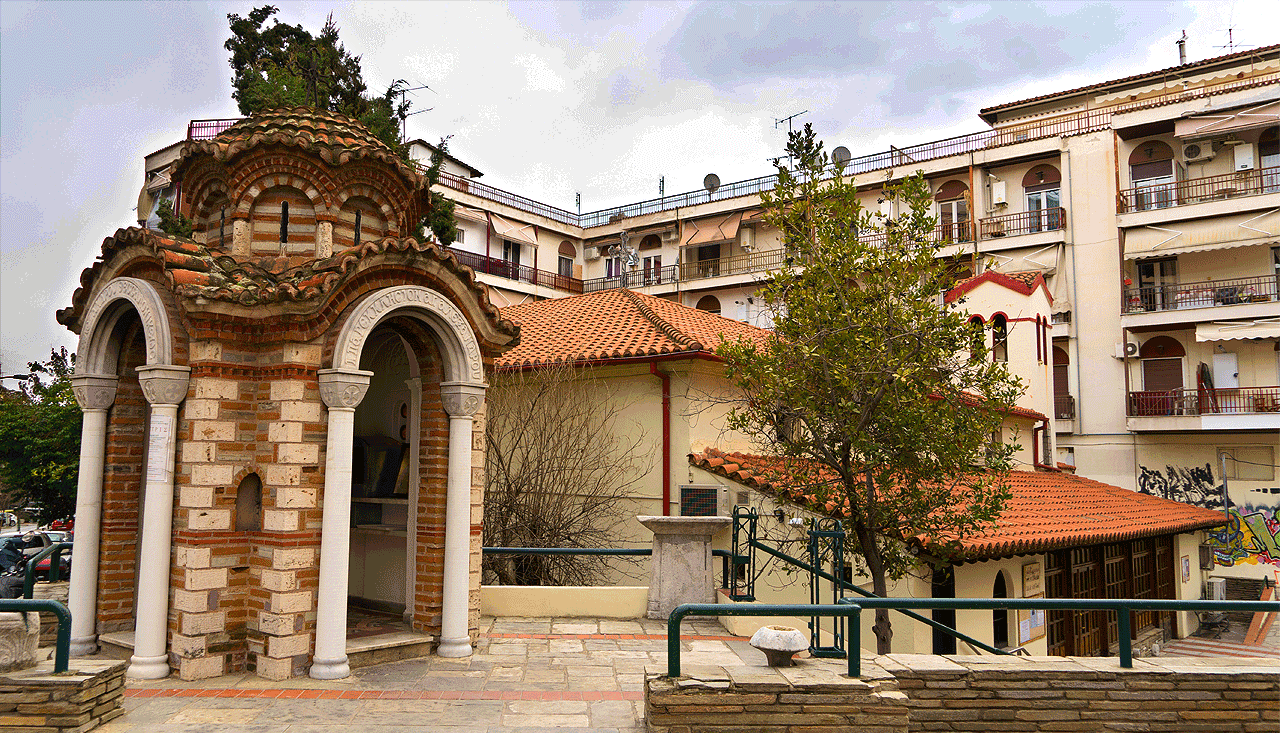
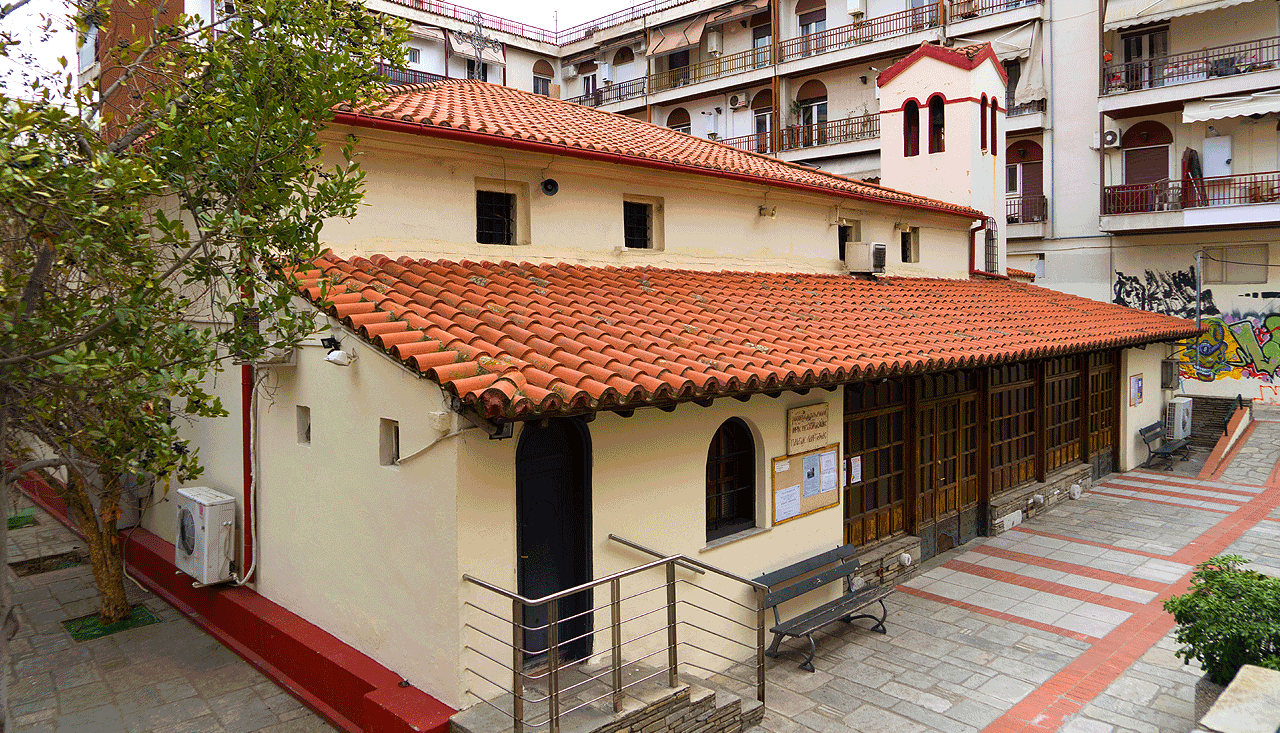
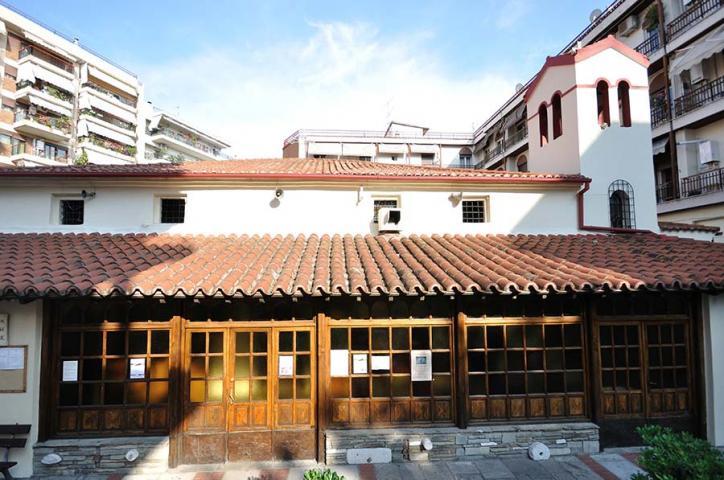
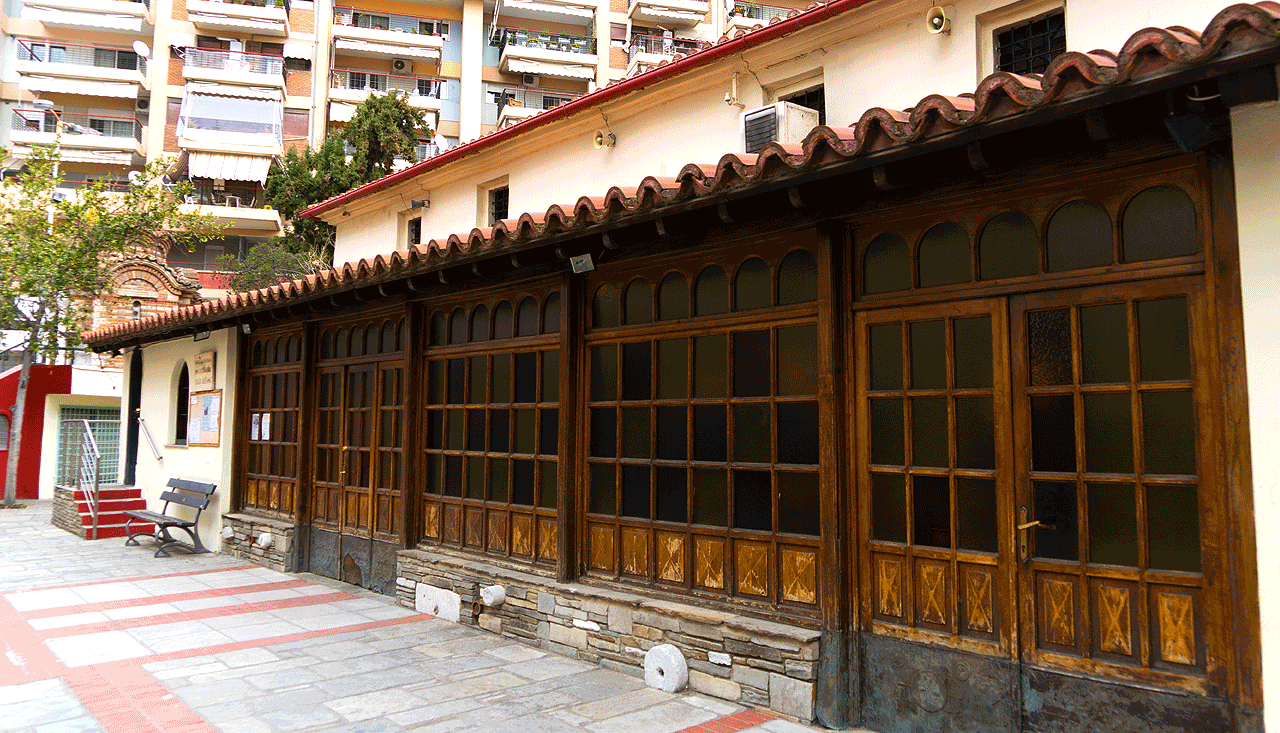
Church of Panagia Laodigitria or Panagia Lagoudiani in Thessaloniki

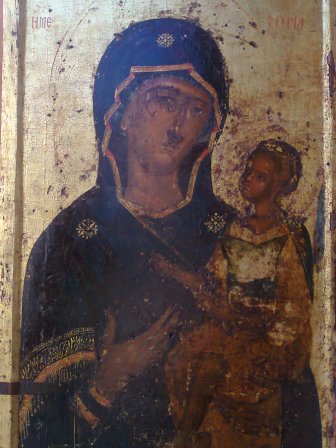
According to a byzantine legend, a miraculous incident occurred in the place where the church of Panagia Lagoudiani [Rabbit place] or Laodigitria [Virgin Mary the People Leader] is built. A hunter looking for rabbit’s hiding place, put his hands in a burrow trying to cage the small animal. However, he drew up from the hole the miraculous icon of Panagia Tricherousa [the “Virgin with Three Hands] or Oglaitissa. During the Ottoman rule, the monastery was called “Tavsan Manastir”, that is “the monastery of the rabbits”.

panagialaodigitrialagoudiani3

After this incident, a women’s monastery was built on this place and the central part of the monastery is today’s church. In the 15th century, it was the catholicon of a nunnery that was a dependency [Metochion] of Vlatadon Monastery (*)  According to another theory, the church took its name after the owner, Lagoudatos [Rabbit Man], who lived in the 14th century. In any case, this historical church is a rare archaeological gem and a monument of the post-Byzantine period  (1453-1800).

PanagiaLaodigitria5

The origins of the name “Laodigitria” is unknown but many researchers agree on byzantine sources of the 12th century when the Metropolitan of Thessaloniki mentioned the following: “…η Πάναγνος Θεομήτωρ η παρ ημιν του οδηγείν επώνυμος” [Virgin Mary, Mother of God, lead us…” Laodigitria Theotokos, the Leader of the people, became together with Saint Demetrius, the woman patron saint of Thessaloniki.

panagialaodigitrialagoudiani2

During the Turkish occupation, the monastery was offering social work, by granting near Monastery’s properties against symbolic price for the sheltering of poor Christian families. This system was called in Turkish “Itzare”, ie. an once-off symbolic “lump” sum and with the payment of instalments of similarly symbolic sums throughout their lifetime, so that the monastery retained the legal [‘bare’] ownership of the monastery’s real property since they beneficiaries were not allowed to sell them. This measure proved valuable for homeless families in hard times since the number of lodgings/houses was more than 20.

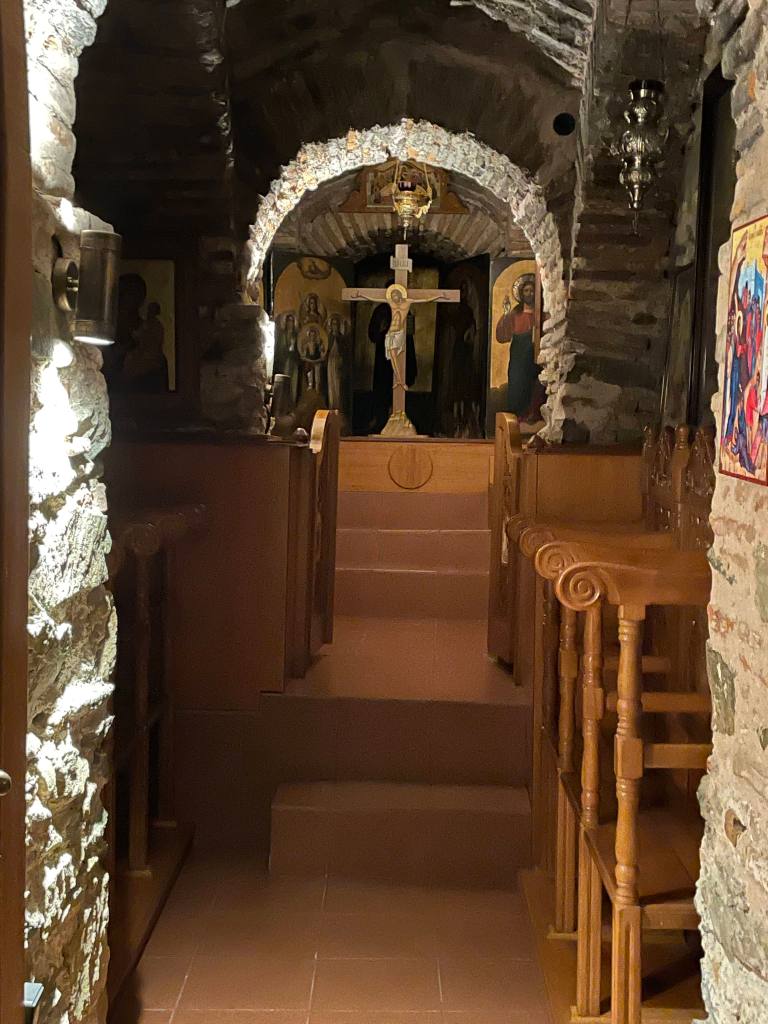
In 1802, the church was restored and renovated (Oct 27, 1802) through the sponsorship of the merchant Ioannis Kaftangoglou and became a three-aisled basilica with wooden ceiling and matroneum [gynaeconite; an upstairs gallery on the interior of a church, originally intended to accommodate women (whence the derivation from “matron”)], following the Macedonian ecclesiastic architectural standards of that era. Its most recent ktitor [ie. the founder] was Christos Georgiou-Menexes, from the province of Agiou Phanariou (Agrafa Thessaly) and from the village Megala Vraniana, +Memory Eternal of his parents. 

PanagiaLaodigitria8

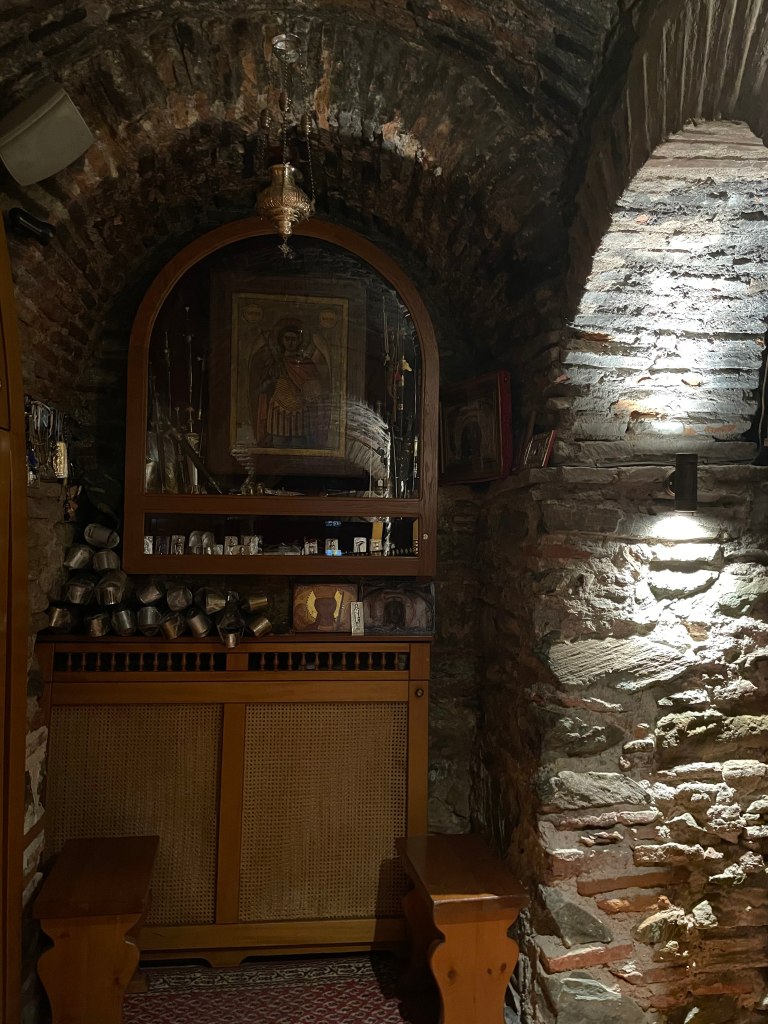
The church keeps a significant number of 18th and 19th-century icons, together with a miracle-working icon of the Virgin Mary. In the chapel adjacent to the southern part of the church, is located the holy water fountain, hence another name for this church, that of the Life-Springing Fountain of the Theotokos (Life-Giving Font of the Theotokos) [Ζωοδόχος Πηγή]. The church celebrates on this Feast during Bright Week and also honours Holy NeoMartyr Alexander the Dervish from Thessaloniki, Laodigitria (+ 1794).

*

As of today, the little city hermit will be chanting in this historic church, next to the Wonderworking Theotokos icon, an amazing blessing, honour and privilege. This was the first-ever church I visited as a young teenager, about 14 years old, for Confession, spiritual guidance and holy water, agiasma. + Father Panagiotis of blessed memory was my first priest confessor. So many memories! This church feels so much like home …. This blogpost is also beginning another blog series, that of Paleochristian and Byzantine monuments of Thessaloniki, since lots of fellow pilgrims all over the world are asking me about Thessaloniki’s churches and monasteries.
*. The Monastery of Vlatadon is located on the northern side of Ano Poli of Thessaloniki, close to the castle walls with a magnificent view to the city. This small monastery is built on the site where St Paul is believed to have preached to the Thessalonians, was founded in the mid-14th century and has been in continuous use since then. But more about this byzantine monument at another blogpost.