Should I Confess the same sin again?

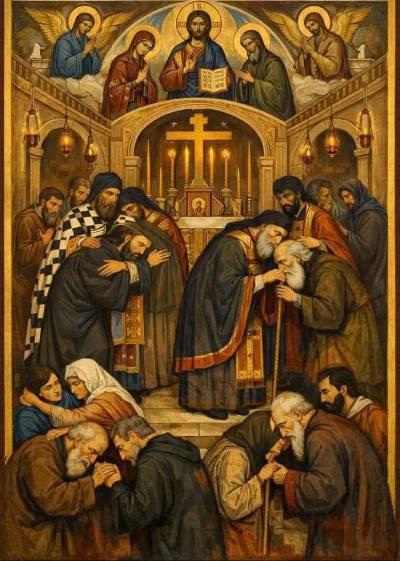
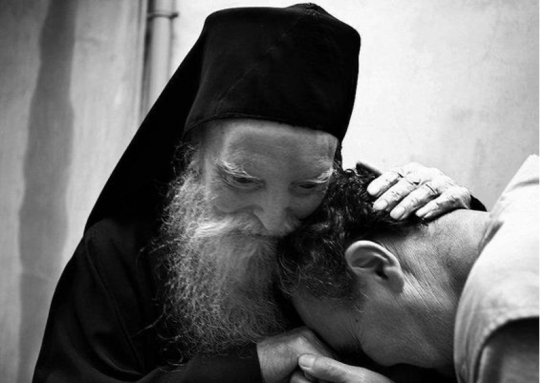
This profoundly moving and thought provoking homily is by Father Anastasios, the spiritual father of dear friends, a Father who is hearing Confessions all the time, from morning to night, and from night to morning. Indeed, our thoughts, the logismoi that surround us, especially concerning certain acts, even after they have been forgiven, are  symptoms of our fallen  state and marred image. Indeed we should, as we say  in the liturgy,” live out our life in peace and repentance.” I wish you all a blessed Christmas Lent!

*

“It is a topic that is discussed a lot.

Since you have confessed this sin, why do you have to confess it again? You have said these things!!!

Is this opinion correct?

It is, if Spiritual Life is not a continuous path from Darkness to Light.

It is correct, if Spiritual Life is not a continuous Purification, Illumination and Theosis process!

However, since Christ, the Theotokos, the Holy Apostles and our Saints prove to us with their Life and teaching that the Spiritual Life is a path of Repentance, Forgiveness of Sins and Eternal Life, then our Sin is also constantly revealed!

A path of continuous Illumination, which reveals our Sin to us first as an ACT. We confess it.

With Confession we receive Absolution of Sin, as an act, and we have peace.

However, the Light of the Holy Spirit, which entered inside us with the Absolution of Sin, reveals to us, as we continue in Kairos our Repentance, that before the act, we entertained many sinful Thoughts (ie. Logismoi) .

The same Sin is revealed to us, not only as an Act, but also as a Logismos.

Next to it, we begin to see other acts, which preceded and followed the Sin that we confessed.

We go to the Confessor and reveal the new revelations of our Sin, but also the new Sins, which we saw in the prayer for our Sin.

We receive more Light from the new Confession and with our continuous Repentance, Christ reveals to us the same Sin as our heart’s desire, connected to many other heart desires.

The Light of the Mysteries of Repentance, Confession and Holy Communion constantly reveals to us new facts that surround the Sin that we first confessed; they reveal to us other Sins, but also Sin itself more deeply, things that we did not see before.

The Light of the Mysteries, with Careful Repentance as the protagonist, constantly reveals to us deeper and deeper the same Sin, from action, to thought that preceded and desire from which the Sin began.

It constantly and daily reveals to us, along with Sin, our Mind and how it functions, our Heart and how it functions.

It reveals to us, constantly and daily, that WE HAVE NOT ONLY HARMED OURSELVES, BUT ALSO THOSE AROUND US, OUR SPIRITUAL FATHER, OUR BRETHREN, OUR WIFE, OUR HUSBAND, OUR CHILDREN, THE ENVIRONMENT, OUR NATURE AND NATURE.

It reveals to us that the one SIN THAT WE HAVE CONFESSED IS A LIFE IMPRINT;  IT IS NOT AN ISOLATED ATTITUDE OF LIFE, BUT OUR WHOLE LIFE!

There are two Commandments, Love for God with all your soul, which cleanses, purifies love for ourselves as the Image of God and for our neighbour!

Of all our Sins, one is the WORST, ONE IS OUR WORST PASSION, to which we must direct all our Vigilance and prayer.

It is OUR SELF-LOVE with all its CHILDREN, first, and OUR CARNALITY, SENSUALITY with all its children.

Didn’t David see these things and say “MY SIN IS FOREVER BEFORE ME”?

Didn’t Fr. Anatoly, in the Russian film “THE ISLAND”, see this?

Isn’t this the Vision of the Hesychasts, either in the Desert of Nature, or in the Desert of Big Cities?

Our spiritual awakening, the Revelation of one passion, reveals ever-increasingly all our hidden passions, like the laboratory tests of a Cancer Patient, which bring to light new data, so that the proper pharmaceutical treatment can be carried out.

THE LIGHT OF THE HOLY SPIRIT OF THE MYSTERIES OF THE CHURCH GRADUALLY LEADS US TO PURIFICATION, ILLUMINATION AND THEOSIS.

Just as the Archaeological excavations slowly, with daily labour, uncover the findings of ancient civilizations, so the Divine Light progressively reveals to the person who is Penitent until Death, the hidden Sinful Life.

Repentance, Confession and Holy Communion, with the cooperation of the Penitent with the Holy Spirit, constantly reveal our Sin, our sinful Life.

It is like the investigation of a crime, where the more the authorities search for it, the more the causes, the culprits, their intentions, their participation in the criminal action are revealed.

This work, while it begins with pain, because we identify the damage we have caused with our sin, always ends with Heavenly Joy, ripens within us the Fruits of the Holy Spirit: Love, Peace, Joy!

As we progress unto Purification from the vision of our Sinful Life, which we see constantly coming out of our Heart, as Christ tells us, we begin to see our Nature, our heredity and ourselves as a Member of the Body of Christ and the Church!

This is the Hesychastic Life of the Orthodox Church, where constant Repentance brings the Holy Spirit, who is the Protagonist of our Life, as Christ said to the Samaritan woman:

“God is Spirit, and those who worship Him must worship in spirit and truth.” (John 4,24).

To  those who see sin as an act, a thought or a desire, they think that a confession is enough to be forgiven. This opinion is natural, if this is knowledge.

However, to those who see Sin as a symptom and imprint of a constantly revealed SINFUL LIFE, a whole Life is not enough for them to confess and cleanse themselves.

This is how our Saints lived, with the culmination of Abba Sisois, who pleaded to Christ, when He came to take his soul :

WILL YOU NOT ALLOW ME, LORD, JUST A LITTLE MORE TO LIVE, SO THAT I CAN REPENT?

Hearing this, his Disciples said, “Elder, you HAVE BEEN REPENTING YOUR WHOLE  LIFE!”

And the Great Sisois said:

–  BELIEVE ME, BROTHERS, I DO NOT THINK I HAVE EVEN MADE A BEGINNING YET. 

Those who see, know that the vision of running water, while it appears to be the same, is not the same.

Those who see, in the Holy Spirit, constantly know their Sin, that it is not itself, that is why they cry out with a sigh, “Lord Jesus Christ, have mercy on me!”

And the Forgiveness of Sins comes and pain becomes Joy, slavery becomes Freedom and darkness, Eternal Light!

Spiritual Life is not only an interrogation and attribution of responsibilities; it is mainly a lifelong treatment, which is done with great care and diligence, daily and constantly until death.”

Father Anastasios, Confession

SLICES OF WARM BREAD 

A spiritual Father’s diary

“Someone recently described Thessaloniki as like a dry cake. I’m not sure about this simile. I would prefer to describe it in terms of warm slices of bread. Exchanging a cold, windy, wet Manchester of 13C for a calm, warm late evening 25C, Thessaloniki was indeed a taster of what was to come. Having navigated the vicissitudes of the roaming signal with a friendly local, a familiar “taxi” driver arrived to pick me up from the terminal. 

I have often thought that the word terminal speaks of rather sad endings rather than the springboard and opening to new adventures. 

Having been delivered to my assigned apartment I enjoyed the sleep of the just traveller. 

The five days in Thessaloniki spent with my spiritual children had both an eternal and a brief dimension. Time expands and contracts according to God’s ordinance. 

House blessings, Confessions, Social Gatherings, Prayers, Church and Monastery Visits and the not so mundane coffee stops roll into a well risen loaf with the yeast of kindness and the warmth of hospitality. 

In just one day we visited: 

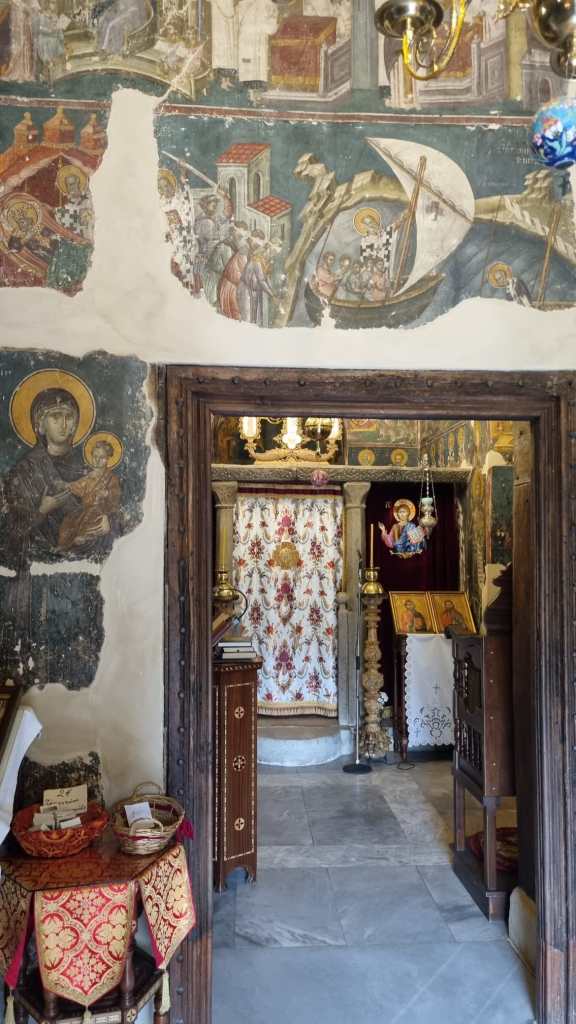
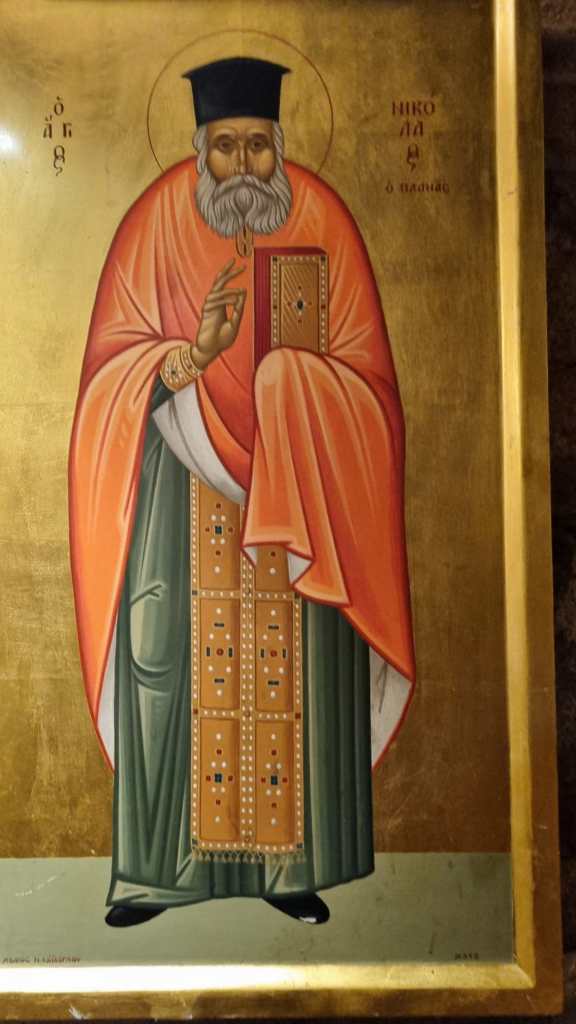
  1. The Holy Church of St Nicholas Orphanos 
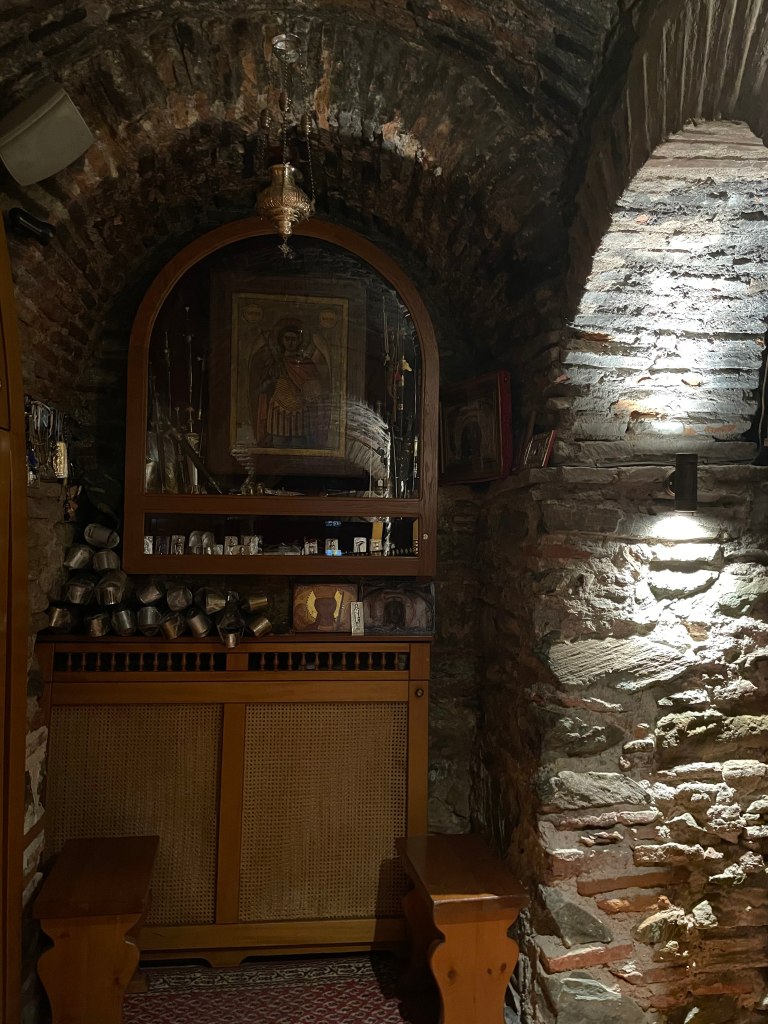
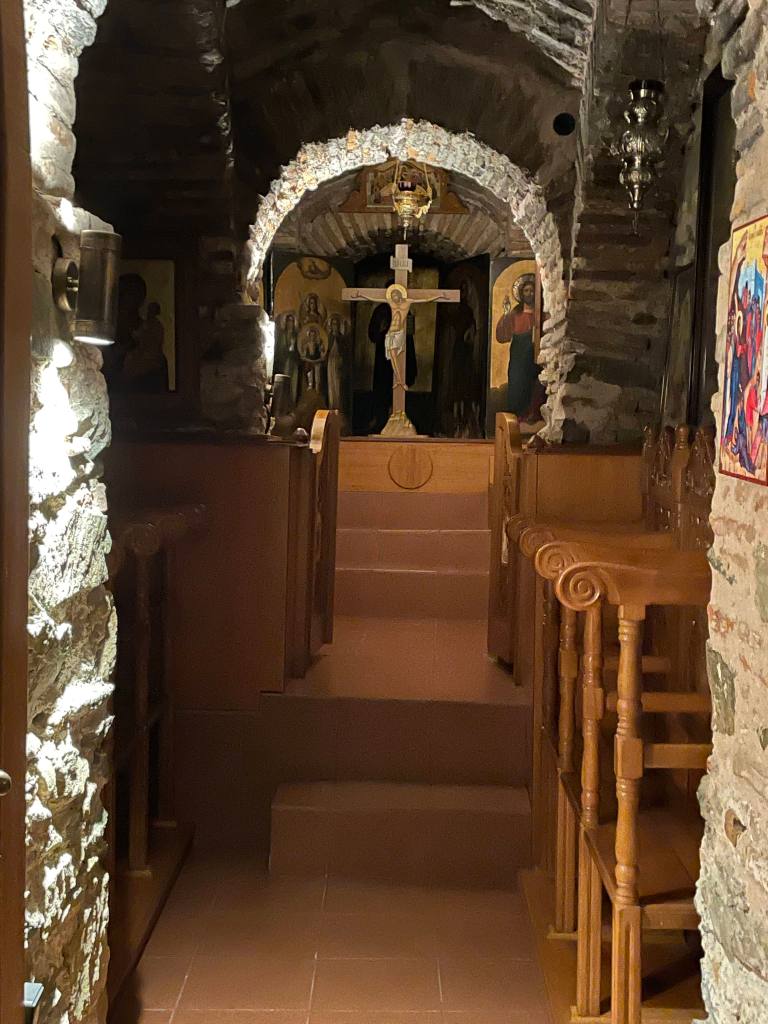
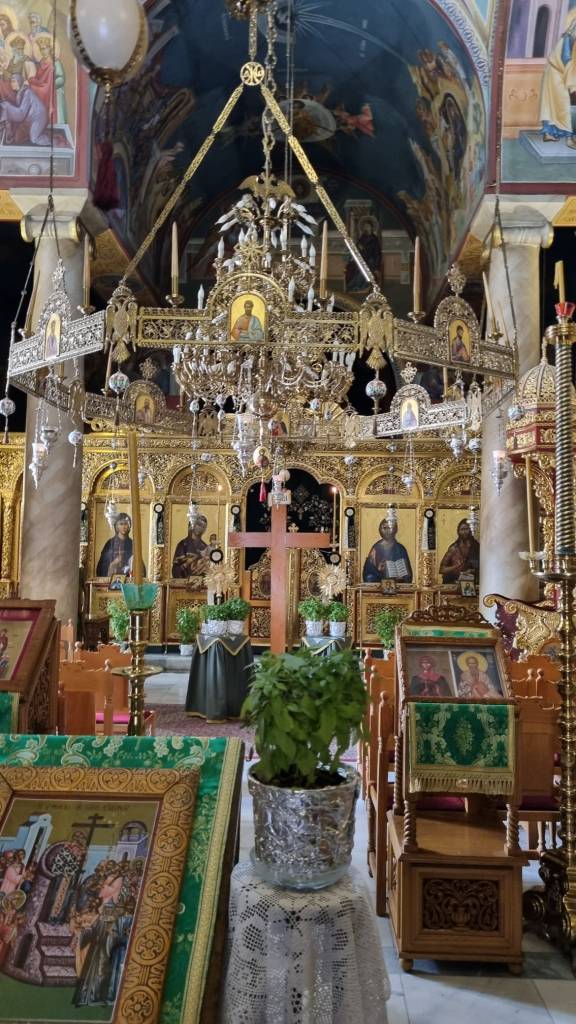
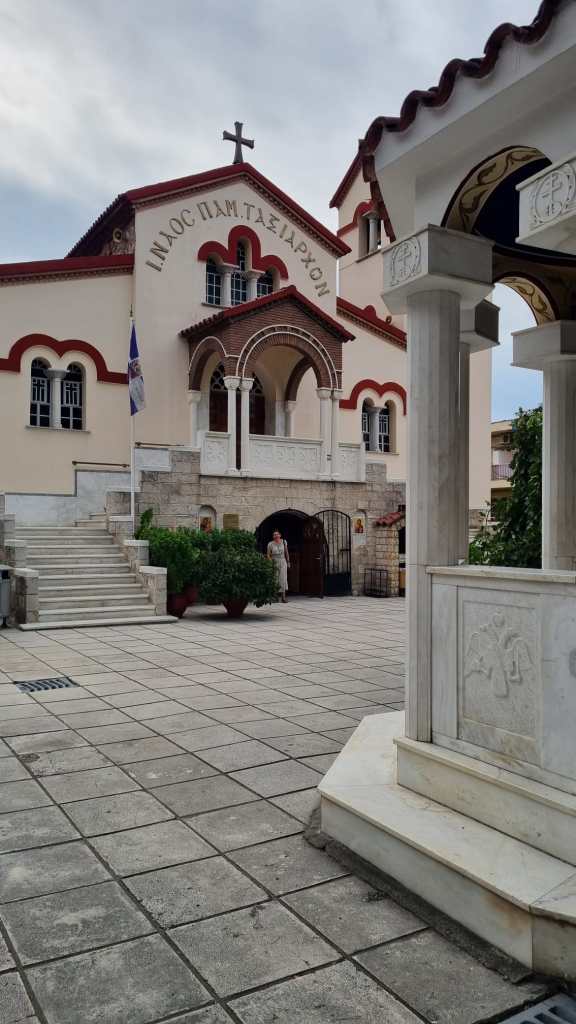
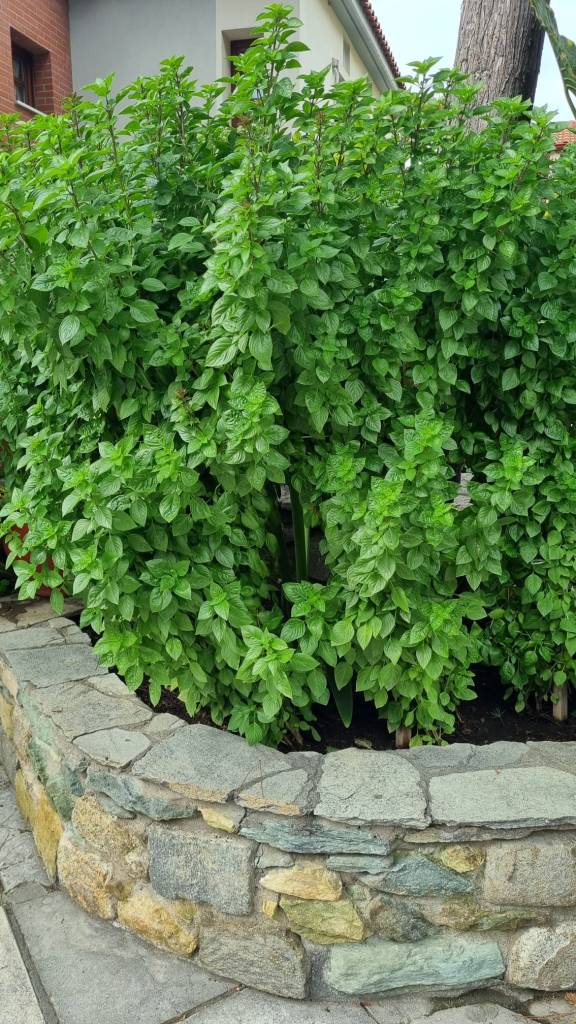
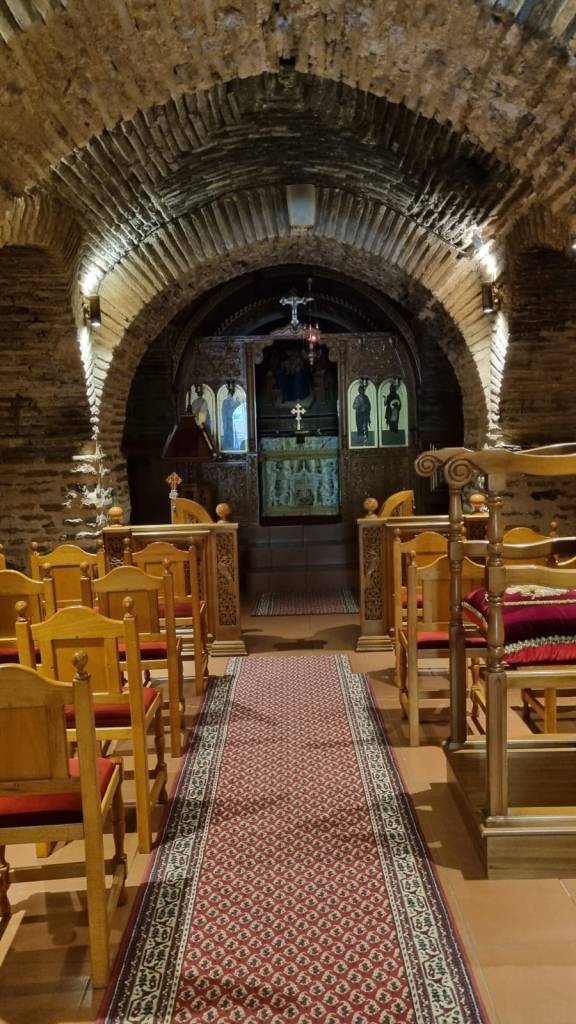
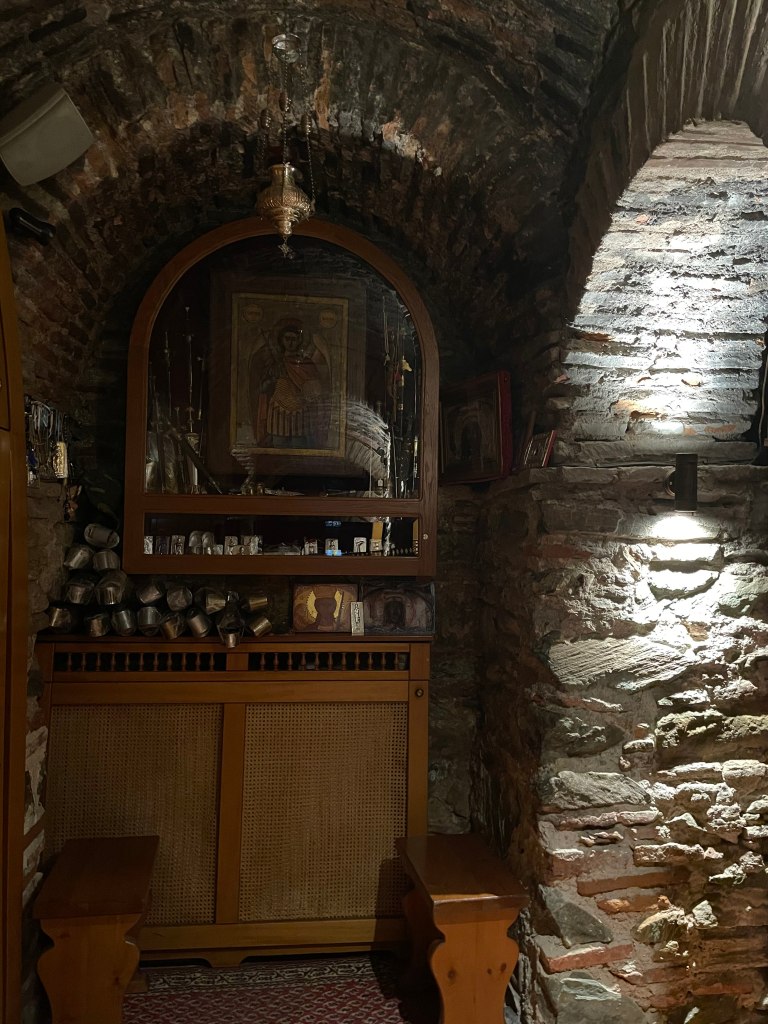
  2. The Church of Pammegistoi Taxiarches where there was a Byzantine Crypt and huge Basil bushes outside. 
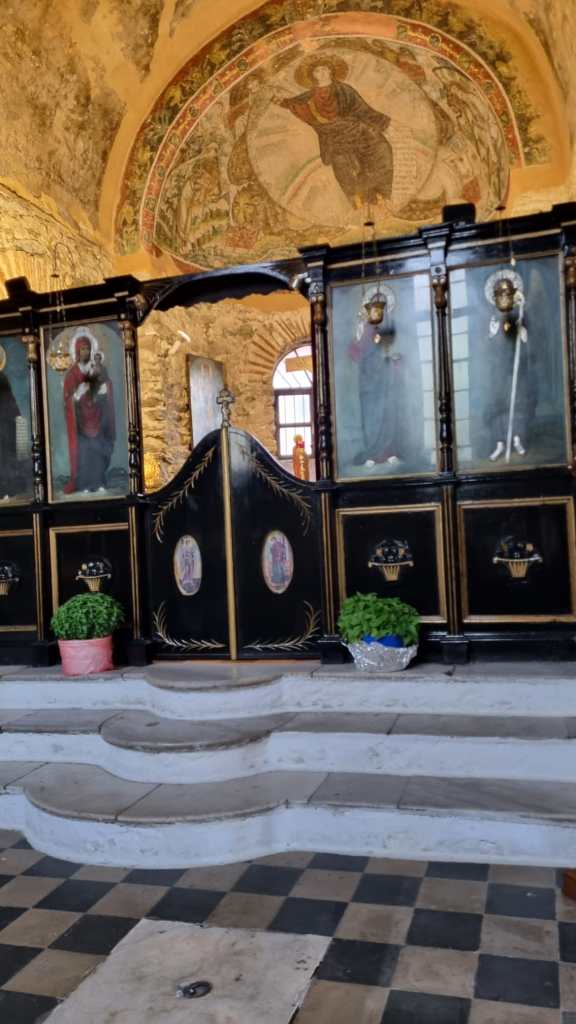
  3. Vlatadon Monastery. 
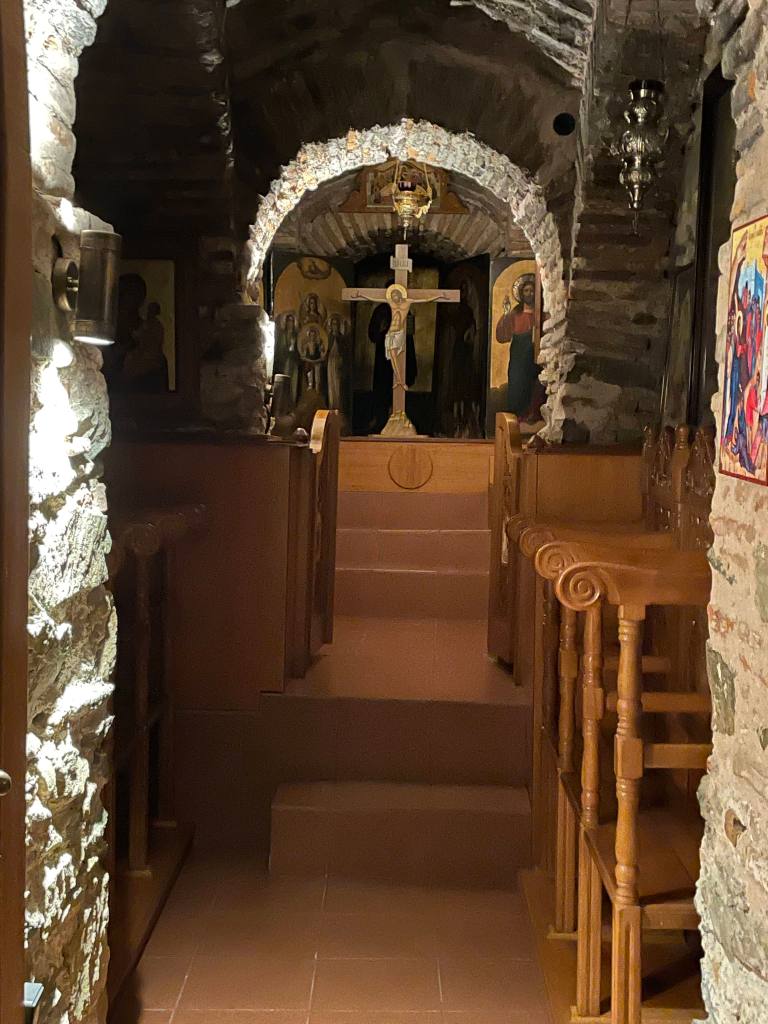
  4. Latomos Monastery and later the cave Church of St David the Dendrite. 
  5. St Demetrios Church. 
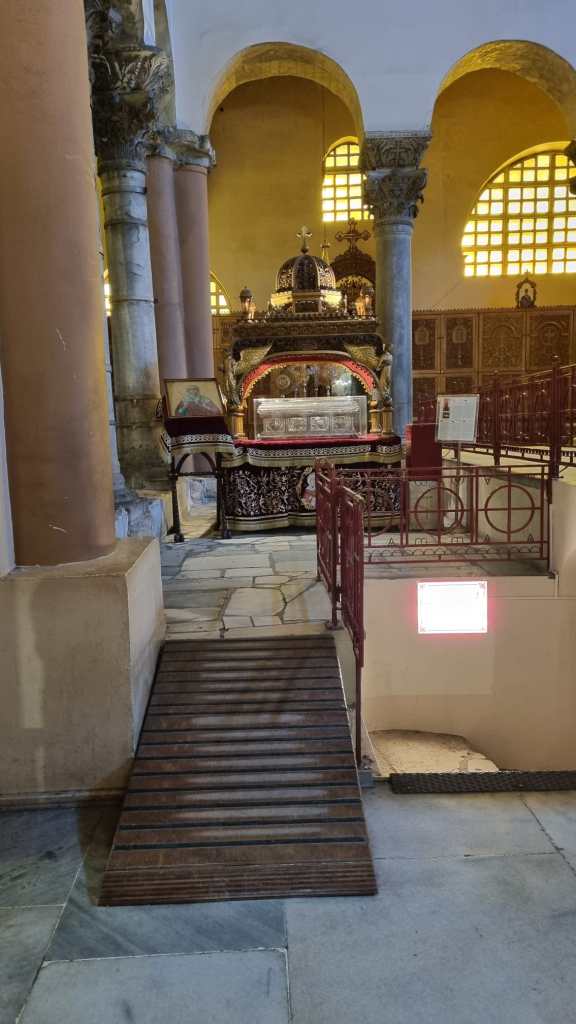
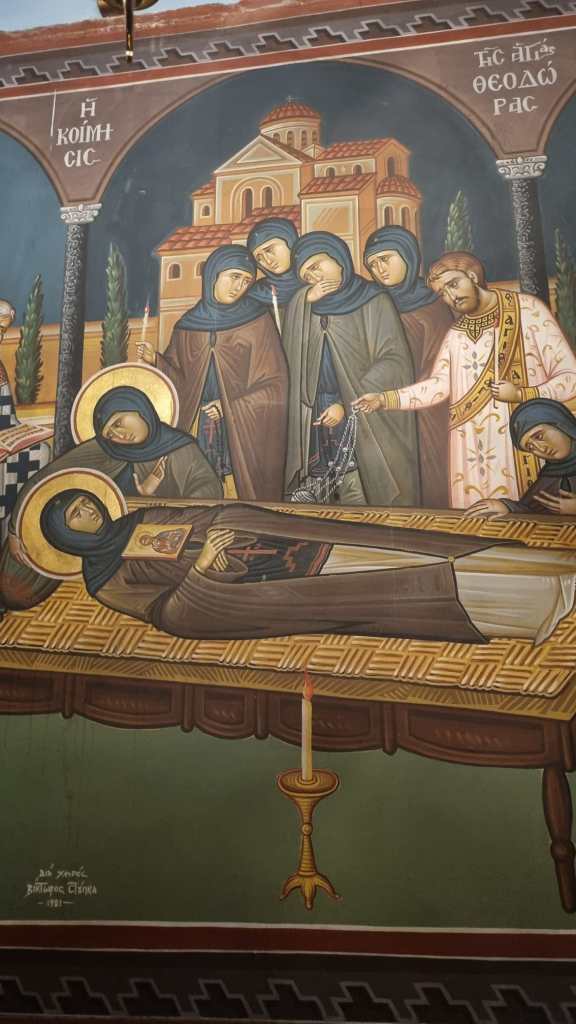
  6. St Theodora Monastery and Church where we venerated the holy relics of St Theodora and St David. 
Church of St Theodora

Stopping for late lunch the first thing to arrive on our table was warm sliced bread — a gift and a symbol of the spiritual slices of holiness we had tasted earlier. 

St Demetrios church St Anysia relics
Church of Pammegistoi Taxiarches with byzantine crypt
St Nicholas Orphanos
Basil bush
Osios David the Dendrite Latomos monastery
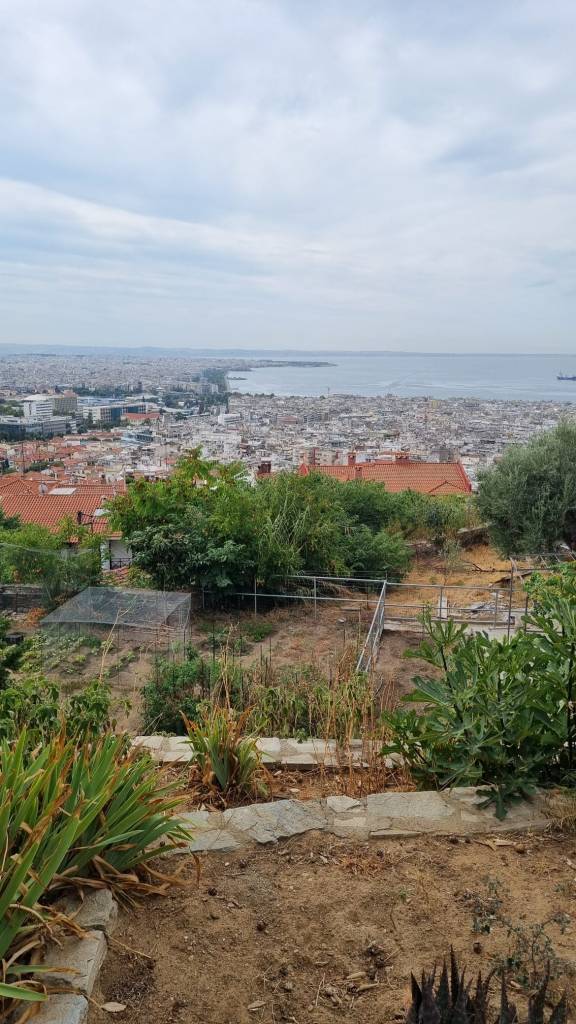
View from Vlatadon Monastery

We took the bread, blessed it, gave thanks, broke it and shared the humble gift with the meal — a eucharistic pattern that is woven into every fabric of the Christian Life. 

So many precious memories in a short space of time — but God’s time (kairos not chronos). For these treasured moments I give thanks to God”.

⚔️ The Line of the Sword of Archangel Michael and Autumnal Equinox⚔️

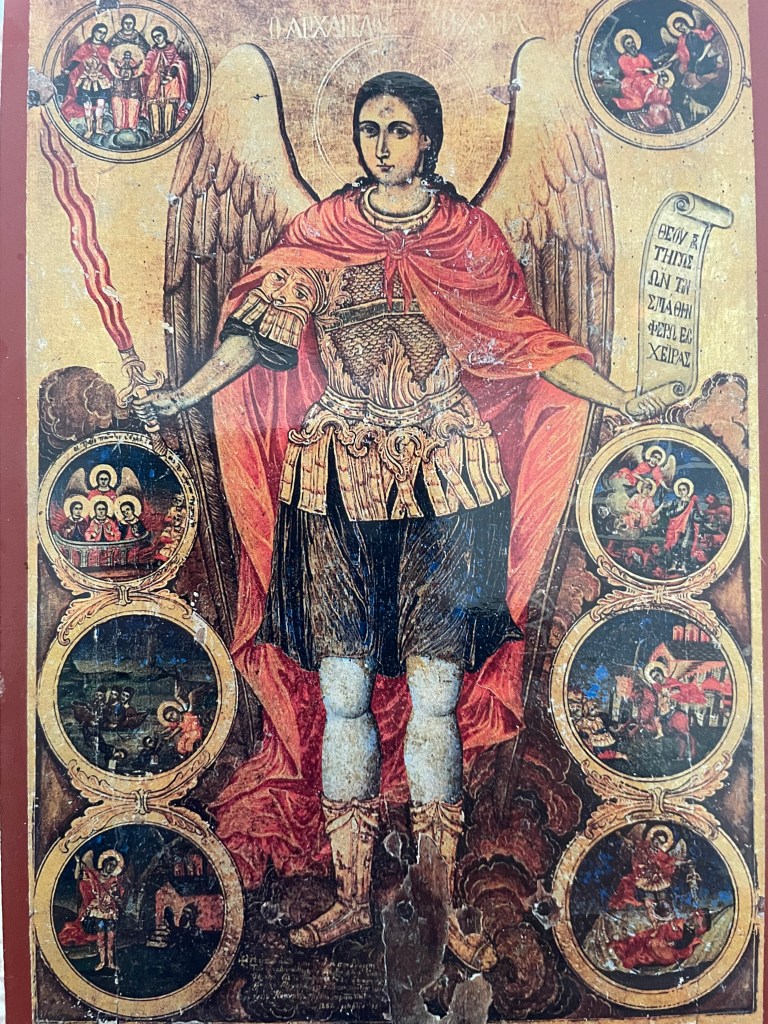
Last week, Archangel Michael, became central in my life. First, my spiritual father arrived and rescued me after a summer of fires, all kinds of fires, and carried me in his arms like the Good Shepherd. He also brought me this icon of the Archangel Michael to protect me from the attacks of the evil one “through the valley of the shadow of death.
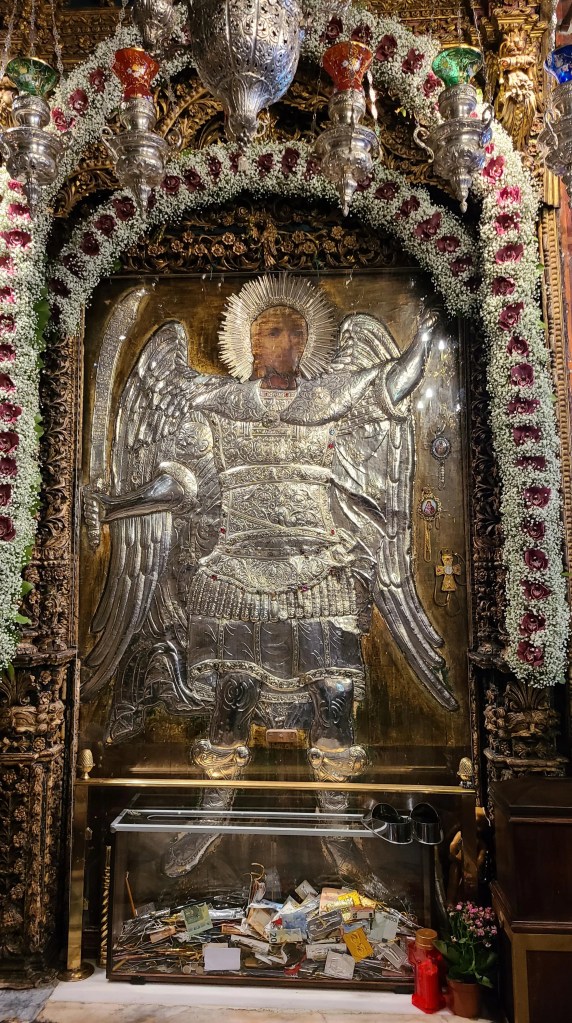
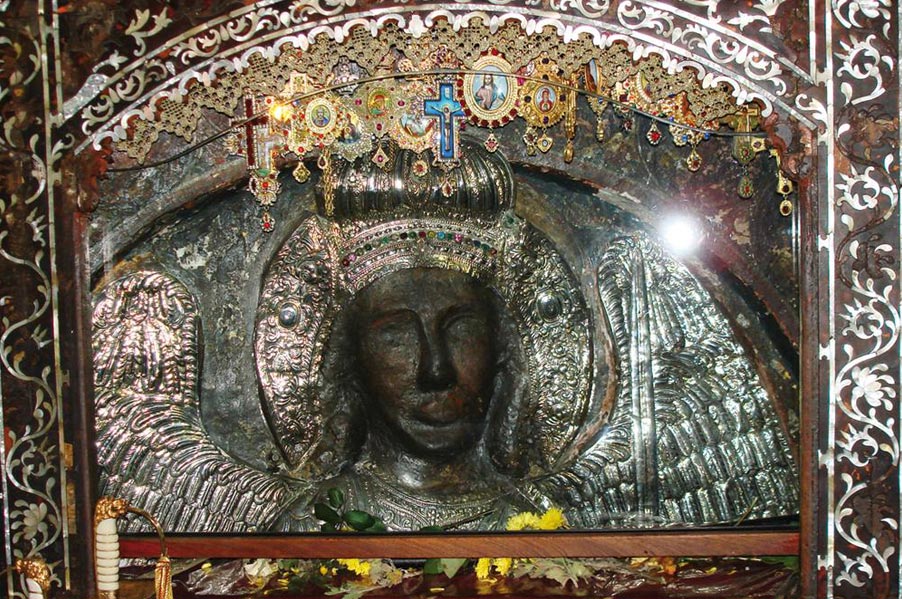
Then, a dear spiritual sister of mine is leaving tomorrow on a pilgrimage to Archangel Michael of Panormitis (Gr. O Πανορμίτης) on the island of Symi, and promised to give our names for commemoration and bring a copy of that miraculous icon of the Archangel Michael, one of the most famous miraculous icons of the Archangel in Greece.

Archangel Michael of Panormitis, Taxiarches monastery,  Symi island

The other famous and truly fierce, if I may use such an expression for an icon, is the miraculous icon of Archangel Michael is that of Mantamados on the island of Lesvos, where a dear spiritual brother lives and prays for all mankind. This is an icon that once you encounter and venerate, you never forget all your life. I had this blessing a few years ago.
Archangel Michael of Mantamados, Lesvos

Last but not least, today, Monday 22 September, is the day of of the autumnal equinox, September 22, which is closely related to Archangel Michael in a way that may surprise you.

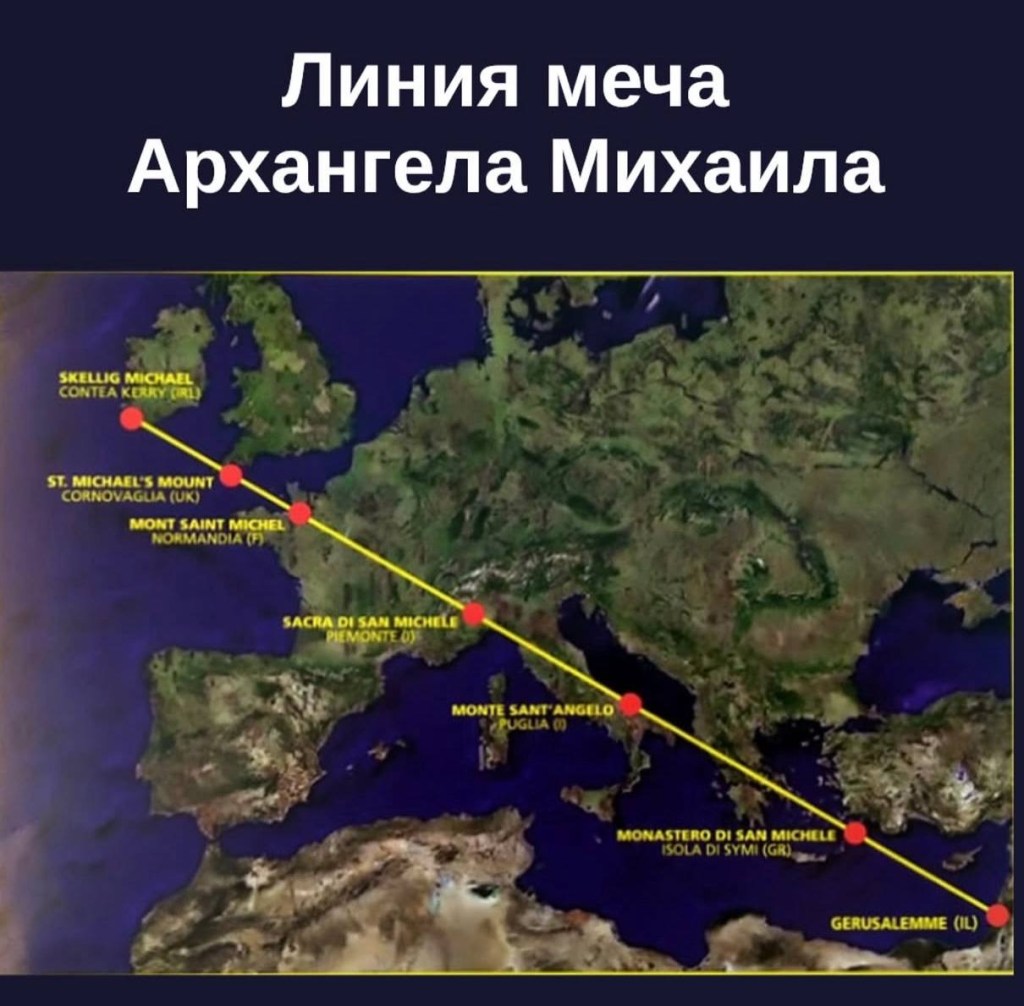
Forgive my long parenthesis. Now to the autumnal equinox and Archangel Michael. There is an ancient legend: when Archangel Michael defeated the devil, his sword carved a fiery line on the ground. And the amazing thing is this: on the map of Europe and the East, seven holy shrines dedicated to the Archangel are aligned – all on the same line!

📍 1. Skellig Michael (Ireland) – a rocky island in the ocean, where ascetics lived in strict conditions, believing in the protection of the Archangel.
📍 2. St. Michael’s Mount (England) – a place where the Archangel appeared to fishermen in the 5th century.
📍 3. Mont-Saint-Michel (France) – a famous monastery on an island, which seems to be floating above the sea.
📍 4. Sacra di San Michele (Italy, Piedmont) – a monastery on a mountaintop, with a view that touches eternity.
📍 5. Monte Sant’Angelo (Italy, Gargano) – a cave, into which, according to tradition, Michael descended and consecrated it.
📍 6. Monastery of St. Michael (Symei Island, Greece) – an ancient pilgrimage site in the Aegean Sea, where believers flock for healing.
📍 7. Monastery of St. Michael on Mount Carmel (Israel) – the last point of the line, a symbol of union with Heaven.

✨ All seven of these sanctuaries are located on a straight line. And if we pay attention – this straight line coincides with the sunset on the day of of the autumnal equinox, September 22.

Archangel Michael stands guard.

+ Memory Eternal — Mother Akylina

+ 9 September


“I remember dear little Mother Akylina . Her bent figure eagerly recommending books in the bookstore, hardly seeing her over the counter but an eagerness to impart a clear voiced wisdom learned from ascetic struggle. May her memory be eternal and may she pray for us in the nearer presence of Christ” (Little Abouna)

From Singer to Monk, From Cancer to His Kingdom

“We pray again for the repose of the soul of your servant Dionysios the Monk… † October 19, 1993

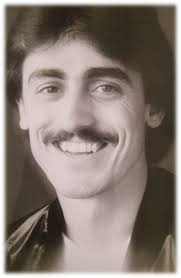
The famous and great singer Dionysios Theodosis who became a monk at Mikra Agia Anna on Mount Athos, shortly before cancer led him to Christ at the age of 35…

No one knew his secret throughout his battle with the incurable disease, until at his funeral procession at the Church of St Thomas the Apostle in Goudi, his spiritual director, Fr. Spyridon Mikragiannanitis, mentioned:
“We pray again for the repose of the soul of your servant Dionysios the Monk!”
Everyone was speechless.

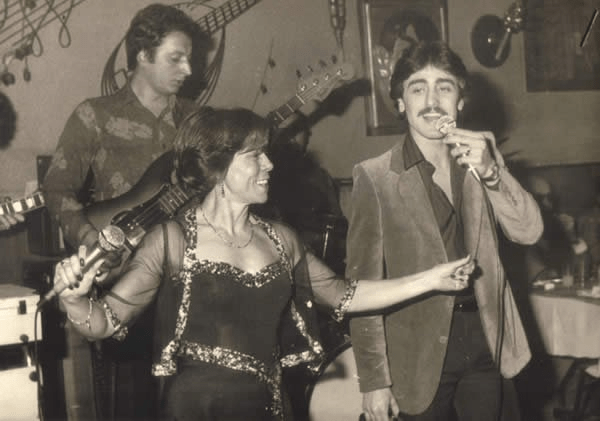
Dionysios Theodosis (June 16, 1958 – October 19, 1993) was a Greek singer.
During his career, he collaborated with well-known Greek composers including Yiannis Spanos, Giorgos Hatzinasios and Marios Tokas and with singers such as Giorgos Dalaras, Dimitra Galani and Haris Alexiou.

He was experiencing great existential impasses, until he met Saint Paisios, who discerned his pain and said:
“You, my child, are bringing me a lot of pain, you need to confess, and to a good spiritual father.
Go to the Mikra Agia Anna and talk to Father Dionysios, he is good and will help you”.

Dionysis followed the advice and set off by boat for Mikra Agia Anna.
A monk next to him struck up a conversation and introduced himself: “Father Dionysios Mikragiannanitis”.
After the initial surprise, they struck up a conversation for a while, but Dionysis thought he was a “jester” since this was not the image he had had until then of a spiritual person:
that is, a serious, perhaps even grim old man.
His illness, however, came to radically change the landscape.
He began chemotherapy in London.
His visits to Mikra Agia Anna intensified and he announced to the Fathers that he wanted to become a monk!
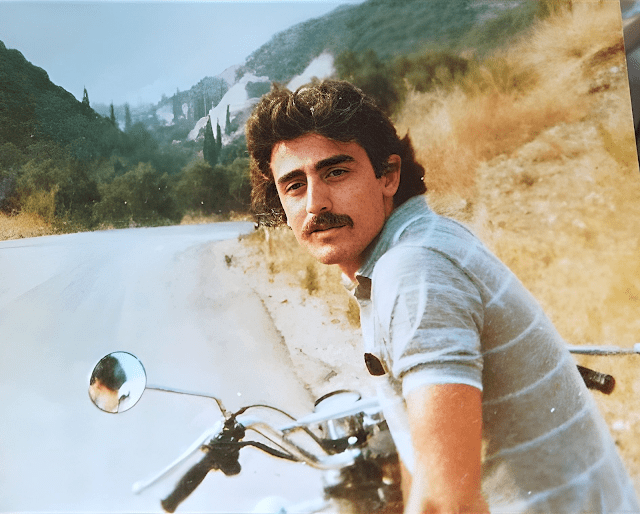
At least once a month when he finished at dawn his work he would take his motorcycle and travel to Mount Athos.

With his mother, also a singer, in a shop somewhere in Istanbul…

During that time, the song “As Long as a Coffee Lasts” was also written, which he performed himself and which few know that he dedicated to his Elder!

He wished to get well and dedicate his life to hesychasm.
His elder, Dionysios, before leaving for treatment abroad, shaves his head and allows him to visit the hospital in England without his cassock.

On Mount Athos, together with Elder Efraim Katounakia

No one knows his secret, not even his mother Despo, who stands by his side in his last moments and reads a book he gave her about the garden of the Virgin Mary.

She is impressed by what he tells her about Mount Athos.

She prays to God in her heart:
“May my son get well and with my blessing come to serve you.”

Dionysios says his prayers in the bed of the hospital and she does not know that those prayers are his monastic rule!
One day, the English nurse tells Dionysis’ mother in a lacklustre voice, lacking any real emotion: «he died».

The funeral took place in Greece.
Among other relatives, friends, well-known singers, actors and musicians, his elder, Dionysios, also attended.

Fr. Spyridon revealed the secret at the ceremony when he said the name of the deceased: “the servant of God, monk Dionysios”(!)
The congregation was amazed.

Immediately after the ceremony the Fathers took his body, wrapped it in a sheet and monk Dionysios was buried in Mikra Agia Anna, in the place where he wanted to become a monk.

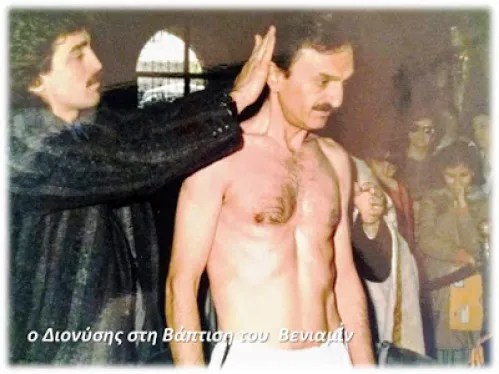
His stepfather and godson Benjamin Koul, a person who converted to Orthodoxy by Dionysis often visited his grave, knowing the people of Mikra Agia Anna.
(Benjamin was a Turk and was baptized in Greece.
His son, Dionysis Theodosis, was his godfather in the Sacrament…)

At the baptism of his step-father and godson


His wish was to be buried next to his child when he departed this life.

His wish was fulfilled.
He fell ill a few years later and also departed this life, adding another painful loss to the lady-Despo who, when the three years of his burial had passed, took the bones and brought them to Ouranoupoli.

There the monks received them and buried them next to those of his spiritual father, godfather and child, monk Dionysis.

From the page, “Dionysis Theodosis / DionisisTheodosis” and Amfoterodexios

Please watch monk Dionysis sing the song he dedicated to his spiritual father. At first sight, it looks erotic but it is about Agape!

As long as a coffee lasts

Dedicated to his spiritual father

Don’t leave me alone this night,
I am roaming in a minefield
When I drink you up and dry up this night
Either I’ll be saved or I’ll be lost

Stay a little longer
Until I escape
And if you want, hold me
As long as a coffee lasts
Stay a little longer
Until I escape
And then say bye
And that you will come again

Don’t leave me alone this night
My mind turns to evil
Comfort my pain this night
Lead me on with your love, like a baby

Stay a little longer
Until I escape
And if you want, hold me
As long as a coffee lasts
Stay a little longer
Until I escape
And then say bye
And that you will come again (2)

Memory Eternal! Christ is Risen!

A SHORT HISTORY OF  SILENCE 

A rustling of paper 

The squeak of the chair 

The cough 

The sniff and sneeze 

The dropped pencil 

The ruler being placed on the desk 

The buzz of the electric light 

The hum of the traffic outside 

The wind and rain on the windows 

The voice saying: “Stop writing please boys”! 

On the board outside in large red letters on  the white background SILENCE — EXAMINATION IN PROGRESS. Complete silence is hardly possible. 

The history of silence, ironically it seems,  starts, as physicists say with the “big bang” — I  say ironically because there was no one there to  hear it unless you believe in God and since the big  bang may have happened in a vacuum, there was  no sound. 

Our lives more than ever are filled with sound;  it seems as though we cannot do without  distractions; from the mp3s to the music that  invades our lives. We need to have space, peace  and quiet. 

John Cage 

4′33″ (pronounced Four minutes, thirty-three  seconds or, as the composer himself referred to it, Four, thirty-three) is a three-movement  composition by American avant-garde composer  John Cage (1912–1992). It was composed in 1952  for any instrument (or combination of  instruments), and the score instructs the performer  not to play the instrument during the entire  duration of the piece throughout the three  movements (the first being thirty seconds, the  second being two minutes and twenty-three  seconds, and the third being one minute and forty  seconds). Although commonly perceived as “four  minutes thirty-three seconds of silence” — the  piece actually consists of the sounds of the  environment that the listeners hear while it is  performed. Over the years, 4′33″ became Cage’s  most famous and most controversial composition.  The writer composer is trying to show that there is  no such thing as silence — that there is a  movement and dynamic — he invites us to listen. 

Silence sometimes has a bad press in the  Bible — often when it is used, it refers to God  silencing His people to stop their mouths: 

He silences the lips of trusted advisers and  takes away the discernment of elders. (Job  12:20) 

But the king will rejoice in God; all who  swear by God’s name will praise him, while  the mouths of liars will be silenced. (Psalm  63:11) 

“Therefore, her young men will fall in the  streets; all her soldiers will be silenced in  that day,” declares the LORD. (Jeremiah  50:30) 

Hearing that Jesus had silenced the  Sadducees, the Pharisees got together….  (Matthew 22:34) 

In a positive way however, silence is the space in  which God speaks. A relationship between two  people involves dialogue — speaking and  listening. If we cannot listen we cannot have a  relationship. My silence allows others to speak  and your silence allows you to hear me. At the  very heart of God’s universe is a dialogue  between heaven and earth — from creation  onwards it has always been so. It is in fact what  happens in an iconic way with the Holy Liturgy.  When Christ came to earth there were those who  heard him and those that did not. If you want to  acquire a quality of reception on your radio, you  have to turn it on and tune in until your radio  receiver allows you to hear. Our hearts, minds and  souls are like radio receivers — if you want to  acquire a quality of prayer, you must tune your  heart towards God in a qualitative receptive  silence. 

Silence between notes makes music, silence  between words makes language — otherwise we  have cacophony and noise. Any teacher can vouch  for that truth and every pupil knows it. 

We need space and silence. When the desert  father went into the silence of the desert in the  fourth century they found the devil and  themselves before they found God. When Jesus  went into the desert he was tempted too by the  voice of the devil. St Seraphim went into the  desert of the Northern Thebaid in Russia as a  hermit but not before he had learned obedience  and humility within a community. Without  obedience to a rule one would go mad. Silence  can be torture and is a torture with white noise.  Yet in solitude we can listen to other things — the  birds of the air, the wind, the sea — we never have  complete silence for the whole of Creation is  either singing or groaning. We can be part of a  communal silence in the monastic tradition — the  silence of a community is a dynamic silence — it  is not the silence of the one — the monolith — but of corporate sharing— full and replete — like  the dynamic of the Holy Trinity. 

The definition that Metropolitan Kallistos  gives of prayer is, I think, so valuable — “I just  sit and look at God and He just sits and looks at  me.” Sometimes words are unnecessary — when  one is in love with another person words  sometimes becomes an interruption to that shared mutual appreciation. 

Prayer is a relationship with God and an  encounter with the real world not limited by time  and space — it is not two dimensional but brings  us into the very reality of our being. It brings us  into contact with those invisible dimensions  which interpenetrate our life. For life lived  without prayer, without God is only two  dimensional — it is a flat world and it is lived in  relationship only to self. But in fact Visible and  Invisible coexist as fire is present in red hot iron  as hydrogen and oxygen co-exist to bring us thirst  quenching water. They are not mutually exclusive. 
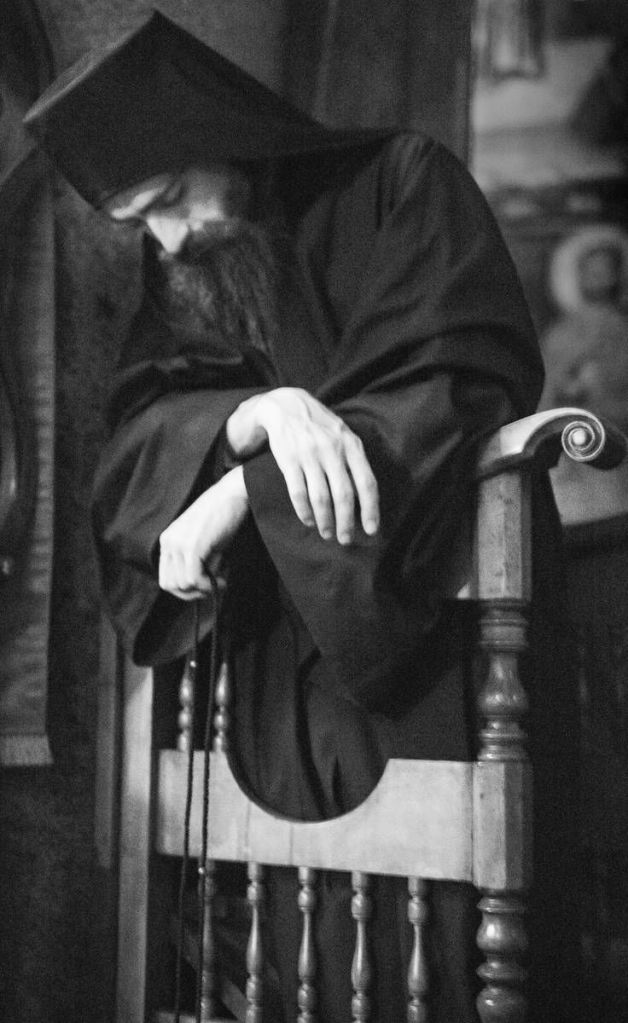
Prayer as Metropolitan Antony Bloom said in  “Courage to Pray” is an end to isolation — it is  living our life with someone. Prayer makes us  aware of God’s presence which we would not be  if we did not pray — like switching the radio on  and tuning in we have to make the effort to hear  God speaking. Indeed he who does not pray is in  isolation — the more we pray the more we realise  our need upon God — the reality of our vulnerable  state of mortality comes to the for, but at the same  time we begin to appreciate more grace and divine  support. Prayer does not change God — prayer  changes us, because it is God the Holy Spirit  praying in us. C. S. Lewis, that great friend of  Orthodoxy, expresses it like this in his poem on  Prayer: 
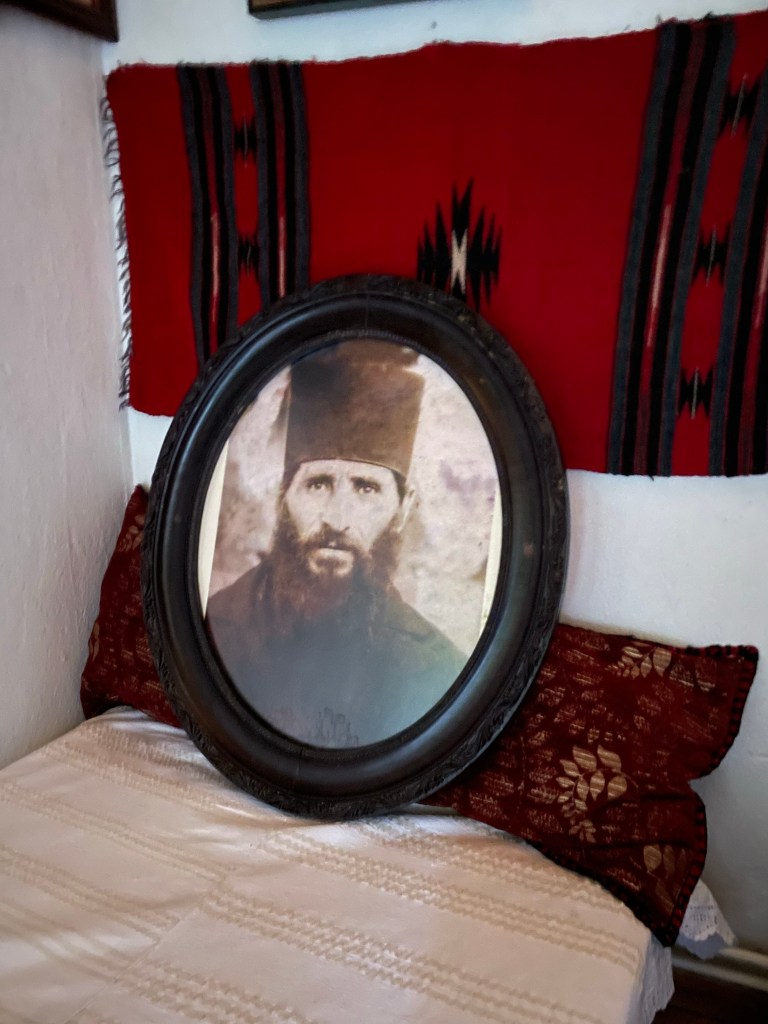
Master they say that when I seem 

To be in speech with you, 

Since you make no replies, it’s all a

dream – One talker aping two. 

They are half right, but not as they 

imagine; rather, I 

Seek in myself the things I meant to

say, And lo! The wells are dry. 

Then, seeing me empty, you forsake 

The listener’s role, and through 

My dead lips breathe and into utterance wake

The thoughts I never knew. 

And thus you neither need reply 

Nor can; thus while we seem 

Two talking, thou art One forever, and I

No dreamer, but thy dream. 

C.S. Lewis 

So we need to distinguish between negative  silence, which is isolation from God, and positive quietude — calm, hesychia — which is union with  God. The experienced use of mental prayer (or  prayer of the heart), requiring solitude and quiet,  is called “Hesychasm” (from the Greek “hesychia”, meaning calm, silence), and those practicing it  were called “hesychasts.” “A sign of spiritual life  is the immersion of a person within himself and  the hidden workings within his heart.” 

“Acquire a peaceful spirit, and around you  thousands will be saved.” (St Seraphim of  Sarov.) 

In our busy life bombarded by sound — we value  things by what we do, what is achieved, the end  product, the target fulfilled, the box ticked, but  perhaps rather than the measure of doing perhaps  we need to recalibrate our lives into being — after  all we are not human doings but human beings.  We should try to set aside at least half an hour  each day for quiet reflection and application:  SILENCE — EXAMINATION IN PROGRESS – — since we shall experience it sooner or later: 

[The Seventh Seal and the Golden  Censer] When he opened the seventh seal,  there was silence in heaven for about half an  hour. (Revelation 8:1) 

Eν Χριστώ 

Fr. Jonathan 

ابونا جوناثان 

Open to me the gate of loving-kindness, blessed Mother of God

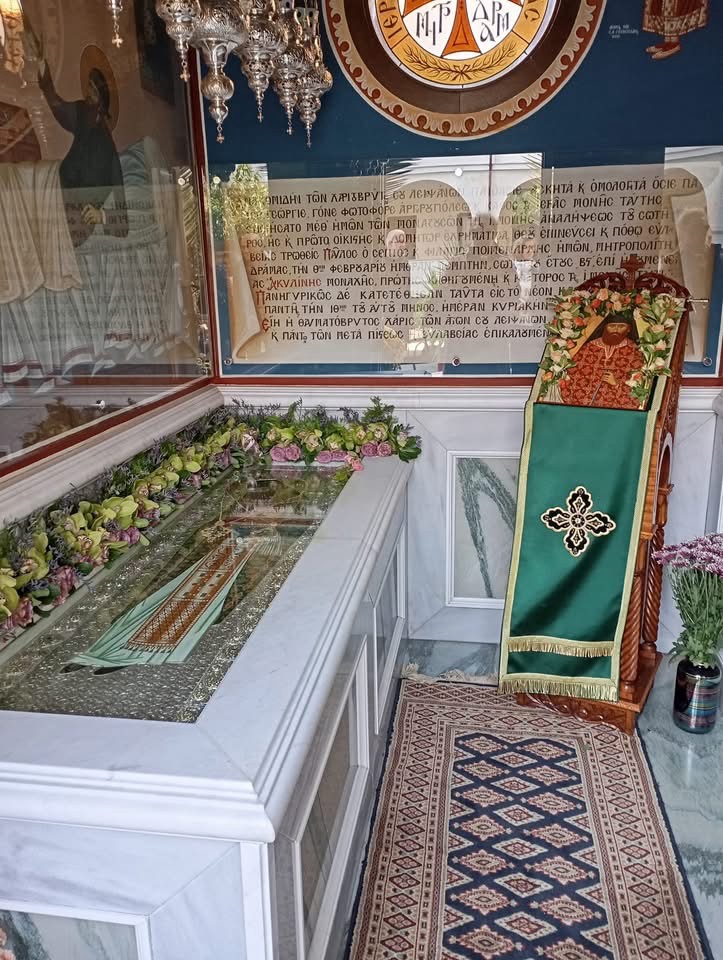
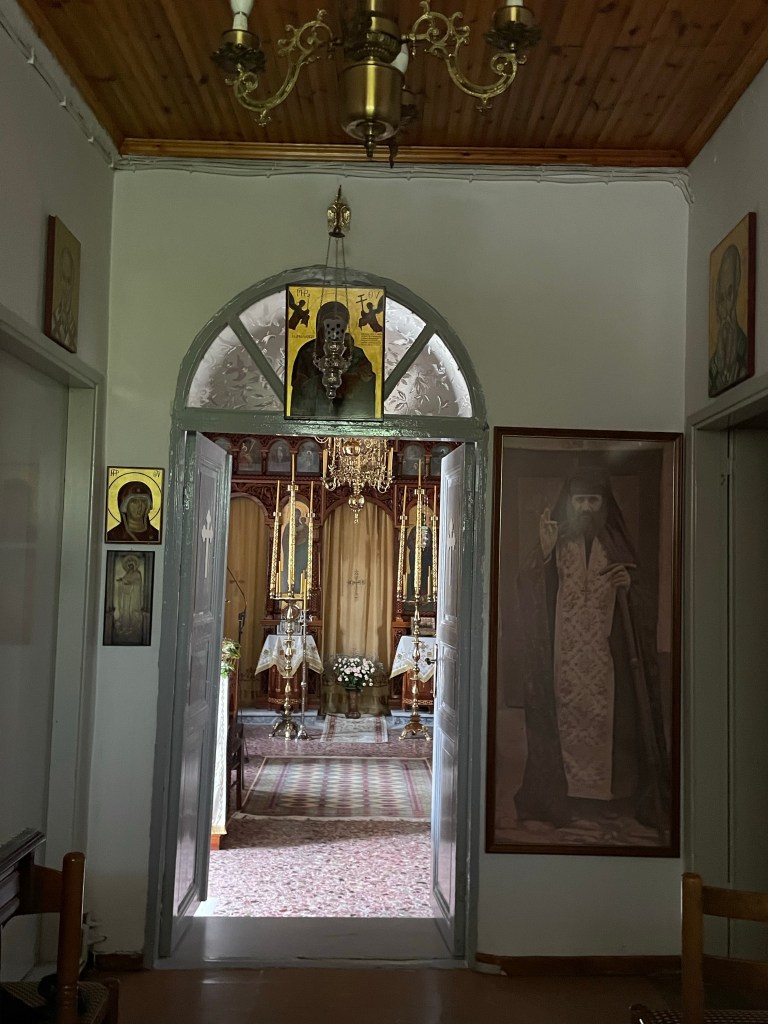
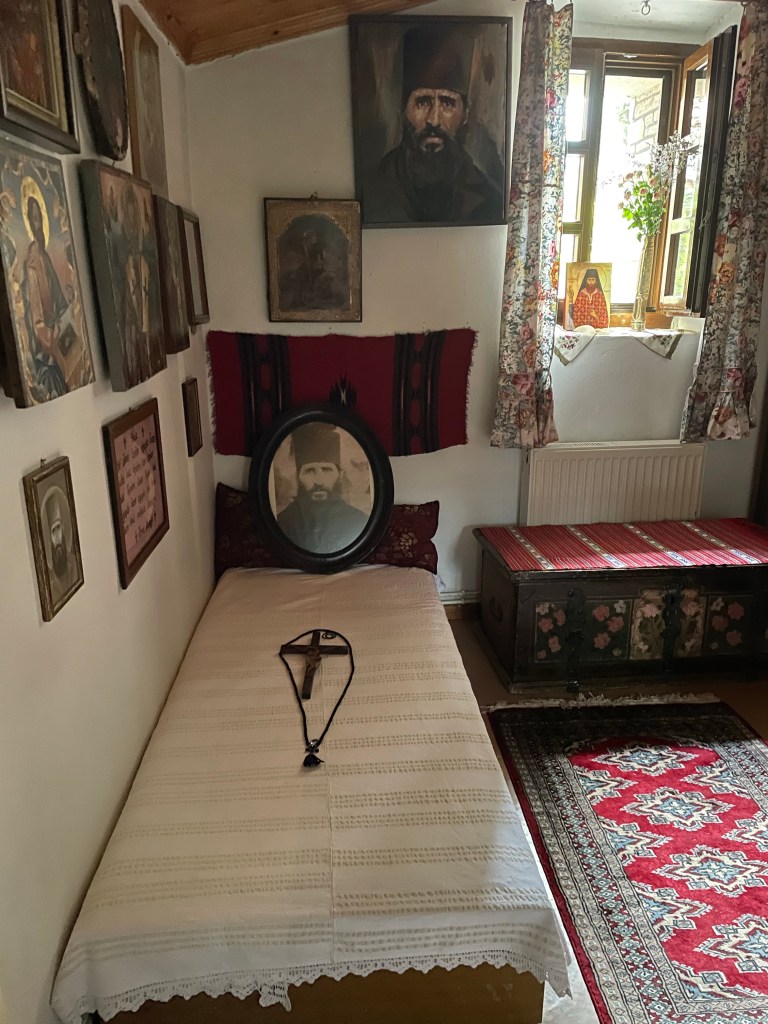
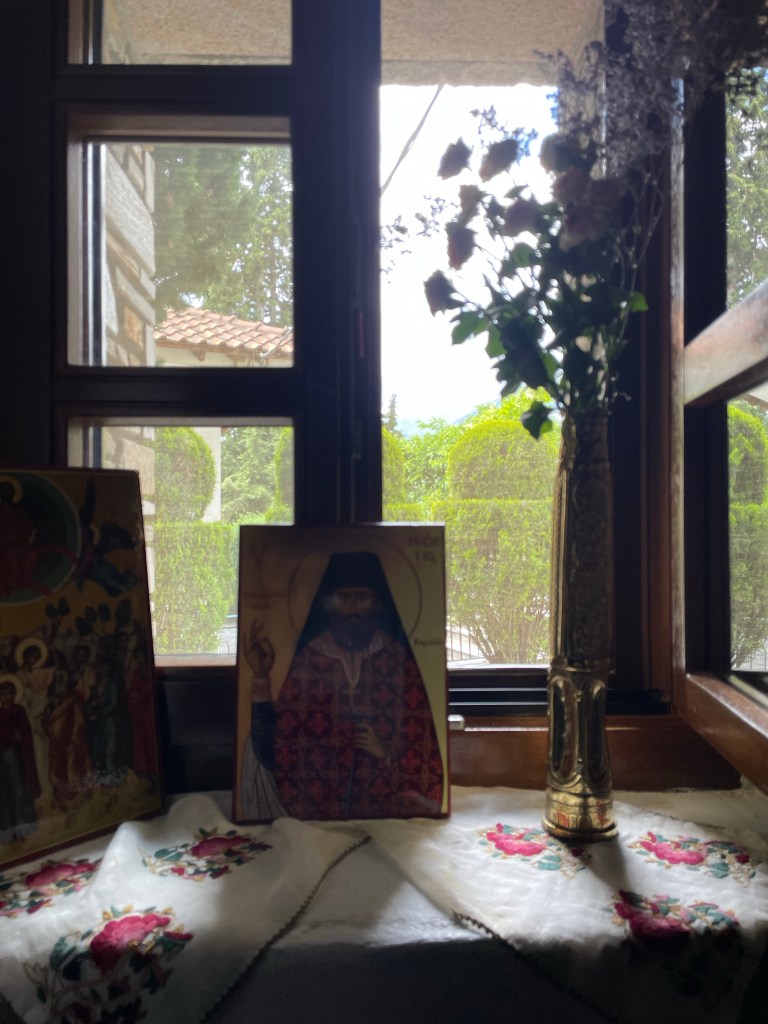
Inside St George Karslides cell and chapel

Dearest brothers and sisters in Christ, Christ has ascended! Truly He has ascended from earth to heaven!

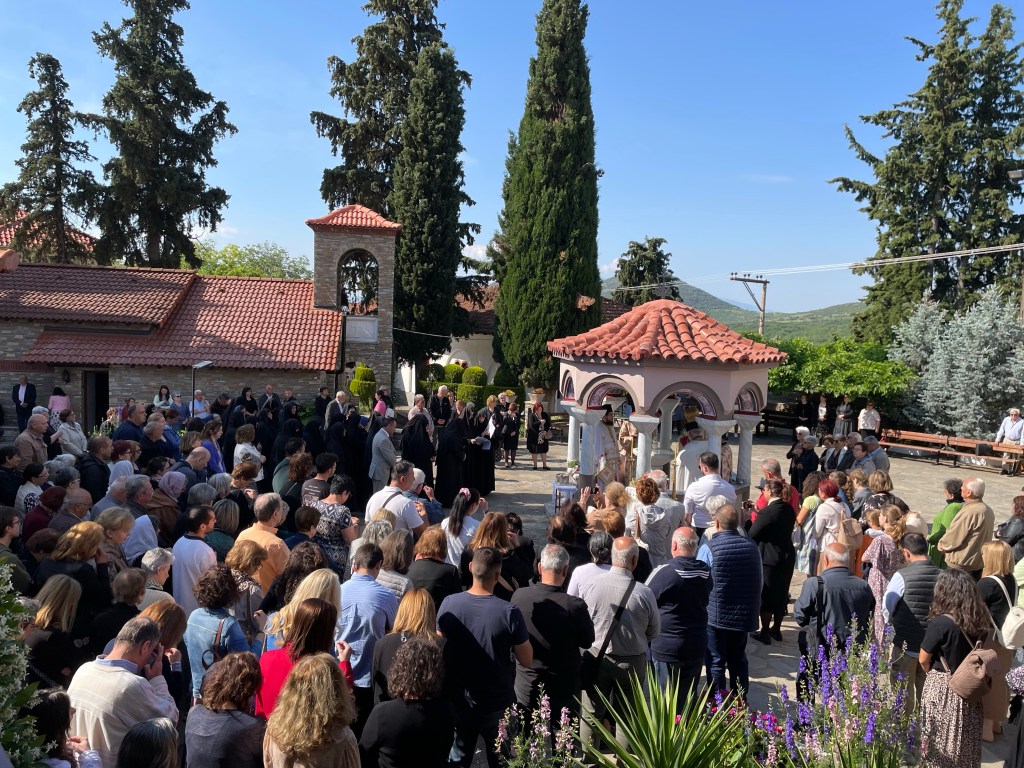
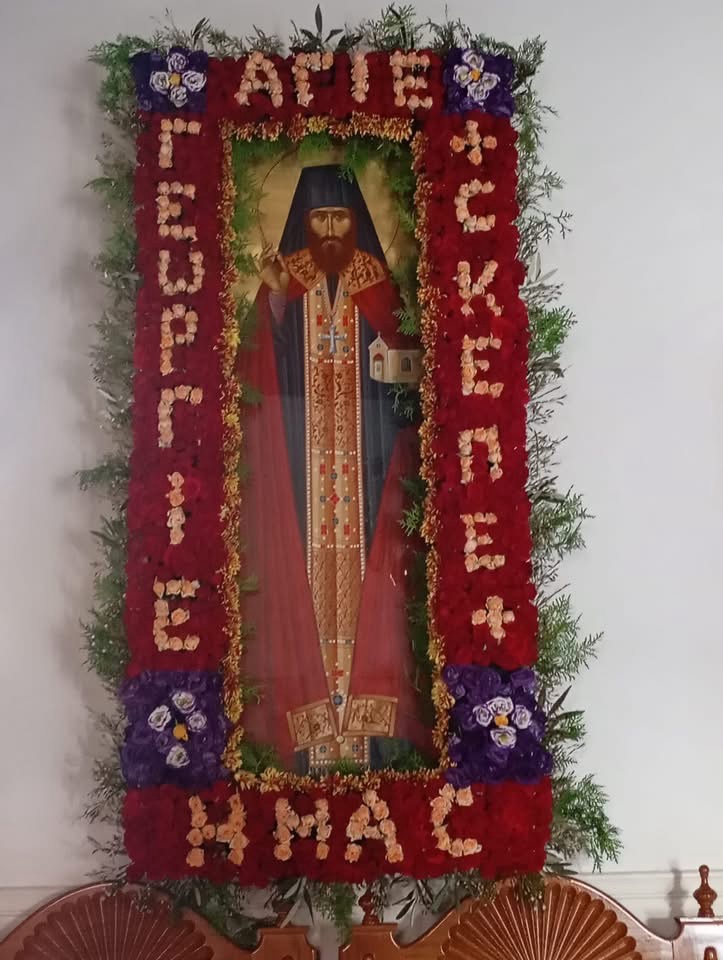
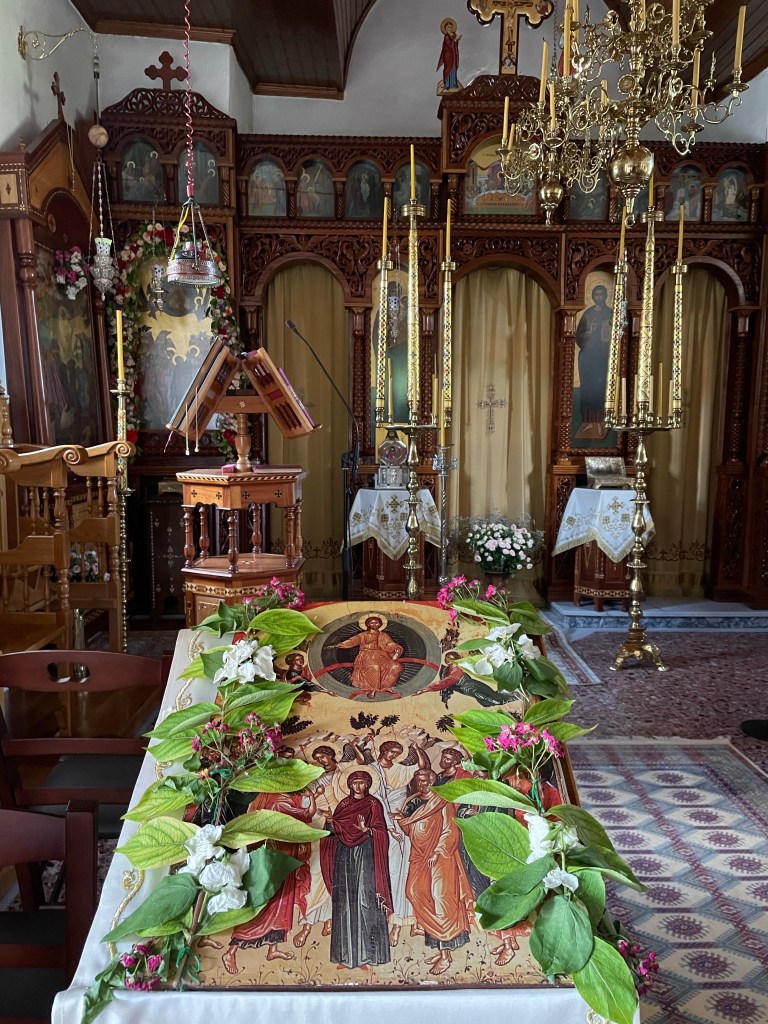
Here, at the Ascension Monastery, St George Karslides, in Taxiarhes (Sipsa), Drama, the sisters celebrate its annual Feast with a hierarchical Holy Liturgy at the Ascension chapel of the Saint and a blessing of the waters.

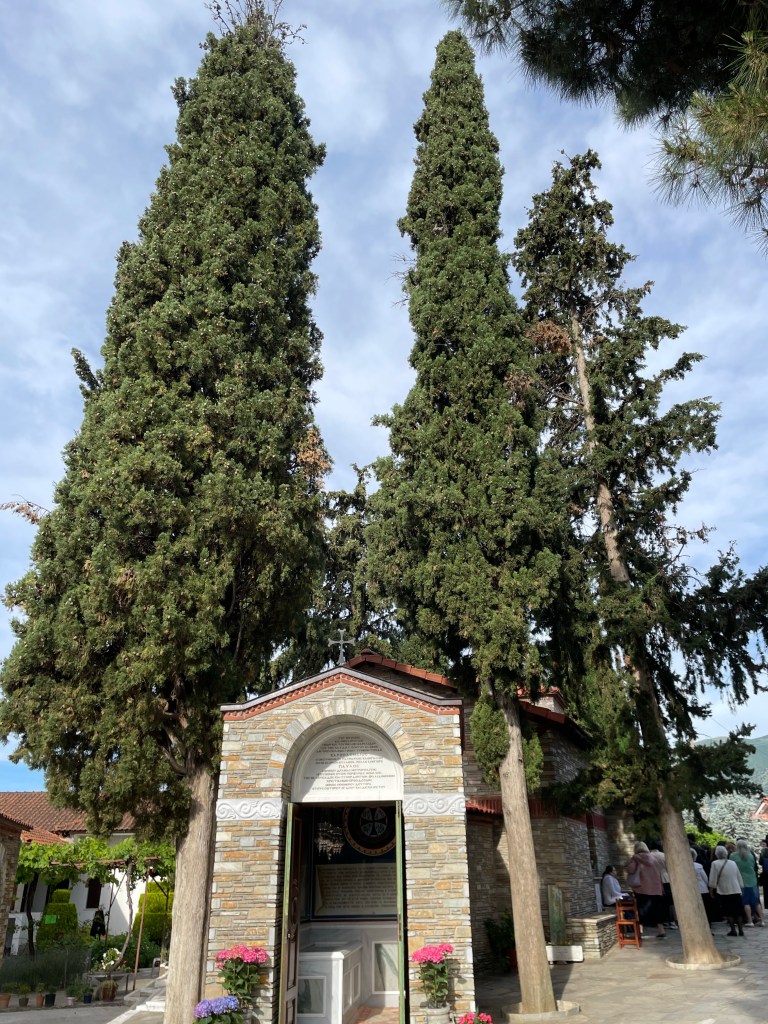
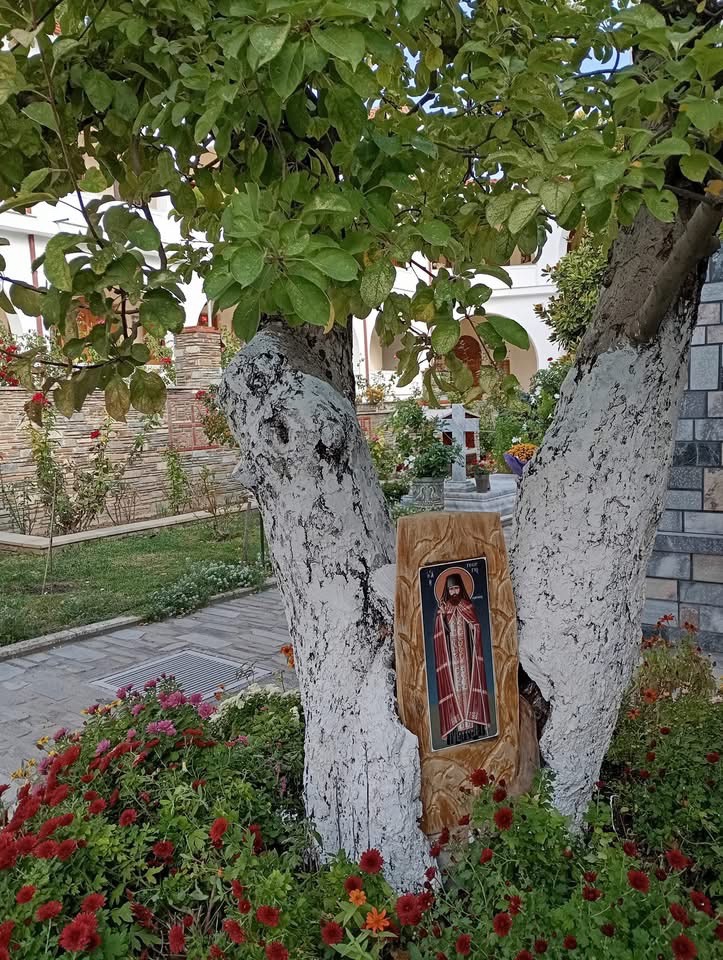
St. George last words were “Open to me the gate of loving-kindness, blessed Mother of God”. His dead body was supple, just said the case of those on the Holy Mountain.The two cypress trees at his grave bent, as though in veneration, as he had foretold, and lots of birds gathered at the time of his burial, with no fear of the large crowd of people. Everyone felt, was certain that they were burying a Saint.

These are the two cypress trees which bent at his burial and “un-bent” 40 days later

Indeed, for centuries, Middle Eastern and European cultures have revered the cypress as a symbol of the transition between life and death, with cypresses symbolizing the uplifting of the human spirit and the possibilities of eternal life. So many poems have been written about them by poets and philosophers. Cypresses are even discussed in Gerontikon (see below). But such participation of Nature in a Saint’s life is of an entirely different level.

This miracles brings to my mind another one, from the life of the Theotokos. The Synaxarion of the DORMITION (KOIMISIS) OF THE THEOTOKOS,
One of the Virgin’s prayers at the Garden of Gethsemane was to behold the holy Apostles who were then scattered throughout the world preaching the Gospel. When our Lady knelt and offered her petition and thanksgiving to her Creator, her prayer was accompanied by a wonderful manifestation: the olive trees growing on the Mount of Olives bowed with the Theotokos as though they were animate. When the Theotokos knelt, the trees bend down, when she arose, the trees straightened themselves out again. Thus, even trees revered and honored the Lady and Mistress of the cosmos. (Source: The Great Synaxaristes of the Orthodox Church)

Also, in the life of St Irene Chrysovalantou, we read that during one of her all-night vigils, one of the nuns, unable to sleep, left her cell and entered the courtyard. The nun was blessed to witness Irene motionless, hands raised in prayer and floating off the ground and two cypress tress bent to the ground before her. After Irene had finished her prayer, she blessed the trees and they returned to standing upright. God is glorified in His Saints.

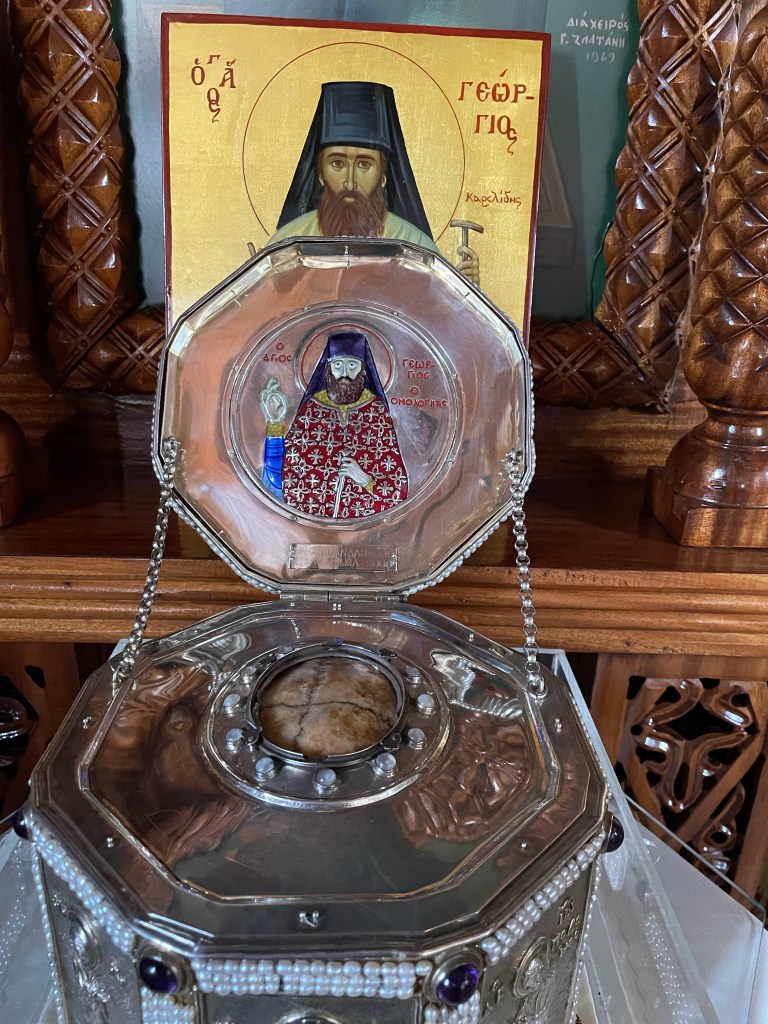
At the Ascension of our Lord feast, the cell of the Saint is open all day for pilgrims, a rare privilege, and Gerondissa Porfyria assigned my obedience for today to “guard” the chapel, the Saints’ relics which the Saint had brought from Russia (and his own of course), and the Saint’ holy cell which all have the fragrance of myrrh. I was speechless at the honour and the blessing!

The cross on his skull! He is one of few Saints known to bear an imprint of the sign of the cross on his skull.

St. George Karslides cell

Here, when a special needs pilgrim prostrated last Sunday, the Saint ‘visited’ her and blessed her with an amazing abundance of fragrance felt by everybody here. Miracles of healing happen all the time. The faith of the pilgrims is so powerful. God is glorified in His Saints.

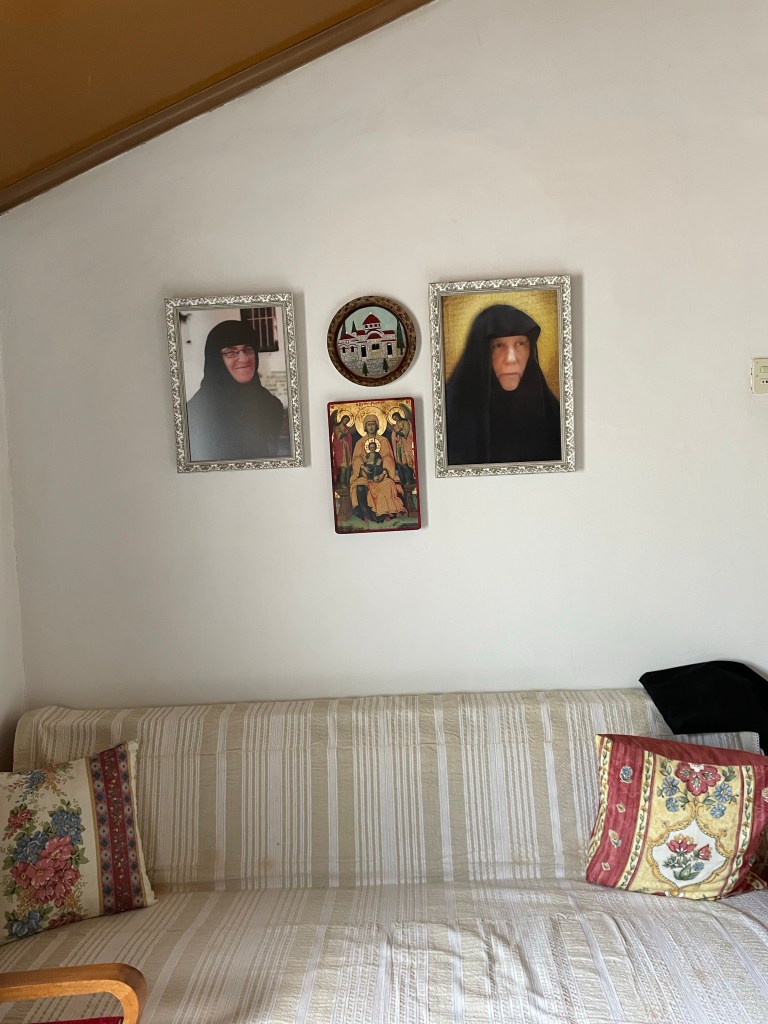
The cell next door to the Saint’s cell. Originally used for storage by the Saint. Later, + Gerondissa Akylina moved here in the final years of her life and had the care of the now Gerondissa Porfyria (cf the framed photos over the bed).

Sayings of Saint George Karslides (+ 1959)

– “God cares for everyone. Despair is basically a lack of faith”
– “The Panagia does not want big candles, she wants mercy shown to the poor.”
– The Elder said that what saves man is “the good works of God: humility, obedience, love, and mercy.”
– He said to a woman he met at the monastery: “What? You go to church every day and have not forgiven your children?”
– “Do not sit at the hour of the Divine Liturgy. Your mind should not fly here and there. As long as you are in church make the decision to devote all of the time to prayer.”
– “Do not think only about what to eat, what to wear, how large a house you will build. Knock on the doors of the poor, the sick, the orphans. Prefer more the houses of the sad rather than happy. If you do good works, you will have a large reward from God. You will be made worthy to see miracles, and in the other life you will have endless jubilation.”
– “The Christian who loves all people has a great reward, especially if he forgives those who do him evil. For if we don’t love our neighbor, all the good works we do will be worthless. They amount to nothing, we will be worthless. Love, my brethren. God requires love from us.”

Cypress and Gerontikon

One great elder was strolling at a place with different cypresses, big and small. The elder told one of the pupils, “Pull up this cypress!”

The cypress was small and one of the brothers did it with just one hand. Then the elder pointed to another cypress tree, bigger than the previous one, and said, “Pull up this one, too! The brother began to sway it in both directions and finally rooted it out.

Afterwards the elder showed his pupils an even bigger tree and told the brother to do the same thing. It took far more efforts and time for the pupil to pull up the tree. Then they came across an incredibly big cypress and the elder had the same request for his pupil. Though the brother was breaking his neck to pull it up, he failed to do it. On seeing that the elder told another brother to help him. Eventually they managed to pull up the tree together.

Then the elder said the following, “Here is how our passions work: we can easily eradicate them while they are small. However, if we neglect our fight with them, they get stronger. The bigger and stronger they get, the more effort is required to pull them up. Then there is a moment when it is impossible to root them up alone, and we remain helpless until we begin to seek help from the saint people who offer their assistance to humans upon God’s grace.

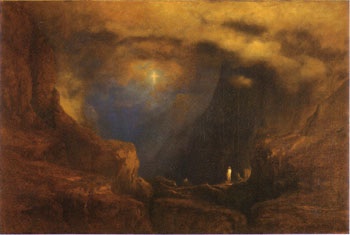
Through the Valley of the Shadow of Death

The Valley of the Shadow of Death By George Inness, 1867

Physical (biological) death vs “brain death”

Is physical death the same as “brain death”? No! A “brain dead” patient may be in a coma and apnea, but most of his organs are functioning with appropriate medical support; so, when his organs are removed, he is still warm, his heart is still working, and his blood is circulating! (1)

They will tell you that organs are taken when the person is dead. This is not true. There are several recorded cases of “brain dead” people who came back from this state. The vital organs of the “donors” are taken while they are still ALIVE, resulting in a violent interruption of their life during the process of taking their organs. Many leading scientists in Greece and abroad (2) express serious scientific objections and do not hesitate to even propose the complete abandonment of the concept of “Brain Death”.

Professor of Pediatric Anesthesiology at the leading University of the USA, Harvard, and Director of the Intensive Care Unit at the University Children’s Hospital, Boston, Dr. Robert D. Truog states: “Brain Death remains incoherent in theory and confusing in practice. Furthermore, the only purpose that this concept (of brain death) serves is to facilitate the search for organs for transplantation. That is why, after all, the concept of “brain death” was “invented” only in 1968 by some Harvard scientists.”

The fact of death is a great mystery, the Holy Fathers of the Church tell us, and no one knows nor will ever know when (at what exact moment) the soul separates from the body… As long as the heart is functioning, the soul is united with the body.

Saint Paisios of Mount Athos, when asked about transplants, he categorically opposed the transplantation of vital organs (organs without which the donor cannot continue to live), for two reasons: First: “it constitutes an impermissible intervention, opposing the creative work of God, on the one hand, by killing the donor, and on the other by creating in us the conceit of animating the recipient.” And second: “It will become a cause for inventing ways to kill the sick in order to take their organs.”

Saint Porphyrios was also opposed to the transplantation of solid organs from “brain-dead” people. He made the following recommendation to a couple who wanted to donate the organs of their child after a serious accident: “There is only one death. Donate only the cornea of the eyes…” A person in a state of so-called “brain death” is a seriously ill patient but not dead… By taking vital organs from a “brain dead” patient, he is forcibly led to definitive clinical death… this action, by the criteria of Orthodox Theology, is equivalent to Murder.

They will say that organ donation is self-sacrifice and a noble act, an act of humanity and altruism. This is not true… The one who determines when we will die is our Creator and not us. In the Old and New Testaments, as well as in the Hymnography of our Church, it is emphasized that the Creator alone is the master of life and death. Even when there is consent, the “DONATION” of VITAL ORGANS IS NOT SELF-SACRIFICE, because it takes away from the donor the possibility of repentance, that is, to say, even at the last moment, “Forgive me, my God” and for God to possibly save his soul.

By a beloved brother in Christ, Stavros Amfoterodexios (cf. “Ehud the son of Gera, the son of Benjamin, a man equally adept with both of his hands” Judges 3:15)

1. Dr. Alan Shewmon, internationally renowned Professor of Pediatric Neurology at UCLA (University of California, Los Angeles).

2. K. Karakatsanis 2001, E. Panagopoulos 1998, M. Vrettos 1999, I. Kountouras 1999, K. Christodoulides 1995, N. Balamoutsos 1999, N. Konstantinidis 1999, M. Giala 1999, A. Avramidis 1995, P. Kougias 1999, A. Goulianos 1999, etc.) and abroad (R.D. Truog 1992, D.A. Shewmon 1997, R.M. Taylor 1997, etc.),

A heart whose pulse may be Thy praise

Gratitude by Jack Garren (In the 1960s, his grandmother, Myrtle Copple)

Father Josiah Trenham on “The Most Important Times to Give Thanks” and George Herbert’s poem “Gratefulness” From The Temple (1633)

“Gratefulnesse”

THou that hast giv’n so much to me,
Give one thing more, a gratefull heart.
See how thy beggar works on thee
By art.

He makes thy gifts occasion more,
And sayes, If he in this be crost,
All thou hast giv’n him heretofore
Is lost.

But thou didst reckon, when at first
Thy word our hearts and hands did crave,
What it would come to at the worst
To save.

Perpetuall knockings at thy doore,
Tears sullying thy transparent rooms,
Gift upon gift, much would have more,
And comes.

This notwithstanding, thou wentst on,
And didst allow us all our noise:
Nay, thou hast made a sigh and grone
Thy joyes.

Not that thou hast not still above
Much better tunes, then grones can make;
But that these countrey-aires thy love
Did take.

Wherefore I crie, and crie again;
And in no quiet canst thou be,
Till I a thankfull heart obtain
Of thee:

Not thankfull, when it pleaseth me;
As if thy blessings had spare dayes:
But such a heart, whose pulse may be
Thy praise.

Perhaps the scenario of this poem seems a little ridiculous to you: no one need spend so much vigour on trying to persuade God of the virtues of gratefulness, as it’s a gift that’s so obviously within His will to give. Please forgive me but I do find all this elaborateness and farfetchedness — indeed one of the hallmarks of seventeenth-century metaphysical poetry — charming in its “innocence”. Esp. when compared to our century’s meta-diction and meta-visions…

The first two lines of the poem could be taken in isolation as an earnest and prayerful reminder to be thankful always for God’s goodness, perhaps in the same vein as a verse from Joseph Addison’s wonderful hymn of 1712: ‘When all Thy mercies, O my God’:

Ten thousand thousand precious gifts
My daily thanks employ;
Nor is the least a cheerful heart
To taste those gifts with joy.

But as the poem progresses, it seems that such is the weakness of our human condition that even an act or disposition of gratitude needs divine provenance – and persistence on the part of the poet: ‘Thy beggar works on thee by art’ (stanza 1); ‘Perpetuall knockings at Thy doore’ (stanza 4); ‘I crie, and crie again’ (stanza 7).

George Herbert leaves us in no doubt that God is gracious when beholding our noise, indeed our every ‘sigh and grone’.

What I find most moving is that the beggar’s request in the final stanza — not just a grateful heart from time to time, but one that is grateful all the time, continuously, as a beating pulse — is indeed granted in the end!

Look at another, famous poem of his, “Praise (II)” :

KIng of Glorie, King of Peace,

Thou hast granted my request,
Thou hast heard me:

Sev’n whole dayes, not one in seven,

I will praise thee.”

What a gift! How are lives, certainly mine, would be transformed, were our hearts grateful, did we possess hearts “whose pulse may be Thy praise”! Listen to the hymn of ‘Gratefulnesse’ here.

Day 8-Part B: The Lamp of the Perfect

Or, my last day at Metamorfosi monastery of Saint John the Forerunner and how Gerondas Gregorios and Mother Akylina defeated the demons’ assaults and saved my father from eternal death.

The night before my departure, I had the blessing to speak to Mother Akylina. (So far all my momentous meetings at the monasteries have mysteriously taken place the last few hours before my departure…) Mother Akylina is a very old and frail sister in her nineties, bent in two, with a very sharp, illumined nous, and with beautiful, wide azure eyes staring into eternity. Until last summer, Mother Akylina was probably the first person pilgrims met upon entering the monastery, near its book store, but recently this sister has completely “disappeared” in hesychia and is now rarely seen anywhere. Yet God in His Mercy granted an exception to me.

The just shall flourish like the palm tree, shall grow like a cedar of Lebanon.
Planted in the house of the Lord, they shall flourish in the courts of our God.
They shall bear fruit even in old age, always vigorous and sturdy,
As they proclaim: “The Lord is just; our rock, in whom there is no wrong.”
(Psalm 92:13-16)

I always smile when I think of Mother Akylina because although she is old and bent double, she is “always vigorous and sturdy“, moves like a firefly, and her knowledge and eagerness to help sweeps you up in her enthusiasm. Indeed, she “bears fruit even in old age”.

I always listen to Mother Akylina. I feel most indebted to her because she saved my father from eternal death. Together with Gerondas Gregorios of blessed memory. It was their discernment, leading to insight, and ultimately to foresight, which wrought that amazing miracle at the end of my father’s life. Oh, what a profoundly moving experience I experienced with their prayers! Let me try to put it into words, if I can.

My father was a very good person and a conscientious doctor who honoured his calling, offered wise counselling about diet and exercise to everybody, cared deeply for his patients and helped them as much as he could. I always smile when I remember his words to his patients and us, to be sure, family and friends: “No, you do not need any medication. You should just lose weight, exercise regularly, and your test results will improve”. Or: “No, you do not need any make-up; eat lots of fruits and veggies, and their nutrient antioxidants, vitamins and minerals will help you get glowing skin”. Or: “Feeling stressed? Having difficulty to sleep at night? No need for any medication. Just run or walk briskly for at least one hour every day, take a cold shower at the end of your training, and then come and tell me if you still feel stressed. And if this ‘dosage’ fails, repeat as often as you can, as many times in the day! ” Or: “Never take a serious decision at night! Rest, get some sound sleep, think about it clearly and calmly, and then make up your mind in the cold light of day”. And so on and so forth …

But it was not just his words and the example he set, being himself an athlete and a tennis champion. My father, God rest his soul, also had integrity, courage, resilience, cheerfulness, empathy, respect, compassion and kindness towards everybody. Each and everyone loved my father and wanted to be near him. His only difficulty was … to believe in afterlife. After retirement, he started diligently to study the Holy Bible, day after day, the whole Old and New Testament, intrigued by my life choices, underlying the passages which made the greatest impression of him. I have kept his study Bible and am still impressed by how much he had read. Years went by like this, but my father never quite made up his mind to participate in any church sacraments, especially confession to a priest.

Then, towards the end of his life, he became a patient himself who needed doctors, as he started having some horrible nightmares of ghastly dark figures chasing and attacking him. Every night, he would fall from his bed and end up on the floor ‘beaten’, injured and shivering. All his friend doctors considered these symptoms side-effects of the medication he was taking, but they could not help him, free him from that torture, night after night.

“We can ignore even pleasure. But pain insists upon being attended to. God whispers to us in our pleasures, speaks in our conscience, but shouts in our pains: it is his megaphone to rouse a deaf world.” ― C.S. Lewis, The Problem of Pain

Once, back in those days, I went to St. John the Forerunner monastery and met sister Akylina as usual at the bookstore, and she asked me about our family news. When she heard this update from my father, she looked very concerned, sharply told me to “wait here” and disappeared in a haste to meet Gerondas Gregorios. At that time, Gerondas was in absolute silent seclusion, but she was one of the very few sisters who had the blessing to “interrupt” his hesychia at her discretion.

A few minutes later, she came back in a hurry and told me Gerondas’ message to my father: “Ioanni, if you do not confess to a priest, these dark figures that chase you in your nightmares, they will chase you in reality after you die, because they are demons”.

–“But Mother, how can I say such things to my father? I do not dare. He will dismiss them. He is a doctor, he has witnessed lots of deaths at his long medical career in hospitals, he does not believe in the possibility of life after death”.

–“We insist. You should say Gerondas’ message to your father. We will all pray”.

And so, a few days later, I summoned all my courage and told my father Gerondas’ words. To my surprise, he did not dismiss them but looked at me very seriously in the eyes. He told me he needed time to reflect about all this. I am sure that this martyrdom must have been a most humbling experience for my father, who had survived all life’s odds, war, poverty, even losing his father as a young child and having to support his brethren and his young, widow mother, yet was now helpless. What a humbling experience for someone so strong to feel so powerless and helpless! We all started praying and waited … God must have been shouting in my father’s nightmares: it was indeed his megaphone to rouse his skeptic child. “Then he said to Thomas, “Put your finger here; see my hands. Reach out your hand and put it into my side. Stop doubting and believe.” (John 20:27) Another megaphone was certainly + Gerondas Gregorios’ stern warning to him.

A few months passed by, and one day, my father called me and asked me to arrange for a priest to come to hear his Confession! (By that time he could not move outside the house). As you may very well guess, I promptly arranged this with our parish priest. By God’s Providence, I was also present at his Confession. My father was a simple man and wanted to make his confession in front of us (ie. my mother and I), and eventually the priest, after hearing his Confession, covered the heads of all three of us with his epitrachelion and read the absolution prayer to us all.

From that night on, after his Confession and Holy Communion, my father’s nightmares disappeared at once and his martyrdom came to an end. He radiated peace and joy! Very soon, his health sharply declined. But there was no pain, agony or anguish in any of this. Only peace and joy! In a matter of a few weeks, my father slept peacefully in the Lord, who patiently extended the life of His child just as much as needed to save him. Glory to God! Christ is Risen!

Mother Akylina’s prayers are so powerful and targeted! So are her insights. You probably understand now why I pay such close attention to every single word she is telling me. So, I did yesterday, and I paid even more attention now because she looked “bodiless”— as if her departure to Heavens was imminent. Please forgive me for not being able to share her words since they are all about most private matters. But I can share this. It is about somebody who had just started going to Church, Confession etc and he kept telling me how his life had become so much harder since. Her words were that all this is from the Evil one to discourage him and he should not pay any attention to his suggestions. It will become harder because of the spiritual battle, but he should keep his soul in hell and despair not. And when I told her, that I cannot say anything to this person about anything really, she told me “then, pray!” Also, about a very difficult situation, a Cross, her words were: “As the Lord provides. May it be blessed. Therefore, keep silence and pray!

St. John Climacus, The Ladder of Divine Ascent

“Discernment in beginners is true knowledge of themselves; in intermediate souls it is a spiritual sense that faultlessly distinguishes what is truly good from what is of nature and opposed to it; and in the perfect it is the knowledge which they possess by divine illumination, and which can enlighten with its lamp what is dark in other. Or perhaps, generally speaking, discernment is, and is recognised as, the assured understanding of the divine will on all occasions, in every place and in all matter; and it is only found in those who are pure in heart, and in body, and in mouth.

The body is enlightened by its two corporeal eyes; but in visible and spiritual discernment the eyes of the heart are illumined”.

St. John of Kronstadt, My Life in Christ

“The heart is the eye of the human being. The purer it is. the quicker, farther, and clesarer it can see.”