The ‘hidden’ Fr Antonio’s Gikizas and his close relationship with St Porfyrios –he even knew St Nektarios! — wasanother mystery revealed to us during our recent pilgrimage to Athens and Aegina, another link in the chain of holiness to His Kingdom, another stepping-stone on the Way! Glory to God for all things! What a Joy on Heaven and earth when a new Saint reveals himself to the Church, when new “living stones of His Temple” are revealed. “Ye also, as lively stones, are built up a spiritual house, an holy priesthood, to offer up spiritual sacrifices, acceptable to God by Jesus Christ.” (1 Peter 2:5)
*
Who would have imagined that on one of Athens’ busiest avenues, at 59 Alexandras Avenue, in the semi-basement of an apartment building, lived an elder like those we read in the Desert Fathers, with profound humility, compassion and great discernment! It was to this humble, ‘hidden’ priest, Saint Porfyrios would regularly go for Confession, a fact not widely known. One would lay hands on the other and they would confess. One wonders what it was that tied these two elders together.
*
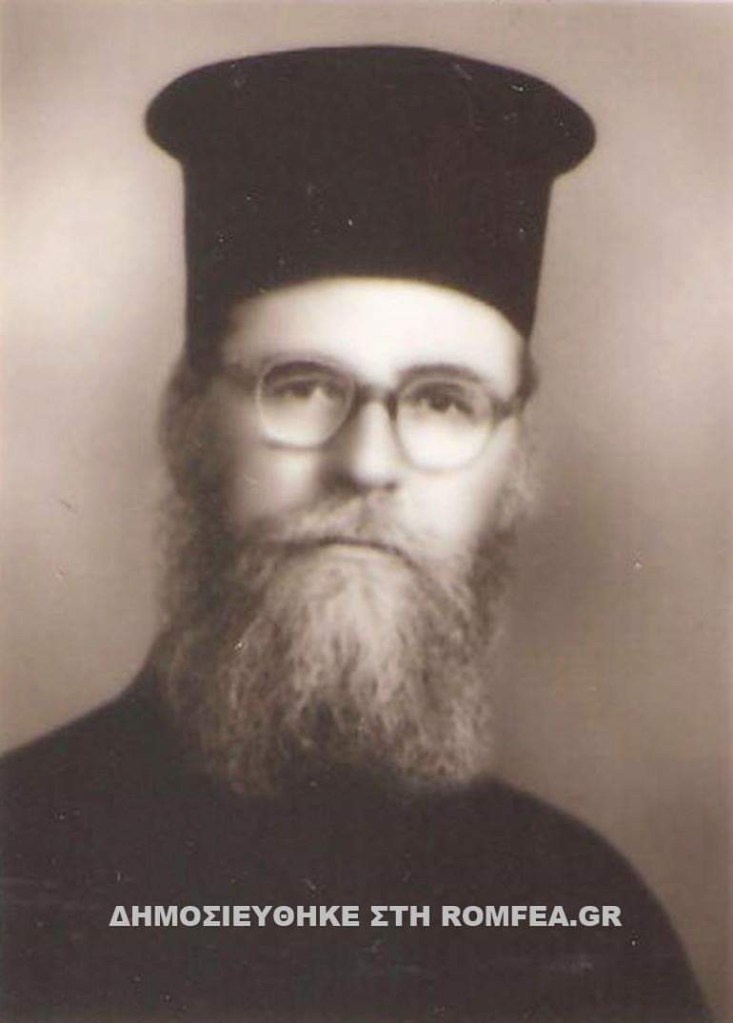
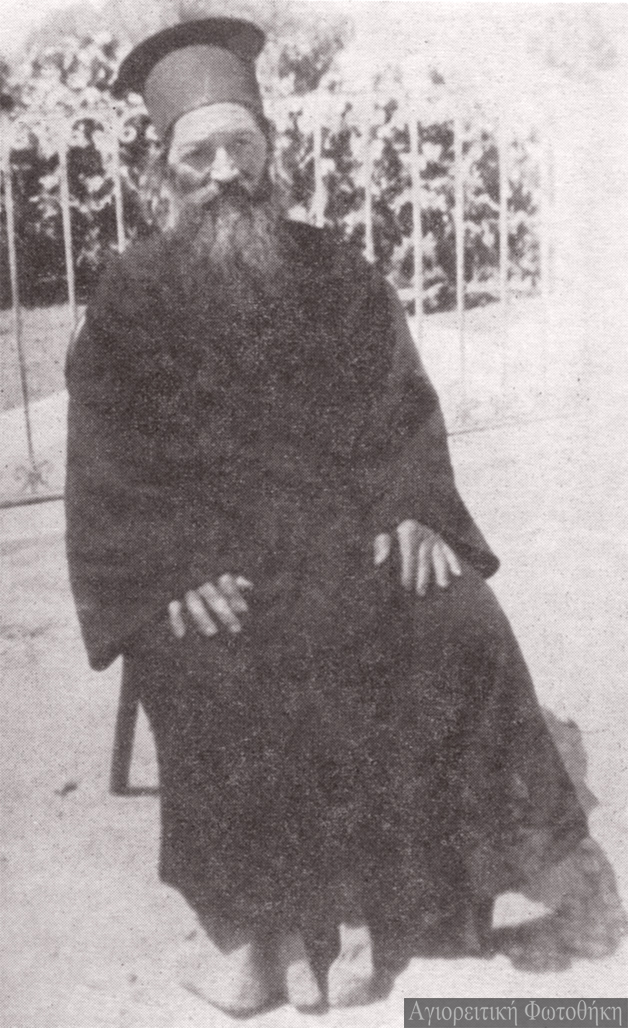
This venerable cleric, Father Antonio’s Gikizas, was born in Kranidi, Argolis, on January 7, 1910, and died in Athens, at the age of 89, on September 30, 1999. His academic knowledge was admirable not only for his time but also for ours with his four bachelor degrees and six foreign languages and many more. This academic excellence should normally separate him from the illiterate St Porphyrios, but Father Antonios, despite his great qualifications, always tried to avoid the high offices that were offered to him throughout his life. His humility was profound. When he was still a small child, he met Saint Nektarios, for whom he had a special reverence. And later in his life, he met St Porfyrios. His acquaintance with the elder – and later Saint of the Church – Porphyrios took place when he served for a short time as a preacher in Kymi of Evia.
*
So, what was it that tied these two elders together? Fathers believe that it was their profound humility and their focus on repentance and the Sacrament of Confession throughout their lives. Father Antonios of blessed memory insisted that what we all need, more than anything else, is “repentance, this gift from God. … Repentance is the key for our entry into the heavenly world, in His Uncreated Church…”. Clearly this was the focus of Saint Porphyrios’ life too, as revealed in his Testament to his Spiritual children, six months before he fell asleep in the Lord: “From a small child I was in sins——But the world thought I was good and everyone shouts that I am a saint. As for me, I feel that I am the most sinful person in the world.——whatever I remembered, of course I have confessed —-But now I have a feeling that my spiritual sins are too many and I ask those of you who have known me to pray for me because I too humbly prayed for you while I lived!” I truly wonders why would such holy men feel that sinful and regularly go to Confession until old age… To confess what? And if they felt and acted thus, what about us?
*
How inter-connected Holiness, Saints are in God’s Providence! Glory to God for all things! “That they all may be one; as thou, Father, art in me, and I in thee, that they also may be one in us” (John 17:21)
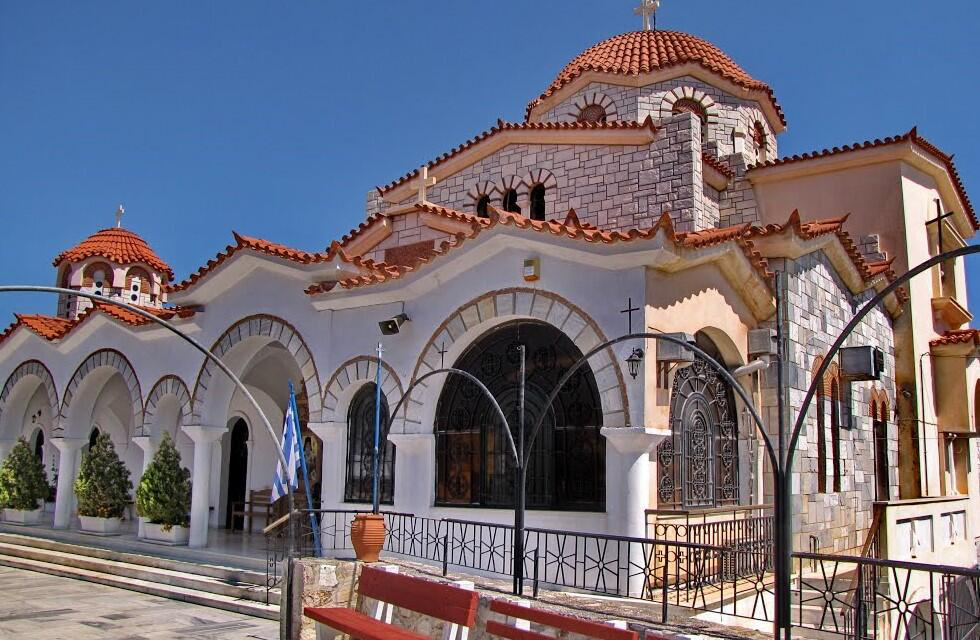
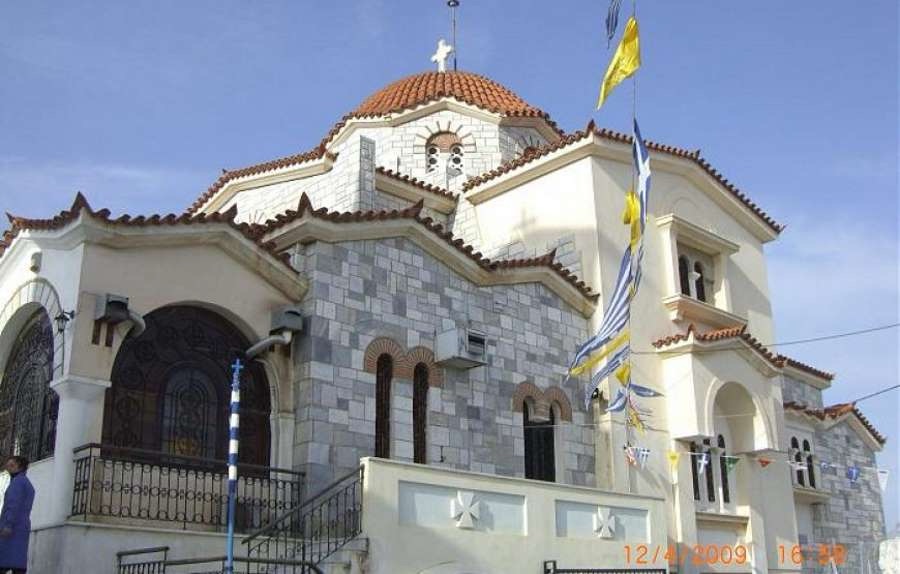
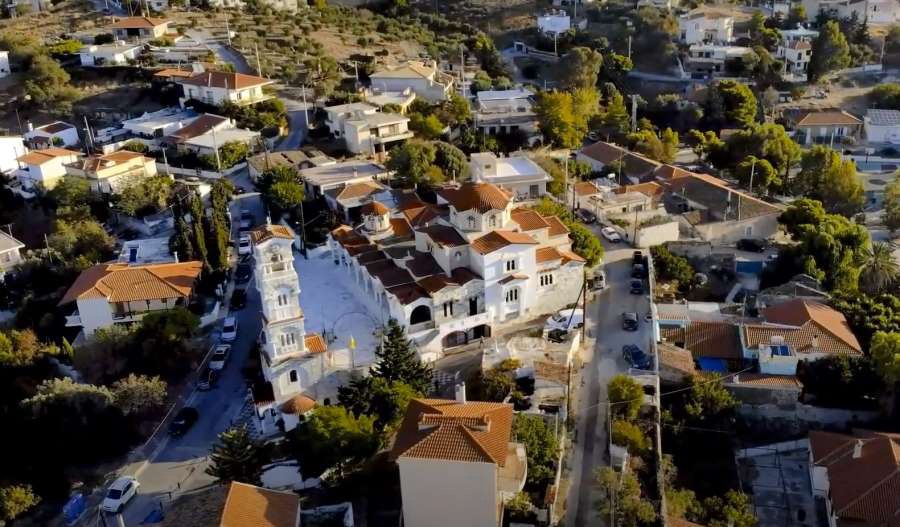
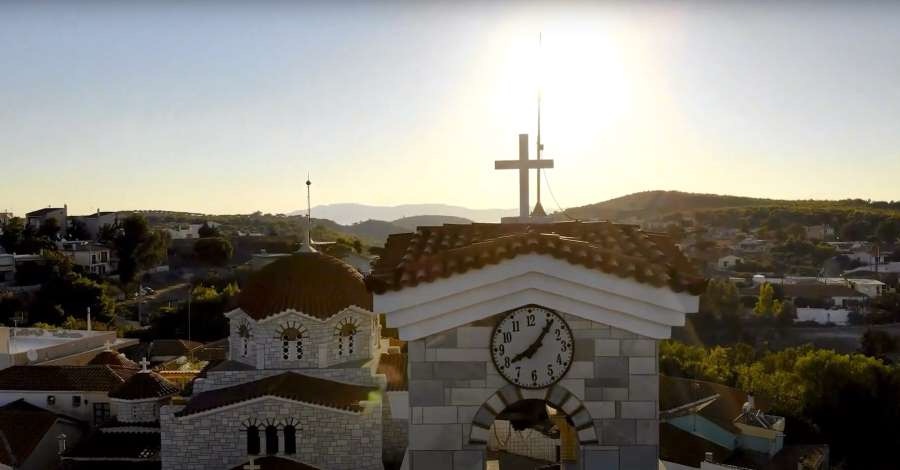
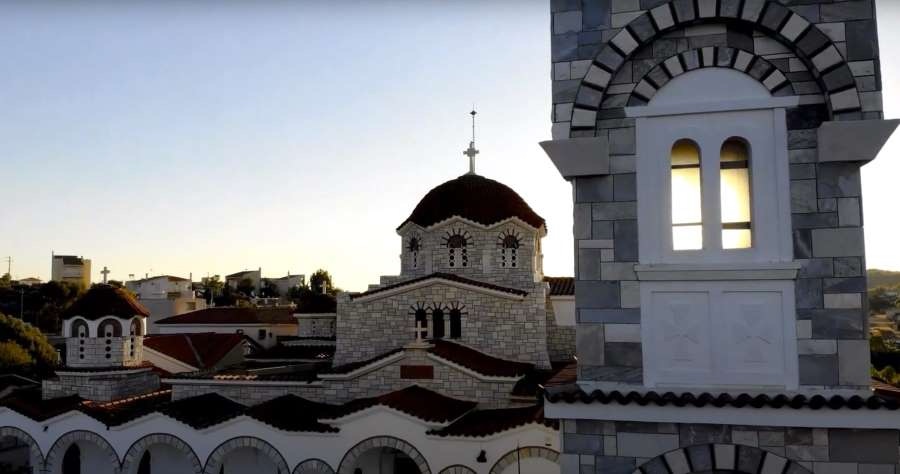
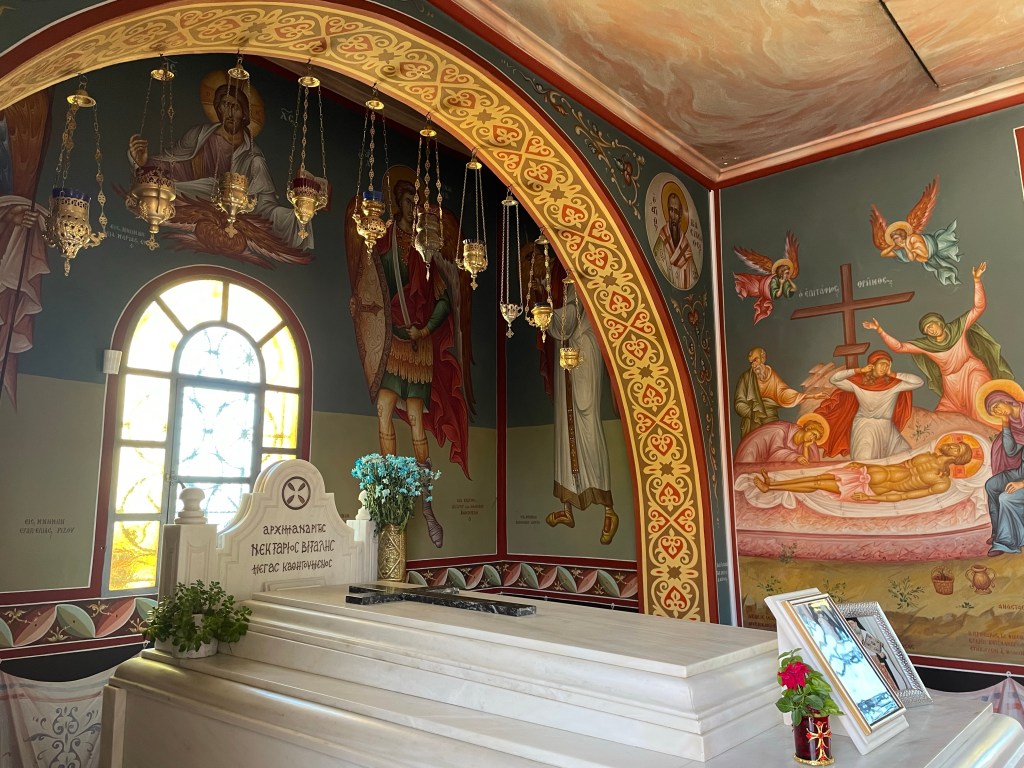
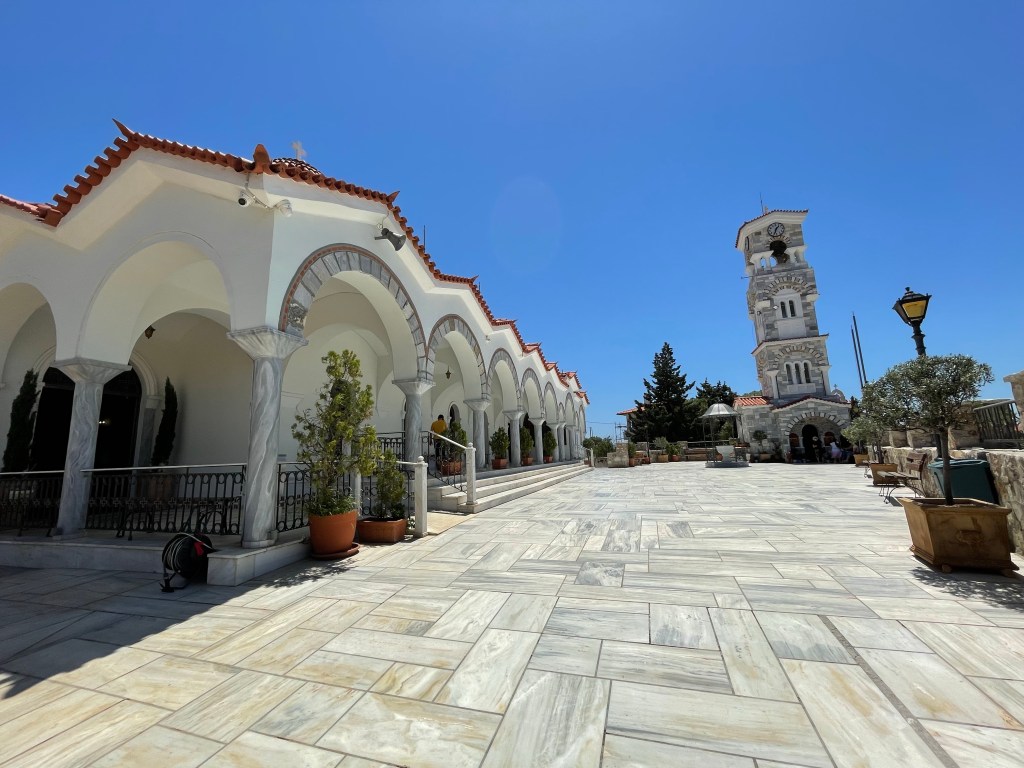
… in his Church (Kamariza) at Lavrio, Attica. This church was another stop at our recent Athens-Aegina pilgrimage, and dominates in the centre of the mining activity in Lavrio, both during antiquity and in modern times.
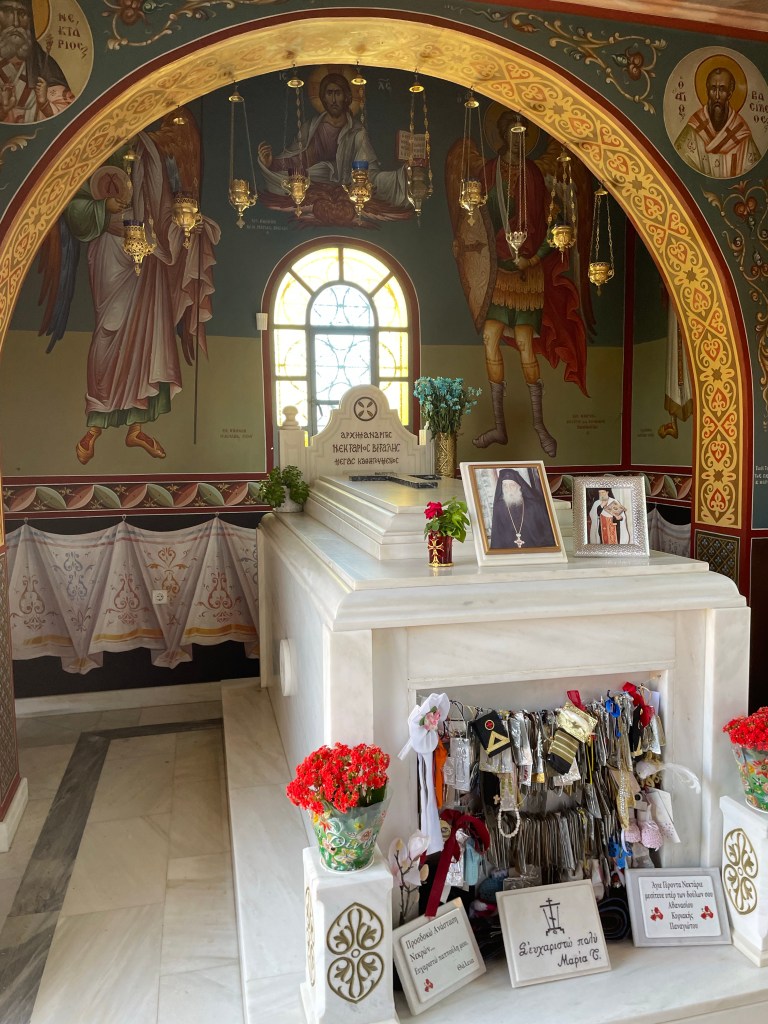
It was founded by the archimandrite Nektarios Vitalis, of blessed memory, in memory of the time that Agios Nektarios passed through this area.
Its construction started in 1966 and from 1972 it has functioned as a Holy Pilgrimage, attracting crowds of people from all over Greece.
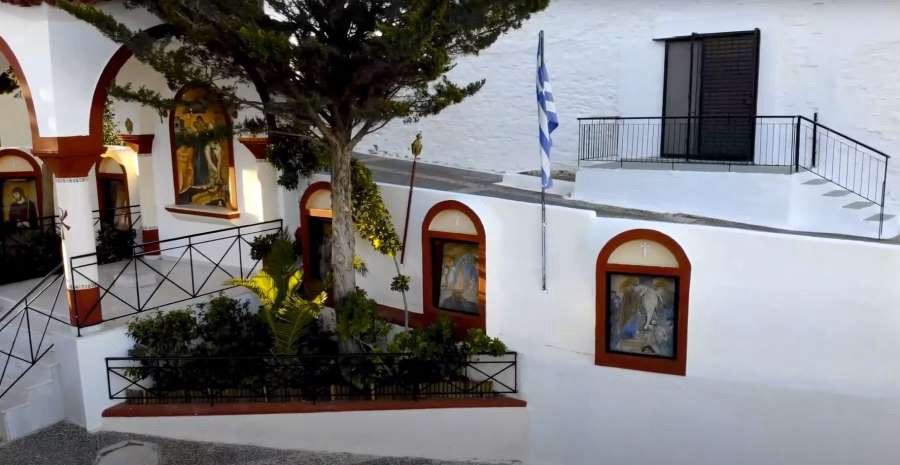
Architecturally it is cross-in-square with a dome and follows the Byzantine order. Many outbuildings and chapels have been added to it. It celebrates on November 9th, day of death of Agios Nektarios, and on September 3rd, day of the translation of his relics.
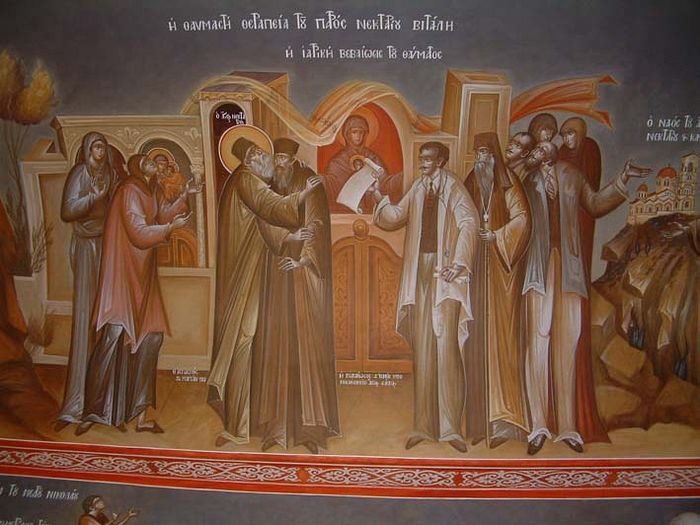
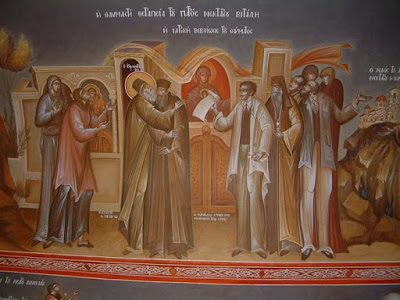
Icon of St. Nektarios embracing and healing Fr. Nektarios Vitalis, along with the two women bearing witness to this to the left, and the doctors confirming the miracle to the right. The icon is from the church of St. Nektarios in Aretaieion Hospital. Photo: Mystagogy
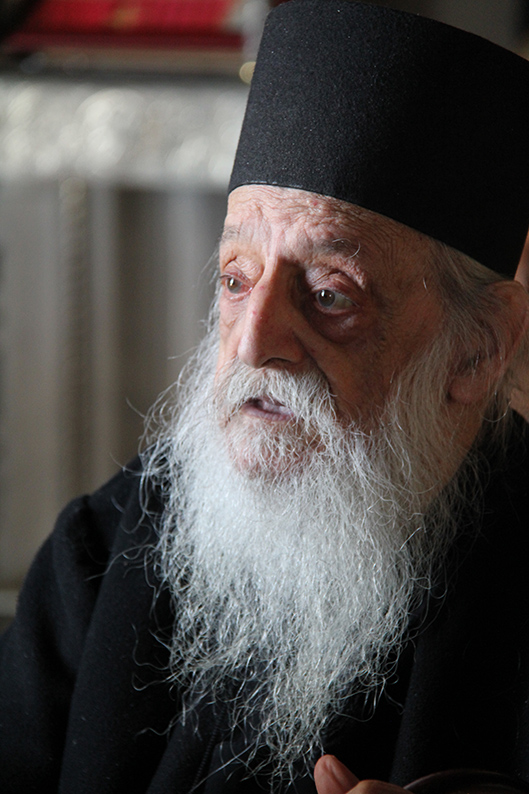
+ Archimandrite Nektarios Vitalis of blessed memory is well-known in Lavrio [a city in Attika, Greece] for his deeds and his sympathy to the poor and those written-off by the world. Vasileios was his baptismal name, was born in a big family with 16 siblings and lived a holy childhood. His life was a chain of miracles, starting with his baptism, when in the baptismal font, the sign of the Cross appeared and the priest said: “either this boy will die or he will wear the Cross”. Throughout his life Elder Nektarios was blessed with a very close relationship with Saint Nektarios. It started when as a young man, Elder Nektarios went to the grave of St Nektarios in Aegina and asked the Saint about his calling, and St Nektarios reassured him in a miracle that indeed he would become a priest and would also receive his name.
Miracle of Saint Nektarios: The Healing of Fr. Nektarios Vitalis of Cancer
November 9, 2012
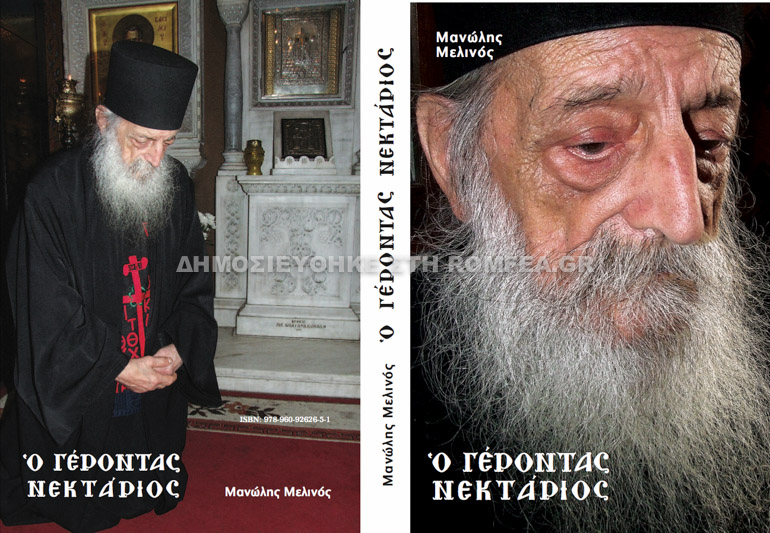
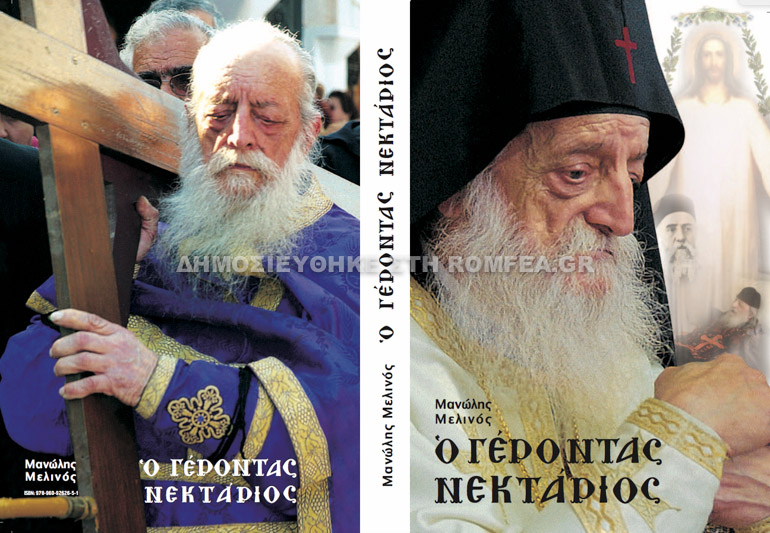
Fr. Nektarios Vitalis retells the following incident how St Nektarios visited him in his church and healed him when he was dying from cancer. What is said below has been told elsewhere, repeatedly, including in the book I talked to Saint Nektarios (Athens 1997, Manolis Melinos):
“I was suffering from a serious form of cancer. My chest was an open wound that was continuously running blood and pus. I would tear my undershirts from the pain. It was a tragic situation, and I was headed directly to death. So you understand, I had even prepared my grave clothes….
“On the 26th of March 1980, in the morning, I was talking in my office in the basement of the Church with Sofia Bourdoy (the church care-taker [a woman who cleans the church]) and the icon painter Helen Kitraki, when the door suddenly opened and an old, unknown man entered. He had a snow-white beard, was short and was slighty bald. He looked exactly the same as St. Nektarios appears in photographs. He took three candles without paying and lit only two. He venerated all the icons of the church, but passed over the icon of St. Nektarios without venerating it. He did not see me where I was. I had terrible pains when they pulled aside the curtain of the office and went to see the old man. He faced the Beautiful Gate [the Royal Doors in the Holy Iconostasion], crossed his palms and without looking around he asked: ‘Is the Geronta [Elder] here?’
“The church care-taker knowing my disease wanted to protect me…: ‘No, no…he is at home with the flu….’
“He replied: ‘Never mind. Pray, and have a Good Resurrection,’ [the traditional Orthodox greeting during Great Lent in anticipation of Pascha ‘Kali Anastasi’] he said as he left.
“The church care-taker came running to me and said ‘Father Nektarios, the old man who just left resembled St. Nektarios himself! His eyes flew flames. It seems to me that was St. Nektarios and he came to help you….’
“I thanked her thinking that she said this to console me. But deep down something was wrong. I sent her along with the icon painter to find the unknown man and quickly bring him back. I walked into the sanctuary and venerated the Crucified One [the icon of Christ on the Cross in every Holy Altar] crying, and once again asking Christ to heal me. Their footsteps stopped: ‘Father, the Elder has come!’
“I tried to kiss his hand, but out of humilty he did not let me. He bent and kissed my own! I asked him: ‘What is your name?’
“‘Anastasios, my son,’ he said, relating his baptismal name that he had before he become a monk….
“I led him to venerate the holy relics. He took out a pair of glasses with only one arm, and as soon as we saw them we were amazed! They were the same glasses of St. Nektarios that we had in the case with the holy relics. They were given to me by the old Gerontissa [Eldress] Nektaria of the monastery in Aegina.
“‘Faith is everything!’ said the stranger, as he put on his glasses.
“He began with reverence to embrace all the holy relics as the church care-taker showed, except for the relics of St. Nektarios, which he passed over….
“‘Geronta, forgive me,’ I said, ‘but why don’t you venerate the miraculous Saint Nektarios?’
“He turned and looked at me smiling. I asked him: ‘Where are you staying Geronta?’
“He showed me the ceiling, where we were building the new church [dedicated to St. Nektarios], saying: ‘My house is still not ready and I’m worried. My position does not allow me to live here and there….’
“‘Geronta, I must confess, you were told a lie earlier. I have cancer! But I want to get well, to make the Holy Altar, to finish the Church first, and then I can die….’
“‘Do not worry,’ he told me. ‘I’m leaving now. I’m going to Paros [an island in Greece] to venerate St. Arsenios and to visit Fr. Philotheos [Zervakos],’ he added, starting to leave and passing by the big icon without giving it a second thought….
“I stopped him and put my hands to his face.
“‘My Geronta, my Geronta, your face looks exactly like St. Nektarios who is honored here in our church….’
“Then, tears rolled from his eyes. He crossed me and embraced me with his hands. Taking courage I opened my hands to hug him. But when I spread out my hands, and while I was watching I could see him before my face, my arms closed back to my chest! The hairs then stood up on my arms and I crossed myself!
“I said again: ‘O my Geronta, I beg you, I want to live to do my first Liturgy. Help me to live….’
“He left from being close to me and stopped in front of his icon and said: ‘Oh, my child Nektarios, don’t worry. It is a passing trial, and you will be well! The miracle which you are asking for will happen, and it will be told to the whole world. Don’t be afraid….’
“Immediately he left us by walking through a closed door….
“The women ran to catch up to him. They reached him at the bus stop. He went inside and disappeared before the bus left!”
This story is always told by Fr. Nektarios himself, a respected and reliable person, and in the presence of witnesses. Fr. Nektarios eventually became well – to the amazement of doctors, radiologists, and forecasters of death. Because above all is Christ, our living God, and our intercessors before God, the Saints, plus our Mother the Panagia!
For “where God wills, the laws of nature are overcome….”
A short encomium written by Mr. Manolis Melinos, who wrote several books on St. Nektarios, his life and miracles, and especially came to know Elder Nektarios: ELDER NEKTARIOS The sweet, the simple, the father, The brother, the fellow man, The consoler, the humble one, The child among children, the great one among the great, the elder among the elders, in other words, the child-elder, reposed today, February 8th, 2018 at the age of 88. Now he is an intercessor for us at the heavenly Altar, together with St. Nektarios, near the Great High Priest Christ, Whom he had and never abandoned! You all and everyone knows my spiritual relationship with him for 33 years, and I am deeply thankful to God Who made me worthy to be near him and to write his biography… Now, humanly, our large spiritual family is in mourning along with my biological family, and I unworthily entreat God to make him worthy to continue to pray on behalf of us. In the proper time, I will return to write more in detail, but I am compelled at least to write this. (Source)
+ Elder Nektarios near death experience — video where the Elder recalls this great miracle of his “death”, his ascent to Heaven, his meeting Christ and Saint Nektarios in Paradise, and his return back to life
Written by Andreas Christoforou – associate of the St Therapon church; Transl. little city hermit
My beloved Athens, Thank you for hosting us for so many years and making us partakers of the Life of your Saints! Athens of Agios Nektarios! There in Aretaia hospital is still the bed where the sanctified soul of Saint Nektarios left his aching body to ascend to the King of Heaven! There somewhere in Koukaki was the poor house where he lived chased by the slanderers, not having to pay the rent. There he was seen by the indignant, unpaid landlady when she burst open his room, and to her amazement she saw him rapt in deep prayer, with hands raised to God!
Agios Nektarios: On the 2nd floor of the Aretaia hospital on Vasilisis Sophia in Athens is the ward where he was hospitalized for about 2 months and on November 8, 1920, Agios Nektarios fell asleep.St Nektarios
There, on Vouliagmenis Avenue, Saint Nikolaos Planas worked and distributed “Eternal Life”! There in “Infectious Diseases” Hospital in Aegaleo, next to the Sacred Way, a leper, Saint Nikiforos left with the Martyrdom of Leprosy, a “smell of spiritual fragrance” and a successor, Great Fr. Eumenios Saridakis with his endless services and endless Repentance. There in the place of avoidance a secret group of anonymous lepers sanctified you daily, my Athens! While the old man Eumenios was leaving Loimodon Noson for Evangelism for his last hospitalization, on the way he blessed Athens and said: “How beautiful Athens is! Blessed Athens!” He blessed the streets, Omonia, the Agora, the Metropolis, the Parliament, the whole city! What else could the Holy Elder see in Athens, apart from the seal of Holiness that so many of its Saints, visible and hidden, ancient and modern, left on their path?
St Nikolaos PlanasSt Nikolaos PlanasSt Nikolaos Planas
At the Red Cross, a tireless deacon of everything, the wonderful Father Elpidios, brother of Saint Philomenos of the Holy Sepulchre, gave his testimony to the sick and the helpless! Buried, he sanctifies the Rhodopolis of Stamata together with the recently buried recently canonised Saint Athanasios Hamakiotis! The air of Athens was filled with fragrance in the 20th Century! And behold, the Roman figure of the sanctified Father Simon of Arvanitis and his successor, an accomplished Levite, the practical keeper of the Gospel, the Preacher of the Commandments of God, the humble and meek Father Markos Manolis appears! Who knew him and did not feel his Holiness? A man of overnight and continuous Repentance and prayer, of secret but also practical ministry?
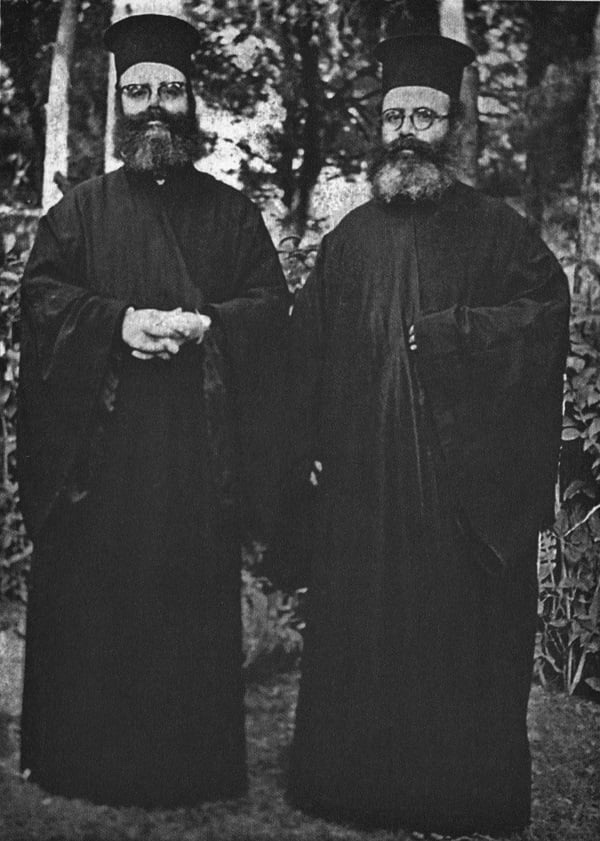
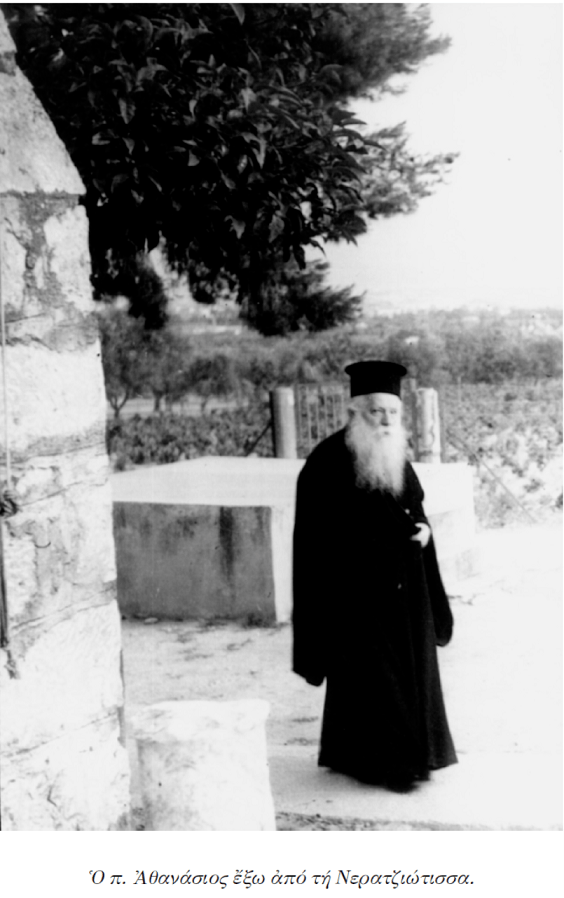
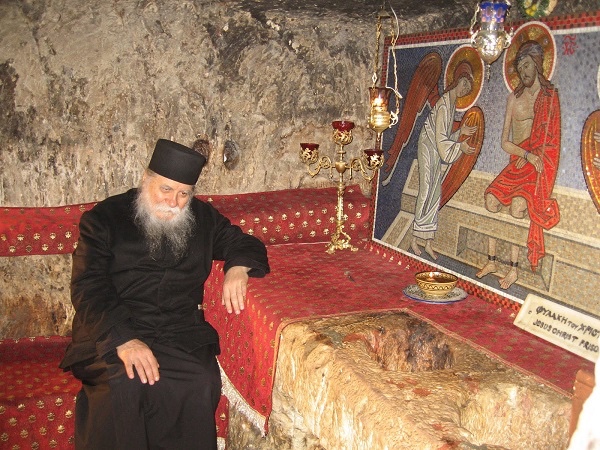
On the left, Elder Father Elpidios (1913-1983) and his twin brother Hieromartyr Filoumenos (1913-1979).St Athanasios outside Neratziotissa, Athens suburbGerondas Simon ArvanitisFather Markos Manolis in Holy Land, Christ’s Prison cell
Who knew the secret Father Antonios Gikizas who defamed and sanctified Alexandra Avenue, in the heart of the traffic in the semi-basement apartment? Who knew that this was the resting place of Saint Porphyry? Who would have imagined that in the heart of Athens, where trade, prostitution, illegal transactions, the stock market, the central market, give and take and bring, a huge figure of Holiness, an illiterate omniscient, an tireless Minister, would be consecrated in a small church of Agios Gerasimos, Saint Porphyrios?
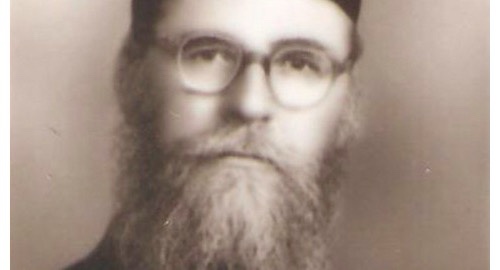
Father Antonios Gikizas— some Fathers claim he was the unknown spiritual father of Saint PorfyriosSaint Porphyrios of Kafsokalyvia
Oh my Holy Athens! O bustling Holy Desert Athens! Oh Noble Athens, humble one, who produced so many great modern Saints who continued the Holiness of Saint Philothei, you remained Unknown as a place of Sanctification of the 20th and 21st Centuries! Everyone runs to worship! Where are you going; Did you go to Aretaiio? Did you go to St. Gerasimos at the Polyclinic? Did you go to Agios Ioannis on Vouliagmenis Avenue? Did you go to the Church of Saints Anargyroi at Infectious Diseases Hospital in Aegaleo? Did you go to Rodopolis? Did you go to Dionysus at the Church of St. George at the tomb of Fr. Mark?
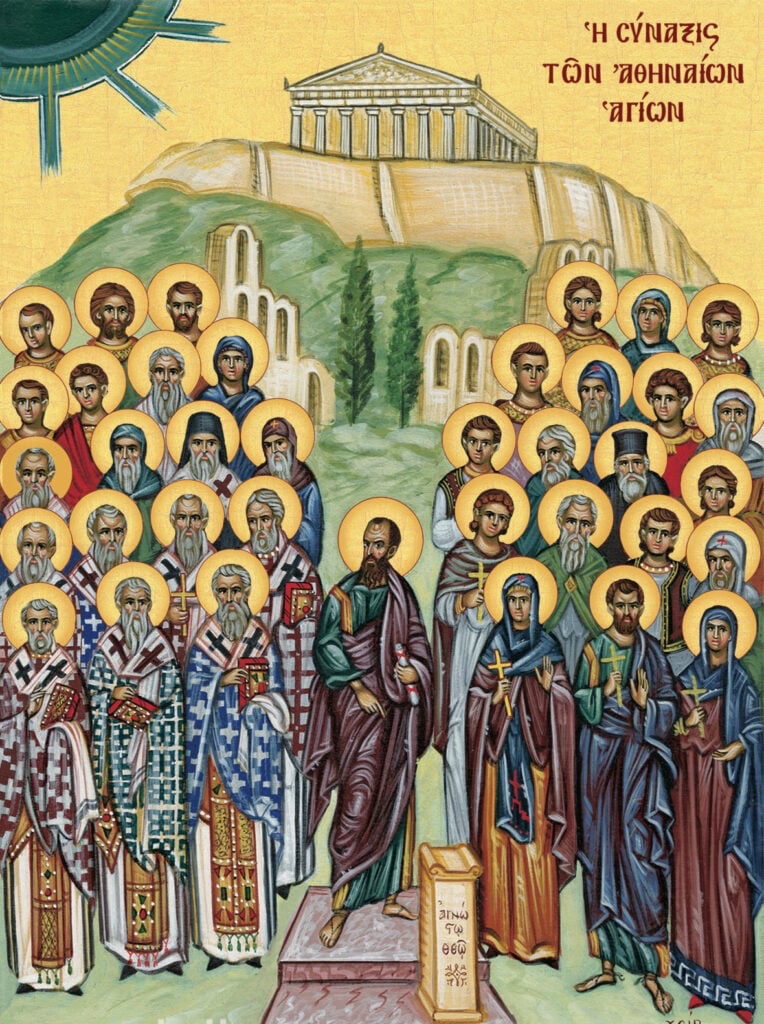
Holy humble princess Athens! Have you smelled the Fragrant Air of these and many unknown Saints buried in her bowels? You have raised many Saints, my Athens, and you have them in your heart! The Tradition continues. Saint Nektarios opened the door of the 20th Century, and all the above and even more secret, unknown holy men and women have walked through it. Secret successors of the Holy Spirit still walk it today. Noise, chaos, traffic, marches, cars, pedestrians, traffic lights, trolleys and buses all move non-stop. And yet there are apartments – cells and retreats – in apartment buildings that secretly weave the thread of Life at night, invisible hesychasts, men and women, God rests in them, who are “poor in Spirit” and citizens of the Kingdom of Heaven!
Everyone is anxious about the Judgment for the coming great war that will shake the world, but few know that the course of the world is determined by the few, hidden, “insignificant” workers of Repentance who change with the tears of their own repentance the wrath of God for the wild debauchery, into Mercy and Providence for all the world. As long as God sees the Repentance of the few, he overlooks the sin of the many and life continues, the war is postponed, because new people repent and enter the Church!
Extend your Mercy to them! My despised Athens, you used to be the most beautiful city, then got ugly and humiliated, and now, you are full of Saints, old and modern! My Athens, thank you!
Andreas Christoforou, Refugee from Cyprus in Athens for 44 years!
Comments: When I read this text I felt ashamed that a refugee child came to show us around our house, revealing the spiritual treasures of Athens, which we did not know, while we should have known. I am ashamed but also grateful to him for this spiritual revelation he gave me. Dimitrios Tseleggidis, Professor of Dogmatics, University of Thessaloniki
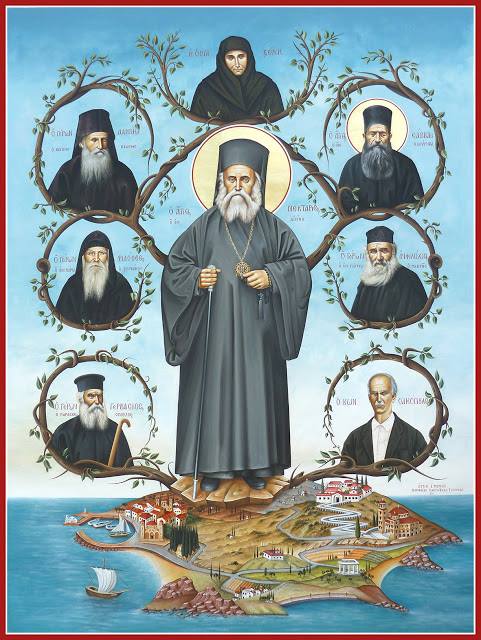
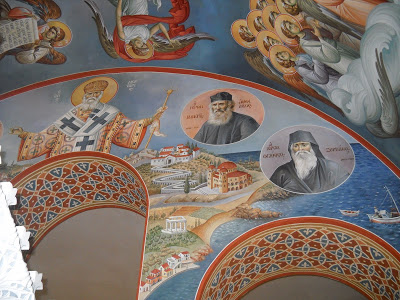
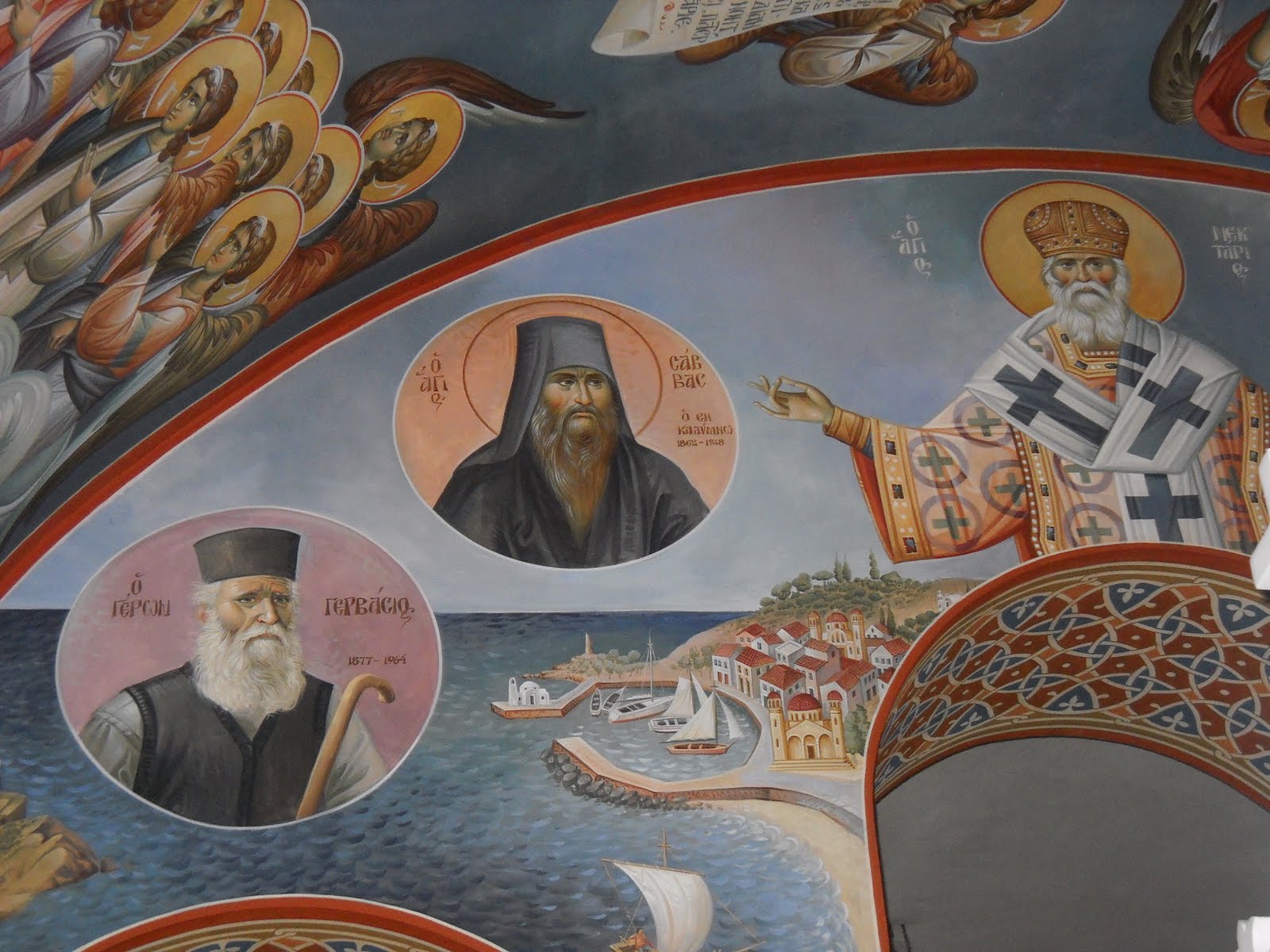
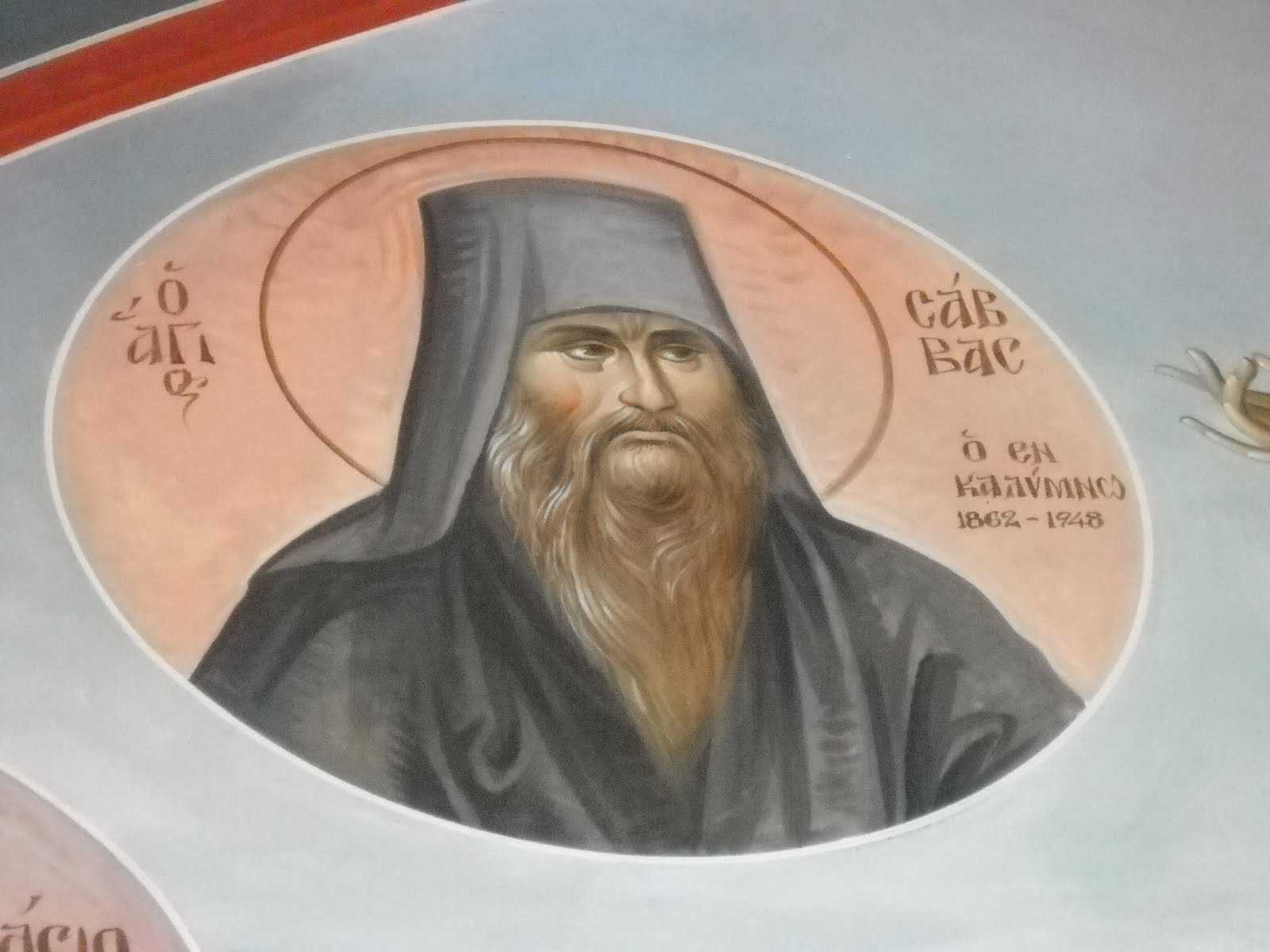
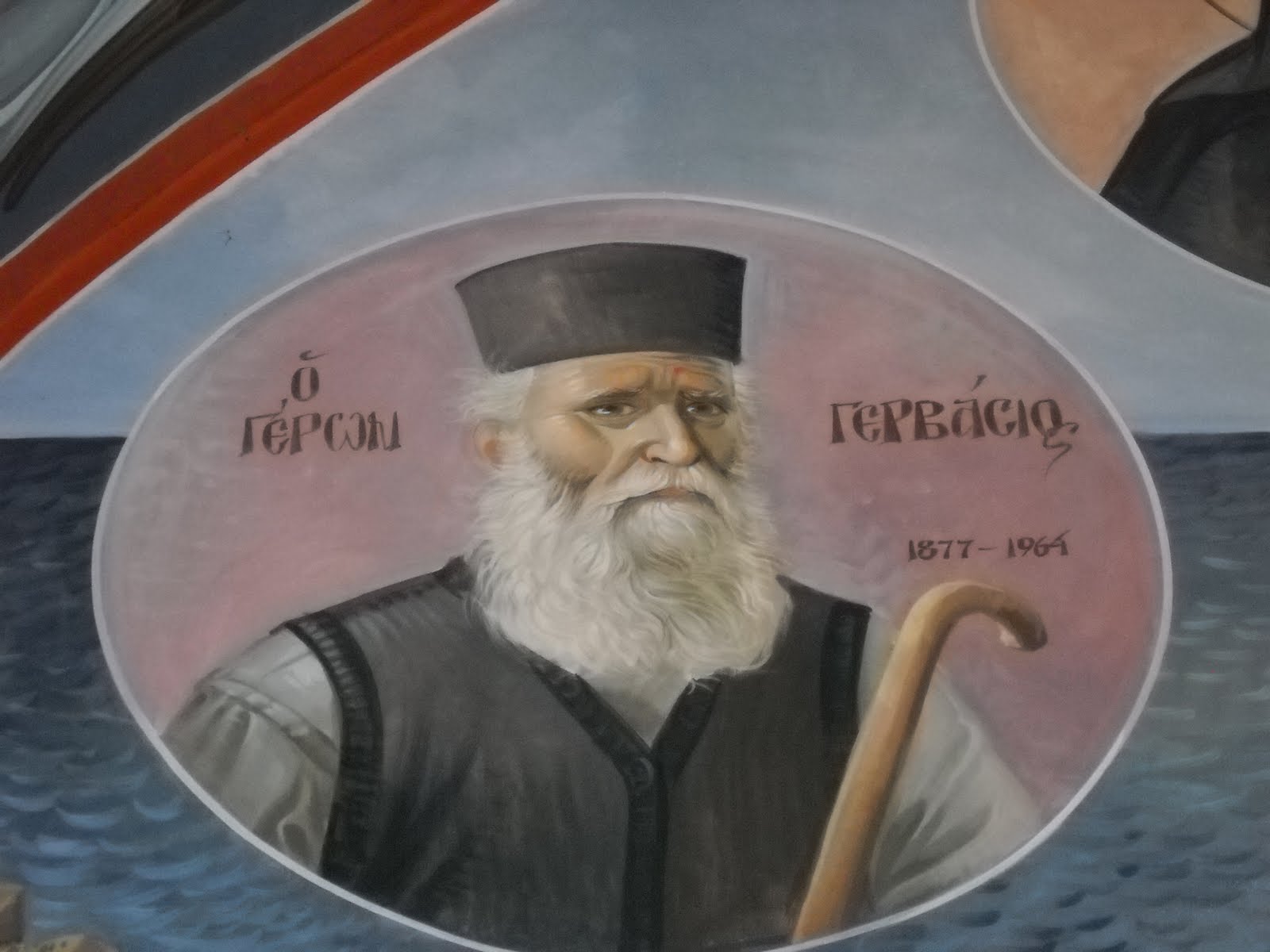
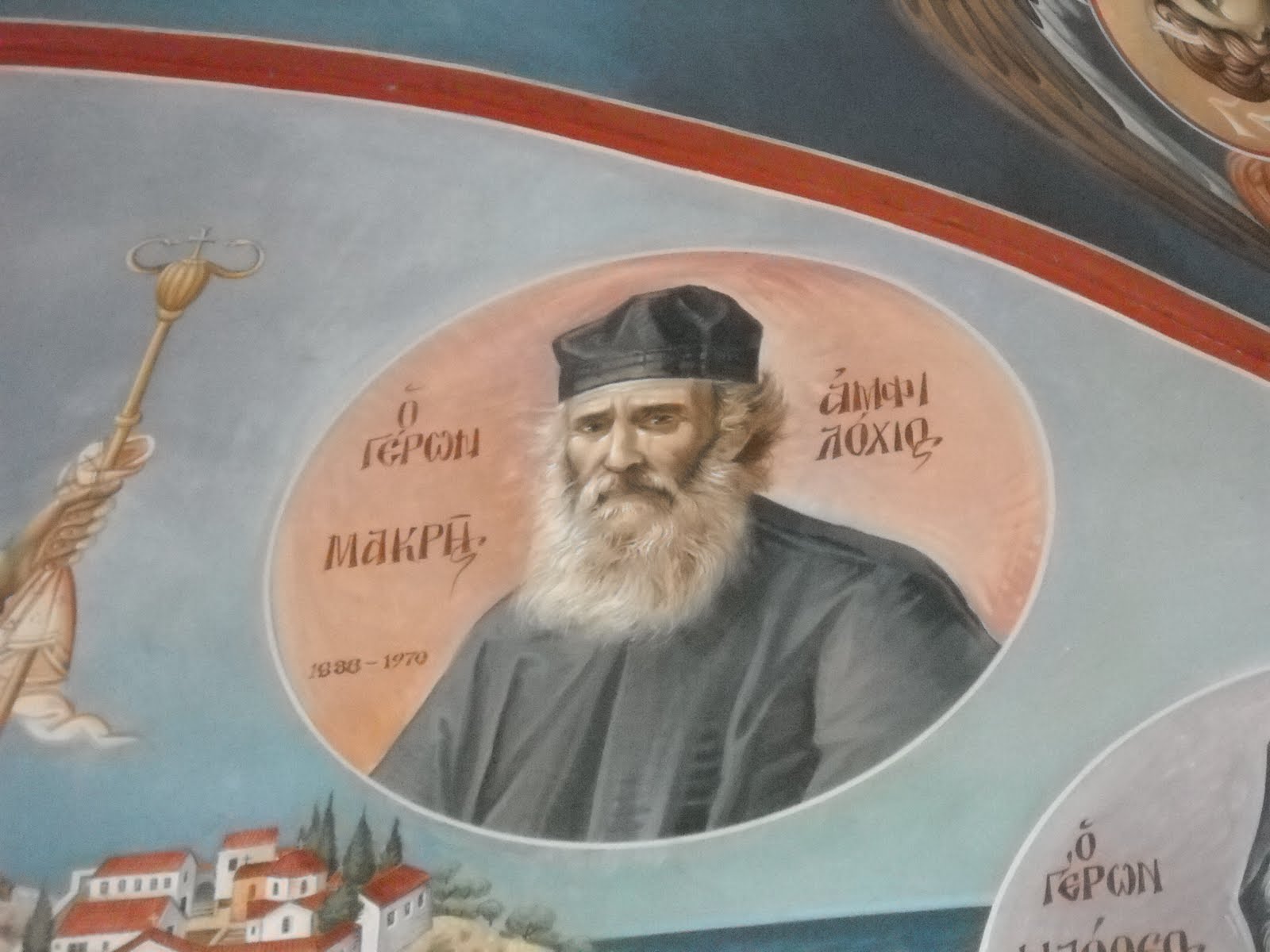
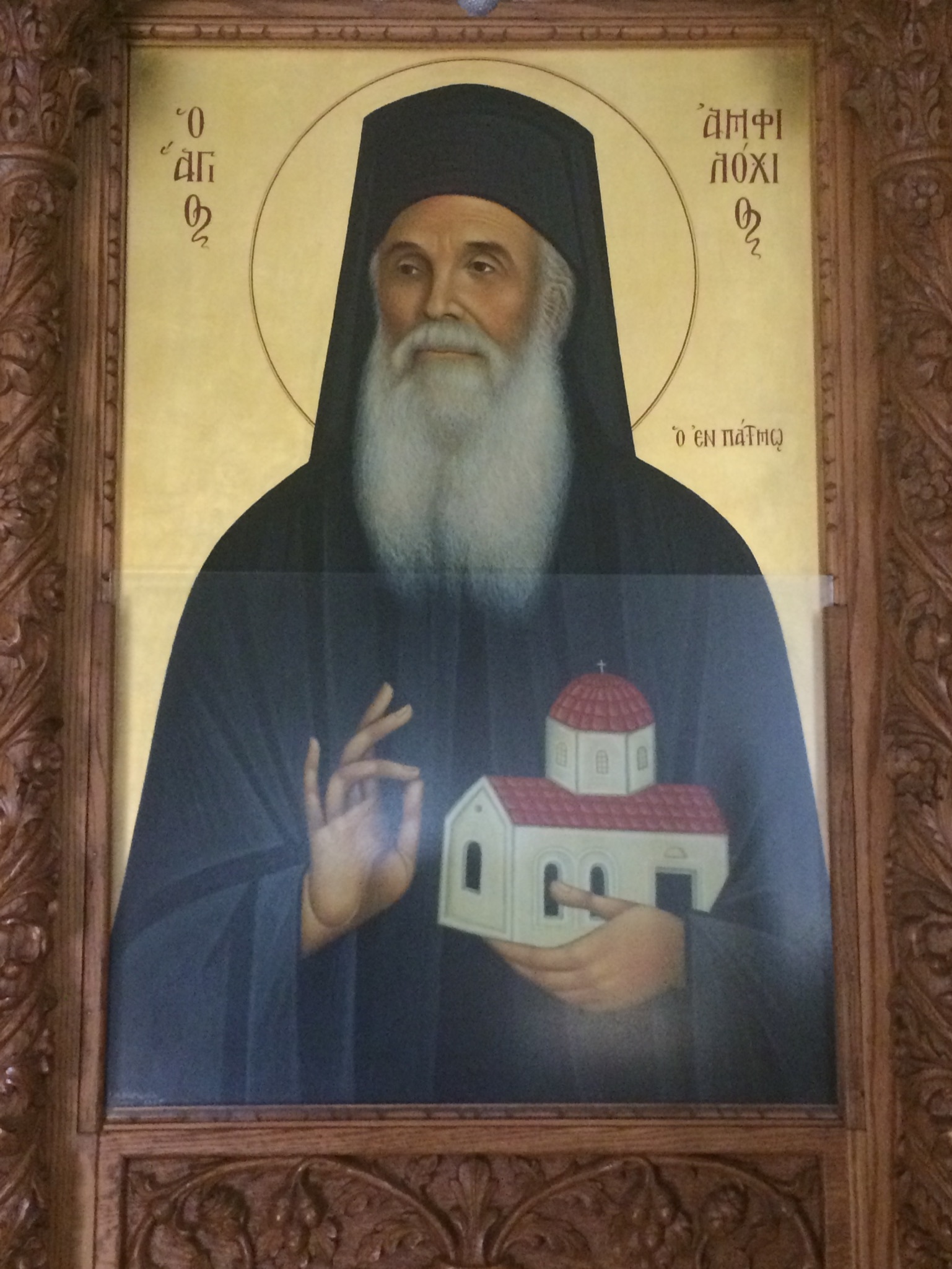
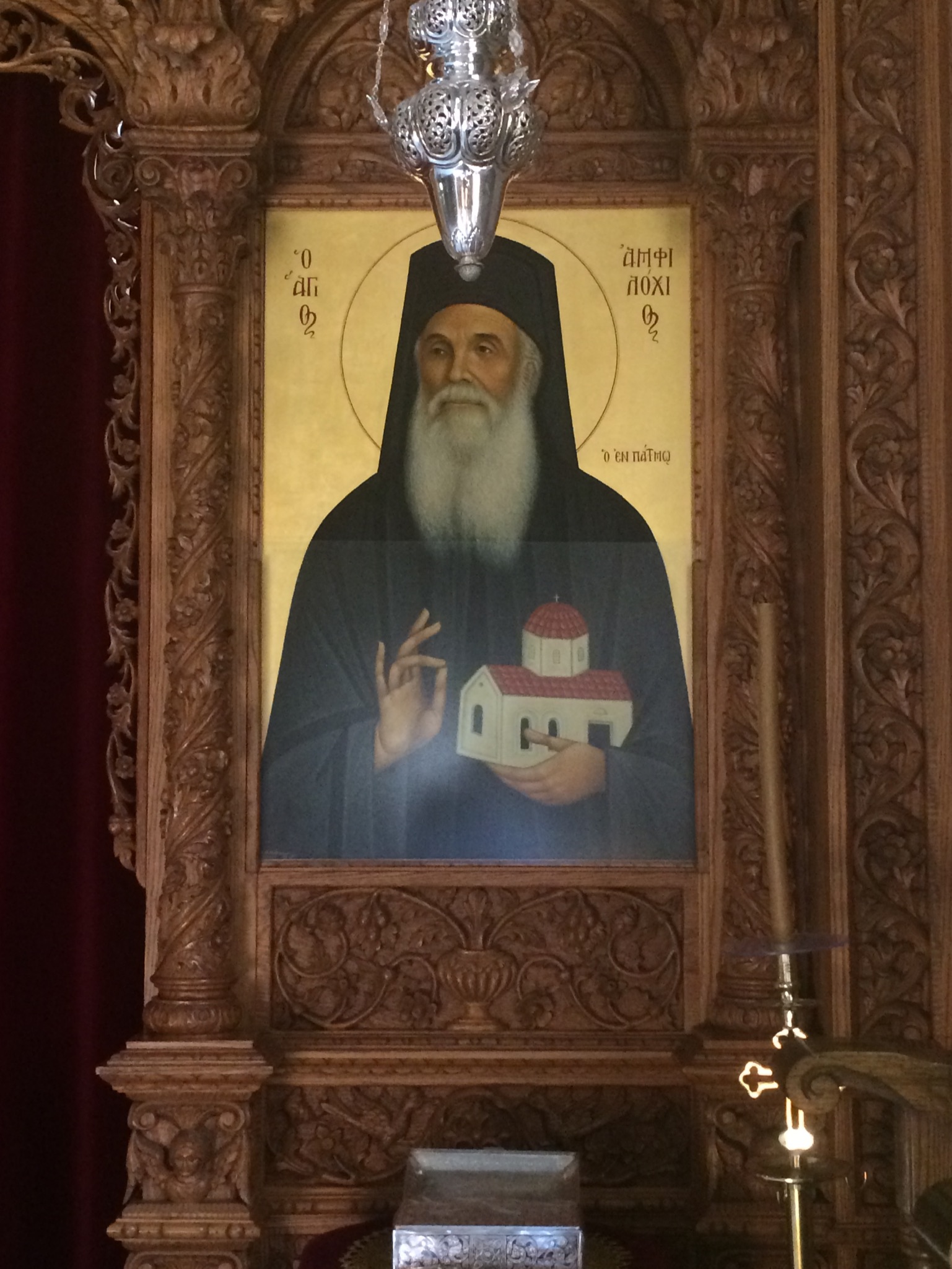
From top to bottom: Blessed Xenia, the blind, first abbess of St. Nektarios’ monastery in Aegina; Saint Savvas the New of Kalymnos; St. Amphilochios Makris of Patmos; Konstandinos Sakkopoulos, a little city hermit and St. Nektarios’ ‘right hand’; Elder Daniel Katounakiotis; Elder Philotheos Zervakos; Elder Gervasios Paraskevopoulos.
St. Nectarios on his coffin, locked outside the church (!), waiting the boat to Aegina … a sad symbol of the persecution and slander he suffered all his life for Christ, of the bitter Cup he drank. That closed door … and the open gate to Paradise with angels and hierarchs welcoming the Saint! + Asking for his holy prayers ….
During my recent pilgrimage to Patmos, on my way back through Kalymnos, I venerated the incorrupt relics of an amazing ascetic and Saint of the “latter days”, our Holy Father Savvas the New of Kalymnos. I even spoke to people whose parents confessed to him and remember with tears his love, compassion and angelic purity.
I would like to share here two episodes from his life which made a big impression on me (recorded in the monastery’s edition of his life):
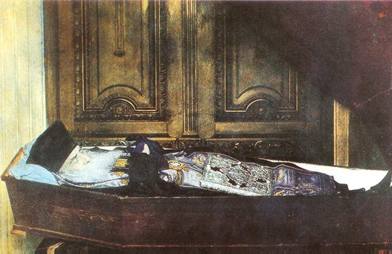
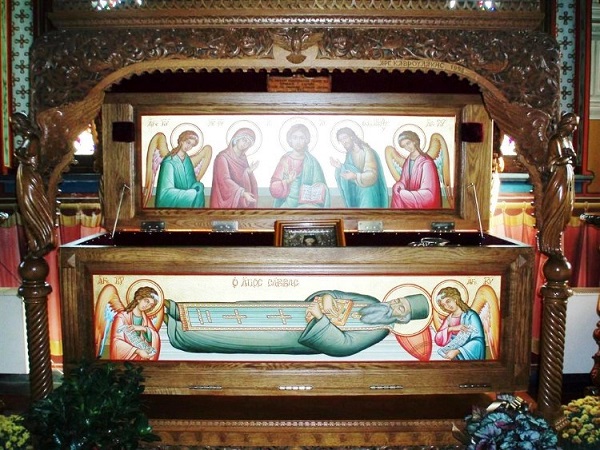
In Athens he met the acolyte of Saint Nektarios, who informed him that Saint Nektarios was looking for him. Based on this fact, it is assumed that the two saints had met before; in fact, most biographers agree that St Savvas was St. Nektarios’ spiritual child. Therefore, he went from Athens to Aegina in 1919, where he was with Saint Nektarios until he reposed. There he served as a priest in the Convent of the Holy Trinity. He taught the nuns iconography and ecclesiastical music. Upon the repose of Saint Nektarios in 1920, Savas witnessed the first miracle of the Saint when, after his repose, St. Nektarios leaned over so that St. Savas could attire him with his epitrahelion [ie. stole], and then the Saint returned back to his previous rigour mortis (ie. postmortem rigidity). St. Savas performed the funeral and for the first three nights he continued his communication with St. Nektarios over his grave, asking him a number of questions and listening to his answers! St. Savvas’ biographers have recorded those facts from first-hand witnesses and the stunned nuns’ testimonies.
Then, St. Savas enclosed himself in a cell for forty days where he lived in strict prayer and fasting, and emerged holding an icon of Saint Nektarios he had painted, which was the first icon of the Saint to exist. He gave the icon to the abbess ordering her to offer to the faithful for veneration. The abbess told him that this was not possible, as St Nektarios had not been yet officially canonised despite his numerous miracles from the very first moment of his repose and that such an action was not prudent and might get them in trouble with the ecclesiastical authorities and even cause the shutting down of the monastery. But St. Savas insisted that “You must obey. Take this icon and offer it for veneration and do not scrutinise God’s Ways”.
The second episode too happened again in Aegina. A young nun, Nektaria, wanted to see for one last time the face of St. Nektarios after his repose and started digging stealthily his tomb. The other nuns caught her in the act and reported her to the Abbess. She rebuked her and then sent her to St. Savas. He too rebuked her sternly and told her that her action was called grave-robbing and she should not receive Holy Communion until Holy Thursday. The young nun started to cry and beg for forgiveness, telling St. Savas that she did not know that what she had been doing was wrong and sinful. As soon as she left St. Savas’ cell, St. Nektarios appeared to St. Savas, smiling, and told him: “Elder, forgive her. She is very young. She didn’t know, she didn’t know that this was a sin. Offer her Holy Communion on Holy Thursday. Actually, offer her Holy Communion before Holy Thursday. Did you hear, Elder? Have mercy on her. She did not know. Did you hear? Thank you.”
Apolytikion
Let us faithful praise Holy Savvas, the glory and protector of Kalymnos, and peer of the Holy Ascetics of old; for he has been glorified resplendently as a servant of Christ, with the gift of working miracles, and he bestows upon all God’s grace and mercy.
Kontakion
Today the island of the Kalymnians celebrates your holy memory with a rejoicing heart; for it possesses as truly God-given wealth, your sacred body that has been glorified by God, O Father Savvas, approaching which they receive health of both soul and body.
Megalynarion
Rejoice, thou new star of the Church, the offspring of Thrace and the beauty of Kalymnos, O God-inspired Savvas, fellow citizen of angels and equal of all the saints.
You contended with the saints of old Savas,
And are glorified with them by your numerous miracles.
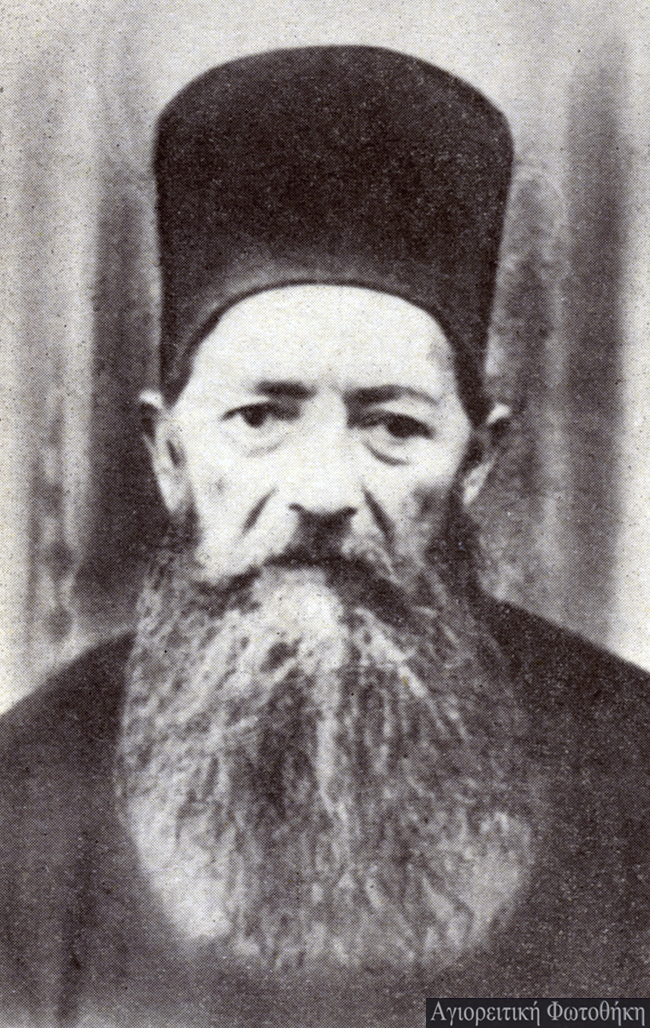
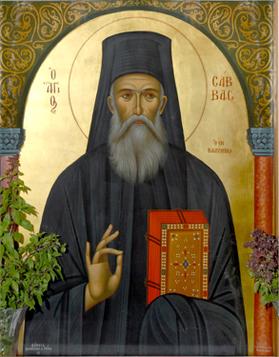
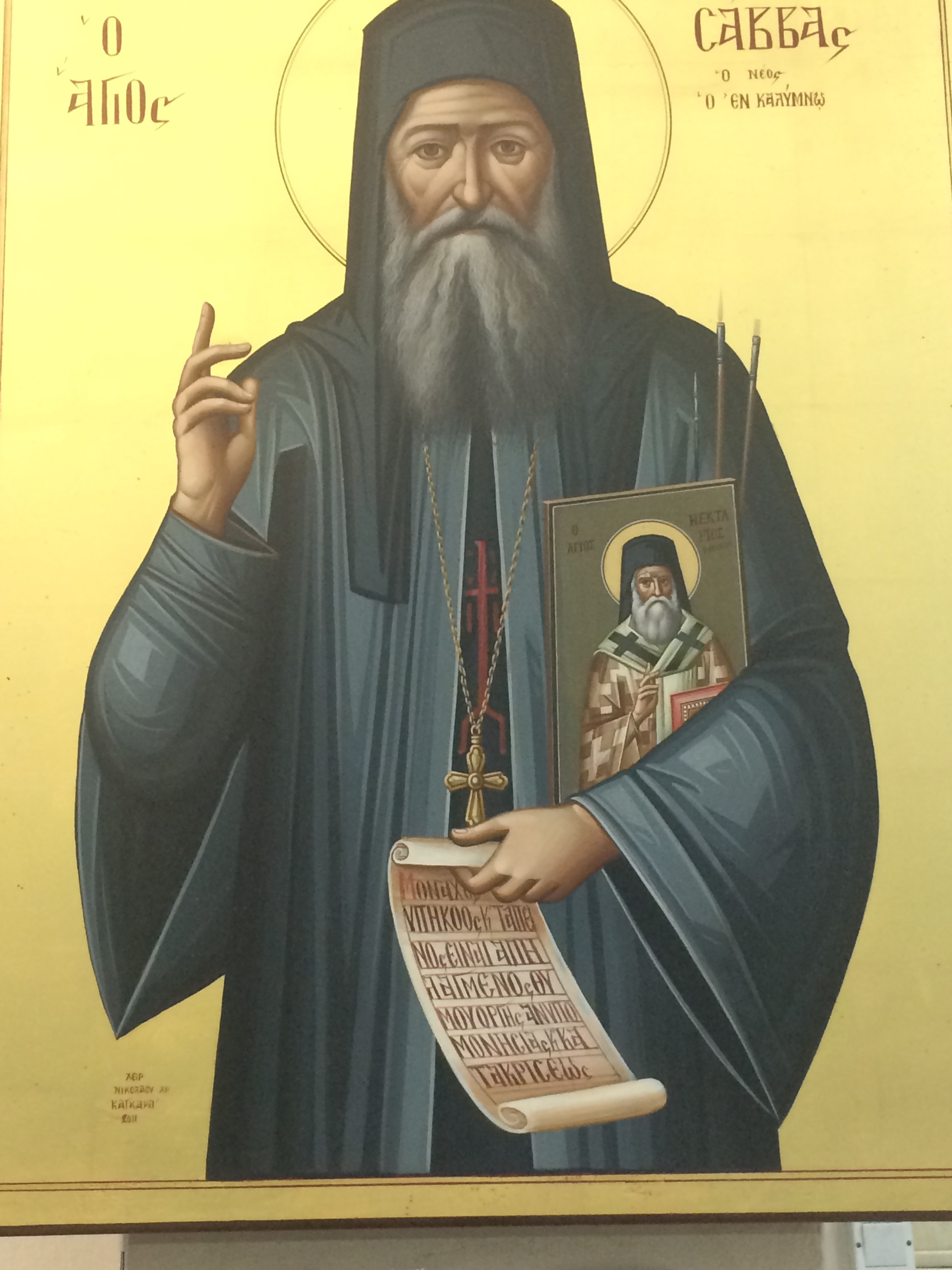
This angel on earth and a human in heaven was born in 1862 Herakleitsa, Eastern Thrace, Ottoman Empire and reposed in our Lord on 7 April 1947 (aged 85). He lived as a monastic and practiced the arts of Iconography and Ecclesiastical Music in the Saint Anna’s Skete (Mount Athos), the historic Monastery of Saint George Chozeba, the Convent of the Holy Trinity (Aegina), the monastery of St John the theologian and Evangelist (Patmos) and the Convent of All Saints (Kalymnos) and a number of caves and hermitages all over the world. His feast day is 7 April (25 March), The Fifth Sunday in Lent and was canonised in 1992.
For those who have never heard of him, a synopsis of his life can be found at the Mystagogy Resource Page.
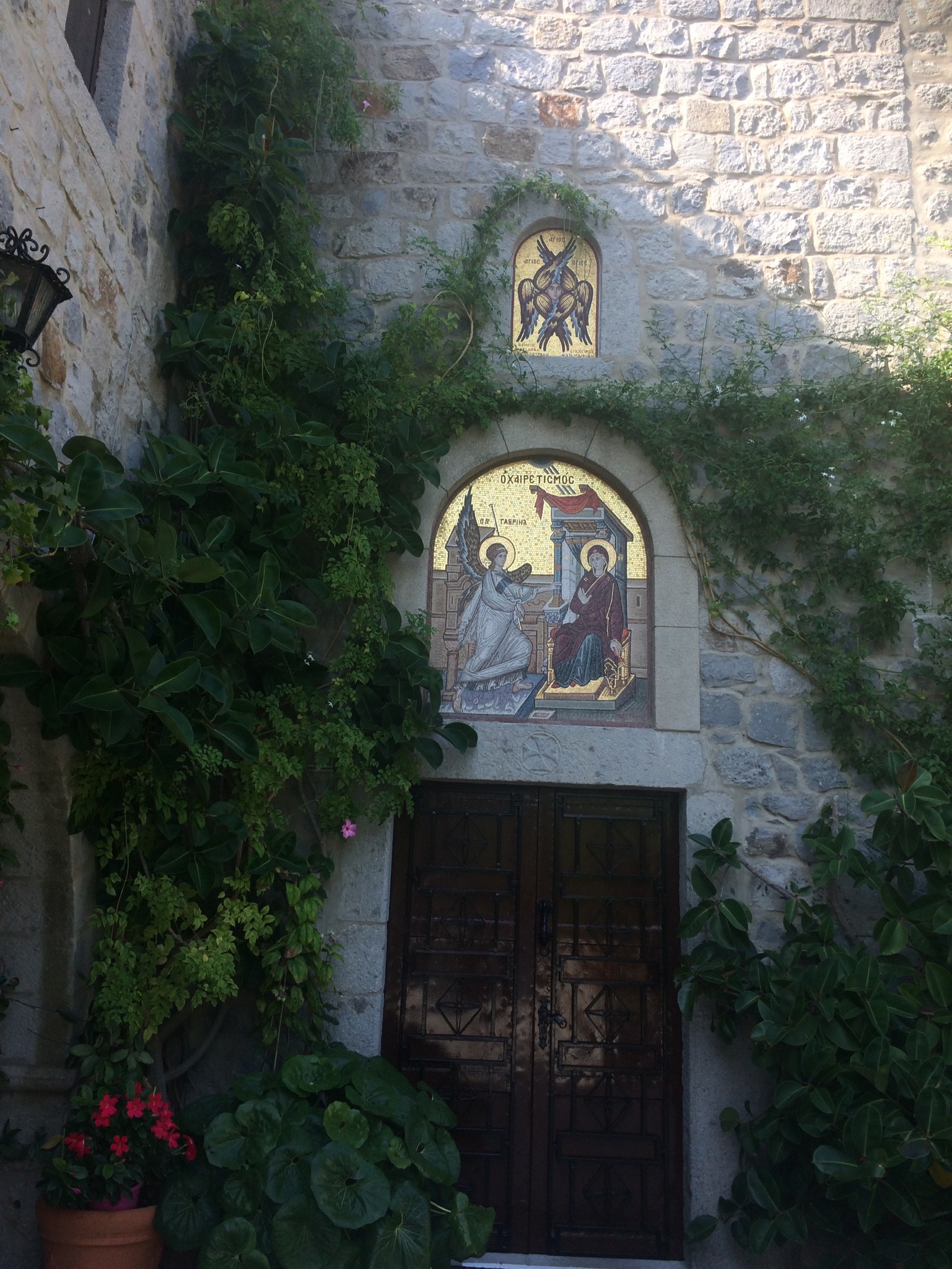
At the nunnery of Evangelismos “The Annunciation to the Mother of the Beloved One” in Patmos
1.When you cultivate prayer the Tempter’s blusterings will not trouble you. Prayer diminishes his strength, he cannot do anything to us. (February 1965) .. The spiritual life has great pleasures. You fly, you leave the world , you don’t consider anything. You become children and God dwells in your heart.
St. Amhilochios Makris
2. The end of my life draws near I ask you to live a holy life, to walk along holy paths, so that you may help both our Church and Greece. … Your hearts are young and want to love. You must have our Christ alone in your heart. Your Bridegroom wants you to love only Him. 1/1/1968
3.Remaining faithful to Monasticism is considered to be a martyrdom. … We must have our gaze fixed on heaven. Then nothing will shake us. …Take communion regularly, pray warmly, be patient and you will see a strong hand holding you.
4.Christ often comes and knocks at your door and you invite him to sit in the living-room of your soul. Then, absorbed in your own business you forget the Great Visitor. He waits for you to appear and when you are too long in returning, he gets up and leaves. At other times, you are so busy that you answer him from the window. You don’t even have time to open the door.
5.You are royalty, destined for the heavenly bridal chamber. …. Christ is near us even if we don’t see Him. Sometimes, from his great love, He gives us a slap too.
6.We you see a person who is spiritually tired do not burden him any further, because his knees won’t be able to bear it. … A person who suffers from egotism attracts no-one. And if he does attract someone he will soon go away. When one comes across a childlike spirit, innocence and holiness the bond becomes unbreakable.
7.Love the One, so that even wild beasts will love you. … Do you know there is an eleventh commandment not recorded in the Bible, and it says, ‘Love the trees.’ Those who do not love trees do not love Christ.
8.True wealth, for me, is to see you in the Kingdom of Heaven. [to his spiritual children]
9.When the flame of love exists, it consumes whatever evil approaches. … The person who shouts has no strength.
10.The person who loves spiritually, feels prayerful, that he can be found within God and his brother. He is saddened when his brother is not advancing well and prays for his progress. Whoever has Christian love never changes.
11.Hold the banner of Christ up high, so that you’ve always got your elder’s telephone number no matter where you are. … The Grace of the All-Holy Spirit makes a person send out rays. However, other people must have a good receiver in order to realise this. 1/1/1968
12.Christ is the same, yesterday and today, but we have closed our eyes and look into the darkness. It is because we carry on like this that some fall in the mud and others are killed.
13.I beseech the Lord to sanctify you, so that I may see you in Paradise. This is the dowry which I seek from the Lord for you.
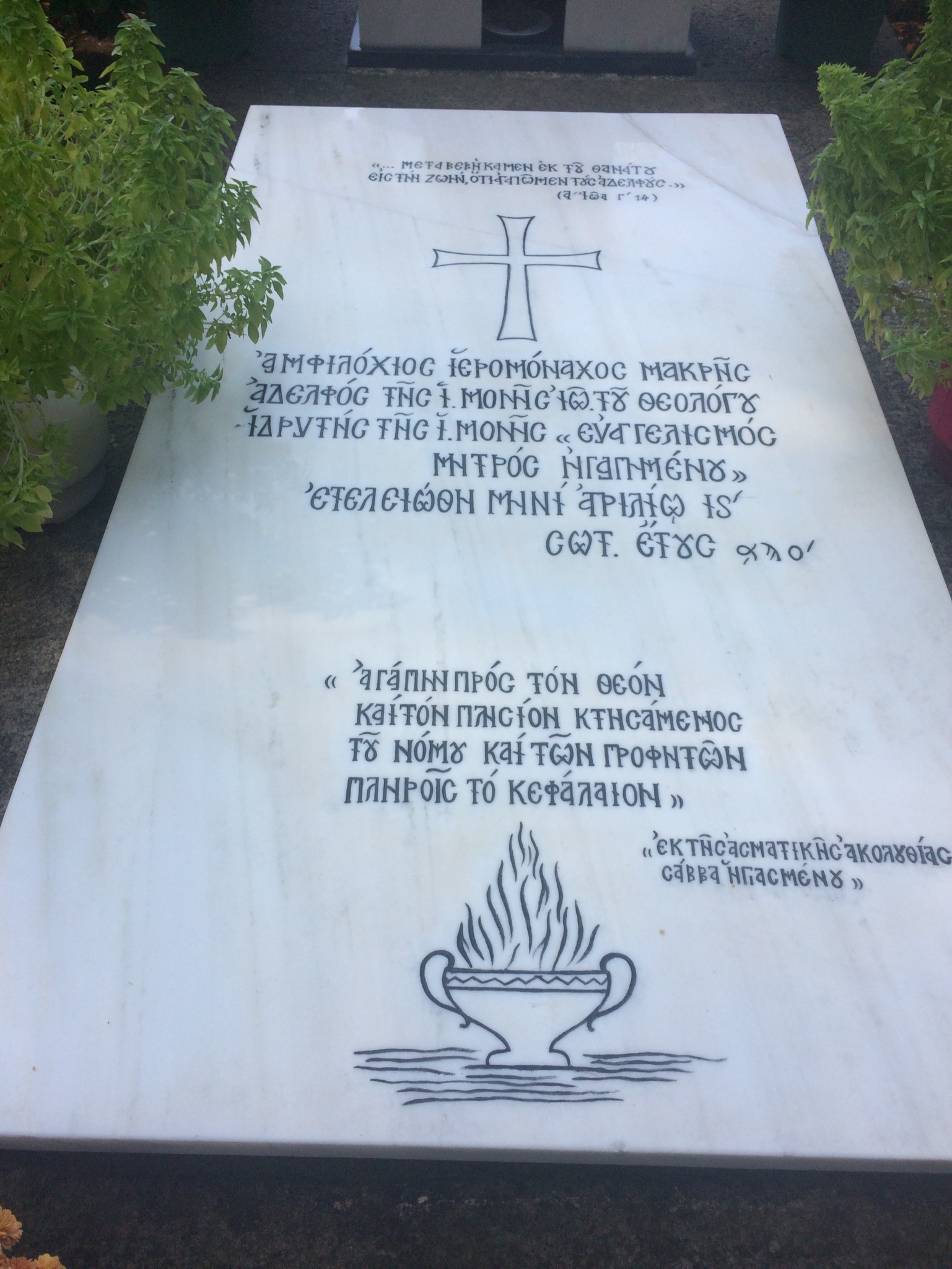
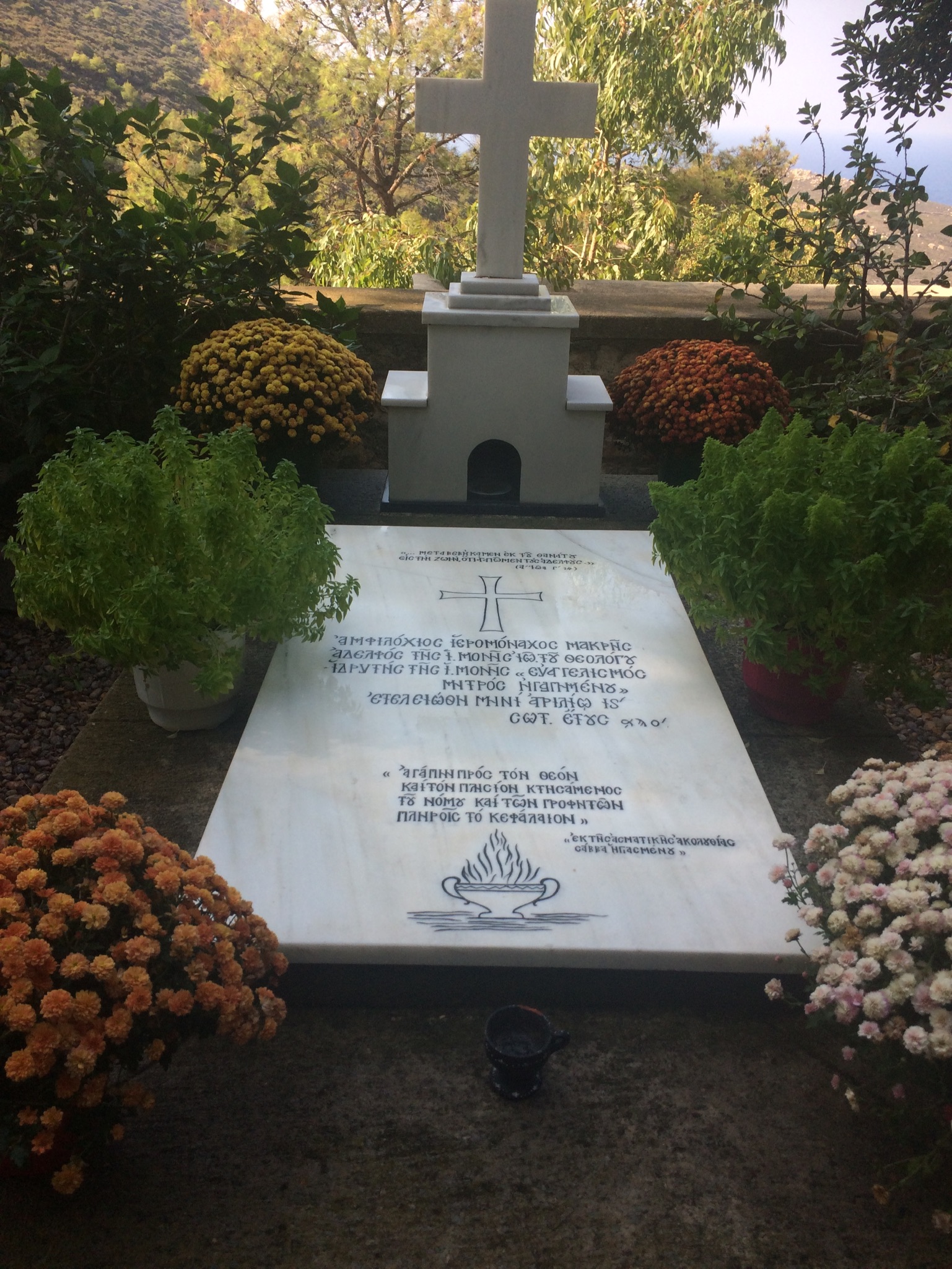
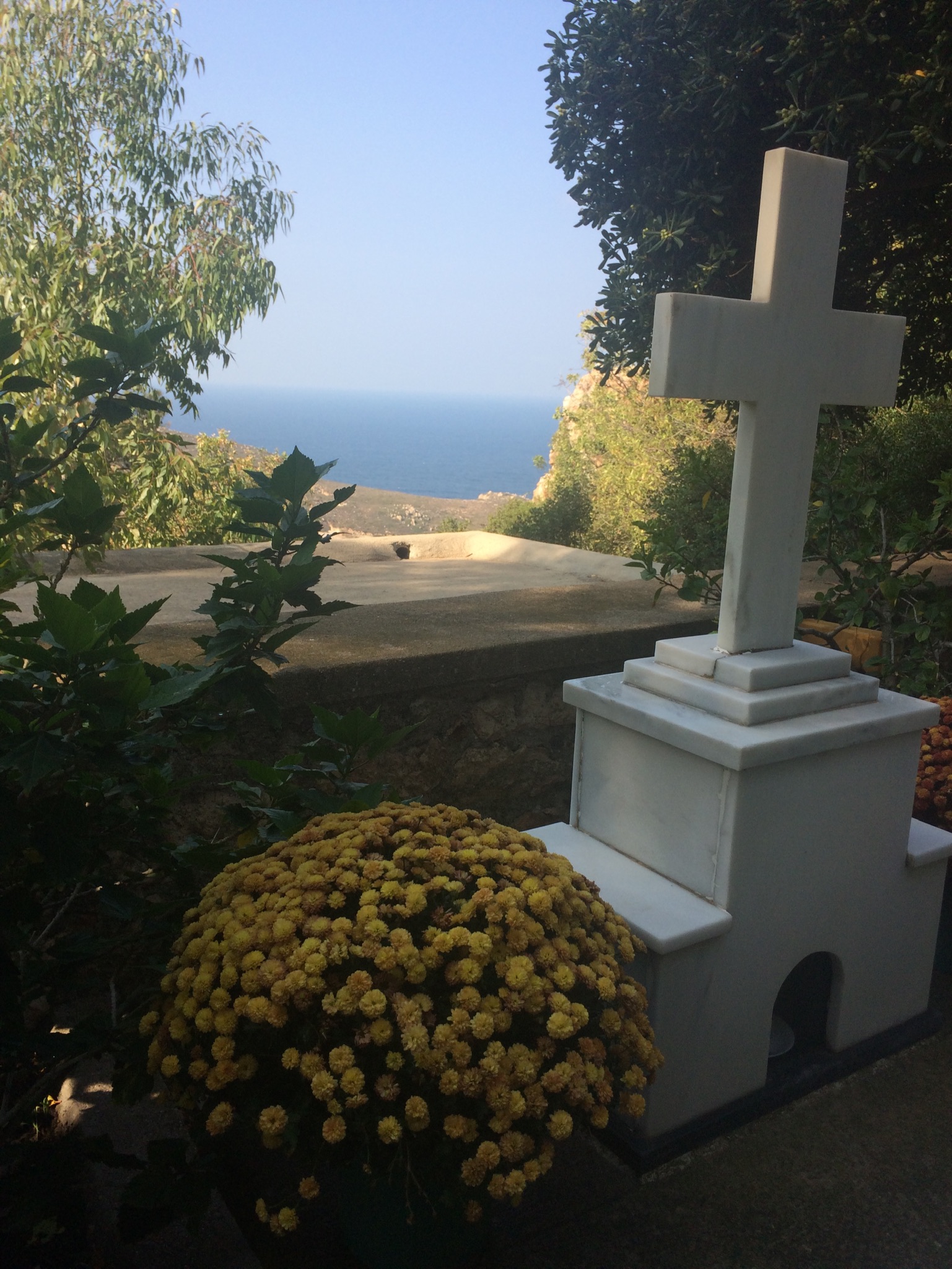
St Amphilochios’ tomb
14.For God’s grace to come during the Liturgy you must be concentrated and untroubled.
15.The more a person loves God, the more he loves other people. He loves them with holiness, respect and refinement, as images of God.
16.When a person lacks inner warmth, he will be frozen and cold, even in summer.
17.When your heart does not have Christ, it will contain either money, property or people instead.
18.Please put this commandment into practice. Cultivate love towards the Person of Christ to such an extent that, when you pronounce His name, tears fall from your eyes. Your heart must really burn. Then He will become your teacher. He will be your Guide, your Brother, your Father, and your Elder.
19.Love your Bridegroom Christ with all your heart and then everyone will love you and take care of you.
20.I desire the rebirth of Monasticism, because in my opinion, monasticism is the evzone [elite military unit] battalion of the Church.
21.God’s protection diminishes temptation. … Innocence is greater than genius.
22.Because of widespread corruption, people cannot understand that spiritual love exists.
St. Amphilochios cell
23.Let us look upon everyone as our superiors, however weak they may appear. Let us not be harsh, but always bear in mind that the other person also has the same destination as us.
24.We must have Love, even if they do us the greatest harm, we must love them. We will be able to enter Paradise only with love.
A meeting of Saint Nektarios with a clairvoyant hermit on Mount Athos. Also, a recent miracle of the Saint in Romania.
St. Nektarios enjoys wide popularity amongst Orthodox throughout the world, yet his popularity in Romania has gained over the past few years. Portions of his relics can even be found in such places as Putna Monastery, Radu Voda Monastery in Bucharest, the Church of the Holy Hierarch Nektarios in Iasi, and the Hermitage of Saint John and Nektarios in Bradetu, Arges. Why do so many Romanians venerate Saint Nektarios and go to pilgrimage to his Monastery in Aegina? All this seems to be related to a recent, miraculous “visit” of the Saint to a village in Romania.
Below is the account as it was told by Romanians to Greeks:
“In a village of Romania there was no priest and the residents often went to the Patriarch with the problem in order to fill the empty spot. However the Patriarch did not have the means of satisfying the demand. The villagers often went to the Patriarch, but he would say the same thing, that he did not have a priest to send to the village.
Meanwhile people died unread (no funeral service), others had relationships and children without marriage vows, and the children and adults alike were unbaptized.
Then one day, outside of the church, a car stopped and out stepped a priest. The village was astonished and yelled out that a priest had come.
The villagers went to the church to greet him and asked him, “How did you come to the village after our Patriarch had said that he doesn’t have a priest to send us?”
The priest answered, “Isn’t this what you wanted? Did you not want a priest? Here I am.”
All the villagers were glad in the presence of the new priest.
The priest began immediately working. He went to all the graves and read the funeral service. He baptized and married everyone in the village and administered Holy Communion.
One day he invited all the villagers to church and told them, “I will leave now, my mission is done.”
The villagers were confused and asked, “Now that you came, you are leaving?”
However the priest did not listen to the villagers and proceeded with his decision.
When the villagers realized that their wasn’t anything they could do, they thanked him for his offering.
After a few days, the villagers went to the Patriarch and they thanked him for sending them a priest and to let him know that they would appreciate it if he could send them another priest soon, but the Patriarch didn’t know anything.
He said to them, “I didn’t send a priest because I don’t have one, however let me check with the chancellor to see if he had sent a priest to you to serve your needs.”
He phoned the chancellor, but he too didn’t send anyone.
The Patriarch inquired, “What did this priest do in your parish?”
The villagers answered, “He married us, baptized us, performed funerals for our parents, he did what any other priest would have performed for us.”
Then the Patriarch asked, “Well, didn’t he gave you any papers or log the Mysteries.
“Of course,” said the villagers, “he gave us papers and he wrote them in the church’s books.”
“Then did anyone see what he wrote? And with what name he signed?”
“All the documents were written in Romanian and we are not well educated and the signature he signed in a language we have not seen before.”
The Patriarch requested they go bring the books in order to see who was this clergyman.
When they returned with the book the Patriarch remained speechless. He couldn’t believe his eyes.
Indeed all the documents were written in Romanian while his name was written in Greek with the name of his signature,
Nektarios, Bishop of Pentapolis
For the original sources of the miracle and further information, all translated by John Sanidopoulos, go to Mystagogy.
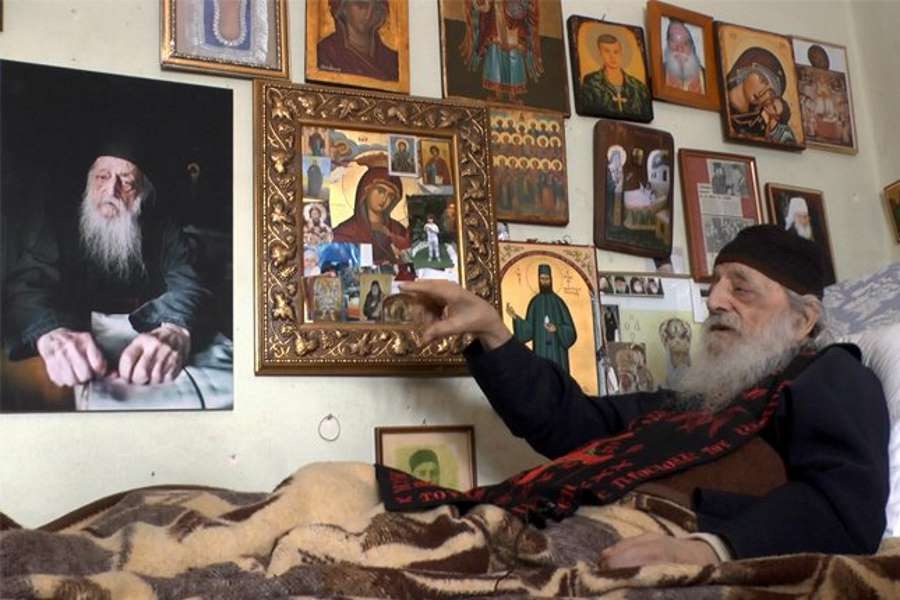
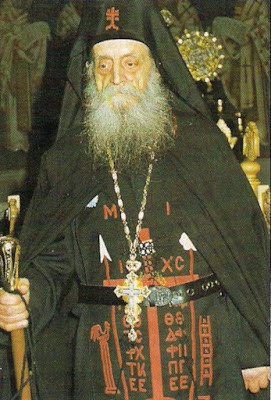
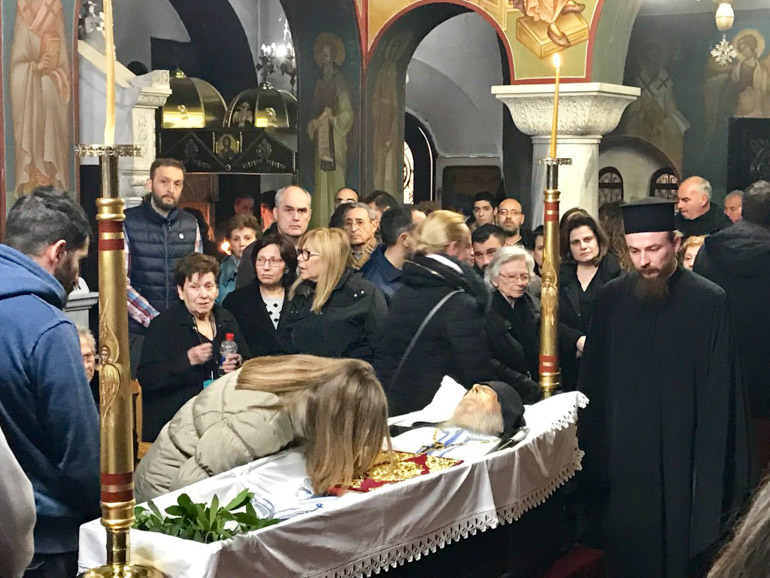
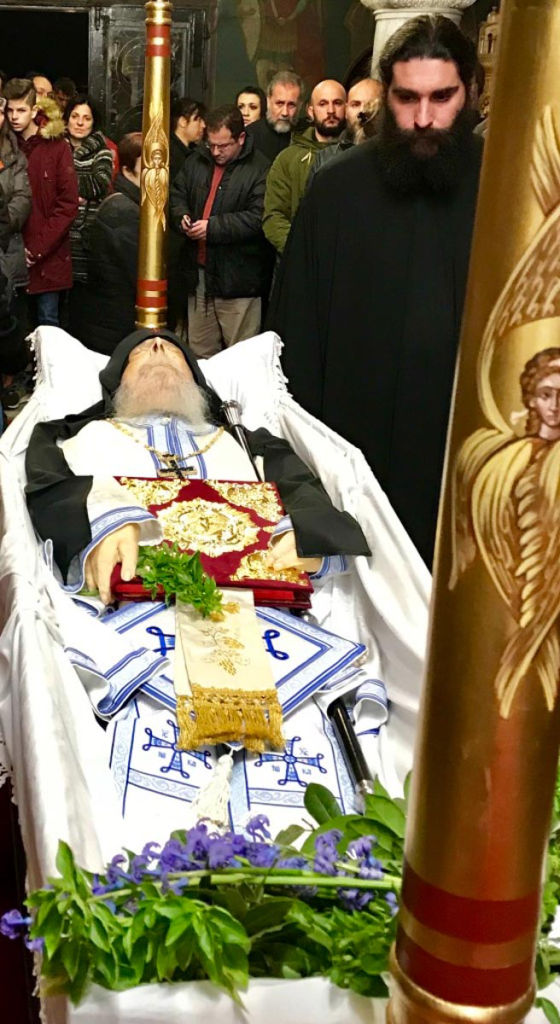
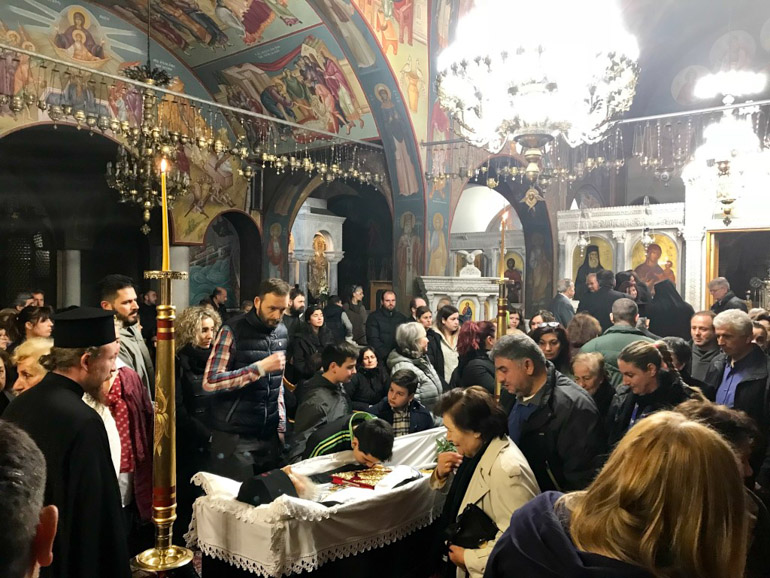
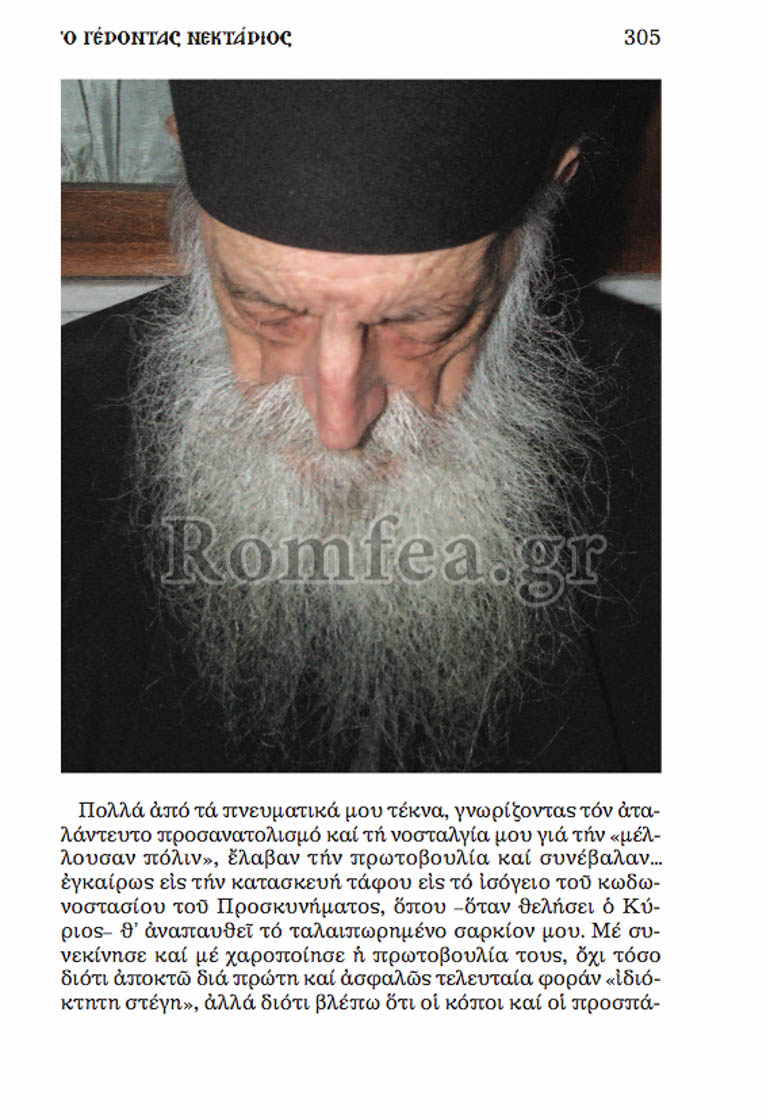
On Thursday, February 8, 2018, at 5:30 AM, the renowned elder and spiritual father Nektarios Vitalis, the elder of Saint Athanasius Monastery in Kouvaras, reposed in the Lord. I wrote about his holy life in a previous post. Today I would like to share with you a miracle which took place on the day of his funeral, February 9 at the Monastery of Saint Athanasius, sealing a life full of heavenly visitations. The Youtube video which follows, shows, from 1:38onwards, how his corpse is not stiff (ie. rigor mortis) but shows signs of flexibility, as if he were only sleeping. Pay attention to how a spiritual child of his fondly kisses and gently caresses his Gerondas’ hand, seeking his final blessing. God is glorified in His Saints!
Icon of St. Nektarios embracing and healing Fr. Nektarios Vitalis, along with the two women bearing witness to this to the left, and the doctors confirming the miracle to the right. The icon is from the Chapel of Saint Nektarios in Aretaieion Hospital.
Before this, in 1965, he suffered a stroke, and his situation was dire, but Saint Nektarios the Wonderworker granted him healing. As soon as he became well, he moved to Lavro. A short time later, he again saw Saint Nektarios in his sleep, who asked him to build his “house” in Kamariza, Lavro [a famous pilgrimage of the saint, where many miracles have occurred], and who informed him that he would help him.
Excerpt from a short encomium written by Mr. Manolis Melinos, who wrote several books on St. Nektarios, his life and miracles, and spent 30 years together with him: ELDER NEKTARIOS The sweet, the simple, the father, The brother, the fellow man, The consoler, the humble one, The child among children, the great one among the great, the elder among the elders, in other words, the child-elder, reposed today, February 8th, 2018 at the age of 88. Now he is an intercessor for us at the heavenly Altar, together with St. Nektarios, near the Great High Priest Christ, to Whom he gave everything!
Fr. Nektarios Vitalis is at long last with our Saviour Christ and his beloved patron Saint, St. Nektarios. May he pray for us! His was a life full of visions, visitations and miracles with his patron saint, even near-death, after-life experiences! Miracles and signs of Holiness even during his Memorial Service and Funeral!
Καλό Παράδεισο, Γέροντα! Καλή αντάμωση στην Αιωνιότητα!
Greek traditional wish for the departed: “A Blessed Paradise, Gerondas! Until we meet again in Eternity!
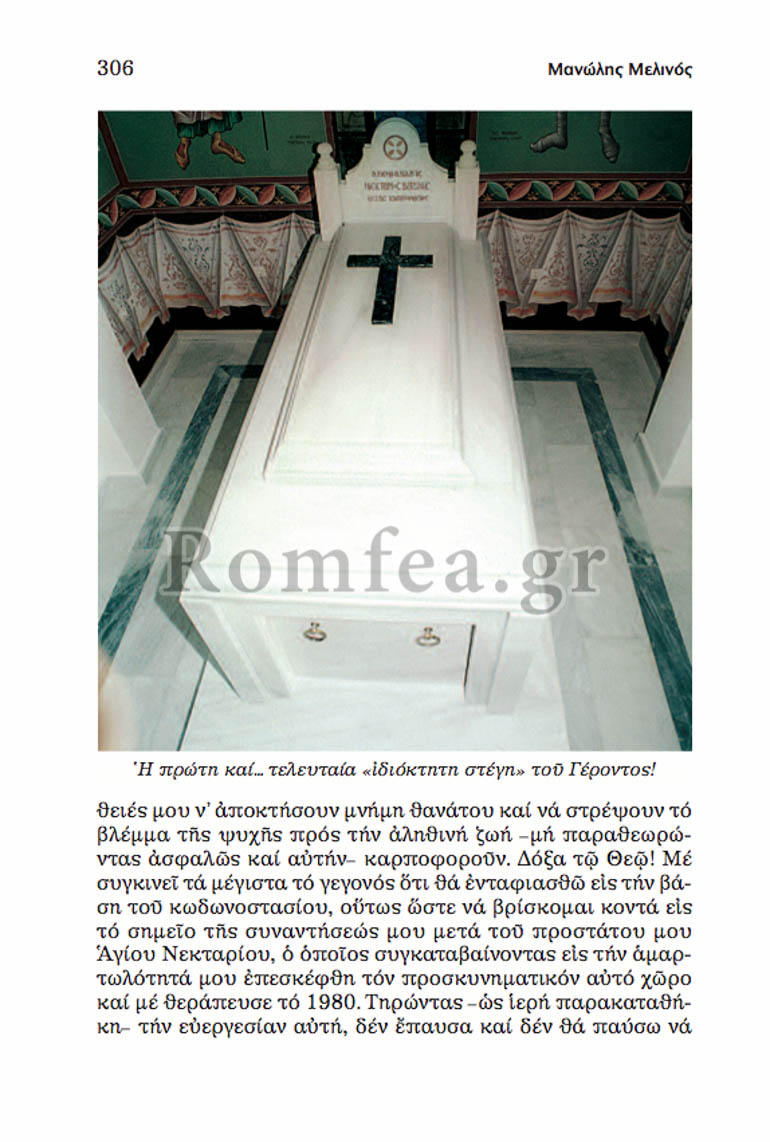
Below follow Fr. Nektarios’ recalling of his miraculous healing of cancer by St. Nektarios, a few youtube videos where he tells of St. Nektarios’ visitations to him and his near-death, ‘after-life’ experience, and his final will, testament and tomb.
Miracle of Saint Nektarios: The Healing of Fr. Nektarios Vitalis of Cancer
Fr. Nektarios Vitalis, well-known in Lavrio [a city in Attika, Greece] for his deeds and his sympathy to the poor and those written-off by the world in these difficult times, retells the following incident from when he was dying from cancer. What is said below has been told elsewhere, repeatedly, including in the book I talked to Saint Nektarios (Athens 1997, by the renowned writer Mr. Manolis Melinos).
Fr. Nektarios Vitalis recalls:
“I was suffering from a serious form of cancer. My chest was an open wound that was continuously running blood and pus. I would tear my undershirts from the pain. It was a tragic situation, and I was headed directly to death. So you understand, I had even prepared my grave clothes….
“On the 26th of March 1980, in the morning, I was talking in my office in the basement of the Church with Sofia Bourdoy (the church care-taker [a woman who cleans the church]) and the icon painter Helen Kitraki, when the door suddenly opened and an old, unknown man entered. He had a snow-white beard, was short and was slighty bald. He looked exactly the same as St. Nektarios appears in photographs. He took three candles without paying and lit only two. He venerated all the icons of the church, but passed over the icon of St. Nektarios without venerating it. He did not see me where I was. I had terrible pains when they pulled aside the curtain of the office and went to see the old man. He faced the Beautiful Gate [the Royal Doors in the Holy Iconostasion], crossed his palms and without looking around he asked: ‘Is the Geronta [Elder] here?’
“The church care-taker knowing my disease wanted to protect me…: ‘No, no…he is at home with the flu….’
“He replied: ‘Never mind. Pray, and have a Good Resurrection,’ [the traditional Orthodox greeting during Great Lent in anticipation of Pascha ‘Kali Anastasi’] he said as he left.
“The church care-taker came running to me and said ‘Father Nektarios, the old man who just left resembled St. Nektarios himself! His eyes flew flames. It seems to me that was St. Nektarios and he came to help you….’
“I thanked her thinking that she said this to console me. But deep down something was wrong. I sent her along with the icon painter to find the unknown man and quickly bring him back. I walked into the sanctuary and venerated the Crucified One [the icon of Christ on the Cross in every Holy Altar] crying, and once again asking Christ to heal me. Their footsteps stopped: ‘Father, the Elder has come!’
“I tried to kiss his hand, but out of humilty he did not let me. He bent and kissed my own! I asked him: ‘What is your name?’
“‘Anastasios, my son,’ he said, relating his baptismal name that he had before he become a monk….
“I led him to venerate the holy relics. He took out a pair of glasses with only one arm, and as soon as we saw them we were amazed! They were the same glasses of St. Nektarios that we had in the case with the holy relics. They were given to me by the old Gerontissa [Eldress] Nektaria of the monastery in Aegina.
“‘Belief is everything!’ said the stranger, as he put on his glasses.
“He began with reverence to embrace all the holy relics as the church care-taker showed, except for the relics of St. Nektarios, which he passed over….
“‘Geronta, forgive me,’ I said, ‘but why don’t you venerate the miraculous Saint Nektarios?’
“He turned and looked at me smiling. I asked him: ‘Where are you staying Geronta?’
“He showed me the ceiling, where we were building the new church [dedicated to St. Nektarios], saying: ‘My house is still not ready and I’m worried. My position does not allow me to live here and there….’
“‘Geronta, I must confess, you were told a lie earlier. I have cancer! But I want to get well, to make the Holy Altar, to finish the Church first, and then I can die….’
“‘Do not worry,’ he told me. ‘I’m leaving now. I’m going to Paros [an island in Greece] to venerate St. Arsenios and to visit Fr. Philotheos [Zervakos],’ he added, starting to leave and passing by the big icon without giving it a second thought….
“I stopped him and put my hands to his face.
“‘My Geronta, my Geronta, your face looks exactly like St. Nektarios who is honored here in our church….’
“Then, tears rolled from his eyes. He crossed me and embraced me with his hands. Taking courage I opened my hands to hug him. But when I spread out my hands, and while I was watching I could see him before my face, my arms closed back to my chest! The hairs then stood up on my arms and I crossed myself!
“I said again: ‘O my Geronta, I beg you, I want to live to do my first Liturgy. Help me to live….’
“He left from being close to me and stopped in front of his icon and said: ‘Oh, my child Nektarios, don’t worry. It is a passing trial, and you will be well! The miracle which you are asking for will happen, and it will be told to the whole world. Don’t be afraid….’
“Immediately he left us by walking through a closed door….
“The women ran to catch up to him. They reached him at the bus stop. He went inside and disappeared before the bus left!”
This story is always told by Fr. Nektarios Vitalis, a respected and reliable person, in the presence of witnesses. Fr. Nektarios eventually became well – to the amazement of doctors, radiologists, and forecasters of death. Because above all is Christ, our living God, and our intercessors before God, the Saints, plus our Mother the Panagia!
For “where God wills, the laws of nature are overcome….”











 ORTHODOX CHRISTIAN FAITH AND LIFE