Born to Hate Reborn to Love

Cross.jpeg

A Spiritual Odyssey from Head to Heart

The Incredible Tale of Klaus Kenneth

(Not for the faint-hearted) 

A friend recommended this book and its author last Sunday, and I have no words to describe the experience! I am half-way through the book and still reeling from the shock of the reading experience, chapter after chapter. And I believed that “The Gurus, the Young Man, and Elder Paisios” by Dionysios Farasiotis was scary… Nothing had prepared me for this. Klaus Kenneth, emotionally and physically abused by family and priests, a gang leader at 12, a terrorist at 22 and a junkie at 25; then, a Buddhist monk, a Hindu mystic and an occultist in Central America, and this is only a chapter in his life. In his sincere search for escape from rejection and abuse, Klaus found himself on an odyssey that took him around the world several times, lured him into a vortex of pleasure and power, and initiated him into the great philosophies and religious traditions of our times. Having tried it all, and reaching the very brink of the abyss of despair and the desire for nonexistence, Klaus encounters the One whom he had never thought to look for, the One that he had always discounted: the great I AM, the God of Love and healing, the God of regeneration and eternal life.

“Do not fear!” “In my Name you will always be stronger!”

“To this day, I have never again experienced fear or doubt, and certainly no real despair.”

In that whirlwind of spiritual seeking, in all this frenetic searching for something more in his words, I believe he elaborated on his darker moments a little too much. I understand that he was trying to make his life an open book, but some of his experiences of power that he gained from Satan could serve as a temptation to readers. Eventually, Mr. Kenneth made right with God and we learn that he ultimately became an Orthodox Christian. At least, “The Gurus, the Young Man, and Elder Paisios” is written with more restraint. I am honestly not sure if that is a book to be recommended, as the first part of his book reads like a visit to Hell in graphic detail. Or, like “the difficult road out of hell”. It has honestly scared me. I mean, it is certainly most encouraging that after his conversion and Christ’s promise to him “Do not fear!” “In my Name you will always be stronger!”, Klaus “to this day, has never again experienced fear or doubt, and certainly no real despair.” Yet, the reading is not for the faint-hearted. Half-way through the book, I am certainly looking forward to his extended talks with Elder Sophrony. In fact, it was under the guidance and prayers of Elder Sophrony that this version of his book came to be published, so who am I really to voice any objections for certain parts which I have found disturbing … Have you read this book and what are your views?

Another thing which I made me uneasy was all this personal, Confession tone of the narrative, something that one does not find in Orthodox discourse where a person’s personal experiences are not the centre of the discourse, but the church experience instead. This personal tone may be quite common in Protestant discourse but not in Orthodox. However, if we approach all this with positive thinking, there is so much for us to profit. Yes, Klaus Kenneth may be extreme, but so is Elder Sophrony, and so many other Saints.

For an interview with the writer, go to Journey to Orthodoxy here and for his precious talks with Elder Sophrony here.

With the Eyes of the Soul


PREMIERE: “With the Eyes of the Soul”, the long awaited release of a video on the life of Saint Porphyrios, one of Orthodoxy’s most well known contemporary elders who happened to live most of his life working as a priest in a clinic chapel in Athens, Greece.  This video uses multiple voice actors and presents both a linear narrative about his life intertwined with accounts of healings and wonders that occurred at various times. 

Overcoming Depression

freedom.jpg

A few case studies analysed by St. Porphyrios at a rare audio recording and a chapter from his book “Wounded by Love”

https://youtu.be/5SjhCKMCkbU

“Nowadays people often feel sadness, despair, lethargy, laziness, apathy, and all things satanic.  They are downcast, discontent and melancholy.  They disregard their families, spend vast sums on psychoanalysts and take anti-depressants.  People explain this as ‘insecurity.’  Our religion believes that these states derive from satanic temptation. 

Pain is a psychological power which God implanted in us with a view to doing us good and leading us to love, joy, and prayer.  Instead of this, the devil succeeds in taking this power from the battery of our soul and using it for evil.  He transforms it into depression and brings the soul into a state of lethargy and apathy.  He torments us, takes us captive and makes us psychologically ill.

There is a secret.  Turn the satanic energy into good energy.  This is difficult and requires some preparation.  The requisite preparation is humility.  With humility you attract the grace of God.  You surrender yourself to the love of God, to worship and to prayer.  But even if you do all in the world, you achieve nothing if you haven’t acquired humility.  All the evil feelings, insecurity, despair and disenchantment, which come to take control of the soul, disappear with humility.  The person who lacks humility, the egotist, doesn’t want you to get in the way of his desires, to make any criticism of him or tell him what to do.  He gets upset, irritated and reacts violently and is overcome by depression.

This state is cured by grace.  The soul must turn to God’s love.  The cure will come when we start to love God passionately.  Many of our saints transformed depression into joy with their love for Christ.  That is, they took this power of the soul which the devil wished to crush and gave it to God and they transformed it into joy and exultation.  Prayer and worship gradually transform depression and turn it into joy, because the grace of God takes effect.  Here you need to have the strength to attract the grace of God which will help you to be united with Him.  Art is required.  When you give yourself to God and become one with him, you will forget the evil spirit which drags at you from behind, and this spirit, when it is disdained, will leave.  And the more you devote yourself to the Spirit of God, the less you will look behind to see the spirit that is dragging at you.  When grace attracts you, you will be united with God.  And when you unite yourself to God and abandon yourself to Him, everything else disappears and is forgotten and you are saved.  The great art, the great secret, in order to rid yourself of depression and all that is negative is to give yourself over to the love of God.

Something which can help a person who is depressed is work, interest in life.  The garden, plants, flowers, trees, the countryside, a walk in the open air — all these things tear a person away from a state of inactivity and awake other interests.  They act like medicines.  To occupy oneself with the arts, with music and so on, is very beneficial.  The thing that I place top of the list, however, is interest in the Church, in reading Holy Scripture and attending services.  As you study the words of God you are cured without being aware of it.

Let me tell you about a girl who came to me.  She was suffering from dreadful depression.  Drugs had no effect.  She had given up everything — her work, her home, her interests.  I told her about the love of Christ which takes the soul captive because the grace of God fills the soul and changes it.  I explained to her that the force which takes over the soul and transforms the power of the soul into depression is demonic.  It throws the soul to the ground, torments it and renders it useless.  I advised her to devote herself to things like music which she had formerly enjoyed.  I emphasized, however, most of all her need to turn to Christ with love.  I told her, moreover, that in our Church a cure is to be found through love for God and prayer, provided this is done with all the heart.”

By St. Porphyrios
+2 Dec


A glass of cold water


glass-of-water-in-desert-david-buffington

Arid Photograph – Glass Of Water In Desert by David Buffington

‘Gwnewch y pethau bychain’ (*)

Many people believe that to live according to the faith and to fulfill the will of God is very difficult. Actually — it’s very easy. One needs only attend to details, to trifles, and try to avoid evil in the slightest and most trivial things. This is the simplest and surest way to enter the world of the spirit and draw near to God.

A man often thinks that the Creator demands great things of him, that the Gospel insists on complete self-sacrifice, the abolition of one’s person hood, etc., as a condition of faith. A man is so frightened by this that he begins to be afraid of becoming acquainted with God, of drawing near to God, and hides himself from God, not even wishing to look into God’s Word.

“If I can’t do anything important for God, then I’d just better stay away from things spiritual, stop thinking about eternity, and live ‘in a normal way’.”

There exists at the entrance to the spiritual realm a “hypnosis of great deeds”: one must either do some big thing or do nothing. And so people do nothing at all for God or for their souls! It is very strange — the more a man is devoted to the little things of life, the less he wishes to be honest or pure or faithful to God in those same little things. And, moreover, each one must adopt a correct attitude toward little things if one wishes to come near to the kingdom of heaven.

“Wishes to come near”… In this is summed up all the difficulties of the religious life. Often one wishes to enter into the kingdom of heaven quite unexpectedly, in some miraculous and magical way, or, by right — through some kind of great feat. But neither the one nor the other is the right way to find the higher world. One does not enter God’s presence in some wondrous manner while remaining indifferent on earth to the needs of the kingdom of God and its bright eternity, nor can one purchase the treasures of the kingdom of God by some kind of eternal act, however great that act might be. Yet good deeds, holy deeds are necessary for one to grow into a higher life, a bright will, a good desire, a heavenly psychology, a heart that is both pure and fair…

“…Verily, verily I say unto you that whosoever offers one of the least of these but a cup of cold water, in the name of a disciple, shall not lose his reward.”

In this saying of the Lord is the highest expression of the smallness of the good. “A glass of water” — this is not much…

RELATED  On Those Who Do Not Try To Save Others

In every communication between people there must without fail be a good spirit. This spirit is Christ, openly manifest or hidden.

“In the name of a disciple”

— this is the first step in communicating with another person in the name of Jesus Christ Himself. Many people, not as yet knowing the Lord and the wondrous fellowship in His Name still have among themselves an unselfish, pure and human fellowship which brings them ever closer to the Spirit of Christ…

As a matter of fact, the lesser good is more necessary for mankind than the greater. People can get along with their lives without the greater good; without the lesser they can not exist. Mankind perishes not from a lack of the greater good, but from an insufficiency of just this lesser good. The greater good is no more than a roof, erected on the brick walls of the lesser good.

The lesser, easier good was left on this earth for man by the Creator Himself, who took all the greater good upon Himself. Whosoever does the lesser, the same creates — and through him the Creator Himself creates — the greater good. Of our little good the Creator makes His Own great good. For as our Lord is the Creator who formed all things from nothingness, so is He more able to create the greater good from the lesser…

Through such lesser, easy work, done with the greatest simplicity, a man is accustomed to the good and begins to serve it with his whole heart, sincerely, and in this way enters into an atmosphere of good, lets down the roots of his life into new soil, the soil of the good. The roots of human life quickly accommodate themselves to this good earth, and soon cannot live without it… Thus is a man saved: from the small comes the great. “Faithful in little things” turns out to be “faithful in the greater.”

Lay aside all theoretical considerations that it is forbidden to slaughter millions, women, children, and elderly; be content to manifest your moral sense by in no way killing the human dignity of your neighbor, neither by word, nor by innuendo, nor by gesture.

Do not be angry over trifles

“against your brother vainly” (Matthew 5:22)

or in the daily contacts of life speak untruth to your neighbor. These are trifles, small change, of no account; but just try to do this and you will see what comes of it.

It is hard to pray at night. But try in the morning. If you can’t manage to pray at home than at least as you ride to your place of employment attempt with a clear head the “Our Father” and let the words of this short prayer resound in your heart. And at night commend yourself with complete sincerity into the hands of the Heavenly Father. This indeed is very easy.

And give, give a glass of cold water to everyone who has need of it; give a glass filled to the brim with simple human companionship to everyone that lack it, the very simplest companionship…

B St. John Maximovich

* St. David’s of Wales last words, according to the Buchedd Dewi: “Be steadfast, brothers, and do the little things.” Our father among the saints David of Wales (ca. 512-587), known in Welsh as Dewi Sant, was a 6th century bishop and monastic founder in Wales and is its patron saint. He is also known as the Dewi Ddyfrwr (David the Water Drinker) due to his drinking only water and the founding of many holy wells associated with his life. His feast day  in the Church is March 1.
What God has promised


st john maximovich

God’s grace always assists those who struggle, but this does not mean that a struggler is always in the position of a victor. Sometimes in the arena the wild animals did not touch the righteous ones, but by no means were they all preserved untouched.
What is important is not victory or the position of a victor, but rather the labou

r of striving towards God and devotion to Him.

Though a man may be found in a weak state, that does not at all mean that he has been abandoned by God. On the cross, the Lord Jesus Christ was in trouble, as the world sees things. But when the sinful world considered Him to be completely destroyed, in fact He was victorious over death and hades. The Lord did not promise us positions as victors as a reward for righteousness, but told us,

“In the world you will have tribulation — but be of good cheer, for I have overcome the world” (Jn. 16:33).

The power of God is effective when a person asks for the help from God, acknowledging his own weakness and sinfulness.

This is why humility and the striving towards God are the fundamental virtues of a Christian.


By St. John Maximovitch

As a fruitful vine

st nektarios

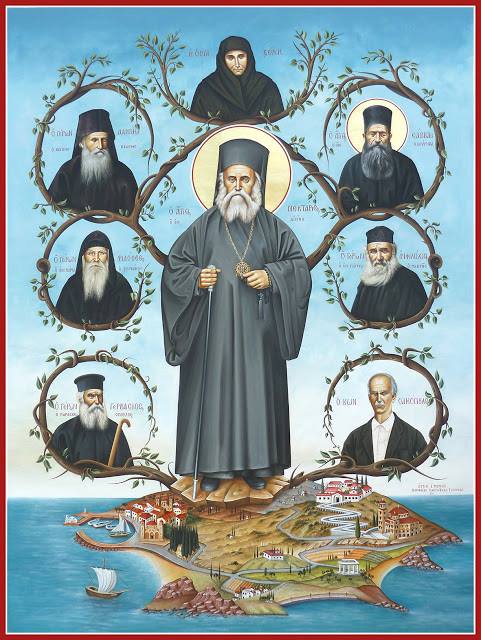
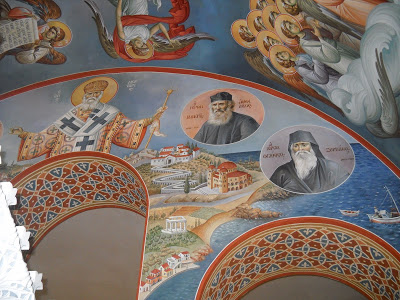
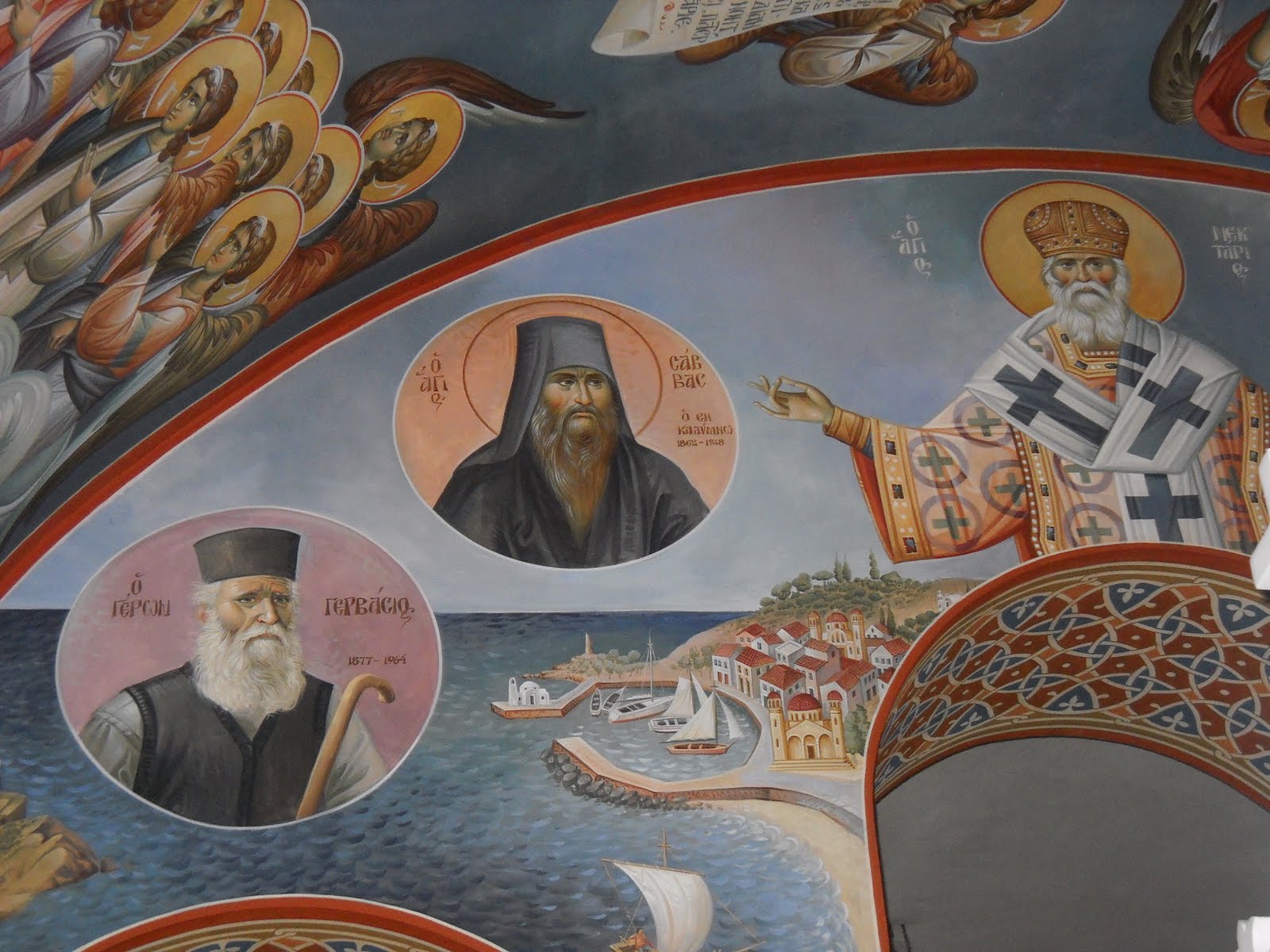
St. Nektarios and his spiritual children. May he intercede for us!

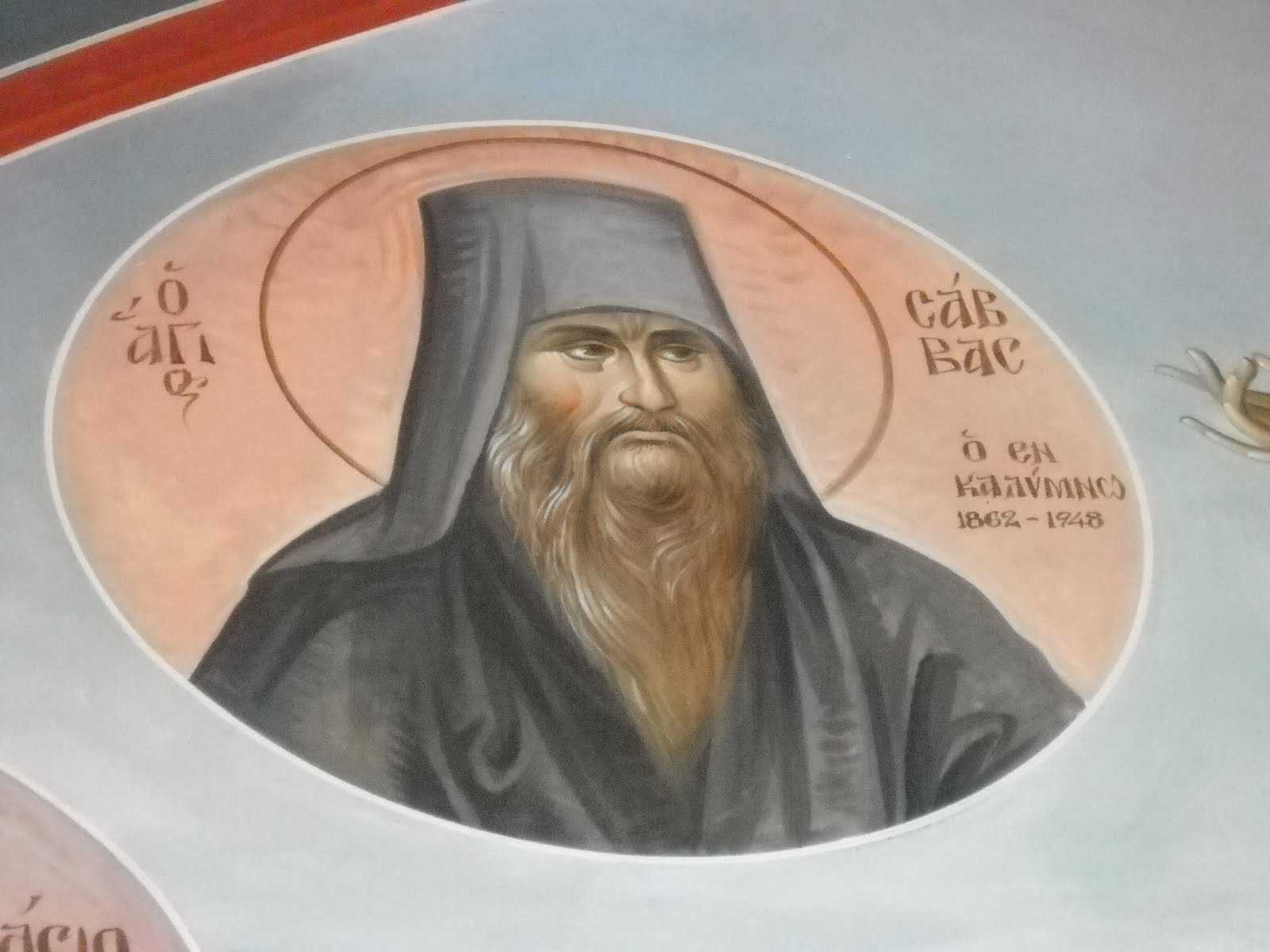
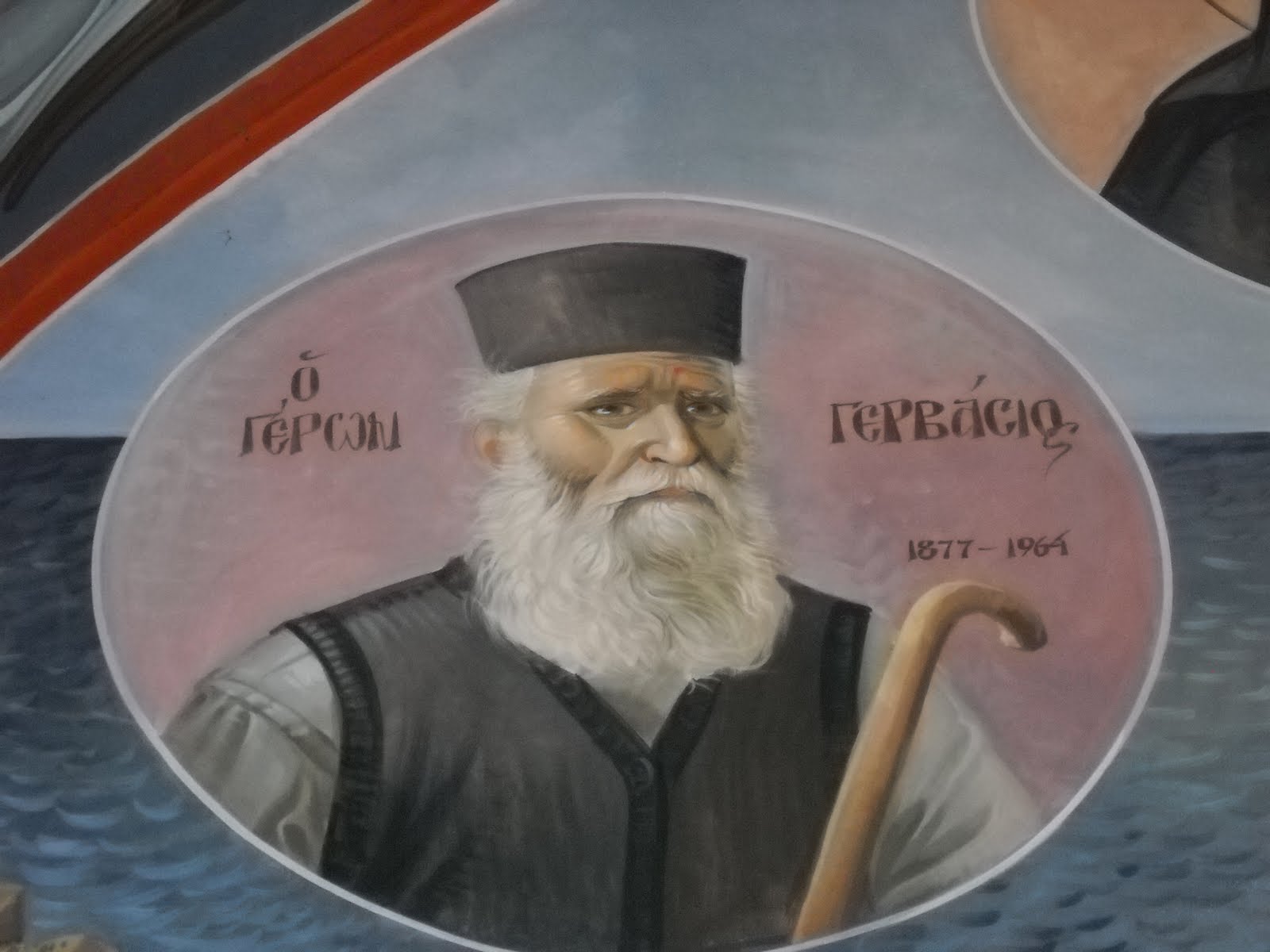
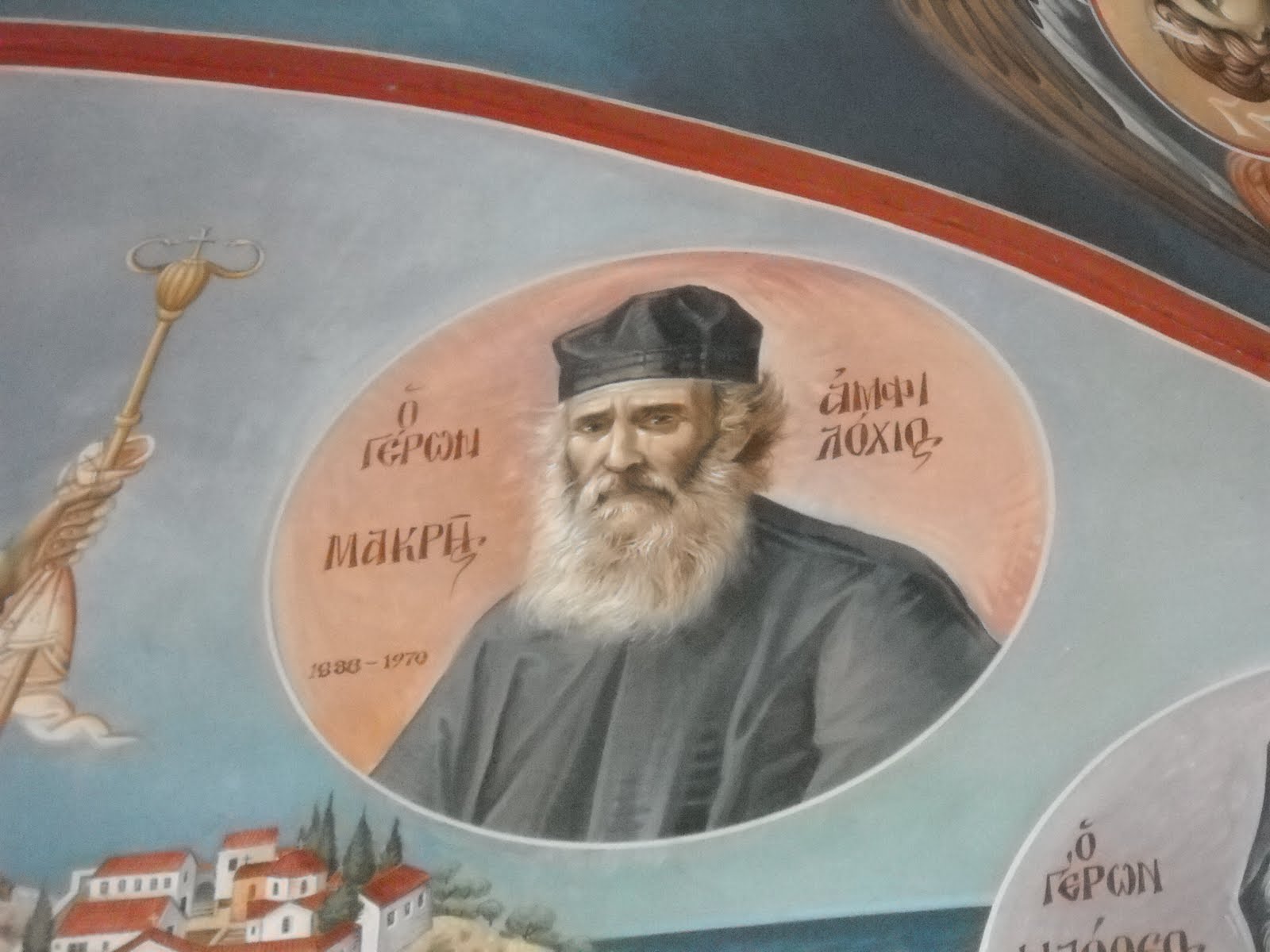
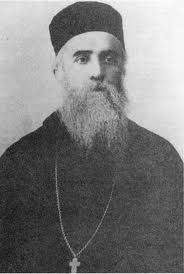
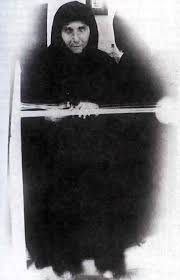
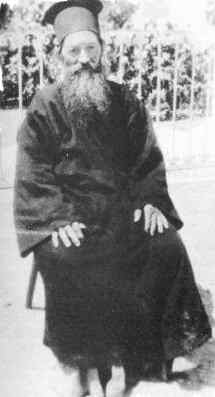
From right to left: Blessed Xenia, the blind, first abbess of St. Nektarios’ monastery in Aegina; Saint Savvas the New of Kalymnos; St. Amphilochios Makris of Patmos; Konstandinos Sakkopoulos, a little city hermit and St. Nektarios’ ‘right hand’; Elder Daniel Katounakiotis; Elder Philotheos Zervakos; Elder Gervasios Paraskevopoulos.


The following depiction is in the Church of Saint Nektarios in Aegina:

elder gervasios
+ May they all intercede for us!

Like a swift sparrow

sparrow

O much-suffering Stephanie, * with the crown of the gifts of grace * hath the Lord now crowned thee, who gavest up thyself * to willing torments and pains in the nobility of thy soul: * ’twixt two palm trees thou wast bound, * and thereby thou wast rent in twain, * spreading out thy wings, * flying up unto God like a swift sparrow and forsaking to the fowlers * thy mortal body, O wondrous one. [Ainos (Praise) from the Orthros November 11]

*It is said that + Martyr Stephanie in Damascus was 16 years old at the time of her martyrdom.
*

Isn’t that an amazing transfiguration of a horrid death? What a stunning testimony to the transformative power of Christ’s Resurrection! This hymn reminded me today of St. Porphyrios and his precious advice on immersing ourselves in the Church’s hymns for their great healing power to overcome all the gloom, the sadness, the failure, and the death that seem to surround us.

*

The Elder Porphyrios once asked a pilgrim visiting him:

— Do you know the troparion that begins, “We celebrate the slaying of death …”?

— Yes, elder, I know it.

— Then say it.

—“We celebrate the slaying of death, the destroying of hell, the beginning of another way of life that is eternal. And leaping for joy, we sing a hymn to the Cause, the only blessed and most glorious God of our fathers.”

—Do you understand it?

—Certainly I understand it.

I thought that he was asking me for a translation into modern Greek.

The Elder then waved his hand dismissively saying,

— Little George, you didn’t understand anything at all! You said it quickly like a chanter in a hurry. Listen to what awesome things are said in this hymn: Through Christ and His resurrection, we do not get across a river, a gorge, a canal, a lake, or even the Red Sea. We have moved across an abyss that no human being could cross on his own. Ages came and went with the world waiting for this Pascha, for this passage. Our Christ passed from death to life! That’s why today “we celebrate the slaying of death, the destroying of hell.” Death is no more. We celebrate today “the beginning of another way of life that is eternal,” a life with Him.

Speaking with enthusiasm and conviction, the Elder was clearly moved. The elder paused and continued more energetically:

— Now there is no more chaos, no more death, no more slaying, no more Hell. Now everything is joy, thanks to the resurrection of our Christ. Human nature is resurrected with Him. Now we too can rise again that we might live with Him eternally … What bliss is contained in the Resurrection! “And leaping for joy, we sing a hymn to the Cause.” Have you seen how young goats now in the spring frolic on the green grass? They drink some of their mother’s milk and then prance about leaping for joy, and so do we celebrating the ineffable joy of the resurrection of our Lord.

He then stopped speaking. Pure joy was now in the air. And the elder continued,

—Can I give you some advice? In every sorrow, with every failure, in anything that causes you pain, collect yourself for half a minute and slowly say this hymn. Then, you will see that the most important thing in your life and in the life of the entire universe has already been accomplished with the resurrection of Christ. It is our salvation. And then, you realize that all our setbacks are so insignificant, that you don’t need to allow them to spoil your mood.

— St. Porphyrios, Wounded by Love

That locked door

st nektarios.jpg

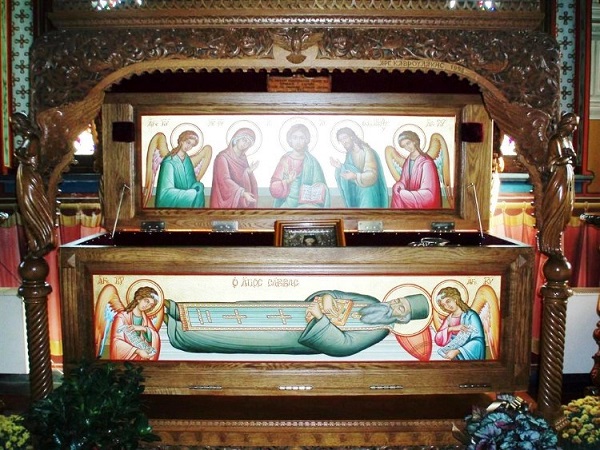
St. Nectarios on his coffin, locked outside the church (!), waiting the boat to Aegina … a sad symbol of the persecution and slander he suffered all his life for Christ, of the bitter Cup he drank. That closed door … and the open gate to Paradise with angels and hierarchs welcoming the Saint!   + Asking for his holy prayers ….

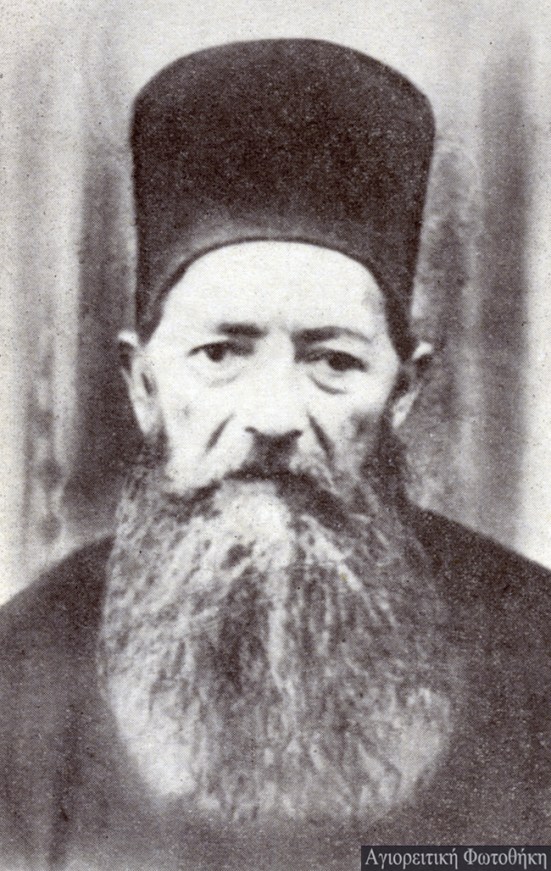
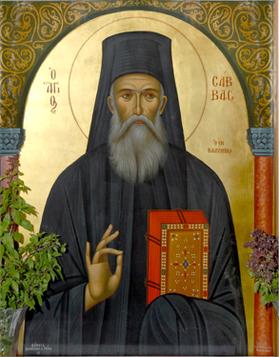
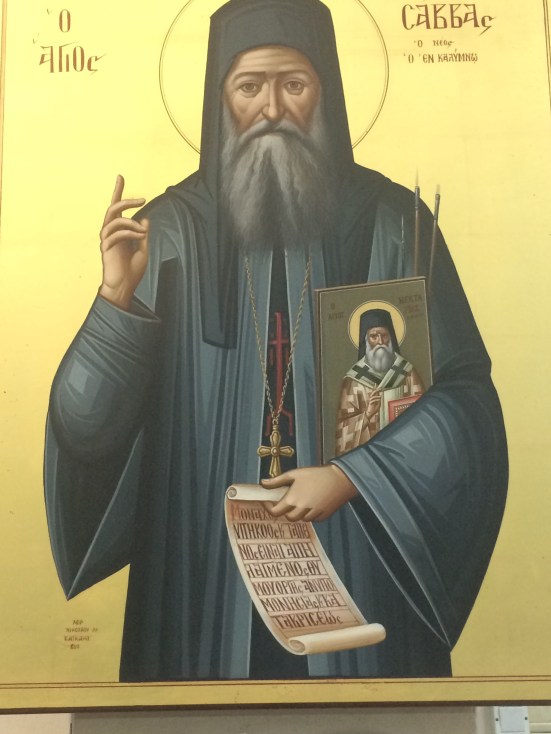
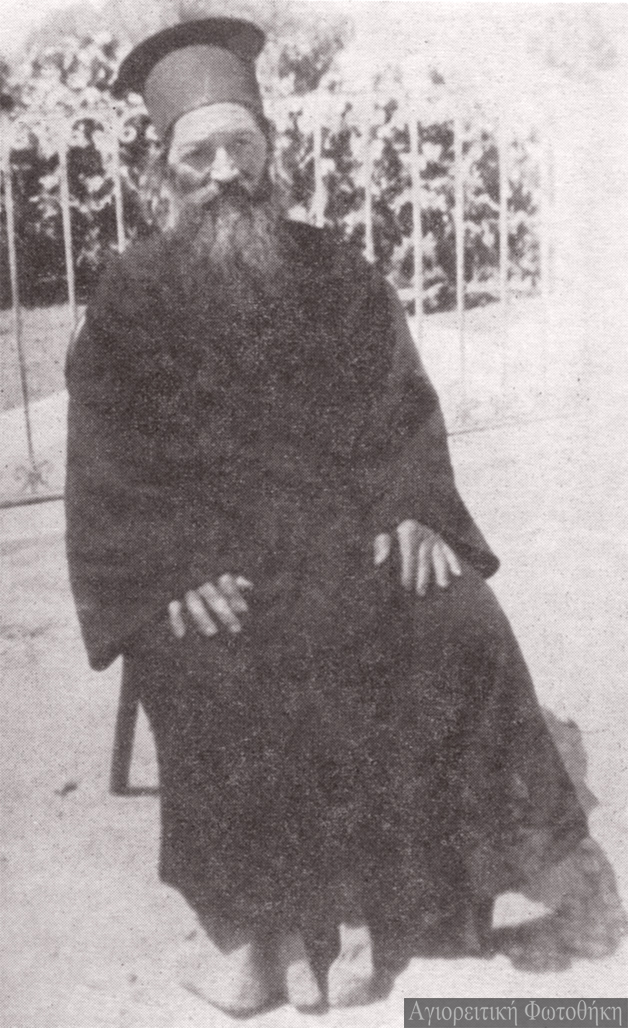
Holy Father Savvas the New of Kalymnos

agios_sabbas

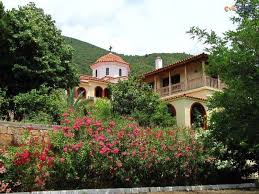
During my recent pilgrimage to Patmos, on my way back through Kalymnos, I venerated the incorrupt relics of an amazing ascetic and Saint of the “latter days”, our Holy Father Savvas the New of Kalymnos. I even spoke to people whose parents confessed to him and remember with tears his love, compassion and angelic purity. 

Saint_Savvas_from_Church

I would like to share here two episodes from his life which made a big impression on me (recorded in the monastery’s edition of his life):


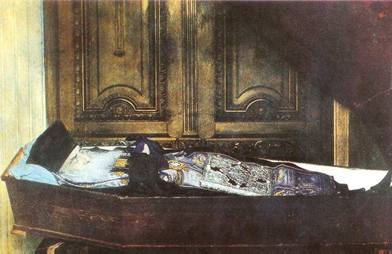
In Athens he met the acolyte of Saint Nektarios, who informed him that Saint Nektarios was looking for him. Based on this fact, it is assumed that the two saints had met before; in fact, most biographers agree that St Savvas was St. Nektarios’ spiritual child. Therefore, he went from Athens to Aegina in 1919, where he was with Saint Nektarios until he reposed. There he served as a priest in the Convent of the Holy Trinity. He taught the nuns iconography and ecclesiastical music. Upon the repose of Saint Nektarios in 1920, Savas witnessed the first miracle of the Saint when, after his repose, St. Nektarios leaned over so that St. Savas could attire him with his epitrahelion [ie. stole], and then the Saint returned back to his previous rigour mortis (ie. postmortem rigidity). St. Savas performed the funeral and for the first three nights he continued his communication with St. Nektarios over his grave, asking him a number of questions and listening to his answers! St. Savvas’ biographers have recorded those facts from first-hand witnesses and the stunned nuns’ testimonies.
Then, St. Savas enclosed himself in a cell for forty days where he lived in strict prayer and fasting, and emerged holding an icon of Saint Nektarios he had painted, which was the first icon of the Saint to exist. He gave the icon to the abbess ordering her to offer to the faithful for veneration. The abbess told him that this was not possible, as St Nektarios had not been yet officially canonised despite his numerous miracles from the very first moment of his repose and that such an action was not prudent and might get them in trouble with the ecclesiastical authorities and even cause the shutting down of the monastery. But St. Savas insisted that “You must obey. Take this icon and offer it for veneration and do not scrutinise God’s Ways”.
IMG_3965.JPG
The second episode too happened again in Aegina. A young nun, Nektaria, wanted to see for one last time the face of St. Nektarios after his repose and started digging stealthily his tomb. The other nuns caught her in the act and reported her to the Abbess. She rebuked her and then sent her to St. Savas. He too rebuked her sternly and told her that her action was called grave-robbing and she should not receive Holy Communion until Holy Thursday. The young nun started to cry and beg for forgiveness, telling St. Savas that she did not know that what she had been doing was wrong and sinful. As soon as she left St. Savas’ cell, St. Nektarios appeared to St. Savas, smiling,  and told him: “Elder, forgive her. She is very young. She didn’t know, she didn’t know that this was a sin. Offer her Holy Communion on Holy Thursday. Actually, offer her Holy Communion before Holy Thursday. Did you hear, Elder? Have mercy on her. She did not know. Did you hear? Thank you.”


Apolytikion
Let us faithful praise Holy Savvas, the glory and protector of Kalymnos, and peer of the Holy Ascetics of old; for he has been glorified resplendently as a servant of Christ, with the gift of working miracles, and he bestows upon all God’s grace and mercy.
Kontakion
Today the island of the Kalymnians celebrates your holy memory with a rejoicing heart; for it possesses as truly God-given wealth, your sacred body that has been glorified by God, O Father Savvas, approaching which they receive health of both soul and body.
Megalynarion
Rejoice, thou new star of the Church, the offspring of Thrace and the beauty of Kalymnos, O God-inspired Savvas, fellow citizen of angels and equal of all the saints.


You contended with the saints of old Savas,
And are glorified with them by your numerous miracles.

This angel on earth and a human in heaven was born in 1862 Herakleitsa, Eastern Thrace, Ottoman Empire and reposed in our Lord on 7 April 1947 (aged 85). He lived as a monastic and practiced the arts of Iconography and Ecclesiastical Music in the Saint Anna’s Skete (Mount Athos), the historic Monastery of Saint George Chozeba, the Convent of the Holy Trinity (Aegina), the monastery of St John the theologian and Evangelist (Patmos) and the Convent of All Saints (Kalymnos) and a number of caves and hermitages all over the world.  His feast day is 7 April (25 March), The Fifth Sunday in Lent and was canonised in 1992.

For those who have never heard of him, a synopsis of his life can be found at the Mystagogy Resource Page.

Twenty-four hours with St. Amphilochios (II)

1.Cultivate the Jesus Prayer and a time will come when your heart will leap with joy, just as it does when you are about to see a person who you love very much.

IMG_0026

2.Do not neglect evening prayer. Pray with eagerness like those who are going to a feast. They are awake and feel joy alone. Thus, since you are going to speak with your Bridegroom, do not listen when the Tempter tells you various things in order to hinder you, because you know there is someone who cares for you.

IMG_0027

3.-“Elder, how must we picture Christ?”

-“We must always bring to Christ to mind with love. We could be holding the photograph of someone in our hands, but since we do not know them, we do not love him, we are not moved. Whereas, when we pick up a photograph of our mother, our soul immediately leaps and cries out with love.

IMG_0028

4.A person can be raised up above the earth by two wings, one is simplicity and the other is purity of heart. You must be simple in your actions and pure in your thoughts and feelings. With a pure heart you’ll seek God and with simplicity you’ll find Him and be glad. A pure heart passes through Heavens gate with ease.

IMG_0029

5.Self-denial must be cultivated with discernment, otherwise we reach the point of suicide.

IMG_0030

6.We are on the high seas of life, sometimes there are storms and at other times calm. God’s grace does not leave us. Else, we would have sunk, if he had not held us up. 

IMG_0031

7.The saints always look to the other life. It is the grace of the remembrance of death.

IMG_0033

8.God guards us from temptation. He does not allow us to be tempted beyond our strength. He allows everything for our good.

IMG_0034

9.When spirituality increases, even sleep will have been fought off.

IMG_0035

10.Prayer is grace. God gives it when zeal and humility exist.

IMG_0036

11.Fight the Hater of Good, who envies you, bravely suffer whatever befalls you with fortitude, patience and faith.

IMG_0037

12.Do not allow your soul’s enemy to wage war against you. He appears in sheep’s clothing, supposedly wanting your soul’s benefit.

IMG_0038

13.Trust in the Lord always and he will nourish you in time of hunger. … Spiritual bonds become unbreakable when they come across a child-like spirit, innocence and sanctity.

IMG_0039

14.With a good word for your neighbour, supporting him, you buy paradise.

IMG_0040

15.Repentance must occur, not from fear of punishment but because we have sinned before God. Sweeten your thoughts with words of consolation and hope. Warm your words with the warmth of your love towards your Bridegroom and remember His Passion, which he underwent for you, so that you would remain firm, devoted and humble. Give your whole self completely over to the protecting veil of the Panagia.

IMG_0041

16.Love giving hospitality, my child, for it opens the gates of Paradise. In this you also offer hospitality to angels. “Entertain strangers so that you won’t be a stranger to God.”

IMG_0042

17.The saints submitted to whatever God sent them, with childlike simplicity, “That’s the way You want it. Let Your will be done.”

IMG_0043

18.Hospitality… the greatest of virtues. It draws the grace of the Holy Spirit towards us. In every stranger’s face, my child, I see Christ himself.

IMG_0045

Chapel of Unknown martyrs by St. Amphilochios

19.Sorrow is pleasing to God, in as much as it doesn’t take away our courage to fight.

IMG_0046

20.It is necessary and beneficial for a general self-examination to take place from time to time, remembering all former sins. … Our deeds, dear sister, will not save us; God’s infinite mercy will.

IMG_0047

21.Leave all your concerns to the hands of God. Ask for whatever you want, like a child asking from its father. … Prayer is a gift from God. Always ask with hope.


patmos5

The nunnery of  Evangelismos “The Annunciation to the Mother of the Beloved One” was built in 1613 from a Cretan monk of the Monastery, named Nikiforos. It is southwest of Chora. It consists of the temple of the Evangelistria (Our Lady of the Annunciation) of the side chapel of St. Luke and from a three-floored fortified tower with the side chapel of St. Antonio. The foundation of the monastery is dated from 1936, from the monk Amphilochios Makris, a great spiritual figure. He worked hard for the foundation and the development of the nunnery. The icons in the church date back to the 15th, 16th and 17th century. The sisterhood is home to over 40 nuns who apart from praying, occupy themselves with social welfare, gardening, beekeeping and Byzantine embroidery called the”spitha” (spark). The same stitch was used to make embroidery for aristocratic Byzantine families from the time of Hosios Cristodoulos.

Spiritual Counsels and Sayings Translated by Marina Robb.

All material is copywrited to Evangelismos Monastery, Patmos.

Source: CyberDesert