Faces and Fates

church2.jpg

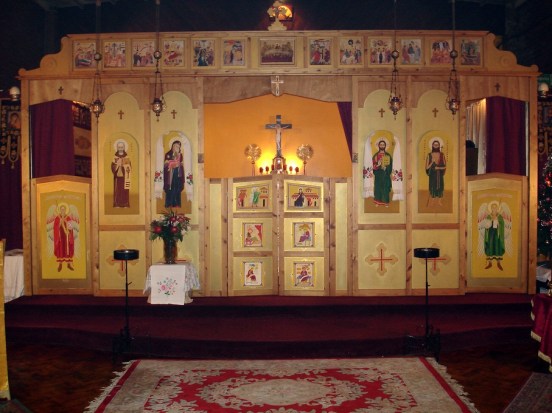
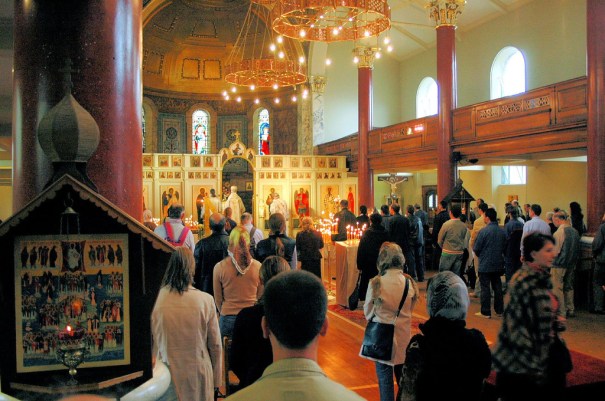
Being immersed in the Beauty of Slavonic Church services, especially the awesome beauty of the Eucharist- the Divine Liturgy  has everything we need. Overpoweringly beautiful and haunting. Such Beauty seems to sum up Christianity. We Christians should be first and foremost Eucharistic creatures.
church1.jpg

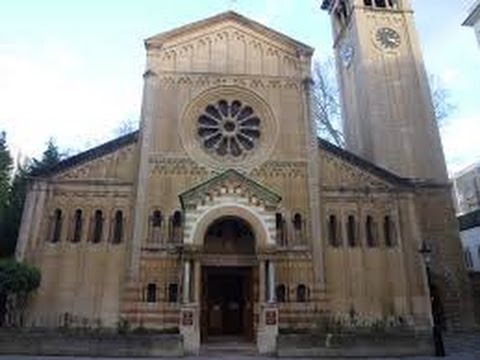
The Russian Orthodox Cathedral of the Dormition of the Mother of God and All Saints (Ennismore Gardens, London)

metranthony

Coming here has been a dream from my youth.  Metropolitan Anthony’s of Sourozh books, especially Living Prayer, School for Prayer, God and man, and Courage to Pray, have sealed my conversion to Christ:

“I met Christ as a Person at a moment when I needed him in order to live, and at a moment when I was not in search of him. I was found; I did not find him.

I was a teenager then. Life had been difficult in the early years and now it had of a sudden become easier. All the years when life had been hard I had found it natural, if not easy, to fight; but when life became easy and happy I was faced quite unexpectedly with a problem: I could not accept aimless happiness. Hardships and suffering had to be overcome, there was something beyond them. Happiness seemed to be stale if it had no further meaning. 

As it often happens when you are young and when you act with passion, bent to possess either everything or nothing, I decided that I would give myself a year to see whether life had a meaning, and if I discovered it had none I would not live beyond the year…”(continue)

Metropolitan Anthony’s presence is so alive here!   You can feel him still serving, from Heaven, at the Altar, especially during the Divine Liturgy.

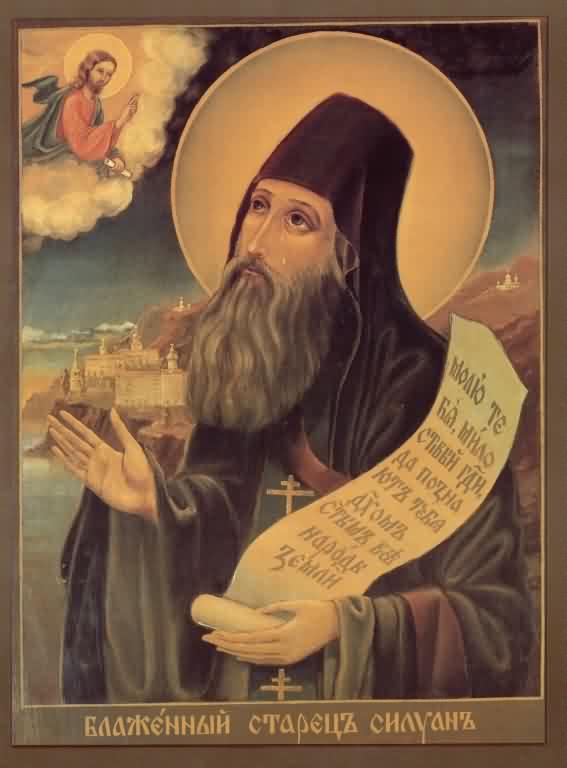
So many Russian Saints relics here! St Seraphim Sarov, St Silouan the Athonite, Grand Duchess Elizabeth FeodorovnaIgnatius Bryanchaninov, John of Shanghai and San FranciscoXenia of Saint Petersburg, just to name a few ...

Praise the name of the Lord Byzantine Chant
icon.jpg

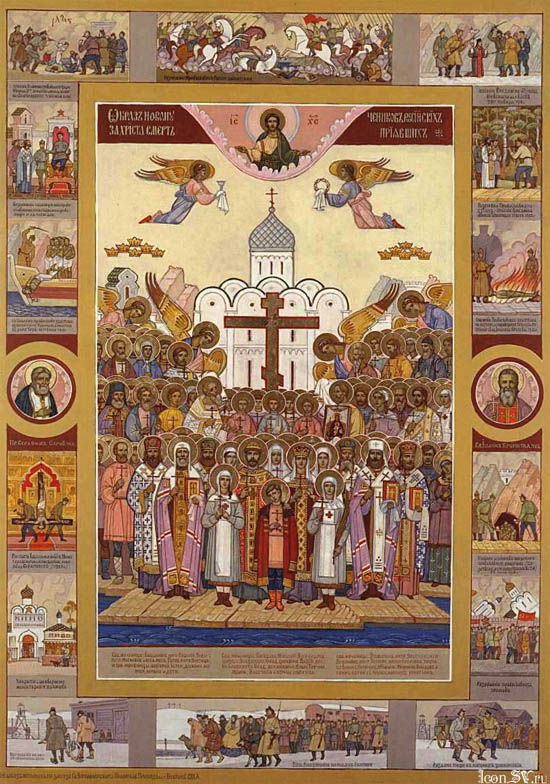
At the homily, the priest spoke about the Feast of the day: the Synaxis of the Holy New Martyrs and Confessors of the Russian Church

More than 1700 names are commemorated in the Synaxis.  Here is just one of them:

Martyr Catherine Arsky, laywoman

Commemoration date December, 17 (December, 4 old calendar)

22_Ekaterina-Arskaya

Born into a merchant family in St. Petersburg.  In 1920, she survived a tragedy. First, her husband, an officer of the Tsar’s Army and warden of the Smolny cathedral, died of cholera, then all five of their children.  Seeking the Lord’s succour, Catherine joined the brotherhood of St. Alexander Nevsky, founded at the cathedral of the Fedorovskaya Icon in Petrograd, and became the spiritual child of Hieromartyr Leo (Egorov).

Catherine was arrested in 1932 with the other members of the brotherhood (ninety in total).  She was sentenced to three years of labour camp “as a member of a counter-revolutionary organisation.” Upon release, she settled in Borovichi, like Martyr Keira Obolensky.  In 1937, she was arrested and charged with the clergy of Borovichi.  She refused to plead guilty of “counter-revolutionary activity” even under torture.  Was executed by firing squad on the same day as Keira Obolensky.

At the time of execution, she was sixty-two.


For other martyrs and confessors commemorated today, go to Pravmir

Mount Athos and Russia 1016 – 2016 

🚂 Traveling to Madingley, Cambridge

madingley

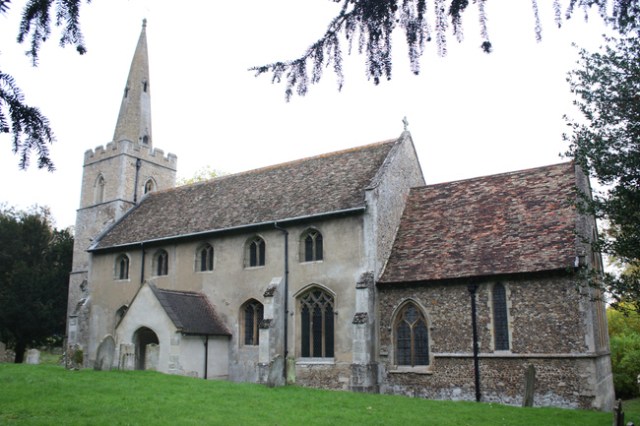
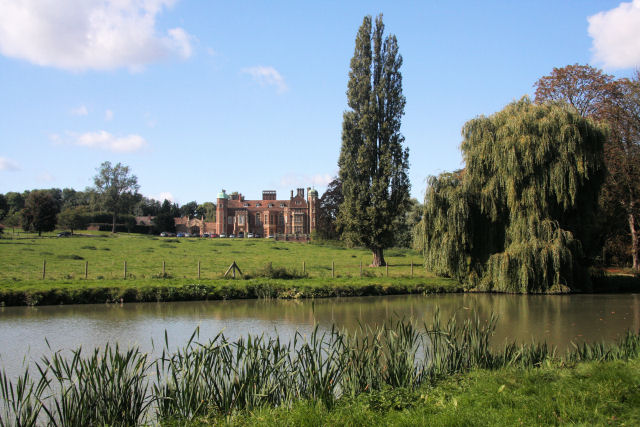
St Mary Magdalene Church, at Madingley

madingley4madingley3

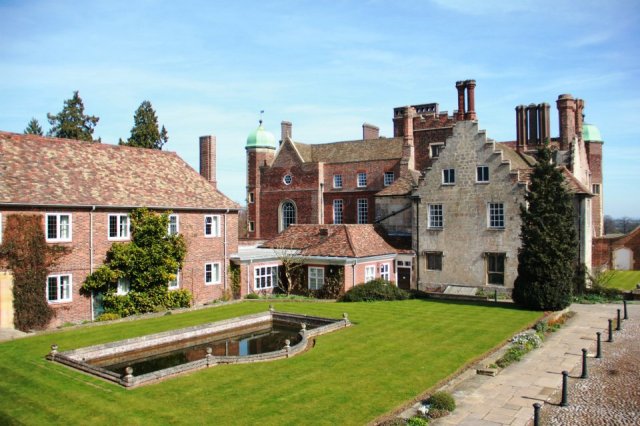
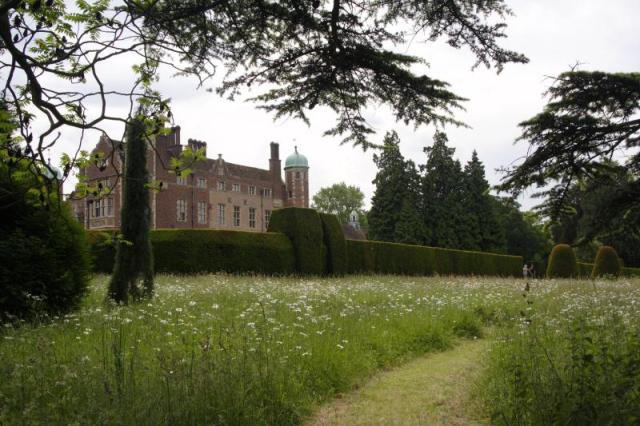
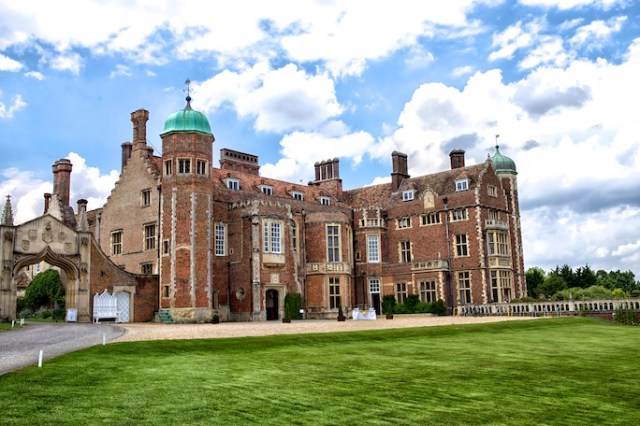
Absolutely Stunning!

madingley2madingley5madingley7madingley6

For the  Eighth Madingley Conference

st-silouan

A Symposium Celebrating 1000 Years  of  Russian Monastic Presence on Mount Athos 

mount1mad1.png

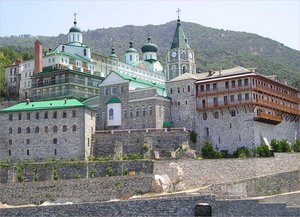
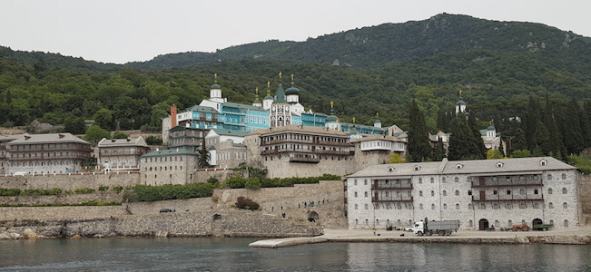
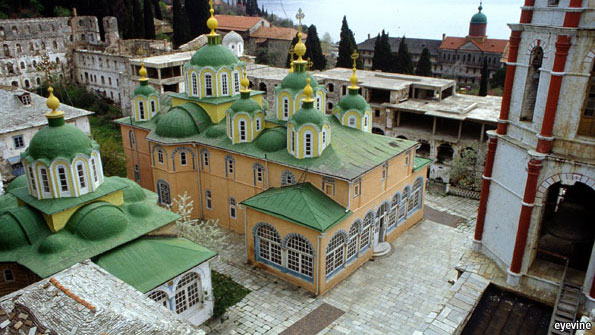
St. Panteleimon Monastery in Holy Mount Athos

3 – 5 February, 2017

The theme of  the 2017 residential conference will be Mount Athos and Russia, complementing the celebrations of 1000 years of Russian monastic presence on the Holy Mountain that have been taking place during the course of this summer. The first mention of a Russian monastery on the Holy Mountain was in 1016, and a series of events have occurred already this year to mark this millennium.

mount2

As the Chairman, Dr Graham Speake, has written: “Some of the most celebrated names in the history of Russian spirituality have been Athonites. Russians have contributed generously to the spiritual and cultural traditions of the Holy Mountain, just as Greek Athonites continue to have a significant impact on the spiritual life of the Russian Orthodox Church”.

The conference will bring together a distinguished group of speakers from Russia, the Ukraine, Finland and the United Kingdom, to explore various aspects of the Russian associations with Mount Athos.

A historical perspective will be provided by Sergey Viktorovich Shumilo, from the Ukraine. He will talk about the early Russian presence on the Holy Mountain, and the life of St Anthony, founder (with Saint Theodosius ) of the Caves of Kiev.

Hieromonk Irinei (Pikovskiy) , from the Sretensky Monastery in Moscow will examine how recent Athonite elders have influenced contemporary spiritual life in Russia, and inspired a renewal of Russian pilgrimage to the Holy Mountain.

Professor Rene Gothoni, from the University of Helsinki, will look at the history of Russian pilgrimage to Athos since the 12th century, and Archpriest Professor Andrew Louth will talk about the way in which the short 19th century Russian story, “The Way of a Pilgrim” was influential in promoting the use of the Jesus prayer, and the reading of the Philokalia.

The President, Metropolitan Kallistos Ware, will open the Conference by looking at the life of Saint Nil Sorsky, who spent time on Athos in the 15th century before returning to Russia to revive monastic life in the Athonite tradition. Hieromonk Nikolai (Sakharov) will concentrate on the 20th century Russian Saint Silouan, and his disciple and biographer, Father Sophrony. Dr Nicholas Fennell will consider the influence of Archimandrite Misail (Abbot of the Holy Monastery of Saint Panteleimon from 1905 to 1940) and the Monastery’s subsequent development.

mount3


Internet Abstinence

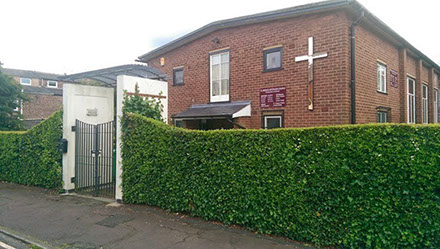
God’s Kairos at St. Aidan’s (Manchester)

st-aidan1

Felt truly blessed by Agape, the warmth of fellowship. Nunc dimittis

st-aidan3

Feast of the Presentation of the Lord in the Temple

nunc1.jpg

Simeon’s Song of Praise by Aert de Gelder, painted around 1700–1710

*

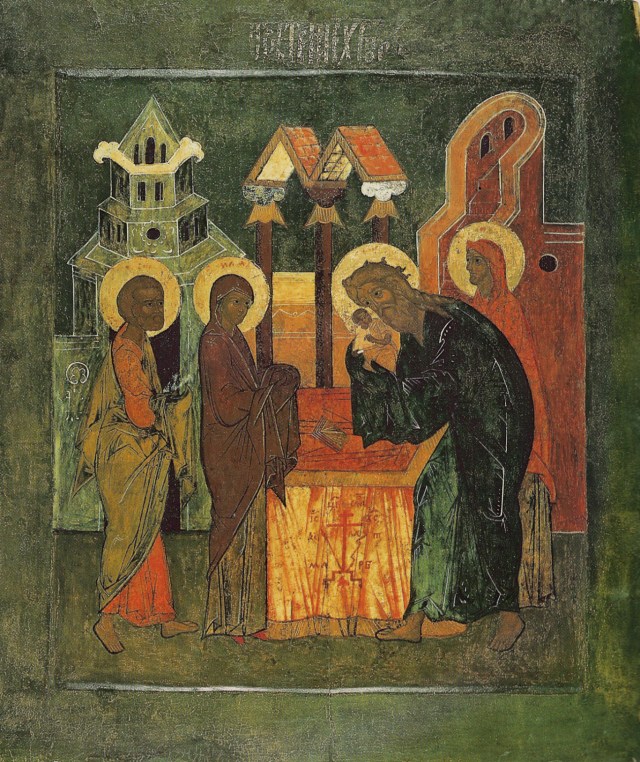
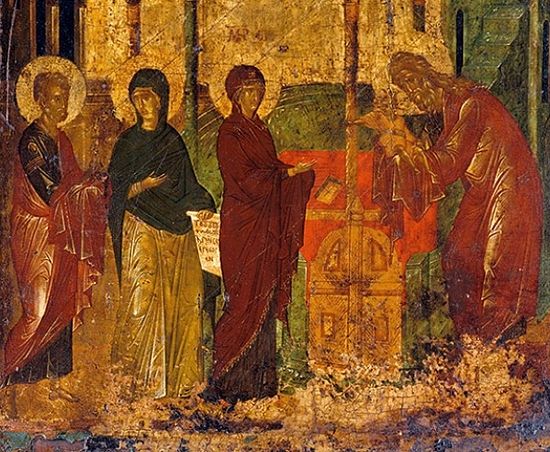
But see how the Russian icon above emphasizes the meeting aspect. Pay attention to the way Jesus and Simeon are so face to face

nunc2.jpg

Eucharist! The redemption of Man’s Chronos into Kairos. “The ultimate form of communication we can engage in as human beings  …  Our true communion of God’s icons as opposed to our reduction to fleeting, ephemeral, hollow images in a World of Social Networking (Oh the irony of this post for this blog, and for a poor little hermit …)

media3

media3

… If we think of one of the primary functions of the Divine Liturgy as a means to engage in a more meaningful experience that transcends the Chronos of everyday life, cyber social networking does the complete opposite. Kairos, a more personal and meaningful use of time is the Greek term used for the time spent at the Divine Liturgy. Cyber social networking then, has become the epitome of Chronos, the ordinary and the mundane use of time.


… Moreover, if we are all created in the Image of God, than how can we see this image in a person’s face, or hear it in his or her voice when communicating through texting or Facebook? The answer is simple. We can’t. If we are all icons, as the church fathers tell us, then the image of that icon remains unseen through a cyber connection. Can you imagine walking into an Orthodox Church with no icons?  The soul of that church would seem quite empty.


Please read the whole article “The Image of God in a World of Social Networking” at Pemptousia, to see how we should meet in worship, in Church, and not in the social media … Let us let go of this virtual world and sink into the real one … Never before in mankind history probably was our presence in church services so indispensable.


Embracing the Burning Coal

meeting2

Lev Gillet’s Reflections on the Presentation of Our Lord in the Temple, the famous Byzantine ‘waltz’, Ormylia Women’s Monastery choir, Byzantine icons and hymns with lyrics

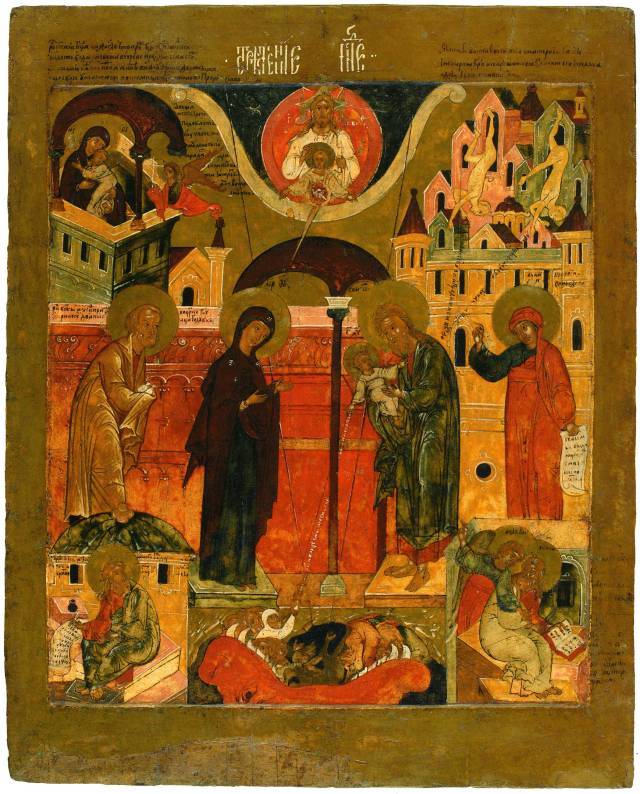
Symeon receiving Our Lord is of course an Icon in the true sense of the word of how we too receive Christ 

* The Russian icon above emphasizes the meeting aspect. Pay attention to the way Jesus and Simeon are so face to face.

Lyrics for the famous Orthodox ‘waltz’, the Megalynarion, the “Magnification”; also called Velichaniye in Church Slavonic), the special Byzantine hymn for Panagia and the Presentation of the Lord in the Temple by Ormylia convent.

What glorious Hope, what tenderness amidst weariness, old age, frailty and shadows, what consolation especially when ‘dealing’ with end of life care, as I currently am, what a wonderful ending to our life, should we accept Lord’s offered Love! Rejoicing with Symeon, let us sing a hymn of thanksgiving to God and say: “Let me depart in peace, for my eyes have seen Your compassion and Your holy Salvation.”

-That which is fulfilled in you is beyond the understanding both of Angels and of mortals, O pure Virgin Mother.

-Symeon the Elder embraces in his arms the Maker of the Law and Master of all.

-The Creator, wishing to save Adam, took up his dwelling in your virgin womb.

-The whole race of mortals calls you blessed, pure Virgin, and glorifies you with faith as Mother of God.

[Come and see Christ, the Master of all, whom Symeon carries today in the temple.]

-You look upon the earth and make it tremble how then can I, aged and weary, hold you in my arms?

-Mary, you are the mystic tongs who conceived in your womb Christ, the burning coal.

[Symeon had lived for many years when he saw Christ, and cried aloud to him, ‘Now I seek my release.’]

[O God, who are before all things, of your own will you became man, and are carried in the temple as a child of forty days.]

-Symeon the priest received the Master of all, come down from heaven.

– Make bright my soul and the Light of my senses, that I may see you in purity, and I will proclaim that you are God.

– Pure Virgin Mother, why do you bring into the temple a new-born babe and commit him to Symeon’s hands?

From you, the Creator, I now seek release, for I have seen you, O Christ, my salvation and my light.

‘In the shadow and letter of the Law, Let us the faithful discern a figure. ‘Every male child that opens the womb shall be holy to God.’ Therefore the firstborn Word, Son of a Father who has no beginning, the firstborn child of a Mother who had not known man, we magnify.’ [Irmos]

Him whom the Ministers at the Liturgy on High entreat with trembling, here below Symeon now takes in his arms.

For those of old there was a pair of doves and two young pigeons In their place the godly Elder and Anna the sober prophetess, ministering to the One born from a Virgin and only offspring of the Father as he enters the temple, magnify him. [Irmos]

Glory to the Father, to the Son, and to the Holy Spirit.

In nature Unity, but in Persons Trinity, watch over your servants who put their faith in you.

‘You have granted me, O Christ, the joy of your salvation’, cried Symeon, ‘Take your servant, wearied by the shadow, as a new initiate and preacher of grace, as with praise he magnifies you.’ [Irmos]

Both now and ever and unto ages of ages, Amin.

Mother of God, hope of all Christians, protect, watch over, guard all those who put their hope in you.

Reverently holy Anna, sober and aged, openly confessed the Master, announcing him clearly in the temple. While as she proclaimed the Mother of God to all those present, she magnified her. [Irmos]

meeting of the lord.jpg

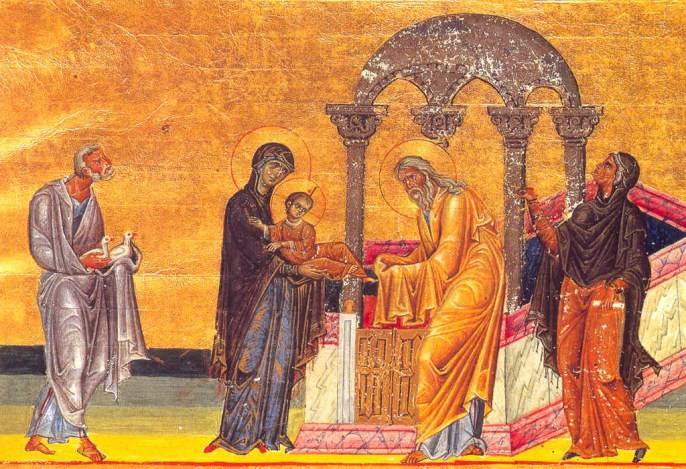
In accordance with the law of Moses, forty days after the birth of a male child, its mother had to present it in the tabernacle and to offer as a sacrifice either a lamb or a pair of doves or pigeons for purification ‘from the issue of her blood’. The presentation of a first-born creatures, whether animal or human, were considered to belong to God. Mary and Joseph obeyed this precept of the law. They brought Jesus to the Temple where he was blessed by the aged Simeon, and recognized as Saviour by the prophetess Anna, It is this event which we celebrate at the feast of February 2nd.

Meeting-c1000MenologiumBasilPresentation.jpg

“Let us also go to meet Christ and let us receive him … Adorn thy bridal chamber … and welcome Christ the King; salute Mary, the heavenly gate.” These texts from the feast of the Presentation can also be applied to our souls. Each soul ought to be a Temple of God, to which Mary brings Jesus. And each one of us should, like Symeon, take the child in his arms and say to the Father: “My eyes have seen thy salvation.” The prayer of Symeon, “now lettest thou thy servant depart in peace” does not simply mean that someone who has seen Jesus and has held in his arms can now leave this life and die in peace: it also means for us, having seen and touched the Saviour, we are released from the hold that sin has on us, and, in peace, can leave the realm of evil. (The Year of Grace of the Lord by A Monk of the Eastern Church)

icon.jpg

For 43 DIFFERENT ICONS, FRESCOES AND PAINTINGS: THE MEETING OF OUR LORD, go to http://catalogueofstelisabethconvent.blogspot.com.by/2016/02/icons-frescoes-and-paintings-meeting-of.html