The Itinerant Grocer who Became a Saint and the Miracle of the Huge Hare

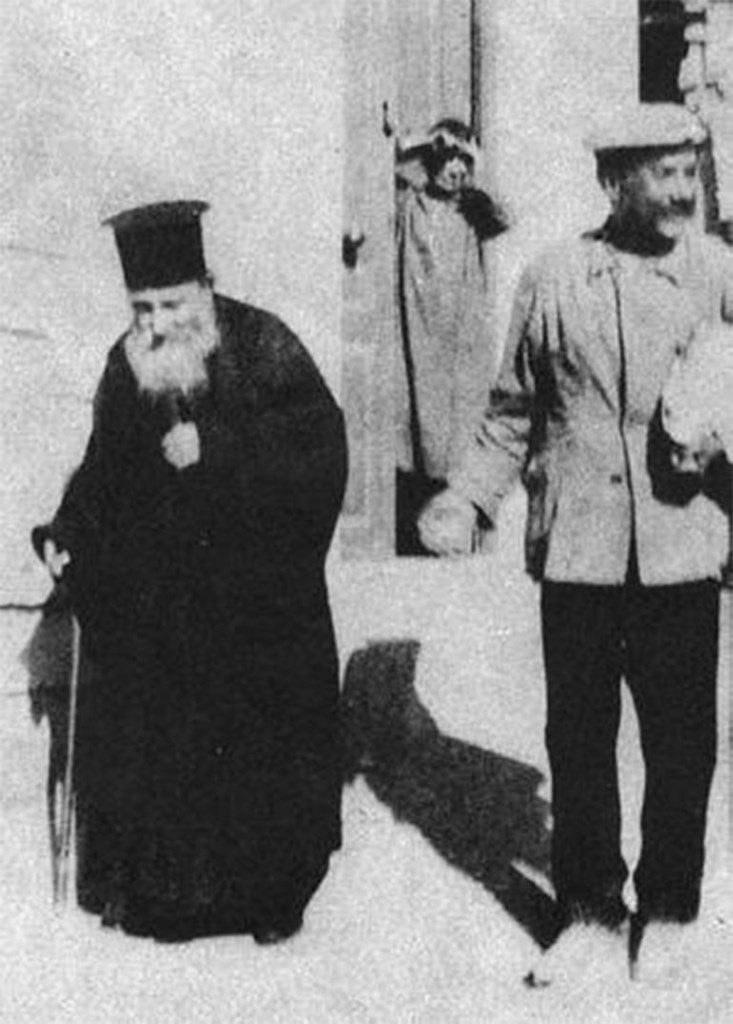
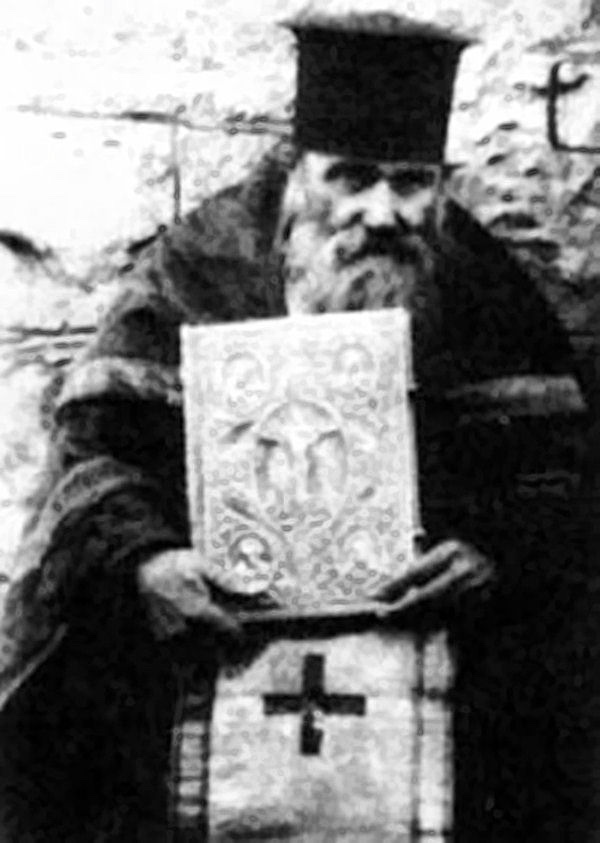
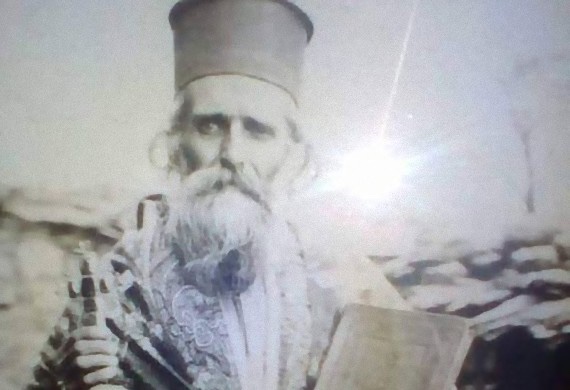
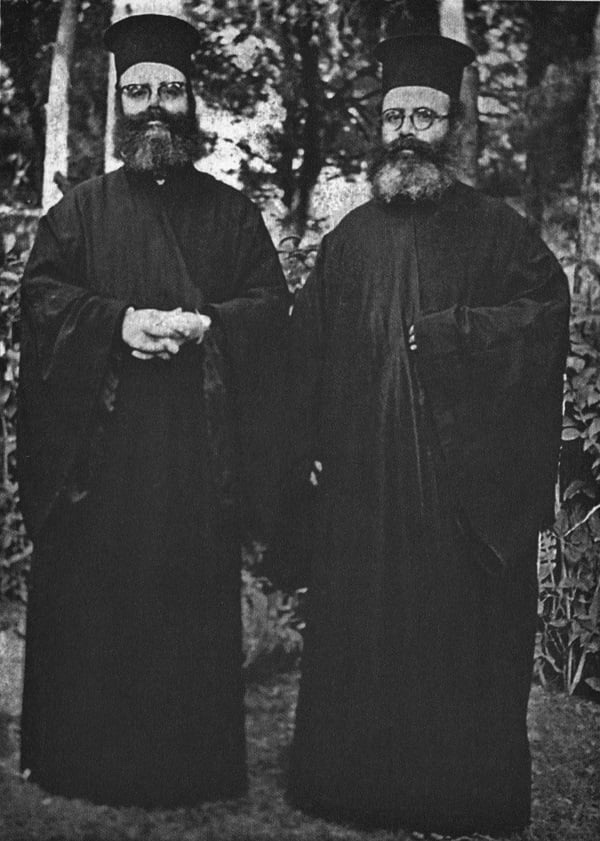
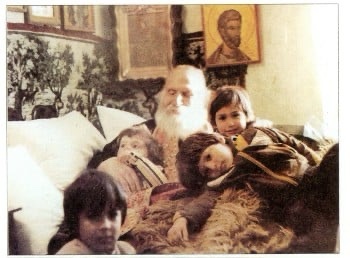
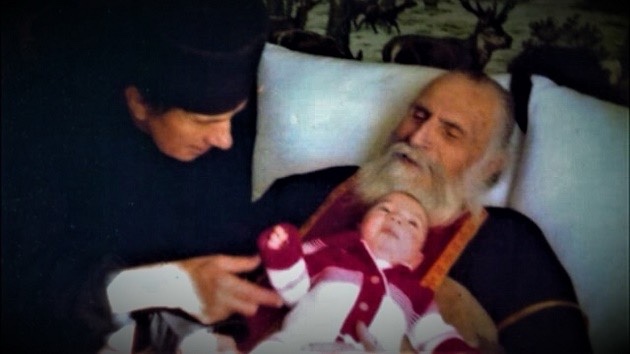
On the left is Monk Zosimas (+2010) with Elder Simon Arvanitis (1901-1988) on his deathbed blessing the child of a spiritual child of his.

*** Incl. St Nektarios’ prophesy about Elder Simon, and St Porfyrios and St Iakovos Tsalikis words for him.***

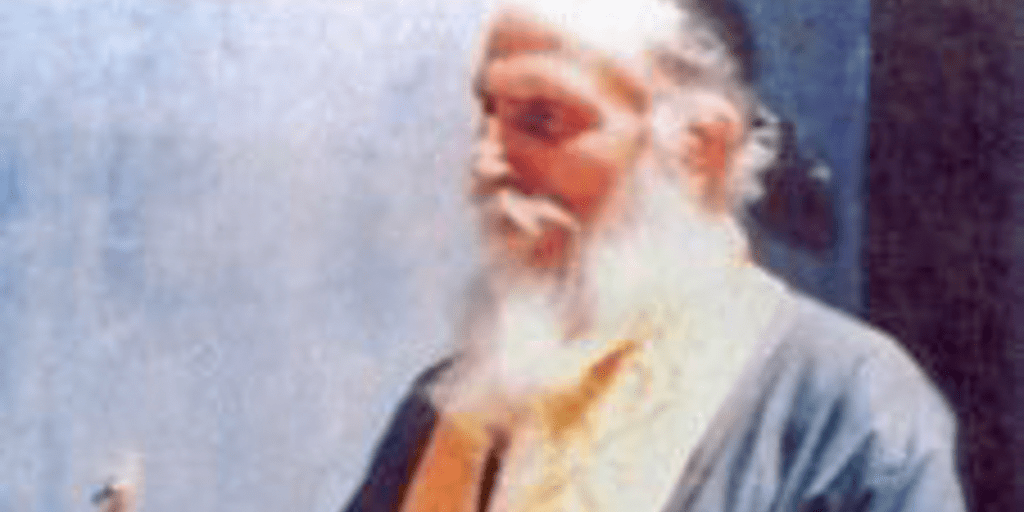
Panagiotis, Elder Simon’s baptismal name, was a man of unbelievable physical and spiritual strength. He grew up helping his large family by working as an itinerant greengrocer or as a laborer on estates. Endowed with great muscular strength, from the age of thirteen he was lifting sacks weighing 80 kilograms or more. His favorite occupation when he rested, was the study of the Gospel. On Saturdays, as soon as he finished work, he went to the chapels for prayer and study, abstaining entirely from all food, until Sunday evening, when he returned to his house and ate.
Panagiotis visited Mount Athos a few times. When he was young he liked to go on long journeys. Once he started from Athens and walked to Ouranoupolis. There he put his clothes on his back and swam to Mount Athos!

His visit to Kavsokalyva of Mount Athos at the age of 16 was to seal his life. There the Fathers were gathered and waiting for Metropolitan Nektarios Kephalas to arrive, our well-known Saint Nektarios [the Bishop of Pentapolis and Wonderworker], who would be visiting them.

When he arrived, one by one the Fathers approached him reverently and received his blessing. After the Fathers did this, the pilgrims followed. In his turn, Panagiotis also went to receive the blessing of the Saint. Saint Nektarios then took him by the hand and said to him prophetically:

“You, my child, will become a spiritual father and save souls. To the man who will come to you and speak of his sin for the first time, though he did not know that what he did was a sin, be lenient and do not let him go. But if he comes and continues in his sin, be strict with him and rebuke him.”

The prophecy of Saint Nektarios took place when the fullness of time came. Panagiotis later became Father Simon, who indeed saved many souls.
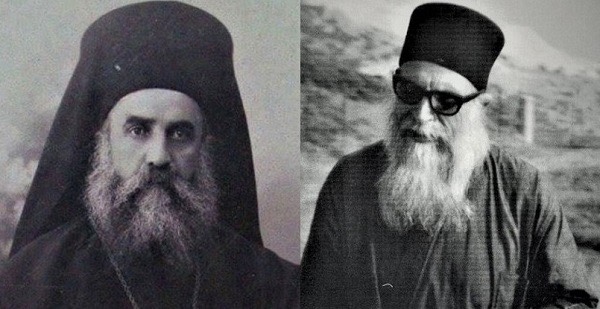
Saint Nektarios and Elder Simon

Other contemporary Saints such as St Iakovos Tsalikis also came to know and admire Fr Simon’s selflessness, wisdom and love, which have inspired countless struggling Christians during his life and after his blessed repose. St. Porphyrios had said of him that no one else had such faith as Elder Simon’s!

Hesychastic years in the cave of Saint Gregorios followed, until the then Metropolitan made Panagiotis a monk in Agios Charalambos and gave him the name Simon. He longed to be a cave-dwelling hermit, and continually begged this from the Monastery elders. The elders prayed for a week to Panagia to determine the correct path. After a week, Simon was told: “The Holy Mother informed us that you must return to the world which needs you to be led to salvation”.

In obedience, he was ordained a priest-monk and started serving local parishes and chapels at Athens suburbs, and later the monastery of St.Panteleimon, Mt.Penteli, which he founded.
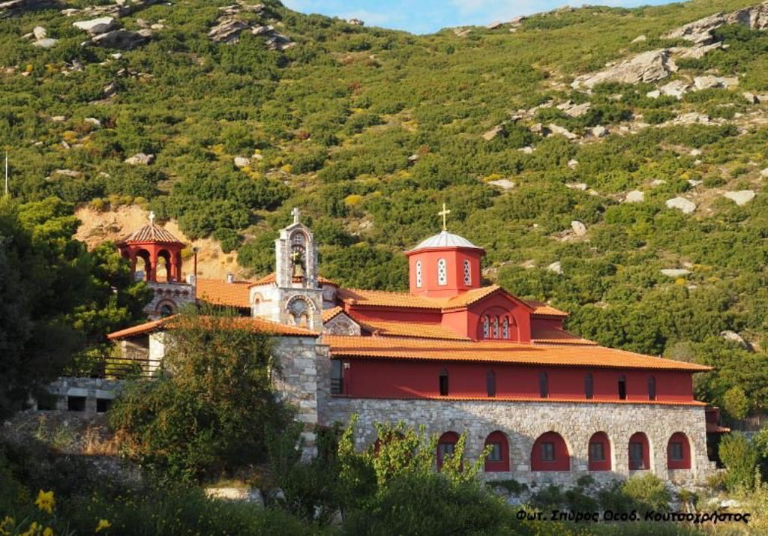
St Panteleimon Monastery, Panteleimon

One of the first monks there, Zosimas, had a phobia of the dark. Fr Simon prayed over him and allowed him to sleep in his own cell while he, the elder, slept on the roof of the cell. Zosimas had a dream that the devil appeared and said: “Your Elder is up on the roof and I can’t come inside”. With the prayers of Fr Simon, he was healed.

One of the most well known miracles of Elder Simon is the miracle of the huge hare and the starving pilgrims in 1943. That time, he was appointed a Spiritual Father at the Monastery of the Transfiguration, near which there is a small chapel, dedicated to the All-Great Taxiarches. In 1943, on the eve of the festival, a large number of people had flocked for the celebration, at a time when hunger oppressed the people and the idea of food at a festival seemed like a dream. The only edible thing there was a sack of onions. However, Father Simon, taking pity on the hungry people, in imitation of Christ our Lord, and with unshakable faith in God’s providence, ordered them to clean all the onions and immersed himself in prayer. And suddenly, before the astonished eyes of the pilgrims, a huge hare came down from the mountainside and entered the kitchen all alone, on his own, offering himself for their meal! And the pilgrims, just like in the miracle of the multiplication of loaves, “all ate and were satisfied”, and there were plenty left overs.

What a “shocking” miracle! Poor huge hare! Even more shocking for me and many people who never eat animal’s meat. But these times were very trying ones and hundreds of people were literally dying from starvation every day! See footnote below*

Fr Simon reposed in 1988. On the day of his burial, the grace of God was evident. The Metropolitan approached to kiss his body and the elder lifted his hand for the Metropolitan to kiss! What a blessed Elder and yet another revelation to us during our recent pilgrimage to Athens/ Aegina! Christ is Risen!

*

* One of the greatest calamities of the Greek people during the years of the Nazi Occupation was the terrible famine of 1941-1942 which claimed the lives of at least 300,000 people and caused serious illness in approximately 1,500,000. The spectre of hunger soon began to dominate. Children were among his first victims. They wandered around hungry, ragged and barefoot looking in the garbage to find something to eat. Bones, fruit skins and food scraps were the only food for many. On the sidewalks, many fainted from hunger began to fall, while the weakest organisms succumbed to the fatal… In the few ration centers the daily menu was as follows: pumpkins 100 drams, tomatoes 3 drams and onions 8 drams (without oil). Note that the oka had 400 drams and was equivalent to 1,282 grams. It is estimated that at least 200,000 contracted tuberculosis during the Nazi Occupation. 300,000 died of starvation and 1,500,000 became ill from malnutrition. The total calories from this “snack” were 290, of which only 200 were usable by the human body. Nonetheless, 500,000 infants, 500,000 toddlers, 1,200,000 children and many teenagers who needed the scrapbooks were fed on this 200 calories daily menu for months! On the streets, the chilling and macabre sight of the dead being carried for burial in two-wheeled wooden carts and with a cleaning cart began to appear. The dead were piled up, first by the tens and later by the hundreds in cemeteries unburied, as there were not enough undertakers to bury them! The unburied dead from starvation soon became a very serious problem. In streets, squares and courtyards of houses, people were dying every day and their bodies remained there, where they collapsed, until a Municipal cart passed by to collect them and take them to the cemeteries. But there was a problem there too: the undertakers were few, they too were exhausted from hunger and the dead were many. Others left their dead relatives outside hospitals and others outside cemeteries, stealing the dead’s identity documents in order to appropriate the pension they were entitled to. Protothema, my translation.


For more miracles of , go to Orthodox Christianity Then And Now here and here .

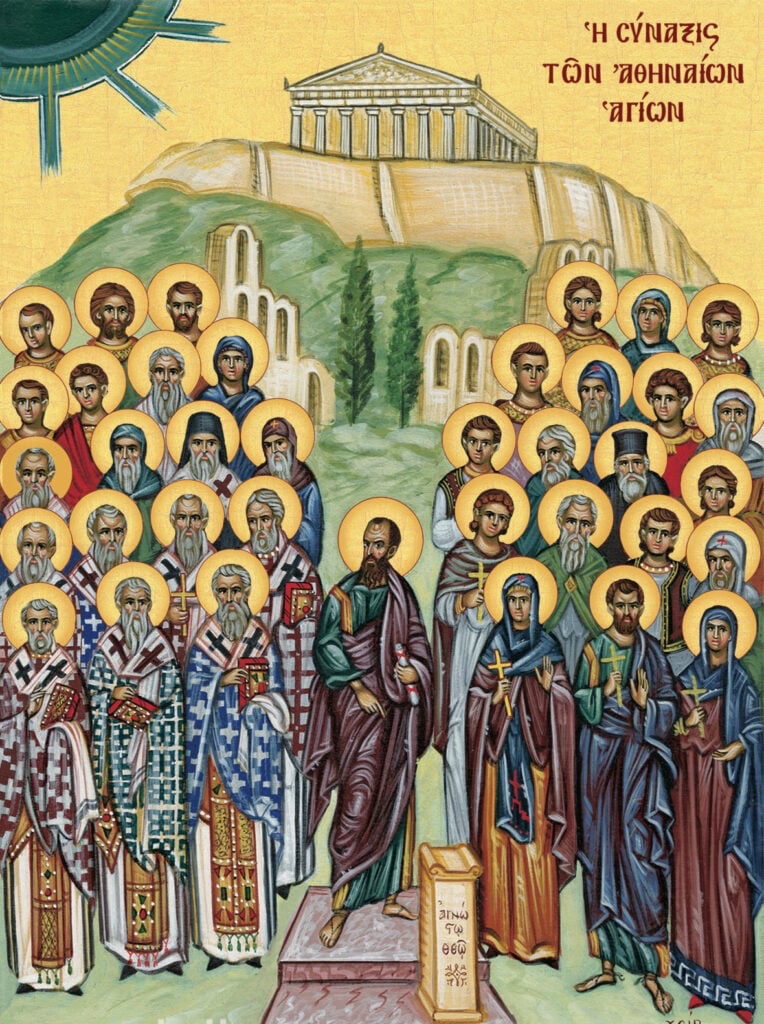
Synaxis of Saints in Athens, Old and New

* Diary notes from a recent pilgrimage

Thanks to my Holy Athens

Written by Andreas Christoforou – associate of the St Therapon church; Transl. little city hermit

My beloved Athens, Thank you for hosting us for so many years and making us partakers of the Life of your Saints! Athens of Agios Nektarios! There in Aretaia hospital is still the bed where the sanctified soul of Saint Nektarios left his aching body to ascend to the King of Heaven! There somewhere in Koukaki was the poor house where he lived chased by the slanderers, not having to pay the rent. There he was seen by the indignant, unpaid landlady when she burst open his room, and to her amazement she saw him rapt in deep prayer, with hands raised to God!

Agios Nektarios: On the 2nd floor of the Aretaia hospital on Vasilisis Sophia in Athens is the ward where he was hospitalized for about 2 months and on November 8, 1920, Agios Nektarios fell asleep.
St Nektarios

There, on Vouliagmenis Avenue, Saint Nikolaos Planas worked and distributed “Eternal Life”! There in “Infectious Diseases” Hospital in Aegaleo, next to the Sacred Way, a leper, Saint Nikiforos left with the Martyrdom of Leprosy, a “smell of spiritual fragrance” and a successor, Great Fr. Eumenios Saridakis with his endless services and endless Repentance. There in the place of avoidance a secret group of anonymous lepers sanctified you daily, my Athens! While the old man Eumenios was leaving Loimodon Noson for Evangelism for his last hospitalization, on the way he blessed Athens and said: “How beautiful Athens is! Blessed Athens!” He blessed the streets, Omonia, the Agora, the Metropolis, the Parliament, the whole city! What else could the Holy Elder see in Athens, apart from the seal of Holiness that so many of its Saints, visible and hidden, ancient and modern, left on their path?

St Nikolaos Planas
St Nikolaos Planas
St Nikolaos Planas

At the Red Cross, a tireless deacon of everything, the wonderful Father Elpidios, brother of Saint Philomenos of the Holy Sepulchre, gave his testimony to the sick and the helpless! Buried, he sanctifies the Rhodopolis of Stamata together with the recently buried recently canonised Saint Athanasios Hamakiotis! The air of Athens was filled with fragrance in the 20th Century! And behold, the Roman figure of the sanctified Father Simon of Arvanitis and his successor, an accomplished Levite, the practical keeper of the Gospel, the Preacher of the Commandments of God, the humble and meek Father Markos Manolis appears! Who knew him and did not feel his Holiness? A man of overnight and continuous Repentance and prayer, of secret but also practical ministry?

On the left, Elder Father Elpidios (1913-1983) and his twin brother Hieromartyr Filoumenos (1913-1979).
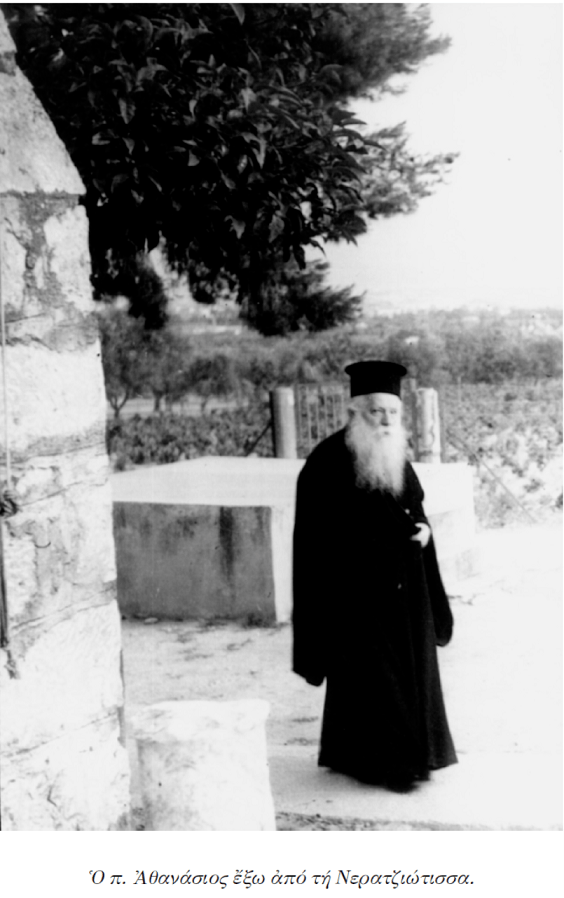
St Athanasios outside Neratziotissa, Athens suburb
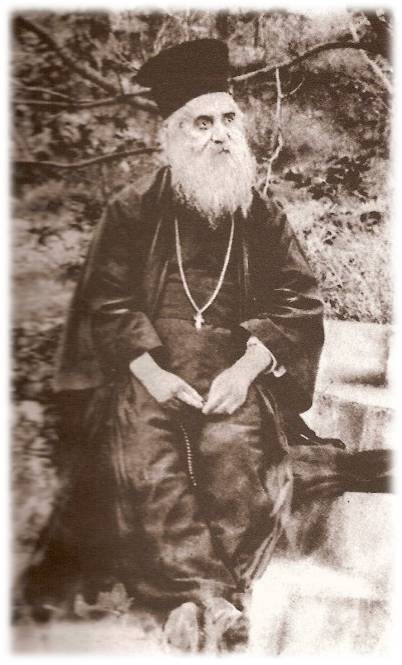
Gerondas Simon Arvanitis
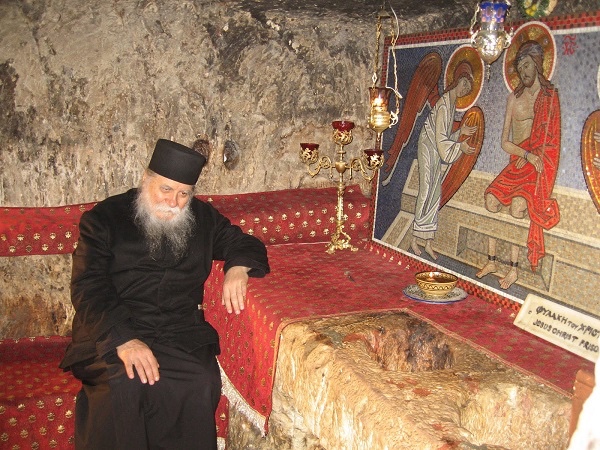
Father Markos Manolis in Holy Land, Christ’s Prison cell

Who knew the secret Father Antonios Gikizas who defamed and sanctified Alexandra Avenue, in the heart of the traffic in the semi-basement apartment? Who knew that this was the resting place of Saint Porphyry? Who would have imagined that in the heart of Athens, where trade, prostitution, illegal transactions, the stock market, the central market, give and take and bring, a huge figure of Holiness, an illiterate omniscient, an tireless Minister, would be consecrated in a small church of Agios Gerasimos, Saint Porphyrios?

Father Antonios Gikizas— some Fathers claim he was the unknown spiritual father of Saint Porfyrios
Saint Porphyrios of Kafsokalyvia

Oh my Holy Athens! O bustling Holy Desert Athens! Oh Noble Athens, humble one, who produced so many great modern Saints who continued the Holiness of Saint Philothei, you remained Unknown as a place of Sanctification of the 20th and 21st Centuries! Everyone runs to worship! Where are you going; Did you go to Aretaiio? Did you go to St. Gerasimos at the Polyclinic? Did you go to Agios Ioannis on Vouliagmenis Avenue? Did you go to the Church of Saints Anargyroi at Infectious Diseases Hospital in Aegaleo? Did you go to Rodopolis? Did you go to Dionysus at the Church of St. George at the tomb of Fr. Mark?

Holy humble princess Athens! Have you smelled the Fragrant Air of these and many unknown Saints buried in her bowels? You have raised many Saints, my Athens, and you have them in your heart! The Tradition continues. Saint Nektarios opened the door of the 20th Century, and all the above and even more secret, unknown holy men and women have walked through it. Secret successors of the Holy Spirit still walk it today. Noise, chaos, traffic, marches, cars, pedestrians, traffic lights, trolleys and buses all move non-stop. And yet there are apartments – cells and retreats – in apartment buildings that secretly weave the thread of Life at night, invisible hesychasts, men and women, God rests in them, who are “poor in Spirit” and citizens of the Kingdom of Heaven!

Everyone is anxious about the Judgment for the coming great war that will shake the world, but few know that the course of the world is determined by the few, hidden, “insignificant” workers of Repentance who change with the tears of their own repentance the wrath of God for the wild debauchery, into Mercy and Providence for all the world. As long as God sees the Repentance of the few, he overlooks the sin of the many and life continues, the war is postponed, because new people repent and enter the Church!

Extend your Mercy to them! My despised Athens, you used to be the most beautiful city, then got ugly and humiliated, and now, you are full of Saints, old and modern! My Athens, thank you!

Andreas Christoforou, Refugee from Cyprus in Athens for 44 years!

Comments: When I read this text I felt ashamed that a refugee child came to show us around our house, revealing the spiritual treasures of Athens, which we did not know, while we should have known. I am ashamed but also grateful to him for this spiritual revelation he gave me. Dimitrios Tseleggidis, Professor of Dogmatics, University of Thessaloniki

Flying in Love

A couple of terns at the lake of Kastoria, dying together from exhaustion, in each other’s wings, after their last migration journey back from Africa. Source: Time Machine

Dear Friends and spiritual children in Christ,

I was praying for you and I offer three of my poor poems in humility for your strengthening! Two of them are directly related to the Feast of the Transfiguration on 6th. the first for spiritual sons (and daughters).


But first some words from St Porphyrios:

“Whoever wants to become a Christian must first become a poet. That’s what it is! You must suffer. You must love and suffer–suffer for the one you love. Love makes effort for the loved one. She runs all through the night; she stays awake; she stains her feet with blood in order to meet her beloved. She makes sacrifices and disregards all impediments, threats, and difficulties for the sake of the loved one. Love towards Christ is something even higher, infinitely higher.

And when we say ‘love’, we don’t mean the virtues that we will acquire, but the heart that is pervaded by love towards Christ and others. We need to turn everything in this direction. Do we see a mother with her child in her arms and bending to give the child a kiss, her heart overflowing with emotion? Do we notice how her face lights up as she holds her little angel? These things do not escape a person with love of God. He sees them and is impressed by them and he says, ‘If only I had those emotions towards my God, towards my Holy Lady and our saints!’ Look, that’s how we must love Christ our God. You desire it, you want it, and with the grace of God you acquire it.”

― Saint Porphyrios, “Wounded by love “
 
The Kite

John 3:8 “The wind blows where it wishes, and you hear the sound of it, but cannot tell where it comes from and where it goes. So is everyone who is born of the Spirit.”

Look upward to the sky

And allow your wings to fly

Upon the glorious breath of God

In the sunrise of your youth.

Soar swiftly with an eagle’s strength,

Measure the height, breadth, depth and length.

Reach heavenward, dear son by the sacramental

strings on earth,

Hold firm to the lifeline and anchor of new birth.

Let the Holy Spirit lift you high

And allow your wings to fly

Upon the glorious breath of God

In the sunrise of your youth.

+

+

+

+

Amma Syncletica said, “In the beginning there are a great many battles and a good deal of suffering for those who are advancing towards God and, afterwards, ineffable joy. It is like those who wish to light a fire. At first they are choked with smoke and cry, until they obtain what they seek. As it is written, “Our God is a consuming fire” (Hebrews 12:24); so we also must kindle the divine fire in ourselves through tears and hard work.”

The Transfiguration

Mark 9:2 “Now after six days Jesus took Peter, James and John and led them up on a high mountain apart by themselves; and he was transfigured before them.”

Possess your soul with patience,

Let the seasons bear their own time.

Lighten your heart with love,

For passion beats to an uncertain pulse.

Provide your mind with peace

Since idle imagination is a deadly weapon.

Still your tongue with silence

So that you may allow the Word to speak to you.

Open your hands to offerings

In order to give generously and to receive gracefully.

Guard your eyes with goodness

To become a pupil of Light.

Place your feet in poverty.

That you may walk in the way of the saints.

Feed your stomach with friendship

So that you may nourish and sustain the lonely.

Breathe into your nostrils the air of beauty

For the Holy Spirit gives life to the canvass of creation

Humble your ears to holiness

That you may become deaf to the whispers of pride.

Wash your skin with wisdom

That you may be clean from the accretions of the world.

Commend your life to Christ

So that you may be transfigured into His likeness.

“My soul, seek the Only One . . . My soul, you have no part with the earth; for you are from heaven. You are the image of God: seek your First Image. For like strives after like. Each object finds its rest in its centre and element — fish in water, fire in its upward movement everything strives to its centre. My soul, you are
an immaterial spirit, immortal. . . In Him alone you will find your rest.”

St. Tikhon of Voronezh

Changed

Luke 9:29: 

“As He prayed, the appearance of His face was altered and His robe became white and glistening.”

They ascended Tabor’s mountain heights, to contemplate and pray,

But Peter James and John, the friends, had a revelation on that day.

Blazing glory in the flesh of Christ, they saw the uncreated Light

Which was hidden for a season, now clear within their sight.

Blinding, glistening, ultra- white was the appearance of His face,

The splendour of the Godhead could be seen within our race.

Moses and Elijah from of old appeared full bright within the cloud,

Peter said  “Let’s  build three booths, if we are allowed!?”

He was silenced by the Father’s voice and filled with holy fear.

The friends shine in glory now like Christ and with Him appear

In heaven: the blessed communion is transferred to us on earth

To help us scale the heights of Tabor and to aid our spiritual birth.

May we indeed acquire the Spirit and grow into the likeness of the Son

May we be changed to shine like Him, and them, when our earthly course is run.

Abba Pachomius said, 

”A sinner like me does not ask God that he will see visions, for that is against His will and wrong. Hear all the same about a great miracle: if you see a man pure and humble, that is a great vision; for what is greater than such a vision, to see the invisible God in His temple, a visible man?”


With love and prayers

A Man of God

The Portrait of a Spiritual Father

A Man of God, Father Symeon Kragiopoulos, The Theologian and the 'Liturgical' Being

In Memoriam

+ Father Symeon Kragiopoulos

“It is with some trepidation that I set pen to paper to record -what? What can one write about a personality whose holiness and spiritual wisdom stretched over many decades, who was shepherd to thousands of souls, saving them from destruction and bringing them into ‘a place of verdure’? About the comforter, the advisor, the father, the refuge of every soul in pain and every confused thought? About the last person who walked and strove in the ascetic life with the holy fathers whom God was pleased to give our generation, those who died to live, because, in living they were dead to the world. ‘so that the world may live’ through Christ, to Whom he brought it through his way of life, his teaching and his prayers? What can one say about a man who rivalled Saint Païsios in his humility, Saint Porfyrios in his discernment, Father Sophrony in his wisdom and Elder Iakovos in his love?

Considering all the above, when I was asked by the spiritual children and heirs to the holy legacy of Elder Symeon to write something In Memoriam, I initially declined for fear that I would not be able to paint a proper picture of him in words, that I would diminish his spiritual stature by not being able to render, even faintly, what the late father really was. What only made me agree to write was the fact that I’d known him for almost half a century and that our relationship was not merely one of spiritual fatherhood, but also one of close friendship. So, with the proviso that I will mention only my personal experiences,  let me begin. (*)

A Man of God

In September of 1969, I’d just taken up a position at the University of Thessaloniki. I visited the Pournaras bookshop, which was at that time not merely a place for selling books but somewhere where colleagues could meet. It was a reference point, you might say. Browsing through the new books spread out on the counter, I heard someone ask Panayiotis Pournaras. ‘I’ve heard that there’s a new professor at the university. A Mister Galitis. Do you know him?’ I turned and saw a pleasant-looking figure, a priest with a red beard, a tranquil look about him, kindly eyes and a bright smile, just at the moment when Panayiotis was pointing to me, ready to make introductions. We chatted for a while and I was impressed by his interest in the new books and also by how well he was up in theological matters. He was following the current theological situation, which was hardly common among priests dedicated to their pastoral work.

I saw Fr. Symeon shortly afterwards at the headquarters of the Metropolis. He’d been appointed a member of the Supervisory Committee of the Seminary, where he’d been Director. The Chairman of the Supervisory Committee, a highly placed cleric, with all the exuberance he could command behaved towards Fr. Symeon with excessive familiarity, with his teasing and slightly ironic and disdainful manner, which made me, at least, feel awkward.  But Fr. Symeon was undisturbed and behaved like an ‘altar-boy’. He made an obeisance and remained silent. My discomfort then became admiration for the wonder of humility.

The Theologian and the ‘Liturgical’ Being

Fr. Symeon’s office in Saint Theodora’s was in the right wing, on the first floor. He asked me to visit him there, which I often did, most gladly. He came to my office, too, but not so often because he couldn’t leave the School much. I recall with nostalgia our long discussions on spiritual, theological and ecclesiastical matters. He was a profound anatomist of the soul and, at the same time, an erudite theologian with rare learning, which he was always trying to increase. He discussed well, had a clear mind, breadth of spirit and a particular sharpness. He would grasp a subject quickly and was comfortable even talking about secular education.

Later, he began vigils at Saint Theodora’s. At one of these he had the joy of tonsuring one of his spiritual children. Fr. Symeon was the person who introduced this new form of vigil, which did not last all night, but covered two or three hours before midnight, and about an hour after, with a half-hour homily. In this way, people who were working and couldn’t get to a liturgy in the morning and for whom an all-night vigil would have been too much had the chance to participate in liturgical life. This practice found many admirers and is now popular in many parts of Greece and abroad.

Every liturgy Fr. Symeon served was a real and literal initiation into the sacrament. It was solemn, neither drawn out nor hurried, without highlights, but not monotonous. At first, he didn’t have chanters. Anybody who could would do their bit. Even I chanted on occasion. These first impromptu chanters usually sang poorly and this created the impression that Fr. Symeon actually wanted this: low profile, no special effects. This would encourage contrition. A friend of mine told me off once when I departed from this ‘rule’.  But soon proper chanters began to appear and the cultivation of music became part of the whole training the people acquired by being close to the blessed Elder.

*

At church … twice as healed

At church, man is freed from the demonic influence

and the traps the devil sets.

At church, man is healed.

These are not just words. It’s the truth.

The sacrament of the Anointing of the Sick

is for the healing of our illnesses.

If we are not healed,

we don’t need to be healed,

that’s why we aren’t.

If you take it this way, you are already healed.

You know very well that an illness which lingers

and doesn’t go is precious.

Whatever needs to go, God will take away.

Whatever doesn’t need to stay, God will take away

be it an illness or demonic influence.

And for whatever stays on and hurts us

we pray to God.

We should pray many a time,

time and again should we beg,

not only for deliverance from soul illnesses

and the demonic influence

but also for deliverance from body illnesses, as well.

Let us pray to God for everything time and again.

Not because God needs us to pray to him again and again.

We need to do this again and again,

because, precisely, God wants to see our faith.

Man, especially today,

gets used to something by repeating it,

learns something by reapeating it.

If you pray time and again

–you need to do this–

and God doesn’t relieve you of your illness, know that:

either you have not shown

as much faith as He wants and expects from you,

or that the illness should not go

because it is necessary.

If you take your illness issue according to God,

then, by it remaining,

you feel twice healed.

If He heals you, you are healed once.

If the illness lingers,

you feel healed twice.

Because both when time comes

 will you be healed from your illness

and until the right time comes to be healed

will your soul be healed, too.

Your inner person will be healed,

this person who suffers from illness,

from the leprosis of sin.

The same goes for all mental illness

and whatever else hurts us.

If man sees all his issues

within the providence of God,

he will feel such a relief,

as if all his problems are solved.

Because in God

all is resolved!

Holy Hesychasterion “The Nativity of Theotokos” Publications.

Archimandrite Symeon Kragiopoulos


 (*) This tribute was written by Professor Georgios Ant. Galitis and offered to the faithful in the Holy Trinity Monastery, Panorama, at the end of the 6 months Memorial Service for Fr. Symeon. The poetry/homilies excerpts are from orthodox path.org

(To be continued)