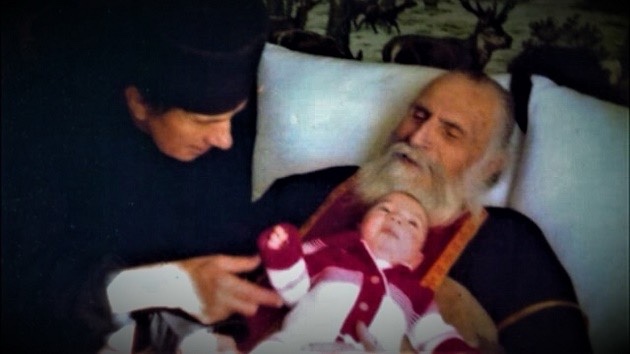
*** Incl. St Nektarios’ prophesy about Elder Simon, and St Porfyrios and St Iakovos Tsalikis words for him.***
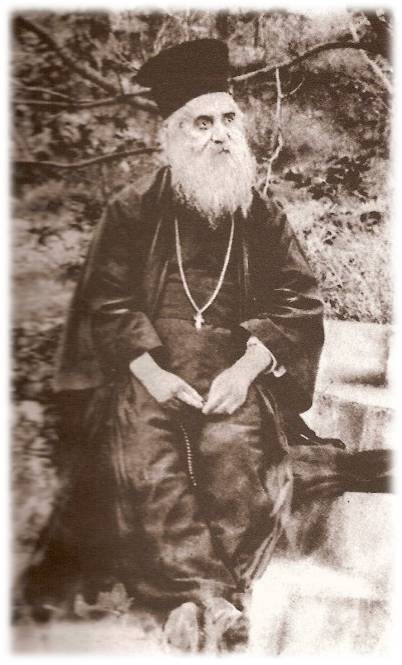
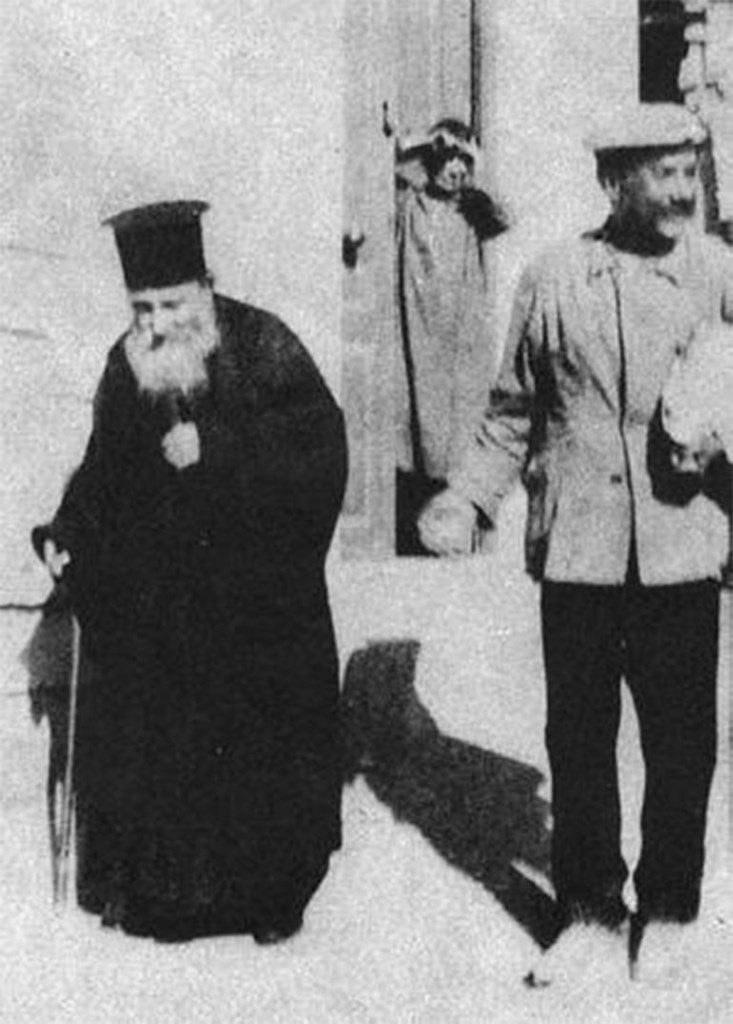
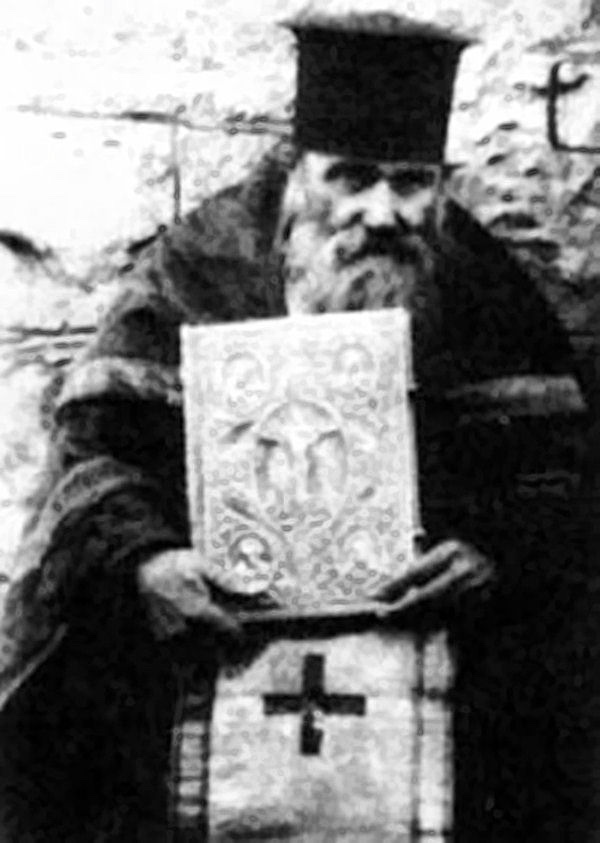
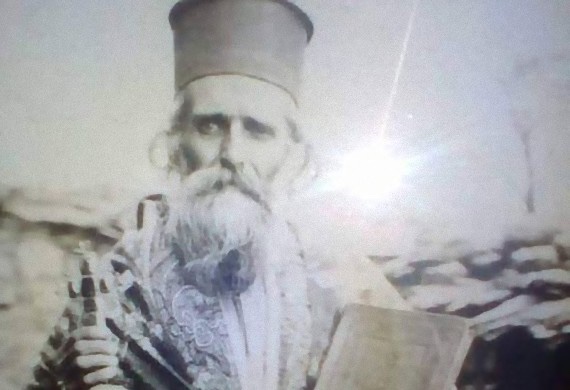
Panagiotis, Elder Simon’s baptismal name, was a man of unbelievable physical and spiritual strength. He grew up helping his large family by working as an itinerant greengrocer or as a laborer on estates. Endowed with great muscular strength, from the age of thirteen he was lifting sacks weighing 80 kilograms or more. His favorite occupation when he rested, was the study of the Gospel. On Saturdays, as soon as he finished work, he went to the chapels for prayer and study, abstaining entirely from all food, until Sunday evening, when he returned to his house and ate.
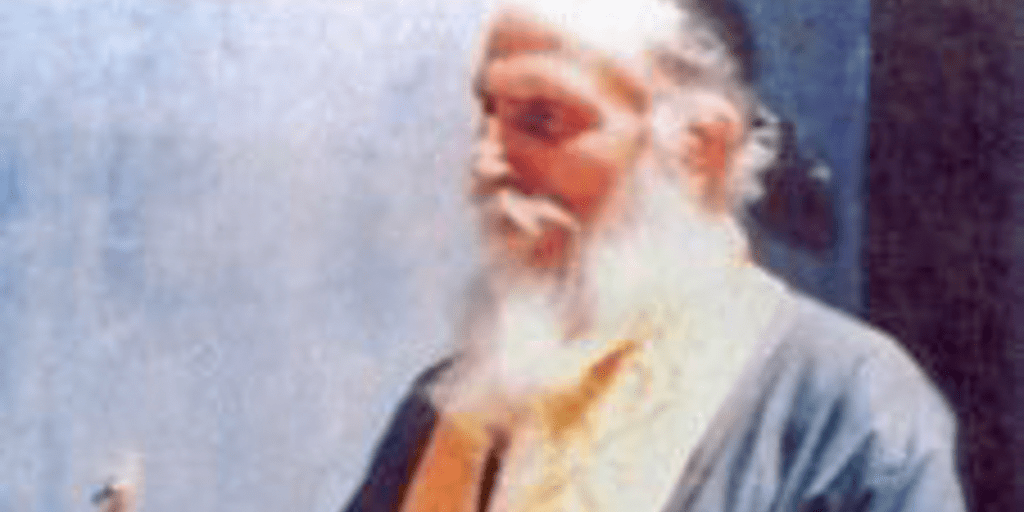
Panagiotis visited Mount Athos a few times. When he was young he liked to go on long journeys. Once he started from Athens and walked to Ouranoupolis. There he put his clothes on his back and swam to Mount Athos!
His visit to Kavsokalyva of Mount Athos at the age of 16 was to seal his life. There the Fathers were gathered and waiting for Metropolitan Nektarios Kephalas to arrive, our well-known Saint Nektarios [the Bishop of Pentapolis and Wonderworker], who would be visiting them.
When he arrived, one by one the Fathers approached him reverently and received his blessing. After the Fathers did this, the pilgrims followed. In his turn, Panagiotis also went to receive the blessing of the Saint. Saint Nektarios then took him by the hand and said to him prophetically:
“You, my child, will become a spiritual father and save souls. To the man who will come to you and speak of his sin for the first time, though he did not know that what he did was a sin, be lenient and do not let him go. But if he comes and continues in his sin, be strict with him and rebuke him.”
The prophecy of Saint Nektarios took place when the fullness of time came. Panagiotis later became Father Simon, who indeed saved many souls.
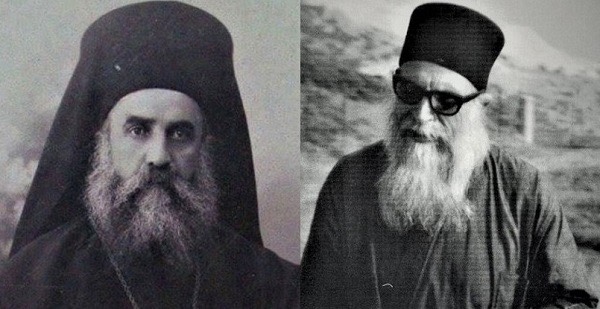
Other contemporary Saints such as St Iakovos Tsalikis also came to know and admire Fr Simon’s selflessness, wisdom and love, which have inspired countless struggling Christians during his life and after his blessed repose. St. Porphyrios had said of him that no one else had such faith as Elder Simon’s!
Hesychastic years in the cave of Saint Gregorios followed, until the then Metropolitan made Panagiotis a monk in Agios Charalambos and gave him the name Simon. He longed to be a cave-dwelling hermit, and continually begged this from the Monastery elders. The elders prayed for a week to Panagia to determine the correct path. After a week, Simon was told: “The Holy Mother informed us that you must return to the world which needs you to be led to salvation”.
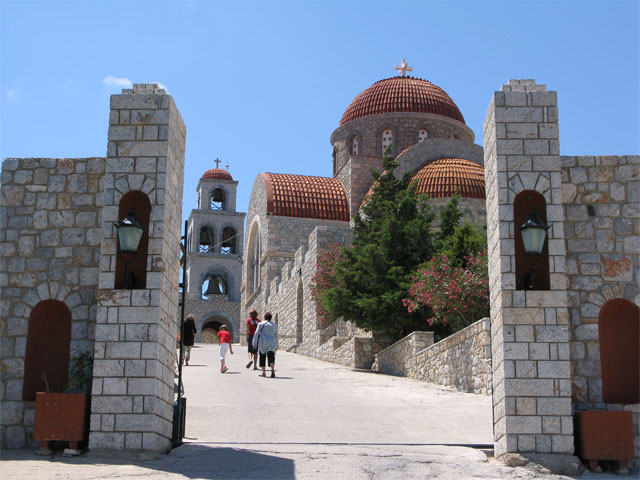
In obedience, he was ordained a priest-monk and started serving local parishes and chapels at Athens suburbs, and later the monastery of St.Panteleimon, Mt.Penteli, which he founded.
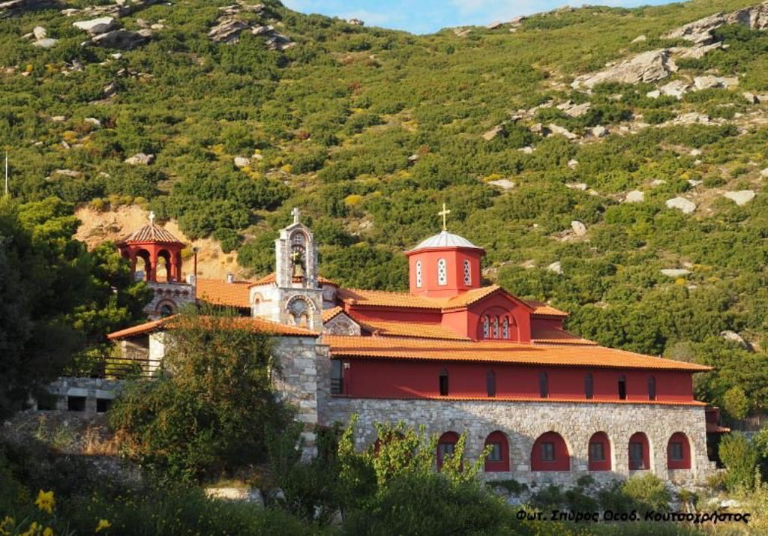
One of the first monks there, Zosimas, had a phobia of the dark. Fr Simon prayed over him and allowed him to sleep in his own cell while he, the elder, slept on the roof of the cell. Zosimas had a dream that the devil appeared and said: “Your Elder is up on the roof and I can’t come inside”. With the prayers of Fr Simon, he was healed.
One of the most well known miracles of Elder Simon is the miracle of the huge hare and the starving pilgrims in 1943. That time, he was appointed a Spiritual Father at the Monastery of the Transfiguration, near which there is a small chapel, dedicated to the All-Great Taxiarches. In 1943, on the eve of the festival, a large number of people had flocked for the celebration, at a time when hunger oppressed the people and the idea of food at a festival seemed like a dream. The only edible thing there was a sack of onions. However, Father Simon, taking pity on the hungry people, in imitation of Christ our Lord, and with unshakable faith in God’s providence, ordered them to clean all the onions and immersed himself in prayer. And suddenly, before the astonished eyes of the pilgrims, a huge hare came down from the mountainside and entered the kitchen all alone, on his own, offering himself for their meal! And the pilgrims, just like in the miracle of the multiplication of loaves, “all ate and were satisfied”, and there were plenty left overs.
What a “shocking” miracle! Poor huge hare! Even more shocking for me and many people who never eat animal’s meat. But these times were very trying ones and hundreds of people were literally dying from starvation every day! See footnote below*
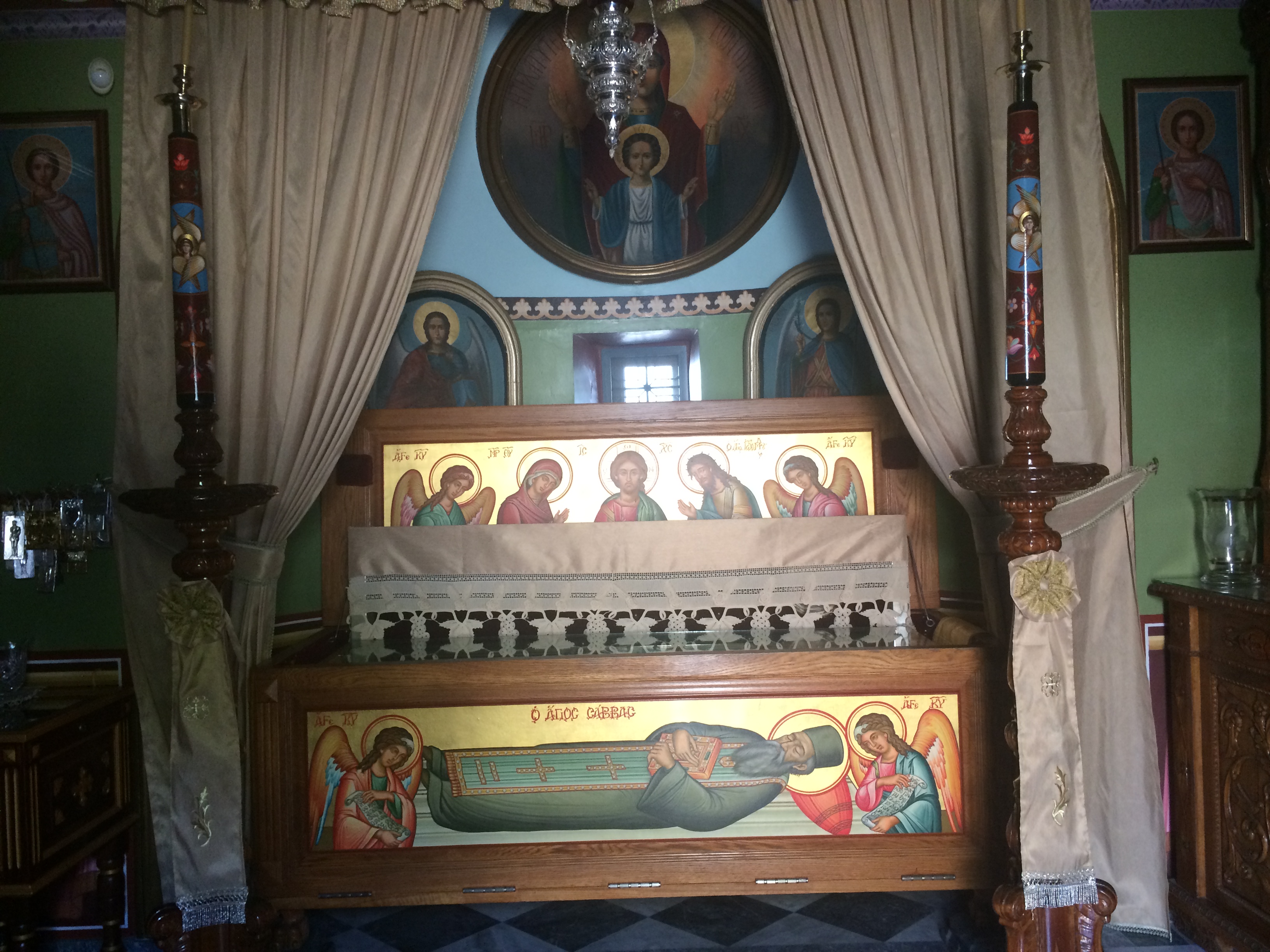
Fr Simon reposed in 1988. On the day of his burial, the grace of God was evident. The Metropolitan approached to kiss his body and the elder lifted his hand for the Metropolitan to kiss! What a blessed Elder and yet another revelation to us during our recent pilgrimage to Athens/ Aegina! Christ is Risen!
*
* One of the greatest calamities of the Greek people during the years of the Nazi Occupation was the terrible famine of 1941-1942 which claimed the lives of at least 300,000 people and caused serious illness in approximately 1,500,000. The spectre of hunger soon began to dominate. Children were among his first victims. They wandered around hungry, ragged and barefoot looking in the garbage to find something to eat. Bones, fruit skins and food scraps were the only food for many. On the sidewalks, many fainted from hunger began to fall, while the weakest organisms succumbed to the fatal… In the few ration centers the daily menu was as follows: pumpkins 100 drams, tomatoes 3 drams and onions 8 drams (without oil). Note that the oka had 400 drams and was equivalent to 1,282 grams. It is estimated that at least 200,000 contracted tuberculosis during the Nazi Occupation. 300,000 died of starvation and 1,500,000 became ill from malnutrition. The total calories from this “snack” were 290, of which only 200 were usable by the human body. Nonetheless, 500,000 infants, 500,000 toddlers, 1,200,000 children and many teenagers who needed the scrapbooks were fed on this 200 calories daily menu for months! On the streets, the chilling and macabre sight of the dead being carried for burial in two-wheeled wooden carts and with a cleaning cart began to appear. The dead were piled up, first by the tens and later by the hundreds in cemeteries unburied, as there were not enough undertakers to bury them! The unburied dead from starvation soon became a very serious problem. In streets, squares and courtyards of houses, people were dying every day and their bodies remained there, where they collapsed, until a Municipal cart passed by to collect them and take them to the cemeteries. But there was a problem there too: the undertakers were few, they too were exhausted from hunger and the dead were many. Others left their dead relatives outside hospitals and others outside cemeteries, stealing the dead’s identity documents in order to appropriate the pension they were entitled to. Protothema, my translation.
For more miracles of , go to Orthodox Christianity Then And Now here and here .



 ORTHODOX CHRISTIAN FAITH AND LIFE