The sun is racing to hide behind the aged Theodosian walls and reign in full purple over the vast Thracian plain. The guided tour program has ended and pilgrims have scattered in groups at the market for shopping and dinner.
Our company – seven souls – is walking through old Constantinople, searching for some relics of the Byzantine Queen of Cities in the modern city of 15 millions. Tonight, the last night of the pilgrimage, we would try to discover some Byzantine churches, more than a thousand years old, that still stand forgotten by Time, but unfortunately, also by Greek visitors to the City.
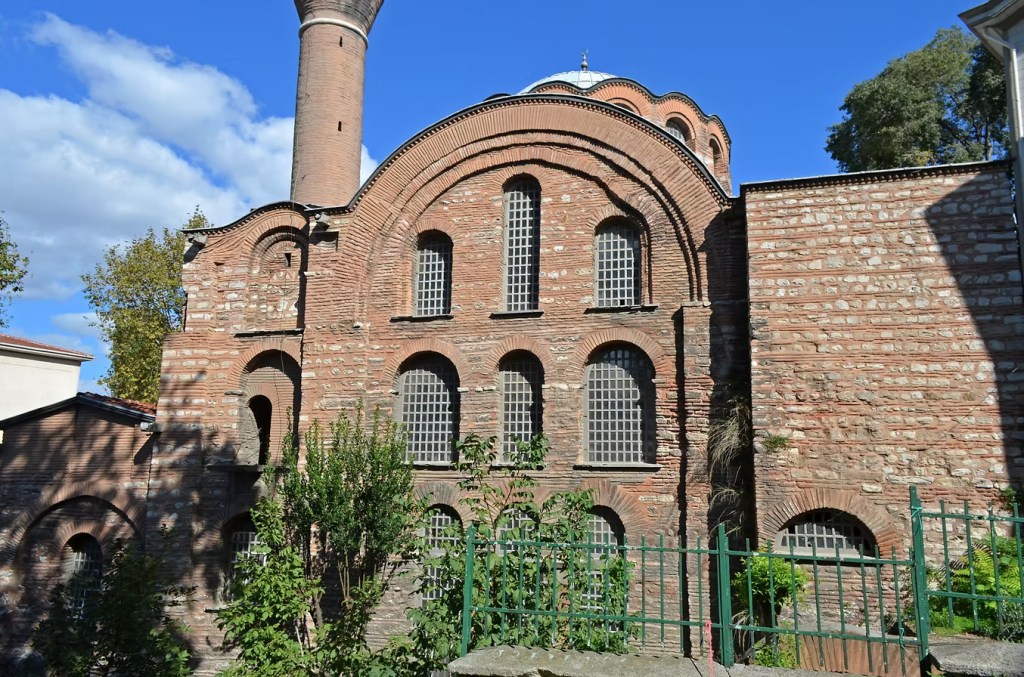
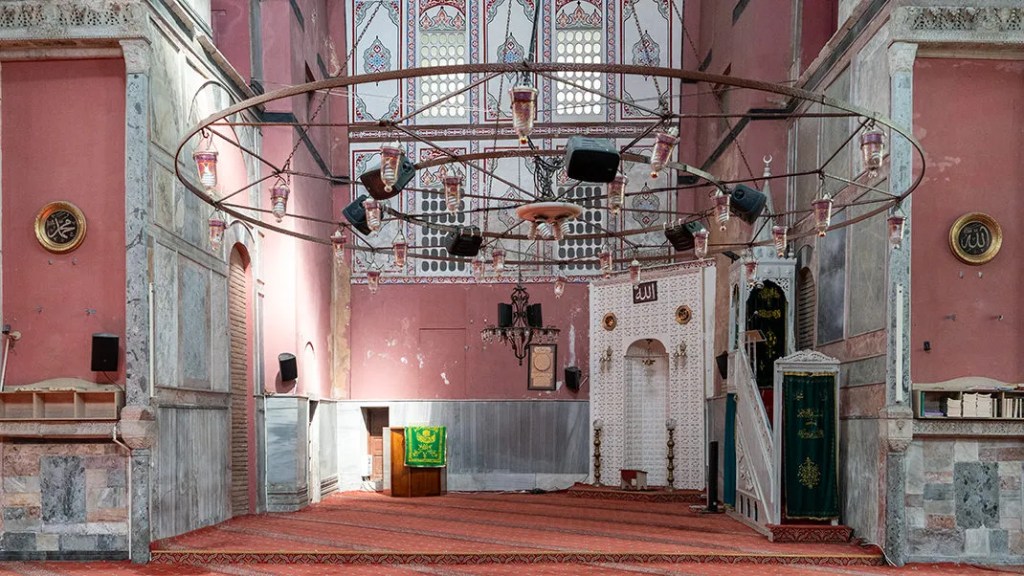
We cross a main street and turn left onto a smaller one. In front of us stands a large mosque, which externally bears the characteristics of a monastery chapel except for the Cross, which has been absent from its dome for some centuries.
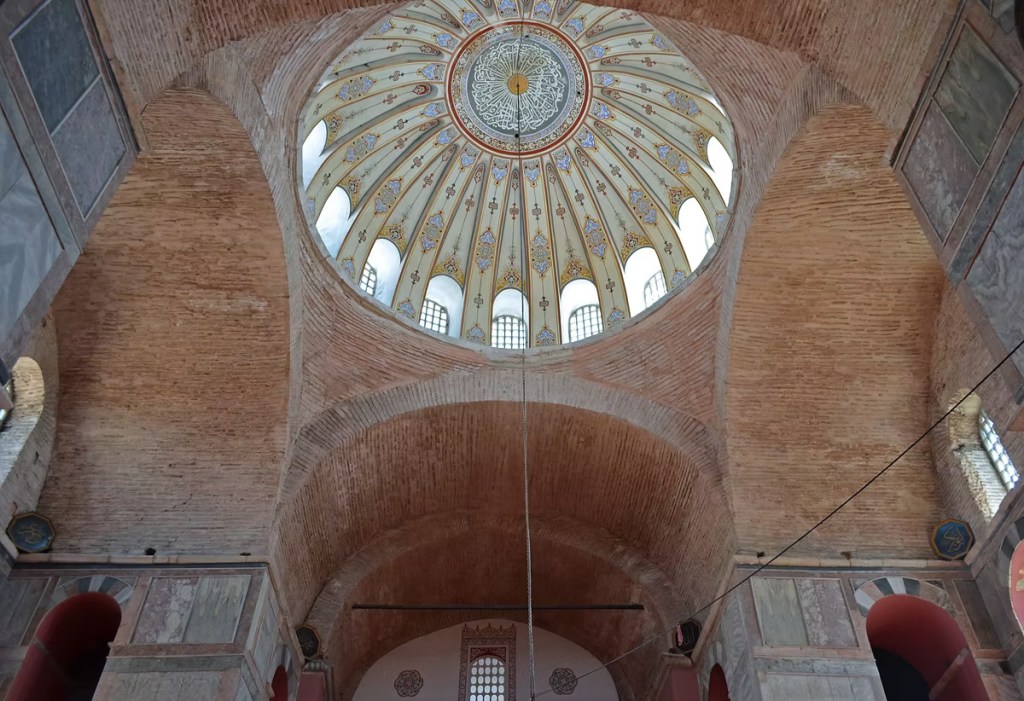
We proceed and ask the hodja for permission to enter. Eager and friendly, he welcomes us and allows us entry. At the same time, he explains to us that this is where the famous monastery of Akataliptos (1) was located in Byzantine times. However, the time of prayer is approaching for the faithful Muslims; the hodja leaves us and, dressed in his official uniform, enters the interior and begins namaz (2). About a dozen men gather around him, repeating some prayers and kneeling when he gives the order.
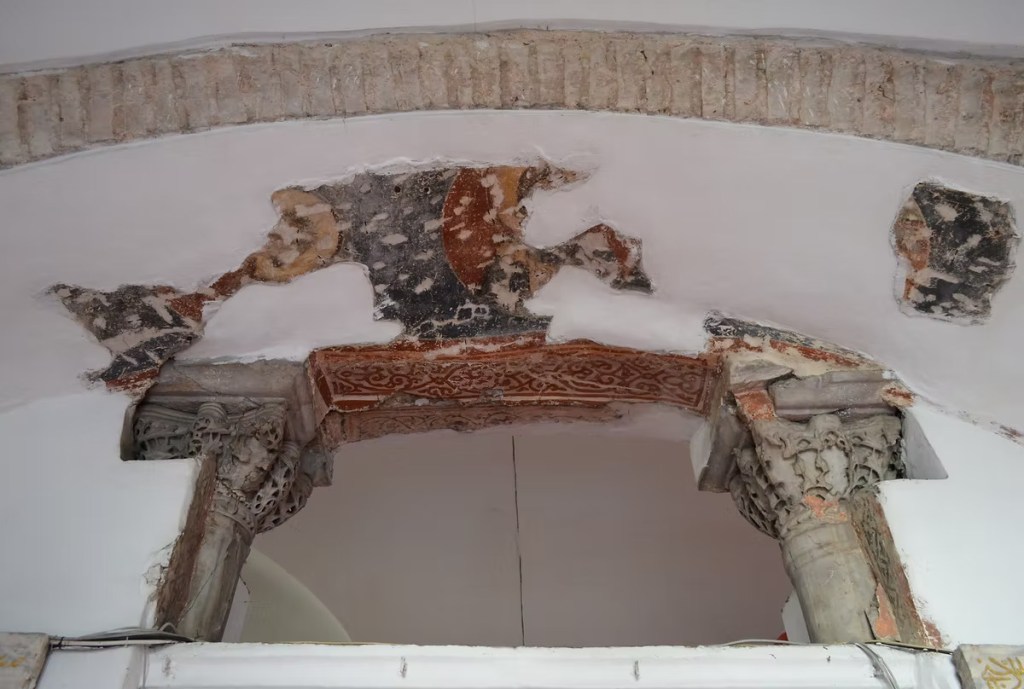
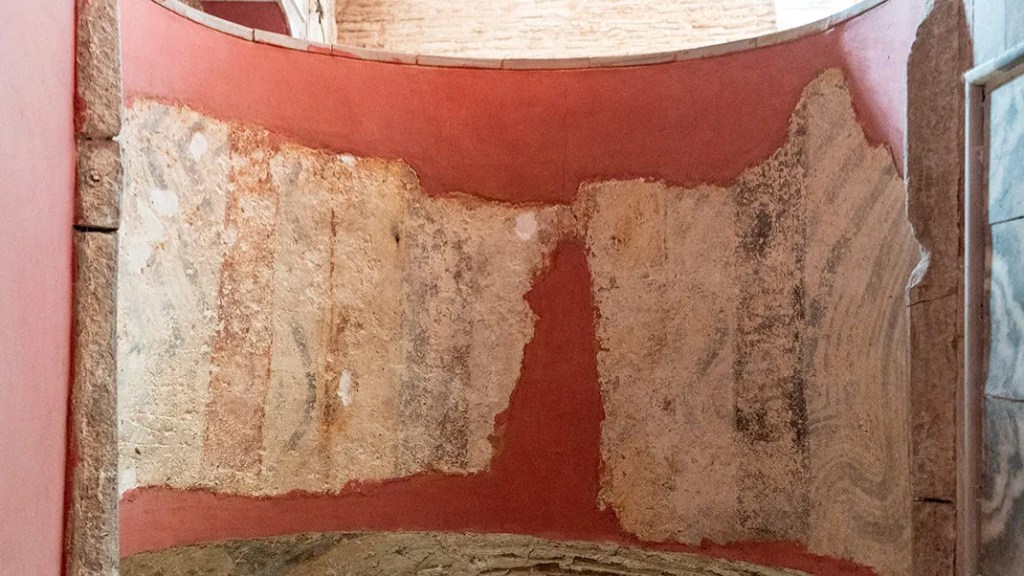
Barefoot and silent, we explore the interior of the mosque, persistently searching its walls and arches for some fragments of frescoes or mosaics. However, we cannot see anything, since the plaster has been scraped off along with the iconographies that were depicted on it (aniconic Islam strictly forbids the depiction of the physical form of God and His prophets). Only in the arch of the central entrance from the apse to the main temple do we see traces of fresco. The figures are unrecognisable.

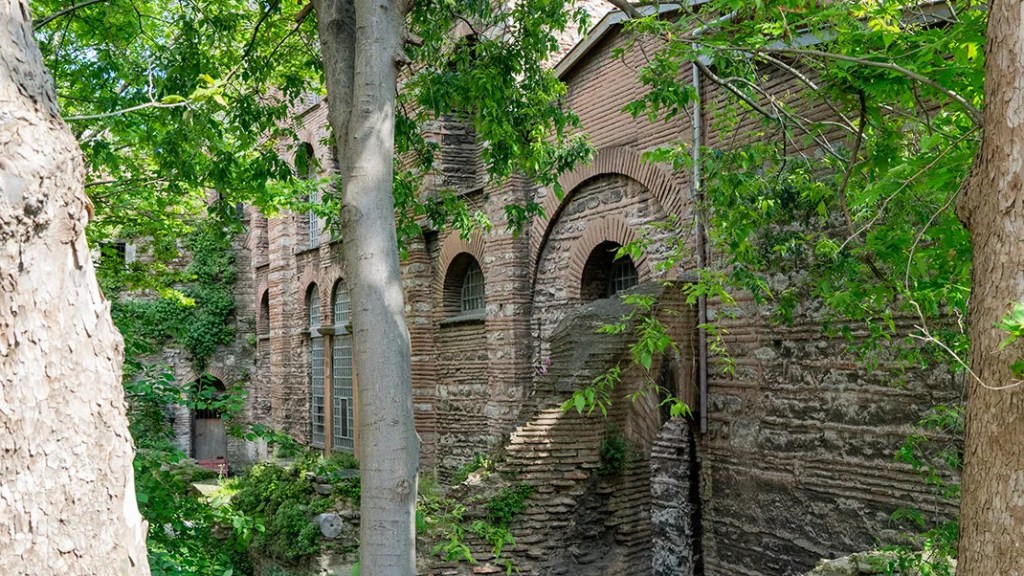
We leave the mosque, without having satisfied our desire to discover something unique from the years of Byzantine glory. As we stand in the courtyard of the mosque, we observe symmetrically towards the central building, constructions that could be the chapels of the catholicon (3).
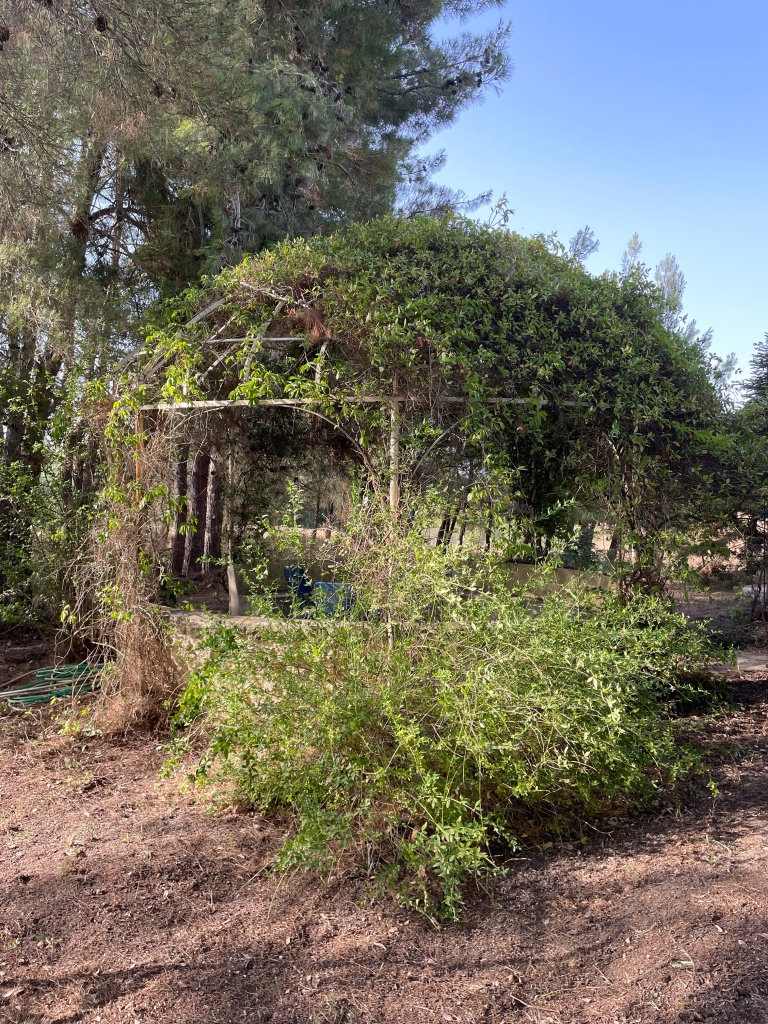
As it has already become dark for good, we move to the left and enter a garden with trees, where there are many ruins haphazardly thrown away, who knows since when. Carved marbles, capitals, broken columns, stones and a wall on the north side of the garden, elsewhere collapsed, elsewhere standing still. It was as if we had entered another era. A few steps behind us was the City of the 21st century, and yet in that space we felt that time had stopped counting.
With considerable hesitation and some fear lest someone might stop us, we enter the ruins and proceed to the depths where an iron door is visible. Could it be a chapel? After crossing the garden of ruins, we reach the locked door. Its window has no glass and in the dim light we can make out the interior. It does indeed appear to be one of the chapels of the catholicon. However, there are no murals or mosaics in it, as we had imagined, but only cleaning supplies, trash cans, brooms, dust pans, street cleaners’ uniforms…
We return somewhat disappointed, but something does not let us abandon that place yet. We search through the ruins. We stop at a large marble slab, leaning against a terrace. Is it perhaps the breastplate of the old iconostasis? Does it have relief crosses and other Christian symbols somewhere? In a little while we will grasp that this marble is a Holy Altar. The casket of the inauguration is clearly visible, from which the cap and of course its contents are missing. There we bow as we feel that we are in front of a plundered holy Altar, one of the many that were desecrated and destroyed after the Fall. In shock, we embrace its edge.
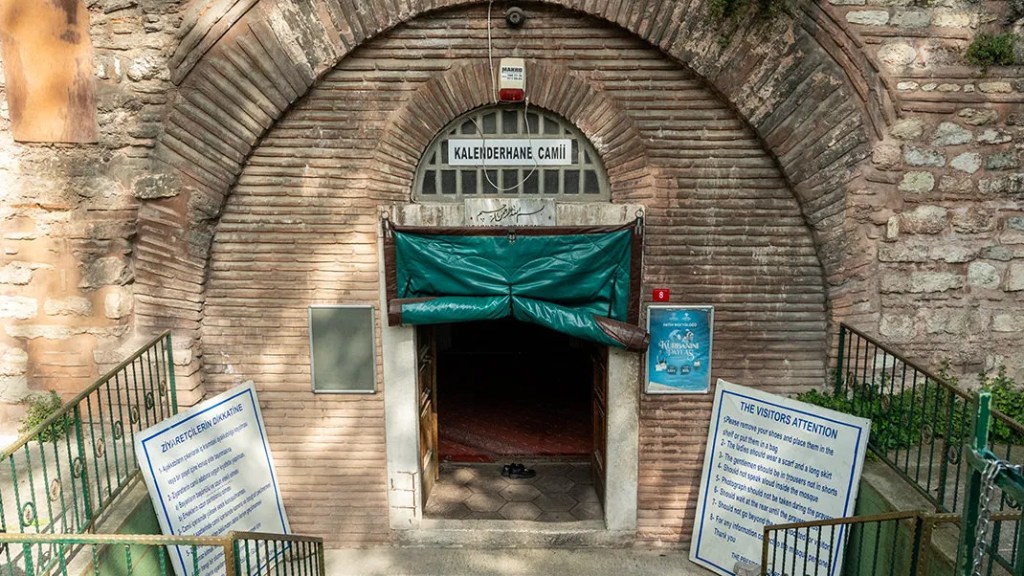
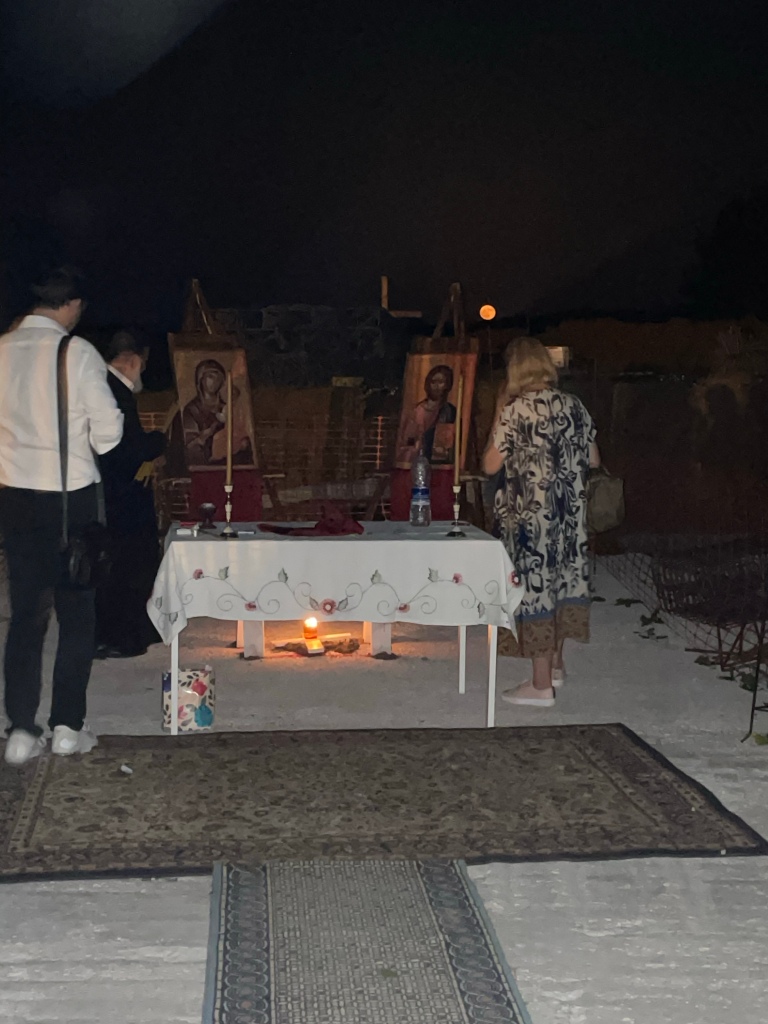
We leave the garden and return to the mosque. We want to beg the kind-hearted hodja to open the right chapel for us, the entrance to which we have already located among the grass and the bushes on the other side of the mosque. He takes the keys and we follow him with awe and hope. We cross another garden with fewer ruins and reach the iron door. At this point, the light of a spotlight falls on the outside, but the interior of the chapel remains dark. It has many small spaces, niches, arches; an ideal place for a vigil!
The guide shows us a tomb, but his limited English does not allow him to explain more to us. However, he allows us to take photographs, as he draws our attention to the places where there are fragments of a mural-fresco, as he calls it. In the flash of the camera we can indeed see a few icons preserved in much better condition than those of the Catholicon. In a niche is the representation of the Theotokos – in the type of Platytera, (ie. More Spacious than the Heavens) – and on either side of it is the inscription Panagia the Kyriotissa (4).
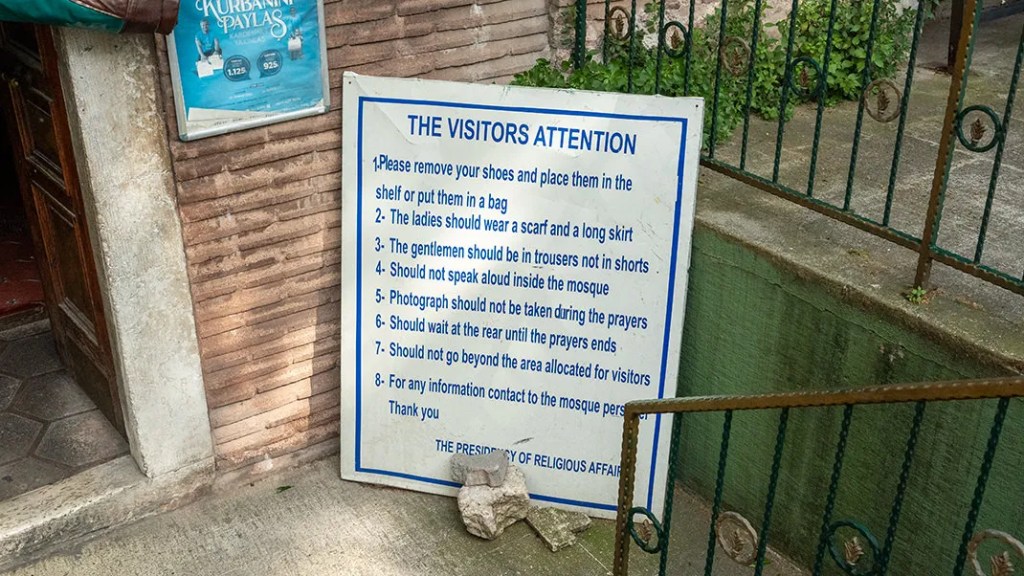
We worship the mural of the Theotokos, humming Axion estí (ie. It is Meet and Right). In a moment we leave the solemn chapel and the priest locks the rusty lock again. He tells us that tomorrow all of us pilgrims could come to see this monument. We thank him and leave but we still do not feel like returning to the hotel. Today is our last night in the City and we would like to experience more of its secrets.
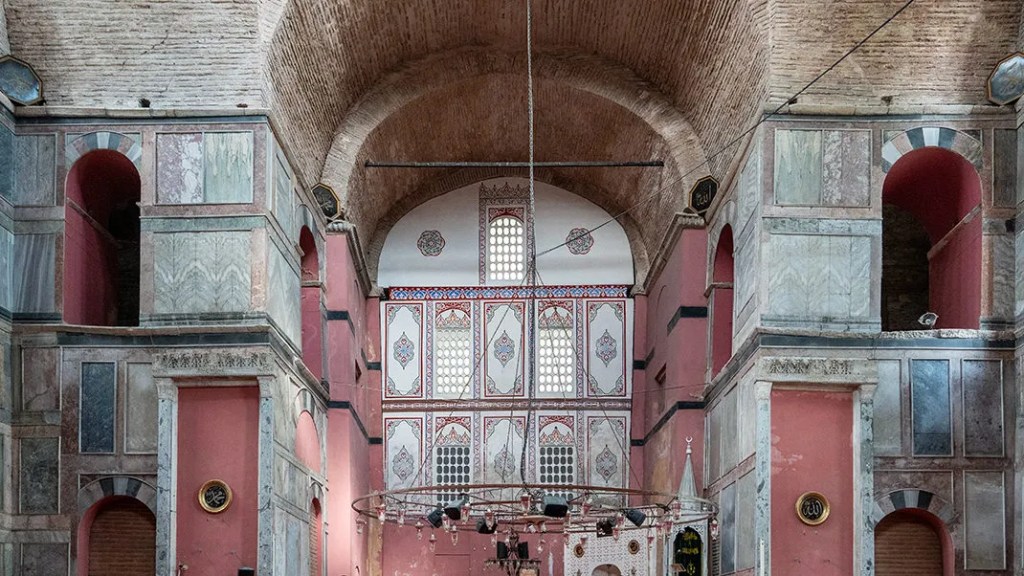
We now head north, continuing our journey through the old neighbourhoods. Somewhere we pass under an arch from the Byzantine period, a ruin that still stands. Next to it is a huge plane tree. Now the lights are fading and the area looks like a remote neighbourhood. In an opening in the semi-darkness, some children are playing ball. At the end of the small road that we cross, we turn into an alley and find ourselves in front of a small but beautiful and perfectly preserved, at least externally, Byzantine church. An elegant work of art with its central dome, three smaller domes in the narthex and two chapels integrated into the entire building. However, inside this little church is a Muslim mosque.To our surprise, we see Christian symbols welcoming us, carved into the marble slabs on either side of the central entrance.
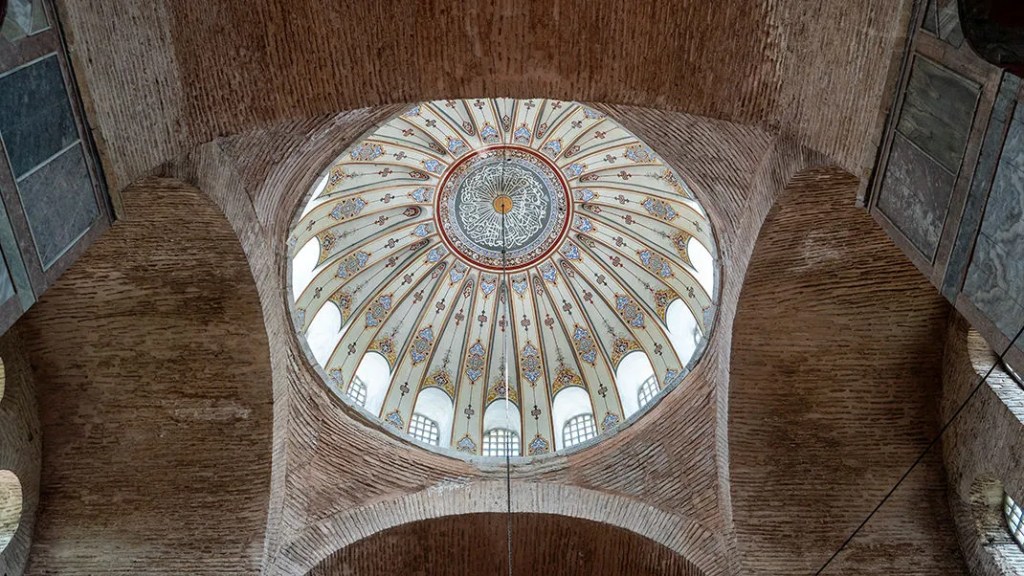
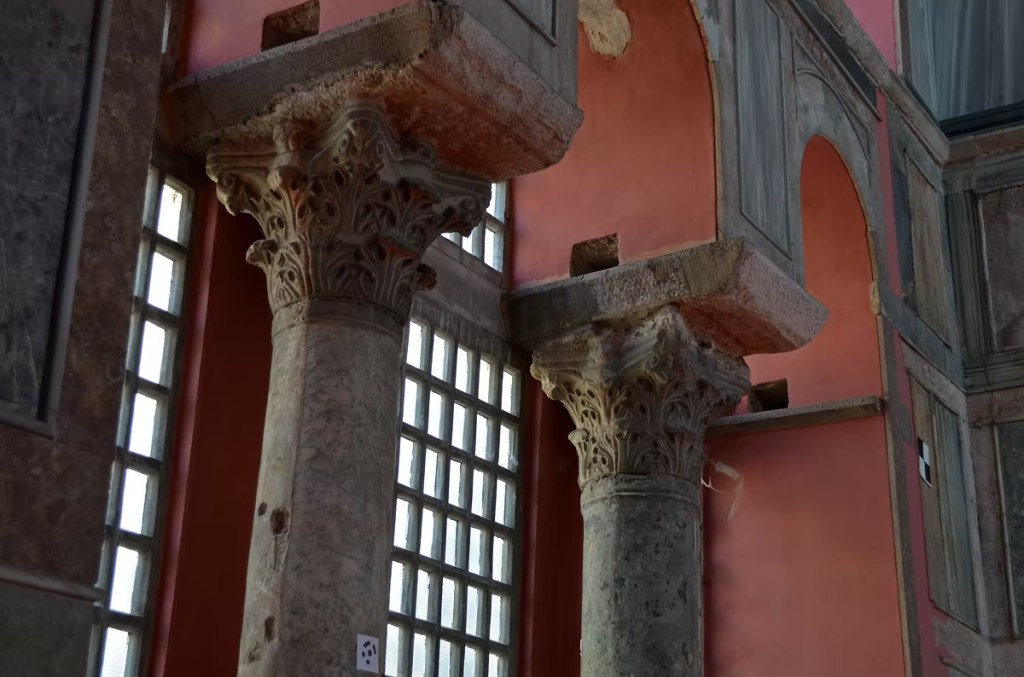
The hour is past and the door is closed. However, someone seems to be inside and we gather the courage and knock to let us in. It is the hodja of the mosque, not as cheerful as the previous one, and he hurries to show us the fresco in the right dome of the narthex. In the dim light we see Christ Pantocrator at the centre of the dome and around Him a choir of Saints. The middle dome and the left are plastered on the inside. In the main church there is nothing to remind of the Byzantine past of this building, except for a few Corinthian capitals. The chapel on the right serves as a storeroom; it is closed. On the left, the other chapel is open and illuminated. It has been converted into… a restroom, three toilets in a row, in the space that once was the Sanctuary… Somewhere there is a small door, and a narrow, almost hidden staircase, leading up to a small room.
“The priest used to live there”, the hodja explains to us and adds in his broken English: “Byzantine holy water”, showing us a stone jar in the narthex filled with water. What could this be? A bottle of holy water from the Byzantine years, which has changed its use and is now used for washing Allah’s faithful before their prayer?
We thank the hodja, apologise for the evening disturbance and make our way to leave. At the exit of the mosque, a basket has been placed and we are asked to put whatever tip we want into the basket…We leave and take the road back. It is already late but we are in no hurry to return. In our inner world, emotions are mixed, especially of those who were coming to old Constantinople for the first time. Everyone reflects on what they saw tonight…
More than five hundred years have passed since the Queen of Cities fell, but some thousand-year-and more-old buildings remain standing, provoking with their presence Time, the Catalyst. They remain standing and wait. What are they waiting for? Are they waiting for sensitive international organisations to protect them and stop the work of desecration? Are they waiting for tourists to photograph them? Are they waiting for the Greek visitors, who have completely forgotten about them? Are they waiting for incense to be fragrant, for candles and multi-branched chandeliers to light their kube5 (Turk. ie dome)? Are they waiting for the sound of ‘Christ is Risen’ to be heard under their thousand-year-old arches?
And yet, they are waiting…
Hieromonk Synesios, Monastery of St.A, V, Ch.

Notes
- The Monastery of Christ Akataleptos (the Incomprehensible Christ) is first mentioned in a document from the year 1094 and existed until the end of the Byzantine empire. For a long time, it was believed that the Kalenderhane mosque was the church of this monastery. However, this church is now securely identified as that of the monastery of the Mother of God Kyriotissa. The former Byzantine church known as Eski Imaret Camii, which was usually taken for that of Christ Pantepoptes (the All-Overlooking Christ), has only recently been identified with the church of the monastery of Christ Akataleptos. Cf. https://www.byzantium1200.com/akataleptos.html
- Namaz: Turkish word for prayer with genuflection.
- Catholicon: In the Orthodox Church, a catholicon is the main church of a monastery, often located at the center of a monastic complex and serves as the primary location for main liturgical services.
- The Church of Theotokos Kyriotissa (probably now Kalenderhane Mosque) is located near the east end of the Aqueduct of Valens in Constantinople. While it is a large Middle Byzantine church with a cross-in-square plan covered by a dome, it has a complex structural history, with several stages of building on the site, including a bath complex. Cf.https://www.thebyzantinelegacy.com/kyriotissa



 ORTHODOX CHRISTIAN FAITH AND LIFE