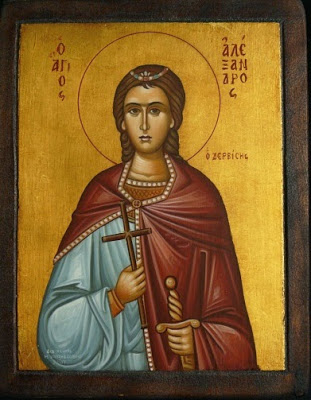
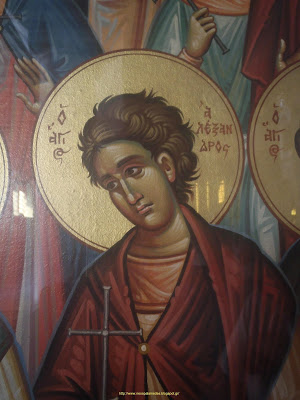
Alexander was a very handsome, young Orthodox Christian from Thessaloniki who lived in Laodigitria — the church/monastery I presented in my previous blogpost — and was sent to Smyrna by his parents who sought in this way to protect their son from the local Muslims. Unfortunately, however, Alexander did come under the influence of the Muslim faith and accepted Islam. Moreover, he later made a pilgrimage to Mecca and even became a dervish, that is, a member of a Muslim monastic order.
It was not long, however, before his conscience began to trouble him. He found he could not tolerate the position he was in, that is, he could not stand by silently while Orthodox Christians, to whom he still felt related, were persecuted. To lighten the burden of his conscience, he began to feign insanity. While playing the role of a madman, Alexander tirelessly rebuked the Muslims for the injustices they committed against the Christians.
Later, while in Egypt, some Muslims from the island of Crete plotted to murder him because, as time went by, he sounded more and more like a Christian and less like a Muslim. Before their evil plans could be carried out, Alexander left Egypt and returned to Thessaloniki.
Later he went on to the island of Chios where he still dressed as a dervish but began to attend Orthodox services and continued to preach to the Muslims in Chios, beseeching them to act with justice towards the Orthodox.
From Chios, Alexander returned to Smyrna, the city where he had first abandoned his Orthodox Christian faith. The time had now come for him to witness for Jesus Christ. Voluntarily he appeared before the kadi of the city and told him his story. He said:
“Mulla! I was an Orthodox Christian and because of my foolishness, I denied my faith and became a Muslim. Later I realized my former faith was light, which I lost, while your faith, as I have come to know it, is darkness. So I have come before you to confess I have made a mistake by denying the light and accepting the darkness. I was born an Orthodox Christian! I want to die an Orthodox Christian! Behold, you have heard my decision, Mulla, now do to me whatever you wish, for I am ready to endure every torture and to even spill my blood for the love of my Jesus Christ, whom I wrongly denied.”
After these words were spoken, Alexander took off his Muslim head covering and replaced it with a Christian one. Those present in the courtroom could not believe their ears. In fact, they thought they must be listening to a madman.
But one by one, beginning with the mulla, they began in a soft sympathetic voice to tell him he had spoken unheard-of things, and perhaps he was not well and should come to his senses. How could he, a dervish, shame his religion and his integrity in such a manner?
To all of these remonstrances, Alexander responded: “It is true, I was out of my mind, but now frankly I have come to my senses and I confess my iniquity. You say because I am a dervish, how do I say such things? I truly speak the truth, for I have gone to your Mecca, and have examined all of your faith, and I have understood everything about it to be false and abominable.”
The Muslims present responded to Alexander’s declarations by saying he must be drunk, and as such they had him put in prison. On the following day when more Muslims gathered around the mulla, Alexander was questioned again but with the same results. The Muslims felt embarrassed that one of their best, a dervish, could renounce Islam and therefore tried very hard to persuade him to give up the notion of returning to Christianity.
They began to flatter him with soft soothing words, reminding him of his position, his integrity as a dervish, and the thought that it would be a pity for him to sacrifice his youth, his very life. They offered him money, clothes, anything he might wish, but none of this made an impression on Alexander who was determined to witness for Jesus Christ and suffer any and all consequences.
Alexander turned a deaf ear to the threats of physical torture and death as he had previously to the flattery and promises of material rewards. Nothing could persuade him to give up Jesus Christ for the religion preached by Muhammad. And so he responded:
“O how foolish you are to bring up death. I came here for this purpose, to die for the love of my sweetest Jesus Christ. You are trying in vain to change my unwavering decision with your deceiving threats and your insignificant promises. As for myself, I think of dying for my holy faith which I wrongly denied and to die to this false life and to gain the other, the eternal one. I was born an Orthodox Christian and I wish to die an Orthodox Christian. This is what I desire, this is what I thirst for. So you do whatever you wish. I am ready to suffer everything for my Master Jesus Christ.”
Alexander was returned to prison where he stayed until Friday, a Muslim holy day on which it was customary for the important Muslims of the city to gather about the kadi of each city and attend with services at the mosque. On this occasion, Alexander was the topic of their conversation.
When brought before the kadi for the third time, the same flattery, promises and threats were made. To these Alexander replied by simply saying: “I was born an Orthodox Christian, I wish to die an Orthodox Christian. I will not exchange the light for darkness. I worship Father, Son and Holy Spirit, Trinity consubstantial and undivided.” Saying this, he made the sign of the cross.
This was the last straw for the kadi and the Muslims present. Alexander was immediately sentenced to death. He was bound and led to the place of execution accompanied by many Muslims who continued to try to persuade him to change his mind. To their admonitions, Alexander responded, “I am an Orthodox Christian and I die as an Orthodox Christian.”
Many people, Muslims, Orthodox Christians, Westerners and Armenians gathered for the execution. Alexander stood in the centre. The executioner then placed his sword in front of Alexander’s eyes to frighten him. But the Neomartyr remained calm and unaffected.
Alexander was then ordered to kneel, at which point the order came from the mulla for a stay of execution. The stay continued for an hour during which time Alexander prayed. When he gave no sign of changing his mind or of being willing to convert, the execution proceeded and he was beheaded.
Thus Alexander the dervish from Thessaloniki sacrificed his life for the love of Jesus Christ in the city of Smyrna, Asia Minor on May 26, 1794.
From Witnesses For Christ: Orthodox Christian Neomartyrs of the Ottoman Period 1437-1860, by Nomikos Michael Vaporis, pp. 217-219.
Such close ties between New Martyr Alexander the Dervish and Laodigitria church are quite common in Thessaloniki; in its various historic churches, local neomartyrs (from the Ottoman rule) have received the crown of martyrdom in their yards. Like the Church of Saint Minas and the new martyr Christodoulos from Kassandreia (+27 July, 1777) who was hanged at its central entrance. But again that will be the topic of another blog post. It is no exaggeration that Thessaloniki, throughout the centuries, has proven to be “agiotokos”, a cradle for so many ‘local’ Saints.
*
Apolytikion in Plagal of the First Tone
In lawful contest O Martyr, you were valiant, you were wounded after prevailing against the enemy, and you are seen Alexander as a companion of Martyrs. Therefore as its holy offshoot, Thessaloniki honours you, and with longing, it proclaims to you: Do not cease interceding for the mercy of those who honour you.
Kontakion in the Third Tone
The city of Thessaloniki celebrates today your holy memory, Alexander Neomartyr; you are its own divine offspring and offshoot; you contested in Smyrna with brave resolve for love of the Lord; therefore entreat Him that He may save us all.
Megalynarion
You contested lawfully for Christ, Alexander Martyr, and destroyed the enemy; therefore Thessaloniki reverences your memory, honouring your struggles and your contests.
Russian Animated Christian Film for Children with English subtitles
The year is 1943, with communists oppressing Russia and persecuting Christians. The main character, a girl named Seraphima, dreams about a Palm Sunday celebration in a church where her father serves as a priest. The dream ends with the Soviet police taking her father away, and the church being blown up.
Seraphima lives in a Soviet orphanage and secretly keeps a single reminder of her family — a cross. She finds it difficult to form friendships with the other girls, and the main teacher at the orphanage mocks and persecutes her.
Her friend tells her the house is full of secrets, including some resident ghosts. Seraphima visits a mysterious secret chamber under the stairs, to see one of them. From this moment, Seraphima falls into a whirlpool of incredible events, allowing her to shed light on the mystery of the orphanage, and the fate of her parents.
When the teacher discovers that Seraphima is a Christian, and that she secretly wears a cross, she has Seraphima banished from the orphanage. The girl refuses to renounce her faith, and she waits in suspense to find out who will arrive to take her away . . .
A famous letter written by SaintSeraphim of Vyritsa and sent to his spiritual child, a bishop who was in a Soviet prison at that time, for consolation and counsel, to let him know that God the Creator addresses to the soul of man. In text and a Youtube rendering. Both this and my previous blogpost reflect what I have been going through the last three months. I have never experienced more acutely that I am indeed the lost sheep and in dire need for rescue than in these last three months. I hope to share sometime this week ‘my’ plan for the coming month. Please pray for me!
This was from Me
Have you ever thought that everything that touches you touches Me as well? For that which touches you touches the apple of My eye.
You are dear in my eyes, precious, and I have loved you; therefore it is a particular pleasure for Me to educate you.
When temptations arise against you, and the enemy comes like a river, I want you to know—This was from Me.
Your weakness needs My strength, and your safety comes from giving Me the opportunity to fight for you. If you find yourself in difficult circumstances, among people who do not understand you, who do not take what you like into consideration, who alienate you—This was from Me.
I am God, Who arranges circumstances. It was no accident that you find yourself in the place where you are; this is the place I have appointed for you. Did you not ask that I teach you humility? Well, then, look: I have placed you in precisely that place, in that school, where this lesson is learned. Your surroundings and those who live with you are only fulfilling My will. If you find yourself in financial difficulty, if you find it hard to make ends meet—This was from Me.
For I have your material means at my disposal. I want you to call unto me, for you to be dependent upon Me. My reserves are inexhaustible. I want you to be confirmed in fidelity to Me and to My promises. May it not be said to you in your need: “You did not believe in the Lord your God.”
Are you in a night of suffering? Are you separated from your loved ones and those close to your heart? This was from Me.
I am the Man of suffering, Who has tasted affliction. I have allowed this so that you would turn to Me, so that in Me you would find eternal comfort. If you have been let down by your friend, to someone to whom you opened your heart—This was from Me.
I allowed this disappointment to touch you so that you would know that your best friend is the Lord. I want you to bring everything to Me and to speak to Me.
Has someone slandered you? Give this to me, and bring your soul closer to Me, your Refuge, to hide from the “contradiction of the nations.” I shall bring forth your righteousness as the light, and your judgment as the noonday. If your plans have been destroyed, if you are downtrodden in soul and tired—This was from Me.
The Lost Sheep by Sir John Everett Millais, Bt, (1864)
You made plans, and brought them to Me, so that I would bless them. But I want you to leave Me in charge of the circumstances of your life, and then responsibility for everything will be Mine, for this is too difficult for you; by yourself you can not manage them, for you are only an instrument, and not the actor. If unanticipated problems of life have visited you, and if despondency has seized your heart, then know—This was from Me.
For I want your heart and your soul to be always aflame before My eyes; to conquer faint-heartedness of the soul in My name. If you do not hear from your dear ones and friends for a long time, and in your faint-heartedness fall into despondency and grumbling, know—This was from Me.
By this anguish in your spirit, I test the strength of your faith in the surety of My promise and the strength of your boldness in prayer for these dear ones of yours. Was it not you who entrusted them to the Protection of My All-Pure Mother? Was it not you who once entrusted their care to My providential love? If serious illness, either temporary or incurable, has visited you, and has confined to your bed, then know—This was from Me.
For I want you to know Me even more deeply in you bodily infirmities, so that you would not grumble over this trial sent to you, that you would not try to penetrate My plans through different means for the salvation of people’s souls, but that you would uncomplainingly and submissively bow you neck under My goodness towards you. If you have dreamed of performing some special deed for Me, and instead haven fallen onto a bed of sickness and weakness—This was from Me.
Then you would have been immersed in your activities, and I would not have been able to attract your thoughts to Me, for I want to teach you My deepest thoughts and lessons, so that you would be in My service. I want to teach you to recognize that you are nothing. Some of My best co-workers are those who have been cut off from vital activity, that they would learn to wield the weapon of unceasing prayer.
Have you unexpectedly been called to occupy a difficult and responsible position? Go, place it on Me. I entrust these difficulties to you so that the Lord God would bless you for this in all your deeds, on all your paths, in everything that will done by your hands. On this day I put into your hands a vessel of holy oil. Use it generously, My children! Every difficulty that arises, every word that insults you, every obstacle to your work that could elicit in you a feeling of annoyance, every revelation of your weakness and inability, shall be anointed with this oil.
Remember that every obstacle is a Divine instruction. Every sting will be dulled when you learn to see Me in everything that touches you. Therefore place the word I have declared to you today in your heart: This was from Me. For this is not an empty matter for you—this is your life.
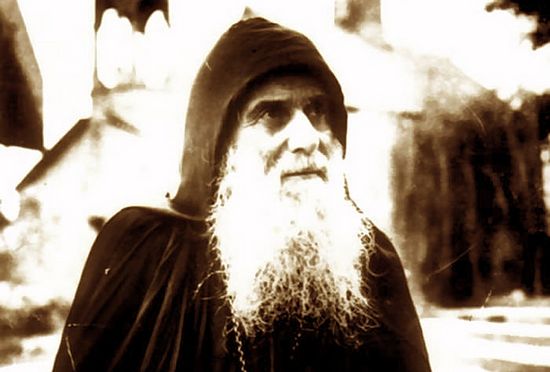
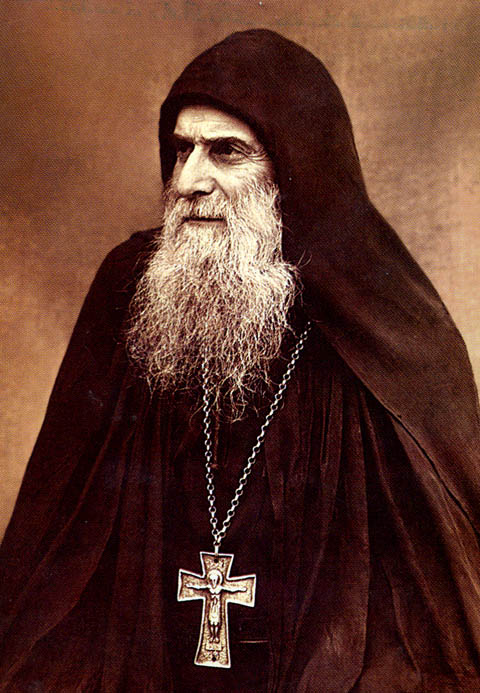
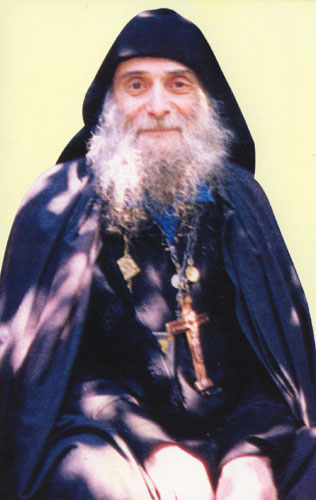
Excerpt from the life of Saint Gabriel the Confessor and Fool for Christ of Georgia, including rare video footage of him
“It is quite difficult for the contemporary generation to imagine the unusual spiritual ability of the young monk, who adopted unprecedented and astonishing steps during the terrible communist regime. … The Soviet government planned to keep him in the psycho-neurological hospital forever. But God had preserved the life of His chosen one not for such a fate. It is interesting to read an excerpt from the medical conclusion:
Georgian SSR Tbilisi Healthcare City Psycho-Neurological Hospital 19/1 – 1966, Tbilisi, 1, Electroni Str.
#666Patient: Vasili Urgebadze, born in 1929, 6 class education. Address: 11, Tetritskaro Str.
The patient is stationed in the city psycho-neurological hospital on 18.VIII.1965, and is brought from the prison for forced treatment. Diagnosis: psychopathic person, inclined to schizophrenia-like psychosis blanks. He was discharged from the hospital on 19/11/65. According to anamnesis he had a vision of a ghostly evil spirit with horns on the head at the age of 12… The patient proves that everything bad that is taking place in the world is due to Evil. From the age of 12 he started to go to churches, prayed, bought icons, and studied church literature… He ate nothing on Wednesdays and Fridays. Grown-ups and soldiers laughed at his nonsense: “On Wednesday Judas sold Christ for thirty silver coins, and on Friday the Jewish priests crucified him”; he was totally hallucinating. It was clear from the case that at the 1 May 1965 demonstration, he burnt a big portrait of Lenin, hanging on the building of the Council of Ministers. After interrogatory he said he did this because the picture of the Crucifixion of Christ should hang there and that it was not possible to idolize an earthly man – the doubt appeared in regard to his psychic health, due to which he was sent to court-psychopathic expertise. The examination showed the patient’s orientation is disoriented in place, in time, and in environment. He talks to himself in a low voice: he believes in the existence of heavenly beings, God and angels, etc. While talking, the main axis of a psychopath is always turned to that everything depends on God’s Will, etc. He is isolated from the other mental patients in the department. When someone talks to him, he surely mentions God, angels, and icons, etc. He is unable to criticize his condition. He was treated with the aminazinophrazia and syptomicine therapy, after which he passed commission.
Act of stationary #42 1965
Chairman of the commission: candidate of medicine, chief physician T. Abramishvili,
Members: J. Shalamberidze and physician Kropov.
He was discharged from the hospital on 19 Jan. 1965 and was taken home by his mother.
Physician: Lezhava 19 Jan. 1966.
… From that time on, Father Gabriel decided to completely change his lifestyle, which was too painful for him. Now he was determined to pretend as being mentally ill and to outwardly refuse his usual way of life. Instead of being in silence, he loudly preached in the streets. If till now he completely refused to drink wine, now he drank among people and pretended to be drunk. To pretend being foolish is an unusual feat which requires a spiritual strength and divine mind. “Because the foolishness of God is wiser than men; and the weakness of God is stronger than men” (I Cor. 1:25).
Third in her ‘series’ of Cross-related visions, Abbess Thaisia sees a Crucifix.Always these visions take place in the midst of heavy trials and tribulations, when she begins to lose heart and starts to languish… Here, the Holy Hierach St. Nicholas visits her to sternly admonish her. Below follows another except from her Autobiography:
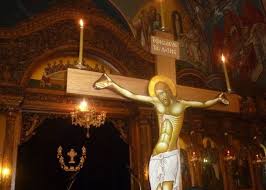
“Then once I had a dream. I was walking along a road in an open field. I had to turn right, but there was no path in that direction; there were only beds of planting vegetables, very long ones. They looked as they do in autumn after the vegetables have been harvested, and the furrows between the beds were dirty and wet. I stopped and considered how to turn right. To go along the furrows would mean getting dirty and wet, but to walk across the beds would be a muddy, sticky business. Suddenly, I saw an old bishop coming in my direction with a staff in his hand. I thought, ‘I’ll wait and see, and whichever way he goes I will go too.’ Coming close to me, he said: ‘Come with me, I will show you the way.’ Leaning on his staff with his left hand, he took me with his right hand and led me along a bed, saying: ‘Although it’s muddy and you will often get stuck, the path is high; look how much dirt and water there is along the low path.’ We walked together for a long time. He continued preaching, and I talked to him without fear, although I recognised him as St. Nicholas. Finally we came to some church or chapel (I don’t remember which), and went in. Inside was a large Crucifix, and on the right, hanging on the wall, was an icon of St. Parasceva. I began to prostrate myself before the Crucifix. As soon as I touched the floor with my head, the holy man struck me on the neck with such force that I thought he would chop my head off. I had hardly recovered when another blow followed, and then another, and so on to five. ‘Why is he beating me?’ I asked myself. ‘Does he really want to chop my head off? But why would he want to do that?’ ‘Don’t argue, don’t act wise,’ he answered my thought. ‘If I struck you, it was because I had to. You have forgotten that one must obey without arguing. You don’t have to show off your knowledge.’ I stood up, and the holy hierarch looked at me, smiling kindly. He pointed at the icon of martyr Parasceva, saying: ‘Here she is, the bride of Christ. She allowed her head to be cut off as an offering to her Bridegroom; whereas you are unable to suffer even a little, and you keep on philosophising while you still don’t possess spiritual wisdom. Humble yourself; endure, and you will be saved.’ “
*
For her first Vision-Encounter with our Lord’s Cross, go to The Cross-Baptism
Jesus told his disciples, “Whoever wants to be my disciple must deny themselves and take up their cross daily and follow me.” (Luke 9:23) What does it mean to take up our cross daily? This is a question that St. Theophan the Recluse addressed in a series of homilies in 1885.
First, let’s examine what is meant by the Cross. St. Theophan says the following:
The Lord accomplished our salvation by His death on the Cross; on the Cross He tore up the handwriting of our sins; through the Cross He brought upon us grace-filled gifts and all heavenly blessings.”
But there is more, as the above is Christ’s Cross, and we must take up our personal cross. St. Theophan says:
When the personal cross of each of us is united with Christ’s Cross, the power and effect of the latter is transferred to us and becomes, as it were, a conduit through which “every good gift and every perfect gift” (James 1:17) is poured forth upon us from the Cross of Christ.
The message is clear that there is more to our salvation than just believing in Christ, His Incarnation, His Crucifixion and Resurrection. In addition to His Cross, our personal cross is equally essential for our salvation.
But, what is our personal cross? Saint Theophan outlines three kinds. One is outward, another is inward and a third is spiritual.
1. The outward cross involves the trials and tribulations of our life. St. Theophan describes them as follows:
These are sorrows, misfortunes, the loss of loved ones, failures at work, every sort of deprivation and loss, family troubles, adversities related to outward circumstances, insults, offenses, wrongful accusations, and, in general, our earthly lot… Neither eminence, nor riches, nor glory, not any kind of earthly greatness will deliver one from them.
He makes the important point that we must make use of these difficulties in life in accordance with God’s intention for our salvation. So, why does God allow us these difficulties in life? Saint Theophan says he gave them to us “so that we would live on earth, not as someone in his own land, but as a stranger and a foreigner in a foreign land.” As foreigners, we are to seek our return to His kingdom. To understand this we must refresh our understanding of the story of Adam and Eve told in Genesis, and how they were originally living in Paradise in union with God. But they disobeyed Him and suffered the consequences of death and sorrow and sickness, and were ousted and banned from Paradise. This is our outward cross to bear, the difficulties of a mortal life outside of Paradise. And how are we to bear them? St. Theophan tells us to “endure them and don’t be annoyed…bear your lot with equanimity.”
Remember, these difficulties encountered in life are similar for all of us. We are all subject to misfortune and sorrow. God allows them for our benefit. St. Theophan tells us,
The Lord wants to wash away some sin, or to lead us away from a sinful deed, or to cover up a greater sorrow with a smaller one, or to give us an occasion for patience and for demonstrating faithfulness to the Lord, so as to show forth the glory of His mercy on us later… If you don’t clearly see precisely what God wanted to give you through sorrow that has overwhelmed you, raise up in your heart the general, non-speculative belief that everything that comes from the Lord is for our good, and give a shove to your disturbed soul: this is what is pleasing to God. Endure! He whom punishes is like a son to Him!
Enduring your sorrows with faith are what it means to bear your personal cross. Enduring with the love of God, giving thanks for all He gives us, you are bearing your cross in a way that will bring salvation. Saint Theophan says,
“Arouse gratitude within yourself, humble yourself under the mighty hand of God, repent, and correct your life.”
2. The second kind of cross is inward. This is the struggle against the passions. Saint Paul says, “They that are Christ’s have crucified the flesh with the affections and lusts” (Gal 5:14). Saint Theophan says,
There is a cross upon which these passions and lusts are crucified. To crucify the passions means to weaken them, suppress them, and uproot them… When someone is fighting against the passions, sometimes it seems as if his hands were nailed, as if he is wearing a crown of thorns on his head, as if his living heart is pierced.
The culprit is self love, advises Saint Theophan. He writes,
Anger burns, envy dries one up, lust enfeebles one, miserliness does not let one eat or sleep, and offended pride murderously eats away at one’s heart… Everyone has them. As soon as there is self love, there are all the passions, for this is the mother of the passions…
So what is one to do? Saint Theophan says,
One has only to turn the knife around and, instead of satisfying the passions, to strike oneself with it, to strike the passions with it, beginning the fight against them and contradicting them in everything… One must say to every passionate person: “You’re perishing on the cross of passions. Destroy that cross and set up another: the cross of the fight against it. And you’ll be crucified on it unto salvation!”…. go courageously to the cross of self-crucifixion, through the crucifixion and uprooting of the passions and lusts. Let us turn away from self-pity and become inflamed with zeal for self-accusation… the Cross is the tree of life.
3. The third cross is the devotion to the will of God. It is not enough to crucify the passions. This is only preparatory for this step which involves our obedience to God’s will. We are now ready to offer ourselves up as a sacrifice to God. We follow Christ’s example in the Garden of Gethsemane before His Crucifixion. Christ prayed that He be spared, but was resolute in saying, “Nonetheless not as I will, but as Thou will” (Mark 26:39). CHrist as fully man bound his will with that of God. It is as Paul says, “I am crucified with Christ: nevertheless I live; yet not I, but Christ lies in me” (Gal 2:20). Saint Theophan says this is the “height of Christian perfection… It is the beginning of he future state after the resurrection, when God will be “all in all” (1 Cor 15:28). Those who are perfect live and act through God alone.”
Saint Theophan further says,
Many have the idea that Christianity is the same as other kinds of life, but this is not so. It begins with repentance, ripens through the fight against passions, and is perfected when the pure, inner man, immersed in God, is crucified with Christ… If Christians do have pleasures they are purely incidental. The most distinguishing characteristics of their existence are sufferings and sickness––inward and outward, voluntary and involuntary. We must through much tribulation enter into the kingdom, and into that which is within it.….If you want good for yourself, get rid of pleasures and enter on the path of the cross of repentance, burn up in the fire of self-crucifixion, be tempered in tears of heartfelt contrition––and you’ll become gold, or sliver, or a precious stone, and in due time you’ll be taken by the Heavenly Householder as an adornment for His most bright and most peaceful mansions.
Reference: Three Homilies of the Bearing of the Cross by Saint Theophan the Recluse in The Orthodox Word, No. 285, 2012, pp 187-202.
A visitation of the All-holy Theotokos in St. Valeriu’s prison cell
“Let us lift up the hearts!” Any visitation from our Lady warrants our immediate attention. I was not surprised by Her words “that deliverance will come, albeit through fire and devastation. The world still has to suffer….”. But these words put me to shame: “Today, the sons of darkness are bolder than the sons of light.”
For the complete narrative of the visitation, go here
For the life of St. Valeriu Gafencu the New Confessor of Romania (+ 1952), go here
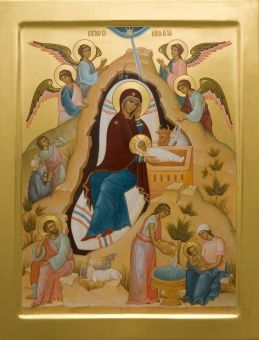
Blessed Christmas all! May the light of Christ bring you peace and joy!
The appearance of the All-holy Theotokos in St. Valeriu’s prison cell on the saint’s last Christmas
During the night of his last Christmas, toward dawn, Valeriu testified to his friend Ioan Ianolide:
“This night, I kept vigil. I sang my carol to come. I wanted it to be very beautiful. I sang it in my head. I heard it in the high heavens, from where it descended. Rather difficult for me, since I don’t know musical notes and I have to sing by ear. So I was awake, lucid and serene, when all of a sudden, I noticed a photograph of Seta – the girl he loved – in my hand. Amazed by this, I lifted my gaze and at the head of my bed I saw the Mother of God, clothed all in white, vivid, real. She was without her child. Her presence seemed material to me…
“Once, when I was in a hurry to come here to the monastery to speak to you, I took a taxi, so I wouldn’t be late. On the way, I asked the driver: “Tell me, do you ever get to eat lunch or dinner with your Wife?” You know what sort of work these drivers have, and how they almost never know when they are going home. “Every day” he told me, “both lunch and dinner.” “How do you manage it? What time do you eat?” “Lunch starts from 10:00 in the morning, and goes till 4:00 in the afternoon, and dinner is from 6:00, often till 2:00 in the morning.” Do you understand? At 10:00 in the morning, his wife had the meal ready and waited for him, whatever time he arrived so that they could eat together. And in the evening, she waited for him from 6:00, often till 2:00 in the morning. Doesn’t this impress you? This is what martyrdom in life means: a life of love. Martyrdom in daily life is action done out of love for the other person, making a sacrifice, setting aside one’s own selfish needs for the benefit of another.”
The Church at Prayer, Archimandrite Aimilianos, p 160
This Akathist, also called the “Akathist of Thanksgiving,” was found among the effects of Protopresbyter Gregory Petrov upon his death in a prison camp in 1940. The title is from the last words of Saint John Chrysostom as he was dying in exile. It is a song of praise from amidst the most terrible sufferings attributed to Metropolitan Tryphon of Turkestan.
Kontakion 1
Everlasting King, Thy will for our salvation is full of power. Thy right arm controls the whole course of human life. We give Thee thanks for all Thy mercies, seen and unseen. For eternal life, for the heavenly joys of the Kingdom which is to be. Grant mercy to us who sing Thy praise, both now and in the time to come. Glory to Thee, O God, from age to age.
Ikos 1
I was born a weak, defenseless child, but Thine angel spread his wings over my cradle to defend me. From birth until now Thy love has illumined my path, and has wondrously guided me towards the light of eternity; from birth until now the generous gifts of Thy providence have been marvelously showered upon me. I give Thee thanks, with all who have come to know Thee, who call upon Thy name.
Glory to Thee for calling me into being Glory to Thee, showing me the beauty of the universe Glory to Thee, spreading out before me heaven and earth Like the pages in a book of eternal wisdom Glory to Thee for Thine eternity in this fleeting world Glory to Thee for Thy mercies, seen and unseen Glory to Thee through every sigh of my sorrow Glory to Thee for every step of my life’s journey For every moment of glory Glory to Thee, O God, from age to age
Kontakion 2
O Lord, how lovely it is to be Thy guest. Breeze full of scents; mountains reaching to the skies; waters like boundless mirrors, reflecting the sun’s golden rays and the scudding clouds. All nature murmurs mysteriously, breathing the depth of tenderness. Birds and beasts of the forest bear the imprint of Thy love. Blessed art thou, mother earth, in thy fleeting loveliness, which wakens our yearning for happiness that will last for ever, in the land where, amid beauty that grows not old, the cry rings out: Alleluia!
Ikos 2
Thou hast brought me into life as into an enchanted paradise. We have seen the sky like a chalice of deepest blue, where in the azure heights the birds are singing. We have listened to the soothing murmur of the forest and the melodious music of the streams. We have tasted fruit of fine flavour and the sweet-scented honey. We can live very well on Thine earth. It is a pleasure to be Thy guest.
Glory to Thee for the Feast Day of life Glory to Thee for the perfume of lilies and roses Glory to Thee for each different taste of berry and fruit Glory to Thee for the sparkling silver of early morning dew Glory to Thee for the joy of dawn’s awakening Glory to Thee for the new life each day brings Glory to Thee, O God, from age to age
Kontakion 3
It is the Holy Spirit who makes us find joy in each flower, the exquisite scent, the delicate colour, the beauty of the Most High in the tiniest of things. Glory and honour to the Spirit, the Giver of Life, who covers the fields with their carpet of flowers, crowns the harvest with gold, and gives to us the joy of gazing at it with our eyes. O be joyful and sing to Him: Alleluia!
Ikos 3
How glorious art Thou in the springtime, when every creature awakes to new life and joyfully sings Thy praises with a thousand tongues. Thou art the Source of Life, the Destroyer of Death. By the light of the moon, nightingales sing, and the valleys and hills lie like wedding garments, white as snow. All the earth is Thy promised bride awaiting her spotless husband. If the grass of the field is like this, how gloriously shall we be transfigured in the Second Coming after the Resurrection! How splendid our bodies, how spotless our souls!
Glory to Thee, bringing from the depth of the earth an endless variety of colours, tastes and scents Glory to Thee for the warmth and tenderness of the world of nature Glory to Thee for the numberless creatures around us Glory to Thee for the depths of Thy wisdom, the whole world a living sign of it Glory to Thee; on my knees, I kiss the traces of Thine unseen hand Glory to Thee, enlightening us with the clearness of eternal life Glory to Thee for the hope of the unutterable, imperishable beauty of immortality Glory to Thee, O God, from age to age
Kontakion 4
How filled with sweetness are those whose thoughts dwell on Thee; how life-giving Thy holy Word. To speak with Thee is more soothing than anointing with oil; sweeter than the honeycomb. To pray to Thee lifts the spirit, refreshes the soul. Where Thou art not, there is only emptiness; hearts are smitten with sadness; nature, and life itself, become sorrowful; where Thou art, the soul is filled with abundance, and its song resounds like a torrent of life: Alleluia!
Ikos 4
When the sun is setting, when quietness falls like the peace of eternal sleep, and the silence of the spent day reigns, then in the splendour of its declining rays, filtering through the clouds, I see Thy dwelling-place: fiery and purple, gold and blue, they speak prophet-like of the ineffable beauty of Thy presence, and call to us in their majesty. We turn to the Father.
Glory to Thee at the hushed hour of nightfall Glory to Thee, covering the earth with peace Glory to Thee for the last ray of the sun as it sets Glory to Thee for sleep’s repose that restores us Glory to Thee for Thy goodness even in the time of darkness When all the world is hidden from our eyes Glory to Thee for the prayers offered by a trembling soul Glory to Thee for the pledge of our reawakening On that glorious last day, that day which has no evening Glory to Thee, O God, from age to age
Kontakion 5
The dark storm clouds of life bring no terror to those in whose hearts Thy fire is burning brightly. Outside is the darkness of the whirlwind, the terror and howling of the storm, but in the heart, in the presence of Christ, there is light and peace, silence: Alleluia!
Ikos 5
I see Thine heavens resplendent with stars. How glorious art Thou radiant with light! Eternity watches me by the rays of the distant stars. I am small, insignificant, but the Lord is at my side. Thy right arm guides me wherever I go.
Glory to Thee, ceaselessly watching over me Glory to Thee for the encounters Thou dost arrange for me Glory to Thee for the love of parents, for the faithfulness of friends Glory to Thee for the humbleness of the animals which serve me Glory to Thee for the unforgettable moments of life Glory to Thee for the heart’s innocent joy Glory to Thee for the joy of living Moving and being able to return Thy love Glory to Thee, O God, from age to age
Kontakion 6
How great and how close art Thou in the powerful track of the storm! How mighty Thy right arm in the blinding flash of the lightning! How awesome Thy majesty! The voice of the Lord fills the fields, it speaks in the rustling of the trees. The voice of the Lord is in the thunder and the downpour. The voice of the Lord is heard above the waters. Praise be to Thee in the roar of mountains ablaze. Thou dost shake the earth like a garment; Thou dost pile up to the sky the waves of the sea. Praise be to Thee, bringing low the pride of man. Thou dost bring from his heart a cry of Penitence: Alleluia!
Ikos 6
When the lightning flash has lit up the camp dining hall, how feeble seems the light from the lamp. Thus dost Thou, like the lightning, unexpectedly light up my heart with flashes of intense joy.After Thy blinding light, how drab, how colourless, how illusory all else seems. My souls clings to Thee.
Glory to Thee, the highest peak of men’s dreaming Glory to Thee for our unquenchable thirst for communion with God Glory to Thee, making us dissatisfied with earthly things Glory to Thee, turning on us Thine healing rays Glory to Thee, subduing the power of the spirits of darkness And dooming to death every evil Glory to Thee for the signs of Thy presence For the joy of hearing Thy voice and living in Thy love Glory to Thee, O God, from age to age
Kontakion 7
In the wondrous blending of sounds it is Thy call we hear; in the harmony of many voices, in the sublime beauty of music, in the glory of the works of great composers: Thou leadest us to the threshold of paradise to come, and to the choirs of angels. All true beauty has the power to draw the soul towards Thee, and to make it sing in ecstasy: Alleluia!
Ikos 7
The breath of Thine Holy Spirit inspires artists, poets and scientists. The power of Thy supreme knowledge makes them prophets and interpreters of Thy laws, who reveal the depths of Thy creative wisdom. Their works speak unwittingly of Thee. How great art Thou in Thy creation! How great art Thou in man!
Glory to Thee, showing Thine unsurpassable power in the laws of the universe Glory to Thee, for all nature is filled with Thy laws Glory to Thee for what Thou hast revealed to us in Thy mercy Glory to Thee for what Thou hast hidden from us in Thy wisdom Glory to Thee for the inventiveness of the human mind Glory to Thee for the dignity of man’s labour Glory to Thee for the tongues of fire that bring inspiration Glory to Thee, O God, from age to age
Kontakion 8
How near Thou art in the day of sickness. Thou Thyself visitest the sick; Thou Thyself bendest over the sufferer’s bed. His heart speaks to Thee. In the throes of sorrow and suffering Thou bringest peace and unexpected consolation. Thou art the comforter. Thou art the love which watches over and heals us. To Thee we sing the song: Alleluia!
Ikos 8
When in childhood I called upon Thee consciously for the first time, Thou didst hear my prayer, and Thou didst fill my heart with the blessing of peace. At that moment I knew Thy goodness and knew how blessed are those who turn to Thee. I started to call upon Thee night and day; and now even now I call upon Thy name.
Glory to Thee, satisfying my desires with good things Glory to Thee, watching over me day and night Glory to Thee, curing affliction and emptiness with the healing flow of time Glory to Thee, no loss is irreparable in Thee, Giver of eternal life to all Glory to Thee, making immortal all that is lofty and good Glory to Thee, promising us the longed-for meeting with our loved ones who have died Glory to Thee, O God, from age to age
Kontakion 9
Why is it that on a Feast Day the whole of nature mysteriously smiles? Why is it that then a heavenly gladness fills our hearts; a gladness far beyond that of earth and the very air in church and in the altar becomes luminous? It is the breath of Thy gracious love. It is the reflection of the glory of Mount Tabor. Then do heaven and earth sing Thy praise: Alleluia!
Ikos 9
When Thou didst call me to serve my brothers and filled my soul with humility, one of Thy deep, piercing rays shone into my heart; it became luminous, full of light like iron glowing in the furnace. I have seen Thy face, face of mystery and of unapproachable glory.
Glory to Thee, transfiguring our lives with deeds of love Glory to Thee, making wonderfully Sweet the keeping of Thy commandments Glory to Thee, making Thyself known where man shows mercy on his neighbour Glory to Thee, sending us failure and misfortune that we may understand the sorrows of others Glory to Thee, rewarding us so well for the good we do Glory to Thee, welcoming the impulse of our heart’s love Glory to Thee, raising to the heights of heaven every act of love in earth and sky Glory to Thee, O God, from age to age
Kontakion 10
No one can put together what has crumbled into dust, but Thou canst restore a conscience turned to ashes. Thou canst restore to its former beauty a soul lost and without hope. With Thee, there is nothing that cannot be redeemed. Thou art love; Thou art Creator and Redeemer. We praise Thee, singing: Alleluia!
Ikos 10
Remember, my God, the fall of Lucifer full of pride, keep me safe with the power of Thy Grace; save me from falling away from Thee. Save me from doubt. Incline my heart to hear Thy mysterious voice every moment of my life. Incline my heart to call upon Thee, present in everything.
Glory to Thee for every happening Every condition Thy providence has put me in Glory to Thee for what Thou speakest to me in my heart Glory to Thee for what Thou revealest to me, asleep or awake Glory to Thee for scattering our vain imaginations Glory to Thee for raising us from the slough of our passions through suffering Glory to Thee for curing our pride of heart by humiliation Glory to Thee, O God, from age to age
Kontakion 11
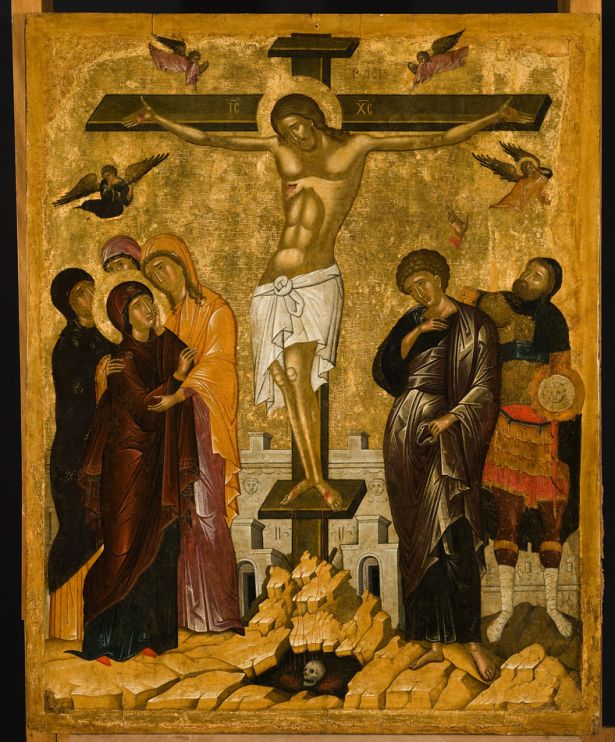
Across the cold chains of the centuries, I feel the warmth of Thy breath, I feel Thy blood pulsing in my veins. Part of time has already gone, but now Thou art the present. I stand by Thy Cross; I was the cause of it. I cast myself down in the dust before it. Here is the triumph of love, the victory of salvation. Here the centuries themselves cannot remain silent, singing Thy praises: Alleluia!
Ikos 11
Blessed are they that will share in the King’s Banquet: but already on earth Thou givest me a foretaste of this blessedness. How many times with Thine own hand hast Thou held out to me Thy Body and Thy Blood, and I, though a miserable sinner, have received this Mystery, and have tasted Thy love, so ineffable, so heavenly.
Glory to Thee for the unquenchable fire of Thy Grace Glory to Thee, building Thy Church, a haven of peace in a tortured world Glory to Thee for the life-giving water of Baptism in which we find new birth Glory to Thee, restoring to the penitent purity white as the lily Glory to Thee for the cup of salvation and the bread of eternal joy Glory to Thee for exalting us to the highest heaven Glory to Thee, O God, from age to age
Kontakion 12
How often have I seen the reflection of Thy glory in the faces of the dead. How resplendent they were, with beauty and heavenly joy. How ethereal, how translucent their faces. How triumphant over suffering and death, their felicity and peace. Even in the silence they were calling upon Thee. In the hour of my death, enlighten my soul, too, that it may cry out to Thee: Alleluia!
Ikos 12
What sort of praise can I give Thee? I have never heard the song of the Cherubim, a joy reserved for the spirits above. But I know the praises that nature sings to Thee. In winter, I have beheld how silently in the moonlight the whole earth offers Thee prayer, clad in its white mantle of snow, sparkling like diamonds. I have seen how the rising sun rejoices in Thee, how the song of the birds is a chorus of praise to Thee. I have heard the mysterious mutterings of the forests about Thee, and the winds singing Thy praise as they stir the waters. I have understood how the choirs of stars proclaim Thy glory as they move forever in the depths of infinite space. What is my poor worship! All nature obeys Thee, I do not. Yet while I live, I see Thy love, I long to thank Thee, and call upon Thy name.
Glory to Thee, giving us light Glory to Thee, loving us with love so deep, divine and infinite Glory to Thee, blessing us with light, and with the host of angels and saints Glory to Thee, Father all-holy, promising us a share in Thy Kingdom
Glory to Thee, Redeemer Son, who hast shown us the path to salvation! Glory to Thee, Holy Spirit, life-giving Sun of the world to come Glory to Thee for all things, Holy and most merciful Trinity Glory to Thee, O God, from age to age
Kontakion 13
Life-giving and merciful Trinity, receive my thanksgiving for all Thy goodness. Make us worthy of Thy blessings, so that, when we have brought to fruit the talents Thou hast entrusted to us, we may enter into the joy of our Lord, forever exulting in the shout of victory: Alleluia!
(repeat Kontakion 13 and Alleluia three times)
Ikos 1
I was born a weak, defenseless child, but Thine angel spread his wings over my cradle to defend me. From birth until now Thy love has illumined my path, and has wondrously guided me towards the light of eternity; from birth until now the generous gifts of Thy providence have been marvelously showered upon me. I give Thee thanks, with all who have come to know Thee, who call upon Thy name.
Glory to Thee for calling me into being Glory to Thee, showing me the beauty of the universe Glory to Thee, spreading out before me heaven and earth Like the pages in a book of eternal wisdom Glory to Thee for Thine eternity in this fleeting world Glory to Thee for Thy mercies, seen and unseen Glory to Thee through every sigh of my sorrow Glory to Thee for every step of my life’s journey For every moment of glory Glory to Thee, O God, from age to age
Kontakion 1
Everlasting King, Thy will for our salvation is full of power. Thy right arm controls the whole course of human life. We give Thee thanks for all Thy mercies, seen and unseen. For eternal life, for the heavenly Joys of the Kingdom which is to be. Grant mercy to us who sing Thy praise, both now and in the time to come. Glory to Thee, O God, from age to age.










 ORTHODOX CHRISTIAN FAITH AND LIFE