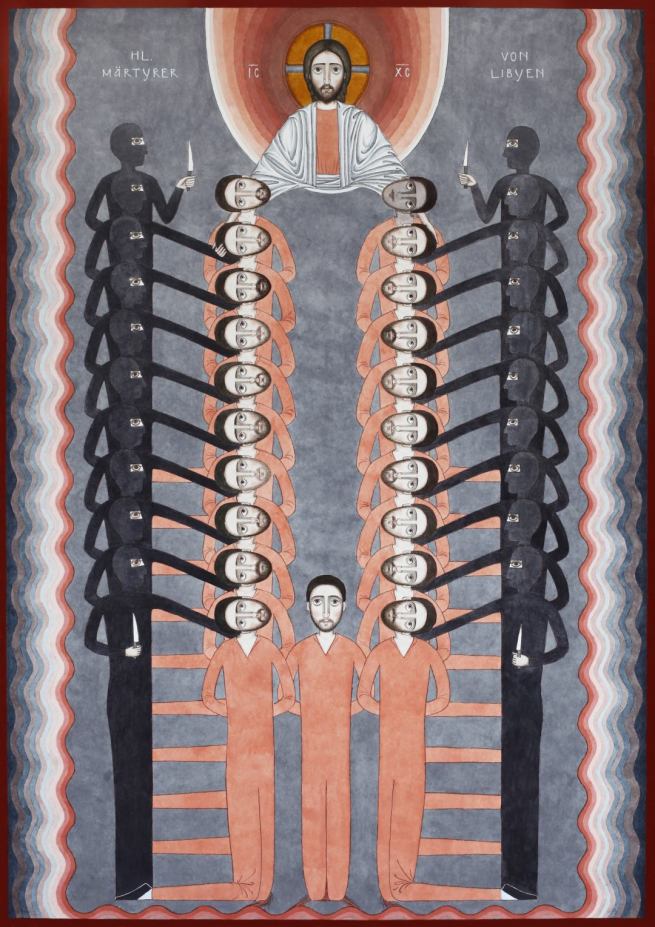
Nikola Saric’s ‘Windows’

21 martyrs

Holy Martyrs of Libya (21 christians killed by IS terrorists)

*

saric3

Behold the man! The vision and the glory of God.
(Adam from the cycle “Testimonies”, detail)

*

christ

“I am the Alpha and the Omega, the First and the Last, the Beginning and the End.”
Revelation 22:13

*
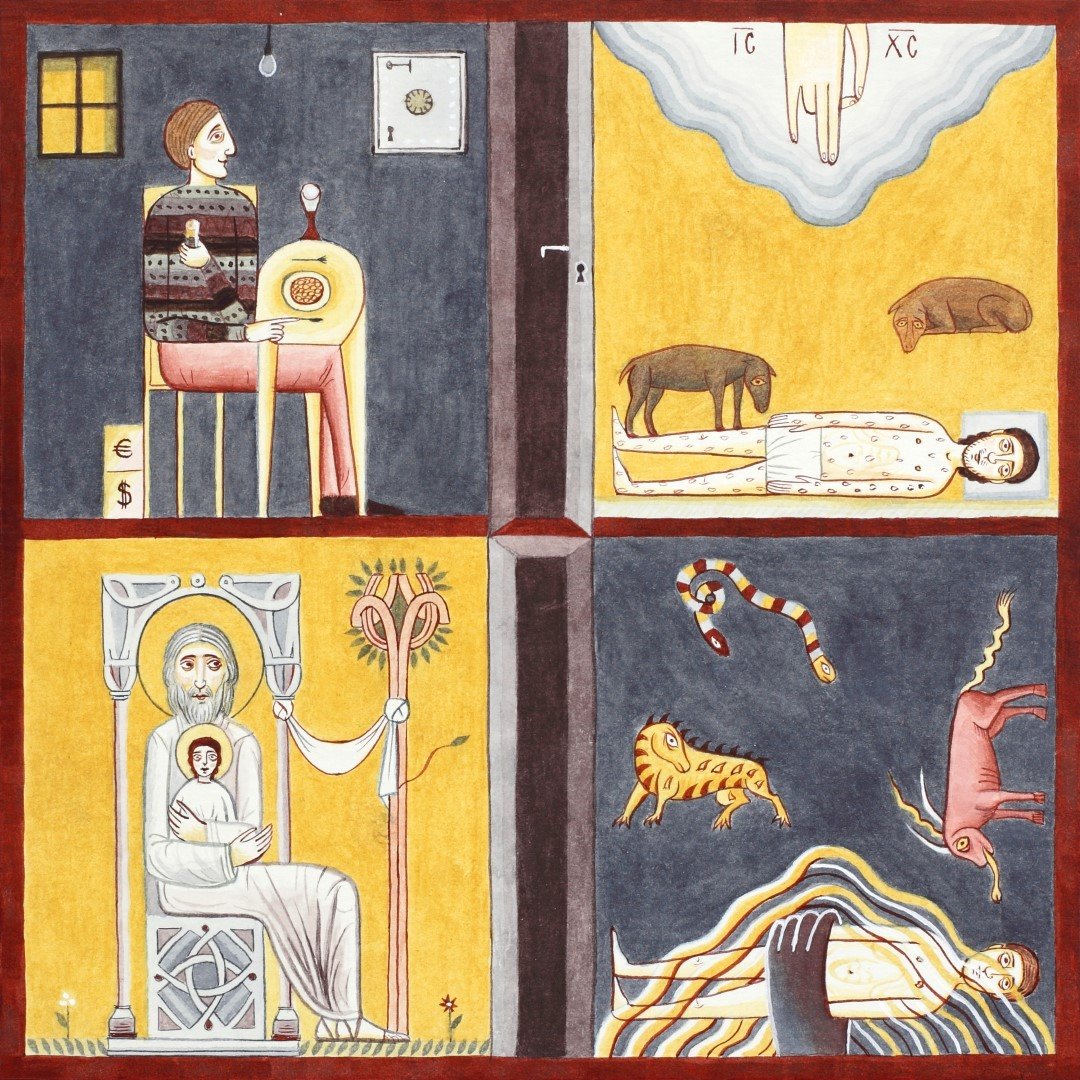
saric5

Parable of the Rich Man and Lazarus (Lk 16:19-31), from the cycle “Earthly stories with a heavenly meaning: Parables of Christ”, 2014

*
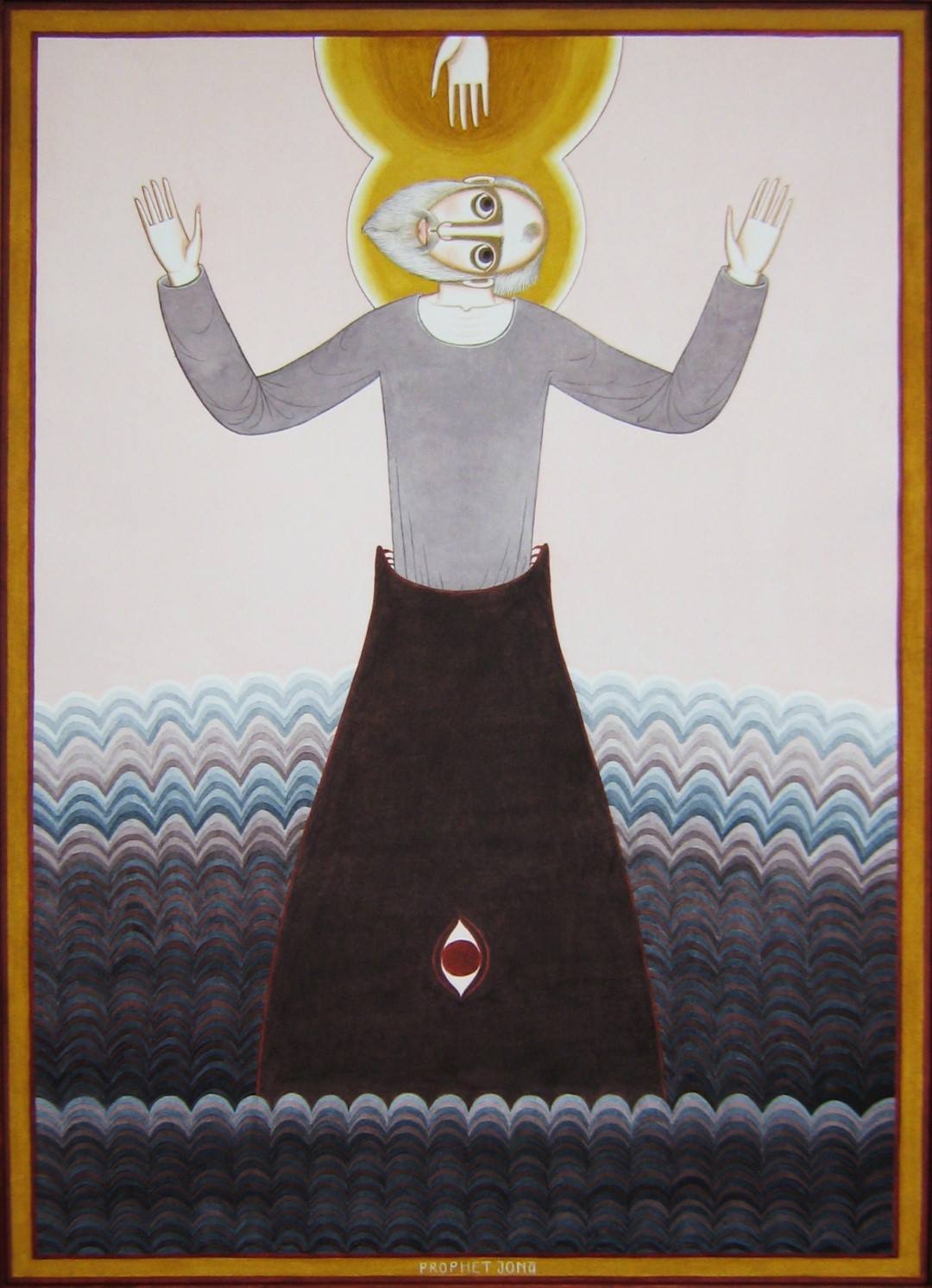
Jonah

“A wicked and adulterous generation asks for a sign! But none will be given it except the sign of the prophet Jonah. For as Jonah was three days and three nights in the belly of a huge fish, so the Son of Man will be three days and three nights in the heart of the earth. (Mt 12:39-40)”

*

myrrh

Jn 12:1-11; Lk 7:36-50

*

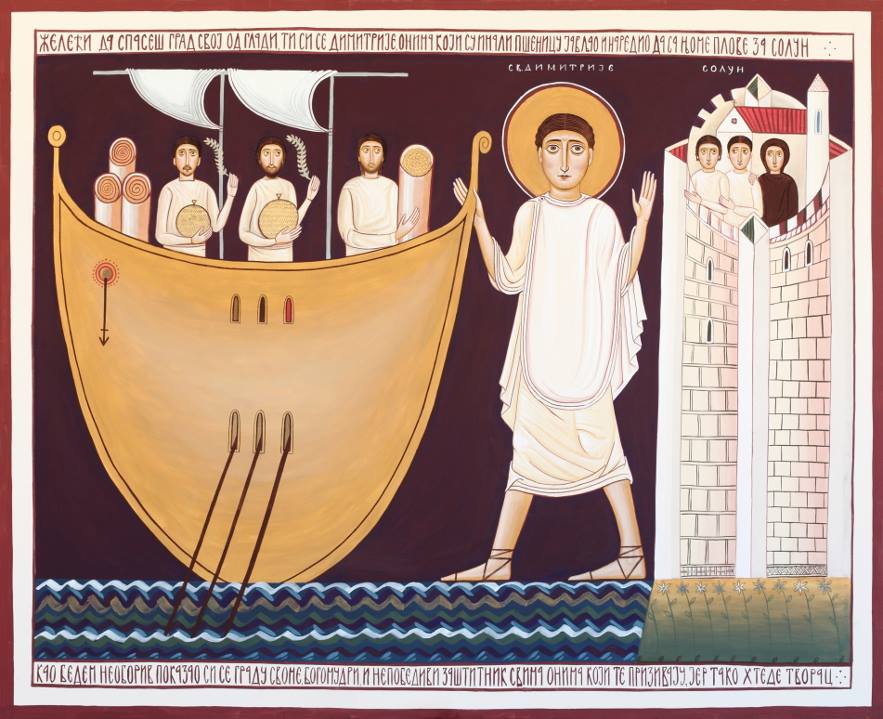
St Demetrios

Akathist to St. Démétrios de Thessalonique, Kontakion10 / Oikos 10

*

saric10

Akathist to St. Démétrios de Thessalonique– Kontakion 6/ Ikos 6, Nikola Saric, 130×160 cm, acrylic on canvas, 2009

*
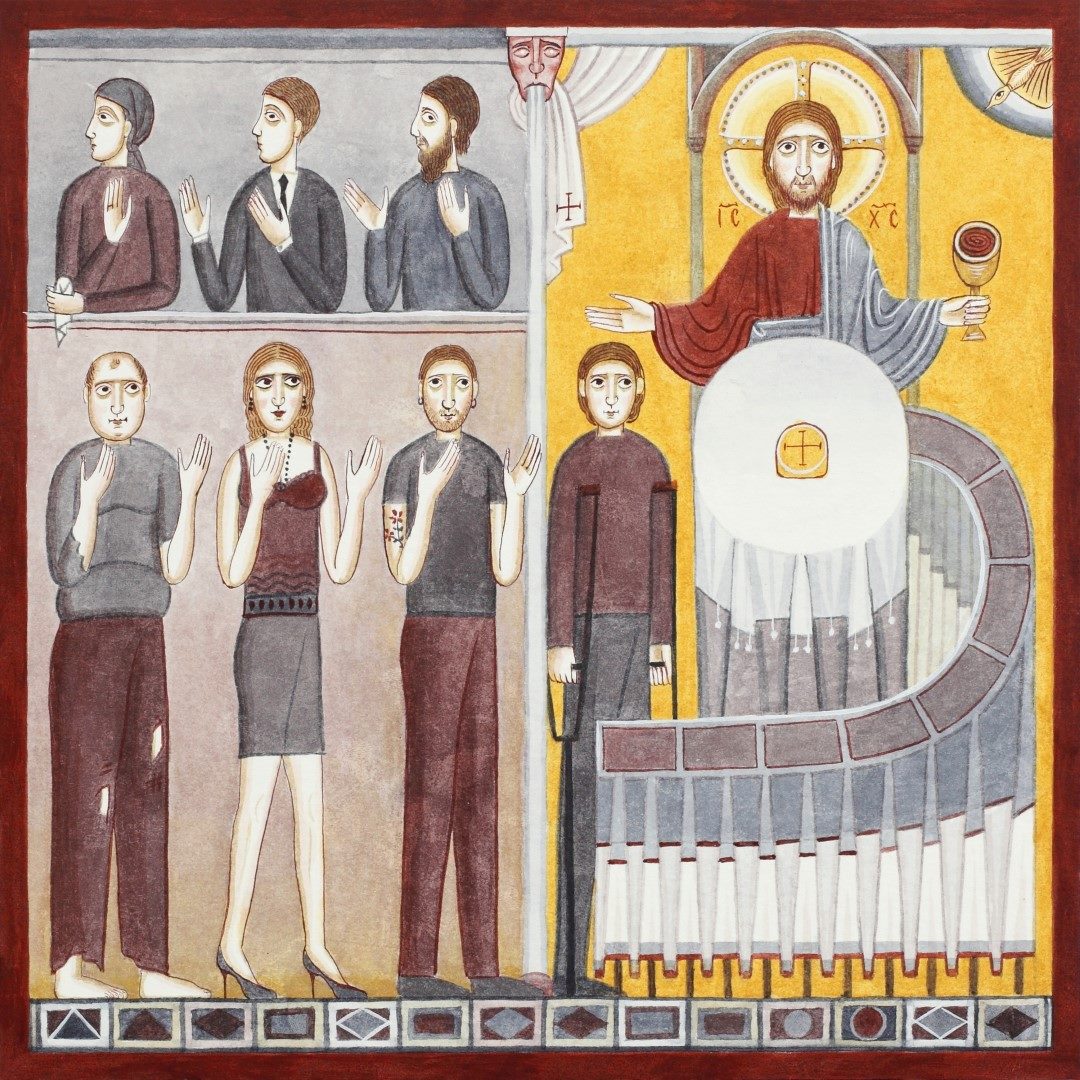
banquet

The Parable of the Great Banquet (Lk 14:15-24), from the cycle “Earthly stories with a heavenly meaning: Parables of Christ”, 2014

*

lost sheep

Parable of the Lost Sheep (Lk 15:3-7), from the cycle “Earthly stories with a heavenly meaning: Parables of Christ”, 2014

*

 saric2

Joy and happiness arose in the house of Jacob. Joseph is alive!

[Nikola Saric’s Paintings and own Captions]

*
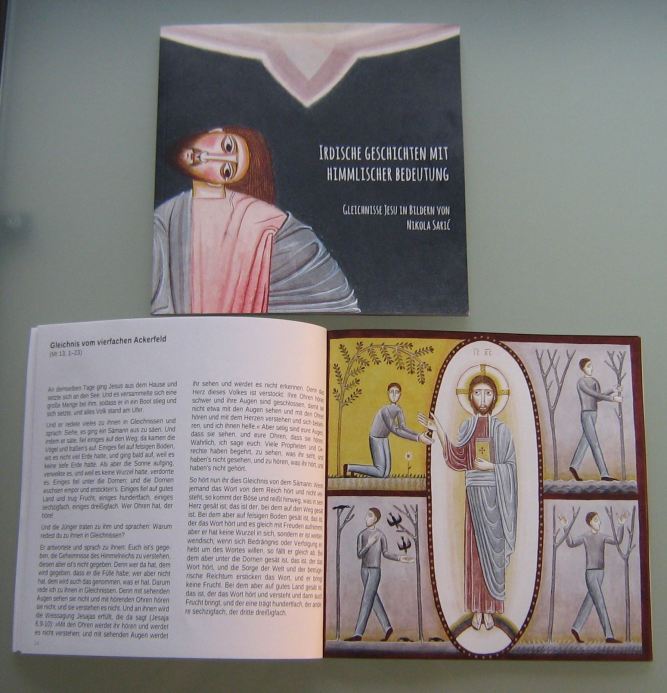
 saric1
  • Saric’s recent publication “Earthy stories with a heavenly meaning: Parables of Christ”

Windows Into Heaven

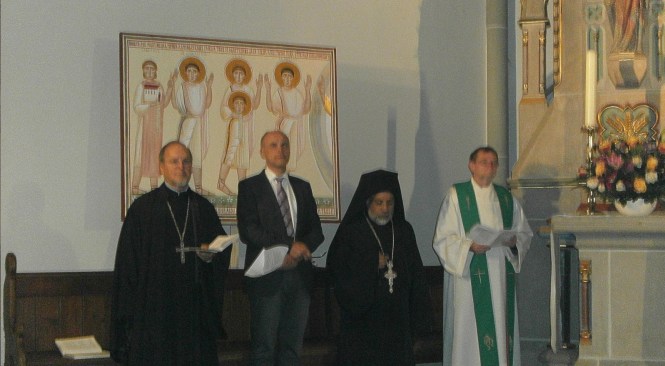
Nikola Sarić (born 1985) studied at the TehnoArt School, the Faculty of Applied Arts (art restoration and conservation) and the Academy of Serbian Orthodox Church (fresco painting), all in Belgrade. He focuses on painting, bespoke wall design projects and producing a range of hand-made products under the label Wallsuit.

Saric, a versatile and prolific artist, specialises in sculpting, mosaic, painting, design and calligraphy. Beside working as an independent artist, he holds mosaic courses in Hannover.

Nikola_Sarić,_Installation_GAZELLE,_art-f-air_2012_in_der_Kulturetage_im_SofaLoft,_Jordanstraße_26,_30167_Hannover

Nurtured in the practice of church art, his artistic expression is deriving from sacred Greco-Roman and oriental art. In his works, through the immediacy and simplicity of visual elements, he is trying to convey the intuition of a “transfigured world” and its everlasting glow, harmony and beauty. His interpretations reflect the personal spiritual experience as well as the tradition that breathes and evolves within the concepts of contemporaries. 

For his decorative arts projects and bespoke wall design projects, go to http://www.wallsuit.de

To watch Saric at work, ‘suiting a wall’, go to https://www.youtube.com/watch?v=6FvzZBmF5nQ&feature=youtu.be

Photos from a recent church exhibition:
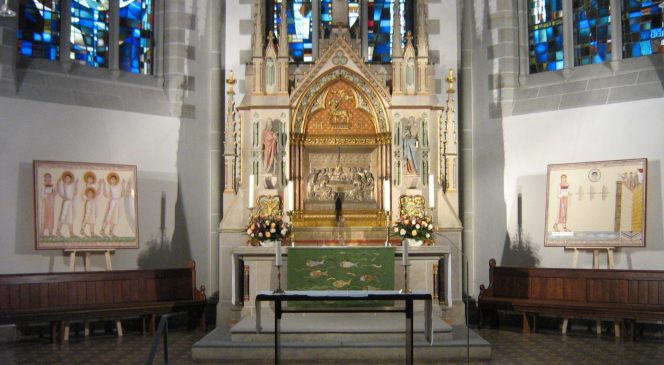
saric7 saric8

saric9

For more information please visit his website nikolasaric.de

That Sleep of Death

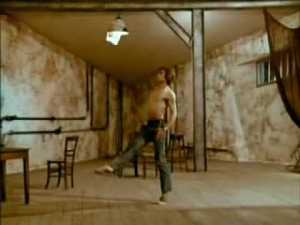
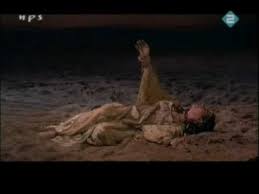
Death scenes from Le Jeune Homme et la Mort ballet & Henry Purcell’s opera, Dido and Aeneas

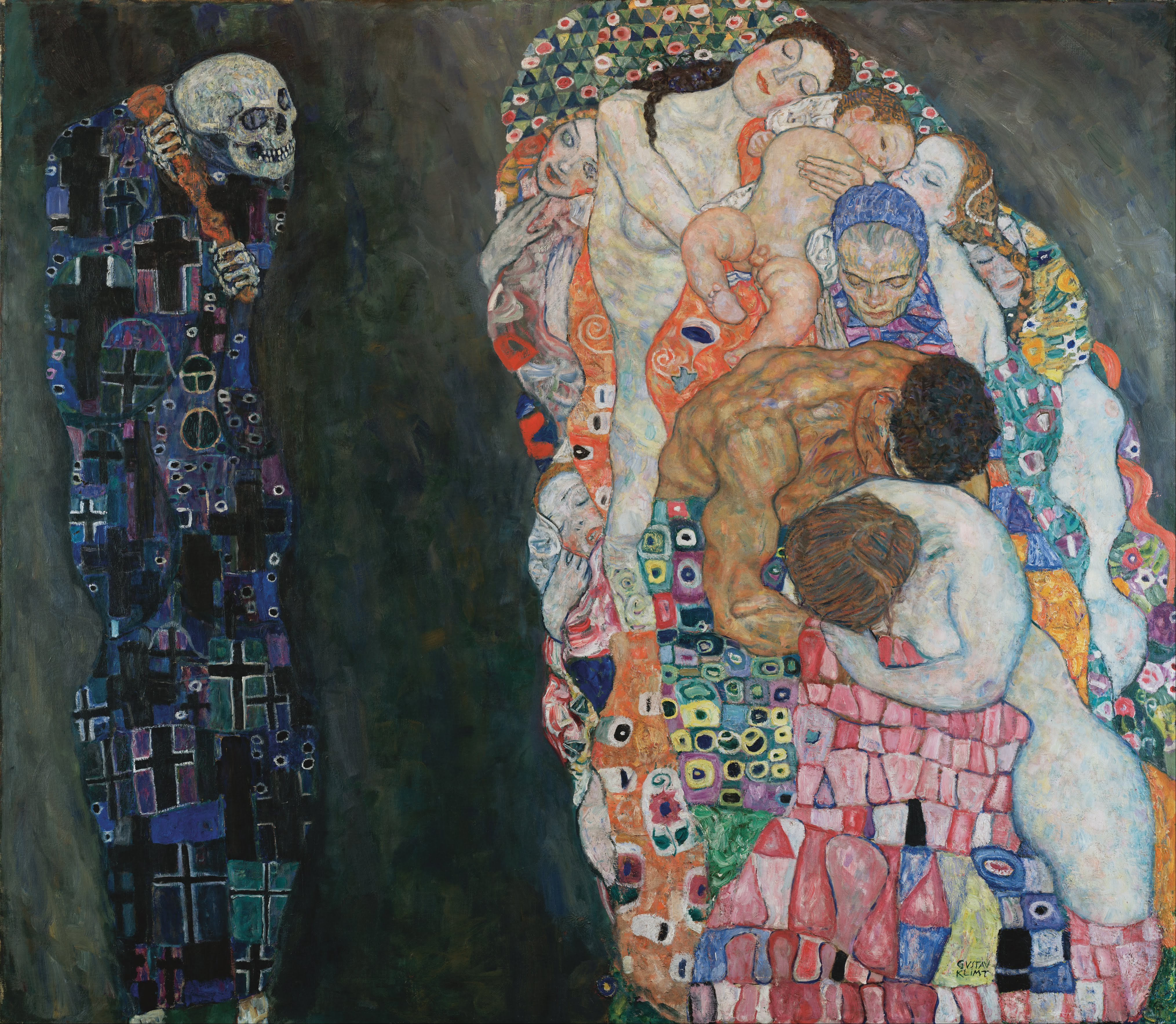
death10

Both the anonymous young man and Dido, Queen of Carthage, are heartbroken and about to kill themselves. Yet how “ugly” and merciless and “cold” (very Cocteau-esque) is Le Jeune Homme et la Mort for all the exquisite beauty of J.S. Bach’s Passacaglia and Fugue in C Minor and Baryshnikov’s and Noureyev’s mesmerising performances.

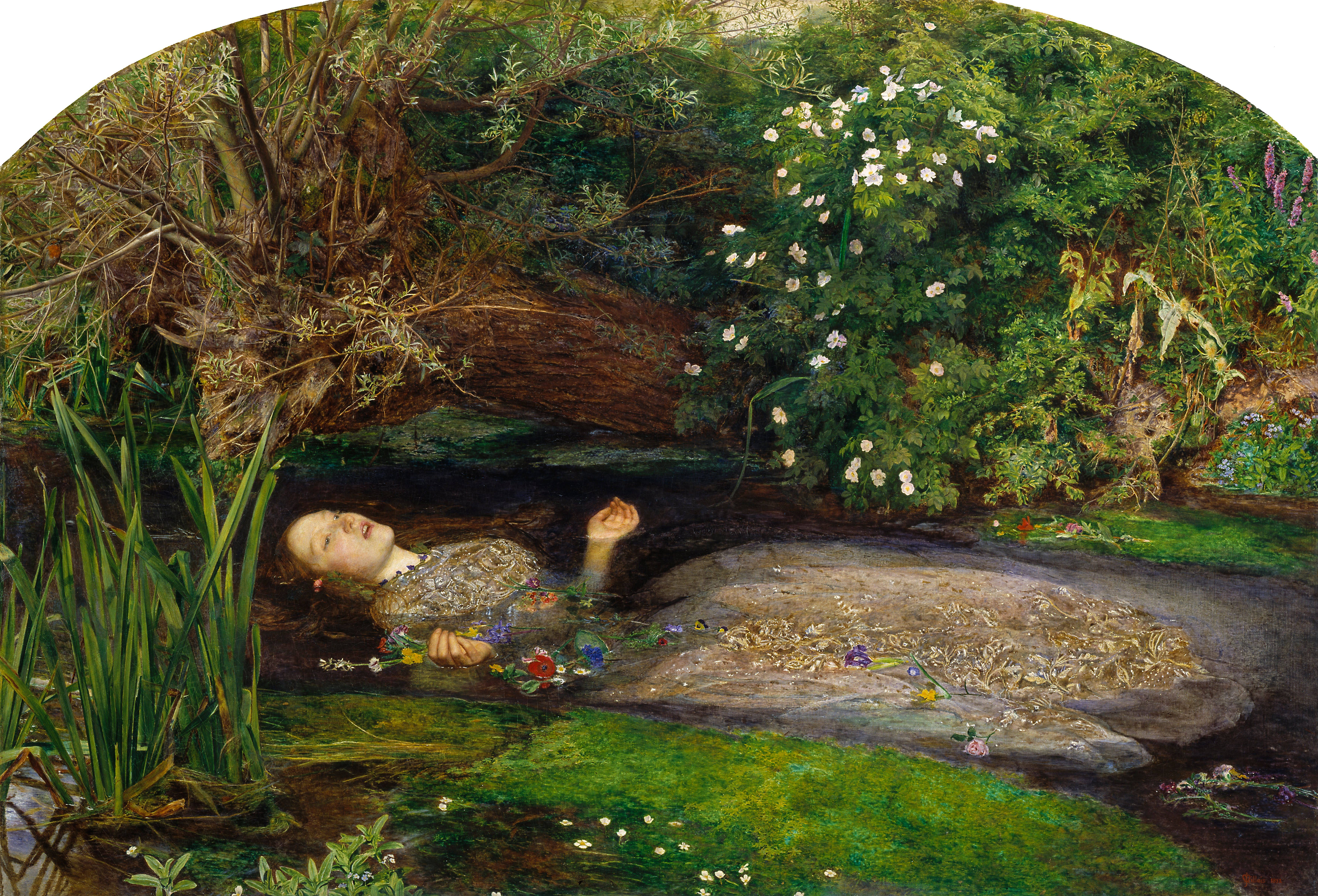
ophelia

https://www.youtube.com/watch?v=6ptNz8rBk7Y (Noureyev)

https://www.youtube.com/watch?v=Er0-aAdC2n4 (Baryshnikov)

* That must have been incredibly hard for Baryshnikov to do – his mother hung herself when he was a small child, and he discovered her hanging from the rafters in their home.

ballet4

Compared to the supremely forgiving and uplifting Dido’s Lament, sung with pure clarity‪ and charity, at Henry Purcell’s opera – Dido and Aeneas:

dido1

“When I am laid, am laid in earth,

May my wrongs create No trouble,

No trouble in thy breast”

* quietly sobs *
Hauntingly Beautiful! True heart breaker! A most precious friend of mine asked me once to forgive him in the exact words of Dido, although there was nothing to forgive, and I promised him to play this song on his funeral, for all the world to know what a most gentle, kind, noble and selfless love he had for everyone. Ever since I cannot listen to this without remembering him and welling up ..

Is it possible to hear this masterpiece by without sobbing? I think emphatically not. Dido’s Lament from Purcell‘s opera Dido and Aeneas is arguably the saddest piece of music ever written. But how exactly does Purcell manipulate our emotions to make sure we well up each and every time we hear it?

Legendary harpsichordist and conductor Trevor Pinnock, explains why  it breaks our heart every single time and exactly how Purcell reduces us to tears every time.

http://www.classicfm.com/composers/purcell/guides/trevor-pinnock-didos-lament/#iKWe3zIsJVq33irX.97

For opera connoisseurs, the great Jessye Norman’s rendition is in my opinion classic for its great depth and superb diction, https://www.youtube.com/watch?v=_R7BYSgz8xY

Elin Manahan Thomas‘ is more ethereal and crystalline

https://www.youtube.com/watch?v=uGQq3HcOB0Y

and Xenia Meijer‘s quite beautiful and moving

https://www.youtube.com/watch?v=ivlUMWUJ-1w (Opera)

death30

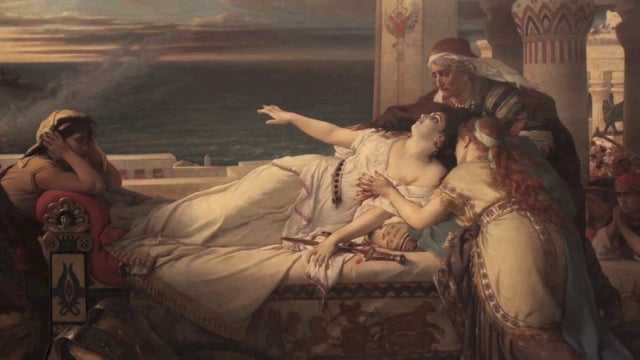
For more classic paintings on the theme of Love and Death, go to https://vimeo.com/89692541, which features a recording of the famous Aria, arranged for classical guitar and illustrated by several paintings of Heinrich Füger, Nathaniel Dance-Holland and Joseph Turner.

  • That Sleep of Death

Aye, there’s the rub,
For in that sleep of death, what dreams may come,
When we have shuffled off this mortal coil,
Must give us pause.

From Shakespeare, Hamlet: Act 3, Scene 1, Hamlet’s Famous Soliloquy: “To Be or Nor to Be”

Jaws of Eternity

pitesti8

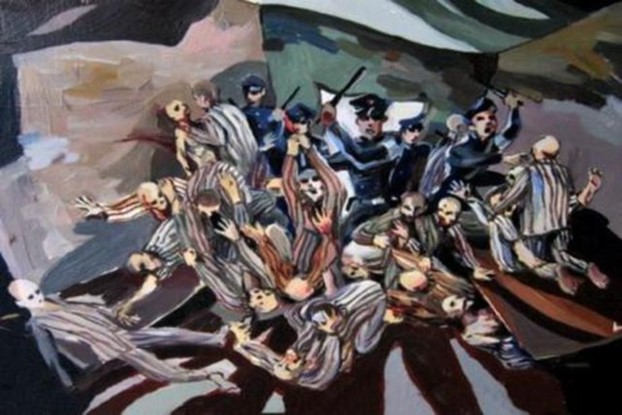
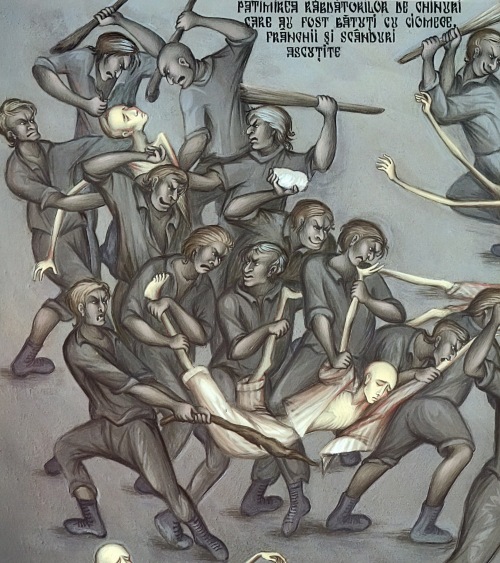
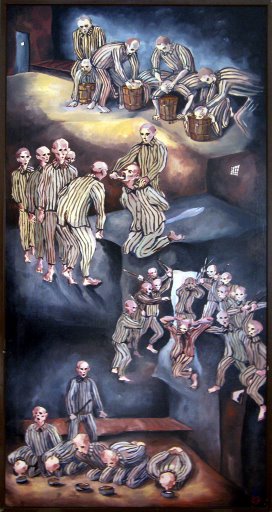
Heartbreaking Paintings and Poems from Communist Prisons in Romania — II

DAYS

by

Radu Gyr

Tuesday, Wednesday, Saturday, Monday

Neutral days without form,

Like a great fog

Over the landscape

Good morning, prison cell!

Good night, prison bars!

I’d smash you as a mastiff in his fangs

I’d rend you with my teeth, O Cell!

I stand in Time terribly naked

With my soul planted in liquid eternity,

Like an atoll in an ocean

Beaten by torrid winds…

Dungeon, dungeon, mad fortress,

How my hate would set fire to you!

Life, life outside,

How dare you dance in my dreams like a puppet!

Tuesday,Wednesday,Friday – what day is it?

the week is a dead amassment;

My months pass through no calendar,

My island is on no map.

Monday, Wednesday, Thursday – The devil take you!

Stinking days – Stagnant days,

Here in the jaws of eternity

Who shall count your dark hundreds?

pitesti9

HUNGRY

by

Nichifor Crainic


If ever I was a cluster of grapes,

today I am residue left by the press.

Into the fathomless hunger in me

pour some drop of juice.

I feel how my body is melting away,

a soup of amaranth would warm it.

If touched by a blade of grass

in a flash I’d be green.

At least let my phantom arm

pick an apple from a tree.

It will fill my mouth with aroma

and I would truly live.

In the country of sheep folds and bread

I dream of mushroom soup.

Let me shelter with the dogs

near the heaven of a bowl of terci.*

On the depth of my hunger

blind deserts open up.

When the last spoonful is eaten

I drop over my bowl and spoon.

O God, You Who

out of two fishes and five loaves

made mountains of food

and satisfied thousands of poor

Repeat the miracle, O Good One,

and satisfy thousands of mouths.

Listen also to my prayer,

Give me the basket of crumbs.

* terci – a thin gruel often given to dogs


pitesti prison 1

JESUS IN THE NIGHT

by

Radu Gyr

This night Jesus entered my cell.

O how sad, how tall was Christ!

The moon followed Him into my cell

And made Him taller, sadder still.

He sat by me upon my mat;

“Put your hand upon my wounds.”

On His ankle there were scars from sores and rust

As if He too had worn chains once…

His hands were like lilies upon a grave,

His eyes as deep as forests;

His garments whitened by the moon,

Silvering in His hands old wounds.

Sighing, He stretched His weary bones

Upon my lousy mat;

In His sleep He shone forth, but the heavy bars

Lengthened upon Him like rods.

I rose from beneath my gray blanket.

“Lord, from whence come you? Out of which eternity?”

Jesus put His finger to His lips

And signed me to be still.

My cell seemed like a mountain peak;

Rats and roaches swarmed around;

I felt my head fall heavy upon my hand

And I slept, a thousand years…

When I awoke from my heavy trance

The straw smelled of roses;

I was in my cell and there was moonlight

But Jesus was nowhere.

“Where are you, Lord?” I cried between the bars.

Across the moon came drifts of mist…

I touched myself, and found upon my palms

The sign of His nails.


pitesti_prison 2

VISIT 

by

Radu Gyr

The exhausted wind froze

like a bow on a cracked violin.

Last night an angel knocked in my door,

his voice weak, his tread tired.

I don’t know if he came from heaven

or some earthly cross

but he looked at me with wounded eyes,

trembling with cold when I welcomed him.

In his eyes of strange god

it was as if some grave illness battled

and he gazed at me with blood-filled eyes

and all that night he wept upon my breast.

In the morning I found him no more.

vestiges of red footprints faded from my door.

Far away in the sky on a cracked violin

the wind fell like a broken bow.

*

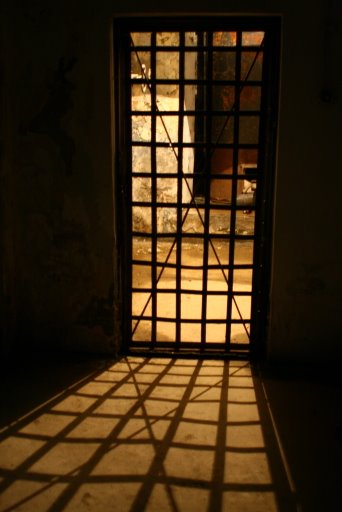
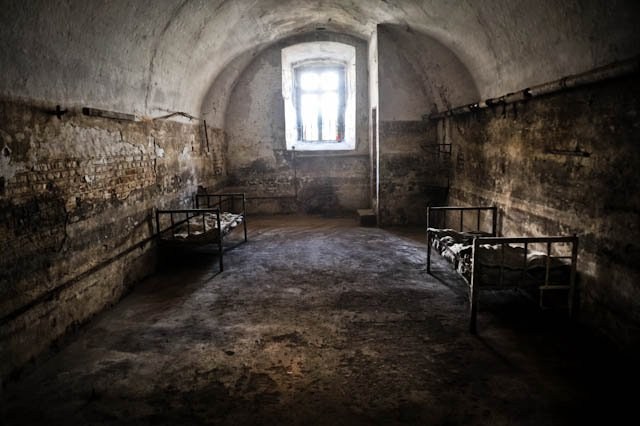
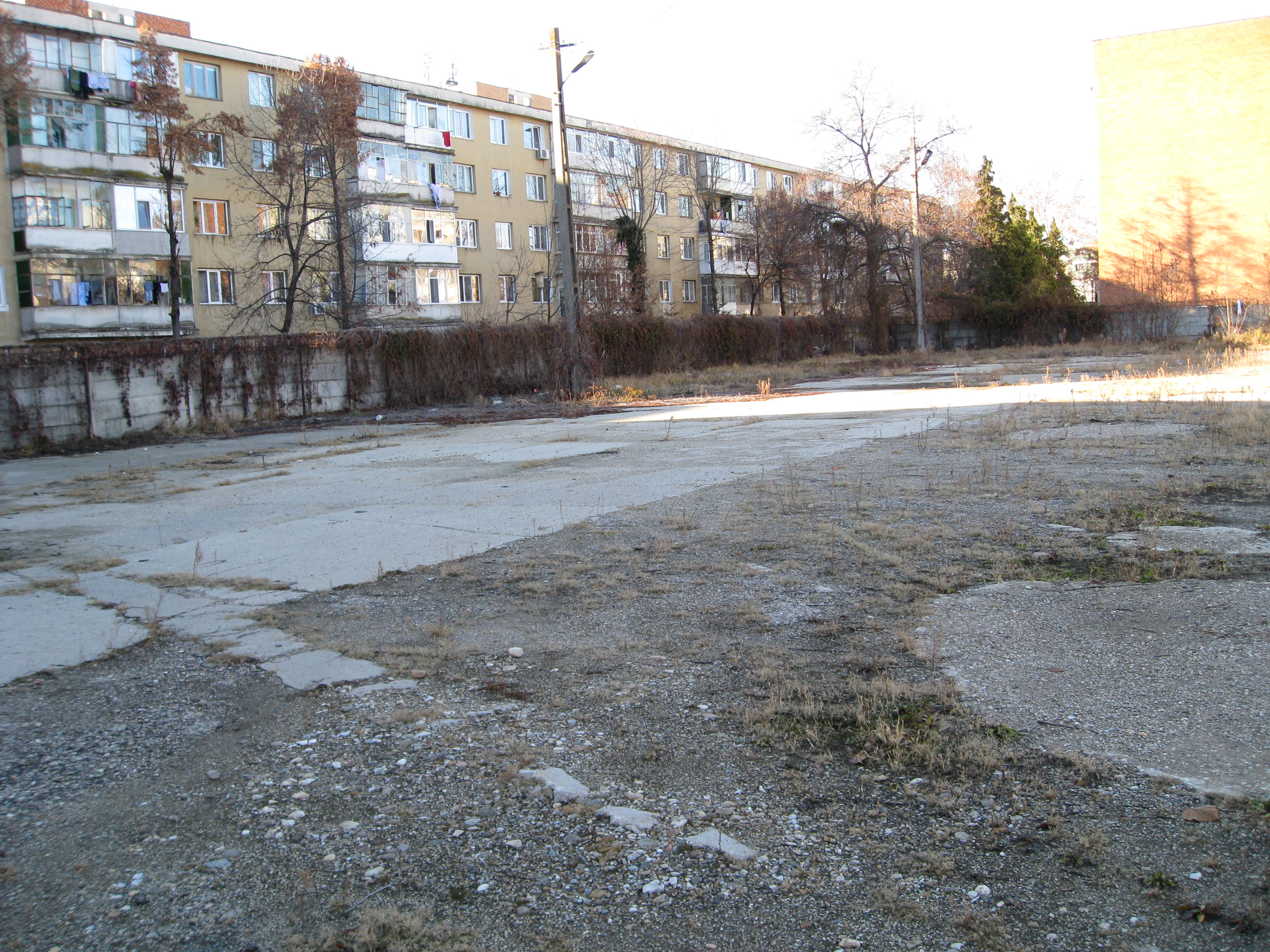
Pitesti Prison — Gulag

Pitesti_prison_yard

Pitesti_prison_plaque

Poems from Communist Prisons by Mother Alexandra

Foreword

Within this booklet are a few poems originally written in Romanian, chosen from a large collection, POEZII DIN INCHISORI, edited by Zahu Pana, published by CUVANTUL ROMANESC, 1982

They were written or rather composed by political prisoners who had no paper on which to write. They were memorized by those who survived, and finally spirited out to the free West. Remarkable in that they are true poetry of the soul, they express various emotions of those unjustly imprisoned by the Communist Party, for the crime of independent thought. None of these poets were criminals. They were philosophers, theologians (lay or clergy), generals, intellectuals of all sorts, factory workmen and tillers of the soil. Women and even children shared the same fate.

Source: https://orthodoxyinottawa.wordpress.com/poems-from-communist-prisons/

And http://www.romanianstudies.org/content/2012/11/poetry-in-translation-cxlvi-sergiu-mandinescu-1926-1964-romania-prison-warder-suflet-de-calau

Traced Through Mud

pitesti6

Heartbreaking Paintings and Poems from Communist Prisons in Romania — I

*

Prison Warder

by

Sergiu MANDINESCU

A muffled night

a bottomless abyss

a peacock’s cry

that never goes amiss.

Great panthers watching in the night

and tigers ready for the pounce,

the pythons flawlessly advance

a path so trite.

The shadow’s silence so profound

fills to the brim the darkest mind –

a jungle full of beasts of any kind,

but human soul is nowhere to be found!

pitesti5

Glory

by

Radu Budisteanu

Blessed be suffering

which brings man out of a flat groove –

swift sling hurled at a Goliath,

tree in which knowledge is born.

Blessed be suffering.

Without it, good earth would be clay,

the heart would not catch the murmur of a tear

and sin would not know what contrition is.

Blessed be suffering.

If there were not death, would there be love?

Value is given to all by separation,

fruit in the hidden furrow of the passing rays.

Blessed be suffering,

its breast a resting place, a caress upon the brow,

the strong altar screen of the sense let it be,

archway through which alone desire passes.

Blessed be suffering

fruit of the hidden furrow of a passing ray

soul with large embracing arms

like an all enveloping mantle.


pitesti4

Unwritten Letters

by

Radu Gyr

Our life often lies hidden

in a humble corner of paradise,

in letters which were never sent us

by a hand that never wrote them.

We know not what we’d have the pages say,

what unwritten love song

but the hand which does not write us,

at all times we hold in a dream.

And the phrases that do not come,

in memory’s eye become ever dearer

and that hand which gave me light

as blossom upon my heart I hold.

And thus through the door crack,

we watch with unquenchable longing

for letters that were never sent

by a hand that did not write them.


pitesti3

Birthday wishes

by

Radu Gyr

For your birthday

I don’t know what

To bring you as a gift.

Bruised upon my bones

My skin only do I have.

Since I have pulled in harness,

Since I have sighed in yoke,

All that was plenteous

Has melted away as snow.

The owls hoot,

the darkness deepens;

The nails on my hands

Grow long for retribution…

grow you,too,

My timid voice,

Grow as a djinn,

Grow as a great bird;

Gather in your flight

And bring to the assailant

The crying of orphans,

The suffocating voice of mothers

Drowned in tears, the mourning of the homeless.

Hate of the whole country

Rise up, now!

Master your curses,

Doom this day!

Curse it with fire and brimstone

For the savage beast

That is bore,

Over the horizon to rise

And with his horns

The world to overthrow.

O my mild voice,

Grow strong, little by little,

As a spring grows

In volume, increasing,

As down the mountains it falls.

Become a sickle;upon his brown

Bludgeon the beast!

O my voice, grow! From the forest swell

Out of the felled woods,

Out of the deserted villages,

Out of the dried-up oil-wells,

Grow out of golden grain

That is taken over the foreign roads,

Grow out of the ruins,

Sound from the depths of prison dungeons,

There where rots in chains

All that stands firm in the land

And is about to die…

Out of gaunt and livid beings

Arise, open eagle’s wings;

Soar over the foe –

Dirty bloodsuckers!

Fly over frontiers

Which have not yet been stolen,

Pass cities and villages

Where in the dead of night

Whispered Christian prayers

Can still be heard

Cross as best you can

The endless steppes

And the sad waters;

Over forests and towns

Look for and follow paths

Traced through mud.

Go far!

Fly as the genii in the legends

Until you come to

Imperial courts

Without royal faces,

Barbaric monasteries

Without altars,

Without God.

Rise, O myvoice,

Lift yourself

Upon wings of fire

In heavenly heat,

And fall back as a tunderbolt!

Blast the citadel

of the beast’s den!

Seed of his seed destroy!

In the land and in eternity,

A word of execration

Let his name be!

Let perish in the mold

All which he stole!

His dust and ashes

Let the earth swallow!

May my unbounded hate

Burn up Satan,

Ana’s* brother!

Thunder blast him!

In scum putrify him!

O heaven,

On his birthday,

Satan’s birthday –

Ana’s* brother –

What offering have you

Sent him, John Doe?

*Ana – Ana Pauker , born in Romania, lived in Russia , an intimate friend of Stalin, an all-powerful one in Romania until the postumous fall of Stalin.


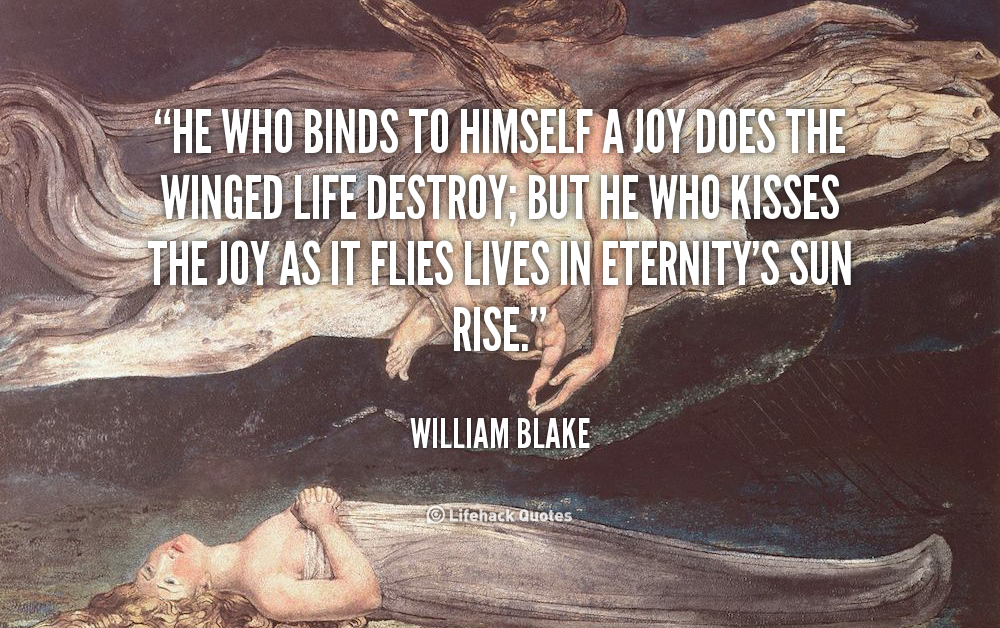
Winged Life

blake1

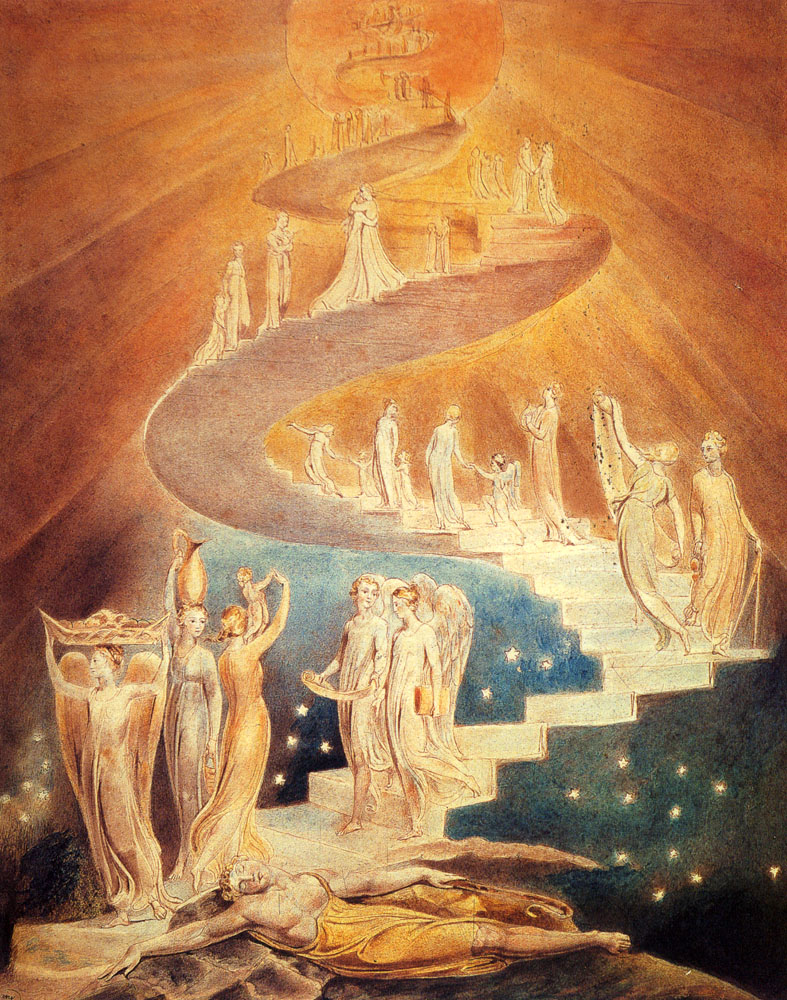
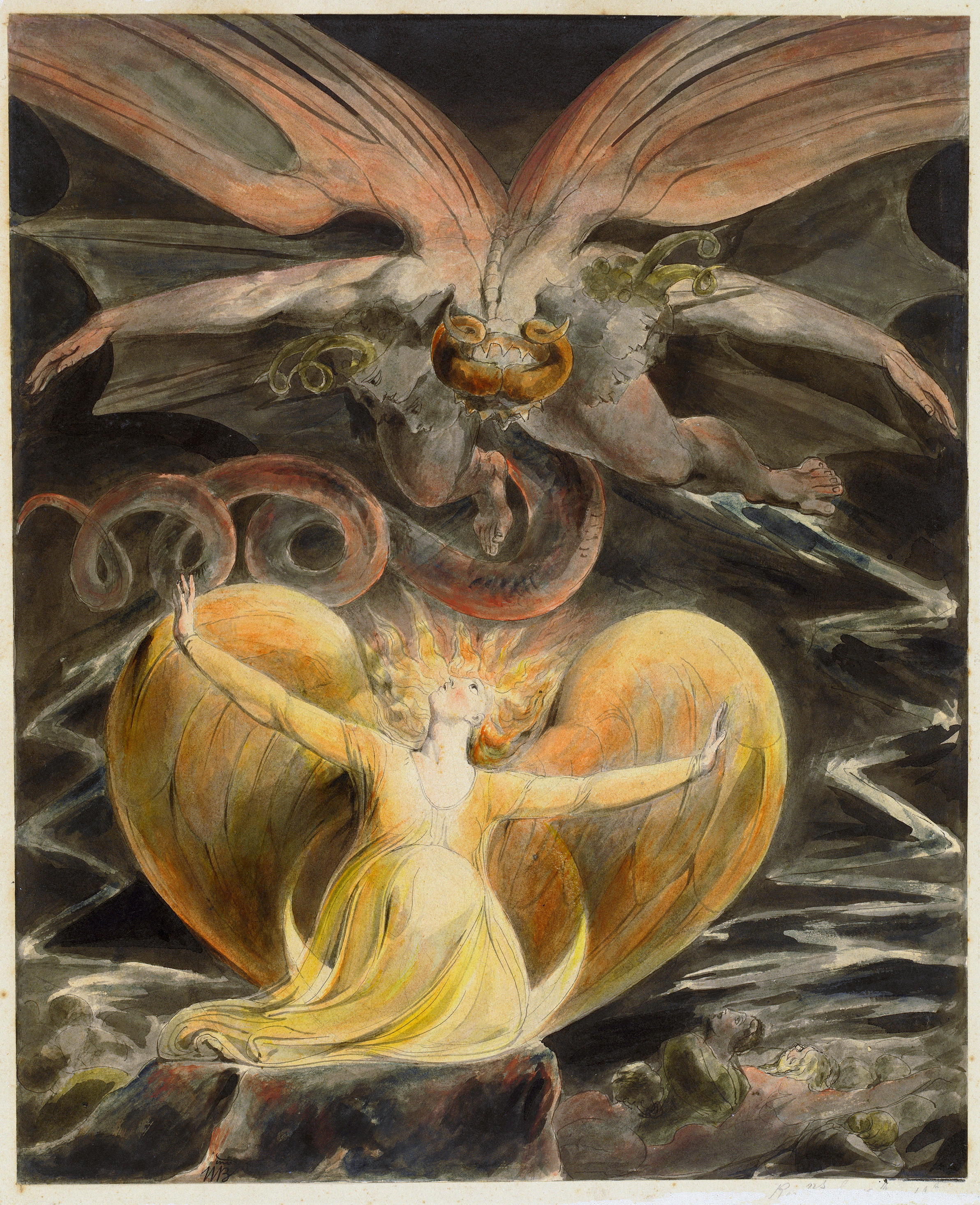
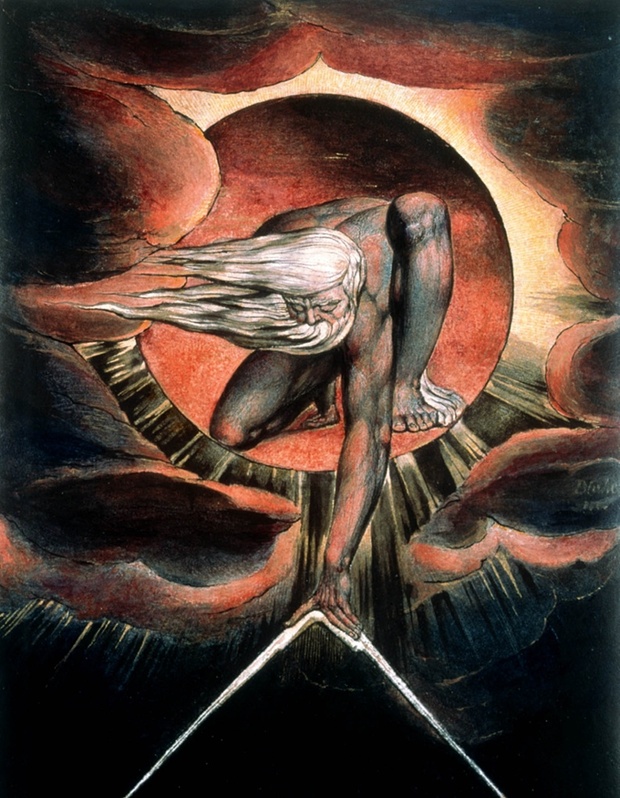
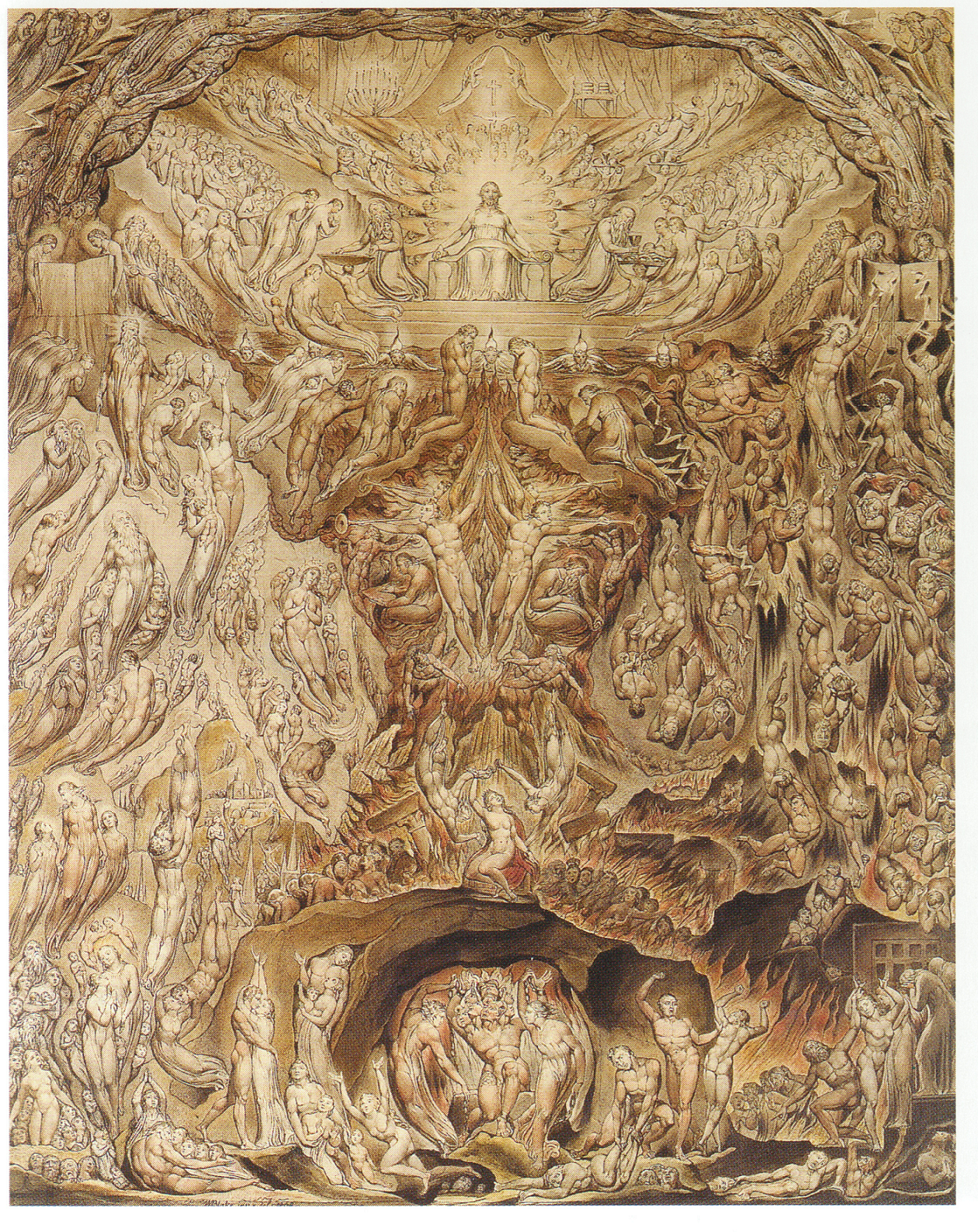
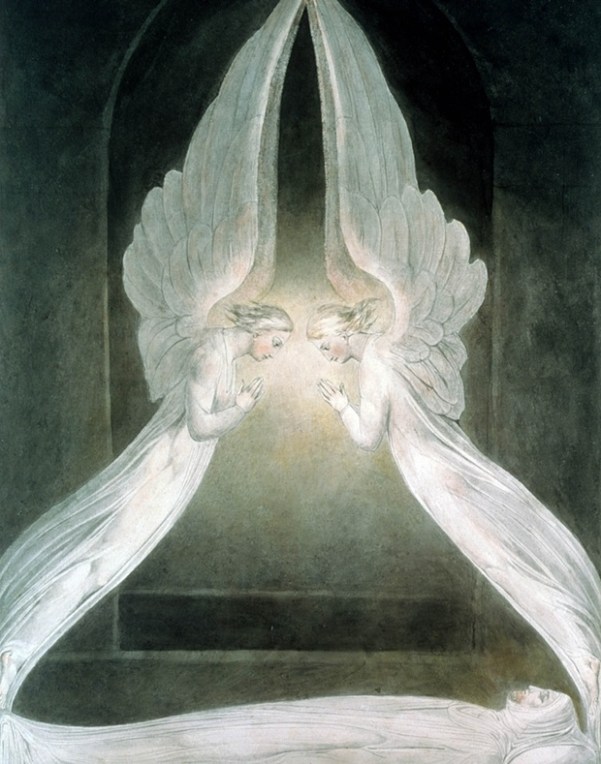
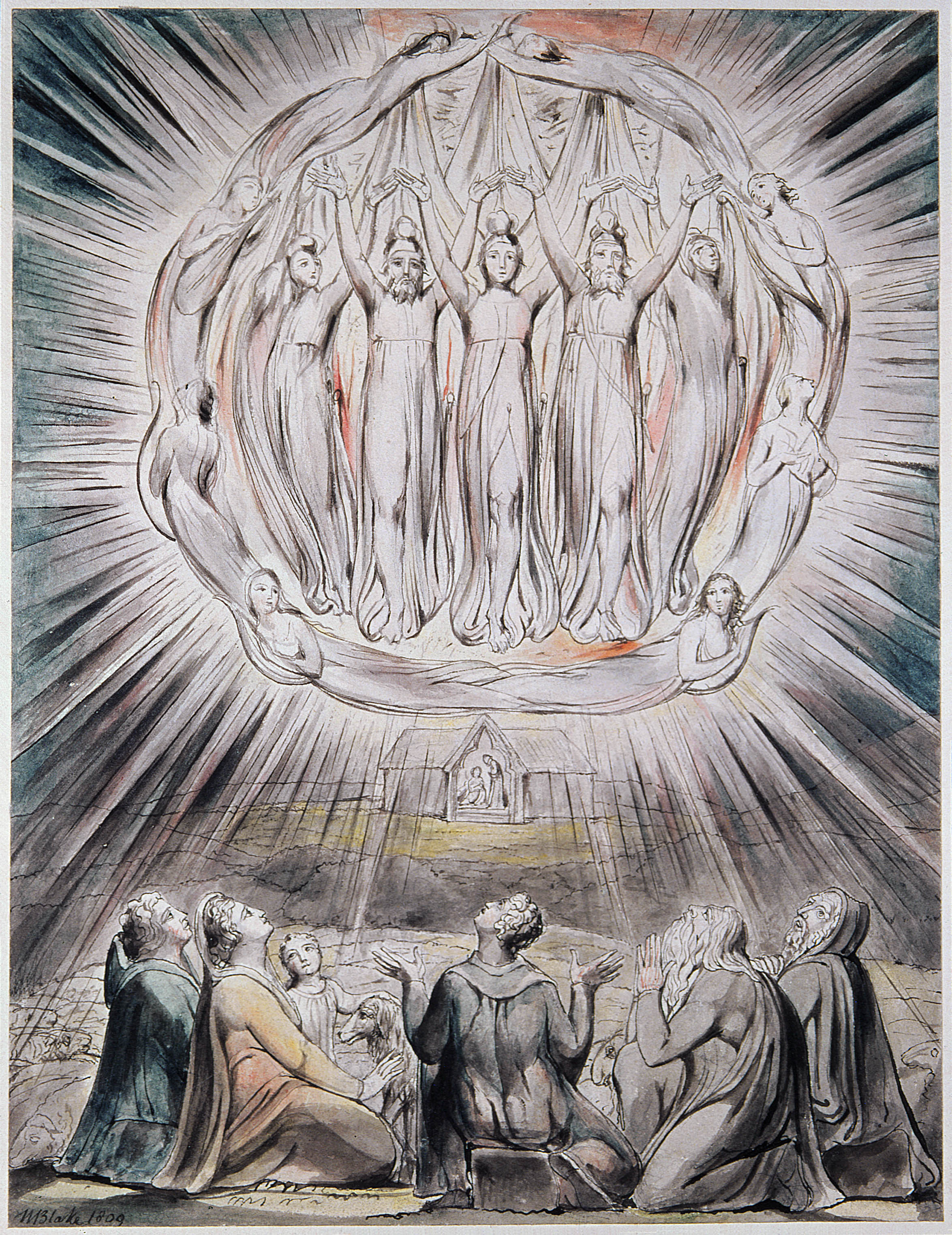
Winged Life: William Blake’s Mystic Visions & Stunning Paintings

William Blake’s paintings are especially stunning when you see them close up.

blake4

blake2

blake9

blake5

blake8

blake7

William Blake (1757–1827), one of the greatest poets in the English language, also ranks among the most original visual artists of the Romantic era. For Blake, the Bible was the greatest work of poetry ever written, and comprised the basis of true art.

For a slideshow of 47 paintings by William Blake, go to:

http://www.bbc.co.uk/arts/yourpaintings/artists/william-blake

For William Blake’s Complete Works, go to his archive at http://www.blakearchive.org/blake/indexworks.htm


William Blake’s Visions

From a young age, William Blake claimed to have seen visions. The first may have occurred as early as the age of four when, according to one anecdote, the young artist “saw God” when God “put his head to the window”. .. At the age of eight or ten in Peckham Rye, London, Blake claimed to have seen “a tree filled with angels, bright angelic wings bespangling every bough like stars.” On another occasion, Blake watched haymakers at work, and thought he saw angelic figures walking among them. As a young apprentice, he was sent to copy images from the Gothic churches in London. Blake experienced visions in the Westminster Abbey, he saw Christ and his Apostles and a great procession of monks and priests and heard their chant.

Blake claimed to experience visions throughout his life. They were often associated with beautiful religious themes and imagery, and may have inspired him further with spiritual works and pursuits. Certainly, religious concepts and imagery figure centrally in Blake’s works. God and Christianity constituted the intellectual centre of his writings, from which he drew inspiration. Blake believed he was personally instructed and encouraged by Archangels to create his artistic works, which he claimed were actively read and enjoyed by the same Archangels.

In a letter of condolence to William Hayley, dated 6 May 1800, four days after the death of Hayley’s son, Blake wrote:

I know that our deceased friends are more really with us than when they were apparent to our mortal part. Thirteen years ago I lost a brother, and with his spirit I converse daily and hourly in the spirit, and see him in my remembrance, in the region of my imagination. I hear his advice, and even now write from his dictate.

In a letter to John Flaxman, dated 21 September 1800, Blake wrote:

[The town of] Felpham is a sweet place for Study, because it is more spiritual than London. Heaven opens here on all sides her golden Gates; her windows are not obstructed by vapours; voices of Celestial inhabitants are more distinctly heard, & their forms more distinctly seen; & my Cottage is also a Shadow of their houses. My Wife & Sister are both well, courting Neptune for an embrace… I am more famed in Heaven for my works than I could well conceive. In my Brain are studies & Chambers filled with books & pictures of old, which I wrote & painted in ages of Eternity before my mortal life; & those works are the delight & Study of Archangels.