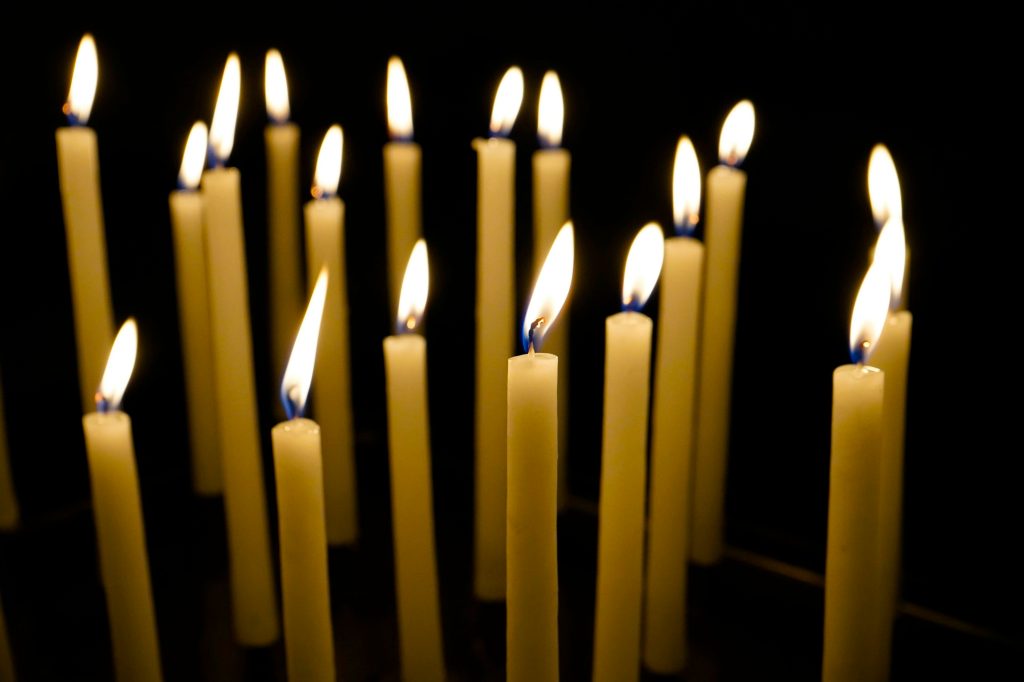
In the name of the Father and of the Son and of the Holy Spirit, One God. Amen
“You are the Light of the world”…(Matthew 5:14-16)
14 You are the light of the world. A city that is set on a hill cannot be hidden. 15 Nor do they light a lamp and put it under a basket, but on a lamp stand, and it gives light to all who are in the house. 16 Let your light so shine before men, that they may see your good works and glorify your Father in heaven.
We are called to be lights in the world, not only in our parish, but to our family, community, city where we live, because Christ is the Light of the world. How we become lights and how we share this light with others rests in the gift of God and in our response to that grace, a synergy of love.
We must share Christ’s Light because the world is so full of darkness. It is thirsty and suffering and in need of Christ — the flame in our hearts is to be shared and offered. St John Chrysostom said “You are the light of the world, not of a single nation or of cities but of the whole world.” Minister to those you meet, share the gospel, attend to your own salvation all in the spirit of love, joy, humility and service. Each of us has talents — maybe 5, maybe 3, maybe just 1, — but we must use those talents to the glory of God and within the love of God and Light of Christ. The one thing about Light is that it does not draw attention to itself but to everything else, one candle in a dark room will reveal all the obstacles in that room so that we may negotiate our way around them.
I want, if you will indulge me, to speak about those who have been lights in the world to me in my own journey of faith. The lights of Christ cross boundaries of borders, culture, time and geography. Indeed the saints show are no boundaries to God’s love. My own encounter with the light of Orthodoxy came when I was an undergraduate studying Biblical Studies, Hebrew and Greek at Sheffield University. I had been brought up in the Christian faith, I attended church, sang in the choir, served at the altar. I believed in God; from my earliest memories I loved Christ. When I went to University I found that all those doctrines, teachings and beliefs were questioned, not by me but by a new analytical liberal critical theology which questioned everything, Christ’s miracles, his teachings even his Resurrection. It was deeply troubling.
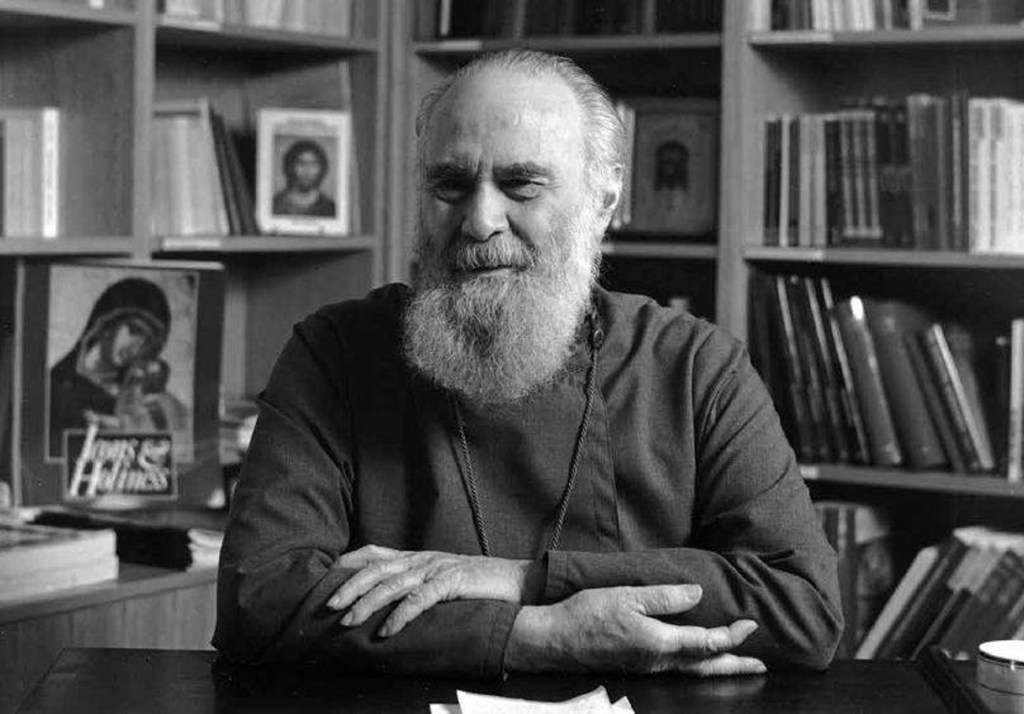
Into this maelstrom of confusion and darkness shone a light to lighten the darkness to my delight. I was invited to go to a lecture by a certain Metropolitan Antony of Sourozh. I had never met the Orthodox before but later I found out that this man had spoken the Epilogue on the BBC when T.V.s were in black and white and when programmes finished at 10.00 p.m. When this man spoke a flood of light pierced the darkness of my disappointed soul, and I said to myself “if all orthodox are like this, then they have something very special to offer the world.” He spoke with authority, simplicity, humility and wisdom. It was so reassuring that some eminent figures spoke the truth in love against the prevailing tide of fashionable skepticism. The words in St John’s Gospel 1:5 “The light shines in the darkness and the darkness has not overcome it…” reveal how darkness did not understand Light or overpower it or appropriate it or absorb it. Authentic preaching always brings light and pierces gloom with the sword of the truth of the Gospel.
Light also points the way, it is timely, providential and even prophetic.. I can think of
three other men of God who were lights to lighten my path: Archimandrite Barnabas of New Mills. He wrote in 1987 a post card at Christmas to me in which he said “ you will be Orthodox in the place where you now teach.” Eight years later I became Orthodox and his words came true. Archimandrite David of Walsingham was prophetic too, When I asked him to write an Icon of the Mother of God of Walsingham for me he said “If I paint this icon of the Mother of God for you, you realise you will become Orthodox”. I was an Anglican deacon at the time! When I was studying at Oxford to be an Anglican priest a then Archimandrite Kallistos was my tutor in Early Church History. He enlightened me to the teachings of the fathers – — how timely and providential was that light!
Metropolitan Kallistos of Diokleia, Archimandrite Barnabas, Metropolitan Anthony, all of thrice blessed memory. They are not yet glorified, but I know many people who were influenced by them. You see brothers and sisters, nothing is ever lost in Christ, A remote hermit whose monastery in Wales did not develop yet his words touched the hearts so many. An icon painter who could transmit the love of Christ not in words but in brush strokes, an academic who transmitted the light of Christ through teaching. What talents! All of these took their faith seriously but lightened this truth with their delivery, self-effacement, and sense of kind humour. Orthodoxy is not like brash strip lighting — it attracts gentleness of the soul because it is a gentle light flame of a candle that gives a mellow light whilst burning itself up in ascetic self-sacrifice.
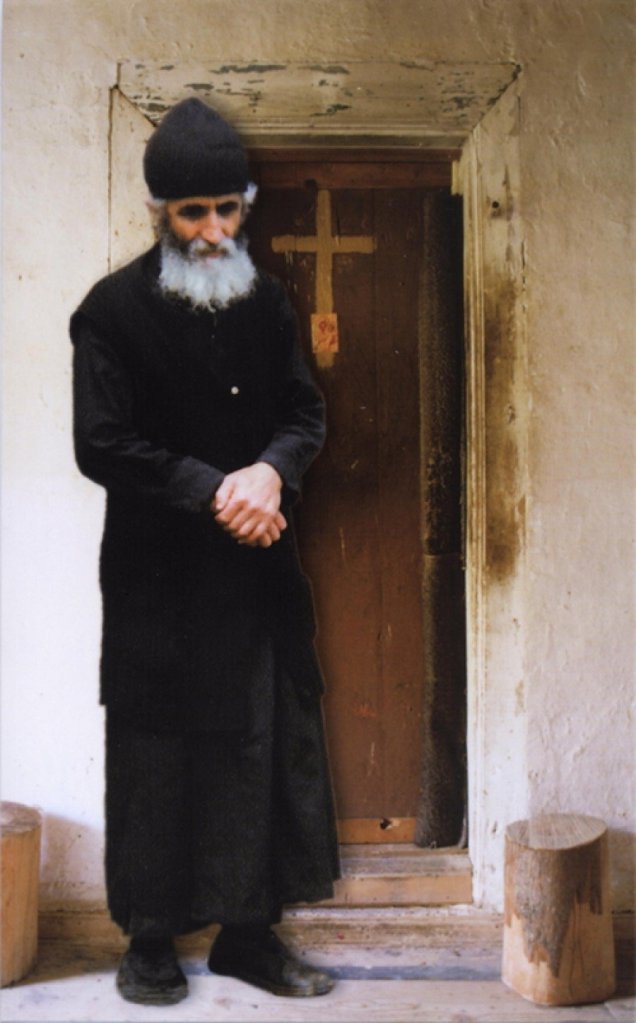
St. Paisios on Prayer and Lighting Candles: “Elder, when we light a candle, do we say that
it is for some purpose? — You are lighting it, but where do you send it? Aren’t you sending it somewhere? With a candle, we are seeking something from God. When you light it, you should say: “For those who are suffering in body and soul”, “for those who have the greatest need”, and among them is also the living and the reposed. Do you know how much rest the departed sense when we light a candle for them? Thus, one has spiritual communication with the living and with the reposed. The candle, in a few words, is an antenna that brings us into communication with God, with the sick, with the departed, etc.”
In our parish we have a candle maker, once a month after gathering all the candles, she recycles the ends and brings them back to church. Perhaps you could have a candle maker in your parish to provide lights someone to trim the lamps, supply the wicks and oil — this is a service, however humble. We have someone who cleans the floors. We have someone who puts the chairs out and sets up church — humble duties but so vital for worship as preparation.
We must not be discouraged in bringing the light of Christ to others, when we see no growth or little response. Do not give up when you are frustrated or disappointed, be persistent even when only a few attend the Great Vespers or Holy Liturgy. The newly gloried Cleopa of Sihastria used to say to his spiritual children “Rabdare Rabdare Rabdare” — “Patience, patience, patience!” There will be growth! The newly glorified Saint Amphilochios of Patmos said: “Do not be afraid because of your Orthodoxy because as an Orthodox in the west you will often be isolated and always in a small minority. Do not make compromises but do not attack other Christians. Be neither defensive nor aggressive, simply be yourself.” I would add, “be yourself simply.”
Simplicity was the hallmark of many of the recent saints. St Pophyrios, St Paisios, St Nicholas Planas to name but three. Of course as a compliment to St Amphilochios, St Arsenios of Paros said “when the church of the British Isles begins to venerate their own saints then the Church will begin to grow.” We see this in our parishes. All Orthodox churches now have enquirers and catechumens. God is doing something truly wonderful. As Metropolitan Kallistos of blessed memory said; “We know where the Holy Spirit is we cannot say where he is not, for he moves where he wills.”
Indeed the Holy Spirit is guiding people into the Light of Orthodoxy. There is a hunger and thirst after righteousness, a discontent with diluted, liberal teaching to suit the political correctness of popular culture. We must feed them with the bread of heaven and give them living waters to drink. Light makes things grow in all of creation. The harvest is ready but the labourers are few. It is usually the same people who you can count on your fingers that help in a Parish — those who give their time and talents with fervour.
The parable of the talents is most appropriate – we all have talents, to deny this is to deny the creativity of God. We had a most devout parishioner Barnabas of blessed memory. At 90 years of age, he drove 90 miles from his home and back to church every Sunday and he gave a lift to other Parishioners going out of his way, because they had no transport. Perhaps we can offer lifts to those with no transport. I recall travelling through Romania from Bucharest to Ploiesti and in the fields there were thousands of sun flowers. As we made our way the sun flowers had their heads lifted high tracking the sun up above. As the sun moved so the heads of the flowers moved until the sun went down when they bowed their heads. We must track the Son of God the Light of the world.
As St Paul says in Hebrews: “Keep your eyes fixed on Christ who is the author and finisher of your life”. God said “Let there be light and there was Light”. God speaks and it is so. We have to have ears to hear God’s word and eyes to see His light — an inner spiritual ear and inner spiritual sight, which is why we seal these senses at chrismation with the seal of the gift of the Holy Spirit with holy chrism oil so God may sanctify our life and make our body the temple of the Holy Spirit. We must always be aware that in order to be lights first we must listen to the voice of God bowing our heads to listen to His will for us. It is equally true about listening to others. Metropolitan Antony of Sourozh writes in his
book Courage to pray: “Hearing means bowing our heads in humility which is capable of accepting what the other person is sowing on the ground of our mind and heart. This is the true meaning of the word humility. The word comes from the latin “humus,“ meaning fertile soil. Like the rich, silent creative earth we should offer ourselves to the Other, receiving His word in the fertile soil of our minds and hearts”. We see this humility in many of our saints St Porphyrios, St Paisios, St Silouan and St Nicholas Planas just to name a few.
St.Porphyrios taught parents to love their children: “Lord Jesus Christ, give Your light to my
children I entrust them to You. You gave them to me, but I am weak and unable to guide them, so, please, illuminate them…” When children grow up in an atmosphere of freedom and at the same time are surrounded by the good example of grown-ups, they are a joy to see. The secret is to be good and saintly and to inspire and radiate. The life of the children seems to be affected by the radiation of their parents. If the parents insist, ‘Come on now, go and make confession, go and receive Communion’, and so on, nothing is achieved. But what does your child see in you? How do you live and what do you radiate? Does Christ radiate in you? That is what is transmitted to your child.
This is where the secret lies. Does Christ’ light radiate in you? That’s the secret, that’s the key to everything, isn’t it? Does Christ’s light radiate in us? If He does, the children indeed, the people you meet will feel Him radiating. Does Christ radiate in you? What a thing to say to us, what an invitation the idea that Christ could radiate in us, in us, unworthy, sad, overworked and worn out parents, in the tired Sunday School teachers and the overworked youth ministry worker. Does Christ radiate in you? Stop talking. Pray, pray, pray. Let
Him fill you up, so that He will radiate light in you and pour into the children who surround you and who absorb Him from you.
Our local saint is just a mile away St Patrick — yes, he is British not Irish — he was taken by pirates from the north west coast of Britain, after escaping from Ireland he returned to convert the Irish to Christianity but not before establishing a monastery in Heysham next to Morecambe. It is still there today. Sayedna has visited the remains of the chapel and the monks cells. There are even caves where the hermits used to live. He was born in Britain but St Patrick became the Enlightener of the Irish. You may be born in Romania or Lebanon or Russia but God sent you here to be lights in His world. Perhaps you could be a light to the children helping in Sunday school. Parents bring your children to Church bring them up in the Light of the Gospel.
One of my favourite verses in the Bible is from the Psalms: “The sacrifices of God are a broken spirit, a broken and a contrite heart, these O God You will not despise.” (Psalm 51:17) In order for lives to be filled with Christ’s light we need a broken heart, broken by and repentant for our sins. Unless our heart is cracked the light cannot enter into the tomb. If it is cracked, the light can flood in, otherwise it is hard, and like stone, impermeable, immovable and self- contained. “The eye is the lamp of the body. If your eyes are good, your whole body will be full of light. But if your eyes are bad your whole body will be full of darkness. If then the light within you is darkness how great is that darkness.” (Matthew 6:22-23)
I am blessed to be here in Staffordshire which is my home county. The motto of the city in which I was born which was then in south Staffordshire (now in the west midlands) is “Out of darkness cometh light.” We bring those in darkness to Christ so that they too may become children of the light by adoption and grace. God’s power is revealed in our weakness, in these earthen broken vessels. 2 Corinthians 4:6-18 is to be read. (1 Thess. 5:5-11) “You are children of the light and the day; we are not of the night, nor of darkness. Therefore let us not sleep, as do others; but let us watch and be sober.” So here we see how watchfulness is also a prerequisite for becoming lights in our parishes. First attend to your own salvation before addressing the needs of others do not be blind guides as our Lord called the Pharisees. (Matthew 15:14.)
I am not a physicist, far from it, but according to the law of physics light is composed of photons, which are packets of electromagnetic energy. We in a spiritual sense must become packets of Christ’s magnetic energia, delivering like a holy postal service, the parcels of Christ’s gifts to the household of faith. In Colossians 1:29 the holy Apostle Paul says that he labours with all his energy and that God powerfully works within him.
The Story of St Nikolaos Planas
Papa Nicholas Planas was not a missionary to foreign lands. He was not a confessor or martyr who suffered or died for his faith in Christ. He was not a learned, gifted theologian who wrote books and taught the Faith, indeed he had a speech impediment. He was simply a parish priest who prayerfully served the Liturgy, day in and day out, month after month, year after year for fifty years. He had very few words to say at all – even to his closest followers. His life has no astounding feats of asceticism; he was a priest on the outskirts of a city. He did not die for the Faith or preach to the multitudes. He built no monasteries, no philanthropic institutions, nor even a single church. Indeed, for some time he didn’t have a church of his own, he just went from church to church.
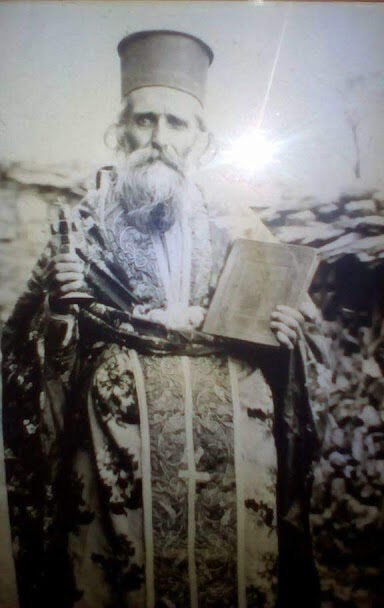
Yet each year on March 2 the Orthodox Church universally recognises Papa-Nicholas as a saint worthy of veneration and emulation. This is because he did the most important thing that any Christian can do, a simple task that he unwaveringly followed to his salvation and canonisation: he listened to and performed God’s will to the fullest degree possible within his circumstances. Simplicity is the theme of Papa-Nicholas’ life. He was a simple parish priest, who modestly performed the mysteries and services of the church, who cared for his flock with meekness, and who treated all with love and in innocence. It is this very simplicity which serves as an example for all of us.
At the proskomede St Nicholas Planas would often take hours praying for so many people. One of his servers used to say “Oh, come on, dear father are you praying for the whole world?” When one young server saw him raised above the floor in the Divine Liturgy, the little boy remarked on this miracle to his mother and when questioned about this St Nikolaos said with due humility “all priests do this.” He used to go around with two bags tied around his waist with the names of the living and departed which he called his debts and invoices.
Now I have used the examples of the fathers of the church and of present day priests, Bishops and monks but families can bless a Parish in so many ways. The monks on Mt Athos say that prayer, attention and work are the hallmarks of service to Christ. No less in a parish than in a monastery. Prayer which involves acquiring stillness, the virtue of humility and obedience, attention which involves opening the senses and discernment to what talents God has given us and work which involves drawing upon the power and energy of
the Holy Spirit will make us lights in the Parishes where we serve. We see these three elements in the lives of the modern saints of our time.
So given these prerequisites how then can we be lights in our parishes? What practical ways can we be lights to others? I invite you to think about them and I leave this question with you.
The glory be to God.
A key-talk at the Antiochian Orthodox Christian Archdiocese of the British Isles and Ireland Family Retreat (Nov.2024)
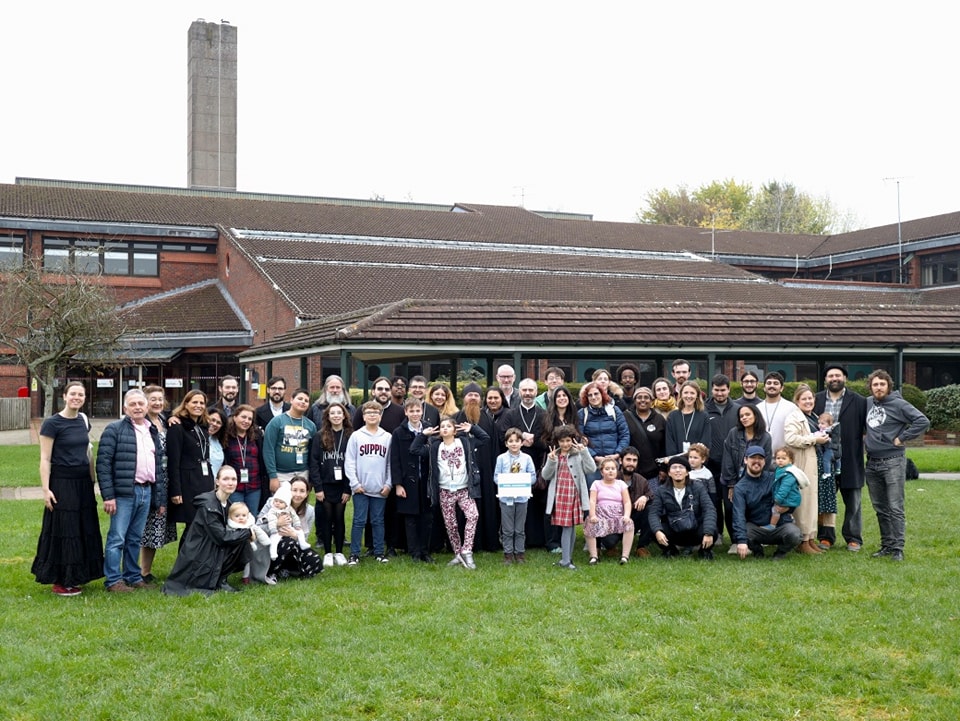
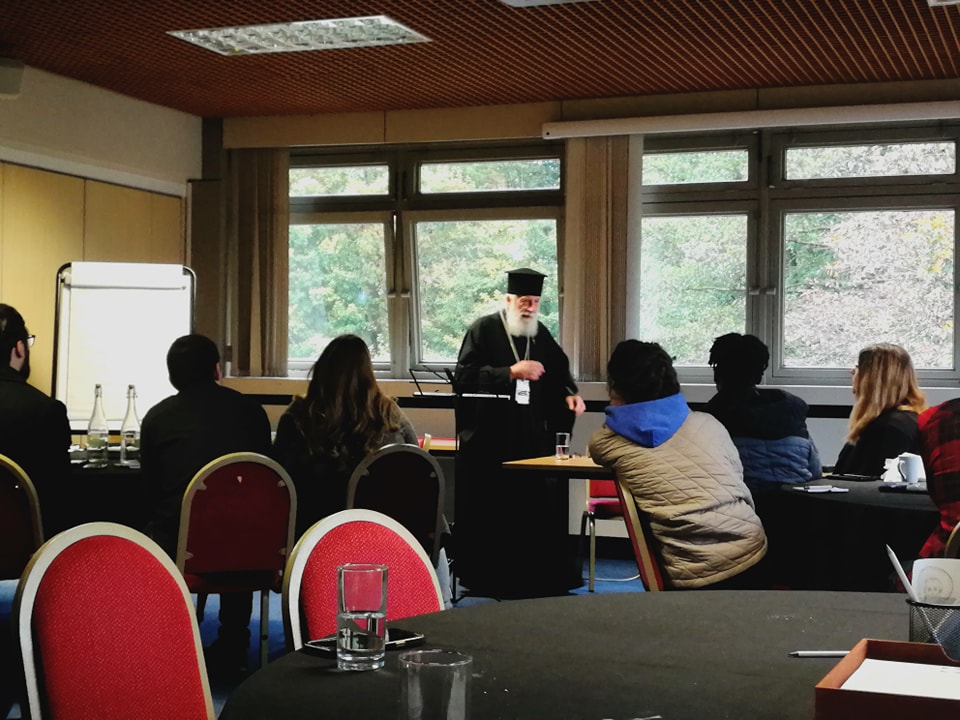
By Father Jonathan Hemmings from the Holy Cross parish, Morecambe
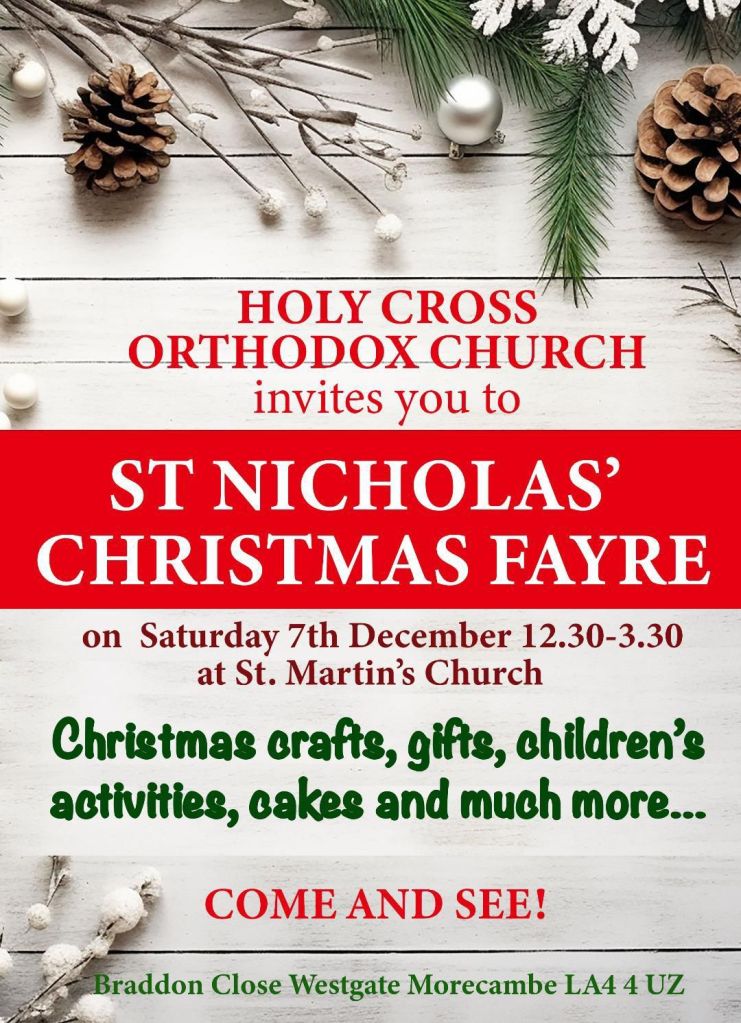
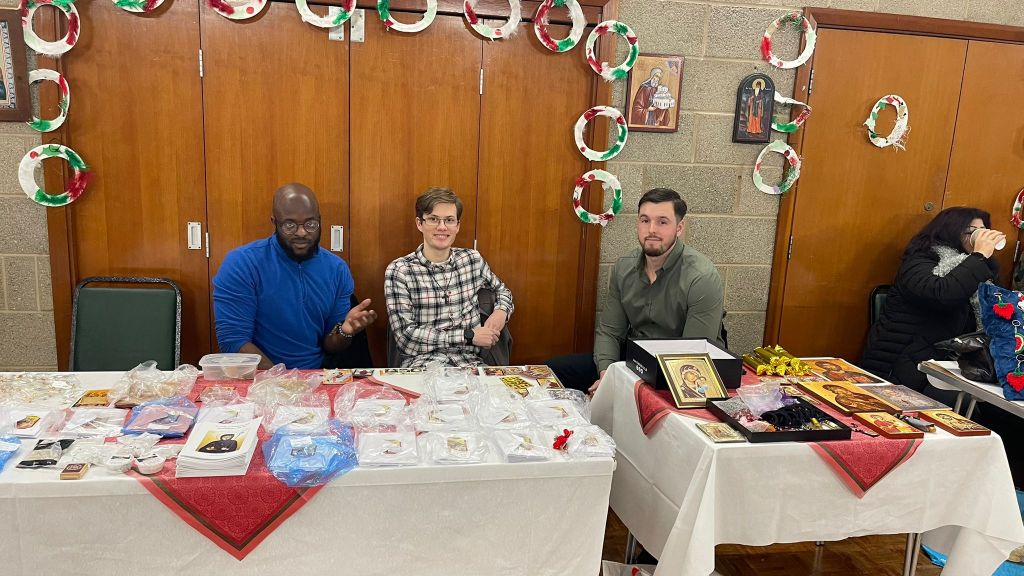
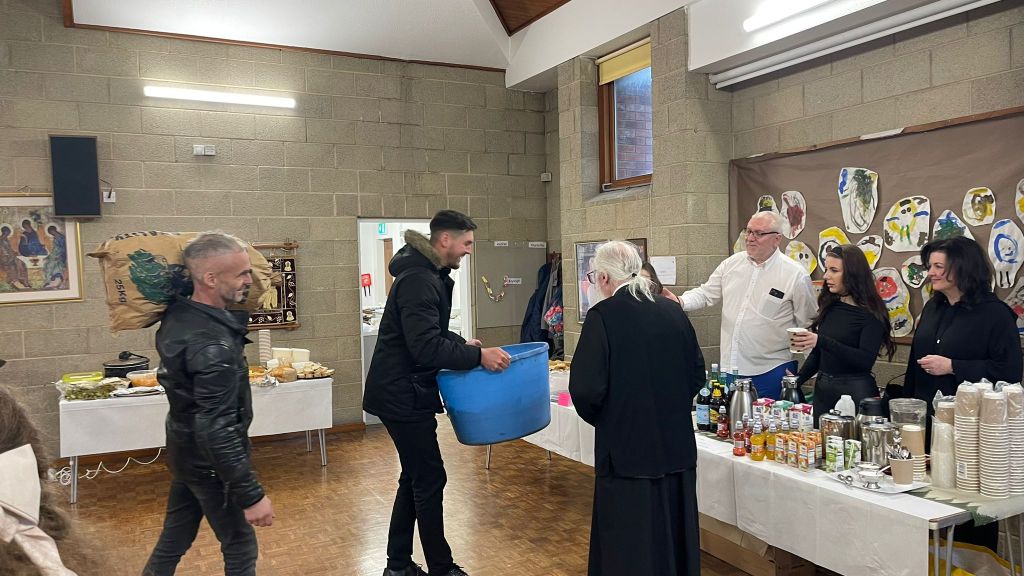
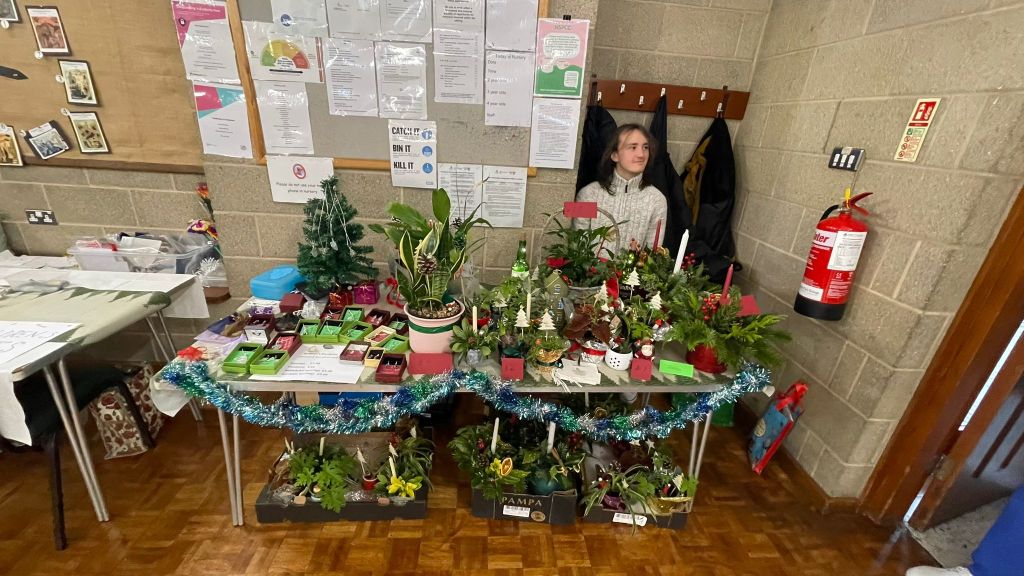
For more information and photos visit their website Holy and Life Giving Cross, Orthodox Parish, Lancaster, U.K.

 ORTHODOX CHRISTIAN FAITH AND LIFE