Abba Dorotheos, An Instruction

avvasdorotheos

Life and Sayings of Abba Dorotheos (*) — Instruction XI

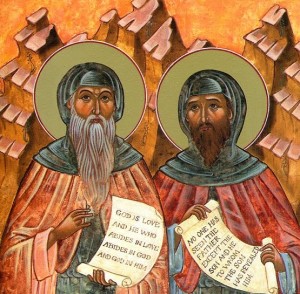
115. It happened that a great Elder was with his disciples in a place where there were all kinds of cypresses, large and small. He said to one of his disciples: ‘Pull up that little cypress plant’. It was very small and the monk had no difficulty in pulling it up with one hand. Then the Elder indicated another, bigger than the first, and said ‘Pull that one up as well’. After giving it a shake, the monk used both hands to uproot it. He then pointed to another, even bigger, and the monk uprooted that, too, though with more effort. The Elder then pointed to another one, even bigger. The monk shook it hard and expended much effort and sweat before finally uprooting it. The next one was even bigger and despite his sweat and efforts, the monk wasn’t able to pull it up. When the Elder saw that he couldn’t, he told another brother to go and help him, and together they uprooted it. Then the Elder said to the monks: ‘That’s how it is with the passions, my brethren. While they’re little, if we want, we can cut them off easily. But if we ignore them, as being unimportant, they become hardier and then more effort is required. And if they strike deep roots within us, then, no matter how hard we try, we can’t cut them off on our own, unless we have the help of some saints, who, after God, will defend us’.


Do you see the power that the words of the holy Elders have? The Prophet teaches us about this when he writes in the Psalm: ‘Wretched daughter of Babylon! Blessed is he who will deal with you as you have dealt with us. Blessed is he who will seize your infants and dash them against the rock (Ps. 136, 8-9. Septuagint).

abba-john

116. But let’s investigate his words in turn. Babylon is called confusion, since this is Babel, which is the same as Sychem [Shechem][1]. The daughter of Babylon is the name for enmity. Because first the soul becomes confused and loses its discernment[2] and then it commits sin. He calls her ‘wretched’, because, as I’ve told you before, evil is without substance and without form. It’s born from non-existence, because of our heedlessness and disappears again when we fight it, returning to nonentity. On this, the saint says: ‘Blessed is he who will repay you for the evil you’ve done to us’. So, on the one hand, we have to recognize what we’ve given, and, on the other, what we’ve received in exchange and what we should pay back. We gave our will, and, in exchange, received sin. He extols the promise given as repayment: that we will not do the same thing again. And he adds: ‘Blessed is he who will seize your infants and dash them against the rock’. By this he means: ‘Blessed is he who doesn’t allow your offspring, that is wicked thoughts, to grow, even in the beginning and thus work their evil in him. On the contrary, while they’re still weak, before they’re nourished and increase against him, he grabs hold of them and dashes them against the rock, which is Christ. In this way he exterminates them by having recourse to Christ’.

117. This is how the Elders and Holy Scripture all agree and extol those who strive to cut off their passions while they’re still weak, before their pain and bitterness are felt. So, let’s work with a will, my brethren, and we’ll find mercy. Just a little effort and we’ll find abundant rest.

The Fathers said that we should carefully cleanse every facet of our soul. In other words, that we should examine, every evening, how we’ve spent the day and then, in the morning, how we’ve spent the night. And we repent to God for any sins we’ve committed. Truth to tell, since we’re so sinful we should really examine ourselves every six hours to see how we’ve spent them and how we’ve sinned. Each of us should say: ‘Have I perhaps hurt someone with what I’ve said? Perhaps I saw them doing something and judged them or derided them or gossiped about them. Did I perhaps ask the cellarer for something, and complained when he wouldn’t give it to me? Was the food not so good and I said something derogatory about the cook and hurt his feelings? Did I perhaps complain to myself because I felt disgusted about something?’ Because if you go on complaining to yourself, that’s a sin. And again he says: ‘Did the canonarch or one of the other brothers say something to me and I couldn’t take it and spoke back to him?’ So, every day we have to ask ourselves how we’ve done. And the same goes for the nights. Did we get up willingly for the vigil? Did we not pay attention to the monk who woke us, or did we complain about him? We have to understand that the monk who wakes us for the vigil is doing us a great favour and is the harbinger of great, good things, since he’s waking us up to speak to God, to seek forgiveness for our sins and enlightenment. So aren’t we under an obligation to thank him? Really, we should be aware that through the assistance of our brother, we’ve gained our salvation. 

[1] Babel does, indeed, mean ‘confusion’, but it’s not immediately apparent why Abba Dorotheos mentions Shechem. The tower of Babel was in the land of Shinar, roughly ‘Mesopotamia’.
[2] Discernment/discretion/discrimination. Described by Cassian the Roman as the ‘pinnacle and queen of the virtues’ (Philokalia, vol. 1) and by John of the Ladder as ‘the eye and lamp of the soul, ‘the sure understanding of the will of God in every place, time and thing’ (Discourse 26).

* Life and Sayings of Abba Dorotheos was the first book my (now hermit) Gerondas recommended to me, upon ‘discovering’ the Church at my 20s. What a treasure! This book has travelled with me all over the world ever since, a constant point of reference!

Uncreated Light

Baptism and Uncreated Light

At the Orthodox parish of Holy Cross preparations are under way for the making of a Catechumen. I am deeply moved, at awe before God’s Providence. I am going to become his godparent.

On Sorrows

Face to Face

Nothing about the human body is as intimate as the face. We generally think of other aspects of our bodies when we say “intimate,” but it is our face that reveals the most about us. It is the face we seek to watch in order to see what others are thinking, or even who they are. The importance of the face is emphasized repeatedly in the Scriptures. In the Old Testament, it is the common expression for how we rightly meet one another – and rarely – God Himself – “face to face.”

In the New Testament, St. Paul uses the language of the face to describe our transformation into the image of Christ.

Χώρα-των-ζώντων

The holy icons are doubtless the most abundant expression of the “theology of the face,” and perhaps among the most profound contributions of Orthodoxy to the world and the proclamation of what it truly means to be human. Every saint, from the least to the greatest, shares the same attribute as Christ in their icons. We see all of them, face to face. In the icons, no person is ever depicted in profile – with two exceptions – Judas Iscariot and the demons. For it is in the vision of the face that we encounter someone as person. It is our sin that turns us away from the face of another – our effort to make ourselves somehow other than or less than personal. It is a manifestation of our turning away from God.

In human behavior, the emotion most associated with hiding the face is shame. The feeling of shame brings an immediate and deep instinct to hide or cover the face. Even infants, confronted by embarrassment or mild shame, will cover their faces with their hands or quickly tuck their face into the chest of the one holding them. It is part of the unbearable quality of shame.

Hiding is the instinctive response of Adam and Eve. “We were naked and we hid…” is their explanation. Readers have always assumed that it is the nakedness of their intimate parts that drive the first couple to hide. I think it more likely that it was their faces they most wanted to cover.

In an extended use of the story of Moses’ encounter with God after which he veiled his face, St. Paul presents the gospel of Christ as a transforming, face-to-face relationship with Christ.

Therefore, since we have such hope, we use great boldness of speech–unlike Moses,who put a veil over his face so that the children of Israel could not look steadily at the end of what was passing away. But their minds were blinded. For until this day the same veil remains unlifted in the reading of the Old Testament, because the veil is taken away in Christ. But even to this day, when Moses is read, a veil lies on their heart. Nevertheless when one turns to the Lord, the veil is taken away. Now the Lord is the Spirit; and where the Spirit of the Lord is, there is liberty. But we all, with unveiled face, beholding as in a mirror the glory of the Lord, are being transformed into the same image from glory to glory, just as by the Spirit of the Lord. Therefore, since we have this ministry, as we have received mercy, we do not lose heart. But we have renounced the hidden things of shame, not walking in craftiness nor handling the word of God deceitfully, but by manifestation of the truth commending ourselves to every man’s conscience in the sight of God. But even if our gospel is veiled, it is veiled to those who are perishing, whose minds the god of this age has blinded, who do not believe, lest the light of the gospel of the glory of Christ, who is the image of God, should shine on them. For we do not preach ourselves, but Christ Jesus the Lord, and ourselves your bondservants for Jesus’ sake. For it is the God who commanded light to shine out of darkness, who has shone in our hearts to give the light of the knowledge of the glory of God in the face of Jesus Christ. (2Co 3:12-6 NKJ)

The veil of Moses is an image of the blindness of the heart and spiritual bondage. Turning to Christ removes this blindness and hardness of heart. With unveiled faces we behold the knowledge of the glory of God revealed in the face of Jesus Christ and are transformed into the very same image which is Christ.

In Russian, the word lik (лик) can mean face and person. Sergius Bulgakov plays with various forms of the word in his book Icons and the Name of God. It is an essential Orthodox insight. The Greek word for person (πρόσωπον) also carries this double meaning. The unveiled or unhidden face is a face without shame – or a face that no longer hides from its shame. This is perhaps the most fundamental aspect of our transformation in Christ. The self in whom shame has been healed is the self that is able to live as person.

We are restored to our essential and authentic humanity – our personhood. We behold Christ face to face, as a person would who looks into a mirror. And, as St. John says, “We shall be like Him, for we shall see Him as He is” (1Jo 3:2 NKJ).

The sacrament of penance boldly walks directly into the world of shame. Archimandrite Zacharias says:

… if we know to whom we present ourselves, we shall have the courage to take some shame upon ourselves. I remember that when I became a spiritual father at the monastery, Fr. Sophrony said to me, “Encourage the young people that come to you to confess just those things about which they are ashamed, because that shame will be converted into spiritual energy that can overcome the passions and sin.” In confession, the energy of shame becomes energy against the passions. As for a definition of shame, I would say it is the lack of courage to see ourselves as God sees us. (from The Enlargement of the Heart).

This is not an invitation to toxic shame – nor an invitation to take on yet more shame – it is a description of the healing from shame that is given in Christ. That healing is “the courage to see ourselves as God sees us.” It is the courage to answer like the prophet Samuel, “Here I am!” when God calls. God called to Adam who spoke from his shameful and faceless hiding.

Some of the mystical sermons of the fathers speak of Christ seeking Adam out a second time – but this time, in Hades, when Christ descended to the dead. There, Adam, hid no longer, turned to face the risen Lord. And so the traditional icon of the resurrection shows Christ taking Adam and Eve out of the smashed gates of Hades.

The gates of Hades are written in our faces – as are the gates of paradise. It is the mystery of our true self – the one that is being re-created in the image of Christ – precisely as we behold Him face to face and discover that no shame need remain. Where the Spirit of the Lord is, there is liberty. Sweet liberty!

Source: glory2godforallthings.com/

On Zeal

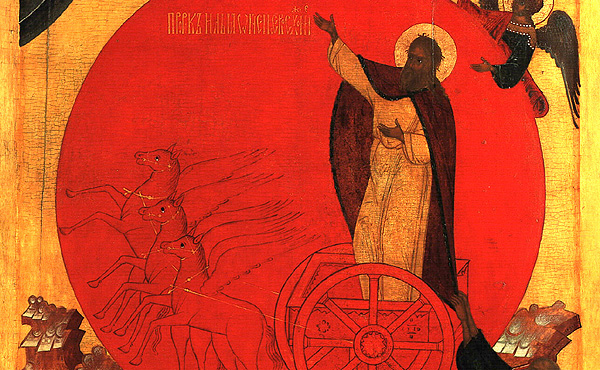
elijah1

A monk must be extremely cautious of carnal and animal zeal, which outwardly appears pious but in reality is foolish and harmful to the soul.

Worldly people and many living the monastic life, through ignorance and inexperience, often praise such zeal without understanding that it springs from conceit and pride. They extol this zeal as zeal for the faith, for piety, for the Church, for God. It consists in a more or less harsh condemnation and criticism of one’s neighbours in their moral faults, and in faults against good order in church and in the performance of the church services. Deceived by a wrong conception of zeal, these imprudent zealots think that by yielding themselves to it they are imitating the holy fathers and holy martyrs, forgetting that they – the zealots – are not saints, but sinners.

When for your labour in the garden of the commandments God grants you to feel in your soul divine zeal, then you will see clearly that this zeal will urge you to be silent and humble in the presence of your neighbours, to love them, to show them kindness and compassion, as Saint Isaac the Syrian has said. 

Divine zeal is a fire, but it does not heat the blood. It cools it and reduces it to a calm state. The zeal of the carnal mind is always accompanied by heating of the blood, and by an invasion of swarms of thoughts and fancies. The consequences of blind and ignorant zeal, if our neighbour opposes it, are usually displeasure with him, resentment, or vengeance in various forms; while if he submits, our heart is filled with vainglorious self-satisfaction, excitement and an increase of our pride and presumption.

St. Ignatius Brianchaninov

The Arena

Chapter 36

We Are All One

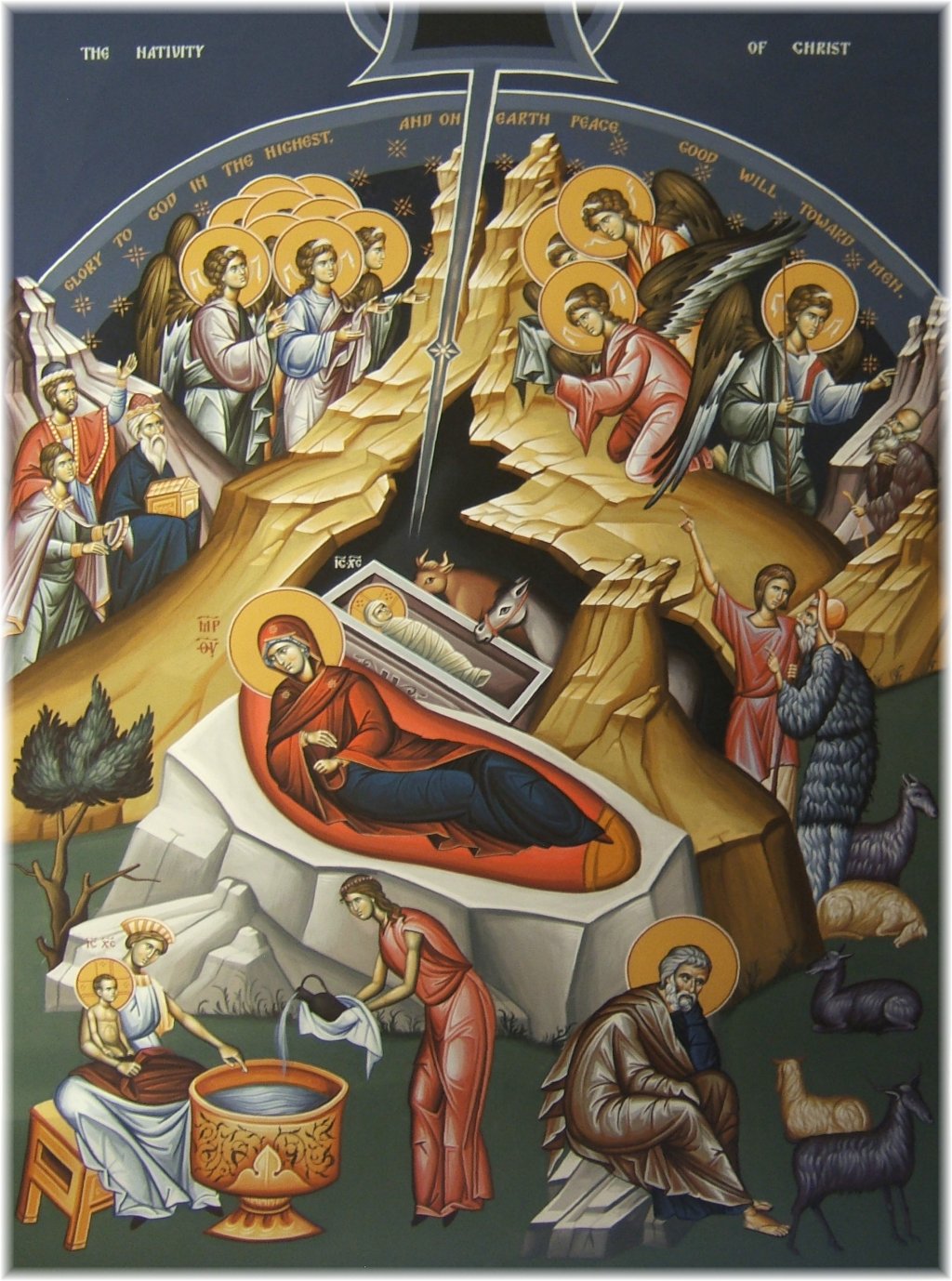
nativity icon.jpg

In a few hours, I’m flying to Thessaloniki, from where I’ll get the bus to Ouranopolis, the port to Mount Athos. I’ll be away until January 4th, so have a blessed Feast of the Nativity and a happy New Year.

This has been a tough year, in ways that I cannot even begin to express, and I’m only now starting to feel the effects. Tiredness, hopelessness and fear, sadness to the point of despair – all of these have haunted me relentlessly during the last twelve months. To say that 2016 has not been my favourite year would be too kind, even for my standards. To say that 2016 has been even remotely a good year would be beyond insincerity and would approach hypocrisy.

We have achieved many things for the Monastery, and for that I must thank you. I have tried to let you know, to the best of my ability, how much I appreciate your support. All my hard work, all my best intentions, all my sacrifice would amount to nothing without you and your hard work, your best intentions, your sacrifice. Together, we have done incredible things this year, and I trust that, by the grace of God, we shall do even more in 2017. For all of this, I thank you. You are in my prayer always, where ever life takes me.

That being said, the Monastery exists in this world and cannot ignore the world. Monasteries are doors between this fallen world and the Kingdom, calling our fallen nature to its true prototype, encouraging us on the way, guiding us step by step, as we fight to let go of our fallenness and we learn to see ourselves through the eyes of God. This is why monasteries exist, this is their purpose.

And this is where I’ve fallen mostly in 2016. Although I’ve kept far from the political fights that consumed the world, I have allowed their noise to disturb me, I have allowed them to distract me from the things that truly matter. I have kept silence over the outpouring of hatred that drowned the world over the Council, Brexit or the US elections, but I have not succeeded to hold on to the silence in my heart.

As a monastic, I have no responsibility to get involved in these fights. Monastics are dead to the world, and to get involved is a failure towards one’s calling. When people accused the Abbas of the Desert for refusing to get involved and judge various people or causes, they sent their accusers to the cemetery and told them to ask the dead buried there to judge them. As a monastic, my responsibility is to stand among you, silent and dressed in my black vestment, as a reminder that our true Calling, our true Identity and our true Home are somewhere else.

As the world rages consumed with passion for one cause or the other, a monk’s calling is to silently remind those who have the eyes to see that we are all mortal and that the real fight, the real cause, the real passion should be for something entirely different: the salvation of our souls. All else is dust.

It is my responsibility, therefore, to tell you all that no one won in 2016. There are no winners. We have all lost. We have all allowed hatred and doubt and fear to enter our hearts. We have all judged, we have all looked at Christ’s image, our brother, and saw in him the enemy. We have all built walls: some have built walls against those who are different from them, others have built walls against those who build walls. There is no difference between walls: regardless of what motivates them, they are all expressions of a void in our hearts. That empty void where Love should have been.

I’m going to Mount Athos for two weeks with this in mind. I’m not looking for rest, physical or emotional. I’m going to regain my perspective of the world and myself. I need to taste silence to be reminded of the things that matter. I need to touch holiness so I may redirect my steps toward it. I need to see sparkles of the Kingdom, so I may turn my back to this empty noise and start walking towards Life again.

I leave behind 2016 with a void in my heart. I pray, I pray with all my strength that Love Incarnate will return once more and fill it. I pray for me, I pray for you – the same prayer, for we are all One. We are ALL One.

Source: Mull Monastery blog

* Kindly excuse any technical issues; we are migrating the blog back to WordPress

See also The Womb and The Tomb in The Nativity Icon

Nativity Paintings from Around the World

Carpe Diem and Christmas

The Ass and the Ox in the Nativity Icon 

Christ’s Nativity: Living a Kairos Life in a Chronos World

Arabic Christmas Carol

Sing Ye Carols!


What is an Icon?

What is an icon?

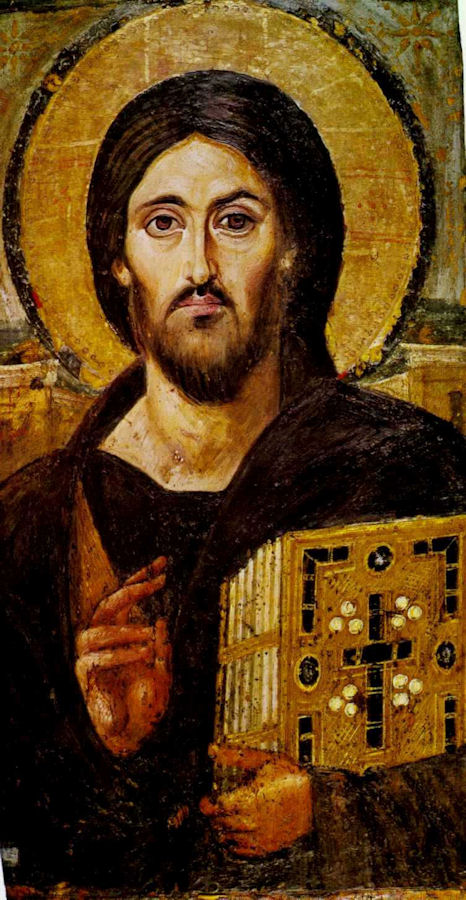
Pantocrator, St. Catherine’s – Mt. Sinai, 6th century. The two different facial expressions on either side emphasize Christ’s two natures as fully God and fully human.

What is an icon? There are approximately five million Eastern Orthodox Christians in America (Nabil, 2000). A minority in a nation dominated by Protestants and Roman Catholics, the Eastern Orthodox culture has maintained strong familial and cultural identities. Understanding something about them, being able to lay aside preconceptions and ethnocentricity to view life from the Orthodox Christian’s perspective will allow the onlooker an opportunity to increase in understanding not only of the Eastern Orthodox Christian but of human nature. It is this author’s intent to introduce the reader to an insider’s perspective of iconography in the life of an Orthodox Christian, in the hope that understanding will increase.

What Is An Icon?

A legend passed down for nearly 2000 years describes the first icon. At the time when Christ was traveling to Jerusalem where He would experience the trial and crucifixion, King Abgar of Edessa sent for Jesus. Christ could not go to the King, so instead He sent a linen cloth on which He had dried His face. The story continues that the cloth carried to the King had an impression of Christ’s face on it. The King’s illness was healed when the cloth was taken to him. This first icon, “not made by human hands”, began a tradition of portraying Christ and the saints in pictorial fashion. (Benz, 1963). The entire town of Edessa treasured this first icon, that is the linen cloth with Christ’s face imprinted on it. It was widely acknowledged throughout out the East and still written about in the eighth century (Ouspensky, 1978).

So what is an icon? Webster defines an icon as an image (Webster, 1966). In the Orthodox Church an icon is a sacred image, a window into heaven. An image of another reality, of a person, time and place that is more real than here and now. More than art, icons have an important spiritual role. Michel Quenot says it well in his book, The Icon: Window on the Kingdom, an icon is “theology in imagery, the icon expresses through color what the Gospel proclaims in words”.

For this reason the rules regarding the creation of an icon are rigorous. The iconographer must prepare himself for the task of painting an icon by following a strict discipline of fasting and prayer. He must quiet his spirit and submit himself to God. The icon he creates will not be signed. He will not expect accolades or applause when the icon is completed. The icon will be created to inspire and lead others into worship. Painting the icon is not a use of imagination. Instead, the icon will be painted using the prescribed regimen and style that has been passed down through the centuries. Everything from the facial expressions to the colors used is predetermined. The following is a prayer recited by an iconographer prior to starting to work:

“O Divine Master of all that exists, enlighten and direct the soul, the heart and the mind of your servant: guide my hands so that I might portray worthily and perfectly Your Image, that of Your Holy Mother and of all the Saints, for the glory, the joy, and the beautification of Your Holy Church.” ( Quenot, p.13)

The primary purpose of the icon is to aid in worship. Its design follows that purpose. Through lines and color the iconographer conveys the awesomeness of the invisible, divine reality (Evdokimov, 1990). The creation of an icon is defined by tradition. That is a 21 st century iconographer would not decide to change the shape of Christ’s face. It is understood that a person who saw them in the flesh painted the first icon of an individual. St. Luke is accredited with painting the first icons of Christ and Mary the Blessed Virgin. Each subsequent iconographer will use the original icon as a guide. There is room for a small amount of stylistic change but tradition limits the options for that change ( Forest, 1997).

Icons are not created to force an emotional response. When portraying historical scenes the faces don’t show emotions but instead portray virtues such as purity, patience in suffering, forgiveness, compassion and love. An example of this would be the portrayal of Christ on the cross. Neither is the icon a sentimental picture. Christ is always shown as God. Even the icons of Christ seated on His mother’s lap show Him with an adult face, revealing that even though Christ lived as a child among us He was also God ( Forest,1997).

*


Icons depict silence. There are no actions displayed, no open mouths. The icon invites the Christian to enter into contemplation,prayer, and silence (Ware,1979). Space is not defined as three-dimensional and time is insignificant. The story told by the icon precludes time and space. An example would be the icon of the Nativity, which shows the cave where Christ was born in the background with those who came to adore in small vignettes. Lighting proceeds from the character portrayed in the icon. There are never shadows in icons. This shows us that the saint portrayed is “glorified” having completed the race and entered into heaven (Quenot,1991).

Symbolism is used in icons and details are used minimally. For example, when showing John the Baptist baptizing in the river the grown man he baptizes is shown as an infant because the baptism is a rebirth. Colors are also symbolic. Blue reveals heaven and mystery. Green is youth, fertility and the earth’s vegetation. Red, the color of blood, suggests life, vitality and beauty. White is purity, the divine world and innocence. Gold indicates sanctity, splendor, and the glory of God and life in the heavenly kingdom. Purple reveals wealth, power and authority.


*

First and foremost, icons are a constant reminder of the incarnation of Christ, that is to say, they remind us that God “sent His only begotten Son”(Bible, John 3:16) to rescue us from our sin and death. We cannot see God the Father or God the Holy Spirit, but, because Christ chose to take on human flesh, we can see Him. His face can be portrayed on wood with paint. We can also paint His Mother and other saints who have finished the race and gone on to heaven. The Orthodox believe that surrounding themselves with icons help them to acknowledge the constant presence of Christ and the saints in their lives.

According to Father Nabil, priest of St. George Orthodox Church in Indianapolis, IN, the icon is a representation of the person portrayed upon it. The term used to describe this link is typology. Typology means that an event or item is somehow related to another event or person. An example of this would be the icon buttons on the computer tool bar. When a person uses the tool bar and clicks on the “print” button the user knows that the print button represents something else. That is, the print button will not cause itself to be duplicated on paper with ink but instead the user knows that the print button at that moment is a typology for the item on the screen. By interacting with the “print” icon the user expects the item the button represents to be printed. When an Orthodox Christian gives honor to an icon by kneeling or bowing before it or by kissing the icon the Christian is not paying respect to wood and paint. Instead he acknowledges that the icon represents much more and that the link between the icon and the person in the heaven is real. He believes that in some mystical fashion the veneration given to the icon will be received by the person it portrays.

As a recent convert to the Orthodox Christian faith this author has some experience on which to base an analysis of the use of icons. As a convert, ten years ago icons were one of the additions to worship unfamiliar to me. I came from a protestant background and the worship I had been involved in up until this point involved sitting in a pew and repeating prayers, creeds and hymns when appropriate. It didn’t take long for me to realize that the Orthodox utilize all of their senses and beings in their worship.


Incense floats through the air representing the prayers ascending into heaven. A bell is rung during the call to worship and at other key times in the worship. Altar boys, deacons and the priest serve in the altar area, chanting prayers and hymns, bowing, performing prostration, acknowledging the heavenly hosts of saints and angels whose worship we are entering into. Parishioners do not sit primly in the pews but may walk throughout the church lighting candles, venerating icons. The hands of parishioners are not quiet and closed but may be raised heavenward to show the lifting of the worshiper’s heart toward God or they may be making the sign of the cross, reminding the one who makes it that Christ loved us enough to die for us. Later communion will be available so that one can even utilize the sense of taste during worship. In those first weeks the activity of worship seemed almost distracting to me but as I have entered into the worship it has became natural.


The Orthodox believes worship is ongoing in the heavenly kingdom. They believe heaven is a place where worship doesn’t cease, that those who have gone before and have been faithful are worshiping the Holy Trinity continuously. When earthly Christians join together to worship we join the heavenly throng and begin participating in that worship. For that reason the walls and ceilings of the church are decorated with icons of Christ, Mary the Blessed Virgin, saints and angels.


When parishioners stand in the pew during worship they only need to look around to see the saints surrounding them. In this way the icon is a reminder of a larger reality. It reminds us that we have stepped out of one world and into another. It reminds us that though we struggle on a daily basis to remain faithful to our beliefs and our God there are many who have finished this life successfully and now dwell in a place were there is no more sorrow. We are encouraged to persevere, to set our eyes on the finish line, to continue to live a life that is pleasing to God.

*

Living as we do in a society that demands that our lives be lived at a fast pace and with very little quiet time the icon beckons to us to slow down. The stillness of the icon draws us into the quiet so that we can lay aside the cares of this world and meditate on the splendor of the next. The benefit of the icons is not so much in analyzing the style of painting, the iconographers name or even in knowing the individual representations in the icon. The benefit is in meditation, in quietness and in guiding the heart to prayer.

There are other components of the Eastern Orthodox culture that contribute to the use of the icon. It has been this author’s personal observation that the Orthodox culture values family. Aunts, uncles, brothers, sisters, grandparents, cousins and so on worship together, live together and often even work together. A large number of Orthodox are immigrants who have been able to assimilate into the American culture due to a strong work ethic and a respect for the freedoms afforded a democratic society. Many have lived under Communist governments, some have suffered under the authority of anarchists. Strong family ties, even family businesses have helped to sustain these immigrants. This respect for unity and extended family goes beyond the earthly family and makes the recognition of the saints more acceptable. For example, if Aunt Sally prayed for us while she was on earth and we know that she has eternal life now, why would we expect her to stop praying for us now?

Also, I have found that the Orthodox are a very expressive people. If I meet an Orthodox friend at the grocery store or at church I have learned to expect that friend to drop whatever he is doing and come toward me with both arms reaching out. First he will embrace me, then give me a kiss on each check. This is called the kiss of peace. Often a greeting such as “Christ is Risen!” or “Thanks be to God” will accompany the kiss. It should be noted that this kiss of peace is shared among men and women equally. The greeting can be between two men, two women or a man and a women. I have often wanted to follow a single person throughout a Sunday worship to tally the number of such greetings a person offers on such a day. If such a greeting is given to people who are simply acquaintances then the kissing of the icon is in keeping with the cultural practices.

In conclusion, viewing the use of icons from within the Orthodox culture has given the author the opportunity to develop an appreciation for icons. I have found that hanging an icon in my home reminds me that God is present in my home. When I pass the icon I remember that I am to be praying continuously. When life is just speeding by too quickly I know where to go to find some quiet and to pray for the peace that surpasses understanding. It is no longer surprising to me that the God who created humans would realize that sometimes in our crowded lives it is beneficial to have a “window on the kingdom” (Quenot, 1991).

*

Eastern Orthodox Christians and Iconography

By Cindy Egly


What is a Reader?

What is a Reader?

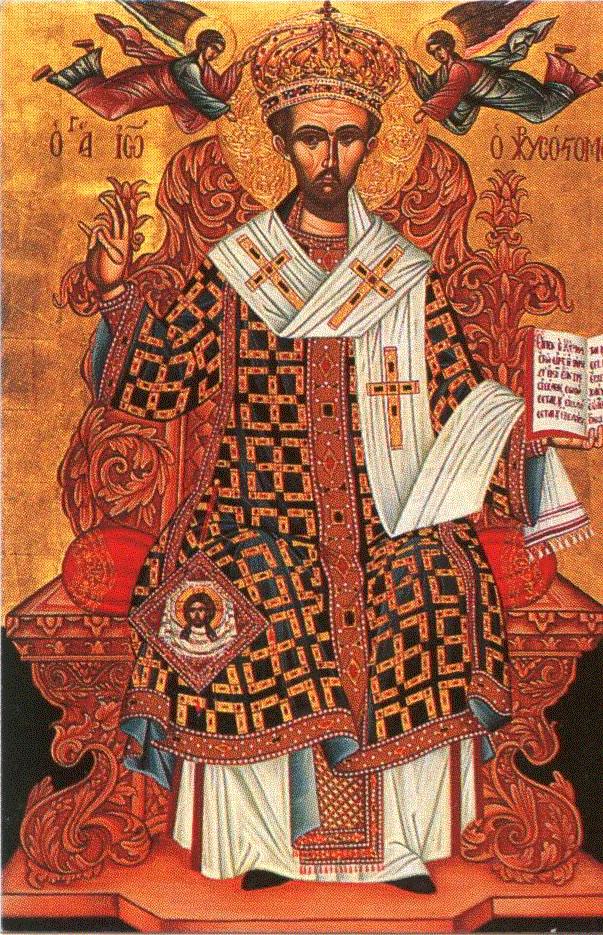
The most famous Reader of all, St. John Chrysostomos the Golden-Mouthed, Archbishop of Constantinople, enthroned. He was tonsured a Reader in 370.

Impressions from a mid-October gathering “What is a Reader?”

An Anglican Reader: “Your Vespers took really long [60 min +] but we forgot time or the pain in our feet [bravely standing up throughout] , immersed as we were in the beauty of pure worship”

Abouna Philip: “I think it is almost impossible to go to an Orthodox Church without being fed a lot. “

Another Anglican Reader: “If this is how you fast [the event took place on a Friday], then how do you feast?!”

What is a Reader?

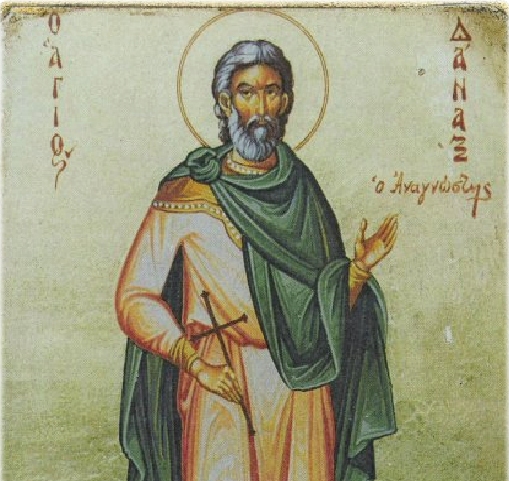
Holy Martyr Danax the Reader, Patron Saint of Readers

What is a Reader? In-mid October a gathering of 20 Readers from the Anglican church from all Lancashire area took place at the parish of Holy and Living Cross at Lancaster, UK. The goal was  to introduce them to the office of the Reader in the Orthodox Church. The evening began with Vespers, was followed by a presentation and a question and answer session, and was concluded with a rich tea buffet.


What is a Reader?

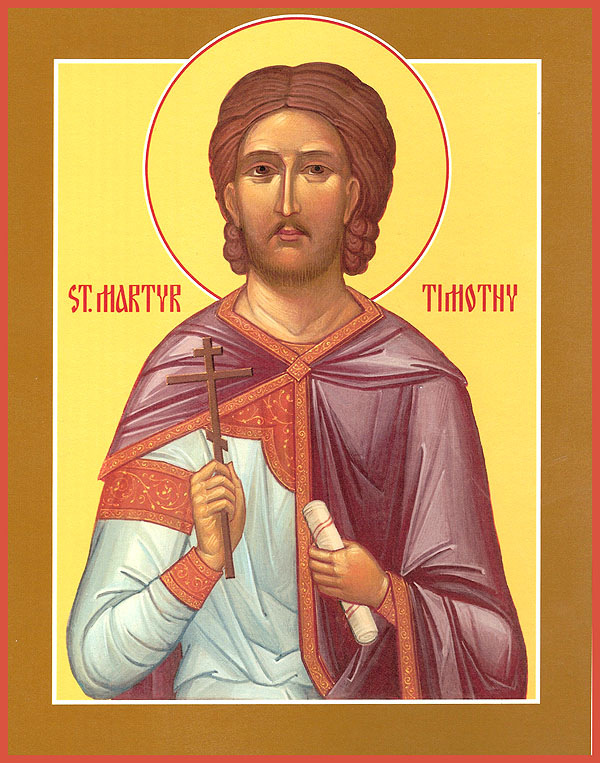
The Reader Timotheos from the Thebaid of Egypt, who underwent martyrdom by Diocletian, together with his wife, Mavra.


The Office of Reader is of course a very ancient one. Lectors used to read the epistle at the Eucharist in the early church, but Reader ministry in the Church of England today has developed in a radically different manner than that of the Lector.

What is a Reader?

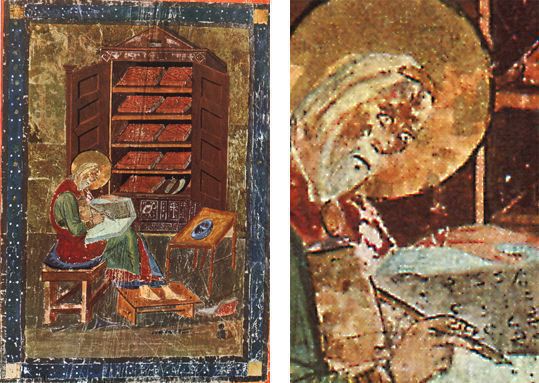
Ezra, the first Reader. “For Ezra had devoted himself to the study and observance of the Law of the LORD, and to teaching its decrees and laws in Israel.” Ezra 7:10


What is a Reader?

We learn a great deal about what it means to be a Reader from the admonition that the bishop gives to a Reader after he is tonsured (i.e. made a Reader):


“My son, the first degree in the Priesthood is that of Reader. It behooveth thee therefore to peruse the divine Scriptures daily, to the end that the hearers, regarding thee may receive edification; that thou in nowise shaming thine election, mayest prepare thyself for a higher degree. For by a chaste, holy and upright life thou shalt gain the favor of the God of loving-kindness, and shalt render thyself worthy of a greater ministry, through Jesus Christ our Lord: to whom be glory unto the ages of ages. Amen.”


This tells us that the office of the Reader is the first rank of the priesthood, and so can only be a man, with the exception of women’s monasteries. Readers are tonsured, which means that rather than being ordained in the Altar, they are set apart by having some of their hair cut in the form of the Cross (as also happens at baptism, and when someone is made a monastic) and ordained in the Nave of the Church, as are Subdeacons, who are also minor clergy. Their office thus is sacramentally instituted and defined.

What is a Reader?

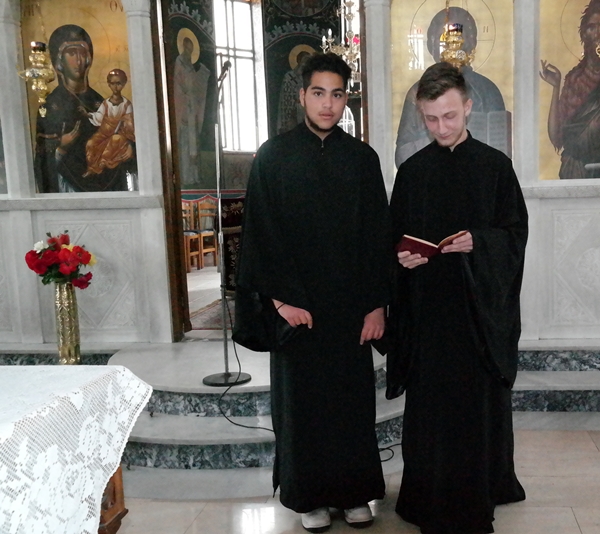
Newly tonsured Orthodox Readers

Readers in the Anglican church, on the other hand, are lay people, male as well as female, trained and licensed by the Church to preach, teach, lead worship and assist in pastoral, evangelistic and liturgical work.

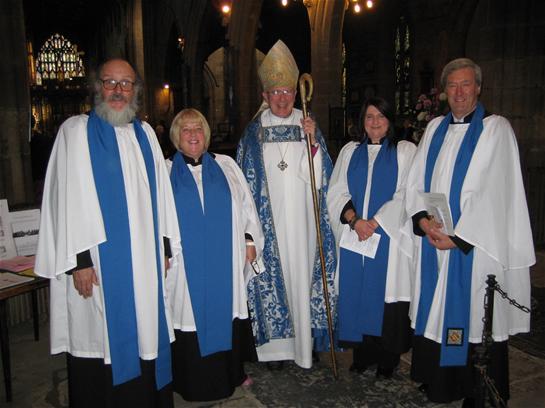
In church, Anglican Readers can be distinguished from their ordained colleagues by the distinctive blue Readers’ scarf, whereas an Orthodox Reader would ideally wear clerical attire at all times, and it is at minimum necessary that he should wear a cassock on Church grounds, and at any Church functions off Church grounds.

What is a Reader?

This picture shows the four new Readers licensed [sic] at the service at the Diocese of Newcastle

Specifically. The duties of a Reader in the Orthodox Church are primarily focused on the prayerful, liturgical ‘dialogue’ with the priest throughout all church services, representing the dialogue between heaven and earth. The Reader is also often the chanter, especially in the absence of a choir. He is not only essential to the Liturgical life, but in terms of the amount of the liturgy, he chants more than the priest! This became most apparent to the Anglican Readers who attended Vespers, because they themselves noticed how prominent the role of the Reader was throughout, since he was practically reading, intoning and chanting more than the 7/10, even 8/10 of the service.


Conversely, the duties of the Readers in the Anglican Church are varied, broad and diverse, differing from parish to parish, depending on the local priest, and encompass even


  • authorisation to preach;
  • presiding at Services of the Word;
  • taking the traditional role of deacon at the Eucharist;
  • distributing the sacrament of Holy Communion in church and/or to the sick at home or in hospital;
  • reading Banns of Marriage.
 

Anglican Readers ‘work’ even in schools, prisons, hospitals, hospices, factories and shops, among seafarers and in the Armed Forces, with children and young people, the elderly, housebound and bereaved, and with those preparing for baptism, confirmation and marriage. Such ‘duties’ would be unthinkable to an Orthodox Reader, and the delineation of their duties applies throughout all orthodox churches.


holy readers.jpg

 Finally, as the first rank of the clergy in the Orthodox church, a Reader should conduct himself with the humility, sobriety, and care appropriate to his order, in order to prepare himself “for a higher degree.” In other words, a Reader should be preparing himself for the possibility of serving in a higher rank of the clergy.

Also. cf. “The Reader in the Orthodox Church”

Fixing our eyes on what is unseen….

Very timely blog post for a little city hermit whose journey of faith has truly led him places he never dreamed of going, led him to do things he would never believed possible, and to be used of Him in ways unimaginable. To his shame, he often gets discouraged.

mandylynncarpenter's avatarmandylynncarpenter

himalayasThis morning as I was walking the kids to the bus stop, I caught a brief glimpse of the mountains, but then moments later they were no longer visible. When I got back to the house, I went up on the roof and there they were, just peeking out from above the clouds.

And I realized something.

The mountains are always there. They are.

But most of the time they are invisible to the human eye. Covered with smog and clouds. Yet they are there.

Then I was reminded that isn’t that just like God. He’s always there, but most times we can’t see Him because “life” covers Him up, kind of like the clouds.

Even more so His plans for our lives.

Every now and then He gives us a glimpse of what is next. Just a little view. Then when we can no longer see, He says follow…

View original post 375 more words

Tips from the Monastery: Practical Advice for ‘Praying Without Ceasing’

Wonderful tips! I have been asking myself nuns and pilgrims at various pilgrimages in monasteries in Greece and abroad how they memorise prayers, because the practice seemed quite widespread. Not being very good at memorisation, nonetheless such practises attracted my attention, especially after reading in Saint Porphyrios’ life how diligently he engaged in this task from his childhood, how greatly he felt his nous profited from it and how strongly he encouraged his spiritual children on it. I have found out that probably the most important “tip” is to commit yourself to this task daily, with or without notes, and soon the Holy Spirit comes to your aid and you feel the rewards.

matushka constantina's avatarlessons from a monastery

OLYMPUS DIGITAL CAMERA(Originally posted in 2013)

Many times the sisters at some of the monasteries I visit will try to commit one or more akathists or supplicatory canons to memory. Here is how they do this:

Some print off the prayers they want to learn and cut them into small sections to keep in their pocket. When they are doing some of the more simpler jobs or tasks around the monastery they take out one piece of paper at a time and lay it in front of them. OLYMPUS DIGITAL CAMERAThen they say that section over and over again until they have it committed to memory. Afterward they take out the next piece of paper, adding another stanza or ode and so on until they have memorized the whole thing.

OLYMPUS DIGITAL CAMERAOthers will use small prayer books to do they same thing – taking them out to read when they get stumped.

In the monastery there…

View original post 426 more words