Visited by God

Jeanne Harper, Visited by God: The Story of Michael Harper’s 48 Year-long Ministry (Aquila Books, 2013), 146 pages.

Visited by God is the extraordinary spiritual journey of an extraordinary Spiritual man – Michael Harper. I think that I would not be missing the mark to say that Michael Harper was the leader of the Charismatic renewal in England and many other parts of the Globe. Beginning as an Anglican chaplain under John Stott at All Souls Church, Langham Place, London, his journey finally culminated in his introducing an authentically British Orthodoxy as Dean of a new Antiochian Orthodox Deanery with English-speaking parishes all over the country.

His journey was a long and often ‘very difficult’ and testing one. In some ways I can liken it to the journey of St. Paul in that he depended solely on the Holy Spirit to lead him and lead him the Holy Spirit did! It all began in 1962 when Michael was visited by God while studying St Paul’s two prayers in his Epistle to the Ephesians. He ‘saw’ the Church as God saw her – broken by divisions and untended wounds.

It was almost from that very moment that Michael’s God-given mission for unity in the Church began. But there were many in the Anglican Church who opposed this renewal and together with Pentecostalism the movement was dismissed as over-emotionalism and therefore unacceptable. Inevitable disputes and arguments occurred but this did not deter Michael. On the contrary his detractors spurred him on! He continued to go wherever in the world there were people hungry for the power to live what they believed.

One might come to the conclusion that Michael’s journey as leader of the Charismatic renewal movement would result in a very broad liberality but when the Church of England’s General Synod of 1975 passed the motion allowing women into the priesthood, Michael felt more than just stirrings of discontent. Jeanne Harper describes Michael’s anguish which led to a most difficult and painful decision – to leave the Church of England – whom he called his foster mother, so faithfully had she cared for him and led him to his real mother, Orthodoxy.

Jeanne describes how he was led by the Holy Spirit to the Orthodox Church and in 2000 Michael founded the English-speaking Antiochan Orthodox Parish of St. Botolph’s near Liverpool Street, London. At the same time Michael was appointed as a director of the Institute for Orthodox Christian Studies Cambridge. And in 2005 he was elevated to Archpriest.

The silken thread of a spider is spun from behind him as he moves forward to spin his web. The spider cannot see his work until he looks back and then the pattern of his web with all its links is revealed. Looking back over the web of Michael Harper’s life one thing is clear – from the very beginning Michael’s journey had a pattern and this pattern was a pure reflection of God’s will in his life. Once this was achieved Michael was taken in 2010 and lives in constant joy and prayer along with the saints in glory.

Jeanne Harper shares this God given Spirit filled journey of her husband with the reader and in so doing cannot fail to make us all yearn for the presence of the Holy Spirit to touch and lead all our lives.

And let us not lose this opportunity.

Reviewed by David Suchet CBE

* Last but not least, the concluding chapter “The British Antiochian Orthodox Deanery Mission” is written by Fr. Jonathan Hemmings, one of the priests of the Deanery, whose parishes are strategically spread over England and are to be found in Ireland, north and south. The Dean who succeeded Father Michael, is Father Gregory Hallam, whose vibrant parish is in Manchester. Fr. Jonathan Hemmings ministers in Lancaster at the Orthodox Church of the Holy and Life Giving Crossworshipping at St Martin of Tours, Westgate. He writes the following chapter on the story of the Deanery and its missionary vision.

His Life In Christ: Pilgrimage To The Holy Places Of St. John Of Krostandt — Part I

blog3


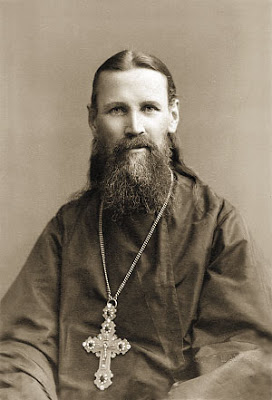
A century after his repose, the great archpriest St. John of Kronstadt remains an iconic figure: a man of ferocious dedication to God who was graced with a deep and miraculous prayer life, yet manifested a radical sympathy for the poor that still astounds with its creative and vigorous solutions. After an impoverished childhood in Russia’s remote Archangelsk region and seminary in St. Petersburg, Fr. John Sergiev was assigned to the tumultuous naval port of Kronstadt, where he not only served daily liturgy and prayed long into the night, but actively worked to alleviate the spiritual and material needs of each person he met. A support for Russia’s tsars, clergy, merchants, students, paupers and monastics, he interceded for and assisted everyone who approached him: Russian or foreigner, Christian, Moslem, Jew, or agnostic.

photo11

Archangelsk and St. Petersburg

photo1photo2photo5photo6photo7photo8photo10

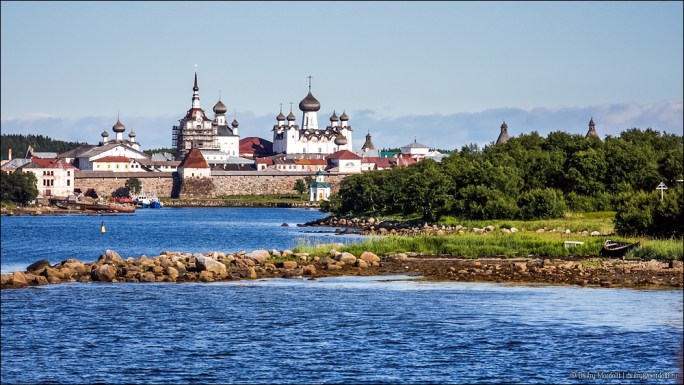
Arkhangelsk, northern pearl of Russia

Saint John’s wisdom comes to us today through his candid written reflections in My Life in Christ (*) and through his intercession, but for the pilgrim fortunate enough to visit Russia and Estonia, there is also a substantial material legacy of his life and ministry, preserved and newly restored through the selfless labors of many contemporary Orthodox. These holy places are an alternative form of iconography, another form of the “stones crying out,” that they, too, have been touched by grace.

photo22photo23photo24photo25photo26photo27photo28photo29

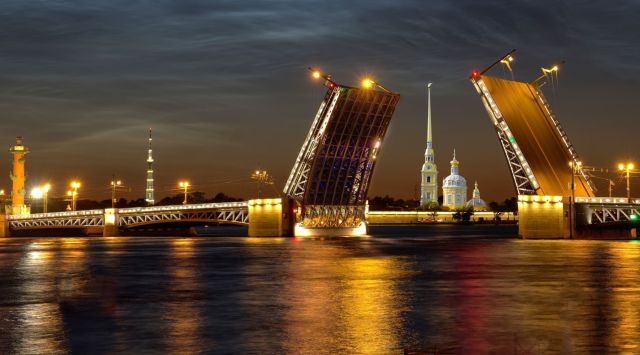
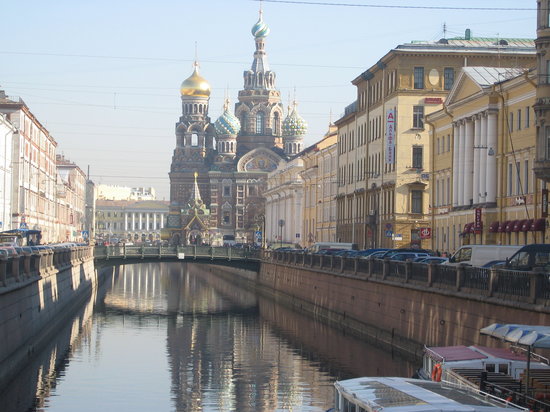
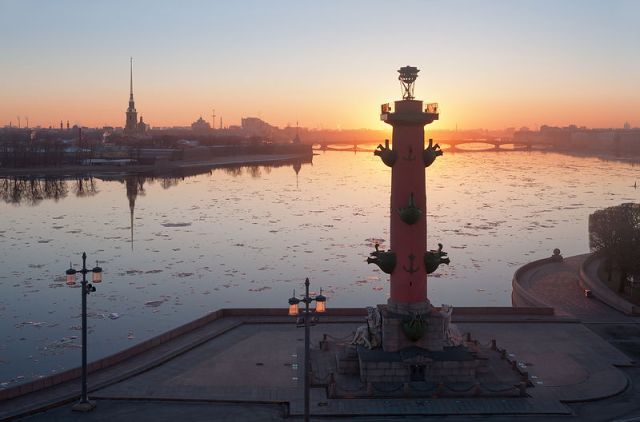
St. Petersburg, The Venice of the North


These restored and accessible sites of St. John’s life and labors include the Monastery of St. John the Theologian for women, founded by St. John in his native village of Sura in the Archangelsk region in the far north of Russia; Pühtitsa Convent of the Dormition in the Republic of Estonia, which he nurtured and shepherded through its first decades; St. John’s much-venerated relics in the famous women’s monastery of St. John of Rila in St. Petersburg, Russia; the site of his own Church of St. Andrew in nearby Kronstadt where he served throughout his priestly life—along with a second even larger Kronstadt church, the Navy Cathedral of St. Nicholas, for which he initiated the building and laid the foundation; and finally, Fr. John’s own home, a second-floor apartment in Kronstadt where he lived with his wife Elizabeth for a half century until his repose in 1908.


ARCHANGELSK REGION, RUSSIA

photo4photo3photo9

The village of Sura

Sura Monastery of St. John the Theologian

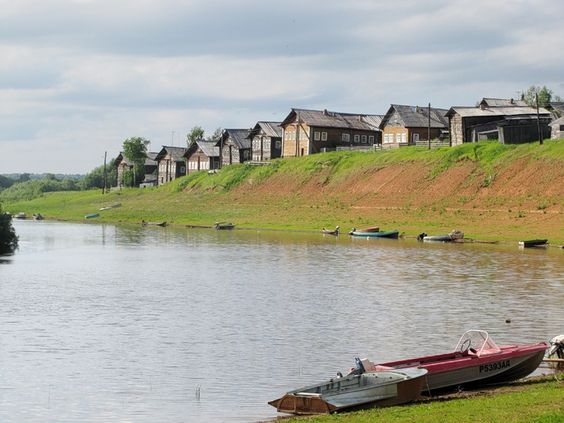
The village of Sura on the upper reaches of the Pinega River, in the Arch- angelsk region of northern Russia, is the birthplace of St. John of Kronstadt. Sura is one of the most ancient villages of the native Chud people, and even today has both pagan activity and Old Believer influences. In the only autobiographical sketch composed by St. John, and published in an 1888 issue of the magazine Sever (North), he describes his early childhood:

I am the son of a churchman from the village of Soursk, district of Pinezhsk, province of Archangelsk. From very early childhood, as early as I can remember, at the age of four or five, perhaps even earlier, my parents taught me to pray and by their religious frame of mind made me a religiously-minded boy. At home, in my sixth year, Father brought me a primer, and Mother began to teach me the alphabet; but reading and writing came to me with great difficulty, which was the cause of no little sorrow to me. I just couldn’t master the identity between our speech and writing; in my time reading and writing were not taught as it is now: we were all taught ‘Az’ (for ‘A’), ‘Boukee’ (for ‘B’), Vedi,’ etc., as if ‘A’ were one thing and ‘Az’ a different thing. For a long time did this wisdom elude me, but having been taught by Father and Mother to pray, grieving over my failures in studies, I prayed fervently to God, so that He would grant me understanding—and I remember how, suddenly, it was as if a veil were lifted from my mind, and I began to comprehend studies well. When I was ten I was taken to the Archangelsk parish school. My father, naturally, received a very small salary, so that it must have been terribly difficult to live. I already understood the real position of my parents, and for this reason my inability at school was indeed a calamity. I thought little of the significance my studies would have on my future, and grieved especially over how Father was needlessly spending his last means to support me.


Left in Archangelsk completely alone, I was deprived of my parents and had to arrive at everything myself. Among the boys of my age group in class, I did not find, nor did I seek, support or assistance; they were all more able than I, and I was the last pupil. Anguish took hold of me. Then it was that I turned for help to the Almighty, and a change took place in me. In a short time I moved forward to such an extent that I ceased to be the last pupil. The further I went, the better and better I became in my studies, and by the end of the courses was among the first transferred to the seminary, which I finished first in 1851 and was sent to the Petersburg Academy on a full scholarship…

archaic20archaic21

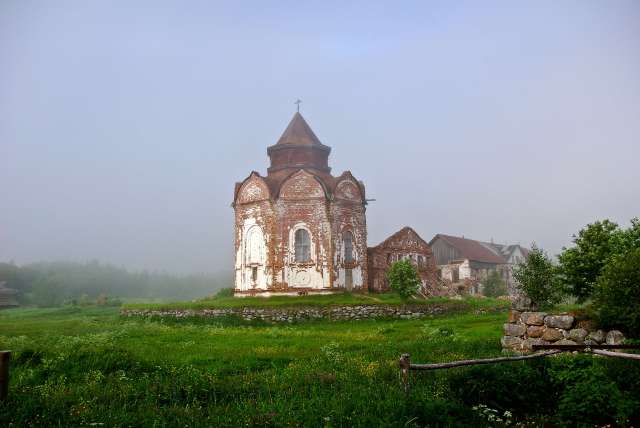
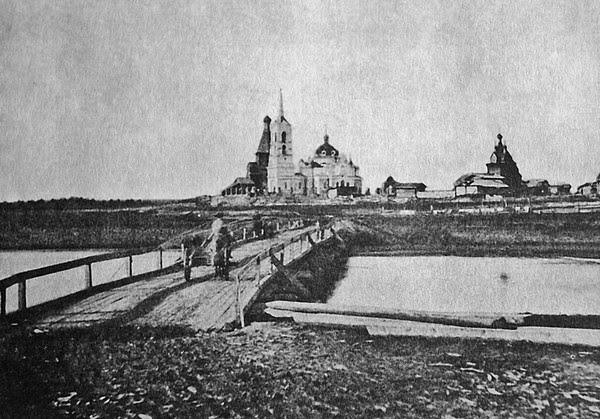
Father John returned to Sura throughout his life, and after his ordination established a six-year grammar school for the village children. In 1899 he founded an informal women’s community, first comprised of a wooden church dedicated to St. John the Theologian and a few monastic cells. This was followed by a beautiful stone church dedicated to St. Nicholas, and after Fr. John’s repose, the Dormition Cathedral, built in 1915, about which he correctly prophesied that the church would be built but that no one would serve in it.

aaa.jpg

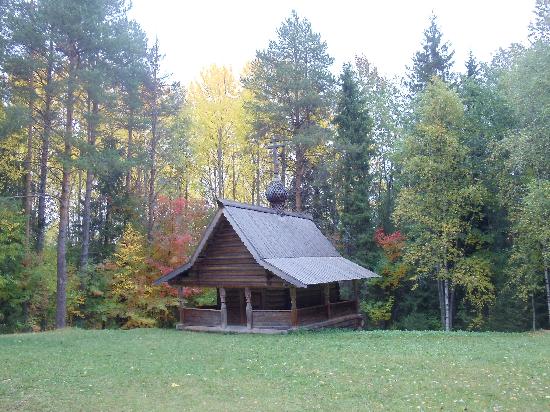
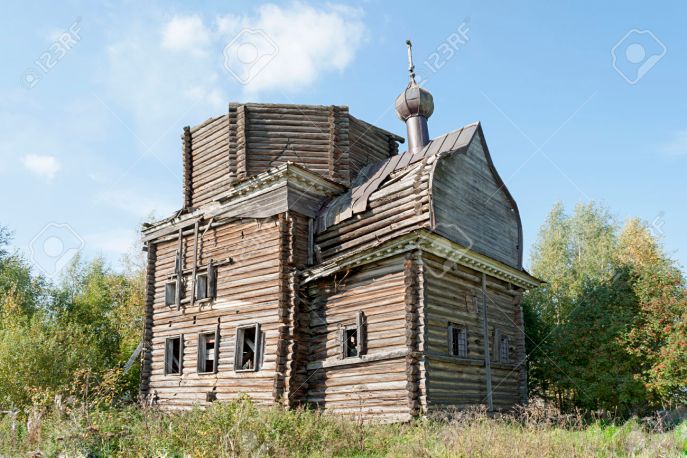
St. Nicholas wooden church (1687), Zachachie, Archangelsk (Arkhangelsk) region

bbb.jpg

Church of St John the Theologian, Plesetsk, Arkhangelsk Region

The monastery began with two nuns: Barbara, the superior, and Riassaphore Nun Angelina with thirty-three novices that Fr. John had blessed to live in the newly opened community. On July 20, 1900, the wooden church was consecrated in Fr. John’s presence and in the fall of the same year the community was officially recognized. Father John instructed the novices through his own teaching and sent them for preparation to the Leushino Convent under the well-known Abbess Thaisia, who directed over 700 nuns! Several letters still survive from Fr. John to Abbess Thaisia about the reception of the novices.(1)

blog2

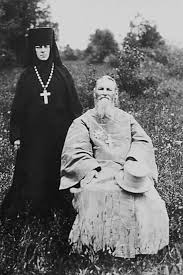
St. John with Abbess Thaisia, late 19th century.

Settling at the site of the monastery, the sisters assisted in the construction work and gardening; they later recalled the particularly hard labors of those early years and the savagely cold winters. In the early 1900s the monastery opened a podvoriye, a city outpost in Archangelsk and a second in St. Petersburg that would later become the famous Karpovka Ioannavsky Monastery where Fr. John would be buried.
leushino1
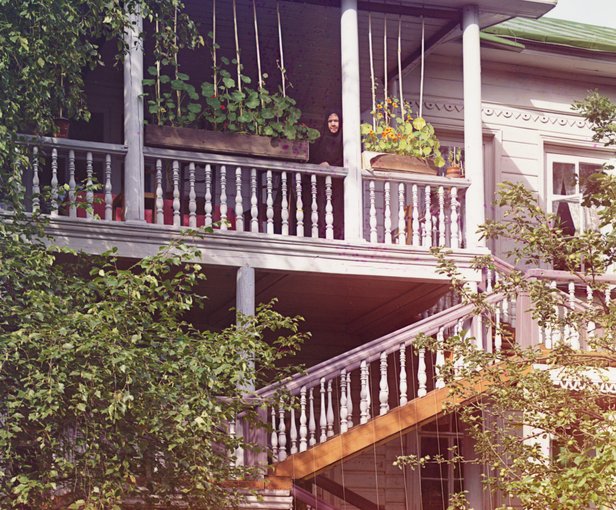
Mother Superior Taisiia on the Veranda
leushino2leushino3
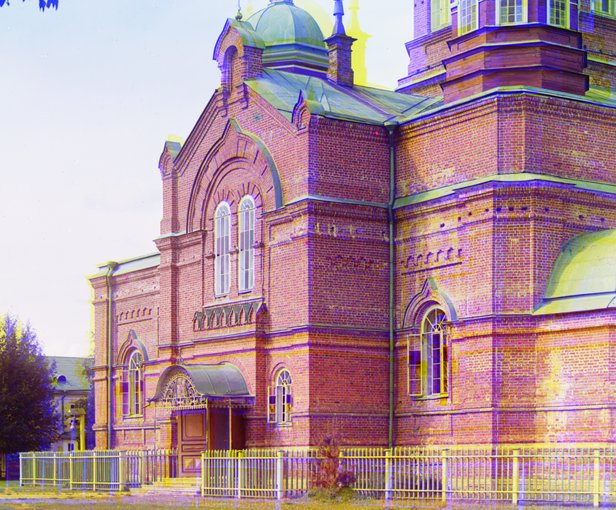
Leushinskii Monastery, Leushino, Russian Empire

The convent priest was Fr. Dimitri Fedosikhin, formerly a train engineer who was healed by Fr. John after a revolutionary bombing of his train had left him near death. Father John later encouraged him to accept the priesthood, and Fr. Dimitri became rector of the Archangelsk cathedral and the last spiritual father of the Sura women’s monastery. The Sura convent was closed on Dec. 8, 1920 by the local Soviet and the sisters dispersed, arrested and exiled. The newly built Dormition Church was turned into a club, and St. Nicholas Church destroyed. In 1920 Fr. Dimitri was arrested along with 140 other Orthodox, including a number of the nuns, who protested the closing of the monastery. He was sentenced to five years in the gulag camps and the remaining nuns were dispersed and exiled.

On returning to Arkhangelsk in the spring of 1925, Fr. Dimitri petitioned for the reopening of the cathedral, which had been closed after his departure. His request went unanswered and on Pascha he opened the church and served on his own initiative. He was re-arrested, sentenced to three more years in the camps and a further five-year exile in Kazakhstan. In Kazakhstan, he and his wife were tonsured as monastics and he was secretly consecrated to the episcopate as Schema-bishop Peter. On his return from exile Fr. Dimitri traveled from place to place, confessing and serving liturgy for his spiritual children, until he was arrested for the third time in 1941 and sent to the camps again, from which he never returned.


blog3

St. John with Sura relatives, 1890.


On Oct. 31, 1994, the archbishop of Archangelsk blessed the formation of the revived St. John the Theologian Convent in Archangelsk. The initial attempt to regain the property and buildings was unsuccessful, however, and the community relocated to the village of Yershovka, where they organized a new monastery, also dedicated to St. John the Theologian. A local committee of clergy and laypeople, meanwhile, continued to press for the return of the Sura monastery territory and eventually succeeded. In October 2012, the Holy Synod passed a resolution reopening the Sura convent, and naming Nun Mitrofania (Mikolka) as abbess. A new community of sisters has formed at Sura and begun restoration of the badly damaged buildings.

Future plans include rebuilding the churches and cells, a home for orphaned girls, a domicile for the elderly, a Sunday school, and the revival of local handicrafts. The ruined Dormition church is now being restored, a house-church dedicated to St. John has opened in Sura, and the monastery welcomes pilgrims, most of whom visit from the well-known Monastery of St. Artemy of Verkola, about thirty-five miles away. Pilgrim accommodations will be made available as the monastery is revived.

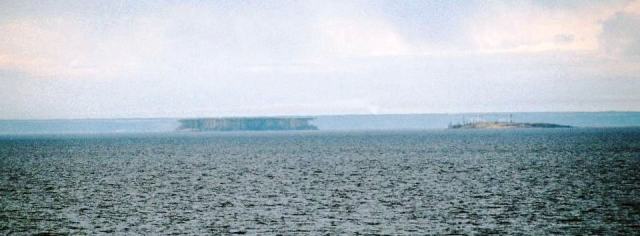
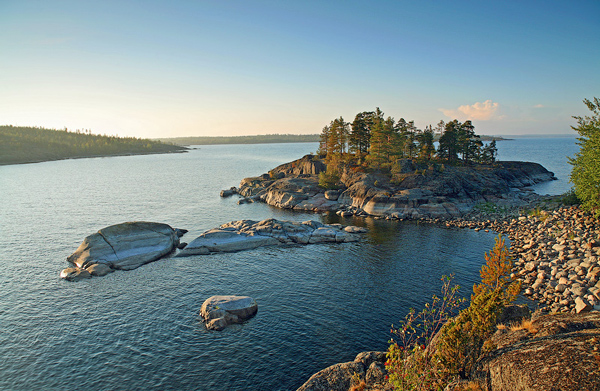
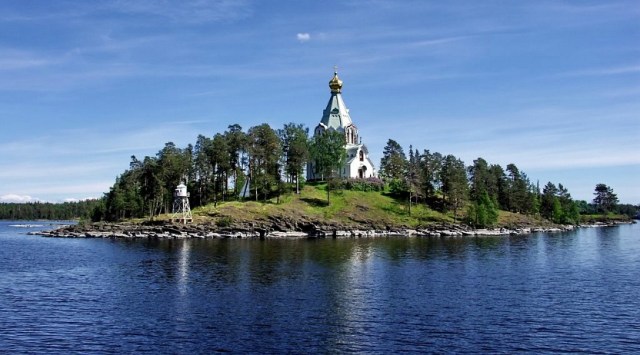
In the summer of 2013, a cross procession/pilgrimage voyage was held in honor of the 185th anniversary of St. John of Kronstadt’s birth. The aim of the event was not only the restoration of pilgrimage to the shrines of the Russian north, but to attract attention to the Sura Convent of St. John the Theologian. Participants in the cross procession sailed 2,000 kilometers along the Neva River, through Lake Ladoga, the Svir River, Lake Onega, the White Sea to Archangelsk, and further down the North Dvina and Pinega Rivers to the village of Sura. This was the same route that St. John would have taken on his own visits to Sura. Prayer services and processions involving local churches and parishioners were held during the frequent stops.

neva-riverLake_Ladoga_-_superior_mirage_2LakeLadoga3

valaamladoga1ladoga2ladoga3

Neva River and Lake Ladoga

lake1lake2lake3LakeLadoga3

Svir River and Lake Onega

photo40photo42photo43

White Sea to Archangelsk

photo40photo41photo44

North Dvina and Pinega Rivers

DIRECTIONS:

Getting to the Sura Ioannovsky Monastery is not terribly difficult if you have the time, but neither is it for the faint-hearted. From Moscow to Archangelsk is about 1200 km (21 hours by train). From St. Petersburg it is 25 hours by train. From Archangelsk, take a second train (running every other day) several hundred kilometers to the town of Karpogory. From Karpogory, there may be an infrequent bus to Sura, but the best option is to hire a taxi or private car. Sadly, the river steamboats that St. John customarily took to Sura from St. Petersburg were discontinued after the Russian Revolution.

blog4

St. John of Kronstadt with wife, Matushka Elizabeth.

Source: HIS LIFE IN CHRIST, Road to Emmaus Vol. XV, No. 1 (#56)

(1 ) Abbess Thaisia’s memoirs of her conversations with St. John of Kronstadt are included as an appendix to: Abbess Thaisia of Leushino: The Autobiography of a Spiritual Daughter of St. John of Kronstadt, St. Herman of Alaska Press, Platina, CA, 1989.The following “Conversations” provide an intimate, realistic glimpse into the life of a magnificent Saint of God, showing us his endearing, human side, and then calling us beyond the earth to the eternal realm in  which his soul constantly abided. We give thanks to God that God that Abbess Thaisia was able to record so precisely these soul-saving talks. It was not in vain that the Lord gifted her with an almost photographic memory! Both her Autobiography and the “Conversations” are fascinating and soul-saving readings!

*

My Life in Christ: Extracts from the Diary of Saint John of Kronstadt


For the 2nd Part, go to His Life In Christ: Pilgrimage To The Holy Places Of St. John Of Krostandt — Part II


St. Patrick’s Breastplate

St. Patrick2

Today’s post is dedicated to the St. Patrick, Bishop of Armagh and Enlightener of Ireland. Born a Briton, yet one of Ireland’s most beloved patron saint. St. Patrick pray for us!

Prayers, Confessio and Traditional Customs follow.

st patrick1

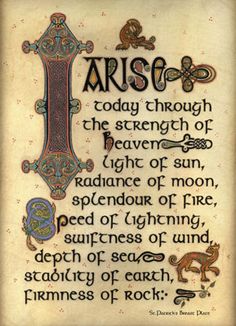
Let us pray, especially today, with St. Patrick’s powerful prayer, St. Patrick’s Breastplate, also known as The Lorica of Saint Patrick. I have always experienced awe and gratitude at its incantation, especially after knowing its tradition: St. Patrick wrote it in 433 A.D. for divine protection before successfully converting the Irish King Leoghaire and his subjects from paganism to Christianity. The term breastplate refers to a piece of armor worn in battle. Lorica means breastplate in Latin. The story of this prayer is that Patrick and his followers used this most beautiful prayer to protect themselves from the people who wanted to kill them as they travelled across Ireland. It is also called the Deer’s Cry (Fáed Fíada) because their enemies saw, not men, but deer!

Lorica of Saint Patrick

I arise today
Through a mighty strength, the invocation of the Trinity,
Through a belief in the Threeness,
Through confession of the Oneness 
Of the Creator of creation. 

I arise today 
Through the strength of Christ’s birth and His baptism, 
Through the strength of His crucifixion and His burial, 
Through the strength of His resurrection and His ascension,
Through the strength of His descent for the judgment of doom.

I arise today
Through the strength of the love of cherubim,
In obedience of angels,
In service of archangels,
In the hope of resurrection to meet with reward,
In the prayers of patriarchs, 
In preachings of the apostles,
In faiths of confessors,
In innocence of virgins,
In deeds of righteous men. 

I arise today
Through the strength of heaven; 
Light of the sun,
Splendor of fire,
Speed of lightning,
Swiftness of the wind,
Depth of the sea, 
Stability of the earth,
Firmness of the rock. 

I arise today
Through God’s strength to pilot me;
God’s might to uphold me, 
God’s wisdom to guide me, 
God’s eye to look before me, 
God’s ear to hear me, 
God’s word to speak for me, 
God’s hand to guard me, 
God’s way to lie before me, 
God’s shield to protect me, 
God’s hosts to save me 
From snares of the devil, 
From temptations of vices, 
From every one who desires me ill, 
Afar and anear, 
Alone or in a mulitude. 

I summon today all these powers between me and evil,
Against every cruel merciless power that opposes my body and soul, 
Against incantations of false prophets,
Against black laws of pagandom,
Against false laws of heretics,
Against craft of idolatry, 
Against spells of women and smiths and wizards,
Against every knowledge that corrupts man’s body and soul. 
Christ shield me today 
Against poison, against burning, 
Against drowning, against wounding,
So that reward may come to me in abundance.

Christ with me, Christ before me, Christ behind me,
Christ in me, Christ beneath me, Christ above me, 
Christ on my right, Christ on my left, 
Christ when I lie down, Christ when I sit down, 
Christ in the heart of every man who thinks of me, 
Christ in the mouth of every man who speaks of me, 
Christ in the eye that sees me, 
Christ in the ear that hears me. 

I arise today
Through a mighty strength, the invocation of the Trinity,
Through a belief in the Threeness,
Through a confession of the Oneness
Of the Creator of creation

Salvation is of the Lord.

Salvation is of the Lord.

Salvation is of Christ.

May Thy Salvation, O Lord, be ever with us.

St. Patrick (ca. 377)

st patrick3

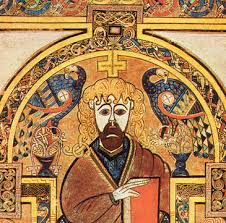
The Book of Kells, detail The Lorica of St. Patrick

* For the whole Book of Kells, Ireland’s greatest cultural treasure and the world’s most famous and beautiful medieval manuscript, an illuminated manuscript Gospel book in Latin, containing the four Gospels of the New Testament together with various prefatory texts and tables, free to view online, go here http://www.tcd.ie/Library/news/2013/03/book-of-kells-now-free-to-view-online/

Let us also prayerfully study today St. Patrick’s  most inspiring Confessio, a semi-autobiography, written as a labor for God, explaining the story of his life to inspire others to believe and turn their lives to God.

‘My name is Patrick…

I am a sinner, a simple country person, and the least of all believers. I am looked down upon by many.

My father was Calpornius. He was a deacon; his father was Potitus, a priest, who lived at Bannavem Taburniae.

His home was near there, and that is where I was taken prisoner.

I was about sixteen at the time. …

Continue reading the words of St Patrick…

Read, listen and see more about Patrick and his heritage: a novel, his first biographies, Patrick in art, articles, audio and more special features.

Finally, let us explore some traditional St. Patrick’s Day customs, here, and here.


Do Not Turn Away Thy Face From Your Child

icon6

Kalo Stadio!

“Kalo Stadio!” is a traditional monastic greeting in Greek as we begin Great Lent. Literally it means “Good stadium!” The hymns of the season tell us that now we are entering “the arena of the virtues” where we will do battle.  By their prayers, may we contend well.


Do not turn away thy face from your child, because  I am distressed. Please answer my prayer quickly, take care of my soul, and redeem her.

This was my great grandfather’s, Seraphim’s Rose of Blessed Memory favourite Lenten hymn, and they would always see him secretly wipe tears while chanting it.

*

Saint Luke, Bishop of Simferopol and Crimea, the Blessed Surgeon once literally experienced our Saviour’s turning away of His face from him, when he prayed with tears in front of His icon, doubting and complaining in his heart against the Lord. He had been ‘informed’ in prayer before that his (first) exile would soon been brought to an end, yet the days would pass without any news or change. Why was God’s promise delayed to him? “Suddenly, I saw Christ in the icon, turning away His face from me. Scared, despaired, I dared not look at the icon anymore. ‘With my tail between my legs’ I left the altar and entered the … chapel. …I started reading the Epistles, the first excerpt that came to my eyes. Unfortunately I cannot remember the excerpt, but it wrought an amazing result. I found in it … my impertinence to grumble against God, and my lack of understanding. I was also reassured that I will indeed be freed, impatient that I was. I returned to the altar and saw with joy that Christ was looking again at me with his kind eyes full of Joy and Light. Wasn’t this a miracle?” (Saint Luke, Autobiography,  Voyages a Travers la Suffrance).


Likewise, St. Luke’s wife, experienced something similar  on the eve of her wedding! “In Chita, I married a nurse who had previously worked in Kiev’s military hospital, and her nick name was ‘Saint’. Two doctors before me had asked her to het married to them, but she had refused, because she had taken an oath of chastity. In accepting to marry me, she broke her vow. The night before the Sacrament of our marriage, in the church that Decembrists [ie. Russian rebels led by Russian army officers  in a protest against Nicholas I‘s assumption of the throne] had built, while she was praying in front of Christ’s icon, she suddenly had the impression that the Lord was indeed turning His face away from her, and that His Face kept disappearing from the icon! This was obviously a reminder of her vow. Since she did not keep it, the Lord intended to punish her unsparingly, harshly, by upsetting her with an unbearable, pathological jealousy. (Saint Luke, Ibid)

*

Arise, O my soul, O my soul, why sleepest thou? The end draweth near, and thou shall be confounded.  Arise, therefore, from thy sleep, and Christ our God, who is in all places and filleth all things, shall spare thee.

*

Saint Romanos the Melodist or the Hymnographer (Greek: Ῥωμανὸς ὁ Μελωδός, often Latinized as Romanus or Anglicized as Roman), was one of the greatest of Greek hymnographers, called “the Pindar of rhythmic poetry”. He flourished during the sixth century, which is considered to be the “Golden Age” of Byzantine hymnography. Of his other Kontakia, one of the most well-known is the hymn, “My soul, my soul, why sleepest thou…” which is chanted as part of the service of the “Great Canon” of St. Andrew of Crete on the first and fifth Thursday of Great Lent.

*

Lenten Prayer Of St. Ephrem The Syrian

O Lord and Master of my life!
Take from me the spirit of sloth,
faint-heartedness, lust of power, and idle talk.

But give rather the spirit of chastity,
humility, patience, and love to Thy servant.

Yea, Lord and King! Grant me to see my own errors and not to judge my brother, for Thou art blessed unto ages of ages. Amen.

*

Have a Blessed Great Lent everyone! Kalo Stadio!!  Good fight in the spiritual arena!! May the Lord bless our struggle in the ‘arena’! May our Lord never turn His face away from us!